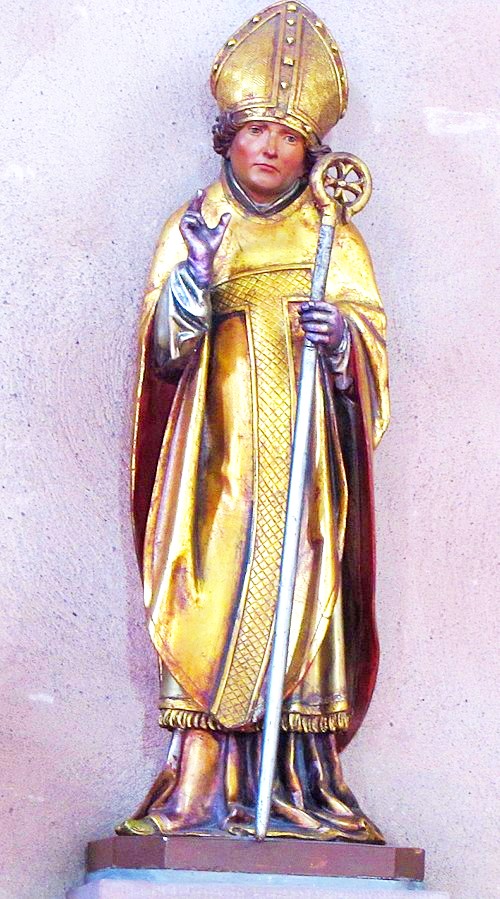
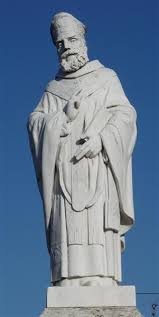
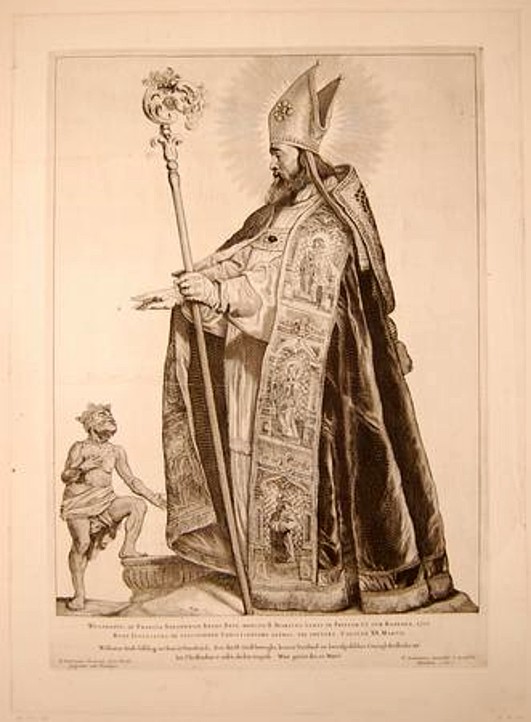
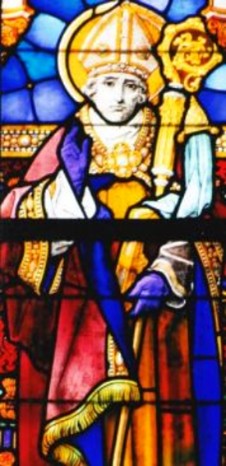
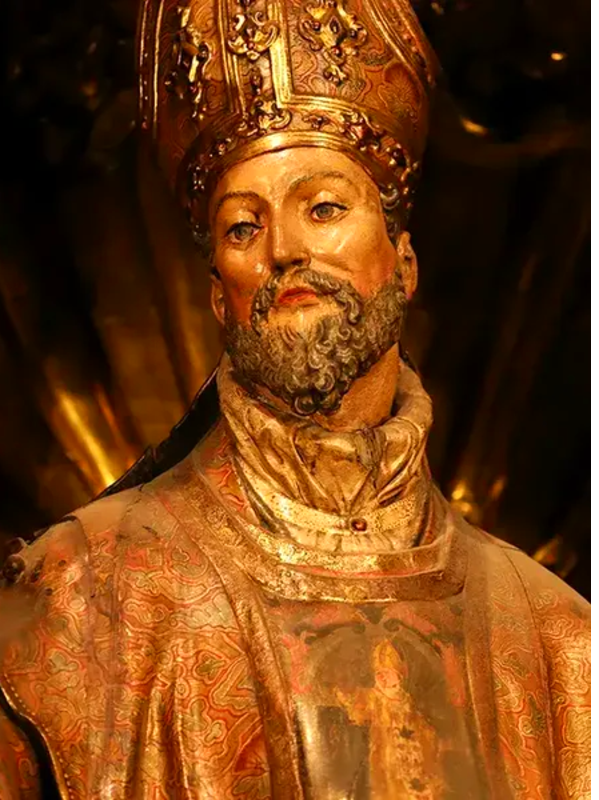
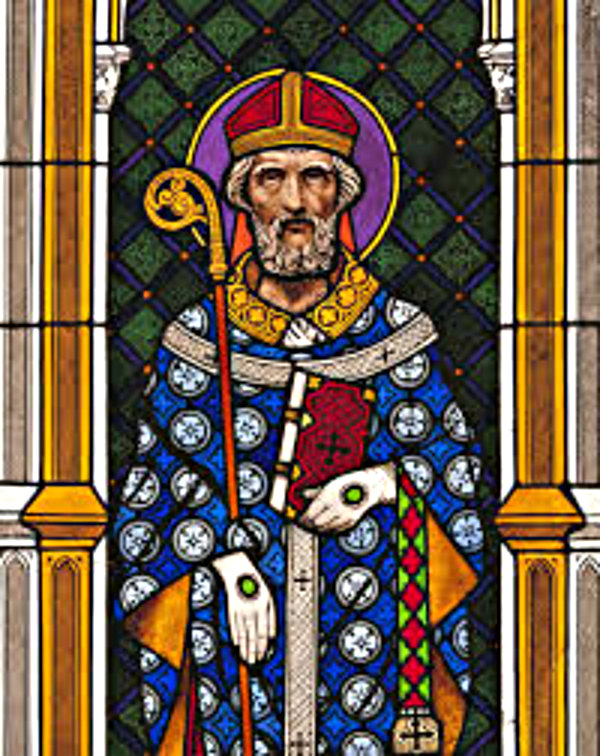
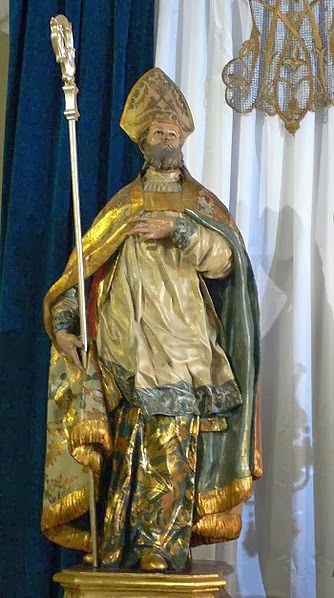
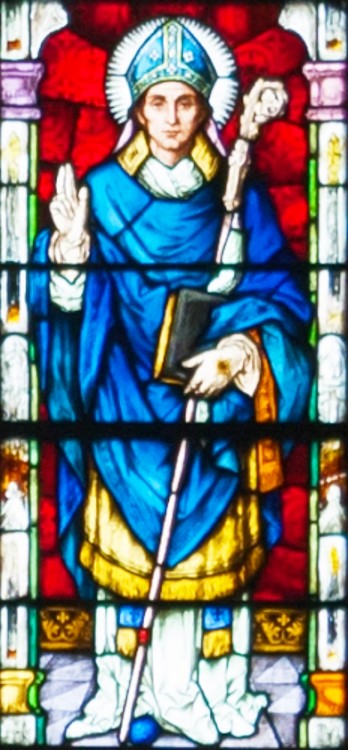
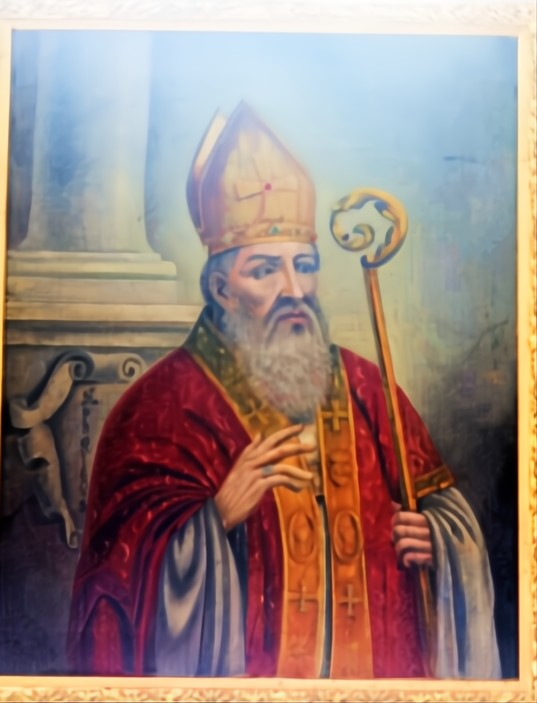
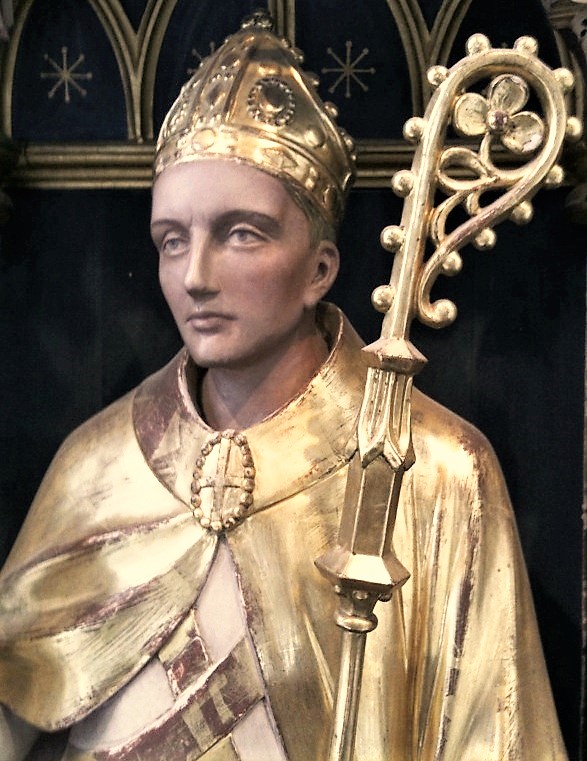
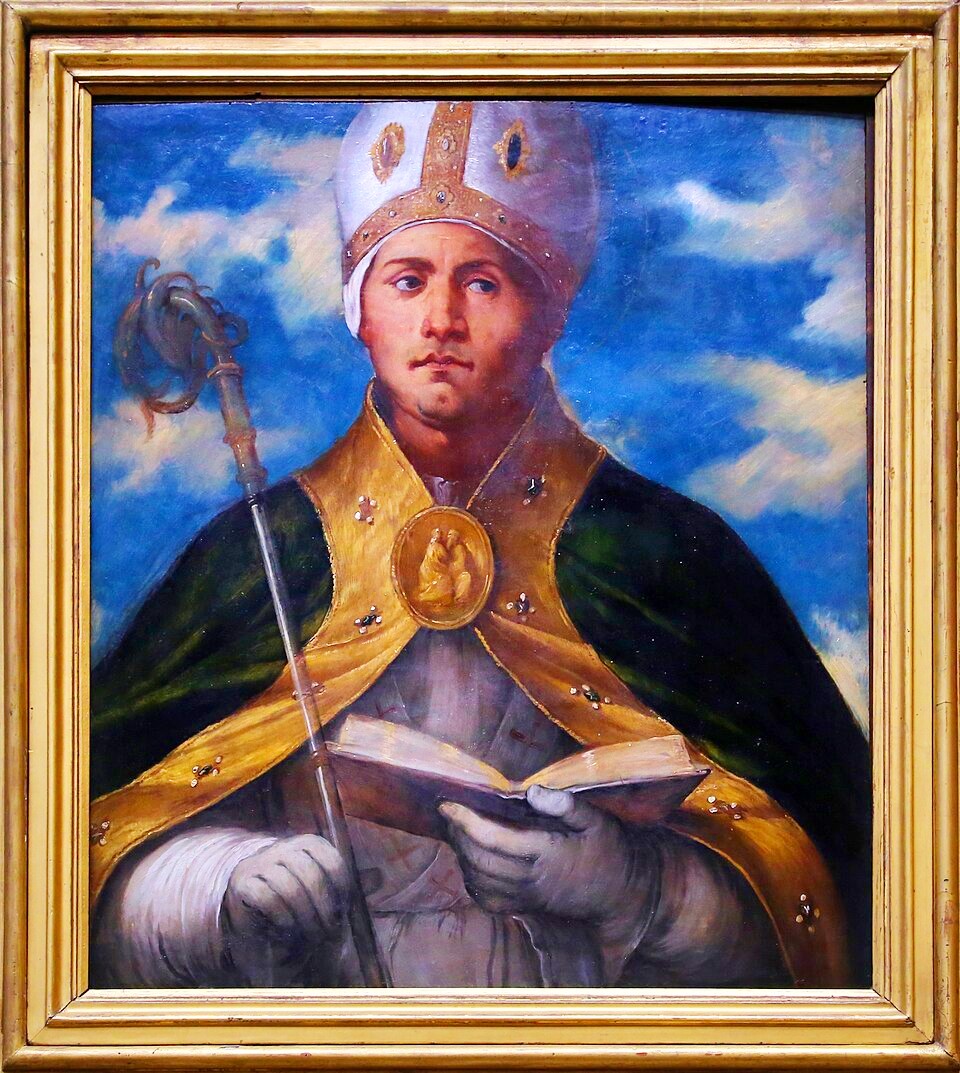
Saint of the Day – 20 March – Saint Remigius (Died c783) Bishop of Strasbourg and the first Abbot of Münster Gregorienthal, in modern Switzerland, of which City he is the Patron. Remigius was born to the nobility, the son of Hugh of Alsace; cousin of Saint Odilia of Hohenburg. Also known as – Remi, Remidius.
He founded the Monasteries of Aschau and Schönenwerth in Switzerland and shone as a holy guide throughout Alsace and as a preacher of the Gospel, through word and deed.
A particular feature of his piety was his zeal in acquiring holy Relics, for which after being appointed as the Bishop, he made a pilgrimage to Rome, where he was received favourably by Pope Adrian I.
It is unclear when he became the Bishop and who he succeeded in that role. It may have been from 765 onwards. His Will is definitively dated in 778, falling during his Episcopate, co-signed by many other Bishops and forming the main source of his work in Strasbourg – it survives only in a 12th Century copy but is one of the most important documents of its type.
He is said to have died in 803, or according to others as early as 783. He was buried in Aschau but only received Ecclesiastical veneration under Pope Leo IX. In portraits, he is seen carrying Relics into the Church in procession.
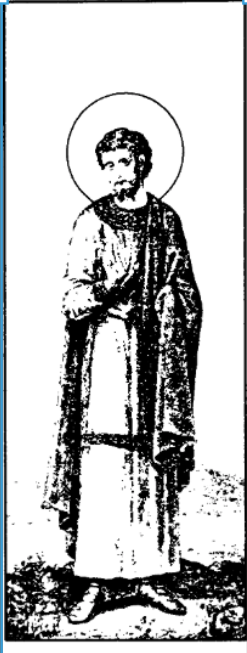
St Photina & Companions / Martyrs of Rome – 9+ Saints: A group of Christians Martyred together in the persecutions of Nero. We know nothing else about them but the names Photina, Sebastian and Victor, Anatolius, Cyriaca, Joseph, Parasceve, Photis.
Blessed Ambrose Sansedoni OP (1220-1287) Priest and Friar of the Order of Preachers, Preachers, Confessor, Mystic, a powerful and convincing Preacher employed by various Popes as a Diplomatic Peacemaker and that which seems opposed, as a Preacher of the Crusades, Peacemaker. A fellow student with St Thomas Aquinas under St Albert Magnus. His Life: https://anastpaul.com/2023/03/20/saint-of-the-day-19march-blessed-ambrose-sansedoni-of-siena-op-1220-1287-priest/
Anastasius XVI Archippus of Colossi St Benignus of Flay St Cathcan of Rath-derthaighe St Clement of Ireland
St Nicetas (Died c733) Bishop of Apollonias in Bithynia, a region of Asia Minor, Defender of the veneration of holy images. We have no history of his birthplace but he died in exile in c733, presumably of natural causes, although some refer to him as a Martyr. The Roman Martyrology reads today: “At Apollonia, the Bishop, St Nicetas, who breathed his last in exile, where he had been sent for upholding the veneration of holy images.” What We Know of St Nicetas: https://anastpaul.com/2025/03/20/saint-of-the-day-20-march-saint-nicetas-died-c733-bishop-of-apollonias/
St Remigius (Died c783) Bishop of Strasbourg St Tertricus of Langres St Urbitius of Metz
Martyrs of Amisus – 8 Saints: A group of Christian women Martyred together in the persecutions of Diocletian. The only details we have are eight of their names – Alexandra, Caldia, Derphuta, Euphemia, Euphrasia, Juliana, Matrona and Theodosia. They were burned to death c 300 in Amisus, Paphlagonia (modern Samsun, Turkey).
Martyrs of San Saba – 20 Saints: Twenty monks who were Martyred together in their monastery by invading Saracens. They were Martyred in 797 when they were burned inside the San Sabas monastery in Palestine.
Martyrs of Syria – 3+ Saints: A group of Christians who were Martyred together in Syria. We know nothing else about them but the names Cyril, Eugene and Paul.
Saint of the Day – 19 March – Saint Landoaldus (Died 668) Priest, Missionary and Bishop of Maastricht (?). Born in Italy and died in Winterhoven, modern Belgium. Additional Memorial – 13 June (translation of his Relics). Also known as – of Maastricht, of Ghent, of Wintershoven, Landoald.
The Roman Martyrology reads today: “At Ghent, the Saints Landoalus, a Roman Priest and the Deacon, Amantius, who were sent to preach the Gospel by Pope St Martin and after their deaths became illustriouys by many miracles.”
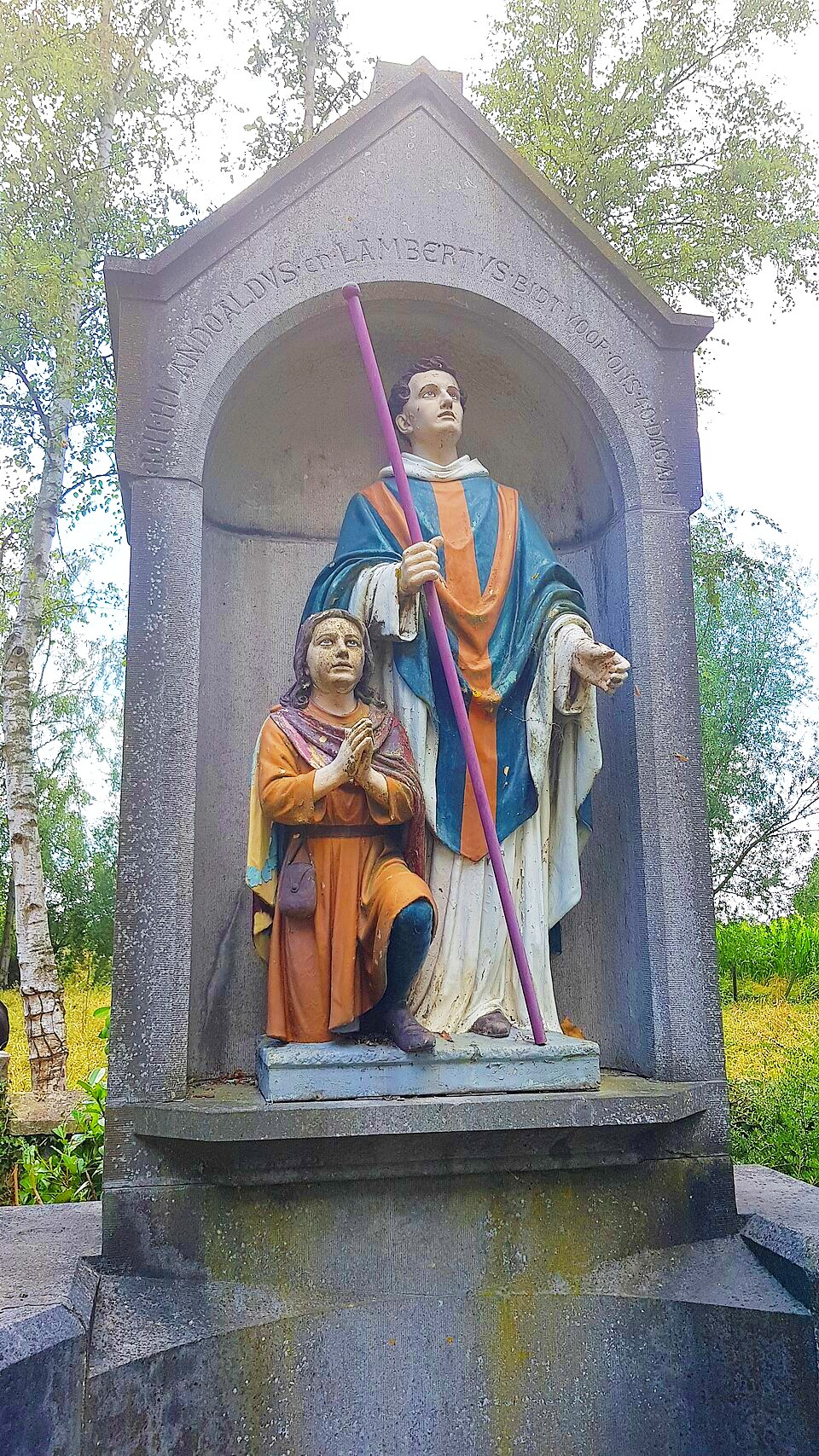
Statue of St Landoaldus and his pupil , St Lambertus, at the Saint Lambertus Spring in Wintershoven
Landoaldus along with other companions — including his sisters Vinciana and Agletrudis — worked as a Missionary in Haspengau (present-day Hespengau).
According to tradition, he was a companion of Amantius of Maastricht and acted as Tutor to St Lambertus of Maastricht.
In around 659, Landoaldus founded a Monastery and a Church in Wintershoven, modern Belgium, where Amantius served as his Deacon and supported him as a Missionary.
King Childeric, who often resided in Maastricht is said to have sent him daily provisions.
Landoaldus was buried in the Church ihe had built n Wintershoven. His deacon St Amantius, who died in 670, was also interred in the same coffin. Around 965, Landoaldus’ remains and those of his companions were exhumed and in 980 they were translated to the Church of St Bavo in Ghent A richly written biography emerged, portraying St Landoaldus as the Bishop of Maastricht, along with an account of the transflation of the Relic.
Blessed Clement (1200-1258) Bishop of Dunblane in Scotland, , Priest and Friar of the Order of Preachers, a great and humble carer of the poor and needy, a zealous Administrator but just as much, a shepherd of souls, Reformer, Writer, a highly renowned Preacher and Linguist, a very learned man indeed. Clement was the first member of the Dominican Order in Britain and Ireland to become a Bishop. Born in Scotland in 1200 and died in 1258 in Dunblane, Scotland of natural causes. An Inspiring Life: https://anastpaul.com/2023/03/19/saint-of-the-day-19-march-blessed-clement-of-dunblane-op-1200-1258-bishop/
St Colocer of Saint-Brieuc St Corbasius of Quimperlé St Cuthbert of Brittany St Gemus
Blessed John of Parma OFM (c1209-1289) Priest, 7th Minister General of the Friars Minorfrom (1247–1257) and a noted Theologian. He was known for his attempts to bring back the earlier spirit of the Order after the death of Saint Francis of Assisi. Patronage – of his birthplace, Parma, Italy. His cult was confirmed in 1777 by his Beatification by Pope Pius VI. Blessed John’s Zealous Life: https://anastpaul.com/2024/03/19/saint-of-the-day-19-march-blessed-john-of-parma-ofm-c1209-1289-priest/
St John (6th Century) Founder Abbot in Civita-di-Penna, Umbria, Italy, Miracle-worker. The Roman Martyrology reads today: “At Civita-di-Penna, the birthday of the blessed St John, a man of great holiness, who came from Syria into Italy, where he constructed a Monastery and, after having been the spiritual guide of many servants of God for forty-four years, rested in peace, renowned for great virtue.” A Man of Great Holiness: https://anastpaul.com/2025/03/19/saint-of-the-day-19-march-saint-john-6th-century-abbot/
St Lactali of Freshford St Landoaldus (Died 668) Priest, Missionary and Bishop (?) St Leontinus of Braga St Leontinus of Saintes Bl Mark of Montegallo St Pancharius of Nicomedia
Martyrs of Sorrento: A group of Three sisters and a brother who were Martyred together. We have little more than their names – Mark, Quartilla, Quintilla and Quintius. They were Martyred in Sorrento, Italy, date unknown.
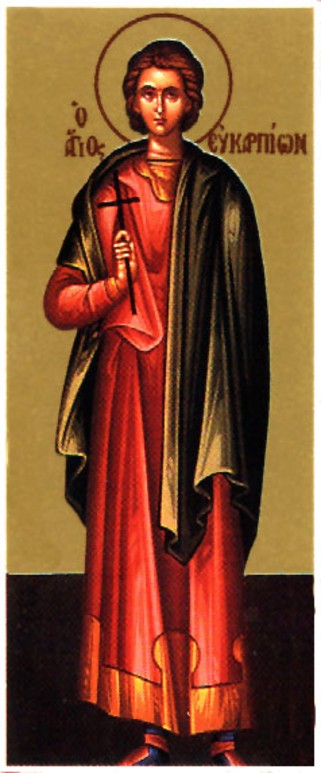
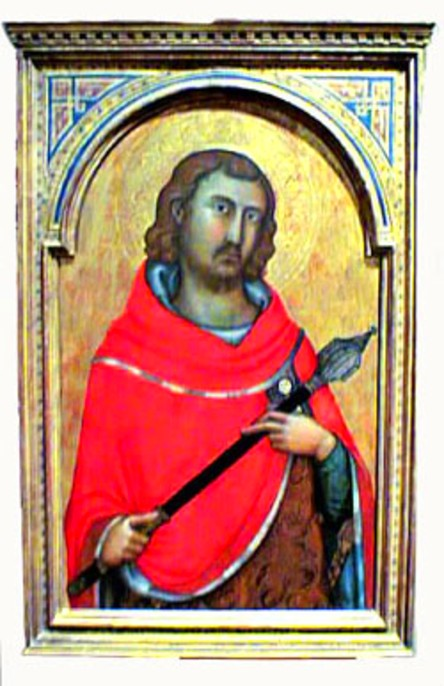
Saint of the Day – 18 March – Saint Eucarpius (Died c304) Martyr and Soldier of Nicomedia. After being sent to pursue Christians and arrest them, St Eucarpius himself became a Christian so glorious was the testimony of these brave soldiers of Christ. He then, in turn, was hunted, arrested and killed by being burned alive.
The Roman Martyrology reads today: “At Nicomedia, also, the holy Martyrs, Tropbius and Eucarpius.”
St Eucarpius had been a pagan soldier in the Imperial Roman Army and was stationed in Nicomedia (in modern Turkey).
Being assigned to hunt and pursue Christians during the persecutions of Diocletian, he came to know them and the faith so well that he converted to the True Faith of Christ.
Arrested and sentenced to death he was burned alive in Nicomedia.
St Eucarpius (Died c304) Martyr of Nicomedia St Felix Deacond and Martyr at Gerona, Catalonia, Spain St Finan (Died c595) Monk of Aberdeen, Scotland. Disciple of St Kentigern (Mungo). St Narcissus of Gerona
Martyrs of Nicomedia – Commemorates the Christians who were Martyred anonymously, either singly and in small groups, by local pagans in the area of Nicomedia prior to the year 300 and who may have been over-looked in the waves of Diocletian persecutions that resulted in the deaths of thousands.
Saint of the Day – 17 March – Saint Paul (Died c760) Monk, Martyr. For defending Sacred Images, Paul was Martyred by being burned alive. Originally from Greece, Paul worked, suffered and died in Constantinople.
The Roman Martyrology reads today: “At Constantinople, St Paul, Martyr, who was burned alive under Constantine Copronymus, for defending the veneration of Holy Images.”
This day commemorate a Martyr named Paul, burned alive for his fidelity to the cult of images.
Constantinople was the site of the Martyrdom and the period of Constantine Copronymus (741-775) as the time of its occurrence. The true identity of the Martyr remembered today can be learned from the Acts of Saint Stephen the Younger, composed by the contemporary Deacon Stephen.
According to this source, while Stephen and other confessors were in prison, a certain Anthony, originally from Crete, who had already suffered much for his faith, stood up and began to recount the atrocious tortures endured by the Monk Paul in Cyprus for his fidelity to the veneration of Sacred images.
He was arrested by the Governor Theophanes Lardothyros and having remained steadfast in his profession of faith, he had first been horribly tortured, his flesh stripped with iron combs, then suspended head downward and burned alive over a slow fire.
Since the Martyrdom of Stephen and his companions occurred around 764, it is possible that Paul died around 760.
St Joseph of Arimathea (Died 1st Century) “The Secret Disciple of Jesus.” Patronages – of pallbearers, funeral directors, morticians, undertakers, tin miners, tin smiths, Catholic Cemeteries of the Archdiocese of Vancouver, Glastonbury Cathedral. Feast day moved after Vatican II to 31 August “The Secret Disciple of Jesus” https://anastpaul.com/2021/08/31/saint-of-the-day-31-august-saint-joseph-of-arimathea-died-1st-century/
NOVENA to ST JOSEPH DAY EIGHT: Click Link HERE:DAY EIGHT
St Agricola (498-580) Bishop of Châlon-sur-Saône, Defender of the true Faith against heretics, a zealous shepherd and teacher of his flock, Apostle of the poor and sick, building hospitals and leper colonies. He founded Churches and Monasteries. He was also a Diplomat and Peace-maker against invading barbarian forces and protector his people by his great courage. Agricola cared for his Diocese for 50 years with tireless dedication. A Wonferful Shepherd: https://anastpaul.com/2025/03/17/saint-of-the-day-17-march-st-agricola-498-580-bishop/
St Llinio of Llandinam St Paul (Died c760) Martyr St Stephen of Palestrina St Theodore of Rome St Thomasello St Withburga (Died 743) Abbess, Princess
Martyrs of Alexandria – Also known as Martyrs of Serapis: An unknown number of Christians who were Martyred together by a mob of worshippers of the Graeco-Egyptian sun god Serapis. They were Martyred in c 392 in Alexandria, Egypt.
Saint of the Day – 16 March – Saint Agapitus (3rd-4th Century) Bishop and Confessor of Ravenna in Italy. Also known as – Agapetus, Agapito.
The Roman Martyrology reads today: “At Ravenna, St Agapitus, Bishop and Confessor.”
The main sources of our information on St Agapitus are the Martyrologium Romanum which celebrates his memory today and several brief notes in ancient calendars and Episcopal records.
Ravenna Basilica Mosaics showing various Bishops
St Agapitus was the 10th Bishop of Ravenna. He lived between the end of the 3rd Century and the first half of the 4th and the report of his participation in the Council of Rome in 340, convened by Pope Julius I. However, this report has no historical basis. The anachronism is evident: for Saint Agapitus was likely already dead at the time of the council.
The 4th Century was a time of great turmoil for the Church. Constantine’s Edict of 313 had established freedom of worship, paving the way for a new era of prosperity. However, new heresies and theological controversies threatened to divide the Christian community.
In this context, St Agapitus distinguished himself as a zealous and wise Shepherd. His reputation for sanctity is linked to his dedication to the Gospel, his care for the poor and his commitment to defending the One True Faith.
Until the 10th Century, St Agapitus remained buried in the cemetery adjacent to the Basilica Probi di Classe. In 963, Archbishop Peter IV exhumed his Relics and transferred them to the Basilica of Ravenna.
But his cult only began to establish itself around the 11th Century, when the legend of the miraculous election through the descent of a dove upon the candidate’s head. It was Archbishop Filippo Fòntana (1250-1270) who, above all, spread and cared for the cult of our Saint Agapitus.
St Julian of Anazarbus St Largus of Aquileia St Malcoldia of Asti St Megingaud of Wurzburg St Papas St Patrick of Clermont
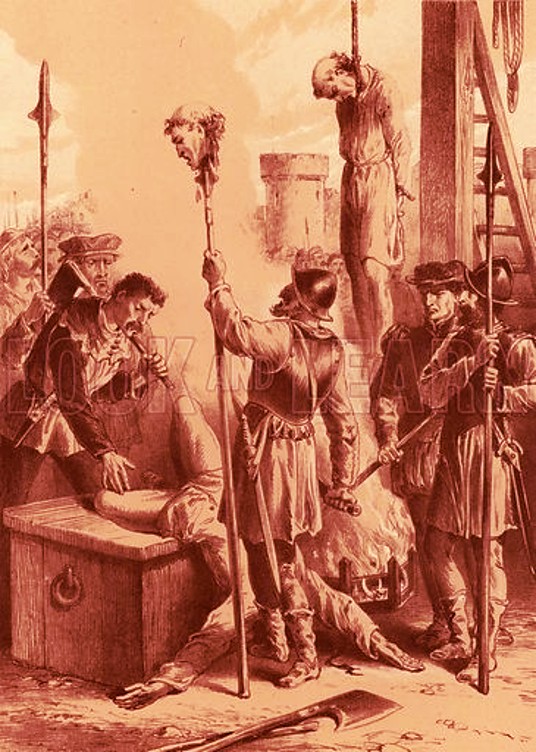
Blessed Robert Dalby (Died 1589) Priest Martyr. Born at Hemingborough near Wakefield in North Yorkshire, England and died on 16 March 1589 at York, England by being hanged, drawn, and quartered during the persecutions of Elizabeth I. Also known as – Robert Drury. Additional Memorial – 29 October as one of the Martyrs of Douai. Blessed Robert was Beatified on 15 December 1929 by Pope Pius XI. His Life and Death: https://anastpaul.com/2024/03/16/saint-of-the-day-16-march-blessed-robert-dalby-died-1589-priest-martyr/
Bl Torello of Poppi Hermit
DISCLAIMER: Please note: I cannot control the content of the Advertisements on this Site, or of pop-ups which may appear, The revenue from the Advertisements, however, does provide a little assistance in the support of the Site. I do apologise for any inappropriate content.
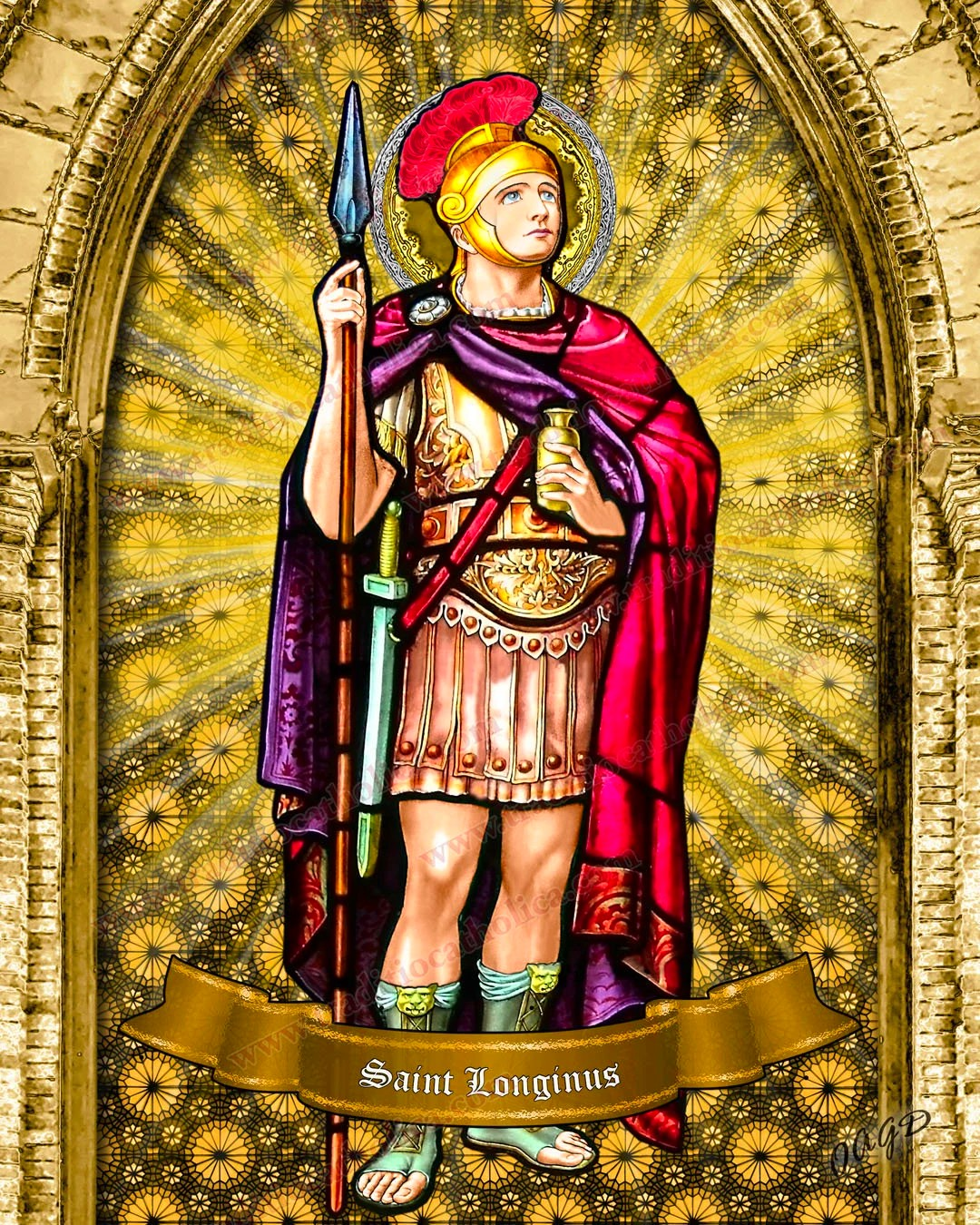
St Longinus (1st Century) Martyr. The Roman Centurion who we believe was he who pierced the Sacred Side of Our Lord with his lance. He was Baptised and became a Monk in Caesarea, where he was Martyred by beheading. St Longinus: https://anastpaul.com/2025/03/15/saint-of-the-day-15-march-st-longinus-1st-century-martyr/
St Mancius of Evora St Matrona (5th-6th Century) Virgin of Capua St Matrona of Thessaloniki St Menignus of Parium Bl Monaldus of Ancona St Nicander of Alexandria St Peter Pasquale St Probus (Died c570) Bishop of Rieti
Saint of the Day – 14 March – Saint Alexander (Died c320) Priest Martyr of Pydna, Macedonia in modern Greece. He died by being beheaded during the persecutions of Emperor Maximian. Also known as – Alessandro, Alexandros.
Information regardomg Saint Alexander is very scant and comes from Passio written a good deal after the events of his life and death.
We do know that he was a Priest who, during the persecutions under Emperor Maximian (c310), distinguished himself for his unwavering faith and zealous preaching of the Gospel.
Because of his missionary activity, Alexander attracted the attention of the Roman authorities, who arrested him and subjected him to various tortures to persuade him to renounce his faith. But Alexander remained steadfast in his conviction and, despite the suffering, did not renounce Christ.
Finally, by order of Maximian, Alexander was condemned to beheading. He was Martyred in Pydna, Macedonia, around 310.
St Peter of Africa St Philip of Turin St Talmach Bl Thomas Vives
47 Martyrs of Rome – Forty-sevenpeople who were Baptised into the Faith in Rome, Italy by Saint Peter the Apostle and were later Martyred together during the persecutions of Nero. Martyred c67 in Rome, Italy
Martyrs of Valeria – Two Monks Martyred by Lombards in Valeria, Italy who were never identified. After the monks were dead, their killers could still hear them singing Psalms. They were hanged on a tree in Valeria, Italy.
Saint of the Day – 13 March – Saint Sabinus (Died c287) Martyr of Egypt. A noble Egyptian by birth, Sabinus died by torture and finally, being drowned. Also known as – Sabinus of Hermopolis, Sabino of…. Abibus.
The Roman Martyrology reads today: “At Hermopolis in Egypt, the Martyr St Sabinus, who after many sufferings, terminating his Martyrdom by being precipitated into a river.”
St Sabinus was born into a noble family in Minya, Egypt and converted to Christianity.
He was forced to leave his home and possessions to hide outside the City with other Christians, being persecuted by the Governor Arius.
When his hiding place was discovered, (some say the Christians were betrayed by those they had assisted) he was arrested, tortured and thrown into the river to drown.
NOVENA for the INTERCESSION of ST JOSEPH DAY FOUR:Clink Link here:DAY FOUR
St Leander of Seville (c534-c 600) BIshop, Confessor of the Faith, Teacher, Writer, Apostle of Spain and Evangelisation, Father of the Church – Patron of Episcopal attire and Liturgical garments. Saint Leander, as Bishop, instituted the practice of praying the Nicene Creed during Mass—a practice which continues today. St Leander’s Holy Life of Grace: https://anastpaul.wordpress.com/2017/03/13/saint-of-the-day-13-march-st-leander-of-seville/
Bl Judith of Ringelheim St Kevoca of Kyle St Mochoemoc
St Nicephorus (c758-829) Bishop and Confessor, Defender of Sacred Images. The Roman Martyrology reads today: “At Constantinople, the Bishop St Nicephorus. In defence of the traditions of his forefathers and of the Churrch, the worship of Sacred images, he opposed the Iconoclast Emperor, by whom he was sent into exile, where he underwent a long martyrdom of fourteen years and departed for the Kingdom of God.” His Zealous Life: https://anastpaul.com/2024/03/13/saint-of-the-day-13-march-saint-nicephorus-c758-829-bishop-confessor/
Saint of the Day – 12 March – Saint Mura McFeredach (c550-645) the 1st Abbot of the Monastery at Fahan, County Donegal, Ireland, Author. Born in c550 in County Donegal, Ireland as a member of the O;Neill clan and died in 645 at his Monastery in Fahan, Ireland. Patronages – of Fahan, Ireland and of the O’Neill clan. Also known as – Murames McFeredach, Muranc Feredach, Murin of Fahan, Mura of Fahan.
Mura was a disciple of St Columban (543-615) and was appointed as the Abbot at Fahan Monastery. He was a friend of King Hugh of Ireland. Spiritual teacher of Saint Laserian of Leighlin.
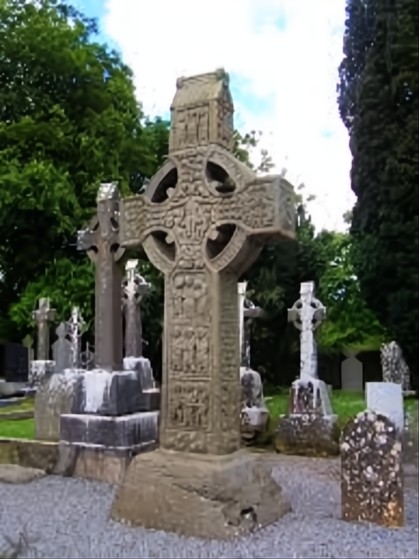
St Mura is the Author of a number of works including a rhymed biography of Saint Columban. In the ruined Monastery at Fahan is a beautiful Irish Cross, nearly 2 metres tall and nearby Saint Mura’s miraculous Well. St Mura’s Crosier is preserved in the National Museum of Ireland in Dublin.[
Blessed Jerome of Recanati OSA (Died 1350) Priest, Friar of the Hermits of Saint Augustine, Peacemaker. He was Beatified in 1804 by Pope Pius VII. The Roman Martyrology reads : “In Recanati in the Marche, Blessed Girolamo Gherarducci, Priest of the Order of the Hermits of St Agustine, who worked for peace and harmony between peoples.” Blessed Jerome the Peacemaker: https://anastpaul.com/2022/03/12/saint-of-the-day-12-march-blessed-jerome-of-recanati-osa-died-1350/
St Theophanes (c758-817) Abbot, Confessor, Founder of Monasteries, Defender of Sacred images, Writer and Historian. The Roman Martyrology reads today: “At Constantinople, St Theophanes, who gave up great wealth to embrace poverty in the monastic state. By Leo the Armenian, he was kept in prison for two years for the worship of holy images, then, being exiled in Samothracia, where, overwhelmed with afflictions, he breathed his last and wrought many miracles.” Courageous and Brilliant St Theophanes: https://anastpaul.com/2024/03/12/saint-of-the-day-12-march-saint-theophanes-c758-817-abbot-confessor-defender-of-icons/
Martyrs of Nicomedia – 8 Beati: Christians who were Martyred in succession in a single incident during the persecutions of Diocletian. First there were the eight imprisoned Christians, Domna, Esmaragdus, Eugene, Hilary, Mardonius, Maximus, Mígdonus and Peter, about whom we know little more than their names. Each day for eight days one of them would be strangled to death in view of the others so that they would spend the night in dread, not knowing if they were next. Peter was the Chamberlain or Butler in the Palace of Diocletian. When he was overheard complaining about this cruelty, he was exposed as a Christian, arrested, tortured and executed by having the flesh torn from his bones, salt and vinegar poured on the wounds and then being roasted to death over a slow fire. Gorgonio was an army officer and member of the staff in the house of emperor Diocletian, Doroteo was a staff clerk. They were each exposed as Christians when they were overhead objecting to the torture and murder of Peter. This led to their own arrest, torture and executions. Died in 303 in Nicomedia, Bithynia (in modern Turkey) Additional Memorial – 28 December as part of the 20,000 Martyrs of Nicomedia. Beatified on 14 January 1891 by Pope Leo XIII (cultus confirmation).
Saint of the Day – 11 March – Saint Firmian (Died c1020) Abbot of San Sabino, Italy. Also known as – Fermanus, Firminus.
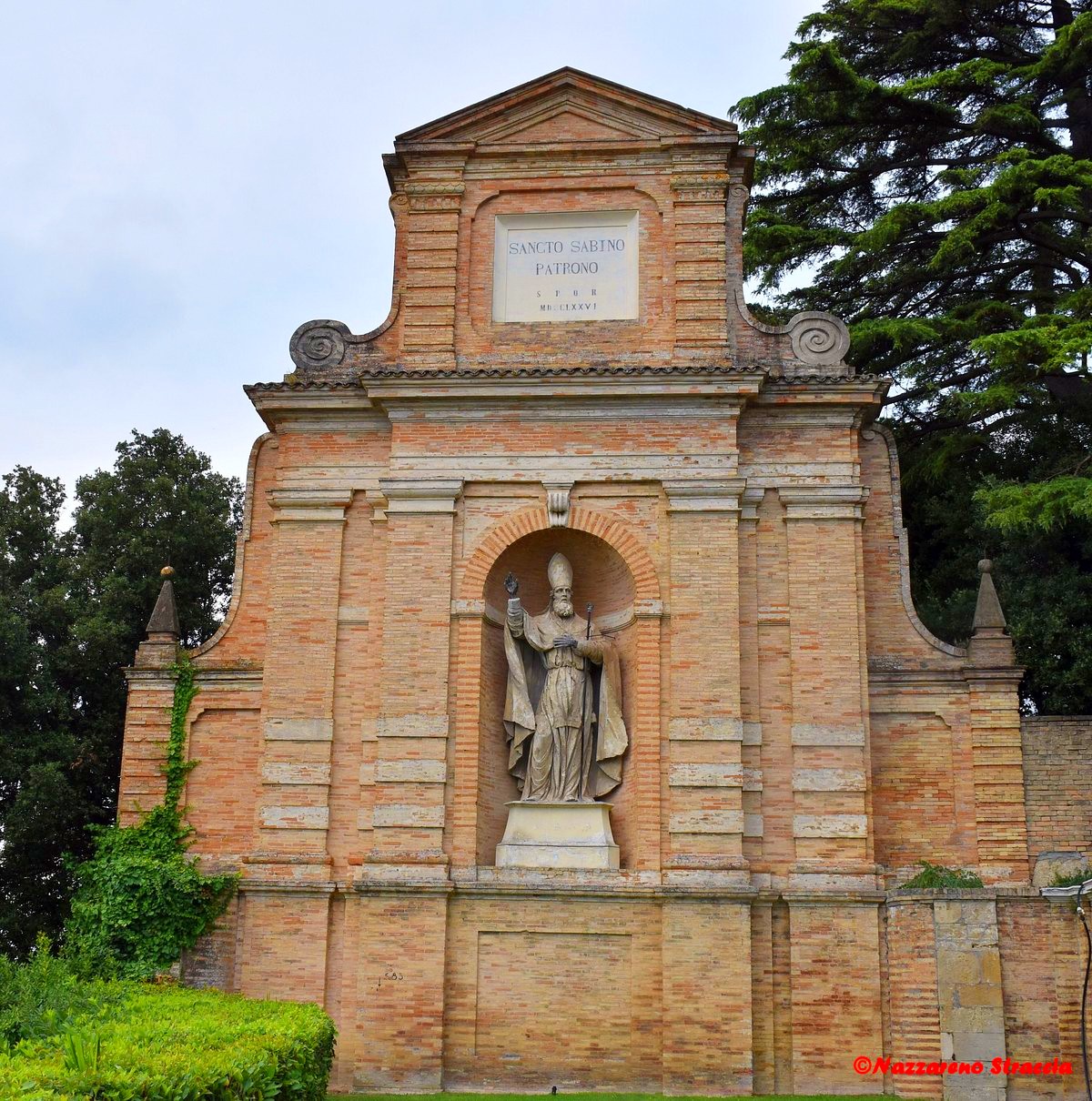
St Sabino at the Monastery in Fermo
Beside the fact that our Saint Firmian lived in the 9th to 10 Centuries, we have nothing further to record, bar the name of his Monastery founded by San Sabino in Piceno near Fermo in the Marches of Italy.
We presume that he was a man revered for his sanctity and skills as an Abbot, those of leading his Monks in their spiritual path.
St Benedict Crispus (Died 725) Archbishop of Milan from c 685 until his death. A poem written about ten years after his death, De laudibus Mediolani- In Praise of Milan, praises him and remembers his veneration by the entire land and informs us that he was buried in the Basilica of Saint Ambrose. A Life of Zeal and Virtue: https://anastpaul.com/2020/03/11/saint-of-the-day-11-march-saint-benedict-crispus-of-milan-died-725/
St Candidus the Martyr St Constantine II St Constantine of Carthage
St Firmian (Died c1020) Abbot of San Sabino, Italy
St Firmin (Unknown) Abbot of Amiens For 11 March, the Roman Martyrology mentions a Firmin, a holy Abbot of the Amiens region, without providing further details. History does not know of any abbot of this name in this place; it is therefore possible that there has been confusion both with the two bishops of Amiens, named Firminus and with Fermanus, the Abbot of Fermo in the Marche
.St Firmus the Martyr St Gorgonius the Martmo St Heraclius of Carthage + Martyr
St Peter the Spaniard Hermit St Pionius St Piperion the Martyr St Rosina of Wenglingen
St Sophronius (c550-c638) Bishop of Jerusalem from 634 until his death, Father of the Church.Bishop of Jerusalem from 634 until his death, Father of the Church. Before rising to the primacy of the See of Jerusalem, he was a Monk, Theologian and Philosopher, who was the chief protagonist for orthodox teaching in the doctrinal controversy on the essential nature of Jesus. He was a well-travelled and honoured Teacher of Rhetoric, living for several years in Alexandria, Egypt near St John the Almoner. Ecclesiastical and Liturgical Writer, Poet and exercised an extensive correspondence, some of which has survived and some of which we still use within the Liturgy. He is also renowned in history for his peace negotiations with the invading Saracens, thus ensuring a level of protection to the City’s Christians Born in Damascus, Syria in the 6th Century and died in c638; sources disagree on cause and location. I use St Sophronius Commentaries whenever I are able on this Site. A Most Important Saint: https://anastpaul.com/2024/03/11/saint-of-the-day-11-march-saint-sophronius-of-jerusalem-c550-c638-bishop-father-of-the-church/
Saint of the Day – 10 March – St Ferfugill (Died 789) Bishop of Clondalkin, Ireland… Irish born dying on 10 March 789 in his See which is now a part of the Archdiocese of Dublin. Also known as – Firfuigill… Fugillus…
A veil of mystery surrounds the figure of Saint Ferfugill the Bishop of Clondalkin who lived in the 8th Century.
Information about this Irish Prelate is fragmentary, leaving us with a hazy portrait of his life and works. The only historical certainty is his long Episcopate as head of the Church of Clondalkin, located in the County of Leinster, not far from Dublin.
His reputation for sanctity, however, still resonates today, echoing a life dedicated to the service of God and his people.
The Tallagh Martyrology, an ancient Irish hagiographical text, remembers him as ‘Fir Fuigill Episcopo’ setting his Liturgical Feast on 10 March, the day of his death in 789.
Some histoians believe that Saint Ferfugill was not only the Bishop but also the Abbot of the Monastery of Clondalkin, founded by Saint Mochua. A fascinatingbelief that, although lacking certainty, enriches the profile of this saintly man, envisioning him as a spiritual guide and point of reference for the monastic community.
The scarcity of information does not prevent us from grasping the essence of Saint Ferfugill – a zealous Bishop, a devoted shepherd, a man of faith who left an indelible mark on the history of the Irish Church.
Forty Martyrs of Sebaste, Armenia (Died 320) – Forty Christian soldiers of the Thunderstruck Legion of the Imperial Roman army who were tortured and murdered for their faith during the persecutions of Emperor Licinius. They were exposed naked on a frozen pond to freeze to death at Sebaste, Armenia in 320 and their bodies afterward were burned. THE FULL STORY HERE: https://anastpaul.com/2021/03/10/saints-of-the-day-10-march-the-forty-martyrs-of-sebaste-armenia-died-320/
St Arialdo Deacon and Martyr – on the right might just be our Saint Andrew prior to becoming a Monk
St Attalas (Died c627) AbbotAbbot of Bobbio, Disciple of, Assistant and Successor to St Columban (543-615). A legendary leader of great wisdom and scholarly abilities, a loving father to his Monks and a generous and kindly Apostle to the poor and the ill, Miracle-worker. His Monks included Saint Valery, Saint Blitmund and St Bertulf, all Abbots at various times. Born in Burgundy, France and died in c627 of natural causes in Bobbio, Italy. Patronages – of Bobbio and of Luxeuil-les-Bains, France. The Roman Martyrology reads today: “In the Monastery of Bobbio, the Abbot, St Attalas, renowned for miracles.” Blessed by Miracles, St Attalas: https://anastpaul.com/2024/03/10/saint-of-the-day-10-march-st-attalas-of-bobbio-died-c627-abbot/
St Blanchard of Nesle-la-Réposte St Caius of Apema St Cordratus of Nicomedië
St Emilian of Lagny St Failbhe the Little St Ferfugill (Died 789) Bishop of Clondalkin, Ireland St Gustav the Hermit
St Gustav the Hermit St Himelin Bl John of Vallombrosa St Kessog
St Macarius of Jerusalem (Died c335) Bishop of Jerusalem for over twenty years. Defender of the Faith against Arianism, founder of the True Cross with St Helena, organiser and manager of the building of the Sacred Basilicas, including the Church of the Holy Sepuchre in Jerusalem, paid for by St Constantine the Great, St Helena’s son. Also of great import is the fact that Bishop Macarius was one of the two main authors of the Nicene Creed, that is, of the Creed that we still pronounce in Mass today The Life os St Macarius: https://anastpaul.com/2022/03/10/saint-of-the-day-10-march-saint-macarius-died-c-335/
St Peter of Veroli St Rufinus of Nicomedië St Sannudius of Bagensena St Saturninus of Nicomedië St Sedna of Ossory St Silvester of Ireland
St Gregory of Nyssa (c335–c395) Bishop, Father of the Church, Brother of St Basil the Great. St Gregory was an erudite Theologian, Philosopher. Writer , Defender of orthodoxy against heresy but he possible lacked the administrative ability of his brother, Basil or the contemporary influence of Gregory of Nazianzen but, he was an erudite Theologian who made significant contributions to the Doctrines of the Church, in particular, of the Trinity and the Nicene Creed. St Gregory, together with his elder brother, St Basil the Great (Doctor of the Church) and their great and lifelong friend, St Gregory of Nazianzen (also a Doctor of the Church) are collectively known as the “Cappadocian Fathers.” The Roman Martyrology reads today: “At Nyssa, the demise of St Gregory, Bishop, brother of the blessed Basil the Great, whose life and erudition have rendered him illustrious. He was expelled from his own City for having defended the Catholic Faith during the reign of the Arian Emperor, Valens.” Wonderful St Gregory: https://anastpaul.com/2024/03/09/saint-of-the-day-9-march-st-gregory-of-nyssa-c335-c395-bishop-father-of-the-church/
DISCLAIMER: Please note: I cannot control the content of the Advertisements on this Site, or of pop-ups which may appear, The revenue from the Advertisements, however, does provide a little assistance in the support of the Site. I do apologise for any inappropriate content.
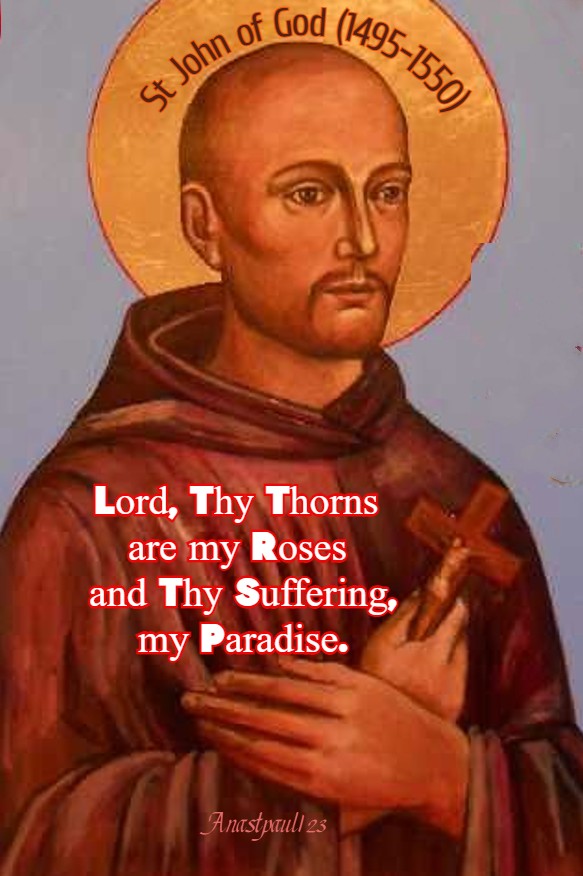
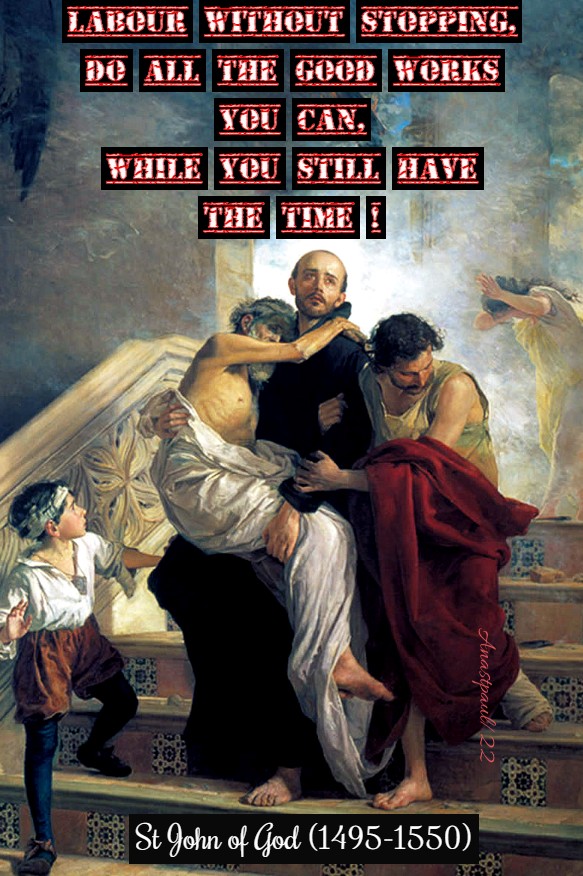
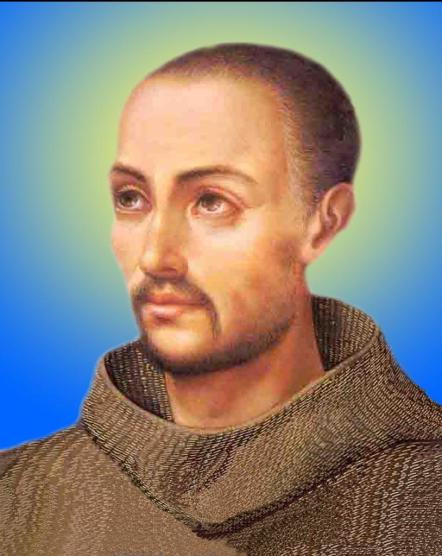
Quote/s of the Day – 8 March – St John of God OH (1495-1550) Confessor, Founder of the Brothers Hospitallers of Saint John of God
“Lord, Thy Thorns are my Roses and Thy Suffering, my Paradise.”
“Labour without stopping, do all the good works you can, while you still have the time!”
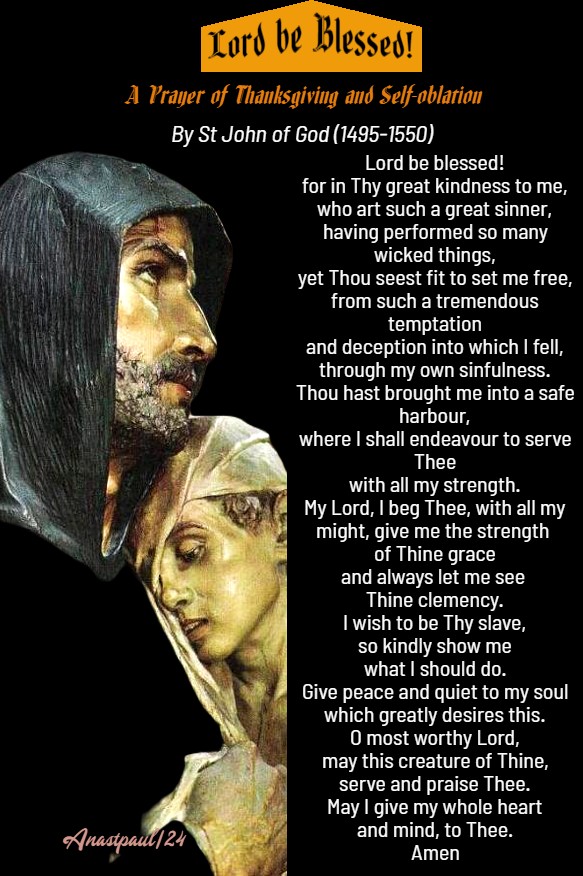
Lord be Blessed! (A Prayer of Thanksgiving and Self-oblation) By St John of God (1495-1550)
Lord be blessed! for in Thy great kindness to me, who art such a great sinner, having performed so many wicked things, yet Thou seest fit to set me free, from such a tremendous temptation and deception into which I fell, through my own sinfulness. Thou hast brought me into a safe harbour, where I shall endeavour to serve Thee with all my strength. My Lord, I beg Thee, with all my might, give me the strength of Thine grace and always let me see Thine clemency. I wish to be Thy slave, so kindly show me what I should do. Give peace and quiet to my soul which greatly desires this. O most worthy Lord, may this creature of Thine, serve and praise Thee. May I give my whole heart and mind, to Thee. Amen
Saint of the Day – 8 March – Saint Probinus (Died 420) Bishop of Como, disciple of St Ambrose, Patronage – against deadly fevers, of Agno, Switzerland. Also known as – Probino, Probinus, Provino. Some writers and hagiographers write ‘Provino’ but there is no doubt that the exact form is Probinus, a name in use among the Latins and frequent in the 4th Century.
Probinus was a disciple of St Ambrose, who sent him to assist the 1st Bishop St Felix in Como. When St Felix died in 391, Probinus became his successor. He was thus the 2nd Bishop of the See of Como until his death in 420.
His Episcopate shone for wisdom and sanctity and after his death, he enjoyed an uninterrupted cult, The Relic of his head was preserved in a small Church outside the City, built by himself and dedicated to Saints Gervasius and Protasius, whose bodies had been discovered in Milan by St Ambrose a few years prior to his being appointed as the Bbishop, in 386.
The Relic remained there until 1118, when, to protect it from enemy raids, it was moved within the City walls of Como, to the Church of St Anthony which took the name of St Probinus.
There are records of subsequent examinations of the Relics, which took place in 1504, 1618, 1836 and 1933; the influx of the faithful to his Tomb was constant, especially those suffering from fevers, of which St Probinus is believed to be a healer.C In 1096, a portion of his skull was donated to the collegiate Church of Agno in the Canton of Ticino and placed in a silver bust. A very intense cult developed there,and every year, on 8 March his Liturgical Feast is celebrated with a large attendance of the faithful, even from other areas. A major fair, renowned throughout Ticino, is held for the occasion.
Martyrs of North Africa – 9 Saints: A Bishop and some of his flock who were Martyred together in North Africa. The only details that have survived are nine of the names – Beata, Cyril, Felicitas, Felix, Herenia, Mamillus, Rogatus, Silvanus, Urban.
Saint of the Day – 7 March – Saint Gaudiosus (Died c445) Bishop and Confessor of Brescia. He was the 12th Bishop of Brescia and lived in the 4th and 5th Centuries. A devout apostle of the needy and sick,
The Roman Martyrology reads today: “At Brescia, St Gladiosus, Bishop and Confessor.”
Little is known about his life but this slight le information allows us to sketch a profile of a holy and devout man. He was born in Brescia into a Christian family. From a young age, he distinguished himself for his piety and charity towards the needy.
He became a Priest and, after the death of Bishop Sisinnius, was elected his successor. Gaudiosus governed the See of Brescia for 13 years, during a period of great difficulty for the Church. The Western Roman Empire was in decline and barbarian invasions threatened Christianity. Gaudiosus, however, was a courageous and enlightened shepherd who protected and led his people with firmness and compassion.
The holy Bishop devoted himself to caring for the poor and the sick and zealously worked to preach the Gospel of Christ. He was also a great builder, constructing numerous Churches and charitable institutions.
Gaudiosus died in Brescia on 7 March, around 450/455. His body was buried in the Church of Sant’Alessandro, which he himself had built. His Liturgical Feast is celebrated today.
PRAYER O Saint Gaudiosus, Bishop of Brescia, who led your people with firmness and compassion, intercede for us with the Lord. Help us to be strong in faith, open in charity towards the needy and to do all for the glory of God. Obtain for us, through the intercession of the Virgin Mary, the grace we humbly seek of you… (Name the grace you wish to obtain) Amen.
St Ardo of Aniane Bl Daniel of Wichterich St Deifer of Bodfari St Drausinus of Soissons Bishop St Enodoch St Esterwine of Wearmouth Abbot St Eubulus of Caesarea St Gaudiosus (Died c445) Bishop and Confessor of Brescia
Bl German Gardiner Bl Henry of Austria Bl Jermyn Gardiner
Bl Volker of Segeberg OSA (Died c1135) Priest Martyr Bl William of Assisi
Martyrs of Carthage – 4 Saints: A catechist and three students Martyred together for teaching and learning the faith. We know little more than their names – Revocatus, Saturninus, Saturus and Secundulus. Mauled by wild beasts and beheaded 7 March 203 at Carthage, North Africa
Saint of the Day – 6 March – Saint Marcian (Died c122) Bishop and Martyr of Tortona,in north-western Italy. He occupied his Office for 45 years and had been consecrated by St Barnabas. Patronages – of both the City and Diocese if Tortona, of Genola, also in Italy. Also known as – Marcianus, Martianus, Marzano, Marziano.
The Roman Martyrology reads today: “At Tortona, St Marcian, Bishop and Martyr who received the Crown of immortality by being killed under Trajan, for the glory of Christ.”
Tradition states that he was born to a pagan family but was converted by St Barnabas and then confirmed in the Christian faith by St Sirus the 1st Bishop of Pavia.
St Secundus (Died c119) to become the Bishop of Asti is said to have met Marcian at Tortona, when the former was still a pagan and St Marcian converted him.
There is some disagreement about the year of St Marcian’s death. Some sources say it occurred in c17, under Trajan, while others say it was under Hadrian in c122 but all agree that he was Crucified.
St Balther of Lindisfarne St Basil (Died c335) Bishop of Bologna St Cadroë
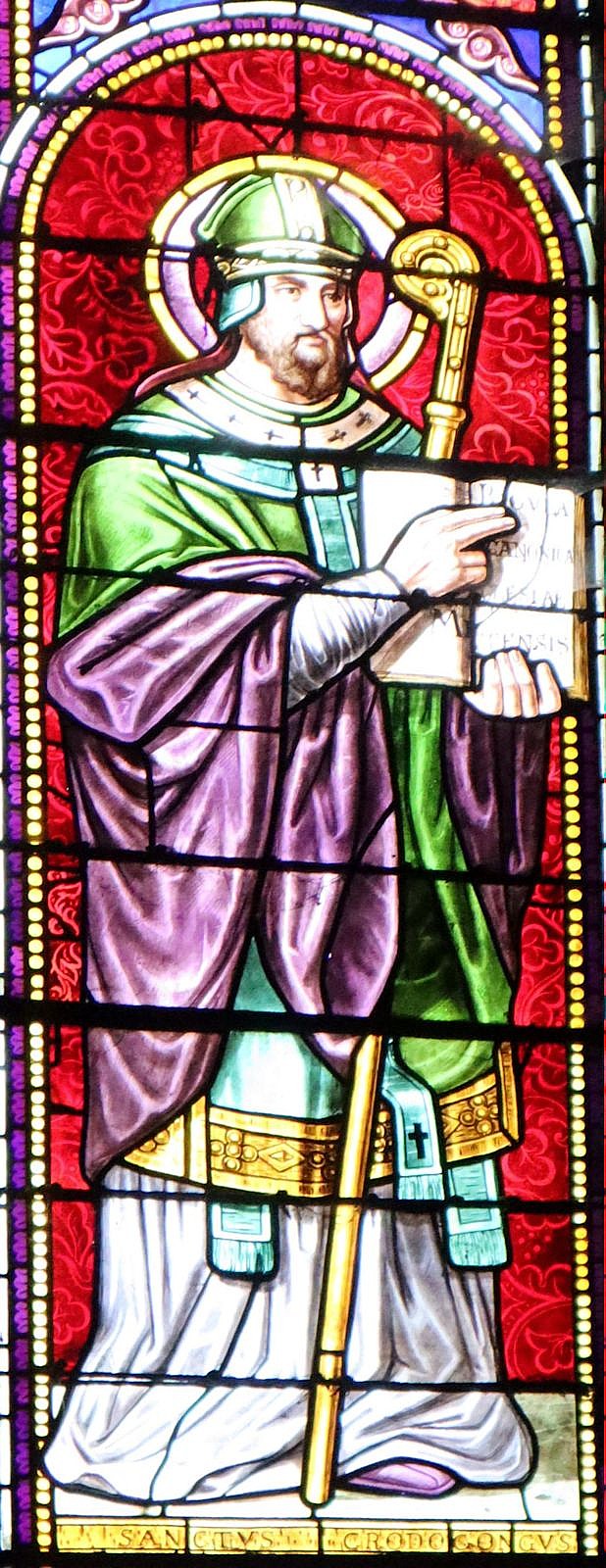
St Chrodegang of Metz (c714-776) The First Bishop of Metz, Protector and Father of the poor and orphans, Reformer of the Clergy, a relative of King Pepin and of Prince Charles Martel, both of whom he was Court Chancellor, Royal Diplomat, Saint Opportuna of Montreuil was his brother. The Roman Martyrology states: “In Metz in Austrasia, in today’s France, St Crodegango, Bishop, who arranged for the Clergy to live as if within the walls of a cloister under an exemplary rule of life and greatly promoted liturgical chant.” An Ardemt Shepherd: https://anastpaul.com/2022/03/06/saint-of-the-day-6-march-saint-chrodegang-of-metz/
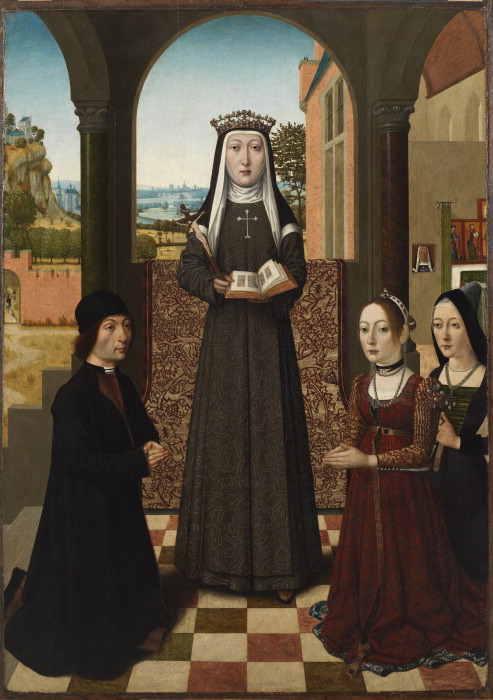
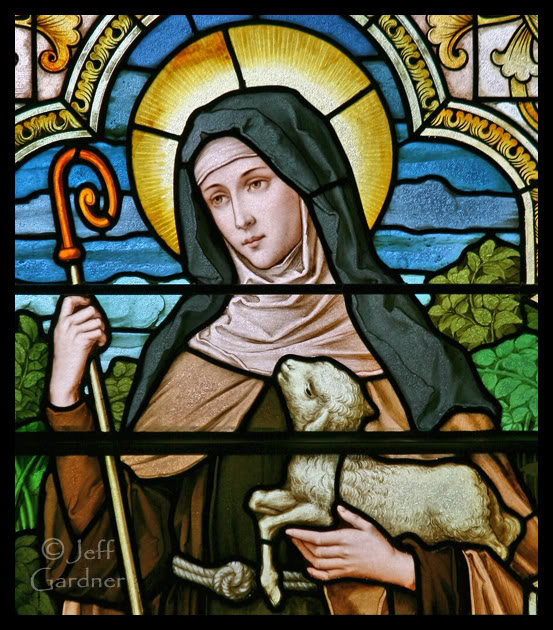
St Colette PCC (1381-1447) Abbess and Foundress of the Colettine Poor Clares, a reform branch of the Order of Saint Clare. Patronages – against eye disorders, against fever, against headaches, against infertility, against the death of parents, of women seeking to conceive, expectant mothers and sick children, craftsmen, Poor Clares, servants, Corbie, France, Ghent, Belgium. St Colette was Canonised on 24 May 1807 by Pope Pius VII. Lovely St Colette: https://anastpaul.com/2017/03/06/saint-of-the-day-6-march-st-colette/ AND: https://anastpaul.com/2019/03/06/saint-of-the-day-6-march-st-colette-2/
St Cyriacus of Trier St Cyril of Constantinople St Evagrius of Constantinople
Bl Guillermo Giraldi St Heliodorus the Martyr Bl Jordan of Pisa St Julian of Toledo St Kyneburga of Castor St Kyneswide of Castor St Marcian (Died c122) Bishop and Martyr of Tortona
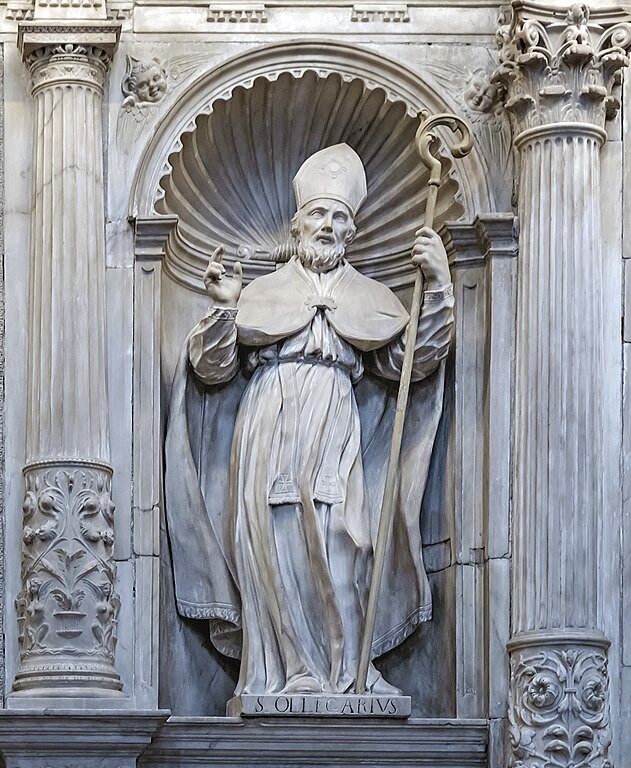
St Ollegarius Bonestruga OSA (1060-1137) Bishop, Canon Regular of the Augustinians, Reformer, in both the religious sphere and the social one, Abbot, Diplomat, Peacemaker and Proptector of his people from possible violent incursions. The Roman Martyrology reads: “At Barcelona in Spain, the blessed St Ollegarius, who was first a Canon and afterwards the Bishop of Barcelona and Archbishop of Tarragona.” A Very Busy Shepherd https://anastpaul.com/2024/03/06/saint-of-the-day-6-march-st-ollegarius-bonestruga-osa-1060-1137-bishop/
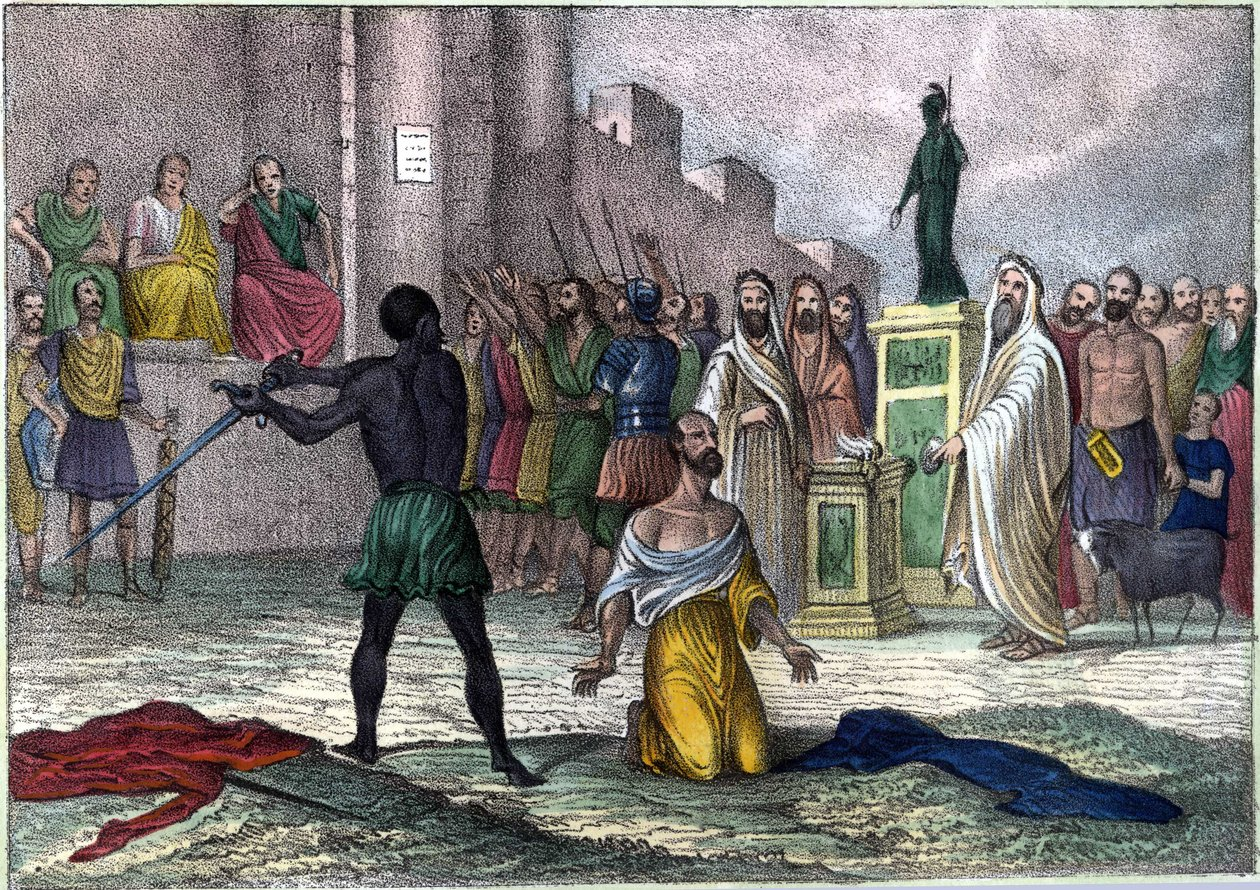
Martyrs of Amorium – 42 Saints – Also known as Martyrs of Syria and Martyrs of Samarra; A group of 42 Christian senior officials in the Byzantine Empire who were captured by forces of the Abbasid Caliphate when the Muslim forces overran the City of Amorium, Phrygia in 838 and massacred or enslaved its population. The men were imprisoned in Samarra, the seat of the Caliphate, for seven years. Initially thought to be held for ransom due to their high position in the empire, all attempts to buy their freedom were declined. The Caliph repeatedly ordered them to convert to Islam and sent Islamic scholars to the prison to convince them; they refused until the Muslims finally gave up and killed them. Martyrs. We know the names and a little about seven of them: Aetios Bassoes Constantine Constantine Baboutzikos Kallistos Theodore Krateros Theophilos but details about the rest have disappeared over time. However, a lack of information did not stop several legendary and increasingly over-blown “Acts” to be written for years afterward. One of the first biographers, a monk name Euodios, presented the entire affair as a judgement by God on the empire for its official policy of Iconoclasm. Deaths: beheaded on 6 March 845 in Samarra (in modern Iraq) on the banks of the Euphrates river by Ethiopian slaves the bodies were thrown into the river, but later recovered by local Christians and given proper burial.
Saint of the Day – 5 March – Saint Elouan (5th Century) Hermit and Irish Missionary to France. Also known as – Elouen, Elowan, Eluen, Elven, Llywan, Loan, Louan, Louen, Louenn, Luan, Youen, Youenn.
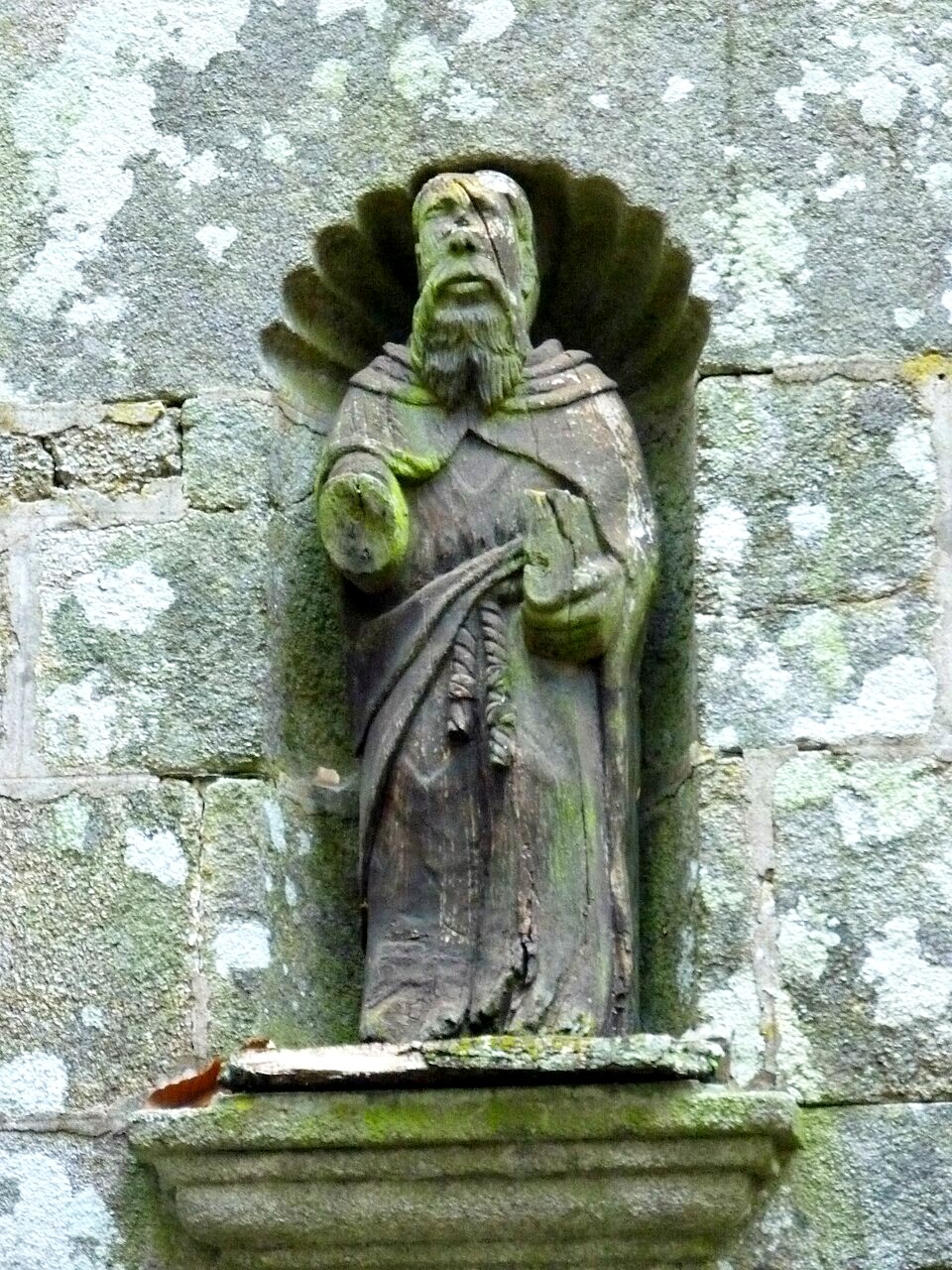
Statue St Elouan on the Fountain adjoining the Chapel of Sainte-Guen .
His history is obscure. Originally from Ireland, Elouan was a missionary to France, having been part of a company of Celtic Missionaries probably under the leadership of St Tugdual and later a Hermit in the forest which is now the Parishes of Mûr and Sainte-Guin . He lived there and died there. He is celebrated there both today and on the last Sunday of August.
His veneration is ensured particularly by a Chapel bearing his name which located at Saint-Guen, in the Côtes-d’Armor, near Mûr-de-Bretagne, in a very remote part of the See of Cornouaille.
In 1646 , Father Maunoir discovered the Saint’s Chapel in ruins and the Saint;s Tomb. This led to a revival of his cult, causing up to 80,000 pilgrims a year to this isolated place.
His sanctity has been recognizsd by the Church for centuries, as evidenced by the Statue and the Chapel erected in his honour and not forgetting the great number of pilgrims who come to pray at his Tomb.





















 AnaStpaul
You must be logged in to post a comment.