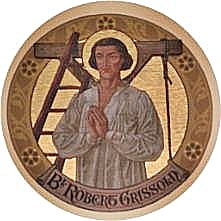
One of the English Martyrs. Blessed Robert Grissold (or Greswold) was a native of Rowington, the son of John and Isabel Grissold of Poundley End, Rowington. John was a weaver and he and his wife had seven sons and one daughter. Of yeoman stock, and he was the servant of a Mr Sheldon of Broadway in Worcestershire. Both Robert and his brother John had a reverence for Catholic priests. John was the servant of Fr Henry Garnet, SJ, and was so badly racked after the Gunpowder Plot that it was rumoured he was dead. It was probably in Mr Sheldon’s service that Robert encountered John Sugar, who had been a clergyman of the Anglican Church but had become a Catholic, studied at the English College, Douai, and was ordained a priest on 21st April 1601. Having returned to England, he travelled on foot throughout Warwickshire, Staffordshire and Worcestershire, where he ministered to the ‘poorer and meaner sort of Catholics.’ Robert accompanied the priest to his old home, where news of the priest’s arrival was noised abroad.
On Sunday, 8th July 1603 a warrant was issued to search the house of a Catholic dwelling in Rowington for the arrest of a Catholic priest who was rumoured to be there. This was probably the house of William Skynner, Lord of the Manor or Rowington, a Catholic who in 1592 had been in trouble for harbouring a priest. On this occasion no priest was found and the searchers went to the house of Robert, Henry and Ambrose Grissold, Robert’s three unmarried uncles, who kept house together and were known to be Catholics. One of the searchers was Clement Grissold, nephew of the three brothers and first cousin of Robert; he it was who directed the search to the Grissold household. Again, no priest was found.
However, on the highway near Baddesley the search party encountered Robert and John Sugar. They were betrayed by a relative of Grissold who offered to let him leave. “Cousin, if you will go your way you may,” said Clement; but Robert replied, “I will not, except I may have my friend with me.”
Both were imprisoned in Warwick Gaol, where they languished for a year. On 13th July 1604 John Sugar was arraigned for being a Catholic priest and was condemned to be hanged, drawn and quartered. Authorities offered both men a final chance at pardon if they would conform to the Church of England by attending Anglican services, but Grissold, approximately 29 years old, steadfastly refused, affirming his loyalty to the Catholic faith.
On 16th July they were taken to the place of execution, known as Gallows Hill. John Sugar was drawn on a hurdle. Robert was given the opportunity of not following through the mud, but he replied, ‘I have not thus far followed him to leave him now for a little mire.’
Fr Sugar was executed first.He said on the scaffold: “Be ye all merry, for we have not occasion of sorrow but of joy: for although I shall have a sharp dinner, yet I trust in Jesus Christ that I shall have a most sweet supper.”
Seeing the halter with which he was to be hanged lying on the ground, Robert went and dipped it in John Sugar’s blood, and going up the ladder he said to the people, ‘Bear witness, good people, that I die here not for theft, nor for felony, but for my conscience.’ Then he forgave his persecutors and the hangman, made an act of contrition, and called on the name of Jesus. Lastly, he commended himself into the hands of Almighty God and was turned off the ladder; he hanged until he was quite dead. He was buried beneath the gallows, while the head and quarters of John Sugar were set up on the gates of Warwick.
Vladimir the Great, Vladimir I Sviatoslavich, Volodymyr I Sviatoslavych, Vladimir Veliky. Grandson of Saint Olga of Kiev. Son of the pagan Norman-Rus prince Svyatoslav of Kiev and his consort Malushka. Grand prince of Kiev. Prince of Novgorod in 970. Vladimir’s father of the Rurik dynasty and after his death in 972, Vladimir was forced to flee abroad after his brother Yaropolk murdered his other brother Oleg to become the sole ruler of Rus’. Vladimir assembled a Varangian army and, with the help of an uncle, returned to depose Yaropolk in 978. By 980 Vladimir had consolidated the Kievan realm from Ukraine to the Baltic Sea, and had solidified the frontiers against Bulgarian, Baltic, and Eastern nomads.
Christianity had made some progress in Kiev, but Vladimir remained pagan, had seven wives, established temples, and participated in idolatrous rites, possibly involving human sacrifice. Around 987, Byzantine Emperor Basil II sought military aid from him. The two reached a pact for aid that involved the giving of Basil’s sister Anne in marriage, and Vladimir becoming a Christian. Never before had a Byzantine imperial princess, and one “born in the purple”, married a barbarian. Vladimir was baptized, took the patronal name Basil in compliment to his brother-in-law, and ordered the Christian conversion of Kiev and Novgorod. Idols were thrown into the Dnieper River, and the new Rus Christians adopted the Byzantine rite in the Old Church Slavonic language. The reason for his choice of the Byzantine rite, is that his envoys were most impressed with their visit to Constantinople, saying, “We knew not whether we were in Heaven or on Earth … We only know that God dwells there among the people, and their service is fairer than the ceremonies of other nations.”
Vladimir expanded education, judicial institutions, and aid to the poor. He and Anne had the martyr sons Saint Boris and Saint Gleb. Following the death of Anne in 1011, another marriage affiliated him with the German Holy Roman emperors. His daughter became the consort of Casimir I the Restorer of Poland.
Vladimir then formed a great council out of his boyars and set his twelve sons over his subject principalities. During his Christian reign, he lived the teachings of the Bible through acts of charity. He would hand out food and drink to the less fortunate, and made an effort to go out to the people who could not reach him. His work was based on the impulse to help one’s neighbors by sharing the burden of carrying their cross. He founded numerous churches, including the Desyatynna Tserkva (Cathedral of the Tithes), established schools, protected the poor and introduced ecclesiastical courts. He lived mostly at peace with his neighbors, the incursions of the Pechenegs alone disturbing his tranquility.
Vladimir fell ill, most likely of old age, and died at Berestove, near modern-day Kiev on the 15th of July 1015 . The various parts of his dismembered body were distributed among his numerous sacred foundations and were venerated as relics.
Patronages: Converts, parents of large families, reformed and penitent murderers, Russia, Ukrainian Catholic Diocese of Stamford, Connecticut, archeparch of Winnipeg, Manitoba
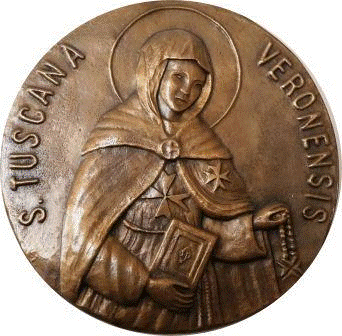
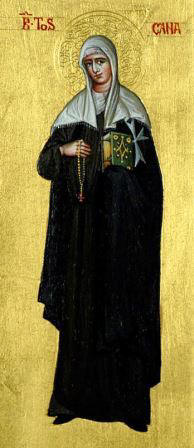
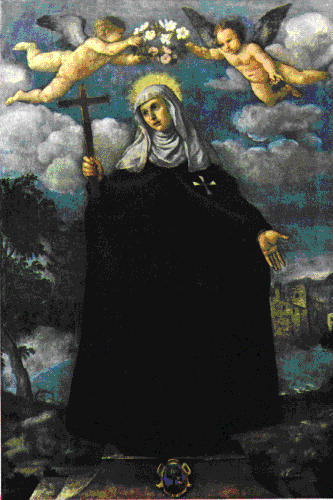
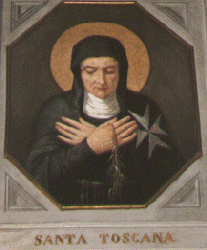
She was born in Zevio, near Verona about 1280. Her parents were noble and good Christians. As a child she had a great devotion for virginity so she refused all her suitors. But her family insisted that she marry. So she married a nobleman, Alberto, of the house of Occhi di Cape. She went to live in Verona with him, where she imitated the women of the Old Testament, as well as Saint Anna and Saint Elizabeth, living in perfect matrimonial chastity and taking care of her husband and her house, and also doing good works. She gave all the alms she could, and each day at three in the afternoon, she went to the Hospital of the Holy Sepulchre belonging to the Order of Saint John of Jerusalem in order to visit the poor and wash their feet, to take care of the sick and wounded, from whose ulcers she pressed the pus without showing disgust or revulsion.
She did not bear any children, and so, when her husband died young, she took a vow of chastity. She mourned he companion and said:
“I thank Thee, o Christ! for having delivered my husband from the perils of the world and from its trials and tribulations, and me from the very heavy burden of marriage. Now, I consecrate myself entirely to Thee; now, I offer Thee myself as Thy servant and Thy slave. I desire no other husband or beloved than Thee; no one, if not Thee, will I take as a second husband. I love no one. Receive me. I shall follow the path which is straight in Thine eyes. In Thee are my hope and my faith. Thou wilt give me strength and aid; then I shall overcome the very cunning enemy. What can man do without Thee? And what would the creature do without its Creator? If Thou art present, I am victorious. If Thou bringest help, I win a glorious triumph.”
With these words she began an angelic life of prayer, penance, and works of mercy. The price of her labour was always divided into three parts: one for the priests, the other for the pilgrims and the poor, and the third for her own livelihood. In spite of the austerity of her life, her beauty only increased. Three young men saw her, admired her, and were impelled by the devil to plot to share her, with or without her consent.
One evening, Toscana was absorbed in contemplation in her room when one of these wicked men entered through the window and approached her. But he had not taken three steps when the Lord permitted the devil to choke him; the fiend fell to the floor, dead. Horrified, the saint did not dare call out, for fear of scandal, and, feeling faint with fear before the lifeless body, she besought God’s counsel: she knelt and began to pray. Meanwhile, the second would-be thief of honour grew impatient outside. He was troubled by the long silence, expecting a great deal of commotion. He followed the path taken by the first. Stunned, he noticed the corpse and the woman prostrated at its feet. Seized by fright, he was rushing headlong toward the window when the Evil One seized him by the collar and strangled him. At the outcry of his companion, the third malefactor rushed in. Before the terrifying spectacle, he fell stone dead.
Although her embarrassment grew, the saint did not lose confidence and awaited the Lord’s decision. It appeared in the guise of the parents of the three young men. Surprised at not seeing them return to tell of their progress, the parents came for news to the young widow’s house. How great was their consternation when received by the saint, they found their offspring lifeless! They threw themselves at her feet and implored her to restore the men to life so that they might do penance for their sin. She consented to do so and began to pray fervidly; the three villains revived, went to confession, said their prayers and died again – an event which excited the greatest astonishment and the most respectful fears in the city.
But this incident convinced Toscana of the difficulty a young woman experiences when living alone in the world. She decided to enter the Order of Saint John of Jerusalem to which she had already rendered so many services. She obtained a very solitary little cell in the garden of the convent of the Holy Sepulchre, in Verona. She took on the habit of the sisters and continued with renewed ardour her noble work.
She begged for her food and ate only bread and water, never eating to satiety. On Sundays, she made a feast of vegetables mixed with a small amount of oil. Entirely free now, she visited the churches and the holy places of Verona on solemn occasions in order to earn indulgences. But not to be seen. – she went there as soon as dawn appeared in the sky, when there was still no one in the streets. One day, as she went toward the church of the Holy Apostles, she met some thieves who took her poor cloak. She relinquished it to them gladly and ran away. But they wishing to divide their booty, drew their swords; immediately their hands withered. Stunned and grieving, they ran after the saint, returned her cloak, and implored her forgiveness. She consented to pray for them, made the sign of the cross on the hands struck by the wrath of God, and they became whole again as before. But she did not allow these wretches to leave without delivering to them a sermon to exhort them to change their lives and do penance.
She was seized by a serious attack of fever, and an angel came to warn her that her end was near. She felt such deep joy at the news that she gave thanks profusely. Then she had herself laid on the bare ground and remained there in the greatest spirit of mortification. She asked to be buried in the gateway of the Hospital, in the road, without honours. Finally she died, saying:
“I have chosen to be scorned in the house of God, rather than to live under the tents of sinners”.
As she was closing her eyes there was heard, like an echo, the sound of angels answering her in Latin:
Veni, famula Christi, Toscana, accipe coronam quam tibi Dominus praeparavit in aeternum.
Come bride of Christ, accept the crown ; which the Lord has prepared for you.
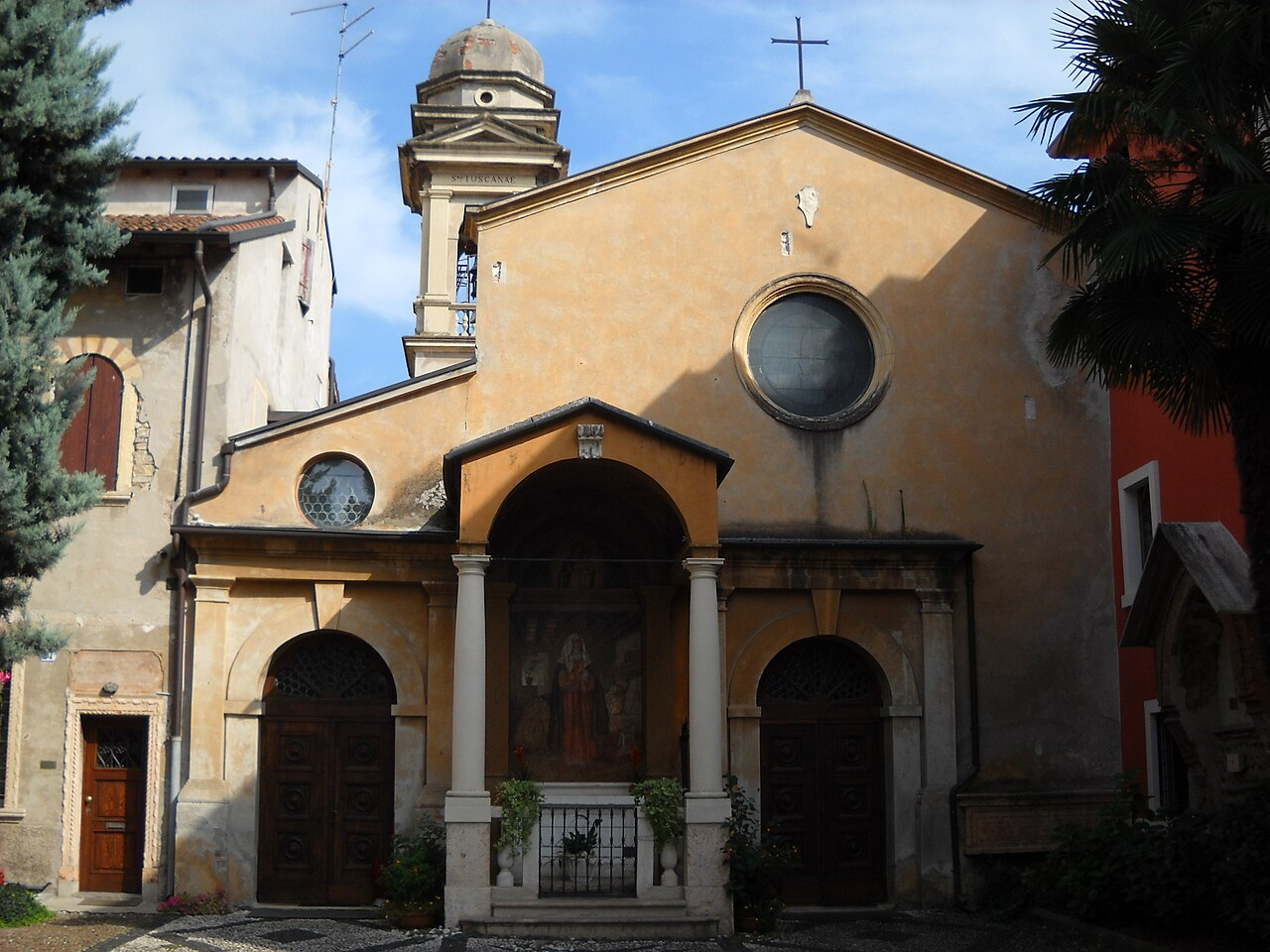
Santa Toscana – In 1342, the Knights Hospitaller acquired the relics of Santa Toscana which were placed in an ark atop the main altar.
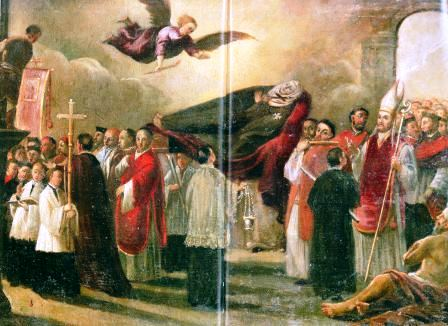
“Transfer of the body of Saint Toscana”, oil painting on canvas, end of the 17th century, at the seat of the Delegation of the Order of Malta in Verona
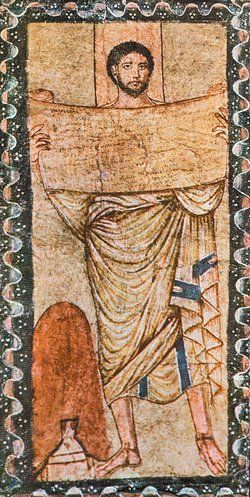
Also known as Ezra. In the Greek Septuagint, the name is rendered as Ésdrās (Ἔσδρας), from which the Latin name Esdras comes. He was a descendant of Seraiah, the last High Priest of Israel to serve in Solomon’s Temple, as well as a close relative of Joshua, the first High Priest of the Second Temple.
Also a priest and scribe, he left Babylon in the 7th year of Artaxerxes (458 B.C.) with a caravan of 1,800 Jewish exiles, to return to Jerusalem. The Persian king had given Esdras a letter ordering the satraps beyond the Euphrates to aid him to enforce observance of the Mosaic Law in Judea. Esdras brought with him an exemption from taxation for the temple officials, and gifts from Artaxerxes and the Jews of Babylon. With these the temple worship was to be enhanced and subsidized. When Ezra discovered that Jewish men had been marrying foreign pagan women, he tore his garments in despair. He confessed the sins of Israel before God, then braved the opposition of some of his fellow Judeans to purify the community by enforcing the dissolution of the sinful marriages. Within a year mixed marriages, of which even priests had been guilty, were dissolved.
In 444 B.C., after the walls of Jerusalem had been rebuilt, the Law was read to the assembled multitude, whereupon the Feast of Tabernacles and the Day of Atonement were observed. There followed the renewal of the Covenant, which all solemnly agreed to keep. By Esdras and Nehemias the restoration of the Law was effected. The measures which Esdras himself effected determined in great part the organization and practise of later Judaism.
According to Josephus, Ezra died and was buried “in a magnificent manner in Jerusalem.
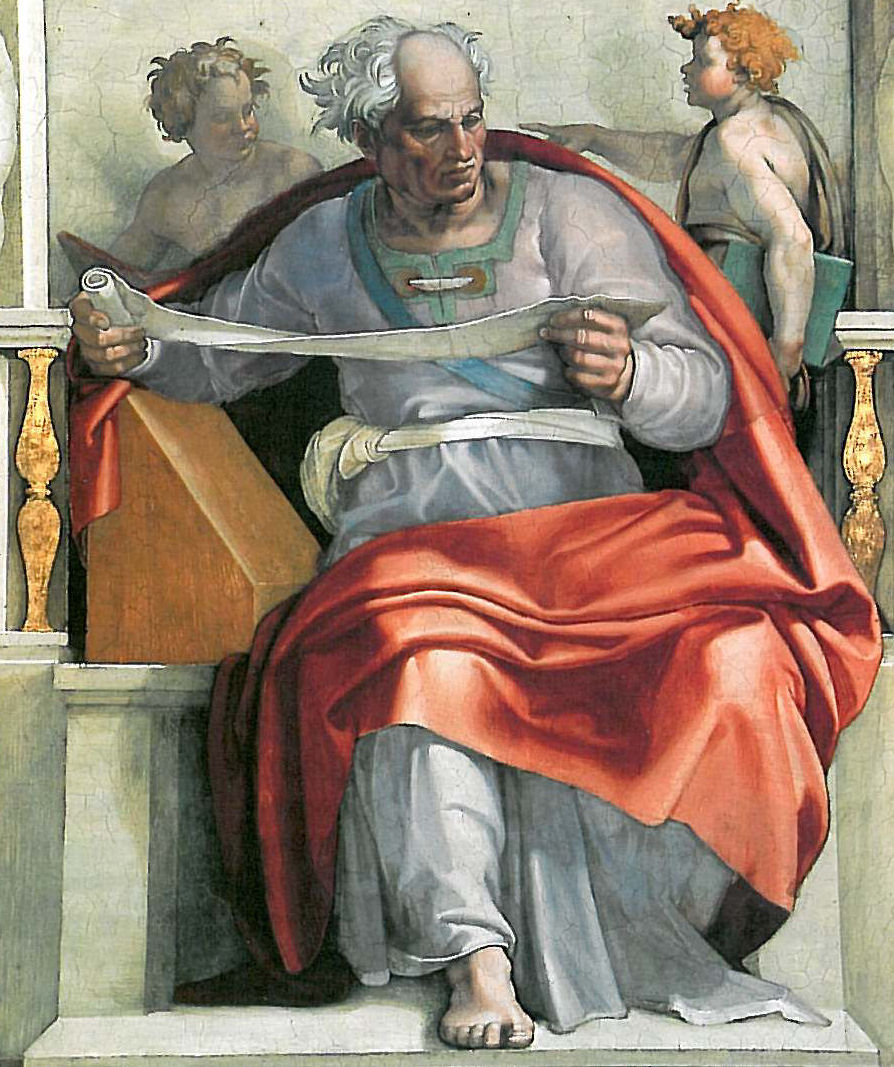
St Joel the Prophet
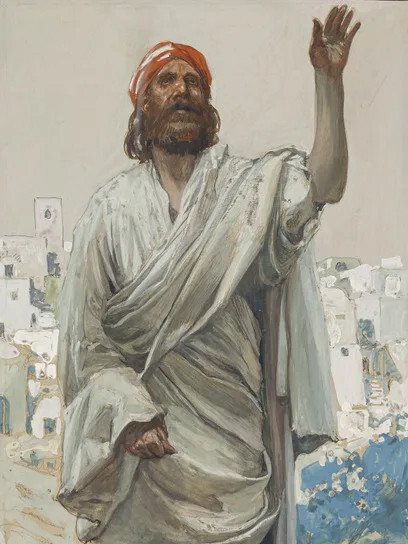
Joel is the second of the Twelve Minor Prophets, and the author of the Book of Joel, which is set in the early Assyrian period. His name combines the covenant name of God, YHWH (or Yahweh), and El (god), and has been translated as “YHWH is God” or “one to whom YHWH is God,” that is, a worshiper of YHWH.
Joel’s statement that “I will pour out my spirit upon all flesh; and your sons and your daughters shall prophesy, your old men shall dream dreams, your young men shall see visions” was applied by St Peter in his sermon at Pentecost to the events of that day.
According to tradition, Joel was buried in Gush Halav. In the western outskirts of the modern village, there is a structure that has long been considered Joel’s tomb, which contains several ancient rock-cut tombs.
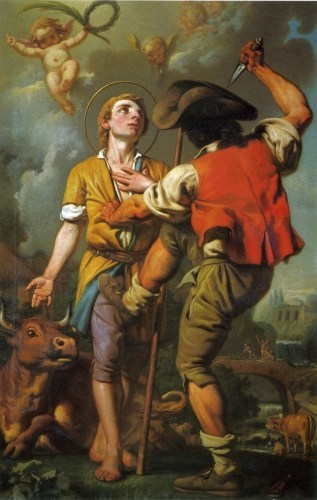
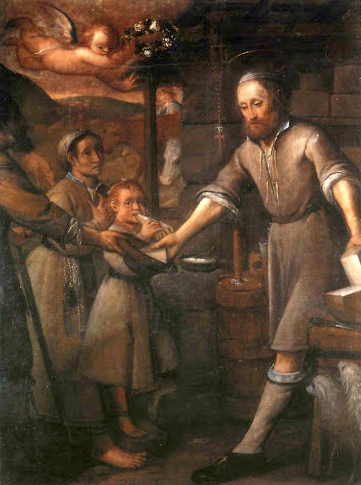
Also known as Lucio, Lucius, Luguzzone, Uguzon, Uguzzone. Died before 1200. He was a poor shepherd who lived near Cavargna and was extremely generous in charity towards the poor and needy. According to legend, he discovered that the yield from cheese-making is greater if the milk is heated before it is made into cheese. According to another legend, he heated the whey produced during cheese-making and collected the flocculated protein to make cheese.
Uguzo gave the surplus cheese obtained by his discovery to the poor to feed. Suspecting that the shepherd was giving away his property, Uguzo’s employer drove him away, only for his land to go foul and his sheep to stop producing milk. Uguzo’s subsequent employer prospered from the moment he hired him, and he was blessed with a miracle as when he cut cheese from his employer’s cheese rounds to distribute to the needy, the rounds would miraculously be reformed. Hatred and envy of Uguzo and his blessings and reputation drove the first employer to kill the shepherd. The cult of Uguzo was authenticated as early as 1280 at Milan and has been honored by various popes.
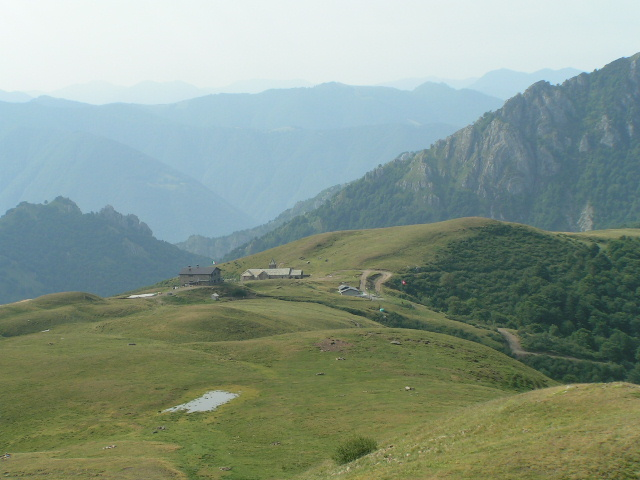
The San Lucio Pass, where he was murdered, is named for him, and at the summit is a 14th-century church, dedicated to him. At the place where Uguzo was slain, a spring gushed forth that is said to this day to have healing powers, especially for eye ailments.
He is the patron of cheese-makers and is invoked in cases of cattle and eye diseases, and favorable weather conditions. He appears in iconography with a cheese-cutter and a cheese with a slice cut out of it.
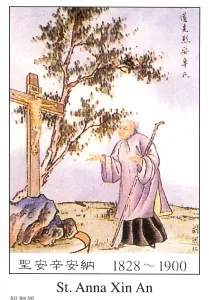
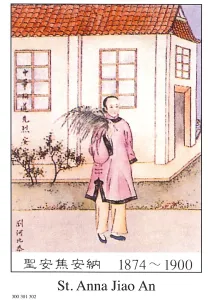
During the Boxer Rebellion, Christians were persecuted in China. Anna An Jiao was arrested by the rebels on July 11, 1900, along with her family ( Anna An Xin, Maria An Guo, and Maria An Linghua). They attempted to force them to renounce their faith. When they refused, they were tortured and then taken outside the village and murdered.
“If you wish to remain alive, you must give up your western Catholic beliefs.” said the rebels.
This subgrouping of the Martyrs of China incorporates three generations of the An family. They were among the 2,072, killed between June and August 1900. There is a statue of Anna Wang outside the Cathedral of the Immaculate Conception in Beijing, which was originally built by Jesuit missionaries in the 17th century. The cathedral was severely damaged during the Boxer Rebellion, but was later restored. Anna Wang was beatified by Pope Pius XII on November 24th, 1946.
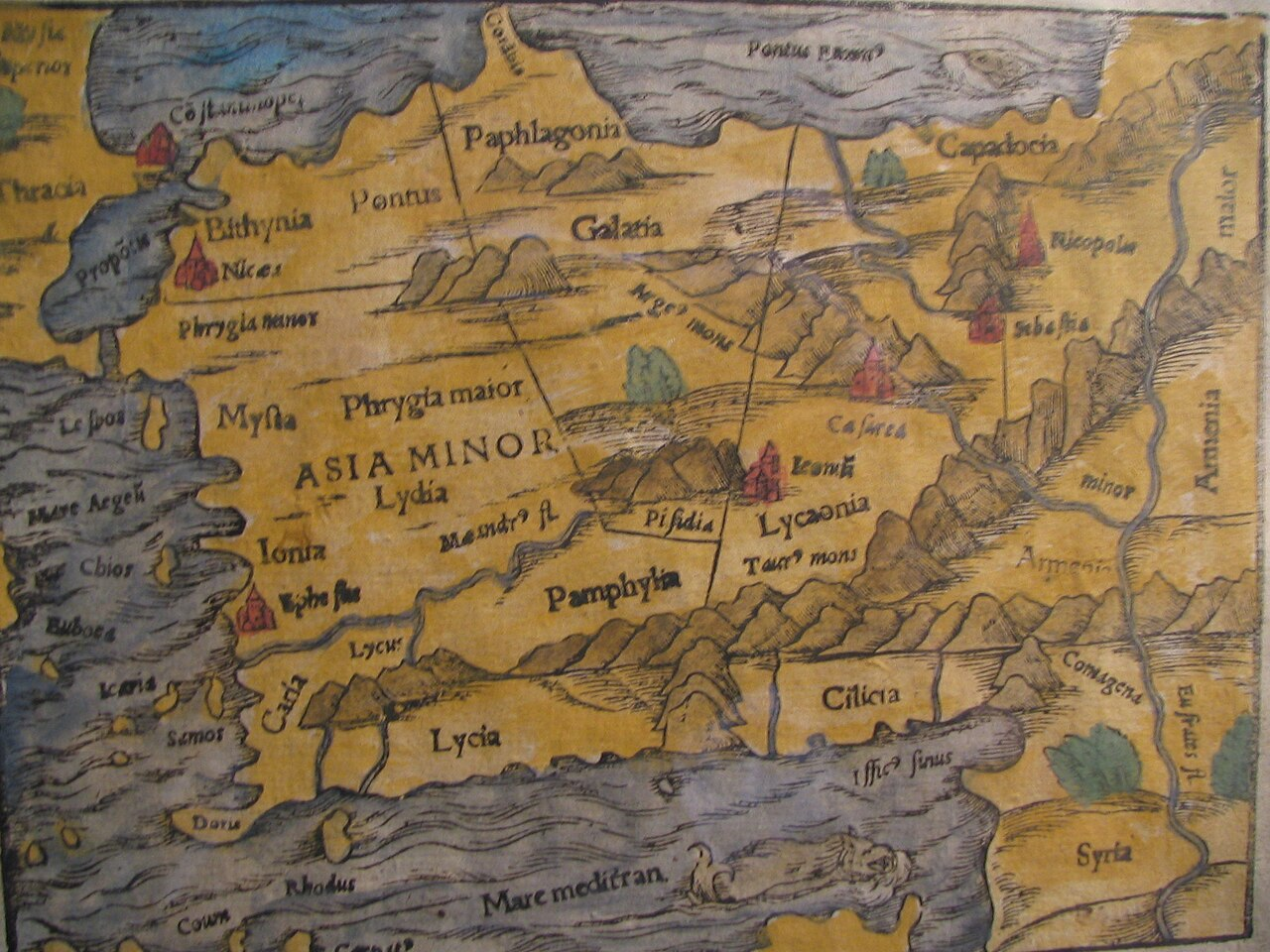
Saint Bianor came from the Pisidia district of Asia Minor. As a confessor of Christianity they brought him to the prefect of the city of Isauria in Lykaonia, who demanded that Saint Bianor renounce Christ. The saint stood steadfast in the true Faith, in spite of the refined tortures applied to him. A man by the name of Silvanus beheld the suffering of the martyr. The endurance and bravery of Saint Bianor inspired Silvanus, and he openly declared his faith in Christ. They cut out his tongue and then cut off his head. Saint Bianor, after long torture, was also beheaded.
The date of the suffering of the holy Martyrs Bianor and Silvanus is not precisely known. It is presumed that they died in Pisidia under the Roman emperor Diocletian (284-305).
‘In the town of Thora, on lake Velino, in Italy, the martyrdom of the Saints Anatolia and Audax, under the emperor Decius. Anatolia, a virgin consecrated to Christ, cured, through the whole province of Picenum, many persons laboring under various infirmities, and made them believe in Christ. By order of the judge Fustinian, she was condemned to various kinds of punishments. She was cured of the sting of a serpent to which she had been exposed; a miracle which converted Audax to the faith. Finally she was transpierced with a sword, whilst her hands were extended in prayer. Audax was committed to prison, and being without delay sentenced to capital punishment, obtained the crown of a martyr.’
(The Roman Martyrology)
In the time of the Emperor Decius, Anatolia and Victoria were sisters whose marriage was arranged to two noble, non-Christian Roman men. They resisted this. Their prospective grooms were reluctant to denounce them as Christians as that would mean that the women’s possessions would be forfeited to the state, so instead they received permission to imprison the women on their estates and convince them to renounce their faith. Anatolia’s suitor, Titus Aurelius, gave up, and gave her back to the authorities. Victoria’s suitor, Eugenius, was more persistent, but also ended up returning her to the authorities.
Victoria’s legend states that she was stabbed through the heart in 250 AD at Trebula Mutuesca after chasing away a dragon terrorizing the residents in exchange for their conversion. An elaboration states that her murderer was immediately struck with leprosy, and died six days later. Anatolia was killed, also in 250 AD, at Thora. Her legend states that she was at first locked up with a poisonous snake. The snake refused to bite her, and a soldier named Audax was sent into her cell to kill her. The snake attacked him instead, but Anatolia saved him from it. Impressed by her example, he converted to Christianity and was martyred by the sword with her.
Due to the translation of their relics, their cult spread across Italy. Some relics of Saint Victoria were transferred in 827 by Abbot Peter of Farfa from the Abbey to Mount Matenano in the Picene area because the Abbey was besieged by Saracens. The town of Santa Vittoria in Matenano is named after her. Ratfredus, a later Abbot of Farfa, brought the body from Farfa to Santa Vittoria in Matenano on 20 June 931.
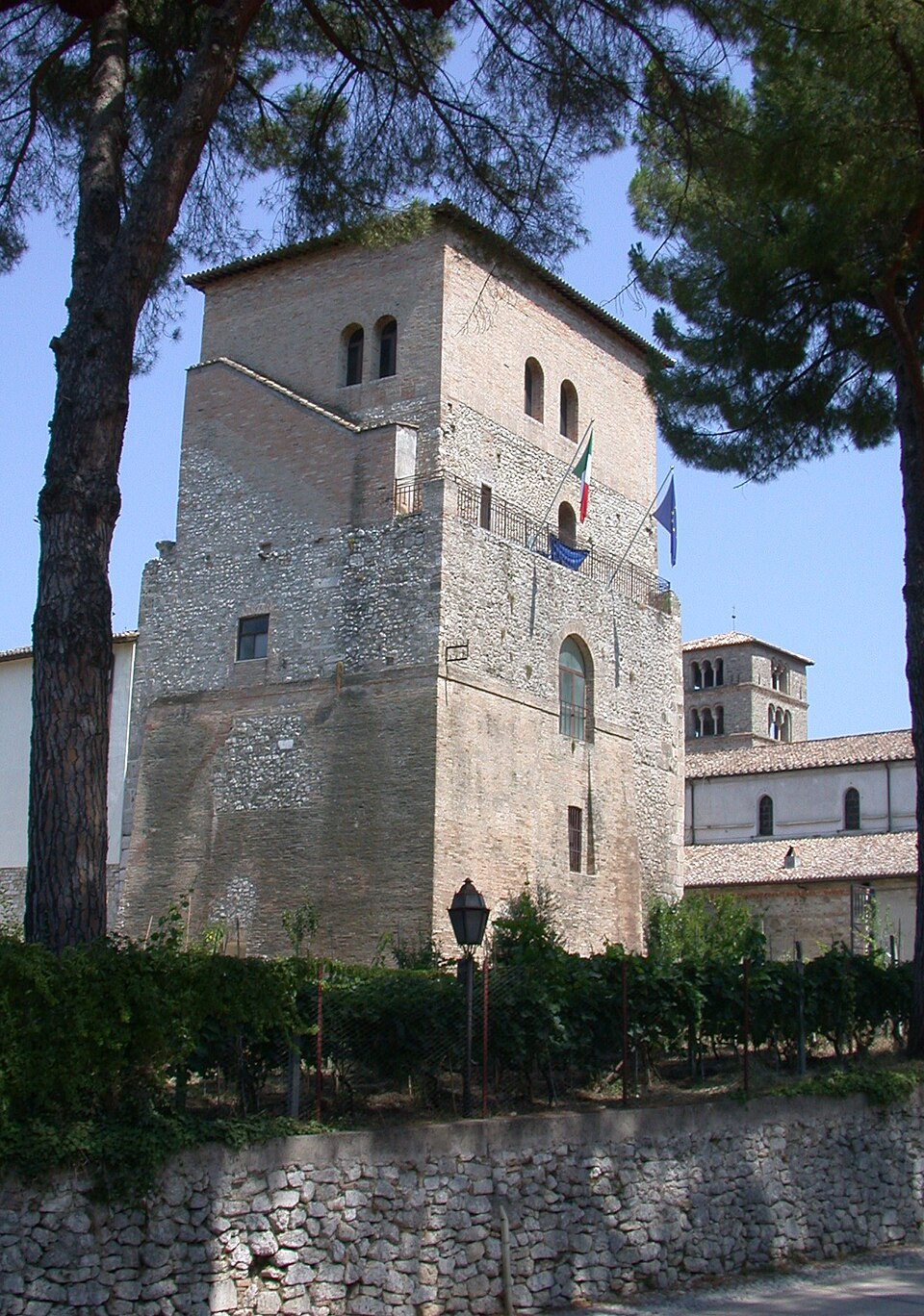
The bodies of Anatolia and Audax were transferred by Abbot Leo to Subiaco around 950. At an unknown date, a scapula of Anatolia was translated to the present-day Sant’Anatolia di Borgorose and an arm of the saint was translated to the present-day Esanatoglia. The bodies of Anatolia and Audax still rest at Subiaco in the basilica of Santa Scholastica, under the altar of the sacrament.
St Mary’s Cathedral, Kilkenny, Ireland also claims to hold St Victoria’s body, preserved in wax, along with a chalice containing some of her blood. These were sent to Kilkenny in 1845 by Pope Gregory XVI.
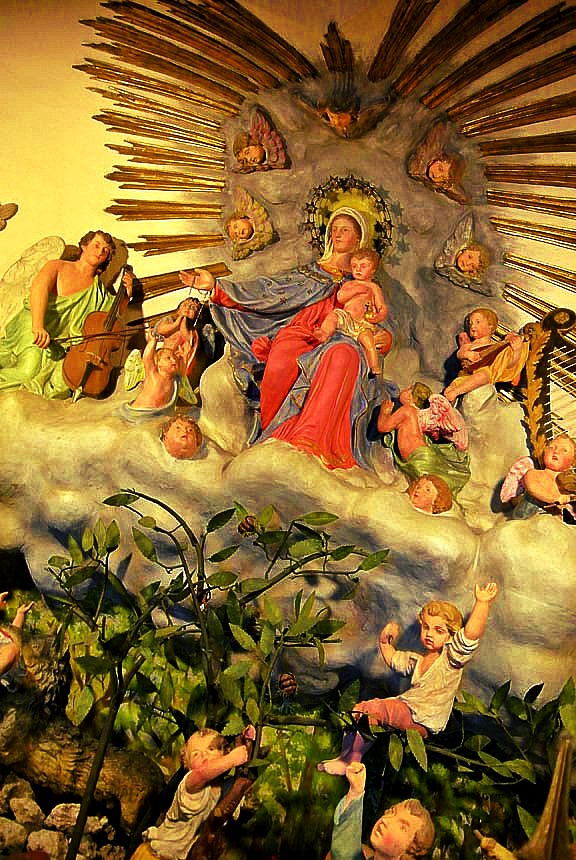
Nostra Signora della Neve, Adro, Italy/ Our Lady of the Snow, Adro, Brescia, Italy (1519) – 8 July, 5 August:
Adro is a Town in the Province of Brescia, in the Lombardy region, northern Italy. The Sanctuary emerged after the appearance of the Madonna in this place. to Battista Bajoni Comino, the deaf-mute who was visited by the Holy Mother on 8 July 1519. The Virgin appeared saying she was the Mother of God and sent a message to the people of Adro. Our Lady’s message contained a reference to a Christian life, repentance for sins and conversion and reparation and the construction of a Sanctuary in her honour. The built the Church at the place of vision, and began to amend their lives. They practised devotion on Sundays and Holy Days, stopped blaspheming the Holy Name and refrained from other evil habits, for Our Lady had also said that if they did not repent they could expect a serious penalty. Mary said – “And if they wonder how it is that you speak, tell them that you have been with the Advocate of Sinners. Everyone knows you were dumb. Now take this stone with you and show it to them as it will change colour from time to time. “
The central Feast of Our Lady of the Snows is celebrated on 5 August Immediately after the miracle, it was called “Madonna della Cava,” the place where the Virgin had appeared to the Shepherd and the feast was celebrated on 8 July the anniversary of the vision. Later, however, Church officials transferred the Feast to 5 August, the day the dedication of Santa Maria Maggiore in Rome, also known as “Santa Maria de las Nieves,” built by Pope Liberius commemorates after Miracle of snow (that happened in Rome). It was then that this temple took the name of “Our Lady of the Snows.” In pilgrimage season (April to October) groups of pilgrims arriving from neighbouring provinces, especially from Brescia, Bergamo, Como, Varese, Milan, Cremona, Mantua and Verona. Sunday is preferred by families. All opportunities for spiritual growth are offered through preaching and the Sacraments.
Such is the fascination of the Virgin on the pilgrims who will then return again. It is a ceremony in which you have to enter the crypt “to see the Madonna”.
The miracle of the deaf-mute who began to hear and speak gave rise to a small Shrine. It remains alongside the current main Altar. It was visited by Saint Charles Borromeo in 1581. Being too small for the influx of pilgrims,the Church was demolished in 1750 and enlarged. It was built on a design by architect Gaspare Turbini and opened in 1776.
The Carmelites of St Teresa, built a Monastery nearby. The current statue is gilded wood sculptor. Next to the Shrine a discreet and well-shaded park with tables and benches offers a welcome drink to pilgrims.
St Abraham the Martyr Bl Adolf IV of Schauenburg St Pope Adrian III St Ampelius of Milan St Apollonius of Benevento
St Arnold St Auspicius of Toul St Auspicius of Trier Brogan of Mothil St Colman of Thuringia St Doucelin St Edgar the Peaceful Blessed Pope Eugene III O.Cist (c 1080-1153) Papal Ascension – 15 February 1145 until his death. The 167th Pope.
St Procopius of Ceasarea St Sunniva of Bergen St Thibaud de Marly St Totnan of Thuringia — Abrahamite Monks/Martyrs of Constantinople: A group of monks in a monastery founded by Saint Abraham of Ephesus. Martyred in the iconoclast persecutions of emperor Theophilus. In c 835 in Constantinople. Martyrs of Shanxi – 7 saints: In 1898 seven sisters of the Franciscan Missionaries of Mary were sent to the Shanxi diocese in China to serve the poor in hospitals and care for the unwanted or other destitutes in orphanages. They were – • Anne-Catherine Dierks • Anne-Francoise Moreau • Clelia Nanetti • Irma Grivot • Jeanne-Marie Kuergin • Marianna Giuliani • Pauline Jeuris There they all died in one of the periodic crackdowns against foreign missionaries. They were beheaded on 9 July 1900 at Taiyuanfu, China- Beatified on 24 November 1946 by Pope Pius XII.
Martyrs of Syrmium – 5 saints: Five Christians martyred together for their faith. We know nothing else about them but the names – Cecilia, Eperentius, Eraclius, Sostratus and Spirus. They were martyred in the 4th century in Syrmium, Pannonia (modern Serbia).
Pope Adrian III or Hadrian III was the bishop of Rome and leader of the Papal States from 17 May 884 to his death on 8 July 885. He served for little more than a year, during which he worked to help the people of Italy in a very troubled time of famine and war. Adrian III was the 109th pope and was born within the Papal States. During his brief reign of sixteen months, violent vendettas that arose from the assassination of John VIII continued. He laboured hard to alleviate the misery of the people of Italy, prey to famine and to continuous war. He is also known to have written a letter condemning the Christians of both Muslim-ruled and Christian-ruled parts of Spain for being too friendly with the Jews in these lands. Adrian also sent Theodosius, the bishop of Brindisi and Oria, to Constantinople to deliver a synodal letter about faith and the filioque to patriarch Photius I.
Adrian died in July 885 at San Cesario sul Panaro, not long after embarking on a trip to Worms, in the Rhineland. The purpose of the journey was to attend an Imperial Diet after being summoned by Emperor Charles the Fat to settle the imperial succession and discuss the rising power of the Saracens. His death under dubious circumstances led many to believe that he had been assassinated.
Adrian’s death and subsequent burial in the church of San Silvestro Nonantola Abbey near Modena is commemorated in the sculpted reliefs that frame the doorway of this church. His relics are found near the high altar, and his tomb at once became a popular place of pilgrimage. His cult was confirmed by Pope Leo XIII on 2 June 1891, and his feast day is celebrated on 8 July.
StAngelelmus (Angelelme, Angelaume, died 828) was bishop of Auxerre from 813 to 828. He was Bavarian, and became abbot of the monastery of SS Gervais and Protase, Auxerre. Angelelmus may have been a Benedictine.
St. Maelruain of Tallaght
St Maelruain is venerated as the founder and first abbot of Tallaght Monastery in County Dublin in Ireland, as well as the compiler of the martyrology of the same name. He is considered to be one of the leading figures in the Irish monastic movement known as the Culdees (‘Companions of God’) which flourished in Ireland and Scotland from the eighth to the twelfth centuries.
“Maelruain” (not to be confused with the later namesake Máel Ruain, bishop of Lusca) is not the baptismal name of the saint, rather, it was his monastic name. The form “Maelruain” consists of two parts: “mael” meaning “he who was tonsured”, and “ruain” which refers to the saint with the name Ruadan. From this it can be concluded that St. Maelruain was trained in the monastery founded by St. Ruadan, in Lothra in County Tipperary. The Martyrology of Tallaght (below) says that Maelruain “came here with the relics of holy martyrs and virgins”, to establish a monastery there. The foundation was dedicated to ‘God and St Michael’, and held the Virgin Mary and St Michael in special veneration. The monastery was later joined with Finglas in the reform movement as ‘the two eyes of Ireland’.
By the eighth century Irish monasteries had become lax, and Maelruain’s reform was necessarily severe. It put emphasis on preserving the enclosure and there was a strong ascetical component, focused spiritual direction, frequent confession, as well as long fasts and harsh penances, such as standing in cold water for long periods to control the flesh. With Aengus his disciple, Maelruain is regarded as joint author of The Rule of the Céilí Dé which contains a detailed series of rules for the regulation of the lives of the Companions.
Little is known of his early life. The Annals of Ulster report that in the year 792 Máel Ruain died a peaceful death, calling him a bishop and soldier of Christ.
These are two lines from a poem in the Leabhar Breac. They say of Maelruan:
‘At Rome, the holy martyr Tranquillinus, father of the holy martyrs Mark and Marcellian. He had been converted to Christ by the preaching of the holy martyr Sebastian, baptized by the blessed Priest, Polycarp, and himself ordained a Priest by the holy Pope Caius. He was praying at the grave of blessed Paul, upon the Octave Day of the Apostles, when the pagans under the Emperor Diocletian tried and stoned him. And so he finished his testimony, (in the year 286.)’ (Roman Martyrology)
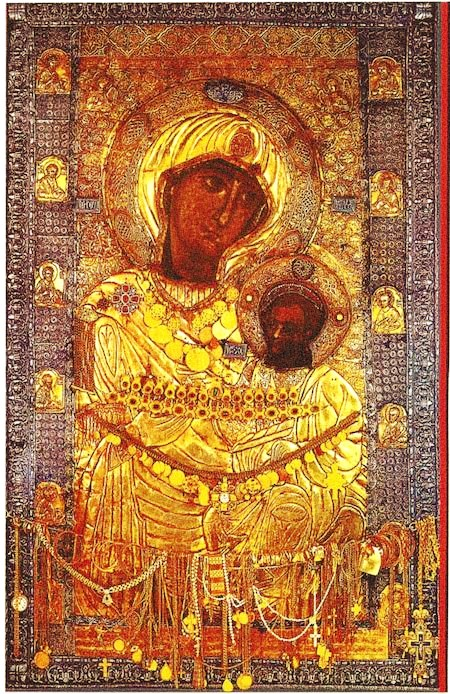
Our Lady of Mount Athos, Great Lavra, Greece , 8th cent. – 5 July:
In the 900s, the unfinished Great Monastery on Mount Athos ran out of funds and the starving Monks had to leave. Finally the Monastery Founder, St Athanasius the Athonite, left too in search of help. On the road he met a woman in a long blue veil, who said, “Go back! You will have everything you need if you do not abandon the Monastery!” When Athanasius asked the lady’s name, she answered, “I am the Mother of your Lord.”
The Abbot asked for a sign. “Strike the rock with your staff,” she said, and promised to be responsible for the Monastery provisions herself — to be its stewad. As water flowed from the rock, she vanished.
Athanasius returned to find the building completed and stocked with supplies. Soon it was full of Monks again. To this day, the Great Lavra regards the Mother of God as its steward, helped by a Monk with the title of assistant steward. In a Shrine on the left of the entrance to the Monastery Church, the Icons depict many saints connected with the Monastery. To Our Lady’s right St. Athanasius holds a model of the building. Down the road, the holy spring still flows.
St Agatho of Sicily St Athanasius the Athonite St Athanasius of Jerusalem St Cast St Cyprille of Libya / St Cyrilla of Cyrene St Domèce St Domitius of Phrygia St Edana of West Ireland Bl Edward Cheevers Blessed Elias of Bourdeilles OFM (c 1407-1484) Archbishop of Tours and Cardinal St Erfyl St Fragan Bl George Nichols St Grace of Cornwall St Gwen Bl Humphrey Pritchard
St Marinus of Tomi St Mars of Nantes St Marthe Bl Matthew Lambert St Modwenna St Numerian of Treves Bl Patrick Cavanagh St Philomena of San Severino St Probus of Cornwall Bl Richard Yaxley Bl Robert Meyler St Rosa Chen Aijieh St Sedolpha of Tomi St Stephen of Reggio St Teresia Chen Qingjieh St Theodotus of Tomi Bl Thomas Belson St Thomas of Terreti St Triphina of Brittany St Triphina of Sicily St Zoe of Rome
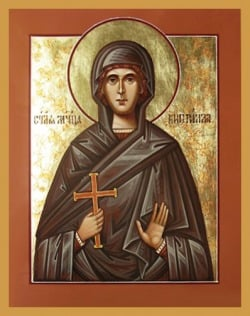
Saint Cyrilla of Cyrene, also known as Cyrilla of Libya, Ciprilla, Cirilla, Cypria, or Cyprille, was an elderly widow who lived during the time of the persecutions of Emperor Diocletian. She was a devout Christian who refused to worship idols, no matter what she was threatened with. Coming from the city of Cyrene in Libya, her unbreakable faith made her a target for the pagan authorities. Despite her advanced age, she became one of the countless victims of the brutal persecution campaign. The barbaric Romans concocted a wicked ploy to force her to make a sacrifice to their gods by placing live coals and incense in her bare hands, so as to force her to drop the flaming mass onto the altar and make it appear as though she had consented.
But, demonstrating heroic fortitude and resolution, she instead clung tightly to the coals, refusing to cooperate with the demon worshippers. Her refusal to renounce her faith left her tormentors astounded and enraged. Undeterred by her unwavering commitment to the faith, they resorted to further extreme measures. They subjected her to various forms of torture in an attempt to break her spirit, but she remained utterly resolute in her commitment to Christ. Ultimately, Cyrilla was tortured to death. Her body was torn apart with metal hooks, an experience she endured with incredible bravery and unwavering faith.
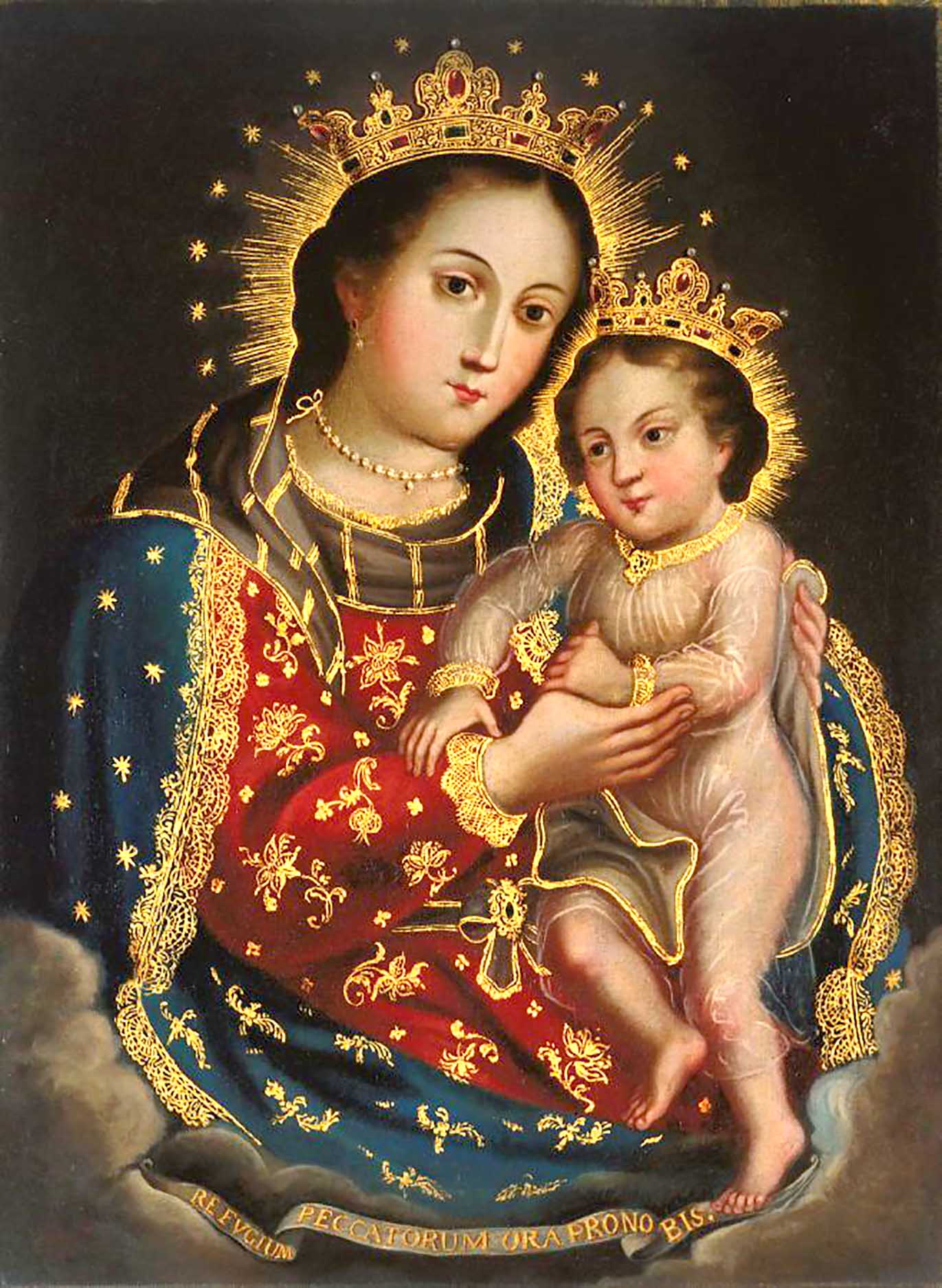
Nuestra Señora del Refugio / Our Lady of Refuge, Matamoros, Tamaulipas, Mexico (1720) – 4 July:
Jesuit Missionary Father Juan José Güica brought a painting of Our Lady, Refuge of Sinners from Italy to Mexico in 1720. In a dream, the Virgin told Padre Güica to ask the Franciscans of Zacatecas to use and promote the image; – they distributed over 150 copies, making this one of the most widespread Marian devotions in Mexico.
In 1793 Franciscan Friars came to the new settlement which would become Matamoros, renaming the area “Nuestra Señora del Refugio de los Esteros Hermosos” (Our Lady of the Refuge of the Lovely Marshes).
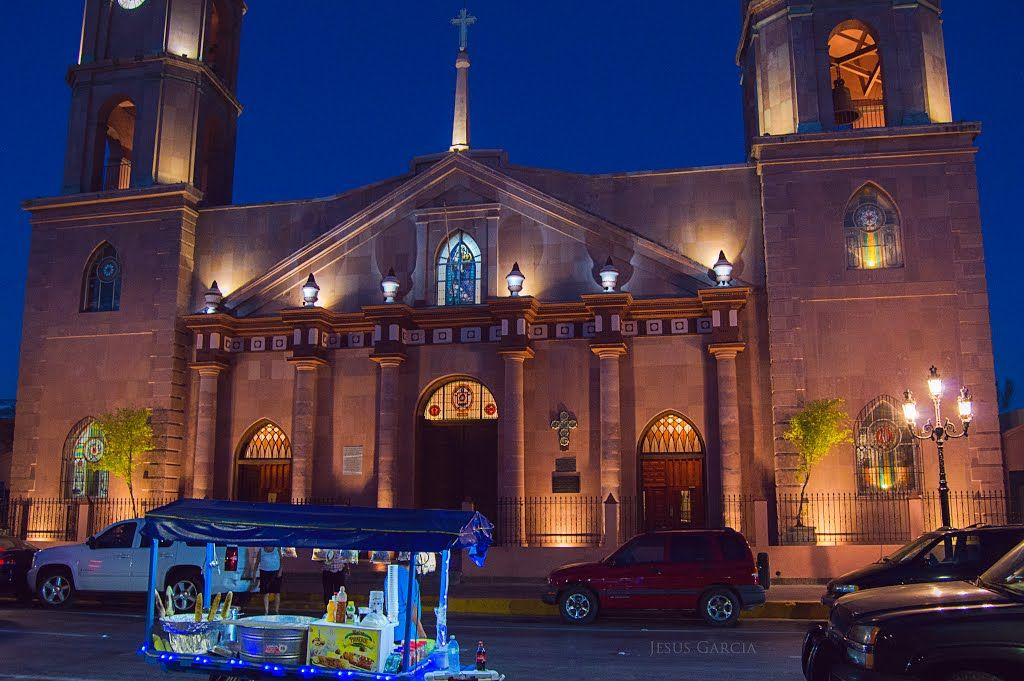
The Cathedral of Our Lady of Refuge, built in 1832, displays an 1886 painting of her. Her fiesta, celebrated in many Mexican Towns, commemorates the coronation of the original “Refugium Peccatori” in the Jesuit Church of Frascati, Italy, on 4 July 1717.
Bl Agatha Yun Jeom-Hye St Albert Quadrelli St Andrew of Crete St Anthony Daniel St Aurelian of Lyons St Bertha of Blangy St Carileffo of Anille Bl Catherine Jarrige St Cesidio Giacomantonio Bl Damiano Grassi of Rivoli St Donatus of Libya St Edward Fulthrop St Elias of Jerusalem St Finbar of Wexford St Fiorenzo of Cahors St Flavian of Antioch St Giocondiano Bl Giovanni of Vespignano St Haggai the Prophet Bl Hatto of Ottobeuren Bl Henry Abbot St Henry of Albano St Hosea the Prophet St Innocent of Sirmium Bl John Carey Blessed John Cornelius SJ (1557– 1594) Martyr, English Priest of the Society of Jesus, Missionary. Bl Jozef Kowalski St Jucundian St Laurian of Seville St Lauriano of Vistin Bl Maria Crocifissa Curcio St Namphanion the Archmartyr Bl Natalia of Toulouse St Odo the Good Bl Odolric of Lyon Bl Patrick Salmon Bl Pedro Romero Espejo
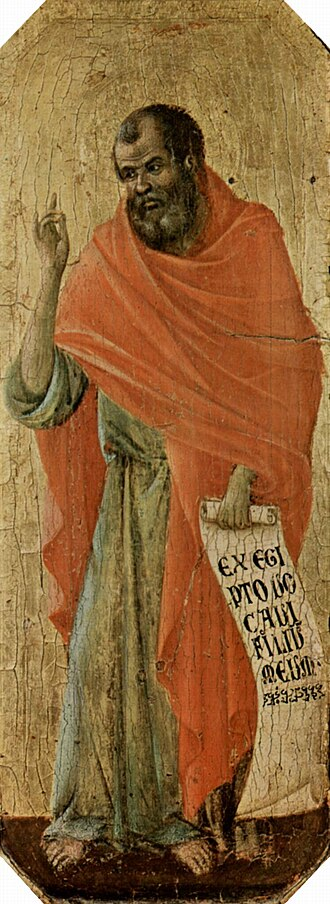
Hosea (‘Salvation’), also known as Osee, son of Beeri, was an 8th-century BC prophet in Israel and the author of the Book of Hosea. He is the first of the Twelve Minor Prophets. Hosea is often seen as a “prophet of doom”, but underneath his message of destruction is a promise of restoration. Hosea was a contemporary of Jonah, Amos, Isaiah and Micah.
He married Gomer, but she proved to be unfaithful. Hosea knew she would be such, as God tells him so in the opening statements of the book. This marriage was arranged in order to serve as a symbol of Israel’s unfaithfulness to the Lord, and dramatizes the breakdown in the relationship between God and his people Israel. Hosea’s family reflected the adulterous relationship which Israel built with other gods.
His children’s names likewise represent God’s estrangement from Israel. They are prophetic of the fall of the ruling dynasty and the severed covenant with God. The name of Hosea’s daughter, Lo-ruhamah, which translates as ‘not pitied’, is chosen as a sign of displeasure with the people of Israel for following false gods. The name of Hosea’s son, Lo-ammi, which translates as ‘not my people’, is chosen as a sign of the Lord’s displeasure with the people of Israel for following those false gods.
Even though Gomer runs away from Hosea and sleeps with another man, he loves her anyway and forgives her. Likewise, even though the people of Israel worshipped false gods, God continued to love them and did not abandon his covenant with them. The buying back of Gomer is also an analogy to the redemptive qualities of Jesus Christ’s sacrifice on the cross, and his buying back of the human race from the devil.
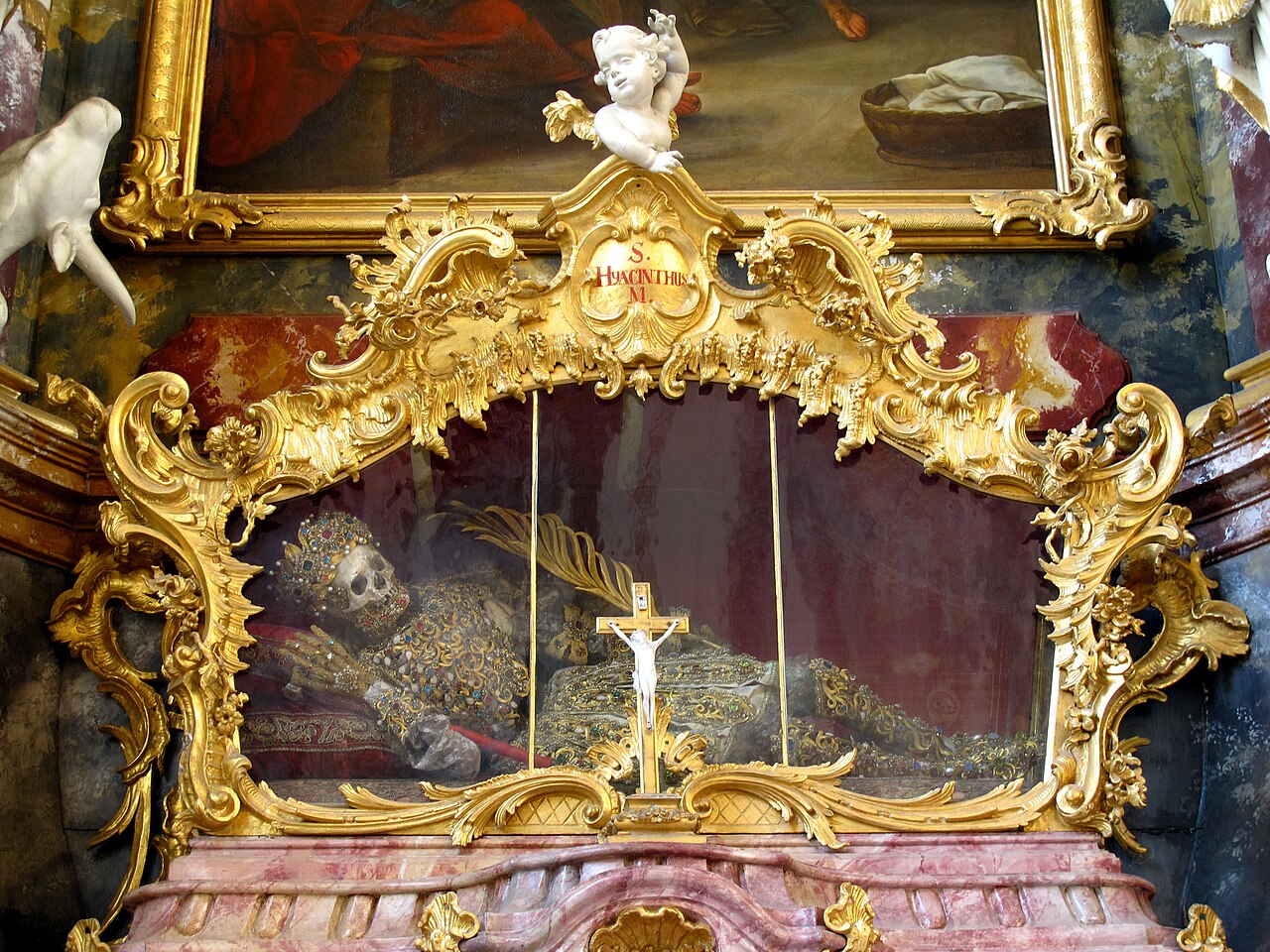
Hyacinth was a native of Caesarea in Cappadocia, and a member of a Christian family. As a boy, he was appointed to serve as an assistant to the chamberlain to the Emperor Trajan. His failure to participate in the sacrifices to the official Roman gods soon came to be noticed by other members of the Imperial household. One day, while the emperor and his entourage were offering sacrifice to idols, Hyacinth remained at the palace, shut himself up in a small room, and prayed fervently to the Lord Jesus Christ. One of the servants overheard him praying and denounced him to the emperor.
When he was denounced as a Christian, Hyacinth proclaimed his faith. He was brought to trial before Trajan, who tried to persuade him to deny Christ and sacrifice to idols, but the young boy refused. As a result, he was imprisoned and underwent numerous scourgings and tortures. He was deliberately served only food which had been blessed for sacrifice to the gods, the eating of which was banned to Christians. Thus, he starved to death after thirty-eight days, dying at the age of twelve. Just before his death, his jailers saw him being comforted by a pair of angels, one who covered him with his own robe, the other who bestowed a crown on him.
Hyacinth died in the city of Rome. Later, his relics were transferred to Caesarea.
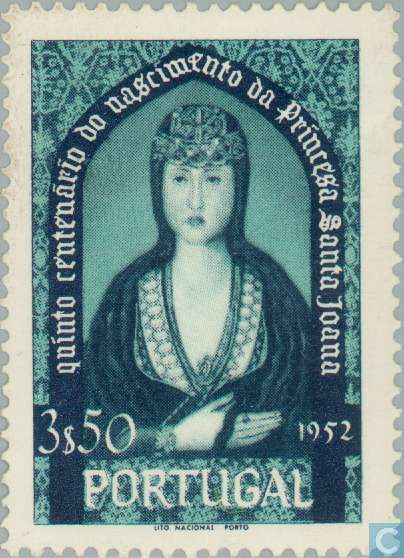
Blessed Joanna of Portugal OP (1452-1490) Religious of the Second Order of St Dominic, Virgin, Princess of Portugal of the House of Aviz, daughter of King Afonso V of Portugal and his first wife Isabella of Coimbra, Penitent. Blessed Joanna whom the Portuguese called “Saint Princess Joanna”: https://anastpaul.com/2020/05/12/saint-of-the-day-12-may-blessed-joanna-of-portugal-1452-1490/
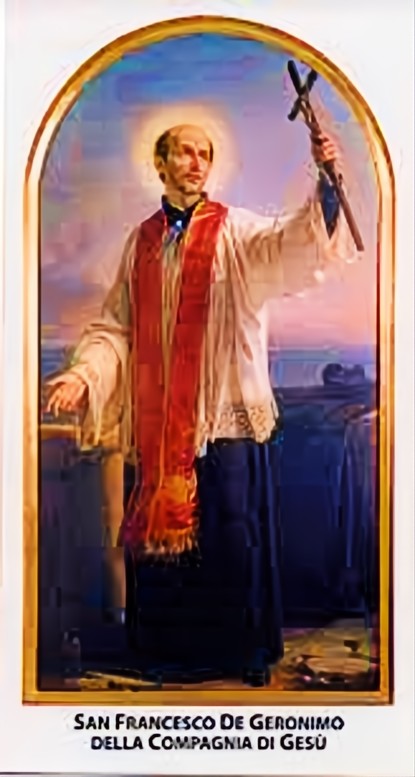
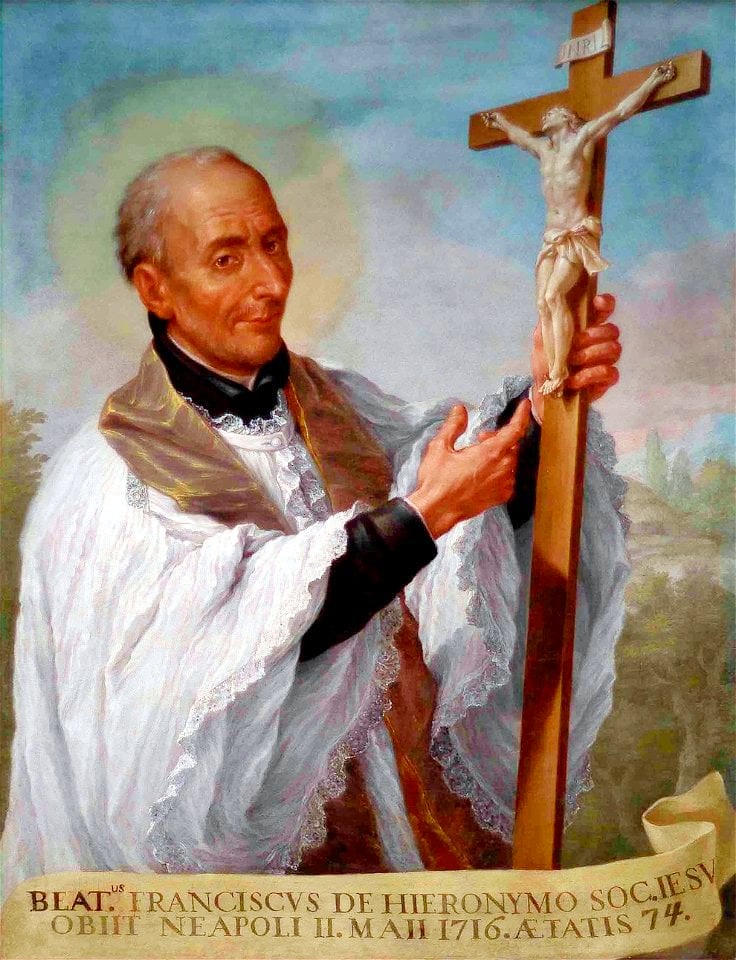
Saint of the Day – 11 May – St Francesco de Girolamo (1642-1716) SJ Priest, Apostolic Missionary of the Society of Jesus, who spent more than 40 years teaching, preaching Naples and its surrounds leading to his being titled “The Apostle of Naples.” His life was one of total service to all in humility and the most zealous care, espeically of the needy, of prisoners, sailors, the youth and women of ill-repute. He was an intellectual giant, scholar and a Miracle-worker. Born on 17 December 1642 at Grottaglie, Apulia, near Taranto, Italy and died on 11 May 1716 at Naples. Also known as – “The Apostle of Naples” Francis di Girolamo, Francis de Geronimo, Francesco de Hieronymo, Franciscus di Hieronymo, Francis Jerome.
The Roman Martyrology reads today: “At Grottaglia, in the Diocese of Taranto, St Francesco de Giroliamo, Confessor, of the Society of Jesus, renowned for his zeal for the salvation of souls and for his patience. He was Canonised by Pope Gregory XVI. The day of his death is celebrated with great solemnity in the Church of the Professed House at Naples where his body rests.”
St Francesco was born in Grottaglie (Taranto) on 17 December 1642, the 1st of 11 children, 3 of whom became Priests, to a wealthy family of profound Christian faith.
He was fortunate to find in his native town, a school of letters and piety which benefited him greatly until the age of 17. In fact, at about the age of 10 years, he was entrusted to a Congregation of Priests dedicated to teaching and preaching missions to the faithful.
Young St Francesco, rather than being admitted merely to school, had the privilege of living with these pious Priests, who soon entrusted him with the care of the Church as the Sacristan and the teaching of Catechism to the children. He also sometimes accompanied the Priests on missions, helping them with the instruction of Catechism to the young.
At the age of 16 om 1658, St Francesco was given the first tonsure at the proposal of the same Congregation and at 17 he was received into the Diocesan Seminary in Taranto, to continue his studies, now definitively destined for the Priesthood. He attended courses in rhetoric, science and philosophy at the schools of the Jesuit College, being Ordained Sub-Deacon in 1664 and sometime later Deacon.
In 1665 St Francesco went to Naples, on the advice of his own teachers, to attend courses in civil and canon law, obtaining a Degree in these subjects, apparently in 1668 and in theology.
In order not to be a burden on the family budget, St Francesco requested and obtained, a position as Assistant to the young students at the highest College of the Neapolitan Jesuits. Meanwhile, in 1666, while studying theology, he was Ordained a Priest and in 1670 he became a Jesuit before completing his theological studies. He completed them a few years later in order to take the examination in universa philosophia et theologia, required by the Order’s Constitutions for the solemn Profession of the four vows.
From 1671 to 1674, he served in apostolic ministry in Puglia, particularly in the Diocese of Lecce. Just as his excellent intellectual gifts and virtues had already been demonstrated in his life as a student and Assistant to young people, to the point of being called the ‘holY’ Priest by the young, so too in his apostolic activity his qualities as a zealous apostle and effective preacher, were revealed.
Once he returned to Naples to complete his theological studies, he remained there for his entire life, Assigned to the popular missions which made him an Apostle of Naples and replaced the missions to India and the East which he had insistently requested. He made his solemn Religious Profession (8 December 1682) at the height of his Neapolitan apostolate, having been assigned since 1676 to the Casa Professa del Gesù Nuovo with all the duties inherent to the Office entrusted to him. It was essentially a threefold Office: the missions to the faithful which consisted of sermons held in the squares and along the streets, where large crowds gathered on Feast Days, which were quite numerous; general Communion every 3rd Sunday of the month, also prepared with open-air sermons and with his assistants, led the multitudes to the Church of the Gesù, where numerous Priests were already on standby to hear Confessions and the conversion of women from wicked lives.
This was one aspect of his public missions but what was special about it was that he entered the neighbourhoods where the homes which sheltered the unfortunate, were most numerous and began preaching under their windows.
His biographers recall many cases, sometimes miraculous, of conversions or repentance among these women.
But this threefold role did not exhaust the missionary’s activity, as he extended his apostolate to all those in need, such as ship workers, prisoners, the sick and the men of his congregation of artisans, a kind of Catholic circle or Confraternity which was of invaluable assistance to him in his missions and in organising, as mentioned, the general Communions on the 3rd Sunday of the month.
Although the City of Naples was his missionary field for about forty years, his apostolic zeal did not end there, as he is known to have taken part in missions many times in other regions of the Kingdom of Naples, such as Abruzzo, Puglia, and Sannio . Above all, however, Naples and its surroundings benefited from his work and were strongly influenced by his miracle-working holiness, as demonstrated by the events of 1707, when the Austrian Army occupied Naples, driving out the Spanish under Philip V. As was often the case in similar circumstances, the people gave way to revolts and looting. That time, however, St Francesco’s moral authority succeeded in averting the danger or significantly limiting it. Indeed, it seems that he helped prevent the Spanish barricaded in the fortresses from bombarding the City, acting as a mediator, as the Canonisation processes attests.
Another apostolic activity of St Francesco deserves mention i.e. his spiritual exercises for various classes of the people: Monasteries of nuns, Youth Centres, prisoners and ‘galley slaves.’ Everywhere he carried warm words of faith and love, inflamed as he was with a burning charity, especially toward Jesus Christ in the Eucharist and his most Holy Mother.
Among the devotions St Francesco favoured and spread ,a particular one was to St. Cyrus, Physician and Martyr, whose body rests in the Chapel of the same name in the Church of the Gesù Nuovo in Naples. He carried a Relic of the Saint with him on his missions and attributed to it all the miracles he performed during his sermons, although many contemporary witnesses believe that God worked miracles through our Saints own virtues and that he, in his humility, hid behind the healing power of St Cyrus. This testimony serves to demonstrate the esteem in which his virtues were held by his contemporaries, who, moreover, unanimously affirmed the sanctity of his life in all the Canonisation processes which began just a few years after his death, which occurred in Naples on 11 May 1716.
St Francesco was Beatified by Pope Pius VII on 2 May 1806, when the Jesuits, at the request of King Ferdinand IV of Bourbon, were recognised for the Kingdom of Naples (the Order was restored in 1814).
He was then Canonised by Pope Gregory XVI on 26 May 1839, and his Feast Day was set on the day of his death. His body, transferred to the Chapel named after him in the Church of Gesù Nuovo in Naples which was enriched by the sculptor Jerace with an artistic Statue of the Saint preaching, remained there until after the Second World War, when it was moved to the Jesuit Church in Grottaglie, the Saint’s birthplace.
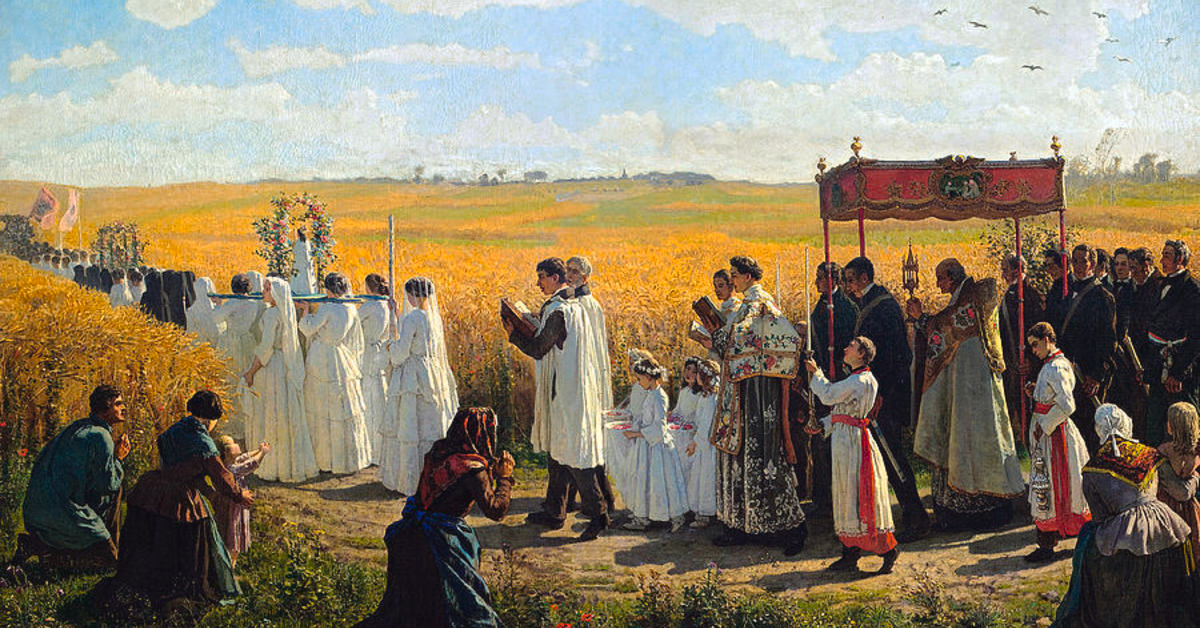
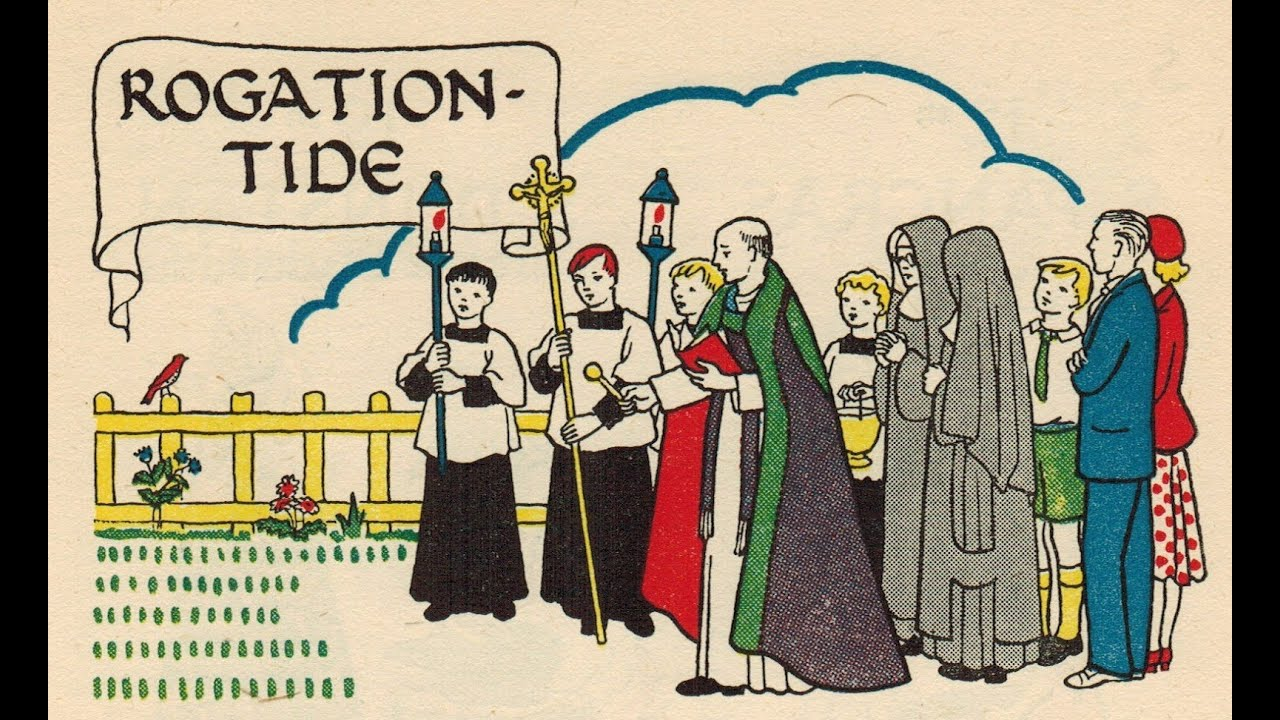
ROGATION DAY AND today is the Feast Day of the Founder of these Days when we pray the Litanies: St Mamertus (Died c477) Archbishop of Vienne, France, Theologian, Writer, Founder of the introduction of the praying of Litanies prior to Ascension Day, called “Rogation Days.” Rogation days are days of prayer and fasting in the Church. They are observed with processions and the praying of the Litany of the Saints. The major Rogation is held on 25 April, the minor Rogations are held on Monday to Wednesday, preceding Ascension Thursday. The word Rogation comes from the Latin verb rogare, meaning “to ask,” which reflects the beseeching of God, for the appeasement of His anger and for protection from calamities. Rogation St Mammertus: https://anastpaul.com/2019/05/11/saint-of-the-day-11-may-st-mamertus-died-c-475/
St Anastasius of Lérida St Anthimus of Rome St Bassus of Sabina St Bertilla St Criotan of MacReddin Bl Diego of Saldaña St Evellius of Pisa St Fabius of Sabina St Francesco de Girolamo (1642-1716) SJ Priest St Fremund of Dunstable St Gengulphus of Burgundy
St Mozio of Constantinople St Possessor of Verdun St Principia of Rome St Tudy St Vincent L’Hénoret Bl Vivaldus St Walbert of Hainault
Martyrs of Camerino: An imperial Roman official, his wife, their children and servants, all of whom were converts and martyrs: Anastasius, Aradius, Callisto, Eufemia, Evodius, Felice, Primitiva, Theopista.
Martyrs of Carcassona – 14 Beati:
Martyrs of Osimo: Diocletius Florentius Sisinius
DISCLAIMER: Please note: I cannot control the content of the Advertisements on this Site, or of pop-ups which may appear, The revenue from the Advertisements, however, does provide a little assistance in the support of the Site. I do apologise for any inappropriate content.
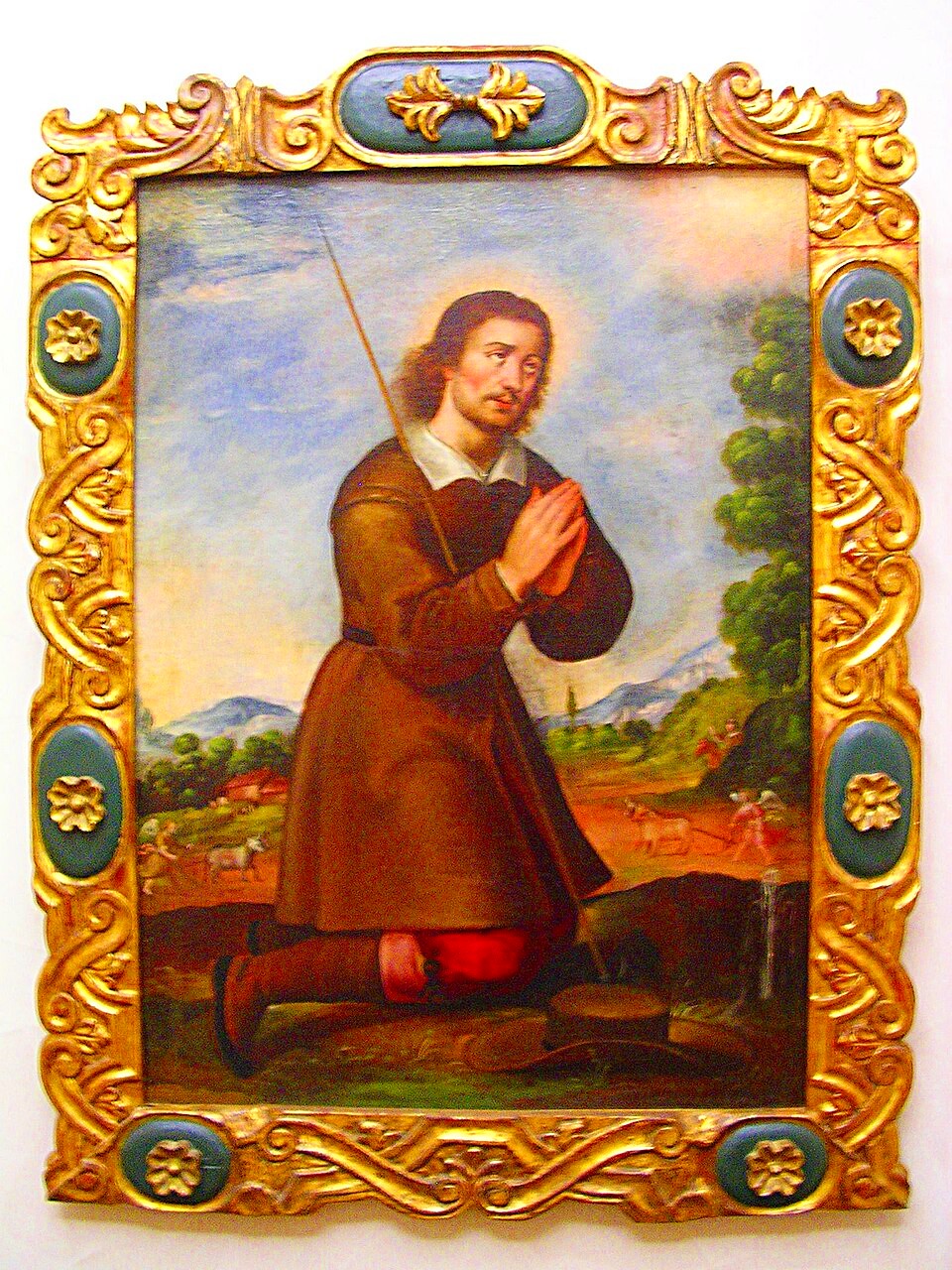
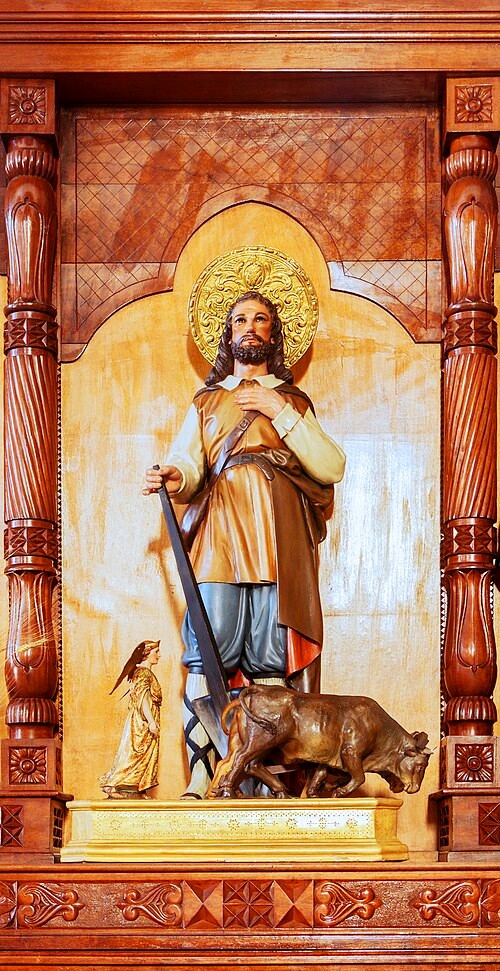
Saint of the Day – 10 May – Saint Isidore the Labourer of Madrid (c1070-c1130) Confessor, renowned for his great piety and miracles. Born as Isidro and died near Madrid. Patronages – of Madrid, Leon, Zaragossa and Seville, of farmers, farm labourers, peasants Additional Feats on 15 May (believed possibly, to have been the date of birth into life). Also known as – Isidore the Farmer, Isidro,
The Roman Martyrology reads today: “At Madrid, St Isidore, a labourer. Being renowned for miracles, Pope Gregory XV, placed him in the number of the Saints, at the same time as St Ignatius, St Francis, St Teresa and St Philip Neri.”
St Isidore’s Life, was first written in 1265 by John, a Deacon of the Church of St Andrew, at Madrid and he edited and supplemented it in 1275,
St Isidore was born to devout, humble and poor parents in the Spanish countryside near Madrid. As a very young man he entered the service of a certain Juan de Vargas, on a farm in the vicinity of Madrid.
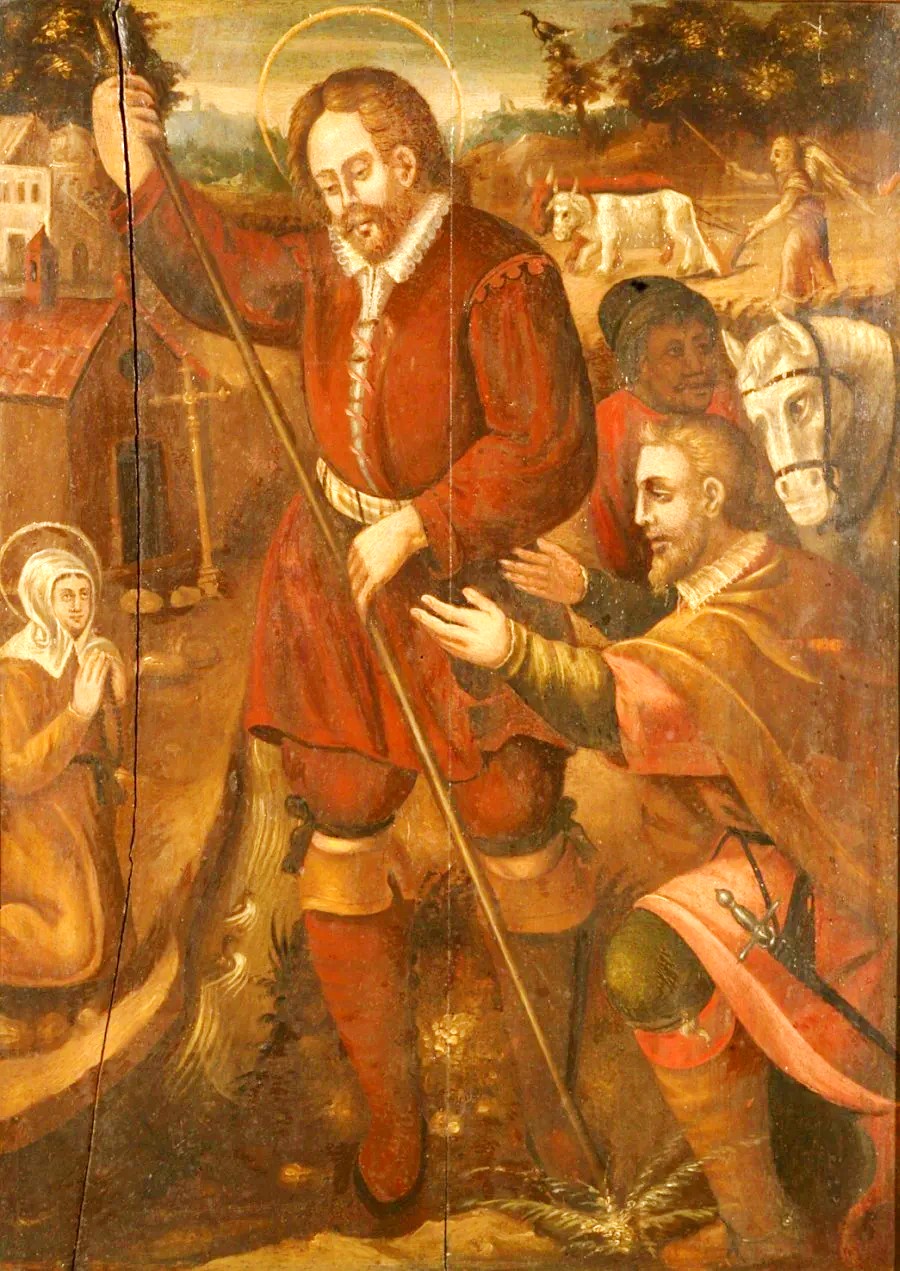
Every morning before begining his labours, he was accustomed to participate at Holy Mass at one of the Churches nearby. One day his fellow-labourers complained to their master that Isidore was always late for work due to his attendance at Mass. Upon investigation, the master found Isidore at prayer, while an Angel was doing the ploughing. On another occasion, his master saw an Angel ploughing on either side of him, so that Isidore’s work was equal to that of three of his fellow-labourers.
St Isidore holiness and prayers inspired great awe. By his intereceesion he resurrected his master’s lifeless daughter. He also caused a fountain of fresh water to burst from the dry earth in order to quench his master’s thirst.
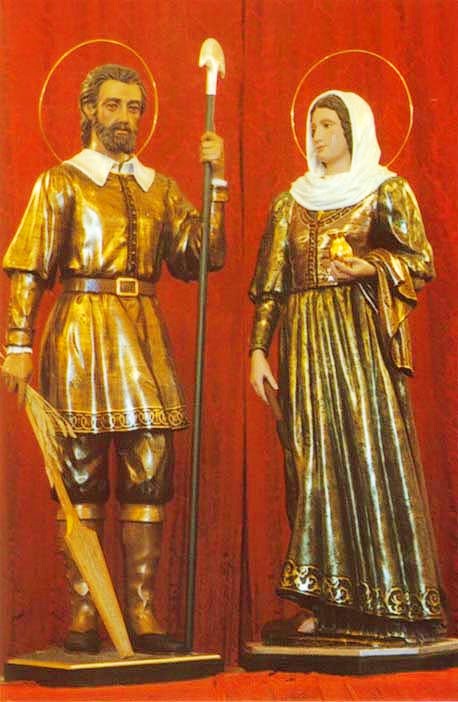
He was married to Maria Torribia, also a Canonised Saint, who is venerated in Spain as Maria della Cabeza, from the fact that her head (Spanish, cabez) is often carried in procession especially in time of drought. The couple were blessed with one son, who sadly died in his youth. On one occasion this son fell into a deep well and at the prayers of his parents, the water of the well miraculously rose to the level of the ground, bringing the child with it aalive and well. Hereupon the parents made a vow of continence and lived in separate houses.
St Isidore and his Wife St Maria
Forty years after St Isidore’s death, his body was translated from the cemetery to the Church of St Andrew. In 1212, St Isidore appeared to Alfonso of Castile and to have shown him the hidden path by which he surprised the Moors and gained the victory of Las Nevas de Tolosa.
When King Philip III of Spain was cured of a deadly disease by touching St Isidore’s Relics, the King substitued the old Reliquary with a costly Splid Silver replacement.
St Isidore was Canonised by Gregory XV, along with Sts. Ignatius, Francis Xavier, Teresa of Jesus and Philip Neri, on 12 March, 1622.
St Isidore is widely venerated as the Patron of peasants and day-labourers. The Cities of Madrid, Leon, Zaragossa and Seville, also, honour him as their Patron. His feast is celebrated on 10 May.
St Alphius of Lentini Bl Amalarius of Metz Bl Antonio of Norcia St Aurelian of Limoges Bl Beatrix d’Este the Elder St Blanda of Rome St Calepodius of Rome
St Comgall of Bangor St Cyrinus of Lentini St Dioscorides of Smyrna St Felix of Rome Bl Giusto Santgelp
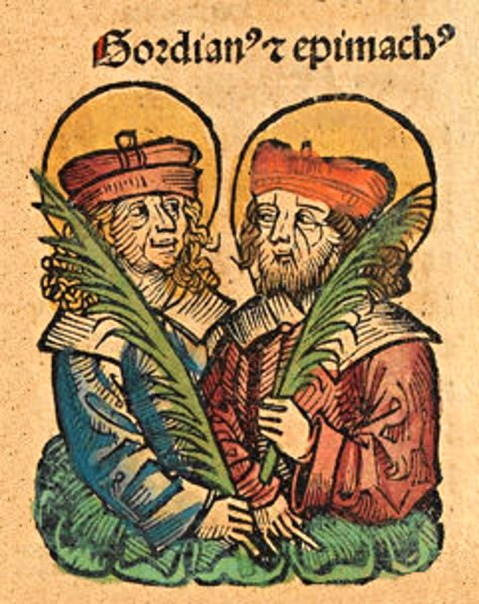
+St Gordianus (Died c392) Martyr and +St Epimachus (Died 250) Martyr The Roman Martyrology reads today: “At Rome, on the Latin Way, the birthday of the holy Martyrs Gordianus and Epimachus. In the time of Julian the Apostate, the former was scourged for a long time and finally decapitated for confessing the Name of Christ. He was buried at night by the Christians, in a Crypt to which shortly before his burial, the remains of the blessed Martyr, Epimachus, had been translated from Alexandria, where he had been Martyred for the faith of Christ.” Their Holy Lives and Deaths: https://anastpaul.com/2025/05/10/saint-s-of-the-day-10-may-st-gordianus-died-c392-and-st-epimachus-died-250-martyrs/
Blessed Nicholas Albergati (1373-1443) Bishop, Cardinal Priest St Palmatius of Rome St Philadelphus of Lentini St Quartus of Capua St Quintus of Capua St Simplicius of Rome St Solange of Bourges St Thecla Bl William of Pontnoise
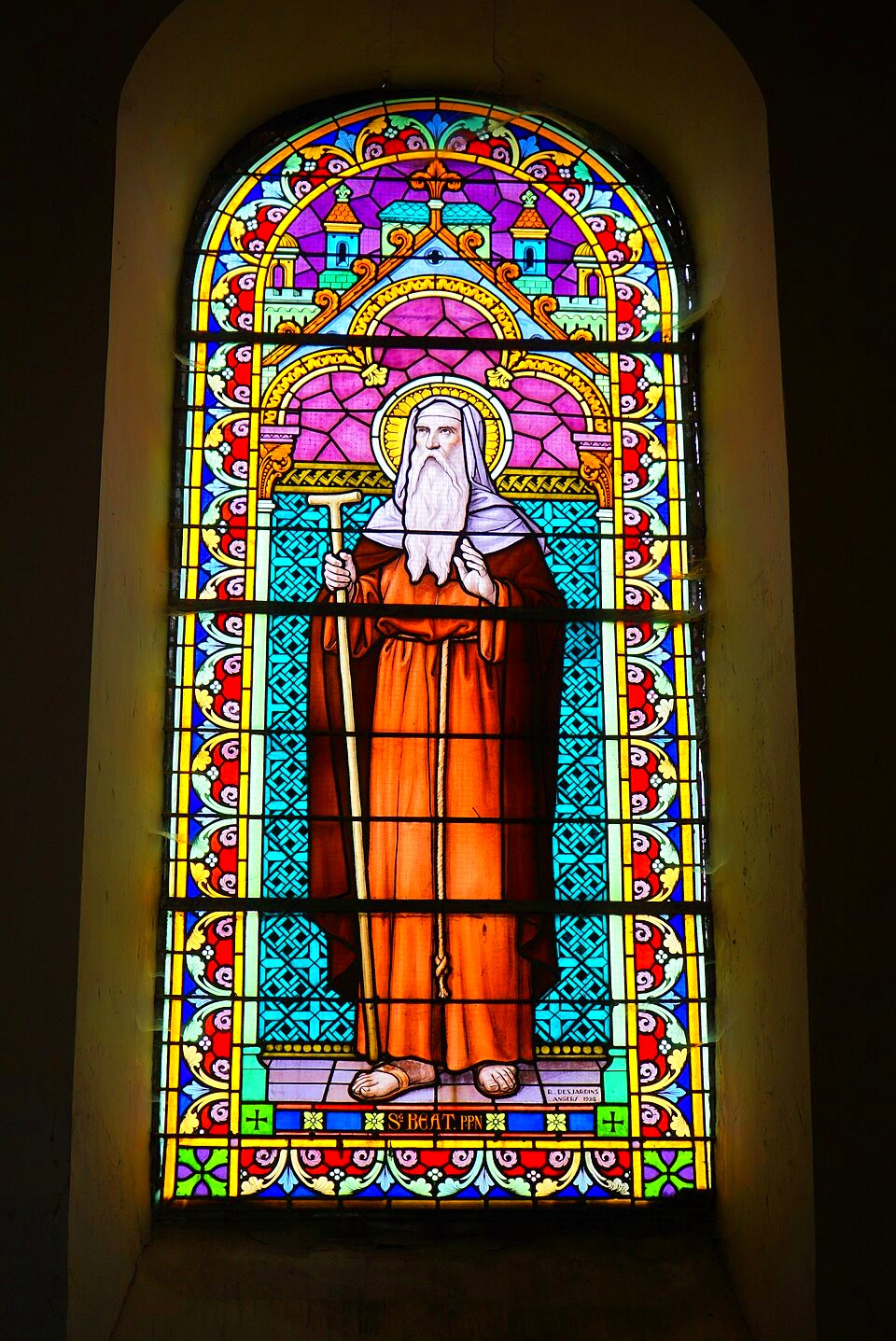
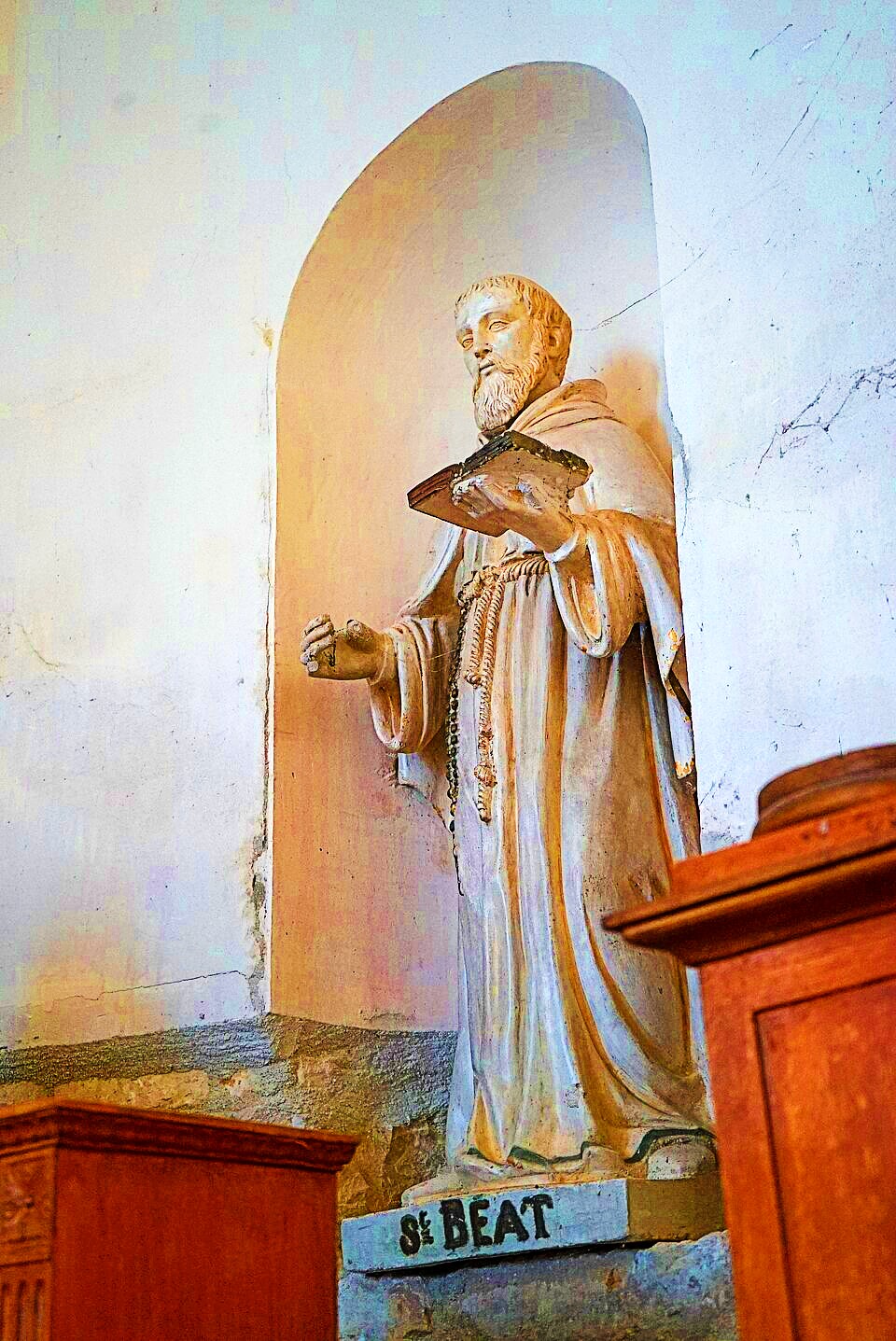
Saint of the Day – 9 May – St Beatus (3rd Century) Confessor, Hermit, Missionary (probably a Priest), Miracle-worker. Born in Vendôme and died near Laon, France. Also known asBienheuré, Beat.. Beatus is identified with a Missionary who travelled and preached in, besides Vendôme, Garonne, Laon and Nantes. His place of death is considered to have been Chevresson, near Laon.
The Roman Martyrology reads today: “In the castle of Windisch, the decease of St Beatus, Confessor.”
A great deal of confusion reigns in regard to St Beatus of the region of Vendôme. There is another Saint also venerated today of the same name but who lived and evangelised in Switzerland .
Our St Beatus is renowned for his battle and triumph over a dragon (this dragon is symbolic of either the paganism rife in that time or heresy). He had fasted and prayed before fighting this dragon who had been the terror of the region. According to the tradition, the dragon was so large that when it went to drink from a river at some distance away, its tail still lay in its cave. It was also so large that it completely drained the Loire river when it drank.
There are three versions of this combat: the first states that the dragon fled at the sight of our Saint making the Sign of the Cross; the second version states that St Beatus defeated the dragon with one blow from his staff; the third states that the dragon strangled itself with its chain.
A Chapel dating from the 5th Century was built on the hillside where he is said to have lived.
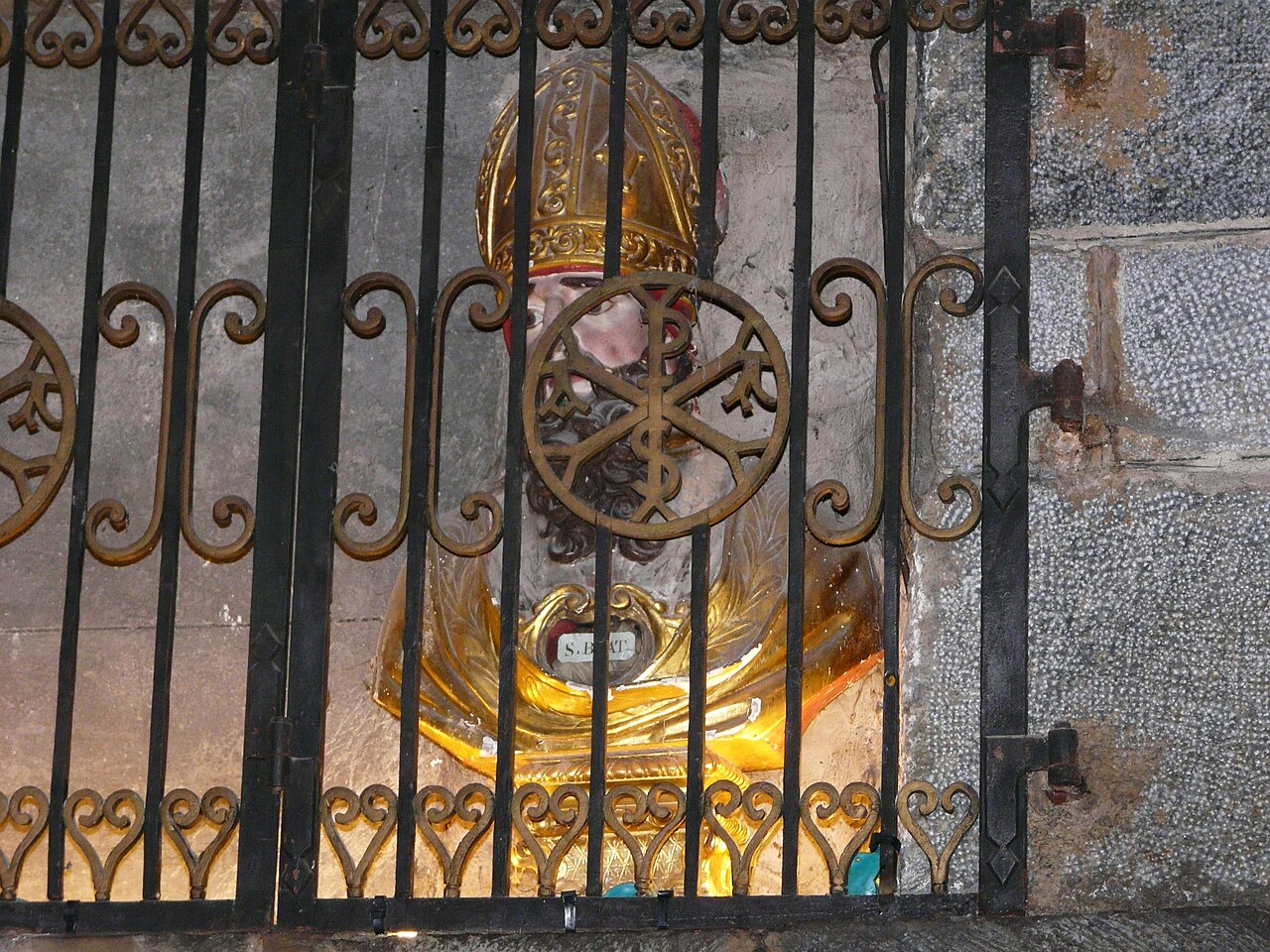
Bust of Saint Beatus, église Saint-Béat Saint-Privat, Saint-Béat, Haute-Garonne, France
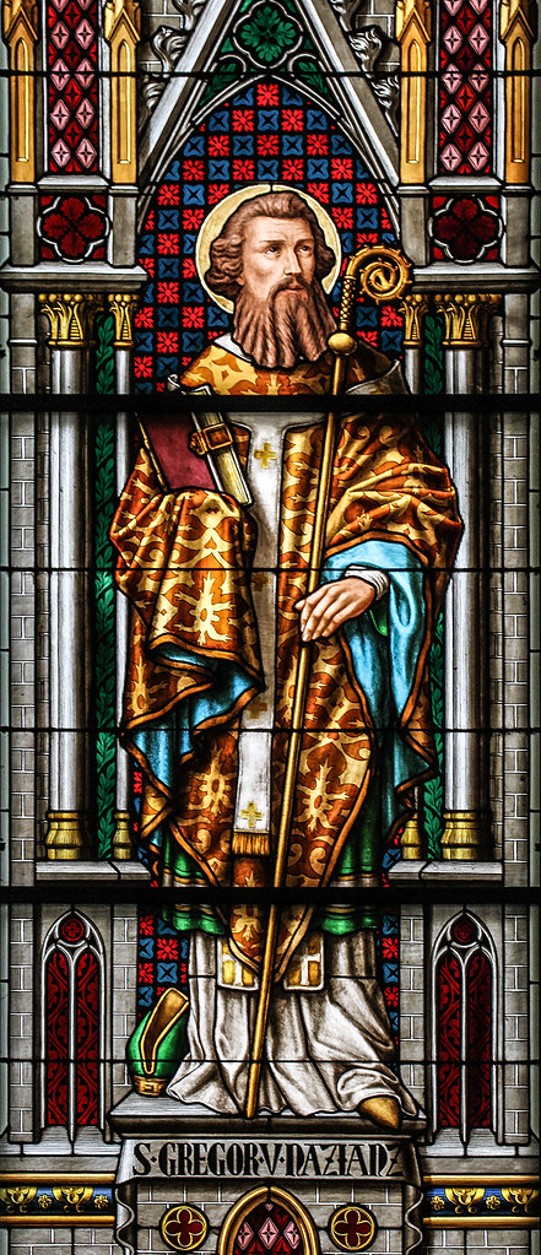
St Gregory Nazianzen (330-390) Archbishop of Constantinople, Father, Doctor, Confessor, Theologian, Philosopher, Orator, Poet, Writer, he is remembered as the “Trinitarian Theologian.” He is widely considered one of the most accomplished rhetorical stylist of the patristic age. Along with his great friends and colleagues, the brothers St Basil the Great and St Gregory of Nyssa, he is known as one of the Cappadocian Fathers. The Cappadocia region, in modern-day Turkey, was an early site of Christian activity, with several missions by St Paul in this region. The Roman Martyrology states of him today: “At Naziazus, the birthday of St Gregory, Bishop and Doctor of the Church, surnamed “The Theologian” because of his remarkable knowledge of divinity. At Constantinople, he restored the Catholic Faith, which was fast waning and repressed the rising heresies.” Wonderful St Gregory: https://anastpaul.com/2022/05/09/saint-of-the-day-9-may-st-gregory-nazianzen-330-390-great-father-and-doctor-of-the-church/ AND: (In 1969, St Gregory’s Feast was combined with that of St Basil the Great – “Two Bodies one Spirit” and was then celebrated on 2 January). Their lives here: https://anastpaul.com/2019/01/02/saint-s-of-the-day-2-january-st-basil-the-great-329-379-and-st-gregory-of-nazianzen-330-390-two-bodies-one-spirit/
St Banban the Wise St Beatus (3rd Century) Confessor St Beatus of Lungern St Brynoth of Scara St Dionysius of Vienne Bl Fortis Gabrielli St Gerontius of Cervia
St Gregory of Ostia St Hermas of Rome Isaiah the Prophet St John of Châlon
Blessed Thomas Pickering (c1621-1679) Martyr, Benedictine Lay Brother. He was one of the 107 Martyrs of England and Wakes. They were Beatified by Pope Pius XI on 15 December 1929 and is, therefore, remembered with them all on 4 May. In character, he was described, as the most charitable and sweet-tempered of men. His Life and Death: https://anastpaul.com/2021/05/09/saint-of-the-day-9-may-blessed-thomas-pickering-osb-c-1621-1679-martyr/
Martyrs of Persia: 310 Christians murdered together for their faith in Persia. No details about them have survived.
20 Mercedarian Martyrs of Riscala: 20 Mercedarian friars who were murdered by Huguenot heretics for refusing to denounce their faith. 16th century at the Santa Maria convent at Riscala, France.
Saint of the Day – 8 May – St Helladius (Died c388) Bishop of Auxerre, France. St Helladius was the Bishop of Auxerre for around over 23+ years from 365 until his death. St Amator (344-418) was converted to Christianity, Ordained and became his disciple and finally his successor. St Helladius was a powerful Defender of the Faith against heresy especially against the Arians. Additional Feast on 13 May in the See of Sens in France where our Saints cult spread.
The Roman Martyrology reads today: “At Auxerre, St Helladius, Bishop.”
The name of St Helladius echoes in the Episcopal list of Auxerre, placed between the Bishops Valerian and Amator.
The scarcity of historical information does not prevent us from sketching a biographical profile, albeit fragmentary, of this holy Bishop, drawing on available sources and contextualising St Helladius in his time.
The dating of Saint Helladius’ Episcopate is uncertain, but it is presumed to have lasted approximately twenty-three years, from 365 to 388. This period occurred during an era of religious fervour and immense struggles with Arian heretics still threatening the Catholic Church. In this context, St Helladius distinguished himself as a zealous leader and attentive shepherd of his See.
Specific information on his works is unfortunately sketchy. However, hagiographic tradition remembers him as the one who conferred the Priesthood on St Amator, his successor as Bishop of Auxerre. It is also said that he guided Martha, St Amator’s wife, towards religious life.
After his death around 388, Saint Helladius was buried in the cemetery of Mons, along with his predecessors. His Liturgical Feast is celebrated today, a date that does not coincide with his dies natalis, but derives from an ancient arrangement of the Feasts of the Saints of Auxerre, already present in the Martyrology of St Jerome. The name Saint Helladius was also used in the 7th Century by the author of the ‘Revelatio Corcodomi.’ His cult spread throughout the region of Auxerre and, to a lesser extent, in the region of Sens, where his Feast is celebrated on 13 May.
St Acacius of Byzantium Bl Aloysius Luis Rabata St Amatus Ronconi Bl Angelo of Massaccio St Arsenio of Mount Scete St Benedict II, Pope
St Boniface IV, Pope (c550-615) Supreme Pontiff from 608 until his death, Deacon, assistant and disciple of St Pope Gregory the Great, Papal Treasurer under Pope Gregory. In other words, he was the first official in connection with the administration of Papal property. he converted the Pantheon into a Church. This was the first pagan temple in Rome to be transformed. On 13 May 609, the Pantheon was consecrated to the Blessed Virgin and all the Christian Martyrs. Boniface ordered 28 cartloads of bones from the Catacombs to be reburied under the high Altar of the new Church. A Zealous Shepherd: https://anastpaul.com/2021/05/08/saint-of-the-day-8-may-saint-pope-boniface-iv-c-550-615/
St Desideratus of Bourges Bl Domenico di San Pietro St Gibrian St Helladius (Died c388) Bishop of Auxerre
St Ida of Nivelles St Martin of Saujon St Metrone of Verona St Odrian of Waterford St Otger of Utrecht St Peter of Besançon Bl Pietro de Alos Blessed Raymond of Toulouse
St Victor Maurus the Moor (Died c303) Martyr, Layman, ex-Soldier. The Roman Martyrology reads: “At Milan, the birthday of the holy Martyr Victor, a Moor. He became a Christian in his youth and served as a soldier in the imperial army. When Maximian wished to force him to offer sacrifice to idols, he persevered with the greatest fortitude in the confession of the Lord. Being first beaten with rods but without experiencing any pain, through the protection of God and then, having melted lead, poured over him, which did him no injury whatever. He at length terminated the career of his glorious Martyrdom by being beheaded.” His Life and Death: https://anastpaul.com/2022/05/08/saint-of-the-day-8-may-st-victor-maurus-the-moor-died-c-303-martyr/
Saint of the Day – 7 May – St Benedict II (Died 685) Pope and Confessor. A very short Reign: his Papacy began on 26 June 684, Papacy ended on 8 May 685 but this short Reign was filled with good and holy works. A learned scholar of Sacred Scripture, a Musician and a most avid employer of the beautiful Catholic Chants. He was a nab if great piety and devotion to the Church of Christ and its faithful.
The Roman Martyrology reads today: “At Rome, St Benedict II, Pope and Confessor.”
He was a native of Rome and having been brought up from his infancy in the service of the Church, was well skilled in the holy scriptures and in the Ecclesiastical chanting, of which he was a devout admirer. To sing assiduously the divine praises on earth is a kind of novitiate to the state of the blessed in heaven and an employment the most sweet and comfortable to a soul who truly loves God.
Benedict was always humble, meek, patient, mortified, a lover of poverty, and most generous to the poor. Being Ordained Priest, he had a share in the government of the Roman Church under the Pontificates of Agatho and Leo II.
Benedict was elected Oope upon the death of the latter, in 683 but to obtain the Emperor’s consent, it was necessary to wait almost a year, until the return of messengers sent to Constantinople. On which account the Holy See remained vacant and Benedict was only Consecrated on 26 June 684.
St Benedict II had concurred with Pope Agatho in assembling the 6th General Council at Constantinople, in 680. Pope Leo II, had sent the Decrees of the Council to Spain. After his death, St Benedict II pursued the same course and the Spanish Bishops in a Council at Toledo, approved and received the Definition of Faith published by the said Council.
They despatched a copy of their Decree and Confession of Faith with their subscriptions annexed, wherein they acknowledge the Divine and Human Nature of Christ. Pope Benedict, however, observed in their Confession certain obscure expressions, of which he desired a clearer explanation. For this purpose the 15th Council of Toledo was held, in which they were expounded in a sense entirely orthodox to St Benedict II satisfaction.
The Bishops of Rome were anciently chosen by the Clergy and people of Rome, according to the discipline of those times. The Christian Emperors were the head of the people, on which account their consent was required. But whilst they resided in the East, this condition often produced long delays and considerable inconveniences.
Pope Benedict II represented this problem to Constantine and that pious Prince readily passed a law addressed to the Clergy, the faithful and the army at Rome, allowing that the person elected by them should be forthwith Consecrated.
St Pope Benedict II laboured much for the conversion of heretics and in repairing and adorning Churches. He did not complete eleven months in the Pontificate but filled this short term with good works. He died on 5 May 685 and was buried in St Peter’s Basilica.
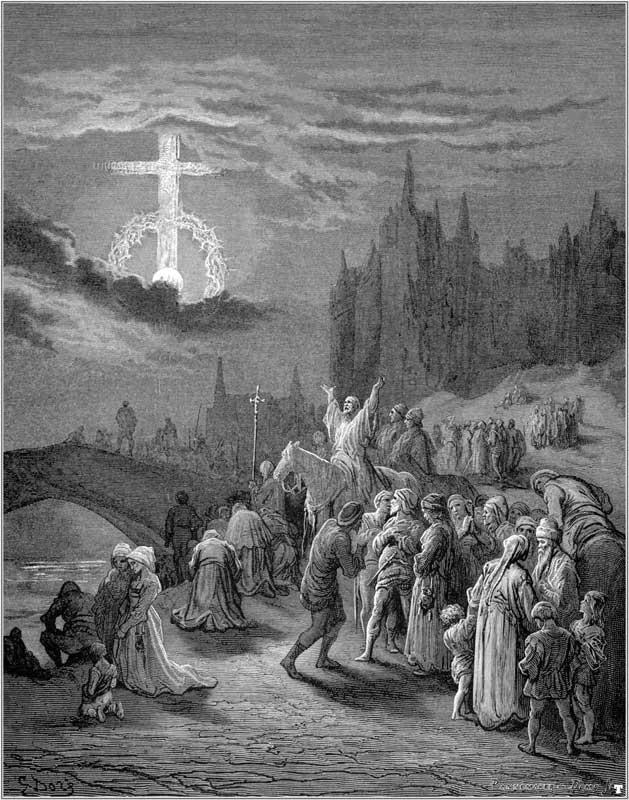
The Apparition of the Holy Cross over Jerusalem: The Commemoration of the appearance on 7 May 351, Pentecost that year, of a luminous image of the Holy Cross in Jerusalem. It stretched from Mount Golgotha to the Mount of Olives (about two miles / three kilometers), was brighter than the sun, lasted several hours and was seen by the entire City. It led to many conversions and was reported in a letter attributed to Saint Cyril of Jerusalem.
Bl Antonio de Agramunt St Augustine of Nicomedia St Augustus of Nicomedia
St Benedict II (Died 685) Pope and Confessor
St Cerenico of Spoleto St Domitian of Huy St Duje
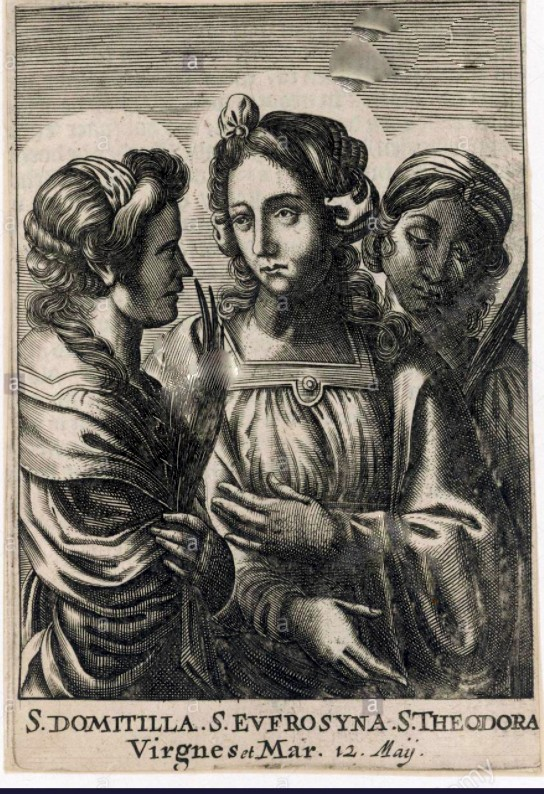
St Flavia Domitilla (1st Century) Virgin Martyr. The Roman Martyrology states of her today: “At Terracina, in Campania, the birthday of blessed Flavia Domitilla, Virgin and Martyr, niece of the Consul Flavius Clemens. She received the religious veil at the hands of St Clement and in the persecution of Domitian, was exiled with many others to the island of Pontia, where she endured a long Martyrdom for Christ. Taken afterwards to Terracina, she converted many to the faith of Christ by her teaching and miracles. The judge ordered the chamber in which she was, with the virgins Euphrosina and Theodora, to be set on fire and she thus consummated her glorious Martyrdom. She is also mentioned with the holy Martyrs Nereus and Achilleus, on the 12th of this month.” Her Life and Death: https://anastpaul.com/2021/05/07/saint-of-the-day-7-may-saint-flavia-domitilla-of-terracina-1st-century-virgin-and-martyr/
St Flavius of Nicomedia Bl Francesco Paleari Bl Gisela of Ungarn
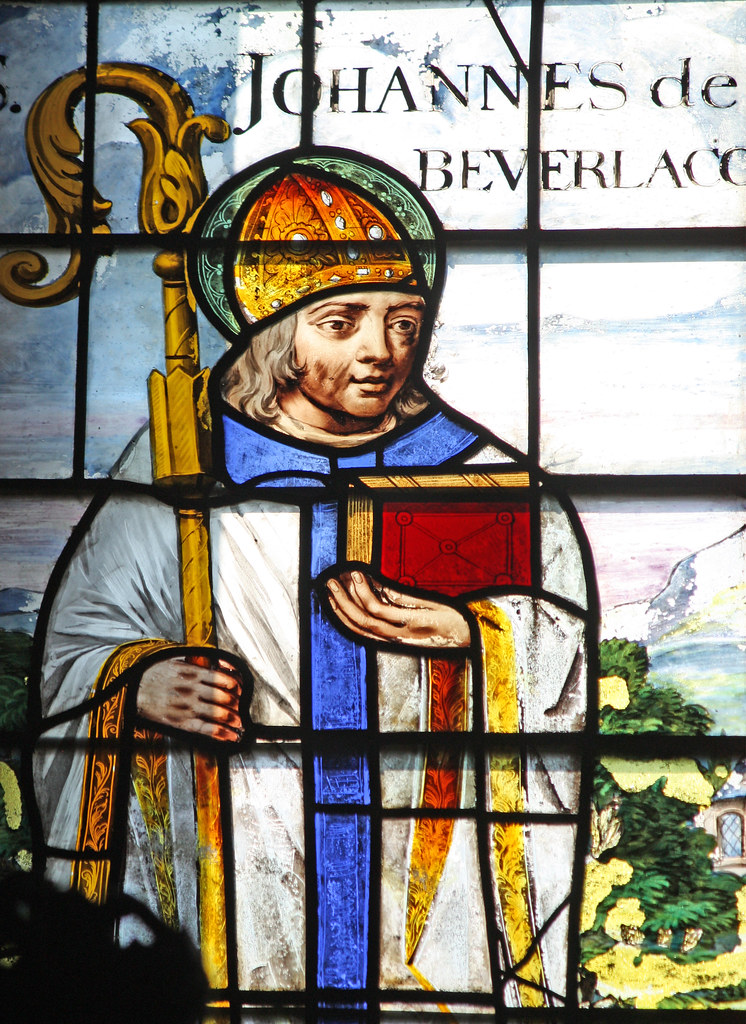
St John of Beverley (Died 721) Bishopof Hexham and then the Bishop of York, Scholar and Teacher, Apostle of the poor, and the sick Ascetic, Miracle-worker., a great friend of St Bede the Venerable. He founded a Monastery at Beverley, Yorkshire from which the Town developed. Today, it is a vibrant market Town of some 31,000 people. It owes its foundation and growth to Saint John of Beverley. The Beverley Cathedral now stands on the site of St John’s Monastery. The Roman Martyrology reads today: “At York, in England, St John, Bishop, renowned for his saintly life and miracles.” A Wonderful Saint from Yorkshire: https://anastpaul.com/2022/05/07/saint-of-the-day-7-may-st-john-of-beverley-died-721-of-the-miraculous-banner/
St Juvenal of Benevento St Maurelius of Voghenza-Ferrara St Peter (Died c735) Bishop of Pavia St Placid (Died c675) Abbot of Autun St Quadratus of Herbipolis St Quadratus of Nicomedia
St Serenicus of Hyesmes St Serenus of Hyesmes Bl Villanus (Died 1237) Bishop of Gubbio
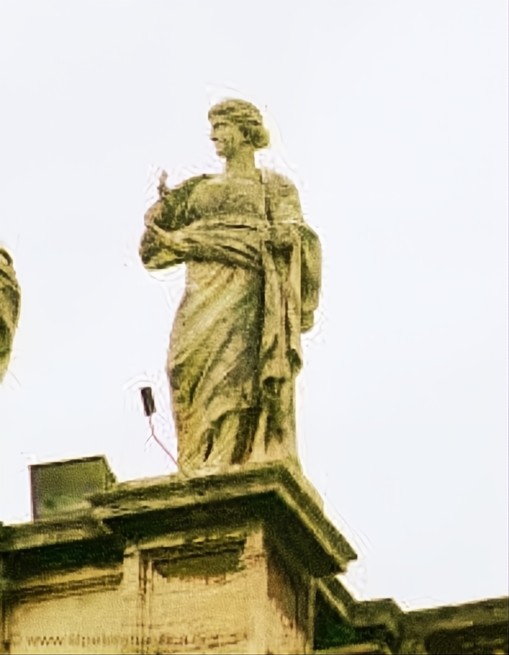
Saint of the Day – 6 May – Saint Benedicta (Died c550) Virgin of Rome. Also known as Benedetta. St Benedicta was a disciple of St Galla, a wealthy widow of Rome who founded a Convent on Vatican Hill where our Saint spent her holy life of prayer, fasting and assisting the poor and ill. The image below is St Galla on St Peter’s Colonnade/
The Roman Martyrology reads today: “At Rome, St Benedicta, Virgin.”
Information about St Benedicta is scant and comes primarily from the writings of Pope Gregory the Great, who describes her as a companion of Saint Galla in the Monastery St Gallo had founded in Rome, near St Peter’s.
Her life, although short, is rich in teachings and examples of faith and devotion.
We know that she was a young Roman virgin who, drawn to religious life, Consecrated herself to God as a virgin. She entered the Monastery founded by Saint Galla.
St Gregory the Great, in his Dialogues, describes her as a woman of great sanctity, devoted to prayer, fasting, and obedience. She was particularly dear to St Galla, who considered her a daughter. St Galla is one of the 140 saints whose images adorn St. Peter’s Square’s Colonnade.
According to tradition, Saint Benedicta died 30 days after the death of her mentor St Galla, as the Apostle Peter had foretold her in a vision. Her death was peaceful and holy, like her life.
St Benedicta is venerated by the Church and her name is inscribed in the Roman Martyrology on this day.
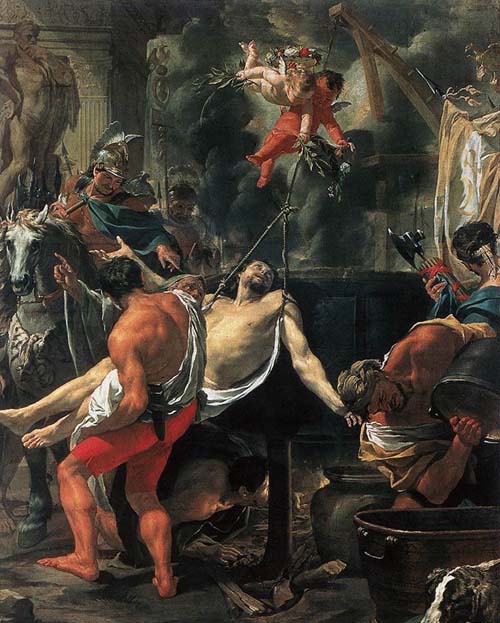
The Feast of St John the Apostle and Evangelist before the Latin Gate: The Roman Martyrology states of this Feast today: At Rome, the feast of St John before the Latin Gate. Being bound and brought to Rome from Ephesus by the order of Domitian, he was condemned by the Senate to be cast, near the said gate, into a vessel of boiling oil, from which he came out more healthy nd vigorous than before! About this wondrous Miracle: https://anastpaul.com/2021/05/06/saint-of-the-day-6-may-st-john-the-evangelist-before-the-latin-gate/
LeBrun, Martyrdom of St John Evangelist at Porta Latina 1641f.jpg
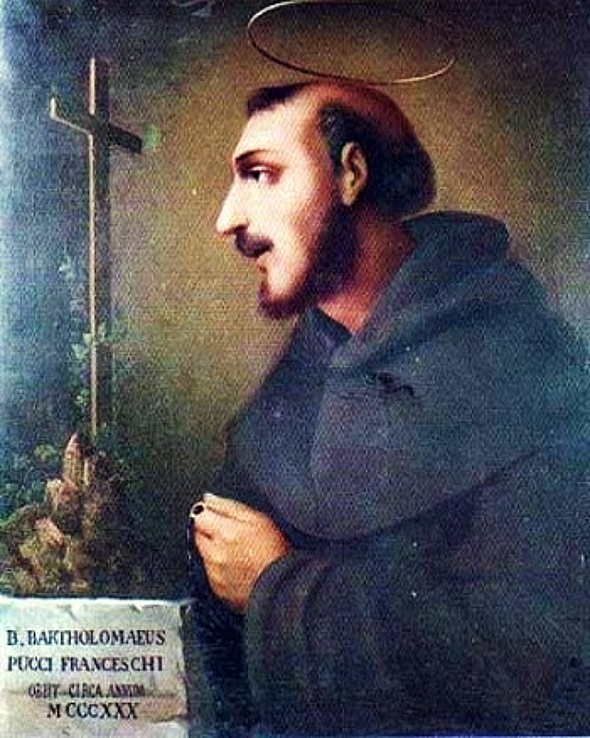
Blessed Bartolomeo Pucci-Franceschi OFM (Died 1330) Priest of the Friars Minor after having been a husband and father of 4. Confessor, Mystic and Miracle-worker. The Roman Martyrology reads today: “In Montepulciano in Tuscany, blessed Bartolomeo Pucci-Franceschi, Priest of the Order of Minors, who, having left his wife, children and all his possessions for the love of God, became Christ’s poor man.” His Life of Devotion to God: https://anastpaul.com/2022/05/06/saint-of-the-day-6-may-blessed-bartolomeo-pucci-franceschi-ofm-died-1330/
St Benedicta (Died c550) Virgin of Rome St Colman Mac Ui Cluasigh of Cork St Colman of Loch Eichin St Dominic Savio
St Edbert (Died 698) Bishop of LindisfarneIsland, Monk at the Monastery there, succeeding St Cuthbert in 688, a renowned Scriptural Scholar, he administered the See of Lindisfarne Island for 10 years and became too, a man remembered for his great virtue and especially for his wonderful charity to the poor, needy and ill. The Roman Martyrology reads today: “In England, St Eadbert, Bishop of Lindisfarne, eminent for doctrine and piety.” His Zealous Service: https://anastpaul.com/2025/05/06/saint-of-the-day-6-may-st-edbert-died-698-bishop-of-lindisfarne-island/
Bl Edward Jones St Evodius of Antioch
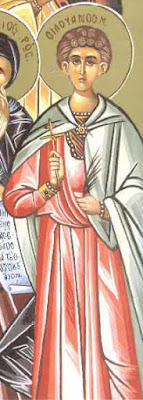
St Heliodorus Bl Henryk Kaczorowski St James of Numidia St Justus of Vienne Bl Kazimierz Gostynski St Lucius of Cyrene
St Marianus of Lambesa Bl Peter de Tornamira St Petronax of Monte Cassino St Protogenes of Syria Bl Prudence Castori St Theodotus of Kyrenia St Venerius of Milan St Venustus of Africa St Venustus of Milan Bl William Tandi



















You must be logged in to post a comment.