St Anastasius the Monk St Anastasius the Priest St Benildus St Cassian of Imola St Cassian of Todi St Concordia St Conn O’Rourke Bl Gertrude of Altenberg St Helen of Burgos St Herulph of Langres Bl Jakob Gapp Bl John of Alvernia
St John Berchmans SJ (1599-1621) Jesuit Novice – born Jan Berchmans on 13 March 1599 at Driest, Brabant, Belgium and died on 13 August 1621 at Rome, Italy of natural causes. Patronages – Altar Servers, Jesuit novices and students. He had a special devotion to God’s Mother and to him is owed the Little Rosary of the Immaculate Conception.
St Junian of Mairé St Ludolph
Blessed Marco d’Aviano/Mark of Aviano OFM Cap (1631-1699) Franciscan Capuchin Friar, Priest, Preacher, Spiritual Advisor, Political Advisor, Peace-maker, Miracle worker and the inventor of Cappuccino (Coffee).
St Maximus the Confessor (c 580-662) Father of the Church, Monk, Abbot, Theologian, Confessor, Scholar, Writer. Also known as St Maximus of Constantinople and St Maximus the Theologian. St Maximus, a man of fearless courage in witnessing to – “confessing” – even while suffering, the integrity of his faith in Jesus Christ, true God and true man, Saviour of the world and of His Holy Catholic Church.
St Nerses Glaietsi St Patrick O’Healy Bl Pierre Gabilhaud St Radegunde (c 518-587) Queen, Nun, Abbess St Wigbert of Fritzlar Bl William Freeman — Martyred in the Spanish Civil War: • Blessed Francesc Castells Areny • Blessed Inocencio García Díez • Blessed José Bonet Nadal • Blessed José Boher y Foix • Blessed José Juan Perot y Juanmarti • Blessed Jose Tàpies y Sirvant • Blessed Josep Alsina Casas • Blessed Luciano Hernández Ramírez • Blessed Maria de Puiggraciós Badia Flaquer • Blessed Mateo Despóns Tena • Blessed Modesto García Martí • Blessed Pascual Araguàs y Guàrdia • Blessed Pedro Martret y Molet • Blessed Silvestre Arnau y Pascuet
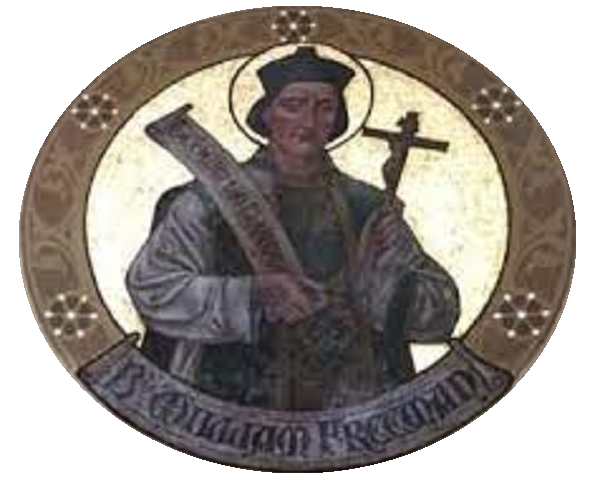
Blessed William Freeman, priest and martyr. He was born at Manthorp near York in 1558; educated at Oxford, and died at Warwick on the 13th of August, 1595. He is one of 136 martyrs who were beatified by Pius XI in 1929.
His parents were recusants, but for a while he pretended to be Anglican. This changed when he went to live in London, where he witnessed the martyrdom of Blessed Edward Stransham at Tyburn in 1586. The death of his fellow Blessed changed his life the same way Bl Edmund Campion’s had changed Bl Henry Walpole’s and Bl Philip Howard’s, converting him to the Faith. He left England and was ordained priest in 1587 at Reims.
Returning to England in 1589, he worked for six years on the borders of Warwickshire, and met many people who were contemporaries or friends of Shakespeare. In January, 1595, in Stratford-on-Avon he was arrested, and spent seven months in prison. He denied his priesthood, but also refused all friendly offers to escape, not wishing to lose his opportunity of martyrdom. Owing to the treachery of a fellow-prisoner, William Gregory, he was at last sentenced as a seminary priest and in spite of a protest of loyalty, was put to the death of a traitor (hanging, drawing, quartering) at Warwick.
Bl Edward Stransham, Bl Henry Walpole and Bl Philip Howard were also beatified by Pius XI in 1929.
Saint Jaenbert (Jaenberht, Janbriht, Janibert, Jambert, Lambert, Lanbriht, Genegberht) Jænberht was a medieval monk, and later the abbot, of St Augustine’s Abbey, Canterbury. He came from a prominent family in the kingdom of Kent, and a kinsman of his, Eadhun, was an official of King Egbert II of Kent. In 760 he was elected Abbot of St. Augustine’s, Canterbury, and blessed by Archbishop Bregwin. When the archbishop died he was buried at Christ Church, and Jaenbert asserted the rights of his own abbey as the traditional burying-place with such vigour that the monks of Christ Church elected him archbishop to avoid his appeal to Rome, thus showing the great strength of his personality and will.
Canterbury Cathedral seen from St Augustine’s Abbey
As archbishop, he had a difficult relationship with King Offa of Mercia, who at one point confiscated lands from the archbishopric. By 787, some of the bishoprics under Canterbury’s supervision were transferred to the control of the newly created Archbishopric of Lichfield. Jænberht also presided over church councils in England and minted silver coins, thus making him the earliest Archbishop of Canterbury whose coinage has been preserved. The saint was renowned for his wisdom and sound judgment. He was sought after by both clergy and laity for his advice and guidance on matters of faith and morals. Jambert was the thirteenth prelate of the primal see of England and was noted for his patronage of monasteries and the poor.
St Augustine’s Abbey
He died on 12 August, 792, of natural causes, and was buried in the abbey church of St Augustine’s Abbey in Canterbury.
Saint AgrestiusChromatius the Prefect, martyr and father of Saint Tiburtius. Saint Chromatius was vicar to the city prefect of Rome under Emperor Diocletian. He had an ornate palace in the Parione district. Before becoming Christian, he condemned several martyrs to death during the reign of Emperor Carinus. He was later converted to Christianity by Saint Tranquillinus and baptized by Saint Polycarp. The occasion by which he received such a great grace was Saint Tranquillinus’ testifying to being cured of gout during baptism. Chromatius likewise suffered terribly from gout, so he sent for Polycarp, who baptized him, and he was also healed.
After becoming Christian, he released the Christian prisoners and freed his slaves. He then retired and was succeeded by Fabianus. Chromatius lived quietly on his country estate for many years, welcoming other Christians into his home to protect them from persecution.
Saint Chromatius’ son, Saint Tiburtius, took shelter in his father’s house during the persecution of Diocletian, but was later by an apostate, tortured and beheaded. Chromatius is said to have also been martyred, probably at the same time. However, no details of his martyrdom remain. According to Butler’s Lives of the Saints, Chromatius was mentioned in several ancient martyrologies alongside his son Tiburtius.
Blessed Augustine Ota, a martyr of Japan and a native Japanese. He was born in 1572 in Ojika, Goto-retto, Nagasaki, and grew up Buddhist. Jesuits converted and baptised him in 1585. After his wife died, he devoted all his time to spreading Christianity and evangelising his countrymen. Because of his knowledge of Buddhism, he was especially valuable to the Jesuit missionaries.
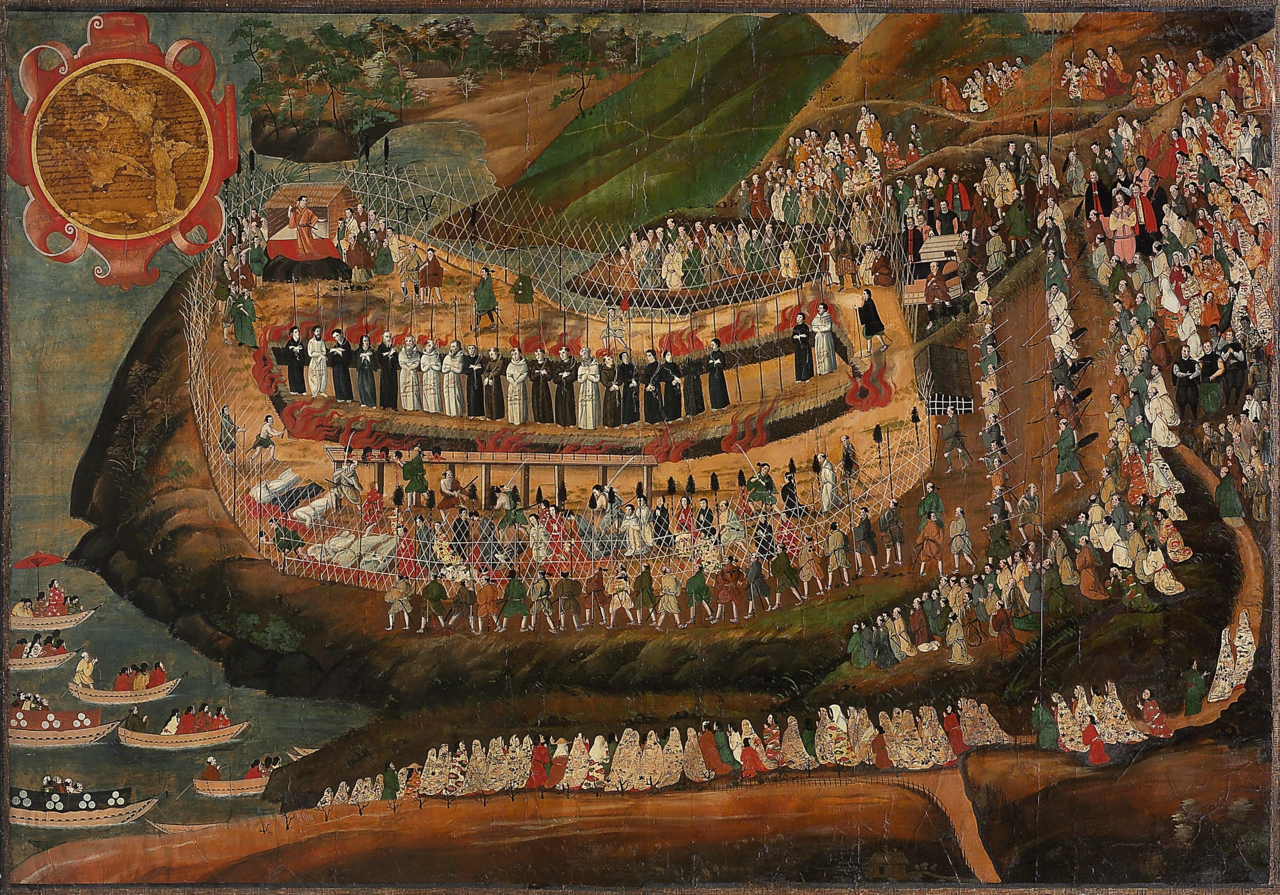
The mass killing at Nagasaki in 1622
Despite the persecution Christians were facing, Augustine joined Father Camillus Costanzo and served as his catechist on visits to the islands of the western shore of Japan and to some of the mainland. They were betrayed by a Japanese man who feigned interest in hearing Father Costanzo. After finding out the secret whereabouts of the priest, the man passed the information to the police who tracked him and Augustine down on the island of Uku and arrested them.
Knowing he would be executed, Augustine wrote to the Jesuit provincial in Japan, requesting for admission into the Society. An affirmative answer arrived, and Father Costanzo accepted Augustine as a novice. The day before his death Augustine pronounced the three vows. He was beheaded on August 10, 1622 and his body thrown into the sea.
The Church venerated him on February 26, 1866, through a decree of martyrdom issued by Pope Pius IX. The Pope then beatified him on May 7, 1867.
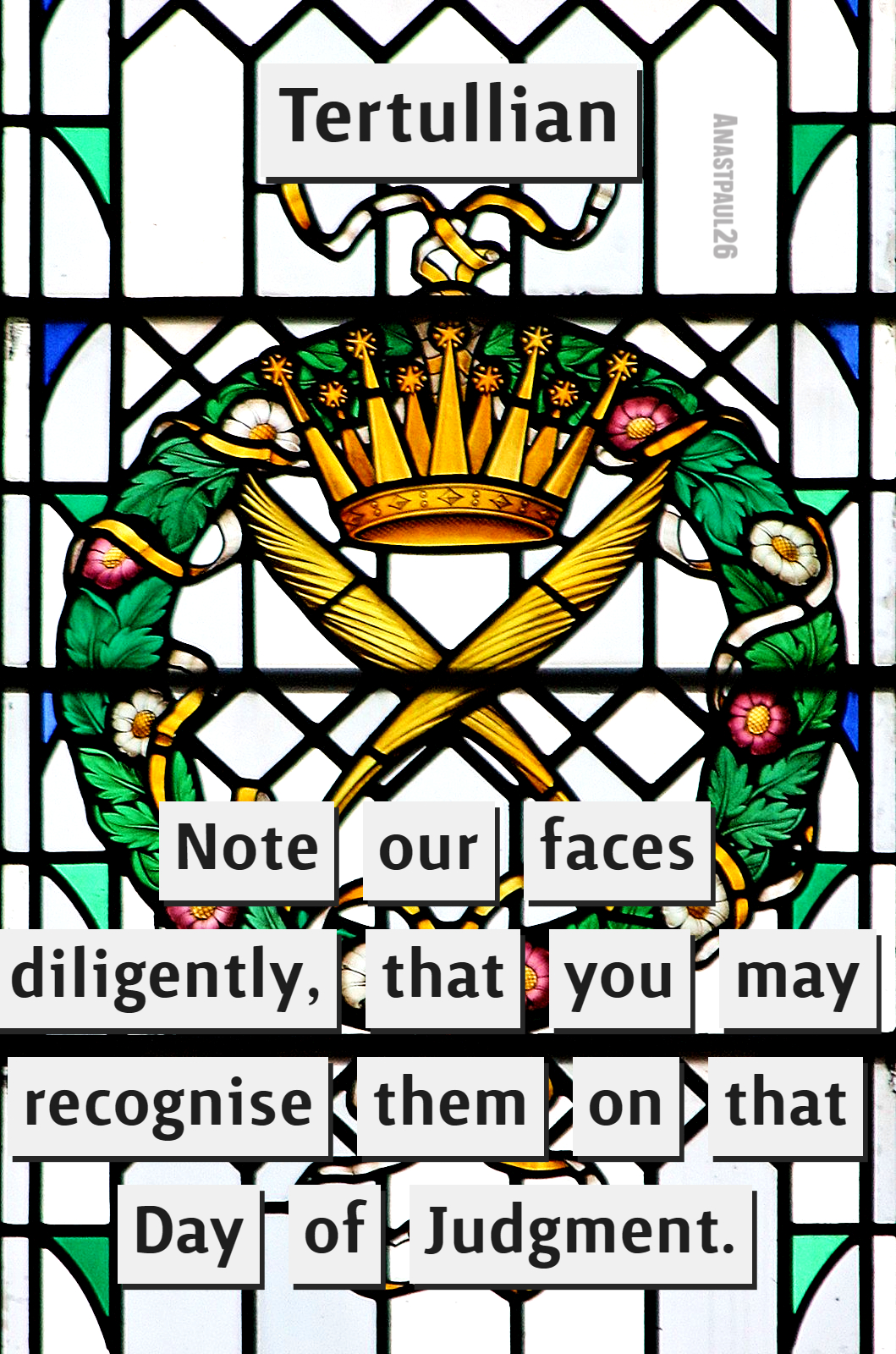
When they came within sight of Hilarianus, by gesture and nod, they began to say to Hilarianus, You judge us, say they, but God will judge you. At this the people, exasperated, demanded that they should be tormented with scourges as they passed along the rank of the venatores. And they indeed rejoiced that they should have incurred any one of their Lord’s passions.
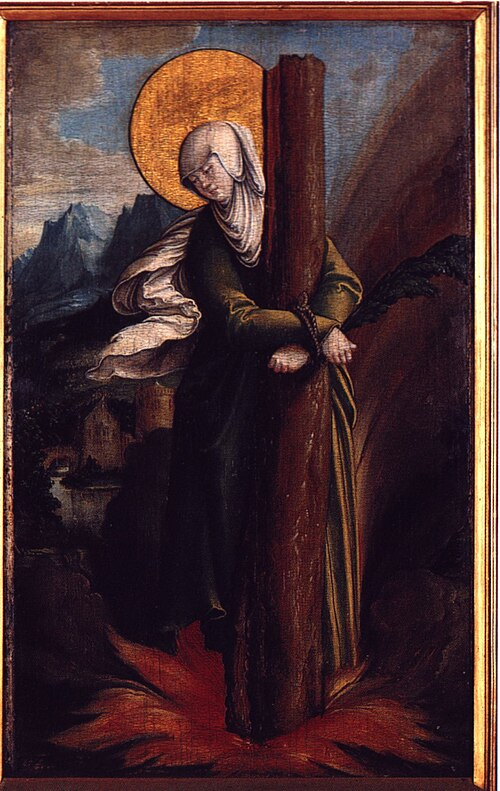
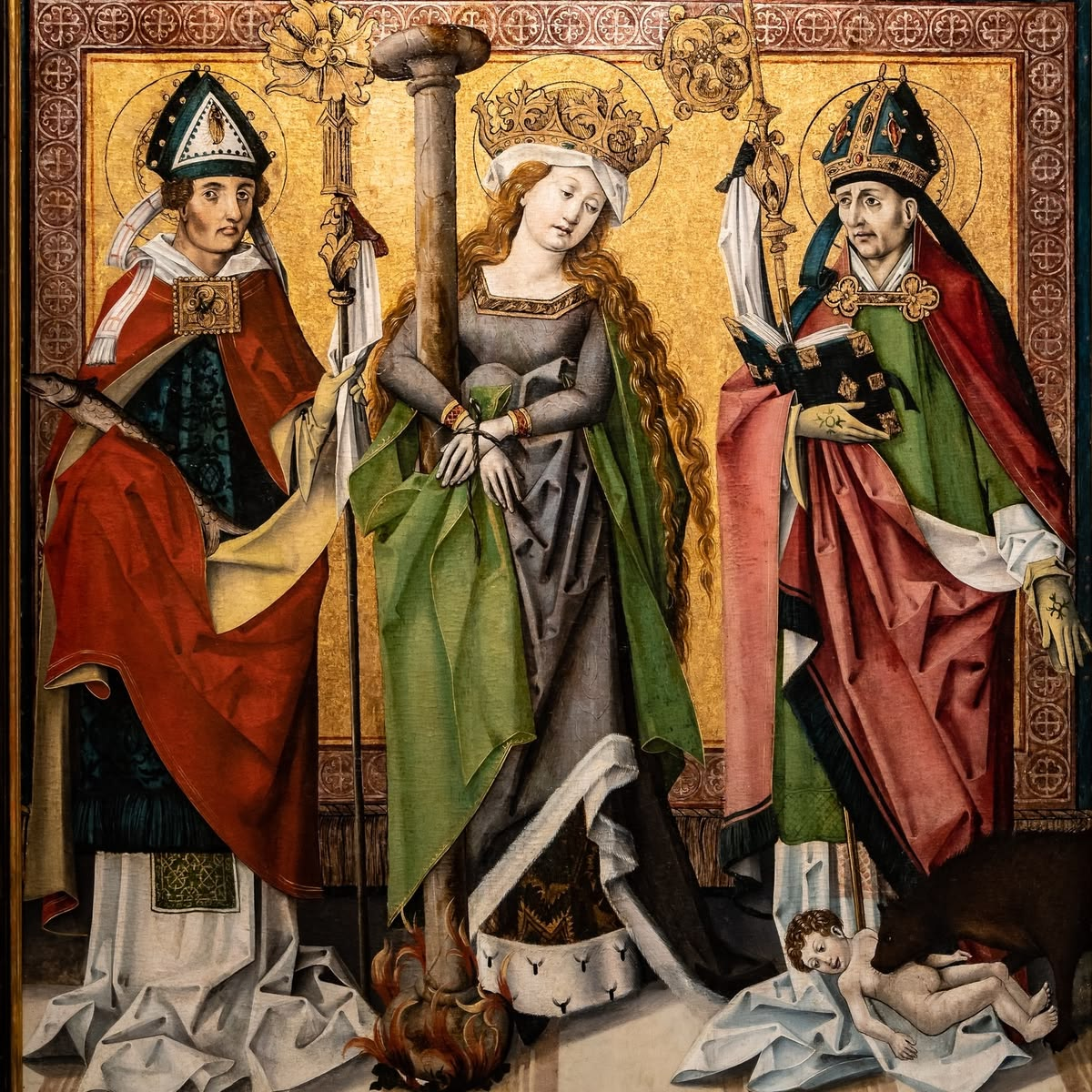
Saint Numidicus was a seminarian and martyr, and one of a group of Christians persecuted in the persecutions of Decius. The persecutions of Emperor Decius in the year 251 were fierce. Some of the clergy lapsed, others fled; Saint Cyprian of Carthage encouraged the confessors and wrote eloquent panegyrics on the martyrs. On the arrival of the proconsul in April the severity of the persecution increased. Women and children were tortured. Numidicus, who had encouraged many, saw his wife burnt alive. Arrested, he was brought before the authorities and sentenced to be burnt at the stake.
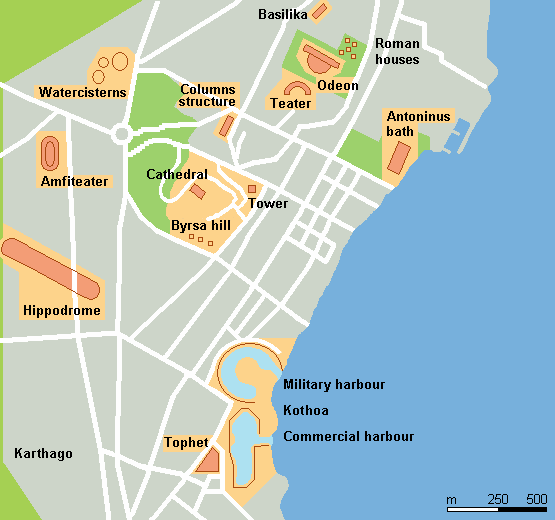
Roman Carthage
Just before his death, Numidicus was miraculously saved by Saint Cyprian. As he was about to be burnt, Cyprian, who was hiding nearby, intervened and dragged him from the flames. Cyprian, who would himself die a martyr in their shared city, recognised the sanctity of Numidicus, and immediately ordained him a priest, ensuring that he died as a clergyman.
These doings of his were such, and so great, and so admirable, that I am deterred by the contemplation of their greatness, and confess myself incompetent to discourse in a way that shall be worthy of the honour of his deserts, and unable to relate such noble deeds in such a way that they may appear as great as in fact they are, except that the multitude of his glories is itself sufficient for itself, and needs no other heraldry.
St Hormisdas of Persia (or Hormizd) was the son of a governor and a Persian martyr who died in the fifth century. At the time Christians were being persecuted by the Persian kings, and the tortures and method of murder inflicted upon them ws so cruel and horrible that according to sources from the period, it was difficult to even put it into words. Even worse than threat of pain, the Persian kings offered barbarism in one hand, and offers of power in the other. Despite this dual onslaught against weak human nature, the most terrible possible, many Christians stood fast to the Faith.
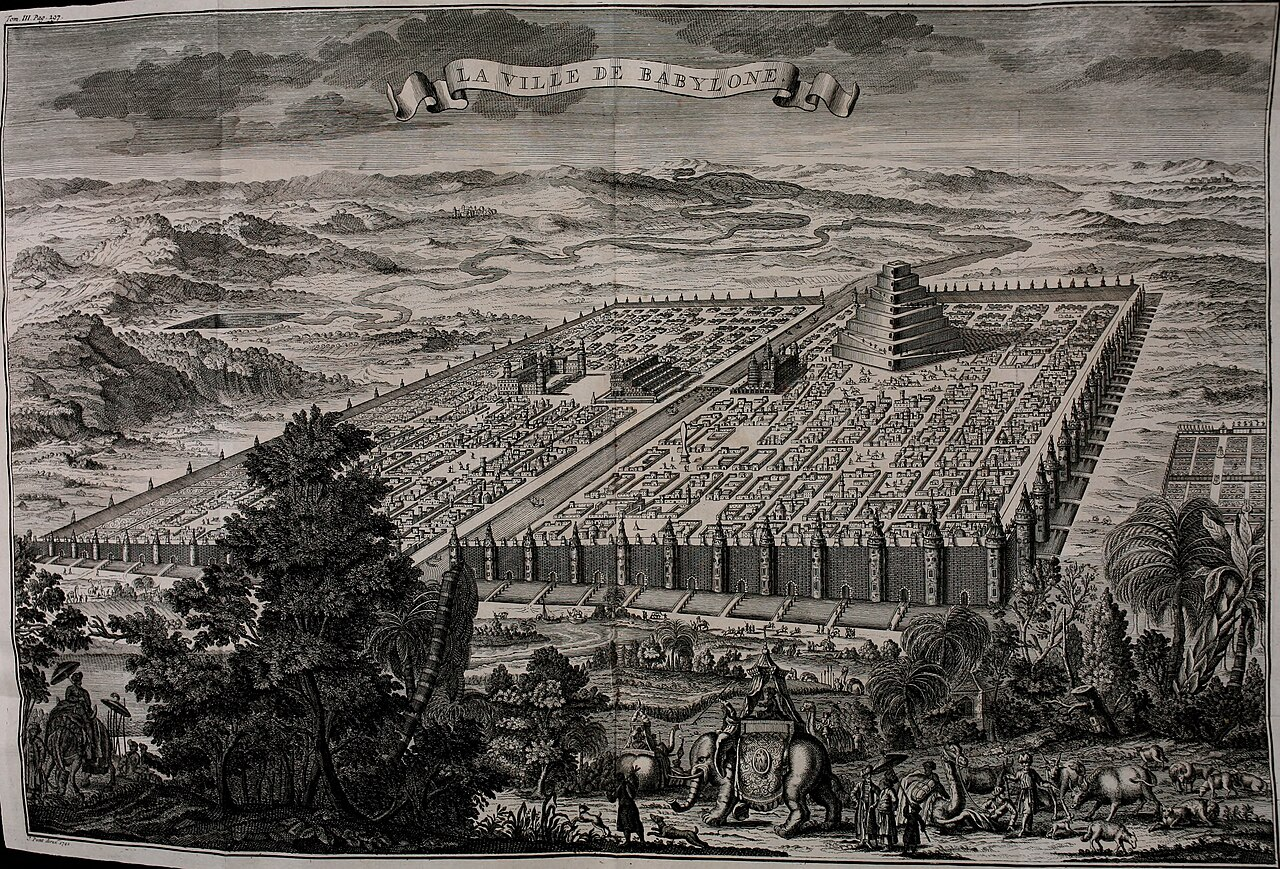
Babylon
High status and power were taken from Hormisdas because of his strict allegiance to Christianity. From a nobleman, he was stripped of everything, including most of his clothes, and made to take care of the royal camels.
In answer to the king’s demand that he renounce Christ, Hormisdas refused, saying that such a denial would offend God, and that a man willing to violate the supreme law of the sovereign Lord of all could not be trusted to remain faithful even to his earthly king. He added that if treason against an earthly sovereign is punishable by death, “what must it be to renounce the God and ruler of the universe?”
After a long time suffering humiliation, the king pitied the saint, gave Hormisdas a tunic and offered him clemency if he would “renounce the Carpenter’s Son.”In response, Hormisdas stripped off the tunic, asking the emperor how he could have believed it would persuade him to abandon the law of God. He was executed in the year 420 by Bahram V.
Saint Afra, martyr and penitent, listed in some records as the daughter of the king of Cyprus. In the late 3rd century, her pagan family journeyed from Cyprus to Augsburg. Afra was dedicated to the service of the goddess Venus by her mother, Hilaria, a service which involved ritual prostitution.
When the persecutions started in Augsburg, Bishop Narcissus of Gerona, Spain, arrived in the city and took lodging with Afra and her mother, not knowing their profession. His holiness and the doctrine of redemption he brought converted the women, who were baptised, and Afra’s uncle Dionysius was ordained as a bishop. She immediately began to give liberally to the poor. When officials came looking for the bishop, Afra hid him under a pile of flax.
Arrested for being a Christian and refusing to participate in pagan rites, she was burned to death, tied to a tree on the small island of Lech. She was buried in Augsburg and her mother erected a chapel for her tomb. Soon after, Hilaria and her serving women were also martyred, burned alive in their house. Afra’s remains were buried in a church named after her. Pilgrims visited her shrine as early as 565. In 1012, the Benedictine monastery of St. Ulrich and St. Afra displayed her sarcophagus. The Acts of Afra give an account of her martyrdom.
The judge, Gaius, said to her: “Come now, sacrifice to the gods; it is better to live than to die amid torments.”
The saint replied: “The sins which I have committed before I knew the true God are sufficient; wherefore I cannot now do that which thou commandest. I never will do so: it would be adding a new insult to my God.”
The judge having ordered her to repair to the temple, she answered with great courage: “My temple is Jesus Christ, whom I have continually before mine eyes, and to whom I every day confess my sins. Since I am unworthy to offer him any other sacrifice, I am anxious to sacrifice myself, in order that this body, with which I have offended him, may be purified by torments; this reflection shall make me suffer most willingly.”
“Since, therefore,” said Gaius, “by reason of thy wicked life thou hast nothing to expect from the God of the Christians, thou hadst better sacrifice to our gods.”
The saint replied: “My Lord Jesus Christ has said that he descended from heaven to save sinners. We read in the Gospel that a sinful woman, having washed his feet with her tears, obtained from him the forgiveness of all her offences; and, moreover, that he never rejected sinful creatures nor publicans; but, on the contrary, condescended to converse and even to eat with them.”
The iniquitous judge was not ashamed to counsel her to return to her infamous practices, in order that she might gain the favor of the gallants, and enrich herself.
“I renounce,” said the penitent Saint Afra,“that execrable gain, and look upon it with horror. That which I had, I have cast from me and given to the poor, imploring them to accept it; how, then, can I consent to earn it again?”
Afra’s martyrdom deeply influenced the Christian community in Augsburg. A church was built over her burial site, and she became the patron saint of the city. Over the centuries, her veneration grew beyond Germany, and she became known in other parts of Europe. During the Middle Ages, pilgrims visited her shrine, and her cult was promoted by the Benedictine monks who cared for the church bearing her name—St. Ulrich and Afra Abbey. Her remains are still there.
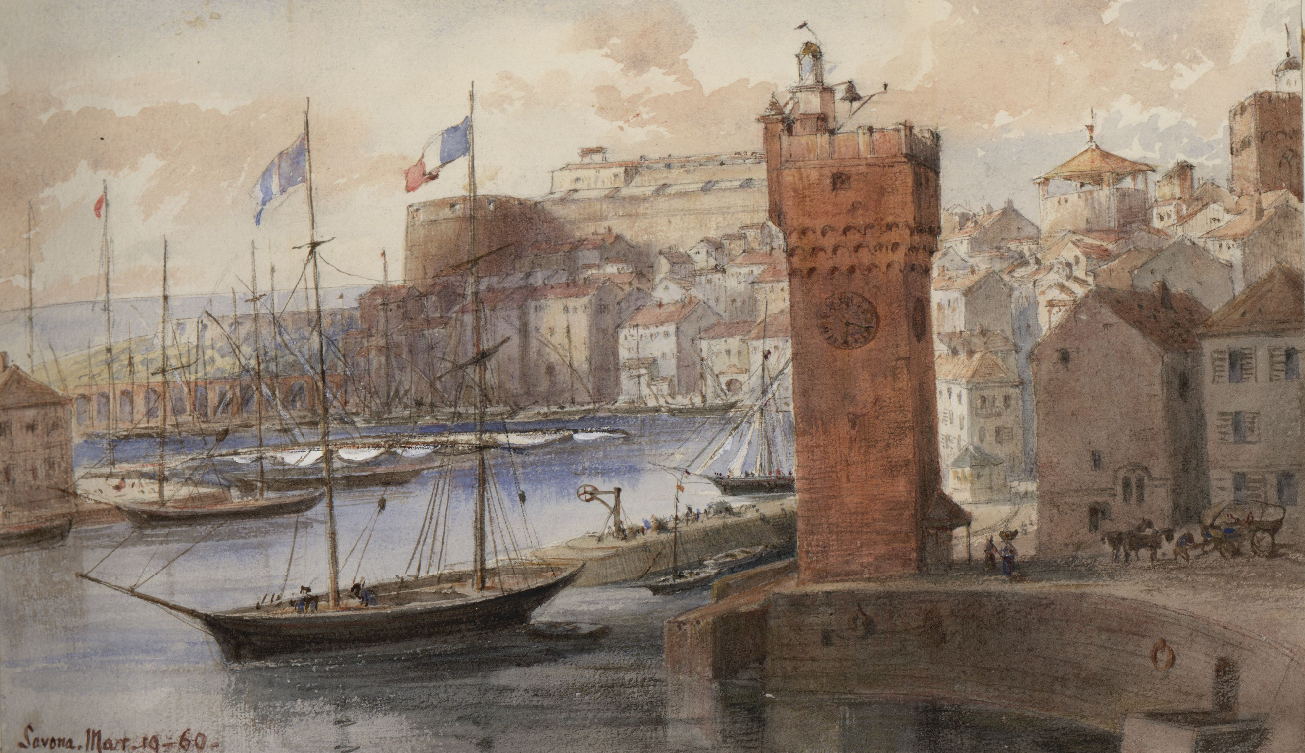
Blessed Octavian of Savona, also known as Ottaviano, was born in 1060 in Quingey, in France. He was the brother of Pope Saint Callistus II. Educated by the Benedictines, he became a monk at the Benedictine community at Saint Peter’s Abbey in Pavia, Italy. His devotion and commitment to the monastic way of life meant he rose through the ranks of the Benedictine order. In 1129, Octavian was appointed the Bishop of Savona, in northern Italy.
Savona, 1860
He was venerated for his deep devotion and strong faith, in only a short time becoming an extremely powerful force for good in the lives of those around him by inspiring them to follow Christ more diligently. He died peacefully in 1132, of natural causes. In recognition of his virtues and the impact he had on the lives of others, Octavian was beatified by Pope Pius VI in 1793, confirming his cultus and recognizing him as a blessed.
Saint Paris or Paris of Teano or Paride. A dragon slayer. From Athens, Greece, he was the apostle and first bishop of Teano. Upon arriving in town, his eyes were greeted with a procession of the locals, including young women carrying food and votive offerings. When asked by the saint what what they were doing, they replied they were honouring a serpent god living in a cave nearby. Holy indignation filled Saint Paris’ breast, and as soon as the monster emerged from its lair, the saint crushed its head with a stick. Then he dragged it to the river, where it drowned. For this holy deed the inhabitants of the town threw him to the hungry lions in the arena, but the animals refused to touch him. The miracle converted the entire town, and Paris was appointed the much beloved bishop.
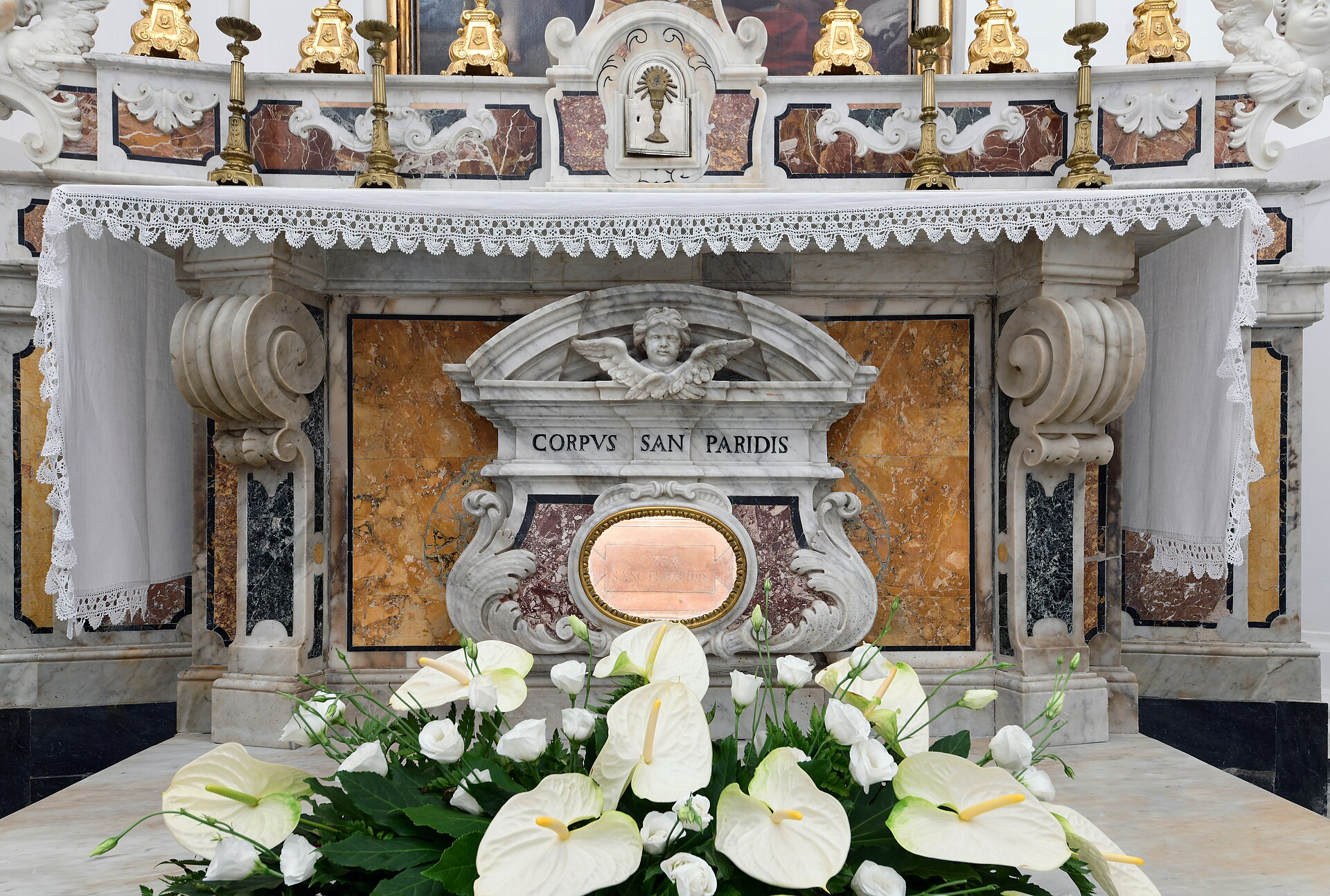
Saint Paris’ Tomb
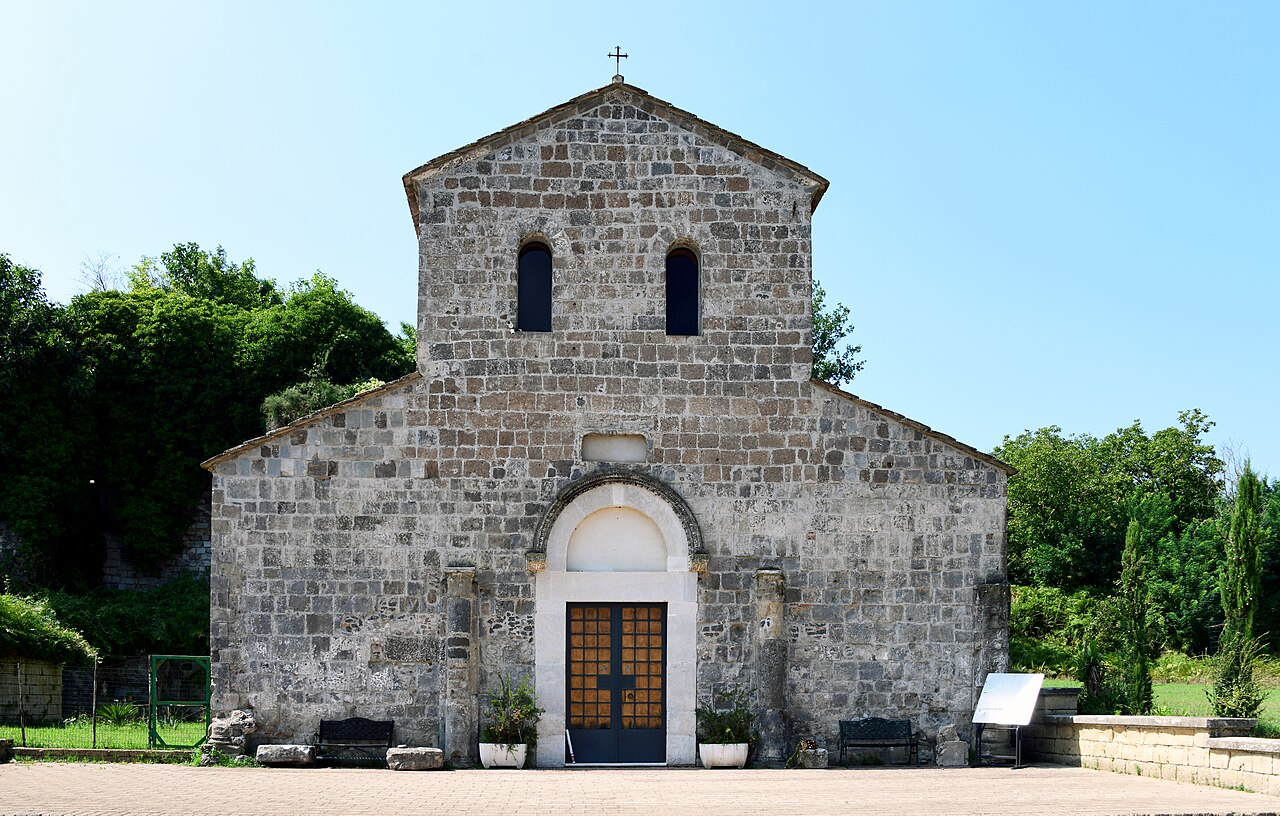
The original cathedral, San Paride ad Fontem (“Saint Paris at the Spring”) was erected at the location of his heroic deed, and dedicated to him. Built over a Roman cistern, it was named ad Fontem because the low ground once had a spring at which Paris preached.
San Paride ad Fontem
Paris died at Teano in 346. His remains lie in a chapel in the later Cathedral of San Clemente.
Saint Sithney(or Setna) was one of a group of Irish monks who travelled to western Cornwall, and from there he moved to Guic-Sezni in Brittany, where he founded a monastery. He was a native of Munster, the son of Erc and Magna – a sister of St. David. Sithney had two brothers, Saint Govan and Multos. He may be the Setna, a deaf and mute boy who kept cows on Slieve-Bloom. Saint Columba of Terryglass pitied the child and blessed him. He not only recovered hearing and speech, but also acquired the gift of prophecy.
When God chose Sithney to be the patron of girls seeking husbands; the saint recoiled, saying he would never get to rest in that case, and that he would rather take care of mad dogs than women. Ever since, sick or mad dogs have been given water from Sithney’s well as a tonic.
He died in 529, of natural causes. William Worcester recorded in 1478 that the body of the saint lay within the church of Saint Sithney.
Saint Sithney church
Patronages: Against hydrophobia, against rabies, against mad dogs, Sithney, Cornwall, England
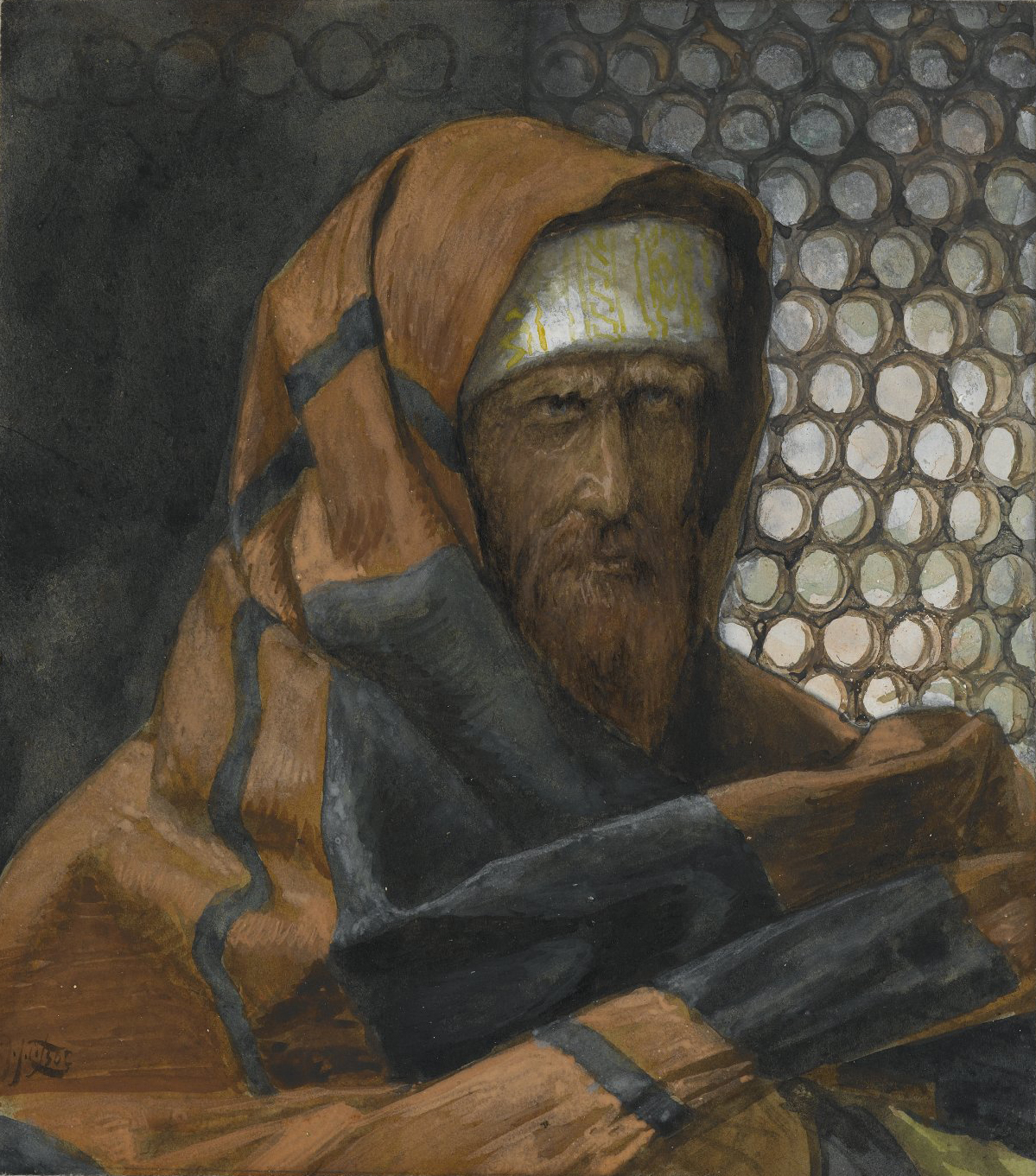
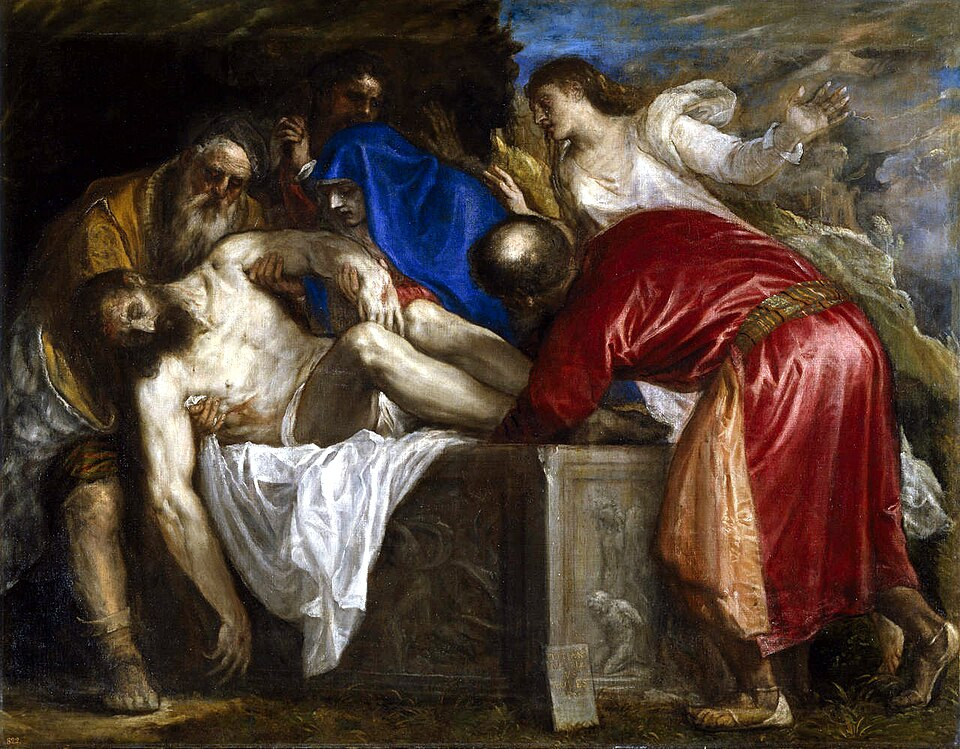
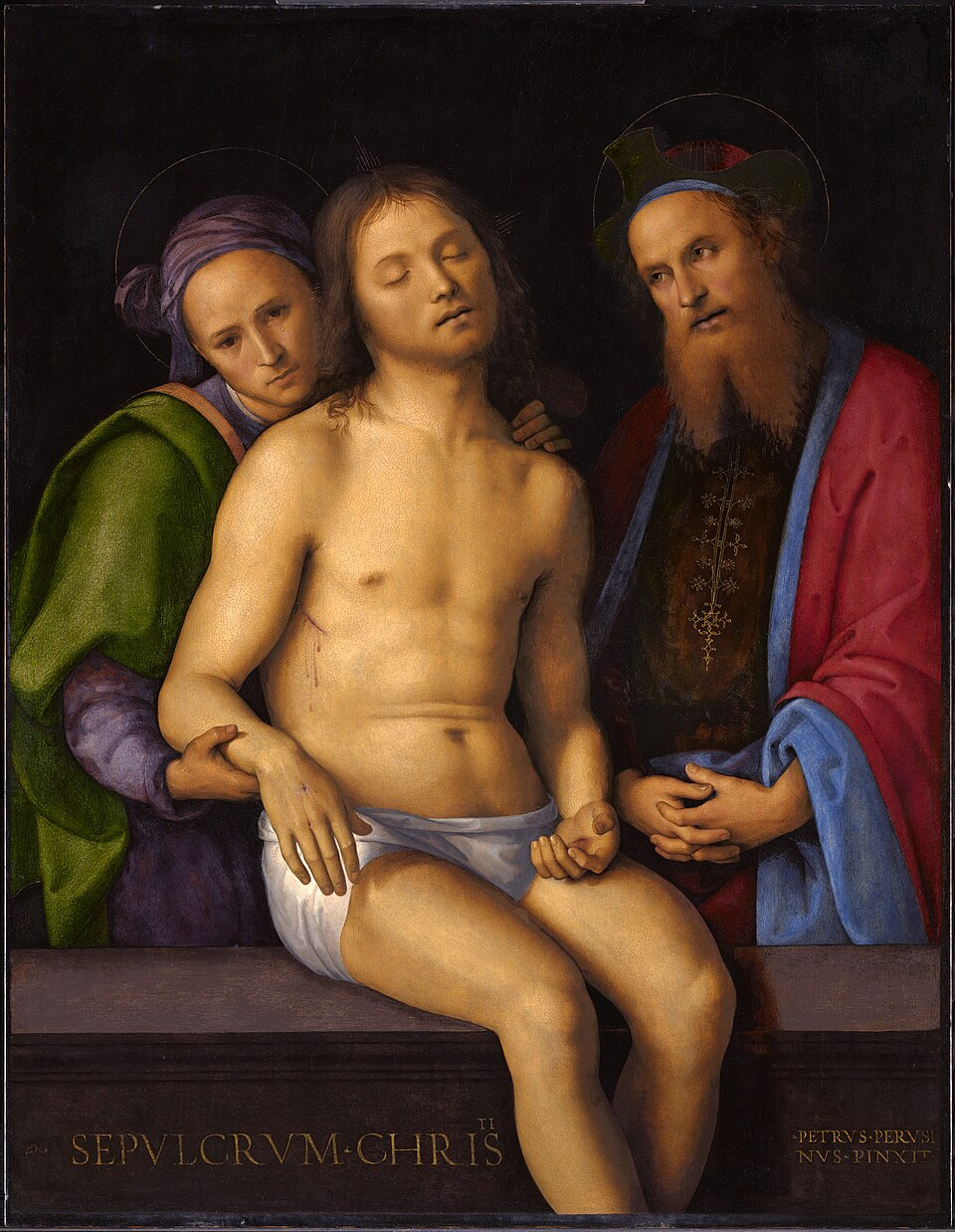
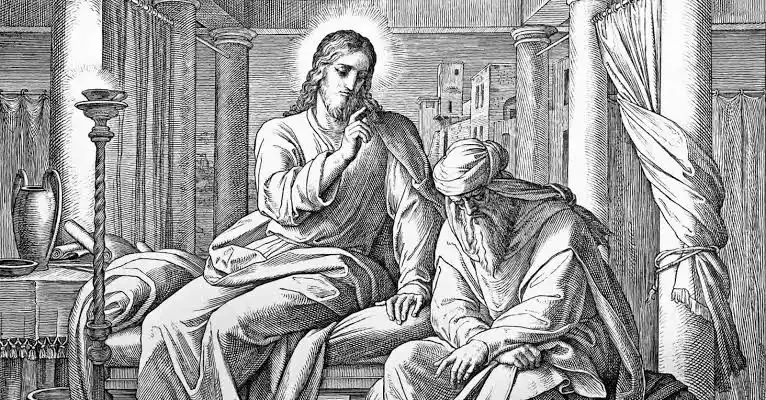
Saint Nicodemus was a Pharisee, a ruler of the Jews, a teacher of Israel, and a member of the Sanhedrin. He went in the secrecy of the night to learn from Jesus, whom he professed as a teacher sent by God. Owing to his insistence on a hearing for Jesus according to Jewish law, Nicodemus is called “defender of Jesus”. In return, the chief priests and his fellow pharisees mocked him by saying that no prophet comes from Galilee.
He sought to understand from Jesus how a person might be born again after having left his mother’s womb. After Jesus’ crucifixion, Nicodemus assisted Joseph of Arimathea in laying Jesus’ body in a nearby tomb. He brought a royal, thirty-three kilogramme mixture of myrrh and aloe to anoint the Saviour of the world, thus testifying to his faith and Mary Magdalene-esque devotion.
Later, he was ostracized by the Pharisees for his Christianity. He lived the remainder of his life in the home of Gamaliel, another member of the Sanhedrin. Their relics were housed and venerated together in the 5th century, along with those of St. Stephen the martyr.
He carved both the Holy Face of Lucca and the Batlló Crucifix, receiving angelic assistance with the face in particular.
Saint Sidwell, also known as Sidwella, was a virgin saint from Devon, in England. She is the patroness of Exeter and sister of Saint Urith and Saint Juthwara. A Saxon living in Exeter in the 8th century, her father was a wealthy landowner named Benna, who died leaving his daughter in the care of a cruel stepmother, who was jealous of her beauty and virtue and coveted her inheritance.
The girl often left the city to bring food to the villagers working the fields outside the city walls. The Catalogus Sanctorum Pausantium in Anglia says she was beheaded by a couple of corn reapers, hired to do so by her stepmother. They cut off her head with a scythe, and where her head came to rest, water sprang up. A shaft of light shone over the site for three nights. She was buried at St Sidwells. Her ghost was seen carrying her severed head and putting it back on her shoulders at the spot where she was later buried. The spring became the Well of St Sidwell, and was a place of pilgrimage in Anglo-Saxon and Norman England.
The Church of St Sidwell, located just outside the site of Exeter’s east gate, still exists, and one of the main streets in Exeter is Sidwell Street.
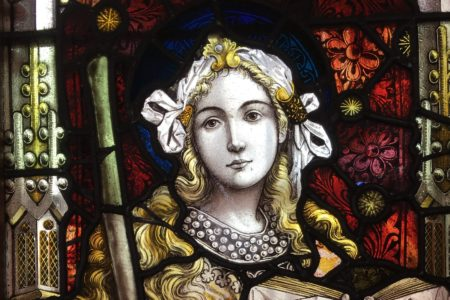
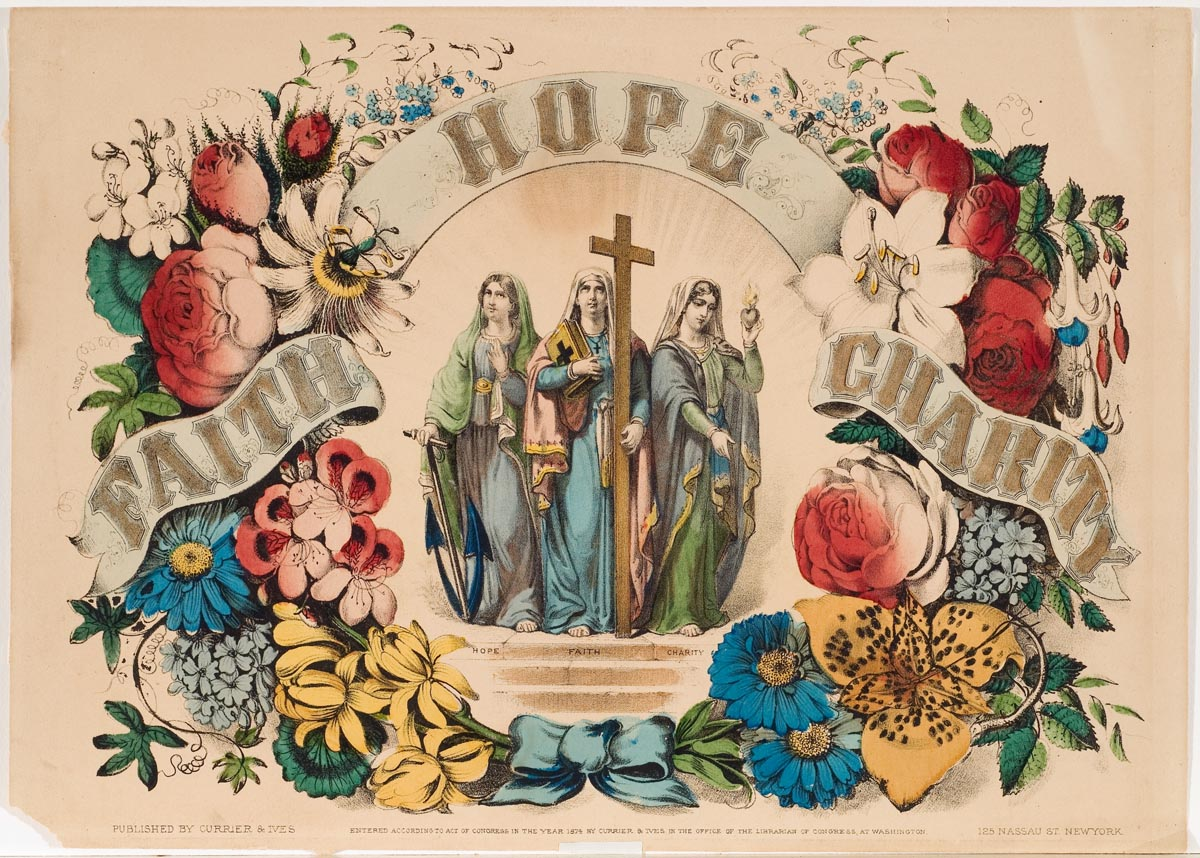
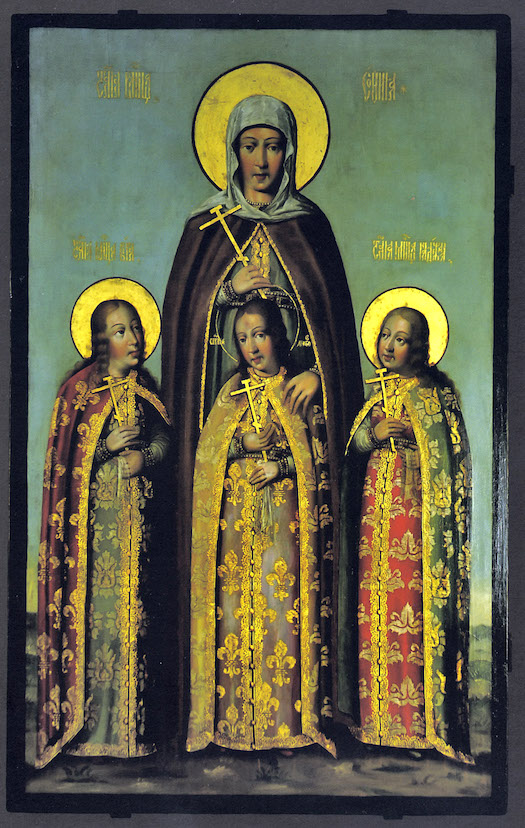
Saints Faith, Hope and Charity were the daughters of Saint Sophia (Wisdom). Sophia was a widow of Milan who gave away her possessions and moved to Rome with her daughters. Her daughters were martyred before her and she buried them at Via Appia. She died a natural death three days later while praying at their grave. Their tomb in a crypt beneath the church afterwards erected to Saint Pancratius was long a place of pilgrimage, as detailed in various documents of the seventh century. Oils were gathered from their tombs and sent to Queen Theodelinda in the time of Gregory the Great.
Early Christians from the 4th century often took in baptism mystical names indicative of Christian virtues, and Sophia, Sapientia, and Fides are attested as names of Christian women in Catacomb inscriptions. While still children, the daughters were tortured and martyred in the persecutions of Hadrian. They were scourged, thrown into a fire, and then beheaded.
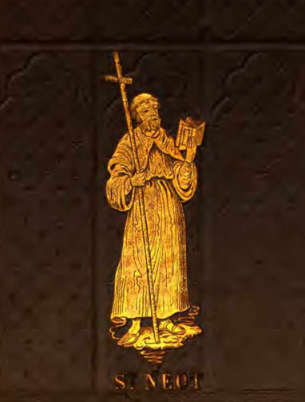
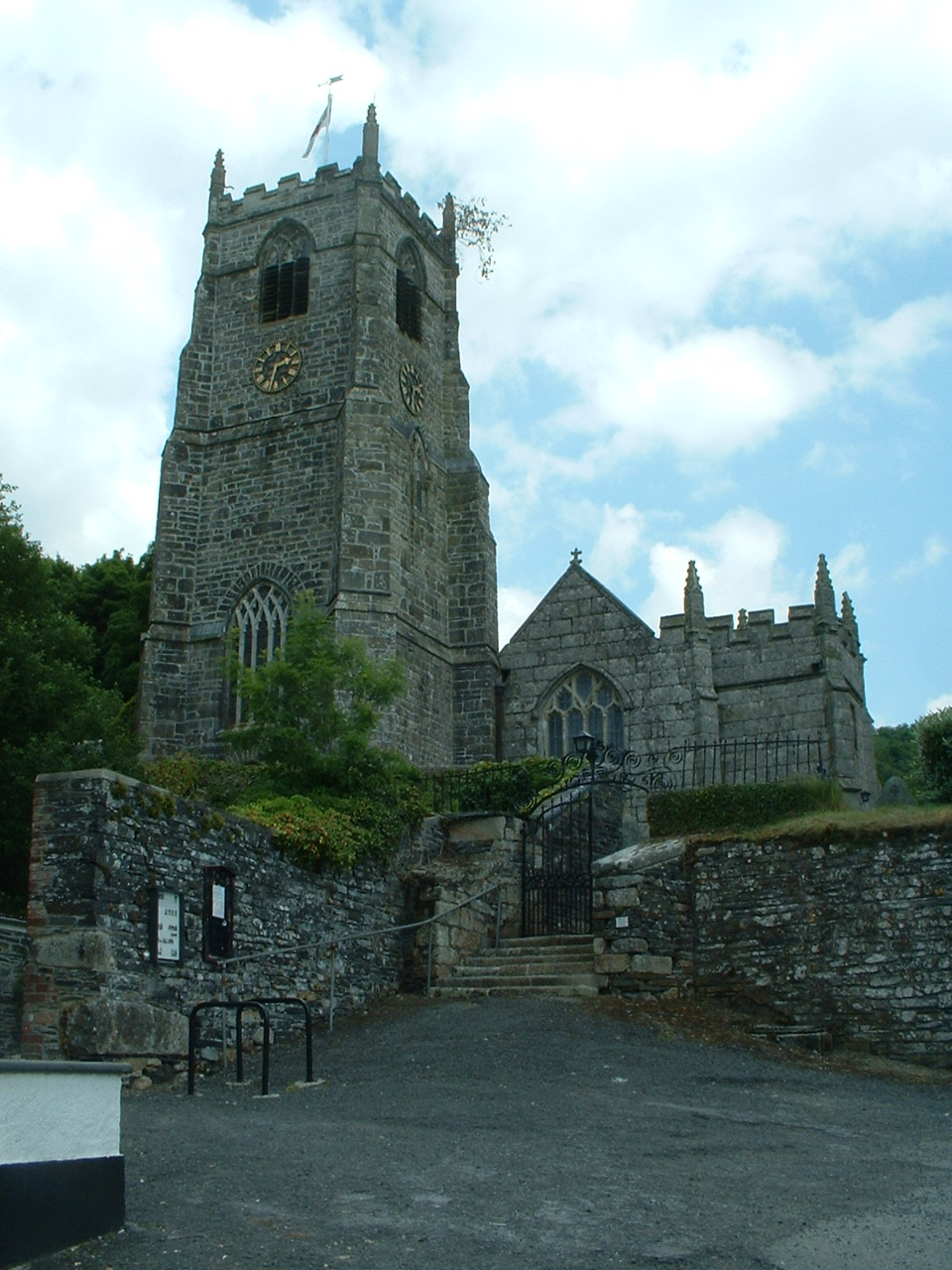
Saint Neot, also known as the Pygmy Saint. Related to King Alfred the Great, who visited him for counsel, Neot was an English monk born in the first half of the ninth century. He lived as a monk at Glastonbury Abbey and preferred to perform his religious devotions privately, fearing the creeping in of pride that came from acclaim. He later went to live an isolated life in Cornwall, near the village now called St Neot. There he lived as if he was a novice in religion; he fasted, he watched, he prayed for long hours, because he had not lived before this in any hermitical strictness.
His wisdom and religious dedication earned him admiration from the monks. He visited the Pope in Rome, who instructed him to found a monastery in Cornwall, saying “scatter the word of God among the people”. He did so, and because of his great piety, he became famous, and attracted large numbers of pilgrims. A number of miracles took place involving him. King Alfred visited numerous times and Neot repeatedly rebuked the King for his unbridled ambition. He warned that Alfred could expect greater misfortunes from the Viking invasions. Alfred had failed, Neot said, to attend to his people’s complaints and petitions.
He was very short, and described as being anything from 4 foot tall down to a mere 15 inches. He was so small that he needed to stand on a stool in order to say Mass. He spent much of his day up to his neck in a well during his devotions. Neot had a way with animals and birds, and worked miracles with them. He died of natural causes in 877, and the, because he was so popular, his body was stolen by other monks and taken to their priory in order to gain donations from pilgrims, and finally his remains were lost during the Dissolution of the Monasteries. Relics remain in Saint Neot’s church, Cambridgeshire, England, and at the abbey of Bee, Normandy, France.
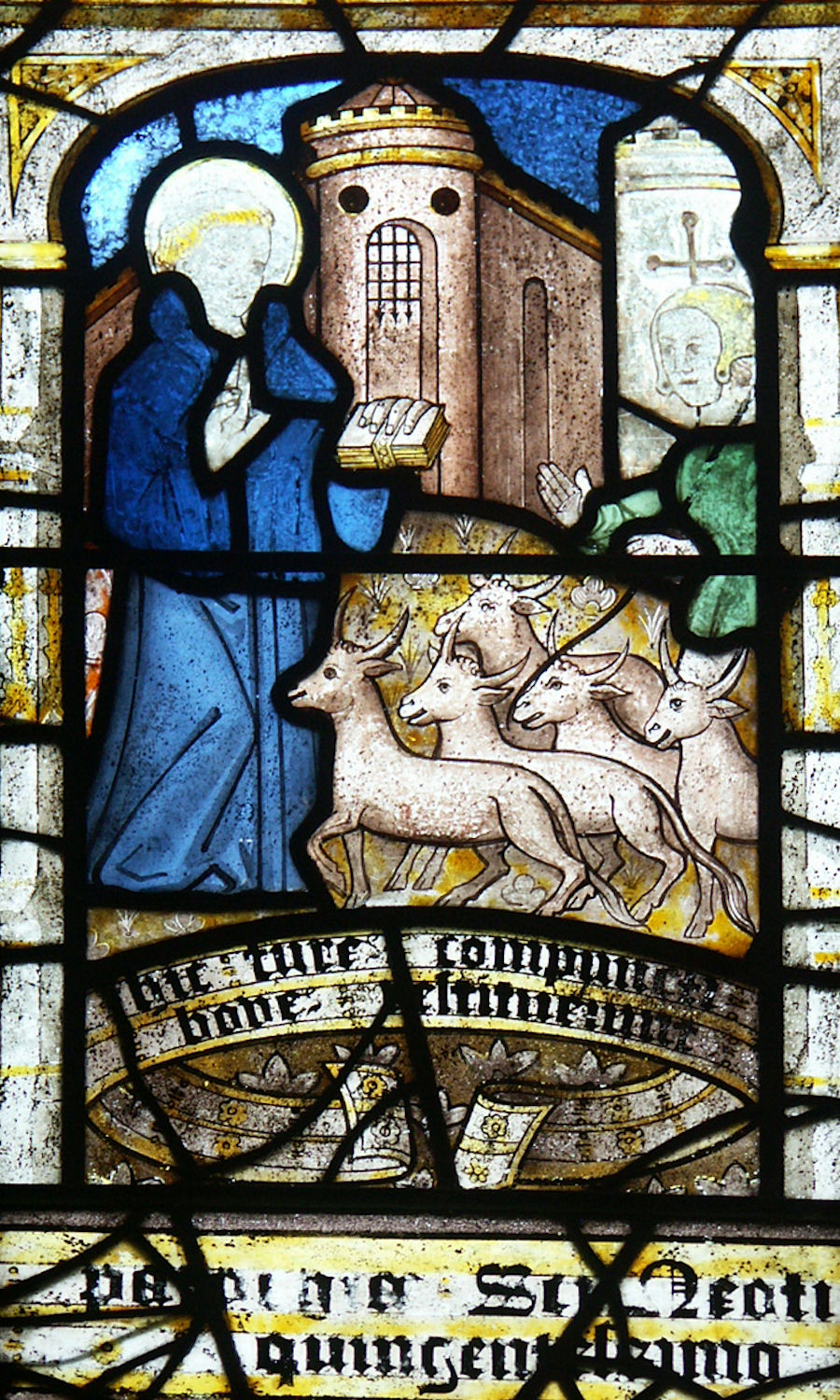
St Neot is the patron saint of fish; the reason being that there was a holy well which contained three fish. An angel told Neot that as long as he ate only one fish a day, there would always be three in the well. But when Neot fell ill his servant cooked two of them. Saint Neot prayed for forgiveness and ordered that the fish be taken back to the well. When the cooked fish returned to the water, they miraculously returned to life. The Holy Well of St Neot is still there today.
Edward Powell (c.1478 – 30 July 1540) was a Welsh priest, theologian, and opponent to King Henry VIII. He was beatified in 1886. Powell was born in Wales, was M.A. of the University of Oxford, and a Fellow of Oriel College. He received the degree of Doctor of Divinity on 26 June 1506 and was styled perdoctus vir by the university.
A court preacher in high favour with Henry VIII, he helped the King write Assertio Septem Sacramentorum, a reply to Martin Luther, and then published his own work on the subject in December 1523. The University of Oxford commended this work, and styled Powell “the glory of the university” in a letter to the king. Powell was one of the four theologians selected to defend the legality of the king’s marriage of Catherine of Aragon, in connection with which he wrote the “Tractatus de non dissolvendo Henrici Regis cum Catherina matrimonio”.
In March, 1533, Powell was selected to answer Hugh Latimer at Bristol, and was alleged to have disparaged his moral character. Latimer complained to Thomas Cromwell, and Powell fell into further disfavour by denouncing Henry’s marriage with Anne Boleyn. He was discharged from the proctorship of Salisbury in January, 1534, and in November he was attainted, together with John Fisher, for high treason in refusing to take the oath of succession, deprived of his benefices, and imprisoned in the Tower of London.
The sentence was not carried out until 30 July 1540. Three Catholics (Powell, Abel, and Richard Featherstone) and three Protestants suffered together. (The protestants were were condemned for teaching Zwinglianism.) The victims were dragged on hurdles from the Tower to Smithfield, a Catholic and a Protestant on each hurdle. Powell’s companion was Robert Barnes, the Protestant divine. The Catholics were hanged, drawn, and quartered as traitors; the others were burned as heretics.
The site of executions at Smithfield
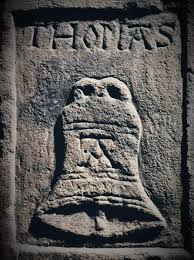
Blessed Thomas Abel
Blessed Thomas Abel (also Able, or Abell), priest and martyr, born about 1497; died 30 July, 1540. He was chaplain to Queen Catherine, and defender of the validity of her marriage to Henry VIII, for which reason he was put to death. He was a graduate of Oxford, and taught the queen modern languages and music. After a journey to Spain on her behalf, he received the parochial benefice of Bradwell in Sussex. He soon published in defence of the queen’s marriage a work entitled: “Invicta Veritas, an answer to the determination of the most famous Universities, that by no manner of law it may be lawful for King Henry to be divorced from the Queen’s grace, his lawful and very wife”. The work contained an answer to the numerous tracts supporting Henry’s ecclesiastical claims. The king, enraged and terrified, bought up copies of the book in order to destroy them.
A carving Blessed Thomas created in Beauchamp Tower
For his defence of holy matrimony, he was thrown into Beauchamp Tower, and after a year’s liberation again imprisoned, in December, 1533, on the charges of disseminating the prophecies of the Maid of Kent, encouraging the queen “obstinately to persist in her wilful opinion against the same divorce and separation”, and maintaining her right to the title of queen. He was kept in close confinement until his execution at Tyburn, two days after the execution of Cromwell himself. There is extant a very pious Latin letter written by him to a fellow-martyr, and another to Cromwell, begging for some slight mitigation of his “close prison” — i.e. “license to go to church and say Mass here within the Tower and for to lie in some house upon the Green”. It is signed “by your daily bedeman, Thomas Abell, priest”.
His act of attainder states that he and three others “have most traitorously adhered themselves unto the bishop of Rome, being a common enemy unto your Majesty and this your Realm, refusing your Highness to be our and their Supreme Head of this your Realm of England“.
The Tyburn ‘Tree’
Blessed Richard Fetherston
BlessedRichard Fetherston (Fetherstone, Featherstone) was an English priest. He was Archdeacon of Brecon, Chaplain to Catherine of Aragon, and Latin tutor to her daughter, Mary Tudor. He was executed on 30 July 1540 and beatified by Pope Leo XIII on 29 December 1886.
Richard Featherstone studied at Cambridge where he became a doctor of divinity. In 1523 he was appointed archdeacon of Brecon in South Wales. By 1525 he had become the Princess Mary’s Latin tutor. When the Convocation of Canterbury met in November 1529 and considered whether Henry VIII and Queen Catherine were truly married, he spoke in defence of the marriage. The Act of Parliament which condemned St John Fisher in 1534 for his refusal to take the Oath of Succession, also referred to Fetherstone, who was sent to the Tower of London on 13 December of the same year. There he was confined until his execution in 1540. As in these cases, the limbs of all three were fixed over the gates of the city, and their heads were placed upon poles on London Bridge.
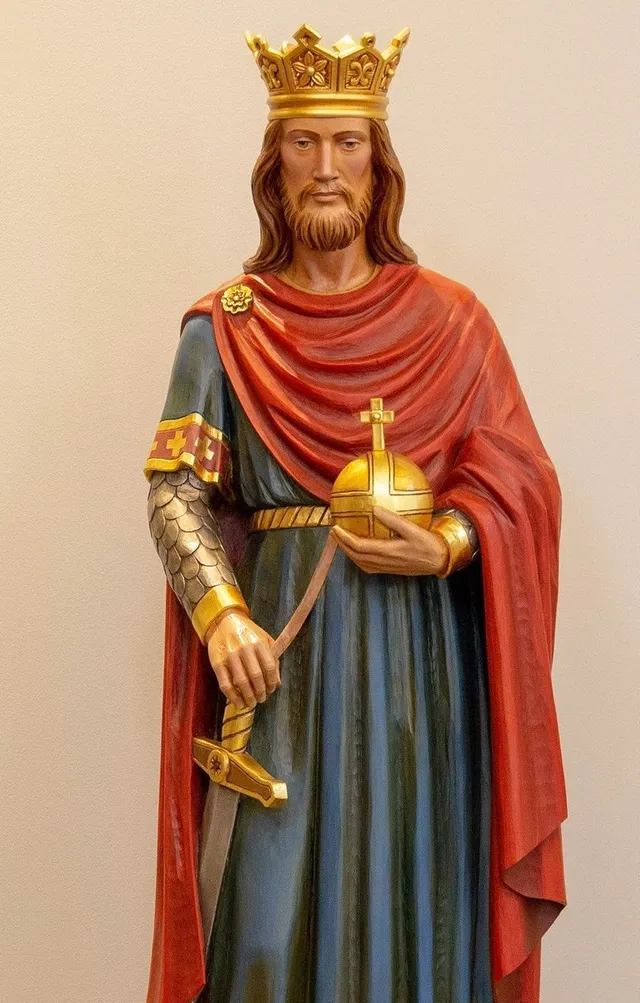
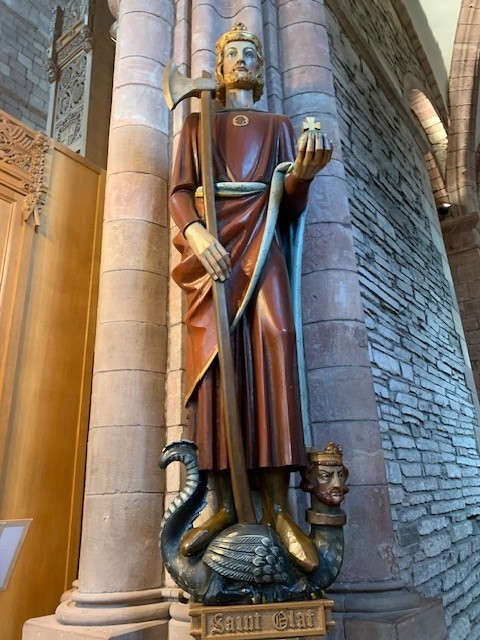
Saint Olaf Haraldsson (995 – 29 July 1030), also called Saint Olaf, Olaf the Holy, Olaf II, and Olaf the Stout, was King of Norway from 1015 to 1028. A viking and convert to Christianity, he was baptised in Rouen, Normandy, in 1010. The son of Harald Grenske, a petty king in Vestfold, Norway. Olaf was a great-great-grandson in the male line of the founder of the Norwegian kingdom. His father died when his mother was pregnant with him. She later married Sigurd Syr, with whom she had other children, including Harald Hardrada, who later reigned as king of Norway, and who claimed the English throne.
He helped King Ethelred of England (‘The Unready’) against pagan Danish invaders and brought missionaries, including Blessed Theodgar of Vestervig, to Norway to evangelize his people. He tried to force Christianity on them, so they revolted in 1029, and drove him first to Sweden and then to Kiev, in Russia. There he gathered his forces, and in 1030 attempted to re-take his throne. He was killed in battle, and regarded by Norwegians as the great champion of national independence. Many miracles were attributed to him. One such is that on the day of his death, a blind man regained his sight after rubbing his eyes with hands stained with Olaf’s blood. His cult spread extremely quickly, including across the sea to England.
St. Olaf in Orkney Cathedral, Kirkwall, Scotland
His remains were enshrined in Nidaros Cathedral, built over his burial site. His sainthood encouraged the widespread adoption of Christianity by Scandinavia’s Norsemen. Pope Alexander III confirmed Olaf’s local canonisation in 1164. He was posthumously given the title Rex Perpetuus Norvegiae (Eternal King of Norway). Olaf is symbolised by the axe in Norway’s coat of arms, and many Christian institutions with Scandinavian links, as well as Norway’s Order of St. Olav, are named after him.
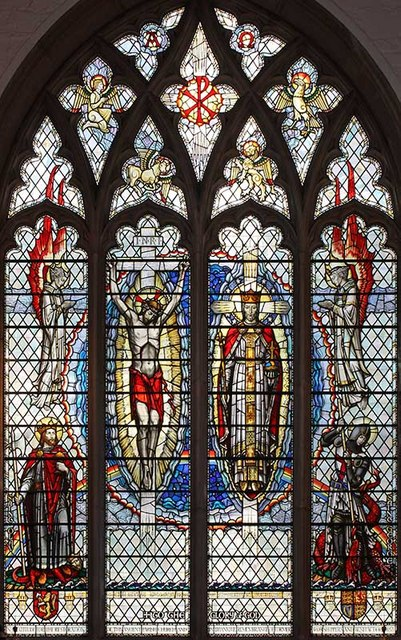
St. Olaf in stained-glass window at St Olave’s Church, in London
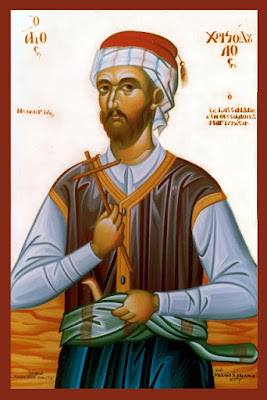
Blessed Christodoulus was born in the village of Kassandra in Halkidiki, Macedonia. He was a young tailor in Thessaloniki during a period of occupation by Ottoman Turks. Seeing local Christians giving in to pressure and proclaiming themselves Muslim, Christodoulus took a cross and went into the streets to encourage Christians, as well as into the coffee shops were the ‘ceremony’ of conversion would take place, and offered them the cross to kiss as a sign of their faith, urging them to recover, repent, and stand strong in the love of Christ. Most courageously, he would make the Sign of the Cross over crowds of Turks as well as the dreaded Janissaries, the most fanatical muslim warriors of all, the elite bodyguard of the Sultan. Janissaries who were themselves once Christian, before being enslaved by the Ottoman emperors as youth.
Enraged by this, the Turks imprisoned and tortured Christodoulus. They urged him to deny the Faith, but in return he urged them to turn away from the false religion of Islam. Driven to an excess of hatred by this, the Turks tortured him gruesomely and then hung him in front of a church in 1777.
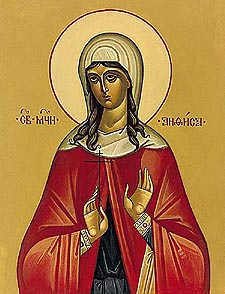
Saint Anthusa of Mantinea or the Confessor. She is easily confused with Saint Anthusa the daughter of the iconoclast emperor Constantine V, but it was Saint Anthusa of Mantinea whom he summoned to ask for prayers for the labouring mother of Saint Anthusa of Constantinople, the infant daughter who was subsequently named after her.
She was an anchoress and abbess in Constantinople during the 8th century.
After the death of her parents while still very young, the saint distributed her inheritance, left her family home, and withdrew to a cave. Ninety virgins gathered around her, entrusted themselves to her guidance, and followed her example. She founded two monasteries, one for men and the other for women, and became abbess of the monastery for nuns, who “were known for their obedience to their abbess and for their spiritual discipline”.
She openly defied Emperor Constantine V’s iconoclastic prohibitions, so she, her nuns, and her nephew, who was abbot of the second monastery, were arrested and tortured. When Anthusa correctly prophesied that the emperor’s wife, who was close to death from childbirth, would safely deliver twins, a boy and a girl, the empress intervened. Anthusa’s life was spared, and the empress donated several estates to her. The empress’ daughter was named after Anthusa, educated by her, and also became a saint, founding the first orphanage in the Christian world.
Saint Anthusa of Constantinople, daughter of the emperor
Anthusa returned to her monastery, where she lived to old age. She died in 759 and was buried in her cell.
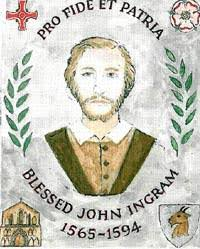
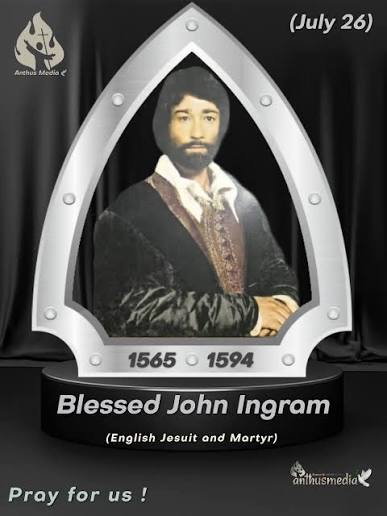
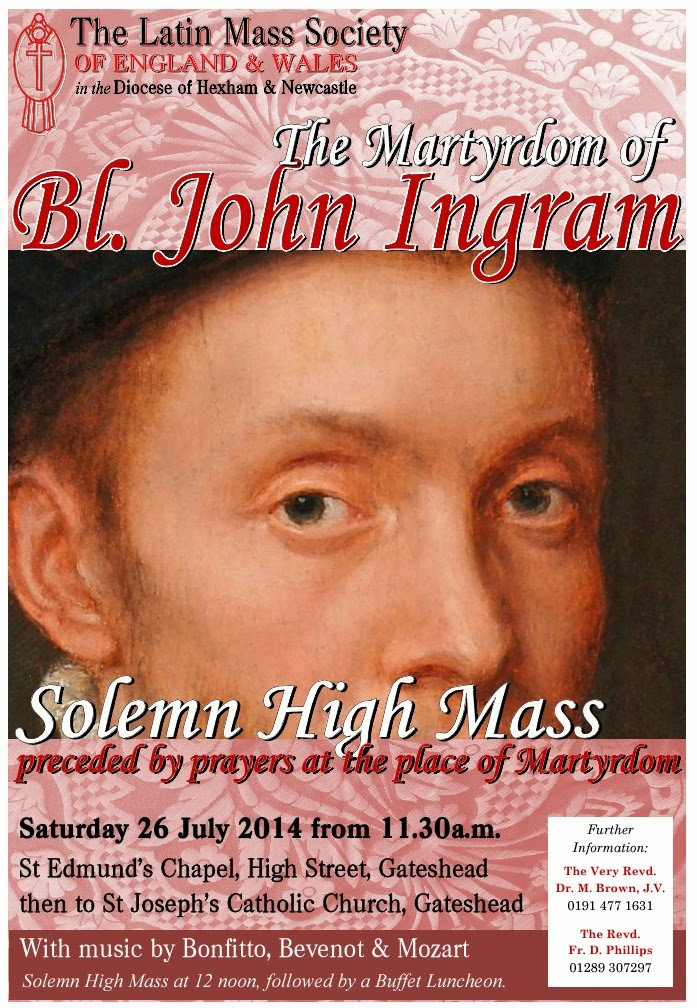
John Ingram, born in 1565 at Stoke Edith, Herefordshire, England. Son of Anthony Ingram of Wolford, Warwickshire, and Dorothy, daughter of Sir John Hungerford. He was an English Jesuit and martyr who was executed in Gateshead on 26 July 1594, during the reign of Elizabeth I, aged 29.
He was educated at Worcestershire and the New College, Oxford, England and was an adult convert to Catholicism. After graduating from there at 17 years old, he left England for Douai, then he attended the English College at Rheims, France; the Jesuit College at Pont-a-Mousson, France; and the English College Seminary, in Rome. On the way to Rheims he and three other young men were waylaid and held for ransom by a troop of Calvinist mercenaries in the pay of Francis, Duke of Anjou.
The first mention of Ingram is in a letter from William Allen, Principal at Rheims, to the rector of the English College in Rome: Even at the very moment of my writing to you bad tidings come of four young students. On their way to this college from Douai, they were robbed, and are still held captive, by the soldiery of my lord, the brother of his Majesty, and a large sum of money is demanded of us for their ransom. Meanwhile the soldiers are dragging their unhappy victims from town to town, and from province to province, in the direction of their camp in Belgium. God knows how much we shall have to pay to redeem them, for letters from the Mayor and Corporation of Rheims in their favour have been entirely without effect.”
But the four young men, John Ingram, Richard Haward, Thomas Heath and Christopher Haywood, managed to escape and made their way to Rheims, arriving, in a state of the utmost destitution during October and November 1582. On 10 June 1585, he took the oath of commitment to return to England as a Missionary Priest and took minor orders. John was ordained at Rome in 1589.
Sent on a mission to Scotland in 1592, he was supported by Lords Huntly, Angus, and Erroll, the Abbot of Dumbries, and Sir Walter Lindsay of Balgavies. To get there John traveled to Abbeville in France, then doubled back to Brussels where he said Mass in a secret chapel run by the Jesuits, and thence to Antwerp where he visited the Carthusian church and said Mass. There he abandoned his clerical garb and dressed as a layman. This circuitous route was possibly to obscure his intentions and identity, from the network of spies maintained by the English Government, who were always on the lookout for priests. John lived for 18 months as resident chaplain to the household of Sir Walter Lindsay, in the guise of a steward, ministering to the local faithful. He converted many people to the faith.
He lived under a number of aliases, but when Sir Walter Lindsay fled to Spain after angering the king by his own allegiance to the Faith, John fled south and to evade pursuit, slipped across the English border on 25 November 1593. He rested for some hours at Wark-on-Tweed and then traveled downriver seeking a means to cross back into Scotland but he was apprehended by the English border guards near Norham Castle.
Strenuous efforts were made by Scottish supporters to secure his release, one laird claiming Ingram as his own son, and others offering the substantial ransom of a thousand crowns for his release. This only confirmed the English belief that they had captured someone of significant importance, as up till then they were not certain whether he was a priest or some other enemy of the state.
He was imprisoned for his faith at Berwick, Durgam, York, and the Tower of London. Tortured in the Tower for the names of other “traitorous” Catholics, he gave away nothing, ministered to and encouraged his fellow prisoners, and still wrote 20 Latin epigrams that have survived.
Ingram arrived at the Tower of London on Holy Saturday, 17 April 1593, and later wrote:
Rocks are quarried, the entrails of the earth, That Dives may have living rock for his tomb. No tomb seek I; and yet shall there be a living tomb
For my lifeless body — the carrion-crow.
He was severely tortured by priest hunter Richard Topcliffe. Hung by the joints of his fingers and arms, he was in extreme pain for so long that the feeling of his senses was taken completely from him. He was often put to the rack, but would give no information about persons and places. When he and another priest were moved to York, Ingram was in solitary confinement in a stinking vault of a locked jakehouse for four days, without either a bed to lie on or a stool to sit on. From York, he was transported to Newcastle and imprisoned in the Newgate prison there for four night. A woman visitor to the prison was struck by the serenity and joy of the priest, who said that he had good cause to be merry because his wedding day being at hand, the bridegroom must be glad, for within ten days he hoped to enjoy his Spouse. She remarked that it was true his hope was good, but his banquet was deadly; but he answered that the reward was sweet. The serenity and courage of John Ingram is reflected in two letters he wrote from prison to his friends or fellow prisoners in the same prison: “I look for my trial on Thursday and consequently for my death in God’s honour ( …) in my pained body; my spirit is not pained, nor in any disaster, distress or durance.”
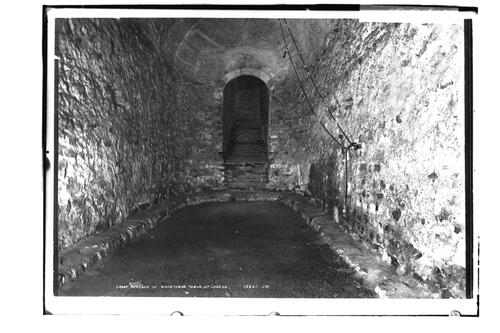
Tower of London cell
Someone in Scotland offered the English Government a thousand crowns to spare Ingram’s life, but he was convicted with Saint John Boste and Saint George Swallowell (the other two Durham Martyrs), for the high crime of priesthood.
When he was asked what he had to say that he should not receive judgement, he made this answer, “I say that I am a priest, and that my exercise and practice of priesthood cannot be made treason by any Christian law; and I beseech God to forgive both you and them that make it otherways. And I do with all my heart forgive you, and all my accusers and persecutors, and so I beseech God to have mercy upon me, and to strengthen me with patience and constancy in mine agony.”
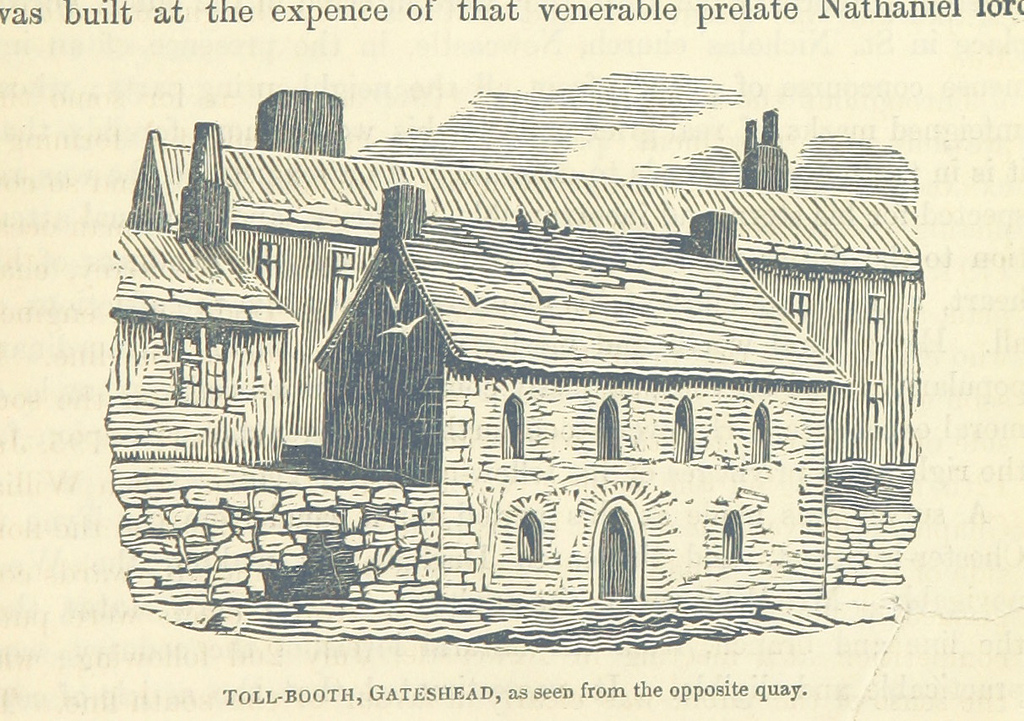
Immediately prior to his execution, he was held for a short while in the Toll-Booth in Gateshead, a small local gaol very close to the place of execution. Holtby gives an account of Ingram’s preparations, the prayers he said, his words to the bystanders, and of the execution itself:
“I take God and his holy angels to the record, that I die only for the holy Catholic faith and religion, and do rejoice and thank God with all my heart that hath made me worthy to testify my faith therein, by the spending of my blood in this manner.”
He was asked to pray for the Queen and he prayed to God that she might long reign to his glory, and that it might please him to procure her to live and die a good Catholic Christian prince. With rope around his neck he said more prayers, ending with the psalm Miserere mei Deus, after which, making the sign of the Cross and saying, “In manus tuas“, the ladder was turned; and being dead, he was cut down, bowelled, and quartered. His severed head was placed on a spike and displayed on the bridge across the Tyne.
The Toll-Booth
In Rome, at the English College, when the news of his martyrdom reached them, the staff and students sang the Te Deum in the college chapel and wrote against his name “Martyro insigni coronatus“.
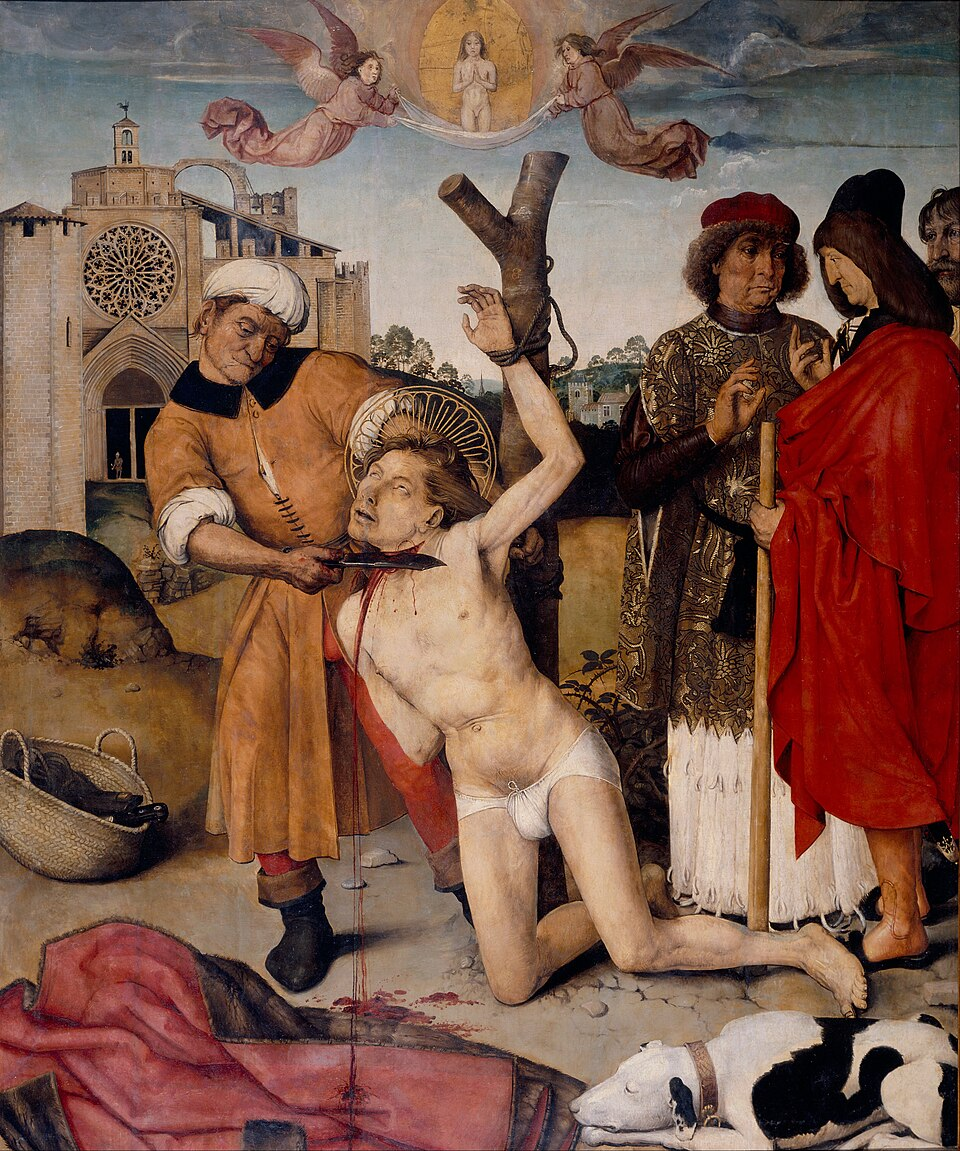
Saint Cucuphas, also known as Cobad, Cocoba, Cucufate (and many more). His name is said to be of Phoenician origin with the meaning of “he who jokes, he who likes to joke.”
Cucuphas was born into a noble Christian family in Scillis, North Africa. He and Saint Felix were deacons in Carthage and they later arrived at Barcelona to evangelize. Cucuphaslived as a merchant in Barcelona while preaching the Faith, baptizing converts, and aiding the Christian community there. He was generous with the poor and a worker of miracles.
He was martyred near Barcelona during the persecution of Diocletian. He suffered many torments. He was handed over to twelve strong soldiers, who were ordered to whip him and tear his skin with iron nails and scorpions. He was then roasted alive after being covered in vinegar and pepper, but was miraculously saved him from death and injury. A great bonfire also failed to kill him and instead killed his would-be executioners. His jailers then converted to Christianity after they found Cucuphas in his cell illuminated by a heavenly light. The next day, he was flagellated with iron whips. Divine intervention slew the prefect Maximianus when his carriage caught on fire. Rufus, the new prefect, having learnt from the experiences of his predecessor, did not dare practice torture of any kind on the saint, and instead ordered his immediate execution by sword, ordering his throat to be cut.
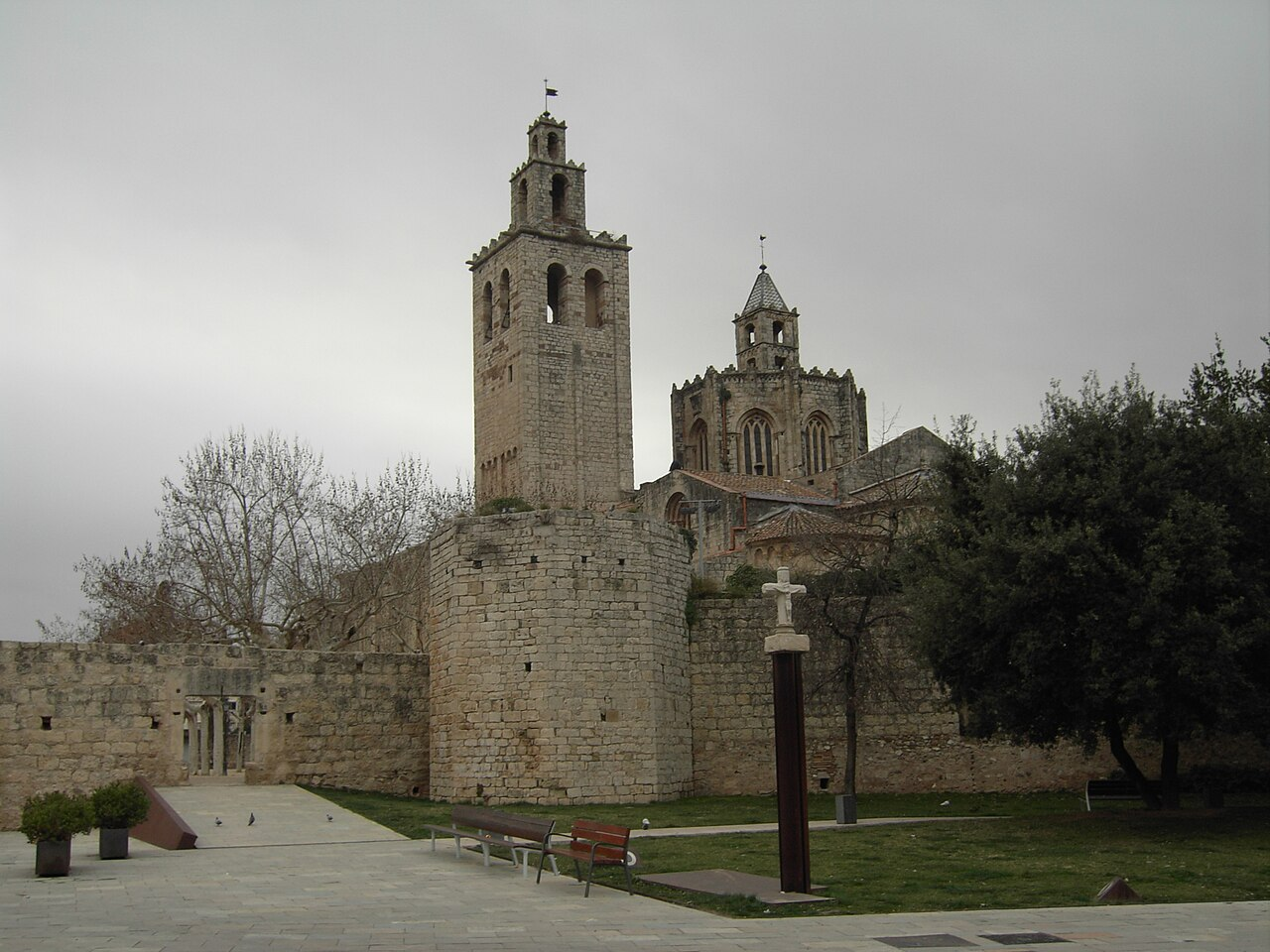
Two Christian women, Juliana and Semproniana, buried his body and were subsequently martyred as well. The Benedictine abbey of Sant Cugat del Vallès is situated on the site of his martyrdom.
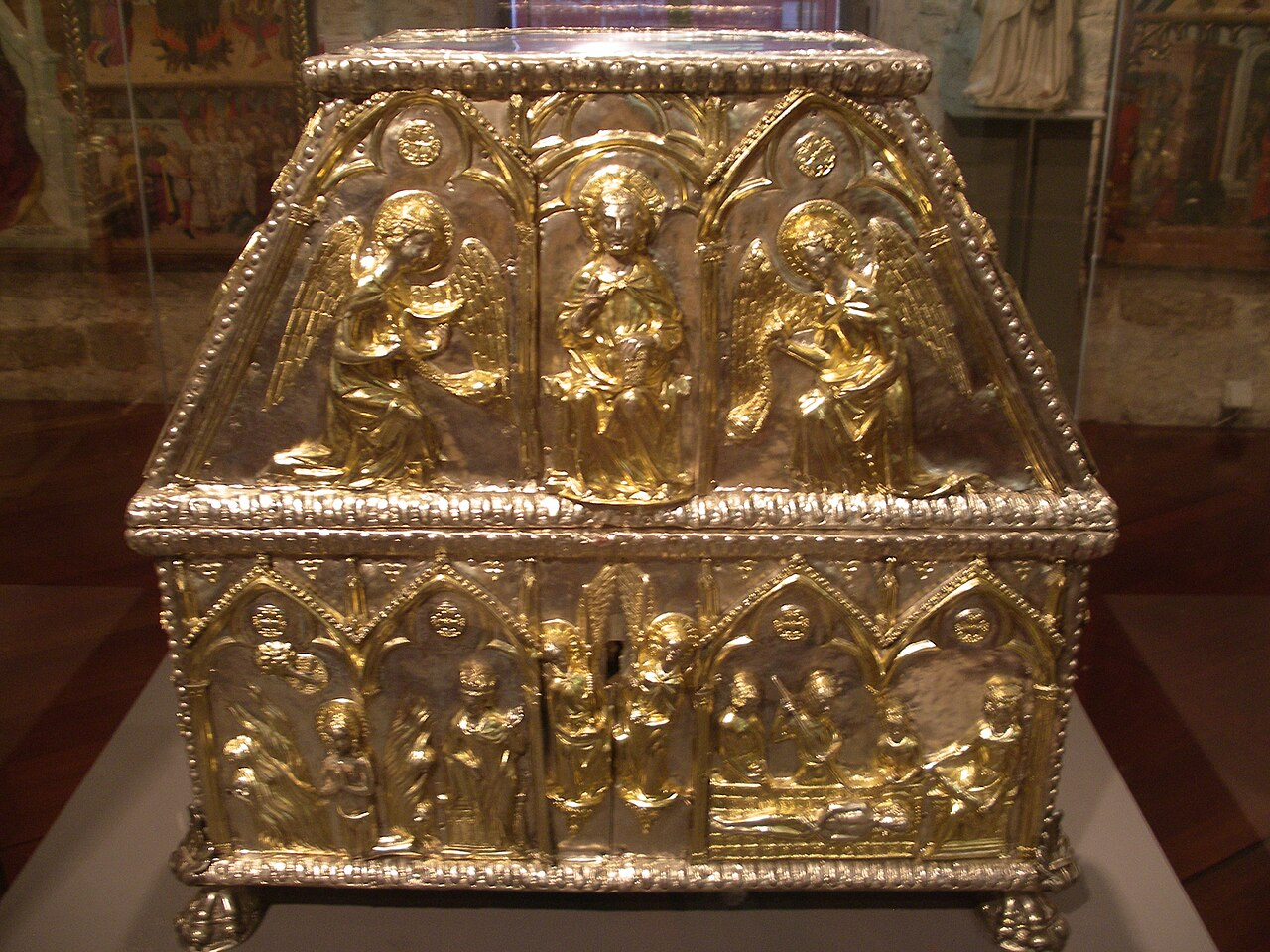
Reliquary casket of Saint Cucuphas
The poet Prudentius honored him in a hymn. Cucuphas is mentioned in the Hieronymian Martyrology; the Prayer Book of Verona; in a hymn called Barcino laeto Cucufate vernans, which says: “Barcino bursts into the vernal joy,of Saint Cucuphas, honoring his remains, and spreads privet branches on the burial mound and on the tomb”.
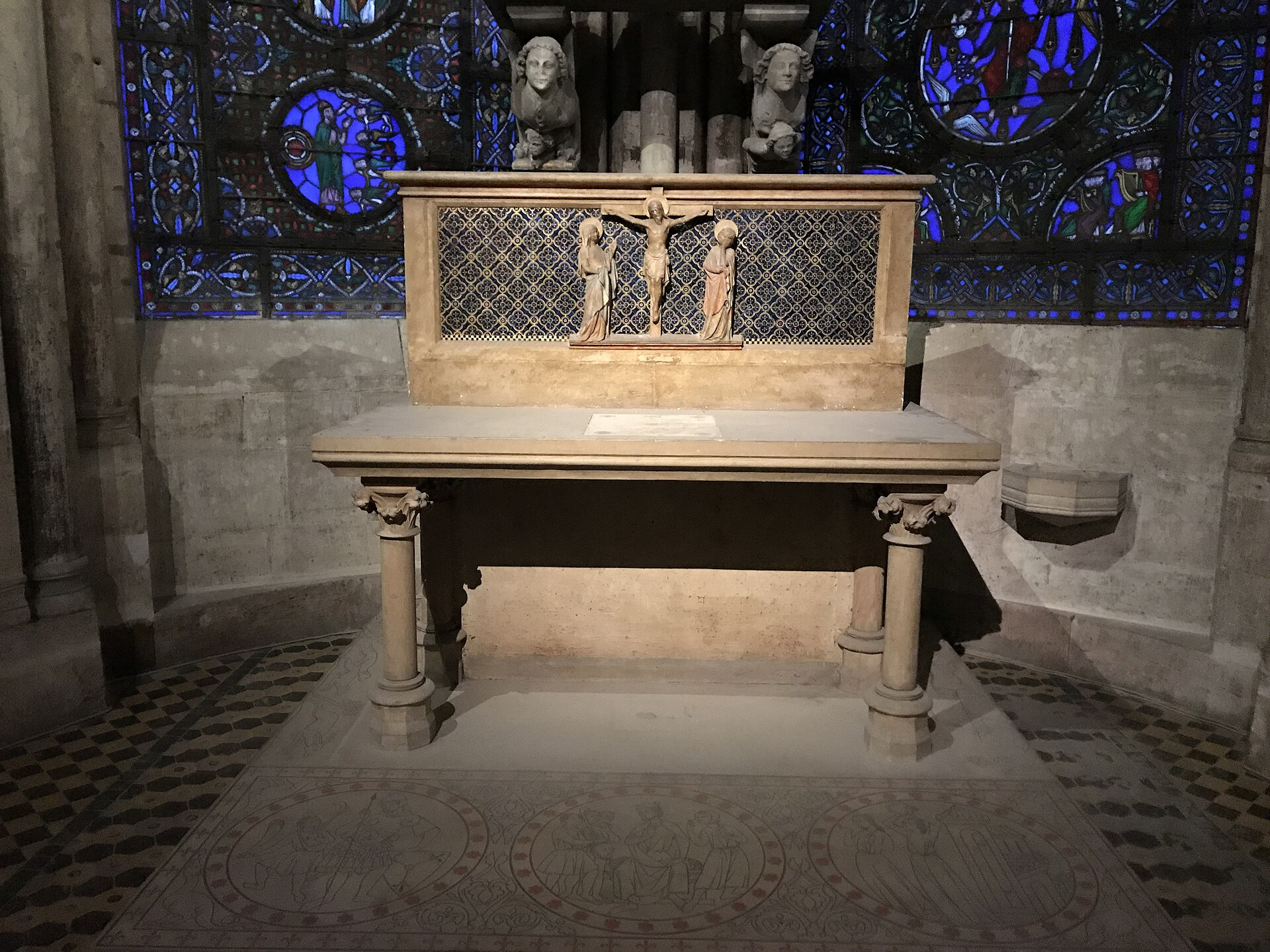
Saint Cucuphas Chapel Basilica Saint Denis
Since the eighth century, Sant Cugat has claimed Cucuphas’ relics. In the eighth century, Saint Fulrad took a relic of Cucuphas from Sant Cugat to Saint-Denis. The relics of Cucuphas occupy a place of honor in the apse to the right of Saint Denis to this day. Many churches in Europe claim his relics, including Reichenau; the cathedrals of Braga, Oviedo; and Lièpvre.
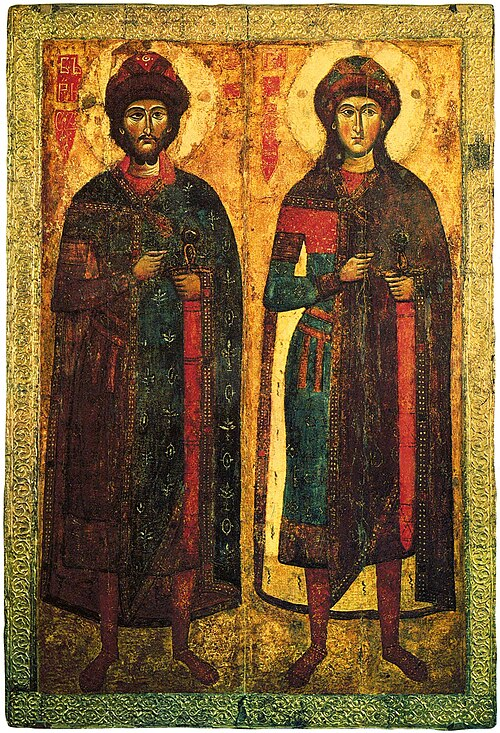
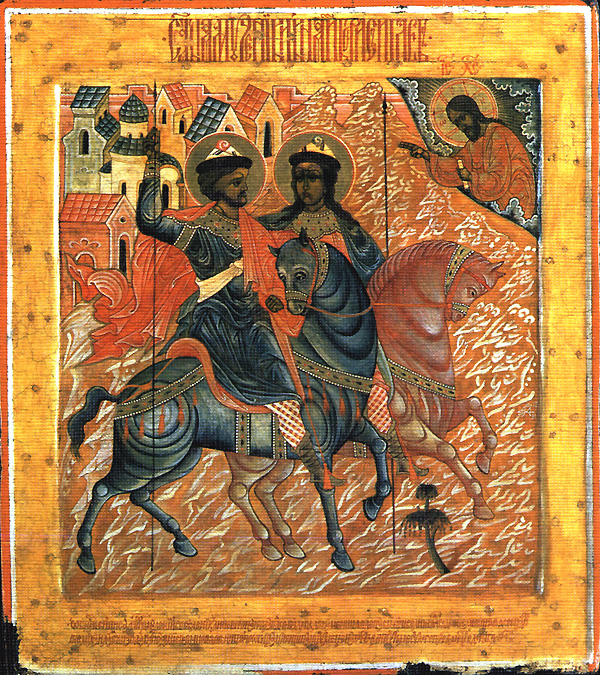
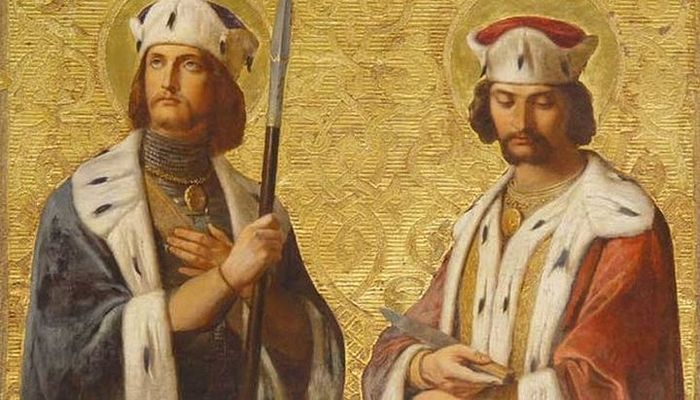
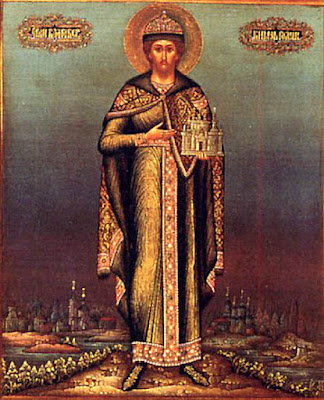
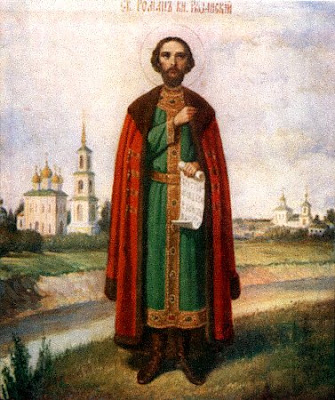
Boris and Gleb (or Glev), whose Christian names were Roman and David, were the first saints canonized in Kievan Rus’ after its Christianization. Sons of Saint Vladimir I of Kiev and Anne of Constantinople, great-grandsons of Saint Olga of Kiev.
They were younger children of Vladimir the Great, who favored them over his other children. Boris married and ruled the town of Rostov. Gleb, ruled the easternmost town of Murom. Born shortly before the Baptism of Rus’, the brothers were brought up to be pious Christians. Boris, the older of the two, loved to read the Sacred Scriptures, the works of the Holy Fathers, and especially, the lives of saints. Under their influence, St. Boris developed a fervent desire to emulate the spiritual struggles of these holy heroes, and often prayed that the Lord make him worthy of such an honor. Both excelled in charity and kindness, emulating the example of their father, Saint Vladimir, who was merciful towards the needy, the sick, and the indigent.
The brothers were murdered during the Kievan succession crisis of 1015–1019. The Primary Chronicle, which relates their lives, says their brother, Sviatopolk the Accursed, plotted their assassinations. Boris learnt of his father’s death upon his return with the Rus’ army to Alta. Upon being informed of Sviatopolk’s accession to the throne and urged to replace him, Boris replied: “Be it not for me to raise my hand against my elder brother. Now that my father has passed away, let him take the place of my father in my heart.”
“If he (Sviatopolk) spills my blood and resolves to kill me, I will be a martyr before my Lord. I will not resist, for it is written, “God resisteth the proud, and gives grace to the humble.” (Boris’s words)
Despite his brother’s acquiescence, Sviatopolk sent men to execute him. When they arrived they heard him chanting psalms and praying before an icon of Christ. He asked the Lord to strengthen him for the suffering he was about to endure. He also prayed for Sviatopolk, asking God not to count this against him as sin. Boris and his Hungarian manservant, George, were stabbed to death with spears while asleep in a tent. Later, the prince was discovered still breathing in a bodybag being transported to Kiev, but the Viking men sent to murder him, ended his life with the thrust of a sword.
Gleb believed his father was still alive and rushed to his father’s deathbed. On the way, the saint’s brother, Yaroslav, learnt of Sviatopolk’s treachery and urged Gleb not to meet him. His boat was seized near Smolensk, and in the middle of praying to God, Gleb was assassinated by his own cook, Torchin, who cut his throat with a kitchen knife.
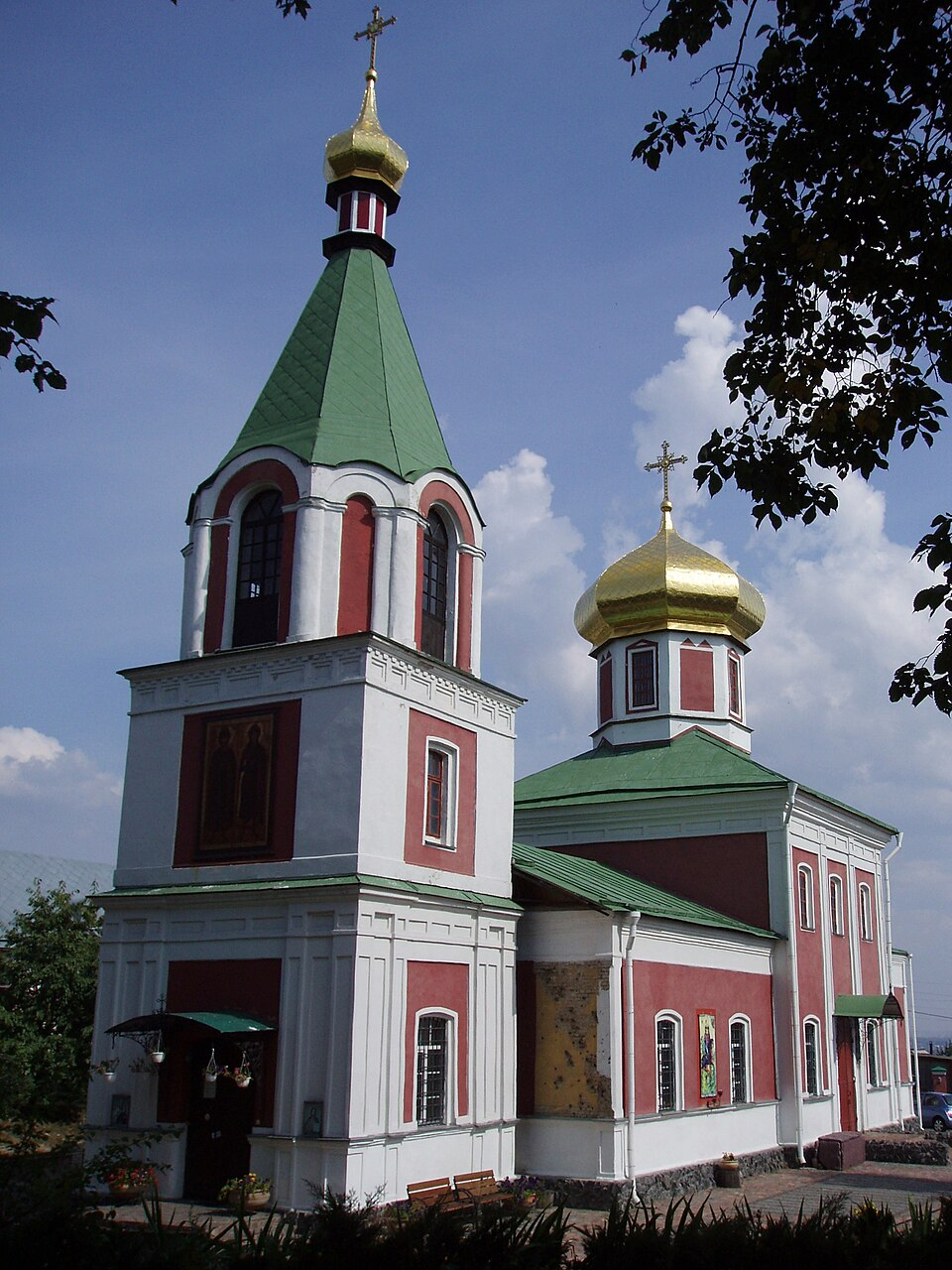
In 1020 another of Vladimir’s sons, Yaroslav, usurped Sviatopolk, and then buried the bodies of Boris and Gleb in the church of Saint Basil at Vyshgorod. Miracles were reported at their tomb, and it became a site of pilgrimage.
The rebuilt church in Vyshhorod
The highest motives were attributed to the brothers’ resignation – unwillingness to repel injustice to themselves by force, and violently oppose an elder brother and thus embroil their people in a civil war. Not martyrs in the traditional sense, the Russian Church perceived them as “passion bearers” – blameless men who did not wish to die but refused to defend themselves, thus voluntarily submitting to death like Christ.
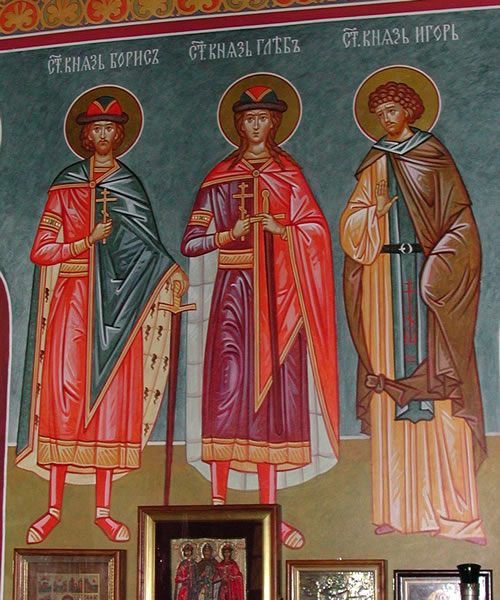
They were canonized in 1724 by Pope Benedict XIII (cultus confirmed) and their patronage is princes. In iconography Boris is depicted in princely attire. He most often holds a cross in his hands — a symbol of martyrdom and humility. He is often shown together with his brother Gleb; Boris’s seniority is indicated by the presence of a moustache or beard.
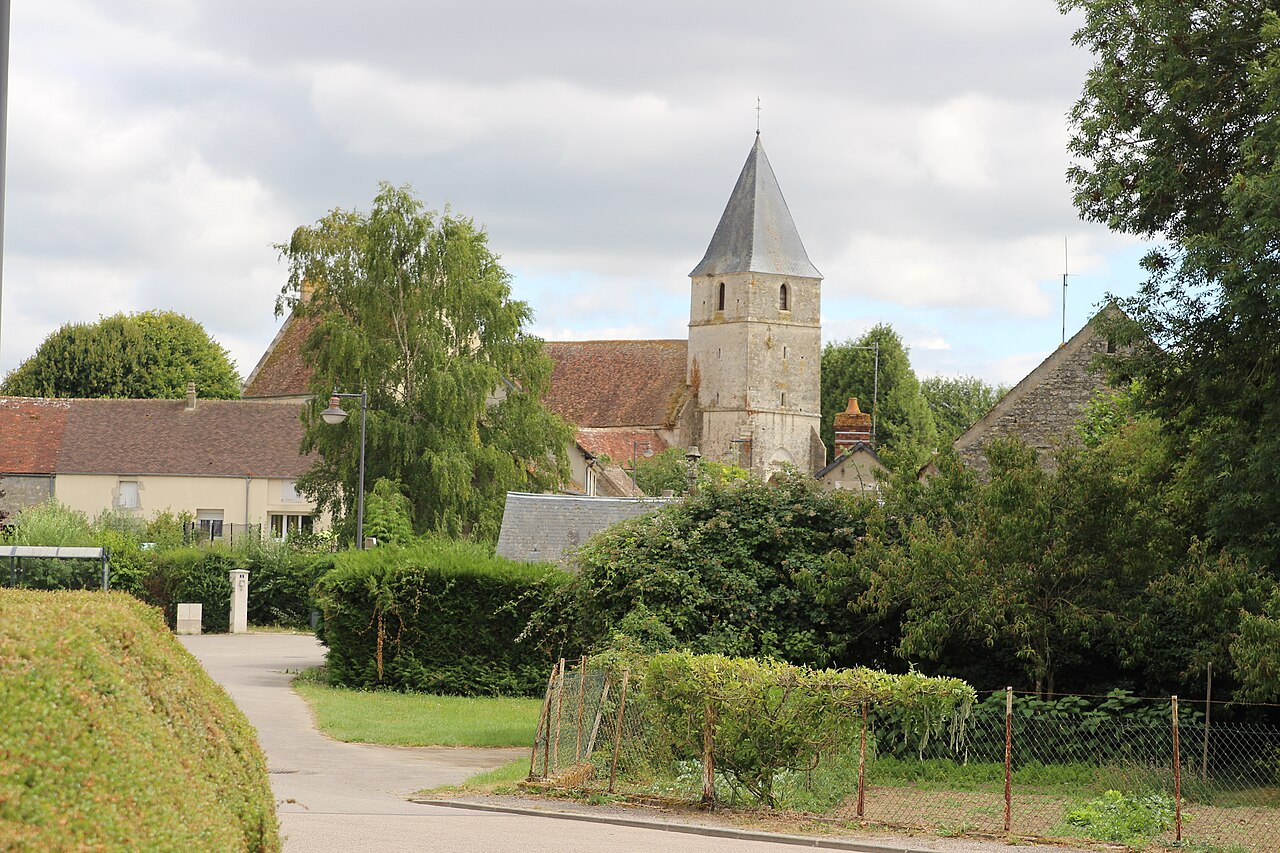
Saints Rasyphus and Ravennus are martyrs. Natives of Britain, they fled their country during the Anglo-Saxon invasions, settling in Gaul to become hermits. The parish church of St-Aubin in Macé, Normandy, states that the two saints founded their hermitage near the site of the current building, near a miraculous spring of water. Their reputation as holy men quickly spread, drawing pilgrims from all over the region who came seeking guidance and healing.
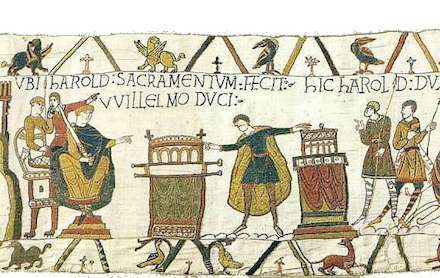
King Harold swearing an oath to his enemy, William the Conqueror, at an altar consecrated to Rasyphus and Ravennus in the Bayeux Cathedral (Bayeux Tapestry)
But this renown also brought the Goths, who demanded that the saints convert to Arianism. Of course they refused. As a result they were tossed against a great block of sandstone. Their heads dented the stone but the saints were not hurt (there are two visible prints in the church of St-Aubin of Macé that are considered to be the marks made by the heads of the two saints). They were then decapitated and buried near the present grounds of St-Aubin de Macé; a tombstone marks the site of their former grave.
Macé
The two saints were venerated as great healers, responsible for many miracles. Their relics were taken from St-Aubin to Bayeux Cathedral during the Viking invasions. The relics were then taken to Caen during the Wars of Religion. Finally, they were taken to Grancey in Champagne, where they rest today.
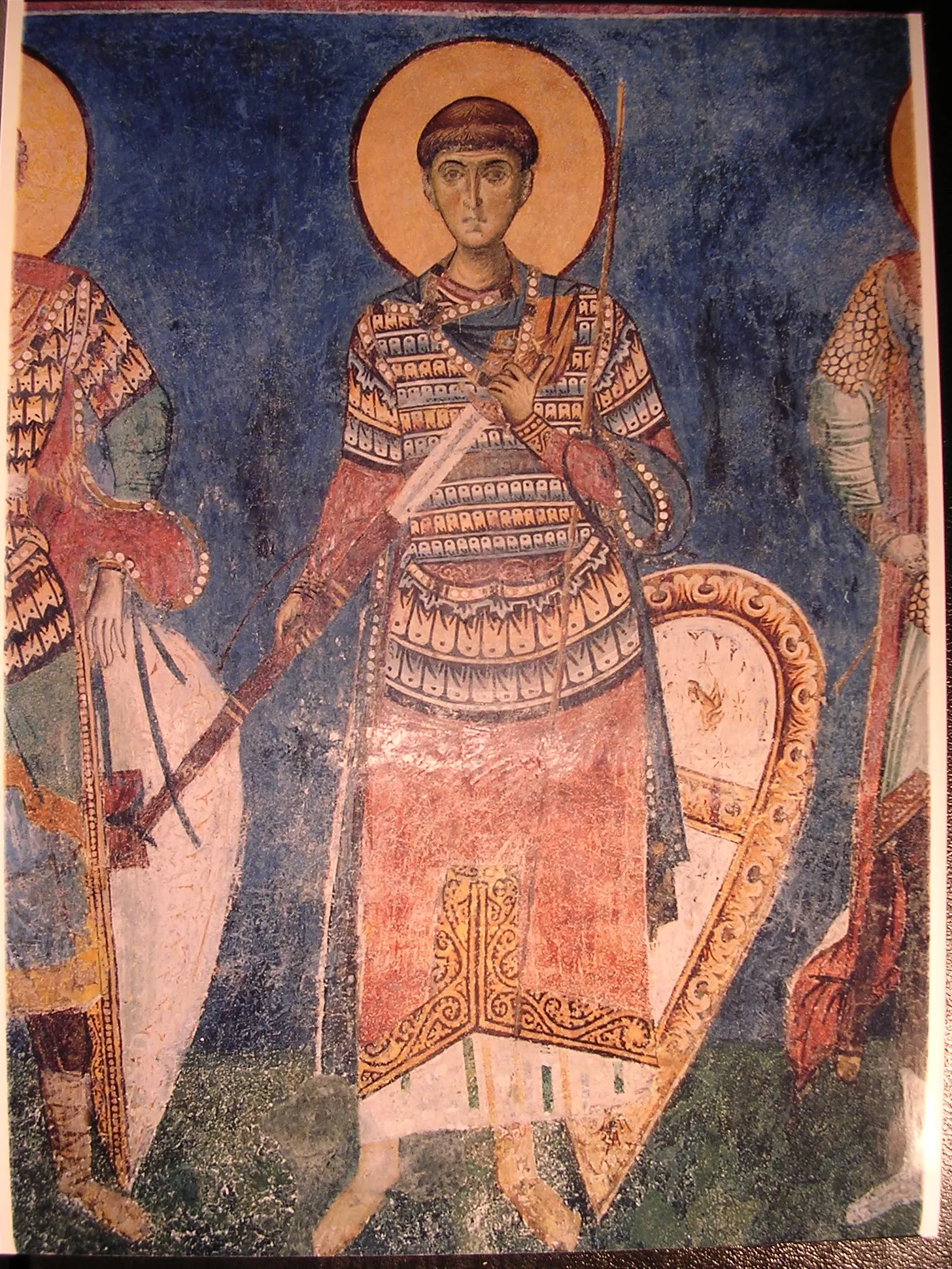
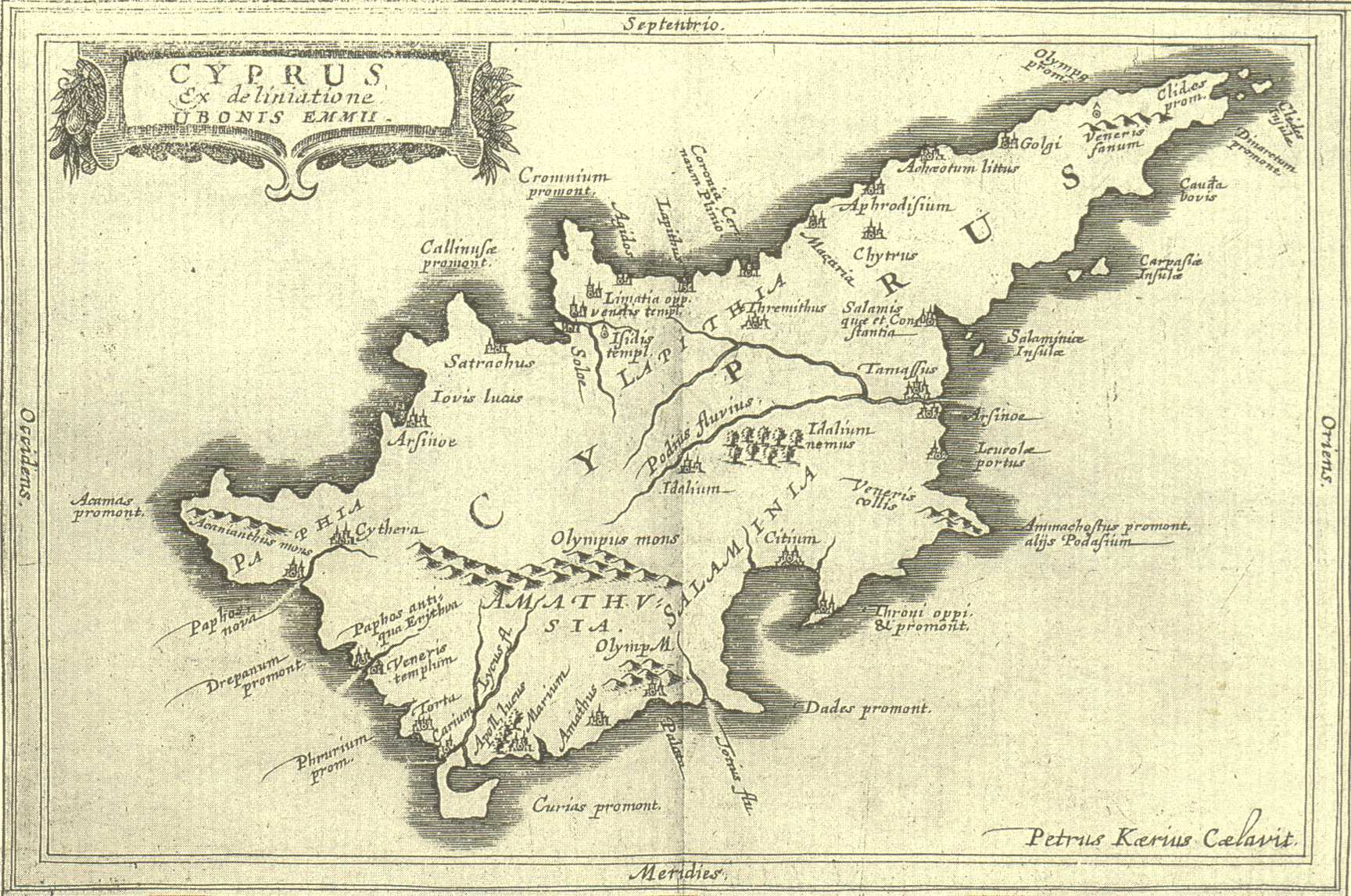
Saint Theophilus of Cyprus. Born and raised in Constantinople to a noble family. He was a commander of the Greek armies and a senator, soldier, sailor and admiral of the Christian fleet stationed on Cyprus. Captured in battle by invading Muslims after possibly being betrayed by his junior commanders, he was imprisoned for four years. As an expert in naval warfare, the muslims spent all that time attempting to get him to convert to Islam and serve the Caliph. They made him many offers of all that the average man could want -wealth, women, power, revenge – but he rejected them every time.
As his captors lost confidence that they could successfully tempt him away from Christ, the offers began to be combined with threats and punishments. Theophilus was tortured. Still, at any moment, if he chose to convert to Islam, he would be released and given an equivalent status to what he possessed before. Finally, frustrated by a man who would not break, the Muslims ordered him to renounce Christianity and convert to Islam, or die.
He refused.
In 789 Theophilus went to die, where in the words of Theophanes, he “was revealed as a noble martyr.”
The only Marian Feast I can find for today seems to be unverified, in other words, I can find absolutely no references online relating to this invisible Shrine.There is also a Marian Title relating to the Orthodox Church which is not recognised by the Catholic Church.
St Mary of Magdala (Feast) “The Apostle of the Apostles” (St Thomas Aquinas) She was a friend and follower of Jesus. Filled with sorrow over her sin, she anointed Christ, washed his feet with her hair. He exorcised seven demons from her. She was visited by the Risen Christ.
St Anastasius of Schemarius St Andrea of Antioch St Andreas Wang Tianqing St Anna Wang
Blessed Augustine Fangi O.P. (1430-1493) Dominican Priest and Friar, Confessor, Mystic, known as “The Miracle Worker.”
St Baudry of Montfaucon St Claudius Marius Victorinus of Saussaye St Cyril of Antioch St Dabius Bl Jacques Lombardie St John Lloyd St Joseph of Palestine St Lewine St Lucia Wang Wangzhi
St Maria Wang Lishi St Meneleus of Ménat St Movean of Inis-Coosery St Pancharius of Besancon Bl Paolo de Lara St Philip Evans SJ (1645-1679) Priest Martyr St Plato of Ancyra St Syntyche of Philippi St Theophilus of Cyprus
St Wandrille of Fontenelle (c 605–668) Priest, Monk, Abbot. Married out of obedience to his parents, Wandrille agreed with his wife to keep their virginity and both retired to a Monastery.
Martyrs of Marula/Massylis: – 3 saints: Three Christians martyred together. We know nothing else about them but the names – Ajabosus, Andrew and Elian. They were martyred in Massylis (Marula), Numidia (in modern Algeria).
Martyrs of Massilitani: A group of Christians martyred together in northern Africa. Saint Augustine of Hippo wrote about them.
Martyred in the Spanish Civil War: Bl Jaime María Carretero Rojas Bl Joaquin Rodríguez Bueno Bl José María Mateos Carballido Bl Juan Durán Cintas Bl Ramón María Pérez Sous
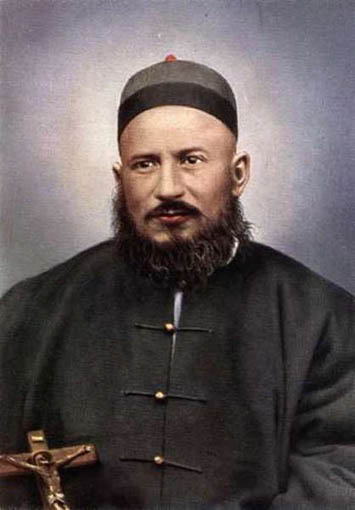
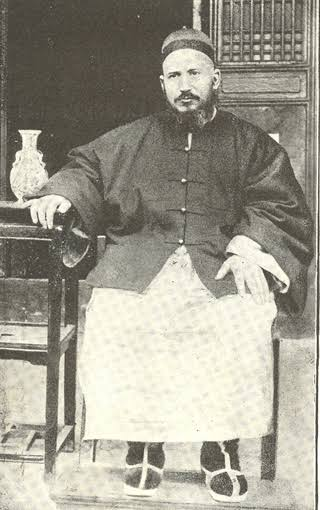
Alberico (Alberic) Crescitelli. Chinese name: Guo Xide. He was a seminarian at age twelve. Born the fourth of eleven children, near Naples, Italy, on the 30th of June 1863. Alberic joined the Milan Foreign Missionary Society and was sent to China in 1888. For 12 years he worked in the Vicariate’s various villages. His superiors considered him an excellent missionary, devoted and hardworking, with unostentatious but deeply rooted virtues and qualities. He worked in schools and missions along the Han River until the anti-Christian, anti-Western Boxer Rebellion brought chaos to China.
A group of ‘boxers’ (there are documents that point to the assassins being sent by the local gentry, whom Alberic came into conflict with after aid was distributed during the famine of 1900) captured Alberic, tortured and hacked him to pieces on July 21, 1900, ending by beheading him and throwing the pieces of his body into the river in order to cover up their crime.
Crescitelli’s confreres, who had known him well and for many years, started his beatification cause in 1908, only eight years after his death. The testimony provided by the confreres was unanimous about the holiness of Crescitelli’s life. At the Vatican, in St. Peter’s Basilica on 18 February 1951, Pope Pius XII declared Alberico Crescitelli “blessed.” The Pope’s speech was memorable, especially for the passage in which he described Father Crescitelli’s martyrdom:
‘Humanly speaking, his death was horrible; perhaps one of the most atrocious recorded in history. Nothing was missing, neither the cruelty of the torments, nor the time they lasted, the most barbaric humiliations, nor the suffering of the heart, nor the hypocritical betrayal of false friends, nor the hostile and threatening screams of his murderers, nor the darkness of being abandoned.’
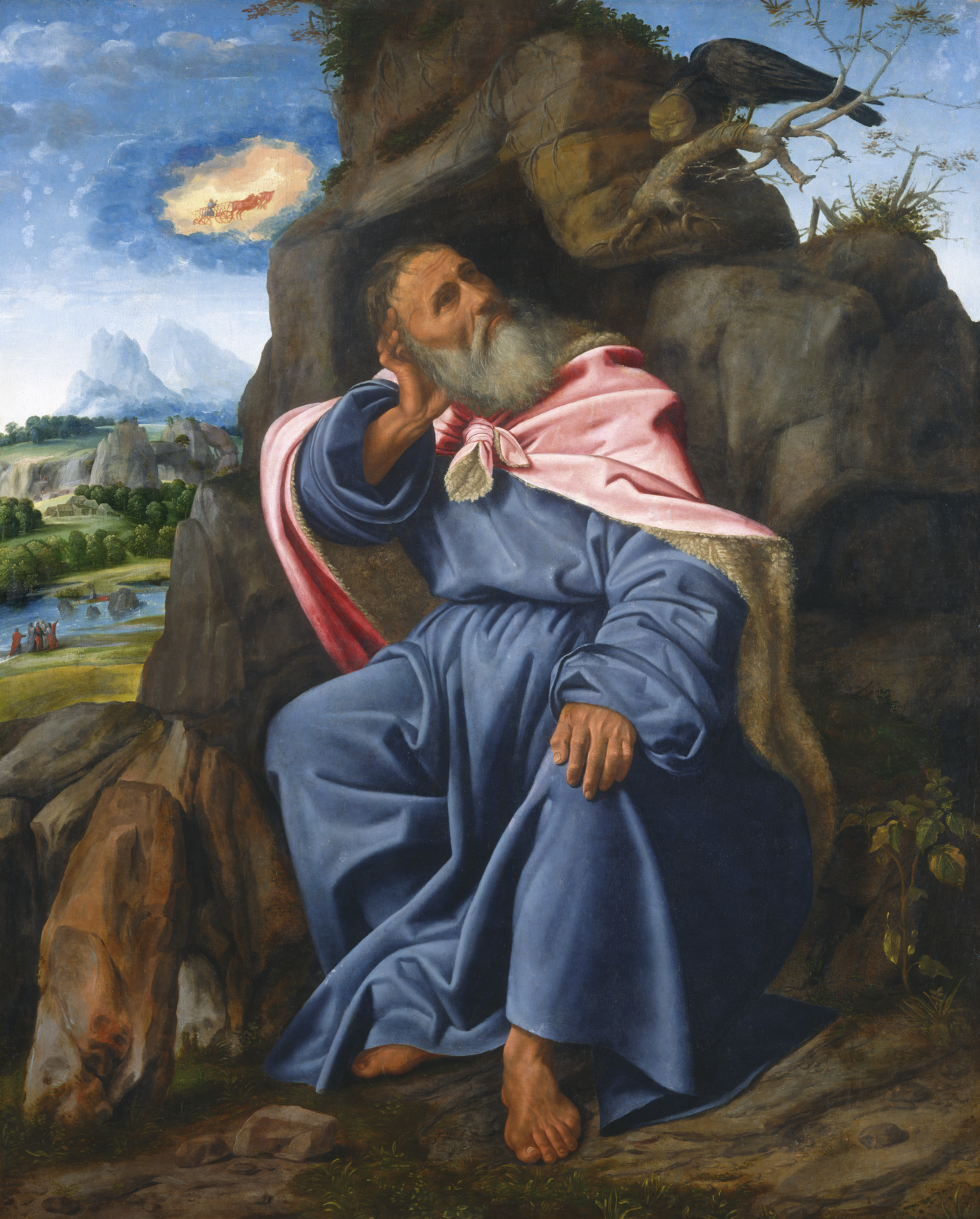
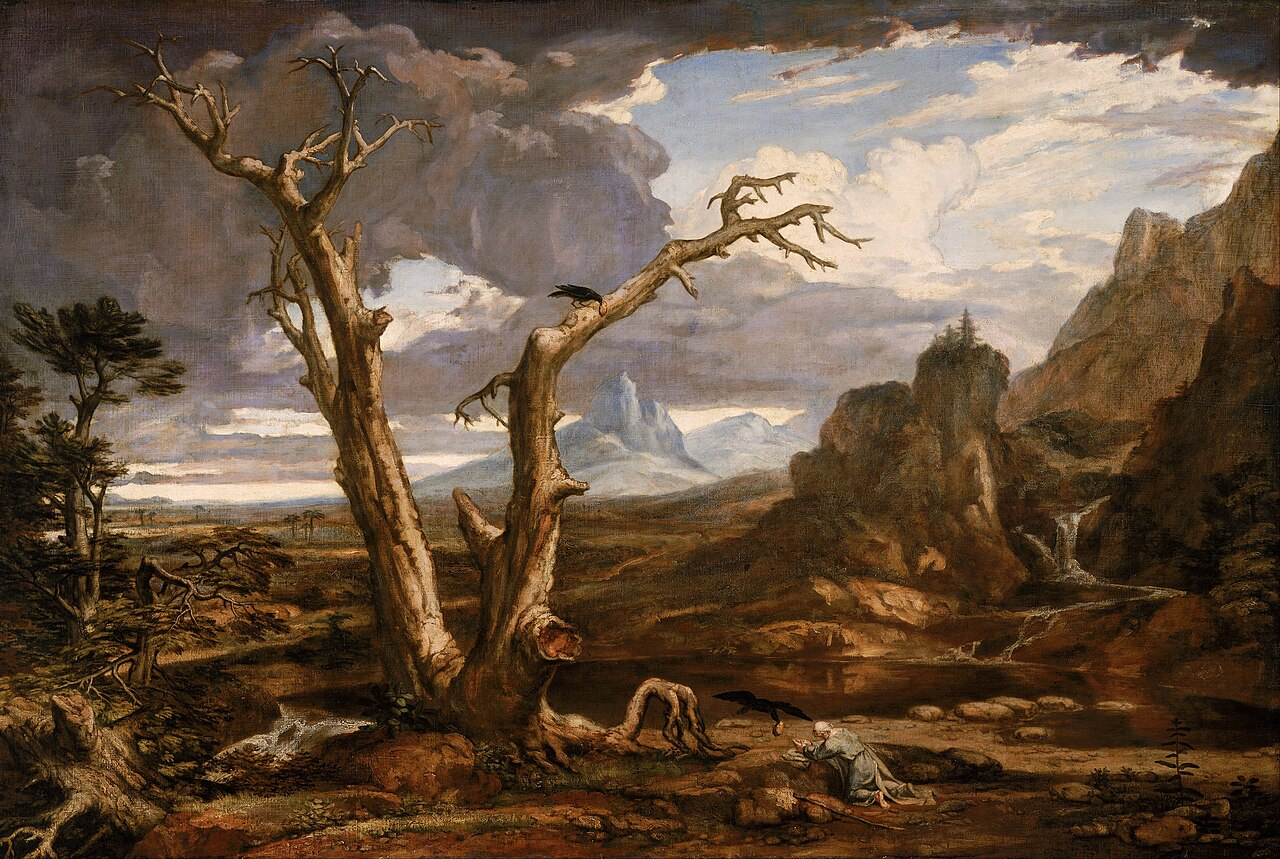
Saint Elijah the Prophet, also known as Elias. Elijah (‘My God is Yahweh’) was a prophet and miracle worker who lived in the northern kingdom of Israel during the reign of King Ahab (9th century BC). He announced to the king (he who was married to the infamous Jezebel) that God would avenge the apostasy of Israel by bringing a long drought on the land. During the drought, which lasted three years, Elias withdrew to the vicinity of the brook Carith, where he was fed by ravens. After the brook dried up he crossed over to Sarepta, where he was hospitably received by a poor widow, whose charity he rewarded by increasing her store of meal and oil and by raising her child to life.
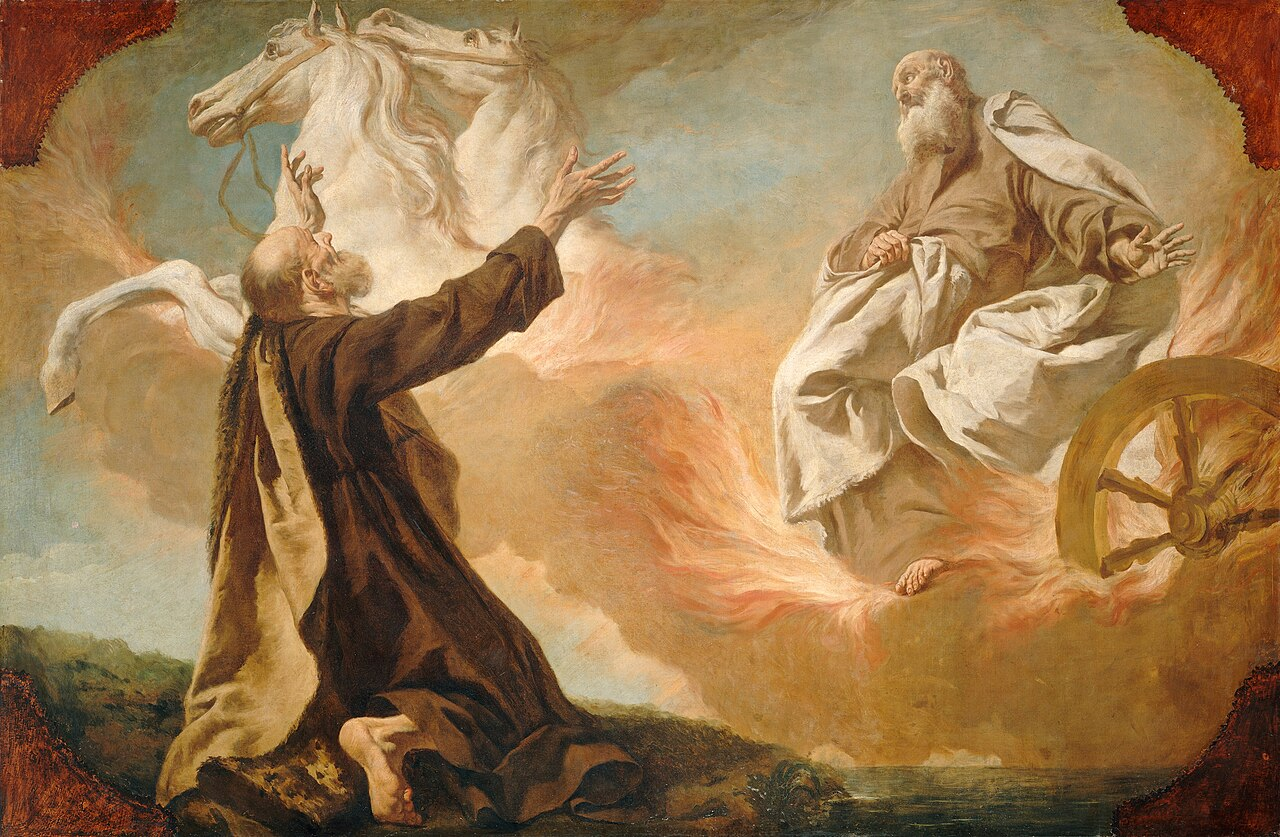
Later he confronted the king again and challenged the prophets of Baal to a contest on Mount Carmel, when Elijah’s oblation was consumed by fire from heaven, and the false prophets were slain by the people at his command. He was obliged to flee from the wrath of Jezebel and while on Mount Horeb was commanded by God to anoint Hazael to be King of Syria, Jehu to be King of Israel, and Eliseus to be his own successor. Subsequently he denounced Achab for the murder of Naboth and reprimanded Ochozias and Joram, King of Juda. While conversing with Eliseus on the hills of Moab he was translated to heaven in a fiery chariot. The Carmelite Order traces its origin to him.
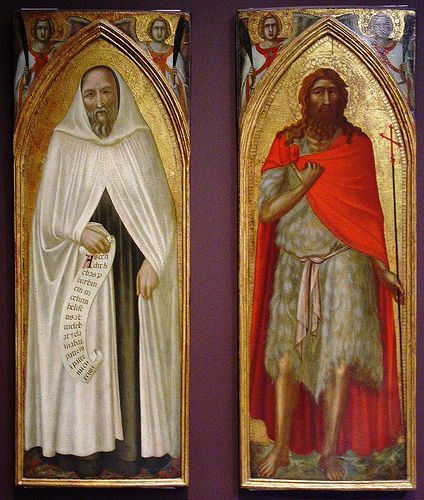
The Book of Malachi prophesies Elijah’s return “before the coming of the great and terrible day of the Lord”. The New Testament makes it clear that St John the Baptist is “the Elijah” who was promised to come.
Patronages: Air Forces, Carmelites, civil aeronautics, Romanian Air Force
Saint Romain of Ryazan, also known as Romanus or Roman. Son of the Prince of Ryazan, Russia, Roman was from a family who, during the Tatar yoke, became famous as defenders of Christianity. Both of his grandfathers died for their country in battle with Batu Khan, the founder of the Golden Horde. Raised to have a great love for the Catholic faith, the prince took care of impoverished and oppressed subjects, and protected them from the violence and robbery of the Khan’s tax collectors. As a consequence, these people denounced him before the Tatar Khan Mengu-Timur.
In 1270, Roman was summoned to the Horde, where the Khan declared that he would have to choose: either martyrdom or the Tatar (Islamic) faith. The prince answered that a Christian cannot change a true faith to a false one. For his firmness in the confession of faith, he was subjected to cruel tortures: they cut off his tongue, gouged out his eyes, cut off his ears and lips, cut off his arms and legs, flayed the skin from his head and, having chopped it off, put it onto a spear. Veneration for him began immediately. His relics were secretly returned to Ryazan and buried. Their place of burial remains unknown.
The first defeat of Napoleon by the Russians when he invaded in 1812, occured on St Roman’s feast day.
St Clair of Epte, also known as Clair of Beauvais or Clare. The name Sinclair comes indirectly from St. Clare or St. Clere, or St. Clair, or in Latin, Sanctus Clarus. He lived near the town that is now called St. Clair sur l’Epte, northwest of Paris in France, on the edge of Normandy.
Born to the nobility, Clair felt a call to religious life, and lived at home much like a monk. His father arranged a marriage for him to a nearby wealthy heiress, and when the young man said he preferred to devote himself to God, the woman tried to seduce him in order to joined the two families together. When he refused her, she became enraged, and swore vengeance. Clair fled to the region of Normandy, France, where he lived as a hermit. Word spread of his wisdom and ability to heal by prayer, and Clair had to keep moving from place to place in order to have solitude. Ordained a priest in 870. Hermit in the woods around Nacqueville, France, and then at a hermitage on the banks of the river Epte where he lived with brother hermit and spiritual son named Cyrin. He was finally located by agents sent by his spurned would-be wife, and murdered on her orders.
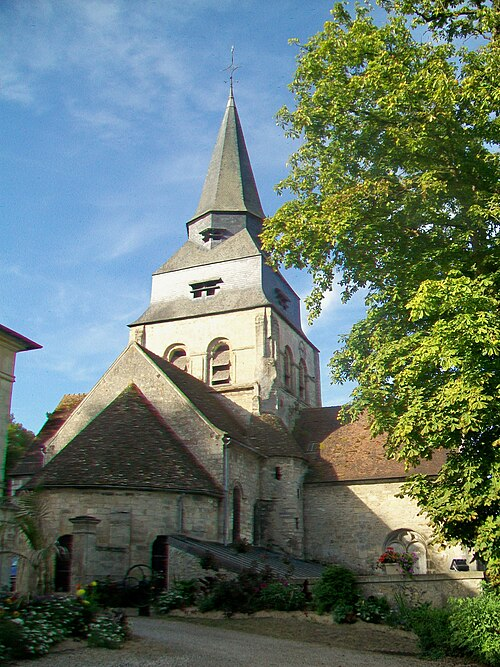
The church of Our Lady, in Saint-Clair-sur-Epte
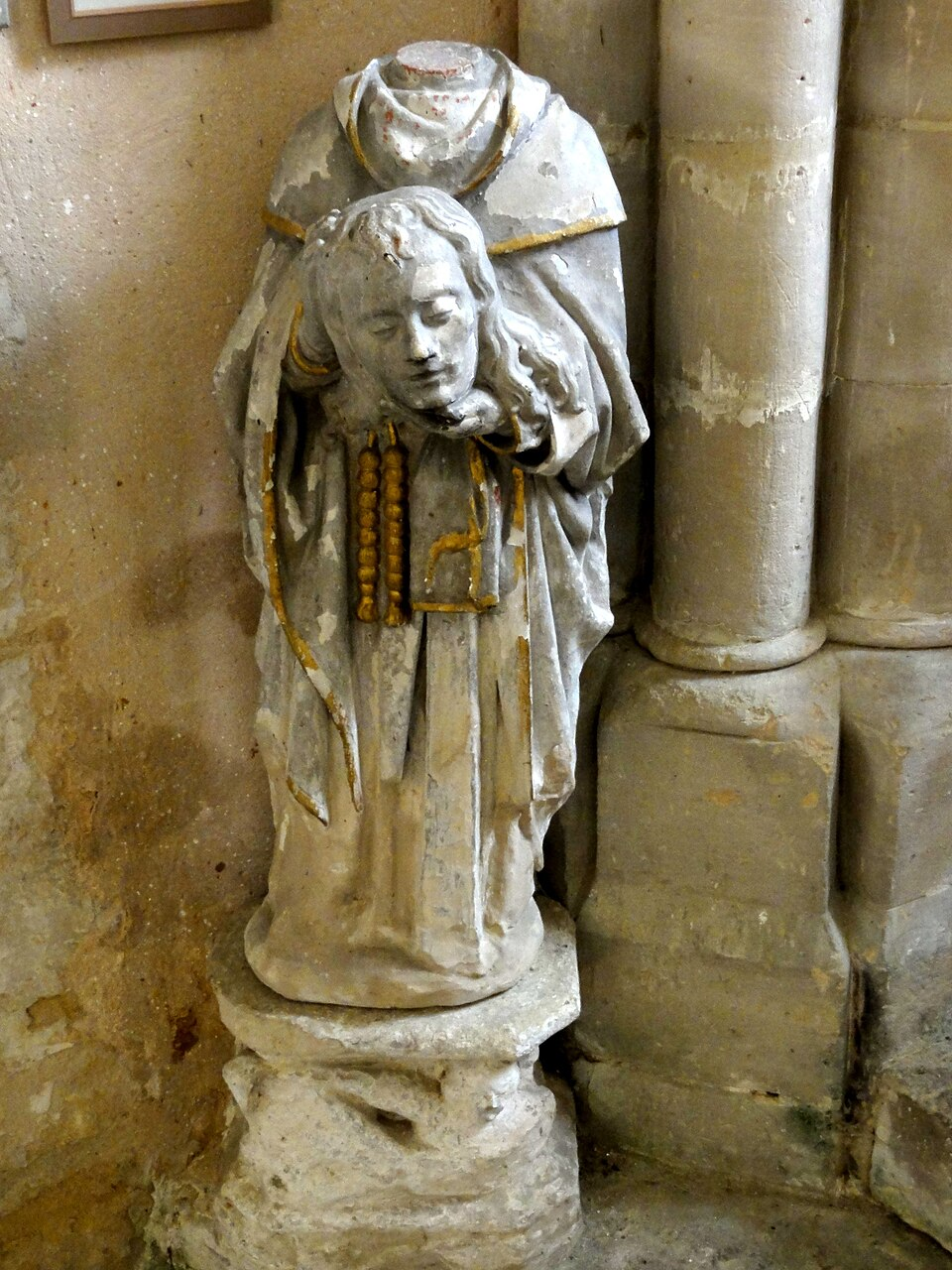
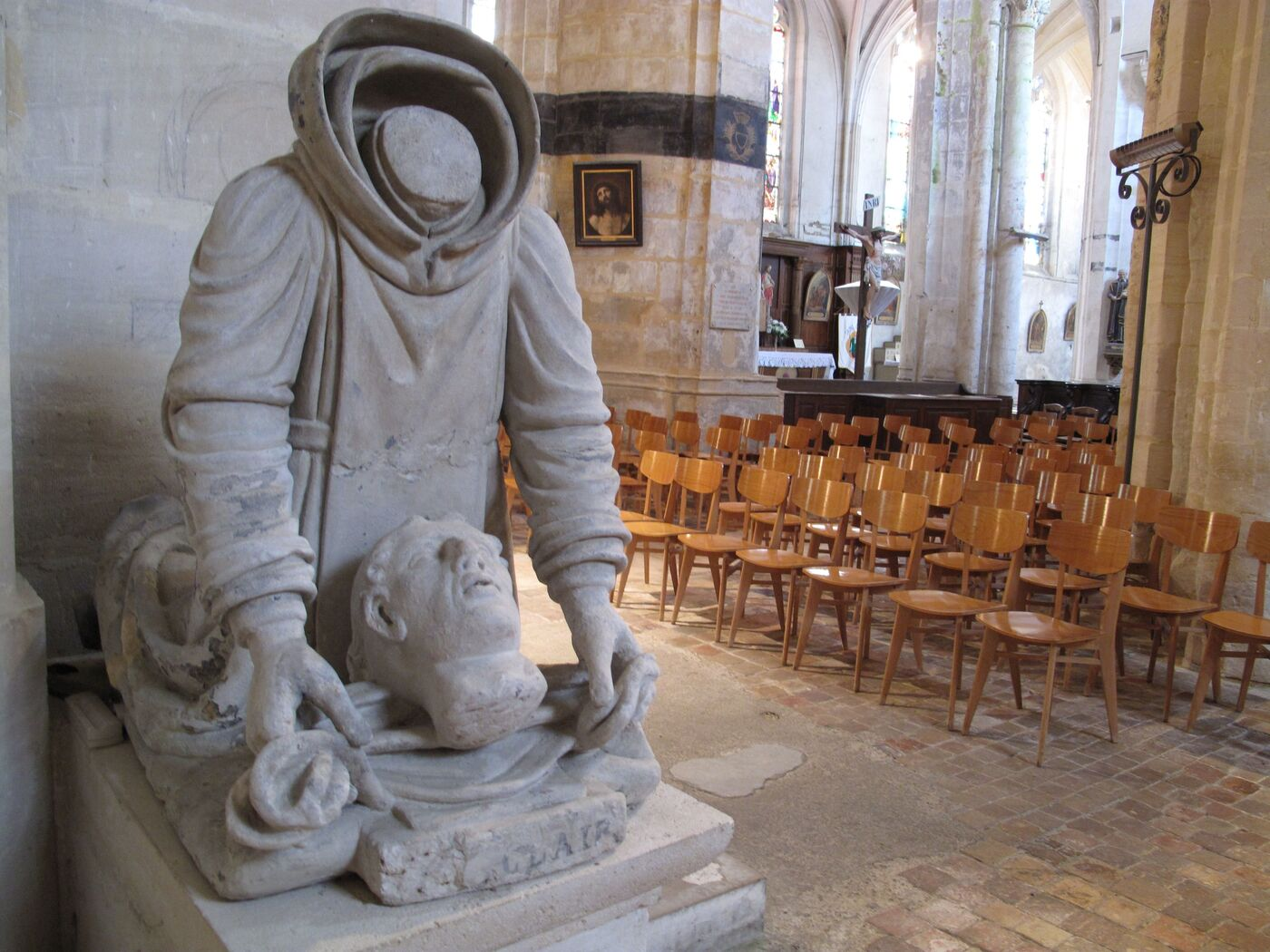
One of the agents beheaded Clair whilst he knelt in prayer, which is why he is frequently depicted, like St Denis, holding his head in his hands. The blood flowed copiously from his neck but a spring instantly flowed out of the ground and washed away all signs of it.
Clair’s death and the miracle of the spring increased his renown. His hut was transformed into a chapel and eventually a church was built on the spot. Ten years after the murder enough houses were built at the spot to establish a village which was named, St Clair, after the martyr.
The treaty of Saint-Clair-sur-Epte in 911 established Rollo, a Norse warlord and Viking leader, as the first Duke of Normandy.
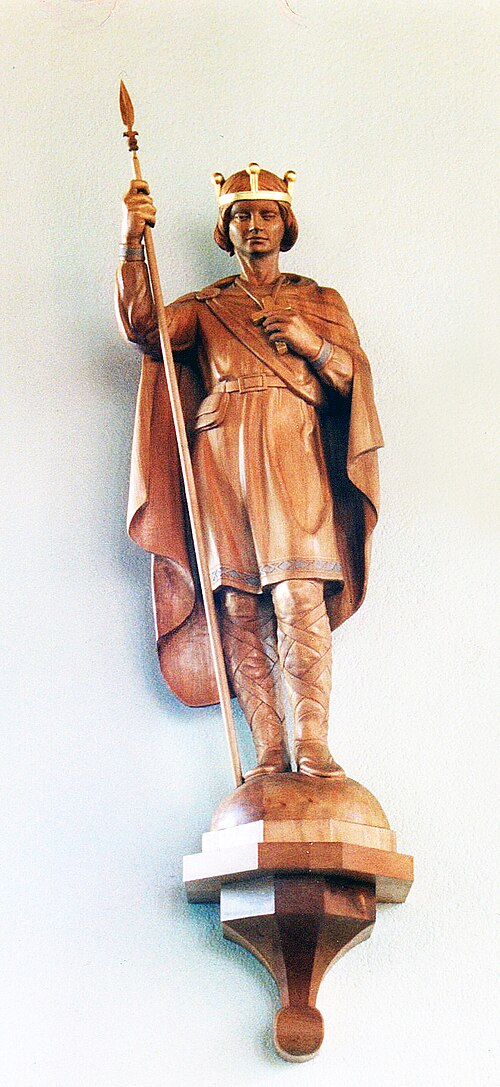
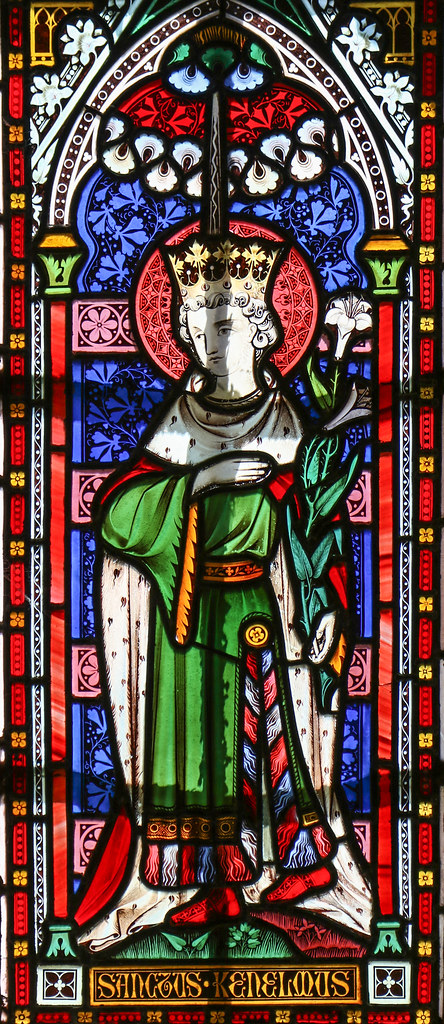
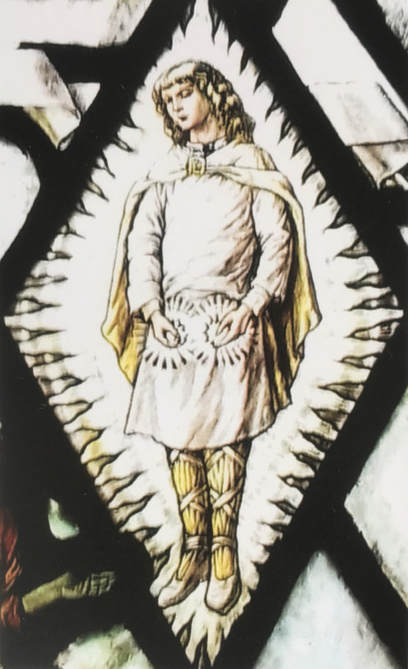
Saint Kenelm or Cynehelm, is an Anglo-Saxon saint, venerated throughout medieval England, and mentioned in the Canterbury Tales (The Nun’s Priest’s Tale, lines 290–301. William of Malmesbury, writing in the 12th century, recounted that “there was no place in England to which more pilgrims travelled than to Winchcombe on Kenelm’s feast day”.
Saint Kenelm was the son of Cenwulf, King of Mercia (796–821). According to 12th-century documents from Winchcombe Abbey, King Kenelm ascended the throne at the age of seven. He was beheaded at the instigation of his sister Cwenthryth, who wanted to take the throne, and his body was buried in an unmarked spot in Clent Forest, south of Birmingham. Saint Kenelm’s soul is said to have then risen in the form of a dove carrying a scroll. It flew to Rome, where it left the scroll at the feet of Saint Hierarch Pascal, Bishop of Rome. The message on the scroll read: ‘Down in a cow meadow, under a thorn, with his head missing, lies poor Kenelm, born king.’ Saint Pascal then wrote to the Archbishop of Canterbury, who commissioned a group of monks to search for the king’s body. The discovery of his body led to the establishment of a chapel at the site, marked by miraculous events, including the ringing of church bells by themselves, and the emergence of a healing spring at the point where the exhausted monks struck the ground with their staffs.
While searching, the monks saw a pillar of light shining above a bush in Worcestershire. Buried beneath it, they found the body of Saint Kenelm. The monks transported his relics to Winchcombe Abbey, where they were kept and remained there for several hundred years, where miracles were reported. Wells marked the course of his body from the Clent Hills.
His sister, Queen Cwenthryth, was reading a Psalter when she heard the bells ringing unaided by human hands. When she was told that her brother’s body had been found, she cried ‘If that be true, may both my eyes fall upon this book.” Her eyes immediately fell from her head upon the book. She and her lover were put to death, and their bodies cast into a ditch.












You must be logged in to post a comment.