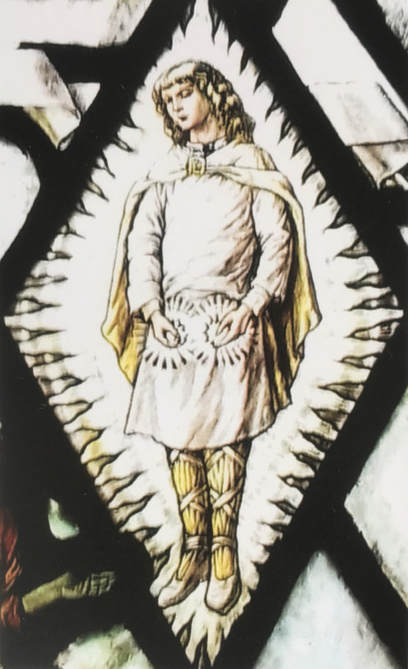
Saint Kenelm or Cynehelm, is an Anglo-Saxon saint, venerated throughout medieval England, and mentioned in the Canterbury Tales (The Nun’s Priest’s Tale, lines 290–301. William of Malmesbury, writing in the 12th century, recounted that “there was no place in England to which more pilgrims travelled than to Winchcombe on Kenelm’s feast day”.
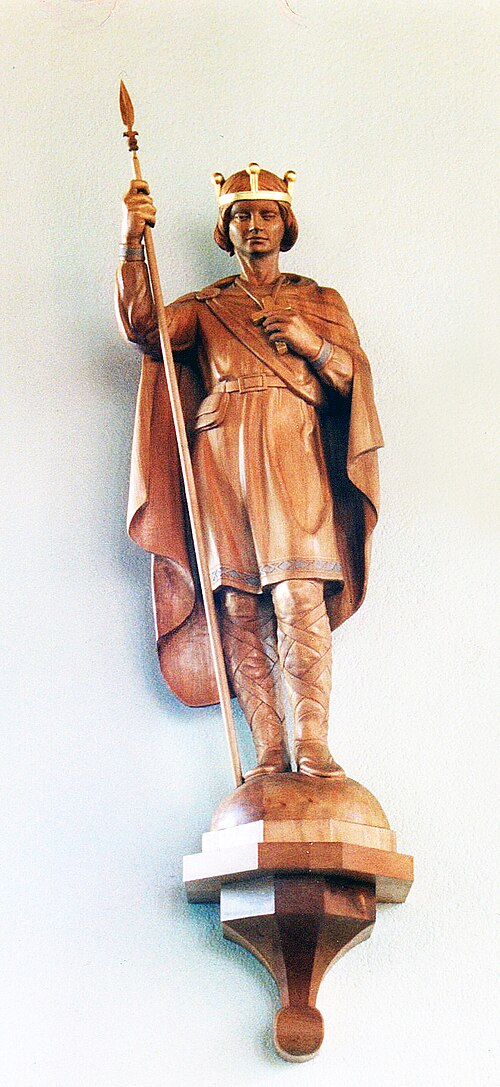
Saint Kenelm was the son of Cenwulf, King of Mercia (796–821). According to 12th-century documents from Winchcombe Abbey, King Kenelm ascended the throne at the age of seven. He was beheaded at the instigation of his sister Cwenthryth, who wanted to take the throne, and his body was buried in an unmarked spot in Clent Forest, south of Birmingham. Saint Kenelm’s soul is said to have then risen in the form of a dove carrying a scroll. It flew to Rome, where it left the scroll at the feet of Saint Hierarch Pascal, Bishop of Rome. The message on the scroll read: ‘Down in a cow meadow, under a thorn, with his head missing, lies poor Kenelm, born king.’ Saint Pascal then wrote to the Archbishop of Canterbury, who commissioned a group of monks to search for the king’s body. The discovery of his body led to the establishment of a chapel at the site, marked by miraculous events, including the ringing of church bells by themselves, and the emergence of a healing spring at the point where the exhausted monks struck the ground with their staffs.
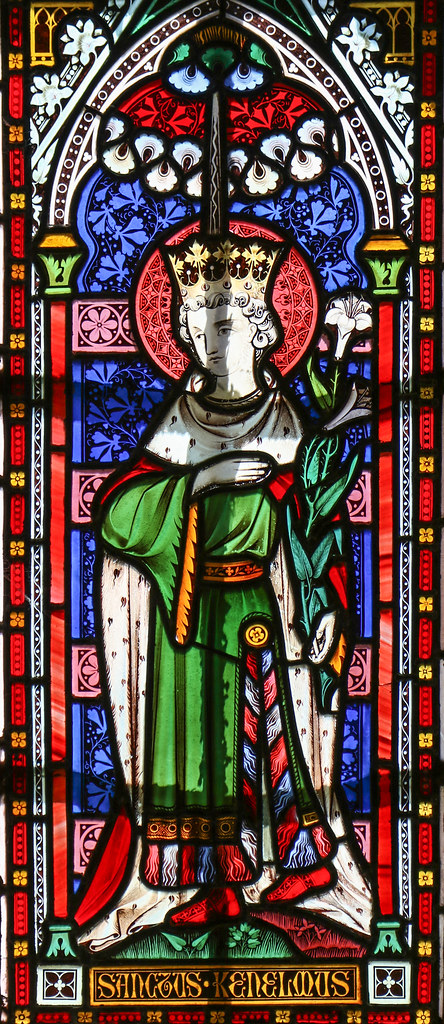
While searching, the monks saw a pillar of light shining above a bush in Worcestershire. Buried beneath it, they found the body of Saint Kenelm. The monks transported his relics to Winchcombe Abbey, where they were kept and remained there for several hundred years, where miracles were reported. Wells marked the course of his body from the Clent Hills.
His sister, Queen Cwenthryth, was reading a Psalter when she heard the bells ringing unaided by human hands. When she was told that her brother’s body had been found, she cried ‘If that be true, may both my eyes fall upon this book.” Her eyes immediately fell from her head upon the book. She and her lover were put to death, and their bodies cast into a ditch.