St Ivo of Chartres (c1040-1115) Bishop of Chartres, France from 1090 until his death, Confessor, Reformer, Defender of the Faith, Lawyer, Canon Lawyer, Teacher and Theologian, Writer. The Roman Martyrology states: “In Chartres in France, Saint Ivo, Bishop, who re-established the Order of the Canons and did much work and wrote to promote harmony between the clergy and the civil powers and for the good of the Church.” Biography: https://anastpaul.com/2021/12/23/saint-of-the-day-23-december-saint-ivo-of-chartres-c-1040-1115/
St John Cirita St John Stone St Mardonius of Rome St Mazota of Abernethy St Migdonius of Rome
St Servulus (Died c 590) Layman, Beggar, paralysed by Palsy from birth. Saint Servulus was a perfect model of submission to the divine Will; it would be difficult to offer a more consoling example to persons afflicted by poverty, illnesses and the other miseries of life. It is Saint Gregory the Great who narrates for us his edifying story. St Servulus’ Life of devotion: https://anastpaul.com/2020/12/23/saint-of-the-day-23-december-saint-servulus-died-c-590/
Martyrs of Crete – 10 Saints: A group of ten Christians who died in the persecutions of Decius. They were – Agathopus • Basilides • Cleomenes • Eunician • Euporus • Evaristus • Gelasius • Saturninus • Theodulus • Zeticus They were martyred in 250 on the island of Crete.
Saint of the Day – 22 December – Saint Zeno of Nicomedia (Died 303) Martyr, Roman Commander. In the persecutions of Diocletian, Zeno died, after many tortures, by beheading in Nicomedia, Bithynia (modern Izmit, Turkey). Also known as – Zenon, Zinon. Additional Memorial – 28 December as one of the 20,000 Martyrs of Nicomedia.
The Roman Martyrology reads today: “At Nicomedia, St Zeno, soldier, who derided Diocletian for sacrificing to Ceres, wherefore, he had his jawbone fractured, his teeth plucked out and his head struck off.”
Zeno was a Roman soldier who lived in Nicomedia in Bithynia in Asia Minor (today Izmit in Turkey). In this City the Roman Emperors had one of their favourite residences. The Emperor, at that time, was Diocletian (284-305), who goes down in history as the most bloodthirsty of the Christian persecutors. The last great persecution which Diocletian launched in February 303, was particularly virulent in this part of the Empire.
The renowned Bishop and Church historian, St Eusebius of Caesarea (c260-340) tells in his Church History (Historia Ecclesiastica), how the persecutions began. Emperor Diocletian issued an Edict on 24 February 303 ordering the destruction of all Churches and holy books. Shortly after the promulgation of the Edict, a fire broke out in the Imperial Palace in Nicomedia, for which the local Christians were blamed. The cause of the fire was undoubtedly a poorly extinguished light or a spark from the kitchen. But it was an eargerly awaited pretext to accuse the Christians leading the Emperor to order a fierce persecution. {Eusebius, Historia Ecclesiastica VIII 6, 13}
St Eusebius writes that a zealous Christian tore down the Imperial Edict, and from then on the Christian Priests were ordered to offer incense to the pagan gods, whenever they appeared in public. In 303, the City’s holy Bishop, Anthimos refused to sacrifice and was beheaded. A great many Christians were executed on the Emperor’s orders when the persecutions were extended tothe laity. Many who dcould not escape were burned alive, while some were thrown into the sea, some were beheaded and some were buried alive. 20,000 Christians were burned alive inside a Church on Christmas Day 303.
Zeno was the Commander of a Regiment and bravely condemned the conduct of the Emperor Diocletian in full public view and, he laughed, in the Name of God, when the Emperor sacrificed to the Roman god Ceres. He was oimmediately arrested on the Emperor’s order and had his teeth knocked out and his jaw crushed with stones, before he was beheaded.
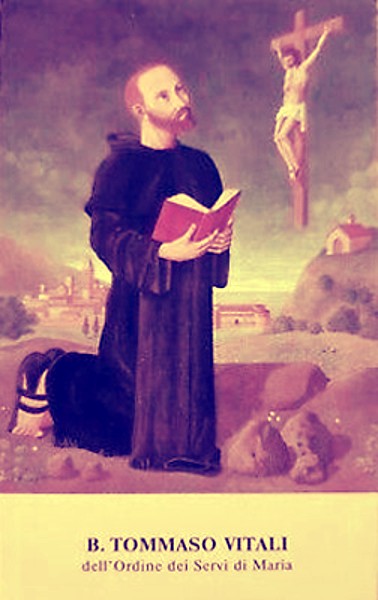
Saint of the Day – 21 December – Blessed Tommaso Vitali OSM (1425-1490) Priest and Friar of the Order of the Servants of Mary (the Servites), a renowned and highly effective Preacher and patient spiritual guide. Born in 1425 in Endenna, Bergamo, Italy and died on 21 December 1490 in Pesaro, Italy of natural causes. Also known as – Thomas.
Tommaso lived for many years in the Hermitage of Monte Granaro in the Province of Pesaro together with Blessed Paolo Bigoni from Chiari (Brescia) and Blessed Bonaventura from Forlì.
The three blessed together formed an exemplary community characterised by an intense Marian spirituality, whose corner stones were prayer, study, manual work and preaching.
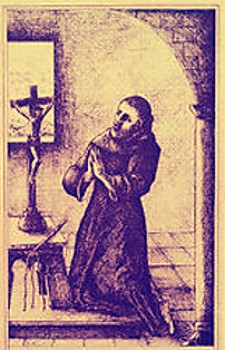
Tradition tells us that Blessed Tommaso grew in the grace of the Lord thanks to his penances, his prayer vigils and his continuous fasting. A talented preacher, he was able to announce, with great enthusiasm, the experience of Jesus Christ Crucified, His suffering and His love for sinful man.
Living in conformity with his preaching, patiently listening to the Confessions of the faithful in order to be able to guide them wisely on the path of life aimed towards holiness.
He died in Pesaro on 21 December 1490. His body was kept in the Church of Santa Maria Monte Granaro until 1650 and subsequently, in the Church of St Maria delle Grazie. In 1922, when the Church of St Maria delle Grazie was demolished and the Servants of Mary moved to the Church of St Francesco, the body of Blessed Tommaso Vitali was placed under the Altar dedicated to the Seven Holy Founders of the Servite Order.
The Archdiocese of Pesaro counts him among its Blessed. Even if there is no celebration in memory of Blessed Tommaso Vitali, in some Martyrologies he is remembered on 21 December, on the anniversary of his death.
St Festus of Tuscany St Glycerius of Nicomedia St James of Valencia St John of Tuscany St John Vincent St Severin of Trèves (Died c300) Bishop, Confessor Bl Sibrand of Marigård St Themistocles of Lycia Blessed Tommaso Vitali OSM (1425-1490) Priest and Friar of the Order of the Servants of Mary (the Servites)
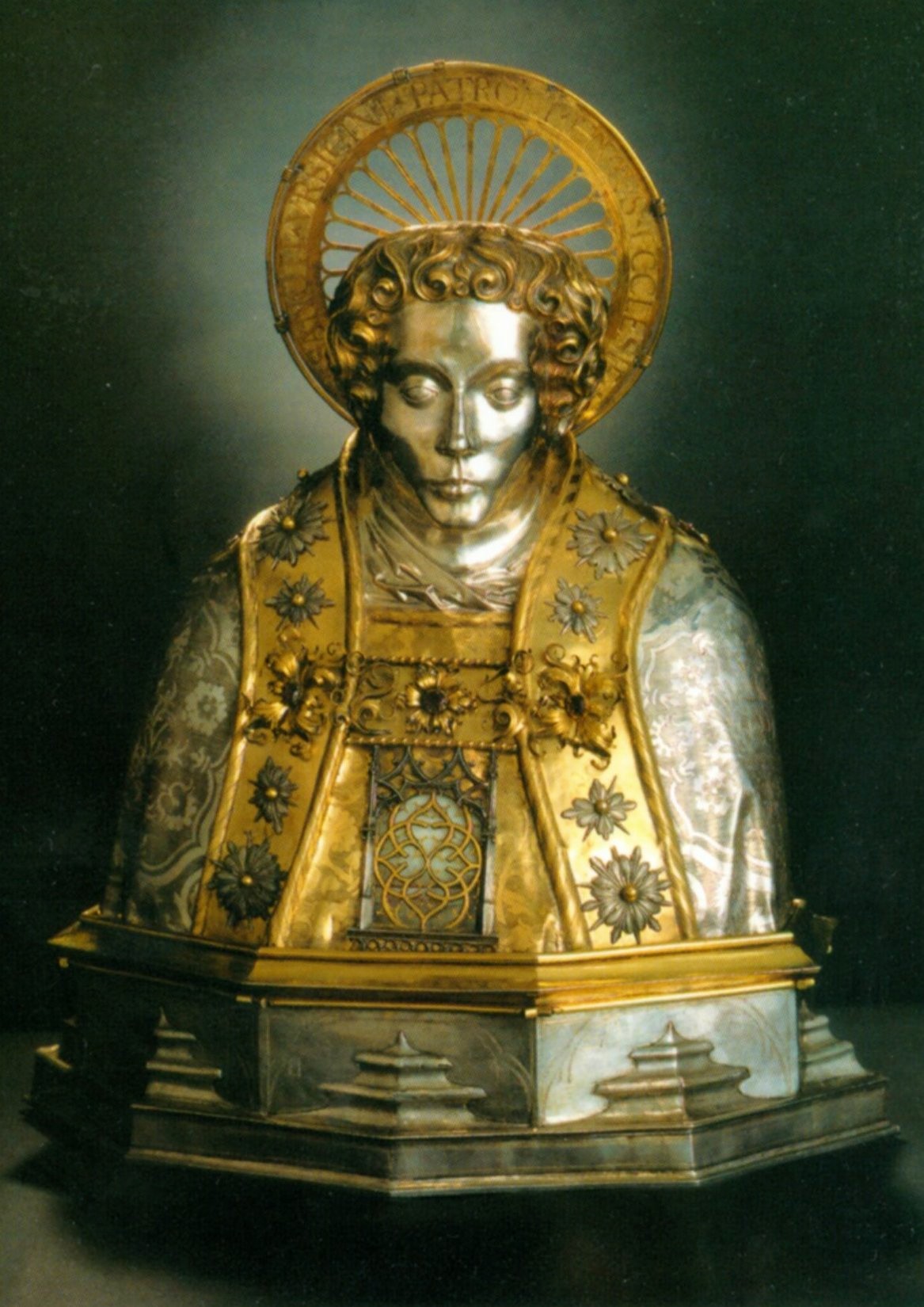
Saint of the Day – 20 December – Saint Ursicinus of Saint-Ursanne (c552-c625) Abbot, Hermit, disciple of St Columban (543-615). Born in c552 in either France or Ireland and died on 20 December in c625 near modern St-Ursanne, Jura, Switzerland of natural causes. Patronages – against a painful and stiff neck, Besançon in France and in Switzerland – Basel, Saint-Ursanne. Also known as – Ursicino del Giura, Ursan, Ursitz, Ursanne. Additional Memorial – 24 July in the Diocese of Basel, Switzerland.
Reliquary of St Ursicinu , 1519, in the Monastery Church in St Ursanne
The cult of St Ursicinus, a Hermit in the Jura, is attested in this Swiss region since the third part of the 7th Century. In fact, already before 67, the Abbot German of Moûtier-Grandval, had built a Church in our Saint’s honour near Grandval.
Furthermore, an ancient document reports that Abbot St Wandregisel (Died 668), built a Monastery around 630 in the same place where Ursicinus rested.
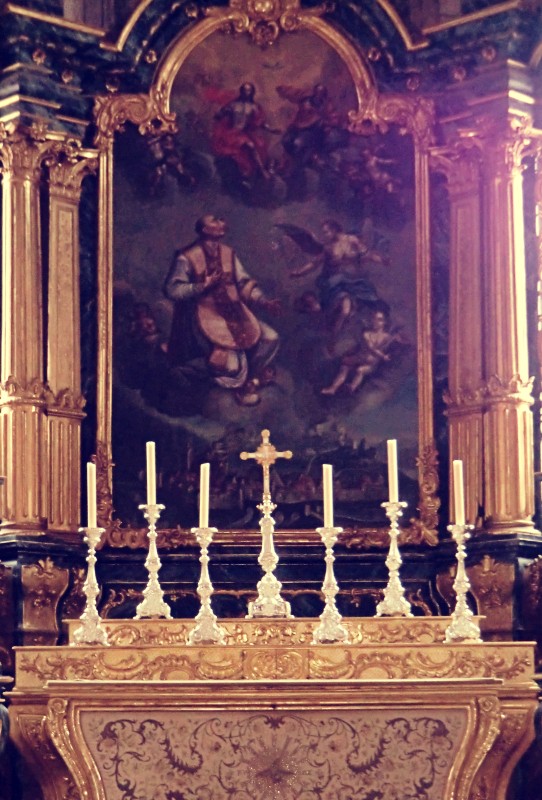
The Sarcophagus of the Hermit Saint, dating to the 7th Century, is still venerated in the beautiful Church of St Ursanne (Ursicinus), located in the bend of the Doubs river which rises in the French Jura and enters Swiss territory for a short stretch, forming the aforementioned bend, on whose shore the Church is located.
Altar and Sarcophagus in the Monastery Church in St Ursanne
As regards the life of Ursicinus, everything that the Hagiographers have considered and spread, comes from an ancient document, first cited by the Jesuit Claudio Sudan (1579-1665) in his work “Sacred Basel” but which unfortunately, he did not transcribe verbatim. The document was a liturgical legend in 24 lessons, which was composed at the request of Bishop Hugh I of Besançon, the Diocese to which the Hermit Ursicinus then belonged.
This ‘Vita’ which was lost, said that Ursicinus was an Irish Monk, a companion of St Colomban (543-615), the Abbot who emigrated from Ireland to France and then to Italy, where he founded the Monastery of Bobbio in 614. Ursicinus, who had followed the Abbot Colomban, together with the Monks Gallus, Sigisbert, Fromond, in the Gaul of the time, when in 610, they had to leave Luxeuil in French territory, split from his master who was headed for Italy and with Fromond, he went up the mountain range of Franco-Swiss Jura, looking for a suitable place for a Hermit’s life.
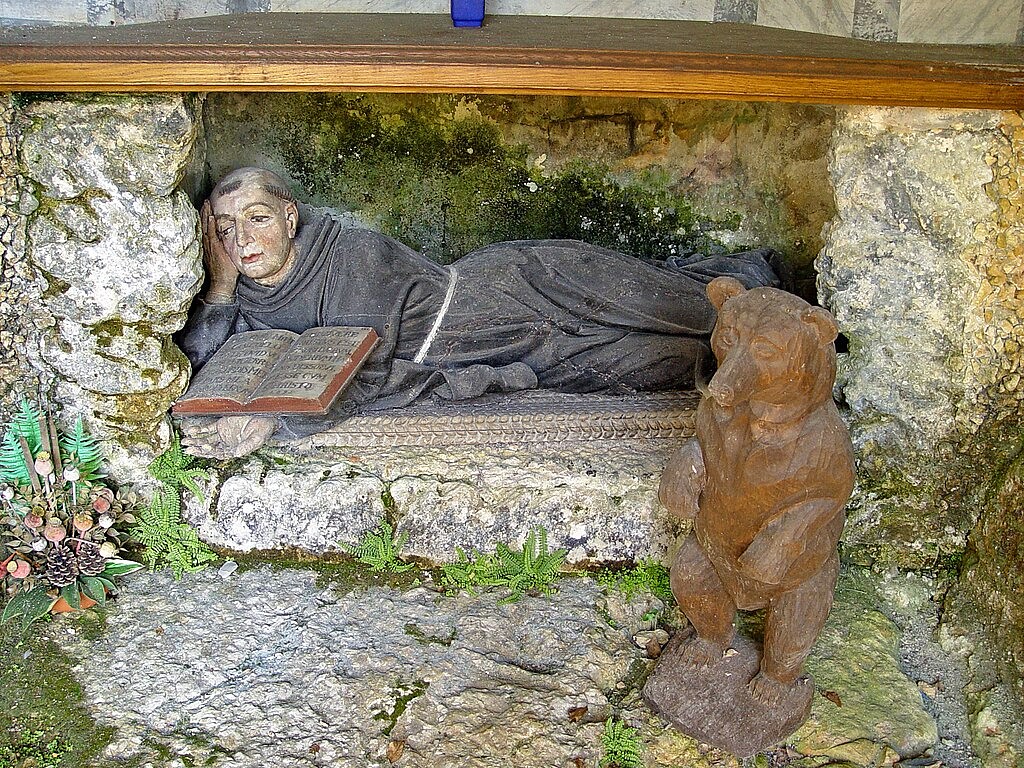
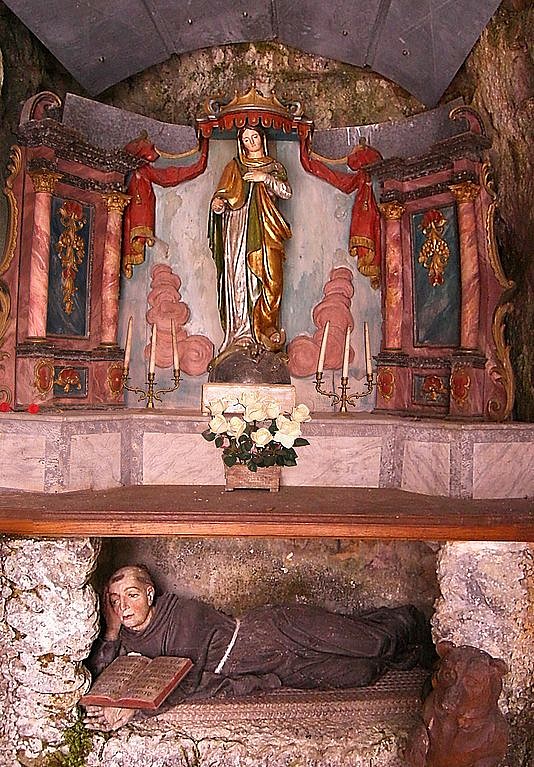
This Statue rests in the Hermitage Shrine
Tradition says that Ursicinus proposed to his fellow Monk to throw their sticks into the air from the top of a mountain, thus letting Heaven decide the correct indication at the point of where they fell. The sticks fell in different places and the two companions were separated, Ursicinus’ fell near a cave, in the valley of the Doubs river, where he retired as a Hermit.
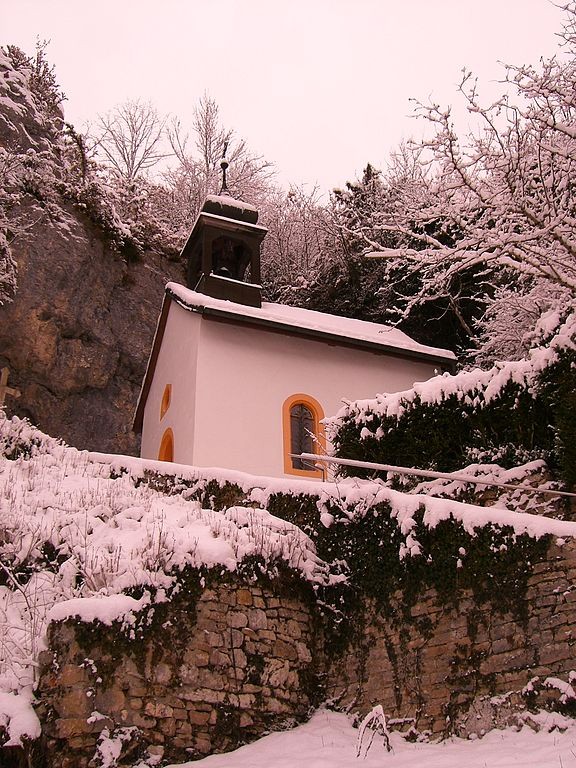
St Ursicinus’ Hermitage
In this place he built a Chapel dedicated to St Peter and which would, in the future, take his name. Soon his fame attracted various disciples, so Ursicinus founded a Monastery for them, under the rule of his master, St Columban and under his governance.
After about ten years of an exemplary hmonastic life, Saint Ursicinus died around 625. Hhis name is found in the Litanies of the Saints venerated in Besançon since the 11th Century and in the Martyrology of the same Diocese today, 20 December.
The Monastery he founded in the Doubs valley underwent various changes over time, passed to the Benedictines, in 1040 it was dependent on that of Moûtier-Grandval, then in 1077 it was assigned to the Bishops of Basel. In 1119, one of these Bishops established a Collegiate Church there which lasted until 1793 when it was destroyed.
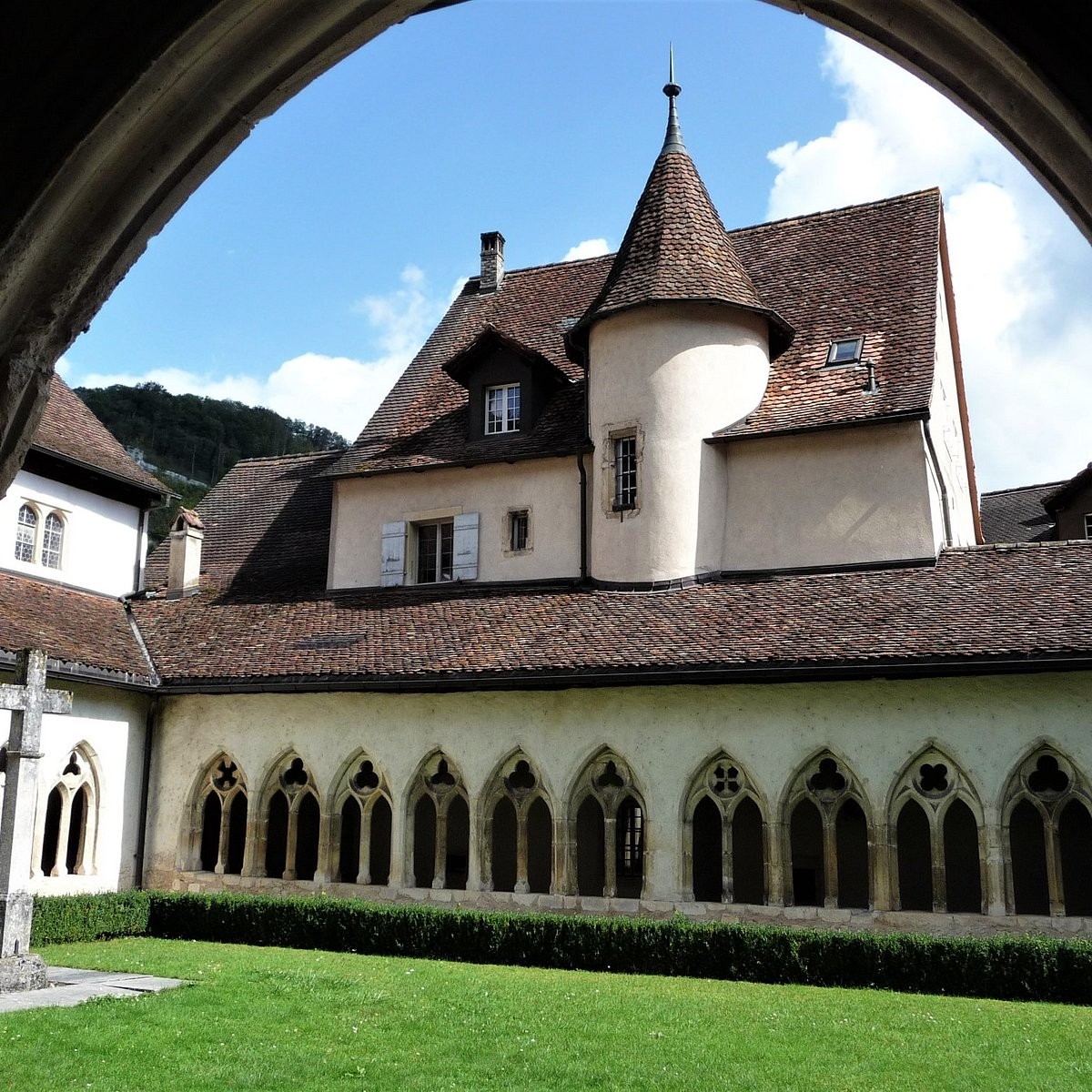
The Monastery of St Ursicinus
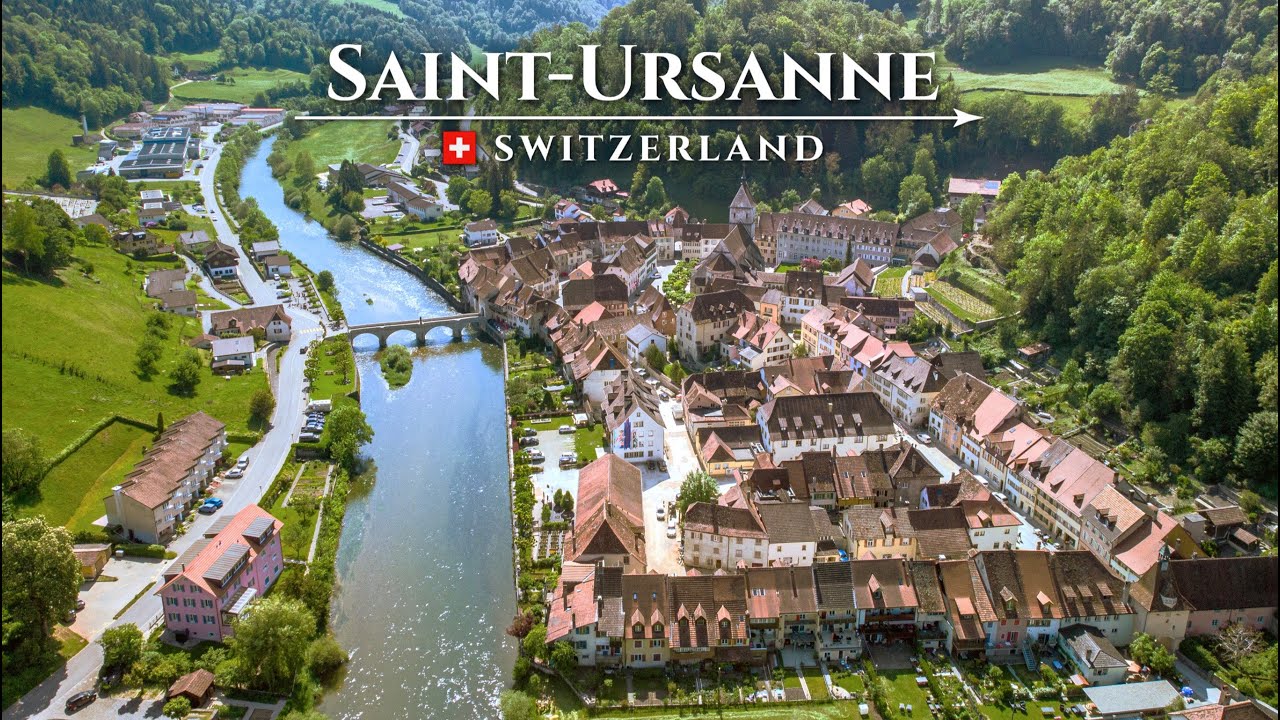
The Town of Saint Ursanne arose around the Monastery. He is venerated throughout the Northern Jura, in Besançon, Mainz, Basel. Images of him show him holding a book and lilies.
St Attala of Strasbourg St Bajulus of Rome St Crescentius of Africa St Damian of Padua St Dominic of Brescia
St Dominic de Silos OSB (1000-1073) Monk, Abbot. He was a Spanish Monk, to whom the Abbey of Santo Domingo de Silos, where he served as the Abbot, is dedicated. The mother of the better-known Saint Dominic de Guzmán, the Blessed Joan of Aza, prayed at his Shrine before she was able to conceive the son she named for him. That son would grow up to found the Dominican Order. Dominic’s special patronage thus became connected with pregnancy and until the establishment of the Second Spanish Republic in 1931, his abbatial crozier was used to bless the queens of Spain and was placed by their beds when they were in labour. Biography: https://anastpaul.wordpress.com/2017/12/20/saint-of-the-day-20-december-st-dominic-de-silos-o-s-b-c1000-1073/
St Eugene of Arabia St Hoger of Hamburg-Bremen (Died 916) Bishop Bl John de Molina St Julius of Gelduba Bl Lorenzo Company St Liberatus of Rome St Macarius of Arabia St Malou of Hautvillers St Paul of Latra Blessed Peter de la Cadireta
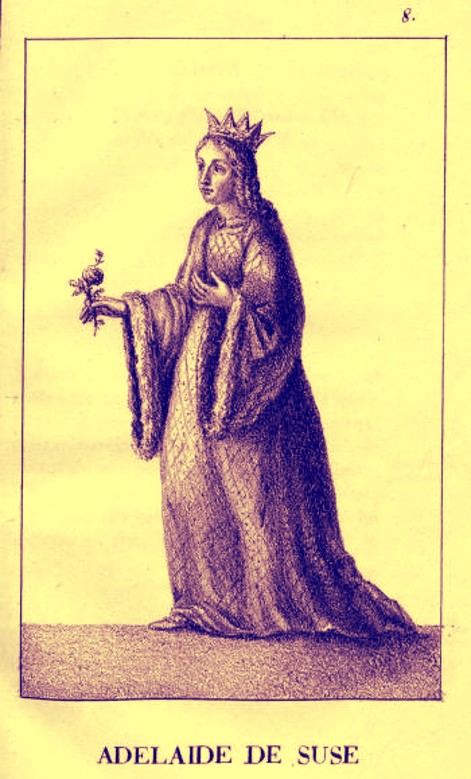
Saint of the Day – 19 December – Saint Adelaide of Susa (c1014-1091) Countess of a part of the March of Lvrea (modern Piedmont, Italy) and Marchioness of Truin, Married Laywoman, mother of 5, widowed 3 times. Born in c1014 in Turin, Italy and died on 19 December 1091 also in Italy. Adelaide made donations to the Monasteries of Turin, founded the Monastery of Santa Maria at Pinerolo and received communication from many leading Ecclesiastical dignitaries of the day. She also furthered the processes of reform within the Church hierarchy. Also known as – Adelaide of Turin and Susa, Adelheid, Adelais, or Adeline.
Daughter of Odalirico Manfrido II, the Margrave of Turin and Bertha of Milan, wife to Herman IV, Duke of Swabia, secondly to Henry, Margrave of Montferrat and finally, to Otto I, Count of Savoy. Her first 2 husbands died within a year or so of marriage, during which period they had, for the large part, been away on campaigns. Adelaide and Otto’s marriage was blessed with 5 children, 3 sons and 2 daughters.
Adelaide was described as a beautiful woman with the soul of a lion having learned martial arts as a girl and bore her own arms and armour. She had great courage and energy and knew how to rule her inheritance. Her third marriage to Otto of Savoy in 1046, united a large territory on both sides of the Alps and it’s important Alpine passes, resulting in control of the majority of northern Italy, making Savoy one of the most powerful Houses of the Empire. After Otto’s death in 1060, Adelaide ruled, first jointly with her sons – Pietro I, died 1078, Amadeus II, died 1080 and finally, alone, until her death in 1091.
When Adelaide assumed the regency, there was great controversy raging in Northern Italy concerning the obligatory celibacy of the Clergy which had been discussed in several Ecclesiastical Councils but never settled. The Church of Milan allowed married men to take Orders and continue to cohabit with their wives, unless his wife died and he chose to remarry, he could not then continue to exercise his Office. After a long struggle, the married Clergy of the Church of Milan succeeded; the Pope sending a Legate to Adelaide in Milan, followed by a letter from the Pope recording laudatory expressions of her piety and other virtues, witnessing her great power as “mistress of a vast territory, situated between the Kingdoms of Italy and Burgundy and comprising many Episcopal Diocese” relying on her to enforce clerical celibacy and protect the Monasteries of Fruttuaria and San Michele della Chiusa.
Adelaide received letters from many of the leading Church powers, including Pope Alexander II, St Peter Damian and Pope Gregory VII. In 1074-1075, Adelaide and her son-in-law Henry IV, (the Holy Roman Emperor), became involved in the “Investiture Controversy,” the most important conflict between secular and religious powers regarding who had the ultimate authority in medieval Europe. When Henry IV was excommunicated, Adelaide assisted him in his supplications to the Pope , his penance and in regaining his membership within the numbers of the faithful (even though he soon fell again!)
Adelaide died on 19 December 1091. According to a later legend, she was buried in the parochial Church of Canischio in a small village in the Valle dell’Orco, where she had supposedly been living incognito for twenty-two years before her death. However, various historical reports call this account ‘absurb.’ In the Cathedral of Susa, in a niche in the wall, there is a statue of walnut wood, beneath a bronze veneer, representing Adelaide genuflecting in prayer. We are unsure whether her Relics might be there too or whether her cult has ever received any confirmation.
St Boniface of Cilicia Bl Cecilia of Ferrara St Fausta of Sirmium St Gregory of Auxerre St Jaume Boguñá Casanovas St Johannes Gogniat St Josep Albareda Ramoneda Bl Konrad Liechtenau
Blessed Mercedarian Fathers – (6 Beati): A group of Mercedarian Friars noted for their dedication to the Order’s Rule, for their continuous prayer life and their personal piety. Blessed Bartolomeo of Podio Blessed Giovanni of Verdera Blessed Guglielmo de Gallinaris Blessed Guglielmo of Prunera Blessed Pietro of Benevento Blessed Pietro of Gualba Martyrs of Nicaea – (4 Saints): A group of Christians Martyred together. The only surviving details are four of their names – Darius, Paul, Secundus and Zosimus. They were martyred at Nicaea, Bithynia (modern Izmit, Turkey).
Martyrs of Nicomedia – 5 Saints: A group of Christians Martyred together in the persecutions of Diocletian. We know little more than the names of five – Anastasius, Cyriacus, Paulillus, Secundus and Syndimius. They were martyred in 303 at Nicomedia, Asia Minor.
Saint of the Day – 18 December – St Flavitus (Died 630) Priest, Hermit, Miracle-worker. Born in the mid-6th Century in Lombardy, Italy and died on 18 December 630 at Marcilly-le-Hayer, modern France. Also known as – Flavitus of Sens, Flaive, Flav, Flavy. Additional Memorial – 16 December on some Calendars.
The Relics of the Saint in the Church of the Assumption-of-the-Virgin of Villemaur-sur-Vanne.
Flavitus was captured in his home region of Lombardy in Italy and then sold as a slave by the victorious Franks to a rich lord, named, Montan, whose home was located at Marcilly-le-Hayer, in France. There, Flavitus guarded his master Montan’s herd of pigs in the forest of Othe.
Flavitus was falsely accused by the wife of this lord. But having cured Montan of illness and despite the hostility of those around him, his master;s gratitude served to free him from slavery.
Flavitus became a Hermit in the forest and soon attracted the goodwill of the population through his mortifications and holiness. His prayers drew a Spring from the ground and the miraculous waters drew the blind, the crippled, demonically possessed – all who brought their faith and infirmities, were healed. The Bishop of Sens, Saint Lupus, hearing of Flavitus great spiritual attraction and his many miracles Ordains him as a Priest.
He became a missionary apostle and miracle-worker of the region. He died in Marcilly-le-Hayer on 18 December 630, under the Episcopate of Ragnegisius(?), the 17th Bishop of Troyes.
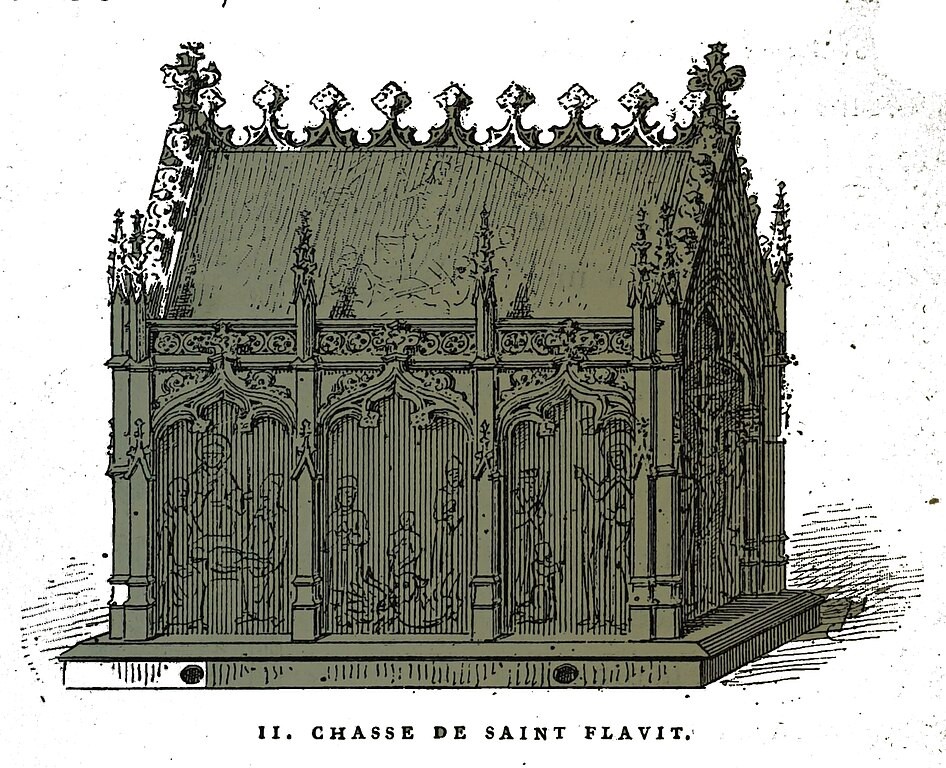
His Relics were shared between the Sainte-Colombe Abbey of Sens and the Saint-Flavit Priory of Villemaur-sur-Vanne which was destroyed in the 18th Century. The Treasury of the Cathedral of Sens preserves a Shrine of Saint Flavitus.
In 1807 a small Chapel was built on the site of his hermitage, very close to Marcilly-le-Hayer. The village of Saint-Flavy honours our Saint’s memory.
The Monthly Novena to the Infant of Prague – Day Three:
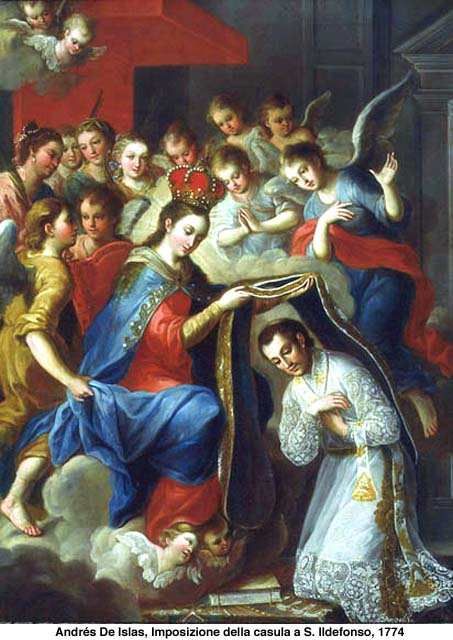
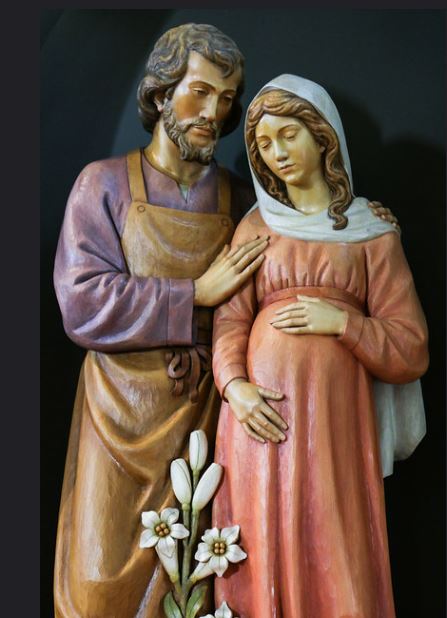
Our Lady of the Expectation – This Feast originated in Spain. When the Feast of the Annunciation (25 March) was transferred to 18 December because of the regulation forbidding Feasts in Lent, it remained on this date after the Annunciation was again celebrated on its original date. It impressed on the faithful, the sentiments of the Blessed Virgin as the time of her delivery approached. More about the Feast here: https://anastpaul.com/2018/12/18/the-feast-of-our-lady-of-expectation-18-december/
Mercedarians Redeemers – Also known as “Blessed Redentori.” A group of Mercedarian Friars who worked together, under the leadership of Saint Peter de Amer, to ransom prisoners and minister to them after. Blessed Bernardo de Pratis Blessed Giacomo de Lara Blessed Louis Gasco Blessed Peter de Quesada Blessed Peter of Barcelona Blessed William de Quadres
Martyrs of Northwest Africa – 42 Saints: Mercedarian Redeemers – 6 beati – These are a group of Mercedarian Friars who worked together, under the leadership of Saint Peter de Amer, to ransom (e.g., redeem) prisoners and minister to them after.
Saint of the Day – 17 December – Saint Begga of Ardenne (c613-693) Widow, Mother of 3 children, Founder of Churches and a Monastery of which she became the first Abbess. Patronages – Ardenne, against stuttering and of stutterers. Also known as – Begue, Bège, Beghe, Begge.
The Roman Martyrology reads: “At Ardenne, at the Seven Churches, St Begga Widow, sister of St Gertrude of Nivelles.”
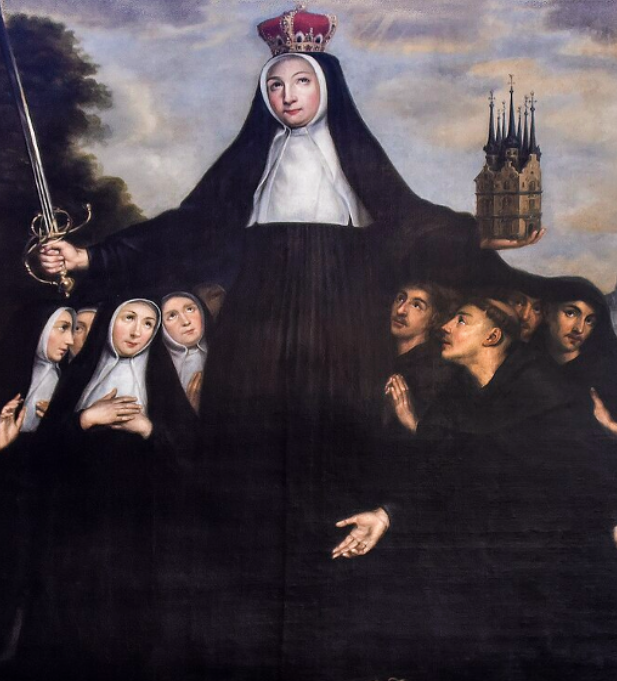
Artwork of St Begga as Abbess and protector of her Monastery by Jan Verhoeven 1642-1676
Begga was a daughter of the nobles St Pepin of Landen (Died 639) and Saint Iduberga (Died 652). Her sister is the famous Saint Gertrude of Nivelles (Died 659; Feast 17 March). She married Ansegisus, who was the son of Saint Arnold of Metz (Died 641). Their son, Pepin of Herstal (Died 714), would become the ancestor of the Carolingians; he, in turn, was the father of Charles Martel (Died 741), the grandfather of Charlemagne.
Peter Paul Rubens (1577-1640) St Ansegisus and his wife St Begga
After the death of her husband, Begga decided to put her life and her possessions at the service of God. She then made a pilgrimage to Rome. to pray at the Shrines, mostly especially visiting the Seven Pilgrim Churches and after her return, she built seven Churches in the Town of Andenne aan de Maas, in imitation of them. In 691, Begga founded a Monastery at one of these Churches. She led it as Abbess until her death.
Begga is the Patron Saint of the Town of Ardenne and she is also the Patron Saint of stutterers and against stuttering (because her name resembles the French word ‘bègues = stutterers’).
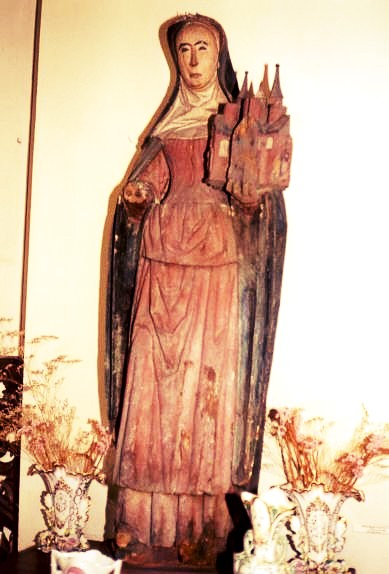
In art she is depicted as a Queen (sometimes with three crowns); as Abbess, often holding seven Churches or a Church with seven towers.
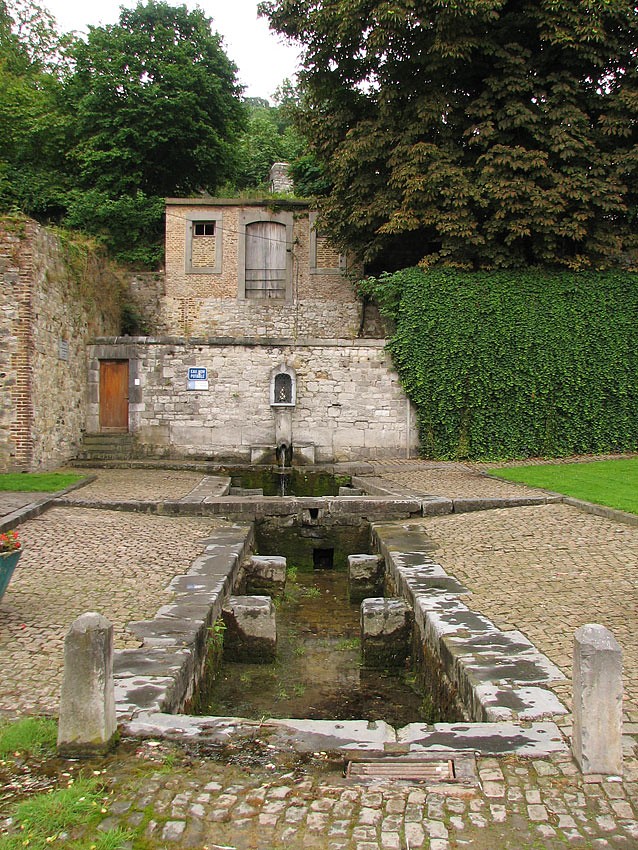
The Collegiate Church of Andenne later grew from the seven Churches (or Chapels). Not far from there flowed a spring – it is called ‘Fountain of Sinte Begga’ after her. Its water is miraculously hot in winter and cold in summer.
Fountain of Sinte Begga
Special Note:There are two Saints named Gertrude, one called “the Great” and the other from Nivelles. They are often confused, especially since they were both Nuns and appeared quite alike. However, they lived more than 600 years apart – St Gertrude the Great (1256-1302) born in Germany not too far from the Belgium of St Gertrude of Nivelles (626-659). The latter often has a special symbol in artworks, that of the mouse on her staff.
Martyrs of Eleutheropolis – (60+ Martyrs-Beati): Approximately 60 Christian soldiers in the imperial Roman army of emperor Heraclius; they were murdered as a group for their faith by invading Saracen Muslims. We know the names of two of them – Calaoicus and Florian. 638 in Eleutheropolis (Beit Jibrin), Palestine.
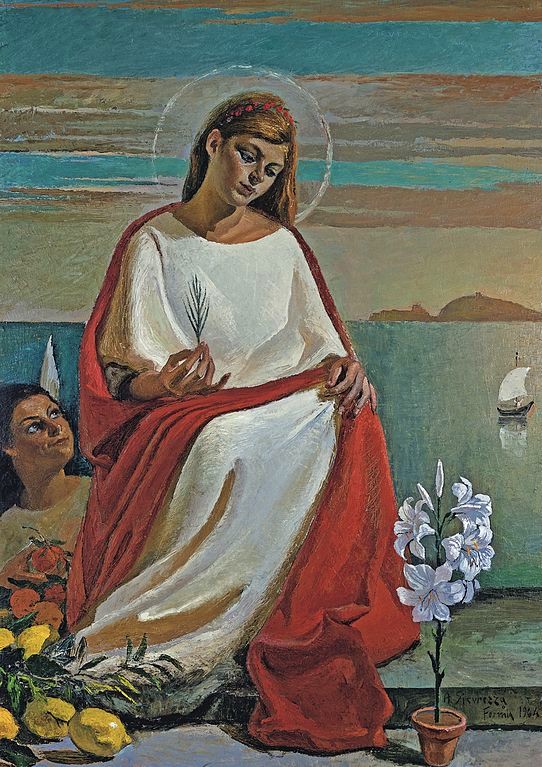
Saint of the Day – 16 December – Saint Albina of Caesarea (Died c250) Virgin Martyr. Born in Caesarea, Palestine and died by beheading in c250, during the reign of the Emperor Decius, at Formia, Gaeta, Campagna, Italy. Also known as – Ulbina.
The Roman Martyrology reads today: “At Mola-di-Gaeta, in Campagna, St Albina, Virgin and Martyr, under the Emperor Decius.”
St Albina, painting by Antonio Sicurezza.
Albina was a young Christian girl who lived in the middle of the 2nd Century in Caesarea in Palestine. Because she would not give up her Christian faith, she was beheaded in c250 during the persecutions of Emperor Decius (249-251).
Legend has it that her body was placed on a boat which floated ashore near Formia at Gaeta in Campagna in southern Italy and that she was then transported to nearby Gaeta and buried there, next to Saint Erasmus. Albina’s Relics are venerated in Gaeta in the Cathedral
The learned Church Historian, Oratorian and Cardinal, the Venerable Cesare Baronius (1538-1607), included the story of her suffering in the Martyrologium Romanum when he revised it at the end of the 16th Century, based on “ancient documents of the Church of Gaeta.”
St Beoc St Dominic Dosso Bl Elizabeth of Saint Francis
St Everard of Friuli (c815-867) Duke, Count, Soldier, Founder of Churches and a Monastery. In contrast to his soldiering life, St Everard was a peacemaker, a humble and loving Master with a social conscience, striving always to free serfs, wherever possible or at least to free them from their burdens and assisting the poor and needy in all their deprivations. His Life: https://anastpaul.com/2021/12/16/saint-of-the-day-16-december-saint-everard-of-friuli-c-815-867/
Haggai the Prophet St Irenion Bl James of Tunis St Jean Wauthier St Macarius of Collesano
Martyred Women of North-West Africa: A large group of women Martyred in the persecutions of Hunneric, Arian King of the Vandals. 482 in North-West Africa.
Martyrs of Ravenna – 4 Saints: A group of Christians Martyred together. Four names and no other information has survived – Agricola, Concordius, Navalis and Valentine. c 305 at Ravenna, Italy.
Saint of the Day – 15 December – Saint Valerian of Abbenza (c377-c457) Confessor, the 2nd Bishop of Abbenza in North Africa. Born in c377 and died in c457 of exposure in the region of his Diocese. Additional Memorial – 28 November as one of the Martyrs of North Africa.
The Roman Martyrology this day states: “In Africa, the holy Bishop Valerian, who, being upwards of eighty years old, in the persecution of the Vandals, under the Arian King Genseric, was asked to deliver the Sacred vessels of the Church and, as he constantly refused, an order was issued to drive him, all alone, out of the City and all were forbidden to allow him to stay, either in their houses or on their land. For a long time, he remained lying on the public roads in the open air and thus, in the confession and defence of the Catholic verity, closed his blessed life.”
Valerian was a Roman Bishop of Abbenza, an ancient Episcopal Seat of the Roman Province of Proconsular Africa, identifiable today with the ruins of Bordj-Hamdouna, in the Archdiocese of Carthage, in northern Africa, who lived in the 5th Century.
In the list of Bishops of this Diocese, he is second on the list after Fortunatus.
He is remembered for having refused to obey Genseric, the King of the Vandals, who arrived with his troops in the City, to hand over all the Sacred vessels and furnishings of the Church to him.
Valerian protested against the violence of the soldiers and was driven out and exiled from his City together with eight other Bishops of North Africa – although they were not sent into exile together.
The order was given forbidding anyone to offer him hospitality of any kind. He had to live and sleep outdoors, on the public roads, until his death.
Valerian, remembered as a Confessor, remained faithful to his faith until his death. The name of Saint Valerian was included in the Roman Martyrology on his Feast Day, 15 December.
Octave Day of the Immaculate Conception of the Blessed Virgin Mary
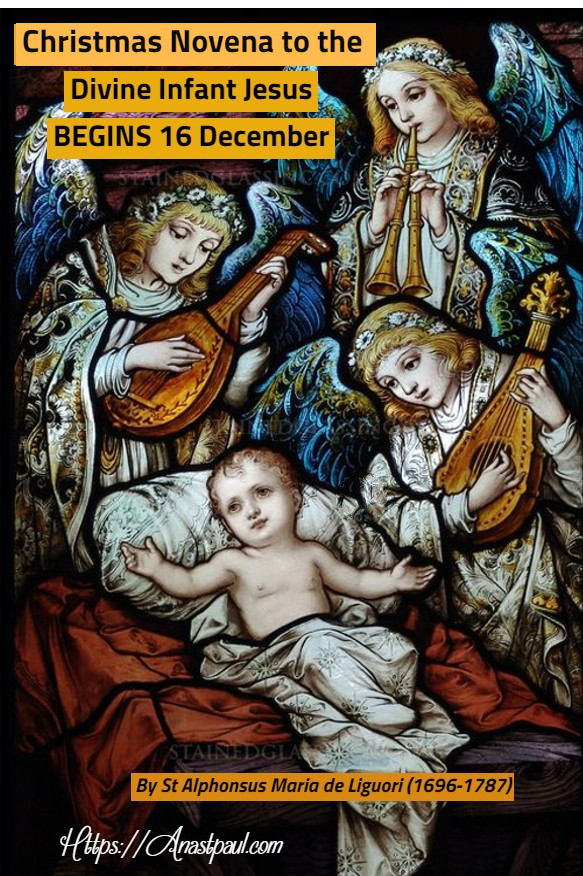
The Christmas Novena to the Divine Infant Jesus by St Alphonsus Maria de Liguori – BEGINS on 16 December: This Novena is translated from the Italian of Saint Alphonsus Maria de Liguori and was first published in 1758. Although this Novena is intended, primarily as a preparation for the Feast of our Lord’s Nativity, it can be used with spiritual profit at any time of the year, as a devotion in honour of the Infant Jesus. This translation by the Redemptorists of the UK.
AND/OR: December, naturally being the Month of the Divine Infant, is a wonderful time to begin this Monthly practice: The Monthly Novena to the Infant Jesus of Prague From 16 to 24 December (and of every Month on the same dates).
St Maximinus of Micy St Offa of Essex St Paul of Latros St Silvia of Constantinople St Urbicus St Valerian of Abbenza (c377-c457) Confessor, Bishop Blessed Victoria Strata (1562-1617) Widow,
Martyrs of North Africa – 7 Saints: A group of Christians Martyred together for their faith in North Africa. The only details about them that survive are their names – Caelian, Candidus, Faustinus, Fortunatus, Januarius, Lucius and Mark.
Martyrs of Rome – 22 Saints: A group of 22 Christians Martyred together in the persecutions of Valerian. The only details we have are five of their names – Antonius, Irenaeus, Saturnin, Theodorus and Victor. c 258 in Rome, Italy.
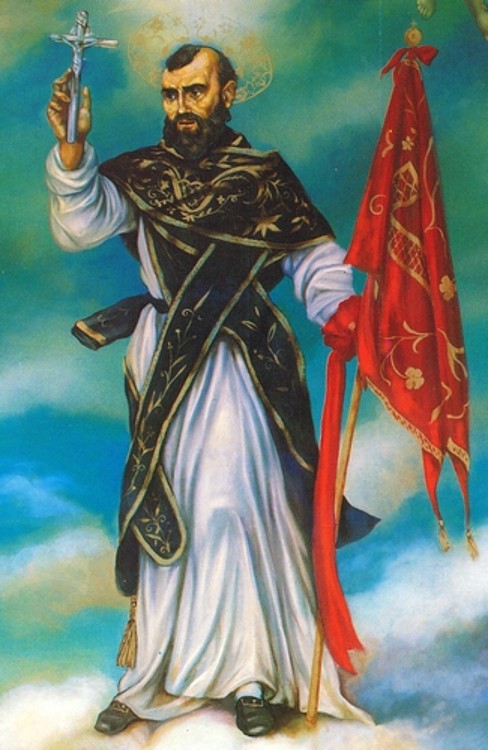
Saint of the Day – 14 December – Saint Agnellus of Naples OSA (535-596) Hermit, Priest, Abbot, Defender and Protector of the City of Naples, Miracle-worker. Agnellus was initially a Basilian Monk and later became a Friar of the Hermits of St Augustine. Born in 535 in Naples, Italy and died of natural causes on 14 December 596 in his birth-town at the age of 61. Patronages – against invaders or invasion, of the City of Guarcino, one of the 50+ Co-Patrons of Naples (See Note below). Also known as – Agnello, Aniello the Abbot. Additional Memorial – 18 May in his Patronage Town of Guarcino.
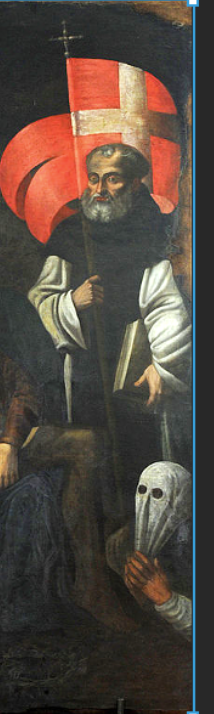
The Roman Martyrology reads today: “In Naples, in Campaniaa, St Agnellus, Abbot. Illustrious by the gift of miracles, he was often seen with the standard of the Cross, delivering the City besieged by enemies.”
At the beginning of the 10th Century, Peter, a Sub-Deacon of the Neapolitan Church who had been freed from a serious illness through the intercession of Agnellus, composed a “Libellus Miraculorum,” in which, in addition to his own miraculous cure, he recounts twenty-two further miracles performed through the intercession of our Saint.
Agnellus was born in 535 in Naples into a rich family of Syracusan origin, possibly related to Saint Lucy. His father was Federico and his mother Giovanna. He spent his youth as a Hermit in a cave near a Chapel dedicated to the Virgin Mary and then, in the Church of Santa Maria Intercede which later became Sant’Agnello Maggiore.
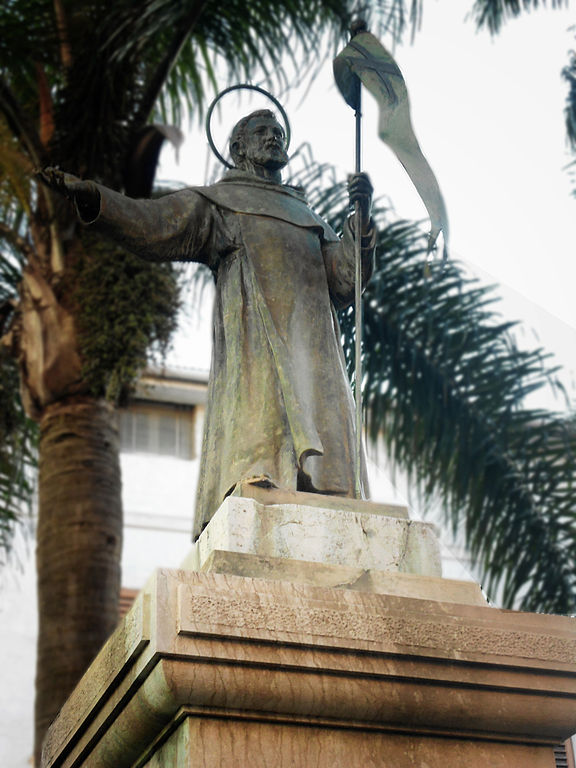
Statue of the saint in the Town named after him.
He received a rich and extensive inheritance on his parents’ death and used it on works of mercy, such as founding a hospital for the poor.
Agnellus became increasingly popular among the inhabitants of Naples, so much so that they called upon him to save the City during the Lombard invasion of 581. Accepting the challenge, he appeared carrying a Banner of the Cross to defend the City.
He finally left the City to escape his popularity, moving to Monte Sant’Angelo, then the village of Guarcino, where he remained for seven years and where there is a Shrine dedicated to him.
Agnellus later returned to Naples to become an Augustinian Monk and then a Priest at the Monastery of Gaudiosus of Naples, where he finally became Abbot and where he died aged 61.
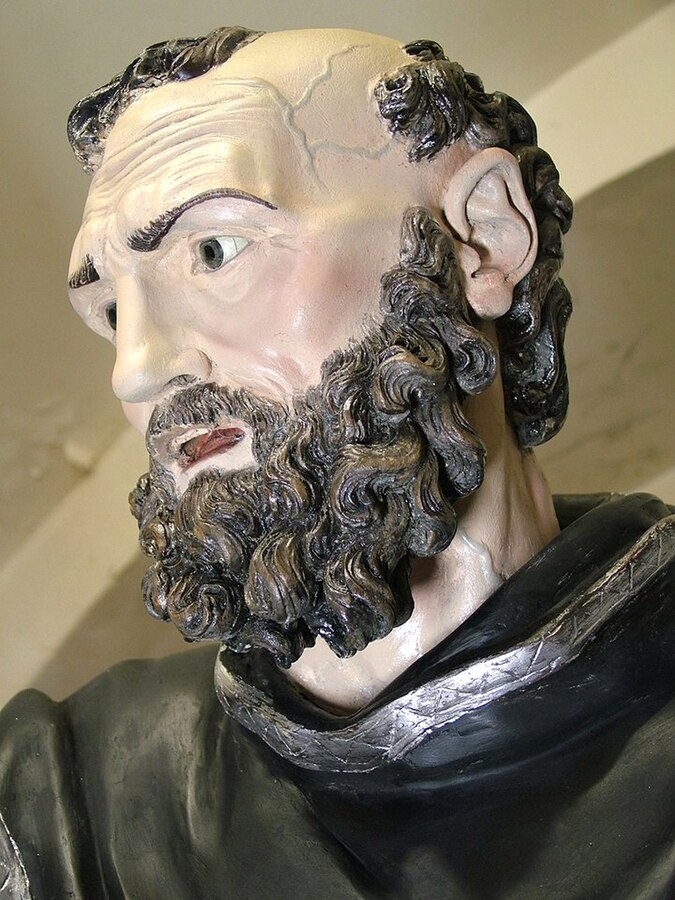
The 17th Century Reliquary bust containing the jaw and throat attributed to Agnellus, is kept in the Cathedral of Naples, inside the Chapel of San Gennaro. He is Co-Patron of the City of Naples where, according to tradition, he was buried in the Church of Sant’Agnello Maggiore in Caponapoli.
Since the 15th Century, Agnellus was counted among the Patrons of Naples and is also the Patron of Guarcino, a City in Lazio in the Province of Frosinone. He also enjoys particular veneration in Lucca, where, since the 12th Century, an Altar was dedicated to him. This City disputed with Naples regarding the authenticity of its Relics and celebrates the Feast on 18 May.
There are many Churches dedicated to St Agnellus in the region.
*NOTE: The City of Naples has more than 50 official Patron Saints, although its principal Patron is Saint Januarius (Died c305). St Januarius is a Martyr of the Great Persecution which ended with Diocletian’s retirement in 305. The second in terms of importance, is St Aspren (Died in the 2nd Century) – the first Bishop of Naples. St Aspren’s Episcopate is stated as lasting twenty-three years.
St Agnellus in Glory – Gloria di Sant’Agnello, Santuario di Sant’Agnello Abate – Roccarainola
Bl Buenaventura Bonaccorsi St Folcuino of Therouanne Bl Joan Lambertini St John Pan y Agua (Bread-and-Water) Bl John Discalceat St Justus of Spain St Matronianus of Milan St Pompeius of Pavia
St Viator of Bergamo Bl William de Rovira
Martyrs of Alexandria – 4 Saints: A group of Egyptian Christians Martyred together in the persecutions of Decius – Arsenius, Dioscurus, Heron and Isidore. They were burned to death in 250 at Alexandria, Egypt.
Martyrs of Apollonia – 7 Saints: Martyred in the persecutions of Decius. The only surviving details are three names – Callinicus, Leucio and Tirso. The Martyrdom took place at Apollonia, Bithynia (in modern Turkey).
Martyrs of Ashkelon – 3 Saints: Several pilgrims from Egypt to Cilicia (in modern Turkey) who planned to minister to fellow Christians suffering in the persecutions of Emperor Maximinus. They were arrested, torture, mutilated and then imprisoned in Ashkelon. Some were ordered to forced labour in the mines but we have the names of three who were Martyred by order of Governor Firmilian – Ares, Elijah and Promo. They were burned at the stake or beheaded at the gates of Ashkelon c 308.
Martyrs of Hayle – 2+ Saints: Several Christians, including a brother and sister, who were Martyred together by pagans. The only other information to survive are the names of the two siblings – Fingar and Phiala. 5th Century at Hayle, Cornwall, England.
Martyrs of Syria – 3 Saints: Three Christians who were Martyred together. Known to Saint John Chrysostom who preached on their Feast Day and left us the only details we have – their names – Drusus, Theodore and Zosimus. The date and precise location of their Martyrdom is unknown but it was in Syria, possibly in Antioch.
Saint of the Day – 13 December – Saint Ursicinus of Cahors (Died c595) Bishop, Monk, Royal Court Official and Adviser. Died in c595, og natural causes, after around 15 years as the Bishop of Cahors. Also known as – Urci, Urcisse, Urcsicinus, Ursicin, Ursicino.
Ursicinus was the Chancellor of Queen Ultragotha, the wife of Childebert I, King of Paris. He was chosen by Maurilius, then-Bishop of Cahors, to be his successor, making him the ninth Bishop of Cahors.
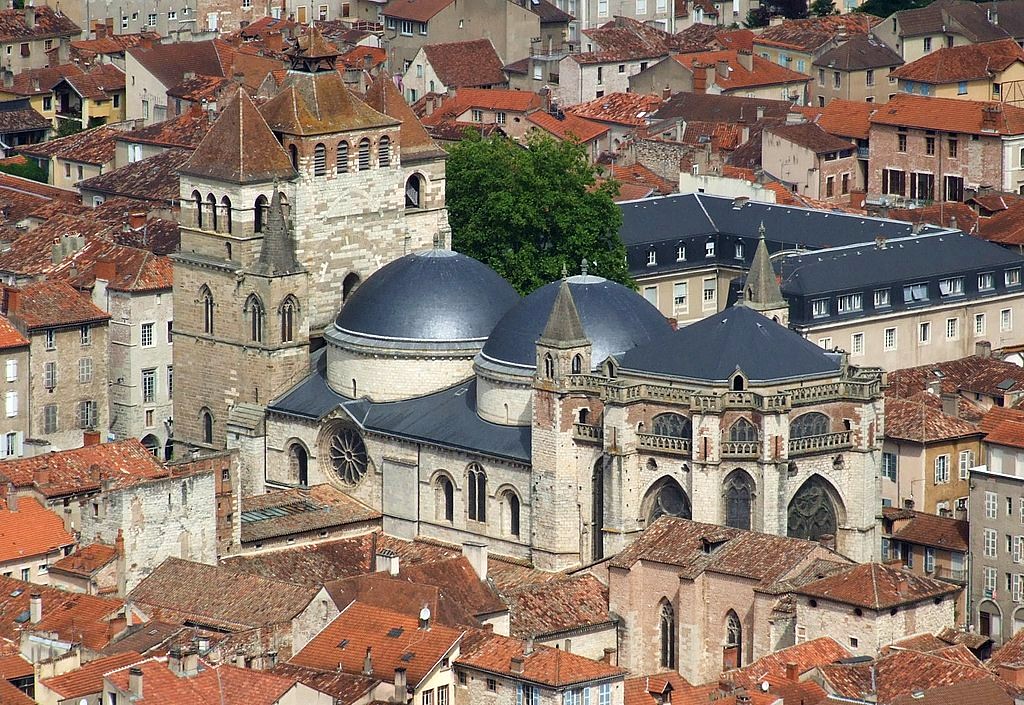
Cahors surrounding its Cathedral
The little information which has come to us about this Saint is reported by Saint Gregory of Tours in his “Historia Eccl. Francorum”, where he states that around the year 580, Maurilius, among the many Ecclesiastics who aspired to succeed him, chose Ursicinus, who was already a Secular and Spiritual Adviser to Queen Ultrogota, widow of King Childebert I.
Around 584, Innocent, Bishop of Rodez, accused Ursicinus of having usurped many Churches in his Diocese, so much so that the Bishop of Cahors had to defend himself in a Council meeting in Clermont, presided over by Bishop Sulpicius I, of Bouges. In that assembly, the accusations were judged false and Ursicinus was able to recover those Parishes usurped by the Bishop of Rodez and which had never belonged to his Diocese but had always been part of the Cahors See..
But then, Ursicinus was sentenced to a three-year penance at another Council. In fact, in the Autumn of 585, on the indication of King Gontranno, a Council was convened in Macon, where those Bishops who had welcomed the rebel Gondowald, a conspirator against the Merovingian dynasty, were discussed. Ursicinus publicly confessed to having committed this “crime” and the Bishop’s sentence of condemnation was explicit – he had to do penance for three years, abstaining from shaving his hair or beard, abstaining from wine and meat, not celebrating Mass, not ordaining Priests, nor consecrating Churches and not proceeding with any blessings.
Following this condemnation, the traces of Bishop Ursicinus are lost, but we do find him present at the Fourth Council of Auvergne in 590. After this citation we only know that his successor, Eusebius, was present at the Council of Paris in 614.
With regards to the cult of the sanctity of our Ursicinus – in a 14th Century Psalter, we find the first evidence of his cult and his feast which was celebrated on 13 December appears.
Many Churches in the Diocese were dedicated to him. Among these, one in Cahors, one in Tréjouls and one in Cantal. There are also two villages named after him, one in the canton of Puymirol and the other in that of Salvagnac. In the Diocese of Cahors the feast and remembrance of Saint Ursicinus, Bishop, is still celebrated today.
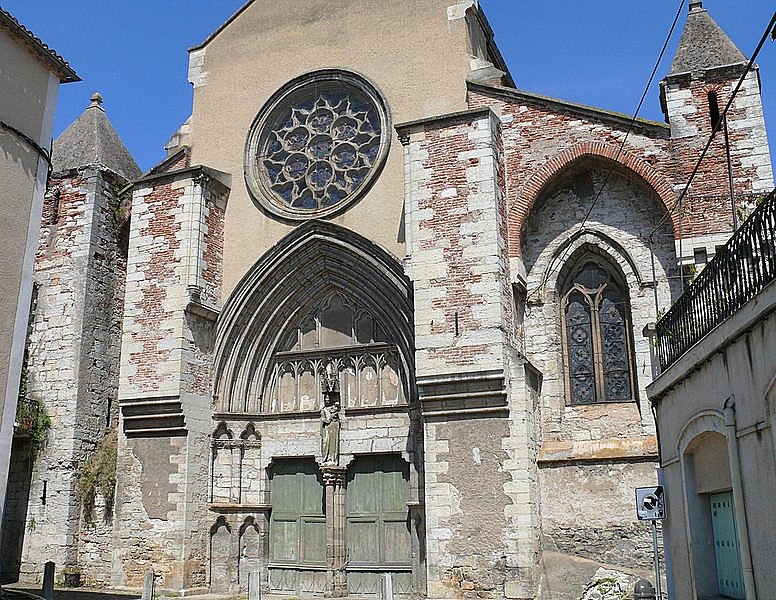
St Ursicinus Church in Cahors which was built in around the 7th Century
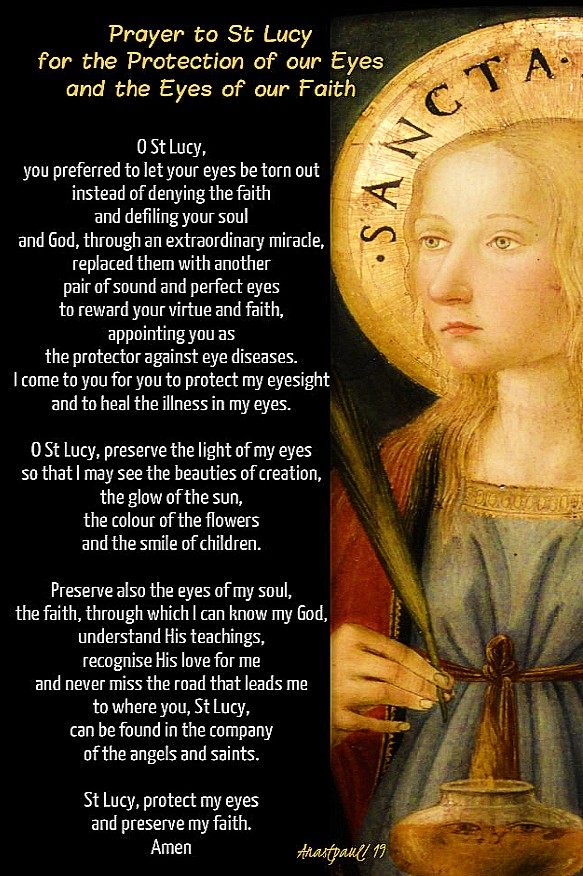
St Lucy (of Syracuse) – St Lucy/Lucia of Syracuse (c283-304) Virgin and Martyr Patron of the blind, eye disorders, martyrs, Perugia, Italy, Malta; epidemics; salesmen, Syracuse, Italy, throat infections, writers, against fire, against poverty, against spiritual blindness, peasants, penitent prostitutes, poor people, sick children, authors, cutlers, farmers, glass blowers, glass makers, glaziers, labourers, lawyer, maid servants, notaries, ophthalmologists, opticians, porters, printers, saddler, sailors, salesmen, seamstresses, stained glass workers, tailors, upholsterers, weavers and 10 further towns and cities. St Lucy’s Life and Death: https://anastpaul.wordpress.com/2017/12/13/saint-of-the-day-13-december-st-lucy-c-283-304/
Prayer to St Lucy
O St Lucy, you preferred to let your eyes be torn out instead of denying the faith and defiling your soul and God, through an extraordinary miracle, replaced them with another pair of sound and perfect eyes to reward your virtue and faith, appointing you as the protector against eye diseases. I come to you for you to protect my eyesight and to heal the illness in my eyes.
O St Lucy, preserve the light of my eyes so that I may see the beauties of creation, the glow of the sun, the colour of the flowers and the smile of children.
Preserve also the eyes of my soul, the faith, through which I can know my God, understand His teachings, recognise His love for me and never miss the road that leads me to where you, St Lucy, can be found in the company of the angels and saints. St Lucy, protect my eyes and preserve my faith.
St Lucy, “Bringer of Light” Pray for those with eye ailments, Pray for us all!
Blessed Antonio Grassi Cong. Orat. (1592 – 1671) Priest of the Oratorians of St Philip Neri, Confessor, Tertiary of the Order of St Francis, Spiritual advisor, Counsellor, Mediator, Miracle Worker, Apostle of the poor and the sick. He was Beatified on 30 September 1900 by Pope Leo XIII. Blessed Antonio’s biography: https://anastpaul.com/2018/12/13/saint-of-the-day-13-december-blessed-antonio-grassi-cong-orat-1592-1671/
St Aristone St Arsenius of Latro St Aubert of Arras Bl Bartholomew of Tuscany St Edburgh of Lyminge St Einhildis of Hohenburg Bl Elizabeth Rose St Jodocus
Blessed Giovanni Marinoni CR (1490-1562) Priest of the Theatines of St Cajetan (1480-1547) (The Congregation of the Clerics Regular of the Divine Providence), renowned Preacher and spiritual director. Patron of Preachers. He was Beatified on 5 December 1764, by a Bull of Pope Clement XIII, who also granted an Office in his honour, to his Order, to be celebrated on 13 December. Biography: https://anastpaul.com/2019/12/13/saint-of-the-day-blessed-giovanni-marinoni-cr-1490-1562/
St Martino de Pomar St Roswinda St Tassio of Bavaria St Ursicinus of Cahors (Died c595) Bishop St Wifred
Blessed Mercedarian Knights – 7 Beati: A group of Mercedarian Knights who fought the enemies of the Catholic faith in the first Century of the Order. Blessed Bernardo de Podio Blessed Giacomo de Copons Blessed Giovanni de Bruquera Blessed Guglielmo de Sa Blessed Pietro Boguer Blessed Pietro Ricart Blessed Raimondo de Frexa
Martyrs of Sebaste – 5 Saints: A group of Christians Martyred together in the persecutions of Diocletian. We know little more than their names – Auxentius, Eustratius, Eugene, Mardarius and Orestes. They were martyred in c 302 at Sebaste, Armenia (in modern Turkey) and their relics are enshrined at the church of Saint Apollinaris in Rome, Italy.
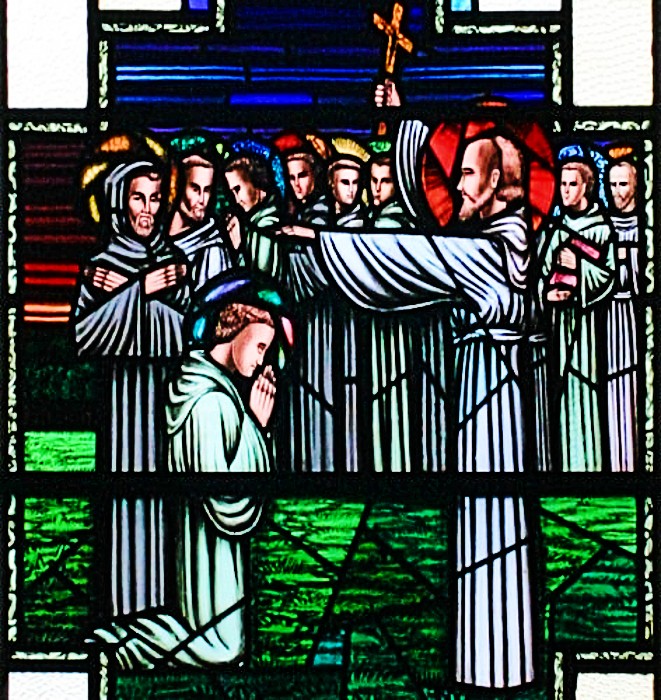
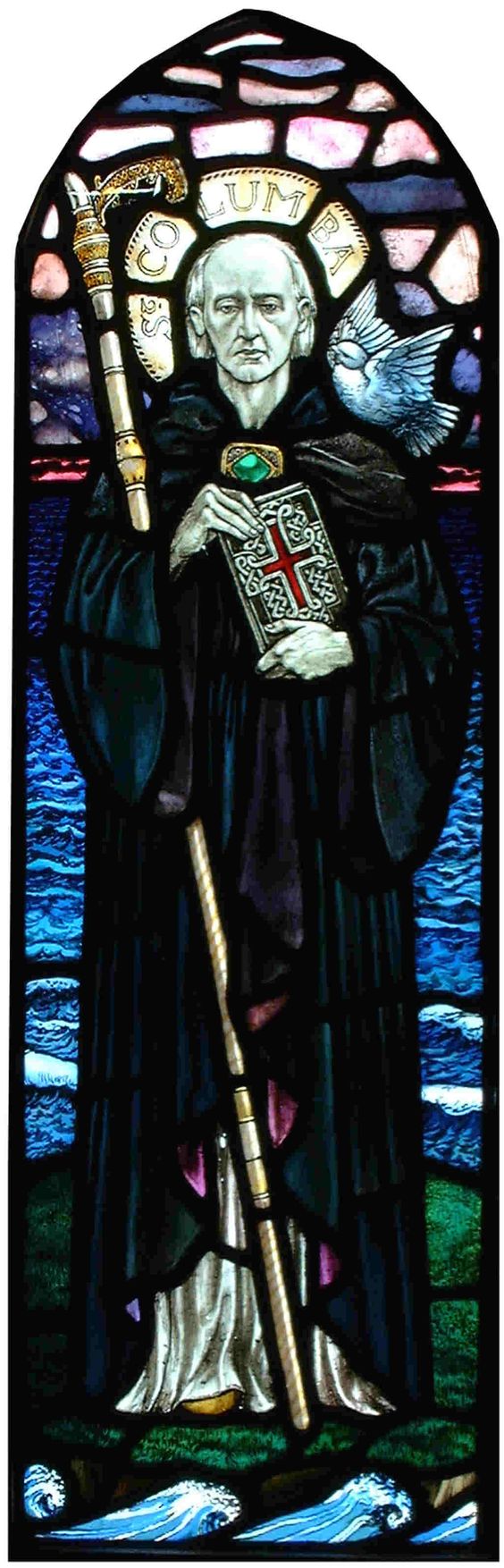
Saint of the Day – 12 December – Saint Columba of Terryglass (Died 552) Abbot, Founder of Monasteries, Miracle-worker. One of the Twelve Apostles of Ireland, pupil and disciple of St Finnian of Clonard (470–549) known as the “Tutor of the Saints of Ireland.” Born in Leinster, Ireland and died on 13 December 552 of the Plague at his Monastery in Terryglass, where he was also buried. Also known as – Colum mac Crimthainn, Colum moccu Loigse, Columba of Tirdaglas, Columba of Tyrdagla. Additional Memorial – 6 January as one of the Twelve Apostles of Ireland.
Columba was the son of Ninnidh, a descendant of Crinthainn, King of Leinster. In his childhood, he learned his Psalms and Hymns from an old holy man named Colman Cule, who lived near Clonenagh and founded the Church of Cluain Cain.
As he grew into adulthood, he studied with St Finnian of Clonard and then, Columba resolved to go to Rome and bring back Relics of Saints Peter and Paul. On his return, he visited Tours and brought from there, the staff of St Martin of Tours. He also visited England and preached with some success to the Anglo-Saxons.
Returning home, he remained at Clonenagh for around a year, before crossing Slieve Bloom and founding a Church near Lough Derg.
Around 520, Columba was prompted by an Angel, to relocate to the Island of Inis Cealtra and establish a Monastery there. , He remained a long time at this Monastery. According to one report, when one of his Monks died suddenly on the shore opposite the northern part of the Island, Columba ordered the Monks to go and say to the dead man, “Columba bids thee arise.” The man then arose and returned with them to the Island.
Columba founded the celebrated Monastery of Tirdaglas (Tir-da-glasí), or Terryglass in 548. St Fintan of Clonenagh (c526-603) received his religious formation at Terryglass and was deeply influenced by the penitential practices and the severity of the Rule at the Terryglass Monastery finally becoming the Abbot
When Saint Finnian was in extremis, suffering from the Plague, he sent for Columba to administer Holy Viaticum. Columba himself died of the Plague on 13 December 552 and was buried within the precincts of his Monastery at Terryglass.
There are some fifteen more Saints of Ireland, bearing the name of our St Columba all being mentioned in the Martyrology of Gorman.
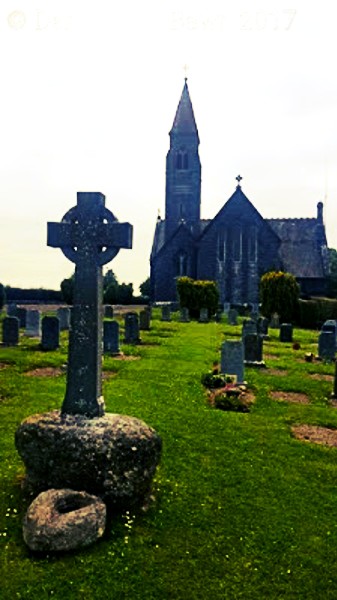
Terryglass Parish Church with a Cross, being part of a Shrine to St Columba in the foreground
St Colman of Clonard St Columba of Terryglass (Died 552) Abbot One of the Twelve Apostles of Ireland. Bl Conrad of Offida St Corentius of Quimper St Cormac St Cury St Donatus the Martyr St Edburga of Thanet
Martyrs of Alexandria – 6 Saints: A group of six Christians Martyred for their faith during the persecutions of Decius. We know little more than five of their names – Alexander, Ammonaria, Dionysia, Epimachus and Mercuria. They were burned to death c 250 in Alexandria, Egypt.
Martyrs of Trier – 4 Saints and Companions: “At Treves (Trier), the holy Martyrs, Maxentius, Constantius, Crescentius, Justinus and their companions, who suffered inthe persecutions of Diocletian, under the Governor Rictiovarus.”
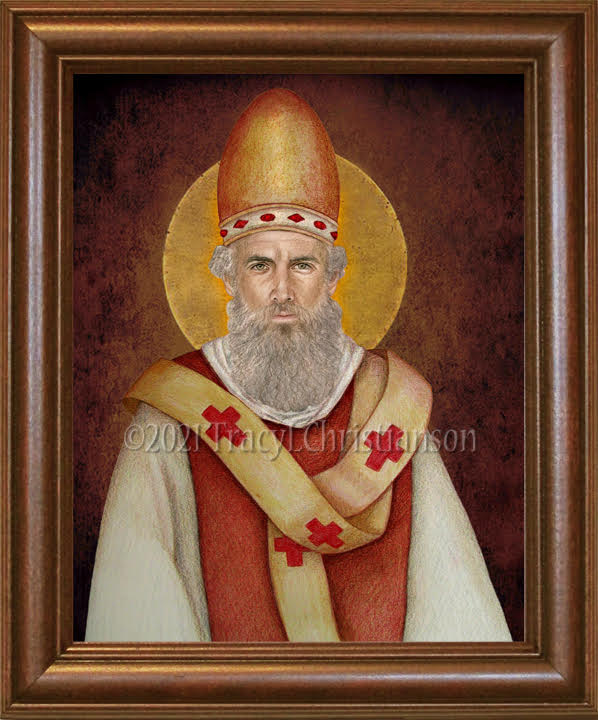
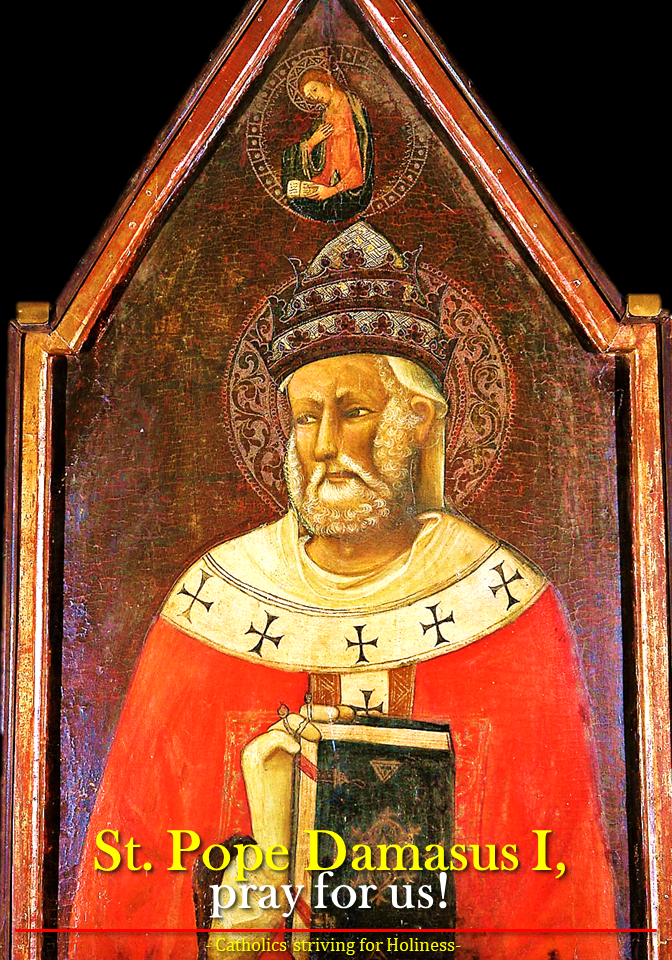
Saint of the Day – 11 December – Saint Damasus I (c305-384) Bishop of Rome from 366-his death on 11 December 384. Pope Damasus was a Poet, a Confessor and Defender of Orthodoxy and a Reformer of morals amongst many other qualities. Born in c306 in Rome, Italy of Spanish descendancy and died in 384 in the same City of natural causes. He was initially buried in the Mark and Marcellianus Catacombs in Rome and in …. his bones were re-interred in the Church of San Lorenzo in Damaso, Rome. Patronage – of Archeologists.
The Roman Martyrology reads: “St Rome, St Damasus, Pope and Confessor, who condemned the heresiarch Apollinaris and restored to his See, Peter, Bishop of Alexandria who had been driven from it. He also discovered the bodies of many holy Martyrs and wrote verses in their honour.”
Today is the Feast of Pope St Damasus I, who was elected in October of 366, at roughly the age of 60 and died on this day in 384. He served as Deacon at the Church of St Lawrence Outside-the-Walls. He was elected to the Papacy in the midst of controversy, since a small group of the Clergy supported another candidate, Ursicinus; the followers of this schismatic seized control of the Liberian Basilica (now St Mary Major) and could only be repressed with violence and the exile of the anti-Pope.
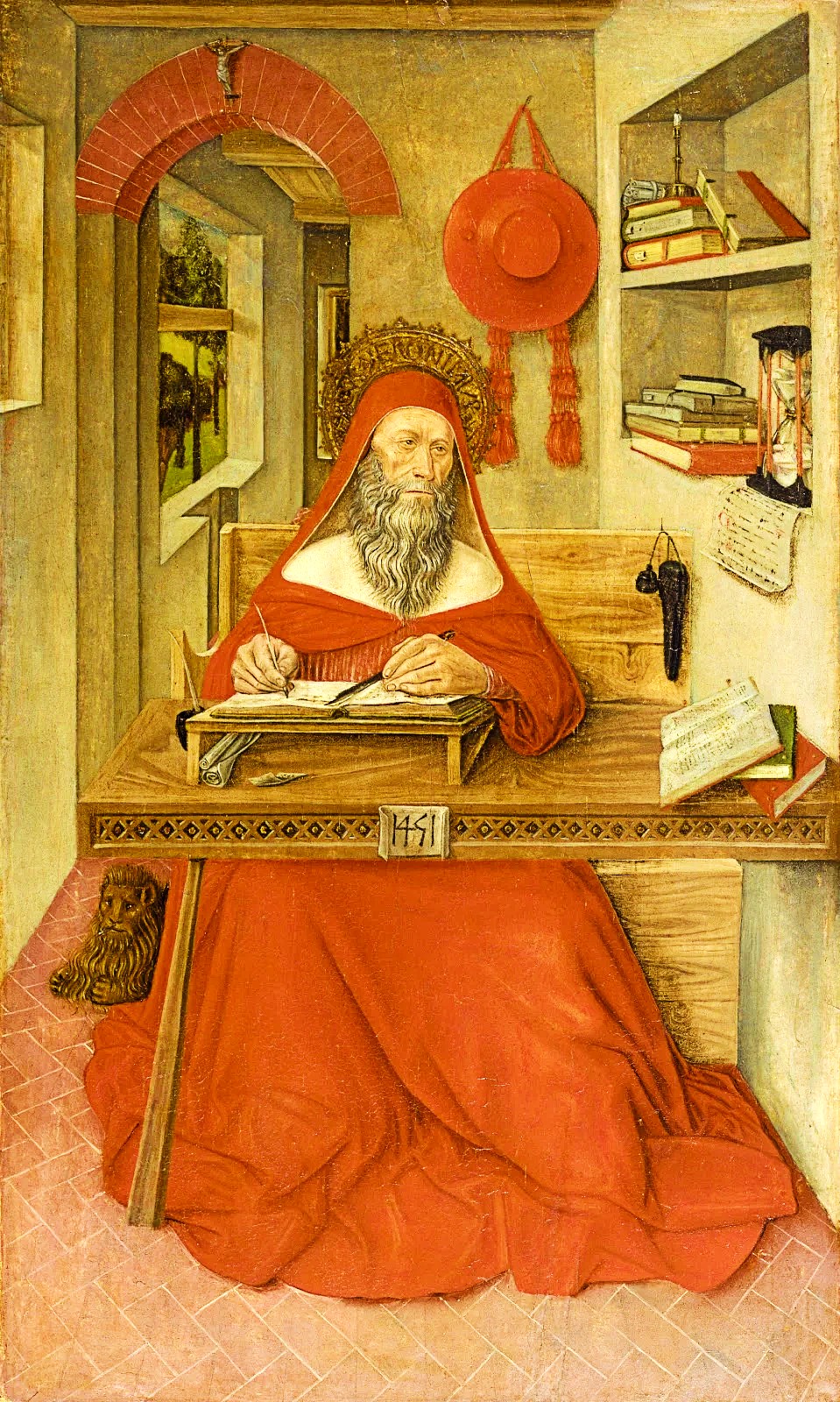
St Damasus was a strenuous Defender of the Orthodox Christian faith, holding Synods in Rome to condemn the heresies of Macedonius and Apollinaris, sending legates to the First Council of Constantinople and excommunicating the Arian bishop of Milan, Auxentius, who was later succeeded by St Ambrose. It was at his (St Ambrose’) behest that St Jerome revised the Latin text of the Gospels and it is in a letter to him that St Jerome famously describes the need for such a revision by saying, “There are as many versions (of the Sacred Scriptures) as there are copies.” Pope Damasus then befriended St Jerome and employed him as his Secretary, a position he held for many years. They worked together on exegetical matters but, perhaps Damasus’ most important contribution to the Church, was that he commissioned Jerome to revise the existing Latin translation of the Gospels based on the original Greek. This was to become the Sacred Scripture translation which was later called “The Vulgate.” St Jerome is traditionally represented as a Cardinal because of the time he spent in Rome as Damasus’ Secretary.
Our Saint is today, venerated too, as the Patron Saint of Archeologists and, particularly those who work in the field of early Christian archeology, because of his great encouragement of devotion to the Roman Martyrs and his efforts to preserve their memories. He built a Church in honour of St Lawrence within his own house in the centre of Rome, now known as “San Lorenzo in Damaso” and also a Shrine at the Catacomb of St Sebastian, where the bodies of Ss Peter and Paul were once kept and the Baptistery of the ancient Basilica of St Peter. Within many of the Roman Catacombs, he had the areas around the Martyrs’ graves restored to make them more accessible to pilgrims ..
As a young man, Damasus had worked in the Papal Archives (the first reference to a Papal Archive), where he read about the lives and deaths of the Martyrs. Now that the persecutions were over, he worked tirelessly to promote the Martyr cult. He encouraged pilgrimages to the Catacombs and re-opened them, after they had been closed by Emperor Diocletian. He restored them, built staircases and skylights, all with the aim of demonstrating that the real splendour of Rome was not pagan but Christian.
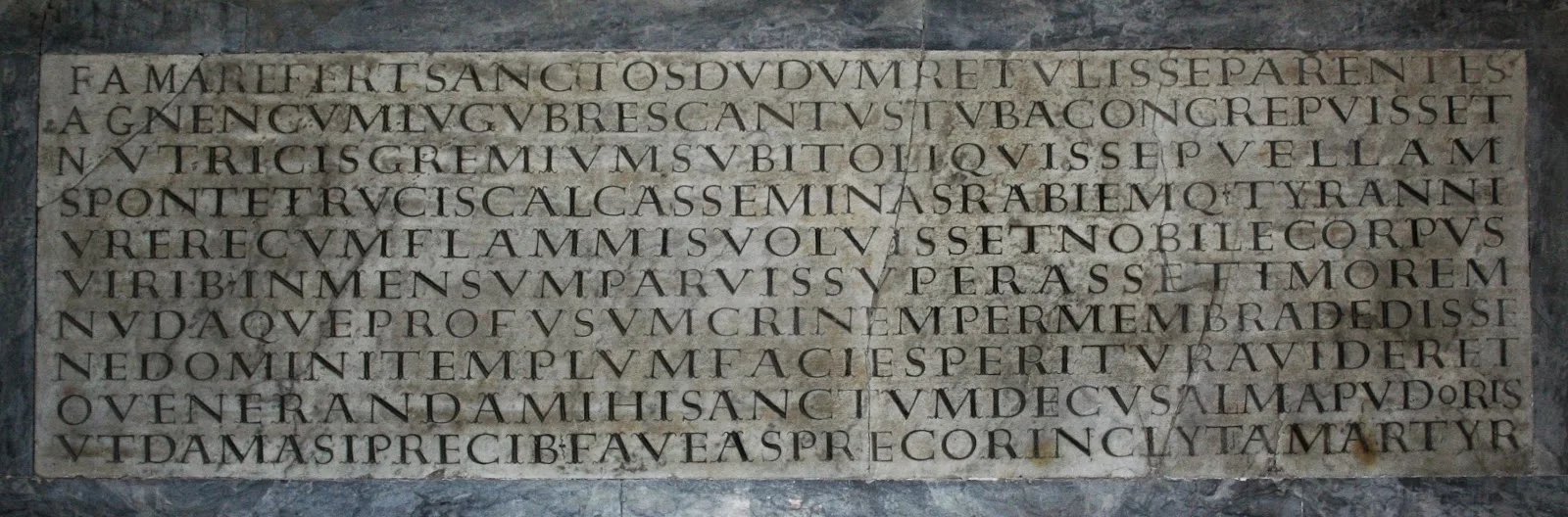
Damasus also decorated the graves of many Martyrs with Epitaphs, composed by himself and carved into marble, with a special kind of lettering invented for the purpose. This Font, in which the bars of the letters are alternately thick and thin, with curved serifs at the corners, is known as either “Philocalian” lettering from its inventor, a friend of his named Furius Dionysius Filocalus, or “Damasian” after himself. We have a total of about 70 of these Inscriptions; about 40 of the originals are preserved, while the rest are recorded in various sources, although the stones themselves have been lost.
One of the best preserved of these is at the Church of St Agnes Outside-the-Walls on the Via Nomentana, the High Altar of which rests over her Gravesite. As seen in the photograph below, only the upper left corner is missing.
After recounting the Martyrdom and burial of St Agnes (including the story that when her clothes were torn off, her hair miraculously grew to cover her exposed body), the final line asks the “renowned Martyr to favour the prayers of Damasus.” These Inscriptions are particularly valuable witnesses to the authenticity of various Martyrs and the Liturgical devotion paid to them, since we know that Pope Damasus took care to inform himself about the Martyrdoms as best he could. At the grave of Ss Peter and Marcellinus, who were killed in the persecution of Diocletian in 304, he placed an Epitaph in which he gives the story of their deaths and then notes that he learned the details when he was a boy, by interviewing the Martyrs’ own executioner!Being himself born in the very heart of the persecution and. therefore. a young Cleric in Rome in the early years of the peace of the Church, he must also have known many who had actually, themselves, witnessed the Martyrdoms of Sts Agnes, John and Paul and Sebastian, just to name a few.
Pope Damasus’ relationship with the Eastern Church was unhappy. There, St Basil the Great (329-379) fought to restore orthodoxy on the basis of a refined new explanation of the Nicene Doctrine. Like the West, in general,, Damasus did not understand the new development and when Antioch was divided between rival Bishops, the Pope stubbornly clung to the support of Paulinus, the unrepresentative leader of a reactionary group, instead of Meletius, on whom the Eastern hope of unity rested . When Meletius died in 381, Damasus refused to enter into Church communion with his successor, Flavian. In desperation, Basilios described the Pope as improbably arrogant, who did nothing to contribute to the constructive détente between East and West that was now underway.
The second Ecumenical Council took place in Constantinople from May to July 381. Originally, it was an Eastern Council, where only about 150 Eastern Bishops participated. Pope Damasus was not present but when the Council decisions were later presented to him, he approved them and the Council was thus considered Ecumenical. Here the Doctrine of the Trinity was established for good and the Council adopted a powerful declaration of the deity of the Holy Ghost, directed against the Macedonians and the Pneumatomas (who rejected the deity of the Holy Ghost). The Council also condemned the Arians and Semi-Arians.
It was Pope Damasus I who introduced the Doxology Gloria Patri (Glory be to the Father) at the end of the Hymns. He was also the first to take over the title of Pontifex Maximus (High Priest) from the Roman Emperors. He also authorised the Ambrosian Rite and introduced the use of the Hebrew term “Hallelujah” (Latin: Alleluia ).
Damasus died on 11 December 384 in Rome and was first interred in the Catacomb of Mark and Marcellianus, near the Catacomb of Domitilla, on the Via Ardeatina, in a burial place he had prepared for his mother and sister, Irene. Later, his Relics were transferred to the Church of St Lorenzo in Damaso, which he had built himself. There, after being forgotten for a long time, they were found again in 1645. His Feast has been celebrated on 11 December since the 7th Century.
Bl Hugolinus Magalotti Blessed Jean Laurens O. Praem.(1548-1613)
Blessed Jerome Ranuzzi OSM (c 1410-c 1468) “The Angel of Good Counsel,” “The Blessed Bachelor,” Priest and Friar of the Order of the Servants of Mary, the Servites, Theologian, Adviser both spiritual and secular, renowned for his learning and scholarship, Penitent and Hermit with a great love of solitude and silence. His body is incorrupt and is still available for veneration in St Mary of the Servites, Urbano, Italy. His cult was confirmed on 1 April 1775 by Pope Pius VI with the title of Blessed. The Roman Martyrology states: “In Sant’Angelo in Vado always in the Marches, Blessed Girolamo, Priest of the Order of the Servants of Mary, who in solitude and silence reached the wisdom of holiness.” Biography: https://anastpaul.com/2021/12/11/saint-of-the-day-11-december-blessed-jerome-ranuzzi-osm-c-1410-c-1468-the-angel-of-good-counsel/
St Pens St Sabinus of Piacenza Blessed Severin Ott O.Praem. (1627-1708) Priest and Friar of the Norbertines or Premonstratensians.
Martyrs of Saint Aux-Bois – 3 Saints: Two Christian missionaries and one of their local defenders who faith in the persecutions of governor Rictiovarus – Fuscian, Gentian and Victoricus. They were beheaded in 287 in Saint Aux-Bois, Gaul (in modern France).
Martyrs of Rome – 3 Saints: Three Christians murdered in the persecutions of Diocletian for giving aid to Christian prisoners – Pontian, Practextatus and Trason. They were imperial Roman citizens. They were martyred in c 303 in Rome, Italy.
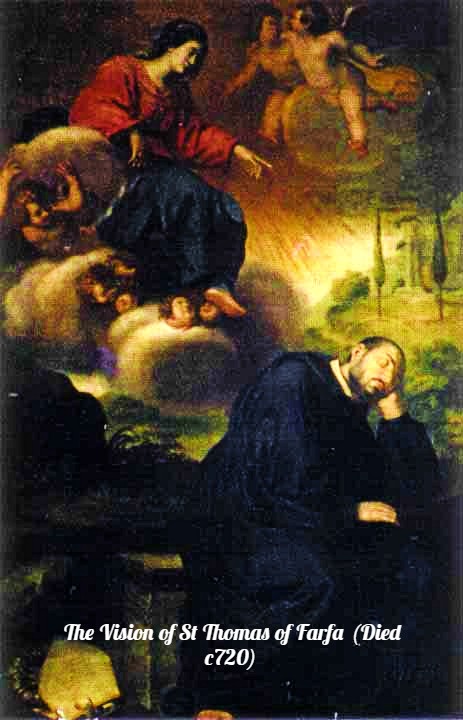
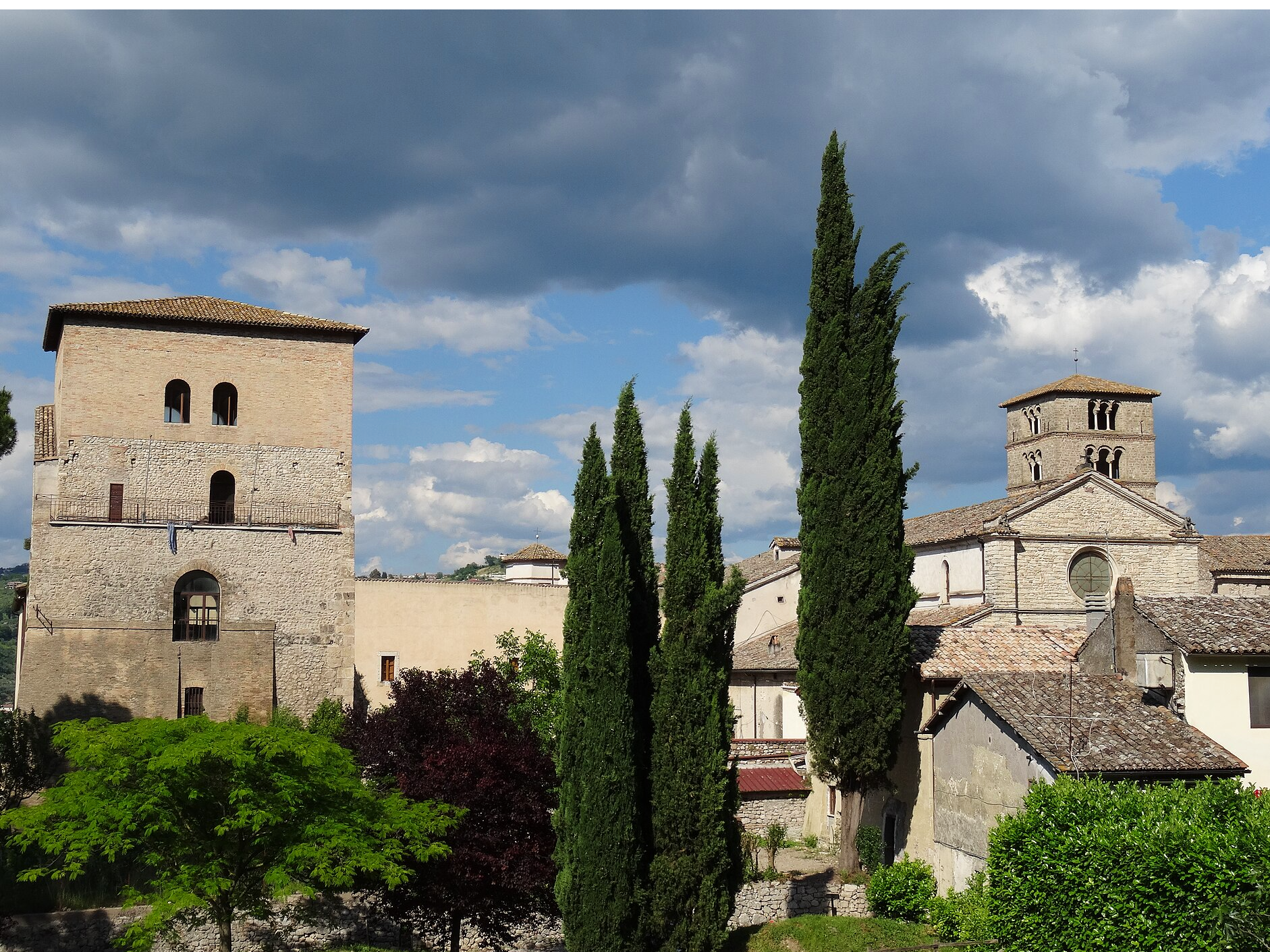
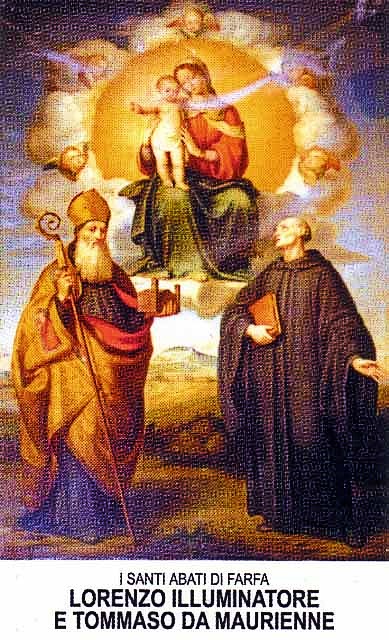
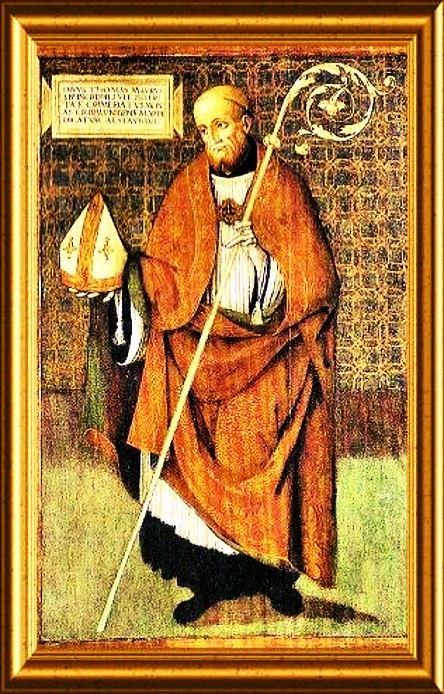
Saint of the Day – 10 December – Saint Thomas of Farfa (Died c720) Abbot, Hermit, Pilgrim, expert Restorer and Abbot extraordinaire! Born at Maurienne, Savoy, France and died in c720 of natural causes at his famous Monastery of Farfa. Also known as – Thomas of Maurienne.
“This is the place which I promised you”
Words addressed by the Madonna to Thomas, the Restorer of Farfa Monastery, to indicate to him the ruins of the destroyed Abbey which were, later rebuilt by the Saint – it is the place of the current Monastery.
Thomas is believed to have hailed from Maurienne, where he was a Monk before he travelled to the Holy Land. According to the 12th Century Chronicon Farfense, by the renowned Monk Historian Gregory of Catino, Thomas was on a pilgrimage when, in the Church of the Holy Sepulchre in Jerusalem, he had a vision of the Virgin Mary, who told him to go to Italy and re-establish an abandoned Abbey which had been founded in her name.
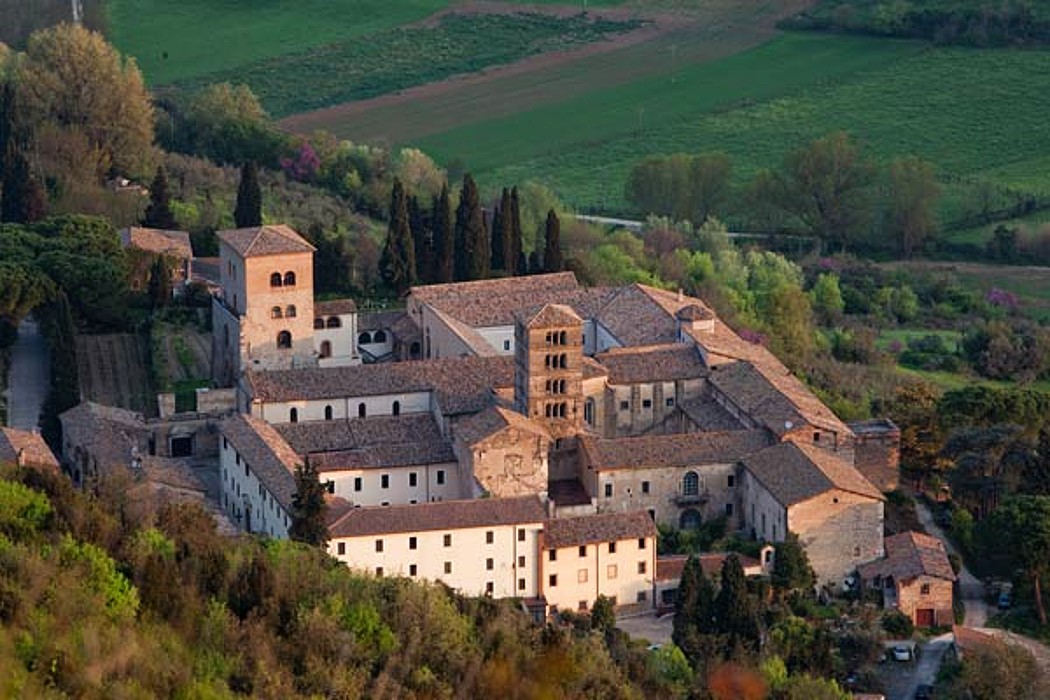
Together with a small group of disciples and by the gracious assistance of Divine guidance, Thomas found the ruins of an Abbey in a deserted region in the Sabina Hills in central Italy.
The foundation of Farfa p dates to around 560-570 by St Laurence of Syria (Lorenzo Siro), who arrived from Syria together with his sister Susannah, to carry out an apostolate in Sabina, where he was elected as the Bishop but he himself soon left this position to become a Monk and dedicate himself to the foundation of this Monastery which had attracted him by the position of 3 beautiful tall Cypresses, representing the glorious Blessed Trinity..
At the time of the death of San Lorenzo, which occurred towards the end of the 6th Century, the Monastery suffered complete devastation and abandonment, due to the arrival of the Lombards but, our Saint Thomas managed to find the remains of the place dedicated to the Blessed Mother – being still marked by the same three cypresses.
Finally the ancient Church, now in ruins, was given new life in 680, under the protection of the Duke of Spoleto, Faroaldo II, who offered land and buildings.
It is precisely thanks to Saint Thomas that a period of profound recovery began in Farfa. In addition to the reclamation of the land, the Abbey patrimony expanded so considerably, to the point that Popes, Dukes, Kings and Governors granted great exemptions and privileges, so that Farfa quickly became an economically and politically powerful entity.
During Thomas’s 40+ year Abbacy, three Monks from Farfa established the Monastery of San Vincenzo al Volturno. According to San Vincenzo’s Vita, it was Thomas who directed the Monks to “the oratory of Christ’s Martyr Vincent [where] on each side of the river is a thick forest (which serves as a habitation for wild beasts and a hiding-place for robbers.”
Also during Thomas’ tenure, the Abbey received a privilege in 705, from Pope John VII which recognised that the Abbey was founded by “Bishop Laurence.” This Papal privilege included a confirmation of the Abbey’s first grant of land, from Duke Faroald II of Spoleto. Through his donations Faroald claimed to have “restored that place through Abbot Thomas and your [Papal] recommendation.” Thomas was ordered to put the Papal privilege on display.
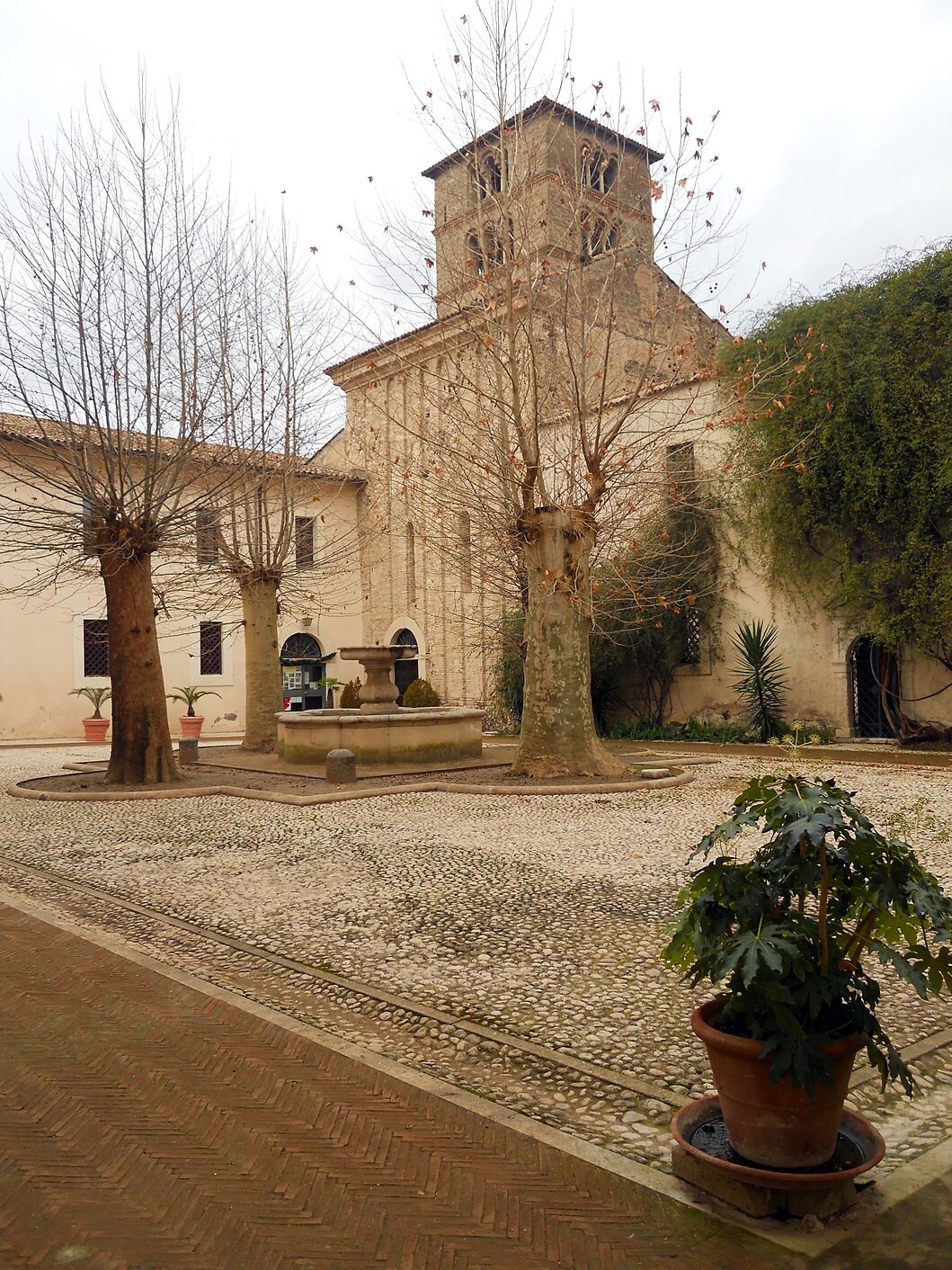
The working Farfa today
Saint Thomas died in c720, after forty years of regency of the Farfa Monastery and was buried right there. According to the 11th Century Martyrology of the Abbey, Thomas was buried at the 30th Milestone, as later was Abbot Hilderic (Died 857). Thomas had been succeeded by Aunepert around 720.
St Pope Melchiades (Died 314) Bishop of Rome from 2 July 311- 19 or 11 January 314)
St Abundius St Albert of Sassovivo St Angelina of Serbia Blessed Brian Lacey (Died 1591) Lay Martyr BL Bruno of Rommersdorf St Caesarius of Epidamnus St Carpophorus St Deusdedit of Brescia (Died c700) Bishop
St Edmund Gennings St Emérico Martín Rubio St Florentius of Carracedo St Fulgentius of Afflighem St Gemellus of Ancyra St Gonzalo Viñes Masip Bl Guglielmo de Carraria St Guitmarus St Hildemar of Beauvais Bl Jerome Ranuzzi Bl John Mason
St Julia of Merida St Lucerius St Maurus of Rome St Mercury of Lentini St Polydore Plasden Bl Sebastian Montanol Bl Sidney Hodgson St Sindulf of Vienne St Swithun Wells St Thomas of Farfa (Died c720) Abbot, Hermit Bl Thomas Somers St Valeria
Martyrs of Alexandria – 3 Saints: A group of Christians murdered for their faith in the persecutions of Galerius Maximian – c 312. The only details that have survived are three of the names – Eugraphus, Hermogenes and Mennas.
Saint of the Day – 9 December – Saint Proculus of Verona (Died c320) Bishop of Verona, Italy. Died in c320 in Verona of natural causes thus our Saint Proculus was a survivor of the violent persecutions of Diocletian. Also known as – Procolo.
The Roman Martyrology says today: “In Verona, during the persecution of Diocletian, St Proculus, Bishop, who was buffeted, scourged with rods and driven out of the City. Being at length, restored to his Church, he rested in peace.”
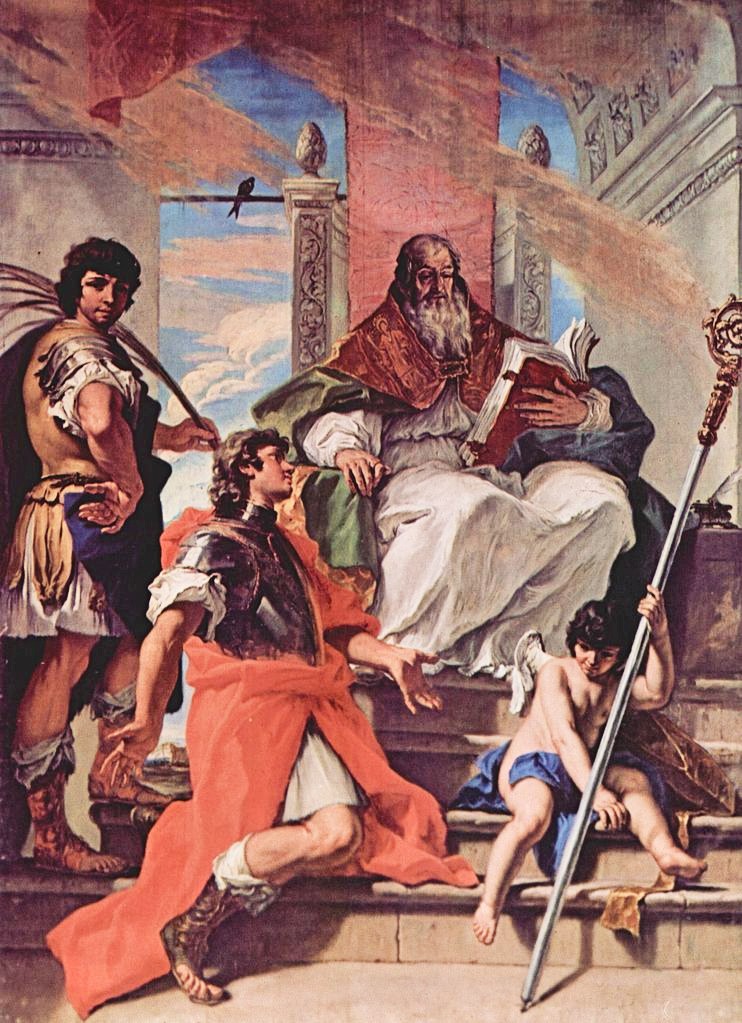
The Martyrs, Saints Firmus and Rusticus of Verona with an Angel and the seated Saint Proculu by Sebastiano Ricci.
During the Diocletian persecution, Proculus, the Bishop of Verona went to the prison to encourage Sts Firmus and Rusticus. He was bound and brought with them before Anulinus, the Consul. However, as Proculus was elderly, Anulinus did not consider him worth his interest and had him beaten, released and driven from the City. He lived to survive the persecutions and eventually returned to resume leadership of his flock but died not too long after.
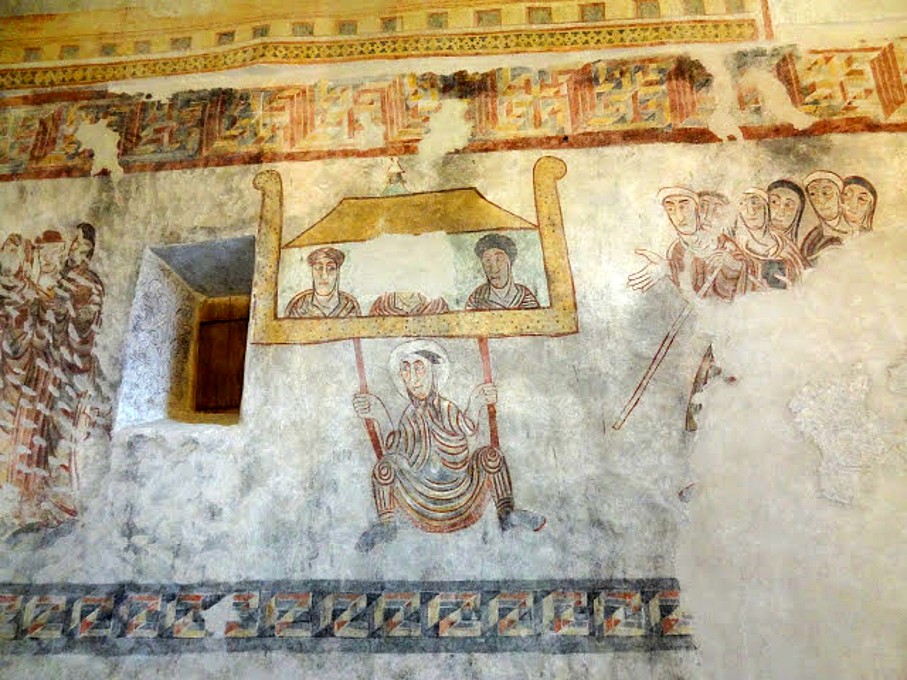
St Proculus from a 9th Century Fresco
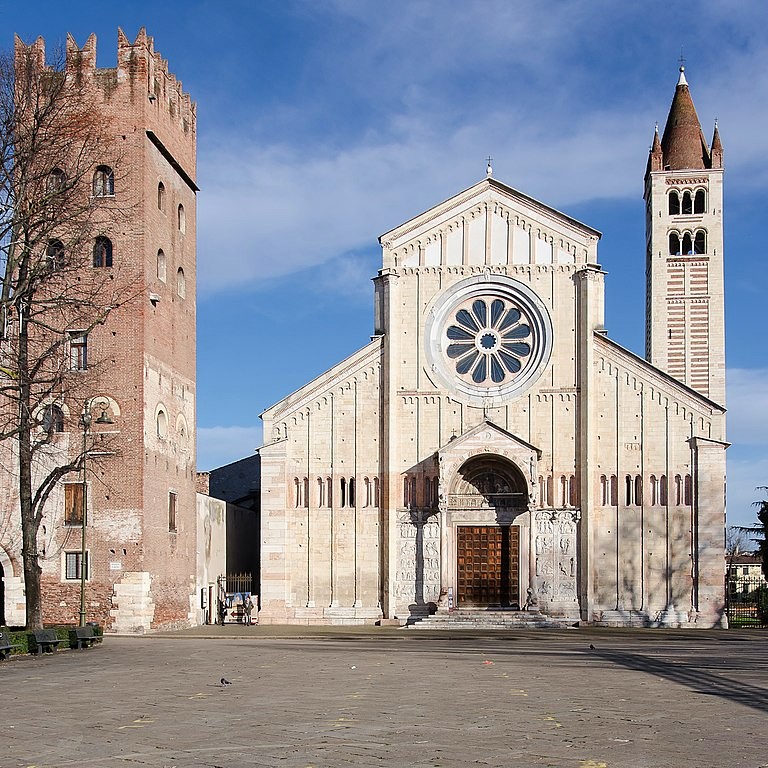
Attached to the Basilica of St Zeno in Verona, is the Chapel of St Proculus housing his Relics. It dates from the 6th or 7th Century. It is first mentioned, however, only in 845.
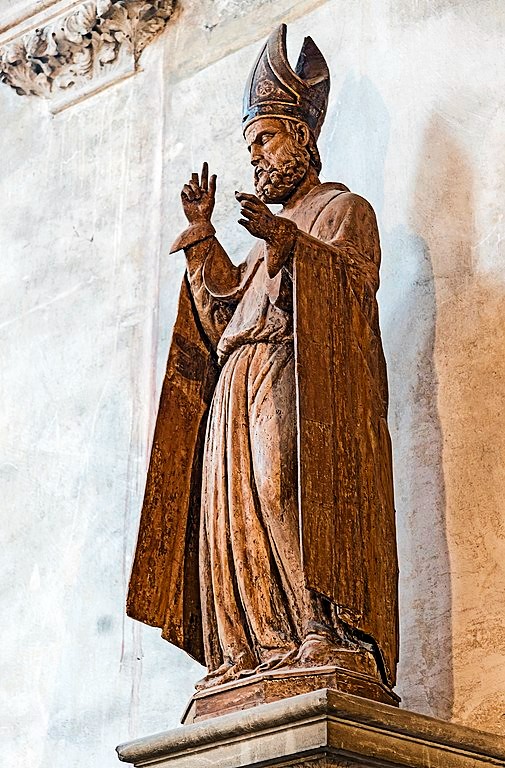
In San Zaccaria’s Church in Venice their stands a life-size wooden statue “St Proculus of Verona” (1451) – see above. In 1704, Sebastiano Ricci executed a large Canvas of St Proculus for Bergamo Cathedral.
St Michaela Andrusikiewicz St Nectarius of Auvergne
St Peter Fourier CRSA (1565-1640) “The Good Father of Mattaincourt,” Priest, Founder, Reformer, Confessor, Ascetic, Theologian, Teacher, Preacher, Apostle of Prayer, Penance and Charity, Marian devotee. Together with the Blessed Alix Le Clerc, in 1597, Fourier founded the Congregation of Notre Dame of Canonesses Regular of St Augustine, who were committed to the free education of children, taking a fourth vow to that goal. St Peter was Beatified on 20 January 1730 by Pope Benedict XIII and Canonised on 27 May 1897 by Pope Leo XIII. Biography: https://anastpaul.com/2018/12/09/saint-of-the-day-9-december-st-peter-fourier-c-r-s-a-1565-1640/
Blessed Mercedarian Fathers – (10 Beati): The memorial of ten Mercedarian Friars who were especially celebrated for their holiness: Arnaldo de Querol • Berengario Pic • Bernardo de Collotorto • Domenico de Ripparia • Giovanni de Mora • Guglielmo Pagesi • Lorenzo da Lorca • Pietro Serra • Raimondo Binezes • Sancio de Vaillo
Martyrs of North Africa – (24 Saints): Twenty-four Christians murdered together in North Africa for their faith. The only details to survive are four of their names – Bassian, Peter, Primitivus and Successus.
Martyrs of Samosata – (7 Saints): Seven Martyrs crucified in 297 in Samosata (an area of modern Turkey) for refusing to perform a pagan rite in celebration of the victory of Emperor Maximian over the Persians. They are – Abibus, Hipparchus, James, Lollian, Paragnus, Philotheus and Romanus. They were crucified in 297 in Samosata (an area in modern Turkey).
Saint of the Day – 8 December – Saint Eucharius of Trier (Died 3rd Century) the First Bishop of Trier, Germany, Date and place of birth are unknown but Eucharius is believed to have been of Italian origin. Patronages – against plague and epidemics, of Trier, Germany. Also known as Eucherius, Euchario. Additional Memorial in Limburg, Germany of the 3 Bishops sent by St Peter, occurs on 11 September. –
The Roman Martyrology reads: “At Treves, St Eucharius, disciple of the blessed Apostle Peter and the first Bishop of that City.”
Saint Eucharius is the First Bishop of Trier. This name opens the list of Bishops of the oldest See in Germany. The shepherds of that Diocese have been documented since the first half of the 3rd Century.
The first Bishops, St Eucherius and St Valerius are attested by an ancient inscription from the end of the 5th Century, while the first historically documented Bishops are St Maternius who became the Archbishop of Cologne and St Agrizius mentioned in 314, who participated in the Council of Arles.
The Trier Seal
The Holy Tunic is preserved in the Trier Cathedral which was worn by Jesus before His Crucifixion. The Tunic was discovered by Saint Helena and was donated by Bishop Agrizius. The first mention of the Sacred Relic dates to 1196, when Archbishop John Consecrated the Altar where it was kept.
We know very little about our Saint today but it is assumed that he governed the Diocese at the end of the 3rd Century especially because, Saint Eucharius was a disciple of Saint Peter, who sent him with Valerius and Maternus to evangelise Gaul.
It is said that the Bishop resurrected his companion Maternus from his sarcophagus, using the “pastoral staff of Saint Peter.” To confirm the existence of this legend, there is an ancient seal from Trier which shows the Saint receiving the keys to the City from Saint Peter. Another tradition about St Eucharius of Trier tells us that he destroyed a statue of Venus and placed the current Cross in its place which remains to this day.
The cult of this holy Bishop has been proven since 455 and is widespread in western Germany, Switzerland and many other surrounding regions. An image of him is found carved in relief in the Porta Nuova in Trier, where we see him holding the model of the City placed under his protection.
Sculptures of the first three Bishops: Saint Eucharius, Saint Valerius and Saint Maternus
Furthermore, there is a 16th Century Statue of him in Balg and a painting preserved in the Unterlinden Museum in Coilmar. In 457, Saint Cyril, the Thirteenth Bishop of Trier, had two Sarcophagi built, one for Saint Valerius and the other for Saint Eucharius. The Sarcophagi are located in the Benedictine Abbey of St Matthias in Trier which had originally been named for him until some Relics of St Matthias were obtained there.
The first Martyrologies which bear his name, are those of Rabano Mauro (856) and Notkero (912).
There are various celebrations in memory of the Bishop. In Limburg the feast of the Bishops Eucharius, Valerius and Maternus occurs on 11 September. In the Roman Martyrology his Feast day was set on 8 December.
The Tombs of St Eucharius and St Valerius at the Abbey of St Matthias
St Anastasia of Pomerania St Anthusa of Africa St Antonio García Fernández St Casari of Villeneuve-lès-Avignon St Eucharius of Trier (Died 3rd Century) Bishop
St Gunthildis of Ohrdruf Bl Johanna of Cáceres St Macarius of Alexandria St Patapius St Rafael Román Donaire
St Romaric (Died 653) Married French noble layman, Abbot, Founder of the renowned Remiremont double Monastery in north-eastern France. Died in 653 of natural causes. He was Canonised on 3 December 1049 by Pope Leo IX. The Roman Martyrology reads today: “In the Monastery of Luxeuil, St Romericus, Abbot, who left the highest station at the Court of King Theodebert, renounced the world and surpassed all others in the observance of monastic discipline.” About St Romaric: https://anastpaul.com/2022/12/08/saint-of-the-day-8-december-saint-romaric-died-653-abbot/
















_Heilige_Begga_als_beschermvrouw_van_begijnen_en_beggaarden_Begijnhofkerk_Mechelen_19-08-2023.jpg)
You must be logged in to post a comment.