The Feast of All Saints of the Order of Preachers: “Fountain of all holiness, You stirred up in our holy brothers and sisters an extraordinary love of truth, conformity to Christ Crucified and a thirst for the salvation of souls: may we imitate them in offering You thanksgiving on account of the way of life they gave us.” — From the Intercessions at Lauds for the Feast of All Saints of the Order of Preachers. HERE: https://anastpaul.com/2019/11/07/thought-for-the-day-7-november-feast-of-all-dominican-saints/
St Achillas (Died 313) Bishop of Alexandria, Egypt. St Amarand St Amaranthus
Blessed Anthony Baldinucci SJ (1665-1717) Priest of the Society of Jesus, Preacher, Writer and Missionary. Fr Baldinucci was Beatified by Pope Leo XIII on 25 March 1893. Biography here: tps://anastpaul.wordpress.com/2017/11/07/saint-of-the-day-blessed-anthony-baldinucci-s-j-1665-1717/
St Athenodorus of Neo-Caesarea St Auctus of Amphipolis St Baud of Tours St Blinlivet St Congar
St Gebetrude of Remiremont St Herculanus of Perugia St Hesychius of Mytilene St Hieron of Mytilene Bl Hyacinth Castañeda Puchasons St Lazarus the Stylite Bl Lucia of Settefonti St Nicander of Mytilene Bl Peter Ou St Prosdocimus of Padua St Prosdocimus of Rieti St Raverranus of Séez St Rufus of Metz St Taurion of Amphipolis St Thessalonica of Amphipolis St Tremorus of Brittany
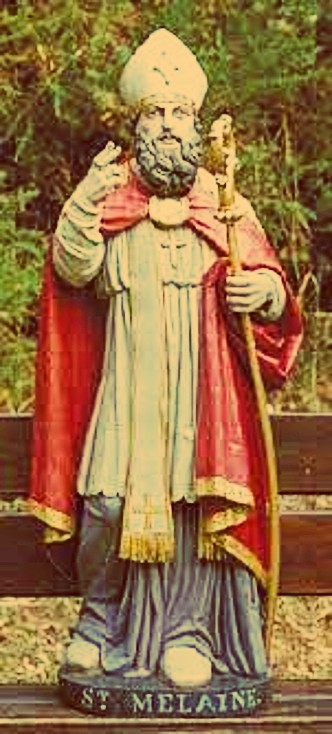
Saint of the Day – 6 November – Saint Melaine of Rennes (Died c535) Bishop of Rennes in Brittany, France, Confessor, previously a Monk and Abbot, Royal Advisor, Miracle-worker. Born in Placet, Brittany and died in c535 of natural causes. Also known as – “Apostle of France” • Melan, Melanie, Melanio, Melanius, Melen, Mellion, Mullion. Additional Memorials – 6 January and 11 October – both dates seeming to be in regard to the translation of his Relics. Patronages – Mullion, Cornwall and Saint Mellyan, Cornwall, England.
The Roman Martyrology reds: “At Rennes, in France, St Melanius, Bishop and Confessor, who displayed innumerable virtues and with his thoughts ever fixed on Heaven, passed from the world in glory.”
Melaine grew up at Plaz in Brain, near Redon in Brittany, northwest modern France. He was a pious child, often being punished for spending too long at his prayers. He became a Monk and then Abbot. He was nominated the successor to Bishop St Amand of Rennes. Traditions state that on the death of Amand, he was compelled, by the local population, to become the next Bishop, accepting the role with great reluctance.
It is also recorded that Melaine performed many miracles and put an end to heathen practices in his Diocese. During his rule, King Clovis I began his reign and Melaine became his trusted advisor. He opposed immigration from Britain and attended the First Council of Orléans in 511.
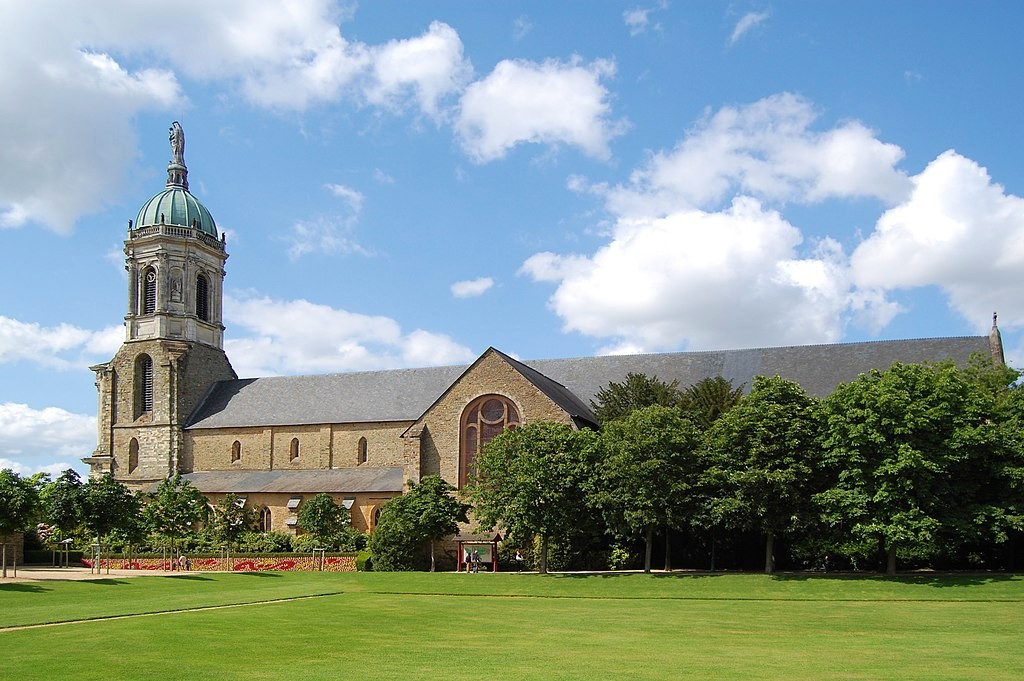
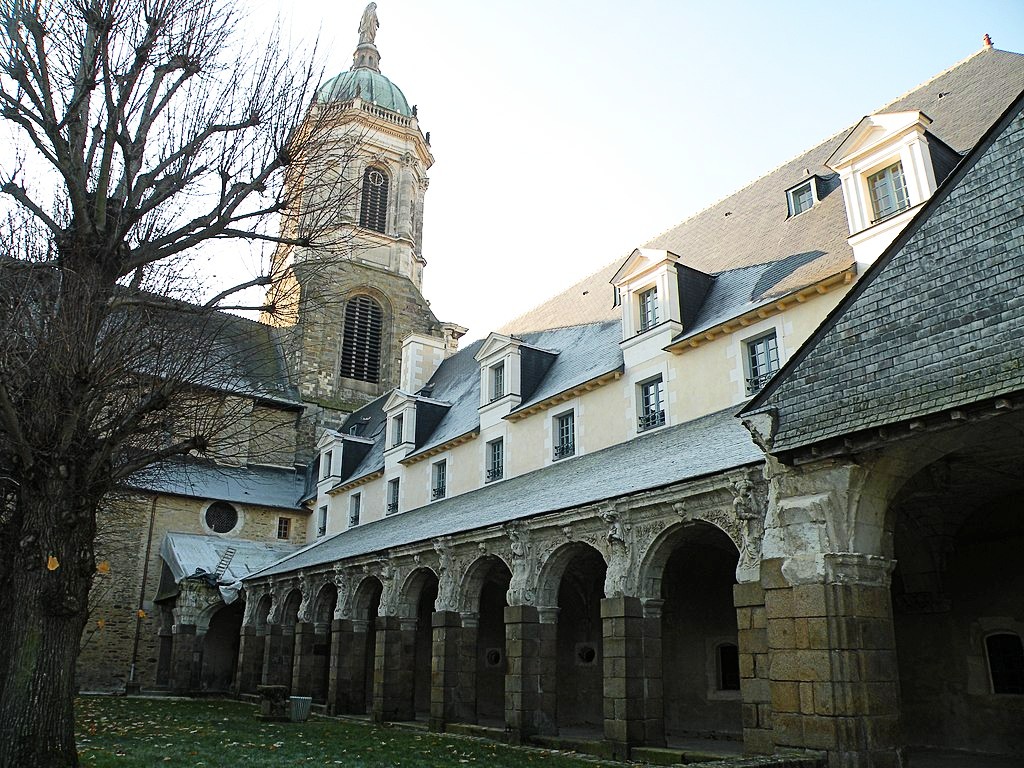
Melaine died at Rennes in c535 and was buried in the Abbey Church of Notre-Dame-en-Saint-Melaine, see below, which was built around his tomb.
In Wales, his Feast is celebrated locally on 10 October rather than 11 October at St Mellons, in modern-day Cardiff, although there is serious doubt over whether Melaine is the same Saint ‘Mellonius’ said to have been born there.
In Cornwall, he is the patron of the villages of St Mellion and Mullion, where there is a tradition of his visit.
The Abbey of St Melaine and the back of the Church
St Demetrian of Cyprus St Edwen of Northumbria St Efflam of Brittany St Emilian of Faenza St Erlafrid of Hirschau St Felix of Fondi St Felix of Genoa St Felix of Thynissa St Illtyd St Israel of Limoges
St Leonard of Reresby Bl Leonianus of Autun St Melaine of Rennes (Died c535) Bishop Confessor St Paul of Constantinople St Pinnock St Protasius of Lausanne St Severus of Barcelona Bl Simon of Aulne St Stephen of Apt St Theobald of Dorat St Valentine of Genoa
Martyrs of Antioch – 10 Saints: Ten Christians murdered together by Arabs after their seizure of Antioch, Syria. No names or other details about them have come down to us. 637 in Antioch, Syria.
Martyrs of Gaza – 9 Saints: A group of Christian soldiers who were captured by Saracens invading the area of Gaza in Palestine. When the men continued to profess their Christianity, they were executed. We know the names of some of the Martyrs – Himerius, John (2 of them), Kallinikos (Callinoco), Paul, Peter, Stephen and Theodore (2 of them). They were beheaded in Gaza, Palestine.
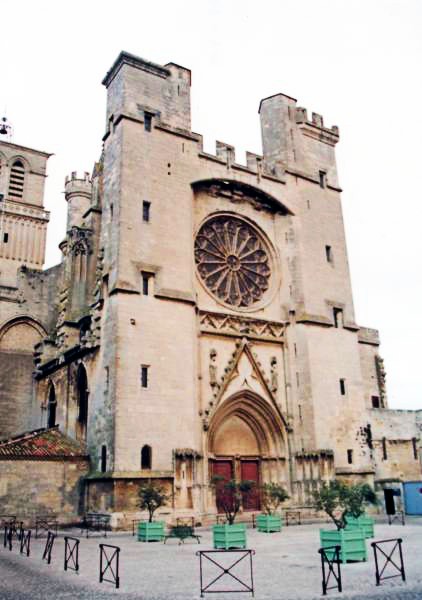
Saint of the Day – 5 November – Saint Gerald of Béziers OSA (1070–1123) Bishop of Béziers from 1121 until the day of his death, Canon Regular of St Augustine and the 2nd Prior of the community at Cassan Abbey, Apostle of the poor and sick, Gerald built a Hospital and restored and extended the Abbey, Miracle-worker. Born around 1070 in Puissalicon and died on 5 November 1123 in Béziers in France of natural causes. Patronages – Puissalicon and the town of Saint-Guiraud and of children suffering from eye diseases. Also known as – Gerald of Puissalicon, Guiraud, Geraud, Geraldo.
Gerald was born in Puissalicon in 1070. Several acts and charters bear the signature “Guiraud of Puissalicon.” This proves that he was from the noble family of thePuissalicons. Tradition reports that his mother carried him for only 7 months and then, when he was Baptised, the Baptismal’s water began to boil as if some red-hot iron had been planted within it. This miracle was considered as forerunner of the holiness of the child.
Before 1085, being only around 15 years old, he joined the Canons Regular of St Augustine, where , in around 1094, he was Ordained a Deacon. Seven years later, in 1101, aged 31, Gerald was Ordained to the Priesthood.
Between 4 May 1105 and 6 August 1106, he was elected Prior of the Monastery in Cassan near Roujan , which, as Prior, he restored to its former glory. He built many new buildings, including a Hospital. On 5 October 1115, a new Church outside the Cassan Monastery was Consecrated.
Gerald was known for his piety, sincerity and simplicity, He devoted much of his time to the poor and sick and in 1121 he accepted the Bishopric of the Diocese of Béziers. He held this office for only around 2 years before Gerald died at the age of approximately 53 as a result of illness.
He was buried, as requested, next to Saint. Aphrodisius, first bishop of Béziers. His Relics were transferred on 11 November 1259 to the no longer existing Monastery of the Poor Clares . This building was a place of worship until the French Revolution, during which the Relics of our Saint were destroyed. His miraculous Silver Amethyst Ring was stored in Reujan and was stolen in 1980 by unknown perpetrators. The ring had great supernatural powers, especially for children with eye diseases.
The French Town of Saint-Guiraud is named after him .
The 23rd Sunday after Pentecost Within the Octave of All Saints
Feast of the Holy Relics: https://anastpaul.com/2022/11/05/feast-of-the-holy-relics-5-november-2/ AND: About: https://anastpaul.wordpress.com/2017/11/05/feast-of-the-holy-relics-5-november/ Protestantism pretends to regard the veneration which the Church pays to the Relics of the Saints, as a sin and contends that this pious practice is a remnant of paganism. The Council of Trent, on the contrary, has decided that the bodies of the Martyrs and other Saints, who were living members of Jesus Christ and temples of the Holy Ghost, are to be honoured by the faithful. This decision was based upon the established usage of the earliest days of the Church and upon the teaching of the Fathers and of the Councils. The Council orders, however, that all abuse of this devotion is to be careffully avoided and forbids any Relics to be exposed which have not been approved by the Bishops and, these Prelates are recommended, to instruct the people faithfully, in the teaching of the Church on this subject. While we regret, then, the errors of the impious and of heretics, let us profit by the advantages which we gain, by hearkening to the voice of the Church!
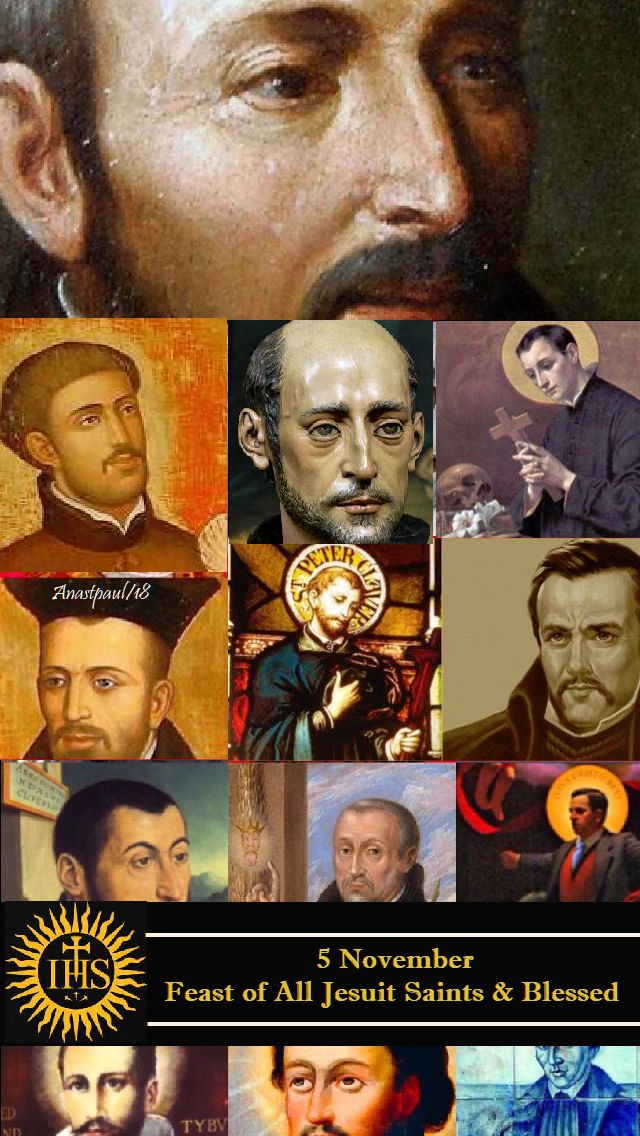
All Saints and Blesseds of the Society of Jesus: The Society of Jesus, commonly known as the Jesuits, was Founded in 1534 by Saint Ignatius Loyola (1491-1556) at Montmartre, Paris, France. A body of clerics regular organised for Apostolic work, following a religious rule and relying on alms for their support. It was the chief instrument of the Catholic Reformation. Pope Paul III approved the new rule in 1540 and Ignatius was elected the first general of the order in 1541. The constitutions, drafted by him and based on his Spiritual Exercises were adopted in 1558. It was the first order which enjoined by its constitutions devotion to the cause of education. The ministry of the Society consists chiefly in preaching. teaching catechism. administering the sacraments. conducting missions in parishes, taking care of parishes. organising pious confraternities, teaching in schools of every grade, writing books, pamphlets, periodical articles, going on foreign missions and special missions when ordered by the current Holy Father, to whom they take a vow of total obedience. Our current Holy Father, Pope Francis is a Jesuit and has jokingly wondered aloud who is boss of whom in his Order. The general resides at Rome, Italy and has a council of assistants. The motto of the Society is Ad Majorem Dei Gloriam (For the greater glory of God). All Jesuit Saints and Blesseds: https://anastpaul.com/2018/11/05/feast-of-all-the-saints-and-blesseds-of-the-society-of-jesus/
St Canonica St Comasia St Dominator of Brescia St Elizabeth St Domninus the Physician St Epistemis St Eusebius of Terracina St Felix of Terracina St Fibitius St Galation St Gerald of Béziers OSA (1070–1123) Bishop Bl Gomidas Keumurjian Bl Gregory Lakota St Guetnoco St Hermenegild St Idda St Juan Antoni Burró Mas St Juan Duarte Martín St Kanten St Kea St Laetus of Orleans St Magnus of Milan St Mamete St Marco of Troia St Spinulus of Moyen-Moûtier St Sylvanus of Syria St Zachary
Martyrs of Caesarea Maritima – 4 Saints: Four young Christian men who were Martyred together is the persecutions of Maximian – Aussenzius, Philotheus, Timothy and Theotimus. They were martyred in the arena at Caesarea Maritima, Palestine.
Saint of the Day – 4 November – St Pierius (Died c309) Priest, Confessor, Co-Director with Achilas of the Catechetical School of Alexandria in Egypt,Scholar, renowned Preacher and Exegetical Writer.. He died in Rome in c309 of natural causes which St Jerome assures us of. Also known as – Pierio, “The Younger Origen”
The Roman Martyrology reads today: “The birthday of St Pierius, Priest of Alexandria, who, being deeply versed in the Sacred Scriptures, leading a very pure life and freed from all impediments in order to apply to Christian philosophy, taught the people with great renown and published various treatise, under the Emperors Carus and Diocletian, when St Theonas governed the Church of Alexandria. After the persecutions, he spent the remainder of his life at Rome, where he rested in peace in the Lord.”
Pierius was Ordained a Priest in the late 3rd Century by St Theonas, the Bishop of Alexandria. Thereafter, Pierius served as the Director of the Catechetical School of Alexandria.
He was a gifted preacher and excelled in the fields of Scripture studies and philosophy. Pierius lived austerely and temperately, practising the Evangelical Counsel of poverty.
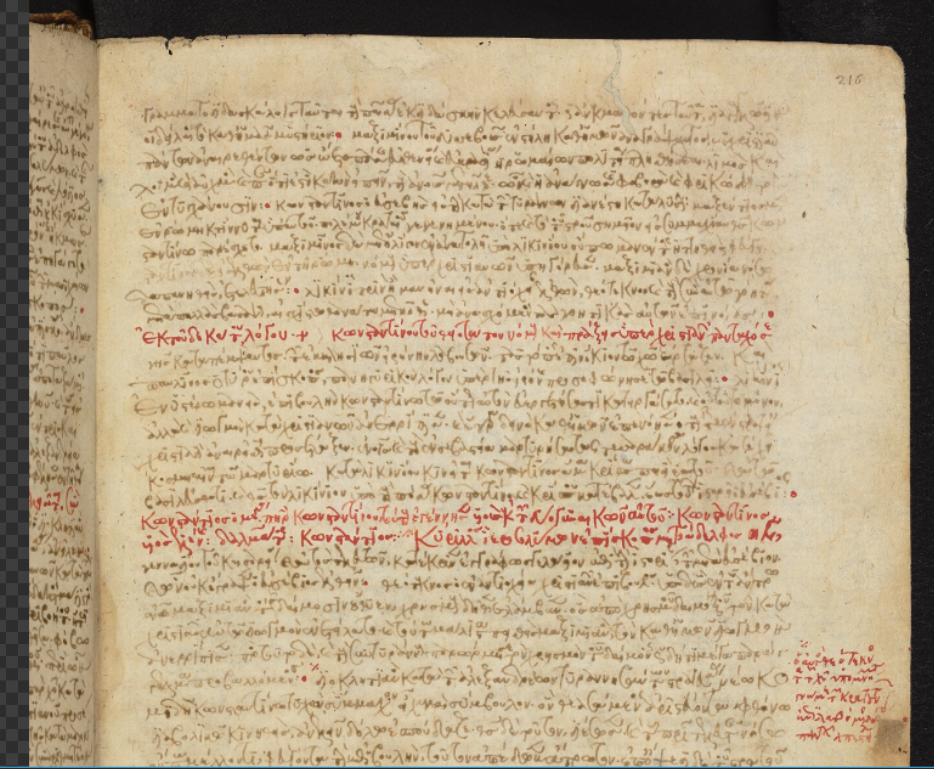
His known published Works are – one on the Gospel of St Luke, an Easter Sermon on Osee (Hosea); a Treatise on the Mother of God; a few other Easter Sermons and an Eulogy on St Pamphilus, who had been one of his disciples. Only fragments of these writings are extant all the rest have been lost to us. Below is an image of this fragment.
St Vitalis (Died c 304) Martyr and St Agricola (Died c 304) Latmen Martyrs. Martyrs, Laymen. They died in c 304 in Bologna, Italy in the persecution of Diocletian. Patronage – Bologna. The Roman Martyrology reads: “In Bologna, Saints Vitalis and Agricola, Martyrs, of whom, according to what Saint Ambrose recounts, the first was first a slave to the other, then a companion in Martyrdom: Vitalis, in fact, suffered such torments that there was no longer any part of his body without wound. Agricola, not at all terrified by the torture of his slave, imitated him in Martyrdom by undergoing crucifixion.” Their Lives and Deaths: https://anastpaul.com/2022/11/04/saints-of-the-day-4-november-st-vitalis-died-c-304-and-st-agricola-died-c-304-martyrs/
St Amandus of Avignon St Amandus of Rodez St Birstan St Clarus the Hermit St Clether
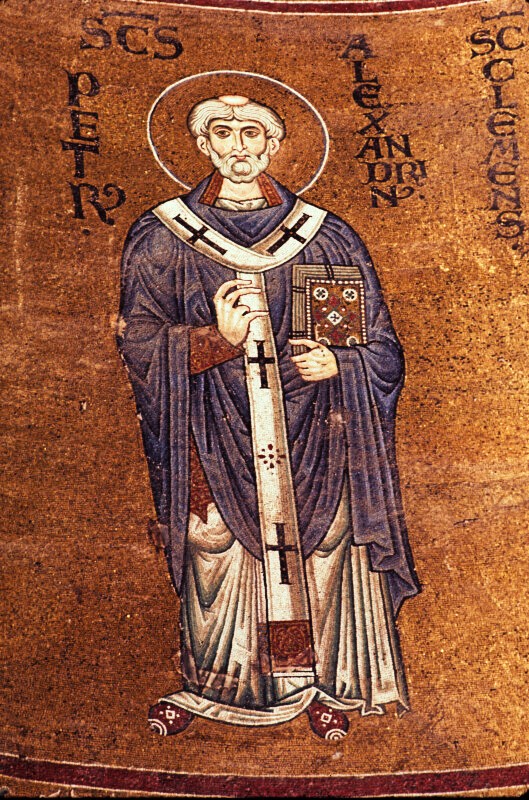
Bl Frances d’Amboise St Gerard de Bazonches St Gregory of Burtscheid Bl Helen Enselmini Bl Henry of Zweifalten St Hermas of Myra St Joannicus of Mount Olympus St John Zedazneli St Modesta of Trier St Nicander of Lycia St Patrobas St Perpète St Philologus St Pierius (Died c309) Priest, Director of the Catechetical School of Alexandria
Saint of the Day – 3 November – Saint Rumwold of Buckingham (c650-650) Infant Saint, born with miraculous adult abilities and mystical gifts. Born in c650 at King Sutton, Northants, England and died three days later in the same place. Also known as – Rumwold of Brackley, Rumbald of…. Rumbold of…. Rumwald of….
Tucked away in an almost-forgotten 11th Century manuscript is the extraordinary tale of St Rumwold, an infant saint who lived on this earthly plane for only three days. But in that short time, he not only spoke with the eloquence of a grown and educated man but he declared himself a Christian and gave a sermon to those who had gathered for his birth. The Author of that manscript, was Bishop St Wulfstan of Worcester (c 1008–1095),1070s,
Rumwold was born in the District of King’s Sutton sometime in the 7th Century, the son of the King of Northumberland (also known as Northumbria, in northern England) and his wife, who was a daughter of Penda of Mercia. The hagiography of his short life states that his parents were en-route to visit Penda for the birth of their first child, the infant Rumwold.
Before they could reach their destination, the party was forced to make camp by the roadside in a meadow, as the Princess of Mercia had entered labour. Rumwold was born in the meadow, near to the place that would become known as Sutton and then later as King’s Sutton. Sadly the infant lived only for a short time and died on the third day after his birth. Rumwold was buried in Sutton.
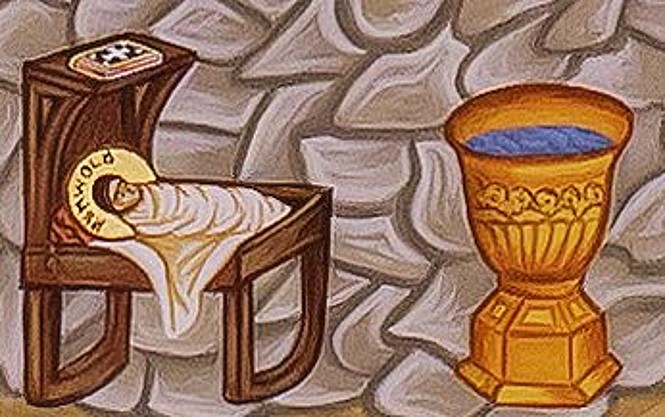
Not an unusual story so far, but it is the events following Rumwold’s birth which begin to move into the realm of miracles. St Wulfstan tells of how Rumwold’s birth was “desired by many and sanctified by God” and that upon being born, the infant proclaimed three times “I am a Christian!” The child then asked the two Priests who attended the royal party, Widerin and Edwold, to Baptise him and grant him the grace of receiving Holy Communion. Seeing as there was no Baptismal Font nearby, he directed the Priests to a nearby bowl-shaped stone. The men were miraculously able to lift it and carry it to the meadow to use for the Baptism. The sBaptismal Font can still be seen in King’s Sutton Church.
St Rumwold’s original stone Baptismal Font
Following the ceremony, Rumwold proceeded to give a lengthy sermon about the need for virtuous living to all those present. He finished by decreeing that after his death, his body should lay for one year at the place which would be called Sutton, for two years at a place to be named Brackley, before coming to his final resting place which would be known as Buckingham. None of these place-names existed at the time of Rumwold’s birth. Rumwold died, as he prophesied, on the third day of his life, the 3rd of November.
Accounts of Rumwold’s miraculous life were widely circulated in the Middle Ages and his Tomb and Shrine in the old Church of Buckingham became an important focus for pilgrims. Many came to take the curative waters of St Rumbold’s Well close to the Town. The earliest Inns of Buckingham were reputedly founded and flourished on the pilgrims’ trade.
Unfortunately Pilgrimages to Buckingham ceased after the Reformation and St Rumwold’s Shrine and Tomb seem to have been demolished when the old Buckingham Church decayed and collapsed in 1776. Regrettably nothing was transferred to the present-day Church. However, there is a recently-erected Memorial in the old Churchyard which reads:
“Near this spot within the old Church of Buckingham, was the Tomb and Shrine of the Infant Saint Rumbold, who lived and died in c650.”
St Rumwold’s Well has been protected and its site still remains.
St Acepsimas St Acheric of Vosges Bl Alphais of Cudot Bl Berardo dei Marsi Bl Berchtold of Engelberg St Caesarius St Cecilio Manrique Arnáiz St Clydog St Cristiolus St Domnus of Vienne St Elerius St Englatius St Florus of Lodeve St Gaudiosus of Tarazona St Germanus St Guenhael St Hermengaudius of Urgell St Hilary of Viterbo
St Sylvia Mother of St Gregory the Great, Pope St Theophilus St Valentine of Viterbo St Valentinian St Vitalis St William of Vosges St Winifred of Wales St Wulganus
Innumerable Martyrs of Saragossa: A large group of Christians martyred in Zaragoza, Spain by Dacian during the persecutions of Diocletian. Dacian ordered all Christians of the city into exile under pain of death; when they were assembled to leave, Dacian ordered imperial soldiers to massacre the lot of them. They were Martyred in 304.
Saint of the Day – 2 November – Blessed John Bodey (1549-1583) Layman, Martyr, Husband and Schoolmaster. Born in 1549 at Wells, Somerset, England and died on 2 November 1583 at Andover, England by being hanged, drawn and quartered for the crime of being a Catholic and refusing to accept Elizabeth I, Queen of England, as the Head of the Church. Blessed John was Beatified on 15 December 1929 together with Blessed John Slade (feast day 30 October), by Pope Pius XI. Additional Memorial – 29 October as one of the Martyrs of Douai, 1 December as one of the Martyrs of Oxford University
John was born in Wells, England, the son of a wealthy merchant and former Mayor. He studied at Winchester and then at Oxford and became an Oxford Fellow of New College, in 1568 at the age of 19. In 1576, John, along with seven others, was deprived of his fellowship for being a Roman Catholic by the Anglican Bishop of Winchester.
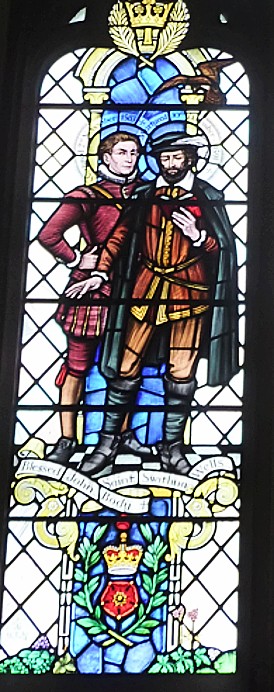
Bl John Bodey left and St Swithun Wells, right at Winchester Catholic Cathedral
In 1577, John travelled to Douay College to study Civil Law but returned to England in February, 1578 when he discovered that his studies could reap no benefits in England as Catholics were forbidden to practice the Legal Profession in any way or under any circumstances.
In 1580, John, by this time married and a schoolmaster, was arrested for continuing to practice the Catholic Faith and rejecting England’s newly-established heretical Church of England or the Anglican Church under the supreme power of the Royal leader.
He was kept in iron shackles in the prison as a “dangerous” prisoner, at Winchester, for three years, which he called his “school of patience.” In 1583 he was tried for treason, both for being a faithful Roman Catholic and for repudiating King Henry VIII’s claim of Royal supremacy of the Church in England, over and above that of the Holy Father in Rome. He was condemned to death in April, 1583, together with John Slade, a fellow layman. There was, apparently, a protest that this Sentence was unjust and illegal, leading to a retriel. But, the two holy men were condemned again—at Andover, Hampshire, in August 1583. Their bravery and perseverance in suffering so impressed their fellow inmates and even the guards that more than one conversion was made – by both Johns, by their virtue and charity!
After the Second Trial – Blessed John Bodey wrote, on behalf of Blessed John Slade and himself:
“We consider that iron for this cause, borne on earth, shall surmount gold and precious stones in Heaven. This is our mark this is our desire. In the mean season we are threatened daily and do look still, when the hurdle shall be brought to the door. I beseech you, for God’s sake that we want not the good prayers of you all for our strength, our joy and our perseverance unto the end. … From our school of patience the 16th September 1583.”
John Bodey was hanged, drawn and quartered at Andover on 2 November 1583. At his Martyrdom, Bodey kissed the halter, saying, “O blessed chain, the sweetest chain and richest that ever came about any man’s neck” and when told he died for treason, exclaimed:
“Indeed, I have been sufficiently censured, for I have been condemned twice; if you may make the hearing of a Blessed Mass – treason, or the saying of an Ave Maria – treason, you may make what you please – treason! … but, I have committed no treason, although, indeed, I suffer the punishment due to treason.”
He then exhorted the people to obey Queen Elizabeth as their worldly ruler: “I acknowledge her as my Lawful Queen in all temporal causes and none other … Ye shall understand, good people all, I suffer death, not for not granting her Majestie to be supreme head of Christ’s Church in England which I may not and will not grant; I pray God long to preserve her Majestie in tranquility over you, even Queen Elizabeth, your Queen and mine; I desire you to obey none other.”
He died saying:
“Jesu, Jesu, esto mihi, Jesu!” “Jesus, Jesus, be for me, Jesus!”
His mother arranged a great feast upon the occasion of her son’s happy death, to which she invited her neighbours, rejoicing at his death as at his marriage, by which his soul was happily and eternally espoused to the Lamb!
Blessed John’s brother Gilbert, was arrested with Alexander Briant on 28 April 1581. He was scourged at Bridewell and afterwards confined in prison. He was released on bail and when not called to appear, escaped to Rheims.
All Souls Day – The Commemoration of All the Faithful Departed: Commemoration of the faithful departed in Purgatory. Abbot Odilo of Cluny instituted it in the Monasteries of his congregation in 998, other religious orders took up the observance and it was adopted by various Diocese and gradually by the whole Church. The Office of the Dead must be recited by the clergy on this day and Pope Benedict XV granted to all Priests, the privilege of saying three Masses of requiem –
St Ambrose of Agaune St Ambrose of Agaune St Amicus of Fonte Avellana St Amicus of Rambone St Baya of Scotland St Domninus of Grenoble St Erc of Slane St Eustochium of Tarsus St George of Vienne
Blessed John Bodey (1549-1583) Layman, Martyr
St Jorandus of Kergrist St Justus of Trieste St Marcian of Chalcis
Martyrs of Isfahan – 5+ Saints: Acindynus, Pegasius and Anempodistus were Persian priests who were imprisoned, tortured, interrogated and Martyred in the persecutions of king Sapor II of Persia; he considered any Christian to be a Roman spy and anti-Persian.
Martyrs of Sebaste – 10 Saints: A group of ten soldiers in the imperial Roman army of Emperor Licinius Licinianus who were executed together for refusing to burn incense as a sacrifice to the emperor. The only details that have survived are five of their names – Agapius, Cartherius, Eudoxius, Styriacus and Tobias. They were burned at the stake in 315 in Sebaste (in modern Turkey).
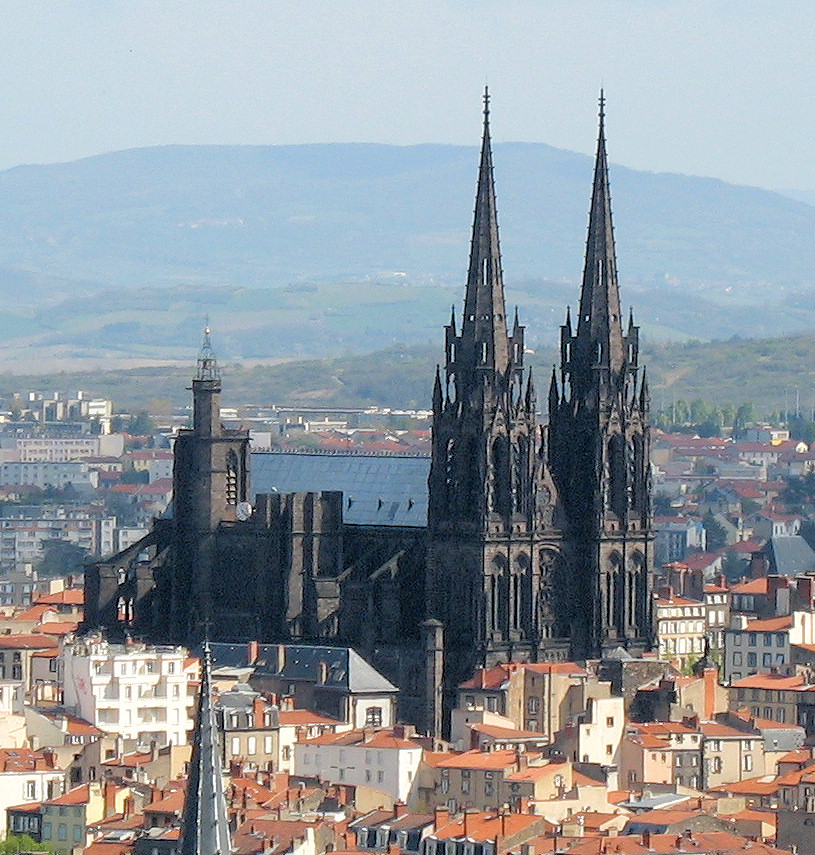
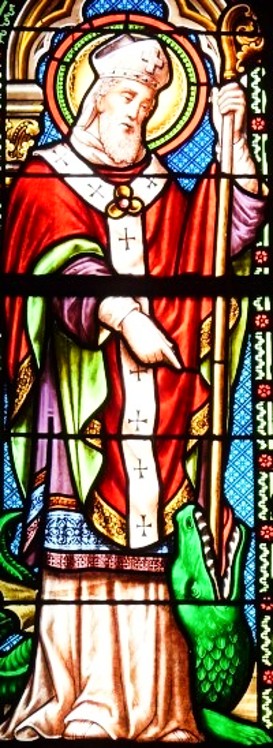
Saint of the Day – 1 November – Saint Austremonius (3rd-4th Century) Bishop of Clermont, France, and Apostle of Auvergne, Missionary. Born in the 3rd Century and died in the early 4th Century of natural causes. Patronage – the Archdiocese of Clermont. Also known as – Austromoine, Stramonius, Stremonius.
The Roman Martyrology reads today: “At Clermont in Auvergne, France, Saint Austremonius, the first Bishop of that City.”
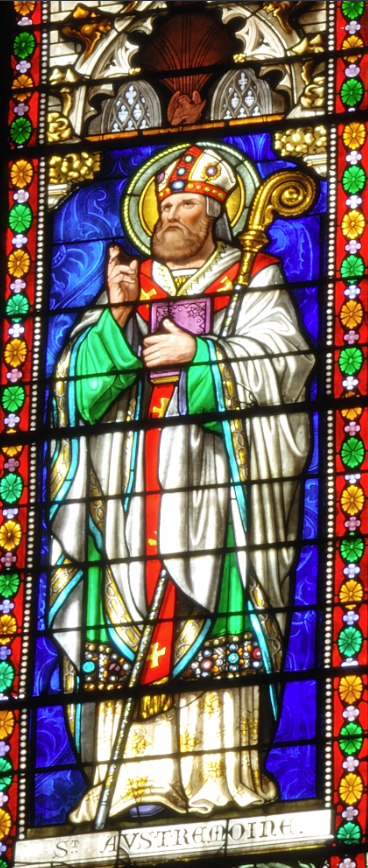
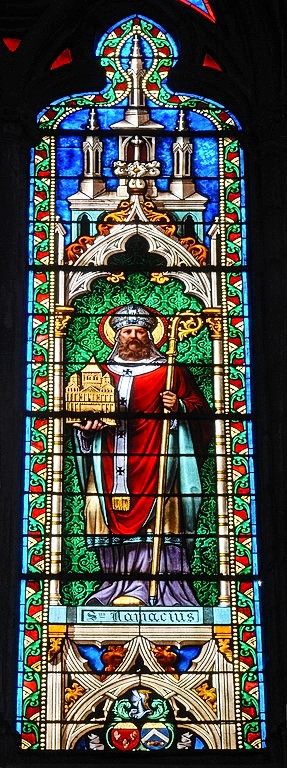
Stained glass of St Austremonius at the Church of Saint-Eutrope in Clermont
Most of what is known about our Saint Austremonius, is deduced from a few brief sentences in the writings of St Gregory of Tours. According to this authorit, he was one of the seven Bishops sent from Rome into Gaul during the years in the mid 3rd Century.
Stained glass of St Austremonius at the Church of Saint-Eutrope in Clermont
He laboured tirelessly for the conversion of the pagans in Auvergne and is believed to have been the first Bishop of Clermont. Another tradition states that Austremonius was martyred by a Jewish rabbi for converting the man’s son, however this is not repeated in the Martyrology.
Also sent to preach the Gospel in Gaul were Gatien to Tours, Trophimus to Arles, Paul to Narbonne, Saturninus to Toulouse, Denis to Paris and Martial to Limoges.
At Clermont St Austremonius converted the Senator Cassius of Clermont and the pagan priest Victorinus. He also sent St Serenus to Thiers, St Marius to Salers and Antoninus into other parts of Auvergne, to further the evangelisation of Gaul. A tradition states that Saint Austremonius instructed St Nectarius of Auvergne to Christianise the peoples living on the plain of Limagne.
Austremonius was a contemporary of the three Bishops of Aquitaine, who attended the Council of Arles in 314.
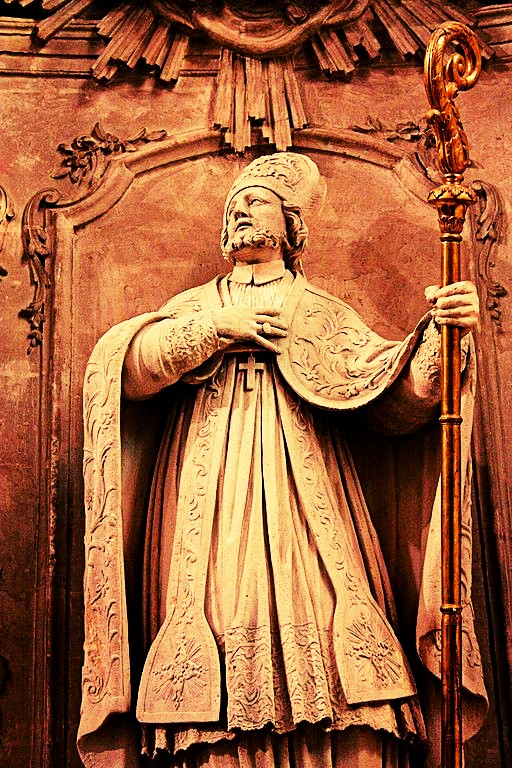
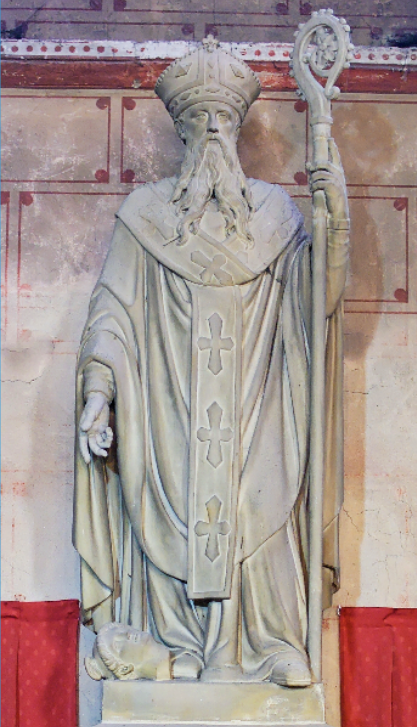
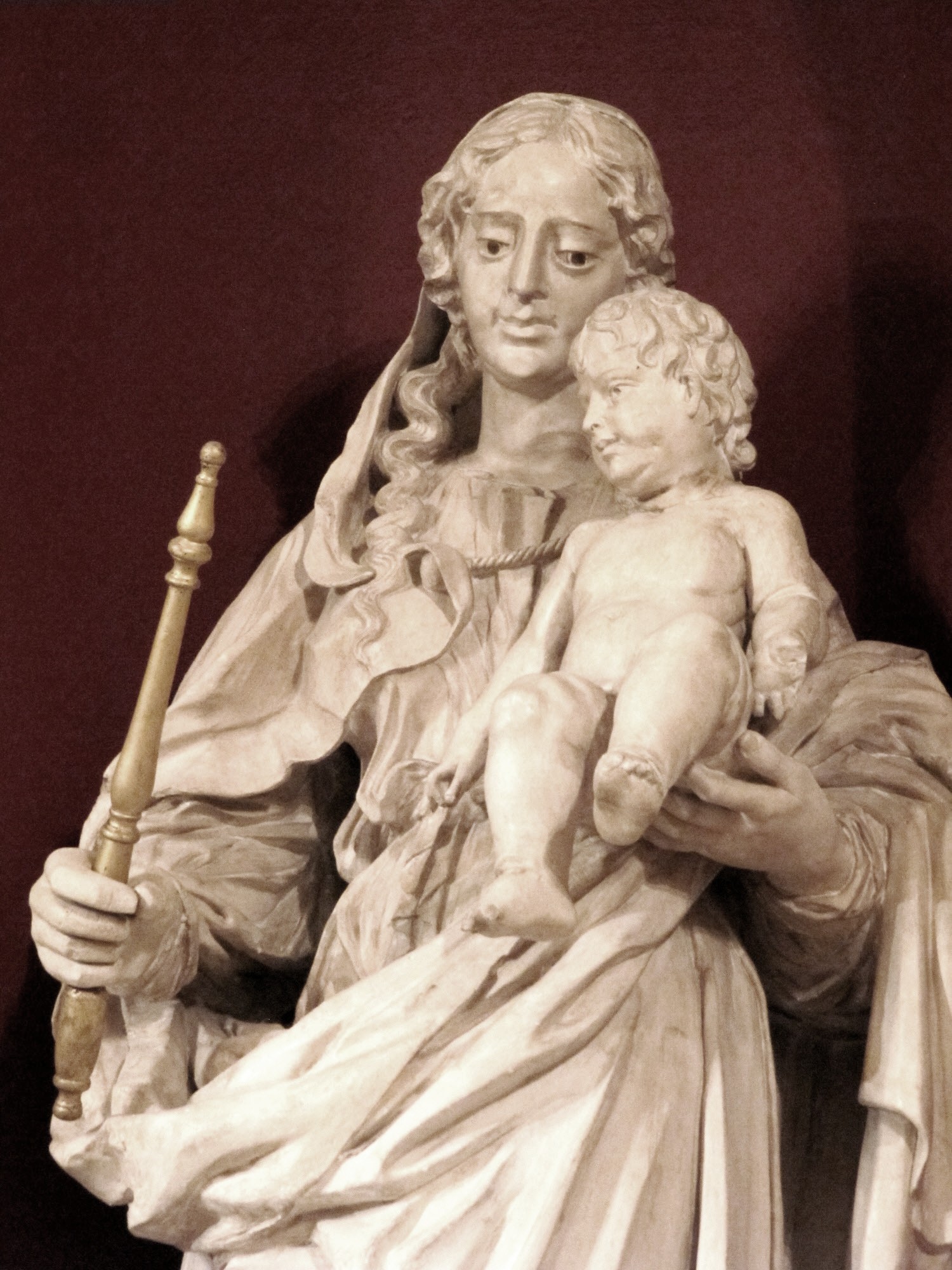
Statue of St Austremonius, Apostle and Bishop of Auvergne. Church Saint-Austremonius at Issoire, Auvergne, France.
Veneration of Saint Austremonius found its origin in a biography of the Saint written in the 10th Century in the Abbey of Mozac, where his body was transferred in 761. The Vita was rewritten and amplified by the Monks of Issoire, who retained the Saint’s head as a Relic. There is a further elaborated Vita of the late 11th Century. The tomb was opened in 1197.
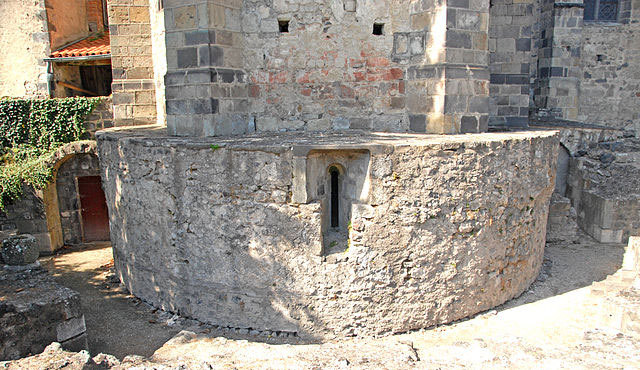
Crypt at the Abbey of Mozac, a former Cluniac Monastery near Riom in Auvergne, France.
St Gregory of Tours, who was born in Auvergne in 544 and was well versed in the history of that country, looks upon St Austremonius as one of the seven envoys who, about evangelised Gaul. He relates how the body of our Saint was first interred at Issoire, being there the object of great veneration, before the body, though not the head, was translated to Clermont, where he is greatly venerated as the Patron of that Diocese.
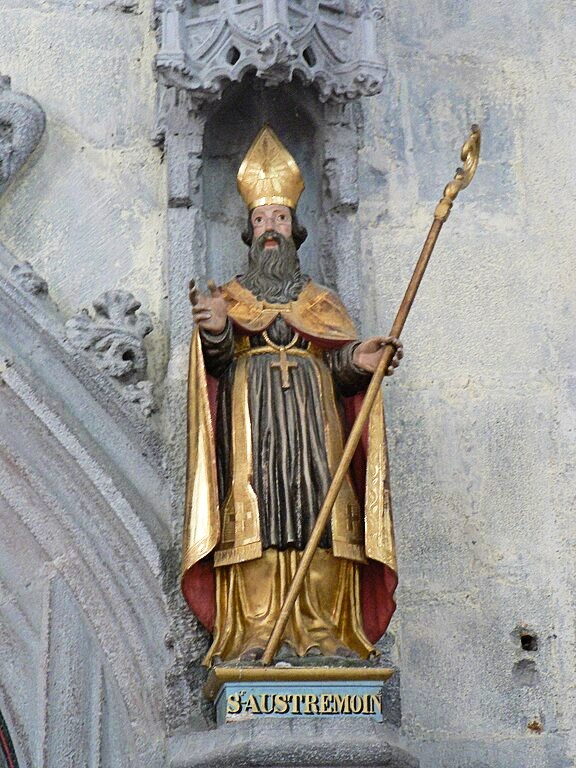
Statue of St Austremonius at the Abbey Church of Mozac
November “The Month of the Holy Souls in Purgatory”
All Saints Day – (a Holy Day of Obligation) Instituted to honour all the saints, known and unknown. It owes its origin in the Western Church to the dedication of the Roman Pantheon in honour of the Blessed Virgin Mary and all the Martyrs by Pope Saint Boniface IV in 609, the anniversary of which was celebrated at Rome on 13 May. Pope Saint Gregory III Consecrated a Chapel in the Vatican Basilica in honour of All Saints, designating 1 November as their feast. Pope Gregory IV extended its observance to the whole Church. It has a Vigil and Octave and is a Holy Day of Obligation – the eve is popularly celebrated as Hallowe’en. Patronage – Arzignano, Italy. ABOUT: https://anastpaul.com/2019/11/01/solemnity-of-all-saints-1-november/ AND: https://anastpaul.com/2018/11/01/1-november-solemnity-of-all-saints/ AND: https://anastpaul.wordpress.com/2017/11/01/1-november-the-feast-of-all-the-saints/
St Austremonius (3rd-4th Century) Bishop and Apostle of Auvergne St Benignus of Dijon St Cadfan St Caesarius of Africa St Caesarius of Damascus St Ceitho St Cledwyn of Wales Bl Clemens Kyuemon St Cyrenia of Tarsus St Dacius of Damascus St Deborah the Prophetess St Dingad Bl Dionysius Fugixima St Floribert of Ghent St Gal of Clermont St Genesius of Lyon St Germanus of Montfort St Harold the King St James of Persia St John of Persia St Julian of Africa St Juliana of Tarsus St Lluís Estruch Vives St Marcel of Paris St Mary the Slave St Mathurin St Meigan St Nichole St Pabiali of Wales Bl Pere Josep Almató Ribera Auras St Peter Absalon Bl Peter Paul Navarra Bl Petrus Onizuka Sadayu St Rachel the Matriarch
Saint of the Day – 31 October – Saint Arnulf of Novalesa OSB (Died c840) (Ordo Sancti Benedicti – OSB) Monk, Martyr. Also known as – Arnolfo, Arnulfo. Additional Memorial – 13 March on some calendars.
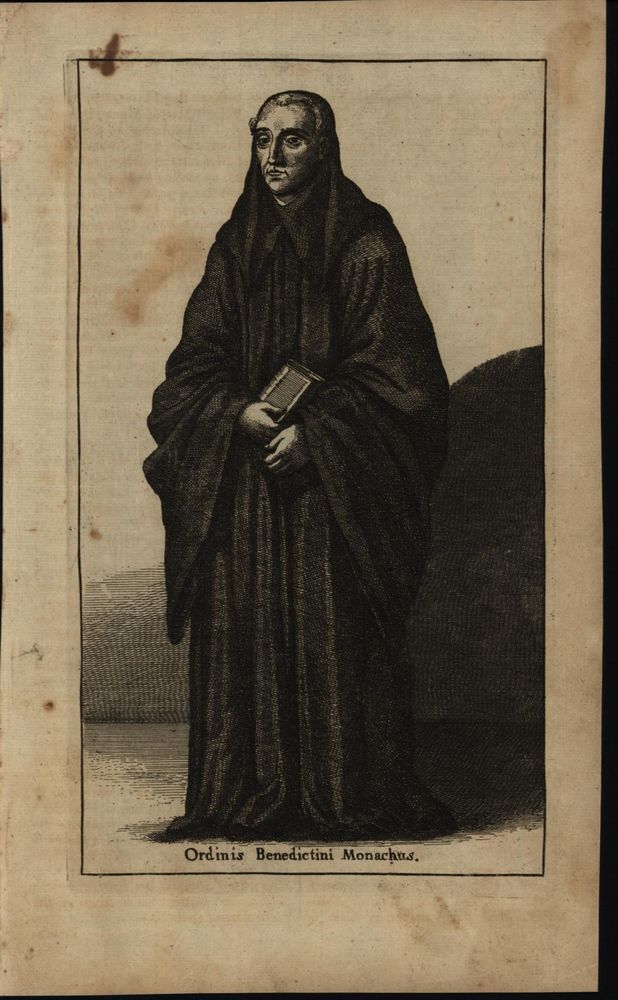
A Benedictine Monk
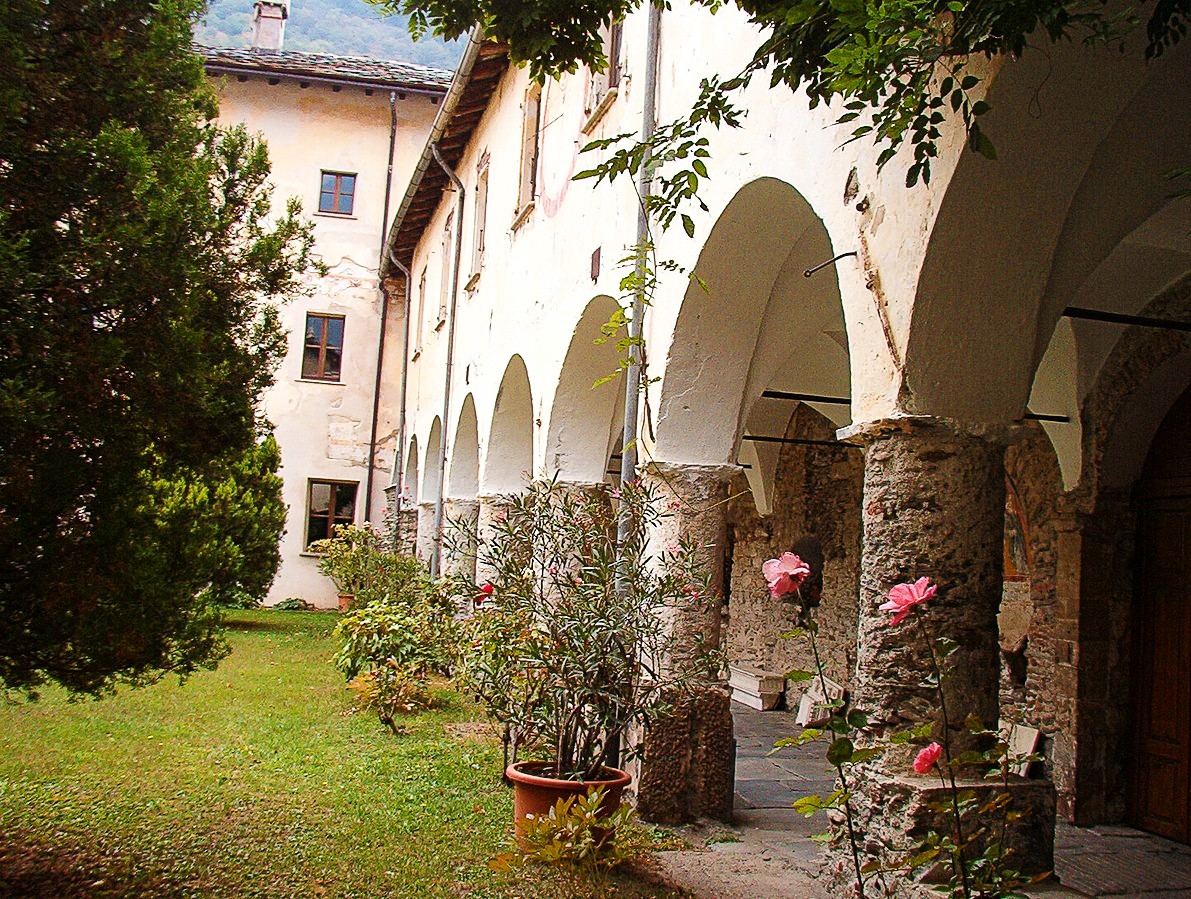
Arnulf was a Benedictine Monk in the Benedictine Monastery of Novalesa in Piedmont, Italy. It was located at the foot of the Alps and at the mouth of the Susa Valley on the Italian side of Mont Cenis in the Piedmont region of Northern Italy and boasted a large community of 500 Monks.
Arnulf is said to have been murdered around 840 by the Saracens, the medieval term for Muslims. His and Saint Heldrad ‘s Relics were transferred to the Parish Church in Novalesa upon the arrival of the French troops in 1794. His memorial day is 31 October, together with St Heldrad (on the Benedictine calendar) but St Heldrad is remembered on 13 March on the universal calendar.
The still active Abbey today
Some sources date his Martyrdom to the early 10th Century, which seems likely. In 906 Italy was invaded by the Saracens. A group of them moved from Frassineto (near today’s Saint-Tropez) in the direction of the Monastery in Novalesa. Abbot Donniverto heard of the impending danger, so together with most of the Monks he made it to safety in the Church of Sts Andrew and Clement (today’s Consolata) in Turin and brought with him the most sacred, indispensable and valuable objects as well as manuscripts from the library. The Saracens looted the Monastery and set fire to the buildings.
Some Monks from Novalesa had sought shelter in the Monastery of Oulx in the Susa Valley on the present border with France but there they were discovered and slaughtered. Two Monks escaped, Saints Justus and Flavian, who hid in a cave in the Arbour above Beaulard. From there they saw the Martyrdom of their brothers and that Angels brought their souls to Heaven. Then, they decided to go down into the Valley again and join their fellow brothers, where they too suffered Martyrdom. The Novalesa Monastery was rebuilt only in the 11th Century.
Vigil of All Saints Day or All Hallow’s Eve: Eve of the Feast of All Hallows, that is, All Saints Day. Halloween is a day on which many quaint customs are revived. It is popular in the United States and Scotland and in the US has become the second largest secular holiday of the year.
St Wolfgang of Regensburg (c934 –994) “The Great Almoner,” Bishop, Monk, Missionary, Ascetic, Apostle of Charity. He is regarded as one of the three great German Saints of the 10th Century, the other two being Saint Ulrich and Saint Conrad of Constance. He was Canonised in 1052 by Pope Leo IX. St Wolfgang’s life: https://anastpaul.com/2019/10/31/saint-of-the-day-31-october-saint-wolfgang-of-regensburg-c-934-994/
Saint of the Day – 30 October – Blessed John Slade (Died 1583) Layman Martyr, Tutor. Born in Manston, Dorsetshire, England and died by being hanged, drawn and quartered on 30 October 1583 at Winchester, England. Beatified on 15 December 1929 by Pope Pius XI. Additional Memorials – 29 October as one of the Martyrs of Douai, 1 December as one of the Martyrs of Oxford University.
The Roman Martyrology: “At Winchester in England, blessed John Slade, Martyr, who was hanged on the gallows and cruelly disemboweled for having refused the power of Queen Elizabeth I in spiritual matters.”
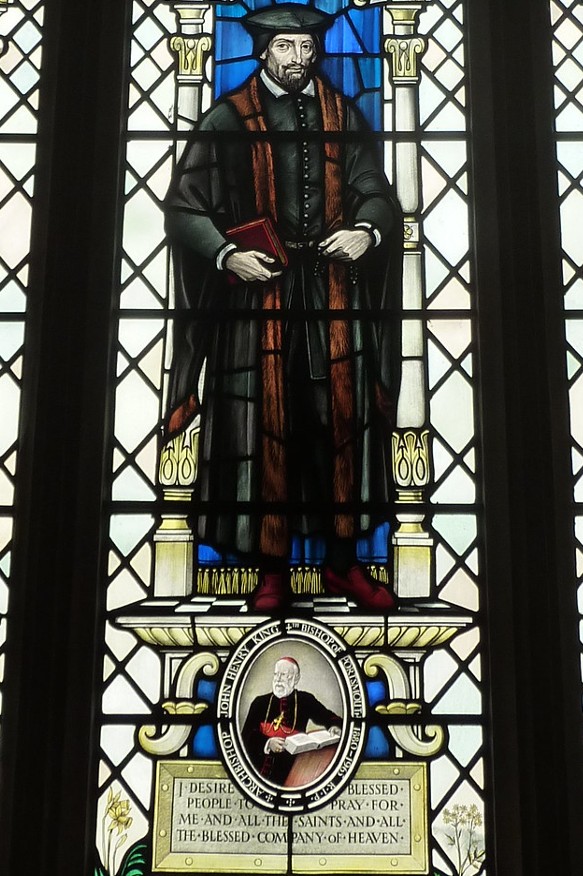
This window resides at the Winchester Catholic Cathedral. Below is Archbishop John Henry King – Photographer “Granpic” on Flickr
John Slade attended the New College, Oxford until, being expelled for being Catholic, he travelled to Douai to continue his study of Civil Law. However, since as a Catholic he was not permitted to practice the role of a Lawyer in England, he became a Tutor to the children of a gentleman’s household in Dorset.
On 30 October 1583, the Blessed John Slade, a Tutor from Dorset, was arrested as a “very dangerous Papist” and imprisoned in Winchester prison with Blessed John Bodey (1549-1583). They were held in iron shackles as “dangerous” prisoners. They were condemned in April, 1583 accused of High Treason for denying the Royal Supremacy over the Church of Our Lord Jesus Christ. There was, apparently, a protest against this Sentence claiming it to be unjust and illegal, leading to a retried. But, the two holy men were condemned again—at Andover, Hampshire, in August 1583.
After the Second Trial – Blessed John Bodey wrote, on behalf of Blessed John Slade and himself to a leading protestant theologian, one with whom he had prior discussions and debates:
“We consider that iron for this cause, borne on earth, shall surmount gold and precious stones in Heaven. This is our mark this is our desire. In the mean season we are threatened daily and do look still, when the hurdle shall be brought to the door. I beseech you, for God’s sake that we want not the good prayers of you all for our strength, our joy and our perseverance unto the end. … From our school of patience the 16th September 1583.”
Our Martyr today, Blessed John Slade, led from Winchester Prison to the public Square, knelt beside the Gallows which had been erected there, drew the Sign of the Cross on it, kissed it and then said, as he climbed the steps:
“I have come here to die for the Faith of all generations!”
A few days later the Blessed John Bodey too was hanged. Before dying he kissed the rope that had been placed around his neck exclaiming: “Jesus! Jesus! Jesus!”
St Germanus of Capua (Died c 541) Bishop of Capua, Italy, Confessor, Papal Legate. St Germanus was a close friend of St Benedict of Nursia. The Roman Martyrology states: St Germanus, Bishop and Confessor, a man of great sanctity, whose soul, at the hour of death, was seen by St Benedict taken to heaven by angels. His Life: https://anastpaul.com/2020/10/30/saint-of-the-day-30-october-saint-germanus-of-capua-died-c-541/
St Herbert of Tours Blessed John Slade (Died 1583) Layman Martyr
St Lucanus of Lagny St Marcellus the Centurion St Marcian of Syracuse St Maximus of Cumae St Nanterius of Saint-Mihiel Bl Raymond of Cardona St Saturninus of Cagliari St Serapion of Antioch St Talarica of Scotland Bl Terrence Albert O’Brien St Theonestus of Philippi (Died 425) Bishop, Martyr St Zenobia of Aegea St Zenobius of Aegea
Martyrs in Africa: A group of 100 to 200 Christians murdered in the early persecutions and about whom we know nothing except that they died for their faith.
Christ the King: “Therefore, by our Apostolic authority, we appoint the Feast of Our Lord Jesus Christ the King, annually, on the last Lord’s day in the Month of October, that is to say, on the Sunday which immediately precedes the Feast of All Saints, to be observed everywhere in the world. Likewise we enjoin, that the dedication of the human race to the Most Sacred Heart of Jesus be annually renewed upon that selfsame day.”
St Abraham of Rostov St Anne of Mount Olympus St Colman of Kilmacduagh St Dodone of Wallers-en-Fagne St Donatus of Corfu St Ermelinda of Meldaert St Eusebia of Bergamo St Felician of Carthage St Honoratus of Vercelli St John of Autun St Kennera St Mary of Edessa St Narcissus of Gerona
St Sigolinus of Stavelot St Stephen of Cajazzo St Terence of Metz St Theodore of Vienne (Died c575) Abbot St Zenobius of Sidon
Martyrs of Douai – 160 Saints and Beati: 160 Priests, Laymen and Religious who studied at the English College in Douai, France, then returned to minister to covert Catholics in England during a period of government persecution of the Church and were murdered for their work.
Martyrs of Lucania – 4 Saints: A group of Christians executed together for their faith. Only their names have survived – Felician, Hyacinth, Lucius and Quintus. Their Martyrdom occurred in Lucania, southern Italy.
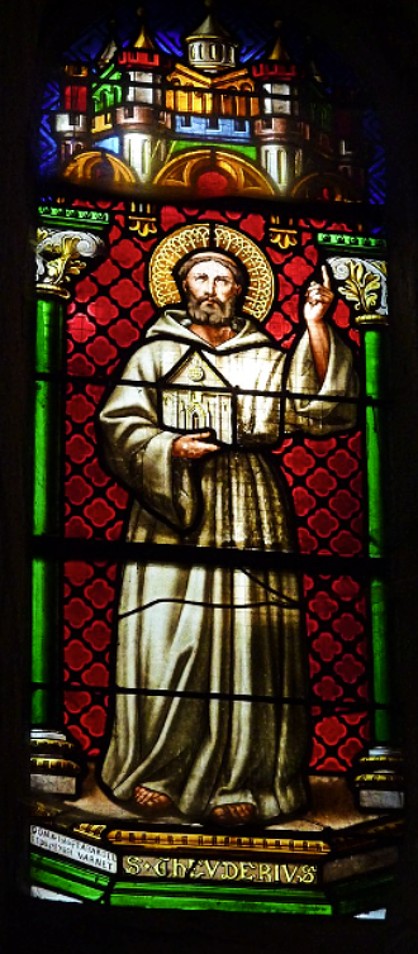
Saint of the Day – 29 October – Saint Theodore of Vienne (Died c575) Priest, Monk, Founder Abbot of the Monastery of Saint Laurence , Recluse, Miracle-worker. Spiritual student of Saint Caesarius of Arles (470-542). Born in Arcisse, near Saint-Chef, Dauphiné, France and died in c575 in the Church of Saint Lawrence, in Vienne, France of natural causes. Also known as – Chef, Theudère, Theudar, Teuderio, Teodario, Theuderius, Theodorius.
The Roman Martyrology states: “At Vienne, the departure from this world of blessed Theodore, Abbot.”
Theodore, a young man of one of the best families of the City of Vienne, by the interior call of the Holy Ghost, forsook the world and. having long exercised himself in the most perfect practices of a monastic life. under the direction of Saint Cæsarius at Arles, returned to his own country and, being joined by several disciples, built for them first cells and afterwards a Monastery near the City of Vienne in Dauphine.
It was a custom in the most regular Monasteries that the Hebdomadarian Priest who celebrated the community Mass, spent the week in which he discharged that function, in the closest retirement in his cell and in holy contemplation and austere penance, both that he might be better prepared to offer daily, the tremendous Sacrifice, and that he might more faithfully, acquit himself of his mediatorship, between God and his people.
It was also a peculiar custom in the sixth Century at Vienne that a Monk was chosen, of whose sanctity the people entertained a high opinion, who should voluntarily lead the life of a recluse, being walled up in a cell and spending his whole time in fasting, praying and weeping, to implore the Divine mercy in favour of himself and his country. This practice would have been an abuse and superstition, if any person, relying on the prayers of others, were themselves more remiss in prayer or penance. Saint Theodore was chosen for this penitential state, which obligation he willingly took upon himself and discharged with so much fervour as to seem desirous to set no bounds to his tears and mortifications. An extraordinary gift of miracles made his name famous in the whole country.
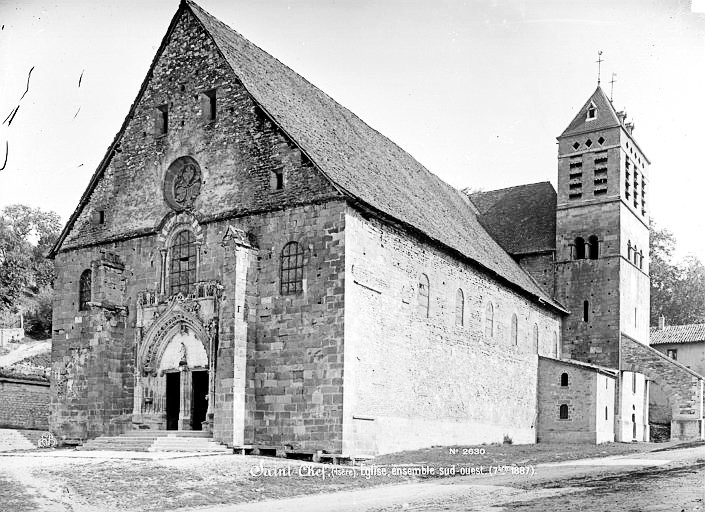
Theodore died about the year 575 and was buried in the Monastery of Saint Laurence which he had founded. His Relics were translated to a collegiate Church of which he is the Titular Patron and which gives the name of Saint Chef to the Village where it stands, eight leagues from Vienne. This Saint is named in the Roman Martyrology.
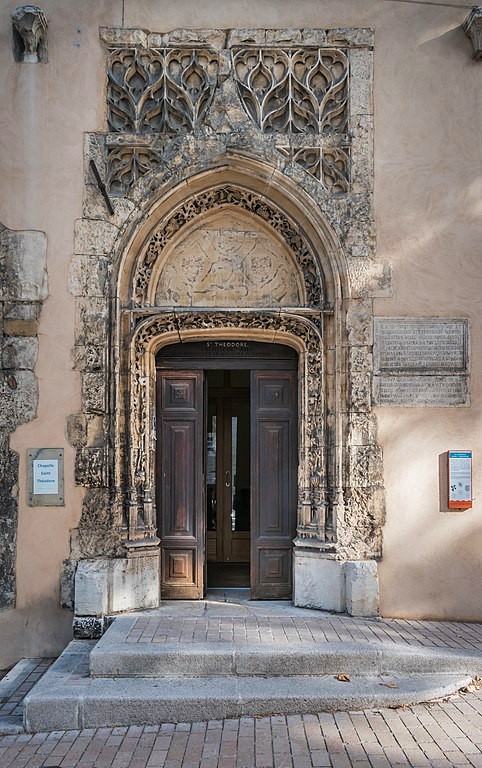
Entrance to the Church of St Theodore
Saint Theodore is celebrated in the Diocese of Grenoble-Vienne on 29 October. The Village of Sainte-Chef was originally called Sainte-Theudère but the Village may be called Sainte-Chef today because of a tradition that the head (The French word ‘chef’ comes from Latin ‘caput’ [head]) of the Saint was kept there.
Saint of the Day – 28 October – Saint Gaudiosus of Naples (Died c453) Bishop of Abitinae in North Africa, Monk and founder of a Monastery where he introduced the Rule of St Augustine. Born Septimius Celius Gaudiosus in Tunisia, North Africa and died in exile in c455 at Naples in Italy of natural causes. Also known as – Gaudiosus of Abitinae, Gaudiosus the African.The image often used for our Saint is actually St Guadiosus of Brescia. I have found no image of today’s Saint.
The Roman Martyrology reads: “At Naples, St Gaudiosus, an African Bishop, who came to Campania because of the persecution of the Vandals and closed his holy career peacefully in a Monastery near that City.”
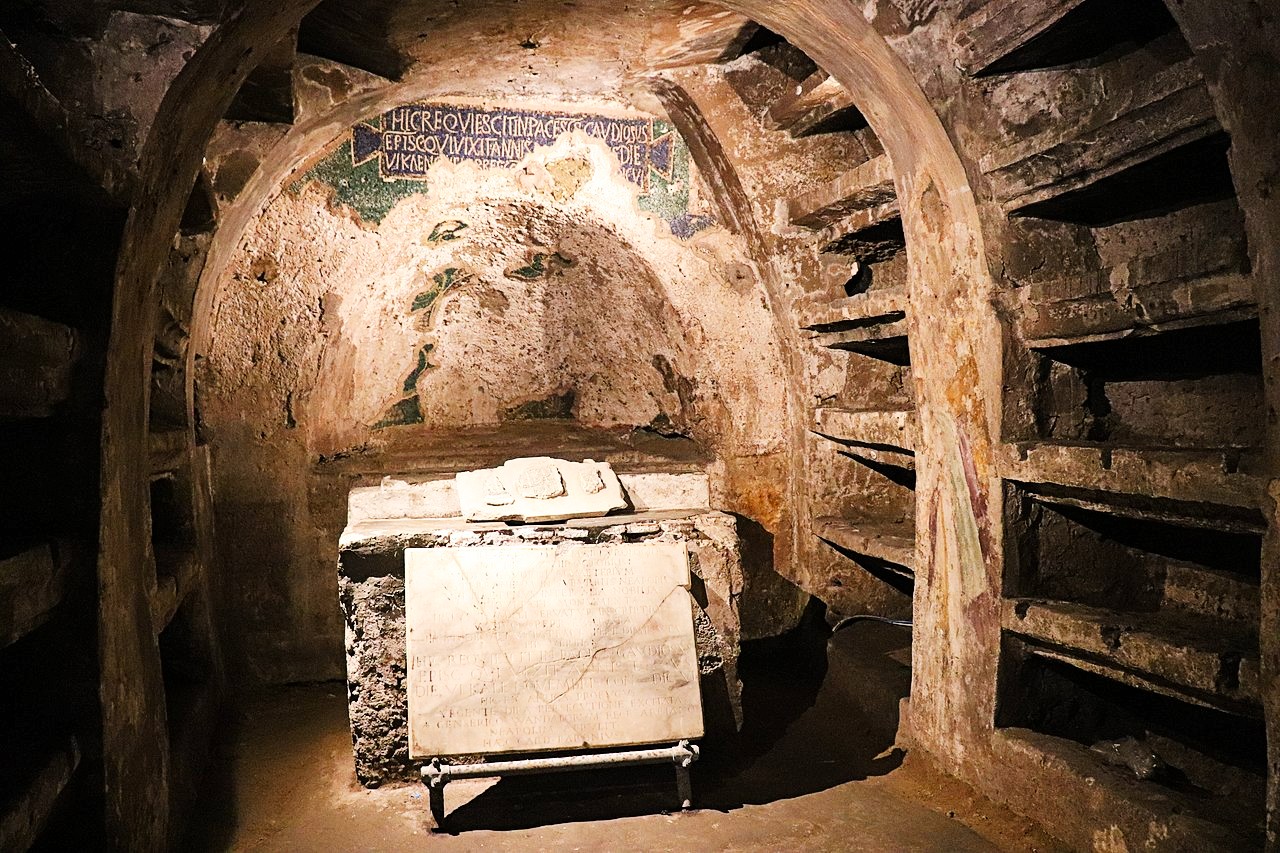
Tomb of St Gaudiosus
Gaudiosus, fled North Africa during the persecutions of Genseric, King of the Vandals, in a ship without sails or oars but which miraculously arrived safely in Naples carrying the precious cargo of other exiled Clergy, including the Bishop of Carthage, St Quodvultdeus and arriving in Naples in around 439,
Gaudiosus settled on the hill of Capodimonte, where he built a Monastery named the Caponapoli Monastery where he introduced the Rule of St Augustine. He is accredited with bringing to his new home, part of the Relics of St Restituta, the Virgin Martyr of Tunisia which are now kept in the early Basilica dedicated to her and which has been incorporated into the Naples Cathedral.
When Gaudiosus died between 451 and 45, he was buried in the Cemetery outside the City walls of Naples. His tomb soon began to arouse devotion. From that time onwards, the early Christian underground Cemetery expanded and gradually became the Catacombs of St Gaudiosus.
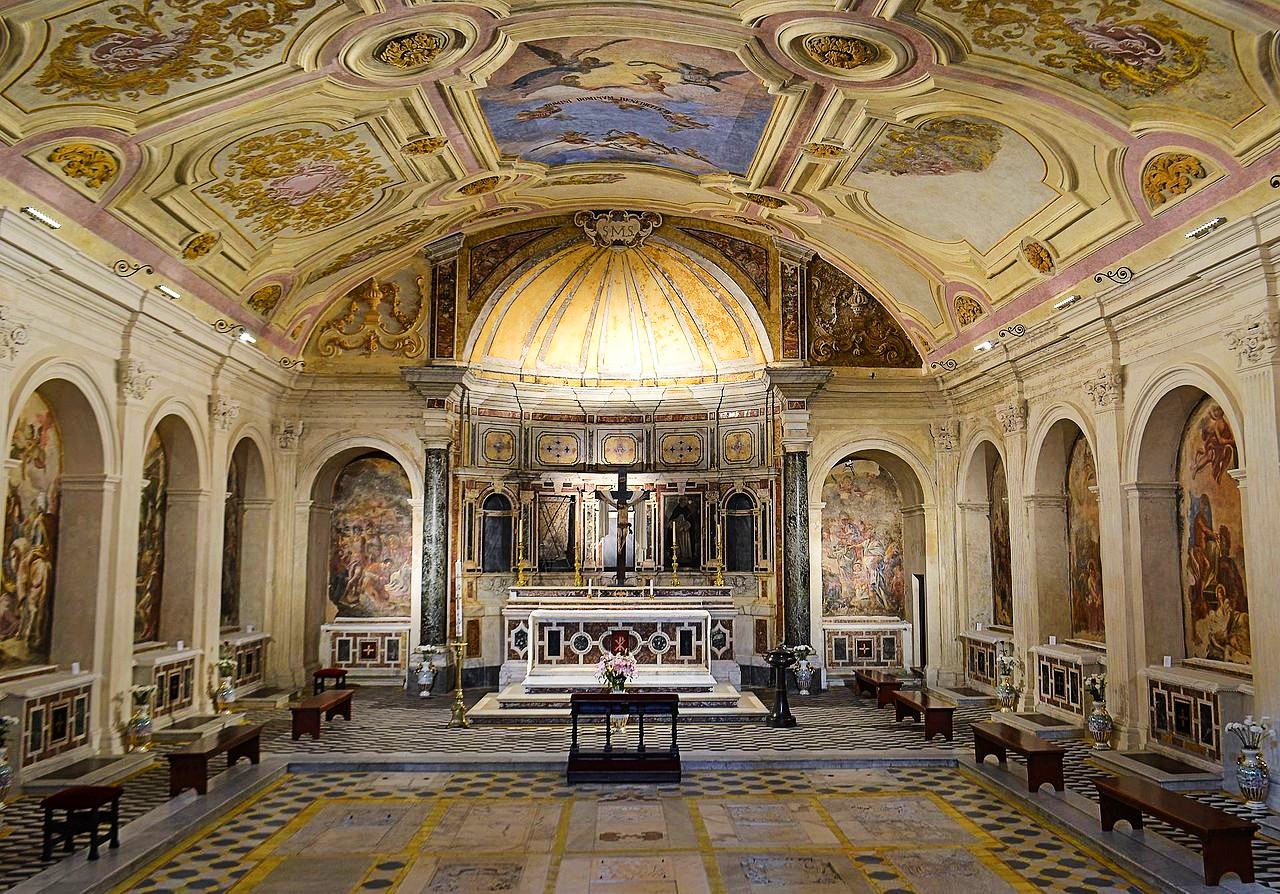
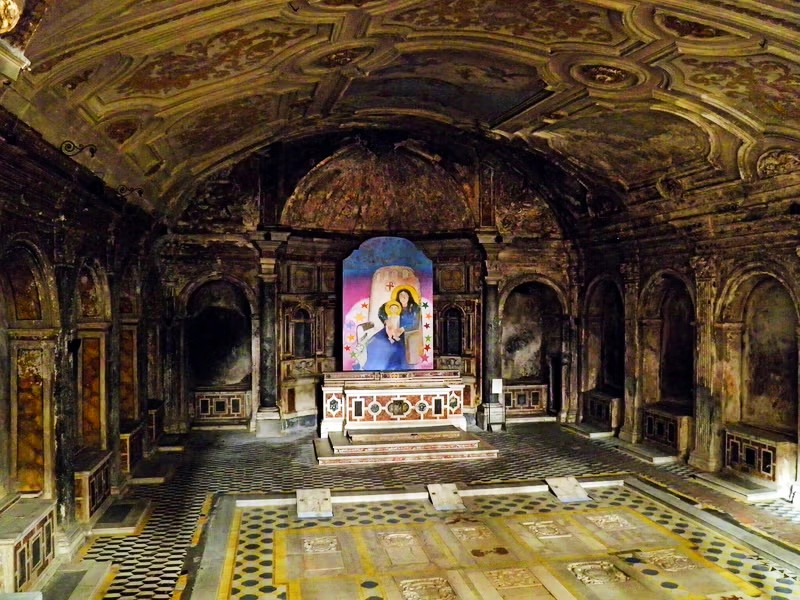
The Catacombs of San Gaudiosus are the second largest in Naples and includes both early Christian and 17th Century elements. The entrance to the underground burial site is inside the Basilica St Maria della Sanità, beneath the High Altar.
Main crypt below the High Altar of Santa Maria della Sanità.
On one side of the Catacombs there is the intensity of the early Christian elements, such as the Tombs of St Gaudiosus and Quodvultdeus. The walls are decorated with valuable frescoes and mosaics of the 5th and 6th Centuries which feature widely used Symbols in the early Christian era, such as the fish, the lamb and grapes with branches. On the other side are the special graves reserved for nobles, dating to the 17th Century, when the Catacombs resumed the function of a burial site.
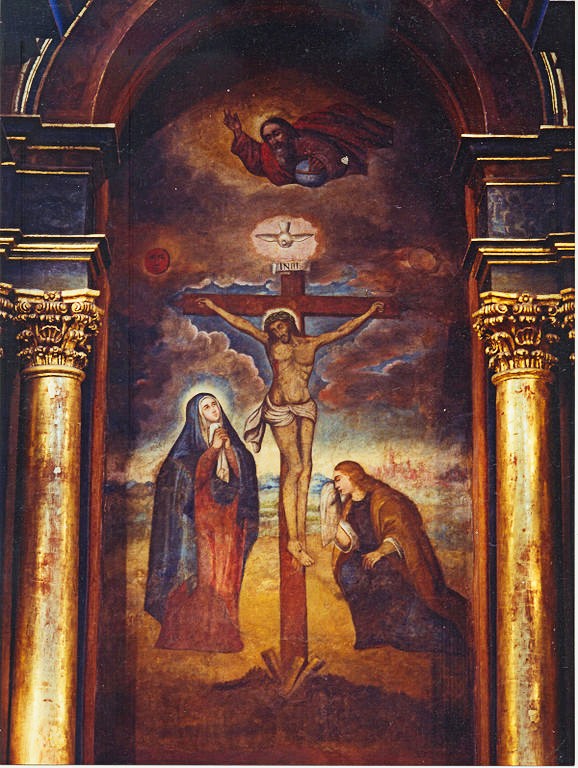
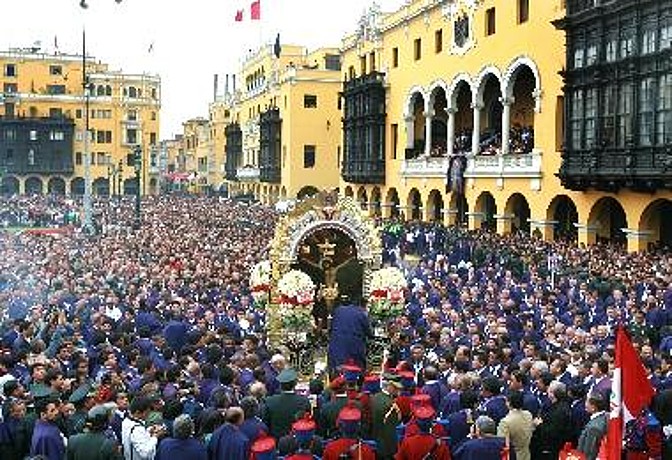
Lord of Miracles/Señor de los Milagros de Nazarenas – A mid-17th-century painting of the Crucifixion that is venerated in Lima, Peru and its celebration involves one of the largest processions in the world. It was painted by an unnamed African taken to Peru as a slave from what is now Angola. Above the Cross is the Holy Spirit and God the Father. Below and to the right of Jesus, is His mother, the Virgin Mary with her heart pierced by a sword of sorrow. Kneeling and weeping at the foot of the cross is St Mary Magdalene. The name originated on 13 November 1655 when everything around it was destroyed in an earthquake that left the painting standing and undamaged. Christ is shown enduring the pain of Crucifixion. Every year in October, hundreds of thousands of devotees from all races and economic backgrounds participate in a procession honouring the image through the streets of Lima. Boulevards are decorated in purple on 18,19 and the final Feast 28 October to celebrate the Lord of Miracles.
St Abdias of Babylon St Abraham of Ephesus St Alberic of Stavelot St Anastasia the Elder St Anglinus of Stavelot St Cyril of Rome St Cyrilla of Rome St Diomedes the Younger St Dorbhene of Iona
St Ferrutius St Gaudiosus of Naples (Died c453) Bishop St Genesius of Thiers Bl Germain of Talloires St Godwin of Stavelot St Maria Ascuncion St Remigius of Lyons St Rodrigo Aguilar Aleman St Salvius of Amiens
Martyrs of Avila – 3 Saints: Two sisters and a brother who, during a period of persecution, fled Talavera de la Reina, Spain, were caught and executed. Martyrs: Christeta, Sabina and Vincent. 303 in Avila, Spain.
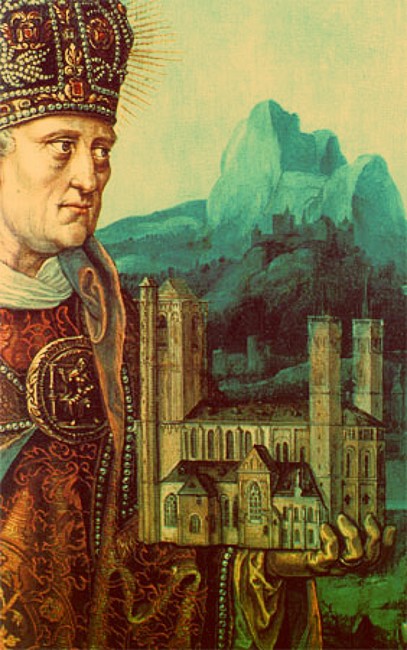
Saint of the Day – 27 October – Saint Namatius of Clermont (Died c462) Bishop, the Eighth or Ninth Bishop of Clermont (then called Arvernis) from 446 until his death in 462 and founded Clermont’s first Cathedral, bringing the Relics of Saints Vitalis and Agricola from Bologna, Italy, to enshrined therein.dedicating the Cathedral to them. Also known as – Namace, Namazio.
Namatius was a wise and good man, happily married. He lived in France (New Aquitaine), in the 5th Century. Despite having married, Namatius was elected Bishop of Clermont. In fact, in those days, the Bishop was chosen from among the City’s men who demonstrated that they had many virtues and qualities to put to good use for the entire community and, that they were capable of the sacrifices necessary in order to become the shepherd of the flock of Christ.
Even the Bishop’s wife had to demonstrate that she possessed great virtues, like Namatius’ wife, a woman with a truly golden heart, as well as being very cultured. Namatius and his wife joyfully accepted the new role. From that moment on, they no longer lived together as before – each one lived separately at the service of the Lord.
A stained glass window (see right) in the Saint-Eutrope Church in Clermont shows the Saint carrying the first Cathedral of Clermont.
Of this construction project, St Gregory of Tours in his Historia Francorum writes:
“He undertook the task of building the older Church which is still standing and is contained within the walls of the City, one hundred and fifty feet in length, sixty in width,-that is, the nave, fifty in height to the vault, with a round apse in front and on each side aisles finely built, the whole building is laid out in the form of a cross; it has forty-two windows, seventy columns, eight doors. The fear of God is in it and a great brightness is seen and, in the spring, a very pleasant fragrance, as if of spices, is perceived there by the devout. It has, near the Altar, walls of variegated work, adorned with many kinds of marble. The blessed Bishop on finishing the building in the twelfth year, sent Priests to Bologna in Italy, to procure Relics of Saints Agricola and Vitalis, who we know, very certainly, were crucified in the name of Christ our God.”
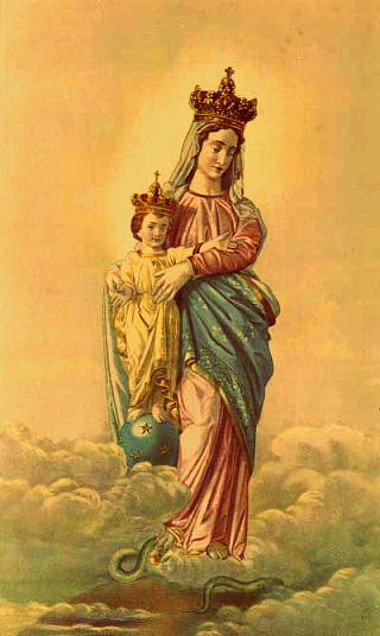
Dedication of the Basilica of Auxilium Christianorum / Our Lady Help of Christians, Turin, Italy, built by St John Bosco (1868) – 27 October: HERE: https://anastpaul.com/2021/10/27/88503/
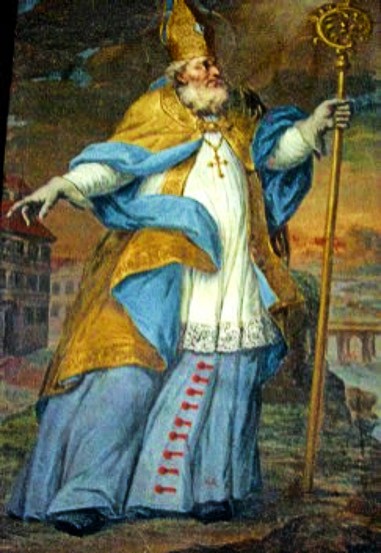
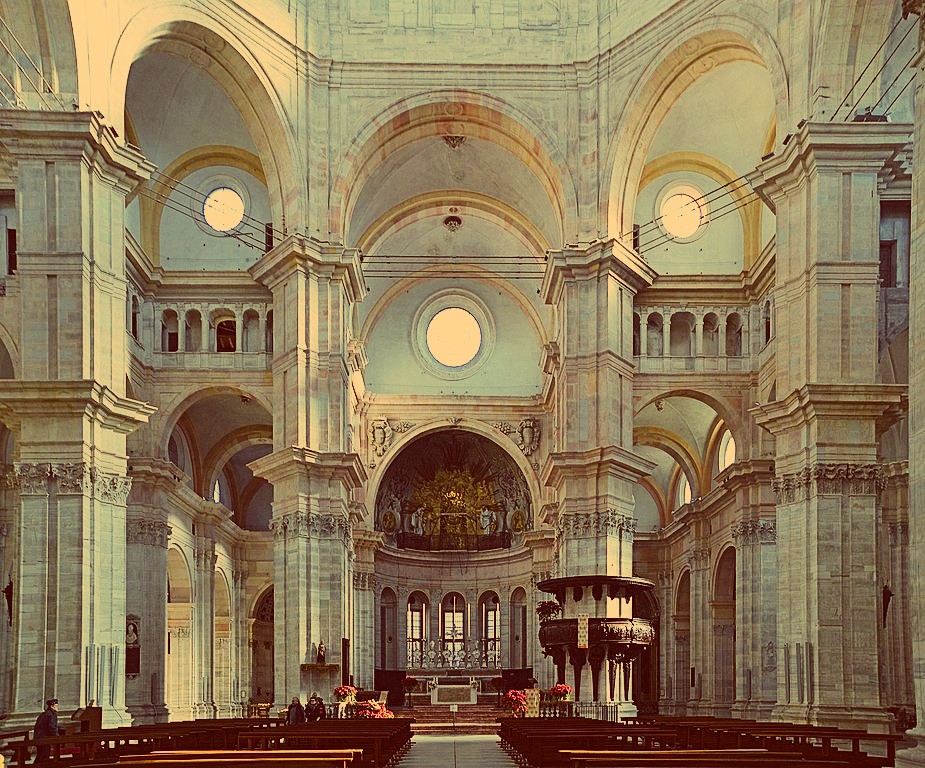
Saint of the Day – 26 October – Saint Fulk of Pavia (1164-1229) Bishop, Confessor, Peacemaker, Protector of the poor and educator of their children, Religious Reformer and Social Reformer, Defender of the Church and its rights. Born 1164 in Piacenza, Italy and died on 16 December 1229 of natural causes in Pavia, Italy aged 65. Co-Patron of Pavia. Fulk’s forefathers originally came from Ireland, hence the family name Scotti or Scotus but by the time of his arrival into the world, his family name had become one of the richest and most influential in the region. Scotia was originally the Latin name for Ireland (also called Hibernia by the Romans). Our Saint is known too as – Fulk of Piacenza, Folco Scotti, Foulques… Additional Memorial 21 May in Pavia and 16 December on some calendars.
The Roman Martyrology reads: “In Pavia, Saint Fulk, Bishop, man of peace, full of zeal and charity”
Nothing is known of Fulk’s birth or childhood, except that his parents were members of a greatly influential and immensely wealthy family, originally the descendants of Irish emigrants. In 1186, aged 22, he entered the Regular Canons of the Parish of St Eufemia, and later (1491) Fulk joined the Renana Congregation of the Most Holy Saviour..
Fulk was so talented that he was sent to Paris to complete his studies in theology. In 1194, at the age of 30, he had to return to Piacenza as he had been appointed Prior of St Eufemia. Bishop Grimerius (1199-1210) depended to a large extent on Fulk’s assistance and, in 1207, he gave him the responsibility of delivering the opening speech at the Synod. The following year, Fulk was appointed Canon at the Cathedral and Archpriest. He was also appointed Lecturer in theology at the Seminary in Piacenza.
When, in 1210, Bishop Grimerius died, Fulk was elected his successor as Bishop of Piacenza. This election was not confirmed by Pope Innocent III (1198-1216) but, nevertheless, he administered the Diocese for six years before being officially Consecrated in 1216, by Pope Honorius III (1216-1227).
In the same year,1216, the electors of Pavia Diocese elected Fulk as the City’s 49th Bishop and he held the office of Bishop of Pavia for thirteen years.
At that time, there was strong enmity between the Cities of Pavia and Piacenza, which was not unusual for neighbouring Cities. Even today, the rivalry between the two Cities lives on in colourful traditions and competitions. But, in the Middle Ages, the rivalry was not colourful folklore but violent and bloody and entailed great sorrow and ruin. Bishop Fulk, who was from Piacenza and was the Bishop of Pavia, became the foremost peacemaker between the two Cities. He first worked for internal peace in the Cities which were also characterised by violent factional battles. He then worked for peace between them.
Bishop Fulk founded a number of social institutions which, among other things, provided food for the poor and free education for their children. He also reformed religious houses, including the Monastery of San Pietro in Ciel d’Oro, and he defended the freedom of the Church against the Civil authorities.
Fulk died on 16 December 1229 and was buried in the Cathedral. He was succeeded by Saint Rodobald II de’ Cipolla. His memorial day is 26 October. In the Cathedral of Pavia he is celebrated on 21 May. He was Canonised by Pope Gregory IX.
Our Saint Fulk goes down in history as an extraordinary peacemaker. Supported by his unshakable faith and the teachings of Jesus, the Bishop often managed to restore peace, so much so that he is loved by both the people of his own birthplace, Piacenza and the people of his beloved See, Pavia.
St Adalgott of Einsiedeln St Alanus of Quimper St Albinus of Buraburg
St Alfred the Great (849-899) King of Wessex, Confessor, Scholar, Writer and Translator, negotiator. He administered justice with insight and fairness, protected the poor, and encouraged art and the crafts. He tried in all that he did, to rule as a model Christian King. For all this, he alone among the rulers of England is called “the Great.” This Great Saint’s Life: https://anastpaul.com/2021/10/26/saint-of-the-day-26-october-saint-alfred-the-great-849-899/
St Alorus of Quimper St Amandus of Strasburg St Amandus of Worms St Aneurin St Aptonius of Angouleme St Arnold of Queralt St Bean of Mortlach St Bernard de Figuerols
St Felicissimus of Carthage St Florius Martyr of Nicomedia and Companions St Fulk of Pavia (1164-1229) Bishop St Gaudiosus of Salerno St Gibitrudis St Gwinoc St Humbert St Lucian Martyr of Nicomedia and Companions St Marcian St Quadragesimus of Policastro St Quodvultdeus St Rogatian of Carthage St Rusticus of Narbonne St Sigibald of Metz
Saint of the Day – 25 October – Saint Fronto of Périgueux (1st-2nd Centuries) Bishop consecrated by St Peter Apostle, Confessor, Missionary, Miracle-worker. Born at an unknown date in Lycaonia, Asia Minor and died in Périgueux, France of natural causes. Also known as – Fron, Frontón, Frontone, Front. Name means: the clever one (Old High German).
The Roman Martyrology reads today: “At Périgueux in France, St Fronto, who, being made Bishop by the blessed Apostle Peter, with a Priest named George, converted to Christ a large number of the people of that place and renowned for miracles, rested in peace.”
Fronto actually lived but at an unknown time. According to tradition, he first lived as a Hermit and then became the first Bishop of Périgueux .
Together with his assistant, the Priest named George, Fronto is believed to have been sent to Gaul by St Peter and Ordained as the first Bishop of Périgueux . George died on the way to France and Fronto returned to Rome. But St Peter gave him a rod, saying: “When you place this rod of mine, on the body of this assistant, say, Arise in Christ’s Name! and carry out the commission which you have received from the Apostle.” So it happened, together they converted the Citizens of Périgueux.
When Fronto fell asleep in his chair one day after the Epistle, Christ appeared to him and caused him to go with Him to Tarascon, to hold the funeral service for St Martha of Bethany, who died there and to help Him to lay her in the grave. In the meantime, when the singing was over in Périgueux and the Deacon was waiting for the Bishop’s blessing, to read the Gospel and woke him, the Bishop sent him away to fetch the ring and gloves which he had left at Martha’s graveside. And thus the Deacon was a witness to the miracle of his bilocation and dual presence.
Fragments of Fronto’s tomb are exhibited in the Museum in Périgueux . The tomb supposedly consisted of a pyramid-shaped roof and many figures dating to antiquity. The first mention of a veneration of Fronto can be found incidentally in the life story of St Gaugericus the Bishop of Cambrai, from the middle of the 7th Century, who prayed at the grave of the Confessor Fronto. It tells of Fronto as a student of St Peter and in the 9th Century, Fronto was included in the Martyrology of Lyon and that of St Rabanus Maurus . In the 10th and 11th Centuries, his life story was revised several times and elements from the legends of Martialis of Limoges and Martha of Bethany were incorporated.
Authentications of his Relics took place in 1261 and 1463. These were largely destroyed by Protestants in 1575. When Périgueux was liberated in 1581, St Fronto’s Cathedral was badly damaged and Saint-Fronto’s was left untouched and in a state of disrepair for decades.
Listen to the chiming of the bells of St Fronto Cathedral, it’s as if you were there!
In 1852 the Architect Paul Abadie, undertook major restoration work to the Cathedral to save it from ruin. He brought it back to life, stone by stone, a colossal project lasting some fifty years. Abadie managed to retain the original plan and volumes of the Cathedral as well as re-designing certain aspects to harmonise the architecture. He used the same architectural model for Saint-Fronto’s as he later used for the Sacré Coeur BaSILICA in Paris.
St Cyrinus of Rome St Dulcardus St Fronto of Périgueux (1st-2nd Centuries) Bishop consecrated by St Peter Apostle St Fructus of Segovia
St Gaudentius of Brescia (Died 410) Bishop, renowned Preacher, Theologian, Diplomatic Mediator, The Roman Martyrology states today: “In Brescia, Saint Gaudentius, Bishop, who, Ordained by Saint Ambrose, shone among the prelates of his time for doctrine and virtue, instructed his people with words and writings and founded a Basilica which he called the ‘Council of Saints.‘” Biography: https://anastpaul.com/2021/10/25/saint-of-the-day-25-october-st-gaudentius-of-brescia-died-410/
St George of Périgueux (1st-2nd Centuries) Priest, assistant to St Fronto St Goeznoveus of Leon St Guesnoveus Bl Henry of Segusio St Hilary of Javols St Hilary of Mende St Hildemarca of Fecamp St Januarius of Sassari St Lucius of Rome St Lupus of Bayeux St Mark of Rome
Saint of the Day – 24 October – Saint Maglorius of Wales (Died 575) Bishop of Dol and Solitaire in France, Confessor, Monk, Missionary, Abbot, Miracle-worker, “Apostle to Guernsey and Sark” (Sark, French “Sercq” one of the Channel Islands, a dependency of Guernsey, located in the English Channel, south of England’s coast. Sark lies 11 km east of Guernsey and about 40 km west of the Cherbourg Peninsula of France). Maglorius was born in southern Wales and died in 575 at the Monastery he had founded on the Island of Sark. Patronage – of Sark. Also known as – Maglorious,, Maglorius of Dol, Maglorius of Maelor, Maghorus… Magloire… Maelor… Maglorio…
The Roman Martyrology states: “In Bretagne, the departure from this life of St Maglorious, Bishop, whose body rests in Paris.”
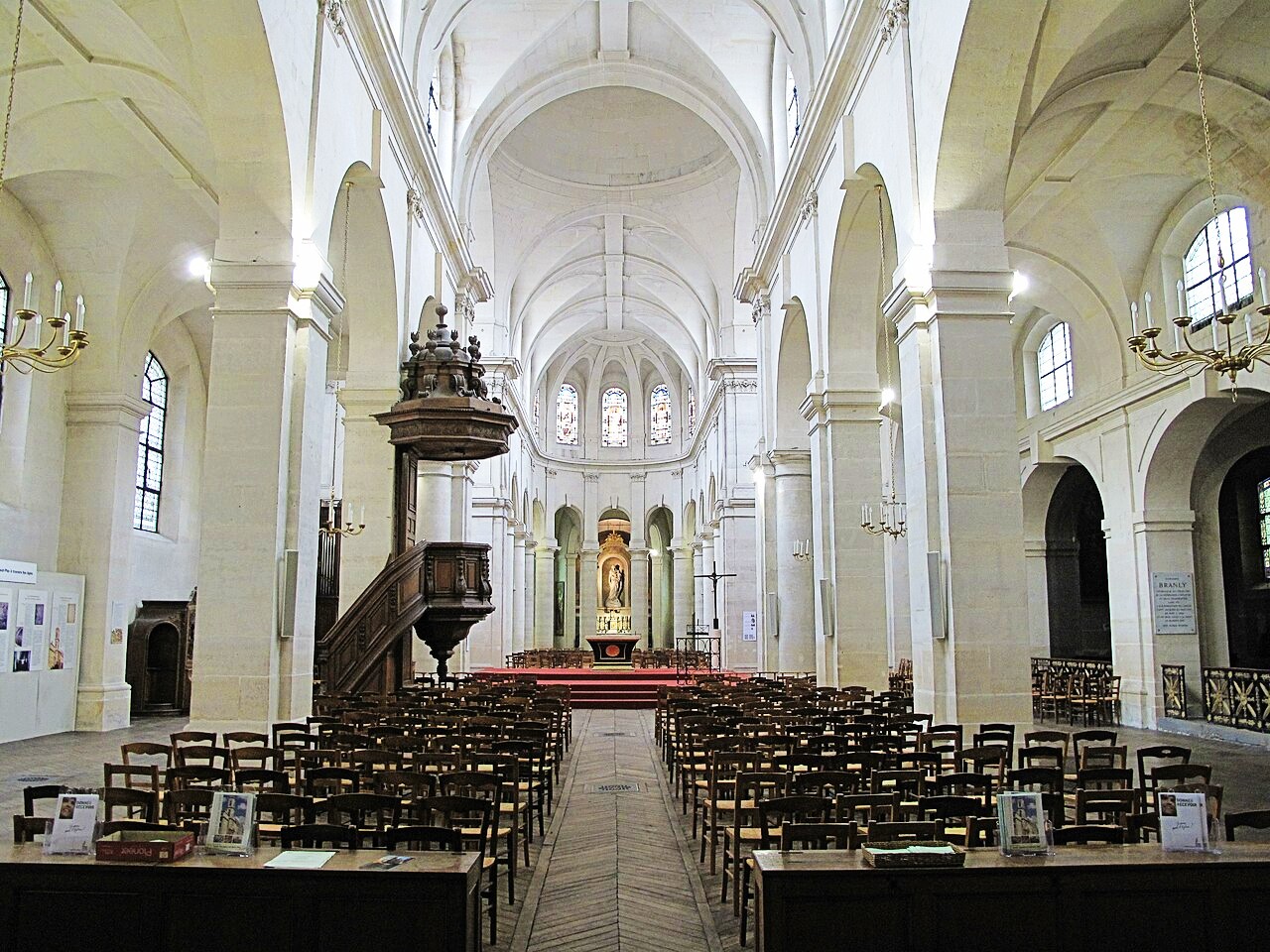
St Maglorius – oil painting by Eugène Goyet (1798–1846), Church Saint-Maglorius-du-Haut-Pas in Paris where his Relics are enshrined.
Saint Maglorius was born inWales at the end of the 5th Century. He was first cousin of Saint Samson (c490–565). They were both placed under the guidance of Abbot Iltut, disciple of Saint Germanus of Auxerre, who took particular care to train them in science and piety. When they were old enough to decide on the choice of a state of life, Samson retired to a Monastery. Maglorius returned to his parents and continued to practice all Christian virtues at home.
Amon, Samson’s father, was attacked by a dangerous illness some time later. He sent for his son and humbled himself before God, from whom he implored mercy. When his health was restored, he renounced his possessions to devote himself solely to the Lord, with his entire family.
St Maglorius and his family entreat St Samson to receive them into the Monastery
This example had very happy consequences for Maglorius for, he was so touched that he came to Samson with Umbrafel his own father, Afrèle his mother and his two brothers. They all resolved to leave the world and immediately distributed their goods to the poor and to the Churches. Maglorius and his father became particularly attached to Samson, adopting the position of disciples and they obtained permission from him, to take the monastic Habit in the same house. Umbrafel was subsequently sent to Ireland and charged with the government of the Monasteries of that country.
When St Samson was consecrated regional Bishop, he associated himself with Maglorius , who had been elevated to the Diaconate. He took him with him to Armorica, to help him in his Apostolic work and to contribute with his zeal, to the propagation of the Gospel. King Childebert supported the holy missionaries, who were soon able to found Monasteries. Samson made his residence in that of Dol and gave the leadership of that of Kerfunt, or Kerfuntée, to Maglorius, whom he Ordained Priest, so that he could succeed him in the exercise of Episcopal functions.
Maglorius, following the example of his predecessor, preached the Gospel to the Breton,s who lived on the coasts. These peoples were Christians, at least for the most part but the misfortune of wars and the scourges which followed, had weakened the knowledge of Jesus Christ in them and had almost entirely erased it in many. The Saint continued to live with his Monks, as in the past. Under his clothing, he wore a hair shirt. He only ate barley bread and vegetables and a little fish on Sundays and holidays. His zeal and his charity left him almost no moment of rest and he was sometimes without being able to stop to eat for an entire day.
After three years of Episcopate, he formed the plan of going to live in solitude. This project was inspired by the divisions which reigned between the Counts of Brittany. He also believed that God desired of him, this complete separation from the world. After having obtained the consent of the people but without having consulted the neighbouring Bishops. Maglorius, was replaced by Bishop Budoc, whose zeal, enlightenment and virtues were well known by Maglorius. But the Bishops of France disapproved of such conduct and the Second Council of Tours forbade the Bretons from following it in the future.
Maglorius redoubled his austerities and burning with the desire to be united with God in the most intimate way, he avoided, as much as possible, conversing with men. But the reputation of holiness which he enjoyed soon led to the discovery of the place of his retirement. People went there from all sides to find relief from the needs of the soul and the body. If he found himself obliged to accept a few small gifts, it was to distribute them to the poor. Finally, no longer able to bear this influx of people who came to visit him, he resolved to retire into some solitude, where he could be entirely unknown to the world. But Bishop Budoc, whom he consulted, reassured him by making him understand that the good works he was carrying out, should make him sacrifice his particular taste for retirement. He, therefore, remained in the state in which he was and his miracles made his name more famous day-by-day.
The Count of Loiescon, whom he had cured of leprosy, having given him land on the Island of Geurnsey, he built a Church there and founded a Monastery where he gathered more than sixty Monks. During the famine which followed the death of King Chilperic, the monastery provided for countless people who were in need. Although the Monastery’s provisions were exhausted, Maglorius did not reduce the number of his Monks, as was advised. He placed his trust in God and he soon reaped the fruits – a ship loaded with provisions landed on the Island and broughtall the relief needed by all!
It was on Easter night, of the following year that the Maglorius was warned by Heaven, of the proximity of the day of his death. He no longer left the Church, unless he was forced to do so by necessity or by the utility of his neighbour. He often repeated these words of the Psalmist: “I ask only one thing of the Lord and that is, to dwell in His house all the days of my life.”
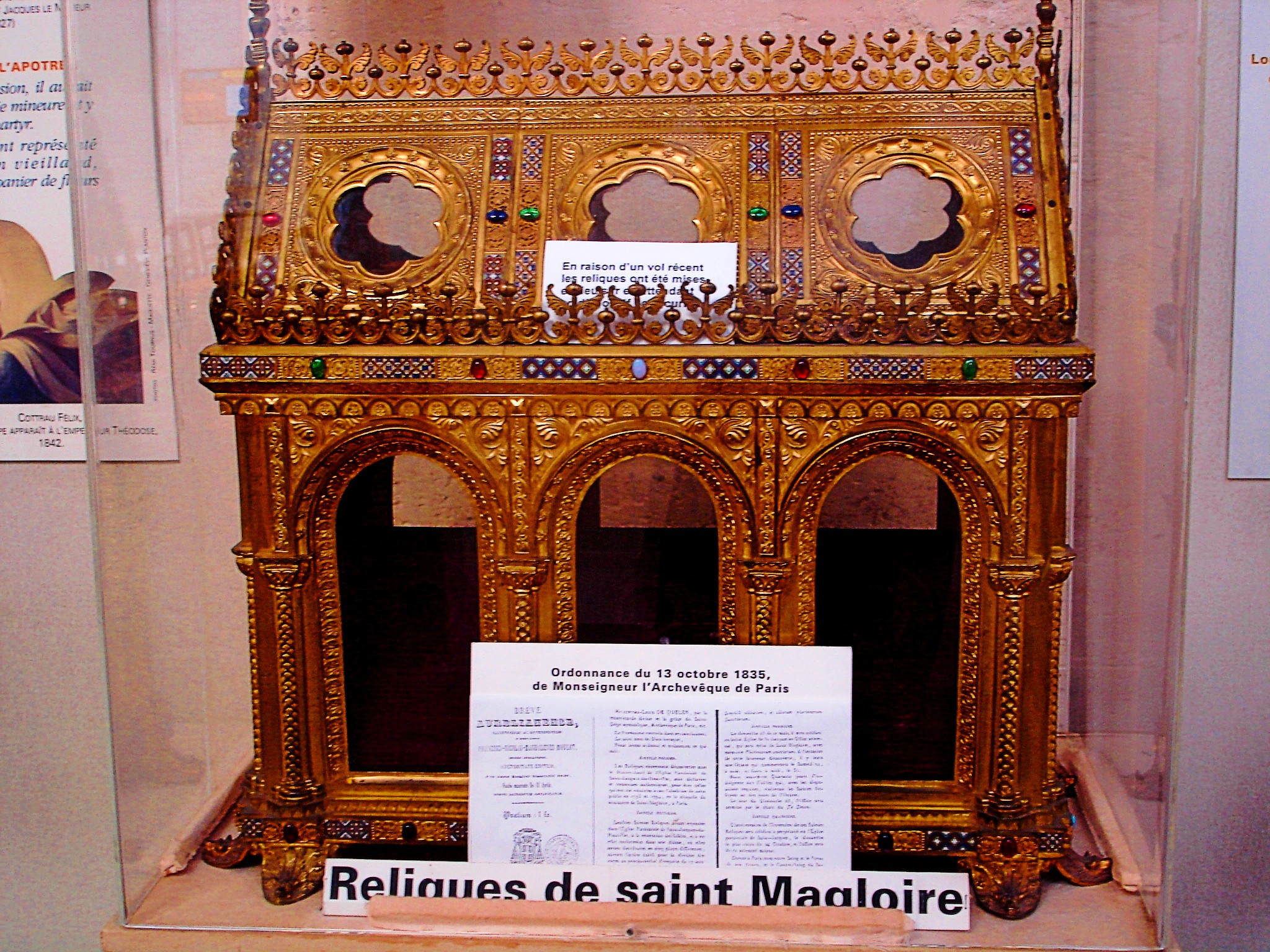
He died six months later, on 24 October 575. He was around eighty years old. During the Norman wars, his Relics and those of several other Saints, were brought to Paris for safety and deposited in the Church of Saint- Barthélemy, then in the Chapel of Saint-Georges, located outside the City walls. They were then transferred to the Church of Saint-Jacques, since called Saint-Maglorius. In the same place, also rested the Relics of Saints Samson and Louthiern, Bishops and of Saints Guinganthon and Escuiphle, Abbots.
The Church of St Maglorius in Paris which contains his Relics and those of St Samson and others
One of the most well-known and detailed Miracles of St Maglorius concerns his rescue of a group of children. The children were playing in an abandoned wreck on the beach below the Monastery in Sark, when a sudden violent storm swept them out to sea. Maglorius swam out to sea when he heard their cries and saved them and the wreched boat, steering it to the safety of the shore, before vanishing.
Other miracles include – the destruction of a dragon on the Island of Jersey; the resurrected a drowned fisherman of Sark and that the putting to flight a fleet of Vikings.
Posthumous miracles of St. Maglorius are also included in the surviving texts. After his death, Sark was attacked again by Vikings, who sacked the Monastery and killed the Monks. When seven of the Vikings attempted to open St Magllorius’ tomb, they were blinded and many of the others turned and began to kill each other!
Saint Raphael the Archangel The Feast day of Saint Raphael was included for the first time in the General Roman Calendar in 1921, for celebration on 24 October. With the 1969 revision of the General Roman Calendar, the Feast was transferred to 29 September for celebration together with Archangels Saints Michael and Gabriel. St Raphael: https://anastpaul.com/2021/10/24/saint-of-the-day-24-october-st-raphael-the-archangel/
Bl Amado García Sánchez St Audactus of Thibiuca St Cadfarch St Ciriacus of Hierapolis St Claudian of Hierapolis St Ebregislus of Cologne St Felix of Thibiuca St Fortunatus of Thibiuca St Fromundus of Coutances St Maglorius of Wales (Died 575) Bishop
St Marcius of Monte Cassino St Mark of Campania Hermit
St Senoch St Senócus of Tours St Septimus of Thibiuca
Martyrs of Ephesus – 3 Saints: Three Christians Martyred together. All we know about them are the names Mark, Sotericus and Valentina. They were stoned to death near Ephesus, Asia Minor (in modern Turkey). Their relics are enshrined on the island of Tasos.
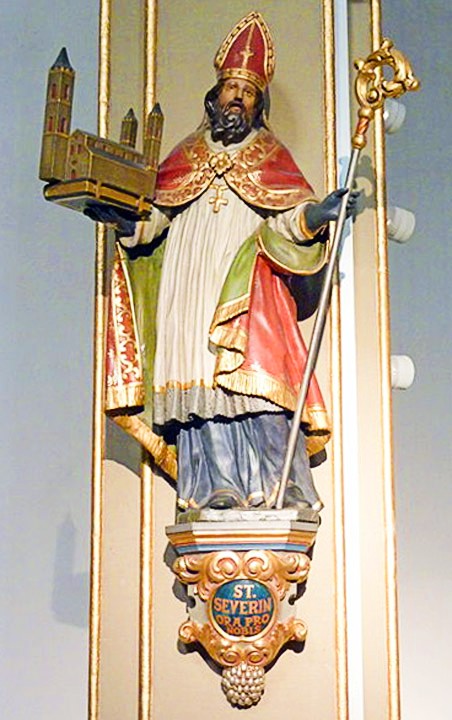
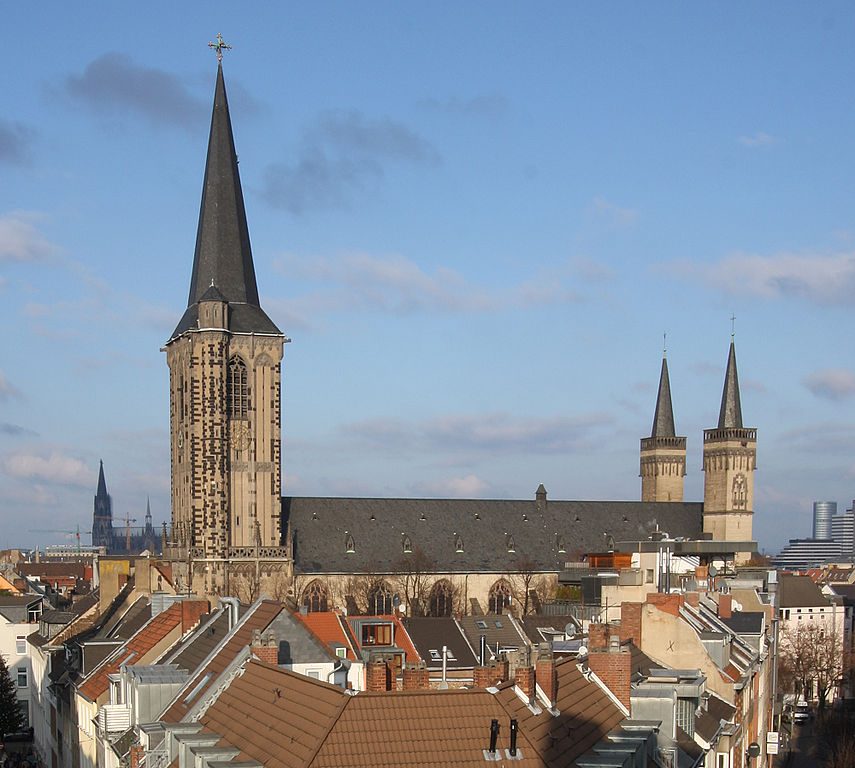
Saint of the Day – 23 October – Saint Severinus of Cologne (c330-c400) the third Bishop of Cologne, Confessor, Defender of the Faith against heretics, Miracle-worker. He heard about the death of St Martin of Tours by the message of Angels’ voices. He founded a Monastery in honour of the Martyrs, Saints Cornelius and Cyprian, which is nowadays the Basilica of St. Severinus. Born in Bordeaux, France and died in c400 of natural causes. Patronages – of Cologne, of weavers, for rain, against natural misfortunes and drought.Also known as – Severin, Severino.
The Roman Martyrology reads: “At Bordeaux, St Severinus, Bishop of Cologne and Confessor.”
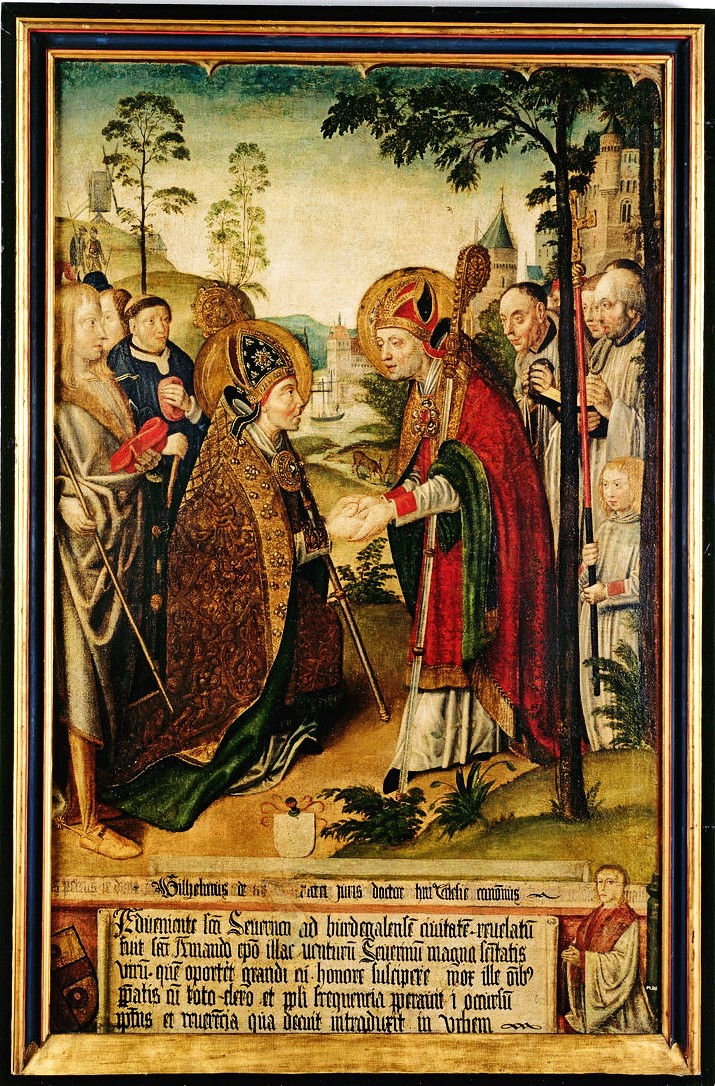
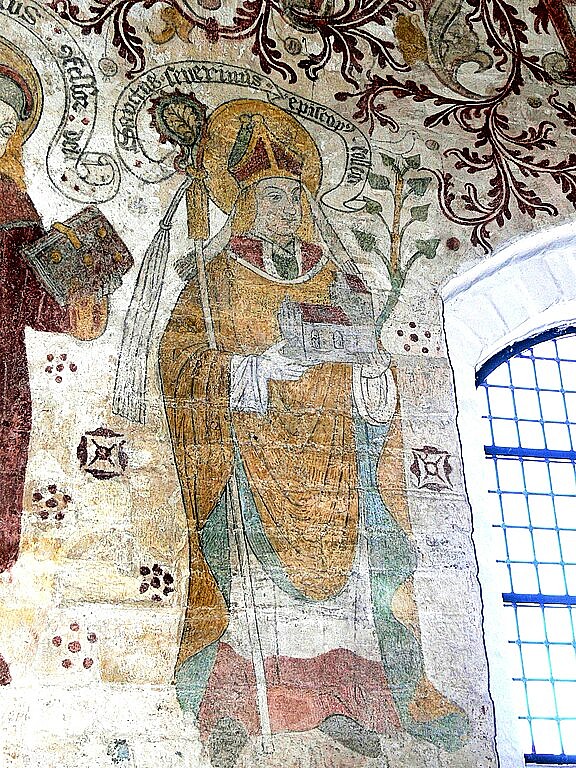
Severinus was taking a walk in a field while still a Priest when he heard a voice tell him he would one day be appointed as the Bishop of Cologne. When he asked when that would happen, he was told when his staff produced buds and flowers. Immediately, he ‘planted’ his staff into the ground, it budded and he was called to Cologne.
The arrival of St Severinus
There are only two written sources which provide clues about Severinus’ life and tenure – ‘The Cologne Bishops’ Lists,‘ which have been created in the early Middle Ages, list him as the third incumbent after St Maternus and St Euphrates.
Furthermore, Saint Severinus is remembered as a great opponent of the spread of the heretical Christological doctrine developed by the Monk and theologian, Arius, commonly called Arianism and condemned in 325 by the Council of Nicaea.
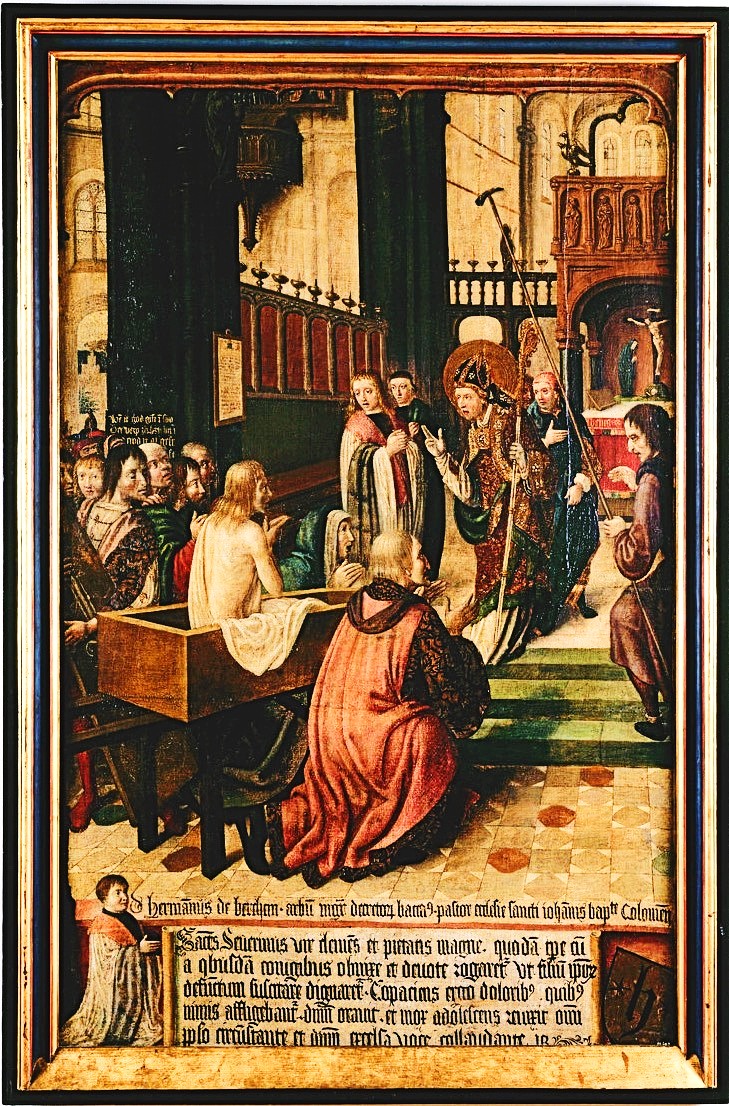
Around 580, Bishop St Gregory of Tours (Episcopate 573-594). also describes the life of his predecessor, St Martin, who died in 396 or 397. It mentions Martin’s death and his soul’s ascension into Heaven, which the Cologne Bishop Severinus experienced in a vision, when he visited the holy sites of his Episcopal City of Cologne with Clerics. From this miraculous record, it can be concluded that Severinus was the Bishop in Cologne at the time of St Martin of Tours’ death. The image below shows one of the many miracles of St Severinus – raising a man from the dead, although we have no account of this great prodigy.
A miracle of St Severinus – the resurrection of a man from the dead
From his death, St Severinus was highly venerated in Cologne. The shrine of St Severinus, built in 1819, is raised in the rear area of the High Choir. In it are the bones of the Saint. Furthermore, a Crucifixsbelonging to our Saint, is preserved in the Church..
In 1999, a reconnaissance of his remains was carried out, during which a document was confirmed which asserts the transfer of the bones of Saint Severino by Bishop Wigfried of Cologne (924-953).
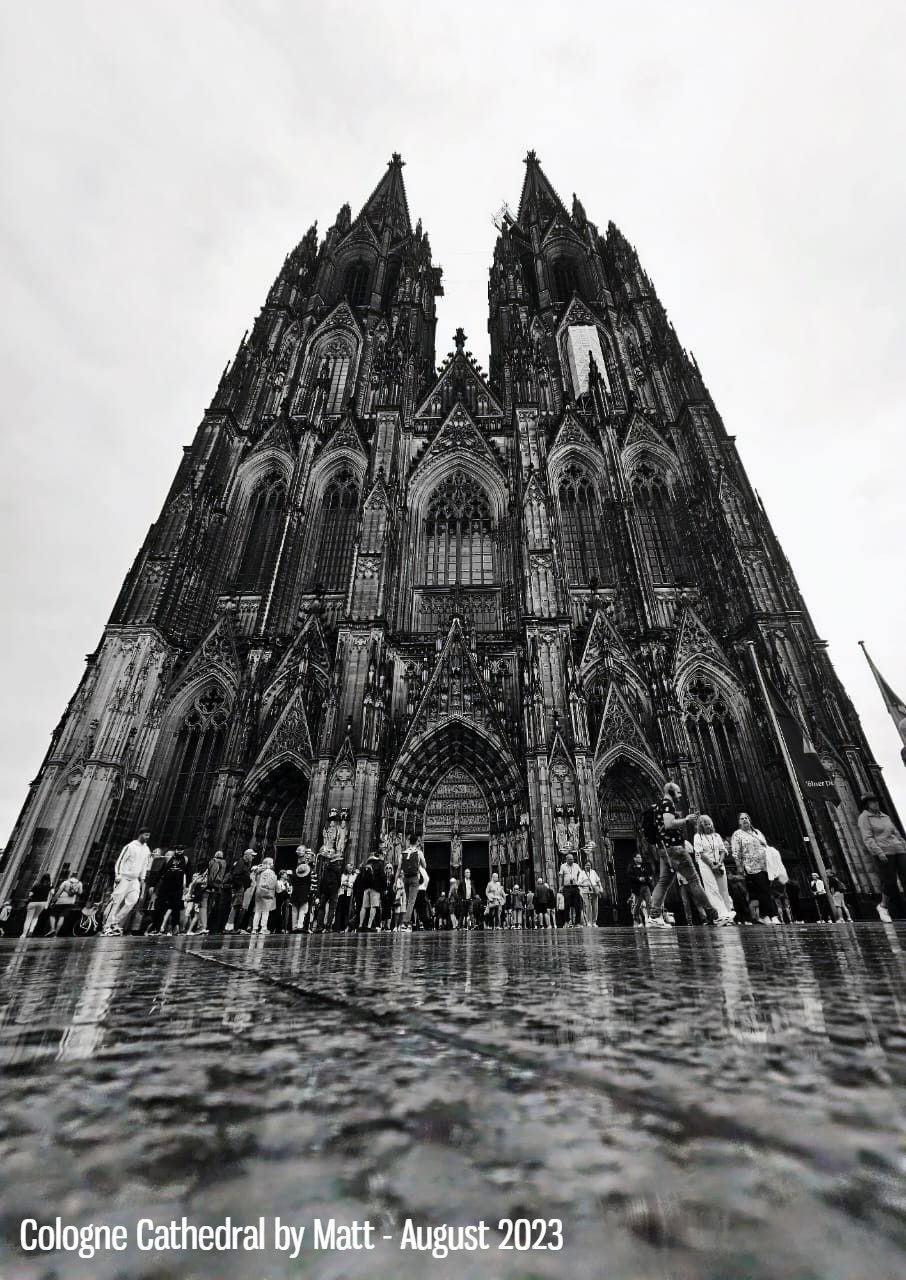
Cologne Cathedral Image by Matt Stenvert August 2023






















You must be logged in to post a comment.