Saint of the Day – 6 January – St Felix of Nantes (c 515-584) Bishop of Nantes, Confessor, Evangeliser, Negotiator and peace-maker, Social reformer. Born in c 515 in the Aquitaine region of modern France and died on 6 January 584 of natural causes. Patronages – against famine, against the plague/epidemics. Additional Memorial – 7 July (translation of relics).
The Roman Martyrology states: “In Nantes in Brittany, the memorial of Saint Felix, Bishop, who, in the service of his fellow citizens, gave testimony of his zeal, building the Cathedral Church and evangelising the rural populations relentlessly.”
Born in c 513 to a well-known family of Aquilani and was Ordained a Priest in 540. Felix was married but when, at the age of 37, he was made Bishop of Nantes, on the death of Evemer. his wife became a Nun. He then sold his patrimony donating the proceeds to assist he poor.
He immediately began to evangelise the region and trained young Priests as Missionaries to assist in his programme.
He built and Consecrated a Cathedral within the walls of the City, as planned by his predecessor, Evemer. His social and secular improvements at Nantes were praised in the poems of the Bishop of Poitiers, St Venantius Fortunatus.
He often mediated between the people of Brittany and the Frankish kings. Guerech II, Count of Vannes, plundered the Diocese of Rennes and Vannes and repulsed the troops which King Chilperic sent against him but, at the entreaties of Bishop Felix, withdrew his forces and made peace . By intervening in the political affairs of his time, he saved Maclavius from death, who was being persecuted by his brother Conone, Count of Vannes, who wanted to suppress him.
Felix was in attendance at the Council of Paris in 557 and the Council of Tours in 567.
Towards the end of his life Felix wanted to choose his nephew Burgundius as his successor but St Gregory of Tours, his Archbishop, who was against him (Felix had supported his rival Riculfo) refused to consecrate him, on the grounds that he was too young.
Felix died at the age of seventy, on 6 January 584 after 33 years of zealous service as Bishop of Nantes and was buried in the Cathedral which he had built and Consecrated.
The Solemnity of the Epiphany of the Lord – 6 January: Epiphany celebrates the visit of the three kings or wise men to the Christ Child, signifying the extension of salvation to the Gentiles. The date of Epiphany, one of the oldest Christian Feasts, is 6 January, the 12th day after Christmas. However, in some countries, the celebration of Epiphany is transferred to the Sunday that falls between 2 January and 8 January (inclusive). Greece, Ireland, Italy and Poland continue to observe Epiphany on 6 January as do some Dioceses ithroughout the world. Because Epiphany is one of the most important Christian Feasts, it is a Holy Day of Obligation in most countries.
Nostra Signora di Cana / Our Lady of Cana – 6 January:
The title recalls the First Miracle of Our Lord through the intercession of His Mother at the Marriage at Cana in Judea, commemorated annually on 6 January. Christ turns water in wine at the request ofHhis Mother (Gospel of John 2:1-10).
Two days of festivities preceded the wedding, which was followed by an evening banquet. It was here that Mary noticed the wine was scarce. She reminded Jesus that He had promised to supply the wine. The Divine Saviour replied “What is that to you or to me, Woman? My hour has not yet come.” Entirely relieved of anxiety for the guests and trusting the Father would reveal the Lord’s power at the right moment, she went to the worried servants and said to them with quiet modesty and confidence: “Do whatever He tells you.” The servants brought in six large, stone jars, which when full were so heavy, two men had to carry one. That they were now empty was evident. Then Jesus said to the waiters: “Fill the jars with water.” After this was done, Jesus went to the jars and blessed them; then He said to the waiters: “Draw out now and take them to the chief steward.” When the chief steward, who did not know where the wine came from, tasted the water after it had become wine, he went to the bridegroom, exclaiming in surprise: “Every man first sets forth the good wine, and when they have drunk freely, then that which is poorer in quality. But you have kept the good wine until now!” When the bridegroom and the bride’s father tasted the miraculous wine, they too were amazed, for the servants insisted they had just filled the jars with nothing but water from the well. Then all the guests drank the new wine and were silent with awe and reverence as they realized they had just witnessed a striking miracle wrought by the Master, Jesus of Nazareth, at the request of His beloved Mother.
Mary Mother of Mercy willingly assists all the poor and afflicted who fear God. From this incident, St. Bonaventure judges of the many graces which we can hope for through Mary, now that she reigns in Heaven; “For,” he says, “if Mary while yet on earth was so compassionate, how much more so is she now, reigning in Heaven!” He gives the reason by adding: “Mary, now that she sees the face of God, knows our necessities far better than when she was on earth and in proportion to the increase of her compassion, her power to aid us has been augmented.” Ah! Why do we not take refuge in all our necessities to this merciful Mother, who, assists the needly?
St Demetrius of Philadelphia St Diman Dubh of Connor St Edeyrn St Eigrad St Erminold of Prüfening St Felix of Nantes (c 515-584) Bishop Bl Frederick of Saint-Vanne Bl Gertrud of Traunkirchen Bl Gertrude van Oosten St Guarinus of Sion St Guy of Auxerre St Honorius St Hywyn of Aberdaron
St Julian of Antinoë St Julius Bl Luc of Roucy Bl Macarius the Scot St Macra of Rheims St Merinus St Nilammon of Geris St Petran of Landévennec St Peter of Canterbury St Pia of Quedlinburg St Pompejanus St Rafaela Porras y Ayllón Bl Raymond de Blanes Bl Rita Amada de Jesus St Schotin St Wiltrudis of Bergen
Martyrs in Africa: Unknown number of Christian men and women who were martyred in the persecutions of Septimus Severus. They were burned to death c 210.
Martyrs of Sirmium – 8 saints: A group of Christians martyred together for their faith. The only surviving details are the names of eight of them – Anastasius VIII, Florianus, Florus, Jucundus, Peter, Ratites, Tatia and Tilis. They were martyred in the 4th century at Syrmium, Pannonia (modern Sremska Mitrovica, Vojvodina, Serbia).
Saint of the Day – 5 January – Saint Emiliana of Rome (6th Century) Virgin, Recluse, Mystic. Patronage – single laywomen. Also known as – Aemiliana, Emilian, Emilienne.
The Roman Martyrology states: “In Rome, commemoration of Saint Emiliana, Virgin, Aunt of Pope Saint Gregory the Great, who, shortly after her sister Tarsilla, also returned to the Lord.”
Emiliana is remembered by her nephew, St Gregory the Great (540-604), for having been able to assist him in his discernment of his vocation. . We have the only biographical information about Emiliana thanks to the Pope who mentions his paternal aunt in a homily.
Emiliana, together with her sisters Tarsilla and Gordiana, retired to a consecrated and ascetic life, probably in the family home. But at a certain point Gordiana chose marriage. Tradition states that St Pope Felix III, their ancestor, appeared to Trasilla and bade her to enter Heaven and on the eve of Christmas Trasilla died, seeing Jesus Christ calling her. The legend also states that Trasilla, a few days later appeared to Emiliana, inviting her to celebrate Epiphany in Heaven.
Emiliana was the Daughter of the noble and wealthy Senator Gordian and Saint Silvia of Rome and the sister of Saint Trasilla and Gordiana.
She was the paternal aunt of Pope Saint Gregory the Great and the niece of Pope Saint Felix III who died in 365.
Emiliana spent so much time kneeling in prayer that her knees and elbows were locked arthritically in the position. She and her sister lived as Recluses in their father‘s house until Thrasilla‘s death.
Emiliana who received a visit from her recently deceased sister inviting her to depart this vale of tears and true to her desire to be with the Lord, Emiliana died a few days later.
Bl Bl Convoyon of Redon St Deogratias of Carthage (Died 457) Bishop St Dorotheus the Younger St Emiliana of Rome (6th Century) Virgin Bl François Peltier St Gaudentius of Gnesen
Bl Jacques Ledoyen Bl Joan Grau Bullich St Kiara St Lomer of Corbion Bl Marcelina Darowska Bl Maria Repetto Bl Paula of Tuscany Nl Pierre Tessier Bl Pietro Bonilli St Simeon Stylites St Syncletica St Talida of Antinoë
Martyrs of Africa – 14 saints: A group of Christians martyred together in Africa, date unknown, exact location unknown. We know nothing more than their names – Acutus, Anastasia, Candidus, Coelifloria, Felix, Honorius, Januaria, Jucundus, Lucianus, Marcus, Petrus, Secundus, Severus and Telesphorus.
Martyrs of Sais: A group of Christians martyred for their faith, but about whom no details have survived. They were martyred by drowning near Sais, Egypt.
Martyrs of Upper Egypt: There were many martyrs who suffered in the persecutions of Diocletian in the Thebaid region. Though we know these atrocities occurred, to the point that witnesses claim the torturers and executioners were exhausted by the work, we do not know the names of the saints and we honour them as a group. Many were beheaded and or burned alive in 303 in Upper Egypt.
Saint of the Day – 4 January – Saint Pharaildis of Ghent (c 650-c 740) Virgin, although married, she remained a virgin during her marriage, apostle of charity, miracle-worker. Born in c 650 in Ghent, Belgium and died in c 740 of natural causes. Patronages – against childhood diseases, of toothache, difficult marriages, poultry, victims of abuse, widows, Ghent, Belgium, Smetlede, Belgium, Bruay, France. Also known as – Farahilde, Farailde, Pharaild, Pharailde, Pherailde, Vareide, Varelde, Veerhilde, Veerle, Verylde. The name of this Saint, very popular in Flanders, varies according to the various local dialects.
The Roman Martyrology states: ”In Bruay-sur-l’Escaut near Valencienne nell’Artois in Neustria, in modern-day ||Belgium, Saint Pharaildis, widow, who, forced to marry a violent man, is said to have embraced a life of prayer and austerity until old age.”
A native of a noble Belgium family, Pharaildis was the daughter of the Duke of Lotharingia called Witger and St Amalberga of Maubeuge. Her sister was Saint Gudule (c 646-c 700) and they were nieces of Saint Gertrude of Nivelles (c 628- 659).
After making a private vow of virginity, Pharaildis was given in marriage against her will, to a noble and rich suitor who treated her brutally, perhaps because she, who had consecrated her virginity to God, preferred to spend the nights in prayer in the Churches of the City rather than in the nuptial bed.
When Pharaildis was widowed, she was still a virgin and dedicated herself to charity.
Pharaildis is often depicted with a loaf or loaves of bread, in memory of one of her miracles, when she turned the loaves, into stone, that a miserly woman had refused to give to a beggar. She is also invoked by mothers concerned about their children’s health and against toothache.
A legend has it that to water thirsty reapers, Pharaildis made a spring gush out, whose waters were considered therapeutic.
The cult of Pharaildis has been documented as early as the eighth century. About the year 754, Agilfrid, Abbot of Saint Bavo’s Abbey, acquired her relics and brought them to Ghent. , where her feast is celebrated today.
Madonna delle Rose / Our Lady of the Rose s(Albano Sant’Alessandro, Italy) (1417) – 4 January:
A few kilometers from Bergamo, on the way to Trescore Balneario , in a pleasant plain, lies Albano St. Alexander , a Town famous for its Roman origin and for many historical events and bloody battles between the Guelphs and Ghibellines. Today it is famous for the beautiful Shrine of Our Lady of the Roses.
Until 1855, anyone travelling along this road came upon a small, rustic Chapel that appeared to manifest nothing special, neither painted nor written, which makes the unique devotion it attracted even more amazing. The Parish Priest of Albano, zealous and pious , devoted himself to research among the ancient documents the history of this powerful devotion. From this story , printed in Bergamo in 1880 , we are able to establish the origin of the Shrine of Our Lady of the Roses in Albano St. Alexander.
The events of the night between 3 and 4 January 1417, are as follows: – two Roman merchants travelling from Bergamo to Brescia, got lost and found themselves in a thicket near the Village called Albano. Bergamo is only eight miles away but for them, in the dark, between bushes and marshes covered by snow, they felt as if they would never find their way and would die of cold and fear . They turned so fervently to the Madonna with invocations and a vow to build a Chapel, if they would be rescued. Suddenly rays of bright light penetrated the darkness and a strip of luminous light shows them the way. With hearts relieved and grateful, they followed the light to the path and heard “This is the way, walk in it,” until its junction with the main road. Accompanied by a friendly glow they very quickly reached the City of Bergamo .
Desiring to thank the Blessed Virgin , they went to the Basilica of Santa Maria Maggiore but given the hour of the night, it was closed. They found shelter in the nearby ruined tower, ruined by war. There, a great light stopped them and they saw the Immaculate Virgin sitting on a wreath of roses, which surrounded her completely, quite high up from the ground. The Blessed Virgin held the Divine Child close to her breast and the Child Jesus held, in one hand, a small bouquet of white roses, in the act of offering them to His Mother. The eyes of the Blessed Virgin and of the Divine Child, were turned compassionately towards the two merchants, who prostrated themselves at this heavenly vision.
Since that night, the site of the apparition was called “the Hill of Roses.” When day came, the merchants spread the news and attended at the Bishop’s house. After much investigation and many miracles at the Hill of Roses, the Bishop confirmed the miraculous event, judging it as a heavenly sign of mercy and protection for the City of Bergamo beset by many problems, for Italy plagued by discord and enmity, for the Church, torn by division and schism.
St Bernardine of Siena, who at this time was in Bergamo, was appointed as the final arbiter of the Blessing of Our Lady of the Night and of the Hill of Roses. The same Saint also had a vision of the Madonna in the same year, in Siena . The Holy Virgin appeared with great splendour to him, promising to help him in his mission to convert sinners.
All were eager to erect a Church in gratitude for so many graces from the Virgin Mary, The new Pope, Martin V also appointed in 1417, authorised the construction of a new Church. The two blessed visionaries returned to Albano to the site where they had been lost and seen the immense light. ,They bought the land at the place where the path of light guided them to Bergamo and there built the Chapel that would, for 438 years, in future generation,s attract the devotion of countless numbers of the faithful , until 1855. Then a terrible cholera epidemic ravaged the area and by unanimous vote of the population , they erected a new Sanctuary to the Blessed Virgin in thanksgiving and veneration. The epidemic subsided and on 20 September 1855 the construction of the Sanctuary began. The apse and dome of the Church are decorated with frescoes by Luigi Tagliaferri, the walls are adorned with paintings of the Nativity of Mary and the Descent of Jesus from the Cross by Vittorio Manini, the central painting above the High Altar depicting the Apparition to the two merchants and the medallions of the vault, are by Arturo Compagnoni. The Madonna of the Roses was canonically crowned in 1917. The terrible war that plagues the whole world prevented the solemn ceremony, which only occurred on 14 September 1920 celebrated by Don Mario Morra SDB.
St Angela of Foligno TOSF (1248-1309) known as the “Mistress of Theologians” – Wife, Mother, Widow, Religious, Mystic, Writer, Third Order Franciscan, Foundress of a religious community, which refused to become an enclosed religious order, so that it might continue her vision of caring for those in need. It is still active today. About St Angela: https://anastpaul.com/2020/01/04/saint-of-the-day-4-january-saint-angela-of-foligno-tosf-1248-1309/
St Celsus of Trier Bl Chiara de Ugarte St Chroman St Dafrosa of Acquapendente St Ferreolus of Uzès St Gaius of Moesia St Gregory of Langres St Hermes of Moesia St Libentius of Hamburg Bl Louis de Halles
St Mavilus of Adrumetum St Neophytos St Neopista of Rome St St St Oringa of the Cross Bl Palumbus of Subiaco St Pharaildis of Ghent (c 650-c 740) Virgin St Rigobert of Rheims Bl Roger of Ellant St Stephen du Bourg St Theoctistus
Martyrs of Africa – 7 saints: A group of Christians martyred together in the persecutions of the Arian Vandal king Hunneric. Saint Bede wrote about them. – Aquilinus, Eugene, Geminus, Marcian, Quintus, Theodotus and Tryphon. In 484 in North Africa.
Martyrs of Rome – 3 saints: Three Christians martyred together in the persecutions of Julian the Apostate for refusing to renounce Christianity as ordered. – Benedicta, Priscillianus and Priscus. In 362 in Rome, Italy.
Saint of the Day – 3 January – Saint Blitmund of Bobbio (Died 660) Monk, Abbot, Founder of Monasteries and Churches, miracle-worker. Born in the late 6th Century in the Dauphiné region of modern France and died in 660 of natural causes. Also known as – Blitmund of St-Valéry, Blitmund of Leuconay, Blitmund of Picardië, Blidmundus, Blimond, Blimont, Blimundus, Blithmundus, Blithumund, Blitmond, Gogus.
Blitmund was born as the son of a noble family. As a young man, Blitmund moved to northern France to live as a Hermit along the River Somme in Leucone. In 611 he built a Chapel and two cells in the area where he had settled. He brought a hanged man back to life, which caused the spread of his reputation as a miracle worker and holy man. This, in turn, led to disciples and spiritual students gathering around him and living in a nearby Monastery.
For unexplained reasons, Blitmund lost the use of his legs, he became semi-paralysed, In c 615, his friend and spiritual teacher, St Valery of Leucone (Died 620) by his fervent intercession miraculously healed Blitmund’s infirmity, Blitmund then became a Monk at St Valery‘s Monastery.
In the same year of the death of St Valery and Blitmund’s succession as the Abbot, in c 620, the Monastery was destroyed by local pagans, whereafter, Blitmund led a group of the displaced Monks to Bobbio, in Italy where they joined the Monks in a Monastery which had been established by St Columban, who had been St Valery’s spiritual teacher. St Blitmund and his fellow Monks, became students of St Attalas of Bobbio (Died c627).
After around seven years in Bobbiop, around 627, Blitmund and a party of his fellow Monks, returned to the area of Leucone, France, where he lived for a year as a Hermit before receiving permission to build another Abbey. He served as its Abbot and made Leucone a site of pilgrimage, piety and learning and a hub for evangelisation which eventually converted the region. The area was later known as Saint-Valéry, and now the village of Saint-Valery-sur-Somme.
Notre-dame de Montaigu-Zichem / Our Lady of Sichem / Our Lady of Montaigu (474) – 3 January:
The Shrine in Brabant in the Duchy of Louvain, is a replacement of the one below Mount Garizim, Israel. Hadrian restored the temple on Mount Garizim and dedicated it to Jupiter. A small Christian community settled there and on several occasions they suffered greatly at the hands of the pagans. In 474 the Emperor, to avenge an unjust attack on the community, gave Mount Garizim to the Christians, who built on it a Church dedicated to the Blessed Virgin. After the Mohammedan conquest, Christianity practically disappeared from the district. The French made amends by erecting a Shrine to Mary in the Duchy of Louvain. The ancient Statue of Our Lady of Sichem, or as Our Lady of Montaigu-Zichem,which is the title more commonly used today, has been venerated in Belgium from very early times. The Mother of God rewarded the faithful magnanimously for their pious attention. According to legend, a shepherd boy originally found the Statue of Our Lady after it had apparently fallen from a niche cut in an old oak tree. The Statue was mysteriously too heavy for him to lift alone, so he ran to find his master, and have him return to help him replace the statue in its place in the old oak. It is said that in 1306 the Blessed Virgin Mary moved the hearts of the people by causing four drops of blood to flow from the eyes of the Statue. This revived the faith of the people and increased their fervour. A small Chapel was built beneath the tree, which was rebuilt in 1602 and the dedication of Our Lady of Sichem took place in the year 1604 by the Archbishop of Mechlin, Mathias Hovius. From that time forward, there were many miracles as Our Lady seemed to demonstrate her appreciation by granting many favours. The Statue was soon venerated as miraculous, and there have been many pilgrimages to the site during the centuries, continuing even until this day.
Bl Arnold Wala St Athanasius of Cilicia St Bertilia of Mareuil St Bertille of Thuringia St Blitmund of Bobbio (Died 660) Monk, Abbot St Constant of Gap St Cyrinus of Cyzicus St Daniel Himmerod the Younger Bl Daniel of Padua St Eustadius St Finlugh St Fintan of Doon St Florentius of Vienne St Florentius of Vienne the Martyr
Bl Gerard Cagnoli St Gordius of Cappadocia St Imbenia St Kuriakose Elias Chavara St Lucian of Lentini St Melorius St Peter of Palestine St Primus of Cyzicus St Salvator of Belluno St Theogenes of Cyzicus St Theonas St Theopemptus of Nicomedia St Wenog Bl William Vives St Zosimus of Cilicia
Martyrs of Africa – 12 saints: A group of Christians martyred together in Africa, date unknown, exact location unknown. We know nothing more than their names – Acuta, Candidus, Constantius, Eugenia, Firmus, Hilarinus, Lucida, Martial, Poenica, Possessor, Rogatianus and Statutianus.
Martyrs of Tomi – 7 saints: A group of Christians martyred together, date unknown. We know nothing more than their names – Claudon, Diogenius, Eugene, Eugentus, Pinna, Rhodes and Rhodo. They were martyred at Tomi, Exinius Pontus, Moesia (modern Constanta, Romania).
Saint of the Day – 2 January – Saint Macarius the Younger of Alexandria (Died c 401) Priest, Monk, desert Hermit, Abbot, Ascetic, Poet, miracle-worker. Born in the early 4th century at Alexandria, Egypt and died in c 401 in Alexandria, Egypt of natural causes. Also known as – Macarius of Alexandria, Macarius the Alexandrian. Additional Memorials – 1 May on the Coptic Catholic calendar. Patronages – confectioners, cooks, pastry chefs.
Macarius was a Successful merchant in fruits, sweetmeats and pastries in Alexandria, Egypt. In 335, when he converted to Christianity, he gave up his business to become a Monk and Hermit in the Thebaid dara, in Upper Egypt. For a while he lived near to and was a friend of Saint Anthony the Abbot. He was exiled by heretic Arians with Saint Macarius the Elder and other Monks to an island in the Nile because of his orthodoxy but he was later allowed to return. In later life he travelled to Lower Egypt, and was Ordained and lived in a desert cell with other Monks. He wrote a constitution for the Monastery at Nitria named after him and some of its rules were adopted by Saint Jerome for his Monastery.
Amazing accounts were told of his practice of severe austerities, some of which reached the proportion of legend. For seven years he lived on raw vegetables dipped in water with a few crumbs of bread, moistened with drops of oil on feast days. He once spent 20 days and 20 nights without sleep, burnt by the sun in the day, frozen by bitter desert cold at night. “My mind dried up because of lack of sleep and I had a kind of delirium,” he admitted. “So I gave in to nature and returned to my cell.”
In 373, to obtain greater solitude and longing to attain unity with God, Macarius moved to the desert of Nitria in Lower Egypt. The journey was through a harsh land, and when Macarius was at the end of his strength, the devil appeared and asked, “Why not ask God for the food and strength to continue your journey?” Macarius answered, “The Lord is my strength and glory. Do not tempt a servant of God.” The devil then gave him a vision of a camel laden with food. Macarius was about to eat but suspecting a trap he instead prayed very fervently and the camel vanished.
He spent six months nearly naked in the marshes, beset constantly by vicious blood-sucking flies and mosquitoes, in the hope of destroying his last bit of sexual desire. The terrible conditions and attacking insects left him so deformed that when he returned to the Monks, they could recognise him only by his voice.
A young brother once offered Macarius some very fine grapes. The old fruit dealer was about to eat when he decided to send them to a brother who was ill. This brother passed them to one he considered more in need; that one did the same and on and on, until the grapes made the rounds of all the cells and finally returned to Macarius, who we imagine then ate them?
Macarius returned to Skete and began to work on his worst worldly excess – his love of travel. The devil appeared and suggested Macarius go to Rome and chase out the demons there. Torn between travelling for such a good cause but wishing to fight his vice, Macarius filled a large basket with sand, put it on his back and set out. When someone offered to help him, he said, “Leave me alone! I am punishing my tormenter. He wishes to lead me, old and weak as I am, on a distant and vain voyage.” He then returned to his cell, body broken with fatigue but cured of his temptation.
In old age Macarius journeyed to a Monastery where 1,400 Hermits lived under the rigid rule of Saint Pachomius. Macarius was refused admittance. “You are too old to survive the great rigour we impose here,” Pachomius told him. “One should be trained in it from childhood, or else one cannot stand it. Your health would fail and you would curse us for harming you.” Macarius then stood at the Abbey gate for seven days and nights – without sleep, without food, without saying a word. Finally, the Monks relented and he let him in. Macarius stood in a corner of the Monastery in complete silence, for all of Lent, living on a few cabbage leaves each Sunday “more to avoid ostentation, than from any real need.” The Monks became so jealous of this new brother that they took their complaint to Pachomius, who asked God for illumination. When he learned that the old man was Macarius, he went to him and said, “My brother, I thank you for the lesson you have given myself and my sons. It will prevent us boasting about our modest mortifications. You have edified us sufficiently. Return to your own Monastery and pray for us each day.“
St Macarius, Pray for us each day too, we beg you!
Nuestra Señora del Pilar / Our Lady of the Pillar (Zaragoza, Spain) (40) – 2 January, 12 October (originally 4 October), 15 August – (This Apparition it is considered the first Marian Apparition, and is unique because it happened while Mary was still living on Earth):
According to ancient Spanish history, on 2 January in the year 40, in the early days of Christianity, James the Greater, one of the original Twelve Apostles of Jesus Christ, was preaching the Gospel in what was then the pagan land of Caesaraugusta (now Zaragoza), in the Roman Province of Hispania.
St James was disheartened with his mission, having made only a few converts. While he was praying by the banks of the Ebro River with some of his disciples, the Blessed Virgin Mary miraculously appeared before him atop a pillar accompanied by Angels. Mary assured James that the people would eventually be converted, becoming a stronghold of the Faith due to his efforts and their faith would be as strong as the pillar she was standing on. She gave him the pillar as a symbol and a wooden image of herself. James was also instructed to build a Chapel on the spot where she left the pillar which he did, making it the first Church in Spain.
Apparition of the Virgin of the Pillar to Saint James and his Saragossan disciples by Francisco Goya, c 1769.
It is generally believed, that Mary appeared to James through bilocation, as she was still living, either in Ephesus or Jerusalem, at the time of this event, as she is believed to have died three to fifteen years after Jesus ascended into Heaven. After establishing the church, James returned to Jerusalem with some of his disciples where he became a Martyr, beheaded in 44 under Herod Agrippa. His disciples returned his body to Spain. The pillar left by the Virgin Mary is presently enshrined in the same but larger Basilica of Our Lady of the Pillar. It is believed to be the same pillar given and promised by Mary, in spite of numerous disasters that beset the Church. A fire in 1434 razed the Church that preceded the present Basilica Cathedral, see below.
The image of the Blessed Virgin Mary may or may not be the original. Some reports state that the original wooden image was destroyed when the Church burned down in 1434, contradicting other reports, that it is still the original Statue. The Statue of the Blessed Virgin Mary is made of wood and stands 39 centimetres tall while the 1.8 m pillar is made of jasper.quartz. The Statue depicts Mother Mary with the Child Jesus on her left arm, Who has a dove sitting on His left palm. Since the 16th century, the pillar is usually draped in a skirt-like cover called manto (in English: mantle). As a whole, it is protected by a bronze case and then another case of silver. The image was canonically crowned in 1905 during the reign of Pope Pius X. The crown was designed by the Marquis of Griñi, valued at 450,000 pesetas (£18,750, in1910). During the three Marian festivities of today, 15 August and 12 October, the faithful adorn the base of the Pillar and Statue with flowers – see below (both our Blessed Mother and St James would be thrilled by this display of such immense faith and piety!)
The apparition of Our Lady of the Pillar is a widely accepted sacred tradition. Popes from earliest times issued Papal Bulls attesting to the authenticity of the Shrine and the appearance of the Virgin Mary. Pope Calixtus III issued a Bull in 1456 encouraging pilgrimage to the Lady of the Pillar. It acknowledged the miracle of its foundation and the miracles that had taken place at the Spanish Shrine. It was also through this Bull that the name “Our Lady of the Pillar” was confirmed. So many contradictions had arisen concerning the miraculous origin of the Church that during the reign of Pope Innocent XIII , the Bishops of Spain appealed to the Holy See to settle the controversy. After careful investigation, the twelve Cardinals, in whose hands the affair rested, adopted the following account, which was approved by the Sacred Congregation of Rites on 2 August 1723 and has since been inserted in the lessons of the Office of the Feast of Our Lady of the Pillar, celebrated on 12 October.
“Of all the places that Spain offers for the veneration of the devout, the most illustrious is doubtless the Sanctuary consecrated to God under the invocation of the Blessed Virgin, under the title of Our Lady of the Pillar, at Saragossa. According to ancient and pious tradition, St James the Greater, led by Providence into Spain, spent some time at Saragossa. He there received a signal favour from the Blessed Virgin. As he was praying with his disciples one night, upon the banks of the Ebro, as the same tradition informs us, the Mother of God, who still lived, appeared to him and commanded him to erect an oratory in that place. The Apostle delayed not to obey this injunction,and with the assistance of his disciples, soon constructed a small Chapel. In the course of time, a larger Church was built and dedicated, which, with the dedication of Saint Saviour’s, is kept as a festival in the City and Diocese of Saragossa on the 4th of October.“
Holy Chapel of the Pillar of Zaragoza. Altar with the Arrival of the Virgin by ‘José Ramírez de Arellano.
In 1730, Pope Clement XII allowed the celebration of the Feast of Our Lady of the Pillar all over the Spanish Empire. As the date coincides with the discovery of the Americas, the Lady was later named as Patroness of the Hispanic World although her Patronages include all of the following: Zaragoza, Spain, Melo, Uruguay, Buenos Aires, Argentina, Diocese of Imus, Cavite, Zamboanga City, Santa Cruz, Manila, Alaminos, Laguna, San Simon, Pampanga, Libmanan, Camarines Sur, Pilar and Morong in Bataan, Mamburao, Occidental Mindoro, Sibonga, Cebu, Baleno, Masbate, Cauayan, Isabela.
Prayer: Hail, Mary, Our Lady of the Pillar, conceived without sin, I come to venerate and honour you. above all the Angels and Saints in Heaven, as my Queen, my Lady and my dearest Mother. I firmly resolve to serve you always and to do whatever I am able, that all may render faithful service to you. Most Holy Mary, through your kind intercession and by your own merits, obtain for me from your Divine Son Jesus, our Lord and Saviour, all the graces I need for the eternal salvation of my soul. Therefore, most devoted Mother of mothers, through the Precious Blood which your Son shed for us, I humbly beseech thee to receive me among your devotees and to accept me as your servant forever. Help me in my every thought, action word and deed, never to be displeasing in your sight and in the sight of your Son, our Lord and Redeemer. Think of me always, my dear Lady of the Pillar and do not forsake me in the hour of my death. Amen.
Bl Airaldus of Maurienne St Asclepius of Limoges St Aspasius of Auch St Blidulf of Bobbio Bl Guillaume Répin St Hortulana of Assisi St Isidore of Antioch St Isidore of Nitria St Laurent Bâtard
Saint Macarius the Younger of Alexandria (Died c 401) Priest, Monk, Desert Hermit.
St Maximus of Vienne Bl Odino of Rot St Paracodius of Vienne St Seiriol Blessed Sylvester of Troina St Telesphorus, Pope St Theodota St Theopistus St Vincentian of Tulle
Many Martyrs Who Suffered in Rome: There were many Martyrs who suffered in the persecutions of Diocletian for refusing to surrender the holy books. Though we know these atrocities occurred, we do not know the names of the Saints and we honour them as a group. c 303 in Rome, Italy.
Martyrs of Antioch – 5 saints: A group of Christian soldiers Martyred together for their faith. We know the names of five – Albanus, Macarius, Possessor, Starus and Stratonicus. They were born in Greece and were Martyred in Antioch (modern Antakya, Turkey).
Many Martyrs of Britain: The Christians of Britain appear to have escaped unharmed in the earlier persecutions which afflicted the Church but the cruel edicts of Diocletian were enforced in every corner of the Roman Empire and the faithful inhabitants of this land, whether native Britons or Roman colonists, were called upon to furnish their full number of holy Martyrs and Confessors. The names of few are on record but the British historian, Saint Gildas, after relating the Martyrdom of Saint Alban, tells us, that many others were seized, some put to the most unheard-of tortures and others immediately executed, while not a few hid themselves in forests and the caves of the earth, where they endured a prolonged death until God called them to their reward. The same writer attributes it to the subsequent invasion of the English, then a pagan people, that the recollection of the places, sanctified by these Martyrdoms, has been lost and so little honour paid to their memory. It may be added, that, according to one tradition, a thousand of these Christians were overtaken in their flight near Lichfield and cruelly massacred and that the name of Lichfield, or Field of the Dead, is derived from them.
Martyrs of Ethiopia – 3 saints: A group of Christians Martyred together for their faith. We know the names of three – Auriga, Claudia and Rutile.
Martyrs of Jerusalem – 2 saints: A group of Christians Martyred together for their faith. We know the names of two – Stephen and Vitalis.
Martyrs of Lichfield: Many Christians suffered at Lichfield (aka Lyke-field, meaning field of dead bodies), England in the persecutions of Diocletian. Though we know these atrocities occurred, we do not know the names of theSsaints and we honour them as a group. Their Martyrdom occurred in 304 at Lichfield, England.
Martyrs of Piacenza: A group of Christians who died together for their faith in the persecutions of Diocletian. No details about them have survived. They were Martyred on the site of Church of Madonna di Campagna, Piacenza, Italy.
Martyrs of Puy – 4 saints: Missionaries, sent by Saint Fronto of Périgueux to the area of Puy, France. Tortured and Martyred by local pagans. We know the names – Frontasius, Severinus, Severian and Silanus. They were beheaded in Puy (modern Puy-en-Velay), France and buried together in the Church of Notre Dame, Puy-en-Velay by Saint Fronto, their bodies laid out to form a cross.
Martyrs of Syrmium – 7 saints: Group of Christians Martyred together, date unknown. We know the names of seven – Acutus, Artaxus, Eugenda, Maximianus, Timothy, Tobias and Vitus – but very little else. This occurred in the 3rd or 4th century at Syrmium, Pannonia (modern Sremska Mitrovica, Serbia).
Martyrs of Tomi – 3 saints: Three brothers, all Christian soldiers, in the Imperial Roman army and all three Martyred in the persecutions of Emperor Licinius Licinianus. We know their names – Argeus, Marcellinus and Narcissus – but little else. They were Martyred in 320 at Tomi, Exinius Pontus, Moesia (modern Constanta, Romania).
Saint of the Day – 1 January – Saint Joseph Mary Tomasi CR (1649-1713) Cardinal, of the Order of Clerics Regular Theatine, renowned Liturgical Scholar, Writer, Polyglot. Known as “a Second St CharlesBorromeo,“ the Prince of the Roman Liturgists” and of “Liturgists” and of “Liturgical Doctor.” Born on 12 September 1649 at Licata, archdiocese of Agrigento, Sicily, Italy, as Giuseppe Maria Tomasi and died on 1 January 1713 at home next to the Church of San Lorenzo in Panisperna, Rome, Italy of natural causes. Patronage – Liturgy. Also known as – Giuseppe Maria Tomasi di Lampedusa, Giuseppe Maria Tomasi, Giuseppe Maria Tommasi, Josef Maria Tomasi, Joseph Marie Carus, Joseph Mary Tommasi. Additional Memorial – 3 January (Theatines).
The very eminent Servant of God Joseph Mary Tomasi, Cardinal, whom Pope Pius VII decorated with the honours of the Blessed in 1803 and whom today the Supreme Pontiff John Paul II ascribes solemnly in the book of the Saints, was born at Licata, in Sicily, the Diocese of Agrigento, on 12 September 1649, the first son of Julius Tomasi and Rosalie Traina, the Prince of Lampedusa and the Duke of Palma di Montechiaro.
His own life was oriented toward God from his first years. Formed and educated in the noble paternal home, where they did not lack riches nor virtue, he gave proofs of a spirit, very open to study and to piety. His parents cared greatly for this and for his own Christian formation and his instruction in the classical and modern languages, above all, in the Spanish language because, he was destined by the family, for the Court of Madrid, as he was bound to inherit from his own father, for his own noble titles, that of “Grande of Spain“.
But his own spirit aspired, even from youth, to be small in the Kingdom of God and to serve not the kings of the earth but the King of Heaven. He cultivated his pious desire in his heart, until he obtained the consent of his father, to follow his vocation to the religious life.
After having renounced, by means of a notarial document, the Principate, which belonged to him through heredity and his very rich patrimony, he was admitted into the Order of the Clerics Regular Theatine, founded by St Cajetan of Thien in 1524. He made his religious profession in the Theatine house of St Joseph, at Palermo, on 25 March 1666.
In the new state of life, which he had embraced to follow the call of Christ, he was able to dedicate himself to piety and study. The Sacred Liturgy had been his attraction from childhood; even as a child he wanted to wear, everyday, the clothes of the Liturgical colour of the day. Gregorian chant had blossomed soon on his lips, which exulted with joy singing the Liturgical psalms. The sacred languages of Latin and Greek, as if by an innate disposition, he knew well and appreciated from his adolescence.
He completed his studies of philosophy in Messina, Ferrara, Bologna and Modena, forced to the transfers for reasons of health. He studied Theology instead at Rome, in the House of St Andrea della Valle.
In Rome, after having received the subdiaconate and the diaconate, on the Saturday of Advent, on 23 December 1673, he was Ordained a Priest in the Lateran Basilica, at the hands of Msgr Joachim De Angelis, Archbishop of Urbino, Vice-Regent of the Cardinal Vicar Gaspar Carpegna. Two days later, on the night of the Nativity, he celebrated his first Mass, in the Church of St Silvestro al Quirinale, at that time, the residence of the General House of the Theatine Fathers. The Priestly Anointing seems to have incardinated Father Tomasi to Rome and to give him Roman citizenship. Here, from his Priestly Ordination and in the same house of St Silvestro al Quirnale, for almost forty years, he dedicated himself, with intense productivity, to piety and to assiduous studies. To his knowledge of Latin and Greek, acquired from adolescence, he added that of Hebrew, Syriac, Chaldean and Arabic.
Urged by his particular love for the ancient documents of the Church and for the sound ecclesiastical traditions, he considered that a good part of his own religious perfection, lay in dedicating himself, with the spirit of faith, to the publication of rare Liturgical books and of the ancient texts of the Sacred Liturgy and so bringing to light, many ancient Sacred writings which until then had been hidden in the libraries.
In fact, thanks to his wide knowledge of sacred matters, he edited many volumes dealing with Scriptural Patristic and principally Liturgical subjects. With these last, it is sufficient to mention: Codices Sacramentorum nongentis annis vetustiores (edited in 1680); the critical edition of the Salterio in its double Roman and Gallican version; the Antifonari and Responsoriali of the Roman Church prepared by St Gregory the Great (edited in 1686); the critical edition of the Sacra Biblia according to the codes from the fifth century to the eleventh century (published in 1688).
On account of his vast scholarship and his excellent and well-known virtues, Father Joseph Mary Tomasi was subject to such fame and esteem that everyone sought and felt honoured by his acquaintance and knowledge and his friendship. The Queen of Sweden, Christina Alexandra, wanted him among the members whom she honoured among her own circle of scholars; the Roman Academy of Arcadia counted him among its own more illustrious members; the learned Rabbi of the Synagogue of Rome, Moses Cave, who was converted to Catholicism while he taught Father Tomasi Hebrew, considered him his friend and father in the faith.
But the greater the praises which the persons of that time attributed to him, the more he tried to remain hidden, even to the point of publishing because of his humility, some of his own works under a pseudonym.
Besides being in relationship with important persons and scholars of his own intellectual breadth, he dedicated himself, no less, to the formation of the simple faithful. For these he composed: Vera norma di glorificare Iddio e di far Orazione secondo la dottrina delle divine Scritture e dei Santi Padri and also a Breve istruzione del modo di assistere fruttuosamente al Santo sacrificio della Messa, as well as a condensed version of the Psalms selected and prepared for facilitating the prayer of the Christian.
Named General Consultor of his Order by his confreres, out of humility he quickly renounced the appointment, alleging the many other occupations for the appointments which he had already in the Roman Curia, among which were those of Consultor of the Sacred Congregations of Rites and of Indulgences, as well as that of Qualificator of the Holy Office.
His many publications on liturgical subjects, in which piety was united with scholarship, motivated the titles which some of his contemporaries gave to him, those of “the Prince of the Roman Liturgists” and of “Liturgists” and of “Liturgical Doctor“.
In truth, not a few of the norms, established by the authority of the Roman Pontiffs … and today praiseworthily in use in the Church, were already proposed and ardently desired by Father Tomasi, among which it is sufficient to recall: the present-day form of the Liturgy of the Hours for the prayer of the Divine Office; the distinction and use of the Missal and of the Lectionary in the celebration of the Eucharist; various norms contained in the Pontifical and in the Roman Ritual; the use of the vernacular language, which he himself recommended only for private devotions and in the prayers made in common by the faithful; all intended to promote a more intimate and personal participation of the People of God at the celebration of the Sacred Liturgy.
All his labours and solicitudes, in research and in his studies, were not able, in the slightest amount, to distract Father Tomasi from aiming, constantly and with all his strength, at the attainment of that evangelical perfection to which God had called him from his infancy.
To all, he was an example of profound humility, of the spirit of mortification and of sacrifice, of faithful observance, of meekness, poverty, piety and filial devotion to the Blessed Virgin Mary. He helped the poor; he gave relief to the sick, both at home and in the hospital of St John Lateran. In this way, wisdom and charity were united and harmonised in him.
Pope Clement XI, who knew him personally and admired his eminent virtues and the widespread fame of his doctrine, named him Cardinal, with the title of Sts Silvestro e Martino ai Monti, in the Consistory of 18 May 1712. He accepted the Cardinalate only through the expressed mandate of the Pope. Placed in this sublime grade, as a lamp on a lampstand, he illuminated the Roman Church to such a point, with the splendour of his virtues, that many venerated him as another St Charles Borromeo, whom he himself had proposed to imitate.
He joined to the cardinalatial dignity all those virtues which distinguished him as a Theatine religious; he changed none of his previous rule of life. For his court and for the service of his home, he chose, for motives of humility, the poor, the weak, the lame and persons with various physical handicaps. In his titular church of Sts Silvestro e Martino ai Monti he not only participated, with the clergy of his family, in the Liturgical celebrations of the Carmelite Fathers but also dedicated himself to teaching the Catechism of Christian doctrine to children and to the other faithful.
But such a light of good example and of virtues shone for a short time. Not having completed eight months as a Cardinal, he was struck by a violent pneumonia after he took part, as a member of the Papal Chapel, at the Vigil of the Nativity in the Vatican Basilica. He died a saintly death on 1 January 1713, aged 64 years, in his apartment at the Passarini Palace on the Via Panisperna.
The first panegyric for Cardinal Tomasi was pronounced by the same Pope Clement XI, in the Consistory celebrated one month after his passing. “We cannot disguise“, the Pope said, “the intimate sorrow which the death of eminent and most pious Cardinal Tomasi has provided Us. … He was an authentic model of the most holy and ancient discipline and We already expect much from his virtues and his doctrine”.
The fame of his sanctity, which during life, accompanied Cardinal Tomasi became even greater, immediately after his death. Because of this, only five months from his pious entry into eternity, on the desire of Pope Clement XI, the canonical Ordinary Informative Process for his Beatification began. After having overcome vicissitudes and difficulties of various kinds, after two miracles attributed to the intercession of the Venerable Cardinal Tomasi were approved, Pope Pius VII proclaimed him Blessed on 29 September 1803.
A new miracle, attributed to the intercession of Blessed Joseph M. Tomasi, was approved, with the Decree of 6 July 1985, by the Holy Father John Paul 11, for his Canonisation.
The relics of his body, transferred in 1971 from the Basilica of his title of Sts Silvestro e Martini ai Monti, are presently exposed for the veneration of the faithful in the Basilica of St Andrea della Valle of the Theatine Fathers, in Rome. His feast is celebrated on 3 January by his Order.
The Feast was celebrated in the East before it was in the West but by the 5th Century it was celebrated in France and Spain on the Sunday before Christmas. In Rome, even before the 7th Century, 1 January was used as a celebration of the Maternity of the Blessed Virgin Mary. In the 13th and 14th Centuries, the Feast of the Circumcision of Christ had come to replace the Marian Feast on 1 January. The celebration of the Feast of the Circumcision on 1 January was expanded to the entire Catholic Church in 1570 when Pope Pius V promulgated the Missal. In 1914, the Feast of the “Maternity of the Blessed Virgin Mary” was established in Portugal, occurring on 11 October. In 1931, this Feast was extended to the entire Catholic Church by Pope Pius XI and maintained on 11 October. Following the Second Vatican Council in 1974, Pope Paul VI removed the Feast of the Circumcision of Christ from the Liturgical Calendar and replaced it with the Feast of the “Solemnity of Mary, Mother of God.” In the Extraordinary form of the Roman Rite, Catholics continue to celebrate this Feast day with the old name “The Maternity of the Blessed Virgin Mary” on 11 October, and 1 January is the Octave Day of the Nativity of the Lord and the Feast of the Circumcision. The feast is a celebration of Mary’s motherhood of Jesus. The title “Mother of God” is a western derivation from the Greek: Theotokos, the God-bearer. The term was adopted at the First Council of Ephesus as a way to assert the Divinity of Christ, from which it follows, that what is predicated of Christ is predicated of God. So, if Mary is the Mother of Jesus, she is the Mother of God. Therefore, the title “Mother of God” which celebrates her under this title, are at once both Mariological and Christological.
Titular Feast of the Society of Jesus – But now celebrated on 3 January, the Feast of the Holy Name of Jesus
Bl Adalbero of Liege St Baglan of Wales St Basil of Aix Bl Bonannus of Roio St Brogan St Buonfiglio Monaldi Bl Catherine de Solaguti St Clarus of Vallis Regia St Clarus of Vienne St Colman mac Rónán St Colman Muillin of Derrykeighan St Concordius of Arles St Connat St Cuan St Demet of Plozévet St Elvan St Eugendus of Condat St Euphrosyne of Alexandria St Fanchea of Rossory St Felix of Bourges St Frodobert of Troyes
St Gisela of Rosstreppe St Gregory Nazianzen the Elder Bl Hugolinus of Gualdo Cattaneo Bl Jean-Baptiste Lego Bl Jean of Saint-Just-en-Chaussée St Joseph Mary Tomasi CR (1649-1713) Cardinal, of the Order of Clerics Regular Theatine St Justin of Chieti Bl Lojze Grozde St Maelrhys St Magnus the Martyr Bl Marian Konopinski St Mydwyn
St Odilo of Cluny OSB (962-1049) “Archangel of the Monks,” Priest, Monk, 5th Abbot of Clun, Reformer, Apostle of the poor and needy, Marian devotee and promoter of prayer for the Souls in Purgatory. He established All Souls’ Day (on 2 November) in Cluny and its Monasteries as the annual commemoration to pray for all the faithful departed. The practice was soon adopted throughout the whole Church. St Odilo’s Life: https://anastpaul.com/2021/01/01/saint-of-the-day-1-january-saint-odilo-of-cluny-osb-962-1049-the-archangel-of-the-monks/
St Odilo of Stavelot St Peter of Atroa St Peter of Temissis Bl René Lego St Sciath of Ardskeagh St Severino Gallo St Telemachus St Thaumastus of Mainz St Theodotus St Tyfrydog Bl Valentin Paquay St Vincent Strambi St William of Dijon St Zedislava Berka St Zygmunt Gorazdowski — Breton Missionaries to Britain Martyred Soldiers of Rome: Thirty soldiers martyred in Rome as a group during the persecutions of Diocletian. We don’t even known their names. They were martyred c 304 at Rome, Italy.
Martyrs of Africa – 8 saints: Eight Christians martyred together in Africa, date unknown. The only details we have are four of their names – Argyrus, Felix, Narcissus and Victor.
Martyred in the Spanish Civil War: • Blessed Andrés Gómez Sáez
Saint of the Day – 31 December – Saint Columba of Sens (c 256-273) Virgin Martyr Born as Eporita in c257 in Spain and died by beheading in 273 at Sens, France near a fountain named d’Azon. Patronages – for rain, of bears. St Columba is a Colonnade Saint at St Peter’s – you can find her as Saint Number 40 on the North Colonnade.
St Columba on the North Colonnade
Columba was a virgin and martyr at Sens. Though little historical information is known, popular devotion made her one of the most famous and revered Martyrs in the Middle Ages.
The Roman Martyrology states: “At Sens in Lugdunense Gaul, now in France, Saint Colomba, Virgin and Martyr.”
Colomba is presented as belonging to a noble but pagan family of Spain and lived in the third century. To escape the cult of the gods, she left her family and went to Gaul (France) first to Vienne, where she received Baptism, then to Sens. It appears that her real name was Eporita and that she would later be called the Dove (the meaning of Columba) due to her innocence.
In Sens, she was arrested as a Christian in the ongoing persecution throughout the Roman Empire. The Emperor Aureliano Lucio Domizio (270-275), being present in Sens at that time, had Columba and others, brought before him,. In an attempt to make her renounce her Christian virginity, he proposed marriage to her. But then irritated by her refusal, he condemned her to be locked up in the amphitheater in a prostitution cell. When a young soldier arrived there to abuse her, a she-bear who had been kept in the amphitheater, intervened to protect her, putting the man to flight.
Since none of the soldiers, fearful of their lives, now wanted to take his place,Aureliano furiously ordered, that both the Virgin and the Bear be burned but a cloud coming from Africa, procured a providential rain, which extinguished the fire already prepared, while the bear ran away into the forests. The stubborn Emperor then sentenced Colomba to be beheaded, after one last attempt to make her change her faith.
The young woman, just sixteen years old, suffered Martyrdom not far from Sens and was buried by a Christian who, immediately invoking her intercession, recovered his sight. This happened in the second half of the third Century, in the years between 270 and 275, referring to the Emperor Aurelian, who found himself in Sens for his wars in Gaul.
Highly venerated in France at the time, in 620 King Lothair III founded the famous Royal Abbey of Sainte-Colombe-les-Sens on the Tomb of the Saint. In 623 the Bishop of Sens, St Wolf († 623) wanted to be buried at the Martyr’s feet; in 853 the Bishop Wessilone in Consecrating the new Church, found the relics of the two Saints united and had them wrapped in a precious shroud in oriental fabric. Pieces of this shroud were found in the nineteenth Century and are kept in the Treasury of the Cathedral.
The Abbey Church was built a third time and Consecrated in 1164 by Pope Alexander III, then destroyed in 1792 at the time of the French Revolution. The remains of the Abbey and Church complex were purchased in 1842 by the Nuns of the Holy Childhood of Jesus and Mary, who built their Mother House there, safeguarding the remains of the ancient crypt. The relics of St Columba had ,however ,in a803, been transferred to the Cathedral of Sens.
There are numerous Churches dedicated to the holy Martyr in France, Spain, Flanders, Germany and Italy, where her cult spread, most especially in Rimini. According to local traditions, some merchants who sailed in the Adriatic had, with them, a relic of the head of St Columba but were forced to land in Rimini, where the relic was welcomed by Bishop Stennio and placed in the Cathedral.
The Shrine of St Columba in Sens
In 1581 Msgr. Castelli, Bishop of Rimini, being Apostolic Nuncio to France, obtained, from the Monks of the Abbey of Sens, the relics of a rib and two teeth of the Martyr, which since the 18th Century, are preserved in a Reliquary bust now placed in the Malatesta TChurch the new Cathedral , which replaced the other, which was demolished in 1815 AND dedicated to the St Trinità and St Columba. There was talk of a translation of the body of Columba to Bari in the 17th Century but without any serious foundation.
Starting from the Geronymian Martyrology, up to the Roman one, the feast of St Columba is reported to be celebrated on 31 December. The popularity of the cult in France then slowly waned and an attempt to bring it back into widespread circulation in the 14th Century failed. In Sens, however, due to a local festival, concomitant with New Year’s Eve, St Columba’s feast was postponed to 27 July and is still honoured on this day as well as further devotions and celebrations, on the anniversary of the transfer of her relics and the dedication of her Church. All of these memorials are still observed with great devotion in Sens and the neighbouring area.
Santa María la Real de Uxue / Our Lady of Uxue (Uxue, Spain) (8th Century) – 31 December:
The Town of Uxue formed, according to legend, around the site of the discovery of the image of Our Lady of Uxue, whose site was designated by the flight of a dove. By the 8th century, the image was well-known. The settlement takes the form of a fortress and the 11th Century, Church of St Mary, is a medieval jewel of Romanesque art of Navarra, which is very popular and protected by successive Monarchs.
The strong medieval devotion to this image has remained to our times. Among the celebrations and devotions, are the festivities of an annual pilgrimage and the pilgrimage of the Brotherhood of the Twelve of Uxué. Uxué is a small medieval Town full of charm, located in the eastern middle of Navarra (north of Spain and on the border with France), 53 km from Pamplona and 20 km from Tafalla. Its location is unique, as it is located on the top of a mountain overlooking the Sierra de Uxué. With an altitude of 815 meters above sea level, Uxué constitutes an authentic watchtower from which on clear days you can see from the Pyrenean ridge to the north to the banks of the Ebro and the silhouette of the Moncayo to the south. The origins of this Town are unclear, the exact date of its foundation being unknown but the beginnings are attributed to the Virgin Mary accompanied by the Holy Spirit in the form of a dove.
Legend has it that a dove went in and out of the hole in a rock. A boy who was herding sheep, moved by curiosity, approached with the intention of scare the dove away. But the dove continued with its insistent flapping, he approaches and found a beautiful Romanesque image of the Virgin Mary. This is how the Uxué was born. The name of the town comes from Uxua, the Basque language word for “dove“. Already before Roman domination, there was a Basque population scattered throughout the mountains, as recent archaeological discoveries attest. A Sanctuary honouring the Blessed Virgin was immediately built and has retained it’s popularity amongst the pious faithful across the ages. Many miraculous graces and cures have been granted there. A total of 44 members of the Brotherhood of the Twelve Apostles of Our Lady of Uxué, including the Chaplain, participate each year in their traditional night march to the sanctuary of the Virgin of Uxué. This Brotherhood has its origins in 1607 and therefore 2007 commemorated the fourth centenary of its foundation.
Blessed Alain de Solminihac OSA (1593-1659) Bishop of Cahors, Abbot, Reformer, Marian devotee most especially to Our Lady of Rocamadour, Apostle of the Holy Eucharist especially by his promotion of Adoration, he was also a member of the Compagnie du Saint-Sacrement. His Story: https://anastpaul.com/2019/12/31/saint-of-the-day-31-december-blessed-alain-de-solminihac-osa-1593-1659/ St Anton Zogaj St Barbatian of Ravenna St Columba of Sens (c 256-273) Virgin Martyr Bl Dominic de Cubells St Festus of Valencia St Gelasius of Palestine Bl Giuseppina Nicoli St Hermes the Exorcist
St Offa of Benevento Bl Peter of Subiaco St Pinian St Potentian of Sens St Sabinian of Sens St Theophylact of Ohrid Bl Walembert of Cambrai Bl Wisinto of Kremsmünster St Zoticus of Constantinople — Martyrs of Catania – 10 saints: A group of early Christians martyred together, date unknown. The only other information to survive are ten of their names – Attalus, Cornelius, Fabian, Flos, Minervinus, Pontian, Quintian, Sextus, Simplician and Stephen. They were martyred in Catania, Sicily, Italy.
Martyrs of Rome – 10 saints: A group of Roman women martyred in an early persecution, date unknown. We known the names of ten of them – Dominanda, Donata, Hilaria, Nominanda, Paolina, Paulina, Rogata, Rustica, Saturnina and Serotina. Their relics were enshrined in the catacombs of Via Salaria, Rome, Italy.
Martyred in the Spanish Civil War: • Blessed Leandro Gómez Gil • Blessed Luis Vidaurrázaga González
Saint of the Day – 30 December – Blessed Margherita Colonna (c 1255-1284) Virgin, Nun, Mystic, Apostle of the poor. Born in c 1255 at Palestrina, Rome, Italy and died on 30 December 1284 at Castel San Pietro, Rome, Italy of natural causes. Also known as – Margaret, Margherita, Marguerite.
The Roman Martyrology states: “At Palestrina in Lazio, Blessed Margherita Colonna, Virgin, who preferred poverty for Christ to the riches and pleasures of the world, which she served by professing the Rule of St Clare.”
Margherita was a member of the Italian Colonna family, which was notable in Italian history for centuries. She was born in Palestrina in 1255, daughter of Oddone Colonna and Mabilia Orsini who had two other children – Giovanni and Giacomo. In 1212, Giacomo became Cardinal of St Prassede and Legate of the Pontiff during the Fifth Crusade. It was he who brought the Column to Rome from the East, which, according to tradition, was used for the flagellation of Christ and which, even today, is preserved in the Roman Basilica which was his seat.
The years in which Margherita lived, were complicated and tumultuous for the Church: from 1268 to 1271, the Papal seat remained vacant, for the longest period in history. The Pope had not resided in Rome for twenty years. Long conclaves were followed by short Pontificates – the power of the Pontiff was fundamental eroded in the balance of the antagonism between France (Charles of Anjou occupied many regions of Italy) and the German Emperor of the Holy Roman Empire.
Margherita and the two brothers were soon orphaned. Destined for a prestigious wedding, important for noble alliances in her day, Margherita, in her heart, however, only wanted to be the virginal bride of Jesus. On 6 March 1273, with two pious housewives, she retired to Castel San Pietro, on the mountain overlooking Palestrina, at the Church of St Maria della Costa, to follow her vocation. In the wake of the Franciscan movement, their ideal of life fascinated a multitude of people from all walks of life. Margherita put on the rough habit, under which she put a sackcloth. She began fasting and penance, praying that her wish would come true: – to become a Poor Clare Nun.
She lived there for a few years in retreat. Her life as an anchorite was a scandal for the powerful Colonna family. However, the comfort came from her brother Giacomo, who, although very young, was already a Cardinal (from 1278) at the behest of Pope Nicholas III, while Giovanni was a Senator of Rome. Giacomo sincerely loved Christ as did his sister, so he took Margherita to Rome and together they prayed at the Tomb of the Apostles Peter and Paul. Then a new life began for Margherita. The substantial inheritance no longer belonged to her, it belonged to the poor who are never lacking on the path of the Saints. Her shining example aroused interest, especially from other women eager to spend their lives like her in the service of Jesus.
Margherita asked the General of the Friars Minor Girolamo Masci (future Pope Nicholas IV) for permission to enter the Monastery of Assisi. However, an illness prevented her from doing so. The Lord’s plans were different. She then thought of the Convent of Mentola (between Palestrina and Tivoli) where an image of the Holy Virgin, to which she was very devoted, a place also visited by St Francis. However, it was a fiefdom of the Count of Poli who did not want a Colonna in his territories. Margherita returned home and, with the help of her brother, the Cardinal, founded a Monastery on the nearby mountain, where the Lord was praised night and day.
Margherita took care of the formation of her companions but her charity went further, to the sick and the poor of the neighbouring region. Tradition says ,that once Jesus and the St John the Baptist came to her table, when she fed the poor but then disappeared when Margaret recognised them.
Having exhausted her substantial personal patrimony, she, who was born very rich, reached out to ask for alms and thus be able to continue her works of mercy for the suffering and hungry. She is also remembered for assisting the Friars Minor of the nearby Zagarolo Convent.
Margherita’s union with Christ became more and more intense: she was visibly comforted by Jesus, the Madonna and the Holy Father Francis. She fell into ecstasy several times and for seven years, she patiently endured an ulcerative wound on her side, carried like a stigmata of the Passion of Jesus.
Not even thirty years old, Margherita’s death was precious in the eyes of the Lord. She died, due to violent fevers, on 30 December 1284. Immediately her Tomb became a pilgrimage destination and the devotees, through her intercession, obtained many graces. In 1285, the community of Poor Clares moved to Rome, by the authorisation of Pope Honorius, taking with them, the venerated body of the Blessed (it remained there until 1871).
Margherita’s first biographer was her brother, the Cardinal and the second was the first Abbess of the St Sylvester Monastery in Rome, where her sisters had moved.
On 17 September1847, the Blessed Pope Pius IX confirmed the “ab immemorabili” cult and the liturgical memorial. Today the relics of Blessed Margherita are venerated in the Church of Castel San Pietro, not far from Palestrina. Here the seed she sowed over seven centuries ago, is still alive today through the Poor Clares of the Monastery of Santa Maria degli Angeli.
PRAYER O God, You have made the Blessed Virgin Margaret admirable in the contempt of earthly goods, ardent with love for You, grant us, through her intercession, that we may be continuously united to You, as we carry our cross. Pour upon us, O Lord, the spirit of holiness that You have given to Blessed Margherita Colonna, so that we can know the love of Christ, which surpasses all knowledge and enjoy the fullness of eternal life. With Christ our Lord and the Holy Ghost. Amen.
Madonna of San Luca / Nostra Signora della Guardia / Our Lady of Saint Luke of La Guardia, Bologna, Italy (433) – 30 December:
The Abbot Orsini wrote: “This picture was in the Church of Santa Sophia, at Constantinople, with this inscription: “This picture, painted by Saint Luke, must be taken to the mountain of La Garde and placed over the Altar of the Church.” A Greek monk set out for Italy about the year 433, with the picture entrusted to him and deposited it on the mountain of La Garde.”
The account mentioned by the Abbot above, is also told in the chronicle of Graziolo Accarisi, who wrote of a Greek hermit who went on pilgrimage to Constantinople where he received from the Priests of the Church of Santa Sofia, the icon of Our Lady of La Guardia. This image was attributed to Saint Luke the Evangelist and there was an inscription on the painting itself that it should one day be taken to the “mountain of the guard.” The hermit took the Icon,and walked throughout Italy in search of the place where the Icon was meant to be,but it was not until he reached the City of Emilia near Bologna that the authorities of the City came out to greet him and processed with the icon back to the mountain. The Icon had finally found its home and it is now more commonly known as the Madonna of San Luca. Among the many miracles attributed to the image is especially noted the “miracle of the rain,” which occurred on 5 July 1433. An extremely heavy spring rain came late in the season, threatening to destroy the crops. Facing the prospect of famine, the people turned to the Blessed Virgin for assistance. The storm and rain stopped suddenly, with the arrival into the City, of a procession carrying the miraculous Icon. Since that time these processions have been repeated annually. There is even an incredible arched walkway that is only a little short of four kilometers in length, that is meant to protect the Icon from the elements, as well as those on procession. The Icon shows the Blessed Virgin Mary holding the Infant Jesus in blessing. She wears a blue-green robe, with a red tunic. The nose, eyes and fingers appear somewhat elongated. The Divine Child wears a tunic of the same colour as His Mothers’, with His right hand in a gesture of giving a blessing and his left hand being closed. In 1625 the image was covered with a silver panel which leaves only the faces of the figures uncovered. The Icon was crowned in 1603 by the Archbishop Alfonso Paleotti. The Sanctuary of Saint Luke, where the Icon is kept, was declared a national monument in the year 1874. In 1907 the Church was raised to the dignity of a Minor Basilica by the holy Pope Saint Pius X.
The Sanctuary is situate some 300 metres above the City plain, just south-west of the historical centre of the City. While a road now leads up to the Sanctuary, it is also possible to reach it along a 3.8 km monumental roofed arcade (Portico di San Luca) consisting of 666 arches, which was built in 1674–1793. It was meant to protect the Icon as it was paraded up the hill. A yearly procession from the Cathedral of San Pietro in the centre of Bologna to the Sanctuary goes along this path. The arches held sacred images or Chapels erected by patron families. There is also a cable car which takes tourists up to the Basilica.
Cable car approaching the Mountain Sanctuary
St Anysia of Thessalonica St Anysius of Thessalonica
St Egwin of Worcester OSB (Died 717) Bishop of Worcester, England, Benedictine Monk, Reformer and Penitent, miracle-worker. Egwin was devout and lived for God from his youth. His biographers say, that king, clergy and the faithful, all united in demanding Egwin’s elevation to Bishop. About St Egwin: https://anastpaul.com/2020/12/30/saint-of-the-day-30-december-saint-egwin-of-worcester-osb-died-717/
St Elias of Conques St Eugene of Milan St Pope Felix I St Geremarus
St Hermes of Moesia St Jucundus of Aosta St Liberius of Ravenna Blessed Margherita Colonna (c 1255-1284) Virgin, Nun
St Perpetuus of Tours Bl Raoul of Vaucelles St Raynerius of Aquila Bl Richard of Wedinghausen St Ruggero of Canne St Sebastian of Esztergom
Martyrs of Alexandria – (5 saints): A group of Christians martyred in the unrest caused by Monophysite heretics. We know the names for five of them – Appian, Donatus, Honorius, Mansuetus and Severus. They were martyred in c 483 at Alexandria, Egypt.
Martyrs of Oia – (6 saints): A group of Christians martyred together, date unknown. The only details to have survived are the names – Cletus, Florentius, Papinianus, Paul, Serenusa and Stephen. They were martyred in Oia, Greece.
Martyrs of Spoleto – (4 saints): A group of Christians martyred in the persecutions of Diocletian – Exuperantius, Marcellus, Sabinus and Venustian. They were martyred in 303 in Spoleto, Italy.
Quote/s of the Day – 29 December – The Fifth Day of the Octave of Christmas and the Memorial of St Thomas à Becket (1118-1170) Martyr, Archbishop of Canterbury
“… No matter who plants or waters, God gives no harvest unless what he plants is the faith of Peter and unless he himself. assents to Peter’s teaching.”
“Those who tread among serpents and along a tortuous path, must use the cunning of the serpent.”
“If all the swords in England were pointed against my head, your threats would not move me.”
St Thomas à Becket (1118-1170) Martyr, Archbishop of Canterbury
Saint of the Day – 29 December – Saint Ebrulf of Ouche (c 626c -706) Abbot, Hermit. Founder of many Monasteries, Married but separated by mutual agreement, miracle-worker. Born in c 626 in Bayeux, Normandy, France and died in c 706 of natural causes, at the Monastery he had founded. Also known as – Ebrolfo, Ebrulfo, Ebrulfus, Ebrulphus, Evroul, Evroult, éVroult. Additional Memorial – 30 August, in England, where some of his relics are venerated.
Of noble birth, Ebrulf received a careful education and gave proofs of profound virtue.
He became a highly-ranked Official of King Childeric II. Ebrulf was a cup-bearer to the King and an Administrator of the Royal Palace but he desired a life consecrated to God.
It was some time before he was given leave to detach himself from his duties at the Court to become a Monk. As he was married to a woman of his own social rank, the two separated by mutual consent, he to lead a life of greater perfection and she, it is believed, became a Nun.
He joined the Monastery of Deux-Jumeaux (Bayeux) before deciding to become a Hermit at Exmes but there, crowds came to visit him and ask for his advice. He then settled, with some companions, in the forest of Ouche, which was infested with wild beasts and brigands. A legend states, that he converted a robber to Christianity when the robber visited Ebrulf’s the rough settlement which consisted of a hedge enclosure and wattle and daub huts. The robber warned Ebrulf of the dangers of the forest but Ebrulf informed him that he feared no-one. Repenting of his own sins, the robber brought a gift consisting of three loaves baked in ashes and a honeycomb, and asked to be admitted as a Monk.
This settlement became the Abbey of Saint-Evroul. He founded other monastic houses, fifteen in total, all of which placed emphasis on manual labour both as a spiritual and economic exercise. Members of the nobility came to Ebrulf offering him money, land, to build monasteries. He founded, after 560, several Monasteries in the Diocese of Séez; one of them became the important Abbey of St-Martin-de-Séez.
The ruins of St Ebrulf Abbey
The Saint worked numerous miracles and even raised the dead . In the 12th century John of St-Evroult composed a work in verse in his honour and many miracles were worked at his tomb.
During the Norman invasions, his remains were transported to Orleans. Later, an attempt was made to bring them back to the Abbey of Saint- Ebrulf but without success.
He was venerated in England as a result of the Norman invasion and the link between Ebrulf and England was maintained, by the fact, that four Abbots from Saint-Evroul Abbey ruled English Monasteries in the 11th and 12th Centuries. They brought to England some of Ebrulf’s relics. A Feast commemorating the translation of his relics is kept at Deeping Abbey in England on 30 August.
Unsere Liebe Frau vom Speyer / Our Lady of Speyer, Germany Featuring the Salve Regina and St Bernard (1146) – 29 December:
The Abbot Orsini wrote: “Our Lady of Spire (Speyer), in Germany. Saint Bernard, entering this Church on the 29th of December, 1146, was honourably received there by the Canons, who conducted him to the choir, singing the Salve Regina. The antiphon being finished, Saint Bernard saluted the image of the Blessed Virgin in these terms: “O clems, O pia, O dulcis Virgo Maria!” and she answered: “Salve Bernarde!” The words of this Saint to the image are seen engraved in a circle on the pavement of the Church, on the same spot where he pronounced them and they have since been added to the Salve Regina, which was composed in the year 1040, by Herman, surnamed Contractus, a Benedictine monk.” [He is Blessed Herman of Reichenau (often known as Blessed Herman the Cripple OSB (1013–1054) – his Biography here: https://anastpaul.com/2019/09/25/saint-of-the-day-blessed-herman-of-reichenau-the-cripple-osb-1013-1054-the-wonder-of-his-age/ ]
This date on the Marian calendar, Our Lady of Speyer, actually refers to the Cathedral of Speyer, dedicated to the Blessed Virgin Mary and known as Kaiserdom zu Speyer in Germany. Construction began on the Romanesque style Cathedral in the year 1030 and was completed in 1106. It is 134 metres long and 43 metres wide, which made it one of the largest buildings constructed at that time and is now thought to be, the largest surviving Romanesque building in the world.
During the Nine Years’ War the entire Town of Speyer was burned to the ground and the heat from the inferno caused part of the nave to collapse. In 1792 the Town was occupied by the French revolutionary troops and the Church pillaged. It was in that century that the ruins of the Chapel of Saint Bernard were removed. The Cathedral was subsequently used as a warehouse and hospital. In 1957 the Cathedral was restored and, although much of the plaster and 19th century paintings were removed, the scenes of the life of the Blessed Virgin were left undisturbed. n 1981 the Cathedral was added to the World Heritage List of UNESCO.
St Aileran of Clonard St Albert of Gambron St Aproniano de Felipe González St David the King St Ebrulf of Ouche (c 626-c 706) Abbot, Hermit St Enrique Juan Requena St Florent of Bourges Bl Francis Ruiz St Girald of Fontenelle St Jacinto Gutiérrez Terciado Bl José Aparicio Sanz Bl José Perpiñá Nácher St Juan Bautista Ferreres Boluda St Libosus of Vaga St Marcellus the Righteous St Martinian of Milan Bl Paul Mary Bl Peter the Venerable St Quartillosa of Carthage St Thaddeus of Scythia St Trophimus of Arles St Trophimus of Ephesus
Martyrs of North Africa – (8 saints): A group of Christians executed together for their faith. The only details to survive are eight names – Crescentius, Dominic, Honoratus, Lybosus, Primian, Saturninus, Secundus and Victor.
Martyrs of Rome – (3 saints): A group of Christians executed together for their faith. The only details to survive are three names – Boniface, Callistus and Felix.
Martyrs of Seoul – (7 saints): Additional Memorial – 20 September as part of the Martyrs of Korea. A group of seven lay woman in the apostolic vicariate of Korea who were martyred together. • Barbara Cho Chung-I • Barbara Ko Sun-I • Benedicta Hyong Kyong-Nyon • Elisabeth Chong Chong-Hye • Magdalena Han Yong-I • Magdalena Yi Yong-Dok • Petrus Ch’oe Ch’ang-Hub They were born in South Korea and were martyred by beheading on 29 December 1839 at the Small West Gate, Seoul, South Korea. They were Canonised on 6 May 1984 by St Pope John Paul II.
Martyred in the Spanish Civil War: Thousands of people were murdered in the anti-Catholic persecutions of the Spanish Civil War from 1934 to 1939. • Blessed Aproniano de Felipe González • Blessed Enrique Juan Requena • Blessed Jacinto Gutiérrez Terciado • Blessed Juan Bautista Ferreres Boluda
Saint of the Day – 28 December – Saint Anthony of Lérins (c 428-c 520) Monk, Hermit, miracle-worker. Born in c 468 at Valeria, Lower Pannonia (in modern Hungary) and died in c 520 at Lerins, Provence, France of natural causes. Also known as – Antony of Lérins, Anthony the Hermit.
The Roman Martyrology states: “Commemoration of Saint Anthony, a Monk, who, a man distinguished by grace and preparation, after having led a solitary life, retired, by now an old man in the Monastery of Lérins in Provence, where he piously fell asleep in the Lord.”
He was born in the ancient Roman Province of Valeria (now Hungary), then part of the Hunnic Empire. When he was eight years old, his father died and he was entrusted to the care of the holy Abbot Severinus of Noricum, in modern-day Austria. Severinus, however, died when the boy was in his early teens and Anthony moved in with his uncle, Bishop Constantius of Lorsch, Bavaria (in modern Germany).
When he was of age, Anthony entered the monastic life, making himself immediately appreciated for his great humility.
In 488, at about 20 years of age, Anthony moved to Italy to take up an eremitical life with a small group of hermits living on an island in Lake Como. He was eventually joined by numerous disciples seeking to emulate his holiness.
Anthony’s fame, which soon spread to the surrounding areas, caused him a curious accident. A man, who had been sentenced to death for killing his wife in a fit of jealousy, took refuge with Anthony to escape punishment, simulating the desire to become his disciple. But Anthony unmasked the hypocrite and threw him out of his cell to face his crime. Naturally, this episode greatly increased his fame and he, disturbed by numerous visitors, finally crossed the Alps and settled in Lérins, where he found the peace he had always sought
Tapestry of St Anthony
He lived in various solitary places until two years before his death he became a Monk at the Abbey of Lérins, where he again was an icon of piety locally and attracted those seeking spiritual aid. The holiness of his life and the miracles he performed, encourage many to visit him.
Saint Ennodius of Pavia wrote a Life of Saint Anthony.
Notre-Dame de Pontoise / Our Lady of Pontoise, France (13th Century) – 28 December:
Pontoise is an old Town built around a bridge across the Oise and its Shrine dates from around the 13th Century, as is evidenced by a charter of donation from the year 1231. Our Lady of Pontoise is about seven leagues from Paris. This image, is celebrated for many miracles which are wrought there. The Statue of Our Lady of Pontoise is of marble and stands over 1,8 metres in height. The Madonna wears a short veil and a dress with long tight sleeves. Our Lady’s face is framed by her hair. The Divine Child lays His hands on an orb that His mother holds. The Statue was, according to tradition, carved by a pious youth in the quarry at Blangis, near Abbeville and brought to Pontoise. In 1226 the Archbishop of Rouen dedicated a Chapel there and in 1249 it was made a Parish Church, and the sSatue was placed outside, over the main entrance. The Church was visited by the Saint-king, Louis IX. In around 1434 the Church was destroyed by the English soldiers fighting in the area. The faithful Catholic, determined to rebuild the Shrined. It was partly finished when the French reconquered the territory. They finished the rebuilding in 1484. During the years of 1580 and 1650, when the plague was destroying the country, people flocked to Our Lady of Pontoise and the danger was averted. Again in 1849 a cholera epidemic was averted through her intercession, so that the Shrine had the name of being powerful against plagues. In Reformation times, a devout Protestant tried to steal the Statue and failing that, knocked off the head of the Infant and threw it into the river. A fisherman had spread his nets just below the bridge and the severed head was saved and returned to the Statue. In 1585 the Church was destroyed again by the English; in 1790 by the revolutionaries. Each time the Statue was saved and returned; the last time by a man who bid on it at an auction-house and kept it until the troubled days were over. The Church was rebuilt in 1800 and a century later was still extant; the yearly thanksgiving procession for Our Lady’s protection from the plague is held annually. The Statue now resides inside the Church. Replicas of the statue were placed over many doorways of the City after the plague of 1640 and some are still there today.
BL Claudia Weinhardt St Conindrus St Domitian the Deacon St Domnio of Rome St Eutychius St Gowan of Wales Bl Gregory of Cahors Bl Hryhorii Khomyshyn St Iolande of Rome Bl Johannes Riedgasser
Bl Nicolas Mello Bl Otto of Heidelberg St Romulus St Simon the Myroblite St Theonas of Alexandria St Theodore of Tabenna St Troadius of Pontus — 20,000 Martyrs of Nicomedia: 20,000 Christians who were murdered during in 303 in Nicomedia, Bithynia (modern Izmit, Turkey) during the persecutions of Diocletian. Many of them were killed en masse when they were ordered, during Christmas Mass, to sacrifice to idols; when they refused, they were locked in the churches and the buildings burned around them. We know some details of a few of them, but most are known only to God. The names we have are – Agape, Anthimos, Domna, Domna, Dorotheus, Esmaragdus, Eugene, Euthymius, Glykerios, Gorgonius, Hilary, Indes, Mardonius, Mardonius, Maximus, Migdonius, Migdonus, Peter, Peter, Theophila, Theophilus and Zeno. 303 in Nicomedia, Bithynia (modern Izmit, Turkey).
Martyrs of Africa – (3 saints): Three Christians murdered together in Africa for their faith. The only details to survive are their names – Castor, Rogatian and Victor.
Quote/s of the Day – 27 December – Feast of St John the Apostle and Evangelist and the Third Day of the Christmas Octave
“Look into Peter’s wide open eyes and John’s intense gaze. Their eyes contain a mix of anxiousness and hope, the way a parent or grandparent’s eyes look at the news of an impending birth. A new life is about to emerge but there is still uncertainty because it is a mystery beyond full human comprehension or control. Peter and John’s faces capture the same sense of anticipation.
Burnand created a sparse, simple painting capturing two of the most important players in the greatest story ever told. Meditate upon their faces, as Burnand intended you to do and through them, discover the empty tomb.” (Elisabeth Ehrhard-Crises Magazine).
Oh Teach Me then, Dear Saint! An Invocation of St John, Apostle and Evangelist Unknown Author
Saint of the Sacred Heart, Sweet teacher of the Word, Partner of Mary’s woes And favourite of thy Lord!
Refrain Oh teach me then, dear Saint! The Secrets Christ taught thee; The Beatings of His Heart, And how it beat for me!
We know not all thy gifts But this Christ bids us see, That He Who so loved all, Found more to love in thee. Refrain
When the last evening came, Thy head was on His breast, Pillowed on earth, where now In Heaven the Saints find rest. Refrain
Dear Saint! I stand far off, With vilest sins opprest, Oh may I dare, like thee, To lean upon His Breast? Refrain
His Touch could heal the sick, His Voice could raise the dead, Oh that my soul might be Where He allows thy head. Refrain
The gifts He gave to thee He gave thee to impart And I, too, claim with thee His Mother and His Heart! Refrain
Saint of the Day – 27 December – 27 December – St John the Apostle and Evangelist. Patronages – • against burns; burn victims• against epilepsy• against foot problems• against hailstorms• against poisoning• art dealers• authors, writers• basket makers• bookbinders• booksellers• butchers• compositors• editors• engravers• friendships• glaziers• government officials• harvests• lithographers• notaries• painters• papermakers• publishers• saddle makers• scholars• sculptors• tanners• theologians• typesetters• vintners• Asia Minor (proclaimed on 26 October 1914 by Pope Benedict XV)• 6 Diocese• 7 Cities.
St John, Apostle and Evangelist by Father Francis Xavier Weninger SJ (1805-1888)
St John, Apostle and Evangelist of Jesus Christ, a brother of St James and son of Zebedee and Salome, was born at Bethsaida, a Town in Galilee. Christ, our Lord, called him and his brother James to follow Him, at the time when they were mending their nets in a boat, on the shore of the Sea of Genesareth. John, without delay, left all he possessed, even his own father and, with his brother, followed the Lord. Although the youngest of the Apostles, he was beloved by the Saviour above all the others – whence he is several times mentioned in the Gospel, as “the disciple whom Jesus loved.” The cause of this special love of Jesus for him, was, according to the Holy Fathers, his virginal purity, which he kept undefiled and the tender love he bore to the Lord. “He was more beloved than all the other Apostles,” writes St Thomas Aquinas, “on account of his purity.” “For the same reason,” says St. Anselm, “God revealed more mysteries to him, than to the other Apostles. Justly,” says he, “did Christ the Lord reveal the greatest mysteries to him, because he surpassed all in virginal purity.“
Anthony van Dyck
It is evident from the Gospel, that St John was one of the most intimate of the friends of the Lord, and was, in consequence, sometimes admitted into Christ’s presence, when, except Peter and James, no other Apostle was allowed to be near. Thus, he was with Christ when He healed the mother-in-law of Peter; when He raised the daughter of Jairus from the dead and when He was transfigured on Mount Thabor. He also accompanied Christ when He suffered His Agony in the Garden of Olives. The other two above-named Apostles ,shared these favours with John but none was permitted to lean upon the Saviour’s bosom, at the last supper, save John; none was recommended as son to the divine Mother but John. Only he, of all the Apostles, followed Christ to Mount Calvary,and remained there with Him, until His death. To recompense this love, Christ gave him to His Mother as her son, when He said: “Behold thy Mother!” Christ, who had lived in virginal chastity, would trust His Virgin Mother to no-one else but John, who himself lived in virginal purity. As St.Jerome says: “Christ, a virgin, recommended Mary, a virgin, to John, a virgin.” No greater grace could John have asked of Christ; no more evident proof could he have received of His love. The most precious thing which the Lord possessed on earth, His holy Mother, He commended to His beloved disciple. He took him as brother, by giving Him as son to His Mother. Who cannot see from all this, that Christ loved and honoured St John above all others?
How deeply this beloved disciple must have suffered by seeing his Saviour die, so ignominious a death, is easily to be conceived; and St Chrysostom hesitates not to call him, therefore, a manifold Martyr. After Christ had died on the Cross, had been taken from it, and interred with all possible honours, St John returned home with the divine Mother, who was now also his mother, and waited for the glorious Resurrection of the Lord. When this had taken place, he participated in the many apparitions of the Lord, by which the disciples were comforted and, doubtless received again, particular marks of love from the Saviour. He afterwards assisted, with the divine Mother and the Apostles and other disciples of Christ, at the wonderful Ascension of the Lord. With these, also, he received, after a ten days’ preparation, the Holy Ghost, on the great festival of Pentecost.
Soon after this, he and Peter had, before all others, the grace to suffer for Christ’s sake. For when these two Apostles had, in the name of Christ, miraculously healed a poor cripple who was lying at the door of the temple of Jerusalem and used this opportunity, to show to the assembled people, that Jesus of Nazareth was the true Messiah.
Fresco in the Cappella Brancacci, Florence, attributed to Masolino da Panicale (1383 – c.1447). It is part of the cycle of frescoes painted between 1425 and 1427 depicting the life of St. Peter. It shows the Apostle, accompanied by StJohn, giving his hand to a cripple seeking alms. The cripple is instantly cured.
They were seized, at the instigation of the chief priests,and were cast into prison. On the following day, the priests came together and John and Peter were called before them and asked in whose name and by what power, they had healed the cripple. Peter and John answered fearlessly, that it had been done in the Name of Jesus Christ. The high priest dared not do anything further to them but, setting them free, prohibited them from preaching, in future, the Name of Christ. The two holy Apostles, however, nothing daunted, said: “If it be just in the sight of God to hear you rather than God, judge ye: for we cannot but speak the things which we have seen and heard.“
Anthony van Dyck
St. John remained for some time in Jerusalem after this and, with the other Apostles, was zealous in his endeavors to convert the Jews. When the Apostles separated, to preach the Gospel over all the world, Asia Minor was assigned to St John. Going thither, he began with great zeal his apostolic functions and, by the gift of miracles, he converted many thousands to the Faith of Christ. The many Bishoprics which he instituted in the principal cities sufficiently prove this. In the course of time, he went also to other countries, preaching everywhere the Word of Christ, with equal success..
Anthony van Dyck
oil, oak
64,5 x 50 cm
The Emperor Domitian, who, after the death of the Emperor Nero, again began to persecute the Christians, ordered his officers to apprehend John and bring him to Rome. Hardly had the holy Apostle arrived there, when he was commanded by the Emperor to sacrifice to the gods. As the Saint refused this and fearlessly confessed Christ, the Emperor had him most cruelly scourged and afterwards, cast into a large caldron, filled with boiling oil. The Saint signed himself and the cauldron with the Holy Cross and remained unharmed, when he was cast into it. This gave him an opportunity to announce, with great energy, to the assembled people, the Gospel of Jesus Christ. The tyrant, who could not suffer this, had him taken out of the cauldron, and sentenced him to banishment on the island of Patmos, to work in the mines and perform other hard labour, in company with other Christians. St John had, at that time, reached his ninetieth year but was willing to undergo the unjust sentence.
After his arrival on the island, he had many and wonderful visions, which, by command of God, he put down in writing. The book which contains them, is a part of Holy Writ, called the Apocalypse, or Revelation of St John, a book which,, according to St Jerome, contains almost as many mysteries as words. After the death of Domitian, St John was liberated and returning to Ephesus, remained there until his death. He outlived all the other Apostles, as he reached the age of 100 years. His great labours, wearisome travels and the many hardships he endured, at last enfeebled him to such an extent, that he could not go to the Church without being carried. F
Frequently he repeated, in his exhortations, the words: “My little children, love one another.” Some, annoyed at this, asked him why he so often repeated these words. He answered: “Because it is the commandment of the Lord and if that is done, it suffices.” By this he meant, that if we love each other rightly, we also love God and when we love God and our neighbour, no more is needed to gain salvation – as love to God and to our neighbour contains the keeping of all other commandments.
The holy Apostle, who had suffered and laboured so much for his beloved Master, was, at length, in the year 104, called by Him into heaven to receive his eternal reward.
Besides the Apocalypse, to which we referred above, St John also wrote three Epistles and his Gospel, on account of which, he is called Evangelist. In his Gospel he gives many more facts than the other Evangelists, to prove the Divinity of Jesus Christ; as, at that period, several heretics, as Cerinthus, Ebion and the Nicolaites, fought against this truth. In his Epistles, he exhorts particularly, to love God and our neighbour,and to avoid heretics. In the first, among other things, he explains that love to God consists in keeping the commandments of God, which are not difficult to keep. “For this is the charity of God,” writes he, “that we keep His commandments;and His commandments are not heavy.” Of the love of our neighbour he says, that it must manifest itself in works, that is, we must assist our brethren in their need and, if necessary, give even our lives for them, after the example of Christ. The holy Apostle exemplified his words by his actions.
Several holy Fathers relate the following of him. The Saint had given a youth in charge of a Bishop, with the commendation to instruct him carefully in virtue and sacred sciences. After some years, when the Saint returned to this Bishop and asked for the young man, he heard with deep sorrow, that he had secretly left and had joined the highwaymen and had even become their chief. The holy Apostle set out at once and went, not without danger to his life, into the woods, where the unhappy young man was said, to be. Finding him, he spoke most kindly to him and succeeded in bringing him back. It is touching to read how the holy, man promised to atone for the youth’s sins, if he would repent and lead a better life. The youth followed the Saint’s admonition and did penance with such fervour and zeal, that the Saint hesitated not to give him charge of the Church at Ephesus. (1876)
St John, Pray for Holy Mother Church, Pray for us all!
Nossa Senhora do Rosário / Our Lady of the Rosary (Atibaia, São Paulo, Brazil) (1817) – 27 December:
In 1763, slaves who couldn’t attend St John the Baptist’s, the main Church in Atibaia, began building their own. Completed in 1817, the Church is often called Nossa Senhora do Rosário dos Pretos, Our Lady of the Rosary of the Blacks. This agricultural City is home to the oldest and most active tradition in the region. The five indigenous groups in Atibaia combine African and Portuguese religious practices, centered around devotion to St Benedict and Our Lady of the Rosary. On 27 December, as they have for over 200 years, the locals gather outside Our Lady’s Church at dawn, dressed in brilliant uniforms of scarlet, green, blue, pink, or white and carrying swords, banners and musical instruments.
The day begins with a serenade and ends with fireworks. In between, to the sound of drums, guitars and pealing bells, the faithful process dancing through the City: young, old, male, female, black and white. The festa of Our Lady of the Rosary is part of a Christmas celebration beginning on 25 December with the erection of two towering poles topped with images of the Saints in Rosary Plaza and concluding 28 December with processions and Holy Mass honouring St Benedict.
Bl Adelheidis of Tennenbach Bl Alejo Pan López Bl Alfredo Parte-Saiz Bl Christina Ebner
Bl Francesco Spoto Bl Hesso of Beinwil St José María Corbin-Ferrer St Maximus of Alexandria St Nicarete of Constantinople Bl Odoardo Focherini Bl Raymond de Barellis Bl Roger of Verdun
Saint of the Day – Saint Pope Zosimus (Died 418) Bishop of Rome from 18 March 417 to his death, of natural causes, on 26 December 418, Confessor. Greek by birth, his short Pontificate was characterised by serious conflicts with the Bishops of Gaul and those of Africa.
The Roman Martyrology states today: “In Rome on the Via Tiburtina near San Lorenzo, deposition of San Zosimo, Pope and Confessor.”
With the exception of the brief notes reported in the Liber Pontificalis, nothing is known of its history before the election. Zosimo was a Roman Priest at the time of the Pontificate of St Innocent I (401-417), Greek by birth, perhaps descended from a Jewish family, given that his father was called Abraham. He was elected as the successor of Pope Innocent and consecrated on 18 March 417.
Zosimus devoted most of his brief reign to advancing the cause of Papal supremacy, albeit with very little success. Zosimus wrote Episiola Thactaria, condemning Pelagianism.
While personally blameless in his private life, Zosimus did have a tactless and hasty personality, so much so, that he found himself embroiled in various clashes with prelates throughout the Church. In fact he died while preparing to excommunicate a group of troublesome clerics.
In the last months of his life, he also saw an opposition against him arise in Rome, to the point that he turned to complain about it, at the court of Ravenna, he was preparing to fight against this group, when he fell ill, dying on 26 December 418 and being buried. in the Basilica of St Laurence in Rome.
Madonna della Acheropita, Maria Santissima Acheropita / Our Lady of Acheropita, Rossano, Italy (1140) – 26 December:
The Abbot Orsini relates: “Tradition has it that one night, a woman in great brightness appeared to a watchman on duty where a new Church was being built in Rossano, Italy. She asked him to withdraw from the place. The next morning there was seen in the building a picture of the Blessed Virgin, painted but not by the hand of man. For that reason it came to be called “Acheropita,” not made by human hands.”
The latest historical research has established that the image of Acheropita – a fresco on a pillar – was found in a small Chapel near the cave of one of the many hermits who formed the aura of Saint Nicholas of Vallone in the 6th century. It seems a holy hermit named Ephrem was very devoted to the Blessed Virgin Mary. In the year 580, a certain Captain Mauricio, was deflected from his course by the winds and landed near present day Rossano. The hermit Ephrem went to meet him with the strange sounding greeting of: “It was not the winds that brought you here but Our Lady, for once you are appointed emperor, you will build a Church here.” A mere two year later, in the year 582, Mauritius was crowned Emperor and remembering the prophesy, had artists brought to the cave to paint a fitting image of the Blessed Virgin Mary. Although the artists toiled all day, during the night their work always mysteriously disappeared. The Governor, unsure of what was happening, ordered that the cave be guarded at night. That night as the guards went about their duty in front of the cave, a young woman of rare beauty came out of nowhere amidst a bright light wearing a white silk cape. She asked the guard to depart from the site, which they did. Informed the next morning of what had happened, the Governor went to the Church. To everyone’s surprise he observed an image that perplexed him, for painted on the bottom of the inner wall was a beautiful picture of Our Lady, similar to the Byzantine icons he had seen before. It was exactly where his artists had been trying in vain to draw the image. The news of the miracle soon spread throughout the City. The faithful began arriving to the place, shouting in wonder and cheering in tears with songs of praise, “Acheropita! Acheropita!” The image became an object of veneration for the people of Rossano and a new Church had to be built to satisfy popular piety in a more worthy manner. That Church is now known as the Rossano Cathedral, and it was built next to the grotto where the image is still preserved. It is also said, that later, the Saracens attacked, trying to surprise the City of Rossano but they were repulsed by Our Lady, who appeared dressed in purple and holding in her hand a lighted torch. The sight of her majesty terrified the Saracens, who turned and fled. On 26 May 1949, the Diocesan Cathedral was erected at the Shrine. From 16 August to 16 October 1949, a silver Statue of Our Lady was carried on a triumphal pilgrimage through the Archdiocese. 15 August is the annual date for the celebration of the Madonna Acheropita and it is said that during the celebration a wonderful atmosphere envelops the whole of the City, with the festival offering an opportunity for the faithful to demonstrate their love for the Blessed Virgin. On 18 June 1950, Cardinal Micara crowned the image of the Blessed Virgin.
St Abadiu of Antinoë Bl Agata Phutta Bi Bl Agnès Phila St Amaethlu of Anglesey St Archelaus of Mesopotamia Bl Bibiana Khamphai Bl Cecilia Butsi Bl Daniel of Villiers
St Euthymius of Sardis St Evaristo of Constantinople Bl Giovanni Orsini Bl Jean of Hainaut Bl Lucie Khambang St Margaret of Hohenfels Bl Maria Phon Bl Marinus of Rome Bl Paganus of Lecco Bl Pierre Boffet St Tathai of Wales St Theodore the Sacristan
Saint of the Day – 25 December – Blessed Peter the Venerable (c 1092–1156) Eighth Abbot of Cluny, Reformer, Scholar and Writer, Poet. Born in c 1092 in Auvergne, France and died on 25 December 1156 of natural causes. Also known as – Peter of Cluny, Peter of Montboissier. Additional Memorials – 29 April as one of the Abbots of Cluny, 11 May (Benedictine calendar), 29 or 30 December on some calendars.
A descendant of the noble family of Montboissier, Peter was born to Blessed Raingarde in Auvergne, He was “Dedicated to God” at birth and was educated at the Mmonastery at Sauxillanges of the Congregation of Cluny. Peter, aged seventeen, made his profession to his Abbot, St Hugh, shortly before the latter’s death in 1109.. By the age of twenty he gained a professorship and was appointed Prior of the Monastery of Vézelay, before he moved to the Monastery at Domène.
Success at Vézelay and Domène led to his election as General of the Order, aged thirty. After his predecessor, the Abbot Pontius, had been deposed by the Pope, Peter became a tireless reformer of the Cluniac Order, in the face of criticism from other Orders and prominent Monks and theologians, including his great friend, St Bernard of Clairvaux. His defence of his Order against critics and his introduction of radical reforms, earned him the appellation of “venerable”.
Peter making his profession to St Hugh
His interest in the pursuit of studies at Cluny brought about a controversy with his intimate friend, St Bernard, who wished to see the monastic life confined to prayer and manual work. In 1130 Peter supported Pope Innocent II against the antipope Anacletus II, himself a Cluniac Monk and in 1140, he gave shelter to Abelard first at Cluny and later at the priory of St-Marcel-de-Chalon.
Between his numerous journeys, which took him to Spain in 1142, to Germany in 1147, twice to England and ten times to Italy, he frequently retired to a hermitage to devote himself to study and meditation. He was the first to have the Koran translated into Latin (completed 1143) and himself, wrote against the Muslims. His works, among which are treatises against Peter de Bruys and against the Jews (1144–7), a number of sermons and some poems, show comparatively little acquaintance with the Fathers but profound knowledge of the Scriptures and a preference for the literal sense, which causes him to avoid allegorical speculations. His friendship and correspondence with Bishop Henry of Blois of Winchester and Glastonbury, between 1138 and 1142, together with his debating skills, brought wider recognition of his scholarship. And, his moderation and gentleness earned him the veneration of his contemporaries but, in the eyes of posterity, he was overshadowed by the great figure of his illustrious friend, St Bernard.
Peter died a holy death on Christmas Day in 1156. He was in buried in the southern end of the cloister of the Monastery Church of Cluny Abbey. Sadly, his grave was desecrated by the Huguenots in 1562 and most of his relics were destroyed in 1792 in the anti–Catholic excesses of the French Revolution.
Although he has always been honoured as a Saint, he was never canonised and the Martyrologies grants him the title of Blessed. His cult was finally confirmed in 1862 by Blessed Pope Pius IX. and in France and around Europe, he is called “Saint.”
The Solemnity of the Nativity of the Lord, Jesus Christ – Celebration of the anniversary of the Birth of Our Lord. In the earliest days of the Church there was no such Feast, the Saviour’s Birth was commemorated with the Epiphany by the Greek and other Eastern Churches. First mention of the Feast, then kept on 20 May, was made by Clement of Alexandria c 200. The Latin Church began c 300 to observe it on 25 December, though there is no certainty that Our Lord was born on that day. Priests have the privilege of saying three Masses, at midnight, daybreak and morning. This was originally reserved to the Holy Father alone – beginning about the 4th century he celebrated a midnight Mass in the Lateran Basilica (in which according to tradition, the manger of Bethlehem is preserved), a second in the church of Saint Anastasia, whose Feast comes on 25 December and a third at the Vatican Basilica. Many peculiar customs of the day are the outcome of the pagan celebrations of the January calendar. The Christmas tree, of which the first known mention was made in 1605 at Strasbourg, was introduced into France and England in 1840. The feast is a holy day of obligation, preceded by the preparatory season of Advent and by a special Vigil – should it fall on a Friday it abrogates the law of abstinence. Today’s Gospel is the prologue of John.
I know not how, dear Lady love, To offer you my praise, I cannot fashion as I wish The words that I world raise. You stand afar, celestial Queen, The stars are in your crown, They spangle at each gesture’s path And dust upon your gown. Perhaps I might recall the night You knelt beside the crib, The night when doors and casements shut And left a mountain’s rib, Alone, exposed, to hoard you close Beside the new-born Child And seek in Joseph’s kindly eyes For something worldly-mild. To counteract such mundane chill I hereby set my heart, Dim mirror of an Infant’s warmth, Its flaming but a part, A small, sad part of Endless Love That came on Christmas day To show a mother wonder-bright To guide us on our way.
St Adalsindis of Hamay St Alburga of Wilton St Anastasia of Sirmium Bl Artale St Basilée of the Via Latina Bl Bentivoglio de Bonis Bl Diego de Aro St Eugenia of Rome St Fulk of Toulouse
St Jovin of the Via Latina Bl Maria Therese von Wüllenweber Bl Matthew of Albano Bl Michael Nakashima Saburoemon Bl Nera Blessed Peter the Venerable (c 1092–1156) Abbot St Romulus of Berry —
Martyrs of Nicomedia: 20,000 Christians martyred by order of Diocletian. They were reported to have all been in the single basilica to celebrate Christmas. While there unquestionably was an endless series of martyrs under Diocletian, it’s likely the ancient sources exaggerated the numbers of this incident. And as the Christmas holy day was not celebrated in the East in 303, they were probably gathered for another feast. They were burned alive in 303 in the basilica of Nicomedia.
Saint of the Day – 24 December – Saint Irmina of Oehren (Died c 716) Virgin Princess, Nun, Abbess, Founder and Co-founder of 2 Monasteries, benefactress of St Willibrord, the great Missionary Saint of Germany. Died c 716 at the Monastery of Weissenburg, Germany of natural causes. Patronages – Trier, City and Diocese. Also known as – Irmina of Trier, Irmina of Treves, Irma…Ermina… Hermione… Ymena… Additional Memorials – 3 January in Luxembourg, 30 January in the Diocese of Trier, Germany.
The Roman Martyrology states: “In Trier in Austrasia, in Germany, Saint Irmina, Abbess of the Monastery of Öhren, who, a virgin consecrated to God, gave Saint Willibrord a small Monastery she founded in her villa in Echternach and was a generous giver of her goods.”
Various traditions exist of her parentage but what is certain is that she came from one of the most powerful families in the Merovingian kingdom.
According to many versions of Irmina’s biography, when she was fifteen years old, she was engaged to marry a man named Count Hermann but just before they were to marry, he was killed by one of his servants, who “admired Irmina and could not bear that his master should have he,”
Irmina’s father was ready to marry her to another man but she chose to become a Nun instead, a decision he supported, building her a Convent in Oeren, which was eventually named after her and where she later became its second Abbess. She was succeeded as Abbess by her sister, Saint Modesta.
Statue of Saint Irmina at the cCnvent in Echternach
In 697, Irmina donated lands to help co-found, with Saint Willibrord the Convent in Echternacht. Historian Jamie Kreiner called the founding of the Echternacht Convent “a co-operative venture” between Willibrord and Irmina’s family, who later promised to protect the Convent and its holdings after Willibrord promised fidelity to them in 706.
Another document reports that Irmina was “generous to both Celtic and Saxon missionary Monks“. Irmina died in c 716 at the Monastery at Weissenburg, which was also founded by her father
24 December – Vigil of the Nativity of the Lord/Mass at Midnight Midnight Mass is the first liturgy of Christmastide that is celebrated on the night of Christmas Eve, traditionally beginning at midnight when Christmas Eve gives way to Christmas Day. This popular Christmas custom is a jubilant celebration of the Mass in honour of the Nativity of Jesus Christ.
Saint Thomas Aquinas wrote a commentary on these words and explained in his Summa Theologiae, “And from this ,the Mass derives its name … the deacon on festival days ‘dismisses’ the people at the end of the Mass, by saying: ‘Ite, missa est,’ that is, the victim [Jesus] has been sent to God through the angel, so that it may be accepted by God.”
St Adam the Patriarch St Adela of Pfalzel Bl Alberic of Gladbach Bl Brocard of Strasbourg St Bruno of Ottobeuren St Caran of Scotland St Delphinus of Bordeaux
Bl Peter de Solanes Bl Venerandus of Clermont — • Blessed Dionysius Roneo • Blessed Philip Claro • Blessed Giulio Pons • Blessed Peter of Valladolid
Blessed Mercedarian Sisters – (6 beati): Six cloistered Mercedarian nuns at the convent of Vera Cruz in Berriz, Spain. Noted for their devotion to the rules of the Order and for their deep prayer lives. • Blessed Anna Maria Prieto • Blessed Anna de Arrano • Blessed Orsola de Larisgoizia • Blessed Maguna Mary • Blessed Margaret • Blessed Mary of the Assumption Sarria
Martyred Maidens of Antioch – (40 saints): A group of forty virgins martyred in the persecutions of Decius. None of their names have come down to us. They were martyred in 250 in Antioch, Syria.
Martyrs of Tripoli – (6 saints): A group of Christians martyred together, date unknown. The only details that have survived are six of the names – Drusus, Lucian, Metrobius, Paul, Theotimus and Zenobius. They were martyred in Tripoli, Libya.

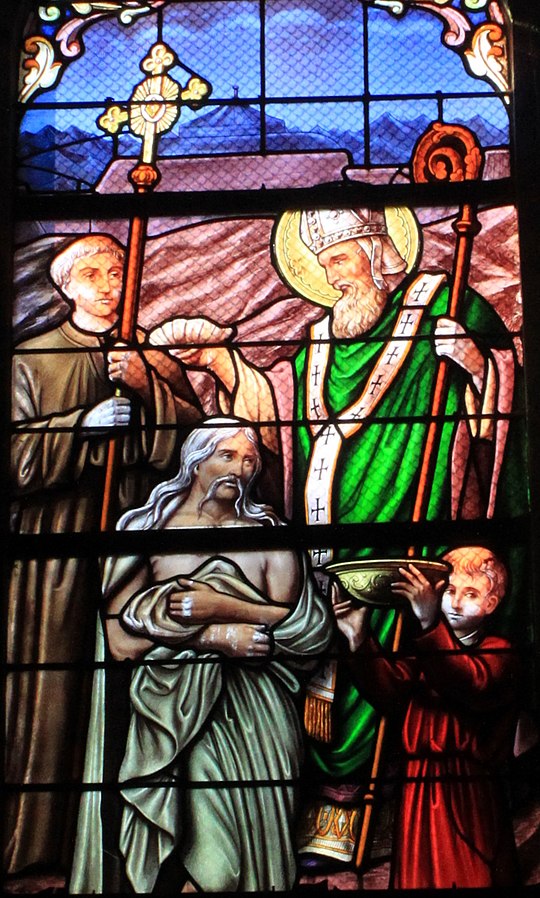
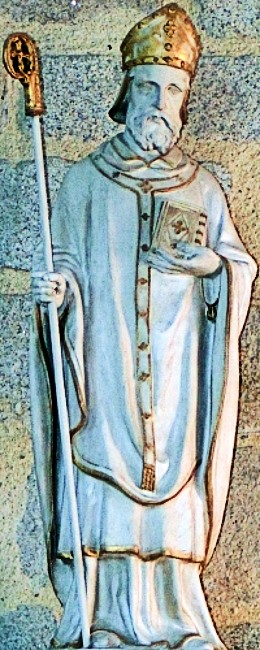

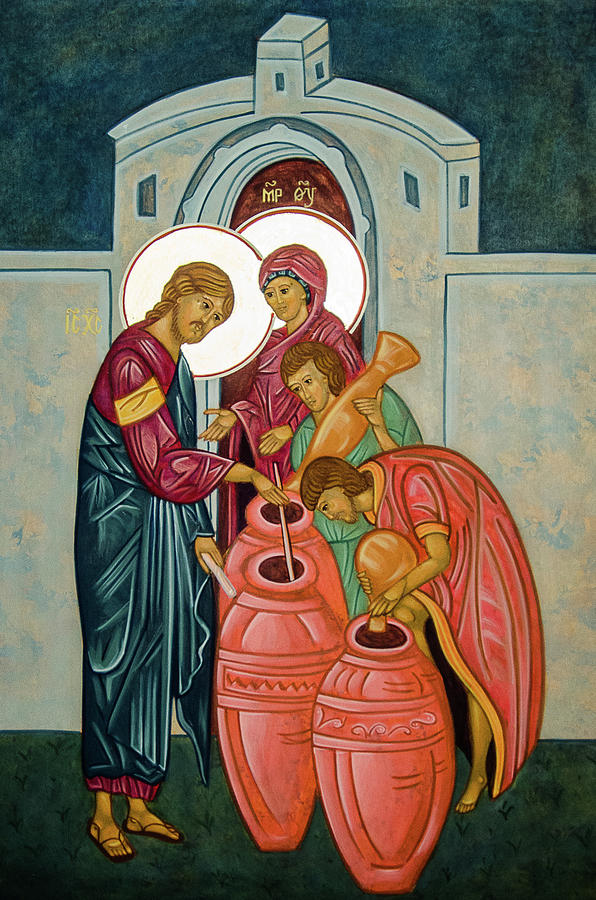
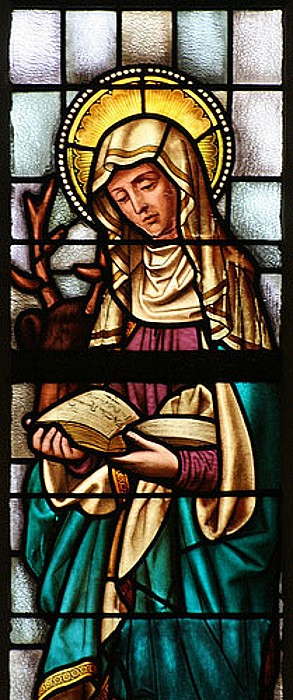
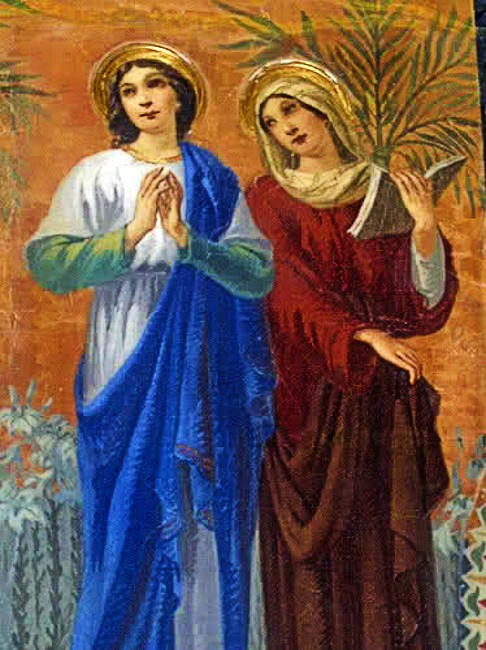
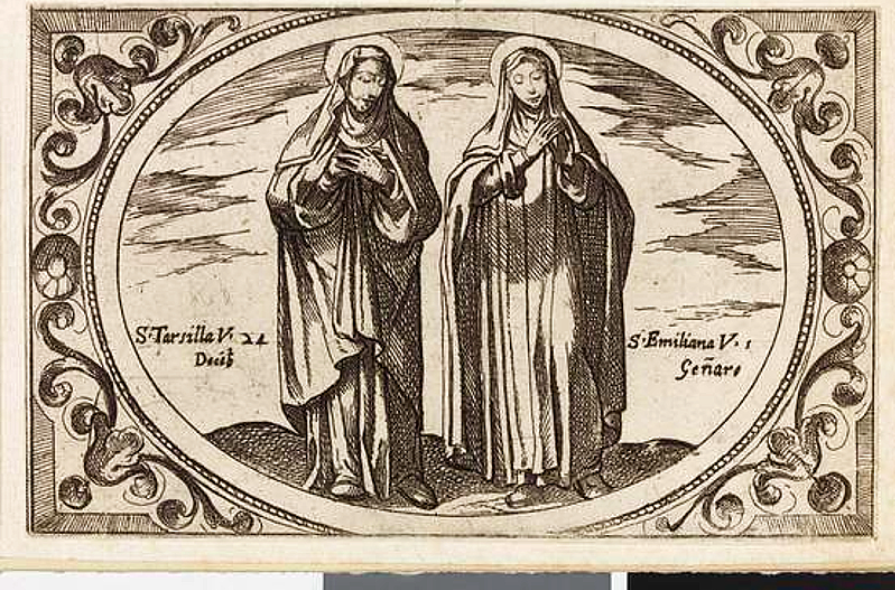

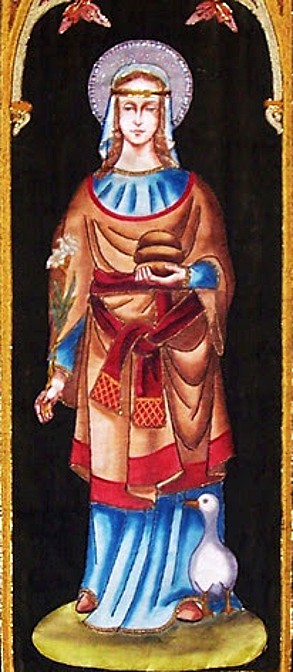
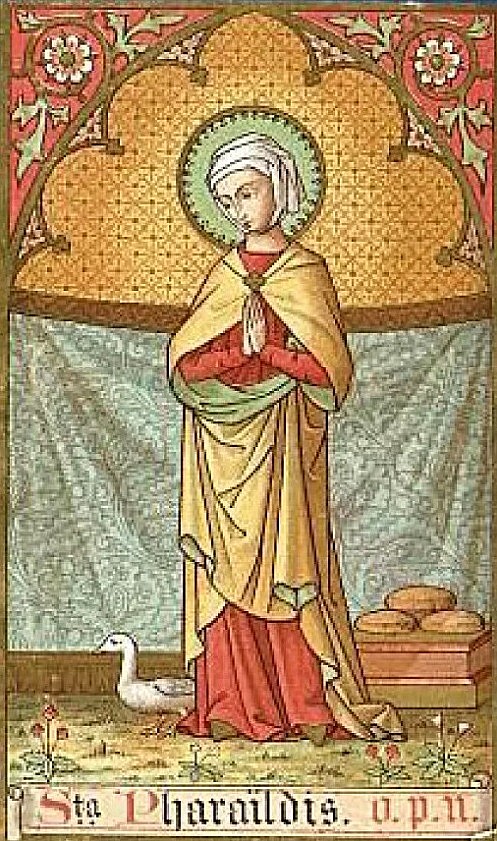


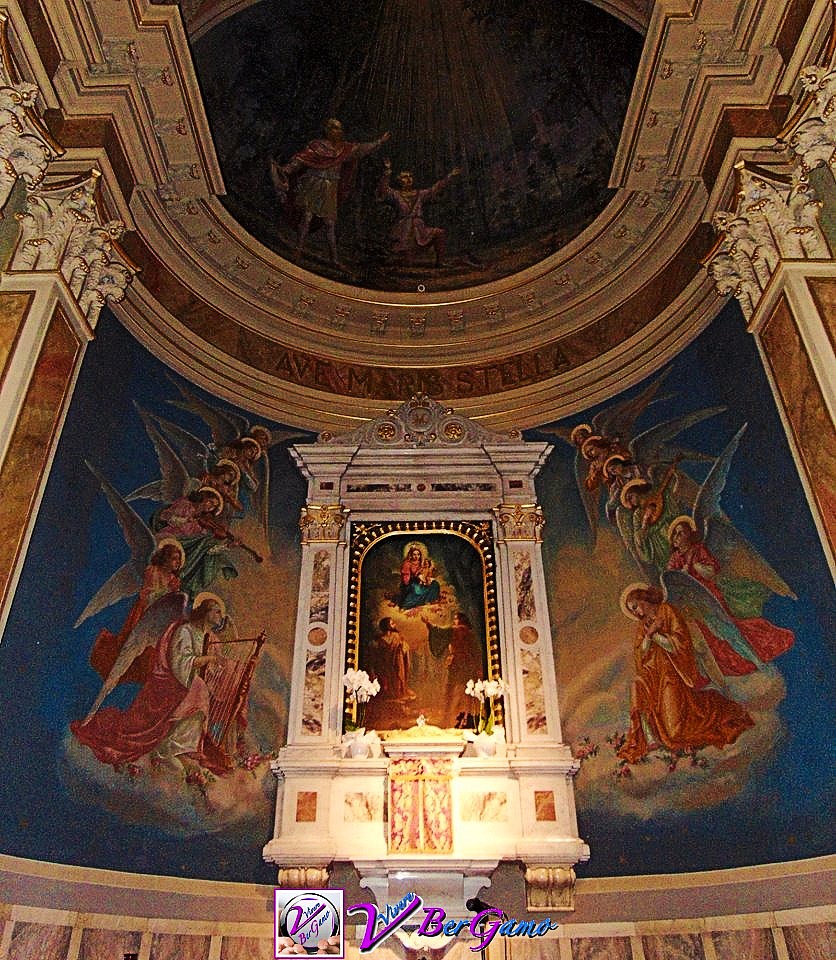

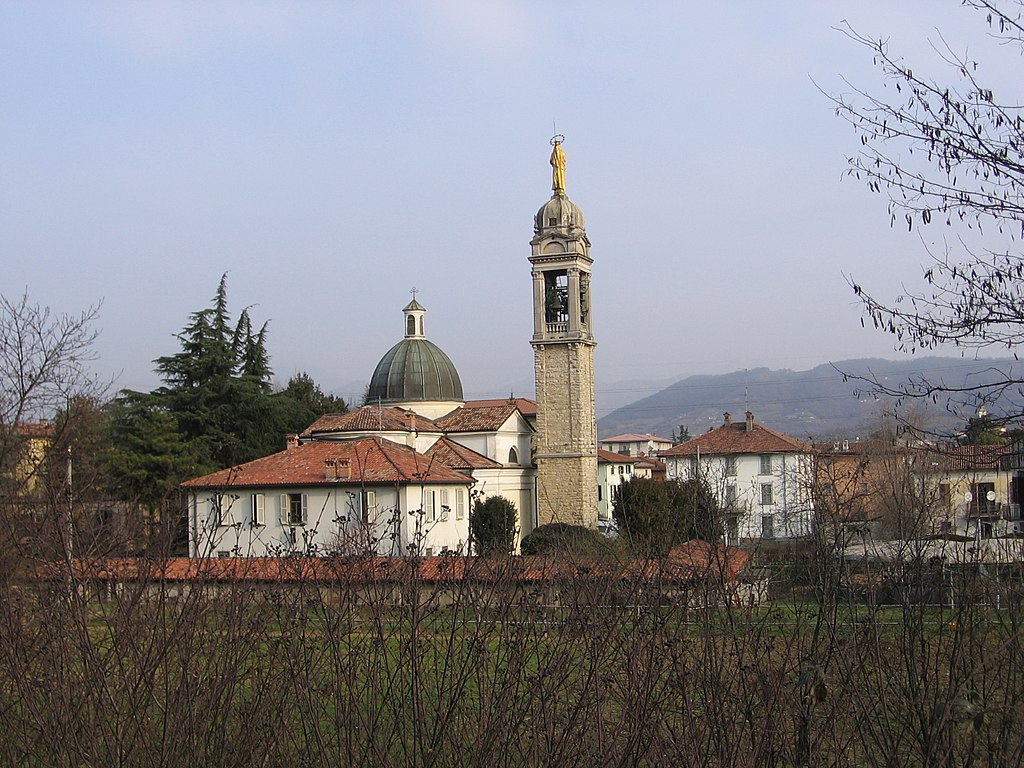
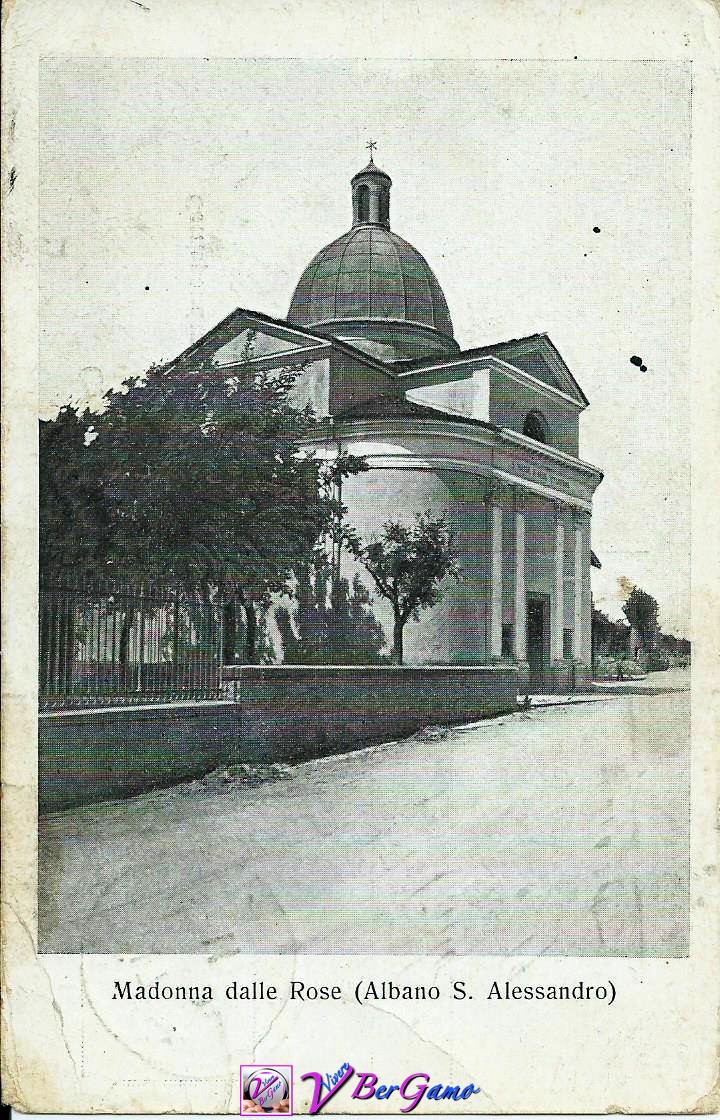

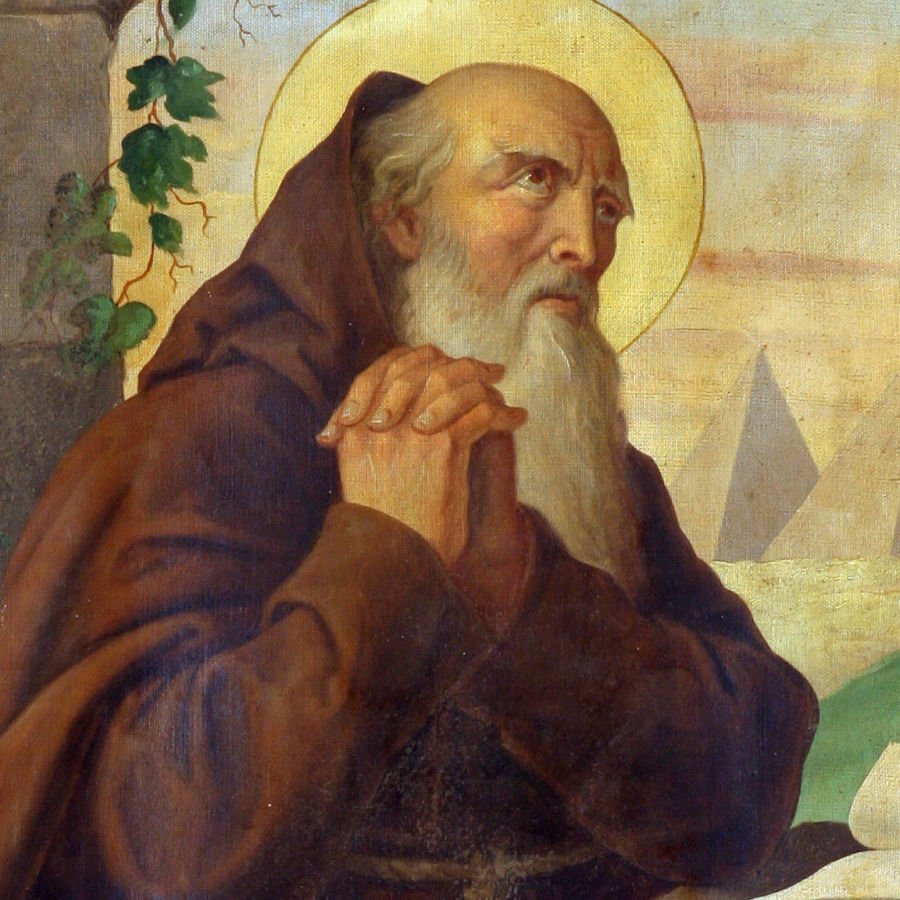
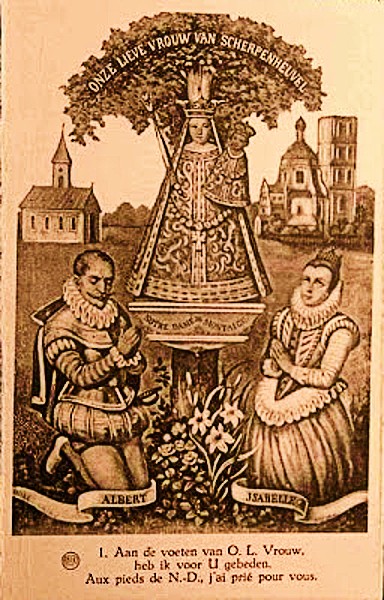
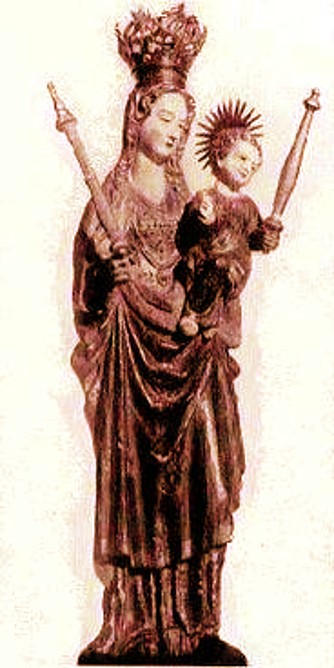


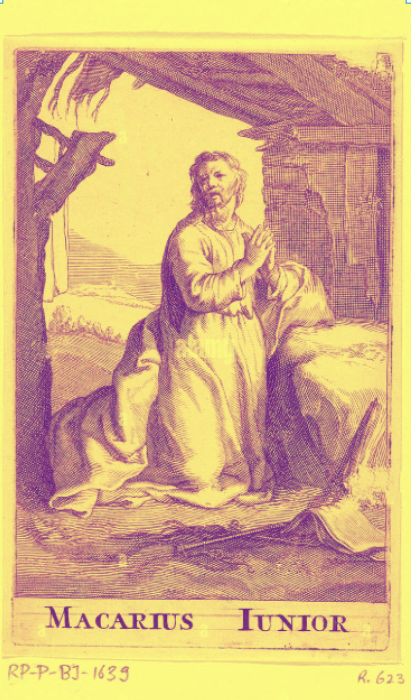
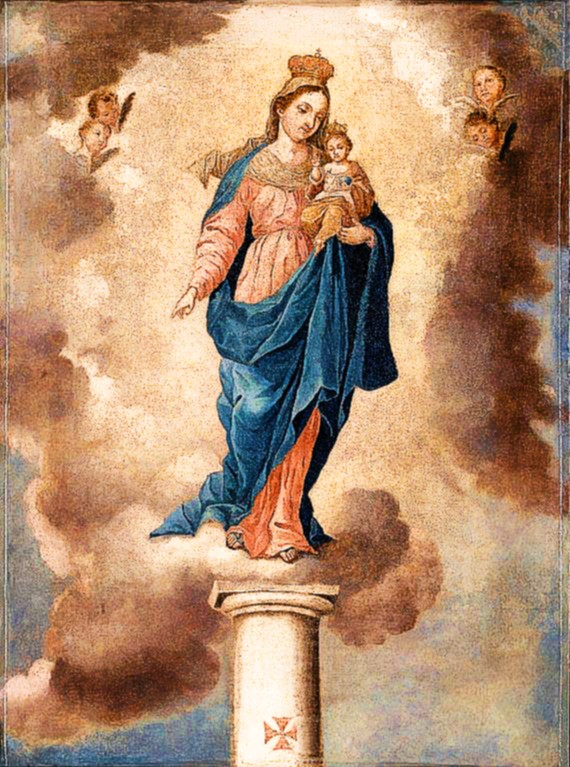
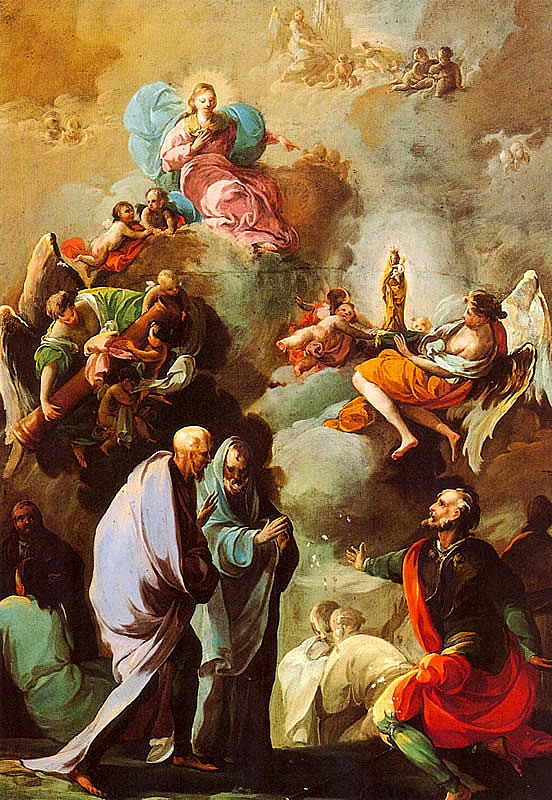
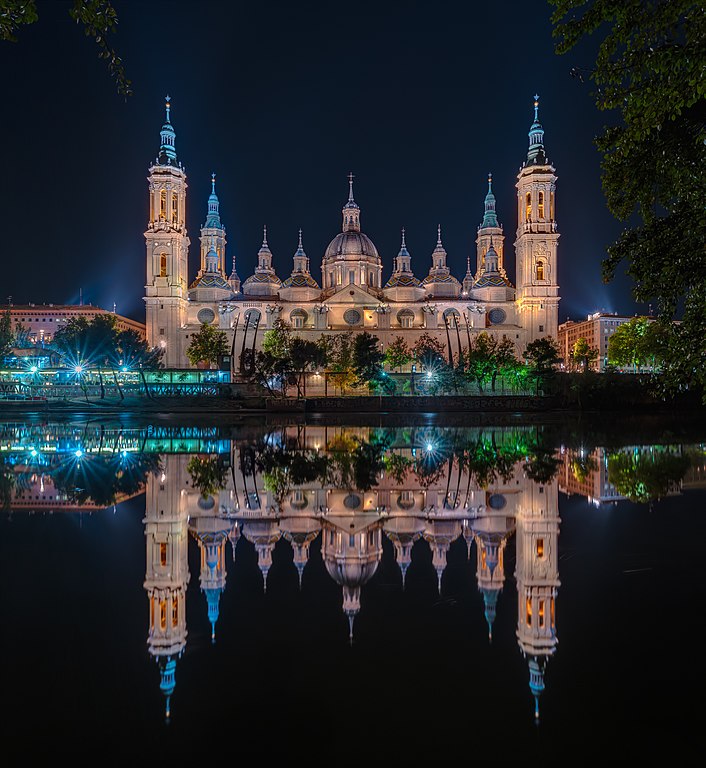
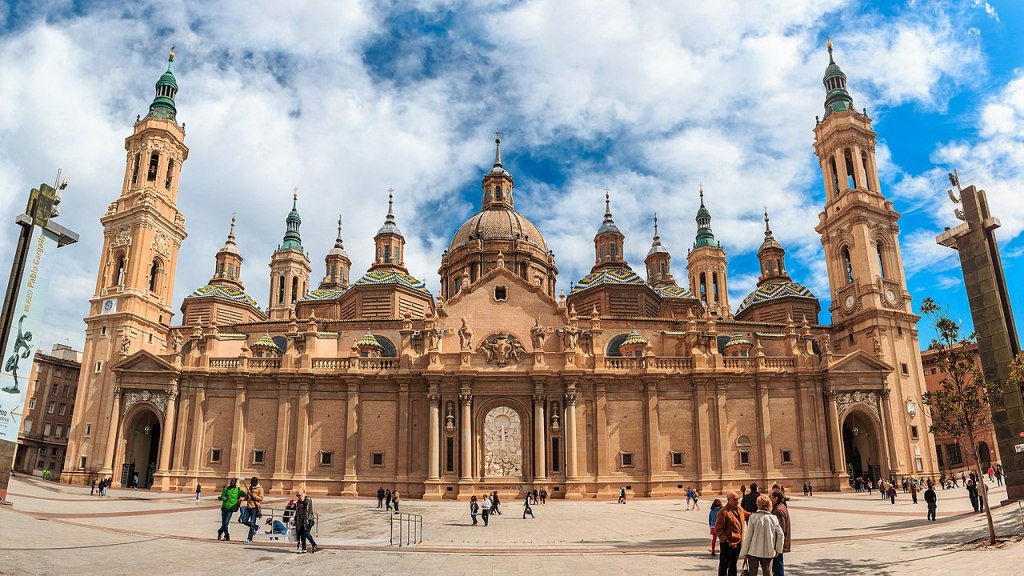
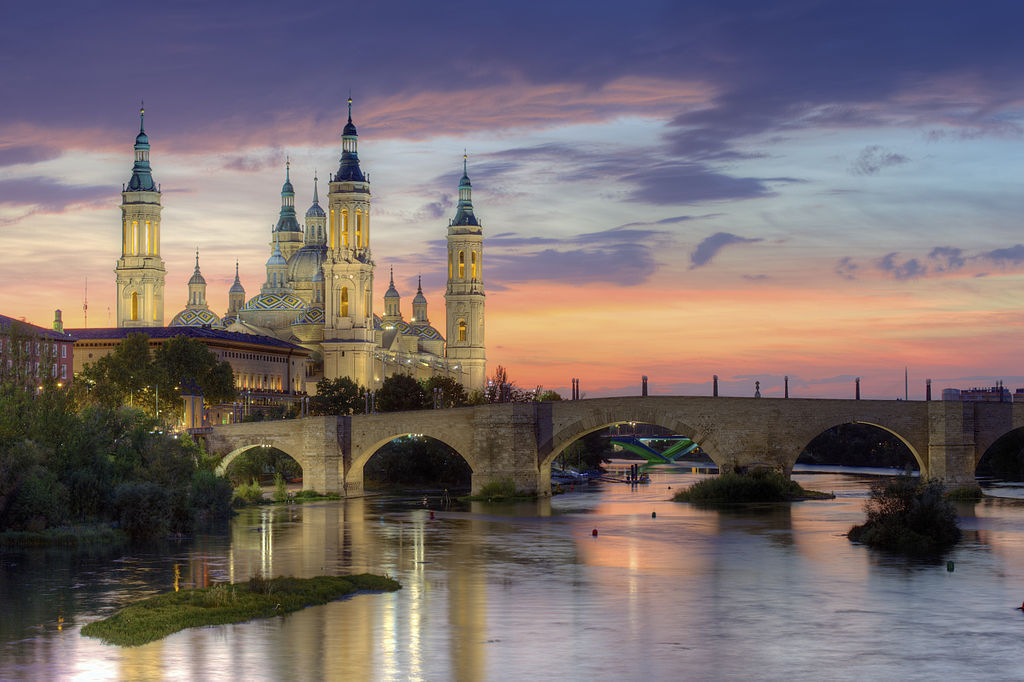
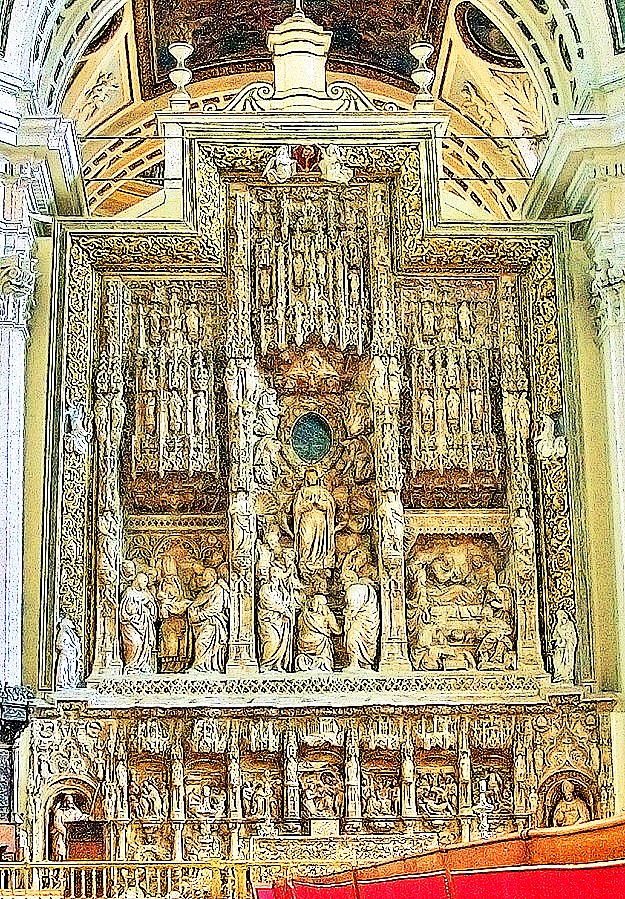
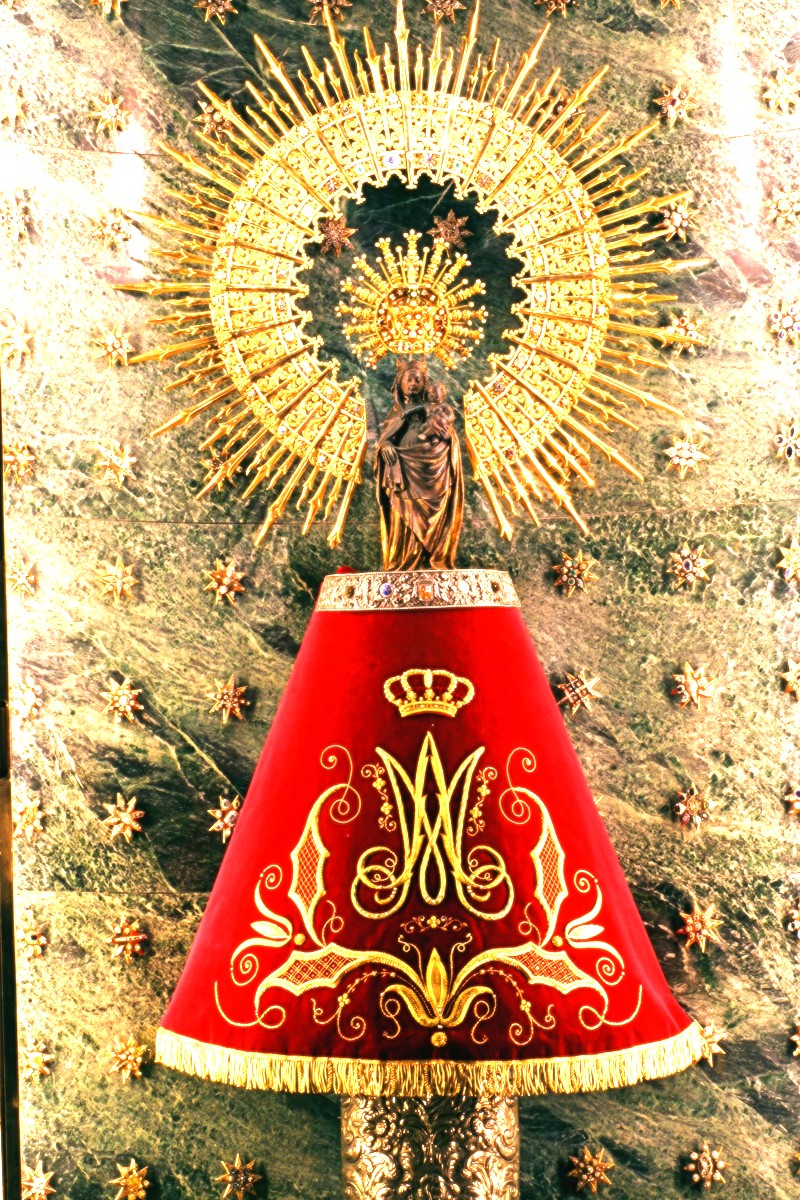
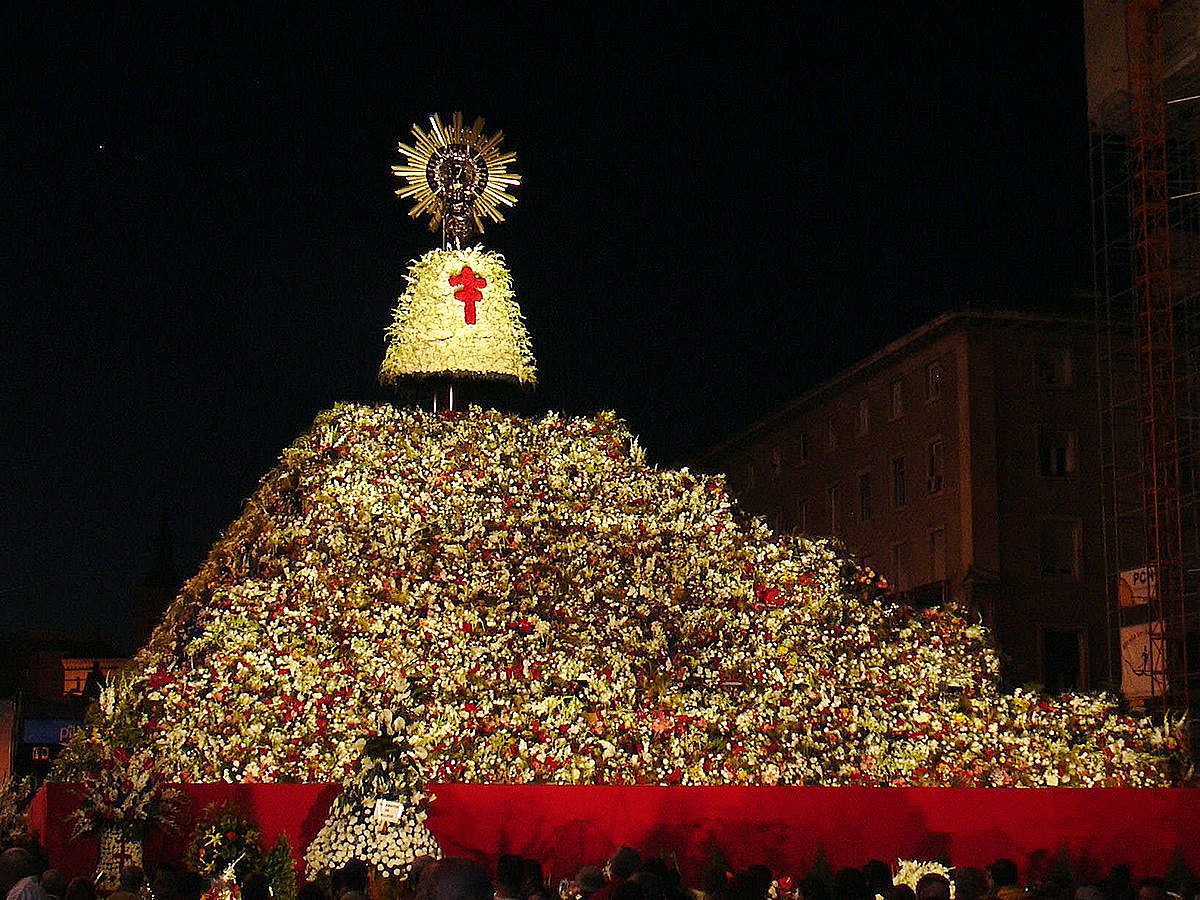
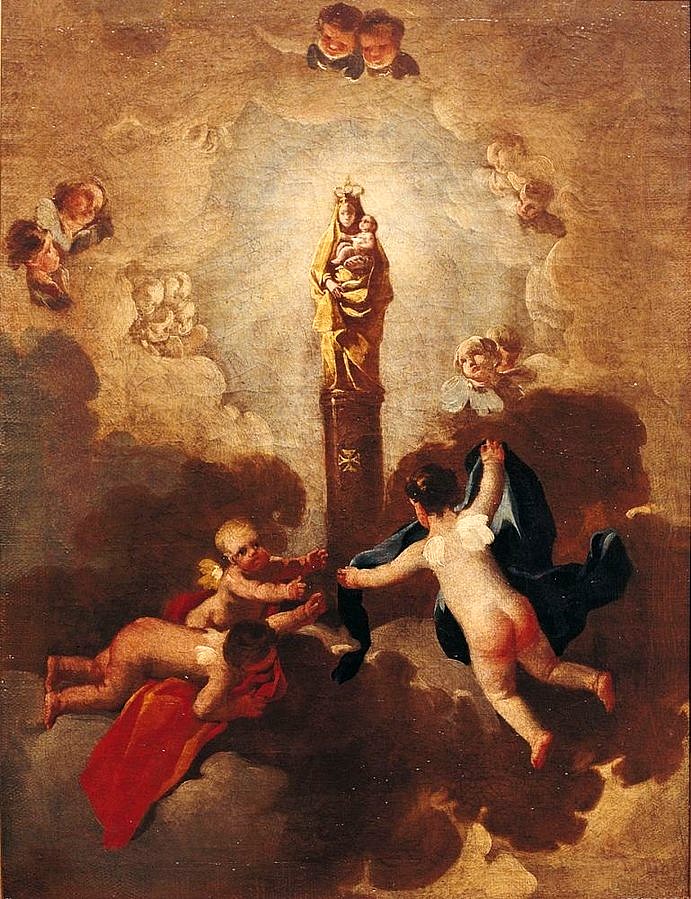
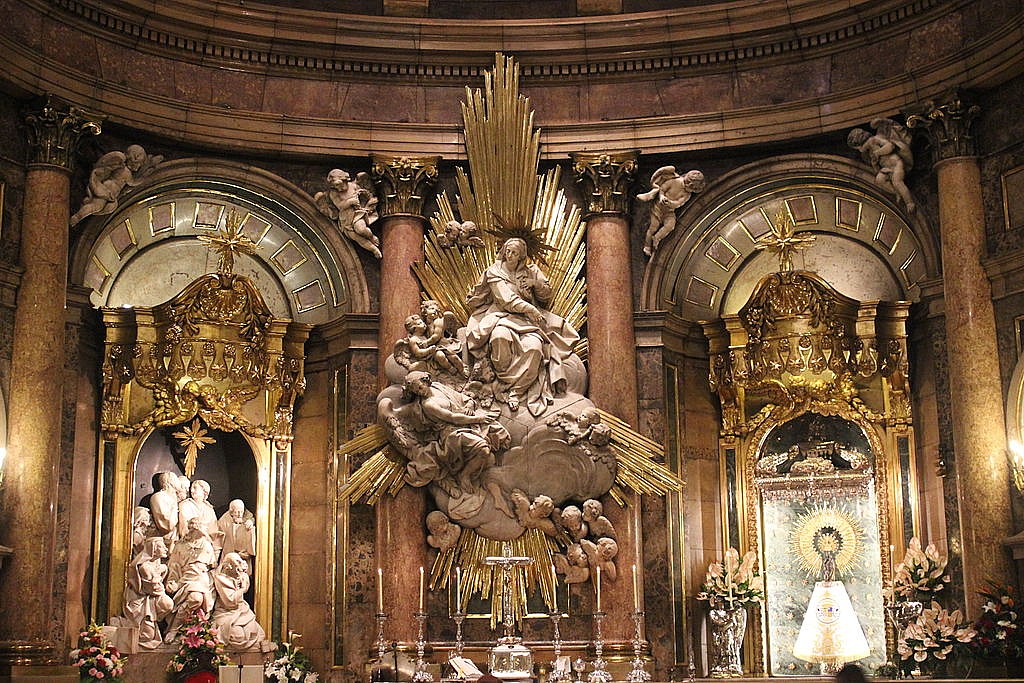
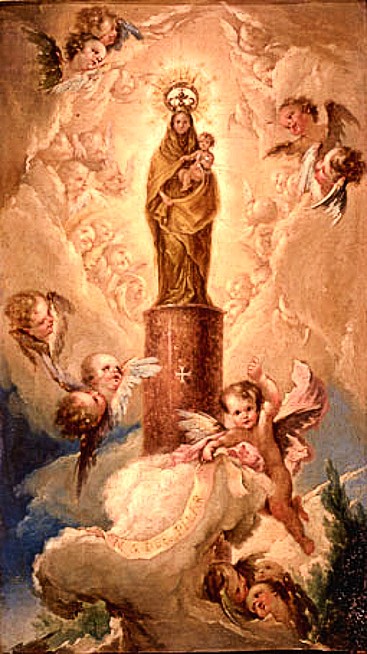
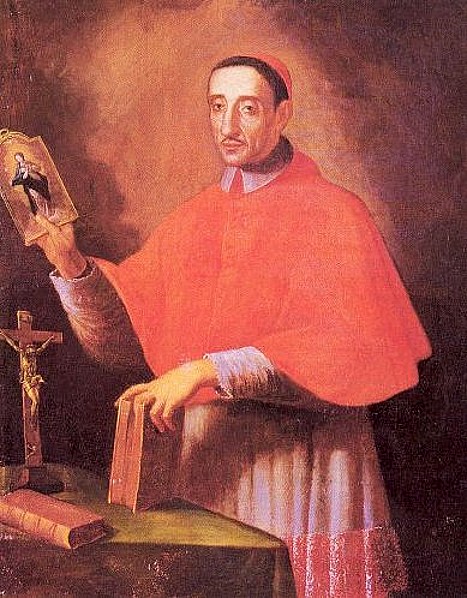
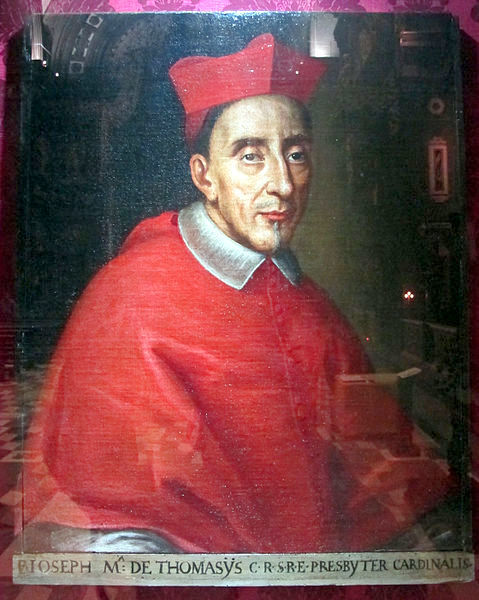
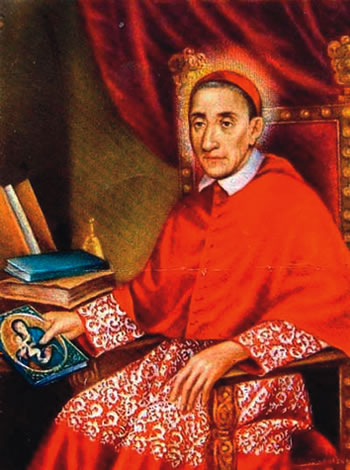
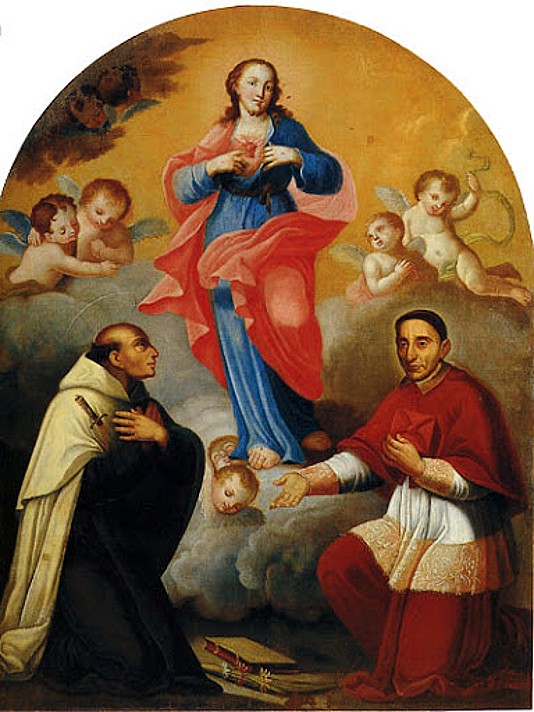
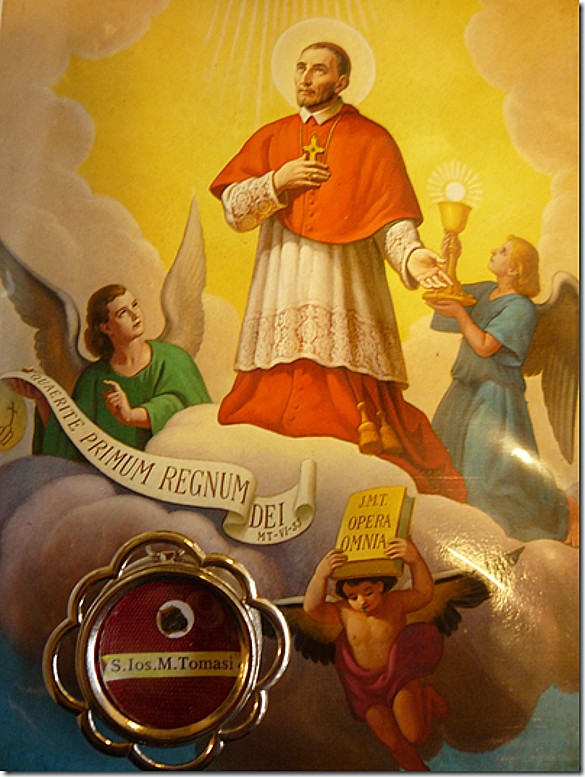
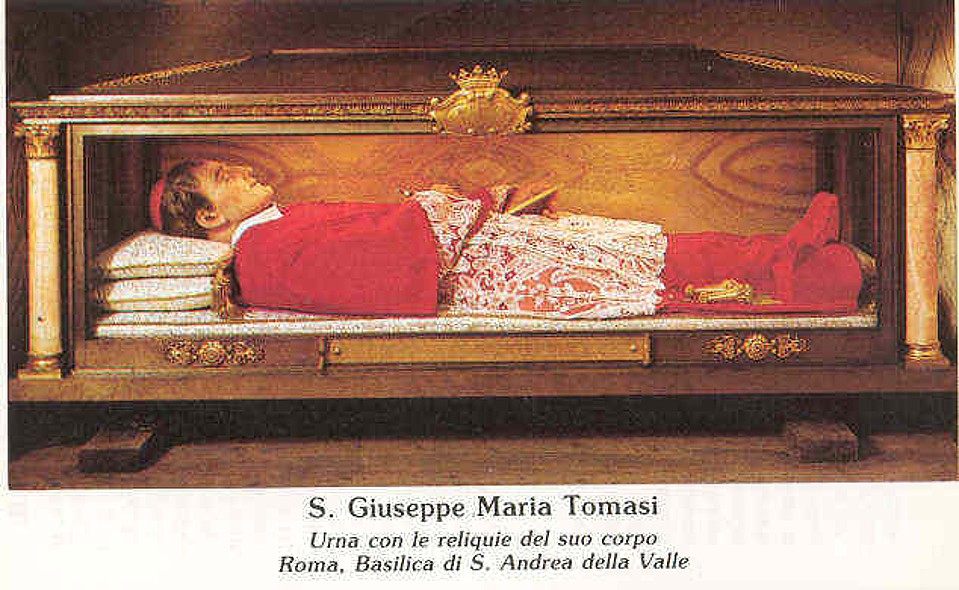


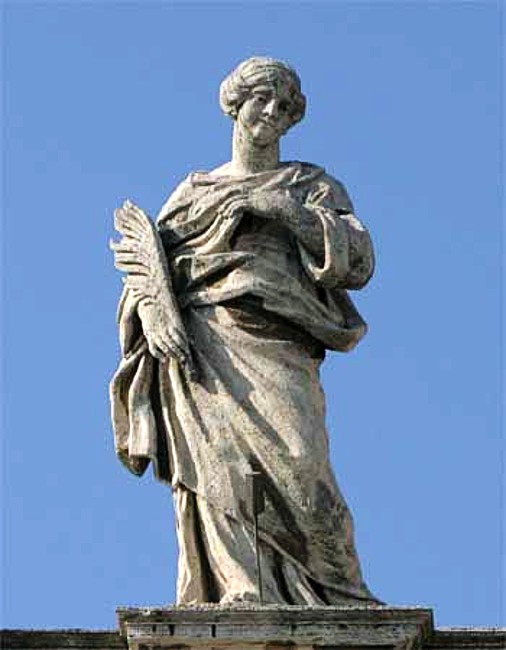
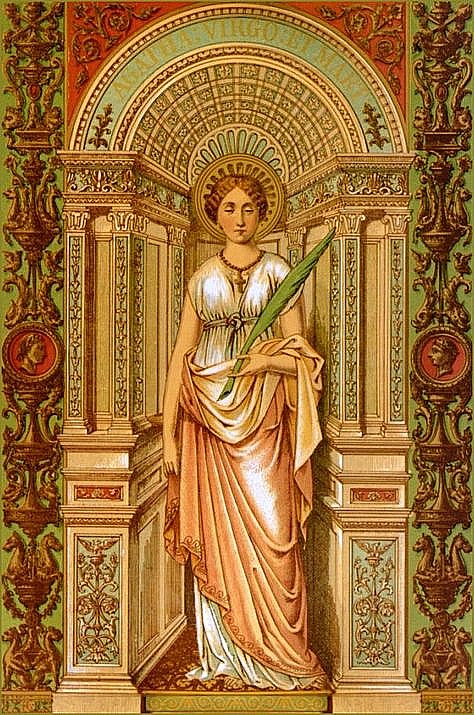
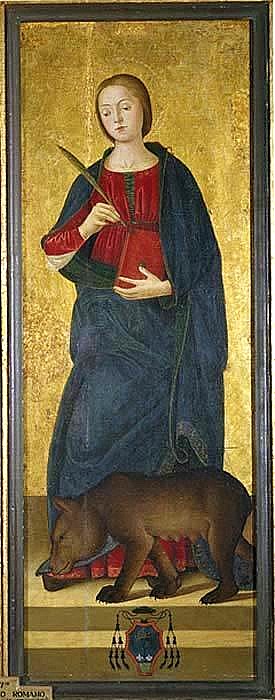
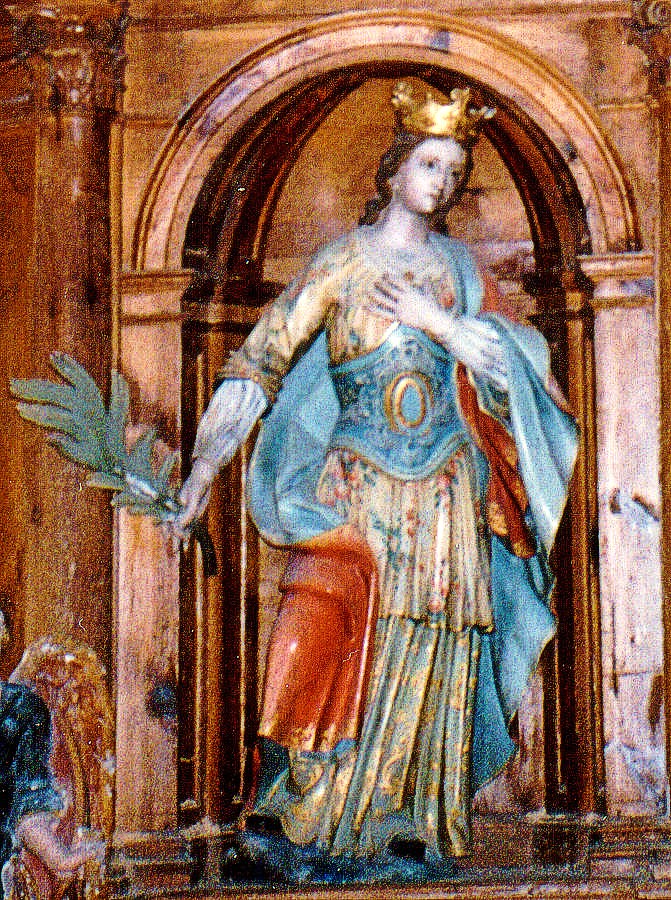
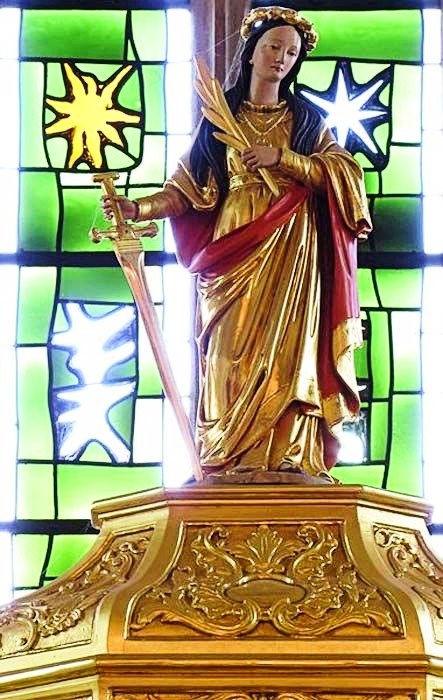

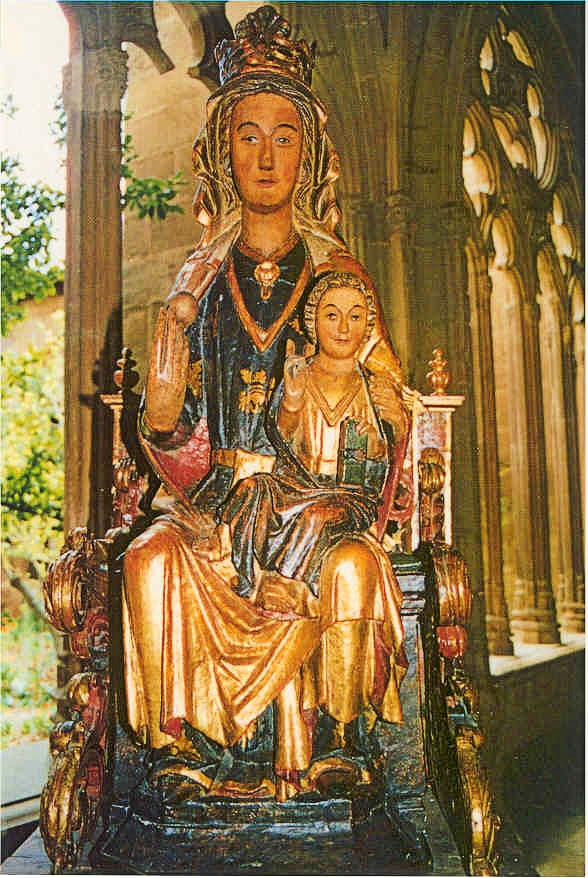
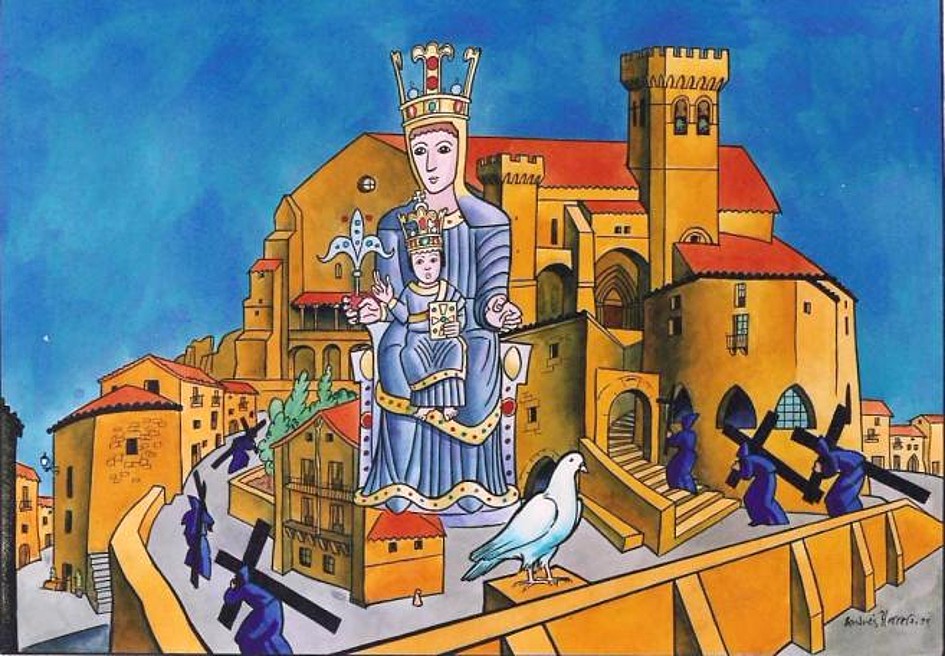

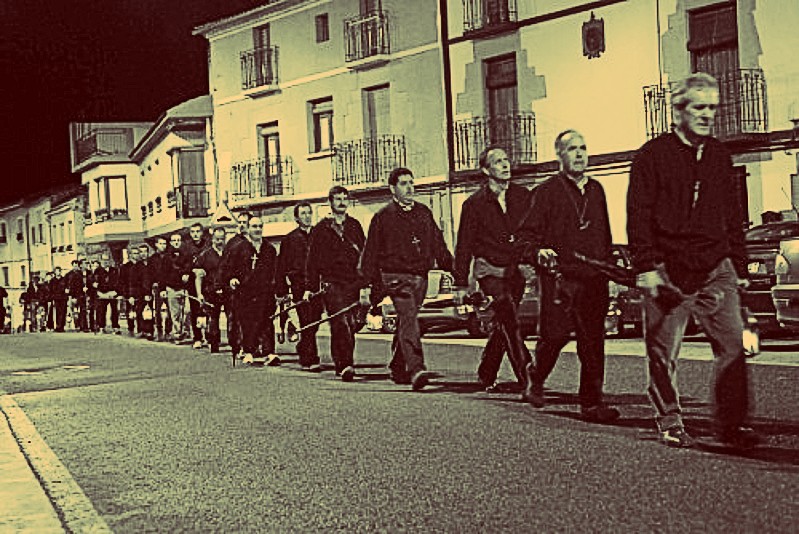
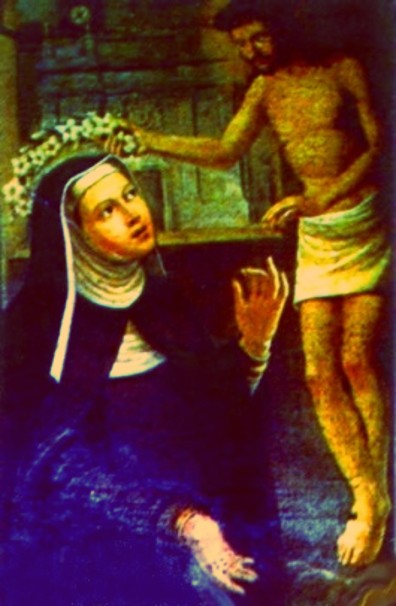
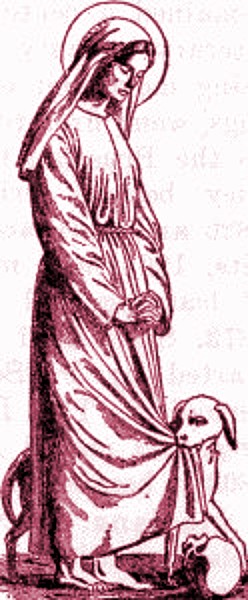

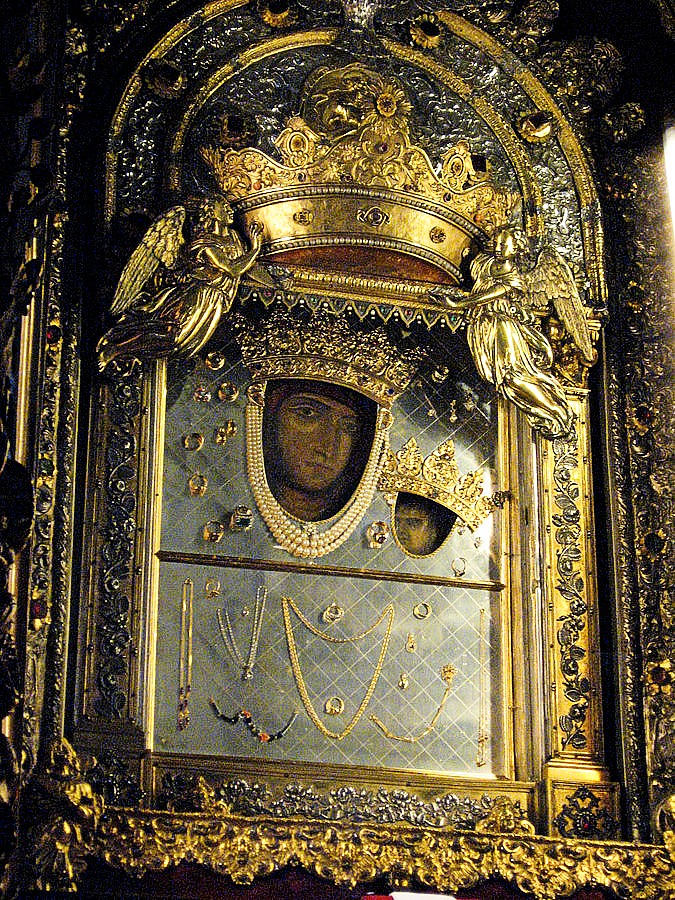
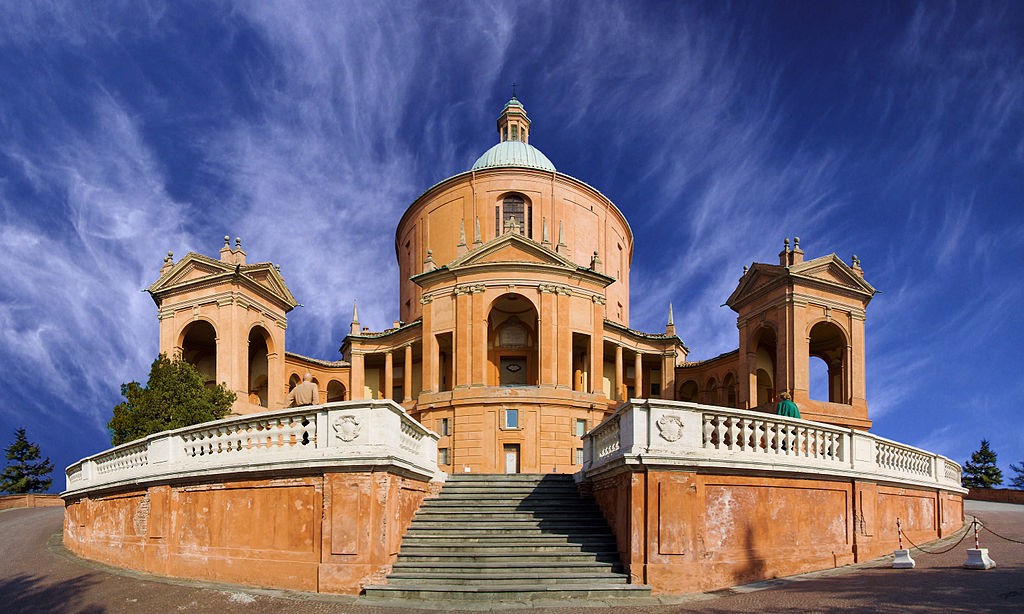
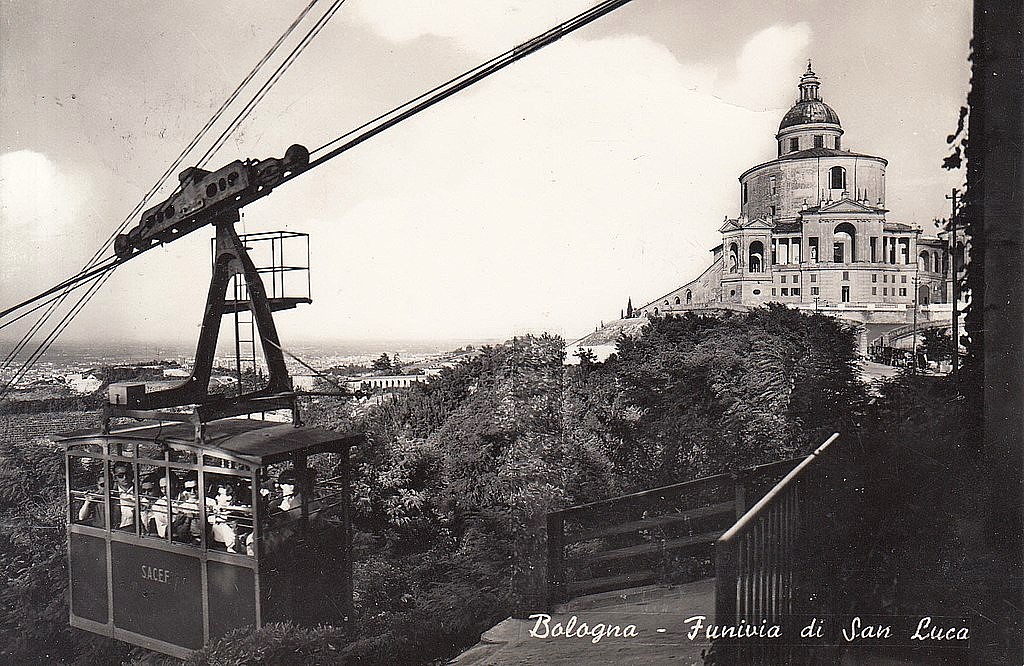

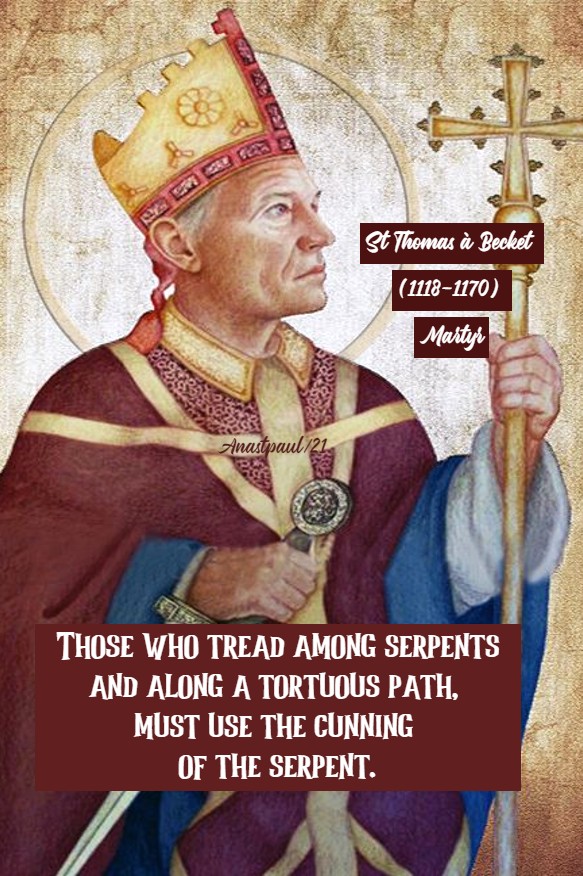
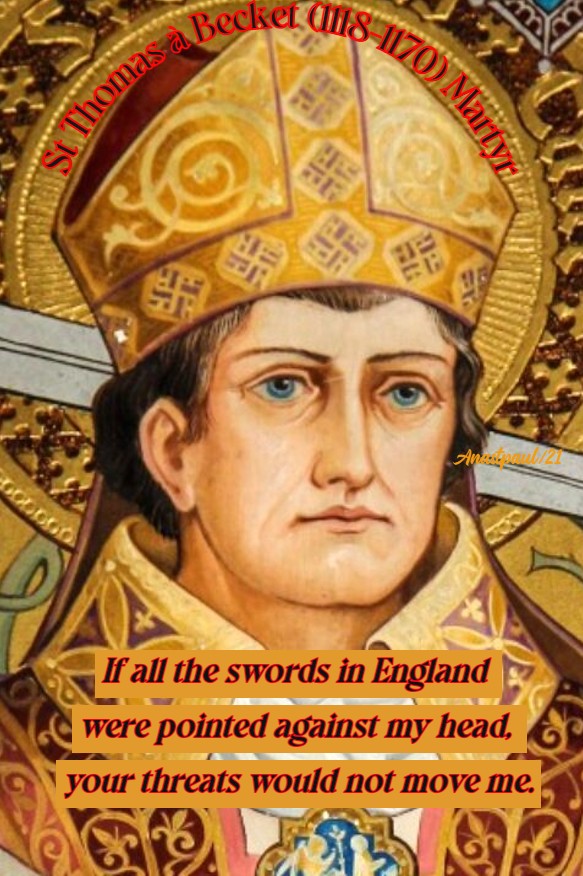
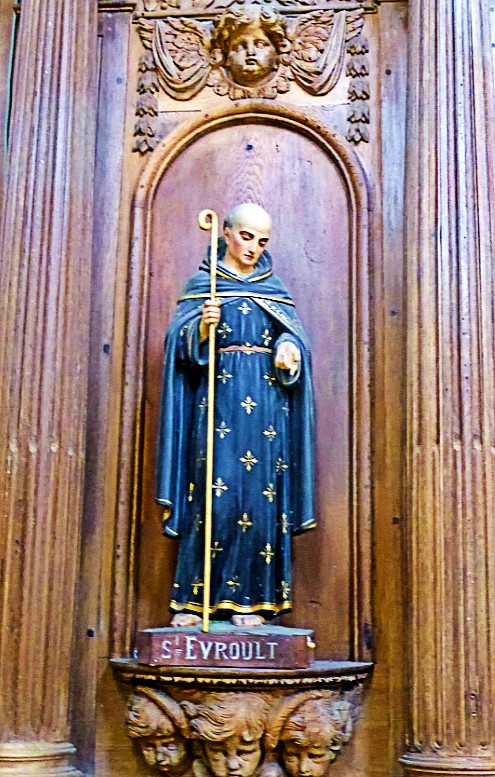
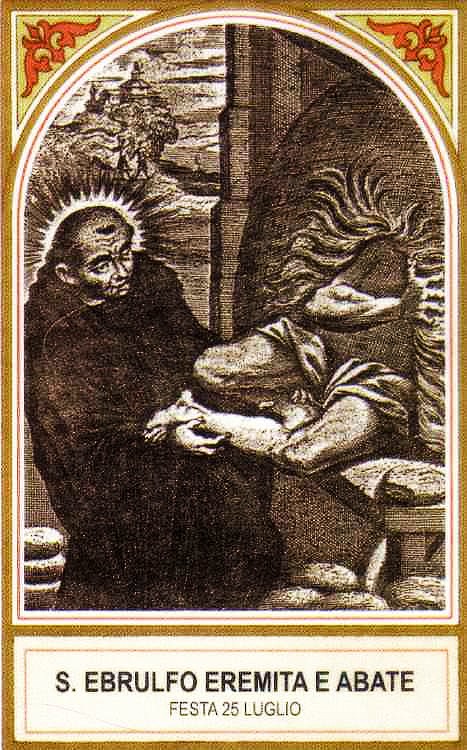
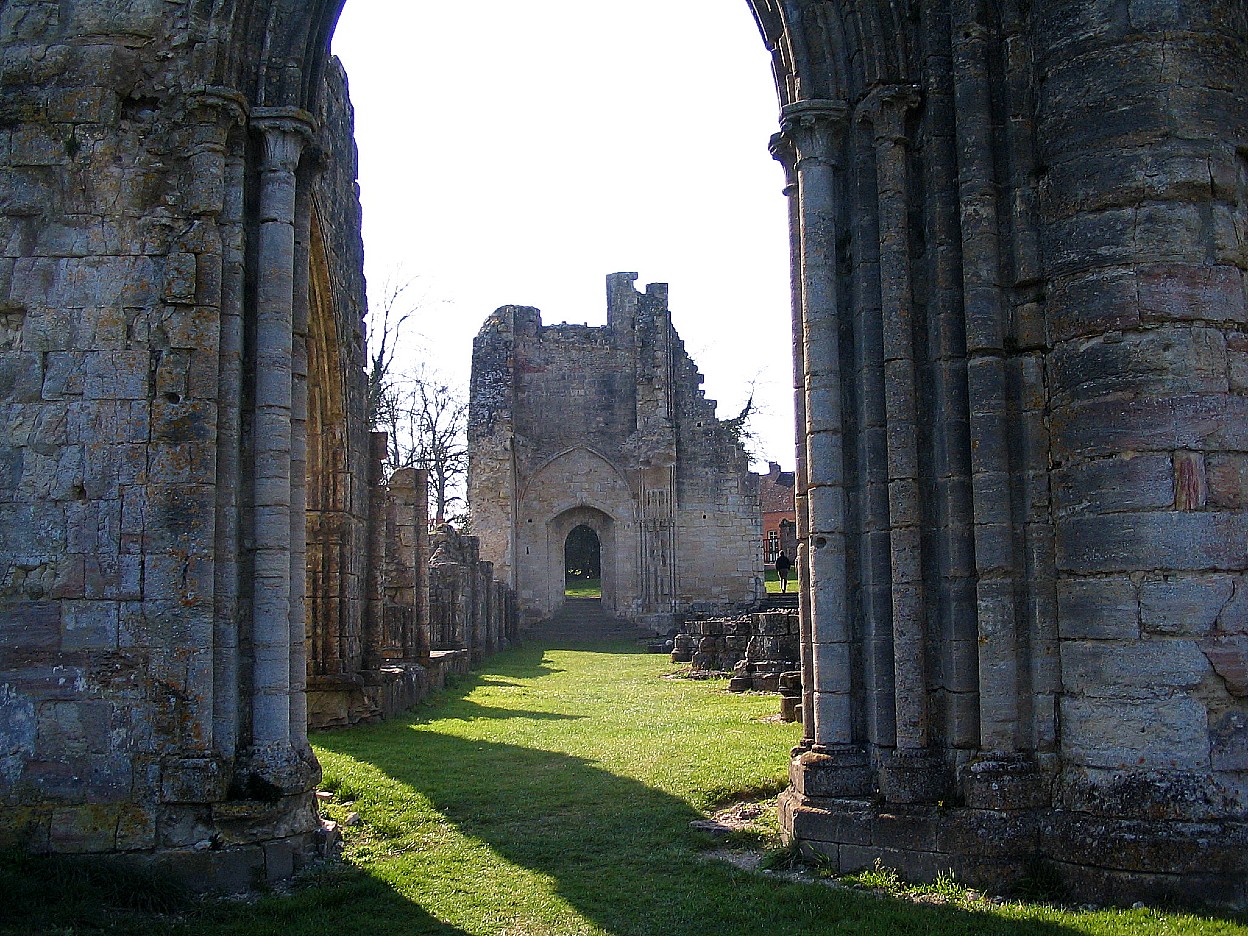
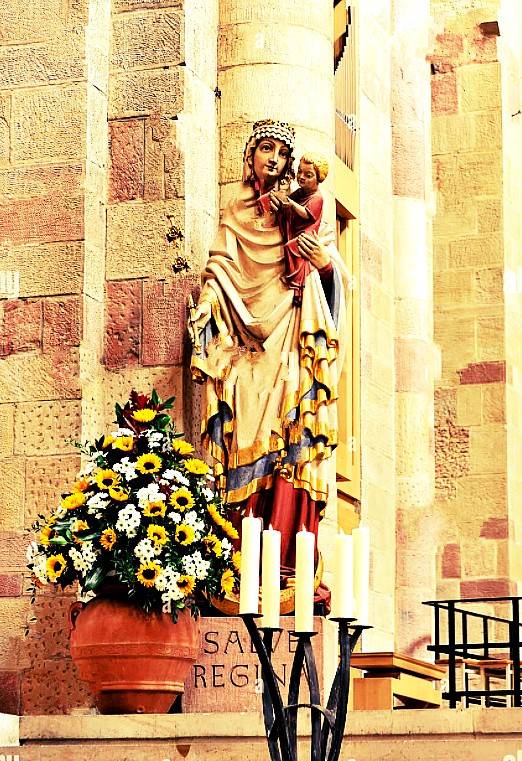
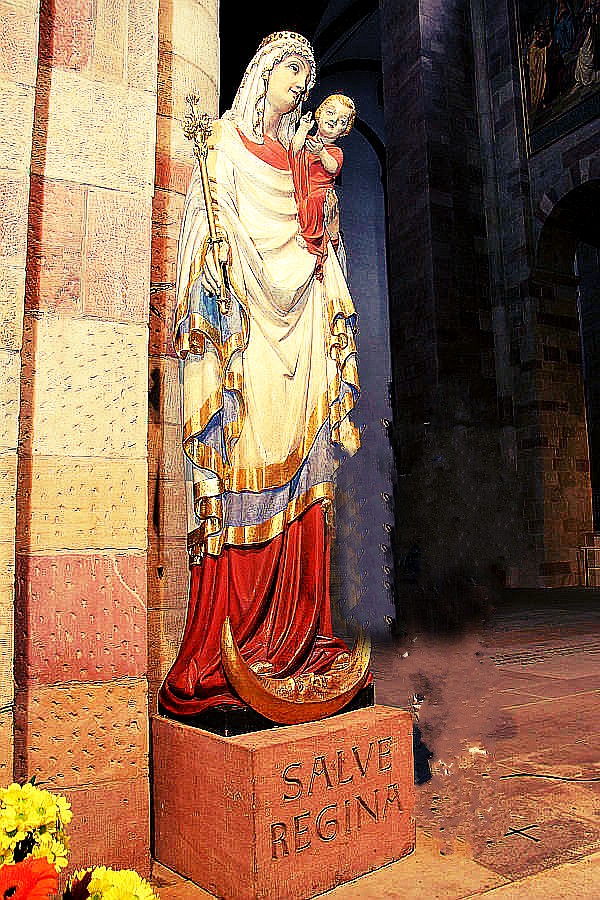
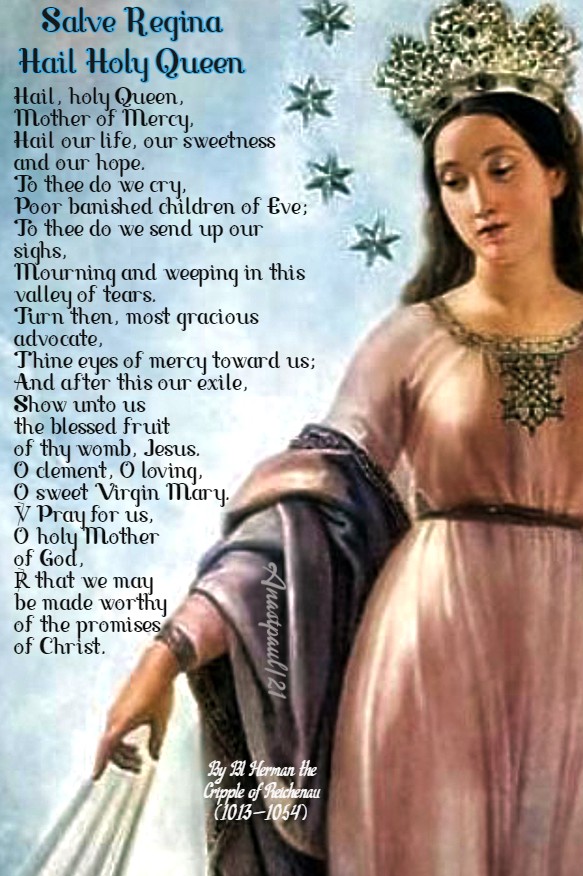
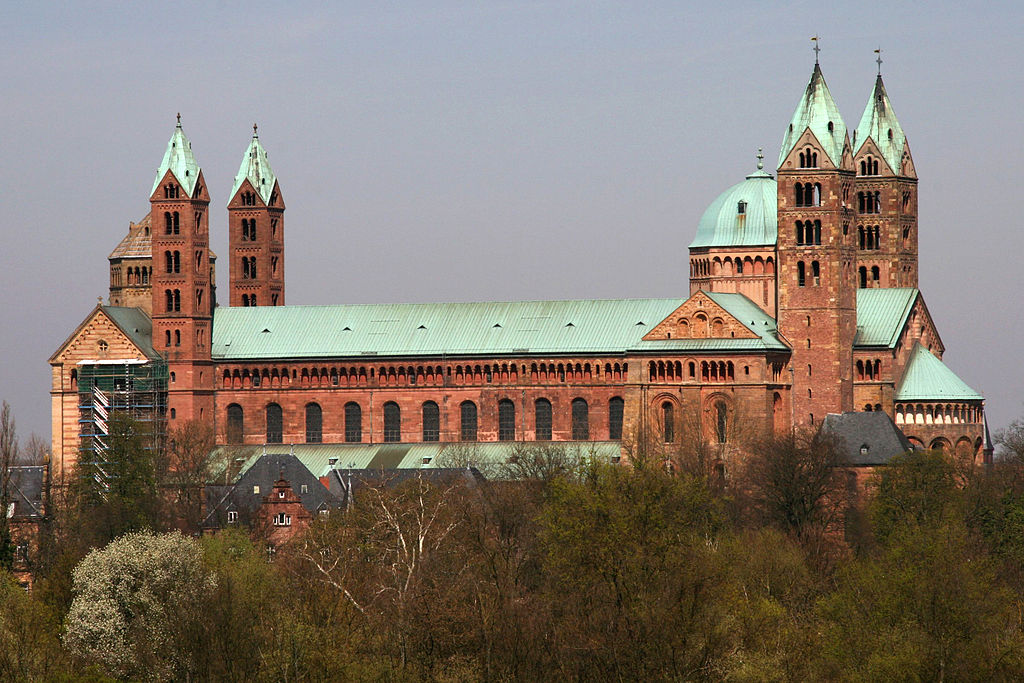


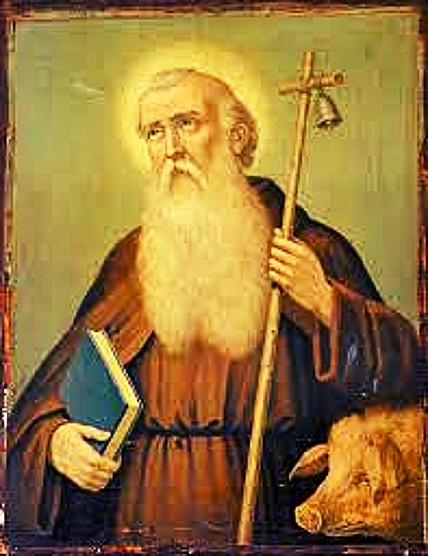
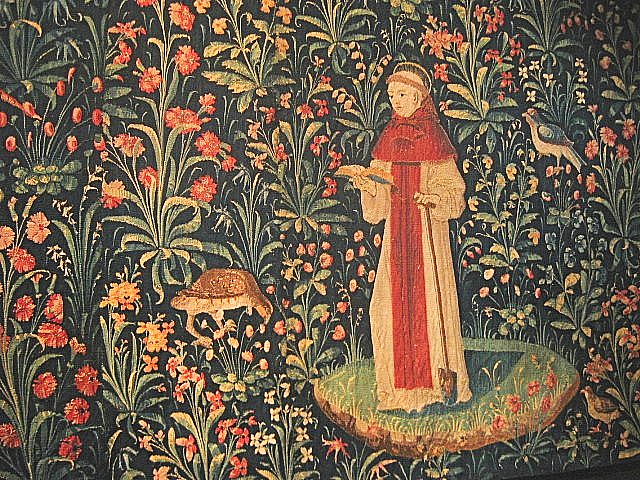

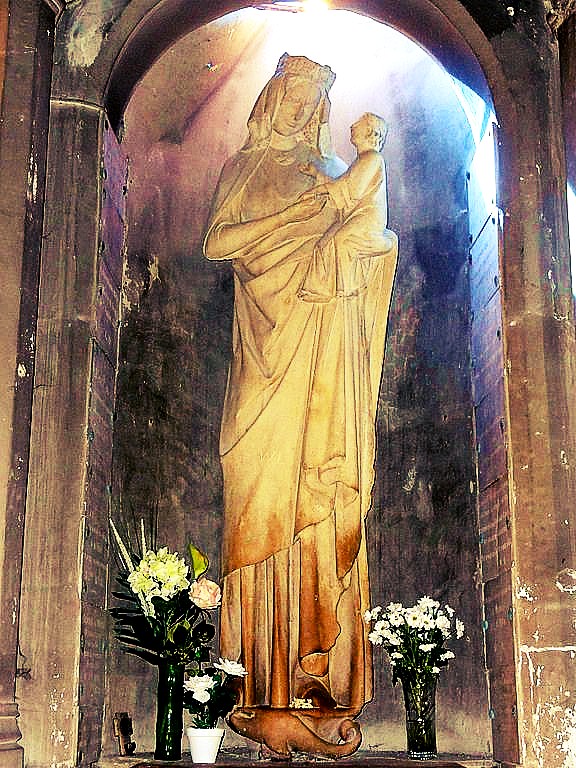
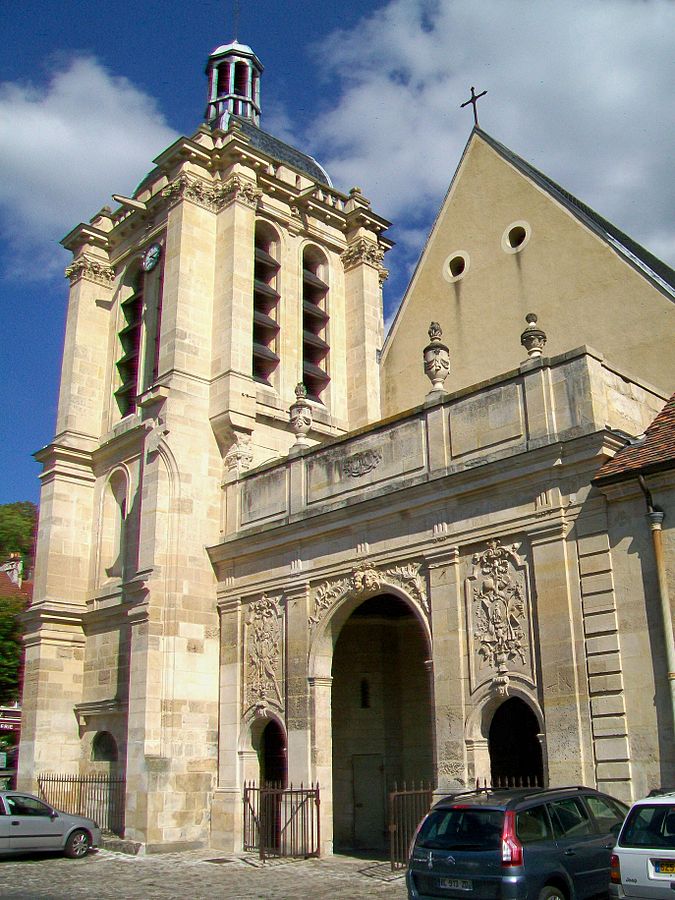










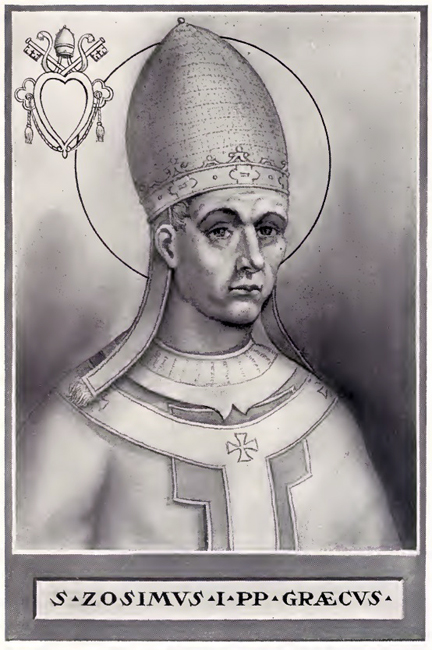
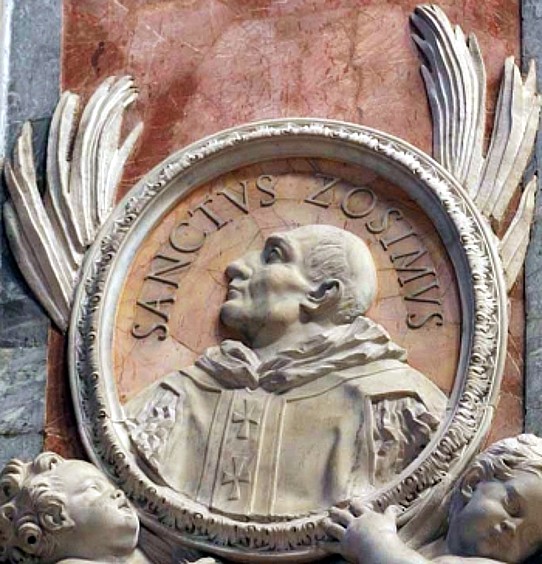

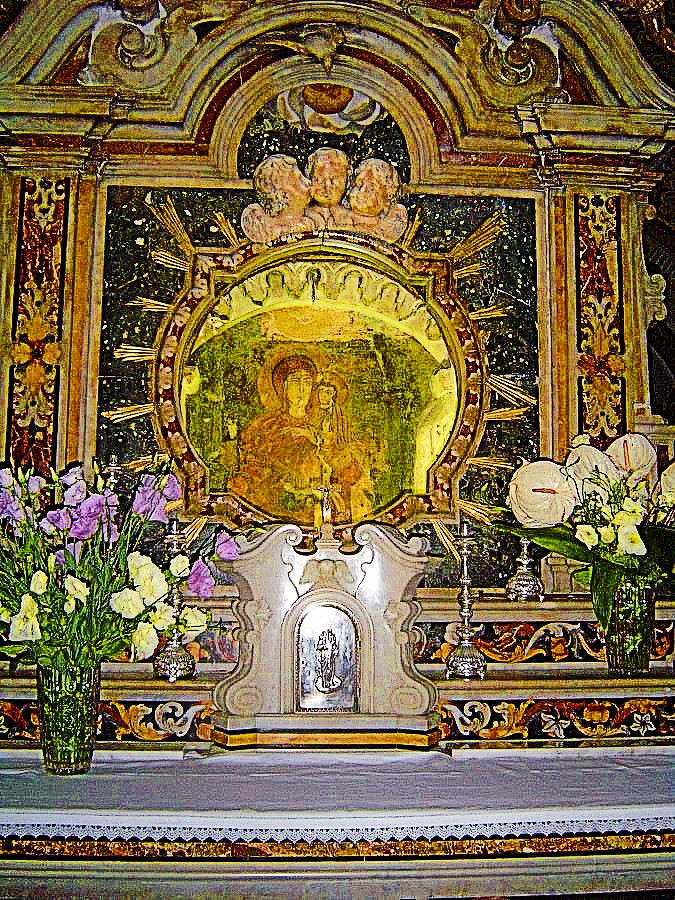
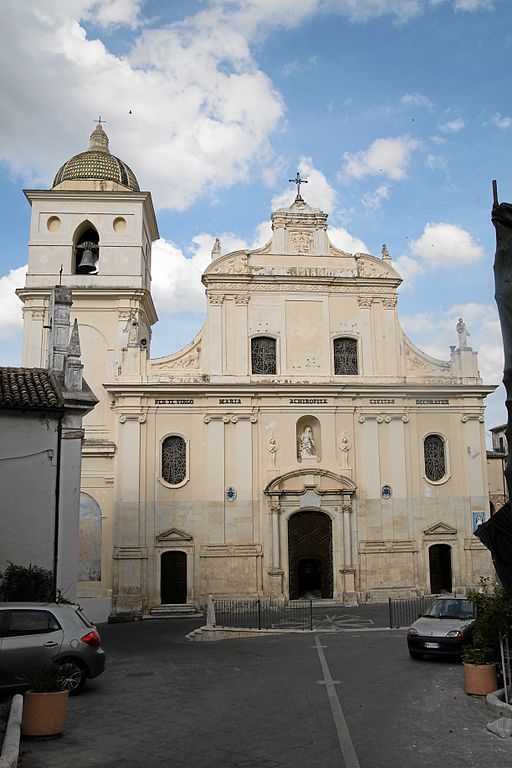
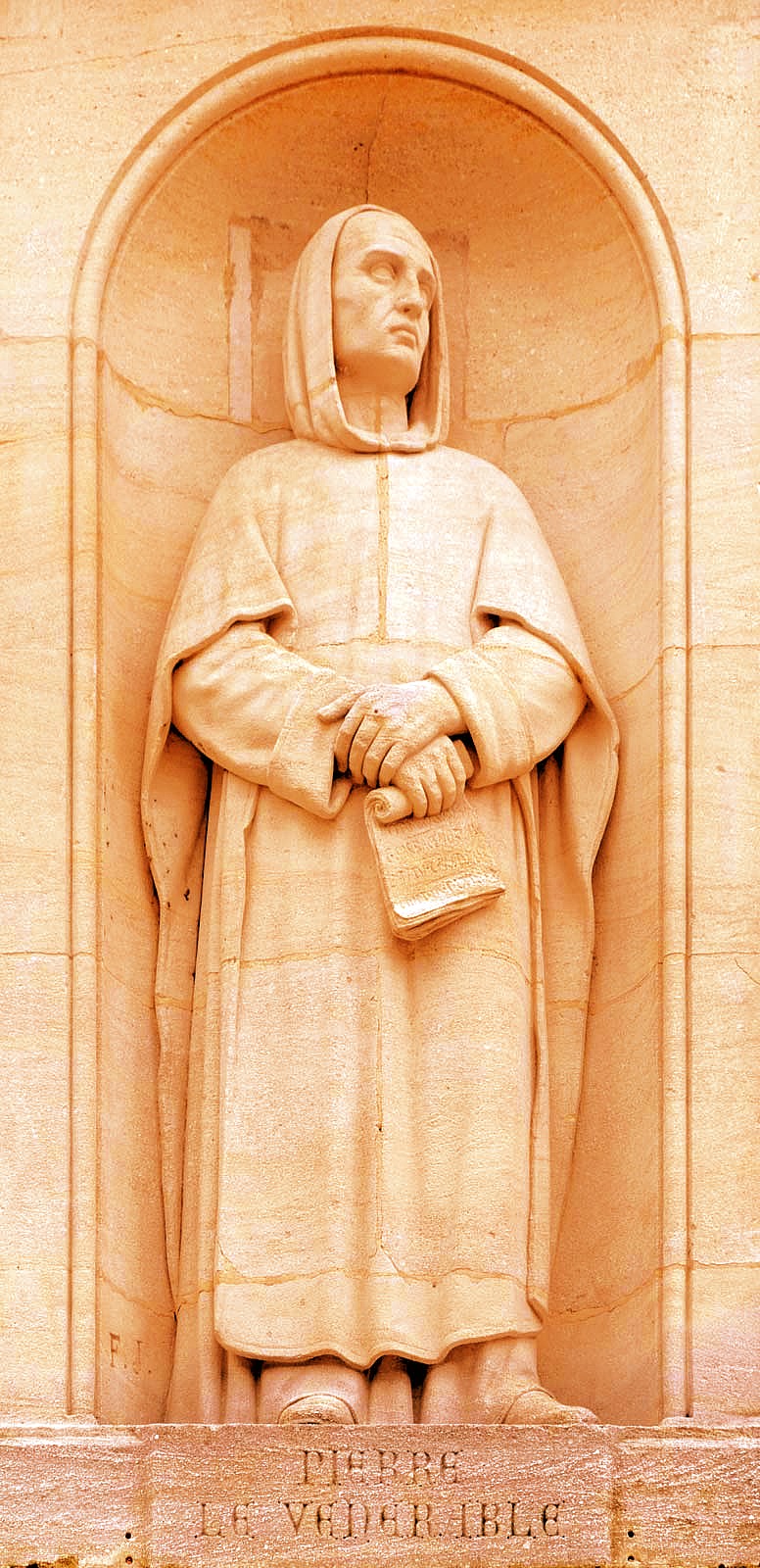
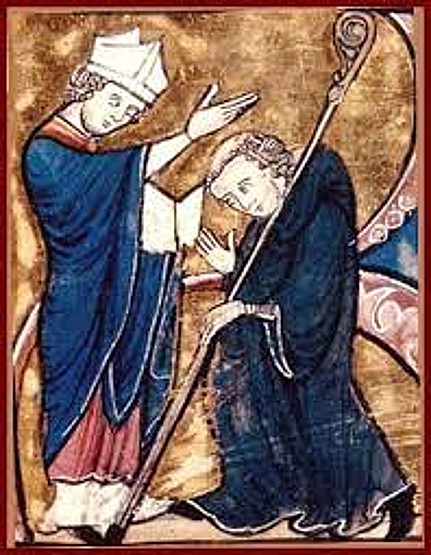

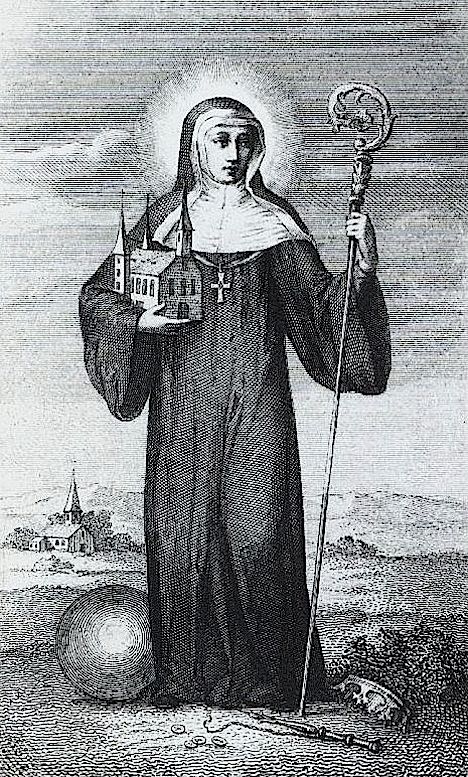
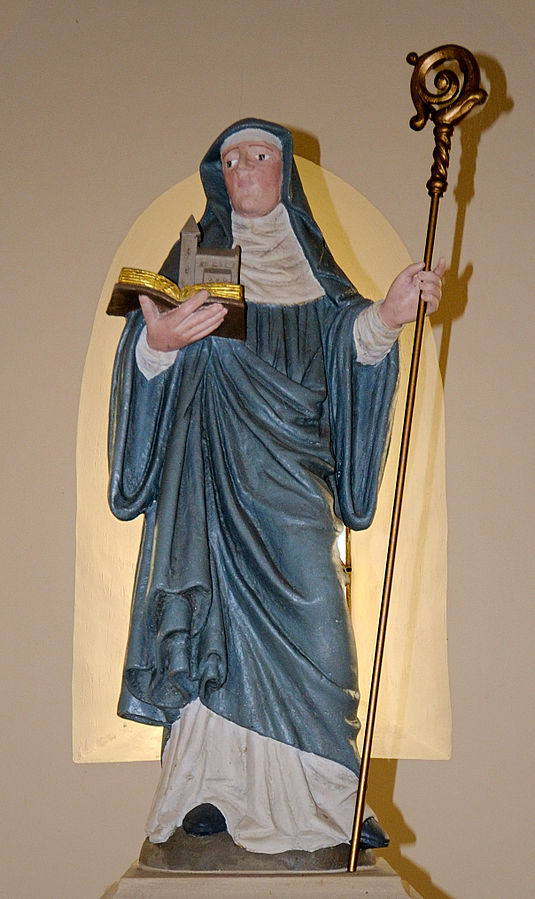
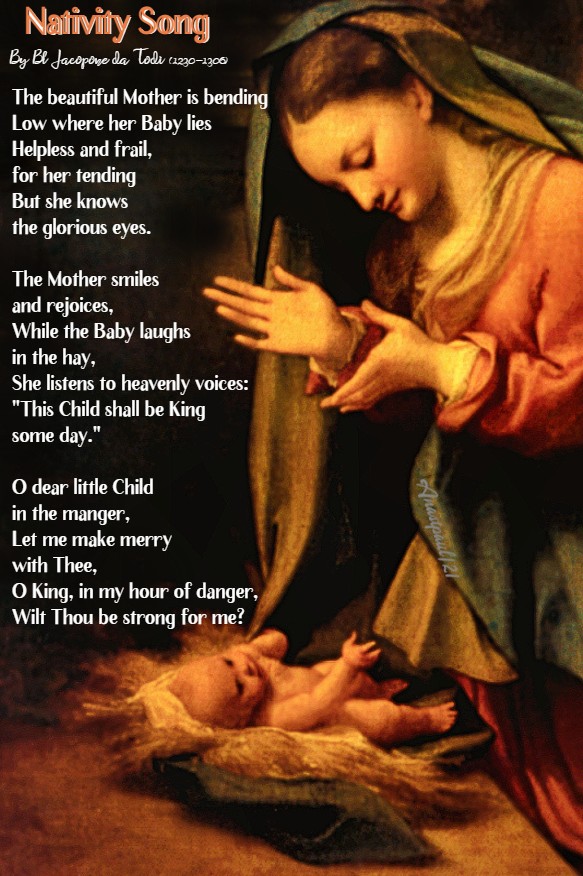

 AnaStpaul
You must be logged in to post a comment.