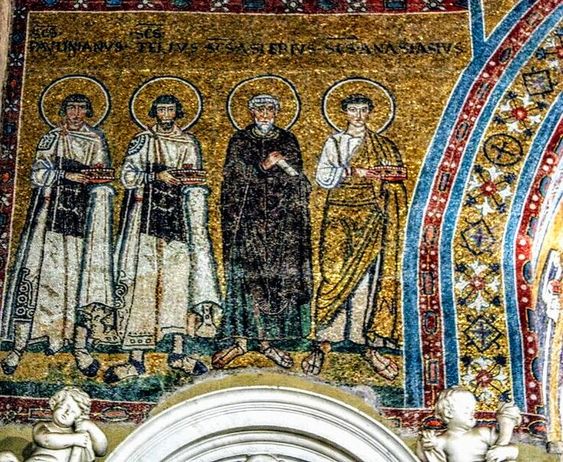
Saint of the Day – 26 August – Saint Anastasius (Died c304) the Fuller or Laundery man,Martyr . Born in Aquileia, Italy and died in Salona in modern Croatia, by being drowned with a stone around his neck during the persecutions of Diocletian in c304. Patronages – of Fulles and Weavers. Also known as – Anastasius of Salona, Anastasius of Lavandaio, Anastasio…
The Roman Martyrology reads today: “At Split in Dalmatia, in present-day Croatia, Saint Anastasius the Fuller, Martyr.”
Mosaics at St Venantius Chapel at the Lateran Basilica showing Jesus with Saints and Martyrs one of whom is our St Anastasius
In the Martyrology of St Jerome,Anastasius is commemorated on 26 August with the title of Fuller (Laundery man). In the Roman Martyrology, however, an Anastasius Military Officer) is commemorated on 21 August and an Anastasius of Aquileia on 7 September. These last two names come from a legendary Passio and were introduced into the Martyrology by Adonis.
In reality, there is only one Martyr, Anastasius and precisely the one dated today, 26 August.
Mosaics at St Venantius Chapel at the Lateran Basilica with Saints and Martyrs one of whom is our St Anastasius
According to the Passio, the Author claims to have composed it based on oral tradition but not to be completely disregarded, Anastasius was originally from Aquileia. During the Diocletianic persecution, he was in Salona, where he was arrested and condemned to be thrown into the sea with a stone around his neck. The Matron Asclepia had him buried outside Salona in a splendid two-story mausoleum, around which the Marusinac cemetery grew and which was included in a Sanctuary at the end of the 4th Century. Pope John IV (640-642) had his Relics transported to Rome, along with those of other Dalmatian Saints and placed them in the Chapel of St Venantius near the Lateran Baptistery, where the Martyr is depicted in the splendid mosaic located there.
Mosaics at St Venantius Chapel at the Lateran Basilica with Saints and Martyrs one of whom is our St Anastasius
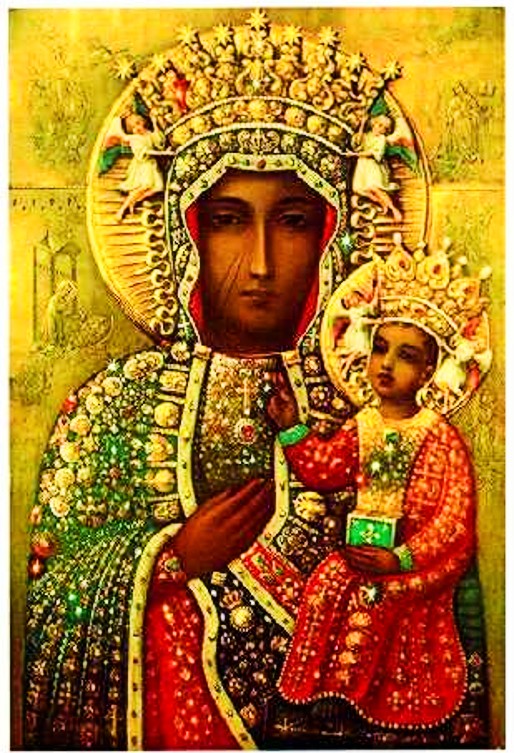
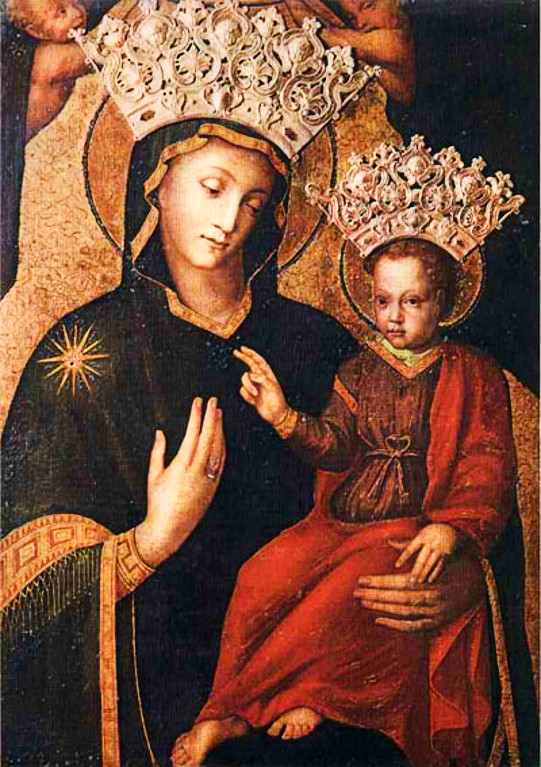
Our Lady of Czestochowa, Queen of Poland – Our Lady of Czestochowa is a revered icon of the Virgin Mary housed at the Jasna Góra Monastery in Częstochowa, Poland. Several Pontiffs have recognised the venerated icon, beginning with Pope Clement XI who issued a Canonical Coronation to the image on 8 September 1717 via the Vatican Chapter. Patron of Poland. According to tradition, the Icon of Jasna Góra (Bright Mountain) was painted by St Luke the Evangelist on a tabletop built by Jesus Himself and the Icon was discovered by St Helen, mother of Emperor Constantine and collector of Christian Relics, in the Holy Land. Visit our Mother here: https://anastpaul.wordpress.com/2017/08/26/blessed-feast-of-our-lady-of-czestochowa-queen-of-poland-26-august/
St Elias of Syracuse St Eleutherius of Auxerre St Felix of Pistoia Bl Herluin Bl Ioachim Watanabe Jirozaemon St Irenaeus of Rome
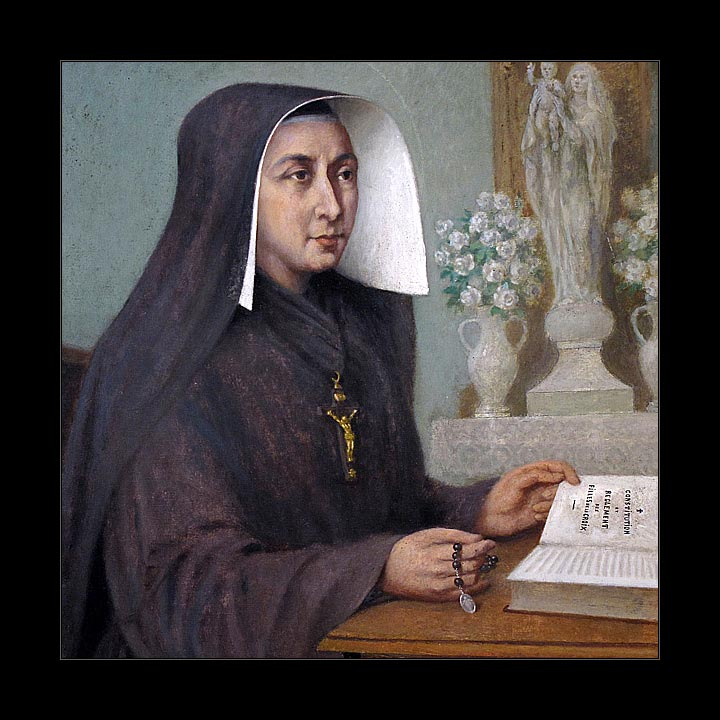
St Jeanne Elisabeth des Bichier des Anges FC (1773-1838) (commonly referred to as St Elisabeth Bichier) and known as “the Good Sister” – Religious and co-Founder with Saint André Hubert Fournet – [After the approval of 2 miracles, he was Beatified on 16 May 1926 by Pope Pius XI and Canonised on June 1933 by the same Pope, after a further 2 miracles.](whom we celebrate on 13 May –https://anastpaul.com/2020/05/13/saint-of-the-day-13-may-saint-andre-hubert-fournet-1752-1834-the-good-father/) of the Sisters of the Cross, Sisters of St Andrew, a religious congregation which was established for the care of the poor and the instruction of rural children in the Diocese of Poitiers in 1807. She also helped to inspire the founding of a community of Priests dedicated to Missionary service, the St Elisabeth died in 1838, at which time there were about 600 Daughters of the Cross serving in some 100 communities. She was Beatified by Pope Pius XI in 1934 and Canonised by Pope Pius XII in 1947. Biography: https://anastpaul.com/2020/08/26/saint-of-the-day-26-august-saint-jeanne-elisabeth-des-bichier-des-anges-fc-1773-1838/
St Jean Bassano St Jean of Caramola Bl Juan Urgel Bl Margaret of Faenza St Maximilian of Rome St Melchizedek the Patriarch St Orontius of Lecce St Pandwyna St Rufinus (15th Century) Bishop and Confessor of Capua St Secundus the Theban St Victor of Caesarea St Victor the Martyr St Vyevain of York
Martyrs of Celano – 3 Saints: Three Christians, Constantius, Simplicius and Victorinus, Martyred in the same area at roughly the same time. They were Martyred in c 159 in the Marsica region of Italy. At some point their relics were interred under the main Altar of the San Giovanni Vecchio Church in the Collegiata di Celano and were authenticated in 1057 by Pope Stephen IX. The city was depopulated in 1222; when it was re-built, the relics were re-enshrined in the Church.
Saint of the Day – 25 August – Saint Menas (Died 552) Bishop of Constantinople , (modern Istanbul, Turkey). Born in Alexandria in Egypt on an unknown date and died on 24 August in 552 in Constantinople. Also known as Mennas, Mina, Minas.
The Roman Martyrology reads today: “At Constantinople, St Mennas, Bishop.”
Menas was the director of the hospice of Saint Samson in Constantinople. Following the deposition of Bishop Anthimus I of Constantinople, Pope St Agapetus I elected him on 3 March 536 to fulfil the high office as the Bishop of that City..
After the Pope’s death, Menas presided over the Council which excommunicated Anthimus. In 543 he headed the Council which ratified Justinian ‘s edict against the Origenists and in 547 he signed, together with the Eastern Bishops, the condemnation of the Three Chapters for which he was excommunicated by Pope Vigilius.
In 552 Mena presented a retraction of his ideas with a profession of faith to the Pope. After his reconciliation with the Church he dedicated to Divine Wisdom the great Church built by the Emperor Justinian.
Menas died on 24 August 552. He was venerated as a Saint and celebrated in the Byzantine Church on 24 August 24 or 25, the latter date on which he is still celebrated in the Roman Martyrology.
St Alessandro Dordi St Andreas Gim Gwang-Ok St Aredius of Limoges St Ebbe the Elder St Eusebius St Genesius of Arles St Genesius of Brescello St Genesius St Gennadius of Constantinople St Geruntius of Italica St Ginés de la Jara
St Gurloes of Sainte Croix St Hermes of Eretum St Hunegund of Homblieres St Julian of Syria St Julius of Eretum St Maginus (Died c304) Martyr, Hermit
St Maria Micaela of the Blessed Sacrament (1809-1865) “Mother Sacramento” was a Spanish professed Religious and the Founder of the Handmaids of the Blessed Sacrament, Apostle and martyr of charity. In 1922, Pope Pius XI, proclaimed Mother Sacramento’s heroic virtues. On 25 July 1925, he Beatified her and on 4 March 1934, he Canonised her. Her Blessed Life: https://anastpaul.com/2019/08/25/saint-of-the-day-25-august-saint-maria-micaela-of-the-blessed-sacrament-1809-1865/
St Menas (Died 552) Bishop of Constantinople St Nemesius of Rome
St Patricia (7th Century) Virgin, Consecrated as a Religious Sister, Pilgrim. Patronage – of Naples, one of a long list of Patron Saints of Naples. St Patricia is less well known than St Januarius, also a Patron Saint of the City, who attracts crowds to Naples Cathedral three times a year to witness the miracle of a small sample of his blood turning to liquid but St Patricia’s blood liquifies every Tuesday, on her Feast Day and at many other times. Wondrous St Patricia: https://anastpaul.com/2024/08/25/saint-of-the-day-25-august-st-patricia-of-naples-7th-century-virgin-of-the-miraculous-liquifying-blood/
St Peregrinus of Rome St Petrus Gim Jeong-Duk St Pontian
DISCLAIMER: Please note: I cannot control the content of the Advertisements on this Site, or of pop-ups which may appear, The revenue from the Advertisements, however, does provide a little assistance in the support of the Site. I do apologise for any inappropriate content.
Saint of the Day – 24 August – St Ouen (c610-684) Bishop and Confessor of Rouen, Founder of many Monasteries including Fontenelle – today’s St Wandrille, Royal Advisor, a gifted poet and writer. Born in around 610 near Soissons in France and died on 24 August 684 near Clichy-la-Garenne , today a district of Paris. Patronages – against deafness, of the deaf. Additional Memorial – 31 March, translation of St Ouen’s Relics. Also known as – Aldovin, Aldowin, Aldwin, Audaenus, Audeon, Audoeno, Audoen, Audoenus, Audoin, Dado, Dadon, Owen.
The Roman Martyrology reads today: “At Rouen, St Ouen, Bishop and Confessor.”
Ouenwas the son of the Frankish nobleman, Autharius of La Ferté , who was in the service of the Merovingian King Chlothar II and his first wife Aiga, brother of St Ado of Jouarre, was raised at the Royal Court like him and received the blessing of St Columban the Younger, as a child.
Ouen grew to exercise great political influence and was a leading figure in a circle of nobles and Bishops. He became chancellor at the Court of King Dagobert I and promoted monasticism.
In 635 he founded the Monastery in Rebais and was able to establish its independence. In 641 he became the Bishop of Rouen, where he founded several Monasteries, including , in 648, Fontenelle – today’s St Wandrille.
He also had great influence as an advisor to the Court in Paris and defended the independence of Neustria. Around 675 Ouen made a pilgrimage to Rome. There he visited the Shrines and Sanctuaries, distributed alms to the poor of Rome and collected Relics to take back to Rouen.
After Ebroin, the Chancellor’s death in 681, Ouen went to Cologne and succeeded in restoring peace between Neustria and Austrasia but died shortly thereafter at the Royal villa at Clichy on 24 August 684.
He was buried in the Church of Sant-Peter which he himself had built. The former Abbot of Fontenelle, Ansbert, succeeded Ouen as Bishop and had his predecessor reburied behind the High Altar, then the equivalent of a Canonisation.
Ouen wrote a Vita of his great friend, the wonderful St Eligius. This biography, which is one of the most authentic historical monuments of the 7th Century, contains a store of valuable information regarding the moral and religious education of that time and testifies to the life of St Aurea of Paris.
St Eutychius of Troas St George Limniotes St Irchard
St Jeanne-Antide Thouret (1765-1826) French Religious and the Founder of the Thouret Sisters – renamed the Sisters of Divine Charity., Apostle of Charity and the Poor and helpless, Teacher. Thouret’s life was one of service to children and the ill across France in schools and hospitals – some of which her order established. This active apostolate did not cease when the French Revolution forced her into exile. She continued her work in both Switzerland and the Kingdom of Prussia. St Jeanne-Antide was Canonised on 14 January 1934 by Pope Pius XI. Her DevotedLife: https://anastpaul.com/2019/08/24/saint-of-the-day-24-august-saint-jeanne-antide-thouret-1765-1826/
St Ouen Bishop and Confessor of Rouen
St Patrick the Elder St Ptolemy of Nepi St Romanus of Nepi
Saint of the Day – 23 August – St Zaccheus (2nd Century) the 4th Bishop of Jerusalem. Also known as – Zacharius, Zaccheus.
The Roman Martyrology reads today: “At Jerusalem, St Zaccheus, Bishop who governed the Church of that City, the 4th after the blessed Apostle, James.”
St James the Greater
The Roman Martyrology lists only two Saints named Zacchaeus, one the Bishop of Jerusalem with a Feast Day on 23 August and the other, the Martyr of Caesarea in Palestine together with St Alphius.
Zacchaeus as the Bishop is mentioned by St Eusebius (265-340), the Bishop and Historian of Caesarea, who in his “Historia Ecclesiastica” lists the names of the first 4 Bishops of Jerusalem, namely St James Apostle, St Simeon, Justus and Zacchaeus.
Therefore, Zacchaeus was the 4th Bishop of Jerusalem and lived in the 2nd Century. Unfortunately, nothing else is known of his life and his time as the Ecclestical shepherd of Jerusalem.
Tthe Hagiographer Adone († 875) was the first to include him in his ‘Martyrology’ from which it passed to that of Usuard († 877) and from there to the ‘Roman Martyrology’ compiled by Cardinal Caesar Baronius in the 16th Century.
St Philip Benizi OSM (1233-1285) Confessor, Co-Founder (one of the Seven Holy Founders of the Order of Servants of Mary) OSM, Servite Priest Genera\Superior, Reformer, Preacher, Medical Doctor. St Philip was Beatified on 8 October 1645 by Pope Innocent X and Canonised on 12 April 1671 by Pope Clement X – he was the first Servite to be Canonised. Born on15 August (Feast of the Assumption and the day that the Blessed Virgin appeared to the first of the Founders of the Servite Order) 1233 at district of Oltrarno, Florence, Italy -and died on 22 August (Octave of the Assumption i.e. the Feast of the Immaculate Heart of Mary) 1285 at Todi, Italy). This Amazing Life: https://anastpaul.wordpress.com/2017/08/23/saint-of-the-day-23-august-st-philip-benezi/ AND: https://anastpaul.com/2022/08/23/saint-of-the-day-23-august-st-philip-benizi-osm-1233-1285-confessor/
St Abbondius of Rome St Altigianus St Apollinaris of Rheims St Archelaus of Ostia St Asterius of Aegea St Claudius of Aegea St Domnina of Aegea St Eleazar of Lyons St Eonagh
Bl Giacomo Bianconi of Mevania St Hilarinus St Ireneus of Rome St Lupo of Novi St Luppus
St Marcian of Saignon, France – Priest, Founder and the first Abbot of the Benedictine Abbaye Saint Eusebe, the Abbey of St Eusebius. Unfortunately we do not even know the year of his birth or of his death but we do know the day of death was 23 August. The Little We Know of His Life: https://anastpaul.com/2023/08/23/saint-of-the-day-23-august-st-marcian-of-saignon-abbot/
St Maximus of Ostia St Minervius of Lyons St Neon of Aegea St Quiriacus of Ostia St Theonilla of Aegea St Timothy of Rheims
St Victor of Vita St Zaccheus (2nd Century) Bishop of Jerusalem
Martyrs of Agea – 4 Saints: A group of Christian brothers, Asterius, Claudius and Neon, denounced by their step-mother who were then tortured and Martyred in the persecutions of Pro-consul Lysias. They were crucified in 285 outside the walls of Aegea, Cilicia (in Asia Minor) and their bodies left for scavengers.
One Minute Reflection – 22 August – “The Month of the Immaculate Heart of Mary” and the Feast of the Immaculate Heart of Mary and the Octave Day of the Assumption – Ecclesiasticus 24:23-31 – John 19:25-27 – Scripture search here: https://www.drbo.org/
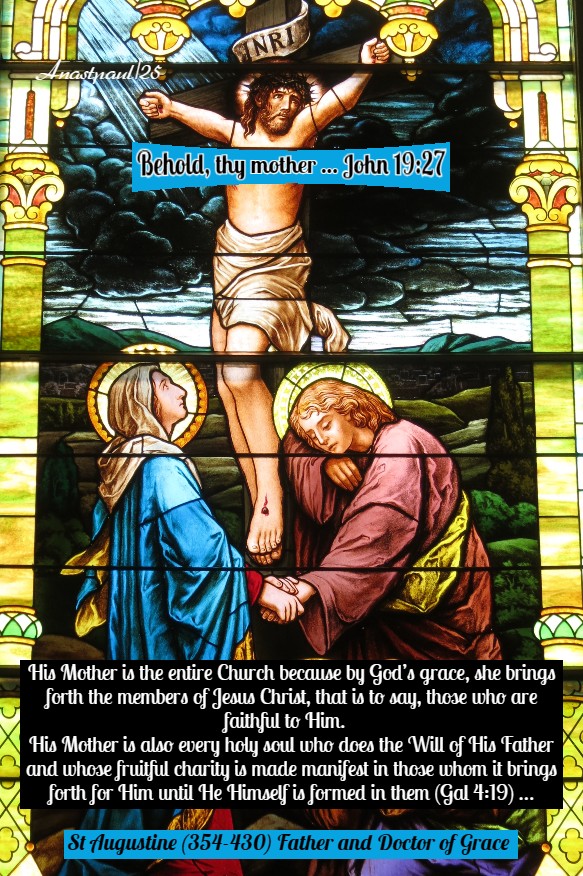
“Behold, thy mother” – John 19:27
REFLECTION – “He Who is the Fruit of one holy Virgin is the glory and honour of all the other holy virgins; for like Mary, they are themselves the mothers of Christ, if they do the Will of His Father, the glory and happiness of Mary in being the Mother of Jesus Christ shines forth above all, in the Lord’s words: “Whoever does the Will of my heavenly Father is brother and sister and mother to me.” (Mt 12:50)
Thus He shows the spiritual relationships which attaches Him to those whom He redeemed. His brothers and sisters are the holy men and women who partake with Him in the heavenly inheritance. His Mother is the entire Church because by God’s grace, she brings forth the members of Jesus Christ, that is to say, those who are faithful to Him. His Mother is also every holy soul who does the Will of His Father and whose fruitful charity is made manifest in those whom it brings forth for Him until He Himself is formed in them (Gal 4:19)…” – St Augustine (354-430) Father and Doctor of Grace of the Church (On holy virginity 5).
PRAYER – Almighty, everlasting God, Who in the Heart of the Blessed Virgin Mary, prepared a dwelling place worthy of the Holy Ghost, graciously grant, that we, who are devoutly keeping the Feast of her Immaculate Heart, may be able to live according to Thy Heart. Through Jesus Christ, Thy Son our Lord, Who lives and reigns with Thee, in the unity of the Holy Ghost, God, world without end. Amen (Collect).
Saint of the Day – 22 August – Blessed Bernard Perani OFM,Cap. (1604-1694) Lay Brother of the Capuchin Branch of the Order of Friars Minor, Lay Brother fulfilling various roles in the service of his fellow Friars, Apostle of the poor and sick, Mystic with various charisms and a powerful devotion to the Blessed Sacrament. Born on 7 November 1604 at Villa d’Appignano, Offida, in the Marche, Italy as Dominico Francesco and died in 1694 at his Monastery in Offida aged 89 years old. Patronage – of the City and Diocese of Offida, Italy. Also known as – Bernard Offida, Bernard Offidski, Bernard z Offidy, Dominico Francesco. …
Domenico Perani was born to the peasant family of Domenico Perani and Elisabetta Puccio Perani as the third of eight children. His mother often held him up as an example worthy of imitation, to his siblings. At his Baptism he was given the names of Domenico Francesco. He assisted his father as a shepherd in his childhood.
In 1626 at the age of 22, Dominico entered the Order of Friars Minor Capuchin in Corinaldo, taking the name of Bernard. From his entrance until 1633, he worked in the kitchen.
He became an ardent student of Sacred Scripture and devotee of the Blessed Sacrament, being seen to experience ecstasy whilst praying before the Tabernacle. He practised severed mortifications and penances.
He was placed in the Friary at Fermo from his profession until two decades later and in 1650 Bernard was returned to his birthplace of Offida, where he was blesed to remain for the rest of his life and where he later died on 22 August 1694 mere months before turning 90. He died with a Crucifix in his hands.
Joseph Haydn wrote a special Mass in his honour named the “Missa sancti Bernardi von Offida.”
Pope Pius VI held the Beatification celebration for Bernard on 25 May 1795 in Saint Peter’s Basilica. The cause for his Sainthood was formally opened on 20 September 1797.
St Anthusa of Seleucia St Antoninus of Rome St Arnulf (9th Century) Hermit of Eynesbury Information regarding this Saint have been lost but he has long been venerated in Arnulphsbury, Cambridgeshire, England. St Athanasius of Tarsus
Blessed Bernard Perani OFM. Cap (1604-1694) Lay Brother
St Dalmau Llebaría Torné St Epictetus of Ostia St Ethelgitha of Northumbria St Fabrician of Toledo St Felix of Ostia
St John Kemble (1599 – 1679) Martyr, Priest. Ordained in 1625, he returned to Monmouthshire and served more than 50 years as an itinerant Priest, winning admirers even among Protestants. After being dragged on a hurdle to Widemarsh Common, Kemble declared on the scaffold that he died for the religion that had made this country Christian and that he forgave all his enemies. He was then obliged to encourage the executioner, who had no stomach for his task. The hanging was horribly botched, so that Kemble took half an hour to die. Subsequently he was beheaded and his left hand cut off, this may still be seen at the church of St Francis Xavier in Hereford. Life and Death: https://anastpaul.com/2018/08/22/saint-of-the-day-22-august-st-john-kemble-1599-1679-martyr/
St John Wall St Josep Roselló Sans St Julio Melgar Salgado St Maprilis of Ostia St Martial of Ostia St Maurus of Rheims St Philibert of Toledo Bl Richard Kirkman St Saturninus of Ostia Bl Simeon Lukach St Sigfrid of Wearmouth + St Symphorian of Autun
Saint of the Day – 21 August – Saint Euprepius (1st/2nd Century) he 1st Bishop and Confessor of Verona. Died at Verona at the end of the 1st Century or the beginning of the 2nd Century. Also known as – Euprepus, Puprepis.
The Roman Martyrology reads today: “At Verona, St Euprepius, Bishop and Confessor.”
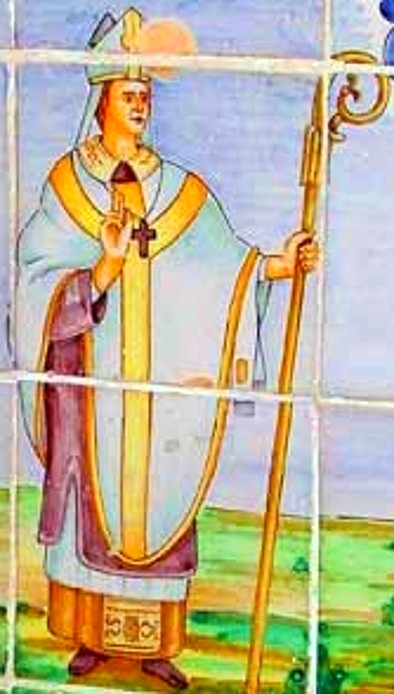
Unknown Bishop Blessing by Vittore Carpaccio
Not much is known of his life beyond the fact that his name was Greek. According to the local tradition of Verona, he was one of the Seventy (two) Disciples mentioned in the Gospel but his name does not appear among them in the 2nd Century list compiled by St Hippolytus of Rome.
Local tradition states that Euprepius was the Bishop of Verona from 60 to 72. The work, known as the ‘Carmen Pipinianum’ includes a description of Verona and its Churches and gives a list of the first eight Bishops: Euprepius, Dimidrianus (Demetrianus), Simplicius, Proculus, Saturninus, Lucilius (Lucillus, Lucius), Gricinus and Zeno.
According to the Catholic Encyclopedia, “the period of St Euprepius and ,therefore, of the erection of the See, must be placed not before the peace given to the Church under Gallienus (260) but rather, under the first period of the reign of Diocletian, when the Church enjoyed peace.
The reconstruction of the Chronology of Bishops known as the ‘Velo di Classe’ (which dates from the end of the 8th Century or beginning of the 9th), places Euprepius first in the list of Bishops of Verona. His Feast day in the Martyrologium Romanum is 21 August.
St Euprepius’ cult did not gain much popularity until the 14th Century. In 1492, his Relics, along with those of other Veronese Bishop Saints, were rediscovered in the Crypt of San Procolo. The Relics were translated to the ancient Basilica of San Zeno in 1806, where an inscription on the Altar reads:
“Euprepio Veronae a Christi ann. LXXII praesuli primo.” “Euprepius, first Bishop of Verona, from the year 72 of Christ. ”
In the 16th Century, Domenico Riccio painted a series of portraits of the Bishops of Verona, ranging from Euprepius to one of Cardinal Agostino Valerio for the Palazzo del Vescovado di Verona.
St Euprepius (1st/2nd Century) Bishop and Confessor of Verona
St Fidelis of Edessa St Theogonius of Edessa St Gracia of Lérida St Hardulph St Joseph Nien Vien St Leontius the Elder St Luxorius of Sardinia St Maria of Lérida St Maximianus the Soldier St Maximilian of Antioch St Natale of Casale Monferrato St Paternus of Fondi St Privatus of Mende St Quadratus of Utica
Saint of the Day – 20 August – St Herbert Hoscam (Died c1181) Bishop of Gonza, Italy, Missionary, Scholar. Born in England, in the 12th Century and died in Conza della Campania , Italy, around 1181. Patronage – of the City and Diocese of Gonza. Also known as – Herbert of Conza, Erberto…
Unknown Italian Saint Bust may be St Herbert Hoscam
Herbert is still the highly venerated Patron Saint of the City and Diocese of Conza. He lived in the second half of the 12th Century, as attested by a parchment from 1169 preserved in the Diocesan Archives of Conza. This document states that he granted Robert, the Bishop of Muro Lucano, the right to Consecrate a Church in honour of St Martin.
He was present at the Third Lateran Council in 1179 and was considered a she[herd illustrious for his sanctity and learning.
Herbert died around 1181. On 23 March 1684, the Theatine Archbishop Gaetano Caracciolo, inspected the Relics placed in a side Altar and transferred them to an urn under the High Altar of Conza Cathedral, where they remain today. On this occasion, the Archbishop took the Episcopal ring, which every year, on the eve of the Feast, 20 August is immersed in Holy Water and then devotedly sprinkled over the faithful, while the hymn of the holy confessors is sung.
The venerated shepherd of this Diocese and City, so struck by recurring earthquakes and constanly reborn over the centuries, the last of which was in 1980, always enthusiastically supported the cult of the St Herbert. At the behest of Archbishop Giuseppe Nicolai († 1758), a precious silver Statue was erected in honour of the Patron Saint and at the end of the 19th Century, Archbishop Antonio Buglione named a Rural Bank after him.
St Brogan St Burchard of Worms St Christopher of Cordoba St Cristòfol Baqués Almirall St Gobert of Apremont St Haduin of Le Mans St Heliodorus of Persia St Herbert Hoscam (Died 1188) Bishop St Leovigild of Cordoba St Lucius of Cyprus St Manetius/Benedict dell’ Antella OSM Confessor
Saint of the Day – 19 August – Saint Maginus (Died c306) Hermit Martyr of Brufaganya, Spain. Nobly born in Burgundy modern France and died by being beheaded with a sickle durinmg the persecutions of Diocletian in c3046 in Tarragona, Spain. Patronage of Tarragona. Also known as – Magi, Magin.
Maginus, being orphaned at a young age, and desiring to give himself to God, became a Hermit in a cave on Mount Brufaganya located at 760m above sea level, above the beginning of the Torrent de Sant Magí.
Upon the arrival of the Roman Prefect Dacian in Tarragona, persecuting Christians under the edict of Emperor Maximian, and Diocletian, Maginus tried to convert them to the Faith and was imprisoned.
Being miraculously freed, he left the City by a gate now called Sant Magí, where he dedicated a Chapel and returned to Mount Brufaganya.
Being captured once again in his cave, Maginus was taken to Tarragona, then transferred to Gaià, where he was beheaded.
St Andrew the Tribune St Badulf of Ainay St Bertulf of Luxeuil St Calminius St Credan of Evesham
St Donatus of Sisteron (Died 535) Priest, HermitMiracle-worker. The Roman Martyrology reads: “In the neighbourhood of Sisteron in France, the blessed St Donatus, Priest and Confessor. Being from his very infancy endowed with the grace of God in an extraordinary manner, he lived the life of an Anchorite for many years and after having been renowned for glorious miracles, he went to Christ.” St Donetus’ Life of Grace: https://anastpaul.com/2024/08/19/saint-of-the-day-19-august-st-donatus-of-sisteron-died-535-priest-confessor-hermit/
Blessed Jordan of Pisa OP (c1255–1311) Dominican Friar, Theologian, Professor, renowned Preacher, Founder of the Confraternity of the Holy Redeemer at Pisa, Visionary, Marian devotee, promoter and daring innovator of the vernacular Italian language as a ‘church’ language and a tool for evangelisation. On 23 August 1833, Blessed Jordan’s cultus was confirmed by Pope Gregory XVI and in 1838 he was Beatified by Pope Gregory XVI. His Ardent Life: https://anastpaul.com/2019/08/19/saint-of-the-day-blessed-jordan-of-pisa-op-c-1255-1311/ St Julius of Rome
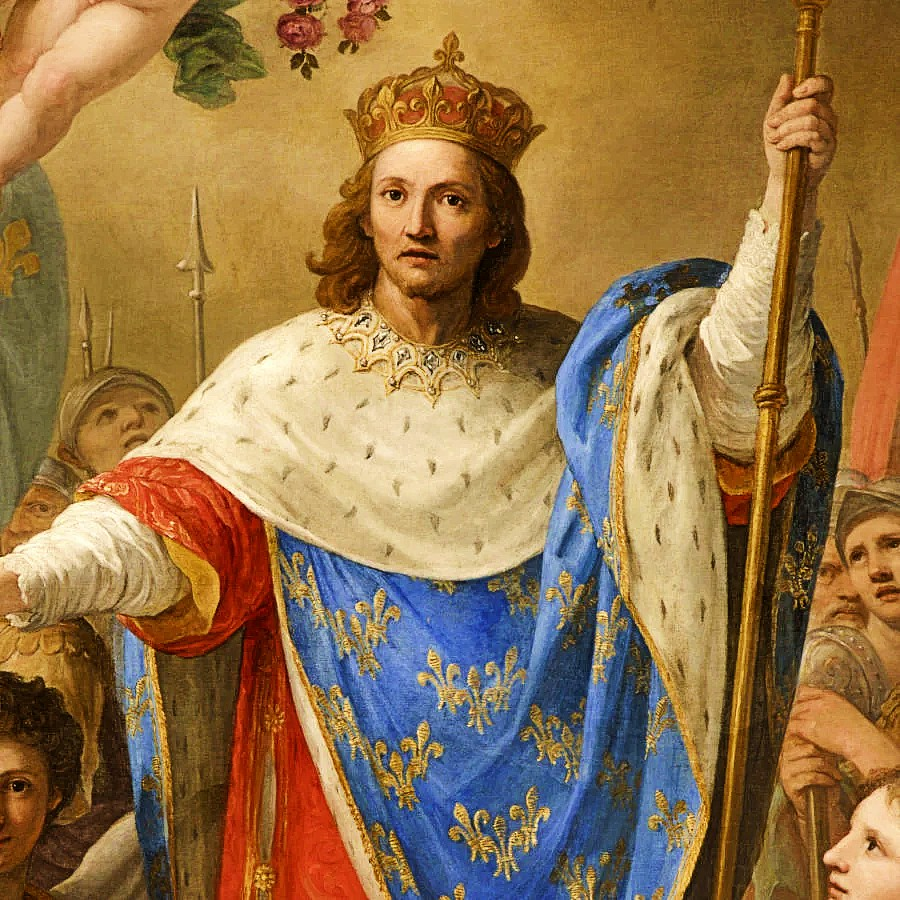
St Louis OFM (1274-1297) Prince and Bishop of Toulouse, Neapolitan Prince of the Capetian House of Anjou, Franciscan Friar and Priest, Apostle of Prayer, of Penance and of the poor and the sick. He had received the last sacraments on the Feast of the Assumption of Our Lady and on the 19th of August, 1297, while pronouncing the holy name of Mary, he yielded his soul to God. Because of the many miracles that were wrought at his tomb, he was Canonised as early as 1317, during the lifetime of his mother. Lovely St Louis: https://anastpaul.com/2020/08/19/saint-of-the-day-19-august-saint-louis-of-toulouse-ofm-1274-1297-prince-and-bishop/St
St Magnus of Anagni St Magnus of Avignon St Magnus of Cuneo St Marianus (Died c515) Hermit of Entreaigues, a forest in France. St Gregory of Tours wrote his Vita but we have no copy thereof. St Marinus of Besalu St Maginus (Died c306) Hermit Martyr of Tarragona, Spain St Mochta St Namadia of Marsat St Rufinus – Confessor. A Saint venerated for centuries in of Mantua, Italy but sadly all records of his life have been lost. St Sarah the Matriarch St Sebaldus St Thecla of Caesarea St Timothy of Gaza
Blessed Pope Urban II (1042–1099) Bishop of Rome, Abbot, Confessor – after 1969 his Feast was moved to 29 July. The Roman Martyrology reads today: “At Rome, Blessed Urban II, Pope, who followed in the footsteps of St Gregory VII, in his zeal for learning and religion and fired the Crusaders with enthusiasm for the recovery of the holy places in Palestine, from the power of the infidels. The veneration paid to him from time immemorial Pope Leo XIII, approved and confirmed.” Biography: https://anastpaul.com/2019/07/29/saint-of-the-day-29-july-blessed-pope-urban-ii-c-1035-1099-bishop/
Martyrs of Nagasaki – 15 Beati: A group of missionaries and their laymen supporters who were executed for spreading Christianity in Japan. They are: Antonius Yamada, Bartholomaeus Mohyoe, Iacobus Matsuo Denji, Ioachim Díaz Hirayama, Ioannes Miyazaki Soemon, Ioannes Nagata Matashichi, Ioannes Yago, Laurentius Ikegami Rokusuke, Leo Sukeemon, Ludovic Frarijn, Marcus , kenoshita Shin’emon, Michaël Díaz Hori, Paulus Sankichi, Pedro de Zúñiga, Thomas Koyanag., They were beheaded on 19 August 1622 at Nagasaki, Japan and Beatified , 7 May 1867 by Pope Pius IX.
Saint of the Day – 18 August – Saint Eonus (Died c502) Bishop of Arles. Of French birth where he died in his Diocese of Arles in c502. Also known as – Eolnius, Aeonius.
Unknown Bishop
Eonus was related to the renowned Saint Caesarius (470-542) and a fellow citizen of Arles. Eonus succeeded Saint Leontius, as the Bishop of Arles, who was still alive in 475.
Pope Saint Gelasius I addressed a letter to our Saint to be shared with the Eiscopate of Gaul. Pope Anastasius II (496-498) had determined the respective rights of the Provinces of Vienne and Arles, in a way prejudicial to the latter and Eonus asserted his point of view. In 499, Pope Symmachus ordered him to send a representative to Rome, together with that of Vienne. In 500, the outcome of this meeting in Rome was successful for Eonus, as Arles recovered its rights.
Eonus corresponded with Saint Ruricius, the Bishop of Limoges, three of whose letters addressed to him have come down to us.
Eonus involved himself in monastic life and placed St Caesarius, who had left Lérins for health reasons, at the head of one of his Monasteries. He Ordained St Caesarius to the Priesthood and chose him as his successor. This choice Eonus expressed this to his Clergy, to the best of his faithful and to the King of Toulouse, Alaric.
He likely died in 502. The Diocese of Arles and Aix, celebrate the Feast of Saint Eonus with us all today.
St Florus of Illyria Bl Francis of Francavilla Bl Gaspar di Salamanca St Hermas of Rome St John of Rome St Juliana of Myra St Juliana of Stobylum St Laurus of Illyria St Leo of Myra
Massa Candida: Also known as Martyrs of Utica and the White Company: Three hundred 3rd Century Christians at Carthage, who were ordered to burn incense to Jupiter or face death by fire. Martyrs. Saint Augustine of Hippo and the poet Prudentius wrote about them. They were forced to cast themselves into a pit of burning lime c 253 at Carthage, North Africa.
DISCLAIMER: Please note: I cannot control the content of the Advertisements on this Site, or of pop-ups which may appear, The revenue from the Advertisements, however, does provide a little assistance in the support of the Site. I do apologise for any inappropriate content.
Saint of the Day – 17 August – St James the Deacon (7th Century). James was a Roman Deacon particularly proficient in Church music and Gregorian Chant, who accompanied St Paulinus of York (c584-644) the 1st Bishop of York, on his mission to Northumbria. He was a member of the second Gregorian mission in around 604. After Paulinus left Northumbria due to pagan violence, James stayed near Lincoln and continued his missionary efforts, dying sometime after 671, according to the Venerable St Bede.
James was presumably an Italian, like the other members of the Gregorian mission. His birth date is unknown but it is believed that he arrived in England in the 2nd mission in around 604. He accompanied St Paulinua to Northumbria together with the sister of King Eadbald of Kent, who went to Northumbria to marry King Edwin.
When King Edwin died in battle in 633, having been the principal supporter of St Paulinus’ mission, the pagans responded in aggression to the Christian missionaries. St Paulinus was forced to flee to Kent. James, however, remained in Northumbria and continued missionary evangelisation. James’ efforts were centred in Lincoln, at a Church which St Paulinus had built, the remains of which may lie under the Church of St Paul-in-the-Bail.
St Bede (673-735) writes that James lived in a village near Catterick which “bears his name to this day.” He reports that James, undertook missionary work in the area and lived to a great age. During the reign of King Oswiu of Northumbria, James attended the Royal Court, for he celebrated Easter with Oswiu’s Queen, Eanflæd, Edwin’s daughter. James and Eanflæd celebrated Easter on the date used by the Roman Church which led to conflicts with Oswiu, who celebrated Easter on the date calculated by the Irish Church. These dates did not always coincide and were one of the reasons that Oswiu called the Council of Whitby in 664 to decide which system of Easter calculation his Kingdom would use. We know, in our favoured position that the Council of Whitby settled the issue agreeing to following Rome.
According to St Bede’s account, James was present at the Council of Whitby. St Bede states that after the Council and the return of Roman customs, James, as a trained singing master in the Roman style, taught many Gregorian Chant.
James’ date of death is unknown but St Bede implies that he was still alive during St Bede’s lifetime, meaning he died after the latter’s birth, between 672. This would mean he was at least 70 years old at his death. It has been suggested that St James was St Bede’s informant for the life of St Edwin, the works of St Paulinus and perhaps, the Council of Whitby.
After his death, James was venerated as a Saint throughout the country.
St Amor of Amorbach St Anastasius of Terni St Benedicta of Lorraine St Carloman St Cecilia of Lorraine
St Clare of the Cross (c1269-1308) Augustinian Nun and Abbess of Montefalco ; before becoming a Nun, St Clare was a member of the Third Order of St Francis (Secular), Mystic, Penitent, Spiritual adviser. Beatified by Pope Clement XII. On 8 December 1881, the Feast of the Immaculate Conception, Pope Leo XIII Canonised Clare. Her Sanctified Life: https://anastpaul.com/2019/08/17/saint-of-the-day-17-august-saint-clare-of-the-cross-of-montefalco-c-1269-1308/
St Drithelm St Elias the Younger St Eusebius of Sicily St James the Deacon (7th Century)
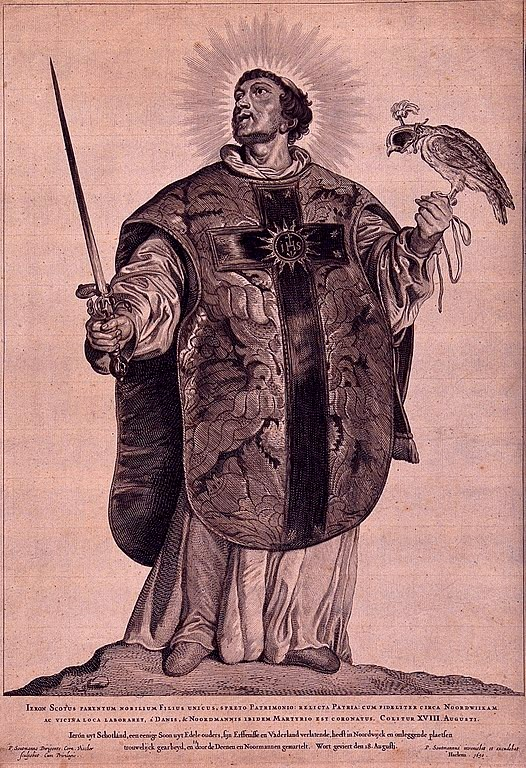
St Jeroen of Noordwijk (c800-856) Priest Martyr, Missionary. Patronage – the finding of lost articles, of Noordwijk. Also known as – Gerone, Hiero, Hieron, Iero, Ieron, Jeroen van Noordwijk, Jéron Noordwijk. Additional Memorial – 3rd Sunday in August in Noordwijk a St Jeroen celebration known as the ‘St Jeroen Sleep Walk’ and on the 1st Sunday in September, his Patronage of Noordwijk (and of lost articles) is celebrated there. Holy Jeropen’s Life and Death: https://anastpaul.com/2024/08/17/saint-of-the-day-17-august-st-jeroen-of-noordwijk-c800-856-priest-martyr/
St Juliana of Ptolemais St Mamas St Myron of Cyzicus
St Nicolò Politi (1117-1167) Basilian Monk and Hermit. He was known for his miracles even during his childhood and was Venerated as a saint even before his death. St Nicolò was Canonised on 7SJune 1507, at Saint Peter’s Basilica, Rome, by Pope Julius II. Miraculous St Nicolò: https://anastpaul.com/2020/08/17/saint-of-the-day-17-august-st-nicolo-politi-1117-1167/
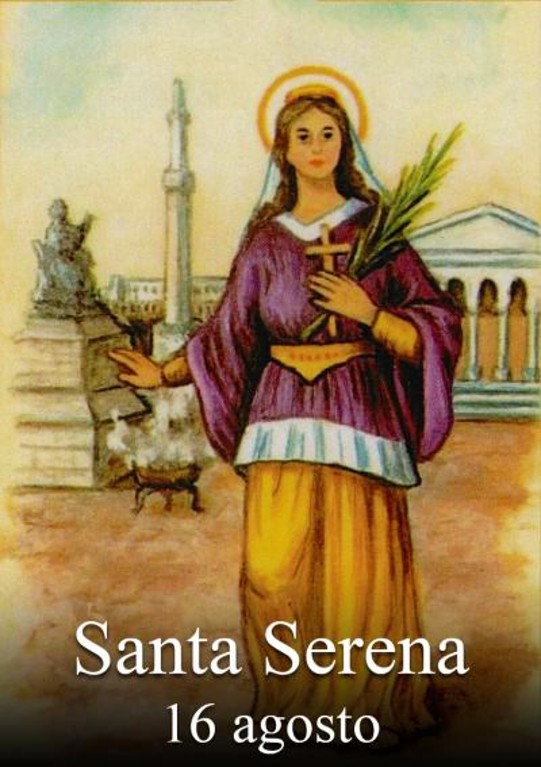
Saint of the Day – 16 August – Saint Serena (4th Century) Wife of Emperor Diocletian and, therefore, the Empress of the Roman Empire and a clandestine Christian.
The Roman Martyrology reads today: “At Rome, St Serena, who had been the wife of the Emperor Diocletian.”
In the Acts of Saint Marcellus and Saint Susanna, whom we celebrated on 11 August, Empress Serena intervened to defend Christians from persecution. For this reason, tradition holds that Serena was repudiated and some sources say she was later Martyred by her husband.
In fact, Lactantius (Lucius Cecilius, 3rd-4th Century), a Latin Christian writer who lived at the time and Court of Diocletian, states in his “De Mortibus Persecutorem” that his wife and daughter were called Prisca and Valeria and that they were forced to perform pagan rites.
While the abovementioned “Acts” speak of an Empress named Serena, wife of Diocletian, who intervened to defend Christians from the persecution unleashed by her husband, the tenth and most violent.
Her intervention evidently helped bring the persecution to an end because in 305 Diocletian abdicated and retired to Split. Probably from antiquity, she was, therefore, considered a saintly figure to be venerated as a Saint and some sources regard her as a Martyr.
Blessed Angelo Agostini Mazzinghi O.Carm. (1385-1438) was an Italian Priest and a professed member of the Carmelite Order. He was a noted Preacher, Prior and Reformer, Teacher of theology and was known for his pious devotion to the Holy Eucharist, the Blessed Virgin Mary and the Carmelite Rule of Life and to the profession of the Gospel. Holy Angelus: https://anastpaul.com/2019/08/16/saint-of-the-day-16-august-blessed-angelo-agostini-mazzinghi-o-carm-1385-1438/
St Arsacius of Nicomedia St Frambaldo Bl Iacobus Bunzo Gengoro Bl Jean-Baptiste Menestrel Bl John of Saint Martha
Blessed Laurence Loricatus (Died 1243) Hermit, Pilgrim, Penitent, previously a Soldier. Laurence served as a Solider as a young man. After accidentally killing a man, perhaps in the course of duty, he was so overcome with remorse that he dedicated himself to a life of penance. The image below by Fra Angelico depicts St Benedict finding a new disciple in his ‘cave.’ His Life of Penitance: https://anastpaul.com/2024/08/16/saint-of-the-day-16-august-blessed-laurence-loricatus-died-1243-hermit-pilgrim-penitent/
Bl Magdalena Kiyota Bokusai Bl Maria Gengoro Bl Ralph de la Futaye St Serena (4th Century) Bl Simon Kiyota Bokusai
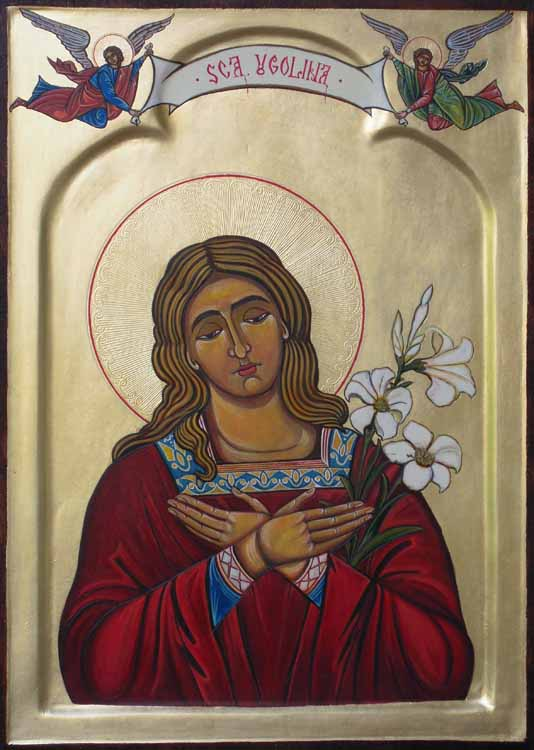
St Ugolina (c1239-c1300) Hermit, Penitent, Spiritual advisor. The very strange story that of this Blessed Ugolina who shut herself in a hermitage, representing herself as a man and remained there for forty-seven years! The aim of her subterfuge was to escape the aims of her father, who wished her to marry. In order not to reveal her secret, she called herself Ugo without revealing her identity to anyone. for nearly fifty years Her Holy Life: https://anastpaul.com/2021/08/16/saint-of-the-day-16-august-saint-ugolina-of-vercelli-c-1239-c-1300/
Martyrs of Palestine – 33 Saints: Thirty-three Christians Martyred in Palestine; they are commemorated in old martyrologies but the date and exact location have been lost.
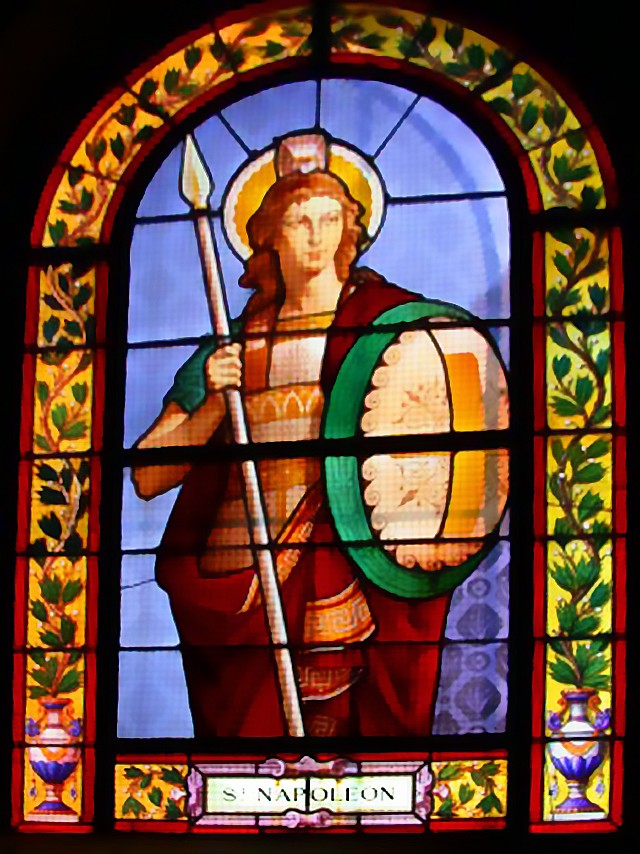
Saint of the Day – 15 August – St Napoleon (Died c302) Martyr of Alexandria. Born in Egypt and was Martyred in Alexandria in the early 4th Century during the persecutions of Diocletian. Also known as – Neopulus, Neopolus, Neopolis or Neópolo.
He was seized during the persecutions under Emperor Diocletian and was brutally tortured in Alexandria. Neopoleon died from his injuries. Sadly we have no further information but it appears that he had been a soldier.
St Alypius (Died 430) Bishop of the See of Thagaste (in what is now Algeria) in 394, Confessor, Reformer, Defender of the Faith against heresy, Lawyer, teacher, spiritual advisor. He was a lifelong disciple and friend of Saint Augustine and joined him in his conversion (in 386; Confessions 8.12.28) and life in Christianity. He is credited with helping establish Augustine’s Monastery in Africa. Most of what is known about him comes from Augustine’s autobiographical Confessions. A Life of Holiness: https://anastpaul.com/2021/08/15/saint-of-the-dy-saint-alypius-of-thagaste-died-430/
Blessed Alfred OSB (Died 874) Bishop of Hildesheim, Benedictine Monk, Confessor, Founder of Essen Abbey, Hildesheim Cathedral, many Convents, Schools and Seminaries, Royal Spiritual Adviser to the East Frankish King Louis the German, Diplomatic Peacemaker, he was know for his great devotion to the Blessed Virgin Mary. His Lifeot Grace: https://anastpaul.com/2020/08/15/saint-of-the-day-15-august-blessed-alfred-of-hildesheim-osb-died-874-bishop/
Blessed Aimo Taparelli OP (c 1395-1495) Priest and Friar of the Order of Preachers, widower and father, Reformer, spiritual writer. He served as an Inquisitor-General for his Order in the Lombard and Liguria regions of Italy and became a travelling preacher in Northern Italian Cities. His name means “defends the house with the sword.” Aimo was Beatified on 29 May 1856 by Pope Pius IX. Blessed Aimo’s Zealous Life: https://anastpaul.com/2022/08/15/saint-of-the-day-15-august-blessed-aimo-taparelli-op-c-1395-1495/
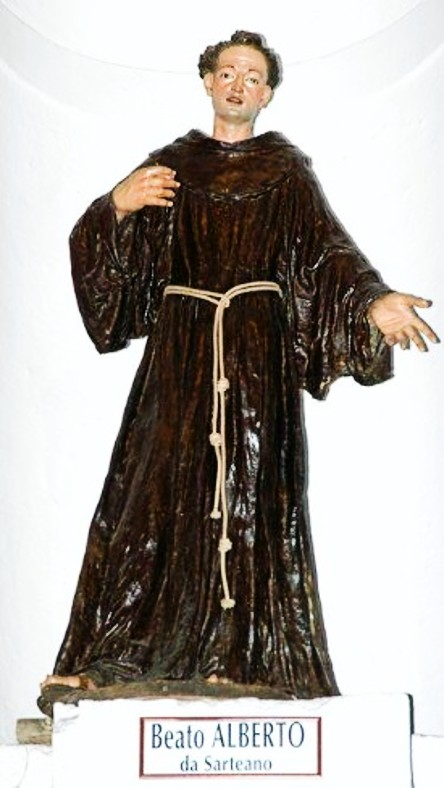
Blessed Alberto Berdini OFM Conv. (1385– 1450) Priest and Friaer of the Friars Minor Conventual, known as the “King of Preachers – Rex Praedicatorum” Disciple and companion of St Bernardine of Siena in his Missionary work in Italy., often called upon to assist in peace discussions between warring Cities. Born in 1385 in Sarteano, Tuscany, Italy and died on 15 August 1450 in Milan, Italy of natural causes. Blessed Holy Albert’s Life: https://anastpaul.com/2023/08/15/saint-of-the-day-14august-blessed-alberto-berdini-ofm-conv-1385-1450/
St Simplician (c320-c401) Archbishop of Milan and Successor of St Ambrose (340-397) Doctor of the Church in the Archdiocese of Milan, Teacher, Catechist, Writer, Mystic. St Ambrose used to call Simplician father, as a sign of spiritual relationship but they were also great friends. Simplician took also an active part in the conversions of both Alypius of Thagaste and Augustine of Hippo. The meeting between Augustine and Simplican occurred in Milan in 386 and it is recorded in Augustine’s Confessions. After his conversion, Augustine also called Simplician father and in 397 he dedicated to Simplician two books on the issue of predestination, known as De Diversis Quaestionibus ad Simplicianum. St Augustine, remembered and referred to him with deep gratitude, calling him the “spiritual father of my soul” and would submit his own writings to him to review and comment. Details of the life of St Simplician here: https://anastpaul.wordpress.com/2017/08/15/saint-of-the-day-15-august-st-simplician-of-milan/
Martyrs of Nicomedia – 3 Saints: Three Christians Martyred together. No details survive but the names – Eutychian, Philip and Straton. They were martyred in Nicomedia, Bithynia (in modern Turkey).
Saint of the Day – 14 August – Saint Fachtna (6th Century) the 1st Bishop of Ross, Ireland, Founder Abbot of a Monastery and a renowned School. Patronage – of Rosscarbery, the Diocese of Kilfenora , Cork and Ross. Also known as – Fachana, Facaage.
Toward the end of the 6th Century, Fachtna founded a Monastery and School in the area now known as Rosscarbery (Ros Ailithir – “the wooded headland of the pilgrims”). The School of Ross became a celebrated seat of learning and gained an international reputation for study of Sacred Scripture and learning, until the 9th Cntury when it was besieged and destroyed by the Danes.
St Brendan the Navigator, taught in this School which was crowded with students from every Continental land. It flourished for three hundred years and survived ,in some form, until the coming of the Normans to Ireland.
Fachtna is regarded as the 1st Bishop and Patron of Ross Diocese
In 1197, Pope Celestine III appointed Daniel as the Bishop of Ross and the Diocese had its own Bishop from the 12th Century until 1693, when it was united with Cork and Cloyne. In 1849 the Diocese regained its own Bishop but in 1954 was united with Cork Diocese.
The description of Saint Fachtna in Cuimin of Connor’s Poem on the characteristic virtues of the Irish Saints is:
“Fachtna, the generous and steadfast, loved to instruct the crowds in concert, He never spoke that which was mean, Nor aught but what was pleasing to his Lord.”
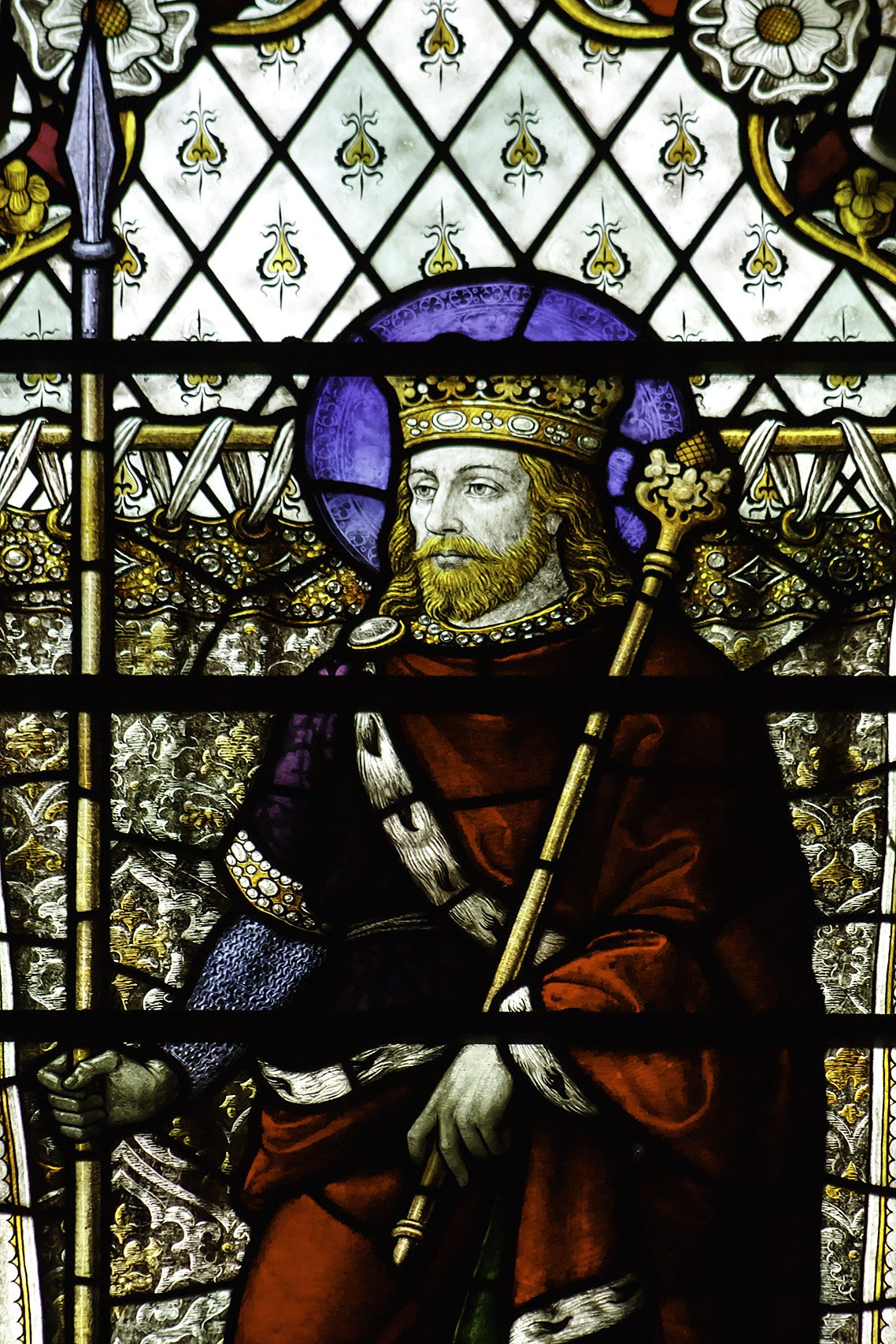
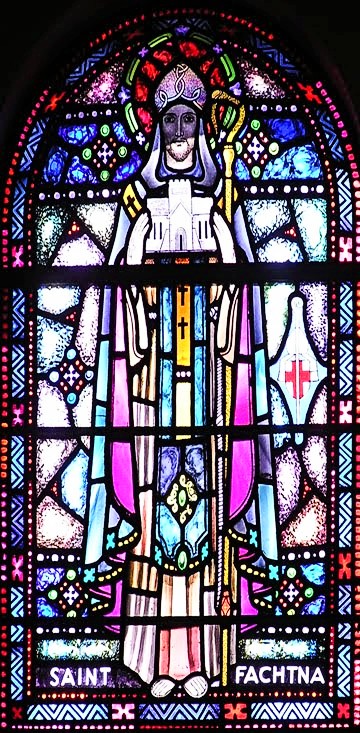
Fachtna is a favouured name for Catholic boys from this area. There is a Catholic Church dedicated to St Fachtna in the picturesque village of Glandore. A stained-glass window of St Fachtna by Sarah Purser appears in the Honan Chapel in University College, Cork. (see above).
St Eusebius of Rome (Died 357) Priest, Confessor. “At Rome, the birthday of the blessed Priest Eusebius, who for the defence of the Catholic Faith, was shut up in a room of his own house by the Arian Emperor, Constantius, where constantly persevering in prayer for seven months, he rested in peace. His body was removed by the Priests, Gregory and Orosius and buried in the cemetery of Cllistus on the Appian Way.” – Roman Martyrology. His Life: https://anastpaul.com/2020/08/14/saint-of-the-day-14-august-saint-eusebius-of-rome-died-357-priest-confessor/
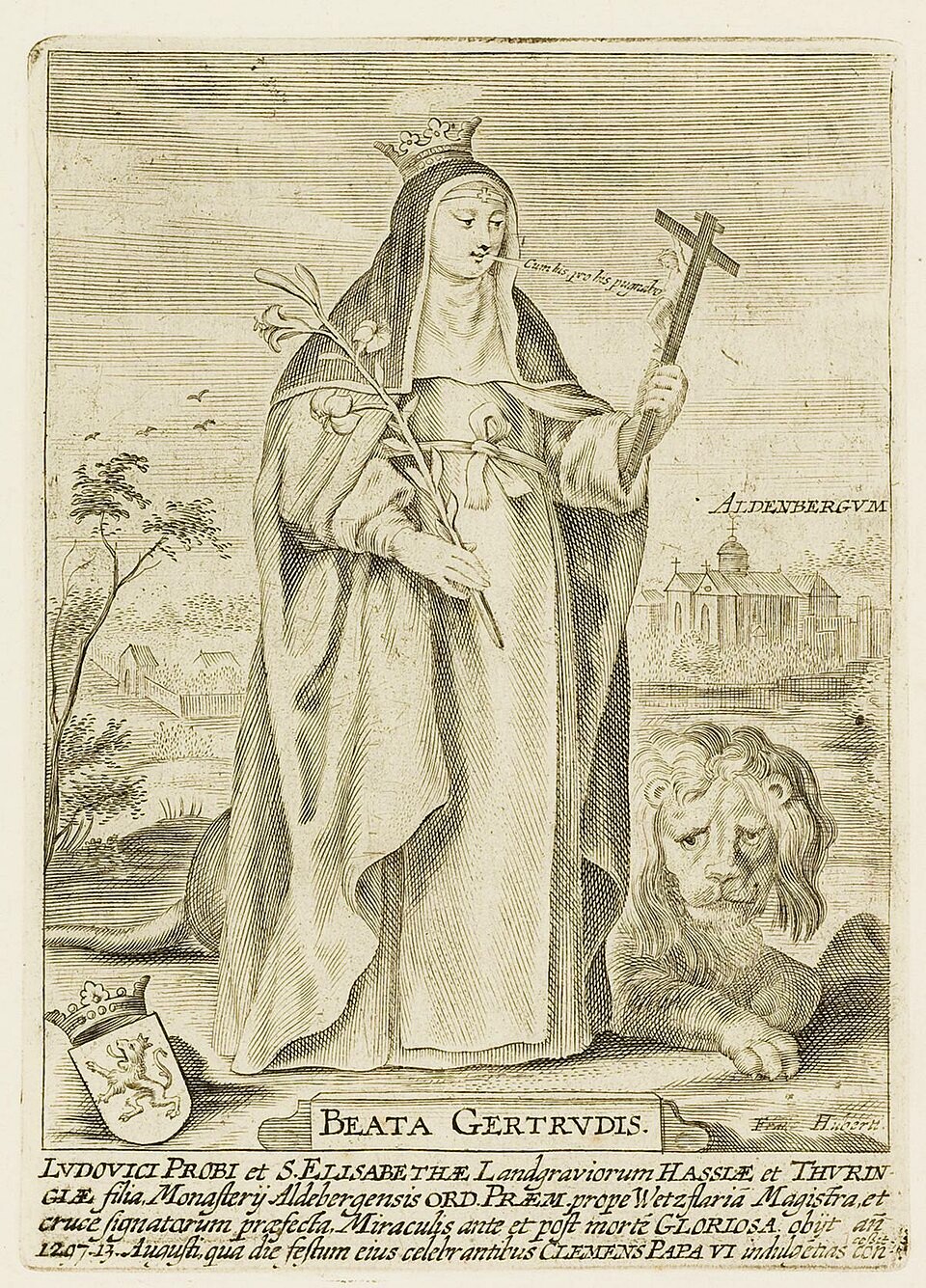
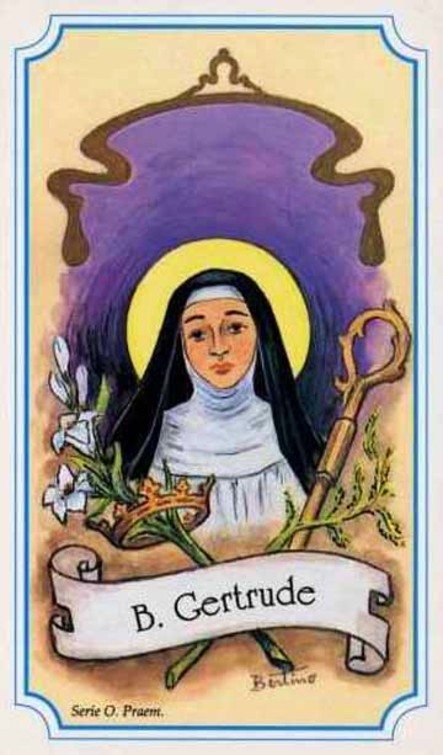
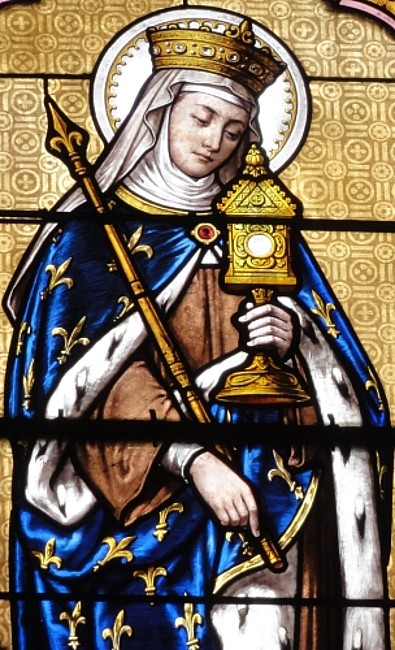
Saint of the Day – 13 August – Blessed Gertrude O.Praem. (1227-1297) Princess, Abbess of Premonstratensian Monastery at Altenberg, Germany, Ascetric, gifted with the charism of prophecy and penance. Born on 29 September 1227, died on 13 August 1297.
In the Monastery of Altenburg near Vetzlar, in Germany, blessed Gertrude, the Abbess of the Premonstratensian Order, who, while still a child, was offered to God in this place by her holy mother St Elizabeth, Queen of Hungary.
Gertrude’s father, Louis XIV, Landgrave of Thuringia, had died on a Crusade. Gertrude was entrusted by her mother to the Premonstratensian Nuns of Altenberg near Wetzlar, in Germany. She became the Abbess of this ascetic Order in 1248. Under her government a beautiful Church dedicated to the Virgin and to St Michael was built and, at the same time, a house was erected to give hospitality to the poor and wayfarers.
As early as 1270, she introduced to Altenberg, the Feast of the Holy Sacrament. She was distinguished by her spirit of penance and her gift of predicting future events.
Not long after her death, in 1311, Pope Clement VI authorised her public veneration at the Nonastery of Altenberg. Her Feast was extended by Pope Benedict XIII to the whole Order on 11 July 1729, enriched with Indulgences. It is celebrated today, on 13 August.
+St Hippolytus (Died c235) Martyr AND +St Cassian (of Imola) (Died c235) Martyr The Roman Martyrology reads today: “At Rome, blessed Hippolytus, Martyr, who gloriously confessed the Faith, under the Emperor Decius {mpt Valerian}. After enduring other torments, he was tied by the feet to the necks of wild horses and being cruelly dragged through briars and brambles and having all his body lacerated, he yielded his spirit.” AND: “At Imola, the birthday of St Cassian, Martyr. As he refused to worship idols, the persecutor called the boys whom the Saint taught and who hated him, giving them leave to kill him. The torment suffered by the Martyr was the more grievious, as the hand which inflicted it by reason of its weakness, rendered death more tardy.” HOLY MARTYRS for CHRIST: https://anastpaul.com/2024/08/13/saint-s-of-the-day-13-august-saints-hippolytus-and-cassian-died-c235-martyrs/
St Cassian
St Cassian of Todi Martyr
St Centolla and Helen (Died c304) Martyrs
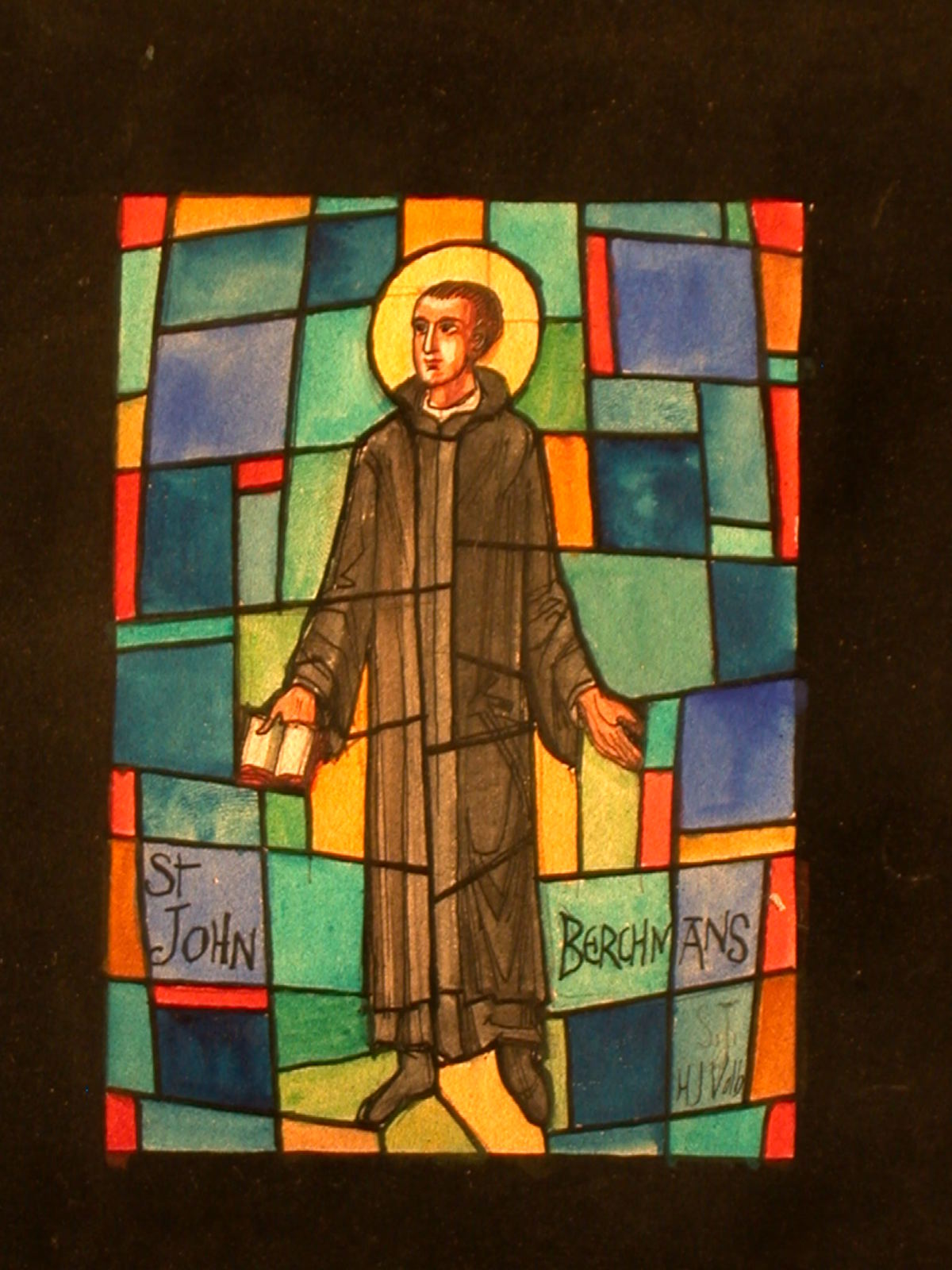
St John Berchmans SJ (1599-1621) Jesuit Novice – born Jan Berchmans on 13 March 1599 at Driest, Brabant, Belgium and died on 13 August 1621 at Rome, Italy of natural causes. Patronages – Altar Servers, Jesuit novices and students. He had a special devotion to God’s Mother and to him is owed the Little Rosary of the Immaculate Conception. Biography: https://anastpaul.com/2019/08/13/saint-of-the-day-13-august-saint-john-berchmans-sj-1599-1621/
St Anastasius the Monk St Anastasius the Priest
St Benildus Romançon FSC (1805-1862) Teacher of the Brothers of Christian Schools
St Cassian of Todi St Concordia Blessed Gertrude O.Praem (1227-1297) Abbess of Altenberg St Helen of Burgos St Herulph of Langres Bl John of Alvernia St Junian of Mairé St Ludolph
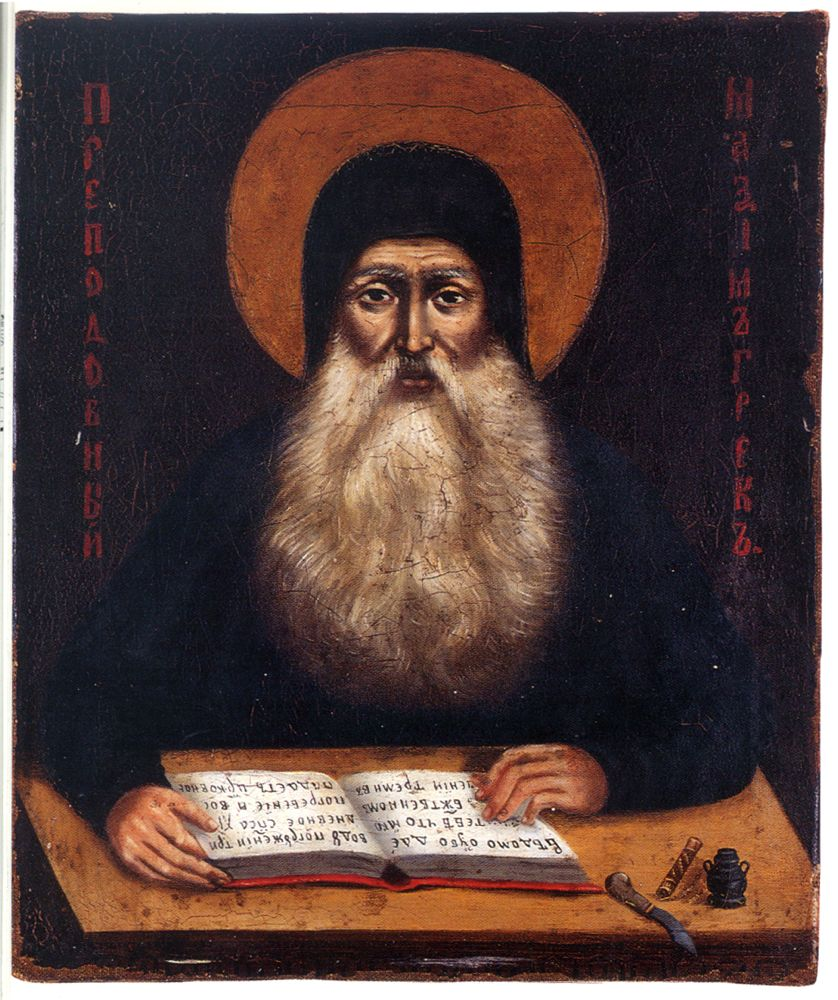
St Maximus the Confessor (c580-662) Father of the Church, Monk, Abbot, Theologian, Confessor, Scholar, Writer. Also known as St Maximus of Constantinople and St Maximus the Theologian. St Maximus, a man of fearless courage in witnessing to – “confessing” – even while suffering, the integrity of his faith in Jesus Christ, true God and true man, Saviour of the world and of His Holy Catholic Church. Glorious St Maximus: https://anastpaul.com/2020/08/13/saint-of-the-day-13-august-saint-maximus-the-confessor-c-580-662-father-of-the-church/
St Wigbert of Fritzlar (c675-c 746) Born in England, a learned Scholar and Abbot, Missionary, Miracle-worker, gifted with a penetrating understanding of Sacred Scripture as well as the gift of prophecy, companion of St Boniface, the Apostle of Germany. Wigbert was known as a quiet and gentle man and a great teacher. Both St Alcuin and St Bede knew and mentioned him in their historical writings of the times and of the Church. St Bede admired his contempt of this world and his learning. A fascinating and much-admired Saint: https://anastpaul.com/2022/08/13/saint-of-the-day-13-august-st-wigbert-of-fritzlar-c-675-c-746/
Saint of the Day – 12 August – Saint Herculanus (Died c550) the 18th Bishop of Brescia . Patronage of the City of Maderno in Brescia. Also known as – Ercolano.
The Roman Martyrology reads today: “At Brescia, Saint Herculaneum, Bishop.”
In the ancient City catalogues, Herculanus is listed 18th position between St Cyprian and St Honorius but it is impossible to determine the years of his Episcopate. We can only state that it took place in the 6th Century, probably shortly after the middle years of that Centry.
Virgin and Child, with Saints Louis of Toulouse, Lawrence, Herculanus of Brescia and Constantius of Perugia. Date 1497.
He died in Campione del Garda, where, according to some, he had retired to the life of a Hermit. His Relics, discovered in the Church of Maderno in 1282, were displayed for public veneration the following year and in 1484, were recognised by the local Bishop, Paolo Zane. In 15, St Charles Borromeo transferred them from the old Shrine to the High Altar. On 7 May 1587, Bishop Morosini placed them in an inscribed marble Tomb.
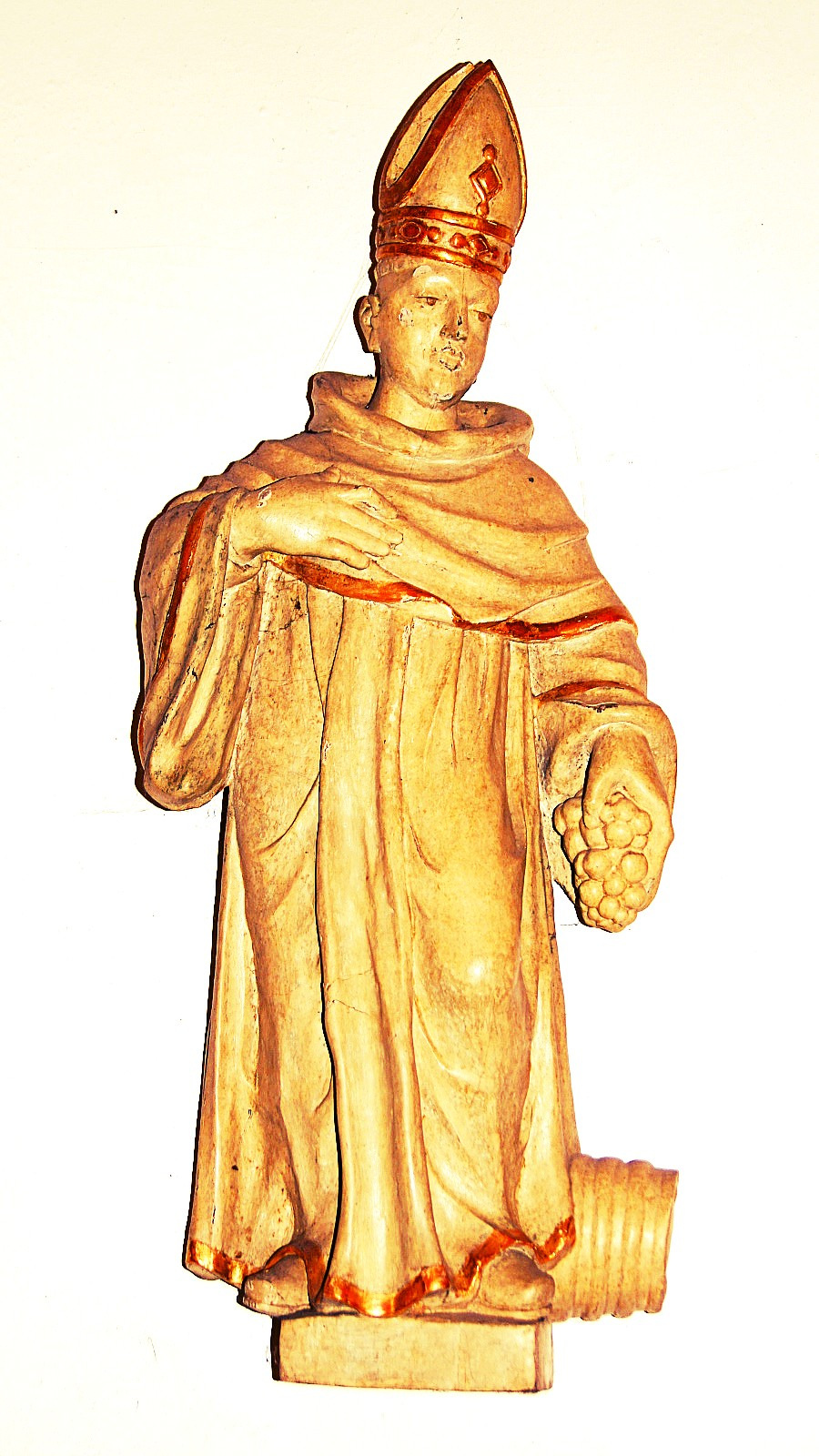
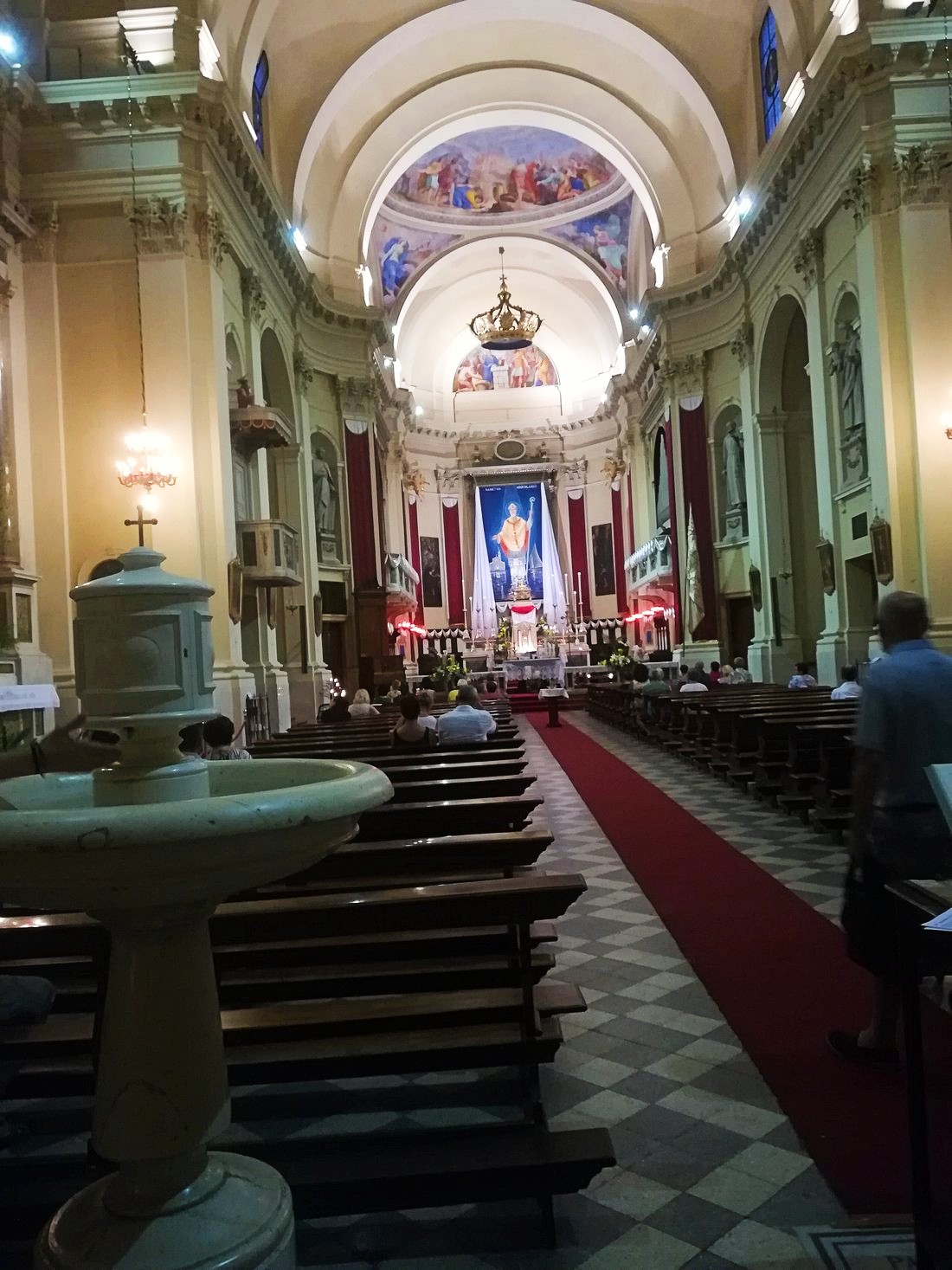
His memorial is celebrated today 12 August, the day on which he is celebrated in Maderno City, of which he is the Patron Saint, and in the surrounding towns. Below is a lovely Statue of St Herculanus on the Facade of the Church and an interior view of the Church dedicated to him in Maderno.




































 AnaStpaul
You must be logged in to post a comment.