The Feast was celebrated in the East before it was in the West but by the 5th Century it was celebrated in France and Spain on the Sunday before Christmas. In Rome, even before the 7th Century, 1 January was used as a celebration of the Maternity of the Blessed Virgin Mary. In the 13th and 14th Centuries, the Feast of the Circumcision of Christ had come to replace the Marian Feast on 1 January. The celebration of the Feast of the Circumcision on 1 January was expanded to the entire Catholic Church in 1570 when Pope Pius V promulgated the Missal. In 1914, the Feast of the “Maternity of the Blessed Virgin Mary” was established in Portugal, occurring on 11 October. In 1931, this Feast was extended to the entire Catholic Church by Pope Pius XI and maintained on 11 October. Following the Second Vatican Council in 1974, Pope Paul VI removed the Feast of the Circumcision of Christ from the Liturgical Calendar and replaced it with the Feast of the “Solemnity of Mary, Mother of God.” In the Extraordinary form of the Roman Rite, Catholics continue to celebrate this Feast day with the old name “The Maternity of the Blessed Virgin Mary” on 11 October, and 1 January is the Octave Day of the Nativity of the Lord and the Feast of the Circumcision. The feast is a celebration of Mary’s motherhood of Jesus. The title “Mother of God” is a western derivation from the Greek: Theotokos, the God-bearer. The term was adopted at the First Council of Ephesus as a way to assert the Divinity of Christ, from which it follows, that what is predicated of Christ is predicated of God. So, if Mary is the Mother of Jesus, she is the Mother of God. Therefore, the title “Mother of God” which celebrates her under this title, are at once both Mariological and Christological.
Titular Feast of the Society of Jesus – But now celebrated on 3 January, the Feast of the Holy Name of Jesus
Bl Adalbero of Liege St Baglan of Wales St Basil of Aix Bl Bonannus of Roio St Brogan St Buonfiglio Monaldi Bl Catherine de Solaguti St Clarus of Vallis Regia St Clarus of Vienne St Colman mac Rónán St Colman Muillin of Derrykeighan St Concordius of Arles St Connat St Cuan St Demet of Plozévet St Elvan St Eugendus of Condat St Euphrosyne of Alexandria St Fanchea of Rossory St Felix of Bourges St Frodobert of Troyes
St Gisela of Rosstreppe St Gregory Nazianzen the Elder Bl Hugolinus of Gualdo Cattaneo Bl Jean-Baptiste Lego Bl Jean of Saint-Just-en-Chaussée St Joseph Mary Tomasi CR (1649-1713) Cardinal, of the Order of Clerics Regular Theatine St Justin of Chieti Bl Lojze Grozde St Maelrhys St Magnus the Martyr Bl Marian Konopinski St Mydwyn
St Odilo of Cluny OSB (962-1049) “Archangel of the Monks,” Priest, Monk, 5th Abbot of Clun, Reformer, Apostle of the poor and needy, Marian devotee and promoter of prayer for the Souls in Purgatory. He established All Souls’ Day (on 2 November) in Cluny and its Monasteries as the annual commemoration to pray for all the faithful departed. The practice was soon adopted throughout the whole Church. St Odilo’s Life: https://anastpaul.com/2021/01/01/saint-of-the-day-1-january-saint-odilo-of-cluny-osb-962-1049-the-archangel-of-the-monks/
St Odilo of Stavelot St Peter of Atroa St Peter of Temissis Bl René Lego St Sciath of Ardskeagh St Severino Gallo St Telemachus St Thaumastus of Mainz St Theodotus St Tyfrydog Bl Valentin Paquay St Vincent Strambi St William of Dijon St Zedislava Berka St Zygmunt Gorazdowski — Breton Missionaries to Britain Martyred Soldiers of Rome: Thirty soldiers martyred in Rome as a group during the persecutions of Diocletian. We don’t even known their names. They were martyred c 304 at Rome, Italy.
Martyrs of Africa – 8 saints: Eight Christians martyred together in Africa, date unknown. The only details we have are four of their names – Argyrus, Felix, Narcissus and Victor.
Martyred in the Spanish Civil War: • Blessed Andrés Gómez Sáez
Saint of the Day – 31 December – Saint Columba of Sens (c 256-273) Virgin Martyr Born as Eporita in c257 in Spain and died by beheading in 273 at Sens, France near a fountain named d’Azon. Patronages – for rain, of bears. St Columba is a Colonnade Saint at St Peter’s – you can find her as Saint Number 40 on the North Colonnade.
St Columba on the North Colonnade
Columba was a virgin and martyr at Sens. Though little historical information is known, popular devotion made her one of the most famous and revered Martyrs in the Middle Ages.
The Roman Martyrology states: “At Sens in Lugdunense Gaul, now in France, Saint Colomba, Virgin and Martyr.”
Colomba is presented as belonging to a noble but pagan family of Spain and lived in the third century. To escape the cult of the gods, she left her family and went to Gaul (France) first to Vienne, where she received Baptism, then to Sens. It appears that her real name was Eporita and that she would later be called the Dove (the meaning of Columba) due to her innocence.
In Sens, she was arrested as a Christian in the ongoing persecution throughout the Roman Empire. The Emperor Aureliano Lucio Domizio (270-275), being present in Sens at that time, had Columba and others, brought before him,. In an attempt to make her renounce her Christian virginity, he proposed marriage to her. But then irritated by her refusal, he condemned her to be locked up in the amphitheater in a prostitution cell. When a young soldier arrived there to abuse her, a she-bear who had been kept in the amphitheater, intervened to protect her, putting the man to flight.
Since none of the soldiers, fearful of their lives, now wanted to take his place,Aureliano furiously ordered, that both the Virgin and the Bear be burned but a cloud coming from Africa, procured a providential rain, which extinguished the fire already prepared, while the bear ran away into the forests. The stubborn Emperor then sentenced Colomba to be beheaded, after one last attempt to make her change her faith.
The young woman, just sixteen years old, suffered Martyrdom not far from Sens and was buried by a Christian who, immediately invoking her intercession, recovered his sight. This happened in the second half of the third Century, in the years between 270 and 275, referring to the Emperor Aurelian, who found himself in Sens for his wars in Gaul.
Highly venerated in France at the time, in 620 King Lothair III founded the famous Royal Abbey of Sainte-Colombe-les-Sens on the Tomb of the Saint. In 623 the Bishop of Sens, St Wolf († 623) wanted to be buried at the Martyr’s feet; in 853 the Bishop Wessilone in Consecrating the new Church, found the relics of the two Saints united and had them wrapped in a precious shroud in oriental fabric. Pieces of this shroud were found in the nineteenth Century and are kept in the Treasury of the Cathedral.
The Abbey Church was built a third time and Consecrated in 1164 by Pope Alexander III, then destroyed in 1792 at the time of the French Revolution. The remains of the Abbey and Church complex were purchased in 1842 by the Nuns of the Holy Childhood of Jesus and Mary, who built their Mother House there, safeguarding the remains of the ancient crypt. The relics of St Columba had ,however ,in a803, been transferred to the Cathedral of Sens.
There are numerous Churches dedicated to the holy Martyr in France, Spain, Flanders, Germany and Italy, where her cult spread, most especially in Rimini. According to local traditions, some merchants who sailed in the Adriatic had, with them, a relic of the head of St Columba but were forced to land in Rimini, where the relic was welcomed by Bishop Stennio and placed in the Cathedral.
The Shrine of St Columba in Sens
In 1581 Msgr. Castelli, Bishop of Rimini, being Apostolic Nuncio to France, obtained, from the Monks of the Abbey of Sens, the relics of a rib and two teeth of the Martyr, which since the 18th Century, are preserved in a Reliquary bust now placed in the Malatesta TChurch the new Cathedral , which replaced the other, which was demolished in 1815 AND dedicated to the St Trinità and St Columba. There was talk of a translation of the body of Columba to Bari in the 17th Century but without any serious foundation.
Starting from the Geronymian Martyrology, up to the Roman one, the feast of St Columba is reported to be celebrated on 31 December. The popularity of the cult in France then slowly waned and an attempt to bring it back into widespread circulation in the 14th Century failed. In Sens, however, due to a local festival, concomitant with New Year’s Eve, St Columba’s feast was postponed to 27 July and is still honoured on this day as well as further devotions and celebrations, on the anniversary of the transfer of her relics and the dedication of her Church. All of these memorials are still observed with great devotion in Sens and the neighbouring area.
Santa María la Real de Uxue / Our Lady of Uxue (Uxue, Spain) (8th Century) – 31 December:
The Town of Uxue formed, according to legend, around the site of the discovery of the image of Our Lady of Uxue, whose site was designated by the flight of a dove. By the 8th century, the image was well-known. The settlement takes the form of a fortress and the 11th Century, Church of St Mary, is a medieval jewel of Romanesque art of Navarra, which is very popular and protected by successive Monarchs.
The strong medieval devotion to this image has remained to our times. Among the celebrations and devotions, are the festivities of an annual pilgrimage and the pilgrimage of the Brotherhood of the Twelve of Uxué. Uxué is a small medieval Town full of charm, located in the eastern middle of Navarra (north of Spain and on the border with France), 53 km from Pamplona and 20 km from Tafalla. Its location is unique, as it is located on the top of a mountain overlooking the Sierra de Uxué. With an altitude of 815 meters above sea level, Uxué constitutes an authentic watchtower from which on clear days you can see from the Pyrenean ridge to the north to the banks of the Ebro and the silhouette of the Moncayo to the south. The origins of this Town are unclear, the exact date of its foundation being unknown but the beginnings are attributed to the Virgin Mary accompanied by the Holy Spirit in the form of a dove.
Legend has it that a dove went in and out of the hole in a rock. A boy who was herding sheep, moved by curiosity, approached with the intention of scare the dove away. But the dove continued with its insistent flapping, he approaches and found a beautiful Romanesque image of the Virgin Mary. This is how the Uxué was born. The name of the town comes from Uxua, the Basque language word for “dove“. Already before Roman domination, there was a Basque population scattered throughout the mountains, as recent archaeological discoveries attest. A Sanctuary honouring the Blessed Virgin was immediately built and has retained it’s popularity amongst the pious faithful across the ages. Many miraculous graces and cures have been granted there. A total of 44 members of the Brotherhood of the Twelve Apostles of Our Lady of Uxué, including the Chaplain, participate each year in their traditional night march to the sanctuary of the Virgin of Uxué. This Brotherhood has its origins in 1607 and therefore 2007 commemorated the fourth centenary of its foundation.
Blessed Alain de Solminihac OSA (1593-1659) Bishop of Cahors, Abbot, Reformer, Marian devotee most especially to Our Lady of Rocamadour, Apostle of the Holy Eucharist especially by his promotion of Adoration, he was also a member of the Compagnie du Saint-Sacrement. His Story: https://anastpaul.com/2019/12/31/saint-of-the-day-31-december-blessed-alain-de-solminihac-osa-1593-1659/ St Anton Zogaj St Barbatian of Ravenna St Columba of Sens (c 256-273) Virgin Martyr Bl Dominic de Cubells St Festus of Valencia St Gelasius of Palestine Bl Giuseppina Nicoli St Hermes the Exorcist
St Offa of Benevento Bl Peter of Subiaco St Pinian St Potentian of Sens St Sabinian of Sens St Theophylact of Ohrid Bl Walembert of Cambrai Bl Wisinto of Kremsmünster St Zoticus of Constantinople — Martyrs of Catania – 10 saints: A group of early Christians martyred together, date unknown. The only other information to survive are ten of their names – Attalus, Cornelius, Fabian, Flos, Minervinus, Pontian, Quintian, Sextus, Simplician and Stephen. They were martyred in Catania, Sicily, Italy.
Martyrs of Rome – 10 saints: A group of Roman women martyred in an early persecution, date unknown. We known the names of ten of them – Dominanda, Donata, Hilaria, Nominanda, Paolina, Paulina, Rogata, Rustica, Saturnina and Serotina. Their relics were enshrined in the catacombs of Via Salaria, Rome, Italy.
Martyred in the Spanish Civil War: • Blessed Leandro Gómez Gil • Blessed Luis Vidaurrázaga González
Saint of the Day – 30 December – Blessed Margherita Colonna (c 1255-1284) Virgin, Nun, Mystic, Apostle of the poor. Born in c 1255 at Palestrina, Rome, Italy and died on 30 December 1284 at Castel San Pietro, Rome, Italy of natural causes. Also known as – Margaret, Margherita, Marguerite.
The Roman Martyrology states: “At Palestrina in Lazio, Blessed Margherita Colonna, Virgin, who preferred poverty for Christ to the riches and pleasures of the world, which she served by professing the Rule of St Clare.”
Margherita was a member of the Italian Colonna family, which was notable in Italian history for centuries. She was born in Palestrina in 1255, daughter of Oddone Colonna and Mabilia Orsini who had two other children – Giovanni and Giacomo. In 1212, Giacomo became Cardinal of St Prassede and Legate of the Pontiff during the Fifth Crusade. It was he who brought the Column to Rome from the East, which, according to tradition, was used for the flagellation of Christ and which, even today, is preserved in the Roman Basilica which was his seat.
The years in which Margherita lived, were complicated and tumultuous for the Church: from 1268 to 1271, the Papal seat remained vacant, for the longest period in history. The Pope had not resided in Rome for twenty years. Long conclaves were followed by short Pontificates – the power of the Pontiff was fundamental eroded in the balance of the antagonism between France (Charles of Anjou occupied many regions of Italy) and the German Emperor of the Holy Roman Empire.
Margherita and the two brothers were soon orphaned. Destined for a prestigious wedding, important for noble alliances in her day, Margherita, in her heart, however, only wanted to be the virginal bride of Jesus. On 6 March 1273, with two pious housewives, she retired to Castel San Pietro, on the mountain overlooking Palestrina, at the Church of St Maria della Costa, to follow her vocation. In the wake of the Franciscan movement, their ideal of life fascinated a multitude of people from all walks of life. Margherita put on the rough habit, under which she put a sackcloth. She began fasting and penance, praying that her wish would come true: – to become a Poor Clare Nun.
She lived there for a few years in retreat. Her life as an anchorite was a scandal for the powerful Colonna family. However, the comfort came from her brother Giacomo, who, although very young, was already a Cardinal (from 1278) at the behest of Pope Nicholas III, while Giovanni was a Senator of Rome. Giacomo sincerely loved Christ as did his sister, so he took Margherita to Rome and together they prayed at the Tomb of the Apostles Peter and Paul. Then a new life began for Margherita. The substantial inheritance no longer belonged to her, it belonged to the poor who are never lacking on the path of the Saints. Her shining example aroused interest, especially from other women eager to spend their lives like her in the service of Jesus.
Margherita asked the General of the Friars Minor Girolamo Masci (future Pope Nicholas IV) for permission to enter the Monastery of Assisi. However, an illness prevented her from doing so. The Lord’s plans were different. She then thought of the Convent of Mentola (between Palestrina and Tivoli) where an image of the Holy Virgin, to which she was very devoted, a place also visited by St Francis. However, it was a fiefdom of the Count of Poli who did not want a Colonna in his territories. Margherita returned home and, with the help of her brother, the Cardinal, founded a Monastery on the nearby mountain, where the Lord was praised night and day.
Margherita took care of the formation of her companions but her charity went further, to the sick and the poor of the neighbouring region. Tradition says ,that once Jesus and the St John the Baptist came to her table, when she fed the poor but then disappeared when Margaret recognised them.
Having exhausted her substantial personal patrimony, she, who was born very rich, reached out to ask for alms and thus be able to continue her works of mercy for the suffering and hungry. She is also remembered for assisting the Friars Minor of the nearby Zagarolo Convent.
Margherita’s union with Christ became more and more intense: she was visibly comforted by Jesus, the Madonna and the Holy Father Francis. She fell into ecstasy several times and for seven years, she patiently endured an ulcerative wound on her side, carried like a stigmata of the Passion of Jesus.
Not even thirty years old, Margherita’s death was precious in the eyes of the Lord. She died, due to violent fevers, on 30 December 1284. Immediately her Tomb became a pilgrimage destination and the devotees, through her intercession, obtained many graces. In 1285, the community of Poor Clares moved to Rome, by the authorisation of Pope Honorius, taking with them, the venerated body of the Blessed (it remained there until 1871).
Margherita’s first biographer was her brother, the Cardinal and the second was the first Abbess of the St Sylvester Monastery in Rome, where her sisters had moved.
On 17 September1847, the Blessed Pope Pius IX confirmed the “ab immemorabili” cult and the liturgical memorial. Today the relics of Blessed Margherita are venerated in the Church of Castel San Pietro, not far from Palestrina. Here the seed she sowed over seven centuries ago, is still alive today through the Poor Clares of the Monastery of Santa Maria degli Angeli.
PRAYER O God, You have made the Blessed Virgin Margaret admirable in the contempt of earthly goods, ardent with love for You, grant us, through her intercession, that we may be continuously united to You, as we carry our cross. Pour upon us, O Lord, the spirit of holiness that You have given to Blessed Margherita Colonna, so that we can know the love of Christ, which surpasses all knowledge and enjoy the fullness of eternal life. With Christ our Lord and the Holy Ghost. Amen.
Madonna of San Luca / Nostra Signora della Guardia / Our Lady of Saint Luke of La Guardia, Bologna, Italy (433) – 30 December:
The Abbot Orsini wrote: “This picture was in the Church of Santa Sophia, at Constantinople, with this inscription: “This picture, painted by Saint Luke, must be taken to the mountain of La Garde and placed over the Altar of the Church.” A Greek monk set out for Italy about the year 433, with the picture entrusted to him and deposited it on the mountain of La Garde.”
The account mentioned by the Abbot above, is also told in the chronicle of Graziolo Accarisi, who wrote of a Greek hermit who went on pilgrimage to Constantinople where he received from the Priests of the Church of Santa Sofia, the icon of Our Lady of La Guardia. This image was attributed to Saint Luke the Evangelist and there was an inscription on the painting itself that it should one day be taken to the “mountain of the guard.” The hermit took the Icon,and walked throughout Italy in search of the place where the Icon was meant to be,but it was not until he reached the City of Emilia near Bologna that the authorities of the City came out to greet him and processed with the icon back to the mountain. The Icon had finally found its home and it is now more commonly known as the Madonna of San Luca. Among the many miracles attributed to the image is especially noted the “miracle of the rain,” which occurred on 5 July 1433. An extremely heavy spring rain came late in the season, threatening to destroy the crops. Facing the prospect of famine, the people turned to the Blessed Virgin for assistance. The storm and rain stopped suddenly, with the arrival into the City, of a procession carrying the miraculous Icon. Since that time these processions have been repeated annually. There is even an incredible arched walkway that is only a little short of four kilometers in length, that is meant to protect the Icon from the elements, as well as those on procession. The Icon shows the Blessed Virgin Mary holding the Infant Jesus in blessing. She wears a blue-green robe, with a red tunic. The nose, eyes and fingers appear somewhat elongated. The Divine Child wears a tunic of the same colour as His Mothers’, with His right hand in a gesture of giving a blessing and his left hand being closed. In 1625 the image was covered with a silver panel which leaves only the faces of the figures uncovered. The Icon was crowned in 1603 by the Archbishop Alfonso Paleotti. The Sanctuary of Saint Luke, where the Icon is kept, was declared a national monument in the year 1874. In 1907 the Church was raised to the dignity of a Minor Basilica by the holy Pope Saint Pius X.
The Sanctuary is situate some 300 metres above the City plain, just south-west of the historical centre of the City. While a road now leads up to the Sanctuary, it is also possible to reach it along a 3.8 km monumental roofed arcade (Portico di San Luca) consisting of 666 arches, which was built in 1674–1793. It was meant to protect the Icon as it was paraded up the hill. A yearly procession from the Cathedral of San Pietro in the centre of Bologna to the Sanctuary goes along this path. The arches held sacred images or Chapels erected by patron families. There is also a cable car which takes tourists up to the Basilica.
Cable car approaching the Mountain Sanctuary
St Anysia of Thessalonica St Anysius of Thessalonica
St Egwin of Worcester OSB (Died 717) Bishop of Worcester, England, Benedictine Monk, Reformer and Penitent, miracle-worker. Egwin was devout and lived for God from his youth. His biographers say, that king, clergy and the faithful, all united in demanding Egwin’s elevation to Bishop. About St Egwin: https://anastpaul.com/2020/12/30/saint-of-the-day-30-december-saint-egwin-of-worcester-osb-died-717/
St Elias of Conques St Eugene of Milan St Pope Felix I St Geremarus
St Hermes of Moesia St Jucundus of Aosta St Liberius of Ravenna Blessed Margherita Colonna (c 1255-1284) Virgin, Nun
St Perpetuus of Tours Bl Raoul of Vaucelles St Raynerius of Aquila Bl Richard of Wedinghausen St Ruggero of Canne St Sebastian of Esztergom
Martyrs of Alexandria – (5 saints): A group of Christians martyred in the unrest caused by Monophysite heretics. We know the names for five of them – Appian, Donatus, Honorius, Mansuetus and Severus. They were martyred in c 483 at Alexandria, Egypt.
Martyrs of Oia – (6 saints): A group of Christians martyred together, date unknown. The only details to have survived are the names – Cletus, Florentius, Papinianus, Paul, Serenusa and Stephen. They were martyred in Oia, Greece.
Martyrs of Spoleto – (4 saints): A group of Christians martyred in the persecutions of Diocletian – Exuperantius, Marcellus, Sabinus and Venustian. They were martyred in 303 in Spoleto, Italy.
Quote/s of the Day – 29 December – The Fifth Day of the Octave of Christmas and the Memorial of St Thomas à Becket (1118-1170) Martyr, Archbishop of Canterbury
“… No matter who plants or waters, God gives no harvest unless what he plants is the faith of Peter and unless he himself. assents to Peter’s teaching.”
“Those who tread among serpents and along a tortuous path, must use the cunning of the serpent.”
“If all the swords in England were pointed against my head, your threats would not move me.”
St Thomas à Becket (1118-1170) Martyr, Archbishop of Canterbury
Saint of the Day – 29 December – Saint Ebrulf of Ouche (c 626c -706) Abbot, Hermit. Founder of many Monasteries, Married but separated by mutual agreement, miracle-worker. Born in c 626 in Bayeux, Normandy, France and died in c 706 of natural causes, at the Monastery he had founded. Also known as – Ebrolfo, Ebrulfo, Ebrulfus, Ebrulphus, Evroul, Evroult, éVroult. Additional Memorial – 30 August, in England, where some of his relics are venerated.
Of noble birth, Ebrulf received a careful education and gave proofs of profound virtue.
He became a highly-ranked Official of King Childeric II. Ebrulf was a cup-bearer to the King and an Administrator of the Royal Palace but he desired a life consecrated to God.
It was some time before he was given leave to detach himself from his duties at the Court to become a Monk. As he was married to a woman of his own social rank, the two separated by mutual consent, he to lead a life of greater perfection and she, it is believed, became a Nun.
He joined the Monastery of Deux-Jumeaux (Bayeux) before deciding to become a Hermit at Exmes but there, crowds came to visit him and ask for his advice. He then settled, with some companions, in the forest of Ouche, which was infested with wild beasts and brigands. A legend states, that he converted a robber to Christianity when the robber visited Ebrulf’s the rough settlement which consisted of a hedge enclosure and wattle and daub huts. The robber warned Ebrulf of the dangers of the forest but Ebrulf informed him that he feared no-one. Repenting of his own sins, the robber brought a gift consisting of three loaves baked in ashes and a honeycomb, and asked to be admitted as a Monk.
This settlement became the Abbey of Saint-Evroul. He founded other monastic houses, fifteen in total, all of which placed emphasis on manual labour both as a spiritual and economic exercise. Members of the nobility came to Ebrulf offering him money, land, to build monasteries. He founded, after 560, several Monasteries in the Diocese of Séez; one of them became the important Abbey of St-Martin-de-Séez.
The ruins of St Ebrulf Abbey
The Saint worked numerous miracles and even raised the dead . In the 12th century John of St-Evroult composed a work in verse in his honour and many miracles were worked at his tomb.
During the Norman invasions, his remains were transported to Orleans. Later, an attempt was made to bring them back to the Abbey of Saint- Ebrulf but without success.
He was venerated in England as a result of the Norman invasion and the link between Ebrulf and England was maintained, by the fact, that four Abbots from Saint-Evroul Abbey ruled English Monasteries in the 11th and 12th Centuries. They brought to England some of Ebrulf’s relics. A Feast commemorating the translation of his relics is kept at Deeping Abbey in England on 30 August.
Unsere Liebe Frau vom Speyer / Our Lady of Speyer, Germany Featuring the Salve Regina and St Bernard (1146) – 29 December:
The Abbot Orsini wrote: “Our Lady of Spire (Speyer), in Germany. Saint Bernard, entering this Church on the 29th of December, 1146, was honourably received there by the Canons, who conducted him to the choir, singing the Salve Regina. The antiphon being finished, Saint Bernard saluted the image of the Blessed Virgin in these terms: “O clems, O pia, O dulcis Virgo Maria!” and she answered: “Salve Bernarde!” The words of this Saint to the image are seen engraved in a circle on the pavement of the Church, on the same spot where he pronounced them and they have since been added to the Salve Regina, which was composed in the year 1040, by Herman, surnamed Contractus, a Benedictine monk.” [He is Blessed Herman of Reichenau (often known as Blessed Herman the Cripple OSB (1013–1054) – his Biography here: https://anastpaul.com/2019/09/25/saint-of-the-day-blessed-herman-of-reichenau-the-cripple-osb-1013-1054-the-wonder-of-his-age/ ]
This date on the Marian calendar, Our Lady of Speyer, actually refers to the Cathedral of Speyer, dedicated to the Blessed Virgin Mary and known as Kaiserdom zu Speyer in Germany. Construction began on the Romanesque style Cathedral in the year 1030 and was completed in 1106. It is 134 metres long and 43 metres wide, which made it one of the largest buildings constructed at that time and is now thought to be, the largest surviving Romanesque building in the world.
During the Nine Years’ War the entire Town of Speyer was burned to the ground and the heat from the inferno caused part of the nave to collapse. In 1792 the Town was occupied by the French revolutionary troops and the Church pillaged. It was in that century that the ruins of the Chapel of Saint Bernard were removed. The Cathedral was subsequently used as a warehouse and hospital. In 1957 the Cathedral was restored and, although much of the plaster and 19th century paintings were removed, the scenes of the life of the Blessed Virgin were left undisturbed. n 1981 the Cathedral was added to the World Heritage List of UNESCO.
St Aileran of Clonard St Albert of Gambron St Aproniano de Felipe González St David the King St Ebrulf of Ouche (c 626-c 706) Abbot, Hermit St Enrique Juan Requena St Florent of Bourges Bl Francis Ruiz St Girald of Fontenelle St Jacinto Gutiérrez Terciado Bl José Aparicio Sanz Bl José Perpiñá Nácher St Juan Bautista Ferreres Boluda St Libosus of Vaga St Marcellus the Righteous St Martinian of Milan Bl Paul Mary Bl Peter the Venerable St Quartillosa of Carthage St Thaddeus of Scythia St Trophimus of Arles St Trophimus of Ephesus
Martyrs of North Africa – (8 saints): A group of Christians executed together for their faith. The only details to survive are eight names – Crescentius, Dominic, Honoratus, Lybosus, Primian, Saturninus, Secundus and Victor.
Martyrs of Rome – (3 saints): A group of Christians executed together for their faith. The only details to survive are three names – Boniface, Callistus and Felix.
Martyrs of Seoul – (7 saints): Additional Memorial – 20 September as part of the Martyrs of Korea. A group of seven lay woman in the apostolic vicariate of Korea who were martyred together. • Barbara Cho Chung-I • Barbara Ko Sun-I • Benedicta Hyong Kyong-Nyon • Elisabeth Chong Chong-Hye • Magdalena Han Yong-I • Magdalena Yi Yong-Dok • Petrus Ch’oe Ch’ang-Hub They were born in South Korea and were martyred by beheading on 29 December 1839 at the Small West Gate, Seoul, South Korea. They were Canonised on 6 May 1984 by St Pope John Paul II.
Martyred in the Spanish Civil War: Thousands of people were murdered in the anti-Catholic persecutions of the Spanish Civil War from 1934 to 1939. • Blessed Aproniano de Felipe González • Blessed Enrique Juan Requena • Blessed Jacinto Gutiérrez Terciado • Blessed Juan Bautista Ferreres Boluda
Saint of the Day – 28 December – Saint Anthony of Lérins (c 428-c 520) Monk, Hermit, miracle-worker. Born in c 468 at Valeria, Lower Pannonia (in modern Hungary) and died in c 520 at Lerins, Provence, France of natural causes. Also known as – Antony of Lérins, Anthony the Hermit.
The Roman Martyrology states: “Commemoration of Saint Anthony, a Monk, who, a man distinguished by grace and preparation, after having led a solitary life, retired, by now an old man in the Monastery of Lérins in Provence, where he piously fell asleep in the Lord.”
He was born in the ancient Roman Province of Valeria (now Hungary), then part of the Hunnic Empire. When he was eight years old, his father died and he was entrusted to the care of the holy Abbot Severinus of Noricum, in modern-day Austria. Severinus, however, died when the boy was in his early teens and Anthony moved in with his uncle, Bishop Constantius of Lorsch, Bavaria (in modern Germany).
When he was of age, Anthony entered the monastic life, making himself immediately appreciated for his great humility.
In 488, at about 20 years of age, Anthony moved to Italy to take up an eremitical life with a small group of hermits living on an island in Lake Como. He was eventually joined by numerous disciples seeking to emulate his holiness.
Anthony’s fame, which soon spread to the surrounding areas, caused him a curious accident. A man, who had been sentenced to death for killing his wife in a fit of jealousy, took refuge with Anthony to escape punishment, simulating the desire to become his disciple. But Anthony unmasked the hypocrite and threw him out of his cell to face his crime. Naturally, this episode greatly increased his fame and he, disturbed by numerous visitors, finally crossed the Alps and settled in Lérins, where he found the peace he had always sought
Tapestry of St Anthony
He lived in various solitary places until two years before his death he became a Monk at the Abbey of Lérins, where he again was an icon of piety locally and attracted those seeking spiritual aid. The holiness of his life and the miracles he performed, encourage many to visit him.
Saint Ennodius of Pavia wrote a Life of Saint Anthony.
Notre-Dame de Pontoise / Our Lady of Pontoise, France (13th Century) – 28 December:
Pontoise is an old Town built around a bridge across the Oise and its Shrine dates from around the 13th Century, as is evidenced by a charter of donation from the year 1231. Our Lady of Pontoise is about seven leagues from Paris. This image, is celebrated for many miracles which are wrought there. The Statue of Our Lady of Pontoise is of marble and stands over 1,8 metres in height. The Madonna wears a short veil and a dress with long tight sleeves. Our Lady’s face is framed by her hair. The Divine Child lays His hands on an orb that His mother holds. The Statue was, according to tradition, carved by a pious youth in the quarry at Blangis, near Abbeville and brought to Pontoise. In 1226 the Archbishop of Rouen dedicated a Chapel there and in 1249 it was made a Parish Church, and the sSatue was placed outside, over the main entrance. The Church was visited by the Saint-king, Louis IX. In around 1434 the Church was destroyed by the English soldiers fighting in the area. The faithful Catholic, determined to rebuild the Shrined. It was partly finished when the French reconquered the territory. They finished the rebuilding in 1484. During the years of 1580 and 1650, when the plague was destroying the country, people flocked to Our Lady of Pontoise and the danger was averted. Again in 1849 a cholera epidemic was averted through her intercession, so that the Shrine had the name of being powerful against plagues. In Reformation times, a devout Protestant tried to steal the Statue and failing that, knocked off the head of the Infant and threw it into the river. A fisherman had spread his nets just below the bridge and the severed head was saved and returned to the Statue. In 1585 the Church was destroyed again by the English; in 1790 by the revolutionaries. Each time the Statue was saved and returned; the last time by a man who bid on it at an auction-house and kept it until the troubled days were over. The Church was rebuilt in 1800 and a century later was still extant; the yearly thanksgiving procession for Our Lady’s protection from the plague is held annually. The Statue now resides inside the Church. Replicas of the statue were placed over many doorways of the City after the plague of 1640 and some are still there today.
BL Claudia Weinhardt St Conindrus St Domitian the Deacon St Domnio of Rome St Eutychius St Gowan of Wales Bl Gregory of Cahors Bl Hryhorii Khomyshyn St Iolande of Rome Bl Johannes Riedgasser
Bl Nicolas Mello Bl Otto of Heidelberg St Romulus St Simon the Myroblite St Theonas of Alexandria St Theodore of Tabenna St Troadius of Pontus — 20,000 Martyrs of Nicomedia: 20,000 Christians who were murdered during in 303 in Nicomedia, Bithynia (modern Izmit, Turkey) during the persecutions of Diocletian. Many of them were killed en masse when they were ordered, during Christmas Mass, to sacrifice to idols; when they refused, they were locked in the churches and the buildings burned around them. We know some details of a few of them, but most are known only to God. The names we have are – Agape, Anthimos, Domna, Domna, Dorotheus, Esmaragdus, Eugene, Euthymius, Glykerios, Gorgonius, Hilary, Indes, Mardonius, Mardonius, Maximus, Migdonius, Migdonus, Peter, Peter, Theophila, Theophilus and Zeno. 303 in Nicomedia, Bithynia (modern Izmit, Turkey).
Martyrs of Africa – (3 saints): Three Christians murdered together in Africa for their faith. The only details to survive are their names – Castor, Rogatian and Victor.
Quote/s of the Day – 27 December – Feast of St John the Apostle and Evangelist and the Third Day of the Christmas Octave
“Look into Peter’s wide open eyes and John’s intense gaze. Their eyes contain a mix of anxiousness and hope, the way a parent or grandparent’s eyes look at the news of an impending birth. A new life is about to emerge but there is still uncertainty because it is a mystery beyond full human comprehension or control. Peter and John’s faces capture the same sense of anticipation.
Burnand created a sparse, simple painting capturing two of the most important players in the greatest story ever told. Meditate upon their faces, as Burnand intended you to do and through them, discover the empty tomb.” (Elisabeth Ehrhard-Crises Magazine).
Oh Teach Me then, Dear Saint! An Invocation of St John, Apostle and Evangelist Unknown Author
Saint of the Sacred Heart, Sweet teacher of the Word, Partner of Mary’s woes And favourite of thy Lord!
Refrain Oh teach me then, dear Saint! The Secrets Christ taught thee; The Beatings of His Heart, And how it beat for me!
We know not all thy gifts But this Christ bids us see, That He Who so loved all, Found more to love in thee. Refrain
When the last evening came, Thy head was on His breast, Pillowed on earth, where now In Heaven the Saints find rest. Refrain
Dear Saint! I stand far off, With vilest sins opprest, Oh may I dare, like thee, To lean upon His Breast? Refrain
His Touch could heal the sick, His Voice could raise the dead, Oh that my soul might be Where He allows thy head. Refrain
The gifts He gave to thee He gave thee to impart And I, too, claim with thee His Mother and His Heart! Refrain
Saint of the Day – 27 December – 27 December – St John the Apostle and Evangelist. Patronages – • against burns; burn victims• against epilepsy• against foot problems• against hailstorms• against poisoning• art dealers• authors, writers• basket makers• bookbinders• booksellers• butchers• compositors• editors• engravers• friendships• glaziers• government officials• harvests• lithographers• notaries• painters• papermakers• publishers• saddle makers• scholars• sculptors• tanners• theologians• typesetters• vintners• Asia Minor (proclaimed on 26 October 1914 by Pope Benedict XV)• 6 Diocese• 7 Cities.
St John, Apostle and Evangelist by Father Francis Xavier Weninger SJ (1805-1888)
St John, Apostle and Evangelist of Jesus Christ, a brother of St James and son of Zebedee and Salome, was born at Bethsaida, a Town in Galilee. Christ, our Lord, called him and his brother James to follow Him, at the time when they were mending their nets in a boat, on the shore of the Sea of Genesareth. John, without delay, left all he possessed, even his own father and, with his brother, followed the Lord. Although the youngest of the Apostles, he was beloved by the Saviour above all the others – whence he is several times mentioned in the Gospel, as “the disciple whom Jesus loved.” The cause of this special love of Jesus for him, was, according to the Holy Fathers, his virginal purity, which he kept undefiled and the tender love he bore to the Lord. “He was more beloved than all the other Apostles,” writes St Thomas Aquinas, “on account of his purity.” “For the same reason,” says St. Anselm, “God revealed more mysteries to him, than to the other Apostles. Justly,” says he, “did Christ the Lord reveal the greatest mysteries to him, because he surpassed all in virginal purity.“
Anthony van Dyck
It is evident from the Gospel, that St John was one of the most intimate of the friends of the Lord, and was, in consequence, sometimes admitted into Christ’s presence, when, except Peter and James, no other Apostle was allowed to be near. Thus, he was with Christ when He healed the mother-in-law of Peter; when He raised the daughter of Jairus from the dead and when He was transfigured on Mount Thabor. He also accompanied Christ when He suffered His Agony in the Garden of Olives. The other two above-named Apostles ,shared these favours with John but none was permitted to lean upon the Saviour’s bosom, at the last supper, save John; none was recommended as son to the divine Mother but John. Only he, of all the Apostles, followed Christ to Mount Calvary,and remained there with Him, until His death. To recompense this love, Christ gave him to His Mother as her son, when He said: “Behold thy Mother!” Christ, who had lived in virginal chastity, would trust His Virgin Mother to no-one else but John, who himself lived in virginal purity. As St.Jerome says: “Christ, a virgin, recommended Mary, a virgin, to John, a virgin.” No greater grace could John have asked of Christ; no more evident proof could he have received of His love. The most precious thing which the Lord possessed on earth, His holy Mother, He commended to His beloved disciple. He took him as brother, by giving Him as son to His Mother. Who cannot see from all this, that Christ loved and honoured St John above all others?
How deeply this beloved disciple must have suffered by seeing his Saviour die, so ignominious a death, is easily to be conceived; and St Chrysostom hesitates not to call him, therefore, a manifold Martyr. After Christ had died on the Cross, had been taken from it, and interred with all possible honours, St John returned home with the divine Mother, who was now also his mother, and waited for the glorious Resurrection of the Lord. When this had taken place, he participated in the many apparitions of the Lord, by which the disciples were comforted and, doubtless received again, particular marks of love from the Saviour. He afterwards assisted, with the divine Mother and the Apostles and other disciples of Christ, at the wonderful Ascension of the Lord. With these, also, he received, after a ten days’ preparation, the Holy Ghost, on the great festival of Pentecost.
Soon after this, he and Peter had, before all others, the grace to suffer for Christ’s sake. For when these two Apostles had, in the name of Christ, miraculously healed a poor cripple who was lying at the door of the temple of Jerusalem and used this opportunity, to show to the assembled people, that Jesus of Nazareth was the true Messiah.
Fresco in the Cappella Brancacci, Florence, attributed to Masolino da Panicale (1383 – c.1447). It is part of the cycle of frescoes painted between 1425 and 1427 depicting the life of St. Peter. It shows the Apostle, accompanied by StJohn, giving his hand to a cripple seeking alms. The cripple is instantly cured.
They were seized, at the instigation of the chief priests,and were cast into prison. On the following day, the priests came together and John and Peter were called before them and asked in whose name and by what power, they had healed the cripple. Peter and John answered fearlessly, that it had been done in the Name of Jesus Christ. The high priest dared not do anything further to them but, setting them free, prohibited them from preaching, in future, the Name of Christ. The two holy Apostles, however, nothing daunted, said: “If it be just in the sight of God to hear you rather than God, judge ye: for we cannot but speak the things which we have seen and heard.“
Anthony van Dyck
St. John remained for some time in Jerusalem after this and, with the other Apostles, was zealous in his endeavors to convert the Jews. When the Apostles separated, to preach the Gospel over all the world, Asia Minor was assigned to St John. Going thither, he began with great zeal his apostolic functions and, by the gift of miracles, he converted many thousands to the Faith of Christ. The many Bishoprics which he instituted in the principal cities sufficiently prove this. In the course of time, he went also to other countries, preaching everywhere the Word of Christ, with equal success..
Anthony van Dyck
oil, oak
64,5 x 50 cm
The Emperor Domitian, who, after the death of the Emperor Nero, again began to persecute the Christians, ordered his officers to apprehend John and bring him to Rome. Hardly had the holy Apostle arrived there, when he was commanded by the Emperor to sacrifice to the gods. As the Saint refused this and fearlessly confessed Christ, the Emperor had him most cruelly scourged and afterwards, cast into a large caldron, filled with boiling oil. The Saint signed himself and the cauldron with the Holy Cross and remained unharmed, when he was cast into it. This gave him an opportunity to announce, with great energy, to the assembled people, the Gospel of Jesus Christ. The tyrant, who could not suffer this, had him taken out of the cauldron, and sentenced him to banishment on the island of Patmos, to work in the mines and perform other hard labour, in company with other Christians. St John had, at that time, reached his ninetieth year but was willing to undergo the unjust sentence.
After his arrival on the island, he had many and wonderful visions, which, by command of God, he put down in writing. The book which contains them, is a part of Holy Writ, called the Apocalypse, or Revelation of St John, a book which,, according to St Jerome, contains almost as many mysteries as words. After the death of Domitian, St John was liberated and returning to Ephesus, remained there until his death. He outlived all the other Apostles, as he reached the age of 100 years. His great labours, wearisome travels and the many hardships he endured, at last enfeebled him to such an extent, that he could not go to the Church without being carried. F
Frequently he repeated, in his exhortations, the words: “My little children, love one another.” Some, annoyed at this, asked him why he so often repeated these words. He answered: “Because it is the commandment of the Lord and if that is done, it suffices.” By this he meant, that if we love each other rightly, we also love God and when we love God and our neighbour, no more is needed to gain salvation – as love to God and to our neighbour contains the keeping of all other commandments.
The holy Apostle, who had suffered and laboured so much for his beloved Master, was, at length, in the year 104, called by Him into heaven to receive his eternal reward.
Besides the Apocalypse, to which we referred above, St John also wrote three Epistles and his Gospel, on account of which, he is called Evangelist. In his Gospel he gives many more facts than the other Evangelists, to prove the Divinity of Jesus Christ; as, at that period, several heretics, as Cerinthus, Ebion and the Nicolaites, fought against this truth. In his Epistles, he exhorts particularly, to love God and our neighbour,and to avoid heretics. In the first, among other things, he explains that love to God consists in keeping the commandments of God, which are not difficult to keep. “For this is the charity of God,” writes he, “that we keep His commandments;and His commandments are not heavy.” Of the love of our neighbour he says, that it must manifest itself in works, that is, we must assist our brethren in their need and, if necessary, give even our lives for them, after the example of Christ. The holy Apostle exemplified his words by his actions.
Several holy Fathers relate the following of him. The Saint had given a youth in charge of a Bishop, with the commendation to instruct him carefully in virtue and sacred sciences. After some years, when the Saint returned to this Bishop and asked for the young man, he heard with deep sorrow, that he had secretly left and had joined the highwaymen and had even become their chief. The holy Apostle set out at once and went, not without danger to his life, into the woods, where the unhappy young man was said, to be. Finding him, he spoke most kindly to him and succeeded in bringing him back. It is touching to read how the holy, man promised to atone for the youth’s sins, if he would repent and lead a better life. The youth followed the Saint’s admonition and did penance with such fervour and zeal, that the Saint hesitated not to give him charge of the Church at Ephesus. (1876)
St John, Pray for Holy Mother Church, Pray for us all!
Nossa Senhora do Rosário / Our Lady of the Rosary (Atibaia, São Paulo, Brazil) (1817) – 27 December:
In 1763, slaves who couldn’t attend St John the Baptist’s, the main Church in Atibaia, began building their own. Completed in 1817, the Church is often called Nossa Senhora do Rosário dos Pretos, Our Lady of the Rosary of the Blacks. This agricultural City is home to the oldest and most active tradition in the region. The five indigenous groups in Atibaia combine African and Portuguese religious practices, centered around devotion to St Benedict and Our Lady of the Rosary. On 27 December, as they have for over 200 years, the locals gather outside Our Lady’s Church at dawn, dressed in brilliant uniforms of scarlet, green, blue, pink, or white and carrying swords, banners and musical instruments.
The day begins with a serenade and ends with fireworks. In between, to the sound of drums, guitars and pealing bells, the faithful process dancing through the City: young, old, male, female, black and white. The festa of Our Lady of the Rosary is part of a Christmas celebration beginning on 25 December with the erection of two towering poles topped with images of the Saints in Rosary Plaza and concluding 28 December with processions and Holy Mass honouring St Benedict.
Bl Adelheidis of Tennenbach Bl Alejo Pan López Bl Alfredo Parte-Saiz Bl Christina Ebner
Bl Francesco Spoto Bl Hesso of Beinwil St José María Corbin-Ferrer St Maximus of Alexandria St Nicarete of Constantinople Bl Odoardo Focherini Bl Raymond de Barellis Bl Roger of Verdun
Saint of the Day – Saint Pope Zosimus (Died 418) Bishop of Rome from 18 March 417 to his death, of natural causes, on 26 December 418, Confessor. Greek by birth, his short Pontificate was characterised by serious conflicts with the Bishops of Gaul and those of Africa.
The Roman Martyrology states today: “In Rome on the Via Tiburtina near San Lorenzo, deposition of San Zosimo, Pope and Confessor.”
With the exception of the brief notes reported in the Liber Pontificalis, nothing is known of its history before the election. Zosimo was a Roman Priest at the time of the Pontificate of St Innocent I (401-417), Greek by birth, perhaps descended from a Jewish family, given that his father was called Abraham. He was elected as the successor of Pope Innocent and consecrated on 18 March 417.
Zosimus devoted most of his brief reign to advancing the cause of Papal supremacy, albeit with very little success. Zosimus wrote Episiola Thactaria, condemning Pelagianism.
While personally blameless in his private life, Zosimus did have a tactless and hasty personality, so much so, that he found himself embroiled in various clashes with prelates throughout the Church. In fact he died while preparing to excommunicate a group of troublesome clerics.
In the last months of his life, he also saw an opposition against him arise in Rome, to the point that he turned to complain about it, at the court of Ravenna, he was preparing to fight against this group, when he fell ill, dying on 26 December 418 and being buried. in the Basilica of St Laurence in Rome.
Madonna della Acheropita, Maria Santissima Acheropita / Our Lady of Acheropita, Rossano, Italy (1140) – 26 December:
The Abbot Orsini relates: “Tradition has it that one night, a woman in great brightness appeared to a watchman on duty where a new Church was being built in Rossano, Italy. She asked him to withdraw from the place. The next morning there was seen in the building a picture of the Blessed Virgin, painted but not by the hand of man. For that reason it came to be called “Acheropita,” not made by human hands.”
The latest historical research has established that the image of Acheropita – a fresco on a pillar – was found in a small Chapel near the cave of one of the many hermits who formed the aura of Saint Nicholas of Vallone in the 6th century. It seems a holy hermit named Ephrem was very devoted to the Blessed Virgin Mary. In the year 580, a certain Captain Mauricio, was deflected from his course by the winds and landed near present day Rossano. The hermit Ephrem went to meet him with the strange sounding greeting of: “It was not the winds that brought you here but Our Lady, for once you are appointed emperor, you will build a Church here.” A mere two year later, in the year 582, Mauritius was crowned Emperor and remembering the prophesy, had artists brought to the cave to paint a fitting image of the Blessed Virgin Mary. Although the artists toiled all day, during the night their work always mysteriously disappeared. The Governor, unsure of what was happening, ordered that the cave be guarded at night. That night as the guards went about their duty in front of the cave, a young woman of rare beauty came out of nowhere amidst a bright light wearing a white silk cape. She asked the guard to depart from the site, which they did. Informed the next morning of what had happened, the Governor went to the Church. To everyone’s surprise he observed an image that perplexed him, for painted on the bottom of the inner wall was a beautiful picture of Our Lady, similar to the Byzantine icons he had seen before. It was exactly where his artists had been trying in vain to draw the image. The news of the miracle soon spread throughout the City. The faithful began arriving to the place, shouting in wonder and cheering in tears with songs of praise, “Acheropita! Acheropita!” The image became an object of veneration for the people of Rossano and a new Church had to be built to satisfy popular piety in a more worthy manner. That Church is now known as the Rossano Cathedral, and it was built next to the grotto where the image is still preserved. It is also said, that later, the Saracens attacked, trying to surprise the City of Rossano but they were repulsed by Our Lady, who appeared dressed in purple and holding in her hand a lighted torch. The sight of her majesty terrified the Saracens, who turned and fled. On 26 May 1949, the Diocesan Cathedral was erected at the Shrine. From 16 August to 16 October 1949, a silver Statue of Our Lady was carried on a triumphal pilgrimage through the Archdiocese. 15 August is the annual date for the celebration of the Madonna Acheropita and it is said that during the celebration a wonderful atmosphere envelops the whole of the City, with the festival offering an opportunity for the faithful to demonstrate their love for the Blessed Virgin. On 18 June 1950, Cardinal Micara crowned the image of the Blessed Virgin.
St Abadiu of Antinoë Bl Agata Phutta Bi Bl Agnès Phila St Amaethlu of Anglesey St Archelaus of Mesopotamia Bl Bibiana Khamphai Bl Cecilia Butsi Bl Daniel of Villiers
St Euthymius of Sardis St Evaristo of Constantinople Bl Giovanni Orsini Bl Jean of Hainaut Bl Lucie Khambang St Margaret of Hohenfels Bl Maria Phon Bl Marinus of Rome Bl Paganus of Lecco Bl Pierre Boffet St Tathai of Wales St Theodore the Sacristan
Saint of the Day – 25 December – Blessed Peter the Venerable (c 1092–1156) Eighth Abbot of Cluny, Reformer, Scholar and Writer, Poet. Born in c 1092 in Auvergne, France and died on 25 December 1156 of natural causes. Also known as – Peter of Cluny, Peter of Montboissier. Additional Memorials – 29 April as one of the Abbots of Cluny, 11 May (Benedictine calendar), 29 or 30 December on some calendars.
A descendant of the noble family of Montboissier, Peter was born to Blessed Raingarde in Auvergne, He was “Dedicated to God” at birth and was educated at the Mmonastery at Sauxillanges of the Congregation of Cluny. Peter, aged seventeen, made his profession to his Abbot, St Hugh, shortly before the latter’s death in 1109.. By the age of twenty he gained a professorship and was appointed Prior of the Monastery of Vézelay, before he moved to the Monastery at Domène.
Success at Vézelay and Domène led to his election as General of the Order, aged thirty. After his predecessor, the Abbot Pontius, had been deposed by the Pope, Peter became a tireless reformer of the Cluniac Order, in the face of criticism from other Orders and prominent Monks and theologians, including his great friend, St Bernard of Clairvaux. His defence of his Order against critics and his introduction of radical reforms, earned him the appellation of “venerable”.
Peter making his profession to St Hugh
His interest in the pursuit of studies at Cluny brought about a controversy with his intimate friend, St Bernard, who wished to see the monastic life confined to prayer and manual work. In 1130 Peter supported Pope Innocent II against the antipope Anacletus II, himself a Cluniac Monk and in 1140, he gave shelter to Abelard first at Cluny and later at the priory of St-Marcel-de-Chalon.
Between his numerous journeys, which took him to Spain in 1142, to Germany in 1147, twice to England and ten times to Italy, he frequently retired to a hermitage to devote himself to study and meditation. He was the first to have the Koran translated into Latin (completed 1143) and himself, wrote against the Muslims. His works, among which are treatises against Peter de Bruys and against the Jews (1144–7), a number of sermons and some poems, show comparatively little acquaintance with the Fathers but profound knowledge of the Scriptures and a preference for the literal sense, which causes him to avoid allegorical speculations. His friendship and correspondence with Bishop Henry of Blois of Winchester and Glastonbury, between 1138 and 1142, together with his debating skills, brought wider recognition of his scholarship. And, his moderation and gentleness earned him the veneration of his contemporaries but, in the eyes of posterity, he was overshadowed by the great figure of his illustrious friend, St Bernard.
Peter died a holy death on Christmas Day in 1156. He was in buried in the southern end of the cloister of the Monastery Church of Cluny Abbey. Sadly, his grave was desecrated by the Huguenots in 1562 and most of his relics were destroyed in 1792 in the anti–Catholic excesses of the French Revolution.
Although he has always been honoured as a Saint, he was never canonised and the Martyrologies grants him the title of Blessed. His cult was finally confirmed in 1862 by Blessed Pope Pius IX. and in France and around Europe, he is called “Saint.”
The Solemnity of the Nativity of the Lord, Jesus Christ – Celebration of the anniversary of the Birth of Our Lord. In the earliest days of the Church there was no such Feast, the Saviour’s Birth was commemorated with the Epiphany by the Greek and other Eastern Churches. First mention of the Feast, then kept on 20 May, was made by Clement of Alexandria c 200. The Latin Church began c 300 to observe it on 25 December, though there is no certainty that Our Lord was born on that day. Priests have the privilege of saying three Masses, at midnight, daybreak and morning. This was originally reserved to the Holy Father alone – beginning about the 4th century he celebrated a midnight Mass in the Lateran Basilica (in which according to tradition, the manger of Bethlehem is preserved), a second in the church of Saint Anastasia, whose Feast comes on 25 December and a third at the Vatican Basilica. Many peculiar customs of the day are the outcome of the pagan celebrations of the January calendar. The Christmas tree, of which the first known mention was made in 1605 at Strasbourg, was introduced into France and England in 1840. The feast is a holy day of obligation, preceded by the preparatory season of Advent and by a special Vigil – should it fall on a Friday it abrogates the law of abstinence. Today’s Gospel is the prologue of John.
I know not how, dear Lady love, To offer you my praise, I cannot fashion as I wish The words that I world raise. You stand afar, celestial Queen, The stars are in your crown, They spangle at each gesture’s path And dust upon your gown. Perhaps I might recall the night You knelt beside the crib, The night when doors and casements shut And left a mountain’s rib, Alone, exposed, to hoard you close Beside the new-born Child And seek in Joseph’s kindly eyes For something worldly-mild. To counteract such mundane chill I hereby set my heart, Dim mirror of an Infant’s warmth, Its flaming but a part, A small, sad part of Endless Love That came on Christmas day To show a mother wonder-bright To guide us on our way.
St Adalsindis of Hamay St Alburga of Wilton St Anastasia of Sirmium Bl Artale St Basilée of the Via Latina Bl Bentivoglio de Bonis Bl Diego de Aro St Eugenia of Rome St Fulk of Toulouse
St Jovin of the Via Latina Bl Maria Therese von Wüllenweber Bl Matthew of Albano Bl Michael Nakashima Saburoemon Bl Nera Blessed Peter the Venerable (c 1092–1156) Abbot St Romulus of Berry —
Martyrs of Nicomedia: 20,000 Christians martyred by order of Diocletian. They were reported to have all been in the single basilica to celebrate Christmas. While there unquestionably was an endless series of martyrs under Diocletian, it’s likely the ancient sources exaggerated the numbers of this incident. And as the Christmas holy day was not celebrated in the East in 303, they were probably gathered for another feast. They were burned alive in 303 in the basilica of Nicomedia.
Saint of the Day – 24 December – Saint Irmina of Oehren (Died c 716) Virgin Princess, Nun, Abbess, Founder and Co-founder of 2 Monasteries, benefactress of St Willibrord, the great Missionary Saint of Germany. Died c 716 at the Monastery of Weissenburg, Germany of natural causes. Patronages – Trier, City and Diocese. Also known as – Irmina of Trier, Irmina of Treves, Irma…Ermina… Hermione… Ymena… Additional Memorials – 3 January in Luxembourg, 30 January in the Diocese of Trier, Germany.
The Roman Martyrology states: “In Trier in Austrasia, in Germany, Saint Irmina, Abbess of the Monastery of Öhren, who, a virgin consecrated to God, gave Saint Willibrord a small Monastery she founded in her villa in Echternach and was a generous giver of her goods.”
Various traditions exist of her parentage but what is certain is that she came from one of the most powerful families in the Merovingian kingdom.
According to many versions of Irmina’s biography, when she was fifteen years old, she was engaged to marry a man named Count Hermann but just before they were to marry, he was killed by one of his servants, who “admired Irmina and could not bear that his master should have he,”
Irmina’s father was ready to marry her to another man but she chose to become a Nun instead, a decision he supported, building her a Convent in Oeren, which was eventually named after her and where she later became its second Abbess. She was succeeded as Abbess by her sister, Saint Modesta.
Statue of Saint Irmina at the cCnvent in Echternach
In 697, Irmina donated lands to help co-found, with Saint Willibrord the Convent in Echternacht. Historian Jamie Kreiner called the founding of the Echternacht Convent “a co-operative venture” between Willibrord and Irmina’s family, who later promised to protect the Convent and its holdings after Willibrord promised fidelity to them in 706.
Another document reports that Irmina was “generous to both Celtic and Saxon missionary Monks“. Irmina died in c 716 at the Monastery at Weissenburg, which was also founded by her father
24 December – Vigil of the Nativity of the Lord/Mass at Midnight Midnight Mass is the first liturgy of Christmastide that is celebrated on the night of Christmas Eve, traditionally beginning at midnight when Christmas Eve gives way to Christmas Day. This popular Christmas custom is a jubilant celebration of the Mass in honour of the Nativity of Jesus Christ.
Saint Thomas Aquinas wrote a commentary on these words and explained in his Summa Theologiae, “And from this ,the Mass derives its name … the deacon on festival days ‘dismisses’ the people at the end of the Mass, by saying: ‘Ite, missa est,’ that is, the victim [Jesus] has been sent to God through the angel, so that it may be accepted by God.”
St Adam the Patriarch St Adela of Pfalzel Bl Alberic of Gladbach Bl Brocard of Strasbourg St Bruno of Ottobeuren St Caran of Scotland St Delphinus of Bordeaux
Bl Peter de Solanes Bl Venerandus of Clermont — • Blessed Dionysius Roneo • Blessed Philip Claro • Blessed Giulio Pons • Blessed Peter of Valladolid
Blessed Mercedarian Sisters – (6 beati): Six cloistered Mercedarian nuns at the convent of Vera Cruz in Berriz, Spain. Noted for their devotion to the rules of the Order and for their deep prayer lives. • Blessed Anna Maria Prieto • Blessed Anna de Arrano • Blessed Orsola de Larisgoizia • Blessed Maguna Mary • Blessed Margaret • Blessed Mary of the Assumption Sarria
Martyred Maidens of Antioch – (40 saints): A group of forty virgins martyred in the persecutions of Decius. None of their names have come down to us. They were martyred in 250 in Antioch, Syria.
Martyrs of Tripoli – (6 saints): A group of Christians martyred together, date unknown. The only details that have survived are six of the names – Drusus, Lucian, Metrobius, Paul, Theotimus and Zenobius. They were martyred in Tripoli, Libya.
Saint of the Day – 23 December – Saint Ivo of Chartres (c 1040-1115) Bishop of Chartres, France from 1090 until his death, Confessor, Reformer, Defender of the Faith, Lawyer, Canon Lawyer, Teacher and Theologian, Writer. Born in c 1040 at Beauvais, France as Yves and died on 23 December 1115 of natural causes. Patronage – Canonists, Canon Lawyers. Also known as – Yves, Yvo, Ives.
The Roman Martyrology states: “In Chartres in France, Saint Ivo, Bishop, who re-established the Order of the Canons and did much work and wrote to promote harmony between the clergy and the civil powers and for the good of the Church.”
Ivo was born around 1040 near Beauvais (Rouen) to Ugo d’Auteuil and Ilmenberga, wealthy parents who gave him a good basic education, increased by the studies he continued at the University of Paris , already a great cultural centre at that time.
He continued his studies in theology in the Abbey of Le Bec in Normandy, where he met Saint Anselm of Canterbury, the great scholastic theologian. as a fellow student and as his teacher, the future Bishop, then a Monk, Lanfranc of Pavia, who became the Archbishop of Canterbury in 1070. Here he was Ordained as a Priest.
Ivo was then appointed Canon of Nesles in Picardy but after a few years he was recalled to Beauvais by Bishop Guido, who entrusted him with the direction of the newly founded Monastery of the Canons Regular of Saint-Quentin. Ivo became its guide from 1078 to 1090. Here Ivo established himself as one of the best teachers in France. St Quentin’s came to be known as a great school of theology. Ivo was skeptical of religious excess and always stressed moderation in practice.
He was about 50 years old when the clergy and faithful people of Chartres, where construction of the grandiose Gothic Cathedral would begin a few years later designated Ivo as their Bishop, replacing the deposed Godfrey accused of simony.
Goffred appealed to Rome but Pope Urban II ruled against him and confirmed the investiture of Ivo. His election to the See of Chartres was also confirmed by the King of France Philip I. At that point it was the Archbishop of Sens, Richer who opposed it, not having been consulted in the Roman trial against Godfrey. Ivo then, decided to go directly to the Pope, who, in the meantime, had had to leave Rome to take refuge in Capua, fleeing the army of the German Emperor Henry IV (1050 – 1106) engaged in the fight for investitures, already against the Pope Gregory VII his predecessor and it was in Capua, towards the end of 1090, that Pope Urban II Consecrated him Bishop of Chartres.
His strong faith, piety,and principles led to some troubles for him during his twenty-five year episcopacy at Chartres .The first years were marked by the clash with the French King Philip I, who had contracted an adulterous marriage with Bertranda of Montfort. Ivo opposed this and thus aroused the anger of the King who had him put in prison for many months. After his release, Ivo resumed his protests, both against the King and against the Bishops who were in favour of the adulterous relationship of the King and failed to defend Church doctrine. Finally, in 1095, Ivo resorted to Rome, so that the partisans of the King were rebuked and the King himself, was excommunicated. In this same year, Pope Urban II came to France to attend the Council of Clermont , where the foundations of the first Crusade were laid. Ivo was also present at this Council, as well as at that of Poitiers in 1100.
Bishop Ivo, continued the fight against Royal abuse, until in 1104. King Philip I separated from Bertranda and was re-admitted into the Catholic community by the new Pope Paschal II. In 1107 Ivo received Pope Paschal II in Chartres who was on a visit to France.
Ivo was always a staunch defender of Papal authority and a strenuous protagonist in the struggle between the Papacy and the Empire, particularly in regard to the investitures of Bishops, Ivo also had to enter into conflict with his Chapter, for his reforming ideas, a Chapter that was largely supported by King Louis VI the Successor of Philip. In 1114, a Papal Bull decreed in Ivo’s favour, confirming his stance and supporting the Church against the state.
Ivo died on 23 December 1115 in Chartres and was immediately raised to the Altars, particularly in the Dioceses of Beauvais and Chartres, which honoured and venerated him with great devotion. On 18 December 1570, Pope Pius V Canonised him and granted his Office to the Canons Regular and Pope Benedict XIV added his name to the Martyrology.
Ivo was a prolific writer but is most known for his canonical works: the Decretum,, composed in 1094 the Panormia (in Latin and Greek) of the following year the Tripartite composed between 1094 and 1096 All three compilations contain texts of the Holy Scriptures , letters of Popes, texts of Roman law, texts of the Fathers of the Church and finally, Canons of the Councils .
Twenty-four sermons are known , almost all pronounced in Synods and Councils, on dogmatic, disciplinary or liturgical topics and from these writings, his profound knowledge of the Sacred Scripture and of the liturgical texts is evident.. He always professed a great attachment to the teaching of the Church and everyone of his writings abounds with doctrinal citations. His fame was notable and the care with which his writings have been preserved testifies to the honour with which he is held.
There are also 288 letters from the saintly Bishop, full of canonical and theological consultations, administrative practices, interventions in the big business of his time, which allow us to know the progress of the Gregorian Reform, implemented by means of the episcopal competence and zeal that distinguished him and an insight into the history of the Church and of France in his time.
His works are replete with treatments of charity and dispensation in a pastoral manner regarding the Holy See. He believed that caritas was the solution for sin and not harsh punishment without contrition. This theme is most evident in his Prologus, which is most often compared to the teachings of the Church Fathers than those of the scholars of his day. Paul’s message of loving one’s fellow man as one would oneself, is particularly prevalent in Ivo’s works:
“He was called to teach. His lesson was love. It was all that mattered.“
It is also believed, that St Ivo’s teachings influenced the final agreement of the Concordat of Worms in 1122.
Notre-Dame de Ardilliers de Saumur / Our Lady of Ardilliers, Saumur, Anjou, France (1454) – 23 December:
Our Lady of Ardilliers, located at Saumur, in Anjou, France. Its name is illustrious throughout France, as well on account of the concourse of people who were attracted there, as from a fountain which cured several maladies. This image represents Our Lady of Pity, who holds in her arms her dead Son, whose head is supported by an Angel. Notre Dame Ardilliers has a Statue, a fountain and a Church dedicated to Our Ladye. In 1454 a farmer, while ploughing his field, discovered in the “ardille” ( meaning “clay” – a word which will give its name, according to the legend, to Notre-Dame-des-Ardilliers) a stone Statuette of about thirty centimeters high representing a Pietà . The peasant took it home. On two occasions he discovered the Pietà had returned to its place of discovery, near a fountain already known for its beneficial virtues. From then on, devotions began. It was placed in a niche under a stone arch at its place of discovery. Jean Olivier , Bishop of Angers , laid the foundations of the Notre-Dame-des-Ardilliers Chapel in Saumur on1 August 1534 in the presence of Jean de Castagnier, Mayor of Saumur and Guillaume Bourdeau, Alderman. Msgr Gabriel Bouvery , Bishop of Angers, Consecrated the new Church on 30 July1553 Crowds of people were attracted to the Shrine and its name was illustrious throughout that country, for there Our Lady cured many maladies. The Sanctuary attained magnificent proportions as successive additions were made, notably by Cardinal Richelieu. Devotion to Our Lady became widespread as many miracles occurred. Mary’s clients at Ardilliers number such illustrious persons as Louis XII, Anne of Austria, Marie de Medici, Henrietta of England, Cardinal Richelieu and others. The Founders of the Sulpician Company went there for inspiration; Saint Louis de Montfort begged blessings and Mary’s help on the Institute of the Fathers of the Holy Ghost and the Daughters of Wisdom he was about to found. Cities placed themselves under the protection of Notre-Dame des Ardilliers and promised annual pilgrimages. During the Revolution the Church and Shrine were despoiled of their treasures but not destroyed and the image was left unharmed. In 1849 the ravages of time necessitated the renovation of the Chapel and pilgrimages became more frequent than ever.
And today? We hardly speak of the Pilgrimages to Ardilliers but guided tours of the remarkable architectural continue. In July and August, except on Sundays, the Association Patrimoine Religieux en Saumurois, in partnership with the City of Saumur, provides guided tours of the Notre-Dame des Ardilliers Chapel. We are very saddened aren’t we, that this former great Marian Shrine has become today, above all a tourist destination. So why shouldn’t one of our readers launch a Pilgrimage to Notre-Dame des Ardilliers. This would justify its second name, Notre-Dame de Bon Retour, Our Lady of Good Return.
St Besa of Egypt Bl Bincema St Dagobert II of Austrasia Bl Epifanio Gómez Alvaro St Frithbert of Hexham Bl Hartmann of Brixen Bl Herman of Scheda Bl James Aymerich St Ivo of Chartres (c 1040-1115) Bishop, Confessor St John Cirita St John Stone St Joseph Cho Yun-ho St Mardonius of Rome St Mazota of Abernethy St Migdonius of Rome
St Servulus (Died c 590) Layman, Beggar, paralysed by Palsy from birth. Saint Servulus was a perfect model of submission to the divine Will; it would be difficult to offer a more consoling example to persons afflicted by poverty, illnesses and the other miseries of life. It is Saint Gregory the Great who narrates for us his edifying story. St Servulus’ Life of devotion: https://anastpaul.com/2020/12/23/saint-of-the-day-23-december-saint-servulus-died-c-590/
Martyred Dominicans of Santander – (9 beati) – Martyred in the Spanish Civil War: • Blessed Bernardino Irurzun Otermín • Blessed Eleuterio Marne Mansilla • Blessed Eliseo Miguel Lagro • Blessed Enrique Cañal Gómez • Blessed Enrique Izquierdo Palacios • Blessed Epifanio Gómez Alvaro • Blessed José María García Tabar • Blessed Manuel Gutiérrez Ceballos • Blessed Miguel Rodríguez González • Blessed Pedro Luís y Luís
Martyrs of Crete – (10 saints): A group of ten Christians who died in the persecutions of Decius. They were – • Agathopus • Basilides • Cleomenes • Eunician • Euporus • Evaristus • Gelasius • Saturninus • Theodulus • Zeticus They were martyred in 250 on the island of Crete.
Saint of the Day – 22 December – Saint Flavian of Acquapendente (Died 363) Martyr, Married Layman, Prefect of Imperial Rome, Husband of Saint Dafrosa, Father of Saint Bibiana and Saint Demetria. The Roman Martyrology states: “At Rome, ex-Prefect, who, under Julian the Apostate, was condemned to be branded for Christ and banished to Aquae Taurinae, where he gave up his soul to God in prayer.”
Saint Flavian, the father of two holy daughters, Bibiana and Demetria and the husband of Saint Dafrosa, was a descendant of a noble Roman family. His incomparable talents, great knowledge and holy life, made him so beloved and esteemed, not only by the people but also by Constantine the Great, that the latter raised him to the high office of Governor of Rome. The duties of this exalted dignity he fulfilled untiringly but, at the same time, neglected nothing that his faith demanded of him, on the contrary, his principal thought was to disseminate more and more the Catholic Faith among his subjects. Those who had already embraced Christianity he endeavoured to assist whenever an opportunity presented itself. After the death of Constantine the Great, his son Constantius, persuaded by his wicked Empress, favoured the Arian heresy and persecuted the Catholics, almost as much as had formerly been done, by the heathen Emperors.
Flavian endeavoured to strengthen the Catholics in their faith and to defend the divinity of Jesus Christ against the Arian blasphemies. This zeal made him hateful to the Emperor and, as neither promises, nor menaces, had any power to change him, he was divested of the high office which he had filled for so many years, to the satisfaction of all Rome. Flavian was not cast down but rather, rejoiced because, for the sake of the true Faith, he suffered so great a loss and no less ignominy. . The Officers whom Julian had appointed to apprehend and torture the Christians, took no notice of this for some time, as Flavian was still greatly esteemed on account of his high rank and the dignity, of the office with which he had been invested but at last, they informed the tyrant of it.
The latter commanded his new Governor, Apronian, to apprehend Flavian immediately and either force him to abandon his faith, or to take his life, by the most cruel tortures. Apronian obeyed the order, Flavian was seized and brought before him. The Governor endeavoured to persuade him to forsake his faith but Flavian said fearlessly: “I am a Christian and will remain a Christian and, further, I consider it the greatest honour to give, not only all I possess but also my life, for the honour of Christ.” The Governor, greatly embittered, sentenced him to be dispossessed of his nobility and placed in the rank of the most abject slaves, which, to a high-minded man, must have been more cruel than death. Hence, they tore off the insignia of his nobility and of his former high office from his body and, with a red-hot iron, burned a mark on his forehead. The pain was great, the ignominy and disgrace much greater but Flavian bore it cheerfully. “I receive,” said he, “this disgrace as the greatest honour that was ever bestowed upon me.” Apronian would have tortured him still more but as he knew that Flavian was highly esteemed on account of the faithfulness with which he had laboured for the public, he desisted, fearing a revolt. He deprived him, therefore, of all his possessions, and sent him into banishment, giving orders to those who were to transport him, to torment him on the road in every possible manner, in order that misery and grief might soon kill him. Flavian received the sentence of his banishment with the same joy that he had manifested at the preceding ignominy.
The most difficult sorrow for him to bear ,was to leave his spouse and his two daughters, as he foresaw that they would not be treated better than he had been. But this, also, he bore heroically and placing them under the protection of the Most High, he went into his banishment, guarded by a troop of soldiers, who delighted in obeying the orders of Apronian and maltreated him most cruelly. Not much better was the treatment which he received at the place to which he was exiled, where he soon ended his life. His only comfort was prayer, which so greatly supported him that, notwithstanding the hardships he endured, he was never seen looking downcast but always joyful. It was also in prayer that he closed his holy life for, one day, when conversing with God, his head sank quietly upon his breast and his heroic soul became free. He was, indeed, worthy to be placed among the greatest martyrs of the holy Church; as what he had suffered for his faith will appear to many much harder to endure than the bodily martyrdom of so many other Saints.
Notre-Dame de Chartres / Our Lady of Chartres, (Pèlerinage de Chartres / The Chartres Pilgrimage) Mother of Youth (1935): also known as the Pilgrimage of Christendom, has been gathering thousands of people on the Solemnity of Pentecost for a three-day trek from the Cathedral of Notre Dame in Paris to the Cathedral of Notre Dame in Chartres.
Our Lady of Chartres, or Notre-Dame de Chartres, is a beautiful Gothic style Cathedral located in Beauce, France, which is about 80 kilometres southwest of Paris. This Cathedral, which was first built in the time of the Apostles, was demolished several times over the centuries. It was re-erected in its present state by Saint Fulbert, the fifty-fifth Bishop of Chartres at the end of the 12th Century into the beginning of the 13th century. The Pilgrimage was inspired by French-Catholic writer Charles Péguy, who made a solitary Pilgrimage from Notre Dame of Paris to the Marian Sanctuary of Chartres in 1912, covering more than 136 kilometres in four days, 14-17 June, to ask the intercession of the Virgin Mary to help his ill son. He undertook the same Pilgrimage a year later, shortly before losing his life on the battlefield at the beginning of World War I in 1914.
The student’s Pilgrimage to Chartres started in 1935 with a group of fifteen young men and girls of the Sorbonne, who sacrificed their Pentecostal holidays in prayer to the Holy Spirit and to Mary. They marched 100 kilometres to the Shrine in Chartres and prayed there together. The next year there were 36 who went and in the following year 150. Then the war came but during the eight hard years that followed, the Pilgrimages were not deserted. The numbers increased, until in 1948, about 6,500 students formed a line to march to Mary. Most of the Pilgrims were in their early twenties or late teens, from the universities, colleges and schools of Paris and the Provinces, although some were from foreign countries. The number of unbelievers, atheists and Communists has always been high even among the students; while Protestants and Jews also make up a goodly portion of the number (very much like the Santiago de Compostela). Some come out of curiosity, some following the persistent urgings of a friend; some for the sport of hiking, or to answer an invitation to test their grit and endurance but whatever their reasons for starting, few end, without a definite spiritual “joy.” Many make the Pilgrimage in bare feet over gravel roads; the sick and crippled go, too. In our day there are thousands, perhaps 10,000 Pilgrims who walk through the French countryside to Chartres. Their trek is an open act of faith and reparation, something almost never seen in modern times.
In making the Chartres Pilgrimage, these young people help to give France a new birth of devotion to Mary; something new and spotless has been born as in the warmth of endless glorious Saints – re-lit in the hearts of young moderns. France must now place her hope in youth, the youth of France and the youth of the Church, through Our Blessed Mother, Mary the Lady of Chartres. Although this is primarily a Pentecost Pilgrimage, many smaller groups commence a Pilgrimage on 22 December to be in time for Midnight Mass on Christmas Eve and, in fact, all year round. Below, a French flag displaying the Most Sacred Heart of Jesus with ‘Hope and Salvation of France.’ A Priest hears confession while other Pilgrims participate in Adoration in the background (at the final campsite of the pilgrimage in Gas, France, about 12 miles from Chartres).
St Abban of New Ross Bl Adam of Saxony St Amaswinthus of Málaga St Athernaise of Fife St Bertheid of Münster St Chaeremon of Nilopolis St Flavian of Acquapendente (Died 363) Martyr Layman St Honoratus of Toulouse
Martyrs of Ostia – (3 saints): A group of Christians martyred together. The only details about them to survive are three names – Demetrius, Florus and Honoratus. They were martyred at Ostia, Italy.
Martyrs of Rhaitu – (43 saints): 43 monks martyred by Blemmyes, in Raíthu, Egypt, date unknown.
Martyrs of Via Lavicana – (30 saints): A group of 30 Christians martyred together in the persecutions of Diocletian. c 303 in Rome, Italy and were buried between two bay trees on the Via Lavicana outside Rome.
Saint of the Day – 21 December – Blessed Daniel of the Annunciation OdeM (13th Century-possibly) Friar of the Order of Our Lady of Mercy and the Redemption of the Captives, commonly called the Mercedarians. Also known as Daniele dell’Annunziata.
Sadly, we have almost no information of this Blessed not even the confirmed dates of his life.
Daniel was a Mercedarian Friar at the Monastery of Santa Maria della Pace in Naples, Italy. He was a staunch defender of the freedom of the Church from state control and of his Order.
Monastery of Santa Maria della Pace
He was known for personal piety and strict adherence to his Order’s rule and orthodox Christian doctrine.
Notre-Dame de Saint-Acheul / Our Lady of Saint Acheul, Amiens, France, founded by Saint Firmin, Bishop (4th Century) – 21 December:
The Church containing the Shrine of Our Lady of Acheul, was located near Amiens. In fact, Saint Acheul was once considered the Mother-Church of the Cathedral of Amiens and was sometimes called the “Old Cathedral of Amiens,” although this is no longer the case, as there is now a larger Cathedral Church in Amiens. The Church stands on the very place where once a Roman temple stood, and tradition tells that Saint Firminus (Died 303) was the Apostle of Amiens, arriving there before the close of the third century after Christ. It is said that by the eloquence of his preaching and the number of his miracles, Saint Firminus (or Saint Firmin) converted many idolaters to the True Faith and Baptised three thousand men in forty days. The early Church, built around the year 300, contained the remains of the Martyred Saint. This Church was devastated repeatedly by the invasions of the Normans, and was finally totally destroyed in 1218. The relics of Saint Firmin were transferred to the Cathedral of Amiens during the Middle Ages. The Shrine of the Virgin of Saint Acheul, is noteworthy for a singular miracle – an apparition which occurred during the Holy Sacrifice of the Mass. The celebrant, after the Consecration, saw a hand appear from within a luminous cloud and the hand of Christ took the Sacred Host and dropped it into the Chalice. Some of the faithful present likewise witnessed the same thing – a certain skeptic was brought to his knees in humble acceptance of the fact, that the Holy Sacrifice is truly the same as that of Calvary. The armorial bearings of the Abbey of Saint-Acheul, displays a hand in remembrance of this miracle.
The Altar to Our Lady at the Cathedral
The present Cathedral of Saint Acheul was not finished until the fifteenth century. After the erection of the new Cathedral at Amiens, Saint Acheul was known as the Church of Our Lady of Acheul. Miracles took place frequently and pilgrimages continued. The Church of Saint Acheul was destroyed by a natural phenomenon, probably a strong storm, in about the year 1751. It was rebuilt and completed in 1760. A few short years later, during the Terror of the French Revolution, the Church was used as a stable. Today, the Church is protected as an historical monument, the decree given in 1969. The Abbey buildings are now occupied by a private party but the Church is used as a Parish Church.
St Anrê Tran An Dung St Baudacarius of Bobbio St Beornwald of Bampton Bl Bezela of Göda Blessed Daniel of the Annunciation OdeM Mercedarian Friar(13th Century?) St Dioscorus
St Festus of Tuscany St Glycerius of Nicomedia St James of Valencia St John of Tuscany St John Vincent St Micah the Prophet St Phêrô Truong Van Thi St Severin of Trèves (Died c 300) Bishop, Confessor Bl Sibrand of Marigård St Themistocles of Lycia
Saint of the Day – 20 December – Saint Philogonius of Antioch (Died 324) Bishop, Widower, Lawyer, Patriarch of Antioch. Defender of the true Faith against Arianism, in fact, he was one of the first to publicly denouce the hereby, Defender of the people against persecution, Ascetic. Died in 324 of natural causes. Patronage – of Lawyers.
The Roman Martyrology states: “In Antioch in Syria, St Philogonius, Bishop, who, a Lawyer, called by God to govern this Church one day, started together with the Bishop St Alexander and other companions ,the fight for the Catholic faith against Arianism and full of merit, he rested in the Lord. St John Chrysostom celebrated him in a famous commendation.”
Philogonius was a successful Lawyer and Advocate, at the Bar of Antioch. He was known for his eloquence, moral integrity and Christian Faith. He married and had a daughter, but became a Monk and Ascetic after his wife died.
The celebrated and holy Philogonius lived in the reign of Constantine the Great. After having finished his studies, he practised law but in such a manner that he might serve as a model to all in a similar calling. He never undertook any lawsuit before he had thoroughly examined the case and, being entirely frank with those who desired his assistance, he never pleaded a cause which seemed unjust. Nothing could deter him from what he thought right, neither fear of those above him, nor promises nor gifts. The poor he served gratis, and he defended, both by word and writing, the widow and the orphan against the power of the great, never refusing his counsel to those whose means allowed but a small recompense or none at all. Love for his neighbour was to him a greater incentive to work than eagerness to gain temporal goods.
How high these noble qualities raised him in the estimation of the people was especially manifest, when after the death of the Bishop, they were choosing a worthy Successor to their late shepherd. The entire people insisted on having him as Bishop, who, until then, had with so much kindness and justice, assisted them in their temporal affairs. The voice of the people was regarded as the voice of God, and Philogonius was Consecrated Bishop of Antioch.
He administered his sacred functions in the most zealous manner. Saint John Chrysostom, who preached a magnificent sermon on Saint Philogonius, says himself, that to speak worthily in his praise surpassed all eloquence. Licinius, at that period, persecuted the Christians and Philogonius did his utmost to protect them. He animated them to constancy, and taught them not to allow either the loss of their temporal goods, nor other sufferings to separate them from Christ, or to leave the true Church, as they would deprive themselves of their eternal possessions, and would have nothing to expect but the pains of hell. By frequent representations of the unending joys of heaven and the torments of hell, he strengthened his flock so effectually in the true faith, that they were willing to suffer poverty and tortures and even death, rather than leave it. When it happened that one would apparently forsake the true faith through fear of martyrdom, the holy man, though deeply grieved, spoke neither harshly nor unkindly to him but, with a heartfelt compassion, represented the greatness of his sin, exhorted him to do penance and atone for his error and encouraged him to constancy. When he saw that his admonitions were heeded, he greatly rejoiced and always treated the penitent with kindness, without ever reproaching him for his fault, or even alluding to it.
When the persecution of Licinius had ceased, Arius began to disseminate his heresy. No shepherd could be more solicitous to protect his sheep from an attack of wolves than Saint Philogonius was to keep the heresy from his people and retain them in the faith of Christ. Arius confessed that Philogonius had been his strongest adversary and had opposed him most effectually. The holy Bishop explained the wickedness of the new heresy and refuted it as well in public sermons as in private discourses, by which he greatly benefited his flock. Besides this, he zealously endeavoured to uproot all abuses that had crept in and to plant in the hearts of all, a hatred of sin and a love of virtue. Towards this end he directed all his exhortations, which had great influence over the people, as he supported his precepts by the example of his virtue. His conduct was so blameless, that even his enemies could find no fault in it.
He was greatly devoted to prayer, and always sought refuge in it when he was in affliction. He allowed no comfort to his body, not even necessary rest. He guarded his sheep day and night and the result was, that it was said of the Church at Antioch, that true virtue and piety reigned among all classes of people. Saint Chrysostom compares it to a well cultivated and fruitful garden, cleansed from thorns and brambles and says. that it showed the indefatigable care of him who had governed it.
The Almighty wished, at last, to give the promised reward to His true and faithful servant. A sickness, apparently of no consequence, prepared his way. The thought of the labours he had undergone in his functions during his life, for the honour of God and the salvation of souls, gave him inexpressible comfort in his last hour and the hope of going to Heaven gave him the most ardent desire to die and rest in God. This wish the Almighty granted, to the great grief of the people of Antioch.
Saint John Chrysostom preached a beautiful eulogy on St Philogonius.
Notre-Dame de Bon Retour à Île-Molène / Our Lady of Molene, France (1075) – 20 December
The Abbot Orsini wrote: “The Shrine of Our Lady of Molene is in the Abbey of the Order of Saint Benedict in Langres. It was founded on the 20th of December, 1075, by Saint Robert who was the Abbot.”
The Benedictine Monastery in the Diocese of Langres founded by Saint Robert was actually the famous Molesme Abbey. As the Abbot Orsini mentioned, it was indeed founded by Saint Robert, henceforth known as Saint Robert of Molesme O.Cist (1028-1111), in the year 1075. He had been the Abbot of Saint Michael Abbey but left and founded a new Abbey when they refused to accept his necessary reforms. Saint Robert was born in the year 1029 and had a deep, childlike devotion to the Mother of God – by reason of a vision his mother saw, before Robert was born – and he instilled the same into the hearts of his Monks. Saint Robert’s holiness attracted many sincere men to join him, and as many of them were also noblemen, they provided Saint Robert with the financial means necessary to build a magnificent Abbey. Among those who flocked to Saint Robert was St Bruno of Cologne, who was the future Founder of the Carthusian Order. When Saint Robert died in the year 1111, he was buried in the Ahurch at the Abbey he founded. St Alberic, Robert’s Successor, decided that the Order should be dedicated to Mary. According to legend, Mary bestowed on Alberic a white mantle; for that reason, the Monks changed their black habit and wore white. All their Churches were dedicated to the Virgin and each had its Mary Altar before which the office of Mary was chanted every Saturday. The Church and Monastery were destroyed and any remaining property stolen in 1472 during the war between Burgundy and France. The Huguenots burned what had been rebuilt the following century during the French Wars of Religion. The end came during the French Revolution when the Abbey was suppressed and the buildings and Church destroyed. The small Church pictured is the Church of Sainte-Croix, built in the 13th century as a Chapel for the novices at the Abbey. Even this building was damaged in 1940 during combat between the French and German troops and some of that damage can still be seen. However, this is now a thriving Parish with an annual pilgrimage to honour Our Lady. The Grotto above and below, stands in the open field previously the site of the Monastery. The Abbey site has been an historical monument since 1985. The once thriving community is gone and the site now is only accessible by prior arrangement. The Monastery seal pictured the Virgin Mary crowned.
St Attala of Strasbourg St Bajulus of Rome St Crescentius of Africa St Dominic of Brescia
St Eugene of Arabia St Gabriel Olivares Roda St Hoger of Hamburg-Bremen Bl John de Molina St Julius of Gelduba Bl Lorenzo Company St Liberatus of Rome St Macarius of Arabia St Malou of Hautvillers
Nuestra Señora de Toledo (La Casulla de Santo Ildephonsus) / Our Lady of Toledo, Spain (The Chasuble of St Ildephonsus) (657) – 19 December:
XJL86515 Presentation of the Cope to St. Ildefonsus, 1600-24 by Aguilar, Diego de (the Younger) (fl.1570-1624)
oil on canvas
151×103
Museo de Santa Cruz, Toledo, Spain
Spanish, out of copyright
In the year 657 one day while St Ildephonsus (607-670), Archbishop of Toledo, was saying matins, Our Lady appeared to him, accompanied by a great number of the blessed and holding in her hands the book which he had composed in her honour. Sshe thanked him for it and out of gratitude, gave him a white Chasuble. This celestial gift is still preserved and is now at Oviedo — Alphonsus, the chaste King of Castile, having transferred it to the Church of St Saviour, which he had built. Tradition claims, that Ildephonsus’successor, Siagrius, tried to use the Vestment but died in the act of robing. The garment is said to have been seen and touched by Herbert Losinga, Bishop of Norwich, as late as the eleventh century.
St Adelaide of Susa (c 1014-1091) Countess, Married Laywoman
Bl Bogumila Noiszewska St Boniface of Cilicia Bl Cecilia of Ferrara St Dominic Uy Van Bui St Fausta of Sirmium St Gregory of Auxerre St Jaume Boguñá Casanovas St Johannes Gogniat St Jordi Sampé Tarragó St Josep Albareda Ramoneda Bl Kazimiera Wolowska Bl Konrad Liechtenau St Manirus of Scotland St Meuris of Alexandria St Nemesius of Alexandria St Phanxicô Xaviê Hà Trong Mau St René Dubroux Ribert of Saint-Oyend St Stêphanô Nguyen Van Vinh St Thea of Alexandria St Timothy the Deacon St Tôma Nguyen Van Ðe
Blessed Mercedarian Fathers – (6 beati): A group of Mercedarian monks noted for their dedication to the Order’s rule, for their continuous prayer life and their personal piety. • Blessed Bartolomeo of Podio • Blessed Giovanni of Verdera • Blessed Guglielmo de Gallinaris • Blessed Guglielmo of Prunera • Blessed Pietro of Benevento • Blessed Pietro of Gualba
Martyrs of Nicaea – (4 saints): A group of Christians martyred together. The only surviving details are four of their names – Darius, Paul, Secundus and Zosimus. They were martyred at Nicaea, Bithynia (modern Izmit, Turkey).
Martyrs of Nicomedia – (5 saints): A group of Christians martyred together in the persecutions of Diocletian. We know little more than the names of five – Anastasius, Cyriacus, Paulillus, Secundus and Syndimius. They were martyred in 303 at Nicomedia, Asia Minor.
Martyred in the Spanish Civil War: Thousands of people were murdered in the anti-Catholic persecutions of the Spanish Civil War from 1934 to 1939. Virtually each day of the year a Group are celebrated, usually individually but sometimes an entire Monastery or Convent or Lay Movement were martyred together. Today we remember: • Blessed Jaume Boguñá Casanovas • Blessed Jordi Sampé Tarragó • Blessed Josep Albareda Ramoneda
Saint of the Day – 18 December – Saint Flannán of Killaloe (7th Century) Bishop, Abbot, Missionary to the Hebrides Islands, renowned for his preaching. Born in Thomond, Ireland in the 7th Century and died in the 7th to 8th Century’s in Killaloe, Munster, Ireland. Patronages – Diocese of Killaloe and Country Clare,Ireland. Additional Memorial – 28 August on a local Irish Calendar.
St Flannan is honoured in a particular way in Killaloe, a small village on the border of Counties Clare and Tipperary. The Cathedral Church of Killaloe is named after St Flannan.
Born sometime in the seventh century, Flannan was the son of an Irish chieftain, Turlough of Thomond. He joined the Monastery in Killaloe, which the famous Irish Abbot St Molua founded.
A legend about how Flannan became the successor of Abbot Molua says that one day, Flannan was baking bread for the Monks and for the poor. He worked in the Monastery kitchen for thirty-six hours without rest!. In the middle of the night, light began to stream from his fingers into the darkness around him, enabling him to keep baking throughout the night. When Abbot Molua heard about this young Monk’s dedication to service, he appointed him as the next Abbot of Killaloe.
Unsurprisingly, Flannan, before and during his tenure as Abbot, gained a reputation for his unwavering charity, care of the needy and hospitality. The families surrounding the Abbey. whom he looked after, clamoured for Flannan to be appointed a Bishop.
Accordingly, Flannan travelled to Rome where Pope John IV Consecrated him the first Bishop of Killaloe. He was an immensely popular and beloved Bishop, including in the Hebrides Islands, where he was particularly renowned for his preaching.
The Feast of St Flannan is celebrated throughout Ireland on 18 December, the day in which it is in fact commemorated by the Martyrology of Tallaght, in the form Flannain meic Tairdelbaig, although it is also celebrated under the date of 28 August.
The Flannan Islands, off the west coast of the Scottish Isle of Lewis, certainly owe their name to this Irish Saint.
Saint Flannan’s cultus was confirmed and he was Canonised on 19 June 1902 by Pope Leo XIII.
Our Lady of the Expectation – This Feast originated in Spain. When the Feast of the Annunciation (25 March) was transferred to 18 December because of the regulation forbidding Feasts in Lent, it remained on this date after the Annunciation was again celebrated on its original date. It impressed on the faithful, the sentiments of the Blessed Virgin as the time of her delivery approached.
St Auxentius of MopsueStia St Basilian of Laodicea St Bodagisil of Aquitaine St Desiderius of Fontenelle Bl Eugenio Cernuda Febrero St Flannán of Killaloe (7the Century) Bishop, Abbot, Missionary.
St Malachi the Prophet St Mawnan of Cornwall Bl Miguel San Román Fernández St Phaolô Nguyen Van My St Phêrô Truong Van Ðuong St Phêrô Vu Van Truat Bl Philip of Ratzeburg St Rufus of Philippi St Samthann of Clonbroney St Theotimus of Laodicea
Martyrs of Northwest Africa – 42 saints: Mercedarian Redeemers – 6 beati – These are a group of Mercedarian friars who worked together, under the leadership of Saint Peter de Amer, to ransom (e.g., redeem) prisoners and minister to them after.



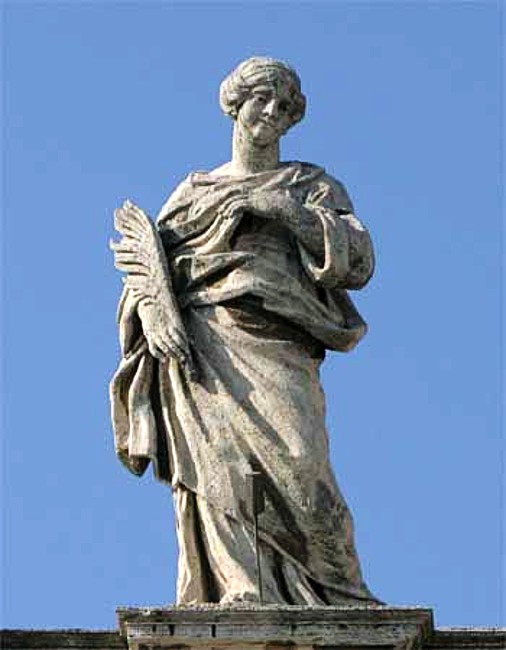
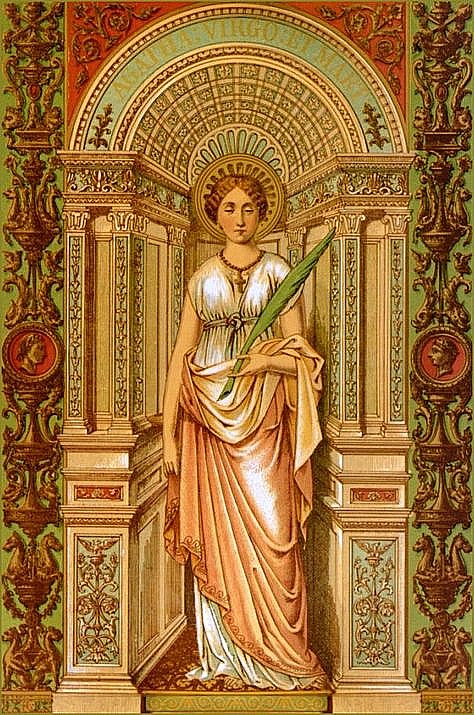
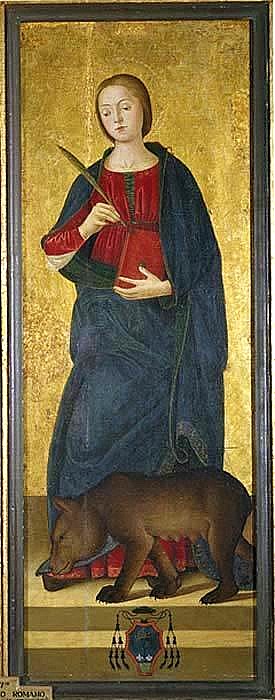
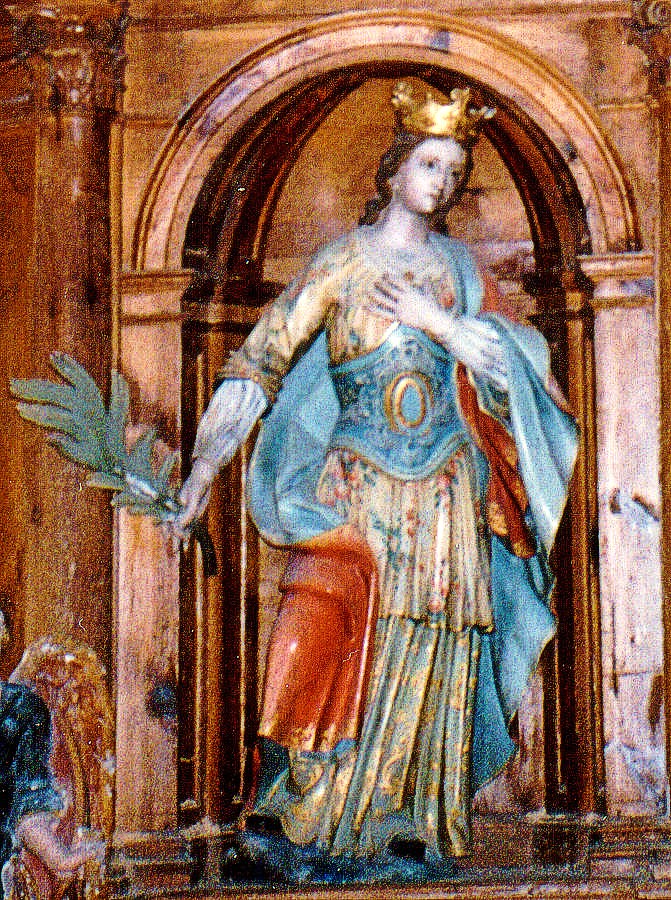
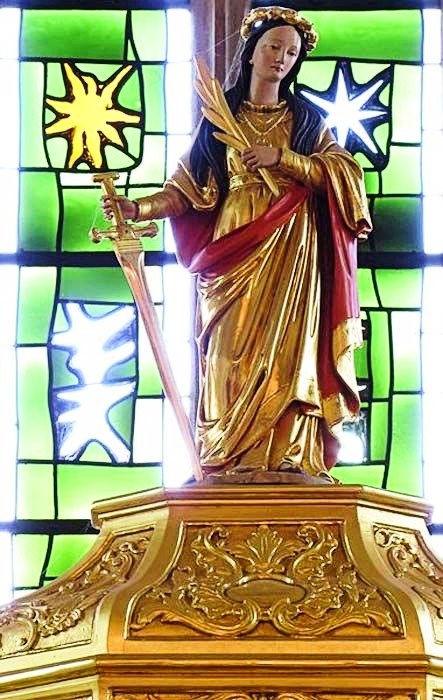

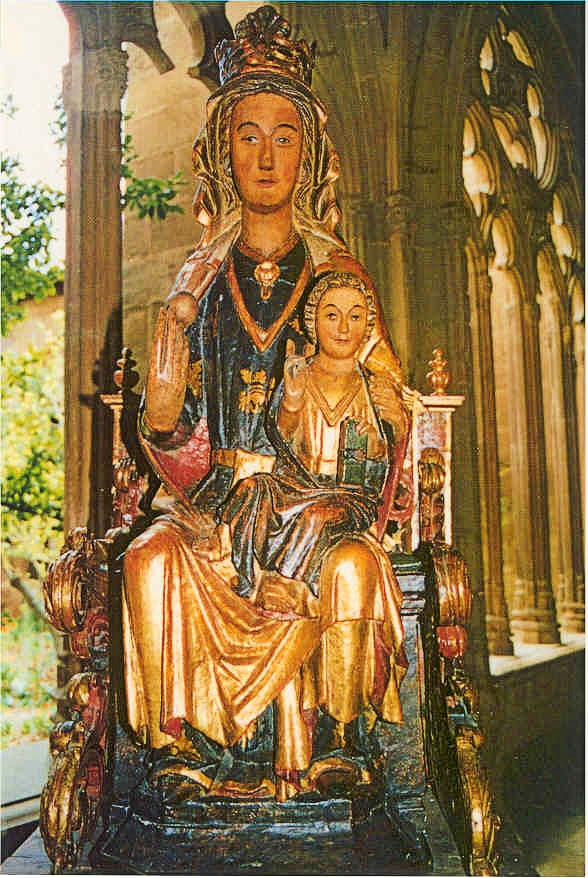
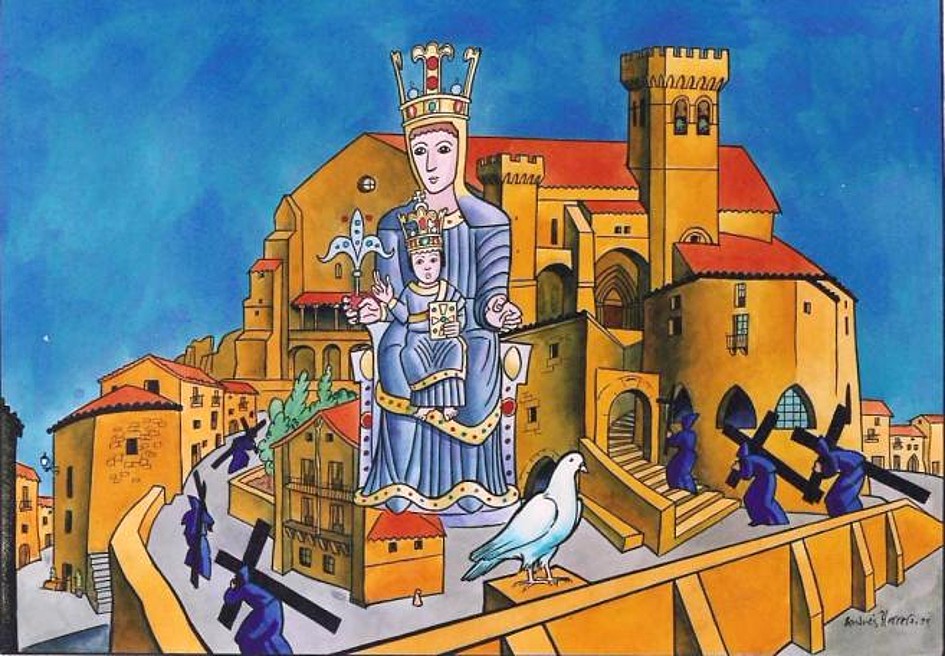

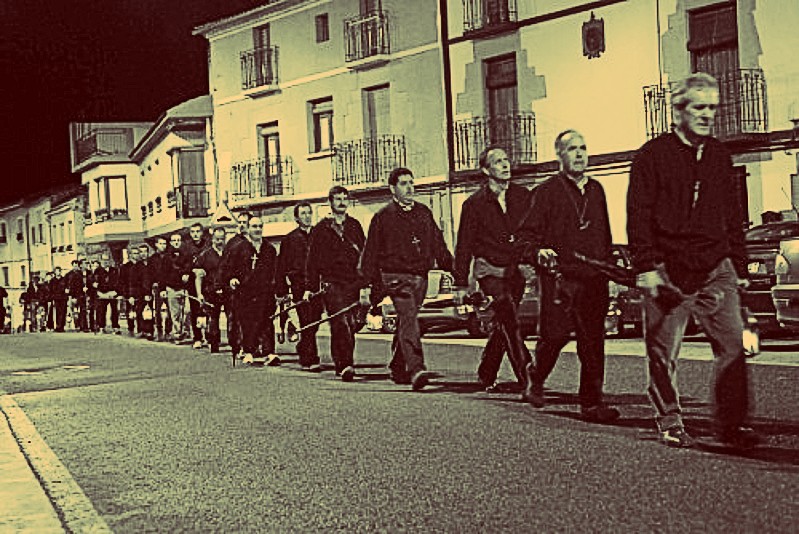
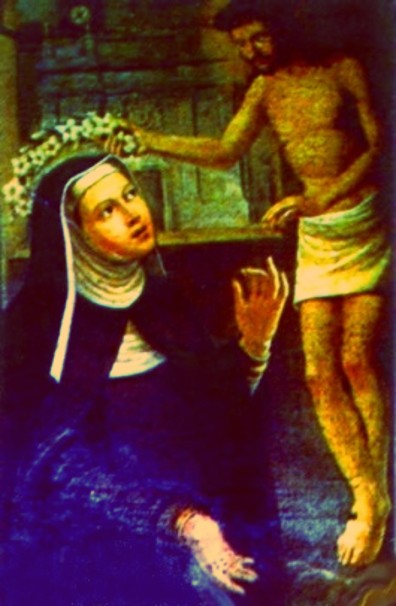
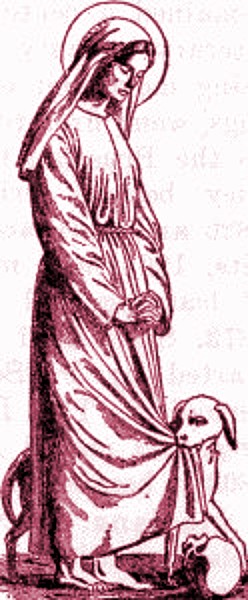

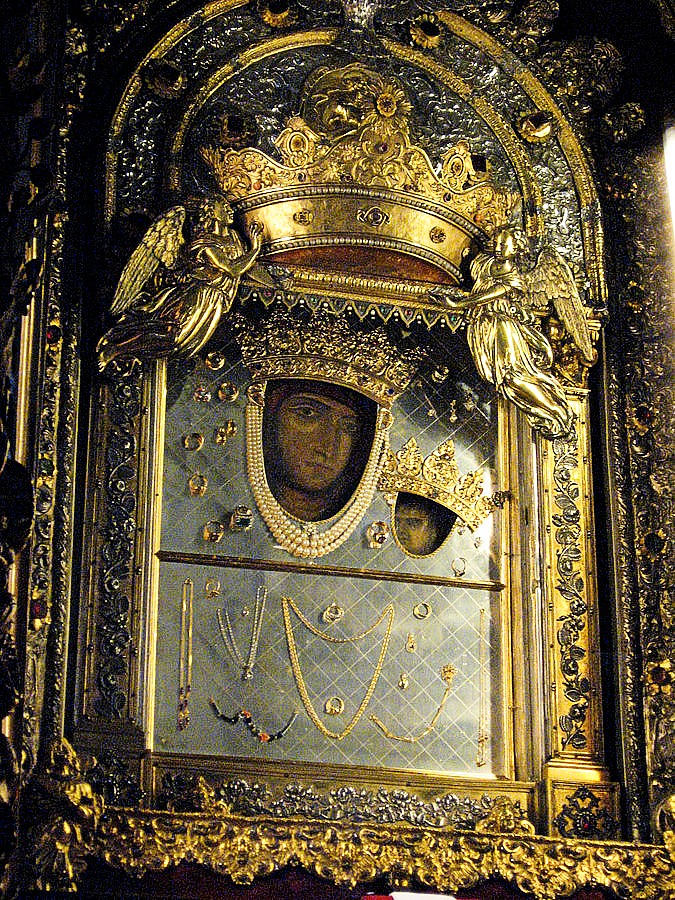
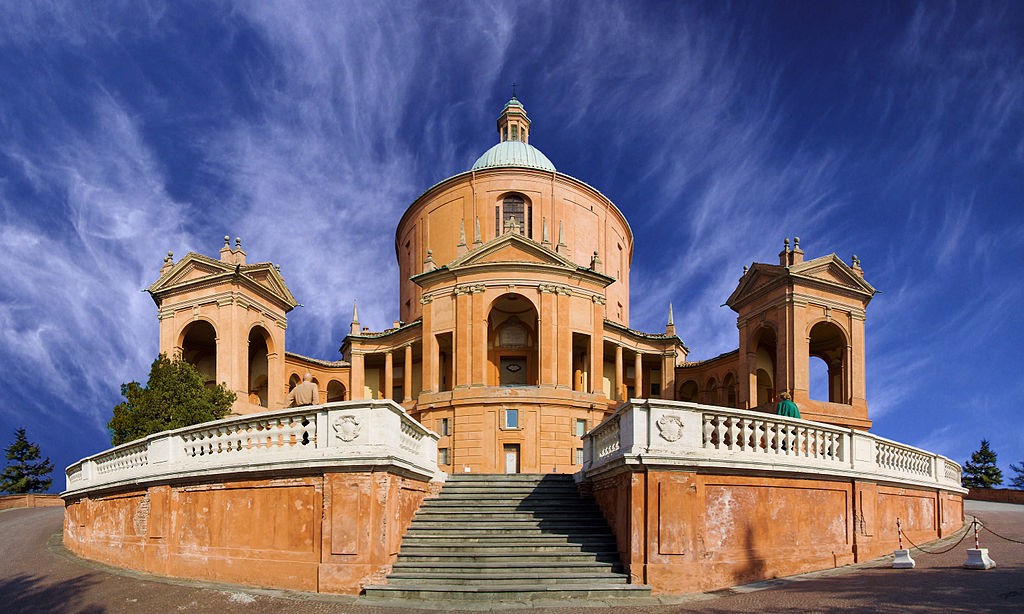
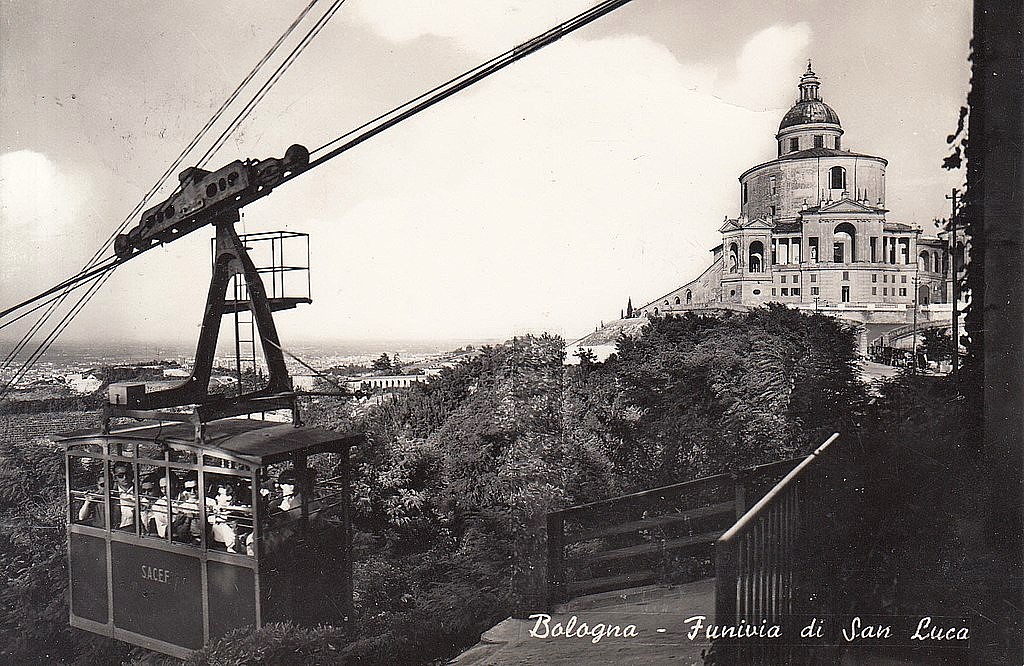

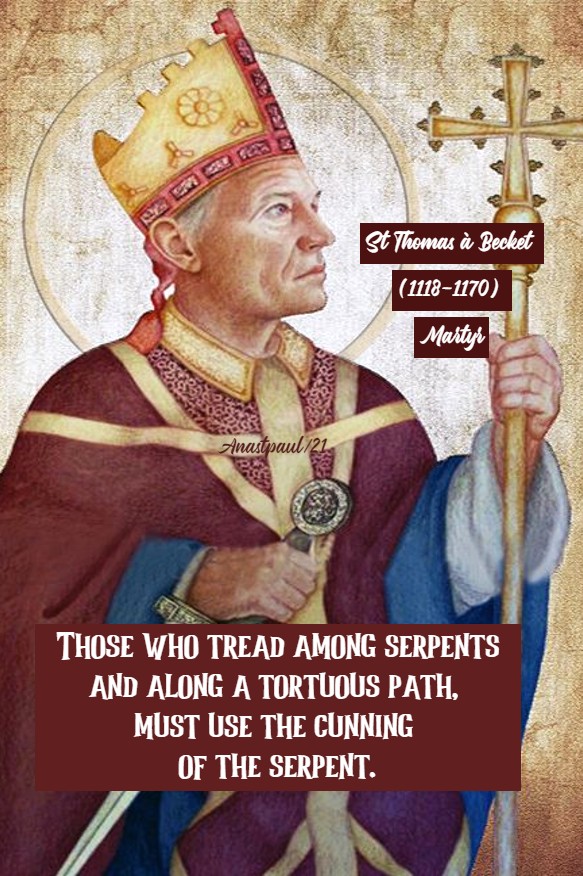
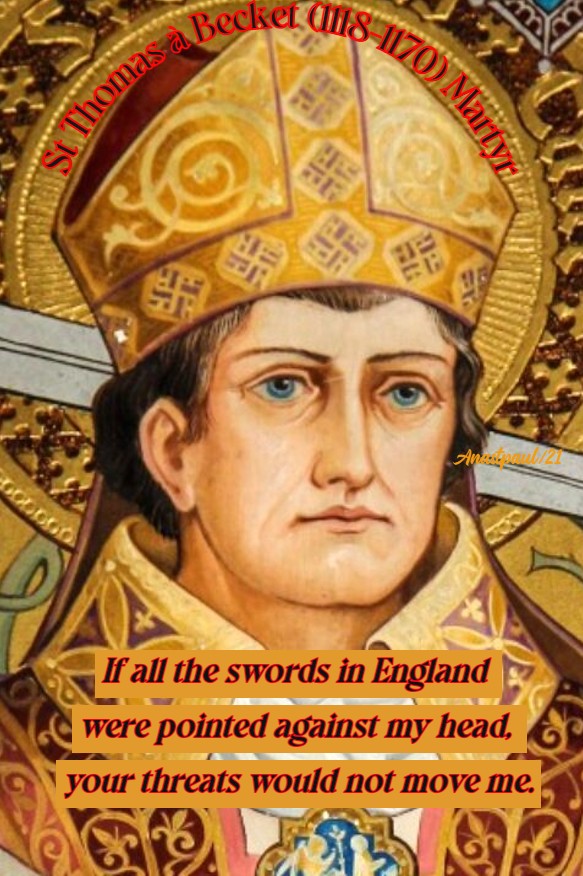
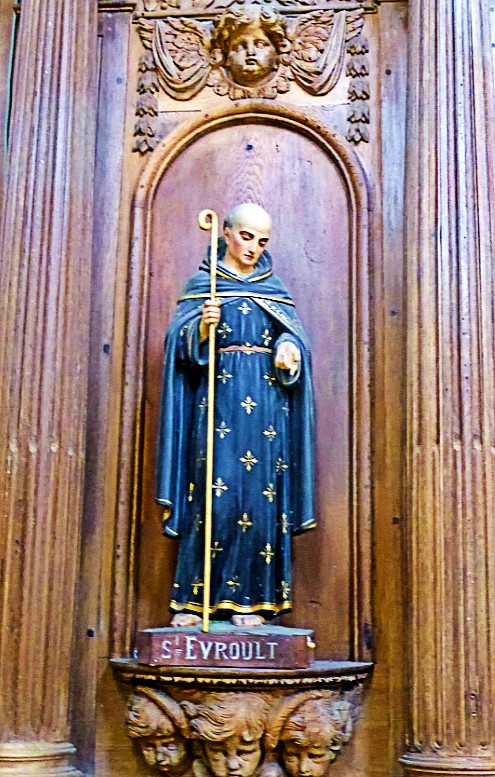
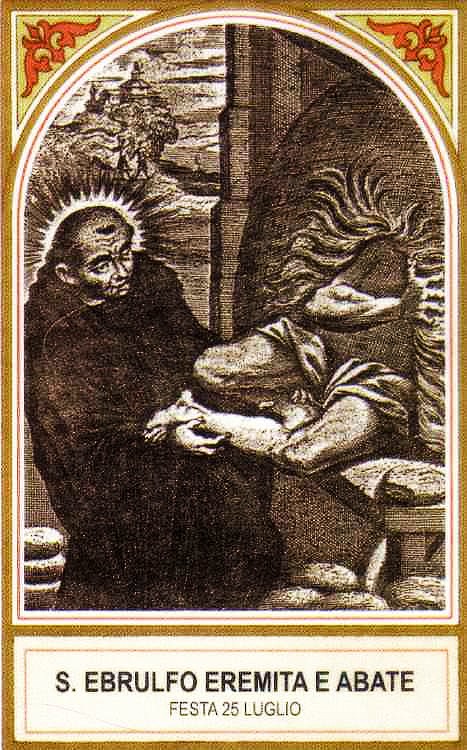
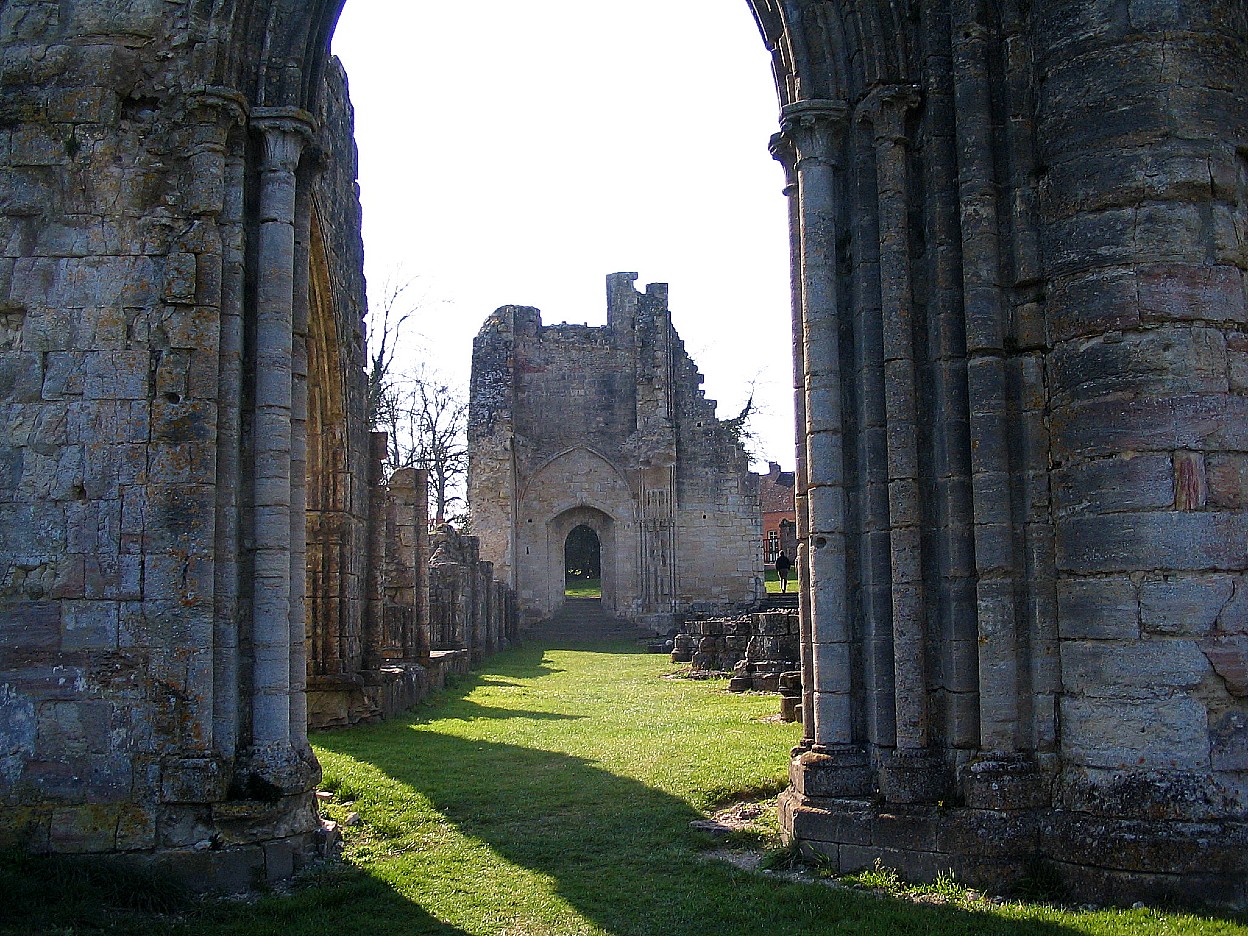
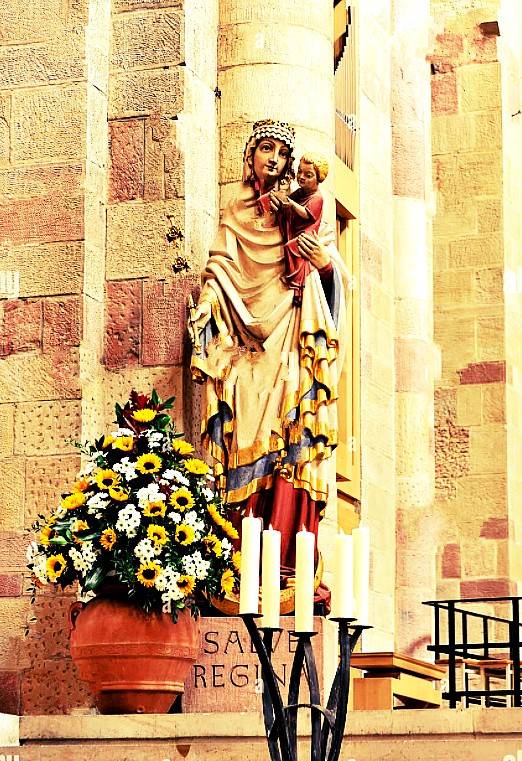
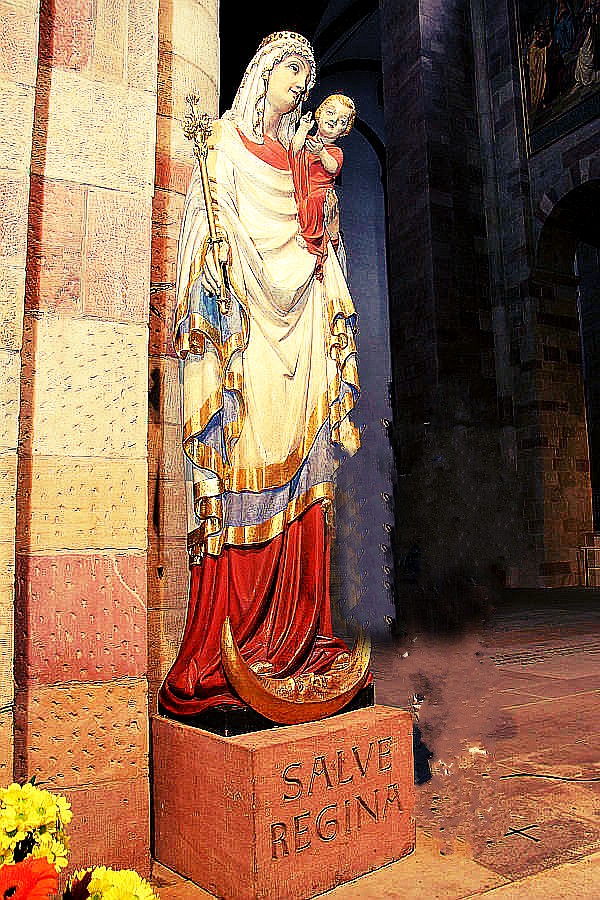
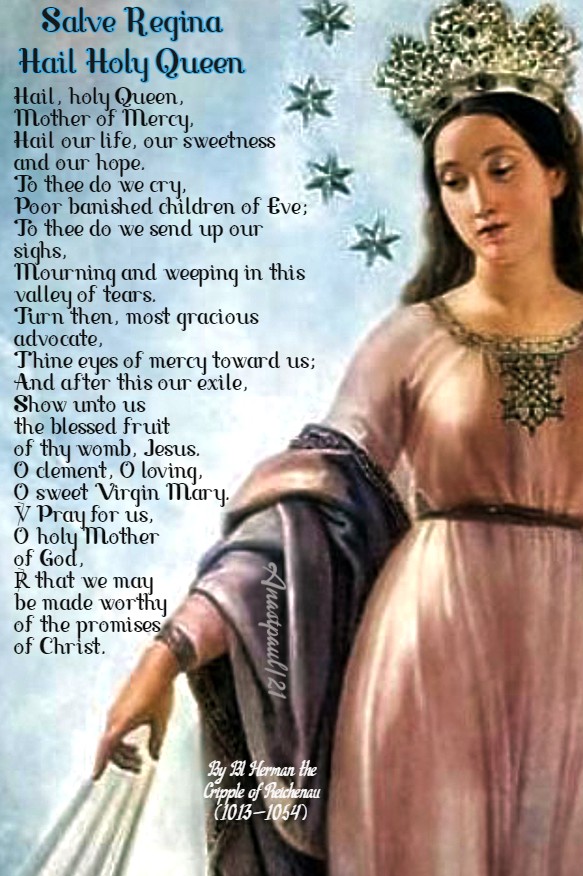
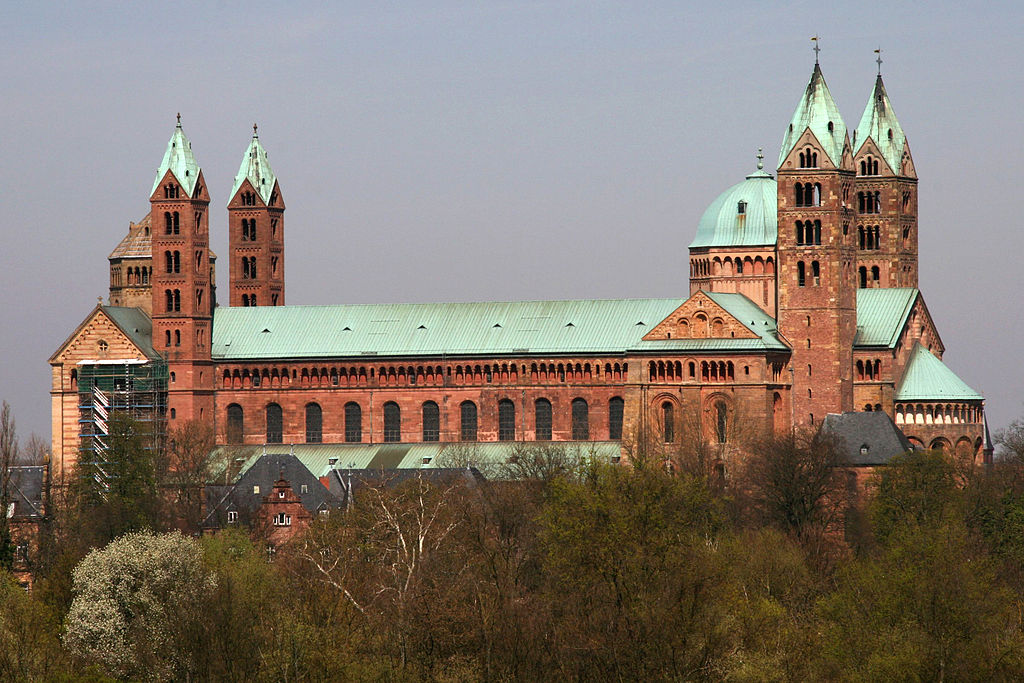


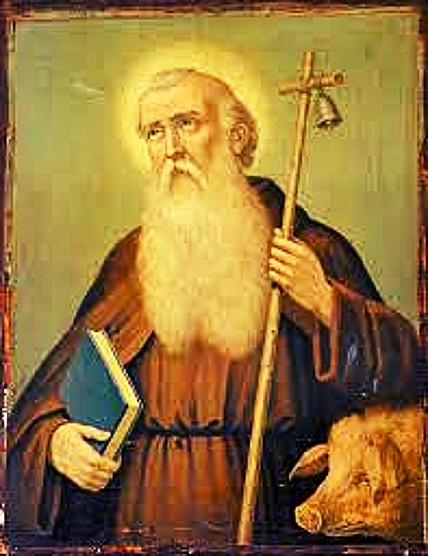
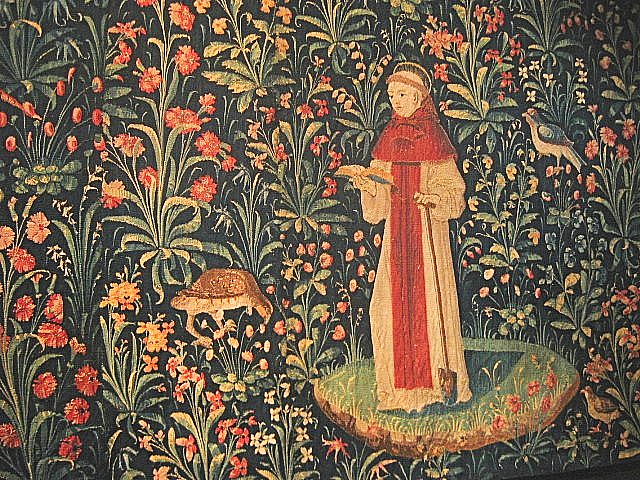

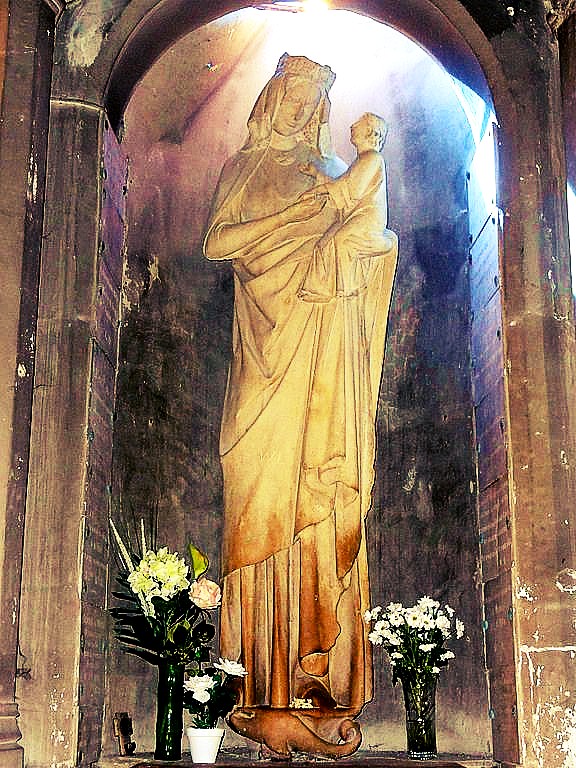
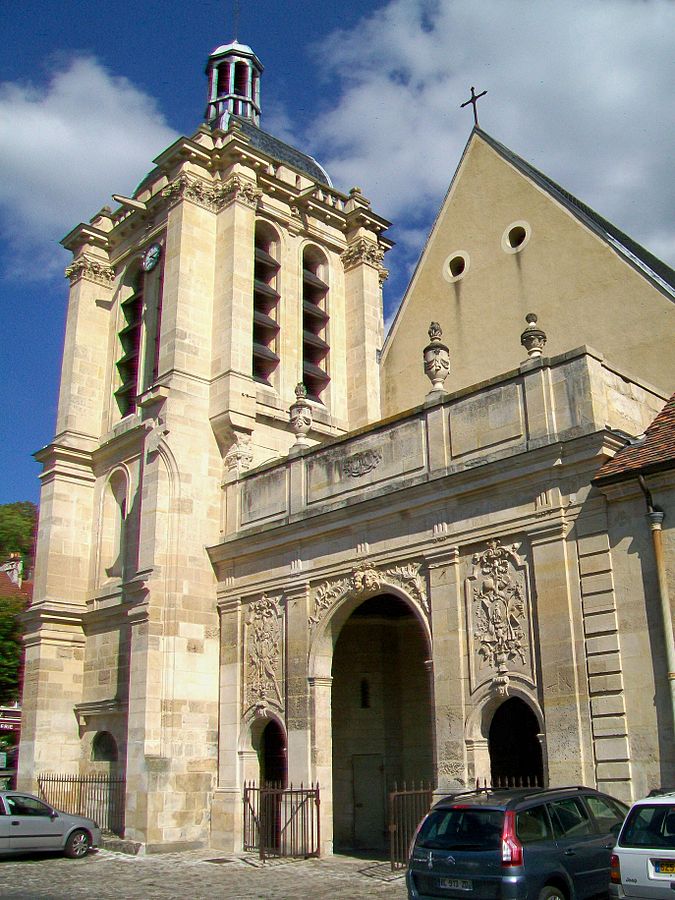


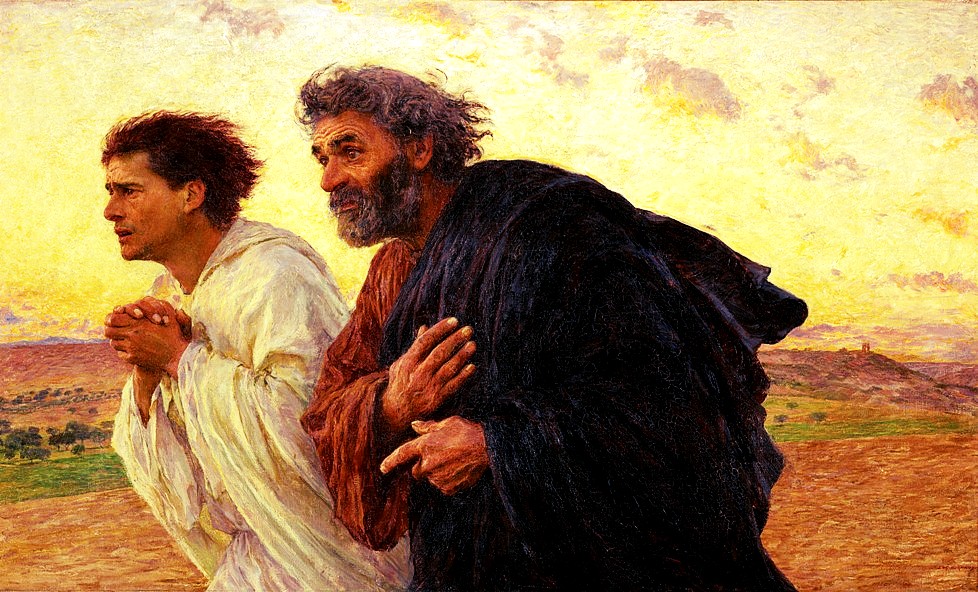
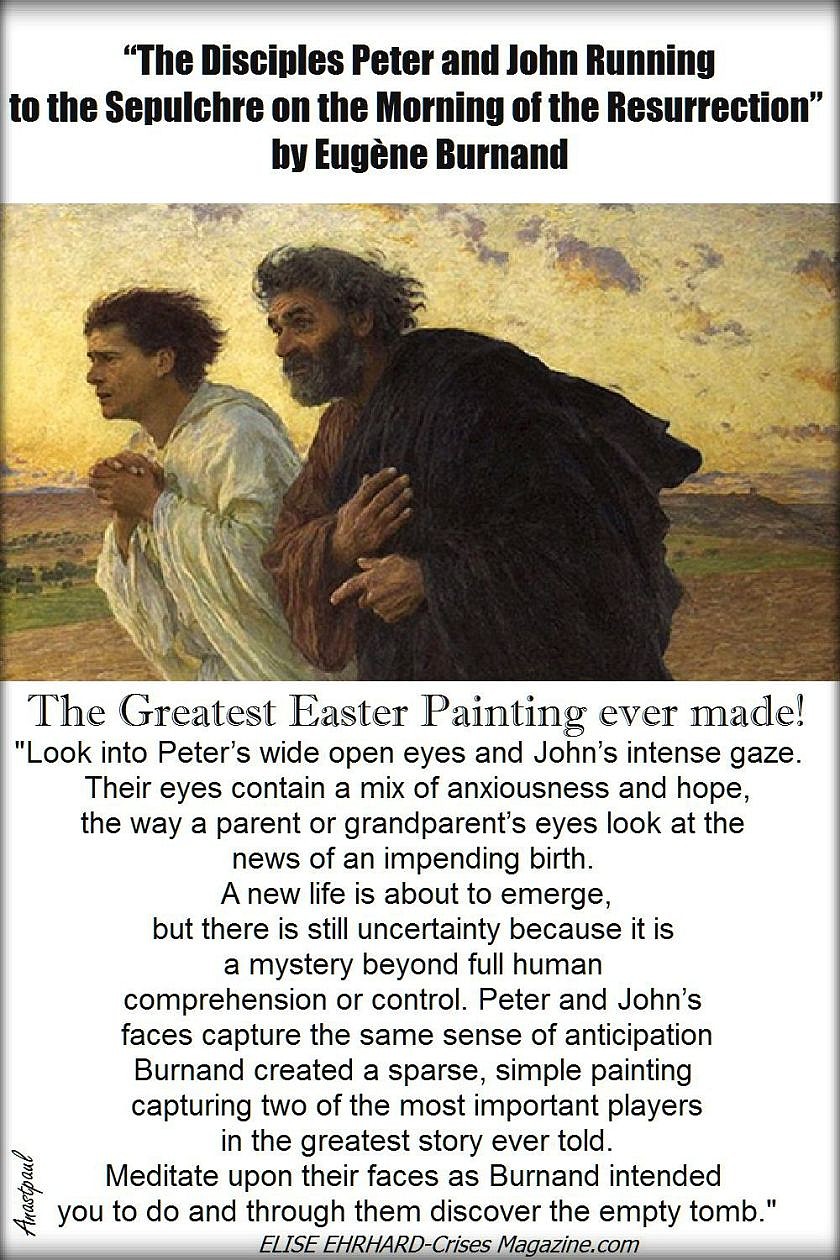


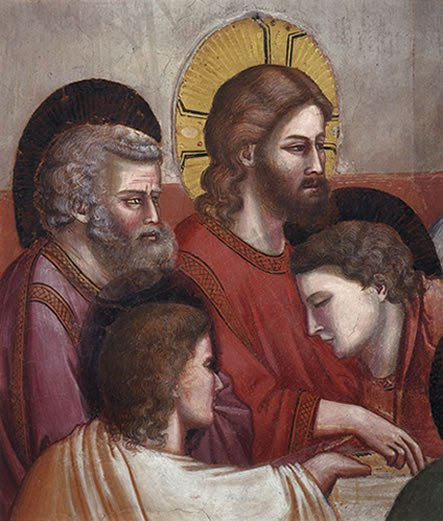
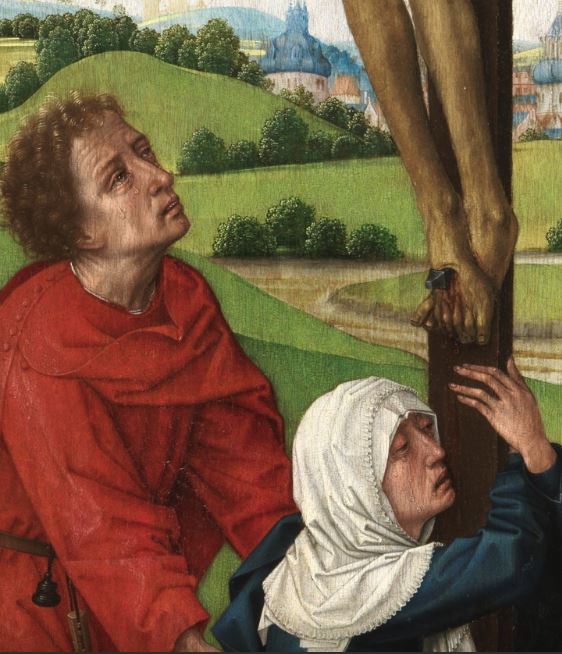
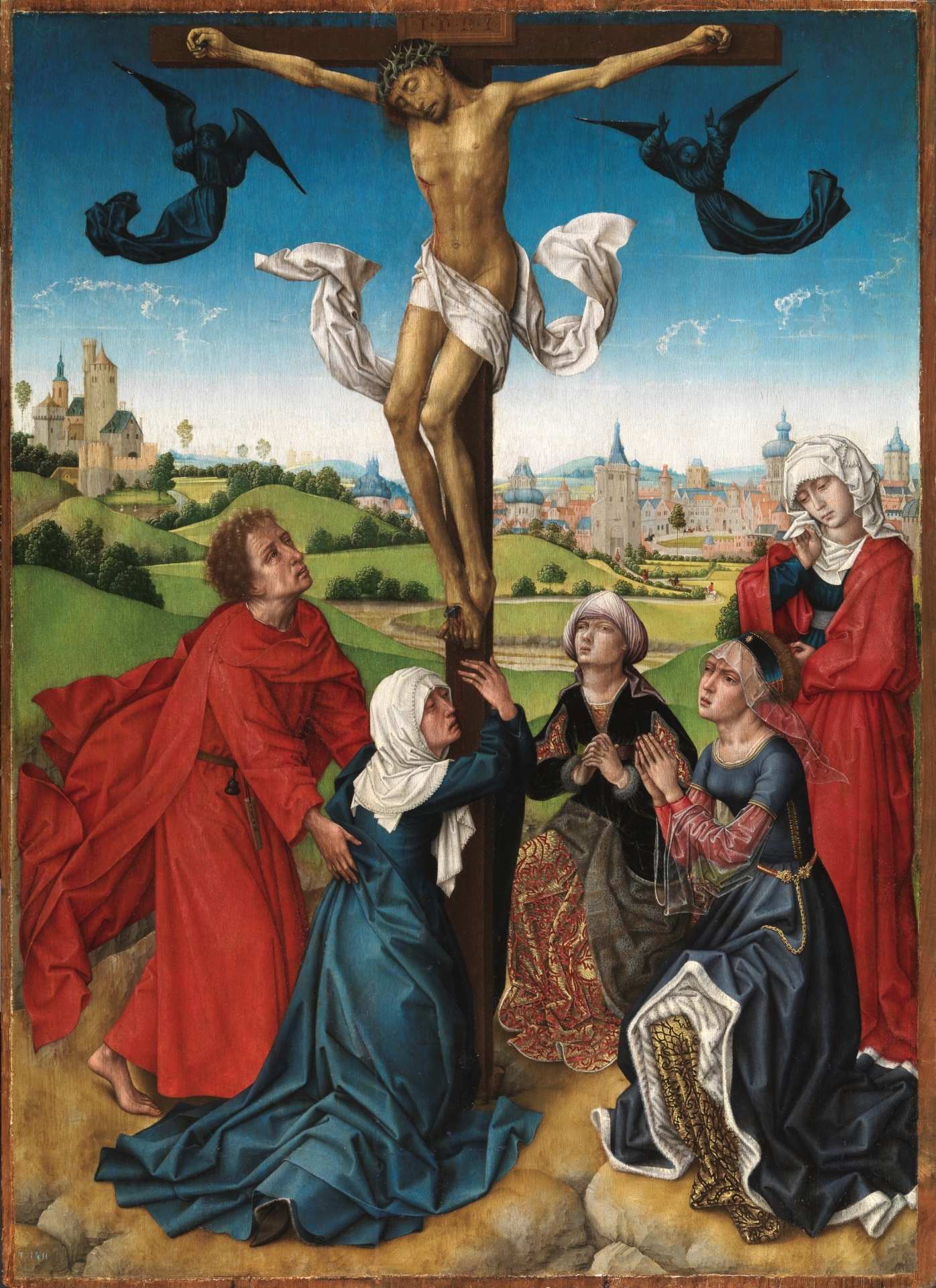


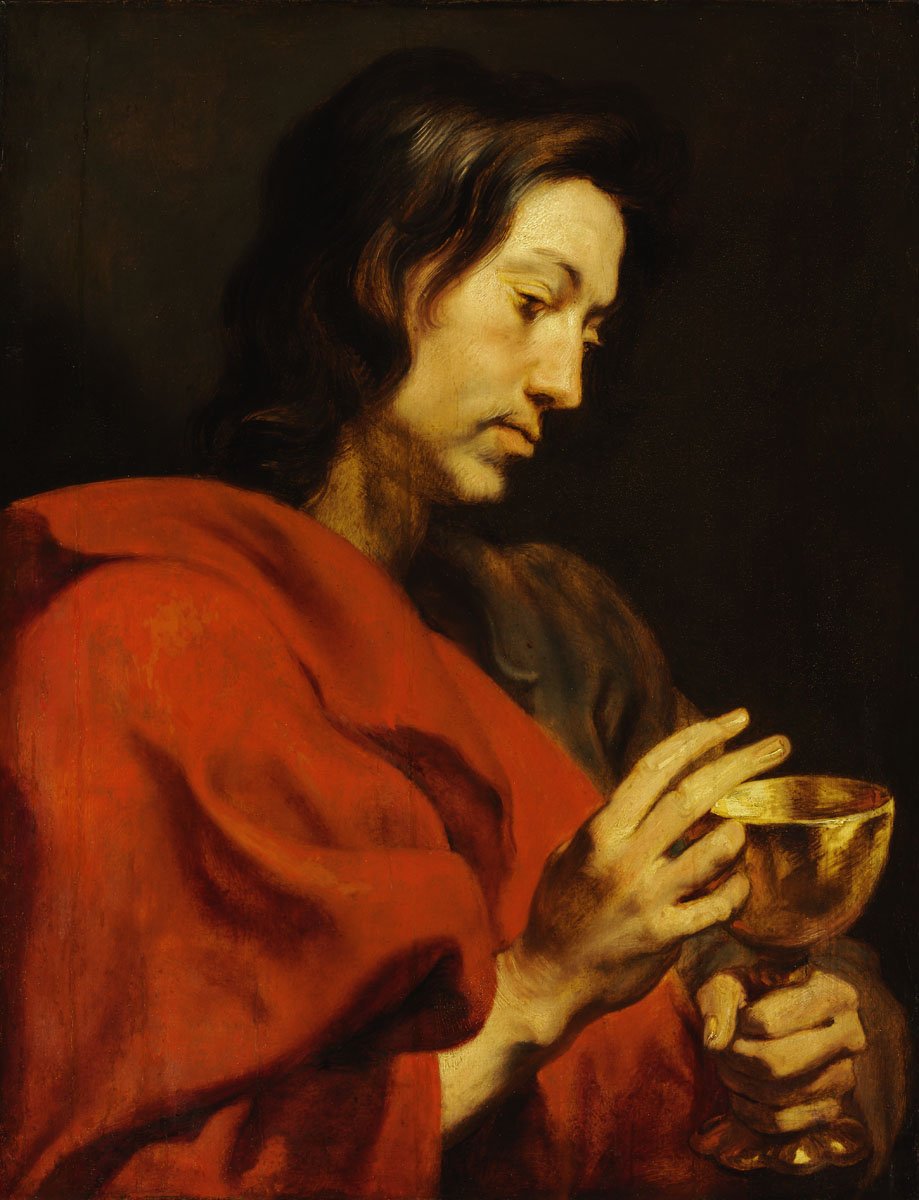
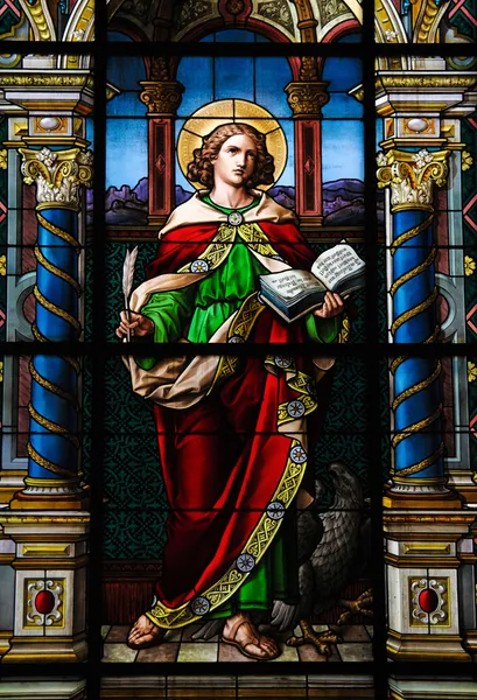


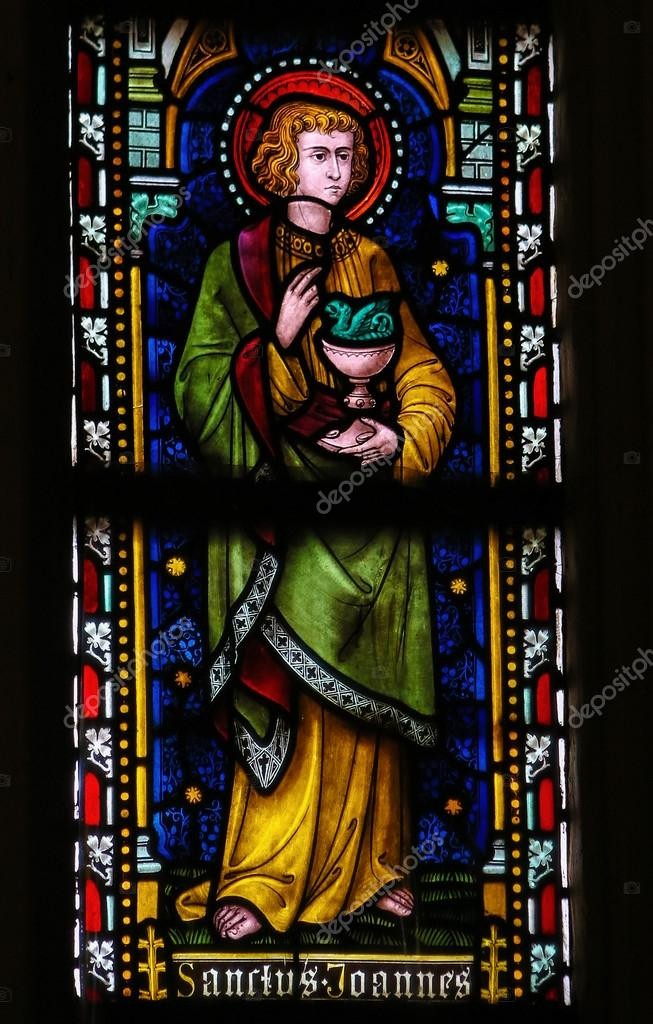


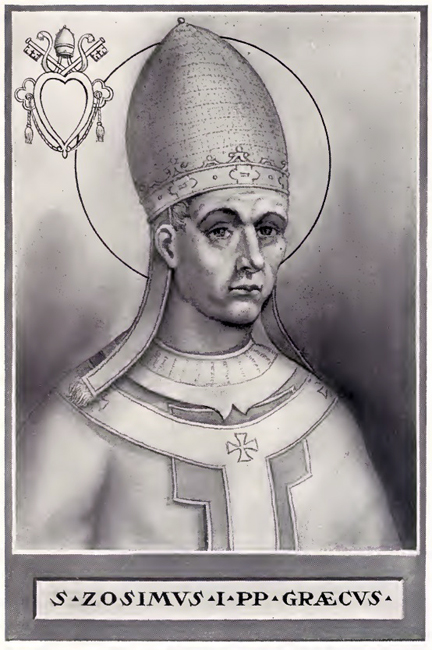
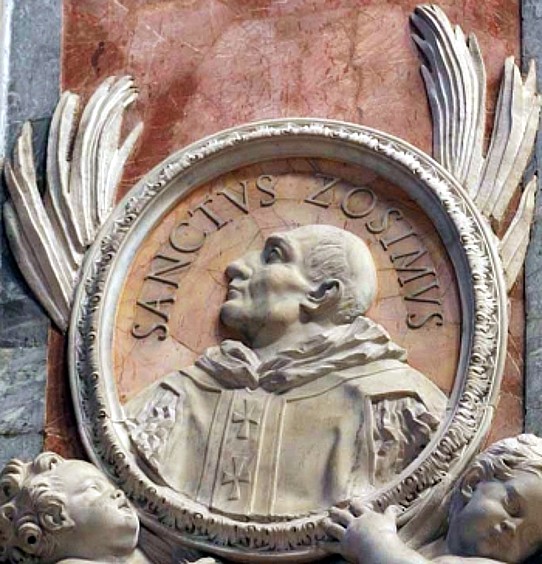

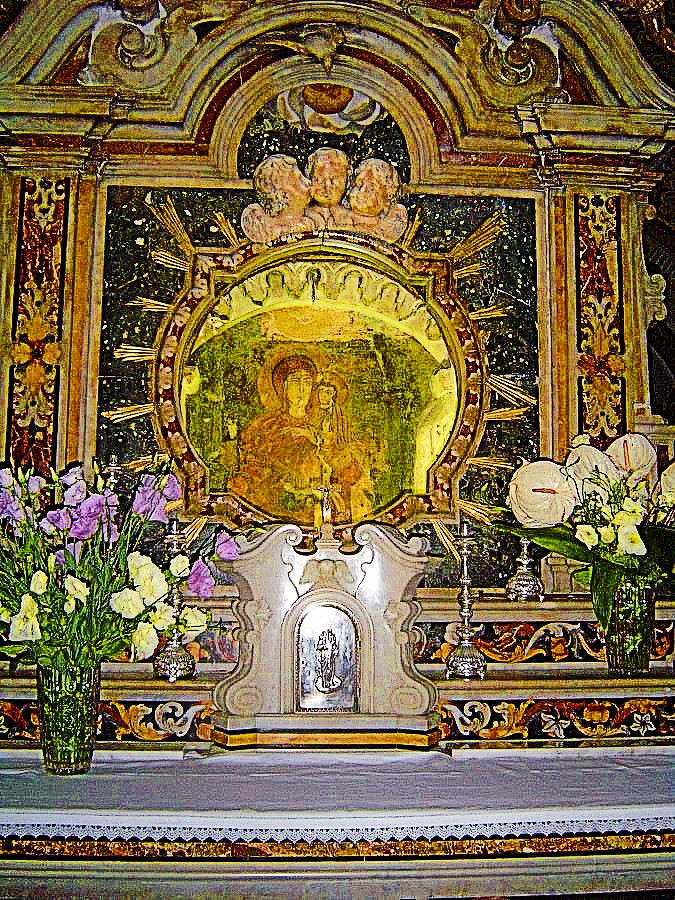
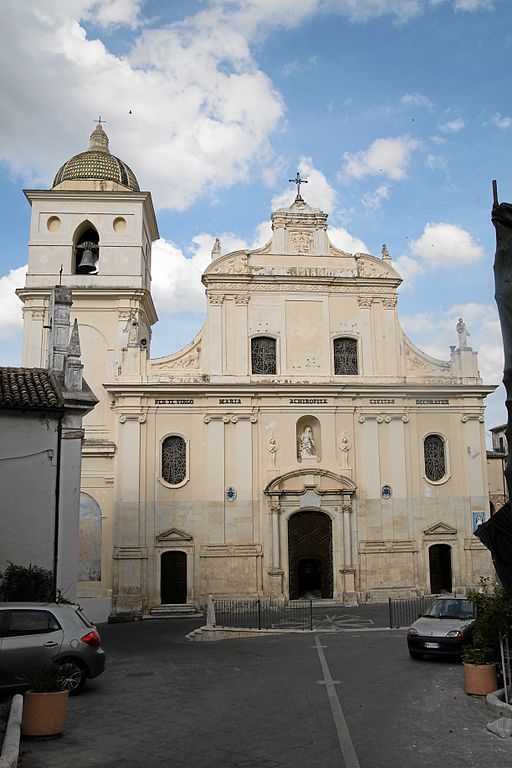
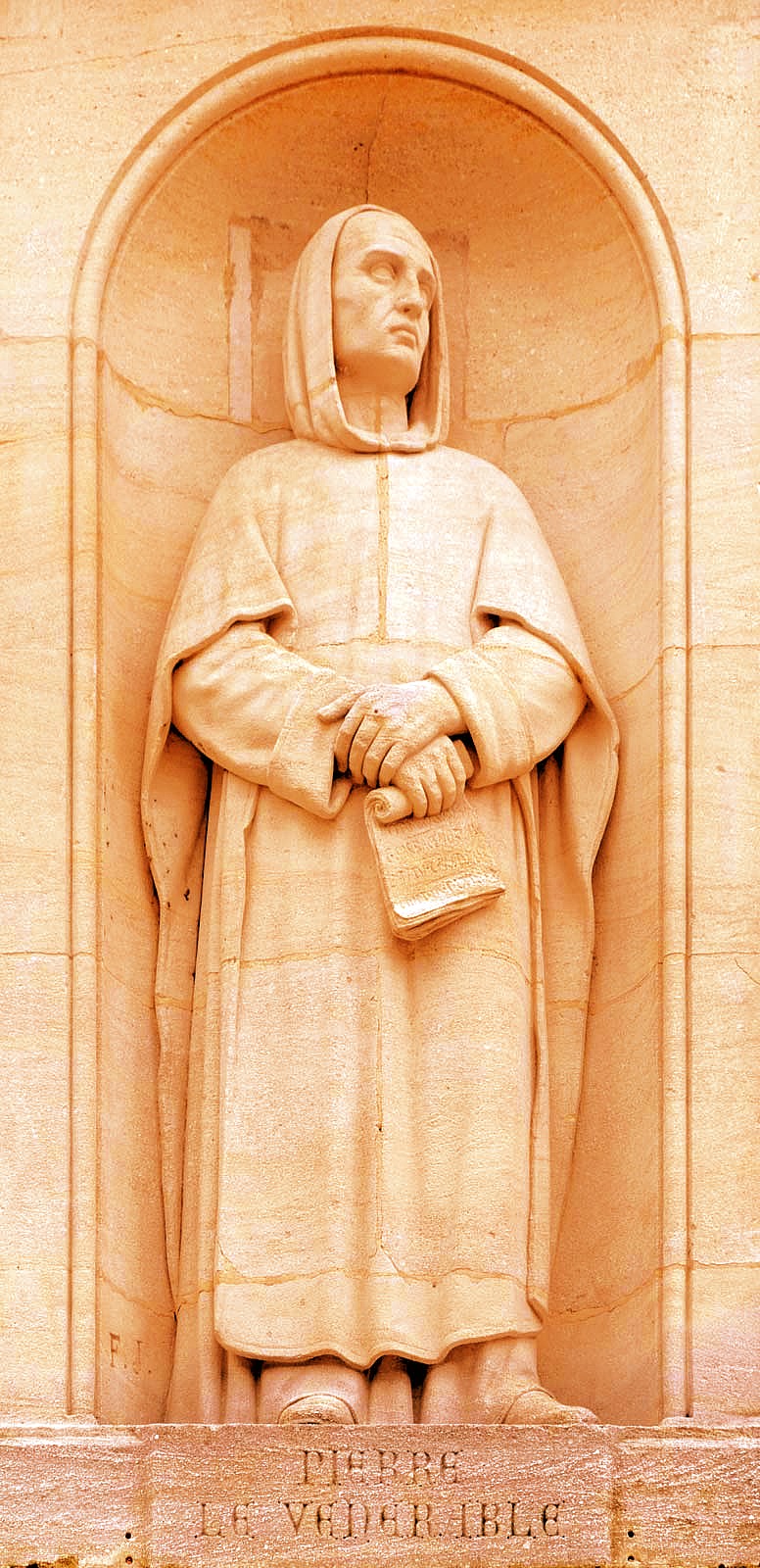
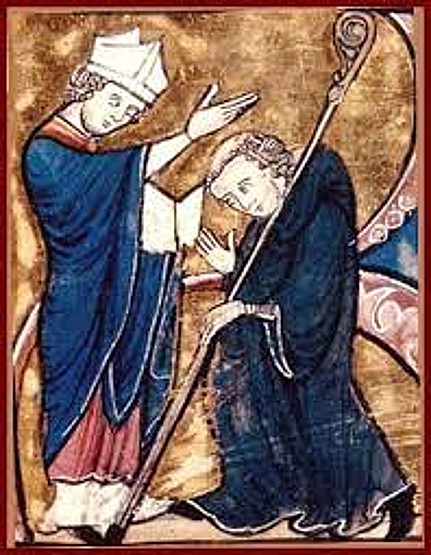

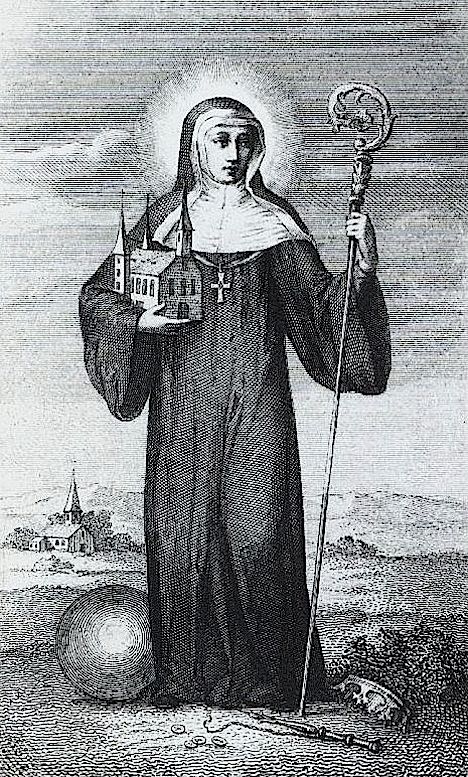
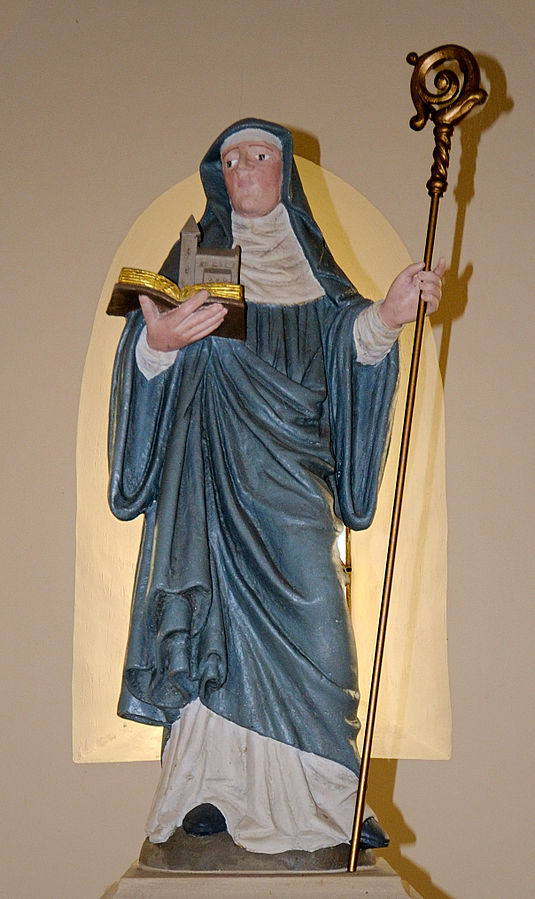
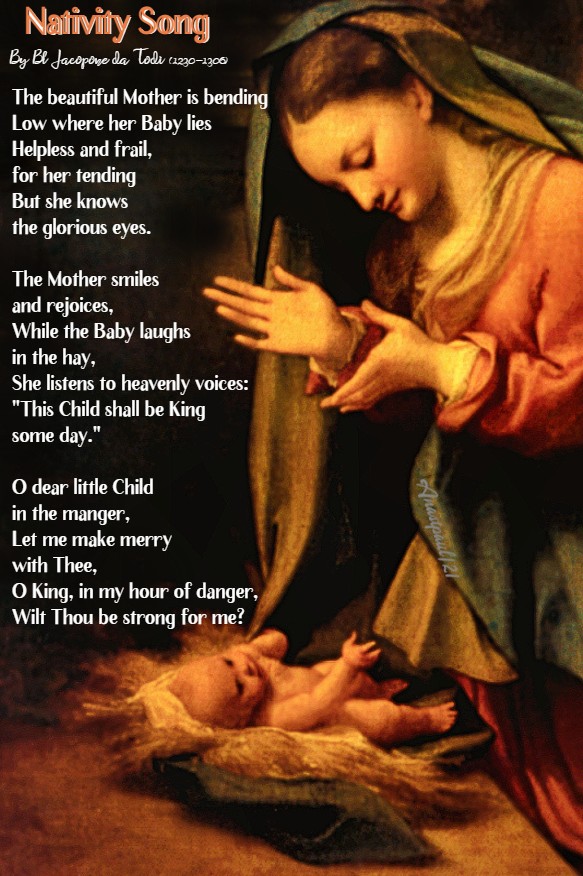

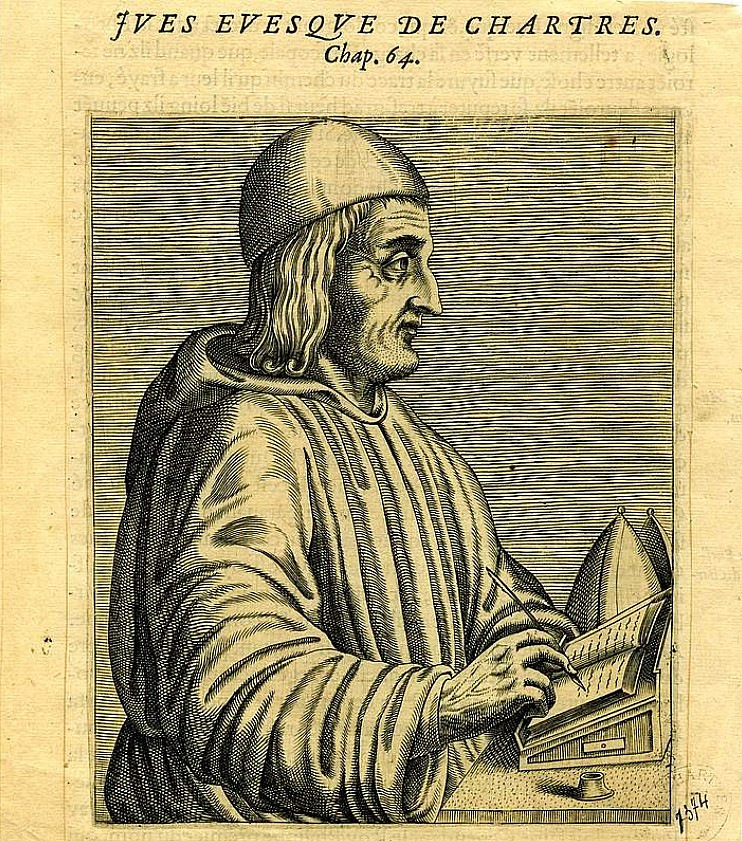
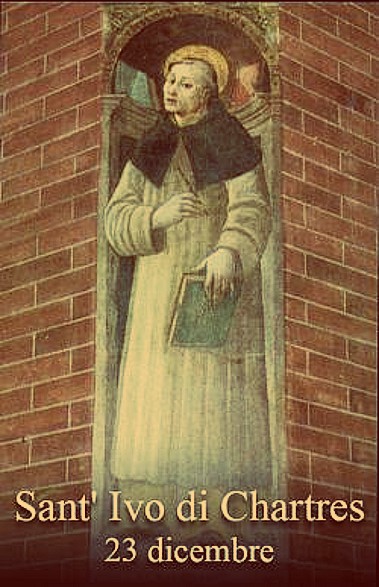
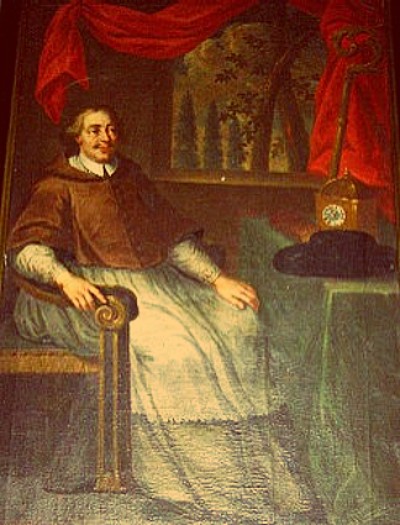
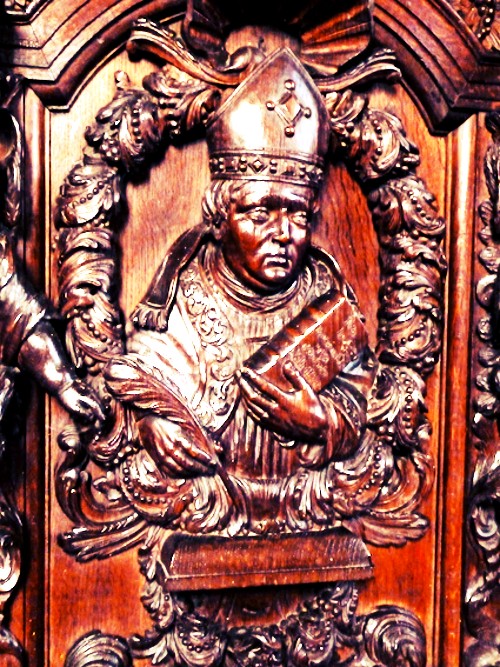
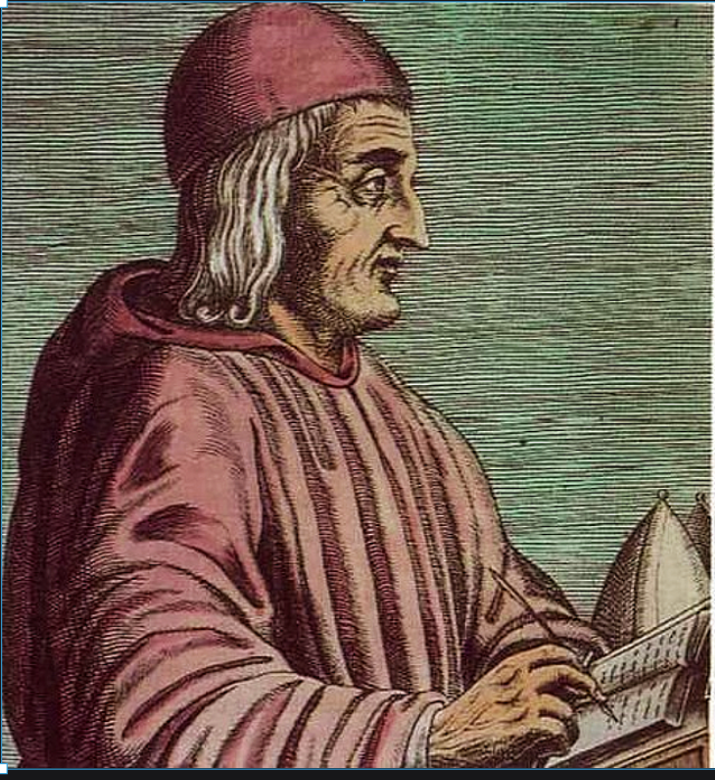
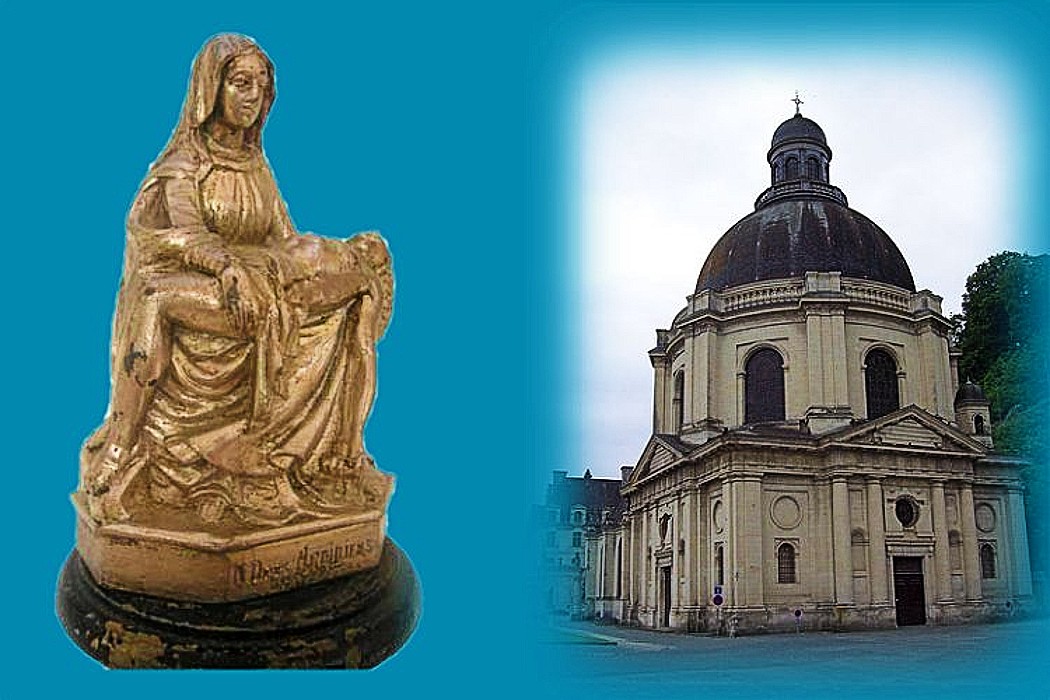


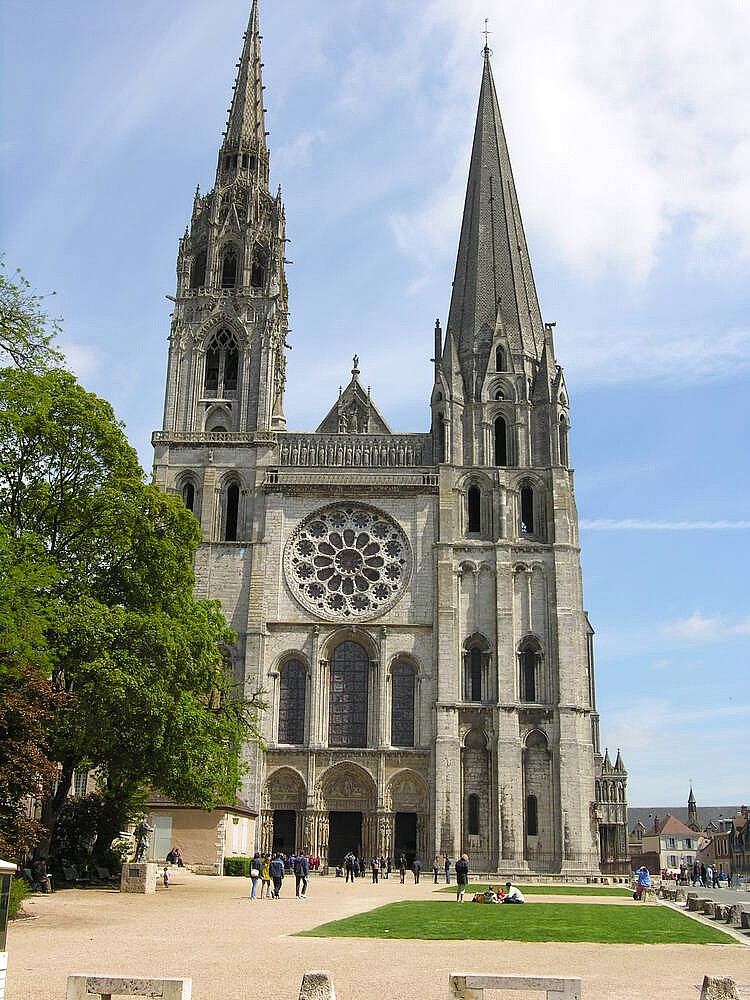

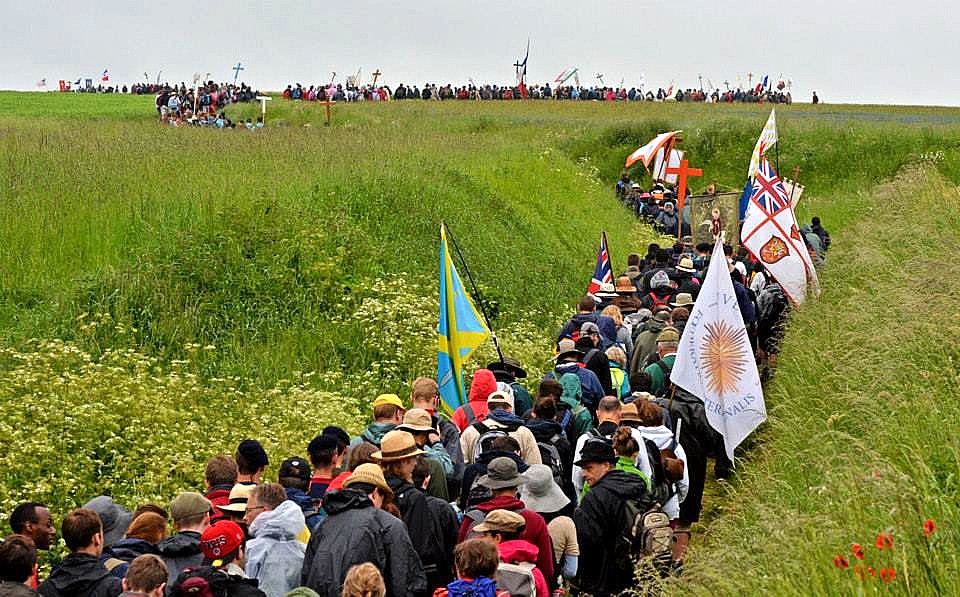
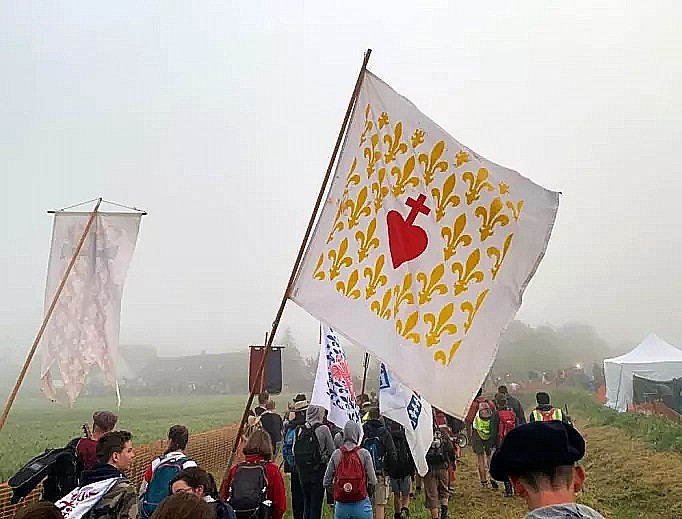


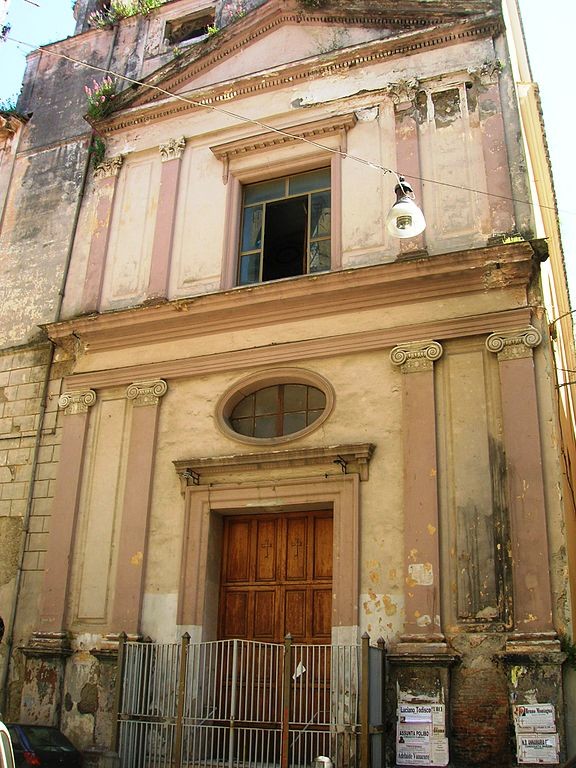

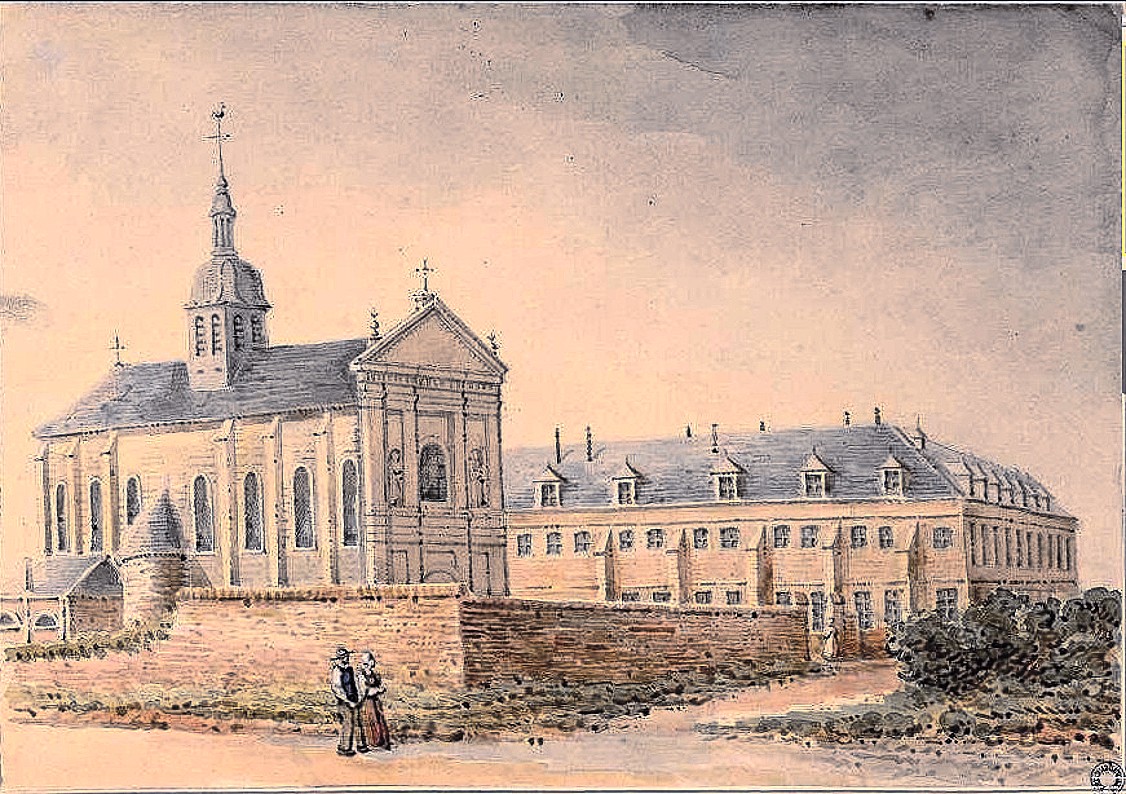
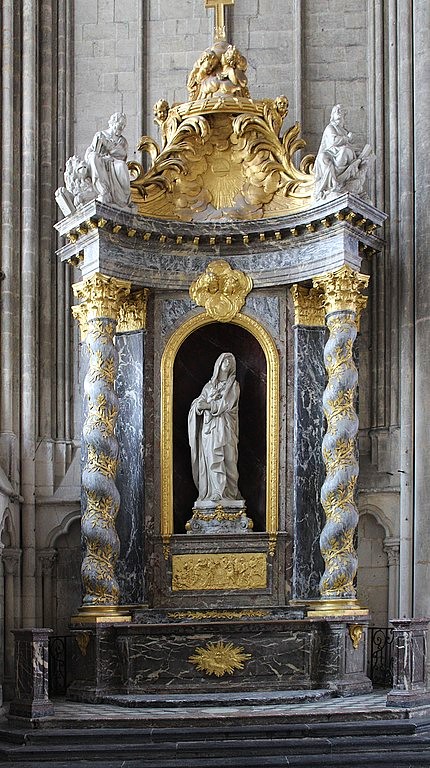
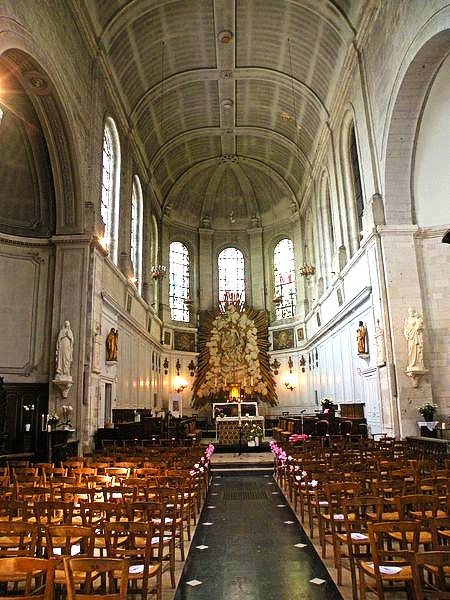

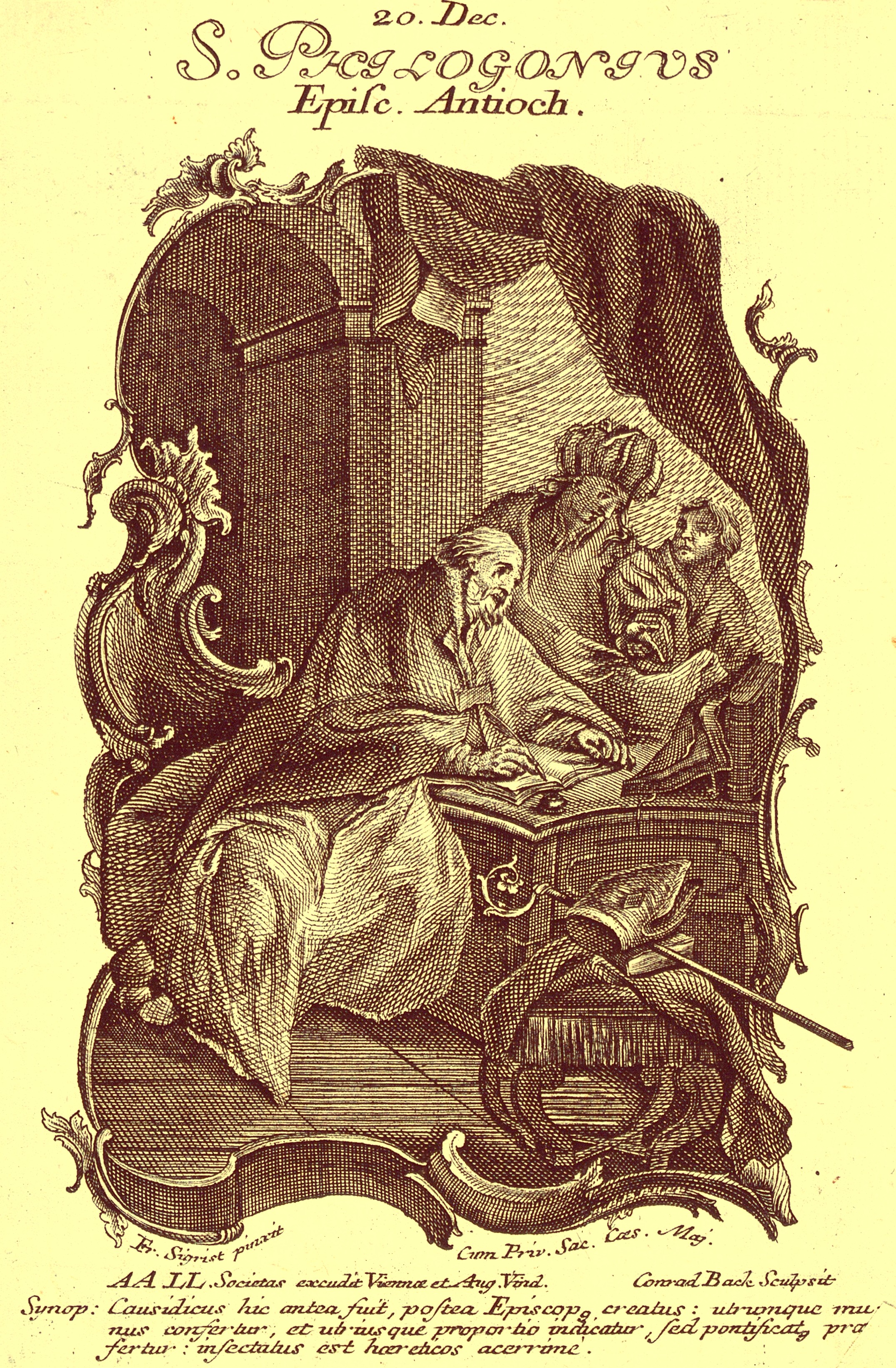
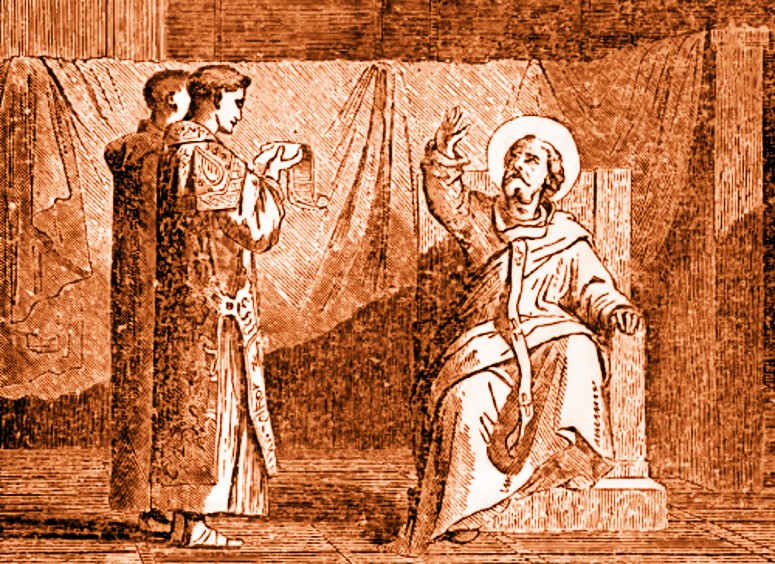
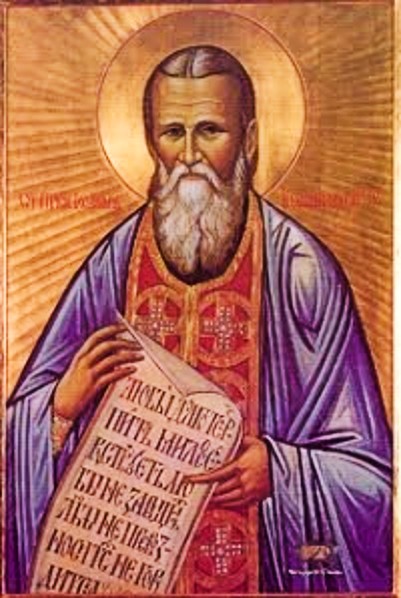
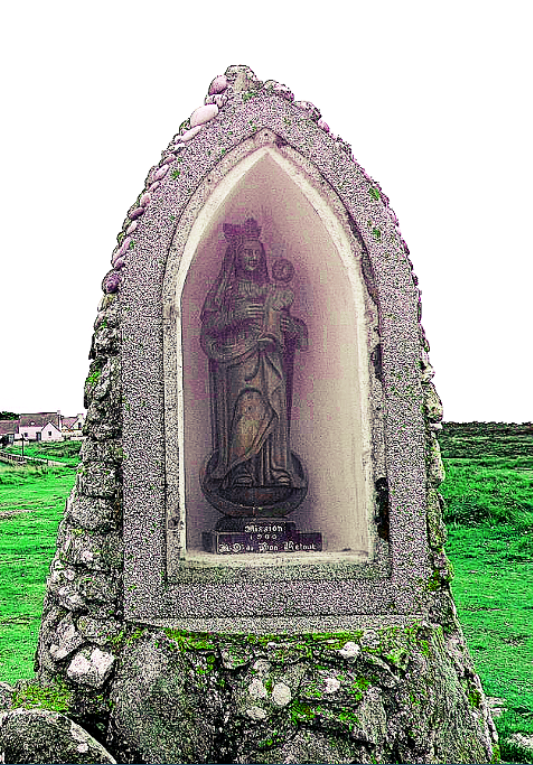
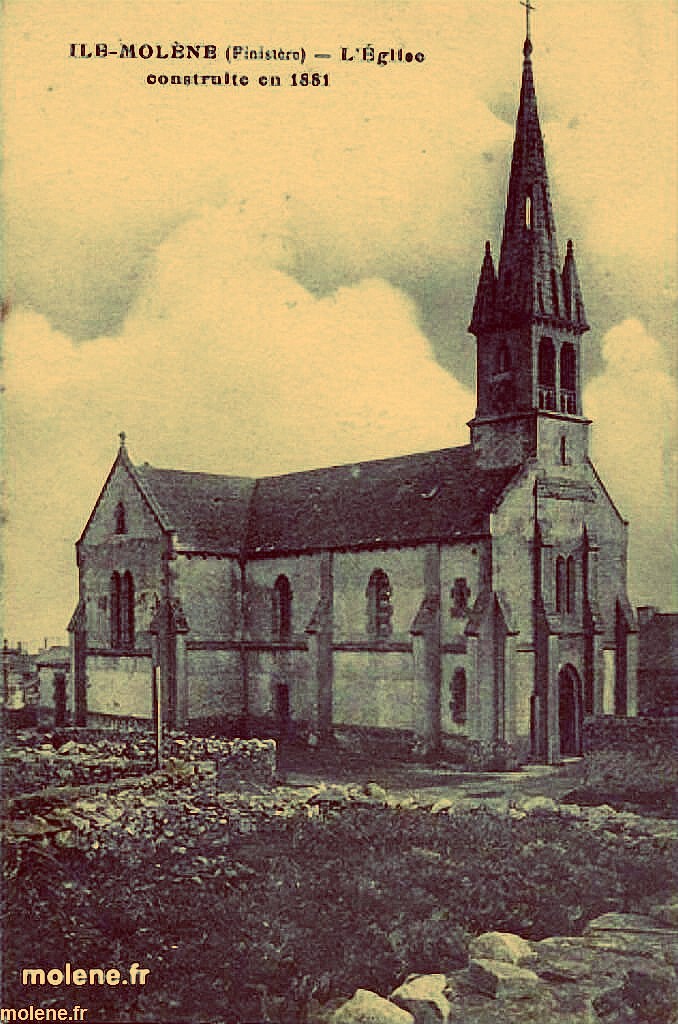
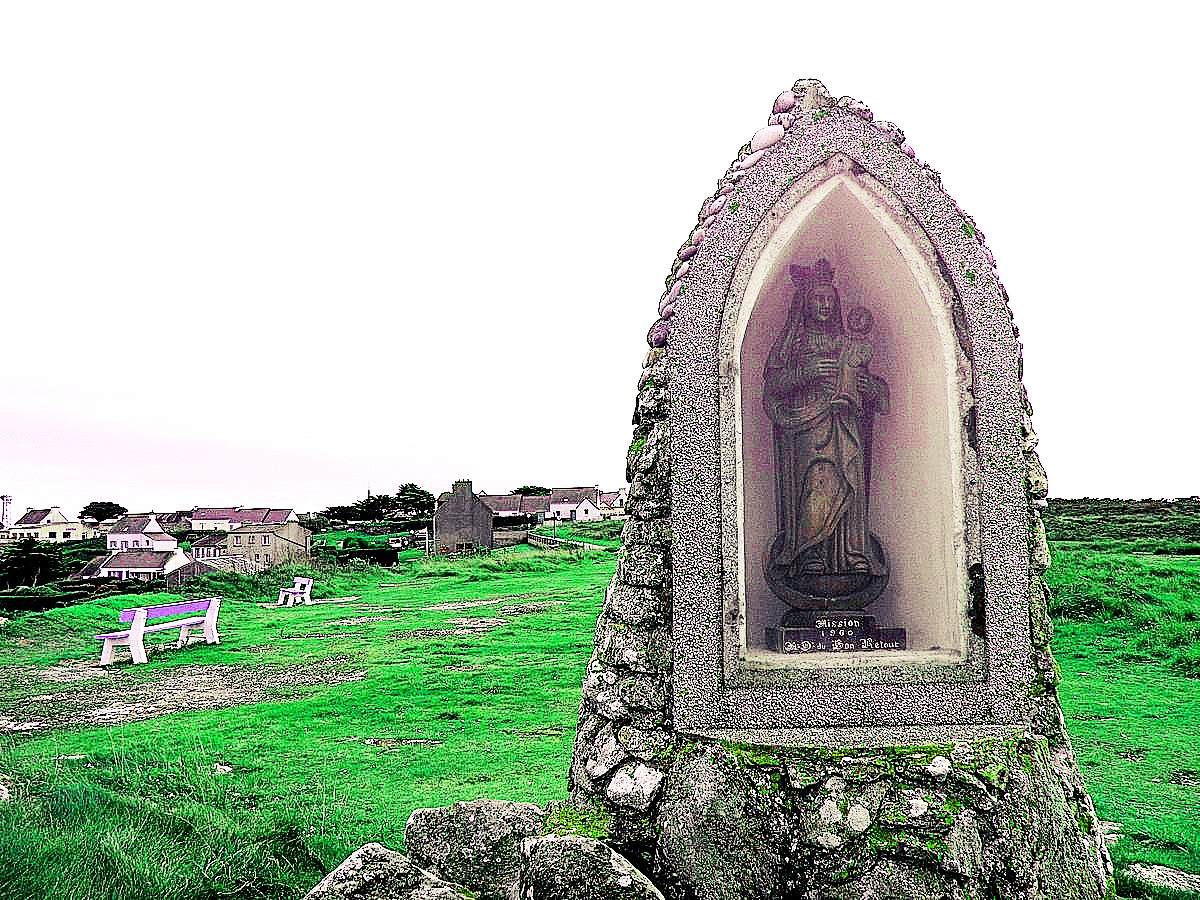

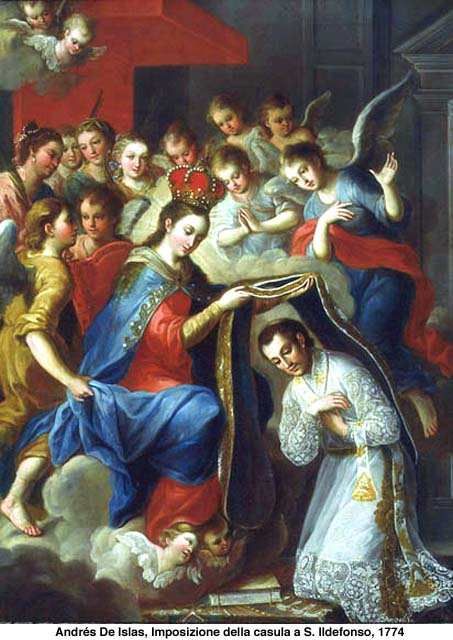


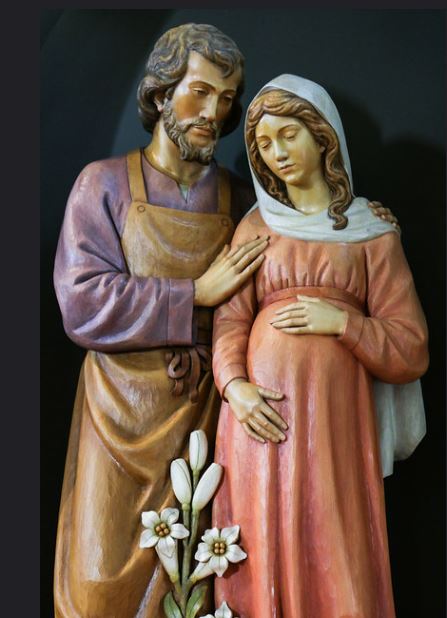


You must be logged in to post a comment.