St Alexander of the Via Claudia St Eusebius of Phoenicia St Gerulph St Iphigenia of Ethiopia 1st Century) Virgin converted by St Matthew, the Apostle and Evangelist St Isaac of Cyprus St Jonas the Prophet St Landelino of Ettenheim
St Maura of Troyes St Meletius of Cyprus St Pamphilus of Rome
Martyrs of Gaza – 3 Saints: Three brothers, Eusebius, Nestulus and Zeno, who were seized, dragged through the street, beaten and murdered by a pagan mob celebrating the renunciation of Christianity by Julian the Apostate. They were burned to death in 362 on a village garbage heap in Gaza, Palestine.
One Minute Reflection – 20 September – “Month of The Seven Sorrows of the Blessed Virgin Mary and The Holy Cross” – The Vigil of St Matthew, Apostle and Evangelist – Wisdom 5:16-20, Luke 6:17-23 – Scripture search here: https://www.drbo.org/
“And He, lifting up His eyes on His disciples, said: Blessed are you …” – Luke 6:20
REFLECTION – “Lord Jesus Christ, to teach us the summit of virtue, You ascended the mountain with Your disciples and taught them the Beatitudes and highest virtues, promising them the rewards applicable to each. Grant that my weakness may hear Your Voice, that I may apply myself, through their practice, to acquire the merit of the virtues, so that by Your Mercy, I may receive the promised reward. As I consider the payment, do not let me refuse the effort of the labour. Make my hope of eternal salvation, sweeten the bitterness of the cure, inflaming my soul with the splendour of Your work. Out of the wretched person I am, create one of the blessed; from the blessedness here below, lead me, by Your Grace, to the blessedness of the homeland.
Come, Lord Jesus Christ, in search of Your servant, seeking Your erring and exhausted sheep. Come, Spouse of the Church, in search of Your lost coin. Come, Father of mercies, welcome the prodigal son returning to You. Come, then, Lord, for You are the only One, able to call back the sheep that has strayed, to find the lost drachma, to reconcile the runaway son. Come, that there may be salvation on earth and joy in Heaven! Turn me towards You and grant that I may carry out a true and perfect repentance, so that I may become an occasion for joy, among the Angels. Sweetest Jesus, I pray Thee, by the immensity of Thine Love for me, a sinner, grant that I may love Thee alone, above all things, that I may be consoled by none but Thee, my sweetest God!” – Ludolph of Saxony (c1300-1378) Monk, Theologian, Writer, Dominican then a Carthusian (Prayers to Jesus Christ).
PRAYER – Grant, we beseech Thee, Almighty God that the worshipful Feast of Thy blessed Apostle and Evangelist, St Matthew, on the eve whereof we now stand, may avail us, to the increase, both of godliness toward Thee and of health to our own souls. Through Jesus Christ, Thy Son our Lord, Who lives and reigns with Thee, in the unity of the Holy Ghost, God, world without end. Amen (Collect).
St Pope Agapetus I (c489-536) Bishop of Rome Papal Reign from 13 May 535 – 22 April 536 St Candida of Carthage St Clicerius of Milan Bishop St Dionysius of Phrygia St Dorimedonte of Synnada St Eusebia of Marseilles St Evilasius of Cyzicum St Fausta of Cyzicum St Glycerius of Milan Bl John Eustace St Priscus
Martyrs of Constantinople – 3 Saints: A Priest and two Bishops who were imprisoned, tortured and Martyred for the defence of icons in the iconoclast persecutions of Emperor Leo the Isaurian. – Andrea, Asiano and Hypatius. They were Martyred in 735 in Constantinople (modern Istanbul, Turkey) and their bodies were thrown to the dogs.
Martyrs of Pergen – 6 Saints: A group of lay people Martyred in the persecutions of Emperor Elagabalus. The names that have come down to us are Dionysius, Dioscorus, Philippa, Privatus, Socrates and Theodore. They were crucified c 220 at Pergen, Pamphylia, Asia Minor (in modern Turkey).
Quote/s of the Day – 15 September – “Month of The Seven Sorrows of the Blessed Virgin Mary and The Holy Cross” and The Feast of the Seven Sorrows of the Blessed Virgin – Our Lady of Sorrows – Judith 13:22; 13:25, John 19:25-27 – Scripture search here: https://www.drbo.org/
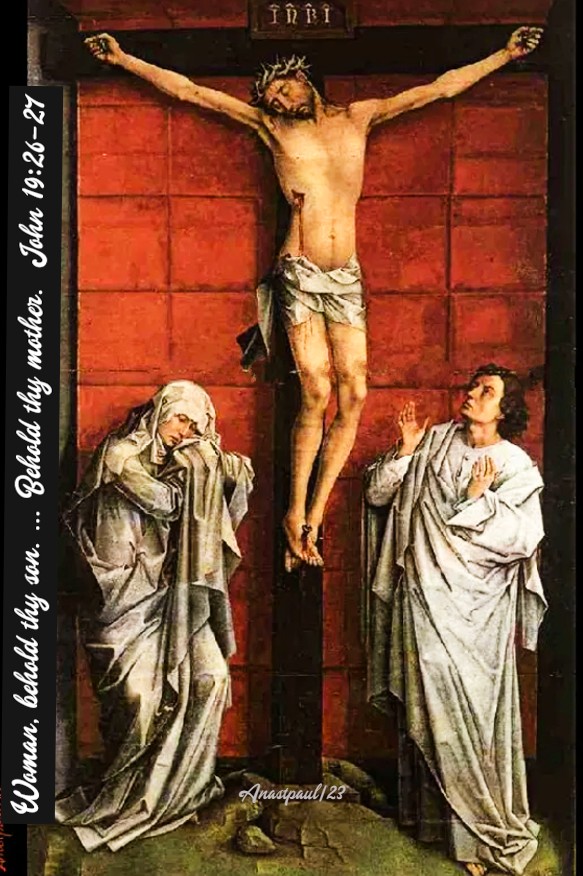
“Woman, behold thy son. … Behold thy mother”
John 19:26-27
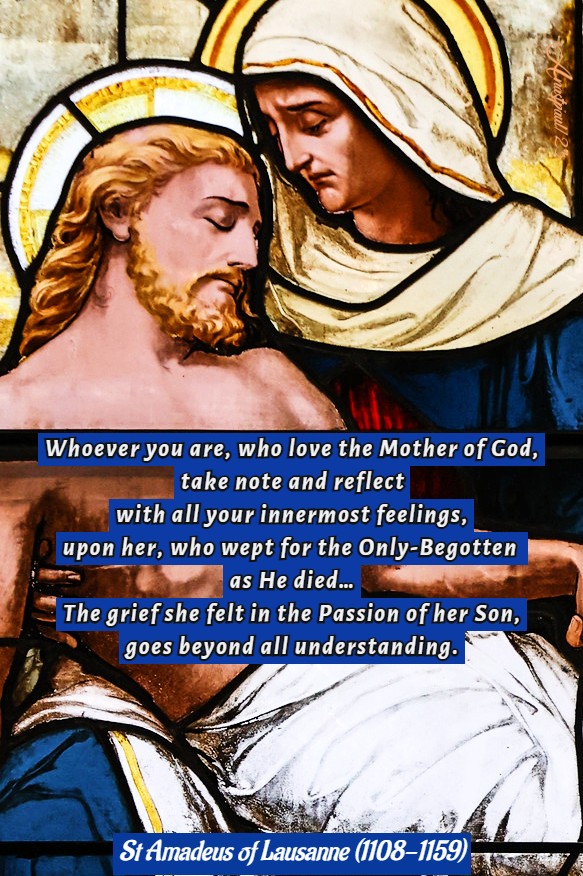
“Whoever you are, who love the Mother of God, take note and reflect with all your innermost feelings, upon her, who wept for the Only-Begotten as He died… The grief she felt in the Passion of her Son, goes beyond all understanding.”
St Amadeus of Lausanne (1108-1159)
“ Now it is that we are to show an invincible courage towards our Saviour, serving Him purely for the love of His will, not only without pleasure but amid this deluge of sorrows, horrors, distresses and assaults, as did his glorious Mother and St John, upon the day of His Passion. Amongst so many blasphemies, sorrows and deadly distresses, they remained constant in love …”
St Francis de Sales (1567-1622) Doctor Caritatis
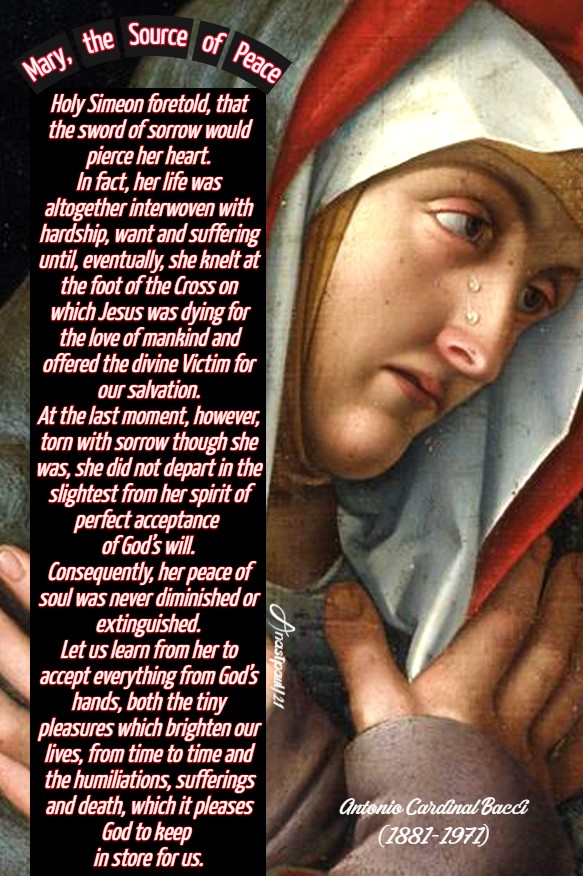
“Holy Simeon foretold, that the sword of sorrow would pierce her heart. In fact, her life was altogether interwoven with hardship, want and suffering until, eventually, she knelt at the foot of the Cross on which Jesus was dying for the love of mankind and offered the divine Victim for our salvation. At the last moment, however, torn with sorrow though she was, she did not depart in the slightest from her spirit of perfect acceptance of God’s will. Consequently, her peace of soul was never diminished or extinguished. Let us learn from her, to accept everything from God’s hands, both the tiny pleasures which brighten our lives, from time to time and the humiliations, sufferings and death, which it pleases God to keep in store for us.”
Antonio Cardinal Bacci (1881-1971)
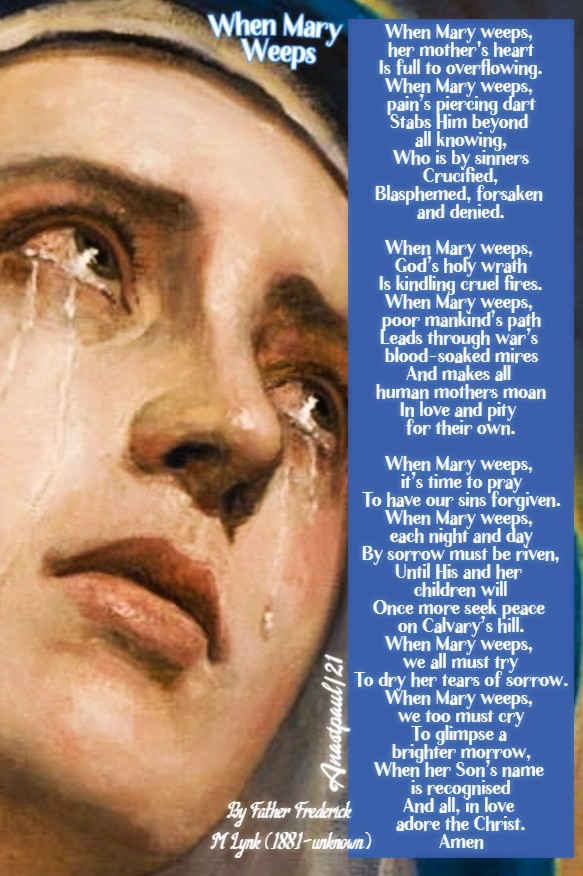
When Mary Weeps By Father Frederick M Lynk (1881-unknown)
When Mary weeps, her mother’s heart Is full to overflowing. When Mary weeps, pain’s piercing dart Stabs Him beyond all knowing, Who is by sinners Crucified, Blasphemed, forsaken and denied.
When Mary weeps, God’s holy wrath Is kindling cruel fires. When Mary weeps, poor mankind’s path Leads through war’s blood-soaked mires And makes all human mothers moan In love and pity for their own.
When Mary weeps, it’s time to pray To have our sins forgiven. When Mary weeps, each night and day By sorrow must be riven, Until His and her children will Once more seek peace on Calvary’s hill. When Mary weeps, we all must try To dry her tears of sorrow. When Mary weeps, we too must cry To glimpse a brighter morrow, When her Son’s name is recognised And all, in love adore the Christ. Amen
One Minute Reflection – 15 September – “Month of The Seven Sorrows of the Blessed Virgin Mary and The Holy Cross” and The Feast of the Seven Sorrows of the Blessed Virgin – Our Lady of Sorrows – Judith 13:22; 13:25, John 19:25-27 – Scripture search here: https://www.drbo.org/
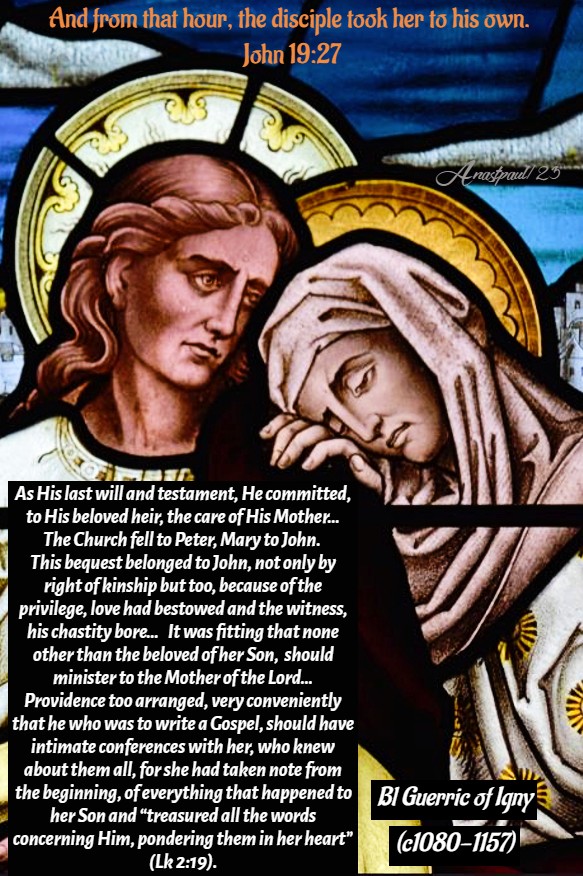
“And from that hour, the disciple took her to his own.” – John 19:27
REFLECTION – “When Jesus was going round towns and villages preaching the Gospel, Mary was His inseparable companion, clinging to His footsteps and hanging upon His words, as He taught, so much so, that neither the storm of persecution, nor dread of punishment, could deter her from following her Son and Master.
“By the Lord’s Cross there stood Mary, His Mother.” Truly a Mother, who did not abandon her Son, even in the face of death! How could she be frightened of death, when “her love was as strong as death,” (Sg 8:6) or rather, stronger than death? Truly she stood by Jesus’ Cross, when, at the same time, the pain of the Cross crucified her mind and, as manifold a sword, pierced her own soul, (Lk 2:35) as she beheld the body of her Son, pierced with wounds. Rightly, therefore, was she recognised as His Mother there and by His care, entrusted to a suitable protector, in which both the mother’s unalloyed love for her Son and the Son’s kindness toward His Mother, were proved to the utmost …
Loving her as He did, Jesus “Loved her to the end” (Jn 13:1), so as not only to bring His life to an end, for her but also, to speak almost His last words for her benefit. As His last will and testament, He committed, to His beloved heir, the care of His Mother… The Church fell to Peter, Mary to John. This bequest belonged to John, not only by right of kinship but too, because of the privilege, love had bestowed and the witness, his chastity bore… It was fitting that none other than the beloved of her Son, should minister to the Mother of the Lord… Providence too arranged, very conveniently that he who was to write a Gospel, should have intimate conferences with her, who knew about them all, for she had taken note from the beginning, of everything that happened to her Son and “treasured all the words concerning Him, pondering them in her heart” (Lk 2:19).” – Blessed Guerric of Igny (c1080-1157) Cistercian Abbot (4th Sermon for the Assumption).
PRAYER – O God, in Whose Passion the sword, according to the prophecy of blessed Simeon, pierced through the soul of Mary, the glorious Virgin and Mother, mercifully grant that we, who reverently commemorate her piercing through and her suffering, may, by the interceding glorious merits of all the Saints faithfully standing by the Cross, obtain the abundant fruit of Thine Passion. Who lives and reigns with God the Father, in the unity of the Holy Ghost, God, world without end. Amen (Collect).
Quote/s of the Day – 24 August – St Bartholomew the Apostle and Martyr – 1 Corinthians 12:27-31, Luke 6:12-19
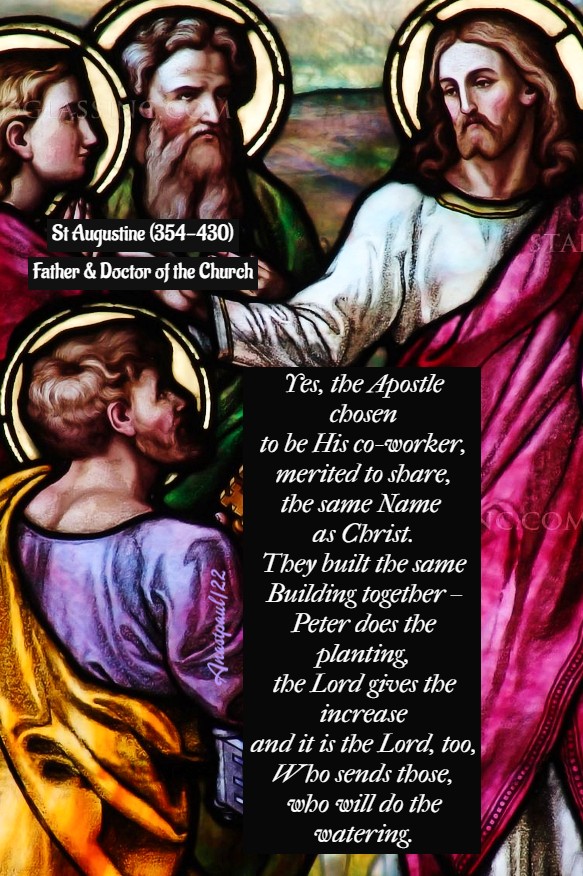
“Yes, the Apostle chosen to be His co-worker, merited to share, the same Name as Christ. They built the same Building together – Peter does the planting, the Lord gives the increase and it is the Lord, too, Who sends those, who will do the watering (cf 1 Cor 3:6f).”
St Augustine (354-430) Father & Doctor of the Church
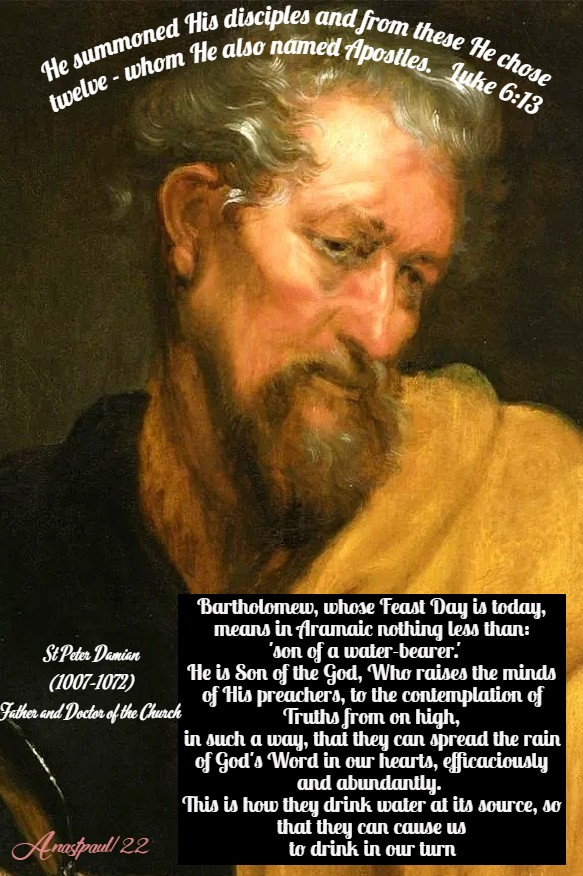
“And when day broke, He summoned His disciples and from these He chose twelve – whom He also named Apostles.” Luke 6:13
“Bartholomew, whose Feast Day is today, means in Aramaic, nothing less than: ‘son of a water-bearer.‘ He is Son of the God, Who raises the minds of His preachers, to the contemplation of Truths from on high, in such a way, that they can spread the rain of God’s Word in our hearts, efficaciously and abundantly . This is how they drink water at its source, so that they can cause us to drink in our turn.”
St Peter Damian (1007-1072) Bishop, Father and Doctor of the Church
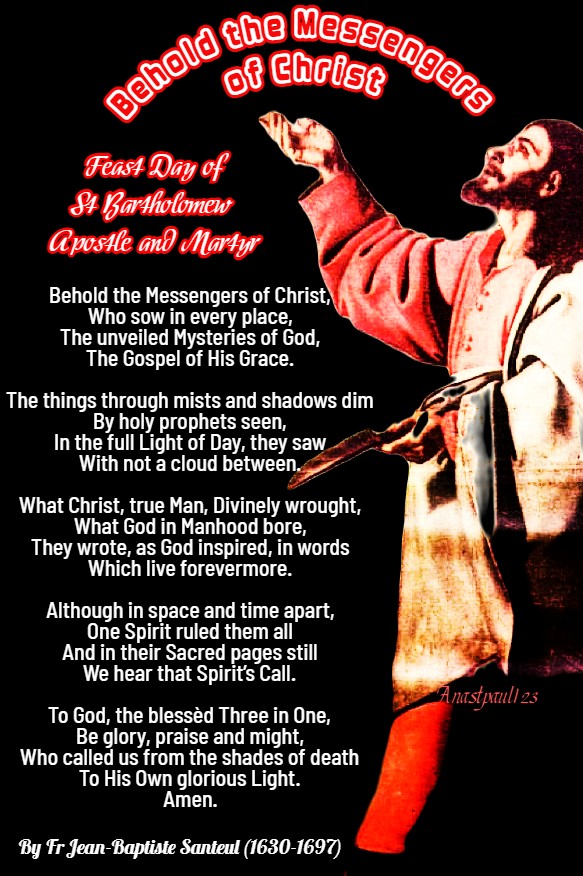
Our Morning Offering – 24 August – St Bartholomew the Apostle and Martyr
Behold the Messengers of Christ By Fr Jean-Baptiste Santeul (1630-1697) Priest, Monk, Hymnist, Poet, Writer
Behold the Messengers of Christ, Who sow in every place, The unveiled Mysteries of God, The Gospel of His Grace.
The things through mists and shadows dim By holy prophets seen, In the full Light of Day, they saw With not a cloud between.
What Christ, true Man, Divinely wrought, What God in Manhood bore, They wrote, as God inspired, in words Which live forevermore.
Although in space and time apart, One Spirit ruled them all And in their Sacred pages still We hear that Spirit’s Call.
To God, the blessèd Three in One, Be glory, praise and might, Who called us from the shades of death To His Own glorious Light. Amen.
Trans. Compilers of Hymns Ancient and Modern, 1861. This Hymn was used for Vespers I & II and Nocturns on the Feasts of St Mark and St Luke in the Paris Breviary (1736). Cardinal Newman’s Hymni Ecclesiae has it listed for the same hours, as the Common of Evangelists in the Paris Breviary (presumably a later edition). Tune: “Tiverton“ J Grigg, c1791.
St Eutychius of Troas St George Limniotes St Irchard
St Jeanne-Antide Thouret (1765-1826) French Religious and the Founder of the Thouret Sisters – renamed the Sisters of Divine Charity., Apostle of Charity and the Poor and helpless, Teacher. Thouret’s life was one of service to children and the ill across France in schools and hospitals – some of which her order established. This active apostolate did not cease when the French Revolution forced her into exile. She continued her work in both Switzerland and the Kingdom of Prussia. St Jeanne-Antide was Canonised on 14 January 1934 by Pope Pius XI. Her Life: https://anastpaul.com/2019/08/24/saint-of-the-day-24-august-saint-jeanne-antide-thouret-1765-1826/
St Patrick the Elder St Ptolemy of Nepi St Romanus of Nepi St Sandratus St Taziano of Claudiopolis
One Minute Reflection – 6 August – The Transfiguration of Our Lord – 2 Peter 1:16-19, Matthew 17:1-9 – Scripture search here: https://www.drbo.org/
“And as they came down from the mountain, Jesus charged them, saying: ‘Tell the vision to no man, until the Son of man be risen from the dead.‘” – Matthew 17:9
REFLECTION – “Jesus Christ spoke, a great deal, to His disciples about His Sufferings, Passion and Death and, He foretold the afflictions, they themselves would have to endure and the violent deaths they would one day have to undergo (Mt 16:21-26). That is why, after telling them such hard and difficult things, He tries to comfort them by drawing attention to the reward He will give them when He comes in His Father’s glory (Mt 16:27)… He wants to show them, beforehand, as far as they are capable of it in this life, the great majesty in which He was to come and thus, forestall the trouble and sadness His Apostles, particularly Saint Peter, might feel before His death…
“Jesus took with Him, Peter, James and John.” Why only take these three Apostles? No doubt because they outstripped the others. Saint Peter because of his ardour, his love; Saint John because he was the disciple Jesus loved (Jn 13:23) and Saint James because he had said along with his brother: “We can drink your cup” (Mt 20:22) and subsequently kept his word (Acts 12:2)…
Why did Jesus cause Moses and Elijah to appear?… He was constantly accused of breaking the Law and blaspheming, appropriating for Himself, a glory that did not belong to Him, the glory of the Father… Therefore, wanting, a glory that did not belong to Him, Jesus calls on the authority of two of the most unimpeachable witnesses – Moses, who had given the Law … and Elijah, who had burned with zeal for the glory and service of God (1 Kgs 19:10) … He also wanted to teach them that He was lord over life and death, by causing one man who was dead and another who had been carried off alive in a fiery chariot, (2 Kgs 2,11) to appear. He wanted, too, to reveal the glory of His Cross to His disciples and comfort Peter and his companions, who were frightened by his Passion, reviving their courage. For Moses and Elijah spoke with Him about the glory He was to receive in Jerusalem (Lk 9:31). That is to say, they spoke of His Passion, His Cross which the prophets had always called His glory.” – St John Chrysostom (345-407) Bishop of Constantinople, Father and Doctor of the Church (Sermons on Saint Matthew’s Gospel no 56).
PRAYER – O God, Who in the glorious Transfiguration of Thy Only-begotten Son strengthened the Mysteries of faith, by the testimony of the fathers and, by the Voice coming down in a shining cloud, miraculously betokened the complete adoption of Thy children, mercifully grant that we, be made co-heirs with that King of glory and sharers in that same glory. Through the same Jesus Christ, Thy Son our Lord, Who lives and reigns with Thee, in the unity of the Holy Ghost, God, world without end. Amen (Collect).
Thought for the Day – 15 July – Meditations with Antonio Cardinal Bacci (1881-1971)
The Voice of God
“It will go hard with the man who refuses to listen to God. He has reason to be afraid when he lets God’s inspirations and graces pass him by. Anyone who is deaf to God’s appeals, cannot be saved.
God spoke many times in the heart of His Apostle Judas but, he did not listen. Even in the Garden of Gethsemane. when Judas betrayed his Master with a kiss, Jesus spoke to him and called him His friend, giving him the kiss of peace and forgiveness. But, the traitor spurned this last appeal and went his way.
May this never be our fate. “Be not silent” let us plead, “Lord be not far from me!” (Ps 34:22). Above all, let us listen obediently to His Voice from whatever source it comes and let us do what He advises us.”
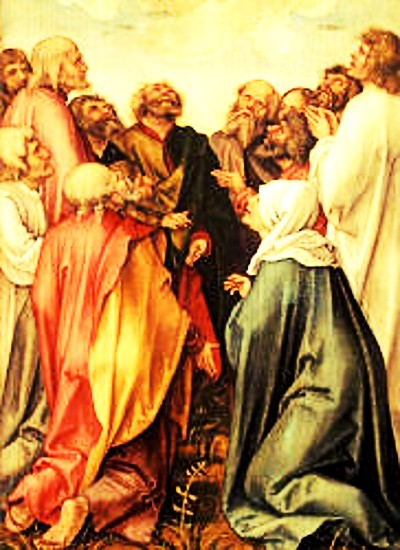
Saint or Feast of the Day – 15 July – The Feast of the the “Divisio Apostolorum – the Division of the Apostles” also known as (‘Dispersion’) a Feast which was very popular in the Middle Ages and continued into the Tridentine period on many local calendars but was never on the General Calendar. It is the Liturgical commemoration of an ancient tradition that some time after the Ascension, the Apostles cast lots for which part of the world each one of them would go, spreading out from Jerusalem. to preach the Gospel to all the ends of the earth.
The Common Office of the Apostles refers to this idea repeatedly, as, for example, in the first Antiphon of Matins, taken from Psalm 18. “Their sound hath gone forth into all the earth and their words unto the ends of the world” and, likewise, the third Antiphon from Psalm 44, “Thou shalt make them princes over all the earth; they shall remember Thy Name, O Lord.” …
The earliest reference to this Feast is a sequence which was well-known and widely used in the Middle Ages, written by one Godeschalk, a Monk of Limburg Abbey in Western Germany, who died in 1098.
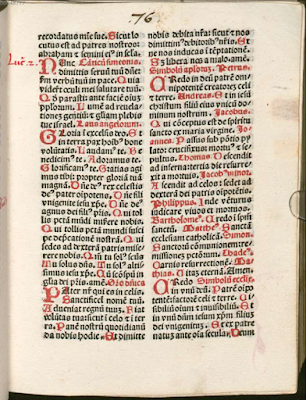
There is a tradition known from the 4th Century, which declares that the Baptismal Creed, now called the Apostles’ Creed, was composed as a rule of the Faith by the Twelve before this dispersal, with each one of them contributing an one of the Aarticles of our Faith. … It is seen here in a Carthusian Breviary c1490, (starting near the top of the right column), in which the name of an Apostle is printed in red before each Article of the Creed.
St Henry II (972-1024) Holy Roman Emperor. Henry was well known for his Missionary spirit and for his protection of the Pope in times of trouble. Henry ruled with a spirit of great humility and always sought to give the glory to God. He used his position to promote the work of the Church and the peace and happiness of the people. Another Saints whose Feast was moved in 1969 from today, 15 July to 13 July. Biography: https://anastpaul.wordpress.com/2017/07/13/saint-of-the-day-13-july-st-henry-ii-holy-roman-emperor/
Divisio Apostolorum / Division of the Apostles: Commemorates the missionary work of the Twelve Apostles. It was first mentioned in the 11th Century and was celebrated in the northern countries of Europe during the Middle Ages. It is now observed in Germany, Poland and some Diocese of England, France and the United States.
St Abundantia of Spoleto St Abudemius of Bozcaada St Adalard the Younger
Blessed Anne-Mary Javouhey (1779-1851) “The Mother of the Slaves,” Religious Sister, Missionary and Founder of the Sisters of Saint Joseph of Cluny. Imagine a Mother Teresa in the France of Napoleon’s day and you will have a picture of Anne-Marie Javouhey. Nanette, as she was called, was a “velvet brick,” a thin layer of gentleness covering her determined core. A competent leader, Nanette dominated every scene in her adventurous life. Blessed Anne-Marie was Beatified on 15 October 1950 by Pope Pius XII. Biography: https://anastpaul.com/2019/07/15/saint-of-the-day-15-july-blessed-anne-mary-javouhey-1779-1851/
St Apronia
St Athanasius of Naples (c 830-c 872) Confessor, Bishop of Naples from 849 until his death, Papal Legate, Reformer and restoring of Monasteries, he built a Hospice for pilgrims and a new Monastery, a man of austerity and prayer. This Athanasius should not be confused with his nephew, Athanasius II, also the Bishop of Naples. About this St Athanasius, a Patron of Naples among +70 Patrons: https://anastpaul.com/2022/07/15/saint-of-the-day-15-july-st-athanasius-of-naples-c-830-c-872/
St Antiochus of Sebaste St Benedict of Angers
Blessed Bernard of Baden TOSF (1428-1458) Margrave of Baden, Germany (Margrave was originally the medieval title for the military commander assigned to maintain the defence of one of the border provinces of the Holy Roman Empire.) Tertiary of the Order of St Francis, Apostle of the poor and the needy. Bernard was Beatified on 16 September 1769 by Pope Clement XIV. His Canonisation process continues, at present, the second miracle required is being investigated. Blessed Bernard’s Life: https://anastpaul.com/2021/07/15/saint-of-the-day-15-july-blessed-bernard-of-baden-tosf-1428-1458/
Bl Ceslas Odrowaz St David of Sweden St Donivald St Eberhard of Luzy St Edith of Tamworth St Eternus St Felix of Pavia St Gumbert of Ansbach St Haruch of Werden St Jacob of Nisibis St Joseph Studita of Thessalonica Bl Peter Aymillo St Plechelm of Guelderland Bl Roland of Chézery St Valentina of Nevers St Vladimir I of Kiev
Martyred Jesuit Missionaries of Brazil – 40 Beati: A band of forty Spanish, Portugese and French Jesuit Missionaries Martyred by the Huguenot pirate Jacques Sourie while en route to Brazil. They are – Aleixo Delgado • Alonso de Baena • álvaro Borralho Mendes • Amaro Vaz • André Gonçalves • António Correia • Antônio Fernandes • António Soares • Bento de Castro • Brás Ribeiro • Diogo de Andrade • Diogo Pires Mimoso • Domingos Fernandes • Esteban Zuraire • Fernando Sánchez • Francisco Alvares • Francisco de Magalhães • Francisco Pérez Godoy • Gaspar Alvares • Gonçalo Henriques • Gregorio Escribano • Ignatius de Azevedo • Iõao • João Fernandes • João Fernandes • Juan de Mayorga • Juan de San Martín • Juan de Zafra • Luís Correia • Luís Rodrigues • Manuel Alvares • Manuel Fernandes • Manuel Pacheco • Manuel Rodrigues • Marcos Caldeira • Nicolau Dinis • Pedro de Fontoura • Pedro Nunes • Simão da Costa • Simão Lopes • They were Martyed on 15 and 16 July 1570 on the ship Santiago near Palma, Canary Islands. They were Beatified on 11 May 1854 by Pope Pius IX.
Martyrs of Alexandria – 13 Saints: Thirteen Christians who were Martyred together. We know the names of three, no details about them and the other ten were all children. – Narseus, Philip and Zeno. Martyred in the early 4th-century in Alexandria, Egypt.
Martyrs of Carthage – 9 Saints: A group of nine Christians who were Martyred together. We know nothing else but their names – Adautto, Catulinus, Felice, Florentius, Fortunanziano, Januarius, Julia, Justa and Settimino. They were Martyred in Carthaginian and their relics at the Basilica of Fausta at Carthage.
Martyrs of Pannonia – 5 Saints: Five 4th-century Martyrs killed together. No information about them has survived except the names – Agrippinus, Fortunatus, Martialis, Maximus and Secundinus.
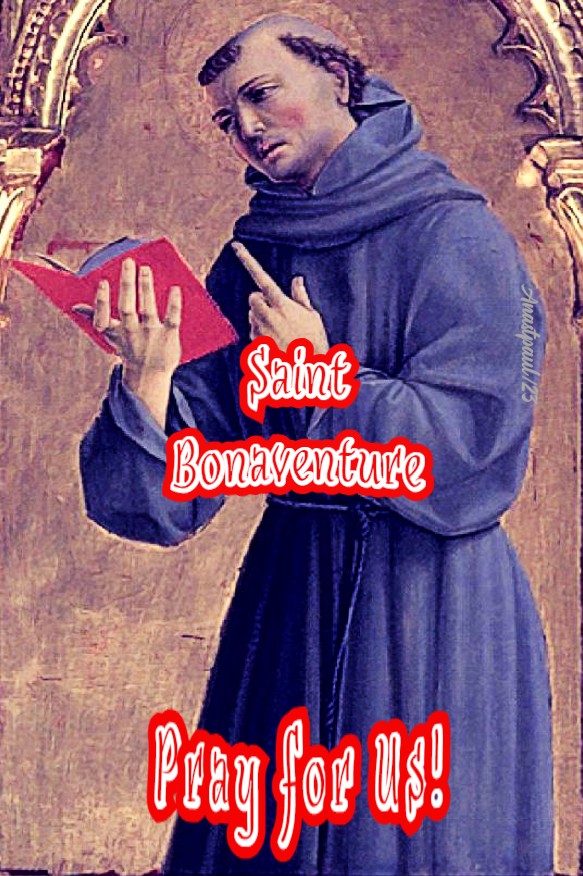
One Minute Reflection – 14 July – “The Month of the Most Precious Blood of Jesus” – St Bonaventure OFM (1221-1274) Seraphic Doctor of the Church – 2 Timothy 4:1-8, Matthew 5:13-19 – Scripture search here: https://www.drbo.org/
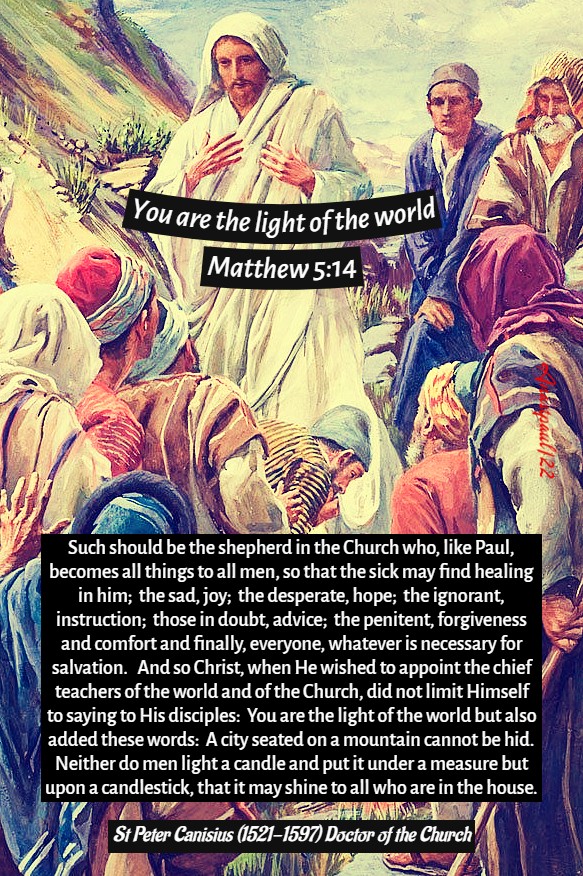
“You are the light of the world.” – Matthew 5:14
REFLECTION – “I shall always love and reverence the Apostles sent by Christ and their successors, in sowing the seed of the Gospel, those zealous and tireless co-operators in propagating the Word, who may justly say of themselves: Let a man so account of us as the ministers of Christ and the dispensers of the mysteries of God. For Christ, like a most watchful and most faithful householder, wished that the Gospel lamp should be lighted by such ministers and delegates, with fire sent down from Heaven and once lighted, should not be put under a measure but set upon a candlestick, so that it may spread its brightness far and wide and put to flight, all darkness and error, rife among both Jews and Gentiles.
Now it is not enough for the Gospel teacher to be a brilliant speaker in the eyes of the people; he must also be as a voice crying in the desert and endeavour, by his eloquence, to help many to lead good lives, lest, if he omit his duty of speaking, he be called the dumb dog that is not able to bark, spoken of by the prophet. Yes, he should also burn, in such a way, that, equipped with good works and love, he may adorn his evangelical office and follow the leadership of Paul. He indeed, was not satisfied with bidding the Bishop of the Ephesians: Thus command and teach: conduct thyself in work as a good soldier of Christ Jesus but he unflaggingly preached the Gospel to friend and foe alike and, said with a good conscience to the Bishops gathered at Ephesus: You know how I have kept back nothing that was for your good but have declared it to you and taught you in public and from house to house, urging Jews and Gentiles to turn to God in repentance and to believe in our Lord Jesus Christ.
Such should be the shepherd in the Church who, like Paul, becomes all things to all men, so that the sick may find healing in him; the sad, joy; the desperate, hope; the ignorant, instruction; those in doubt, advice; the penitent, forgiveness and comfort and finally, everyone, whatever is necessary for salvation. And so Christ, when He wished to appoint the chief teachers of the world and of the Church, did not limit Himself to saying to His disciples: You are the light of the world but also added these words: A city seated on a mountain cannot be hid. Neither do men light a candle and put it under a measure but upon a candlestick, that it may shine to all who are in the house. Those churchmen err, who imagine that it is by brilliant preaching, rather than by holiness of and all-embracing love, they fulfil their office.” – St Peter Canisius SJ (1521-1597) Doctor of the Church (Sermon excerpt).
PRAYER – O God, Who gave to Thy people, blessed Bonaventure, as a minister of salvation, grant, we beseech Thee, that we who cherished him on earth as a teacher of life, may be found worthy to have him as an intercessor in heaven. Through the same Jesus Christ, Thy Son our Lord, Who lives and reigns with Thee, in the unity of the Holy Ghost, God, world without end. Amen (Collect).
Thought for the Day – 29 June – Meditations with Antonio Cardinal Bacci (1881-1971)
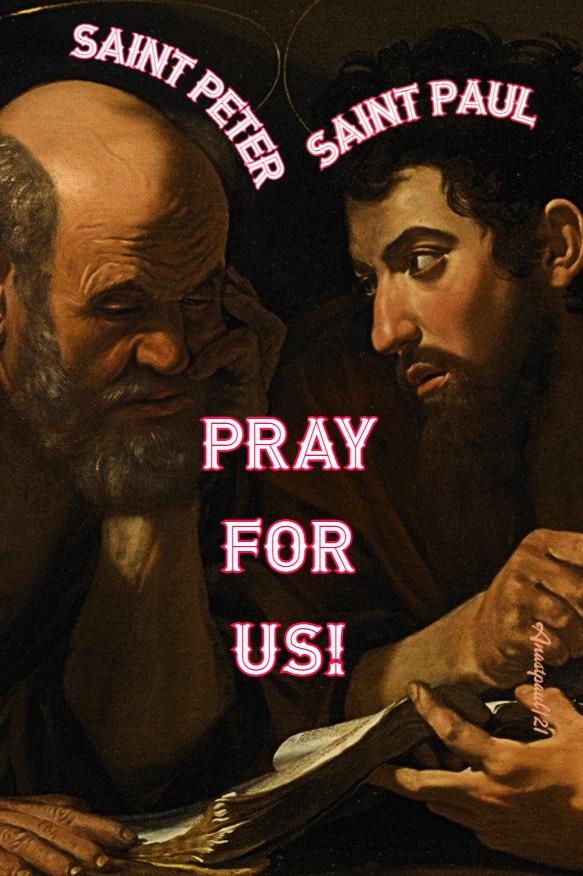
St Peter, Prince of the Apostles St Paul, the Apostle to the Gentiles
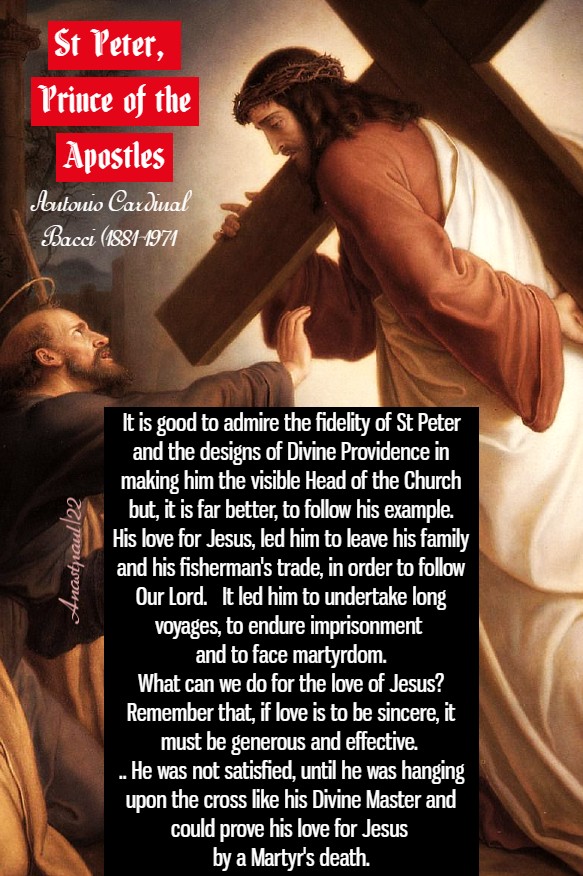
“It is good to admire the fidelity of St Peter and the designs of Divine Providence in making him the visible Head of the Church but, it is far better, to follow his example. His love for Jesus, led him to leave his family and his fisherman’s trade, in order to follow Our Lord. It led him to undertake long voyages, to endure imprisonment and to face martyrdom. What can we do for the love of Jesus? Remember that, if love is to be sincere, it must be generous and effective.
Secondly let us meditate on and imitate, the ardent and fearless faith of St Peter. He was not afraid to preach the teaching of Christ before the Sanhedrin. He was not afraid of Herod, who cast him into prison.
He was not afraid of the Roman Emperor, who caused him to be crucified. Our faith should be steadfast and lively, like his!
Finally, let us imitate Peter in his repentance. Although he loved Jesus very much and had such great faith in Him, in a moment of weakness and of imprudence, he denied Him three times. All his life, however, be wept bitterly for this sin. Whenever he heard a cock crowing, it was as if an arrow had pierced his heart. He was not satisfied, until he was hanging upon the cross like his Divine Master and could prove his love for Jesus by a Martyr’s death.”
St Paul, the Apostle to the Gentiles
We can learn many other virtues from St Paul, besides his zealous love for God and for his fellowmen. We can also learn from him, the virtues of humility and of apostolic fervour. The Apostle of the Gentiles reached such heights of sanctity, as to feel himself transformed into Christ Himself and to deserve to be taken up into the third Heaven, where he enjoyed a foretaste of eternal happiness. Nevertheless, he considered himself unworthy to be called an Apostle and he realised, that all his gifts came to him from God. “Not that we are sufficient of ourselves, to think anything as from ourselves but our sufficiency, is from God” (2 Cor 3:5). Whenever we succeed in any project, we should think on the same lines because, it is only when we are humble and depend on the grace of God, that the success of our actions will redound to the glory of our Creator. If the cancer of ambition or of self-love, should corrupt our purity of intention, our work would not be blessed by God and would not make us worthy of everlasting life. Let us repeat often: “All for You, with You and in You, my God.”
Quote/s of the Day – 29 June – Saints Peter and Paul, Apostles
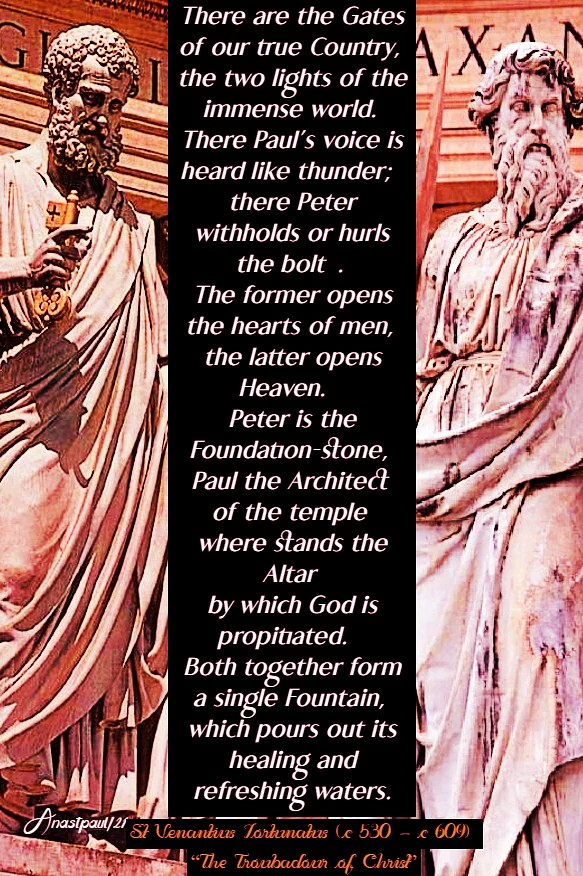
“There are the gates of our true country, the two lights of the immense world. There Paul’s voice is heard like thunder; there Peter withholds or hurls the bolt . The former opens the hearts of men, the latter opens Heaven. Peter is the Foundation-stone, Paul the Architect of the temple where stands the Altar by which God is propitiated. Both together form a single Fountain, which pours out its healing and refreshing waters.”
St Venantius Fortunatus (c 530 – c 609) “The Troubadour of Christ”
“Yes, the Apostle chosen to be His co-worker, merited to share, the same Name as Christ. They built the same Building together – Peter does the planting, the Lord gives the increase and it is the Lord, too, Who sends those, who will do the watering (cf 1 Cor 3:6f).”
St Augustine (354-430) Father & Doctor of the Church
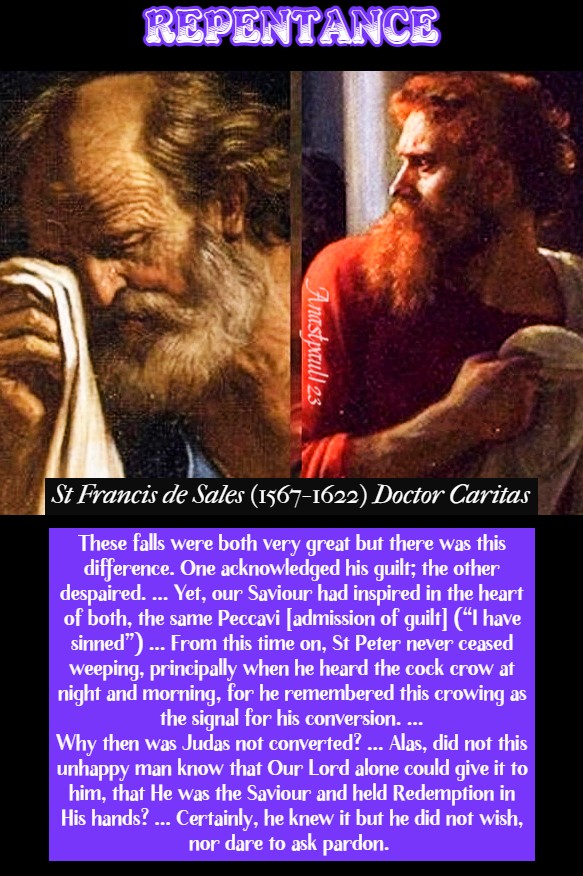
“These falls were both very great but there was this difference. One acknowledged his guilt; the other despaired. Yet, our Saviour had inspired in the heart of both, the same Peccavi [admission of guilt] (“I have sinned”) … From this time on, St Peter never ceased weeping, principally when he heard the cock crow at night and morning, for he remembered this crowing as the signal for his conversion. … Why then was Judas not converted? … Alas, did not this unhappy man know that Our Lord alone could give it to him, that He was the Saviour and held Redemption in His hands? … Certainly, he knew it but he did not wish, nor dare to ask pardon. ”
St Francis de Sales (1567-1622) Doctor Caritas
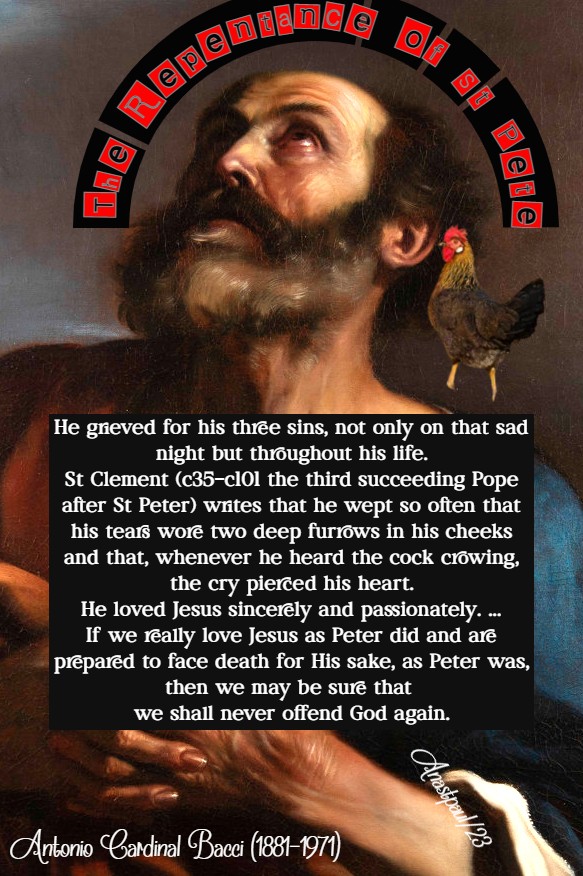
“He grieved for his three sins, not only on that sad night but throughout his life. St Clement (c35-c101 the third succeeding Pope after St Peter) writes that he wept so often that his tears wore two deep furrows in his cheeks and that, whenever he heard the cock crowing, the cry pierced his heart. He loved Jesus sincerely and passionately. If we really love Jesus as Peter did and are prepared to face death for His sake, as Peter was, then we may be sure that we shall never offend God again.”
Antonio Cardinal Bacci (1881-1971)
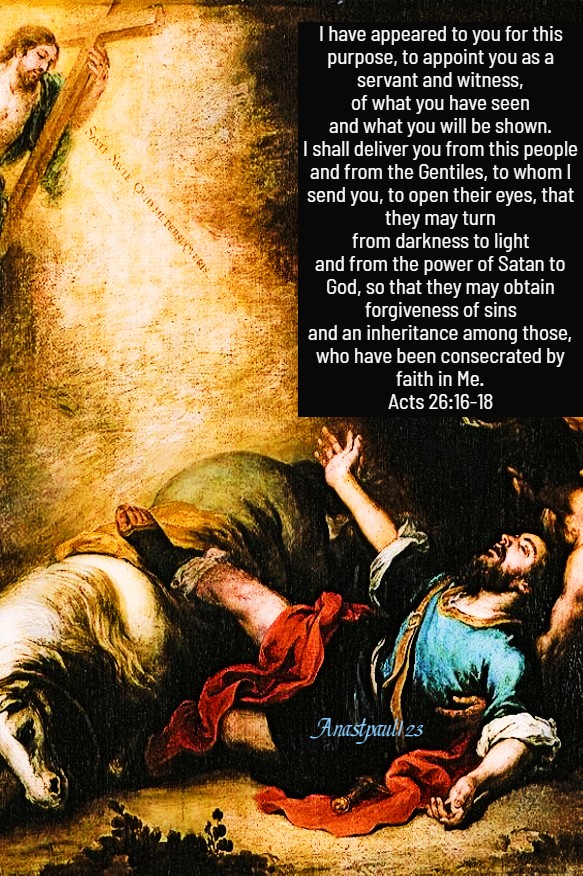
“I have appeared to you for this purpose, to appoint you as a servant and witness, of what you have seen and what you will be shown. I shall deliver you from this people and from the Gentiles, to whom I send you, to open their eyes, that they may turn from darkness to light and from the power of Satan to God, so that they may obtain forgiveness of sins and an inheritance among those, who have been consecrated by faith in Me.”
Acts 26:16-18
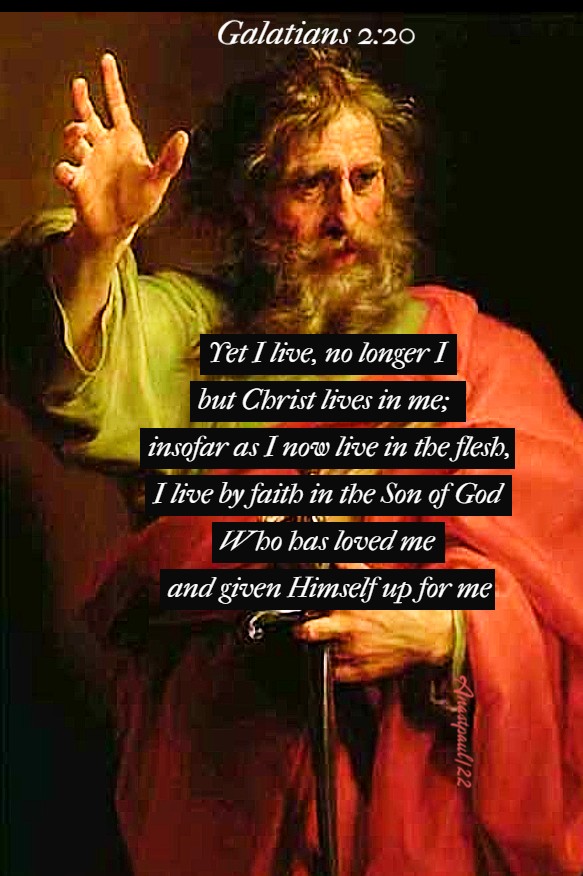
“Yet I live, no longer I but Christ lives in me; insofar as I now live in the flesh, I live by faith in the Son of God, Who has loved me and given himself up for me.”
One Minute Reflection – 29 June – “The Month of the Sacred Heart of Jesus” – Saints Peter and Paul, Apostles – Acts 12:1-11, Matthew 16:13-19 – Scripture search here: https://www.drbo.org/
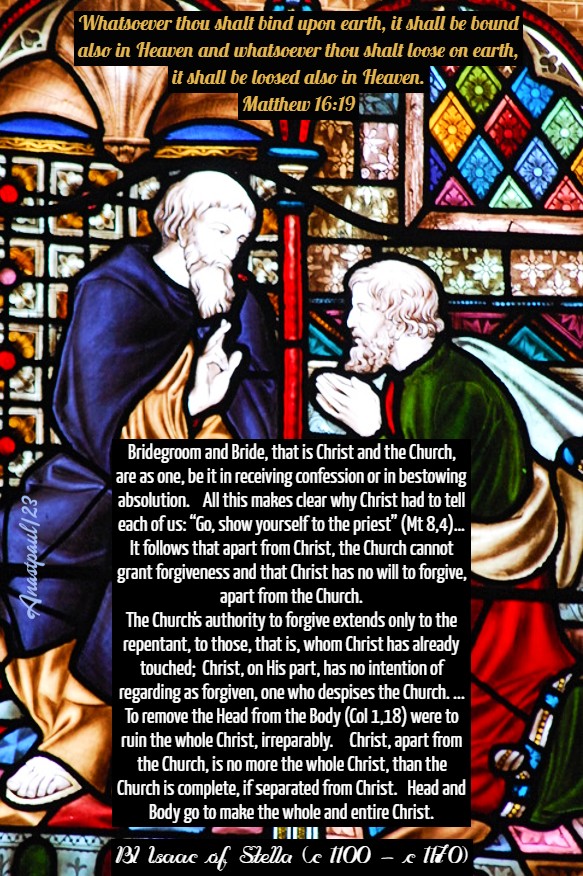
“Whatsoever thou shalt bind upon earth, it shall be bound also in Heaven and whatsoever thou shalt loose on earth, it shall be loosed also in Heaven.” – Matthew 16:19
REFLECTION – “Bridegroom and Bride, that is Christ and the Church, are as one, be it in receiving confession or in bestowing absolution. All this makes clear why Christ had to tell each of us: “Go, show yourself to the priest” (Mt 8,4)… It follows that apart from Christ, the Church cannot grant forgiveness and that Christ has no will to forgive, apart from the Church. The Church’s authority to forgive extends only to the repentant, to those, that is, whom Christ has already touched; Christ, on His part, has no intention of regarding as forgiven, one who despises the Church.
Doubtless, Christ need accept no restraints to His power of Baptising, Consecrating the Eucharist, Ordaining Priests, forgiving sins and the like but, the humble and faithful Bridegroom, prefers to confer such blessings, with the co-operation of His Bride. “What God,” then, “has joined, let no man put asunder” (Mt 19,6). “I say this is a great mystery and refers to Christ and the Church” (Eph 5,32)… To remove the Head from the Body (Col 1,18) were to ruin the whole Christ, irreparably. Christ, apart from the Church, is no more the whole Christ, than the Church is complete, if separated from Christ. Head and Body go to make the whole and entire Christ.” – Bl Isaac of Stella (c 1100 – c 1170) Cistercian Monk, Abbot, Theologian, Philosopher (Sermon 11, §11-814).
PRAYER – O God, Who made this day holy by the Martyrdom of Thy Apostles Peter and Paul, grant Thy Church to follow in all things the teaching of those from whom she first received the faith. Through Jesus Christ, Thy Son our Lord, Who lives and reigns with Thee, in the unity of the Holy Ghost, God, world without end. Amen (Collect).
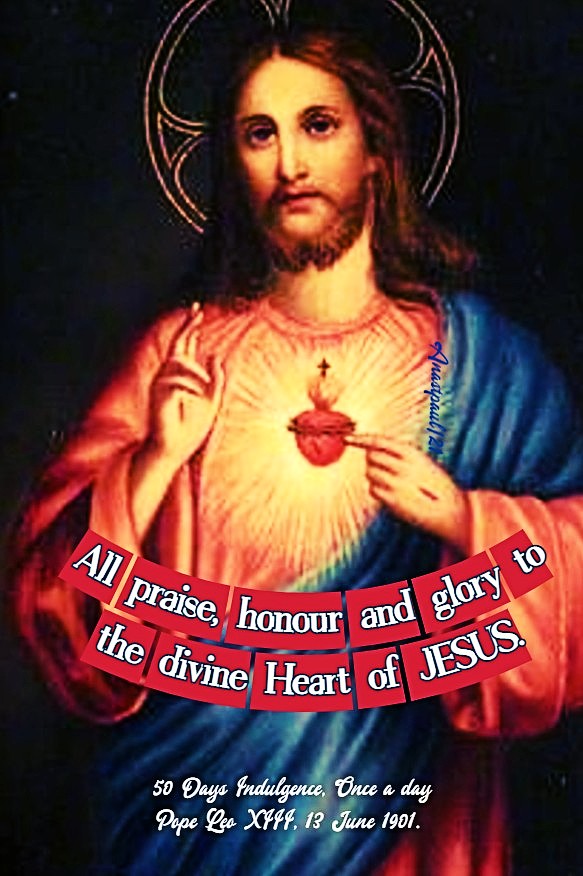
ALL PRAISE, honour and glory to the Divine Heart of JESUS.Indulgenced– 50 Days, once a day. 168 Pope Leo XIII, 14 June 1901.
Our Morning Offering – 29 June – Saints Peter and Paul, Apostles
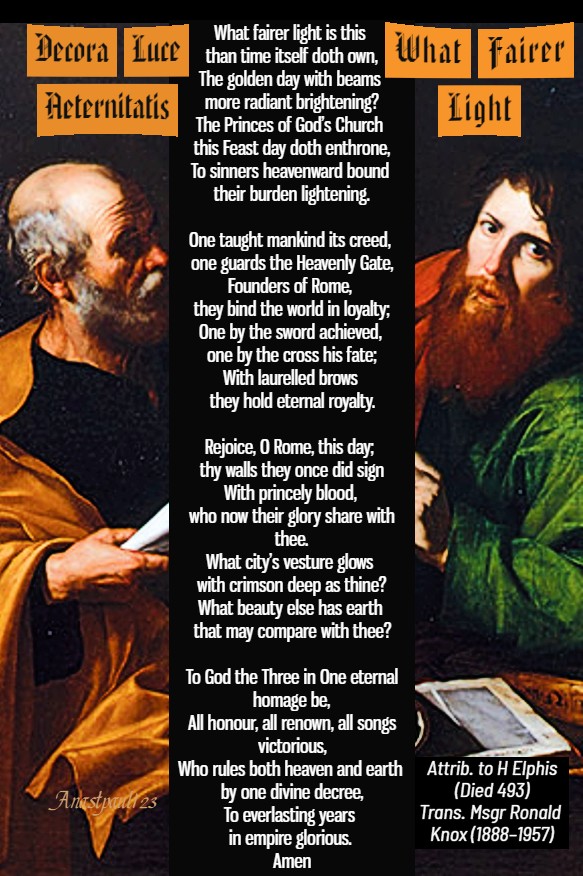
Decora Luce Aeternitatis What Fairer Light Attrib. to H Elphis (Died 493) Wife of Boethius c 477– 524) Trans. Msgr Ronald Knox (1888–1957)
What fairer light is this than time itself doth own, The golden day with beams more radiant brightening? The Princes of God’s Church this Feast day doth enthrone, To sinners heavenward bound their burden lightening.
One taught mankind its creed, one guards the Heavenly Gate, Founders of Rome, they bind the world in loyalty; One by the sword achieved, one by the cross his fate; With laurelled brows they hold eternal royalty.
Rejoice, O Rome, this day; thy walls they once did sign With princely blood, who now their glory share with thee. What city’s vesture glows with crimson deep as thine? What beauty else has earth that may compare with thee?
To God the Three in One eternal homage be, All honour, all renown, all songs victorious, Who rules both heaven and earth by one divine decree, To everlasting years in empire glorious. Amen
5th century Latin Hymn “Aurea Luce” attributed to H Elphis (Died 493), first wife of the Roman philosopher-poet Boethius (c475–c525). He would eventually be Martyred for his defence of the Faith against the Arian ruler: Theodoric. Msgr Knox, a convert from Anglicanism, was a noted Scholar, Author, Hymnist and Translator, becoming the Secretary to St Pius X. Under direction of his religious superiors, he re-translated the Latin Vulgate Bible into English from Hebrew and Greek sources. What Fairer Light is set to the tune, Decora Lux by the English Catholic Composer, Samuel Webbe (1740–1816).
In 1632, in accord with changes called for by the Council of Trent, Pope Urban VIII (1568-1644) revised the original text of Aurea Luce and divided it into two new Hymns for Lauds and Vespers: Decora Lux and Beate Pastor Petre. In the Liturgy of the Hours, What Fairer Light is used on 29 June, the Solemnity of Sts Peter and Paul, Apostles. The above is the Older version.
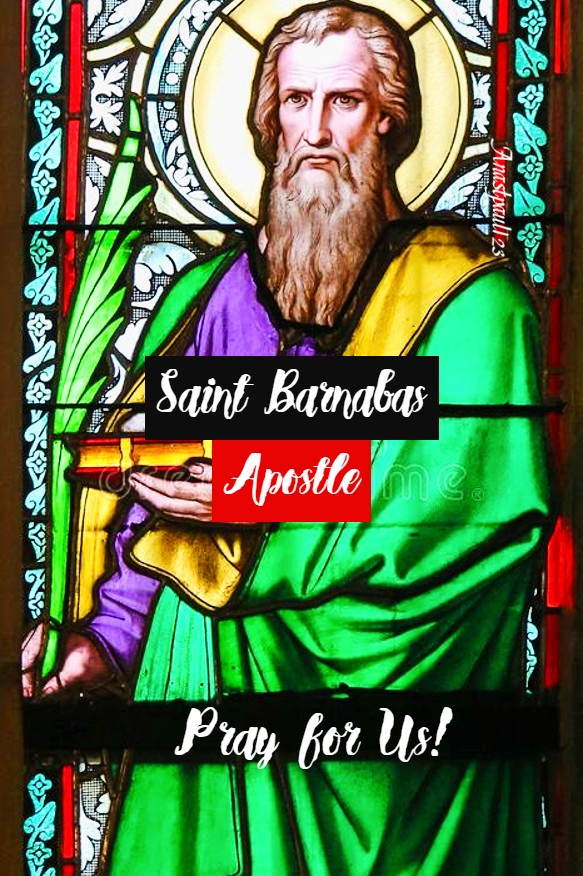
One Minute Reflection – 11 June – “The Month of the Sacred Heart of Jesus” – The Solemnity of Corpus Christi and the Feast of St Barnabas Apostle – 1 John 3:13-18, Luke 14:16-24. – Scripture search here: https://www.drbo.org/
“But I say unto you that none of those men who were invited shall taste of my supper.” – Luke 14:24
REFLECTION – “The Psalmist says: “Bread fortifies the heart of man and wine rejoices his heart” (Ps 103:15). For those who believe in Him, Christ is Food and Drink, Bread and Wine. He is Bread when He strengthens and establishes us according to Peter’s words: “After you have suffered a little, the God of all grace Who called you to His eternal glory in Christ, will restore, strengthen and establish you” (1 Pt 5:10). He is Drink and Wine when He makes us glad according to the words of the Psalmist: “Gladden the soul of Thy servant, for to Thee, O Lord, I lift up my soul” (Ps 85:4).
Everything in us which is strong, steadfast, firm, happy and joyful to carry out God’s commands, bear with misfortune, act obediently, stand up for justice – all these things come from this Bread’s strength, this Wine’s gladness. Happy are they whose deeds are strong and joyful! And since no-one can do it of themselves, happy are they who have an eager desire to cleave to what is just and right and to be strengthened in everything and rejoice through Him Who said: “Blessed are they who hunger and thirst for righteousness” (Mt 5:6). If Christ is Food and Drink even now for the strength and joy of the righteous, how much more so will He be in the life to come, when He will give to the righteous without measure?!” – Baldwin of Canterbury (c1125-1190) Cistercian Abbot of Forde Monastery and Archbishop of Canterbury (The Sacrament of the Altar – II:3 ).
PRAYER – O God, Who gladden us by the merits and intercession of blessed Barnabas, Thy Apostle, mercifully grant that we, who ask of Thee favours through him, may obtain them by the gift of Thy grace.ThroughJesus Christ, Thy Son our Lord, Who lives and reigns with Thee, in the unity of the Holy Ghost, God, world without end. Amen (Collect).
All praise, honour and glory to the Divine Heart of JESUS. 50 Days Indulgence, Once a day, Raccolta, 168 Pope Leo XIII, 13 June 1901.
St Herebald of Bretagne Bl Hugh of Marchiennes Bl Jean de Bracq
Bl Kasper of Grimbergen St Maximus of Naples
St Parisius ECMC (c 1160-1267) Priest and Monk of the Camaldolese Hermits of Mount Corona, Spiritual Director, Reformer, Miracle-worker during his life and after his death. A very long life of humble and loving service, for the glory of God!: The Roman Martyrology reads: “In Treviso, Saint Parisio, Priest of the Camaldolese Order, who for seventy-seven years took care of the spiritual direction of the Nuns with healthy advice, dying at the age of one hundred and eight.” https://anastpaul.com/2022/06/11/saint-of-the-day-11-june-st-parisius-ecmc-c-1160-1267-a-very-long-life-of-humble-and-loving-service-for-the-glory-of-god/
St Rembert of Hamburg (c830-888) Archbishop St Riagail of Bangor Bl Stephen Bandelli OP St Tochumra of Kilmore St Tochumra of Tuam
Martyrs of Tavira – 7 Beati: Members of the Knights of Santiago de Castilla. During the re-conquest of the Iberian peninsula from the Muslims by Christian forces, in a period of truce between the armies, the group was allowed to leave the Portuguese camp to hunt. Near Tavira, Portugal, he and his companions were ambushed and killed by a Muslim force. Making a reprisal attack, the Portuguese army took the city of Tavira. The murdered knights were considered to be martyrs as they died in an action defending the faith. They were – Blessed Alvarus Garcia, Blessed Beltrão de Caia, Blessed Damião Vaz, Blessed Estêvão Vasques, Blessed Garcia Roiz, Blessed Mendus Valle, Blessed Pedro Rodrigues’ They were Martyred in 1242 outside Tavira, Faro, Portugal. Their relics are enshrined under the altar of Saint Barnabas in the Church of Our Lady, Queen of the Angels (modern Santa Maria do Castelo) in Tavria, Portugal.
Mercedarian Martyrs of Damietta: Three Mercedarian Lay Knights who worked to ransom Christians enslaved by Muslims. During the 7th Crusade, a plague swept through the Christian army and these knights volunteered to work with the sick. During this work they were captured by Muslims and ordered to convert to Islam; they refused. They were tortured, taken to Damietta, Egypt where they were murdered for their faith. They were thrown from a tower in the mid-13th century in Damietta, Egypt.
Thought for the Day – 30 May – Meditations with Antonio Cardinal Bacci (1881-1971)
Bearer of the Treasures of Grace
“The Apostles were completely transformed after the Feast of Pentecost. They had ben ignorant rustics, timid and vacillating. They had hardly understood at all, the lofty teachings of Christ, for they were hoping still for an earthly kingdom in which they would occupy the highest posts.
When they received the Holy Spirit, however, their minds were flooded with supernatural light and they became heroic in their resolution. Ignorant, though they had been, they became masters of Truth, far superior to the sages of Athens or the philosophers of Rome! They were no longer timid and hesitating but, fearlessly encountered the power of the Sanhedrin, the whips of the soldiery, the dangers of long voyages and, Martyrdom itself.
We too have received the illumination and favours of the Holy Spirit. Many times, when we have invoked Him, He has inspired and consoled us. But we may not have responded with the same fervour and self-denial as the Apostles. Let us remember that, to neglect God’s gifts, is to risk our eternal salvation!”
Our Morning Offering – 20 May – “The Month of the Blessed Virgin Mary” and the Feast of Our Lady Queen of the Apostles
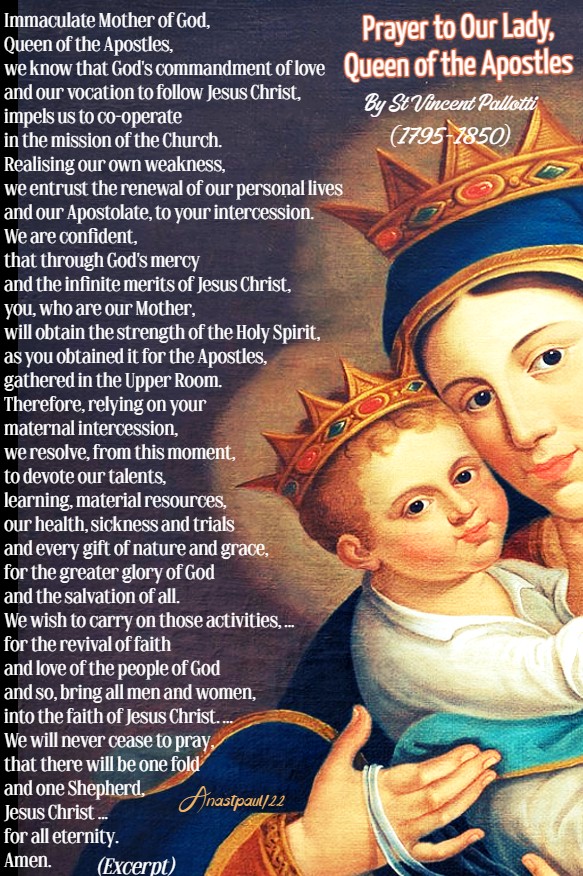
Prayer to Our Lady, Queen of the Apostles By St Vincent Pallotti SAC (1795-1850)
Immaculate Mother of God, Queen of the Apostles, we know that God’s commandment of love and our vocation to follow Jesus Christ, impels us to co-operate in the mission of the Church. Realising our own weakness, we entrust the renewal of our personal lives and our Apostolate, to your intercession. We are confident, that through God’s mercy and the infinite merits of Jesus Christ, you, who are our Mother, will obtain the strength of the Holy Spirit, as you obtained it for the Apostles, gathered in the Upper Room. Therefore, relying on your maternal intercession, we resolve, from this moment, to devote our talents, learning, material resources, our health, sickness and trials and every gift of nature and grace, for the greater glory of God and the salvation of all. We wish to carry on those activities, (which especially promote the Catholic Apostolate,) for the revival of faith and love of the people of God and so, bring all men and women, into the faith of Jesus Christ. (And if a time should come when we have nothing more to offer, serviceable to this end,) we will never cease to pray, that there will be one fold and one Shepherd, Jesus Christ. (In this way, we hope to enjoy the results of the Apostolate of Jesus Christ) for all eternity. Amen.
Quote/s of the Day – 25 April – Feast of St Mark Evangelist
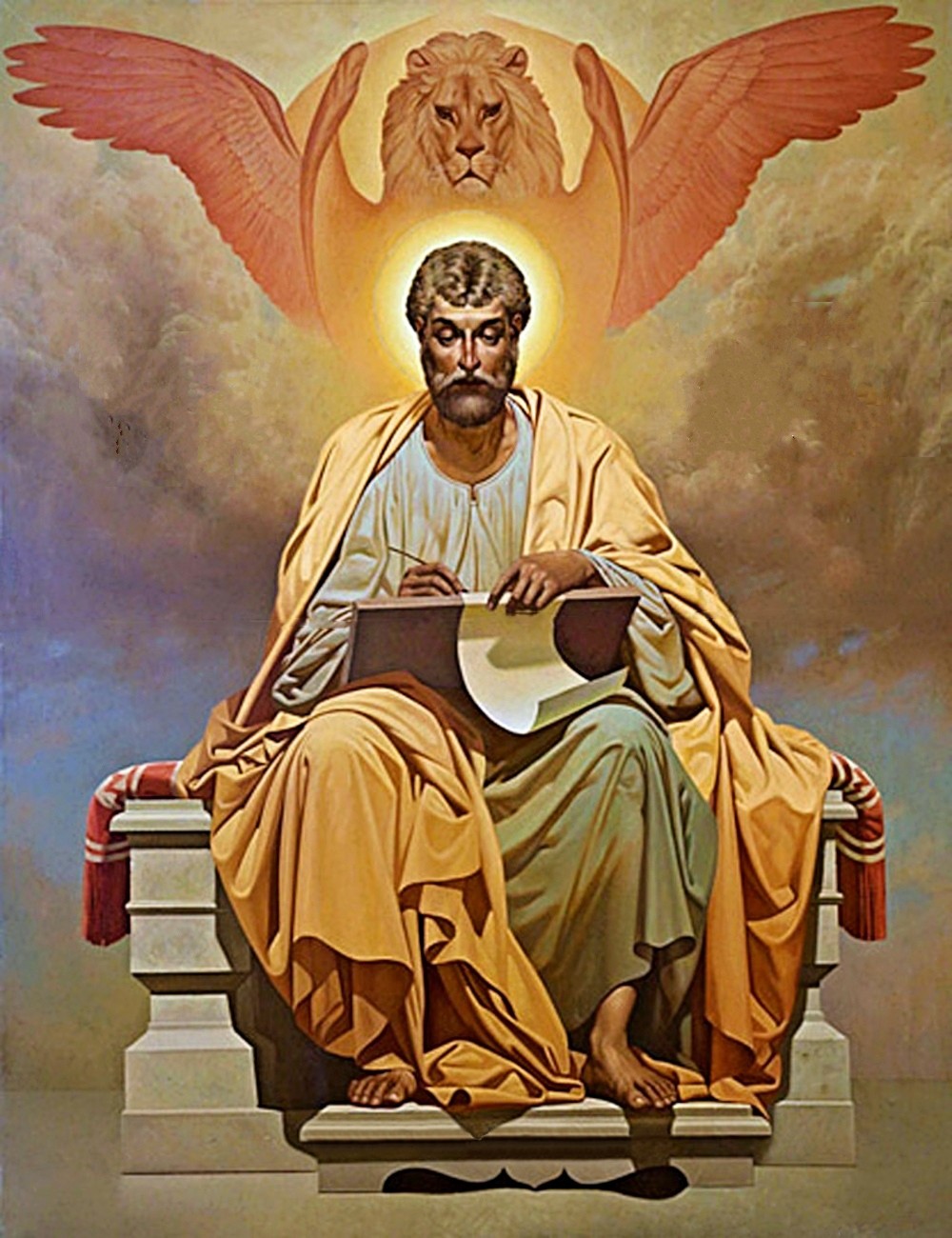
The Gospel of Saint Mark was written in Greek around the 60s. He was Martyred in 68 and his Relics are preserved in the St Mark Cathedral of Venice. He is represented by a Winged Lion, one of the four living creatures of the Apocalypse, for he begins his Gospel by narrating St John the Baptist crying out in the wilderness, like a roaring lion.
By Alexander Sytov 1995
“To what shall we compare the Kingdom of God, or what parable can we use for it? It is like a mustard seed …”
Mark 4:30-31
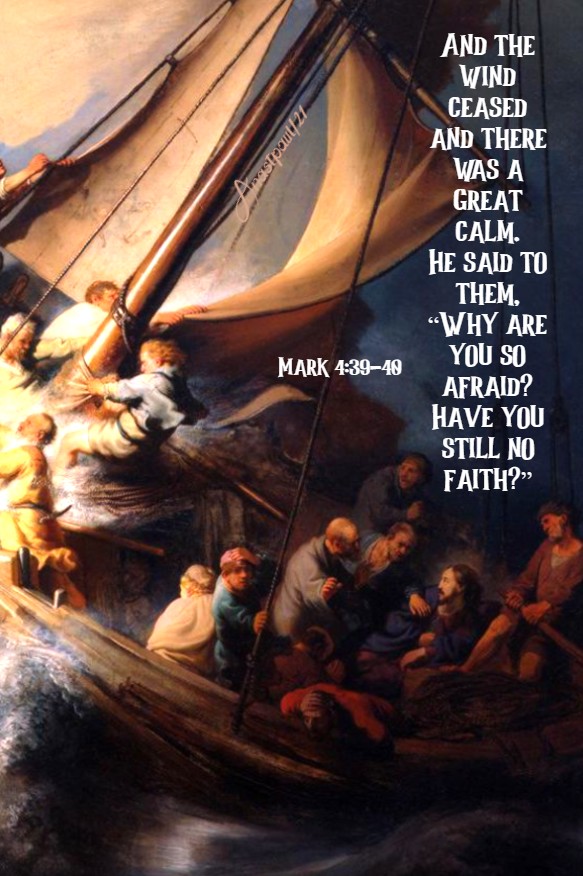
“And the wind ceased and there was a great calm. He said to them: “Why are you so afraid? Have you still no faith?”
Mark 4:39-40
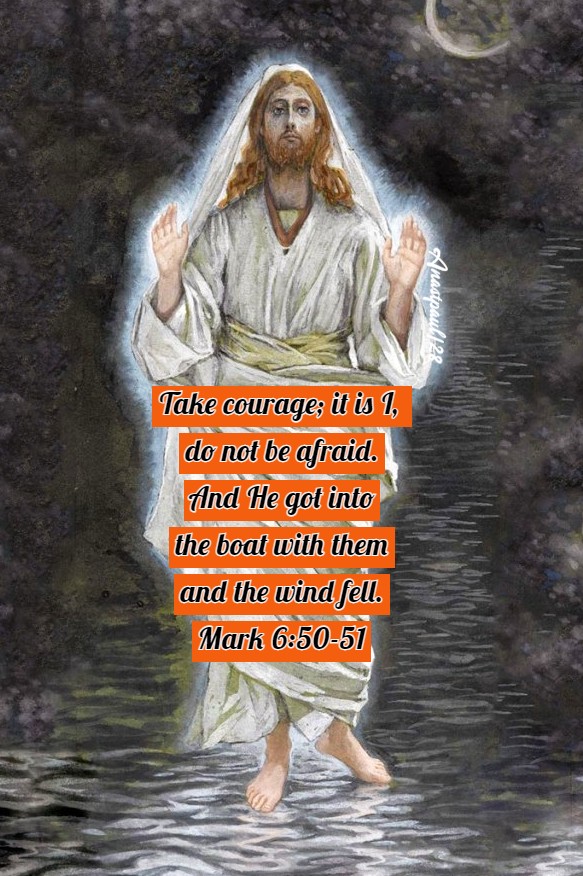
“Take courage: It is I, do not be afraid. And He got into the boat with them and the wind fell”
Mark 6:50-51
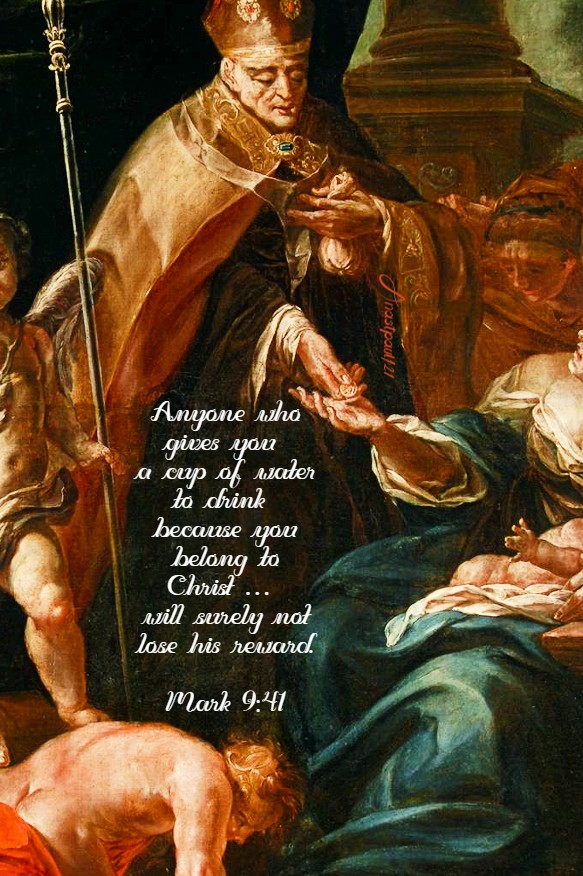
“Anyone who gives you a cup of water to drink because you belong to Christ …, will surely not lose his reward.”
Mark 9:41
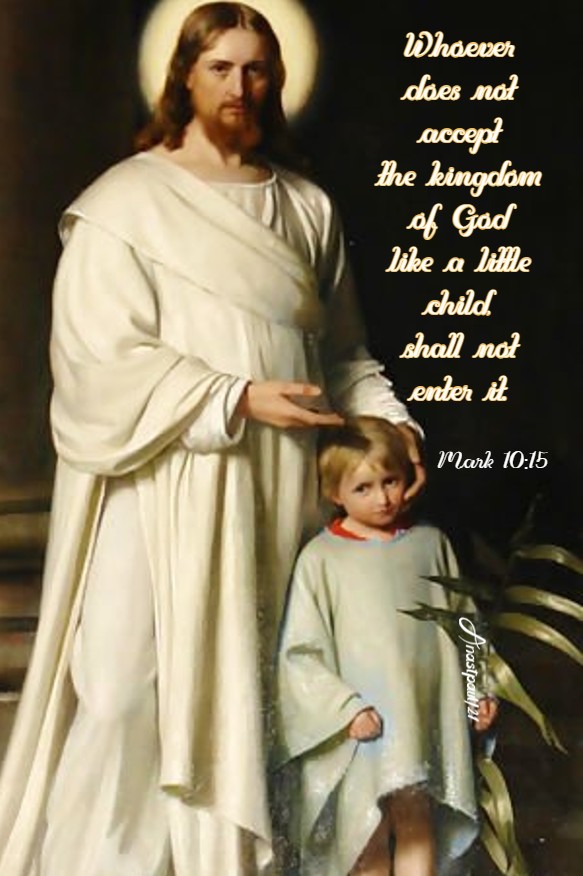
“Whoever does not accept the Kingdom of God, like a little child, shall not enter it.”
Mark 10:15
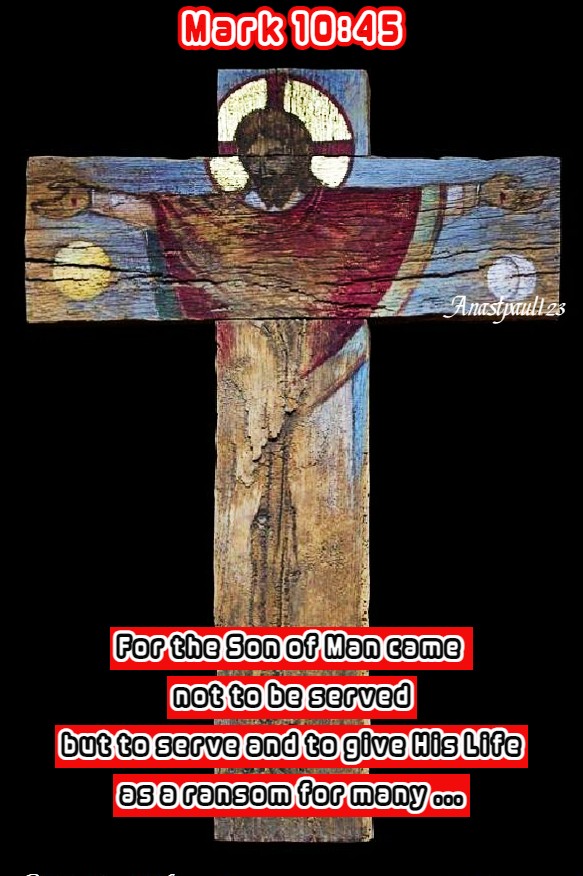
“For the Son of Man came not to be served but to serve and to give His Life as a ransom for many …”
One Minute Reflection – 25 April – “The Month of the Resurrection” – Feast of St Mark Evangelist – Ezekiel 1:10-14, Luke 10:1-9 – Scripture search here: https://www.drbo.org/
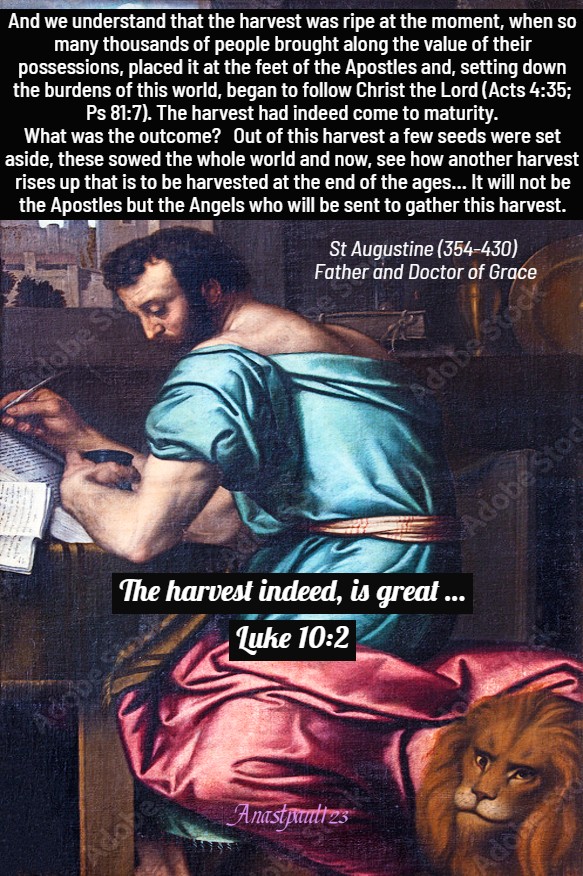
“The harvest indeed, is great …” – Luke 10:2
REFLECTION – “Christ, filled with enthusiasm for His work, prepared to send out labourers… And so He has sent out reapers. “For here the saying is verified that ‘One sows and another reaps’. I sent you to reap what you have not worked for, others have done the work and you are sharing the fruits of their work” (Jn 4:37-38). Now what is this? Has He sent reapers without sending sowers? Where has He sent the reapers? Where others had already laboured… Where the prophets had already preached, since they themselves were the sowers…
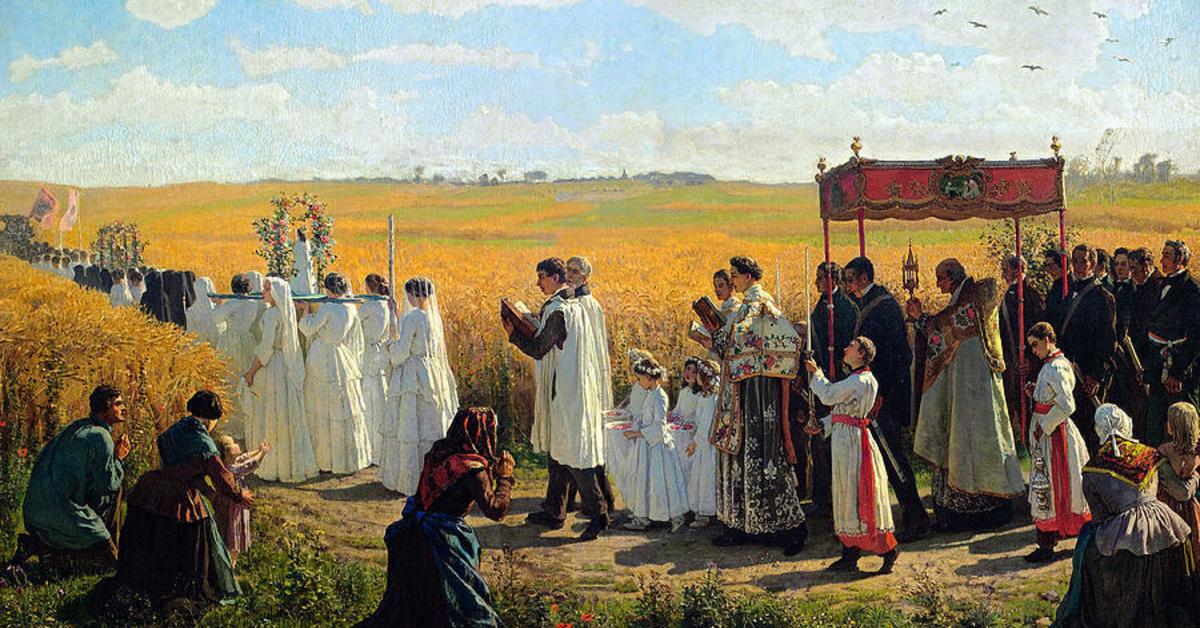
Who were the ones who thus laboured? Abraham, Isaac, Jacob. Read the account of their labours – in all their works, a Prophecy of Christ is to be found; in this sense, then, they were sowers. As for Moses, the other Patriarchs and all the Prophets, how much they had to put up with in the cold, while they were sowing! It follows that the harvest was already ready in Judah. And we understand that the harvest was ripe at the moment, when so many thousands of people brought along the value of their possessions, placed it at the feet of the Apostles and, setting down the burdens of this world, began to follow Christ the Lord (Acts 4:35; Ps 81:7). The harvest had indeed, come to maturity.
What was the outcome? Out of this harvest a few seeds were set aside, these sowed the whole world and now, see how another harvest rises up that is to be harvested at the end of the ages… It will not be the Apostles but the Angels who will be sent to gather this harvest.” – St Augustine (354-430) Bishop, Father and Doctor of Grace (Sermons on Saint John’s Gospel, no 15).
PRAYER – O God, Who didst exalt Thy blessed Evangelist Mark, by giving him grace to preach Thine Evangel, grant unto us, we beseech Thee, ever to follow more and more what he teaches and ever to be shielded from all evil by his prayers. Through Jesus Christ, Thy Son our Lord, Who lives and reigns with Thee, in the unity of the Holy Ghost, God, world without end. Amen (Collect).
St Anianus of Alexandria (Died c 86) 2nd Bishop of Alexandria, after St Mark and succeeding him. Consecrated by St Mark and disciple of St Mark. He was Ordained by Saint Mark and was also the first convert Mark won for Christ in the region, in c 48. As St Mark was entering Rakotis, a suburb of Alexandria, the strap of his sandal broke. He found a cobbler, St Anianus, to repair it. While he was working on the sandal, the awl slipped in Anianus’ hand, piercing it. Anianus cried ‘“Heis ho Theos” (“God is one”) in response to the pain. Mark took the opportunity to preach the Gospel of Christ to him, at the same time. https://anastpaul.com/2021/04/25/saint-of-the-day-25-april-st-anianus-of-alexandria-died-c-86-sucessor-and-disciple-of-st-mark-the-evangelist/
The Healing of Anianus by Cima da Conegliano
Blessed Boniface of Valperga (Died 1243) Bishop St Callista of Syracuse St Clarentius of Vienne St Ermin of Lobbes St Evodius of Syracuse St Heribaldus of Auxerre St Hermogenes of Syracuse St Kebius St Macaille St Macedonius St Mario Borzaga St Pasicrate of Mesia St Phaebadius of Agen St Philo of Antioch St Robert of Syracuse Bl Robert Anderton Stefano of Antioch St Valenzio of Mesia Bl William Marsden
One Minute Reflection – 20 April – “The Month of the Resurrection” –Feria Day, Thursday in the Second Week of Easter – 1 John 5:4-10, John 20:19-31 – Scripture search here: https://www.drbo.org/
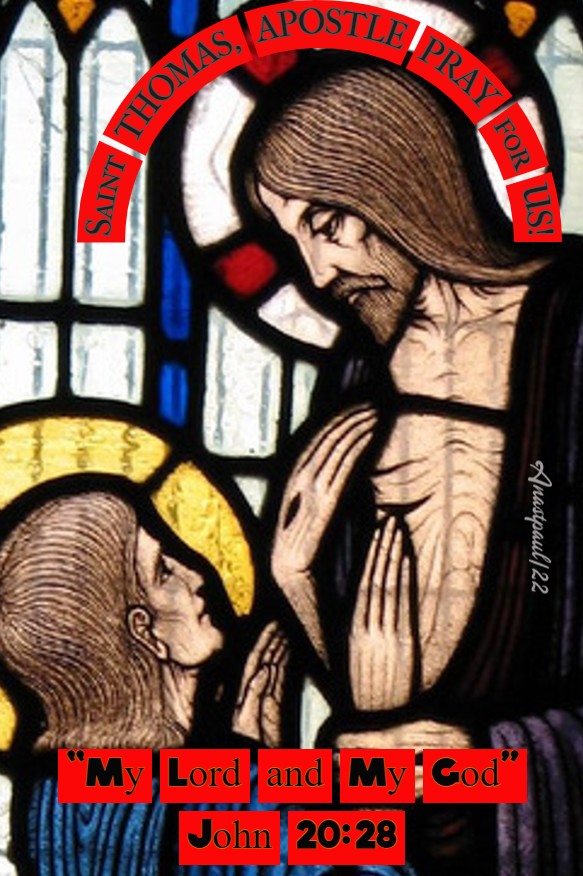
“My Lord and my God.” – John 20:28
REFLECTION – “Thomas said: “Unless I see the mark of the nails in His Hands and put my finger into the nailmarks and put my hand into His Side, I will not believe.” What an astonishing hardness of heart on this disciple’s part: not even the witness of so many of the brethren, nor even the sight of their joy, were enough to give him faith. Yet, the Lord appeared to take care of him. The good Shepherd does not allow the loss of His sheep (Mt 18:12) having said to His Father: “Thou gave them to me and none of them was lost” (Jn 17:6.12). Let the shepherds learn, then, what care they should show towards their sheep, since the Lord came for a single one. Any care and labour are a small thing, compared with the importance of one soul…
“Put your finger here and see My Hands, and bring your hand and put it into My Side, and do not be unbelieving but believe.” O blessed hand that penetrated the secrets of the Heart of Christ! What riches did they not find in it? It was while resting on this Heart that John drew out the Mysteries of Heaven (Jn 13:25), while penetrating It that Thomas found great treasures – what a wonderful school which forms such disciples! Thanks to this Heart, the former expressed marvellous things, higher than the stars, concerning the Divinity when he said: “In the beginning was the Word and the Word was with God and the Word was God” (Jn 1:1). And the latter, touched by the Light of Truth, cried out this sublime cry: “My Lord and my God!” – St Thomas of Villanova OSA (1486-1555) Hermit of Saint Augustine, Bishop (Sermon for Low Sunday (in Homiliarius Breviarii Romani).
PRAYER – Grant, we beseech Thee, O Lord God, unto all Thy servants that they may remain continually in the enjoyment of soundness, both of mind and body and, by the glorious intercession of the Blessed Mary, always a Virgin, may be delivered from present sadness and enter into the joy of Thine eternal gladness. Through Jesus Christ, Thy Son our Lord, Who lives and reigns with Thee, in the unity of the Holy Ghost, God, world without end. Amen (Collect).
One Minute Reflection – 18 April – “The Month of the Resurrection” – Tuesday in the Second Week of Easter – 1 John 5:4-10, John 20. 19-31 – Scripture search here: https://www.drbo.org/
“Thomas answered and said to Him: My Lord and my God.” – John 20:28
REFLECTION – “ Why did Thomas seek proof for his faith in this way? … Your love, my brethren, would have preferred it, if lack of faith had left no-one in doubt after the Resurrection. But Thomas bore the uncertainty, not only of his own heart but of all people. And since he was to preach the Resurrection to the gentiles, he sought out, like a good workman, what he would base a Mystery on which demands so much faith. And the Lord showed all the Apostles what Thomas had sought so late. “Jesus came … and showed them His Hands and His Side” (Jn 20:19-20). Indeed, the Person Who entered when the doors were shut, might have been taken for a spirit, by the disciples, if he had not been able to show them that it was none other than He, the Wounds being the mark of His Passion.
Then He came to Thomas and said to him: ”Put your hand in My Side and do not be unbelieving but believe. May the Wounds you are opening make faith flow into the whole world once more, those Wounds which have already poured out the water of Baptism and the Blood of Redemption.” (Jn 19:34). Thomas replied: “My Lord and my God!” Let unbelievers come and hear and, as our Lord said, let them no longer be doubters but believers. Thomas makes known and declares that this is not just a human Body but that, by the Passion of His Body of Flesh, Christ is God and Lord. He Who comes out alive from death and Who rises out of His woundedness is God indeed!” – St Peter Chrysologus (406-450) Bishop of Ravenna, Father and Doctor of the Church (Sermon 84).
PRAYER – Grant, we beseech Thee, Almighty God that we, who have celebrated the Paschal Feast, may, by Thy bounty, retain its fruits in our daily habits and behaviour. Through Jesus Christ, Thy Son our Lord, Who lives and reigns with Thee, in the unity of the Holy Ghost, God, world without end. Amen (Collect).
Thought for the Day – 5 April – Meditations with Antonio Cardinal Bacci (1881-1971)
The Agony of Jesus
“While Jesus was praying and suffering in the Garden of Gethsemane and the Apostles were unconcernedly sleeping, a group of hired ruffians approached, led by the traitor, Judas. Jesus went to meet them and quietly allowed Himself to be fettered by these rascals. He could have struck them to the ground in an instant or, as He said Himself, called more than twelve legions of Angels to His defence (Cf Mt 16:33). But this was the hour of the power of darkness. “This is your hour and the power of darkness” (Lk 22:53). When the Apostles saw Him being bound and led away, like an evil-doer, they deserted Him and ran away. “Then, all the disciples left him and fled” (Mt 26:56).
We also, may have been guilty of such shameful conduct on many occasions! Whenever God granted us the experience of His consoling presence by means of His grace or favours, we formed the most generous resolutions. But, in the presence of difficulties or of bad example from others, we may have shamefully deserted Jesus! Let us reflect whether this is so and reinforce our good resolutions.”
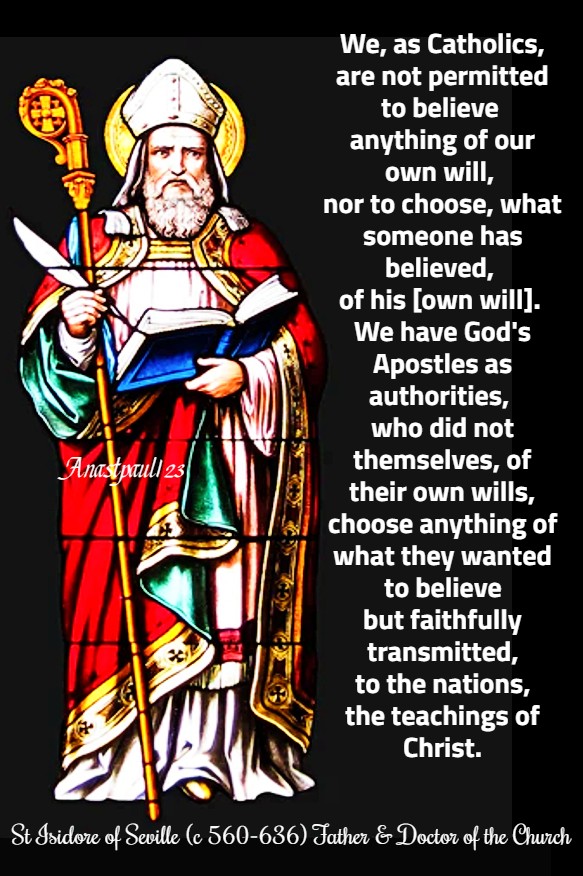
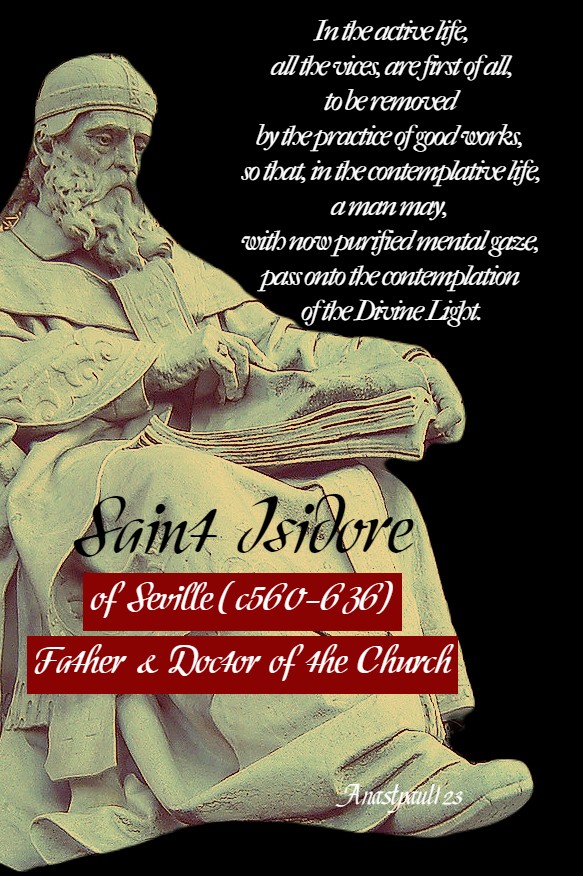
Quote/s of the Day – 4 April – The Memorial of St Isidore of Seville (c 560-636) Bishop, Confessor, Father & Doctor of the Church
“We, as Catholics, are not permitted to believe anything of our own will, nor to choose, what someone has believed, of his [own will]. We have God’s Apostles as authorities, who did not themselves, of their own wills, choose anything of what they wanted to believe but faithfully transmitted, to the nations, the teachings of Christ.”
“In the active life, all the vices, are first of all, to be removed by the practice of good works, so that, in the contemplative life, a man may, with now purified mental gaze, pass onto the contemplation of the Divine Light.”
Thought for the Day – 3 April – Meditations with Antonio Cardinal Bacci (1881-1971)
The Betrayal of Judas
“Failure to comply with the extraordinary graces which Jesus had granted him was responsible for the fall of Judas. Whoever receives a great deal must give as much! Judas had been called to the dignity of the Apostolate. At the Last Supper, he received the fullness of the Priesthood along with the other Apostles and received Jesus Himself into his soul, under the species of the Consecrated bread. In spite of all this, he deserted and betrayed his Master.
What about us? Let us consider how many spiritual and temporal graces God has bestowed on us, throughout our lives. Have we been thankful for them? If we have not corresponded generously with all these favours, or if we have done worse and have rejected them by sin, let us repent and resolve to do better. The example of Judas should, at the least, teach us this lesson!”
One Minute Reflection – 17 March – Friday of the Third Week in Lent and the Memorial of St Patrick (c385-461) Bishop, Confessor, “The Apostle of Ireland” – Ecclesiasticus Sirach 44:16-27; 45:3-20, Matthew 25:14-23 – Scripture search here: https://www.drbo.org/
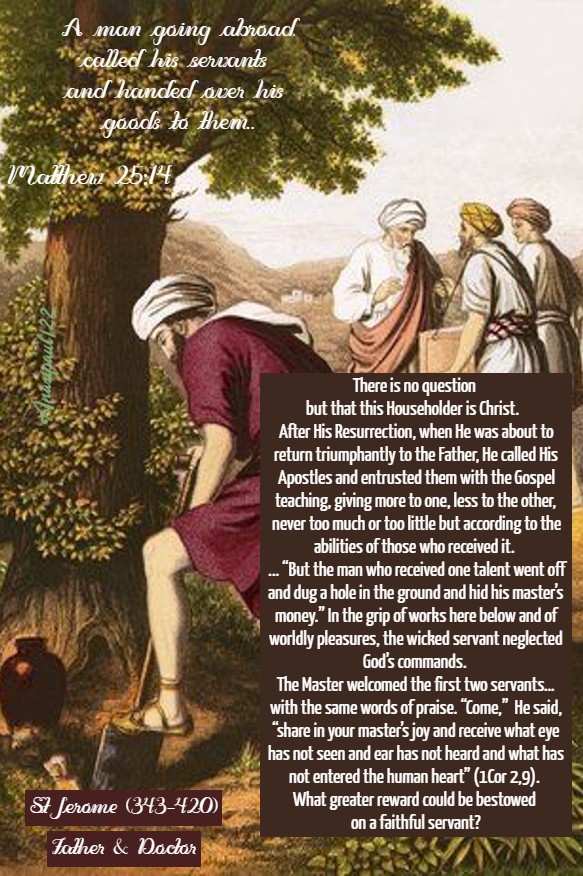
“A man going abroad, called his servants and handed over his goods to them.” – Matthew 25:14
REFLECTION – “There is no question but that this Householder is Christ. After His Resurrection, when He was about to return triumphantly to the Father, He called His Apostles and entrusted them with the Gospel teaching, giving more to one, less to the other, never too much or too little but according to the abilities of those who received it. In the same way, the Apostle Paul said that he had fed with milk those unable to take solid food (1Co 3,2)…
Five, two, one talent: let us take these to be the different graces granted to each, whether the five senses for the first; understanding of faith and works for the second; the reasons for distinguishing us from other creatures, for the third. “The one who received five talents went away and traded with them and made another five.” That is to say, besides the physical and material senses he had received, he added knowledge of heavenly things. His knowledge was raised from the creatures to the Creator, from the corporal to the incorporeal, from the visible to the invisible, from the transient to the eternal. “The one who received two made another two.” This one likewise, according to his ability, doubled in the school of the Gospel what he had learned in the school of the Law. Or perhaps we could say, that he understood that knowledge of faith and the works of this present life, lead to future happiness. “But the man who received one talent went off and dug a hole in the ground and hid his master’s money.” In the grip of works here below and of worldly pleasures, the wicked servant neglected God’s commands. However, let us note that, according to another evangelist, he wrapped it in a linen cloth – by this we could understand that he took away the force of his Master’s teaching, by a life of softness and pleasure…
The Master welcomed the first two servants… with the same words of praise. “Come,” He said, “share in your master’s joy and receive what eye has not seen and ear has not heard and what has not entered the human heart” (1Cor 2,9). What greater reward could be bestowed on a faithful servant?” – St Jerome (343-420) Translator of Sacred Scripture (the Vulgate), Father and One of the Original Four Doctors of the Latin Church .
PRAYER – O, God, Who graciously sent blessed Patrick, Thy Confessor and Bishop, to preach Thy glory to the nations, grant through his merits and intercession that by Thy mercy, we may be able to accomplish what Thou command. Through Jesus Christ, Thy Son our Lord, Who lives and reigns with Thee, in the unity of the Holy Ghost, God, world without end. Amen (Collect).
































 AnaStpaul
You must be logged in to post a comment.