Posted in The PASSION, The SEVEN PASSION Feasts

The Feast of the Holy Shroud of Jesus Celebrated on Friday after the Second Sunday of Lent – 1 March

Saint of the Day – 1 March – The Feast of the Holy Shroud of Jesus
Celebrated on Friday after the Second Sunday of Lent
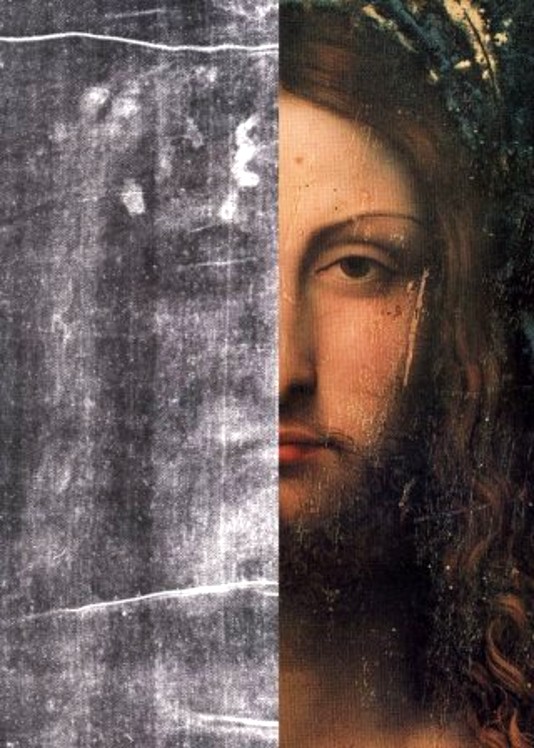
Comparison between the image on the Shroud of Turin and Leonardo da Vinci’s Salvator Mundi

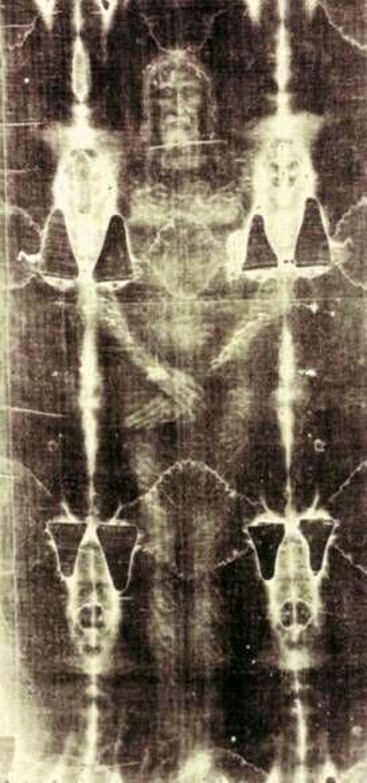
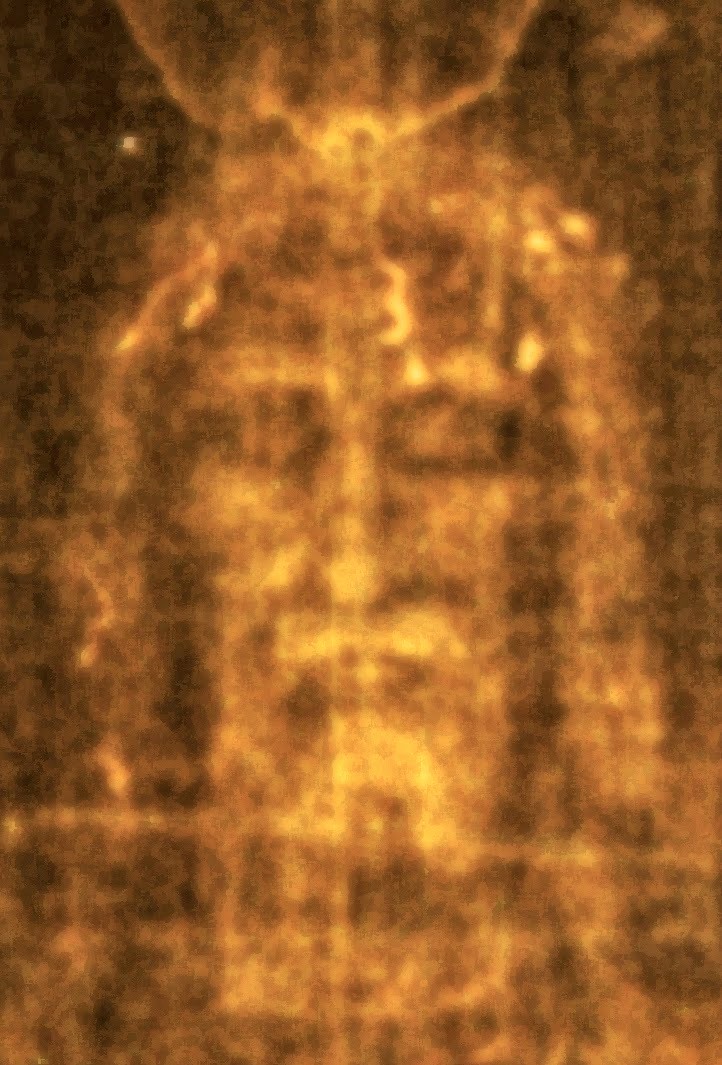
The Shroud of Turin has been subjected to a variety of scientific examinations to confirm its authenticity using scientific methods, despite, the rather obvious conclusion, that the intricacy and detail on the Shroud, could not have been merely created by antiquated Medieval technology.
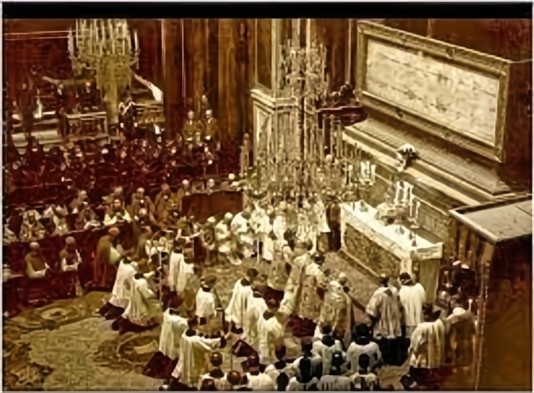
Holy Mass celebrated beneath the Holy Shroud in Turin

In fact, the Turin Centre of Colorado, has demonstrated that the fold marks found on the Shroud indicate it once resided in Constantinople in the 10th-11th centuries, in contrast to those who claim that the Shroud was a 14th Century forgery. Such a claim corroborates historians who maintain that the Lord’s Burial Cloth was in the possession of Byzantine Emperors before the Sack of Constantinople in 1204.
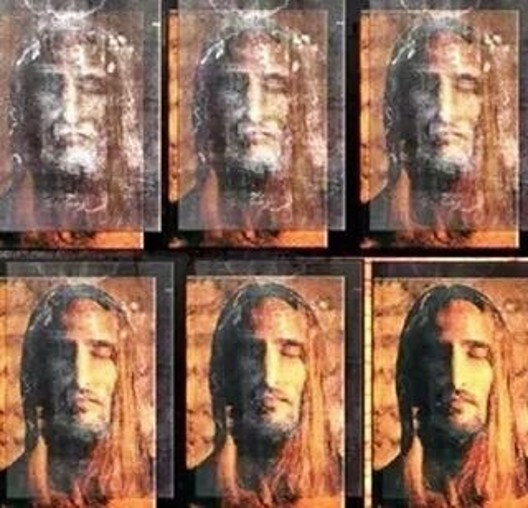
Using Modern technology to create an image of Christ

The Holy See remained silent on the Shroud until the middle of the 20th Century when, in 1940, Sister Maria Pierina De Micheli, obtained authorisation from the Archdiocese of Milan to produce the Holy Face Medal with the image of the Holy Shroud. And, in 1958, Pope Pius XII subsequently approved the image in connection with devotion to the Holy Face and the Feast of the Holy Face which he instituted to be said on Shrove Tuesday of each year in reparation for the offences of “Mardi Gras.”
The Catholic Encyclopedia, Vol 15, 1913 states:
“In 1206, one of the Winding Sheets used at the burial of Christ was brought to Besançon by Otto de La Roche and the festival of its arrival (Susceptio) was ordered to be kept on 11 July. At present, it is a double of the first class in the Cathedral and of the second class in the Diocese. The Office is very beautiful.
Another Feast originated ain around 1495 at Chambéry, in Savoy, to honour the Sudario of Christ which came there in 1432 from Lirey in Burgundy and which, since 1578, is venerated in the Royal Chapel of the Cathedral of Turin.
This Feast is celebrated on 4 May, the day after the Discovery of the Cross and was approved in 1506 by Pope Julius II.
It is now kept in Savoy, Piedmont and Sardinia, as the Patronal Feast of the Royal House of Savoy (4 May, double of the first class, with octave). A third Feast, the Fourth Sunday in Lent (translation to a new Shrine in 1092), was kept during the Middle Ages at Compiègne in France, in honour of a Winding Sheet brought there from Aachen in 877.

Today’s Feast which, since 1831, is contained in the appendix of the Breviary, on the Friday after the Second Sunday in Lent, is independent of any particular Relic but, before 1831 it was rarely found on the Diocesan Calendars.
It has not yet found its way into the Baltimore Ordo.
The Office is taken from the Proprium of Turin.”
Posted in FEASTS and SOLEMNITIES, LENT, MARIAN TITLES, SAINT of the DAY, The SEVEN PASSION Feasts

The First Friday of month, March Devotion, Friday of the Second Week in Lent – FAST and ABSTINENCE, The Feast of the Holy Shroud of Jesus, Madonna Della Croce, “Holy Mary of the Cross,” Italy (1490), St David and all the Saints for 1 March

March Devotion – The Month of St Joseph

The First Friday of March

St Abdalong of Marseilles
St Adrian of Numidia
St Agapios of Vatopedi
St Agnes Cao Guiying

St Albinus of Vercelli
St Amandus of Boixe
St Antonina of Bithynia
Bl Aurelia of Wirberg
Bl Bonavita of Lugo
St Bono of Cagliari
Bl Christopher of Milan
Bl Claudius Gabriel Faber
St Domnina of Syria
St Domnina of Syria
St Donatus of Carthage
St Eudocia of Heliopolis
St Felix III, Pope
Bl George Biandrate
Bl Giovanna Maria Bonomo
Bl Gonzalo de Ubeda
St Hermes of Numidia
St Jared the Patriarch
St Leo of Rouen

St Lupercus
St Marnock
St Monan
Bl Pietro Ernandez
Bl Roger Lefort
St Rudesind
St Seth the Patriarch
St Simplicius of Bourges
St Siviard
St Swithbert
St Venerius of Eichstätt

Posted in BREVIARY Prayers, HYMNS, LENT, LENT 2024, Our MORNING Offering, The SEVEN PASSION Feasts

Our Morning Offering – 16 February – Christ’s Peerless Crown

Our Morning Offering – 16 February – Friday after Ash Wednesday – The Feast of the Sacred Crown of Thorns of Our Lord Jesus Christ

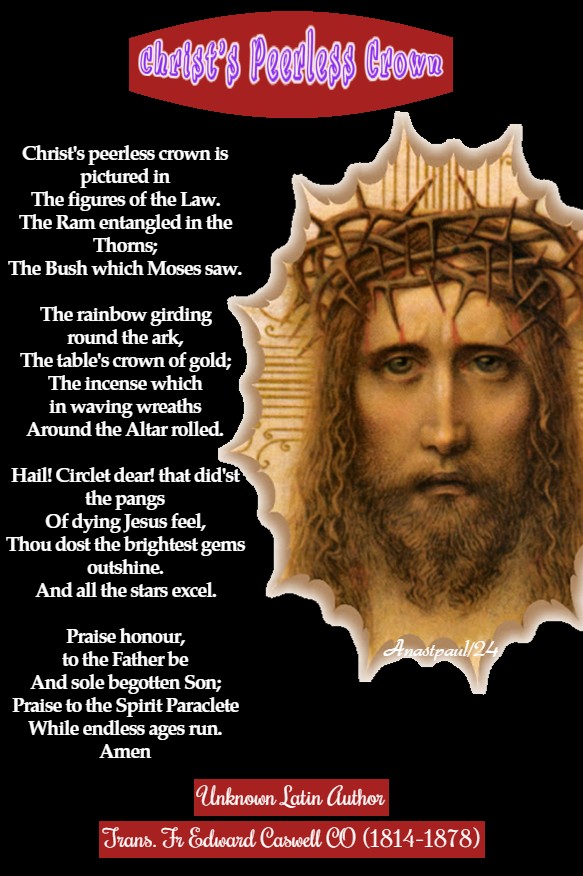
Christ’s Peerless Crown
Unknown Latin Author
Trans. Fr Edward Caswell CO (1814–1878)

Christ’s peerless crown is pictured in
The figures of the Law.
The Ram entangled in the Thorns;
The Bush which Moses saw.

The rainbow girding round the ark,
The table’s crown of gold;
The incense that in waving wreaths
Around the Altar rolled.

Hail! Circlet dear! that did’st the pangs
Of dying Jesus feel,
Thou dost the brightest gems outshine.
And all the stars excel.

Praise honour, to the Father be
And sole begotten Son;
Praise to the Spirit Paraclete
While endless ages run.
Amen

Posted in FEASTS and SOLEMNITIES, LENT 2024, The SEVEN PASSION Feasts

Feast of The Sacred Crown of Thorns of Our Lord Jesus Christ – Friday after Ash Wednesday

Feast of The Sacred Crown of Thorns of Our Lord Jesus Christ celebrated on the Friday after Ash Wednesday – One of the “Seven Passion Feasts” – celebrated on the the Friday after Ash Wednesday – 16 February 2024

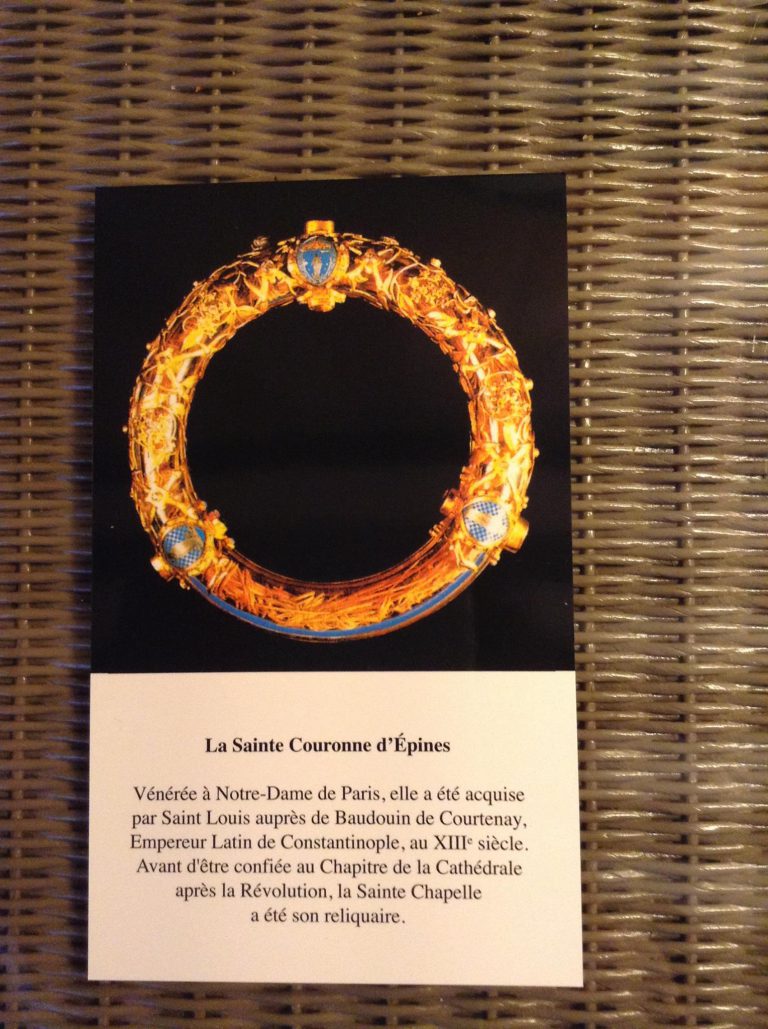
The first Feast in honour of the Sacred Crown of Thorns (Festum susceptionis coronae Domini) was instituted at Paris in 1239, when Saint Louis IX of France brought there the Relic of the Crown of Thorns which was deposited later in the Royal Chapel, erected in 1241–1248 to guard this and other Relics of the Passion. The Feast, observed then on 11 August, though at first special to the Royal Chapel, was gradually observed throughout the north of France.

The Reliquary in France

In the following Century, another festival of the Holy Crown on 4 May, was instituted and was celebrated along with the Feast of the Finding of the True Cross in parts of Spain, Germany and Scandinavia. It was later kept in Spanish Diocese and is observed by the Dominicans on 24 April.

A special Feast on the Monday after Passion Sunday was granted to the Diocese of Freising in Bavaria, by Pope Clement X (1676) and Pope Innocent XI (1689), in honour of the Crown of Thorns of Christ. It was celebrated at Venice in 1766 on the second Friday of March. In 1831 it was adopted at Rome as a Double Major and is observed on the Friday following Ash Wednesday. As it is not kept universally, the Mass and Office are placed in the appendices to the Breviary and the Missal. The Hymns of the Office, which is taken from the 17th Century Gallican Breviary of Paris.

Artist – Carl Heinrich Bloch

This Feast became a part of The Seven Passion Feasts – special Masses related to the Passion of Christ which are celebrated as Feasts on particular days each week, from Septuagesima to the Fourth Week in Lent.

The Feasts and their appointed days are as follows:
The Prayer of Our Lord Jesus Christ (in the Garden of Gethsemane)—on the Tuesday after Septuagesima Sunday.
The Commemoration of the Passion of Our Lord Jesus Christ (Votive Mass of the Passion)—on the Tuesday after Sexagesima Sunday.
The Sacred Crown of Thorns of Our Lord Jesus Christ—on the Friday after Ash Wednesday.
The Sacred Lance and Nails of Our Lord Jesus Christ—Ember Friday in Lent (1st Week of Lent).
The Most Sacred Shroud of Our Lord Jesus Christ—on Friday of the Second Week in Lent.
The Five Sacred Wounds of Our Lord Jesus Christ—on Friday of the Third Week in Lent.
The Most Precious Blood of Our Lord Jesus Christ—on Friday of the Fourth Week in Lent.

These Feasts are crowned by the observance of The Compassion of Our Lady (The Seven Dolours of Our Lady) on Friday in Passion Week—1 week before Good Friday.
In this way the Mystery of Christ’s Passion is continually kept before the eyes of the faithful as they journeyed through Lent.

These Feasts no longer form part of the Vatican II Roman Missal.

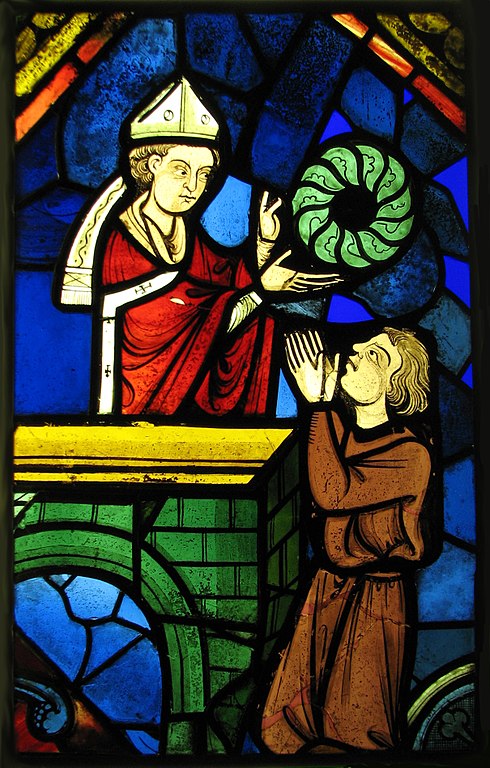
A stained glass window depicts veneration of the Crown of Thorns.