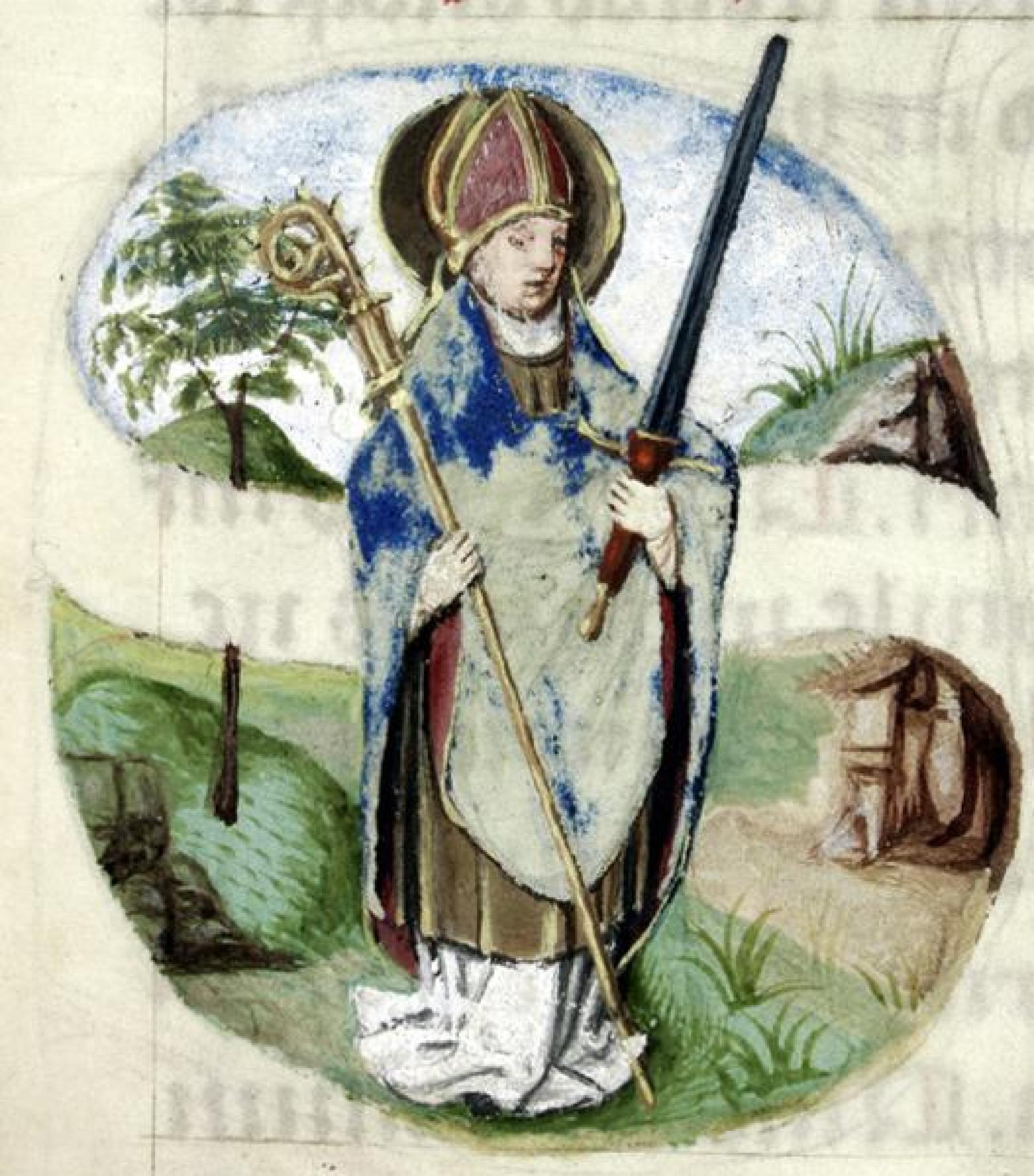
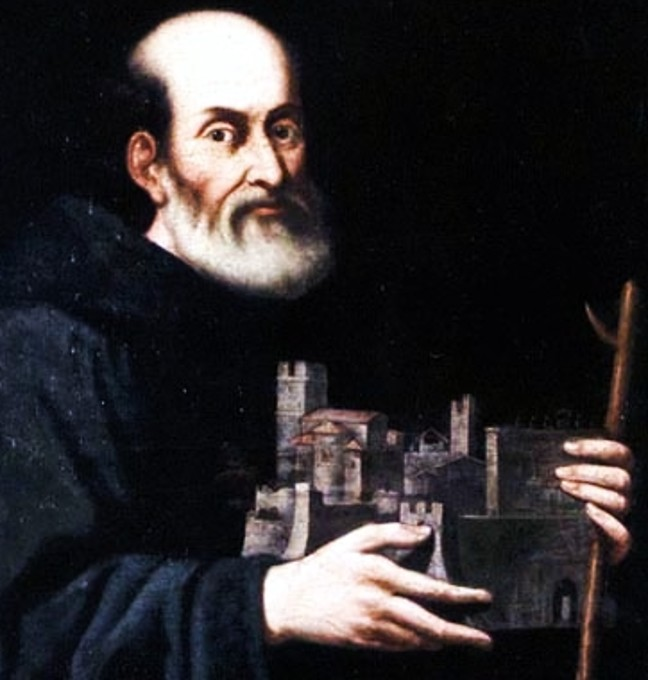
Saint of the Day – 4 April – St Hildebert (Died c752) Abbot and Martyr of the Monastery of St Peter in Ghent, modern Belgium, Martyred for his uncompromising defence of Sacred Images. Also known as – Emebert.
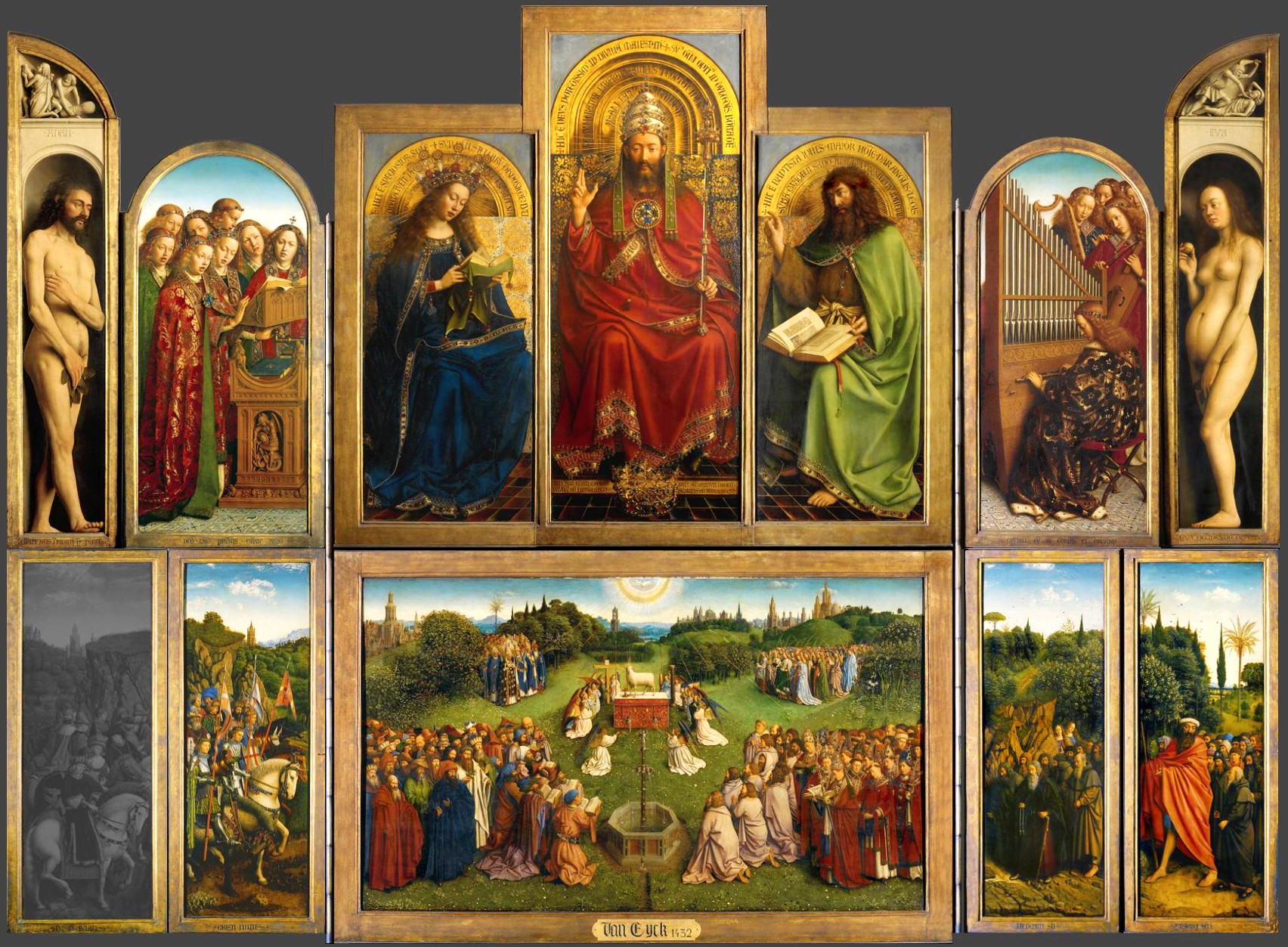
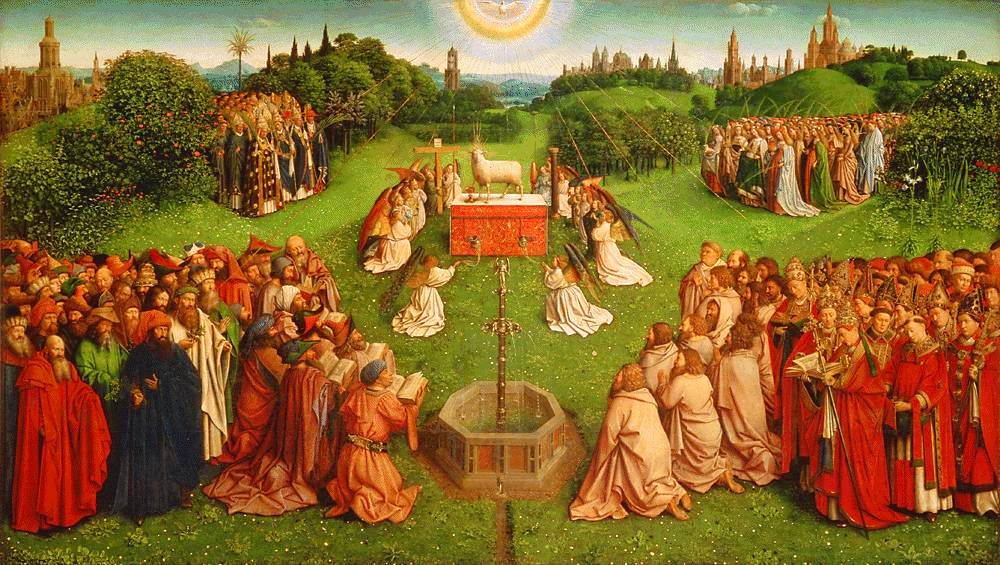
St Hildebert dedicated his life to the service of God. He embraced the monastic life and joined Monks at the Monastery of St Peter in Ghen. Below is a beautiful example of Sacred Images the Ghent Altarpiece by Jan van Eyck (1432). The Adoration of the Lamb at the end of the post is the lower section of the Altarpiece.
He was elected as the Abbot and unfailingly went to the defence of Sacred Images which had become a contentious issue. St Hildebert unwavering defence eventually led to his Martyrdom.
His death is not well documented but it is believed that he was killed due to the opposition he faced gy those destroying Sacred Images.
To this day, St Hildebert of Ghent is remembered and venerated, most particularly in Ghent.
Saint of the Day – 15 March – Saint Matrona (5th-6th Century) Virgin of Capua. Matrona was a Roman noblewoman , famous for having found the body of the first Bishop of Capua, Saint Priscus. Patronages – against intestinal epidemics and cholera.
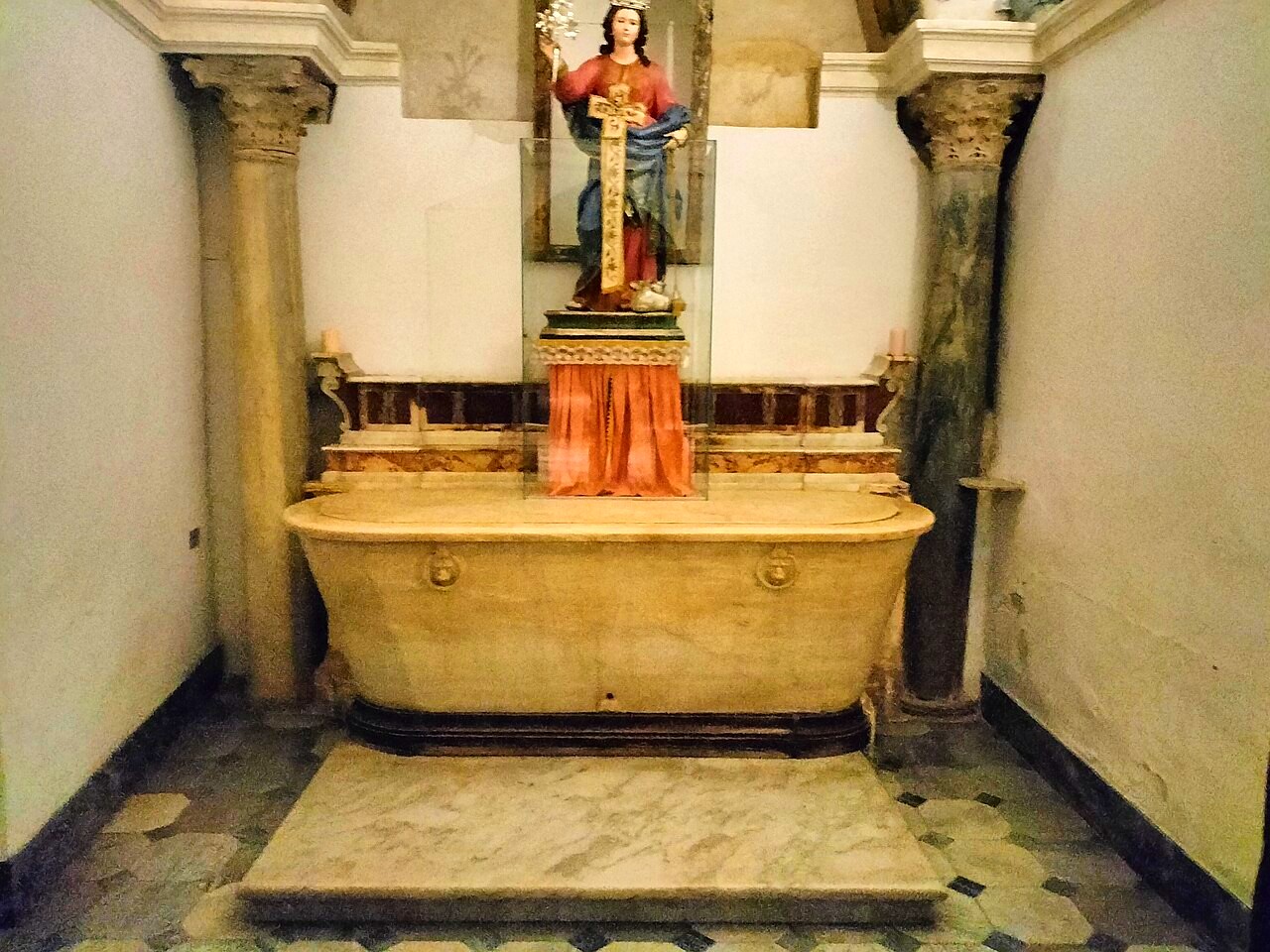
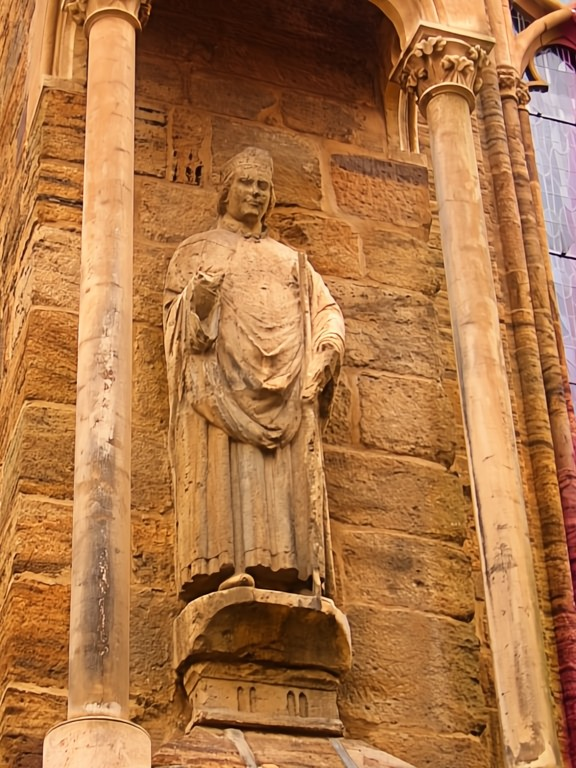
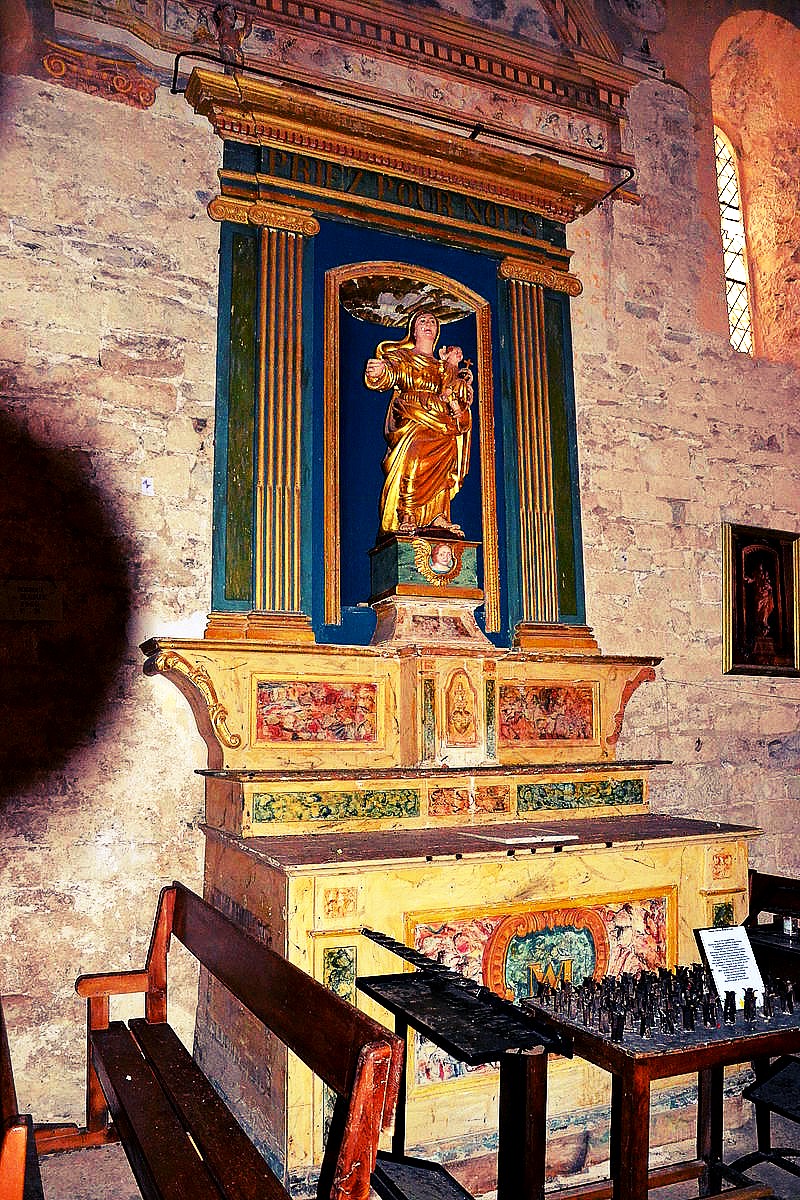
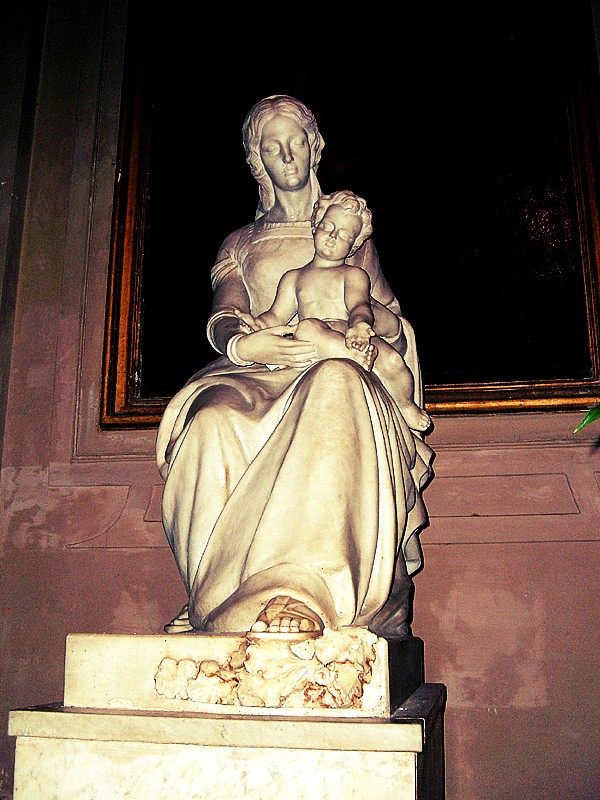
Statue of St Matrona above the Altar containing her Relics in the Church of St Prisco
Matrona, a Roman noblewoman of Portuguese origin, was miraculously cured by Saint Prisco. Tradition tells us that the young lady suffering from a stomach disorder and went to the Campanian City of Capua and was cured whilst praying at the Tomb of the first Capuan Bishop which she had discovered.
Matrona remained there for the rest of her life, later honoured as a Saint and invoked against intestinal epidemics and cholera,
The small Chapel of St Matrona is a Shrine perhaps annexed to the primitive early Basilica dedicated to St Prisco. In the apse there is a marble oval Sarcophagus which acts as an Altar and which contained the remains of our Saint.
Saint of the Day – 9 March – St Antony (10th Century) Hermit of Froidemont in France. Probably born in France and died there at his Hermitage in Froidemont.Also known as – Anthony of Liaroles, Anthony of Luxeuil.
We have little knowledge of St Antony.d life. We know that he became a Monk at at the Luxeuil Abbey. Later seeking a closer union with God in a life of solitude, he became a Hermit at Froidemont in Franche-Comté, France.
He became widely renowned for his sanctity and life of prayer and asceticism.
St Adrian of Caesarea St Caron St Carthach the Elder Bl Christopher Macassoli of Vigevano St Clement (Died c800) Abbot of Santa Lucia Monastery in Syracuse, Sicily. St Colman of Armagh St Conon of Pamphylia Bl Conrad Scheuber
St Theophilus (Died c217) Bishopof Caesarea , Theologian, Writer , Apologist and Defender of the Faith. Born in Caesarea, Palestine and died c195 of natural causes. The Roman Martyrology reads: “At Caesarea, in Palestine, in the time of the Emperor, Severus, St Theophilus, Bishop, who was conspicuous for his wisdom and the purity of his life.” Wise St Theophilus: https://anastpaul.com/2024/03/05/saint-of-the-day-5-march-saint-theophilus-of-caesarea-died-c217-bishop/
Martyrs of Africa – A group of 304 Christians Martyred together for their faith. We know nothing else about them but five of their names Eusebius, Evolus, Hadrian, Julian and Octavian. They Died in 254 in Africa, exact location and date unknown.
Saint of the Day – 20 February – Blessed Amata (c1200-c1254) OSC Virgin, Nun of Assisi, a Poor Clare Nuna and one of Saint Clare of Assisi’s original followers and her niece Born in Assisi as Amata di Caran. Her name means “beloved” in Latin and is now a common religious name among the Poor Clares.
Amata was born into a noble family in Assisi, Italy; her father was Martino di Carano and her mother Donna Penenda, Clare’s oldest sister.
Amata was destined to marry a nobleman from her hometown and being proud of her beauty, she led a frivolous life. Visiting her aunt, she was enlightened by the humble and serene poverty of the Nuns. She repented, renouncing her previous worldly ideals, refused marriage and in 1213 entered the Monastery of San Damiano.
The Franciscan Martyrology remembers her with this eulogy: “Destined to marry a nobleman from her hometown, proud of her beauty, she led a frivolous life. Visiting her aunt, she was enlightened by the humble and serene poverty of the Damianites later known as the Poor Clares. She repented and changed her worldly ideals, renounced marriage and in 1213 entered the Monastery of San Damiano.
The Franciscan Martyrology remembers her with this eulogy: “What a purified and innocent life fervent in Christ’s will, love excelled.”
Due to her harsh penances, she fell ill for thirteen months she suffered from a violent cough and was finally cured by her holy aunt with a simple Sign of the Cross.
Amata was present at St Clare’s death, she was addressed by her St Clare, as Celano recounts, with these words: “Did you, daughter, see the Kingdom of glory to which I aspire?”
Amata herself died around 1254. When, in 1260, the Damianites abandoned the old Monastery to enter the City, Amata’s remains were brought to the convent of San Giorgio. In 1602, Crescenzio, the Bishop of Assisi, transferred her Relics, those of Blessed Agnes (sister of St Clare) and those of Blessed Benedetta (the first Abbess after St Clare), to a stone urn under an Altar in the Church.
St Abundius of Spain – Martyr. No other information has survived
St Agnellus (535-596) Abbot, Priest, Hermit, Defender and Protector of the City of Naples, Miracle-worker. St Agnellus is one of the 50+ Co-Patrons of the City of Naples The Roman Martyrology reads today: “In Naples, in Campaniaa, St Agnellus, Abbot. Illustrious by the gift of miracles, he was often seen with the standard of the Cross, delivering the City besieged by enemies.” A Mighty and Powerful Saint: https://anastpaul.com/2023/12/14/saint-of-the-day-14-december-saint-agnellus-of-naples-osa-535-596/
Martyrs of Alexandria – 4 Saints: A group of Egyptian Christians Martyred together in the persecutions of Decius – Arsenius, Dioscurus, Heron and Isidore. They were burned to death in 250 at Alexandria, Egypt.
Martyrs of Apollonia – 7 Saints: Martyred in the persecutions of Decius. The only surviving details are three names – Callinicus, Leucio and Tirso. The Martyrdom took place at Apollonia, Bithynia (in modern Turkey).
Martyrs of Ashkelon – 3 Saints: Several pilgrims from Egypt to Cilicia (in modern Turkey) who planned to minister to fellow Christians suffering in the persecutions of Emperor Maximinus. They were arrested, torture, mutilated and then imprisoned in Ashkelon. Some were ordered to forced labour in the mines but we have the names of three who were Martyred by order of Governor Firmilian – Ares, Elijah and Promo. They were burned at the stake or beheaded at the gates of Ashkelon c 308.
Martyrs of Hayle – 2+ Saints: Several Christians, including a brother and sister, who were Martyred together by pagans. The only other information to survive are the names of the two siblings – Fingar and Phiala. 5th Century at Hayle, Cornwall, England.
Martyrs of Syria – 3 Saints: Three Christians who were Martyred together. Known to Saint John Chrysostom who preached on their Feast Day and left us the only details we have – their names – Drusus, Theodore and Zosimus. The date and precise location of their Martyrdom is unknown but it was in Syria, possibly in Antioch.
Saint of the Day – 17 October – Saint Nothhelm (Died 739) Archbishop of Canterbury, spiritual writer, a friend and correspondent of both the Venerable Saint Bede and the great Missionary Martyr, Saint Boniface, it was Nothhelm who gathered materials from Canterbury for St Bede’s historical works. After his appointment to the Episcopate of Canterbury in 735, Nothhelm attended to Ecclesiastical matters, including holding Church Councils. Nothhelm was the author of a number of works, although these were later disputed. Of English birth (unknown place and date) and died on 17 October 739 in Canterbury where he is buried. Also known as – Nothelm.
Nothhelm, being aSt Bede’s friend and colleague, was happy to obtain information the later required for his historical works from the Papal Library whilst in Rome on a pilgrimage. He also researched, for St Bede, the history of Kent and the surrounding region. Before his appointment As the Archbishop of Canterbury, he whad been the Archpriest of the Saxon-built St Paul’s Cathedral, in London
Named to the See of Canterbury in 735, Nothhelm was Consecrated the same year. Pope Gregory III sent him a Pallium in 736. He may have been appointed by Æthelbald, King of Mercia, to whom Nothhelm had acted as a Counsellor. Nothhelm was one of a number of Mercians who became Archbishop of Canterbury, during a time of expanding Mercian influence.
Nothhelm held a Synod in 736 or 737 which drew nine Bishops; the meeting adjudicated a dispute over the ownership of a Monastery located at Withington. A significant feature of this Synod was that no King attended, but yet, the Synod still rendered judgement in the ownership even without secular involvement which was most unusual at that time in that country.
As the Archbishop of Canterbury, Nothhelm oversaw the reorganisation of the Mercian Dioceses which took place in 737. The Archbishop Consecrated Witta as the Bishop of Lichfield and Totta as the Bishop of Leicester. The Diocese of Leicester was firmly established by this action, although earlier unsuccessful ttempts had been made to establish a Diocese there. In 738, Nothhelm was a witness on the Charter of Eadberht I, the King of Kent.
St Bede addressed his work “In Regum Librum XXX Quaestiones“ to Nothhelm, who had asked the thirty questins on the Scriptural Bok of Kings which St Bede answered. Bede’s work “De VIII Quaestionibus” may have been written for Nothhelmtoo.
While Nothhelm was Archbishop, St Boniface wrote to him requesting a copy of the Libellus Responsionum of St Pope Gregory the Great, for use in Boniface’s missionary efforts. St Boniface also asked for information on the historical records of the English Gregorian mission to England.
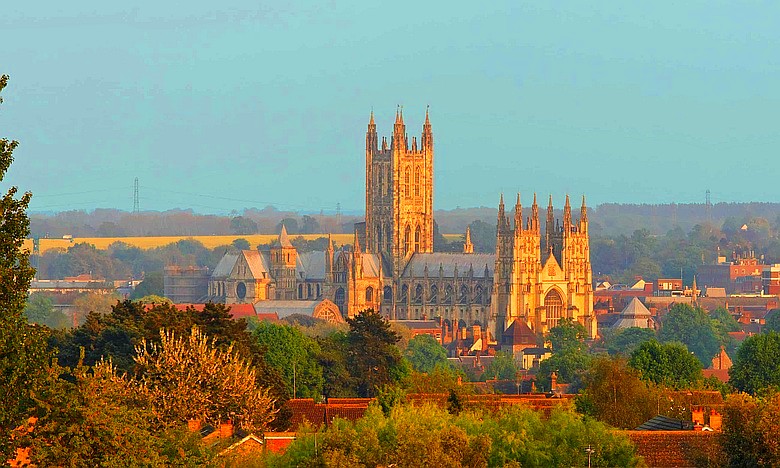
Nothhelm died on 17 October 739 and was buried in Canterbury Cathedral. The antiquaries and writers John Leland, John Bale, and Thomas Tanner all felt that Nothhelm was the author of various works but later sources dispute these historians. A verse eulogy for Nothhelm, of uncertain date, survives in a 16th Century manuscript now at the Lambeth Palace Library.
Bl Gilbert the Theologian St Heron of Antioch Bl Jacques Burin St John the Short/Dwarf St Louthiern St Mamelta of Persia St Nothhelm (Died 739) Archbishop of Canterbury St Richard Gwyn St Rudolph of Gubbio St Rufus of Rome St Solina of Chartres
Martyrs of Nicomedia – 3 Saints: A group of Christians Martyred in the persecutions of Diocletian. The only details about them that have survived are their names – Alexander, Marianus and Victor. 303 in Nicomedia (in modern Turkey).
Martyrs of Valenciennes -5 Beati: A group of Ursuline nuns Martyred in the persecutions of the French Revolution. Hyacinthe-Augustine-Gabrielle Bourla Jeanne-Reine Prin Louise-Joseph Vanot Marie-Geneviève-Joseph Ducrez Marie-Madeleine-Joseph Déjardins
Martyrs of Volitani: A group of Martyrs who were praised by Saint Augustine of Hippo. In Volitani, proconsular Africa (in modern Tunisia).
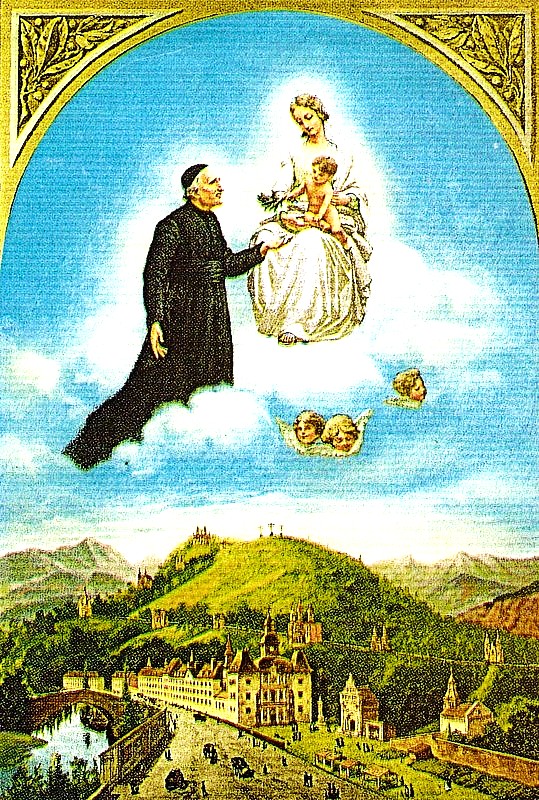
Notre-Dame de la Salette / Our Lady of La Salette), La Salette-Fallavaux, Isère, Rhône-Alpes, France (1846) 19 September: Our Lady appeared to two small children, Melanie Mathieu and Maximin Giraud, on the mountain of La Salette in the French Alps. She was crying and around her neck was a crucifix, with a hammer and pincers on either side – 19 September 1846. Approved by the Diocesan Bishop in 1851. Read the story here: https://anastpaul.wordpress.com/2017/09/19/feast-of-our-lady-of-la-salette-19-september/
St Arnulph of Gap Bl Carolus Hyon Song-Mun St Constantia of Nocera St Desiderius of Pozzuoli St Eustochius (Died c461) Bishop of Tours St Felix of Nocera St Festus of Pozzuoli
St Goeric (c570-c643)Bishop of Metz – Goeric is listed as the 30th Bishop of Metz, having governed that See from 625 to 642 or 643. The Roman Martyrology rads: “In Metz in Austrasia, still in the territory of today’s France, Saint Goeríco or Abo, Bishop, who succeeded Saint Arnulf, whose body was transported with veneration to this City.” His Life of Service: https://anastpaul.com/2023/09/19/saint-of-the-day-19-september-saint-goeric-of-metz-c570-c643-bishop/
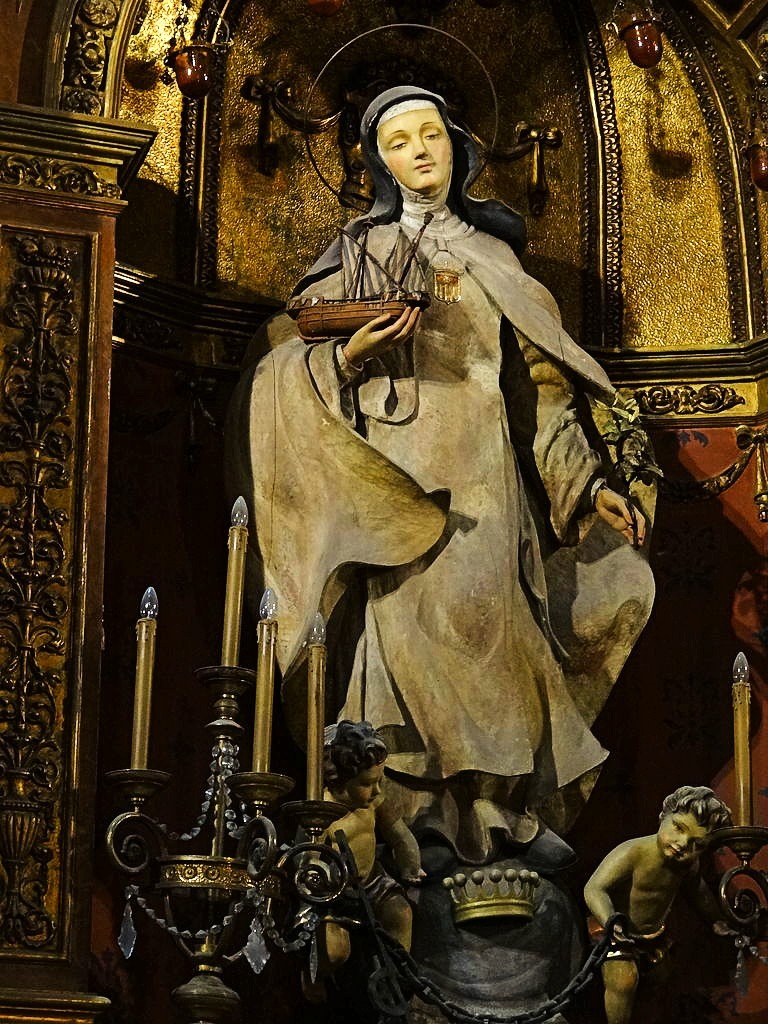
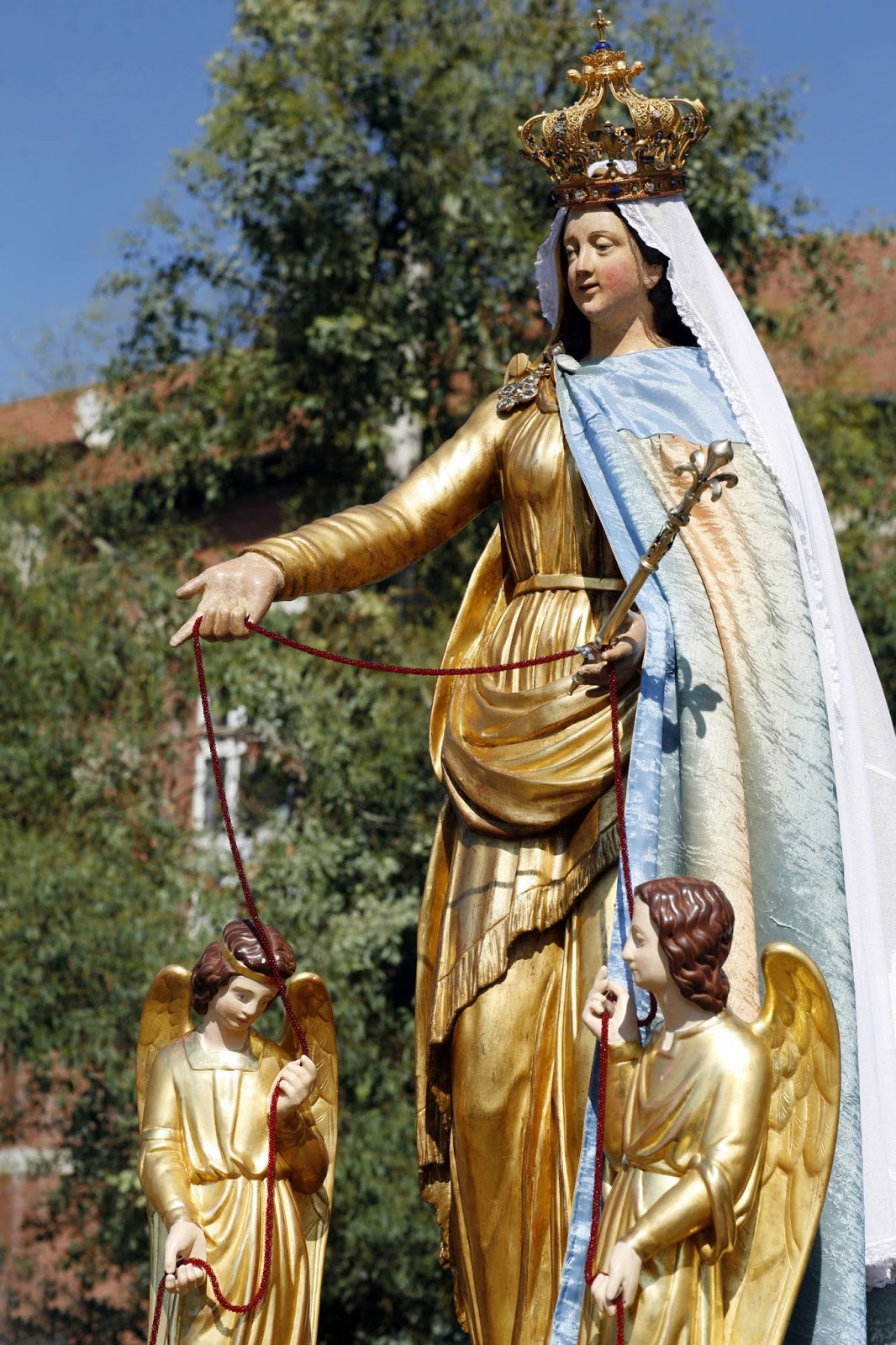
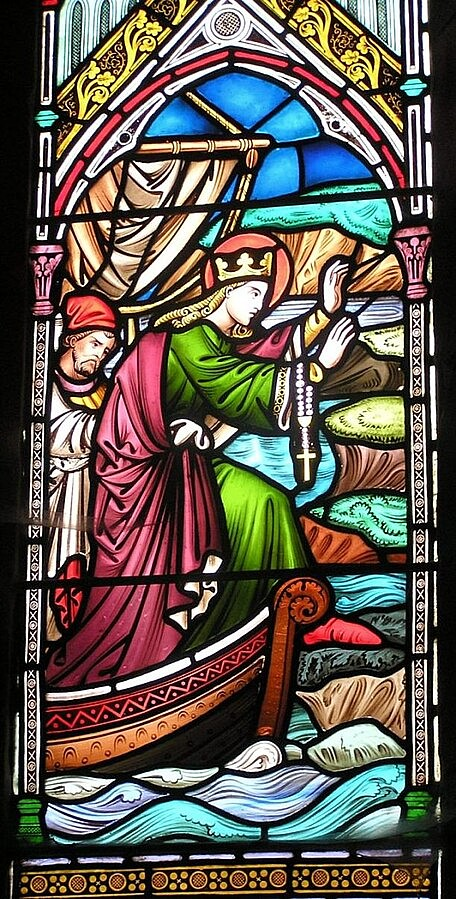
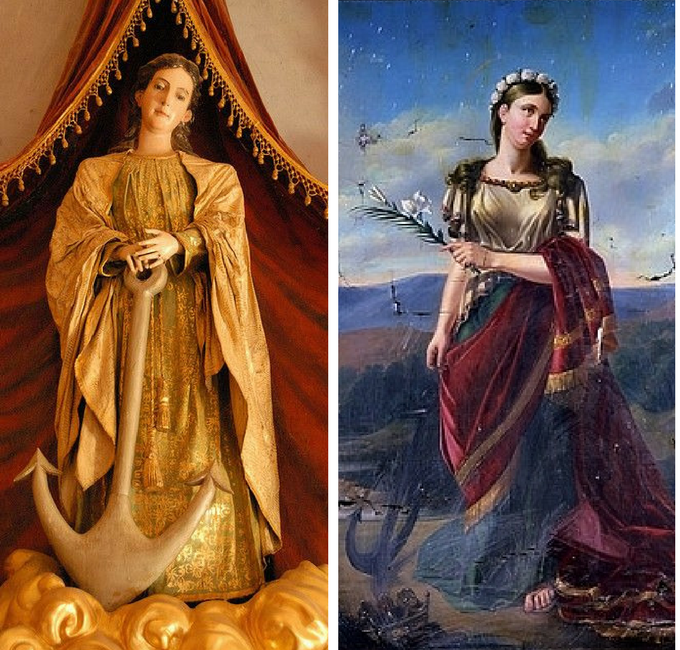
St Maria de Cervellón OdeM (1230 – 1290) Virgin, Catalan Superior of Second Order of the Mercedarians in her region. Mystic, graced with the gift of bilocation, Apostle of the poor, the abandoned, the needy. She was the first woman to wear the Habit of the ‘ Order of the Blessed Virgin Mary of Ransom. She is considered the Founder of the Mercedary Nuns. Her entry in the Roman Martyrology states: “At Barcelona in Spain, blessed Maria de Cervellione, Virgin of the Order of Our Lady of Ransom. She is commonly called Maria of Help on account of the prompt assistance she renders to those who invoke her.“ Patronages – Mercadarian Nuns and Sisters, Navigators, against shipwreck, Spanish sailors, of the abandoned. On 13 February1692, Pope Innocent XII gave a favourable judgement and confirmed her immemorial cult;and she was introduced into the Roman Martyrology as a Saint on 8 November 1729. Her body is Incorrupt. Her Holy Life: https://anastpaul.com/2021/09/19/saint-of-the-day-19-september-st-maria-de-cervellon-odem-1230-1290/ Please watch this video if you are able to spare the time. It is absolutely beautiful.
Martyrs of Antioch – 3 Saints: Christians imprisoned, tortured and executed in various ways in the persecutions of Emperor Probus; some names have come down to us – Dorymedon, Sabbatius and Trophimus. c 277 at Antioch (in modern Turkey).
Martyrs of Phunon – (4 aints): Four bishops in Egypt who were sentenced to forced labour in a rock quarry and martyred in the persecution of Diocletian. Noted for celebrating Mass in prison. – Elias, Nilus, Patermuzio and Peleus. They were burned to death in 310 at Phunon, near Petra in Palestine.
St Eugene of Cappadocia St Eve of Dreux, France, Martyr. No other information has survived. St Faustus of Alexandria
St Faustus (Died c607) Abbot. We know nothing about St Faustus except that he was the Abbot of the Monastery of Santa Lucia in Syracuse in Sicily during the late 6th and early 7th Centuries and that he wonderfully taught the child Zosimus, who would later become the Abbot and also the Bishop of the City of Syracuse and even more, a Saint! St Faustus: https://anastpaul.com/2024/09/06/saint-of-the-day-6-september-saint-faustus-of-syracuse-died-c607-abbot/
St Mansuetus of Toul St Onesiphorus St Petronius of Verona Bishop and Confessor St Sanctian of Sens St Zacharius the Prophet
Martyrs of Africa – 6 Saints: There were thousands of Christians exiled, tortured and Martyred in the late 5th Century by the Arian King Hunneric. Six of them, all Bishops, are remembered today; however, we really know nothing about them except their names and their deaths for the Christ and the Faith – Donatian, Fusculus, Germanus, Laetus, Mansuetus and Praesidius.
St Prospero of Tarragona St Theodota of Bithynia St Valentine of Strasbourg St William of Roeskilde
Marytrs of Nicomedia – 3 Saints: Three Christians who were Martyred together in the persecutions of Diocletian. No details about them but their names have survived – Concordius, Theodore and Zenone. They were martyrd in Nicomedia, Bithynia (in modern Turkey).
The Holy Martyrs of September (Died 1792) – 191 beati: Also known as – Martyrs of Paris, Martyrs of Carmes. They were massacred by a mobs on 2 September and 3 September 1792 and Beatified on 17 October 1926 by Pope Pius XI. THEIR LIVES AND DEATHS: https://anastpaul.com/2021/09/02/saint-s-of-the-day-2-september-
Martyrs of 2 September – 10 Saints: A group of ten Martyrs; their names are on old Martyrologies but we have lost all record of their lives and deaths. They were Canonised: Antoninus, Diomedes, Eutychian, Hesychius, Julian, Leonides, Menalippus, Pantagapes, Philadelphus, Philip.
Holy Bishops of Rennes: Honours all the Bishops of the Diocese of Rennes, France who have been recognised as Saints and Beati. They include Saint Maximinus of Rennes Saint Modéran of Rennes Saint Rambert of Rennes Saint Riotisme of Rennes Saint Servius of Rennes Saint Synchronius of Rennes
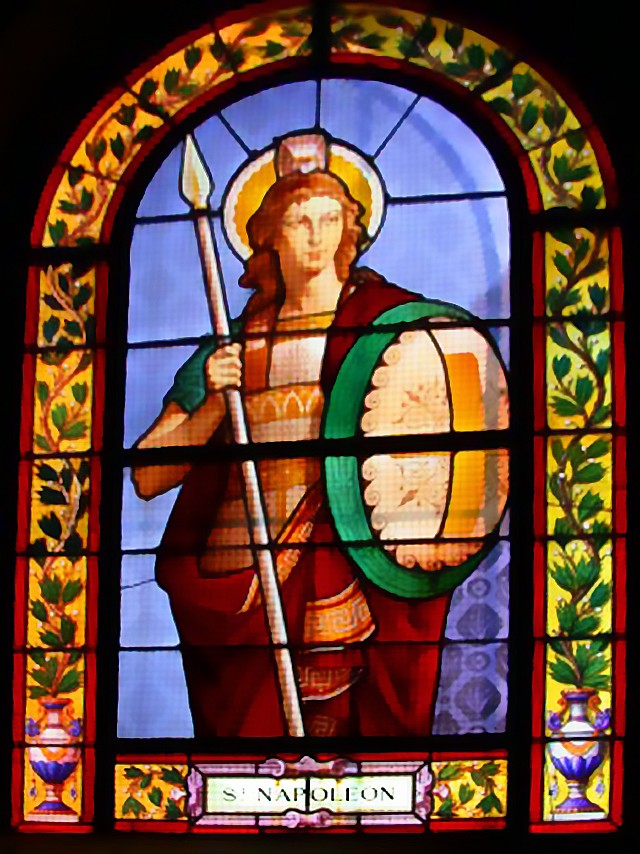
Saint of the Day – 15 August – St Napoleon (Died c302) Martyr of Alexandria. Born in Egypt and was Martyred in Alexandria in the early 4th Century during the persecutions of Diocletian. Also known as – Neopulus, Neopolus, Neopolis or Neópolo.
He was seized during the persecutions under Emperor Diocletian and was brutally tortured in Alexandria. Neopoleon died from his injuries. Sadly we have no further information but it appears that he had been a soldier.
St Tiburtius (Died c286) Martyr, Layman, the son of Saint Chromatius the Prefect of Rome, also a Martyr. St Damasus (c305-384), the Pope, wrote about Tiburtius. He died by being beheaded in c286 in Rome, Italy and his remains are entombed in the Ad Duas Lauros Cemetery at the three mile marker on the Via Lavicana in Rome. The Roman Martyrology reads today: “At Rome, between the two laurels situate about three miles from the City, the birthday of St Tiburtius, Martyr, under the Judge Fabian, in the persecution of Diocletian. After he had walked barefoot on burning coals and confessed Christ with increased constancy. he was put to the sword.” His Life and Death: https://anastpaul.com/2023/08/11/saint-of-the-day-11-august-saint-tiburtius-died-c286-martyr/
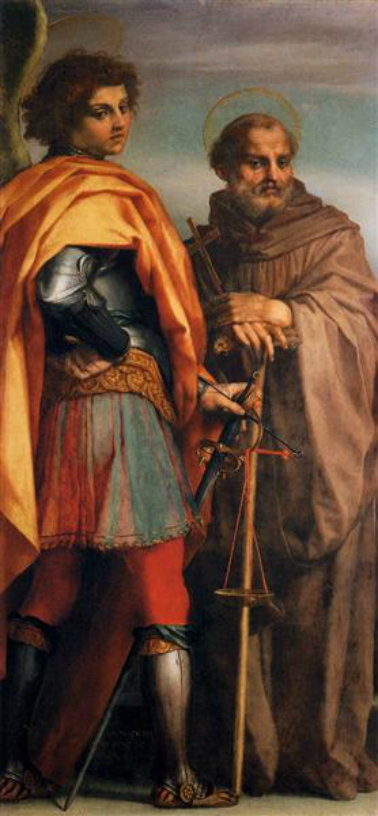
St Cassian of Benevento St Chromatius the Prefect Martyr, the Father of St Tiburtius also celebrated today and also a Martyr St Digna of Todi
St Equitius (Died c570) Abbot,Miracle-worker, a renowned Preacher and Evangeliser spreading the tenets and glory of monasticism, Founder of a Monastery. The Roman Martyrology reads today: “In the Province of Valeria, St Equitius, Abbot, whose sanctity is attested to by the blessed Pope Gregory.” His Life of Service: https://anastpaul.com/2024/08/11/saint-of-the-day-11-august-st-equitius-died-c570-abbot/
St Lelia St Rusicola of Arles St Rufinus of Marsi Bl Theobald of England and Companion St Taurinus (c350-c412) Bishop of Evreux
DISCLAIMER: Please note: I cannot control the content of the Advertisements on this Site, or of pop-ups which may appear, The revenue from the Advertisements, however, does provide a little assistance in the support of the Site. I do apologise for any inappropriate content.
Bl Conrad of Maleville Bl David Gonson St Epiphana St Faustus the Soldier
St Felix of Milan * Commemorated with St Nabor
St Fortunatus of Aquileia (1st Century – Died c66) Deacon St Hermagorus of Aquileia (1st Century – Died c 66) Bishop, Disciple of St Mark the Evangelist Bl Guy Vignotelli St Hilarion of Ancyra St Jason of Tarsus Bl Jeanne-Marie de Romillon
Bl Madeleine-Thérèse Talieu Bl Marguerite-Eléonore de Justamond Bl Marie Cluse St Menas the Soldier St Menulphus of Quimper
St Nabor of Milan * Commemorated with St Felix
St Paternian of Bologna St Paulinus of Antioch St Phêrô Khan St Proclus of Ancyra St Proculus (Died c542) Bishop and Martyr of Bologna St Uguzo of Carvagna St Ultán
Three Holy Exiles: Three Christian men who became Benedictine Monks at the Saint James Abbey in Regensburg, Germany, then Hermits at Griestatten and whose lives and piety are celebrated together. – Marinus, Vimius and Zimius.
Martyrs of Rome – Four members of the Imperial Roman nobility. They were all soldiers, one or more may have been officers, and all were Martyred in the persecutions of Diocletian – Basilides, Cyrinus, Nabor and Nazarius. Died in c 304 outside Rome, Italy and were buried there along the Aurelian Way.
Martyrs of Nagasaki – 8 Beati: Additional Memorial – 10 September as one of the 205 Martyrs of Japan Eight lay people, many them related to each other, who were martyred together: Catharina Tanaka, Ioannes Onizuka Naizen, Ioannes Tanaka, Ludovicus Onizuka, Matthias Araki Hyozaemon, Monica Onizuka, Petrus Araki Chobyoe, Susanna Chobyoe, 12 July 1626 in Nagasaki, Japan. Beatified on 7 May 1867 by Pope Blessed Pius IX.
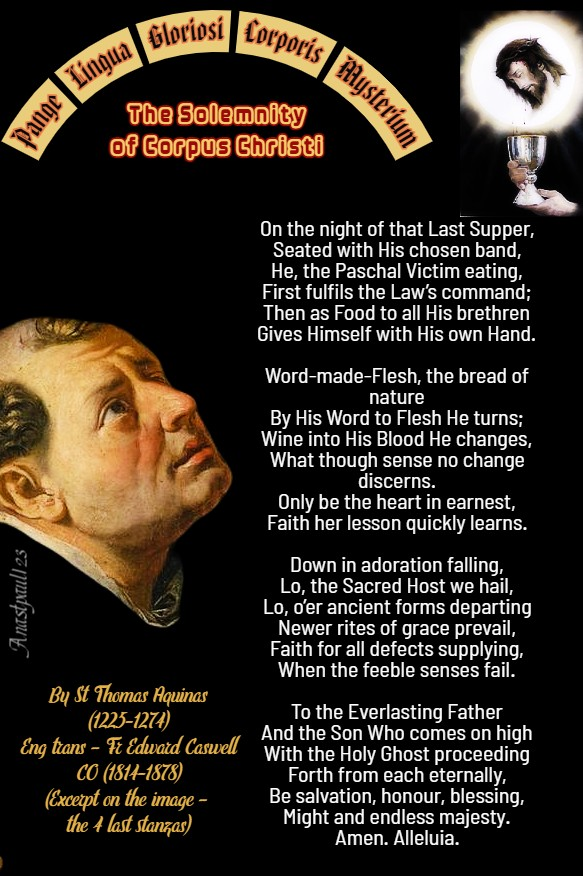
Our Morning Offering – 19 June – “The Month of the Most Sacred Heart of Jesus” – Corpus Christi
Pange Lingua Gloriosi Corporis Mysterium Sing, My Tongue By St Thomas Aquinas (1225-1274) Eng trans – Fr Edward Caswell CO (1814-1878) (Excerpt on the image – the 4 last stanzas)
Sing, my tongue, the Saviour’s glory, Of His Flesh, the Mystery sing; Of the Blood, all price exceeding, Shed by our Immortal King, Destined, for the world’s redemption, From a noble Womb to spring.
Of a pure and spotless Virgin Born for us on earth below, He, as Man, with man conversing, Stayed, the seeds of truth to sow; Then He closed in solemn order Wondrously His Life of woe.
On the night of that Last Supper, Seated with His chosen band, He, the Paschal Victim eating, First fulfils the Law’s command; Then as Food to all His brethren Gives Himself with His own Hand.
Word-made-Flesh, the bread of nature By His Word to Flesh He turns; Wine into His Blood He changes, What though sense no change discerns. Only be the heart in earnest, Faith her lesson quickly learns.
Down in adoration falling, Lo, the Sacred Host we hail, Lo, o’er ancient forms departing Newer rites of grace prevail, Faith for all defects supplying, When the feeble senses fail.
To the Everlasting Father And the Son Who comes on high With the Holy Ghost proceeding Forth from each eternally, Be salvation, honour, blessing, Might and endless majesty. Amen. Alleluia.
Written by St Thomas Aquinas (1225-1274) the Angelic and Common Doctor of the Church, for the very first Solemnity of Corpus Christi, this Hymn is considered the most beautiful of Aquinas’ Hymns and one of the seven great Hymns of the Church.
The last two stanzas make up the Tantum Ergo (Down in Adoration Falling) which is used at Benediction of the Blessed Sacrament. The Hymn is also used on Maundy Thursday during the procession from the Sanctuary to the Altar of Repose, where the Blessed Sacrament is kept until Good Friday.
Saint of the Day – 14 June – Saint Quintian (Died c525) Bishop of Rodez and of Clermont, France in the 6th Century. Our St Quintian acutally died in his See at Clermont and not at Rodez as stated in the Martyrology. Also known as – Quintianus, Quinctianus, Quintien, … of Rodez … of Clermont.
The Roman Martyrology reads today: “At Rodez, St Quinctian, Bishop.”
Tradition has made Quintian a native of Africa and a Priest of Carthage who fled to France due to the persecutions of the Vandals.
At the death of Saint Amantius (Amans) in 487, Quintian succeeded him as the Bishop of Rodez. During the war between the Franks and the Goths, he was a zealous supporter of Clovis I.
To avoid the persecutions of the Arian Visigoths, he took refuge in Auvergne, where he was hospitably received by Bishop Euphrasius of Clermont.
On the death of the latter, Quintian succeeded to the See of Clermont which he occupied until his death on 13 November 525 or 526 but his Feastday has always been commemorated on 14 June, thought to be the day of his Consecration as the Bishop of Clermont.
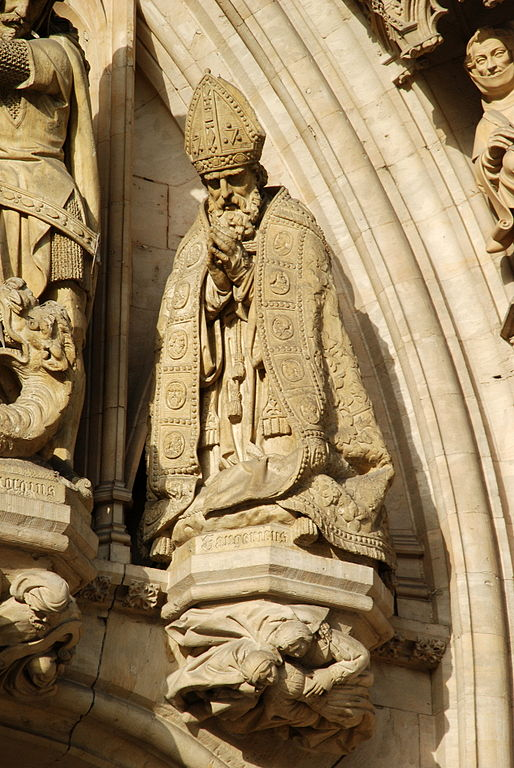
St Aleth of Dijon (1064-1106)Laywoman, Mother of 7, 4 of whom are Saints including the Doctor of Light, St Bernard (of Clairvaux), The other 3 Saints are St Humbeline of Jully (c1091-c1136) a Benedictine Nun, St Gerard of Clairvaux (Died 1138) Bernard older brother, Blessed Nivard of Clairvaux (c1100-c1150) Bernard’s youngest brother. Lovely St Aleth: https://anastpaul.com/2024/04/04/saint-of-the-day-4-april-saint-aleth-of-dijon-1064-1106-laywoman/
St Guerir (8th Century) Monk and Hermit St Henry of Gheest St Hildebert of Ghent St Peter of Poitiers (c1130-1215) Bishop
St Theodulus of Thessalonica St Theonas of Egypt St Tigernach of Clogher
St Zosimus of Palestine (Died c560) Priest, Monk, Hermit. As already reported in the legendary life of St Mary of Egypt, St Zosimus, a Monk and Hermit, is the one who discovers St Mary in the desert and gave her Holy Communion shortly before her death. The Roman Martyrology reports: “In Palestine, the Anchorite, St Zosimus, who buried the remains of St Mary of Egypt.” His Holy Life: https://anastpaul.com/2023/04/04/saint-of-the-day-4-april-st-zosimus-of-palestine-c-460-c-560-priest-hermit/
Martyred in Cairo François de la Terre de Labour Nicolas of Montecorpino
Martyrs of Thessalonica – 14 Saints: Fourteen Christians who were Martyred together, date unknown. No other information, except the names of 12 of them, has survived – Ingenuus, Julianus, Julius, Matutinus, Orbanus, Palatinus, Paulus, Publius, Quinilianus, Saturninus, Successus, Victor and two whose names have not come down to us. Agathopus the Deacon, Theodulus the Lector.
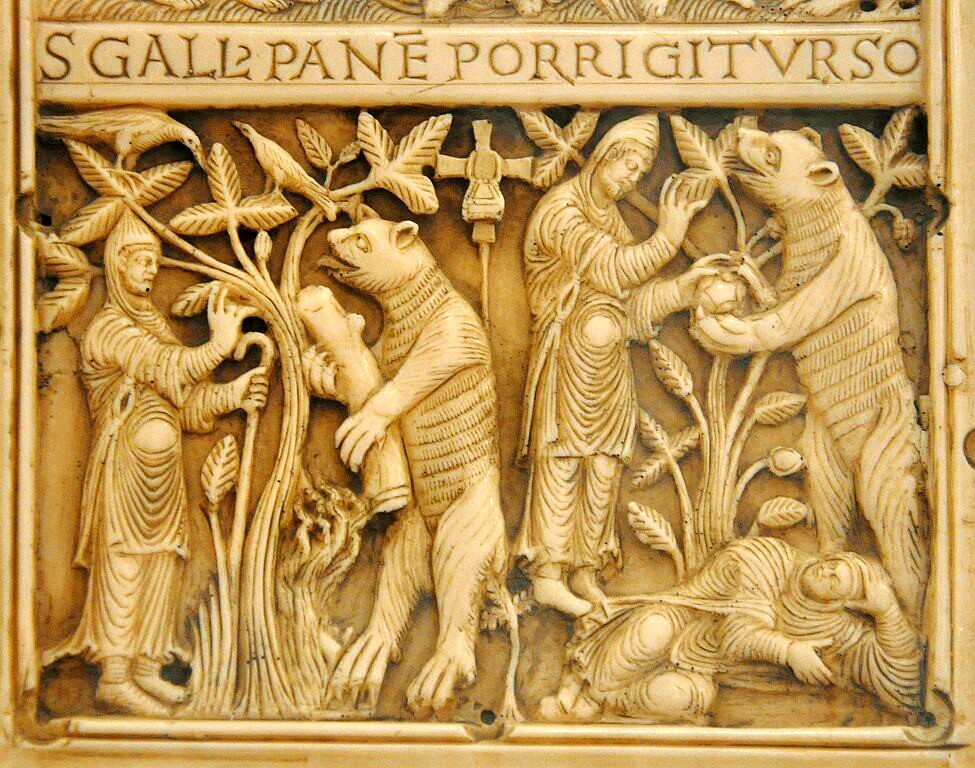
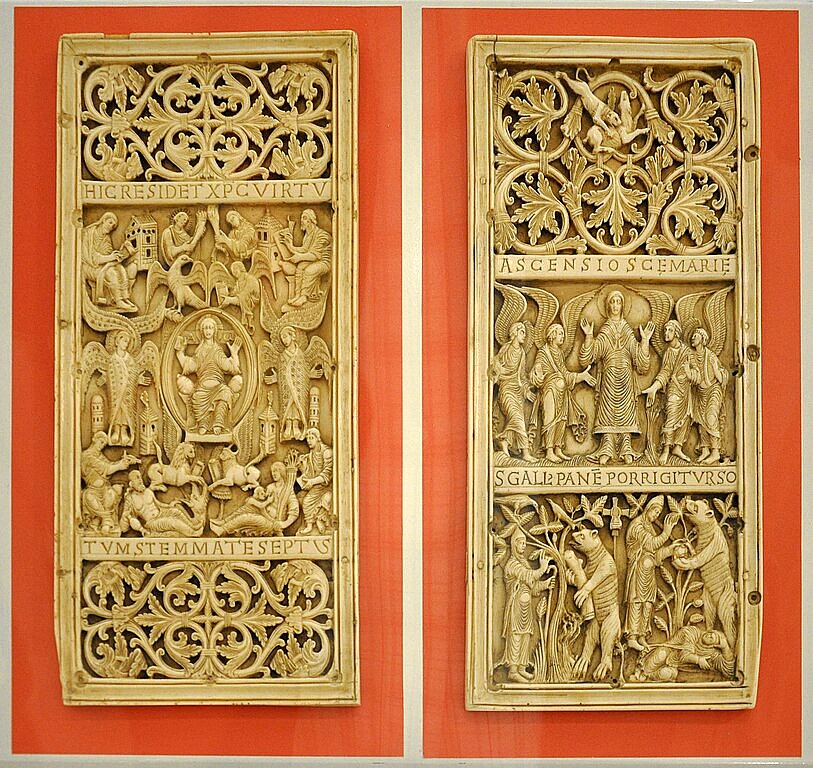
Saint of the Day – 28 March – St Tutilo OSB (c850-c915) Monk of St Gall, Teacher and leader of the Monastic School, Musician, Poet, Painter, Sculptor, Builder, Goldsmith and Hymnist and Composer – truly a “Man for all Seasons.” Born in Ireland in c850 and died at the St Gall Monastery in c915.= of natural causes.Also known as – Tuathal, Tutilo von Gallen, Tutilo of Gall, Tuathal…Tuotilo… Tutilóne…
Ivory Relief Sculpture by St Tutilo
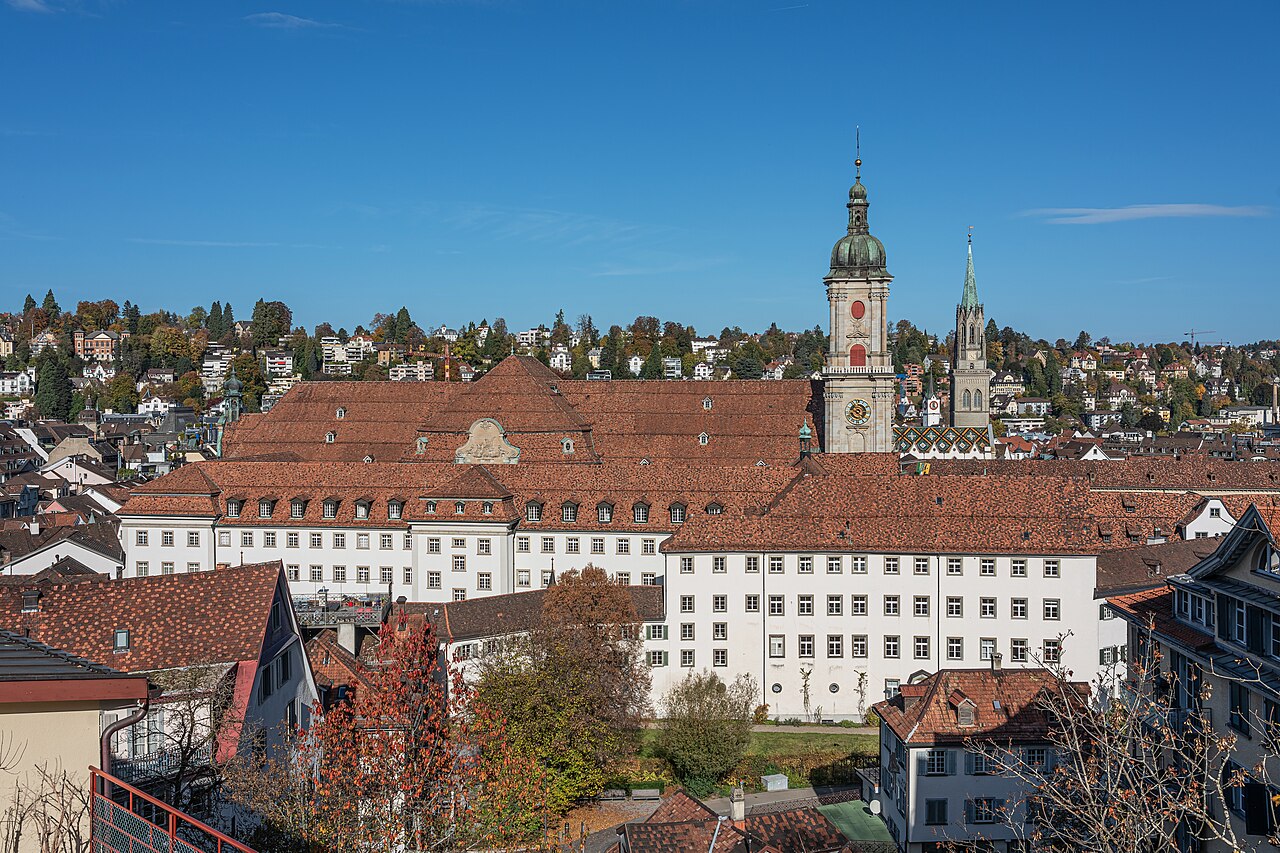
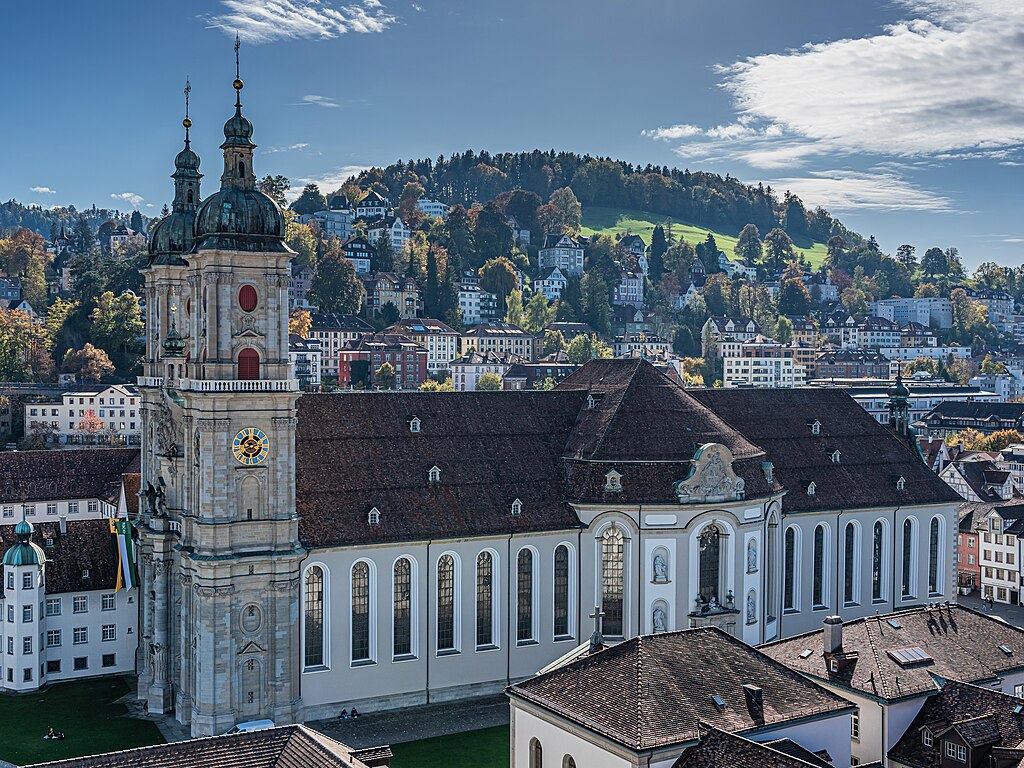
When St Gall, the companion of St Columban, died in Switzerland in 640, a Monastery was built over the place of his burial. This became the famous Monastery of St Gall, one of the most influential Monasteries of the Middle Ages and the centre of music, art and scholarly learning throughout that period.
In about the middle of the 9th Century, when travelliung on his return from a visit to Rome, an Irishman named Moengul stopped at the Abbey and decided to stay, along with a number of Irish companions, among them Tutilo. Moengul was given charge of the Abbey schools and he became the teacher of Tutilo, St Notker and St Radpert, who were distinguished for their learning and their artistic skills. Tutilo, in particular, was a universal genius – musician, poet, painter, sculptor, builder, goldsmith, head of the monastic school and composer.
Two Ivory Artworks by St Tutilo used as Manuscript Covers
He was part of the Abbey at its greatest time and the influence of Gall spread throughout Europe. The Gregorian Chant manuscripts from the Monastery, many of them undoubtedly the work of St Tutilo, are considered among the most authentic and were studied carefully when the Monks of Solesmes were restoring the tradition of Gregorian Chant to the Catholic Church. The scribes of St Gall supplied most of the Monasteries of Europe with manuscript books of Gregorian Chant, all of them priceless works of the art of Illumination.
Proof of the Irish influence at St Gall is a large collection of Irish manuscripts at the Abbey from the 7th, 8th and 9th Centuries.
Tutilo was known to be handsome, a large, powerfully built man, eloquent and quick-witted, who brought something of the Irish love of learning and the arts, to St Gall. He died in c915 at the height of the abbey’s influence. He is remembered as an inspired Teacher, a dedicated Monk, an illustrious Musician and Hymnist and a highly competent scholar.
St Gall Monastery
It is reported that the most interesting items at the St Gall Abbey are the ivory tablets attributed to Tutilo. His paintings and some other artworks can be found at Konstanz, Metz, St Gall and Mainz, Abbeys and Monasteries.
St Tutilo was buried at a Chapel dedicated to St Catherine in St Gall, which was later renamed and dedicated in his honour as a Saint. His Feastday is celebrated today, 28 March.
Saint of the Day – 10 March – Saint Andrew OSB Vall (Died 1097) Abbot of the Vallombrosian Monastery in Strumi in Florence, writer, peacemaker. Born in Parma, Italy and died in 1097 of natural causes in his Monastery in Florence. Also known as – Andrew the Ligurian (or Genoese).
In the mid-11th Century, the Italian City of Milan, was ruled by a corrupt Archbishop named Guido, who took a permissive attitude toward the Ecclesiastical abuses of simony (the buying or selling of Ecclesiastical Offices) and clerical immorality (Priests living with concubines).
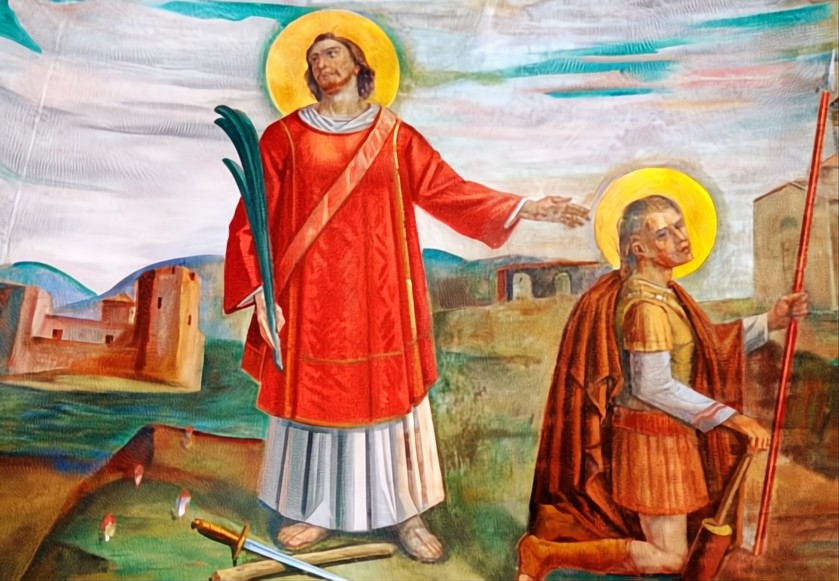
Those working to stop these abuses, were led by the Martyred Deacon Saint Arialdo (C1010-1066), supported by his close friend, Andrew, from Parma. The Holy See naturally supported Arialdo and excommunicated the Archbishop himself, charging him with the crime of simony. Guido retaliated by having Arialdo tortured and murdered. Arialdo’s friend Andrew, attended to his honourable burial, and afterward entered the Vallombrosan Order. He subsequently became the Abbot of the Vallombrosan Monastery of Strumi, where he took up his pen to write a biography of his Martyred friend Arialdo and another of the Vallombrosans’Founder, Saint John Gualbert.
St Arialdo Deacon and Martyr – on the right might just be our Saint Andrew prior to becoming a Monk
Sadly, most of Andrew’s writings were later lost in a 16th Century fire at the Vallombrosans’ Monastery in Florence. Andrew was a peacemaker, credited with reconciling, in his lifetime, the opposing cities of Florence and Arezzo.
St Basilios of Constantinople St Comgan Bl Emmanuel of Cremona Bishop St Fortunatus of Rome St Herefrith of Lindsey St Honorina St John (c900-976) Abbot of Gorze Monastery St Luke of Messina
Blessed William Richardson (1572–1603) English Priest, Martyr. He was Beatified on 15 December 1929 by Pope Pius XI. Born in Yorkshire and died by being hanged, drawn and quartered on 27 February 1603 at Tyburn, London, aged just 31. William owns the dubious honour of being the last Martyr under Elizabeth I’s barbaric policy of murdering Catholics and especially Priests, in this manner. His Life and Death: https://anastpaul.com/2023/02/27/saint-of-the-day-27-february-blessed-william-richardson-1572-1603-english-priest-martyr/
Saint of the Day – 23 February – Saint Romana (Died c324) Virgin, Recluse, Miracle-worker. Born in c308 and died in c324 in her cave in Todi, Umbria, Italy of natural causes.
The Roman Martyrology reads today: “At Todi, St Romana, Viurgin, who was Baptised by Pope St Sylvester. She led a heavenly life in caves and dens and wrought glorious miracles.”
St Pope Sylvester
Romana was the daughter of Calfurnius, the Prefect of Rome. Having embraced the Christian Faith, she renounced all the comforts and conveniences which her rank would have allowed her.
Following her religious vocation, she ran away from home and, at the age of 10, she reached St Silvester on Mount Soratte, to be Baptised.
Inside the church of Santa Romana on Soratte (a mountain in Sabina) there is the following inscription: “23 FEBEUARII ^ TUDERTI ^ St ROMANE VIRGINIS QUE A S. SILVESTRO BAPTIZATA IN HANC ANTRI ET SPELUCIS CELESTE VITA DUXIT ET MIRACULORV.GLORIS CLARUIT.” (23 FEBRUARY ^ TUDERTI ^ ST ROMAN VIRGIN WHO WAS BAPTISED BY ST SILVESTER IN THIS CAVE. SHE LIVED A CELESTIAL LIFE AND WAS REPLETE WITH MIRACULOUS GLORY). Nowadays it is almost illegible.
Romana on Mount Soratte. lived in a hermitage, She wanted to live in that very cave, perhaps because she felt close to Pope Sylvester, whose sanctity she admired. And it is in these places that a legendary relationship was born, between the Saint and his devotee, who reached him at the top of the mountain, perhaps using some secret passage, wedging herself into the bowels of the mountain.
Silvester warned her each time and once said to her: “now you will return when the roses have bloomed.” It was the middle of winter which had often stained the steep climbs of the mountain with white, when one morning Romana returned to Silvester with a rose; it had bloomed.
The Saint then set out alone towards the City of Todi. In the gorges of Forello, she established her home inside a cave. Although she lived alone, her constant prayer and her faith, were such that many Christians approached her, praising her sanctity.
Romana died in prayer surrounded by the faithful, in the year c324. The body of the Saint was buried in the cave where she lived and in which an Altar was built, where masses were continuously celebrated.
In 1301 her body was transferred to St Fortunatus Church in Todi.
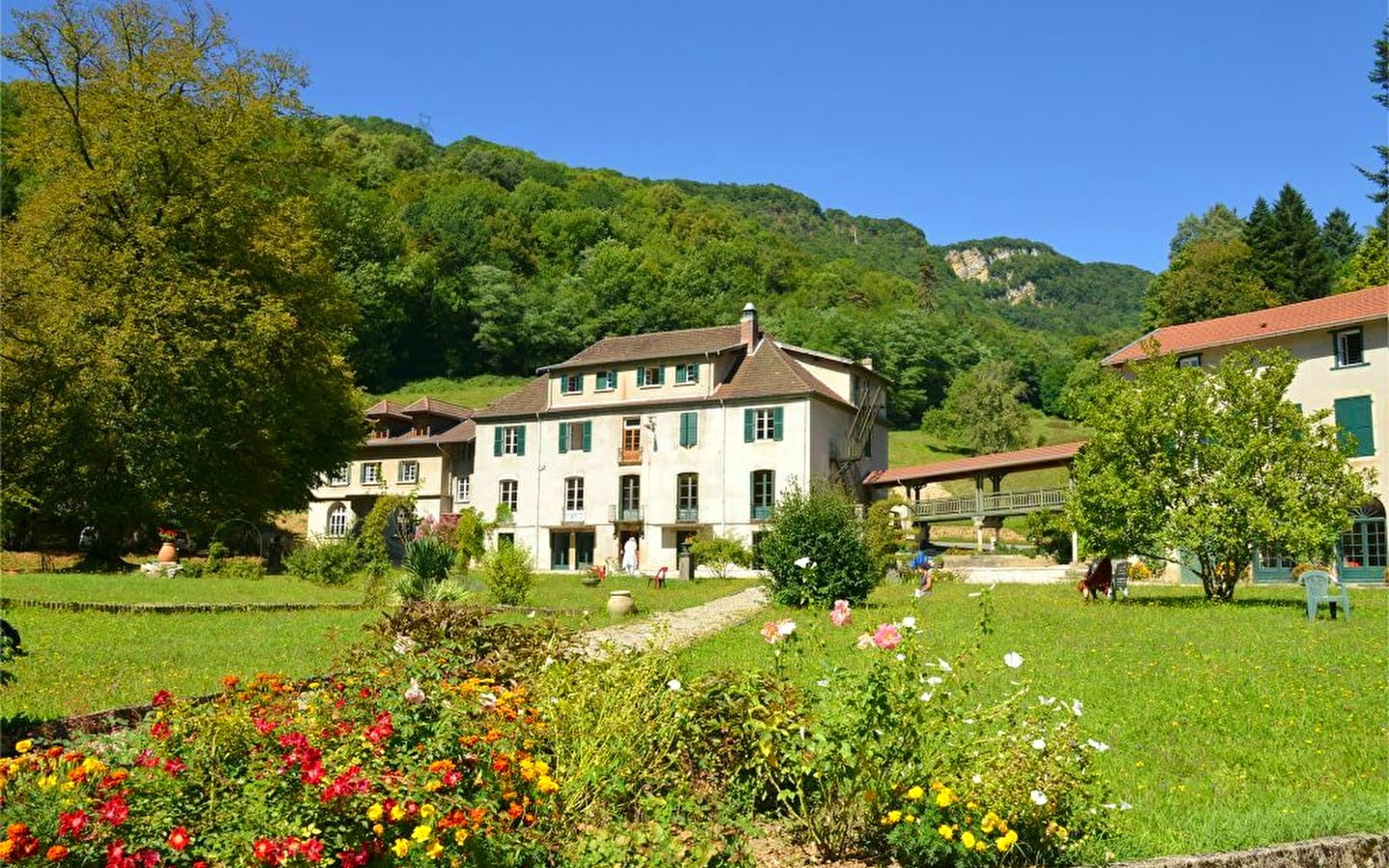
Saint of the Day – 1 July – St Domitian (c347-440) Abbot, who had been the first Hermit of the surrounding region in France, Founder of a Monastery which became the foundation of the spiritual, cultural and social teachings of its region and day. Born in c347 in Rome and died in 440 at the Saint Rambert de Joux Abbey in the Diocese of Lyons in France of natural causes. Also known as – Domitian of Bebron, Domitian of Lerins, Domiziano… Additional Memorial – 1 September in the Diocese of Belley
The Roman Martyrology reads: “In the Diocese of Lyons, the decease of St Domitian, Abbot, who was the first to lead there, an eremitical life. After having assembled, in that place, many servants of God and gained great renown for virtues and miracles, he was gathered to his fathers at an advanced age.”
Information about the life of Saint Domitian comes mainly from an anonymous ‘Vita’ written many centuries after Domitian’s had died. According to this source, Domitian lived in the 5th Century, initially dedicating himself to the life of a Hermit in Gallia Lugdunensis, a region which today includes part of south-eastern France. His vocation as a Hermit led him to settle in the area of Bebron, in the Alps, where he led a life of prayer and asceticism.
However, Domitian’s fame for sanctity soon attracted disciples eager to follow his example. A community gathered around him, giving life to a monastery which became a centre of spiritual reference for the region. Domitian became the Abbot of this community, leading his brothers with wisdom and compassion.
The Monastery founded by him in Bebron played a significant role in the spread of monasticism in the region. Known as the Monastery of Bebron or theAbbey of Saint-Rambert-de-Joux, it became a place of intense spiritual and cultural activity. The Monks, under the guidance of Domitian, devoted themselves to prayer, study and manual labour, contributing to the economic and social development of the area.
The fame of the sanctity of Saint Domitian spread rapidly beyond the confines of his Monastery. His death, which occurred at an advanced age, was marked by deep mourning on the part of his community and the faithful of the region. His body was buried inside the Monastery C hurch, becoming an object of veneration for pilgrims, who came from all over to ask for his intercession. The cult of Saint Domitian consolidated, over the centuries, as attested by several mentions in calendars and martyrologies. The Roman Martyrology commemorates him on 1 July, while the Diocese of Belley celebrates him on 1 September. His memory is particularly alive in the Bugey region, where the Monasterywhich he had founded prospered for centuries, taking the name of Abbey of Saint-Rambert-en-Bugey, see below.
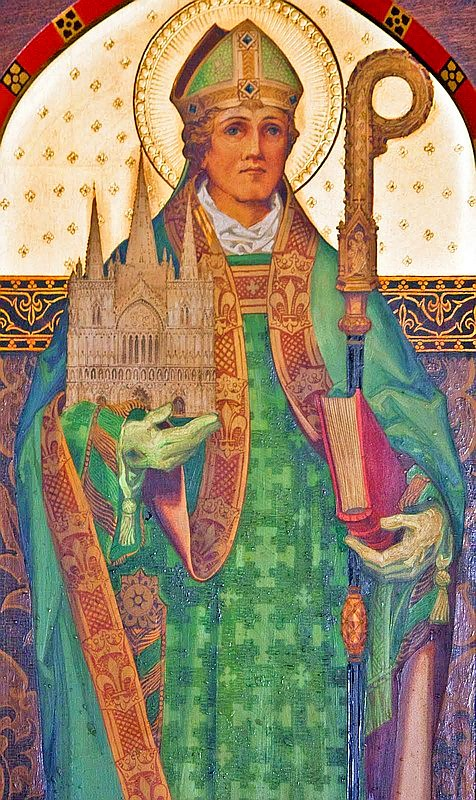
Saint of the Day – 12 June – Saint Odulf of Utrecht (Died c865) Priest, Monk, Prior, zealous Missionary to the Frisians. Odulf was gifted with the charism of prophecy. Born in Brabant (in modern Belgium) and died in c865 of natural causes at his Monastery, Saint Martin of Utrecht. Patronages – Borgloon, Belgium, Evesham, England, Stavoren, Holland, Utrecht, Holland. Also known as – Odulph of Stavoren, Odulf of Evesham, Odolfo…Odulf…Odulfo…Odulphus… Additional Memorial – 18 July on some calendars.
According to a fairly reliable Vita from the 10th Century, Odulf, son of the Frankish Ludgis of Oorschoot, was educated at the school of Utrecht, where he excelled in his studies and attracted all by his piety and learning. Ordained a Priest, he was attracted by the monastic life of prayer and detachment from the world but his parents ardently desired him to exercise pastoral care in Oorschoot, since the local Church stood on their property and probably belonged to them.
After a few years, having distributed his goods among the poor, Odulf took on the monastic Habit in the Monastery of Saint Martin of Utrecht attached to the Cathedral. He became Prior there while St Frederick was the Bishop, who, havingby the aid of Odulf, completed the mission among the Frisians, asked him to dedicate himself to pastoral care in the recently erected Church of Pensoren. Odulf accepted, on condition that he could later return to the Monastery to retire and die there.
St Martin’s Abbey Monastery, Utrecht
After a very fruitful activity, he returned in an unspecified year to his Monastery. The Norman incursions of the following decades brought serious damage and suffering to Oorschoot, as Odulf had predicted if the community had strayed from the straight path of Christian truth. Odulf intervened decisively in the election of Bishop Ungaro.
He died around the year 865 and his cult soon spread around Holland and Belgium. His remains were later transferred from Utrecht, where however a Relic remained, to Pensoren and from there, in around 1034 to London and Evesham Abbey – it is told that St Odulf’s Relics were actually stolen and re-appeared in England, where our Saint became the Patron of Evesham. His Feast Day is on June 12th.
Notre-Dames de Betharam / Our Lady of Betharam, France (1503) – 22 April: Saint Bernadette Soubirous frequently visited the Shrine of Betharram. In fact, the rosary beads that Bernadette used when praying with the Blessed Virgin during the first apparition at Lourdes had come from the Betharram Shrine and the priest to whom she was sent after the apparitions, was Saint Michel Garicoïts (1797-1863) the Priest of Betharram. He it was who alone believed Bernadette’s accounts of the apparitions at Lourdes. He was Canonised in 1947. About St Michel Garicoits here: https://anastpaul.com/2019/05/14/saint-of-the-day-14-may-saint-michel-garicoits-1797-1863/ HERE: https://anastpaul.com/2021/04/22/notre-dames-de-betharam-our-lady-of-betharam-france-1503/
St Pope Caius I (Died 296) Martyr, Bishop of Rome from 17 December 283 to his death in 296. Christian tradition makes him a native of the Dalmatian city of Salona, today Solin near Split, the son of a man also named Caius and a member of a noble family related to the Emperor Diocletian. Biography: https://anastpaul.com/2019/04/22/saint-of-the-day-22-april-saint-pope-caius-i-died-613/
Saint Altfried of Münster (Died 849) the Third Bishop of Münster from (839–849) and Abbot of Essen-Werden and Helmstedt. Born in the 9th Century, n Friesland (in modern Netherlands) and died on 22 April 849 of natural causes. Altfried was a nephew of St Ludger (c 742-809) and his second successor in the See of Münster, as well as a successor as Abbot of the Abbey of Essen-Werden (founded by St Ludger). The second successor was also a close relative, St Gerfried of Münster. Altfried also wrote a comprehensive Vita of St Ludger. St Altfried’s Life: https://anastpaul.com/2023/04/22/saint-of-the-day-22april-saint-altfried-of-munster-died-849/
St Apelles of Smyrna St Arwald St Epipodius of Lyon St Euflamia
Martyrs of Persia: Bishops, Priests, Deacons and Laity who were Martyred in Persia and celebrated together. Several of them have their stories related in the Acta of Saints Abdon and Sennen.
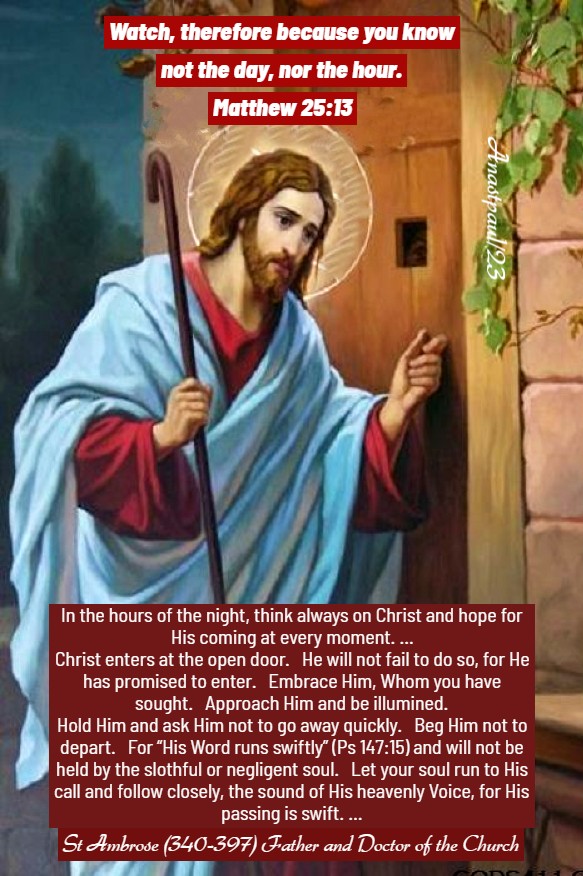
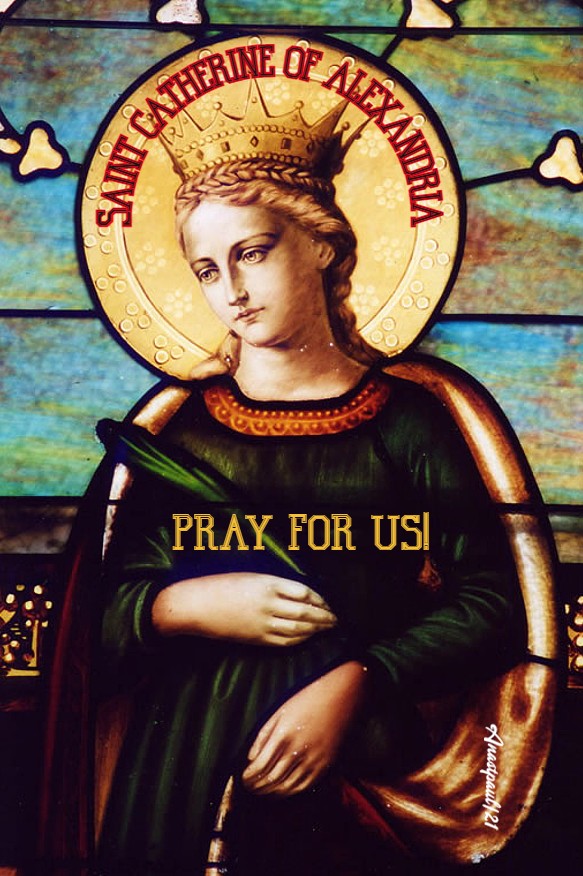
One Minute Reflection – 25 November – “The Month of the Holy Souls in Purgatory” – St Catherine of Alexandria (Died c305) Virgin Martyr – Sirach 51:1-8; 5:12, Matthew 25:1-13 – Scripture search here: https://www.drbo.org/
“Watch, therefore because you know not the day, nor the hour.” – 25:13
REFLECTION – “You are one of the virgins who illumine the beauty of your body with the light of the mind, you are all the more fit to be compared with the Church. In the hours of the night, think always on Christ and hope for His coming at every moment. … Christ enters at the open door. He will not fail to do so, for He has promised to enter. Embrace Him, Whom you have sought. Approach Him and be illumined. Hold Him and ask Him not to go away quickly. Beg Him not to depart. For “His Word runs swiftly” (Ps 147:15) and will not be held by the slothful or negligent soul. Let your soul run to His call and follow closely, the sound of His heavenly Voice, for His passing is swift. …
With what ties is Christ to be held? Not by force, not by chains but rather, by the bonds of charity. He is kept and held by the ties of the mind, by the love of the heart. So, if you wish to hold Christ, seek Him continually and fear no fatigue. It is often in pain of body, amid the very hands of the persecutors that Christ may really be found. … In a little while, in a brief moment, when you have escaped the hands of your persecutors and have not succumbed to the powers of the world, Christ will meet you and will not allow you to be tempted further.” – St Ambrose (340-397) Archbishop of Milan, Father and Doctor of the Church (De virginitate, PL 16, 283-286 – The Nun’s Ideals).
PRAYER – O God, Who gave the law to Moses on Sinai’s height and through Thy holy Angels, miraculously placed there, the body of blessed Catherine, Thy Virgin and Martyr, grant, we beseech Thee that by her merits and intercession, we may reach that towering eminence which is Christ our Lord.Through the same Jesus Christ, Thy Son our Lord, Who lives and reigns with Thee, in the unity of the Holy Ghost, God, world without end. Amen (Collect).
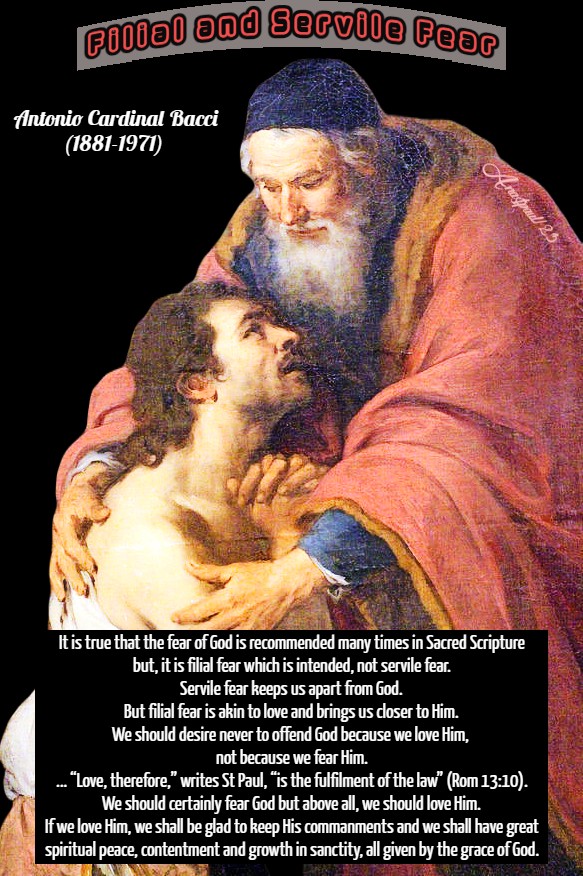
Thought for the Day – 13 September – Meditations with Antonio Cardinal Bacci (1881-1971)
Filial and Servile Fear
“It is true that the fear of God is recommended many times in Sacred Scripture but, it is filial fear which is intended, not servile fear.
Servile fear keeps us apart from God. But filial fear is akin to love and brings us closer to Him. We should desire never to offend God because we love Him, not because we fear Him. When one loves another with all one’s heart, iot is nearly impossible to offend him. In this sense “the fear of Lord is the beginning of knowledge” (Prov 1:7) and, therefore, of sanctity. It is a gift of the Holy Spirit which produces, in us, a complete and loving submission to God, our Father and keeps us far from sin because, it is displeasing to Him.
The filial fear is pleasing to God, for “he fulfils the desire of those who fear Him, He hears their cry and saves them” (Ps 144:19).
“Love, therefore,” writes St Paul, “is the fulfilment of the law” (Rom 13:10). We should certainly fear God but above all, we should love Him. If we love Him, we shall be glad to keep His commanments and we shall have great spiritual peace, contentment and growth in sanctity, all given by the grace of God.”
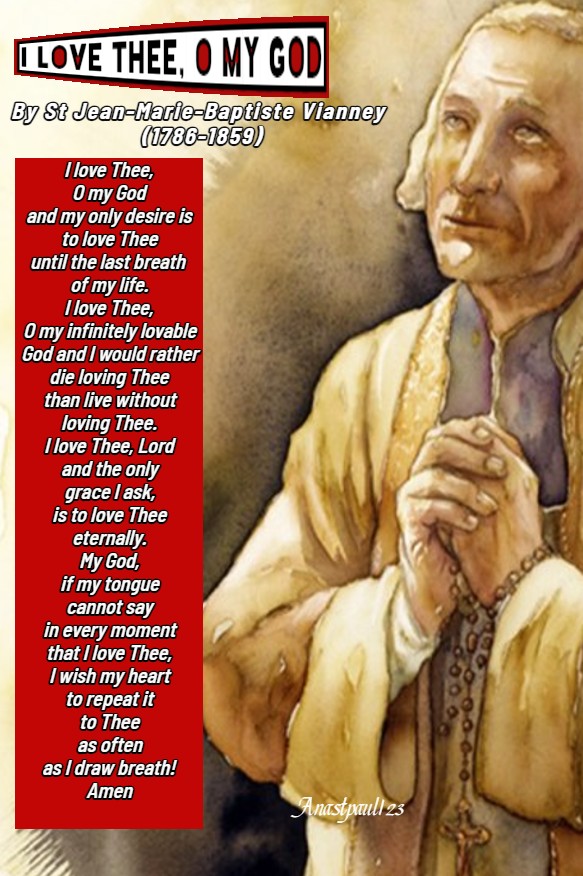
Our Morning Offering – 9 August – “The Month of the Immaculate Heart of Mary” and the Memorial of St John Vianney (1786-1859) Confessor
I Love Thee, O My God By St John Vianney (1786-1859)
I love Thee, O my God and my only desire is to love Thee until the last breath of my life. I love Thee, O my infinitely lovable God and I would rather die loving Thee than live without loving Thee. I love Thee, Lord and the only grace I ask, is to love Thee eternally. My God, if my tongue cannot say in every moment that I love Thee, I wish my heart to repeat it to Thee as often as I draw breath! Amen
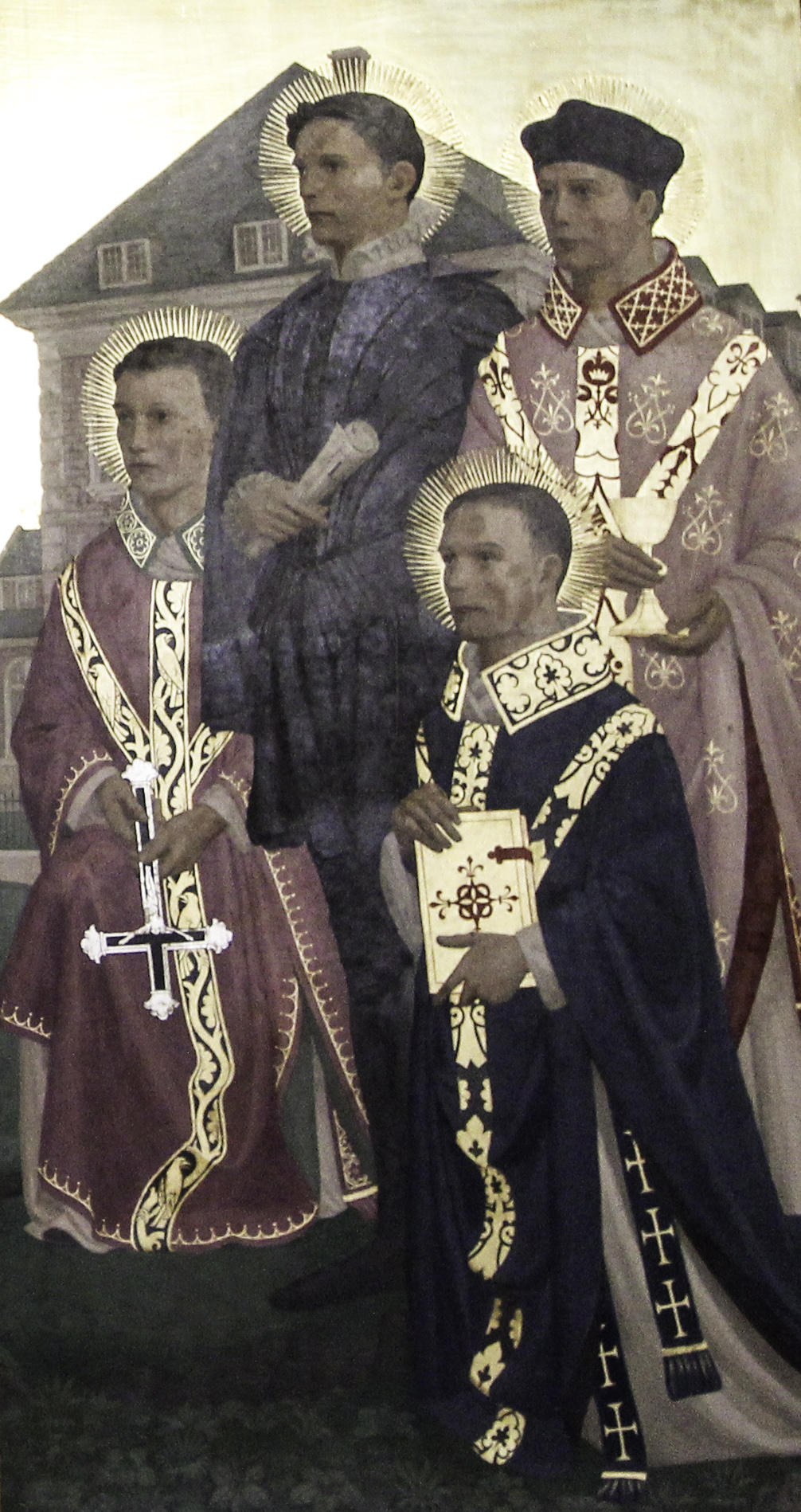
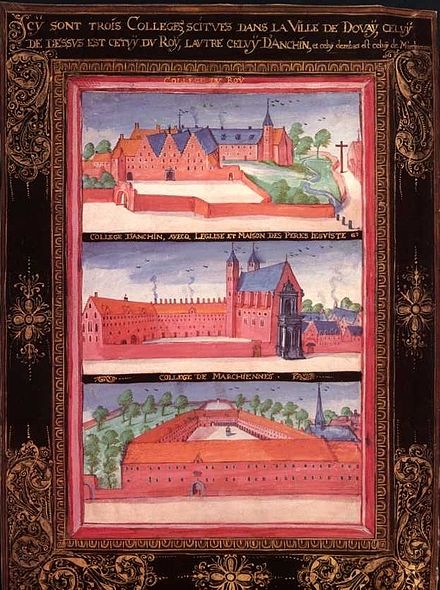
Saint of the Day – 6 July – Blessed Thomas Alfield (c 1552-1585) Priest Martyr Born in Gloucester, England and died by being hung, drawn and quartered on 6 July 1585 at Tyburn, London, England. Also known as – Thomas Aufield, Thomas Alphilde, Thomas Hawfield, Thomas Offeldus, Thomas Badger. Additional Memorial – 29 October as one of the Martyrs of Douai. Thomas was Beatified on 15 December 1929 by Pope Pius XI.
Thomas was born a protestant, it seems of a wealthy family and educated at Eton College and King’s College, Cambridge, where he obtained a Degree in 1568. He then converted to Roman Catholicism and in September 1576, at the age of 24. Thomas then travelled to the English College at Douai, France, to study for the Priesthood but did not finish at that time, presumably due to certain circumstances at home..
4 years later, in September 1580 Thomas returned to the Seminary, by then moved to Rheims and was Ordained a Priest on 4 March 1581 and later that month set out for the English Mission.
Thomas seems to have mostly ministered in the North, where he was arrested on 2 May 1582. He was imprisoned in the Tower of London, where he apostatised under torture, returning to protestantism. He was released on the payment of bail by his family and he he then returned to Gloucester.
By the following April, Thomas riddled with guilt and grief over his betrayal of Christ and His Church, returned to Rheims to repent and to be received back into the fold. Around this time he was approached by Captain John Davis, the mariner requesting an introduction to Cardinal William Allen (who was the major force in founding Seminaries for the training of the English for their own country. Davis proposed that the ships he had been given by the government for piracy against Spain be crewed by Catholics to serve the Pope or the King of Spain against the Turks or other enemies. Thomas met Davis at Rouen and brought him to Rheims to meet Williams. Davis’s plan was conveyed to the Pope, who referred Davis to the King of Spain.
On the failure of the negotiations, Thomas returned to England and was arrested for circulating Catholic literature. The booklet was “True and Modest Defence,” a defence of the Faith. Thomas was sent to the Tower, and again put to tortur, this time maintaining his strength, by the grace of God, through all the violence and horror.
He was charged under the Religion Act 1580 which prohibited publication of any book against the Queen and her protestant religion. He was then transferred to Newgate where he was tried, convicted and hung at Tyburn alongside his assistant Blessed Thomas Webley.

























 AnaStpaul
You must be logged in to post a comment.