Posted in Uncategorized

One Minute Reflection – 30 June – “Why are you afraid, O men of little faith?” 

One Minute Reflection – 30 June – “The Last day of the Month of the Sacred Heart”

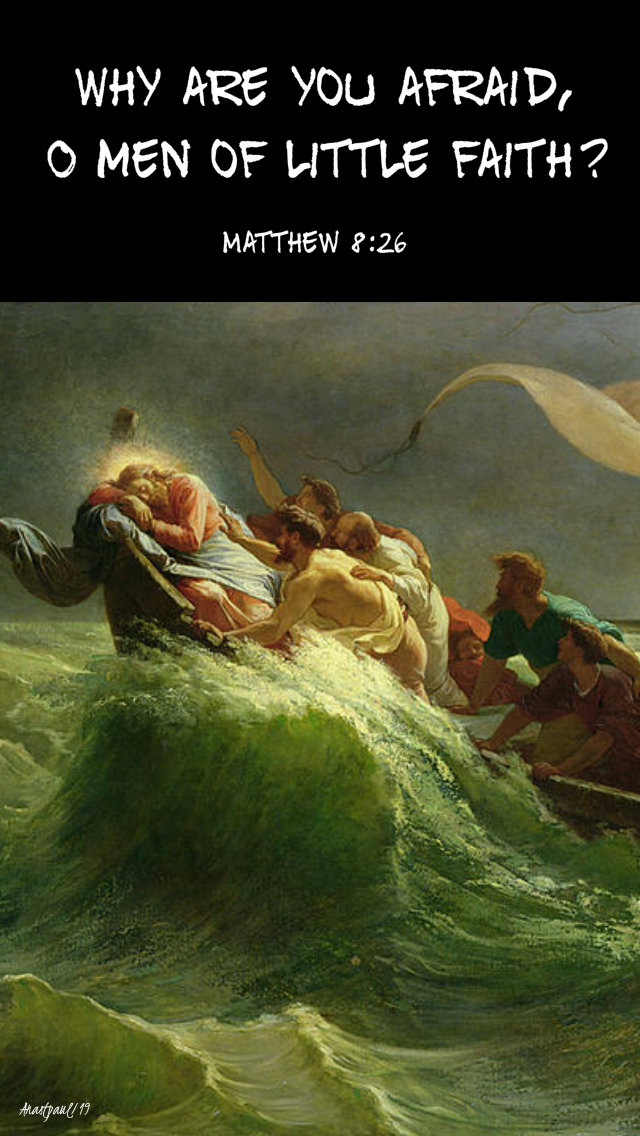
He said to them, “Why are you afraid, O men of little faith?”   Then he got up, rebuked the winds and the sea and there was great calm. … Matthew 8:26
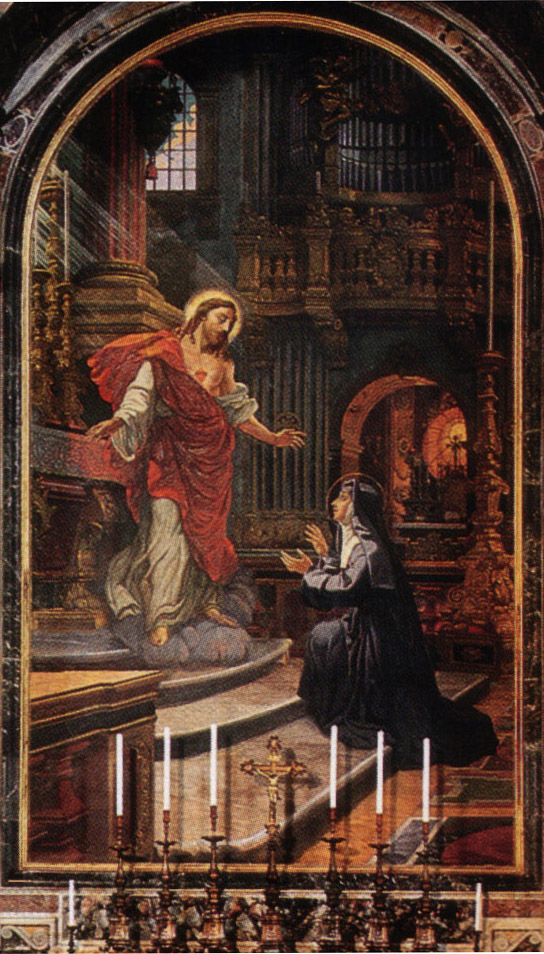
REFLECTION – “God is not at all displeased when, on occasion, you quietly complain to him.   Don’t be afraid of saying to him:  “Lord, why do you stand afar off? (cf. Ps 9:22 LXX)   You know well that I love You and only long for Your love.   Graciously come to my aid and do not abandon me.”

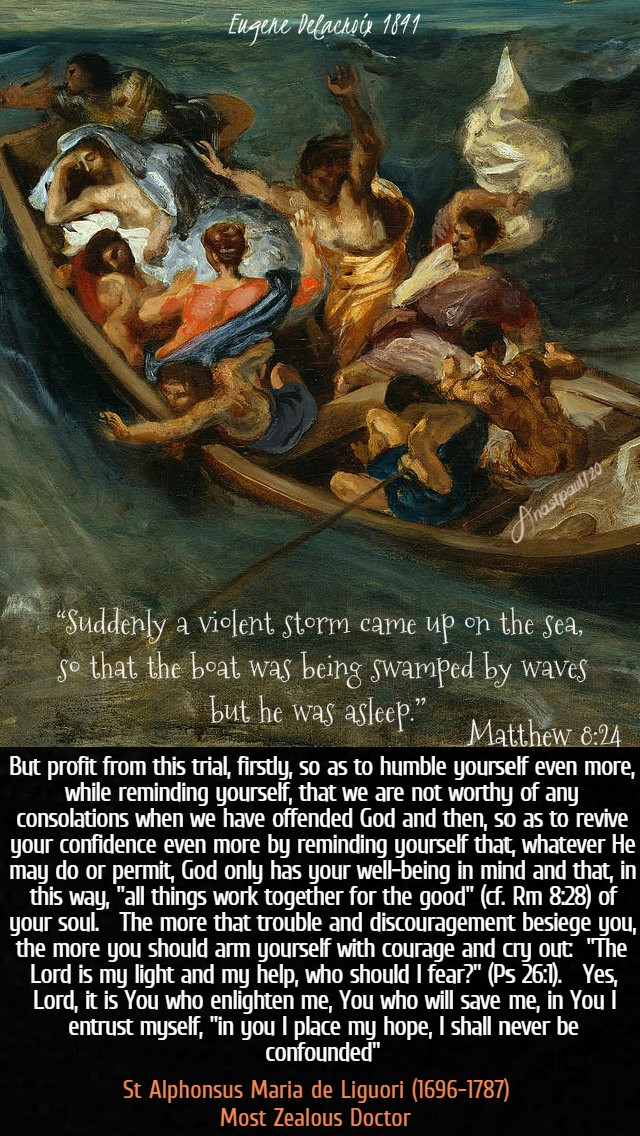
If your desolation continues and your anguish is unbearable, unite your voice to that Jesus, Jesus dying in affliction on the cross – say, as you beg the divine pity:  “My God, my God, why have you abandoned me?” (Mt 27:46)   But profit from this trial, firstly, so as to humble yourself even more, while reminding yourself, that we are not worthy of any consolations when we have offended God and then, so as to revive your confidence even more by reminding yourself that, whatever He may do or permit, God only has your well-being in mind and that, in this way, “all things work together for the good” (cf. Rm 8:28) of your soul.   The more that trouble and discouragement besiege you, the more you should arm yourself with courage and cry out:  “The Lord is my light and my help, who should I fear?” (Ps 26:1).   Yes, Lord, it is You who enlighten me, You who will save me, in You I entrust myself, “in you I place my hope, I shall never be confounded” (Ps 30:2 LXX).

In this way, stand firm in peace, certain that “no-one has hoped in the Lord and been confounded” (Sir 2:11 Vg.), none have been lost after having placed their trust in God.” … St Alphonsus Maria de Liguori (1696-1787) – Bishop and Doctor of the Church – What should we talk about with God? (from: ‘How to Converse Continually and Familiarly with God’).
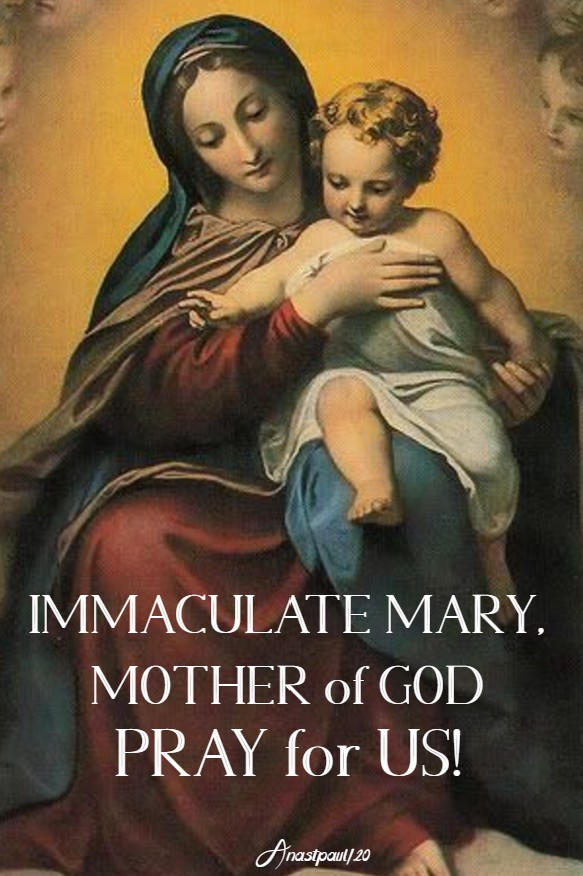
PRAYER – Lord, You are the beginning and the end of all that we do, all that we are and all that we say.   Lead us by the light of Your grace in complete trust and confidence and complete us with Your all-powerful help.   Let Your light penetrate the hidden fears of our hearts and may our trust be complete.  And may we always understand that our Mother, loves us and cares for us in all our needs.    We worship You in Christ, Your Son, who lives and reigns with You and the Holy Spirit, God forever and ever, amen.
Posted in Uncategorized

Quote/s of the Day – 30 June – ‘I put all my trust in Thee …’

Quote/s of the Day – 30 June – “The Last day of the Month of the Sacred Heart” 

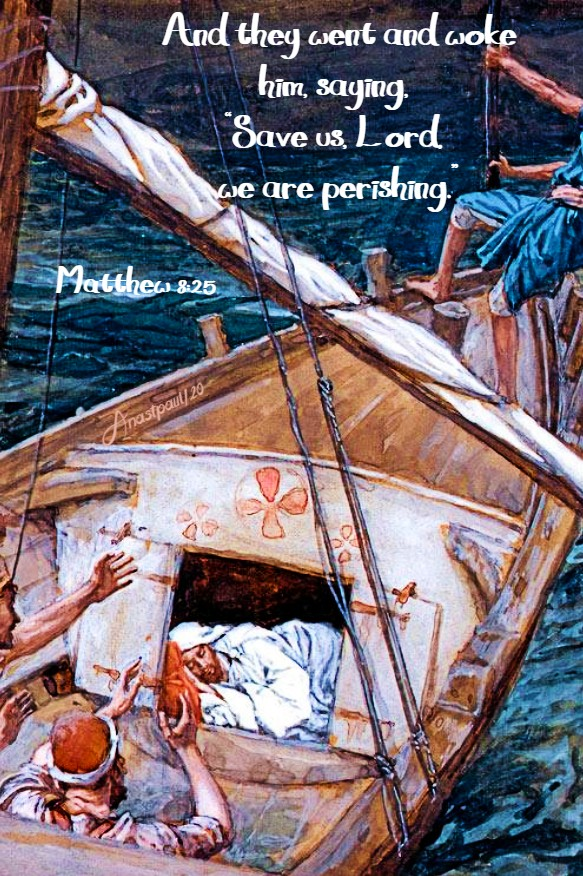
And they went and woke him, saying,
“Save us, Lord, we are perishing.”

Matthew 8:25

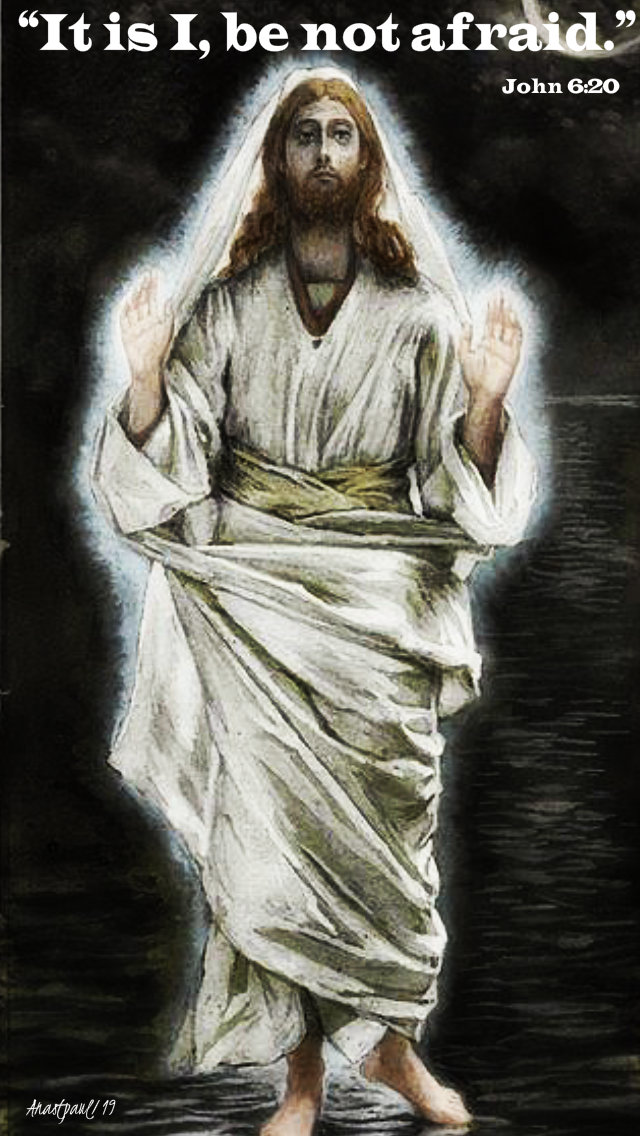
“It is I, be not afraid”

John 6:20

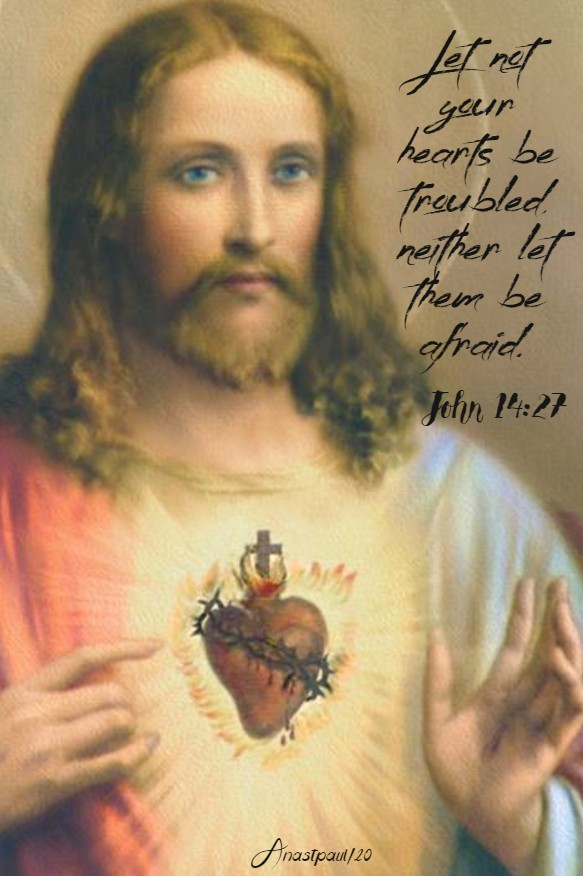
“Let not your hearts be troubled,
neither let them be afraid.”

John 14:27

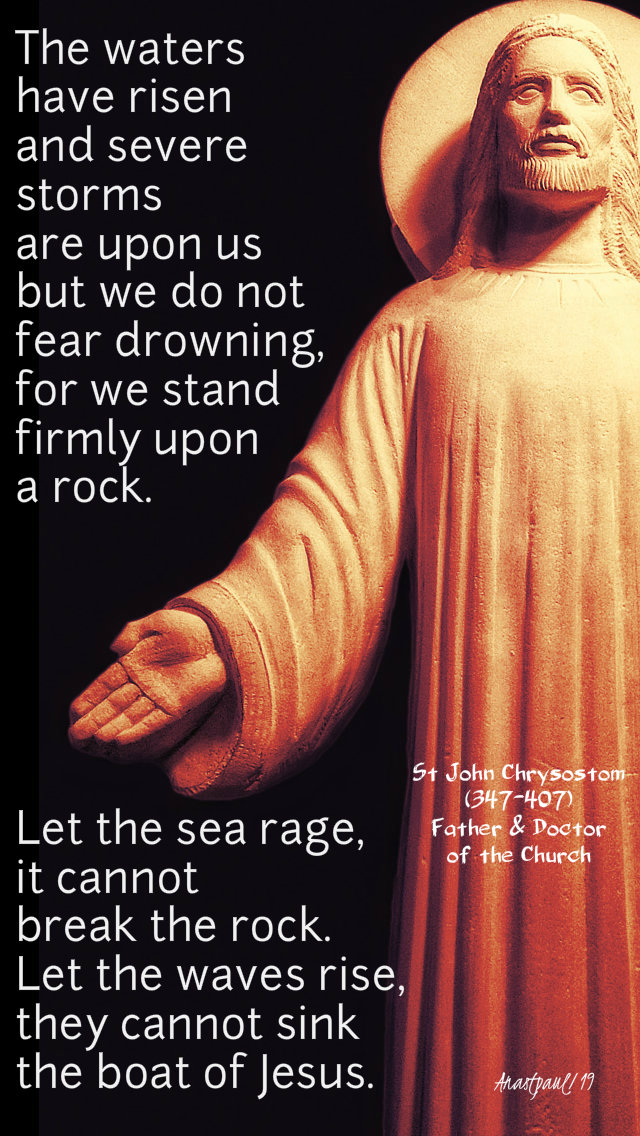
“The waters have risen
and severe storms are upon us
but we do not fear drowning,
for we stand firmly upon a rock.
Let the sea rage, it cannot break the rock.
Let the waves rise,
they cannot sink the boat of Jesus.”

“Let the world be in upheaval.
I hold to His promise and read His message,
that is my protecting wall and garrison.
What message?
‘Know that I am with you always,
until the end of the world!’”

St John Chrysostom (347-407)
Father and Doctor of the Church

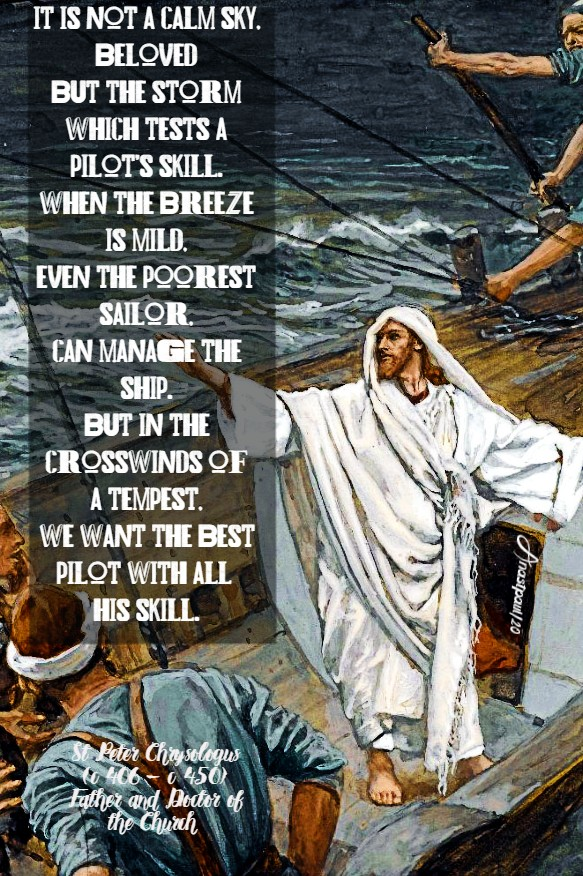
“It is not a calm sky, beloved
but the storm which tests a pilot’s skill.
When the breeze is mild,
even the poorest sailor,
can manage the ship.
But in the crosswinds of a tempest,
we want the best pilot with all His skill.”

St Peter Chrysologus (c 406 – c 450)
Father and Doctor of the Church

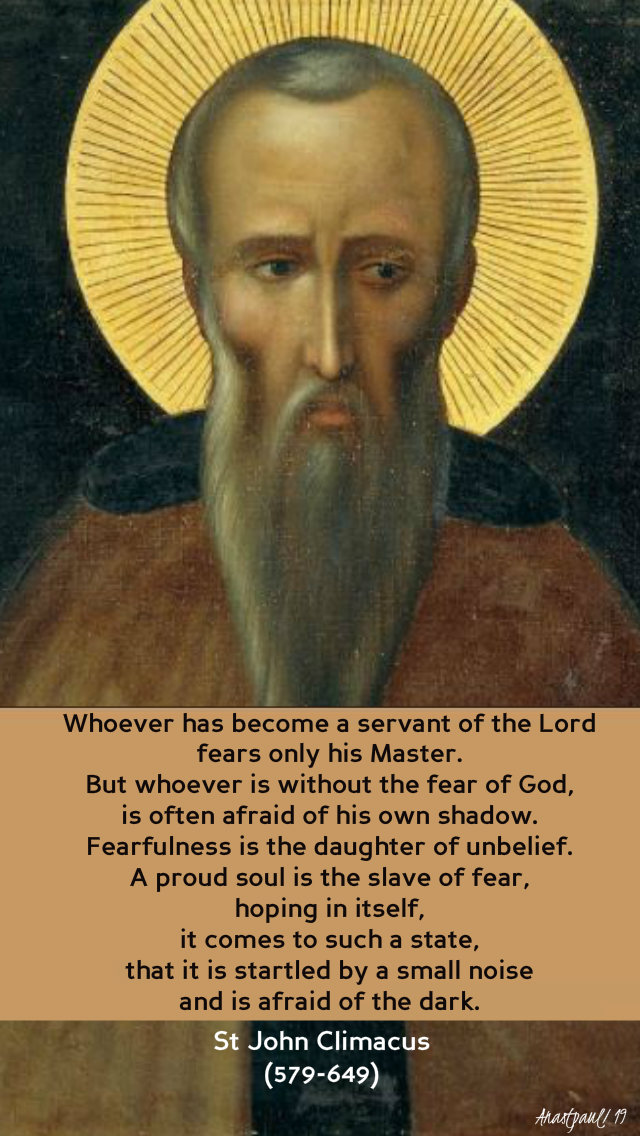
“Whoever has become a servant of the Lord,
fears only his Master.
But whoever is without the fear of God,
is often afraid of his own shadow.
Fearfulness is the daughter of unbelief.
A proud soul is the slave of fear,
hoping in itself,
it comes to such a state,
that it is startled by a small noise
and is afraid of the dark.”

St John Climacus (579-649)
Father of the Church

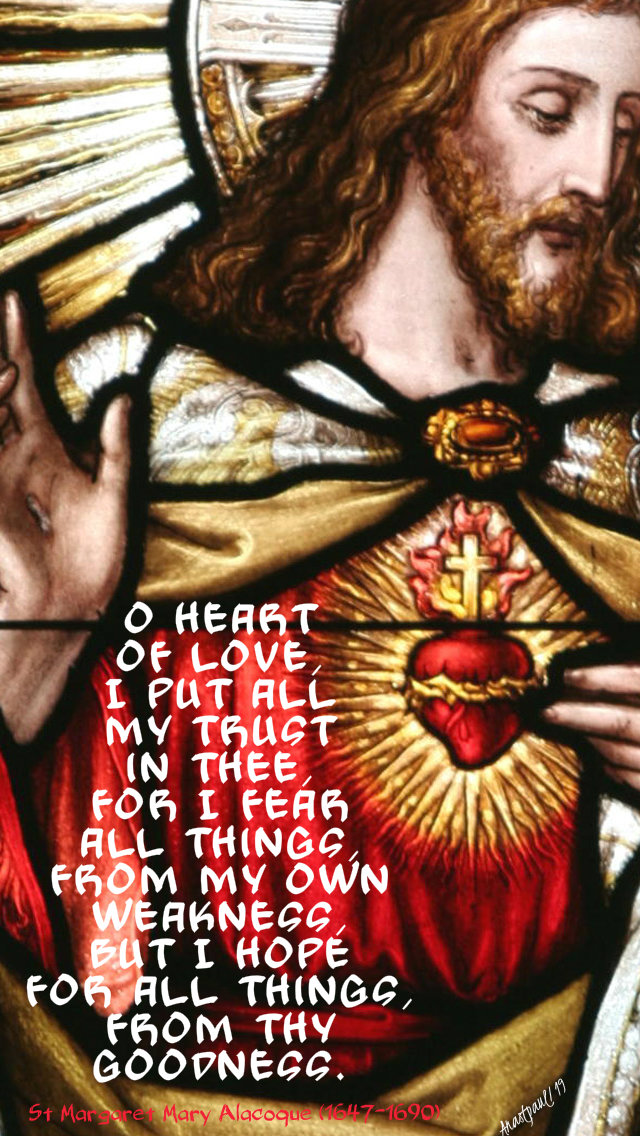
“O Heart of love,
I put all my trust in Thee,
for I fear all things,
from my own weakness,
but I hope for all things,
from Thy Goodness.”

St Margaret Mary Alacoque (1647-1690)

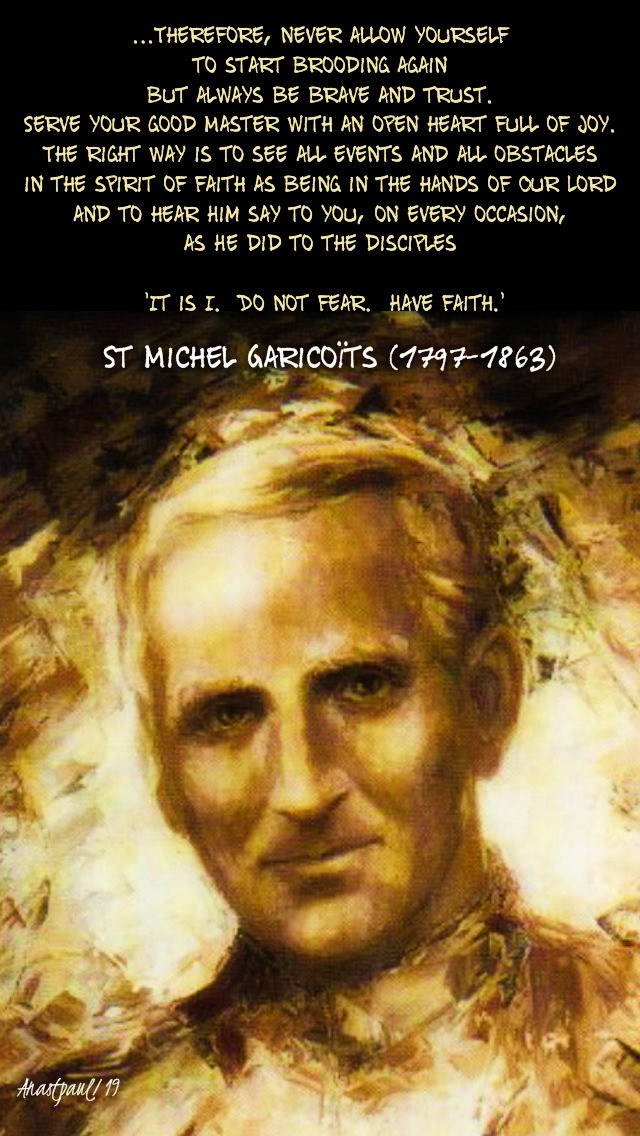
“…Therefore, never allow yourself to start brooding again
but always be brave and trust.
Serve your good Master with an open heart full of joy.
The right way is to see all events and all obstacles
in the spirit of faith as being in the hands of Our Lord
and to hear Him say to you, on every occasion,
as He did to the disciples
‘It is I.   Do not fear.   Have faith.’”

St Michael Garicoïts (1797-1863)

Posted in Uncategorized

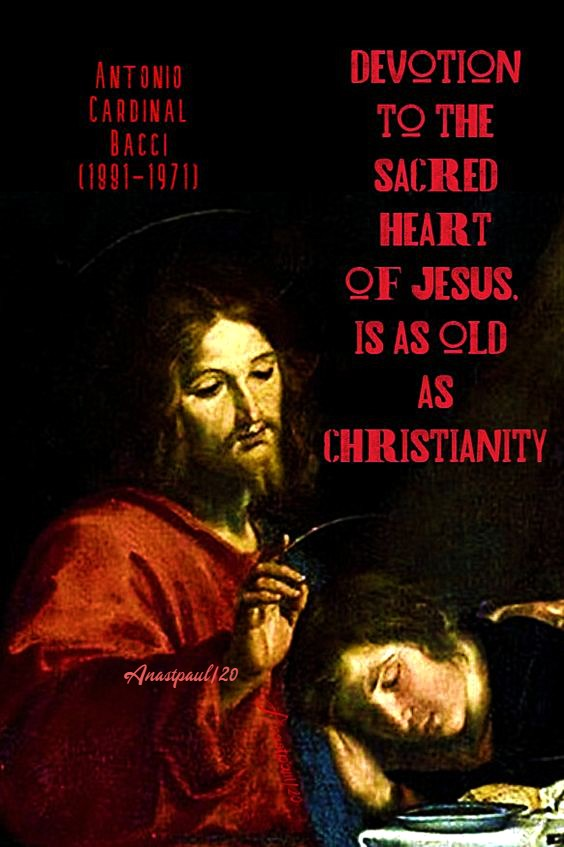
Thought for the Day – 30 June – “Devotion to the Sacred Heart of Jesus, is as old as Christianity”

Thought for the Day – 30 June – “The Last Day of Month of the Sacred Heart” – Meditations with Antonio Cardinal Bacci (1881-1971)

Devotion to the Sacred Heart

“When we consider it under it’s fundamental aspect as the cult of the love of God, rather than of the Incarnate Word, devotion to the Sacred Heart of Jesus, is as old as Christianity, even though it is only in recent centuries, that it has assumed it’s present symbolism.
“He who does not love, does not know God,” says St John, “for God is love” (1 Jn 4:8).
“And we have come to know,” he continues “and have believed, the love that God has in our behalf.   God is love and he who abides in love, abides in God and God in him” (1 Jn 4:16).
This cult of the love of God, particularly of the love of God made man, vibrates throughout the pages of the Gospel and of the writings of the Apostles, especially of St John and of St Paul.

In the works of the Fathers, there are references to the Heart of Jesus, pierced with a lance, from which flowed all the infinite graces of the Church for our redemption.
We are reminded of this in the Encylical, Haurietis Aquas, published by Pope Pius XII in the year 1956.
But the specific cult of the love of God, as symbolised by the Heart of Jesus, was explicitly approved by the Church after Jesus Himself appeared in the year 1674 to St Margaret Mary Alacoque and showed her His Heart on fire with love for men.”

Antonio Cardinal Bacci

Posted in Uncategorized

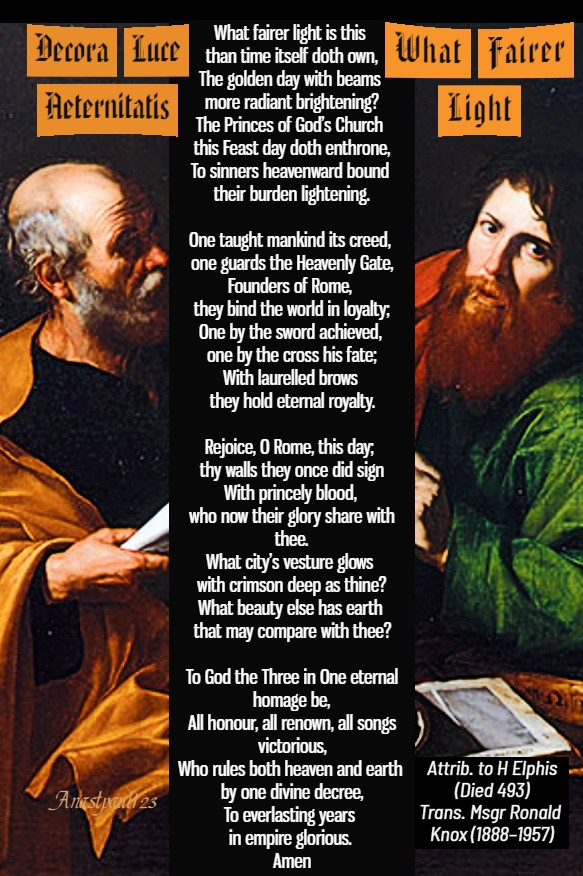
Our Morning Offering – 29 June – Decora Luce Aeternitatis, What Fairer Light

Our Morning Offering – 29 June – Saints Peter and Paul, Apostles

Decora Luce Aeternitatis
What Fairer Light
Attrib. to H Elphis (Died 493) Wife of Boethius c 477– 524)
Trans. Msgr Ronald Knox (1888–1957)

What fairer light is this
than time itself doth own,
The golden day with beams
more radiant brightening?
The Princes of God’s Church
this Feast day doth enthrone,
To sinners heavenward bound
their burden lightening.

One taught mankind its creed,
one guards the Heavenly Gate,
Founders of Rome,
they bind the world in loyalty;
One by the sword achieved,
one by the cross his fate;
With laurelled brows
they hold eternal royalty.

Rejoice, O Rome, this day;
thy walls they once did sign
With princely blood,
who now their glory share with thee.
What city’s vesture glows
with crimson deep as thine?
What beauty else has earth
that may compare with thee?

To God the Three in One eternal homage be,
All honour, all renown, all songs victorious,
Who rules both heaven and earth
by one divine decree,
To everlasting years
in empire glorious.
Amen

5th century Latin Hymn “Aurea Luce” attributed to H Elphis (Died 493), first wife of the Roman philosopher-poet Boethius (c475–c525). He would eventually be Martyred for his defence of the Faith against the Arian ruler: Theodoric.
Msgr Knox, a convert from Anglicanism, was a noted Scholar, Author, Hymnist and Translator, becoming the Secretary to St Pius X.
Under direction of his religious superiors, he re-translated the Latin Vulgate Bible into English from Hebrew and Greek sources.
What Fairer Light is set to the tune, Decora Lux by the English Catholic Composer, Samuel Webbe (1740–1816).

In 1632, in accord with changes called for by the Council of Trent, Pope Urban VIII (1568-1644) revised the original text of Aurea Luce and divided it into two new Hymns for Lauds and Vespers: Decora Lux and Beate Pastor Petre. In the Liturgy of the Hours, What Fairer Light is used on 29 June, the Solemnity of Sts Peter and Paul, Apostles. The above is the Older version.

Posted in Uncategorized

Thought for the Day – 29 June – St Peter, Prince of the Apostles / St Paul, Apostle to the Gentiles

Thought for the Day – 29 June – Meditations with Antonio Cardinal Bacci (1881-1971)

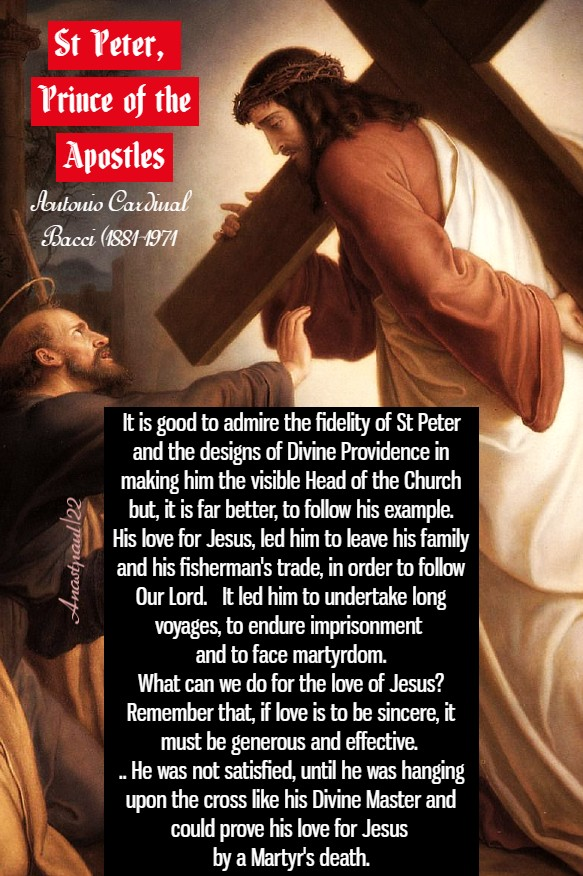
St Peter, Prince of the Apostles
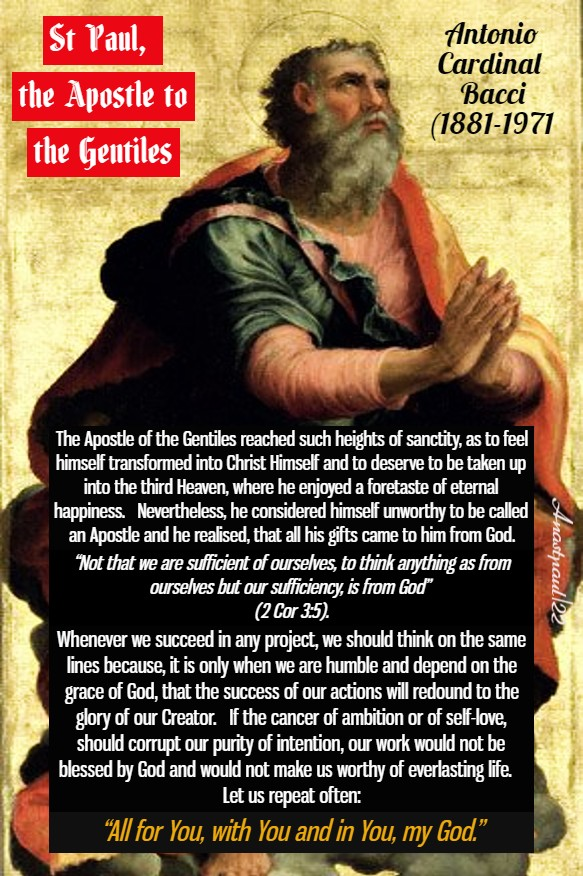
St Paul, the Apostle to the Gentiles

“It is good to admire the fidelity of St Peter and the designs of Divine Providence in making him the visible Head of the Church but, it is far better, to follow his example. His love for Jesus, led him to leave his family and his fisherman’s trade, in order to follow Our Lord.

It led him to undertake long voyages, to endure imprisonment and to face martyrdom.

What can we do for the love of Jesus?
Remember that, if love is to be sincere, it must be generous and effective.

Secondly let us meditate on and imitate, the ardent and fearless faith of St Peter. He was not afraid to preach the teaching of Christ before the Sanhedrin. He was not afraid of Herod, who cast him into prison.

He was not afraid of the Roman Emperor, who caused him to be crucified.
Our faith should be steadfast and lively, like his!

Finally, let us imitate Peter in his repentance. Although he loved Jesus very much and had such great faith in Him, in a moment of weakness and of imprudence, he denied Him three times. All his life, however, be wept bitterly for this sin. Whenever he heard a cock crowing, it was as if an arrow had pierced his heart.

He was not satisfied, until he was hanging upon the cross like his Divine Master and could prove his love for Jesus by a Martyr’s death.”

St Paul, the Apostle to the Gentiles

We can learn many other virtues from St Paul, besides his zealous love for God and for his fellowmen.
We can also learn from him, the virtues of humility and of apostolic fervour.
The Apostle of the Gentiles reached such heights of sanctity, as to feel himself transformed into Christ Himself and to deserve to be taken up into the third Heaven, where he enjoyed a foretaste of eternal happiness.

Nevertheless, he considered himself unworthy to be called an Apostle and he realised, that all his gifts came to him from God.

“Not that we are sufficient of ourselves, to think anything as from ourselves but our sufficiency, is from God” (2 Cor 3:5).

Whenever we succeed in any project, we should think on the same lines because, it is only when we are humble and depend on the grace of God, that the success of our actions will redound to the glory of our Creator. If the cancer of ambition or of self-love, should corrupt our purity of intention, our work would not be blessed by God and would not make us worthy of everlasting life.

Let us repeat often: “All for You, with You and in You, my God.”

Antonio Cardinal Bacci

PART ONE:
https://anastpaul.com/2021/06/29/thought-for-the-day-29-june-st-peter-prince-of-the-apostles-st-paul-the-apostle-to-the-gentiles-2/

Posted in Uncategorized

One Minute Reflection – 29 June –Whatsoever thou shalt bind upon earth … Matthew 16:19

One Minute Reflection – 29 June – “The Month of the Sacred Heart of Jesus” – Saints Peter and Paul, Apostles – Acts 12:1-11, Matthew 16:13-19 – Scripture search here: https://www.drbo.org/

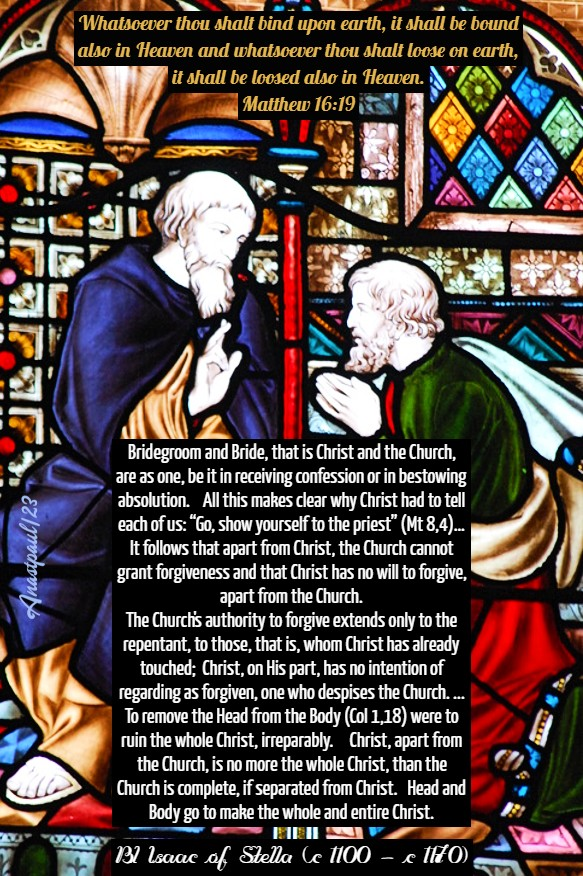
“Whatsoever thou shalt bind upon earth, it shall be bound also in Heaven and whatsoever thou shalt loose on earth, it shall be loosed also in Heaven.” – Matthew 16:19

REFLECTION – “Bridegroom and Bride, that is Christ and the Church, are as one, be it in receiving confession or in bestowing absolution. All this makes clear why Christ had to tell each of us: “Go, show yourself to the priest” (Mt 8,4)… It follows that apart from Christ, the Church cannot grant forgiveness and that Christ has no will to forgive, apart from the Church. The Church’s authority to forgive extends only to the repentant, to those, that is, whom Christ has already touched; Christ, on His part, has no intention of regarding as forgiven, one who despises the Church.

Doubtless, Christ need accept no restraints to His power of Baptising, Consecrating the Eucharist, Ordaining Priests, forgiving sins and the like but, the humble and faithful Bridegroom, prefers to confer such blessings, with the co-operation of His Bride. “What God,” then, “has joined, let no man put asunder” (Mt 19,6). “I say this is a great mystery and refers to Christ and the Church” (Eph 5,32)… To remove the Head from the Body (Col 1,18) were to ruin the whole Christ, irreparably. Christ, apart from the Church, is no more the whole Christ, than the Church is complete, if separated from Christ. Head and Body go to make the whole and entire Christ.” – Bl Isaac of Stella (c 1100 – c 1170) Cistercian Monk, Abbot, Theologian, Philosopher (Sermon 11, §11-814).

PRAYER – O God, Who made this day holy by the Martyrdom of Thy Apostles Peter and Paul, grant Thy Church to follow in all things the teaching of those from whom she first received the faith. Through Jesus Christ, Thy Son our Lord, Who lives and reigns with Thee, in the unity of the Holy Ghost, God, world without end. Amen (Collect).

ALL PRAISE, honour and glory to the Divine Heart of JESUS. Indulgenced– 50 Days, once a day. 168 Pope Leo XIII, 14 June 1901.

Posted in Uncategorized

29 June – Saints Peter and Paul, Apostles

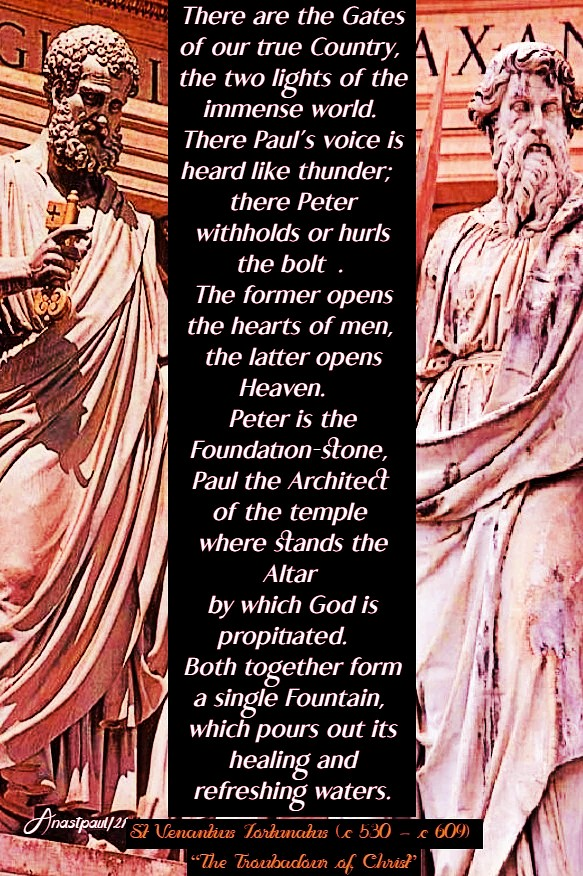
“There are the gates of our true country,
the two lights of the immense world.
There Paul’s voice is heard like thunder;
there Peter withholds or hurls the bolt .
The former opens the hearts of men,
the latter opens Heaven.
Peter is the Foundation-stone,
Paul the Architect of the temple
where stands the Altar
by which God is propitiated.
Both together form a single Fountain,
which pours out its healing
and refreshing waters.”

St Venantius Fortunatus (c 530 – c 609)
“The Troubadour of Christ”

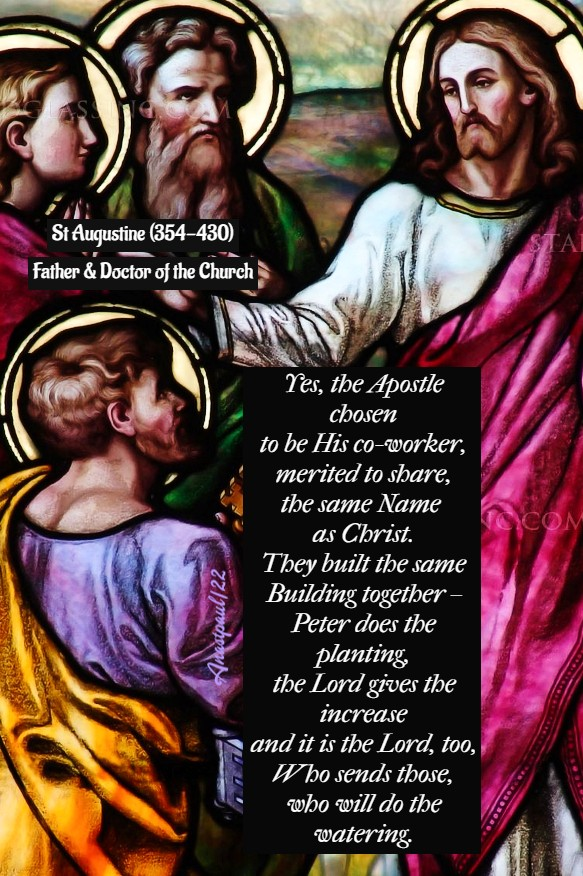
“Yes, the Apostle chosen
to be His co-worker,
merited to share,
the same Name as Christ.
They built the same Building together –
Peter does the planting,
the Lord gives the increase
and it is the Lord, too,
Who sends those,
who will do the watering (cf 1 Cor 3:6f).
”

St Augustine (354-430)
Father & Doctor of the Church

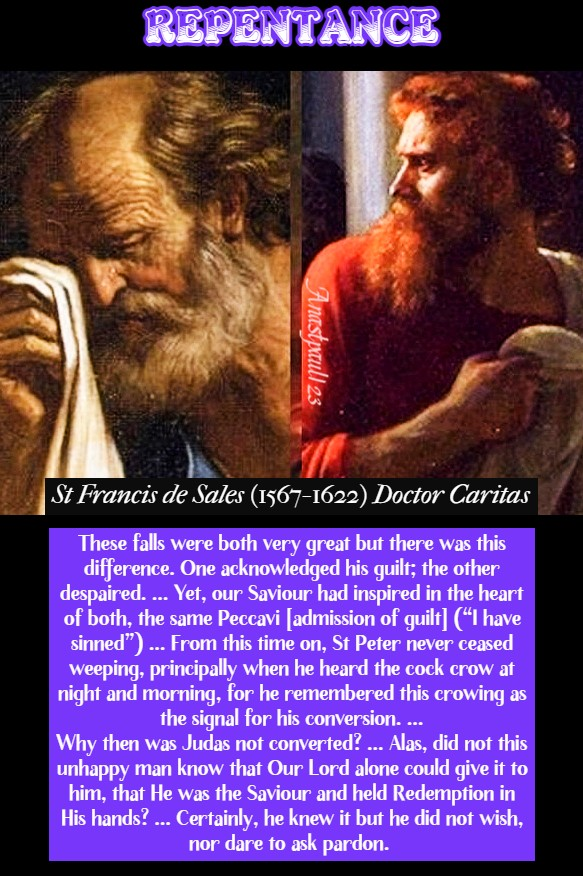
“These falls were both very great
but there was this differ­ence.
One acknowledged his guilt; the other despaired.
Yet, our Saviour had inspired in the heart of both,
the same Peccavi [admission of guilt] (“I have sinned”)
… From this time on, St Peter never ceased weeping,
principally when he heard the cock crow
at night and morning, for he remembered
this crowing as the signal for his conversion.
… Why then was Judas not converted?
… Alas, did not this unhappy man know
that Our Lord alone could give it to him,
that He was the Saviour and held Redemption in His hands?
… Certainly, he knew it but he did not wish,
nor dare to ask pardon.

 ”

St Francis de Sales (1567-1622)
Doctor Caritas

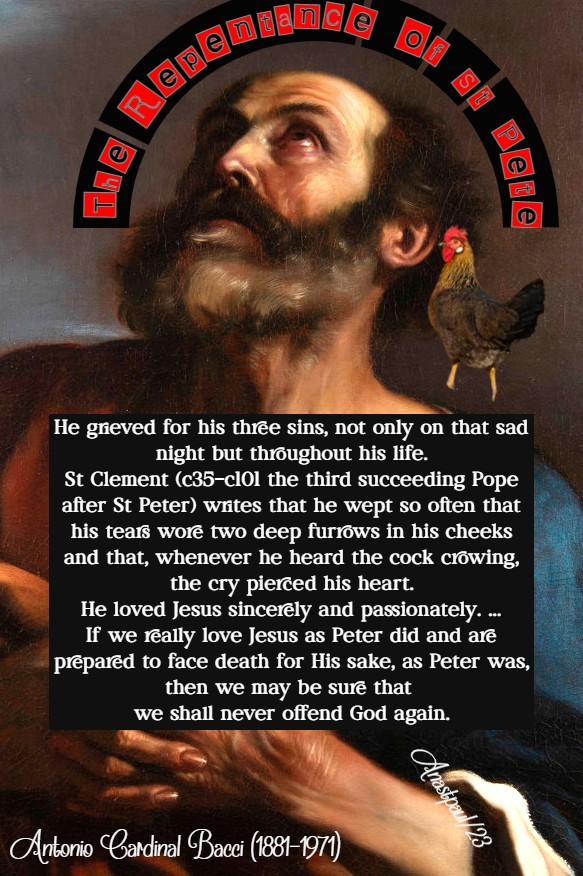
“He grieved for his three sins,
not only on that sad night but throughout his life.
St Clement (c35-c101 the third succeeding Pope
after St Peter) writes that he wept so often
that his tears wore two deep furrows in his cheeks
and that, whenever he heard the cock crowing,
the cry pierced his heart.
He loved Jesus sincerely and passionately.
If we really love Jesus as Peter did
and are prepared to face death for His sake,
as Peter was, then we may be sure
that we shall never offend God again.
”

Antonio Cardinal Bacci (1881-1971)

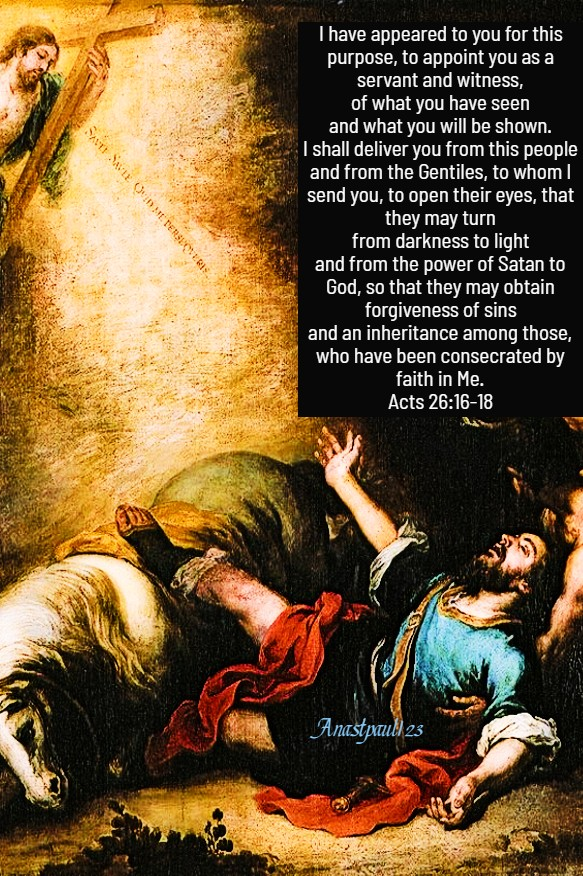
“I have appeared to you for this purpose,
to appoint you as a servant and witness,
of what you have seen
and what you will be shown.
I shall deliver you from this people
and from the Gentiles, to whom I send you,
to open their eyes, that they may turn
from darkness to light
and from the power of Satan to God,
so that they may obtain forgiveness of sins
and an inheritance among those,
who have been consecrated by faith in Me.
”

Acts 26:16-18

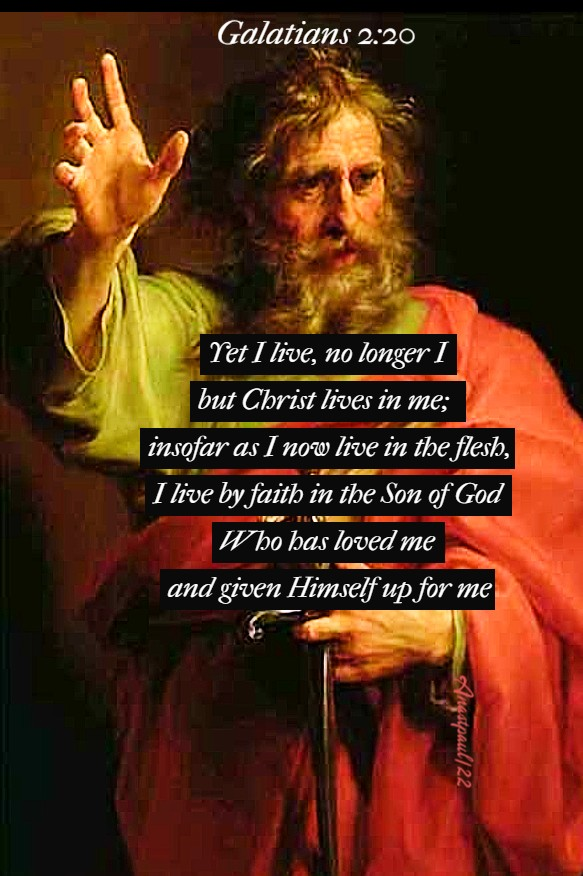
“Yet I live, no longer I
but Christ lives in me;
insofar as I now live in the flesh,
I live by faith in the Son of God,
Who has loved me
and given himself up for me.
”

Galatians 2:20

Posted in Uncategorized

Sincerest Thanks and Moving Forward

Dear faithful readers and friends of Anastpaul,

Please pray for the repose of the soul of Ann Stenvert. She died yesterday, fortified with the Sacraments of Holy Mother Church and wearing the Brown Scapular of Our Lady. And we know that the Blessed Virgin Mary is faithful to her promises!

Please also pray for Ann’s grieving family and friends who are coping with her sudden loss. But the Passion, Death, and Resurrection of Christ transforms suffering and sorrow into many profound opportunities for Grace and salvation, if only we allow God to do so on His Holy Terms.

Eternal Rest grant unto her, O Lord. And let Perpetual Light shine upon her. May her soul and all of the souls of the faithfully departed, through the Mercy of God, Rest in Peace. Amen.
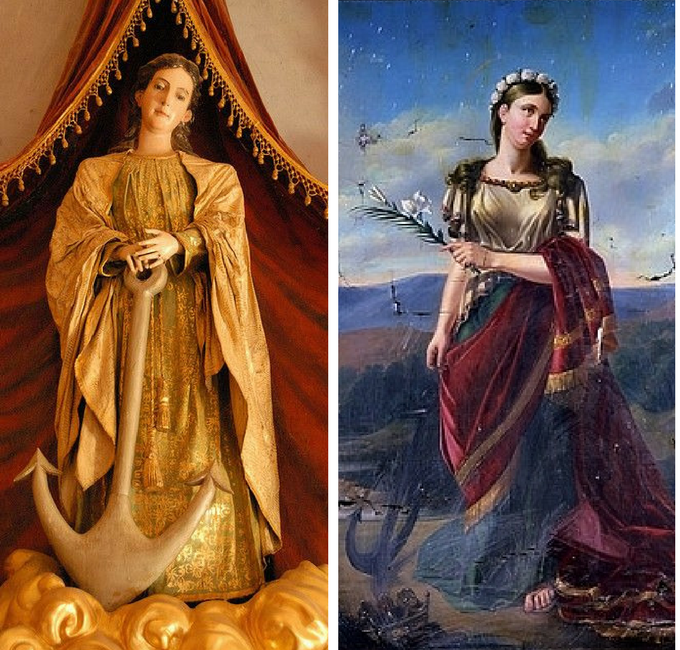
I was greatly blessed to be Ann’s pastor this past year. She bore the Light of Christ to countless souls that she touched through her prayers and steadfastness in the Truth of Christ and His One True Catholic Church, without any compromise with the popular errors against the Faith taught by so many wolves in shepherds’ clothing who are deceiving and leading so many souls into doctrinal and moral corruption. Lord have Mercy! But let us continue making sacrifices and praying for the conversion of heretics and sinners so that the Truth will set them free. The love of God and seeking the salvation of souls is what drove Ann on in the battle as a soldier for Christ. And so, let us always continue heeding the pleadings of Our Lady and her little devoted daughter and servant Ann, by praying the Rosary every single day.

Funeral arrangements for Ann are still pending. And if anyone would like to donate to help cover the costs for the Funeral and other bills that have taken the financially struggling Stenvert family by surprise, I encourage you to donate by contacting the Stenverts directly via a new PayPal account:

https://www.paypal.me/MattStenvert

Every donation large or small will be most appreciated, including every big or little prayer.

And I have personally pledged to offer Masses for the repose of Ann’s soul. And I also pledge to remember all donors to the Stenverts in my private intentions at Mass. And I will offer a monthly Mass for all who donate monthly to the Stenverts, who promise to continue Ann’s holy work on the website.

+May God bless and reward you all.
In JMJ,
Fr David

+
Brethren, stand fast; and hold the traditions which you have learned, whether by word, or by our epistle.

-2 Thess. 2:14

Teach nothing new, but implant in the hearts of everyone those things which the Fathers of venerable memory taught with a uniform preaching. Whence, we preach nothing except what we have received from our forefathers. In all things, therefore, both in the rule of Faith and in the observance of discipline, let the pattern of antiquity be observed.

-Pope St Leo the Great

Posted in Uncategorized

Please pray

Hi guys, this is Ana’s daughter here. I know my mom promised to be back on the site yesterday, but while we were getting her computer set up, she had a stroke, suspected multiple strokes, and is now in the hospital. It’s looking bad, please pray for her, especially to the Blessed Virgin and St Paul. Thank you. I will keep you updated.

Posted in Uncategorized

Saint of the Day – 12 May – Saint Cyril and 6 Companions (3rd Century) Martyrs of Rumania.

Saint of the Day – 12 May – Saint Cyril and 6 Companions (3rd Century) Martyrs of Rumania. Little is known of these Saints besides their staunch and holy sanctity never ceasing to declare Christ under immense torture and finally beheading. Grant us too the Grace we beseech Thee, Beloved Lord, never to cease defending Thee!

Information regarding Saint Cyril and his 6 companions, Martyred in Moesia (modern-day Rumania), is unfortunately fragmentary. Their liturgical feast is set today but the date of their Martyrdom remains uncertain, presumably in the 3rd Century.

The main sources mentioning these Saints are:

  • The Roman Martyrology: it places their commemoration on May 12th with the following entry: “At Galatz in Moesia, in modern Rumania, Saint Cyril, who was Martyred together with six companions.”
  • Apocryphal Acts
  • Ancient local traditions: passed down orally and then collected in manuscripts.

From the available sources, it is clear that Cyril was a fervent Christian who lived in Moesia. During a period of persecution, he and 6 companions were arrested and brought before the Roman Governor. They refused to renounce their faith and were subjected to various tortures. Finally, they were condemned to death and beheaded.

Posted in Uncategorized

Saint of the Day – 4 May – Saint Venerius (Died 408) Bishop of Milan

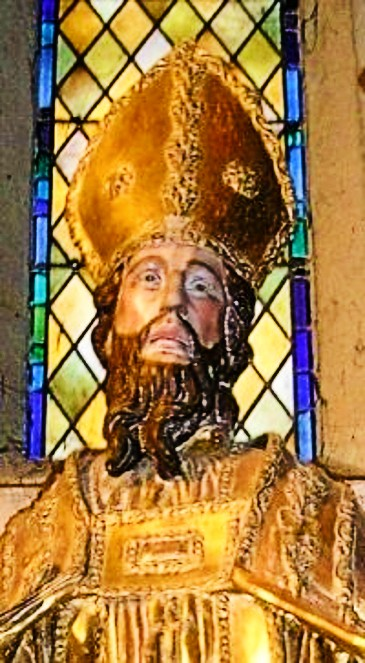
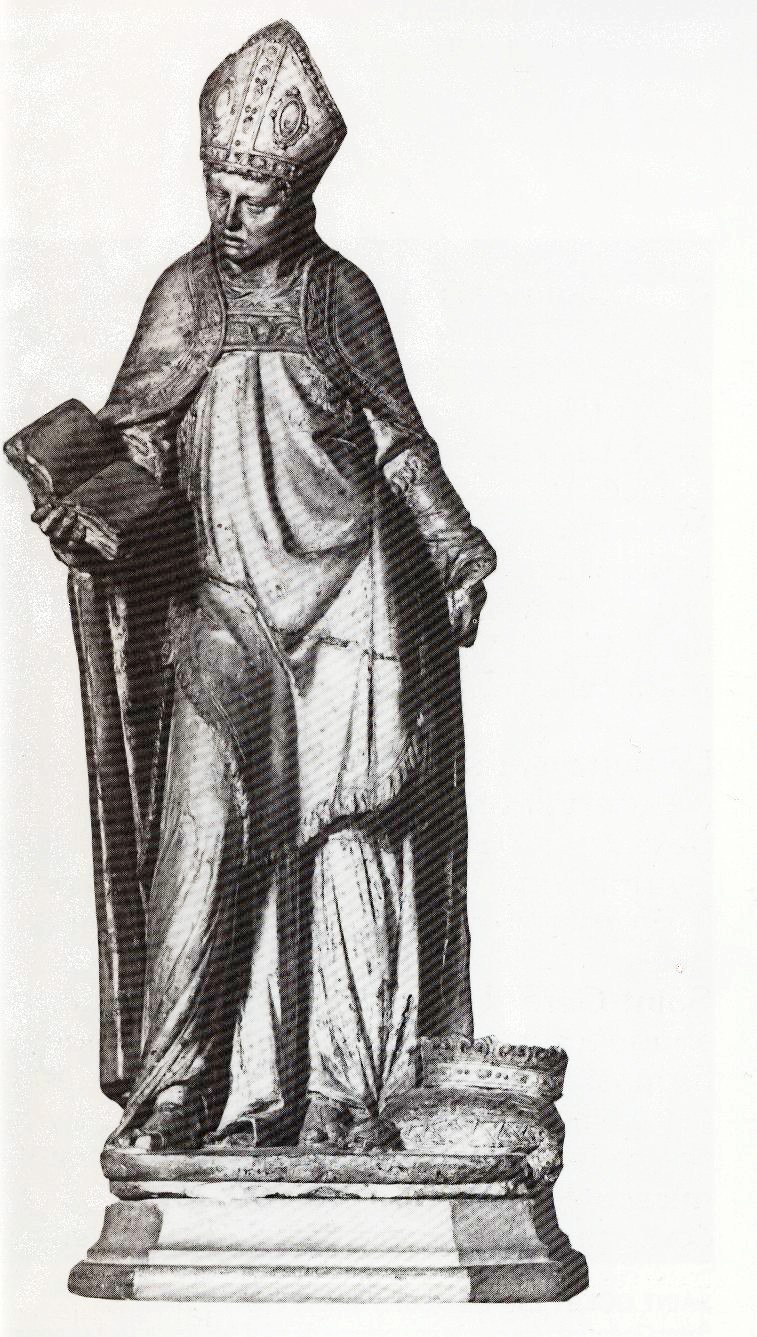
Saint of the Day – 4 May – Saint Venerius (Died 408) Bishop of Milan, Italy from c400 until his death in 408.
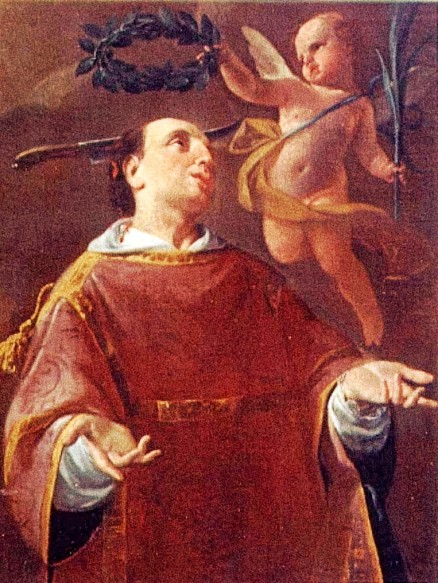
St Venerius had been a Deacon under St Ambrose. He followed St Simplician in the office of Bishop. He conducted his pastoral ministry with the greatest diligence and tireless zeal.

The Roman Martyrology reads today: “At Milan, St Venerius, Bishop, whose virtues are attested by St John Chrysostom in the epistke which he wrote to St Venerius.”

Almost nothing is known about the life of St Venerius prior to his election as the Bishop of Milan. A late tradition, associates him with the noble Milanese family of the Oldrati. According to the 5th Century Historian and Biographer of St Ambrose, Paulinus, whose work is the only Life of St Ambrose based on a contemporary account and was written at the request of St Augustine. St Venerius was the Deacon assisting St Ambrose and he was present at the death of his beloved master in 397.

St Venerius was elected Bishop after the death of St Simplician in the winter between 400 and 401. He was already the Bishop of Milan when he received a request by a Council held on 18 June 401 at Carthage, to send Clerics from Milan to North Africa. One of the Clerics who was sent was actually our Paulinus mentioned above.

St Venerius is also known from a letter written to him by Pope Anastasius I concerning the condemnation of the heresy of the Origenists. Again, he is mentioned in a letter of the same Pope to St John II, Bishop of Jerusalem.

In 404 St Venerius, along with Pope Innocent I and St Chromatius, the Bishop of Aquileia, protested in support of St John Chrysostom who has been unjustly banned from Constantinople, writing in his favour to Honorius, the Western Emperor, who sent this letter to his brother, Arcadius, the Eastern Emperor. This intercession, however, availed nothing.

St Venerius died on 4 May 408 and was buried in the Church of Saints Nazarius and Celsus in Milan.

Posted in Uncategorized

Nostra Signora delle Vittorie / Our Lady of Victories in the Church of St Mark, Vienna (1683), St Benedict Joseph Labre and the Saints for 16 April

FERIAL DAY

Nostra Signora delle Vittorie / Our Lady of Victories in the Church of St Mark, Vienna (1683) – 16 April:
HERE:

https://anastpaul.com/2021/04/16/nostra-signora-delle-vittorie-our-lady-of-victories-in-the-church-of-st-mark-vienna-1683-and-memorials-of-the-saints-16-april/

St Benedict Joseph Labre TOSF (1748-1783) – Known as the Beggar of Perpetual Adoration (1748-1783) Lay Penitent and Pilgrim – he “abandoned his country, his parents and whatever is flattering in the world, to lead a new sort of life, a life most painful, most penitential, not in a wilderness, nor in a cloister but in the midst of the world, devoutly visiting as a pilgrim the famous places of Christian devotion.” Canonised by Pope Leo XIII on 8 December 1881.
Dearest St Benedict Joseph:
https://anastpaul.com/2017/04/16/saint-of-the-day-16-april-st-benedict-joseph-labre/

Blessed Arcangelo Canetoli (1460-1513) Priest and Canon of the Canons Regular of the Congregation of the Most Holy Saviour at Bologna, Mystic gifted with the charism of prophecy and of many visions of the Blessed Virgin, Born in 1460 in Bologna, Italy and died on 16 April 1513 (aged 53) in Gubbio, Italy of natural causes. His body is incorrupt. Arcangelo was Beatified on 2 October 1748 by Pope Benedict XIV.
Holy Arcangelo:

https://anastpaul.com/2023/04/16/saint-of-the-day-16-april-blessed-arcangelo-canetoli-crssb-1460-1513-priest/

St Drogo (1105–1186) Lay Penitent Pilgram, Apostle of prayer and the Holy Eucharist, Anchorite.
His life:

https://anastpaul.com/2019/04/16/saint-of-the-day-16-april-saint-drogo-1105-1186/

St Elias

St Fructuosus (Died 665) Archbishop of Braga, Spain, Hermit, Confessor, Monk, Abbot, a great Founder of Monasteries.
His Life:

https://anastpaul.com/2020/04/16/saint-of-the-day-16-april-saint-fructuosus-of-braga-died-665/

St Herveus of Tours

Blessed Joachim Piccolomini OSM (1258–1305) Tertiary Servite Lay Friar, Apostle of charity of the sick, devotee of the Sorrows of the Blessed Virgin.
Blessed Joachim’s Life:

https://anastpaul.com/2021/04/16/saint-of-the-day-16-april-blessed-joachim-piccolomini-of-siena-osm-1258-1305/

St Lambert of Saragossa

St Magnus of Orkney (c1075-1115) Layman Martyr, Magnus was the Earl .of Orkney in Scotland and related to the Royal House of Norway, which exercised sovereignty over the Orkney Islands at that time. The story of St Magnus’ life and Martyrdom are well attested.
His Life and Death:

https://anastpaul.com/2022/04/16/saint-of-the-day-16-april-saint-magnus-of-orkney-c-1075-1115/

St Turibius (c402-c460) Bishop of Astorga in Spain, Hermit, Monk, Defender of the Faith against heresy, in particular, the heresy of Priscilian., Miracle-worker. Born in Astorga, Spain in c402 and died there in c460 of natural causes. Patronages – Diocese of Palencia, Diocese of Santander, Diocese of Astorga, all in Spain.
The Roman Martyrology reads: “At Palencia, St Turibius, the Bishop of Astorga, Spain, who with the aid of Pope St Leo the Great, drove the heresy of Priscilian entirely out of Spain and, went to rest in the Lord with a great renown for miracles.”
Zealous and Miraculous St Turibius
:
https://anastpaul.com/2024/04/16/saint-of-the-day-16-april-saint-turibius-of-astorga-c402-c460-bishop/


St Vaise
Blessed William Gnoffi (1256-1317) Hermit

Martyrs of Corinth – 9 Saints: A group of nine Christians who were tortured and Martyred together in the persecutions of Decius. We know little more than three of their names – Callistus, Charisius and Leonide. They were thrown into the sea at Corinth, Greece c250.

Martyrs of Saragossa: Group of 18 Martyrs murdered in 304 in Saragossa, Spain in the persecutions of Diocletian and the prefect Dacean. We know little more than the names – Apodemus, Caecilian, Caius, Crementius, Engratia, Eventius, Felix, Fronto, Gaius, Julia, Lambert, Lupercus, Martial, Optatus, Primitivus, Publius, Quintilian, Saturnius (4 men of this name), Succesus and Urban. Their graves re-discovered in 1389 in the crypt under the Church of San Encrazia in Saragossa.

Posted in Uncategorized

Saint of the Day – 4 April – St Hildebert (Died c752) Abbot and Martyr

Saint of the Day – 4 April – St Hildebert (Died c752) Abbot and Martyr of the Monastery of St Peter in Ghent, modern Belgium, Martyred for his uncompromising defence of Sacred Images. Also known as – Emebert.

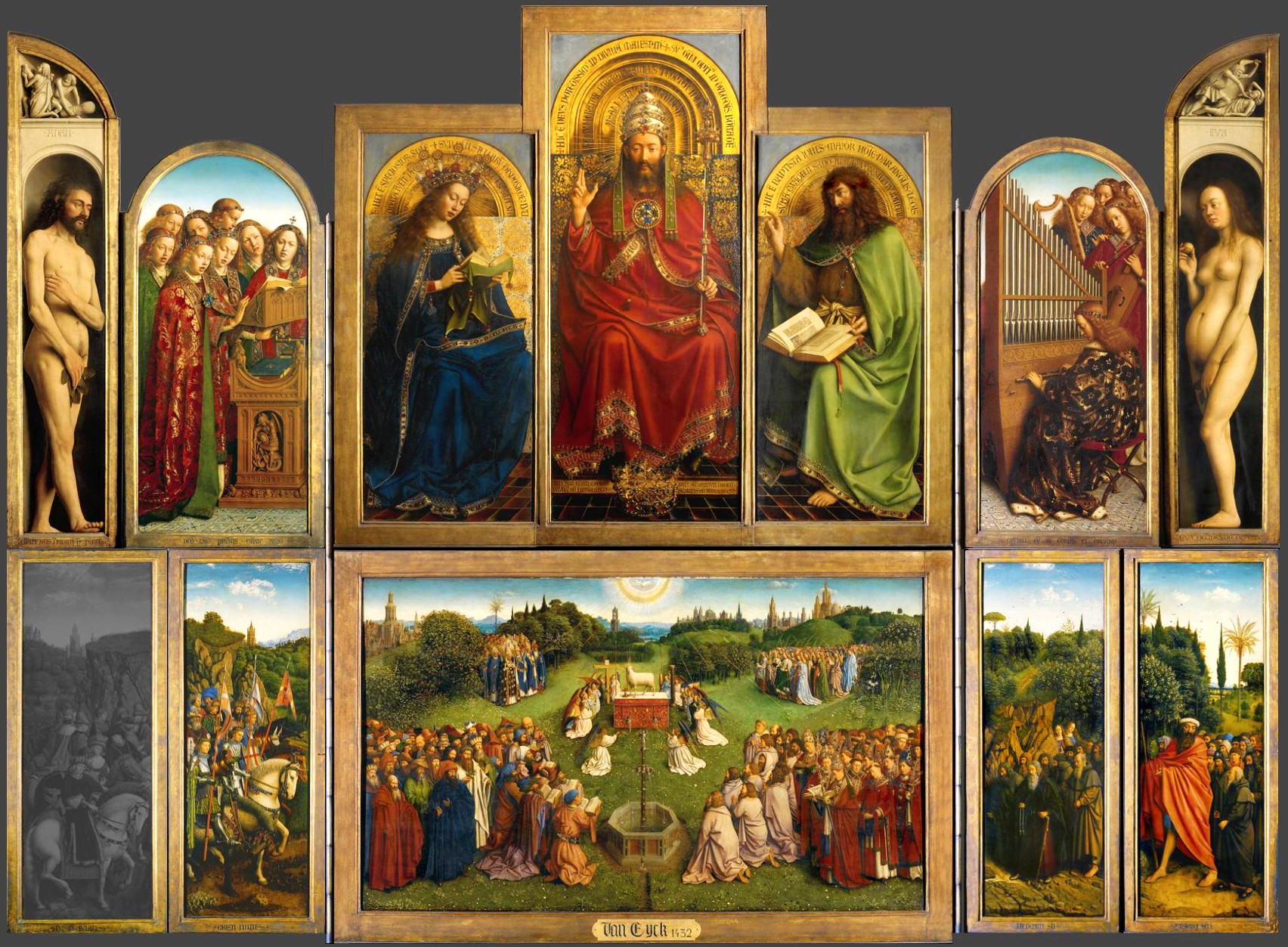
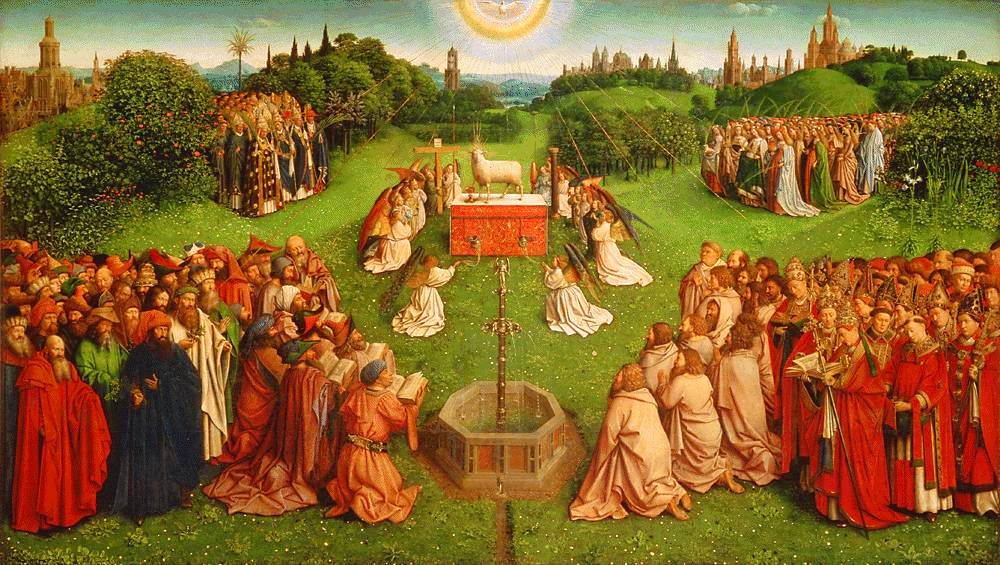
St Hildebert dedicated his life to the service of God. He embraced the monastic life and joined Monks at the Monastery of St Peter in Ghen. Below is a beautiful example of Sacred Images the Ghent Altarpiece by Jan van Eyck (1432). The Adoration of the Lamb at the end of the post is the lower section of the Altarpiece.
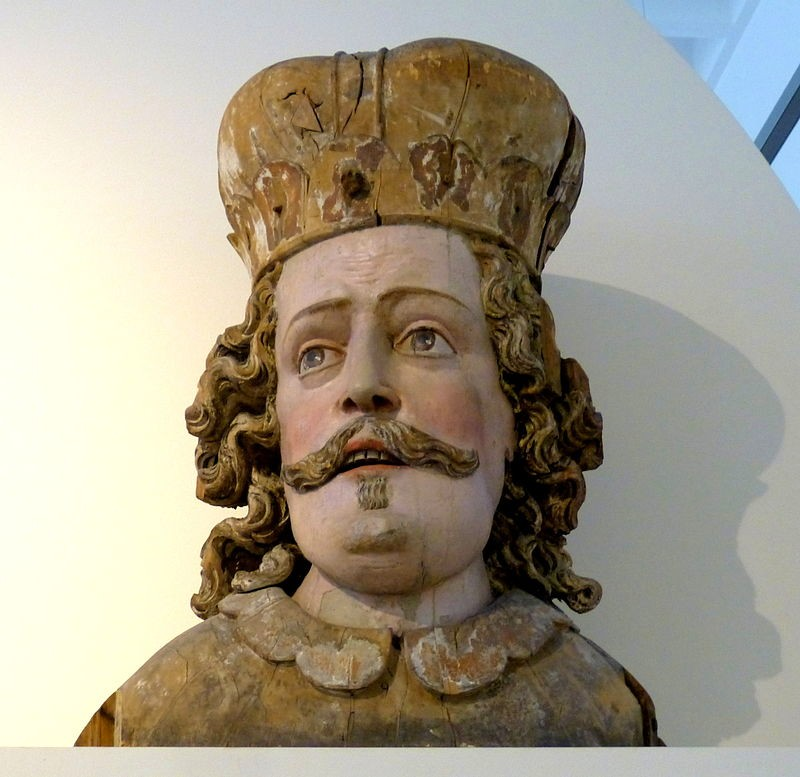
He was elected as the Abbot and unfailingly went to the defence of Sacred Images which had become a contentious issue. St Hildebert unwavering defence eventually led to his Martyrdom.

His death is not well documented but it is believed that he was killed due to the opposition he faced gy those destroying Sacred Images.

To this day, St Hildebert of Ghent is remembered and venerated, most particularly in Ghent.

Posted in Uncategorized

Saint of the Day – 15 March – Saint Matrona (5th-6th Century) Virgin of Capua.

Saint of the Day – 15 March – Saint Matrona (5th-6th Century) Virgin of Capua. Matrona was a Roman noblewoman , famous for having found the body of the first Bishop of Capua, Saint Priscus. Patronages – against intestinal epidemics and cholera.

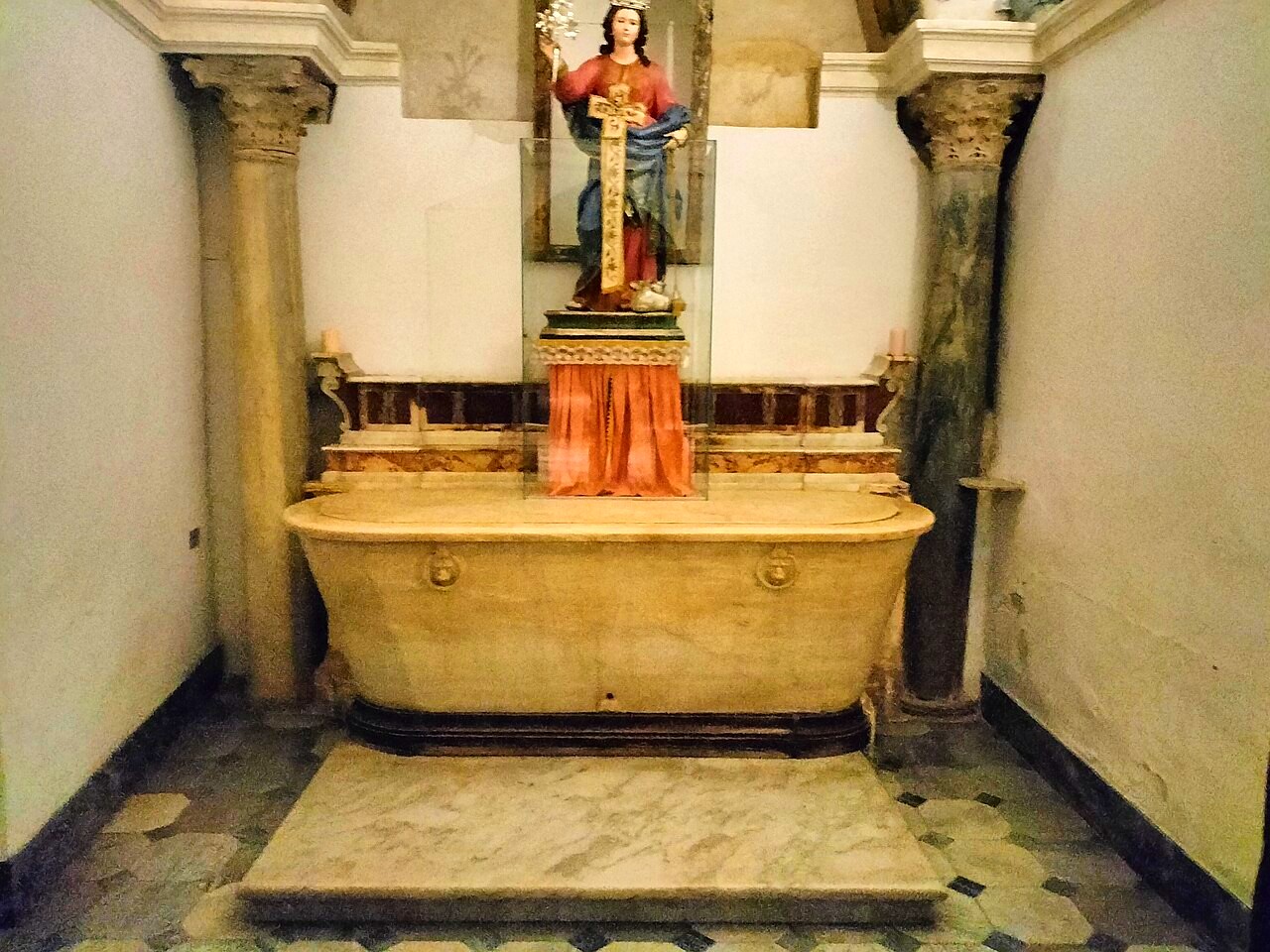
Statue of St Matrona above the Altar containing her Relics in the Church of St Prisco

Matrona, a Roman noblewoman of Portuguese origin, was miraculously cured by Saint Prisco. Tradition tells us that the young lady suffering from a stomach disorder and went to the Campanian City of Capua and was cured whilst praying at the Tomb of the first Capuan Bishop which she had discovered.

Matrona remained there for the rest of her life, later honoured as a Saint and invoked against intestinal epidemics and cholera,

The small Chapel of St Matrona is a Shrine perhaps annexed to the primitive early Basilica dedicated to St Prisco. In the apse there is a marble oval Sarcophagus which acts as an Altar and which contained the remains of our Saint.

Posted in Uncategorized

Saint of the Day – 9 March – St Antony (10th Century) Hermit

Saint of the Day – 9 March – St Antony (10th Century) Hermit of Froidemont in France. Probably born in France and died there at his Hermitage in Froidemont.Also known as – Anthony of Liaroles, Anthony of Luxeuil.

We have little knowledge of St Antony.d life. We know that he became a Monk at at the Luxeuil Abbey. Later seeking a closer union with God in a life of solitude, he became a Hermit at Froidemont in Franche-Comté, France.

He became widely renowned for his sanctity and life of prayer and asceticism.

Posted in SAINT of the DAY, Uncategorized

THURSDAY of the SECOND WEEK of LENT, Notre-Dame-de-Bon-Secours / Our Lady of Good Help, Montreal(1657) and the Saints for 5 March

THURSDAY of the SECOND WEEK of LENT

FERIAL DAY

Notre-Dame-de-Bon-Secours/Our Lady of Good Help, Montreal, Canada (1657) – 5 March:
HERE:

https://anastpaul.com/2021/03/05/notre-dame-de-bon-secours-our-lady-of-good-help-montreal-canada-1657-and-memorials-of-the-saints-5-march/

St Adrian of Caesarea
St Caron
St Carthach the Elder
Bl Christopher Macassoli of Vigevano
St Clement (Died c800) Abbot of Santa Lucia Monastery in Syracuse, Sicily.
St Colman of Armagh
St Conon of Pamphylia
Bl Conrad Scheuber

St Dietmar (Died 1206) Bishop of Minden in Germany from c1185 until his death.
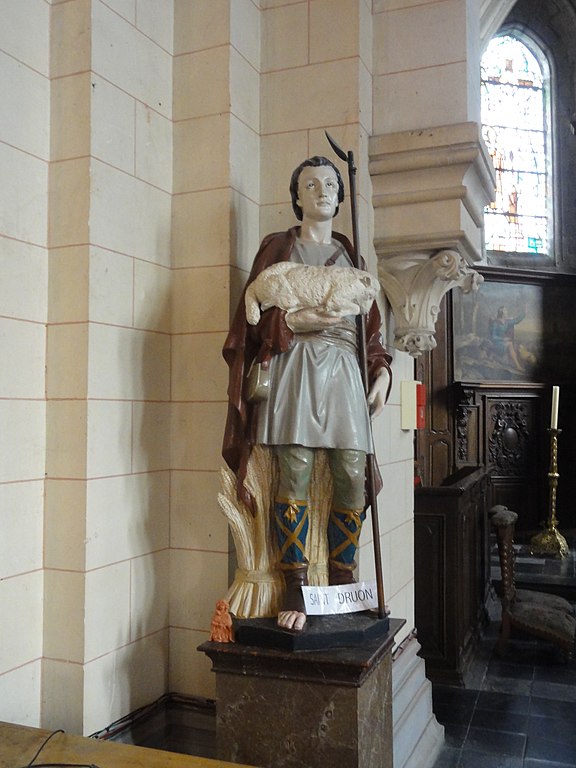
A Shepherd’s Life:

https://anastpaul.com/2025/03/05/saint-of-the-day-5-march-saint-dietmar-died-1206-bishop-of-minden-in-germany/

Statue of St Dietmar at Minden Cathedral

St Elouan (5th Century) Hermit
St Eusebius of Cremona
St Eusebius the Martyr
St Gerasimus of Palestine (Died c475) Monk, Hermit
Bl Giovanna Irrizaldi

St John Joseph of the Cross OFM (1654-1734) – Italian Priest, Friar of the Order of the Friars Minor, Mystic, Ascetic, gifted with prophecy and miracles.
Beloved Saint:

https://anastpaul.com/2019/03/05/saint-of-the-day-5-march-st-john-joseph-of-the-cross-ofm-1654-1734/

St Kieran (Died c530) Bishop, one of the Twelve Apostles of Ireland
His Life:

https://anastpaul.com/2022/03/05/saint-of-the-day-5-march-saint-kieran-died-c-530/

St Oliva of Brescia
St Phocas of Antioch

St Piran (Died 480) Abbot, Hermit, Missionary, miracle-worker.
St Piran’s Life:

https://anastpaul.com/2021/03/05/saint-of-the-day-5-march-saint-piran-died-480/

Bl Roger
Bl Romeo of Limoges

St Theophilus (Died c217) Bishop of Caesarea , Theologian, Writer , Apologist and Defender of the Faith. Born in Caesarea, Palestine and died c195 of natural causes.
The Roman Martyrology reads: “
At Caesarea, in Palestine, in the time of the Emperor, Severus, St Theophilus, Bishop, who was conspicuous for his wisdom and the purity of his life.”
Wise St Theophilus:
https://anastpaul.com/2024/03/05/saint-of-the-day-5-march-saint-theophilus-of-caesarea-died-c217-bishop/

St Virgilius of Arles (Died c618) Archbishop, Abbot, Papal Vicar in Gaul.
His Life:

https://anastpaul.com/2023/03/05/saint-of-the-day-5-march-st-virgilius-of-arles-died-c618-bishop/

Martyrs of Africa – A group of 304 Christians Martyred together for their faith. We know nothing else about them but five of their names Eusebius, Evolus, Hadrian, Julian and Octavian. They Died in 254 in Africa, exact location and date unknown.
Posted in Uncategorized

Saint of the Day – 20 February – Blessed Amata (c1200-c1254) OSC Virgin, Nun of Assisi,

Saint of the Day – 20 February – Blessed Amata (c1200-c1254) OSC Virgin, Nun of Assisi, a Poor Clare Nuna and one of Saint Clare of Assisi’s original followers and her niece Born in Assisi as Amata di Caran. Her name means “beloved” in Latin and is now a common religious name among the Poor Clares.

Amata was born into a noble family in Assisi, Italy; her father was Martino di Carano and her mother Donna Penenda, Clare’s oldest sister.

Amata was destined to marry a nobleman from her hometown and being proud of her beauty, she led a frivolous life. Visiting her aunt, she was enlightened by the humble and serene poverty of the Nuns. She repented, renouncing her previous worldly ideals, refused marriage and in 1213 entered the Monastery of San Damiano.

The Franciscan Martyrology remembers her with this eulogy:
“Destined to marry a nobleman from her hometown, proud of her beauty, she led a frivolous life. Visiting her aunt, she was enlightened by the humble and serene poverty of the Damianites later known as the Poor Clares. She repented and changed her worldly ideals, renounced marriage and in 1213 entered the Monastery of San Damiano.

The Franciscan Martyrology remembers her with this eulogy:
“What a purified and innocent life fervent in Christ’s will, love excelled.”

Due to her harsh penances, she fell ill for thirteen months she suffered from a violent cough and was finally cured by her holy aunt with a simple Sign of the Cross.

Amata was present at St Clare’s death, she was addressed by her St Clare, as Celano recounts, with these words:
“Did you, daughter, see the Kingdom of glory to which I aspire?”

Amata herself died around 1254. When, in 1260, the Damianites abandoned the old Monastery to enter the City, Amata’s remains were brought to the convent of San Giorgio. In 1602, Crescenzio, the Bishop of Assisi, transferred her Relics, those of Blessed Agnes (sister of St Clare) and those of Blessed Benedetta (the first Abbess after St Clare), to a stone urn under an Altar in the Church.

Posted in Uncategorized

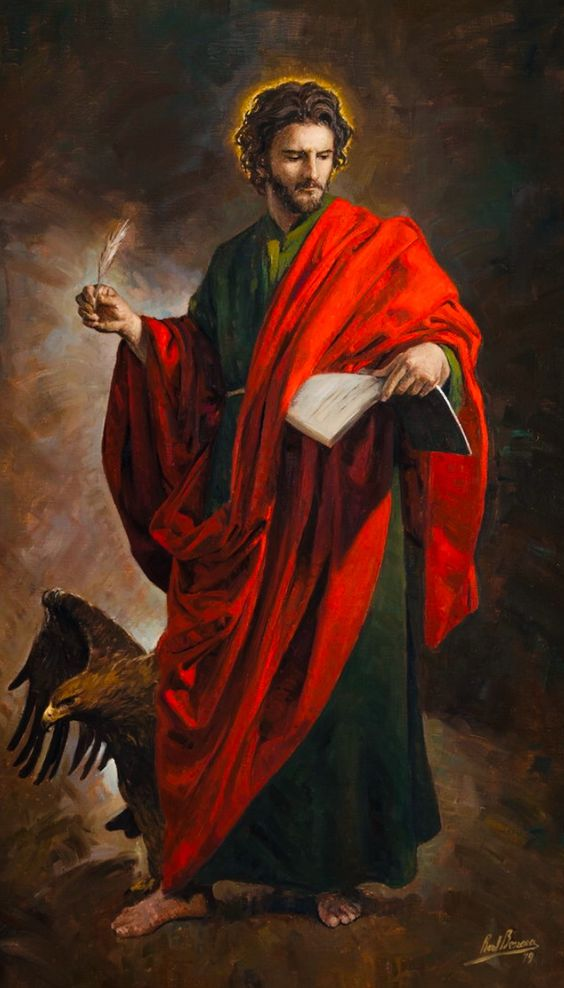
St John the Apostle and Evangelist, the Beloved, Nossa Senhora do Rosário / Our Lady of the Rosary (Brazil) (1817) and Feasts of the Saints –

St John the Apostle and Evangelist, the Beloved
St John the Beloved:

https://anastpaul.wordpress.com/2017/12/27/saint-of-the-day-27-december-st-john-the-apostle-and-evangelist/
AND:
https://anastpaul.com/2020/12/27/saint-of-the-day-27-december-the-disciple-whom-jesus-loved-the-eagle-by-dom-prosper-gueranger/
AND:
https://anastpaul.com/2021/12/27/saint-of-the-day-27-december-st-john-the-apostle-and-evangelist-2/

Nossa Senhora do Rosário / Our Lady of the Rosary (Atibaia, São Paulo, Brazil) (1817) – 27 December:
HERE:

https://anastpaul.com/2021/12/27/feast-of-st-john-the-apostle-and-evangelist-nossa-senhora-do-rosario-our-lady-of-the-rosar-atibaia-sao-paulo-brazil-1817-and-memorials-of-the-saints-27-december/

Bl Adelheidis of Tennenbach
Bl Christina Ebner

St Fabiola (Died 399) Physician, Foundress of the first known hospital and hospice, disciple of St Jerome, benefactress of the Church.
St Fabiola’s Life:

https://anastpaul.com/2019/12/27/saint-of-the-day-27-december-st-fabiola-died-399/

The famous portrait of St Fabiola, painted by Jean-Jacques Henner in a classical Roman profile in 1885.

Bl Hesso of Beinwil
St Maximus of Alexandria
St Nicarete of Constantinople

Blessed Roger of Verdun O.Praem. (Died 1138) Abbot, Priest or Regular Canon, Friar.
His Holy Life:

https://anastpaul.com/2023/12/27/saint-of-the-day-27-december-blessed-roger-of-verdun-o-praem-died-1138-priest/

 Saints and Blesseds of the Premonstratensians

St Theodore of Apamea (c775-c831) Confessor, Martyr, Monk, Brother of Saint Theophanes of Nicaea.
His Life and Death:

https://anastpaul.com/2022/12/27/saint-of-the-day-27-december-st-theodore-of-apamea-c-775-c-831-confessor/

St Theophanes of Nicaea
Bl Walto of Wessobrünn

Posted in Uncategorized

“Gaudete” Sunday, The Third Sunday of Advent,  Within the Octave of the Immaculate Conception, Madonna del Patrocinio / Our Lady of Defence -Romagna, Italy) (1685) and Memorials of the Saints – 14 December

“Gaudete” Sunday, The Third Sunday of Advent

Within the Octave of the Immaculate Conception of the Blessed Virgin Mary, Mother of God

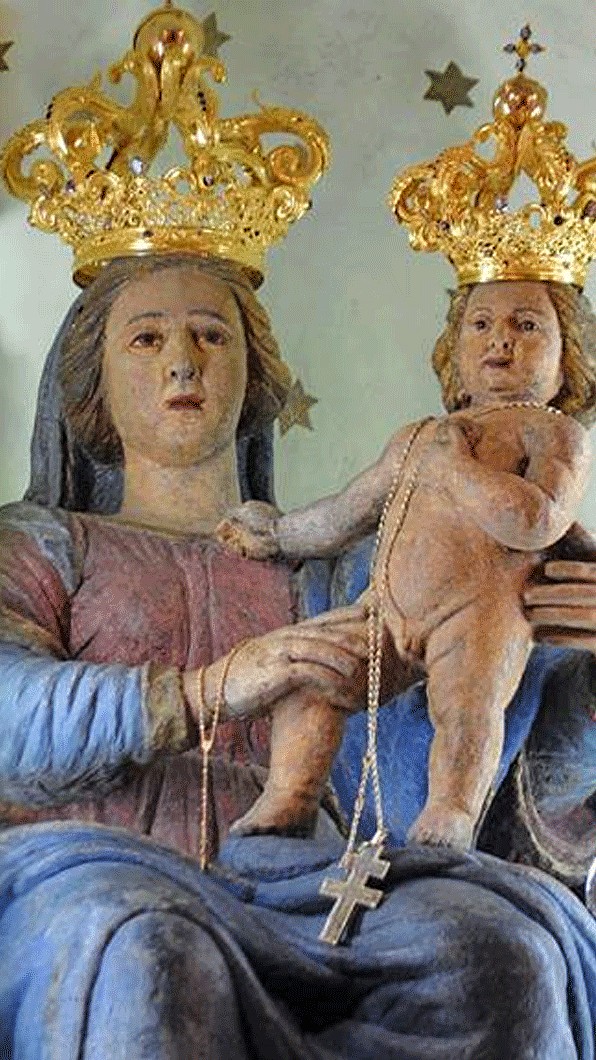
Madonna del Patrocinio / Our Lady of Defence – also known as Santa Maria del Calcare (Faenza, Ravenna, Emilia-Romagna, Italy) (1685) – 14 December:
HERE:

https://anastpaul.com/2021/12/14/madonna-del-patrocinio-our-lady-of-defence-faenza-ravenna-emilia-romagna-italy-1685-and-memorials-of-the-saints-14-december/

St Venantius Fortunatus (c530 – c609) Bishop, Poet, Hymnist, Writer.
Another “Golden Words”:

https://anastpaul.com/2019/12/14/saint-of-the-day-14-december-saint-venantius-fortunatus-c-530-c-609/

St Abundius of Spain – Martyr. No other information has survived

St Agnellus (535-596) Abbot, Priest, Hermit, Defender and Protector of the City of Naples, Miracle-worker.
St Agnellus is one of the 50+ Co-Patrons of the City of Naples
The Roman Martyrology reads today: “
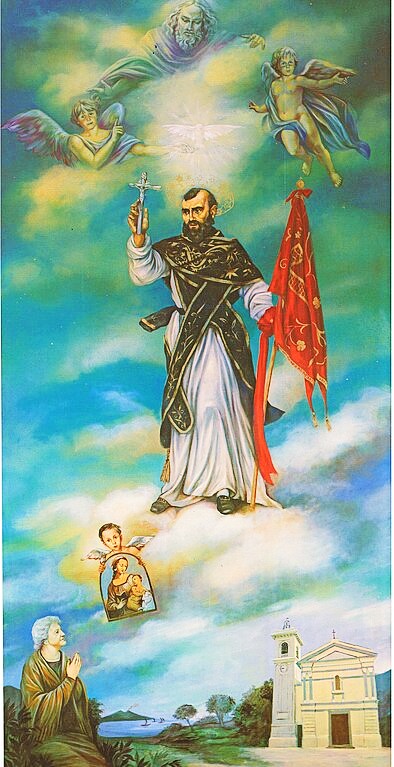
In Naples, in Campaniaa, St Agnellus, Abbot. Illustrious by the gift of miracles, he was often seen with the standard of the Cross, delivering the City besieged by enemies.”
A Mighty and Powerful Saint:
https://anastpaul.com/2023/12/14/saint-of-the-day-14-december-saint-agnellus-of-naples-osa-535-596/

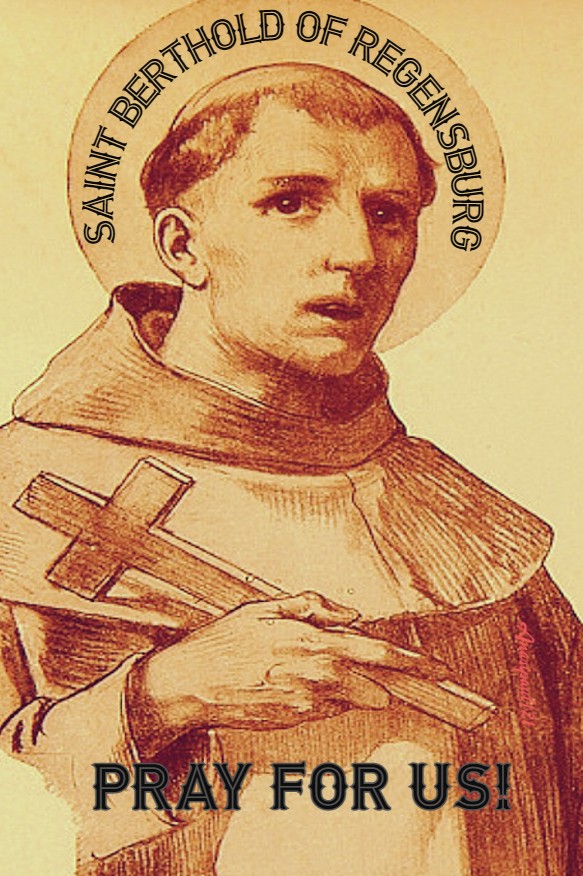
St Berthold OFM (c 1220-1272) Friar of the Order of the Friars Minor of Regensburg, Renowned Preacher for which reason he was known as “Sweet Brother Berthold,” “The Beloved of God and man,” “A Second Elias,”,”The Teacher of the Nations.”
Celebrating St Berthold:

https://anastpaul.com/2021/12/14/saint-of-the-day-14-december-saint-berthold-of-regensburg-ofm-c-1220-1272/

Bl Buenaventura Bonaccorsi
St Folcuino of Therouanne
St John Pan y Agua (Bread-and-Water)

St Justus of Spain – Martyr. No other information has survived

St Matronianus of Milan
St Pompey (4th Century) Bishop of Pavia

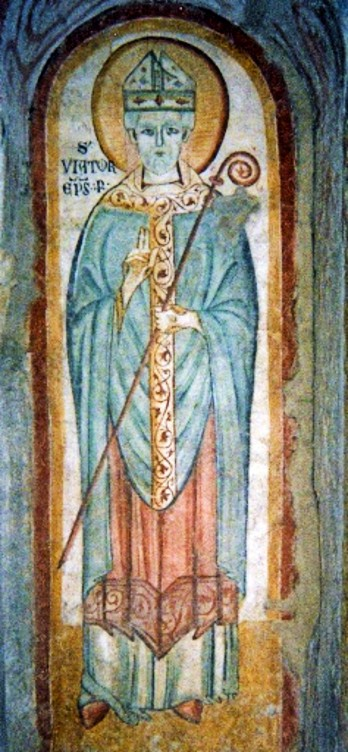
St Viator (Died c370) Bishop and Confessor of Bergamo, the 2nd Bishop of Bergamo, Italy.
The Roman Martyrology reads today: “At Bergamo, St Viator, Bishop and Confessor.”
His Life of Grace:

https://anastpaul.com/2024/12/14/saint-of-the-day-14-december-saint-viator-of-bergamo-died-c378-bishop-and-confessor/

Bl William de Rovira

Martyrs of Alexandria – 4 Saints: A group of Egyptian Christians Martyred together in the persecutions of Decius – Arsenius, Dioscurus, Heron and Isidore. They were burned to death in 250 at Alexandria, Egypt.

Martyrs of Apollonia – 7 Saints: Martyred in the persecutions of Decius. The only surviving details are three names – Callinicus, Leucio and Tirso. The Martyrdom took place at Apollonia, Bithynia (in modern Turkey).

Martyrs of Ashkelon – 3 Saints: Several pilgrims from Egypt to Cilicia (in modern Turkey) who planned to minister to fellow Christians suffering in the persecutions of Emperor Maximinus. They were arrested, torture, mutilated and then imprisoned in Ashkelon. Some were ordered to forced labour in the mines but we have the names of three who were Martyred by order of Governor Firmilian – Ares, Elijah and Promo. They were burned at the stake or beheaded at the gates of Ashkelon c 308.

Martyrs of Hayle – 2+ Saints: Several Christians, including a brother and sister, who were Martyred together by pagans. The only other information to survive are the names of the two siblings – Fingar and Phiala. 5th Century at Hayle, Cornwall, England.

Martyrs of Syria – 3 Saints: Three Christians who were Martyred together. Known to Saint John Chrysostom who preached on their Feast Day and left us the only details we have – their names – Drusus, Theodore and Zosimus. The date and precise location of their Martyrdom is unknown but it was in Syria, possibly in Antioch.

Posted in Uncategorized

Saint of the Day – 17 October – Saint Nothhelm (Died 739) Archbishop of Canterbury

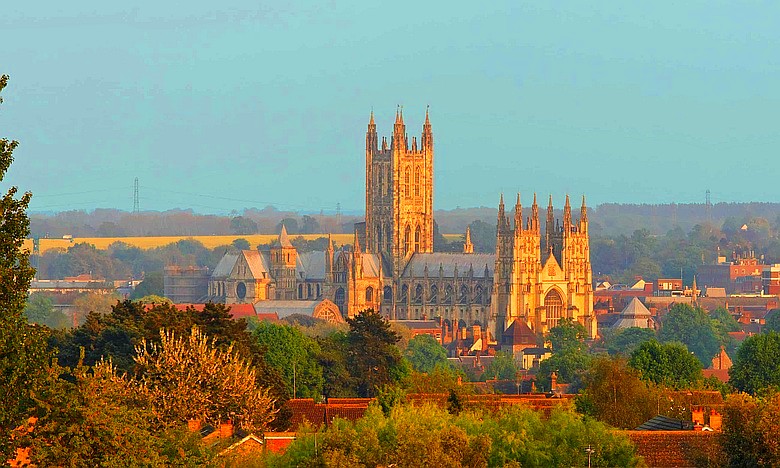
Saint of the Day – 17 October – Saint Nothhelm (Died 739) Archbishop of Canterbury, spiritual writer, a friend and correspondent of both the Venerable Saint Bede and the great Missionary Martyr, Saint Boniface, it was Nothhelm who gathered materials from Canterbury for St Bede’s historical works. After his appointment to the Episcopate of Canterbury in 735, Nothhelm attended to Ecclesiastical matters, including holding Church Councils. Nothhelm was the author of a number of works, although these were later disputed. Of English birth (unknown place and date) and died on 17 October 739 in Canterbury where he is buried. Also known as – Nothelm.

Nothhelm, being aSt Bede’s friend and colleague, was happy to obtain information the later required for his historical works from the Papal Library whilst in Rome on a pilgrimage. He also researched, for St Bede, the history of Kent and the surrounding region. Before his appointment As the Archbishop of Canterbury, he whad been the Archpriest of the Saxon-built St Paul’s Cathedral, in London

Named to the See of Canterbury in 735, Nothhelm was Consecrated the same year. Pope Gregory III sent him a Pallium in 736. He may have been appointed by Æthelbald, King of Mercia, to whom Nothhelm had acted as a Counsellor. Nothhelm was one of a number of Mercians who became Archbishop of Canterbury, during a time of expanding Mercian influence.

Nothhelm held a Synod in 736 or 737 which drew nine Bishops; the meeting adjudicated a dispute over the ownership of a Monastery located at Withington. A significant feature of this Synod was that no King attended, but yet, the Synod still rendered judgement in the ownership even without secular involvement which was most unusual at that time in that country.

As the Archbishop of Canterbury, Nothhelm oversaw the reorganisation of the Mercian Dioceses which took place in 737. The Archbishop Consecrated Witta as the Bishop of Lichfield and Totta as the Bishop of Leicester. The Diocese of Leicester was firmly established by this action, although earlier unsuccessful ttempts had been made to establish a Diocese there. In 738, Nothhelm was a witness on the Charter of Eadberht I, the King of Kent.

St Bede addressed his work “In Regum Librum XXX Quaestiones“ to Nothhelm, who had asked the thirty questins on the Scriptural Bok of Kings which St Bede answered. Bede’s work “De VIII Quaestionibus” may have been written for Nothhelmtoo.

While Nothhelm was Archbishop, St Boniface wrote to him requesting a copy of the Libellus Responsionum of St Pope Gregory the Great, for use in Boniface’s missionary efforts. St Boniface also asked for information on the historical records of the English Gregorian mission to England.

Nothhelm died on 17 October 739 and was buried in Canterbury Cathedral. The antiquaries and writers John Leland, John Bale, and Thomas Tanner all felt that Nothhelm was the author of various works but later sources dispute these historians. A verse eulogy for Nothhelm, of uncertain date, survives in a 16th Century manuscript now at the Lambeth Palace Library.

Posted in Uncategorized

Könnyezo Szuz Mária / Our Lady of Tears or the Weeping Madonna, Hungary) (1717), St Margaret Mary Alacoque and the Saints for 17 October

Könnyezo Szuz Mária / Our Lady of Tears or the Weeping Madonna (Sajópálfala, Miskolci, Borsod-Abaúj-Zemplén, Hungary) (1717) – Third Sunday of October, 16 February:
HERE:
https://anastpaul.com/2021/10/17/twenty-first-sunday-after-pentecost-konnyezo-szuz-maria-our-lady-of-tears-or-the-weeping-madonna-hungary-and-memorials-of-the-saints-17-october/

St Andrew of Crete (c660-c740) Bishop of Gorvina, Constantinople, Father of the Church, Monk at Mar Sabas, Noted and eloquent Preacher, Poet.
His Feast was moved after 1969 to 4 July.
This Wondrous Father:

https://anastpaul.com/2023/07/04/saint-of-the-day-4-july-saint-andrew-of-crete-c660-c740-bishop/

St Anstrudis of Laon

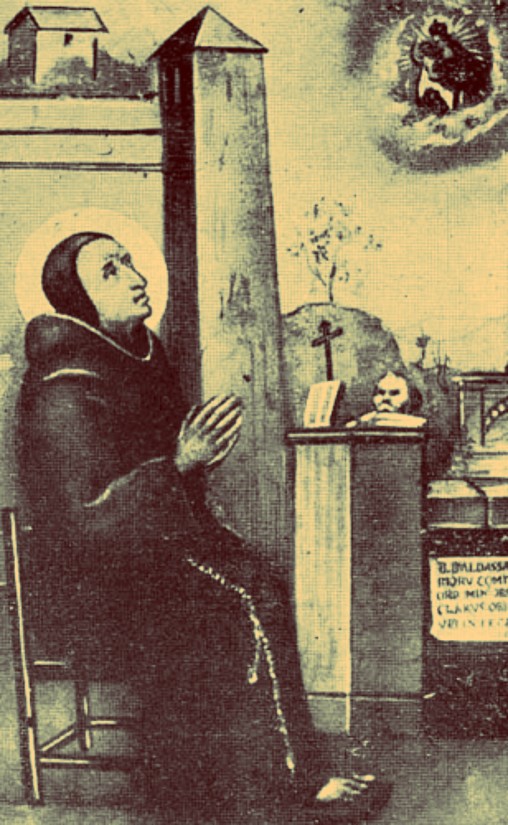
Blessed Balthassar OFM (1420–1492) Priest of the Order of Friars Minor of the strict observance, Confessor, renowned Preacher, Professor of Theology, Superior General of the Order.
His Devout LifeLastpaul.c
om/2020/10/17/saint-of-the-day-17-october-blessed-balthassar-of-chiavari-ofm-1420-1492/

Bl Battista de Bonafede
St Berarius I of Le Mans
St Catervus
St Colman of Kilroot

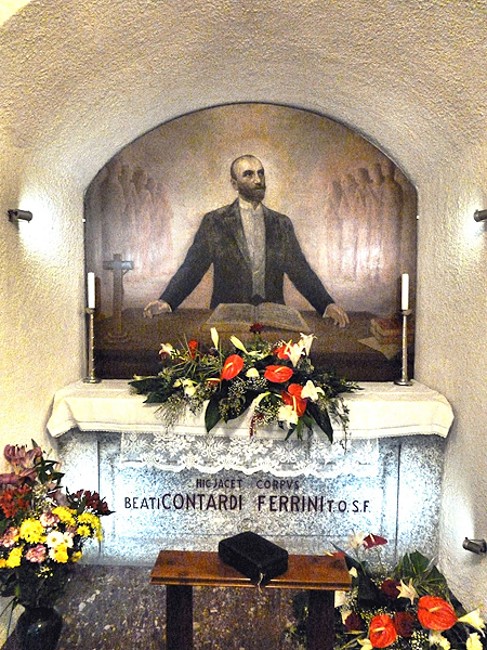
Blessed Contardo Ferrini TOSF (1859-1902) Layman, Third Order Franciscan, Profesor, Civil and Canon Lawyer, Apostle of the poor, writer. He was Beatified by Pope Pius XII on 13 April 1947.
A Life to Imitate:

https://anastpaul.com/2021/10/17/saint-of-the-day-17-october-blessed-contardo-ferrini-tosf-1859-1902/

St Ethelbert of Eastry
St Ethelred of Eastry

St Florentinus (Died c526) Bishop of Orange in in Vaucluse, France now in the Diocese of Avignon, between c527-524, Miracle-worker.
The Roman Martyrology reads: “At Orange, in France, St Florentinus, Bishop, who died leaving a reputation for many virtues.”
His Virtuous Earthly Life:
https://anastpaul.com/2023/10/17/saint-of-the-day-17-october-saint-florentinus-of-orange-died-c526-bishop/

Bl Gilbert the Theologian
St Heron of Antioch
Bl Jacques Burin
St John the Short/Dwarf
St Louthiern
St Mamelta of Persia
St Nothhelm (Died 739) Archbishop of Canterbury
St Richard Gwyn
St Rudolph of Gubbio
St Rufus of Rome
St Solina of Chartres

St Victor of Capua (Died 554) Bishop, Spiritual Writer.
The Roman Martyrology reads today: “At Capua, St Victor, the Bishop, distinguished for erudition and sanctity.”
The Little we Know:

https://anastpaul.com/2024/10/17/saint-of-the-day-17-october-saint-victor-of-capua-died-554-bishop/

St Zosimus of Rome

Martyrs of Nicomedia – 3 Saints: A group of Christians Martyred in the persecutions of Diocletian. The only details about them that have survived are their names – Alexander, Marianus and Victor. 303 in Nicomedia (in modern Turkey).

Martyrs of Valenciennes -5 Beati: A group of Ursuline nuns Martyred in the persecutions of the French Revolution.
Hyacinthe-Augustine-Gabrielle Bourla
Jeanne-Reine Prin
Louise-Joseph Vanot
Marie-Geneviève-Joseph Ducrez
Marie-Madeleine-Joseph Déjardins

Martyrs of Volitani: A group of Martyrs who were praised by Saint Augustine of Hippo. In Volitani, proconsular Africa (in modern Tunisia).

Posted in EMBER DAYS, MARIAN TITLES, QUOTES on FASTING, SAINT of the DAY, Uncategorized

Ember Friday, Notre-Dame de la Salette / Our Lady of La Salette), France (1846), St Januarius of Naples (Died c 304) and all the Saints for 19 September

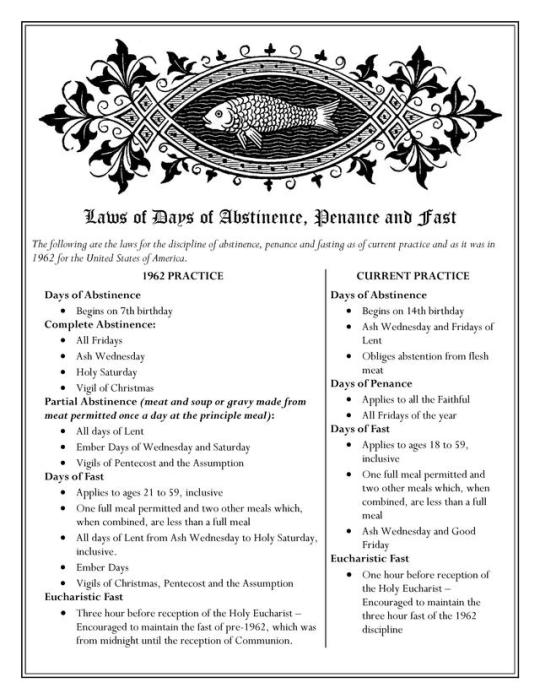
EMBER FRIDAY: FAST & ABSTINENCE – See LAWS governing Days of Abstinence, Penance and Fast showing Pre and post-VaticanII https://anastpaul.com/2020/12/16/today-is-an-ember-day-did-you-remember/

https://youtu.be/CRWNXNhs66k

Notre-Dame de la Salette / Our Lady of La Salette), La Salette-Fallavaux, Isère, Rhône-Alpes, France (1846) 19 September:
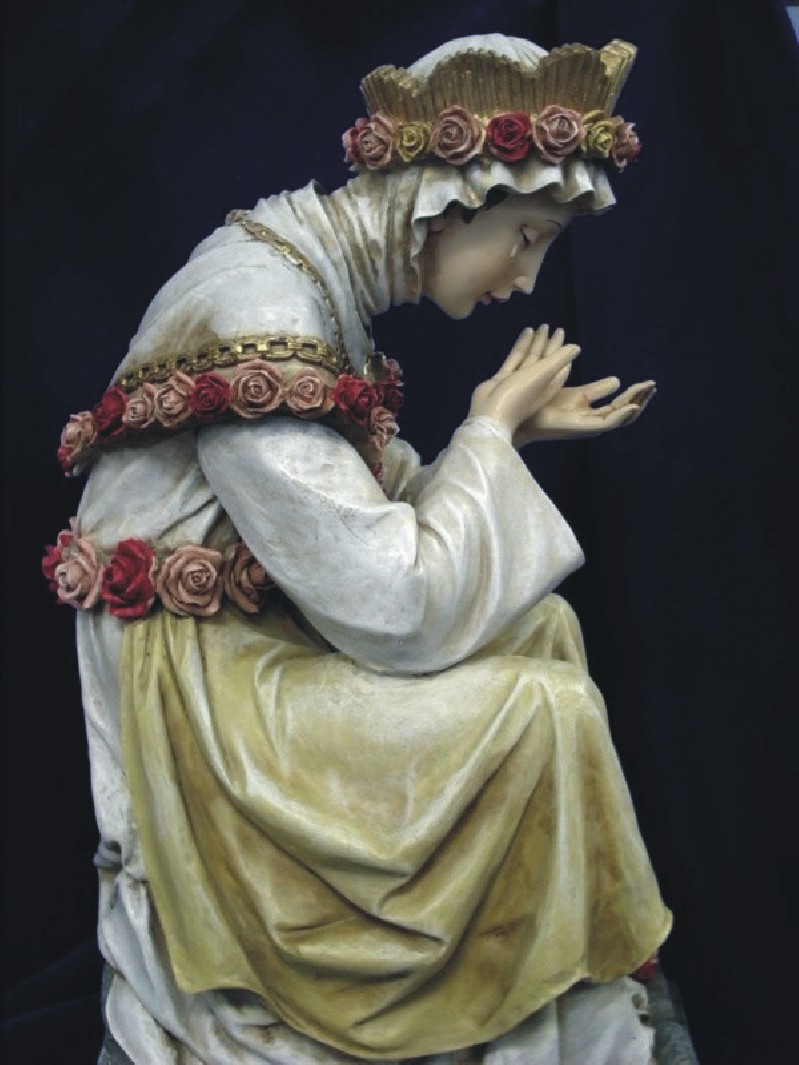
Our Lady appeared to two small children, Melanie Mathieu and Maximin Giraud, on the mountain of La Salette in the French Alps. She was crying and around her neck was a crucifix, with a hammer and pincers on either side – 19 September 1846. Approved by the Diocesan Bishop in 1851.
Read the story here:

https://anastpaul.wordpress.com/2017/09/19/feast-of-our-lady-of-la-salette-19-september/

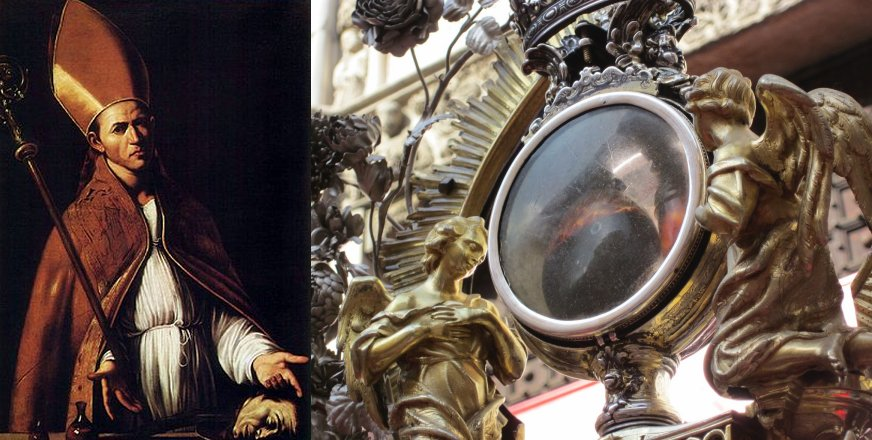
St Januarius of Naples (Died c 304) Confessor, Bishop, Martyr of the Liquefying Blood
His Life and Death:

https://anastpaul.wordpress.com/2017/09/19/saint-of-the-day-19-september-st-januarius

St Emilie de Rodat (1787–1852) Nun and Founder of the Sisters of the Holy Family, Mystic. Venerable Pope Pius XII Beatified her on 9 June 1940 and Canonised her on 23 April 1950.
Biography:

https://anastpaul.com/2019/09/19/saint-of-the-day-19-september-saint-emily-de-rodat-1787-1852/

St Alonso de Orozco Mena OSA (1500 – 1591) Augustinian Priest, Preacher, Writer, Apostle of Charity, Spiritual Director, Marian Devotee, Ascetic.
His Loving Life:

https://anastpaul.com/2018/09/19/saint-of-the-day-19-september-st-alonsus-de-orozco-mena-o-s-a-1500-1591/

St Arnulph of Gap
Bl Carolus Hyon Song-Mun
St Constantia of Nocera
St Desiderius of Pozzuoli
St Eustochius (Died c461) Bishop of Tours
St Felix of Nocera
St Festus of Pozzuoli

St Goeric (c570-c643) Bishop  of Metz – Goeric is listed as the 30th Bishop of Metz, having governed that See from 625 to 642 or 643.
The Roman Martyrology rads: “In Metz in Austrasia, still in the territory of today’s France, Saint Goeríco or Abo, Bishop, who succeeded Saint Arnulf, whose body was transported with veneration to this City.”
His Life of Service:

https://anastpaul.com/2023/09/19/saint-of-the-day-19-september-saint-goeric-of-metz-c570-c643-bishop/

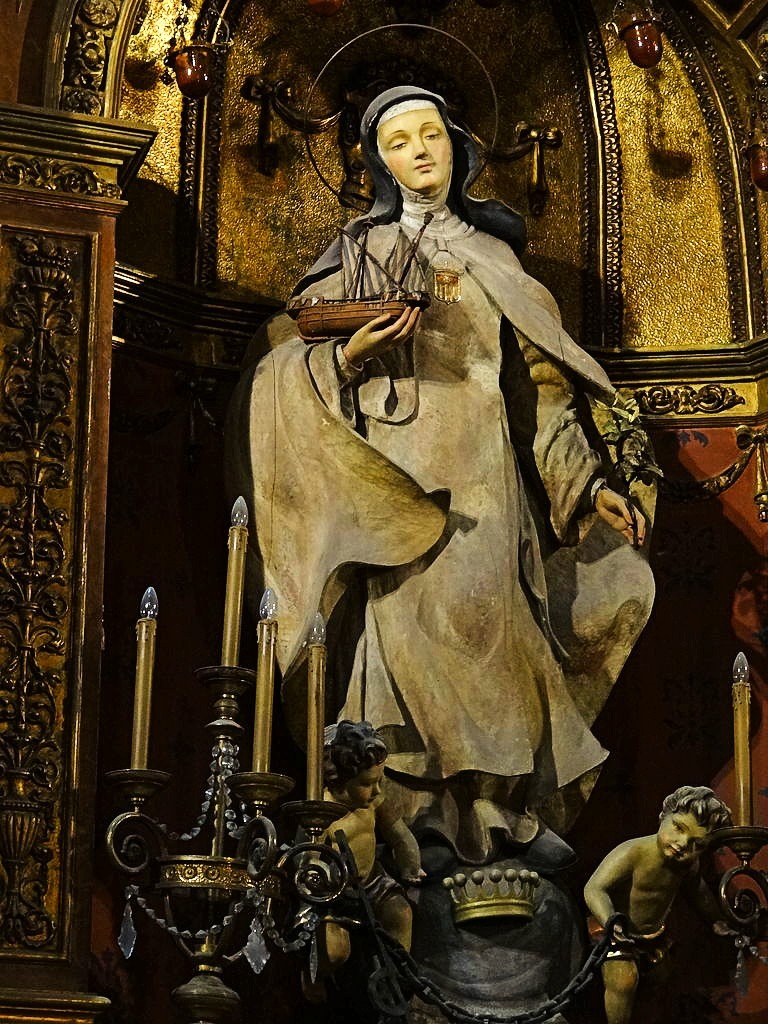
St Maria de Cervellón OdeM (1230 – 1290) Virgin, Catalan Superior of Second Order of the Mercedarians in her region. Mystic, graced with the gift of bilocation, Apostle of the poor, the abandoned, the needy. She was the first woman to wear the Habit of the ‘ Order of the Blessed Virgin Mary of Ransom. She is considered the Founder of the Mercedary Nuns.
Her entry in the Roman Martyrology states: “At Barcelona in Spain, blessed Maria de Cervellione, Virgin of the Order of Our Lady of Ransom. She is commonly called Maria of Help on account of the prompt assistance she renders to those who invoke her.“
Patronages – Mercadarian Nuns and Sisters, Navigators, against shipwreck, Spanish sailors, of the abandoned.
On 13 February1692, Pope Innocent XII gave a favourable judgement and confirmed her immemorial cult;and she was introduced into the Roman Martyrology as a Saint on 8 November 1729. Her body is Incorrupt.
Her Holy Life:

https://anastpaul.com/2021/09/19/saint-of-the-day-19-september-st-maria-de-cervellon-odem-1230-1290/
Please watch this video if you are able to spare the time. It is absolutely beautiful.

St Pomposa
St Sequanus
St Sosius of Puzzuoli

St Theodore of Canterbury (c602-690) the 7th Archbishop of Canterbury and the first Archbishop to rule the whole English Church. His body is Incorrupt.
The Roman Martyrology reads today: “At Canterbury, the holy Bishop, Theodore, who was sent to England by Pope Vitalian and was renowned for learning and holiness.”
Wonderful St Theodore:

https://anastpaul.com/2024/09/19/saint-of-the-day-19-september-st-theodore-of-canterbury-c602-690-the-7th-archbishop-of-canterbury/

St Trophimus of Synnada

Martyrs of Antioch – 3 Saints: Christians imprisoned, tortured and executed in various ways in the persecutions of Emperor Probus; some names have come down to us – Dorymedon, Sabbatius and Trophimus. c 277 at Antioch (in modern Turkey).

Martyrs of Phunon – (4 aints): Four bishops in Egypt who were sentenced to forced labour in a rock quarry and martyred in the persecution of Diocletian. Noted for celebrating Mass in prison. – Elias, Nilus, Patermuzio and Peleus. They were burned to death in 310 at Phunon, near Petra in Palestine.

Posted in Uncategorized

First Saturday of September, Notre-Dame de la Fontaine / Our Lady of the Fountain, France (1008) and the Saints for 6 September

FIRST SATURDAY

Notre-Dame de la Fontaine / Our Lady of the Fountain, Valenciennes, France (1008) – 6 September:
HERE:
https://anastpaul.com/2021/09/06/notre-dame-de-la-cordon-our-lady-of-the-cord-valenciennes-france-1008-and-memorials-of-the-saints-6-september/

St Arator of Verdun
St Augebert of Champagne
St Augustine of Sens
St Beata of Sens

St Bega (Died c660) Virgin, Irish Princess, Recluse, Abbess Founder, Miracle-worker.
The Roman Martyrology reads: “On the Cumberland coast in England, in a Town which later took its name from her, Saint Bega, consecrated virgin.”
Her Life of Grace:

https://anastpaul.com/2023/09/06/saint-of-the-day-6-september-st-bega-died-c660-virgin/

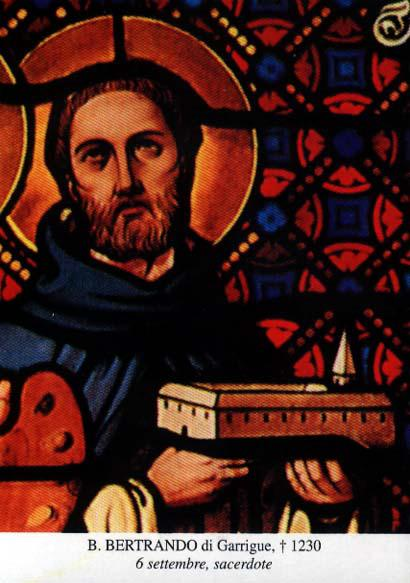
Blessed Bertrand de Garrigues OP (c 1195-1230) “The Second Dominic,” Priest, Preacher, Evangeliser, Confessor.
His zealous life:

https://anastpaul.com/2019/09/06/saint-of-the-day-6-september-blessed-bertrand-de-garrigues-op-c-1195-1230/

St Cagnoald
St Consolata of Reggio Emilia Martyr. No further information has survived.
St Cottidus of Cappadocia

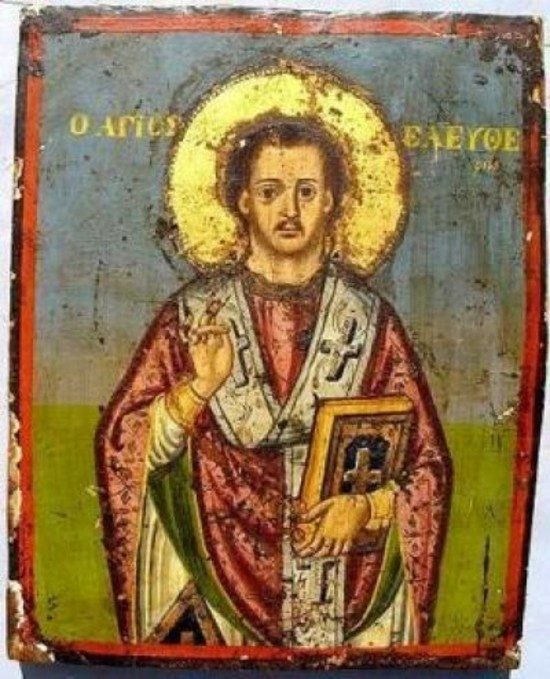
St Eleutherius the Abbot (Died c 585) Abbot. A wonderful simplicity and spirit of compunction were the distinguishing virtues of this holy sixth century Abbot.
His Virtuous Life:

https://anastpaul.com/2020/09/06/saint-of-the-day-saint-eleutherius-the-abbot-at-spoleto-died-c-585/


St Eugene of Cappadocia
St Eve of Dreux, France, Martyr. No other information has survived.
St Faustus of Alexandria

St Faustus (Died c607) Abbot. We know nothing about St Faustus except that he was the Abbot of the Monastery of Santa Lucia in Syracuse in Sicily during the late 6th and early 7th Centuries and that he wonderfully taught the child Zosimus, who would later become the Abbot and also the Bishop of the City of Syracuse and even more, a Saint!
St Faustus:

https://anastpaul.com/2024/09/06/saint-of-the-day-6-september-saint-faustus-of-syracuse-died-c607-abbot/

St Felix of Champagne

St Frontiniano (Died 311) Deacon Martyr of Alba (
His Life and Death:

https://anastpaul.com/2021/09/06/saint-of-the-day-6-september-saint-frontiniano-of-alba-died-311-martyr/

St Gondulphus (Died 823) Bishop of Metz
St Imperia
St Liberato of Loro Piceno
St Macarius of Alexandria
St Maccallin of Lusk

St Magnus (Died c 666) Religious Priest, Monk, Abbot, Missionary, Spiritual student of Saint Columban and Saint Gall.
Devout St Magnus:

https://anastpaul.com/2017/09/06/saint-of-the-day-6-september-st-magnus-of-fussen/

St Mansuetus of Toul
St Onesiphorus
St Petronius of Verona Bishop and Confessor
St Sanctian of Sens
St Zacharius the Prophet

Martyrs of Africa – 6 Saints: There were thousands of Christians exiled, tortured and Martyred in the late 5th Century by the Arian King Hunneric. Six of them, all Bishops, are remembered today; however, we really know nothing about them except their names and their deaths for the Christ and the Faith – Donatian, Fusculus, Germanus, Laetus, Mansuetus and Praesidius.

Posted in SAINT of the DAY, Uncategorized

Madonna della Montagna / Our Lady of the Mountain, Italy (1144), St Stephen, King of Hungary and all the Saints for 2 September

Madonna della Montagna / Our Lady of the Mountain, Polsi di San Luca, Reggio Calabria, Calabria, Italy (1144) – 2 September :
HERE:

https://anastpaul.com/2021/09/02/madonna-della-montagna-our-lady-of-the-mountain-polsi-di-san-luca-reggio-calabria-calabria-italy-1144-and-memorials-of-the-saints-2-september/

St Stephen King of Hungary (c975- 1038) Confessor, Apostle of Hungary, King and Marian devotee, Apostle of the Needy, Evangeliser and Missionary.
(Feast moved after Vatican II to 16 August).
This Good King:
https://anastpaul.com/2018/08/16/saint-of-the-day-16-august-st-stephen-of-hungary-c-975-038-apostle-of-hungary/

Bl Albert of Pontida
St Antoninus of Pamiers
St Antoninus of Syria

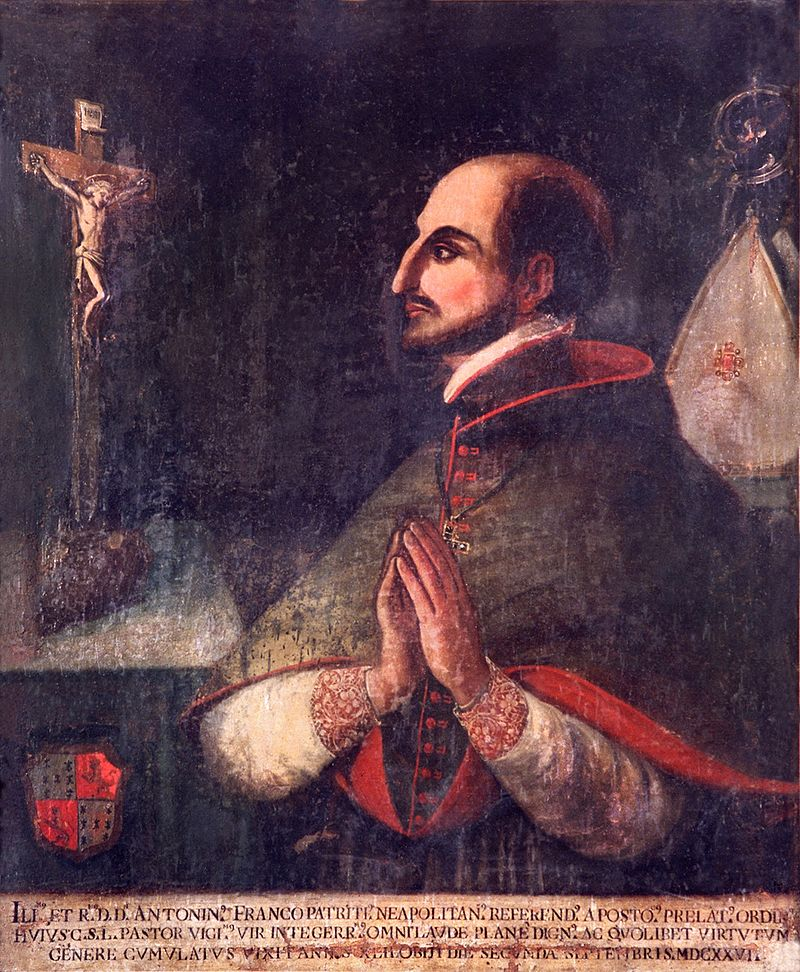
Blessed Antonio Franco (1585-1626) Priest, Penitent, Ascetic.
His Devoted Life:

https://anastpaul.com/2019/09/02/saint-of-the-day-2-september-blessed-antonio-franco-1585-1626/

St Brocard
St Castor of Apt
St Comus of Crete
St Eleazar the Patriarch
St Elpidius of Lyon
St Elpidius (4th Century) Abbot in Ancona, Italy
St Hieu

St Ingrid of Sweden OP (Died 1282) Dominican Religious and Mystic.
Her Life of Grace:

https://anastpaul.com/2018/09/02/saint-of-the-day-2-september-st-ingrid-of-sweden-o-p-died-1292/

St Justus of Lyons (Died c390) Bishop, Confessor

St Lanfranc (5th Century) Bishop of Vercelli, Italy.
A Little-known Life:

https://anastpaul.com/2024/09/02/saint-of-the-day-2-september-saint-lanfranco-of-vercelli-5th-century-bishop/

St Lolanus

St Lolanus
St Margaret of Louvain
St Maxima

St Nonnossus (c500-c575) Monk, Abbot and Deacon.
Not to be confused with St Raymond Nonnatus:

https://anastpaul.com/2020/09/02/saint-of-the-day-2-september-saint-nonnosus-c-500-c-575/

St Prospero of Tarragona
St Theodota of Bithynia
St Valentine of Strasbourg
St William of Roeskilde

Marytrs of Nicomedia – 3 Saints: Three Christians who were Martyred together in the persecutions of Diocletian. No details about them but their names have survived – Concordius, Theodore and Zenone. They were martyrd in
Nicomedia, Bithynia (in modern Turkey).

The Holy Martyrs of September (Died 1792) – 191 beati: Also known as – Martyrs of Paris, Martyrs of Carmes. They were massacred by a mobs on 2 September and 3 September 1792 and Beatified on 17 October 1926 by Pope Pius XI.
THEIR LIVES AND DEATHS:

https://anastpaul.com/2021/09/02/saint-s-of-the-day-2-september-

Martyrs of 2 September – 10 Saints: A group of ten Martyrs; their names are on old Martyrologies but we have lost all record of their lives and deaths. They were Canonised: Antoninus, Diomedes, Eutychian, Hesychius, Julian, Leonides, Menalippus, Pantagapes, Philadelphus, Philip.

Holy Bishops of Rennes:
Honours all the Bishops of the Diocese of Rennes, France who have been recognised as Saints and Beati. They include

Saint Maximinus of Rennes
Saint Modéran of Rennes
Saint Rambert of Rennes
Saint Riotisme of Rennes
Saint Servius of Rennes
Saint Synchronius of Rennes

Posted in Uncategorized

Pentecost XII. Our Lady of the Founders, Constantinople (5th Century), St Aidan of Lindisfarne, St Raymond Nonnatus and all the Saints for 31 August

PENTECOST XII

Our Lady of the Founders – The Relic of the Girdle of Our Lady, Constantinople (5th Century) – 31 August:
HERE:

https://anastpaul.com/2021/08/31/our-lady-of-the-founders-5th-century-constantinople-and-memorials-of-the-saints-31-august/

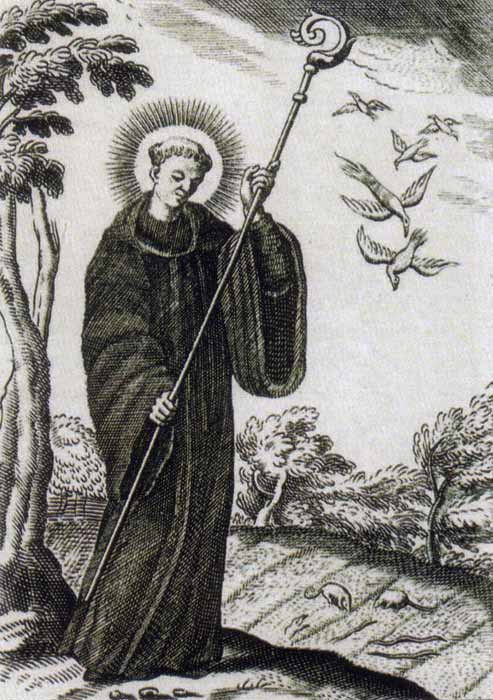
St Aidan of Lindisfarne (Died 651) Apostle of Northumbria, Bishop, Monk, Missionary, Abbot, Ascetic.
Wonderful St Aidan’s Story:

https://anastpaul.com/2018/08/31/saint-of-the-day-31-august-st-aidan-of-lindisfarne-died-651-apostle-of-northumbria/

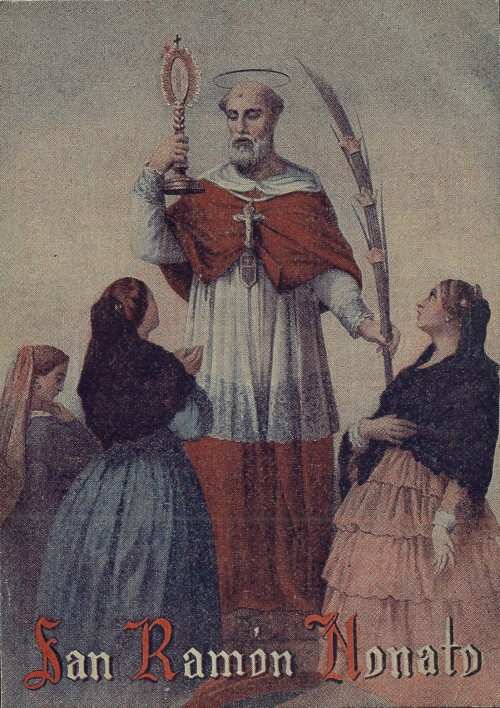
St Raymond Nonnatus O.deM. (1204-1240) Religious Priest, Confessor, Cardinal, Friar of the Mercedarian Order. Beatified on
5 November 1625 by Pope Urban VIII and Canonised in 1657 by Pope Alexander VII. Raymond was delivered by Caesarean operation when his mother died during childbirth – hence the name: non natus = not born.  Patronages – against gossip, of silence, against fever, of babies, infants, childbirth, children, pregnant women, falsely accused people, midwives, obstetricians, Baltoa, Dominican Republic, San Ramon, Costa Rica.
Holy Nonnatus:

https://anastpaul.wordpress.com/2017/08/31/saint-of-the-day-31-august-st-raymond-nonnatus-o-dem/
AND:
https://anastpaul.com/2023/08/31/saint-of-the-day-31-august-st-raymond-nonnatus-1204-1240-priest-confessor/

St Ammi of Caesarea
St Aristides the Philosopher
St Barbolenus of Bobbio
St Bonajuncia OSM Confessor
St Caesidius

St Cuthburga (Died c725) Abbess of Wimborne, England. ery, Queen, Mother, Widow, Nun . She was the sister of Ine, King of Wessex and was married to the Northumbrian King Aldfrith, thus she was also a Queen.
Fervent St Cuthburga:

https://anastpaul.com/2024/08/31/saint-of-the-day-31-august-saint-cuthburga-of-wimborne-died-c725-abbess/

St Honoratus (5th Century) Bishop of Marseilles

St Joseph of Arimathea (Died 1st Century) “The Secret Disciple of
Jesus”
After the Resurrection:

https://anastpaul.com/2021/08/31/saint-of-the-day-31-august-saint-joseph-of-arimathea-died-1st-century/

St Mark of Milan
St Optatus (Died c530) Bishop and Confessor of Auxerre

St Paulinus of Trier (Died 358) Bishop of Trier, Confessor, Missionary.
Holy Saint Paulinus:

https://anastpaul.com/2020/08/31/saint-of-the-day-31-august-saint-paulinus-of-trier-died-358-or-359-bishop/

Posted in SAINT of the DAY, Uncategorized

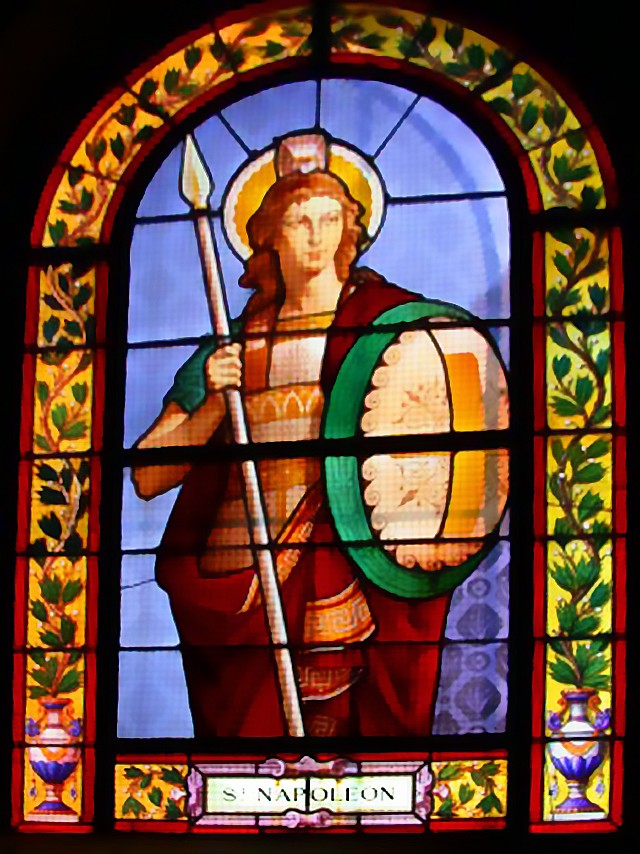
Saint of the Day – 15 August – St Napoleon (Died c302) Martyr of Alexandria.

Saint of the Day – 15 August – St Napoleon (Died c302) Martyr of Alexandria. Born in Egypt and was Martyred in Alexandria in the early 4th Century during the persecutions of Diocletian. Also known as – Neopulus, Neopolus, Neopolis or Neópolo.

He was seized during the persecutions under Emperor Diocletian and was brutally tortured in Alexandria. Neopoleon died from his injuries. Sadly we have no further information but it appears that he had been a soldier.

Posted in Uncategorized

St Philomena (Died 304), St Susanna of Rome (Died c 295) Virgins Martyrs, St Tiburtius (Died c286) Martyr, Link to the Assumption Novena and more Saints for 11 August

Resumed Mass of Sunday

St Tiburtius (Died c286) Martyr, Layman, the son of Saint Chromatius the Prefect of Rome, also a Martyr. St Damasus (c305-384), the Pope, wrote about Tiburtius. He died by being beheaded in c286 in Rome, Italy and his remains are entombed in the Ad Duas Lauros Cemetery at the three mile marker on the Via Lavicana in Rome.
The Roman Martyrology reads today: “At Rome, between the two laurels situate about three miles from the City, the birthday of St Tiburtius, Martyr, under the Judge Fabian, in the persecution of Diocletian. After he had walked barefoot on burning coals and confessed Christ with increased constancy. he was put to the sword.”
His Life and Death:
https://anastpaul.com/2023/08/11/saint-of-the-day-11-august-saint-tiburtius-died-c286-martyr/

St Alexander of Comana (Died c 251 ) Martyr “The Charcoal Burner”
His Life and Death:

https://anastpaul.com/2019/08/11/saint-of-the-day-11-august-saint-alexander-of-comana-the-charcoal-burner-died-c-251-martyr/

St Cassian of Benevento
St Chromatius the Prefect Martyr, the Father of St Tiburtius also celebrated today and also a Martyr
St Digna of Todi

St Equitius (Died c570) Abbot,Miracle-worker, a renowned Preacher and Evangeliser spreading the tenets and glory of monasticism, Founder of a Monastery.
The Roman Martyrology reads today: “In the Province of Valeria, St Equitius, Abbot, whose sanctity is attested to by the blessed Pope Gregory.”
His Life of Service:

https://anastpaul.com/2024/08/11/saint-of-the-day-11-august-st-equitius-died-c570-abbot/

St Géry/Gaugericus (c550 – 626), Bishop of Cambrai, France, Founder of Monasteries, Churches and of St Géry Island off Belgium, Géry devoted himself to the fight against paganism, Miracle-worker.
Holy Bishop St Géry/Gaugericus :

https://anastpaul.com/2020/08/11/saint-of-the-day-11-august-st-gery-of-cambrai-c-550-626-bishop/

St Lelia
St Rusicola of Arles
St Rufinus of Marsi
Bl Theobald of England and Companion
St Taurinus (c350-c412) Bishop of Evreux

Posted in Uncategorized

Notre-Dame -de- lure / Our Lady of Lure, Avignon, France (1110), St John Gualbert, St Nabor and St Felix, St Veronica and the Saints – 12 July

Notre-Dame -de- lure / Our Lady of Lure, Avignon, France (1110) – 12 July:
HERE:

https://anastpaul.com/2021/07/12/notre-dame-de-lure-our-lady-of-lure-avignon-france-1110-and-memorials-of-the-saints-12-july/

St John Gualbert (c985-1073) Abbot, Founder of the Vallumbrosan Order and many Monasteries. “The Merciful Knight.”
“The Merciful Knight”:

https://anastpaul.com/2019/07/12/saint-of-the-day-12-july-st-john-gualbert-c-985-1073-the-merciful-knight/

St Michael with St John Gualbert

St Nabor of Milan and St Felix of Milan (Died c 304) Martyrs, Roman Soldiers. lLymen Soldiers Martyred during the Persecution under the Roman Emperor Maximian.
Their Lives and Deaths:

https://anastpaul.com/2022/07/12/saints-of-the-day-12-july-saints-nabor-and-felix-of-milan-died-c-304-martyrs/

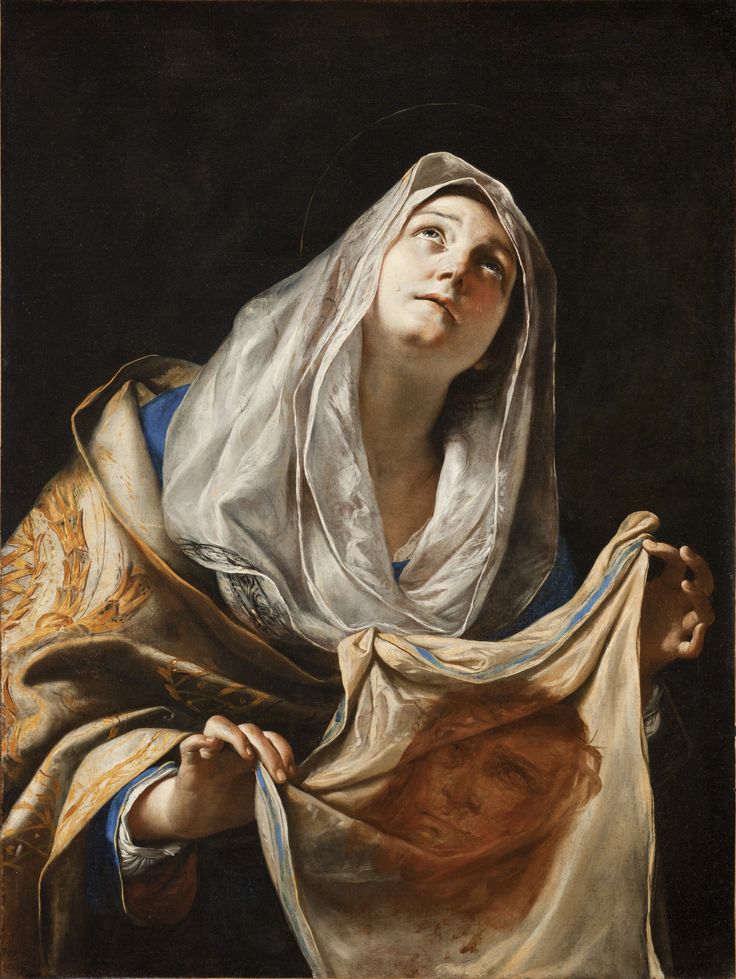
St Veronica (1st Century) – The woman who who wiped the Face of Jesus on the way to His Crucifixion. The cloth is believed to exist today in the Vatican and is considered one of the most treasured Relics of the Church.
St Veronica:

https://anastpaul.wordpress.com/2017/07/12/saint-of-the-day-12-july-st-veonica/

St Agnes De
St Andreas the Soldier
St Ansbald of Prum
St Balay
St Clement Ignatius Delgado Cebrian

St Colmán of Cloyne (c522-600) Irish Priest, (possibly a Bishop), Monk, Founder, Poet, known as the Royal Poet of Munster.
Biography:

https://anastpaul.com/2021/07/12/saint-of-the-day-12-july-saint-colman-of-cloyne-522-600/

Bl Conrad of Maleville
Bl David Gonson
St Epiphana
St Faustus the Soldier

St Fortunatus of Aquileia (1st Century – Died c66) Deacon
St Hermagorus of Aquileia (1st Century – Died c 66) Bishop, Disciple of St Mark the Evangelist
Bl Guy Vignotelli
St Hilarion of Ancyra
St Jason of Tarsus
Bl Jeanne-Marie de Romillon

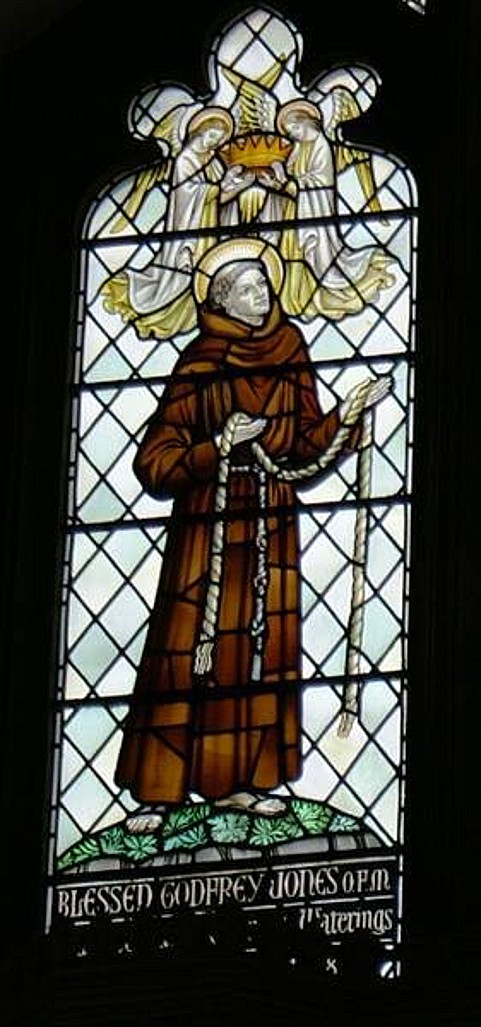
St John Jones OFM (c1574 – 1598) Priest and Martyr, Franciscan Friar, Missionary.
His Life and Death:

https://anastpaul.com/2020/07/12/saint-of-the-day-12-july-saint-john-jones-ofm-c-1574-1598-priest-and-martyr/

St John the Georgian
Bl Lambert of Cîteaux

St Leo of Cava (Died 1079) The second Abbot of the Abbey of La Trinità della Cava
St Leo’s Life:

https://anastpaul.com/2023/07/12/saint-of-the-day-12-july-saint-leo-of-cava-c990-1079-abbot/

St Viventiolus (c460–524) Bishop of Lyons, Scholar, Spiritual Writer, Monk of Condat, an Abbey which boasted an important school. He was a teacher there and his knowledge was great.
His Life of Grace:

https://anastpaul.com/2024/07/12/saint-of-the-day-12-july-saint-viventiolus-of-lyons-c460-524-bishop/

Three Holy Exiles: Three Christian men who became Benedictine Monks at the Saint James Abbey in Regensburg, Germany, then Hermits at Griestatten and whose lives and piety are celebrated together. – Marinus, Vimius and Zimius.

Martyrs of Rome – Four members of the Imperial Roman nobility. They were all soldiers, one or more may have been officers, and all were Martyred in the persecutions of Diocletian – Basilides, Cyrinus, Nabor and Nazarius.
Died in c 304 outside Rome, Italy and were buried there along the Aurelian Way.

Martyrs of Nagasaki – 8 Beati: Additional Memorial – 10 September as one of the 205 Martyrs of Japan
Eight lay people, many them related to each other, who were martyred together: Catharina Tanaka, Ioannes Onizuka Naizen, Ioannes Tanaka, Ludovicus Onizuka, Matthias Araki Hyozaemon, Monica Onizuka, Petrus Araki Chobyoe, Susanna Chobyoe, 12 July 1626 in Nagasaki, Japan. Beatified on 7 May 1867 by Pope Blessed Pius IX.

Posted in BREVIARY Prayers, CATHOLIC-PRAYERS OF THE CHURCH, DOCTORS of the Church, DOMINICAN OP, EUCHARISTIC, EUCHARISTIC Adoration, Our MORNING Offering, PRAYERS of the CHURCH, PRAYERS of the SAINTS, The HOLY EUCHARIST / The HOLY MASS, Uncategorized

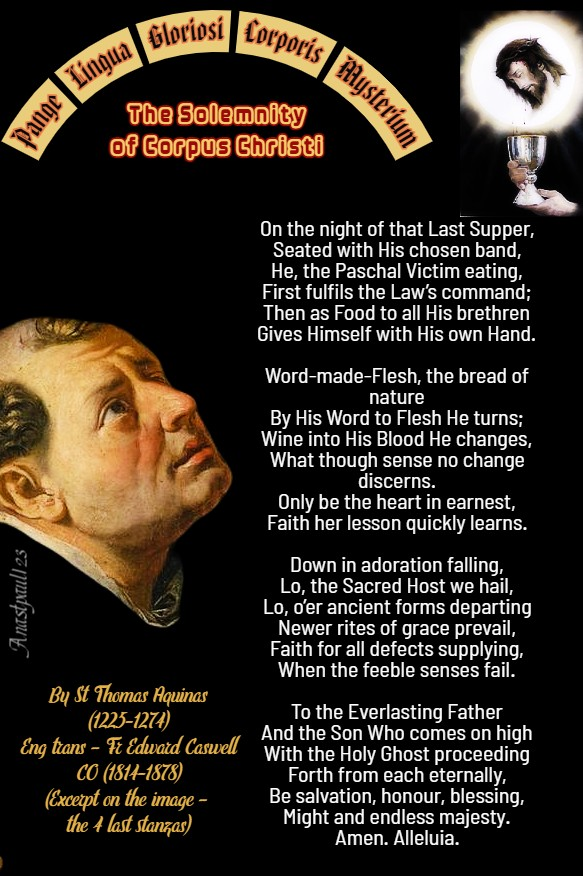
Our Morning Offering – 19 June – Pange Lingua Gl oriosi Corporis Mysterium – Sing, My Tongue By St Thomas Aquinas

Our Morning Offering – 19 June – “The Month of the Most Sacred Heart of Jesus” – Corpus Christi

Pange Lingua Gloriosi Corporis Mysterium
Sing, My Tongue
By St Thomas Aquinas (1225-1274)

Eng trans – Fr Edward Caswell CO (1814-1878)
(Excerpt on the image – the 4 last stanzas)

Sing, my tongue, the Saviour’s glory,
Of His Flesh, the Mystery sing;
Of the Blood, all price exceeding,
Shed by our Immortal King,
Destined, for the world’s redemption,
From a noble Womb to spring.

Of a pure and spotless Virgin
Born for us on earth below,
He, as Man, with man conversing,
Stayed, the seeds of truth to sow;
Then He closed in solemn order
Wondrously His Life of woe.

On the night of that Last Supper,
Seated with His chosen band,
He, the Paschal Victim eating,
First fulfils the Law’s command;
Then as Food to all His brethren
Gives Himself with His own Hand.

Word-made-Flesh, the bread of nature
By His Word to Flesh He turns;
Wine into His Blood He changes,
What though sense no change discerns.
Only be the heart in earnest,
Faith her lesson quickly learns.

Down in adoration falling,
Lo, the Sacred Host we hail,
Lo, o’er ancient forms departing
Newer rites of grace prevail,
Faith for all defects supplying,
When the feeble senses fail.

To the Everlasting Father
And the Son Who comes on high
With the Holy Ghost proceeding
Forth from each eternally,
Be salvation, honour, blessing,
Might and endless majesty.
Amen. Alleluia.

Written by St Thomas Aquinas (1225-1274) the Angelic and Common Doctor of the Church, for the very first Solemnity of Corpus Christi, this Hymn is considered the most beautiful of Aquinas’ Hymns and one of the seven great Hymns of the Church.

The last two stanzas make up the Tantum Ergo (Down in Adoration Falling) which is used at Benediction of the Blessed Sacrament. The Hymn is also used on Maundy Thursday during the procession from the Sanctuary to the Altar of Repose, where the Blessed Sacrament is kept until Good Friday.

Posted in Uncategorized

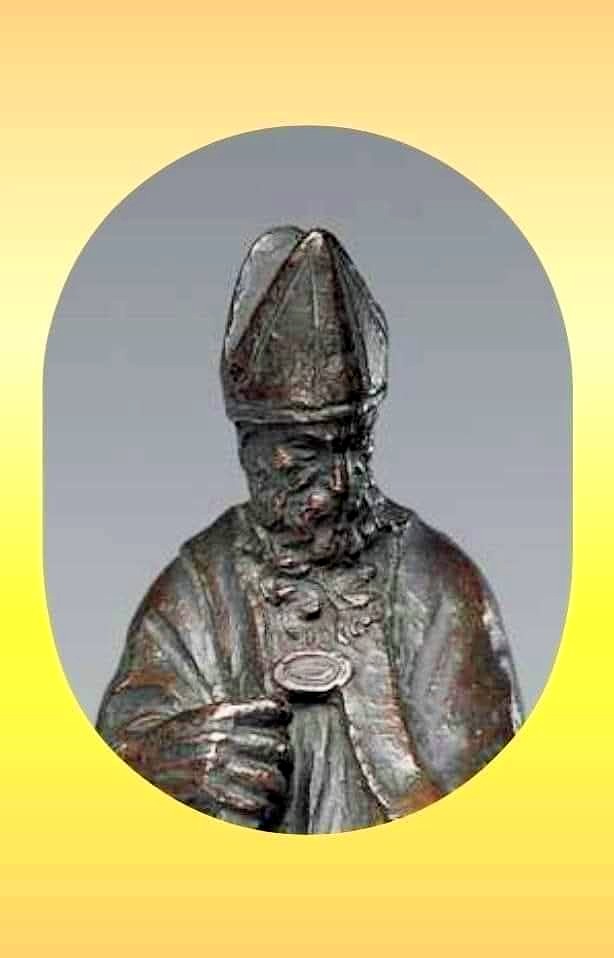
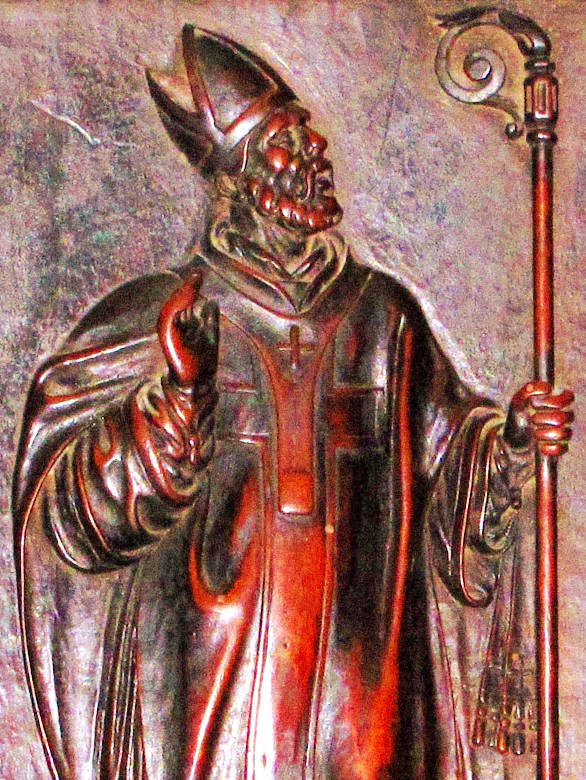
Saint of the Day – 14 June – Saint Quintian (Died c525) Bishop

Saint of the Day – 14 June – Saint Quintian (Died c525) Bishop of Rodez and of Clermont, France in the 6th Century. Our St Quintian acutally died in his See at Clermont and not at Rodez as stated in the Martyrology. Also known as – Quintianus, Quinctianus, Quintien, … of Rodez … of Clermont.

The Roman Martyrology reads today: “At Rodez, St Quinctian, Bishop.”

Tradition has made Quintian a native of Africa and a Priest of Carthage who fled to France due to the persecutions of the Vandals.

At the death of Saint Amantius (Amans) in 487, Quintian succeeded him as the Bishop of Rodez. During the war between the Franks and the Goths, he was a zealous supporter of Clovis I.

To avoid the persecutions of the Arian Visigoths, he took refuge in Auvergne, where he was hospitably received by Bishop Euphrasius of Clermont.

On the death of the latter, Quintian succeeded to the See of Clermont which he occupied until his death on 13 November 525 or 526 but his Feastday has always been commemorated on 14 June, thought to be the day of his Consecration as the Bishop of Clermont.

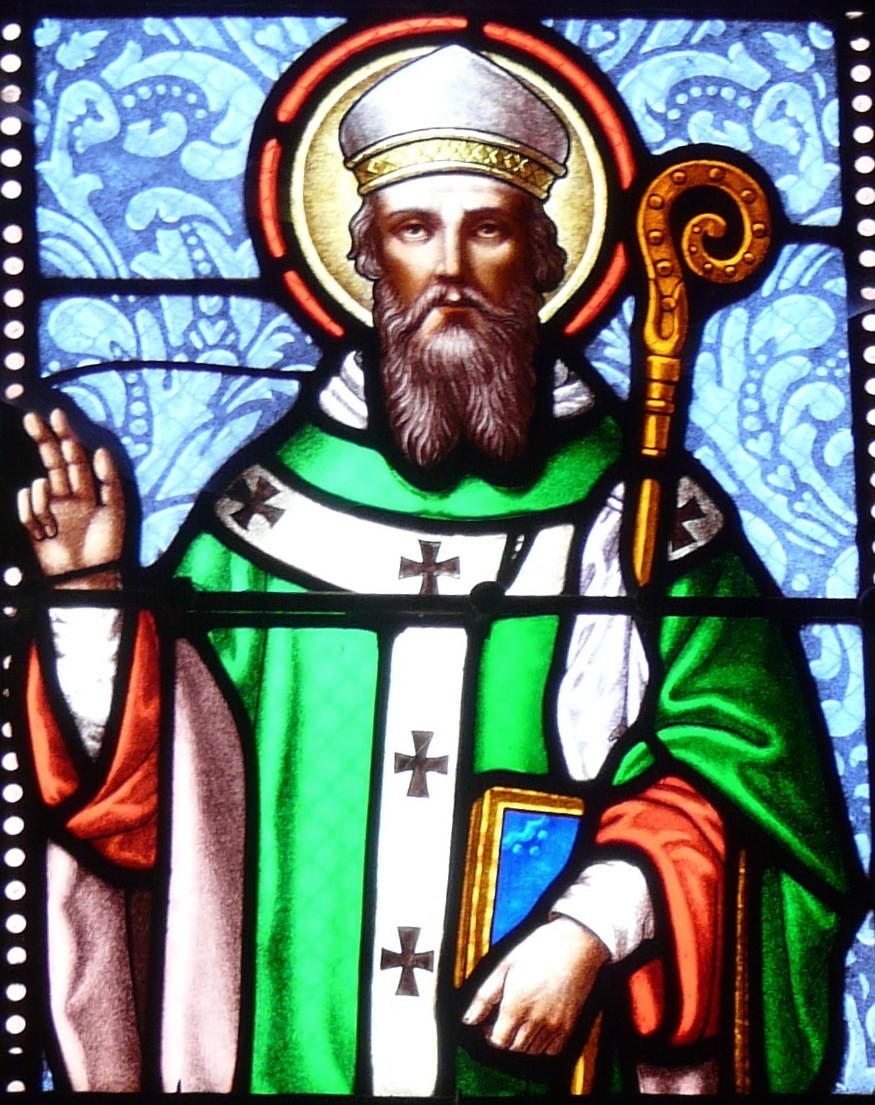
Clermont Cathedral