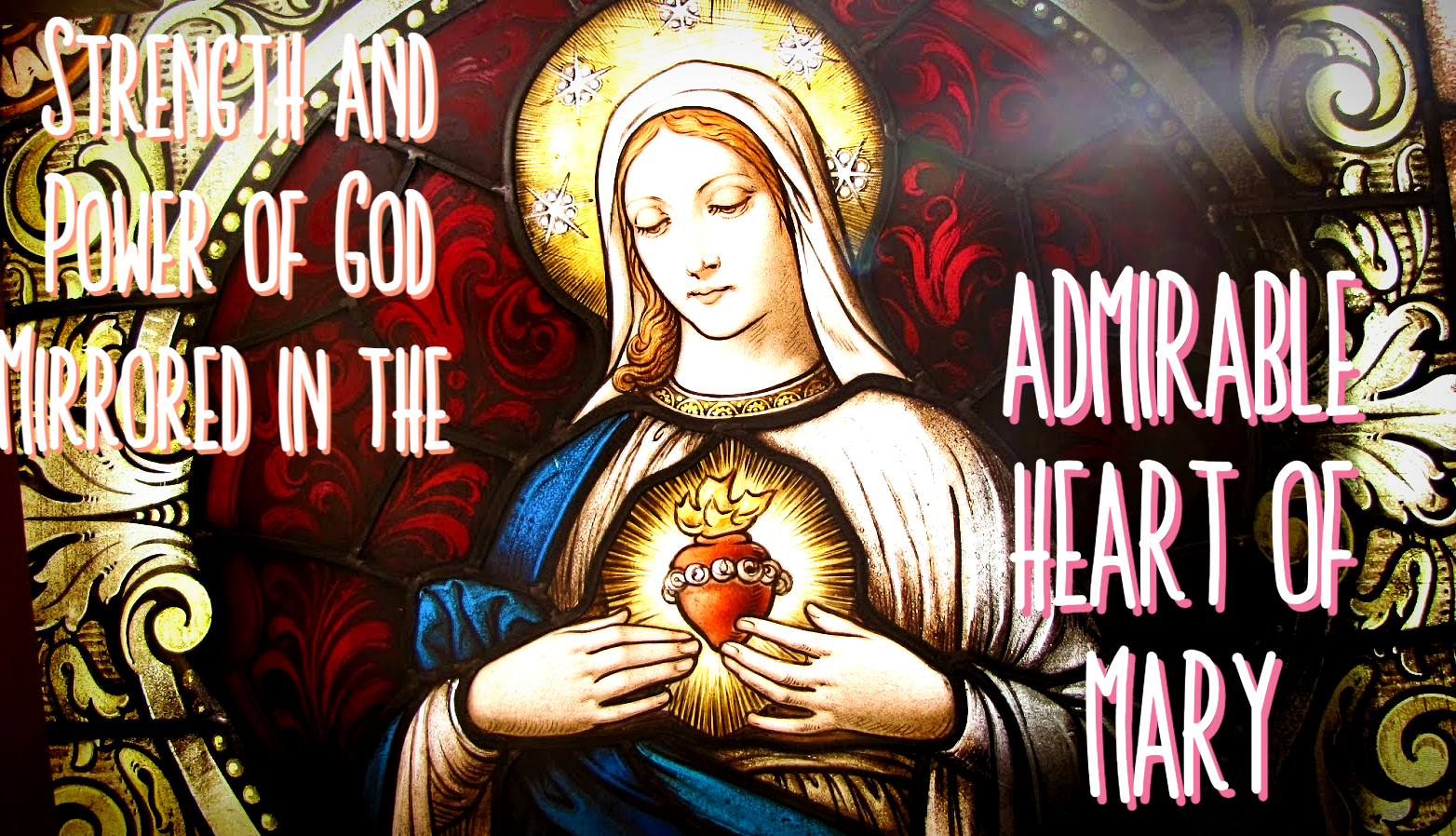
One Minute Reflection – 16 December – “The Month of the Divine Infancy and the Immaculate Conception of the Blessed Virgin Mary” – St Eusebius of Vercelli (c283-371) Bishop, Confessor – 2 Corinthians 1:3-7 – Matthew 16:24-27 – Scripture search here: https://www.drbo.org/
“If anyone wishes to come after Me, let him deny himself, take up his cross and follow Me.” – Matthew 16:24
REFLECTION – “What does this mean, “take up a cross?” It means, he will bear with whatever is troublesome and in this very act, he will be following Me. When he has begun to follow me, according to My teaching and precepts, he will find many people contradicting him and standing in his way, many who not only deride but even persecute him. Moreover, this is true, not only of pagans who are outside the Church but also of those, who seem to be in it visibly but are outside of it because of the perversity of their deeds. Although these glory, in merely the title of Christian, they continually persecute faithful Christians. Such belong to the members of the Church in the same way, that bad blood is in the body. Therefore, if you wish to follow Christ, do not delay in carrying His Cross, tolerate sinners but do not yield to them. Do not let the false happiness of the wicked corrupt you. You do well to despise all things for the sake of Christ, in order that you may be fit for His companionship.”- St Caesarius of Arles (470-543) Bishop of Arles and Father of the Church – (Sermons, 159).
PRAYER – O God, Who gladden us with the annual festival of blessed Eusebius, Thy Martyr and Bishop, mercifully grant that, as we venerate the anniversary of his Martyrdom, we may also rejoice in his protection.Through Jesus Christ, Thy Son our Lord, Who lives and reigns with Thee, in the unity of the Holy Ghost, God, world without end. Amen (Collect).
Our Morning Offering – 16 December – “The Month of the Divine Infancy and the Immaculate Conception of the Blessed Virgin Mary” – Resumed Mass of Sunday
Creator Alme Siderum Creator of the Starry Frame 7th Century Advent Hymn
Creator of the starry frame; Eternal Light of all who live; Jesu, Redeemer of mankind, An ear to Thy poor suppliants give.
When man was sunk in sin and death, Lost in the depth of Satan’s snare, Love brought Thee down to cure our ills, By taking of those ills a share.
Thou for the sake of guilty men, Causing Thine own pure blood to flow, Didst issue from Thy Virgin-shrine, And to the Cross a Victim go.
So great the glory of Thy might, If we but chance Thy Name to sound, At once all Heaven and Hell unite In bending low with awe profound.
Great Judge of all, in that last day, When friends shall fail and foes combine, Be present then with us, we pray, To guard us with Thy arm divine.
To God the Father and the Son, All praise and power and glory be, With Thee, O holy Comforter, Henceforth through all eternity.
Also known as Advent Hymn, this translation of the Latin Hymn Creator Alme Siderum (Pope Urban VIII’s 1632 revision of the 7th Century Hymn Conditor alme siderum) was first published in Fr Edward Caswall’s Lyra Catholica,
Saint of the Day – 16 December – St Macarius (Died 1005) Abbot of Collesano, Ascetic, spiritual guide, a man of great humility and charity, miracle-worker. Born of Italian and Greek heritage in the 9th Century.
Macarius’ life is linked to that of his father, Christopher and his brother, Saba. Christopher, having taken refuge in the Monastery of San Filippo d’Agira at the foot of Mount Etna, received the Habit from the Abbot Nicephorus, who authorised him to lead a Hermit’s life in the forest of San Michele di Crisma. There he was joined by his wife Cali and his sons Saba and Macario, who all took the monastic Habit.
A severe famine which struck Sicily in 940-941, forced them to take refuge in Calabria; disembarking at Cessaniti, near Nicotera, they wandered through the mountains and woods until they reached the famous Monastic of Mercurio, on the north-western border of Calabria with Lucania.
Here they founded the two Monasteries of San Michele Arcangelo and San Stefano Protomartyr. They then went on a pilgrimage to Rome to venerate the tombs of the Apostles and, on their return, stopped at the Monastery of San Lorenzo, near Latiniano, where Christopher died, followed shortly thereafter by Cali, who was head of a community of women.
The two brothers, Saba and Macarius, took charge of the various Monasteries of Mercurion, encouraging the Monks to persevere in their vocation and not to be discouraged by the constant Saracen raids.
Upon Saba’s death in 995, Macarius succeeded him in the direction of the Monasteries scattered throughout Mercurion and Latiniano.
The biographer testifies to the prudence with which he governed, his profound humility and, above all, his great purity. To these virtues he combined the exercise of that excessive corporal rigour which characterised the Italo-Greek Monks of the time.
He performed many miracles, causing his cell to become a destination for pilgrims of all kinds.
His life ended ten years after that of his brother, on 16 December 1005. St Macarius is remembered on this day by both the Roman and Greek Monks.
St Beoc St Dominic Dosso Bl Elizabeth of Saint Francis
St Everard of Friuli (c815-867) Duke, Count, Soldier, Founder of Churches and a Monastery. In contrast to his soldiering life, St Everard was a peacemaker, a humble and loving Master with a social conscience, striving always to free serfs, wherever possible or at least to free them from their burdens and assisting the poor and needy in all their deprivations. His Humble Life: https://anastpaul.com/2021/12/16/saint-of-the-day-16-december-saint-everard-of-friuli-c-815-867/
St Irenion (Died 389) Bishop No further information can be found Bl James of Tunis St Macarius (Died 1005) Abbot of Collesano
Martyred Women of North-West Africa: A large group of women Martyred in the persecutions of Hunneric, Arian King of the Vandals. 482 in North-West Africa.
Martyrs of Ravenna – 4 Saints: A group of Christians Martyred together. Four names and no other information has survived – Agricola, Concordius, Navalis and Valentine. c 305 at Ravenna, Italy.
Thought for the Day – 15 December – Meditations with Antonio Cardinal Bacci (1881-1971)
The Power of Mary
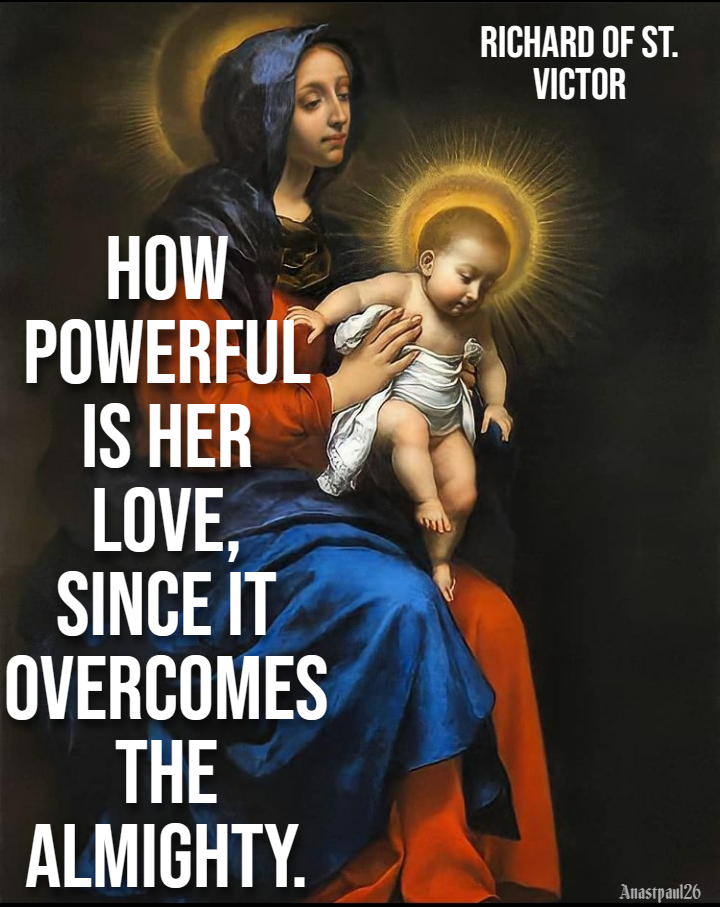
“Virgin most powerful, pray for us.” This is one of the invocations to Our Lady in her Litany. Mary’s power derives from her Divine Motherhood. The Eternal Word was made Man in her most chaste womb. By assuming our human nature in the Hypostatic Union, He became her Son. In the same way as a mother can give instructions to her son, Mary can pray to Jesus with full confidence that she will be answered. Not only has she the power of love, over Him but, also the power of a mother. Her prayers have the force of a command and it is impossible for them to go unheeded. When Mary seeks a favour from her Divine Son for us, who are her adopted sons, says St Peter Damian, she commands rather than prays, she is more like the mistress than the handmaid of the Lord (Serm 41 de Nativitate). Some Ecclesiastical writers go as far as describing Mary as being omnipotent in grace and in intercession, even as God is omnipotent by reason of His nature. “O Mother of God,” writes St Gregory of Nicomedia, “you have such invincible power, that the multitude of our sins can never exhaust your mercy. Nothing can resist your power, for your Creator regards your glory as His own” (Orat de Exitu B Virg). This doctrine should console even the most hopeless sinners. It is enough to have loving recourse to Mary and we shall be sure of salvation.”
Quote/s of the Day – 15 December – The Octave of the Immaculate Conception of the Blessed Virgin Mary, Mother of God – Proverbs 8:22-35 –Luke 1:26-28 – Scripture search here: https://www.drbo.org/
“Holy light on earth’s horizon. Star of hope to those who fall. Light amid a world of shadows. Dawn of God’s design for all.”
“Thou alone and Thy Mother, are in all things fair, there is no flaw in Thee and no stain in Thy Mother.”
St Ephrem (306-373) Father and Doctor of the Church
“Gracious Lady, thou art a Mother and Virgin, thou art the Mother of the body and soul of our Head and Redeemer, thou art too, truly Mother of all the members of Christ’s Mystical Body. For through thy love, thou hast co-operated in the begetting of the faithful in the Church. Unique among women, thou art Mother and Virgin, Mother of Christ and Virgin of Christ. Thou art the beauty and charm of earth, O Virgin. Thou art, forever, the image of the holy Church. Through a woman came death, through a woman came Life, yes, through thee, O Mother of God.“
St Augustine (354-430) Father and Doctor of Grace
“From Heaven, the Glorious Virgin helps us here below and, by her all-powerful prayer, she drives out all the evils and endows all the graces. For all those who pray to her from the bottom of the heart, it is their protection for the present life and for the future life. … Certainly, she will receive that which she beseeches, this beloved Mother, she whose very chaste body was the way in which the Son of God came to wash away the defilements of the world.”
St Amadeus of Lausanne O.Cist. (1108-1159)
“Free from the concupiscence which has disturbed our human nature, she was like a snow-white lily, sparkling in the sunlight. Her mortal life was a continuous ascent towards the highest peak of holiness. … her daily correspondence with God’s gifts was as remarkable as her dignity. … The most chaste Virgin Mary, is a model for our imitation.”
One Minute Reflection –15 December – Octave of the Immaculate Conception of the Blessed Virgin Mary, Mother of God – Proverbs 8:22-35, Luke 1:26-28 – Scripture search here: https://www.drbo.org/
“Hail, full of grace!” – Luke 1:28
REFLECTION – “So the Lord now manifestly came to His own. Born by His own created order that He Himself bears, He by His obedience on the tree, renewed and reversed what was done by disobedience, in connection with a tree.
The power of that seduction, by which the virgin Eve, already betrothed to a man, had been wickedly seduced, was broken when the Angel in truth brought good tidings to the Virgin Mary, who already, by her betrothal belonged to a man. For as Eve was seduced by the word of an Angel to flee from God, having rebelled against His Word, so Mary, by the word of an Angel, received the glad tidings that she would bear God, by obeying His Word.
The former was seduced to disobey God and so fell but the latter, was persuaded to obey God, so that the Virgin Mary might become the advocate of Eve.
As the human race was subjected to death through the act of a Virgin, so was it saved by a Virgin, was precisely balanced by the obedience of Another. Then indeed, the sin of the first formed man was amended by the chastisement of the First Begotten, the wisdom of the serpent was conquered by the simplicity of the Dove and the chains were broken, by which we were in bondage to death.” – St Irenaeus (130-202) Bishop of Lyons, Martyr, Father of the Church (Against Heresies, 5)
PRAYER – O God, Who by the Immaculate Conception of the Virgin, prepared a worthy dwelling for Thy Son, and Who, by Thy Son’s death, foreseen by You, preserved her from all taint, grant, we beseech Thee through her intercession that we too may come to Thee unstained by sin. Through the same Jesus Christ, Thy Son our Lord, Who lives and reigns with Thee, in the unity of the Holy Ghost, God, world without end. Amen (Collect).
Our Morning Offering – 15 December – “The Month of the Divine Infancy and the Immaculate Conception of the Blessed Virgin Mary” and the Octave Day of the Feast
Deign, O Immaculate Virgin By St Paschasius Radbertus (785–865)
Deign, O Immaculate Virgin, Mother most pure, to accept the loving cry of praise which we send up to you from the depths of our hearts. Though they can but add little to your glory, O Queen of Angels, you do not despise, in your love, the praises of the humble and the poor. Cast down upon us a glance of mercy, O most glorious Queen, graciously receive our petitions. Through your immaculate purity of body and mind, which rendered you so pleasing to God, inspire us with a love of innocence and purity. Teach us to guard carefully the gifts of grace, striving ever after sanctity, so that, being made like the image of your beauty, we may be worthy to become the sharers of your eternal happiness. Amen
Saint of the Day – 15 December – Saint Maximinus (Died c520) Confessor and Abbot of the Abbey of Micy, Orleans, France. He was the 2nd Abbot of Micy Abbey, founded by his uncle, St Eusebius, with Maximinus assistance and was the 1st Abbot. At this time Maximinus was Ordained to the Priesthood and is renowned in his region for Miracles. Later in life Maximinus became a Hermit. Born in Verdun and died in Micy, both in France. Also known as – Mesmin (Maximin.
The Roman Martyrology reads today: “In the Diocese of Orleans, St Maximinus, Confessor.”
The oldest document relating to Maximinus, who lived in the late 5th and early 6th Century, is a Vita written in the first half of the 9th Century by a certain Berthold, a Monk of Micy and dedicated to Jonah, the then Bishop of Orléans. Three Centuries separate the events from the account, so the historical facts might require a certain amount of the historian must exercise caution.
According to this Vita, Maximinus was originally from Verdun and the nephew of a Priest of the City named Euspicius, to become a Saint too. The inhabitants of Verdun had rebelled against King Clovis I (481-511), who came to lay siege to the City but then, through the intervention of St Euspicius, pardoned the rebels. Upon retiring from the City, the King took St Euspicius and Maximinus with him and went to Orléans, where he recommended them to the City’s Bishop and donated the district of Micy, located four kilometers west of the City (now Saint-Pryvé Saint-Mesmin), to found a Monastery. St Euspicius, already elderly, had arranged for the deed of gift to be drawn up in Maximinus’ name. Maximinus was Ordained Deacon and Priest and, even before his uncle’s death which occurred two years after their arrival in Orléans, became the Abbot of Micy.
Under Maximinus’ rule, the new Monastery developed rapidly and the community grew significantly. According to his biographer, Maximinus performed several miracles, most notably the slaying of a dragon which had its lair in a cave on the banks of the Loire and is believed to have taken this cave as his cell when he became a Hermit in his last years.
He died on 15 December in an unspecified year and was buried in the Dragon’ Cave by the same Bishop Eusebius (500-530), who had welcomed his uncle and himself upon their arrival in Orléans.
At the end of the 7th Century, Maximinus’s Relics were transferred to Orléans by Bishop Sigobert, who also dedicated a Church to the Saint in the City. Bishop Jonah (818-842) returned them to the Abbey of Micy, restored after a long period of decline.
The cult of Maximinus spread throughout France in the Middle Ages; his Feast is celebrated in the Dioceses of Orléans, Tours, Paris, Beauvais and Bordeaux. He is always listed in the Proper of Orléans on 15 December, the date on which he is inscribed in the Roman Martyrology.
The Octave Day of the Immaculate Conception of the Blessed Virgin Mary
The Christmas Novena to the Divine Infant Jesus by St Alphonsus Maria de Liguori – BEGINS on 16 December: This Novena is translated from the Italian of Saint Alphonsus Maria de Liguori and was first published in 1758. Although this Novena is intended, primarily as a preparation for the Feast of our Lord’s Nativity, it can be used with spiritual profit at any time of the year, as a devotion in honour of the Infant Jesus. This translation by the Redemptorists of the UK.
AND/OR: December, naturally being the Month of the Divine Infant, is a wonderful time to begin this Monthly practice: The Monthly Novena to the Infant Jesus of Prague From 16 to 24 December (and of every Month on the same dates).
St Maximinus (Died c520) Confessor and Abbot of the Abbey of Micy, Orleans, France St Offa of Essex St Paul of Latros St Silvia of Constantinople St Urbicus
St Valerian(c377-c457) Confessor, Bishop of Abbenza . The Roman Martyrology this day states: “In Africa, the holy Bishop Valerian, who, being upwards of eighty years old, in the persecution of the Vandals, under the Arian King Genseric, was asked to deliver the Sacred vessels of the Church and, as he constantly refused, an order was issued to drive him, all alone, out of the City and all were forbidden to allow him to stay, either in their houses or on their land. For a long time, he remained lying on the public roads in the open air and thus, in the confession and defence of the Catholic verity, closed his blessed life.” Pray for Us, Holy St Valerian: https://anastpaul.com/2023/12/15/saint-of-the-day-15-december-saint-valerian-of-abbenza-c377-c457-
Martyrs of North Africa – 7 Saints: A group of Christians Martyred together for their faith in North Africa. The only details about them that survive are their names – Caelian, Candidus, Faustinus, Fortunatus, Januarius, Lucius and Mark.
Martyrs of Rome – 22 Saints: A group of 22 Christians Martyred together in the persecutions of Valerian. The only details we have are five of their names – Antonius, Irenaeus, Saturnin, Theodorus and Victor. c 258 in Rome, Italy.
DISCLAIMER: Please note: I cannot control the content of the Advertisements on this Site, or of pop-ups which may appear, The revenue from the Advertisements, however, does provide a little assistance in the support of the Site. I do apologise for any inappropriate content.
Thought for the Day – 14 December – Meditations with Antonio Cardinal Bacci (1881-1971)
Mary, the Source of Peace
“Mary, my most sweet Mother, in your Immaculate soul there reigned that true peace which is nourished by God’s grace and by complete obedience to His Will. Obtain for me from your Son, Jesus, victory over my evil inclinations and resignation to the sufferings of life and to death itself. Then, following your holy example, may I also be able to acquire the interior peace which will one day be perfect and everlasting in Heaven. Amen.”
Quote/s of the Day – 14 December – Advent III, Gaudete Sunday – “Rejoice!”
“Gaudéte in Dómino semper”
“Rejoice in the Lord always”
Philippians 4:4
“The very Son of God, Older than the ages, the Invisible, the Incomprehensible, the Incorporeal, the Beginning of beginning, the Light of light, the Fountain of Life and Immortality, the Image of the Archetype, the Immovable Seal, the Perfect Likeness, the Definition and Word of the Father: He it is, Who comes to His Own Image and takes our nature, for the Good of our nature and unites Himself to an intelligent soul for the good of the soul, to purify like by Like.”
St Gregory of Nazianzen (330-390) Father and Doctor of the Church
“Awake, you who lie in the dust, awake and give praise. Behold, the Lord comes with salvation. He comes with salvation! He comes with unction, He comes with glory. Jesus cannot come without salvation, Christ cannot come without unction, nor the Son of God without glory. For He Himself is Salvation, He is Unction, He is Glory, as it is written, ‘A wise Son is the Glory of His Father.‘”
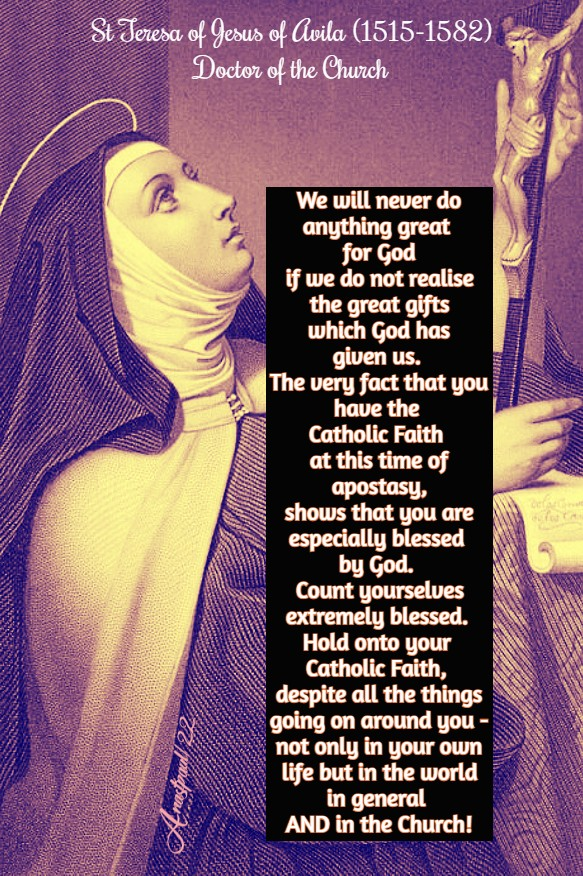
St Bernard (1090-1153) Father & MellifluousDoctor of the Church
“Rejoice and be happy! Persevere to the end and prefer to die rather than abandon the post, to which God has called you!”
One Minute Reflection – 14 December – “The Month of the Divine Infancy and the Immaculate Conception of the Blessed Virgin Mary” – Advent III, Gaudete – Within the Octave – Philippians l 4:4-7 – John 1:19-28 – Scripture search here: https://www.drbo.org/
“ I baptise with water but, in the midst of you, there has stood One Whom you do not know.” – John 1:26
REFLECTION – “I baptise with water but, in the midst of you, there has stood One Whom you do not know.” John did not baptise with the Spirit but, with water, since he was unable to take away the sins of those being baptised. He washed their bodies with water but not their hearts with pardon. Why did one whose baptism did not forgive sins baptise, except that he was observing his vocation as forerunner? He, whose birth foreshadowed a greater birth, by his baptising, foreshadowed the Lord, Who would truly baptise; he ,whose preaching made him the forerunner of Christ, by baptising, also became his forerunner, using a symbol of the future Sacrament.
With these other mysteries he makes known the Mystery of our Redeemer, declaring that He has stood among men and not been known. The Lord appeared in a human body – He came as God in flesh, visible in His Body, invisible in His Majesty. He goes onto say about Him: “He who comes after me, was made before me” (Jn 1:15) … he revealed the reason for this precedence when he said: “because He was before me. ” He means, “Even though He was born after me, He surpasses me, in that the time of His Birth does not limit Him. He, Who is born from His Mother in time, was begotten of His Father before time!”
John reveals the great humility and reverence he owes Christ by saying: “I am not worthy to undo the strap of His sandal.” It was the custom among the ancients, that if someone was unwilling to take the wife, he should be taking, he, who should have come to her as bridegroom, by right of relationship, would undo his sandal. How did Christ appear among men, if not as the Bridegroom of holy Church?… But since people considered John the Christ, a fact which he denied, he was right to declare his unworthiness to undo the strap of Christ’s sandal. It is as if he was saying … “I am not unjustly usurping, for myself, the name of Bridegroom” (Cf Jn 3:29).” – St Gregory the Great (540-604) Pope, Father and Doctor of the Church (Sermons on the Gospels 4).
PRAYER – Lend Thy ear to our prayers, O Lord, we beseech Thee and brighten the darkness of our minds by the grace of Thy coming. Through the same Jesus Christ, Thy Son our Lord, Who lives and reigns with Thee, in the unity of the Holy Ghost, God, world without end. Amen (Collect).
Our Morning Offering – 14 December – “The Month of the Divine Infancy and the Immaculate Conception of the Blessed Virgin Mary” – Advent III Gaudete Sunday and Within the Octave of the Immaculate Conception – Today is also the Feast day of dear St Venantius Fortunatus (c530 – c609) Bishop, Poet, Hymnist, Writer. Another “Golden Words”
O Gloriosa Virginum By St Venantius Fortunatus (c530 – c609)
O Glorious Virgin, ever blest, Sublime above the starry sky, Who nurture from thy spotless breast To thy Creator didst supply.
What we had lost through hapless Eve, The Blossom sprung from these restores, And, granting bliss to souls that grieve, Unbars the everlasting doors.
O Gate, through which hath passed the King. O Hall, whence Light shone through the gloom; The ransomed nations, praise and sing Life given from the Virgin womb.
All honour, laud and glory be, O Jesu, Virgin-born, to Thee; All glory, as is ever meet, To Father and to Paraclete. Amen
O Gloriosa Domina is the second half of the Hymn: Quem Terra, Pontus, Aethera. It was composed by St Venantius Fortunatus (c530 – c609) the Bishop of Poitiers. In 1632, in accordance with revisions made to the Hymns of the Divine Office by Pope Urban VIII (1568-1644), it was altered and changed to O Gloriósa Vírginum. It is sung in the Common of the Blessed Virgin Mary of the Roman Breviary. It is said that St Anthony of Padua (1195-1231) was always singing this Hymn. His mother sang it to him as a baby,and even on his death bed after receiving Extreme Unction, he intoned the Hymn.
Saint of the Day – 14 December – Saint Pompey (4th Century?) Bishop of Pavia, Italy. Also known as Pompeius.
The Roman Martyrology reads today: “Ar Pavia, Pompey, Bishop.”
A Bishop Saint – Master of the Graduals of San Salvatore in Pavia | Italy, Lombardy c1500
Five days ago, on 9 December, we celebrated Saint Syrus, the first Bishop of Pavia and the legendary evangeliser of much of the Po Valley. In the imposing task of casting the net of the fisher of men over that flat and fertile land, stretching as far as the eye could see, around the towers and bell towers of Pavia, he had, as his collaborator Saint Pompey.
Pompey succeeded Saint Syrus when the latter—it is not clear in what year, or even in what Century—rested in deserved glory. There is, therefore, little more to add about this Saint, the second Bishop in the list of shepherd which tradition assigns to Pavia. Also because, about Saint Pompey, very little is known, if anything, at all. One must turn to the life of Saint Strus himself to learn that Pompey’s Episcopate was brief and peaceful. Nothing else.
He was succeeded by Bishop Saint Giovenzo; while Saint Pompey was buried, with Saint Syrus, in that Church of Saints Gervasius and Protasius.
Given this scant and precarious information, it would not have been necessary to dedicate the day to Saint Pompey—and this would not have diminished the true and great glories of the City of Pavia. If we have done so, it is because, for better or worse, he is the most celebrated of the Saints named Pompey.
Of the Saints, however, even when we know almost nothing about them, as in the case of Saint Pompey, we can be sure of one thing; we remember them for having performed, certainly and only, good works for the glory of Christ and His Church. (Source: Parish Archive).
St Abundius of Spain – Martyr. No other information has survived
St Agnellus (535-596) Abbot, Priest, Hermit, Defender and Protector of the City of Naples, Miracle-worker. St Agnellus is one of the 50+ Co-Patrons of the City of Naples The Roman Martyrology reads today: “In Naples, in Campaniaa, St Agnellus, Abbot. Illustrious by the gift of miracles, he was often seen with the standard of the Cross, delivering the City besieged by enemies.” A Mighty and Powerful Saint: https://anastpaul.com/2023/12/14/saint-of-the-day-14-december-saint-agnellus-of-naples-osa-535-596/
Martyrs of Alexandria – 4 Saints: A group of Egyptian Christians Martyred together in the persecutions of Decius – Arsenius, Dioscurus, Heron and Isidore. They were burned to death in 250 at Alexandria, Egypt.
Martyrs of Apollonia – 7 Saints: Martyred in the persecutions of Decius. The only surviving details are three names – Callinicus, Leucio and Tirso. The Martyrdom took place at Apollonia, Bithynia (in modern Turkey).
Martyrs of Ashkelon – 3 Saints: Several pilgrims from Egypt to Cilicia (in modern Turkey) who planned to minister to fellow Christians suffering in the persecutions of Emperor Maximinus. They were arrested, torture, mutilated and then imprisoned in Ashkelon. Some were ordered to forced labour in the mines but we have the names of three who were Martyred by order of Governor Firmilian – Ares, Elijah and Promo. They were burned at the stake or beheaded at the gates of Ashkelon c 308.
Martyrs of Hayle – 2+ Saints: Several Christians, including a brother and sister, who were Martyred together by pagans. The only other information to survive are the names of the two siblings – Fingar and Phiala. 5th Century at Hayle, Cornwall, England.
Martyrs of Syria – 3 Saints: Three Christians who were Martyred together. Known to Saint John Chrysostom who preached on their Feast Day and left us the only details we have – their names – Drusus, Theodore and Zosimus. The date and precise location of their Martyrdom is unknown but it was in Syria, possibly in Antioch.
Thought for the Day –13 December – Meditations with Antonio Cardinal Bacci (1881-1971)
“Mary, Our Hope”
“In the beautiful prayer, known as the Salve Regina or Hail, Holy Queen, the Church salutes Mary as “our life, our sweetness and our hope.” Mary is our hope, because, she gave us our Saviour, Jesus and, because, she prays to Him continually for the graces which we need.
Following the example of Luther, modern protestants raise the objection that Mary cannot be regarded as a source of hope, because, all our trust should be placed in God. Anyone who places his trust in creatures, draws down God’s curse upon himself, they say and, they go on to quote from Jeremias: “Cursed be the man who trusteth in man” (Jer 17:5). But this is true only, when we trust in creatures independently of God, as if we can derive any good from them, without recourse to God. We invoke Mary, however, as the Mother of God and our mediatrix with Him. She is our hope, insofar as she obtains for us from God, the graces and favours which we require. St Bernard assures us, that God has placed in Mary’s hands, all the riches which He wishes to bestow on us (Serm de aquaed). “He will never experience eternal ruin,” says St Anselm, “for whom Mary has once prayed.”
St Bernard calls upon Mary as the foundation of all his hope (Ibid). Let us remember, that Mary is our loving Mother who wishes us to pray to her because, she knows that if she intercedes on our behalf, she will certainly be heard. It should be most consoling to us to have such a good and powerful Mother in whom, we can safely trust in every peril and in every necessity. Let us pray to her with love and faith, in the certainty that, we shall be answered in the way that is best for us. Let us say along with St John Damascene: “O Mother of God, if I place my trust in you, I shall be saved. If I am under your protection, I have nothing to fear because to be devoted to you, is to possess a weapon of salvation which God grants only to those, whom He desires to redeem!” (Serm de Nat, cap 4).”
Quote/s of the Day – 13 December – St Lucy, Virgin Martyr – 2 Corinthians 10:17-18; 11:1-2 – Matthew 13:44-52 – Scripture search here: https://www.drbo.org/
“Jesus said in parables: The Kingdom of Heaven is like unto a treasure, hidden in a field. … Again, the Kingdom of Heaven is like unto a merchant seeking good pearls. ”
Matthew 13:44, 45
“Do not lay up for yourselves treasures on earth, where rust and moth consume and where thieves break in and steal but lay up for yourselves, treasures in Heaven …”
Matthew 6:19-20
“Listen, then, my son and give me your ear. Break off all ties which bind and entangle you in this world. Change your secular service into something better, start being a soldier for the eternal King!”
St Paulinus of Nola (c354-431)
“Watch, therefore and pray and labour diligently and do not delay to weave the web of your wedding-garment that you may be found ready and adorned to meet the Bridegroom! And remember daily that He, Who gives you the morning, does not promise you the evening and although He gives the evening, yet promises not the morrow. Spend, therefore, every moment of every hour according to God’s will, as if it were your last and so much the more carefully, as, for every moment, you will have to give the strictest account!
Finally, I warn you to account that day lost, in which you will neither have gained some victory over your evil inclinations and your self-will, although it may have been full of busy action, nor returned thanksgiving to your Lord for His mercies and especially for His bitter Passion endured for you and for His sweet and fatherly correction, when He has made you worthy to receive, at His Hand, the inestimable treasure of suffering.”
One Minute Reflection – 13 December – “The Month of the Divine Infancy and the Immaculate Conception of the Blessed Virgin Mary” – Within the Octave – St Lucy, Virgin Martyr – 2 Corinthians 10:17-18; 11:1-2 – Matthew 13:44-52 – Scripture search here: https://www.drbo.org/
“The Kingdom of Heaven is like a treasure hidden in a field; he who finds it, hides it and in his joy, goes and sells all that he has and buys that field.” – Matthew 13:44
REFLECTION – “Brethren, carefully inspect the place where you dwell interiorly; open your eyes and consider the capital of your love; then increase whatever sum you discover within yourselves. Keep watch over this treasure so that you may become wealthy within. Goods of great price are called ‘dear’ and with good reason … But what could be more dear than love, my brothers? What is its cost, in your opinion? And how are you to pay it? The cost of land or wheat is your silver; the cost of a pearl is your gold but the cost of your love is you, yourself! If you want to buy a field, a jewel, an animal, you seek the necessary means, you look around you. But if you want to possess love, look no further than yourself – it is yourself you must find.
What are you afraid of in giving yourself? Of losing yourself? To the contrary, it is by refusing to give yourself that you lose yourself! Love itself speaks through the mouth of Wisdom and with one word, calms the confusion into which this saying threw you: “Give of your own self!” If someone had wanted to sell you a piece of land, he would say to you: “Give me your silver” or, for some other thing: “Give me your cash.” Now listen to what Love says to you through the Mouth of Wisdom: “My child, give me your heart” (Pr 3:26). Your heart was in a bad way when it was your own, when it was in your own hands. You were a prey to emptiness, not to speak of evil passions. Remove it from all such things! Where will you take it? Where offer it? “My son, give Me your heart!” says Wisdom. Let it only come to Me and you will not lose it…
“You shall love the Lord your God with all your heart, with all your soul and with all your mind,” (Mt 22:37) … He Who created you, desires the whole of you!” – St Augustine (354-430) Father and Doctor of the Church (Sermon 34 on Ps 149).
PRAYER – Hear us, O God our Saviour, that, as we rejoice on the feast of blessed Lucy, YThy Virgin and Martyr, so we may grow in love and devotion. Through the same Jesus Christ, Thy Son our Lord, Who lives and reigns with Thee, in the unity of the Holy Ghost, God, world without end. Amen (Collect).
Our Morning Offering – 13 December – “The Month of the Divine Infancy and the Immaculate Conception of the Blessed Virgin Mary”
O Purest of Creatures, Sweet Mother, Sweet Maid By Fr Frederick W Faber C.Orat. (1814-1863)
O Purest of creatures, sweet Mother, sweet maid, The one spotless womb wherein Jesus was laid! Dark night hath come down on us, Mother! and we Look out for thy shining, sweet Star of the Sea!
Deep night hath come down on this rough-spoken world, And the banners of darkness are boldly unfurled; And the tempest-tossed Church,— all her eyes are on thee; They look to thy shining, sweet Star of the Sea!
He gazed on thy soul, it was spotless and fair, For the empire of sin—it had never been there; None ever had owned thee, dear Mother but He. And He blest thy clear shining, sweet Star of the Sea!
Earth gave Him one lodging; t’was deep in thy breast, And God found a home where the sinner finds rest; His home and His hiding-place, both were in thee, He was won by thy shining, sweet Star of the Sea!
Saint of the Day – 13 December – St Antiochus (2nd Century) Martyr of Sulci, Sardinia, Italy. Died by being beaten to death in the first quarter of the 2nd Century on Sulci, Sardinia. Patronages – of miners, of the following places in Italy: Atzara, the Diocese of Iglesias, the City of Ozieri, the Diocese of Ozieri, Palmas Arborea, the City of Sant’Antioco, the Island of Sant’Antioco, in Sardinia. Also known as – Antiochus of Plumbaria, Antioco…
The Roman Martyrology reads today: “Near Sardinia, on the Island of Solta, the Martyrdom of St Antiochus, under the Emperor Adrian.”
On the Feast Day of Saint Lucy, Sardinia also commemorates another Martyr, Saint Antiochus. He is linked to the region’s mines, where the Romans also forced many Christians to work during the persecutions.
Among them is Antiochus, who was exiled to the splendid Island which bears his name (now connected to the mainland by a bridge).
Antiochus was an Physician who, in the first half of the 2nd Century, during the reign of Emperor Hadrian, travelled through Galatia and Cappadocia, caring, not only for the bodies but also for the souls, of those he encountered. The conversions he inspired led to his arrest and exile in Sardinia.
Even as a prisoner, his Christian witness was so strong that it opened the heart of the Soldier Cyriacus, his jailer, to faith in Christ.
This infuriated the imperial authorities, who sentenced him to death. Before dying, however, Antiochus invoked God’s protection over Sardinia and its people, who still venerate him today.
The Church in the Island’s capital Sant’Antioco, named after Antiochus, was dedicated to him in the 5th Century. His Tomb is in the Crypt beneath ithis Church.
Additional Feast Days in Italy: 13 November (Dioceses of Iglesias and Ozieri, Italy) 16 July (Island of Sant’Antioco) 1 August (Island of Sant’Antioco) 15th day after Easter (Island of Sant’Antioco) 2nd Sunday after Easter (Palmas Arborea, Italy)
St Antiochus (2nd Century) Martyrof Sulci, Sardinia, Italy
Blessed Antonio Grassi Cong. Orat. (1592 – 1671) Priest of the Oratorians of St Philip Neri, Confessor, Tertiary of the Order of St Francis, Spiritual advisor, Counsellor, Mediator, Miracle Worker, Apostle of the poor and the sick. He was Beatified on 30 September 1900 by Pope Leo XIII. Blessed Antonio’s Holy Life: https://anastpaul.com/2018/12/13/saint-of-the-day-13-december-blessed-antonio-grassi-cong-orat-1592-1671/
Bl Bartholomew of Tuscany St Edburgh of Lyminge St Einhildis of Hohenburg Bl Elizabeth Rose St Jodocus
Blessed Giovanni Marinoni CR (1490-1562) Priest of the Theatines of St Cajetan (1480-1547) (The Congregation of the Clerics Regular of the Divine Providence), renowned Preacher and spiritual director. Patron of Preachers. He was Beatified on 5 December 1764, by a Bull of Pope Clement XIII, who also granted an Office in his honour, to his Order, to be celebrated on 13 December. Holy and Blessed Priest: https://anastpaul.com/2019/12/13/saint-of-the-day-blessed-giovanni-marinoni-cr-1490-1562/
St Martino de Pomar St Roswinda St Tassio of Bavaria
Blessed Mercedarian Knights – 7 Beati: A group of Mercedarian Knights who fought the enemies of the Catholic faith in the first Century of the Order. Blessed Bernardo de Podio Blessed Giacomo de Copons Blessed Giovanni de Bruquera Blessed Guglielmo de Sa Blessed Pietro Boguer Blessed Pietro Ricart Blessed Raimondo de Frexa
Martyrs of Sebaste – 5 Saints: A group of Christians Martyred together in the persecutions of Diocletian. We know little more than their names – Auxentius, Eustratius, Eugene, Mardarius and Orestes. They were martyred in c 302 at Sebaste, Armenia (in modern Turkey) and their relics are enshrined at the church of Saint Apollinaris in Rome, Italy.
Thought for the Day – 12 December – Meditations with Antonio Cardinal Bacci (1881-1971)
Mary, a Light in the Darkness
“Let us imagine for a moment, that we have grown blind and are forever plunged in darkness. It is an unhappy thought. Never again to see those who are dear to us, never to see the light of the sun nor any of the splendours of the universe. We should feel as if were alone, for we should have to depend only on sounds and on the voices of others for communication with the external world. As St Augustine points out, however, in his commentary on the miracle of the man who had been blind from birth, we are all more or less blind in the supernatural order. The world is the image of God but, do we see His Presence in everything which surrounds us? Is it not more often the case that created things distract us and lead us to forget their Creator, because, we regard them as a means of satisfying our own comfort and our own ego? We should look on creatures as go-betweens which help us to ascend to God, the beginning and end of all creation.
Unfortunately, instead of climbing this mystical ladder which leads us to God, we often descend it. We forget God and become excessively wrapped up in worldly affairs. Sometimes matters may be even worse, not only do we forget God through our love of creatures but, we use them, to offend Him. God has given us eyes to admire His works and, as a result, to lead us to praise, thank and love Him. Instead, we often use this wonderful gift in order to commit sin. He has given us the gift of speech, the gift of hearing and other senses. But how do we employ them? The tongue is a marvellous invention but, as St James writes, “if anyone does not offend in the word, he is a perfect man, able also to lead round by the bridle, the whole body … With it we bless God the Father and, with it, we curse men, who have been made after the likeness of God. Out of the same mouth, proceed blessing and cursing. These things, my brethren ought not to be so” (Js 3:2-10). What can be said of vision and of speech can be said of all the senses and faculties of body and soul. They are all God’s gifts and should, therefore, be used as means of bringing ourselves closer to Him. If creatures lead us away from God and cause us to forget Him, or if, worse still, they cause us to offend Him, then we are spiritually blind and far more unfortunate than those who have lost their natural vision.
Most Holy Mary, during your earthly pilgrimage, you never once lost sight of God. Grant that I may not be lost in the darkness of this world. Grant that I may not be ensnared by the passing charm and false beauty of these created things which surround me. Grant that I may see, in all things, the Presence and Beauty of God, so that I may always continue to advance, nearer and nearer to Him. Amen.”
Quote/s of the Day – 12 December – “The Month of the Divine Infancy and the Immaculate Conception of the Blessed Virgin Mary” ––Within the Octave – Our Lady of Guadalupe
“Hail, full of grace, the Lord is with thee …”
Luke 1:28
“You must know that when you ‘hail’ Mary, she immediately greets you! Do not think that she is one of those rude women of whom there are so many, on the contrary, she is utterly courteous and pleasant. If you greet her, she will answer you right away and converse with you!”
St Bernardine of Siena (1380-1444)
“May the Blessed Virgin, unique in her merits, stand in the presence of her Creator interceding always in our favour. She will be radiant in the fullness of glory, she who brought forth, from her virginal womb, the King of glory.”
St Amadeus of Lausanne (1108-1159)
“And thou, Immaculate Virgin Mary, my only joy, be thou my protectress and my consoler! Be ever my advocate with God that I may put into practice, my good resolutions.”
St Gerard Majella (1726-1755)
O Mary, Mother of God By St Ephrem (306-373) Father and Doctor of the Church
O Virgin most pure, wholly unspotted, O Mary, Mother of God, Queen of the universe, thou art above all the saints, the hope of the elect and the joy of all the blessed. It is thou who hast reconciled us with God; thou art the only refuge of sinners and the safe harbour of those who are shipwrecked; thou art the consolation of the world, the ransom of captives, the health of the weak, the joy of the afflicted and the salvation of all. We have recourse to thee and we beseech thee to have pity on us. Amen.
One Minute Reflection – 12 December – “The Month of the Divine Infancy and the Immaculate Conception of the Blessed Virgin Mary” –Within the Octave – Our Lady of Gaudulupe – Proverbs 8:22-35 – Luke 1:26-28 – Scripture search here: https://www.drbo.org/
“Hail, full of grace …” – Luke 1:28
REFLECTION – “The Holy Spirit will come upon thee.” He will arise within thee, Mary. In some Saints He has come; in others He will come but in thou, He will arise… He will arise by means of the fertility, the abundance, the fullness of His outpouring in thy being. Even when He has filled thee, He will yet be upon thee; He will sweep over thy waters, to create in thee, a work greater and more admirable, than when, hovering over the waters at the beginning, He brought created substance into being in all its various forms (Gn 1:2). “And the power of the Most High will overshadow thee.” Christ, the Power and Wisdom of God, will overshadow thee. Then, He will take human nature from thee while keeping the fullness of God which thou art unable to bear, even as He assumes our flesh. He will take thee beneath His shadow because, the humanity to be taken by the Word, is to be a screen for the inaccessible Light of God. This Light, filtered by Its screen, will penetrate thine most chaste womb…
We, therefore, pray thee, Sovereign Lady, most worthy Mother of God, do not despise today those who ask, with fear, who seek, with devotion, who knock, with love. We pray thee, tell us what feelings moved thee, what love seized thee … when this was accomplished in thee, when the Word took Flesh from thee? In what state was thy soul, thy heart, thy spirit, thy senses, thy mind? Thou burst into flame like the bush which was shown to Moses long ago and thou did not burn, (Ex 3:2). Thou dissolved away in God but were not consumed. Burning, thou melted beneath the Fire from on high, yet regained strength from that Fire Divine, to burn again and dissolve once more in Him … Thou became more Virgin still – and more than Virgin because, both Virgin and Mother. Therefore, we greet thee, full of grace, the Lord is with thee. Thou art blessed among women and blessed is the Fruit of thy womb.” – St Amadeus of Lausanne (1108-1159) Cistercian Bishop of Lausanne (Marian Sermons).
PRAYER – O God, Who by the Immaculate Conception of the Virgin, prepared a worthy dwelling for Thy Son and Who, by Thy Son’s death, foreseen by Thee, preserved her from all taint, grant, we beseech Thee, through her intercession that we too may come to Thee unstained by sin.Through Jesus Christ, Thy Son our Lord, Who lives and reigns with Thee, in the unity of the Holy Ghost, God, world without end. Amen (Collect).
Our Morning Offering – 12 December – The Month of the Divine Infancy and the Immaculate Conception of the Blessed Virgin Mary” – The Feast of Our Lady of Guadalupe
Our Lady of Guadalupe, Mystical Rose Prayer to Our Lady of Guadalupe By St Pius X (1835-1914)
Our Lady of Guadalupe, Mystical Rose, make intercession for the holy Church, protect the Sovereign Pontiff, help all those who invoke thee in their necessities, and since thou art the ever Virgin Mary and Mother of the true God, obtain for us from thy most holy Son the grace of keeping our faith, sweet hope in the midst of the bitterness of life, burning charity and the precious gift of final perseverance. Amen
This prayer was approved and enriched with an Indulgence of Five Hundred Days by St Pius X at an Audience held on 15 August, 1908 and was included in the official edition of Approved Indulgenced prayers (1950). Raccolta number 389, 500 days Indulgence, St Pope Pius X Audience, 15 August 1908.
Saint of the Day – 12 December – Saint Ida O.Cist (c1190-c1231) Virgin, Sister of the Cistercian Order, Mystic, Miracle-worker, Apostle of the poor, of the Holy Souls and a most dedicated child of the Blessed Virgin Mother. Born in c1190 in Nivelles, Belgium and died on 12 December in either 1231 or 1232 at her Convent in Rameige, Belgium. Patronages – against toothache, of the Holy Souls in Purgatory. Also known as – Ida of Nivelles, … of Metz, Ita.
Ida was born into a prosperous mercantile family in Nivelles, an important market town and pilgrimage destination in Brabant, a short distance to the south of Brussels. After her father died, the family arranged for her to be married.
She was aged only nine or sixteen (sources differ) and not wishing to marry she fled to a Beguinage, a Community of chaste Godly women who lived in a shared community but without taking vows or becoming cloistered. The Beguinage Community accepted her. They comprised seven women who lived near the Church of the Holy Sepulchre in her home town. There, Ida became a Beguine Sister.
She moved in around 1213 being accepted into the Cistercian Convent at Kerkom near Tienen. (The Convent relocated shortly afterwards to La Ramée.) There she worked as a writer and illustrator. She reported numerous visions and developing a particularly close relationship with the Virgin Mary. She is also celebrated for her exceptional dedication to assisting the suffering poor.
Goswin of Bossut, a Cistercian Monk, wrote a biography of Ida shortly after her death.
Martyrs of Alexandria – 6 Saints: A group of six Christians Martyred for their faith during the persecutions of Decius. We know little more than five of their names – Alexander, Ammonaria, Dionysia, Epimachus and Mercuria. They were burned to death c 250 in Alexandria, Egypt.
Martyrs of Trier – 4 Saints and Companions: “At Treves (Trier), the holy Martyrs, Maxentius, Constantius, Crescentius, Justinus and their companions, who suffered in the persecutions of Diocletian, under the Governor Rictiovarus.”
Thought for the Day – 11 December – Meditations with Antonio Cardinal Bacci (1881-1971)
Mary, the Source of Holiness
“Since we are Mary’s children, we should try and reproduce her holiness in ourselves. Although, it is higher than that of the Angels, her sanctity is easy to imitate. There is no record that she ever had ecstasies or worked miracles. Her’s was a perfect internal sanctity, consisting of total conformity with the Will of God and an intense love for Him. We must aspire to this kind of holiness and model our lives upon it. There is no point in arguing that it is sufficient to be good Catholics and, that it is not necessary to be holy. A Catholic, to be truly such, MUST be holy!
St Paul referred to the early faithful as saints (Eph 1:1). “You are a chosen race,” said St Peter, “a royal priesthood, a holy nation, a purchased people,” (1 Peter 1:16, Lev 11:44) “You are to be perfect,” Jesus Himself had commanded, “even as your heavenly Father is perfect,” (Mt 5:48), This was the reason, He indicated why He had come into the world – “that they may have life and have it more abundantly” (Jn 10:10). This is the purpose of the Gospel and this must be the purpose of our lives. Some day, we shall either be holy in Heaven, or we shall be damned. We shall either be saints in Heaven or condemned forever in Hell. This truth merits careful though – everything else is passing but this is something which will never pass away. This command to sanctify ourselves is a reality which is present at every moment of our lives. Let us do our best to obey it, at any cost!”
Quote/s of the Day – 11 December – “The Month of the Divine Infancy and the Immaculate Conception of the Blessed Virgin Mary” – Sirach 44:16-27; 45:3-20; Matthew 25:14-23 – Scripture search here: https://www.drbo.org/
“ Enter thou into the joy of thy Lord.”
Matthew 25:21
“Blessed are you poor, for the Kingdom of God is yours …”
Luke 6:20
“Let us keep our eyes unceasingly fixed upon the Divine Ideal; let us work to realise, within ourselves, the perfection to which God wishes us to reach, in order to imitate His Divine Son.”
Columba Marmion (1858-1923) Abbot
“Christ acts like a loving mother. To induce us to follow Him, He gives us Himself as an example and promises us a reward in His kingdom.”
St Anthony of Padua (1195-1231) Evangelical Doctor
“Do not fix your longings on anything which you do not possess; do not let your heart rest in that which you have; do not grieve overmuch, at the losses which may happen to you – and then, you may reasonably believe that although rich in fact, you are not so in affection but that you are poor in spirit and, therefore, blessed, for the Kingdom of Heaven is yours.”
You must be logged in to post a comment.