Our Morning Offering –29 November – “The Month of the Holy Souls in Purgatory”
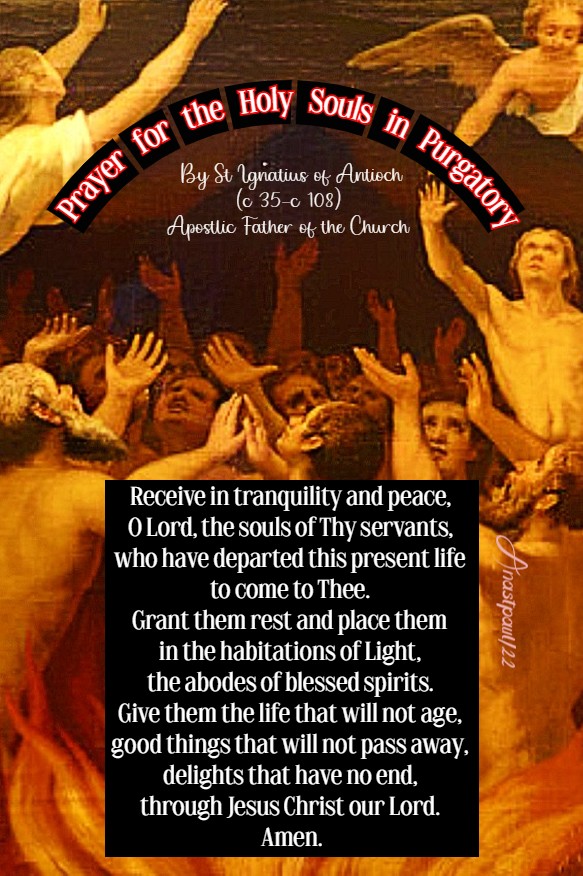
Prayer for the Holy Souls in Purgatory By St Ignatius of Antioch (c 35-c 108) Apostolic Father of the Church
Receive in tranquility and peace, O Lord, the souls of Thy servants, who have departed this present life to come to Thee. Grant them rest and place them in the habitations of Light, the abodes of blessed spirits. Give them the life that will not age, good things that will not pass away, delights that have no end, through Jesus Christ our Lord. Amen.
Saint of the Day – 29 November – Saint Saturninus of Toulouse (Died c257) Bishop Martyr. The 1st Bishop of Touylouse, France, Born in Patras, Greece and died by being cast from a high building. Patronage – of Toulouse. Also known as – Cernín, Sadurní, Sadurninho, Sarnin, Satordi, Saturdi, Saturnin, Saturnino, Serenín, Sernin, Zernin. Additional Memorial – 30 October (translation of Relics).
The Roman Martyrology reads today: “At Toulouse, in the time of Decius, the holy Bishop Saturninus, who was confined by the pagans in the capitol of that City and, from the highest part of the building, precipitated down the stairs. By which fall, having his head crushed, his brains dashed and his whole boty mangled, he rendered his worthy soul to our Lord.”
Saturninus was one of the “Apostles to the Gauls” and was sent to Toulouse by Pope Fabian. The Pope sent seven Bishops from Rome to Gaul, to preach the Gospel – St Gatien to Tours, St Trophimus to Arles, St Paul to Narbonne, St Saturninus to Toulouse, St Denis to Paris, St Austromoine to Clermont and St.Martial to Limoges.
Saturninus was the 1st Bishop of Toulouse. St Gregory of Tours chronicled his work as historical records. The Martyrology gave a genealogy for Saturninus; the son of Aegeus, King of Achaea, by his wife Cassandra, who herself, was the daughter of Ptolemy, King of the Ninevites.
Legend associated with Saturninus state, “He was given for his companion Papulus, later to become St Papulus the Martyr,” It also states that besides Papulus, he also had St Honestus (yesterday’s Saint of the Day) as a Disciple, whom he later sent off to evangelise in Spain..
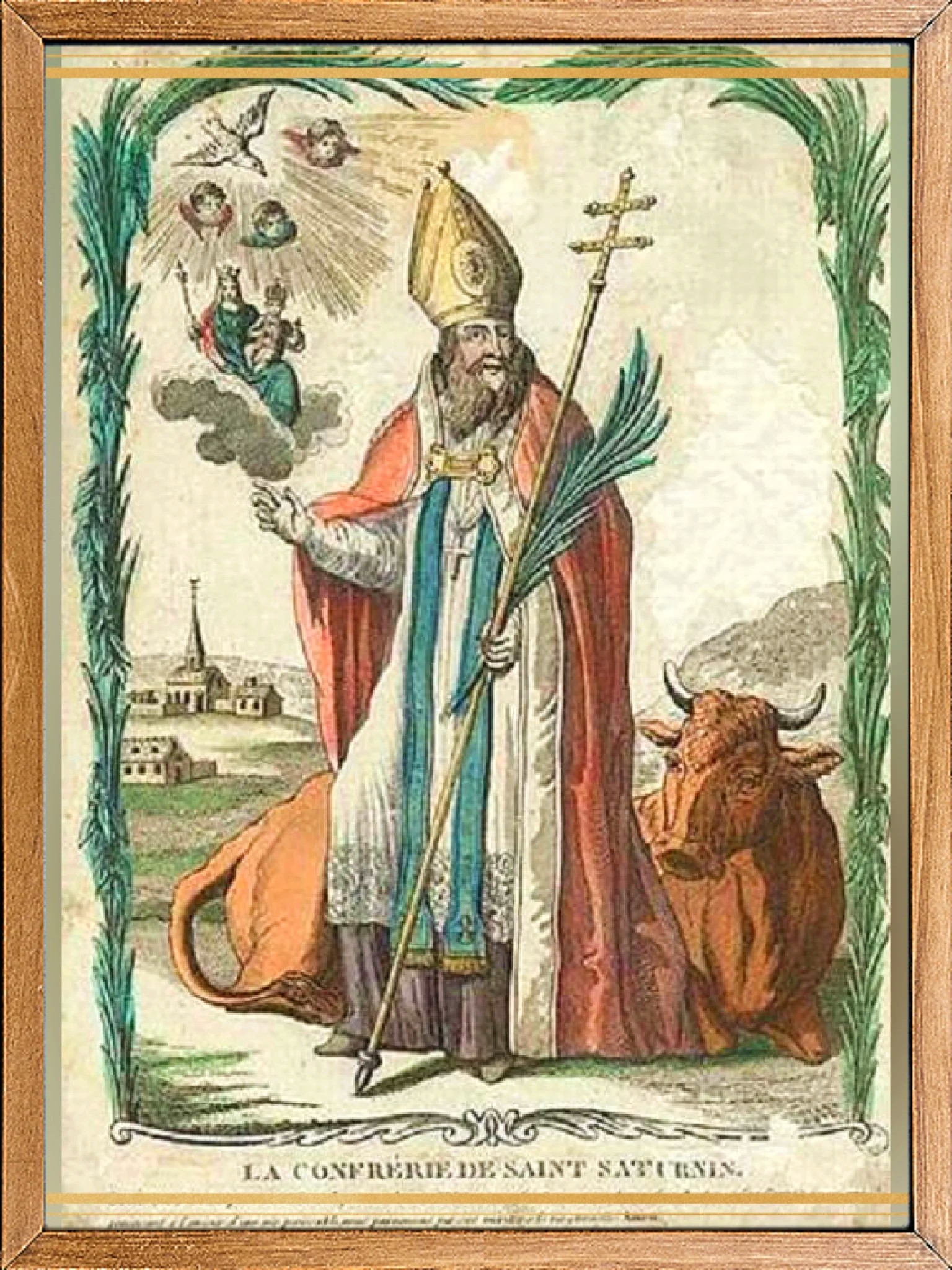
That which we remember today, describes his Martyrdom which differs from that which is stated in the Roman Martyrology (see above 1916). To reach the Christian Church, Saturninus had to pass before the governing capital building of Toulouse, where there was an altar and, according to the Acts, the pagan priests ascribed the silence of their oracles to the frequent presence of Saturninus. One day they seized him and on his unshakeable refusal to sacrifice to the images, they condemned him to be tied by the feet to a bull, which dragged him about the town until the rope broke. Two Christian women piously gathered up the remains and buried them in a deep ditch to prevent porofanation by the pagans.
The Martyrdom of St Saturninus
A Church called the Taur (bull) was built where the bull stopped his rampage. St Saturninus’ Relics are now enshrined at the Toulouse Basilica, seemingly having survived the Revolution.
All Saints of the Seraphic Order (Franciscan): the Church celebrates the many Franciscan Saints who followed in the footsteps of St Francis. It is a special day for all Franciscans to celebrate the Feast of ‘All the Saints of the Seraphic Order.’ Also on this day in 1223, the final Rule of life for Franciscan Friars was approved. To commemorate this and all the saintly examples produced in the Franciscan Order, on this day all the Saints of the Seraphic order are remembered at Franciscan Churches throughout the world.
Bl Frederick of Ratisbon St Hardoin of Brittany St Illuminata of Todi St James of Saroug Bl Jutta of Heiligenthal St Paphnutius of Heracleopolis St Paramon St Philomenus of Ancyra St Radbod of Utrecht
St Saturninus of Rome (Died c304) + Priest and Martyrand St Sisinius of Rome (Died c304) + Deacon and Martyr The Roman Martyrology reads: “At Rome, on the Salarian road, the birthday of the holy Martyr Saturninus, an aged man and the Deacon Sisinius, in the time of the Emperor Maximian. After a long imprisonment, they were, by order of the Prefect of the City, placed on the rack, distended with ropes, scourged with rods and whips garnished with metal, then exposed to the flames, taken down from the rack and beheaded.” Their Lives and Deaths: https://anastpaul.com/2023/11/29/saint-s-of-the-day-29-november-saint-saturninus-of-rome-priest-martyr-and-saint-sisinius-of-rome-deacon-martyr-died-c304/
St Saturninus of Toulouse (Died c257) Bishop Martyr St Walderic of Murrhardt
Thought for the Day –28 November – Meditations with Antonio Cardinal Bacci (1881-1971) [Revisiting our old friend, Cardinal Bacci , until Advent begins on Sunday.]
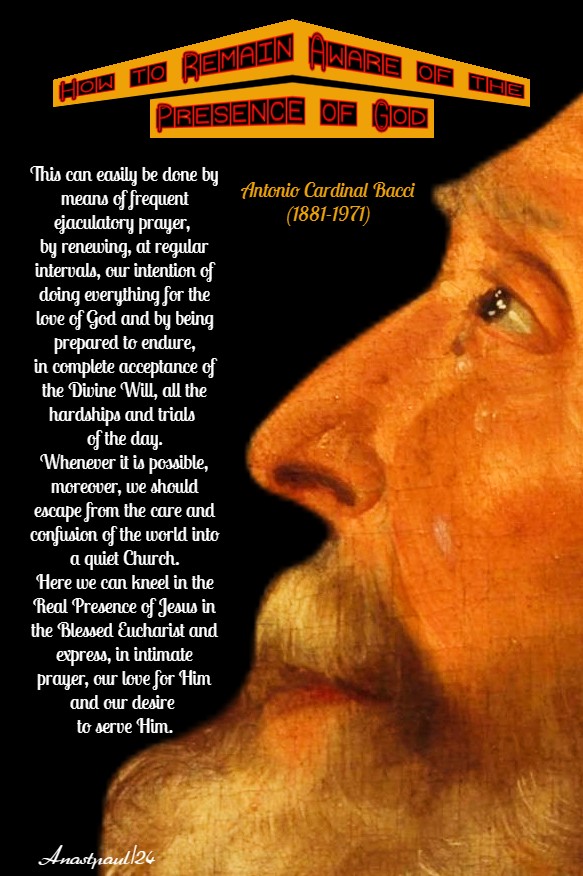
How to Remain Aware of the Presence of God
“It is useful to consider the ways in which we can develop a constant and effective awareness of the Presence of God. The first way in which we can do this, is by cultivating a lively faith, which will help us to see God everywhere. “Do not I fill heaven and earth, saith the Lord?” (Jer 23:24).
This kind of faith should deepen our sense of God’s Presence and inspire in us sentiments of love and gratitude, which will guide us in all our actions. We cannot expect that we shall be able to remain in a state of constant contemplation of God, for this is the privilege enjoyed by the blessed in Heaven, for whom faith has been replaced by the Beatific Vision. We must be satisfied with exciting in ourselves, as often as possible, the active awareness of God’s Presence. This should be a quiet and peaceful process, not involving undue mental effort or anxiety.
We should be able to attend quite naturally to our work and other obligations and, we should be helped and consoled in this, by directing our thoughts to God from time to time, in order to offer ourselves to Him. This can easily be done by means of frequent ejaculatory prayer, by renewing, at regular intervals, our intention of doing everything for the love of God and by being prepared to endure, in complete acceptance of the Divine Will, all the hardships and trials of the day. Whenever it is possible, moreover, we should escape from the care and confusion of the world into a quiet Church. Here we can kneel in the Real Presence of Jesus in the Blessed Eucharist and express, in intimate prayer, our love for Him and our desire to serve Him.”
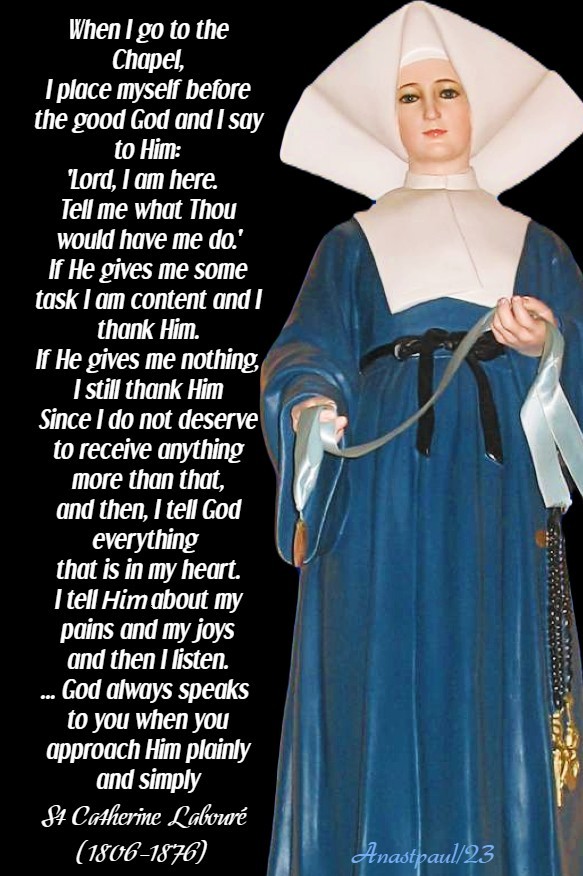
Quote/s of the Day – 28 November – St Catherine Labouré DC (1806-1876) Visionary of the Miraculous Medal
“When I go to the Chapel, I place myself before the good God and I say to Him: ‘Lord, I am here. Tell me what Thou would have me do.’ If He gives me some task I am content and I thank Him. If He gives me nothing, I still thank Him Since I do not deserve to receive anything more than that, and then, I tell God everything that is in my heart. I tell hIm about my pains and my joys and then I listen. … God always speaks to you when you approach Him plainly and simply.”
One Minute Reflection – 28 November – St Catherine Labouré DC (1806-1876) Virgin, Religious Sister of the Daughters of Charity of Saint Vincent de Paul and the Marian Visionary of the Miraculous Meda – Feria Day of the Last Sunday after Pentecost – Colossians 1:9-14; Matthew 24:15-35 – Scripture search here: https://www.drbo.org/
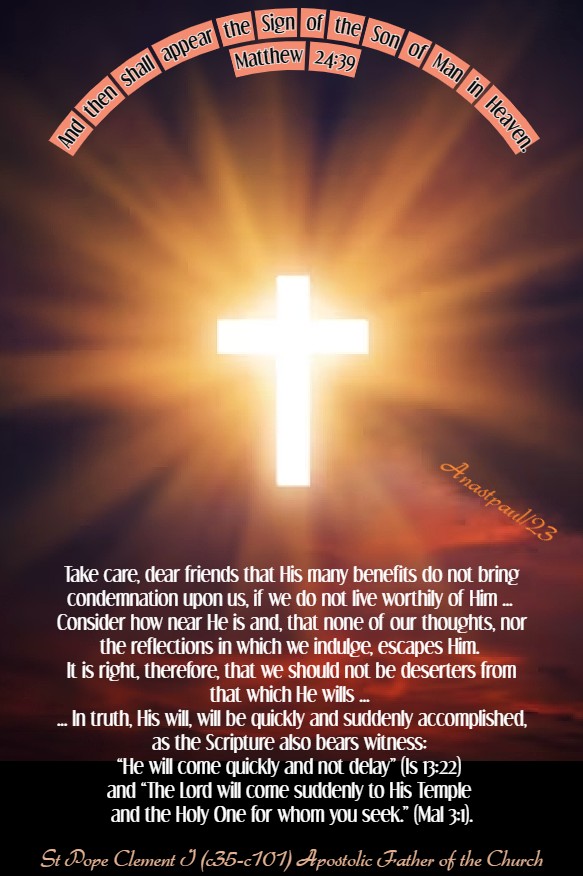
“And then shall appear the Sign of the Son of Man in Heaven. ” – Matthew 24:30
REFLECTION – “Let us fix our eyes on the Father and Creator of the world and cling to His splendid and surpassing gifts of peace and His benefits. Let us see Him with our mind and look with the eyes of the soul at His patient purpose. Let us consider how free from anger He is toward all His creation … For He ordered the universe to be in peace and harmony, in His kindness to all things but especially, to ourselves, who have taken refuge in His mercy …
Take care, dear friends that His many benefits do not bring condemnation upon us, if we do not live worthily of Him … Consider how near He is and, that none of our thoughts, nor the reflections in which we indulge, escapes Him. It is right, therefore, that we should not be deserters from that which He wills … . Far be it from us that Scripture, where it says: “How wretched are those who waver, who are of a doubting heart and say: “We heard those things even in our forefather’s time and here, we have grown old and none of them has happened to us.” You senseless people! Compare yourselves to a tree – take a vine. First it sheds its leaves, then a shoot appears, then a leaf, then a flower and afterward, a sour grape, then a ripe grape. You see in that, in a short time the fruit of the tree comes to maturity. In truth, His will, will be quickly and suddenly accomplished, as the Scripture also bears witness: “He will come quickly and not delay” (Is 13:22) and “The Lord will come suddenly to His Temple and the Holy One for Whom you seek.” (Mal 3:1).” – St Pope Clement I (c35-c101) Apostolic Father of the Church (Letter to the Corinthians 19-23)
PRAYER – From all perils of soul and body, defend us, O Lord, we beseech Thee and by the intercession of blessed and glorious ever Virgin Mary, Mother of God, of blessed Joseph, of thy blessed Apostles Peter and Paul and of blessed Catherine Labouré and all the Saints, graciously grant us safety and peace that all adversities and errors, being overcome, Thy Church may serve Thee in security and freedom. Through Jesus Christ, Thy Son our Lord, Who lives and reigns with Thee, in the unity of the Holy Ghost, God, world without end. Amen (Collect).
Suscipe “Receive” By St Ignatius Loyola (1491-1556)
Receive, O Lord, all my liberty. Take my memory, understanding and entire will. Whatsoever I have or hold, Thou hast given it – I give all back to Thee and commit it wholly to be governed by Thy Will. Thy Love and Thy Grace give unto me and I am rich enough and ask for nothing more! Amen
Saint of the Day – 28 November – Saint Honestus of Nimes (Died 270) Priest Martyr, Missionary. A disciple of St Saturninus of Toulouse (Died c257) Bishop and Martyr and a native of Nîmes. Born at Nimes, France and died in 270 at Pamplona, Spain by Martyrdom. Also known as – Honestus of Pamplona, Honesto, Honest.
Saturninus and Honestus evangelised in Spain and Honestus was Martyred at Pampelona during the persecutions of Aurelian. We believe Honestus was a nobleman of Nimes who was appointed ‘apostle to Navarre and the Basque Country.’
At Pampelona, he converted the Senator Firmus and his family to Christianity, while Firmus’s son, Saint Firminus, was christened by Saint Saturninus. Honestus Baptised Firminus himself.
St Honestus is venerated especially in Pamplona and in Nimes, Probably his Relics were shared between the two Cities.
Bl Calimerius of Montechiaro St Fionnchu of Bangor
St Pope Gregory III (Died 741) Bishop of Rome 11 February 731 until his death on 28 November 741. (His Feast was moved to 10 December in 1969), The Roman Martyrology states: “At Rome, the blessed Pope Gregory III, who departed for Heaven with a reputation for great sanctity and miracles.“ His Life: https://anastpaul.com/2021/11/28/saint-of-the-day-28-november-saint-pope-gregory-iii-died-741/
St Hilary of Dijon St Hippolytus of Saint Claude St Honestus of Nimes (Died 270) Priest Martyr St Irenarcus
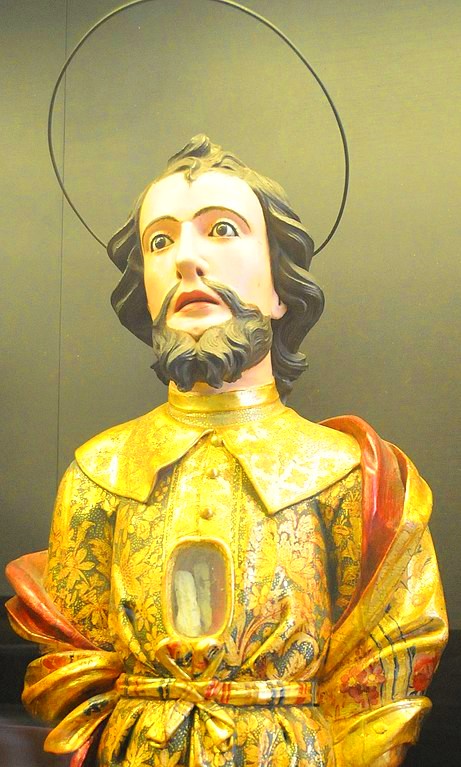
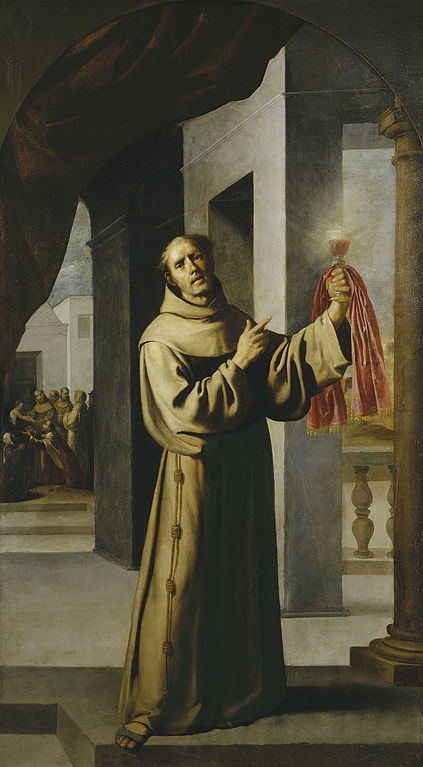
St James of the Marches OFM Conv. (1391-1476) Priest of the Friars Minor Conventional, Confessor, brilliant Preacher, Penitent, Reformer, Writer, Papal legate, Inquisitor, founder of several monasteries in Bohemia, Hungary and Austria. St James was Canonised on 10 December 1726 by Pope Benedict XIII. His body is Incorrupt. About St James: https://anastpaul.com/2019/11/28/saint-of-the-day-28-november-saint-james-of-the-marches-ofm-1391-1476/
St Papius St Quieta of Dijon St Rufus St Simeon the Logothete
St Sosthenes (1st Century) Bishop, Martyr, Jewish Ruler in Corinth, Converted by St Pauland became his disciple, who is mentioned by him in his First Epistle to the Corinthians (1 Corinthians 1:1–2) and by St Luke in Acts 18:12–17. The Roman Martyrology reads: “At Corinth, the birthday of St Sosthenes, fisciple of the blessed Apostle Paul, who is mentioned by that Apostle in his first Epistle to the Corinthians. He was chief of the synagogue when converted to Christ and, as a glorious beginning, consecrated the first fruits of his faith by being scourged in the presence of the Proconsul, Gallio.” His Life and Death: https://anastpaul.com/2023/11/28/saint-of-the-day-28-november-st-sosthenes-1st-century-bishop/
St Stephen the Younger Bl Theodora of Rossano
Martyrs of Constantinople – 8 Saints: A group of over 300 Christians Martyred during the persecutions of the Iconoclast Emperors. We have a lot of information on Saint Stephen the Younger, but for the others we have nothing but seven of their names – Andrew, Auxentius, Basil, Gregor, John, Peter and Stefan. They were scourged, stoned and/or dragged to death through the streets of Constantinople in 764.
Martyrs of North Africa – 13 Saints: A group of thirteen Clerics killed or exiled in the persecutions of Arian Vandals in North Africa – Crescens, Crescentian, Cresconius, Eustace, Felix, Florentian, Habetdeum, Hortulanus, Mansuetus, Papinianus, Quodvultdeus, Urban and Valerian.
Martyrs of Tiberiopolis – 14 Saints: A group of fourteen Christian Laymen, Deacons, Priests and Bishops who were Martyred together in the persecutions of Julian the Apostate – Basil, Chariton, Comasios, Daniel, Etymasius, Hierotheos, John, Nicephorus, Peter, Sergius, Socrates, Theodore, Thomas and Timothy. 361 at Tiberiopolis, Phyrgia (in modern Turkey)
Thought for the Day – 27 November – Meditations with Saint Alphonsus Maria de Liguori (1696-1787) Bishop, Confessor, Most Zealous Doctor of the Church
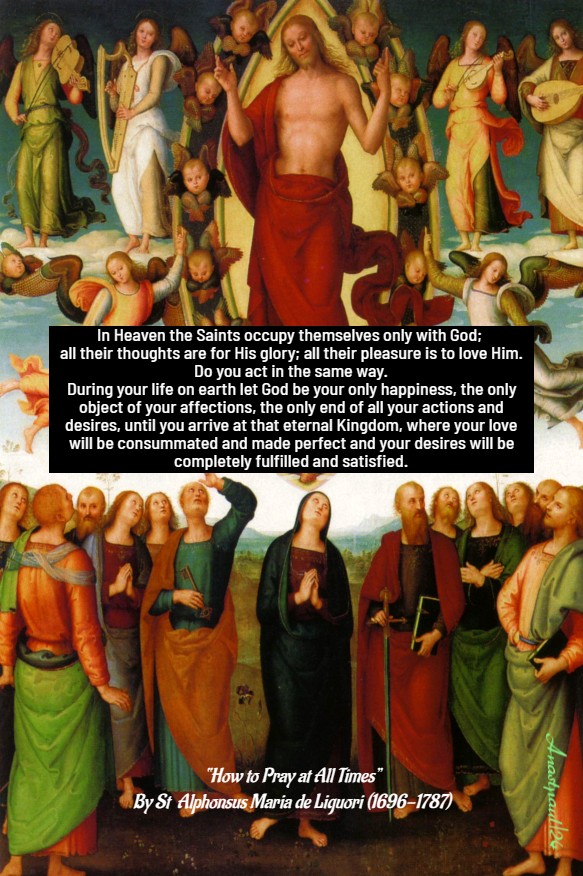
“How to Pray at All Times” By St Alphonsus Maria de Liguori (1696-1787)
Au Revoir St Alphonsus!
“How good and kind God is to those who lovingly seek Him! The Lord is good to the soul who seeks Him (Lam 3:25). He is found even by those who do not seek Him – I was found by those who did not seek Me (Rom 10:I2); with far greater willingness, He will anticipate those who seek Him, in order to serve and love Him.
I conclude with a thought from St Teresa. It is this – The souls of the just should do on earth, through a spirit of love, that which the Blessed do in Heaven. In Heaven the Saints occupy themselves only with God; all their thoughts are for His glory; all their pleasure is to love Him. Do you act in the same way. During your life on earth let God be your only happiness, the only object of your affections, the only end of all your actions and desires, until you arrive at that eternal Kingdom, where your love will be consummated and made perfect and your desires will be completely fulfilled and satisfied.”
Quote/s of the Day – 27 November – Feria of the Last Sunday after Pentecost – Colossians 1:9-14; Matthew 24:15-35 – Scripture search here: https://www.drbo.org/
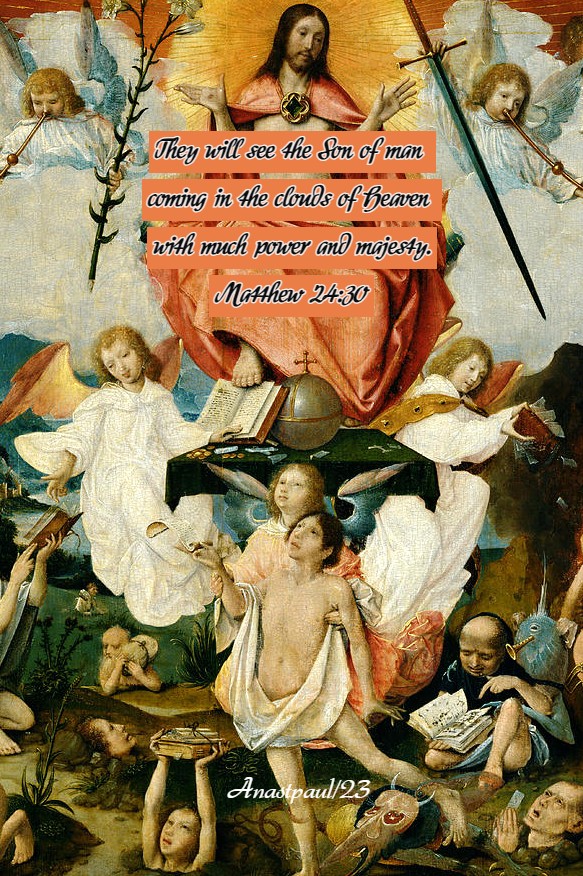
“They will see the Son of Man coming in the clouds of Heaven with much power and majesty.”
Matthew 24:30
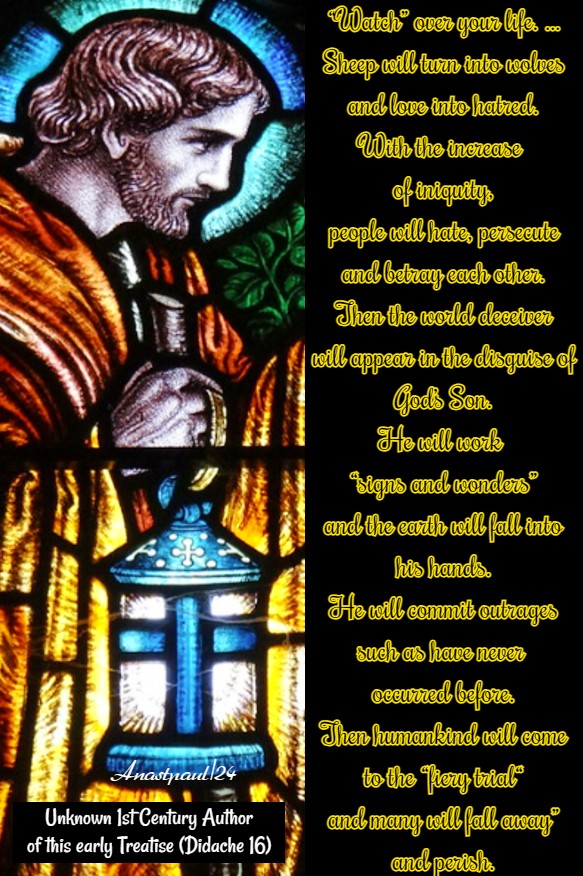
“Watch” over your life. … Sheep will turn into wolves and love into hatred. With the increase of iniquity, people will hate, persecute and betray each other. Then the world deceiver will appear in the disguise of God’s Son. He will work “signs and wonders” and the earth will fall into his hands. He will commit outrages such as have never occurred before. Then humankind will come to the “fiery trial“ and many will fall away” and perish.”
Unknown 1st Century Author [ACW- Ancient Christian Writer] (Didache 16)
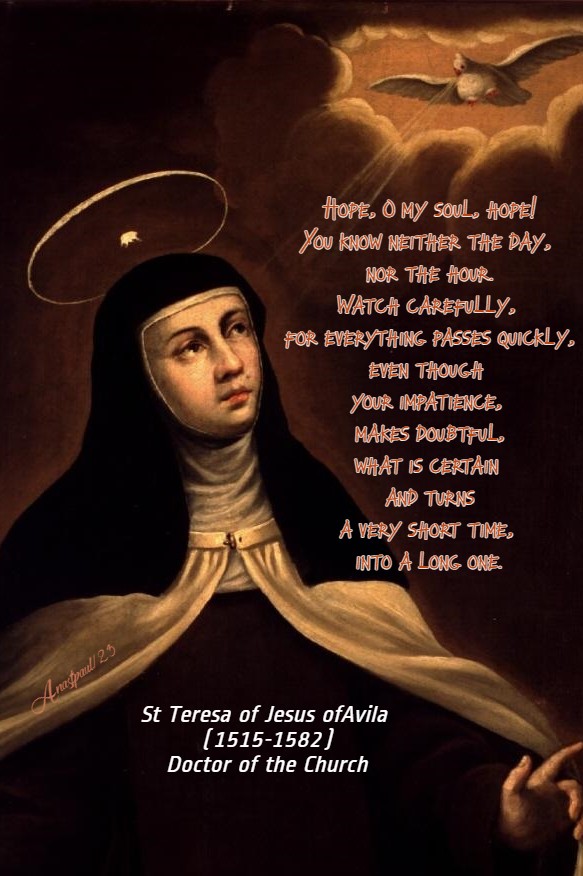
“Hope, O my soul, hope! You know neither the day, nor the hour. Watch carefully, for everything passes quickly, even though your impatience, makes doubtful, what is certain and turns a very short time, into a long one.”
St Teresa of Jesus of Avila (1515-1582)
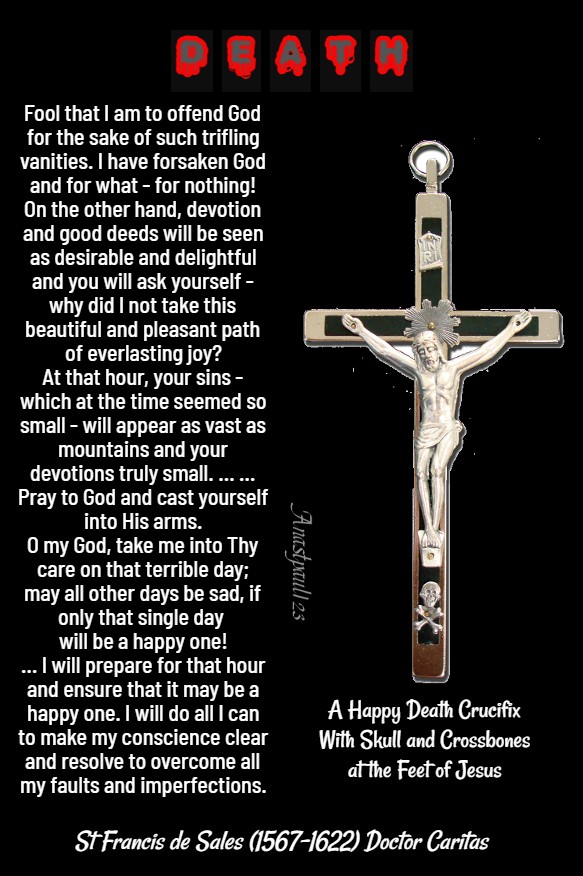
“Fool that I am to offend God for the sake of such trifling vanities. I have forsaken God and for what – for nothing! On the other hand, devotion and good deeds will be seen as desirable and delightful and you will ask yourself – why did I not take this beautiful and pleasant path of everlasting joy? At that hour, your sins – which at the time seemed so small – will appear as vast as mountains and your devotions truly small. …
Pray to God and cast yourself into His arms. O my God, take me into Thy care on that terrible day; may all other days be sad, if only that single day will be a happy one!”
One Minute Reflection – 27 November – “The Month of the Holy Souls in Purgatory” – Our Lady of the Miraculous Medal – Feria of the Last Sunday after Pentecost – Colossians 1:9-14; Matthew 24:15-35 – Scripture search here: https://www.drbo.org/
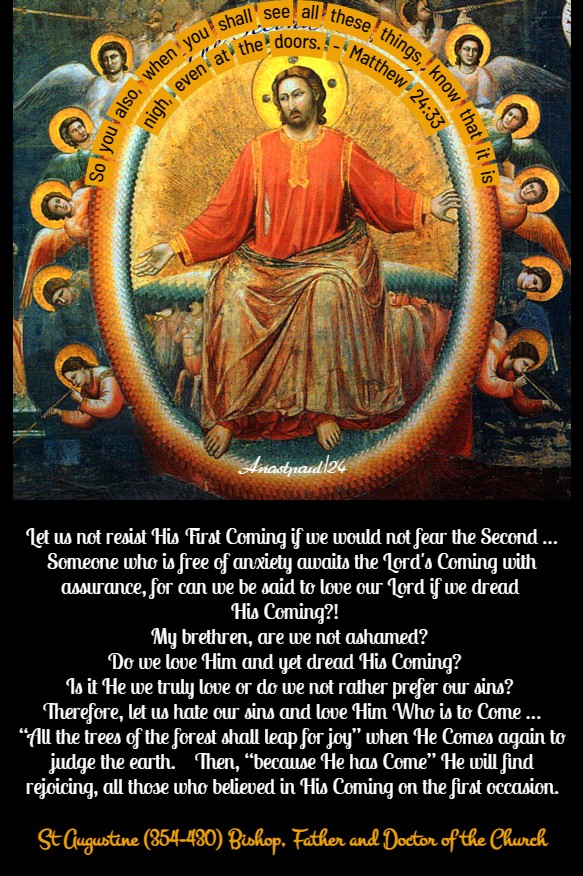
“So you also, when you shall see all these things, know that it is nigh, even at the doors.” – Matthew 24:33
REFLECTION – “Then, all the trees of the forest shall leap for joy before the Lord, for He Comes, He Comes to rule the earth” (Ps 95:12-13). Our Lord came the first time and will come again anew. He came into His Church to begin with “on the clouds” (Mt 26:64). What are those clouds which bore Him? Apostles, preachers… He came, borne by His preachers to begin with and He filled the whole earth. Let us not resist His First Coming if we would not fear the Second…
What, then, should Christians do? Take advantage of this world but do not serve this world. What does that mean? “Possess as if one did not possess.” This is what Saint Paul said … “Brothers, the time is growing short. From now on… let those who weep act like those who do not weep, those rejoicing as not rejoicing, those buying as not owning, those using the world as not using it fully, For the world in its present form is passing away. I should like you to be free of anxieties” (1 Cor 7:29-32). Someone who is free of anxiety awaits the Lord’s Coming with assurance, for can we be said to love our Lord if we dread His Coming?! My brethren, are we not ashamed? Do we love Him and yet dread His Coming? Is it He we truly love or do we not rather prefer our sins? Therefore, let us hate our sins and love Him Who is to Come …
“All the trees of the forest shall leap for joy before the Lord, for He has Come” for the first time… “All the trees of the forest shall leap for joy” when He Comes again to judge the earth. Then, “because He has Come” He will find rejoicing, all those who believed in His Coming on the first occasion.” – St Augustine (354-430) Bishop, Father and Doctor of the Church (Discourses on the Psalms Ps 95).
PRAYER – O God, Who, by the message of an Angel, willed to take flesh in the womb of the Blessed Virgin Mary, grant that we, Thy suppliants, who believe her to be truly the Mother of God, may be helped by her intercession with You. Through Jesus Christ, Thy Son our Lord, Who lives and reigns with Thee, in the unity of the Holy Ghost, God, world without end. Amen (Collect).
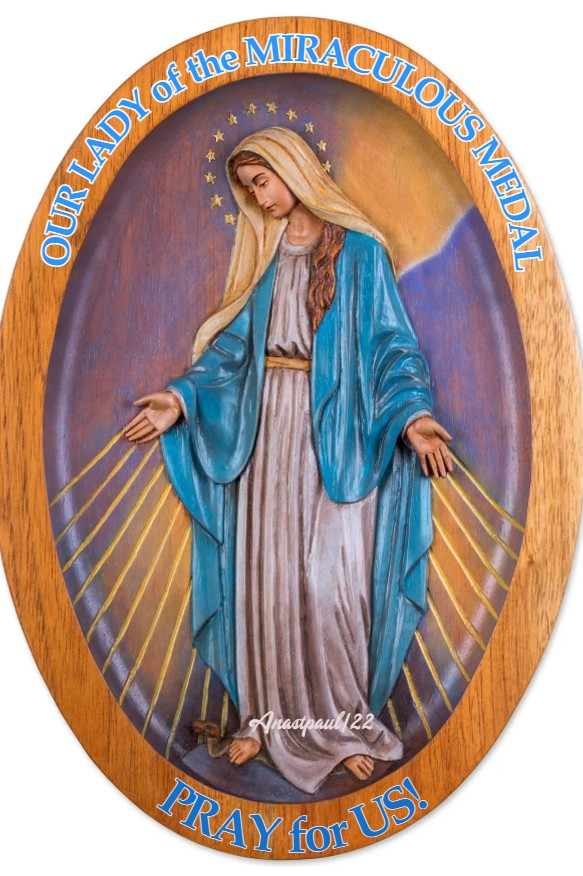
Our Morning Offering – 27 November – Feast of Our Lady of the Miraculous Medal – Patronages : … Special graces, miracles of healing, for conversions, for believers.
Our Blessed Lady and her Miraculous Medal are the solution to the difficulties we are facing. Now, more than ever, we need our Blessed Mother’s comfort and protection. Now, more than ever, we need to discover her peace. Now, more than ever, we need to know that our Mother is with us.
Prayer to Our Lady of the Miraculous Medal
Virgin Mother of God, Mary Immaculate, we unite ourselves to thee under thy title of Blessed Mother, Our Lady of the Miraculous Medal. May this medal be, for each one of us, a sure sign of thy motherly affection for us and a constant reminder of our filial duties towards thee. While wearing it, may we be blessed by thy loving protection and preserved in the grace of thy Son. Most powerful Virgin, Mother of our Saviour, keep us close to thee, every moment of our lives so that like thee, we may live and act according to the teaching and example of thy Son. Obtain for us, thy children, the grace of a happy death, so that in union with thee we may enjoy the happiness of heaven forever. Amen
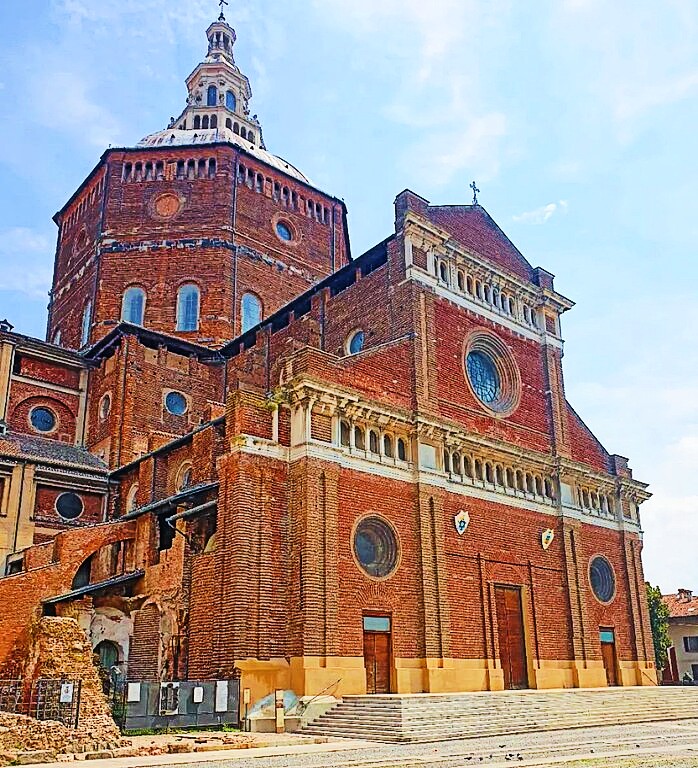
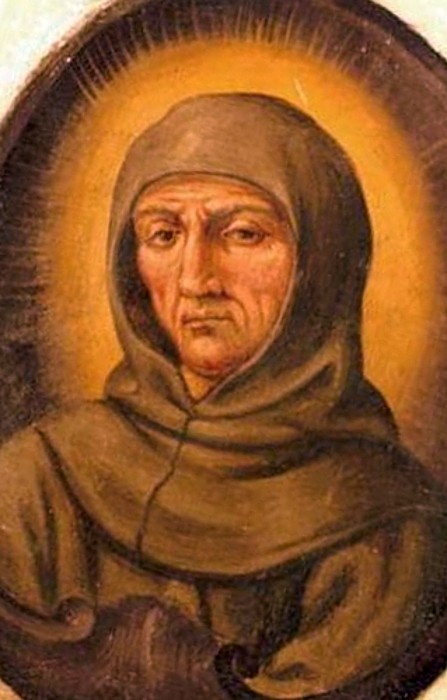
Saint of the Day – 27 November – St John of Pavia (Died c813) Bishop of Pavia between 801-813.
We know very little about John of Pavia except that which we have gleaned from the chronological records which claims that he was the Bishop of Pavia for 12 years.
John was highly regarded for his care of the poor, his insistence on clerical discipline and his work against vice in the general population of his Diocese.
Two of the most famous conversions due to the Miraculous medal was that of Fr Alphonse Ratisbonne NDS (1814-1884), an anti-Catholic Jewish banker and Claude Newman (1923-1944). Fr Alphonse Ratisbonne received a vision of Our Lady of the Miraculous Medal. After his conversion, he became a Priest and worked for the conversion of the Jewish people.
St Acacius of Sebaste St Acharius of Noyon St Apollinaris of Monte Cassino St Barlaam
Blessed Bernardine of Fossa OFM (1420-1503) Priest, Friar of the Friars Minor, Missionary in Italy and a renowned Preacher, noted Historian, Lawyer, Ascetical Writer, rising within the Order to important positions. His cult was later confirmed by the Beatification of Pope Leo XII on 26 March 1828. The Roman Martyrology states: “At L’Aquila, blessed Bernardino da Fossa (Giovanni) Amici, Priest of the Order of Minors, who preached the Catholic Faith in many Provinces of Italy.“ A Faithful Imitator of his Namesake, St Bernardine of Siena: https://anastpaul.com/2021/11/27/saint-of-the-day-27-november-blessed-bernardine-of-fossa-ofm-1420-1503/
St Bilhild of Altmünster St Eusician St Facundus St Fergus the Pict St Gallgo of Wales St Gregory of Sinai St Gulstan St Hirenarchus of Sebaste St James Intercisus St John Angeloptes St John of Pavia (Died c813) Bishop St Laverius
St Maximus of Riez (Died 460) Bishop, Confessor, Abbot, Hermit, zealous and highly efficient leader, Miracle-worker. The Roman Martyrology reads: “At Riez, in France, St Maximus, Bishop and Confessor, who, from his tender years, was endowed with every grace and virtue. Being first the Superior of the Monastery of Lérins and afterwards, Bishop of the Church of Riez, he was celebrated for the working of miracles and prodigies.” His Life of Love: https://anastpaul.com/2023/11/27/saint-of-the-day-27-november-saint-maximus-of-riez-died-460-bishop-confessor/
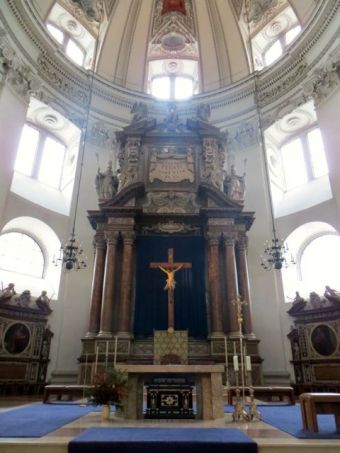
High Altar, Salzburg Cathedral (Salzburger Dom) Salzburg, Austria. Saint Rupert is depicted atop the altar carrying a barrel of salt in his left hand and a bishop’s crozier in his right. Saint Virgil is also represented atop the altar, opposite Saint Rupert.
Martyrs of Antioch – 3 Saints: A group of Christians Martyred together for their faith. Little information has survived except for their names – Auxilius, Basileus and Saturninus.
Martyrs of Nagasaki – 11 Beati: A group of eleven Christians Martyred together for their faith during a period of official persecution in Japan. They are: Blessed Alexius Nakamura Blessed Antonius Kimura Blessed Bartholomaeus Seki Blessed Ioannes Iwanaga Blessed Ioannes Motoyama Blessed Leo Nakanishi Blessed Matthias Kozasa Blessed Matthias Nakano Blessed Michaël Takeshita Blessed Romanus Motoyama Myotaro Blessed Thomas Koteda Kyumi They were Martyred on 27 November 1619 in Nagasaki, Japan and Beatified on 7 May 1867 by Pope Pius IX.
Thought for the Day – 26 November – Meditations with Saint Alphonsus Maria de Liguori (1696-1787) Bishop, Confessor, Most Zealous Doctor of the Church
“How to Pray at All Times” By St Alphonsus Maria de Liguori (1696-1787)
A Method of MENTAL PRAYER or Meditation According to St Alphonsus. Excerpt – Part III Conclusion
III. CONCLUSION.
Three short fervent Acts:
(1) Thank God for the Light He has given you.
(2) Renew your resolution to abstain from some fault, or to do some good thing, during the day.
(3) Ask the Eternal Father, for the love of Jesus and Mary, to aid you to keep your resolutions. At the end of meditation, always pray for poor sinners and for the Holy Souls in Purgatory.
NB: – The acts and prayers of petition should occupy the most of the time. Thus, in a half-hour’s prayer, give three minutes to the preparation; reflect for five minutes and then pray for the balance of the time left to you.
Quote/s of the Day – 26 November – St Leonard of Port Maurice OFM (1676-1751) Confessor, Priest and Franciscan Friar
“Oh Most Sacred Name, Name of peace, Balsam of Life, which is the centre of all the sighs, of the most fervent lovers of Jesus. The Sign of those who truly love Jesus is to bear Jesus imprinted in the heart and to Name often and with devotion, the Most Holy Name of Jesus.”
“What graces, gifts and virtues the Holy Mass calls down!”
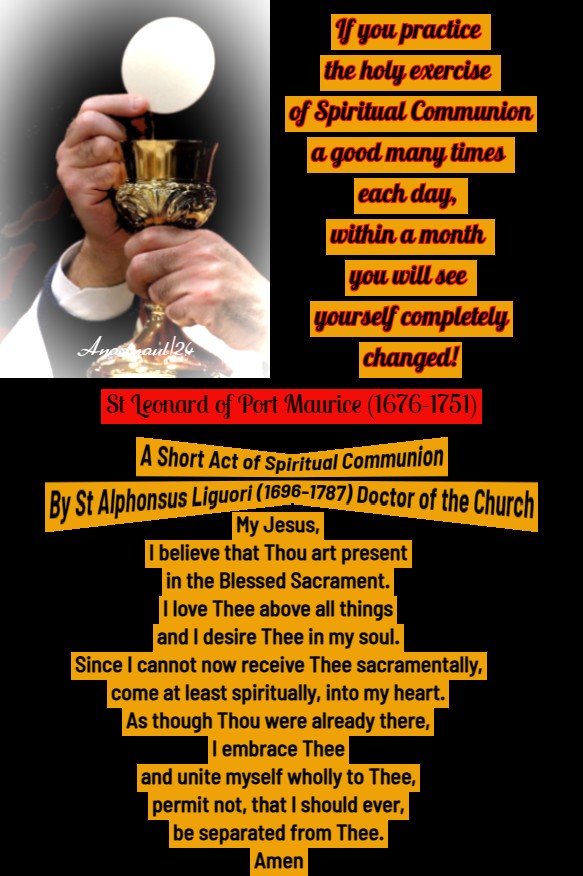
“If you practice the holy exercise of Spiritual Communion a good many times each day, within a month you will see yourself completely changed.”
A Short Act of Spiritual Communion By St Alphonsus Liguori (1696-1787) Doctor of the Church
My Jesus, I believe that Thou art present in the Blessed Sacrament. I love Thee above all things and I desire Thee in my soul. Since I cannot now receive Thee sacramentally, come at least spiritually, into my heart. As though Thou were already there, I embrace Thee and unite myself wholly to Thee, permit not, that I should ever, be separated from Thee. Amen
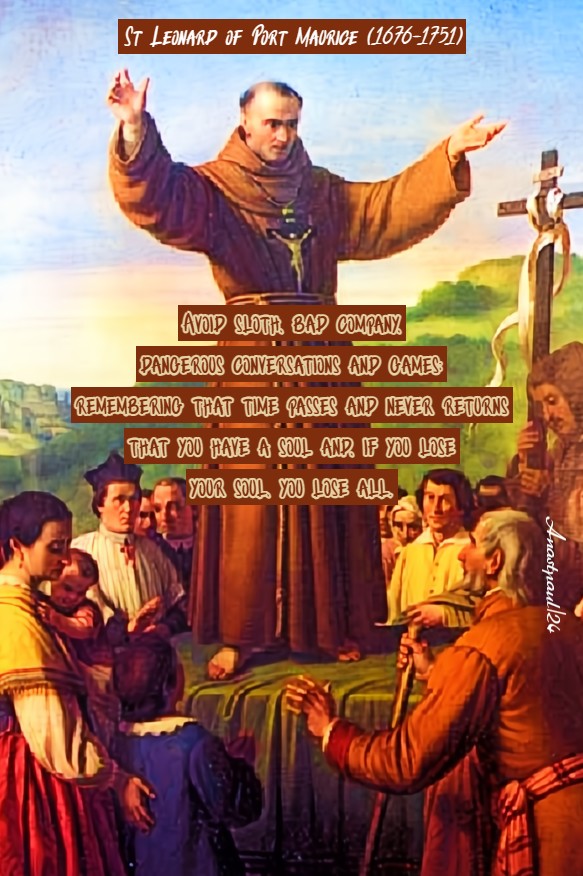
“Avoid sloth, bad company, dangerous conversations and games; remembering that time passes and never returns that you have a soul and, if you lose your soul, you lose all.”
One Minute Reflection – 26 November – “The Month of the Holy Souls in Purgatory” – St Sylvester Gozzolini OSB Silv. (1177– 1267) Priest, Abbot – Ecclesiasticus 45:1-6; Matthew 19:27-29 – Scripture search here: https://www.drbo.org/
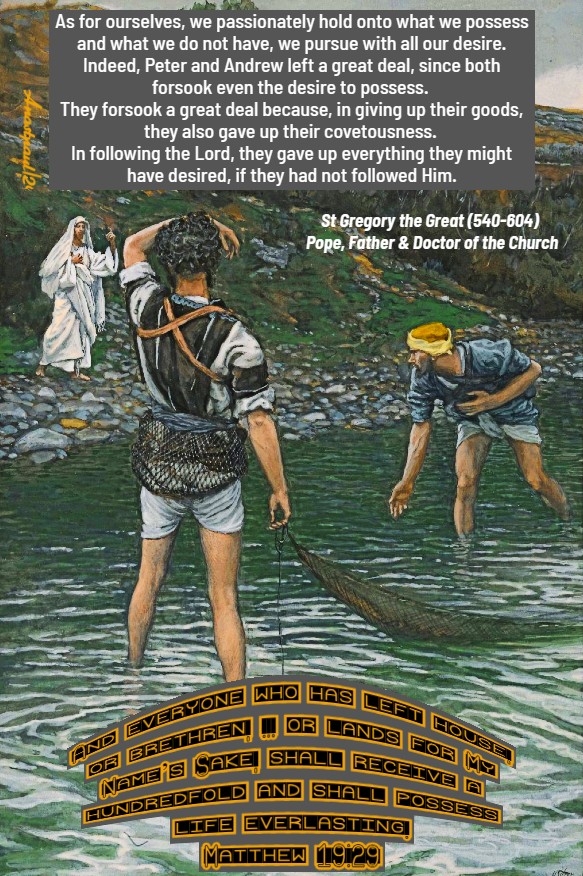
“And everyone who has left house, or brethren, or sisters, or father, or mother, or wife, or children, or lands for My Name’s Sake, shall receive a hundredfold and shall possess life everlasting.” – Matthew 19:29
REFLECTION – “You have heard, my brethren that Peter and Andrew abandoned their nets to follow the Redeemer at the first sound of His Voice (Mt 4:20) … Perhaps someone will say to himself, under his breath, “What have those two fisherman abandoned to answer the Lord’s call? They had practically nothing.” But, in this matter we should think of their disposition of heart, rather than their fortune. The person who has not kept hold of anything for himself, has left a good deal; the person who has forsaken everything, has left a good deal, even if it is but small.
As for ourselves, we passionately hold onto what we possess and what we do not have, we pursue with all our desire. Indeed, Peter and Andrew left a great deal, since both forsook even the desire to possess. They forsook a great deal because, in giving up their goods, they also gave up their covetousness. In following the Lord, they gave up everything they might have desired, if they had not followed Him.” – St Gregory the Great (540-604) Pope, Father and Doctor of the Church (Sermon 5 on the Gospel).
PRAYER – Most merciful God, Who when the holy Abbot Sylvester was devoutly meditating upon the vanity of this world beside an open grave, graciously willed to call him into the desert and enrich him with unusual merits, we humbly pray that, following his example, despising the things of earth, we may thoroughly enjoy Thy everlasting presence. Through Jesus Christ, Thy Son our Lord, Who lives and reigns with Thee, in the unity of the Holy Ghost, God, world without end. Amen (Collect).
Our Morning Offering – 26 November – “The Month of the Holy Souls in Purgatory”
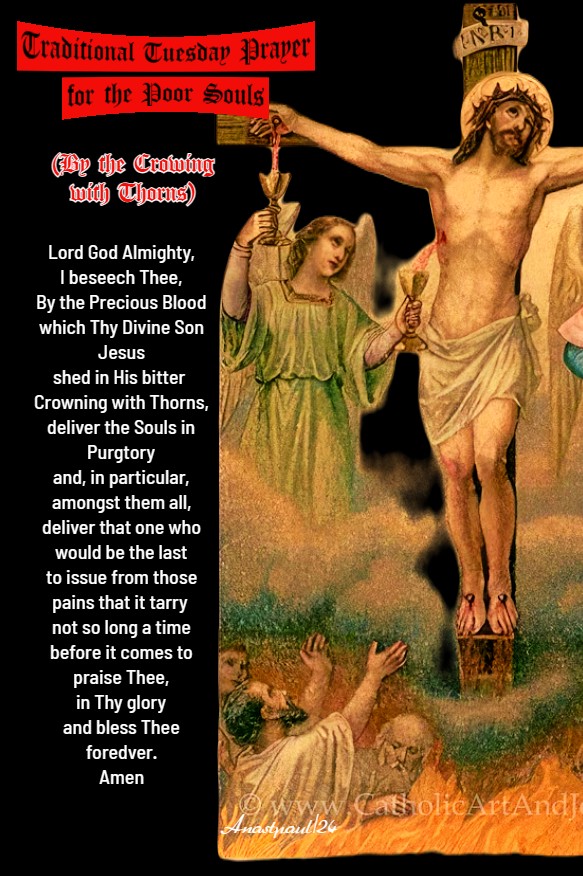
Traditional Tuesday Prayer for the Poor Souls (By the Crowing with Thorns)
Lord God Almighty, I beseech Thee, By the Precious Blood which Thy Divine Son Jesus shed in His bitter Crowning with Thorns, deliver the Souls in Purgatory and, in particular, amongst them all, deliver that one who would be the last to issue from those pains that it tarry not so long a time before it comes to praise Thee, in Thy glory and bless Thee forever. Amen
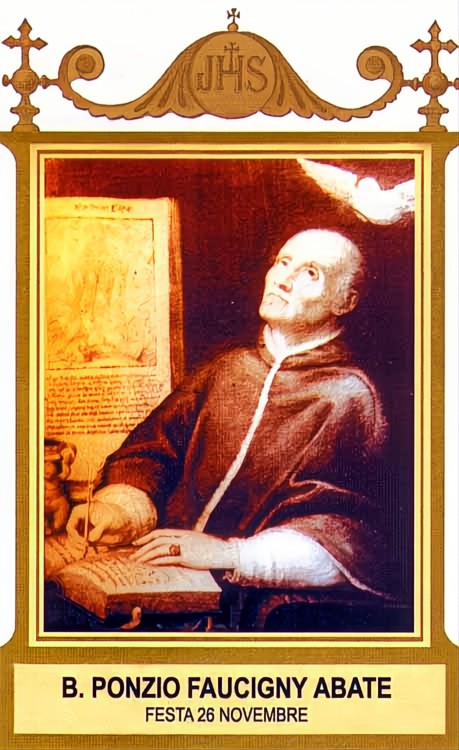
Saint of the Day – 26 November – Blessed Pontius of Faucigny (c1100-c1178) Abbot, Founder and the 1st Abbot of the Monastery of Faucigny. Born in c1100 in Faucigny, Savoy (in modern France) and died on 26 November 1178 or 1179 in Sixt, Savoy, also in modern France, of natural causes.
Pontius was born around the year 1100 to the noble family of Faucigny, lords of the region of Savoy. At a very young age he entered the Abbey of the Canons Regular of Abondance, of which he revised the Constitutions, harmonising them with the original Augustinian Rule.
In 1144 he was commissioned to found a religious house in Sixt region, also in Savoy which was ten year later, in 1155, promoted to an Abbey by Pope Adrian IV. Pontius became its first Abbot, while remaining in constant contact with Abondance.
In 1172 he was called to succeed Burcardius as the Abbot of Abondance and the following year he obtained the dignity of Abbey for the Monastery of Grandval.
However, wishing to be able to prepare himself more effectively for death, he abandoned all his duties to retire to Abondance as a simple Monk He died there on 26 November 1178 or 1179 and was buried in the Abbey Church.
His mortal remains, a few years later, were the object of an elevation and from then on he received a regular cult. On 14 November 1620, Saint Francis de Sales, a great devotee of the holy Abbot, his compatriot from Savoy, opened his tomb to take some of his Relics. Francis’s successor, Charles Augustus de Sales, also had great respect for Pontius.
The “Bollandists” observe that seven centuries passed between Pontius’s death and the appearance of his first biography, a factor which led to great caution regarding the veracity of certain data. Only in 1866, the cause for the official recognition of the cult paid to him from time immemorial was initiated by the Bishop of Annecy, Claude Magnin and was subsequently resumed in 1890 by Monsignor Ernest Isoard. Pope Leo XIII confirmed the cult “ab immemorabili” of Blessed Pontius of Faucigny, with a decree dated 15 December 1896. His Feast is still celebrated today on the anniversary of his death most especially by the Canons of the Lateran and by the Diocese of Annecy.
St Leonard of Port Maurice OFM (1676-1751) Confessor, Priest and Friar of the Friars Minor, Preacher – in particular Parish Mission, Ascetic Writer, Spiritual Director. St Leonard founded many pious apostolates, societies and confraternities and exerted himself to spread devotion to the Sacred Heart of Jesus, the Perpetual Adoration of the Most Blessed Sacrament, the Blessed Virgin Mary and the Passion of Christ. He was among the few to insist that the concept of the Immaculate Conception of Mary be defined as a Dogma of the Faith. He was Beatified on 19 June 1796 by Pope Pius VI and Canonised on 29 June 1867 by Pope Pius IX. Biography: https://anastpaul.com/2018/11/27/saint-of-the-day-27-november-st-leonard-of-port-maurice-ofm-1676-1751/
Bl essed Delphina of Glandèves TOSF (1283-1360) Virgin, Virgin Laywoman, Married in Chastity to St Elzear (below) Widow, Recluse, Apostle of the Poor and needy. Sometimes regarded as ‘Saint’ – the anniversary of her death and birthday into Heaven is today, 28 November. After the Vatican II Council, her Feast day was moved to 27 September: Blessed Delphina’s Chaste Life: https://anastpaul.com/2022/09/27/saint-of-the-day-27-september-saint-delphina-tosf-1283-1360-virgin/
St Egelwine of Athelney St Ida of Cologne St James the Hermit St Magnance of Ste-Magnance St Marcellus of Nicomedia St Martin of Arades St Nicon of Sparta Blessed Pontius of Faucigny (c1100-c1178) Abbot St Sabaudus of Trier
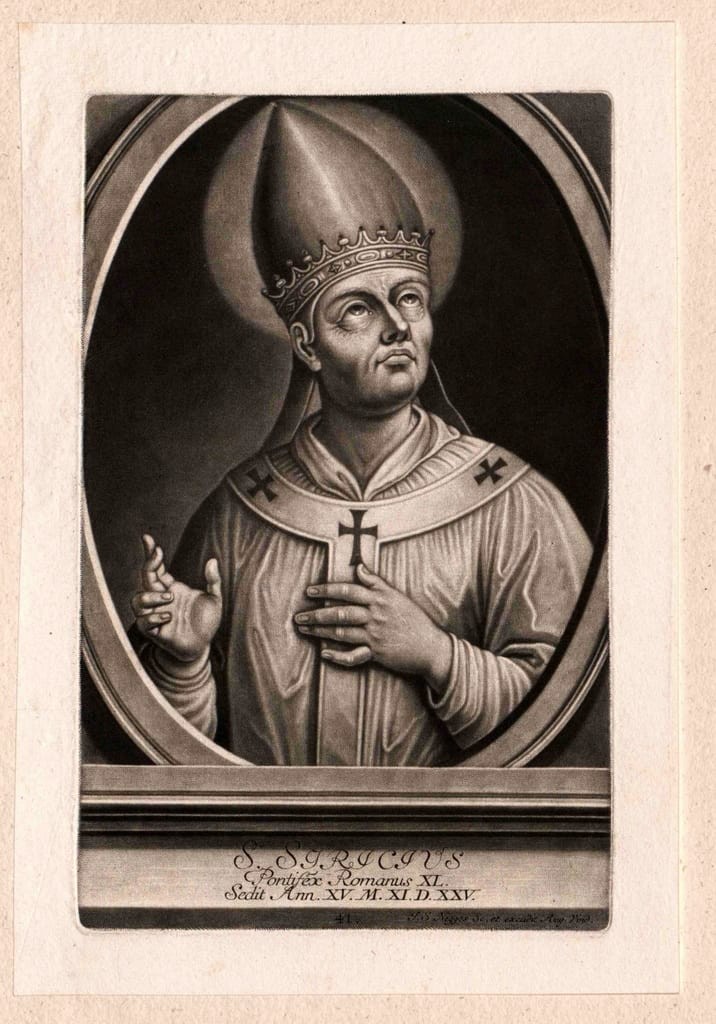
St Siricius, Pope (c334-399) Confessor, Bishop of Rome from December 384, Confessor, Defender of the Faith against heresies, Reformer of clerical discipline, Born in Rome and died there of natural causes aged around 64. In response to inquiries from Bishop Himerius of Tarragona, Siricius issued the Directa Decretal, containing Decrees of Baptism, Church discipline and other matters. His are the oldest completely preserved Papal Decrees. He is sometimes said to have been the first Bishop of Rome to call himself “Pope or Papa” – the word derived from the Greek, Papa, meaning Father. The Roman Martyrology reads today: “At Rome, St Siricius, Pope and Confessor, celebrated for his learning, piety and zeal for religion, who condemned various heretics and published salutary laws concerning Ecclesiastical discipline.” A True Shepherd.: https://anastpaul.com/2023/11/26/saint-of-the-day-26-november-st-pope-siricius-c334-399-confessor/
St Stylinus St Vacz – 11th Century Hermit in Visegrád, Hungary. No further information is available.
Martyrs of Alexandria – 650+- Saints: A group of approximately 650 Christian Priests, Bishops and Laity Martyred together in the persecution of Maximian Galerius. We have the names and a few details only seven of them – Ammonius, Didius, Faustus, Hesychius, Pachomius, Phileas and Theodore. The were born in Egypt and were martyred there in c 311 in Alexandria, Egypt.
Martyrs of Capua – 7 Saints: A group of seven Christians Martyred together. The only details about them to survive are the names – Ammonius, Cassianus, Felicissimus, Nicander, Romana, Saturnin and Serenus. They were martyred in Capua, Campania, Italy, date unknown.
Martyrs of Nicomedia – 6 Saints: A group of six Christians Martyred by Arians. Few details have survived except their names – Marcellus, Melisus, Numerius, Peter, Serenusa and Victorinus. Martyred in 349 in Nicomedia, Bithynia, Asia Minor (modern Izmit, Turkey).
Thought for the Day – 25 November – Meditations with Saint Alphonsus Maria de Liguori (1696-1787) Bishop, Confessor, Most Zealous Doctor of the Church
“How to Pray at All Times” By St Alphonsus Maria de Liguori (1696-1787)
A Method of MENTAL PRAYER or Meditation According to St Alphonsus. Excerpt – Part II THE BODY OF THE PRAYER.
II. THE BODY OF THE PRAYER.
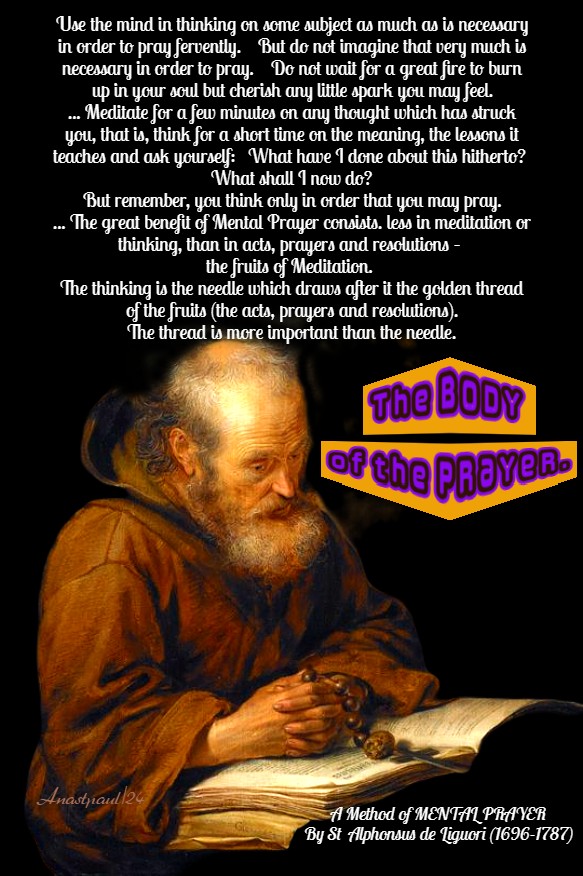
Use the mind in thinking on some subject as much as is necessary in order to pray fervently. But do not imagine that very much is necessary in order to pray. Do not wait for a great fire to burn up in your soul but cherish any little spark you may feel.
To help your mind, read a text of Scripture or a short Meditation in a book. St Teresa used a book in her Meditations for seventeen years.
Meditate for a few minutes on any thought which has struck you, that is, think for a short time on the meaning, the lessons it teaches and ask yourself: What have I done about this hitherto? What shall I now do? But remember, you think only in order that you may pray.
The great benefit of Mental Prayer consists. less in meditation or thinking, than in acts, prayers and resolutions – the fruits of Meditation. The thinking is the needle which draws after it the golden thread of the fruits (the acts, prayers and resolutions).. The thread is more important than the needle. The chief part of the time of Meditation should, then, be spent in making:
Acts and Affections: Examples. –Acts of Humility: ‘My God, I am nothing in Thy sight.’ Act of Thanksgiving: ‘My God, I thank Thee for Thy goodness.’ Act of Love: ‘ My God, I love Thee with my whole heart. I wish to please Thee in all things. I will only what Thou wiliest. I love Thee because Thou art Infinitely Good. Do with me and mine all that pleases Thee because it is Thy Will.’ Acts of Love and of contrition are golden chains binding us to God. St Thomas says: ‘ Every Act of Love merits eternal life. Make then many simple but fervent, Acts of Love and Sorrow.
Prayers of Petition: In mental prayer, it is extremely useful and, perhaps better than all else, to make many earnest petitions for the graces you wish. Always ask, above all, for (a) the perfect forgiveness of all past sin; (b) the perfect love of God and (c) the Grace of a holy death. …
Resolutions: ‘The progress of a soul,‘ says St Teresa, ‘ does not consist in thinking much of God but in loving Him and this love is gained by resolving to do much for Him.‘ Make one practical resolution which you mean to keep during the day.
Quote/s of the Day – 25 November – Sirach 51:1-8; 5:12, Matthew 25:1-13 – Scripture search here: https://www.drbo.org/
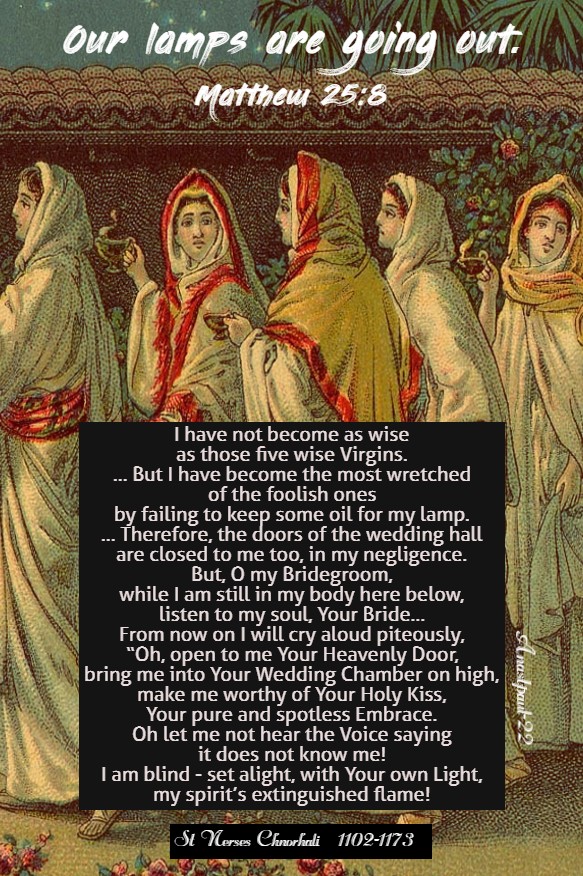
“Our lamps are going out.”
Matthew 25:8
“I have not become as wise as those five wise Virgins. … But I have become the most wretched of the foolish ones by failing to keep some oil for my lamp, namely, mercy together with virginity or, still more, the anointing from Baptism’s Sacred fount…
Therefore, the doors of the wedding hall are closed to me too, in my negligence. But, O my Bridegroom, while I am still in my body here below, listen to my soul, Your Bride… From now on, I will cry aloud piteously, “Oh, open to me Your Heavenly Door, bring me into Your Wedding Chamber on high, make me worthy of Your Holy Kiss, Your pure and spotless Embrace. Oh let me not hear the Voice saying it does not know me! I am blind; set alight with Your own Light my spirit’s extinguished flame!”
St Nerses Chnorhali (1102-1173) Armenian Bishop
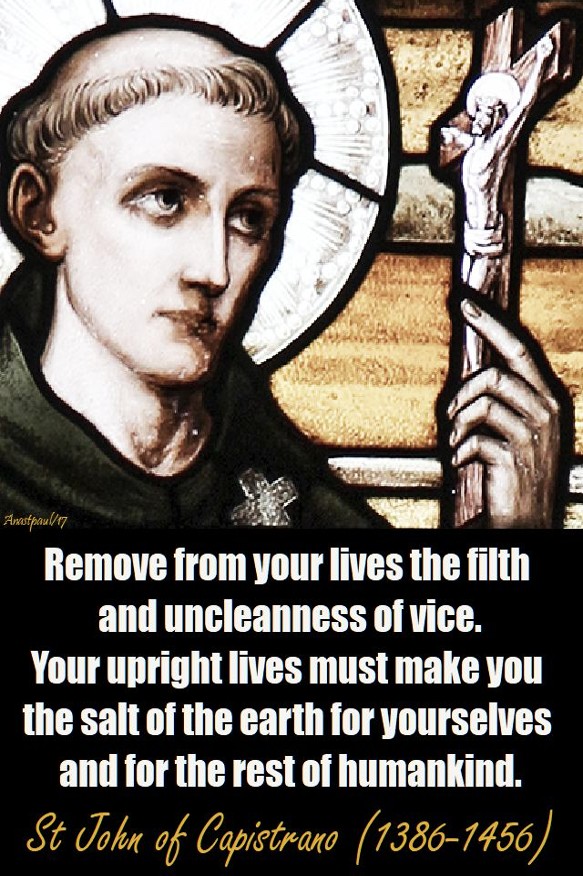
“Remove from your lives the filth and uncleanness of vice. Your upright lives must make you the salt of the earth for yourselves and for the rest of humankind…”
St John of Capistrano OFM (1386-1456)
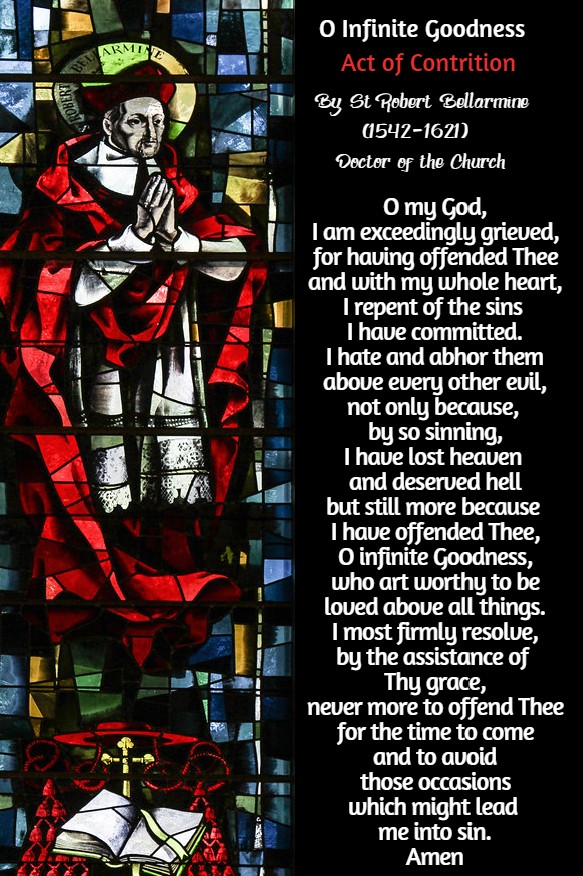
O Infinite Goodness – Act of Contrition By St Robert Bellarmine (1542-1621) – Doctor of the Church
O my God, I am exceedingly grieved, for having offended Thee and with my whole heart, I repent of the sins I have committed. I hate and abhor them above every other evil, not only because, by so sinning, I have lost heaven and deserved hell but still more because I have offended Thee, O infinite Goodness, who art worthy to be loved above all things. I most firmly resolve, by the assistance of Thy grace, never more to offend Thee for the time to come and to avoid those occasions which might lead me into sin. Amen
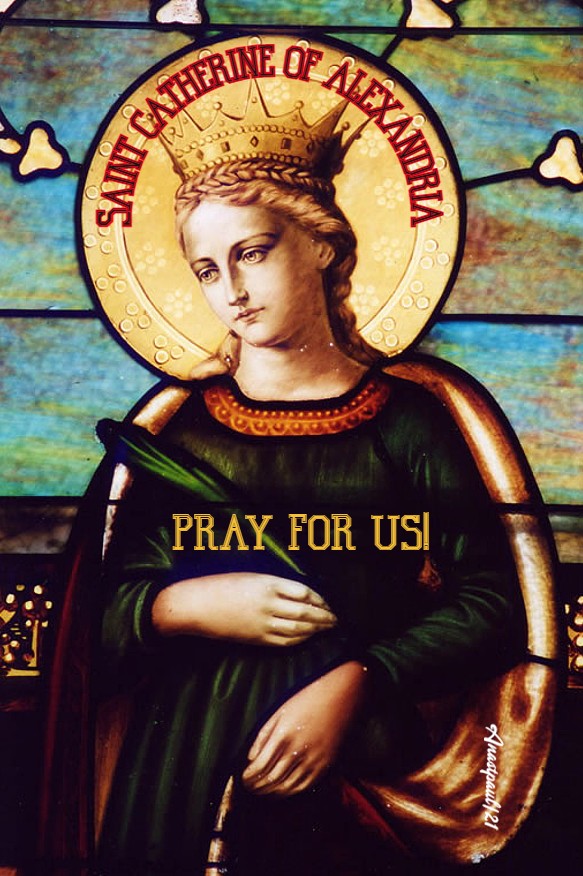
One Minute Reflection – 25 November – “The Month of the Holy Souls in Purgatory” – St Catherine of Alexandria (Died c305) Virgin Martyr – Sirach 51:1-8; 5:12, Matthew 25:1-13 – Scripture search here: https://www.drbo.org/
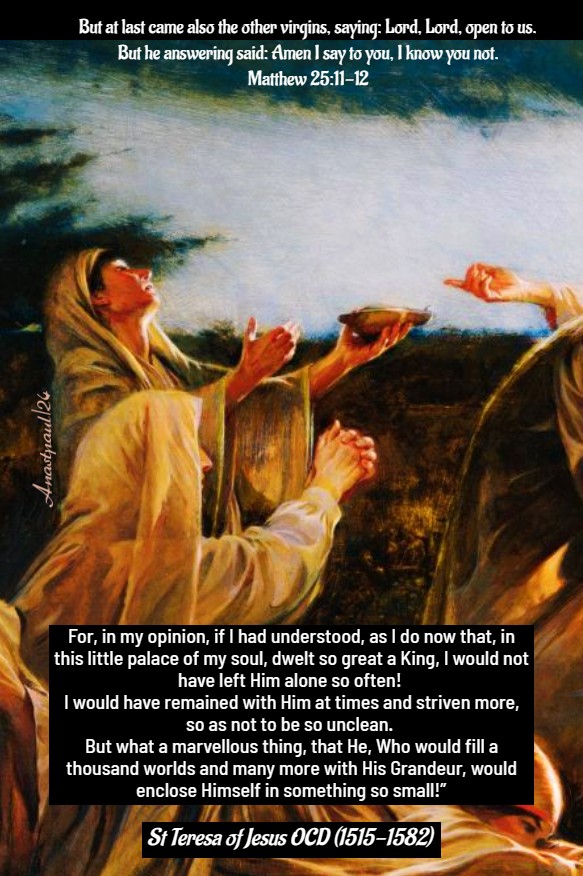
“But at last came also the other virgins, saying: Lord, Lord, open to us. But he answering said: Amen I say to you, I know you not.” – Matthew 25:11-12
REFLECTION – “Well, let us imagine that within u, is an extremely rich palace, built entirely of gold and precious stones; in sum, built for a Lord such as this. Imagine, too, as is indeed so, you have a part to play, in order for the palace to be so beautiful; for there is no edifice as beautiful, as is a soul pure and full of virtues. The greater the virtues the more resplendent the jewels. Imagine, also, that in this palace dwells this mighty King, Who has been gracious enough to become your Father and that, He is seated upon an extremely valuable throne which is your heart. …
You will laugh at me, perhaps and say, that which I am explaining, is very clear and you will be correct; for me, although, it was obscure for some time. I understood well that I had a soul. But what this soul deserved and Who dwelt within it, I did not understand because, I had covered my eyes with the vanities of the world. For, in my opinion, if I had understood, as I do now that, in this little palace of my soul, dwelt so great a King, I would not have left Him alone so often! I would have remained with Him at times and striven more, so as not to be so unclean. But what a marvellous thing, that He, Who would fill a thousand worlds and many more with His Grandeur, would enclose Himself in something so small!” – St Teresa of Jesus OCD (1515-1582) Virgin, Carmelite Founder, Mystic, Writer (The Way of Perfection Chapter 28: 9-11).
PRAYER – O God, Who gave the law to Moses on Sinai’s height and through Thy holy Angels, miraculously placed there, the body of blessed Catherine, Thy Virgin and Martyr, grant, we beseech Thee that by her merits and intercession, we may reach that towering eminence which is Christ our Lord.Through the same Jesus Christ, Thy Son our Lord, Who lives and reigns with Thee, in the unity of the Holy Ghost, God, world without end. Amen (Collect).
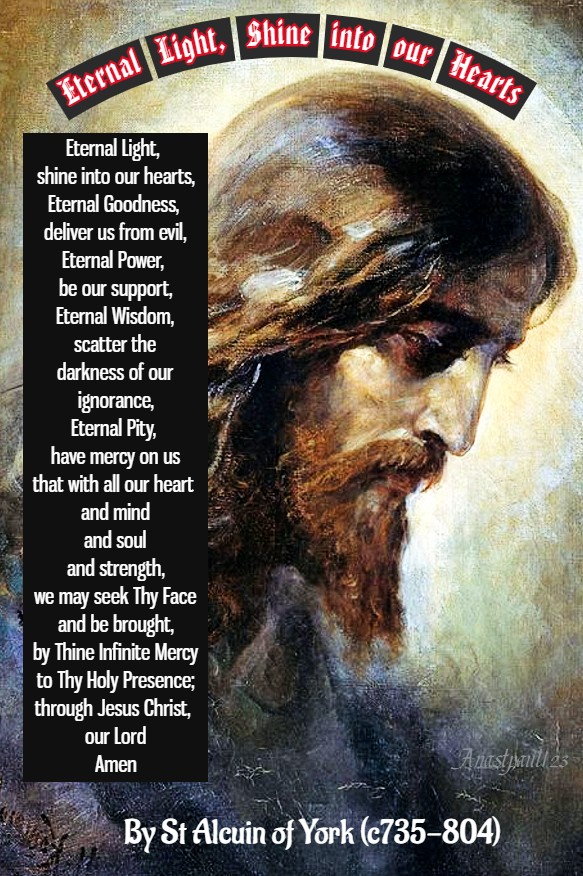
Eternal Light, Shine into our Hearts By St Alcuin of York (735-804)
Eternal Light, shine into our hearts, Eternal Goodness, deliver us from evil, Eternal Power, be our support, Eternal Wisdom, scatter the darkness of our ignorance, Eternal Pity, have mercy on us that with all our heart and mind and soul and strength, we may seek Thy Face and be brought, by Thine Infinite Mercy to Thy Holy Presence; through Jesus Christ, our Lord Amen
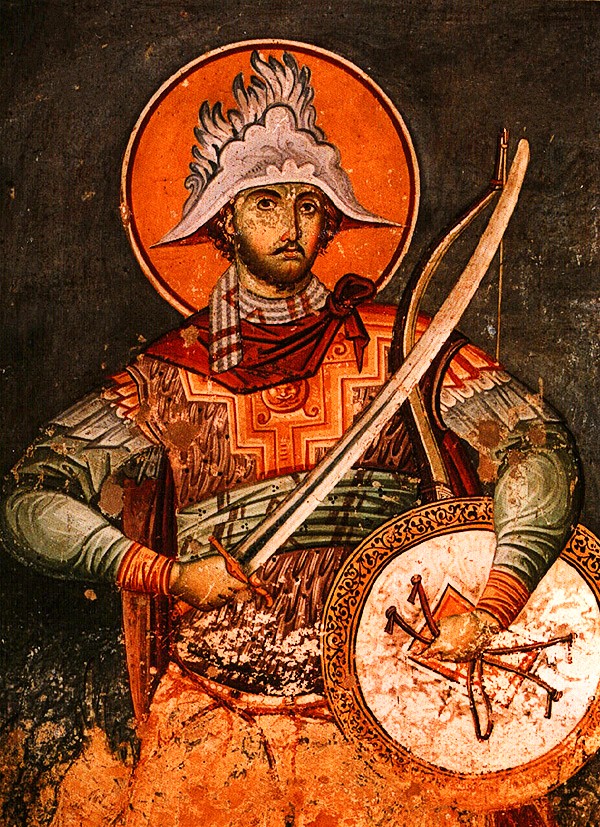
Saint of the Day – 25 November – Saint Mercurius (3rd Century) Martyr, Soldier. Born in the City of Eskentos in Cappadocia, in Eastern Asia Minor (modern-day Turkey) and died by beheading bin c250 in Caesarea, Cappadocia. According to tradition, he was the soldier who killed Julian the Apostate during his campaign in Persia. Also known as – Mercury.
The Roman Martyrology reads today: “At Caesarea in Cappadocia, St Mercury, soldier, who vanquished the barbarians and triumphed over the cruelty of Decius, through the protection of his Guardian Angel. Finally, having acquired great glory from his sufferings, he was crowned with Martyrdom and went toi reigh forever in Heaven.”
Mercury was, for the pagans, the god of commerce and ingenious activities, the winged messenger of the other gods. The corresponding divinity of the Greek Olympus, had the name of Hermes. And this name had and still has, greater fortune among the Baptised. Probably, this is due to the fact that the name had, as intermediaries, seven or eight Saints named Hermes. But not even the name of Mercury remained confined to the pagan world. In the Christian Calendar, in fact, there are two Saints of this name: both Martyrs and both soldiers. Today’s Saint, our Mercurius, then, also had a certain popularity, at least in the East, where his legendary Passion was formed and spread.
According to this Passio, Mercurius would have served with honour under Decius and Valerian, when these two Emperors published their edict of persecution. Mercurius, who had become the Commander-in-Chief of the army, remembered at a good moment that he was the son of a Christian and that he had been Baptised with the symbolic name of Philopatros, that is, “who loves the father.”
Out of love for his father and not only for his earthly father, the one whom his soldiers called Mercurius, thus presented himself to confess his Faith before his friend, the Emperor. There followed the well-known tortures and bloody wounds which were healed three times by an Angel, until Mercurius was taken on the back of a donkey to Cappadocia that is, to his homeland, to be beheaded.
Mosaic of Saint Mercurius inside the Hosios Loukas Monastery, Greece.
His Relics favoured prodigious cures and sudden conversions. But even greater fame came to the warrior Martyr from the miracle, according to which, he was, more than a hundred years later, the killer of the renegade Emperor, Julian the Apostate.
It is known from history that Julian fought against the Persians, on the eastern borders of the Empire and died during those battles. His death was welcomed as a liberation by the countless persecuted Christians, who saw in that tragic event, the just punishment of Heaven.
According to the faithful of Cappadocia, it was Saint Mercurius himself, who in the appeared in the guise of a soldier, who used his spear, by Divine order, against the chest of the Apostate Emperor! In reality, nothing historically certain is known about this event. But, what is certain, is the antiquity of Mercarius’ cult, in Caesarea of Cappadocia, on 25 November.
To the above I would like to add the following:
“God punishes men, for the most part, in kind, i.e. in the same way in which they have sinned. “By what things a man sinneth,” says the Wise Man, “by the same he also is tormented.” Absalom prided himself on his long hair and it caused his death. The rich glutton sinned with his palate and it was his tongue and palate which were tormented in the fire of hell. Antiochus tormented the seven Machabean brethren by tearing and maiming their flesh and his own flesh was eaten by worms (2 Mach ix 6). Aman wished to hang Mardochai and prepared a gallows for him and on the same gallows he was himself hanged. The women of Bethlehem would not shelter the Mother of God and the Divine Son and their children perished at the revengeful and cruel hand of Herod. Napoleon I imprisoned the Holy Father and in his turn was imprisoned first in Elba and then in St Helena. In these and many similar events, the Christian sees the Finger of God.” (The Catechism Explained By Fr Francis Spirago 1899). And so we will add our St Macurius and God’s punishement of Julian the Apostate!
Bl Adalbert of Caramaico St Alanus of Lavaur St Audentius of Milan
Blessed Beatrice d’Ornacieux O.Cart (c 1260–1303) Virgin, Carthusian Nun, Mystic, Founded a Monastery at Eymeu on France. The Roman Martyrology states: “In the territory of Valence in France, Blessed Beatrice d’Ornacieux, Virgin of the Carthusian Order, who, famous for her love for the Cross, lived and died in extreme poverty in the Monastery of Eymeu which she founded.” A Lover of the Cross: https://anastpaul.com/2021/11/25/saint-of-the-day-25-november-blessed-beatrice-dornacieux-o-cart-c-1260-1303/
St Bernold of Ottobeuren Bl Conrad of Heisterbach Blessed Egbert (c1010-1075) Abbot
St Erasmus of Antioch Bl Garcia of Arlanza Bl Guido of Casauria St Imma of Wurzburg St Jucunda of Reggio Aemilia St Mercurius (3rd Century) Martyr
St Moses of Rome (Died c251) Priest MartyrConfessor. The Roman Martyrology reads today: “At Rome, St Moses, Priest and Martyr, who, with others detained in prison, was often consoled by the letters of St Cyprian (Martyr). After he had withstood, with unbending courage, not only the pagans but, also the Novatian schismatics and heretics, he was finally, in the persecutions of Decius, crowned with a Martyrdom which fills the mind with adminration, according to the words of Pope St Cornelius (Martyr).” His Life and Death: https://anastpaul.com/2023/11/25/saint-of-the-day-25-november-saint-moses-of-rome-died-c251-priest-martyr-confessor/
Martyrs of Africa – 13 Saints: A group of 13 Christians murdered together for their faith in Africa, date unknown. The only details to have survived are their names – Claudian, Cyprian, Donatus, Felix, Januarius, Julian, Lucian, Marcian, Martialis, Peter, Quirianus, Victor and Vitalis.
Thought for the Day – 24 November – Meditations with Saint Alphonsus Maria de Liguori (1696-1787) Bishop, Confessor, Most Zealous Doctor of the Church
“How to Pray at All Times” By St Alphonsus Maria de Liguori (1696-1787)
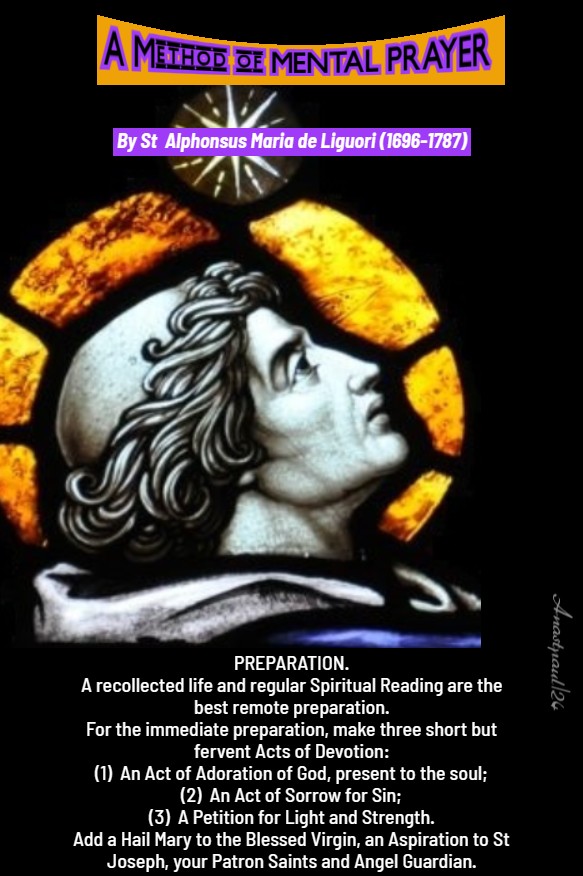
A Method of MENTAL PRAYER or Meditation According to St Alphonsus. Excerpt –Part I Preparation
I. PREPARATION.
A recollected life and regular Spiritual Reading are the best remote preparation. For the immediate preparation, make three short but fervent Acts of Devotion:
(I) An Act of Adoration of God, present to the soul: Example: O my God, I believe Thou art really here present; I bow down and adore Thee. Thou art so good, I am so sinful; Thou art so great, I am only nothingness … etc.
(2) An Act of Sorrow for Sin: Example: O my God, I am heartily sorry for all my sins of thought, word, deed and omission and by the help of Thy holy Grace I will never sin again.
(3) A Petition for Light and Strength: Example: O my God, give me light to see Thy holy Will, give me Grace to do Thy holy Will. O .Wisdom of the Sacred Heart of Jesus, direct me in all my ways. O Love of the Sacred Heart, consume me in Thy fire.
Add a Hail Mary to the Blessed Virgin, an Aspiration to St Joseph, your Patron Saints and Angel Guardian.
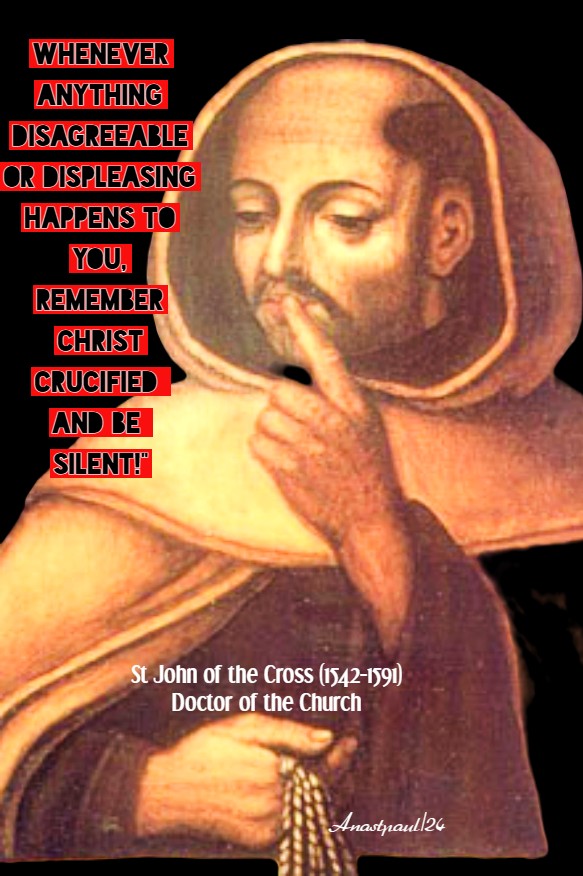
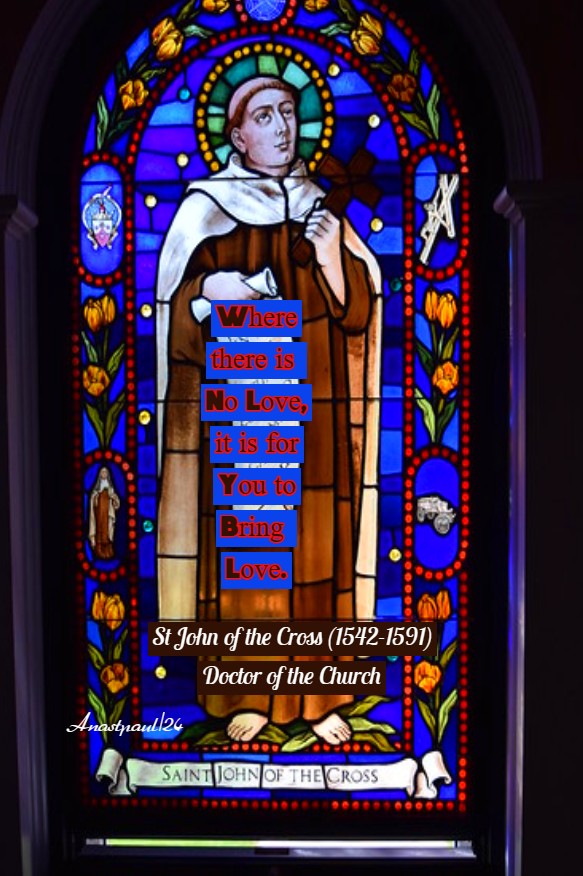
Quote/s of the Day – 24 November – St John of the Cross OCD (1542-1591) Confessor, Doctor of the Church
“Whenever anything disagreeable or displeasing happens to you, remember Christ Crucified and be silent!”
“Where there is no love, it is for you to bring love.”
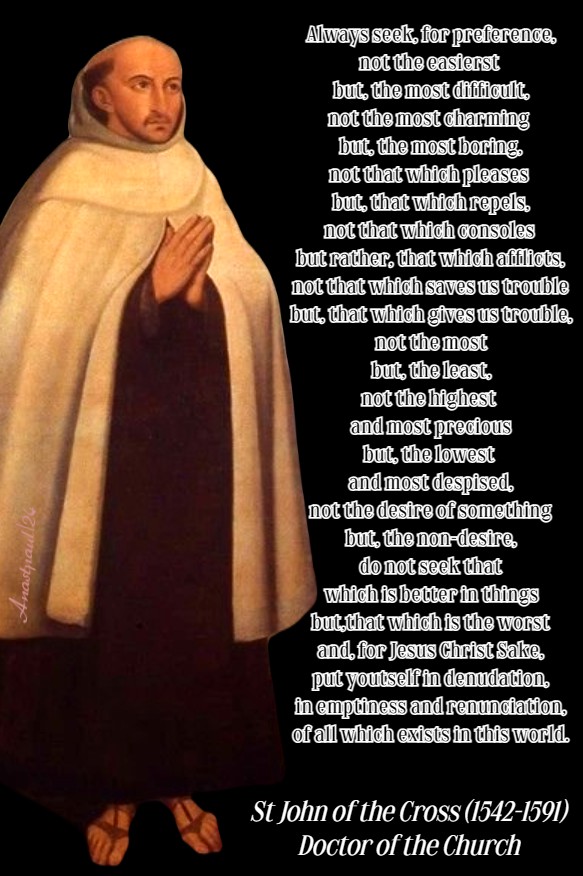
“Always seek, for preference, not the easierst but, the most difficult, not the most charming but, the most boring, not that which pleases but, that which repels, not that which consoles but rather, that which afflicts, not that which saves us trouble but, that which gives us trouble, not the most but, the least, not the highest and most precious but, the lowest and most despised, not the desire of something but, the non-desire, do not seek that which is better in things but,that which is the worst and, for Jesus Christ Sake, put youtself in denudation, in emptiness and renunciation, of all which exists in this world.”
“The one who walks in the love of God seeks neither gain nor reward but seeks only, with the will, to lose self and all things, for God and this loss, the lover judges to be a gain! Thus it is, as St Paul asserts: “For me death is gain” [Phil 1:21], that is, my death to all things and to myself, for Christ, is my spiritual gain. Consequently, the soul declares: “I was found.” The soul who does not know how to lose himself, does not find himself but rather, loses himself, as Our Lord teaches in the Gospel: “For he who will save his life, shall lose it and he who will lose his life for My Sake, will find it.” (Mt 16:25).”
“Take God for your Spouse and Friend and walk with Him continually and you will not sin and will learn to love and the things you must do will work out prosperously for you.”
Lord God, Lift Me Up! By St John of the Cross (1542-1591)
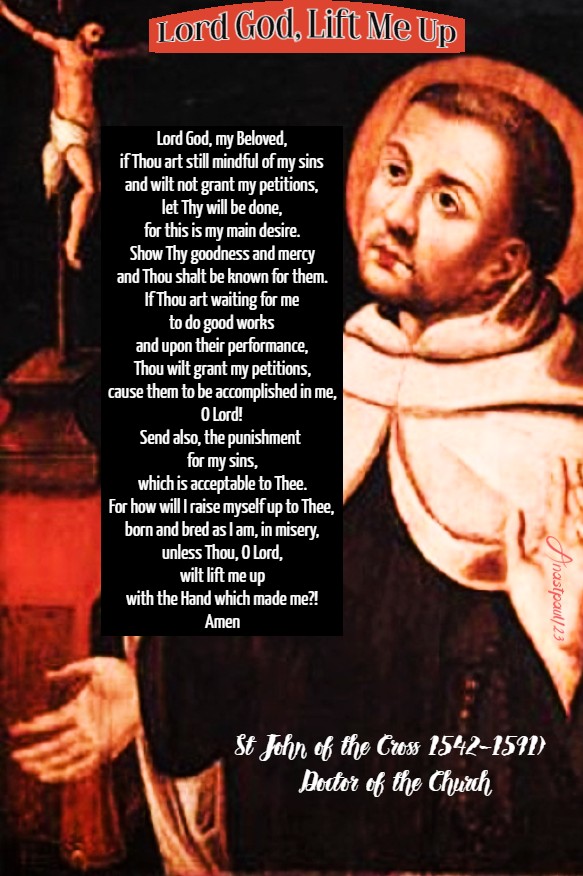
Lord God, my Beloved, if Thou art still mindful of my sins and wilt not grant my petitions, let Thy Will be done, for this is my main desire. Show Thy goodness and mercy and Thou shalt be known for them. If Thou art waiting for me to do good works and upon their performance, Thou wilt grant my petitions, cause them to be accomplished in me, O Lord! Send also, the punishment for my sins, which is acceptable to Thee. For how will I raise myself up to Thee, born and bred as I am, in misery, unless Thou, O Lord, wilt lift me up with the Hand which made me?!





























You must be logged in to post a comment.