Saint of the Day – 26 February – Blessed Ulrik of Obermarchtal O.Praem. (Died 1187) Priest, Prior. Born in the early 12th Century Germany and died on 26 February 1187 in Swabia, Germany of natural causes. Also known as – Ulric, Ulrich.
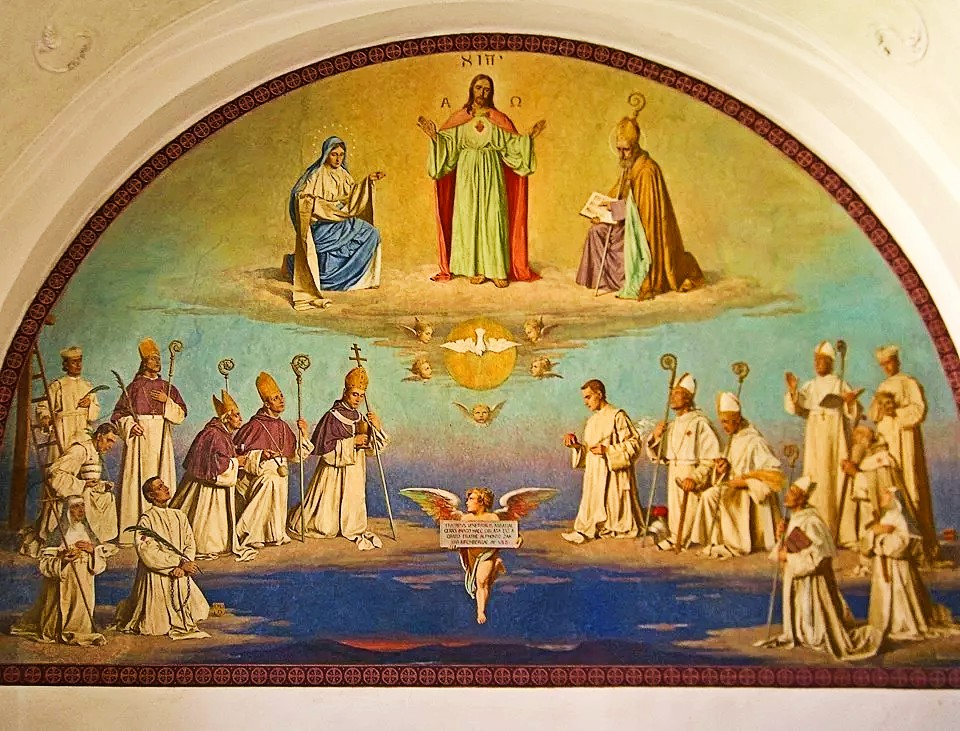
All the Saints and Blesseds of the Norbertines
Ulrik was born at the beginning of the 12th Century in Germany. He joined the Premonstratensians – the Norbertines. He became a Canon in their Monastery, Mönchsrot in Rot on the river Rot in Upper Swabia in Baden-Württemberg, modern Germany.
This Monastery was founded in 1126 by the Founder of the Order, St Norbert of Xanten, the later Bishop of Magdeburg, on land he had received from Hemma of Wildenburg. The Monastery’s first Prior or Provost was Saint Burchard (1126-1140). Burchard was succeeded by the Blessed Odino (1140-1182). At the same time, the Monastery was upgraded from a Priory to an Abbey and he became the Monastery’s first Abbot.
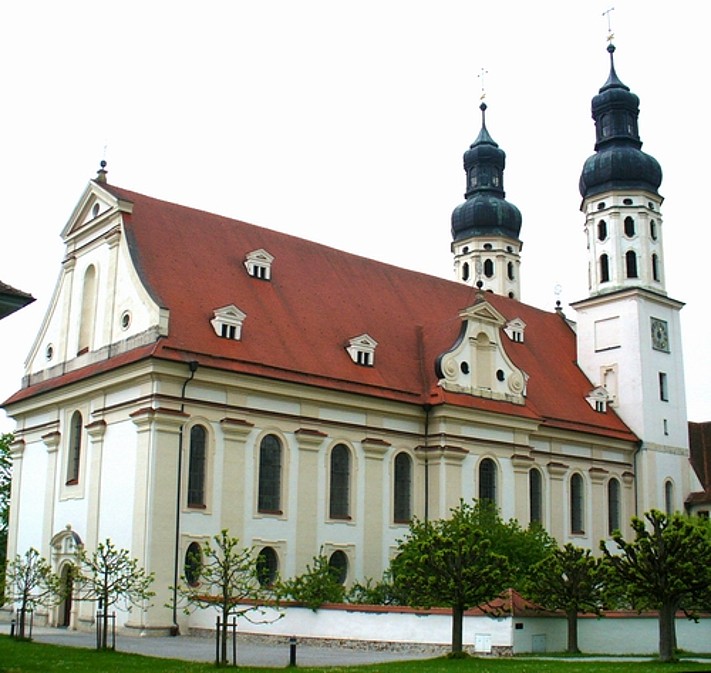
In 1171, our Blessed Ulrik was sent by Abbot Odino to the new foundation of Obermarchtal in Swabia (now in the state of Baden-Württemberg, Germany) where, in 1179, he succeeded the Blessed Eberhard (1171-1179) as pthe Prior. He was a good shepherd who was concerned with the spiritual life of his Monastery and who carefully followed the Rules of the Order. Under a picture where Ulrik is portrayed as blissful, it says:
“In virtute silentii ita emicuit, ut sese / supra se levarit; ita mortificatus vixit ut ne minimam offenseis ansam alicui / umquam videatur praebuisse; / Divino Angelorumque colloquio / intentus saepius.”
A very rough translation: “In the power of silence he flashed, so that he lifted himself above himself. He lived in such a mortified way that he should not have given the slightest offence as a snare to anyone … The divine conversation of the Angels was often his to attend to.”
Ulrik died on 26 February 1187 and was buried in the same grave as his predecessor Eberhard. He is honoured as Blessed by the Premonstratensians with a memorial day on the day of his death, 26 February.
St Alexander of Alexandria (Died c 326) Bishop of Alexandria, Confessor, Defender of the True Faith against heresies, in particular the Arians. The Roman Martyrology states of him today: “At Alexandria, the Bishop St Alexander, an aged man held in great honour who was a successor of the blessed Peter as Bishop of the City. He expelled from the Church, Arius, one of his Priests, tainted with heretical impiety and convicted by Divine Truth and, subsequently, was one of the three hundred and eighteen Fathers, who condemned him at the Council of Nicea.” Biography: https://anastpaul.com/2022/02/26/saint-of-the-day-26-february-st-alexander-of-alexandria-died-c-326/
St Andrew of Florence St Dionysius of Augsburg St Faustinian of Bologna Bishop St Felix St Fortunatus St Irene Bl Ottokar of Tegernsee
Thought for the Day – 25 February – The Spiritual Combat (1589) – Dom Lorenzo Scupoli OSM (c1530-1610)
“None shall be crowned who has not fought well.” 2 Tim 2: 5
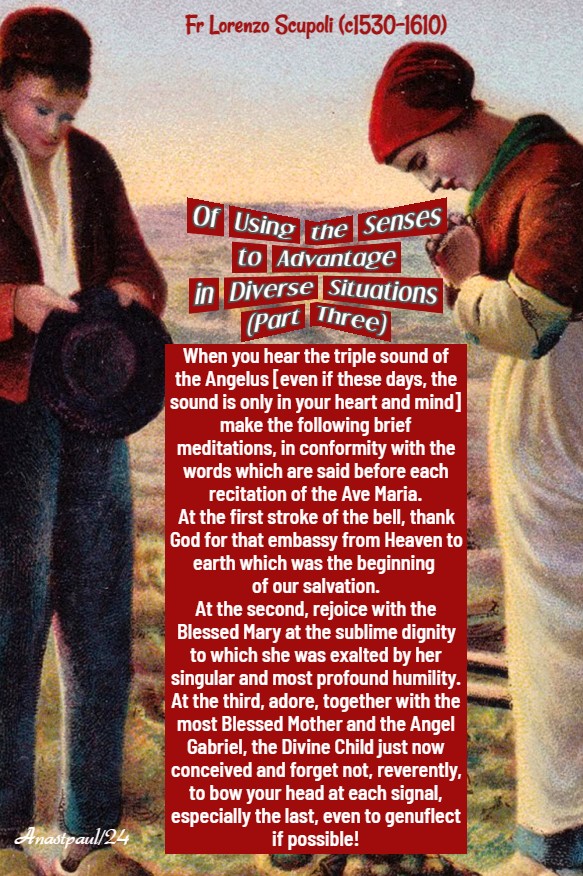
XXIII: … Of Using the Senses to Advantage in Diverse Situations (Part Three)
“+++ When reading, behold your Lord in the words and receive them as from His Divine Lips!
+++ When you look upon the Holy Cross, consider that it is the Standard of your warfare – that, by forsaking it, you will fall into the hands of cruel enemies but that, by following it, you will enter Heaven laden with glorious spoils.
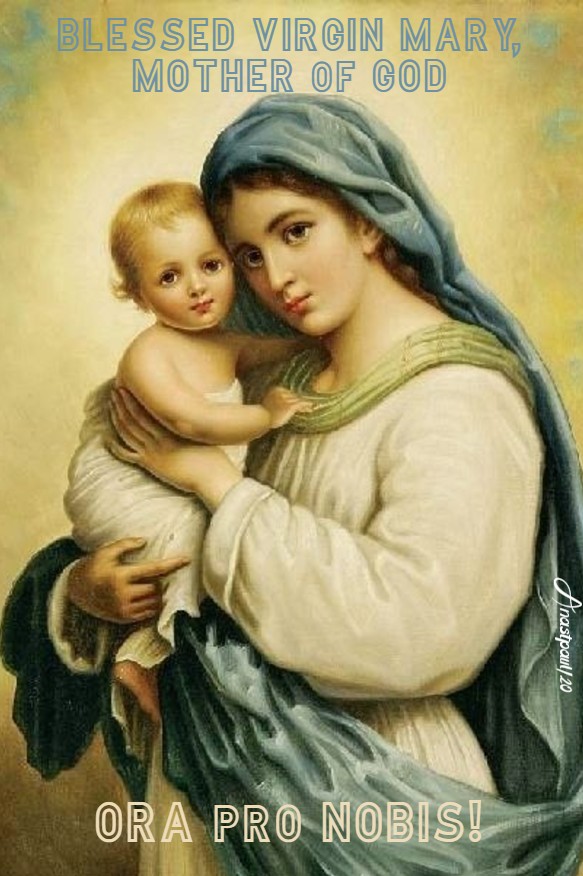
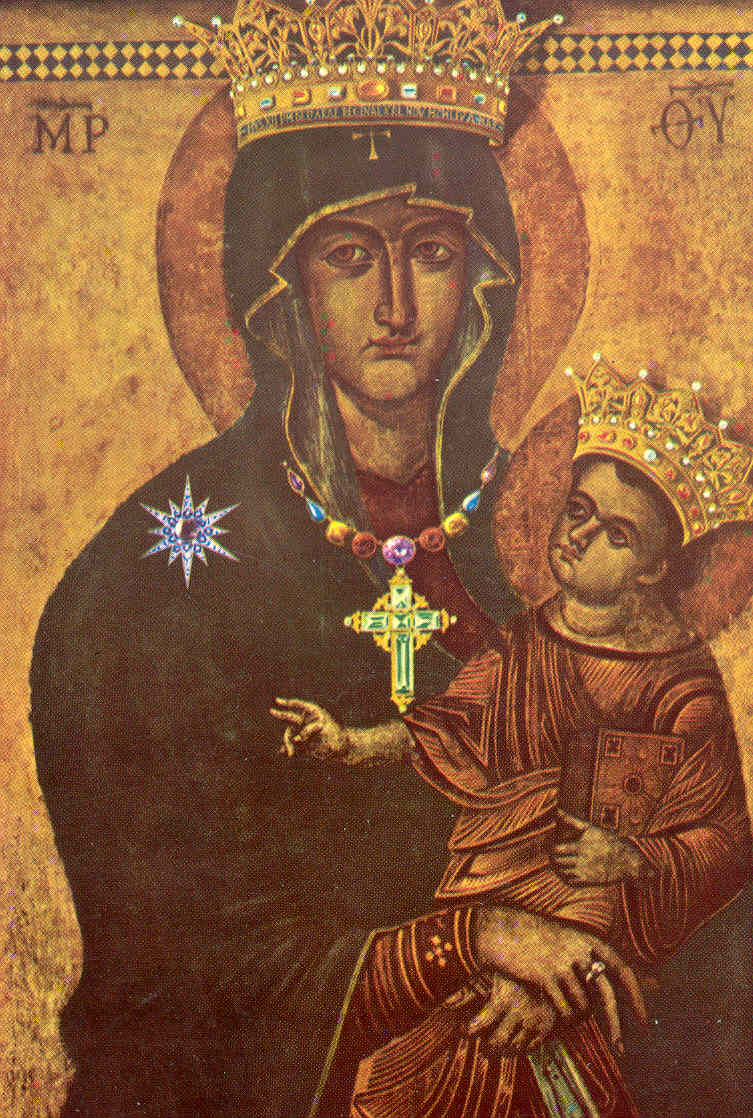
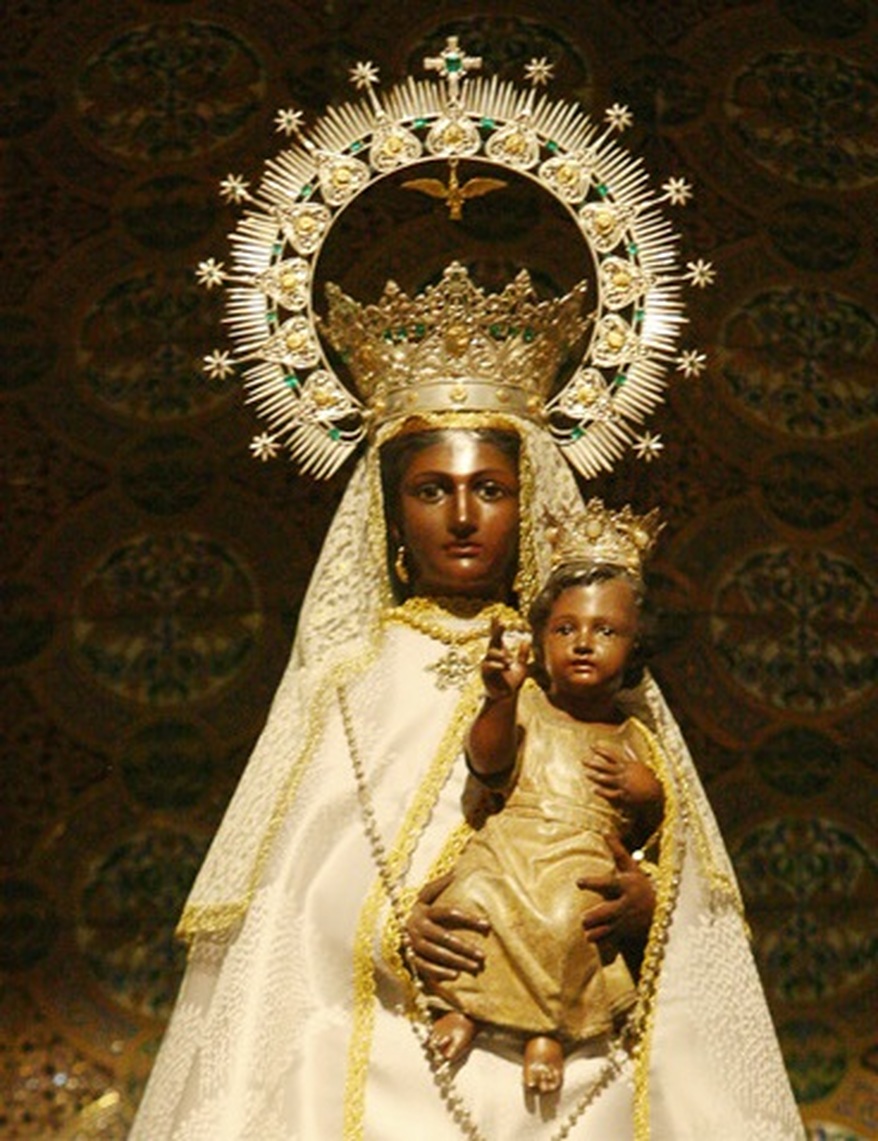
++ + When you see the dear image of the Blessed Virgin Mary, let your heart turn to her ,who reigns in Paradise, thanking her that she was ever ready to do the will of God that, she brought forth and nourished the Redeemer of the world and,that her favour and assistance, never fail us in our spiritual conflict.
+++ The images of the Saints represent to you, so many champions, who, having courageously run their course, have opened a way for you, wherein, if you will press onward, you also shall, with them, be crowned with immortal glory.
+++ When you see a Church, you may, amid other devout reflections, consider that your soul is the temple of God and, therefore, to be kept pure and spotless as His dwelling-place.
+++ When you hear the triple sound of the Angelus [even if these days, the sound is only in your heart and mind] make the following brief meditations, in conformity with the words which are said before each recitation of the Ave Maria. At the first stroke of the bell, thank God for that embassy from Heaven to earth which was the beginning of our salvation. At the second, rejoice with the Blessed Mary at the sublime dignity to which she was exalted by her singular and most profound humility. At the third, adore, together with the most Blessed Mother and the Angel Gabriel, the Divine Child just now conceived and forget not, reverently, to bow your head at each signal, especially the last, even to genuflect if possible!
Quote/s of the Day – 25 February – The Second Sunday in Lent – Thessalonians 4:1-7; Matthew 17:1-9 – Scripture search here: https://www.drbo.org/
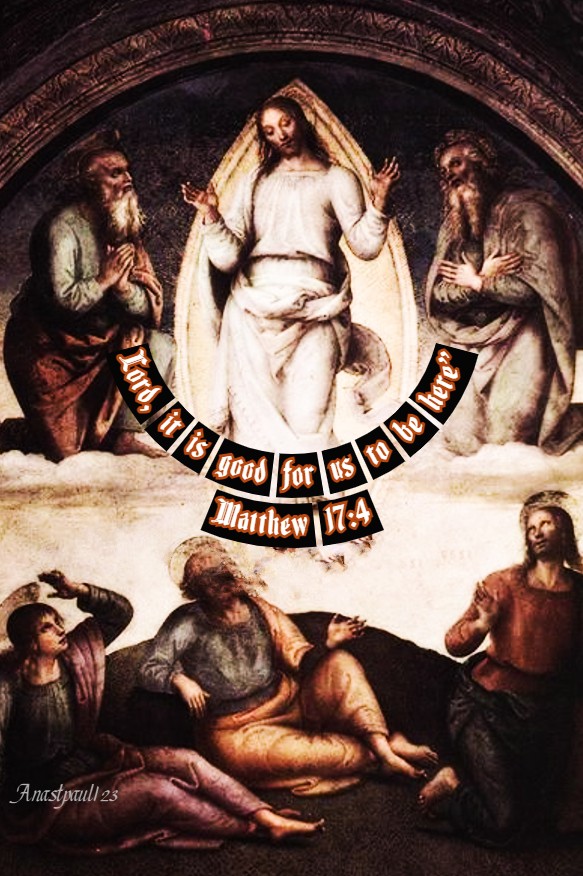
“Lord, it is good for us to be here …”
Matthew 17:4
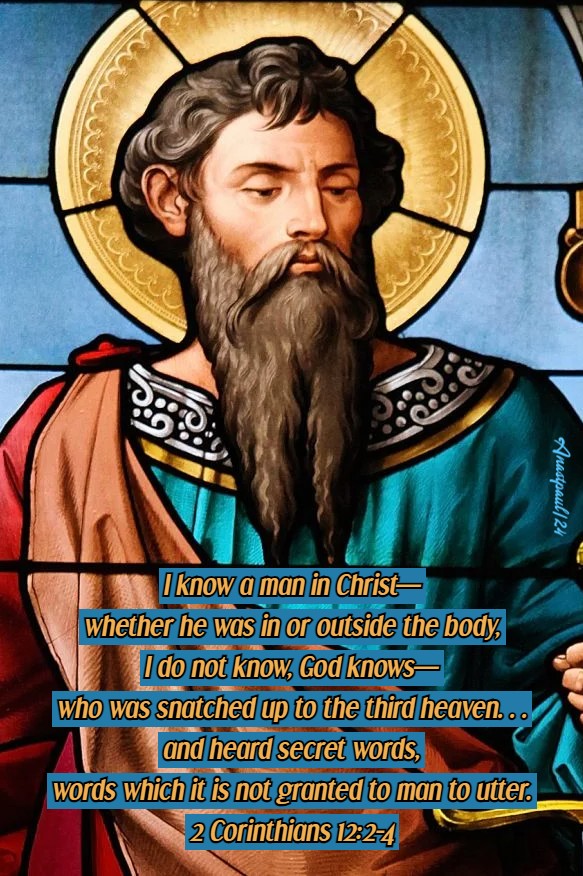
“I know a man in Christ— whether he was in or outside the body, I do not know, God knows— who was snatched up to the third heaven. . . and heard secret words, words which it is not granted to man to utter.”
2 Corinthians 12:2-4
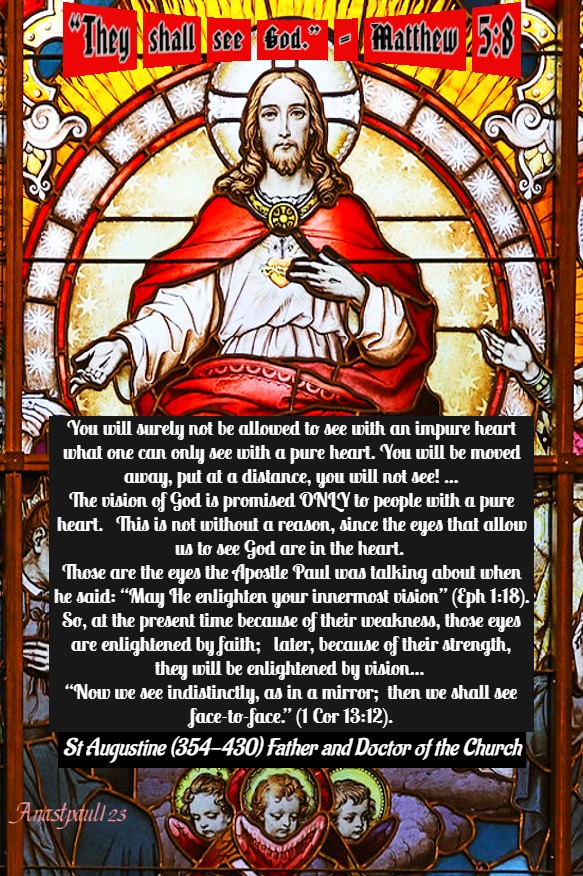
“They shall see God.” Matthew 5:8
“You will surely not be allowed to see with an impure heart what one can only see with a pure heart. You will be moved away, put at a distance, you will not see! The vision of God is promised ONLY to people with a pure heart. This is not without a reason, since the eyes which allow us to see God are in the heart. Those are the eyes the Apostle Paul was talking about when he said: “May He enlighten your innermost vision” (Eph 1:18). So, at the present time because of their weakness, those eyes are enlightened by faith; later, because of their strength, they will be enlightened by vision… “Now we see indistinctly, as in a mirror; then we shall see face-to-face.”
St Augustine (354-430) Father and Doctor of the Church
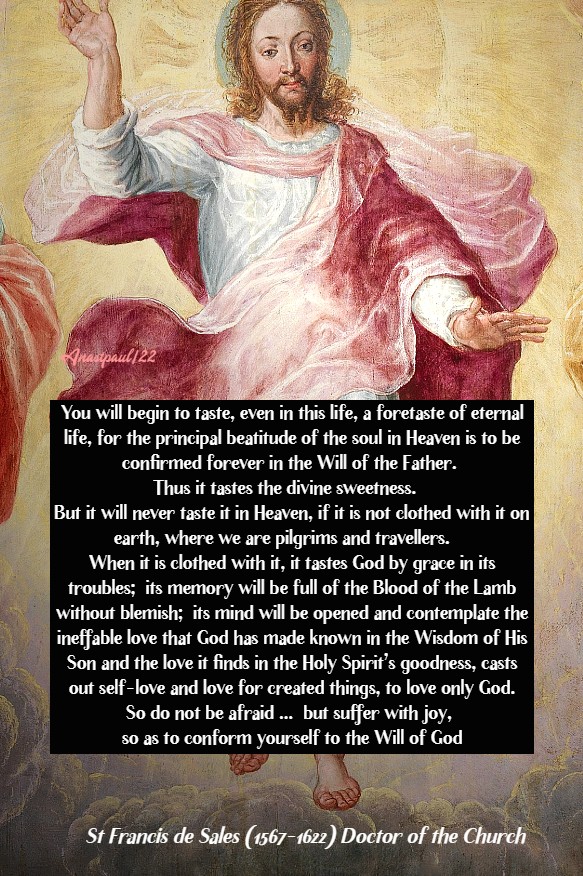
“You will begin to taste, even in this life, a foretaste of eternal life, for the principal beatitude of the soul in Heaven, is to be confirmed forever in the Will of the Father. Thus, it tastes the divine sweetness. But it will never taste it in Heaven, if it is not clothed with it on earth, where we are pilgrims and travellers. When it is clothed with it, it tastes God by grace in its troubles; its memory will be full of the Blood of the Lamb without blemish; its mind will be opened and contemplate the ineffable love that God has made known in the Wisdom of His Son and the love it finds, in the Holy Spirit’s goodness, casts out self-love and love for created things, to love only God. So do not be afraid … but suffer with joy, so as to conform yourself to the Will of God.””
St Francis de Sales (1567-1622) Doctor Caritatis
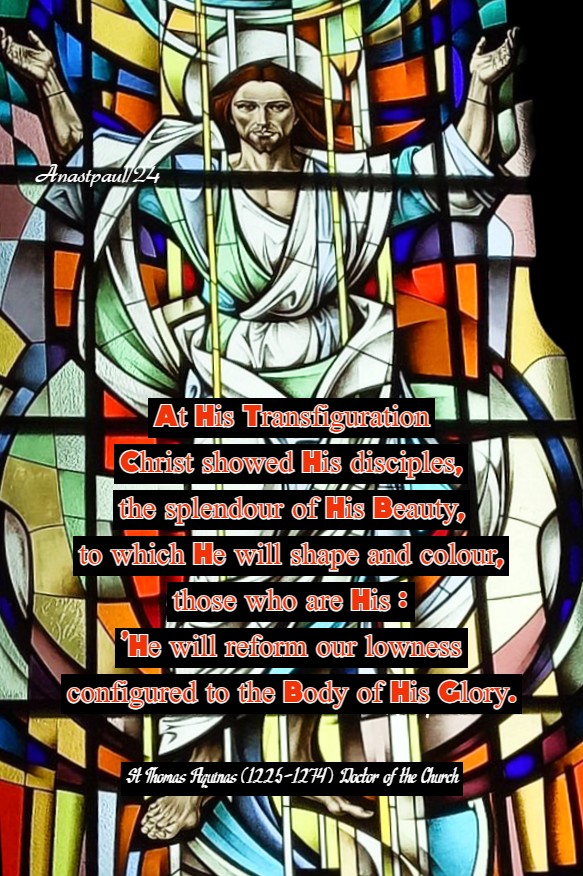
“At His Transfiguration Christ showed His disciples, the splendour of His Beauty, to which He will shape and colour, those who are His : ‘He will reform our lowness configured to the Body of His Glory.”
St Thomas Aquinas (1225-1274) Doctor of the Church
Our Lenten Journey with the Angels and the Saints – 25 February – “The Month of the Most Holy and Blessed Trinity” – The Second Sunday in Lent – Thessalonians 4:1-7; Matthew 17:1-9 – Scripture search here: https://www.drbo.org/
“Remember us, O Lord, in the favour of Thy people; visit us with Thy salvation.” Psalm 105:4
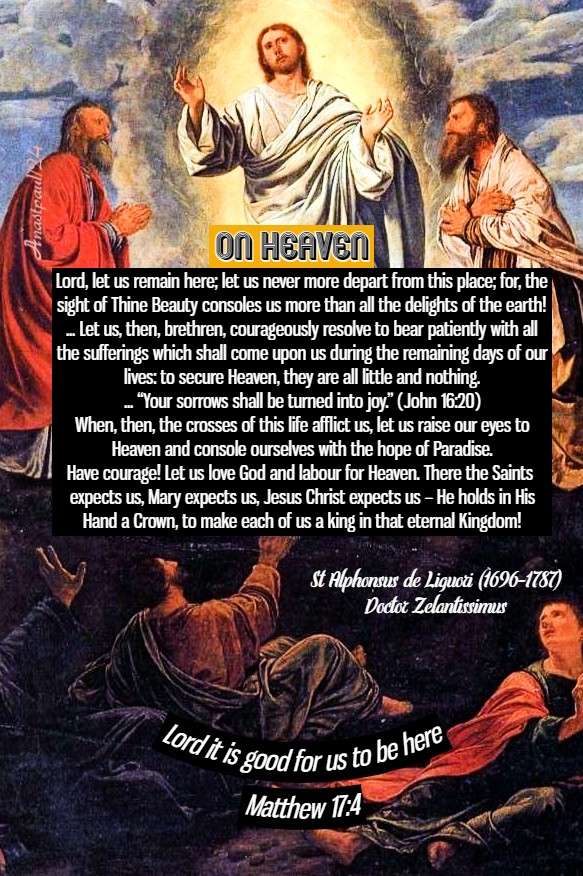
“Lord it is good for us to be here” Matthew 17:4
ON HEAVEN
St Alphonsus Maria de Liguori (1696-1787) Doctor Zelantissimus
“IN this day’s Gospel we read that, wishing to give His disciples a glimpse of the glory of Paradise, in order to animate them to labour for the Divine Honour, the Redeemer was transfigured and allowed them to behold the splendour of His Countenance. Ravished with joy and delight, St Peter exclaimed: “Lord, it is good for us to be here.” Lord, let us remain here; let us never more depart from this place; for, the sight of Thine Beauty consoles us more than all the delights of the earth!
Brethren, let us labour during the remainder of our lives to gain Heaven. Heaven is so great a good that, to purchase it for us, Jesus Christ has sacrificed His Life on the Cross. Be assured, that the greatest of all the torments of the damned in hell, arise from the thought of having lost Heaven through their own fault. The blessings, the delights, the joys, the sweetness of Paradise may be acquired but, they can be described and understood, only by those blessed souls who enjoy them. But let us, with the aid of the holy Scripture, explain the little that can be said of them here below.
… In this life we cannot have an idea of any other pleasures than those which we enjoy by means of the senses. … Speaking of Paradise, St Bernard says: “O man, if you wish to understand the blessings of Heaven, know that in that happy country, there is nothing which can be disagreeable and everything which you can desire.” … In Paradise, death and the fear of death are no more: in that place of bliss there are no sorrows, no infirmities, no poverty, no inconveniencies, no vicissitudes of day or night, of cold or of heat. In that Kingdom there is a continual day, always serene, a continual Spring, always blooming. In Paradise there are no persecutions, no envy, for all love each other with tenderness and each, rejoices at the happiness of the others, as if it were his own. There is no more fear of eternal perdition – for the soul confirmed in grace, can neither sin nor lose God.
… Justly, then, has St Augustine said, that to gain the eternal glory of Paradise, we should cheerfully embrace eternal labour. … The saints have done but little to acquire Heaven. So many kings, who have abdicated their thrones and shut themselves up in a cloister; so many holy anchorets, who have confined themselves in a cave; so many martyrs, who have cheerfully submitted to torments to the rack and to red-hot plates, have done but little. “The sufferings of this life are not worthy to be compared to the glory to come.” (Rom 8:18) To gain Heaven, it would be but little to endure all the pains of this life.
Let us, then, brethren, courageously resolve to bear patiently with all the sufferings which shall come upon us during the remaining days of our lives: to secure Heaven, they are all little and nothing. Rejoice then, for all these pains, sorrows and persecutions shall, if we are saved, be to us a source of neverending joys and delights. “Your sorrows shall be turned into joy.” (John 16:20) When, then, the crosses of this life afflict us, let us raise our eyes to Heaven and console ourselves with the hope of Paradise. At the end of her life, St Mary of Egypt was asked, by the Abbot St Zozimus, how she had been able to live for forty seven years in the desert, where he found her dying. She answered: “With the hope of Paradise.” If we be animated with the same hope, we shall not feel the tribulations of this life.
Have courage! Let us love God and labour for Heaven. There the Saints expects us, Mary expects us, Jesus Christ expects us – He holds in His Hand a Crown, to make each of us a king in that eternal Kingdom!” [Extracts from Sermons for all the Sundays in the Year – Lent II (1, part 2, 3, 9 & 10)]
One Minute Reflection – 25 February – “The Month of the Most Holy and Blessed Trinity” – The Second Sunday in Lent – Thessalonians 4:1-7; Matthew 17:1-9 – Scripture search here: https://www.drbo.org/
“His Face shone like the sunand His garments became white as snow.” – Matthew 17:2
REFLECTION – “The Lord displays His glory before chosen witnesses and makes illustrious that bodily shape which He shared with others, with such splendour that His countenance shone like the sun and His garments were as white as snow. In this Transfiguration, the chief object was to remove the scandal of the Cross from the hearts of the disciples and, to prevent their faith being disturbed, at the humiliation of His voluntary Passion, by revealing the excellence of His hidden dignity. But, with no less foresight, the foundation was laid, of the hope of holy Church, that the whole Body of Christ, might realise, with what a change it was to be endowed and that the members, might promise themselves, a share in that honour which had shone forth in their Head.
But to confirm the Apostles and to lead them onto all knowledge, still further, instruction was conveyed by this miracle. For Moses and Elias, that is, the law and the prophets, appeared talking with the Lord, so that, in the presence of these five men, might most truly be fulfilled, what was said – In two or three witnesses every word stands. What more stable, what more steadfast, than the Word, in the proclamation of which, the trumpet of the Old and of the New Testaments, sounds forth and the records of ancient witnesses, agree with the teaching of the Gospel? For the pages of both Covenants corroborate each other and He, Whom, under the veil of Mysteries, the types that went before, had promised, is displayed clearly and manifestly by the splendour of His present glory.
The Apostle Peter, therefore, being stirred by the revelation of these Mysteries, despising things worldly and scorning things earthly, was carried away by a certain excess of mind, to the desire of things eternal and, being filled with rapture at the whole vision, longed to make his abode with Jesus, in the place where he was gladdened by the sight of His glory. And so also he says: Lord, it is good for us to be here: if Thou wilt, let us set up here, three tents, one for Thee and one for Moses and one for Elias. But to this proposal the Lord made no reply, signifying that what he asked was not indeed wicked, but irregular, since the world could not be saved, except by Christ’s Death and by the Lord’s example in this, the faithful were called upon to believe that, although there ought not to be any doubt about the promises of happiness, yet, we should understand that, amid the trials of this life, we must ask for power to endure, rather than for glory.” – St Leo the Great (400-461) Pope, Father and Doctor (Sermon on the Transfiguration – excerpt).
PRAYER – O God, Thou Who sees how we are deprived of all strength, guard us inwardly and outwardly that in body, we may be protected against all misfortunes and in mind, cleansed of evil thoughts and by the intercession of blessed and gloriosus ever Virgin Mary, Mother of God, be assisted on this earthly pilgrimage. Through Jesus Christ, Thy Son our Lord, Who lives and reigns with Thee, in the unity of the Holy Ghost, God, world without end. Amen (Collect).
Our Morning Offering – 25 February – “The Month of the Most Holy and Blessed Trinity” – The Second Sunday in Lent
The Golden Arrow
This prayer was revealed by Jesus Himself to a Carmelite Nun of Tours in 1843 as a Reparation for Blasphemy. “This Golden Arrow will wound My Heart delightfully” He said “and heal the wounds, inflicted by blasphemy.”
May the Most Holy, Most Sacred, Most Adorable, Most Mysterious and Unutterable Name of God be always praised, blessed, loved, adored and glorified in Heaven. on earth and under the earth, by all the creatures of God and by the Sacred Heart of our Lord Jesus Christ in the most Holy Sacrament of the Altar. Amen
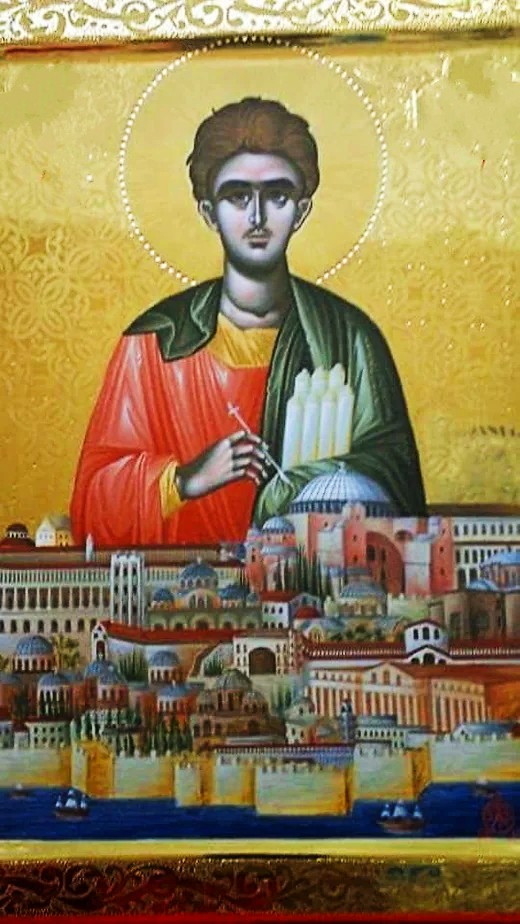
Saint of the Day – 25 February – Saint Caesarius of Nazianzen (c329-369) Single Celibate Layman, a prominent Physician and Politician, Son of Saint Gregory of Nazianzen the Elder and Saint Nonna, Brother of Saint Gorgonia and Saint Gregory of Nazianzen. Born in c329 in Arianzus, near Nazianzen in modern day Turkey and died in c369 in Constantinople of natural causes. Patronages – of Physicians and bachelors.
It is maintained by historical writers that, while Caesarius and his brother Gregory were very close, they were very different characters. As Gregory pursued a devout religious life, his vivacious, outgoing brother was at home in the world of Byzantine politics. The two were complementary figures; Caesarius relied on his brother to guide him through troubles, while he encouraged Gregory’s literary and rhetorical talents.
The younger son of Gregory the Elder, the Bishop of Nazianzen and his wife, Nonna, Caesarius was born at the family villa of Arianzus, near Nazianzen. He probably studied at Caesarea Mazaca in Cappadocia in preparation for the elite school of Alexandria in Egypt. His favourite studies there were geometry, astronomy and especially medicine. In the last-named science, he surpassed all his fellow students.[
His fame as a Physician spread quickly and in 355 he travelled to the Imperial Capital of Constantinople. About 3 years later, in 358, Caesarius had already acquired a great reputation for his medical skill in Constantinople, when his brother Gregory, homeward bound from Athens, arrived ther. Caesarius sacrificed a remunerative and honourable post to return with Gregory to their home near Nazianzen.
The Capital, however, soon proved to be too great an attraction for him and he returned there to eventually become an eminent Physician at the Byzantine Court of Emperor Constantius II and then, much to the regret of his family, at that of Julian the Apostate. But Julian failed in his efforts to win him over to briefly restored Paganism. Caesarius, more appreciative of his Faith than of imperial favour, ultimately left the Court but returned to Constantinople after Julian’s death in 363.
Under the Emperor Valens, Caesarius became Quaestor of Bithynia, a position which included the treasury and tax collection responsibilities. After escaping from the earthquake which shook Nicaea (11 October, 368), his brother wrote to him, pleading with him to leave his political position and withdraw to a religious life. However, Caesarius was suddenly killed by the widespread Plague which followed the earthquake, shortly after having received Baptism which he, like many others at the period, had deferred until late in life.
After his death, his very considerable estate was rapidly pillaged by servants and creditors. His brother Gregory insisted that what remained of the estate be distributed to the poor and to surviving relatives. His remains were interred at Nazianzen, where his brother delivered the funeral Sermon in the presence of his parents. In the Sermon, “On His Brother: St Caesarius” St Gregory portrays Caesarius as a model Christian devotion and asceticism, providing the main source for the details of his life and setting the groundwork for his elevation to the honour of Sainthood.
St Caesarius of Nazianzen (c329-369) Celibate Layman, Son of Saint Gregory of Nazianzen the Elder and Saint Nonna, Brother of Saint Gorgonia and Saint Gregory of Nazianzen.
St Donatus the Martyr St Felix III, Pope St Gerland the Bishop St Gothard the Hermit St Herena the Martyr St Justus the Martyr
Martyrs of Egypt – A group oSeven f Christian men who were exiled to Egypt for their faith and were eventually Martyred for their faith in the persecutions of Numerian. We know little more than their names: Claudianus, Dioscurus, Nicephorus, Papias, Serapion, Victor, Victorinus.
Thought for the Day – 24 February – The Spiritual Combat (1589) – Dom Lorenzo Scupoli OSM (c1530-1610)
“None shall be crowned who has not fought well.” 2 Tim 2: 5
XXIII: … Of Using the Senses to Advantage in Diverse Situations (Part Two)
“+++ When walking, remember that every step brings you nearer to death.
+++ Let the flight of birds and the flowing of water remind you that your life is hastening far more swiftly to its close.
+++ Let storms of wind, lightning and thunder, remind you of the tremendous Day of Judgement and kneeling down, worship God and beseech Him to give you time and grace, duly to prepare yourself to appear before His most high Majesty.
In the variety of accidents which may befall you, exercise yourself thus: +++ When, for instance, you are oppressed by sadness or melancholy, or suffer heat, cold, or the like, lift up your heart to that Eternal Will, Which, for your own good, wills that at such a time and in such a measure, you should endure this discomfort. Then, rejoicing in the love thus shown you by God and, at the opportunity of serving Him in the way He is pleased to appoint, say in your heart: “Behold in me is the Divine Will fulfilled, Which from all eternity, has lovingly appointed that I should now endure this trial. All praise be to Thee for the same, my most gracious Lord!”
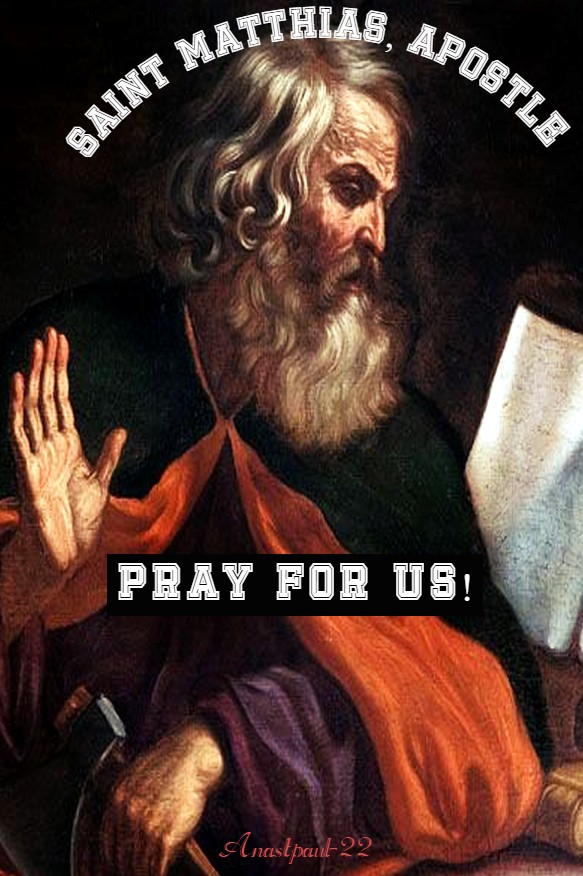
Quote/s of the Day – 24 February – Ember Saturday – Feast of St Matthias, Apostle – Acts 1:15-26, Matthew 11:25-30 – Scripture search here: https://www.drbo.org/
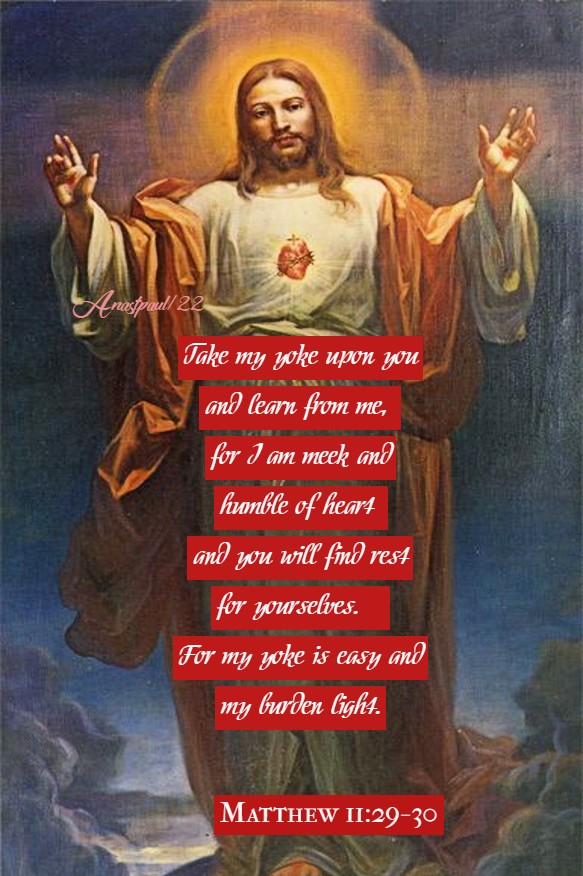
“Take My yoke upon you and learn from Me, for I Am meek and humble of heart and you will find rest for yourselves. For My yoke is easy and My burden light.”
Matthew 11:29-30
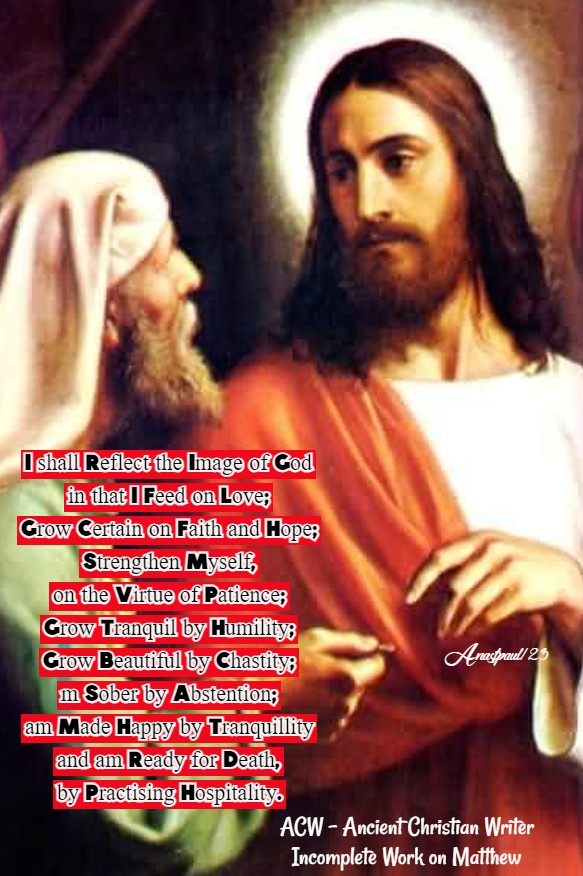
“I shall reflect the image of God in that I feed on love; grow certain on faith and hope; strengthen myself, on the virtue of patience; grow tranquil by humility; grow beautiful by chastity; am sober by abstention; am made happy by tranquillity and am ready for death, by practising hospitality.”
ACW – Ancient Christian Writer Incomplete Work on Matthew (Homily 40)
“If you wish to reach high, then begin at the lowest level. If you are trying to construct some mighty edifice in height, you will begin with the lowest foundation. This is humility. However great the mass of the building you may wish to design or erect, the taller the building is to be, the deeper you will dig the foundation. The building in the course of its erection, rises up high but he who digs its foundation, must first go down very low. So then, you see even a building is low before it is high and the tower is raised, only after humiliation.”
St Augustine (354-430) Father and Doctor of Grace
“True humility consists in persuading and convincing oneself that without God, we are insignificant and despicable and, in accepting to be treated as such!”
Our Lenten Journey with the Angels and the Saints – 24 February – Ember Saturday – Acts 1:15-26, Matthew 11:25-30 – Scripture search here: https://www.drbo.org/
“ Lord, Thou hast proved me and known me: Thou hast known my sitting down and my rising up.” Psalm 138:1-2
“Take My yoke upon you and learn from Me, for I Am meek and humble of heart and you will find rest for yourselves. For My yoke is easy and My burden light.” Matthew 11:29-30
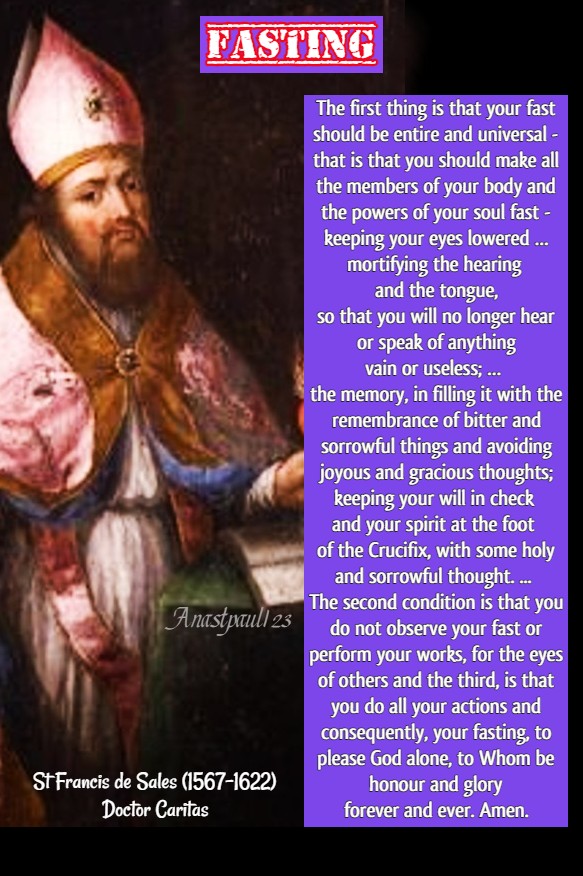
ON FASTING St Francis de Sales (1567-1622) Doctor Caritas
This is all I wish to tell you regarding fasting and what must be observed in order to fast well. The first thing is that your fast should be entire and universal – that is that you should make all the members of your body and the powers of your soul fast – keeping your eyes lowered … mortifying the hearing and the tongue, so that you will no longer hear or speak of anything vain or useless; … the memory, in filling it with the remembrance of bitter and sorrowful things and avoiding joyous and gracious thoughts; keeping your will in check and your spirit at the foot of the Crucifix, with some holy and sorrowful thought. If you do this, your fast will be universal, interior and exterior, for you will mortify both your body and your spirit. The second condition is that you do not observe your fast or perform your works, for the eyes of others and the third, is that you do all your actions and consequently, your fasting, to please God alone, to Whom be honour and glory forever and ever. Amen.” – (Excerpt from the Sermon given for Ash Wednesday on 9 February 1622).
One Minute Reflection – 24 February – Feast of St Matthias – Acts 1:15-26, Matthew 11:25-30 – Scripture search here: https://www.drbo.org/
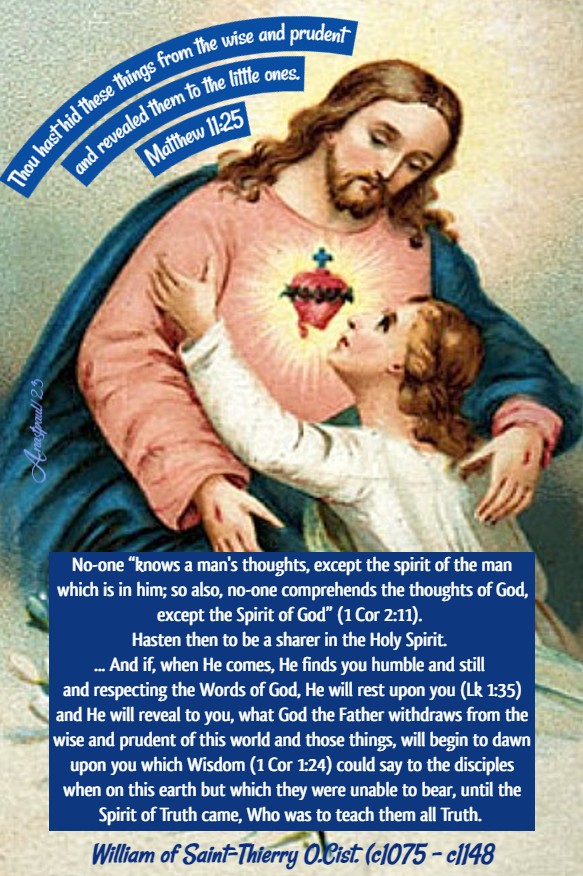
“Thou hast hid these things from the wise and prudent and revealed them to the little ones.” – Matthew 11:25
REFLECTION – “When more obscure Mysteries are presented to your timid nature by your faith, Christian soul, take courage and say [like Mary], “ How shall this be done …?” (Lk 1:34), not in a controversial spirit but with the love of a disciple. Let your questioning be your prayer, your love, your piety, your humble desire – not seeking to plumb the depths of God’s majesty but looking for salvation, in the healing acts of the God, Who saves us. …
No-one “knows a man’s thoughts, except the spirit of the man which is in him; so also, no-one comprehends the thoughts of God, except the Spirit of God” (1 Cor 2:11). Hasten then to be a sharer in the Holy Spirit. He is present when He is called upon; nor could He be called upon, if He were not present. When, on being called upon, He comes, it is with the abundance of the blessings of God. He is the flowing of “the river which gives joy to God’s city” (Ps 45:5). And if, when He comes, He finds you humble and still and respecting the Words of God, He will rest upon you (Lk 1:35) and He will reveal to you, what God the Father withdraws from the wise and prudent of this world and those things, will begin to dawn upon you which Wisdom (1 Cor 1:24) could say to the disciples when on this earth but which they were unable to bear, until the Spirit of Truth came, Who was to teach them all Truth (Jn 16:12-13).” – William of Saint-Thierry O.Cist.
PRAYER – O God, Who added blessed Matthias to the company of Thy Apostles, grant, we beseech Thee, that by his intercession we may ever be aware of the depth of Thy love for us. Through Jesus Christ, Thy Son our Lord, Who lives and reigns with Thee, in the unity of the Holy Ghost, God, world without end. Amen (Collect).
Our Morning Offering – 24 February – Feast of St Matthias, Apostle and Martyr
Exsultet Orbis! Let the World Rejoice! Unknown Author
Now let the earth with joy resound, And Heaven the chant re-echo round; Nor Heaven nor earth too high can raise The great Apostles’ glorious praise.
O ye who, throned in glory dread, Shall judge the living and the dead, Lights of the world forever more! To you the suppliant prayer we pour.
Ye close the Sacred Gates on high. At your command apart they fly. O loose for us the guilty chain We strive to break and strive in vain.
Sickness and health your voice obey, At your command they go or stay. From sin’s disease our souls restore; In good confirm us more and more.
So when the world is at its end. And Christ to Judgment shall descend, May we be called, those joys to see Prepared from all eternity.
Praise to the Father, with the Son, And Holy Spirit, Three in One; As ever was in ages past And so shall be while ages last. Amen
(Roman Breviary for the Common of Apostles) An Office Hymn that was traditionally prescribed for Vespers and Lauds on the Feasts of Apostles and Evangelists outside Easter time. The Hymn is found as early as the 10th Century in a Hymnal of Moissac Abbey.
Saint of the Day – 24 February – Saint Adela of Blois (c1067-1137) Widow, Mother, Countess of Blois, France, Princess. Born in c1067 in Normandy, France and died on 8 March 1137 in Marcigny-sur-Loire, France of natural causes. Also known as – Adela of Normandy.
Adela of Blois was the daughter of William the Conqueror and Matilda of Flanders. She was probably born after her father became the King of England and is thought to have been the youngest daughter. She was well educated, with a knowledge of Latin.
Between 1080 and 1083, Adela married Stephen Henry, son and heir of the Count of Blois. She was fifteen and he was nearly twenty years older. She gave birth to eleven children and was also stepmother to those from Stephen’s previous marriage. Her husband inherited Blois, Meaux and Chartres on his father’s death, as well as lands and rights in parts of Berry and Burgundy. The dynasty had other possessions east of Paris and by the end of Adela’s life was becoming part of the county of Champagne. She played a large part in laying the foundations of the union of the two. She worked closely with her husband, making decisions with him. For example they defended the Bishop of Chartres against the King of France.
Stephen Henry joined the First Crusade in 1096, along with his brother-in-law. Stephen’s letters to Adela gave an insight into the experiences of the Crusaders and showed that he trusted Adela to rule as Regent in his absence.
During her Regency, she granted the Monks in her region, the right to build new Churches and exercise their religious mission. She travelled around to settle disputes, promote economic growth and even to command knights to go into battle with the King. The Count of Blois returned from the Crusade bringing with him several cartloads of maps, jewels and other treasures. According to Orderic Vitalis, a Benedictine Monk and Chronicler, Stephen Henry came back from the Crusade in ignominy, apparently due to an early withdrawal desiring to return to his home. Adela berated him for this. He was under an obligation to the Pope for an agreements made earlier. He returned to Antioch to participate in the Crusade of 1102 and was ultimately killed after the Battle of Ramala.
Adela continued to act as Regent after her husband’s death and in the early year of her son Thibaud’s reign. She had chosen him rather than his elder brother, William as heir, as she did not think William fit to rule. Even when Thibaud came of age, she continued to issue charters and to act as Co-Regent of many parts of their lands. She did not secure a marriage alliance for him and he did not get married until 1120, after she retired. She, therefore, kept her power and influence.
Adela was a devout sympathiser with the Benedictines and had her children educated by high-ranking Religious tutors. One child, Henry, was dedicated to God as an Oblate at Cluny Abbey; he went onto be appointed as the Abbot of Glastonbury and Bishop of Winchester. In that capacity he was responsible for a huge building programme of castles, forts, bridges and villages. He also built Churches and Chapels and was a major patron of the arts, sponsored many books, including the Winchester Scriptures. Another son, Stephen, was a favourite at the Court of Henry I and seized the English throne from the rightful heiress, the Empress Matilda which led to the long civil war.
Adela’s place of retirement was the Marcigny Convent in Eastern France, near the great Abbey of Cluny. She lived the life of a nun, devoting herself to prayer. However, she remained in contact with her family and the Ecclesiastical rulers of the lands she had once governed, maintaining her influence.
Adela was an accomplished and influential woman. She wrote many letters which are still extant. In one instance, Adela sent letters to both her son Thibaud and Geoffrey, the latter the Bishop of Chartres, reminding them of alms-gifting to Monasteries. Her personal chamber was adorned with scenes from the Sacred Scriptures, Her father’s conquest of England and images of the academic subjects of the time, displaying her love of learning. She contributed greatly to the religious, economic and cultural well-being of her lands and was generous in endowing Monasteries and Churches. She also supported and patronised the literary and artistic cultures.
Adela died on on 8 March 1137 in the holy and peaceful surrounds of the Convent.
Thought for the Day – 23 February – The Spiritual Combat (1589) – Dom Lorenzo Scupoli OSM (c1530-1610)
“None shall be crowned who has not fought well.” 2 Tim 2: 5
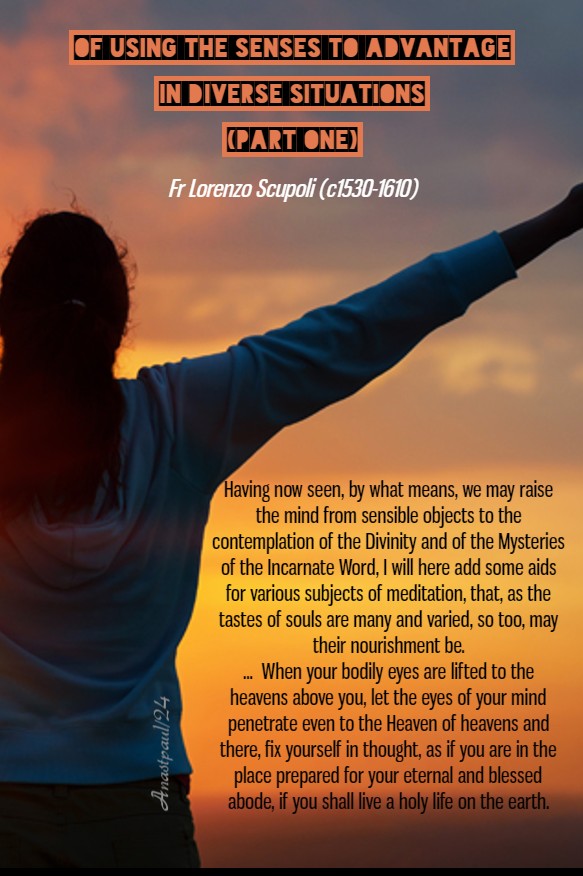
XXIII: … Of Using the Senses to Advantage in Diverse Situations (Part One)
“Having now seen, by what means, we may raise the mind from sensible objects to the contemplation of the Divinity and of the Mysteries of the Incarnate Word, I will here add some aids for various subjects of meditation, that, as the tastes of souls are many and varied, so too, may their nourishment be. This maybe *awful, not only to simple persons but also to those of higher intellect and more advanced in the spiritual life, who, nevertheless, may not at all times be equally disposed and ready for higher contemplations. Nor need you fear to be perplexed by the variety of the methods described, if you will only observe the Rule of Discretion and attend to the advice of others which I wish you to follow with all humility and confidence, not in this instance alone but, with regard to all other counsels which you shall receive from me.
+++ At the sight of all the things which please the eyes and are prized in the world, consider tha, all these are vile as dust, compared with heavenly riches, after which heavenly beauty do you aspire, with undivided affections, despising the whole world.
+++ When looking upon the sun, consider that your soul is brighter and more beautiful if it be in your Creator’s favour; if not, that it is blacker and more hateful than the darkness of hell.
+++ When your bodily eyes are lifted to the heavens above you, let the eyes of your mind penetrate even to the Heaven of heavens and there, fix yourself in thought, as if you are in the place prepared for your eternal and blessed abode, if you shall live a holy life on the earth.
+++ On hearing the songs of birds, or other melodious sounds, lift up your heart to the songs of Paradise, where resounds a ceaseless Alleluia and pray the Lord to make you worthy to praise Him together with those celestial spirits, forever and ever.
If you are conscious of taking delight in the beauty of the creature, remember that there, the deadly serpent lies hidden, ready and eager to wound, if not to enslaye you and say to him: “O accursed serpent, you insidiously lie in wait to devour me!” Then turning to your Lord God, say: “Blessed be Thou, O my God, Who has revealed to me the hidden enemy, and delivered me from his ravenous jaws.” Then FLY at once, from the allurement, to the Wounds of your Crucified Lord, letting your mind rest on them, considering how acutely He suffered in His most Sacred Flesh, to free you from sin and make you detest all carnal delights. Another way of escape from this perilous allurement is, to consider what will be the condition of that object, after death, which now delights you so!”
Dom Lorenzo Scupoli
*Proper and original meaning of “awful” – “full of awe” or “worthy of respect” or “striking with reverential awe.”
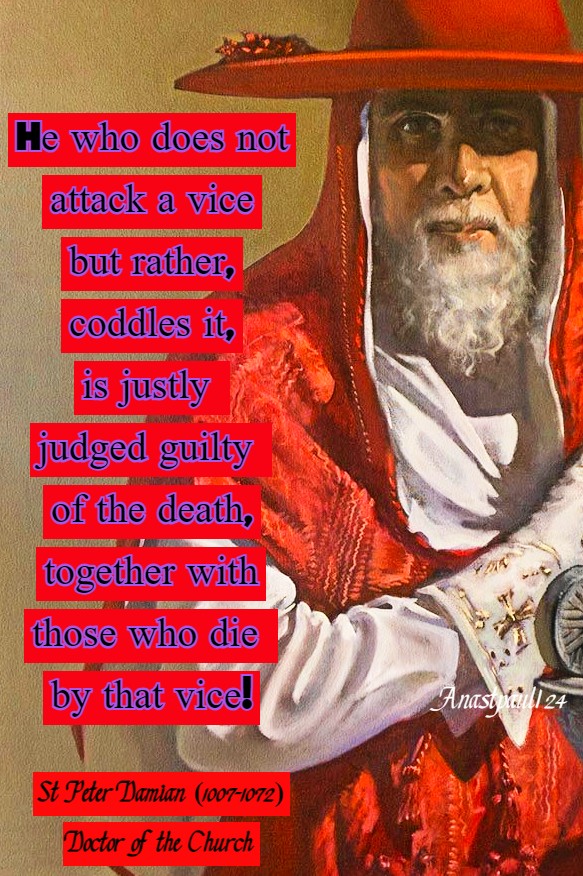
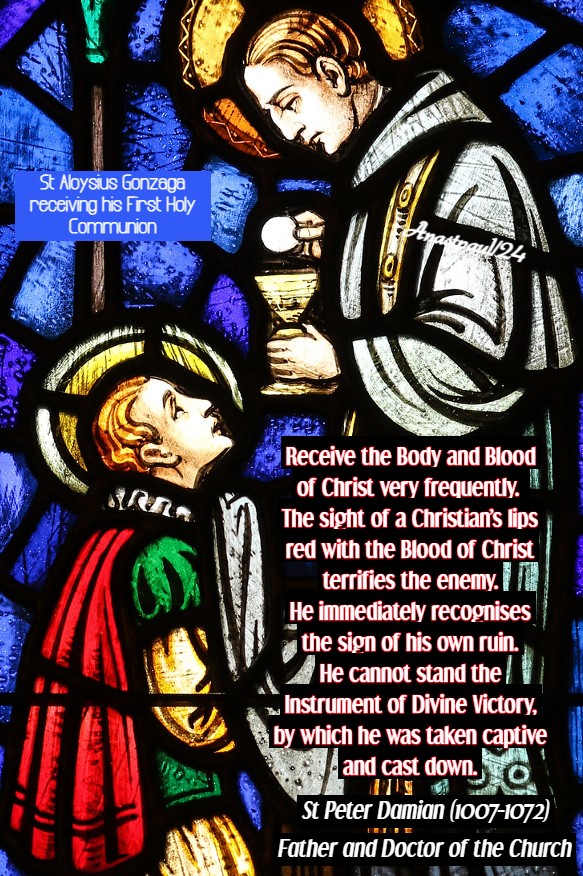
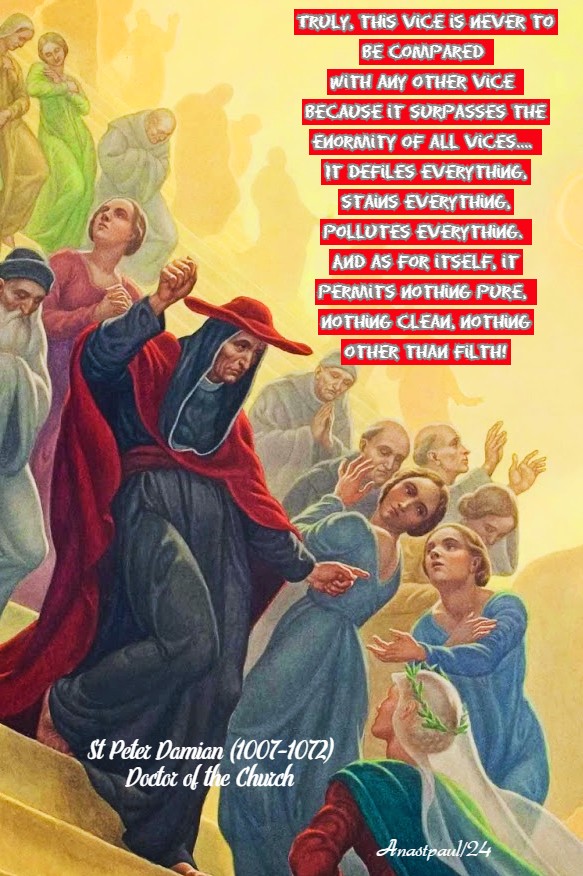
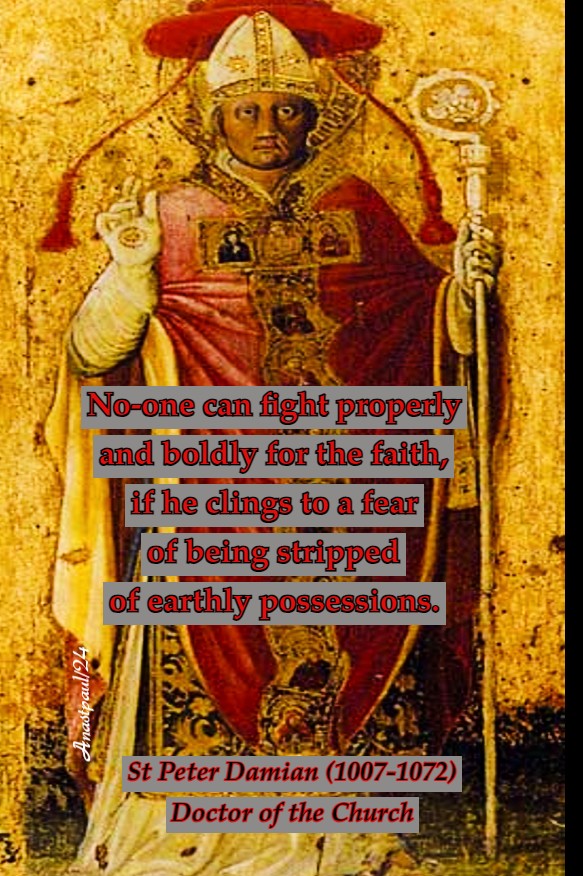
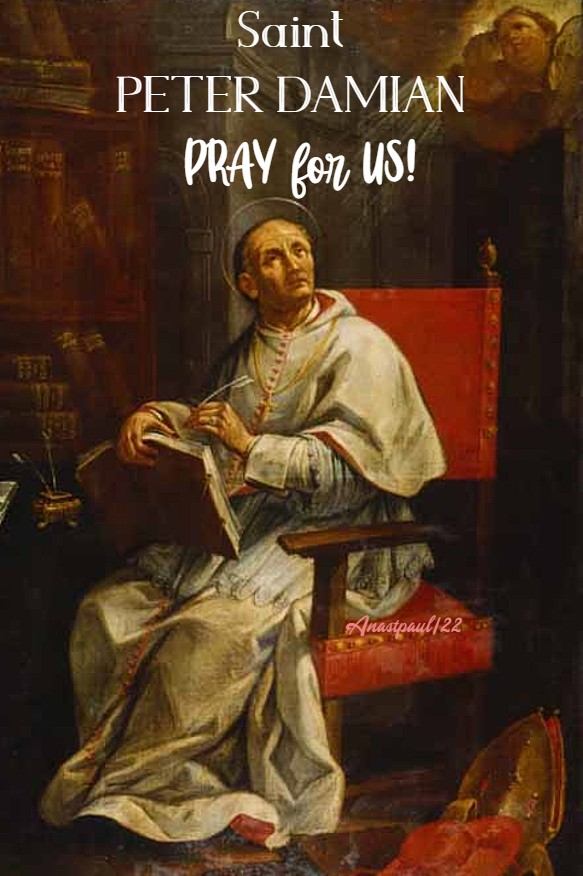
Quote/s of the Day – 23 February – St Peter Damian (1007-1072) Cardinal Bishop, Confessor, Father and Doctor of the Church
“He who does not attack a vice but rather, coddles it, is justly judged guilty of the death, together with those who die by that vice!”
“Receive the Body and Blood of Christ very frequently. The sight of a Christian’s lips red with the Blood of Christ terrifies the enemy. He immediately recognises the sign of his own ruin. He cannot stand the Instrument of Divine Victory, by which he was taken captive and cast down.”
“Truly, this vice is never to be compared with any other vice because it surpasses the enormity of all vices…. It defiles everything, stains everything, pollutes everything. And as for itself, it permits nothing pure, nothing clean, nothing other than filth!”
“No-one can fight properly and boldly for the faith, if he clings to a fear of being stripped of earthly possessions.”
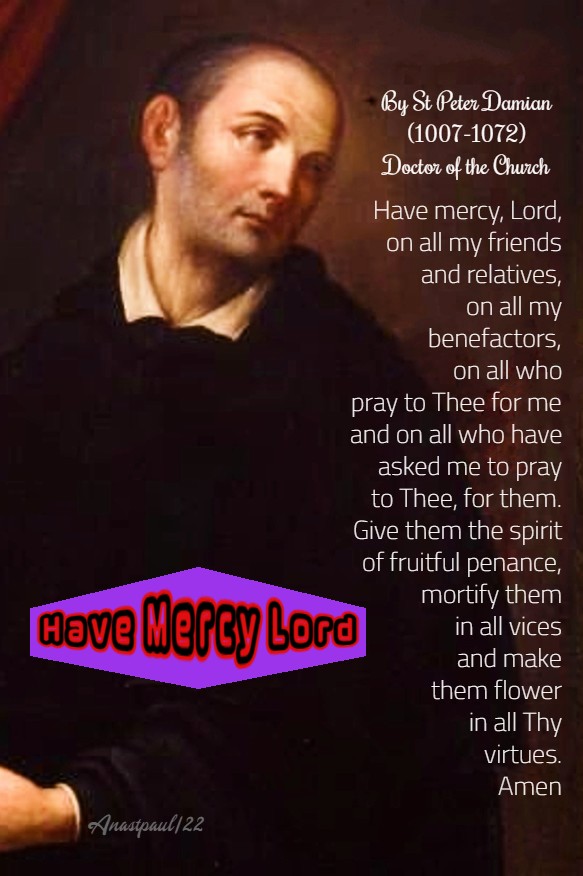
Have Mercy, Lord By St Peter Damian (1007-1072) Doctor of the Church
Have mercy, Lord, on all my friends and relatives, on all my benefactors, on all who pray to Thee for me and on all who have asked me to pray to Thee, for them. Give them the spirit of fruitful penance, mortify them in all vices and make them flower in all Thy virtues. Amen
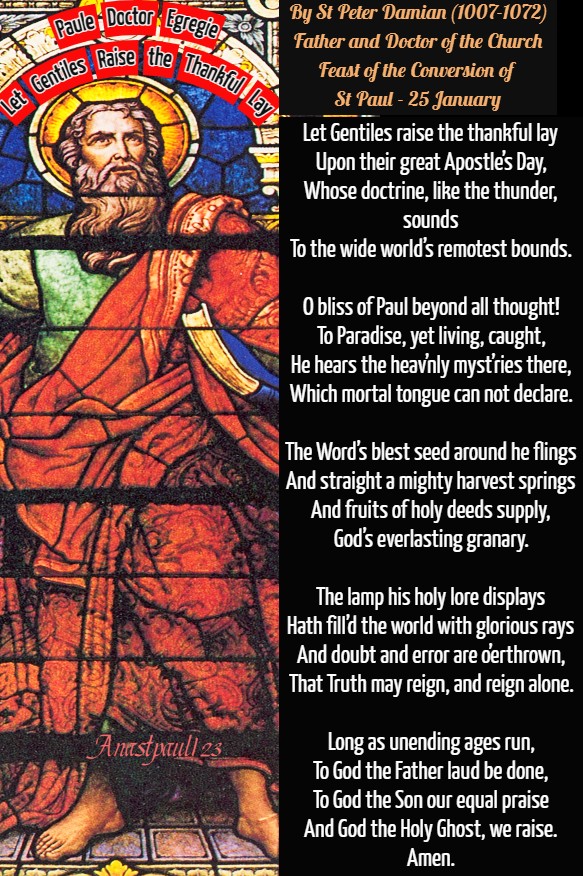
Paule Doctor Egregie Let Gentiles Raise the Thankful Lay By St Peter Damian (1007-1072) Father and Doctor of the Church Trans. John Mason Neale, 1854
Let Gentiles raise the thankful lay Upon their great Apostle’s Day, Whose doctrine, like the thunder, sounds To the wide world’s remotest bounds.
O bliss of Paul beyond all thought! To Paradise, yet living, caught, He hears the heav’nly myst’ries there, Which mortal tongue can not declare.
The Word’s blest seed around he flings And straight a mighty harvest springs And fruits of holy deeds supply, God’s everlasting granary.
The lamp his holy lore displays Hath fill’d the world with glorious rays And doubt and error are o’erthrown, That Truth may reign, and reign alone.
Long as unending ages run, To God the Father laud be done, To God the Son our equal praise And God the Holy Ghost, we raise. Amen.
Our Lenten Journey with the Angels and the Saints – 23 February – 2 Timothy 4:1-8; Matthew 5:13-19 – Scripture search here: https://www.drbo.org/
“Blessed is the man who fears the Lord, he shall delight exceedingly in His commandments.” Psalm 111:1
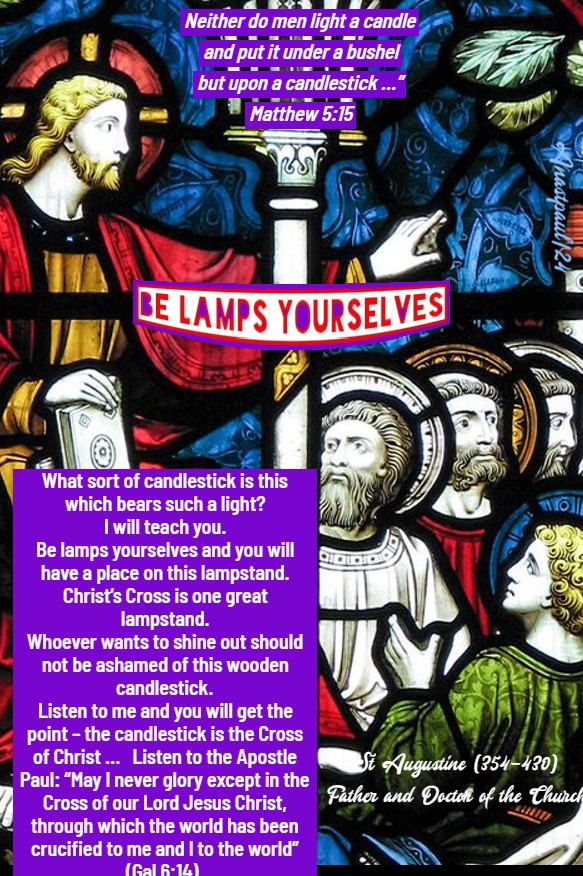
“Neither do men light a candle and put it under a bushel but upon a candlestick …” Matthew 5:15
Be Lamps Yourselves
St Augustine (354-430) Father and Doctor of the Church
“What sort of candlestick is this which bears such a light? I will teach you. Be lamps yourselves and you will have a place on this lampstand. Christ’s Cross is one great lampstand. Whoever wants to shine out should not be ashamed of this wooden candlestick. Listen to me and you will get the point – the candlestick is the Cross of Christ …
“So will your light shine before others, so that they may see your good works and glorify” Glorify whom? Not yourself, since to seek your own glory is to want to be extinguished! “Glorify your heavenly Father.” Yes, that they may glorify Him, your heavenly Father, when they see your good works… Listen to the Apostle Paul: “May I never glory except in the Cross of our Lord Jesus Christ, through which the world has been crucified to me and I to the world” (Gal 6:14).”
One Minute Reflection – 23 February – St Peter Damian (1007-1072) Cardinal Bishop, Confessor, Father and Doctor of the Church – 2 Timothy 4:1-8; Matthew 5:13-19 – Scripture search here: https://www.drbo.org/
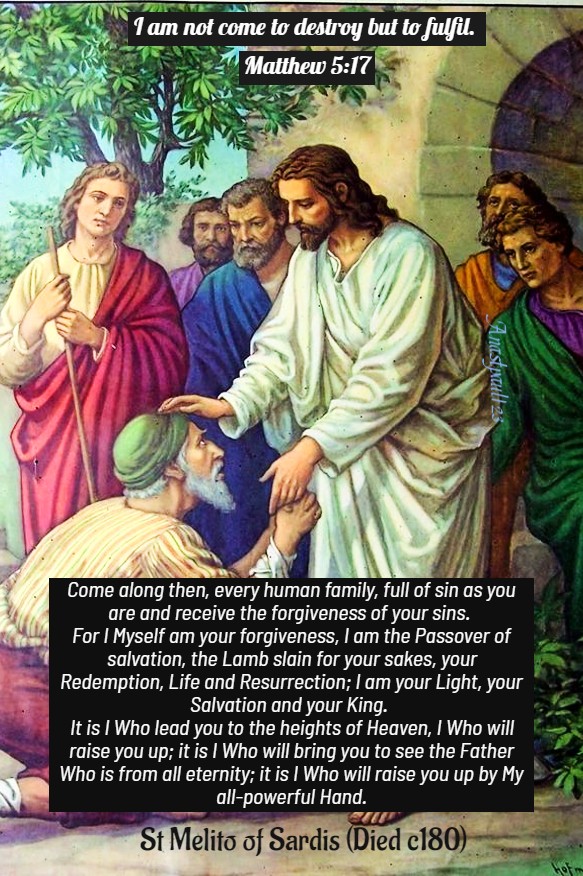
“I am not come to destroy but to fulfil.” – Matthew 5:17
REFLECTION – “The sacrifice of the lamb, the Passover rite and the letter of the Law have reached their term in Jesus Christ, in view of Whom, everything in the ancient Law took place – and, even more so, in the new dispensation. For the Law became the Word; from being old it became new … the commandments have been transformed into grace and the foreshadowing into Truth; the lamb has become the Son, the sheep has become man and man has become God. …
God, although He was the Lord, put on our humanity; He suffered for him, who was suffering, was bound for him, who was captive, was judged for the guilty, was buried for him, who was buried. He was raised from the dead and cried out in a loud voice: “If anyone wishes to oppose Me, let us appear together” (Is 50:8). It is I Who delivered the condemned man; I Who restored life to the dead; I Who raised up those in the grave. “Who disputes My right?” It is I, He says, I Who am the Christ, I Who destroyed death, Who triumphed over the enemy, Who bound the mighty enemy and carried off man to the heights of Heaven; it is I, He says, Who am the Christ.
Come along then, every human family, full of sin as you are and receive the forgiveness of your sins. For I Myself am your forgiveness, I am the Passover of salvation, the Lamb slain for your sakes, your Redemption, Life and Resurrection; I am your Light, your Salvation and your King. It is I Who lead you to the heights of Heaven, I Who will raise you up; it is I Who will bring you to see the Father Who is from all eternity; it is I Who will raise you up by My all-powerful Hand.” – St Melito of Sardis (Died c180) Bishop of Sardis in Smyrna and Father of the Church [Paschal Homily (Passim)]
PRAYER – Grant us, we beseech Thee, Almighty God, to follow the counsel and examples of St Peter, Thy Confessor and Bishop, so that by setting earthly goods at naught we may attain everlasting happiness. Through Jesus Christ, Thy Son our Lord, Who lives and reigns with Thee, in the unity of the Holy Ghost, God, world without end. Amen (Collect).
Our Morning Offering – 23 February – Ember Friday in the First Week of Lent
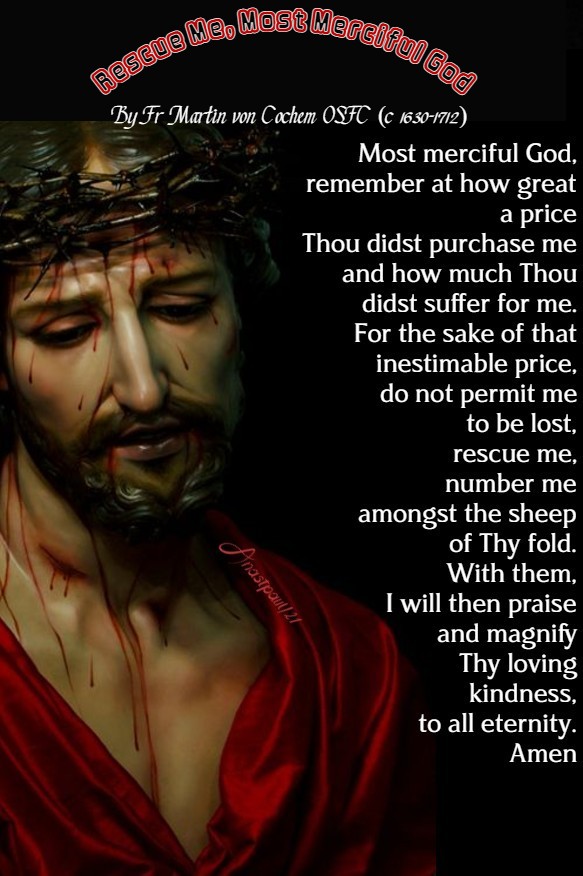
Rescue Me, Most Merciful God By Father Martin von Cochem OSFC (c 1630-1712)
Most merciful God, remember at how great a price Thou didst purchase me and how much Thou didst suffer for me. For the sake of that inestimable price, do not permit me to be lost, rescue me, number me amongst the sheep of Thy fold. With them, I will then praise and magnify Thy loving kindness, to all eternity. Amen
Fr Martin von Cochem was a German Capuchin theologian, preacher and prolific ascetic writer. Father Martin’s works embrace a great variety of subjects –a huge volume of apologetics against Protestantism, the life of Christ, lives of the Saints, edifying narratives, the setting forth of certain points in Christian asceticism, forms of prayer, methods to be followed for the worthy reception of the sacraments, etc. The prayer above is from the renowned “The Four Last Things.”
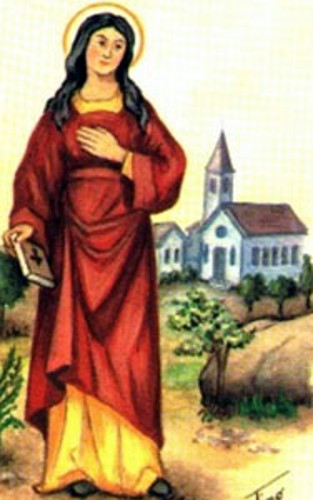
Saint of the Day – 23 February – Saint Milo of Benevento (Died c1077) Bishop, Teacher, Spiritual Guide and most zealous Shepherd of his flock and a loving father to the poor, the sick and the nedy. Born in Auvergne, France and died in c1073 in Benevento, Italy of natural causes. Patronages – of Bishops, of the poor and needy, of Teachers. Also known as – Milo of Auvergne, Milon … Milone… Additional Memorial – 25 May on some calendars.
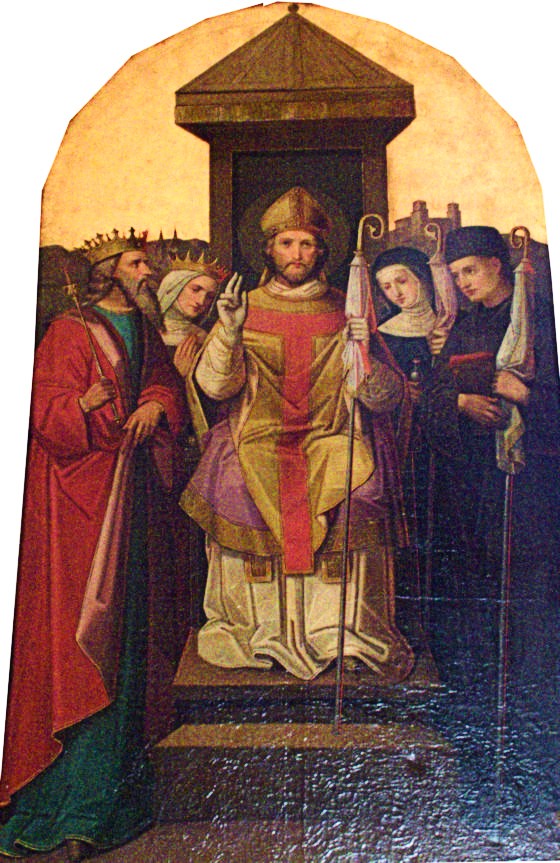
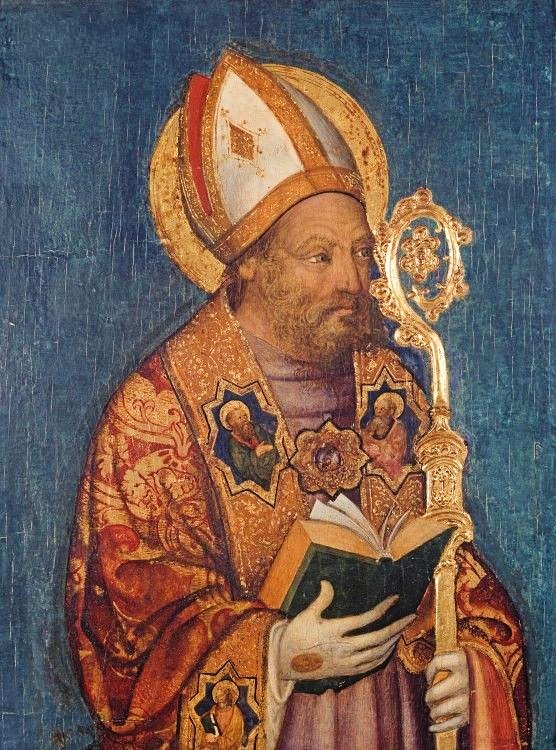
An Unknown Bishop Saint who maybe St Milo
Saint Milo was born in Auvergne, France, in the 11th Century. From a young age he was remarkable for his piety and intelligence,and, for this reason, he was initiated into the studies required for the Priesthood. He studied in Paris, where he was Ordained a Priest and became a Canon of the Cathedral.
Milo was a man of great charity and compassion. He dedicated himself passionately to his ministry and, did his utmost to help those in need. He was also a great Teacher and was responsible for the education of several young people, including Saint Stephen of Muret, who would become the Founder of the Order of Grandmont.
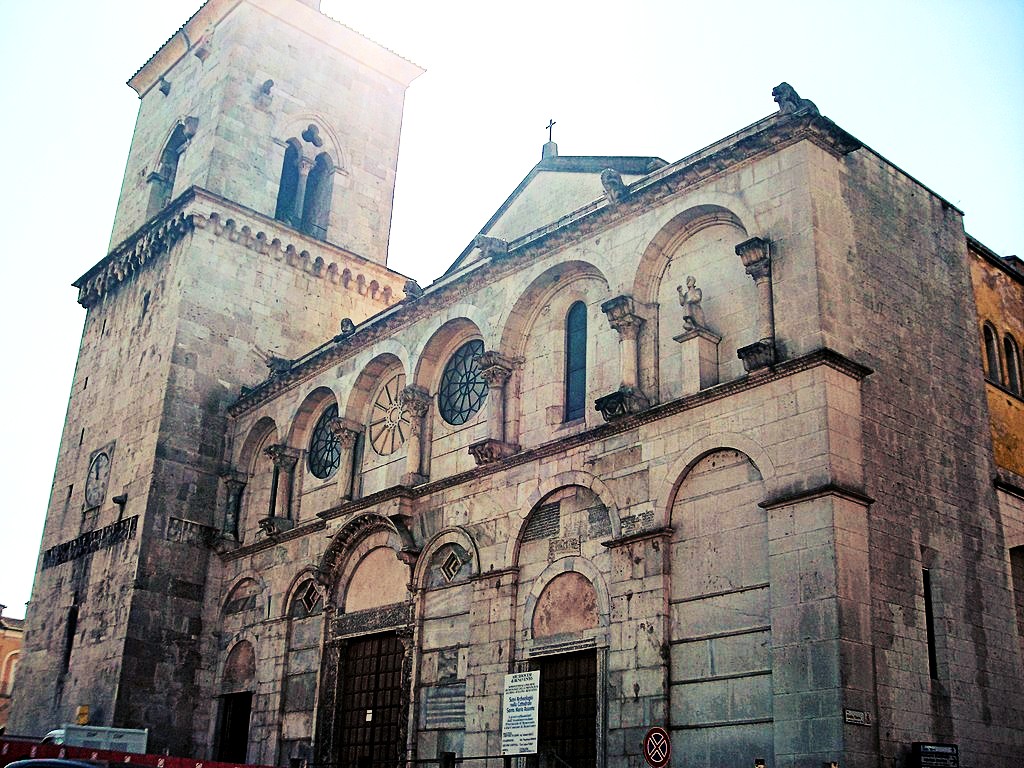
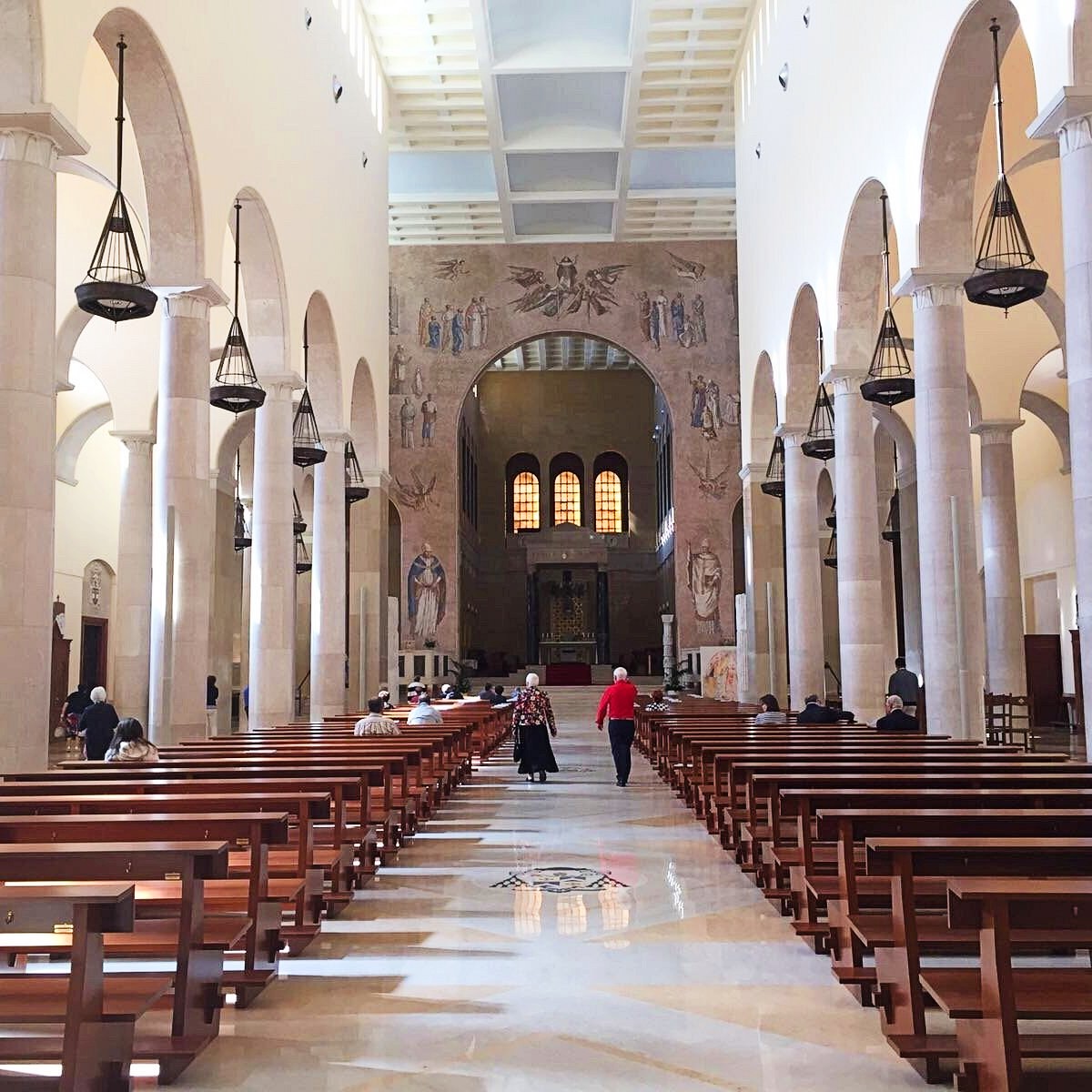
The Romanesque Cathedral of Benevento
The fame of Milo’s virtues and knowledge soon crossed the borders of France. In 1068, he was elected as the Bishop of Benevento in Italy. Milo accepted the Ecclesiatical honour with great humility and dedication. He committed himself to reforming the Diocese and promoting peace and justice.
Unfortunately he was able to govern the Diocese for only two years. He died in c1070 (some sources say 1076).
Saint Milo is venerated as a Patron of Bishops, Teachers and the poor and needy. His liturgical Feast is celebrated on 23 February 23 and 25 May.
The Feast of the Sacred Lance and Nails – Friday after the 1st Sunday in Lent: The Supreme Pontiff, Innocent VI, in his Decree establishing the Feast and Office of the Lance and Nails which pierced the Body of our Crucified Lord Jesus Christ, exhorts all the faithful to have a special veneration for and devotion to, all the Sacred Instruments of our Saviour’s Passion. The following are the Holy Father’s words: “We should honour the most holy Passion of our Lord and Redeemer, Jesus Christ, in such manner that, meditating on all the mysteries and merits of the same Passion, we venerate also each Sacred Instrument thereof.” Then this holy and zealous Pontiff, coming more directly to the honour due to the Lance and Nails, says: “Although the Lance and Nails and the other Sacred Instruments of the Passion, should be enerated everywhere, by the faithful of Christ and although every year the Church celebrates the Solemn Offices of the same Passion, yet, we deem it proper and fitting, that a special Solemn Feast should be instituted and celebrated in honour of those particular Instruments of the Passion, more especially, in those places wherein these salutary Instruments are preserved. Hence, we wish to encourage this devotion by a special Office and privileges.” (Innocent VI in Decret. de Fest. Lane, et Clav. Domini).
The Lance, also known as “The Spear of Longinus” is kept in the Vatican Basilica, given to Innocent VIII in 1492. The Nails were kept with the Crown of Thorns, along with a small piece of the Lance of Longinus at Saint Chapelle, France and were subsequently lost during the French Revolution. The Crown of Thorns was the only Relic saved and is now kept at Notre Dame Cathedral.
In a Leap Year, the Vigil of St Matthias, Apostel, is not announced today because it is transferred to the 24th.
St Alexander Akimetes St Boswell St Dositheus of Egypt St Felix of Brescia St Florentius of Seville St Giovanni Theristi (1049–1129) Monk Bl John of Hungary
St Lazarus Zographos (c810-c 867) Priest, Monk known as “the Painter and the Iconographer.” Lazarus lived before and during the second period of Byzantine Iconoclasm. The Roman Martyrology states of him today: “St Lazarus, a Monk, whom the Iconoclast Emperor Theophilus ordered to be put to torture for having painted holy images. His hand was burned with a hot iron but, being healed by the power of God, he painted anew the holy images which had been defaced and finally rested in peace.” Biography: https://anastpaul.com/2022/02/23/saint-of-the-day-23-february-st-lazarus-zographos-810-865/
St Milo of Benevento (Died c1077) Bishop St Ordonius St Polycarp of Rome St Romana
St Serenus the Gardener (Died 307) Martyr. Serenus was by birth a Grecian. He left his family estate, friends and country to serve God in celibacy, penance and prayer. With this design he bought a garden in Sirmium in Pannonia, which he cultivated with his own hands and lived on the fruits and herbs it produced. His Life and Death: https://anastpaul.com/2019/02/23/saint-of-the-day-23-february-st-serenus-the-gardener-died-307-martyr/
Martyrs of Syrmium – 73 Christians who were Martyred together in the persecutions of Diocletian. We know no details about them, and only six of their names – Antigonus, Libius, Rogatianus, Rutilus, Senerotas and Syncrotas.
Our Lenten Journey with the Angels and the Saints – 22 February – The Feast of the Chair of St Peter at Antioch –1 Peter 1:1-7; Matthew 16:13-19 – Scripture search here: https://www.drbo.org/
“Let the mercies of the Lord, give glory to Him and his wonderful works to the children of men!” Psalm 106:31
“But Whom do you say that I Am? Simon Peter answered and said: Thou art Christ, the Son of the living God.” Matthew 16:15-16
On Christian Perfection In Thought, Word and Deed
St Gregory of Nyssa (c335–c395) Bishop and Father of the Church
(Brother of St Basil the Great)
“The life of the Christian has three distinguishing aspects – deeds, words and thought. Thought comes first, then words, since our words express openly the interior conclusions of the mind. Finally, after thoughts and words, comes action, for our deeds carry out what the mind has conceived. So when one of these results in our acting or speaking or thinking, we must make sure that all our thoughts, words and deeds are controlled by the Divine Ideal, the Revelation of Christ. For then, our thoughts, words and deeds will not fall short of the nobility of their implications.
What then must we do, we who have been found worthy of the Name of Christ? Each of us must examine his thoughts, words and deeds, to see whether they are directed toward Christ or are turned away from Him. This examination is carried out in various ways. Our deeds or our thoughts or our words are not in harmony with Christ if they issue from passion. They then bear the mark of the enemy who smears the pearl of the heart with the slime of passion, dimming and even destroying the luster of the precious stone.
On the other hand, if they are free from and untainted by every passionate inclination, they are directed toward Christ, the Author and Source of peace. He is like a pure, untainted stream. If you draw the thoughts in your mind and the inclinations of your heart from Him, you will show a likeness to Christ, your Source and Origin, as the gleaming water in a jar resembles the flowing water from which it was obtained.
For the purity of Christ and the purity which is manifest in our hearts are identical. Christ’s purity, however, is the Fountainhead; ours has its Source in Him and flows out of Him. Our life is stamped with the beauty of His thought. The inner and the outer man, are harmonised in a kind of music. The mind of Christ is the controlling influence which inspires us to moderation and goodness in our behaviour. As I see it, Christian perfection consists in this – sharing the title which expresses the meaning of Christ’s Name, we bring out this meaning in our minds, our prayers and our way of life.” – (Extract from his Treatise On Christian Perfection).
Thought for the Day – 22 February – The Spiritual Combat (1589) – Dom Lorenzo Scupoli OSM (c1530-1610)
“None shall be crowned who has not fought well.” 2 Tim 2: 5
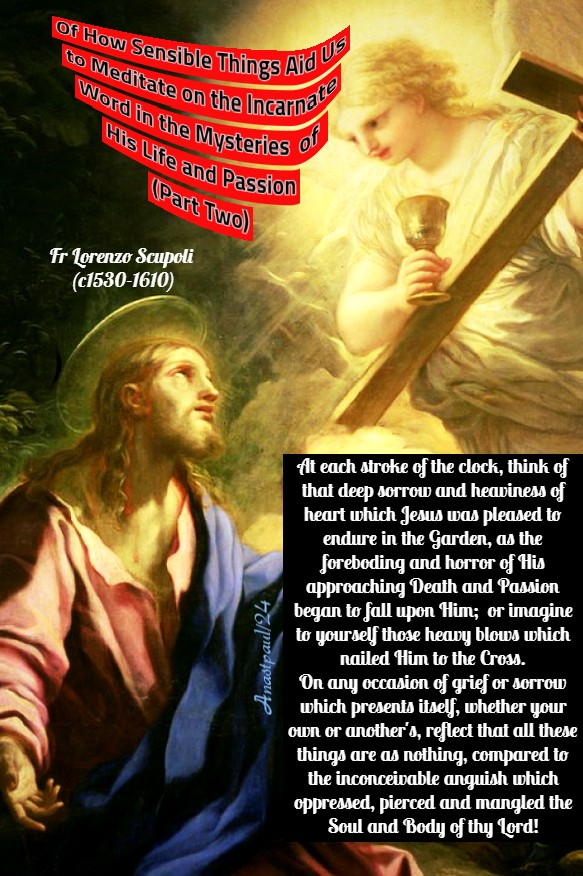
XXII: … Of How Sensible Things Aid Us to Meditate on the Incarnate Word in the Mysteries of His Life and Passion (Part Two)
“The same may be said of other similar things.
+++ Let the taste of wine, or other liquid, remind you of your Lord’s vinegar and gall.
+++ If sweet perfumes refresh you, think of the ill odour of the dead bodies which were around Him on Calvary.
+++ While dressing, recollect that the Eternal Word clothed Himself with human flesh that He might clothe you with His Divinity.
+++ When undressing, remember Christ, Who was stripped of His garments, to be Scourged and Crucified for you.
+++ If you hear the shouts and cries of a multitude, think of those hateful words: “Away with Him, away with Him! crucify Him, crucify Him! ” which sounded in His Divine Ears.
+++ At each stroke of the clock, think of that deep sorrow and heaviness of heart which Jesus was pleased to endure in the Garden, as the foreboding and horror of His approaching Death and Passion began to fall upon Him; or imagine to yourself those heavy blows which nailed Him to the Cross.
+++ On any occasion of grief or sorrow which presents itself, whether your own or another’s, reflect that all these things are as nothing, compared to the inconceivable anguish which oppressed, pierced and mangled the Soul and Body of thy Lord!”
Quote/s of the Day – 22 February – Feast of the Chair of St Peter at Antioch – 1 Peter 1:1-7; Matthew 16:13-19 – Scripture search here: https://www.drbo.org/
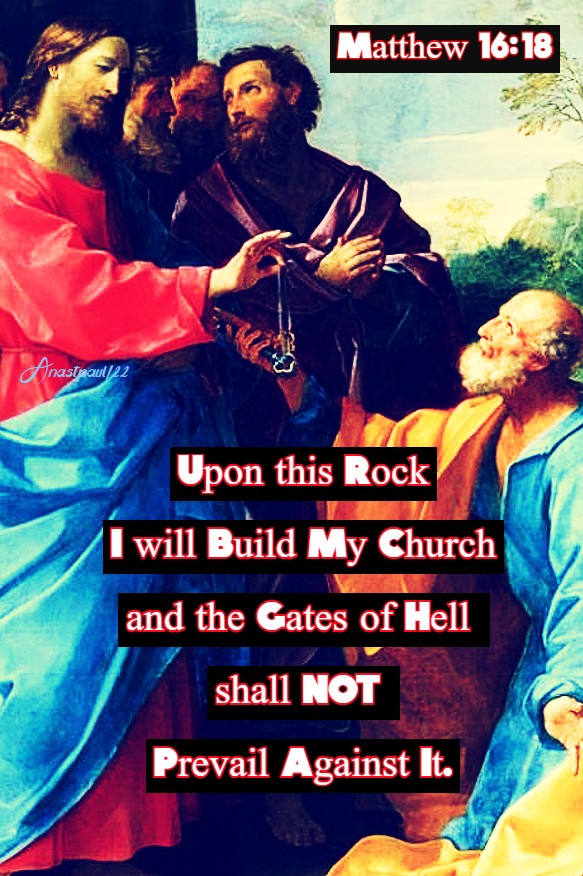
“Upon this rock I will build My Church and the gates of hell shall not prevail against it. I will give you the keys of the Kingdom of Heaven and whatever you bind on earth shall be bound in Heaven and, whatever you loose on earth, shall be loosed in Heaven.”
Matthew 16:18-19
“… Now you must be, for a little time, made sorrowful in divers temptations. That the trial of your faith, (much more precious than gold which is tried by the fire) may be found unto praise and glory and honour at the appearing of Jesus Christ.”
1 Peter 1:6-7
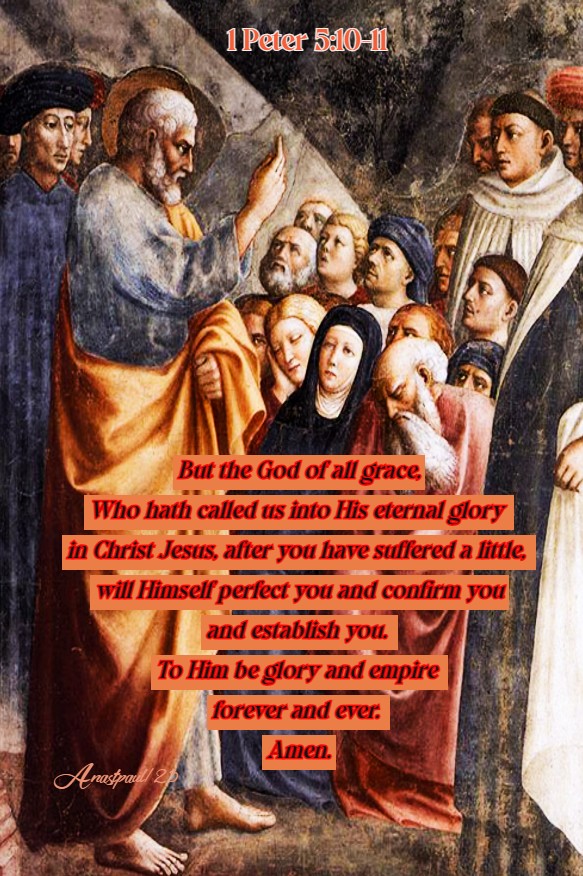
“But the God of all grace, Who hath called us into His eternal glory in Christ Jesus, after you have suffered a little, will Himself perfect you and confirm you and establish you. To Him be glory and empire forever and ever. Amen.”
1 Peter 5:10-11
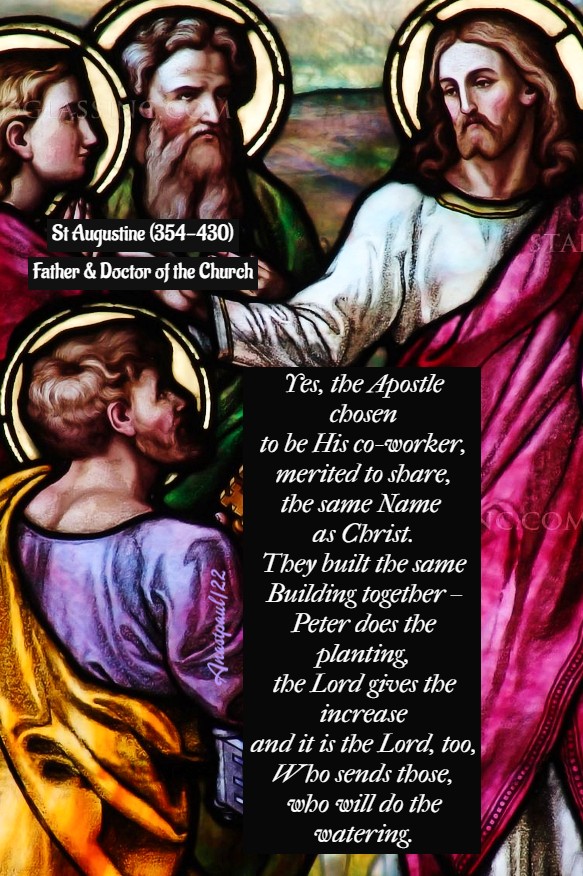
“Yes, the Apostle chosen to be His co-worker, merited to share, the same Name as Christ. They built the same Building together – Peter does the planting, the Lord gives the increase and it is the Lord, too, Who sends those, who will do the watering (cf 1 Cor 3:6f).”
St Augustine (354-430) Father & Doctor of the Church
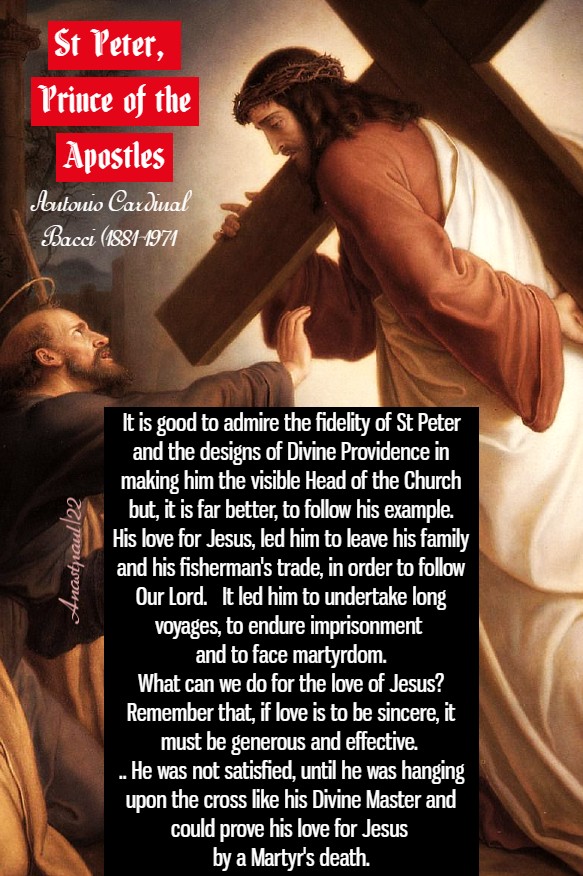
“It is good to admire the fidelity of St Peter and the designs of Divine Providence in making him the visible Head of the Church but, it is far better, to follow his example. His love for Jesus, led him to leave his family and his fisherman’s trade, in order to follow Our Lord. It led him to undertake long voyages, to endure imprisonment and to face martyrdom. What can we do for the love of Jesus? Remember that, if love is to be sincere, it must be generous and effective. He was not satisfied, until he was hanging upon the cross like his Divine Master and could prove his love for Jesus by a Martyr’s death.”
One Minute Reflection – 22 February – The Feast of the Chair of St Peter at Antioch –1 Peter 1:1-7; Matthew 16:13-19 – Scripture search here: https://www.drbo.org/
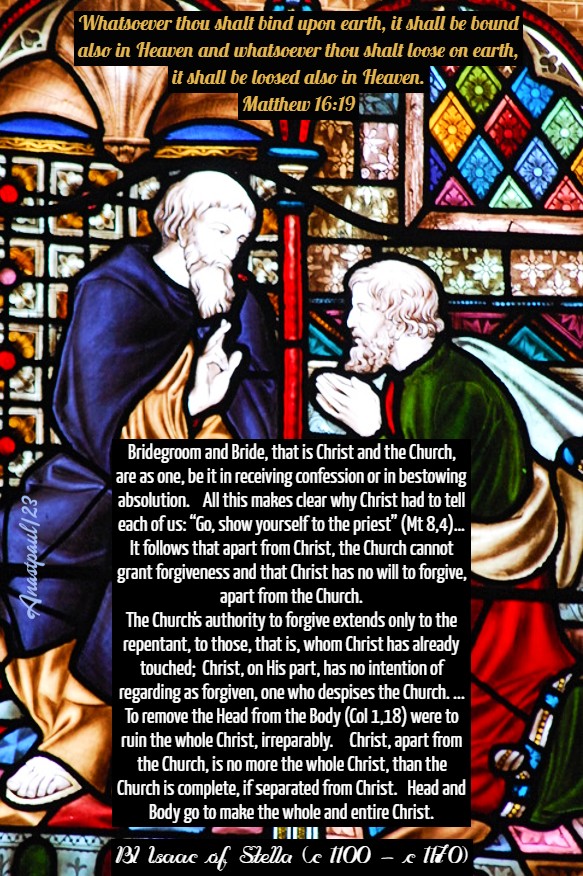
“Whatsoever thou shalt bind upon earth, it shall be bound also in Heaven and whatsoever thou shalt loose on earth, it shall be loosed also in Heaven.” – Matthew 16:19
REFLECTION – “Bridegroom and Bride, that is, Christ and the Church, are as one, be it in receiving confession or in bestowing absolution. All this makes clear why Christ had to tell each of us: “Go, show yourself to the priest” (Mt 8,4)… It follows that apart from Christ, the Church cannot grant forgiveness and that Christ has no will to forgive, apart from the Church. The Church’s authority to forgive extends only to the repentant, to those, that is, whom Christ has already touched; Christ, on His part, has no intention of regarding as forgiven, one who despises the Church.
Doubtless, Christ need accept no restraints to His power of Baptising, Consecrating the Eucharist, Ordaining Priests, forgiving sins and the like but, the humble and faithful Bridegroom, prefers to confer such blessings, with the co-operation of His Bride. “What God,” then, “has joined, let no man put asunder” (Mt 19,6). “I say this is a great mystery and refers to Christ and the Church” (Eph 5,32)… To remove the Head from the Body (Col 1:18) were to ruin the whole Christ, irreparably. Christ, apart from the Church, is no more the whole Christ, than the Church is complete, if separated from Christ. Head and Body go to make the whole and entire Christ.” – Bl Isaac of Stella (c 1100 – c 1170) Cistercian Monk, Abbot, Theologian, Philosopher (Sermon 11, §11-814).
PRAYER – O God, Who when giving blessed Peter, Thine Apostle, the keys of the Heavenly Kingdom, bestowed on him the power of binding and loosing, grant that by the help of his intercession, we may be delivered from the bonds of our sins. Through Jesus Christ, Thy Son our Lord, Who lives and reigns with Thee, in the unity of the Holy Ghost, God, world without end. Amen (Collect).
Our Morning Offering – 22 February – The Chair of St Peter at Antioch
O Prince of the Apostolic Senate! Hymn to the Prince of the Apostles By St Peter Damian (1007-1072) Cardinal Bishop of Ostia Doctor of the Church
O Prince of the Apostolic Senate! Herald of our Lord! First Shepherd of the Faithful! watch over the Flock intrusted to thee.
Lead us through verdant pastures, feeding us with the nourishment of the Word and lead us, thus fed, into the heavenly fold, whither thou hast already gone.
To thee, Peter, have been delivered the Keys of heaven’s gate and all things, both in Heaven and on earth, acknowledge thy authority.
Tis thou that choosest the City where is to be established the Rock of the True Faith, the foundation of the building, on which the Catholic Church stands immoveable.
Thy shadow, as thou passest by, heals the sick and Tabitha, who made garments for the poor, was raised to life at thy bidding.
Bound with two chains, thou wast set free by an Angel’s power; he bids thee put on thy garments and thy sandals and lo! the prison door is opened.
To the Father unbegotten and to the Only-Begotten Son and to the co-equal Spirit of them both, be praise and kingly highest power. Amen.
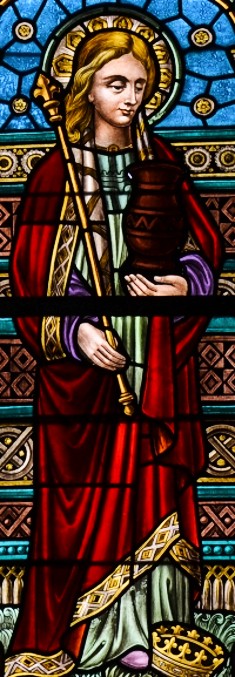
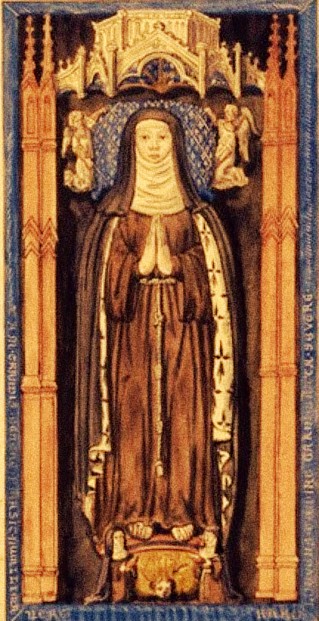
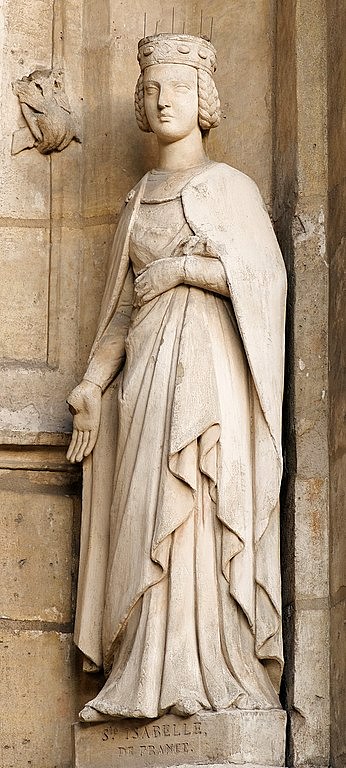
Saint of the Day – 22 February – Saint Isabella of France (1225-1270) Virgin, Apostle of the poor, the sick and needy, Founder Nun of a Convent based on the Poor Clares Order, known as the Sisters Minor and forming part of the Franciscan family. Sister of Saint Louis IX, Aunt of Saint Louis of Toulouse, Princess. Born in March 1225 in Paris and died on 23 February 1270 (aged 45) at the Convent in Longchamp, Pays de France. Patronages – of the ill and infirm, of the Royal Abbey of Longchamp. Also known as – Isabel, Isabelle. Additional Memorial 8 June (Franciscans), 8 November – as one of the Saints of the Diocese of Evry, 23, 24 and 26 February – on some calendars.
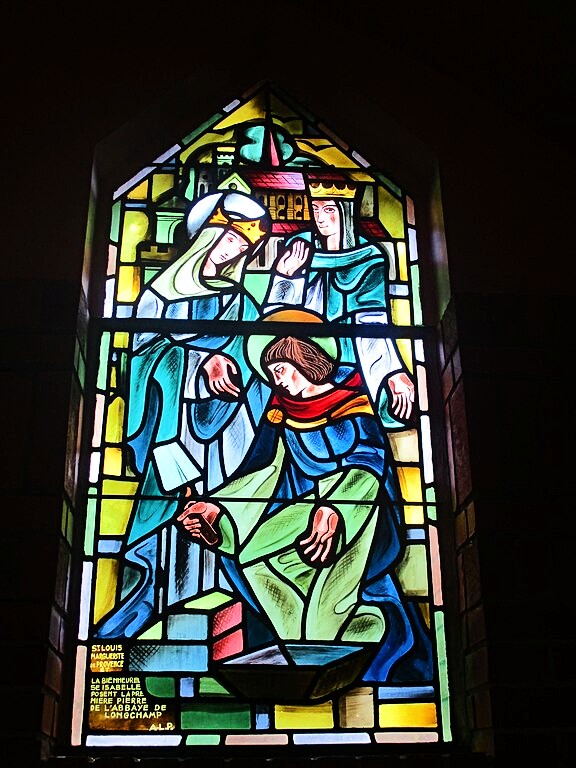
St Isabella with St Louis IX – laying the cornerstone ofthe Longchamps Convent
In Pays de France, just outside the City of Paris, along the Seine, lived King Louis VIII and Blanche of Castile, the Queen of France. The Royal couple were a holy example of Christian love and they had alreadybeen blessed with several children when their daughter, Isabella, came into the world in March 1225.
When Isabella was less than two years old, King Louis VIII died, leaving her older brother to reign as King. King St Louis IX was installed in 1226 and he reigned until 1270. His mother supervised the education of the young children, ensuring that Isabella not only learned the feminine arts butm also learned Latinm in order to study the Fathers of the Church.
Isabella demonstrated great piety from a very early age and, it must be noted, she received much support in practising her faith from her mother, her brother the King and other members of the Royal Court. Isabella dedicated her sewing skills to providing clothing for the poor and preparing Vestments for liturgical celebrations. On one occasion, as she was embroidering a new hat, King Louis IX asked her to give the hat to him. She refused, explaining, “No, this is the first of its kind and I must make it for my Saviour Jesus Christ.” When she finished it, she gave it to a poor and sick person. Then, she made another cap of similar design for her Royal brother.
Arranged marriages, common at the time, were a part of Isabella’s life from the age of two. The Treaty of Vendome, created in March 1227 and signed in June 1230, betrothed Isabella to Hugh, the eldest son and heir of Hugh X of Lusignan which was an area on the western coast of France. However, Isabella refused to celebrate this marriage. Some years later, she also refused to marry another Royal personage, Conrad, the son of the Holy Roman Emperor Frederick II. Her mother and brother both urged her to marry Conrad. Even Pope Innocent IV tried to persuade her to marry the son of the Emperor but, again she refused. When she learned of the Pope’s hope that she would marry Conrad, Isabella wrote to him explaining that she had consecrated her virginity to Christ and would never marry. The Pope, witnessing her steadfast faithfulness to Christ, admired her for her perseverance and agreed with her position. Her brother finally acquiesced and no longer tried to persuade her to marry Conrad or anyone else. Not long after this episode, their mother died.
In 1255, Isabella requested her brother’s permission to leave the Court and to establish a home for a group of devout women. . Thus, King St Louis IX undertook the purchase of some land in the Forest of Rouvray, just west of Paris, for this purpose. The cornerstone was placed on 10 June 1256 and four years later, the building was completed. On 2 February 1259, Pope Alexander IV gave his approval to the new Rule prepared by Princess Isabella. This Rule had been compiled by Fr Mansuetus, a Franciscan, who based it on the Rule of the Order of St Clare, also referred to as the Poor Clares. The Rule was approved by St Bonaventure, who was then the Minister General of the Franciscan Order. The new Monastery was called the Monastery of the Humility of the Blessed Virgin. The Nuns of this Monastery were called Sisters Minor.
The Rules were unique and specific to this group of women, being somewhat simpler than the Rules of the Poor Clares, in that the fasting was not as rigid and the community was allowed to hold property. But like the Poor Clares, these women also helped Tthe poor and needy of the neighbourhood. . The first Nuns to join this new Monastery were from the Convent of the Poor Clares at Rheims, nearly 100 miles east of Paris. Although Isabella never resided at the Monastery herself, she observed the Rules in the privacy of her home.
After a few years, Isabella adjusted the Rule and King St Louis submitted and obtained confirmation of the revised Rule. Pope Urban IV approved the new Rule on 27 July 1263, giving the Nuns of Longchamp, the official title of Sisters Minor. This title emphasised the close relationship with the Order of Friars Minor.
Isabella had refused to become the Abbess but continued to observe the Rule, as well as additional mortifications. She practiSed nearly total silence, fasted three days a week and lived a life of heroic virtue.
In 1270 Isabella died at the new house in Longchamp. The Nuns declared that when she died, the singing of Angels could be heard. She was buried in the Convent Church. After only nine days, her body was exhumed and it was still supple, suffering no decay. Not surprisingly, many miracles occurred at her gravesite. In 1521 Pope Leo X Beatified Isabella, permitting the Abbey of Longchamp to celebrate her Feast with a special office. On 4 June 1637 Isabella’s body was exhumed again and it was still incorrupt. 50 years later, on 25 January 1688, the Nuns received permission to celebrate Isabella’s Feast with an Octave observance. In 1696, on her Canonisation, Pope Innocent XII extended the permission to the entire Franciscan Order.























 AnaStpaul
You must be logged in to post a comment.