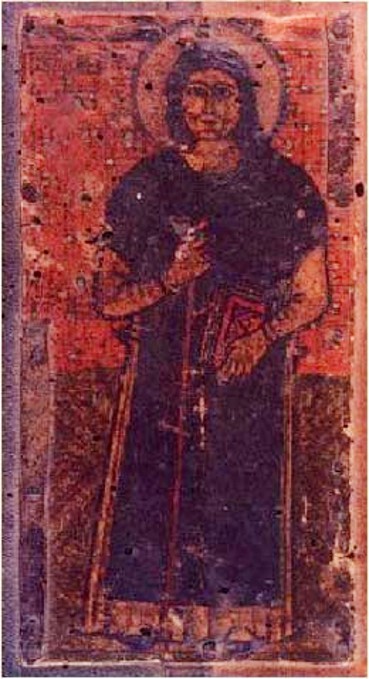
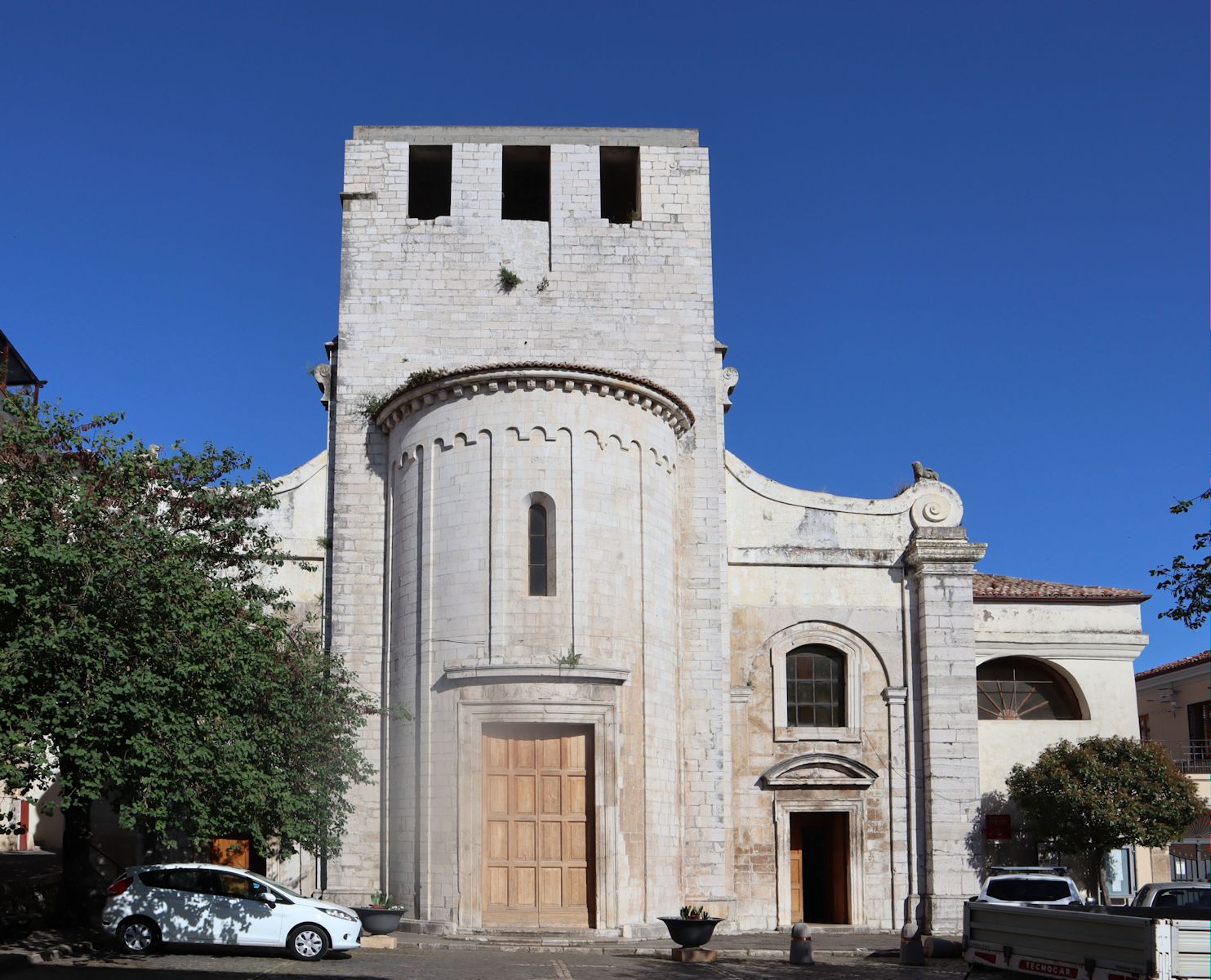
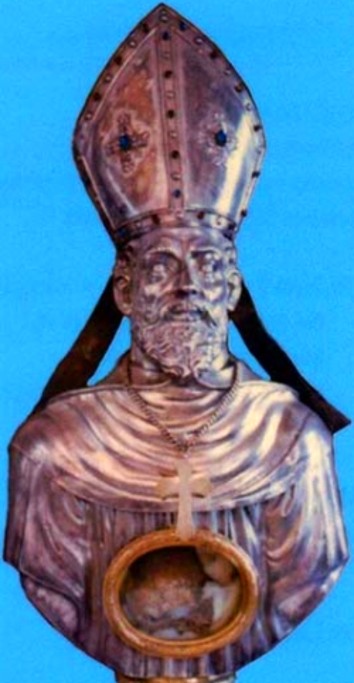
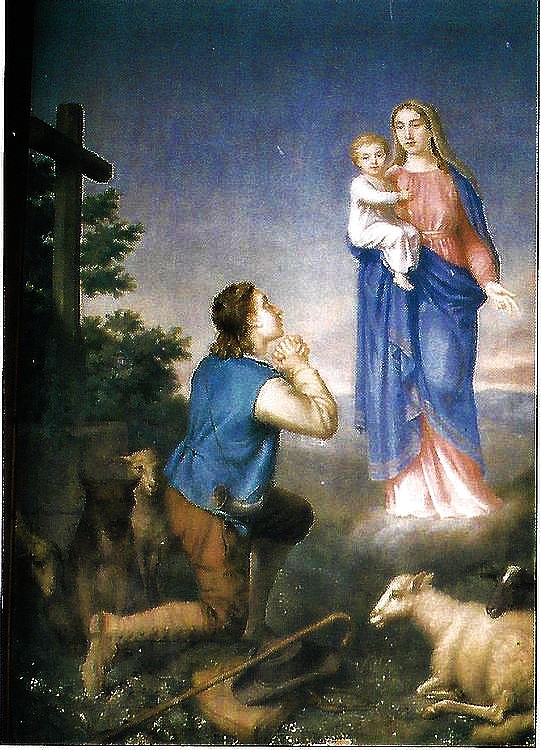
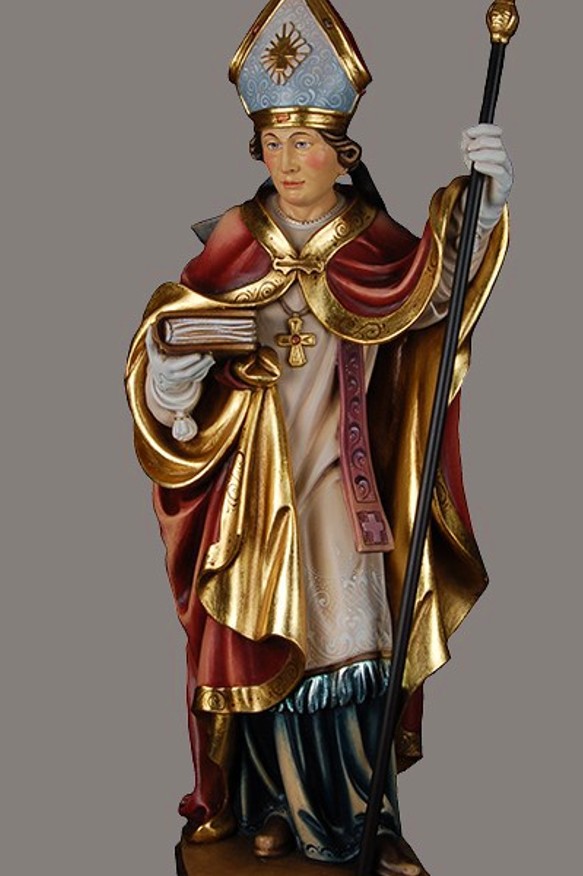
One Minute Reflection – 4 February – “The Month of the Most Holy and Blessed Trinity” – St Andrew Corsini O.Carm (1302-1373) Bishop of Fiesole from 1349 until his death,Confessor, known as the “Apostle of Florence,” Carmelite Friar – Sexagesima Sunday – 2 Corinthians 11:19-33; 12:1-9, Luke 8:4-15 – Scripture search here: https://www.drbo.org/
“And other seed fell upon good ground and sprang up and yielded fruit a hundredfold.” – Luke 8:8
REFLECTION – “If you ask me what Jesus Christ means by this Sower Who goes out early to cast his seed over his field then, my brethren, that Sower is the good God Himself, Who began the work of our salvation, from the beginning of the world, by sending us His Prophets, before the coming of Christ, to teach us what was needed, if we would be saved. Not content with sending His servants, He came Himself – He marked out the way we should take; He came to make known His holy Word.
Do you know what a person is like, who is not fed by this holy Word?… Such a person is like a patient without a doctor, a traveller who is lost and without a guide, a poverty stricken person without means of help. Brethren, it is absolutely impossible to love and please God, unless we are fed by this divine Word. What can draw us to follow Him unless by knowing Him? And Who enables us to know Him, with all His perfections, beauty and love for us, if not the Word of God, Who teaches us about everything He has done for us and the good things He has in store for us, in the next life?” – St John-Marie Baptiste Vianney (1786-1859) The Curé of Ars (Sermons)
PRAYER – O God, Who establishes ever new examples of virtue in Thy Church, grant that Thy people may follow the footsteps of blessed Andrew, Thy Confessor and Bishop, so that they may also obtain his reward. Through Jesus Christ, Thy Son our Lord, Who lives and reigns with Thee, in the unity of the Holy Ghost, God, world without end. Amen (Collect).
Our Morning Offering – 4 February – “The Month of the Most Holy and Blessed Trinity” – Sexagesima Sunday
An Act of Consecration to the Holy Trinity By St Francis de Sales (1567-1622) Doctor of Charity
I vow and consecrate to God all that is in me: my memory and my actions to God the Father; my understanding and my words to God the Son; my will and my thoughts to God the Holy Ghost; my heart, my body, my tongue, my senses and all my sorrows to the Sacred Humanity of Jesus Christ, “who was content to be betrayed into the hands of wicked men and to suffer the torment of the Cross..” Amen
Saint of the Day – 4 February – Saint Gilbert of Limerick (c1070–1145) Bishop, Canon Lawyer, Papal Legate to Ireland appointed by the Papacy of Pope Paschal II in c1106 and also then appointed as the Bishop of Limerick, Scholar and Philsopher, Church Reformer, Unknown date or place of birth and died in Bangor, Ireland in 1145 of natural causes. Also known as – Gille, Gillebertus, Gilla, Gilli.
“For the early Irish Lent began on the Sunday after Ash Wednesday. Gilbert of Limerick (†1145) insisted on Ash Wednesday.” This injunction was part of the programme of Church Reform which took place in the 12th Century, reform in which St Gilbert of Limerick was deeply involved.
We know very little about Gilbert’s private history and personal life. He refers to himself both as Gille and Gillebertus. It is not even clear whether he was of Irish or Norse extraction. Is is suggests that his family roots are almost certainly in the Hibero-Norse City of Limerick, Ireland but his choice to retire to Bangor, Co. Down where he died may refer to Bangor as his birthplace.
The first record we have of Gilbert is a letter which he sent in 1106, as the Bishop of Limerick, to St Anselm, at that time the Archbishop of Canterbury, sending a gift of pearls and congratulating him on “the victory of your labours in subduing the indomitable minds of the Normans.” St Anselm’s reply states that the two “have known each other and delighted in friendship, since our time in Normandy.”` This may suggest our Gilbert had been a pupil of St Anselm in north-eastern France.
The balance of evidence suggests that Gilbert was a Papal Legate for almost all his time as the Bishop of Limerick and that he headed the Synod of Raith Bressail in 1111. According to St Bernard of Clairvaux, he was the first to be a Legate “per universam Hiberniam — throughout all Ireland.”
The Synod of Raith Bressail , in 1111,was the second aimed at reforming the Irish Church and the first to include the whole country. The first, held in Cashel in 1101, legislated against the purchase of Church positions and regulated the relationship of Church and State, of marriage laws and, of clerical celibacy.
The Synod of Raith Bressail went further, instituting for the first time, a full system of Diocese in Ireland in a hierarchy subject to a Primate of all Ireland and, through him, to the See of St Peter in Rome and the Sovereign Pontiff. This was the greatest change in the Irish Church since the 5th Century. A document, the Acta, from this Synod, gives further circumstantial evidence for Gilbert’s own origin in Limerick – Limerick is given as a model Diocese (with “St Mary’s Church” as its Cathedral Church) in a level of detail, suggesting local knowledge. Gilbert records in his treatise ‘De Statu Ecclesiae’ that many Irish Bishops and Priests requested he explain the hierarchy he advocated.
St Mary’s Caythedral Church of Limerick
With Saint Malchus of Waterford and Ceallach of Armagh, he helped reorganise the Church in Ireland, replacing monastic rule with that by the Bishops and Diocesan structure and advocating for a uniform Liturgy.
As a Canon Lawyer, Gilbert was working in the Paris tradition which was founded on law based on custom, rather than the compilation and reconciliation of texts as practised by the (later) Gratian. As such his style is very different, “exhortatory rather than prescriptive, encouraging rather than demanding” – very different from what we would regard as a legal text today. The law was based on a common vision of life; an inportant aspect of it was the rights and duties owed to a lord.
The Treatise itself is a commentary on a diagram (the image below) in which the hierarchical structure of the Church is shown as a pyramid, made up of further interlocking pyramids. The Pope is at the apex, balanced by the Emperor and Noah at the other two points. The pyramids below balance the Archbishop with the Duke, then the Bishop, with the Count and finally the Priest with the soldier. 15
In 1115, Gilbert is recorded as being present at the Consecration of a new Bishop of St David’s in Westminster. In 1129, St Bernard of Clairvaux records that Gilbert, along with Maek Isu of Lismore prevailed on St Malachy to accept the vacant See of Armagh and that, in 1140, Malachy became the Papal Legate due to the retirement of St Gilbert having become unwell in his old age.
Gille’s death, his only mention in the Irish annals, is recorded in 1145 in Bangor Co. Down. The ‘De Statu Ecclesiae‘ survived in two manuscripts and a prologue to it, ‘De Uso Ecclesiastico’ in three. The two parts were published by Archbishop James Ussher in 1632.
SEXAGESIMASUNDAY: (Latin – Sexagesima, sixtieth) is the eighth Sunday before Easter and the second before Lent. The Ordo Romanus, St Alcuin and others, count the Sexagesima from this day to Wednesday after Easter. The name was already known to the Fourth Council of Orléans in 541. To the Latins it is also known as “Exsurge” from the beginning of the Introit. The station was at Saint Paul’s Outside the Walls of Rome and hence, the oratio calls upon the Doctor of the Gentiles. The Epistle is from Paul, 2 Corinthians 11 and 12, describing his suffering and labours for the Church. The Gospel (Luke 8) relates the falling of the seed on good and on bad ground, while the Lessons of the first Nocturn continue the history of man’s iniquity and speak of Noah and of the Deluge.
Bl Dionisio de Vilaregut St Donatus of Fossombrone St Eutychius of Rome St Filoromus of Alexandria St Firmus of Genoa Bl Frederick of Hallum St Gelasius of Fossombrone St Geminus of Fossombrone St Gilbert of Limerick (c1070–1145) Bishop
St Jane de Valois O.Ann.M and TOSF (1464-1505) Princess, Queen, Founder, Religious Sister, Mystic, Teacher. Founded the monastic Order of the Sisters of the Annunciation of Mary. From this Order later sprang the religious congregation of the Apostolic Sisters of the Annunciation, founded in 1787 to teach the children of the poor. She was Canonised on 28 May 1950 by Pope Pius XII. Biography: https://anastpaul.wordpress.com/2018/02/04/saint-of-the-day-4-february-saint-jane-of-valois-o-ann-m-1464-1505/
St Themoius St Theophilus the Penitent St Vincent of Troyes St Vulgis of Lobbes
Jesuit Martyrs of Japan: A collective memorial of all members of the Jesuits who have died as Martyrs for the faith in Japan.
Martyrs of Perga – 4 Saints: A group of shepherds Martyred in the persecutions of Decius. The only details we have about them are the names – Claudian, Conon, Diodorus and Papias. They were Martyred in c 250 in Perga, Asia Minor (in modern Turkey).
Thought for the Day – 3 February – The Spiritual Combat (1589) – Dom Lorenzo Scupoli OSM (c1530-1610)
“None shall be crowned who has not fought well.” 2 Tim 2: 5
The Third Weapon of the Spiritual Combat
XIII: … Of the Way to Resist the Impulses of Sense and of the Acts to be Performed by the Will, in order to Acquire Habits of Virtue (Part Three)
“Lastly — to adorn and perfect your soul in the habit of all the virtues, exercise yourself in the inward practices directly opposed to all your disorderly passions.
Would you attain, for instance, to the perfection of patience? On receiving any insult which tempts you to impatience, it will not be enough to exercise yourself in the three modes of warfare above described [see Part One link below], you must do more — even willingly accept and love the indignity you have endured; desiring to submit to it again, from the same person and in the same manner — expecting and disposing yourself to bear, still more difficult things.
These contrary acts are needful to our perfection in all the virtues, because, the exercises of which we have been speaking, manifold and efficacious as they are — will not suffice to eradicate the roots of sin.
Hence (to pursue the same example) although, when we receive an insult, we do not yield to the impulse of impatience but, on the contrary, resist it by the three methods above described, yet, unless we accustom ourselves, by many and repeated acts of the will, to love contempt and rejoice to be despised, we shall never overcome the sin of impatience which springs from a regard for our own reputation and a shrinking from contempt. …
I would add to all that has been said, that if the virtue in which you are exercising yourself, so requires, you must also practice exterior acts conformable to the interior — as, for instance, words of love and meekness and lowly services rendered to those who have, in any way, thwarted or slighted you.”
Quote/s of the Day – 3 February – Saturday of the Blessed Virgin (Salve Sancta Parens) – Sirach 24:14-16; Luke 11:27-28 – Scripture search here: https://www.drbo.org/
“Blessed is the womb which bore Thee ”
Luke 11:27
“Mary, having merited to give flesh to the Divine Word and thus, supply the price of our redemption that we might be delivered from eternal death, therefore, she is more powerful than all others, to help us gain eternal life.”
St Augustine (354-430) Father and Doctor of Grace
“The very fact that God has elected her, proves, that none was ever holier than Mary; if any stain had disfigured her soul, if any other virgin had been purer and holier, God would have selected her and rejected Mary.”
St Jacob of Sarug (c 451-521)
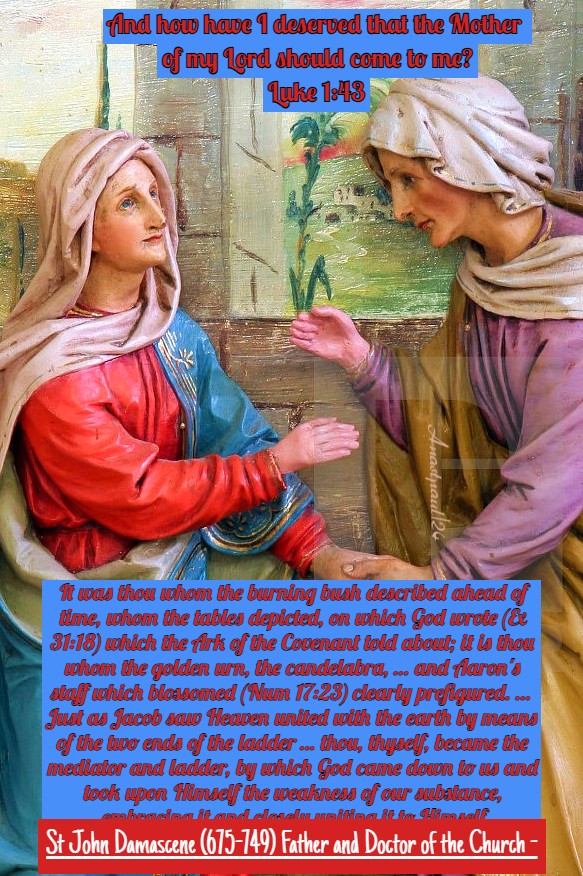
“This woman will be the Mother of God, the door to light, source of life. She will reduce to oblivion the judgement that weighed on Eve. Daughter of David the king and Mother of God, King of the universe, masterpiece in whom the Creator rejoices… thou art to be nature’s full achievement. For thou life is not thine, thou were not born for thyself alone but thou life is to be God’s. thou came into the world for Him, thou will serve for the salvation of all people, fulfilling God’s design, established from the beginning …”
St John Damascene (675-749) Father and Doctor of the Church
“For whoever does the will of my Father in Heaven, he is my brother and sister and mother.” “These words were directed at us, not at Our Lady. Not only was she the Immaculate Mother of Jesus Christ but, she performed lovingly, on all occasions, the Will of the heavenly Father. She did His Will, in poverty and obedience, in exile and on Mount Calvary. Therefore, she was God’s Mother in the spiritual, as well as, in the physical sense of the word, insofar, as she was constantly united to Him by a bond of love and of conformity with His desires. Christ’s words indicate, that Mary’s perfect and continuous acceptance of God’s Will, was even more pleasing to God, than the dignity of the divine Motherhood.”
Antonio Cardinal Bacci (1881-1971)
Mother of Salvation, Blessed Lady By St Anselm (1033-1109) Magnificent Doctor Marian Doctor
Mother of Salvation, Blessed Lady, you are the Mother of Justification and those who are justified; the Mother of Reconciliation and those who are reconciled; the Mother of Salvation and those who are saved. What a blessed trust and what a secure refuge! The Mother of God is our Mother. The Mother of the One in Whom alone, we hope and Whom alone, we fear, is our Mother! … The One Who partook of our nature and by restoring us to life, made us children of His Mother, invites us by this grace, to proclaim that we are His brothers and sisters. Therefore, our Judge, is also our Brother. The Saviour of the world, is our Brother. Our God has become – through Mary – our Brother! Anen
One Minute Reflection – 3 February – “The Month of the Most Holy and Blessed Trinity” – Saturday of the Blessed Virgin (Salve sancta parens) – Sirach 24:14-16; Luke 11:27-28 – Scripture search here: https://www.drbo.org/
“Blessed is the womb that bore Thee ” – Luke 11:27
REFLECTION – “Once indeed, God ejected the mortals and first parents of the human race from the paradise of Eden, when they had drunk deeply from the wine of disobedience and had become so affected by the hangover of sin, through the intoxication of that transgression which led to the sleepiness of the mind’s eye. …
Then Adam and Eve, the founders of our race, exclaimed with a loud voice in great rejoicing: “Blessed are you, O daughter, who bore for us the penalties of the commands that had been broken. When you had gained a mortal body from us, you gave birth to a covering of immortality for us. You repaid us ,so that it might be well with us, since you received birth from our loins. From beyond the grave, you have called us back to our ancient seat: we closed paradise for ourselves but you made open the way of the Tree of Life. Through our actions, sadness came forth from happiness; through you, even more joyful things have returned, from sorrow. In what possible way could you be acceptable to death, O Immaculate one? You are the bridge of life and the ladder to Heaven: you are a boat over the sea of death, reaching to immortality.”
But the woman herself, as she did not shrink from the truth, said: “Into Your hands, my Son, I commend my spirit. Receive this soul which is dear to You, which You have preserved free from any sin. I hand over my body, not to the earth but to You. Take me to Yourself, that where You are, You, the Child of my womb, so there I also may be Your companion. I am hastening to You, Who have often come to me on this side of that long distance.”
When she had said this, she heard in reply: “Come to My rest, My blessed Mother: arise, come, My Beloved, most blessed among all women. Behold, the winter is ended. You are all fair, My Beloved and there is no spot of stain found in you: the odour of your ointments are more precious than all other aromas.” – St John Damascene (675-749) Father and Doctor of the Church (An excerpt from his Homily 9: On the Dormition of the Blessed Virgin Mary).
PRAYER – Grant us, Thy servants, O Lord God, we beseech Thee, to enjoy lasting health of mind and body and, by the intercession of glorious and blessed Mary, ever Virgin, may we be delivered from present sorrow and partake, to the full, of eternal happiness.Through Jesus Christ, Thy Son our Lord, Who lives and reigns with Thee, in the unity of the Holy Ghost, God, world without end. Amen (Collect).
Saint of the Day – 3 February – Saint Lawrence the Illuminator (Died 576) Bishop, Peacemaker – graced with the charism of granting clarity of understanding to both sides of disagreeing parties, Founded the Farfa Monastery where he died. Born in Syria and died in 576 at the Monastery at Farfa, Italy, of natural causes. Patronages – against eye diseases and blindness, of the blind – both bodily and spiritual cases. Also known as – Lawrence of Spoleto, Laurence …
Lawrence was driven into exile from Antioch, in 514, with 300 faithful during the persecution by the Monophysite patriarch, Severus of Antioch.
He was Ordained to the Priesthood in Rome and sent to preach in Umbria, where he founded a Monastery near Spoleto. He was elected as the Bishop of Spoleto and served as its prelate for 20 years. He then resigned and retired to the famous Monastery of Farfa in the Sabine Hills near Rome which he had founded.
Saint Lawrence was renowned as a peacemaker who helped the parties to see the situation from the other side. It is said that he attained the surname “the Illuminator” because he had a special gift for curing blindness – both physical and spiritual .
St Anna the Prophetess St Berlinda of Meerbeke St Blasius of Armentarius St Blasius of Oreto St Caellainn St Celerinus of Carthage St Clerina of Carthage St Deodatus of Lagny St Eutichio St Evantius of Vienne St Felix of Africa St Felix of Lyons
St Laurentius of Carthage St Lawrence the Illuminator ) Died 576) Bishop St Leonius of Poitiers St Liafdag St Lupicinus of Lyon St Margaret of England St Oliver of Ancona St Philip of Vienne St Remedius of Gap St Sempronius of Africa St Tigrides St Werburga of Bardney St Werburga of Chester
Benedictine Martyrs: A collective memorial of all members of the Benedictine Order who have died as Martyrs for the Faith.
Thought for the Day – 2 February – The Spiritual Combat (1589) – Dom Lorenzo Scupoli OSM (c1530-1610)
“None shall be crowned who has not fought well.” 2 Tim 2: 5
The Third Weapon of the Spiritual Combat
XIII: … Of the Way to Resist the Impulses of Sense and of the Acts to be Performed by the Will in order to Acquire Habits of Virtue (Part Two)
“Suppose you are assailed by feelings of impatience. Look carefully into yourself and you will find that these feelings are constantly directed against the superior will, in order to win its consent.
Now then, begin the first exercise and by repeated acts of the will, do all in your power to stifle each feeling, as it arises that your will may not consent to it. And never desist from this, until, wearied unto death, your enemy yields himself vanquished. But see here the malice of the devil! When he perceives that we resist the first movements of any passion, not only does he desist from exciting them but when excited, he endeavours, for the time, to allay them, lest, by the exercise of resistance to the passion, we should acquire the habit of the opposite virtue. He would fain also betray us into the snares of pride and vainglory, by subtly insinuating to us that, like valiant soldiers, we have quickly trampled down our enemies.
Proceed, therefore, to the second conflict, recalling and exciting within yourself those thoughts which tempted you to impatience, until they sensibly affect you. Then set yourself to repress every such feeling with a stronger will and more earnest endeavour than before. And because, however strenuously we have resisted our enemies, from a sense of duty and a desire to please God, we are still in danger, unless we hold them in perfect detestation, of being one day overcome, attack them again even a third time and repel them, not with repugnance only but with indignation, until they have become hateful and abominable in your sight.”
Quote/s of the Day – 2 February – The Feast of the Purification of the Blessed Virgin, Candlemas – Malachias 3:1-4, Luke 2:22-32 – Scripture search here: https://www.drbo.org/
“The day will come when this Child will no longer be offered in the Temple, nor in Simeon’s arms but outside the City in the arms of the Cross. The day will come when He will not be redeemed by the blood of a sacrifice but redeem others , with His own Blood. …” That will be the evening sacrifice; this is the morning sacrifice; this one is the happiest but that one is the most complete; for this one was offered at the time of birth and that one will be offered in the fullness of time,..”
“But what shall we offer, brothers, what shall we give Him for all the benefits He has given us? He offered the most precious Victim He possessed for our sake; in truth, He could not have had anything more precious. So let us, too, do what we can, let us offer Him the best we have, that is to say, ourselves! He offered Himself, so who are you, to hesitate to offer yourself?”
St Bernard (1091-1153) Mellifluous Doctor of the Church
“Let us try and live like Simeon, with our minds and hearts turned towards Jesus. Let us think chiefly of Him, love Him, above everything else and work only for Him. Then our death will be as beautiful as his. In fact, we shall be even more fortunate, for we can go further than receiving Jesus into our arms. We shall be able to receive Him into out hearts. He will be at hand to give us the supernatural strength which we shall need on our great journey into eternity.”
One Minute Reflection – 2 February – The Feast of the Purification of the Blessed Virgin, Candlemas – Malachias 3:1-4; Luke 2:22-32 – Scripture search here: https://www.drbo.org/
“My eyes have seen Thy salvation …” – Luke 2:30
REFLECTION – “Come then, my brethren, give an eye to that candle burning in Simeon’s hands. Light your candles too by borrowing from that Light; for these candles I speak of are the lamps which the Lord orders us to have in our hands (Mt 25:1; Lk 12:35). Come to Him and be enlightened (Ps 33:6), so as to be not merely carrying lamps but to be very lamps yourselves, shining inside and out, for yourselves and for your neighbours.
Be a lamp then in heart, in hand, in lips. The lamp in your heart will shine for you; the lamp in your hand or on your lips, will shine out for your neighbours. The lamp in the heart is loving faith; the lamp in the hand is the example of good works; the lamp on the lips is edifying speech. But not just before men, must we shine by works and word but before Angels too, by prayer and before God Himself by pure Intention. Our lamp before the Angels is the purity of our devotion, when, in the sight of Angels, we chant the Psalms with care, or pray with burning ardour; our lamp before God is the honesty of our intention to please Him only, Whose approval we have won…
There are so many lamps then, my brethren, to lighten your way, if only you will come to the Source of all Light and be enlightened. Come, I say, to Jesus, Who shines out to us from Simeon’s arms. He will give Light to your faith, lustre to your works, meaning to your words for men, ardour to your prayer, purity to your intentions … And when this life’s lamp is extinguished, there will arise a life’s Light which can never be extinguished, a shimmering noonday Light, arising, as it were, at the evening of your life!” – Blessed Guerric of Igny O.Cist. (c1080-1157) Cistercian Abbot (1st Sermon for the Feast of the Purification of the Virgin Mary).
PRAYER – Almighty, eternal God, we humbly beseech Thy Majesty that, as Thy Only-begotten Son was this day presented in the temple in the nature of our flesh, so may Thou grant us to be presented to Thee with purified minds. Through Jesus Christ, Thy Son our Lord, Who lives and reigns with Thee, in the unity of the Holy Ghost, God, world without end. Amen (Collect). Through Jesus Christ, Thy Son our Lord, Who lives and reigns with Thee, in the unity of the Holy Ghost, God, world without end. Amen (Collect).
Saint of the Day – 2 February – St Jeanne de Lestonnac ODN (1556-1640) Widow, Mother, Founder of the The Sisters of the Company of Mary, Our Lady ODN (Latin: Ordinis Dominae Nostrae). Born on 27 December 1556 at Bordeaux, France and died on 2 February 1640 of natural causes. Patronages – of widows, abuse victims. Also known as – Jane de Lestonnac, Joan de Lestonnac, Joanne. Additional Memorial – 15 May on some Calendars.
Jeanne was born in Bordeaux in 1556 to Richard de Lestonnac, a member of the Parlement of Bordeaux and Jeanne Eyquem, the sister of the noted philosopher, Michel Eyquem de Montaigne. She grew up in a time where the conflict between the Protestants and the defenders of the Catholic Faith was at its height. This was evident in her own family. While her mother became an enthusiastic Calvinist and tried to persuade her to convert, her father and her uncle Montaigne, adhered to the Catholic Faith and were her support in withstanding her own mother’s influence. Jeanner remained a devoted Catholic.
At the age of 17 she married Gaston de Montferrant, with whom she had seven children, three of whom died in infancy. She was married for 24 years when her husband died. This marked the beginning of a very painful period in her life, with the further loss, within seven months, of her father, uncle and eldest son.
Copy of a Portrait of an 18-year old woman, attributed to Pieter Pourbus, 1574, in the Montreal Museum of Fine Arts, possibly St Jeanne de Lestonnac (1556-1640).
Following her husband’s death, Jeanne, at the age of 46 and with her children now grown, turned to a contemplative life and entered the Cistercian Monastery in Toulouse, where she was given the religious name of “Jeanne of Saint Bernard.” She found great peace and satisfaction in the monastic life but, after six months, she became very ill and had to leave the Monastery. She then went to live on her estate La Mothe Lusié to recover her health and where she adopted the lifestyle of a secular Sister, performing many acts of charity, including food and alms distribution and Jeanne regularly met with young women of her social class, to pray and discuss religious questions. She sought for models of Catholic women to be her guides and cultivated an interest in the lives of St Scholastica, St Clare of Assisi, St Catherine of Siena and St Teresa of Avila.
A few years later, in 1605, an epidemic of the Plague erupted in Bordeaux. At risk to her own life, Jeanne returned to her native City to help care for the sick and suffering in the slums and poorest regions of Bordeaux.
Jeanne’s brother, a Jesuit attached to the college in Bordeaux, arranged a meeting between his sister and two Jesuit Priests – Jean de Bordes and François de Raymond. The Jesuits asked her to serve as founder of a new teaching order for young women. They encouraged her to establish for girls, in terms of formal education, what they were doing for boys. The three decided upon a cloistered community to follow the Benedictine Rule, modified to allow Sisters to teach. The group gained the approval of Pope Paul V in 1607. The community took the name of the Compagnie de Notre-Dame.
An old priory was purchased near the Château Trompette but moved in September 1610, to a larger old Monastery on Rue du Hâ. They were well-received and financially supported by the City’s elite. The first five members of the new Order took their religious vows on 10 December 1610. The community established its first school for girls in Bordeaux. Foundations proceeded in Beziers, Périgueux and Toulouse through Jeanne’s personal connections, as well as her connections with the Jesuits and Bordelaise political elite. By the time she died in 1640, 30 Houses existed in France that is roughly one new foundation per year for 30 years.
Two of her daughters and at least one granddaughter had now joined the Order. Revised Rules and Constitutions for the congregation were drawn up in 1638. Joeanne was now over 80 and her health was beginning to fail. She spent her last years in seclusion as she prepared for death. But in her last years she was highly honoured by her Order. She died peacefully on 2 February 1640 in Bordeaux, aged 84, just after the sisters had renewed their vows on the Feast of the Purification of Our Lady. Her body is said to have been as healthy and emitted a sweet smell for several days afterwards. She was buried in the Cemetery of the Convent in Rue du Ha.
St Jeanne was Beatified on 23 December 1900 by Pope Leo XIII and was CanoniSed on 15 May 1949 by Pope Pius XII. As of 2016, her religious order has over 1,450 Sisters found in 27 Countries throughout Europe, Africa, North America and South America.
Our Lady of the Candles – Nuestra Señora de la Purificación y la Candelaria, is a Marian title and image venerated by Filipino Catholics. The image, which is enshrined on the balcony of Jaro Cathedral, is known as the Patroness of Jaro District of Iloilo City and the whole of the Western Visayas. The Feast Day of Our Lady of the Candles is on Candlemas (2 February) and is celebrated in Iloilo City with a Solemn Pontifical Mass presided by the Archbishop of Jaro.
St Adalbald of Ostrevant St Adeloga of Kitzingen St Agathodoros of Tyana St Apronian the Executioner Bl Bernard of Corbara St Bruno of Ebsdorf St Candidus the Martyr St Columbanus of Ghent St Cornelius the Centurion St Felician the Martyr St Feock St Firmus of Rome St Flosculus of Orléans St Fortunatus the Martyr St Hilarus the Martyr St Jeanne de Lestonnac (1556-1640) Widow, Mother, Founder
St Lawrence of Canterbury (Died 2 February 619) The Second Archbishop of Canterbury, the successor of St Augustine of Canterbury from 604 until his death in 619, but he was Consecrated as Archbishop by his predecessor, St Augustine, during Augustine’s lifetime, to ensure continuity in the office, Benedictine Monk, Missionary. He was a member of the Gregorian mission sent from Italy to England to Christianise the Anglo-Saxons. About St Lawrence: https://anastpaul.com/2022/02/02/saint-of-the-day-2-february-saint-lawrence-of-canterbury-died-619/
St Scholastica was the twin sister of St Benedict (480-547) and the Foundress of the Benedictine Nuns. As twins, St Scholastica and St Benedict were naturally born together and died within 6 weeks of each other. She is the Patron of Schools and Education, especially – tests and reading; of Convulsive children; Nuns; invoked against storms, lightening; rain. Normally prayed from 1 February until the 9th, in preparation for her Feast day on the 10 February.
O God, Thou caused the soul of Thy blessed virgin Scholastica, to enter heaven in the form of a dove, to show us the way of innocence. Grant us, by her prayers and merits, to live in such innocence that we may deserve to attain eternal joys. Through Jesus Christ, Thy Son our Lord, Who liveth and reigneth with Thee, in the unity of the Holy Ghost, ever one God, world without end. Amen. V. By the example and intercession of the Blessed Virgin Mary, Mother of the Church, keep us faithful to Thy Word. R. Hear us, O Lord. V. By the example and intercession of St Scholastica, keep us rooted in Thy love. R. Hear us, O Lord. V. By the example and intercession of all the holy virgins, keep us firm in prayer and charity. R. Hear us, O Lord.
(Mention your request here…)
Lord our God, Thou robed the virgin St Scholastica with the beauty and splendour of love. Help us to walk blamelessly before Thee, so that in the company of virgins, we may praise Thy Name forever and find our delight in Thee, through the same Jesus Christ our Lord. Amen
February is traditionally the Month of the Blessed Trinity, with the Holy Family being celebrated together with the Holy Name of Jesus in January.
The Sign of the Cross
In the Name of the Father and of the Son and of the Holy Ghost.
(50 Days. 100 Days if made with Holy Water Pope Pius IX, 1865)
An Act of Oblation to the Most Blessed Trinity By St Francis de Sales (1567-1622) Doctor of Charity
I vow and consecrate to God all that is in me, my memory and my actions, to God the Father; my understanding and my words, to God the Son; my will and my thoughts, to God the Holy Spirit. I consecrate my heart, my body, my tongue, my senses and all my sorrows, to the Sacred Humanity of Jesus Christ, Who consented to be betrayed into the hands of wicked men and to suffer the torment of the Cross for me. Amen
Virgin most resigned, who didst feel thy soul transfixed with sorrow when in spirit, thou didst foresee all the bitter passion of thy Son and, knowing the grief of St Joseph, thy Spouse, for all thy sufferings, didst, with holy words console him. Pierce our souls, through and through, with true sorrow for our sins that we may one day, possess the consolation of being made partakers of thy glory in Heaven. Amen
R. That he should not see death until he had seen the Christ of the Lord.
Let us Pray
Almighty, everlasting God, we pray Thy majesty that as Thine Only-begotten Son was presented in the Temple in the substance of our flesh, so Thou wouldst enable us to present ourselves before Thee, with clean hearts. Amen
To all faithful Christians who, in private or public, in Church or in their own houses, shall keep any of theNovenas, in preparation for the principal Feasts of Most Holy Mary, Pope Pius VII, at the prayer of several holy persons, granted, by Rescripts issued through his Eminence the Cardinal-Vicar, 4 August and 24 November 1808 and 11 January 1800 (all of which are kept in the Segretaria of the Vicariate) — i. An Indulgence of 300 days, daily. ii. A Plenary Indulgence to all who shall assist at these Novenas everyday and, who shall afterwards, either on the Feast Day itself, to which each Novena respectively has reference, or on some one day in its Octave, after Confession and Communion, prayed to our Lord and to the Blessed Virgin, according to the pious intention of the Sovereign Pontiff.
Virgin most compassionate when, through thy divine Son, thou didst fill the soul of Anna, the prophetess, with light, thou didst make her magnify the mercies of God by recognising Jesus, as the Redeemer of the world. Enrich our souls with heavenly grace that we, may largely share, the fruit of the Divine Redemption. Amen
R. That he should not see death until he had seen the Christ of the Lord.
Let us Pray
Almighty, everlasting God, we pray Thy majesty that as Thine Only-begotten Son was presented in the Temple in the substance of our flesh, so Thou wouldst enable us to present ourselves before Thee, with clean hearts. Amen
To all faithful Christians who, in private or public, in Church or in their own houses, shall keep any of theNovenas, in preparation for the principal Feasts of Most Holy Mary, Pope Pius VII, at the prayer of several holy persons, granted, by Rescripts issued through his Eminence the Cardinal-Vicar, 4 August and 24 November 1808 and 11 January 1800 (all of which are kept in the Segretaria of the Vicariate) — i. An Indulgence of 300 days, daily. ii. A Plenary Indulgence to all who shall assist at these Novenas everyday and, who shall afterwards, either on the Feast Day itself, to which each Novena respectively has reference, or on some one day in its Octave, after Confession and Communion, prayed to our Lord and to the Blessed Virgin, according to the pious intention of the Sovereign Pontiff.
Virgin most meek, on hearing the prophecy of Simeon foretelling thy woes, thou didst promptly bow to the good pleasure of Go. Enable us too, to bear all troubles with patience and resignation to His Divine Will. Amen
R. That he should not see death until he had seen the Christ of the Lord.
Let us Pray
Almighty, everlasting God, we pray Thy majesty that as Thine Only-begotten Son was presented in the Temple in the substance of our flesh, so Thou wouldst enable us to present ourselves before Thee, with clean hearts. Amen
NOVENA In Preparation for the Feast of the Purification of the Blessed Virgin Mary – DAY SIX 29 JANUARY:
DAY SIX
Virgin most zealous, by redeeming* thy Son, Jesus, according to the Law, thou didst co-operate in the salvation of the world:. Ransom now, our poor hearts, from the slavery of sin that so they maybe ever pure, before the face of God. Amen
Footnote to Day Six: Of course, Our Lord Jesus Christ, as God Incarnate, did not need to be redeemed. However, He and Our Lady, fulfilled all the precepts of the Law. This is the sense in which this day’s prayer is to be understood.
R. That he should not see death until he had seen the Christ of the Lord.
Let us Pray
Almighty, everlasting God, we pray Thy majesty that as Thine Only-begotten Son was presented in the Temple in the substance of our flesh, so Thou wouldst enable us to present ourselves before Thee, with clean hearts. Amen
To all faithful Christians who, in private or public, in Church or in their own houses, shall keep any of theNovenas, in preparation for the principal Feasts of Most Holy Mary, Pope Pius VII, at the prayer of several holy persons, granted, by Rescripts issued through his Eminence the Cardinal-Vicar, 4 August and 24 November 1808 and 11 January 1800 (all of which are kept in the Segretaria of the Vicariate) — i. An Indulgence of 300 days, daily. ii. A Plenary Indulgence to all who shall assist at these Novenas everyday and, who shall afterwards, either on the Feast Day itself, to which each Novena respectively has reference, or on some one day in its Octave, after Confession and Communion, prayed to our Lord and to the Blessed Virgin, according to the pious intention of the Sovereign Pontiff.
Thought for the Day – 29 January – The Feast of St Francis de Sales (1567-1622) Bishop, Confessor – Doctor of the Church: Doctor Caritatis (Doctor of Charity) “The Gentle Christ of Geneva” and “The Gentleman Saint.”
“The Difference between – Placing ourselves in God’s Presence and Staying in God’s Presence”
From a letter of St Francis de Sales (1567-1622) to St Jane Frances de Chantal (1572-1641) dated 16 January 1610
“Staying in God’s Presence and placing ourselves in God’s Presence are, to my mind, are two different things.
In order to place ourselves in His presence, we have to withdraw our soul from every other object and make it attentive to that Presence at this very moment, as I have explained in the book.[Introduction to the Devout Life] But once we are there, we remain there, as long as, either out intellect or our will, is active in regard to God. We look either at Him, or at something else, for love of Him; or, not looking at anything at all, we speak to Him; or again, without either looking at Him or speaking to Him, we just stay there where He has placed us, like a statue in its niche. And if, while we are there, we also have some sense that we belong to God and that He is our All, then we must certainly thank Him for this.
If a statue which had been placed in a niche, in some room, had the ability to speak and were asked “Why are you there?” it would answer, “Because my master, the sculptor, has put me here.” “Why do you not move out?” “Because he wants me to be perfectly still.” “What use are you there?What do you gain by staying like this?” “I’m not here for my own benefit but to serve and obey the will of my master.” “But you do not see him.” “No but he sees me and is pleased that I am here where he has put me.” “But would you not like to be able to move about and to get closer to him? “No, not unless he ordered me to.” “Is there not anything at all which you wish then?” “No because I am where my master put me and all my happiness lies in pleasing him.”
Dear daughter, what a good way of praying and what a fine way of staying in God’s Presence – doing what He wants and accepting what pleases Him! It seems to me that Mary of Bethany was a statue in her niche when, without saying a word, without moving and perhaps, even without looking at Him, she sat at Our Lord’s feet and listened to what He was saying. When He spoke, she listened; whenever He paused, she stopped listening but always, she was right there (Lk 10:39). A little child who is at its mother’s breast when she has fallen asleep, is really where it belongs and wants to be, even though neither of them makes a sound.
O my daughter, how I enjoy talking with you about these things! How happy we are when we want to love Our Lord! Let us really love Him, my daughter and let us not start examining in detail what we are doing, for love of Him, as long as we know that we never want to do anything except for love of Him.
For my part, I think we remain in God’s Presence, even while we are asleep because we fall asleep in His sight, as He pleases and according to His will and He puts us down on our bed, like a statue in its niche; when we awake, we find Him still there, close by. He has not moved, nor have we – evidently, we have stayed in His Presence but with our eyes closed in sleep.”
NOVENA In Preparation for the Feast of the Purification of the Blessed Virgin Mary – DAY FIVE, 28 JANUARY
DAY FIVE
Virgin most humble, in placing Jesus in holy old Simeon’s arms, thou didst fill his soul with heavenly joy. Give our hearts into God’s holy keeping that He may fill them with His Holy Spirit. Amen
R. That he should not see death until he had seen the Christ of the Lord.
Let us Pray
Almighty, everlasting God, we pray Thy majesty that as Thine Only-begotten Son was presented in the Temple in the substance of our flesh, so Thou wouldst enable us to present ourselves before Thee, with clean hearts. Amen
To all faithful Christians who, in private or public, in Church or in their own houses, shall keep any of theNovenas, in preparation for the principal Feasts of Most Holy Mary, Pope Pius VII, at the prayer of several holy persons, granted, by Rescripts issued through his Eminence the Cardinal-Vicar, 4 August and 24 November 1808 and 11 January 1800 (all of which are kept in the Segretaria of the Vicariate) — i. An Indulgence of 300 days, daily. ii. A Plenary Indulgence to all who shall assist at these Novenas everyday and, who shall afterwards, either on the Feast Day itself, to which each Novena respectively has reference, or on some one day in its Octave, after Confession and Communion, prayed to our Lord and to the Blessed Virgin, according to the pious intention of the Sovereign Pontiff.
NOVENA In Preparation for the Feast of the Purification of the Blessed Virgin Mary – DAY FOUR, 27 January
Day Four
Virgin most holy, in offering thy divine Son to His eternal Father, thou didst gladden all the court of Heaven; present our poor hearts to God, that He, by His grace, may keep them ever free from mortal sin. Amen
R. That he should not see death until he had seen the Christ of the Lord.
Let us Pray
Almighty, everlasting God, we pray Thy majesty that as Thine Only-begotten Son was presented in the Temple in the substance of our flesh, so Thou wouldst enable us to present ourselves before Thee, with clean hearts. Amen
NOVENA In Preparation for the Feast of the Purification of the Blessed Virgin Mary – DAY THREE, 26 January
Day Three
Virgin most pure, in observing the precept of the Law, thou didst care little that men should account thee unclean — ask for us, we beg of thee, grace to keep our hearts forever pure, however blamable the world may think us. Amen
R. That he should not see death until he had seen the Christ of the Lord.
Let us Pray
Almighty, everlasting God, we pray Thy majesty that as Thine Only-begotten Son was presented in the Temple in the substance of our flesh, so Thou wouldst enable us to present ourselves before Thee, with clean hearts. Amen
To all faithful Christians who, in private or public, in Church or in their own houses, shall keep any of theNovenas, in preparation for the principal Feasts of Most Holy Mary, Pope Pius VII, at the prayer of several holy persons, granted, by Rescripts issued through his Eminence the Cardinal-Vicar, 4 August and 24 November 1808 and 11 January 1800 (all of which are kept in the Segretaria of the Vicariate) — i. An Indulgence of 300 days, daily. ii. A Plenary Indulgence to all who shall assist at these Novenas everyday and, who shall afterwards, either on the Feast Day itself, to which each Novena respectively has reference, or on some one day in its Octave, after Confession and Communion, prayed to our Lord and to the Blessed Virgin, according to the pious intention of the Sovereign Pontiff.
NOVENA In Preparation for the Feast of the Purification of the Blessed Virgin Mary – DAY TWO, 25 January
To all faithful Christians who, in private or public, in Church or in their own houses, shall keep any of theNovenas, in preparation for the principal Feasts of Most Holy Mary, Pope Pius VII, at the prayer of several holy persons, granted, by Rescripts issued through his Eminence the Cardinal-Vicar, 4 August and 24 November 1808 and 11 January 1800 (all of which are kept in the Segretaria of the Vicariate) — i. An Indulgence of 300 days, daily. ii. A Plenary Indulgence to all who shall assist at these Novenas everyday and, who shall afterwards, either on the Feast Day itself, to which each Novena respectively has reference, or on some one day in its Octave, after Confession and Communion, prayed to our Lord and to the Blessed Virgin, according to the pious intention of the Sovereign Pontiff.
Day Two
Virgin most obedient, at thy presentation in the Temple thou didst will, like other women, to offer the wonted sacrifice: obtain for us that we too, following thy example, may learn how to offer ourselves as a living sacrifice to God, by practicing every virtue. Amen
R. That he should not see death until he had seen the Christ of the Lord.
Let us Pray
Almighty, everlasting God, we pray Thy majesty that as Thine Only-begotten Son was presented in the Temple in the substance of our flesh, so Thou wouldst enable us to present ourselves before Thee, with clean hearts. Amen
Thought for the Day – 25 January – The Spiritual Combat (1589) – Dom Lorenzo Scupoli OSM (c1530-1610)
“None shall be crowned who has not fought well.” 2 Tim 2: 5
The Third Weapon of the Spiritual Combat
XIII: … Of the Way to Resist the Impulses of Sense and of the Acts to be Performed by the Will in order to Acquire Habits of Virtue (Part One)
“Whenever your reasonable will is attacked by the will of sense, on the one hand and the Divine Will on the other, each seeking to obtain the mastery over it, you must make use of various exercises, in order that the Divine Will may always govern you.
Firstly: — Whenever you are assailed and buffeted by the impulses of sense, oppose a valiant resistance to them, so that the superior will may not consent.
Secondly: — When the assaults have ceased, excite them anew, in order to repress them with greater force and vigour.
Then challenge them again to a third conflict, wherein you may accustom yourself to repulse them with contempt and abhorrence. These two challenges to battle should be made to every disorderly appetite, except in the case of temptations of the flesh, concerning which we shall speak in their place.
Lastly: — Make acts contrary to each evil passion which is to be resisted. This will be made clear by the following example in part two.”
Quote/s of the Day – 25 January – Feast of the Conversion of St Paul, Apostle
“O my brethren, if only we wanted to, if only we all wanted to perceive our soul’s paralysis in all its depth! Then we would see that it is lying on a stretcher of sins, deprived of strength. Christ’s action within us, would be a source of light and we would understand that each day He sees our lack of faith, harmful as it is, that He draws us towards healing remedies and sharply presses our rebellious wills. “My son” He says, “your sins are forgiven you.”
St Peter Chrysologus (c 400-450) “Golden Words” Father & Doctor of the Church
“What are you afraid of, you men of little faith? That He will not pardon your sins? But with His own hands He has nailed them to the Cross. That you are used to soft living and your tastes are fastidious? But He knows the clay of which we are made (Gn 2:7). That a prolonged habit of sinning binds you like a chain? But the Lord loosens the shackles of prisoners. Or perhaps that angered by the enormity and frequency of your sins, He is slow to extend a helping hand? But where sin abounded, grace became superabundant (Rom 5,20). Are you worried about clothing and food and other bodily necessities so that you hesitate to give up your possessions? But He knows that you need all these things (Mt 6,32). What more can you wish? What else is there to hold you back from the way of salvation? ”
St Bernard (1091-1153) Mellifluous Doctor of the Church
“When it is dark, we do not see how dusty and dirty our house is. Only when the place is flooded with sunlight, do we realise its awful condition. So, we need the light of God’s grace to show us the real state of our soul and to induce us to clean up our hearts!”
St Anthony of Padua (1195-1231) Evangelical Doctor of the Church
“I see clearly with the interior eye, that the sweet God loves, with a pure love, the creature that He has created and has a HATRED for nothing but SIN, which is more opposed to Him, than can be thought or imagined.”
St Catherine of Genoa (1447-1510)
“A person who is conscious of his misery, can certainly have great confidence in God. In fact, he cannot have true confidence in Him, without this consciousness of his misery. This knowledge and acknowledgement of our misery, leads us to the presence of God.”
“Let us then depart, let us depart from Egypt, let us approach Our Lord, let us make provision of good works; let the feet of our affections be bare, let us clothe ourselves with innocence, let us not be satisfied with crying for mercy, let us go forth from Egypt, let us delay no longer. The hour is come to arise from sleep, since we know that He receives sinners; the Angels await our repentance, the Saints pray for it!”
St Francis de Sales 91567-1622) Doctor of the Church
One Minute Reflection – 25 January – Feast of the Conversion of St Paul , Apostle, Acts 9:1-22, Matthew 19,27-29.
“He fell to the ground and heard a voice saying to him, “Saul, Saul, why are you persecuting Me?” – Acts 9:4.
REFLECTION – “How can we show that He is there and that He is also here? Let Paul answer for us, who was previously Saul. First of all, the Lord’s own Voice from Heaven shows this: “Saul, Saul, why are you persecuting Me?” Had Paul climbed up to Heaven then? Had Paul even thrown a stone at Heaven? It was Christians he was persecuting, them he was tying up, them he was dragging off to be put to death, them he was everywhere hunting out of their hiding places and never sparing, when he found them. To him the Lord said, “Saul, Saul.” Where is He crying out from? Heaven. So He’s up above. “Why are you persecuting Me?” So He’s down below.” – St Augustine (354-430) Bishop of Hippo, Father and Doctor of the Church (Sermon 122).
PRAYER – O God, Who taught the whole world by the preaching of Thy blessed Apostle Paul, grant, we beseech Thee that we, who today celebrate his conversion, may draw closer to Thee, by way of hia example.Through Jesus Christ, Thy Son our Lord, Who lives and reigns with Thee, in the unity of the Holy Ghost, God, world without end. Amen (Collect).
You must be logged in to post a comment.