Our Morning Offering – 21 December – “The Month of the Divine Infancy and the Immaculate Conception of the Blessed Virgin Mary” – Feast of St Thomas, Apostle
Exsultet Orbis! Let the World Rejoice! Unknown Author
Now let the earth with joy resound, And Heaven the chant re-echo round; Nor Heaven nor earth too high can raise The great Apostles’ glorious praise.
O ye who, throned in glory dread, Shall judge the living and the dead, Lights of the world forever more! To you the suppliant prayer we pour.
Ye close the Sacred Gates on high. At your command apart they fly. O loose for us the guilty chain We strive to break and strive in vain.
Sickness and health your voice obey, At your command they go or stay. From sin’s disease our souls restore; In good confirm us more and more.
So when the world is at its end. And Christ to Judgment shall descend, May we be called, those joys to see Prepared from all eternity.
Praise to the Father, with the Son, And Holy Spirit, Three in One; As ever was in ages past And so shall be while ages last. Amen
(Roman Breviary for the Common of Apostles) An Office Hymn that was traditionally prescribed for Vespers and Lauds on the Feasts of Apostles and Evangelists outside Easter time. The Hymn is found as early as the tenth century in a hymnal of Moissac Abbey.
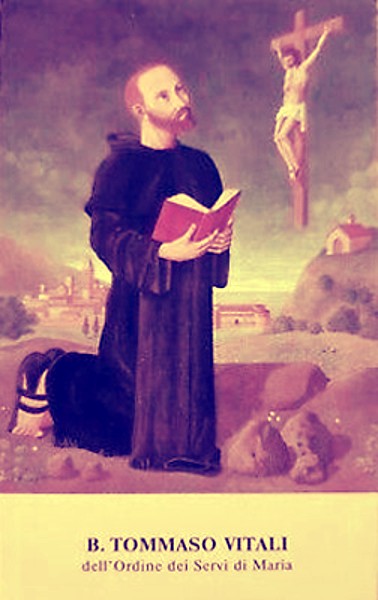
Saint of the Day – 21 December – Blessed Tommaso Vitali OSM (1425-1490) Priest and Friar of the Order of the Servants of Mary (the Servites), a renowned and highly effective Preacher and patient spiritual guide. Born in 1425 in Endenna, Bergamo, Italy and died on 21 December 1490 in Pesaro, Italy of natural causes. Also known as – Thomas.
Tommaso lived for many years in the Hermitage of Monte Granaro in the Province of Pesaro together with Blessed Paolo Bigoni from Chiari (Brescia) and Blessed Bonaventura from Forlì.
The three blessed together formed an exemplary community characterised by an intense Marian spirituality, whose corner stones were prayer, study, manual work and preaching.
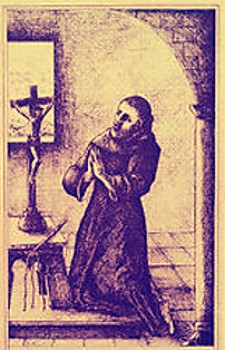
Tradition tells us that Blessed Tommaso grew in the grace of the Lord thanks to his penances, his prayer vigils and his continuous fasting. A talented preacher, he was able to announce, with great enthusiasm, the experience of Jesus Christ Crucified, His suffering and His love for sinful man.
Living in conformity with his preaching, patiently listening to the Confessions of the faithful in order to be able to guide them wisely on the path of life aimed towards holiness.
He died in Pesaro on 21 December 1490. His body was kept in the Church of Santa Maria Monte Granaro until 1650 and subsequently, in the Church of St Maria delle Grazie. In 1922, when the Church of St Maria delle Grazie was demolished and the Servants of Mary moved to the Church of St Francesco, the body of Blessed Tommaso Vitali was placed under the Altar dedicated to the Seven Holy Founders of the Servite Order.
The Archdiocese of Pesaro counts him among its Blessed. Even if there is no celebration in memory of Blessed Tommaso Vitali, in some Martyrologies he is remembered on 21 December, on the anniversary of his death.
St Festus of Tuscany St Glycerius of Nicomedia St James of Valencia St John of Tuscany St John Vincent St Severin of Trèves (Died c300) Bishop, Confessor Bl Sibrand of Marigård St Themistocles of Lycia Blessed Tommaso Vitali OSM (1425-1490) Priest and Friar of the Order of the Servants of Mary (the Servites)
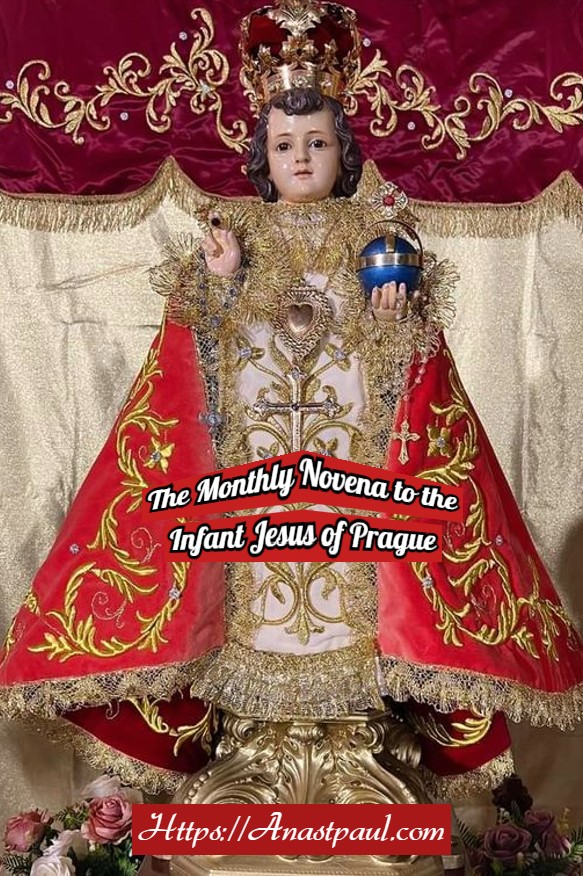
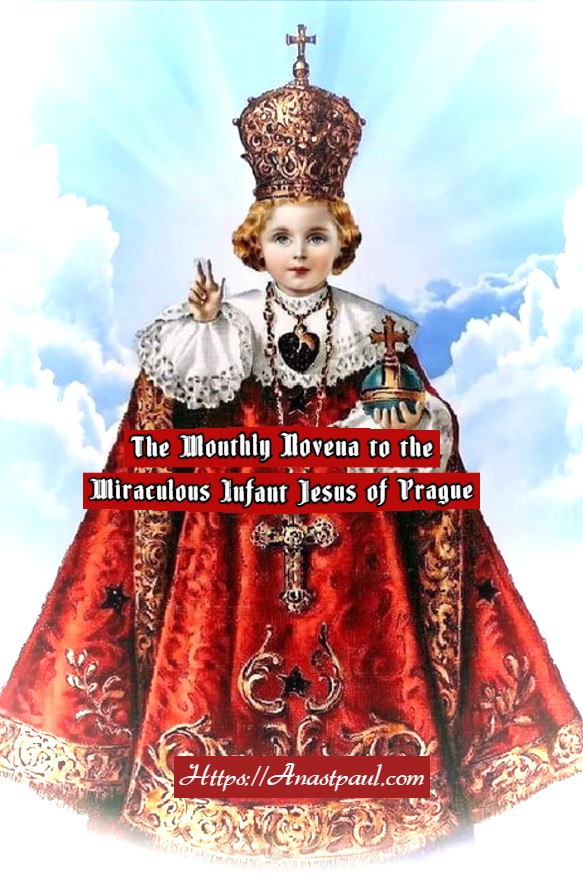
The Monthly Novena to the Miraculous Infant Jesus of Prague
There are two standard Novenas to the Infant Jesus of Prague – the one we will use below and the other for the Feast on 2 January. The Monthly Novena attracts Indulgences (see Note below).
“The more you honour Me, the more I will bless you.”
Devotion of the Saints to the Holy Infant: Members of the Carmelite Order have been zealous, at all times, in promoting devotion to the Holy Infant of Prague. In particular might we mentioned a certain Father Ildephonse. This Priest always carried a picture of the Infant Jesus on his person and on one occasion was miraculously saved from shipwreck by imploring His assistance. It has been ordained that in all Convents of Our Lady of Mt Carmel, whether of men or of women, a Statue of the Holy Infant should be set up for veneration. St. Teresa of Jesus, the celebrated reformer of the Carmelite Order, was very fond of this devotion. The Blessed Crescentia of Kaufbeuern also possessed a Statue of the Infant Jesus of Prague which she had adorned with a beautiful dress. St Clement Maria Hofbauer, a Redemptorist, was another ardent worshiper of the Divine Infant and always had a Statue of the Little King in his room.
The Infant’s Patronage is especially sought for: vocations, good health, financial issues, a holy family life, schools, the welfare of children, freedom and peace, the missions and safety in travel.
Eternal Father, I offer to Thy honour and glory, for my own salvation and that of the whole world, the Mystery of the Birth of our Divine Saviour. Glory be to the Father, etc.
Eternal Father, I offer to Thy honour and glory and for my eternal salvation and that of the whole world, the sufferings of the most holy Virgin and of St Joseph, in that long and weary journey from Nazareth to Bethlehem. I offer Thee the sorrow of their hearts when they found no place wherein to shelter themselves, when the Saviour of the world was born. Glory be to the Father, etc.
Eternal Father, I offer to Thy honour and glory and for my eternal salvation and that of the whole world, the sufferings of Jesus in the stable where He was born, the cold He endured, the swaddling clothes which bound Him, the tears He shed and His tender Infant cries. Glory be to the Father, etc.
Eternal Father, I offer to Thy honour and glory and for my eternal salvation and that of the whole world, the pain which the Holy Child Jesus felt in His tender body, when He submitted to circumcision. I offer Thee that Precious Blood which then, for the first time He shed for the salvation of the whole humanrace. Glory be to the Father, etc.
Eternal Father, I offer to Thy honour and glory and for my eternal salvation and that of the whole world, the humility, mortification, patience, charity, all the virtues of the Child Jesus and I thank Thee and I love Thee and I bless Thee without end, for the ineffable Mystery of the Incarnation of the Divine Word. Glory be to the Father, etc.
The Word was made Flesh, And dwelt among us.
LET US PRAY O God, Whose Only-begotten Son was made manifest to us in the substance of our flesh, grant, we beseech Thee, that through Him, Whom we acknowledge to be like unto ourselves, our souls may be inwardly renewed. Who liveth and reigneth with Thee forever and ever. Amen.
7 years Indulgence each day, if the above prayers are recited on the 9 days preceding the 25th of any month. Plenary Indulgence under the usual conditions, when the Novena is completed. (125)
Thought for the Day – 20 December – Meditations with Antonio Cardinal Bacci (1881-1971)
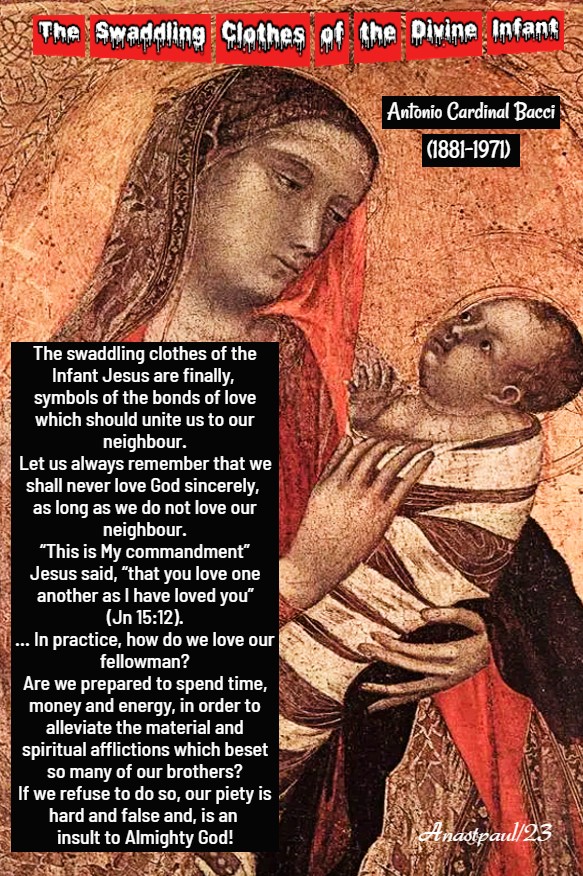
Christmas Novena V The Swaddling Clothes of the Divine Infant
“The swaddling clothes of the Infant Jesus are finally, symbols of the bonds of love which should unite us to our neighbour. Let us always remember that we shall never love God sincerely, as long as we do not love our neighbour. “This is My commandment” Jesus said, “that you love one another as I have loved you” (Jn 15:12). This means that we must love our neighbour, not only in word but, in deed. We must make sacrifices on his behalf and must even be prepared to die for him!
In practice, how do we love our fellowman? Are we prepared to spend time, money and energy, in order to alleviate the material and spiritual afflictions which beset so many of our brothers? If we refuse to do so, our piety is hard and false and, is an insult to Almighty God!”
Quote/s of the Day – 20 December – “The Month of the Divine Infancy and the Immaculate Conception of the Blessed Virgin Mary” The Vigil of St Thomas, Apostle – Ember Wednesday, Third Week of Advent – Sirach 44:25-27, 45:2-4, 45:6-9; John 15:12-16 – Scripture search here: https://www.drbo.org/
“This is My commandment that you love one another, as I have loved you. ”
John 15:12
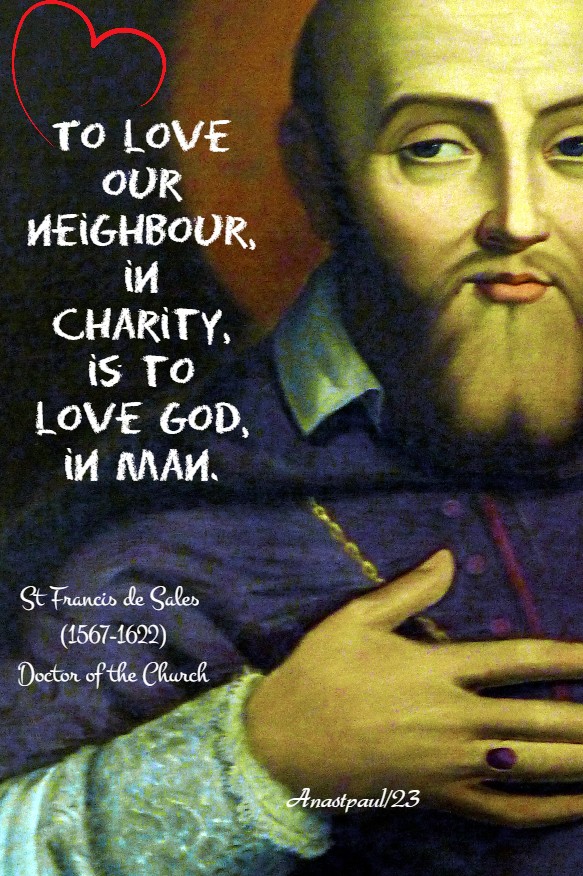
“To love our neighbour, in charity, is to love God, in man.”
(Treatise on the Love of God Book 10 Chapter 11)
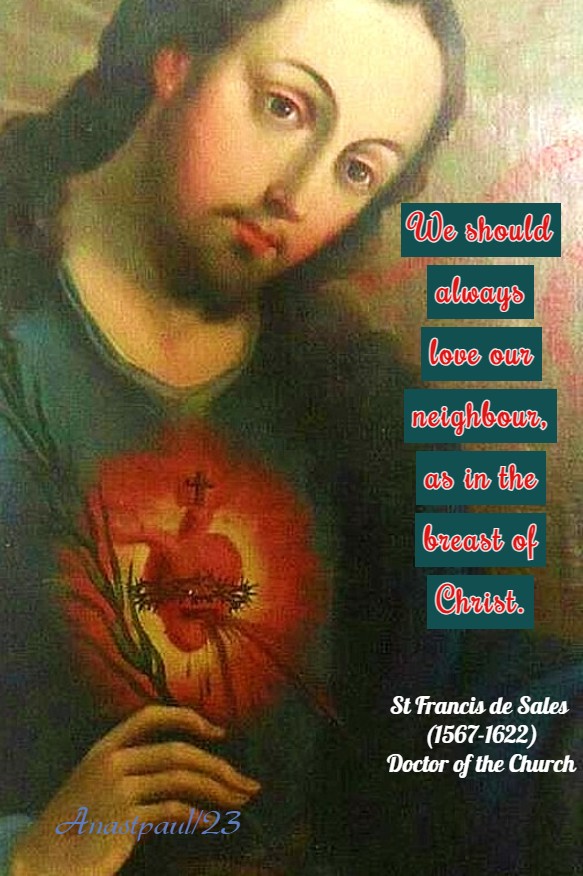
“We should always love our neighbour, as in the breast of Christ”
(The Spirit of St François de Sales II, 1)
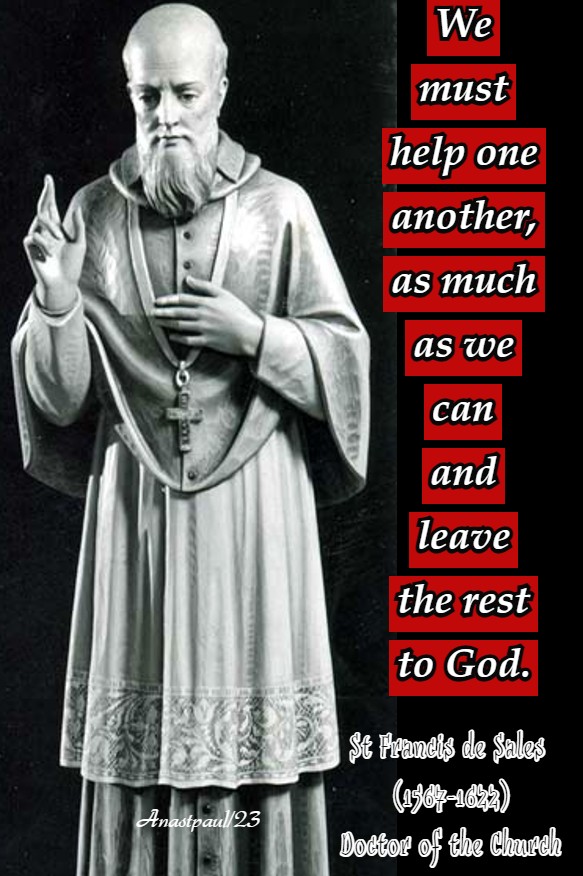
“We must help one another, as much as we can and leave the rest to God.”
(Letters to Persons in Religion,I, 8)
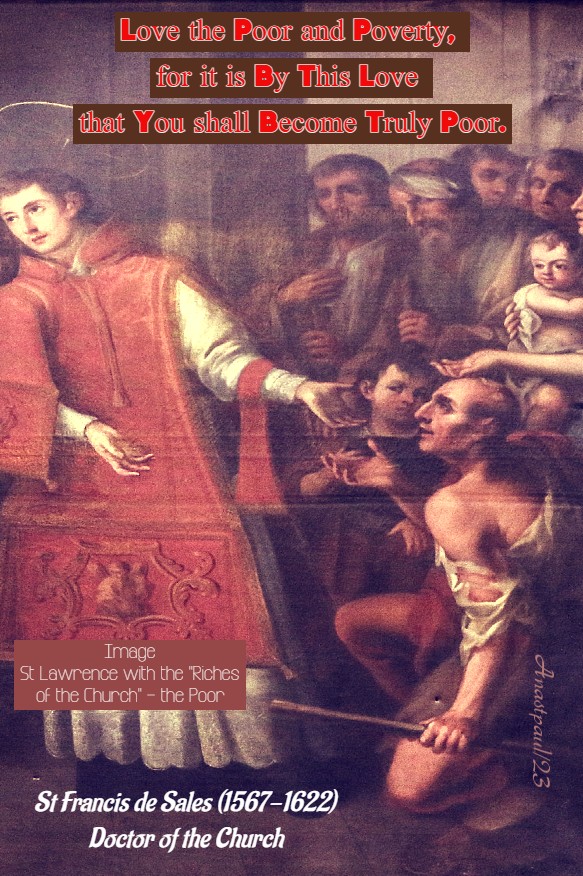
“Love the poor and poverty, for it is by this love that you shall become truly poor.”
(Introduction to the Devout Life Part III Chapter 15)
St Francis de Sales (1567-1622) Doctor of the Church
One Minute Reflection – 20 December – “The Month of the Divine Infancy and the Immaculate Conception of the Blessed Virgin Mary” – The Vigil of St Thomas, Apostle – Ember Wednesday, Third Week of Advent – Sirach 44:25-27, 45:2-4, 45:6-9; John 15:12-16 – Scripture search here: https://www.drbo.org/
“This is My commandment that you love one another, as I have loved you. Greater love than this no man hath that a man lay down his life for his friends.” – John 15:12-13
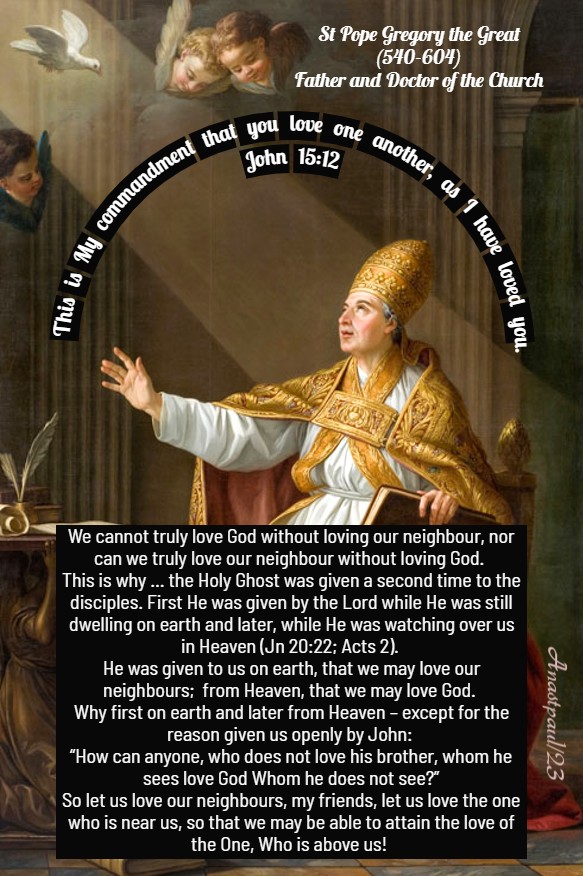
REFLECTION – “We cannot truly love God without loving our neighbour, nor can we truly love our neighbour without loving God. This is why … the Holy Ghost was given a second time to the disciples. First He was given by the Lord while He was still dwelling on earth and later, while He was watching over us in Heaven (Jn 20:22; Acts 2). He was given to us on earth, that we may love our neighbours; from Heaven, that we may love God. Why first on earth and later from Heaven – except for the reason given us openly by John: “How can anyone, who does not love his brother, whom he sees love God Whom he does not see?”
So let us love our neighbours, my friends, let us love the one who is near us, so that we may be able to attain the love of the One, Who is above us! Let our hearts reflect on what our neighbours hold up to God, so that we may be found completely worthy, to rejoice in God with them. Then shall we reach the happiness of the heavenly multitude, the happiness of which, we have received an assurance from the Holy Spirit. Let us move forward toward that goal, where we shall be happy without end, with all our love. There is the holy community of heavenly citizens, there is the sure and solemn observance, there untroubled rest, there the true peace which is no longer dependent on us but given to us through our Lord Jesus Christ (Jn 14:27).” – St Gregory the Great (540-604) Pope, Father and Doctor of the Church (Excerpt Sermons on the Gospel No 30).
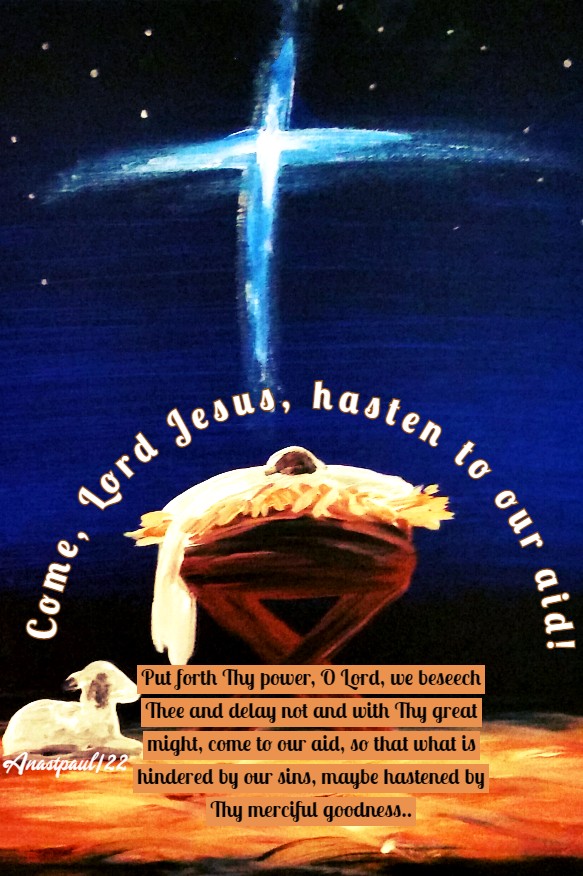
PRAYER – Put forth Thy power, O Lord, we beseech Thee and delay not and with Thy great might, come to our aid, so that what is hindered by our sins, maybe hastened by Thy merciful goodness. Who livest and reignest with God the Father, in the unity of the Holy Spirit, God, world without end. Amen (Collect)
Our Morning Offering – 20 December – “The Month of the Divine Infancy and the Immaculate Conception of the Blessed Virgin Mary” – Ember Wednesday of the Third Week of Advent
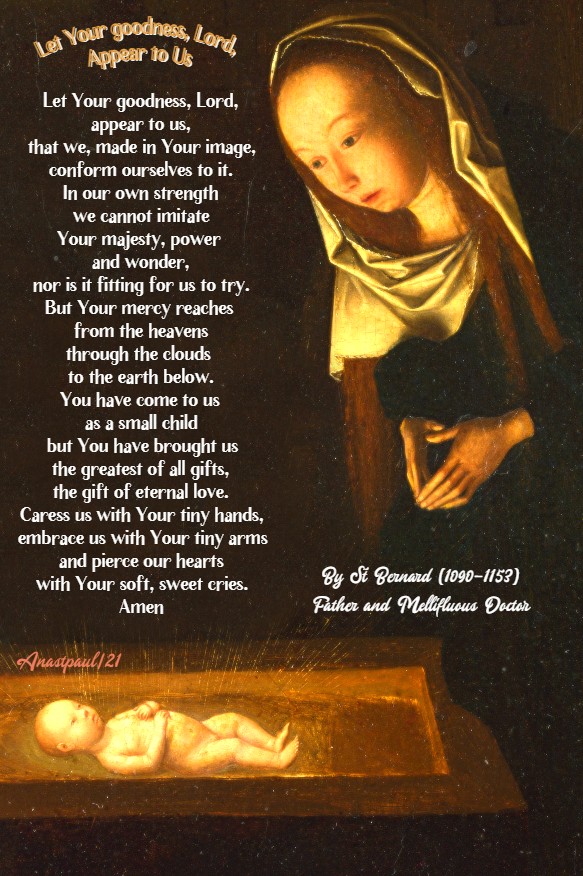
Let Your Goodness, Lord, Appear to Us An Advent Prayer By St Bernard (1090-1153) Father and Mellifluous Doctor
Let Your goodness, Lord, appear to us, that we, made in Your image, conform ourselves to it. In our own strength we cannot imitate Your majesty, power and wonder, nor is it fitting for us to try. But Your mercy reaches from the heavens through the clouds to the earth below. You have come to us as a small child but You have brought us the greatest of all gifts, the gift of eternal love. Caress us with Your tiny hands, embrace us with Your tiny arms and pierce our hearts with Your soft, sweet cries. Amen
Saint of the Day – 20 December – Saint Ursicinus of Saint-Ursanne (c552-c625) Abbot, Hermit, disciple of St Columban (543-615). Born in c552 in either France or Ireland and died on 20 December in c625 near modern St-Ursanne, Jura, Switzerland of natural causes. Patronages – against a painful and stiff neck, Besançon in France and in Switzerland – Basel, Saint-Ursanne. Also known as – Ursicino del Giura, Ursan, Ursitz, Ursanne. Additional Memorial – 24 July in the Diocese of Basel, Switzerland.
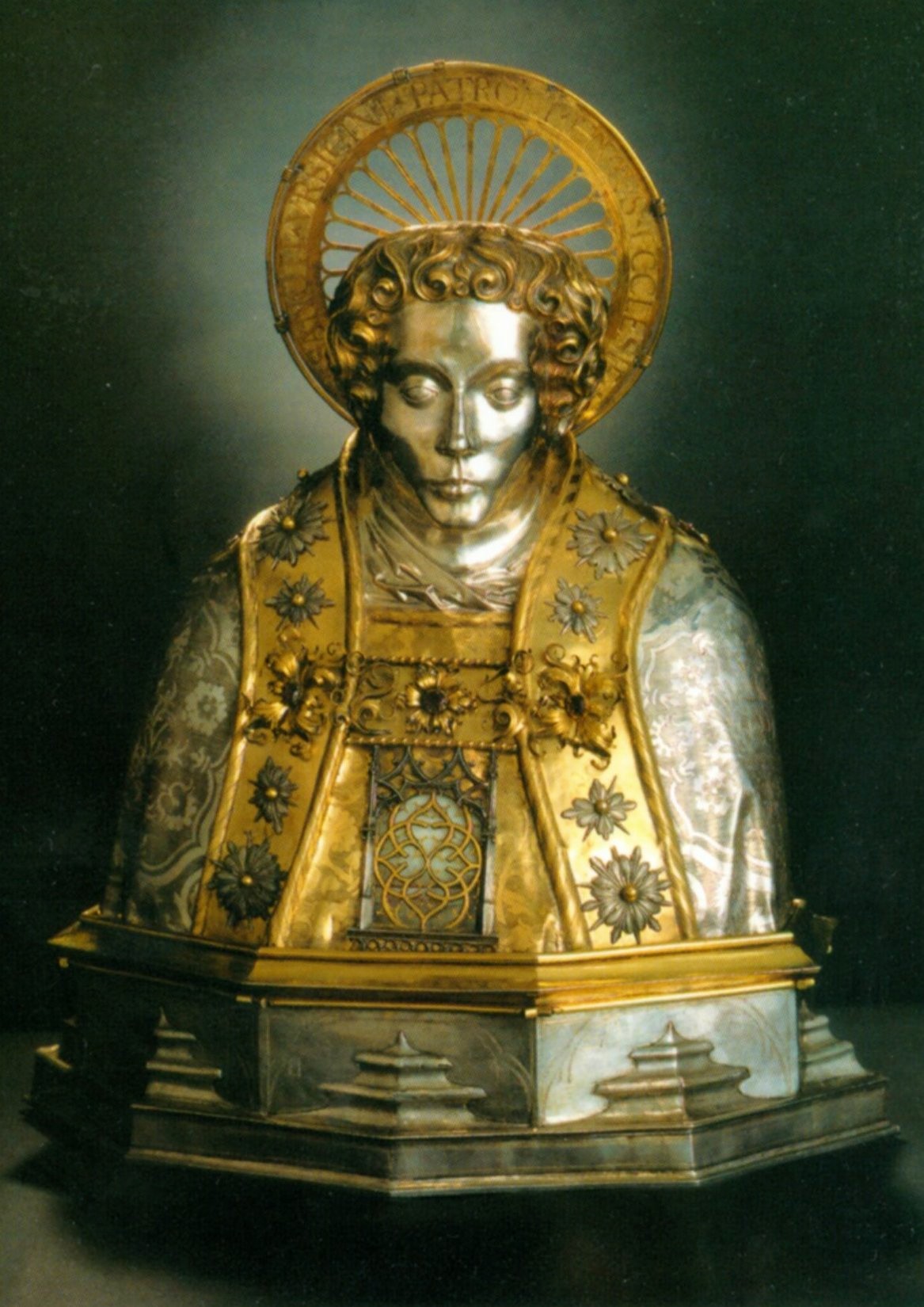
Reliquary of St Ursicinu , 1519, in the Monastery Church in St Ursanne
The cult of St Ursicinus, a Hermit in the Jura, is attested in this Swiss region since the third part of the 7th Century. In fact, already before 67, the Abbot German of Moûtier-Grandval, had built a Church in our Saint’s honour near Grandval.
Furthermore, an ancient document reports that Abbot St Wandregisel (Died 668), built a Monastery around 630 in the same place where Ursicinus rested.
The Sarcophagus of the Hermit Saint, dating to the 7th Century, is still venerated in the beautiful Church of St Ursanne (Ursicinus), located in the bend of the Doubs river which rises in the French Jura and enters Swiss territory for a short stretch, forming the aforementioned bend, on whose shore the Church is located.
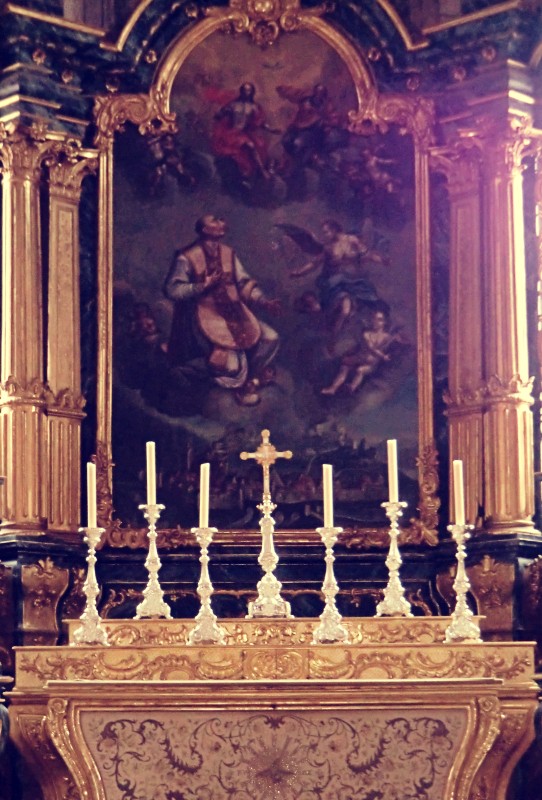
Altar and Sarcophagus in the Monastery Church in St Ursanne
As regards the life of Ursicinus, everything that the Hagiographers have considered and spread, comes from an ancient document, first cited by the Jesuit Claudio Sudan (1579-1665) in his work “Sacred Basel” but which unfortunately, he did not transcribe verbatim. The document was a liturgical legend in 24 lessons, which was composed at the request of Bishop Hugh I of Besançon, the Diocese to which the Hermit Ursicinus then belonged.
This ‘Vita’ which was lost, said that Ursicinus was an Irish Monk, a companion of St Colomban (543-615), the Abbot who emigrated from Ireland to France and then to Italy, where he founded the Monastery of Bobbio in 614. Ursicinus, who had followed the Abbot Colomban, together with the Monks Gallus, Sigisbert, Fromond, in the Gaul of the time, when in 610, they had to leave Luxeuil in French territory, split from his master who was headed for Italy and with Fromond, he went up the mountain range of Franco-Swiss Jura, looking for a suitable place for a Hermit’s life.
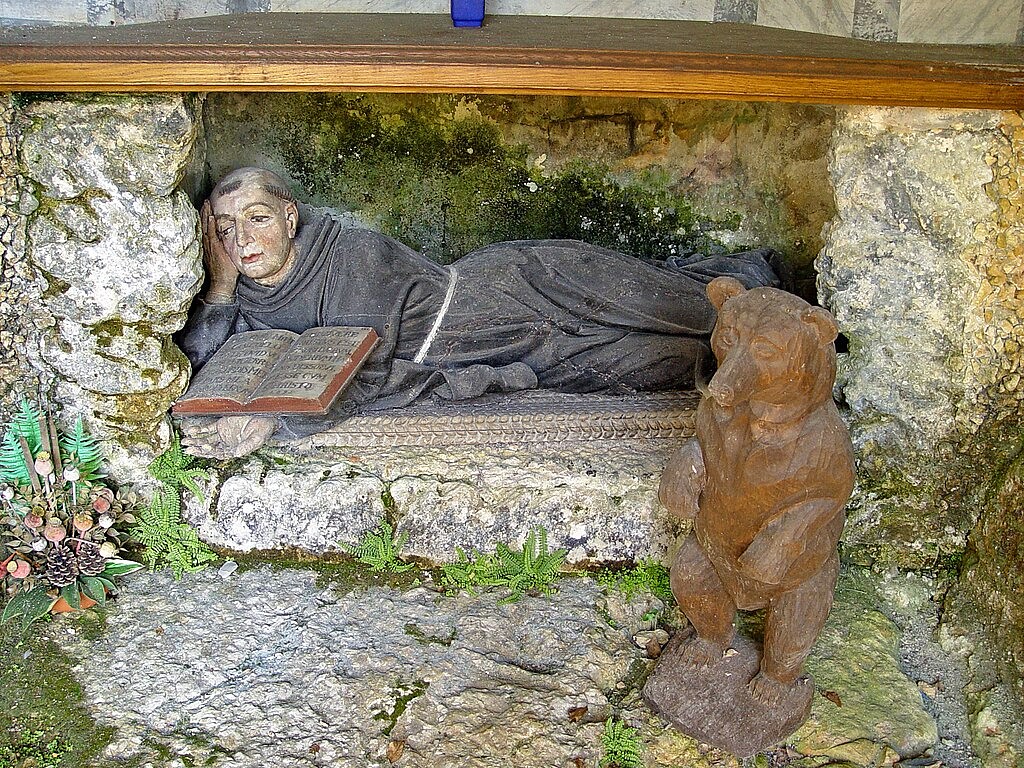
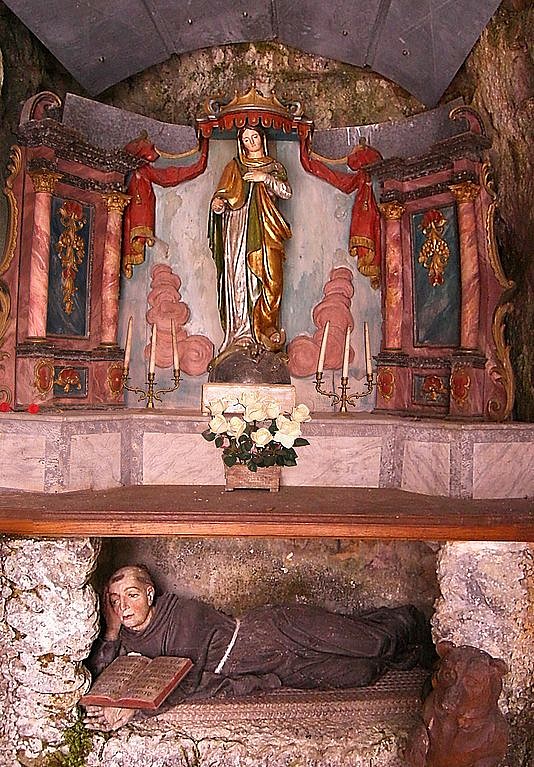
This Statue rests in the Hermitage Shrine
Tradition says that Ursicinus proposed to his fellow Monk to throw their sticks into the air from the top of a mountain, thus letting Heaven decide the correct indication at the point of where they fell. The sticks fell in different places and the two companions were separated, Ursicinus’ fell near a cave, in the valley of the Doubs river, where he retired as a Hermit.
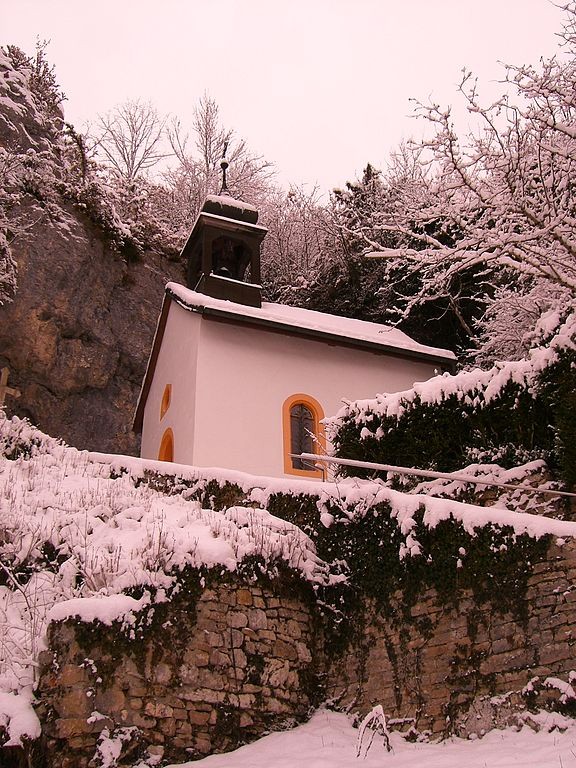
St Ursicinus’ Hermitage
In this place he built a Chapel dedicated to St Peter and which would, in the future, take his name. Soon his fame attracted various disciples, so Ursicinus founded a Monastery for them, under the rule of his master, St Columban and under his governance.
After about ten years of an exemplary hmonastic life, Saint Ursicinus died around 625. Hhis name is found in the Litanies of the Saints venerated in Besançon since the 11th Century and in the Martyrology of the same Diocese today, 20 December.
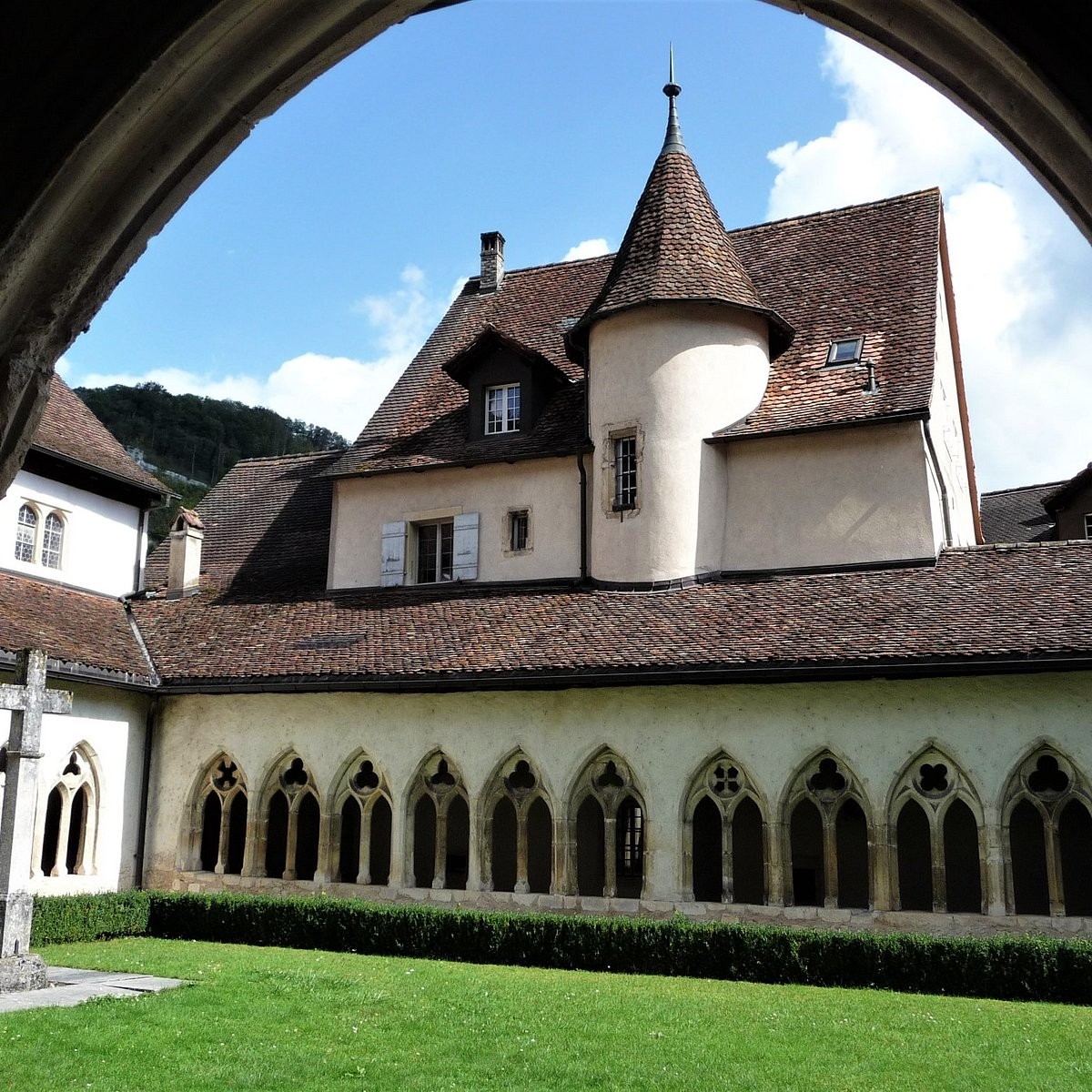
The Monastery he founded in the Doubs valley underwent various changes over time, passed to the Benedictines, in 1040 it was dependent on that of Moûtier-Grandval, then in 1077 it was assigned to the Bishops of Basel. In 1119, one of these Bishops established a Collegiate Church there which lasted until 1793 when it was destroyed.
The Monastery of St Ursicinus
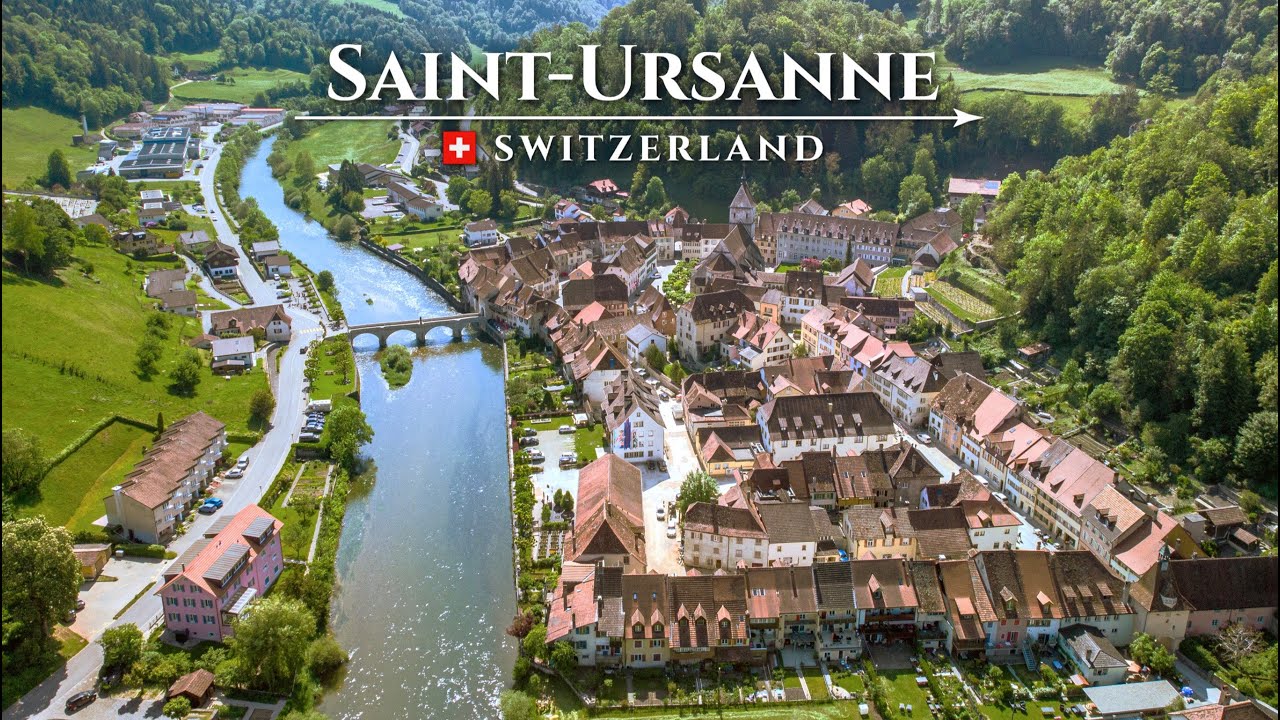
The Town of Saint Ursanne arose around the Monastery. He is venerated throughout the Northern Jura, in Besançon, Mainz, Basel. Images of him show him holding a book and lilies.
St Attala of Strasbourg St Bajulus of Rome St Crescentius of Africa St Damian of Padua St Dominic of Brescia
St Dominic de Silos OSB (1000-1073) Monk, Abbot. He was a Spanish Monk, to whom the Abbey of Santo Domingo de Silos, where he served as the Abbot, is dedicated. The mother of the better-known Saint Dominic de Guzmán, the Blessed Joan of Aza, prayed at his Shrine before she was able to conceive the son she named for him. That son would grow up to found the Dominican Order. Dominic’s special patronage thus became connected with pregnancy and until the establishment of the Second Spanish Republic in 1931, his abbatial crozier was used to bless the queens of Spain and was placed by their beds when they were in labour. Biography: https://anastpaul.wordpress.com/2017/12/20/saint-of-the-day-20-december-st-dominic-de-silos-o-s-b-c1000-1073/
St Eugene of Arabia St Hoger of Hamburg-Bremen (Died 916) Bishop Bl John de Molina St Julius of Gelduba Bl Lorenzo Company St Liberatus of Rome St Macarius of Arabia St Malou of Hautvillers St Paul of Latra Blessed Peter de la Cadireta
The Monthly Novena to the Miraculous Infant Jesus of Prague
There are two standard Novenas to the Infant Jesus of Prague – the one we will use below and the other for the Feast on 2 January. The Monthly Novena attracts Indulgences (see Note below).
“The more you honour Me, the more I will bless you.”
Within recent years the devotion to the Miraculous Infant has grown in a wonderful manner and today, the Statue of the Infant Jesus of Prague may be seen in Churches and Chapels, in cloisters and schools, the world over. The “Little King” has taken up His abf^de among the rich and poor, the great and lowly. Just as a mighty tree springs from a tiny seed, so this devotion has grown from a small beginning, to the greatest dimensions; it is no longer local or national but as universal as the Church itself. The Divine Child attracts an ever-increasing number of clients, who appeal to Him in every need.
The Infant’s Patronage is especially sought for: vocations, good health, financial issues, a holy family life, schools, the welfare of children, freedom and peace, the missions and safety in travel.
THE NOVENA PRAYERS
Eternal Father, I offer to Thy honour and glory, for my own salvation and that of the whole world, the Mystery of the Birth of our Divine Saviour. Glory be to the Father, etc.
Eternal Father, I offer to Thy honour and glory and for my eternal salvation and that of the whole world, the sufferings of the most holy Virgin and of St Joseph, in that long and weary journey from Nazareth to Bethlehem. I offer Thee the sorrow of their hearts when they found no place wherein to shelter themselves, when the Saviour of the world was born. Glory be to the Father, etc.
Eternal Father, I offer to Thy honour and glory and for my eternal salvation and that of the whole world, the sufferings of Jesus in the stable where He was born, the cold He endured, the swaddling clothes which bound Him, the tears He shed and His tender Infant cries. Glory be to the Father, etc.
Eternal Father, I offer to Thy honour and glory and for my eternal salvation and that of the whole world, the pain which the Holy Child Jesus felt in His tender body, when He submitted to circumcision. I offer Thee that Precious Blood which then, for the first time He shed for the salvation of the whole humanrace. Glory be to the Father, etc.
Eternal Father, I offer to Thy honour and glory and for my eternal salvation and that of the whole world, the humility, mortification, patience, charity, all the virtues of the Child Jesus and I thank Thee and I love Thee and I bless Thee without end, for the ineffable Mystery of the Incarnation of the Divine Word. Glory be to the Father, etc.
The Word was made Flesh, And dwelt among us.
LET US PRAY O God, Whose Only-begotten Son was made manifest to us in the substance of our flesh, grant, we beseech Thee, that through Him, Whom we acknowledge to be like unto ourselves, our souls may be inwardly renewed. Who liveth and reigneth with Thee forever and ever. Amen.
7 years Indulgence each day, if the above prayers are recited on the 9 days preceding the 25th of any month. Plenary Indulgence under the usual conditions, when the Novena is completed. (125)
Thought for the Day –19 December – Meditations with Antonio Cardinal Bacci (1881-1971)
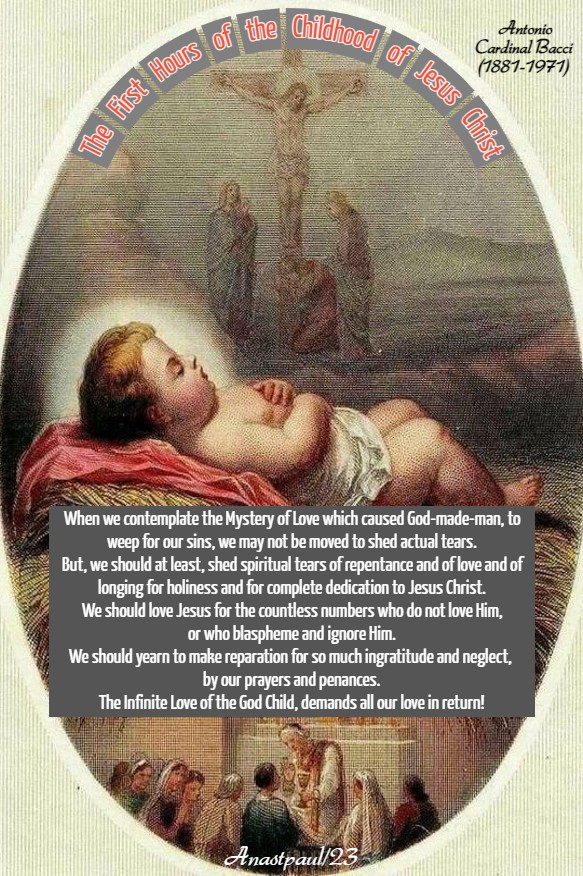
A Christmas Novena IV The First Hours of the Childhood of Jesus Christ
“When we contemplate the Mystery of Love which caused God-made-man, to weep for our sins, we may not be moved to shed actual tears. But, we should at least, shed spiritual tears of repentance and of love and of longing for holiness and for complete dedication to Jesus Christ. We should love Jesus for the countless numbers who do not love Him, or who blaspheme and ignore Him. We should yearn to make reparation for so much ingratitude and neglect, by our prayers and penances. The Infinite Love of the God Child, demands all our love in return!”
Quote of the Day – 19 December – “The Month of the Divine Infancy and the Immaculate Conception of the Blessed Virgin Mary”
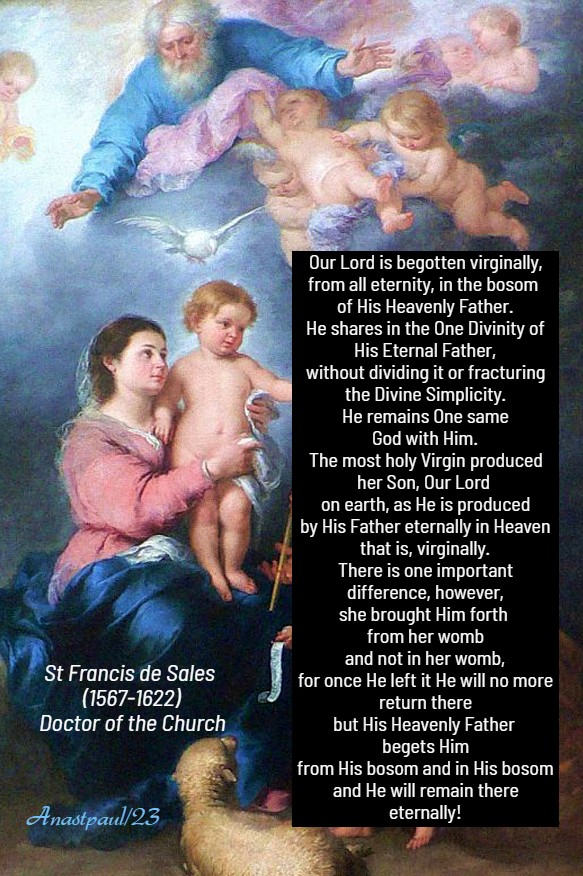
“Our Lord is begotten virginally, from all eternity, in the bosom of His Heavenly Father. He shares in the One Divinity of His Eternal Father, without dividing it or fracturing the Divine Simplicity. He remains One same God with Him. The most holy Virgin produced her Son, Our Lord on earth, as He is produced by His Father eternally in Heaven that is, virginally. There is one important difference, however, she brought Him forth from her womb and not in her womb, for once He left it He will no more return there but His Heavenly Father begets Him from His bosom and in His bosom and He will remain there eternally!”
(The Coming of the Divine Infant 24 December 1613 Sermon for Christmas Eve)
St Francis de Sales (1567-1622) Doctor of the Church
One Minute Reflection – 19 December – “The Month of the Divine Infancy and the Immaculate Conception of the Blessed Virgin Mary” – The Third Week of Advent – Ferial Day – Philippians 4:4-7; John 1:19-28 – Scripture search here: https://www.drbo.org/ – Scripture search here: https://www.drbo.org/
“He it is Who is to come after me, Who has been set above me, the strap of Whose sandal I am not worthy to loose. ” – John 1:27
REFLECTION – “When the whole universe was overshadowed by the darkness of the devil and sins’ gloom dominated the world, a new Sun, Christ our Lord, willed in these last days, when night was nearly over, to shine forth the first rays of a new day. But before this Light appeared, that is to say, before the “Sun of righteousness” (Mal 3:20) arose, God had already announced it, like a first gleam through his Prophets: “I sent My Prophets before the Light” (Jr 7:25). Later, Christ Himself, put forth His Rays – that is to say, His Apostles – to make His Light shine out and fill the universe with His Truth, so that none might be lost in darkness…
But so as to finish doing our necessary tasks, before the Sun of this world arises, we mortals anticipate the Light with our lamps. Likewise, Christ the Sun, also has His Lamp to precede His coming, as the Prophet says: “I have prepared a Lamp for My Anointed” (Ps 131:17). And Our Lord shows us what this lamp is, when He says with regard to John the Baptist: “He was a burning, shining light.” And John himself said, as though he were the feeble glimmering of a lantern being carried on ahead: “But One is coming, Who is stronger than I and I am not worthy to undo His sandal strap. He will Baptise you in the Holy Spirit and in fire” (Lk 3:16). And at the same time, knowing that his light was to be eclipsed by the Sun’s Rays, he prophesied: “He must increase; I must decrease” (Jn 3:30). Indeed, just as the glow of a lantern fades away at the coming of the Sun, so the baptism of repentance, preached by John, faded before the coming of the grace of Christ.” – St Maximus of Turin (Died c420) Bishop. Father (Sermon 62, 26).
PRAYER – Put forth Thy power, O Lord, we beseech Thee and delay not and with Thy great might, come to our aid, so that what is hindered by our sins, maybe hastened by Thy merciful goodness. Who livest and reignest with God the Father, in the unity of the Holy Spirit, God, world without end. Amen (Collect).
Our Morning Offering – 19 December – “The Month of the Divine Infancy and the Immaculate Conception of the Blessed Virgin Mary” – The Third Week of Advent
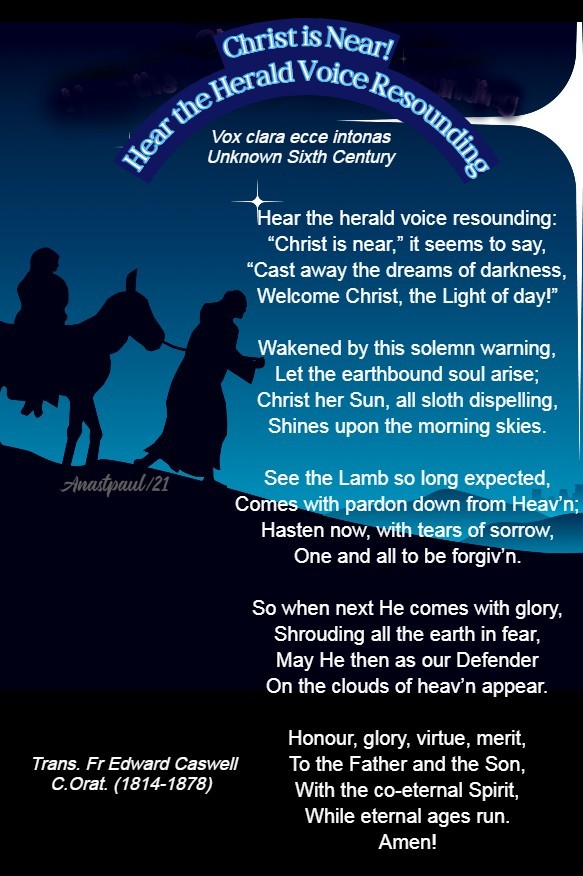
“Christ is Near!” Vox clara ecce intonas Hear the Herald Voice Resounding Unknown Sixth Century Trans. Fr Edward Caswell C.Orat. (1814-1878)
Hear the herald voice resounding: “Christ is near!” it seems to say, “Cast away the dreams of darkness, Welcome Christ, the Light of day!”
Wakened by this solemn warning, Let the earthbound soul arise; Christ her Sun, all sloth dispelling, Shines upon the morning skies.
See the Lamb so long expected, Comes with pardon down from Heav’n; Hasten now, with tears of sorrow, One and all to be forgiv’n.
So when next He comes with glory, Shrouding all the earth in fear, May He then as our Defender On the clouds of heav’n appear.
Honour, glory, virtue, merit, To the Father and the Son, With the co-eternal Spirit, While eternal ages run. Amen!
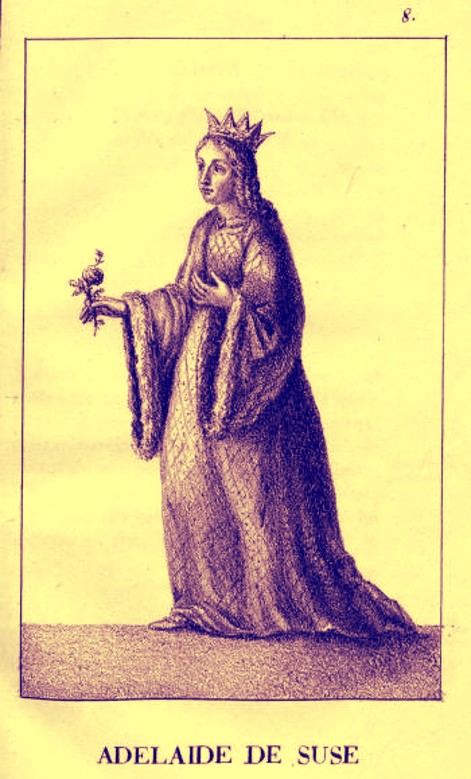
Saint of the Day – 19 December – Saint Adelaide of Susa (c1014-1091) Countess of a part of the March of Lvrea (modern Piedmont, Italy) and Marchioness of Truin, Married Laywoman, mother of 5, widowed 3 times. Born in c1014 in Turin, Italy and died on 19 December 1091 also in Italy. Adelaide made donations to the Monasteries of Turin, founded the Monastery of Santa Maria at Pinerolo and received communication from many leading Ecclesiastical dignitaries of the day. She also furthered the processes of reform within the Church hierarchy. Also known as – Adelaide of Turin and Susa, Adelheid, Adelais, or Adeline.
Daughter of Odalirico Manfrido II, the Margrave of Turin and Bertha of Milan, wife to Herman IV, Duke of Swabia, secondly to Henry, Margrave of Montferrat and finally, to Otto I, Count of Savoy. Her first 2 husbands died within a year or so of marriage, during which period they had, for the large part, been away on campaigns. Adelaide and Otto’s marriage was blessed with 5 children, 3 sons and 2 daughters.
Adelaide was described as a beautiful woman with the soul of a lion having learned martial arts as a girl and bore her own arms and armour. She had great courage and energy and knew how to rule her inheritance. Her third marriage to Otto of Savoy in 1046, united a large territory on both sides of the Alps and it’s important Alpine passes, resulting in control of the majority of northern Italy, making Savoy one of the most powerful Houses of the Empire. After Otto’s death in 1060, Adelaide ruled, first jointly with her sons – Pietro I, died 1078, Amadeus II, died 1080 and finally, alone, until her death in 1091.
When Adelaide assumed the regency, there was great controversy raging in Northern Italy concerning the obligatory celibacy of the Clergy which had been discussed in several Ecclesiastical Councils but never settled. The Church of Milan allowed married men to take Orders and continue to cohabit with their wives, unless his wife died and he chose to remarry, he could not then continue to exercise his Office. After a long struggle, the married Clergy of the Church of Milan succeeded; the Pope sending a Legate to Adelaide in Milan, followed by a letter from the Pope recording laudatory expressions of her piety and other virtues, witnessing her great power as “mistress of a vast territory, situated between the Kingdoms of Italy and Burgundy and comprising many Episcopal Diocese” relying on her to enforce clerical celibacy and protect the Monasteries of Fruttuaria and San Michele della Chiusa.
Adelaide received letters from many of the leading Church powers, including Pope Alexander II, St Peter Damian and Pope Gregory VII. In 1074-1075, Adelaide and her son-in-law Henry IV, (the Holy Roman Emperor), became involved in the “Investiture Controversy,” the most important conflict between secular and religious powers regarding who had the ultimate authority in medieval Europe. When Henry IV was excommunicated, Adelaide assisted him in his supplications to the Pope , his penance and in regaining his membership within the numbers of the faithful (even though he soon fell again!)
Adelaide died on 19 December 1091. According to a later legend, she was buried in the parochial Church of Canischio in a small village in the Valle dell’Orco, where she had supposedly been living incognito for twenty-two years before her death. However, various historical reports call this account ‘absurb.’ In the Cathedral of Susa, in a niche in the wall, there is a statue of walnut wood, beneath a bronze veneer, representing Adelaide genuflecting in prayer. We are unsure whether her Relics might be there too or whether her cult has ever received any confirmation.
St Boniface of Cilicia Bl Cecilia of Ferrara St Fausta of Sirmium St Gregory of Auxerre St Jaume Boguñá Casanovas St Johannes Gogniat St Josep Albareda Ramoneda Bl Konrad Liechtenau
Blessed Mercedarian Fathers – (6 Beati): A group of Mercedarian Friars noted for their dedication to the Order’s Rule, for their continuous prayer life and their personal piety. Blessed Bartolomeo of Podio Blessed Giovanni of Verdera Blessed Guglielmo de Gallinaris Blessed Guglielmo of Prunera Blessed Pietro of Benevento Blessed Pietro of Gualba Martyrs of Nicaea – (4 Saints): A group of Christians Martyred together. The only surviving details are four of their names – Darius, Paul, Secundus and Zosimus. They were martyred at Nicaea, Bithynia (modern Izmit, Turkey).
Martyrs of Nicomedia – 5 Saints: A group of Christians Martyred together in the persecutions of Diocletian. We know little more than the names of five – Anastasius, Cyriacus, Paulillus, Secundus and Syndimius. They were martyred in 303 at Nicomedia, Asia Minor.
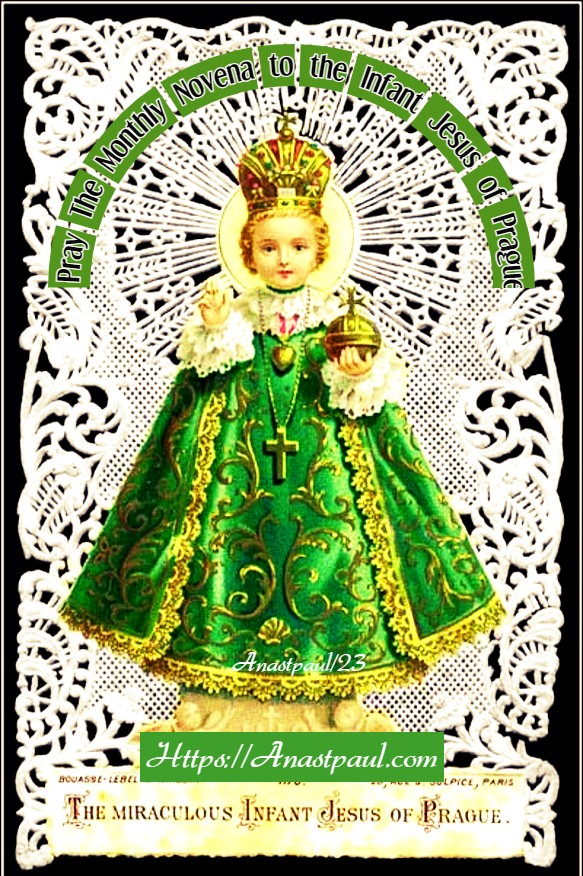
The Monthly Novena to the Miraculous Infant Jesus of Prague
There are two standard Novenas to the Infant Jesus of Prague – the one we will use below and the other for the Feast on 2 January. The Monthly Novena attracts Indulgences (see Note below).
“The more you honour Me, the more I will bless you.”
Devotion to the infant Jesus of Prague is devotion to the Child Jesus. It is veneration of the Son of God, Who in the form of a lovely Infant chose a stable for a palace, a manger for a cradle and shepherds for worshipers. Our Saviour grants special graces to all who venerate His sacred Infancy.
The secret of this devotion may be found in the words of a poor labourer who earned very low wages and was unable to meet the demands of his creditors. Hearing of the wonders of the Infant Jesus of Prague, he said to himself: ‘I shall apply to the Divine Infant, for just as it is easy to obtain everything from a child, so I think Our Lord will the sooner hear me if I venerate His holy Infancy.” He made a Novena to the Divine Infant and on the last day received assistance.
The Infant’s Patronage is especially sought for: vocations, good health, financial issues, a holy family life, schools, the welfare of children, freedom and peace, the missions and safety in travel.
THE NOVENA PRAYERS
Eternal Father, I offer to Thy honour and glory, for my own salvation and that of the whole world, the Mystery of the Birth of our Divine Saviour. Glory be to the Father, etc.
Eternal Father, I offer to Thy honour and glory and for my eternal salvation and that of the whole world, the sufferings of the most holy Virgin and of St Joseph, in that long and weary journey from Nazareth to Bethlehem. I offer Thee the sorrow of their hearts when they found no place wherein to shelter themselves, when the Saviour of the world was born. Glory be to the Father, etc.
Eternal Father, I offer to Thy honour and glory and for my eternal salvation and that of the whole world, the sufferings of Jesus in the stable where He was born, the cold He endured, the swaddling clothes which bound Him, the tears He shed and His tender Infant cries. Glory be to the Father, etc.
Eternal Father, I offer to Thy honour and glory and for my eternal salvation and that of the whole world, the pain which the Holy Child Jesus felt in His tender body, when He submitted to circumcision. I offer Thee that Precious Blood which then, for the first time He shed for the salvation of the whole humanrace. Glory be to the Father, etc.
Eternal Father, I offer to Thy honour and glory and for my eternal salvation and that of the whole world, the humility, mortification, patience, charity, all the virtues of the Child Jesus and I thank Thee and I love Thee and I bless Thee without end, for the ineffable Mystery of the Incarnation of the Divine Word. Glory be to the Father, etc.
The Word was made Flesh, And dwelt among us.
LET US PRAY O God, Whose Only-begotten Son was made manifest to us in the substance of our flesh, grant, we beseech Thee, that through Him, Whom we acknowledge to be like unto ourselves, our souls may be inwardly renewed. Who liveth and reigneth with Thee forever and ever. Amen.
7 years Indulgence each day, if the above prayers are recited on the 9 days preceding the 25th of any month. Plenary Indulgence under the usual conditions, when the Novena is completed. (125)
Thought for the Day – 18 December – Meditations with Antonio Cardinal Bacci (1881-1971)
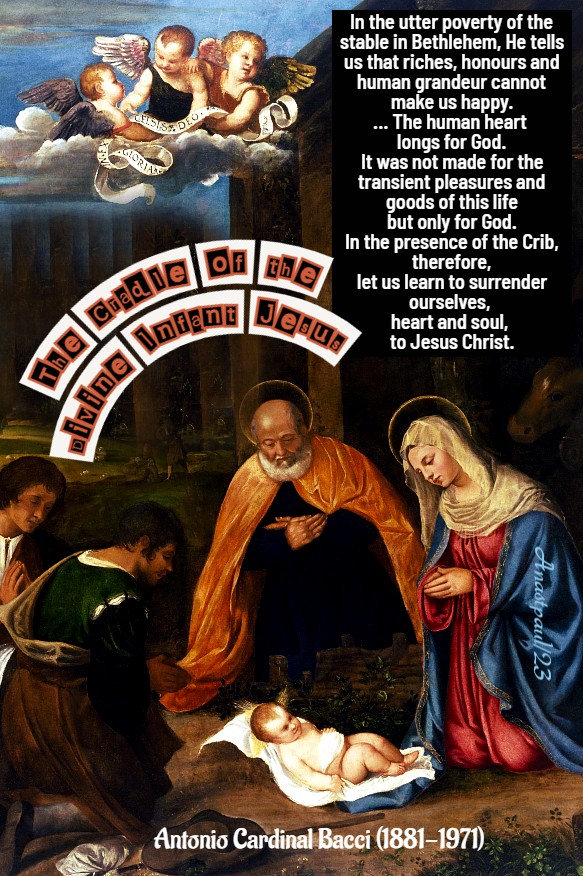
A Christmas Novena III The Cradle of the Divine Infant Jesus
“Blessed are the poor in spirit,” said Jesus Christ, “for theirs is the Kingdom of Heaven” (Mt 5:3), Before He spoke these words, however, He had taught us the same thing in deed.
In the utter poverty of the stable in Bethlehem, He tells us that riches, honours and human grandeur cannot make us happy. We are entitled to accept these things, if Providence bestows them upon us but, we should not become attached to them. The human heart longs for God. It was not made for the transient pleasures and goods of this life but only for God. In the presence of the Crib, therefore, let us learn to surrender ourselves, heart and soul, to Jesus Christ.
Quote/s of the Day – 18 December – “The Month of the Divine Infancy and the Immaculate Conceptio of the Blessed Virgin Mary” – Monday of the Third Week of Advent – Ferial Day – Philippians 4:4-7; John 1:19-28 – Scripture search here: https://www.drbo.org/
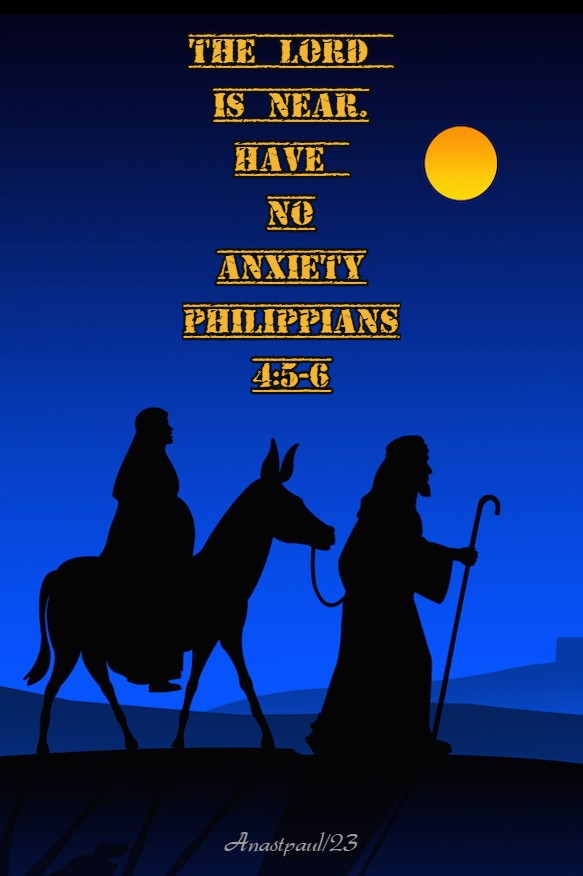
“The Lord is near. Have no anxiety …”
Philippians 4:5-6
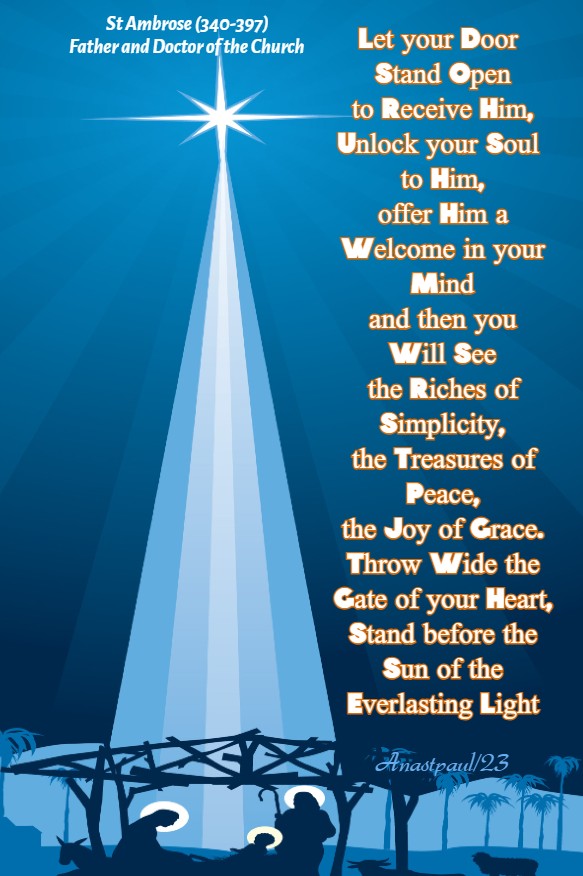
“Let your door stand open to receive Him, unlock your soul to Him, offer Him a welcome in your mind and then you will see the riches of simplicity, the treasures of peace, the joy of grace. Throw wide the gate of your heart, stand before the Sun of the Everlasting Light!”
St Ambrose (340-397) Father and Doctor of the Church
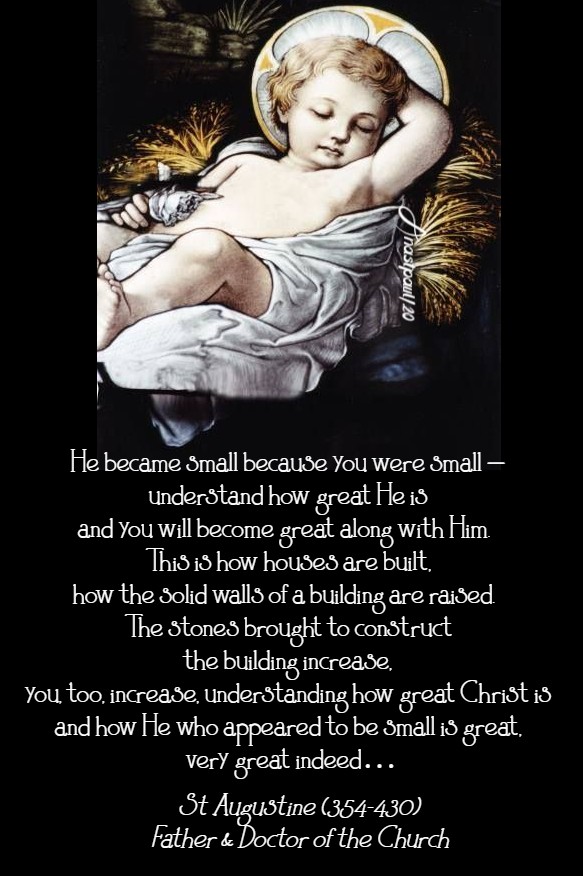
“He became small because you were small – understand how great He is and you will become great along with Him. This is how houses are built, how the solid walls of a building are raised. The stones brought to construct the building increase, you, too, increase, understanding how great Christ is and how He, Who appeared to be small, is great, very great indeed…”
St Augustine (354-430) Father & Doctor of the Church
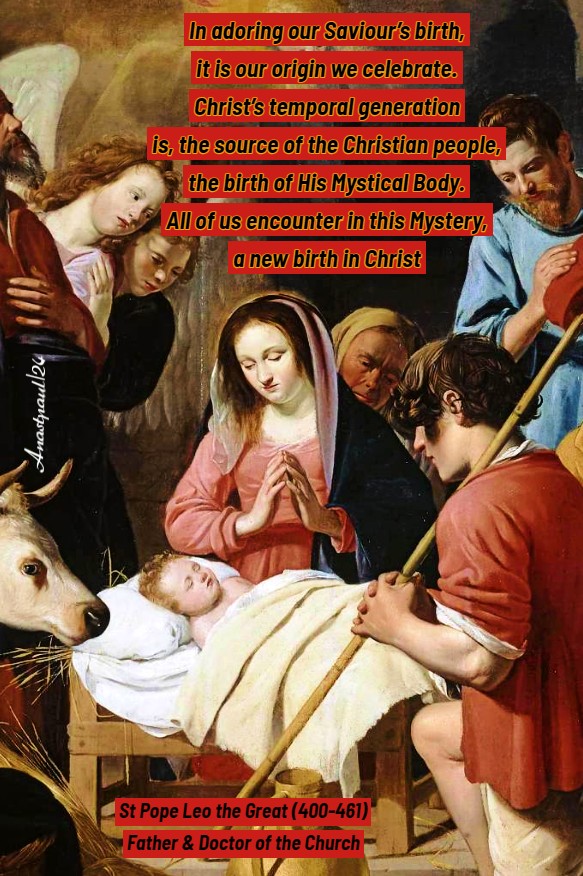
“In adoring our Saviour’s birth, it is our origin we celebrate. Christ’s temporal generation is the source of the Christian people, the birth of His Mystical Body. All of us encounter in this Mystery, a new birth in Christ.”
St Pope Leo the Great (400-461) Father & Doctor of the Church
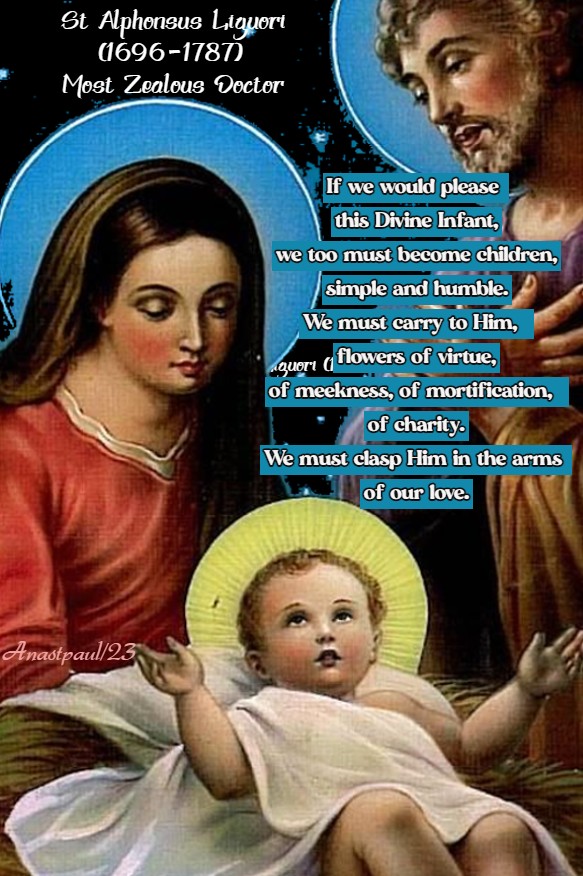
“If we would please this Divine Infant, we too must become children, simple and humble. We must carry to Him, flowers of virtue, of meekness, of mortification, of charity. We must clasp Him in the arms of our love.”
St Alphonsus Liguori (1696-1787) Most Zealous Doctor
One Minute Reflection – 18 December – “The Month of the Divine Infancy and the Immaculate Conception of the Blessed Virgin Mary” – Monday of the Third Week of Advent and the Feast of Our Lady of Expectation – Ferial Day – Philippians 4:4-7; John 1:19-28 – Scripture search here: https://www.drbo.org/
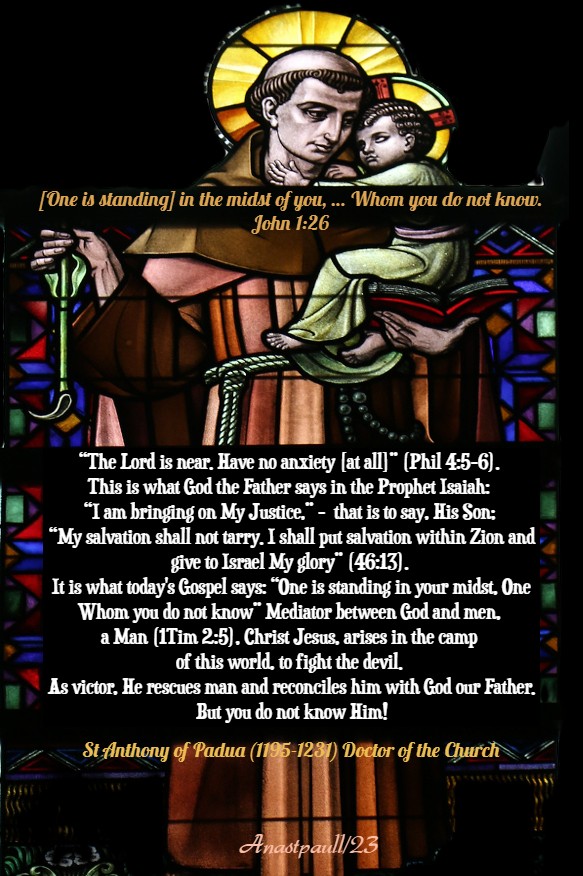
“[One is standing] in the midst of you, … Whom you do not know.” – John 1:26
REFLECTION – “The Lord is near.Have no anxiety [at all]” (Phil 4:5-6). This is what God the Father says in the Prophet Isaiah: “I am bringing on My Justice,” – that is to say, His Son; “My salvation shall not tarry. I shall put salvation within Zion and give to Israel My glory” (46:13). It is what today’s Gospel says: “One is standing in your midst, One Whom you do not know” Mediator between God and men, a Man (1Tim 2:5), Christ Jesus, arises in the camp of this world, to fight the devil. As victor, He rescues man and reconciles him with God our Father. But you do not know Him!
“Sons have I raised and reared but they have disowned Me. An ox knows its owner and an ass, its master’s manger. But Israel does not know Me and My people have not understood” (Is 1:2-3). How close the Lord is to us! And we do not know Him! “I have fed My children with My blood,” He says to us, “as a mother feeds her children with her milk. I have raised the human nature I have taken, to which I am united, above the Choirs of Angels.” Could He show us greater honour? “And they have rejected Me. See whether there is any sorrow like Mine” (Lam 1:12) …
So, then, “have no anxiety at all,” for it is anxiety concerning material things which makes us forget the Lord!” – St Anthony of Padua (1195-1231) Franciscan, Doctor of the Church (Sermons for Sundays and Feast days, 3rd Sunday of Advent).
PRAYER – O God, Who, by the message of an Angel, willed to take flesh in the womb of the Blessed Virgin Mary, grant that we, Thy suppliants, who believe her to be truly, the Mother of God, may be helped by her intercession with Thee. Through Jesus Christ, Thy Son our Lord, Who lives and reigns with Thee, in the unity of the Holy Ghost, God, world without end. Amen (Collect).
Our Morning Offering – 18 December – “The Month of the Divine Infancy and the Immaculate Conception of the Blessed Virgin Mary” – The Feast of Our Lady of Expectation
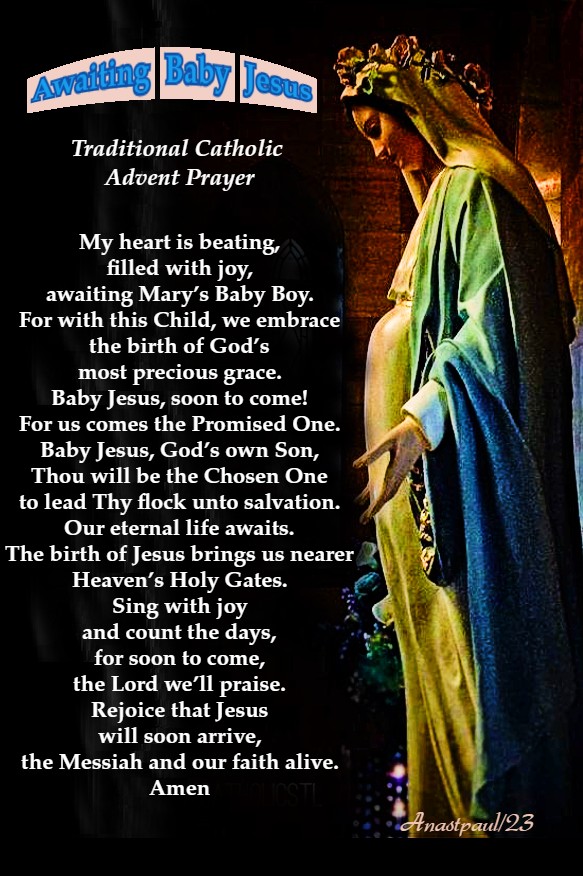
Awaiting Baby Jesus Traditional Catholic Advent Prayer
My heart is beating, filled with joy, awaiting Mary’s Baby Boy. For with this Child, we embrace the birth of God’s most precious grace. Baby Jesus, soon to come! For us comes the Promised One. Baby Jesus, God’s own Son, Thou will be the Chosen One to lead Thy flock unto salvation. Our eternal life awaits. The birth of Jesus brings us nearer Heaven’s Holy Gates. Sing with joy and count the days, for soon to come, the Lord we’ll praise. Rejoice that Jesus will soon arrive, the Messiah and our faith alive. Amen
Saint of the Day – 18 December – St Flavitus (Died 630) Priest, Hermit, Miracle-worker. Born in the mid-6th Century in Lombardy, Italy and died on 18 December 630 at Marcilly-le-Hayer, modern France. Also known as – Flavitus of Sens, Flaive, Flav, Flavy. Additional Memorial – 16 December on some Calendars.
The Relics of the Saint in the Church of the Assumption-of-the-Virgin of Villemaur-sur-Vanne.
Flavitus was captured in his home region of Lombardy in Italy and then sold as a slave by the victorious Franks to a rich lord, named, Montan, whose home was located at Marcilly-le-Hayer, in France. There, Flavitus guarded his master Montan’s herd of pigs in the forest of Othe.
Flavitus was falsely accused by the wife of this lord. But having cured Montan of illness and despite the hostility of those around him, his master;s gratitude served to free him from slavery.
Flavitus became a Hermit in the forest and soon attracted the goodwill of the population through his mortifications and holiness. His prayers drew a Spring from the ground and the miraculous waters drew the blind, the crippled, demonically possessed – all who brought their faith and infirmities, were healed. The Bishop of Sens, Saint Lupus, hearing of Flavitus great spiritual attraction and his many miracles Ordains him as a Priest.
He became a missionary apostle and miracle-worker of the region. He died in Marcilly-le-Hayer on 18 December 630, under the Episcopate of Ragnegisius(?), the 17th Bishop of Troyes.
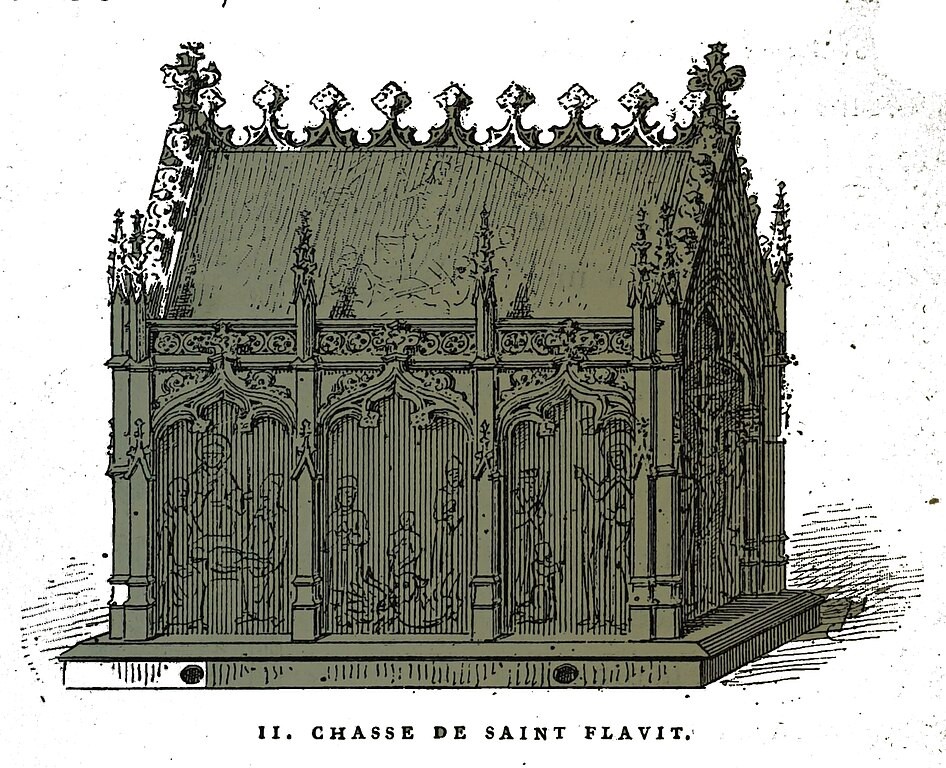
His Relics were shared between the Sainte-Colombe Abbey of Sens and the Saint-Flavit Priory of Villemaur-sur-Vanne which was destroyed in the 18th Century. The Treasury of the Cathedral of Sens preserves a Shrine of Saint Flavitus.
In 1807 a small Chapel was built on the site of his hermitage, very close to Marcilly-le-Hayer. The village of Saint-Flavy honours our Saint’s memory.
The Monthly Novena to the Infant of Prague – Day Three:
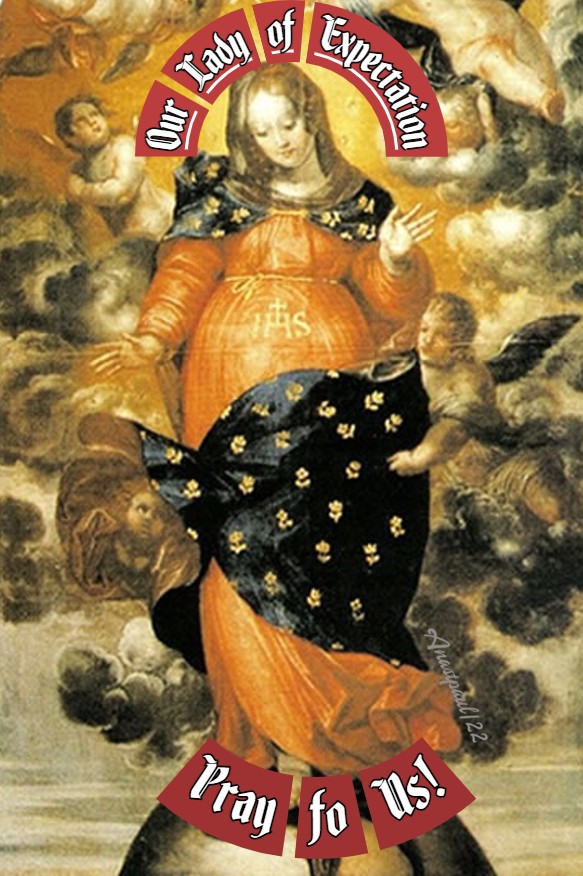
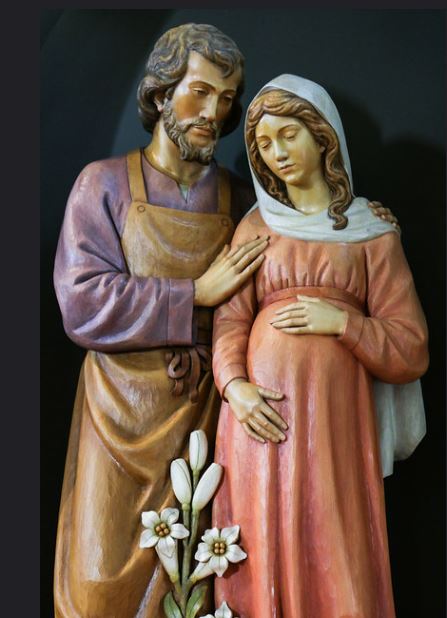
Our Lady of the Expectation – This Feast originated in Spain. When the Feast of the Annunciation (25 March) was transferred to 18 December because of the regulation forbidding Feasts in Lent, it remained on this date after the Annunciation was again celebrated on its original date. It impressed on the faithful, the sentiments of the Blessed Virgin as the time of her delivery approached. More about the Feast here: https://anastpaul.com/2018/12/18/the-feast-of-our-lady-of-expectation-18-december/
Mercedarians Redeemers – Also known as “Blessed Redentori.” A group of Mercedarian Friars who worked together, under the leadership of Saint Peter de Amer, to ransom prisoners and minister to them after. Blessed Bernardo de Pratis Blessed Giacomo de Lara Blessed Louis Gasco Blessed Peter de Quesada Blessed Peter of Barcelona Blessed William de Quadres
Martyrs of Northwest Africa – 42 Saints: Mercedarian Redeemers – 6 beati – These are a group of Mercedarian Friars who worked together, under the leadership of Saint Peter de Amer, to ransom (e.g., redeem) prisoners and minister to them after.
The Monthly Novena to the Miraculous Infant Jesus of Prague
There are two standard Novenas to the Infant Jesus of Prague – the one we will use below and the other for the Feast on 2 January. The Monthly Novena attracts Indulgences (see Note below).
“The more you honour Me, the more I will bless you.”
Sweet and merciful Infant Jesus, could we but relate all the wonders of Thy power and goodness! Bless at least these few pages written for Thy greater honour and glory! May they assist in making Thee better known and in instilling devotion to Thee in the hearts of all men!
The Infant’s Patronage is especially sought for: vocations, good health, financial issues, a holy family life, schools, the welfare of children, freedom and peace, the missions and safety in travel.
“Peaceful King, employ Thy graces and Thy charms to gain the love of men and through the sweetness of Thy Divine Infancy, establish throughout the world, Thy blissful reign.”
Nihil Obstat ij* Stephanus Schappler, OSB Abbas Coadjutor Im. Conceptionis
27th Edition, January 1956
THE NOVENA PRAYERS
Eternal Father, I offer to Thy honour and glory, for my own salvation and that of the whole world, the Mystery of the Birth of our Divine Saviour. Glory be to the Father, etc.
Eternal Father, I offer to Thy honour and glory and for my eternal salvation and that of the whole world, the sufferings of the most holy Virgin and of St Joseph, in that long and weary journey from Nazareth to Bethlehem. I offer Thee the sorrow of their hearts when they found no place wherein to shelter themselves, when the Saviour of the world was born. Glory be to the Father, etc.
Eternal Father, I offer to Thy honour and glory and for my eternal salvation and that of the whole world, the sufferings of Jesus in the stable where He was born, the cold He endured, the swaddling clothes which bound Him, the tears He shed and His tender Infant cries. Glory be to the Father, etc.
Eternal Father, I offer to Thy honour and glory and for my eternal salvation and that of the whole world, the pain which the Holy Child Jesus felt in His tender body, when He submitted to circumcision. I offer Thee that Precious Blood which then, for the first time He shed for the salvation of the whole humanrace. Glory be to the Father, etc.
Eternal Father, I offer to Thy honour and glory and for my eternal salvation and that of the whole world, the humility, mortification, patience, charity, all the virtues of the Child Jesus and I thank Thee and I love Thee and I bless Thee without end, for the ineffable Mystery of the Incarnation of the Divine Word. Glory be to the Father, etc.
The Word was made Flesh, And dwelt among us.
LET US PRAY O God, Whose Only-begotten Son was made manifest to us in the substance of our flesh, grant, we beseech Thee, that through Him, Whom we acknowledge to be like unto ourselves, our souls may be inwardly renewed. Who liveth and reigneth with Thee forever and ever. Amen.
7 years Indulgence each day, if the above prayers are recited on the 9 days preceding the 25th of any month. Plenary Indulgence under the usual conditions, when the Novena is completed. (125)
Thought for the Day – 17 December – Meditations with Antonio Cardinal Bacci (1881-1971)
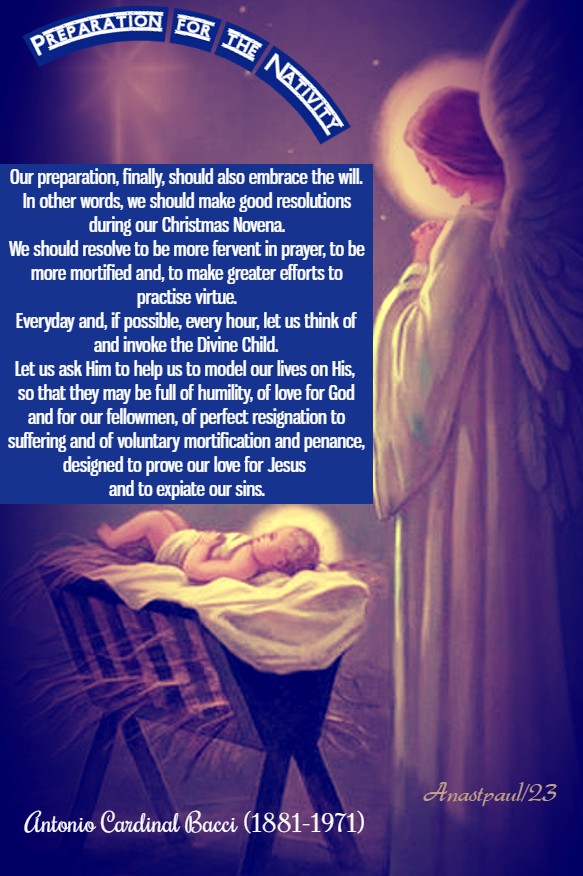
A Christmas Novena II Preparation for the Nativity
“Our preparation, finally, should also embrace the will. In other words, we should make good resolutions during our Christmas Novena. We should resolve to be more fervent in prayer, to be more mortified and, to make greater efforts to practise virtue.
Everyday and, if possible, every hour, let us think of and invoke the Divine Child. Let us ask Him to help us to model our lives on His, so that they may be full of humility, of love for God and for our fellowmen, of perfect resignation to suffering and of voluntary mortification and penance, designed to prove our love for Jesus and to expiate our sins.”
Quote/s of the Day – 17 December – “The Month of the Divine Infancy and the Immaculate Conception of the Blessed Virgin Mary” – Gaudete Sunday, The Third Sunday of Advent – Philippians 4:4-7; John 1:19-28 – Scripture search here: https://www.drbo.org/
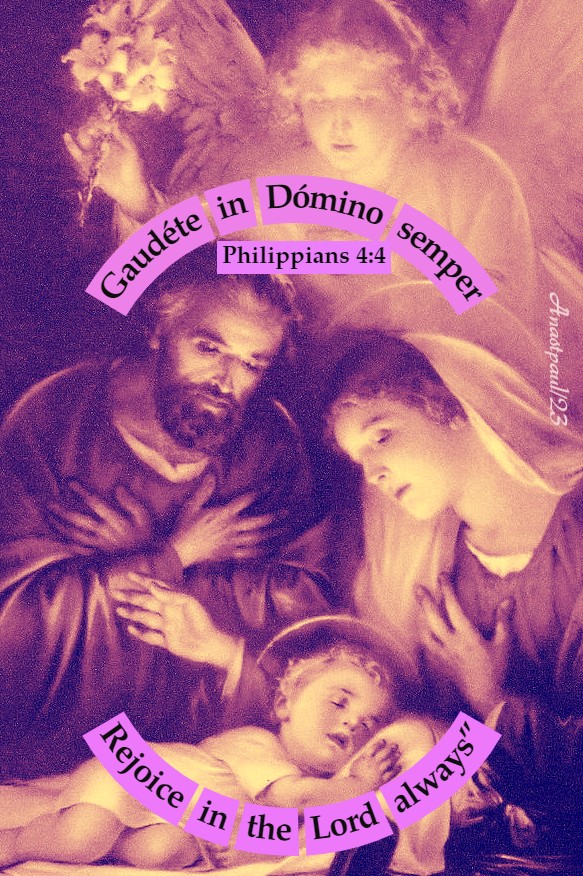
“Gaudéte in Dómino semper”
“Rejoice in the Lord always”
Philippians 4:4
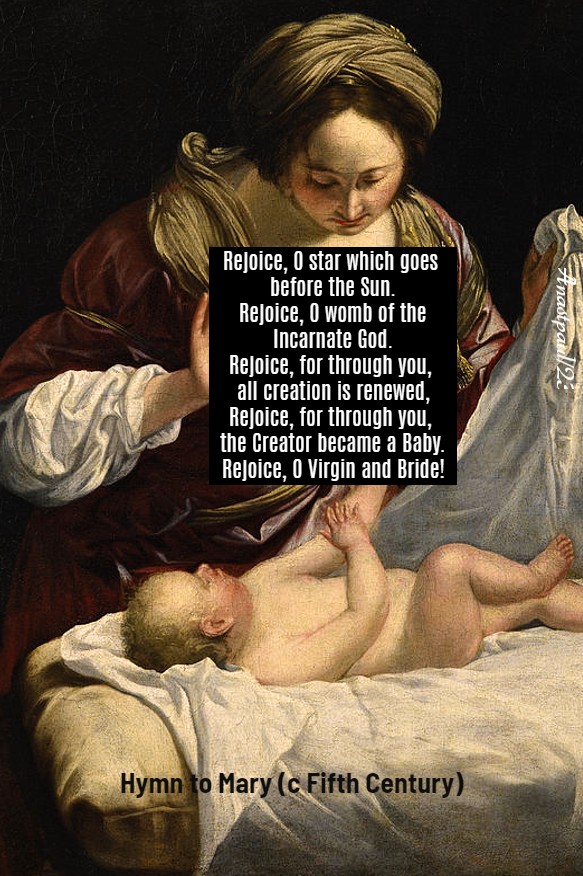
“ Rejoice, O star which goes before the Sun. Rejoice, O womb of the Incarnate God. Rejoice, for through you, all creation is renewed, Rejoice, for through you, the Creator became a Baby. Rejoice, O Virgin and Bride!”
Hymn to Mary (c Fifth Century)
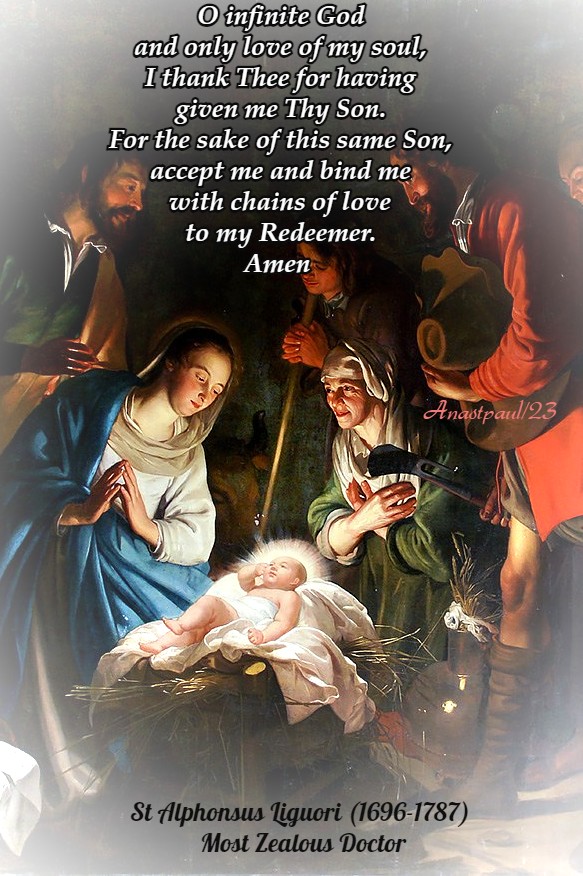
“O infinite God and only love of my soul, I thank Thee for having given me Thy Son. For the sake of this same Son, accept me and bind me with chains of love to my Redeemer. Amen ”
St Alphonsus Liguori (1696-1787) Most Zealous Doctor
One Minute Reflection – 17 December – “The Month of the Divine Infancy and the Immaculate Conception of the Blessed Virgin Mary” – Gaudete Sunday, The Third Sunday of Advent – Philippians 4:4-7; John 1:19-28 – Scripture search here: https://www.drbo.org/
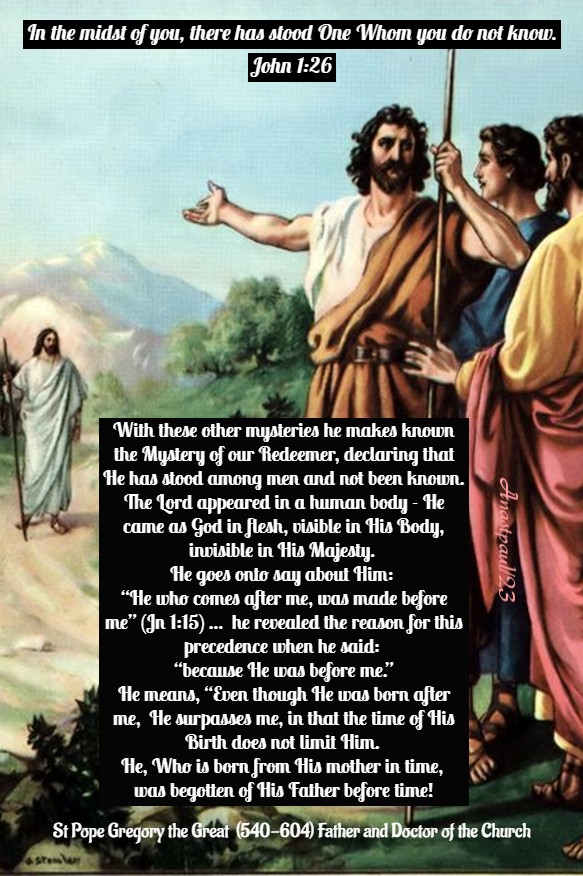
“ I baptise with water but, in the midst of you, there has stood One Whom you do not know.” – John 1:26
REFLECTION – “I baptise with water but, in the midst of you, there has stood One Whom you do not know.” John did not baptise with the Spirit but, with water, since he was unable to take away the sins of those being baptised. He washed their bodies with water but not their hearts with pardon. Why did one whose baptism did not forgive sins baptise, except that he was observing his vocation as forerunner? He, whose birth foreshadowed a greater birth, by his baptising, foreshadowed the Lord, Who would truly baptise; he ,whose preaching made him the forerunner of Christ, by baptising, also became his forerunner, using a symbol of the future Sacrament.
With these other mysteries he makes known the Mystery of our Redeemer, declaring that He has stood among men and not been known. The Lord appeared in a human body – He came as God in flesh, visible in His Body, invisible in His Majesty. He goes onto say about Him: “He who comes after me, was made before me” (Jn 1:15) … he revealed the reason for this precedence when he said: “because He was before me. ”He means, “Even though He was born after me, He surpasses me, in that the time of His Birth does not limit Him. He, Who is born from His mother in time, was begotten of His Father before time!”
John reveals the great humility and reverence he owes Christ by saying: “I am not worthy to undo the strap of His sandal.” It was the custom among the ancients, that if someone was unwilling to take the wife, he should be taking, he, who should have come to her as bridegroom, by right of relationship, would undo his sandal. How did Christ appear among men, if not as the Bridegroom of holy Church?… But since people considered John the Christ, a fact which he denied, he was right to declare his unworthiness to undo the strap of Christ’s sandal. It is as if he was saying … “I am not unjustly usurping, for myself, the name of Bridegroom” (Cf Jn 3:29).” – St Gregory the Great (540-604) Pope, Father and Doctor of the Church (Sermons on the Gospels 4).
PRAYER – Lend Thy ear to our prayers, O Lord, we beseech Thee and brighten the darkness of our minds by the grace of Thy coming. Through the same Jesus Christ, Thy Son our Lord, Who lives and reigns with Thee, in the unity of the Holy Ghost, God, world without end. Amen (Collect).
Our Morning Offering – 17 December – “The Month of the Divine Infancy and the Immaculate Conception of the Blessed Virgin Mary” – Gaudete Sunday, The Third Sunday of Advent
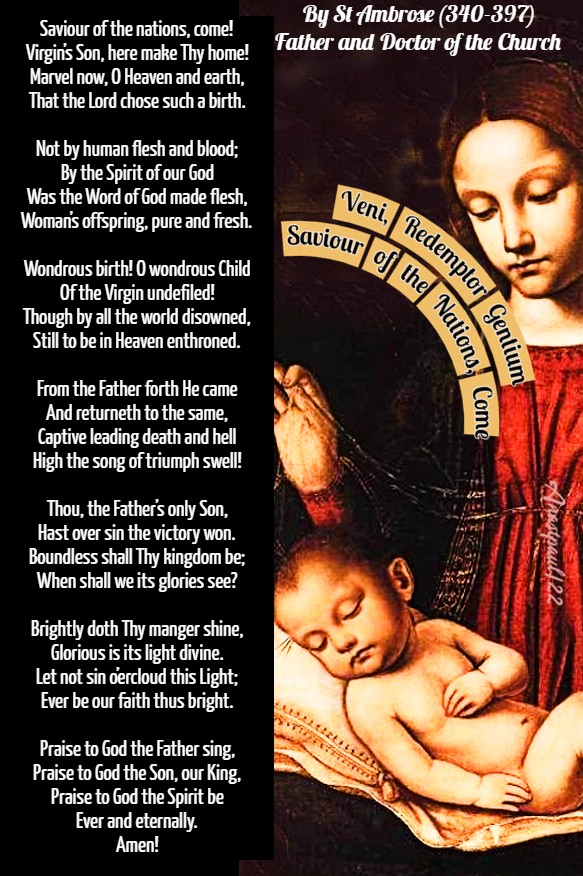
Veni Redemptor Gentium Saviour of the Nations, Come! By St Ambrose’s Advent Hymn
Saviour of the nations, come! Virgin’s Son, here make Thy home! Marvel now, O Heaven and earth, That the Lord chose such a birth.
Not by human flesh and blood; By the Spirit of our God Was the Word of God made flesh, Woman’s offspring, pure and fresh.
Wondrous birth! O wondrous Child Of the Virgin undefiled! Though by all the world disowned, Still to be in Heaven enthroned.
From the Father forth He came And returneth to the same, Captive leading death and hell High the song of triumph swell!
Thou, the Father’s only Son, Hast over sin the victory won. Boundless shall Thy kingdom be; When shall we its glories see?
Brightly doth Thy manger shine, Glorious is its light divine. Let not sin o’ercloud this Light; Ever be our faith thus bright.
Praise to God the Father sing, Praise to God the Son, our King, Praise to God the Spirit be Ever and eternally. Amen!
Saint of the Day – 17 December – Saint Begga of Ardenne (c613-693) Widow, Mother of 3 children, Founder of Churches and a Monastery of which she became the first Abbess. Patronages – Ardenne, against stuttering and of stutterers. Also known as – Begue, Bège, Beghe, Begge.
The Roman Martyrology reads: “At Ardenne, at the Seven Churches, St Begga Widow, sister of St Gertrude of Nivelles.”
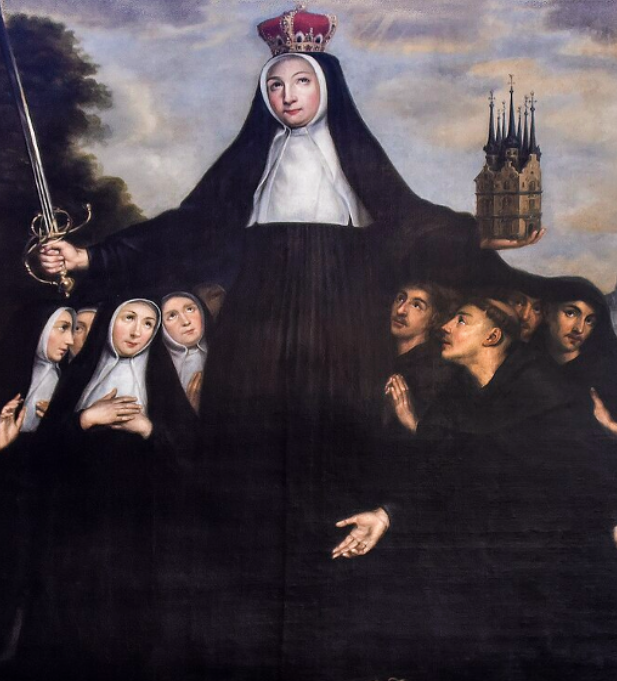
Artwork of St Begga as Abbess and protector of her Monastery by Jan Verhoeven 1642-1676
Begga was a daughter of the nobles St Pepin of Landen (Died 639) and Saint Iduberga (Died 652). Her sister is the famous Saint Gertrude of Nivelles (Died 659; Feast 17 March). She married Ansegisus, who was the son of Saint Arnold of Metz (Died 641). Their son, Pepin of Herstal (Died 714), would become the ancestor of the Carolingians; he, in turn, was the father of Charles Martel (Died 741), the grandfather of Charlemagne.
Peter Paul Rubens (1577-1640) St Ansegisus and his wife St Begga
After the death of her husband, Begga decided to put her life and her possessions at the service of God. She then made a pilgrimage to Rome. to pray at the Shrines, mostly especially visiting the Seven Pilgrim Churches and after her return, she built seven Churches in the Town of Andenne aan de Maas, in imitation of them. In 691, Begga founded a Monastery at one of these Churches. She led it as Abbess until her death.
Begga is the Patron Saint of the Town of Ardenne and she is also the Patron Saint of stutterers and against stuttering (because her name resembles the French word ‘bègues = stutterers’).
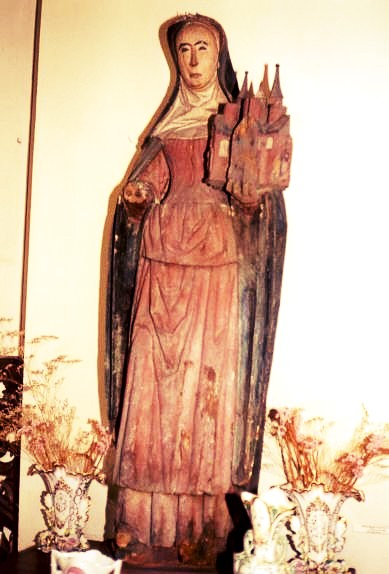
In art she is depicted as a Queen (sometimes with three crowns); as Abbess, often holding seven Churches or a Church with seven towers.
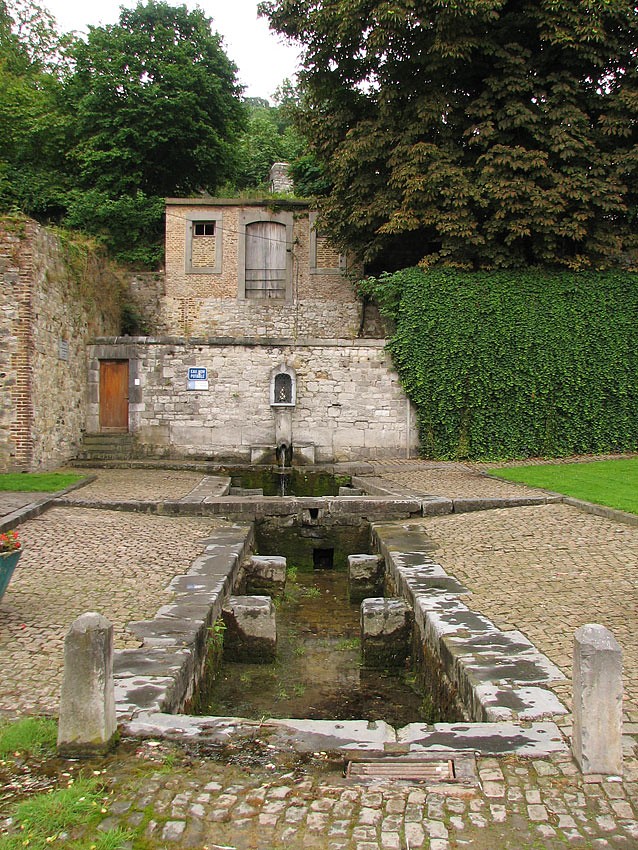
The Collegiate Church of Andenne later grew from the seven Churches (or Chapels). Not far from there flowed a spring – it is called ‘Fountain of Sinte Begga’ after her. Its water is miraculously hot in winter and cold in summer.
Fountain of Sinte Begga
Special Note:There are two Saints named Gertrude, one called “the Great” and the other from Nivelles. They are often confused, especially since they were both Nuns and appeared quite alike. However, they lived more than 600 years apart – St Gertrude the Great (1256-1302) born in Germany not too far from the Belgium of St Gertrude of Nivelles (626-659). The latter often has a special symbol in artworks, that of the mouse on her staff.
















_Heilige_Begga_als_beschermvrouw_van_begijnen_en_beggaarden_Begijnhofkerk_Mechelen_19-08-2023.jpg)
You must be logged in to post a comment.