Thought for the Day – 8 January – Meditations with Antonio Cardinal Bacci (1881-1971)
The Apostolate of Suffering
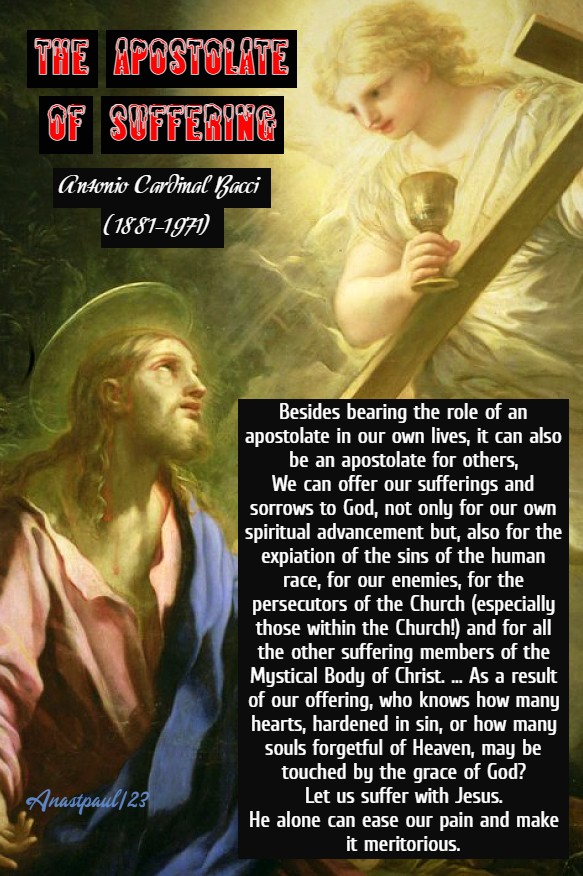
The Agony in the Garden by Luca Giordono (1634-1705) Naples, Italy
“Suffering has a still further purpose. Besides bearing the role of an apostolate in our own lives, it can also be an apostolate for others, We can offer our sufferings and sorrows to God, not only for our own spiritual advancement but, also for the expiation of the sins of the human race, for our enemies, for the persecutors of the Church (especially those within the Church!) and for all the other suffering members of the Mystical Body of Christ. In this way, we can accomplish great good and can acquire great merit before God.
As a result of our offering, who knows how many hearts, hardened in sin, or how many souls forgetful of Heaven, may be touched by the grace of God? Let us suffer with Jesus. He alone can ease our pain and make it meritorious.”
Quote/s of the Day – 8 January – The Holy Family – Sunday within the Octave of Epiphany – Colossians 3:12-17, Luke 2:42-52 – Scripture search here: https://www.drbo.org/
“And He went down with them and came to Nazareth and was subject to them.”
Luke 2:51
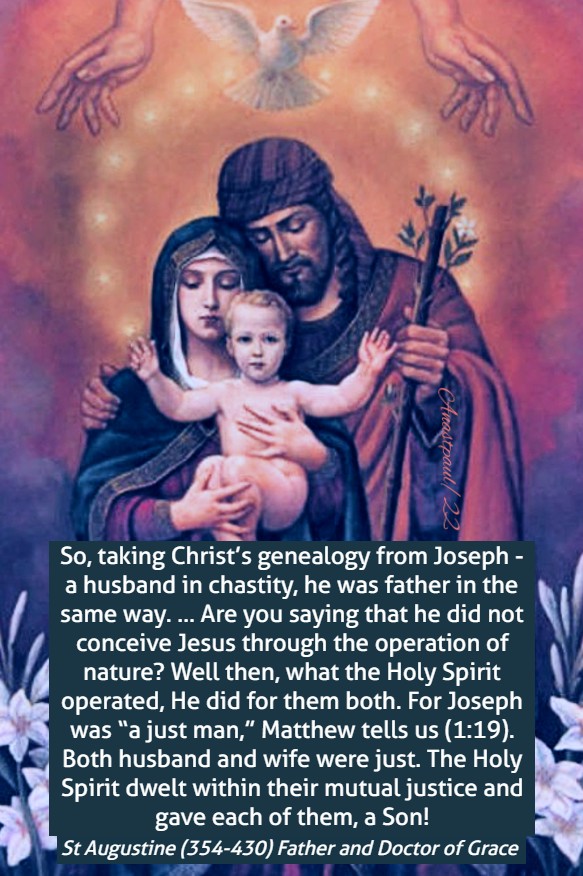
“So, taking Christ’s genealogy from Joseph – a husband in chastity, he was father in the same way. … Are you saying that he did not conceive Jesus through the operation of nature? Well then, what the Holy Spirit operated, He did for them both. For Joseph was “a just man,” Matthew tells us (1:19). Both husband and wife were just. The Holy Spirit dwelt within their mutual justice and gave each of them, a Son!”
St Augustine (354-430) Father and Doctor of Grace
(Marriage and concupiscence 1,11; Sermon 51)
“God, to whom angels submit themselves and who principalities and powers obey, was subject to Mary and not only to Mary but Joseph atoo, for Mary’s sake [….]. God obeyed a human creature – this is humility without precedent. A human creature commands God; it is sublime beyond measure!”
St Bernard (1090-1153) Father and Doctor of the Church
O Gente Felix O House of Nazareth The Blest By Pope Leo XIII (1810-1903)
O house of Nazareth the blest, Fair hostess of the Lord, The Church was nurtured at thy breast And shared thy scanty hoard.
In all the spreading lands of earth. The wandering sun may see No dearer spot, no ampler worth Than erst was found in thee!
We know thy humble tenement Was heaven’s hermitage: Celestial heralds came and went In endless embassage.
There, whatsoever Joseph asks Christ hastens to fulfil; While Mary loves the household tasks That wait her joyous will.
There, Joseph toileth at her side Her joys and griefs to share, With thousand ties knit to his bride, Of love and work and prayer.
Yet how their bosoms constant burn And deeper ardours prove In love of Christ, whose eyes return Tokens of mutual love.
O then, in all the homes of earth, Be Love the bond of life: May it enthrone at every hearth The peace that husheth strife.
All praise to thee, O Jesus, Who parents dost obey; Praise to the sovereign Father And Paraclete for aye. Amen.
One Minute Reflection – 8 January – The Holy Family – Sunday within the Octave of Epiphany – Colossians 3:12-17, Luke 2:42-52 – Scripture search here: https://www.drbo.org/
“And He went down with them and came to Nazareth and was subject to them.” – Luke 2:51
REFLECTION – “He was subject to them.” With these words let all pride dissolve, all rigidness crumble, all disobedience submit. “He was subject to them.” Who? In brief, He Who created all things from nothing; He Who, as Isaiah says, “has cupped in His Hand the waters of the sea and marked off the heavens with a span; Who has held in a measure the dust of the earth, weighed the mountains in scales and the hills in a balance” (40:12). He Who, as Job says, “shakes the earth and the pillars beneath it tremble. He commands the sun and seals up the stars. He alone stretches out the heavens and treads upon the crests of the sea; He Who made the constellations; He does marvellous things beyond reckoning” (9:6-10)… This is He who, great and powerful though He be, was subject. And subject to whom? To a workman and a poor young maid.
O “First and Last”! (Apoc 1:17). O Leader of Angels, subject to men! The Creator of Heaven, subject to a workman; God of eternal glory, subject to a poor young maid! Has anyone ever seen anything like this? Has anyone heard such a thing before?
So no longer hesitate to obey or be submissive… Come down, come to Nazareth, be subject, obey perfectly: all Wisdom lies in this… This is what it means to be soberly wise. Simplicity that is pure, is “like the waters of Shiloah that flow silently” (Is 8:6). There are people of wisdom within religious orders but it is by means of simple men that God brought them there. God chose the foolish and weak, the lowly and ignorant to bring together those who were wise, powerful and of noble birth through them, “so that no human being might boast in itself” (cf 1 Cor 1:26-29) but in Him Who came down, Who came to Nazareth,and Who was subject!” – St Anthony of Padua (1195-1231) Franciscan, Doctor of the Church (Sermons for Sundays and Feasts of the Saints).
PRAYER – O Lord Jesus Christ, Thou Who while subject to Mary and Joseph, hallowed family life with virtues beyond description, grant us by their combined intercession, that, having been taught by the example of the Holy Family, we may attain unto their everlasting companionship. Through the same Jesus Christ, Thy Son our Lord, Who lives and reigns with Thee, in the unity of the Holy Ghost, God, world without end. Amen (Collect).
Our Morning Offering – 8 January – Within the Octave of Epiphany
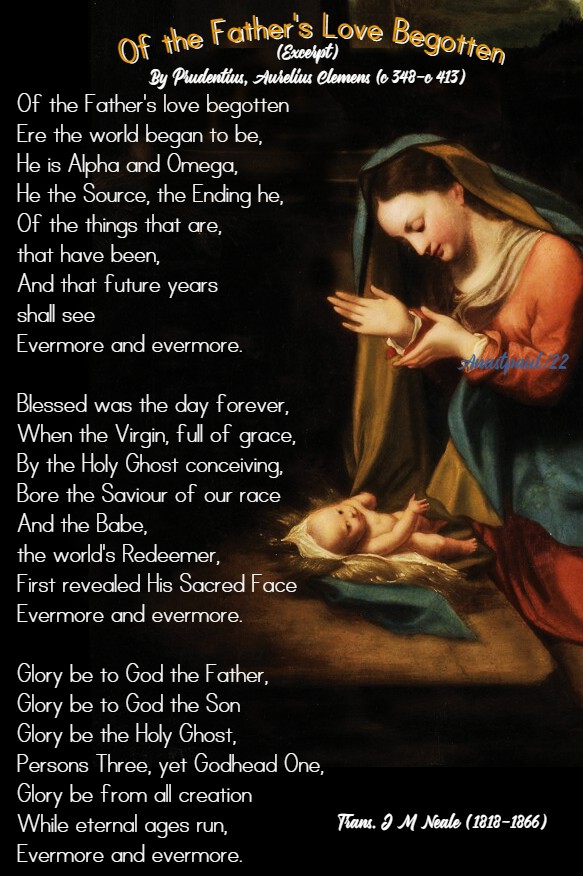
Of the Father’s Love Begotten (Excerpt) By Prudentius, Aurelius Clemens (c 348-c 413) Trans. J M Neale (1818-1866)
Of the Father’s love begotten Ere the world began to be, He is Alpha and Omega, He the Source, the Ending he, Of the things that are, that have been, And that future years shall see Evermore and evermore.
Blessed was the day forever, When the Virgin, full of grace, By the Holy Ghost conceiving, Bore the Saviour of our race And the Babe, the world’s Redeemer, First revealed His Sacred Face Evermore and evermore.
Glory be to God the Father, Glory be to God the Son Glory be the Holy Ghost, Persons Three, yet Godhead One, Glory be from all creation While eternal ages run, Evermore and evermore.
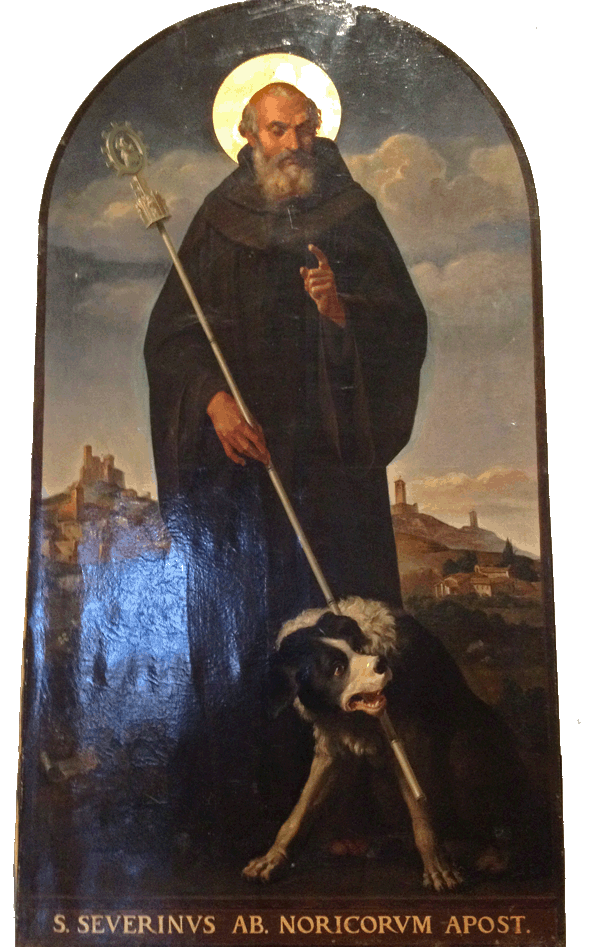
Saint of the Day – 8 January – Saint Severinus of Noricum (c410-482) Abbot, Hermit, Missionary, established Monasteries and refuge centres for those stricken by war. Severinus was graced with the gifts of prophecy and miracles. He is known as “The Apostle to Noricum” – Noricum is the Latin name for the Celtic Kingdom or Federation of Tribes which included most of modern Austria and part of Slovenia. Born in c410 and died on 8 January 482 at Favianae, Noricum of natural causes. Patronages – against famine, of linen weavers, prisoners, vineyards/vintners/wine farms, Austria, Bavaria, Germany, the Diocese of Linz, Austria. Also known as – Severrin, Severino.
Saint Severin blesses Austria – Hans Gustav Dittenberger von Dittenberg, 1849
The Roman Martyrology reads today: “This same day, among the inhabitants of Noricum (now Austria), the Abbot, St Severin, who preached the Gospel in that country and is called it’s apostle. By Divine Power, his body was carried to Lucullanum, near Naples and thence transferred to the Monastery of St Severin.”
It has been speculated that Severinus was born in either Southern Italy or in the Roman province of Africa. Severinus himself refused to discuss his personal history prior to arriving along the Danube in Noricum. However, he did mention experiences with eastern desert monasticism and his Vita draws connections between Severinus and Saint Anthony of Lérins (c 428-c 520) https://anastpaul.com/2021/12/28/saint-of-the-day-28-december-saint-anthony-of-lerins-c-428-c-520/
Little is known of his origins. The source for information about him is the Commemoratorium Vitae St Severini (511) by Eugippius (c 460-c 535), who was a disciple of Severinus. In 511 Eugippius wrote to Paschasius and asked his venerated and dear friend, who had great literary skill, to write a biography of St Severinus from the accounts of the Saint which he (Eugippius) had put together in crude and unartistic form. Paschasius, however, replied that the acts and miracles of the Saint could not be described better than had done by Eugippius. This Vita is available online at: https://www.tertullian.org/fathers/severinus_02_text.htm
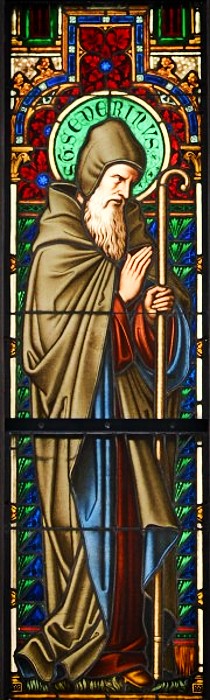
St Severinus – St.Severin Parish Church Lower Austria
Severinus was a high-born Roman living as an Hermit in the East. He was an ascetic in practice. He is first recorded as travelling along the Danube in Noricum and Bavaria, preaching Christianity, procuring supplies for the starving, redeeming captives and establishing Monasteries at Passau and Favianae,
While the Western Empire was falling apart, Severinus, thanks to his virtues and organisational skills, committed himself to the religious and material care of the frontier peoples, also taking care of their military defence. He organised refugee camps, migrations to safer areas and food distribution.
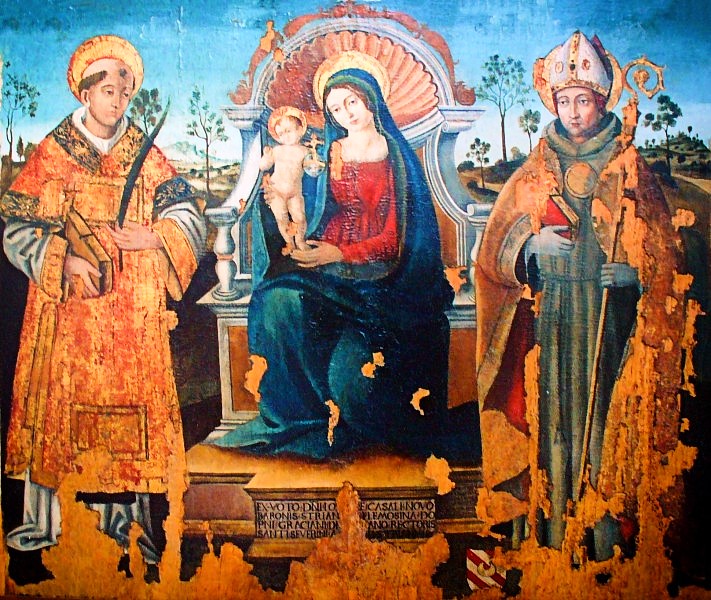
Madonna and Child Enthroned between San Severino and San Sossio – Protasio Crivelli, 1506
Serverinus offered practical leadership, as well as spiritual leadership. He was a tireless preacher and a marvellous Miracle-worker – he miraculously multiplied food reserves, cured the sick, cast out devils, commanded the elements of nature and once even resurrected the dead.
The main theme of his teaching was the value of penance. It was a propitious choice. The sufferings of his people under the Germanic invasions were acute and, uniting them with Christ’s sufferings for the reparation of sin and the conversion of sinners, enabled them to find meaning and strength amid calamity. He also practiced what he preached. In his constant barefoot journeying throughout Austria and Bavaria, he ate only one meal a day and slept on a sack which he carried around with him, wherever he happened to find himself at bedtime.
His efforts seem to have won him wide respect, including that of the Germanic chieftain Odoacer. Eugippius credits him with the prediction that Odoacer would become king of Rome. However, Severinus warned that Odoacer would rule not more than fourteen years.
Severinus also prophesied the destruction of Asturis in Austria, by the Huns. When the people would not heed his warning, he took refuge in Comagena. There he established refugee centres for people displaced by the invasion and founded Monasteries to re-establish spirituality and preserve learning in the stricken region.
He died in his monastic cell at Favianae while singing Psalm 150. Six years after his death, his Monks were driven from their Abbey and his body was taken to Italy, where it was at first kept in the Castel dell’Ovo, Naples, then eventually interred at the Benedictine Monastery rededicated to him, the Abbey of San Severino in the City of Naples.
Austrian postage stamp of their Patron Saint
St Severinus Statue on the Church in Church at Steinhof, Vienna
St Apollinaris the Apologist (Died 2nd Century) Confessor, Defender of the True Faith against heretics, Writer, renowned Scholar. Bishop, Apologist. The Roman Martyrology states: “In Hierapolis in Phrygia, in today’s Turkey, Saint Apollinaris, Bishop, who shone under the Emperor Marcus Aurelius for doctrine and holiness.” A Courageous and Zealous Life: https://anastpaul.com/2022/01/08/saint-of-the-day-8-january-saint-apollinaris-the-apologist-died-2nd-century/
St Athelm of Canterbury St Atticus of Constantinople St Carterius of Caesarea Bl Edward Waterson St Ergnad of Ulster St Erhard of Regensburg St Eugenian of Autun St Garibaldus of Regensburg St Gudule of Brussels St Helladius St Julian of Beauvais St Lucian of Beauvais St Maximian of Beauvais St Maximus of Pavia Bl Nathalan of Aberdeen St Patiens of Metz St Pega of Peakirk
St Severinus of Noricum (c 410-482) Abbot, Hermit, Missionary, the “Apostle to Noricum” (Noricum is the Latin name for the Celtic kingdom or federation of tribes that included most of modern Austria and part of Slovenia.) St Theophilus the Martyr St Thorfinn St Wulsin of Sherborne
Martyrs of Greece – 9 Saints: A group of Christians honoured in Greece as Martyrs, but we have no details about their lives or deaths – Euctus, Flix, Januarius, Lucius, Palladius, Piscus, Rusticus, Secundus and Timotheus
Martyrs of Terni – 4 Saints: A group of Christian soldiers in the imperial Roman army. Executed during the persecutions of Emperor Claudius. Martyrs. – Carbonanus, Claudius, Planus and Tibudianus. They were martyred in 270 in Terni, Italy.
Thought for the Day – 7 January – Meditations with Antonio Cardinal Bacci (1881-1971)
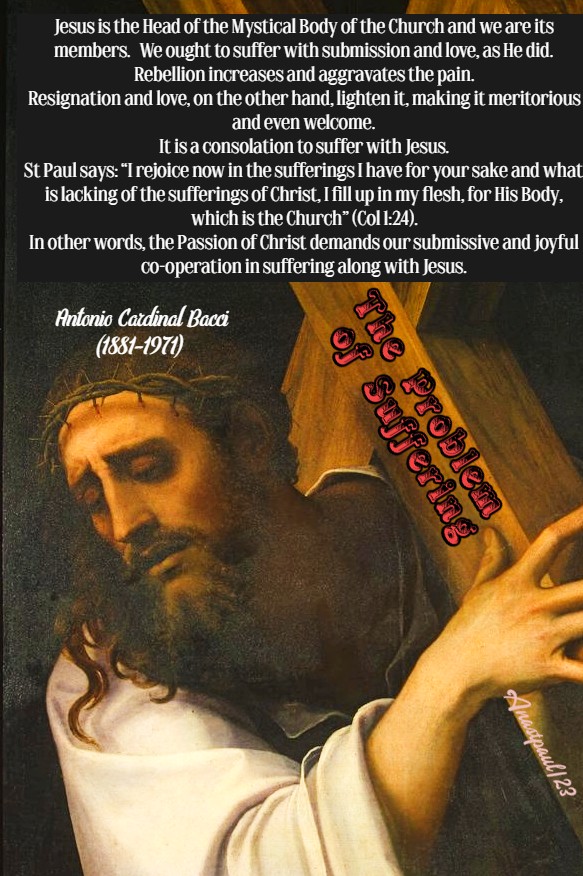
The Problem of Suffering
“Jesus is the Head of the Mystical Body of the Church and we are its members. We ought to suffer with submission and love, as He did. Rebellion increases and aggravates the pain. Resignation and love, on the other hand, lighten it, making it meritorious and even welcome. It is a consolation to suffer with Jesus. St Paul says: “I rejoice now in the sufferings I have for your sake and what is lacking of the sufferings of Christ, I fill up in my flesh, for His Body, which is the Church” (Col 1:24). In other words,the Passion of Christ demands our submissive and joyful co-operation in suffering along with Jesus.
The Acts says of the Apostles, “So they departed from the presence of the Sanhedrin, rejoicing that they had been counted worthy to suffer disgrace for the Name of Jesus.” (Acts 5:41).
“So great is the reward which awaits me,” exclaims St Francis, “every suffering is pure joy to me!” He knew well, that the sorrows of this world are very tiny compared with the wonderful recompense which awaits us in Heaven. “The sufferings of the present time are not worthy to be compared with the glory to come that will be revealed in us” (Rom 8:18).”
Quote/s of the Day – 7 January – Within the Octave of Epiphany
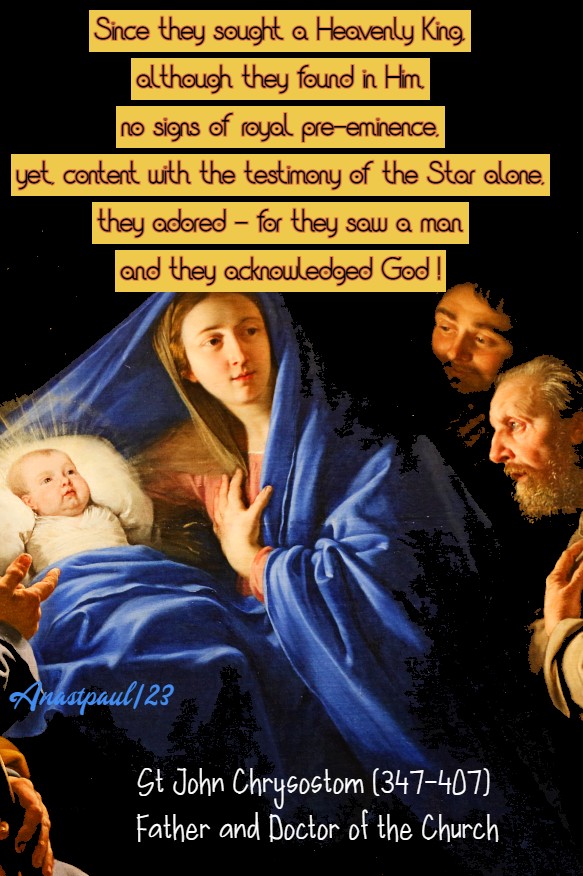
“If the Magi had come in search of an earthly King, they would have been disconcerted at finding that they had taken the trouble to come such a long way for nothing. Consequently, they would have neither adored, nor offered gifts. But since they sought a Heavenly King, although they found in Him, no signs of royal pre-eminence, yet, content with the testimony of the Star alone, they adored – for they saw a man and they acknowledged God!”
St John Chrysostom (347-407) Father and Doctor of the Church
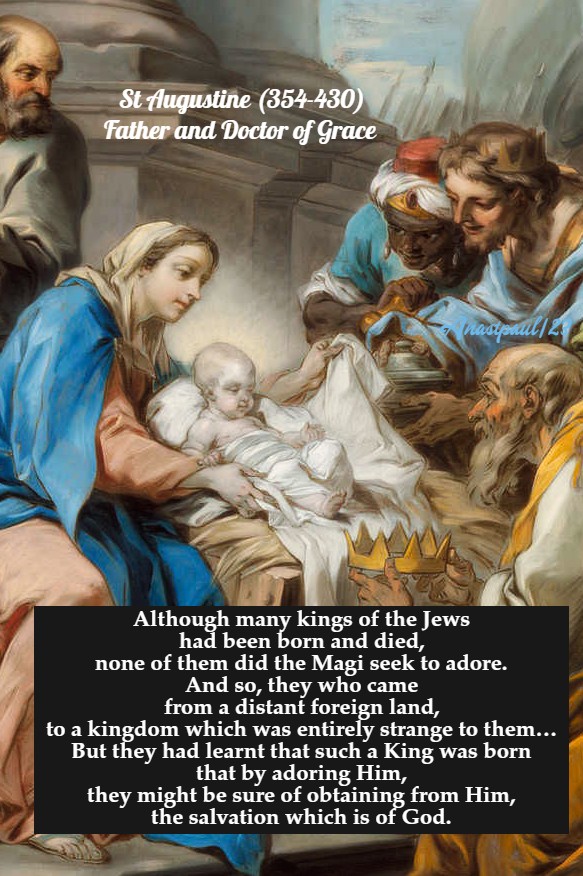
“Although many kings of the Jews had been born and died, none of them did the Magi seek to adore. And so, they who came from a distant foreign land, to a kingdom which was entirely strange to them… But they had learnt that such a King was born that by adoring Him, they might be sure of obtaining from Him, the salvation which is of God.”
St Augustine (354-430) Father and Doctor of Grace
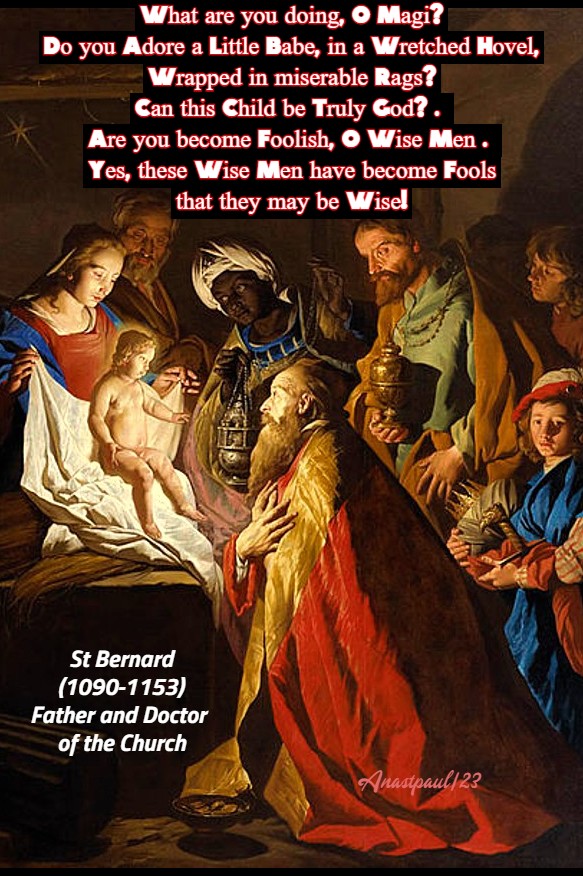
“What are you doing, O Magi? Do you adore a little Babe, in a wretched hovel, wrapped in miserable rags? Can this Child be truly God? … Are you become foolish, O Wise Men … Yes, these Wise Men have become fools that they may be wise!”
St Bernard (1090-1153) Father and Doctor of the Church
One Minute Reflection – 7January – Within the Octave of Epiphany – Isaias 60:1-6, Matthew 2:1-12 – Scripture search here: https://www.drbo.org/
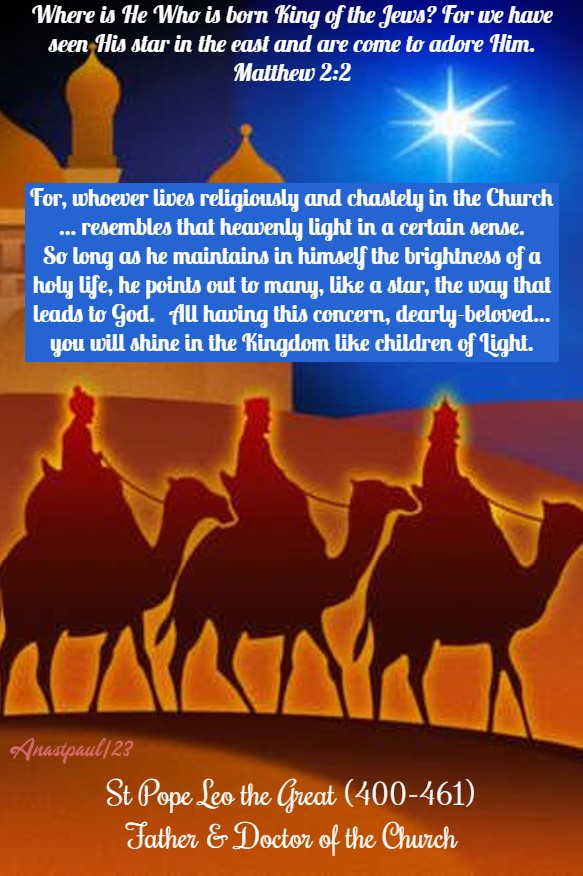
“Where is He Who is born King of the Jews? For we have seen His star in the east and are come to adore Him.” – Matthew 2:2
REFLECTION – “All these things we know to have taken place ever since the three wise men, aroused in their far-off land, were led by a star to recognise and worship the King of Heaven and earth. The responsiveness of that star exhorts us to imitate it’s obedience and, as much as we can, to make ourselves servants of that grace which invites us all to Christ. For, whoever lives religiously and chastely in the Church and “sets his mind on the things which are above, not on the things that are upon the earth” (Col 3:2) resembles that heavenly light in a certain sense. So long as he maintains in himself the brightness of a holy life, he points out to many, like a star, the way that leads to God. All having this concern, dearly-beloved… you will shine in the Kingdom like children of Light.”… St Pope Leo the Great (400-461) Father & Doctor of the Church.
PRAYER – O God, Thou Who by the guidance of a star this day revealed Thy Only-begotten Son to the Gentiles, mercifully grant that we, who know Thee now by faith, may come to behold Thee in glory. Through the same Jesus Christ, Thy Son our Lord, Who lives and reigns with Thee, in the unity of the Holy Ghost, God, world without end. Amen (Collect).
Our Morning Offering – 7 January – Within the Octave of Epiphany – “The Month of the Most Holy Name of Jesus”
The Love of Thy Name By Thomas à Kempis CRSA (1380-1471) The Imitation of Christ (Book 3 Ch 26:1-4)
My God, Sweetness beyond words, make bitter all the carnal comfort which draws me from love of the eternal and lures me to its evil self, by the sight of some delightful good in the present. Let it not overcome me, my God. Let not flesh and blood conquer me. Let not the world and its brief glory deceive me, nor the devil trip me by his craftiness. Give me courage to resist, patience to endure and constancy to persevere. Give me the soothing unction of Thy spirit, rather than all the consolations of the world and in place of carnal love, infuse into me, the love of Thy Name. Amen
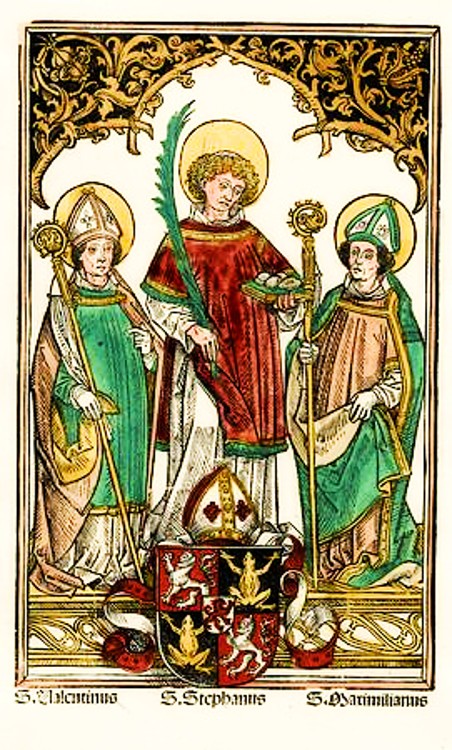
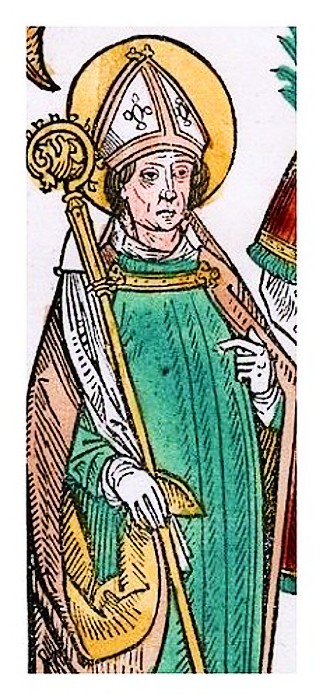
Saint of the Day – 7January – St Valentine of Passau (Died 475) Bishop in Passau in the Rhaetia region, Switzerland, an area in the border region of modern Italy, Austria and Switzerland, Monk, Abbot, Missionary, Hermit, Miracle-worker. Died on 7 January 475 at Mais, Tyrol, Austria of natural causes. Patronages – against convulsions, against cramps/stomach pain, against epilepsy, against gout, against plague/epidemics, against demonic possession, of cattle diseases, of pilgrims, poor people, City and Diocese of Passau. Also known as • Valentine of Mais • Valentine of Raetia • Valentine of Ratien • Valentine of Retie • Valentine of Rezia • Valentine of Rhaetia • Valentine of Rhétie • Valentin, Valentinus.Additional Memorial – 4 August (translation of relics), 29 October a combined Feast with the other Patrons of Passau, St Stephen, the Protomartyr and St Maximillian Martyr Bishop of Passau for 20 years, who died in c 284 (Feast day 12 October)..
The 3 Patrons of Passau, St Valentine left, st Stephen centre and St Maximillian right
According to tradition, Valentine came to Passau around 430; there the construction of the first Church on the site of today’s Cathedral is attributed to him.
Valentine had been sent by the Pope to preach the Gospel in the Passau. He found that his work was without fruit and returned to Rome to implore the Holy Father to send him elsewhere. But the Pope Consecrated him Bishop and sent him back to Passau, to preach in season and out of season, whether it produced fruit or not.
The Bishop renewed his efforts but the pagans and Arians combined to drive him out of the City. Thereupon, he went into the Rhætian Alps and his teaching produced abundant fruit in the region. His Vita states, St Valentine was “teaching the word of God and doing great good, such that he was able to expel demons from the obsessed and cure those who were sick of all sorts of diseases.”
At length he resolved to serve God and purify his own soul, in a life of retirement. He, therefore, built a little Chapel and Monastery at Mais, in Tyrol and there he died. His Relics are enshrined at Passau.
A Monk who died in 482 wrote a Vita of the Bishop of Raetia. St Venantius Fortunatus knew of a Church dedicated to Saint Valentine in the Upper Inn Valley and another, probably on the Brenner Pass in the Alps.
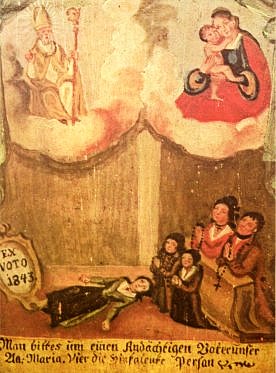
otive image, 1843 from the Mariahill pilgrimage Church in Passau. Next to Bishop Valentin appears the Mother of God with the Jesus Child in her arms in a wreath of clouds. The text asks for a devotional Lord’s Prayer to Maria for the sinful person.
Around 1200, on the occasion of the discovery of his grave in the forecourt of Passau Cathedral, a life story was written by an Cathedral Chaplain – who said that Valentin worked in the area around Passau but was unsuccessful because of the wildness of the residents and finally retreated to the Alps after abuse and expulsion.
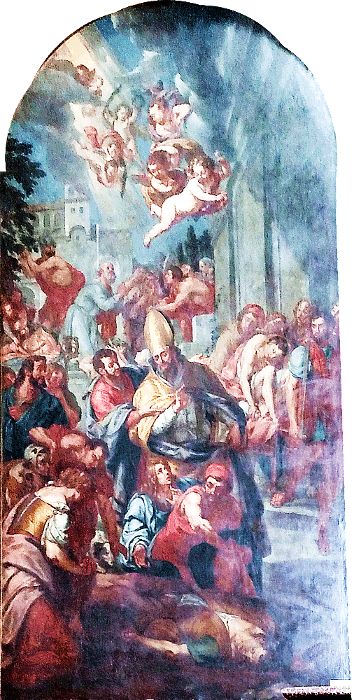
Below is a Painting by Franz de Neve “The Cures Wrought by Saint Valentine and the Beheading of St Maximilian” (after 1689) which resides in the Cathedral of St Stephen, Passau. In the foreground, St Valentine cures the sick. The beheading of St Maximilian is barely visible in the left edge of the background.
Bl Albert of Siena St Aldric of Le Mans Bl Ambrose Fernandez St Anastasius of Sens St Brannock of Braunton St Candida of Greece St Canute Lavard St Cedd St Clerus of Antioch St Crispin I of Pavia St Cronan Beg St Emilian of Saujon St Felix of Heraclea St Giuliano of Gozzano (c 350-c 391) Deacon, Missionary St Januarius of Heraclea St Julian of Cagliari St Kentigerna St Lucian of Antioch
St Pallada of Greece St Polyeuctus of Melitene St Reinhold of Cologne St Spolicostus of Greece St Theodore of Egypt St Tillo of Solignac St Valentine of Passau (Died 475) Bishop St Virginia of Ste-Verge Bl Wittikund of Westphalia
Thought for the Day – 6 January – Meditations with Antonio Cardinal Bacci (1881-1971)
The Epiphany
“The Magi gave Jesus material gifts too, as symbols of their complete dedication to Him. They gave Him gold because He was a King, incense because He was God and myrrh because, He was Man. We often say that we love God and wish to serve and obey Him in all things. But when we see that this entails sacrifice, we forget our promises.
We must ask ourselves if we are prepared to offer Jesus, gold, that is, to offer Him everything we possess, for the promotion of His glory, for the spread of His Kingdom and for the relief of His poor, to whom we ought always to see and love in them, Christ Himself. We must examine ourselves thoroughly on this. It is easy to find excuses for not giving to God and to His poor, in accordance with our means.
We should offer too, the incense of our adoration and unceasing prayer. There can be no sanctity without prayer. There can be no real Christians, without sanctity.
Finally, we must offer the myrrh of our mortification. Mortification, as St Vincent de Paul has said, is the ABC of Christian perfection. St Paul exhorts us to carry always, in ourselves, the mortification of Jesus. If we are not mortified, we can never be holy and can never share the joy which the Magi experieced as they lay prostrate before the cradle of our Divine Redeemer.”
Quote/s of the Day – 6 January – The Epiphany of the Lord – Isaias 60:1-6, Matthew 2:1-12 – Scripture search here: https://www.drbo.org/
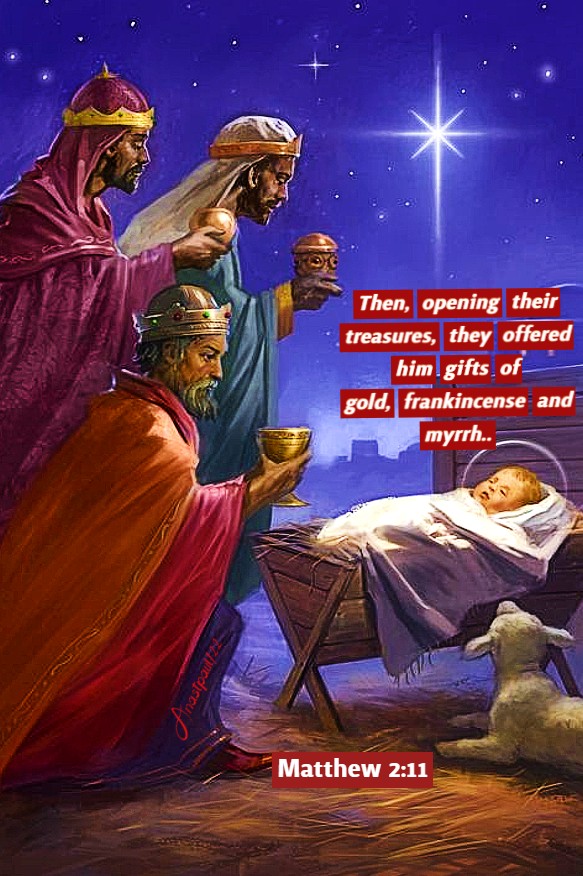
“They fell down and worshipped him. Then, opening their treasures, they offered him gifts of gold, frankincense and myrrh.”
Matthew 2:11
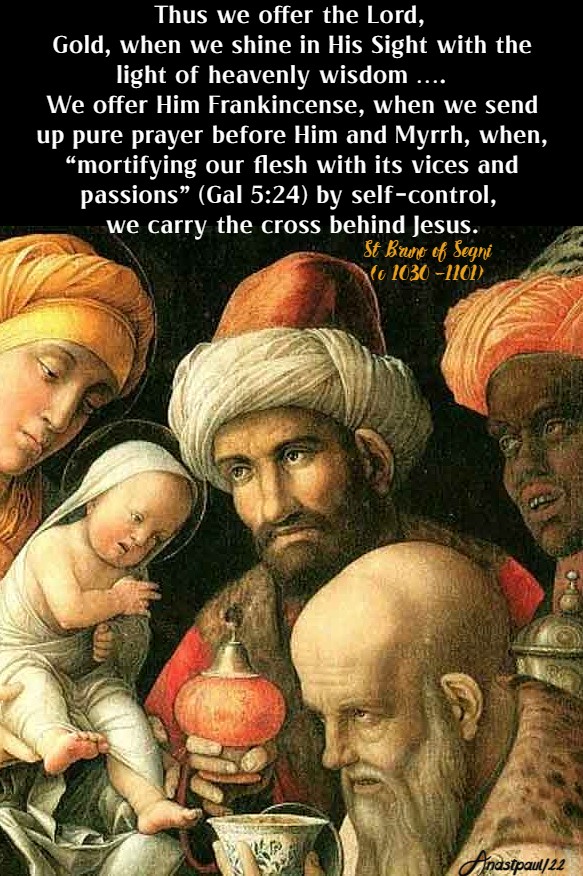
“Thus we offer the Lord, Gold, when we shine in His Sight with the light of heavenly wisdom …. We offer Him Frankincense, when we send up pure prayer before Him and Myrrh, when, “mortifying our flesh with its vices and passions” (Gal 5:24) by self-control, we carry the cross behind Jesus.”
St Bruno of Segni O.Cart. (c 1030 -1101) Bishop
(1st Sermon on the Epiphany PL 165, 863).
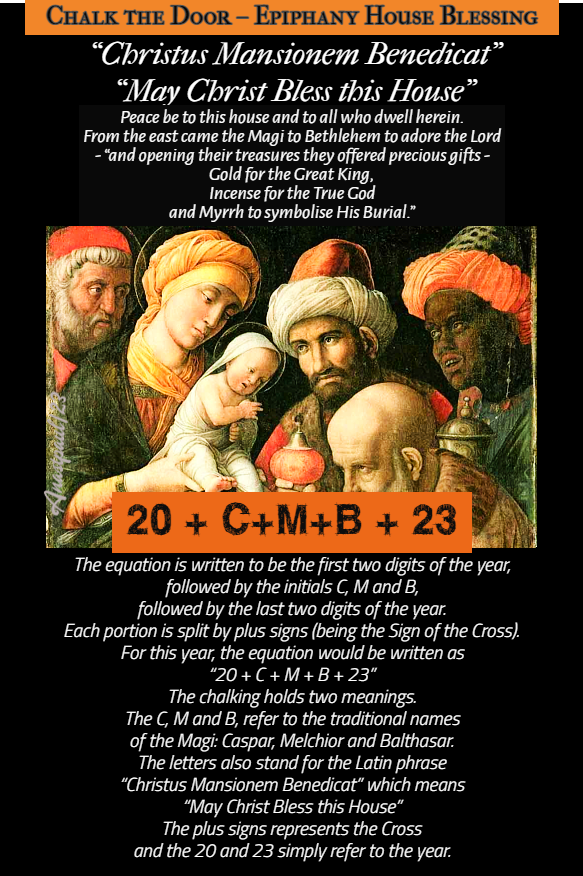
Chalk the Door – Epiphany House Blessing 20 C+M+B 23 “Christus mansionem benedicat”
Peace be to this house and to all who dwell herein. From the east came the Magi to Bethlehem to adore the Lord – “and opening their treasures they offered precious gifts – Gold for the Great King, Incense for the True God and Myrrh to symbolise His Burial.”
The equation is written to be the first two digits of the year, followed by the initials C, M and B, followed by the last two digits of the year. Each portion is split by plus signs (being the Sign of the Cross). For this year, the equation would be written as “20 + C + M + B + 23” The chalking holds two meanings. The C, M and B, refer to the traditional names of the Magi: Caspar, Melchior and Balthasar. The letters also stand for the Latin phrase “Christus Mansionem Benedicat” which means “May Christ Bless this House” The plus signs represents the Cross and the 20 and 23 simply refer to the year.
One Minute Reflection – 6 January – The Epiphany of the Lord – Isaias 60:1-6, Matthew 2:1-12 – Scripture search here: https://www.drbo.org/
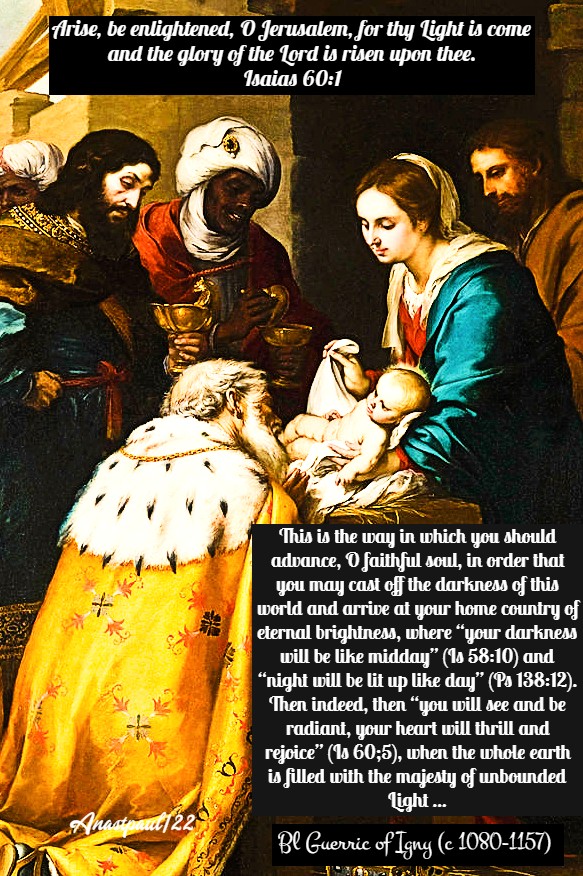
“Arise, be enlightened, O Jerusalem, for thy Light is come and the glory of the Lord is risen upon thee.” – Isaias 60:1
REFLECTION – “ … In virtue of it this day also, you are sanctified by the enlightening of the Church. Thanks be to Thee, true Light, Thou that “enlighten every man coming into this world” (Jn 1:9), Thou Who for this very purpose, have come into this world as a Man. …
O God, Thou Who gives Light to all nations, of Thou we will sing – “Behold the Lord will come and enlighten the eyes of His servants” (cf. Jude 14). Behold, Thou hast come, my Light: “Enlighten my eyes that I may never fall asleep in death” (Ps 12:[12],4)… Thou has come, O Light of the faithful and behold Thou has granted us today, to rejoice at the enlightening of faith that is, of our lamp. Grant us also to rejoice always at the enlightening of the darkness that remains in us…
This is the way in which you should advance, O faithful soul, in order that you may cast off the darkness of this world and arrive at your home country of eternal brightness, where “your darkness will be like midday” (Is 58:10) and “night will be lit up like day” (Ps 138:12). Then indeed, then “you will see and be radiant, your heart will thrill and rejoice” (Is 60;5), when the whole earth is filled with the majesty of unbounded Light and “His glory is seen in you” (Is 60;2)… “Come and let us walk in the Light of the Lord!” (Is 2:5); as “children of light” let us walk “from brightness to brightness, as led by the Lord Who is Spirit“ (2 Cor 3:18).” – Bl Guerric of Igny (c 1080-1157) Cistercian Abbot (3rd sermon for Epiphany SC 166).
PRAYER – O God, Thou Who by the guidance of a star this day revealed Thy Only-begotten Son to the Gentiles, mercifully grant that we, who know Thee now by faith, may come to behold Thee in glory. Through the same Jesus Christ, Thy Son our Lord, Who lives and reigns with Thee, in the unity of the Holy Ghost, God, world without end. Amen (Collect).
“Give me, therefore, I pray Thee, this gold, this incense and this myrrh. Give me the gold of Thy holy love, give me the spirit of holy prayer, give me the desire and strength to mortify myself in everything that displeases Thee. I am resolved to obey Thee and to love Thee but Thou knowest my weakness, oh, give me the grace to be faithful to Thee!”
St Alphonsus Liguori (1696-1787) Most Zealous Doctor of the Church
Our Morning Offering – 6 January – The Epiphany of the Lord
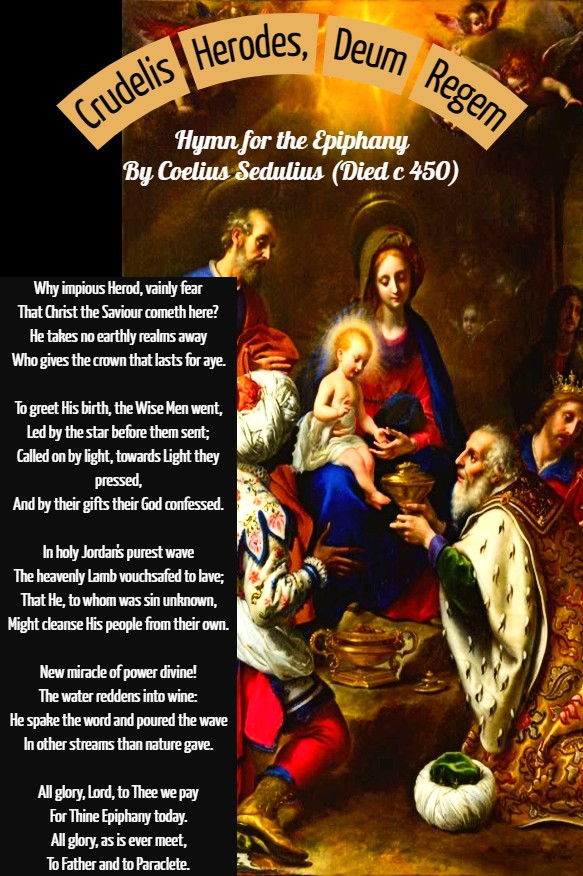
Crudelis Herodes, Deum Regem Hymn for The Epiphany By Coelius Sedulius (Died c 450) Poet Unknown translator
Why impious Herod, vainly fear That Christ the Saviour cometh here? He takes no earthly realms away Who gives the crown that lasts for aye.
To greet His birth, the Wise Men went, Led by the star before them sent; Called on by light, towards Light they pressed, And by their gifts their God confessed.
In holy Jordan’s purest wave The heavenly Lamb vouchsafed to lave; That He, to whom was sin unknown, Might cleanse His people from their own.
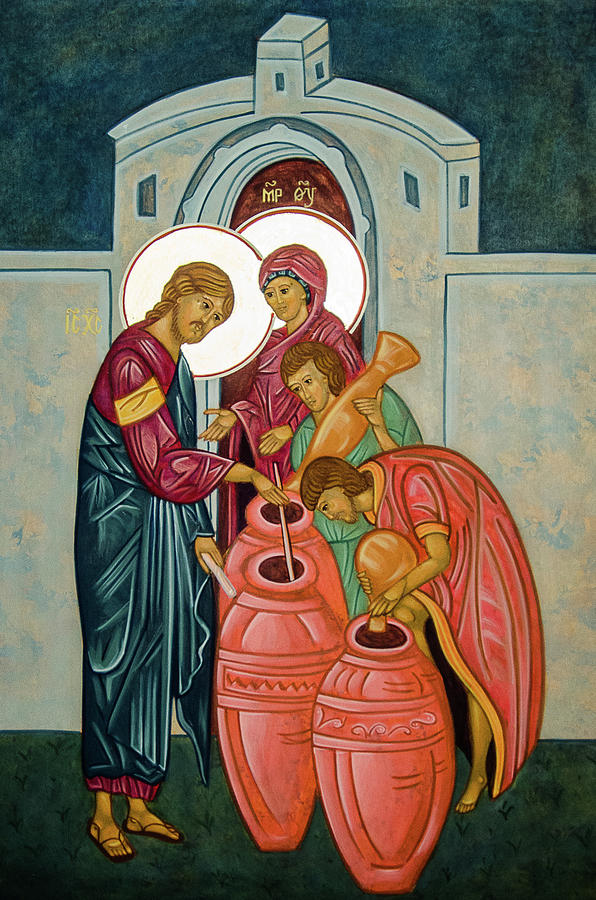
New miracle of power divine! The water reddens into wine: He spake the word and poured the wave In other streams than nature gave.
All glory, Lord, to Thee we pay For Thine Epiphany today. All glory, as is ever meet, To Father and to Paraclete.
Coelius Sedulius (Died c 450), recounting Christ’s life from His Birth to His Resurrection. Its 23 stanzas each begin with a consecutive letter of the Latin alphabet, making the poem an abecedarius. It is one of the oldest parts of the Roman Catholic liturgy, with two Hymns formed from the first seven and four later verses. There have been monastic translations into English and later translations into many other languages.
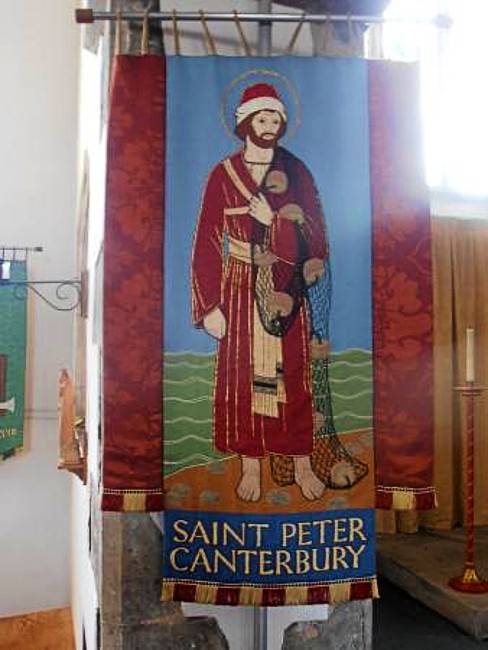
Saint of the Day – 6 January – Saint Peter of Canterbury (Died c 614) Priest, Missionary, the First Abbot of the Monastery of Sts Peter and Paul in Canterbury (later St Augustine’s Abbey) and a companion of St Augustine of Canterbury (Died c 605) in the Gregorian mission to Kent.
It is presumed that Peter was a native of Italy, like the other members of the Gregorian mission. This mission was dispatched by Pope Gregory the Great in 596 to Christianise the Anglo-Saxons from their paganism. It landed in Kent in 597 and soon converted King Æthelberht of Kent, who gave Augustine the land on which he founded the Abbey that later became St Augustine’s, Canterbury.
The medieval historian, the Venerable St Bede records that sometime after the mission’s arrival in England, probably in late 600, Peter, along with fellow-missionary St Laurence, was sent back to Gregory. This deputation was to relay the news of St Augustine’s successes in Kent and to request more missionaries. They also conveyed to the Pope a number of inquiries from St Augustine about how to proceed with the mission and when they returned in 601, they brought back Gregory’s replies to Augustine.
Peter became the First Abbot of the Monastery which King Æthelberht founded in Canterbury, originally dedicated to the Saints Peter and Paul but later rededicated as St Augustine’s, after the leader of the mission.
St Bede describes Peter as both Abbot and Presbyter’Priest. Peter drowned while crossing the English Channel on the way to Gaul, at a place called Ambleteuse, near Boulogne. At first he was buried hastily nearby but St Bede reports that after a light illuminated the grave every night, the locals realised Peter was a Saint and exhumed him and re-interred him in Boulogne Church with suitable honour.
The actual date of death is unknown and since his feast day was celebrated on two different days, 30 December or 6 January, that information does not clear up the mystery. The date of his death is reported to have been 1 year, 7 months and 3 weeks after Augustine’s, by Thomas of Elmham, a 15th Century chronicler. If this is true, this would give a year of death between 605 and 611. This information, however, is contradicted by the fact that Peter was present at the Council of Paris in 614, convened by Chlothar II. It is possible that he died during his return from this Council.
Peter was Canonised in 1915 Pope Benedict XV (cultus confirmed).
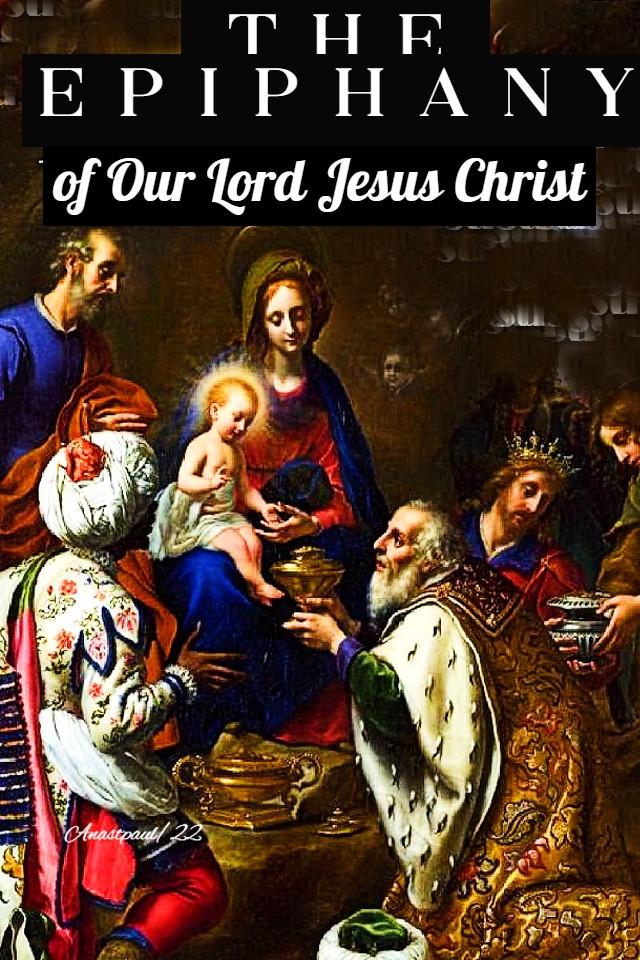
The Epiphany of the Lord – 6 January: Epiphany celebrates the visit of the three kings or wise men to the Christ Child, signifying the extension of salvation to the Gentiles. The date of Epiphany, one of the oldest Christian Feasts, is 6 January, the 12th day after Christmas. However, in some countries, the celebration of Epiphany is transferred to the Sunday that falls between 2 January and 8 January (inclusive). Greece, Ireland, Italy and Poland continue to observe Epiphany on 6 January as do some Dioceses ithroughout the world. Because Epiphany is one of the most important Christian Feasts, it is a Holy Day of Obligation in most countries.
St Antoninus St Basillisa of Antinoë Saint Balthasar, Saint Caspar and Saint Melchior
St Charles of Sezze OFM (1613-1670) Stigmatist, Friar, of the Friars Minor, Mystic, Writer, Advisor. His Beatification was celebrated in 1882 while Pope Pius XII approved his Canonisation in 1958 but the Pope died before he could Canonise the Friar so his successor, Pope John XXIII did so on 12 April 1959. His body is incorrupt. About St Charles: https://anastpaul.wordpress.com/2018/01/06/saint-of-the-day-6-january-st-charles-of-sezze-o-f-m-1613-1670/
St Demetrius of Philadelphia St Diman Dubh of Connor St Edeyrn St Eigrad St Erminold of Prüfening
St Julian of Antinoë St Julius Bl Luc of Roucy Bl Macarius the Scot St Macra of Rheims St Merinus St Nilammon of Geris St Petran of Landévennec St Peter of Canterbury (Died c 614) Priest, Abbot, Missionary St Pia of Quedlinburg St Pompejanus Bl Raymond de Blanes Bl Rita Amada de Jesus St Schotin St Wiltrudis of Bergen
Martyrs in Africa: Unknown number of Christian men and women who were Martyred in the persecutions of Septimus Severus. They were burned to death c 210.
Martyrs of Sirmium – 8 Saints: A group of Christians Martyred together for their faith. The only surviving details are the names of eight of them – Anastasius VIII, Florianus, Florus, Jucundus, Peter, Ratites, Tatia and Tilis. They were martyred in the 4th century at Syrmium, Pannonia (modern Sremska Mitrovica, Vojvodina, Serbia).
Twelve Apostles – Saints of Ireland: Twelve 6th century Irish monks who studied under Saint Finian at Clonard Abbey and then spread the Faith throughout Ireland. Each has his own commemoration but on this day, they and their good works are considered and celebrated together. Although Saint Finian is sometimes included, most ancient writers list them as –
Thought for the Day – 5 January– Meditations with Antonio Cardinal Bacci (1881-1971)
Venial Sin
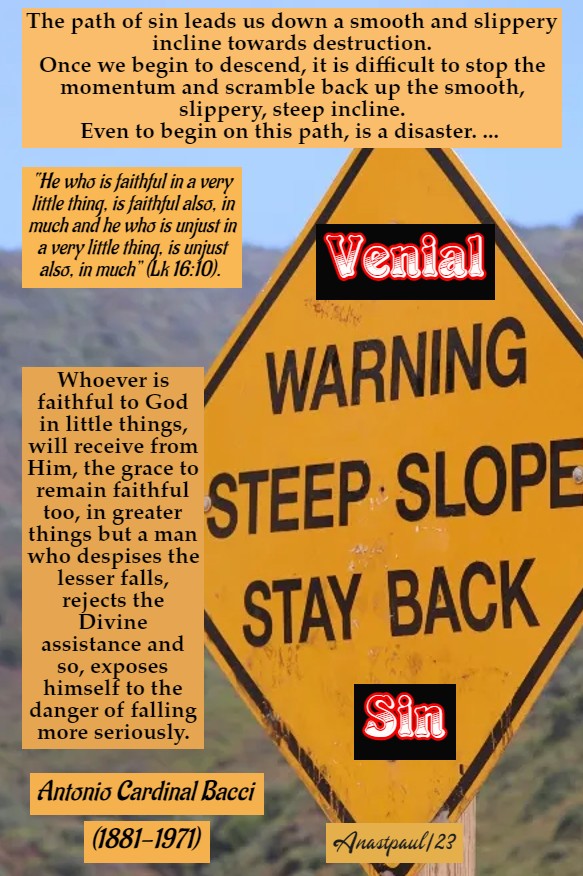
“There is another motive too, which obliges us to carefully avoid even commiting a venial sin. The path of sin leads us down a smooth and slippery incline towards destruction. Once we begin to descend, it is difficult to stop the momentum and scramble back up the smooth, slippery, steep incline. Even to begin on this path, is a disaster.
“He who wastes the little he has, will be stripped bare” (Eccles 19:1).
“He who is faithful in a very little thing, is faithful also, in much and he who is unjust in a very little thing, is unjust also, in much” (Lk 16:10).
Whoever is faithful to God in little things, will receive from Him, the grace to remain faithful too, in greater things but a man who despises the lesser falls, rejects the Divine assistance and so, exposes himself to the danger of falling more seriously.
If we reflect on such dangers, we shall have a real fear of venial sin and shall be always on our guard against it.”
Quote/s of the Day – 5 January – “The Month of the Most Holy Name of Jesus” – Vigil of the Epiphany –
“Wake up then, believer and note what is stated here: “In my Name.” That [Name] is Christ Jesus. Christ signifies King, Jesus signifies Saviour. Therefore, whatever we ask for that would hinder our salvation, we do not ask in our Saviour’s Name and yet, He is our Saviour, not only when He does what we ask but also, when He does not. When He sees us ask anything to the disadvantage of our salvation, He shows Himself our Saviour by not doing it. The physician knows whether what the sick person asks for, is to the advantage or disadvantage of his health. And [the physician] does not allow what would be harmful to him, although the sick person himself, desires it. But the physician looks to his final cure.”
St Augustine (354-430) Father and Doctor of Grace of the Church
“The Lord, although He was God, became man. He suffered for the sake of those who suffer, He was bound for those in bonds, condemned for the guilty, buried for those who lie in the grave but He rose from the dead and cried aloud: “Who will contend with Me? Let him confront Me.” I have freed the condemned, brought the dead back to life, raised men from their graves. Who has anything to say against Me? I, He said, Am the Christ, I have destroyed death, triumphed over the enemy, trampled hell underfoot, bound the strong one and taken men up to the heights of Heaven. I Am the Christ. Come, then, all you nations of men, receive forgiveness for the sins which defile you. I Am your Forgiveness. I Am the Passover which brings salvation. I Am the Lamb Who was immolated for you. I Am your Ransom, your Life, your Resurrection, your Light, I am your Salvation and your King. I will bring you to the heights of Heaven. With My own Right Hand I will raise you up and I will show you the Eternal Father.”
St Melito of Sardis (Died c 180) Bishop, Father
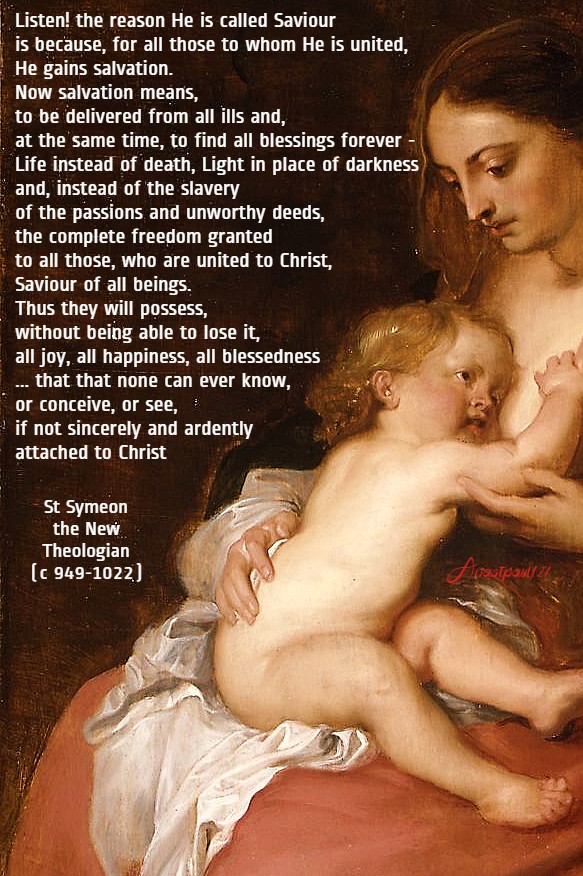
“Listen! the reason He is called Saviour is because, for all those to whom He is united, He gains salvation. Now salvation means, to be delivered from all ills and, at the same time, to find all blessings forever – Life instead of death, Light in place of darkness and, instead of the slavery of the passions and unworthy deeds, the complete freedom granted to all those, who are united to Christ, Saviour of all beings. Thus they will possess, without being able to lose it, all joy, all happiness, all blessedness (…) that that none can ever know, or conceive, or see, if not sincerely and ardently attached to Christ.”
One Minute Reflection – 5 January – “The Month of the Most Holy Name of Jesus” – Vigil of the Epiphany – Galatians 4:1-7, Matthew 2:19-23 – Scripture search here: https://www.drbo.org/
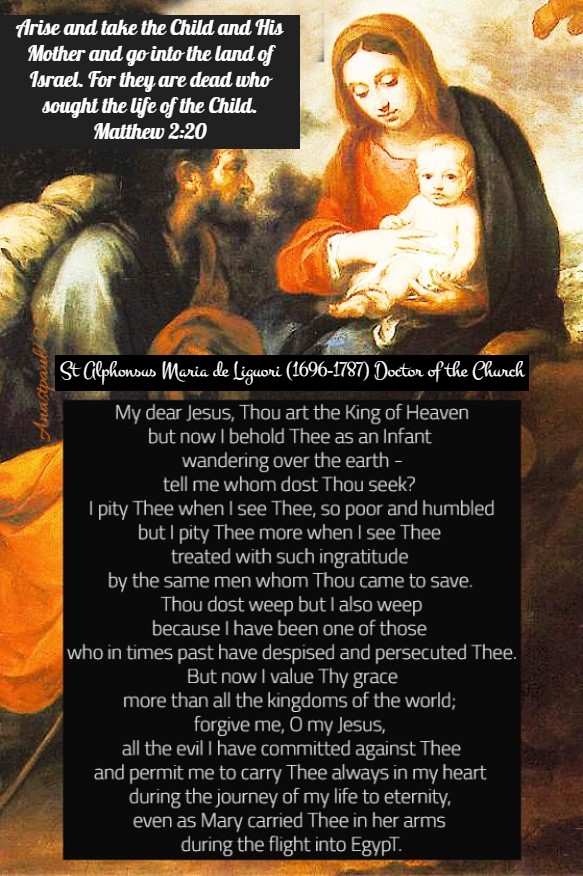
“Arise and take the Child and His Mother and go into the land of Israel. For they are dead who sought the life of the Child.” – Matthew 2:20
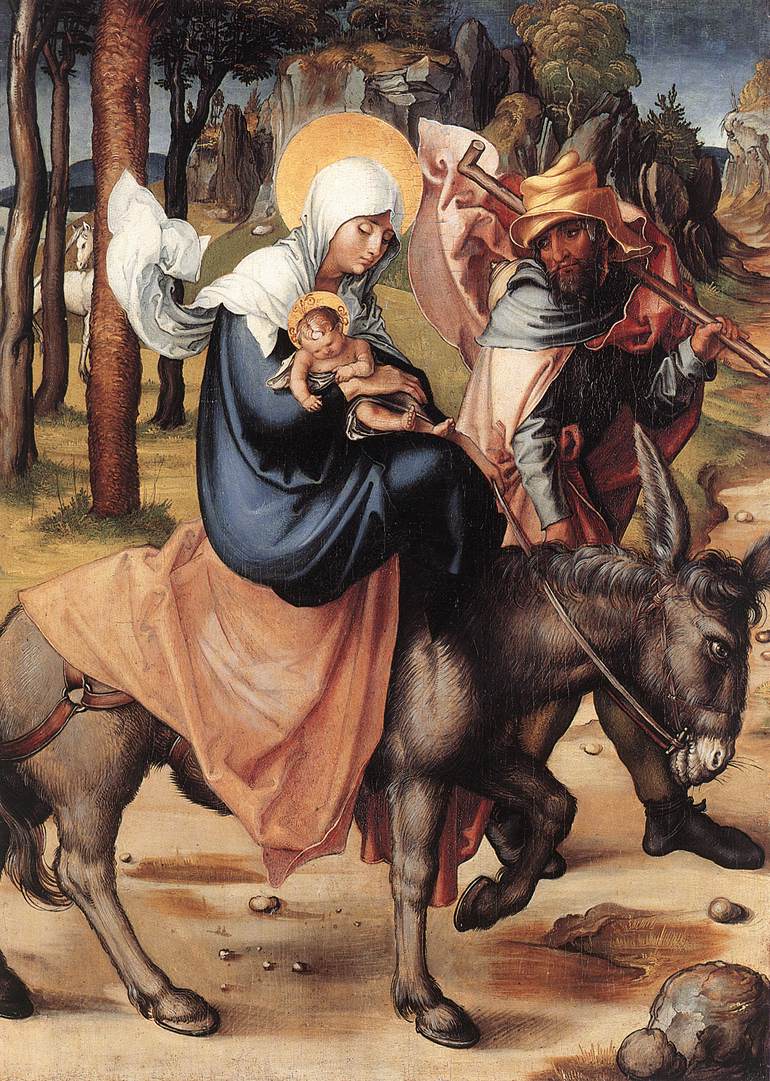
REFLECTION – “My dear Jesus, Thou art the King of Heaven but now I behold Thee as an Infant wandering over the earth – tell me whom dost Thou seek? I pity Thee when I see Thee, so poor and humbled but I pity Thee more when I see Thee treated with such ingratitude by the same men whom Thou came to save. Thou dost weep but I also weep because I have been one of those who in times past have despised and persecuted Thee. But now I value Thy grace more than all the kingdoms of the world; forgive me, O my Jesus, all the evil I have committed against Thee and permit me to carry Thee always in my heart during the journey of my life to eternity, even as Mary carried Thee in her arms during the flight into [and return from] Egypt.” – St Alphonsus Maria de Liguori (1696-1787) Doctor of the Church”
PRAYER – O Almighty and everlasting God, do Thou order all our actions in conformity with Thy good pleasure that through the name of Thy well-beloved Son, we may worthily abound in all good works. Through the same Jesus Christ, Thy Son our Lord, Who lives and reigns with Thee, in the unity of the Holy Ghost, God, world without end. Amen (Collect).
Our Morning Offering – 5 January – The Vigil of the Epiphany of Our Lord
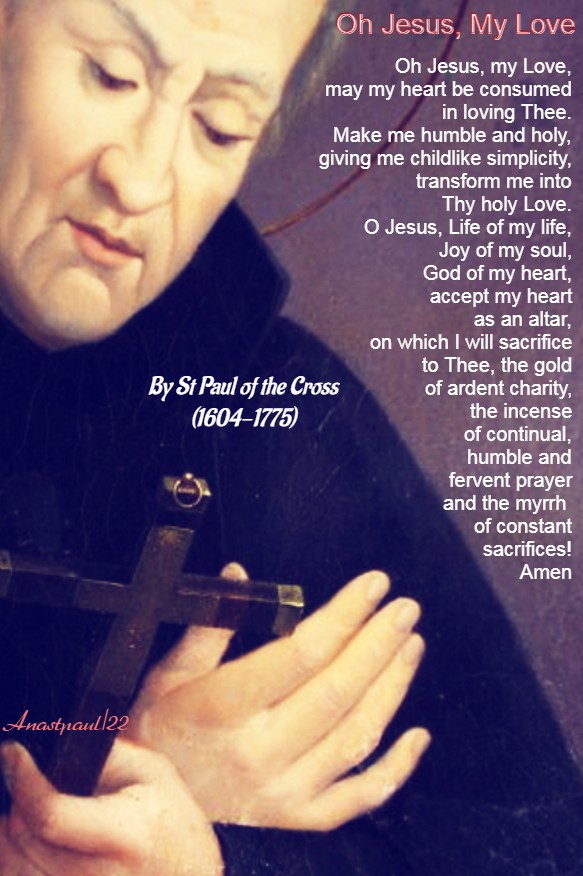
Oh Jesus, My Love By St Paul of the Cross (1604-1775)
Oh Jesus, my Love, may my heart be consumed in loving Thee. Make me humble and holy, giving me childlike simplicity, transform me into Thy holy Love. O Jesus, Life of my life, Joy of my soul, God of my heart, accept my heart as an altar, on which I will sacrifice to Thee, the gold of ardent charity, the incense of continual, humble and fervent prayer and the myrrh of constant sacrifices! Amen
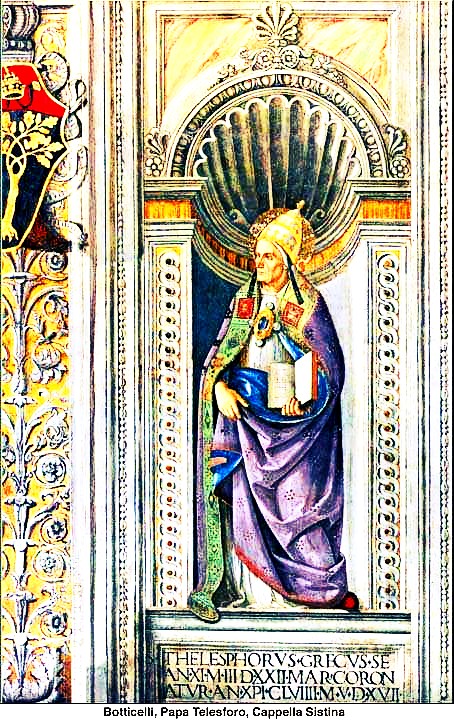
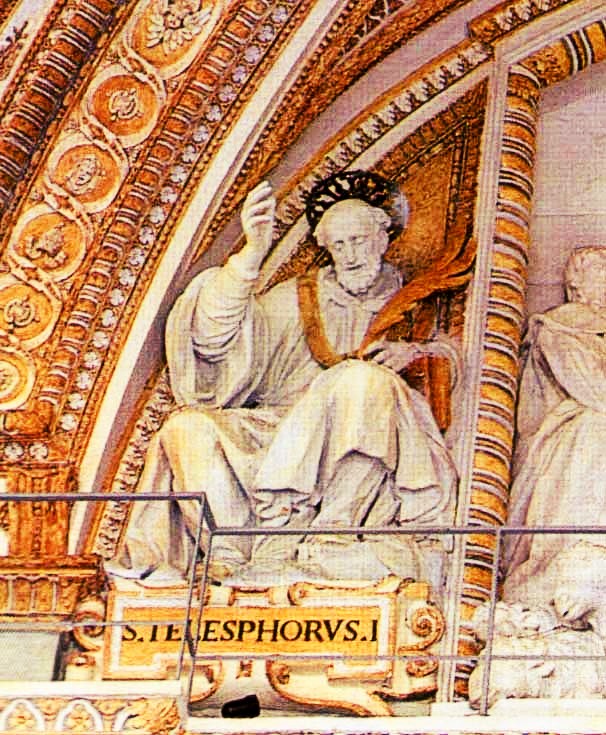
Saint of the Day – 5 January – Saint Telesphorus (Died c 138) Confessor, Pope Martyr. Papal Ascension – 128 to 129 and died by Martyredom in 138 to 139. Also known as – Telesforo.
The Roman Martyrology reads today: “In Rome, in the time of Antoninus Pius, St Telesphorus, Pope, who after many sufferings for the Confession of Christ, underwent a glorious Martyrdom.”
He was of Greek ancestry and born in Terranova da Sibari, Calabria, Italy.
Telesphorus is traditionally considered as the Eighth Bishop of Rome in succession after Saint Peter. The Liber Pontificalis mentions that he had been an Anchorite Monk prior to assuming office.
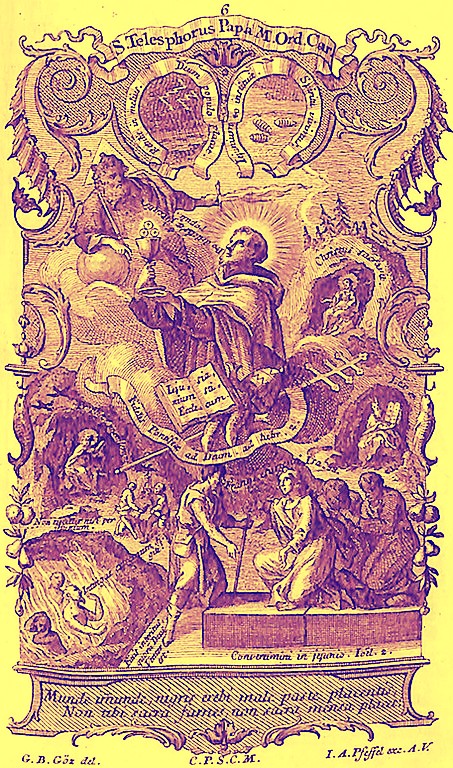
Engraving of St Telesphorus by Johann Andreas Pfeffel (1674-1748)
The tradition of Christmas Midnight Masses, the celebration of Easter on Sundays, the keeping of a seven-week Lent before Easter and the singing of the Gloria, are usually attributed to his Pontificate. A fragment of a letter from St Irenæus to Pope Victor I, during the Easter controversy in the late 2nd Century, also preserved by Eusebius, testifies that Telesphorus was one of the Roman Bishops who always celebrated Easter on Sunday,, rather than on other days of the week, according to the calculation of the Jewish Passover. Unlike Victor, however, Telesphorus remained in communion with those communities who did not follow this custom.
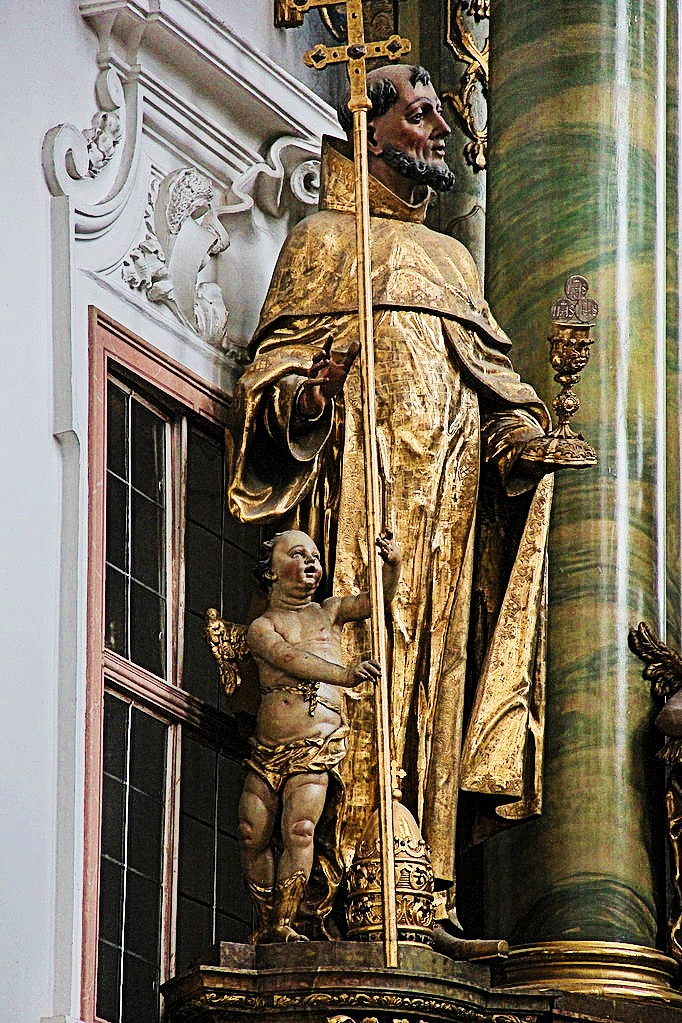
14th Century depiction of St Telesphorus in the Carmelite Monastery of Straubing in Bavaria
According to the testimony of St Irenaeus (Against Heresies III.3.3), he suffered a “glorious Martyrdom.” Although most early Popes are called Martyrs by sources such as the Liber Pontificalis, Telesphorus is the first to whom St Irenaeus, writing in c 180, gives this title, thus making his Martyrdom the earliest attested Martyrdom of a Pope, after Saint Peter.
Eusebius (Church History iv.7; iv.14) places the beginning of his Pontificate in the twelfth year of the reign of Emperor Hadrian (128–129) and gives the date of his death as being in the first year of the reign of Antoninus Pius (138–139).
The Carmelites venerate Telesphorus as a Patron Saint of the Order since some sources depict him as a hermit living on Mount Carmel. The town of Saint-Télesphore, in the southwestern part of Canada’s Quebec Province, is named after him.
Bl Alacrinus of Casamari St Apollinaris Syncletica St Cera of Kilkeary Bl Convoyon of Redon St Deogratias of Carthage (Died 457) Bishop St Dorotheus the Younger
St Kiara St Lomer of Corbion Bl Marcelina Darowska Bl Paula of Tuscany Bl Pietro Bonilli St Simeon Stylites St Syncletica St Talida of Antinoë
Martyrs of Africa – 14 Saints: A group of Christians Martyred together in Africa, date unknown, exact location unknown. We know nothing more than their names – Acutus, Anastasia, Candidus, Coelifloria, Felix, Honorius, Januaria, Jucundus, Lucianus, Marcus, Petrus, Secundus, Severus and Telesphorus.
Martyrs of Sais: A group of Christians Martyred for their faith, but about whom no details have survived. They were Martyred by drowning near Sais, Egypt.
Martyrs of Upper Egypt: There were many Martyrs who suffered in the persecutions of Diocletian in the Thebaid region. Though we know these atrocities occurred, to the point that witnesses claim the torturers and executioners were exhausted by the work, we do not know the names of the saints and we honour them as a group. Many were beheaded and or burned alive in 303 in Upper Egypt.
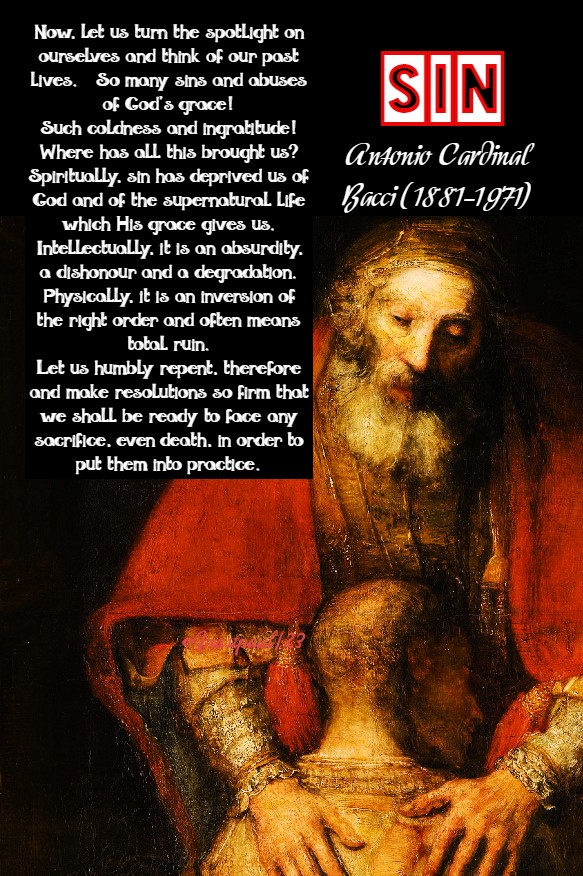
Thought for the Day – 4 January– Meditations with Antonio Cardinal Bacci (1881-1971)
SIN
“Now, let us turn the spotlight on ourselves and think of our past lives. So many sins and abuses of God’s grace! Such coldness and ingratitude! Where has all this brought us? Spiritually, sin has deprived us of God and of the supernatural life which His grace gives us. Intellectually, it is an absurdity, a dishonour and a degradation. Physically, it is an inversion of the right order and often means total ruin.
Let us humbly repent, therefore and make resolutions so firm that we shall be ready to face any sacrifice, even death, in order to put them into practice.”
Quote/s of the Day – 4 January – “The Month of the Most Holy Name of Jesus” – Octave of the Holy Innocents – Apocalypse 14:1-5 , Matthew 2:13-18 –Scripture search here: https://www.drbo.org/
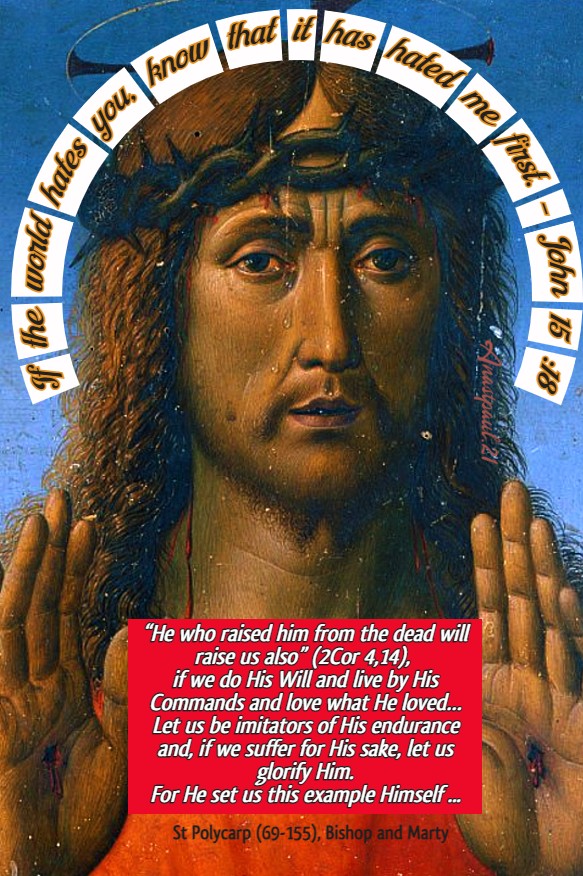
“If the world hates you, know that it has hated Me first.”
John 15:18
“He who raised Him from the dead will raise us also” (2Cor 4,14), if we do His Will and live by His Commands and love what He loved… Let us be imitators of His endurance and, if we suffer for His sake, let us glorify Him. For He set us this example Himself …”
St Polycarp (69-155) Apostolic Father, Bishop and Martyr
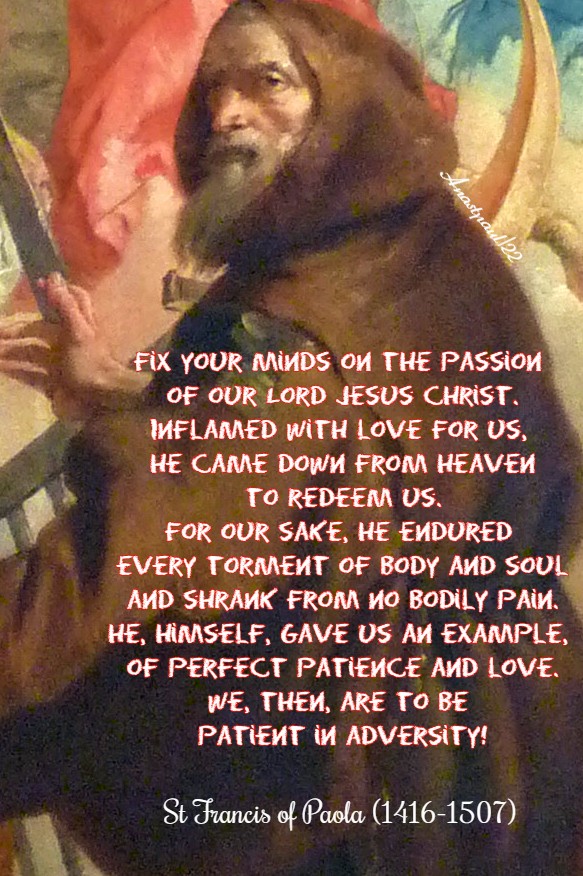
“Fix your minds on the Passion of our Lord Jesus Christ. Inflamed with love for us, He came down from Heaven to redeem us. For our sake, He endured every torment of body and soul and shrank from no bodily pain. He, Himself, gave us an example of perfect patience and love. We, then, are to be patient, in adversity!”
“The recollection of an injury, is . . . a rusty arrow and poison for the soul.”
St Francis of Paola (1416-1507)
“You will be consoled according to the greatness of your sorrow and affliction; the greater the suffering, the greater will be the reward.”
St Maria Magdalena de’ Pazzi (1566-1607)
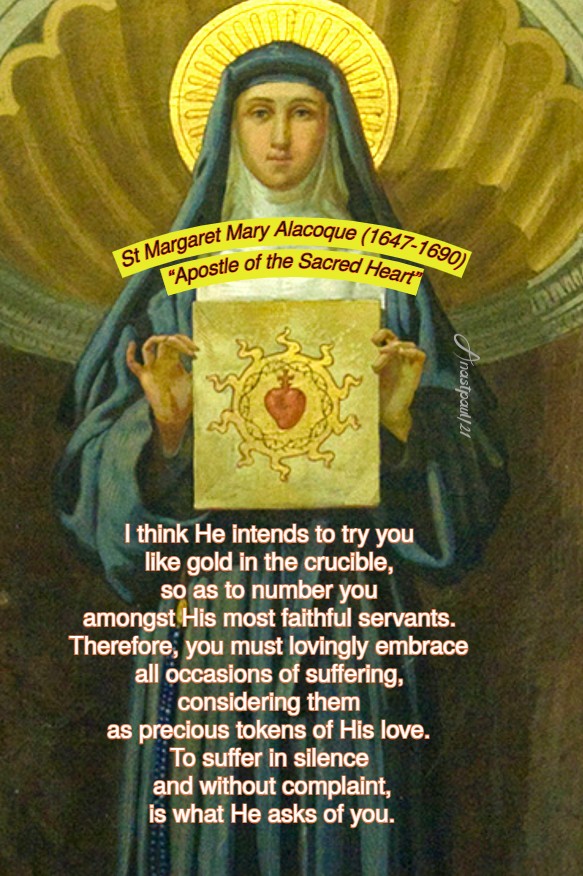
“I think He intends to try you like gold in the crucible, so as to number you amongst His most faithful servants. Therefore, you must lovingly embrace all occasions of suffering, considering them as precious tokens of His love. To suffer in silence and without complaint, is what He asks of you.”
St Margaret Mary Alacoque (1647-1690) “Apostle of the Sacred Heart”
“Our Lord, Who saved the world, through the Cross, will only Work for the good of souls, through the Cross.”
One Minute Reflection – 4 January – “The Month of the Most Holy Name of Jesus” – Octave of the Holy Innocents – Apocalypse 14:1-5 , Matthew 2:13-18 –Scripture search here: https://www.drbo.org/
“For it will come to pass that Herod will seek the Child, to destroy Him.” – Matthew 2:14
REFLECTION – “The Apostle John said: “Whoever says he abides in Christ, ought to walk even as Christ walked” (1 Jn 2:6). Moreover, the blessed Apostle Paul exhorts and teaches us, saying: “We are God’s children but if children, then heirs of God and joint-heirs with Christ; if so be that we suffer with him that we may also be glorified together” (Rm 8:16f.) … Let us, beloved brethren, imitate righteous Abel, who initiated Martyrdom, he being the first to be slain for righteousness’s sake (Gn 4:8) … let us imitate the three children Ananias, Azarias and Misael, who … overcame the king by the power of faith (Dn 3) … What of the prophets whom the Holy Spirit quickened to a foreknowledge of future events? What of the Apostles whom the Lord chose? Since these righteous men were slain for righteousness’ sake, have they not taught us also to die?
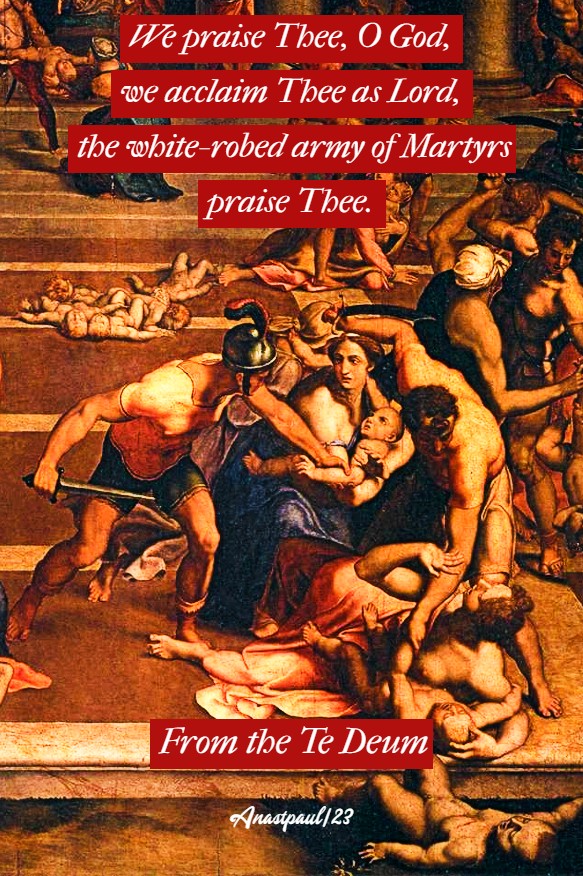
The nativity of Christ at once witnessed the Martyrdom of infants, so that they, who were two years old and under were slain for His Name’s sake. An age, not yet fitted for the battle, appeared fit for the crown. That it might be manifest that they, who are slain for Christ’s sake, are innocent, innocent infancy was put to death for His Name’s sake … How grave is the case of a Christian, if he, a servant, is unwilling to suffer when his Master first suffered! … The Son of God suffered that He might make us sons of God and the son of man will not suffer that he may continue to be a son of God!? … The Maker and Lord of the world also warns us, saying: “If the world hates you, remember that it hated Me before you. If you were of the world, the world would love its own but because you are not of the world but I have chosen you out of the world ”… remember the word that I said to you: “The servant is not greater than his Lord” (Jn 15:18-20).” – St Cyprian of Carthage (c 200-258) Martyr, Bishop of Carthage, Father of the Church – Letter 55
PRAYER – O God, Whose praise the Innocents, Thy Martyrs, this day proclaimed, not by speaking but by dying, put to death in us all the wickedness of sin, so that Thy faith which our tongue professes, may be proclaimed also by our life. Through Jesus Christ, Thy Son our Lord, Who lives and reigns with Thee, in the unity of the Holy Ghost, God, world without end. Amen (Collect).
Our Morning Offering – 4 January – Octave of the Holy Innocents – “The Month of the Most Holy Name of Jesus”
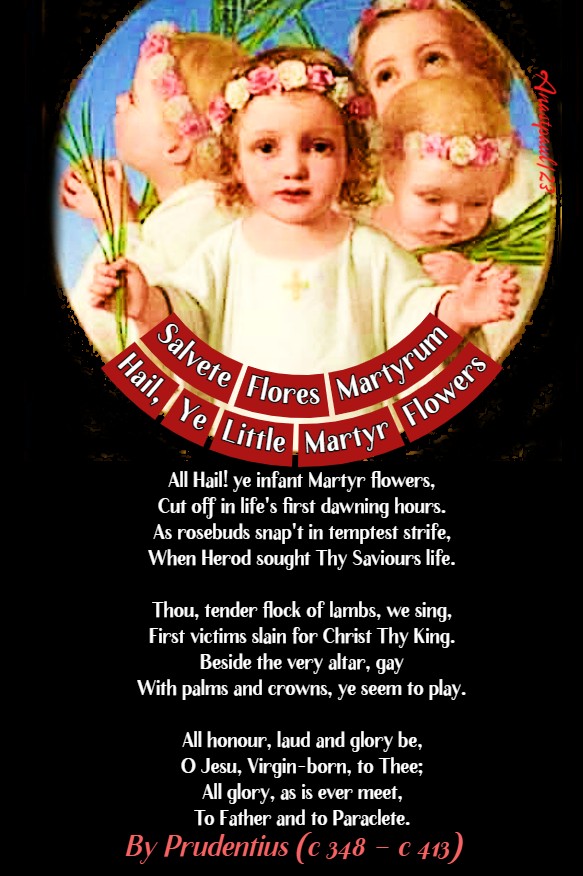
Salvete Flores Martyrum Hail, Ye Little Martyr Flowers By Prudentius (c 348 – c 413) (Aurelius Prudentius Clemens) The Renowned Poet
All Hail! ye infant Martyr flowers, Cut off in life’s first dawning hours. As rosebuds snap’t in temptest strife, When Herod sought Thy Saviours life.
Thou, tender flock of lambs, we sing, First victims slain for Christ Thy King. Beside the very altar, gay With palms and crowns, ye seem to play.
All honour, laud and glory be, O Jesu, Virgin-born, to Thee; All glory, as is ever meet, To Father and to Paraclete.
Salvete Flores Martyrum is the Office Hymn for Lauds on the Feast of the Holy Innocents (28 Dec). Its stanzas are drawn from Prudentius’ Epiphany Hymn, Cathemerinon and were first assembled in the 1568 Breviary of Pope Pius V.
Saint of the Day – 4 January – Saint Gregory of Langres (Died 539) Bishop of Langres and Dijon, Count and Governor, Father of 2 Sons and Widower, before being appointed as the Bishop of Langres, Ascetic, Miracle-worker. Great-grandfather of St Gregory of Tours. He ordered the translation of the Relics of Saint Benignus and built the Church and the Abbey of Saint-Benignus of Dijon. Born around around 446, as the Count of Autun, in Saone-et-Loire, modern France and died in 539 of natural causes. Also known as – Gregory of Autun, Gregory of Dijon. Additional Memorials – 13 May and 6 November (translation of relics).
The Roman Martyrology reads today: “At Langres, Gregory, Bishop, renowned for his miracles, Great-grandfater of St Gregory of Tours, who wrote of him.”
Gregory was a descendant of a rich family of Senators. After the death of his uncle, Attale, he became the Count of Autun. He was the Count and Governor of Autun and Autunois.
History retains the memory of a man firm and severe, yet fair. He was ruthless to cowards and bandits, kind and gentle with those in need and with the good and faithful servants of Christ..
Gregory had two sons of his union with Armentaire, daughter of Armentarius, Senator of Lyons. One of his sons, named Tetricus, became his successor to the Episcopal See of Langres. His second son, also named Gregory, became the grandfather of the famous St Gregory of Tours.
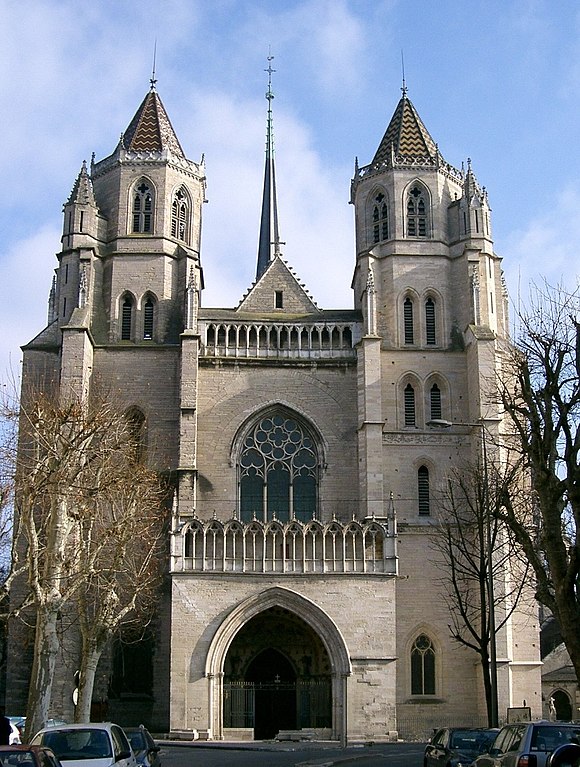
After the death of his wife, Gregory joined the Church. his biographer tells us that he was elected in 506 by the Clergy and the faithful of Langres to the Episcopal See. It is about this date that he founded the Abbey of Saint-Bénigne of Dijon – St Benignus, who was a Martyr who died in the 3rd Century, is the Patron Saint and first herald of Christianity of Dijon (Feast day 1 November). Gregory placed the Relics of St Benignus, the Apostle of Burgundy, in the Basilica he built at the Abbey. The Abbey Church built by Gregory was superseded by a Romanesque Basilica, which collapsed in 1272 and was replaced by the present Dijon Cathedral. He placed the Monastery under he care of Abbot Eustad.
Gregory was an exemplary shepherd, indulging in abstinence with great rigour, eating only bread made with barley, using only wine diluted with water and spending long hours in prayer. He lived “like an anchorite in the middle of the world”, according to St Gregory of Tours, his great-grandson.
He made frequent trips to Dijon, which at that time depended on the Diocese of Langres. He lived near the baptistery of Saint Vincent, near the Saint-Etienne Church. It was a place with many relics, where he came to pray at night. The legend tells us that one of the clerics watching him one night saw the revered saints coming to sing and glorify God with him. Saint Benignus too appeared to Gregory and told him that he was quite grieved that his cult was neglected. Gregory immediately renovated and restored the Shrine of the Martyr.
It was in his day that Abbot Sigo, who would be Canonised under the name of St Seine, came to the Abbey of Reome, under the spiritual direction of St Jean of Reome.
On his way to Langres to celebrate Epiphany, Gregory caught A cold and died on 4 January 539. He had held the Episcopal Seat for thirty-three years. He was buried, according to his wishes, in the Church of Saint-Jean de Dijon, near the baptistery. Legend has it that on the way to his funeral convoy, passing in front of the prison, the prisoners implored the deceased and that he performed a miracle – the gates of the penal establishment opened by themselves.
His son, Tetricus, who succeeded him in the Episcopal See of Langres, made a transfer of his father’s body, in order to raise a Monument worthy of his holiness. This event is commemorated on 6 November. Later, a second translation took place in 1282 – a part of his Relics were deposited in the Cathedral of Langres . Gui of Geneva , Bishop of Langres, deposited them in a silver box which was placed on a column behind the main Altar of Saint-Mammès. The Clergy assembled in Synod, participated in this ceremony.
St Angela of Foligno TOSF (1248-1309) known as the “Mistress of Theologians” – Wife, Mother, Widow, Religious, Mystic, Writer, Third Order Franciscan, Foundress of a religious community, which refused to become an enclosed religious order, so that it might continue her vision of caring for those in need. It is still active today. About St Angela: https://anastpaul.com/2020/01/04/saint-of-the-day-4-january-saint-angela-of-foligno-tosf-1248-1309/
St Celsus of Trier Bl Chiara de Ugarte St Chroman St Dafrosa of Acquapendente
St Ferreolus of Uzès St Gaius of Moesia St Gregory of Langres (Died 539) Bishop St Hermes of Moesia St Libentius of Hamburg Bl Louis de Halles St Mavilus of Adrumetum St Neophytos St Neopista of Rome St Oringa of the Cross Bl Palumbus of Subiaco
Martyrs of Africa – 7 Saints: A group of Christians Martyred together in the persecutions of the Arian Vandal king Hunneric. Saint Bede wrote about them. – Aquilinus, Eugene, Geminus, Marcian, Quintus, Theodotus and Tryphon. In 484 in North Africa.
Martyrs of Rome – 3 Saints: Three Christians Martyred together in the persecutions of Julian the Apostate for refusing to renounce Christianity as ordered. – Benedicta, Priscillianus and Priscus. In 362 in Rome, Italy.






























 AnaStpaul
You must be logged in to post a comment.