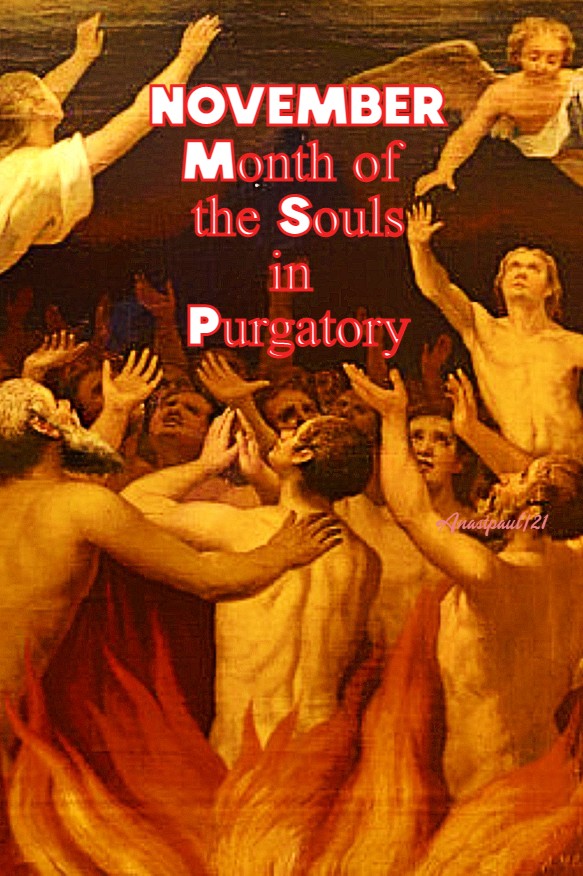
Quote/s of the Day – 2 November – All Souls Day – “The Month of the Holy Souls in Purgatory”
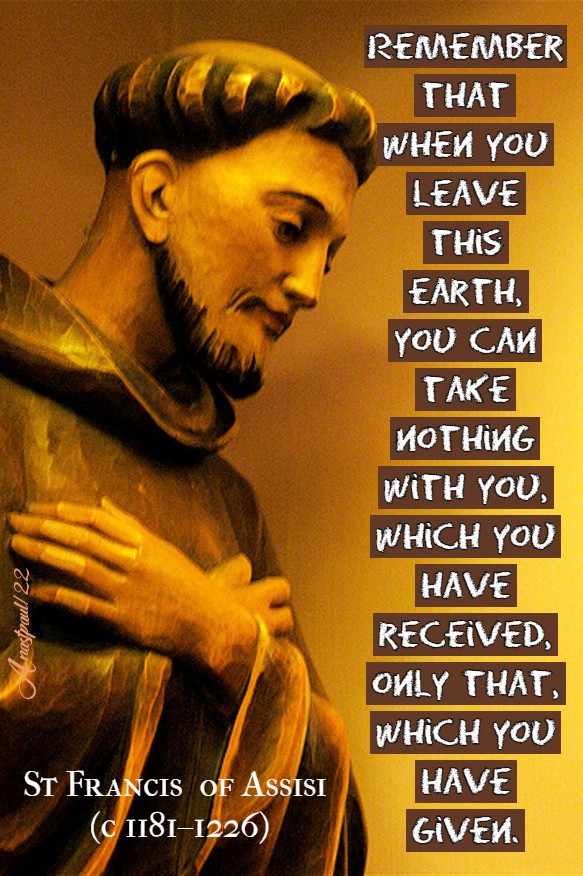
“Remember, when you leave this earth, you can take nothing with you, which you have received, only that, which you have given.”
St Francis of Assisi (c 1181–1226)
“This death … has already levelled his bow to strike me. Is it not prudent to prevent its stroke, by dying now to the world, that at my death, I may live to God?”
St Francis Borgia (1510-1572)
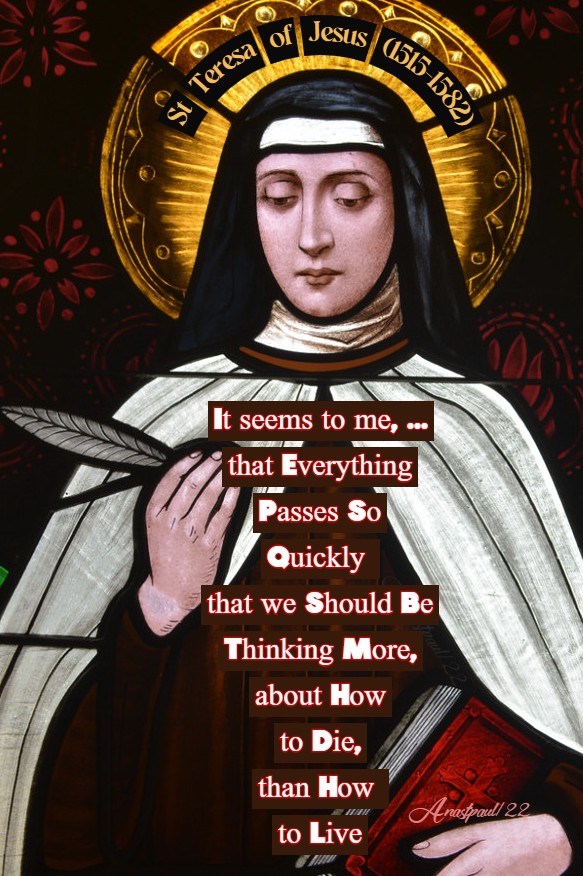
“It seems to me, my daughters, that everything passes so quickly that we should be thinking more, about how to die, than how to live!”
St Teresa of Jesus of Avila (1515-1582) Doctor of the Church
“The powers of hell will assail the dying Christian but his Angel Guardian will come to console him. His Patrons and St Michael, who has been appointed by God to defend his faithful servants, in their last combat with the devils, will come to his aid.”
St Alphonsus Liguori (1696-1787) Most Zealous Doctor
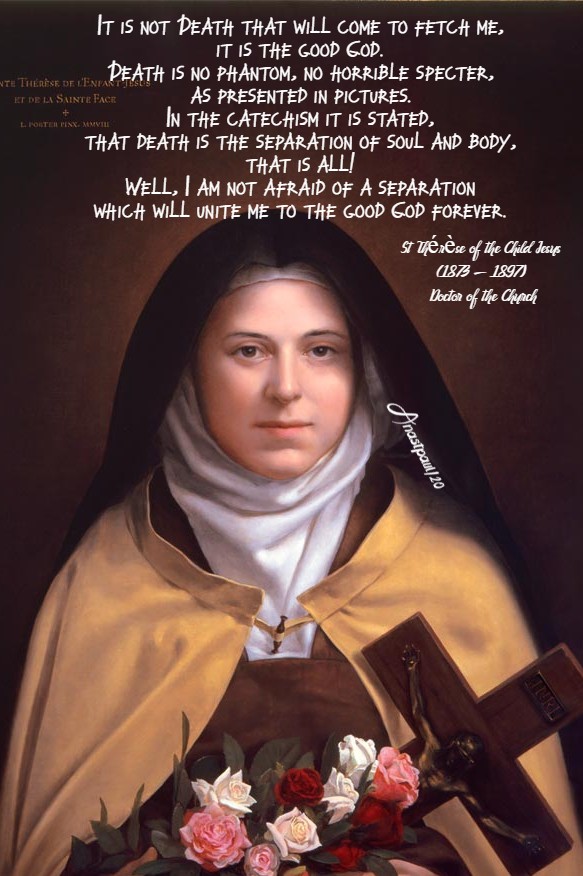
“It is not Death that will come to fetch me, it is the good God. Death is no phantom, no horrible specter, as presented in pictures. In the catechism it is stated, that death is the separation of soul and body, that is all! Well, I am not afraid of a separation which will unite me to the good God forever.”
St Thérèse of the Child Jesus and the Holy Face (1873 – 1897)
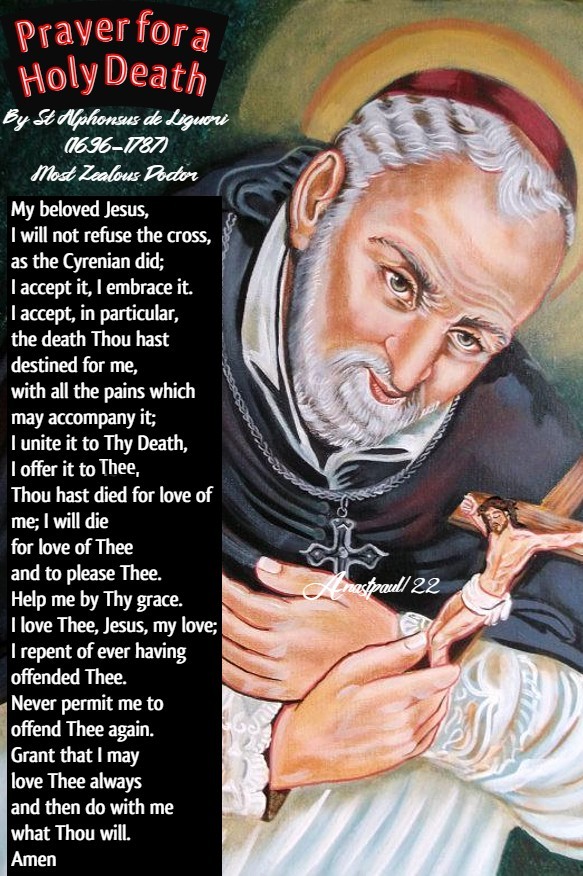
Prayer for a Holy Death By St Alphonsus de Liguori (1696-1787) Most Zealous Doctor
My beloved Jesus, I will not refuse the cross, as the Cyrenian did; I accept it, I embrace it. I accept, in particular, the death Thou hast destined for me, with all the pains which may accompany it; I unite it to Thy Death, I offer it to Thee Thou hast died for love of me; I will die for love of Thee and to please Thee. Help me by Thy grace. I love Thee, Jesus, my love; I repent of ever having offended Thee. Never permit me to offend Thee again. Grant that I may love Thee always and then do with me what Thou will. Amen
One Minute Reflection – 2 November – All Souls Day – “The Month of the Holy Souls in Purgatory” – 1 Corinthian 15:51-57, John 5:25-29 – Scripture search here: https://www.drbo.org/
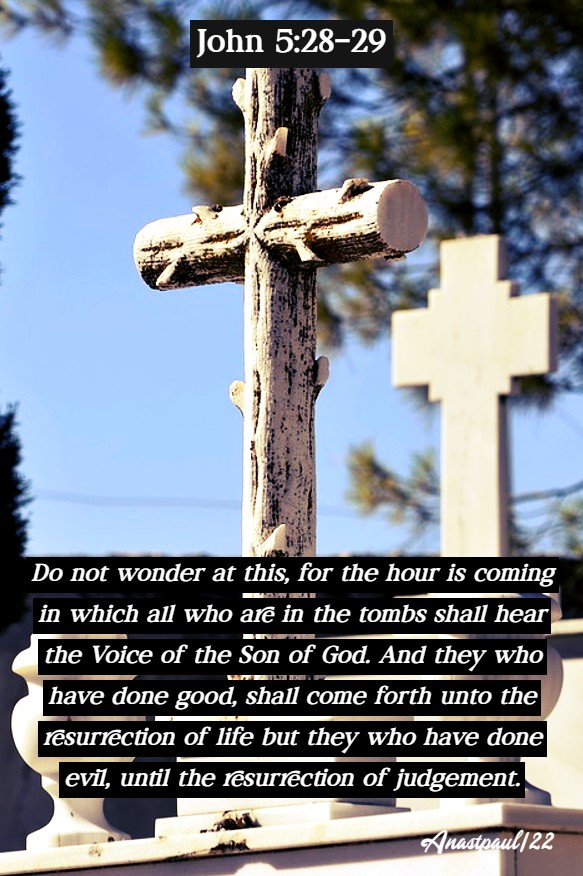
“Do not wonder at this, for the hour is coming in which all who are in the tombs shall hear the Voice of the Son of God. And they who have done good, shall come forth unto the resurrection of life but they who have done evil, until the resurrection of judgement.” – John 5:28-29
REFLECTION – “Let them weep who lack all hope of resurrection; it is not the will of God that takes it away from them but the inflexibility of what they believe. There has to be a difference between the servants of Christ and the pagans. This is what it is – they mourn for those close to them, whom they think to be dead forever; they see no end to their weeping, reach no rest for their grief …, whereas, for us, death is not the end of our existence but the end of our life. Since our existence is restored by a condition that is better, therefore, the coming of death sweeps away all our tears.…
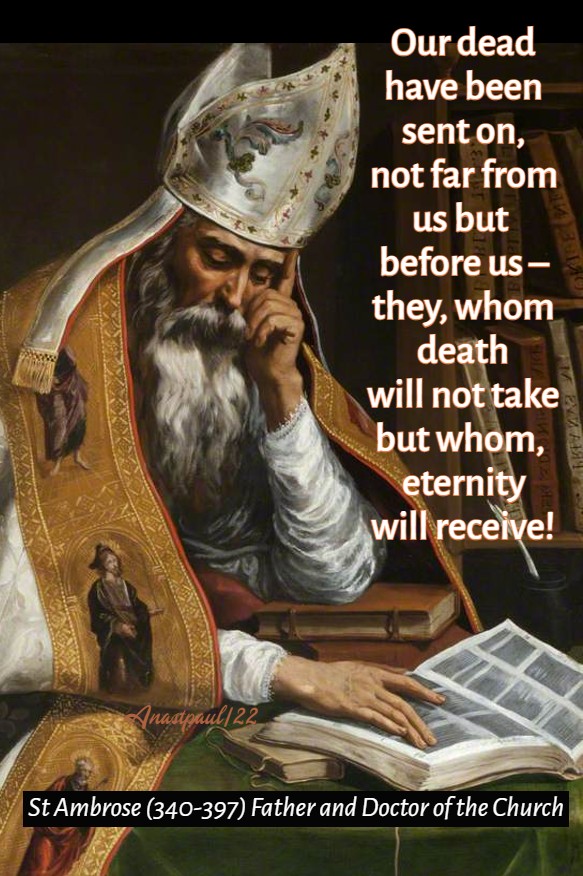
How much greater is our comfort, who believe that our good deeds are the promise, of better rewards after death. As for the pagans, they have their consolation, in thinking that death is a rest from all our trials. Since they think their dead are denied the enjoyment of life, they also think them, to be deprived of every faculty of sense and freed from the pain of the hard and continual sorrows, we bear in this life. We, on the other hand, just as we should have a more elevated spirit because of the reward we expect, so, we should also better bear our pains because of this consolation. … Our dead have been sent on, not far from us but before us – they, whom death will not take but whom, eternity will receive!” – St Ambrose (340-397) Father and Doctor of the Church (On the death of his brother, I, 70-71).
PRAYER – O God, Creator and Redeemer of all the faithful, grant to the souls of Thy servants and handmaids, the remission of all their sins, that they may obtain, by our loving prayer,s the forgiveness which they have always desired. Who lives and reigns with God the Father, in the unity of the Holy Spirit, God, world without end. Amen (Collect).
Our Morning Offering – 2 November – All Souls Day – “The Month of the Holy Souls in Purgatory”
The De Profundis Psalm 129
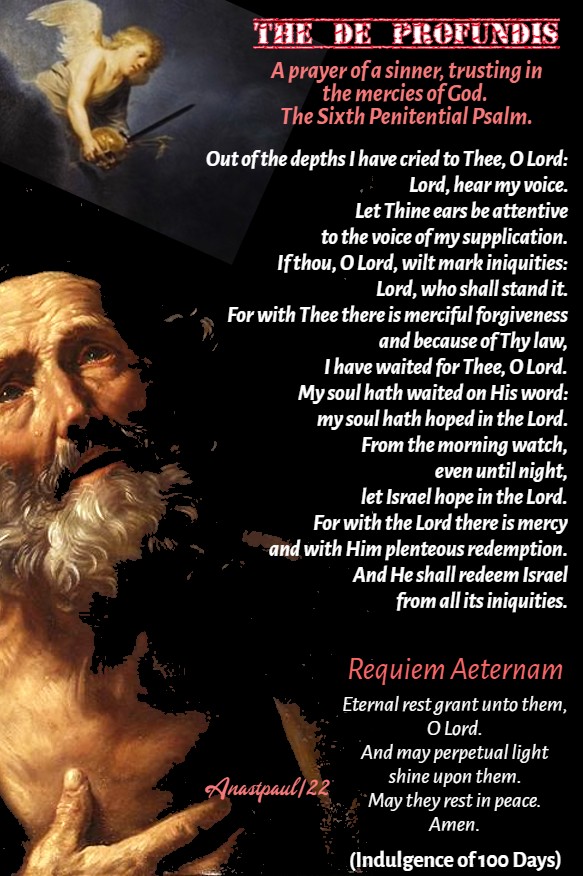
A prayer of a sinner, trusting in the mercies of God. The Sixth Penitential Psalm.
Out of the depths I have cried to Thee, O Lord: Lord, hear my voice. Let Thine ears be attentive to the voice of my supplication. If thou, O Lord, wilt mark iniquities: Lord, who shall stand it. For with Thee there is merciful forgiveness and because of Thy law, I have waited for Thee, O Lord. My soul hath waited on His word: my soul hath hoped in the Lord. From the morning watch, even until night, let Israel hope in the Lord. For with the Lord there is mercy and with Him plenteous redemption. And He shall redeem Israel from all its iniquities.
(Eternal rest or “Requiem aeternam”) Eternal rest grant unto them, O Lord. And may perpetual light shine upon them. May they rest in peace. Amen.
(Indulgence of 100 Days)
*Psalm 129 in Douay Rheims
Pope Clement XII. was the first who, in order to move the piety of Christians to pray for the souls in Purgatory, granted, by a Brief of 4 August 1736, Coelestes Ecclesiae thesauros – i. The Indulgence of 100 days to all the faithful, everytime that, at the sound of the bell, at the first hour after the evening Ave Maria, they say devoutly, on their knees the psalm De profundis, with a Requiem aAternamat the end of, it. (The evening Ave Maria in Rome varies with the season; it is commonly taken as 6 o’clock.) ii. A Plenary Indulgence to those who perform this pious exercise, for a year, at the hour appointed, once in the year, on any one day, after Confession and Communion. Those who do not know by heart the De Profundis, may gain these Indulgences by saying, in the way already mentioned for the De profundis, one Pater Noster and one Ave Maria, with the Requiem Aeternam. Observe also, that the aforesaid Clement XII. declared, on 12 December 1736, that these Indulgences might be gained by saying the De Profundis etc, as above, although, according to the custom of a particular Church or place, the “signal for the dead,” as it is called, be given by the sound of the bell either before, or after one hour after the evening Ave Maria. Pope Pius VI., by a Rescript of 18 March 1781, granted the above-named Indulgences to all the faithful, who should chance to dwell in any place where no bell for the dead is sounded and who, shall say the De Profundis or Pater Noster, as aforesaid, about the time specified above.
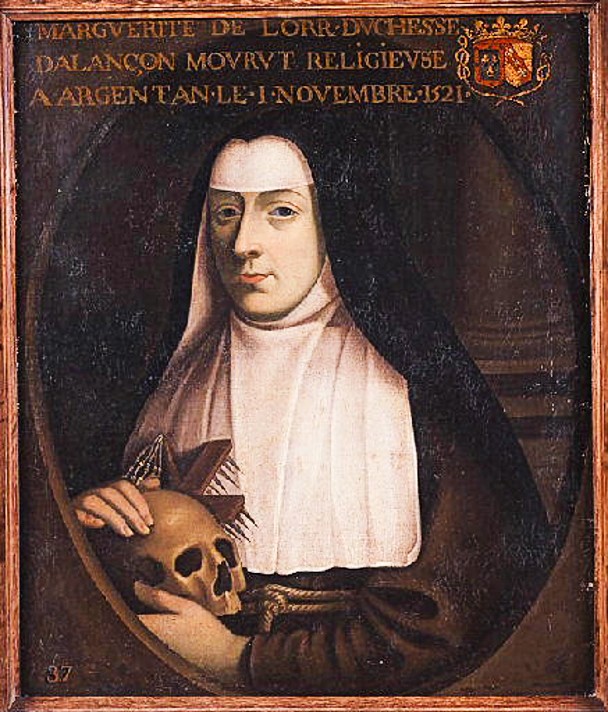
Saint of the Day – 2 November – Blessed Margaret of Lorraine OSC (1463-1521) Duchess of Alençon, Mother, Widow, Nun of the Poor Clares, Apostle of the sick, the poor and those suffering under unjust feudal lords. Born in 1463 as Marguerite de Lorraine-Vaudemont in Vaudemont Castle, Lorraine, France and died on 2 November 1521 at Argentan, Brittany, France of natural causes. Also known as – Margaret Lotarynska, Marguerite de Lorraine-Vaudemont, Margarita, Margherita, Marguerite. Margaret was Beatified on 10 March 1921 by Pope Benedict XV (cultus confirmed).
Blessed Margaret of Lorraine was born of the ancient noble family of the Dukes of Lorraine. Her earnest efforts to lead a virtuous life attracted attention very early in her life. After the death of her husband, Duke Rene of Alençon, she assumed the government of the Duchy. In this, she was guided solely by Catholic principles and by means of prudent economy, she managed to save a significant amount of materials which she used to render aid to the poor and the needy. She took particular pleasure in nursing the sick and the lepers. She built Churches, Convents and hospitals everywhere.
The subject matter taught in the schools and the instruction of the people were objects of particular solicitude to her. Hard-hearted landlords and selfish officials were dealt with by her, with the greatest severity.
Still, she remained very humble and spent a great part of her day in meditating on the sufferings of Christ and in performing works of penance.
In later years, after she had turned the government over to her son, she was invested with the habit of the Third Order. And when that no longer satisfied her desire for perfection, she entered the Convent of the Poor Clares at Alençon, which she herself had founded. Blessed Margaret aspired to perfection as a child, a woman, a ruler, a widow and finally as a religious and she succeeded in achieving her goal.
Every Christian is obliged to strive for perfection. It is not without reason that Our Lord says: “Be you, therefore, perfect as your heavenly Father is perfect” (Mt. 5,48).
This obligation does not require the impossible of us. Everyone can love his neighbour, do good and overcome himself. We must, above all, bear in mind that perfection does not consist in external practices but rather, in the disposition of our heart. The motive must be the love of God. All for the love of God!
Blessed Margaret of Lorraine died a saintly death at the Convent at Alençon in the year 1521. Pope Benedict XV approved her veneration.
In 1792 the body of Blessed Margaret was exhumed and found incorrupt. Inside the casket was found a small reliquary which contained her heart.
During the French Revolution a group of Jacobins disinterred the saint’s body to profane it, later placing it in a common grave. Only the bones and the saint’s heart remain and are now at the Monastery of Clarisses at Alençon
All Souls Day – The Commemoration of All the Faithful Departed: Commemoration of the faithful departed in Purgatory. Abbot Odilo of Cluny instituted it in the Monasteries of his congregation in 998, other religious orders took up the observance and it was adopted by various Diocese and gradually by the whole Church. The Office of the Dead must be recited by the clergy on this day and Pope Benedict XV granted to all Priests, the privilege of saying three Masses of requiem – • one for the souls in Purgatory • one for the intention of the Holy Father • one for the Priest’s intentions If the feast should fall on Sunday it is kept on 3 November. Patronage: Monselice, Italy HERE: https://anastpaul.com/2018/11/02/commemoration-of-all-souls-day-2-november/ AND: https://anastpaul.wordpress.com/2017/11/02/the-commemoration-of-all-the-holy-souls-in-purgatory-2-november/
St Ambrose of Agaune St Ambrose of Agaune St Amicus of Fonte Avellana St Amicus of Rambone St Baya of Scotland St Domninus of Grenoble St Erc of Slane St Eustochium of Tarsus St George of Vienne Bl John Bodey St Jorandus of Kergrist St Justus of Trieste St Marcian of Chalcis Blessed Margaret of Lorraine OSC (1463-1521)Duchess of Alençon, Mother, Widow, Nun of the Poor Clares St Mateo López y López St Maura of Scotland St Theodotus of Laodicea
Martyrs of Isfahan – 5+ Saints: Acindynus, Pegasius and Anempodistus were Persian priests who were imprisoned, tortured, interrogated and Martyred in the persecutions of king Sapor II of Persia; he considered any Christian to be a Roman spy and anti-Persian.
Martyrs of Sebaste – 10 Saints: A group of ten soldiers in the imperial Roman army of Emperor Licinius Licinianus who were executed together for refusing to burn incense as a sacrifice to the emperor. The only details that have survived are five of their names – Agapius, Cartherius, Eudoxius, Styriacus and Tobias. They were burned at the stake in 315 in Sebaste (in modern Turkey).
“By the practice of Indulgences, the Church places at the charitable disposal of the faithful, the inexhaustible treasure accumulated, from age to age, by the superabundant satisfactions of the Saints, added to those of the Martyrs and united to those of our Blessed Lady and the infinite residue of our Lord’s sufferings. These remissions of punishment, she grants to the living, by her own direct power but, she nearly always approves of and permits, their application to the dead, by way of suffrage, that is to say, in the manner in which, as we have seen, each of the faithful may offer to God, Who accepts it, for another, the suffrage or succour of his own satisfactions.” (The Liturgical Year,Abbot Prosper Guéranger OSB (1805-1875).
A Partial Indulgence may be obtained, by devoutly visiting a Cemetery and praying there for the departed, mentally or vocally. One may gain a Plenary Indulgence visiting a Cemetery each day, between 1 November and 8 November. These Indulgences are applicable only to the Souls in Purgatory.
A Plenary Indulgence, again applicable only to the Souls in Purgatory, is also granted when the faithful piously visit a Church or a public Oratory on 2 November. In visiting the Church or Oratory, it is required, that one Our Father and the Creed be recited and then the usual conditions are fulfilled, within 20 days.
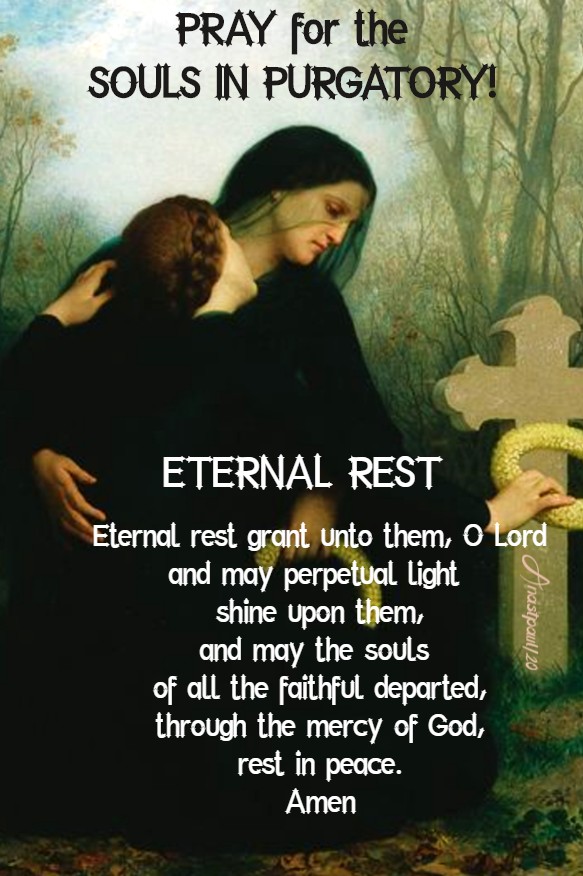
A Partial Indulgence, applicable only to the Souls in Purgatory, can be obtained when the Eternal Rest (Requiem aeternam) is prayed:
ETERNAL REST
Eternal rest grant unto them, O Lord and may perpetual light shine upon them and may the souls of all the faithful departed, through the mercy of God, rest in peace. Amen
Thought for the Day – 1 November – Meditations with Antonio Cardinal Bacci (1881-1971)
The Feast of All Saints
“In these days when the Church is so anxious to foster devotion to the Saints, let us fervently invoke their patronage. They are our brothers and they reach out lovingly to assist us because, they desire us to share in their glory.
As we know, the Church is threefold. There is the Church Militant, to which we belong; there is the Church Suffering, which consists of the souls in Purgatory and there is the Church Triumphant, which is made up of the Blessed in Heaven. The bond of charity unites all three divisions.
We, who are still on earth, have brothers and sisters in eternal glory who love us and intercede for us. Let us pray to them fervently and constantly. Above all, let us seek to imitate the sanctity which won such glory for them in Heaven.”
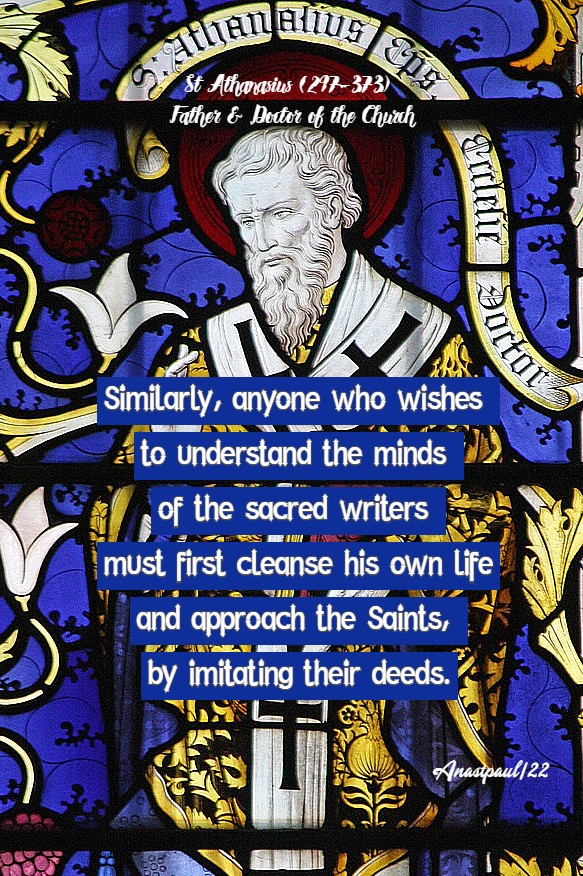
“Similarly, anyone who wishes to understand the minds of the sacred writers must first cleanse his own life and approach the Saints, by imitating their deeds.”
St Athanasius (297-373) Father & Doctor of the Church
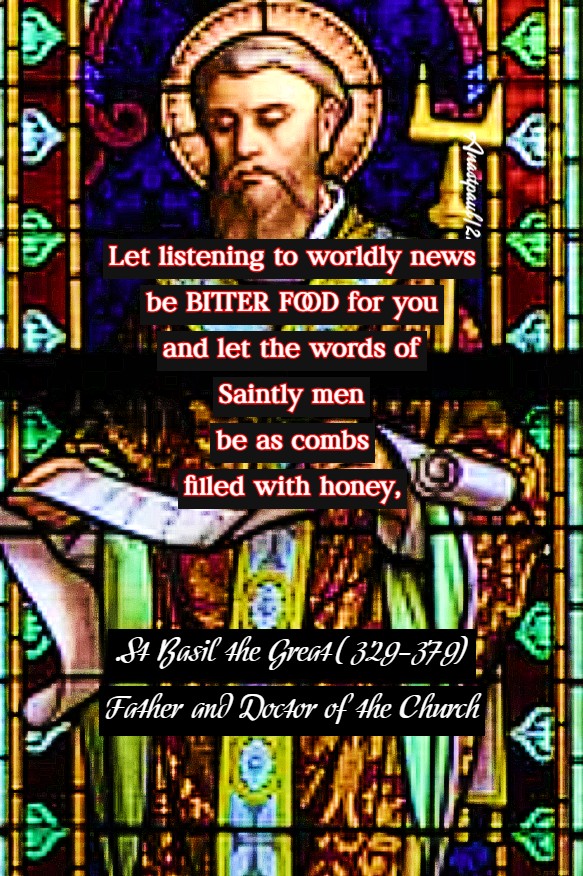
“Let listening to worldly news be BITTER FOOD for you and let the words of Saintly men be as combs filled with honey.”
St Basil the Great (329-379) Father and Doctor of the Church
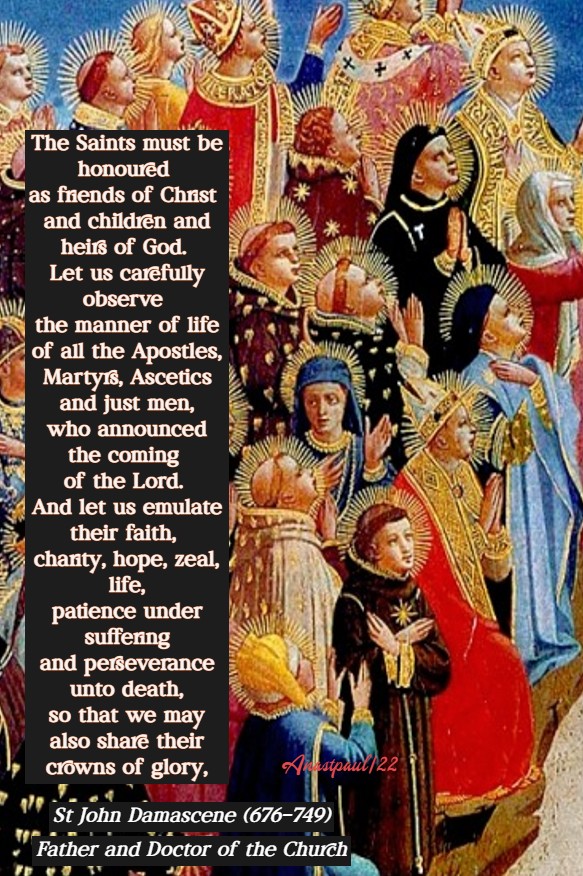
“The Saints must be honoured as friends of Christ and children and heirs of God. Let us carefully observe the manner of life of all the Apostles, Martyrs, Ascetics and just men, who announced the coming of the Lord. And let us emulate their faith, charity, hope, zeal, life, patience under suffering and perseverance unto death, so that we may also share their crowns of glory.”
St John Damascene (676-749) Father and Doctor of the Church
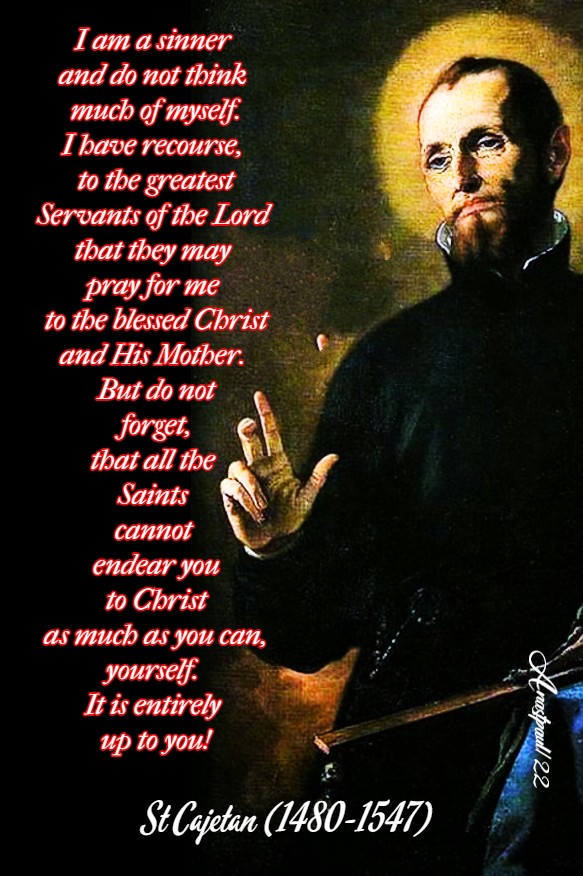
“I am a sinner and do not think much of myself. I have recourse, to the greatest Servants of the Lord that they may pray for me to the blessed Christ and His Mother. But do not forget, that all the Saints cannot endear you to Christ as much as you can yourself. It is entirely up to you!”
St Cajetan (1480-1547) Confessor
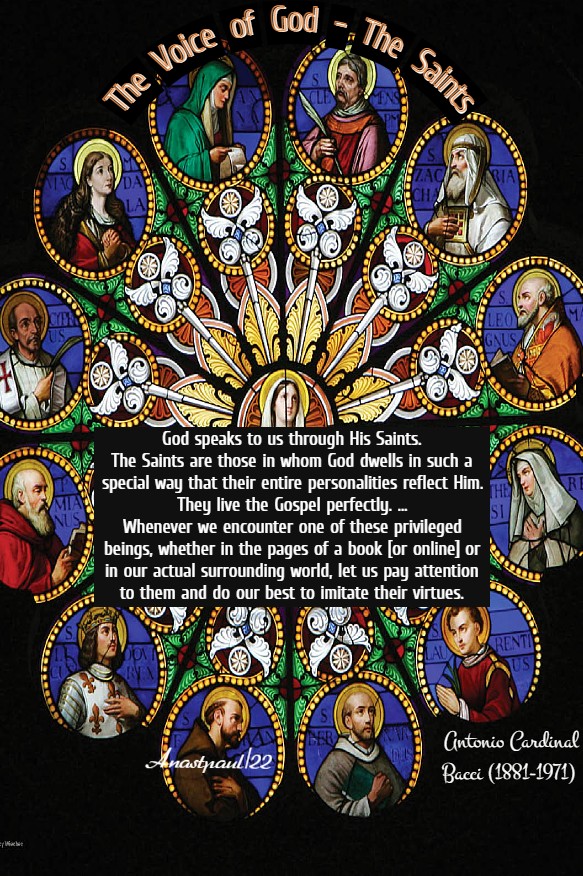
“God speaks to us through His Saints. The Saints are those in whom God dwells in such a special way that their entire personalities reflect Him. They live the Gospel perfectly. Whenever we encounter one of these privileged beings, whether in the pages of a book [or online] or in our actual surrounding world, let us pay attention to them and do our best to imitate their virtues.”
One Minute Reflection – 1 November – “The Month of the Holy Souls in Purgatory” – All Saints Day – Apocalypse 7:2-12, Matthew 5:1-12 – Scripture search here: https://www.drbo.org/
“Be glad and rejoice for your reward is very great in Heaven.” – Matthew 5:12
REFLECTION – “Dearly beloved, let us anxiously attend to all that concerns the profession of our common life, “keeping the unity of the spirit in the bond of peace,” by “the grace of our Lord Jesus Christ and the love of God and the imparting of the Holy Spirit ”(Eph 4,3; 2 Cor 13:13). From the love of God comes the unity of the spirit; from the grace of our Lord Jesus Christ comes the bond of peace; from the imparting of the Holy Spirit, comes that communion which is necessary to those who live in common. …
“I believe, 0 Lord, in the Holy Ghost, the holy Catholic Church, the Communion of Saints” (Credo). This is my hope, this is my trust, this is my confidence, this is the whole of my security in the professing of my faith. … If I am allowed, O Lord, to “love Thee and love my neighbour,” (Mt 22:37-39) although my merits are small and few, yet will my hopes reach beyond them. I am confident that the merits of the Saints will help me by the communion of charity, so that the Communion of Saints will make up for my insufficiency and imperfection. … Let charity expand our hope, as far as the Communion of Saints, in the sharing of merits and rewards but the sharing of the latter belongs to the future, for it is the sharing in the glory which shall be revealed in us.
Since, then, there are three communions – the first of nature, which includes the sharing of guilt …; the second of grace and the third, of glory. By the communion of grace, that of nature begins to be remade and the sharing of guilt to be excluded but by the communion of glory, that of nature will be perfectly restored and the communion of anger, will be entirely excluded, when “God will wipe away every tear from the eyes” of the Saints (Is 25:8; Rv 21:4). Then, among all the Saints, there will be “one heart and one soul” and “all things will be in common”when God will be “all in all” (Acts 4:2; 1 Cor 15:28). That we may all arrive at this communion and that we all may be one, “the grace of our Lord Jesus Christ and the love of God, and the imparting of the Holy Spirit be with us all forever. Amen.” – Baldwin of Forde O.Cist ( c 1125–1190) Cistercian Abbot, Bishop, then Archbishop of Canterbury (Treatise on the common life).
PRAYER – Almighty, eternal God, Who granted us to honour the merits of all Thy Saints in a single solemn festival, bestow on us, we beseech Thee, through their manifold intercession, that abundance of Thymercy for which we yearn. Through Jesus Christ, Thy Son our Lord, Who lives and reigns with Thee, in the unity of the Holy Ghost, God, world without end. Amen (Collect).
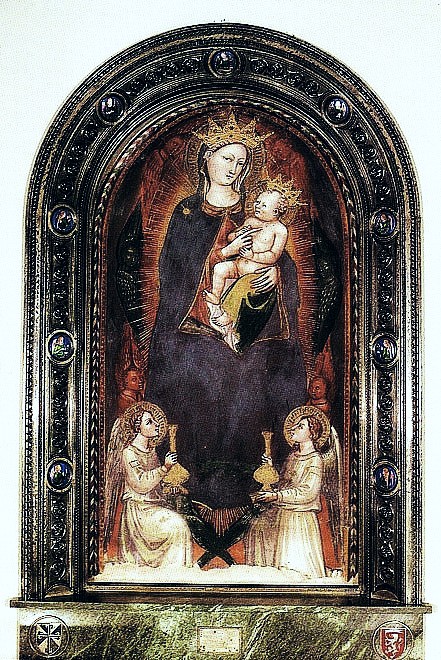
Saint of the Day – 1 November – Unsere Liebe Frau von Heede / Our Lady of Heede, Queen of the Universe (1937-1945) Also known as Queen of the Poor Souls in Purgatory.
Our Lady appeared to four children Margaret Gansferth, Greta Gansferth, Anna Schulte, Susanna Bruns near their homes, in a meadow and at other place nearby. She was holding the Divine Child in her arms when she first appeared. Our Lady appeared to the children an undetermined number of times of which only three were recorded. After the children were forbidden by the Gestapo (and briefly arrested) to go to the place of the original apparition, Our Lady appeared to them in secret. Prayer, conversion and the Holy Rosary were the primary messages.
Heede is a town very close to the Dutch border where, since the evening of the Feast of All Saints (1 November) in 1937, four visionaries: Maria (12 years old) and Grete Ganseforth (11 years old), Anna Schulte (12 years old) and Susi Bruns (13 years old) began to receive numerous apparitions of the Blessed Virgin. In fact, according to what is said, the Madonna would have deigned to appear more than a hundred times to the four girls.
As in many towns of Gennania, so also in Heede, the Parish Church is a little away from the town centre and has the cemetery next to it. It was in the cemetery where the Madonna appeared on 1 November 1937, the eve of All Souls. The girls wished to gain an Indulgence by praying in the cemetery. Suddenly, looking towards the cemetery, one of them said: “Do you see Our Lady over there?”
The other girl, who couldn’t see anything, said: “You’re crazy!” but then looking closer, she too saw the Celestial Vision in front of a group of three cypresses. Frightened, the two fleD towards the village but on the way they met two of their peers who were heading to Church. They tell them what they had seen and, taking courage, all four went together to make sure of that strange Vision. In fact, having arrived at the place the Lady of the Apparition smiled sweetly and invites them to come back again. Thus began the wonderful facts of Heede.
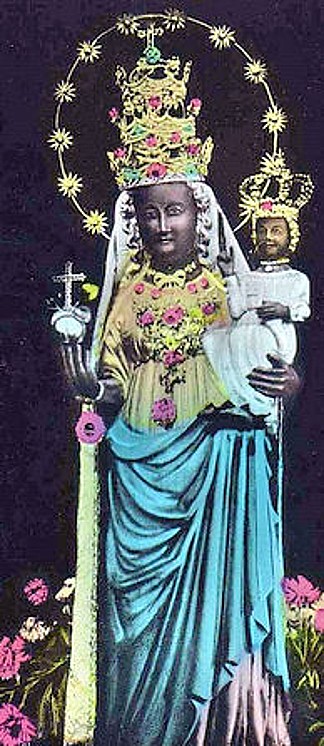
Both in that first Apparition and in the following ones , the Madonna was dressed in white, her feet rested on a bluish cloud , so that she appeared to be hovering in the air, about three feet above the ground. A white veil fell over her shoulders and down to the cloud. The Virgin supported the Child in her left hand, Who was also dressed in white. Both their eyes were blue and the Child had blond hair. In his right hand He was holding a small golden globe, surmounted by a Cross. The right hand of the Madonna also rested on the golden globe, so that the Cross seemed to be between the Virgin’s fingers. The vision always appeared surrounded by a luminous halo. The Virgin appeared a young woman, while the Child looked one or two.
When the girls explained what had happened, the residents received their testimony with scepticism. But before long, miraculous occurred, revealing its authenticity. Many pilgrims travelled to Heede from nearby towns and villages to hear the messages. However, these were the times of the Nazi regime, so the Gestapo intervened and concluded that the Heede appearances were simply superstition.
As a result, the Nazis arrested the girls and put them in asylum for a month. They were then released and forbidden to return to the apparition site. However, Our Lady continued secretly appearing elsewhere in the area.
She revealed scenes of disasters and warned of terrible events that could occur and be considered a “lesser judgement.” She was referring to World War II.
In another Heede appearance, the Virgin said to Greta: “ The world is about to drink the dregs of the chalice of divine wrath for their innumerable sins which wound the Sacred Heart of Jesus. Pray. Pray a great deal, especially for the conversion of sinners.”
The final apparition of the Madona of Heede occurred on 3 November 1940 at 8.30 pm. Our Lady again spoke to each of them, without the others being able to hear. Then they prayed to the Holy Virgin once again for her blessing, Our Lady replied: “Now, my dear girls, I bless you in this farewell. Remain good and faithful to God! Pray the Rosary often and willingly, […] I return to Heaven.”
One of the girls, Grete Ganseforth, received the grace of the Stigmata in 1939.
Finally on 3 June 1959, the vicariate of Osnabruck confirmed, in a circular letter to the clergy of the Dioceses, the validity of the apparitions. However, there was no formal and official recognition by the Holy See. It has been falsely reported that the Vatican rejected or even condemned the apparitions of Heede. A new Parish Priest, appointed by the Bishop at the time the apparitions commenced, declared that there are “undeniable proofs of the seriousness and authenticity of these manifestations.” Pilgrimages and devotions in honour of Our Lady of Heede have always been freely permitted. The history of the apparitions and messages has appeared in numerous publications bearing the Imprimatur of various Bishops. Great caution is required on the part of the faithful, however because of the flood of allegations of apparitions and supernatural messages. These phony apparitions almost always contradict the true Catholic Faith in some way. But in the apparitions and messages of Heede, we find nothing contrary to the Faith; indeed, their similarity to the approved apparitions of Fatima, Lourdes and La Salette give good indications of their authenticity.
All Saints Day – (a Holy Day of Obligation) Instituted to honour all the saints, known and unknown. It owes its origin in the Western Church to the dedication of the Roman Pantheon in honour of the Blessed Virgin Mary and all the Martyrs by Pope Saint Boniface IV in 609, the anniversary of which was celebrated at Rome on 13 May. Pope Saint Gregory III Consecrated a Chapel in the Vatican Basilica in honour of All Saints, designating 1 November as their feast. Pope Gregory IV extended its observance to the whole Church. It has a Vigil and Octave and is a Holy Day of Obligation – the eve is popularly celebrated as Hallowe’en. Patronage – Arzignano, Italy. ABOUT: https://anastpaul.com/2019/11/01/solemnity-of-all-saints-1-november/ AND: https://anastpaul.com/2018/11/01/1-november-solemnity-of-all-saints/ AND: https://anastpaul.wordpress.com/2017/11/01/1-november-the-feast-of-all-the-saints/
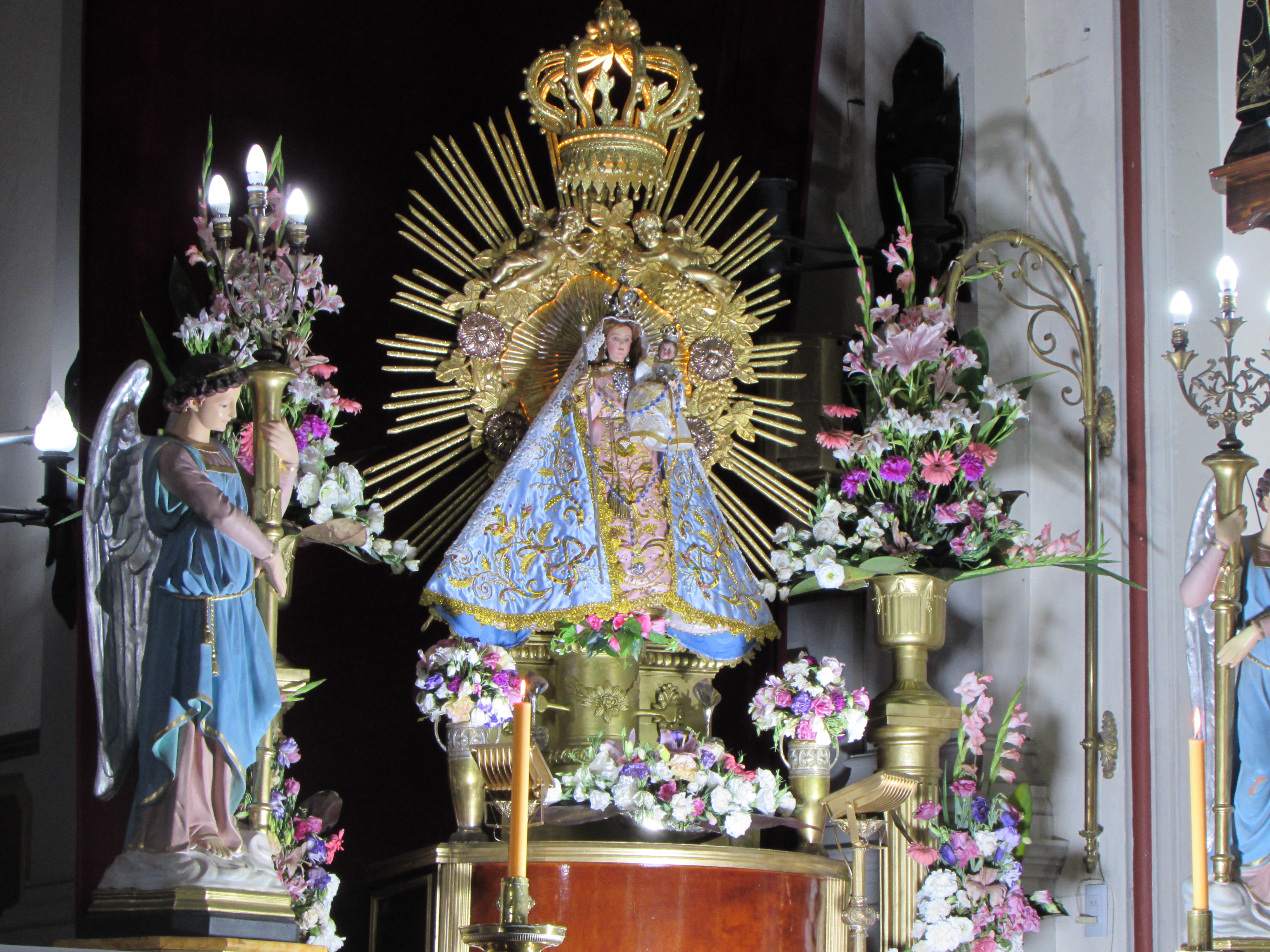
Unsere Liebe Frau von Heede / Our Lady of Heede, Queen of the Universe , Queen of the Poor Souls in Purgatory (1937-1945) – 1 November
St Amabilis of Auvergne St Austremonius St Benignus of Dijon St Cadfan St Caesarius of Africa St Caesarius of Damascus St Ceitho St Cledwyn of Wales Bl Clemens Kyuemon St Cyrenia of Tarsus St Dacius of Damascus St Deborah the Prophetess St Dingad Bl Dionysius Fugixima St Floribert of Ghent St Gal of Clermont St Genesius of Lyon St Germanus of Montfort St Harold the King St James of Persia St John of Persia St Julian of Africa St Juliana of Tarsus St Lluís Estruch Vives St Marcel of Paris St Mary the Slave St Mathurin St Meigan St Nichole St Pabiali of Wales St Pere Josep Almató Ribera Auras St Peter Absalon Bl Peter Paul Navarra Bl Petrus Onizuka Sadayu St Rachel the Matriarch
Thought for the Day – 31 October – Meditations with Antonio Cardinal Bacci (1881-1971)
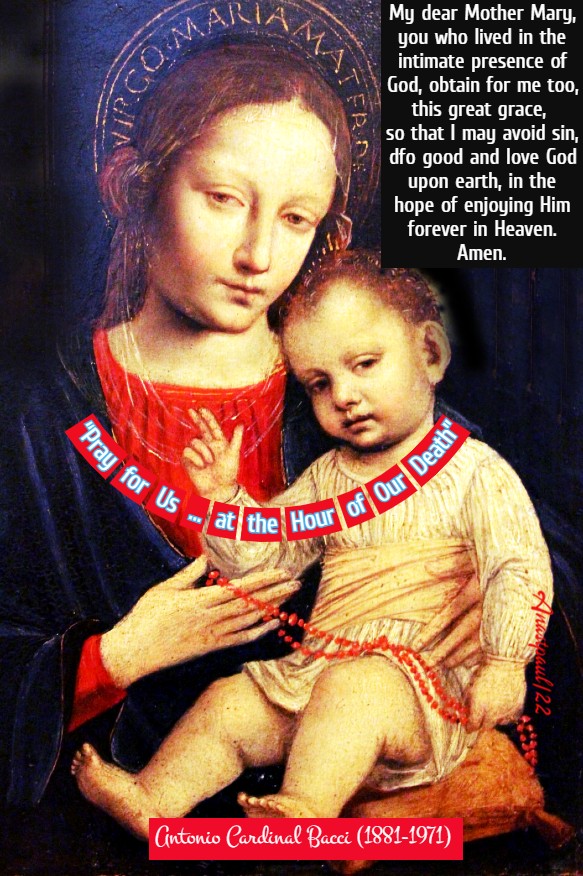
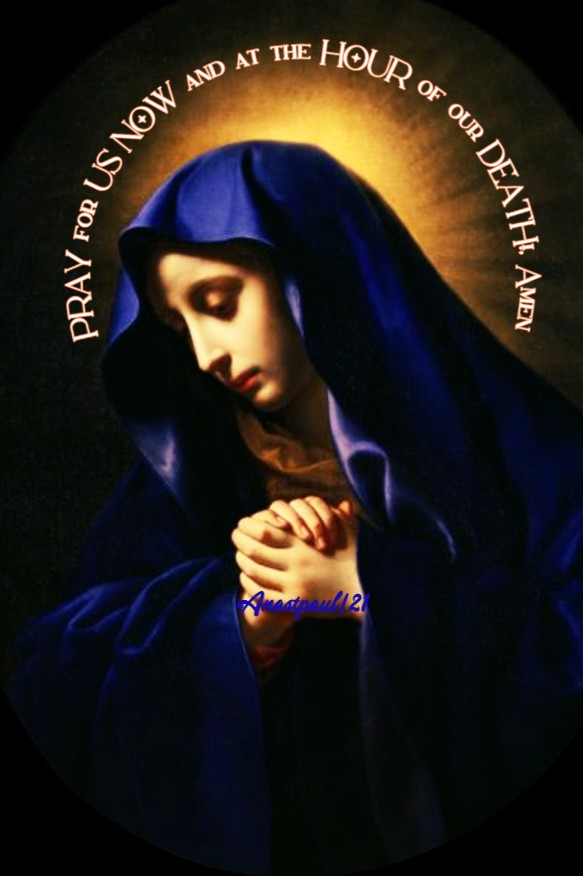
“Month of the Holy Rosary” “Pray for Us … at the Hour of Our Death”
“My dear Mother Mary, you who lived in the intimate presence of God, obtain for me too, this great grace, so that I may avoid sin, do good and love God, upon earth, in the hope of enjoying Him forever in Heaven. Amen.🙏”
Quote/s of the Day – 31 October – “The Month of the Most Holy Rosary and of the Angels” – Goodbye October
“Mary, thou art the vessel and tabernacle containing all Mysteries. Thou knows that, which the Patriarchs, never knew, thou hast experienced that, which was never revealed to the Angels, thou has heard that, which the Prophets never heard. In a word, all that was hidden from preceding generations, was made known to thee, even more, most of these wonders, depended on thee!”
St Gregory theWonderworker (c 213–270)
The Fifteen Promises is a tradition held by the Order of Preachers, that the Blessed Virgin Mary made Fifteen specific Promises through Saint Dominic (1170-1221)and Blessed Alain de la Roche (1428-1475), to those who faithfully pray the Rosary.
The 15 Promises of The Most Holy Rosary Given by The Blessed Virgin Mary
Those who faithfully serve me, by the recitation of the Rosary shall receive signal graces.
I promise my special protection and the greatest graces, to all those who shall recite the Rosary.
The Rosary shall be a powerful armour against hell. It will destroy vice, decrease sin and defeat heresies.
It will cause virtue and good works to flourish. It will obtain for souls the abundant mercy of God. It will withdraw the hearts of men from the love of the world and its vanities and will lift them to the desire of eternal things. Oh, that souls would sanctify themselves by this means.
The soul which recommends itself to me by the recitation of the Rosary, shall not perish.
Whoever shall recite my Rosary devoutly, applying himself to the consideration of its Sacred Mysteries, shall never be conquered and never overwhelmed by misfortune. God shall not chastise him in His justice, he shall not perish by an unprovided death Sinners shall convert. The just shall grow in grace and become worthy of eternal life.
Whoever shall have a true devotion to the Holy Rosary, shall not die without the Sacraments of the Church.
Those who are faithful, in reciting the Rosary, shall have, during their life and at their death, the Light of God and the plenitude of His graces. At the moment of death, they shall participate in the merits of the Saints in paradise.
I shall deliver from Purgatory, those who have been devoted to the Rosary.
The faithful children of the Rosary, shall merit a high degree of glory in Heaven.
You shall obtain all you ask of me, by the recitation of the Rosary.
All those who propagate the Holy Rosary, shall be aided by me, in their necessities.
I have obtained from my Divine Son, that all the advocates of the Rosary, shall have for intercessors, the entire Celestial Court during their life and at the hour of death.
All who recite the Rosary are my sons and brothers of my only Son, Jesus Christ.
Devotion to my Rosary is a great sign of predestination.
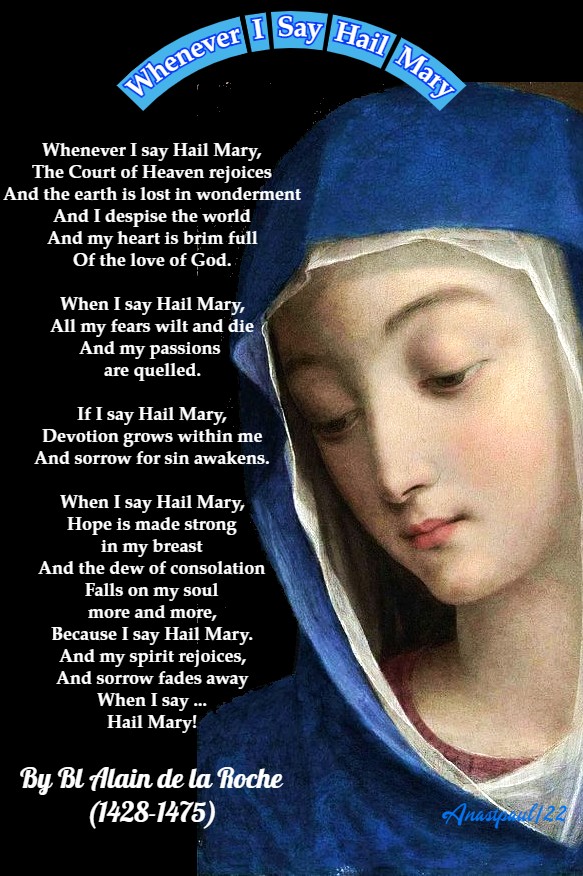
Whenever I Say Hail Mary Blessed Alain de la Roche (1428-1475)
Whenever I say Hail Mary, The Court of Heaven rejoices And the earth is lost in wonderment And I despise the world And my heart is brim full Of the love of God.
When I say Hail Mary, All my fears wilt and die And my passions are quelled.
If I say Hail Mary, Devotion grows within me And sorrow for sin awakens.
When I say Hail Mary, Hope is made strong in my breast And the dew of consolation Falls on my soul more and more, Because I say Hail Mary. And my spirit rejoices, And sorrow fades away When I say … Hail Mary!
One Minute Reflection – 31 October – “The Month of the Most Holy Rosary and of the Angels” – Vigil of All Saints – Apocalypse 5:6-12, Luke 6:17-23 – Scripture search here: https://www.drbo.org/
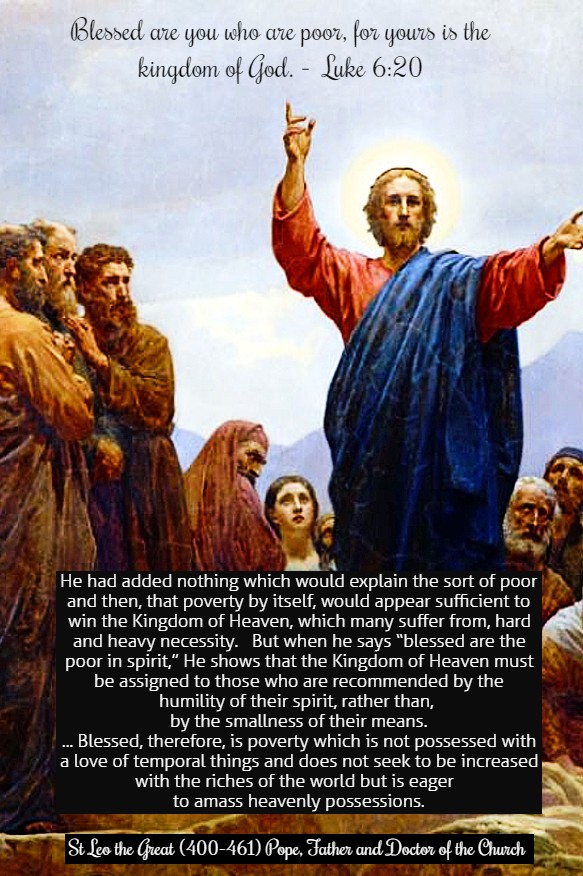
“Blessed are you who are poor, for yours is the Kingdom of God.” – Luke 6:20
REFLECTION – “Blessed,” He says, “are the poor in spirit, for theirs is the kingdom of heaven” (Mt 5:3). It would perhaps be doubtful what poor He was speaking of, if in saying “blessed are the poor ” He had added nothing which would explain the sort of poor and then, that poverty by itself, would appear sufficient to win the Kingdom of Heaven, which many suffer from, hard and heavy necessity. But when he says “blessed are the poor in spirit,” He shows that the Kingdom of Heaven must be assigned to those who are recommended by the humility of their spirit, rather than, by the smallness of their means.
Yet it cannot be doubted, that this possession of humility is more easily acquired by the poor than the rich: for submissiveness is the companion of those, who want, while loftiness of mind dwells with riches. Notwithstanding, even in many of the rich, is found that spirit which uses its abundance, not for the increasing of its pride but on works of kindness and counts that for the greatest gain, which it expends in the relief of others’ hardships. It is given to every kind and rank of men, to share in this virtue, because men may be equal in will, though unequal in fortune and it does not matter, how different they are in earthly means, who are found equal in spiritual possessions. Blessed, therefore, is poverty which is not possessed with a love of temporal things and does not seek to be increased with the riches of the world but is eager to amass heavenly possessions.” – St Leo the Great (400-461) Pope, Father and Doctor of the Church (Sermon 95, PL 54, 461).
PRAYER – Multiply Thy grace upon us, O Lord our God and grant that by following in holiness of life, those whose glorious festival we anticipate, we may attain to their bliss. Through Jesus Christ, Thy Son our Lord, Who lives and reigns with Thee, in the unity of the Holy Ghost, God, world without end. Amen (Collect).
Our Morning Offering – 31 October – “The Month of the Most Holy Rosary and of the Angels” – Goodbye October
Through Thee, to Us, our Saviour Came Sweet Lady of the Rosary By St Amadeus of Lausanne O.Cist (1108-1159)
Through thee, to us, our Saviour came, Through thee, to Him, we fain would go. Our lives are marred by wrong and shame, Yet, confidence in thee we know. The friendship thou dost give to all Who love thy name, shall ever be Assurance thou wilt hear our call, Sweet Lady of the Rosary!
Thou art our Strength upon the way, Our Morning Star, to cheer and guide; Our Beacon Light to show the day, And lead us to the Saviour’s Side; A Comforter in ev’ry pain We find, O Mother blest, in thee, And seek we, never, thee in vain, Fair Lady of the Rosary!
Thy praises, Mary, we would sing, And all our faculties employ, That unto thee our hearts might bring A glory-crown of love and joy. Bless thou each humble effort made In thy regard and grant that we, May by thy influence be swayed, Our Lady of the Rosary!
Saint of the Day – 31 October – Blessed Christopher of Romagna OFM (Died 1272) Priest, Friar of the Order of Friars Minor during the life of St Francis, Missionary, sent by St Francis to preach against the heretic Albigensians in France.and Founder of Franciscan Monasteries there. Born in the late 12th Century in the Romagna region of Italy and died in 1272 in Cahors, France, of natural causes. He was Beatified in 1905 by Pope Pius X. Also known as – Christophe de Romagne.
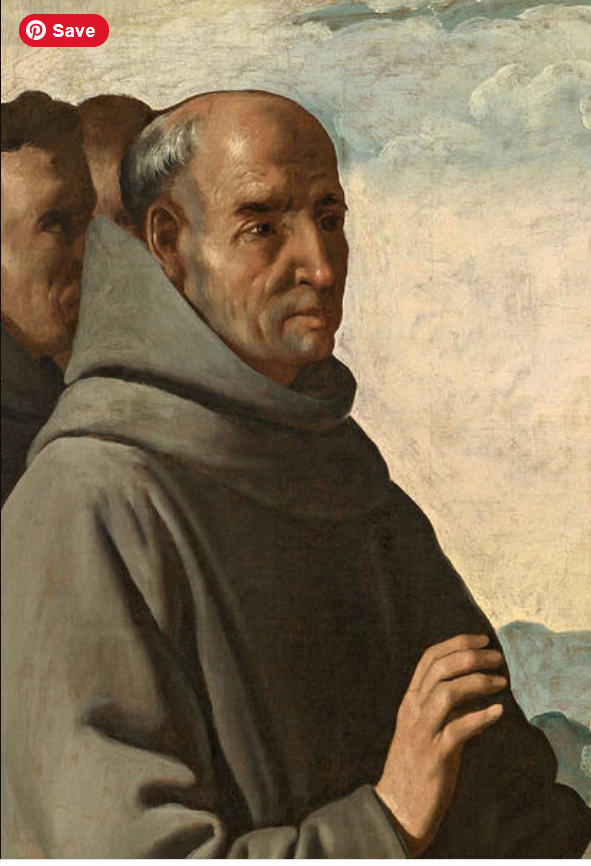
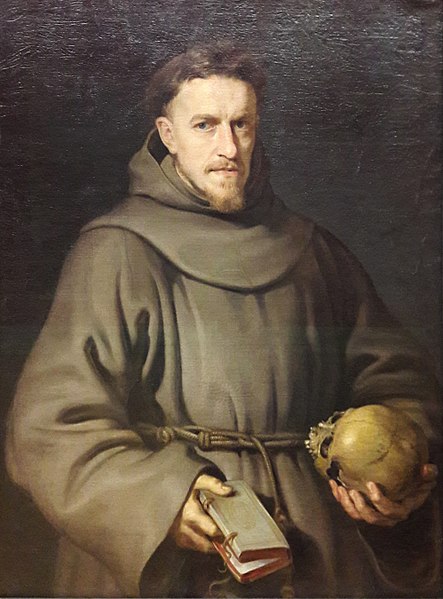
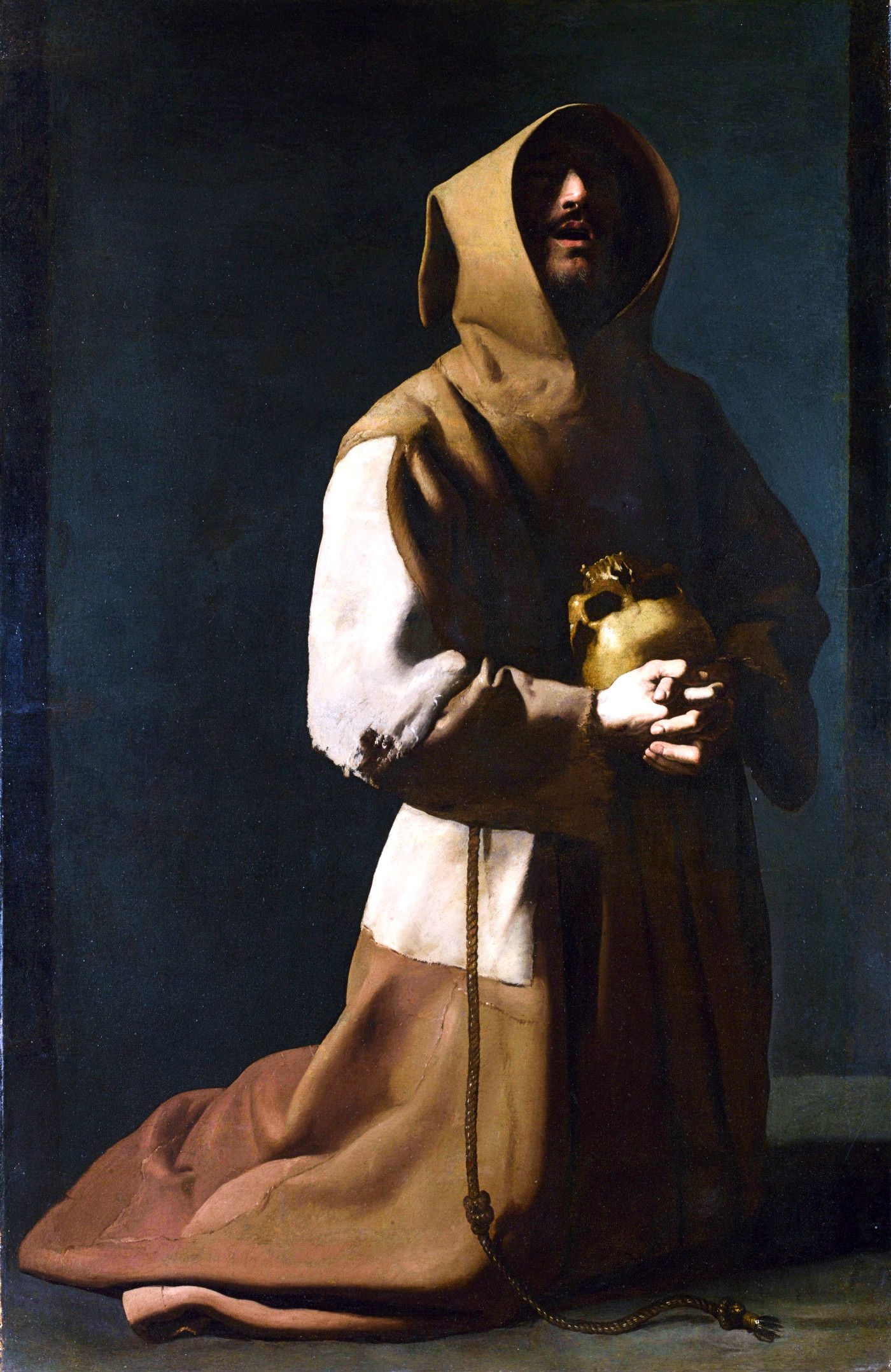
A Franciscan Friar – unknown name
Christopher had been a Priest for many years when the grace of God impelled him to ask our holy Father St Francis, for the Habit. In 1219 Blessed Christopher of Romagnola was sent to Guienne, in southern France, to establish the Order in those parts. He was a man full of holy simplicity and sincere love for the poor and the unfortunate. He took great pleasure in caring for the many persons who were afflicted with leprosy in those days and were outcasts of society.
Christopher was very severe with himself. He wore an iron shirt for a long time, and always a belt having sharp points. He ate but once a day even in his advanced age. He built a small cell for himself of branches and sticks and covered it with straw. But in spite of these rigorous penances, he was always cheerful of countenance and pleasant in his dealings with others.
The pleasant demeanor by which Blessed Christopher gained the hearts of so many sinners, was a virtue he had learned from St Francis. Father Christopher had seen how St Francis of Assisi dealt with his fellowmen, especially with poor sinners.
Portrait of an unknown Franciscan Friar
As in all things else, so in this matter, St Francis kept before his mind the example of Our Lord Jesus Christ, Who always received sinners with kindness.
Realising the value of time, Blessed Christopher of Romagna never wasted a moment, always busily occupied in prayer, meditation, manual labour, care of the garden, or other work that benefitted his brethren. His kindness and affability attracted many sinners, whom he succeeded in converting. God frequently favoured him with extraordinary inspirations and so, it was revealed to him, that St Francis was about to die. He hastened from France to Italy and arrived at the Portiuncula shortly before the death of St Francis. He had the consolation of receiving the Saint’s last blessing.
When Christopher arrived at the age of nearly one hundred years, his earthly sojourn came to an end. While earnestly exhorting the brethren gathered about his deathbed, he surrendered his soul to God in the year 1272. In death Blessed Christopher of Romagna looked more like a person who had fallen asleep, than like a dead person. An unusual concourse of people assembled for his burial which took place in Cahors, France. Many miracles occurred after his death; and his cult as Blessed was approved in 1905. He was buried there at the Franciscan Monastery. Sadly his relics were destroyed by the Huguenots in 1580 when they burned down the Monastery
Vigil of All Saints Day or All Hallow’s Eve: Eve of the Feast of All Hallows, that is, All Saints Day. Halloween is a day on which many quaint customs are revived. It is popular in the United States and Scotland and in the US has become the second largest secular holiday of the year.
St Ampliatus St Antoninus of Milan St Apelles of Eraclea Sintica St Arnulf of Novalesa St Begu of Hackness Blessed Christopher of Romagna OFM (Died 1272) Priest St Epimachus of Melusio St Erth of Cornwall
Bl Irene Stefani St Jesús Miquel Girbau St Lucilla of Rome Bl Maria de Requesens St Narcissus St Notburga of Cologne St Quentin St Stachys of Constantinople
St Wolfgang of Regensburg (c 934 –994) “The Great Almoner,” Bishop, Monk, Missionary, Ascetic, Apostle of Charity. He is regarded as one of the three great German saints of the 10th century, the other two being Saint Ulrich and Saint Conrad of Constance. He was Canonised in 1052 by Pope Leo IX. St Wolfgang’s life: https://anastpaul.com/2019/10/31/saint-of-the-day-31-october-saint-wolfgang-of-regensburg-c-934-994/
Thought for the Day – 30 October – Meditations with Antonio Cardinal Bacci (1881-1971)
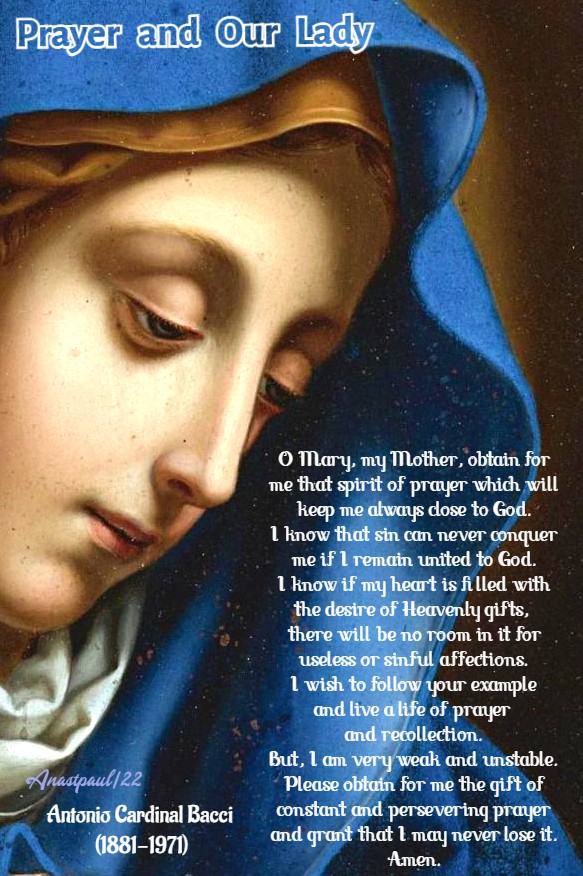
“The Month of the Most Holy Rosary” Prayer and Our Lady
“O Mary, my Mother, obtain for me that spirit of prayer which will keep me always close to God. I know that sin can never conquer me if I remain united to God. I know if my heart is filled with the desire of Heavenly gifts, there will be no room in it for useless or sinful affections. I wish to follow your example and live a life of prayer and recollection. But, I am very weak and unstable. Please obtain for me the gift of constant and persevering prayer and grant that I may never lose it. Amen.”
“The Lord, although He was God, became man. He suffered for the sake of those who suffer, He was bound for those in bonds, condemned for the guilty, buried for those who lie in the grave but He rose from the dead and cried aloud: “Who will contend with Me? Let him confront Me.” I have freed the condemned, brought the dead back to life, raised men from their graves. Who has anything to say against Me? I, He said, Am the Christ, I have destroyed death, triumphed over the enemy, trampled hell underfoot, bound the strong one and taken men up to the heights of Heaven. I Am the Christ. Come, then, all you nations of men, receive forgiveness for the sins which defile you. I Am your Forgiveness. I Am the Passover which brings salvation. I Am the Lamb Who was immolated for you. I Am your Ransom, your Life, your Resurrection, your Light, I am your Salvation and your King. I will bring you to the heights of Heaven. With My own Right Hand I will raise you up and I will show you the Eternal Father.”
St Melito of Sardis (Died c 180) Bishop, Father
“Wake up then, believer and note what is stated here: “In my Name.” That [Name] is Christ Jesus. Christ signifies King, Jesus signifies Saviour. Therefore, whatever we ask for that would hinder our salvation, we do not ask in our Saviour’s Name and yet, He is our Saviour, not only when He does what we ask but also, when He does not. When He sees us ask anything to the disadvantage of our salvation, He shows Himself our Saviour by not doing it. The physician knows whether what the sick person asks for, is to the advantage or disadvantage of his health. And [the physician] does not allow what would be harmful to him, although the sick person himself, desires it. But the physician looks to his final cure.”
St Augustine (354-430) Father and Doctor of Grace of the Church
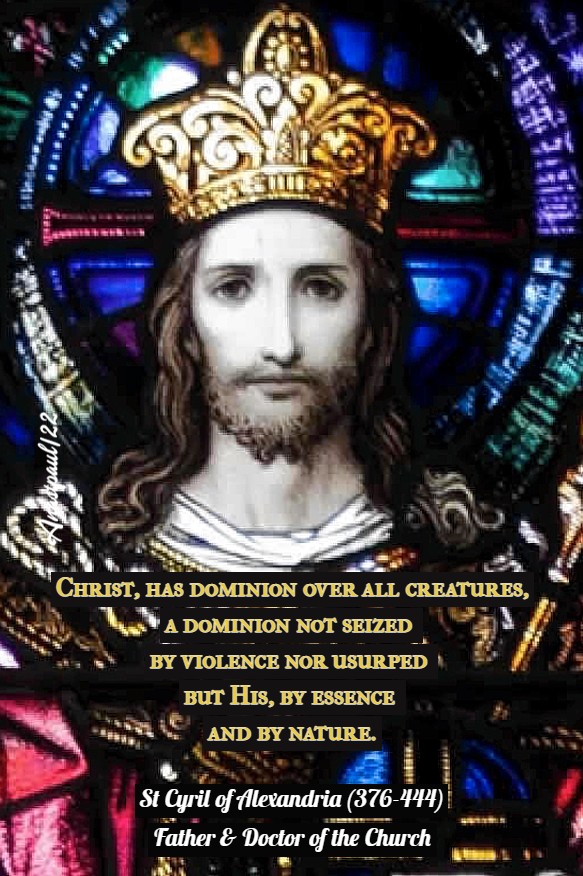
“Christ, has dominion over all creatures, a dominion not seized by violence nor usurped but His, by essence and by nature.”
St Cyril of Alexandria (376-444) Father & Doctor of the Church
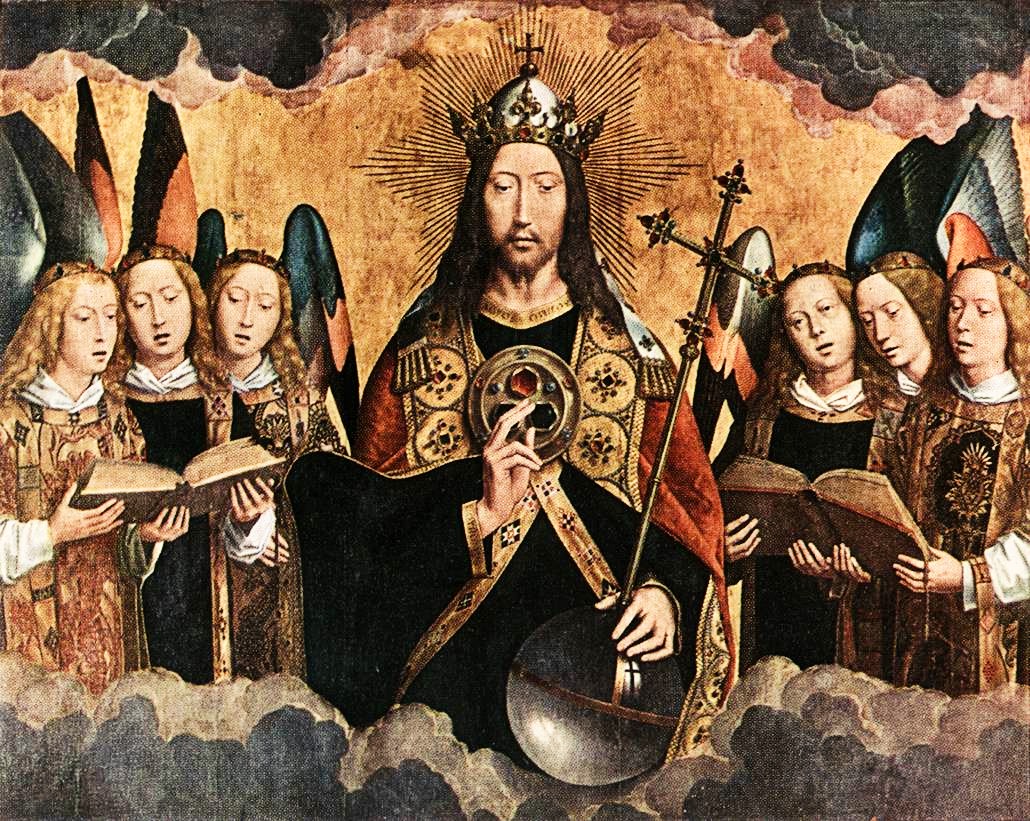
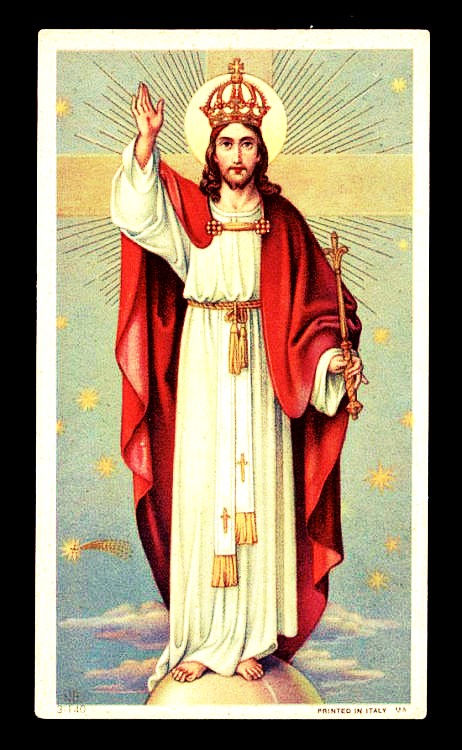
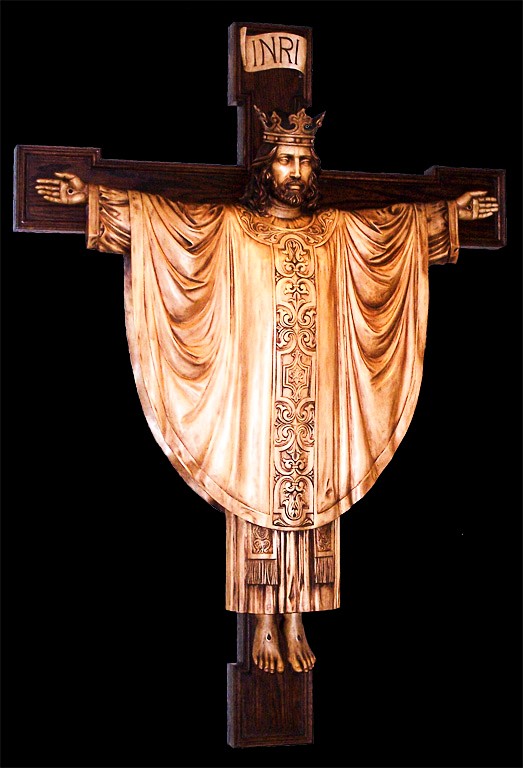
One Minute Reflection – 30 October – Christ the King – Colossians 1:12-20. John 18:33-37 – Scripture search here: https://www.drbo.org/
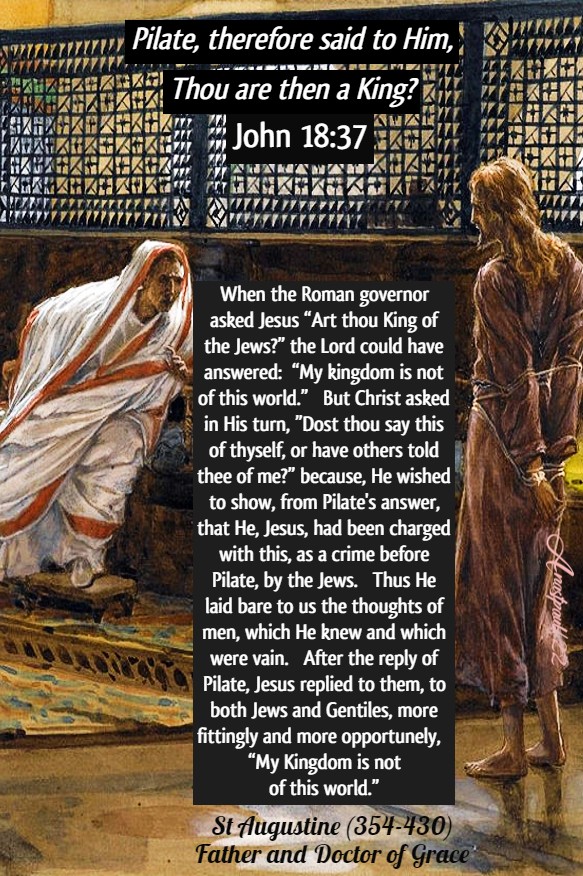
“Pilate, therefore, said to Him, Thou are then a King?” – John 18:37
REFLECTION – “What a stupendous thing it was for the King of the ages to become King of men! For Christ did not become King of Israel to exact tribute, to equip armies with swords, not subdue visible foes. He became King of Israel that He might rule over men’s souls, counsel them about eternity, that He might lead to the Kingdom of Heaven, those, who would believe in Him, hope in Him and love Him. Accordingly, it was not to increase His power–it was condescension on His part that made Him, the Son of God, co-equal with the Father, the Word by Whom all things were made–wish to become King of Israel. It was an indication of His mercy; it did not augment His power. He, Who on earth was called King of the Jews, in Heaven is called, Lord of the Angels. But is Christ King of the Jews only and not King of the Gentiles, too? When in prophecy He said, “But I have established My Kingdom upon Sion, My holy mountain. I will make known the decree of the Lord,” He added immediately, so that the mention of Mount Sion, might not lead men to believe He had been anointed King of the Jews, solely: “The Lord has said to Me – Thou art My Son; this day have I begotten Thee. Ask of Me and I will give Thee the Gentiles for Thy inheritance and the ends of the earth, for Thy possessions.”
Jesus answered – “My Kingdom is not of this world. If My Kingdom were of this world, My followers would have fought, that I might not be delivered to the Jews. But as it is, My Kingdom is not from here.” This is what the good Master wished us to know. First, we had to learn, how vain was the notion of His Kingdom that it should be hostile, either to the Romans or to the Jews. When the Roman governor asked Jesus “Art thou King of the Jews?” the Lord could have answered: “My kingdom is not of this world.” But Christ asked in His turn, ”Dost thou say this of thyself, or have others told thee of me?” because, He wished to show, from Pilate’s answer, that He, Jesus, had been charged with this, as a crime before Pilate, by the Jews. Thus He laid bare to us the thoughts of men, which He knew and which were vain. After the reply of Pilate, Jesus replied to them, to both Jews and Gentiles, more fittingly and more opportunely, “My Kingdom is not of this world.”– St Augustine (354-430) Father and Doctor of Grace (Sermon on Christ the King) Roman Breviary
PRAYER – Almighty and eternal God, Who willed to restore all things in Thy beloved Son, the King of the Universe, graciously grant that the peoples of the earth torn asunder by the wound of sin, may submit to His most gentle rule.Through the same Jesus Christ, Thy Son our Lord, Who lives and reigns with Thee, in the unity of the Holy Ghost, God, world without end. Amen (Collect).
Our Morning Offering – 30 October – Christ the King
Jesus is Our King By Estelle White (1925-2011) Convert, Musician, Hymnist.
Crown Him, the Virgin’s Son, The God Incarnate born, Whose arm those crimson trophies won Which now His brow adorn. Awake, my soul, and sing Of Him Who died for thee; And hail Him as thy glorious King Through all Eternity.
Crown Him, the Lord of Love; Behold His bands and side,– Rich wounds, still visible above In beauty glorified: No Angel in the sky Can fully bear that sight, But downward bends His burning eye At mysteries so bright.
Crown Him, the Lord of Peace, Whose power a sceptre sways From pole to pole, that wars may cease, Absorbed in prayer aud praise: His reign shall know no end, And round His pierced feet Fair flowers of Paradise extend Their fragrance ever sweet.
An Excerpt from A Treatise on the Trinity Faustinus Luciferanus (Priest)
Our Saviour received a bodily anointing and so, became a true King and a true Priest. Both King and Priest He was of His very self; a Saviour could be nothing less. Hear in His own words, how He Himself became a King – “I have been appoined King by God on Zion, His holy mountain.” Hear, in the Father’s words, that He was a Priest: “You are a Priest forever in the line of Melchizedek.” Aaron was the first, under the law, to be made a Priest by being anointed with chrism, yet the Father does not say, “in the line of Aaron,” lest it be believed that the Saviour’s Priesthood could be passed on by inheritance, for at that time Aaron’s Priesthood was transmitted by lineal descent. But the Saviour’s Priesthood is not inherited because this Priest lives on forever. Therefore, Scripture says: “You are a Priest forever in the line of Melchizedek.”
There is, therefore, a Saviour in the flesh, Who is both a King and a Priest, although His anointing was not physical but spiritual. Among the Israelites, those kings and priests who were actually anointed with oil, were either kings or priests. No man could be both king and priest; he had to be one or the other. Only Christ was both King and Priest because He had come to fulfill the law, He alone possessed the twofold perfection of Kingship and Priesthood.
Those who had been anointed with the oil of kingship or priesthood, although they received only one of these anointings, were called “messiahs.” Our Saviour, however, Who is the Christ, was anointed by the Holy Spirit, so that the passage in Scripture might be fulfilled – “God, your God, has anointed you with the oil of gladness and raised you above your companions.” The difference, then, between the One Christ and the many christs, is in the anointing, since He was anointed with the oil of gladness, which signifies,nothing other, than the Holy Spirit.
This we know to be true from the Saviour Himself. When He took the book of Isaiah, He opened it and read: “The Spirit of the Lord is upon me because He has anointed me.” He then said that the prophecy was fulfilled in the hearing of those listening.
Peter, the Prince of the Apostles, also taught that the chrism which made the Saviour a Christ was the Holy Spirit, that is to say, the power of God. When, in the Acts of the Apostles, Peter spoke to that faithful and merciful man, the centurion, he said among other things – “After the baptism which John preached, Jesus of Nazareth, whom God anointed with the Holy Spirit and with power, started out in Galilee and travelled about performing powerful miracles, and freeing all who were possessed by the devil.”
So you see that Peter too said that Jesus, in His humanity, was anointed with the Holy Spirit and with power. Thus Jesus, in His humanity, truly became the Christ. By the anointing of the Holy Spirit, He was made both King and Priest forever. (Roman Breviary).
Faustinus Luciferanus was a Priest who died in the Diocletian persecution from 304. He wrote a Treatise on the Trinity around the year 380, most probably at the request of the wife of the Emperor Theodosius the Great, the one who made orthodox Catholic Christianity the Faith of the Roman Empire. Faustinus is one of the lesser known of the Early Church Fathers.
St Germanus of Capua (Died c 541) Bishop of Capua, Italy, Confessor, Papal Legate. St Germanus was a close friend of St Benedict of Nursia. The Roman Martyrology states: St Germanus, Bishop and Confessor, a man of great sanctity, whose soul, at the hour of death, was seen by St Benedict taken to heaven by angels. His Life: https://anastpaul.com/2020/10/30/saint-of-the-day-30-october-saint-germanus-of-capua-died-c-541/
St Herbert of Tours Bl Jean-Michel Langevin Bl John Slade St Lucanus of Lagny St Marcellus the Centurion St Marcian of Syracuse St Maximus of Cumae St Nanterius of Saint-Mihiel Bl Raymond of Cardona St Saturninus of Cagliari St Serapion of Antioch St Talarica of Scotland Bl Terrence Albert O’Brien St Theonestus of Philippi (Died 425) Bishop, Martyr St Zenobia of Aegea St Zenobius of Aegea
Martyrs in Africa: A group of 100 to 200 Christians murdered in the early persecutions and about whom we know nothing except that they died for their faith.
Thought for the Day – 28 October – Meditations with Antonio Cardinal Bacci (1881-1971)
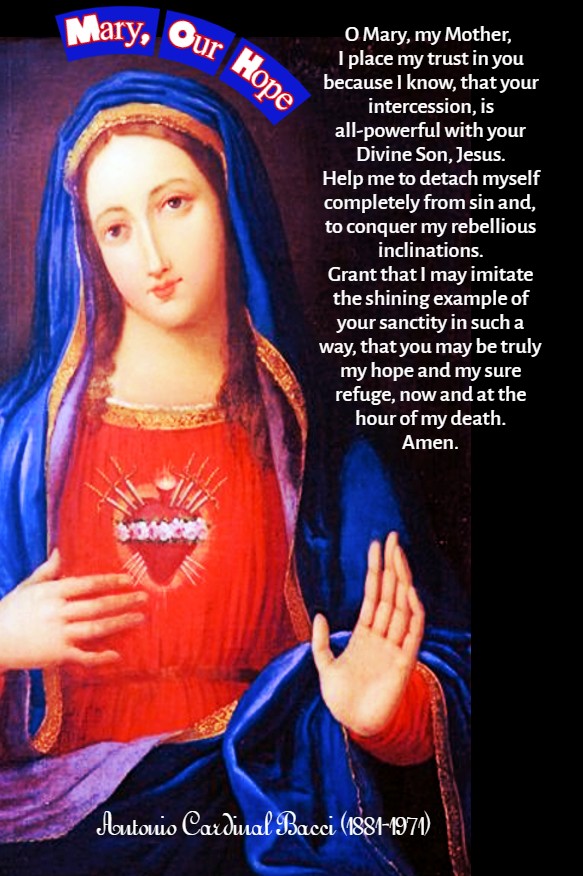
“Month of the Holy Rosary” “Mary, Our Hope”
“O Mary, my Mother, I place my trust in you because I know, that your intercession, is all-powerful with your Divine Son, Jesus. Help me to detach myself completely from sin and, to conquer my rebellious inclinations. Grant that I may imitate the shining example of your sanctity in such a way, that you may be truly my hope and my sure refuge, now and at the hour of my death. Amen.”
Quote/s of the Day – 29 October – The Mystical Body
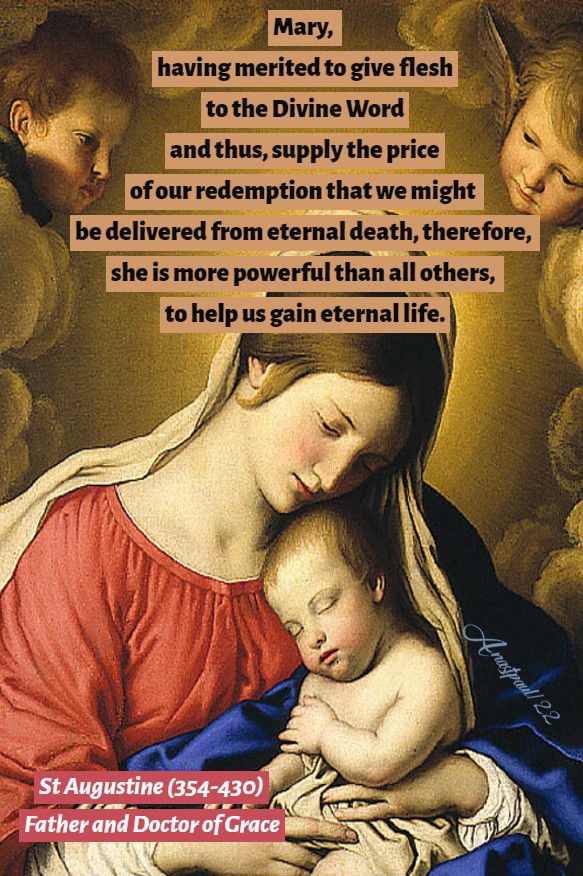
“Mary, having merited to give flesh to the Divine Word and thus, supply the price of our redemption that we might be delivered from eternal death, therefore, she is more powerful than all others, to help us gain eternal life.”
St Augustine (354-430) Father and Doctor of Grace
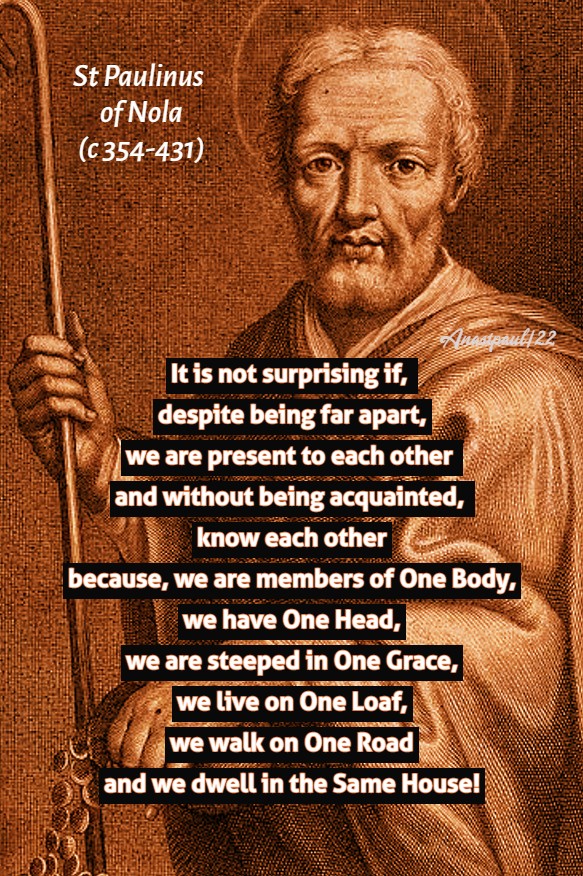
“It is not surprising if, despite being far apart, we are present to each other and without being acquainted, know each other because, we are members of One Body, we have One Head, we are steeped in One Grace, we live on One Loaf, we walk on One Road and we dwell in the Same House!”
St Paulinus of Nola (c 354-431)
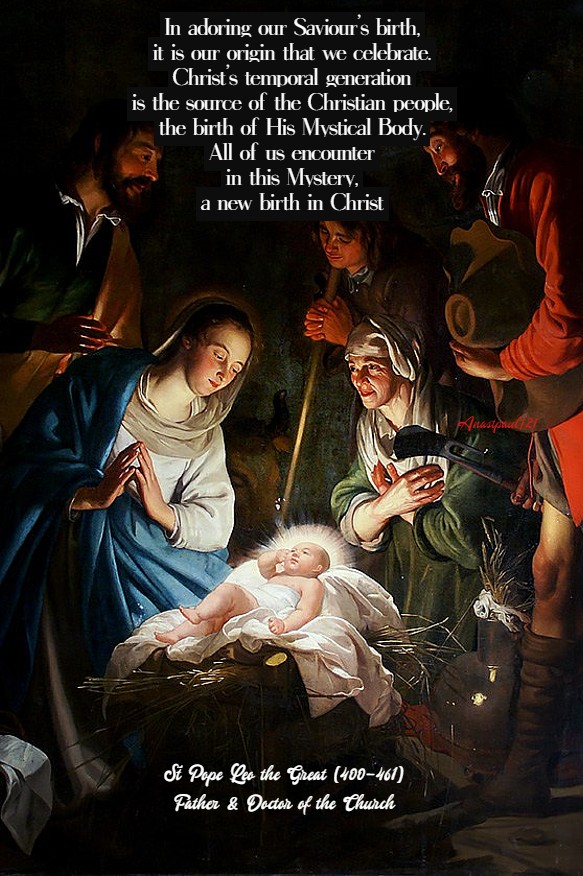
“In adoring our Saviour’s birth, it is our origin that we celebrate. Christ’s temporal generation is the source of the Christian people, the birth of His Mystical Body. All of us encounter in this Mystery, a new birth in Christ.”
St Pope Leo the Great (400-461) Father & Doctor of the Church
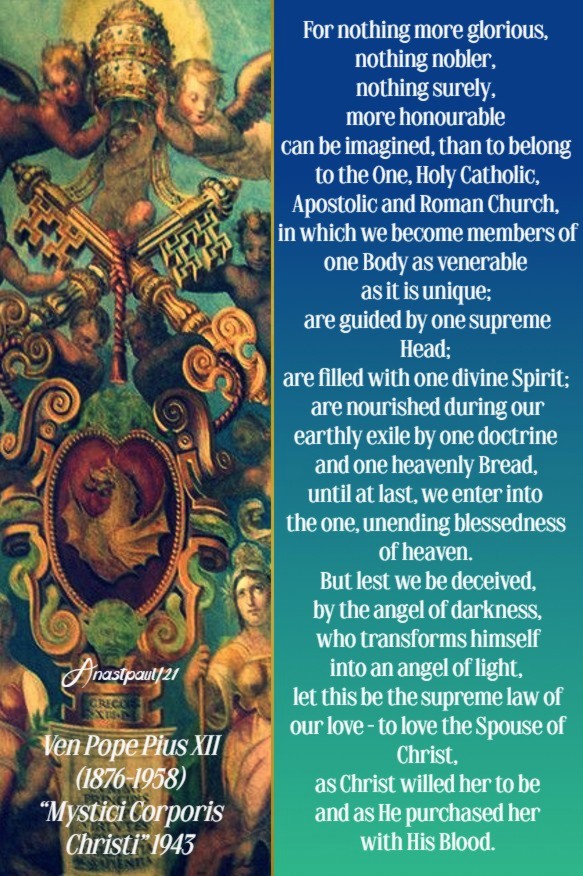
“For nothing more glorious, nothing nobler, nothing surely, more honourable can be imagined, than to belong to the One, Holy Catholic, Apostolic and Roman Church, in which we become members of one Body as venerable as it is unique; are guided by one supreme Head; are filled with one divine Spirit; are nourished during our earthly exile by one doctrine and one heavenly Bread, until at last, we enter into the one, unending blessedness of heaven. But lest we be deceived, by the angel of darkness, who transforms himself into an angel of light, let this be the supreme law of our love – to love the Spouse of Christ, as Christ willed her to be and as He purchased her with His Blood.”
Pope Pius XII (1876-1958) “Mystici Corporis Christi” 1943
One Minute Reflection – 29 October – “The Month of the Most Holy Rosary and of the Angels” and Mary’s Saturday (Salve sancta parens) – Ecclesiasticus 24:14-16, Luke 11:27-28 – Scripture search here: https://www.drbo.org/
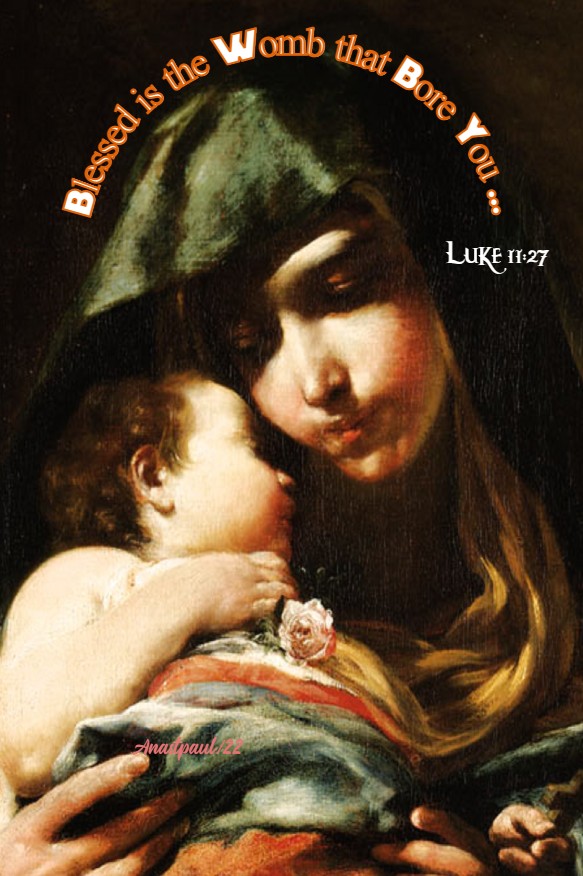
“Blessed is the womb that bore you ’” – Luke 11:27
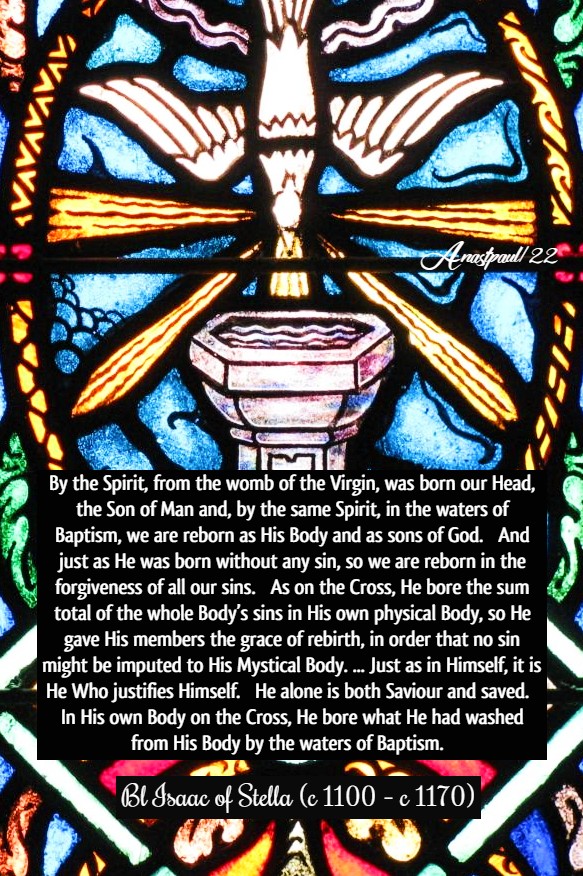
REFLECTION – “By the Spirit, from the womb of the Virgin, was born our Head, the Son of Man and, by the same Spirit, in the waters of Baptism, we are reborn as His Body and as sons of God. And just as He was born without any sin, so we are reborn in the forgiveness of all our sins. As on the Cross, He bore the sum total of the whole Body’s sins in His own physical Body, so He gave His members the grace of rebirth, in order that no sin might be imputed to His Mystical Body. It is written: Blessed is the man to whom the Lord imputes no sin. The blessed man of this text is undoubtedly Christ, Who forgives sins, insofar as God, is His Head. Insofar as this Man is the Head of the Body, no sin is forgiven Him. But, insofar as the Body that belongs to this Head, consists of many members, sin is not imputed to it.
Just as in Himself, it is He Who justifies Himself. He alone is both Saviour and saved. In His own Body on the Cross, He bore what He had washed from His Body by the waters of Baptism. Bringing salvation through wood and through water, He is the Lamb of God Who takes away the sins of the world which He took upon Himself. Himself a Priest, He offers Himself as sacrifice to God and He Himself, is God. Thus, through His own self, the Son is reconciled to Himself as God, as well as to the Father and to the Holy Spirit.” – Blessed Isaac of Stella O.Cist. (c 1100 – c 1170) Cistercian Monk, Abbot, Theologian, Philosopher (An excerpt from his Sermon 42),
PRAYER – Grant us, Thy servants, O Lord God, we beseech Thee, to enjoy lasting health of mind and body and by the intercession of glorious and blessed Mary, ever Virgin, may we be delivered from present sorrow and partake to the full of eternal appiness.Through Jesus Christ, Thy Son our Lord, Who lives and reigns with Thee, in the unity of the Holy Ghost, God, world without end. Amen (Collect).
Our Morning Offering – 29 October – “The Month of the Most Holy Rosary and of the Angels” and Mary’s Saturday
Most Holy Mary, Virgin Mother of God Act of Consecration By St Francis de Sales (1567-1622) Indulgence of 300 days, for each recitation St Pius X, 17 November 1906
Most Holy Mary, Virgin Mother of God, I ………., most unworthy though I am, to be thy servant, yet touched by thy motherly care for me and longing to serve thee, do, in the presence of my Guardian Angel and all the court of Heaven, choose thee this day to be my Queen, my Advocate and my Mother and I firmly purpose to serve thee evermore myself and, to do what I can, that all may render faithful service to thee. Therefore, most devoted Mother, through the Precious Blood thy Son poured out for me, I beg thee and beseech thee, deign to take me among thy clients and receive me as thy servant forever. Aid me in my every action and beg for me, the grace never, by word or deed or thought, to be displeasing in thy sight and that of thy most holy Son. Think of me, my dearest Mother and desert me not at the hour of death. Amen
Saint of the Day – 29 October – Saint Achahildis (Died c 970) Married Laywoman, Apostle of the poor, Miracle-worker, she built the Church in Wendelstein, Germany. Born in Luxembourg and died in c 970 of natural causes in Wendelstein. Also known as – Achatia, Lady Atzin, Atzia, Atza, Reinilda of Luxembourg.
Born into a noble family, she was the sister of Saint Cunégundes. She married Thietmar and the couple were blessed with 5 children.
Achahildis was known for her charity towards the poor. She founded the Wendelstein Church south of Nuremberg in Germany where she is still venerated.
The legend says that having discovered that a servant had stolen and killed geese, she forgave her and brought the geese back to life, including the one that had been cooked. During one of pregnancies, Achahildis developed an appetite for cherries in winter and a cherry tree in her garden bore ripe fruit to her great delight. The cherry tree was considered a tree of paradise . Based on these miracles that have been passed down, Achahildis is depicted with either three geese or a goose leg and a cherry tree with ripe red fruit.
Achahildis died in c 970 and was interred at the Church in Wendelstein, Germany that she had founded. Her tomb re-discovered in 1447 and many miracles, especially of children, were reported at her tomb. Today there is a Chapel dedicated to her in Wendelstein.
St Colman of Kilmacduagh St Dodone of Wallers-en-Fagne St Donatus of Corfu St Ermelinda of Meldaert St Eusebia of Bergamo St Felician of Carthage St Abraham of Rostov St Achahildis of Wendelstein (Died c 970) Married Laywoman. and mother. St Anne of Mount Olympus St Honoratus of Vercelli St John of Autun St Kennera St Mary of Edessa St Narcissus of Gerona
St Sigolinus of Stavelot St Stephen of Cajazzo St Terence of Metz St Theodore of Vienne St Zenobius of Sidon
Martyrs of Douai – (160 Saints and Beati): 160 Priests, Laymen and Religious who studied at the English College in Douai, France, then returned to minister to covert Catholics in England during a period of government persecution of the Church and were murdered for their work.
Martyrs of Lucania – (4 Saints): A group of Christians executed together for their faith. Only their names have survived – Felician, Hyacinth, Lucius and Quintus. Their Martyrdom occurred in Lucania, southern Italy.



























 AnaStpaul
You must be logged in to post a comment.