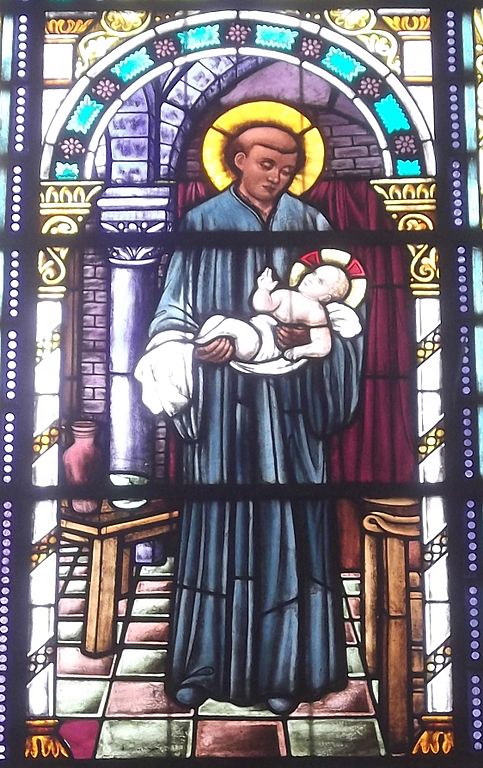
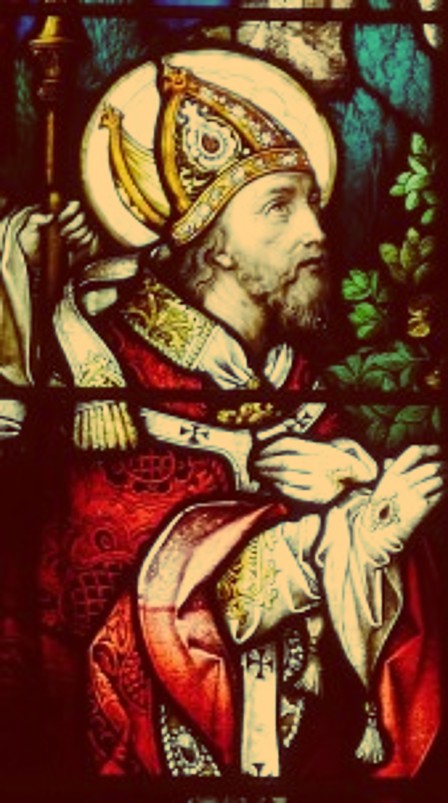
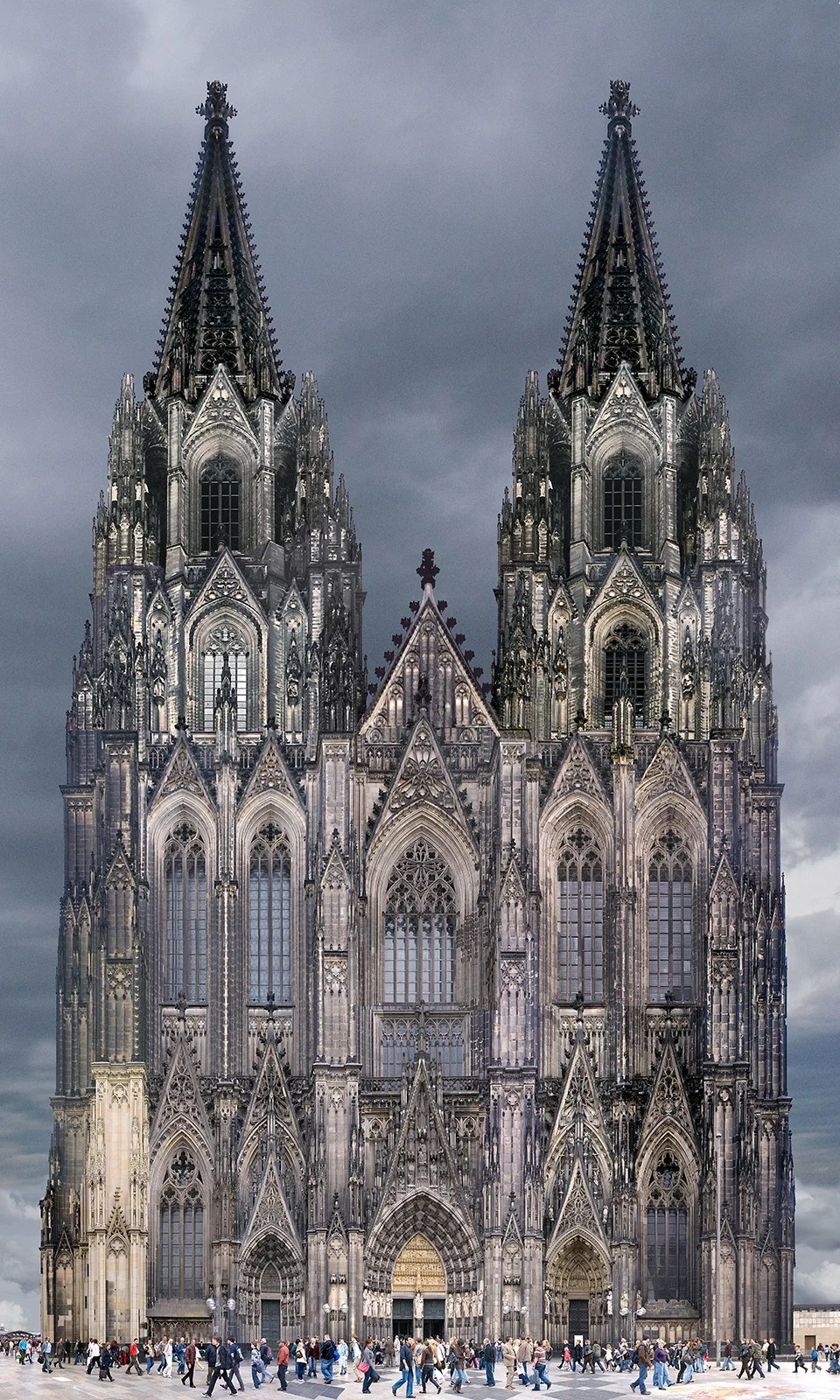
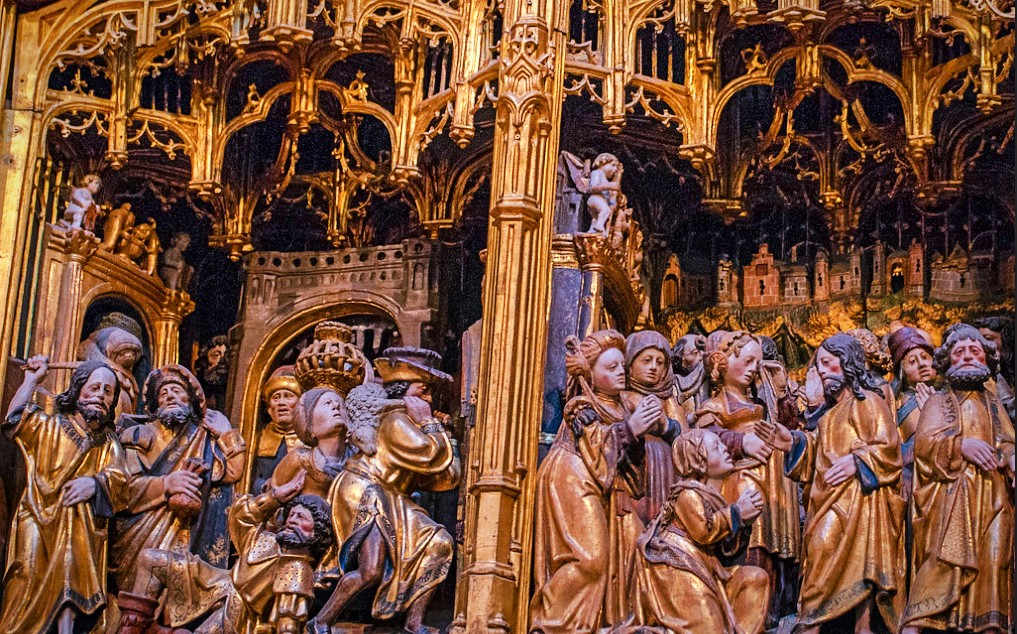
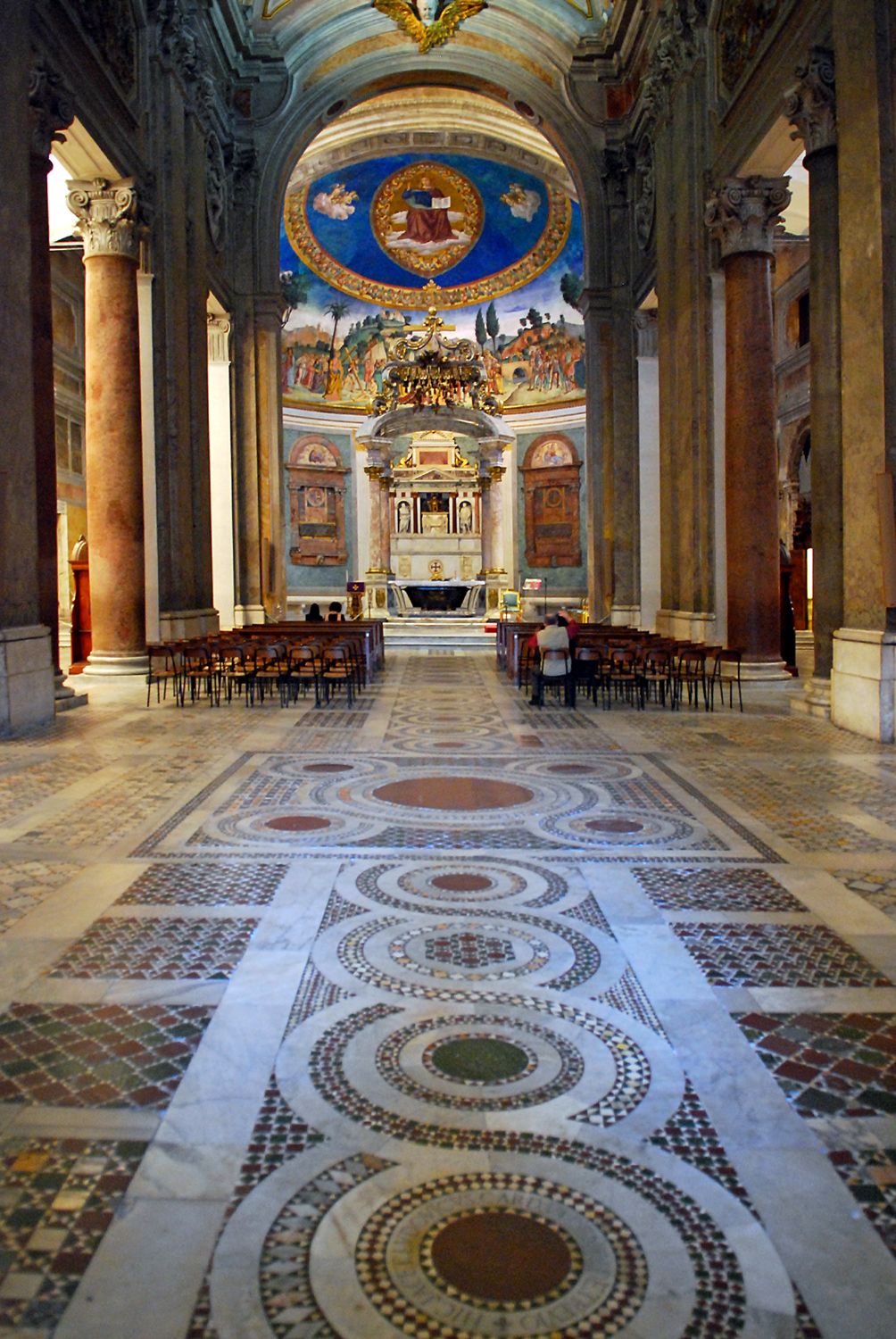
St Andrew Avellino (1521 – 1608) Confessor, Theatine Priest, Canon and Civil Lawyer, Reformer, Founder of many new Theatine houses, Preacher, Spiritual Advisor. In 1624, only 16 years after his death, he was Beatified by Pope Urban VIII and in 1712 was Canonised by Pope Clement XI. His remains lie buried in the Church of St Paul at Naples. Patron against sudden death/of a Holy Death, against Apoplexy or Strokes. Biography: https://anastpaul.com/2018/11/10/saint-of-the-day-10-november-st-andrew-avellino-cr-1521-1608/
St Aedh Mac Bricc St Anianus the Deacon St Baudolino (c 700–c 740) Hermit St Demetrius of Antioch St Elaeth the King St Eustosius of Antioch St Grellen St Guerembaldus St Hadelin of Sees Bl Joaquín Piña Piazuelo St John of Ratzenburg St Joseph the Martyr
St Leo of Melun St Monitor of Orleans St Narses of Subagord St Nonnus of Heliopolis St Orestes of Cappadocia St Probus of Ravenna St Theoctiste St Tryphaena of Iconium St Tryphosa of Iconium
Martyrs of Agde – 3 Saints: A group of Christians who were tortured and Martyred together in the persecutions of Diocletian. The only about them to survive are the names – Florentia, Modestus and Tiberius. Martyred c 303 in Agde, France.
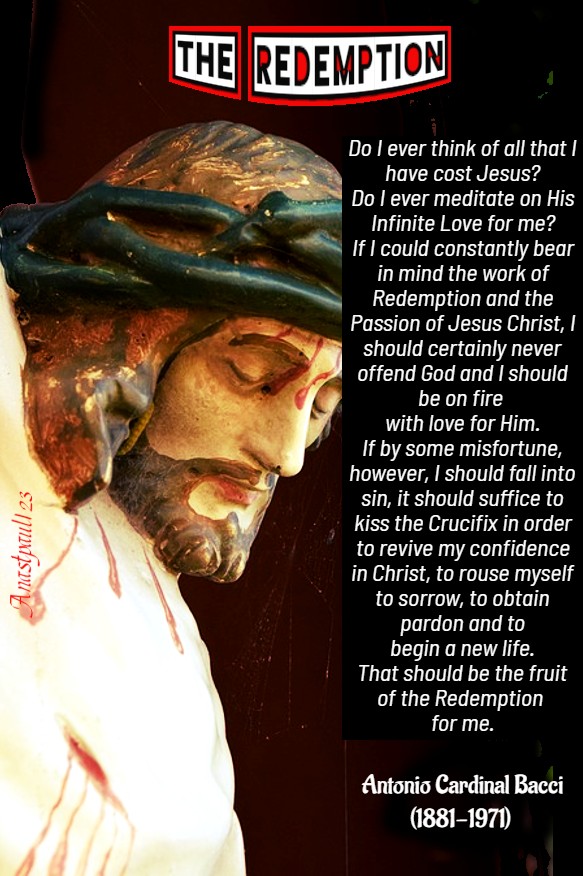
Thought for the Day – 9 November – Meditations with Antonio Cardinal Bacci (1881-1971)
INDULGENCES
“Throughout the Centuries, Indulgences have been regulated by the authority of the Church which, in the course of the Council of Trent, (Session XXV Decr. de Indulg.) sanctioned their lawfulness and usefulness, for the Faithful, both living and dead. There is no question of innovation. It cam be said quite truly that the first Indulgence was granted by Jesus Himself, to the repentant thief! “This day,” He told him, “thou shalt be with me in Paradise.” By these words, Our Lord remitted, not only the sin and the eternal punishment, due to it but, also all temporal punishment. In the same way, an Indulgence was granted by St Paul, when he mitigated the punishment inflicted on the offender at Corinth (2 Cor 6-8).
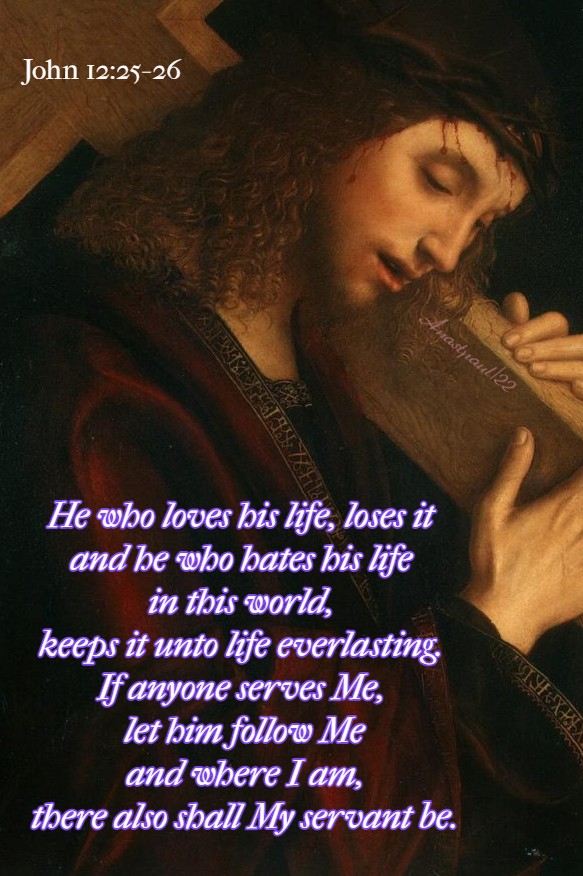
Indulgences are called Plenary, when they remit all the temporal punishment due to sin and Partial, when it is the intention of the Church to release the sinner from whatever penalties would have been expiated, if he had done penance for a certain period of time, in accordance with the ancient discipline. No essential relaxation of practice is intended because the Church always demands that the sinner should first ensure that he is in the state of grace, by making a good Confession. As the Council of Trent insists, he should be sincerely repentant. The Church requires, moreover, that in order to gain a Plenary Indulgence, the penitent should be detached from all affections, even towards deliberate venial sin!”
Quote/s of the Day – 9 November – Dedication of The Archbasilica of the Most Holy Saviour
“Zeal for Your House will consume me.”
John 2:17
“…The great movement of apostasy being organised in every country for the establishment of a One-World Church which shall have neither dogmas, nor hierarchy, neither discipline for the mind, nor curb for the passions and which, under the pretext of freedom and human dignity, would bring back to the world, (if such a Church could overcome) the reign of legalised cunning and force and the oppression of the weak and of all those who toil and suffer. […] Indeed, the true friends of the people are neither revolutionaries, nor innovators – they are traditionalists.”
“The Church alone, being the Bride of Christ and having all things in common with her Divine Spouse, is the depository of the Truth.”
“Truly, we are passing through disastrous times, when we may well make our own, the lamentation of the Prophet: “There is no truth and there is no mercy and there is no knowledge of God in the land” (Hosea 4:1). Yet, in the midst of this tide of evil, the Virgin Most Merciful rises before our eyes, like a rainbow, as the arbiter of peace between God and man.”
One Minute Reflection – 9 November – Dedication of The Archbasilica of the Most Holy Saviour – Apocalypse 21:2-5, Luke 19:1-10 – Scripture search here: https://www.drbo.org/
“But Zacheus standing, said to the Lord: Behold, Lord, the half of my goods I give to the poor and if I have wronged any man of anything, I restore him fourfold. Jesus said to him: This day is salvation come to this house because he also is a son of Abraham. For the Son of Man is come to seek and to save that which was lost.” – Luke:8-10
REFLECTION – “… This was an act of divine foreknowledge, for He well knew what would happen. He saw the man’s soul prepared most readily to choose a holy life and converted him, therefore, unto piety. The man, therefore, received Jesus joyfully and this was the commencement of his turning himself unto good, of his departure from his former faults and of his manfully, be-taking himself unto a better course.
But perchance, someone possibly may say, to our common Saviour Christ, ‘What do You, O Lord go to lodge with Zacheus and desire to abide with the chief of the publicans? He has not yet washed away the stain of his greedy love of money. He is still sick with covetousness, the mother of all crimes, still full of the blame of plunder and extortion.‘ But yes, He says, I indeed know this, in that I am God by nature and see the ways of every individual upon earth. And more than this, I know also, things to come. I have called him to repentance, because he is ready thereto and although men murmur and blame My gentleness, facts themselves, shall prove that they are wrong. For Zacheus, it says, stood up, and said unto the Lord, “Behold, the half of whatever I possess I give unto the poor and if I have defrauded any man, I make fourfold restoration.”
You behold his repentance; his rapid change unto a better course, his haste unto piety, the bountifulness of his love for the poor. He, who lately was a publican, or rather the chief of the publicans, given up to covetousness and set upon gain, at once becomes merciful and devoted to charity. He promises that he will distribute his wealth to those who are in need,that he will make restoration to those who have been defrauded and he, who was the slave of avarice, makes himself poor and ceases to care for gains.
Let not the multitudes, therefore, murmur when Christ saves sinners but let them answer us this. Would they have physicians succeed in effecting cures, when they visit the sick? Do they praise them when they are able to deliver men from cruel ulcers, or do they blame them and praise those who are unskillful in their art? But, as I suppose, they will give the sentence of superiority in favour of those, who are skillful in benefiting such as suffer from diseases. Why, therefore, do they blame Christ, if when Zacheus was, so to say, fallen and buried in spiritual maladies, He raised him from the pitfalls of destruction?
And to teach them this, He says, “Today there is salvation for this house, in that he also is a son of Abraham” for where Christ enters, there, necessarily, is also salvation. May He, therefore, also be in us and He is in us, when we believe, for He dwells in our hearts by faith and we are His abode. It would have been better then for the Jews to have rejoiced because Zacheus was wonderfully saved, for he too was counted among the sons of Abraham, to whom God promised salvation in Christ, by the holy prophets, saying, “There shall come a Saviour from Zion and He shall take away iniquities from Jacob and this is My covenant with them, when I will bear their sins.”
Christ, therefore arose, to deliver the inhabitants of the earth from their sins and to seek them that were lost and to save them that had perished. For this is His office and, so to say, the fruit of His Godlike gentleness. Of this will He also count all those worthy, who have believed in Him: by Whom and with Whom to God the Father be praise and dominion, with the Holy Ghost forever and ever, Amen.” – St Cyril of Alexandria (376-444) Known as “The Pillar of Faith” Father and Doctor of the Church (An excerpt from Homily 127).
PRAYER – O God, Who for us bring each year the recurrence of the Consecration day of this Thy holy temple and always bring us back safely to the Sacred Rites, hear the prayers of Thy people and grant that, whoever enters this temple to pray for blessings., may rejoice in having obtained whatever he sought.Through Jesus Christ, Thy Son our Lord, Who lives and reigns with Thee, in the unity of the Holy Ghost, God, world without end. Amen (Collect).
Our Morning Offering – 9 November – Dedication of The Archbasilica of the Most Holy Saviour
Your Instrument Prayer of St Charles Borromeo (1538-1584)
Almighty God, You have generously made known to human beings, the Mysteries of Your life through Jesus Christ Your Son in the Holy Spirit. Enlighten my mind to know these Mysteries which Your Church treasures and teaches. Move my heart to love them and my will to live in accord with them. Give me the ability to teach this Faith to others without pride, without ostentation and without personal gain. Let me realise that I am simply Your instrument for bringing others to the knowledge of the wonderful things You have done for all Your creatures. Help me to be faithful to this task that You have entrusted to me. Amen
Saint of the Day – 9 November – Blessed Gratia of Cattaro OSA (1438-1508) Lay Brother of the Hermits of St Augustine, Ex-sailor. … Born 27 October 1438 at Mul, Cattaro, Dalmatia (modern Kotor, Montenegro) and died on 9 November 1508 in Murano, Italy of natural causes. Gratia was known for his humility, spirit of penance, love of the Eucharist and for his zealous hard labour. Also known as – Gratia of Kotor, Gracija, Grazia. Gratia was Beatified in 6 June 1889 by Pope Leo XIII (cultus confirmed).
Gratia was born in 1438 in the small town of Mula on the coast of Dalmatia near Cattaro (Kotor), not far from present-day Albania. He followed in the footsteps of his father ,who was a sailor and visited many port cities, being particularly drawn by the beauty of Venice. One day, after hearing a sermon of Simon of Camerino in the Augustinian Church of Saint Stephen in that City, he entered the Order as a brother and took the name Gratia, out of gratitude to God for the many gifts he had received. Simon of Camerino had founded a community near Padua where the Friars lived in absolute poverty while ministering at a Shrine dedicated to our Lady. Here Gratia lived a life of prayer and penance and devoted his energies toward the construction of the monastery and the cultivation of its garden.
Later, when Simon established the Friary of Saint Christopher in Venice, Gratia was transferred there, where he was greatly loved by the people and sought after by them for his prayer and counsel. Here he died on 8 November 1508. Within the Church of Saint Christopher, a marble monument was erected to his memory by a Senator of the City, while Gratia’s remains were eventually taken back to Mula. Pope Leo XIII confirmed his cult in 1889.
Gratia might have been considered a belated vocation in his day, earning a living by the hard labour of an itinerant sailor. Following his entrance into religious life, he continued to use his natural gifts in the service of God and his community and by his simple but genuine demeanour, drew others to also recognise, the grace of God at work in their lives.
St Agrippinus of Naples St Alexander of Salonica St Aurelius of Riditio St Benignus of Armagh St Eustolia St Francisco José Marín López de Arroyave
Blessed Gabriel Ferretti OFM (1385-1456) Priest, Friar of the Order of Friars Minor,, Provincial Superior, Mystic. renowned missionary Preacher. He was zealous in the restoration and establishment of new Convents. He was an ancestor to both Cardinal Gabriele Ferretti and Blessed Pope Pius IX, having been descended from a long noble lineage. Patronage – Ancona. His body is incorrupt. He was Beatified on 19 September 1753 by Pope Benedict XIV. Biography: https://anastpaul.com/2021/11/09/saint-of-the-day-9-november-blessed-gabriel-ferretti-ofm-1385-1456/
Bl George Napper Blessed Gratia of Cattaro OSA (1438-1508) Lay Brother of the Hermits of St Augustine Bl Helen of Hungary St Jane of Segna
St Justo Juanes Santos St Luigi Beltrame Quattrocchi St Luis Morbioli St María de la Salud Baldoví Trull St Pabo St Sopatra St Theodore Stratelates St Ursinus of Bourges St Valentín Gil Arribas St Vitonus of Verdun
Martyrs of Constantinople – 3 Saints: A group of ten Christians who tried to defend an image of Jesus over the Brazen Gate of Constantinople from an attack by Iconoclasts during the persecutions of Emperor Leo the Isaurian. The group of was seized by soldiers, condemned by judges for opposing the emperor, and Martyred. The only details that have survived are three of their names – Julian, Marcian and Maria. They were martyred in 730 at Constantinople (modern Istanbul, Turkey).
Thought for the Day – 8 November – Meditations with Antonio Cardinal Bacci (1881-1971)
The Advantages of Devotion to the Souls in Purgatory
“The story is told of St John of God who, on one occasion, when he was finding it difficult to provide for the crowds of sick people, whom he had in his hospital, he went about the streets of Granada, crying: “My dear brothers, give alms to yourselves!” Many were astonished at these words but, the Saint explained that Jesus regards as done to Himself anything which we do for the poor and unfortunate and that, therefore, He repays the generous giver handsomely. Since the Souls in Purgatory, are poor and needy, it is certain that whatever we do for them, will redound to our own advantage.
St Margaret of Cortona had a keen devotion to the Faithful Departed. It is related of her that when she was dying, she saw a band of blessed spirits descending from above, in order to escort her into Heaven. These were the countless souls whom her prayers had rescued from the pains of Purgatory.
“If only everyone realised,” the Cure d’Ars once said to a fellow Priest, “what great influence with God, the Holy Souls in Purgatory possess and, the vast number of favours which we obtain through their intercession, they certainly would not be forgotten. Let us pray earnestly for them and they will intercede strongly for us!”
“Whenever I wish to obtain some favour from our Heavenly Father,” said St Catherine of Bologna, “I have recourse to the Souls in Purgatory. I beseech them to present my petition to the Divine Majesty, in their name and through their inetercession, my request is granted.”
We have been subjected to Blackouts for months (actually years) now usually staggered in 2 1/2 cuts and according to a schedule for each town, thus allowing for a stressful re-organisation of each day.
BUT sometimes … things go horribly wrong, whether intentionally or accidentally. Like yesterday, when they switched off at the expected time but failed to switch on again. One sits and waits and waits and waits and then goes to bed hungry.
I pray all will go well today and there will be posts tomorrow. I only managed to schedule the List of Feasts and Saints and dear Cardinal Bacci, ahead of the powercut yesterday.
I know this is not confined to South Africa alone, I have heard of a 7 day powerless period recently in Nigeria and know too of similar cuts in the USA, Middle East, England, France and various European countries (yep). So for whoever suffers in the same way – or worse – “hou vas!” 🙏 Ana 💖
Four Crowned Martyrs: Saint Castorus, Saint Claudius, Saint Nicostratus and Saint Simpronian. Skilled stone carvers in the 3rd century quarries. Martyred when they refused to carve an idol of Aesculapius for Diocletian. They were drowned in the River Sava in 305. Patronages – against fever, cattle, sculptors, stone masons, stonecutters.
St Adeodatus I, Pope (Died 618) Bishop of Rome from 19 October 615 to 8 November 618 St Clair of Tours St Cybi of Caenarvon St Drouet
All Saints of the Diocese of Evry: A regional memorial of all the Saints and Beati of the calendar who have a connection to the Diocese of Evry-Corbeil-Essonnes, France. • Blessed Isabella of France, founded the Longchamp monastery • Blessed Nicolas Gaudreau, pastor of Vert-le-Petit • Blessed Pierre Bonse, pastor of Massy • Our Lady of Good Guard, patron saint of the diocese, venerated in Longpont-sur-Orge, France • Saint Corbinian, born in Saint-Germain-lès-Arpajon • Saint Denis of Paris, evangelizer of part of Essonne and revered ni Longpont-sur-Orge • Saint Eloi, who lived in Chilly-Mazarin • Saint Germain of Paris • Saint William of Bourges, son of Count Baldwin IV of Corbeil • Saint William of Aebelholt, pastor of Brunoy • Saint Wulfran of Sens, born in Milly-la-Forêt • Blessed Nativelle, vicar of Longjumeau • Blessed René Le Bris, pastor of Bris-sous-Forges • Saint Spire of Bayeux, whose relics are in Corbeil in the cathedral that bears his name All Saints of Wales
Thought for the Day – 7 November – Meditations with Antonio Cardinal Bacci (1881-1971)
How We Can Help the Faithful Departed
“There are many ways in which we can come to the assistance of the faithful departed.
(a) We can help them by prayer. This is the simplest way and one which is possible for everyone. When we pray for our dead, we feel that we are close to them and are consoled in our sorrow. Moreover, we can be sure of gaining a great deal in return, for the prayers which they offer on our behalf, are very pleasing to God.
(b) We can offer Holy Mass for them. When we do this, it is not only we who pray but Jesus joins with us and offers Himself as a victim of reparation on behalf of the suffering souls. The Mass has an infinite value and one Mass alone would be enough to empty Purgatory. But the application of its infinite merits are always limited, in accordance with the hidden designs of God. Ir is certain, however, that there is no more effective means of helping the faithful departed.
(c) We can offer our good works on their behalf. Every good action has power to satisfy God for some of the debts which we or others have contracted in His regard. Among the good works which we can offer for the souls in Purgatory, are Holy Communion, voluntary mortifications, meek acceptance of the unavoidable sorrows of life, acts of patience and of compassion, spiritual and corporal works of mercy, Indulgences and almsgivine.”
Quote/s of the Day – 7 November – The Feast of All Saints of the Order of Preacher
“These, my much loved ones, are the bequests which I leave to you, as my sons – have charity among yourselves, hold fast to humility, keep a willing poverty.”
“Do not weep, for I shall be more useful to you after my death and I shall help you then, more effectively, than during my life.”
St Dominic OP (1170-1221)
“Eternal life flows from this Sacrament because God, with all sweetness, pours Himself out upon the blessed.”
“Mary is the divine Page on which God the Father wrote the Word of God, His Son. Let us draw near to her and read her!”
St Albert the Great OP (1200-1280) Doctor of the Church
“At His Transfiguration Christ showed His disciples, the splendour of His Beauty, to which He will shape and colour, those who are His : ‘He will reform our lowness configured to the Body of His Glory.”
“Charity is the form, mover, mother and root of all the virtues.”
“To love is to will the good of the other.”
“The greatest kindness one can render to any man consists in leading him from error to truth.”
St Thomas Aquinas OP (1225 – 1274) Angelic Doctor of the Church
“The eternal God asks a favour of His bride: “Hold Me close to your heart, close as locket or bracelet fits.” No matter whether we walk or stand still, eat or drink, we should at all times wear the golden locket “Jesus” upon our heart.”
Bl Henry Suso OP (1295-1366)
“Enrich your soul in the great goodness of God – The Father is your Table, the Son is your Food and the Holy Spirit waits on you and then makes His Dwelling in you.”
“Charity is the sweet and holy bond which links the soul with its Creator; it binds God with man and man with God.”
St Catherine of Siena OP (1347-1380) Doctor of the Church
“Once humility is acquired, charity will come to life like a burning flame devouring the corruption of vice and filling the heart so full, that there is no place for vanity.”
“A vain question deserves nothing but silence. So learn to be silent for a time; you will edify your brethren and silence will teach you, to speak when the hour is come.”
St Vincent Ferrer OP (1350-1419)
St Dominic’s Blessing By St Dominic de Guzman OP (1170-1221)
May God the Father, Who made us, bless us. May God the Son, send His healing among us. May God the Holy Ghost, move within us and give us eyes to see with, ears to hear with, and hands, with which Thy work, might be done. May we walk and preach the Word of God to all. May the Angel of peace watch over us and lead us at last, by God’s grace, to the Kingdom. Amen
One Minute Reflection – 7 November – “The Month of the Holy Souls in Purgatory” – Within the All Saints Octave – Apocalypse 7:2-12, Matthew 5:1-12 – Scripture search here: https://www.drbo.org/
“Blessed are the merciful, for they shall obtain mercy.” – Matthew 5:7
REFLECTION – “Finally, just as concern for one’s neighbour is added to love of God, so the virtue of mercy is added to the desire for righteousness, as it is said: Blessed are the merciful, for God will be merciful to them.
Remember, Christian, the surpassing worth of the wisdom that is yours. Bear in mind, the kind of school in which you are to learn your skills, the rewards to which you are called. Mercy Itself, wishes you to be merciful, Righteousness Itself, wishes you to be righteous, so that the Creator may shine forth in His creature and the image of God be reflected, in the mirror of the human heart, as it imitates His qualities. The faith of those who live their faith, is a serene faith. What you long for will be given you, what you love will be yours forever.
Since it is by giving alms that everything is pure for you, you will also receive that blessing which is promised next by the Lord: Blessed are the pure of heart, for they shall see God. Dear friends, great is the happiness of those for whom such a reward is prepared. Who are the clean of heart if not those, who strive for those virtues, we have mentioned above? What mind can conceive, what words can express, the great happiness of seeing God? Yet human nature will achieve this when it has been transformed, so that it sees the Godhead no longer in a mirror, or obscurely but face to face—the Godhead that no man has been able to see! In the inexpressible joy of this eternal vision, human nature will possess, what eye has not seen or ear heard, what man’s heart has never conceived!” – St Pope Leo the Great (400-461) Great Western Father and Doctor of the Church (An excerpt from his Sermon 95 On the Beatitudes).
PRAYER – Almighty, eternal God, Who granted us to honour the merits of all Thy Saints in a single solemn festival, bestow on us, we beseech Thee, through their manifold intercession, that abundance of Thy mercy for which we yearn. Through Jesus Christ, Thy Son our Lord, Who lives and reigns with Thee, in the unity of the Holy Ghost, God, world without end. Amen (Collect).
Our Morning Offering – 7 November – Within the All Saints Octave
Eternal God, Our Refuge By St Boniface (672-754) Martyr
Eternal God, the refuge and help of all Thy children, we praise Thee for all Thou hast given us, for all Thou hast done for us, for all that Thou art to us. In our weakness, Thou art strength, in our darkness, Thou art light, in our sorrow, Thou art comfort and peace. We cannot number Thy blessings, we cannot declare Thy love – for all Thy graces, we bless Thee. May we live as in Thy presence, and love the things that Thou loves and serve Thee in our daily lives, through Jesus Christ our Lord. Amen
Saint of the Day – 7 November – St Florentius of Strasburg (Died 693) the 13th Bishop of Strasburg in Germany from 618–624, Missionary, Miracle-worker, founder of Monasteries and Churches, Hermit. Born in Ireland and died in 693 in Strasburg. Patronages – against rupture (hernia), Haslach, Germany. Also known as – Florent.
Florentius was an Irishman who laboured in Strasburg, in the seventh Century. Below is an account of his life from a study of early Irish Saints in Europe. Among the many points of interest, is that his Church had an Altar dedicated to Saint Brigid and like Saint Brigid, Florentius is also said to have hung his cloak on a sunbeam!
The fame of Florentius, whose Bishopric is not clearly dated but succeeded that of Arbogast, is due to his two important monastic foundations – St Thomas in the periphery of Strasburg,and that of Niederhaslach, in a valley to the west of the City. There, Florentius erected his first Monastery with the help of his Irish companions. Excavations have revealed that his Church, built on a Roman site, was no mean wooden structure but a stone edifice with three naves in the Byzantine style. Here his followers, it is explicitly stated, obeyed the Rule he laid down for them, adhering later to that of St Columban before adopting that of St Benedict.
Louis the Pious, son of Charlemagne, caused a new Church to be built over the Haslach foundation to receive the remains of the holy Bishop Florentius who was first buried in St Thomas in Strasbourg where he died. The translatio took place on 7 November 810 and was pronounced a Feast day to be celebrated by the entire Diocese and so it has remained.
Collegiate church Saint Florentius
This is the Florentiusfest, held yearly on the Sunday following 7 November when the Shrine and a life-size wooden Statue of the Patron Saint are borne in procession around the village of Niederhaslach. Later in the day, pilgrims visit Oberhaslach where they pray in the Chapelle Saint-Florent.
Halsach, whether Ober (Upper)or Nieder (lower), are modest enough villages to harbour so majestic a Church, but the Bishops of Strasburg had once their summer residence here and the place was not divided… The west facade with its slender Gothic portal bears the legend of St Florentius. Inside, we encounter again, the story of Florentius, as a worker of miracles, in one of the stained glass windows… The Altar of St Brigid is gone but Florentius’ relics are in a niche in the choir, his gilded Shrine of 1716 replacing a priceless relic that was robbed in 1525, when the Saint’s remains were thrown on the Church floor. Taken to safety, restored to the Church, then hidden again in various private houses, they were eventually brought back to rest after the French Revolution subsided.
The Life and Miracles of St Florentius
Beside these depredations, the worldy remains of Florentius had other ordeals to overcome, being for centuries the object of fierce controversy between Strasburg and Haslach, both proclaiming to be in possession of them. This endless ‘War of the Relics’ obliged the German Emperor, Karl IV to intervene in the year 1353 in person. He caused the contents of both reliquaries to be examined, after which,, to the joy of Haslach’s Augustinians, the affair was settled in their favour. Gratified, they presented the monarch wih an arm of the holy Patron, which he took with him to his residence in Prague. A special Altar was provided for the Florentius relic in the Cathedral and there it has, hopefully, remained.
Florentius had started off with a hermitage in the wooded Haslach valley, near the present village of Oberhaslach. Several place-names in the vicinity bear out the tradition of this eremitic community, a site to the northeast of the village. References are given in Strasburg’s early Diocesan files to ‘Priests’ quarters, described as ‘of the Irish’. Considering that these sites were wiped out in the wars, the reference is most welcome and revealing. The pilgrims’ Church of Oberhaslach, does its part in keeping alive the Florentius tradition. The vintage image below shows St Florentius with wild animals on the edge of a ‘cityscape’ – it seems to indicate the many wondrous talents and achievements of this ancient Saint – what a pity we have such a sparcity of information on his holy life.
There an old Roman road leading off in a north-easterly direction to Marlenheim is also indicative. Marlenheim was once the seat of Merovingian Royalty, who donated land to Florentius for a missionary station. The proximity of the Palace brings to mind the miraculous cure of King Dagobert’s daughter, a miracle performed by Florentius, portrayed both in stone and in painted glass, in Niederhaslach’s noble Church. The legend records how the Saint, on arrival, hung up his cloak on a sunbeam – how lovely a thought!
The Feast of All Saints of the Order of Preachers: “Fountain of all holiness, You stirred up in our holy brothers and sisters an extraordinary love of truth, conformity to Christ Crucified and a thirst for the salvation of souls: may we imitate them in offering You thanksgiving on account of the way of life they gave us.” — From the Intercessions at Lauds for the Feast of All Saints of the Order of Preachers. HERE: https://anastpaul.com/2019/11/07/thought-for-the-day-7-november-feast-of-all-dominican-saints/
Blessed Anthony Baldinucci SJ (1665-1717) Priest of the Society of Jesus, Preacher, Writer and Missionary. Fr Baldinucci was Beatified by Pope Leo XIII on 25 March 1893. Biography here: tps://anastpaul.wordpress.com/2017/11/07/saint-of-the-day-blessed-anthony-baldinucci-s-j-1665-1717/
St Athenodorus of Neo-Caesarea St Auctus of Amphipolis St Baud of Tours St Blinlivet St Congar
St Ernest of Mecca St Florentius of Strasburg (Died 693) Bishop St Gebetrude of Remiremont St Herculanus of Perugia St Hesychius of Mytilene St Hieron of Mytilene St Hyacinth Castañeda Puchasons St Lazarus the Stylite Bl Lucia of Settefonti St Nicander of Mytilene Bl Peter Ou St Prosdocimus of Padua St Prosdocimus of Rieti St Raverranus of Séez St Rufus of Metz St Taurion of Amphipolis St Thessalonica of Amphipolis St Tremorus of Brittany
Thought for the Day – 6 November – Meditations with Antonio Cardinal Bacci (1881-1971)
The Communion of Saints and the Souls in Purgatory
“The consoling Doctrine of the Communion of Saints, is the foundation of devotion towards the faithful departed. The universal Church, both on earth, in Purgatory and in Heaven, constitutes the Mystical Body of Christ, which is the channel of the Divine life of Jesus.
This life is not extinguished by death but only by mortal sin, which makes us like dead limbs separated from the vine which is Cbrist. The souls of those belonging to us who have died in the state of grace, therefore, are living members of the Mystical Body of Christ. Now, the different members of the human body, do not possess a separate life but are all co-ordinated and directed towards the good of the whole body. In the same way, all the members of the Mystical Body, whether they are exiles on earth, suffering souls in Purgatory, or blessed in Heaven, should help one another so as to promote the welfare of the whole.
The blessed in Heaven and the faithful departed certainly do this and we ought to do the same. We should preserve a bond of love and prayer between ourselves and our loved ones, who have departed from this life before us.”
Quote/s of the Day – 6 November – Within the All Saints Octave –
“You say in your book that while we live, we are able to pray for each other but afterwards, when we have died, the prayer of no person for another, can be heard. But if the Apostles and Martyrs, while still in the body, can pray for others, at a time, when they ought still to be solicitous, about themselves, how much more will they do so, after their crowns, victories and triumphs!?”
St Jerome (343-420) Father and Doctor of the Church (from ‘Against Vigilantius,’ 406)
“The Saints must be honoured as friends of Christ and children and heirs of God, … Let us carefully observe the manner of life of all the Apostles, Martyrs, Ascetics and just men who announced the coming of the Lord. And let us emulate their faith, charity, hope, zeal, life, patience under suffering and perseverance unto death, so that we may also share their crowns of glory.”
St John Damascene (676-749) Father and Doctor of the Church
“A saint is not someone, who never sins, but one who sins less and less frequently and gets up more and more quickly.”
St Bernard of Clairvaux (1090-1153) Mellifluous Doctor
“Those in the Catholic Church, whom some rebuke for praying to Saints and going on pilgrimages, do not seek any Saint as their saviour. Instead, they seek Saints, as those whom their Saviour loves and whose intercession and prayer, for the seeker, He will be content to hear. For His Own sake, He would have those He loves, honoured. And when they are thus honoured for His sake, then, the honour that is given them, for His sake, overflows especially to Himself.”
One Minute Reflection – 6 November – The Twenty Second Sunday after Pentecost – Within the All Saints Octave – Philippians 1:6-11, Matthew 22:15-21 – Scripture search here: https://www.drbo.org/
“Why do you tempt Me, ye hypocrites ? Show Me the coin of the tribute. And they offered Him a penny. And Jesus said to them: Whose image and. inscription is this? They said to Him, Caesar’s. Then He saith to them: Render, therefore, to Caesar the things that are Caesar’s and to God, the things that are God’s.” – Matthew 22:18-21
REFLECTION – “How wonderful this answer and how perfect the fulfilment of the prescribed Divine Law! So beautifully does He here indicate, the middle way, between not caring for the things of the world, on the one hand and the offence of injuring Caesar, on the other, that He proves the perfect freedom of minds, however devoted to God, to discharge all human duties, by commanding them to render to Caesar the things that are Caesar’s.
If we possess nothing that is Caesar’s, we are not bound to render anything to him but, since we are concerned with the things which are his, since we make justly, use of his power and are subject to him as paid servants, to take care of property not our own, we cannot question our duty to render to Caesar, the things that are Caesar’s. But all of us, are always bound to render to God the things that are God’s that is, our body, our soul and our will. These things we hold from Him, for He is our Creator. It is, therefore, just and right that those who acknowledge that they owe to Him their being, life and preservation, should render to Him, all that they are and have.” – St Hilary (315-368) Bishop of Poitiers, Father and Doctor of the Divinity of Christ.(Excerpt from his Homily on Matthew 22:15-21).
PRAYER – From all perils of soul and body defend us, O Lord, we beseech Thee and by the intercession of blessed and gloriosus ever Virgin Mary, Mother of God, of blessed Joseph, of Thy blessed Apostles Peter and Paul and all the Saints, graciously grant us safety and peace that all adversities and errors being overcome, Thy Church may serve Thee, in security and freedom. Through Jesus Christ, Thy Son our Lord, Who lives and reigns with Thee, in the unity of the Holy Ghost, God, world without end. Amen (Collect).
Our Morning Offering – 6 November – The Twenty Second Sunday after Pentecost – Within the All Saints Octave
Nunc, Sancte, nobis Spiritus Come, Holy Ghost, Who ever One By St Ambrose (340-397) Trans John Henry Newman (1801-1890) Trans 1836
Come, Holy Ghost, Who ever One Art with the Father and the Son. Come, Holy Ghost, our souls possess With Thy full flood of holiness.
In will and deed, by heart and tongue, With all our powers, Thy praise be sung. And love light up our mortal frame, Till others catch the living flame.
Almighty Father, hear our cry Through Jesus Christ our Lord most high, Who with the Holy Ghost and Thee Doth live and reign eternally.
Saint of the Day – 6 November – Nostra Signora del Suffragio / Our Lady of Suffrage for the Souls in Purgatory.
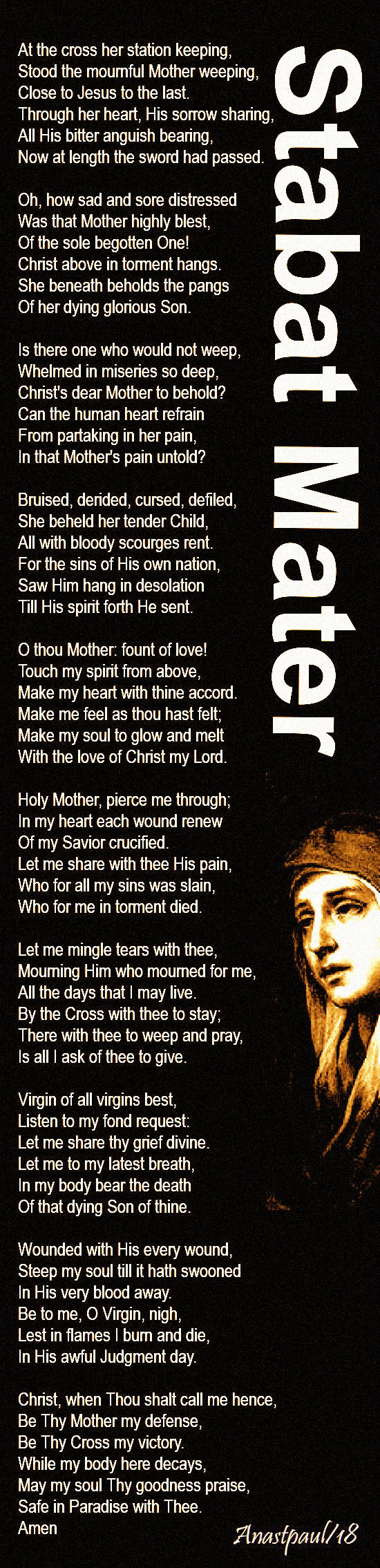
The Archconfraternity of Death and Prayer (mortis et orationis), founded in Rome, 1538, to provide for the burial of the poor and abandoned, still exists (cf. Berignani, loc. cit). At the beginning of the 17th Century, it was granted a new Indulgences by Pope Paul V (Rescr. auth. S. C. Indulg., n. 26, pp. 448 sqq. Moroni, II, 303). About 1687, the Rules for a special Confraternity “for the relief of the Most Needy Souls in Purgatory” under the Sacred Names of Jesus, Mary and Joseph, were approved in Rome. The Confraternity for the relief of the departed under the title of “Jesus Christ on Mount Calvary and the Sorrowful Mother” enjoyed special popularity and on 8 September 1760, inaugurated, the processions of the Way of the Cross in the Roman Coliseum. Among its illustrious members was St Leonard of Port Maurice OFM (1676-1751).
In 1874, the Ingolstadt Mass Association, formed by the Franciscans of Ingolstadt in 1726, to procure for all members the grace of a happy death and for those already deceased, speedy assistance and liberation form the pains of Purgatory, was raised to a formal and legal Confraternity, under the title of the Immaculate Conception. An ancient, highly venerated painting of the Mother of God, was adopted as the Titular image of the Association, which has received all the Indulgences of the Confraternity of the same name, in the Ara Coeli at Rome, that is, the Indulgences of the Blue Scapular. It numbers its members by tens and hundreds of thousands; almost 2000 Masses are daily celebrated for the intentions of the Marian Mass Association, which includes the intention of particularly assisting for the most recently deceased members.
At the close of the Middle Ages, the old Confraternities, generally confined to a town or small district, gradually disappeared, as also did many of the later ones in the confusion at the end of the eighteenth century, while others preserved only a semblance of life. Since the beginning of the 19th Century, they have been replaced by vigorous new Associations, which, richly endowed with Indulgences by ecclesiastical authorities, have rapidly extended to the entire Church.
By brief of 5 October, 1818, Pope Pius VII endowed the Archconfraternity of Our Mother of Sorrows and Suffrage of the Poor Souls in Purgatory, which was erected in the Basilica of San Maria in Trastevere, with rich Indulgences.
St Teresa of Jesus of Avila, intercedes with Our Lady of Suffrage for the Poor Souls in Purgatory
First among the later Confraternities which have extended throughout Christendom, is the “Archconfraternity for the Relief of the Poor Souls in Purgatory under the title of the Assumption of Mary, in the Redemptorist Church of San Maria in Monterone at Rome.” Founded in 1841, it rapidly developed, especially in England and North America and was endowed with Indulgences in 1841-63. Priests empowered to receive the faithful into the Confraternity enjoy various other faculties. This Confraternity is especially adapted for rapid expansion because in 1860, it was expressly authorised to include, every Confraternity of whatever name and object and to communicate to them its graces and privileges, provide they added to their original Titles “and for the relief of the Poor Souls in Purgatory.” The Redemptorist Fathers conduct this Archconfraternity.
Indulgences of the Confraternities are ever applicable to the Souls in Purgatory and the privileges of the Altar for Churches and for Priests, who are members, may be used in favour of dead members or for all poor souls. The formation of the “Catholic League for Constant Intercession for the Poor Souls in Purgatory” was proposed by certain pious citizens of Rome, approved by Leo XIII in the last years of his reign, and enriched with Indulgences. The only requisite for membership is to recite thrice daily the prayer, “Requiem æternam – Eternal Rest grant unto them O Lord …” thereby gaining, once daily, an Indulgence of 200 days.
O Turn to Jesus, Mother! Turn By Fr Frederick William Faber CO (1814-1863)
O turn to Jesus, Mother! turn, And call Him by His tenderest Names; Pray for the Holy Souls that burn, This hour amid the cleansing flames.
Ah! they have fought a gallant fight; In death’s cold arms, they persevered And after life’s uncheery night, The harbour of their rest is neared.
In pains beyond all earthly pains, Favourites of Jesus! there they lie, Letting the fire wear out their stains, And worshipping God’s purity.
Spouses of Christ, they are, for He Was wedded to them by His Blood And Angels o’er their destiny In wondering adoration brood.
They are the children of thy tears, Then hasten, Mother! to their aid; In pity think each hour appears An age while glory is delayed.
See, how they bound amid their fires, While pain and love their spirits fill; Then with self-crucified desires Utter sweet murmurs, and lie still.
Ah me! the love of Jesus yearns O’er that abyss of sacred pain, And as He looks His Bosom burns With Calvary’s dear thirst again.
O Mary! let thy Son no more His lingering Spouses thus expect, God’s children to their God restore, And to the Spirit, His elect.
Pray then, as thou hast ever prayed; Angels and Souls, all look to thee, God waits thy prayers, for He hath made Those prayers, His law of charity.
Nostra Signora del Suffragio / Our Lady of Suffrage (For the Souls in Purgatory)
St Atticus St Barlaam of Novgorod Bl Beatrice of Olive Bl Christina of Stommeln St Demetrian of Cyprus St Edwen of Northumbria St Efflam of Brittany St Emilian of Faenza St Erlafrid of Hirschau St Felix of Fondi St Felix of Genoa St Felix of Thynissa St Illtyd St Israel of Limoges
St Leonard of Reresby Bl Leonianus of Autun St Melaine of Rennes St Paul of Constantinople St Pinnock St Protasius of Lausanne St Severus of Barcelona Bl Simon of Aulne St Stephen of Apt St Theobald of Dorat Bl Thomas Ochia Jihyoe St Valentine of Genoa St Victor Chumillas-Fernández
Martyrs of Antioch – 10 Saints: Ten Christians murdered together by Arabs after their seizure of Antioch, Syria. No names or other details about them have come down to us. 637 in Antioch, Syria.
Martyrs of Gaza – 9 Saints: A group of Christian soldiers who were captured by Saracens invading the area of Gaza in Palestine. When the men continued to profess their Christianity, they were executed. We know the names of some of the Martyrs – Himerius, John (2 of them), Kallinikos (Callinoco), Paul, Peter, Stephen and Theodore (2 of them). They were beheaded in Gaza, Palestine.
Thought for the Day – 5 November – Meditations with Antonio Cardinal Bacci (1881-1971)
The Consolations of the Suffering Souls in Purgatory
“In her description of Purgatory, St Catherine of Genoa, writes as follows:
“The soul in Prgatory is happy with its lot but, its happiness is similar to that of the Martyr at the stake. Its happiness, in other words, is of a pure and supernatural kind which the world could not understand. The Martyr allows himself to be put to death, rather than offend God; he feels the pain of dying but, despises death because of his ardent love for God. In the same way because it realises that God desires and commands its agony, the soul in Purgatory, loves Him and is happy to allow Him to refine and purify it spiritually, through suffering.”
In one of her ecstasies, St Mary Magdalen de Pazzi was accorded a vision of Purgatory so terrifying that it caused her to grow pale and cry out. Suddenly she saw her own recently deceased brother among the suffering souls. “My poor brother!” she exclaimed, “how much you are suffering. Yet, I can see too, how greatly you are consoled. Although you are tortured by fire, you are content because, you know that these tortures are the prelude to everlasting happiness.”
Quote/s of the Day – 5 November – All Saints and Blesseds of the Society of Jesus (SJ)
“God’s love calls us to move beyond fear. We ask God for the courage to abandon ourselves unreservedly, so that we might be moulded by God’s grace, even as we cannot see where that path may lead us.”
“Hate what the world seeks and seek, what it avoids.”
“He who carries God in his heart bears heaven with him, wherever he goes.”
St Ignatius Loyola SJ (1491-1556)
“We must make our way towards eternity, never regarding what men think of us, or of our actions, studying only to please God.”
St Francis Borgia SJ (1510-1572)
“Better that only a few Catholics should be left, staunch and sincere in their religion, than that they should, remaining many, desire as it were, to be in collusion with the Church’s enemies and in conformity with the open foes of our faith.”
St Peter Canisius SJ (1521-1597) Doctor of the Church
“The path to Heaven is narrow, rough and full of wearisome and trying ascents, nor can it be trodden without great toil and, therefore, wrong is their way, gross their error and assured their ruin, who, after the testimony of so many thousands of Saints, will not learn where to settle their footing!”
St Robert Southwell SJ (1561-1595) Priest and Martyr
“Recommend yourself to your Angel Guardian three times a day – in the morning. by the prayer “Angele Dei” in the evening, by the same prayer and during the day, when you visit the Altars in Churches. Remember that you are to be guided by your Angel, like a blind man who cannot see the dangers of the streets and trusts entirely. to the person who leads him.”
St Aloysius de Gonzaga (SJ 1568-1591)
“My child, it is indeed the Voice of God you have heard. He has given you a great grace in thus calling you into His one true Church. While you live, never cease to thank Him and bless Him for it.”
St John Francis Régis SJ (1597-1640)
“Teach Us Good Lord” By St Ignatius Loyola SJ (1491-1556) Teach us, good Lord, to serve You as You deserve; to give and not to count the cost, to fight and not to heed the wounds, to toil and not to seek for rest, to labour and not to ask for reward, except that of knowing that we are doing Your will. Amen
My God, I Love Thee By St Francis Xavier (1506-1552) (Attri) Transr: Fr Edward Caswall CO (1814-1878)
My God, I love Thee, not because I hope for heav’n thereby, nor yet for fear, that loving not, I might forever die but for that Thou didst all mankind upon the Cross embrace; for us didst bear the nails and spear and manifold disgrace.
And griefs and torments numberless and sweat of agony; e’en death itself and all for man, who was Thine enemy. Then why, most loving Jesus Christ, should I not love Thee well? Not for the sake of winning heav’n, nor any fear of hell.
Not with the hope of gaining aught, nor seeking a reward but as Thyself hast loved me, O ever loving Lord! E’en so I love Thee and will love and in Thy praise will sing, solely because Thou art my God and my eternal King! Amen
One Minute Reflection – 5 November – “The Month of the Holy Souls in Purgatory – Within the Octave of All Saints and the Feast of the Holy Relics –Apocalypse 7:2-12, Matthew 5:1-12 – Scripture search here: https://www.drbo.org/
“Rejoice and be glad, for your reward will be great in Heaven.” – Matthew 5:12
REFLECTION – “Rejoice in the Lord without ceasing (cf. Phil 4:4), my dear children. I beg you rejoice, citizens of heaven but exiles on earth, inhabitants of the Jerusalem on high (cf. Gal 4:26) but banished from affairs here below, inheritors of the Kingdom of Heaven but disinherited from taking any part at all, in earthly pleasures! Rejoice, ardent travellers, at undergoing exile and maltreatment in a foreign land in the name of the commandment of God! Rejoice, you who are last in this world but lords of blessings that exceed our understanding (cf. Phil 4:7). Rejoice, noble company, brought together by God, assembly united in heart and soul, who give life to filial and fraternal love, a replica on earth of the host of angels! (…) Rejoice, God’s workers, apostolic men. (…) Rejoice, you who set your joy in each other, each making his own the reputation of his brother, you in whom is found neither jealousy, rivalry nor envy but, in their place, peace and charity and life in common. In truth, I do not say that we are not attacked – indeed, who is crowned if not the one who struggles and fights, who exchanges thrusts and wounds with his assailants? – but I say that we should not let ourselves be brought down by the machinations of Satan. Yes, my children, assembly of God, nourish yourselves with the food of the Spirit and drink the water given by the Lord: whoever comes to possess this water will never thirst again but it will become, in Him, a spring of living water welling up to eternal life (cf. Jn 4:14). (…) Yet a little while and we shall have vanquished. And blessed shall we be; blessed also, it shall be said, are the places, family and countries that have borne you (cf. Lk 11:27-28).” – St Theodore the Studite (759-826) – Catechesis 47 (The Great Catecheses)
PRAYER – Almighty, eternal God, Who granted us to honour the merits of all Thy Saints in a single solemn festival, bestow on us, we beseech Thee, through their manifold intercession, that abundance of Thy mercy for which we yearn.Through Jesus Christ our Lord, in the unity of the Holy Ghost, God, world without end. Amen (Collect).
Our Morning Offering – 5 November – Within the Octave of All Saints and the Feast of the Holy Relics
Sanctorum Meritis Inclita Gaudia Sing, O Sons of the Church Unknown Author 8th Century But Attributed to St Rabanus Maurus (c 776-856) Vespers Hymn in the Common of Martyrs
Sing, O Sons of the Church sounding the Martyrs’ praise! God’s true soldiers applaud, who, in their weary days, Won bright trophies of good, glad be the voice ye raise, While these heroes of Christ ye sing!
They, while yet in the world, were by the world abhorred; Felt how fading the joys, fleeting the wealth it stored; Spurned all pleasure for Thee, and at Thy call, O Lord, Came forth strong in Thy Name, as King.
Lord, how bravely they bore fury and pain for Thee! Scourge, rod, sword, and the rack strongly endured; but free Sang out, bold in Thy love, longing on high to be; Earth’s might never their souls could bend.
While they, shedding their blood, victims for Jesus fell, No sound out of their lips came of their throes to tell; Bowed low, patient and meek, loving the Lord so well, Turned they still to the Christ, their Friend.
What joys, bright with the blood shed for Thy love they share, Those brave Martyrs of Thine crowned, with Thy laurels rare; Man’s tongue never can tell, never can half declare, How pure now is their bliss above!
Yet we, Father on high, God of eternal might, Lift weak voices in prayer, asking for peace and light; Cleanse Thou out of our heart,s every stain and blight, So our songs may be songs of love. Amen
There are thirteen translations of this Hymn and five in Liturgical usage. This one by Daniel Joseph Donahoe (1853-1930), an Irish American of Connecticut. A Judge, Poet, Writer and Latin Translator. This from his Early Christian Hymns Vol I or II.
Feast of the Holy Relics – 5 November – From the Liturgical Year, 1901.
Relics of the Passion conserved in the Roman Basilica of Santa Croce in Jerusalem
Had we Angels’ eyes, we should see the earth as a vast field sown with seed for the Resurrection. The death of Abel opened the first furrow and ever since, the sowing has gone on unceasingly, the wide world over. This land of labour and of suffering, what treasures it already holds laid up in its bosom! And what a harvest for Heaven, when the Sun of Justice, suddenly darting forth His rays, shall cause to spring up, as suddenly from the soil, the elect ears ripe for glory! No wonder that the Church herself blesses and superintends, the laying of the precious grain in the earth.
But the Church is not content to be always sowing. Sometimes, as though impatient of delay, she raises from the ground the chosen seed she had sown therein. Her infallible discernment preserves her from error and, disengaging from the soil the immortal germ, she forestalls the glory of the future. She encloses the treasure in gold or precious stuffs, carries it in triumph, invites the multitudes to come and reverence it; or, she raises new temples to the name of the blessed one and assigns him the highest honour of reposing under the Altar, whereon she offers to God, the tremendous Sacrifice.
Religuary of St Anthony of Padua
“Let your charity understand,” explains St Augustine (Aug. Sermo cccxviii, de Stephano Mart. V): “it is not to Stephen we raise an Altar in this place but of Stephen’s relics, we make an Altar to God. God loves these Altars and, if you ask the reason – Precious in the sight of the Lord is the death of His saints (Ps. cxv, 15).” In obedience to God “the invisible soul has quitted its visible dwelling. But God preserves this dwelling; He is glorified by the honour we pay to this lifeless flesh and, clothing it with the might of His Divinity, He gives it the power of working miracles” (Aug. Sermo cclxxv, de Vincentio Mart. II). Hence the origin of pilgrimages to the Shrines of the Saints.
Left–Adoration of the Holy Cross by the Saints in Heaven; Right– Reliquary of St Stephen
“Christian people,” says St Gregory of Nyssa, “wherefore are you assembled here? A tomb has no attractions, nay, the sight of its contents inspires horror! Yet, see what eagerness to approach this sepulchre! So great an object of desire is it, that a little of the dust from around it is esteemed a gift of great price. As to beholding the remains it conceals, that is a rare favour and an enviable one, as those can testify who enjoy the privilege: they embrace the holy body as though it were yet alive, they press their lips and their eyes upon it, shedding tears of love and devotion. What emperor ever received such honour ”(Greg. Nyssa de Theodoro Mart)?”
“Emperors!” rejoins St John Chrysostom; “as the porters at their gates, such have they become with regard to poor fishers. The son of the great Constantine deemed he could not pay a higher honour to his father, than to procure him a place of sepulture in the porch of the fisherman of Galilee” (Chrys. in Epist. II. ad Cor. Hom. xxvi). And again, concluding his commentary on St Paul’s admirable Epistle to the Romans, the golden-mouthed Doctor exclaims: “And now, who will grant me to prostrate myself at Paul’s sepulchre, to contemplate the ashes of that body which, suffering for us, filled up what was wanting of the sufferings of Christ? The dust of that mouth, which spoke boldly before kings, and, showing what Paul was, revealed the Lord of Paul? The dust of that heart, truly the heart of the world, more lofty than the heavens, more vast than the universe, as much, the heart of Christ as of Paul and wherein might be read, the book of grace, graven by the Holy Spirit? Oh! that I might see the remains of the hands, which wrote those Epistles; of the eyes, which were struck with blindness and recovered their sight for our salvation; of the feet which traversed the whole earth! Yes. I would fain contemplate the tomb where repose these instruments of justice and of light, these members of Christ, this temple of the Holy Ghost. O venerable body, which, together with that of Peter, protects Rome more securely, than all ramparts” (Chrys. in Epist. ad Rom. Hom. xxxii)
Chains of St Peter
The wrist bone of St Paul held in Goza, Malta
In spite of such teachings as these, the heretics of the sixteenth Century profaned the tombs of the Saints, under pretext of bringing us back to the doctrine of our forefathers. In contradiction to these strange reformers, the Council of Trent expressed the unanimous testimony of Tradition, in the following definition, which sets forth the theological reasons of the honour paid by the Church, to the relics of Saints:,
“Veneration ought to be shown, by the faithful, to the bodies of the Martyrs and other Saints, who live with Jesus Christ. For they were His living members and the temples of the Holy Ghost; He will raise them up again to eternal life and glory and through them, God grants many blessings to mankind. Therefore, those who say that the relics of the Saints are not worthy of veneration, that it is useless for the faithful to honour them, that it is vain to visit the memorials or monuments of the Saints, in order to obtain their aid, are absolutely to be condemned and, as they have already been long ago condemned, (Conc. Nic. II. cap. vii), the Church now condemns them once more” (Conc. Tird. Sess. xxv. De invocatione, veneratione et reliquiis Sanctorum).
All Saints and Blesseds of the Society of Jesus: The Society of Jesus, commonly known as the Jesuits, was Founded in 1534 by Saint Ignatius Loyola (1491-1556) at Montmartre, Paris, France. A body of clerics regular organised for Apostolic work, following a religious rule and relying on alms for their support. It was the chief instrument of the Catholic Reformation. Pope Paul III approved the new rule in 1540 and Ignatius was elected the first general of the order in 1541. The constitutions, drafted by him and based on his Spiritual Exercises were adopted in 1558. It was the first order which enjoined by its constitutions devotion to the cause of education. The ministry of the Society consists chiefly in preaching. teaching catechism. administering the sacraments. conducting missions in parishes, taking care of parishes. organising pious confraternities, teaching in schools of every grade, writing books, pamphlets, periodical articles, going on foreign missions and special missions when ordered by the current Holy Father, to whom they take a vow of total obedience. Our current Holy Father, Pope Francis is a Jesuit and has jokingly wondered aloud who is boss of whom in his Order. The general resides at Rome, Italy and has a council of assistants. The motto of the Society is Ad Majorem Dei Gloriam (For the greater glory of God). All Jesuit Saints and Blesseds: https://anastpaul.com/2018/11/05/feast-of-all-the-saints-and-blesseds-of-the-society-of-jesus/
St Canonica St Comasia St Dominator of Brescia St Elizabeth St Domninus the Physician St Epistemis St Eusebius of Terracina St Felix of Terracina St Fibitius St Galation St Gerald of Beziers Bl Gomidas Keumurjian Bl Gregory Lakota St Guetnoco St Hermenegild St Idda St Juan Antoni Burró Mas St Juan Duarte Martín St Kanten St Kea St Laetus of Orleans St Magnus of Milan St Mamete St Marco of Troia Bl Simon Ballachi St Spinulus of Moyen-Moûtier St Sylvanus of Syria St Zachary
Martyrs of Caesarea Maritima – 4 Saints: Four young Christian men who were Martyred together is the persecutions of Maximian – Aussenzius, Philotheus, Timothy and Theotimus. They were martyred in the arena at Caesarea Maritima, Palestine.
Thought for the Day – 4 November – Meditations with Antonio Cardinal Bacci (1881-1971)
More About the Sufferings of Purgatory
“The vision of Purgatory accorded to St Frances of Rome, is well known. She saw Purgatory divided into three separate sections.
(1) The firs was the part furthest from Heaven and bordering, as it were, on Hell. In it two kinds of people were suffering terrible torments, namely, lay folk who had committed grave sins and postponed their conversion until the moment of death; and – men and women who had dedicated their lives to God but on account of venial sins, neglect of duty, tepidity and lack of gratitude for their great vocations, had heavy debt to pay to Divine Justice.
(2) The second place, was the most crowded. Here, the physical pain was still unimaginably severe, while the desire to be purified and to b with God was the cause of intense spiritual anguish. The souls in this region, however, were not only resigned to their lot but, even longed for greater sufferings which would finally wash away the imperfections which kept them apart from God.
(3) The Third section was the nearest to Heaven and was the abode of purer and more perfect souls. These did not have to endure much sensible pain but, their yearning for God was so insistent that, every moment of separation, seemed like an eternity.”
Quote/s of the Day – 4 November – St Charles Borromeo (1538-1584)
“We have only one life and we should spend it for Jesus Christ and souls, not as we wish but, at the time and in the way, God wishes. It would show presumption and neglect of our duty and God’s service, to fail to do this.”
“If a tiny spark of God’s love already burns within you, do not expose it to the wind, for it may get blown out… Stay quiet with God. Do not spend your time in useless chatter… Do not give yourself to others, so completely, that you have nothing left for yourself.”
“Behold Jesus Christ Crucified, Who is the only foundation of our hope; He is our Mediator and Advocate; the Victim and Sacrifice for our sins. He is goodness and patience itself; His mercy is moved by the tears of sinners and He never refuses pardon and grace, to those who ask it, with a truly contrite and humbled heart.”
“The best way not to find the bed too cold, is to go to bed colder, than the bed already is.”
You must be logged in to post a comment.