Thought for the Day – 30 March – Meditations with Antonio Cardinal Bacci (1881-1971)
The Sons of God
“If we wish to increase in ourselves the Divine Life of Grace, which makes us children of God, we must struggle against our sinful inclinations and cultivate the different virtues which oftentimes, the world hates. Our lives must be a continuous ascent towards perfection and towards God. We must not be led astray by the passing attractions of the world. Worldly glory and success resemble the coloured balloons which are the delight of children as they rise up towards the sky but, which soon float back to earth, when they have been emptied of air.
It is only by our efforts to achieve Christian perfection that we can become true children of God. Then we shall experience a little happiness on earth and shall be happy forever in Heaven.”
Quote/s of the Day – 30 March – Thursday in Passion Week – Daniel 3:25, 34-45, Luke 7:36-50 – Scripture search here: https://www.drbo.org/
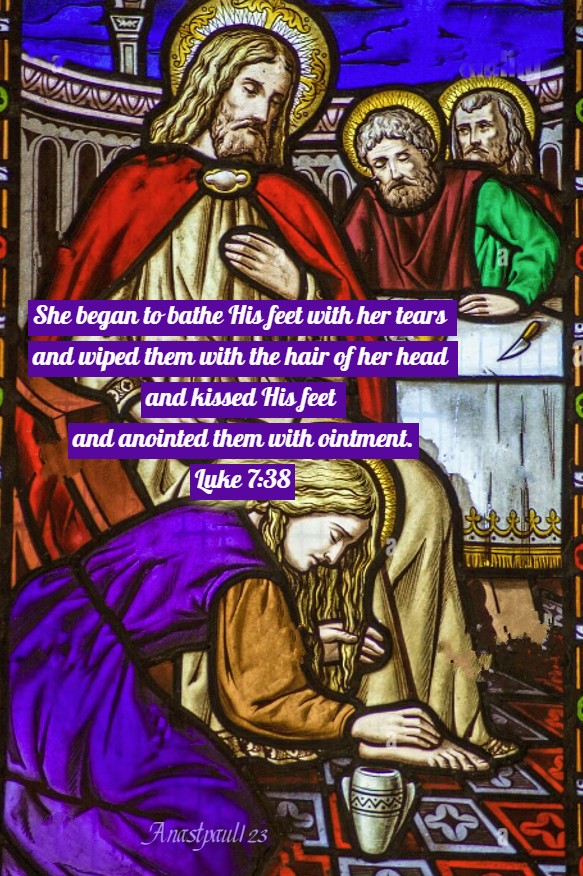
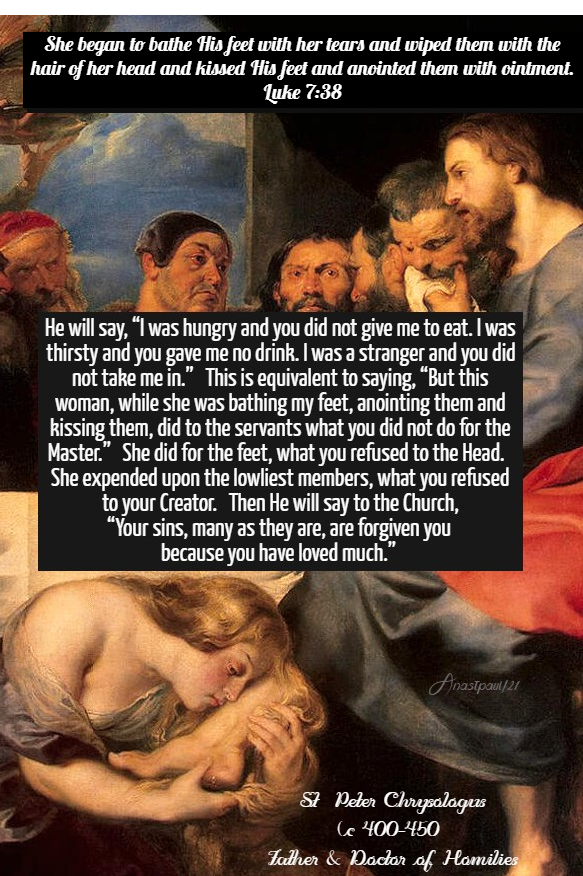
“She began to bathe His feet with her tears and wiped them with the hair of her head and kissed His feet and anointed them with ointment.”
Luke 7:38
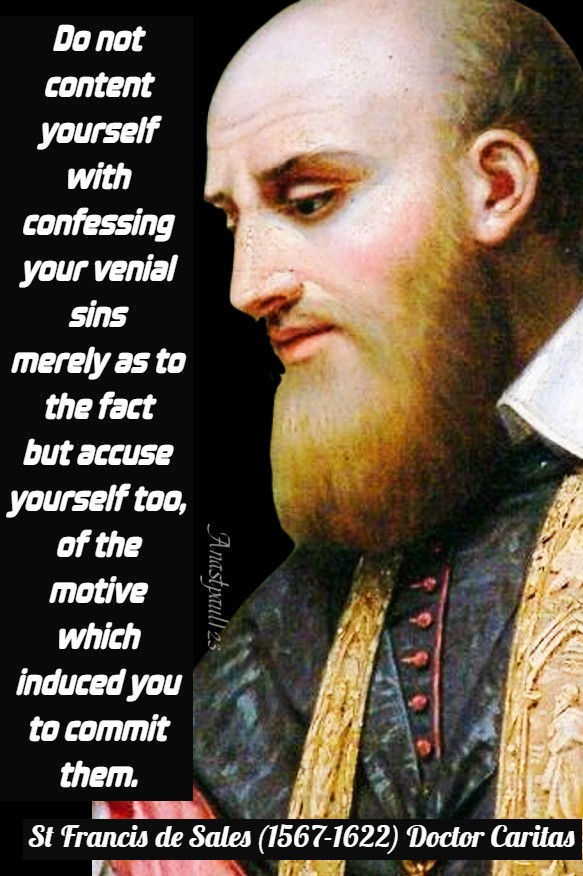
“Do not content yourself with confessing your venial sins merely as to the fact but accuse yourself too, of the motive which induced you to commit them.” (Introduction to the Devout Life, Part II, Chapter 19).
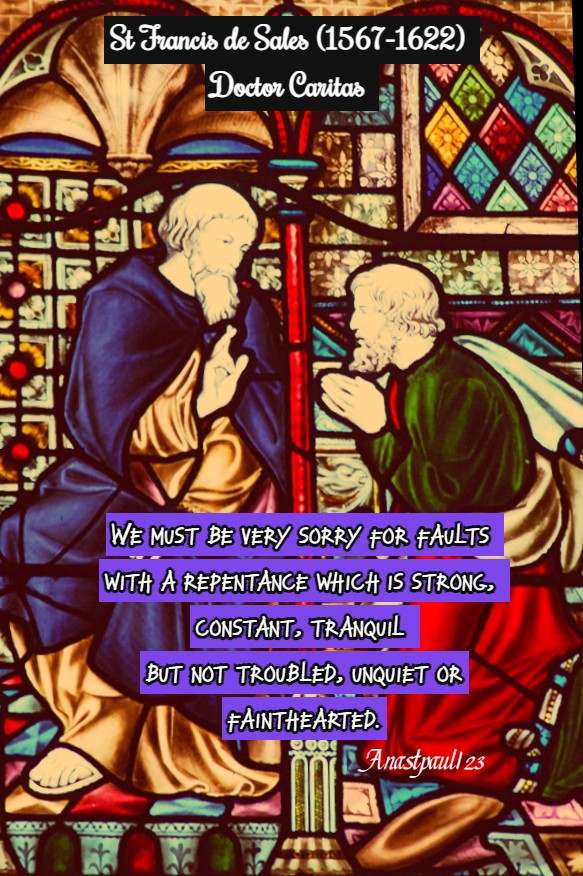
“We must be very sorry for faults with a repentance which is strong, constant, tranquil but not troubled, unquiet or fainthearted.” (Treatise on the Love of God, Book 9, Chapter 7).
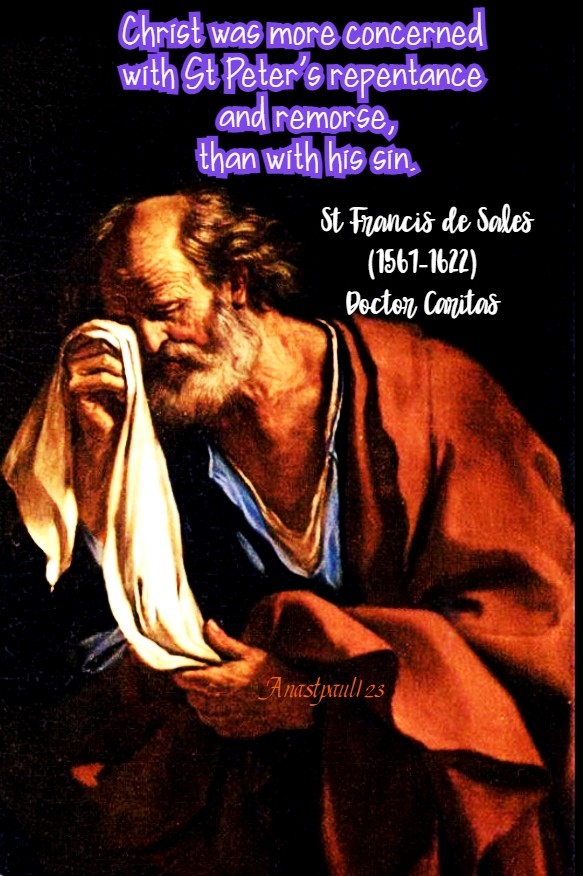
“Christ was more concerned with St. Peter’s repentance and remorse, than with his sin.” (The Spirit of St. François de Sales, VII, 8)
Our Lenten Journey with St Francis de Sales – 30 March – Thursday in Passion Week
“Live Jesus, Who didst die that my soul might live!” St Francis de Sales (1567-1622)
THURSDAY IN PASSION WEEK St Francis de Sales (1567-1622) Doctor Caritas
“MY SOUL, live henceforward amid the scourges and the thorns of thy Saviour and there, as a nightingale in its bush, sing sweetly: Live Jesus, Who didst die that my soul might live! Ah, Eternal Father! What can the world return Thee for the gift Thou hast made it of Thy only Son? Alas! to redeem a thing so vile as I, the Saviour delivered Himself to death and, unhappy me! I hesitate to surrender my nothingness to Him, Who has given me everything!” – (Consoling Thoughts of St Francis de Sales).
One Minute Reflection – 30 March – “The Month of the St Joseph” – Thursday in Passion Week – Daniel 3:25, 34-45, Luke 7:36-50 – Scripture search here: https://www.drbo.org/
“She began to bathe His feet with her tears and wiped them with the hair of her head and kissed is feet and anointed them with ointment.” – Luke 7:38
REFLECTION – “With her hands of good works, she holds the feet of those who preach His Kingdom. She washes them with tears of charity, kisses them with praising lips and pours out the whole ointment of mercy, until He will turn to her. This means that He will come back to her and say to Simon, to the Pharisees, to those who deny, to the nation of the Jews, “I came into your house. You gave me no water for my feet.”
When will He speak these words? He will speak them when He will come in the Majesty of His Father and separate the righteous from the unrighteous, like a shepherd who separates the sheep from the goats. He will say, “I was hungry and you did not give me to eat. I was thirsty and you gave me no drink. I was a stranger and you did not take me in.” This is equivalent to saying, “But this woman, while she was bathing my feet, anointing them and kissing them, did to the servants, what you did not do for the Master.” She did for the feet, what you refused to the Head. She expended upon the lowliest members, what you refused to your Creator. Then He will say to the Church, “Your sins, many as they are, are forgiven you because you have loved much.”– St Peter Chrysologus (c 400-450) Bishop of Ravenna, Father and “Doctor of Homilies” (Sermon 95).
PRAYER – Grant, we beseech Thee, Almighty God, that the dignity of human nature, weakened by excessive self-indulgence, may be restored by the earnest practice of healing self-denial. Through Jesus Christ, Thy Son our Lord, Who lives and reigns with Thee, in the unity of the Holy Ghost, God, world without end. Amen (Collect).
Our Morning Offering – 30 March –“The Month of the St Joseph”- As tomorrow is the Lenten Friday of the Seven Sorrows of the Blessed Virgin, let us bid St Joseph’s month goodbye today.
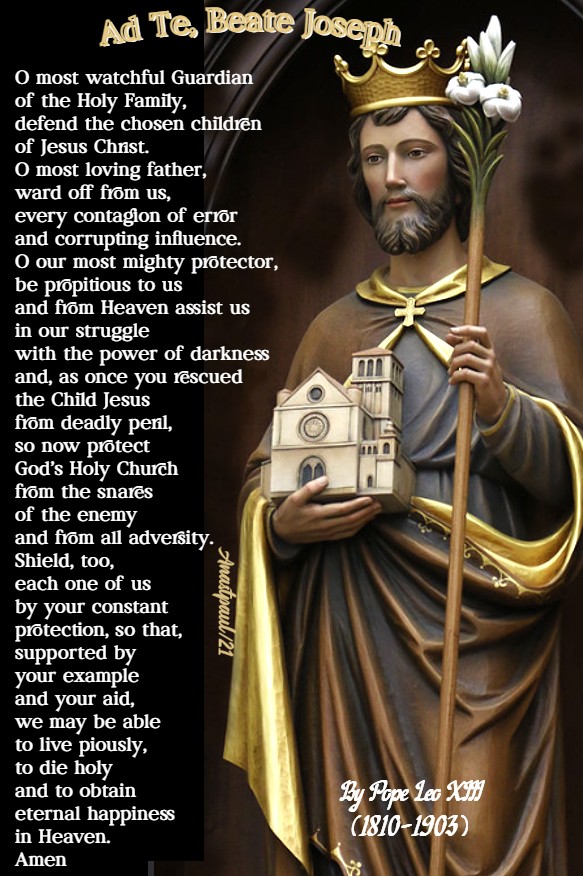
Ad Te, Beate Joseph To Thee, O Blessed Joseph By Pope Leo XIII (1810-1903)
O most watchful Guardian of the Holy Family, defend the chosen children of Jesus Christ. O most loving father, ward off from us, every contagion of error and corrupting influence. O our most mighty protector, be propitious to us and from heaven assist us in our struggle with the power of darkness and, as once you rescued the Child Jesus from deadly peril, so now protect God’s Holy Church from the snares of the enemy and from all adversity. Shield, too, each one of us by your constant protection, so that, supported by your example and your aid, we may be able to live piously, to die holy and to obtain eternal happiness in Heaven. Amen
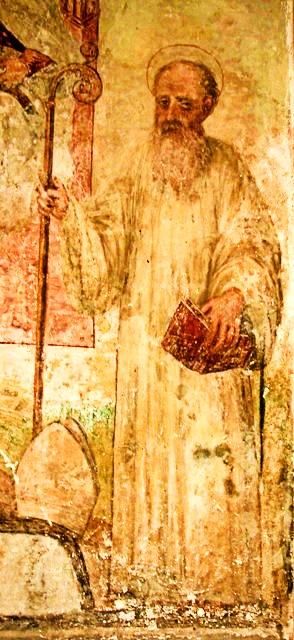
Saint of the Day – 30 March – Blessed Joachim of Fiore (c1130-1202) Priest, Abbot, Founder, Theologian, Mystic, Writer. Joachim was the Founder of the monastic Order of San Giovanni in Fiore. Later followers, inspired by his works in Eschatology and Historicism theories, are called Joachimites. Born in c1130 at Celico, Calabria, Kingdom of Naples (in modern Italy) and died on 30 March 1202 at Fiore, Calabria, Italy of natural causes. Also known as – Joachim de Floris, Joachim of Flora, Joachim the Prophet, Joachim von Fiore, Gioacchino…
Joachim’s father, Maurus de Celico (whose family name is said to have been Tabellione), a notary holding high office under the Norman Kings of Sicily, placed him at an early age in the Royal Court. While on a pilgrimage to the Holy Land, Joachim was converted from the world by the sight of some great calamity (perhaps an outbreak of pestilence). He passed the whole of Lent in contemplation on Mount Thabor, where he received celestial illumination for the work of his life, as he recorded in his own writings.
Returning to Italy, he retired to the Cistercian Abbey of Sambucina, probably in 1159 and for some years devoted himself to lay preaching, without taking the religious habit or receiving any orders. The Ecclesiastical authorities raising objections to his mode of life, he took the Cistercian Habit in the Abbey of Corazzo and was Ordained to the Priesthoof, apparently in 1168. He now applied himself entirely to Biblical study, with a special view to the interpretation of the hidden meaning of the Scriptures.
A few years later, much against his will, he was elected Abbot. Finding the duties of his office an intolerable hindrance to what he deemed his higher calling. In 1182, he appealed, to Pope Lucius III, who relieved him of the temporal care of his Abbey, and warmly approved of his work, bidding him continue it in whatever Monastery he thought best.
He spent the following year and a half at the Abbey of Casamari, engaged upon his three great works and there. a young Monk, Lucas (afterwards Archbishop of Cosenza), who acted as his secretary, tells us of his amazement at seeing so famous and eloquent a man wearing such rags and of the wonderful devotion with which he preached and celebrated Holy Mass.
In 1185, the Papal approbation was confirmed by Urban III, and again, more conditionally, by Clement III, in 1187, the latter exhorting him to make no delay in completing his work and submitting it to the judgement of the Holy See. Joachim now retired to the hermitage of Pietralata and finally founded the Abbey of Fiore (or Flora) among the Calabrian mountains, which became the centre of a new and stricter branch of the Cistercian Order, approved by Celestine III in 1198. In 1200 Joachim publicly submitted all his writings to the examination of Innocent III but died before any judgement was passed.
Finally, in 1196, he received Papal permission to establish his own congregation, “San Giovanni in Fiore.” Three Popes encouraged his mystical writings but the Fourth Lateran Council in 1215 found his Trinitarian doctrine unacceptable, nevertheless, his reputation for sanctity was acknowledged and safeguarded.
It was held to be in answer to his prayers that he died on Holy Saturday. The holiness of his life is unquestionable; miracles were wrought at his tomb and, although never officially beatified, he is still venerated as a beatus on 30 May and in many places he is known as St Joachim.
Some of Joachim’s theories were disputed by St Thomas Aquinas in his Summa Theologica (written 1265-1274). Dante, on the other hand, voiced the general opinion of his age in declaring Joachim one “endowed with prophetic spirit.” But he himself always disclaimed the title of prophet. Joachim also completed a concordence of the Old and New Testaments, based on a moment of insight he was given upon waking one Easter morning. One of his works was condemned and refuted by the Church and some of his followers too were outlawed.
Of vital importance is the fact that Joachim himself was never condemned as a heretic by the Church – rather, the ideas and movement surrounding him were condemned. Joachim the man was held in high regard during his lifetime and after his death.
Blessed Amadeus of Savoy (1435-1472) IXth Duke of Savoy, nicknamed “the Happy,” was the Duke of Savoy, from 1465 to 1472, apostle of the poor and ill, a pious, humble and gentle ruler. Amadeus was a particular protector of Franciscan Friars and endowed other religious houses, as well as homes for the care of the poor and suffering. Biography: https://anastpaul.com/2021/03/30/saint-of-the-day-30-march-blessed-amadeus-of-savoy-1435-1472/
St Clinius of Pontecorvo St Cronan Mochua St Damiano St Domnino of Thessalonica St Fergus of Downpatrick St Irene of Rome Blessed Joachim of Fiore (c1130-1202) Abbot, Founder, Theologian
St Leonard Murialdo St Mamertinus of Auxerre St Osburga of Coventry St Pastor of Orléans St Patto of Werden St Quirinus the Jailer
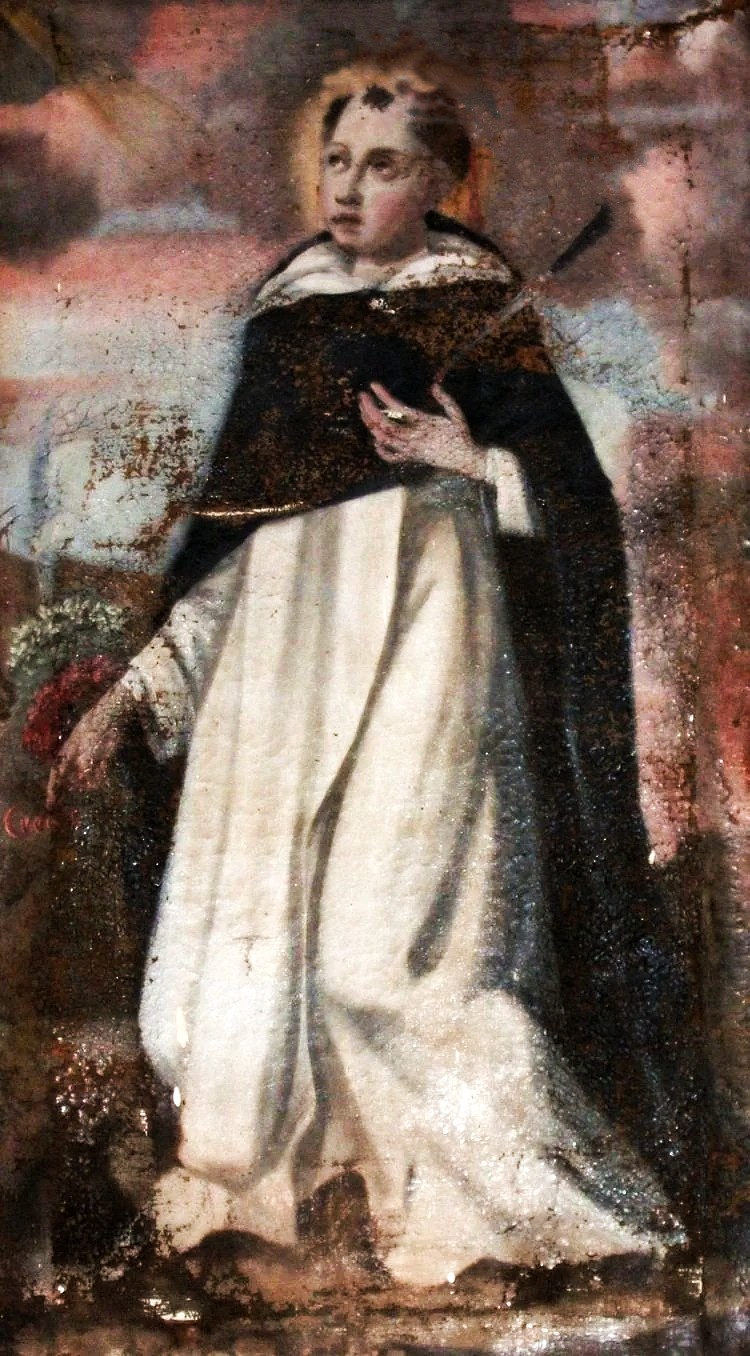
St Peter Regalatus OFM (1320-1456) Priest, Friar of the Friars Minor, Superior, gifted with bi-location, prophecy and Miracle working. He was Canonised on 29 June 1746 by Pope Benedict XIV. The Roman Martyrology reads: “In Aguilera in Castile in Spain, Saint Peter Regalado of Valladolid, Priest of the Order of Minors, who was distinguished for humility and rigour of penance and built two cells, in which only twelve Friars could live in solitude.” About this zealous Saint: https://anastpaul.com/2022/03/30/saint-of-the-day-30-march-saint-peter-regalatus-ofm-1320-1456/
St Regulus of Scotland St Regulus of Senlis St Secundus of Asti St Tola St Zozimus of Syracuse
Martyrs of Constantinople: Fourth-century Christians who were exiled, branded on the forehead, imprisoned, tortured, impoverished and murdered during the multi-year persecutions of the Arian Emperor Constantius. They were Martyred between 351 and 359 in Constantinople.
Thought for the Day – 29 March – Meditations with Antonio Cardinal Bacci (1881-1971)
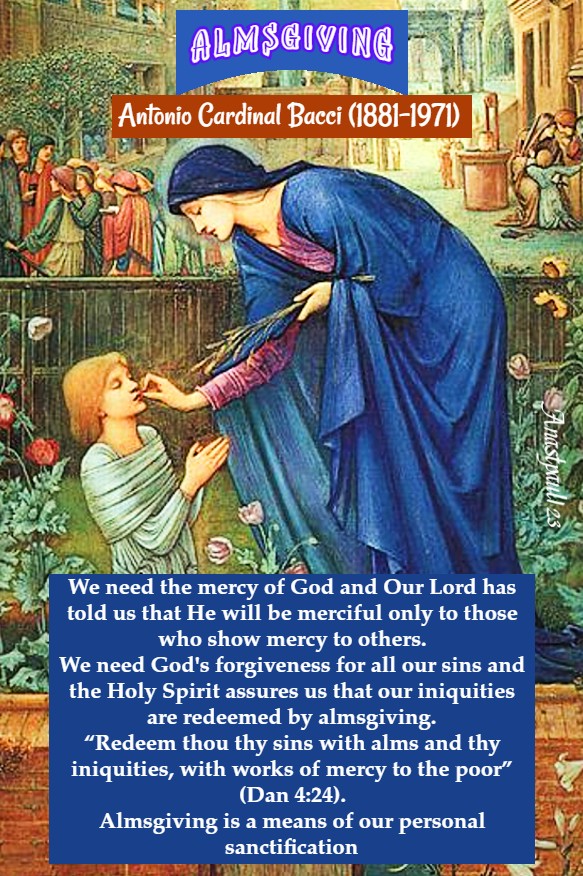
ALMSGIVING
“We must be detached from the goods of this world because they are corruptible and cause us to forget God. Even if we have been placed in easy circumstances, let us be poor in spirit. We can be poor in spirit by giving alms from motives of Christian charity. We need the mercy of God and Our Lord has told us that He will be merciful only to those who show mercy to others.
We need God’s forgiveness for all our sins and the Holy Spirit assures us that our iniquities are redeemed by almsgiving. “Redeem thou thy sins with alms and thy iniquities, with works of mercy to the poor” )Dan 4:24). Almsgiving is a means of our personal sanctification!”
Quote/s of the Day – 29 March –Wednesday in Passion Week – Leviticus 19:1-2, 11-19, 25, John 10:22-38 – Scripture search here: https://www.drbo.org/
“My sheep hear My Voice; I know them and they follow Me.”
John 10:27
“Peace in us is the result of two kinds of necessary obedience, the obedience to right reason of the lower faculties and the obedience of right reason to God, our Creator. “This is the peace which God gives on earth to men of goodwill; this is the most perfect wisdom,”
St Augustine (356-430) Father and Doctor of Grace
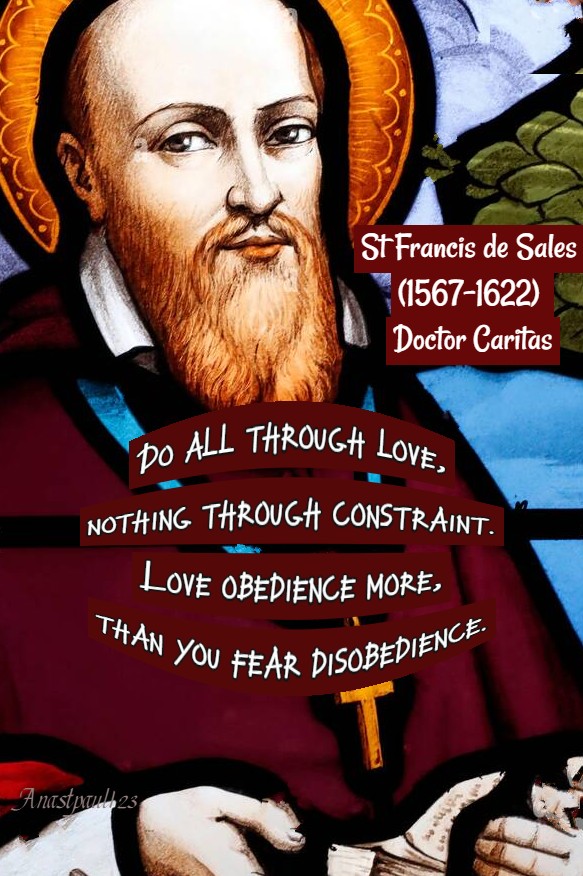
“Do all through love, nothing through constraint. Love obedience more than you fear disobedience.” (Letter to Madame de Chantal)
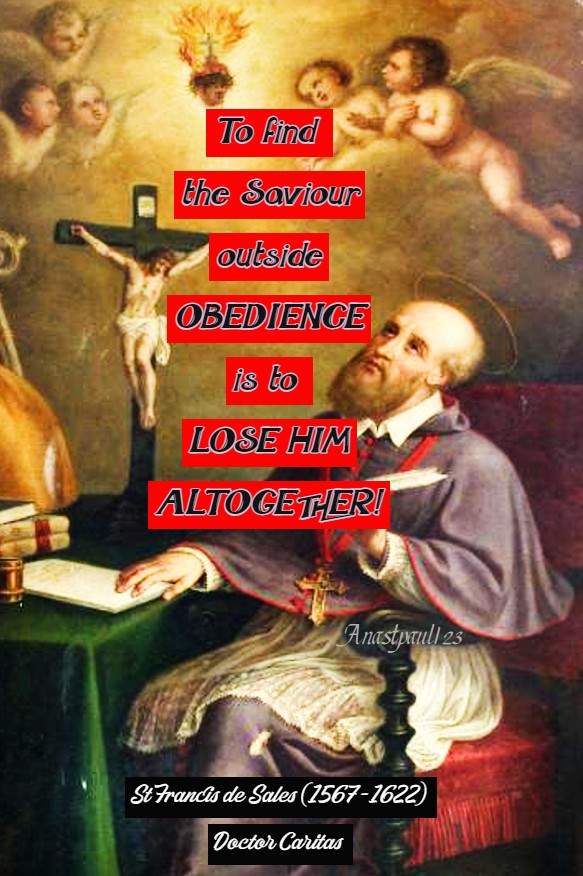
“To find the Saviour outside obedience’ is to lose Him altogether!” (Letters to Persons in Religion, VI, 22)
Our Lenten Journey with St Francis de Sales – 29 March – Wednesday in Passion Week
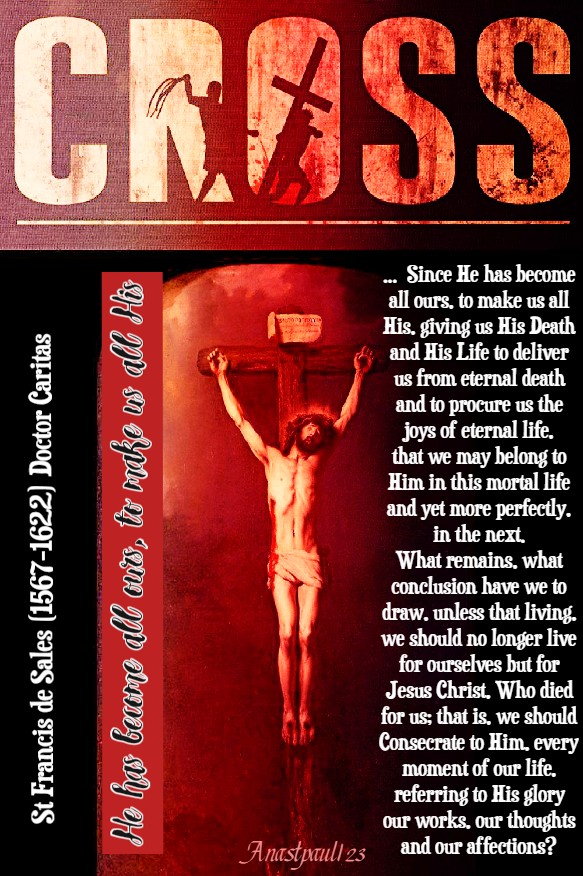
“He has become all ours, to make us all His.” St Francis de Sales
WEDNESDAY IN PASSION WEEK St Francis de Sales (1567-1622) Doctor Caritas
“Since Our Lord has so much loved us, that He has equally redeemed all, bedewed us with His Divine Blood and called us to Himself, without excluding anyone; since He has become all ours, to make us all His, giving us His Death and His Life to deliver us from eternal death and to procure us the joys of eternal life, that we may belong to Him in this mortal life and yet more perfectly, in the next.
What remains, what conclusion have we to draw, unless that living, we should no longer live for ourselves but for Jesus Christ, Who died for us; that is, we should Consecrate to Him, every moment of our life, referring to His glory our works, our thoughts and our affections?” – (Consoling Thoughts of St Francis de Sales).
One Minute Reflection – 29 March –Wednesday in Passion Week – Leviticus 19:1-2, 11-19, 25, John 10:22-38 – Scripture search here: https://www.drbo.org/
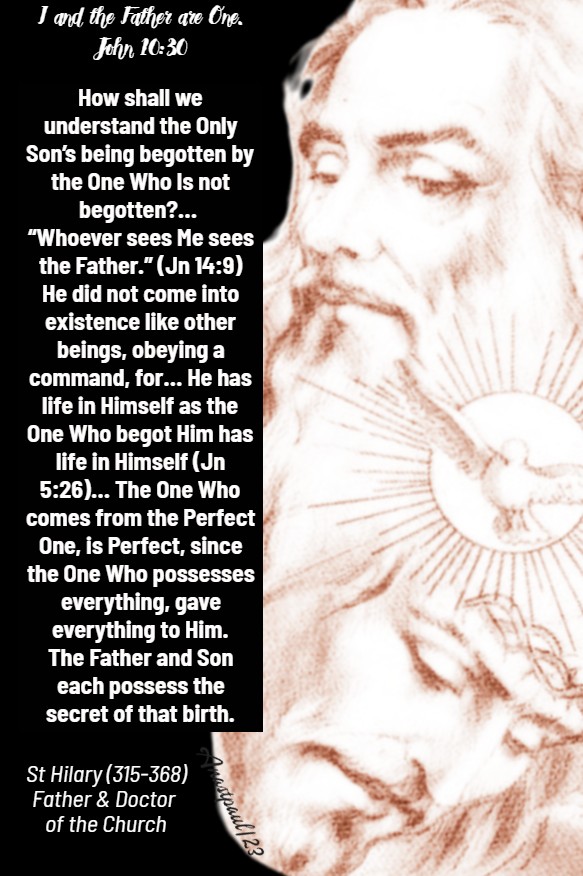
“I and the Father are One.”- John 10:30
REFLECTION – “The Father is Who He Is and we must believe that. As for the Son, our mind gets discouraged in trying to reach Him and with every word we hesitate to make it heard. For He Is begotten of the One Who Is not begotten, the Only-Begotten of the One Who Is the One and Only, Truth come forth from Truth, the Living born of the Living, the perfect One Who comes from the perfect One, Power from Power, Wisdom from Wisdom, Glory from Glory, “the Image of the invisible God” (Col 1:15)…
How shall we understand the Only Son’s being begotten by the One Who Is not begotten?… This begetting is not a break or a division…“ The Father is in Me and I am in the Father.” (Jn 10:38) He is not adopted, for the Son is the true Son of God and says: “Whoever sees Me sees the Father.” (Jn 14:9) He did not come into existence like other beings, obeying a command, for… He has life in Himself as the One Who begot Him has life in Himself (Jn 5:26)… The One Who comes from the Perfect One, is Perfect, since the One Who possesses everything, gave everything to Him. The Father and Son each possess the secret of that birth.” – St Hilary (315-368) Bishop of Poitiers, Father and Doctor of the Church (De Trinitate II:8).
PRAYER – In Thy mercy, O Lord, may this hallowing fast enlighten the hearts of Thy faithful people and since Thou have given them the desire to serve Thee, lend a gracious ear to their prayers.Through Jesus Christ, Thy Son our Lord, Who lives and reigns with Thee, in the unity of the Holy Ghost, God, world without end. Amen (Collect).
Our Morning Offering – 29 March – Wednesday in Passion Week
A Lenten Offering By St Thérèse of the Child Jesus and the Holy Face of Lisieux (1873-1897)
O my God! I offer Thee all my actions of this Lent for the intentions and for the glory of the Sacred Heart of Jesus. I desire to sanctify every beat of my heart, my every thought, my simplest works, by uniting them to Its Infinite Merits and I wish to make reparation for my sins, by casting them into the furnace of Its Merciful Love. O my God! I ask of Thee for myself and for those whom I hold dear, the grace to fulfil perfectly Thy Holy Will, to accept for love of Thee, the joys and sorrows of this passing life, so that we may one day be united together in Heaven, for all eternity. Amen
Saint of the Day – 29 March – St Eustasius of Luxeuil (c560–c626) the Second Abbot of Luxeuil Monastery, (after its Founder, St Columbanus) Missionary and Founder of another Monastery in Bavaria, Miracle-worker, Disciple of St Columban. Patronages – against blindness and eye diseases, of all illness and sick people. Also know in Francen as Eustace.
The Roman Martyrology reads today: “In the Monastery of Luxeuil, the decease of the Abbot, St Eustasius, a disciple of St Columban, who had under his guidance, nearly six hundred Monks. Eminent in sanctity, he was also renowned for miracles.”
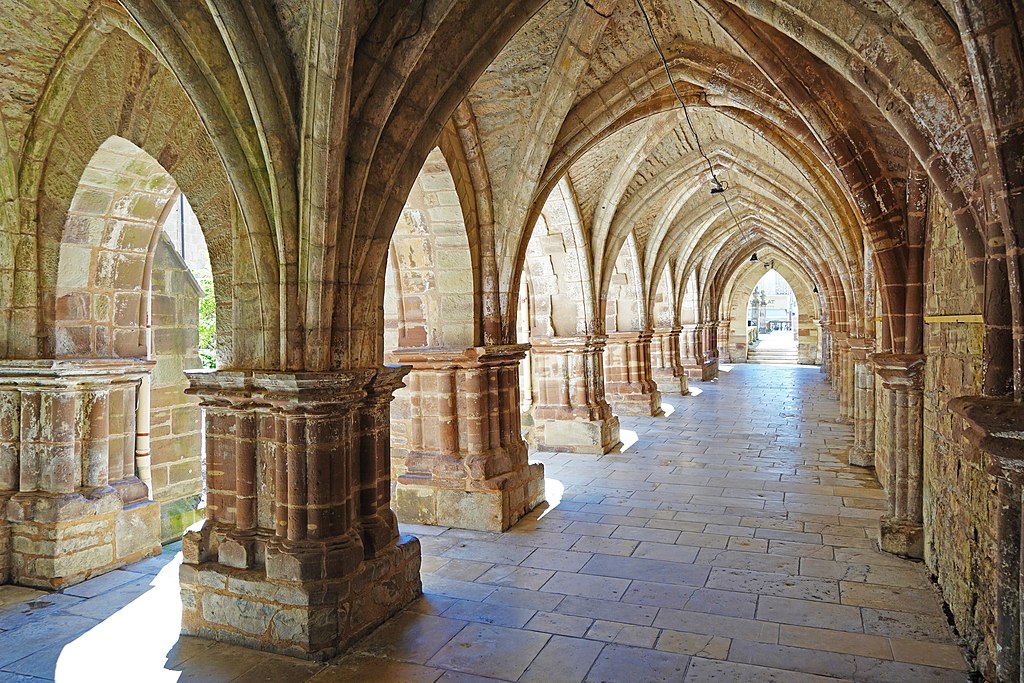
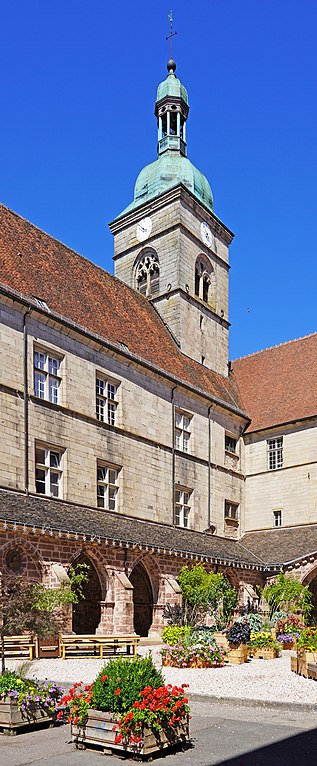
Luxeuil
Eustasius was born in Burgundy and became a Monk at Luxeuil Monastery. When Columbanus, the Founder of Luxeuil, was banished from the Kingdom of Burgundy, on account of his reproving the morals of King Theuderic II, he recommended his community choose Eustasius as his successor. At the time, Eustasius was head of the Monastery School, which under his direction, had established and renowned reputation for learning, devotions and excellence. St Columbanus travelled to Italy and settled in Bobbio, founding a new Monastery there. After the death of Theuderic, Clothaire II sent Eustasius to Bobbio in Italy, to ask St Columbanus to return but the exiled Abbot declined.
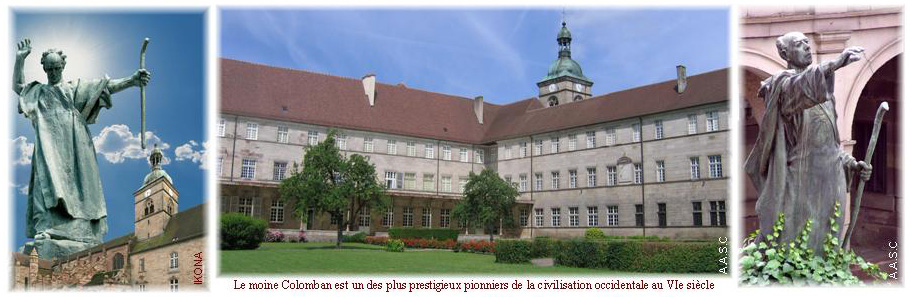
Luxeuil Monastery with Statues of St Columban
Under the administration of Eustasius, the Monastery flourished and acquired renown as a seat of learning and sanctity. Through the royal patronage, its benefices and lands were increased, King Clotaire II devoting a yearly sum, from his own revenues, towards its support. Eustasius and his Monks devoted themselves to preaching in remote districts, not yet evangelised, chiefly in the north-eastern extremities of Gaul. Their missionary work extended even to Bavaria. Between the Monasteries of Luxeuil in France and that of Bobbio in Italy (both founded by Columbanus), connection and intercourse seem to have long been maintained,
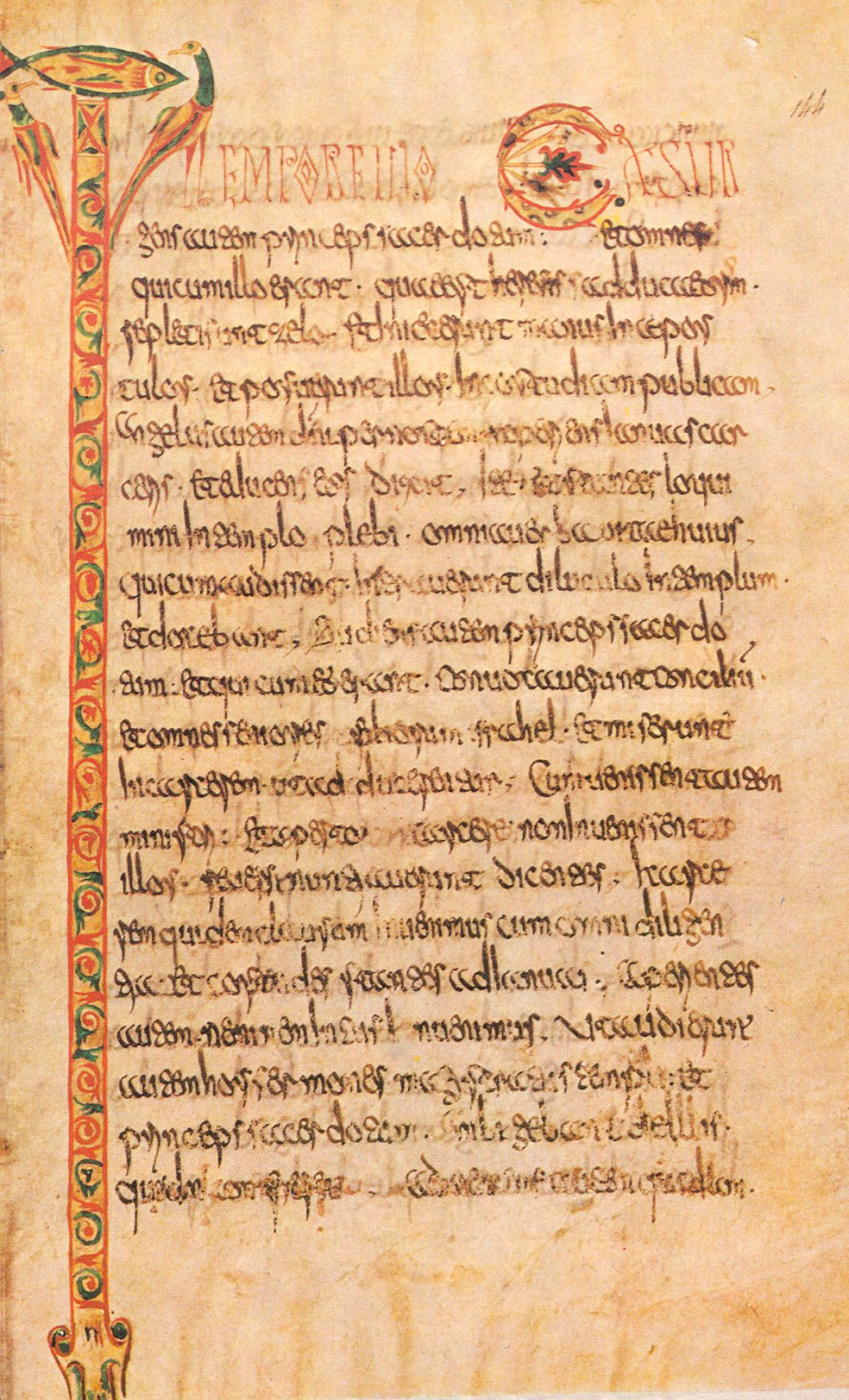
Seventh-century Lectionary produced at Luxeuil
During his Abbacy, the Monastery increased in vocations and contained about 600 Monks and produced both Bishops and Saints, including the Saints Acarius, Amatus, Audomar and Romaric. Eustasius was noted for his humility, continual prayer, and fasting. Eustasius undertook great missionary journeys to the Variscans on the river Doubs and as far as Bavaria. Around 625 he founded a Monastery on the island of Herrenchiemsee in southern Bavaria. He was succeeded as Abbott by St Waldebert.
Eustasius cured St Sadalberga, the Duke of Alsace’s daughter, of blindness. Upon returning from Bavaria, her father, Gundoin, Duke of Alsace, provided hospitality to the Abbot on his travels. Duke Gundoin and his wife brought two of their sons for the Abbot’s blessing but were hesitant to present the blind child. Through the prayers of Eustasius. the child was cured of her blindness. He also cured for St Burgundofara from a deadly illness and assisted her escape from marriage. With Eustasiu’ support and the approval of Bishop Gundoald of Meaux, Burgundofara established an Abbey on her father’s lands and became its first Abbess.
St Mark of Arethusa St Masculas of Africa St Pastor of Nicomedia St Saturus of Africa St Simplicius of Monte Cassino St Victorinus of Nicomedia St William Tempier (Died 1197) Bishop
Martyrs of Nicomedia: Seven Christians who were Martyred together in the persecutions of Diocletian. We know nothing else about them but the names of two – Pastor and Victorinus.
Thought for the Day – 28 March – Meditations with Antonio Cardinal Bacci (1881-1971)
TEMPTATION
“Why does God allow us to endure tempations? According to spiritual writers, there are two main reasons.
(1) because God wishes us to be humble and not to depend too much on ourselves. Before he was tempted, St Peter boasted that he would never deny his Master. When he was tempted, he fell and recognised his weakness.
(2) Because by resisting temptations, we can show our love for Jesus and our readiness to sacrifice everything for Him
Temptations, therefore, can teach us humility, teach us to rely on God alone and can help us to store up merit for our souls.”
Quote/s of the Day – 28 March – Tuesday in Passion Week and the Memorial of St John of Capistrano OFM (1386-1456) Confessor – Wisdom 10:10-14, Luke 9:1-6 – Scripture search here: https://www.drbo.org/
“Take nothing for your journey, neither staff, nor bag, nor bread, nor money; neither have two tunics.”
Luke 9:3
“Pursue justice, godliness, faith, charity, patience, mildness. Fight the good fight of the faith, lay hold on the life eternal, to which you have been called …”
1 Timothy 6:11-12
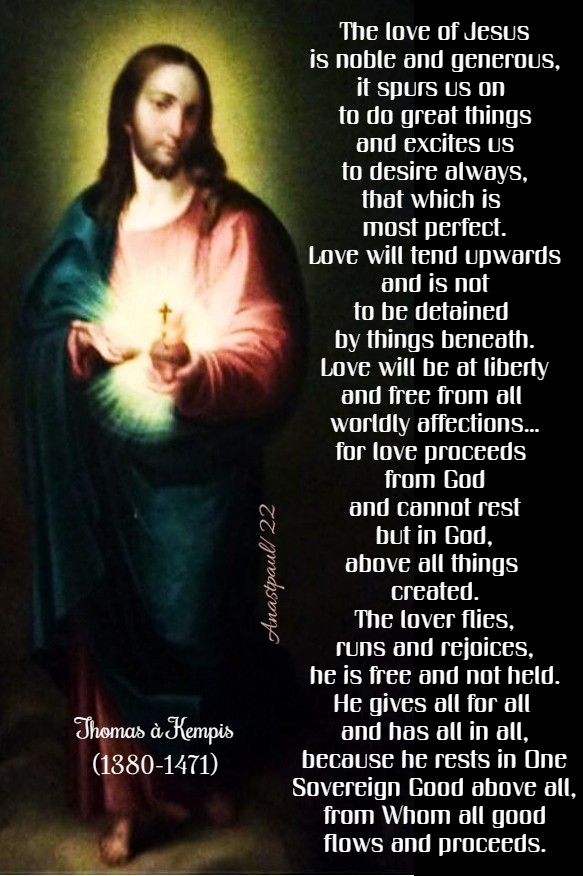
“The love of Jesus is noble and generous, it spurs us on to do great things and excites us to desire always, that which is most perfect. Love will tend upwards and is not to be detained by things beneath. Love will be at liberty and free from all worldly affections… for love proceeds from God and cannot rest but in God, above all things created. The lover flies, runs and rejoices, he is free and not held. He gives all for all and has all in all, because he rests in One Sovereign Good above all, from Whom all good flows and proceeds.”
Thomas à Kempis CRSA (1380-1471) (Book III, Chapter V, 3-4)
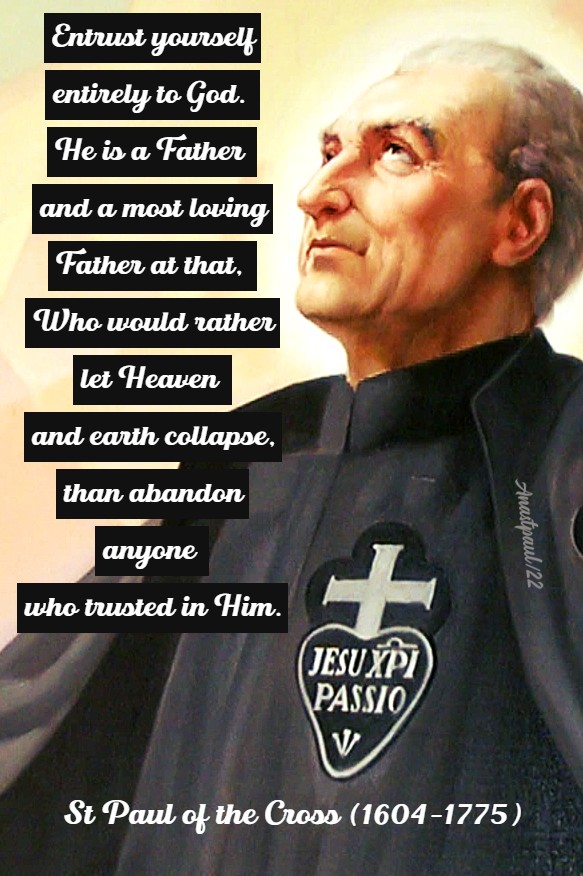
“Entrust yourself entirely to God. He is a Father and a most loving Father at that, Who would rather let Heaven and earth collapse, than abandon anyone who trusted in Him.”
St Paul of the Cross (1604-1775)
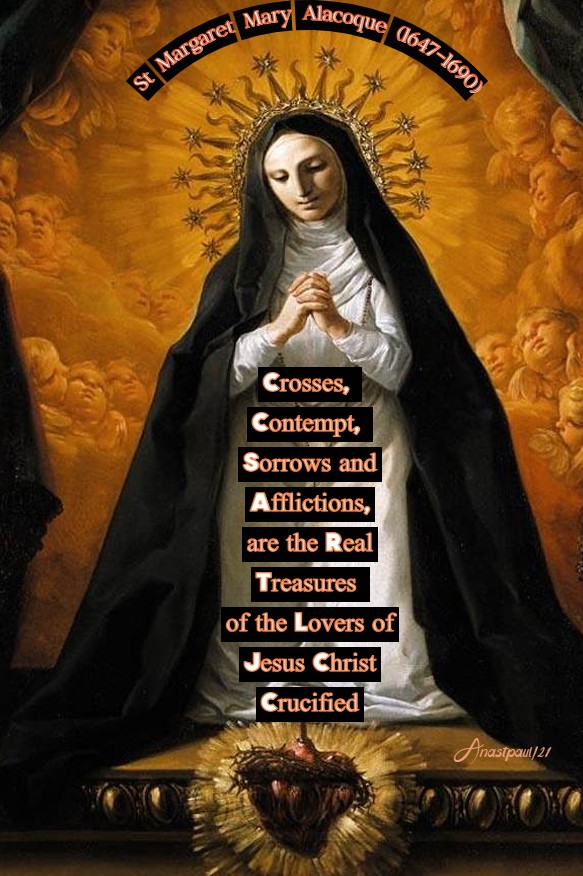
“Crosses, contempt, sorrows and afflictions, are the real treasures of the lovers of Jesus Christ Crucified.”
Our Lenten Journey with St Francis de Sales – 28 March
“Arrows of Love” St Francis de Sales
TUESDAY IN PASSION WEEK St Francis de Sales (1567-1622) Doctor Caritas
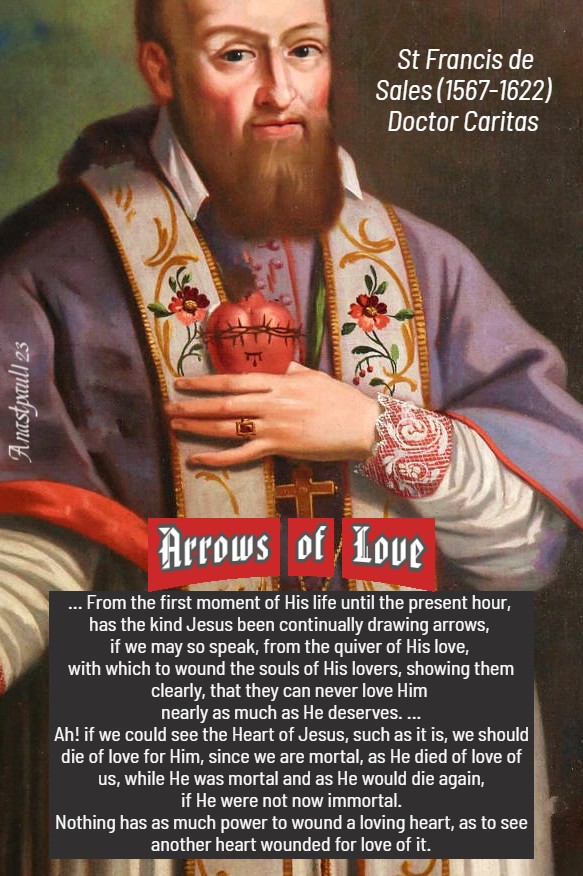
“HE WISHED, even after His death, to have His side opened, that we might see the thoughts of His Heart, which were all thoughts of love and that we might go to Him with confidence, in order to hide ourselves in His side and to receive, from Him, an abundance of graces and benedictions.
In this manner, from the first moment of His life until the present hour, has the kind Jesus been continually drawing arrows, if we may so speak, from the quiver of His love, with which to wound the souls of His lovers, showing them clearly, that they can never love Him nearly as much as He deserves.
My God, could He show more love to sinners than to become a perfect holocaust for their sins? Ah! if we could see the Heart of Jesus, such as it is, we should die of love for Him, since we are mortal, as He died of love of us, while He was mortal and as He would die again, if He were not now immortal. Nothing has as much power to wound a loving heart, as to see another heart wounded for love of it.” – (Consoling Thoughts of St Francis de Sales).
One Minute Reflection – 28 March – Tuesday in Passion Week and the Memorial of St John of Capistrano OFM (1386-1456) Confessor – Wisdom 10:10-14, Luke 9:1-6 – Scripture search here: https://www.drbo.org/
“Take nothing for your journey, neither staff, nor sack, nor bread, nor money; neither have two tunics.” – Luke 9:3
REFLECTION – “This is a great vision. But if you wish to see it, remove the sandals from your feet. Remove every chain of sin. Remove the chains of the world. Leave behind earthly sandals. Jesus sent the Apostles without sandals, without money, gold and silver, so that they would not carry earthly things with them. The one who seeks to do good is praised, not for his sandals but for the swiftness and grace of his feet. The Scripture says, “How beautiful are the feet of those who preach the gospel of peace, of those who bring glad tidings of good things!” Therefore, remove the sandals from your feet, that they may be beautiful for preaching the Gospel!” – St Ambrose (340-397) Bishop of Milan, Father and Doctor of the Church (Flight From the World 5).
PRAYER – O God, Who, through blessed John, made Thy faithful people conquer the enemies of the Cross by the power of the Most Holy Name of Jesus, grant, we beseech Thee, that by his intercession we may avoid the snares of our spiritual enemies and may be found worthy to receive from Thee, the crown of justice. Through esus Christ, Thy Son our Lord, Who lives and reigns with Thee, in the unity of the Holy Ghost, God, world without end. Amen (Collect).
Our Morning Offering – 28 March – Tuesday in Passion Week
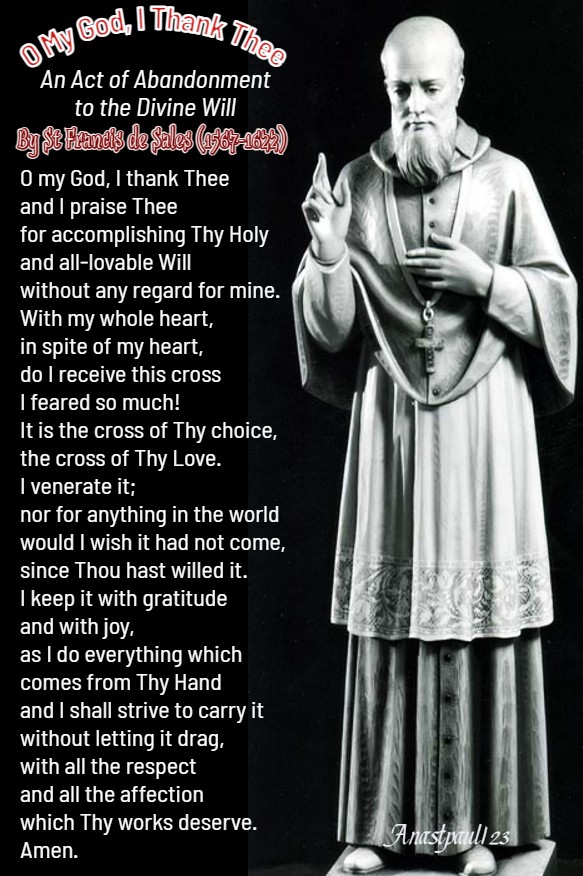
O My God, I Thank Thee An Act of Abandonment to the Divine Will By St Francis de Sales (1567-1622) Doctor Caritas
O my God, I thank Thee and I praise Thee for accomplishing Thy Holy and all-lovable Will without any regard for mine. With my whole heart, in spite of my heart, do I receive this cross I feared so much! It is the cross of Thy choice, the cross of Thy Love. I venerate it; nor for anything in the world would I wish it had not come, since Thou hast willed it. I keep it with gratitude and with joy, as I do everything which comes from Thy Hand and I shall strive to carry it without letting it drag, with all the respect and all the affection which Thy works deserve. Amen.
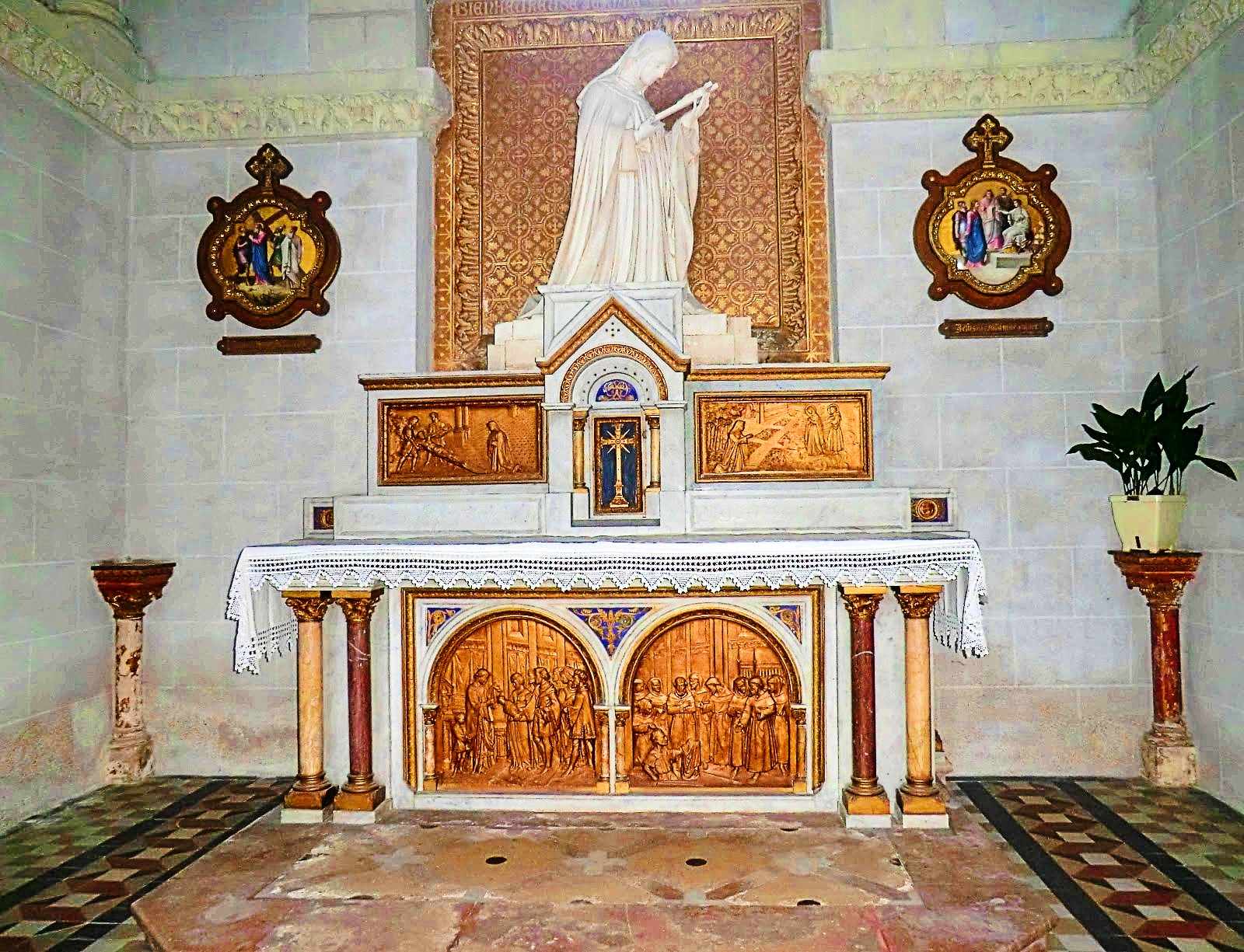
Saint of the Day – 28 March – Blessed Jeanne Marie de Maille TOSF (1331-1414) Virgin, Widow, Recluse Born on 14 April 1331 at the Castle of La Roche, France and died on 28 March 1414 at Tours France of natural causes. Patronages – abuse victims, against in-law problems, against the death of parents, of exiles, people ridiculed for their piety, widows. Also known as – Jane Mary de Maille. Jeanne Marie was Beatified on 27 April 1871 by Pope Pius IX .
Jeanne, the daughter of the wealthy Baron of Maille, was born at the chateau of her father near St Quentin in France. Because she possessed, from her earliest youth, a tender devotion and love for the Blessed Virgin Mary, she was given the additional name of Marie at Confirmation and from then on, she always used it with her Baptismal name. Under the direction of a Franciscan, who conducted the divine services at the chateau, she strove earnestly to attain perfection. Self-denial, mortification, prayer and works of charity towards her neighbour were the special means she employed.
Jeanne Marie was scarcely fifteen years old when her father died. She was placed under the guardianship of her grandfather, who was already quite advanced in years and who, therefore, believed it his duty to see his grandchild settled in life, as soon as possible. He chose as her husband Baron Robert of Silly, a man who was noble both by birth and by virtue. On the evening of their wedding day the grandfather died suddenly. This made such an impression on the pious husband that he readily yielded to the wish of his young wife to live in virginity.
The young couple’s first concern was to order their household in a Christian fashion. Only virtuous and God-fearing persons were admitted as their servants; all had to observe the commandments of God and of the Church faithfully; frivolous conversations, cursing and swearing, as well as games of chance, were not tolerated. In everything their Master and Mistress set the best example. Jeanne Marie interested herself too, in all the needs of her people and never sent a needy person away from her door without giving him assistance.
But the cross is the real test of all true fidelity to God;and it was not to be wanting in this home either. A terrible war broke out between England and France. The Baron of Silly and his vassals took the field in defence of their country but the war was disastrous for France.
Mortally wounded, the young Baron was brought to his chateau but hardly had he arrived there, when the English took possession of it and led him away as a prisoner. Through the efforts of his faithful wife, he obtained his freedom but he died not long afterwards.
Her in-laws were unkind to her and blamed her for her husband squandering his fortune for charitable ends and so deprived her of her widow’s inheritance and cut ties with her. completely. She first went to seek shelter at the home of an old ex-servant but the servant treated her with harshness, when realising she was poor. She went to reside with her mother but left when the latter tried to pressure her into finding another husband. Now Jeanne Marie withdrew entirely from the world. She moved to a little house near the Franciscan Church in Tours. Dressed in the ash-grey habit of the Third Order, she went out to nurse the sick and the poor. The remaining time she spent in prayer.
She prayed especially that God might bless the labours of Priests, particularly those who preached the Divine Word. She prayed most of all for the Universal Church, which at that time had to endure one of its severest trials. Christendom was divided into two groups – one pope resided in Italy, another in France and even saintly people did not know which one was the rightful head of the Church. Confusion and many scandals were the inevitable results. Had the Church been the work of human hands, it must certainly have gone to ruin. In answer to the prayers of many pious souls, God came to the assistance of the Church and Jeanne Marie had the consolation, before her death, of seeing the Church again united under one head.
Blessed Jeanne Marie de Maille died in the year 1414, at the age of eighty-two years. When her remains, clothed in the habit of the Third Order, were brought into the Church, the body appeared to have the freshness of youth. The veneration paid to her since her death was approved by Pope Pius IX.
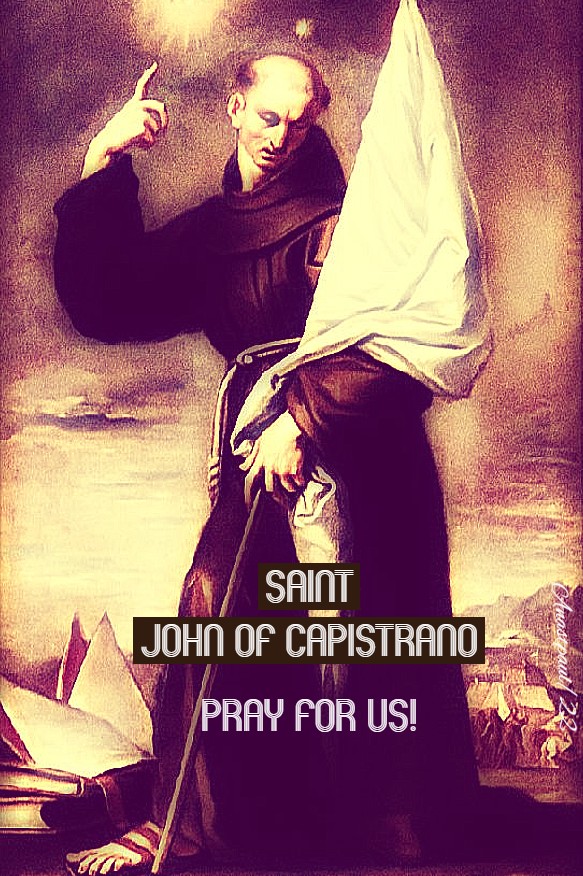
St John of Capistrano OFM (1386-1456) Priest and Friar of the Friars Minor, Confessor and Preacher. Famous as a Preacher, Theologian and Inquisitor, trained Lawyer, he earned himself the nickname ‘the Soldier Saint’ when in 1456 at age 70 he led a Crusade against the invading Ottoman Empire at the Siege of Belgrade. He was Beatified on 19 December 1650 by Pope Innocent X and Canonised on 16 October 1690 by Pope Alexander VIII. Feast Day moved from 28 March in 1969. Biography: https://anastpaul.com/2017/10/23/saint-of-the-day-23-october-st-john-capistrano-ofm-1386-1456-the-soldier-saint/
St Cyril the Deacon St Dorotheus of Tarsus St Gundelindis of Niedermünster
St Guntramnus (c 532-592) King of the Kingdom of Orléans and Burgundy from 561 until his death in 592, Confessor, Apostle of the needs of the Church and of the poor and sick, Penitent. The Roman Martyrology reads: “At Chalons in France, the demise of St Gontran King, who devoted himself to exercises of piety, renounced the pomps of the world and bestowed his trasures on the Church and the poor,” https://anastpaul.com/2022/03/28/saint-of-the-day-28-march-saint-guntramnus-died-597/
St Hesychius of Jerusalem St Hilarion of Pelecete Blessed Jeanne Marie de Maille (1331-1414) Widow, Recluse St Proterius of Alexandria St Rogatus the Martyr St Successus the Martyr St Tutilo of Saint-Gall
Thought for the Day – 27 March – Meditations with Antonio Cardinal Bacci (1881-1971)
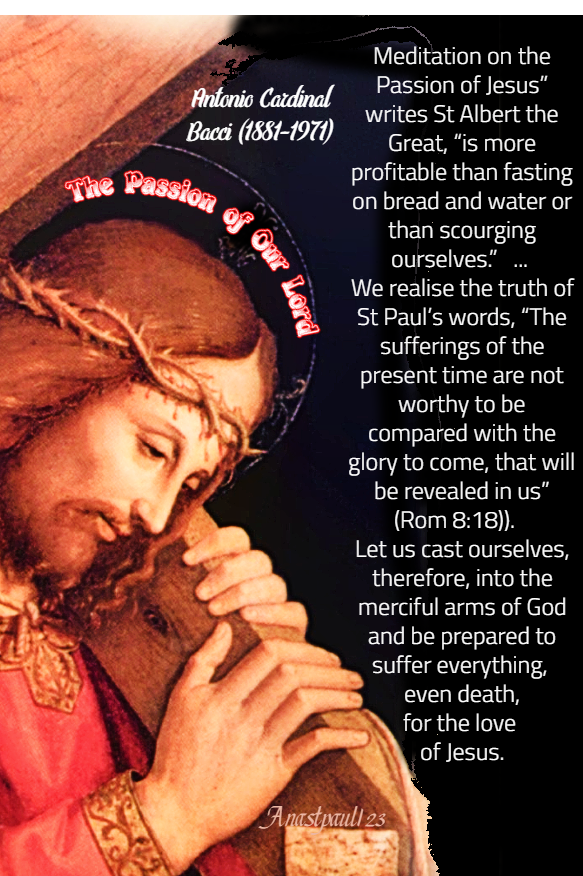
The Passion of Our Lord
“Meditation on the Passion of Jesus” writes St Albert the Great, “is more profitable than fasting on bread and water or than scourging ourselves.”
This is because, when we meditate with love and gratitude on the Passion of our Redeemer, we have the experience of being transformed and set aglow with charity. We realise the truth of St Paul’s words, “The sufferings of the present time are not worthy to be compared with the glory to come, that will be revealed in us” (Rom 8:18)).
Let us cast ourselves, therefore, into the merciful arms of God and be prepared to suffer everything, even death, for the love of Jesus.”
Quote of the Day – 27 March – The Feast of St John Damascene (675-749) Confessor, Father and Doctor of the Church
The Night Prayers before Retiring The Examination of Conscience, Act of Contrition and Resolutions By St John Damascene (675-749) Confessor, Father and Doctor of the Church
“ (To be said pointing at the bed:) O Lord, Lover of men, is this bed to be my coffin, or wilt Thou enlighten my wretched soul with another day? Here the coffin lies before me and here death confronts me. I fear, O Lord, Thy Judgement and the endless torments, yet I cease not to do evil. My Lord God, I continually anger Thee and Thy immaculate Mother, and all the Heavenly Powers and my holy Guardian Angel. I know, O Lord, that I am unworthy of Thy love but deserve condemnation and every torment. But, whether I want it or not, save me, O Lord. For to save a good man is no great thing and to have mercy on the pure is nothing wonderful, for they are worthy of Thy mercy. But show the wonder of Thy mercy to me, a sinner. In this, reveal Thy love for men, lest my wickedness prevail over Thy unutterable goodness and mercy. And order my life as Thou wilt. (As sleep is the image of death, at night we pray for the departed) With the Saints give rest, O Christ, to the souls of Thy servants where there is no pain, no sorrow, no sighing, but life everlasting.
Kiss your Crucifix and make the Sign of the Cross from the head to the foot of the bed and from two sides and then say the Prayer:
Hail, Most Precious and Life-Giving Cross of the Lord!
Let God arise and let His enemies be scattered and let those, who hate Him, flee from His Presence. As smoke vanishes, let them vanish and as wax melts by the presence of fire, so let the demons perish by the presence of those who love God and who sign themselves with the Sign of the Cross and say in gladness: Hail, Most Precious and Life-Giving Cross of the Lord, for Thou drives away the demons by the power of our Lord Jesus Christ Crucified on thee, Who went down to hell and trampled on the power of the devil and gave us thee, His venerable Cross, for driving away all enemies. O Most Precious and Life-Giving Cross of the Lord, help me with our holy Lady, the Virgin Mother of God and with all the Saints throughout the ages. Amen.
(When about to lie down in bed, say:) Lighten my eyes, O Christ God, lest I sleep in death and lest my enemy says: I have prevailed over him.
Glory be to the Father and to the Son and to the Holy Ghost. Be my soul’s Defender, O God, for I step over many snares. Deliver me from them and save me, O Good One, in Thy love for men. Now and ever and to the ages of ages. Amen. Let us not silently hymn the most glorious Mother of God, holiest of holy Angels but confess her with heart and mouth to be the Mother of God, for she truly bore God Incarnate for us and prays without ceasing for our souls. Amen.
(Just before closing your eyes, say:) Into Thy hands, O Lord Jesus Christ, my God, I surrender my spirit and body; bless me, save me and grant me eternal life. Amen.
Before retiring, The Examination of Conscience: (or if one prefers, before beginning prayers) go through all the points suggested below in your mind and memory.
Give thanks to Almighty God for granting you during the past day, by His grace, His gifts of life and health.
Examine your conscience by going through each hour of the day, beginning from the time you rose from your bed and recall to memory – where you went, how you acted and reacted towards all persons and other creatures and what you talked about. Recall and consider with all care, your thoughts, words and deeds from morning until the evening.
If you have done any good, do not ascribe it to yourself but to God Who gives us all the good things and thank Him. Pray that He may confirm you in this good and enable you to do other good works.
But if you have done anything evil, admit that this comes from yourself and your own weakness, from bad habits or weak will. Repent and pray to the Lover of men that He may forgive you and promise Him firmly, never to do this evil again.
Implore your Creator with tears, to grant you a quiet, undisturbed, pure and sinless night and to enable you, in the coming day, to devote yourself wholly to the glory of His holy Name.
If you find a soft pillow, leave it and put a stone in its place, for Christ’s sake. If you sleep in winter, bear it, saying – Some did not sleep at all!”
St John Damascene (675-749) Father and Doctor of the Church
Our Lenten Journey with St Francis de Sales – 27 March – Monday of Passion Week
“In love, by love, for love and of love” St Francis de Sales
MONDAY IN PASSION WEEK St Francis de Sales (1567-1622) Doctor Caritas
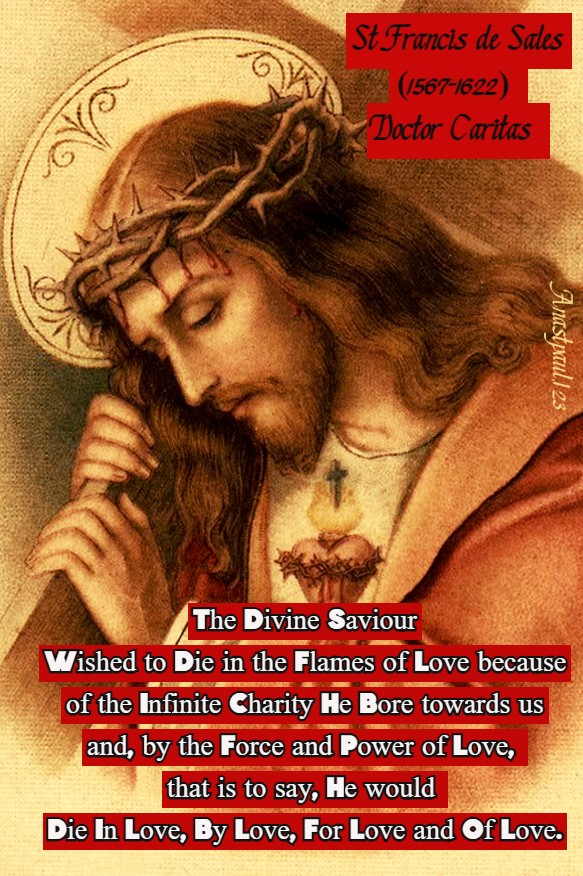
“THE SWEET JESUS was scourged, crowned, condemned, mocked and rejected as man, devoted, destined and dedicated to carry out and endure, the opprobriums and ignominies due in punishment to all sins and He served as a general sacrifice for sin, being made, as it were, an anathema, separated from and abandoned by His Eternal Father.
The Divine Saviour wished to die in the flames of love because of the Infinite Charity He bore towards us and, by the force and power of love, that is to say, He would die in love, by love, for love and of love. This is what He Himself says: “No-one takes away My life but I lay it down of Myself, for I have power to lay it down and to take it up again” .—He was offered, says Isaias because He wished it.” – (Consoling Thoughts of St Francis de Sales).
One Minute Reflection – 27 March – Monday of Passion Week and the Feast of St John Damascene (675-749) Confessor, Father and Doctor of the Church, Confessor, Priest, Monk, Theologian, Writer, Defender of Iconography, Polymath. – Wisdom 10:10-17, Luke 6:6-11 – Scripture search here: https://www.drbo.org/
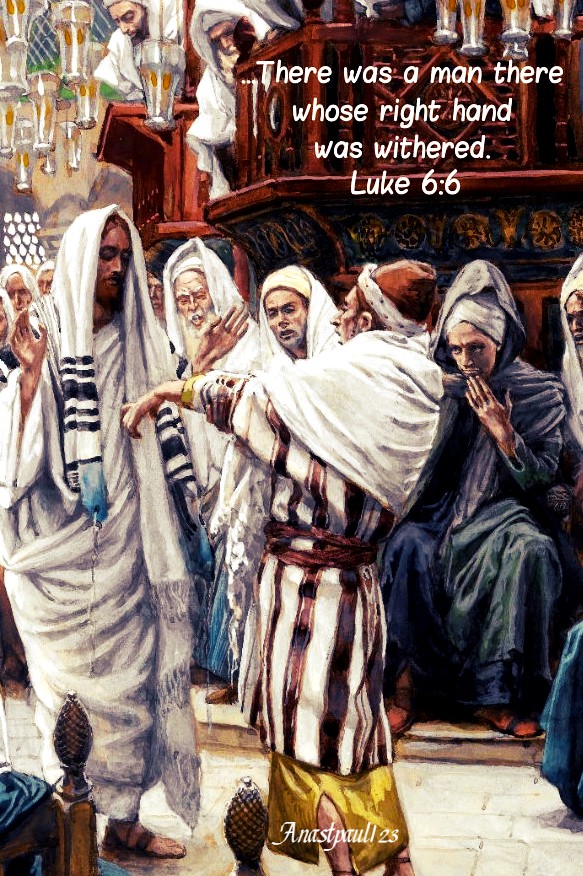
“On another sabbath, he went into the synagogue and taught and there was a man there whose right hand was withered.” … Luke 6:6
REFLECTION – “Are you angry at me because I have healed the whole man on the Sabbath day?” In this place He revivified,, with the salutary strength of good works, the hand which Adam stretched out to pluck the fruit of the forbidden tree. The hand which had withered through a crime, was healed by good deeds. Christ thereby rebuked the Jews who violated the precepts of the law with evil interpretations. They thought that they should rest even from good works on the Sabbath, since the law prefigured in the present, the form of the future, in which indeed, the days of rest from evils, not from blessings, would come.
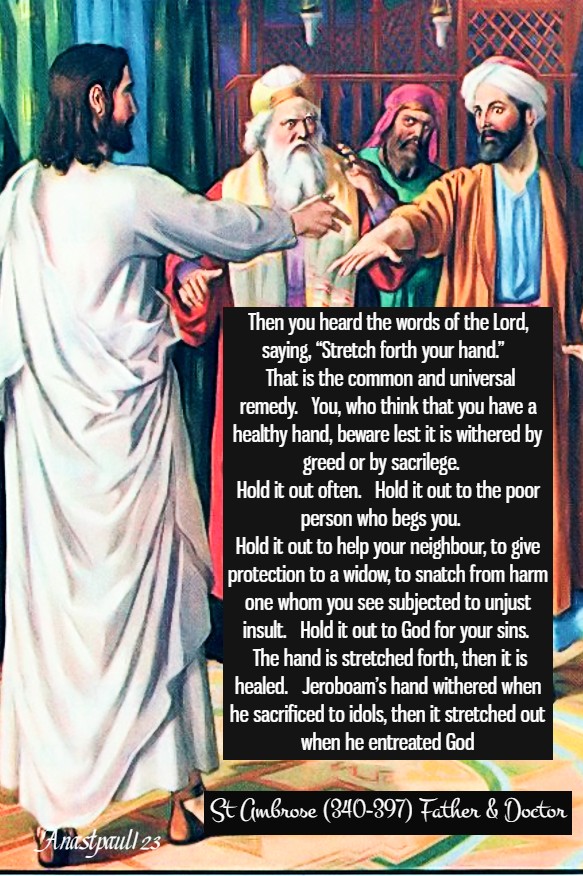
Then you heard the words of the Lord, saying, “Stretch forth your hand.” That is the common and universal remedy. You, who think that you have a healthy hand, beware lest it is withered by greed or by sacrilege. Hold it out often. Hold it out to the poor person who begs you. Hold it out to help your neighbour, to give protection to a widow, to snatch from harm one whom you see subjected to unjust insult. Hold it out to God for your sins. The hand is stretched forth, then it is healed. Jeroboam’s hand withered when he sacrificed to idols, then it stretched out when he entreated God.” … St Ambrose(340-397)- One of the 4 original Doctors of the Latin Church – Exposition on the Gospel of Luke, 5
PRAYER – Almighty, eternal God, Who to defend the honour paid to sacred images, filled blessed John with heavenly learning and wondrous strength of soul, grant that, by his intercession and example, we may imitate the virtues of those whose images we honour and may enjoy the help of their patronage. Through Jesus Christ, Thy Son our Lord, Who lives and reigns with Thee, in the unity of the Holy Ghost, God, world without end. Amen (Collect).
Our Morning Offering – 27 March – The Feast of St John Damascene (675-749) Confessor, Father and Doctor of the Church
This Prayer is part of a very long and most beautiful Night Prayer by St John which I will post shortly.
Hail, Most Precious and Life-Giving Cross of the Lord! By St John Damascene (675-749) Confessor, Father and Doctor of the Church
Let God arise and let His enemies be scattered and let those, who hate Him, flee from His Presence. As smoke vanishes, let them vanish and as wax melts by the presence of fire, so let the demons perish by the presence of those who love God and who sign themselves with the Sign of the Cross and say in gladness: Hail, Most Precious and Life-Giving Cross of the Lord, for Thou drives away the demons by the power of our Lord Jesus Christ Crucified on thee, Who went down to hell and trampled on the power of the devil and gave us thee, His venerable Cross, for driving away all enemies. O Most Precious and Life-Giving Cross of the Lord, help me with our holy Lady, the Virgin Mother of God and with all the Saints throughout the ages. Amen.
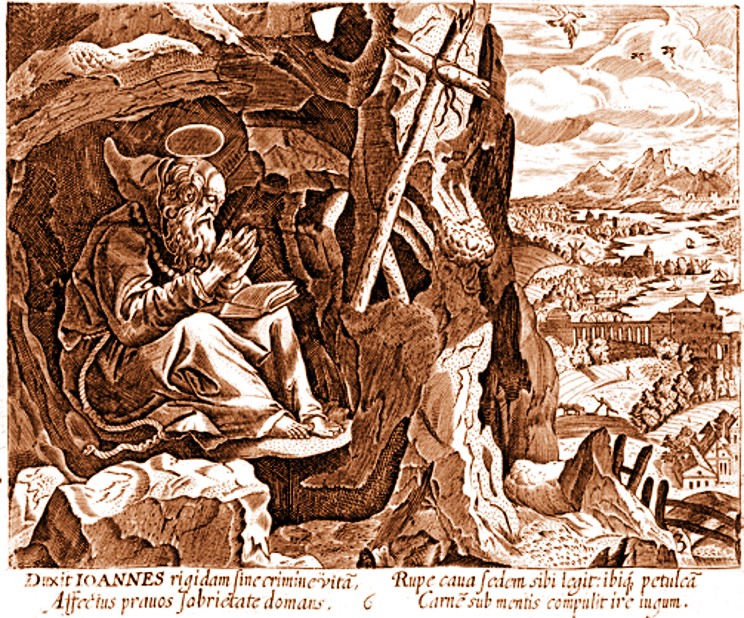
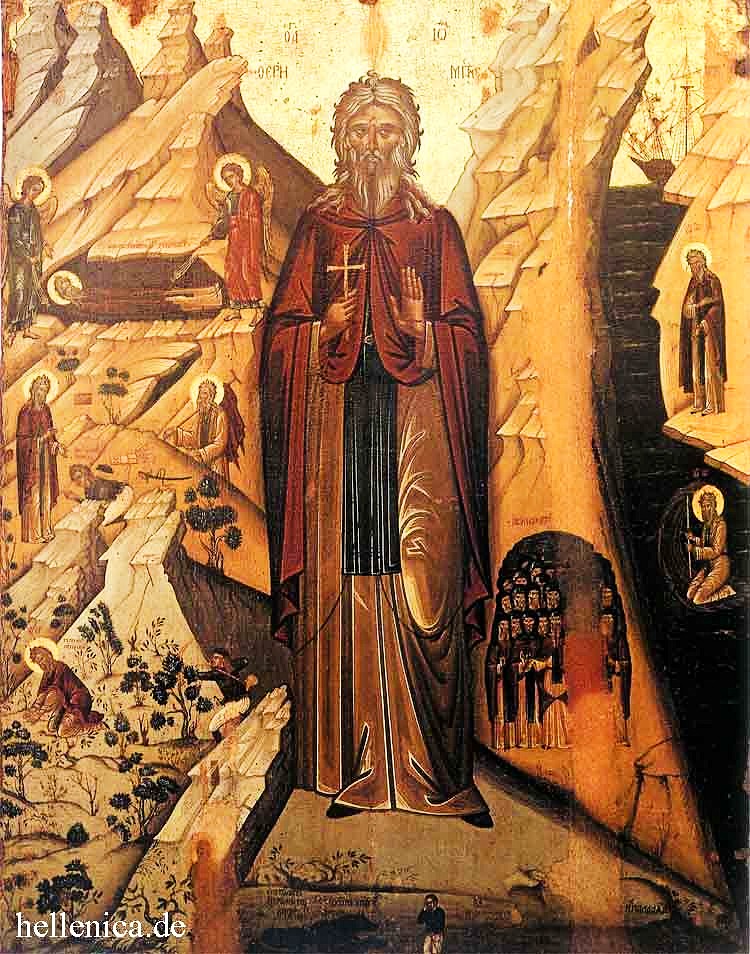
Saint of the Day – 27 March – St John of Lycopolis (c305-394) Hermit, Spiritual Advisor, Miracle-worker. graced with the gifts of prophecy and seeing into the hearts of men. John was known and admired by the great Saints of his time, including Saint Jerome, Saint Augustine, Saint Cassian and others. Born in c305 at Assiut, Egypt and died in 394 of natural causes. Also known as – Johannes av Egypt, John of Egypt, John of the Thebaid, John the Anchorite, John the Egyptian, John the Hermit.
John’s parents were poor and he trained as a carpenter. At the age of 25, he became a Hermit under the guidance of an elderly Recluse He spent a decade with this Hermit, taking direction from him and learning from him. St John Cassian recounts a tale that this spiritual counsellor directed John to water a dry stick every day for a year. After this test of obedience, his superior threw the stick away. When the older Hermit died, John spent the next five years travelling and visiting Monasteries.
John was noted for performing seemingly absurd acts such as rolling rocks from place to place and cultivating dead trees. Finally, he withdrew to the top of a cliff near Lycopolis, Egypt, where he could avoid all human contact. There he carved three small cells within the rock, one for sleeping, one for work and the last for praying. Then he walled them up with himself inside, leaving only a small opening.
He communicated through this opening to those who brought him food and water twice a week. Crowds would gather on those two days to hear him preach.
John never ate until sunset and lived on a diet of dried fruit and vegetables for fifty years. He refused bread and never ate anything cooked. He lived this way well into his nineties.
He possess the spiritual gift of prophecy and often predicting the future and knowing the details of persons he had never met. He predicted future victories to the Emperor Theodosius the Great who became his student, coming to him for advice and counselling.
He avoided seeing women, in particular, to avoid temptation but, he avoided all people for the last fifty years of his life. Saint Augustine wrote that John was tempted by devils and that he performed miraculous cures. St Augustine records that John cured a woman of blindness and then appeared to her in a vision to avoid seeing her in person.
John prayed incessantly and foreseeing his own death, he asked that no-one visit him for three days. He spent these last three days of his life without food or drink or any interaction except with God through prayer. He was discovered dead in his cell, with his body in a position of prayer.
John’s multi-roomed cell was re-discovered in the early 1900s.
St John Damascene (675-749) Confessor, Father and Doctor of the Church, Confessor, Priest, Monk, Theologian, Writer, Defender of Iconography, Poet, a Polymath whose fields of interest and contribution included law, theology, philosophy, music, Marian devotee. Also known as Doctor of Christian Art. Feast moved in 1969 to 4 December. Biography: https://anastpaul.com/2018/12/04/saint-of-the-day-4-december-st-john-damascene-675-749-father-doctor-of-the-church/
Bl Aimone of Halberstadt St Amphilochius of Illyria St Alexander of Drizipara St Alexander of Pannonia St Alkeld the Martyr St Amator the Hermit
Martyrs of Bardiaboch: A group of Christians who were arrested, tortured and executed together for their faith during the persecutions of Persian King Shapur II. Martyrs. – Abibus, Helias, Lazarus, Mares, Maruthas, Narses, Sabas, Sembeeth and Zanitas. 27 March 326 at Bardiaboch, Persia.
Thought for the Day – 26 March – Meditations with Antonio Cardinal Bacci (1881-1971)
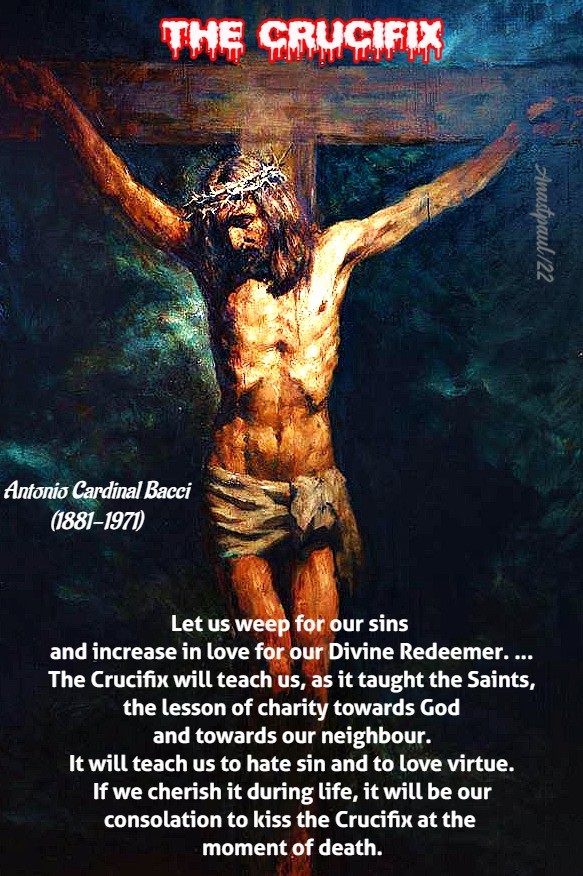
THE CRUCIFIX
“Let us weep for our sins and increase in love for our Divine Redeemer. When we are oppressed by the weight of our own cross, we shall look at the Crucifix and find comfort. When we are tempted, we shall grasp the Crucifix and turn away with horror from thoughts of sin and ingratitude.
The Crucifix will teach us, as it taught the Saints, the lesson of charity towards God and towards our neighbour. It will teach us to hate sin and to love virtue. If we cherish it during life, it will be our consolation to kiss the Crucifix at the moment of death.”






























You must be logged in to post a comment.