Thought for the Day – 23 October – Meditations with Antonio Cardinal Bacci (1881-1971)
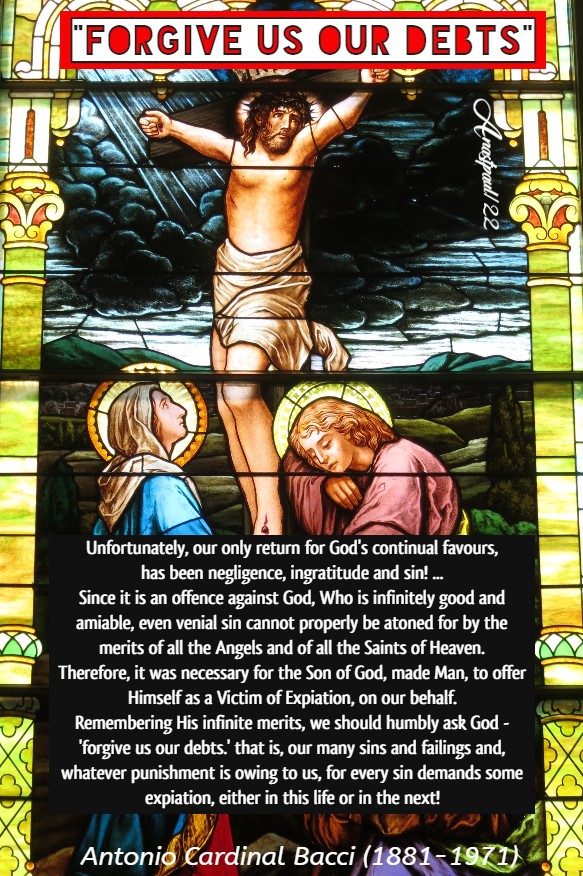
“Month of the Holy Rosary” “Forgive Us Our Debts”
“Finally, we owe God a great deal on account of our sins. Unfortunately, our only return for God’s continual favours, has been negligence, ingratitude and sin! How many failings we have been guilty of throughout our lives? Since it is an offence against God, Who is infinitely good and amiable, even venial sin cannot properly be atoned for by the merits of all the Angels and of all the Saints of Heaven. Therefore, it was necessary for the Son of God, made Man, to offer Himself as a Victim of Expiation, on our behalf.
Remembering His infinite merits, we should humbly ask God – ‘forgive us our debts.‘ that is, our many sins and failings and, whatever punishment is owing to us, for every sin demands some expiation, either in this life or in the next!
Meanwhile, we should accept, with resignation, all the sufferings which God sends us in reparation for our sins and, we should promise never to offend Him again.”
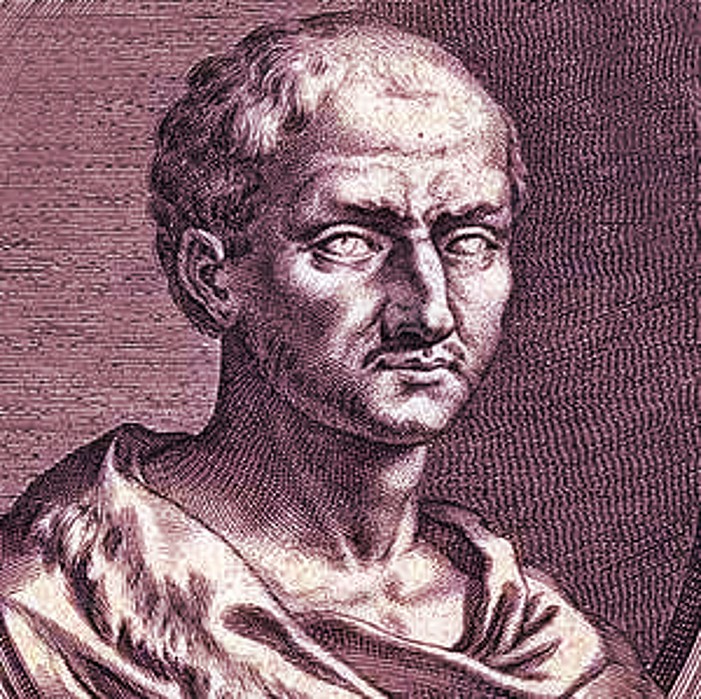
Quote/s of the Day – 23 October – Blessed Severinus Boethius (c 475-524) Martyr, Layman, Theologian, Philosopher.
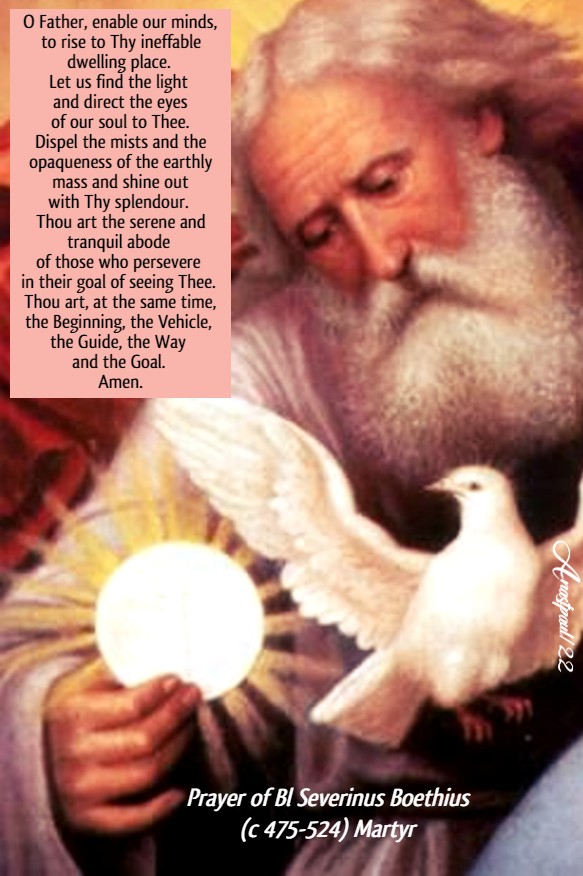
Prayer of Bl Severinus Boethius (c 475-524) Martyr
“O Father, enable our minds, to rise to Thy ineffable dwelling place. Let us find the light and direct the eyes of our soul to Thee. Dispel the mists and the opaqueness of the earthly mass and shine out with Thy splendour. Thou art the serene and tranquil abode of those who persevere in their goal of seeing Thee. Thou art, at the same time, the Beginning, the Vehicle, the Guide, the Way and the Goal. Amen.”
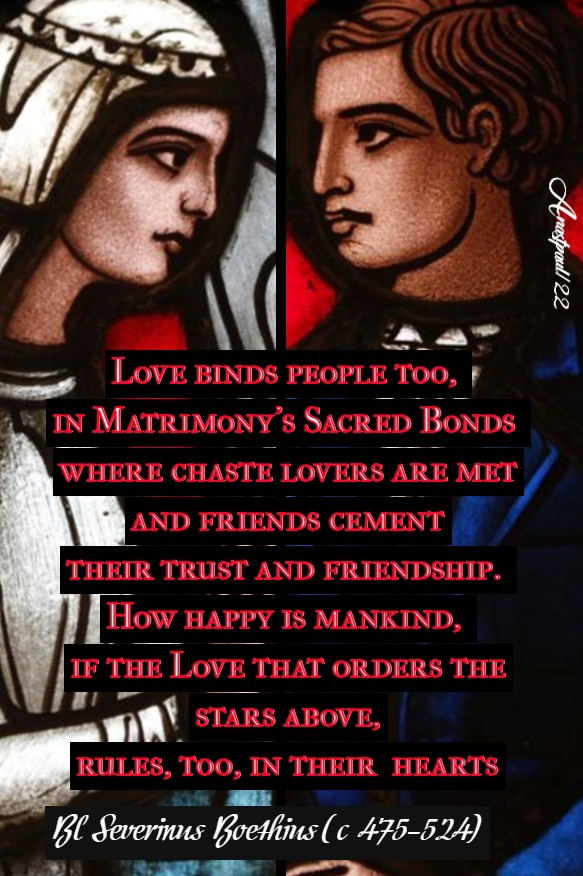
“Love binds people too, in Matrimony’s Sacred Bonds where chaste lovers are met and friends cement their trust and friendship. How happy is mankind, if the Love that orders the stars above, rules, too, in their hearts.”
“One’s virtue is all that one truly has because it is not imperiled, by the vicissitudes of fortune.”
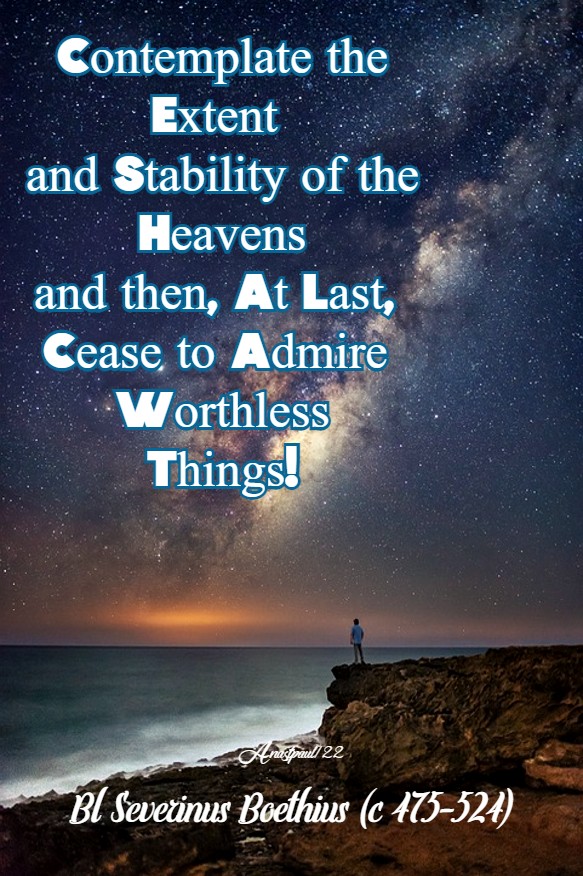
“Contemplate the extent and stability of the heavens and then, at last, cease to admire worthless things.”
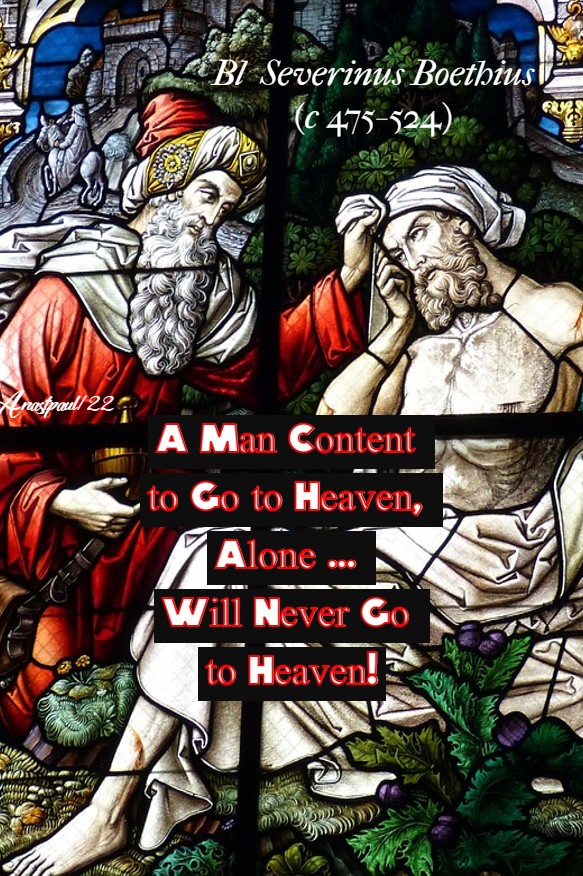
“A man content to go to Heaven, alone … will never go to heaven!”
One Minute Reflection – 23 October – Twentieth Sunday after Pentecost – Feast of the Most Holy Redeemer – Ephesians 5:15-21, John 4:46-53 Scripture search here: https://www.drbo.org/
“Unless you see signs and wonders, you believe not.” – John 4:48
REFLECTION – “Whoever examines the majesty of God will be crushed by His glory” (Prv 25,27 Vg). God can do works that surpass man’s understanding… Faith is required of you and sincerity of life – not high intelligence, nor penetrating knowledge of the mysteries of God. If you do not understand, nor grasp what is below you, how will you comprehend what is above you? Be subject to God, submit yourself to the faith and the light of knowledge will be given to you, as much as you need and can use.
Some have grave temptations concerning faith and sacraments, which are not to be imputed to them but rather, to the enemy. Take no notice, do not argue with your thoughts, nor answer the doubts with which the devil attacks you; believe God’s word, believe His saints and prophets and the wicked enemy will be routed. It is often most profitable to God’s servant, to endure such things. For the devil does not tempt the infidel or sinner, of whom he has already secure possession but he uses various means, to tempt and harass the devout faithful.
Go on then with simple unquestioning faith and approach the Sacrament with reverent beseeching. Anything you cannot understand, commit it surely to God, Who is omnipotent. God does not deceive you – the over-confident person deceives himself. God walks in step with the simple ones, He shows Himself to the humble ones, He grants understanding to the little ones; “He reveals hidden meanings to little ones” and hides away His grace from the inquisitive and the proud. Human reason is feeble and fallible but true faith cannot be deceived. All use of reason, all human inquiry should walk in the footsteps of faith; it should not go on in front of it, nor call it in question.” – Thomas à Kempis CRSA (1380-1471) (The Imitation of Christ IV, 18).
PRAYER – O Lord, we beseech Thee, graciously grant Thou faithful, forgiveness and peace that they may be cleansed of all sin and serve Thee with minds free from care. Through Jesus Christ, Thy Son our Lord, Who lives and reigns with Thee, in the unity of the Holy Ghost, God, world without end. Amen (Collect).
Our Morning Offering – 23 October –Twentieth Sunday after Pentecost – Feast of the Most Holy Redeemer
Be Thou My Vision By St Dallan Forgaill (c 530- 598)
Be Thou my vision, O Lord of my heart; Naught be all else to me, save that Thou art. Thou my best thought by day or by night, Waking or sleeping, Thy presence my Light.
Be Thou my Wisdom and Thou my true Word; I ever with Thee and Thou with me, Lord. Thou my great Father, I Thy true son; Thou in me dwelling and I with Thee one.
Be Thou my battle-shield, sword for my fight, Be Thou my dignity, Thou my delight. Thou my soul’s shelter, Thou my high tower. Raise Thou me heavenward, O Power of my power.
Riches I heed not, nor man’s empty praise, Thou mine inheritance, now and always. Thou and Thou only, first in my heart, High King of Heaven, my Treasure Thou art.
High King of Heaven, my victory won, May I reach Heaven’s joys, O bright Heaven’s Son, Heart of my heart, whatever befall Still be my vision, O ruler of all.
Saint of the Day – 23 October – Blessed Severinus Boethius (c 475-524) Martyr, Layman, Roman Statesman and Philosopher, Theologian, Writer, Rhetorician, often styled “The Last of the Romans”, regarded by tradition as a Christian Martyr, Born in c 475-480 at Rome, Italy as Anicius Manlius Torquatus Severinus Boethius and died in 524-525 at Pavia, Italy. Also known as – Anicius Manlius Torquatus Severinus Boethius, The Last of the Romans, Severino Boezio.
Blessed Severinus Boethius was one of those rare minds that can assimilate knowledge and pass it on in an understandable form. He planned to translate the whole of Plato and Aristotle into Latin, to share the Greek wisdom with his contemporaries. He also wrote a treatise on the Trinity which , is considered a major work of Western Theology. He wrote extensively on matters concerning music, mathematics,and Theology. Although his translations were unfinished following an untimely death, it is largely due to them that the works of Aristotle survived.
He was born when Odoacer, the Ostrogoth, had become Ruler of Italy and when Boethius was thirteen, Odoacer was overthrown by Theodoric. He was left an orphan at an early age and was educated by the pious and noble-minded Symmachus, whose daughter, Rusticana, he married. Severinus entered public life in the footsteps of his father and in 510 was made Consul by Theodoric.
Theodoric began to suspect that certain of his nobles were plotting with the Emperor in Constantinople, to overthrow his government and Albinus, an Ex-consul and friend of Boethius,, was charged with treason. Boethius, defended Albinus in Court but was himself accused, of being part of the plot and imprisoned. It was in prison that he wrote his best known work. He found no defenders, even among his friends and not even his father-in-law, Symmachus, stood up for his innocence.
Boethius was cruelly tortured and died a violent death. He was buried in the Cathedral at Ticinium and his relics are now in the Church of St Peter at Pavia.
Tradition began very early to represent Boethius as a Martyr for the Christian Faith. It was believed that among the accusations brought against him, was devotion to the Catholic Church, which at that time, was championed by the Emperor Justin against the Arian Theodoric. In the eighth century this tradition had assumed definite shape and in many place,s Boethius was honoured as a Martyr and his feast observed on the twenty-third of October.
The reflective manner in which he faced death was an inspiration to others and his works were one of the important sources of writings throughout the Middle Ages. He died in the year 524 and was Beatified in 1883 by Pope Leo XIII .
Feast of the Most Holy Redeemer – The Feast of the Most Holy Redeemer is a Catholic liturgical feast. It is celebrated in Venice as the Festa del Redentore. It is also celebrated by the Redemptorists and was celebrated in the City of Rome. The feast is found only in the special calendar of some Diocese and religious Orders and is celebrated with proper Mass and Office either on the third Sunday of July or on 23 October. https://anastpaul.com/2019/10/23/the-feast-of-the-most-holy-redeemer-23-october/
St Anthony Mary Claret CMF (1807-1870) Known as “The Spiritual Father of Cuba.” In the first years, records show, that he Confirmed 100,000 people and performed 9,000 Sacramental Marriages.Archbishop of Cuba, one of the Fathers of the First Vatican Council,Confessor to the Queen of Spain, Missionary, Founder of the Congregation of Missionary Sons of the Immaculate Heart of Mary, commonly called the Claretians, Confessor, Mystic, Social Reformer, Spiritual Director, Writer, Publisher, Preacher, Apostle of Charity. He was declared venerable by Pope Leo XIII in 1899. He was Beatified in 1934 and in 1950, Canonised by Pope Pius XII. His heart is incorrupt. The 1969 revision of the calendar moved St Anthony Feast to the day of his death, 24 October (from the 23rd) which had been the Feast of Saint Raphael the Archangel since 1921. About St Anthony Mary here: https://anastpaul.wordpress.com/2017/10/24/saint-of-the-day-24-october-st-anthony-mary-claret-1807-1870-cmf/
Bl Anne-Joseph Leroux St Amo of Toul St Arethas of Negran St Benedict of Sebaste St Clether St Domitius St Elfleda St Ethelfleda Saints Germanus and Servandus of Cadiz St Gratien of Amiens St Henry of Cologne St Ignatius of Constantinople
Bl John Buoni St John of Syracuse St Oda of Aquitaine St Romanus of Rouen Blessed Severinus Boethius (c 475-524) Martyr St Severinus of Cologne St Syra of Faremoutiers St Theodoret of Antioch Bl Thomas Thwing St Verus of Salerno
Martyrs of Nicaea – 3 Saints Euerotas Socrates Theodota
Martyrs of Valenciennes – 6 Beati: A group of Urusuline and Briggittine nuns murdered together in the anti-Christian excesses of the French Revolution. They were guillotined on 23 October 1794 in Valenciennes, Nord, France and Beatified on 13 June 1920 by Pope Benedict XV. • Anne-Joseph Leroux • Clotilde-Joseph Paillot • Jeanne-Louise Barré • Marie-Augustine Erraux • Marie-Liévine Lacroix • Marie-Marguerite-Joseph Leroux
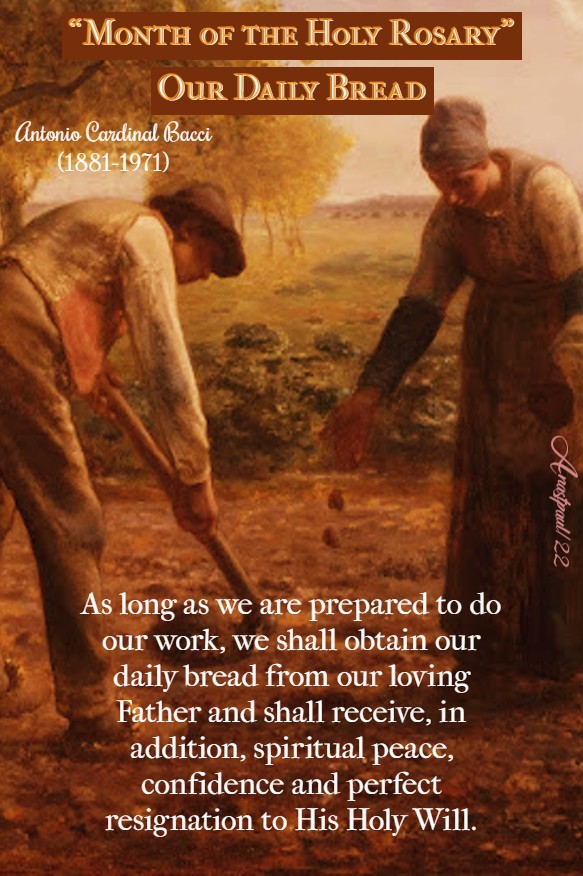
Thought for the Day – October – Meditations with Antonio Cardinal Bacci (1881-1971) – Scripture search here: https://www.drbo.org/
“Month of the Holy Rosary” Our Daily Bread
“When we pray to God to give us our daily bread, we should remember this beautiful sermon of Christ, (Cf Mt 6:25-34), which will remove all our anxiety and worldly worry. As long as we are prepared to do our work, we shall obtain our daily bread from our loving Father and shall receive, in addition, spiritual peace, confidence and perfect resignation to His Holy Will.”
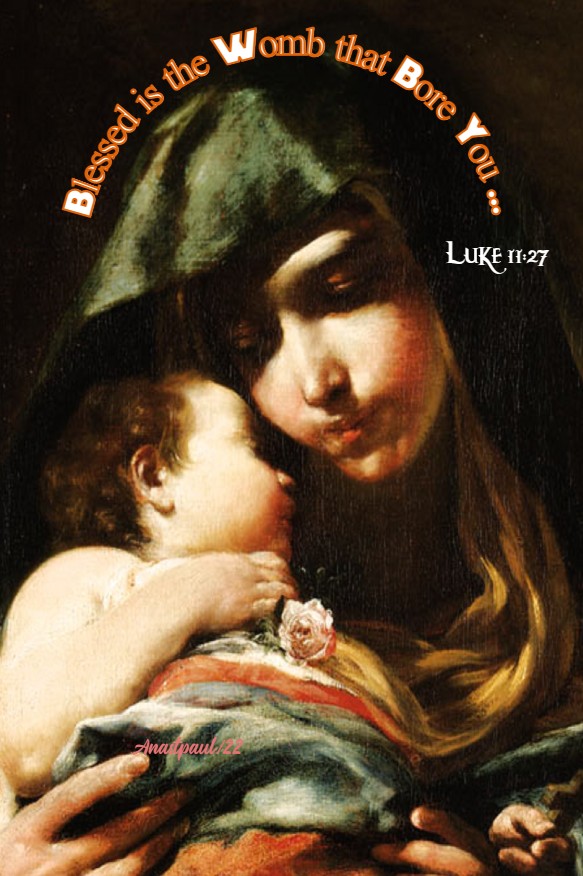
Quote/s of the Day – 22 October – Mary’s Day – Luke 11:27-28
“Blessed is the womb that bore You …”
Luke 11:27
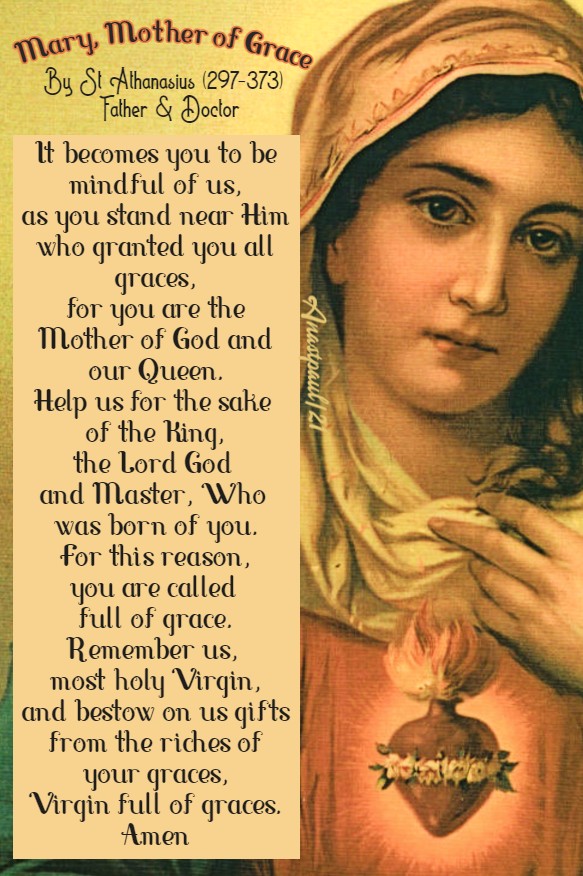
Mary, Mother of Grace St Athanasius (297-373) Father & Doctor of the Church
It becomes you to be mindful of us, as you stand near Him who granted you all graces, for you are the Mother of God and our Queen. Help us for the sake of the King, the Lord God and Master, Who was born of you. For this reason, you are called full of grace. Remember us, most holy Virgin, and bestow on us gifts from the riches of your graces, Virgin full of graces. Amen
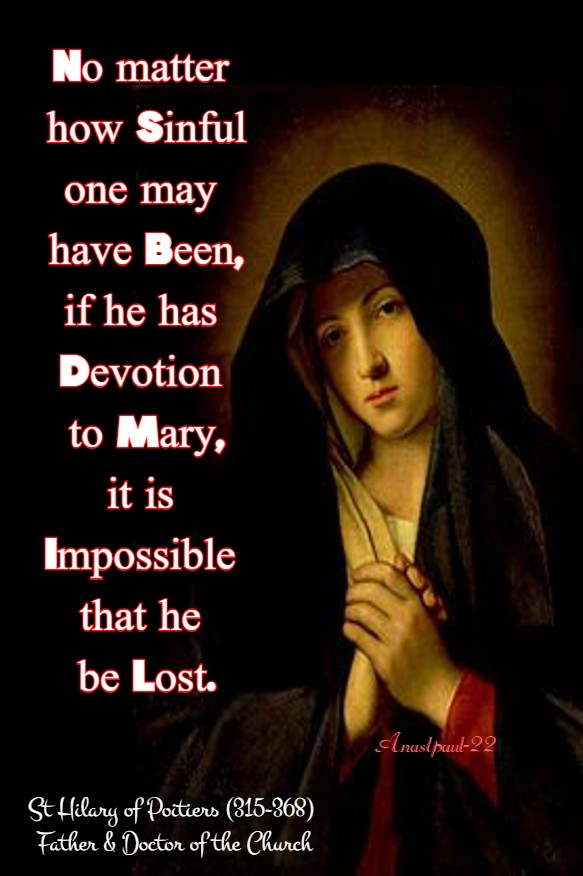
“No matter how sinful one may have been, if he has devotion to Mary, it is impossible that he be lost.”
St Hilary of Poitiers (315-368) Father & Doctor of the Church
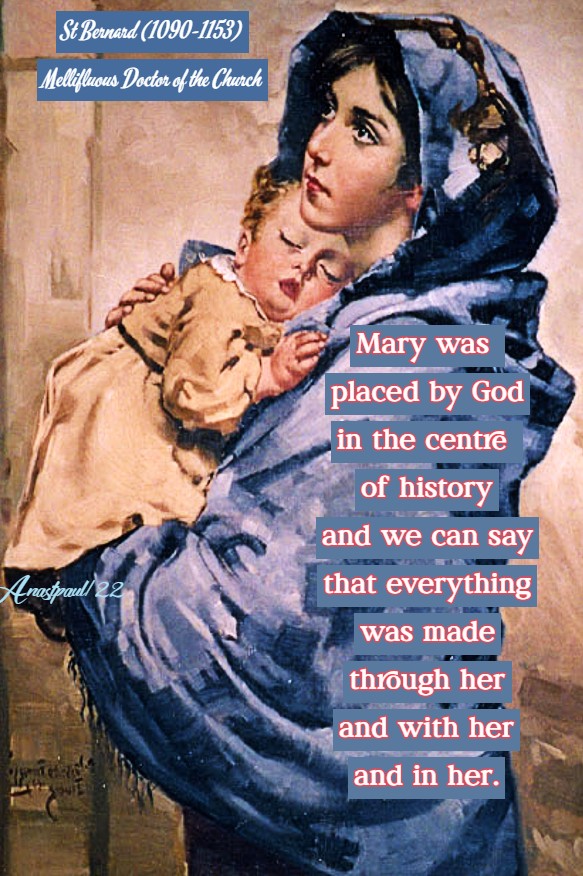
“Mary was placed by God in the centre of history and we can say that everything was made through her and with her and in her.”
“O great, O gentle, O most lovable Mary, thy Holy Name cannot be spoken without inflaming the heart. To those who love thee, it is unspeakable consolation and joy even to think of thee; thou art a sweet memory to those who honour thee.”
St Bernard (1090-1153) Mellifluous Doctor of the Church
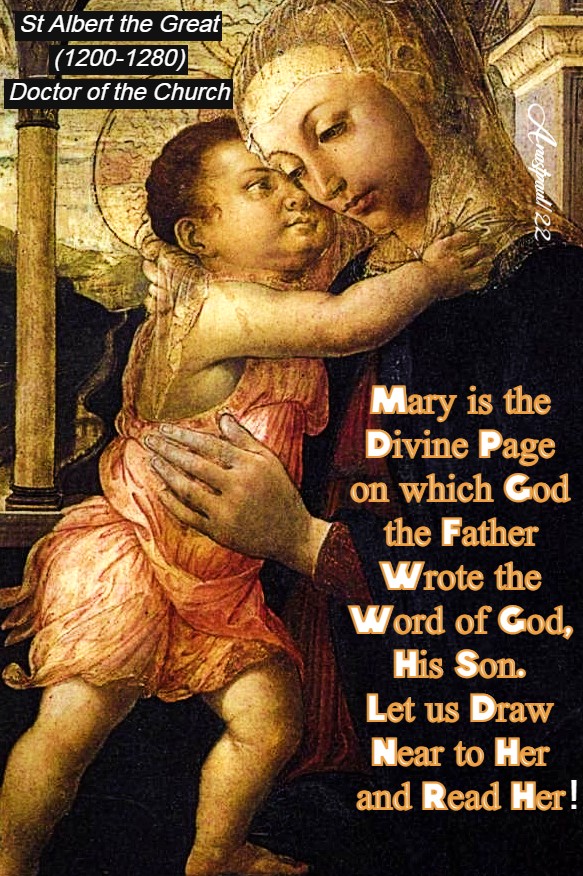
“Mary is the divine Page on which God the Father wrote the Word of God, His Son. Let us draw near to her and read her!”
St Albert the Great (1200-1280) Doctor of the Church
“No-one who shall invoke this Mother of Grace, with devotion and perseverance, can possibly perish forever.”
St John Eudes (1601-1680) “The Apostle of Two Hearts”
One Minute Reflection – 22 October – “The Month of the Most Holy Rosary and of the Angels” – Ecclesiasticus 24:14-16, Luke 11:27-28 – Scripture search here: https://www.drbo.org/
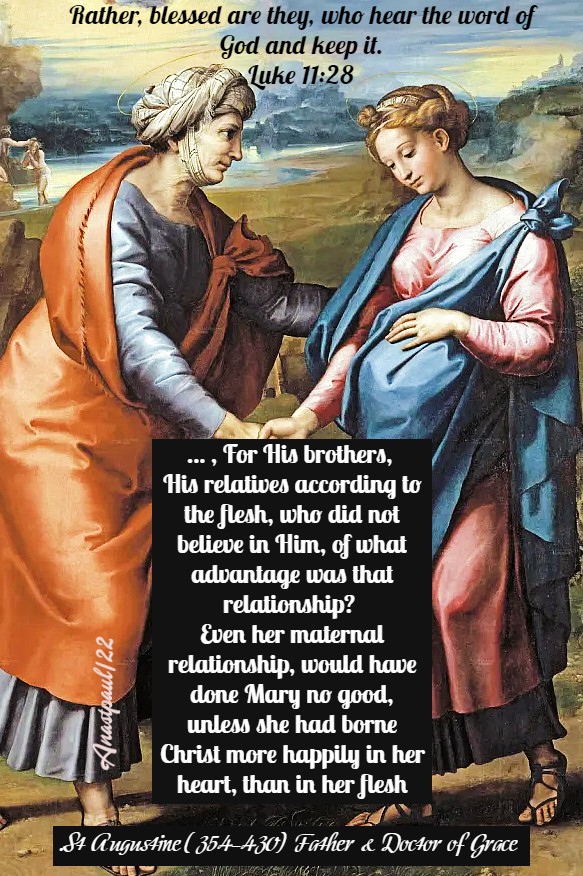
“Rather, blessed are they who hear the word of God and keep it.” – Luke 11:28
REFLECTION – “Mary was more blessed in accepting the faith of Christ than in conceiving the flesh of Christ. To someone who said, “Blessed is the womb that bore you,” he replied, “Rather, blessed are they who hear the word of God and keep it.”
Finally, for His brothers, His relatives according to the flesh, who did not believe in Him, of what advantage was that relationship? Even her maternal relationship, would have done Mary no good, unless she had borne Christ more happily in her heart, than in her flesh.” – St Augustine (354-430) Father & Doctor of Grace (Holy Virginity 3).
PRAYER – Grant us, Thou servants, O Lord God, we beseech Thee, to enjoy lasting health of mind and body and, by the intercession of glorious and blessed Mary, ever Virgin, may we be delivered from present sorrow and partake to the full of eternal happiness. Through Jesus Christ, Thy Son our Lord, Who lives and reigns with Thee, in the unity of the Holy Ghost, God, world without end. Amen (Collect).
Our Morning Offering – 22 October – “The Month of the Most Holy Rosary and of the Angels” – Mary’s Saturday
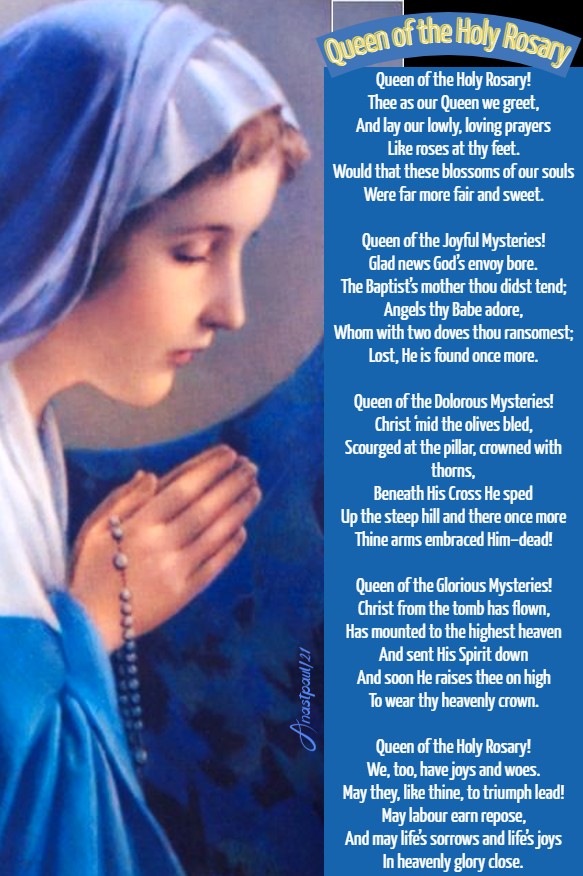
Queen of the Holy Rosary
Queen of the Holy Rosary! Thee as our Queen we greet, And lay our lowly, loving prayers Like roses at thy feet. Would that these blossoms of our souls Were far more fair and sweet.
Queen of the Joyful Mysteries! Glad news God’s envoy bore. The Baptist’s mother thou didst tend; Angels thy Babe adore, Whom with two doves thou ransomest; Lost, He is found once more.
Queen of the Dolorous Mysteries! Christ ‘mid the olives bled, Scourged at the pillar, crowned with thorns, Beneath His Cross He sped Up the steep hill and there once more Thine arms embraced Him–dead!
Queen of the Glorious Mysteries! Christ from the tomb has flown, Has mounted to the highest heaven And sent His Spirit down And soon He raises thee on high To wear thy heavenly crown.
Queen of the Holy Rosary! We, too, have joys and woes. May they, like thine, to triumph lead! May labour earn repose, And may life’s sorrows and life’s joys In heavenly glory close.
Taken from: Cyril Robert – Mary Immaculate: God’s Mother and Mine. 1946
Saint of the Day – 22 October – Saint Melanius (Died 314) Bishop of Rouen, Confessor, Miracle-worker, Hermit. Born c 229 near Cardiff, Wales and died on 11 November 314 in Hericourt, France of natural causes. Also known as – Mellon, Mallone, Mallonous, Mello, Mellonin, Mellouns, Mellonius.
The Roman Martyrology reads: “At Rouen, St Melanius, Bishop, who was Ordained by Pope St Stephen I and sent to Rouen to preach the Gospel.”
Melanius was the son of local Welsh pagan nobility. He was sent to Rome to accompany the tribute due from his Province to the Roman Emperor.
Whilst in Rome Melanius was converted to Christianity by Pope Stephen 1, who Ordained him Priest and later Consecrated him Bishop. Pope Stephen then sent him to be the Bishop of Rouen in France. In 311, after a long Episcopate, he retired to a Hermit’s cell at a place called Hericourt, where he died
History records that whilst Bishop of Rouen ,Melanius performed many miracles including an exorcism where he cast out devils in their often depicted form – as monkeys!
Melanius was buried at Rouen but, towards the end of the 8th Century, his remains were translated to a Church in Pontoise to protect them from Norse invaders. They remained there until they were lost or destroyed, during the French Revolution.
Both the Village of St Mellons and the Church, in Cardiff are dedicated to Melanius of Rouen. A fair is held on 22 October, his Feast Day in the Village of St Mellons. In Hericourt, where our Saint had lived the last few years as a Hermit, there is now a Church dedicated to him and another in Thiédeville and Plomelin, Brittany.
St Abericus Marcellus St Alodia of Huesca St Apollo of Bawit St Benedict of Macerac St Bertharius of Monte Cassino St Cordula
St Donatus of Fiesole (Died 874) Bishop of Fiesole, Confessor, Irish Nobleman, Monk, Priest, Poet, Writer, Scholar, Professor, Adviser to Emperors Louis the Pious and Lothair I, Founder of San Martino a Mensola Abbey and leader of two military expeditions against the Saracens. His Life: https://anastpaul.com/2020/10/22/saint-of-the-day-22-october-st-donatus-of-fiesole-died-874/
Bl Esclaramunda of Majorca St Hermes of Adrianople St Ingbert St Leothade of Auch
St Maroveus of Precipiano St Melanius (Died 314) Bishop, Confessor St Moderan of Rennes St Nepotian of Clermont St Nunctus of Mérida St Nunilo of Huesca St Philip of Adrianople St Philip of Fermo St Rufus of Egypt St Symmachus of Capua St Valerius of Langres St Verecundus of Verona
Martyrs of Heraclea – 4 Saints: A group of four clerics in Heraclea (modern Marmara Ereglisi, Turkey) who were arrested in the persecutions of Diocletian. They were imprisoned, abused and ordered to turn over all the scriptures that they had hidden from authorities; they refused and were executed together. Martyrs. – Eusebius, Hermes, Philip and Severus. They were burned at the stake in 304 in Adrianople (modern Edirne, Turkey).
Martyrs of Adianople: • Blessed Alexander • Blessed Anna • Blessed Elisabeth • Blessed Glyceria • Blessed Heraclius • Blessed Theodota
Thought for the Day – 21 October – Meditations with Antonio Cardinal Bacci (1881-1971)
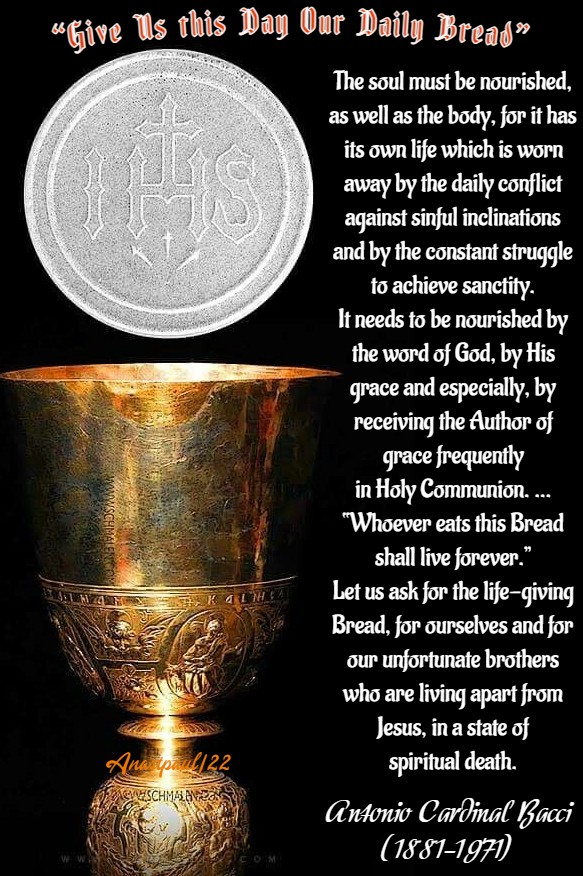
“Month of the Holy Rosary” “Give Us this Day Our Daily Bread”
“We should not ask only for food for the body but for spiritual nourishment. “Not by bread alone does man live” says Holy Scripture “but, by every word which comes forth from the mouth of God” (Mt 4:4; cf Deut 8:3). The soul must be nourished, as well as the body, for it has its own life which is worn away by the daily conflict against sinful inclinations and by the constant struggle to achieve sanctity. It needs to be nourished by the word of God, by His grace and especially, by receiving the Author of grace frequently in Holy Communion. We should ask, before anything else, for the grace of God and for the true Bread of Life, which descends from Heaven. “Whoever eats this Bread shall live forever.”
Let us ask for the life-giving Bread, for ourselves and for our unfortunate brothers who are living apart from Jesus, in a state of spiritual death. May daily Communion become, once more, the inexhaustible source of the spiritual life and of Christian virtue which it was in the early days of the Church.”
Quote/s of the Day – 21 October – “The Month of the Most Holy Rosary and of the Angels”
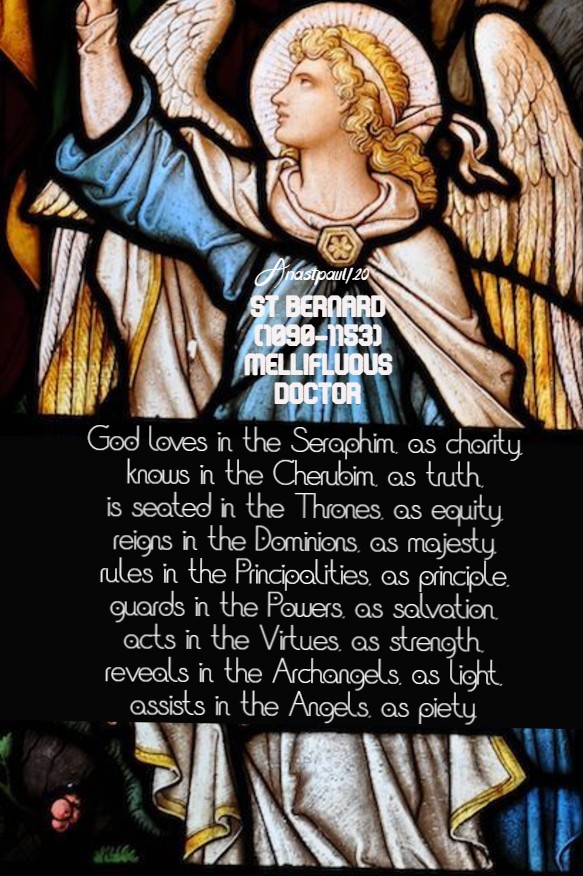
“God loves in the Seraphim, as charity, knows in the Cherubim, as truth, is seated in the Thrones, as equity, reigns in the Dominions, as majesty, rules in the Principalities, as principle, guards in the Powers, as salvation, acts in the Virtues, as strength, reveals in the Archangels, as light, assists in the Angels, as piety.”
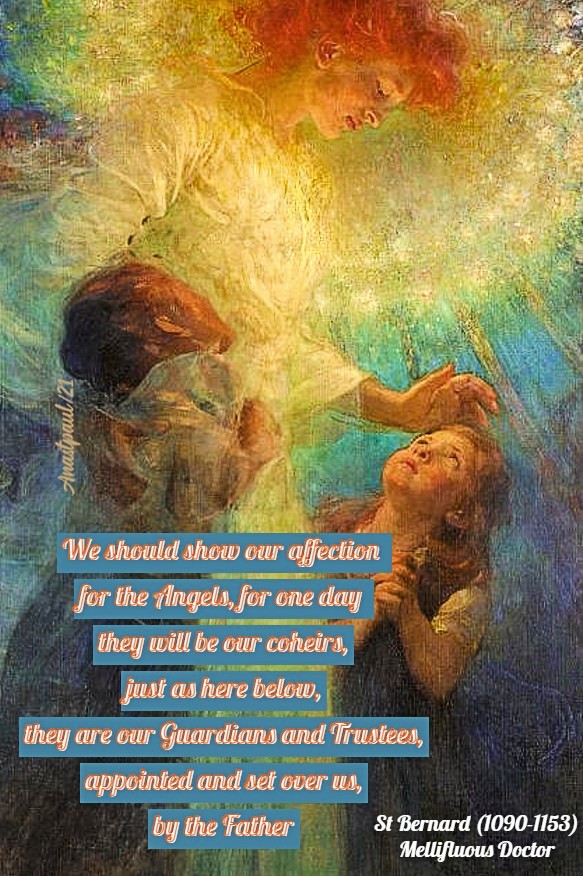
“We should show our affection for the angels, for one day, they will be our co-heirs, just as here below, they are our guardians and trustees, appointed and set over u,s by the Father.”
St Bernard (1090-1153) Mellifluous Doctor
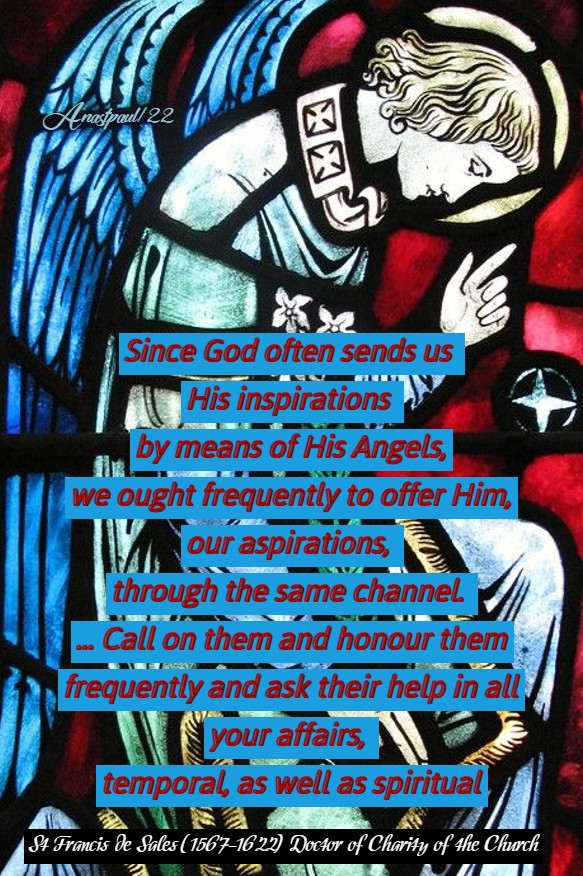
“Since God often sends us His inspirations by means of His Angels, we ought frequently to offer Him, our aspirations, through the same channel. … Call on them and honour them frequently and ask their help in all your affairs, temporal, as well as spiritual.”
St Francis de Sales (1567-1622) Doctor of Charity of the Church
“Recommend yourself to your Angel Guardian three times a day – in the morning. by the prayer “Angele Dei” in the evening, by the same prayer and during the day, when you visit the Altars in Churches. Remember that you are to be guided by your Angel, like a blind man who cannot see the dangers of the streets and trusts entirely. to the person who leads him.”
St Aloysius de Gonzaga (1568-1591)
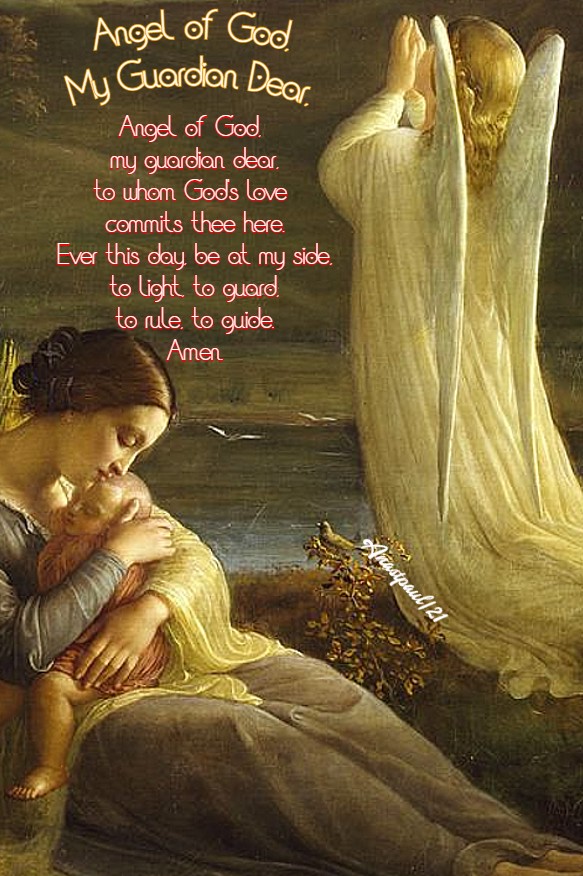
“Angel of God, my Guardian dear, to whom God’s love commits me here, ever this day (or night) be at my side, to light and guard, to rule and guide. Amen.”
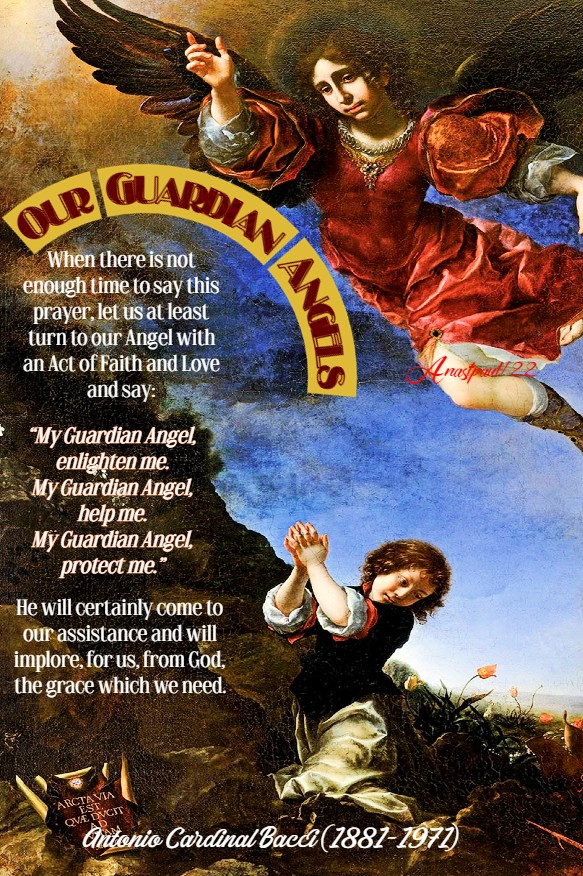
“When there is not enough time to say this prayer, let us at least turn to our Angel with an Act of Faith and Love and say: “My Guardian Angel, enlighten me. My Guardian Angel, help me. My Guardian Angel, protect me.” He will certainly come to our assistance and will implore, for us, from God, the grace which we need.”
Antonio Cardinal Bacci (1881-1971)
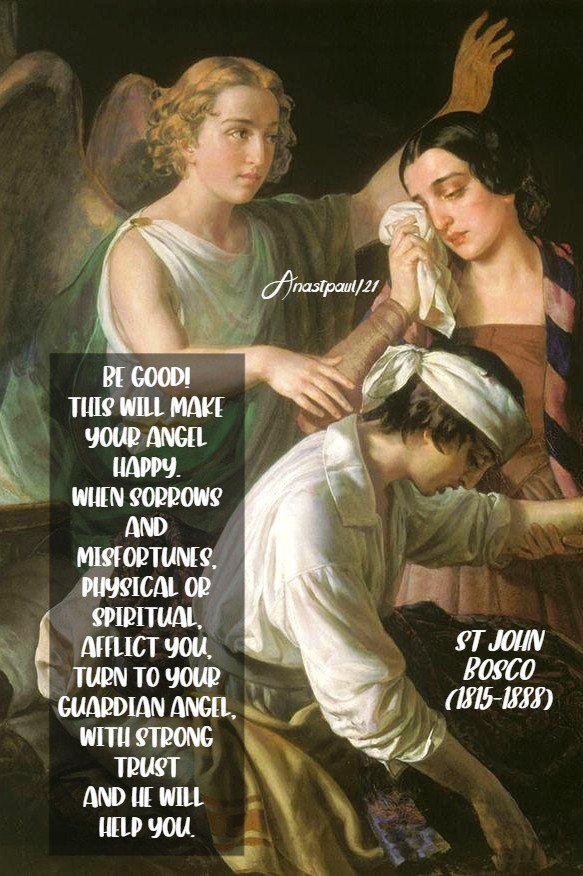
“Be good! This will make your angel happy. When sorrows and misfortunes, physical or spiritual, afflict you, turn to your Guardian Angel, with strong trust and he will help you.”
One Minute Reflection – 21 October – Saint Ursula and Companions: (Died c 238) Virgin Martyrs – Ecclesiasticus 45:1-6, Matthew 19:27-29 – Scripture search here: https://www.drbo.org/
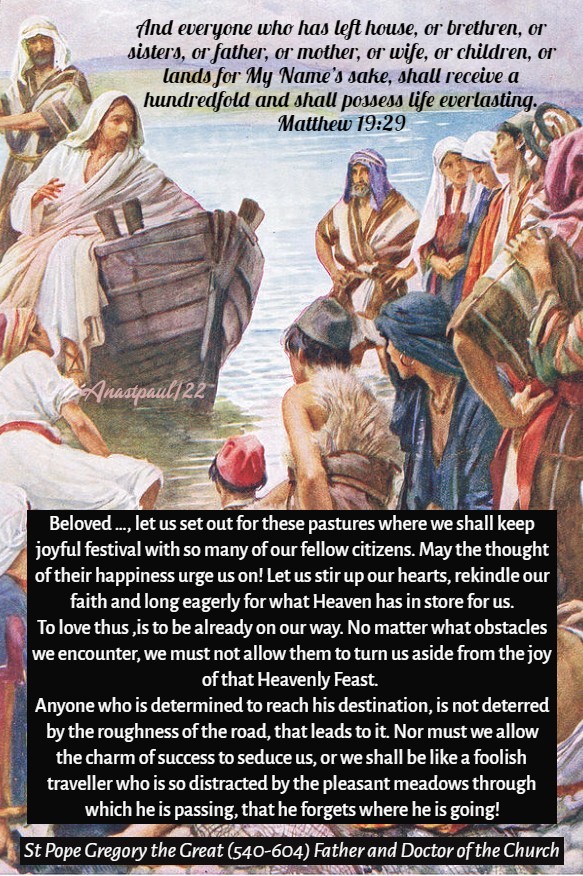
“And everyone who has left house, or brethren, or sisters, or father, or mother, or wife, or children, or lands for My Name’s sake, shall receive a hundredfold and shall possess life everlasting.” – Matthew 19:29
REFLECTION – “Again He says: My sheep hear My Voice and I know them; they follow Me and I give them eternal life. Shortly before this He had declared – If anyone enters the sheepfold through Me he shall be saved; he shall go freely in and out and shall find good pasture. He will enter into a life of faith; from faith he will go out to vision, from belief to contemplation and will graze in the good pastures of everlasting life.
So Our Lord’s sheep, will finally reach their grazing ground where all who follow Him, in simplicity of heart, will feed on the green pastures of eternity. These pastures are the spiritual joys of Heaven. There, the elect look upon the face of God with unclouded vision and feast at the Banquet of Life for evermore.
Beloved …, let us set out for these pastures where we shall keep joyful festival with so many of our fellow citizens. May the thought of their happiness urge us on! Let us stir up our hearts, rekindle our faith and long eagerly for what Heaven has in store for us. To love thus ,is to be already on our way. No matter what obstacles we encounter, we must not allow them to turn us aside from the joy of that Heavenly Feast. Anyone who is determined to reach his destination, is not deterred by the roughness of the road, that leads to it. Nor must we allow the charm of success to seduce us, or we shall be like a foolish traveller who is so distracted by the pleasant meadows through which he is passing, that he forgets where he is going!” – St Gregory the Great (540-604) – Pope and Great Western Father and Doctor of the Church (An excerpt from his Homily 14).
PRAYER – Grant, we beseech Thee, O Lord our God that we may never cease devoutly, to venerate the triumphs of Thy holy Virgins and Martyrs, Ursula and her companions that, as we cannot worthily shew forth their praises, yet we may continually honour them, with lowly service Through Jesus Christ, Thy Son our Lord, Who lives and reigns with Thee, in the unity of the Holy Ghost, God, world without end. Amen (Collect).
Our Morning Offering – 21 October – Friday, in Catholic Time, the Day of the Passion
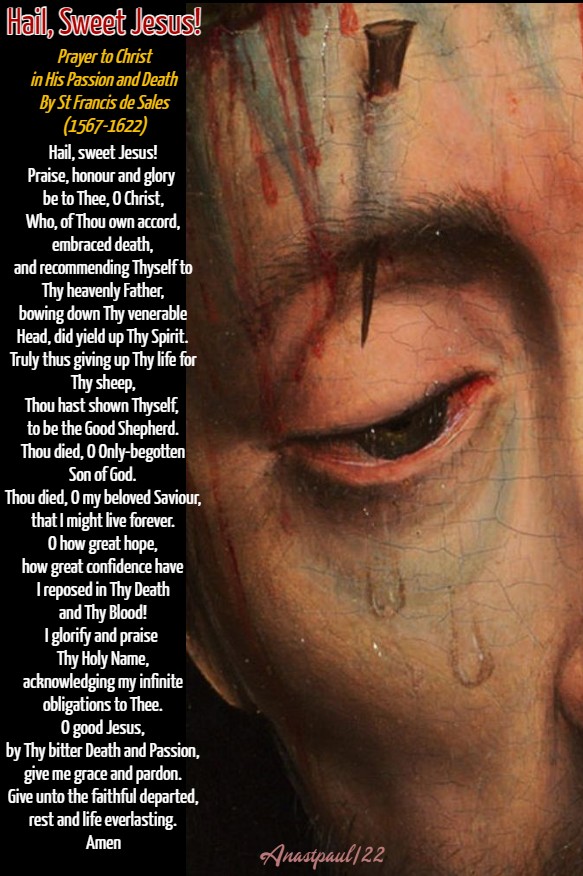
Hail, Sweet Jesus! Prayer to Christ in His Passion and Death By St Francis de Sales (1567-1622) Doctor of the Church
Hail, sweet Jesus! Praise, honour and glory be to Thee, O Christ, Who, of Thou own accord, embraced death, and recommending Thyself to Thy heavenly Father, bowing down Thy venerable Head, did yield up Thy Spirit. Truly thus giving up Thy life for Thy sheep, Thou hast shown Thyself, to be the Good Shepherd. Thou died, O Only-begotten Son of God. Thou died, O my beloved Saviour, that I might live forever. O how great hope, how great confidence have I reposed in Thy Death and Thy Blood! I glorify and praise Thy Holy Name, acknowledging my infinite obligations to Thee. O good Jesus, by Thy bitter Death and Passion, give me grace and pardon. Give unto the faithful departed, rest and life everlasting. Amen.
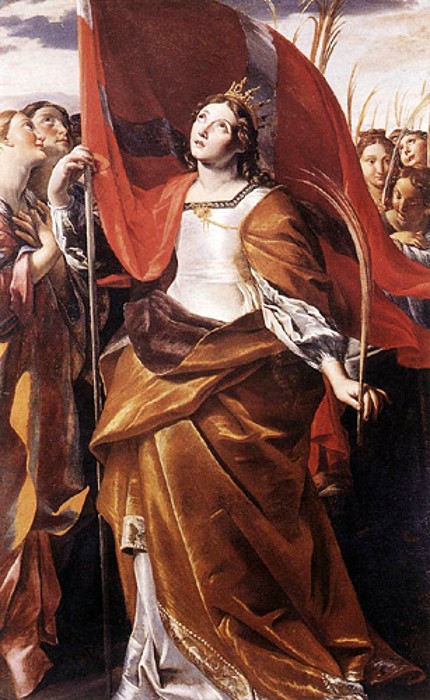
Saint of the Day – 21 October – Saint Ursula and Companions: (Died c 238) Virgin Martyrs. Died on 21 October 238 in Cologne, Germany. Patronages – British Virgin Islands, Catholic education (especially of girls), Cologne, Germany, of a holy death, students, school children, teachers, University of Paris.
St Ursula and Her Companions, Virgin Martyrs By Father Francis Xavier Weninger SJ (1805-1888)
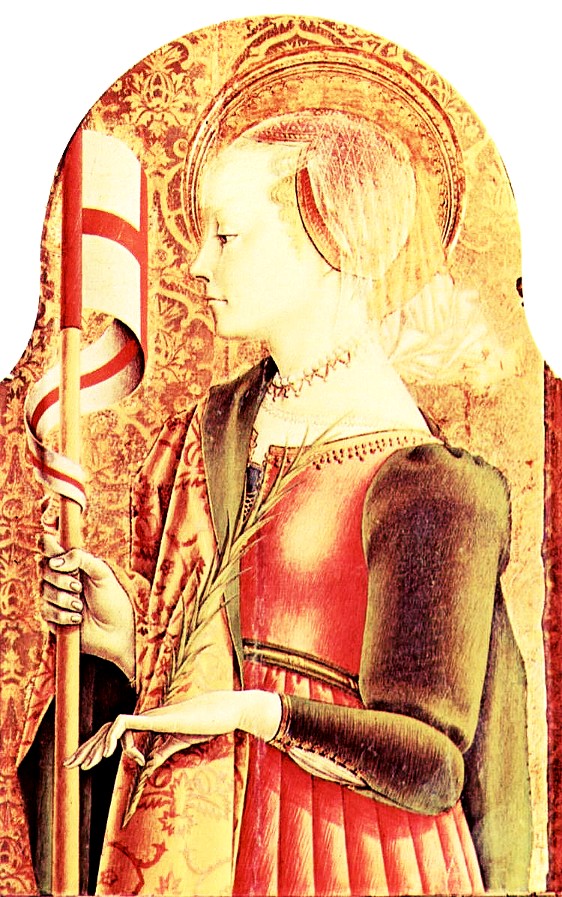
St Ursula by Bernardo Cavalino
To-day we commemorate the festival of St Ursula and her Companions. Although her life and Martyrdom are variously described, by different historians, we cannot, therefor,e conclude, with some heretical writers, that she never existed and that all that has been told of her, are fables; for, although historians differ in some points, yet all unanimously declare that St Ursula and her Companions sacrificed their lives for their faith and, in defence of their Virginity. The short sketch we give of this Saint is partly taken from the works of the celebrated Cardinal Cesare Baronius (1538-1607), the Historian and partly from the Roman Breviary.
The Roman General, Maximus, surnamed Flavius Magnus Clemens, who commanded the Imperial armies in Britain, caused himself, in 383, to be proclaimed Emperor by his soldiers, while the lawful Emperor Gratian was still alive. After this, he crossed the sea, landed on the shores of France, took possession of a large portion of it, drove the inhabitants away and occupied the land with his soldiers, among whom, he divided the conquered towns and villages.
Conanus, a tributary King in Great Britain, who commanded one part of the army of this new Emperor, advised him to bring, from England, Virgins, who might be given in marriage to the new inhabitants of the conquered land, in order to keep them in obedience and fidelity to their master. Maximus, pleased with this advice, sent an embassy to Britain and stating his reasons, demanded a great number of maidens. The Britons hesitated not to consent to the new Emperor’s demand because many of his soldiers were Britons and because, Maximus had given them considerable property. They, therefore, assembled the desired number of Virgins, placed them in several boats and sent them to France. The noblest among them was Ursula, daughter of the King of Wales, who was to become the spouse of Conanus.
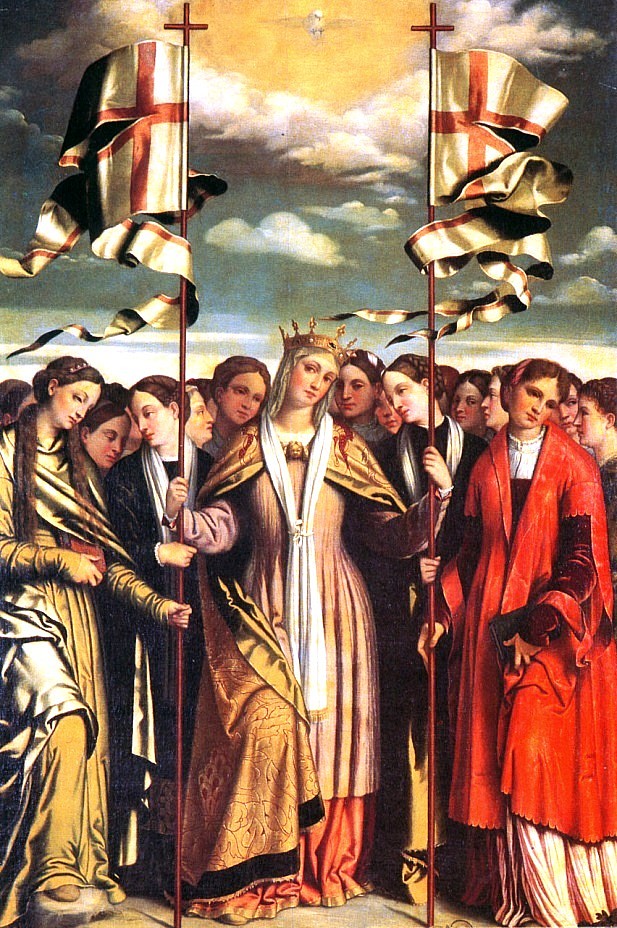
By Moretto, 1530
The wisdom of the Almighty, however, had decreed otherwise; for, whilst the ships sailed from England to France, contrary winds arose, which drove them all to the shores of Germany. It is believed that they went up the Rhine and landed in the neighbourhood of Cologne.
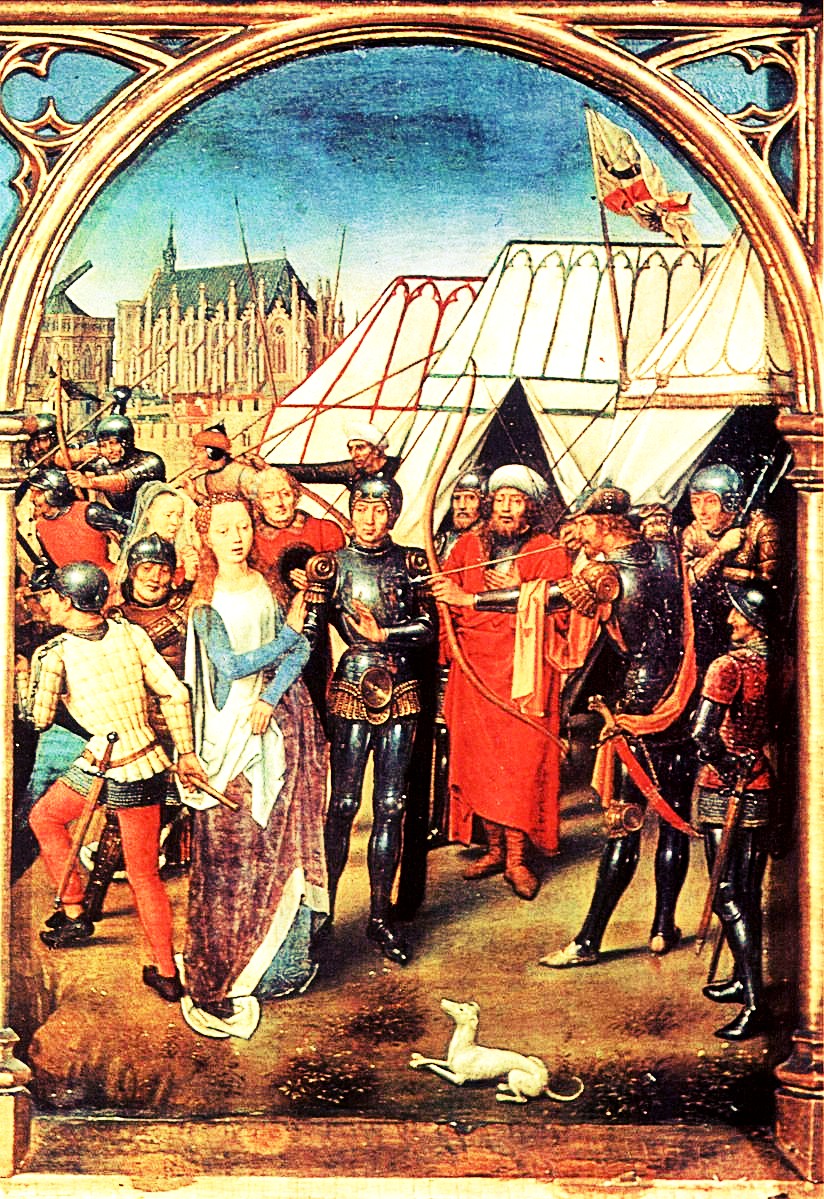
Hans Memling, The Martyrdom of Saint Ursula
At that period, the wild Huns happened to be there, whom the Emperor Gratian had called to his aid against Maximus, who resided for some time at Treves. When these heathens beheld this large number of Virgins, they forced them to land and would have sacrificed them to their lust. Ursula, however, the Christian heroine, exhorted all, rather to suffer the most bitter death than consent to evil. All followed her admonition and courageously resisted the savages, who, in their furious rage, killed the defenceless Virgins with swords, arrows and clubs. Only one of the maidens, Cordula, had escaped and concealed herself during the massacre but repenting of her timidity, she revealed herself on the following day and last of all, she received the Crown of Martyrdom.
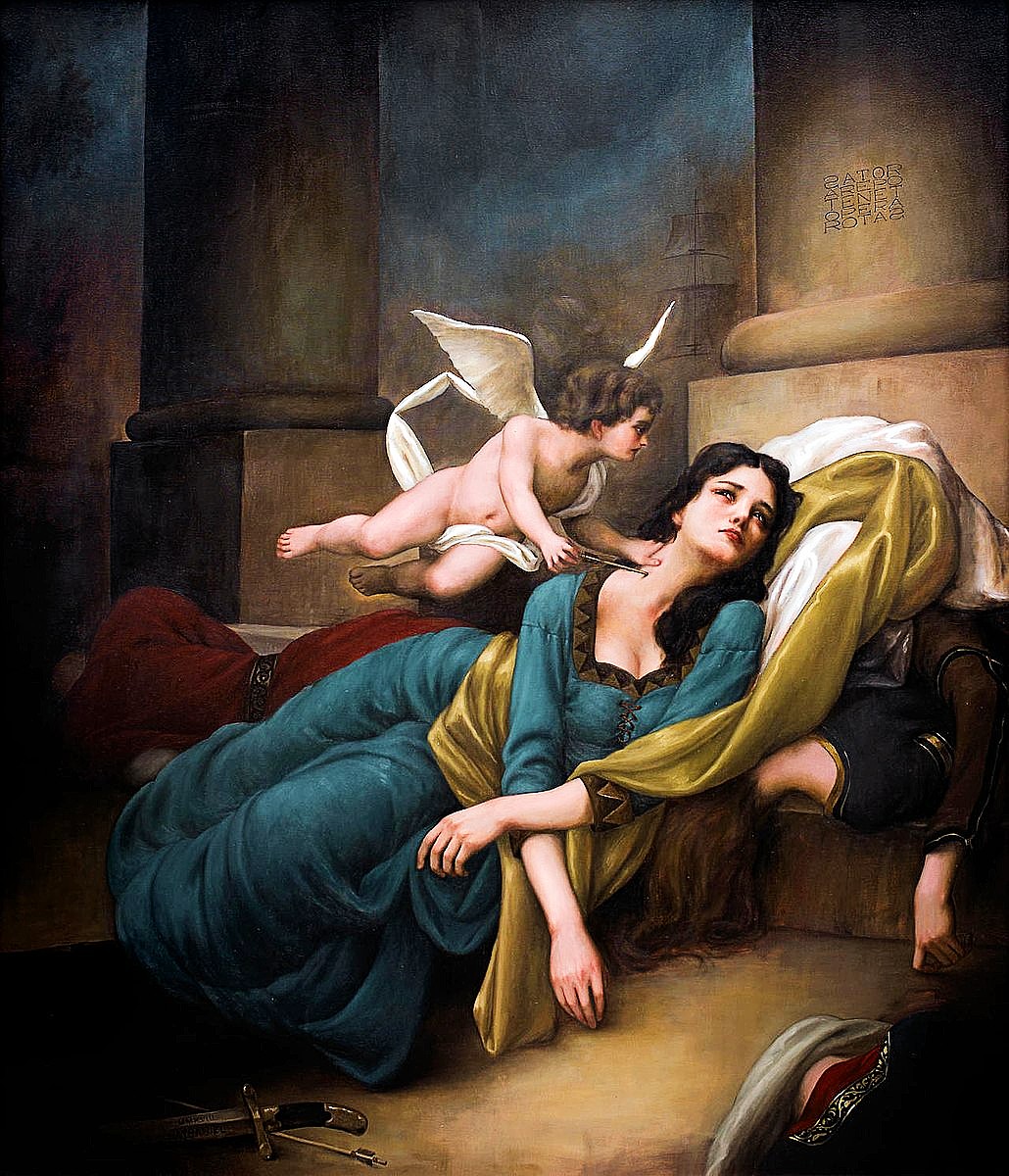
The Martyrdom of St Ursula by Nat Lamina
The bodies of the holy Virgins were buried, with great solemnities, by the inhabitants of Cologne. Their memory, however,and the veneration with which they were regarded, were not confined within the walls of this town but spread over the whole Christian world.
St Ursula encouraged and exhorted her companions to preserve their purity and to give up lif, rather than lose it. Heed it well, the Saint’s advice and exhort others to preserve purity.
Who, therefore, are those that tempt others to violate it? St Bonaventure says: “The mouth of him who tempts others to impurity, is the mouth of a devil!” Hence, those who tempt to impurity are incarnate devils or the devil speaks through their mouths. How senseless are you, therefore, when you listen to them and follow their advice. St Ursula and her Companions did not listen to the savage Huns and followed them not. Thus must you act and neither listen to them, nor obey them who would tempt you to the least sin against purity. “Shun and abhor,” says St Nilus, “all those who would prevent you from the practice of virtue and who tempt you to violate the laws of God and to sin against purity.” Detest them as you would the Evil One himself; for, in truth, “There is no difference between an evil spirit and a human being tempting you to impurity,” says St Cyril of Alexandria.
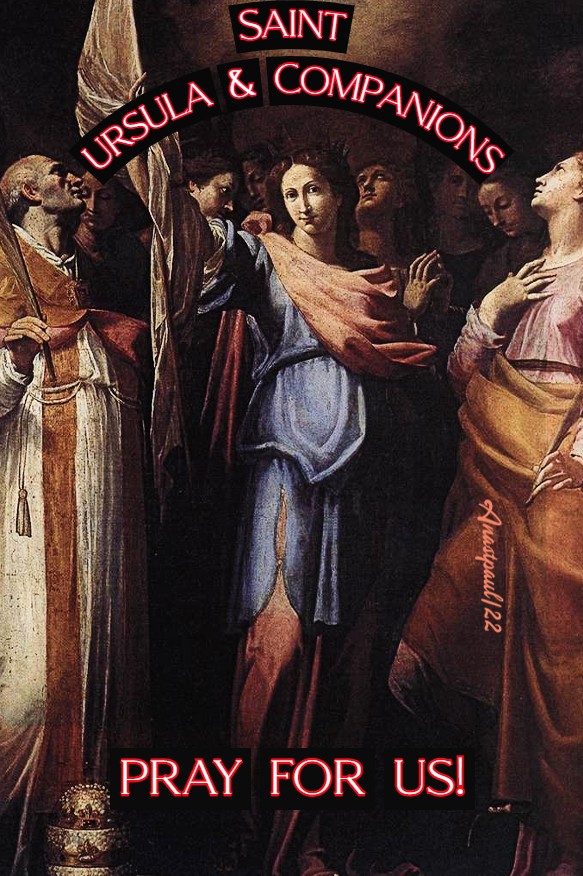
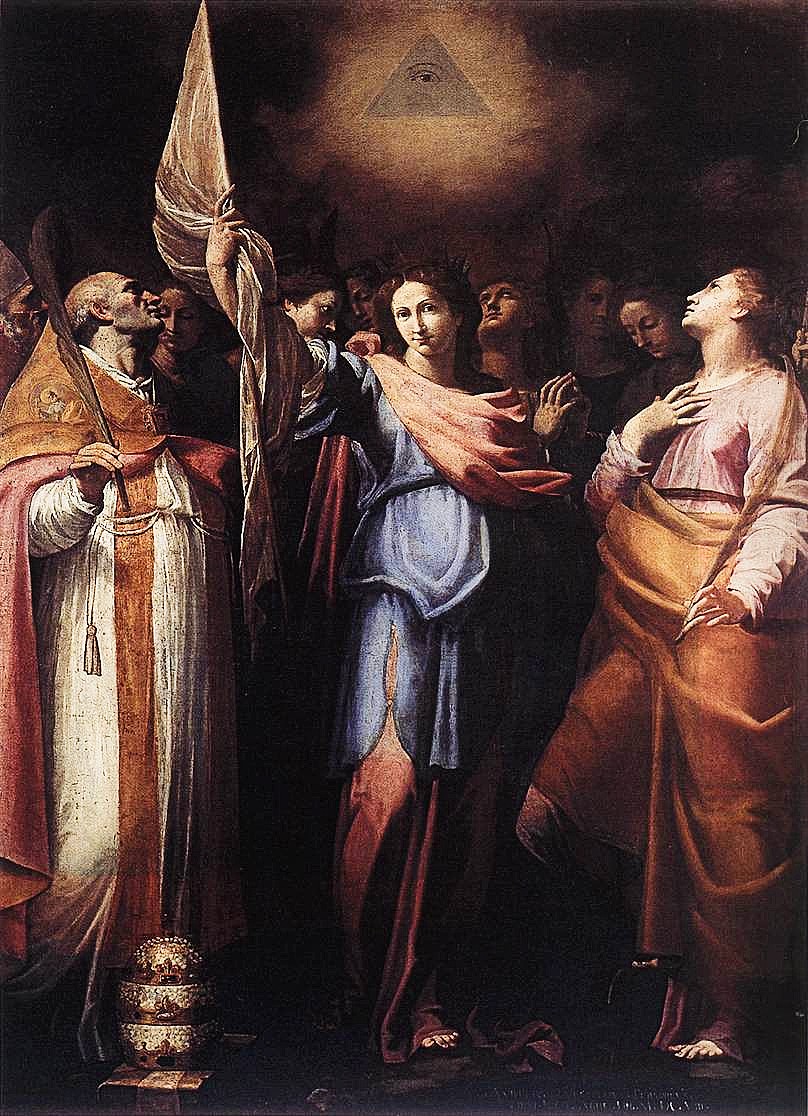
Bartholomeo Cavarozzi – St Ursula with Pope Symmachus and St Catherine of Alexandria
Saint Ursula and Companions: (Died c 238) Legendary Princess, the daughter of a Christian British King and Saint Daria. She travelled Europe in company of either 11 or 11,000 fellow maidens; the 11,000 number probably resulted from a misreading of the term “11M” which indicated 11 Martyrs, but which a copyist took for a Roman numeral. Ursula and her company were tortured to death to get them to renounce their faith, and old paintings of them show many of the women being killed in various painful ways. Namesake for the Ursuline Order, founded for the education of young Catholic girls and women. There are other Saints closely associated with Ursula and her story – travelling companions who were Martyred with her. They are: Antonia of Cologne Cesarius of Cologne Cyriacus of Cologne Daria Fiolanus of Lucca Ignatius of Cologne James of Antioch Mauritius of Cologne Pontius of Cologne Sulpitius of Ravenna Vincent of Cologne Travelling companion, but escaped the massacre: • Cunera led by a dove to the lost tomb of Ursula: • Cunibert of Cologne.
St Agatho the Hermit St Asterius of Périgord St Asterius of Rome St Berthold of Parma St Celina of Meaux St Cilinia St Condedus St Domnolus of Pouilly St Finian Munnu St Gebizo Bl Hilarion of Moglena St Hugh of Ambronay Bl Imana of Loss Bl Iulianus Nakaura St John of Bridlington St Letizia St Maurontus of Marseilles St Malchus of Syria
Thought for the Day – 20 October – Meditations with Antonio Cardinal Bacci (1881-1971)
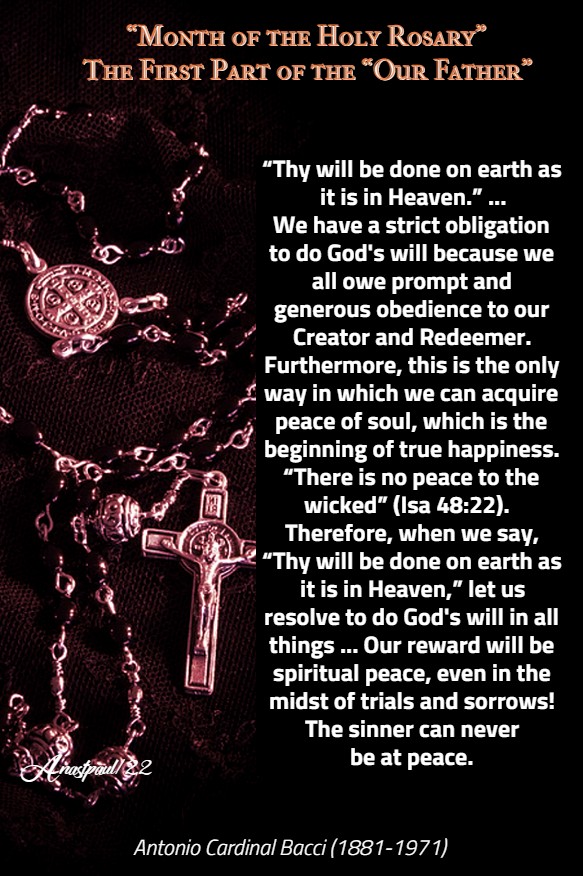
“Month of the Holy Rosary” The First Part of the “Our Father”
“Thy will be done on earth as it is in Heaven.” There is infinite and everlasting happiness in Heaven because all the blessed do God’s will in a spirit of love and find perfect peace in Him.
We have a strict obligation to do God’s will because we all owe prompt and generous obedience to our Creator and Redeemer. Furthermore, this is the only way in which we can acquire peace of soul, which is the beginning of true happiness. “There is no peace to the wicked” (Isa 48:22). The sinner can never be at peace. Therefore, when we say, “Thy will be done on earth as it is in Heaven,” let us resolve to do God’s will in all things in the manner of the blessed in Heaven. Our reward will be spiritual peace, even in the midst of trials and sorrows!”
One Minute Reflection – 20 October – St John Cantius (1390-1473) Confessor – James 2:12-17, Luke 12:35-40 – Scripture search here: https://www.drbo.org/
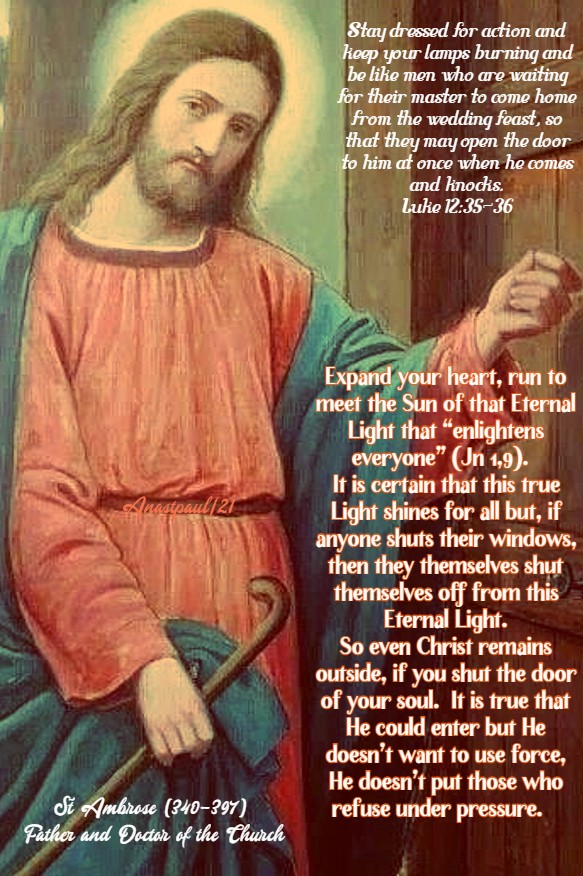
“Stay dressed for action and keep your lamps burning and be like men who are waiting for their master to come home from the wedding feast, so that they may open the door to him at once when he comes and knocks.” – Luke 12:35-36
REFLECTION – “God, the Word, stirs up the lazy and arouses the sleeper. For indeed, someone who comes knocking at the door is always wanting to come in. But it depends on us, if He does not always enter or always remain.,, May your door be open to Him who comes; open your soul, enlarge your spiritual capacities, that you may discover the riches of simplicity, the treasures of peace and sweetness of grace. Expand your heart; run to meet the Sun of that Eternal Light that “enlightens everyone” (Jn 1,9). It is certain, that this true Light shines for all but, if anyone shuts their windows, then they themselves, shut themselves off from this Eternal Light.
So even Christ remains outside, if you shut the door of your soul. It is true, that He could enter but He does not want to use force, He does not put those who refuse under pressure. Descended from the Virgin, born from her womb, He shines throughout the universe to give light to all. Those who long to receive the light, that shines with an everlasting brightness, open up to Him. No night comes to intervene. Indeed, the sun we see each day, gives way to night’s darkness but the Sun of Justice (Mal 3,20) knows no setting, for Wisdom is not overcome by evil.” – St Ambrose (340-397) Bishop of Milan and Father and Doctor of the Church (12th Sermon on Psalm 118).
PRAYER – Grant, we beseech Thee, Almighty God, that by following the example of blessed John, Thy Confessor, we may advance in a knowledge of holiness and, by showing pity for others, obtain Thou forgiveness through his merits. Through the Jesus Christ, Thy Son our Lord, Who lives and reigns with Thee, in the unity of the Holy Ghost, God, world without end. Amen (Collect).
Our Morning Offering – 20 October – Feast of Mater Admirabilis / Mother Most Admirable (1844)
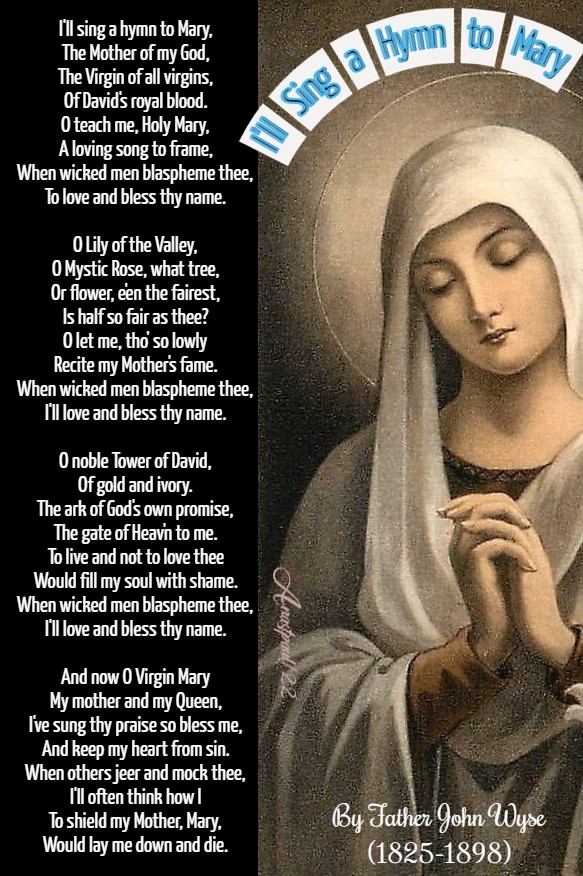
I’ll Sing a Hymn to Mary By Father John Wyse (1825-1898) Irish Priest and Hymn writer
I’ll sing a hymn to Mary, The Mother of my God, The Virgin of all virgins, Of David’s royal blood. O teach me, Holy Mary, A loving song to frame, When wicked men blaspheme thee, To love and bless thy name.
O Lily of the Valley, O Mystic Rose, what tree, Or flower, e’en the fairest, Is half so fair as thee? O let me, tho’ so lowly Recite my Mother’s fame. When wicked men blaspheme thee, I’ll love and bless thy name.
O noble Tower of David, Of gold and ivory. The ark of God’s own promise, The gate of Heav’n to me. To live and not to love thee Would fill my soul with shame. When wicked men blaspheme thee, I’ll love and bless thy name.
When troubles dark afflict me In sorrow and in care, Thy light doth ever guide me O beauteous Morning Star. Lo, I’ll be ever ready Thy goodly help to claim, When wicked men blaspheme thee, To love and bless thy name.
The saints are high in glory, With golden crowns so bright; But brighter far is Mary, Upon her throne of light. Oh that which God did give thee, Let mortal ne’er disclaim; When wicked men blaspheme thee, I’ll love and bless thy name.
But in the crown of Mary, There lies a wonderous gem, As Queen of all the Angels, Which Mary shares with them; No sin hath e’er defiled thee, So doth our faith proclaim; When wicked men blaspheme thee, I’ll love and bless thy name.
And now O Virgin Mary My mother and my Queen, I’ve sung thy praise so bless me, And keep my heart from sin. When others jeer and mock thee, I’ll often think how I To shield my Mother, Mary, Would lay me down and die.
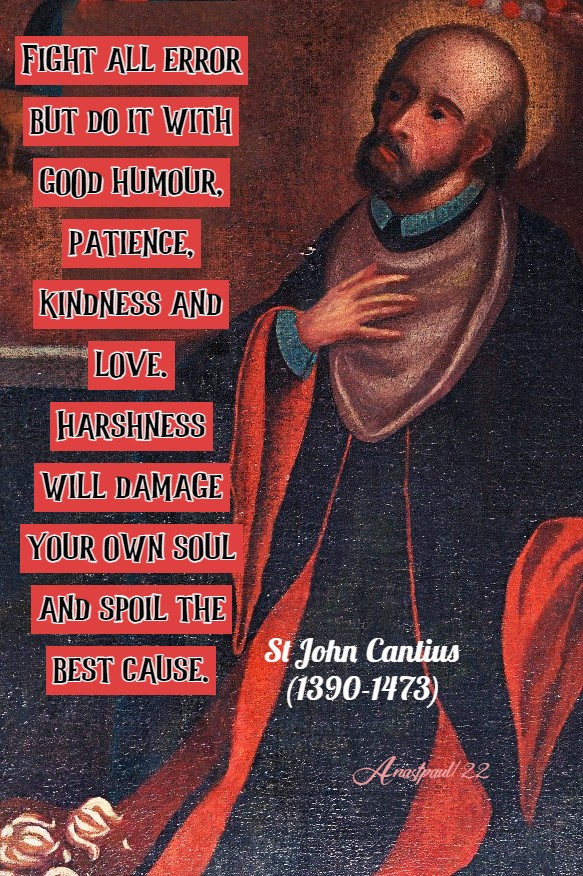
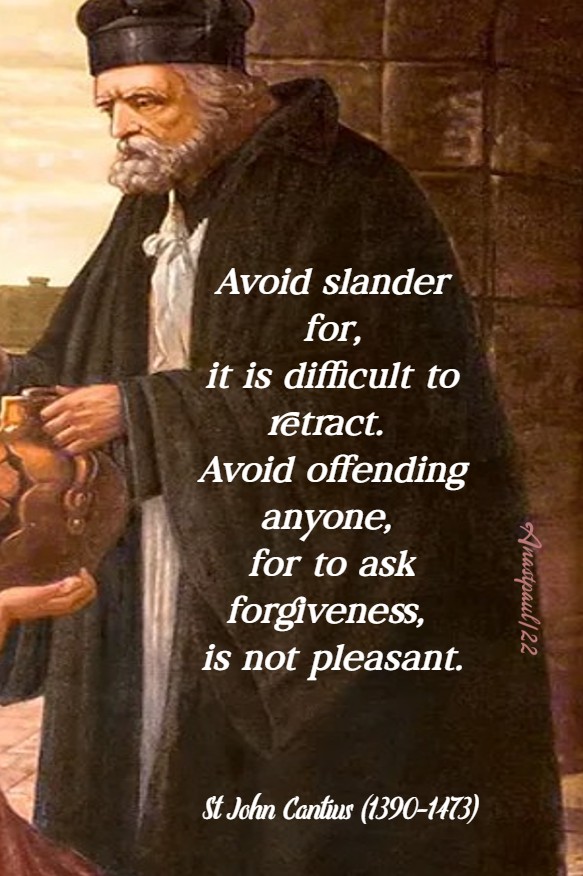
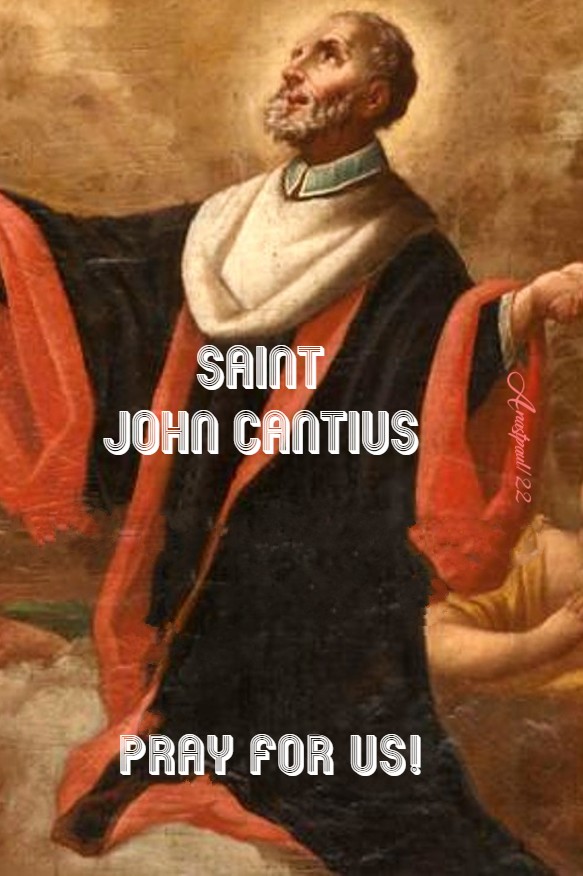
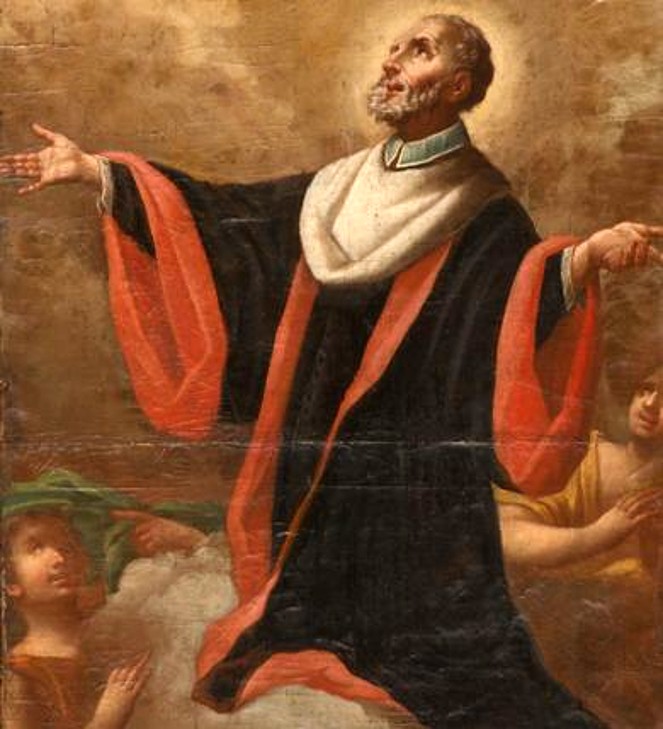
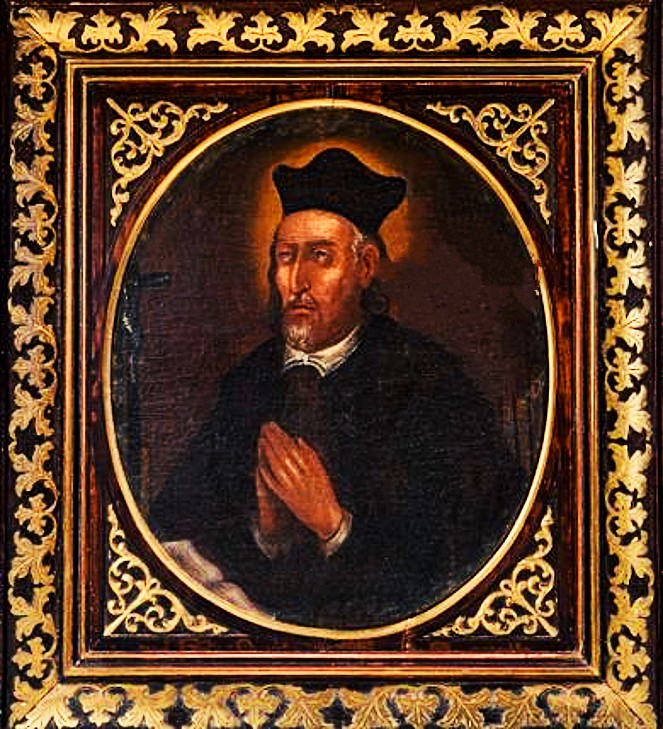
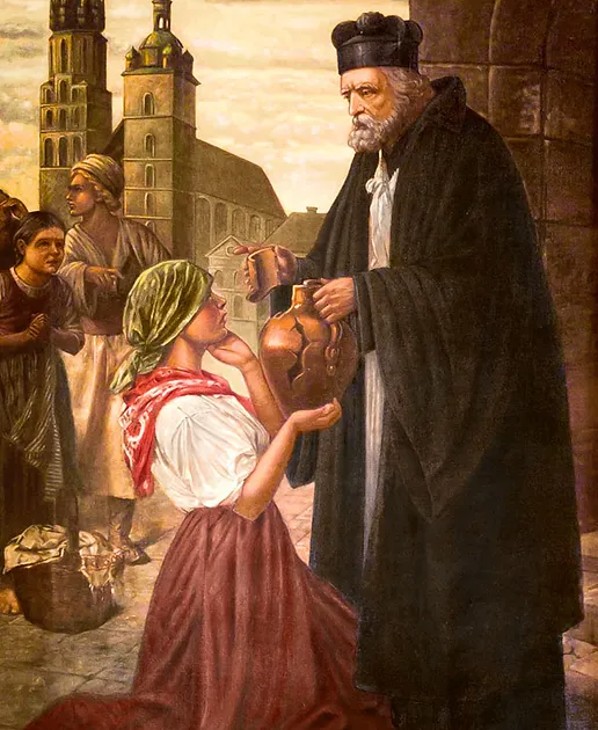
Saint of the Day – 20 October – St John Cantius (1390-1473) Confessor, Priest, Theologian, Scholastic Philosopher, Physicist, Teacher, Philosopher, Apostle of Charity – Patron of Poland and Lithuania.
St John Cantius, Confessor From the Liturgical Year, 1903
Kenty, the humble village of Silesia which witnessed the birth of St John, owes its celebrity entirely to him. The Canonisation of this holy Priest, who, in the fifteenth century, had illustrated the University of Cracow by his virtues and science, was the last hope of expiring Poland. It took place in the year 1767. Two years earlier, it was at the request of this heroic nation that Clement XIII had issued the first Decree sanctioning the celebration of the Feast of the Sacred Heart. When enrolling John Cantius among the Saints, the magnanimous Pontiff expressed, in moving terms, the gratitude of the Church towards that unfortunate people and rendered to it, before shamefully forgetful Europe, a supreme homage (Bulla Canonisationis). Five years later Poland was dismembered.
John was born at Kenty, a town in the Diocese of Cracow and hence, his surname Cantius. His parents were pious and honourable persons, by name Stanislaus and Anna. From his very infancy, his sweetness of disposition, innocence and gravity, gave promise of very great virtue. He studied philosophy and theology at the University of Cracow and, taking all his degrees, proceeded to professor and doctor. He taught sacred science for many years, enlightening the minds of his pupils and enkindling in them, the flame of piety, no less by his deeds, than by his words.
When he was Ordained Priest, he relaxed nothing of his zeal for study, but increased his ardour for Christian perfection. Grieving exceeingly, over the offences everywhere committed against God, he strove to make satisfaction on his own behalf and that of the people, by daily offering the unbloody Sacrifice with many tears. For several years he had charge of the Parish of Ukusi, which he administered in an exemplary manner but, fearing the responsibility of the cure of souls, he resigned his post and, at the request of the University, resumed the professor’s chair.
Whatever time remained over from his studies, he devoted partly to the good of his neighbour, especially by holy preaching; partly to prayer, in which he is said to have been sometimes favoured with heavenly visions and communications. He was so affected by the Passion of Christ, that he would spend whole nights without sleep, in the contemplation of it and, in order the better to cultivate this devotion, he undertook a pilgrimage to Jerusalem. While there, in his eagerness for Martyrdom he boldly preached Christ Crucified, even to the Turks. Four times he went to Rome on foot and carrying his own baggage, to visit the threshold of the Apostles, in order to honour the Apostolic See, to which he was earnestly devoted and also, (as he used to say), to save himself from Purgatory, by means of the indulgences there daily to be gained. On one of these journeys he was robbed by brigands. When asked by them whether he had anything more, he replied in the negative but afterwards, remembering that he had some gold pieces sewed into his cloak, he called back the robbers, who had taken to flight and offered them the money. Astonished at the holy man’s sincerity and generosity, they restored all they had taken from him!
After St Augustine’s example, he had verses inscribed on the walls in his house, warning others, as well as himself, to respect the reputation of their neighbours. He fed the hungry from his own table and clothed the naked, not only with garments, bought for the purpose but even with his own clothes and shoes; on these occasions hewould lower his cloak to the ground, so as not to be seen walking home barefoot. He took very little sleep and that, on the ground. His clothing was only sufficient to cover him,and his food to keep him alive. He preserved his virginal purity, like a lily among thorns, by using a rough hair-shirt, disciplines and fasting and, for about thirty-five years before his death, he abstained entirely from flesh-meat.
At length, full of days and of merits, he prepared himself long and diligently for death, which he felt drawing near and that nothing might be a hindrance to him, he distributed all that remained in his house, to the poor. Then, strengthened with the Sacraments of the Church and desiring to be dissolved and to be with Christ, he passed to Heaven on Christmas Eve. He worked many miracles both in life and after death. His body was carried to St Anne’s, the Church of the University and there, honourably interred. The people’s veneration for the Saint and the crowds visiting his tomb, increased daily and he is honoured as one of the chief Patrons of Poland and Lithuania. As new miracles continued to be wrought, Pope Clement XIII. solemnly enrolled him among the Saints, on the 17th of August, in the year 1767.
Mater Admirabilis / Mother Most Admirable (1844) – 20 October:
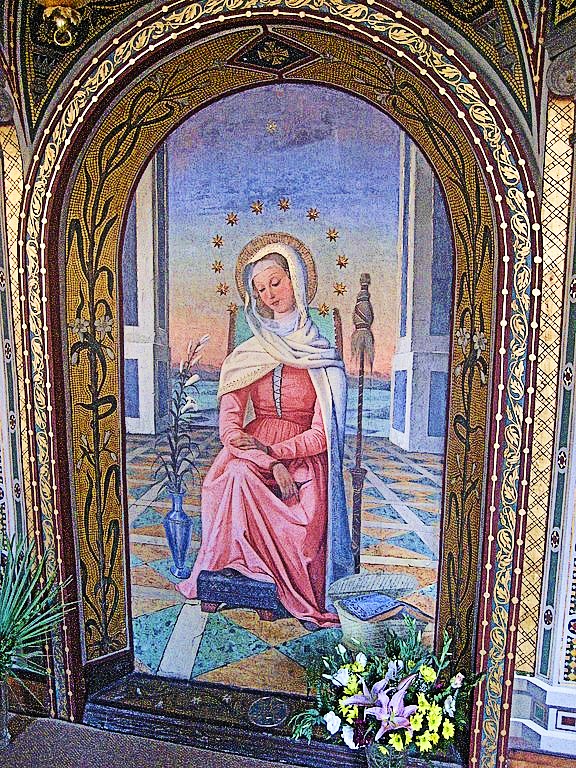
Mater Admirabilis is a fresco depicting the Virgin Mary, in the Monastery of the Trinità dei Monti, in Rome. It was painted by a young French artist, Pauline Perdrau and has been associated with several miracles.
In 1844, a generation after the Society of the Sacred Heart was founded, Pauline Perdrau, a young novice, took it upon herself to produce a fresco of the Virgin Mary on a wall in a recreational area of the convent, Trinità dei Monti in Rome. As a child, Pauline had had a favourite pink dress, so she chose to paint Mary as a young woman in a rose-coloured dress rather than a matronly Madonna in blue. The lily at Mary’s side represented her purity; the distaff and spindle, her love of work; a book, her dedication to study. Unfortunately, although Pauline put herself wholeheartedly into her task, her inexperience with the technique of fresco did not produce the beautiful soft painting for which she had hoped. The too vivid colours, had to be hidden behind a drape. Pope Pius IX, upon visiting the Convent on 20 October 1846, requested that the curtain be removed. Seeing the fresco of our Lady, its colours inexplicably softened, he exclaimed, “Mater Admirabilis!” Miracles soon began with the cure of a missionary Priest who had completely lost the power of speech. Permission was given to offer Mass before the miraculous picture and to celebrate the Feast of Mater Admirabilis on 20 October.
Blessed James Strepar OFM (c 1340-1409) Archbishop of Halicz, Poland from 1392 until his death Religious Priest of the Order of Friars Minor, Missionary. St Pius X proclaimed Blessed James, along with St Anthony of Padua, the Patrons of the Conventual Franciscan Order of Krakow Province. He was given the title of “Protector of the Kingdom, Defender and Guardian of the Homeland,” for his exceptional merits, including civil ones. Such was he considered by all. He was Canonised by by Pope Pius VI on 11 September 1791. His body is incorrupt. His Life: https://anastpaul.com/2020/10/20/saint-of-the-day-20-october-blessed-james-strepar-ofm-c-1340-1409/
St Leopardo of Osimo St Lucas Alonso Gorda St Martha of Cologne St Maximus of Aquila St Orora St Saula of Cologne St Sindulphus of Rheims St Usthazanes St Vitalis of Salzburg
Thought for the Day – 19 October – Meditations with Antonio Cardinal Bacci (1881-1971)
“Month of the Holy Rosary” The “Our Father”
“God is truly our Father because He created us from nothing and because, He caused us to be born again through the Incarnation of His Only-begotten Son and the work of the Redemption. In this way, He is doubly our Father.
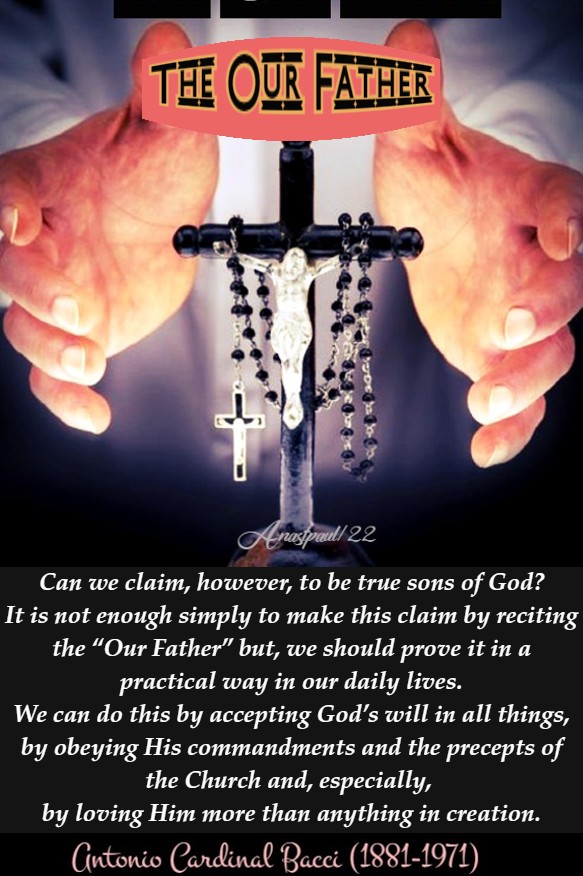
Can we claim, however, to be true sons of God? It is not enough simply to make this claim by reciting the “Our Father” but, we should prove it in a practical way in our daily lives. We can do this by accepting God’s will in all things, by obeying His commandments and the precepts of the Church and, especially, by loving Him more than anything in creation.”
Quote/s of the Day – 19 October – St Peter of Alcantara OFM (1499-1562) Confessor
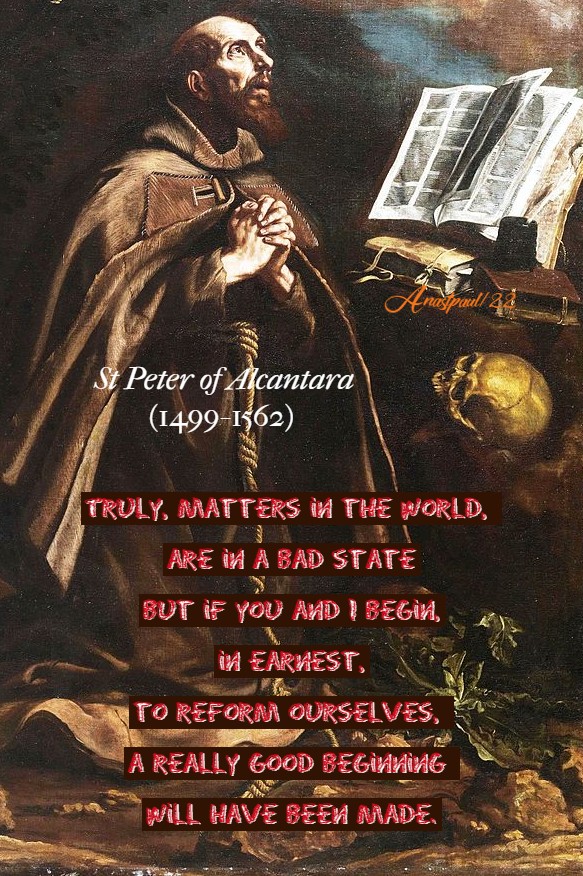
“Truly, matters in the world, are in a bad state but if you and I begin, in earnest, to reform ourselves, a really good beginning will have been made.”
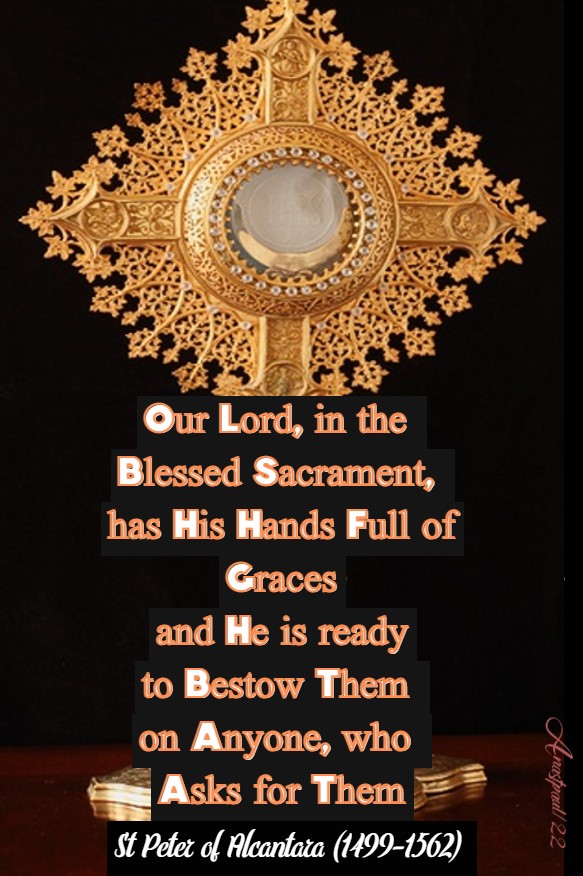
“Our Lord, in the Blessed Sacrament, has His Hands full of graces and He is ready to bestow them on anyone, who asks for them”
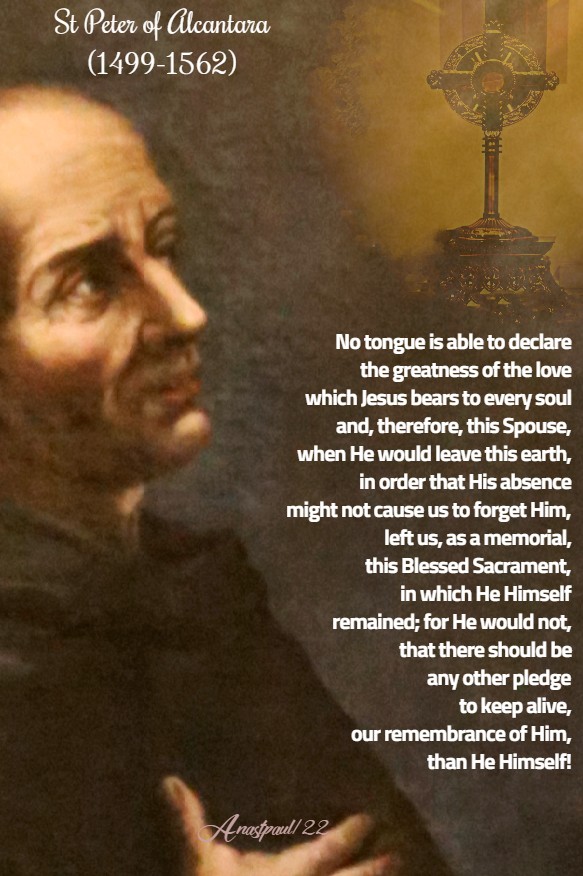
“No tongue is able to declare the greatness of the love which Jesus bears to every soul and, therefore, this Spouse, when He would leave this earth, in order that His absence might not cause us to forget Him, left us, as a memorial, this Blessed Sacrament, in which He Himself remained; for He would not, that there should be any other pledge to keep alive, our remembrance of Him, than He Himself!”
One Minute Reflection – 19 October – St Peter of Alcantara OFM (1499-1562) Confessor – Philippians 3:7-12, Luke 12:32-34 – Scripture search here: https://www.drbo.org/
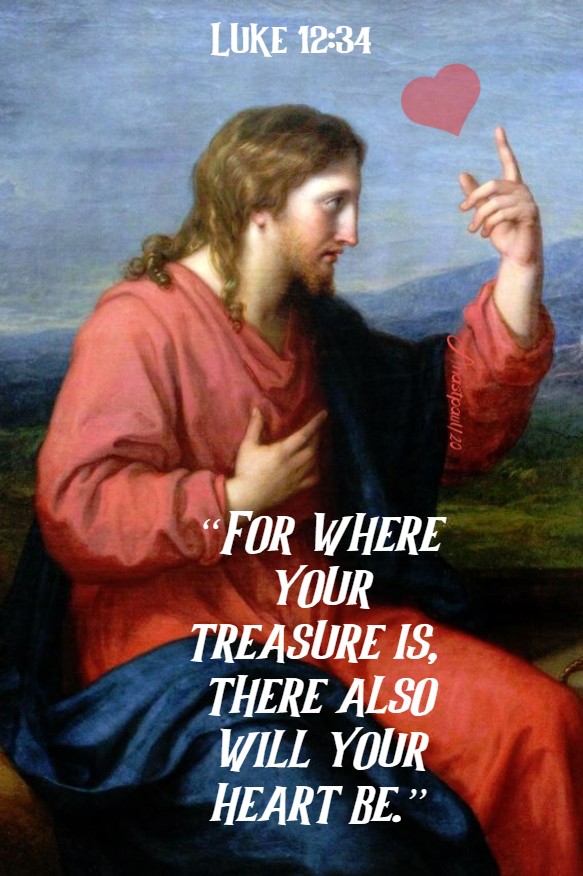
“For where your treasure is, there also will your heart be.” – Luke 12:34
REFLECTION – “For the man who loves God it is sufficient to please the One he loves; and, there is no greater recompense to be sought, than the loving itself. For love is from God, by the very fact, that God Himself is love. The good and chaste soul is so happy to be filled with Him that it desires to take delight in nothing else. For what the Lord says is very true: – ‘Where your treasure is, there also will your heart be.’
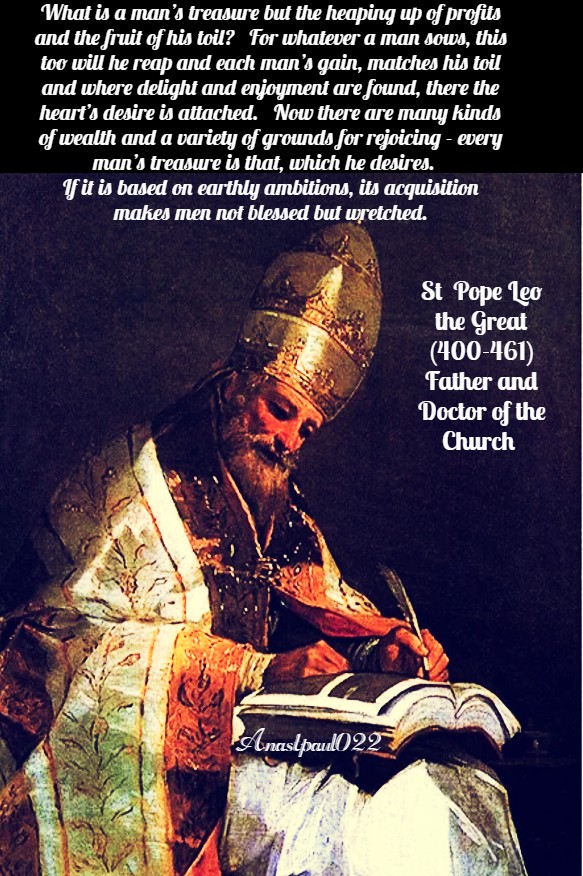
What is a man’s treasure but the heaping up of profits and the fruit of his toil? For whatever a man sows, this too will he reap and each man’s gain, matches his toil and where delight and enjoyment are found, there the heart’s desire is attached. Now there are many kinds of wealth and a variety of grounds for rejoicing – every man’s treasure is that, which he desires. If it is based on earthly ambitions, its acquisition makes men not blessed but wretched.
But those who enjoy the things that are above and eternal, rather than earthly and perishable, possess an incorruptible, hidden store, of which the prophet speaks: ‘Our treasure and salvation have come, wisdom and instruction and piety, from the Lord: these are the treasures of justice.’ Through these, with the help of God’s grace, even earthly possessions are transformed into heavenly blessings. It is a fact that many people use the wealth, which is either rightfully left to them or otherwise, acquired, as a tool of devotion. By distributing what might be superfluous to support the poor, they are amassing imperishable riches, so that what they have discreetly given, cannot be subject to loss. They have properly placed those riches, where their heart is, – it is a most blessed thing, to work to increase such riches, rather than to fear that they may pass away.” – St Pope Leo the Great (400-461) Bishop of Rome and Great Western Father and Doctor of the Church (An excerpt from Sermon 92).
PRAYER – O God, Who graciously made blessed Peter, Thy Confessor, glorious by the gift of remarkable penance and sublime contemplation, grant, we beseech Thee, that, by the merit of his prayers, we may the more easily understand the things of Heaven by curbing our passions. Through Jesus Christ, Thy Son our Lord, Who lives and reigns with Thee, in the unity of the Holy Ghost, God, world without end. Amen (Collect).
Our Morning Offering – 19 October – St Peter of Alcantara OFM (1499-1562) Confessor
Hear Me, O Lord By St Peter of Alcantara (1499-1562)
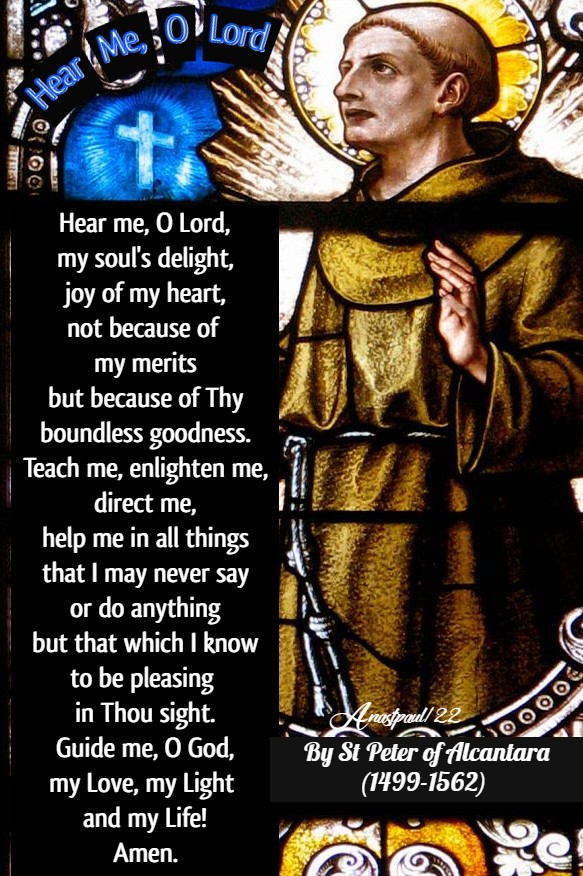
Hear me, O Lord, my soul’s delight, joy of my heart, not because of my merits but because of Thy boundless goodness. Teach me, enlighten me, direct me, help me in all things that I may never say or do anything but that which I know to be pleasing in Thou sight. Guide me, O God, my Love, my Light and my Life! Amen.
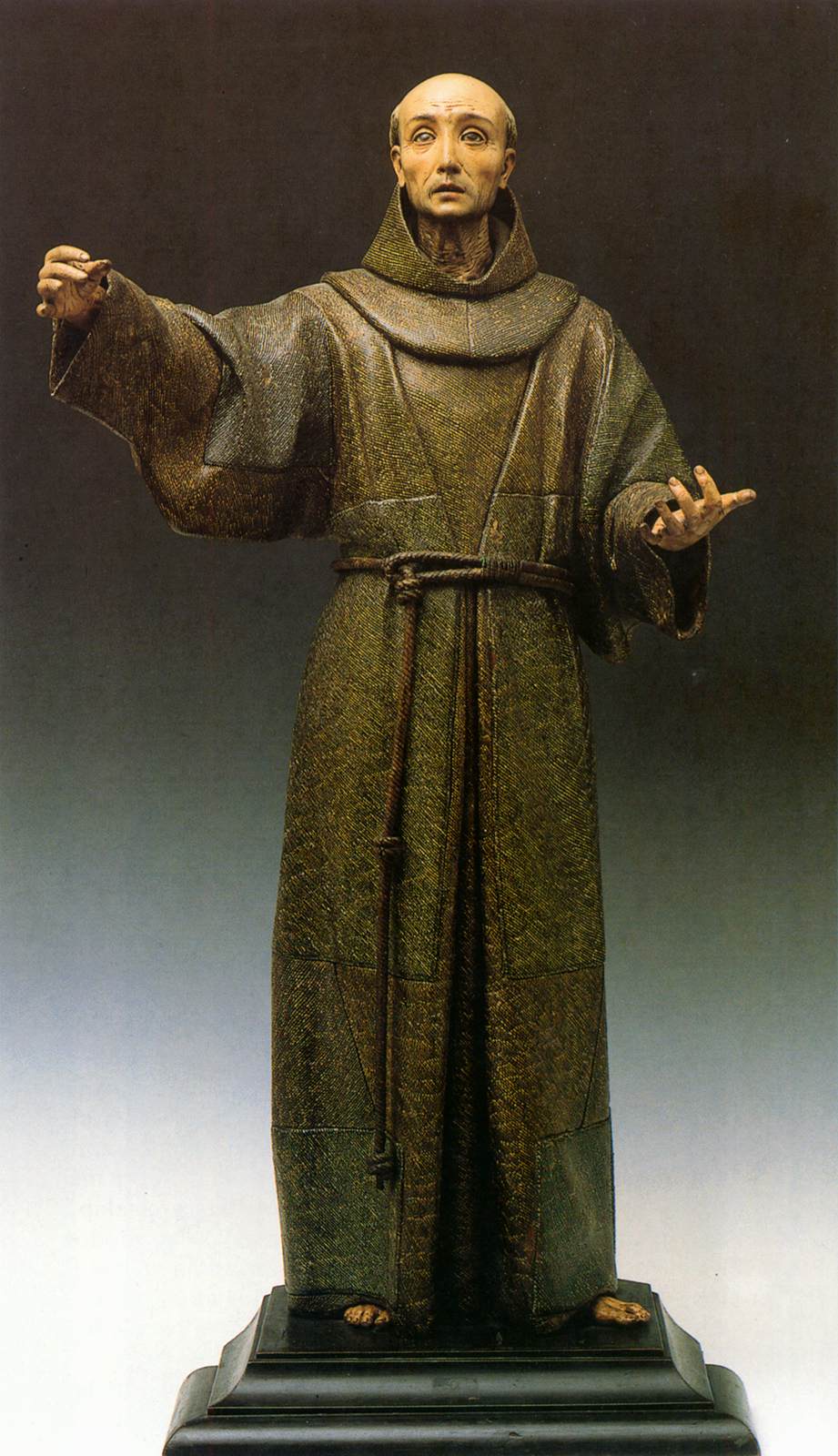
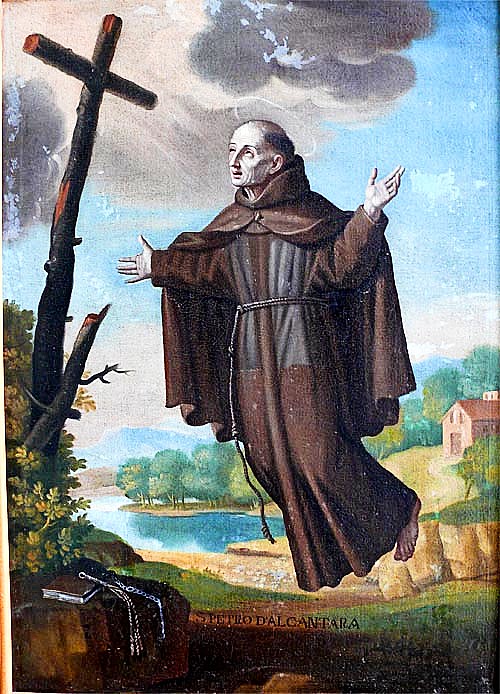
Saint of the Day – 19 October – St Peter of Alcantara OFM (1499-1562) Confessor, Franciscan Friar and Priest, Mystic, Ecstatic, Writer, Preacher, Reformer, Hermit, Apostle of Prayer, Eucharistic Adoration, the Passion and Charity, Miracle-worker. Patronages – Nocturnal Adoration of the Blessed Sacrament, Brazil (named by Pope Pius IX in 1862), Estremadura Spain, night watchmen.
St Peter of Alcantara, Confessor By Father Francis Xavier Weninger (1860-1946)
St Peter was born in the year 1499, at Alcantara, in Spain. He became celebrated for his great piety and the austerity of his life and in order to distinguish him from other Saints of the same name, received the surname, “of Alcantara.”
Besides other signs of future holiness, Peter, when only seven years of age, evinced so great a love for prayer that he sometimes forgot to eat and drink. During the time of his studies, he kept his innocence unspotted in the midst of many dangers, by making prayer, the holy Sacraments and penances, its guardians. When hardly sixteen years old, he secretly left his father’s house and entered the Franciscan Order, in which he soon became a model of all virtues. After having finished his novitiate, he was charged with different functions, all of which he discharged most successfully. The office of preacher was the most agreeable to him. An incredible number of hardened sinners were converted by his sermons, in which he treated of penance and a reform of life.
The fame of his virtues and holiness gave additional weight to every word he uttered. Especially admirable, were the untiring zeal with which he practised all manner of bodily austerities and his continual communion with God in prayer. His whole life was one of extraordinary and almost unexampled mortification. He guarded his eyes so closely that he not only never looked on a woman’s face but knew his brethren only by their voices and, after a long sojourn in the Monastery, could not tell whether the choir and the dormitory were vaulted or covered with boards.
The cell he chose for his dwelling was so narrow that it was more like a tomb than the abode of a living human being and so low that he could not stand upright in it. He kept an almost continual fast and hardly partook, every third day, of some undressed herbs, bread and water. It even happened that during eight days he took no food whatever. He scourged himself twice daily with iron chains. He wore, day and night, a penitential instrument made of tin, pierced like a grater. For forty years, he allowed himself only one hour and a half of sleep at night and this, not lying down but kneeling, or standing with his head leaning against a board. The remainder of the night he occupied in prayer and meditation. As long as he lived in the order, he went barefoot and bareheaded, even in the coldest season. His clothing consisted of his habit and a short cloak, made of rough sack-cloth. He seemed to have made a comtract with his body, never in this world, to allow it any peace or comfort.
His union with God in prayer had reached so high a degree that he was often seen in ecstacy, or raised high in the air and surrounded by a heavenly brightness. The power of his holy prayers was experienced, not only by many hardened sinners but also by many sick, for whom he obtained health and strength. The inhabitants of the City of Albuquerque, ascribed to him their deliverance from the pestilence, for, as soon as Peter had called upon the Divine Mercy, the pestilence, which had most fearfully ravaged the City, disappeared.
The love of God, which filled the heart of the Saint, manifested itself in his intercourse and conversation with men, whom he endeavoured to inflame with the same love. This appeared in all his actions but especially, at the time of Holy Mass, when he stood like a Seraph before the Altar, his face burning and tears streaming from his eyes. When meditating on the Passion and Death of our Saviour, he was frequently so deeply touched, in his inmost heart that for hours, he was like one dead. His devotion to God would sometimes burn his heart so intensely, that to moderate his emotion, he would go into the fields to breathe more freely.
Having reached his fortieth year, he was chosen Provincial but endeavoured to refuse the dignity and when compelled by obedience to accept it, he regarded it as an opportunity to do good to those under his charge. God admonished him to restore the primitive observance in the Order, according to the Rule and spirit of St Francis. Although he could not but foresee, the many and great difficulties which he would encounter in this undertaking, still, trusting in God, he went courageously to work after having obtained the sanction of the Pope.
The Almighty visibly aided His faithful servant, for, in six years, the Saint had founded nine Monasteries, in which the mortification and the perfect poverty, which St Francis especially cherished, were observed in all the rigour of the first Rule. In the course of time, this renewed Order was disseminated throughout all Spain, to the great joy of the Saint. This and other labours which he performed, to the honoir and glory of God, made him greatly esteemed by everyone.
St Teresa, who lived at that period, asked his advice in her cares and doubts, whenever she had occasion and called him a Saint while he was yet upon earth. St Francis Borgia entertained great friendship for him and the praise of his great virtues resounded throughout all Spain. The Emperor Charles V. desired to make him his Confessor but the humble servant of the Almighty knew how to say so much of his incapacity for this office, that the Emperor abandoned the idea, to the Saint’s great joy. This became a new incentive for him to devote himself entirely to the service of God and the welfare of those in his care.
St Teresa of Jesus with St Peter of Alcantara
He had reached his 63rd year, more by a miracle than in a natural way, when he was visited by Providence with a severe illness, which soon left no hope of his recovery, as his body was entirely wasted away by the severity of his life, his painful journeys and his uninterrupted labours. He himself, was informed from on high, of his approaching end and he received the last Sacraments, with so deep a devotion that the eyes of all present were filled with tears. After this he fell into a rapture, in which the Divine Mother and St John the Evangelist, appeared to him and assured him of his salvation. Hence, regaining consciousness, he cheerfully recited the words of the Psalmist: “I have rejoiced in those things which have been said to me; We shall go into the house of the Lord.” Having said this, he calmly gave his soul into the keeping of his Creator, in the year of Our Lord 1562.
St Teresa, who has written much in his praise, says among other things: “He died as he had lived, a Saint and I have, after his death, received many graces from God, through his intercession. I have often seen him in great glory and when I saw him the first time, he said to me: ‘O happy penance, which has obtained so great a glory for me!‘” The Roman Breviary testifies that, St Teresa, although, at the time of his death, far from him, saw his soul gloriously ascend into Heaven.
The biographers of St Peter, relate many and great miracles which he wrought, while he was still living. In the Breviary, we read, among other things, the following. “He crossed rapid rivers with dry feet. In times of great poverty, he fed his brethren with food which he received from Heaven. The staff which he placed in the ground, immediately became a budding fig-tree. Once, in the night-time, when he sought shelter from a snow-storm in a roofless house, the snow remained hanging in the air, above it and thus, formed a roof to protect him from being buried in the snow.” St Peter of Alcantara, pray for Holy Mother Church and for all her faithful Amen, amen!
St Altinus St Aquilinus of Evreux St Asterius of Ostia St Beronicus of Antioch St Desiderius of Longoret St Ednoth St Ethbin St Eusterius of Salerno St Frideswide St Laura of Cordoba St Lucius of Rome St Lupus of Soissons St Pelagia of Antioch
























 AnaStpaul
You must be logged in to post a comment.