One Minute Reflection – 25 September – Readings: Zechariah 2: 5-9, 14-15a; Jeremiah 31: 10-12ab, 13; Luke 9: 43b-45
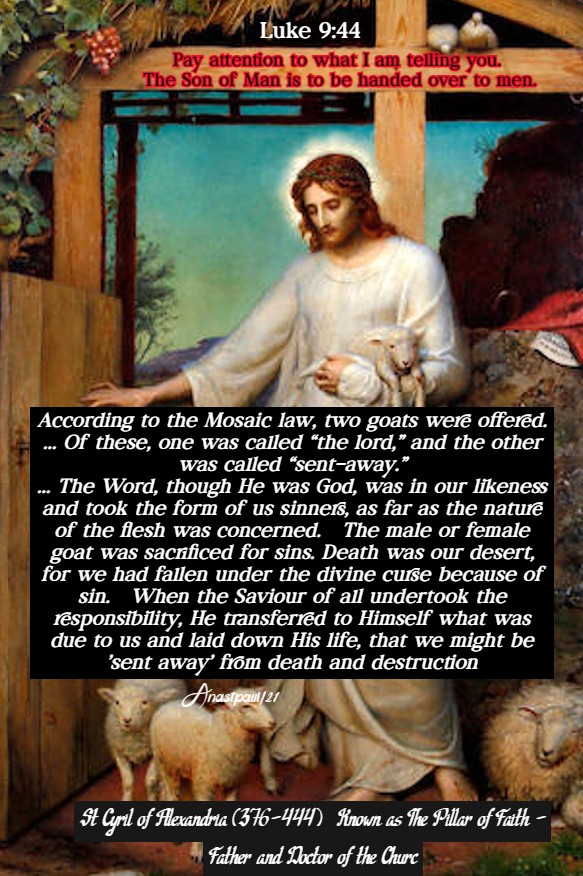
“Pay attention to what I am telling you. The Son of Man is to be handed over to men.” – Luke 9:44
REFLECTION – “The mystery of the Passion may be seen also in another instance. According to the Mosaic law, two goats were offered. They were not different in any way from one another but they were alike in size and appearance. Of these, one was called “the lord,” and the other was called “sent-away.” When the lot was cast for the one called “lord,” it was sacrificed. The other one, was sent away from the sacrifice, and, therefore, had the name of “sent-away.” Who was signified by this? The Word, though He was God, was in our likeness and took the form of us sinners, as far as the nature of the flesh was concerned. The male or female goat was sacrificed for sins. Death was our desert, for we had fallen under the divine curse because of sin. When the Saviour of all undertook the responsibility, He transferred to Himself what was due to us and laid down His life, that we might be ‘sent away‘ from death and destruction.” – St Cyril of Alexandria (376-444) Known as The Pillar of Faith – Father and Doctor of the Church (Commentary on Luke, Homily 53)
PRAYER – Holy God, help me to amend my life constantly and be sincerely converted to You. Let me seek Your interests rather than my own and be ever more closely united with You. Send Your Spirit of understanding to enkindle our minds but most of all, fill us with Your grace of faith, that whether we understand or not, our love and obedience, is our only guide. Blessed Virgin Mother teach us to carry our crosses as you did in love and patience. We make our prayer through Christ our Lord, in the unity of the Holy Spirit, God for all eternity, amen.
Our Morning Offering – 25 September – Mary’s Day and The Memorial of Blessed Herman of Reichenau/the Cripple OSB (1013–1054) the Author of the Salve Regina, the Veni Sancte Spiritus and the Alma Redemptoris Mater amongst others
Salve Regina Hail Holy Queen By Blessed Herman of Reichenau (1013–1054)
Hail, holy Queen, Mother of Mercy, Hail our life, our sweetness and our hope. To thee do we cry, Poor banished children of Eve; To thee do we send up our sighs, Mourning and weeping in this valley of tears. Turn then, most gracious advocate, Thine eyes of mercy toward us; And after this our exile, Show unto us the blessed fruit of thy womb, Jesus.
This line, below, by St Bernard of Clairvaux (1090-1153) Doctor of the Church
O clement, O loving, O sweet Virgin Mary.
℣ Pray for us, O holy Mother of God, ℟ that we may be made worthy of the promises of Christ.
Let us pray: Almighty, everlasting God, who by the co-operation of the Holy Spirit didst prepare the body and soul of the glorious Virgin-Mother Mary to become a dwelling-place fit for Thy Son, grant that as we rejoice in her commemoration, so by her fervent intercession, we may be delivered from present evils and from everlasting death. Through the same Christ our Lord. Amen
Saint of the Day – 25 September – Saint Cleopas (First Century) Disciple of Christ – one of the two Disciples of the Way to Emmaus. Martyr. Also known as – Cleophas.
The Roman Martyrology states: “At Emmaus, the birthday of the blessed Cleopas, Disciple of Christ. It is related that he was killed by the Jews, for the confession of our Lord, in the same house in which he had entertained Him and where he was honourably buried.”
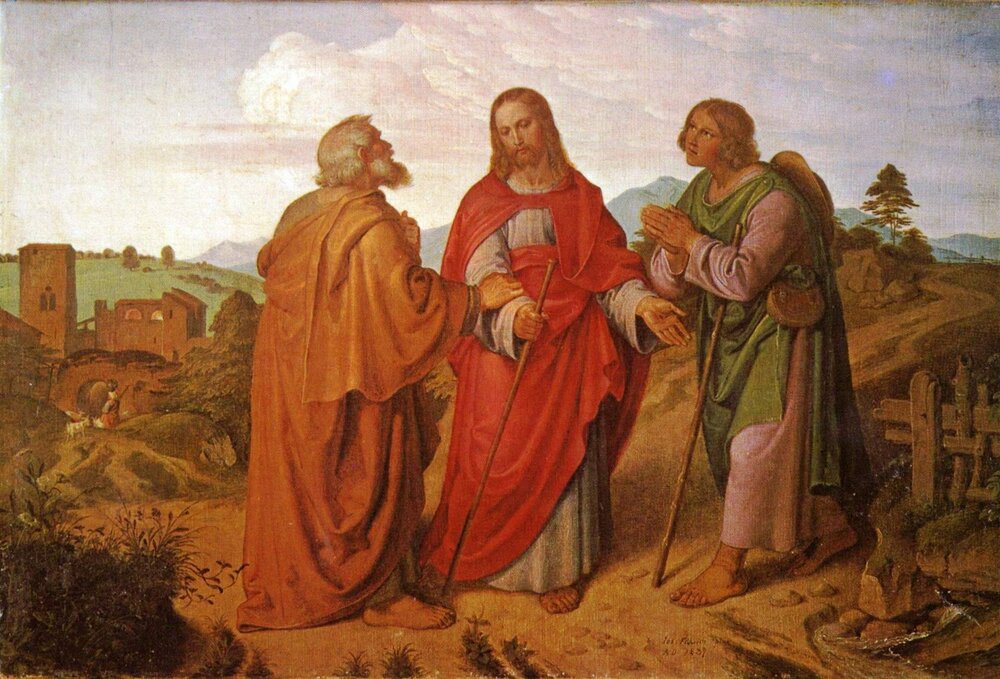
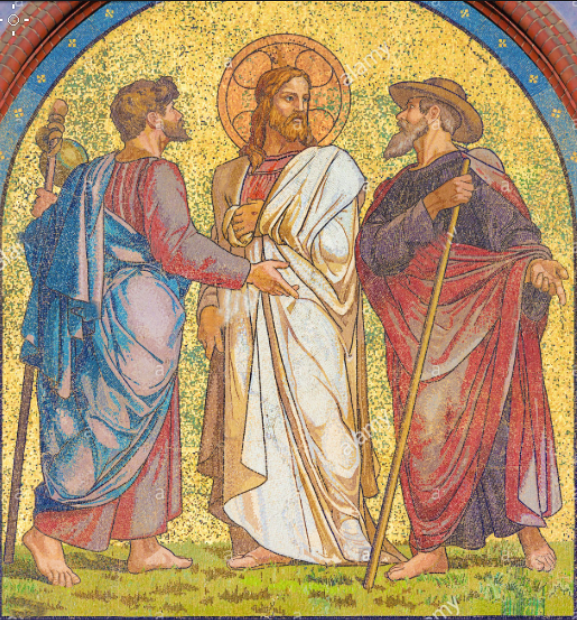
Now that very day, two of them were going to a village seven miles from Jerusalem called Emmaus and they were conversing about all the things that had occurred. And it happened that while they were conversing and debating, Jesus Himself drew near and walked with them but their eyes were prevented from recognising Him.
He asked them, “What are you discussing as you walk along?“
They stopped, looking downcast. One of them, named Cleopas, said to Him in reply, “Are you the only visitor to Jerusalem who does not know of the things that have taken place there in these days?“
And He replied to them, “What sort of things?”
They said to Him, “The things that happened to Jesus the Nazarene, who was a prophet mighty in deed and word before God and all the people, how our chief priests and rulers both, handed Him over to a sentence of death and crucified Him. But we were hoping that He would be the one to redeem Israel and besides all this, it is now the third day since this took place. Some women from our group, however, have astounded us: they were at the tomb early in the morning and did not find His body; they came back and reported that they had indeed seen a vision of angels who announced that He was alive. Then some of those with us went to the tomb and found things just as the women had described but Him they did not see.“
And He said to them, “Oh, how foolish you are! How slow of heart to believe all that the prophets spoke! Was it not necessary that the Messiah should suffer these things and enter into His glory?” Then beginning with Moses and all the prophets, He interpreted to them what referred to Himself in all the scriptures.
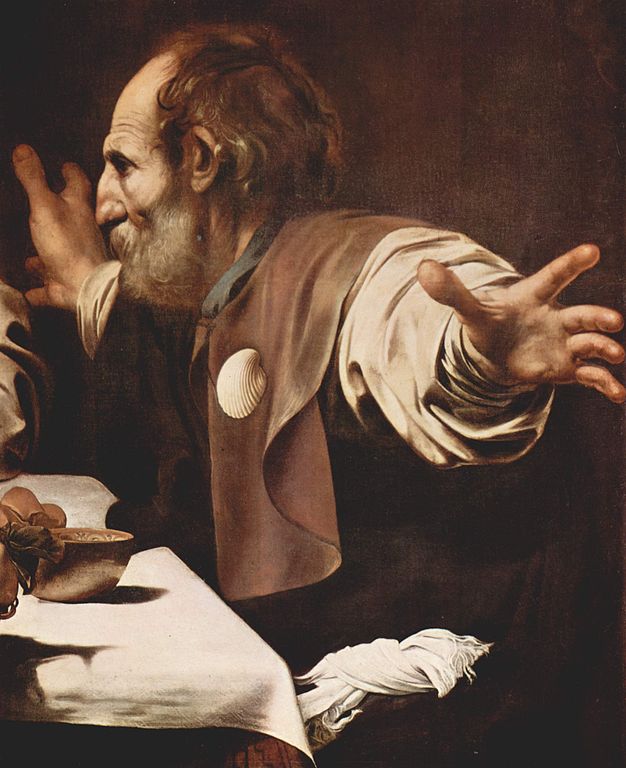
As they approached the village to which they were going, He gave the impression that He was going on farther. But they urged Him, “Stay with us, for it is nearly evening and the day is almost over.” So He went in to stay with them. And it happened that, while He was with them at table, He took bread, said the blessing, broke it, and gave it to them. With that their eyes were opened and they recognised Him but He vanished from their sight.
Then they said to each other, “Were not our hearts burning [within us] while He spoke to us on the way and opened the scriptures to us?” So they set out at once and returned to Jerusalem where they found, gathered together, the eleven and those with them who were saying, “The Lord has truly been raised and has appeared to Simon!” Then the two recounted what had taken place on the way and how He was made known to them in the breaking of the bread.
Cleopas has no further occurrence in the New Testament but in tradition he has often been identified with Clopas, another New Testament figure mentioned in John’s Gospel.
The historian, Bishop Eusebius of Caesarea, quotes the earlier chronicler, Hegesippus, who wrote, c 180, that he had years before interviewed the grandsons of Jude the Apostle and learned that Clopas was the Brother of St Joseph, spouse of the Virgin Mary: “After the martyrdom of James, it was unanimously decided that Simeon, Son of Clopas, was worthy to occupy the See of Jerusalem. He was, it is said, a Cousin of the Saviour.” Hegesippus noted, that Clopas was a Brother of Joseph. Epiphanius adds that Joseph and Cleopas were Brothers, sons of “Jacob, surnamed Panther.”
St Cleopas
According to the surviving fragments of the work Exposition of the Sayings of the Lord of the Apostolic Father Papias of Hierapolis, who lived c. 70–163, Cleophas and Alphaeus are the same person: “Mary the wife of Cleophas or Alphaeus, who was the Mother of James the Bishop and Apostle and of Simon and Thaddeus and of one Joseph.”
Divina Pastora de las Almas ‘ The Divine Shepherdess of Souls, Cantillana, Sevilla, Andalucía, Spain (1703) – Fourth Saturday of September:
St. Isidore of Seville (560-636) Bishop of Seville, Father and Doctor of the Churrh, spread devotion to the Divine Shepherdess of Souls. The first image of the Divina Pastora in Cantillana was a banner, attributed to the painter Germán Llorente, carried in Rosary.
In 1800 a yellow fever epidemic ravaged the area,but Cantillana was largely spared, for which people thanked the Divine Shepherdess of Souls. Soon thereafter, the Hermandad de la Divina Pastora was chartered, a Rosary apostolate or brotherhood. The Brotherhood’s processional image is a seated statue, attributed to Francisco Antonio Ruiz Gijón (1653-1705).
For special occasions, of which there are many, she wears a large sombrero. On 31 August, a grand procession fetches the Statue from its Sanctuary into the Town, for celebrations leading up to the fiesta from 8 September. On the last weekend in September, with equal splendour and devotion, the Divine Shepherdess returns to her Shrine. A procession accompanies her canopied float on Saturday. On Sunday, there is Mass and music and then an all-night exposition of the Statue with devotions lasting into Monday morning.
St Anacharius of Auxerre St Aurelia of Macerata St Caian of Tregaian St Ceolfrid St Cleopas St Egelred of Crowland St Ermenfridus of Luxeuil
Saint Cleopas (First Century) Disciple of Christ – one of the two Disciples of the Way to Emmaus. Martyr. St Firminus of Amiens St Fymbert St Herculanus the Soldier
Blessed Herman of Reichenau/the Cripple (1013–1054) Benedictine Monk, Confessor, Scholar, Scientist, Writer, Hymnist, Poet, Musical Composer, Teacher. In his own day, the heroic cripple who achieved learning and holiness was called ‘The Wonder of His Age.’. Composer of the “Salve Regina” Hail Holy Queen, “Veni Sancte Spiritus” Come Holy Spirit and “Alma Redemptoris Mater” amongst many others. His Amazing Life and Works: https://anastpaul.com/2019/09/25/saint-of-the-day-blessed-herman-of-reichenau-the-cripple-osb-1013-1054-the-wonder-of-his-age/
Bl Marco Criado St Mewrog St Neomisia of Mecerata St Paphnutius of Alexandria St Principius of Soissons St Sergius of Moscow St Solemnis of Chartres
Martyrs of Damascus: A Christian family of six who were tortured to death in a persecution by Roman authorities. They were: Eugenia, Maximus, Paul, Rufus, Sabinian and Tatta. They were tortured to death in Damascus, Syria, date unknown.
Martyred in the Spanish Civil War: • Blessed Jose María Bengoa Aranguren • Blessed Josep Maria Vidal Segú • Blessed Juan Agustín Codera Marqués • Blessed Julio Esteve Flors • Blessed Pedro Leoz Portillo • Blessed Rafael Pardo Molina • Blessed Tomás Gil de La Cal
Feast of the Holy Bishops of Milan – a 1st Century Diocese!
Imagine being part of a Diocese in which 37 of your past Bishops are saints and some are also Doctors of the Church and Popes (and others being considered for sanctity)! The latest addition to this illustrious role-call, is Pope Paul VI. Today, the Church in Milan commemorates these holy Bishops. They are: • Blessed Alfredo Ildefonso Schuster • Blessed Andrea Carlo Ferrari • Pope Pius XI • Saint Ambrose of Milan • Saint Ampelius of Milan • Saint Anathalon of Milan • Saint Antoninus of Milan • Saint Auxanus of Milan • Saint Benedict Crispus of Milan • Saint Benignus of Milan • Saint Calimerius of Milan • Saint Castritian of Milan • Saint Charles Borromeo • Saint Datius of Milan • Saint Dionysius of Milan • Saint Eugene of Milan • Saint Eusebius of Milan • Saint Eustorgius II of Milan • Saint Eustorgius of Milan • Saint Gaius of Milan • Saint Galdinus of Milan • Saint Geruntius of Milan • Saint Glycerius of Milan • Saint Honoratus of Milan • Saint John Camillus the Good • Saint Lazarus of Milan • Saint Magnus of Milan • Saint Mansuetus of Milan • Saint Marolus of Milan • Saint Martinian of Milan • Saint Mirocles of Milan • Saint Mona of Milan • Saint Natalis of Milan • Saint Pope Paul VI • Saint Protasius of Milan • Saint Senator of Milan • Saint Simplician of Milan • Saint Venerius of Milan
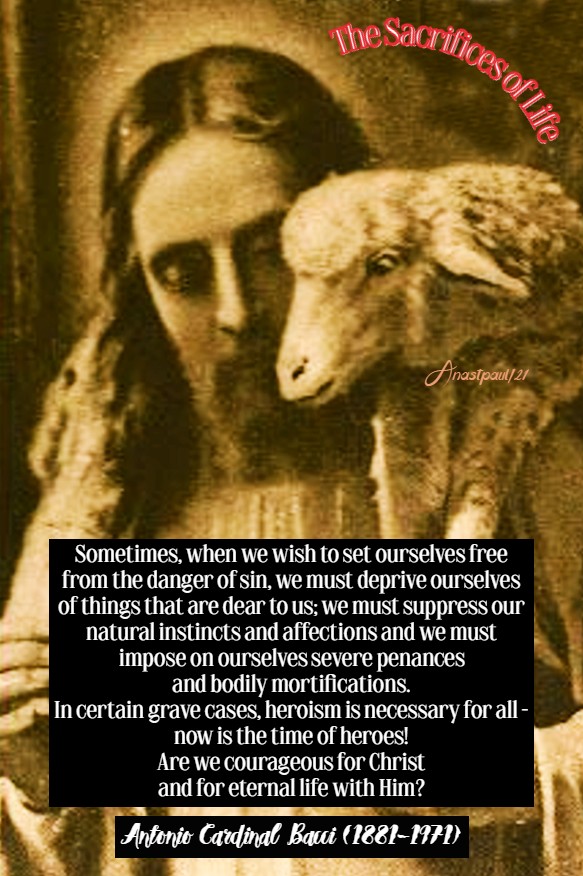
Thought for the Day – 24 September – Meditations with Antonio Cardinal Bacci (1881-1971)
The Sacrifices of Life
“When we say that we must be prepared to make any sacrifice, even to die, rather than offend God and risk eternal damnation, we mean exactly what we say. “If thy right eye is an occasion of sin to thee,” Jesus says in the Gospel, “pluck it out and cast it from thee; for it is better for thee that one of thy members should perish than that thy whole body should be thrown into hell. And if thy right hand is an occasion of sin to thee, cut it off and cast it from thee; for it is better for thee that one of thy members should be lost, than thy whole body shuld go into hell” (Mt 5:29-30).
We are prepared to do all this when there is a question of preserving mortal life; we are prepared to undergo an amputation in order to avoid death. Are we prepared to do as much for eternal salvation?
Sometimes, when we wish to set ourselves free from the danger of sin, we must deprive ourselves of things that are dear to us; we must suppress our natural instincts and affections and we must impose on ourselves severe penances and bodily mortifications. All this is demanded from us by Jesus in these words which seem hard and almost cruel but are none other than a just and necessary commandment. In certain grave cases, heroism is necessary for all – now is the time of heroes! Are we courageous for Christ and for eternal life with Him?”
Quote/s of the Day – 28 September – “Month of the Seven Sorrows of Mary” – Readings: Haggai 2: 1-9; Psalm 43: 1-4; Luke 9: 18-22
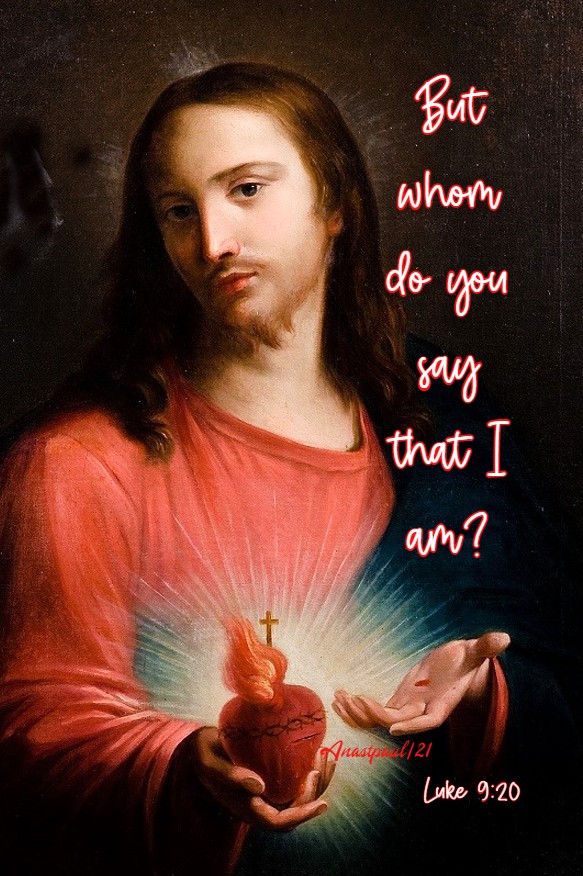
“But whom do you say that I am?”
Luke 9:20
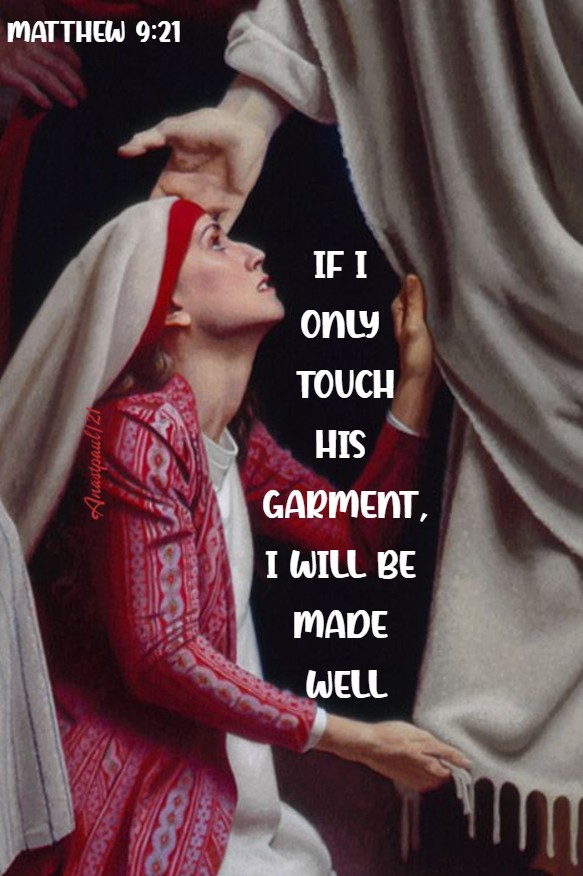
“If I only touch his garment, I will be made well.” Jesus turned and seeing her he said, “Take heart, daughter, your faith has made you well.” And instantly the woman was made well.”
Matthew 9:21-22
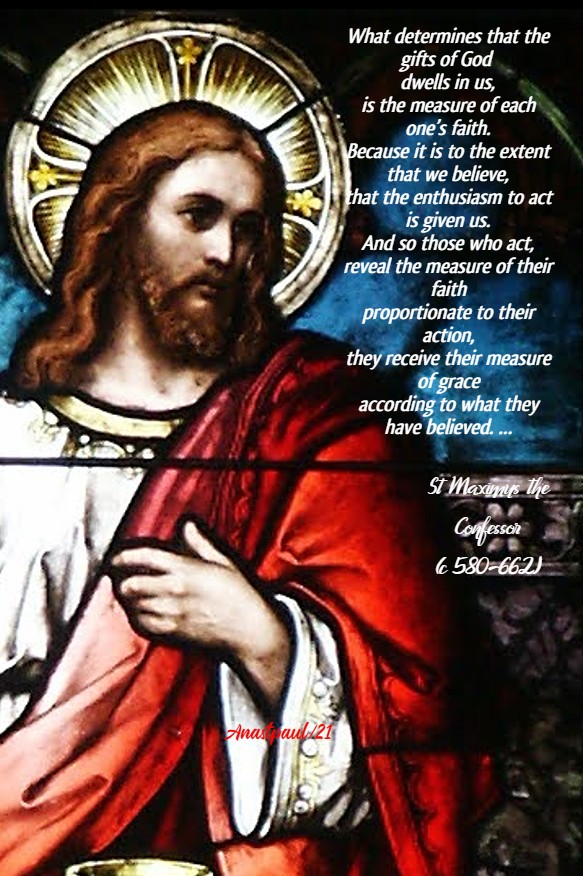
“What determines that the gifts of God dwells in us, is the measure of each one’s faith. Because it is to the extent that we believe, that the enthusiasm to act is given us. And so those who act, reveal the measure of their faith proportionate to their action, they receive their measure of grace according to what they have believed. …”
St Maximus the Confessor (c 580-662) Monk and Theologian
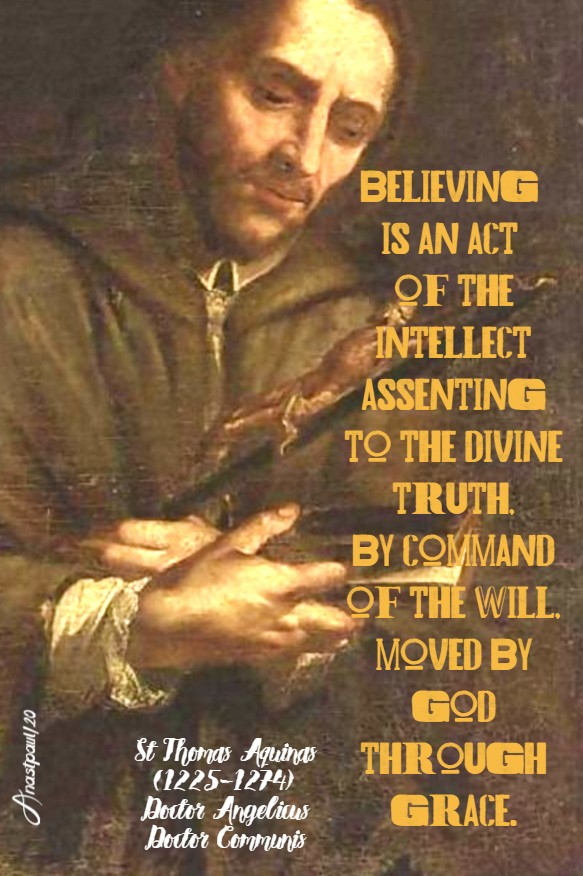
“Believing is an act of the intellect assenting to the divine truth, by command of the will, moved by God through grace.”
St Thomas Aquinas (1225-1274) Doctor Angelicus Doctor Comm
One Minute Reflection – 28 September – –“Month of the Seven Sorrows of Mary” – Readings: Haggai 2: 1-9; Psalm 43: 1-4; Luke 9: 18-22
“But whom do you say that I am? Simon Peter answering, said: The Christ of God. … He commanded they should tell this to no man …” – Luke 9:20-21
REFLECTION – “Then he strictly ordered his disciples to tell no-one that he was the Messiah.” Why this order? So that, once all cause of scandal had been set aside, His Cross and Passion accomplished, every obstacle capable of preventing the crowd from believing in Him removed, an exact knowledge of Who He is, might be deeply and permanently engraved in their hearts. His power had not yet shone out in splendour. Before the Apostles were to preach it, He waited until the evidence of the truth and authority of the facts, could confirm their testimony.
Because, it was one thing to be seeing Him now, multiplying miracles in Palestine and then, as the butt of persecution and torture – and the Cross was going to follow these miracles. It was another thing to see Him worshiped, believed in by all the world, saved from the ill-treatment He had undergone before. That is why He suggests they say nothing to anyone… If the Apostles, who had been witnesses of His miracles and had taken part in so many inexpressible Mysteries, had difficulty in accepting a single word about the Passion and Peter himself, amongst them, the head of them all (Mt 16,22), what would the ordinary run of mortals think? After hearing that Jesus was the Son of God, what would they have thought to see Him dirtied by spitting and nailed to the Cross? And this, too, before the coming of the Holy Spirit, when the reason for these Mysteries was not yet known?” – St John Chrysostom (345-407) Bishop of Constantinople, Father & Doctor of the Church (Homilies on Saint Matthew’s Gospel, no.54, 1-3)
PRAYER – Lord God, You hold out the Light of Your Word to those who do not know You. Strengthen in our hearts, the faith You have given us and the Credo we profess, so that no trials may quench the fire Your Spirit has kindled in us. May the intercession of all the Apostles, grant us the grace of following the way of the Cross, to stand beneath it with our afflicted Mother, the Mother of God, Ave Maria! We make our prayer through Jesus Christ with the Holy Spirit, one God forever, amen.
Our Morning Offering – 24 September – “Month of the Seven Sorrows of Mary”
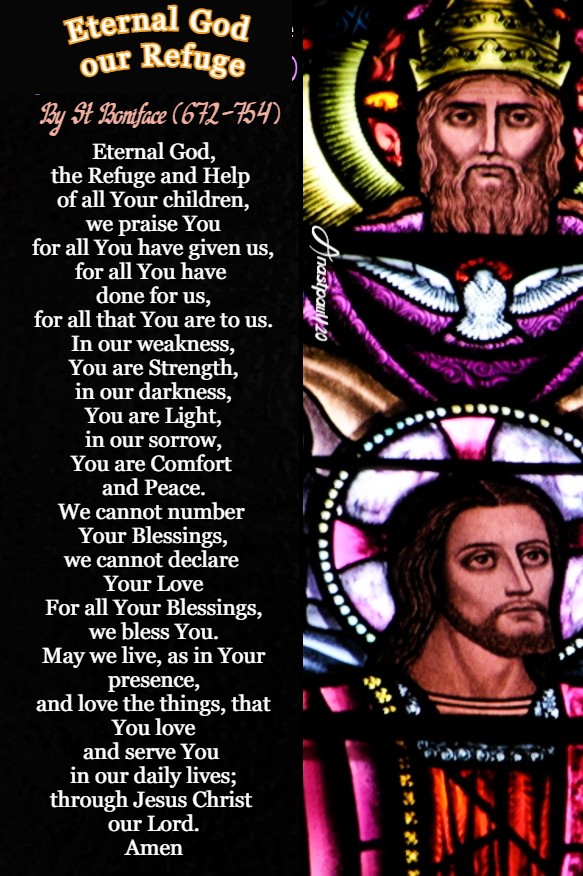
Eternal God, our Refuge By St Boniface (672-754)
Eternal God, the Refuge and Help of all Your children, we praise You for all You have given us, for all You have done for us, for all that You are to us. In our weakness, You are Strength, in our darkness, You are Light, in our sorrow, You are Comfort and Peace. We cannot number Your Blessings, we cannot declare Your Love For all Your Blessings, we bless You. May we live, as in Your presence, and love the things, that You love and serve You in our daily lives; through Jesus Christ our Lord. Amen
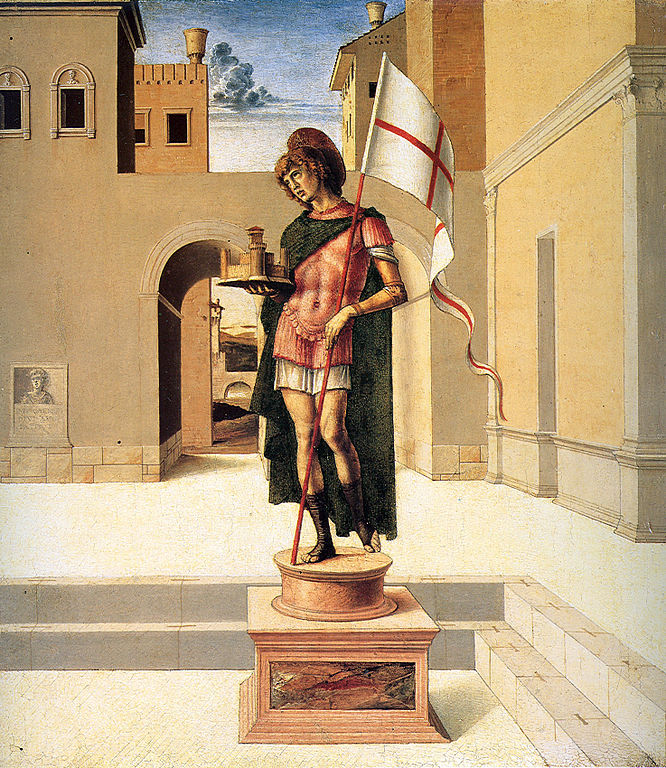
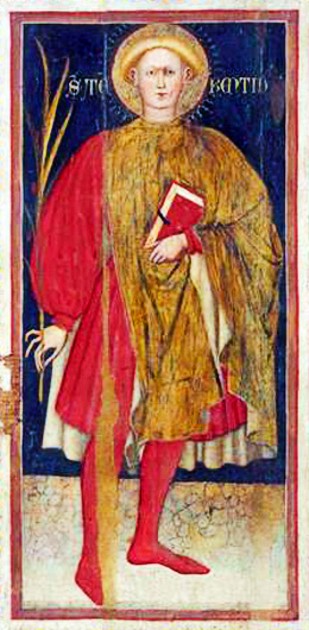
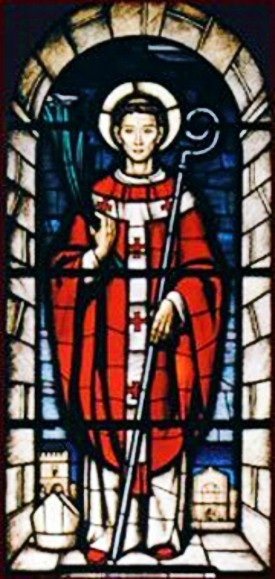
Saint of the Day – 24 September – Saint Terence of Persaro (c 210-c 247) Martyr, layman, soldier. Born in c 210 in Pannonia (modern Hungary) and died on 24 September c 247 at Pesaro, Italy. Also known as Terenzio, Terentius . Patronage – Pesaro, Italy.
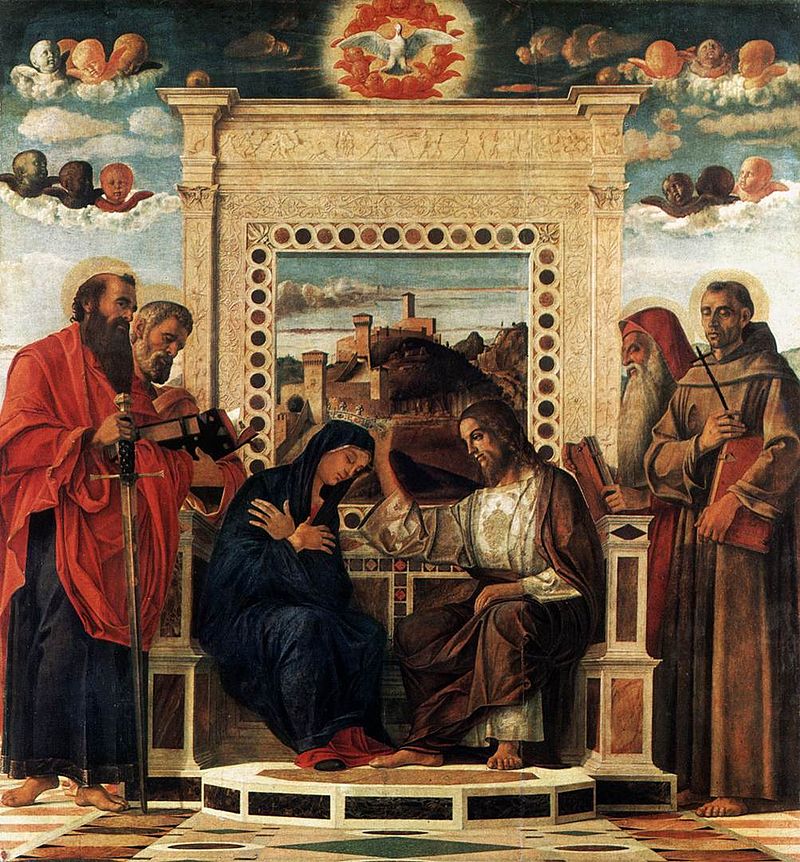
St Terence from Bellini’s Altarpiece
St Terence was a native of Pannonia (now Hungary), already conquered by the Romans since the 7th year of Christ. To escape the persecution commanded by the Emperors against the followers of the Nazarene, he left his homeland and landed on the shores of the Adriatic Sea. After several events, he set out to go to Rome and was killed for the Christian faith in a place called Acqua Mala, near Pesaro.
Regarding the place of his Martyrdom, while some believe that it took place not very far from the City, the tradition which speaks of borders, gives value to a tradition, according to which, Terence suffered Martyrdom near our Abbey of St Tomaso in Foglia, located precisely on the territorial border between Pesaro and Urbino. This tradition is corroborated by the existence in those places, of a perennial pool of sulphurous water, which not only gushes, even in the greatest droughts but, which although repeatedly diverted or destroyed, has always returned to rise again.
It is called “the Water of St Terence,” considering that the Patron Saint was Martyred there and his body was then thrown into the nearby whirlpool of the water – mala; which now no longer exists because the valley was filled in, in subsequent agricultural works.
His body may have been buried by Bishop Florentius of Pesaro outside the City, close to Caprile, which ancient documents call the Valle di St Terenzio. Another tradition states that his body was buried by a local woman named Theodosia. His relics were then translated to the basilica of San Decenzio (now the Chiesa del Cimitero centrale) before being translated, in the sixth century, to the new Cathedral at Pesaro by Bishop Felix of Pesaro.
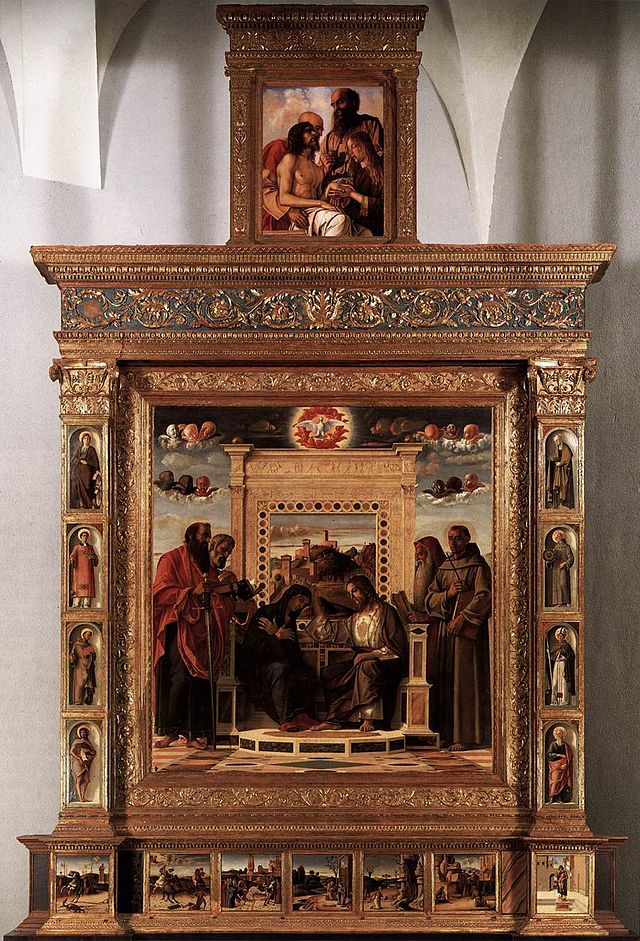
The relics, placed initially in a crypt, were transferred by Giovanni Benedetti in 1447 to a large Altar in which the relics were placed in a wooden urn, on which the aforementioned painter Bellinzoni depicted Terence. The urn is now found at the Museo Civico, in Palazzo Toschi-Mosca, and the relics themselves were translated to a new urn in a new Cathedral Chapel inaugurated in 1909
As a soldier Saint, Terence is considered to have appeared twice in times of crisis, the second vision occurring on 9 June 1793, in the times of the Cisalpine Republic, when Pesaro was besieged by French troops: a horseman appeared on the walls of the City, accompanied by a woman (Our Lady) dispensing munitions. The vision terrified the French so much, that they abandoned their siege. In gratitude, Terence was officially proclaimed Patron of the City on 20 March 1802.
Terence’s most famous figuration in art is his minor appearance—as a young soldier Saint—in a predella panel of Giovanni Bellini’s “Pesaro Altarpiece, The Coronation of the Virgin” (ca. 1475–80). In it, Terence, as the City’s Patron, holds a model representing the Nuova Rocca, or Fortezza Costanzo, the Citadel of Pesaro newly rebuilt by Costanzo Sforza. The Altarpiece is below – St Terence is bottom right of the bottom panel – see amplified image above.
Our Lady of Walsingham / Virgin of the Sea (1061) – 24 September:
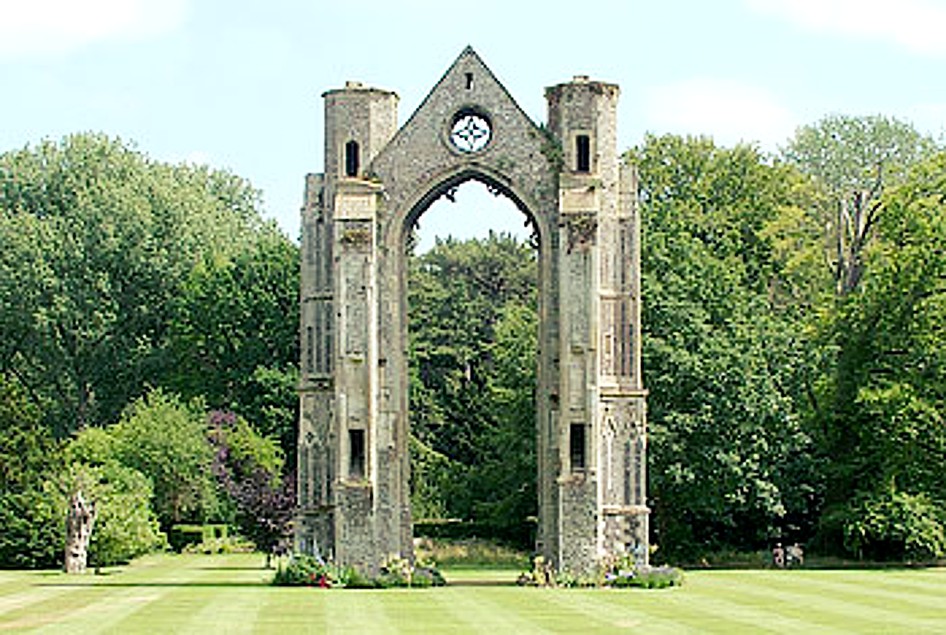
The story of the Walsingham Shrine begins in Saxon times. In 1061, the Lady of the Manor, Richeldis de Faverches, was taken in spirit to Nazareth, shown the House where the Annunciation took place and asked by Our Lady, to build a replica in Norfolk. She was promised that ‘Whoever seeks my help there will not go away empty-handed.‘ The simple wooden house that she built soon became the focus of special devotion to Our Lady. The ‘Holy House’ was later encased in stone to protect it from the elements. In 1153, the Augustinian Canons founded a Priory to care for the spiritual needs of the pilgrims. Their magnificent Priory Church was added in the fifteenth century. Only the ruin of the Priory Arch remains and archaeology has placed the site of the ‘Holy House’ in its shadow.
Walsingham became one of the foremost Shrines of medieval Christendom. Among the pilgrims to the ‘Holy House’ were many royal visitors. Henry III in 1226, Edward I (eleven times), Edward II in 1315, Edward III in 1361, Richard II in 1383, Edward IV in 1469, Henry VI in 1487 (and many other times) and Henry VIII in 1511, in thanksgiving for the birth of his son, Prince Henry. In 1340, the Slipper Chapel was built at Houghton St Giles, a mile outside Walsingham. This was the final ‘Station’ Chapel on the way to Walsingham. It was here, that pilgrims would remove their shoes to walk the final ‘Holy Mile’ to the Shrine barefoot.
The Slipper Chapel
Erasmus, the Dutch scholar, visited Walsingham in 1513 and was impressed by the splendour of the Shrine. He wrote:
‘When you look inside, you would say, it is the abode of saints, so brilliantly does it shine with gems, gold and silver … Our Lady stands in the dark at the right side of the Altar … a little image, remarkable neither for its size, material or workmanship.’
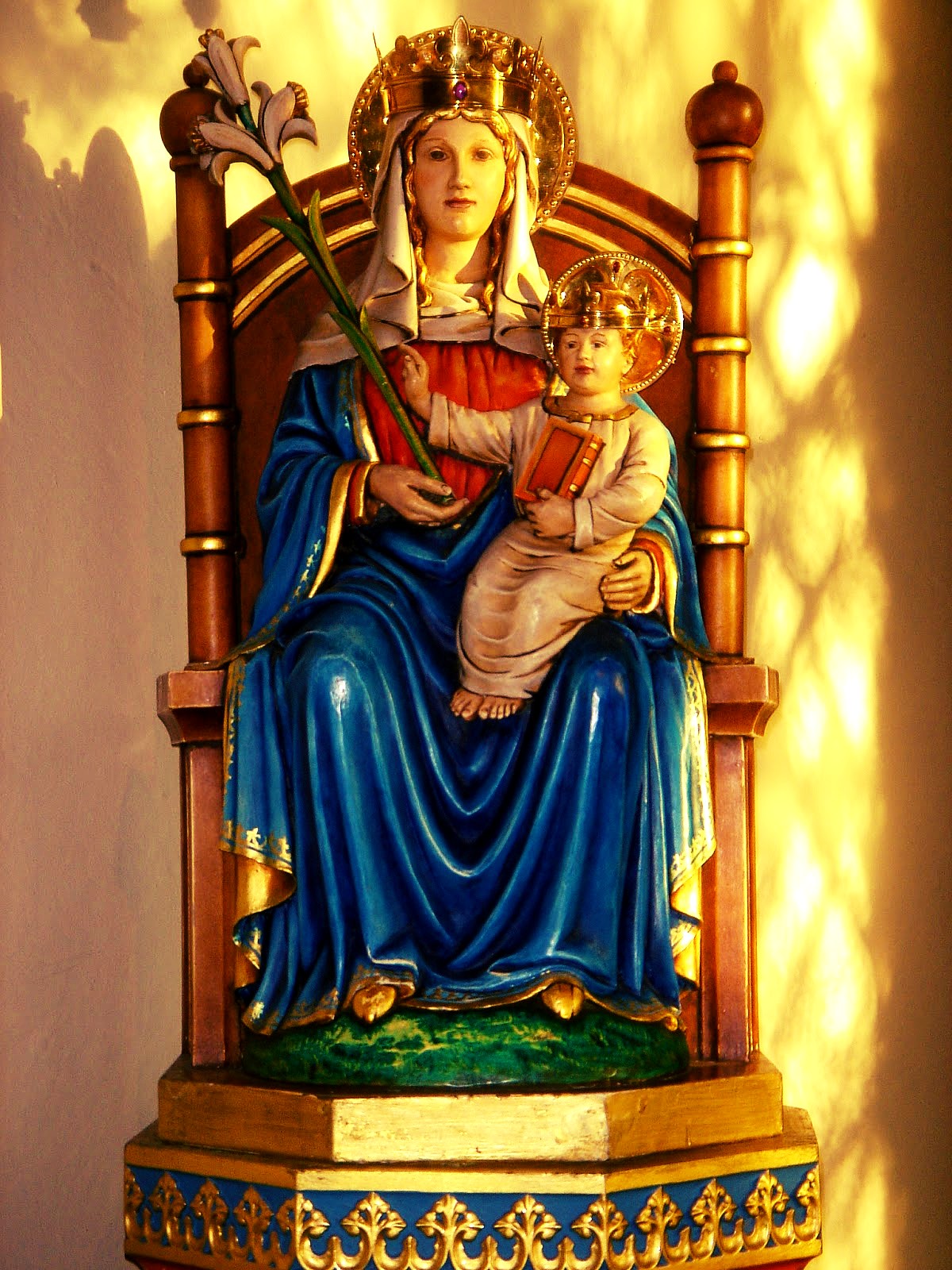
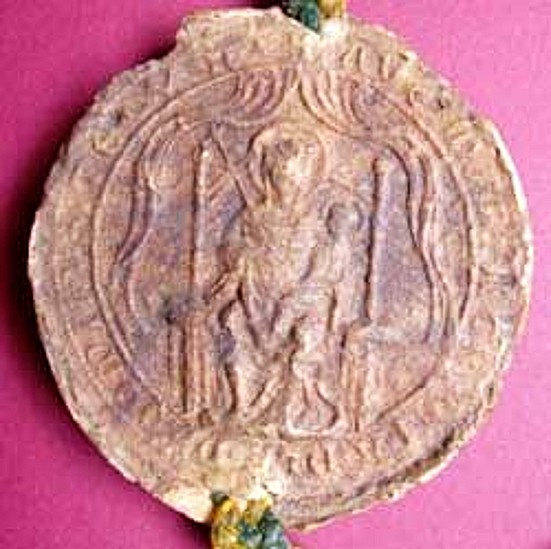
This was soon to come to an end. Henry VIII ordered the dissolution of the monasteries and in 1538 the Priory was closed, the ‘Holy House’ burned to the ground and the Statue of Our Lady taken to London to be destroyed. In 1896 Miss Charlotte Boyd bought the Slipper Chapel, which had seen centuries of secular use. She devoted herself to its restoration. The Statue of the Mother and Child was carved at Oberammergau and based on the design of the original statue – a design found on the medieval seal of Walsingham Priory, an imprint of which is in the British Museum.
The Walsingham seal: around the edges Ave Maria gratia plena dominus tecum
The first Mass since the Reformation was offered in the Slipper Chapel on 15 August 1934 and a few days later Cardinal Francis Bourne led a pilgrimage of 10,000 people to the Chapel and declared it to be the Catholic National Shrine of Our Lady.
Madonna de Val Camonica, Berzo Inferiore (BS), Italy (1616) – 24 September:
St Anathalon of Milan St Andochius of Autun St Anthony Gonzalez
St Paphnutius of Egypt Bl Robert Hardesty St Rusticus of Clermont St. Rupert of Salzburg St Terence of Persaro (c 210-c 247) Martyr Layman St Thyrsus of Autun St Ysarn of Saint Victor Bl William Spenser — Martyrs of Chalcedon – (49 saints): Forty-nine Christian choir singers of the church in Chalcedon in Asia Minor who were martyred together in their persecutions of Diocletian in 304.
Martyred in the Spanish Civil War: • Blessed Antonio Pancorbo López • Blessed Esteban García y García • Blessed José María Ferrándiz Hernández • Blessed Juan Francisco Joya Corralero • Blessed Luis de Erdoiza Zamalloa • Blessed Manuel Gómez Contioso • Blessed Melchor Rodríguez Villastrigo • Blessed Pascual Ferrer Botella • Blessed Rafael Rodríguez Mesa • Blessed Santiago Arriaga Arrien
Thought for the Day – 23 September – Meditations with Antonio Cardinal Bacci (1881-1971)
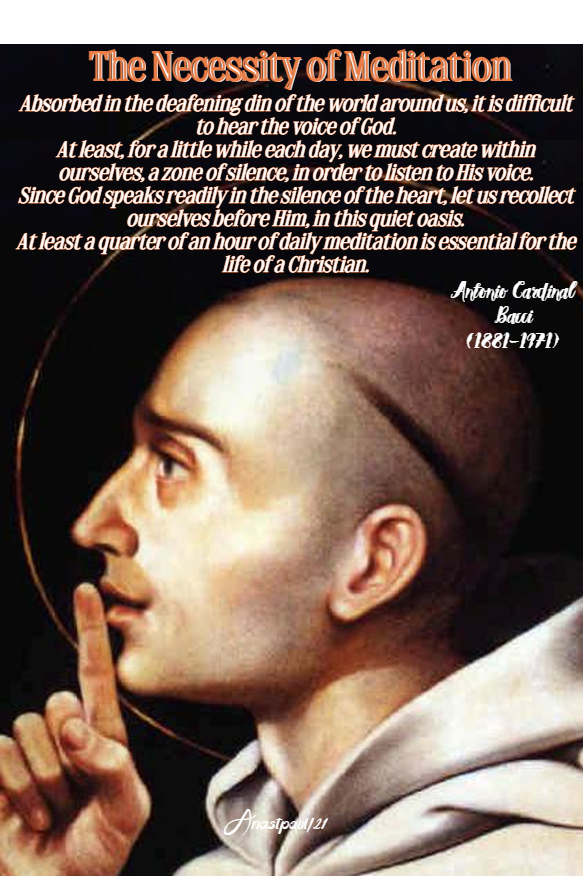
The Necessity of Meditation
“With desolation is all the land made desolate because, there is none that considereth in the heart” (Jer 12:11). Very often the world is plunged in the desolation of evil because there is nobody who will speak with God in the silence of his heart and try to regulate his life according to His holy commandments. It is in a particularly outstanding way today, that the heresies of actionism and externalism dominate the great mass of mankind. To act, to rush, to arrive … above all, to arrive! But to arrive where? In this frantic, frenzied and tumultuous race, in which good people are often found competing, two very sure things are forgotten, namely, that we shall finally arrive at death and, that from death we shall pass on to eternity. The whole course of our lives, therefore, should be directed toward this end. But, if we are to keep this end in view, prudent reflection is essential, especially meditation, made with the assistance of the Divine Light, on the eternal truth.
Absorbed in the deafening din of the world around us, it is difficult to hear the voice of God. At least, for a little while each day, we must create within ourselves, a zone of silence, in order to listen to His voice. Since God speaks readily in the silence of the heart, let us recollect ourselves before Him, in this quiet oasis. At least a quarter of an hour of daily meditation is essential for the life of a Christian. This should be the jumping-off board for all the actions of day, if we wish these to be correct and productive of good.
It is very useful, moreover, to recall to mind frequently during the day, the resolutions which have been formed and to accompany these reflections, with short prayers, aspirations and acts of love for God.”
Quote/s of the Day – 23 September – “Month of the Seven Sorrows of Mary” – Readings: Haggai 1: 1-8; Psalm 149: 1b-6a and 9b; Luke 9: 7-9
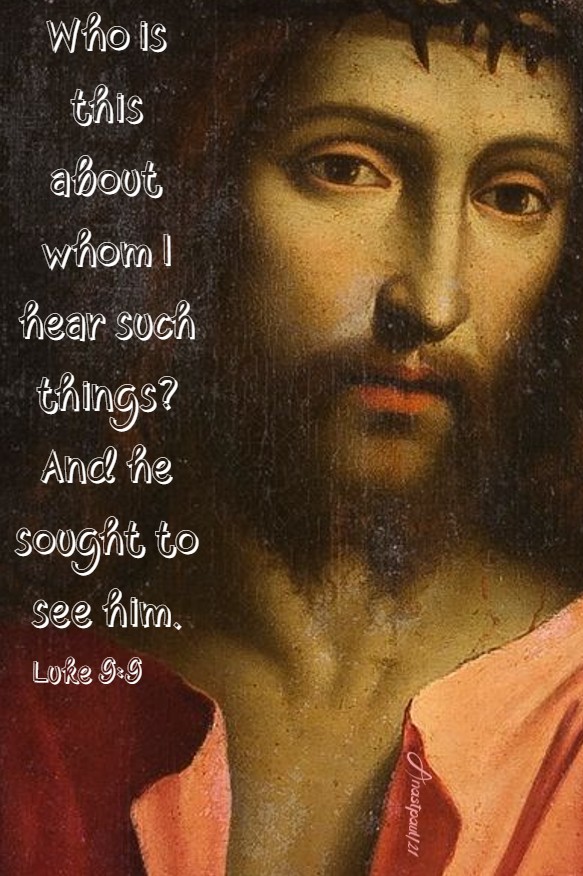
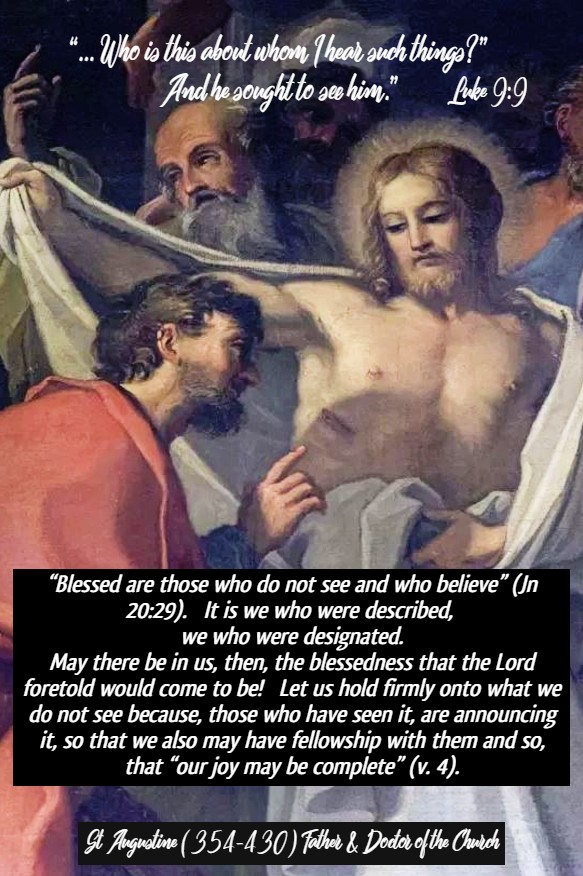
“… Who is this about whom I hear such things?” And he sought to see him.”
Luke 9:9
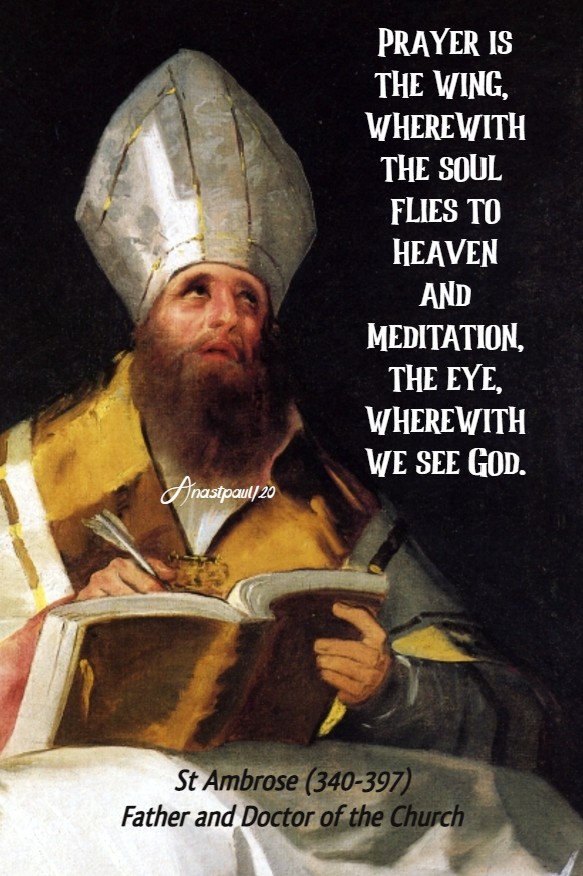
“Prayer is the wing, wherewith the soul flies to heaven and meditation, the eye, wherewith we see God.”
St Ambrose (340-397) Father and Doctor of the Church
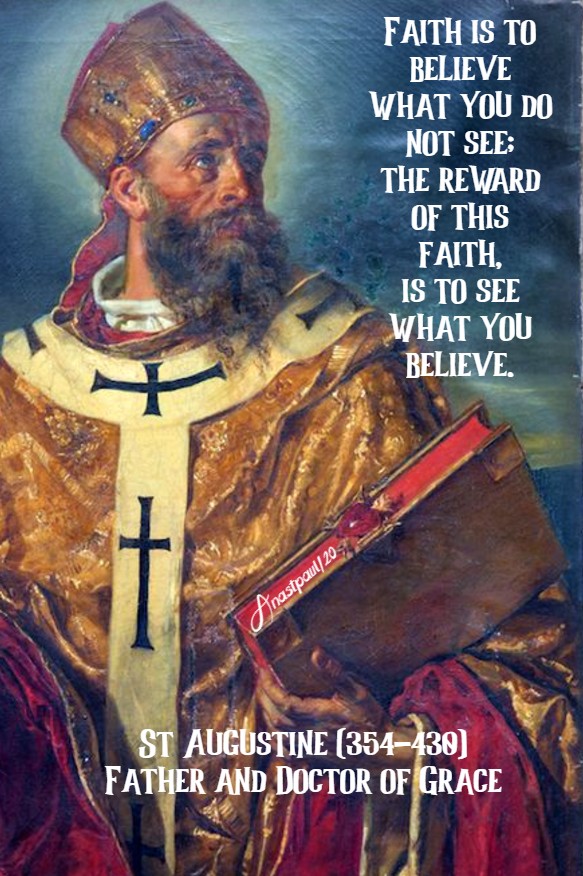
“Faith is to believe what you do not see; the reward of this faith, is to see what you believe.”
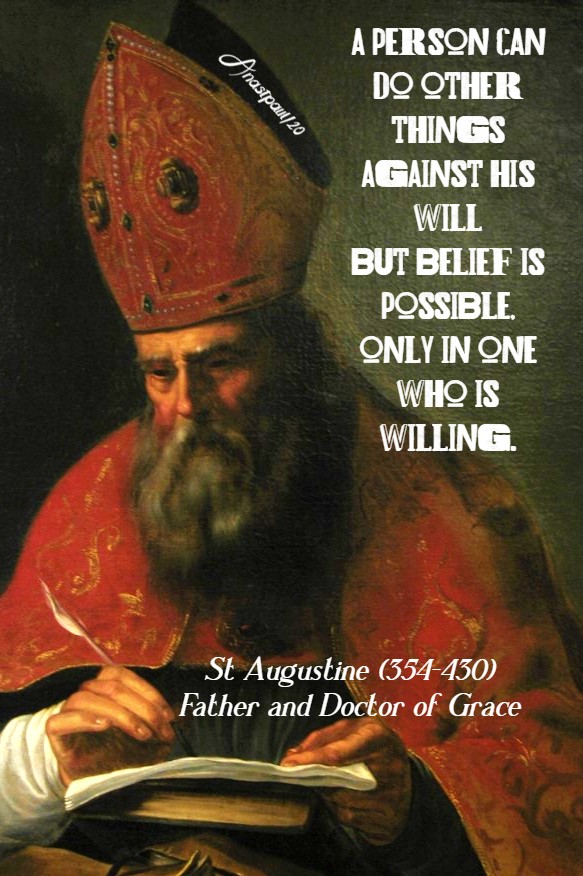
“A person can do other things against his will but belief is possible, only in one who is willing.”
St Augustine (354-430) Father and Doctor of Grace
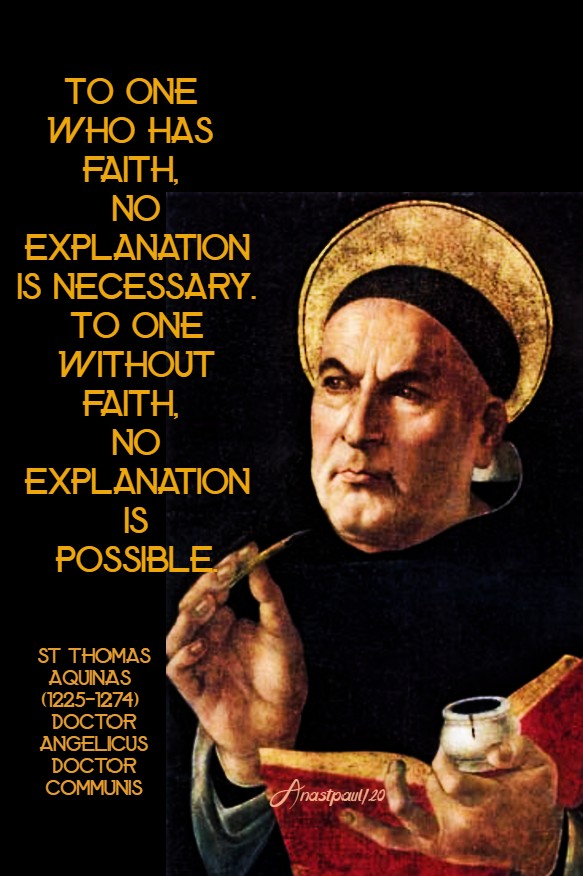
“To one who has faith, no explanation is necessary. To one without faith, no explanation is possible.”
St Thomas Aquinas (1225-1274) Doctor of the Church
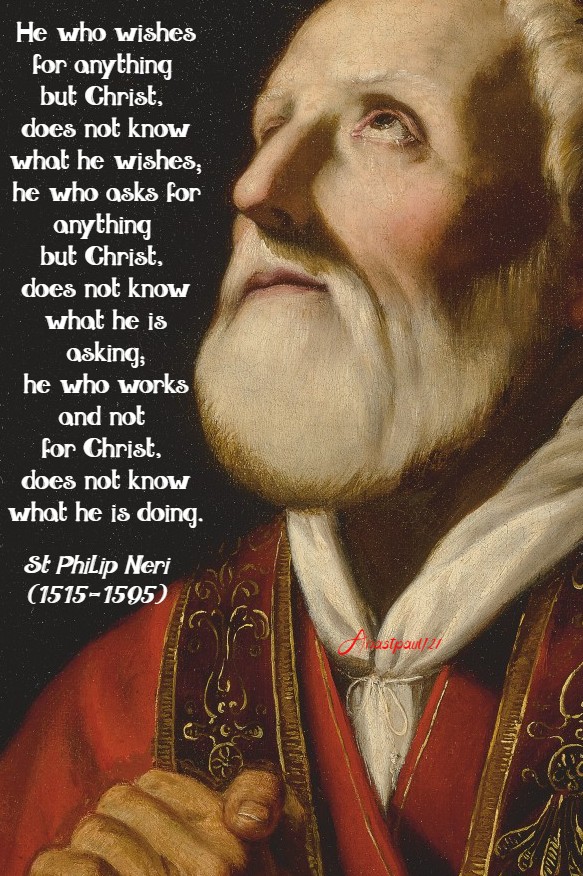
“He who wishes for anything but Christ, does not know what he wishes; he who asks for anything but Christ, does not know what he is asking; he who works and not for Christ, does not know what he is doing.”
St Philip Neri (1515-1595)
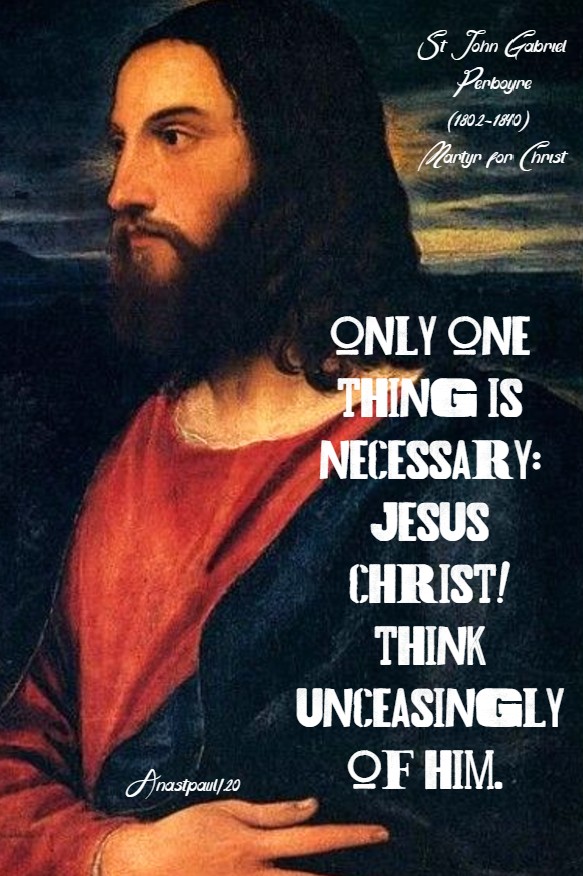
“Only one thing is necessary: Jesus Christ! Think unceasingly of Him. ”
St John Gabriel Perboyre CM (1802-1840) Martyr for Christ
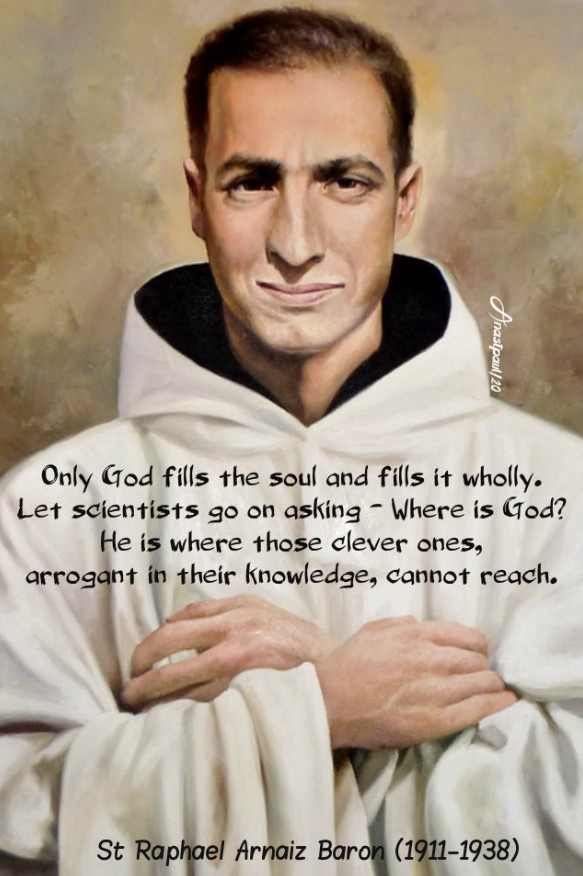
“Only God fills the soul and fills it wholly. Let scientists go on asking – Where is God? He is where those clever ones, arrogant in their knowledge, cannot reach.”
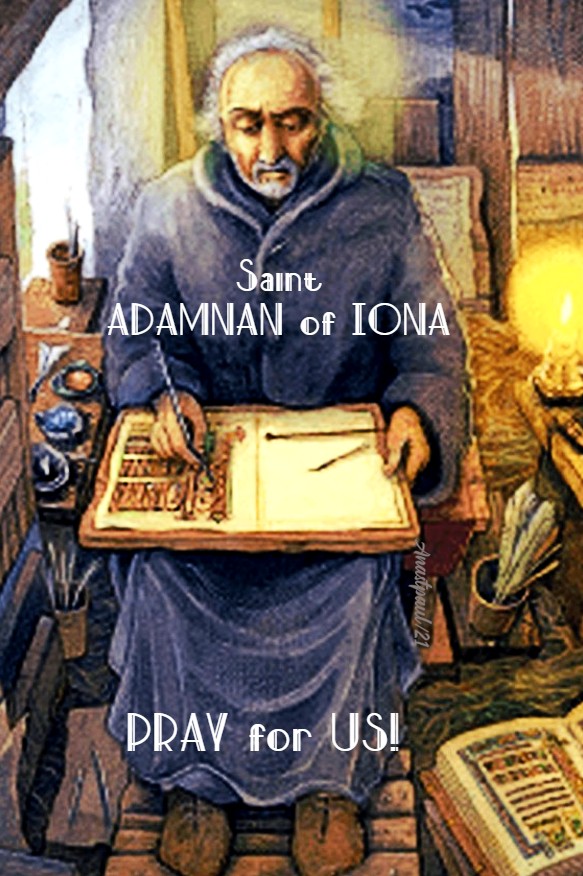
One Minute Reflection – 23 September – “Month of the Seven Sorrows of Mary” – Readings: Haggai 1: 1-8; Psalm 149: 1b-6a and 9b; Luke 9: 7-9 and the Memorial of Saint Adamnan of Iona (c 628-704)
“… Who is this about whom I hear such things?” And he sought to see him.” – Luke 9:9
REFLECTION – “[John] says: “We announce to you the eternal life that was with the Father and was manifested to us. What we have seen and heard we announce to you (1 Jn 1:2-3). Let Your Charity pay heed: “What we have seen and heard we announce to you.” They saw the Lord Himself present in the flesh and they heard words from the Lord’s mouth and they announced them to us. We also have heard, then but we have not seen. Are we, therefore, less fortunate than those who saw and heard? And why does [John] add: “So that you also may have fellowship with us?” They saw; we did not see and yet, we are in fellowship because we maintain a common faith.
To the disciple who wished to touch and thus to believe, the Lord – consoling us, who are unable to touch Him with our hand, as He is now seated in Heaven, although we can touch Him by faith – said, “Blessed are those who do not see and who believe” (Jn 20:29). It is we who were described, we who were designated. May there be in us, then, the blessedness that the Lord foretold would come to be! Let us hold firmly onto what we do not see because, those who have seen it, are announcing it, so that we also may have fellowship with them and so, that “our joy may becomplete” (v. 4).”– St Augustine (354-430) Bishop of Hippo Father and Doctor of the Church (Sermons on the first letter of Saint John, I, 3)
PRAYER – Shepherd of Your Church and we, the sheep of Your flock, who follow You and hear and do Your Word. Support us with grace those who are constantly striving to do Your will, so that following the example of the humble fiat of Your blessed Mother and ours, we may devote all our powers and talents to love of You and our neighbour and finally arrive safely in our heavenly home. May the prayers of St Adamnan of Iona, your faithful servant, be assistance in strengthening us in this vale of tears. In God, our Father we pray through You who live in union with Him and the Holy Spirit, one God, for ages and ages. Amen
Our Morning Offering – 23 September – The Memorial of Saint Adamnan of Iona (c 628-704) Relative of Saint Columban
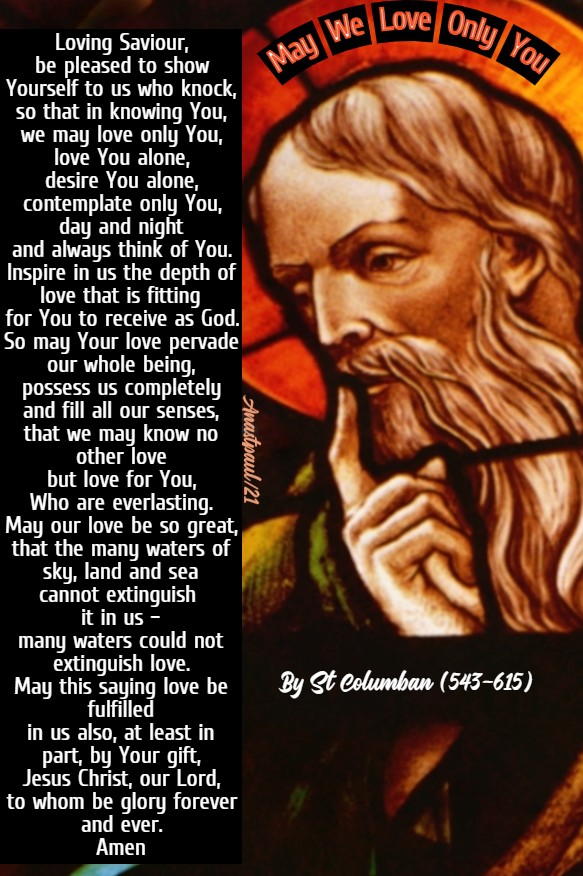
May We Love Only You By St Columban (543-615)
Loving Saviour, be pleased to show Yourself to us who knock, so that in knowing You, we may love only You, love You alone, desire You alone, contemplate only You, day and night and always think of You. Inspire in us the depth of love that is fitting for You to receive as God. So may Your love pervade our whole being, possess us completely and fill all our senses, that we may know no other love but love for You, Who are everlasting. May our love be so great, that the many waters of sky, land and sea cannot extinguish it in us – many waters could not extinguish love. May this saying love be fulfilled in us also, at least in part, by Your gift, Jesus Christ, our Lord, to whom be glory forever and ever. Amen
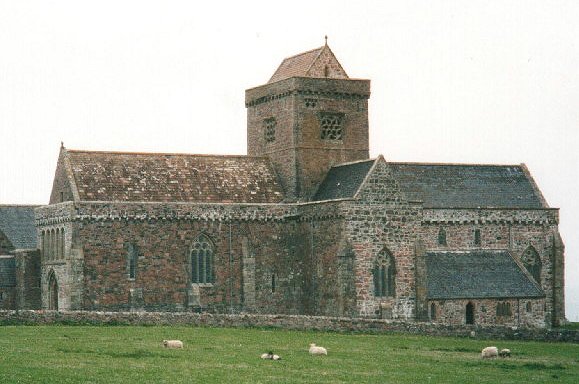
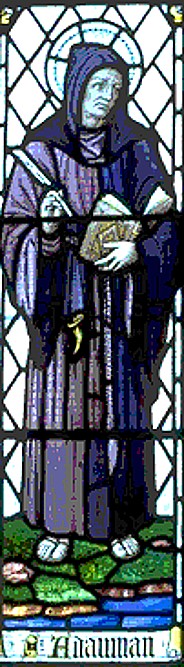
Saint of the Day – 23 September – Saint Adamnan of Iona or St Eunan of Iona (c 628-704) Relative of Saint Columban. Monk at Drunhome, Donegal, Ireland. Abbot of Iona in 679. President-general of all the Columban houses in Ireland. Hagiographer and Spiritual Writer, Poet, Statesman, Canon Lawyer. Born in c 628 in Drumhome, County Donegal, Ireland and died on 23 September 704 at Iona Abbey of natural causes. Patronages – Donegal, Ireland, County of, Raphoe, Ireland, City of, Raphoe, Ireland, Diocese of. Also known as – Adam, Adamnano, Adomnan, Eunan.
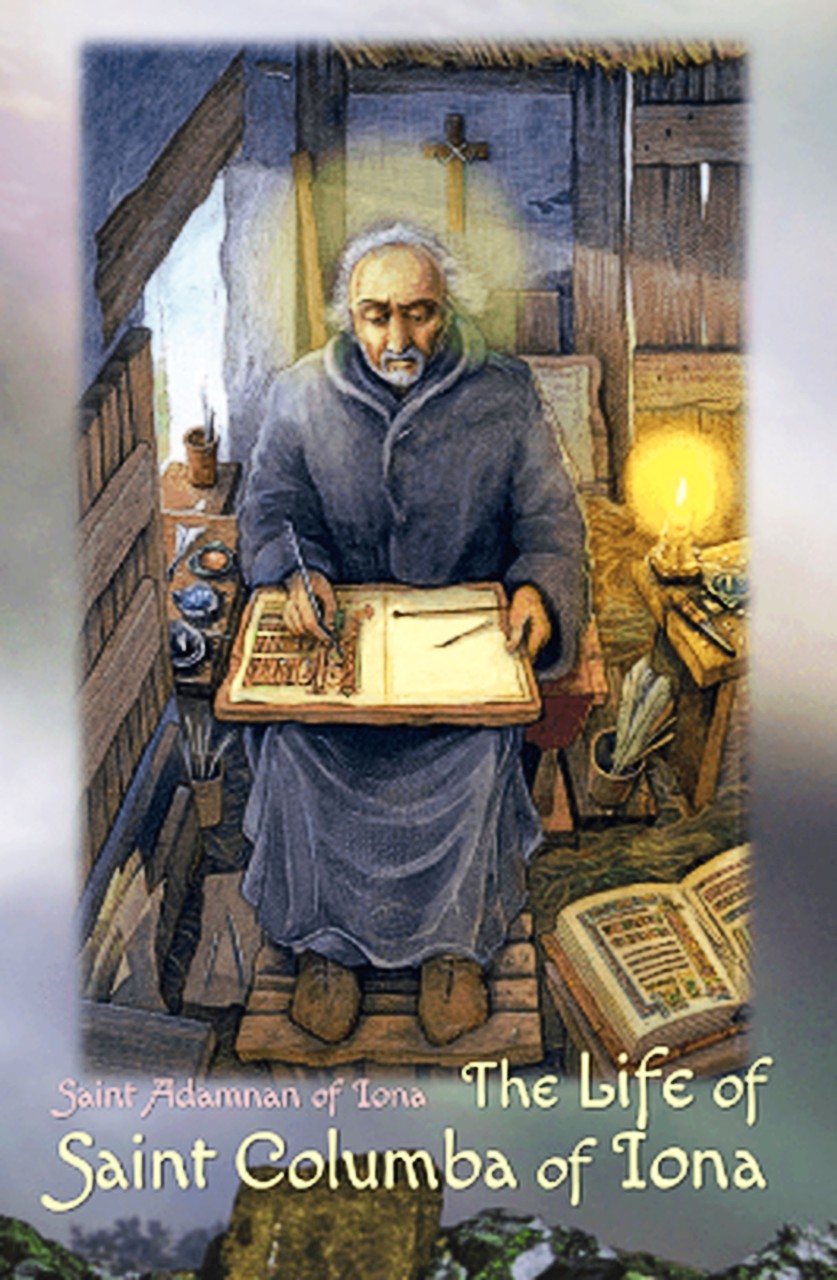
Adamnan was the Author of the Life of Columban, probably written between 697 and 700. This Biography is, by far, the most important surviving work written in early-medieval Scotland and is a vital source for our knowledge of the Picts and an insight into the life of Iona and the early-medieval Gaelic Saint Columban. (His life here: https://anastpaul.com/2018/11/23/saint-of-the-day-23-november-st-columban-543-615/)
Adamnan promulgated the Law of Adamnan or “Law of Innocents” (Irish: The Cáin Adomnáin). He also wrote the treatise De Locis Sanctis (i.e. “On Holy Places”), an account of the great Christian holy places and centres of pilgrimage. Adamnan received much of his information for this work, from a Frankish Bishop called Arculf, who had personally visited Egypt, Rome, Constantinople and the Holy Land and visited Iona after his travels.
Adamnan was a descendant of a cousin of Saint Columban, Colmán mac Sétna. He is thought to have been born into a noble family in what is now County Donegal in Ireland, probably as a younger son. Some historians believe he attained his obviously high level of education by studying at Durrow Abbey, one of Ireland’s most important early Christian Monasteries. He became a Monk at a Columban Monastery in Ireland in about 640 and then, at some later point, transferred to Iona Abbey. Opinions again differ about the date of his move to Iona, ranging from about 650, during the Abbacy of Ségéne, to about 670, after the accession of Abbot Failbe.
In 679, Adomnan became the ninth Abbot of Iona Abbey. As Abbot, he was extremely influential in the wider affairs of a land that was still divided between Gaels, Picts, Britons and Angles. He forged especially, strong links with King Aldfrith of Northumbria. He was also influential in partially bringing the Celtic Church into line with the wider body of the Roman Church when he adopted the Roman dating of Easter. This had been agreed in 664 at the Synod of Whitby and the difference, possibly trivial to modern eyes, had led to a rift between the Roman and Celtic Churches.
Adomnan’s most important innovation came in 697. The Synod of Birr, in Ireland, attracted a highly influential gathering of Irish, Dalriadan and Pictish nobles. Adomnan used it to gain widespread agreement to his “Law of Adomnan.” This “Law of Innocents,” set out to guarantee the safety and immunity of various types of non-combatants in warfare. It was a pioneering initiative in Europe and a remarkable achievement for a cleric on the Celtic fringe of the known world. Many see it as the first step in the process that has since led to the Geneva Convention and the Universal Declaration of Human Rights.
Adomnan is probably better known, however, for his Life of St Columban. This was really a Biography or a history of his predecessor of a Century earlier as Abbot of Iona. Rather it was a “hagiography” intended to prove Columban’s saintliness and extol his virtues and achievements. It is perhaps the most important surviving record from the areas which later became Scotland at this time. He also wrote a considerable amount of poetry.
Adomnan died in 704, probably on 23 September, the day now celebrated as his feast day. He was subsequently regarded as a Saint of the Irish and Scottish tradition and is considered to have been one of the mos influential participants in this early period of Irish and Scottish Church.
Along with St Columban, he is joint Patron of the Diocese of Raphoe, which encompasses the bulk of County Donegal in the north-west of Ireland. The Cathedral of St Eunan and St Columban (popularly known as St Eunan’s Cathedral), the Cathedral in that Diocese, is in Letterkenny. In 727 the relics of AdAmnan were brought to Ireland to renew the “Law of Innocents” and they were returned to Iona in 730.
In his native Donegal, Adamnan has given his name to several Churches, Institutions and buildings – all under the Irish version of his name Eunan.
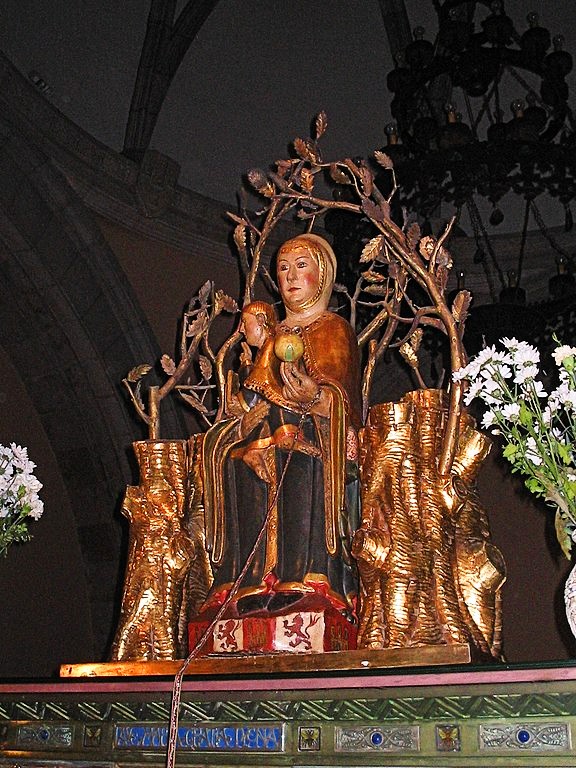
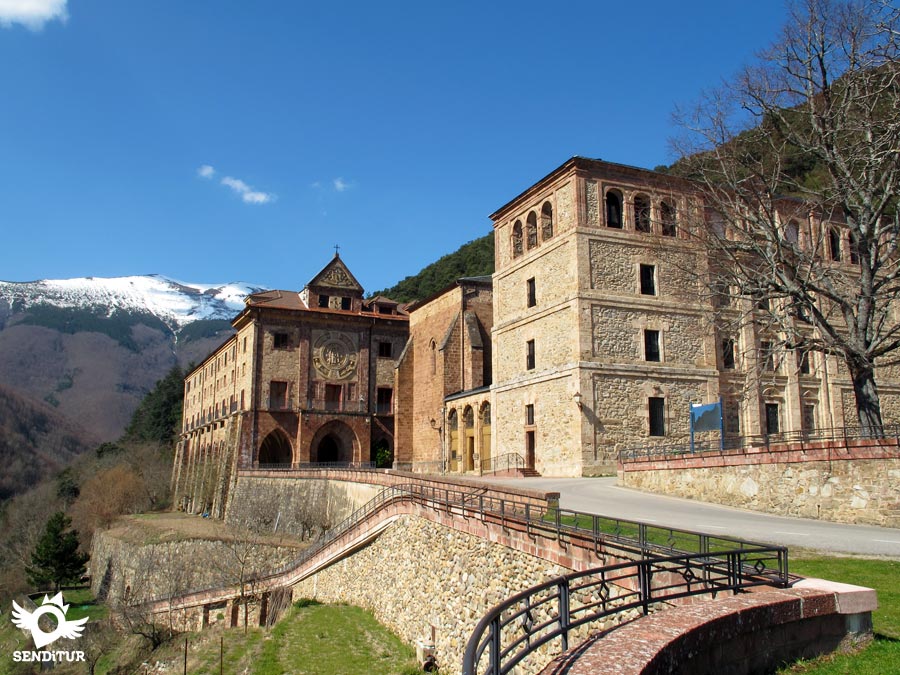
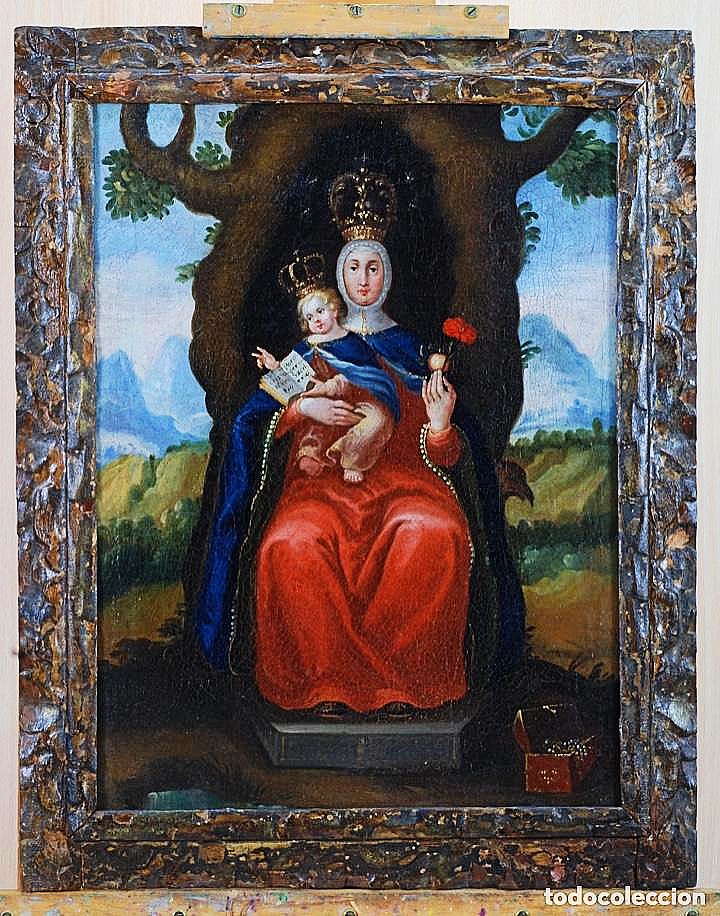
Nuestra Senora de Valvanera / Our Lady of Valvanera, La Rioja, Spain (9th Century) – 23 September:
This image is a replica of the original which appears to have dated from the ninth century and is preserved in the Royal Abbey Shrine of Our Lady of Valvanera, or Valvanere, in Rioja, jealously guarded by Benedictine Monks. The oldest documents preserved, dates from the thirteenth century and tells how, according to tradition, the original image was found by a thief who later converted and became a hermit.
There was a thief named Nuno Onez, who was a hardened criminal and a “man of licentious life and dedicated to looting.” One day, however, upon hearing the prayer of a man who was to be his next victim, he was touched by Divine grace and repented of his many crimes, turning to the Blessed Virgin Mary to help him change his life. One day while he was praying, an Angel appeared to him to tell him to go to Valvanera and search for an oak that stood out from the rest, with a fountain that gushed at its feet and surrounded by swarms of bees. There, in the branches of a strong and noble oak, in the presence of a fountain of pure and clear water, the trunk of which was overflowing with the sweetness of honey, he found an image of the Mother of God, the Blessed Virgin Mary. Nuno went to the place with a Priest on the following Sunday and found the image, just as the Angel had said. The Statue had probably been hidden there when the Moslems invaded the Iberian Peninsula in the 8th century. In that place, in the last third of the ninth century, he began to build a place of worship that became known as the Chapel of Santo Cristo. Soon there was a small group of hermits who met to pray around this image, men who eventually adopted a regular life inspired by the Rule of Saint Benedict. Thus, this small Shrine is believed to have given rise to the Monastery of Valvanera, where the Virgin is currently venerated. Valvanera Monastery is surrounded by a forest near the Town of Anguiano in the valley of the Sierra Demand La Rioja. Its name derives from the Latin “Vallis Venaria,” which literally means: “Valley water veins.” The first Abbot was a man named Don Sancho in the year 990. Our Lady apparently has a preference for oak trees, since this is one of several Statues found in or on an oak tree. On that very spot today is seen the magnificent Church which Alphonsus IV, King of Castile, built in honour of the Mother of God in 1073 and which houses the image.
She, the valiant woman of Scripture, desired her children, her clients and her devotees to share in a spiritual manner, in the strength and the power of this mighty tree, which is certainly a symbol of her.
St Alfonso Burgos St Adamnan of Iona/Eunan of Iona (c 628-704) Monk, Abbot Bl Antonio of Tlaxcala Bl Bernardina Maria Jablonska St Cissa of Northumbria St Constantius of Ancona Bl Cristobal of Tlaxcala Bl Emilie Tavernier Gamelin Bl Francisco de Paula Victor Bl Guy of Durnes Bl Helen Duglioli Bl Juan of Tlaxcala
St Pope Linus (c 10 – c 76) Successor to St Peter. Papacy lasted from c 67 to his death. Among those to have held the position of pope, Peter, Linus and Clement are specifically mentioned in the New Testament. Linus is mentioned in the closing greeting of the Second Epistle to Timothy as being with Paul in Rome near the end of Paul’s life. About St Pope Linus: https://anastpaul.com/2018/09/23/saint-of-the-day-23-september-st-pope-linus-c-10-c-76-successor-to-st-peter/
Bl William Way St Xantippa — Martyrs of Syracuse – (4 saints): Group of Christians deported from Syracuse, Sicily by invading Saracens and sent to North Africa where they were tortured and executed for their faith. Martyrs. The names that have survived are Andrew, Antony, John and Peter. c900
Martyred in the Spanish Civil War: • Blessed Crispulo Moyano Linares • Blessed María Josefa del Río Messa • Blessed Norberto Cembranos de la Verdura • Blessed Purificación Ximénez y Ximénez • Blessed Sofía Ximénez y Ximénez del Río • Blessed Vicente Ballester Far
Thought for the Day – 22 September – Meditations with Antonio Cardinal Bacci (1881-1971)
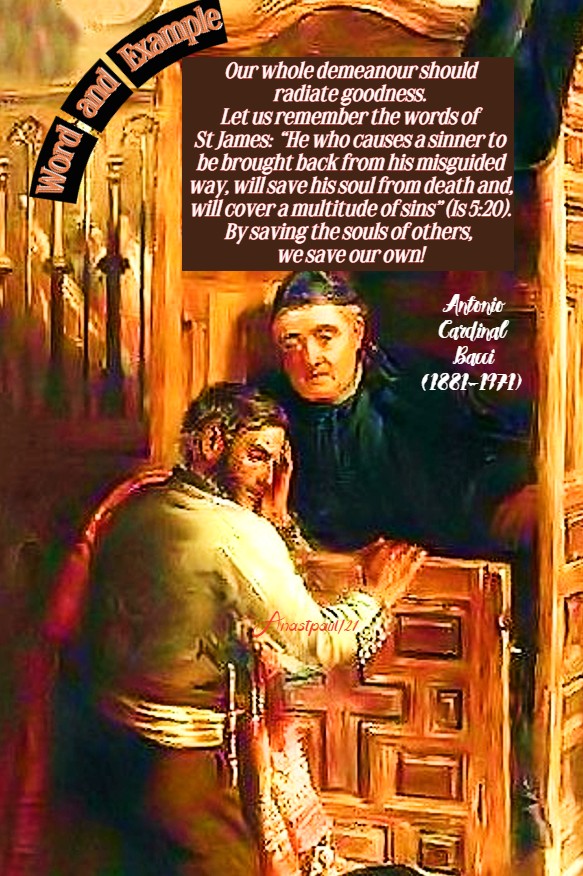
Word and Example
“We should give good example everywhere and in every way, at home and in the Church, in the company of those who are subordinate to us and of those who have authority over us, in speech and in dress, by moderation in our eating habits and in the furnishings of our house, by the pictures which we hang in our rooms and by the books and magazines which we read. We should be particularly careful to keep, in safe custody, those books and journals which are necessary to us for purposes of study but could be an occasion of sin for others.
Our whole demeanour should radiate goodness. Let us remember the words of St James: “He who causes a sinner to be brought back from his misguided way, will save his soul from death and, will cover a multitude of sins” (Is 5:20). By saving the souls of others, we save our own!”
Quote/s of the Day – 22 September – Readings: Ezra 9: 5-9; Tobit 13: 2-4, 7-8; Luke 9: 1-6
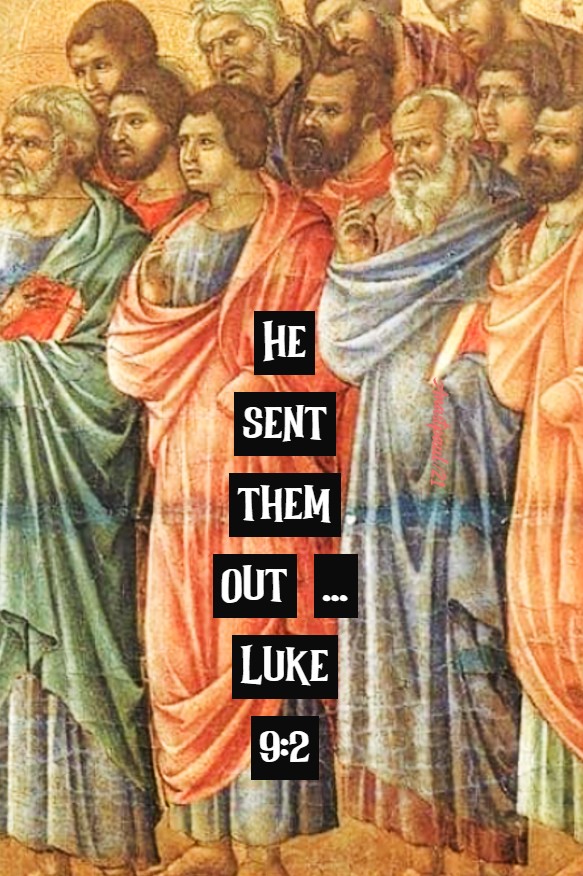
“He sent them out …”
Luke 9:2
“Let your light shine before men.”
Matthew 5:16
“Preach the gospel to every creature”
Mark 16:15
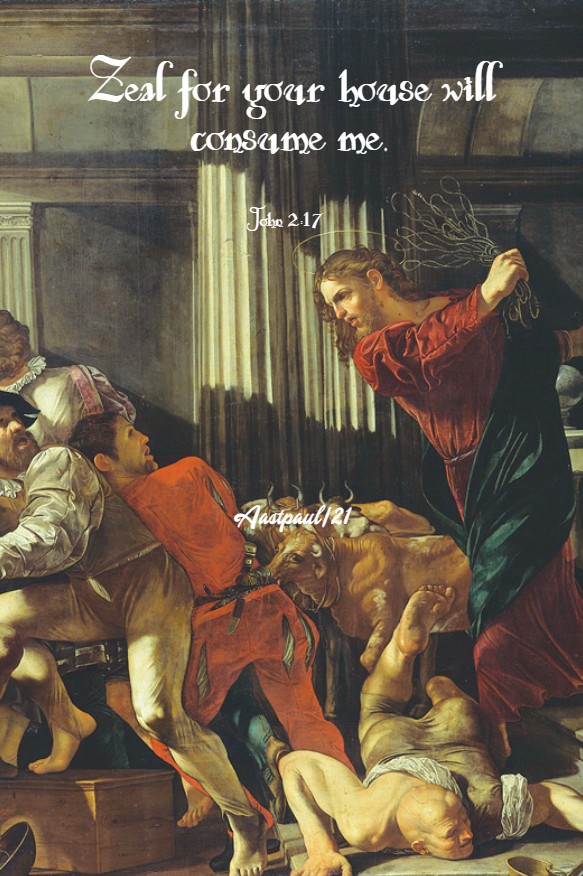
“Zeal for your house will consume me.”
John 2:17
“A servant is not greater than his master, nor is a messenger greater than the one who sent him.”
John 13:16
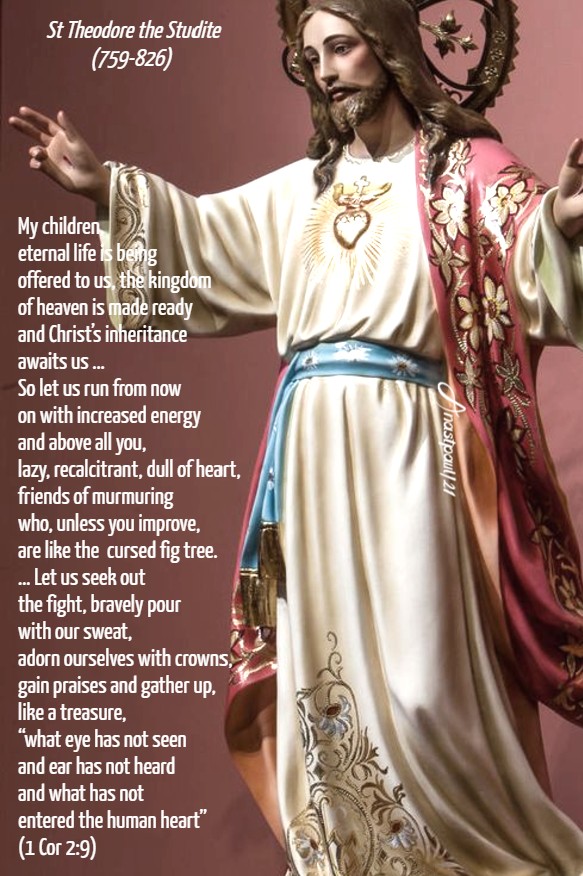
“My children, eternal life is being offered to us, the kingdom of heaven is made ready and Christ’s inheritance awaits us … So let us run from now on with increased energy and above all you, lazy, recalcitrant, dull of heart, friends of murmuring who, unless you improve, are like the cursed fig tree. … Let us seek out the fight, bravely pour with our sweat, adorn ourselves with crowns, gain praises and gather up, like a treasure, “what eye has not seen and ear has not heard and what has not entered the human heart” (1 Cor 2:9).
St Theodore the Studite (759-826)
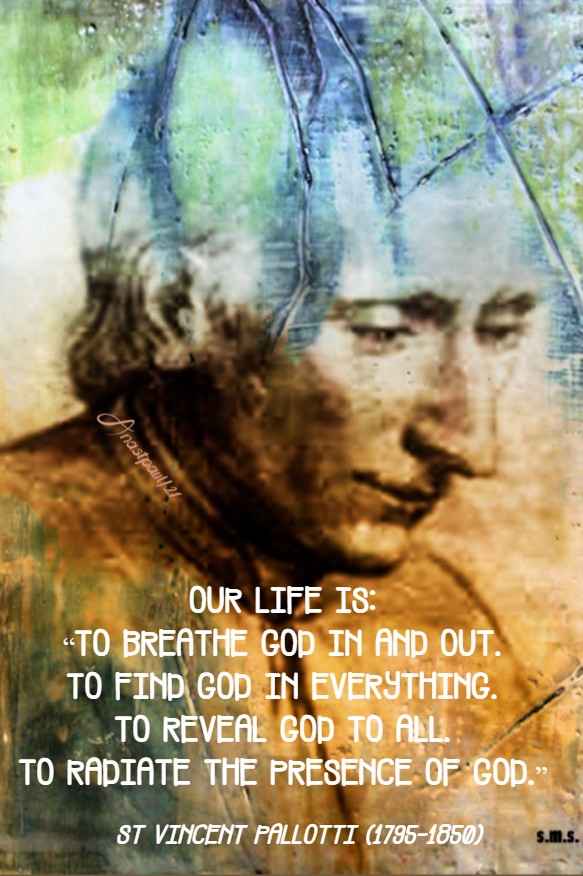
Our life is: “To breathe God in and out. To find God in everything. To reveal God to all. To radiate the presence of God.”
One Minute Reflection – 22 September – “Month of the Seven Sorrows of Mary”- Readings: Ezra 9: 5-9; Tobit 13: 2-4, 7-8; Luke 9: 1-6
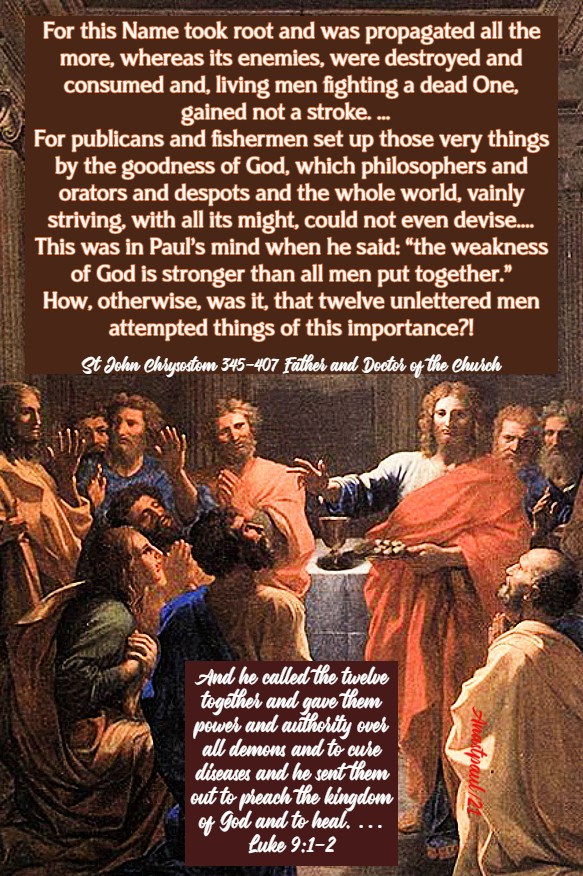
And he called the twelve together and gave them power and authority over all demons and to cure diseases and he sent them out to preach the kingdom of God and to heal. … Luke 9:1-2
REFLECTION – “The foolishness of God is wiser than human wisdom and the weakness of God is stronger than human strength” (1 Cor 1:25). Yes, the Cross is a foolishness and weakness in appearance only … It was through unlearned men that the Cross brought conviction and drew the world to itself. It spoke to men, not of chance things but of God and of piety in the truth, of the Gospel polity, of future judgement and it made uncouth and illiterate men, philosophers. This is how “the foolishness of God is wiser than man and His weakness stronger,” (1 Cor. 1:25).
How is it stronger? It is stronger in that it spread over the whole earth and seized all men by force and, whereas, thousands and thousands did their utmost, to stamp out the Name of the Crucified One, just the contrary came to pass. For this Name took root and was propagated all the more, whereas its enemies, were destroyed and consumed and, living men fighting a dead One, gained not a stroke. … For publicans and fishermen set up those very things, by the goodness of God, which philosophers and orators and despots and the whole world, vainly striving with all its might, could not even devise.… This was in Paul’s mind when he said: “the weakness of God is stronger than all men put together.” How, otherwise, was it, that twelve unlettered men attempted things of this importance?! – St John Chrysostom 345-407) Bishop of Constantinople, Father & Doctor of the Church (4th Homily on 1 Corinthians)
PRAYER – O God of love, You sent Your beloved Son to the world to proclaim the Good News of Salvation, to heal every illness and to cure all infirmity of body and soul. Help us to continue the mission of the merciful Christ in the service towards our neighbour, preaching the Gospel and offering our help in whatever way we can. May the example of suffering of our Blessed Mother Mary, teach us how to love and serve You. Through her intercession, grant us the grace to go forth in love. We ask this through Jesus Christ our Lord, with the Holy Spirit, one God forever, amen.
Our Morning Offering – 22 September – “Month of the Seven Sorrows of Mary”
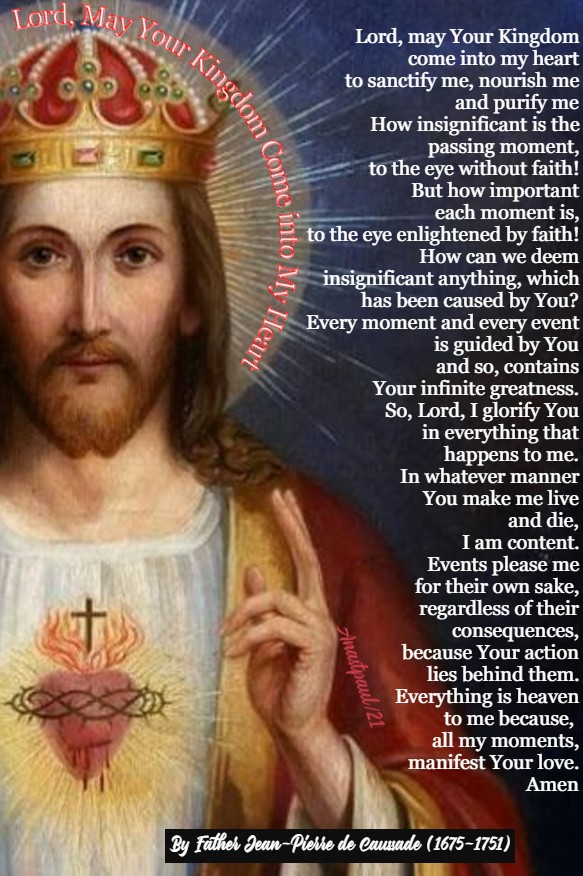
Lord, May Your Kingdom Come into My Heart By Father Jean-Pierre de Caussade (1675-1751)
Lord, may Your Kingdom come into my heart to sanctify me, nourish me and purify me. How insignificant is the passing moment, to the eye without faith! But how important each moment is, to the eye enlightened by faith! How can we deem insignificant anything, which has been caused by You? Every moment and every event is guided by You and so, contains Your infinite greatness. So, Lord, I glorify You in everything that happens to me. In whatever manner You make me live and die, I am content. Events please me for their own sake, regardless of their consequences, because Your action lies behind them. Everything is heaven to me because, all my moments, manifest Your love. Amen
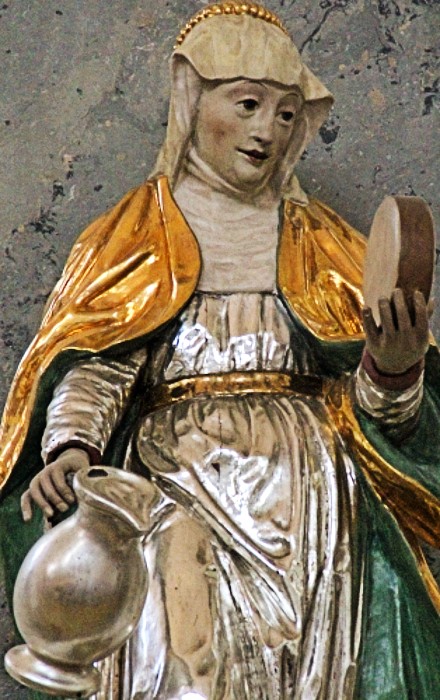
Saint of the Day – 22 September – Saint Gunthildis of Suffersheim (Died c 1057) Laywoman, Apostle of the poor. Patronages – cattle, lepers, servants. Also known as Gunthild.
Historical certainty of her life has not been passed down. The name comes from Old High German and means “the combative fighter.” She is said to have been a pious maid who was distinguished by special charity. She died around 1057 in Suffersheim in Bavaria. According to another tradition, Gunthildis is said to have been a disciple of St Willibald who came to Germany from southern England in the 8th century.
Gunthildis from Suffersheim served as a cattle maid and led a very pious and devout life in the midst of her rural work. She remains a constant model for all the maidservants in the country. Devoted to all virtues, she was especially distinguished by compassion and merciful love. Her greatest joy was giving alms to the poor. Through her prayer God caused two crystal-clear springs to appear, one from a rock. Through the latter, a leper obtained perfect healing. Gunthildis drove the cattle to these sources of clear and refreshing water. After drinking from these springs, the cows gave an extraordinary amount of milk. Gunthildis shared this abundant blessing with the poor of the neighbourhood.
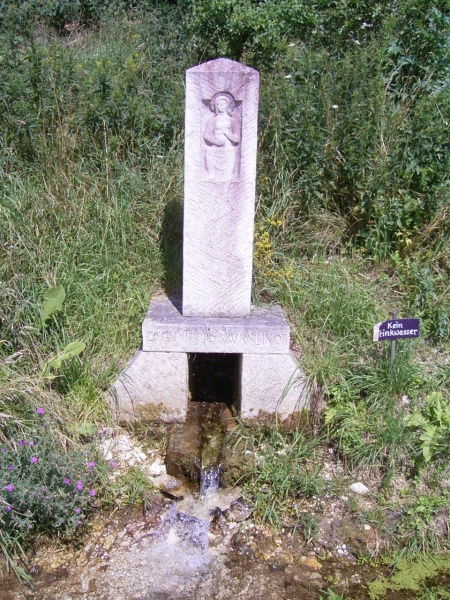
The Gunthildis spring near Suffersheim
When she once wanted to carry the milk she had saved from her own mouth to poor people, she met her employer. Very angry, he asked her what she was carrying. She replied that it was only lye. And the employer only saw lye when he opened the vessel. In this service, the pious maid endured until the end of her life. She died a blessed death, rich in graces and virtues.
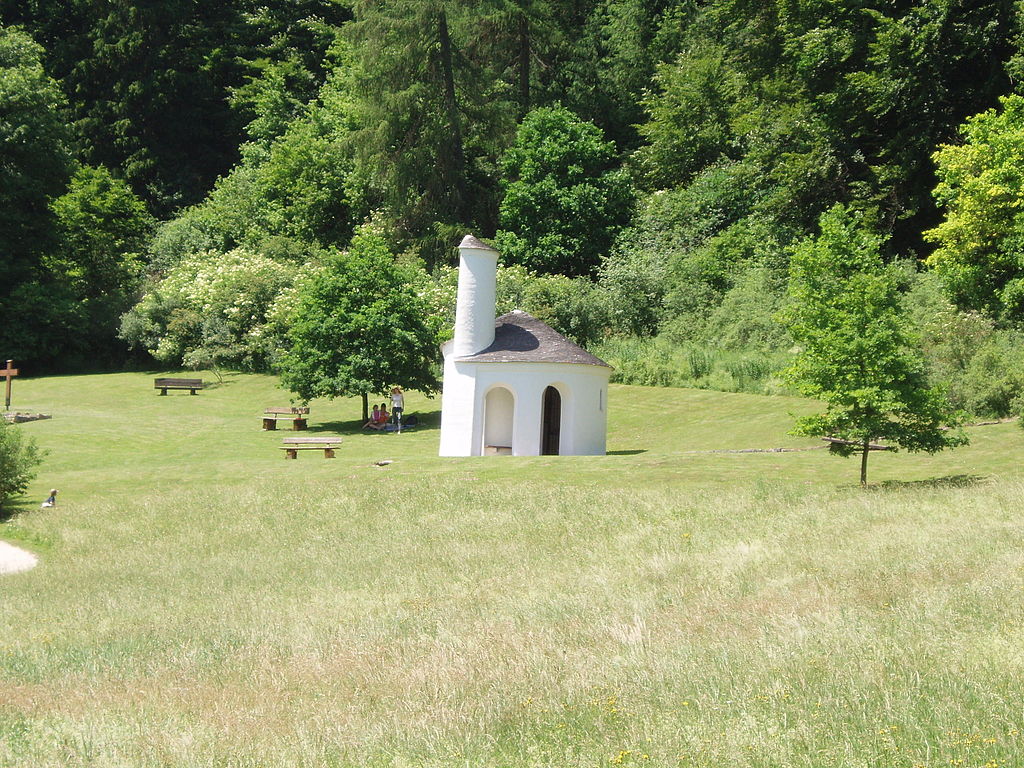
The body of the maid, generally venerated as a Saint, was loaded onto a cart and two untamed oxen hitched to it. They calmly carried her body to Suffersheim. Here they stopped. Thus it was understood that Gunthildis should be buried there. Soon afterwards, many miracles occurred at her grave. As a result, a Chapel was built over this grave, although it no longer exists. Today, next to the foundations of this Chapel uncovered in 1957, there is a new Gunthildis Chapel built from 1993 to 1995.
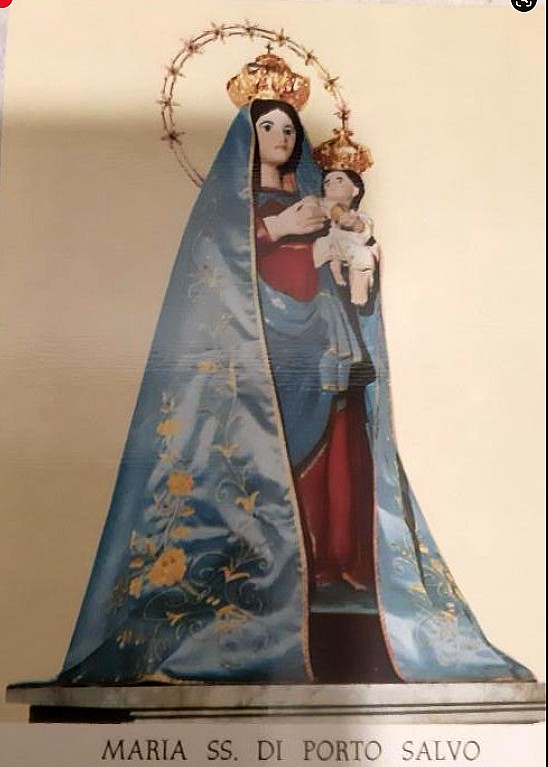
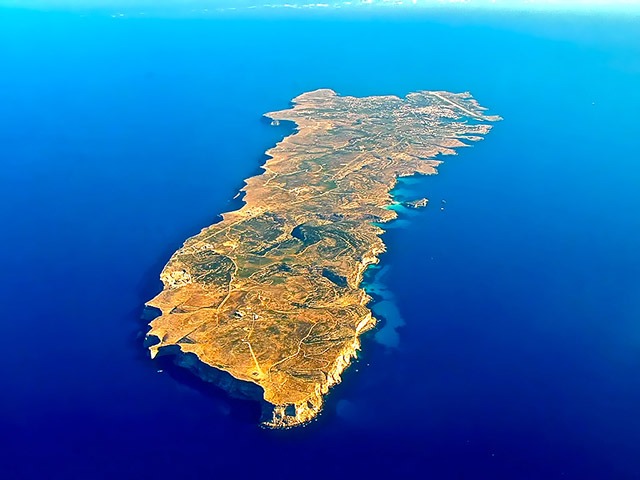
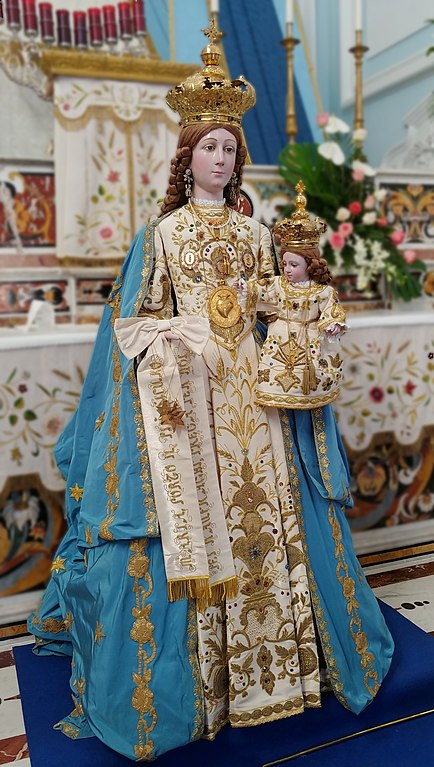
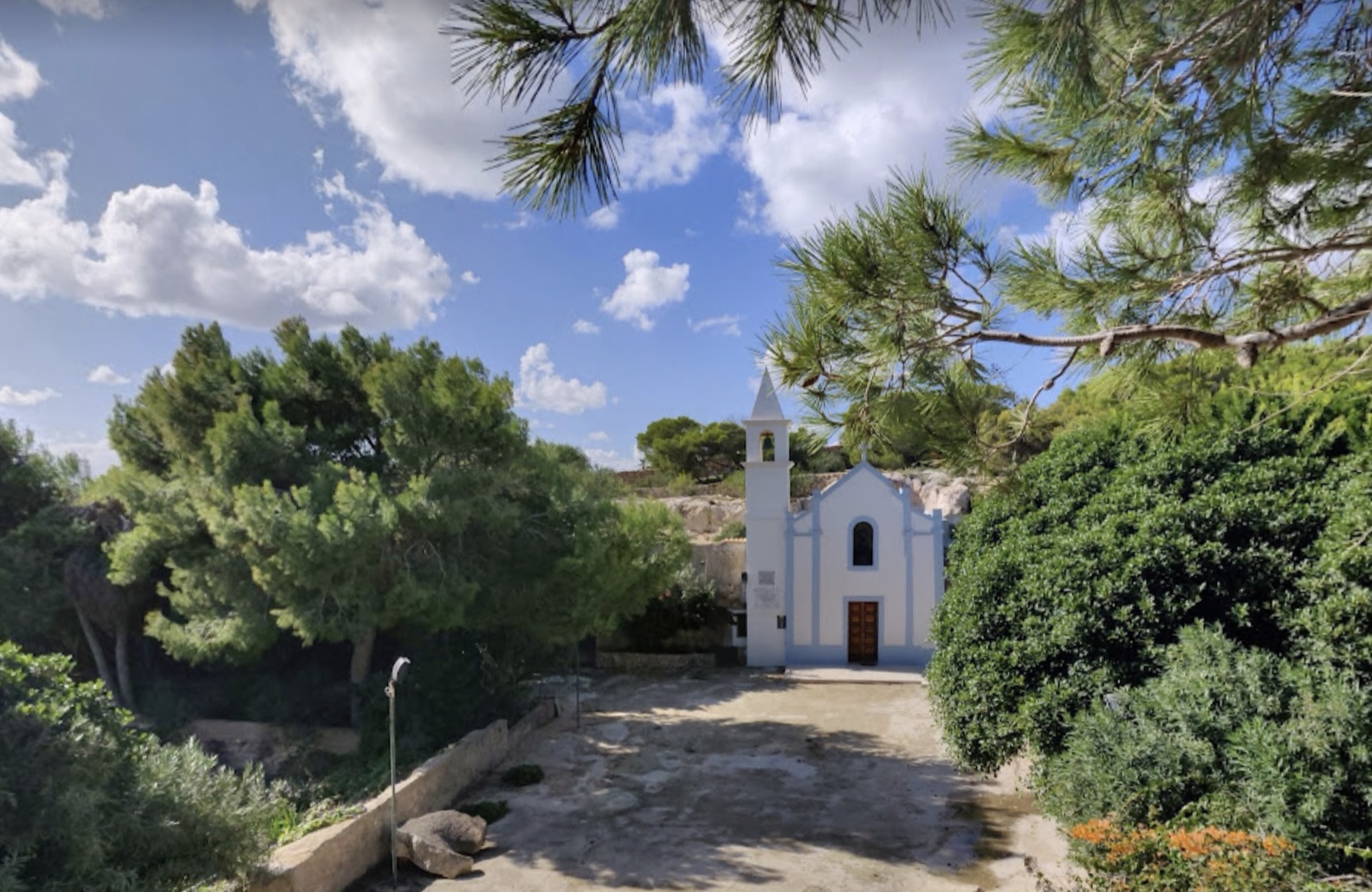
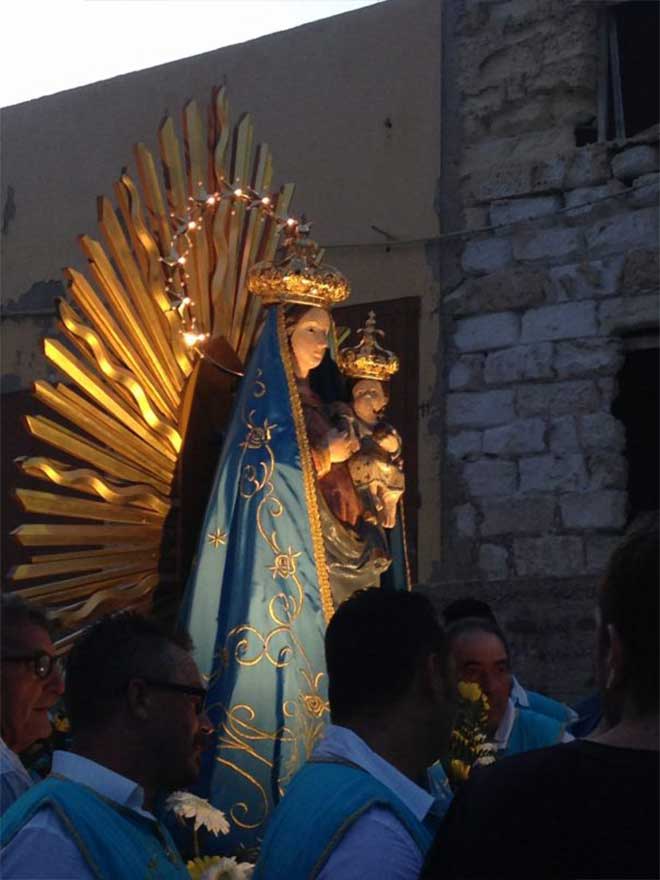
Madonna di Porto Salvo / Our Lady of Porto Salvo, Lampedusa, Agrigento, Sicily, Italy (1843) – 22 September:
The island of Lampedusa lies far south of Sicily, closer to Tunisia than to Italy. Since the time of the Crusades, it has been home to a rural Shrine frequented by mariners both Christian and Muslim in the 1500s and 1600s, who kept an oil lamp burning constantly before the crude stone Statue of the Madonna and Child.
But the island was not inhabited until 22 September 1843, when two steamships of Italian colonists arrived under Governor Bernardo Maria Sanvisente. In Madonna Valley, they found the Chapel dilapidated and the mutilated Statue of the Virgin on the ground. Sanvisente ordered the Chapel and Statue to be restored and a Mass sung every year on 22 September in honour of the Madonna of Porto Salvo and the settlement of the island. During World War II, bombs destroyed the Church, but the Madonna was unhurt and no-one killed.
In 1967, the Virgin and Child were crowned but in 1979 the precious crowns were stolen. The faithful soon raised money for new ones and the Madonna of Porto Salvo was recrowned on 21 September 1980.
She is the Patron of fishermen and her celebration now lasts two weeks. On the first Sunday of September, the Statue processes from its Shrine to the main Church in town, where it is honoured with special services until the big day of the 22nd, when it processes solemnly through the City streets. Of course, the festa is the occasion for general entertainment, games and food as well. On the 23rd, a final procession returns the Madonna to the Sanctuary outside town.
Whilst exploring the story of this veneration of Our Lady, I discovered that on 22 September 2020 the “Key to the Island” was stolen. Below is the report in the local newspaper. Don Carmelo La Magra reassured all the islanders: “Whoever took it, repented, gave it back to me.” Great symbolic value – it is the key to the island in the hands of the Blessed Virgin:
“The key of Our Lady has been returned. Whoever took it, repented, gave it back to me anonymously. We thank the Virgin Mary because this story ended well and we pray for each other.” It is with this message that Fr Carmelo La Magra, Priest of Lampedusa, reassured all the islanders last night.
For hours, the alarm had been circulating on social media: “The golden key of the Madonna of Porto Salvo has been stolen“. A key that has a single, important meaning – the key of Lampedusa in the hands of the Blessed Virgin. A theft carried out, according to what was reported yesterday, on her feast day, 22 September. A party that, however, this year, due to the Coronavirus emergency, did not take place. The carabinieri, last night, did not find anything. Neither to those of the company command of Agrigento, nor to those of the Lampedusa station. No complaint had been formalised, nor had there been any interventions in this regard. But the military, having received informal news, immediately took an interest in the “case.”
A case that was resolved, fortunately, quickly and spontaneously. Because that key (which, according to what transpires, is not gold at all) was returned, as guaranteed by the Parish Priest of Lampedusa.
St Augustinus Yu Chin-Kil St Basilia St Digna of Rome St Emerita of Rome St Emmeramus St Florentius the Venerable St Gunthildis of Suffersheim (Died c 1057) Laywoman
St Irais St Jonas Bl Joseph Marchandon St Lauto of Coutances St Lindru of Partois St Maurice & Co Bl Otto of Freising St Sadalberga St Sanctinus of Meaux St Silvanus of Levroux
St Thomas of Villanueva/Villanova OSA (1488-1555) Archbishop, Religious Priest of the Order of St Augustine, Confessor, Writer, Preacher, Teacher, Apostle of Charity, Mystic, Miracle-Worker often called “the Almsgiver” and “the Father of the Poor“, Reformer. About St Thomas here: https://anastpaul.com/2017/09/22/saint-of-the-day-22-september-st-thomas-of-villanova-o-s-a/
Martyrs of the Theban Legion: Martyrs (c 287) A Roman imperial legion of 6,600 soldiers, all of whom were Christians; they had been recruited from the area around Thebes in Upper Egypt, were led by Saint Maurice and served under Emperor Maximian Herculeus. Around the year 287, Maximian led the army across the Alps to Agaunum, an area in modern Switzerland, in order to suppress a revolt by the Bagandre in Gaul. In connection with battle, the army offered public sacrifices to the Roman gods; the Theban Legion refused to participate. For refusing orders, the Legion was decimated – one tenth of them were executed. When the remainder refused to sacrifice to the gods, they were decimated again. When the survivors still refused to sacrifice, Maximinian ordered them all killed. Martyrs. Known members of the Legion include: • Alexander of Bergamo • Candidus the Theban • Chiaffredo of Saluzzo • Exuperius • Fortunato • Innocent of Agaunum • Maurice • Secundus the Theban • Ursus the Theban • Victor of Agaunum • Victor of Xanten • Victor the Theban • Vitalis of Agaunum Other profiled saints associated with the Legion include: • Antoninus of Piacenza (martyred soldier; associated by later story tellers) • Adventor of Turin (not a member; associated by later story tellers) • Cassius (may have been a member) • Florentius the Martyr (may have been a member) • George of San Giorio (not a member; associated by later story tellers) • Gereon (not a member, but another soldier who was martyred for refusing to make a sacrifice to Roman gods) • Octavius of Turin (not a member; associated by later story tellers) • Pons of Pradleves (escaped the massacre to become an evangelists in northern Italy) • Secundus of Asti (not a member but linked due to art work) • Solutor of Turin (not a member; associated by later story tellers) • Tiberio of Pinerolo (may have been a member) • Verena (wife of a member of the Legion) They were martyred c 287 in Agaunum (modern Saint-Maurice-en-Valais, Switzerland. A basilica was built in Agaunum to enshrine the relics of the Legion. The full story: https://anastpaul.com/2018/09/22/saints-of-the-day-22-september-st-maurice-and-the-martyrs-of-the-theban-legion-martyrs-c-287/
Martyrs of Valencia, Spain – Martyred in the Spanish Civil War: • Blessed Alfonso Lopez • Blessed Antonio Gil-Monforte • Blessed Antonio Sáez de Ibarra López • Blessed Carlos Navarro Miquel • Blessed Esteban Cobo-Sanz • Blessed Federico Cobo-Sanz • Blessed Félix Echevarría Gorostiaga • Blessed Francisco Carlés González • Blessed Francisco Vicente Edo • Blessed Germán Gozalvo Andreu • Blessed Josefina Moscardó Montalvá • Blessed Luis Echevarría Gorostiaga • Blessed María Purificación Vidal Pastor • Blessed Miguel Zarragua Iturrízaga • Blessed Simón Miguel Rodríguez • Blessed Vicente Sicluna Hernández
Thought for the Day – 21 September – Meditations with Antonio Cardinal Bacci (1881-1971)
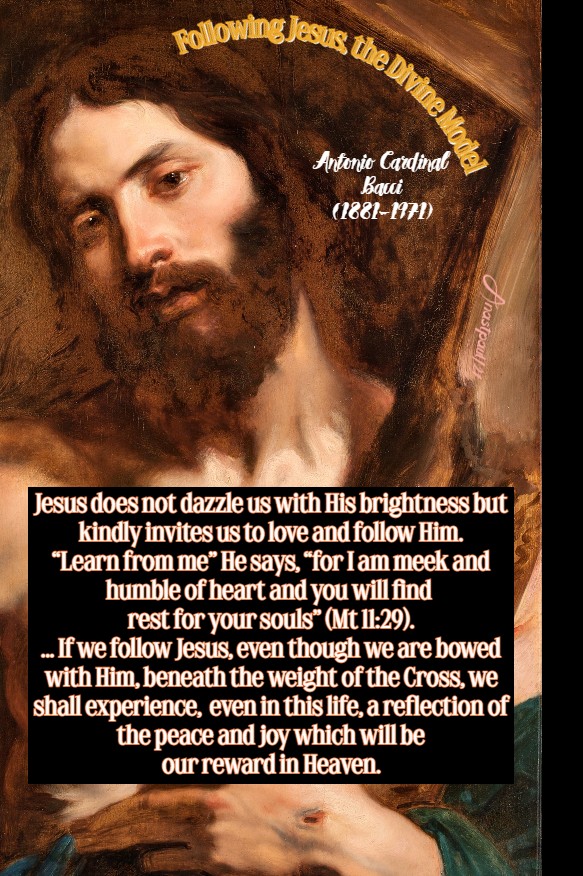
Following Jesus, the Divine Model
“Jesus is the Divine Model, Whom we ought to follow and imitate. In Him, the virtues possess both the infinite splendour of the Divinity and the gentle appeal of glorified Humanity. Jesus does not dazzle us with His brightness but kindly invites us to love and follow Him. “Learn from me” He says, “for I am meek and humble of heart and you will find rest for your souls” (Mt 11:29). After He has indicated humility, meekness and interior peace, as the foundations of the spiritual life, He invites us to take up the yoke of His law and assures us, that we shall find it light (Mt 11).
If we follow Jesus, even though we are bowed with Him, beneath the weight of the Cross, we shall experience, even in this life, a reflection of the peace and joy which will be our reward in Heaven.”
Quote/s of the Day – 21 September – The Feast of St Matthew, Apostle and Evangelist – Readings: Ephesians 4: 1-7, 11-13; Psalm 19: 2-5; Matthew 9: 9-13
“He said to him, “Follow me.” And he got up and followed him.”
Matthew 9:9
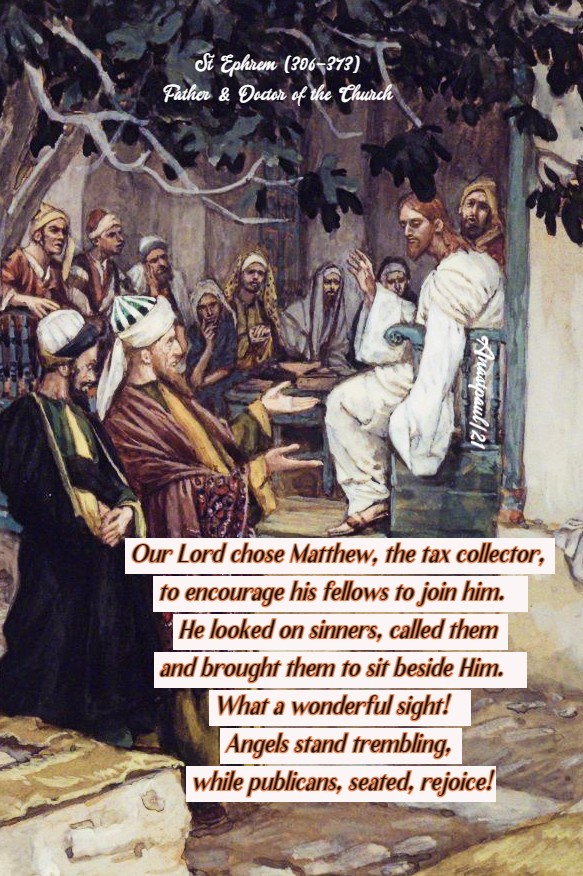
“Our Lord chose Matthew, the tax collector, to encourage his fellows to join him. He looked on sinners, called them and brought them to sit beside Him. What a wonderful sight! Angels stand trembling, while publicans, seated, rejoice!”
St Ephrem (306-373) Father & Doctor of the Church
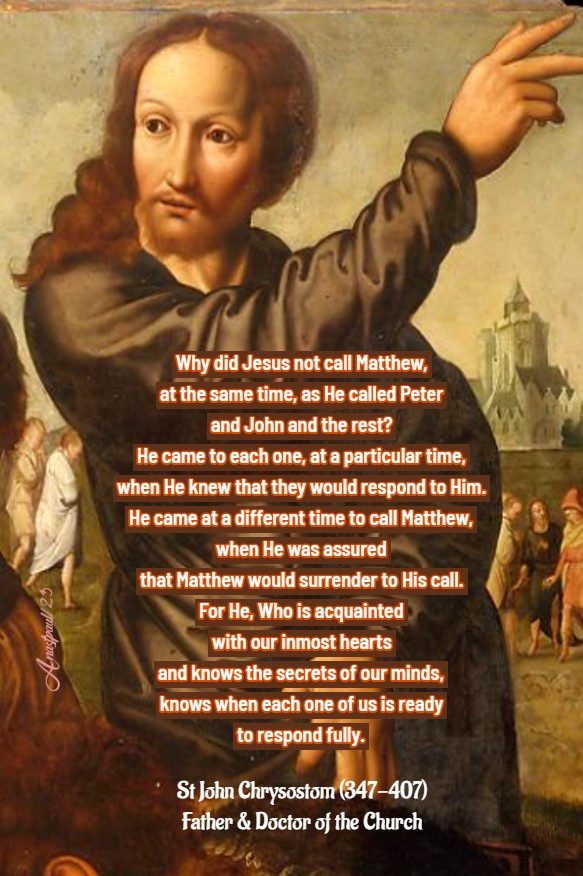
“Why did Jesus not call Matthew at the same time as He called Peter and John and the rest? He came to each one at a particular time when He knew that they would respond to Him. He came at a different time to call Matthew when He was assured that Matthew would surrender to His call. For He Who is acquainted with our inmost hearts and knows the secrets of our minds, knows when each one of us is ready to respond fully.”
St John Chrysostom (347-407) Father & Doctor of the Church
One Minute Reflection – 21 September – The Feast of St Matthew, Apostle and Evangelist- Readings: Ephesians 4: 1-7, 11-13; Psalm 19: 2-5; Matthew 9: 9-13
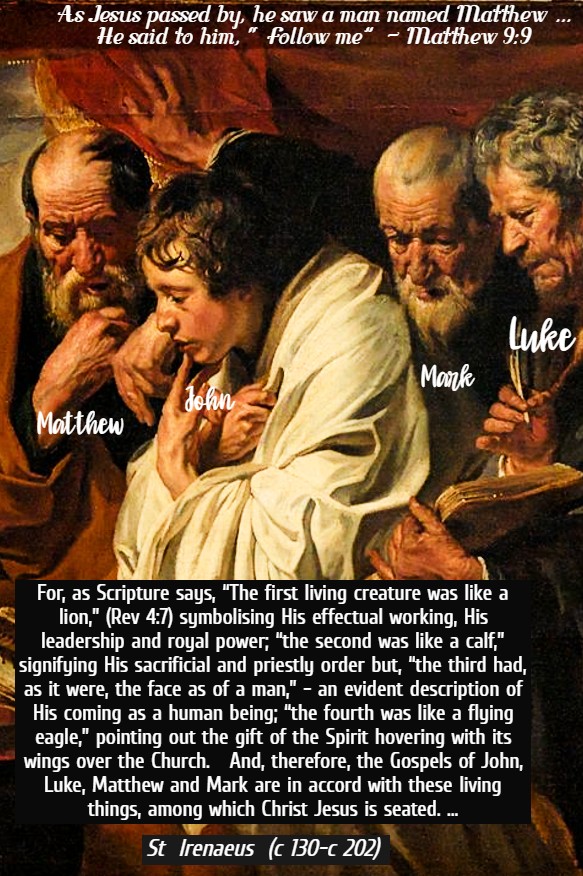
“As Jesus passed by, he saw a man named Matthew sitting at the customs post. He said to him, “Follow me.”And he got up and followed him.” – Matthew 9:9
REFLECTION – “It is not possible that the Gospels can be either more or fewer in number than they are. There are four zones of the world in which we live and four principal winds and the Church is scattered throughout all the world and her “pillar and ground” (1 Tm 3:15) is the Gospel and the Spirit of life; therefore, it is fitting that she should have four pillars, breathing out immortality on every side and vivifying us afresh. The Word, the Shaper of all things, Who sits upon the cherubim and upholds all things (Ps 79:2; Heb 1:3), Who was manifested to men, has given us the Gospel under four aspects but bound together by One Spirit. David says, when entreating this manifestation, “You that sit between the cherubim, shine forth.”(Ps 79:2) For the cherubim, too, were four-faced (Ez 1:6) and their faces were images of the dispensation of the Son of God.
For, as Scripture says, “The first living creature was like a lion,” (Rev 4:7) symbolising His effectual working, His leadership and royal power; “the second was like a calf,” signifying His sacrificial and priestly order but, “the third had, as it were, the face as of a man,” – an evident description of His coming as a human being; “the fourth was like a flying eagle,” pointing out the gift of the Spirit hovering with its wings over the Church. And, therefore, the Gospels of Mark, Luke, Matthew and John, are in accord with these living things, among which Christ Jesus is seated. …
Such was the form of the living creatures, so was also the character of the Word of God Himself – the Word of God Himself conversed with the patriarchs before Moses, in accordance with His divinity and glory but, for those under the law, He instituted a priestly and liturgical service. Afterwards, being made Man for us, He sent the gift of the Spirit over all the earth, protecting us with His Wings (Ps 16:8). … These things being so, all who reject the form the Gospel has taken – that is, those who say the Gospels should be more or fewer in number – are futile, ignorant, and presumptuous.” – St Irenaeus of Lyons (c 130-c 202) Bishop, Theologian and Martyr – (Against Heresies c. Book III, 11, 8-9).
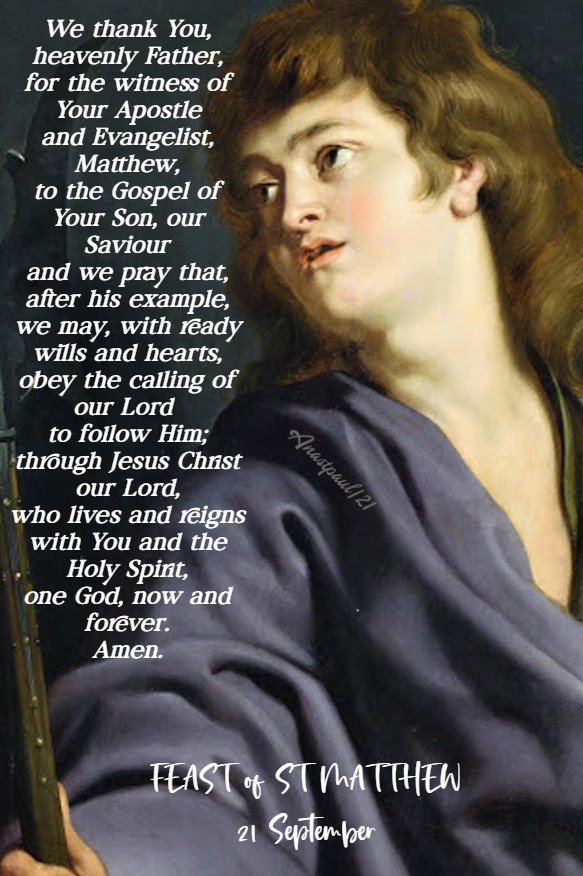
PRAYER – We thank You, heavenly Father, for the witness of Your Apostle and Evangelist, Matthew, to the Gospel of Your Son, our Saviour and we pray that, after his example, we may with ready wills and hearts, obey the calling of our Lord, to follow Him; through Jesus Christ our Lord, who lives and reigns with You and the Holy Spirit, one God, now and forever. Amen.
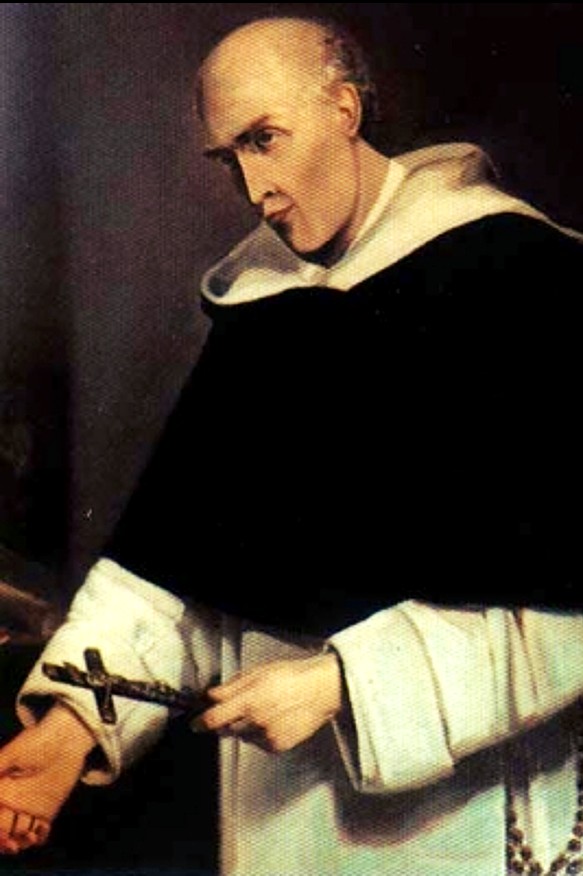
Saint of the Day – 21 September – Blessed Mark Scalabrini of Modena OP (c 1420-1498) Priest and Friar of the Order of Preachers, Prior, miracle-worker. Born in c 1420 in Mocogna, Modena, Emilia-Romagna, Italy and died on 21 September 1498 in Pesaro, Italy of natural causes.
Mark was born in Modena and entered the Convent of the Dominican Order there in young manhood. He observed the Rules with great fidelity and became noted, both for his learning and his holiness. However, when we recall the times in which he lived , it becomes clearer to us that anyone who kept the Dominican Rule in its entirety, is truly deserving of our notice . The abuses which stirred Savonarola to thundering speech in the pulpits of Ferrara and Florence could not have been absent from all of Italy. It took solid virtue to hold out against the opulent worldliness of the times and Mark of Modena apparently did a thorough job of it, since he has been Beatified.
Mark was made Prior of the Convent of Pesaro and the only miracle we have on record (he is believed to have performed many) took place at his convent. A little boy had died and the mother pleaded with Mark to restore the child’s life. After praying for awhile, Mark turned to her and said, “Madam, your young boy is in paradise. Do not try to get him back again, for his second loss will be worse than this one.” However, she insisted on his working the miracle and he did so. The child returned to life and, ten years later, covered with disgrace and public censure arising from shameful conduct, died a second time, leaving his mother in more sorrowful grief than ever.
Mark of Modena died in 1498, the year that the City of Florence burned Savonarola at the stake. It was a time of terrible happenings in Italy and all Europe. The people of Modena mourned the death of Mark and went to pray at his tomb. Many of their needs were answered there and a number of miracles were reported and again when his relics were translated to the Rosary Chapel of the Church. His relics were again transferred in 1949, to the Dominican Church in Modena. The bells were said to have rung by themselves and sweet perfume filled the air. His relics are still exposed annually for veneration during the week of Pentecost. Blessed Mark was Beatified on 10 September 1857 by Pope Blessed Pius IX.
Beata Vergine del Tresto / The Blessed Virgin of Tresto, Ospedaletto Euganeo, Italy (1468) – 21September:
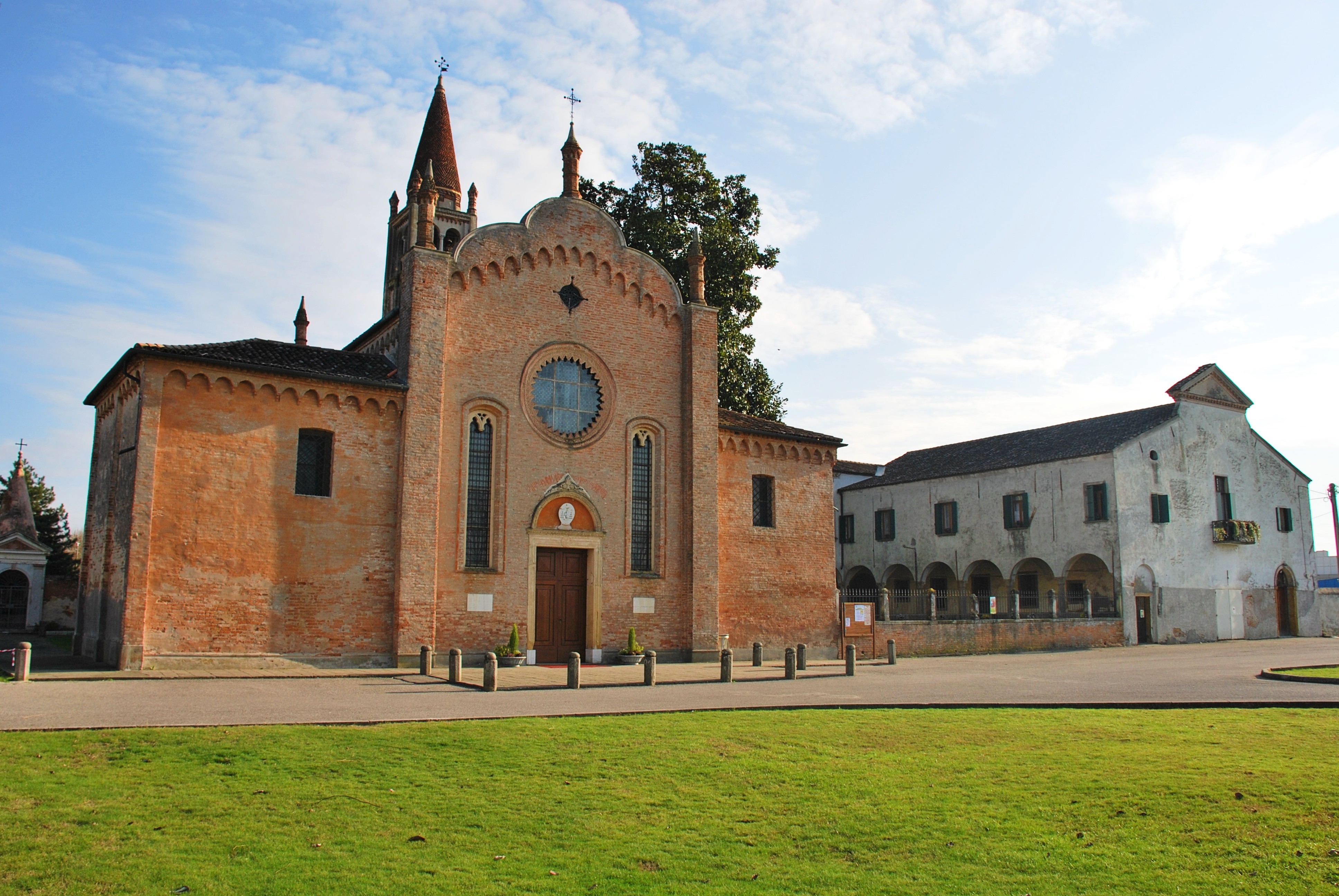
The complex of the Sanctuary of Tresto was built in the place of the miraculous Marian apparition to the boatman Giovanni di Bartolomeo Zielo da Ponso on the night of 21 September 1468, in the locality of Tresto, current fraction of the Municipality of Ospedaletto Euganeo near Padua, from where he was returning. Reaching Este in the evening, the man had stopped to sleep in the boat under the Borini bridge. Around midnight he was awakened by a female voice who called him three times. The man saw two beautiful ladies who enjoined him to follow them. Strangely finding the drawbridge of the City lowered, they walked towards the countryside where, in the locality of Tresto, one of the two ladies sat on the bank of a ditch and told the other to fetch her a bunch of grapes. Then she asked Giovanni if he knew her. To his negative answer she said that she was Mary, the Mother of God. She then enjoined him not to amend his life and to do his best to have a Church built on that place according to the plan and the measures she illustrated to him. But Giovanni objected saying that because of his poverty and ignorance, he would not be believed. Then Mary gave him a knife, instructing him to stick it into the ground and then to remove it. Giovanni obeyed and when he removed the blade from the ground, blood gushed. After having blessed him, the Madonna disappeared with her companion. T he next day Giovanni, afraid of not being believed, did not carry out the commands he had received but only confided in three friends. Losing his peace of mind, he eventually went with some people to the site of the apparition, where he tried to stick the knife into the ground, pulling it back wet with blood. Others wanted to try: the incredulous could not move the blade from the ground, while the others withdrew it bloody.
The miraculous event, renewed several times, convinced everyone to work together to erect the required Church. At the halfway point, due to the exceptional drought that had hit the area, there was no water. Everyone then invoked the help of Mary, who caused a spring appear next to the construction site. This spring since then, over the centuries, has been a source of miraculous cures just like the one at Lourdes. The custody of the Church, built in 9 months, was entrusted by the Paduan clergy to a Congregation of Mendicants of whom Giovanni wore the habit in a lay state.
The Sanctuary of Tresto became and remains a site of devotion and pilgrimage with the powerful and healing waters of the miraculous Spring, bringing many sick seeking cures. The Sanctuary preserves several works of art among which the painting on wood depicting the Virgin and Child shown above, stands out, a masterpiece attributed to Jacopo da Montagnana who created it between 1475 and 1480.
St Alexander of the Via Claudia Bl Diego Hompanera París St Eusebius of Phoenicia St Francisco Pastor Garrido St François Jaccard St Gerulph St Herminio García Pampliega St Iphigenia St Isaac of Cyprus Bl Jacinto Martínez Ayuela St Jacques Honoré Chastán St Johannes Ri St Jonah the Prophet Bl José María Azurmendi Mugarza Bl Josep Vila Barri St Landelino of Ettenheim Bl Manuel Torró García Blessed Mark Scalabrini of Modena OP (c 1420-1498) St Maura of Troyes St Meletius of Cyprus Bl Nicolás de Mier Francisco St Pamphilus of Rome St Pierre Philibert Maubant St Tôma Tran Van Thien Bl Vicente Galbis Gironés Bl Vicente Pelufo Orts — Martyrs of Gaza – 3 saints: Three brothers, Eusebius, Nestulus and Zeno, who were seized, dragged through the street, beaten and murdered by a pagan mob celebrating the renunciation of Christianity by Julian the Apostate. They were burned to death in 362 on a village garbage heap in Gaza, Palestine.
Martyred in the Spanish Civil War: • Blessed Diego Hompanera París • Blessed Jacinto Martínez Ayuela • Blessed José María Azurmendi Mugarza • Blessed Josep Vila Barri • Blessed Manuel Torró García • Blessed Nicolás de Mier Francisco • Blessed Vicente Galbis Gironés • Blessed Vicente Pelufo Orts
Thought for the Day – 20 September – Meditations with Antonio Cardinal Bacci (1881-1971)
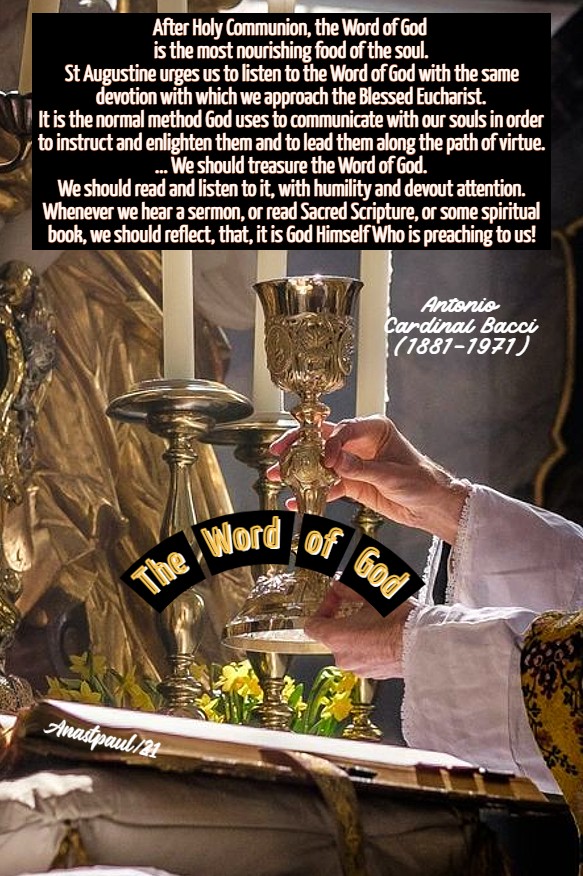
The Word of God
“After Holy Communion, the Word of God is the most nourishing food of the soul. St Augustine urges us to listen to the Word of God with the same devotion with which we approach the Blessed Eucharist. It is the normal method God uses to communicate with our souls in order to instruct and enlighten them and to lead them along the path of virtue. It is true, that God sometimes makes direct contact with us by means of good inspirations or extraordinary graces but, the ordinary way in which He calls us to eternal life, is by His divine Word, whether it is proclaimed by His ministers, read in Sacred Scripture, illustrated in the lives of the Saints, or, outlined by masters of the spiritual life. Most important of all, is the living word of the lawful representatives of God. Jesus did not specifically command His Apostles to write but to preach. “He who believes and is baptised,” He added, “shall be saved but he who does not believe, shall be condemned” (Cf Mk 16:16). Mary Magdalen was converted by the preaching of Jesus and wept for her sins. The sermons of St John the Baptist called upon the Jewish people to do penance. Centuries earlier, the prophet Nathan had converted David by means of the inspired Word of God and the prophet Jonah, had roused the Ninivites to repentance. We should treasure the Word of God. We should read and listen to it, with humility and devout attention. Whenever we hear a sermon, or read Sacred Scripture, or some spiritual book, we should reflect, that, it is God Himself Who is preaching to us! We should not be guided merely by a spirit of curiosity, desire for knowledge, or love of eloquence or literary style but, by the determination to apply such instruction to ourselves and to put it into practice.”
Quote/s of the Day – 20 September – “Month of the Seven Sorrows of Mary” – Readings: Ezra 1: 1-6; Psalm 126: 1b-6; Luke 8: 16-18
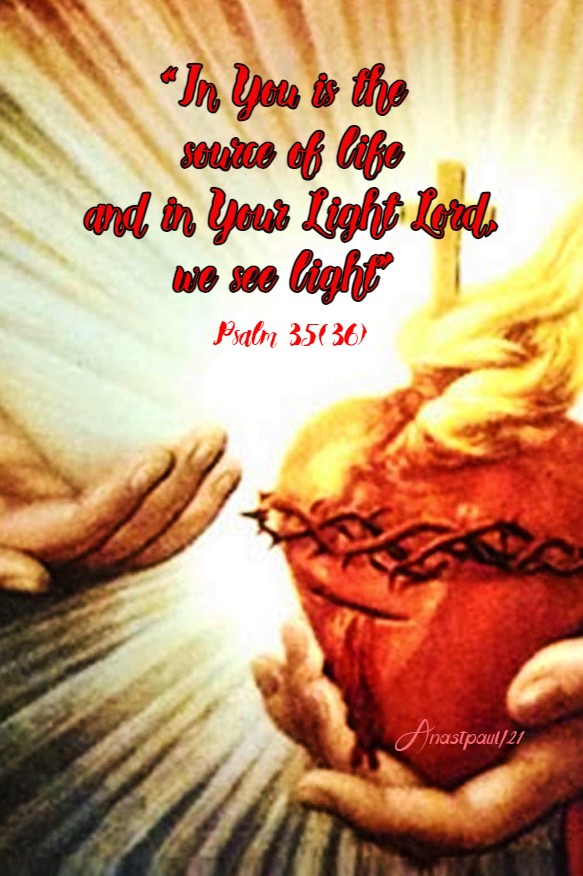
Christ the Light
“In You is the source of life and in Your Light Lord, we see light”
Psalm 35(36)
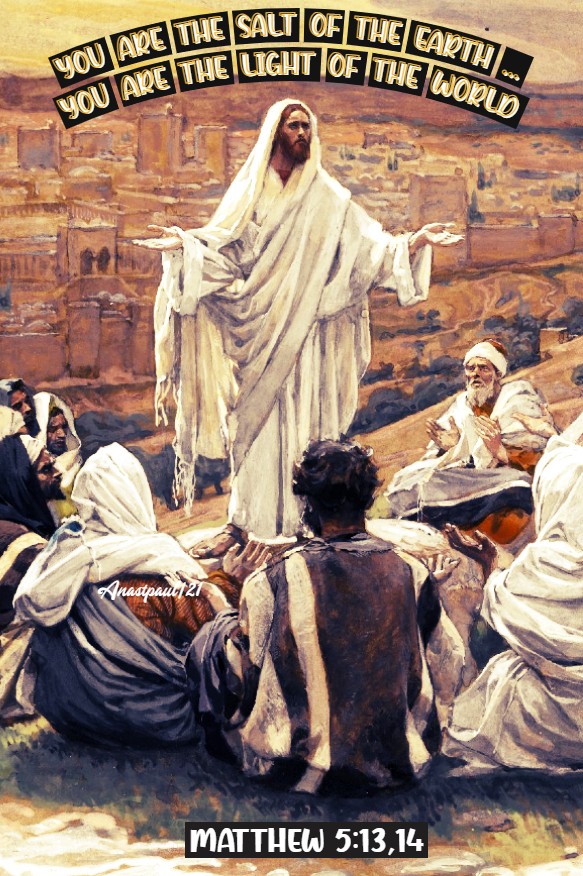
“You are the salt of the earth … You are the light of the world.”
Matthew 5:13,14
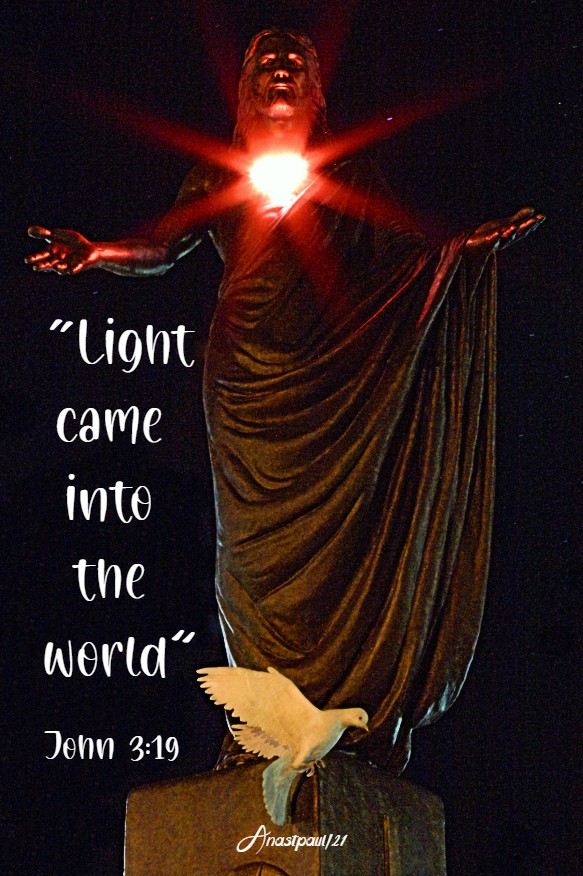
“Light came into the world.”
John 3:19
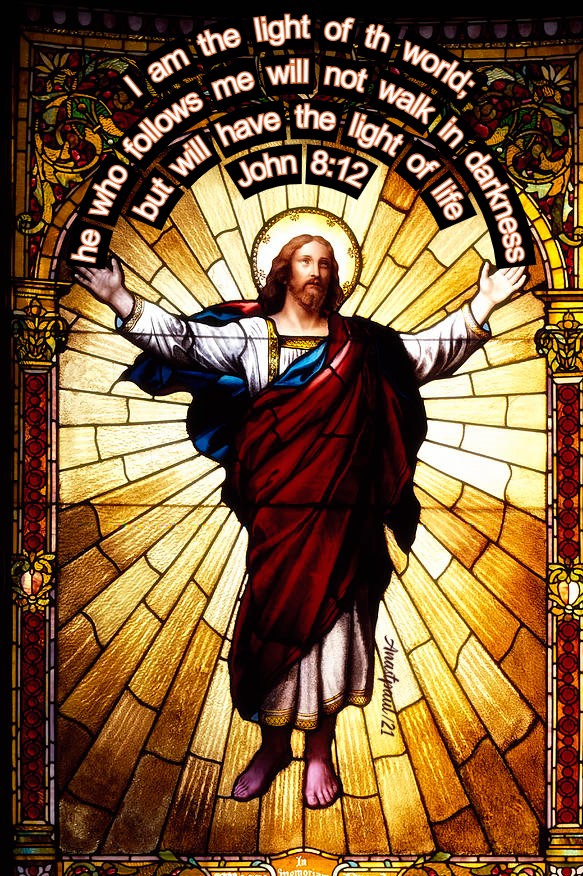
“I am the light of the world he who follows me will not walk in darkness but will have the light of life.”
John 8:12
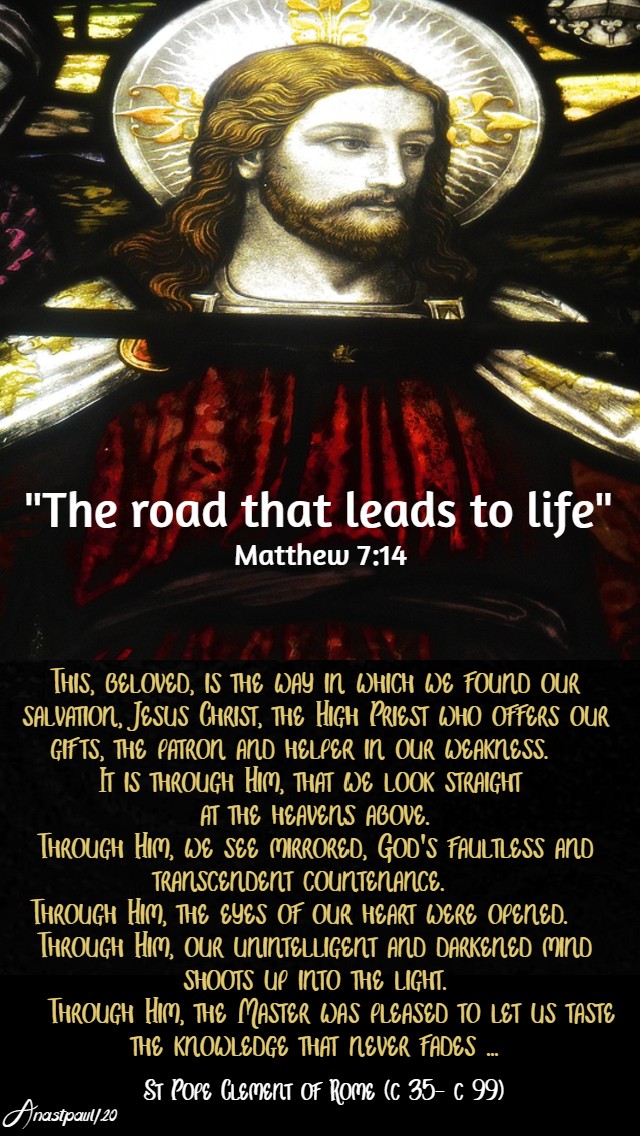
“This, beloved, is the way in which we found our salvation, Jesus Christ, the High Priest Who offers our gifts, the Patron and Helper in our weakness (Heb 10:20; 7:27; 4:15). It is through Him, that we look straight at the heavens above. Through Him, we see mirrored, God’s faultless and transcendent countenance. Through Him, the eyes of our heart were opened. Through Him, our unintelligent and darkened mind shoots up into the light. Through Him, the Master was pleased to let us taste the knowledge that never fades,”
St Pope Clement I (c 35 – c 99)
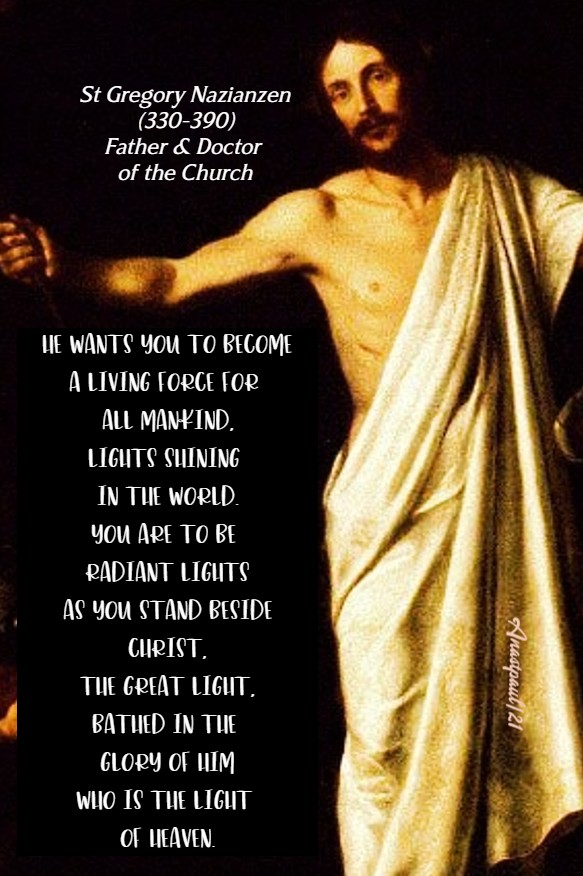
“He wants you to become a living force for all mankind, lights shining in the world. You are to be radiant lights as you stand beside Christ, the Great Light, bathed in the glory of Him who is the Light of Heaven.”
St Gregory Nazianzen (330-390) Father & Doctor of the Church
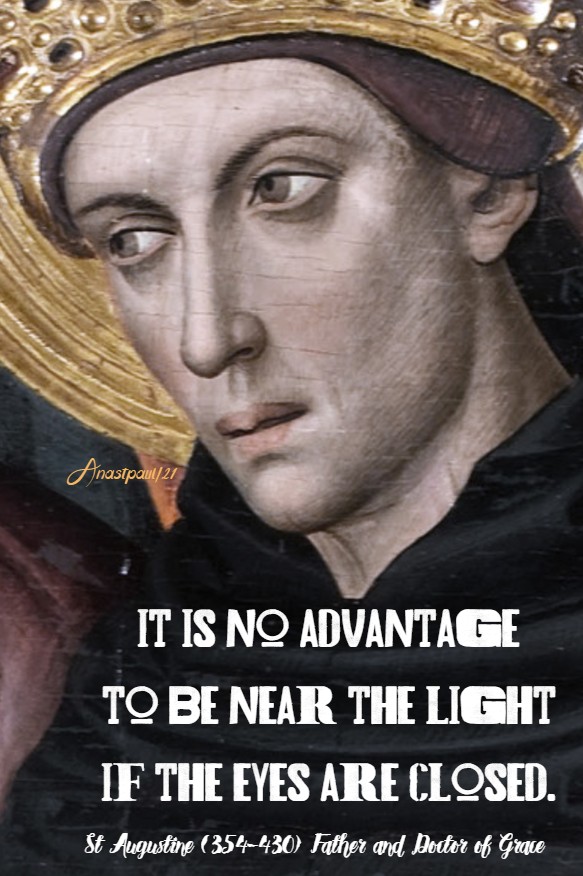
“It is no advantage to be near the light, if the eyes are closed.”
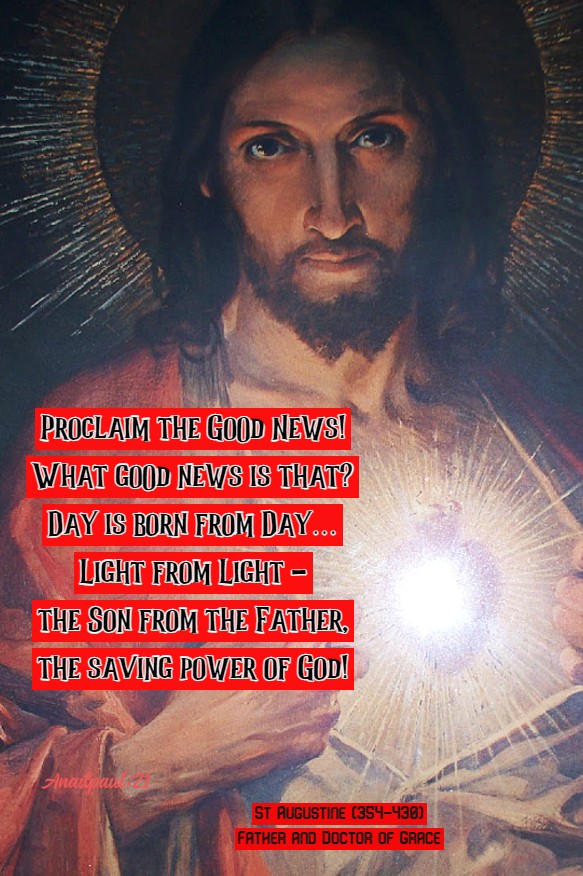
“Proclaim the Good News! What good news is that? Day is born from Day… Light from Light – the Son from the Father, the saving power of God!”
St Augustine (354-430) Father and Doctor of Grace
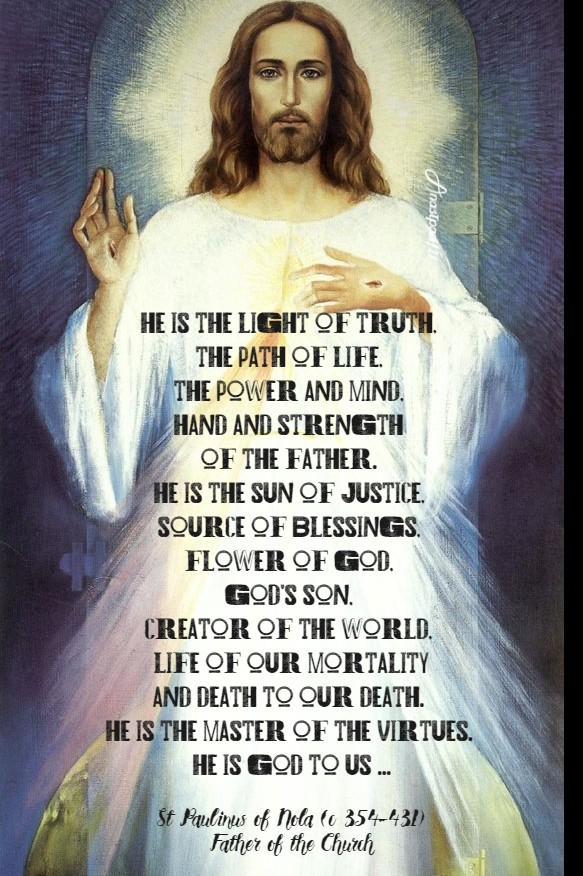
“He is the Light of Truth, the Path of life, the Power and Mind, Hand and Strength of the Father. He is the Sun of Justice, Source of Blessings, Flower of God, God’s Son, Creator of the world, Life of our mortality and Death to our death. He is the Master of the virtues. He is God to us …!”
St Paulinus of Nola (c 354-431) Father of the Church
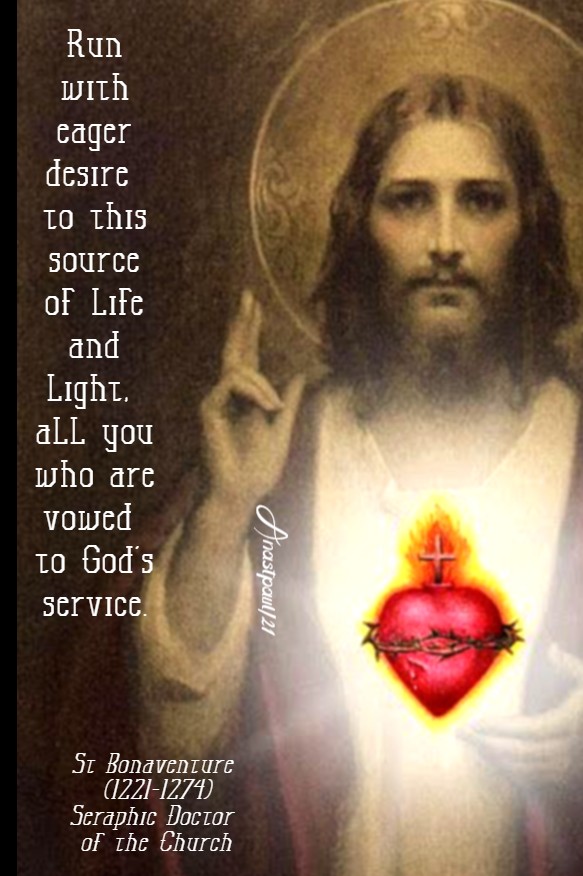
“Run with eager desire to this Source of Life and Light, all you who are vowed to God’s service.”
St Bonaventure OFM (1221-1274) Seraphic Doctor of the Church


















 AnaStpaul
You must be logged in to post a comment.