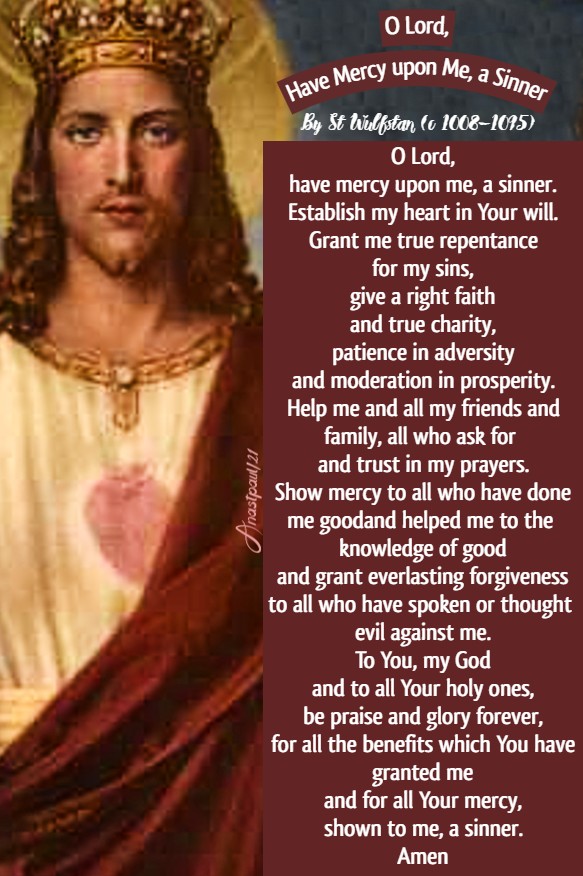
O Lord, Have Mercy upon Me, a Sinner By St Wulfstan (c 1008–1095) Bishop of Worcester
O Lord, have mercy upon me, a sinner. Establish my heart in Your will. Grant me true repentance for my sins, give a right faith and true charity, patience in adversity and moderation in prosperity. Help me and all my friends and family, all who ask for and trust in my prayers. Show mercy to all who have done me good and helped me to the knowledge of good and grant everlasting forgiveness to all who have spoken or thought evil against me. To You, my God and to all Your holy ones, be praise and glory forever, for all the benefits which You have granted me and for all Your mercy, shown to me, a sinner. Amen
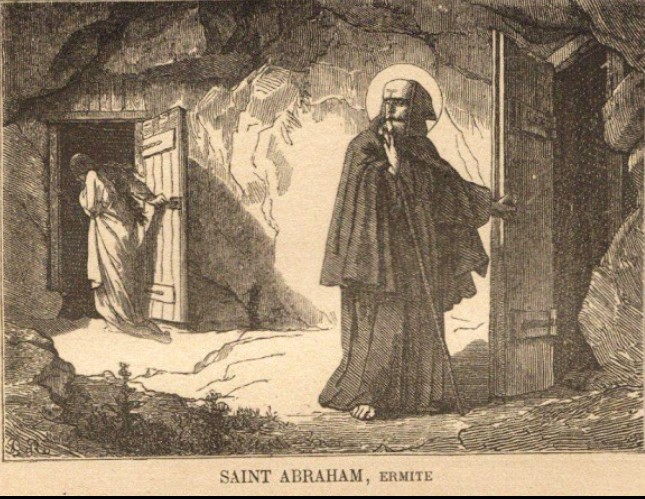
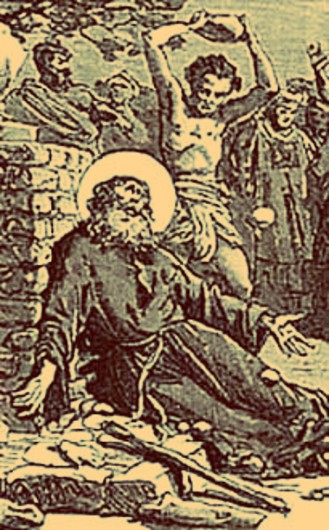
Saint of the Day – 29 October – Saint Abraham Kidunaia (c 296-c 366) Priest, Confessor, Hermit, Missionary. Born in c 296 at Edessa, Osrhoene, Mesopotamia (in modern Syria) and died in c 366 at Edessa, Osrhoene, Mesopotamia (in modern Syria) of natural causes. The Vita of St Abraham was written by his friend, St Ephrem (306-373) Father and Doctor of the Church. Also known as – Abraham the Great of Kidunja, Abraham of Edessa, Abraham of Kidunja, Abrhahn of Kidunaja.
Abraham Kidunaia was born to a wealthy family during the third century. After receiving an excellent education, Abraham was encouraged to get married. He followed the wishes of his parents but after the wedding ceremony, he told his bride his desire to remain a virgin and dedicate his life to God. His bride accepted this resolution and Abraham retired to a hermitage near Edessa, a City near Mesopotamia.
Ten years after he retreated from the world, his parents died and left a great amount of wealth to Abraham. As soon as he was aware of this, he asked a friend to distribute the sum to charitable causes. Through actions like this and his deep prayer life, Abraham became known throughout the region as a holy man and many came to him for guidance.
His reputation even came to the ears of the Bishop, and when Edessa became poisoned with sin and idolatry, Abraham was Ordained and asked to go to the City preaching reform. Abraham was greatly distressed by this, but obeyed the wishes of the Bishop.
When Abraham arrived in Edessa, none of the residents would listen to his words. Needless to say, the infuriated inhabitants beat him and expelled him from their midst. In the morning he was back, praying in his Church and from there went out to preach again to the the people, urging them to give up their superstitions and abominations. This time, he was stoned and left for dead but recovering, again returned and bearing insults, isolation and mistreatment, he persevered. After three years, the inhabitants of Beth-Kiduna realised that there was something to this man’s meekness and patience, and began to listen to him.
Eventually, through constant prayer, Abraham converted them. After baptising and confirming the many converts in the region, Abraham passed his apostolic work onto another. Abraham returned to his hermitage to continue his life of solitary prayer.
He lived for many years until his death at the age of seventy,.around the year 366 Abraham had lived a life of faithful service to God.
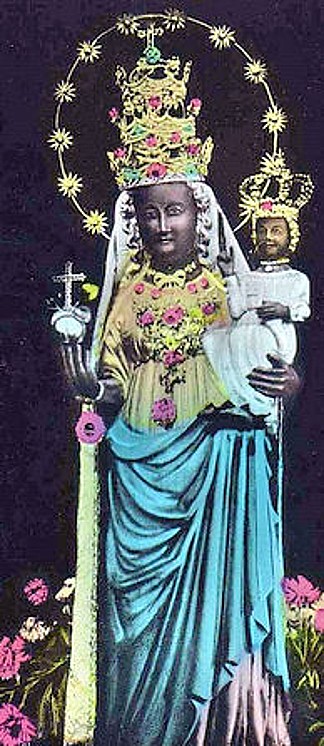
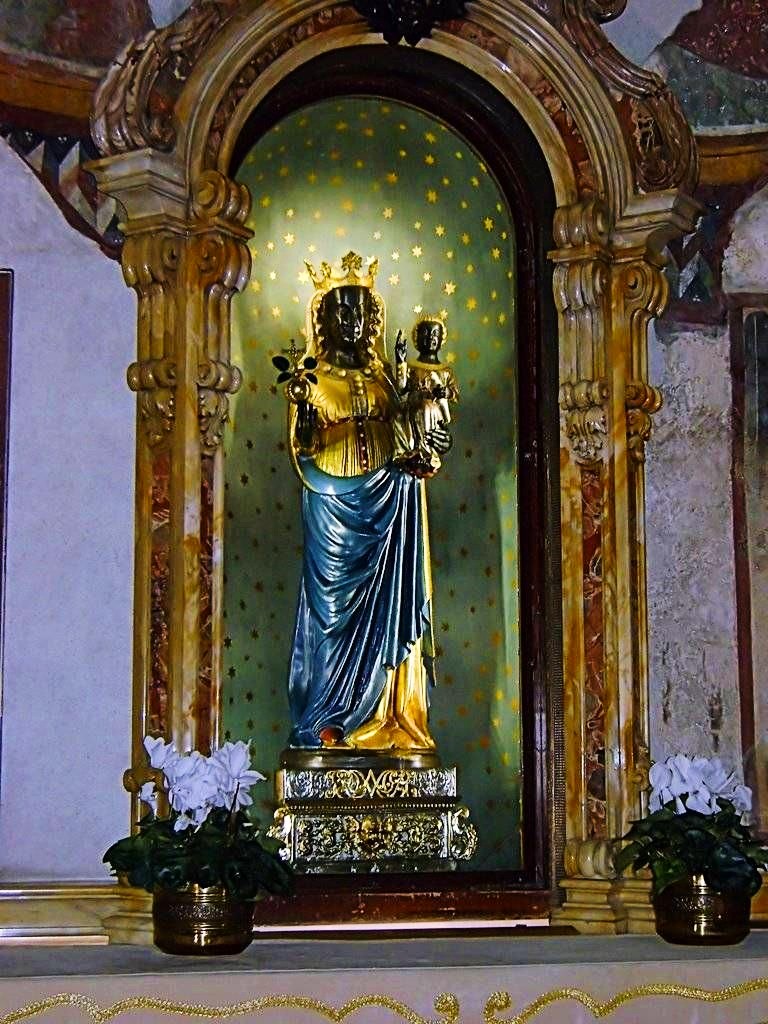
Nostra Signora di Oropa / Our Lady of Oropa, Piedmont, Italy (3rd Century) – 29 October:
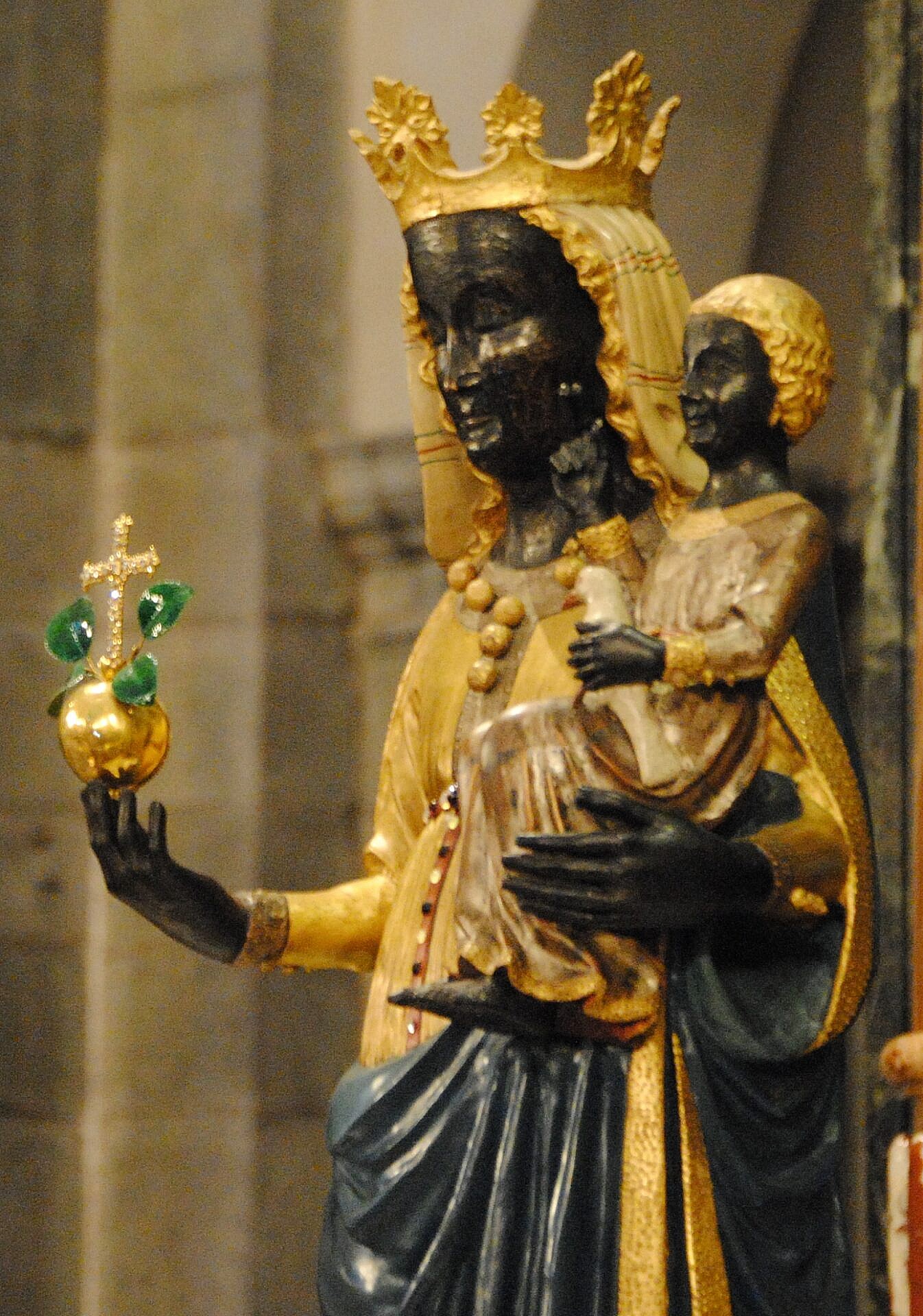
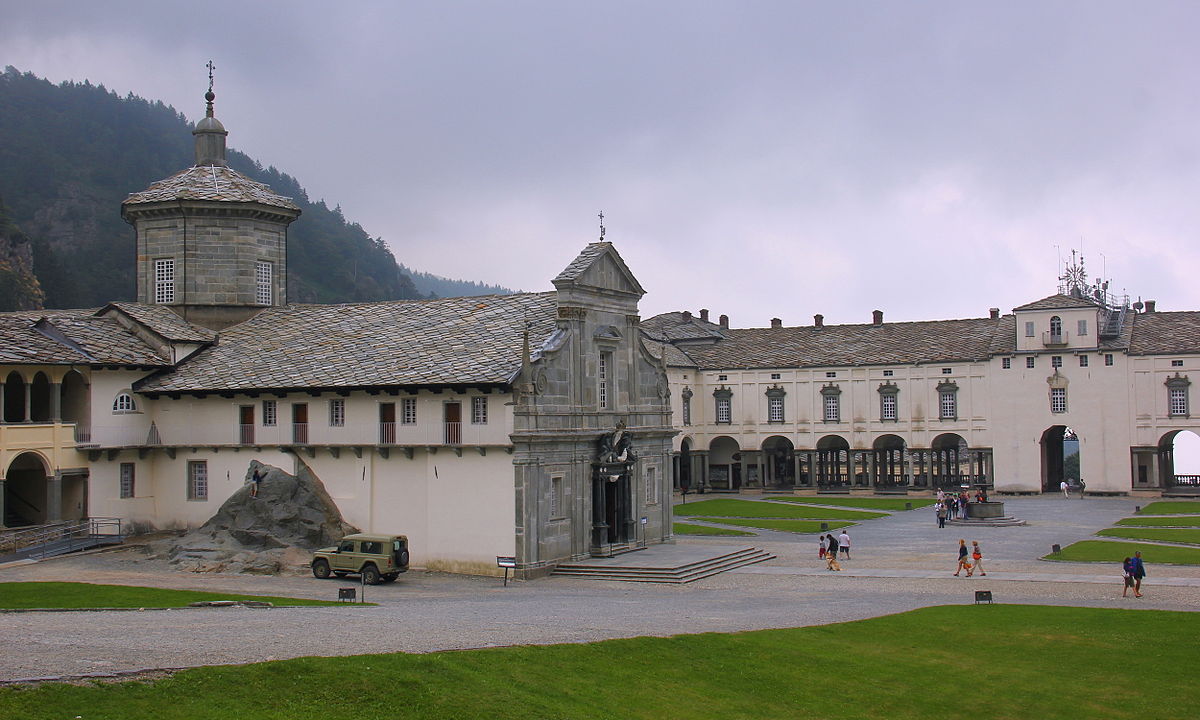
This image, of cedar wood, six feet high, is in a Chapel which Saint Eusebius, Bishop of Vercelli (c 283-371), caused to be built. He often retired there during the troubles caused by the Arians. The Sanctuary of the black Virgin of Oropa, high in the Alps north of Biella, is traditionally associated with Saint Eusebius of Vercelli, who died in 371 but the circumstances of the story are anachronistic. Yet the Shrine is certainly an old one, and throughout the Middle Ages was associated with a Community of Canon Regulars. The vast range of buildings there today were begun by the Dukes of Savoy, early in the seventeenth century and form one of the most complete pilgrimage centres in the world (there is even a theatre). It is recorded that here in 1895, contemplating the space and beauty of the mountains, Marconi heard the first call to his life’s work.
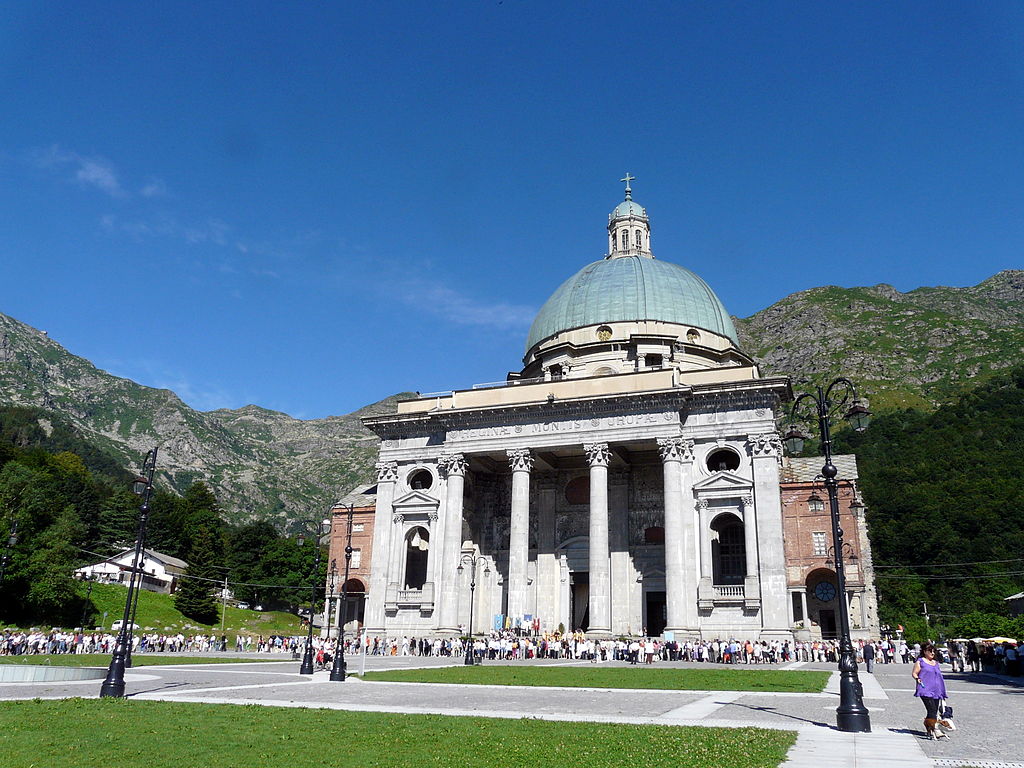
View of the Ancient complex
The black cedar-wood Statue has been crowned four times, the last time in 1920 – the three superimposed diadems (the fourth is represented by a halo of twelve stars) can hardly be said to add to the beauty of the image.
The Statue wearing the 4 Crowns (offered by the local townspeople) in 1620, 1720 and 1820, respectively.
Discovery of the Statue of Our Lady of Oropa at Jerusalem – Saint Eusebius who had been exiled to Syria because of his differences with the Arians, died in the year c 371. While in exile, the Emperor Constantine permitted him some freedom. Eusebius discovered among some ruins in Jerusalem three Statues of Our Lady. On his triumphant return after the Arians had been temporarily overthrown, he gave two of the Statues away . The third he kept for himself, placing it in a little hermitage at Oropa which he often visited. In the 5th and 6th centuries when Arianism again reared its ugly head, the faithful Catholics took refuge at the Shrine of Our Lady of Oropa. At one time it was decided to transport the Statue to another place. As the procession marched along, the Statue became so heavy that the men who carried it could not move on. Only when they decided to take Our Lady back to her original Shrine at Oropa were they able to move.
The last addition to the sanctuary was the Upper Basilica, a monumental Church built between 1885 and 1960 due to the large number of pilgrims visiting Oropa. It can hold 3000 people and its dome is 80 metres high.
In 1617, the complex of the Sacro Monte di Oropa (literally Sacred Mount of Oropa) was built not far from the Sanctuary. It is a devotional path now composed of twelve Chapels (plus another seven nearby) containing groups of Statues representing scenes from the story of the Virgin Mary’s life. The Chapel of Our Lady of Oropa is a beautiful one and thousands of pilgrims today make their way there as they have done over the centuries. The Holy See asked the authorities in 1856 to make a list of the miracles recorded at the Shrine. It is long and impressive. Then, as now, Our Lady of Oropa has a way with her Divine Son.
St Abraham Kidunaia (c 296-c 366) Priest, Hermit. The Vita of St Abraham was written by his friend, St Ephrem (306-373) Father and Doctor of the Church. St Abraham of Rostov St Achahildis of Wendelstein St Anne of Mount Olympus
St Sigolinus of Stavelot St Stephen of Cajazzo St Terence of Metz St Theodore of Vienne St Zenobius of Sidon — Martyrs of Douai – (160 saints and beati): 160 priests, laymen and religious who studied at the English College in Douai, France, then returned to minister to covert Catholics in England during a period of government persecution of the Church, and were murdered for their work.
Martyrs of Lucania – (4 saints): A group of Christians executed together for their faith. Only their names have survived – Felician, Hyacinth, Lucius and Quintus. Their martyrdom occurred in Lucania, southern Italy.
Martyred in the Spanish Civil War: • Blessed Arsenio Merino Miguel • Blessed Benito Paradela Novoa • Blessed Joaquina Rey Aguirre • Blessed José Ruiz Bruixola • Blessed Maurilio Tobar González • Blessed Ponciano Nieto Asensio • Blessed Victoria Arregui Guinea
Thought for the Day – 28 October – Meditations with Antonio Cardinal Bacci (1881-1971)
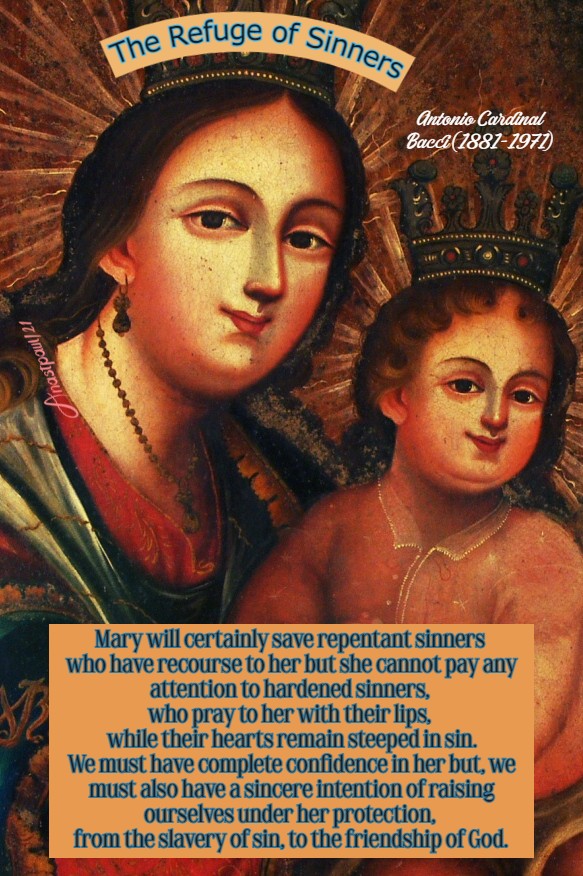
“Month of the Holy Rosary” “The Refuge of Sinners”
“Mary is called, the Star of Sea because, as St Thomas Aquinas says, “even as sailors are guided into port, by means of a star, so Christians are guided towards Heaven, by means of Mary, .” (Opuse, 7). This absolute guarantee of the protection of our heavenly Mother, should increase our trust in her and lead us to turn towards her in every difficulty and temptation. It should not, however, result in an unhealthy attitude of spiritual inactivity, a passive dependence on Mary’s favours, without any co-operation on our part. Such behaviour would be the height of filial ingratitude. Mary will certainly save repentant sinners who have recourse to her but she cannot pay any attention to hardened sinners, who pray to her with their lips, while their hearts remain steeped in sin. We must have complete confidence in her but, we must also have a sincere intention of raising ourselves under her protection, from the slavery of sin, to the friendship of God.”
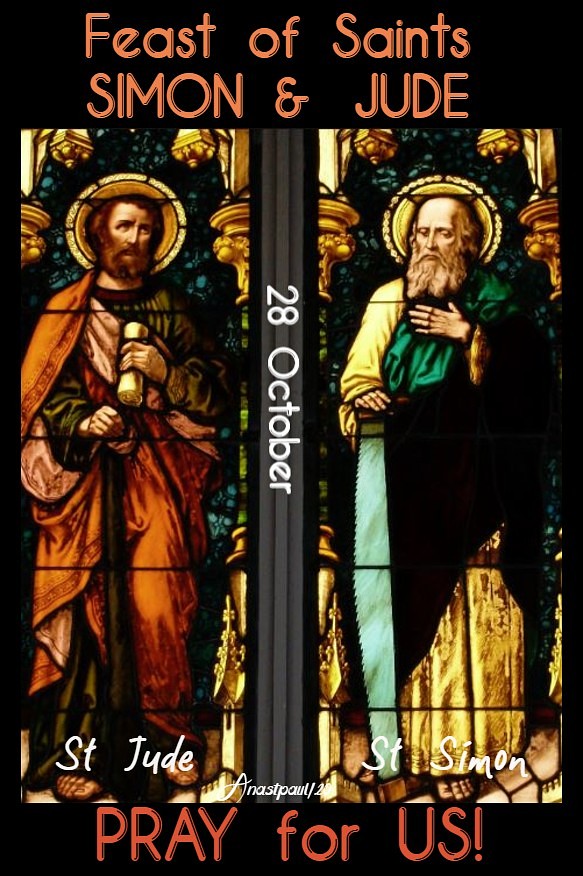
One Minute Reflection – 28 October – Feast of Saints Simon and Jude, Apostles and Martyrs – Readings: Ephesians 2: 19-22; Psalm 19: 2-5; Luke 6: 12-16
“When day came, he called his disciples to himself and from them, he chose Twelve, whom he also named Apostles…” – Luke 6:13
REFLECTION – “Our Lord Jesus Christ has appointed certain men to be guides and teachers of the world and stewards of His Divine Mysteries. Now He bids them to shine out like lamps and to cast out their light, not only over the land of the Jews but over every country under the sun and over people, scattered in all directions and settled in distant lands. That man has spoken truly who said – ‘No-one takes honour upon himself, except the one who is called by God,’ for it was our Lord Jesus Christ who called His own disciples before all others, to a most glorious apostolate. These holy men became the pillar and mainstay of the Truth and Jesus said, that He was sending them, just as the Father had sent Him.
… Accordingly, in affirming that they are sent by Him just as He was sent by the Father, Christ sums up in a few words the approach they themselves should take to their ministry. From what He said they would gather that it was their vocation to call sinners to repentance, to heal those who were sick whether in body or spirit, to seek in all their dealings never to do their own will but the will of Him who sent them and as far as possible, to save the world by their teaching.
Surely, it is in all these respects, that we find His holy disciples striving to excel. To ascertain this is no great labour, a single reading of the Acts of the Apostles or of Saint Paul’s writings is enough.” – St Cyril of Alexandria (376-444) Bishop, Fther & Doctor of the Church (An excerpt from his Commentary on the Gospel of John)
PRAYER – Lord God, You taught us to call upon Your name, through the preaching of the Apostles. Open our eyes each day, grant that we may see Jesus Your Son at our side, open our ears that we may hear His voice, open our mouths, that we may beg forgiveness and proclaim the good news, as we follow the way Your Son carved out for us. At the intercession of Sts Simon and Jude, may Your Church continue to grow and to hope in Your love. We make our prayer through Jesus our Lord, with the Holy Spirit, God forever, amen.
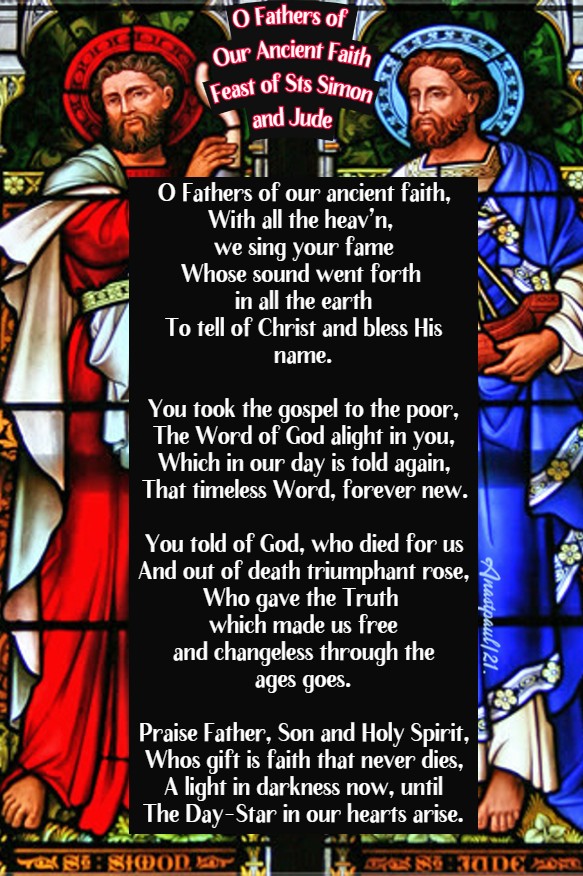
Our Morning Offering – 28 October – Feast of Saints Simon and Jude Apostles
O Fathers of Our Ancient Faith
O Fathers of our ancient faith, With all the heav’n, we sing your fame Whose sound went forth in all the earth To tell of Christ and bless His name.
You took the gospel to the poor, The Word of God alight in you, Which in our day is told again, That timeless Word, forever new.
You told of God, who died for us And out of death triumphant rose, Who gave the Truth which made us free and changeless through the ages goes.
Praise Father, Son and Holy Spirit, Whos gift is faith that never dies, A light in darkness now, until The Day-Star in our hearts arise.
O Fathers of Our Ancient Faith is written by the Benedictine Nuns of Stanbrook Abbey. In the Divine Office (1974) it is sung at Morning Prayer in the Common of Apostles. It is set to the anonymous tune associated with the 7th century Latin hymn, Creator Alme Siderum.
Saint of the Day – 28 October – Saint Eadsin of Canterbury (Died 1050) Archbishop of Canterbury from 1038 to 1050, Monk. He crowned St Edward the Confessor as King of England in 1043.Died in late October 1050 of natural causes. Also known as – Eadsige, Edsige, Eadsimus.
Little is known about the life of the Saint but we do know that he became a Priest and was attached to the Royal Court of King Cnut before King Cnut, in around 1030, arranged for him to enter the Monastery as a Monk at Christ Church, Canterbury, at his request. In around 1035, he served as a the auxilliary Bishop to Archbishop Æthelnoth of Canterbury, with his base located at the Church of St Martin in Canterbury. He was transferred to the Archbishopric of Canterbury in 1038 after Æthelnoth’s death. In 1040, he journeyed to Rome to receive his Pallium from Pope Benedict IX.
Eadsin may have crowned Harthacnut in 1040 but he definitely crowned St Edward the Confessor, along with Ælfric Puttoc, the Archbishop of York. on 3 April 1043 In 1044, Eadsin, wishing to withdraw from his See because of ill-health, appears to have approached King Edward and Godwin, Earl of Wessex, about temporarily consecrating Siward, Abbot of Abingdon, in Eadsins place. This retirement lasted until 1048, when Siward became ill and returned to Abingdon to die within eight weeks of his retirement. Eadsin returned to his Diocese and resumed his care of the Archdiocese of Canterbury until his death 2 years later.
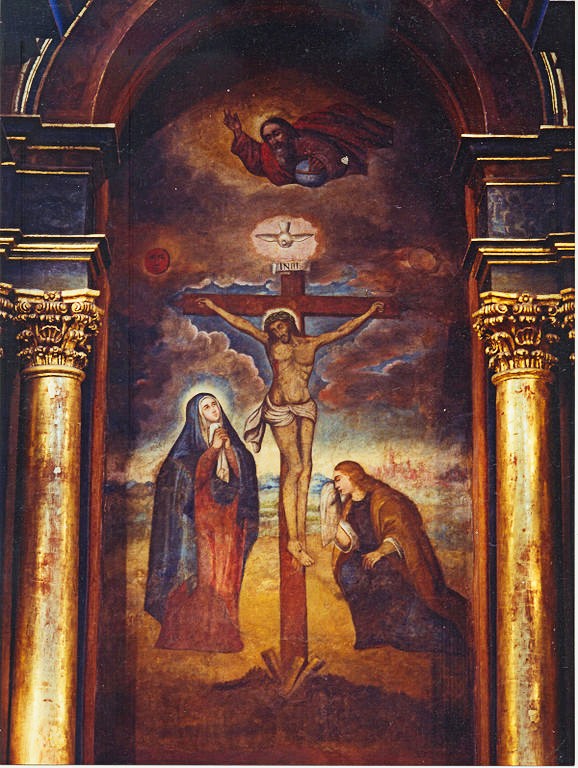
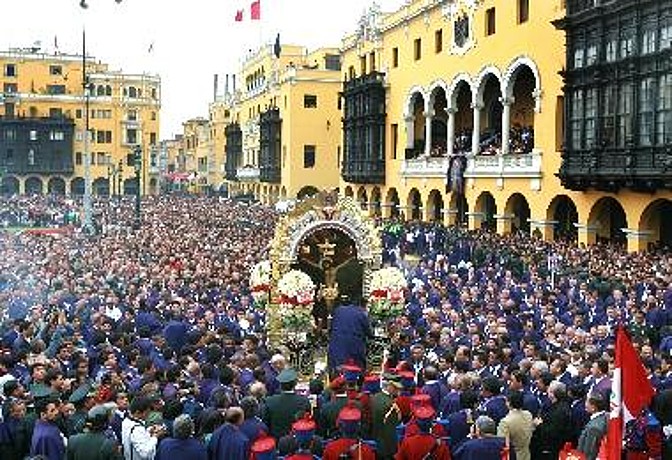
Lord of Miracles/Señor de los Milagros de Nazarenas – A mid-17th-century painting of the Crucifixion that is venerated in Lima, Peru and its celebration involves one of the largest processions in the world.
It was painted by an unnamed African taken to Peru as a slave from what is now Angola. Above the Cross is the Holy Spirit and God the Father. Below and to the right of Jesus, is His mother, the Virgin Mary with her heart pierced by a sword of sorrow. Kneeling and weeping at the foot of the cross is St Mary Magdalene.
The name originated on 13 November 1655 when everything around it was destroyed in an earthquake that left the painting standing and undamaged. Christ is shown enduring the pain of Crucifixion. Every year in October, hundreds of thousands of devotees from all races and economic backgrounds participate in a procession honouring the image through the streets of Lima. Boulevards are decorated in purple on 18,19 and the final Feast 28 October to celebrate the Lord of Miracles.
Notre-Dame de Vivonne / Our Lady of Vivonne, Savoy, France – 28 October:
The Abbot Mathieu Orsini wrote: “Our Lady of Vivonne, in Savoy, where a miraculous image is venerated, which was found by a ploughman while preparing his field for the spring planting.”
Vivonne is a village in France having a population of somewhat less than 5,000 inhabitants and located about 20 kilometers south of Poitiers. It is situated on a rocky height looking down upon the three rivers that flow through the region. There are apparently two Churches in the village, the better known church being the Church of Saint George, on which construction began in the twelfth century. The other Church is Our Lady of Sais-les-Vivonne. According to tradition, a farmer was ploughing his field when he overturned something peculiar in the sod. To his great surprise, the man found the object was a Statue of the Blessed Virgin Mary. The good farmer took the Statue, now known as Our Lady of Vivonne, or Notre-Dame de Vivonne, to his home. After lovingly cleaning the debris from the Statue, the farmer took it to the local Church and gave it to the Parish Priest. The Priest immediately placed the Statue in the Church later that same day. The next morning when he returned to the Church, he found that the Statue was missing. After much inquiry and searching the farmer found the Statue was once again in his field. The man returned it to the Church but once again it disappeared from its place, only to be found again in the field. This occurred a total of three times before it was decided to build a Shrine where it had been found. The strange phenomenon brought people from near and far to the Shrine. Soon the image proved to be miraculous and pilgrimages began. The Church which was built to honour the image of Our Lady was given to the Carmelite Order. I can find no images of this Church online.
St Abdias of Babylon St Abraham of Ephesus St Alberic of Stavelot St Anastasia the Elder St Anglinus of Stavelot St Cyril of Rome St Cyrilla of Rome St Diomedes the Younger St Dorbhene of Iona St Eadsin of Canterbury (Died 1050) Archbishop of Canterbury St Elius of Lyon St Faro of Meaux
St Genesius of Thiers St Gioan Dat St Godwin of Stavelot St Maria Ascuncion St Remigius of Lyons St Rodrigo Aguilar Aleman St Salvius of Amiens — Martyrs of Avila – 3 saints: Two sisters and a brother who, during a period of persecution, fled Talavera de la Reina, Spain, were caught and executed. Martyrs: Christeta, Sabina and Vincent. 303 in Avila, Spain.
Martyred in the Spanish Civil War: • Blessed Claudio Julían García San Román • Blessed Maria Asuncion
Thought for the Day – 27 October – Meditations with Antonio Cardinal Bacci (1881-1971)
“Month of the Holy Rosary” “Holy Mary”
“The Angel’s greeting was later completed by the salavation of St Elizabeth. As soon as Elizabeth saw the Blessed Virgin coming to visit her, she cried out in humble veneratin: “Blessed art thou among women and blessed is the fruit of thy womb!” (Lk 1:42).
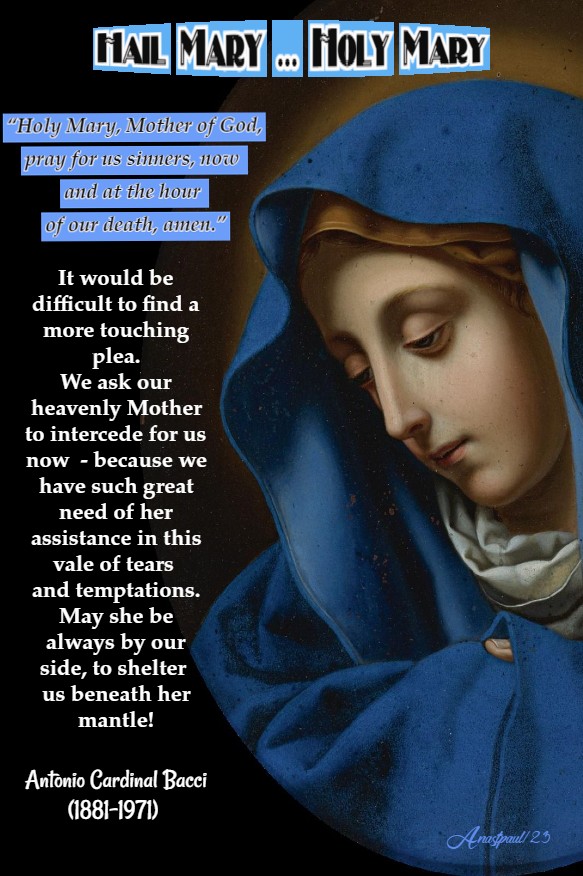
In the first part of the Hail Mary, then, we pay her the words of the Gospel, the highest tributes ever accorded to any human creature, proclaiming her to be full of grace, blessed among women and Mother of the Redeemer. The second part, which was later added by the Church, (composed and proposed by St Peter Canisius 1521-1597) Doctor of the Church), is a heartfelt supplication addressed to Mary as the Mother of God and our Mother. “Holy Mary, Mother of God, pray for us sinners, now and at the hour of our death, amen.” It would be difficult to find a more touching plea. We ask our heavenly Mother to intercede for us now – because we have such great need of her assistance in this vale of tears and temptations. May she be always by our side, to shelter us beneath her mantle!”
Quote/s of the Day – 27 October – Readings: Romans 8: 26-30; Psalm 13: 4-6; Luke 13: 22-30
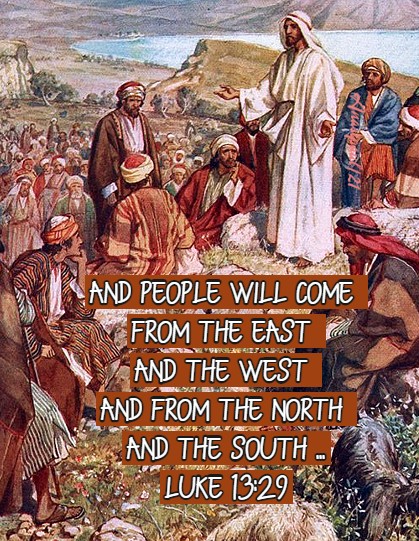
“And people will come from the east and the west and from the north and the south …”
Luke 13:29
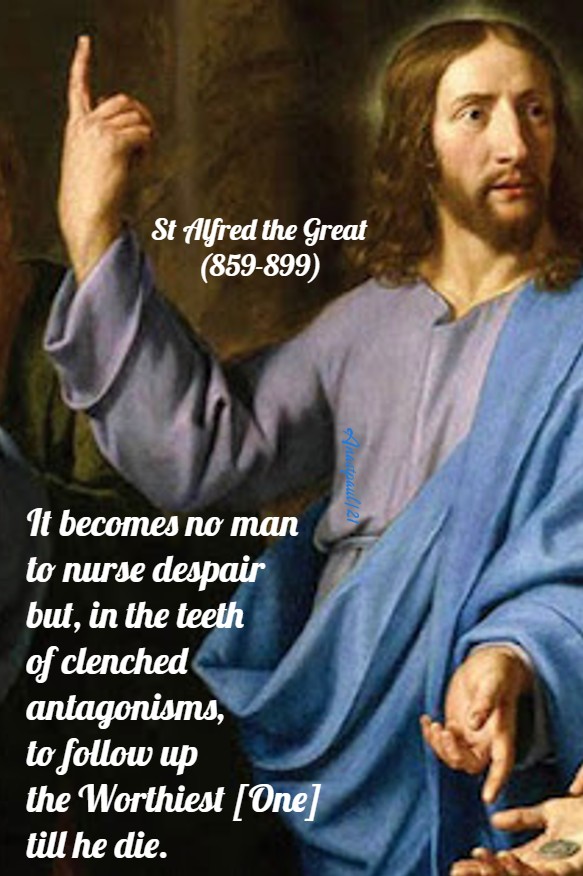
“It becomes no man to nurse despair but, in the teeth of clenched antagonisms, to follow up the Worthiest [One] till he die.”
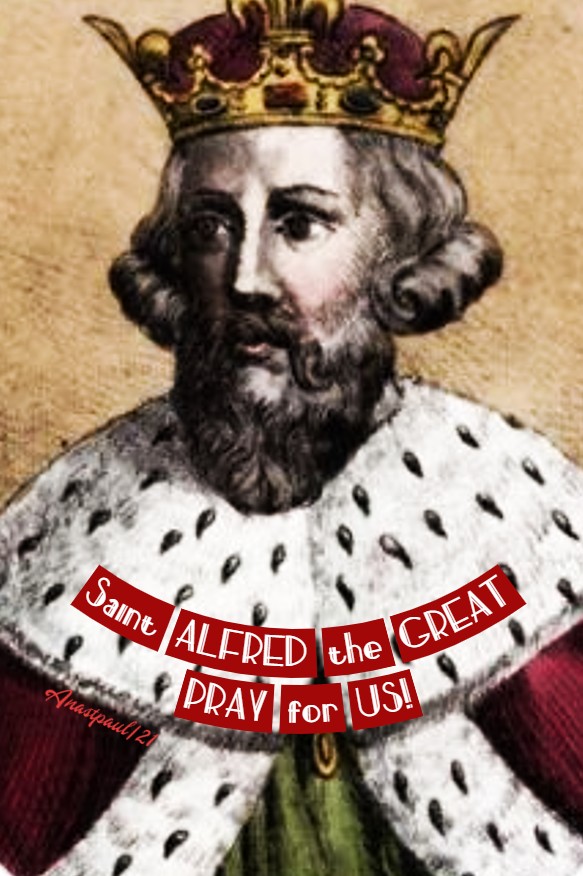
St Alfred the Great (859-899) King
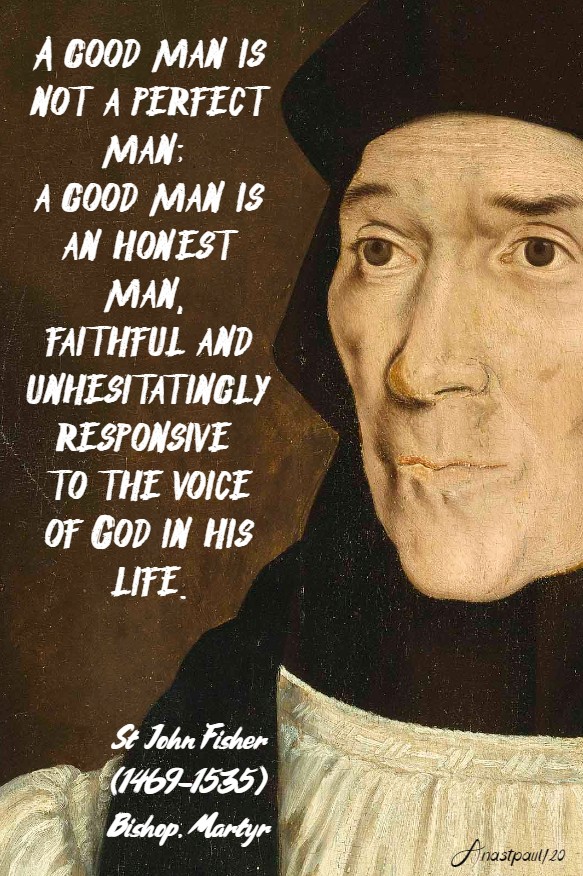
“A good man is not a perfect man; a good man is an honest man, faithful and unhesitatingly responsive to the Voice of God in his life.”
St John Fisher (1469-1535) Bishop, Martyr
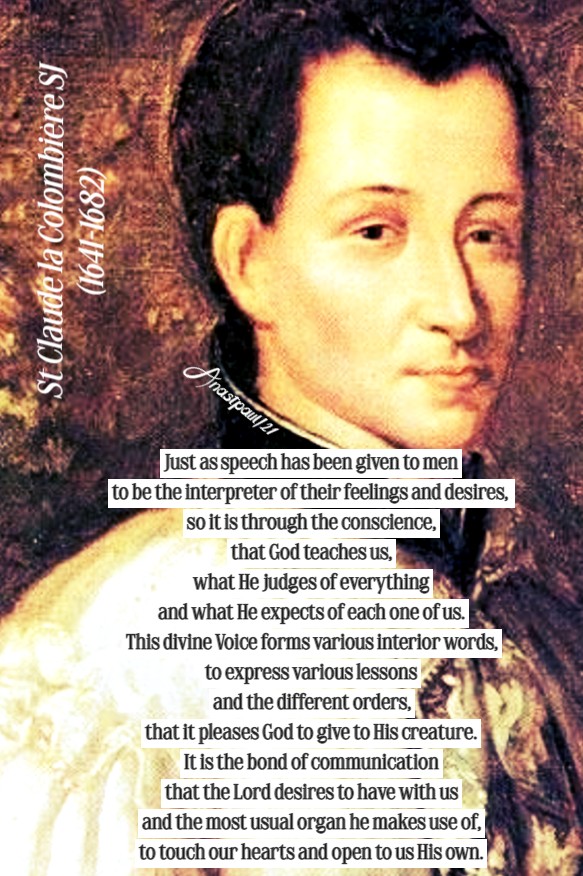
“Just as speech has been given to men to be the interpreter of their feelings and desires, so it is through the conscience, that God teaches us, what He judges of everything and what He expects of each one of us. This divine Voice forms various interior words, to express various lessons and the different orders, that it pleases God to give to His creature. It is the bond of communication that the Lord desires to have with us and the most usual organ he makes use of, to touch our hearts and open to us His own.”
One Minute Reflection – 27 October – “Month of the Holy Rosary” – Readings: Romans 8: 26-30; Psalm 13: 4-6; Luke 13: 22-30 and the Memorial of Saint Elesbaan of Ethiopia (Died c 555) King of Ethiopia, Confessor
“And people will come from the east and the west and from the north and the south …” – Luke 13:29
REFLECTION – Those who approach God, leaning on Him with a desire to be saved, are saved indeed. For it is divine inspiration that enables them to conceive this desire for salvation and they come to knowledge of Truth enlightened by Him who calls them. They are indeed children of promise, the reward of faith, the spiritual descendants of Abraham, “a chosen race, a holy priesthood” (1 Pt 2:9), foreknown from long ago and predestined for eternal life. … Through the mediation of Isaiah, our Lord makes known His grace to us, to make new creatures of us all – “See, I am doing something new! Now it springs forth, do you not perceive it? In the desert I make a way, in the wasteland, rivers …)for my chosen people to drink, the people whom I formed for myself that they might announce my praise” And elsewhere …) “To me every knee shall bend, by me every tongue shall swear” (Is 43:19 f; 45:23).
There is no question but that all this will come to pass because God’s foreknowledge never fails nor do His plans alter, His will is ever active and His promises cannot be mistaken. Therefore, all those to whom these words refer shall be saved. For He sets His laws in their consciences and with His finger He writes them in their hearts (Rom 2:15). They gain access to knowledge of God, not under the influence of human teaching but the guidance of the best of masters – “Therefore, neither the one who plants nor the one who waters is anything but only God, who causes the growth” (1 Cor 3:7). …It is given to them all to have a changed heart and just judgement together with an upright will. God brings fear to birth in these people so that they may be instructed in His commandments. … They rejoice in the power of His mercy and all the miracles He has done, for God has chosen them and made them His children, heirs of the new covenant (Jr 31:31).” – St Prosper of Aquitaine (Died c 460) Lay Theologian, Writer and disciple of St Augustine (he was the first continuer of St Jerome’s Universal Chronicle) – (The Summons to All People)
PRAYER – Shed Your clear light on our hearts, Lord, so that walking continually in the way of Your commandments, we may never be deceived or misled. Grant that the prayers of our Blessed Mother, who always holds Your Light up for others to see by, give us strength. Through Jesus Christ, with the Holy Spirit, God forever, amen.
Our Morning Offering – 27 October – “Month of the Holy Rosary”
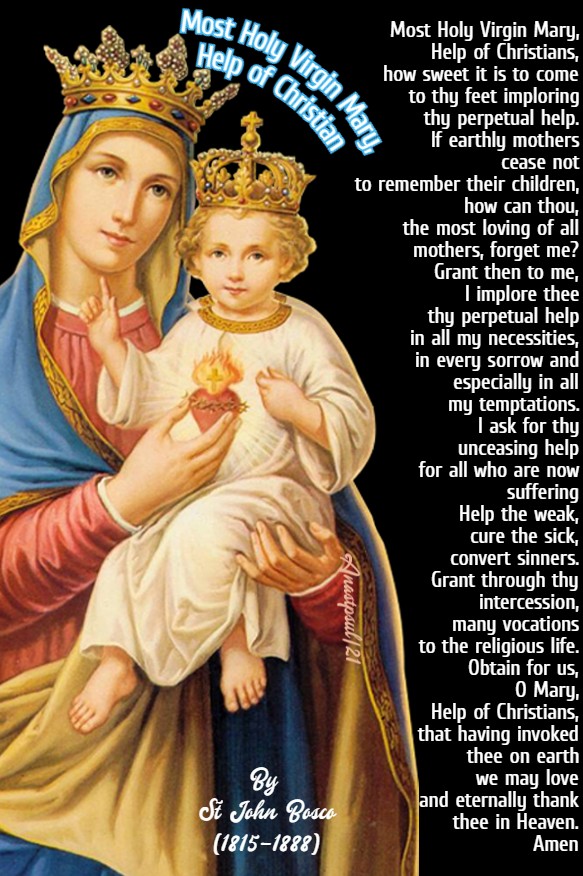
She, who stands at the Altar of the Eucharistic Sacrifice, without many of us today, will always be our help, most especially in these times of increasing persecution. Although deprived of the Sacraments, we will never be deprived of her Perpetual Succour.
Most Holy Virgin Mary, Help of Christian By St John Bosco (1815-1888)
Most Holy Virgin Mary, Help of Christians, how sweet it is to come to thy feet imploring thy perpetual help. If earthly mothers cease not to remember their children, how can thou, the most loving of all mothers, forget me? Grant then to me, I implore thee thy perpetual help in all my necessities, in every sorrow and especially in all my temptations. I ask for thy unceasing help for all who are now suffering. Help the weak, cure the sick, convert sinners. Grant through thy intercession, many vocations to the religious life. Obtain for us, O Mary, Help of Christians, that having invoked thee on earth we may love and eternally thank thee in Heaven. Amen
Saint of the Day – 27 October – Saint Elesbaan of Ethiopia (Died c 555) King of Ethiopia, Confessor, Penitent Hermit and Monk. Also known as – Elesbaan of Axum, Ella Atsbeha, Ella Asbeha, Calam-Negus, Calam, Caleb, Elesbaas, Elesbas, Elesboas, Eleuzoe, Hellestheaeus, Kaleb.
The Roman Martyrology states today: “St Elesbaan, King, who after having defeated the enemies of Christ and sent his Royal Diadem to Jerusalem, in the time of Emperor Justin, led a monastical life, as he had vowed and went to his reward.”
In the 6th century Ethiopia was ruled by King St Elesbaan, who was raised from childhood in the Catholic Faith. King Elesbaan ruled his country with wisdom and was esteemed by his people.
At that time, Ethiopia was part of the Eastern Roman Empire, under Justinian I. Across the Red Sea, Arabia had fallen to Dunaan, a King who apostatised from the Catholic Faith and adhered to Judaism. He was a despotic ruler, persecuting the Bishops and clergy and destroying the Churches or transforming them into synagogues. St Gregentius, Bishop of Tafas, was expelled from his Diocese; St Aretas, governor of Nagran and leader of the Catholic reaction, was beheaded along with his wife, children and 340 of his people. Around 4,000 Catholics were killed without trial after suffering many cruelties.
Emperor Justinian called on King Elesbaan to chastise the usurper. The King gathered his army and crossed the Red Sea to punish the affront to Catholic honour. Elesbaan landed in Arabia, defeated Dunaan and executed him. Then he restored St Gregentius to his episcopal see, rebuilt the Churches and remained in the country until Ebrahamos, who was Catholic, was elected King of the Arabs.
Once his mission of justice and peace was accomplished, he returned to Ethiopia and ruled there for some years more, carefully instructing his son in the Catholic Faith, making him heir of his zeal and piety and the direction of the Kingdom. Then he renounced his title and handed the rule of the Kingdom to his son.
Disguised as a Hermit, he retired to a Monastery in the mountains. There he lived as a simple religious dedicated to prayer, obedience and work. He carried nothing with him out of the Palace but a mat to lie on and a cup to drink from. His food was only bread, with which he sometimes took a few dry herbs; he never drank anything but water. He would not allow himself the least distinction above the least among his brethren and was the first in every duty of his new state.
No seculars ever had access to him and his whole employment consisted in the exercises of penance, the contemplation of heavenly things and conversing with God, by whom he was at length called, to a happy death, to reign eternally with Christ.
He died with a reputation of sanctity on 27 October c 555. Often he is pictured as a solitary Hermit holding a Cross and with a Crown at his feet.
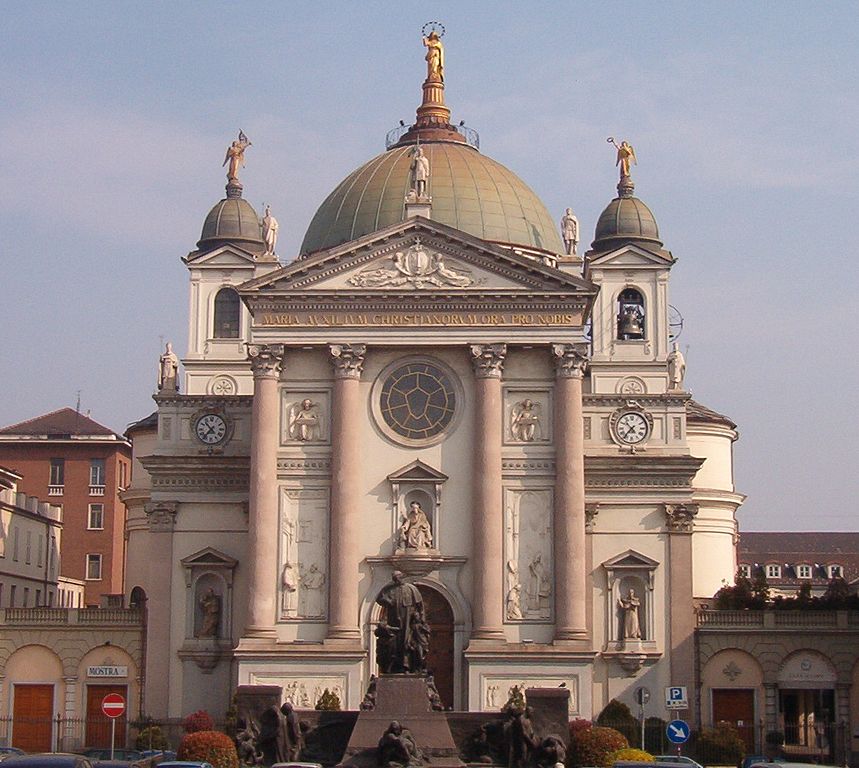
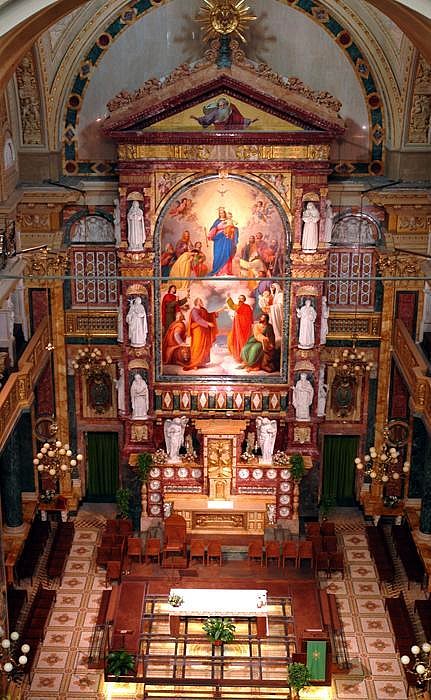
Dedication of the Basilica of Auxilium Christianorum / Our Lady Help of Christians, Turin, Italy, built by St John Bosco (1868) – 27 October:
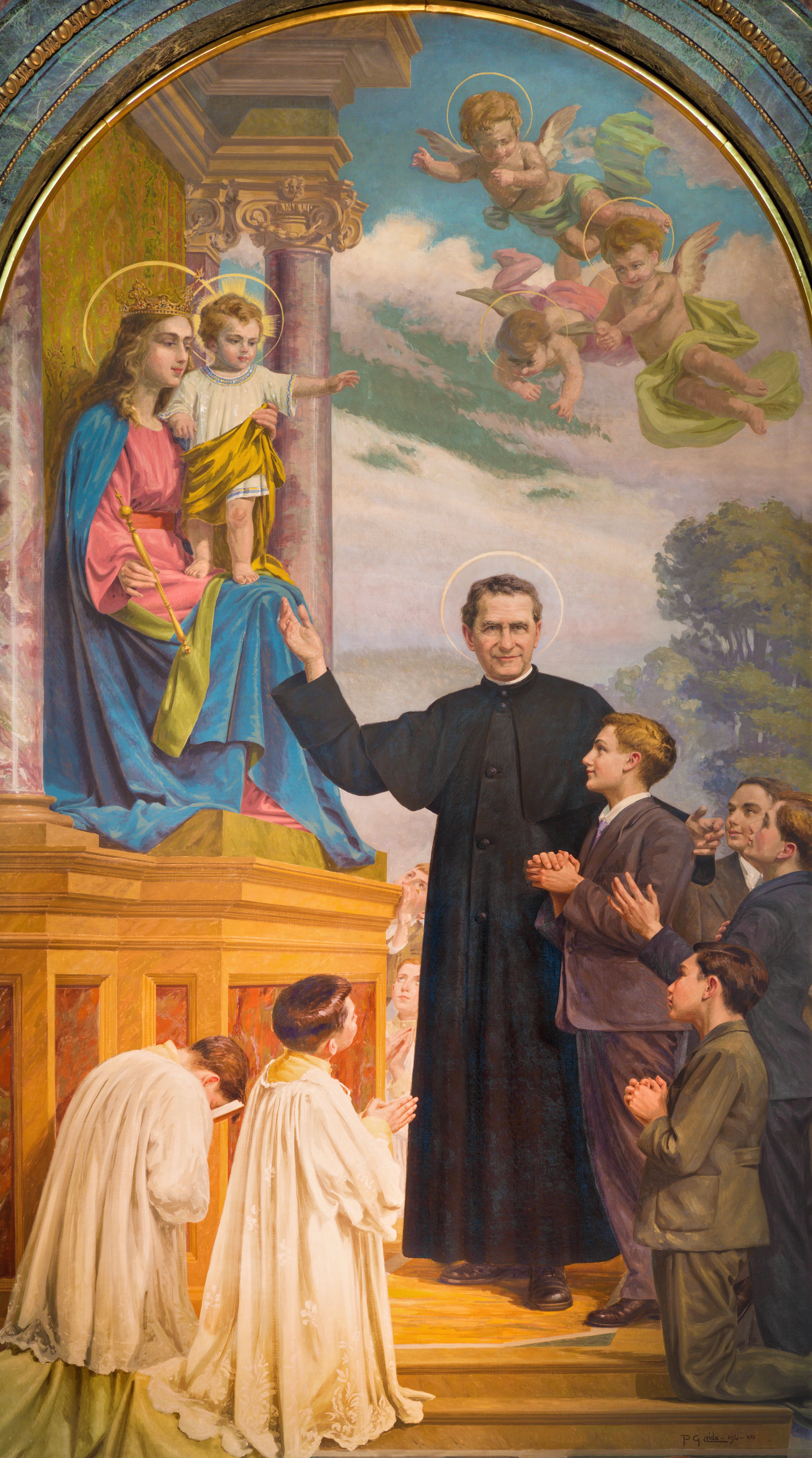
The vast and magnificent Basilica of Our Lady in Turin, Italy, built by Saint John Bosco (1815-1888) between 1863 and 1868, was inspired by a dream-vision which he had in October 1844. The Blessed Virgin showed Don Bosco a vast and lofty Church and said:
“This is my house; from it my glory shines forth. You will understand everything when, with your material eyes, you will see in actual fact, what you now see with the eyes of your mind.”
Nineteen years later, Don Bosco finally set to work on the Basilica of Our Lady Help of Christians. Our Lady, in a second vision, chose the location as that of the place of the Martyrdom of Saint Adventer Solutor and Saint Octavious, who were both soldiers under the Emperor Maximianus in the fourth century. When the foundation of the Church was laid, Don Bosco went to the contractor, Charles Buzzetti and told him:
“I want to pay you at once for this fine work. I don’t know if it will be much but this is all I have.”
He then took out his little purse and emptied the contents into the hand of the contractor, who was expecting a handful of gold coins. His jaw dropped in dismay when he saw in his hand only eight pennies.
“Do not be alarmed,” Don Bosco quickly added with a smile, “the Madonna will see to the payment of her Church. I am just the instrument, the cashier.” And to those standing by he concluded, “You will see!”
“The whole Church was put up by means of graces granted by Mary,” Don Bosco often said. One sixth of the cost, about one million lire in those days, was borne by the generous contributors, devout persons; the rest came from the small offering of those, who had been aided by Mary.
“Every stone, every ornament, represents one of her graces,” insisted Don Bosco. The original contractor, who received the eight cents, later testified that, “The Church was paid for to the last cent.”
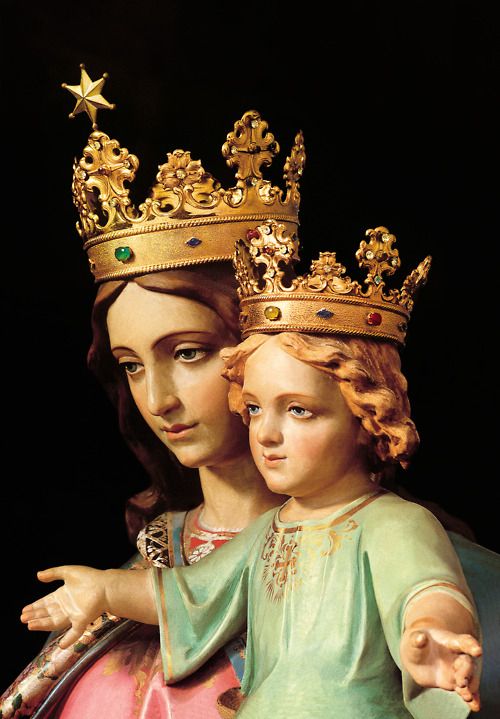
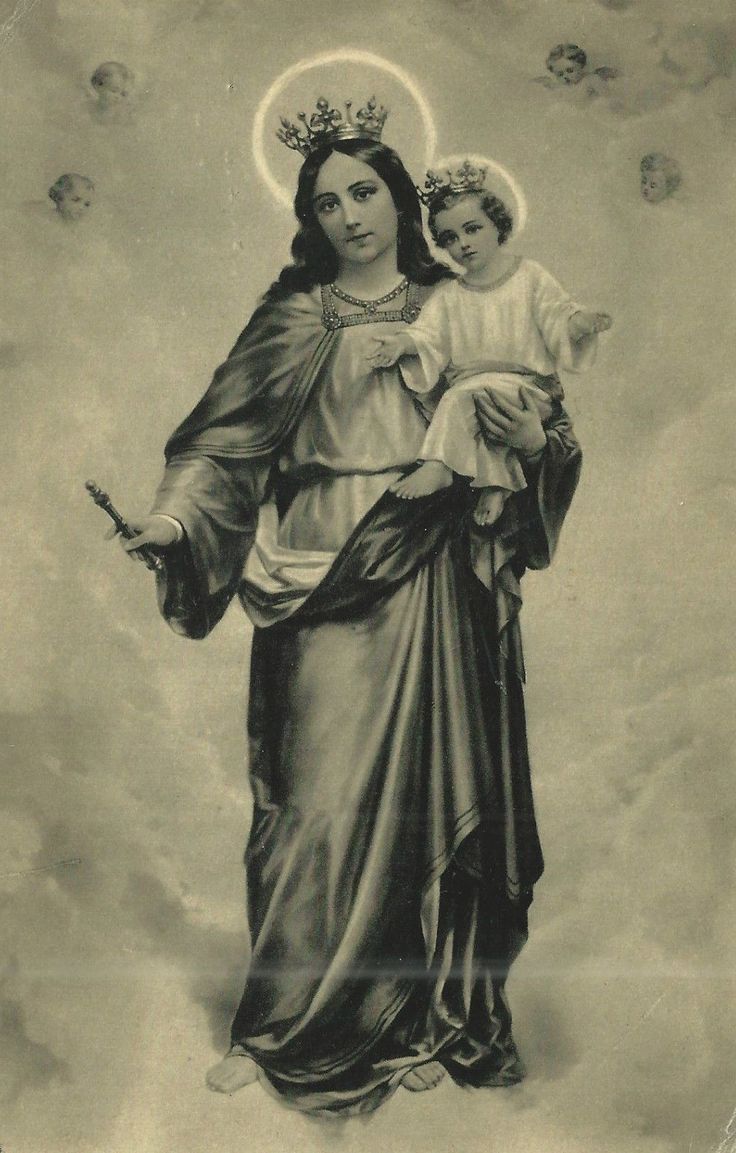
Our Lady Help of Christians
Among the monuments of the Church, the most splendid is the painting above the main Altar. Our Blessed Lady Help of Christians occupies the central position and is surrounded by symbols – God the Father, the Holy Spirit, the Apostles and Evangelists. It measures more than 28 metres square and is bordered with gold.
There was much opposition to the project of building a Church dedicated to and in honour of Our Lady Help of Christians but Don Bosco insisted. It appears he had a supernatural knowledge, that the future of his own congregation and that of the whole world in the not too distant future, depended on the powerful protection of Mary, Help of Christians, just as it had needed and obtained that protection at Lepanto on 7 October 1571 and at Vienna, on 12 September 1683. Don Bosco, with the gracious assistance of the Blessed Virgin Moher, succeeded and the vast Church was Consecrated and dedicated on 9 June 1868 with the crowing on 27 October. The dedication festivities lasted nine days and on each day a Bishop preached while another took part in the ceremonies. By the turn of the nineteenth century, the Church of Our Lady Help of Christians in Turin had become famous and in 1911, Pope Saint Pius X gave it the crowning glory by raising it to the rank of a Basilica – The Basilica of Our Lady Help of Christians!
The Feast Day of Our Lady Help of Christians is 24 May and was instituted by Saint Pius V in 1573, in thanksgiving for the decisive victory of Christianity over Islamism at the Battle of Lepanto in 1571. All the information here including the dreams of St John Bosco: https://anastpaul.com/2018/05/24/feast-of-our-lady-help-of-christians-24-may/
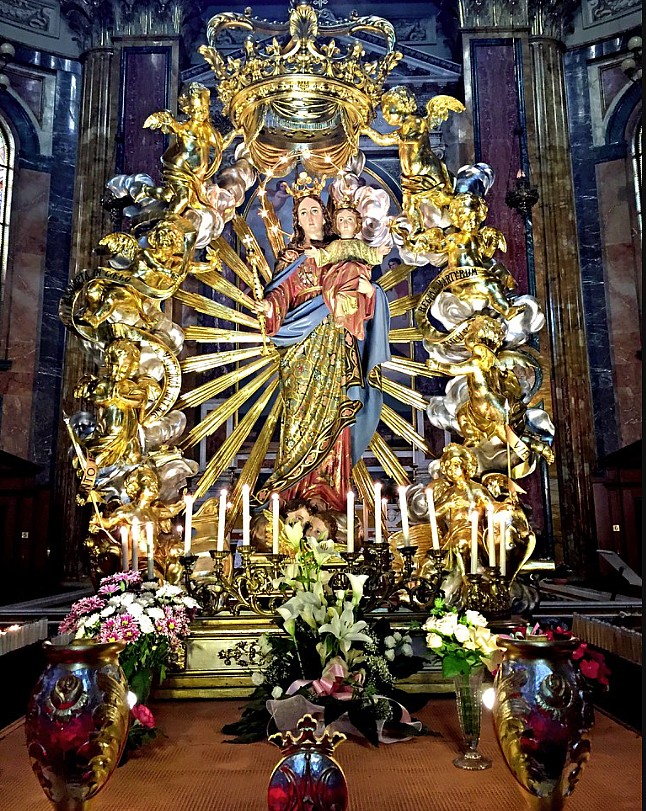
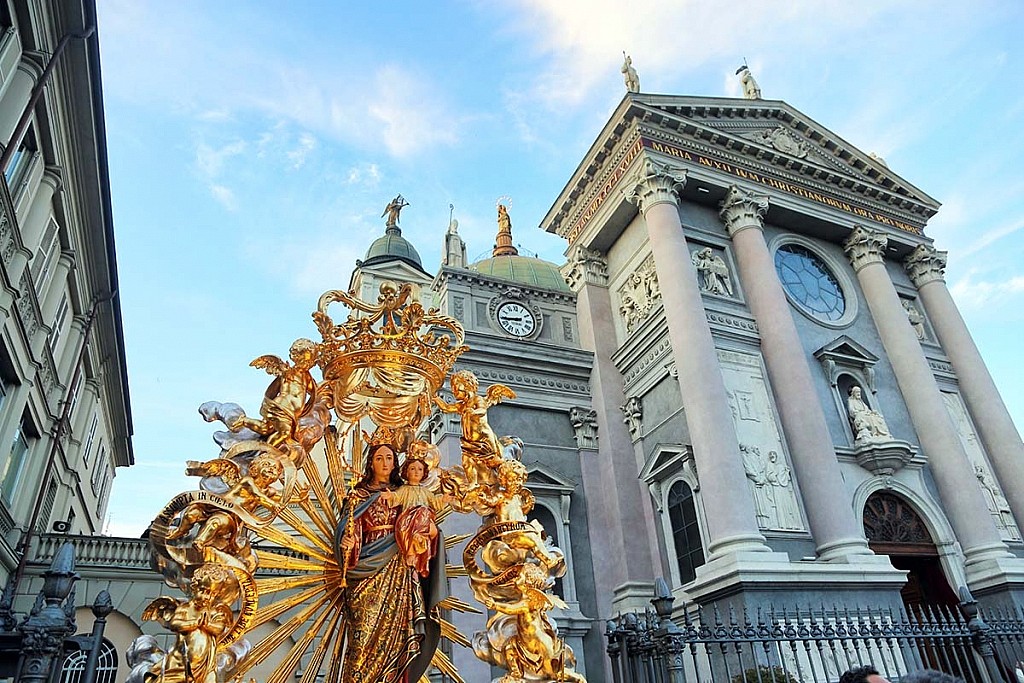
The Processional Statue of Our Lady Help of Christians, Turin
St Capitolina St Colman of Senboth-Fola St Colman of Templeshambo St Desiderius of Auxerre St Elesbaan of Ethiopia (Died c 555) King, Confessor, Penitent Hermit and Monk
Thought for the Day – 26 October – Meditations with Antonio Cardinal Bacci (1881-1971)
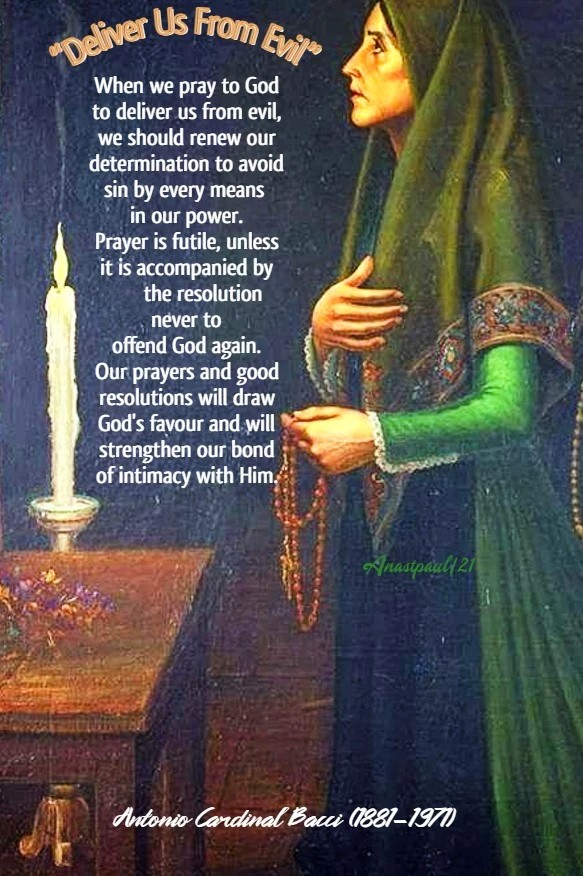
“Month of the Holy Rosary” “Deliver Us From Evil”
“When we ask God to deliver us from evil, we should think chiefly of the real evil, which is spiritual. All other evils are insignificant in comparison with sin, which is an offence committed against God, our only good. Sin robs us of His grace, which is the supernatural life of the soul, deprives us of His friendship and is an act of ingratitude towards our supreme Benefactor.
When we pray to God to deliver us from evil, we should renew our determination to avoid sin by every means in our power. Prayer is futile, unless it is accompanied by the resolution never to offend God again. Our prayers and good resolutions will draw God’s favour and will strengthen our bond of intimacy with Him.”
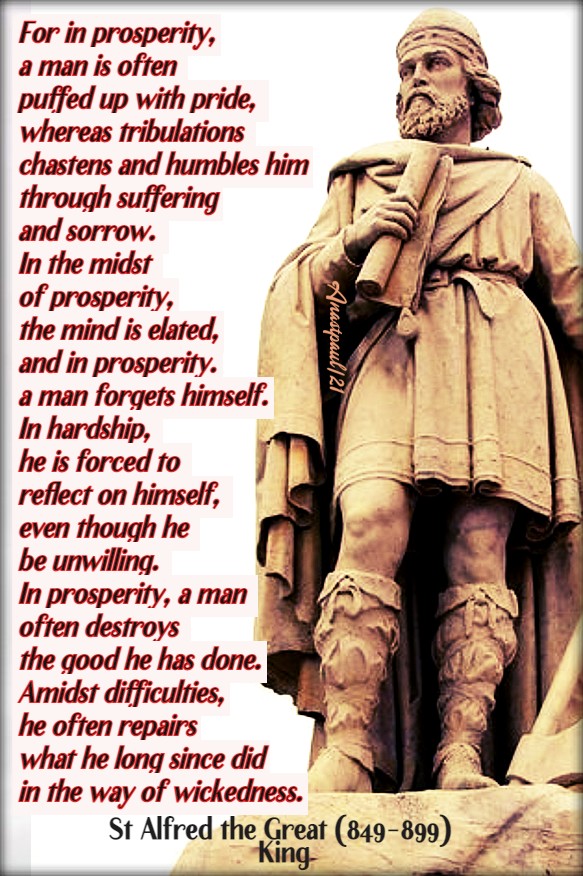
Quote/s of the Day – 26 October – The Memorial of St Alfred the Great (849-899) King
“For in prosperity, a man is often puffed up with pride, whereas tribulations chastens and humbles him through suffering and sorrow. In the midst of prosperity, the mind is elated, and in prosperity. a man forgets himself. In hardship, he is forced to reflect on himself, even though he be unwilling. In prosperity, a man often destroys the good he has done. Amidst difficulties, he often repairs what he long since did in the way of wickedness.”
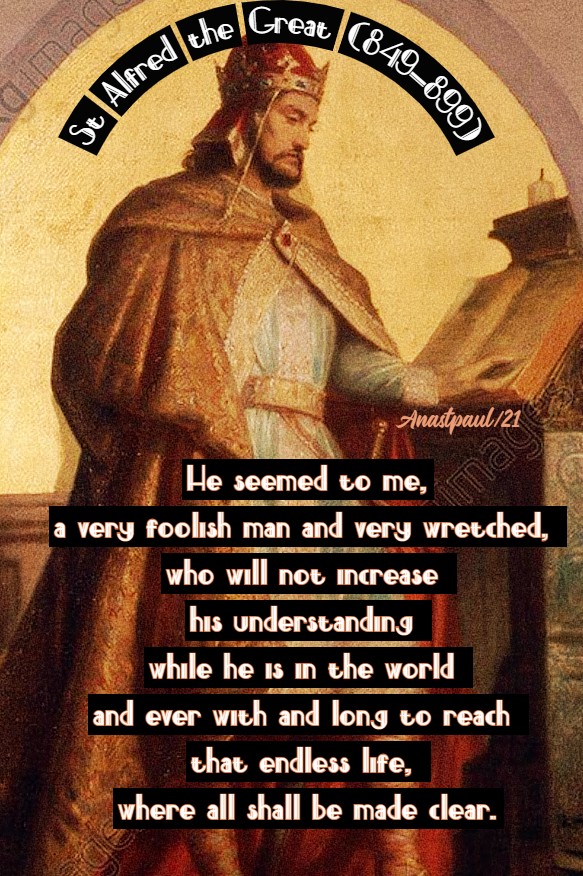
“He seemed to me, a very foolish man and very wretched, who will not increase his understanding while he is in the world and ever with and long to reach that endless life, where all shall be made clear.”
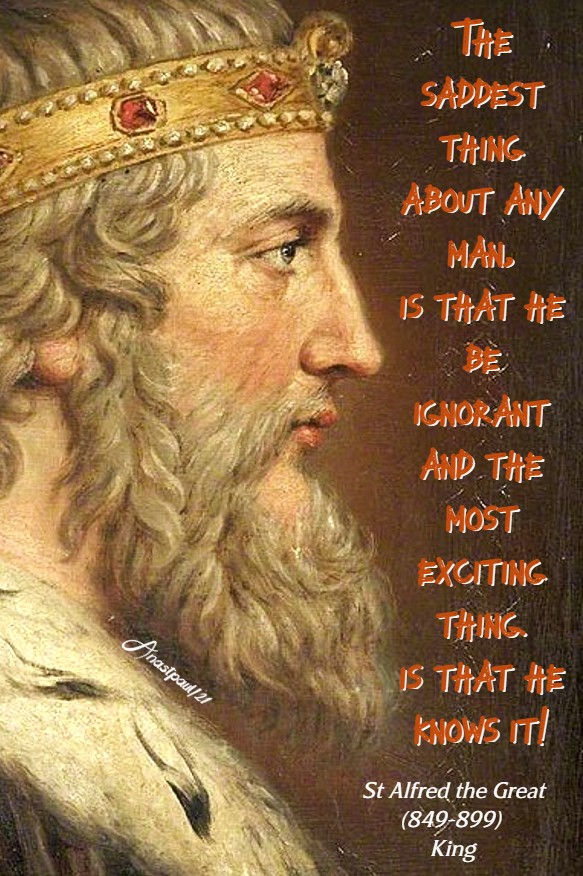
“The saddest thing about any man, is that he be ignorant and the most exciting thing. is that he knows it!”
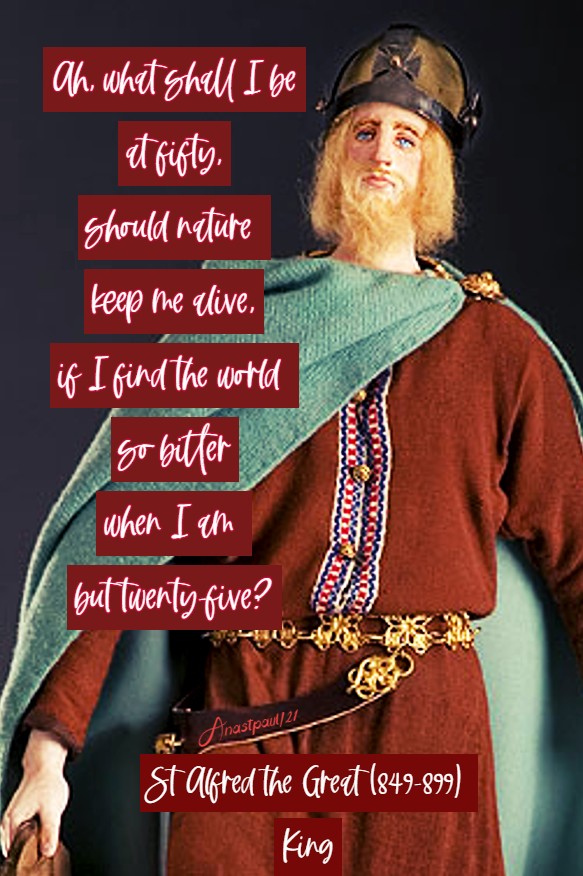
“Ah, what shall I be at fifty, should nature keep me alive, if I find the world so bitter when I am but twenty-five?”
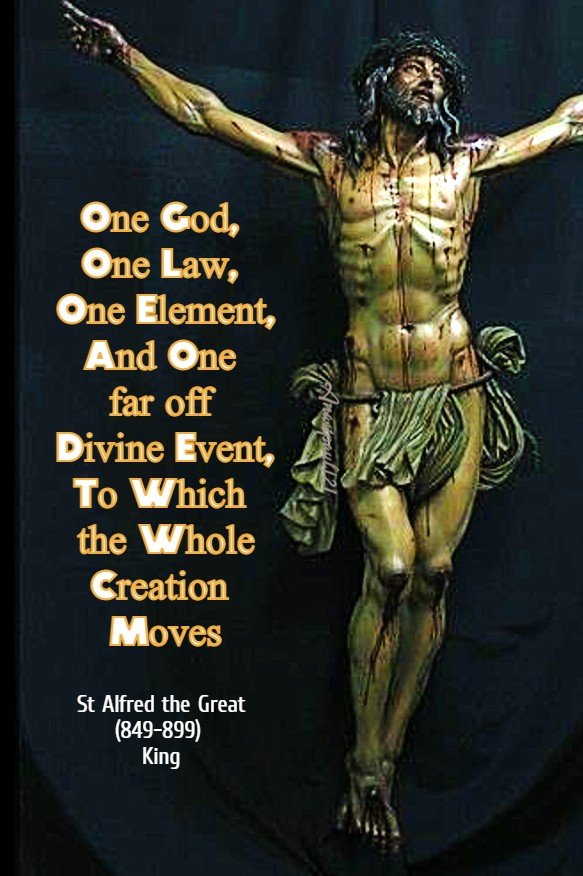
“One God, one law, one element, And one far-off divine event, To which the whole creation moves.”
One Minute Reflection – 26 October – Readings: Romans 8: 18-25;p Psalm 126: 1-5, Luke 13:18-21 and the Memorial of St Alfred the Great (849-899)
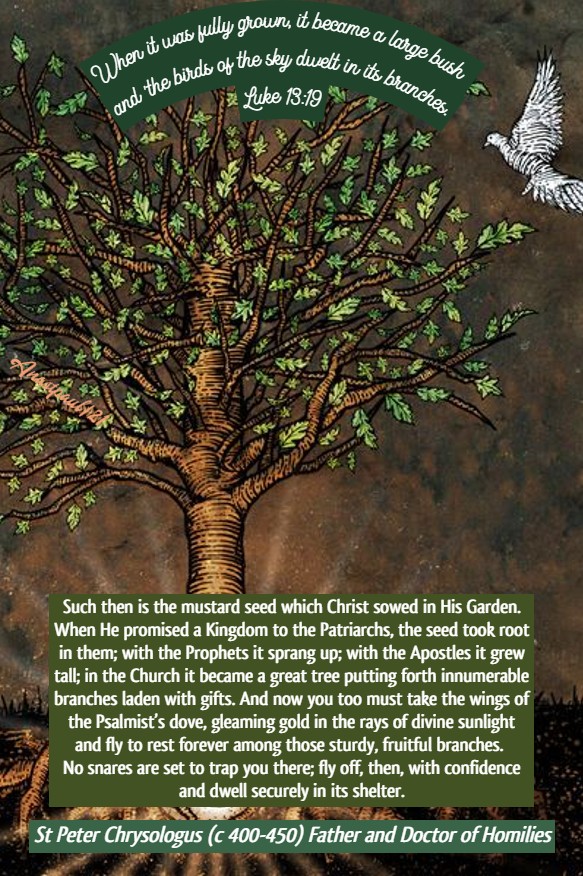
“When it was fully grown, it became a large bush and ‘the birds of the sky dwelt in its branches.’” – Luke 13:19
REFLECTION – “It is up to us to sow this mustard seed in our minds and let it grow within us into a great tree of understanding reaching up to Heaven and elevating all our faculties; then it will spread out branches of knowledge, the pungent savour of its fruit will make our mouths burn, its fiery kernel will kindle a blaze within us, enflaming our hearts and the taste of it, will dispel our unenlightened repugnance. Yes, it is true: a mustard seed is indeed an image of the Kingdom of God.
Christ is the Kingdom of Heaven. Sown like a mustard seed in the garden of the Virgin’s womb, He grew up into the Tree of the Cross, whose branches stretch across the world. Crushed in the mortar of the Passion, its fruit has produced seasoning enough for the flavouring and preservation of every living creature, with which it comes in contact. As long as a mustard seed remains intact, its properties lie dormant but when it is crushed, they are exceedingly evident. So it was with Christ, He chose to have His Body crushed because He would not have His Power concealed. Christ became all things in order to restore all of us in Himself. The Man Christ received the mustard seed, which represents the Kingdom of God; as Man He received it, though as God He had always possessed it. He sowed it in His Garden, that is in His Bride, the Church. The Church is a garden extending over the whole world, tilled by the plough of the Gospel, fenced in by stakes of doctrine and discipline, cleared of every harmful weed by the labour of the apostles, fragrant and lovely with perennial flowers, virgins’ lilies and martyrs’ roses set amid the pleasant verdure of all. who bear witness to Christ and the tender plants of all, who have faith in Him. Such then is the mustard seed which Christ sowed in His Garden. When He promised a Kingdom to the Patriarchs, the seed took root in them; with the Prophets it sprang up; with the Apostles it grew tall; in the Church it became a great tree putting forth innumerable branches laden with gifts. And now you too must take the wings of the Psalmist’s Dove, gleaming gold in the rays of divine sunlight and fly to rest forever among those sturdy, fruitful branches. No snares are set to trap you there; fly off, then, with confidence and dwell securely in its shelter.” – St Peter Chrysologus (c 400-450) Doctor of Homilies (Sermon 98.)
PRAYER – True light of the world, Lord Jesus Christ, as You enlighten all men for their salvation, give us grace, we pray, to herald Your coming by preparing the ways of justice and of peace. Help us Lord, that we may sprout and bear fruit, fitting to grow and be a home of comfort to our neighbour. By the prayers of St Alfred the Great, may we too be beacons of Your Light and of the glory of Your Kingdom. Through Jesus our Lord, Who lives and reigns with the Father and the Holy Spirit, God forever, amen.
Our Morning Offering – 26 October – The Memorial of St Alfred the Great (849-899)
We Pray to You, O Lord, the King of All By St Alfred the Great (849-899)
We pray to You, O Lord, Who are the surpeme Truth and all truth is from You. We beseech You, O Lord, Who are the highest Wisdom and all the wise depend on You for their wisdom. You are the supreme Joy and all who are happy, owe it to You. You are the Light of minds and all receive their understanding from You. We love, we love You above all. We seek You, we follow You and we are ready to serve You. We desire to dwell under Your Power, for You are the King of all. Amen
Saint of the Day – 26 October – Saint Alfred the Great (849-899) King of Wessex, Confessor, Scholar, Writer and Translator, negotiator. He administered justice with insight and fairness, protected the poor, and encouraged art and the crafts. He tried in all that he did, to rule as a model Christian King. For all this, he alone among the rulers of England is called “the Great.”
Born in the year 849 in the Royal Saxon Palace at Wantage, in what is now Berkshire, the youngest of five sons of King Æthelwulf,
Alfred spent his life in a time of “battle, murder and sudden death” during the Danish invasions and settlement in Britain.
On a pilgrimage to Rome at the age of four, Alfred was blessed by Pope Leo IV, an event that deeply impressed the young Saxon boy. Two years later he witnessed his father’s marriage to a young Princess of the Frankish court. Following the death of his father and the brief reigns of his brothers, Alfred became King of the West Saxons (the Kingdom of Wessex) in 871. At the time, the pagan Danes had gained control of large part of eastern and southern England and were harrying the eastern coasts, burning Churches and Monasteries and killing the inhabitants.
Despite many setbacks against the Danes, Alfred never despaired and in time, he was able to drive the Danes from Wessex, saving his Kingdom and subjects from death and despoliation. He was generous to the defeated Danish Leader Guthrum, persuading him to accept Baptism and to recognise the boundaries between the Danish holdings and Wessex.
In his later years, Alfred sought to repair the damage done by the Danish invasions to the culture and learning of his Kingdom, especially among the Parish clergy. On the earlier model of Charlemagne’s school at Aachen, he founded a Palace school that was unrivaled in northern Europe at the time. He not only encouraged men of learning but he laboured himself and gave proof of his own learning. He translated into Anglo-Saxon: “The Consolation of Philosophy” of Boëthius; “The History of the World” of Orosius; the “Ecclesiastical History” of Bede, and the “Pastoral Rule” and the “Dialogues” of St. Gregory the Great. The “Consolation of Philosophy” he not only translated but adapted, adding much of his own. The “Anglo-Saxon Chronicle”, the record of the English race from the earliest time, was inspired by him.
He is generally credited with establishing trial by jury, the law of “frank-pledge,”(an Anglo-Saxon legal system in which units composed of ten households were formed, in each of which members were held responsible for one another’s conduct) and many other institutions which were rather, the development of national customs of long standing. He is represented as the Founder of Oxford, a claim which some recent research wishes to disprove. But ,even the elimination of the legendary from Alfred’s history does not, in any way, diminish his greatness, so much is there of actual, recorded achievement to his credit. His own estimate of what he did for the regeneration of England is modest, beside the authentic history of his deeds.
He endeavoured, he tells us, to gather all that seemed good in the old English laws and adds: -“I durst not venture much of mine own to set down, for I knew not what should be approved by those who came after us.” Not only did he codify and promulgate laws but he looked, too, to their enforcement, and insisted that justice should be dispensed ,without fear or favour. He devoted his energies to restoring, what had been destroyed, by the long wars with the invaders. Monasteries were rebuilt and founded and learned men brought from other lands. He brought Archbishop Plegmund and Bishop Wetfrith from Mercia; Grimbold and John the Old-Saxon from other Teutonic lands; Asser, John Scotus Erigena and many others.
In one of the works prepared at his direction, he wrote, “He seemed to me, a very foolish man and very wretched, who will not increase his understanding while he is in the world and ever with and long to reach that endless life, where all shall be made clear.”
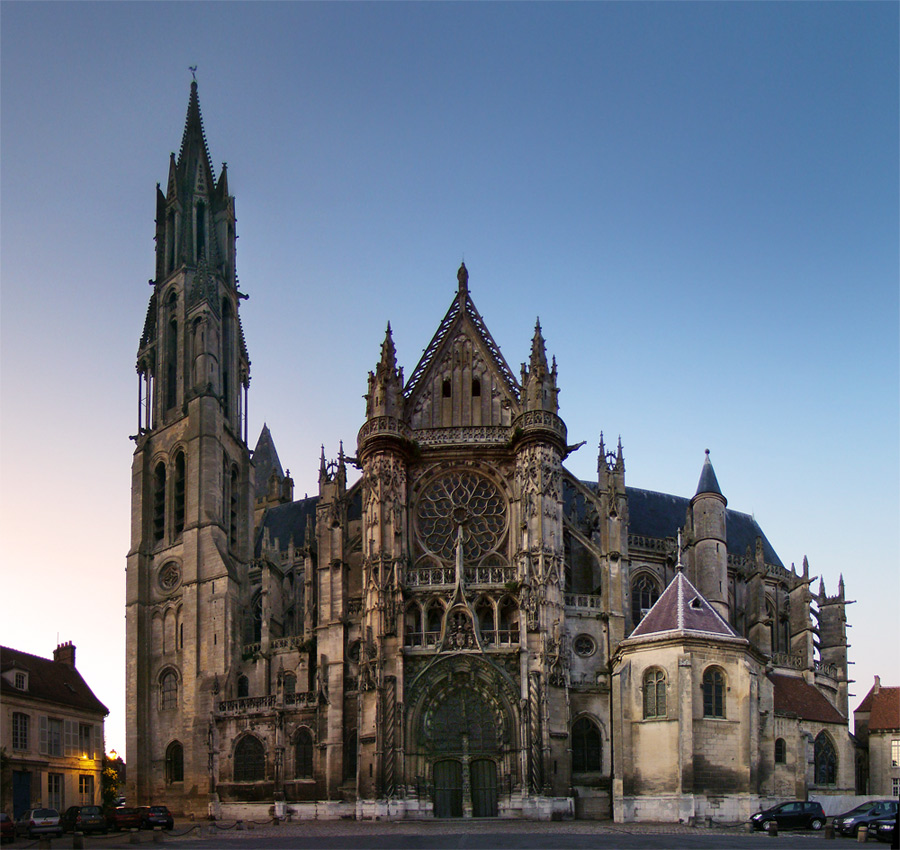
Notre-Dame de la Victoire / Our Lady of Victory, near Senlis, France (1225) – 26 October:
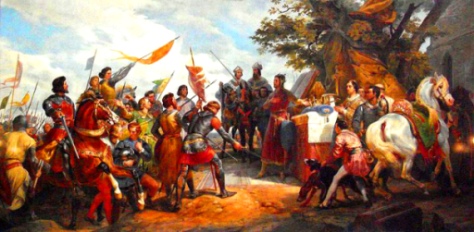
The Abbot Orsini wrote: “Dedication of Our Lady of Victory, near Senlis, in the year 1225, by Guarin, Bishop of Senlis and Chancellor of France. This Abbey was built by Philip Augustus, in thanksgiving for the victory which he gained over the Emperor Otho IV, at Bouvines, in the year 1214.”
The Battle of Bouvines took place on 27 July 1214 and although, it is no longer much remembered as a famous battle, it is one in which the world was changed in its aftermath. Easily one of the most significant battles to take place in the Middle Ages, there were combatants from several European countries taking part on one side or the other. With the death of King Richard the Lion-hearted, his brother John claimed the lands of Normandy along with England, even though he had no right to them, as they rightfully belonged to his nephew, a boy named Arthur. John probably killed Arthur, as he was the one with the most to gain. When King Philip Augustus heard that John was claiming to be the Duke of Normandy, he called him to account for his nephew. When John refused, King Philip took away his right to rule Normandy. Rather than submit, John joined forces with the German Emperor and the Count of Flanders in open rebellion. King Philip went to Mass with his troops just prior to the battle. His army probably numbered in total about 15,000 men, while the allied forces arrayed against him, were nearly double that size. Knowing that his noblemen were anxious about the upcoming battle, King Philip took off his Crown and placed it upon the Altar, saying: “If anyone here thinks he can wear this crown more worthily than I, let him step forward to take it.” Philip’s men loudly reaffirmed their faith in their King and went enthusiastically to the battle. The battle was hotly contested,and both King Philip and Otto IV of Germany had several horses killed beneath them. At one point, when King Philip was unhorsed, he was surrounded by Flemish pikemen. It is related that his life was only saved due to the superior plate mail armour he wore,but later events came to demonstrate that it was also because of the intervention of the Blessed Virgin Mary. King Philip captured the Count of Flanders and took him back to France to display him to his nobles like a pet in an iron cage. The victory did much more than bring an end to the King of England’s claims to Brittany and Normandy, it also helped strengthen the Monarchy in France as it simultaneously weakened the monarchy in England. When King John returned to England, his position was so weakened that he felt compelled to sign the Magna Carta, which greatly limited his power over his subjects. Otto IV of Germany was deposed soon after he returned to his own realm. In thanksgiving for his victory, King Philip Augustus founded the Abbey of Victory between Senlis and the Bishop Mount, to honour the Mother of God for this signal victory.
St Adalgott of Einsiedeln St St Alanus of Quimper St Albinus of Buraburg St Alfred the Great (849-899) King of Wessex St Alorus of Quimper St Amandus of Strasburg St Amandus of Worms St Aneurin St Aptonius of Angouleme St Arnold of Queralt St Bean of Mortlach St Bernard de Figuerols
St Felicissimus of Carthage St Fulk of Piacenza St Gaudiosus of Salerno St Gibitrudis St Gwinoc St Humbert St Lucian St Marcian St Quadragesimus of Policastro St Rogatian of Carthage St Rusticus of Narbonne St Sigibald of Metz — Martyrs of Nicomedia – 5 saints
Thought for the Day – 25 October – Meditations with Antonio Cardinal Bacci (1881-1971)
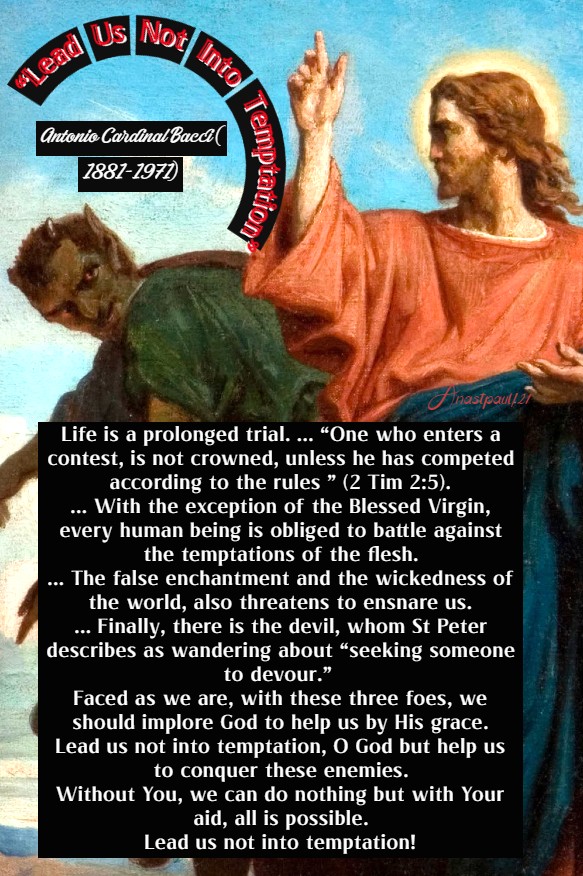
“Month of the Holy Rosary” “Lead Us Not Into Temptation”
“Life is a prolonged trial. St Paul compares it to a stadium in which everyone must fight to win. If anyone lays down his arms, he will be unable to conquer his passions or to achieve the palm of victory. “One who enters a contest, is not crowned, unless he has competed according to the rules ” (2 Tim 2:5).
With the exception of the Blessed Virgin, every human being is obliged to battle against the temptations of the flesh. Sometimes, these can be quite terrifying. St Paul himself confessed that he felt another law in his members, warning against the law of his mind. “Unhappy man that I am!” he exdclaimed in supplication to God to come to his assistance. “Who will deliver me from the body of this death?” (Rom 7:24).
The false enchantment and the wickedness of the world, also threatens to ensnare us. “We know that we are of God and the whole world is in the power of the evil one” (1 Jn 5:19). It is easy to become absorbed in worldly affairs and to forget the all-important spiritual realities.
Finally, there is the devil, whom St Peter describes as wandering about “seeking someone to devour.” Resist him, he urges us, “steadfast in the faith, knowing that the same suffering befalls your brethren all over the world ” (Cf 1 Peter 5:9).
Faced as we are, with these three foes, we should implore God to help us by His grace. Lead us not into temptation, O God but help us to conquer these enemies. Without You, we can do nothing but with Your aid, all is possible. Lead us not into temptation!”
Quote/s of the Day – 25 October – The Memorial of St Gaudentius of Brescia (Died 410) Bishop
Excerpt from a Homily by St Gaudentius
“The heavenly Sacrifice, instituted by Christ, is the most gracious legacy of His new Covenant. On the night He was delivered up to be Crucified, He left us this gift as a pledge of His abiding Presence.
This Sacrifice is our sustenance on life’s journey; by it we are nourished and supported along the road of life, until we depart from this world and make our way to the Lord. For this reason He addressed these words to us: “Unless you eat my flesh and drink my blood, you will not have life in you” [John 6:53].
It was the Lord’s will that His gifts should remain with us and, that we, who have been redeemed by His Precious Blood, should constantly be sanctified according to the pattern of His own Passion.
And so, He commanded those faithful disciples of His, whom He made the first Priests of His Church, to enact these Mysteries of eternal life continuously. All Priests, throughout the Churches of the world, must celebrate these Mysteries until Christ comes again from Heaven.
Therefore, let us all, Priests and people alike, be faithful to this everlasting memorial of our Redemption. Daily it is before our eyes as a representation of the Passion of Christ. We hold it in our hands, we receive it in our mouths and we accept it in our hearts.
It is appropriate that we should receive the Body of Christ in the form of bread because, as there are many grains of wheat in the flour from which bread is made, by mixing it with water and baking it with fire, so also, we know that many members make up the One Body of Christ, which is brought to maturity by the fire of the Holy Spirit.
Christ was born of the Holy Spirit and, since it was fitting that He should fulfill all justice, He entered into the waters of baptism to sanctify them. When He left the Jordan He was filled with the Holy Spirit who had descended upon Him in the form of a dove. As the Evangelist tells us: Jesus, full of the Holy Spirit, returned from the Jordan.
Similarly, the wine of Christ’s Blood, drawn from the many grapes of the vineyard that He had planted, is extracted in the wine-press of the Cross. When men receive it with believing hearts, like capacious wine skins, it ferments within them by its own power.
And so, now that you have escaped from the power of Egypt and of Pharaoh, who is the devil, join with us, all of you, in receiving this Sacrifice of the saving Passover with the eagerness of dedicated hearts. Then, in our inmost being, we shall be wholly sanctified by the very Lord Jesus Christ, Whom we believe to be present in His Sacraments and Whose boundless Power abides forever. ”Amen!
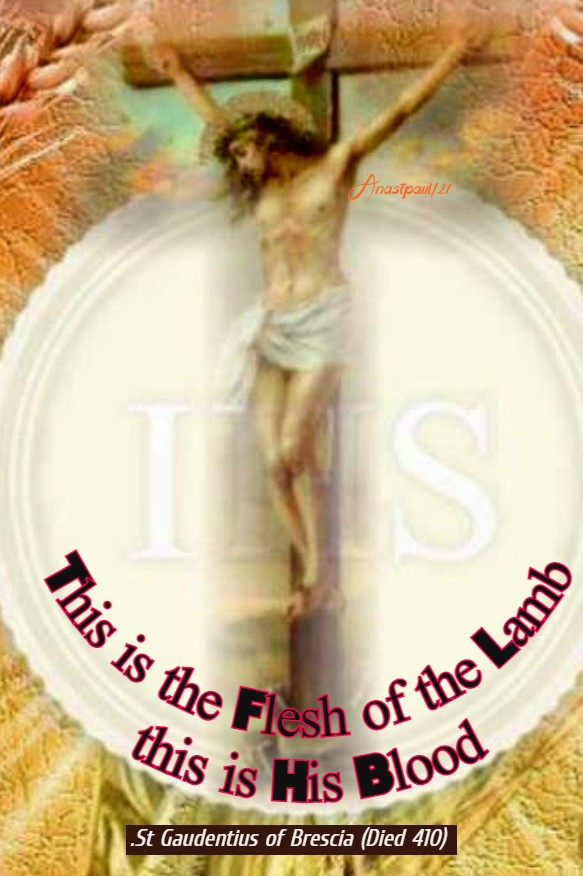
“This is the Flesh of the Lamb; this is His Blood.”
One Minute Reflection – 25 October – “Month of the Holy Rosary” – Readings: Romans 8: 12-17; Psalm 68: 2, 4, 6-7ab, 20-21; Luke 13: 10-17
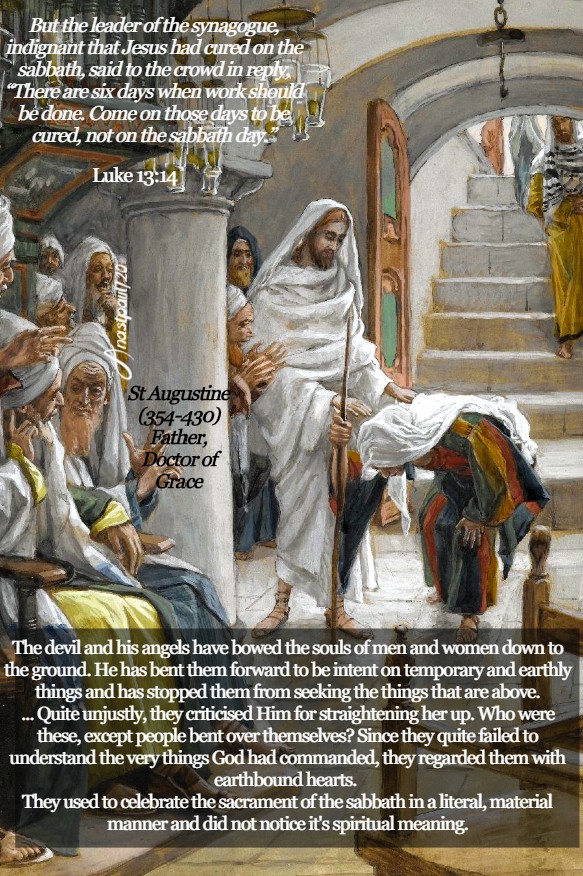
“But the leader of the synagogue, indignant that Jesus had cured on the sabbath, said to the crowd in reply, “There are six days when work should be done. Come on those days to be cured, not on the sabbath day.” – Luke 13:14
REFLECTION – “The whole human race, like this woman, was bent over and bowed down to the ground. Someone already understands these enemies. He cries out against them and says to God, “They have bowed my soul down.”The devil and his angels have bowed the souls of men and women down to the ground. He has bent them forward to be intent on temporary and earthly things and has stopped them from seeking the things that are above.
Since that is what the Lord says about the woman whom Satan had bound for eighteen years, it was now time for her to be released from her bondage on the sabbath day. Quite unjustly, they criticised Him for straightening her up. Who were these, except people bent over themselves? Since they quite failed to understand the very things God had commanded, they regarded them with earthbound hearts. They used to celebrate the sacrament of the sabbath in a literal, material manner and did not notice it’s spiritual meaning.” – St Augustine (354-430) Father, Doctor of Grace (Sermon 162)
PRAYER – Come to help us in our weakness, God of mercy, forgive the sins of Your people and as nothing we can do is worthy in Your sight, save us through the intercession of the Mother of our Lord, Jesus Christ. May the prayers of all your saints be offered to You on our behalf. We make our prayer through Jesus with the Holy Spirit, God forever, amen.
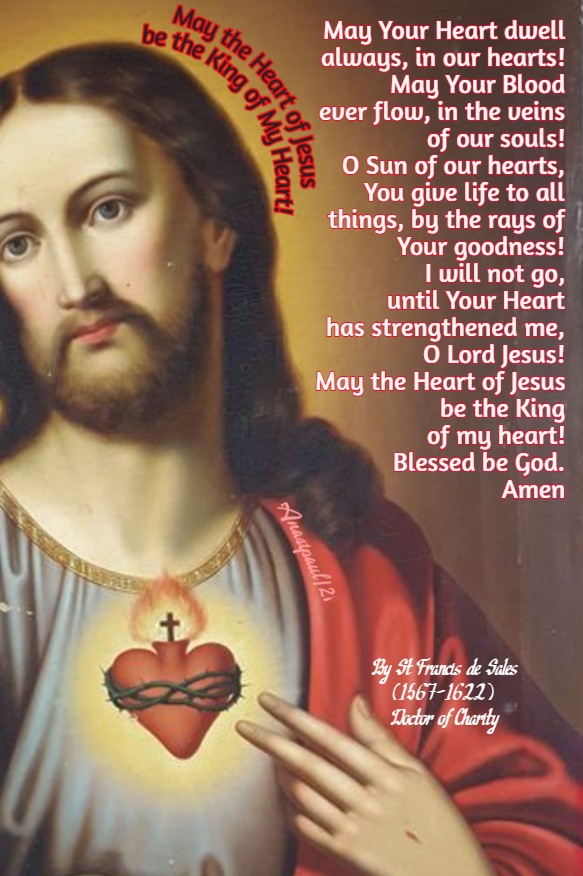
May the Heart of Jesus be the King of My Heart! By St Francis de Sales (1567-1622) Doctor of Charity
May Your Heart dwell always, in our hearts! May Your Blood ever flow, in the veins of our souls! O Sun of our hearts, You give life to all things, by the rays of Your goodness! I will not go, until Your Heart has strengthened me, O Lord Jesus! May the Heart of Jesus be the King of my heart! Blessed be God. Amen
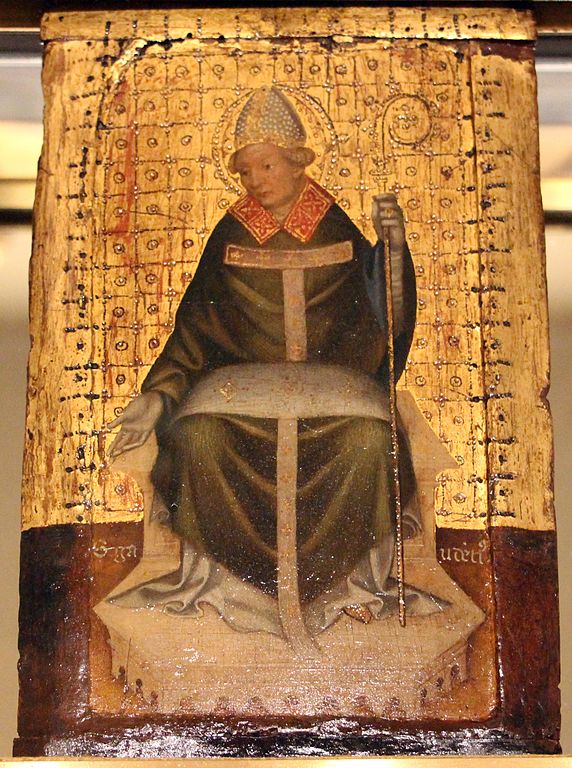
Saint of the Day – 25 October – St Gaudentius of Brescia (Died 410) Bishop , renowned Preacher, Theologian, Diplomatic Mediator, Born in Brescia, Italy and died there in 410 of natural causes.
The Roman Martyrology states today: “In Brescia, Saint Gaudentius, Bishop, who, Ordained by Saint Ambrose, shone among the prelates of his time for doctrine and virtue, instructed his people with words and writings and founded a Basilica which he called the ‘Council of Saints.‘”
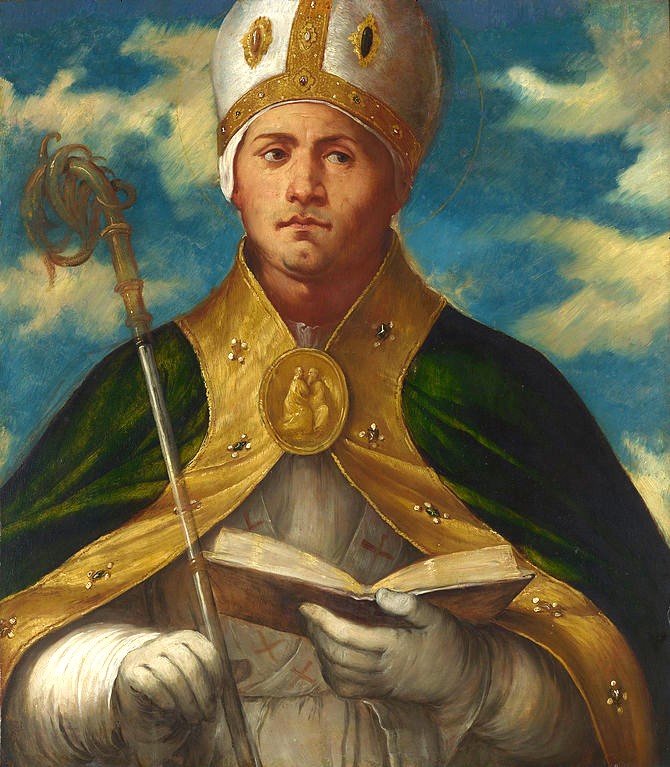
16th century depiction of St Gaudentius by Romanino
Gaudentius was the eighth Bishop of Brescia, the City where he was born. We know something about his life from his ten Sermons, sent to a worthy fellow citizen, a Brescian nobleman named Benivolus, who, because he was ill, could not attend Mass to listen to him. Gaudemnzio, for his humility, thought he carried out his ministry solely through preaching. His homilies were copied and disseminated because they were requested by the faithful. When he was elected Bishop, by popular acclaim and with the approval of St Ambrose, he was on a pilgrimage to the Holy Land. The Brescians then sent a delegation to Palestine to get him back as soon as possible.
He enjoyed a reputation of great holiness and for this reason ,he had the esteem of the great religious and civil personalities of his time.
Born at Brescia, Italy, about the middle of the 4th century, Gaudentius was educated under St Philastrius, Bishop of Brescia, whom he termed his “father.” After earning a reputation for sanctity, he travelled to the East where he gained even more fame. In his absence, he was elected Bishop by the people on the death of St Philastrius, although he felt unworthy to receive such an honour, he was influenced to accept it by the Eastern Bishops and in 387 he was consecrated by St Ambrose.
Gaudentius was a powerful preacher and ten of his Sermons have survived, offering ample testimony to this fact, as well as twenty-one tractates and several pastoral and private letters survive. He governed his See with prudence and humility, inspiring his flock to imitate the Divine Master .
In 405, the Saint was sent with two others by Pope Innocent I to the East to defend St. John Chrysostom before Arcadius. However, the party was prevented from reaching Arcadius and never formally interceded for John – the three men were shipped back home on a vessel so unseaworthy that it almost sank and had to be left at Lampsacus. Subsequently, St. John wrote a letter of thanks to St Gaudentius for his efforts, even though they had not borne fruit. This saintly man died in 410 and was called by Rufinus: “the glory of the Doctors of the age in which he lived.”
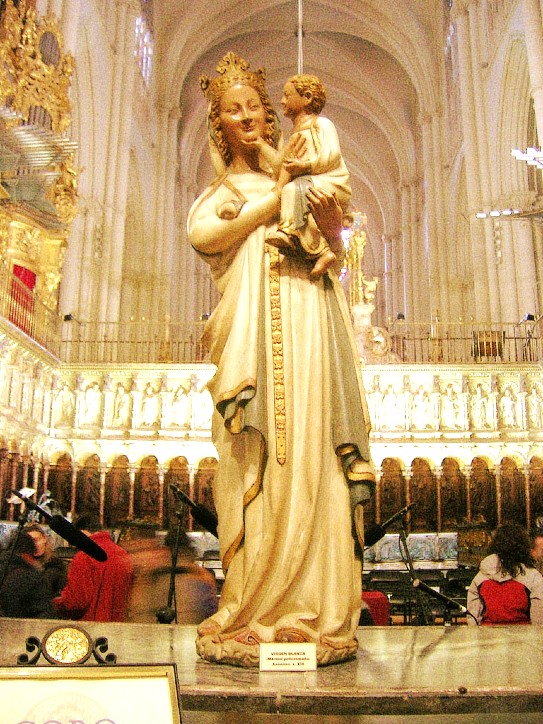
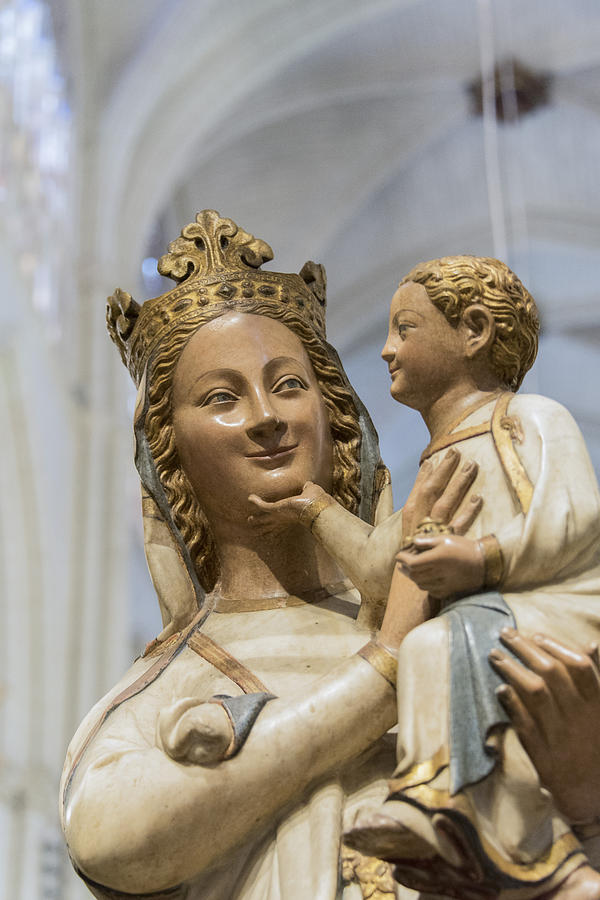
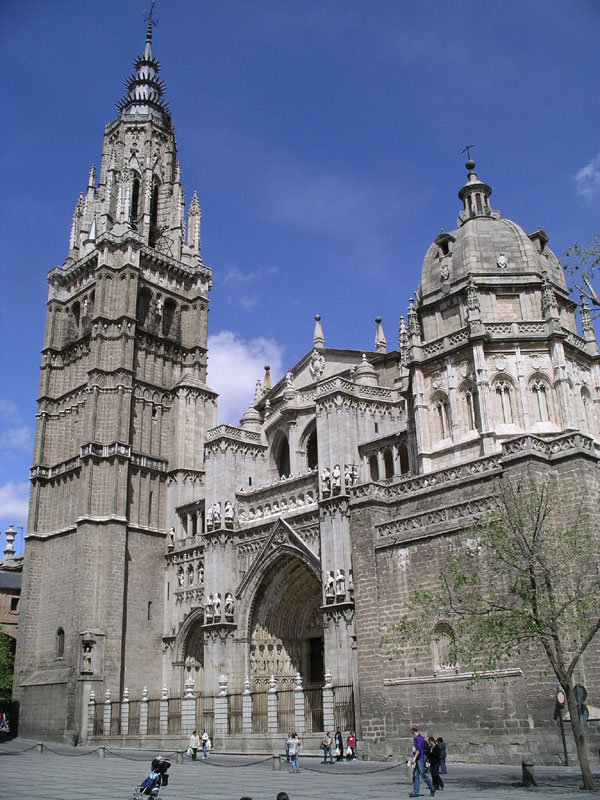
Virgen Blanca – The Dedication of the Cathedral of Our Lady of Toledo, Spain and the White Virgin (Also known as the Smiling Madonna) (1085) – 25 October:
The Abbot Orsini wrote: “Dedication of Our Lady of Toledo, in Spain, about the year 1075, by Bernard, Archbishop of that City.”
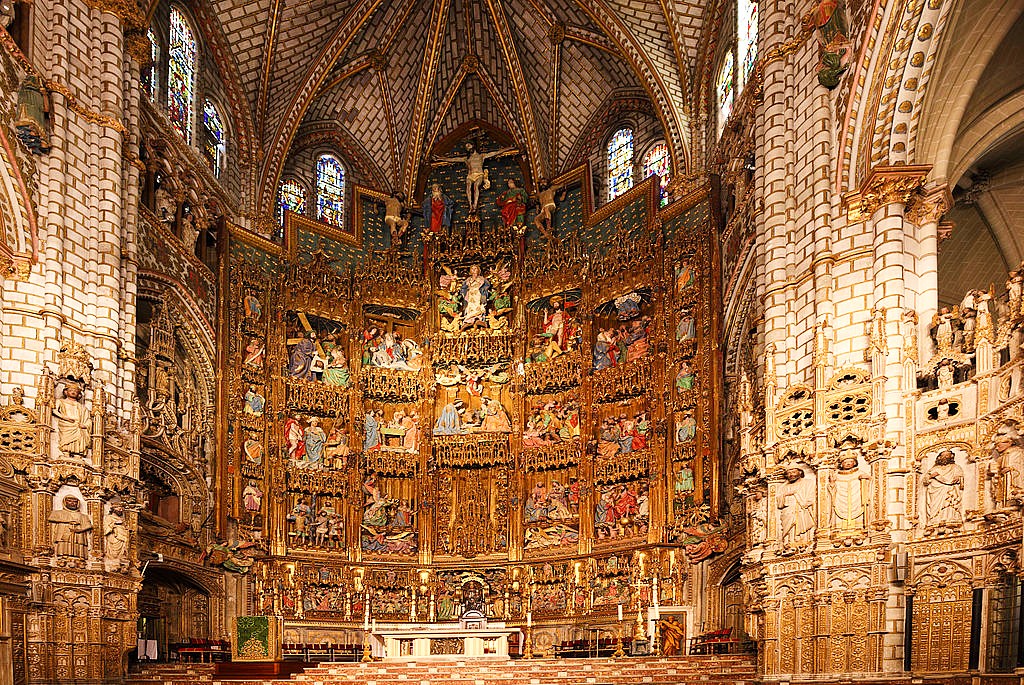
The City of Toledo in Spain was not reconquered until 1085, when King Alfonso VI, King of Leon and Castile, took the City from the Moors. This was an important step in the Reconquista, as Toledo had once been the capital of Visigothic Spain. The City’s Cathedral had been desecrated and used as a mosque by the Moslem invaders of Spain but the people had the pleasure of seeing it blessed and consecrated in the year 1087. It was placed under the advocacy of the Blessed Virgin Mary, as King Alfonso wrote:
“I, Alfonso, Emperor of all Spain by God’s Providence, convened with the Bishops, namely, that for these ten will I preserve the papal honour of Saint Mary of the City of Toledo, which was formerly the See…”
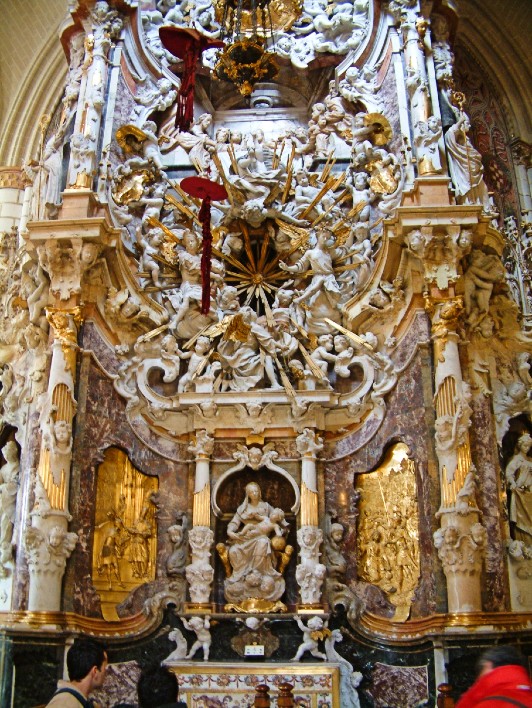
In 1225 a new Cathedral was begun to replace the older one, for which King Fernando III drew up the plans and laid the cornerstone. Fernando’s good friend, the Archbishop Rodrigo Ximenez de Rada, worked very enthusiastically for the completion of the new Cathedral where he was Bishop. There are so many masterpieces of art and beautiful Shrines in the City of Toledo, Spain, that a visitor may easily miss the White Virgin. She stands atop an Altar in the choir of Toledo’s magnificent Cathedral. It is said that you can live to be 100 years old, visit this wonderful Cathedral once a week for all of your life and still never finish discovering its glories!
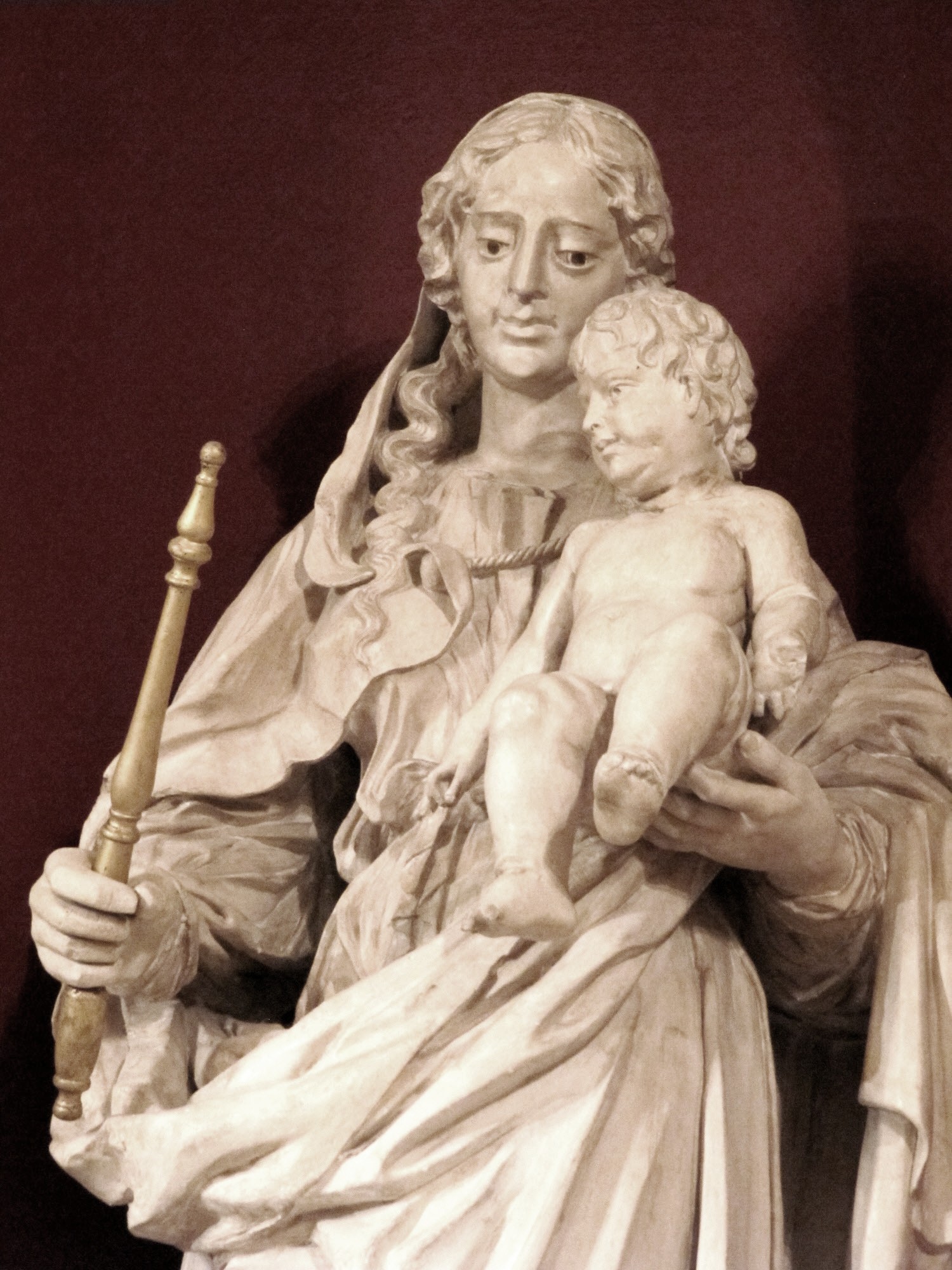
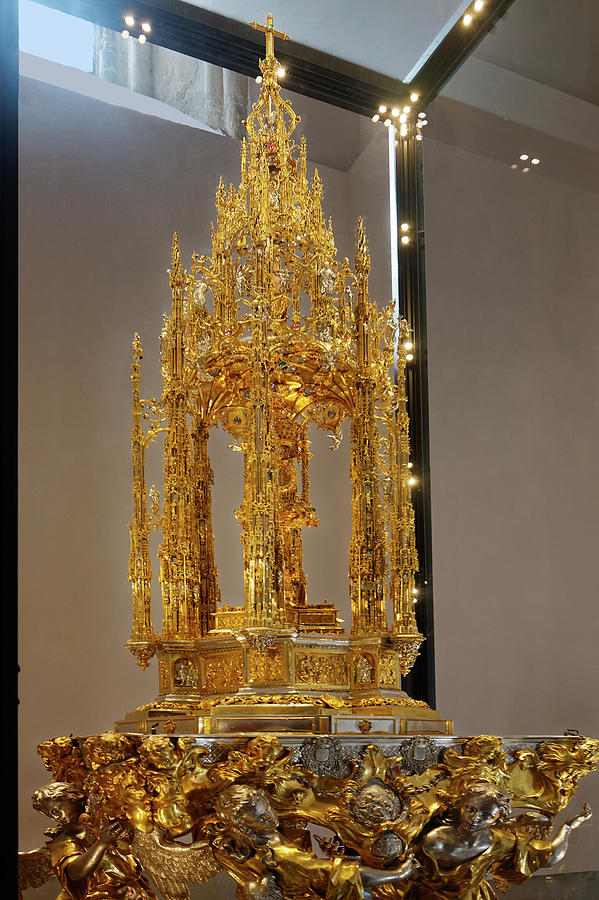
The sacred image of Our Lady is a polychromed alabaster Statue of French origin from the twelfth century. Both Mother and Child are clothed in white, their garments bordered with jeweled gold. Their faces darkened by time, are framed with curly, strawberry-blond hair. The Statue has also been called the “Smiling Virgin of Toledo;” for the Child’s right hand caresses His Mother’s face, tickling her chin. She responds with a smile that gives this image its popular name. It is also called the “Virgin of Prima” and the “Virgen Blanca.” There is also another artifact worthy of special mention and that is the ten foot tall great Monstrance of Arfe. It is made of both silver and gold, inset with precious gems. It took nearly 8 years to construct and is done in a Gothic style that is truly a magnificent work of art.
St Alfons Arimany Ferrer St Bernard of Calvo St Canna verch Tewdr Marw St Chrysanthus
St Cyrinus of Rome St Daria St Dulcardus Bl Edmund Daniel St Fronto of Périgueux St Fructus of Segovia St Gaudentius of Brescia (Died 410) Bishop St George of Périgueux St Goeznoveus of Leon St Guesnoveus Bl Henry of Segusio St Hilary of Javols St Hilary of Mende St Hildemarca of Fecamp St Januarius of Sassari St Lucius of Rome St Lupus of Bayeux St Mark of Rome
Martyrs of Cruz Cubierta – 5 beati: A mother, Blessed María Teresa Ferragud Roig de Masiá and her four daughters, Blessed María Joaquina Masiá Ferragud, Blessed María Vicenta Masiá Ferragud, Blessed María Felicidad Masiá Ferragud and Blessed Josefa Ramona Masiá Ferragud, all nuns, who were Martyred in the Spanish Civil War, on 25 October 1936 in Cruz Cubierta, Alzira, Valencia, Spain. They were Beatified on 11 March 2001 by St Pope John Paul II.
Forty Martyrs of England and Wales – 40 saints: Following the dispute between the Pope and King Henry VIII in the 16th century, faith questions in the British Isles became entangled with political questions, with both often being settled by torture and murder of loyal Catholics. In 1970, the Vatican selected 40 martyrs, men and women, lay and religious, to represent the full group of perhaps 300 known to have died for their faith and allegiance to the Church between 1535 and 1679. They each have their own day of memorial, but are remembered as a group on 25 October.
• Alban Roe • Alexander Briant • Ambrose Edward Barlow • Anne Line • Augustine Webster • Cuthbert Mayne • David Lewis • Edmund Arrowsmith • Edmund Campion • Edmund Gennings • Eustace White • Henry Morse • Henry Walpole • John Almond • John Boste • John Houghton • John Jones • John Kemble • John Lloyd • John Pain • John Plesington • John Rigby • John Roberts • John Southworth • John Stone • John Wall • Luke Kirby • Margaret Clitherow • Margaret Ward • Nicholas Owen • Philip Evans • Philip Howard • Polydore Plasden • Ralph Sherwin • Richard Gwyn • Richard Reynolds • Robert Lawrence • Robert Southwell • Secular Clergy • Swithun Wells • Thomas Garnet.
Martyred in the Spanish Civil War: • Blessed Alfons Arimany Ferrer • Blessed Recaredo Centelles Abad
Thought for the Day – 24 October – Meditations with Antonio Cardinal Bacci (1881-1971)
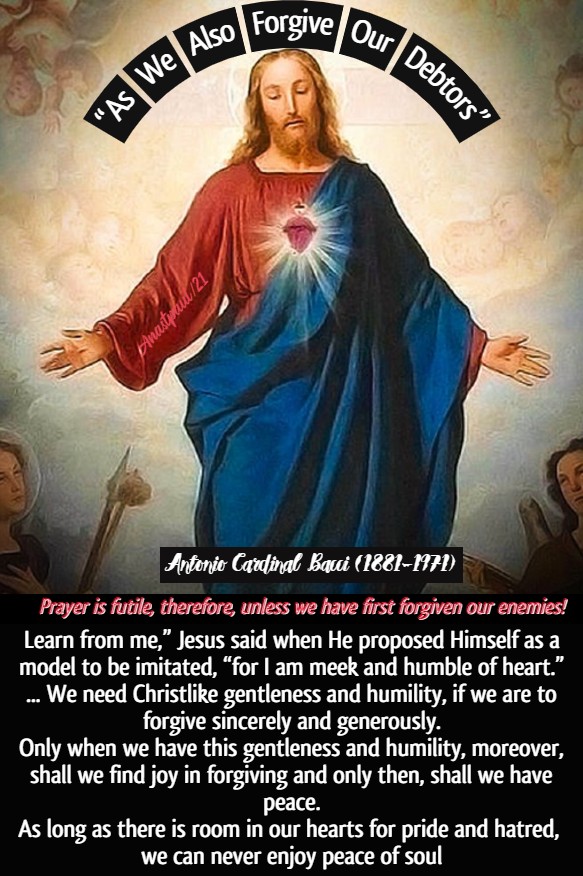
“Month of the Holy Rosary” “As We Also Forgive Our Debtors”
“If thou art offering thy gift at the altar,” Jesus tells us “and thou remember that thy brother has anything against thee, leave thy gift before the altar and go first to be reconciled to thy brother and then come and offer thy gift” (Mt 5:23-24). Prayer is futile, therefore, unless we have first forgiven our enemies!
“Learn from me,” Jesus said when He proposed Himself as a model to be imitated, “for I am meek and humble of heart.” Then He added, “you will find rest for your souls” (Cf Mt 11:29). The foundation of our hatred, anger and resentment, is always our wounded pride. We need Christlike gentleness and humility, if we are to forgive sincerely and generously. Only when we have this gentleness and humility, moreover, shall we find joy in forgiving and only then, shall we have peace. As long as there is room in our hearts for pride and hatred, we can never enjoy peace of soul!”
Quote/s of the Day – 24 October ” – Jeremiah 31: 7-9; Psalm 126: 1-6; Hebrews 5: 1-6; Mark 10: 46-52
“And immediately he received his sight and followed him on the way.”
Mark 10:52
“Come, follow me”
Matthew 19:21
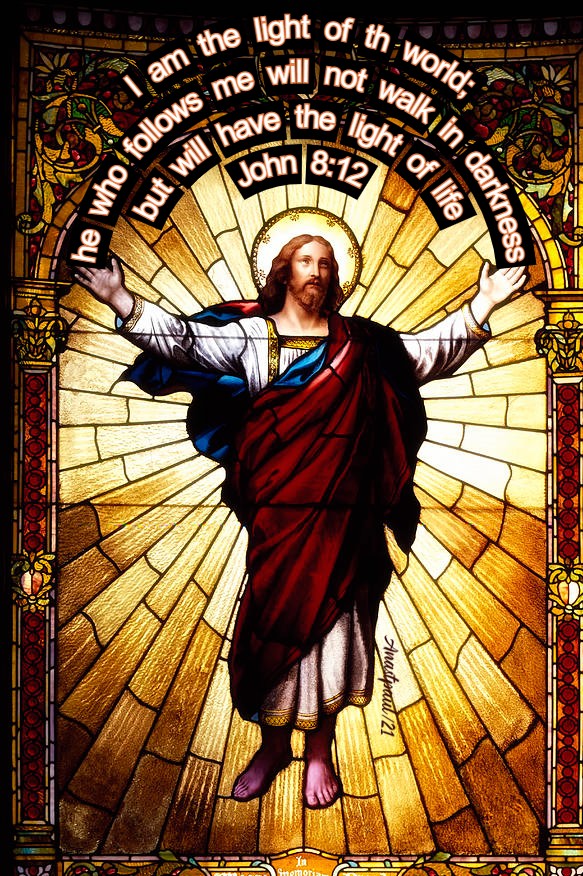
“I am the light of the world; he who follows me will not walk in darkness but will have the light of life.”
John 8:12
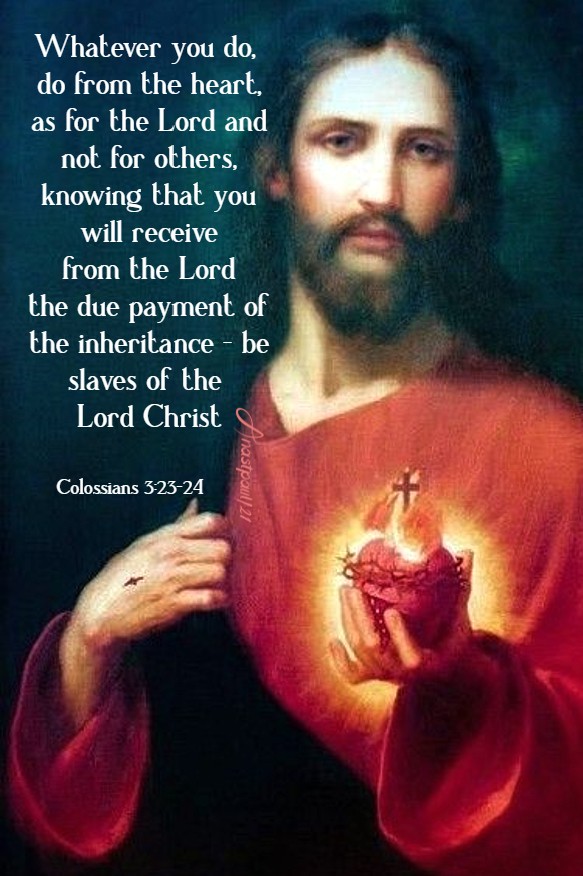
“Whatever you do, do from the heart, as for the Lord and not for others, knowing that you will receive from the Lord the due payment of the inheritance; be slaves of the Lord Christ.”
Colossians 3:23-24
“If we follow Christ closely we shall be allowed, even on this earth, to stand, as it were, on the threshold of the heavenly Jerusalem and enjoy the contemplation, of that everlasting feast, like the blessed Apostles, who, in following the Saviour as their leader, showed and still show, the way to obtain the same gift from God. They said – See, we have left all things and followed You. We too follow the Lord and we keep His feast by deeds rather than by words.”
St Athanasius (297-373) Father & Doctor of the Church
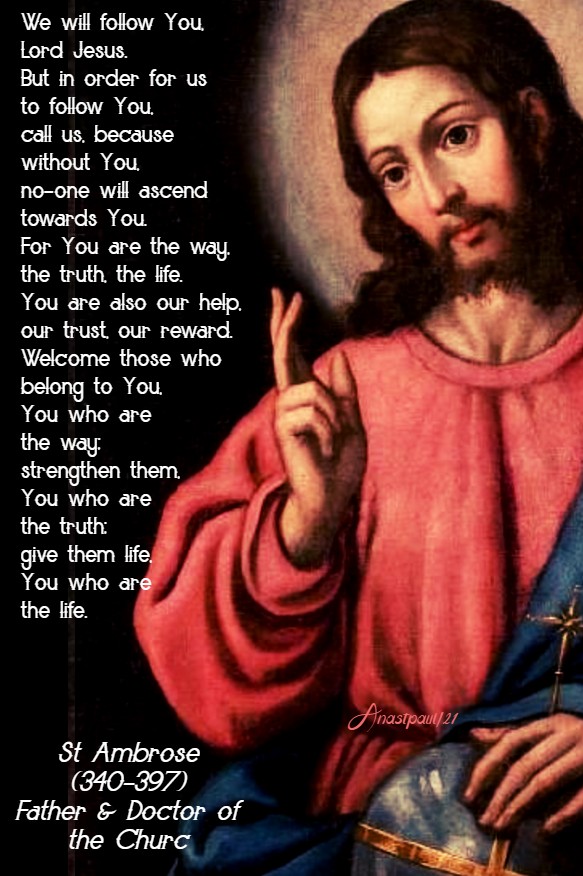
“We will follow You, Lord Jesus. But in order for us to follow You, call us because without You, no-one will ascend towards You. For You are the way, the truth, the life. You are also our help, our trust, our reward. Welcome those who belong to You, You who are the way; strengthen them, You who are the truth; give them life, You who are the life.”
St Ambrose (340-397) Father & Doctor of the Church
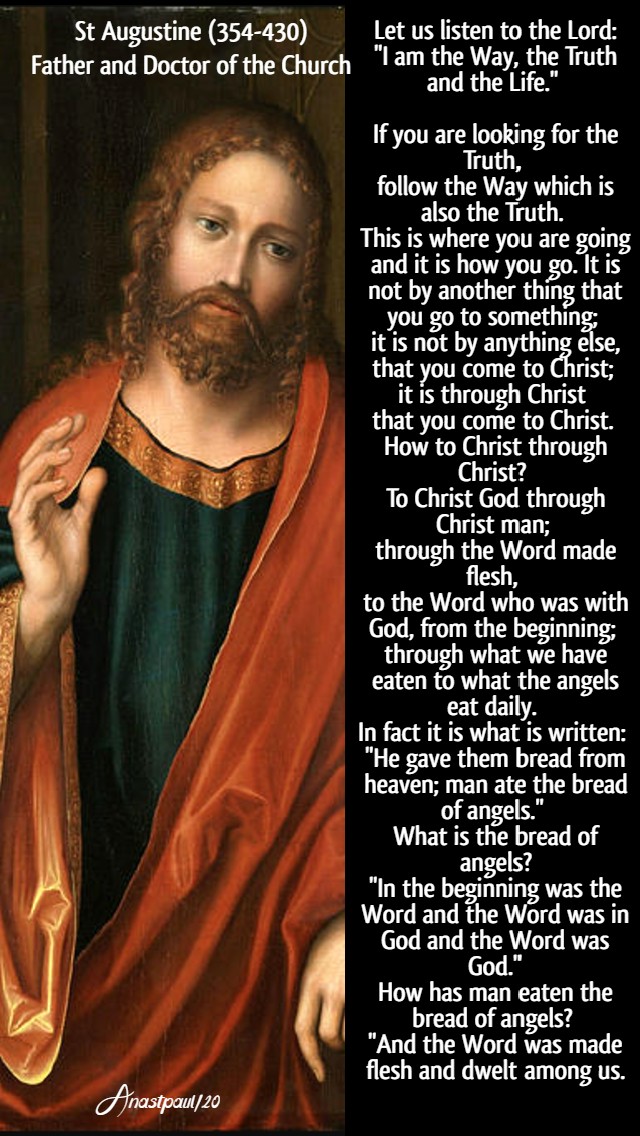
“Let us listen to the Lord: “I am the Way, the Truth and the Life” (Jn 14:6). If you are looking for the Truth, follow the Way which is also the Truth. This is where you are going and it is how you go. It is not by another thing that you go to something; it is not by anything else that you come to Christ; it is through Christ that you come to Christ. How to Christ through Christ? To Christ God through Christ man; through the Word made flesh, to the Word who was with God, from the beginning; through what we have eaten to what the angels eat daily. In fact it is what is written: “He gave them bread from heaven; man ate the bread of angels” (Ps 77[78]:24-25). What is the bread of angels? “In the beginning was the Word and the Word was in God and the Word was God” (Jn 1:1-3). How has man eaten the bread of angels? “And the Word was made flesh and dwelt among us.”
St Augustine (354-430) Father and Doctor of Grace
“Jesus is happy to come with us, as Truth is happy to be spoken, as Life to be lived, as Light to be lit, as Love is to be loved, as Joy to be given, as Peace to be spread.”






















You must be logged in to post a comment.