Quote/s of the Day – 23 October – Readings: Romans 8: 1-11; Psalm 24: 1b-6; Luke 13: 1-9
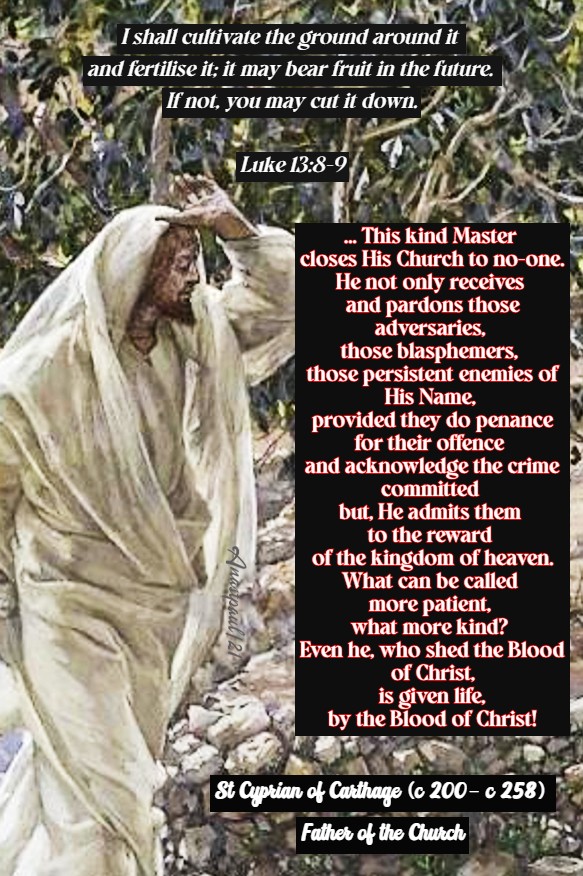
“I shall cultivate the ground around it and fertilise it; it may bear fruit in the future. If not, you may cut it down.”
Luke 13:8-9
“… This kind Master closes His Church to no-one. He not only receives and pardons those adversaries, those blasphemers, those persistent enemies of His Name, provided they do penance for their offence and acknowledge the crime committed but, He admits them to the reward of the kingdom of heaven. What can be called more patient, what more kind? Even he, who shed the Blood of Christ, is given life, by the Blood of Christ.”
St Cyprian of Carthage – (c 200- c 258) Bishop and Martyr, Father of the Church
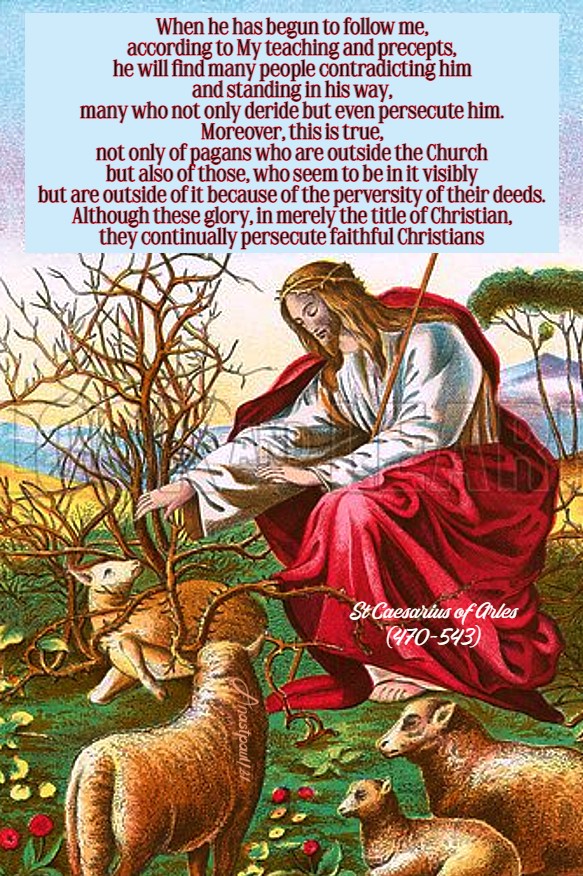
“When he has begun to follow Me, according to My teaching and precepts, he will find many people contradicting him and standing in his way, many who not only deride but even persecute him. Moreover, this is true, not only of pagans who are outside the Church but also of those, who seem to be in it visibly but are outside of it because of the perversity of their deeds. Although these glory, in merely the title of Christian, they continually persecute faithful Christians.”
St Caesarius of Arles (470-543)”
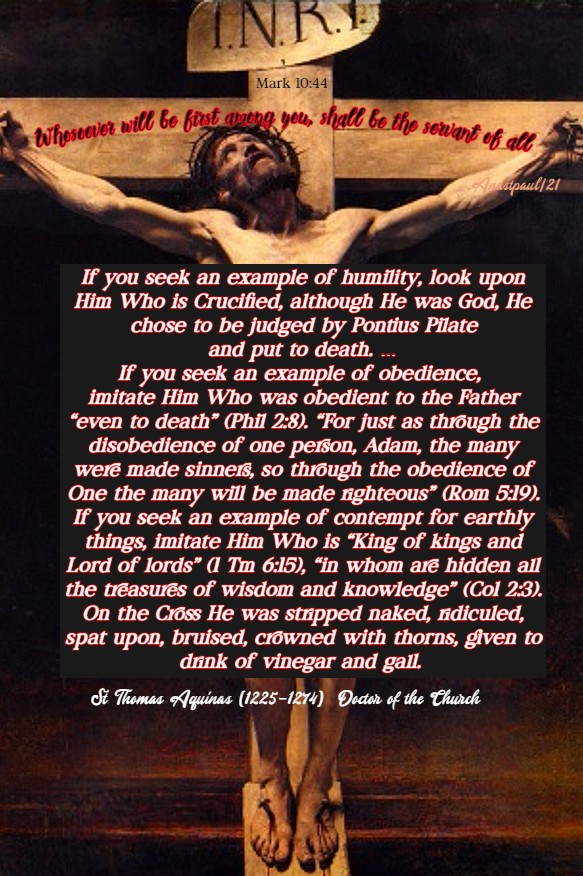
“If you seek an example of humility, look upon Him Who is Crucified, although He was God, He chose to be judged by Pontius Pilate and put to death. … If you seek an example of obedience, imitate Him Who was obedient to the Father “even to death” (Phil 2:8). “For just as through the disobedience of one person, Adam, the many were made sinners, so through the obedience of One, the many will be made righteous” (Rom 5:19). . If you seek an example of contempt for earthly things, imitate Him Who is “King of kings and Lord of lords” (1 Tm 6:15), “in whom are hidden all the treasures of wisdom and knowledge” (Col 2:3). On the Cross He was stripped naked, ridiculed, spat upon, bruised, crowned with thorns, given to drink of vinegar and gall.”
St Thomas Aquinas (1225-1274) Angelic Doctor of the Church
One Minute Reflection – 23 October – “Month of the Holy Rosary” – Readings: Romans 8: 1-11; Psalm 24: 1b-6; Luke 13: 1-9
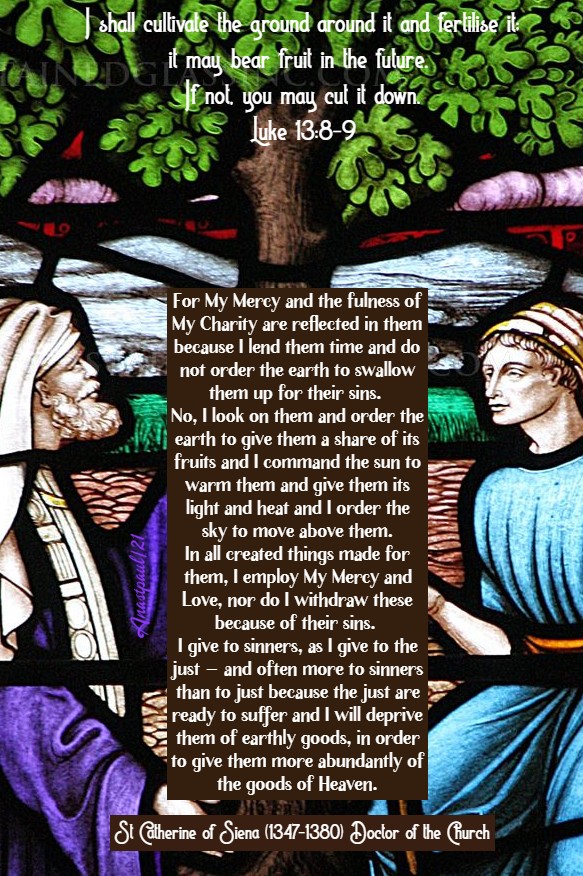
“I shall cultivate the ground around it and fertilise it; it may bear fruit in the future. If not, you may cut it down.” – Luke 13:8-9
REFLECTION – “[Saint Catherine heard God say to her]: “Whether the world wills it or not, it offers Me glory. True, the people of the world do not offer Me glory in the way they ought, by loving Me above all things. But I, for My part ,draw from them glory and praise for My Name.
For My Mercy and the fulness of My Charity are reflected in them because I lend them time and do not order the earth to swallow them up for their sins. No, I look on them and order the earth to give them a share of its fruits and I command the sun to warm them and give them its light and heat and I order the sky to move above them. In all created things made for them, I employ My Mercy and Love, nor do I withdraw these because of their sins. I give to sinners, as I give to the just — and often more to sinners than to just because the just are ready to suffer and I will deprive them of earthly goods, in order to give them more abundantly of the goods of Heaven.
So My Mercy and Love shine on My servants, sometimes in the persecutions the world’s servants inflict on them, proving in them the virtues of patience and charity. By offering constant, humble prayer, My suffering servants turn it into glory and praise for My Name. So, whether the wicked will it or not, they offer Me glory in this, even though their intent is to insult Me..” – St Catherine of Siena (1347-1380) Doctor of the Church, Co-patron of Europe (The gift of conformity to Christ, chap. 50, no. 80 (The Dialogue, Bk. 2).
PRAYER – Heavenly Father, help me to keep my death constantly before my eyes, for this is my final account. I pray You for a holy life that my death may be holy and that I may come to You and live for all eternity with You. May each moment of my life, the good and the trials, bear abundant fruit for love of You. When my hour is come, bid me come to You, Lord. Hear the prayers of your Saints and the Mother of Your divine Son, who lived each moment of her life for the glory of Your Kingdom. We ask this through Christ, our Lord with the Holy Spirit, God forever, amen.
Our Morning Offering – 23 October – “Month of the Holy Rosary” and a Marian Saturday
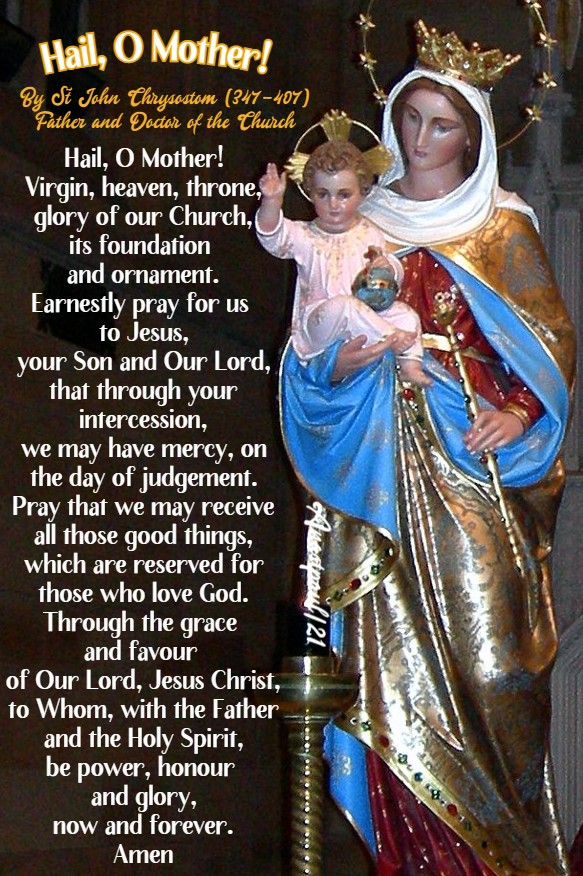
Hail, O Mother! By St John Chrysostom (347-407) Father and Doctor of the Church
Hail, O Mother! Virgin, heaven, throne, glory of our Church, it’s foundation and ornament. Earnestly pray for us to Jesus, your Son and Our Lord, that through your intercession, we may have mercy on the day of judgement. Pray that we may receive, all those good things which are reserved for those who love God. Through the grace and favour of Our Lord, Jesus Christ, to Whom, with the Father and the Holy Spirit, be power, honour and glory, now and forever. Amen
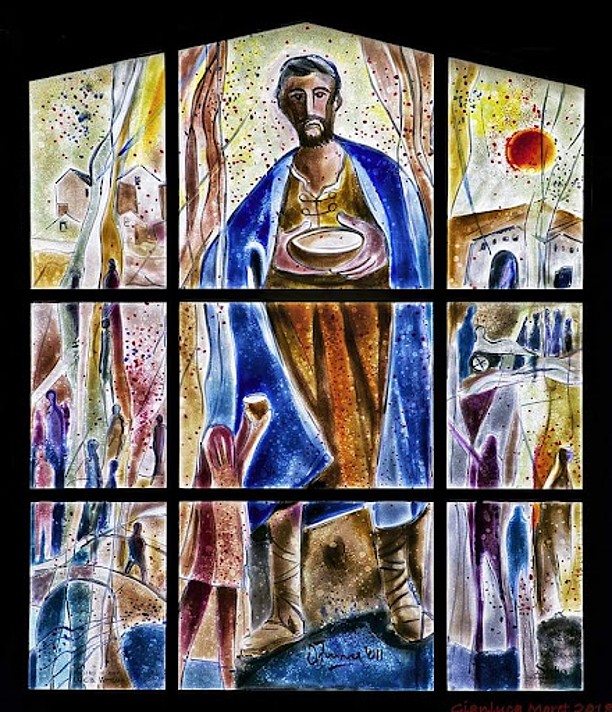
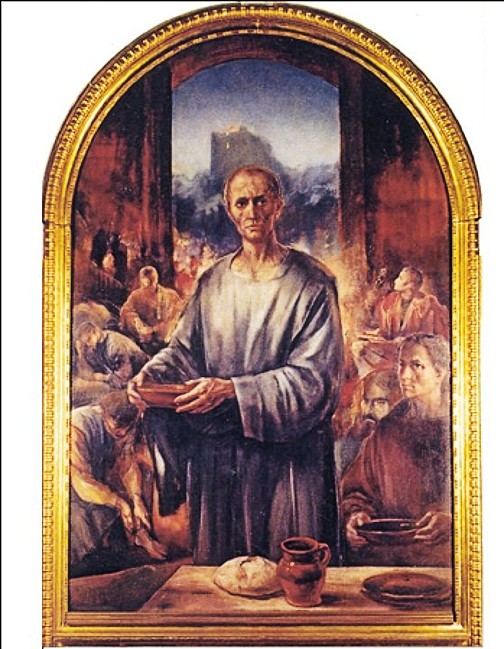
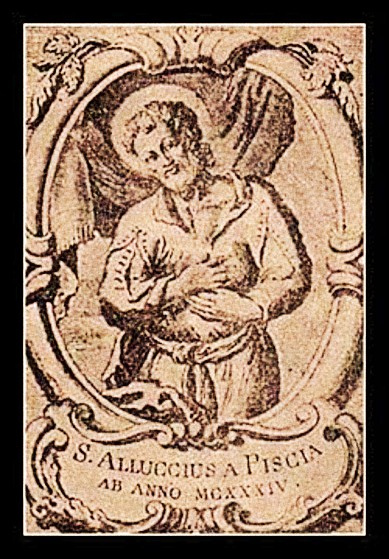
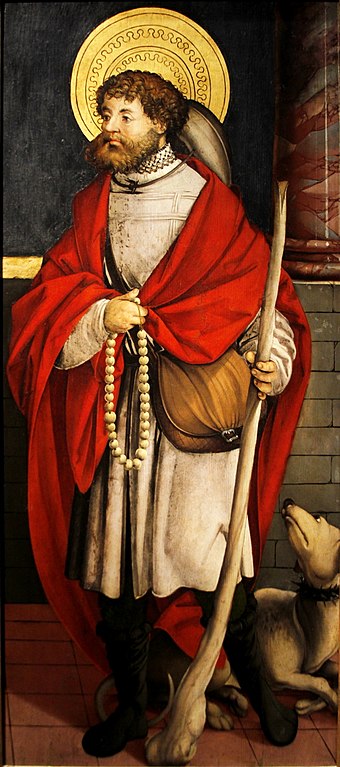
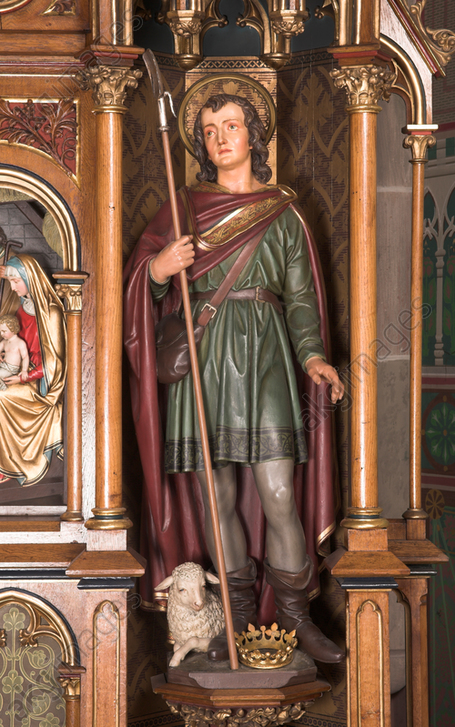
Saint of the Day – 23 October – Saint Allucio of Campugliano (c 1070–1134) Layman, Apostle of the poor and of pilgrims, Penitent, peace-maker., miracle-worker. Born in c 1070 in Campugliano, Italy and died on 23 October 1134 in Campugliano, Italy of natural causes. Patronage – Diocese of Pescia, Italy, (proclaimed in 2000 by the Congregation for the Causes of Saints).
Allucio was born in Valdinievole near Pescia to Omodeo, a prosperous rural landowner. He spent his youth shepherding the family’s flock before devoting his life to acts of charity.
His journey of assisting pilgrims and travellers began with the restoration of the Hospice of Campugliano, which was practically in ruins. It was entrusted to his industrious piety. Allucio brought the building back to an admirable Shelter, in which work he was assisted by some comrades, who were rich like himself, in the zeal of charity. These friends formed the core of the Lay Apostalate which was later called Brothers of SaintAllucio.
To better assist the poor and needy, the young Allucio founded another hospice on Monte Albano. He created a third one near the bank of the Arno, over which he even built a bridge, for the convenience of pilgrims. The latter was not an easy ndertaking, not only for the technical problems but because Allucio had to convince and appease the local ferryman, who earned hefty earnings by carrying travellers from one bank to the other.
According to tradition, miracles multiplied in great numbers around the benefactor of the poor. For this reason, real diplomatic missions were delegated to him in distant Cities, which Allucio carried out successfully, managing to pacify them, for example, the two rival Cities of Ravenna and Faenza came at last to peace through his negotiations.
Among the miraculous interventions handed down by devotion, the most unusual was that of the man whose eyes had been gouged out, as punishment for some crime committed, according to the so-called “retaliation law,” common in the Middle Ages. Not out of contempt for justice but out of pity for the blinded, even if guilty, Allucio put his eyes back in the hollow sockets of the condemned, restoring his sight.
He built two Churches, a bridge over the Arno, three Shelters and Hospices for pilgrims and other travellers, including one on his own properties at Campigliano near Uzzano and others in mountain passes and river crossings. He was a generous almsgiver and carer of the sick and the poor. In all this work, the “Brothers of Saint Allucio,” grew in numbers and in their charitable works and became an powerful Apostolate.
As active as he was in doing good, he was equally strict with himself. He never ate meat, nor cheese, nor eggs. He fasted three times a week. And for seven consecutive Lents, he touched no food at all.
He died at Valdinievole on 23 October 1134 calm and active until the last moment. He was immediately made the subject of a lively popular cult.
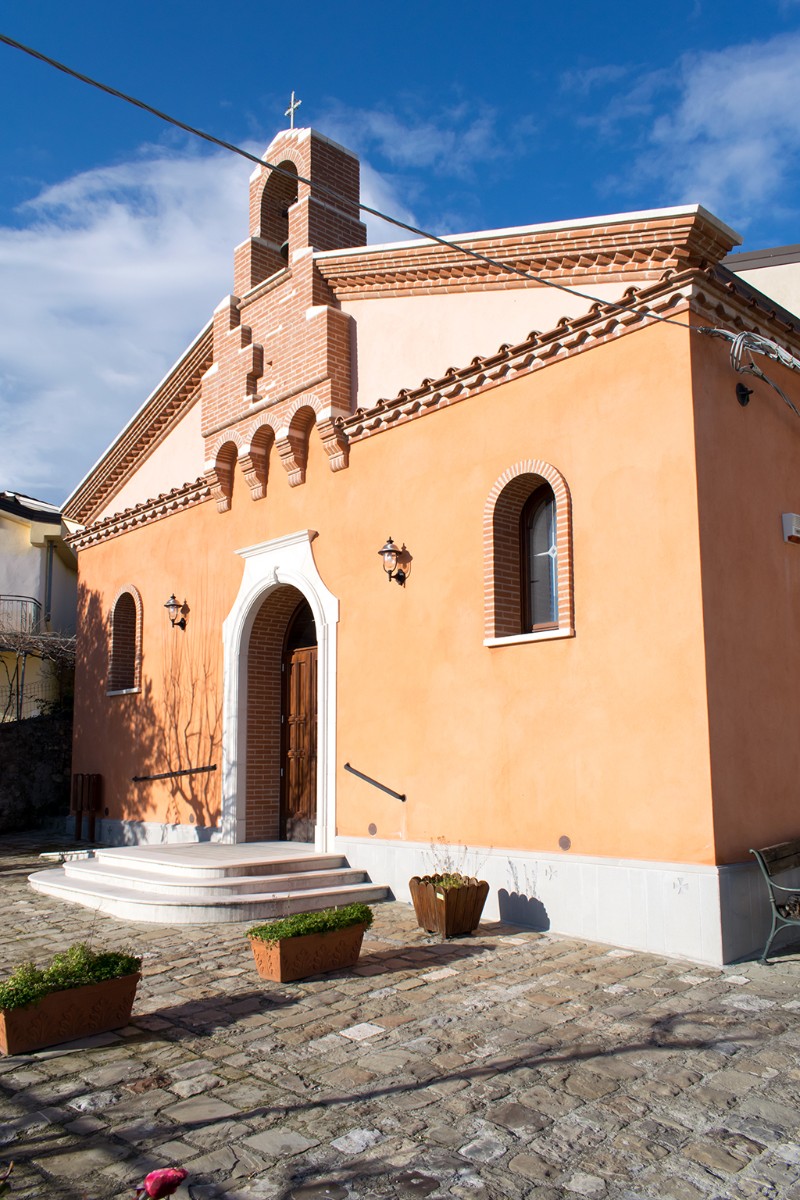
His body was interred by the Brothers in the Church of Saint Luke in Campugliano. In 1344, his relics were enshrined in a stone urn at the High Altar of the Cathdral of Campugliano by Dominican Brother Paul Lapi by order of Bishop Guglielmo Dulcini of Lucca, Italy. In 1792, the relics were moved to the Chapel of Our Lady of the Rosary, Cathedral of Pescia and finally, in 1934, they were moved to the new Chapel built in his honour and dedicated to Saint Allucio in Campugliano.
He was Canonised on 23 October 1182 by the Bishop of Lucca, Italy on behalf of the Pope.
When Allucio’s relics were being translated in 1344, a Vita was discovered stored in the reliquary., which contained a record of the many miracles granted at the intercession of the Saint.
Feast of the Most Holy Redeemer – The Feast of the Most Holy Redeemer was a Catholic liturgical feast. It is celebrated in Venice as the Festa del Redentore. It is also celebrated by the Redemptorists and was celebrated in the City of Rome. The feast is found only in the special calendar of some Diocese and religious Orders and is celebrated with proper Mass and Office either on the third Sunday of July or on 23 October. https://anastpaul.com/2019/10/23/the-feast-of-the-most-holy-redeemer-23-october/
St John of Capistrano OFM (1386-1456) “The Soldier Saint.” Franciscan Friar and Priest, Confessor and Preacher. Famous as a preacher, theologian and inquisitor, trained lawyer, he earned himself the nickname ‘the Soldier Saint’ when in 1456 at age 70 he led a crusade against the invading Ottoman Empire at the siege of Belgrade with the Hungarian military commander John Hunyadi, called the Athleta Christi (“Christ’s Champion”) by Pope Pius II. (Optional Memorial) St John’s Story here: https://anastpaul.wordpress.com/2017/10/23/saint-of-the-day-23-october-st-john-capistrano-ofm-1386-1456-the-soldier-saint/
Bl John Buoni St John of Syracuse St Oda of Aquitaine St Phaolô Tong Viet Buong St Romanus of Rouen St Severinus of Cologne St Syra of Faremoutiers St Theodoret of Antioch Bl Thomas Thwing St Verus of Salerno — Martyrs of Cadiz – 2 saints Germanus Servandus Martyrs of Hadrianopolis – 2 saints Dorotheus Severus Martyrs of Nicaea – 3 saints Euerotas Socrates Theodota
Martyrs of Valenciennes – 6 beati: A group of Urusuline and Briggittine nuns murdered together in the anti-Christian excesses of the French Revolution. They were guillotined on 23 October 1794 in Valenciennes, Nord, France and Beatified on 13 June 1920 by Pope Benedict XV. • Anne-Joseph Leroux • Clotilde-Joseph Paillot • Jeanne-Louise Barré • Marie-Augustine Erraux • Marie-Liévine Lacroix • Marie-Marguerite-Joseph Leroux
Martyred in the Spanish Civil War including Martyrs of Manzanares (7 beati): • Agapit Gorgues Manresa • Agustín Nogal Tobar • Andrés Navarro Sierra • César Elexgaray Otazua • Cristóbal González Carcedo • Dorinda Sotelo Rodríguez • Eduardo Valverde Rodríguez • Felipe Basauri Altube • José María Fernández Sánchez • Juan Nuñez Orcajo • Leonardo Olivera Buera • Manuel Navarro Martínez • Roque Guillén Garcés • Toribia Marticorena Sola
Thought for the Day – 22 October – Meditations with Antonio Cardinal Bacci (1881-1971)
“Month of the Holy Rosary” Our Daily Bread
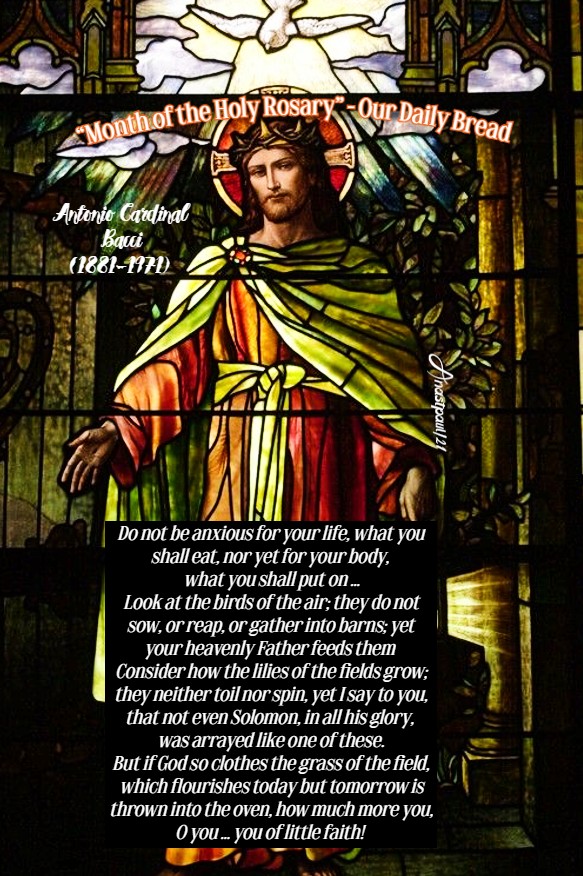
“We can find this teaching which is contained in these words of the “Our Father” in another section of the Gospel, where Jesus tells us that not to ask for riches and not to hoard goods for the future but, to pray and work from day to day, for our daily needs.
“ Do not be anxious for your life, what you shall eat, nor yet for your body, what you shall put on … Look at the birds of the air; they do not sow, or reap, or gather into barns; yet your heavenly Father feeds them … Consider how the lilies of the fields grow; they neither toil nor spin, yet I say to you, that not even Solomon, in all his glory, was arrayed like one of these. But if God so clothes the grass of the field, which flourishes today but tomorrow is thrown into the oven, how much more you, O you … you of little faith! … Therefore, do not be anxious about tomorrow; for tomorrow will have anxieties of its own. Sufficient for the day is its own trouble” (Cf Mt 6:25-34).“
“Let Your Name, not mine, be praised. Let Your Work, not mine, be magnified. Let Your Holy Name be blessed but let no human praise be given to me. You are my glory. You are the joy of my heart. In You I will glory and rejoice all the day and for myself I will glory in nothing but my infirmities. … ”
Thomas `a Kempis CRSA (1380-1471)
The Imitation of Christ – Book 3 Chapter 40
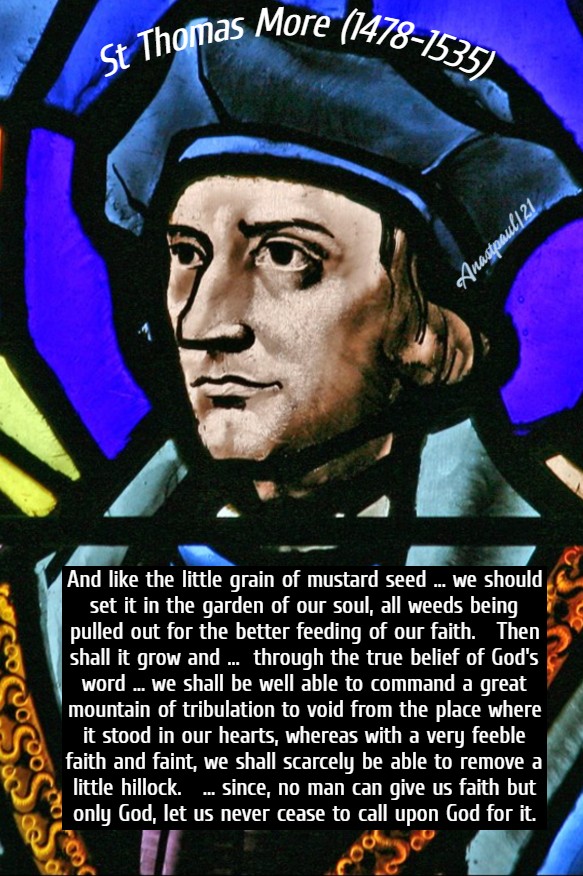
“And like the little grain of mustard seed … we should set it in the garden of our soul, all weeds being pulled out for the better feeding of our faith. Then shall it grow and … through the true belief of God’s word … we shall be well able to command a great mountain of tribulation to void from the place where it stood in our hearts, whereas with a very feeble faith and faint, we shall scarcely be able to remove a little hillock.”
St Thomas More (1478-1535)
“Never listen to those, who are speaking evil of another and never say anything evil of anyone, excepting of yourself and when you take pleasure in doing this, you will be advancing rapidly.”
St Teresa of Avila (1515-1582) Doctor of the Church
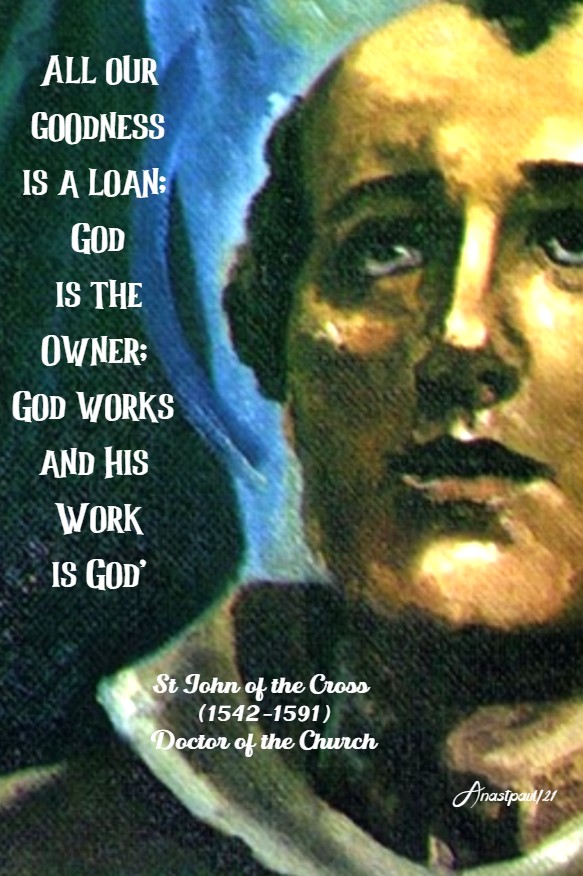
“All our goodness is a loan; God is the owner; God works and His work is God.”
St John of the Cross (1542-1591) Doctor of the Church
One Minute Reflection – 22 October – “Month of the Holy Rosary”– Readings: Romans 7: 18-25a; Psalm 119: 66, 68, 76, 77, 93, 94; Luke 12: 54-59
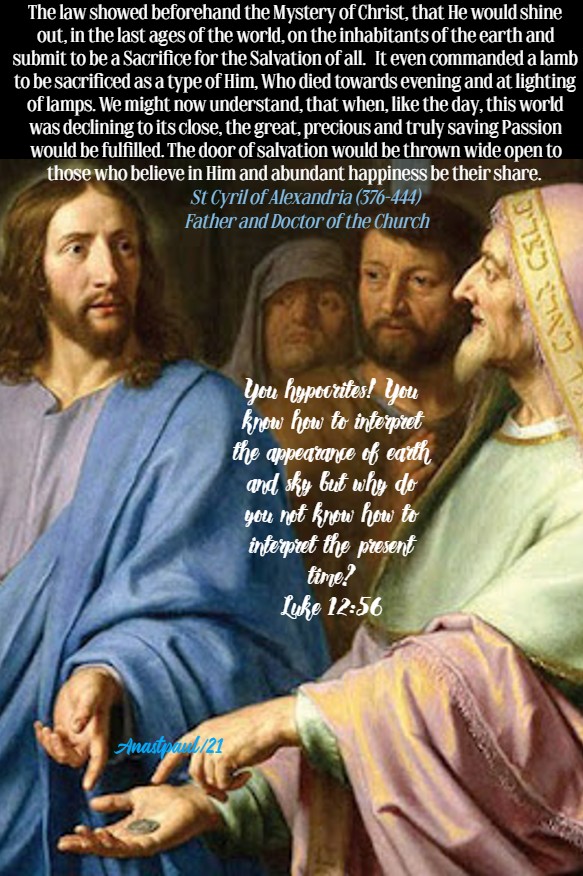
“You hypocrites! You know how to interpret the appearance of earth and sky but why do you not know how to interpret the present time?”… Luke 12:56
REFLECTION – “People focus their attention on things of this kind. From long observation and practice, they tell beforehand when rain will fall or violent winds will blow. One especially sees that sailors are very skillful in this matter. He says that it would be suitable for those, who can calculate things of this sort and may foretell storms that are about to happen, to focus the penetrating eyes of the mind also on important matters. What are these?
The law showed beforehand the Mystery of Christ, that He would shine out, in the last ages of the world, on the inhabitants of the earth and submit to be a Sacrifice for the Salvation of all. It even commanded a lamb to be sacrificed as a type of Him, Who died towards evening and at lighting of lamps. We might now understand, that when, like the day, this world was declining to its close, the great, precious and truly saving Passion would be fulfilled. The door of salvation would be thrown wide open to those who believe in Him and abundant happiness be their share. In the Song of Songs, we also find Christ calling to the bride described there. The bride personally represents the Church, in these words, “Arise, come, my neighbour, my beautiful dove. Look, the winter is past and the rain is gone. It has passed away. The flowers appear on the ground. The time of the pruning has come.” As I said, a certain springlike calm was about to arise, for those who believe in Him.” – St Cyril of Alexandria (376-444) Bishop of Alexandria, Father and Doctor (Commentary on Luke, Homily 95)
PRAYER – Lord God, You fill us with Your grace and teach us true faith. Strengthen in our hearts that faith that no trials may quench the fire, that we may seek Your Face in every moment and accept AND LIVE all of Your will. Send us Your Spirit to keep the fire blazing. By the inspiration and prayers of the Blessed Virgin, may we grow in sanctity and may the humble love and intercession of Mary Mother of our faith, be our succour. Through Jesus Your Son our Lord, with the Holy Spirit, God forever, amen.
Our Morning Offering – 22 October – Prayer of a Martyr, St Thomas More (1478-1535)
The prayer below, was written by Saint Thomas More while he was imprisoned in the Tower of London, awaiting execution by King Henry VIII.
Give Me Thy Grace, Good Lord! A Prayer of Hope By St Thomas More (1478-1535)
Give me Thy grace, good Lord. To set the world at naught. To set the mind firmly on Thee and not to hang upon the words of men’s mouths. To be content to be solitary. Not to long for worldly pleasures. Little by little, utterly to cast off the world and rid my mind of all its business. Not to long to hear of earthly things but that the hearing of worldly fancies, may be displeasing to me. Gladly to be thinking of God, piteously to call for His help. To lean into the comfort of God. Busily to labour to love Him. To know mine own vileness and wretchedness. To humble myself under the mighty Hand of God. To bewail my sins past, for the purging of them, patiently to suffer adversity. Gladly to bear my purgatory here. To be joyful in tribulations. To walk the narrow way that leads to life. To bear the Cross with Christ. To have the last thing in remembrance. To have ever before mine eyes, my death that is ever at hand. To make death no stranger to me. To foresee and consider, the everlasting fire of Hell. To pray for pardon before the Judge come. To have continually in mind, the Passion that Christ suffered for me. For His benefits, unceasingly to give Him thanks. To buy the time again, that I before have lost. To abstain from vain conversations. To shun foolish mirth and gladness. To cut off unnecessary recreations. Of worldly substance, friends, liberty, life and all, to set the loss at naught, for the winning of Christ. To think my worst enemies, my best friends, for the brethren of Joseph could never have done him so much good with their love and favour, as they did him, with their malice and hatred. These minds are more to be desired of every man, than all the treasures of all the princes and kings, Christian and heathen, were it gathered and laid together, all in one heap. Amen
Saint of the Day – 22 October – Blessed Lucia Bartolini Rucellai (Died 1520) Widow, Tertiary of the Order of Preachers, Penitent, Prioress, Born in the 15th Century in Florence as Camila Bartolini and died in 1520 of natural causes.
Lucia was born in Florence, Italy, in the 15th century; She was a member of the noble Bartolini family and was Baptised with the name of Camila. When she was a teenager, she married Rodolfo Rucellai and went to live in the splendid Albertino Palace.
At thirty, however, Savonarola’s words took her out of worldly concerns, enkindling i her the fire of the deepest and most painful spirituality. Even Rudolfo, her husband, was shaken by the prophetic prayers of the preacher and decided, somewhat hastily, to part from his wife, who had no children, to wear the Dominican habit at San Marco.
Camila accepted her husband’s decision and became a tertiary of Saint Dominic. After a few months, Rodolfo Rucellai, more impulsive but less strong than his wife, got tired of the religious state and wanted to return to the world, trying to convince his wife to do the same. But then she was the one who objected with unexpected tenacity and indeed, Lucia, after painful work, had found in the new state, a spiritual wealth in comparison with which, all the flattery of the world seemed empty and doomed.
Rodolfo died shortly after and Camila became a nun with the name of Lucia, she remained in the Convent of the Dominican tertiaries, becoming the promoter of a new foundation, dedicated to Saint Catherine of Siena . After the tragic end of Savonarola, hanged and burned as a heretic, in the Piazza della Signoria, in May 1498, Lucia Bartolini was a wise and rigorous guide to the Florentine Convent of Santa Catalina, as Prioress, obtaining permission for her tertiaries to issue three vows and then wear the habit of the nuns of the Second Order.
Lucia was a mortified, penitent and very strict with herself,. She prayed with such fervour that, it was said, the Convent of Santa Catalina appeared crowned with flames, at the times when she was in prayer. And as soon as he died, in 1520, after a serenely accepted illness, her halo as a Blessed came to embellish the glory of the very wealthy Rucellai family, showering them with the glory of Heavenly riches.
Notre-Dame de Talant / Our Lady of Talant, near Dijon, France (also known as the Virgin of St Luke(1443) – 22 October:
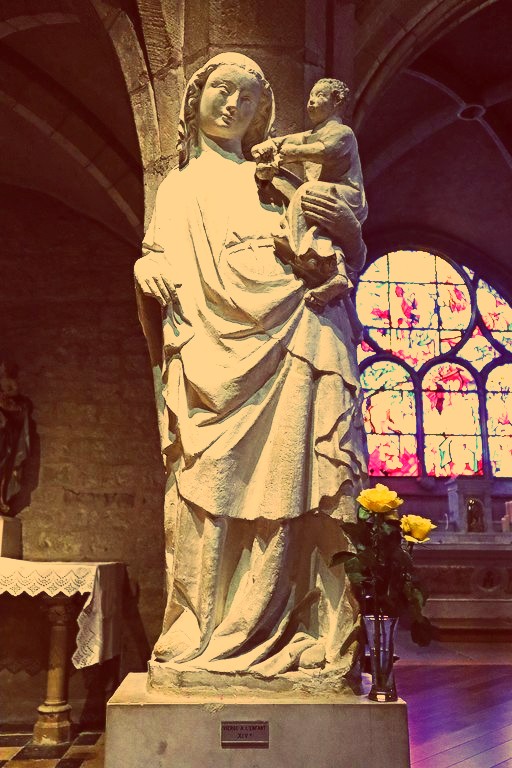
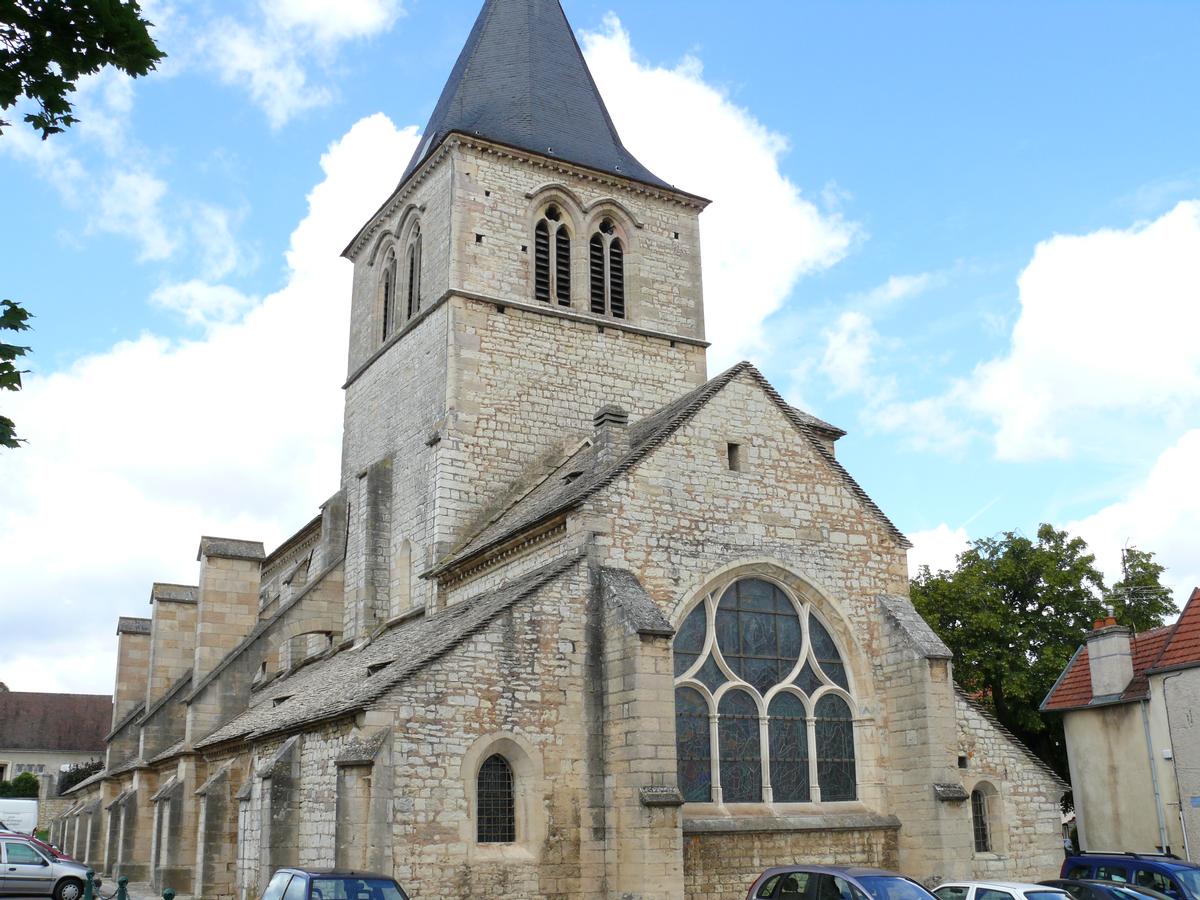
Until the twelfth Century, the French “Mons de Talant,” located at the gates of Dijon and belonging to the Estate of the Abbey of Saint-Benigne, was a completely uninhabited place. Considered as if accursed by some, the grounds were given a wide berth and altogether avoided. To others, possessing a more lively imagination, the location was said to be frequented by fairies. In 1208, the Duke of Burgundy, Eudes III, undertook the construction of the Fortress of Talant in order to ensure a safer shelter of its treasures and archives, then in his Ducal Palace of Dijon. He founded north of the castle, a new fortified City and a Priory for some Monks of Saint Benedict. A Church, begun at the same time as the other works, was one of the earliest Gothic Churches in the Duchy of Burgundy. The finished enclosure of the City was 1110 meters long and flanked by 33 towers. Duke Eudes III welcomed, particularly all the serfs who fled the oppression of their lord. Many peasants, attracted by the notion of freedom and the ability to work freed from all hindrance, began to arrive in droves. In 1216, the Duke granted the inhabitants the right to administer themselves by promulgating “the Charter of Commune,” exempting them from taxation and military service. So many people were attracted to Talant that it became necessary to enlarge the Church. A bell tower was also added but the extra weight was too great and the walls began to bow outward. External buttresses were added in the 15th century to solve the problem. John the Fearless, eldest son of Philip the Bold, returning from the Crusade in 1396, brought back as a trophy the Statue “Virgin of St Luke” that he offered to Talant. The Statue of the Virgin is exposed in the Church and in 1443, the Bishop of Langres, Charles de Poitiers, Consecrated the Church to the Mother of God. During the Eighth War of Religion, in 1585, the partisans of Guise seized the fortress by cunning. After its return to the hands of the King in 1598, the decision was made to demolish the castle and the ramparts of the City. The work was finished in 6 months and Talant was reduced to the condition of a simple village. The Church of Notre-Dame remains, however and has been classified as an historic monument since 20 July 1908. The Statue of the Virgin of St Luke, can still be seen there.
St Abericus Marcellus St Alodia of Huesca St Apollo of Bawit St Benedict of Macerac St Bertharius of Monte Cassino St Cordula
St Donatus of Fiesole (Died 874) Bishop of Fiesole, Irish Nobleman, Monk, Priest, Poet, Confessor, Writer, Scholar, Professor, Adviser to Emperors Louis the Pious and Lothair I, Founder of San Martino a Mensola Abbey and leader of two military expeditions against the Saracens. His Life: https://anastpaul.com/2020/10/22/saint-of-the-day-22-october-st-donatus-of-fiesole-died-874/
Bl Esclaramunda of Majorca St Hermes of Adrianople St Ingbert St Leothade of Auch Blessed Lucia Bartolini Rucellai (Died 1520) St Lupenzius St Mark of Jerusalem
St Maroveus of Precipiano St Mellon St Moderan of Rennes St Nepotian of Clermont St Nunctus of Mérida St Nunilo of Huesca St Philip of Adrianople St Philip of Fermo St Rufus of Egypt St Symmachus of Capua St Valerius of Langres St Verecundus of Verona — Martyrs of Heraclea – 4 saints: A group of four clerics in Heraclea (modern Marmara Ereglisi, Turkey) who were arrested in the persecutions of Diocletian. They were imprisoned, abused and ordered to turn over all the scriptures that they had hidden from authorities; they refused and were executed together. Martyrs. – Eusebius, Hermes, Philip and Severus. They were burned at the stake in 304 in Adrianople (modern Edirne, Turkey).
Martyrs of Adianople: • Blessed Alexander • Blessed Anna • Blessed Elisabeth • Blessed Glyceria • Blessed Heraclius • Blessed Theodota
Martyred in the Spanish Civil War: • Blessed Álvaro Ibáñez Lázaro • Blessed Andrés Zarraquino Herrero • Blessed Estanislao García Obeso • Blessed Germán Caballero Atienza • Blessed José Menéndez García • Blessed Josep Casas Lluch • Blessed Luis Minguel Ferrer • Blessed Pedro Lorente Vicente • Blessed Victoriano Ibañez Alonso
Thought for the Day – 20 October – Meditations with Antonio Cardinal Bacci (1881-1971)
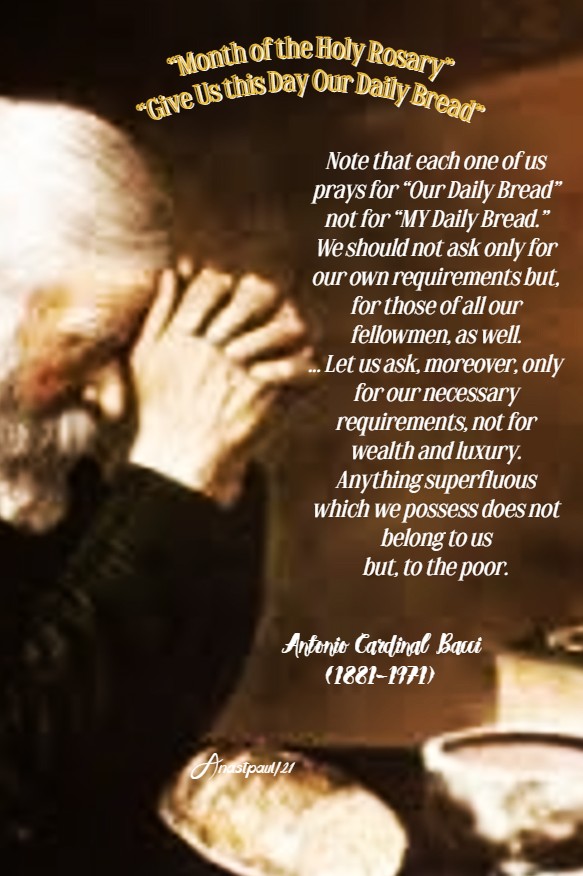
“Month of the Holy Rosary” “Give Us this Day Our Daily Bread”
“Note that each one of us prays for “Our Daily Bread” not for “MY Daily Bread.” We should not ask only for our own requirements but, for those of all our fellowmen, as well.
There are many poverty-stricken people for whom bread is very scarce. We should pray especially for them and should be prepared to share our bread with those who have none. Both charity and justice demand this of us. Let us ask, moreover, only for our necessary requirements, not for wealth and luxury. Anything superfluous which we possess does not belong to us but, to the poor. “Give that which remains,” the Gospel commands, “as alms” (Lk 11:41). Let us remember that, whether we are rich or poor, we are all one great family. Our love for one another should not be merely theoretical but practical, otherwise we are not sincere Christians!”
Quote/s of the Day – 21 October – Readings: Romans 6: 19-23; Psalm 1: 1-4 and 6; Luke 12: 49-53
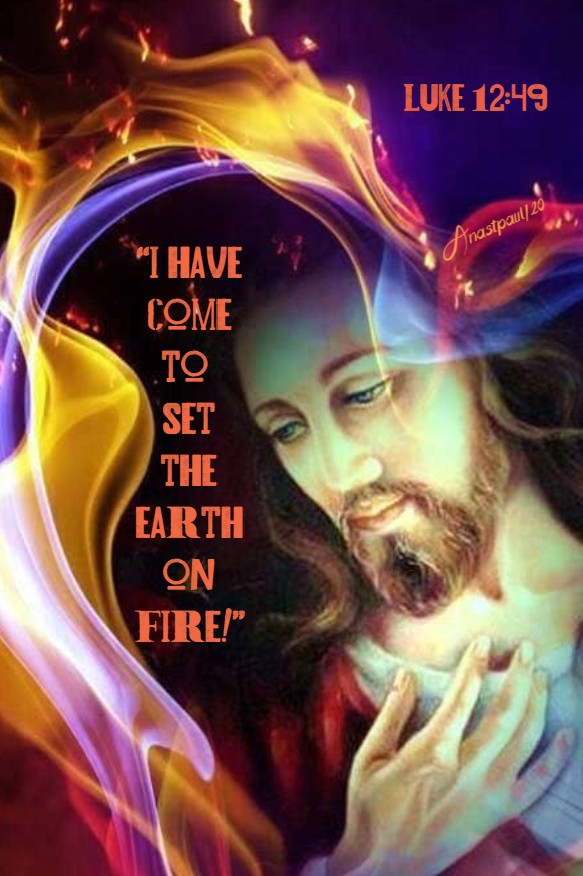
“I have come to set the earth on fire!”
Luke 12:49
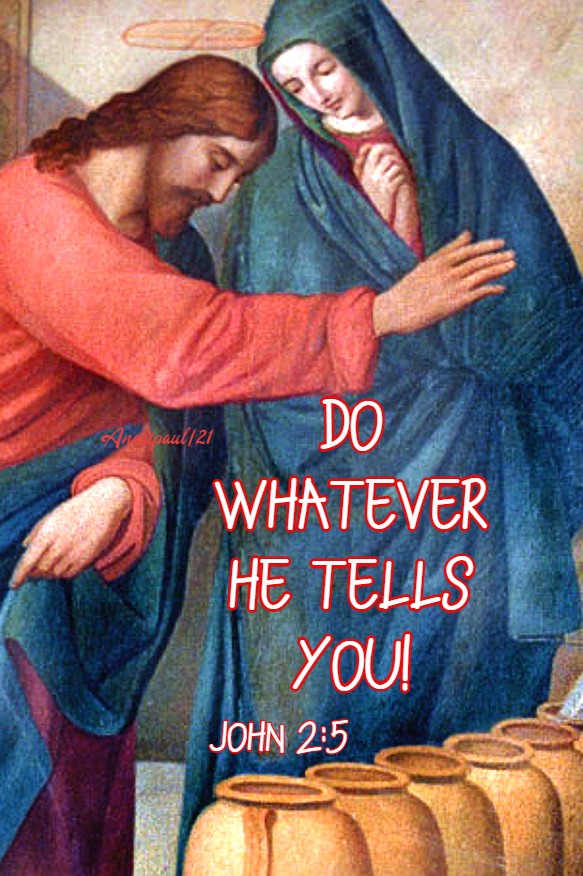
“Do whatever he tells you.”
John 2:5
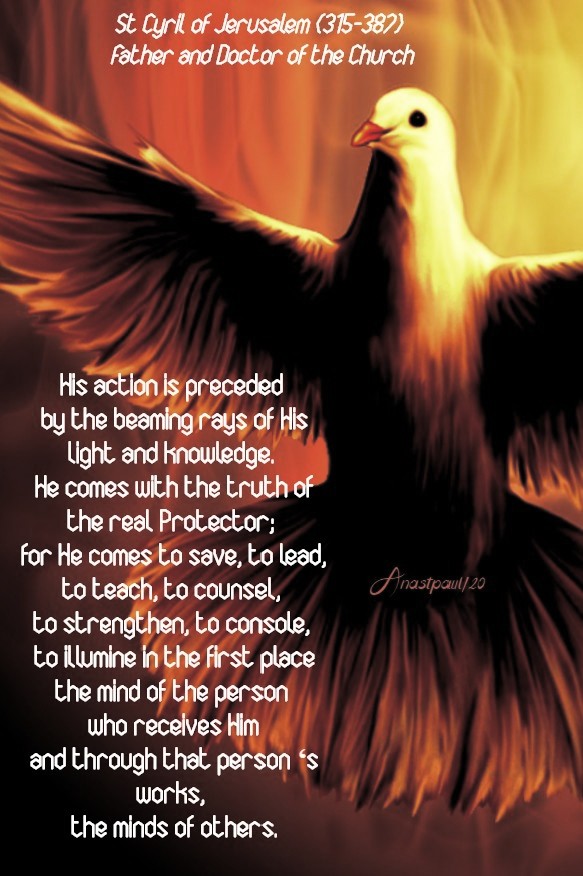
“His action is preceded by the beaming rays of His light and knowledge. He comes with the truth of the real Protector; for He comes to save, to lead, to teach, to counsel, to strengthen, to console, to illumine in the first place the mind of the person who receives Him and through that person‘s works, the minds of others.”
St Cyril of Jerusalem (315-387) Father and Doctor of the Church
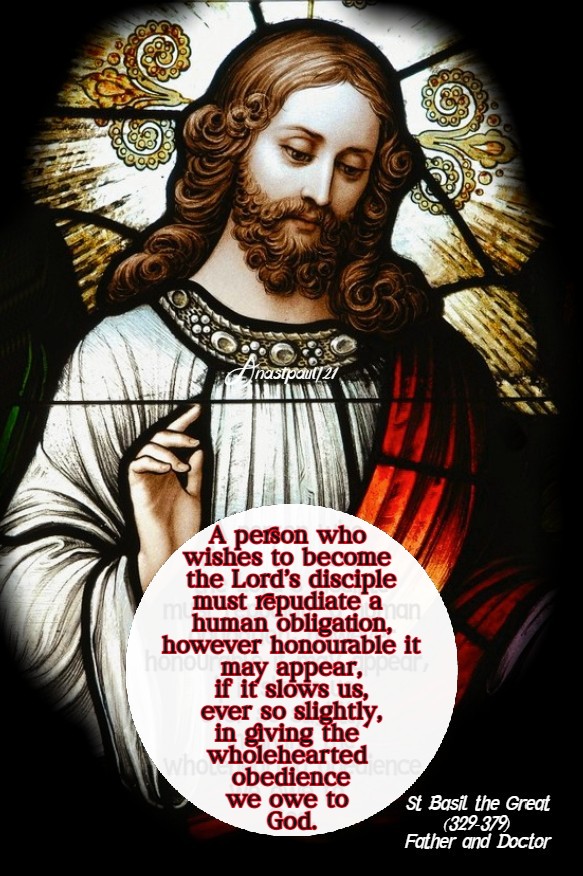
“A person who wishes to become the Lord’s disciple must repudiate a human obligation, however honourable it may appear, if it slows us, ever so slightly, in giving the wholehearted obedience we owe to God.”
St Basil the Great (329-379) Father and Doctor of the Church
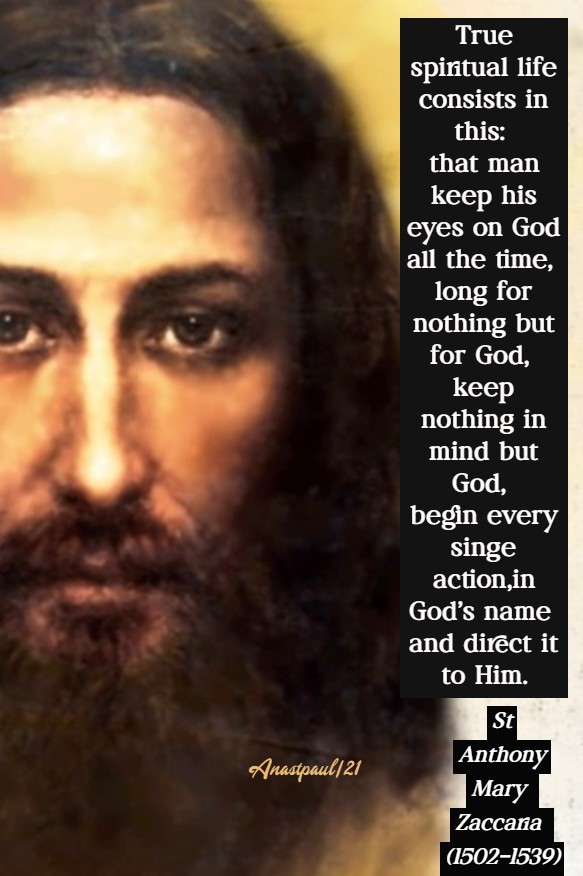
“ True spiritual life consists in this: that man keep his eyes on God all the time, long for nothing but for God, keep nothing in mind but God, begin every single action,in God’s name and direct it to Him.”
St Anthony Mary Zaccaria (1502-1539)
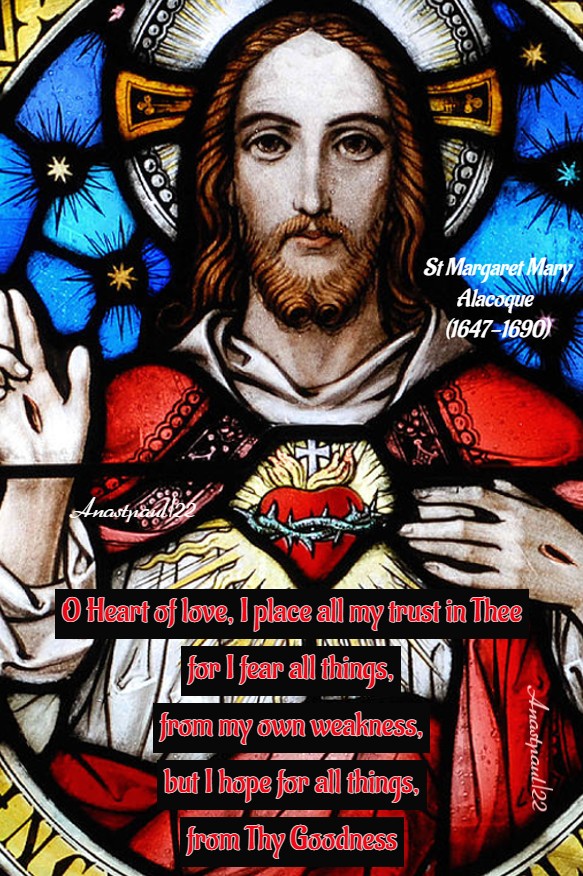
“O Heart of love, I put all my trust in Thee, for I fear all things, from my own weakness, but I hope for all things, from Thy Goodness.”
One Minute Reflection – 21 October – – “Month of the Most Holy Rosary” – Readings: Romans 6: 19-23; Psalm 1: 1-4 and 6; Luke 12: 49-53
“I have come to set the earth on fire and how I wish it were already kindled!” – Luke 12:49
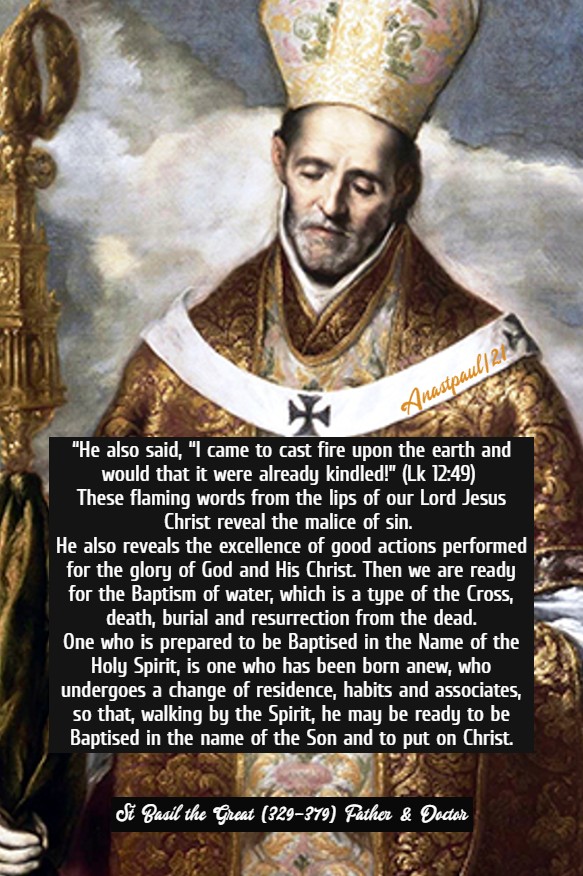
REFLECTIUON – “He also said, “I came to cast fire upon the earth and would that it were already kindled!” These flaming words from the lips of our Lord Jesus Christ reveal the malice of sin. He also reveals the excellence of good actions performed for the glory of God and His Christ. Then we are ready for the Baptism of water, which is a type of the Cross, death, burial and resurrection from the dead.
One who is prepared to be Baptised in the Name of the Holy Spirit, is one who has been born anew, who undergoes a change of residence, habits and associates, so that, walking by the Spirit, he may be ready to be Baptised in the name of the Son and to put on Christ.” – St Basil the Great (329-379) Bishop of Caesarea, Father & Doctor one of the original 4 Doctors of the Eas(Concerning Baptism)
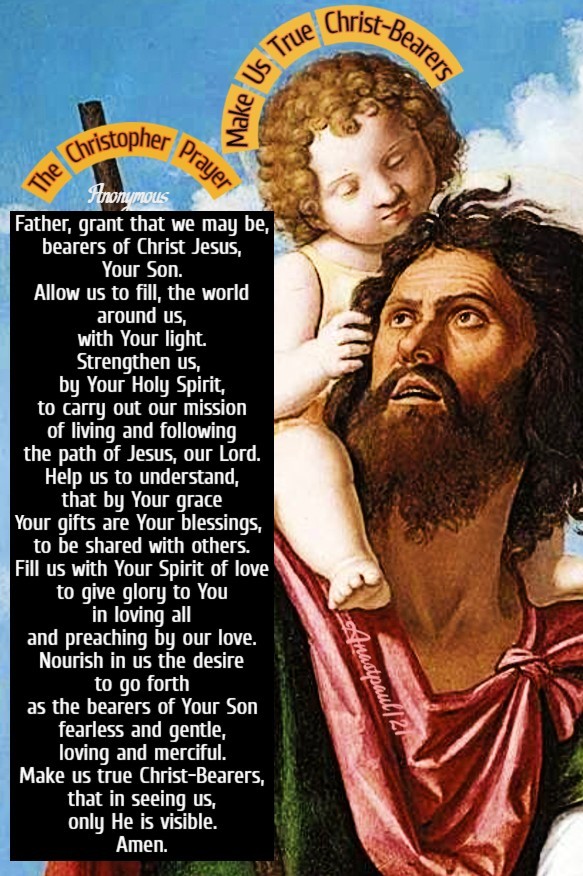
PRAYER – Father, grant that we may be, bearers of Christ Jesus, Your Son. Allow us to fill with Your light the world around us. Strengthen us by Your Holy Spirit to carry out our mission of living and following the path of Jesus, our Lord. Help us to understand, that by Your grace Your gifts are Your blessings, to be shared with others. Fill us with Your Spirit of love to give glory to You in loving all and preaching by our love. Nourish in us the desire to go forth as the bearers of Your Son fearless and gentle, loving and merciful. Make us true Christ-bearers, that in seeing us only He is visible. Amen (The Christopher Prayer – Unknown)
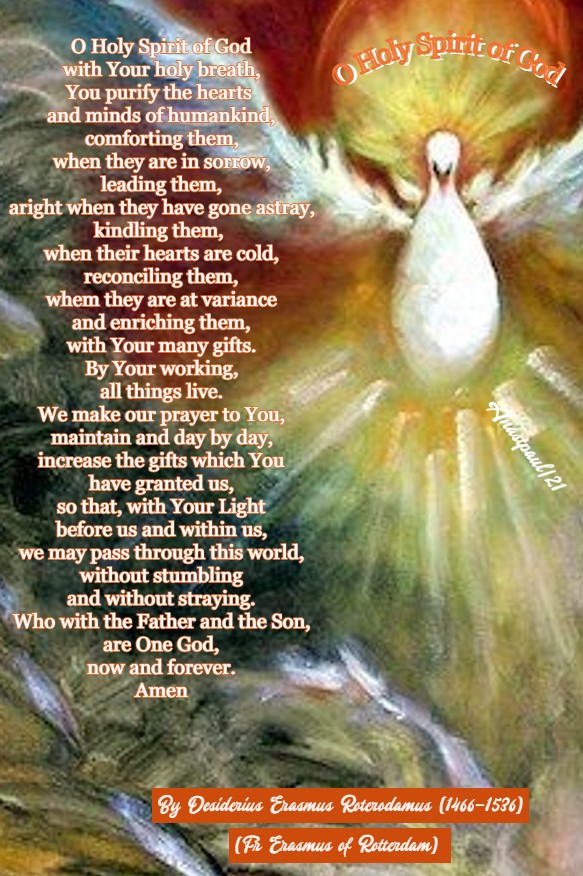
O Holy Spirit of God By Desiderius Erasmus Roterodamus (1466-1536) (Fr Erasmus of Rotterdam)
O Holy Spirit of God with Your holy breath, You purify the hearts and minds of humankind, comforting them, when they are in sorrow, leading them, aright when they have gone astray, kindling them, when their hearts are cold, reconciling them, whem they are at variance and enriching them, with Your many gifts. By Your working, all things live. We make our prayer to You, maintain and day by day, increase the gifts which You have granted us, so that with Your Light before us and within us, we may pass through this world, without stumbling and without straying. Who with the Father and the Son, are One God, now and forever. Amen
Fr Erasmus of Rotterdam was a Dutch philosopher and Catholic theologian who is considered one of the greatest scholars of the northern Renaissance. As a Catholic Priest, he was an important figure in classical scholarship who wrote in a pure Latin style.
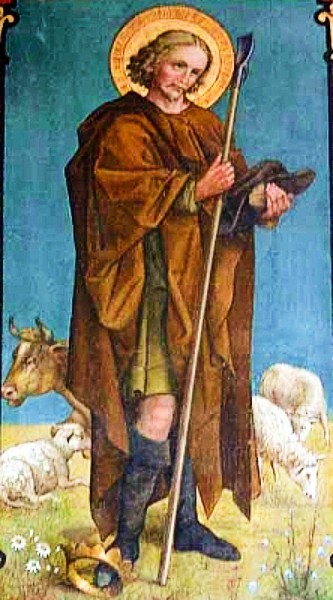
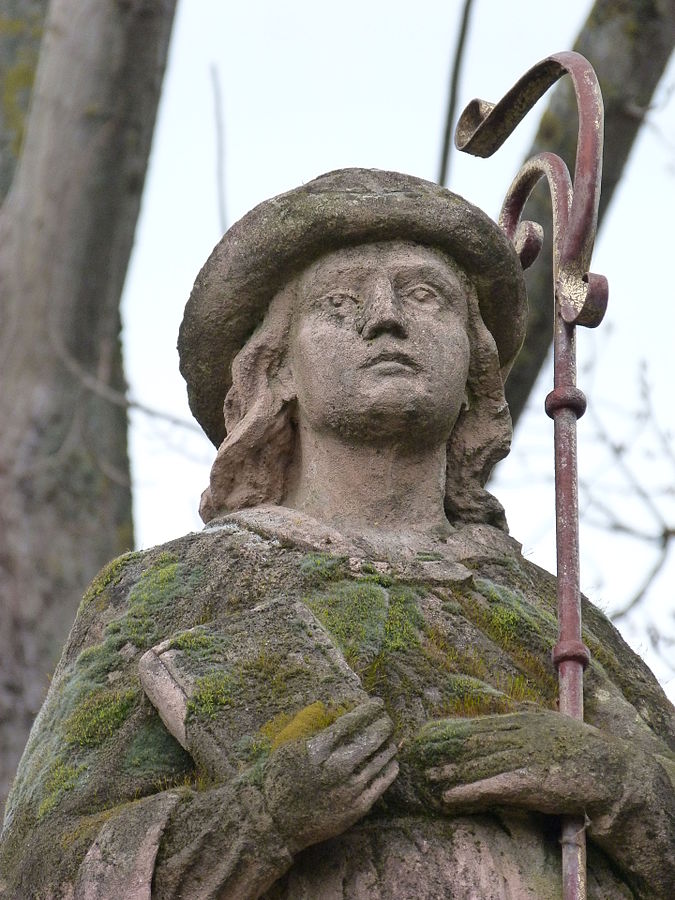
Saint of the Day – St Wendelin (c 554-617) Pilgrim, Hermit, Monk and Abbot. Born in c 554 in Scotland and died in 617 at Tholey, Germany of natural causes. Patronages – country folk, herdsmen. Also known as – Wendelin of Trier, Wendel, Wendolinus, Wendelinus. Additional Memorial – 22 October in the Diocese of Trier in Germany.
There is very little definite information about this saint; his earliest biographies (two in Latin and two in German), did not appear until after 1417. The name “Wendelin” means “wanderer” or “pilgrim” in Old High German.
Wendelin was a Prince, the son of a Scottish King. After a piously spent youth he secretly left his home on a pilgrimage to Rome. On his way back he settled as a Hermit in Westricht in the Diocese of Trier.
When a great landowner criticised him for his “idle” life, he entered this man’s service as a herdsman. Later a miracle obliged the landowner to allow him to return to his solitude. Wendelin then established a company of Hermits from which sprang the Benedictine Abbey of Tholey. He was consecrated Abbot about 597, according to the later legends. Tholey was apparently founded as a collegiate body about 630.
The story is told that when Wendelin was working as a herdsman he often took his flock to a mountain to pray there in silence. On one of these occasions, his master came upon him there and was angry because he could not imagine that Wendelin had time to get the flock home before sunset. However, when the master arrived home he discovered the shepherd and his flock already there. Realising that this was a miracle from God he granted Wendelin his greatest desire and built him his own Hermit’s cell in the vicinity of the farm.
Wendelin was buried in his cell and a Chapel was built over the grave and the small Town of Sankt Wendel grew up nearby. The Saint’s intercession was considered powerful in times of pestilence and contagious diseases among cattle. When, in 1320, a pestilence was halted through the intercession of Wendelin, Baldwin, Archbishop of Trier had the Chapel rebuilt. Baldwin’s successor, Bohemond II, built the present beautiful Gothic Church, dedicated in 1360, to which the Wendelin’s relics were transferred. Since 1506 they have rested in a stone sarcophagus.
The exposed relics of St Wendelin at Wendalinusbasilika St Wendelin during the 650th Anniversary of the consecration of the Basilica.
Wendelin is the patron saint of country people and herdsmen and is still greatly venerated especially in Germany, Austria, Switzerland, Poland and South Africa.
Madonna del Rosario / Our Lady of the Rosary, Noepoli, Potenza, Basilicata, Italy – 21 October
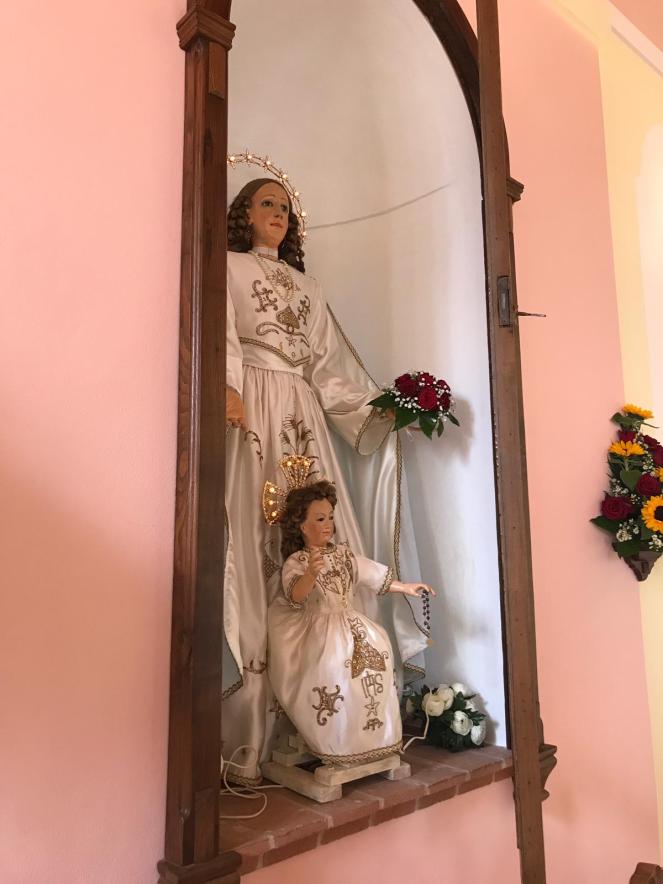
The Church of Maria del Rosario, built in 1830, is located in a farmhouse in Noepoli. It has one nave and a marble altar along with a Statue of Our Lady of the Rosary from the seventeenth century and a wooden Crucifix from the sixteenth century.
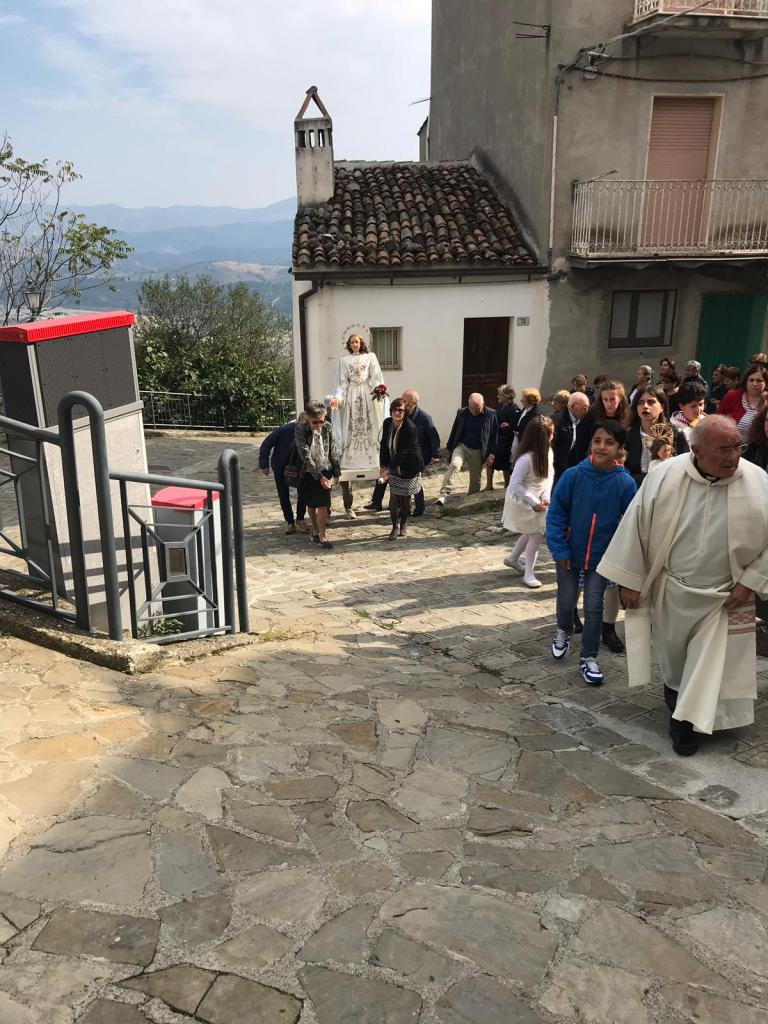
The community of Noepoli prepares for the celebration of the Feast of Our Lady of the Rosary with a Rosary Novena that begins on 12 October in the Churche. On 20 October, the Holy Rosary of the afternoon is followed by a prayer vigil in honour of Our Lady of the Rosary. The townspeople gather on 21 October for a procession around the village. . The beautiful festa continues with local musicians and dancing and finishes with spectacular fireworks.
St Agatho the Hermit St Asterius of Périgord St Asterius of Rome St Berthold of Parma St Celina of Meaux
Bl Hilarion of Moglena St Hugh of Ambronay Bl Imana of Loss Bl Iulianus Nakaura St John of Bridlington St Letizia St Maurontus of Marseilles St Malchus of Syria
St Petrus Yu Tae-Ch’ol St Pontius de Clariana St Raymond of Granada Bl Sancho of Aragon Bl Severinus of Bordeaux Bl Tuda of Lindisfarne Bl Viator of Lyons St William of Granada St William of Montreal St Zaira St Zoticus of Nicomedia — Martyrs of Nicaea – 279 saints:
Martyrs of Nicomedia – 3 saints: Caius of Nicomedia Dasius of Nicomedia Zoticus of Nicomedia
Martyred in the Spanish Civil War: • Blessed Genaro Fueyo Castañon • Blessed Isidro Fernández Cordero • Blessed Segundo Alonso González
Saint Ursula and Companions: (Died c 238) Legendary princess, the daughter of a Christian British king and Saint Daria. She travelled Europe in company of either 11 or 11,000 fellow maidens; the 11,000 number probably resulted from a misreading of the term “11M” which indicated 11 Martyrs, but which a copyist took for a Roman numeral. Ursula and her company were tortured to death to get them to renounce their faith, and old paintings of them show many of the women being killed in various painful ways. Namesake for the Ursuline Order, founded for the education of young Catholic girls and women. There are other saints closely associated with Ursula and her story – travelling companions who were martyred with her
Antonia of Cologne Cesarius of Cologne Cyriacus of Cologne Daria Fiolanus of Lucca Ignatius of Cologne James of Antioch Mauritius of Cologne Pontius of Cologne Sulpitius of Ravenna Vincent of Cologne Travelling companion, but escaped the massacre: • Cunera led by a dove to the lost tomb of Ursula: • Cunibert of Cologne
Thought for the Day – 20 October – Meditations with Antonio Cardinal Bacci (1881-1971)
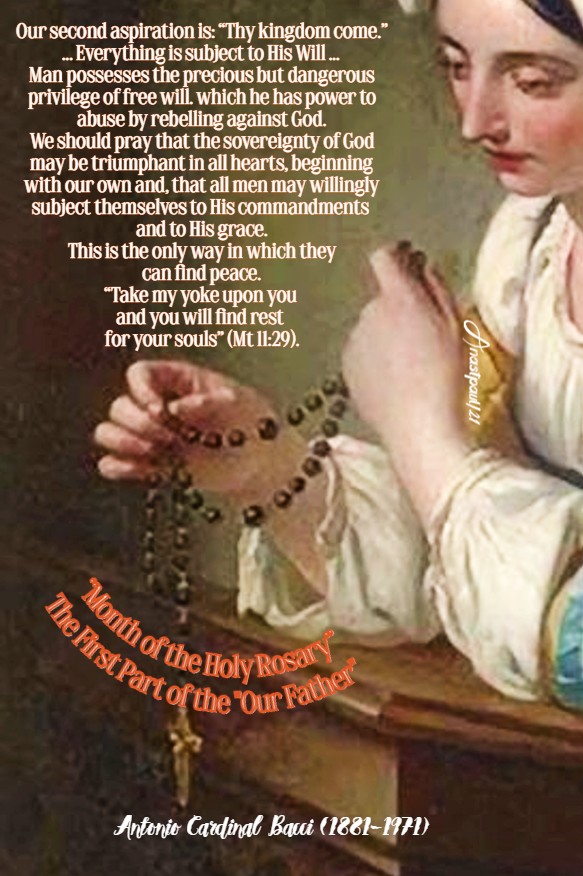
“Month of the Holy Rosary” The First Part of the “Our Father”
“Our second aspiration is: “Thy kingdom come.” It is true, that God reigns over Heaven, earth and the infernal regions. Everything is subject to His Will – the sun, the stars, the birds of the air, the fishes of the sea and the tiniest insects carry out His commands. Even the demons of Hell, who He has condemned to eternal punishment, are obedient to His Will. But what about the human race?
Man possesses the precious but dangerous privilege of free will. which he has power to abuse by rebelling against God. We should pray that the sovereignty of God may be triumphant in all hearts, beginning with our own and, that all men may willingly subject themselves to His commandments and to His grace. This is the only way in which they can find peace. “Take my yoke upon you and you will find rest for your souls” (Mt 11:29).
We should pray, moreover, for the Church, which is the kingdom of God upon earth. We should pray for her peaceful victory over her enemies, who persecute her and impede her work for the salvation of souls. We should love the Church even as we love Jesus Christ, for the Church is His handiwork and the fruit of His Precious Blood.”
Quote/s of the Day – 20 October – “Month of the Most Holy Rosary” – Readings: Romans 6: 12-18; Psalm 124: 1-8; Luke 12: 39-48
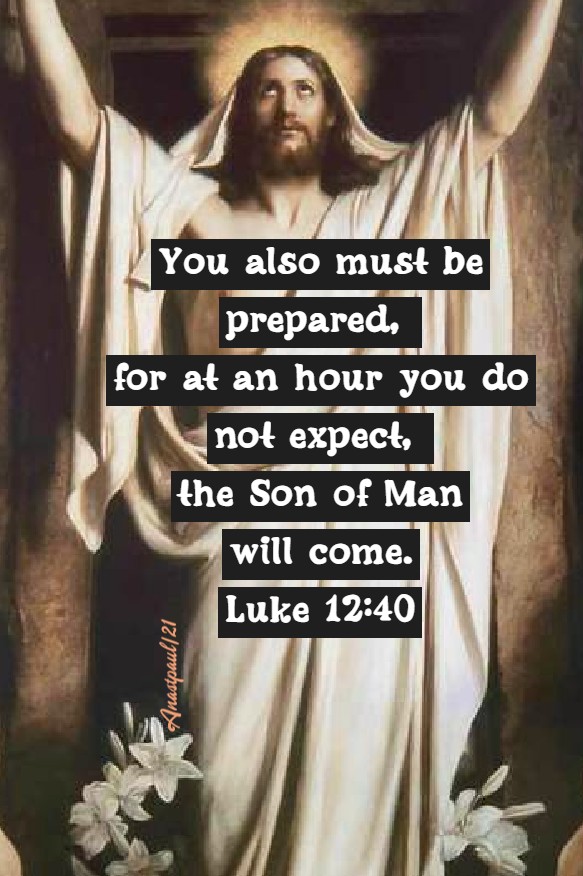
“You also must be prepared, for at an hour you do not expect, the Son of Man will come.”
Luke 12:40
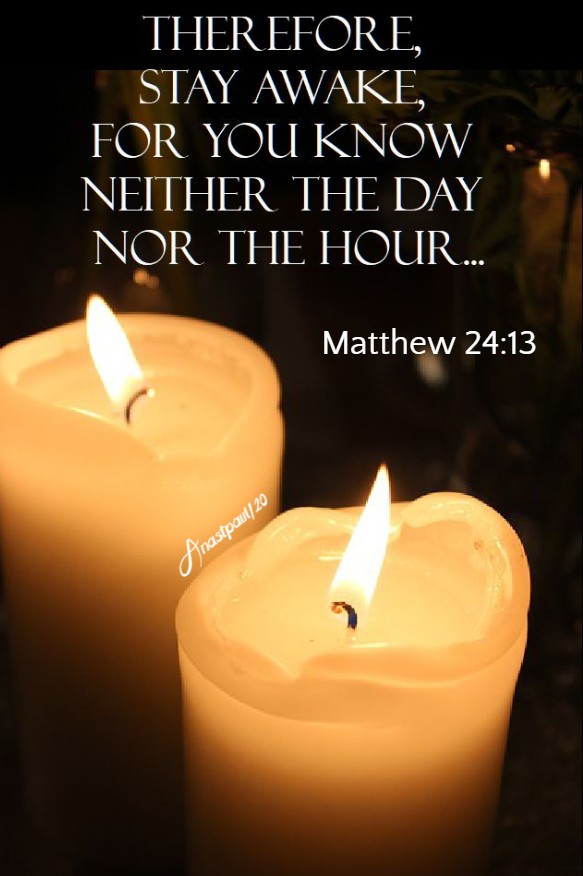
“Therefore, stay awake, for you know neither the day nor the hour.”
Matthew 24:13
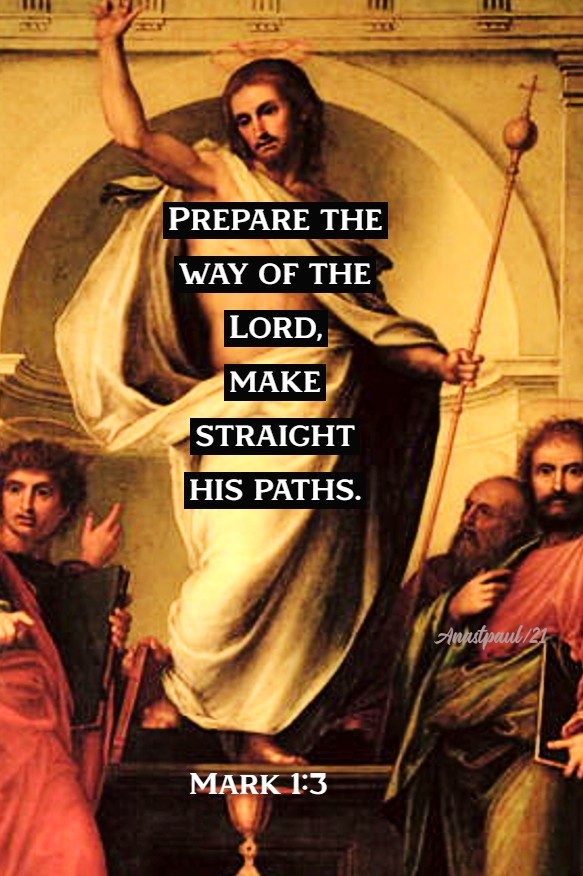
“Prepare the way of the Lord, make straight his paths.”
Mark 1:3
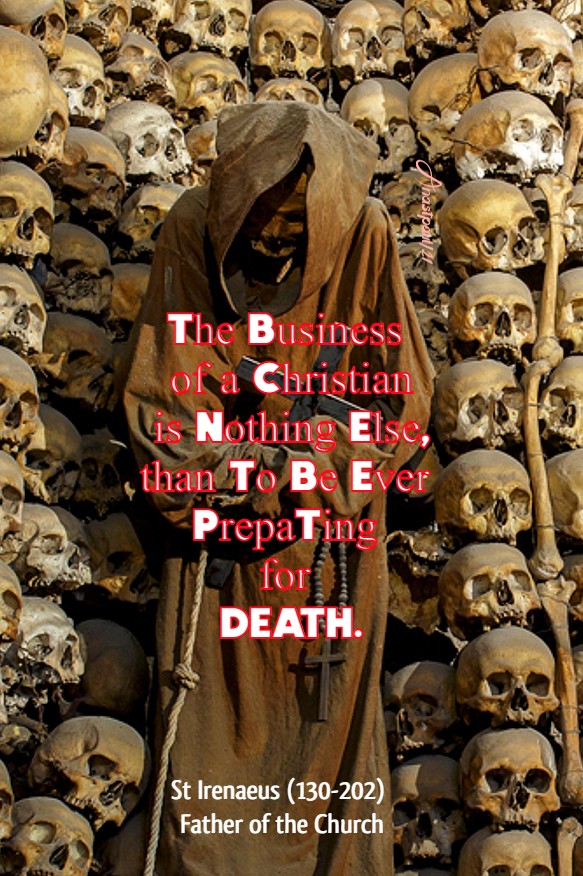
“The business of a Christian is nothing else, than to be ever preparing for death.”
St Irenaeus (130-202) Father of the Church
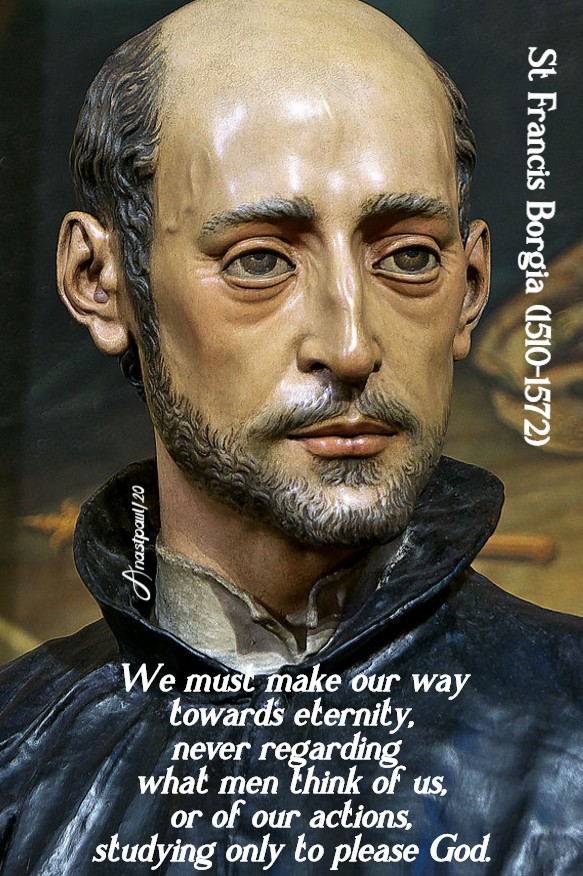
“We must make our way towards eternity, never regarding what men think of us, or of our actions, studying only to please God.”
St Francis Borgia (1510-1572)
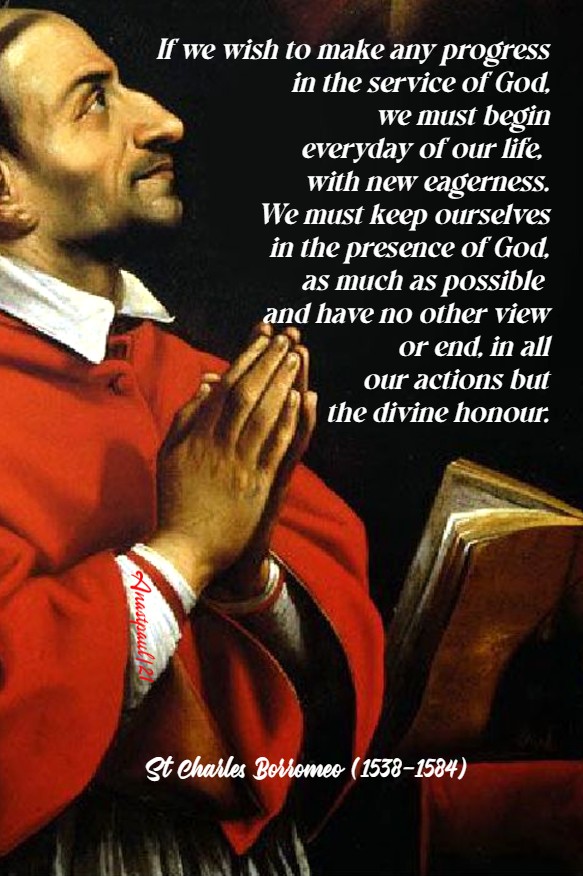
“If we wish to make any progress in the service of God, we must begin everyday of our life, with new eagerness. We must keep ourselves, in the presence of God, as much as possible and have no other view or end, in all our actions but the divine honour.”
St Charles Borromeo (1538-1584)
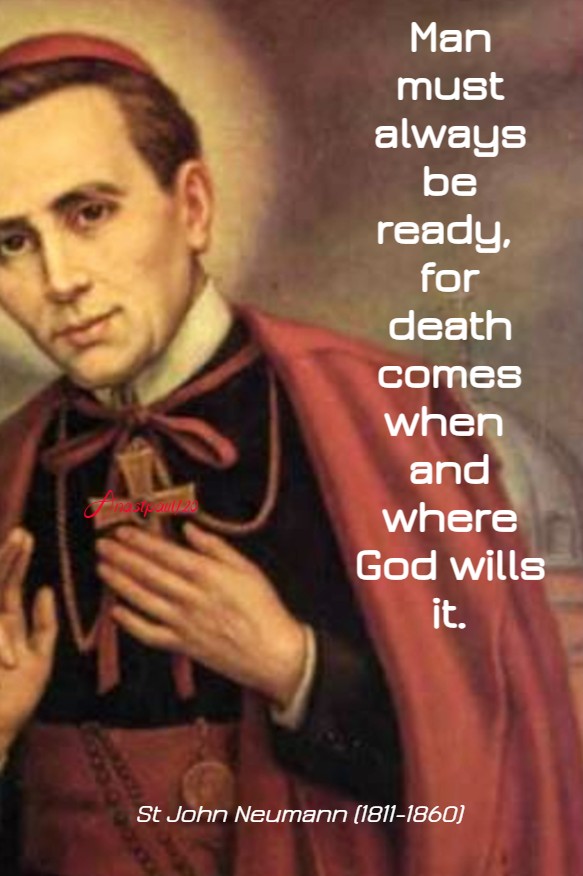
“Man must always be ready, for death comes when and where God wills it.”
One Minute Reflection – 20 October – “Month of the Most Holy Rosary” – Readings: Romans 6: 12-18; Psalm 124: 1-8; Luke 12: 39-48
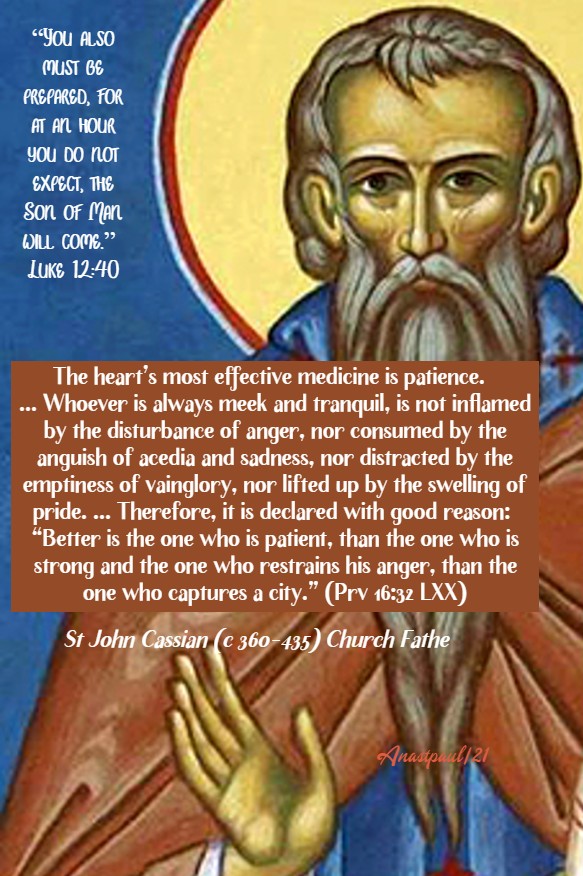
“You also must be prepared, for at an hour you do not expect, the Son of Man will come.” – Luke 12:40
REFLECTION – “The heart’s most effective medicine is patience. According to the words of Solomon: “The gentle man is the physician of the heart.” (Prv 14:30 LXX) So true is this that it uproots not only all the vices of anger, sadness, acedia, vainglory and pride but also that of wantonness, along with them. For, as Solomon says: “In long-suffering is the patience of kings.” (Prv 25:15 LXX) Whoever is always meek and tranquil, is not inflamed by the disturbance of anger, nor consumed by the anguish of acedia and sadness, nor distracted by the emptiness of vainglory, nor lifted up by the swelling of pride. For, “there is much peace for those who love the name of the Lord and for them there is no stumbling block.” (Ps 118:165 Vg) Therefore, it is declared with good reason: “Better is the one who is patient, than the one who is strong and the one who restrains his anger, than the one who captures a city.” (Prv 16:32 LXX)
Until we deserve to acquire this firm and perpetual peace, we shall inevitably be assailed by numerous attacks and frequently repeat this verse with groaning and tears: “I have become wretched and I am afflicted beyond measure. All the day I went about mournfully for my loins are filled with illusions.” (Ps 37:7-8 Vg) … Until a person arrives at this state of purity, he has to be trained frequently by these discrepancies until, confirmed by the grace of God in the purity he is seeking, he is worthy to say in truth: “I have waited, I have waited for the Lord and he turned to me, he heard my plea. He drew me out of the pit of wretchedness and from the mirey bog. He set my feet upon a rock and guided my steps.” (Ps 39:2-3 Vg.) ” – St John Cassian (c 360-435) Church Father, – Founder of Monasteries, Disciple of St John Chrysostom (Sixth conference on chastity; SC 54).
PRAYER – Holy Father, grant me an operative faith, a faith that will move mountains. Enlighten my soul with Your Light, Goodness, Power and Wisdom. Let my faith be an image of You by lively deeds and love and by conforming myself to Your Will in all things. Blessed Mother, you longed only to serve the God of all, teach us by your prayer, to serve God alone with upright hearts and fight by the Truth against all tyranny and evilh, through Christ our Lord, with the Holy Spirit, God forever, amen.
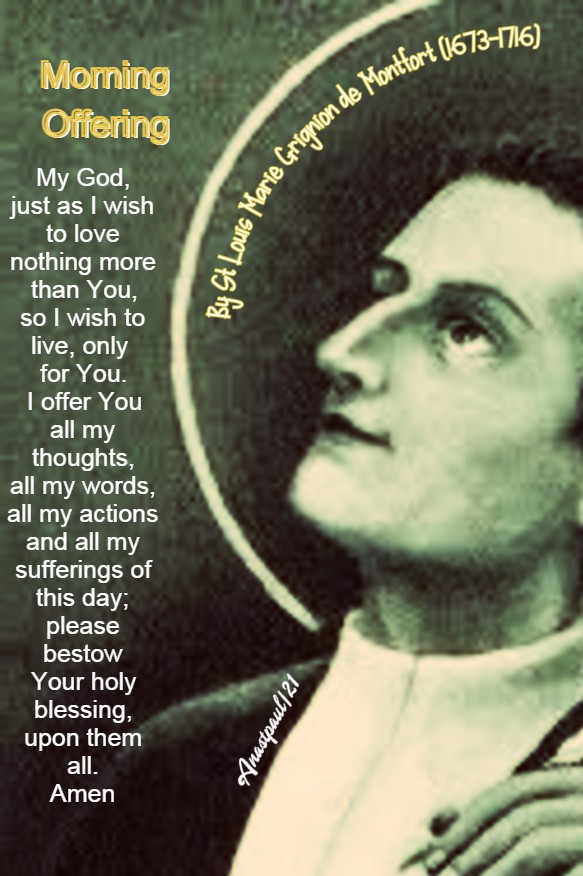
Morning Offering By St Louis Marie Grignion de Montfort (1673-1716)
My God, just as I wish to love nothing more than You, so I wish to live, only for You. I offer You all my thoughts, all my words, all my actions and all my sufferings of this day; please bestow Your holy blessing, upon them all. Amen
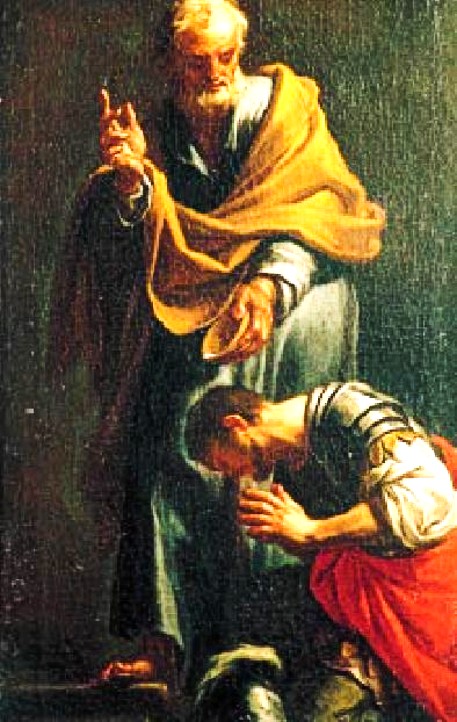
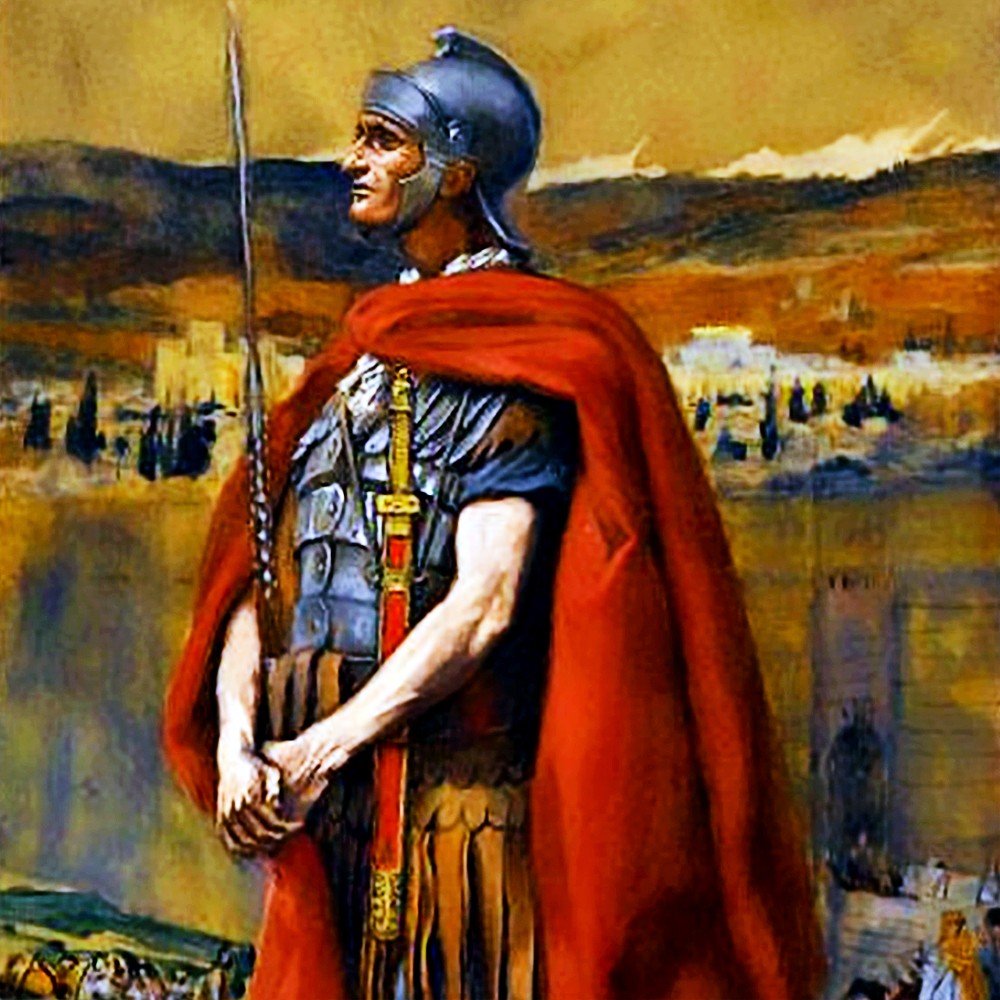
Saint of the Day – 20 October – Saint Cornelius the Centurion (1st Century) traditionally believed to have become the First Bishop of Caesarea, a Roman Centurion who is considered to be the one of first Gentile to convert to the Faith, (along with the conversion and Baptism of the Ethiopian eunuch – Acts 8). as related in Acts of the Apostles 10:1-49. The Baptism of Cornelius and his household, is an important event in the history of the early Church, for it points to the first century use of infant Baptism.
St Peter Baptising Cornelius, the Centurion, by Francesco Trevisani, 1709
“Now in Caesarea there was a man named Cornelius, a Centurion of the Cohort called the Italica, devout and God-fearing along with his whole household, who used to give alms generously to the Jewish people and pray to God constantly. One afternoon about three o’clock, he saw plainly in a vision, an Angel of God come in to him and say to him, “Cornelius.” He looked intently at him and, seized with fear, said, “What is it, sir?” He said to him, “Your prayers and almsgiving have ascended as a memorial offering before God. Now send some men to Joppa and summon one Simon who is called Peter. He is staying with another Simon, a tanner, who has a house by the sea.” When the Angel who spoke to him had left, he called two of his servants and a devout soldier from his staff, explained everything to them and sent them to Joppa.
St Cornelius’ dream
The next day, while they were on their way and nearing the city, Peter went up to the roof terrace to pray at about noontime. He was hungry and wished to eat and while they were making preparations, he fell into a trance. He saw heaven opened and something resembling a large sheet coming down, lowered to the ground by its four corners. In it were all the earth’s four-legged animals and reptiles and the birds of the sky. A voice said to him, “Get up, Peter. Slaughter and eat.” But Peter said, “Certainly not, sir. For never have I eaten anything profane and unclean.” The voice spoke to him again, a second time, “What God has made clean, you are not to call profane.” This happened three times and then the object was taken up into the sky.
Domenico Fetti – St Peter’s vision of a sheet with animals
While Peter was in doubt about the meaning of the vision he had seen, the men sent by Cornelius asked for Simon’s house and arrived at the entrance. They called out inquiring whether Simon, who is called Peter, was staying there. As Peter was pondering the vision, the Spirit said [to him] “There are three men here looking for you. So get up, go downstairs and accompany them without hesitation because I have sent them.” Then Peter went down to the men and said, “I am the one you are looking for. What is the reason for your being here?” They answered, “Cornelius, a centurion, an upright and God-fearing man, respected by the whole Jewish nation, was directed by a holy angel to summon you to his house and to hear what you have to say.” So he invited them in and showed them hospitality. The next day he got up and went with them, and some of the brothers from Joppa went with him.
On the following day he entered Caesarea. Cornelius was expecting them and had called together his relatives and close friends. When Peter entered, Cornelius met him and, falling at his feet, paid him homage. Peter, however, raised him up, saying, “Get up. I myself am also a human being.” While he conversed with him, he went in and found many people gathered together and said to them, “You know that it is unlawful for a Jewish man to associate with, or visit, a Gentile but God has shown me that I should not call any person profane or unclean. And that is why I came without objection when sent for. May I ask, then, why you summoned me?” Cornelius replied, “Four days ago at this hour, three o’clock in the afternoon, I was at prayer in my house when suddenly a man in dazzling robes stood before me and said, ‘Cornelius, your prayer has been heard and your almsgiving remembered before God. Send therefore, to Joppa and summon Simon, who is called Peter. He is a guest in the house of Simon, a tanner, by the sea.‘ So I sent for you immediately and you were kind enough to come. Now, therefore, we are all here in the presence of God to listen to all that you have been commanded by the Lord.”
St Peter at St Cornelius’ house
Then Peter proceeded to speak and said, “In truth, I see that God shows no partiality. Rather, in every nation whoever fears him and acts uprightly is acceptable to him. You know the word [that] he sent to the Israelites as he proclaimed peace through Jesus Christ, who is Lord of all, what has happened all over Judea, beginning in Galilee after the baptism that John preached, how God anointed Jesus of Nazareth with the holy Spirit and power. He went about doing good and healing all those oppressed by the devil, for God was with him.m We are witnesses of all that he did both in the country of the Jews and (in) Jerusalem. They put him to death by hanging him on a tree. This man God raised (on) the third day and granted that he be visible, not to all the people but to us, the witnesses chosen by God in advance, who ate and drank with him after he rose from the dead. He commissioned us to preach to the people and testify, that he is the one appointed by God as judge of the living and the dead. To him all the prophets bear witness, that everyone who believes in him will receive forgiveness of sins through his name.”
While Peter was still speaking these things, the Holy Spirit fell upon all who were listening to the word. The circumcised believers who had accompanied Peter were astounded that the gift of the Holy Spirit should have been poured out on the Gentiles also, for they could hear them speaking in tongues and glorifying God. Then Peter responded, “Can anyone withhold the water for baptising these people, who have received the Holy Spirit even as we have?” He ordered them to be baptised in the name of Jesus Christ. Then they invited him to stay for a few days. ” – Acts 10:1-49
A Centurion by James Tissot (not necesarily St Cornelius)
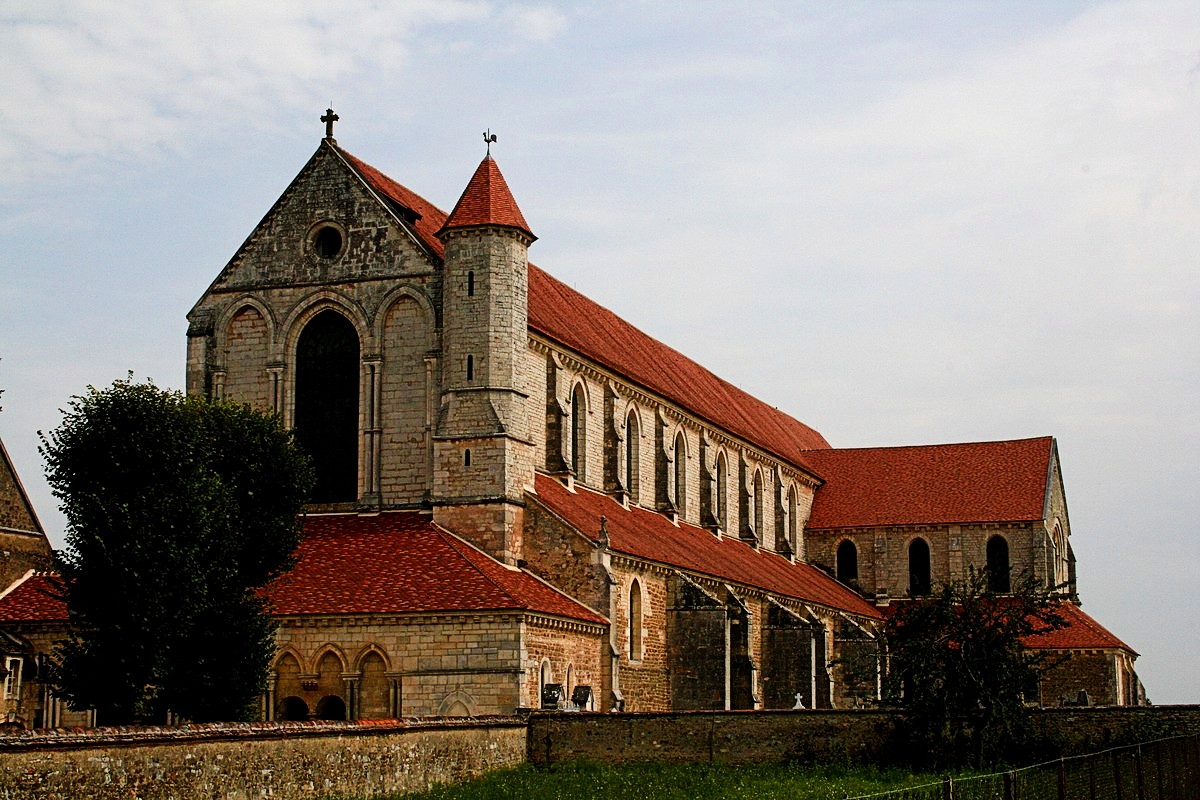
Dedication of the Abbey of Our Lady, Pontigny, France (1114) – 20 October:
The Abbot Orsini wrote: “The Dedication of the Church of Pontigny, four leagues from Auxerre, under the title of Our Lady. This Abbey was founded in 1114 by Thibaud, Count of Champagne.”
The former abbey of Pontigny is nestled in the Serein valley in the north of Burgundy, and is one of the oldest sites of the Cistercian order. Being only the second Cistertian monastery, it was established in the year 1114 by Blessed Hugh of Macon, the companion of Saint Bernard, in this valley north of Auxerre in the French Department of Yonne. It is notable, that Hugh later became the Bishop of Auxerre.
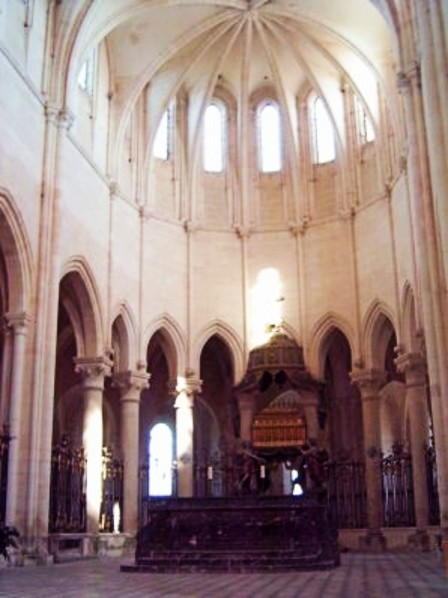
The Monks valued the land, the woods and streams they were surrounded by and cultivated large farms around their Abbey. They raised various crops, bread pigs and sheep and made terracotta bricks. It was that strong economic base that enabled them to construct the great Romanesque style Church that reached an impressive length of 120 metres that still stands intact today. In the year 1164 the Abbey received the Archbishop of Canterbury and Primate of England St Thomas à Becket while he was an exile due to his opposition to King Henry and in 1206 the Queen of France, Alix de Champagne, was buried in the choir of the Abbey. The wealthy Abbey was looted and burned by the Huguenots in about 1529 during the Wars of Religion. During the French Revolution the Abbey was suppressed, and its buildings largely sold or destroyed, save for the Church. Unlike most Churches during the time of the French Revolution, the Abbey of Pontigny is completely preserved and is now thought to be the largest Cistercian Church in France. The Church is notable for its arches and columns with twin bays, its vaults on two columns and portal with tympanum cross and wrought iron hinges. Known as the Church of Notre-Dame-et-Saint-Edme Pontigny, or Our Lady of Saint Edmond of Pontigny, the old Church Abbey monastery became the Parish Church of the village of the same name after the French Revolution. The church of Notre-Dame-et-Saint-Edme Pontigny is now abandoned and it is used simply as a kind of cultural meeting place.
St Adelina St Aderald St Aidan of Mayo St Andrew of Crete St Artemius Megalomartyr St Barsabias St Bernard of Bagnorea St Bradan St Caprasius of Agen St Cornelius the Centurion (1st Century) traditionally believed to have become th First Bishop of Caesarea
Blessed James Strepar OFM (c 1340-1409) Archbishop of Halicz, Poland from 1392 until his death Religious Priest of the Order of Friars Minor, Missionary. St Pius X proclaimed Blessed James, along with St Anthony of Padua, the Patrons of the Conventual Franciscan Order of Krakow Province. He was given the title of “Protector of the Kingdom, Defender and Guardian of the Homeland,” for his exceptional merits, including civil ones. Such was he considered by all. He was Canonised by by Pope Pius VI on 11 September 1791. His body is incorrupt. His Life: https://anastpaul.com/2020/10/20/saint-of-the-day-20-october-blessed-james-strepar-ofm-c-1340-1409/
Thought for the Day – 19 October – Meditations with Antonio Cardinal Bacci (1881-1971)
“Month of the Holy Rosary” The “Our Father”
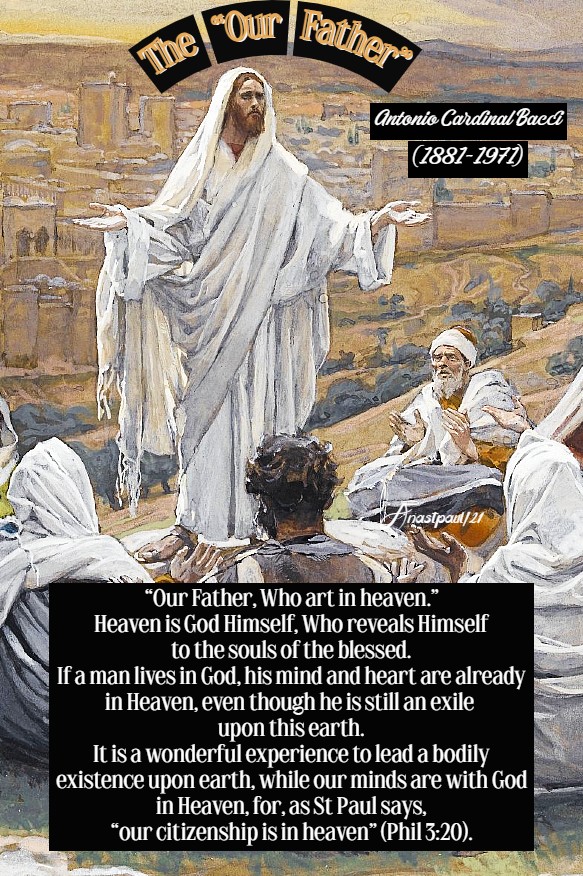
“Our Father, Who art in heaven.” Heaven is God Himself, Who reveals Himself to the souls of the blessed. If a man lives in God, his mind and heart are already in Heaven, even though he is still an exile upon this earth. It is a wonderful experience to lead a bodily existence upon earth, while our minds are with God in Heaven, for, as St Paul says, “our citizenship is in heaven” (Phil 3:20). As we are aware, God is everywhere, in Heaven and on earth. When we invoke our Father, Who is in Heaven, however, we manifest our faith in Him and in His generosity, whereby, He reveals Himself in all His glory to the blessed and shows His mercy to us poor exiles, when we come to Him. In the first words of the Pater Noster, we express, not only our faith but, also our hope of being happy with God for all eternity.”
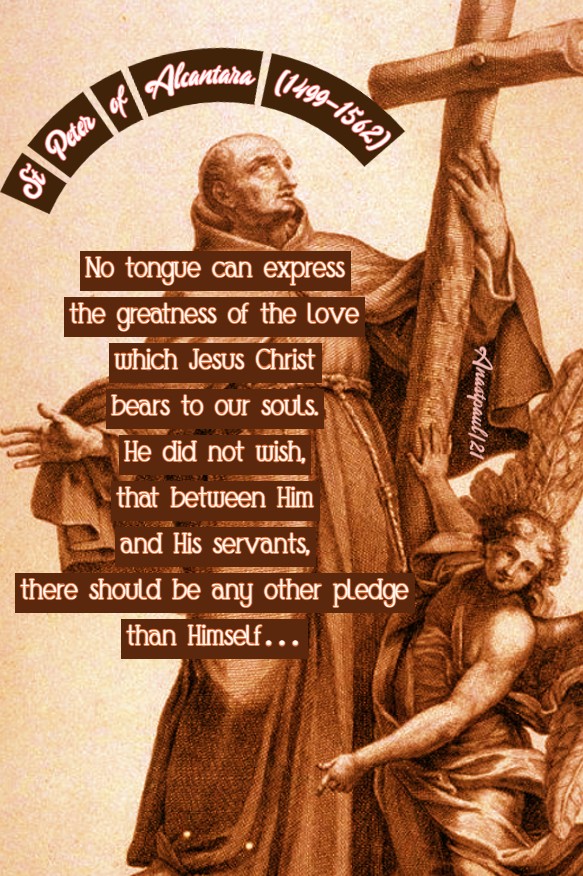
Quote/s of the Day – 19 October – The Memorial of St Peter of Alcantara OFM (1499-1562),
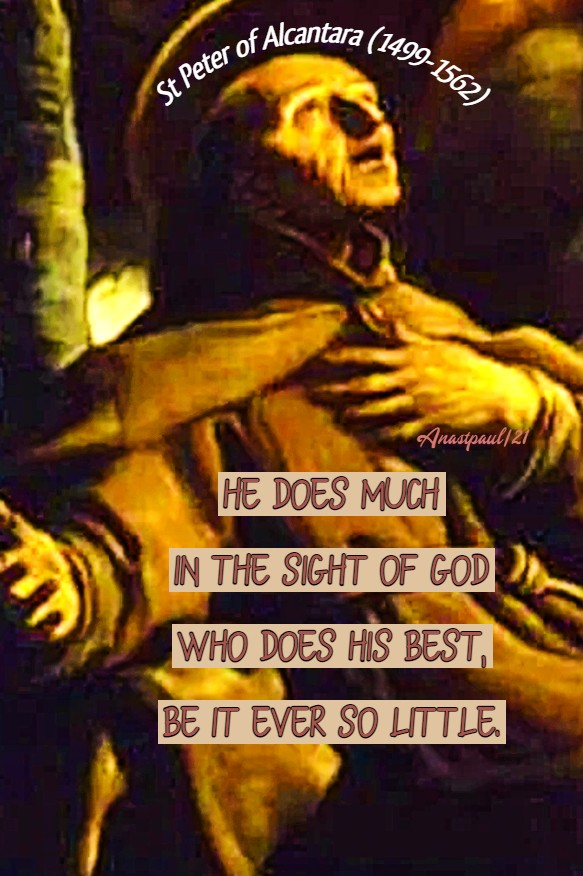
“He does much in the sight of God who does his best, be it ever so little.”
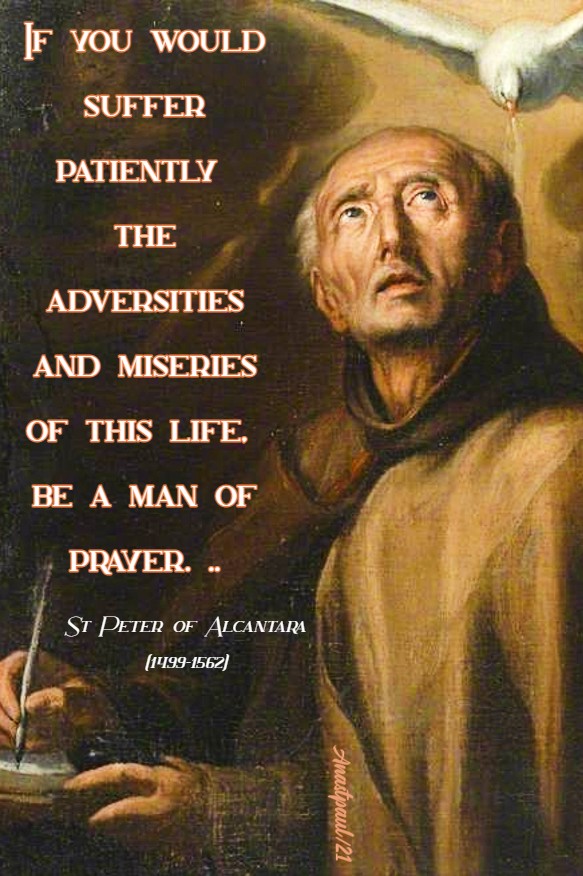
“If you would suffer patiently the adversities and miseries of this life, be a man of prayer. … ”
“No tongue can express the greatness of the love which Jesus Christ bears to our souls. He did not wish, that between Him and His servants, there should be any other pledge than Himself…
One Minute Reflection – 19 October – “Month of the Most Holy Rosary” – Readings: Romans 5: 12, 15b, 17-19, 20b-21; Psalm 40: 7-10, 17; Luke 12: 35-38
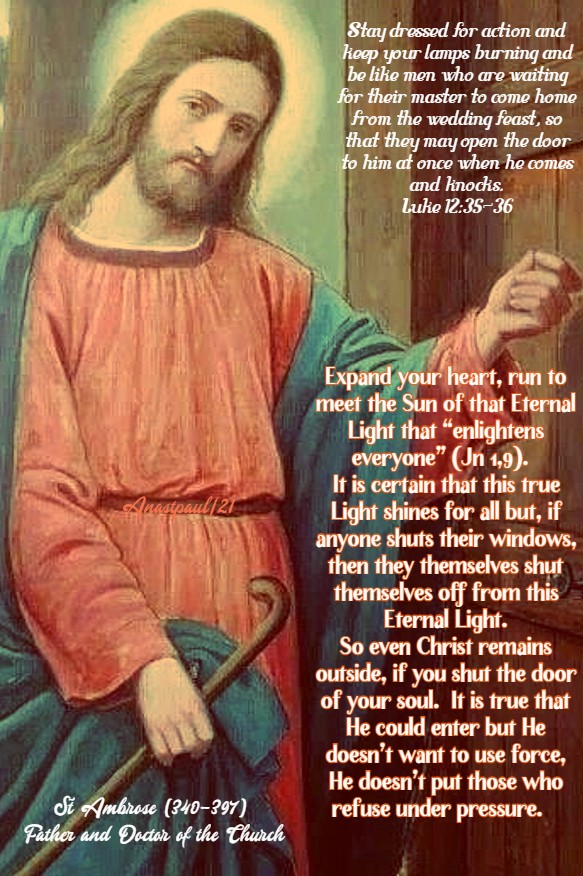
“Stay dressed for action and keep your lamps burning and be like men who are waiting for their master to come home from the wedding feast, so that they may open the door to him at once when he comes and knocks.” – Luke 12:35-36
REFLECTION – “God, the Word, stirs up the lazy and arouses the sleeper. For indeed, someone who comes knocking at the door is always wanting to come in. But it depends on us if He does not always enter or always remain. May your door be open to Him who comes – open your soul, enlarge your spiritual capacities, that you may discover the riches of simplicity, the treasures of peace and sweetness of grace. Expand your heart, run to meet the Sun of that Eternal Light that “enlightens everyone” (Jn 1,9). It is certain that this true Light shines for all but, if anyone shuts their windows, then they themselves shut themselves off from this Eternal Light.
So even Christ remains outside, if you shut the door of your soul. It is true that He could enter but He doesn’t want to use force, He doesn’t put those who refuse under pressure. Descended from the Virgin, born from her womb, He shines throughout the universe to give light to all. Those who long to receive the light, that shines with an everlasting brightness, open up to Him. No night comes to intervene. Indeed, the sun we see each day gives way to night’s darkness but the Sun of Justice (Mal 3,20) knows no setting for Wisdom is not overcome by evil.” – St Ambrose (340-397) Bishop of Milan and Father and Doctor of the Church (12th Sermon on Psalm 118)
PRAYER – All-powerful, eternal God and Father, grant us the grace of Your Spirit and fill us with the light of understanding and love. May we learn to truly pray and by our prayers to entreat You to bless us in Your goodness and lead us to true faith in Your eternal light and Word sent to redeem us. May we always be waiting and prepared to open the door of our hearts to Jesus Christ our Lord, who comes in light, love and peace. Grant that by the prayers of all Your Angels and Saints, we may be strengthened. Holy Mother, be our protection and our guide. We make our prayer through Jesus Christ, our Lord with the Holy Spirit, God now and forever, amen.
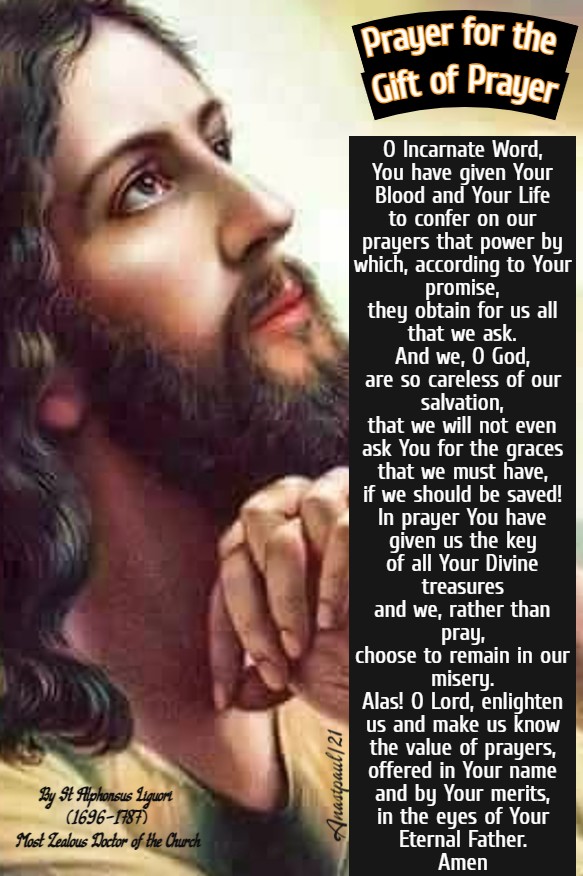
Prayer for the Gift of Prayer By St Alphonsus Liguori (1696-1787) Most Zealous Doctor of the Church
O Incarnate Word, You have given Your Blood and Your Life to confer on our prayers that power by which, according to Your promise, they obtain for us all that we ask. And we, O God, are so careless of our salvation, that we will not even ask You for the graces that we must have, if we should be saved! In prayer You have given us the key of all Your Divine treasures and we, rather than pray, choose to remain in our misery. Alas! O Lord, enlighten us, and make us know the value of prayers, offered in Your name and by Your merits, in the eyes of Your Eternal Father. Amen
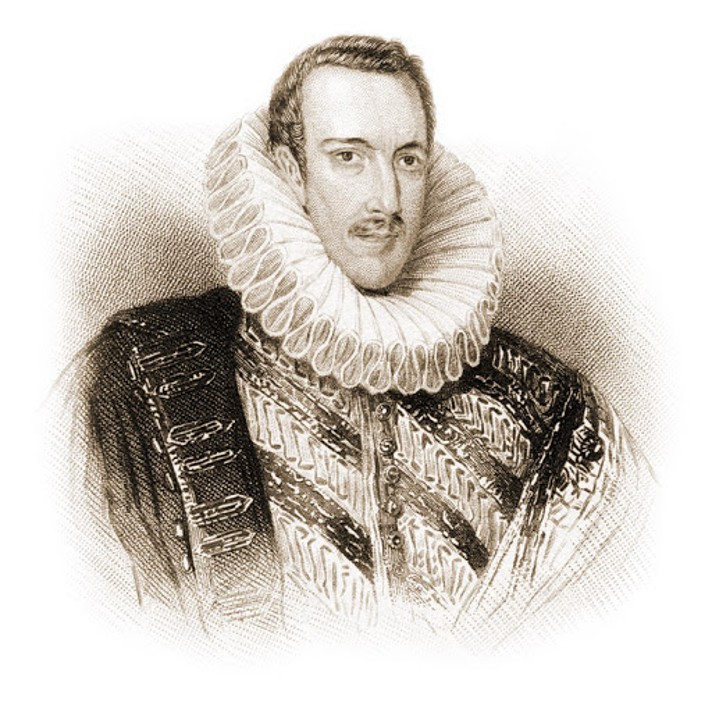
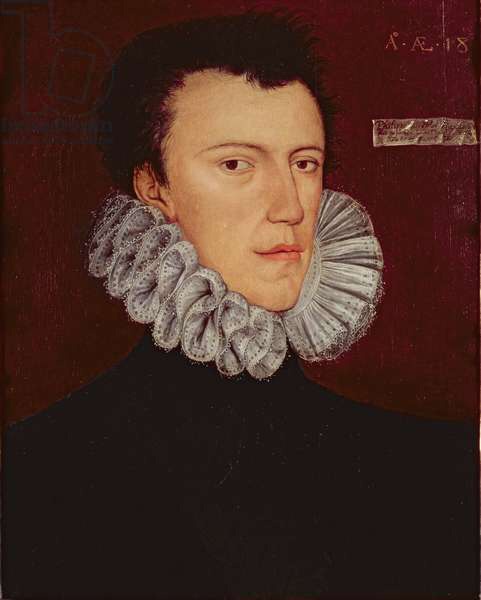
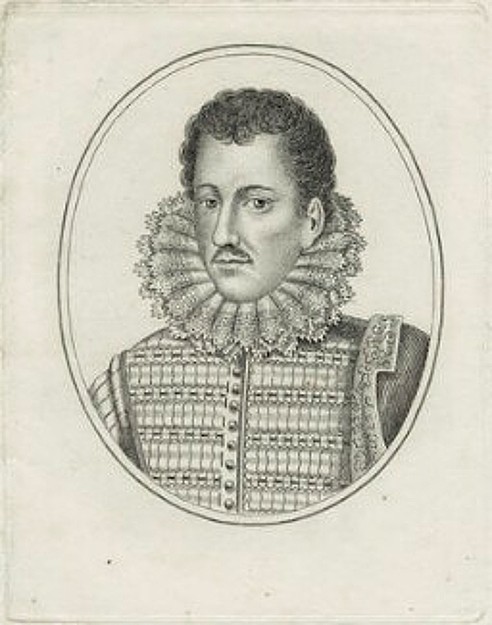
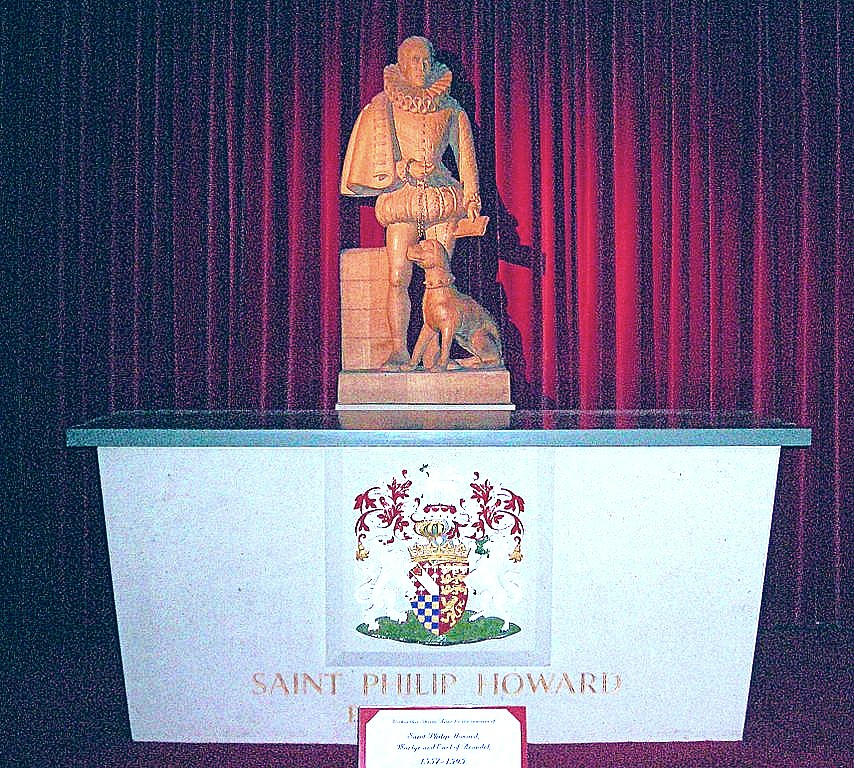
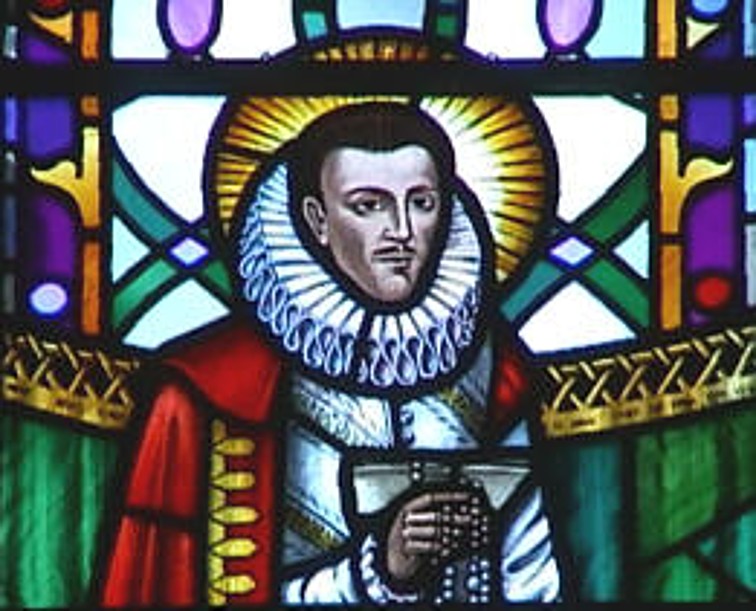
Saint of the Day – 19 October – Saint Philip Howard (1557–1595) Martyr, Married Layman, Father, Convert, 13th Earl of Arundel, Born on 28 June 1557 at Norfolk, England and died on 19 October 1595 of malnutrition after eleven years in the Tower of London, London, England – he was just 38 years old.Patronages – the Diocese of Arundel and Brighton, England, victims of betrayal, difficult marriages, falsely accused people, separated spouses. Additional Memorial – 25 October as one of the Forty Martyrs of England and Wales.
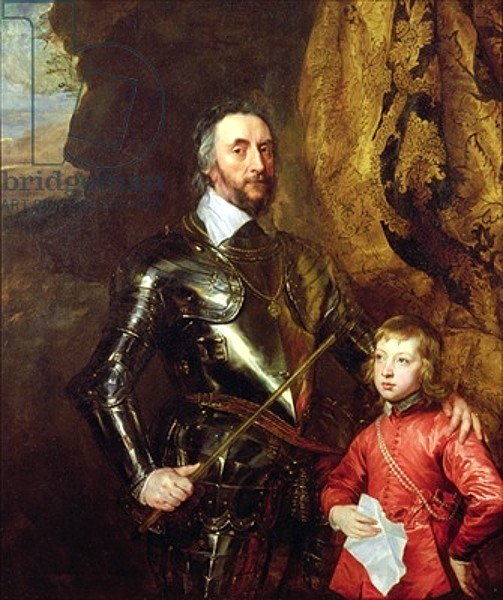
St Philip, born on 28 June 1557, was 13th Earl of Arundel. His father Thomas, IV Duke of Norfolk, was beheaded by Queen Elizabeth in 1572 for involvement in the affair of Mary, Queen of Scots. Philip Howard, Baptised by the Archbishop of York in the Chapel of Whitehall Palace, had Philip of Spain as one of his Godfathers.
St Philip with his father Thomas, 4th Dyke of Norfolk
Philip married Anne, daughter of Lord Dacre of Gilsland, when he was fourteen. He graduated at St John’s College, Cambridge in 1574 and was about eighteen when he attended Queen Elizabeth’s Court. Handsome, high-born, quick-witted and articulate, he neglected his wife and God.
A London event in 1581 proved to be life altering for Philip. A debate took place: on one side was a group of Protestant scholars. On the other, was [St] Father Edmund Campion, a Jesuit Priest, physically weak from torture on the notoriously grisly rack but still mentally sharp and another English Priest, [St.] Father Ralph Sherwin. With no opportunity to prepare, they defended the Faith persuasively, which greatly impressed young Philip. These humble suffering Confessors awakened Philip’s soul and he returned to Arundel to think about reconciliation with the Catholic Church, which he knew meant death. Sadly, both Campion and Sherwin were martyred by the British throne before the end of 1581. Philip reformed his life. Not only did he reconcile with his wife, Anne, he became quite dedicated to her. In 1584, he was received into the Catholic Church and became devoted to the practice of the Faith, although it was necessary for him to keep this quiet. Philip and Anne were suspected of sheltering persecuted Jesuit Priests in their home. The change in Philip was noted by the Queen and he sensed that he was in danger.
In 1585 he made a plan to escape from his London home to Belgium with his family and his brother. He sent a long letter of explanation to the Queen and the group set out from Littlehampton on the south coast of England. Before they could reach their destination, he was arrested at sea and returned to London. Philip was convicted of treason for being a Roman Catholic and for leaving England without permission. He was fined £10,000 and imprisoned in the Tower of London in April of 1585. Three years later, he was accused again of treason because he allegedly prayed in prison for the success of the Spanish Armada. This mid-1588 Spanish naval effort to remove Queen Elizabeth from the British throne and re-establish Catholicism, was unsuccessful. Interestingly, King Philip II of Spain was Philip Howard’s Godfather at his infant Baptism as well as his namesake. Philip was tried in April of 1589 and as was usually the case at the time, with accused Catholics, the extremely biased outcome was a sentence of execution. The execution required the Queen’s signature but she never signed it. Since Philip did not know this, he was left in prison thinking that his death was imminent. Instead, he was left to die in prison after having been placed there at age twenty-eight. He was allowed study and devotional books and spent his time in prayer, study and penance. He prayed ardently to be able to see his wife and children again; the youngest, his only son, was born after his incarceration. His trial and imprisonment were totally at Queen Elizabeth’s pleasure–the only treason he had committed was being reconciled to the Catholic Church.
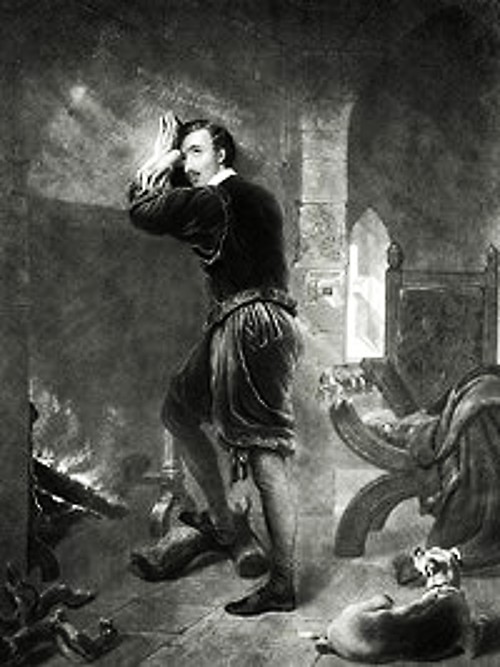
One of the Priests who had been sheltered by the Howards was [St] Robert Southwell, who was also being held in the Tower. Philip’s pet dog served as a go-between for the men, who supported and encouraged each other with messages. By the autumn of 1595, he was dying and made one last plea to the Queen to be able to see his wife and children. Her reply was that if he would just attend one Protestant service, he would see his family and regain the Queen’s favour. “Good Queen Bess” indeed! He refused, and died alone on 19 October 1595 at age thirty-eight. He is believed to have contracted dysentery and suffering from malnutrition but some suspected that he was poisoned. He was 39 years old and had spent the last eleven years of his life in the Tower of London. He was buried in the Tower Church with his father and grandfather. Anne, who continued to protect and provide for renegade Priests, obtained permission in 1624 to transfer his remains to Arundel Castle.
Note St Philip’s dog
Written on the step before the Shrine is this inscription: ‘The more affliction we endure for Christ in this world, the more glory we shall obtain with Christ in the next‘. This is a translation of the original Latin cut by St Philip over the fireplace in the Beauchamp Tower, which visitors to the Tower of London can still see: Quanto plus afflictionis pro Christo in hoc saeculo, tanto plus gloriae cum Christo in futuro. Arundell – 22 June 1587.
The Cathedral of Arundell and Brighton is named for St Philip Howard. It had been named for St Philip Neri before the Canonisation of today’s Saint in 1970.
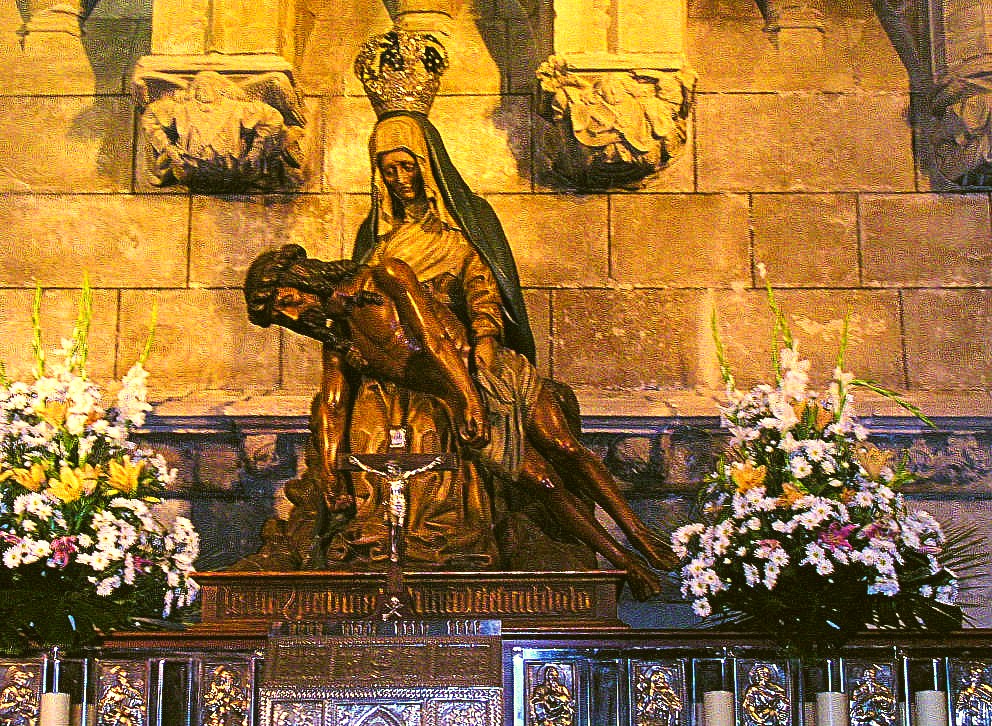
Virgen del Camino / Our Lady of the Way, Valverde de la Virgen, León, Castile and León, Spain (1505) – 19 October:
On 2 July 1505, while watching his sheep, Alvar Simón Fernández saw the Virgin, radiant with light and heard her say: “Go to the city and tell the Bishop to come to this place and install this image my Son wishes to appear here, for the good of this land.” The shepherd answered, “Señora, how will they believe it was you who sent me?” She asked for his slingshot and with it launched a small stone, saying, “When the Bishop sees this stone it will be so large that he will know I have sent you and where you find the stone, is where my Son and I want you to put the image.”
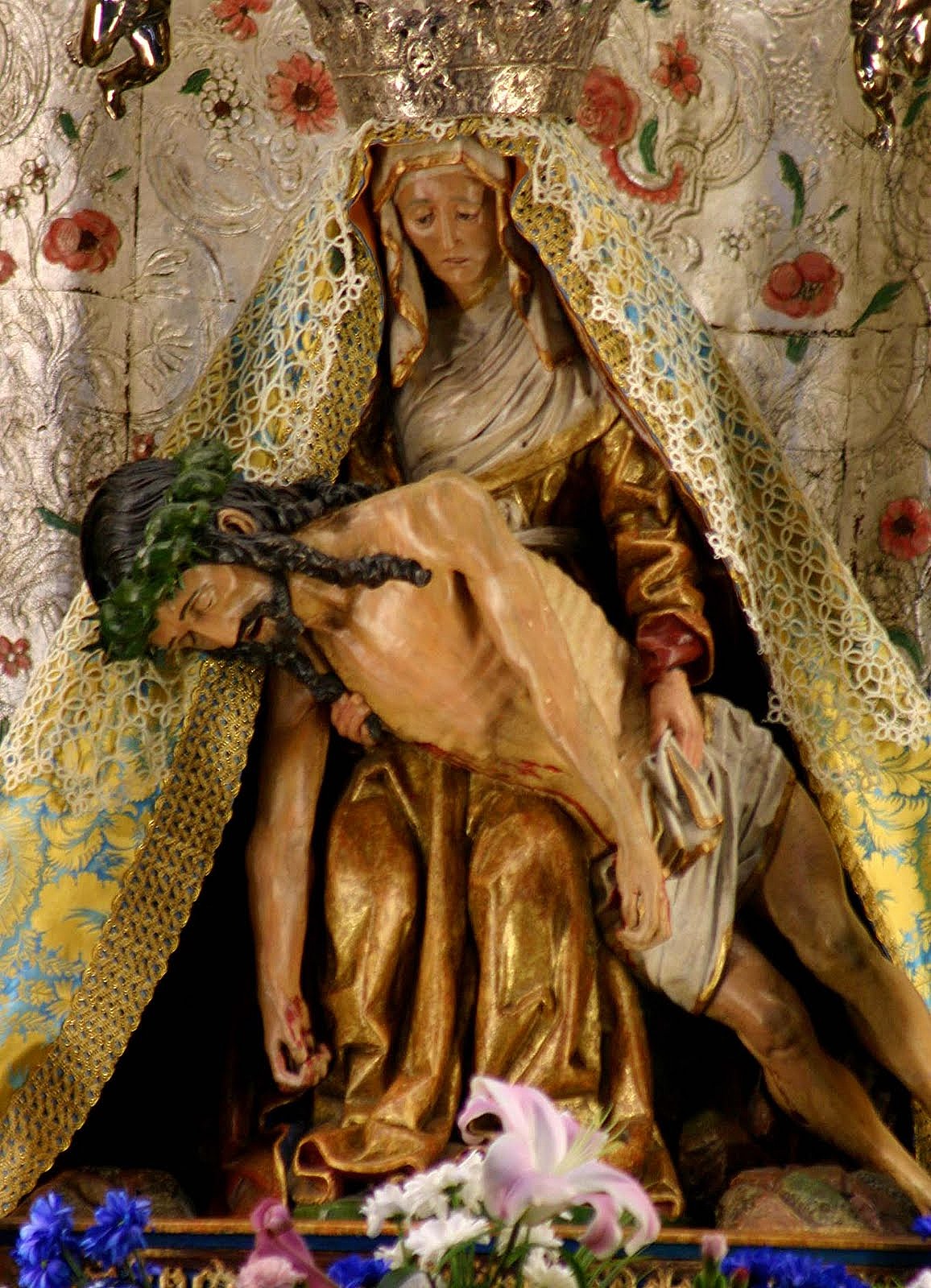
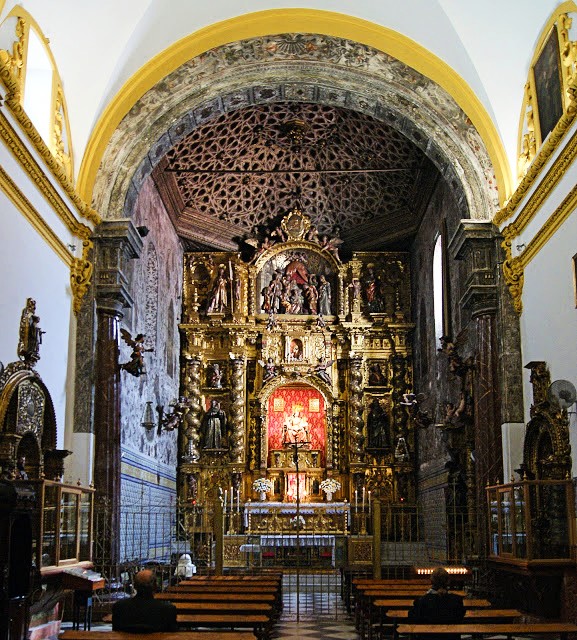
The miraculously-located Shrine was outside the City of León on the Camino de Santiago, the pilgrim road to Compostela, hence the title Virgin of the Way The Virgen del Camino was declared Patron of the León region in 1914. The Statue is a 84 centimetre wooden Pietà, which the Basilica’s website dates to 1514. Its coronation, which Pope Benedict XI authorised in 1917, was carried out on 19 October 1930. The large, modern Sanctuary was completed in 1961 and houses the Statue. The Virgin of the Way is honoured today and on 15 September, the feast of Our Lady of Sorrows.
St Paul of the Cross CP (1604-1775) Priest, Mystic, Preacher, endowed with miraculous powers of healing and prophecy, Founder of the Congregation of the Passion of Jesus Christ known as the Passionists. Canonised on 29 June 1867 by Blessed Pope Pius IX who placed his Feast on 28 April. It was moved in 1969. So great was his eloquence when he spoke of the Passion that both he and his hearers would shed tears and the most hardened hearts were moved to repentance. (Optional Memorial) About St Paul here: https://anastpaul.wordpress.com/2017/10/19/saint-of-the-day-st-paul-of-the-cross-1604-1775/
Bl Agnes of Jesus St Altinus St Aquilinus of Evreux St Asterius of Ostia St Beronicus of Antioch St Desiderius of Longoret St Ednoth St Ethbin St Eusterius of Salerno St Frideswide
St Varus of Kemet St Verano of Cavaillon — Martyred in the Spanish Civil War: 18 Beati • Blessed Antonio Elizalde Garvisu • Blessed Constantino Miguel Moncalvillo • Blessed Dionisio Arizaleta Salvador • Blessed Emiliano Pascual Abad • Blessed Eusebio de Las Heras Izquierdo • Blessed Ferran Castán Messeguer • Blessed Francesc Solá Peix • Blessed Francisco Marco Martínez • Blessed Francisco Milagro Mesa • Blessed Francisco Simón Pérez • Blessed Josep Ferrer Escolà • Blessed Josep Ribé Coma • Blessed Julio Leache Labiano • Blessed Juan Senosiaín Zugasti • Blessed Manuel Font y Font • Blessed Narcís Simón Sala • Blessed Nicolas Campo Giménez • Blessed Pere Vives Coll
Thought for the Day – 18 October – Meditations with Antonio Cardinal Bacci (1881-1971)
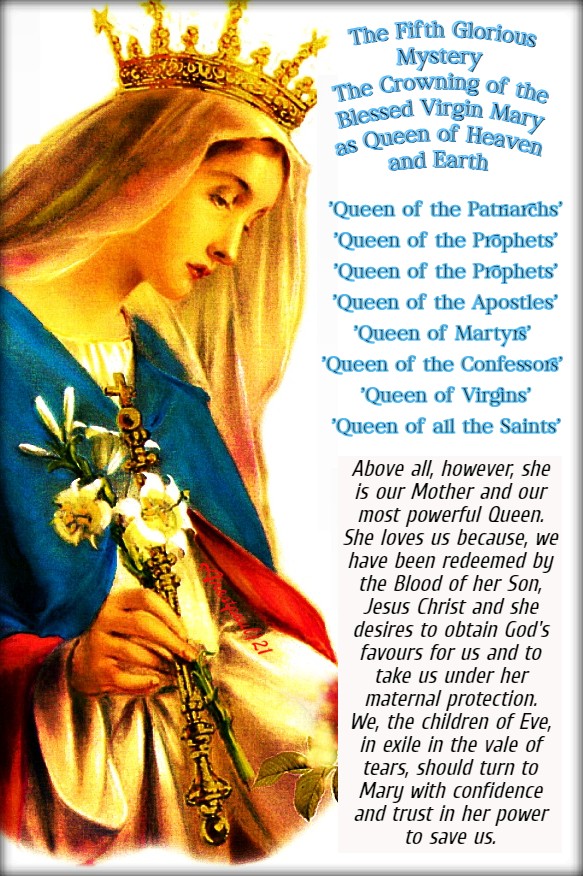
“Month of the Holy Rosary” The Fifth Glorious Mystery The Crowning of the Blessed Virgin Mary as Queen of Heaven and Earth
“Mary is also styled, ‘Queen of the Patriarchs‘ because, it was through her, that they came to possess the object of their desires, the divine Redeemer, Who released them from Limbo and brought them to Heaven. She is ‘Queen of the Prophets‘ because, their prophecies were realised through her. She is ‘Queen of the Apostles‘ whom she assisted and encouraged after the departure of her divine Son. She is the ‘Queen of Martyrs‘ because, her maternal heart was pierced by a sword of sorrow. She is ‘Queen of the Confessors‘ because, nobody else was capable of so deep and lively a profession of the Faith. She is ‘Queen of Virgins‘ because, her virginal purity was crowned by the supreme dignity of Mother of God. She is ‘Queen, moreover, of all the Saints‘, for no other human creature could ever surpass, or even dream of the summit of holiness, to which she attained. Above all, however, she is our Mother and our most powerful Queen. She loves us because, we have been redeemed by the Blood of her Son, Jesus Christ and she desires to obtain God’s favours for us and to take us under her maternal protection.
We, the children of Eve, in exile in the vale of tears, should turn to Mary with confidence and trust in her power to save us.”















You must be logged in to post a comment.