Thought for the Day – 27 September – Meditations with Antonio Cardinal Bacci (1881-1971)
The Power of God’s Love in the Christian Life
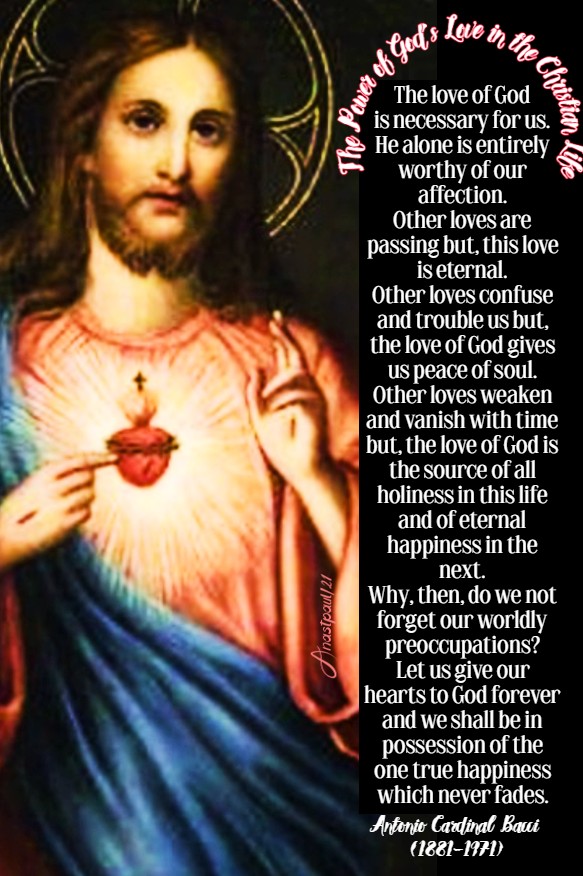
“Everyday, in the lives of the Saints, was a continual act of love of God. This was how they became holy. They loved God intensely all the time. They loved Him above all things. Everything which they thought, desired or did, was directed to Him. Their entire lives were consecrated to Him. We should all desire to be holy, if we do, we must love God with our whole heart, strength and will. Not until then, will every action of ours become meritorious. Holiness is born of the love of God. Without the love of God, everything is futile and useless; our conversation is so much idle chatter; our desires are empty dreams which excite us for a while and then dissolve like bubbles of soap; our actions are unprofitable and our enterprises are not aimed at a true objective; our achievements can inflate us for a time but they will leave us disillusioned at the hour of death. The love of God is necessary for us. He alone is entirely worthy of our affection. Other loves are passing but, this love is eternal. Other loves confuse and trouble us but, the love of God gives us peace of soul. Other loves weaken and vanish with time but, the love of God is the source of all holiness in this life and of eternal happiness in the next. Why, then, do we not forget our worldly preoccupations? Let us give our hearts to God forever and we shall be in possession of the one true happiness which never fades.”
Announcing a Novena to Our Lady of the Rosary Begins 28 September The Memorial of Our Lady of the Rosary is on 7 October.
Please join me in praying a Novena in honour of Our Lady of the Rosary for the nine days preceding her Feast on 7 October and, of course, October is the Month of the Holy Rosary.
This Feast was instituted to commemorate the victory of Christianity over the forces of Islam at the battle of Lepanto on 7 October 1571. The victory was brought about through the recitation of the Rosary. In thanksgiving for another victory over the same foes in Hungary in 1715, the Feast was extended to the entire Church. In the course of centuries the Rosary has been a source of abundant blessings. In her apparitions at Lourdes, France, in 1858 and again at Fatima, Portugal, in 1917, Mary urged Catholics to pray the Rosary daily in order to bring about the conversion of sinners and a lasting world peace. Resolve to say your Rosary every day. Besides being a beautiful tribute of love and filial piety, to your Heavenly Mother, it will be your support and joy in life and your consolation at the hour of death.
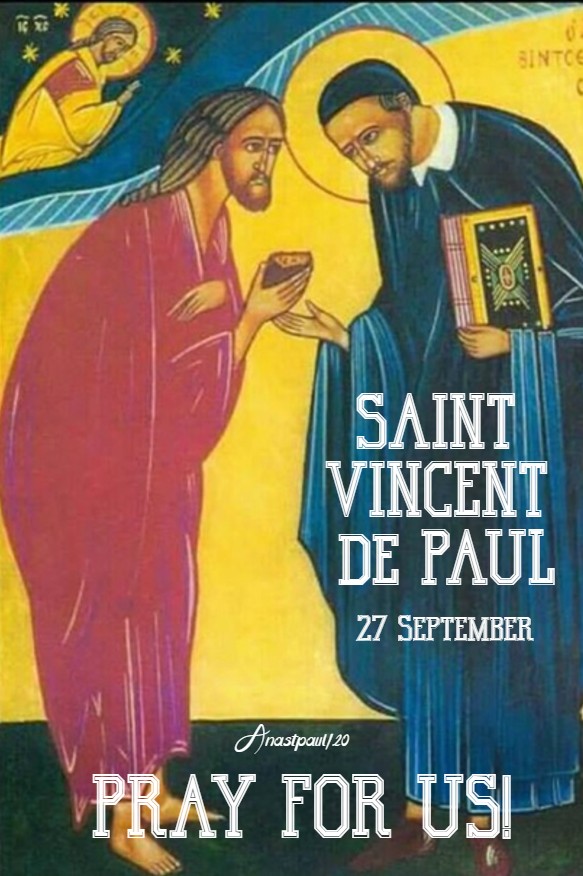
Quote/s of the Day – 27 September – 27 September – “Month of the Seven Sorrows of Mary” – St Vincent de Paul (1581-1660)
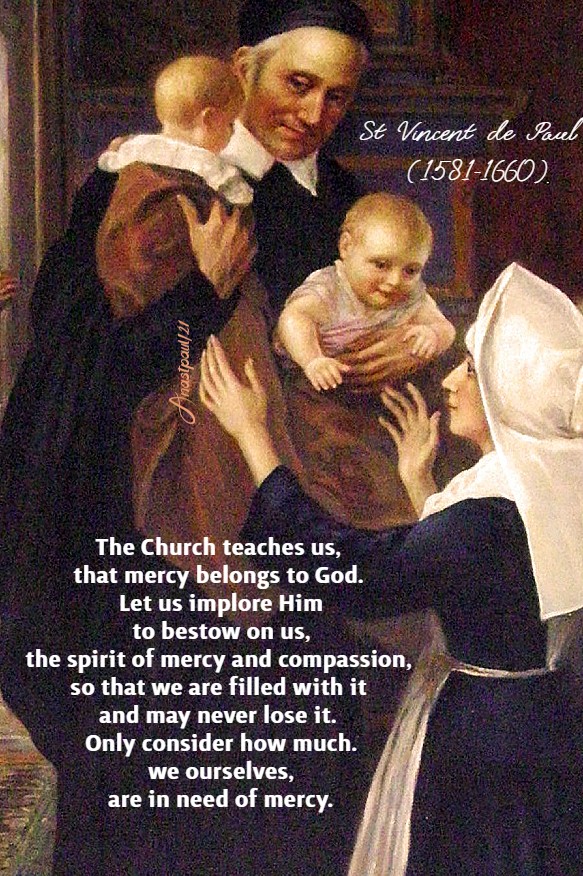
“The Church teaches us, that mercy belongs to God. Let us implore Him, to bestow on us the spirit of mercy and compassion, so that we are filled with it and may never lose it. Only consider how much we ourselves, are in need of mercy.”
“Humility and charity are the two master-chords – one, the lowest; the other, the highest; all the others are dependent on them. Therefore, it is necessary, above all, to maintain ourselves in these two virtues, for observe well, that the preservation of the whole edifice depends on the foundation and the roof!”
“Humility is nothing but truth and pride is nothing but lying!” …
One Minute Reflection – 27 September – “Month of the Seven Sorrows of Mary” – Readings: Zechariah 8: 1-8; Psalm 102: 16-21, 29 and 22-23; Luke 9: 46-50
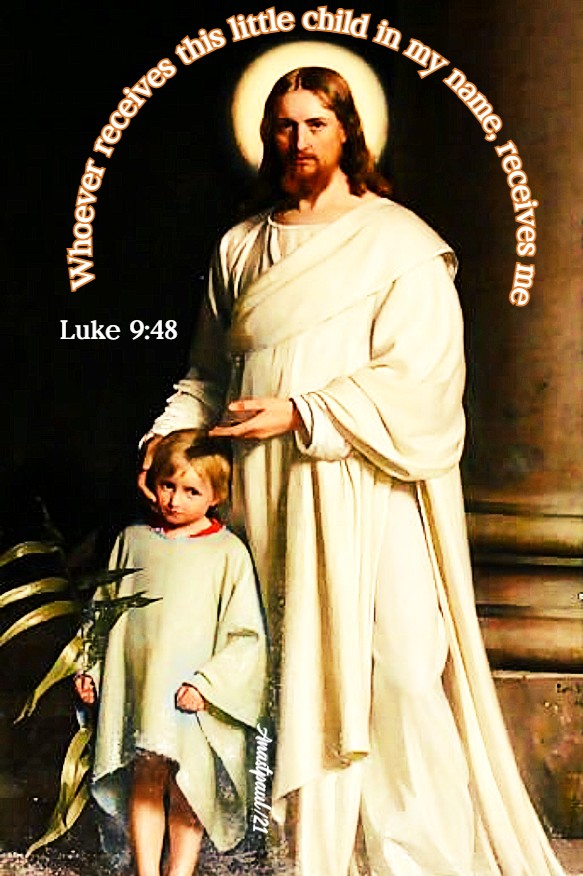
“Whoever receives this little child in my name, receives me” – Luke 9:48
REFLECTION – “As nurslings, you shall be carried in her arms and fondled in her lap; as a mother comforts her son, so will I comfort you,” (Is 66:12-13). The mother embraces her children and we seek out our own mother, the Church. Anything weak and helpless, whose weakness needs supporting, is sweet and vulnerable and endearing: -God does not refuse His help to anything so young. Parents devote particular gentleness to their little ones; … in the same way, the Father of all creation gathers to Himself all who take refuge in Him, regenerates them by His Spirit and adopts them as His sons. He knows how gentle they are and they are the ones He loves, helps and protects;,that is why He calls them His little children, (cf. Jn 13:33).
The Holy Spirit, speaking through the mouth of Isaiah, applies the expression “child” to the Lord Himself: “For a child is born to us, a son is given us (…)” (Is. 9,5). Who is this Child, then? This newborn Infant in whose image we, too, are children? Through the same prophet, the Spirit describes His greatness: “Wonder-CounselLor, God-Hero, Father-Forever, Prince of Peace,” (v. 6).
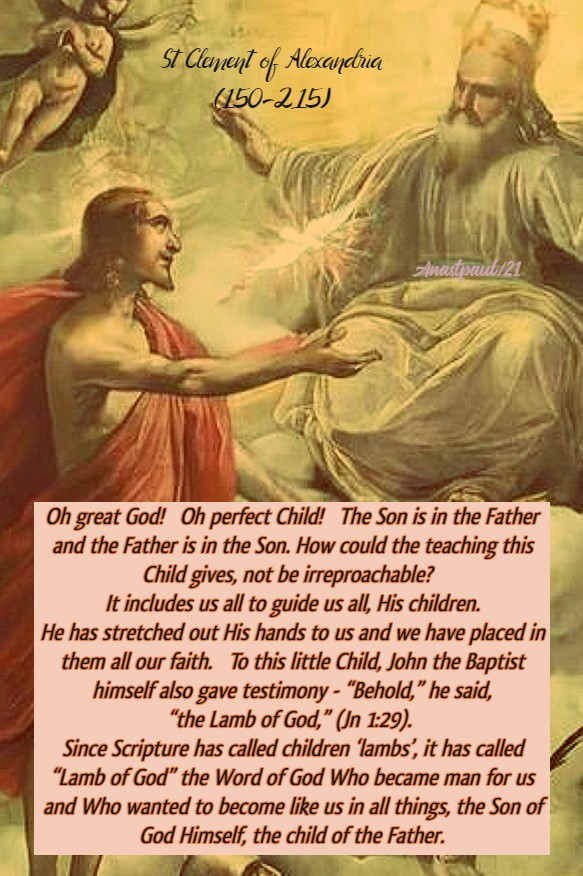
Oh great God! Oh perfect Child! The Son is in the Father and the Father is in the Son. How could the teaching this Child gives, not be irreproachable? It includes us all to guide us all, His children. He has stretched out His hands to us and we have placed in them all our faith. To this little Child, John the Baptist himself also gave testimony – “Behold,” he said, “the Lamb of God,” (Jn 1:29). Since Scripture has called children ‘lambs’, it has called “Lamb of God” the Word of God Who became man for us and Who wanted to become like us in all things, the Son of God Himself, the child of the Father. – St Clement of Alexandria (150-215) Theologian, Father – (Paedagogus I, 21-24)
PRAYER – God our Father, Your rule is a rule of love, Your providence is full of mercy for Your people. Through the intercession of the Blessed Virgin, Mother of the Word made flesh and His sorrowful Mother, grant the spirit of wisdom and understanding in Your Word, Your Son Jesus Christ. Grant that by the healing Word our repentant hearts may know our way to our eternal home and strive to attain eternal joy there with You. Through Jesus Christ our Lord, with the Holy Spirit, one God forever and ever, amen.
Our Morning Offering – 27 September – the Memorial of St Vincent de Paul (1581-1660)
Lord, Teach me How to Pray By St Vincent de Paul (1581-1660)
Oh Lord, You selected the poor and simple people to be Your Apostles. Look upon Your poor servant kneeling before You now. I recognise that I am simple and poor too. Dear Lord, please teach me how to pray as You taught Your disciples upon their humble request. If it pleases You in Your goodness to grant me that grace, I shall be able to pray well and much better than I could ever hope for if left to my own efforts. Lord, I trust that You will bless me with the fulfilment of this request. Amen
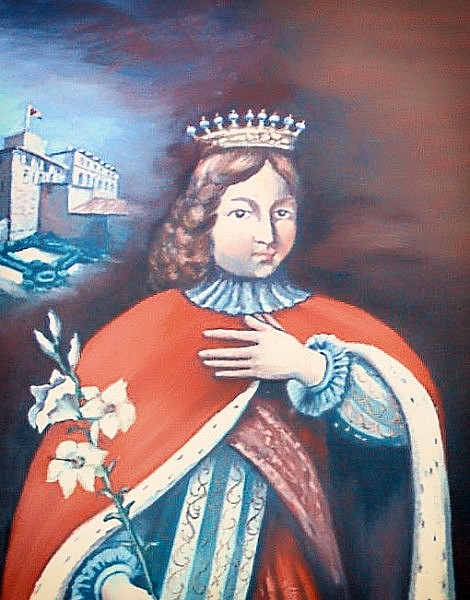
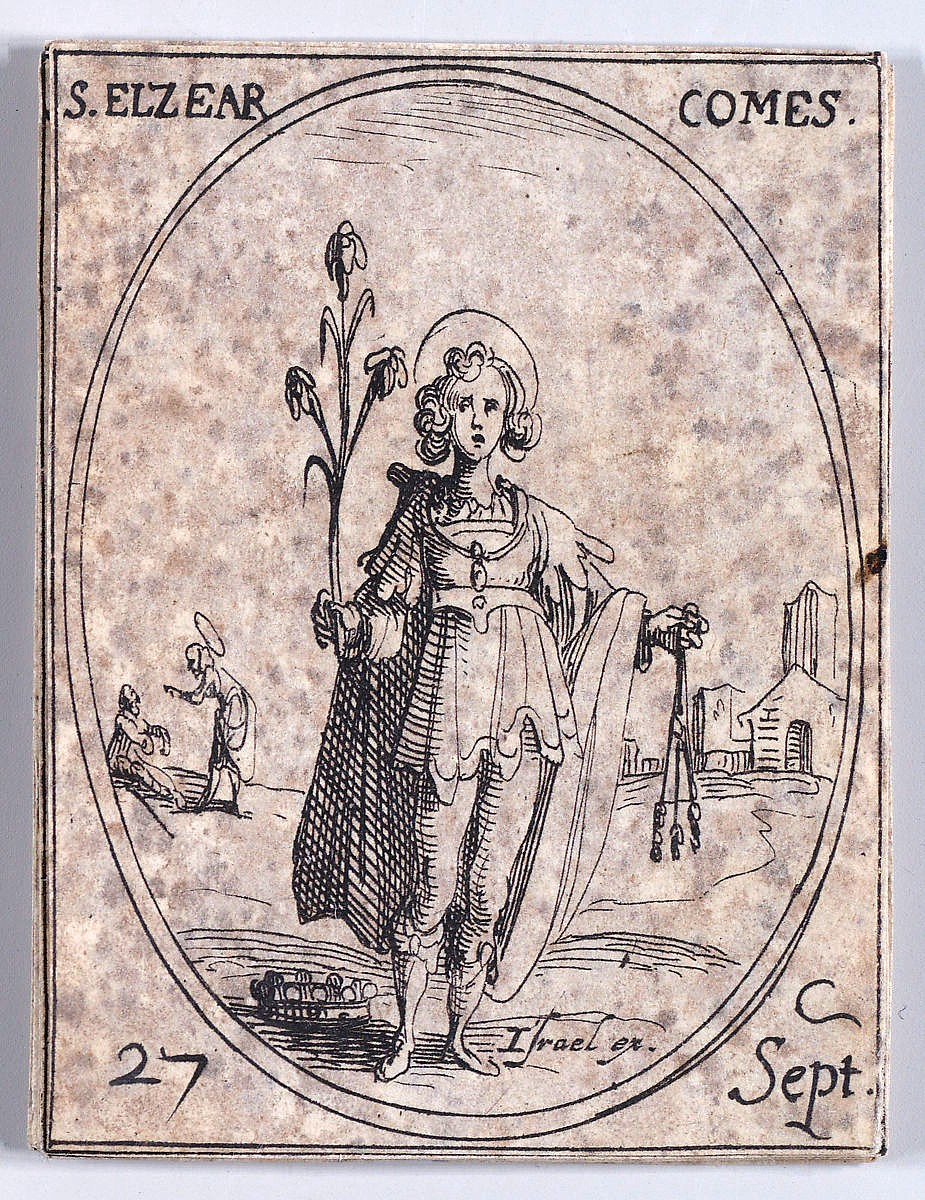
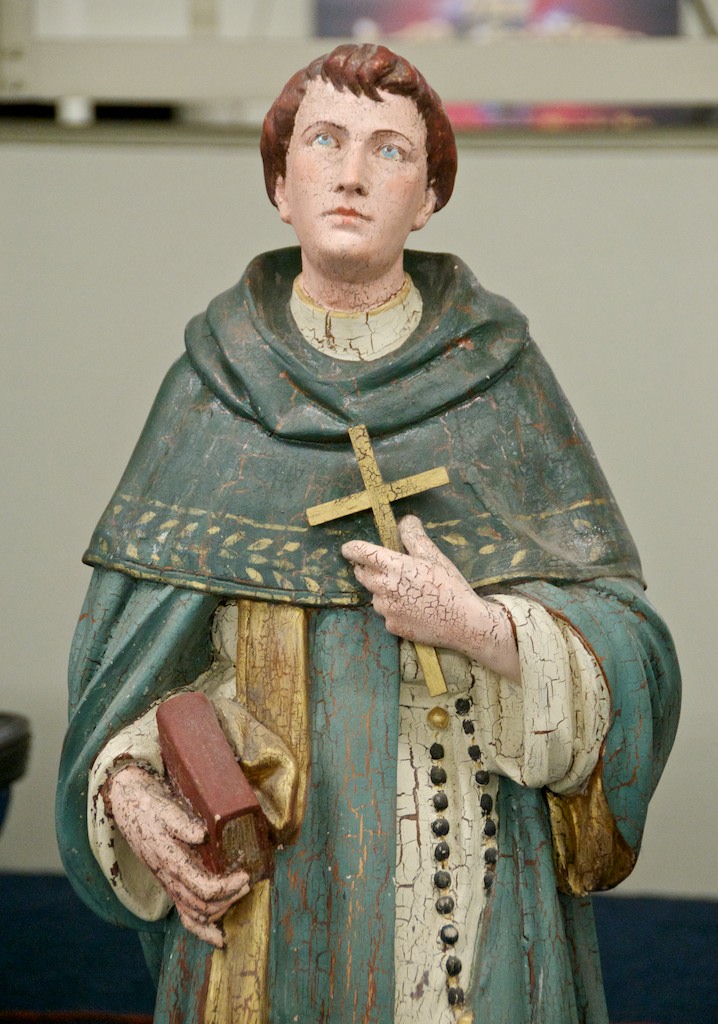
Saint of the Day – St Elzear TOSF (1285-1323) Layman, Member of the Third Order of St Francis, Mystic, miracle-worker, Baron of Ansouis, Count of Ariano, France, Ruler, Diplomat, Military Leader. Born in the Castle of Saint-Jean-de-Robians, near Cabrières-d’Aigues in Provence, southern France, in 1285. He died in Paris, France, on 27 September 1323. Also known as – Eleazarus. Patronages – Tertiaries, Ariano Irpino-Lacedonia, Italy, Diocese of. Additional Memorial – 26 September, commemorated by the Franciscans. together with Blessed Delphine..
Elzear was descended of the ancient and illustrious family of Sabran, in Provence, France. His father, Hermengaud of Sabran, was created Count of Arian (Ariano), in the kingdom of Naples; his mother was Lauduna of Albes, a family no less distinguished for its nobility.
Immediately after his birth, his mother, whose great piety and charity to the poor had procured her the name of “The Good Countess,” taking him in her arms, offered him to God with great fervour, begging that he might never offend his Divine Majesty but, might rather die in his infancy than live ever to be guilty of so dreadful an evil. The child seemed formed from his cradle to piety and virtue; nor could he, by any means, be satisfied if he saw any poor beggar, till he was relieved; for which reason his nurses and governesses were obliged to have their pockets always furnished with bread and small money, in order to give something to every poor person they met when they took him abroad and it was his delight to divide his dinner with poor children.
The first impressions of virtue he received from his mother but these were perfected by his religious uncle, William of Sabran, Abbot of St Victor’s, at Marseilles, under whom he had his education in that Monastery. In his tender age he wore a rough knotty cord, armed with sharp pricks, which galled his flesh, so that it was discovered by blood issuing from the wounds. The Abbot severely chided him for this and some other extraordinary austerities which he practiced, calling him a self-murderer; yet he secretly admired so great fervour in a tender young Lord.
When he had reached the appropriate age, he acceded to the wish of King Charles II of Naples and married Delphine of Glandèves (1284–1358). Upon their wedding night, Delphine advised her new husband that she had taken a private vow of chastity. Even though he had the right in canon law to make her abandon this commitment, Elzear chose to respect her desire to live in virginity and even copied her example in making the same vow. Together they joined the Third Order of Saint Francis.
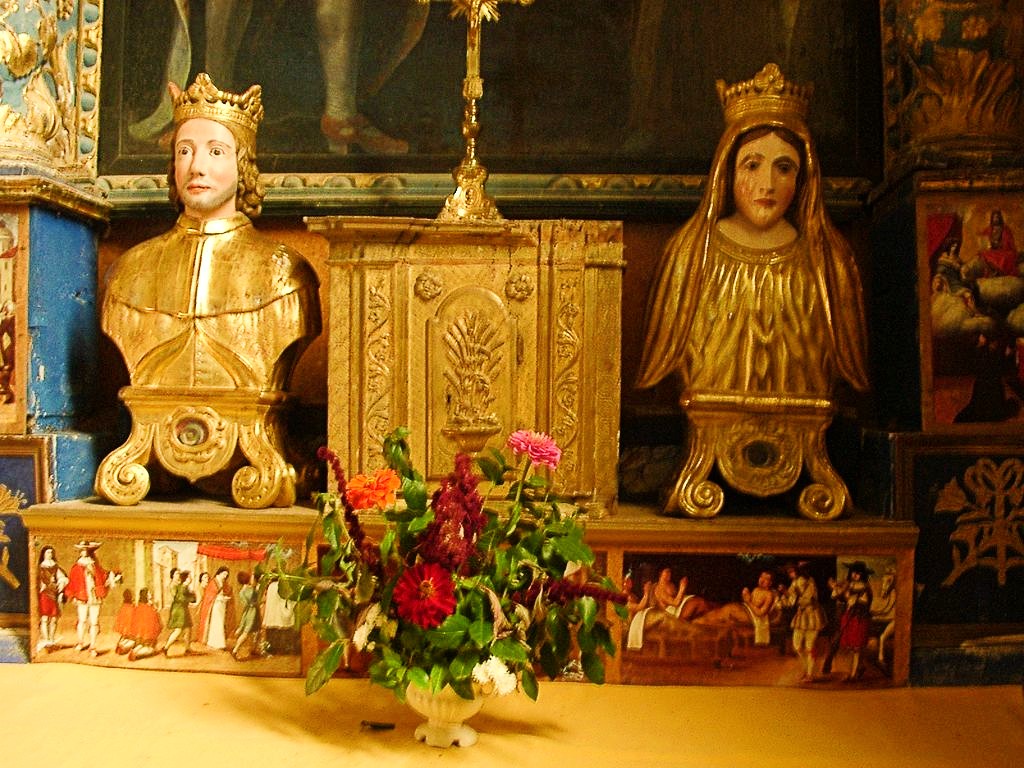
Reliquaries of St Elzéar and Bl Delphine in the Franciscan Church of Ansouis, France
The Saint was twenty-three years old when, by their deaths, he inherited his father’s honours and estates but these advantages he looked merely upon ,as talents and instruments put into his hands, to be employed for the advancement of piety, the support of justice and the relief and protection of the poor. He moved with his wife from Ansouis to Puimichel for greater solitude and formulated for his servants, rules of conduct that made his household a model of Christian virtue.
In 1309, he went to his new domains in Italy. There he gained by kindness the trust and support of his subjects, who had despised their Norman conquerors. In 1312 he marched to Rome at the head of the army of King Robert of Naples, which was mobilised to aid in expelling the Emperor Henry VII from that City. Returning to Provence after the war, he again set up a household in which piety and faithful practice of the Catholic faith were expected of all the members of his house.
St Elzéar Curing the Lepers
He said one day to Delphine: “I do not think a man on earth can enjoy any pleasure equal to that which I feel in the Holy Communion. It is the greatest delight and comfort of a soul in her earthly pilgrimage, to receive, most frequently, this divine Sacrament.” In prayer he was often favoured with raptures and heavenly graces. By the constant habitual union of his soul with God, he never found any difficulty in keeping it recollected in all places and at all times. He often watched great part of the nights on his knees in prayer.
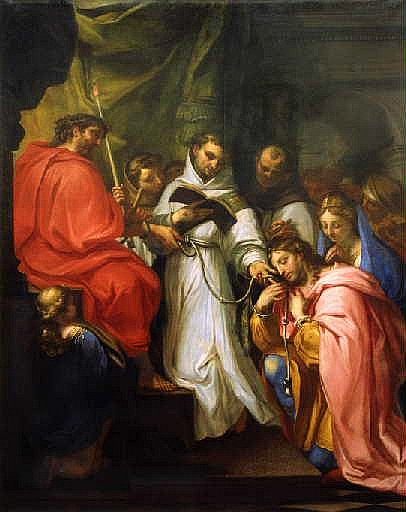
St Elzear and Bl Delphine presented to Christ by St Francis of Assisi, by Claude François.
In 1317 Elzear went to Naples to become the Tutor of Duke Charles, son of King Robert, and later became Charles’ Castellan, when Charles became Vicar General of the Kingdom of Sicily. He was sent as Ambassador to the King of France in 1323 to obtain the hand of Marie of Valois in marriage for Charles, edifying a worldly Court by his heroic virtues. While serving in that post he died, shortly after accomplishing his mission.
His body was returned to his domain and he was buried in the Franciscan habit in the Church of the Friars Minor at Apt, Vaucluse. The decree of his Canonisation was signed by his godson, Pope Urban V and was carried out by his successor, Pope Gregory XI about 1371. Countess Delphine was also Beatified by Pope Urban at that time. Their liturgical feast day, which they share, is celebrated by the Franciscan Third Order on 26 September.
St Damian (Optional Memorial) Feast day pre 1969 is today not yesterday (Died c 286 ) Martyrs. Twin brothers and Physicians, Apostles of Charity, Evangelists – born in the 3rd century, of Arabic descent and died by being tortured, without suffering any injury and finally they were beheaded c 286 in Aegea, Cilicia (modern Ayas, Turkey). Saints Cosmas and Damian: https://anastpaul.com/2019/09/26/saints-of-the-day-26-september-saints-cosmas-and-damian-died-c-286-martyrs/
St Ceraunus of Paris St Chiara of the Resurrection St Deodatus of Sora Saint Delphina of Glandenes St Elzear of Sabran TOSF (1285-1323) Layman, Member of the Third Order of St Francis St Epicharis St Fidentius of Todi St Florentinus the Hermit St Gaius of Milan St Hilary the Hermit St Hiltrude of Liessies Bl Jean-Baptiste Laborie du Vivier St John of Cordoba
Thought for the Day – 21 March – Meditations with Antonio Cardinal Bacci (1881-1971)
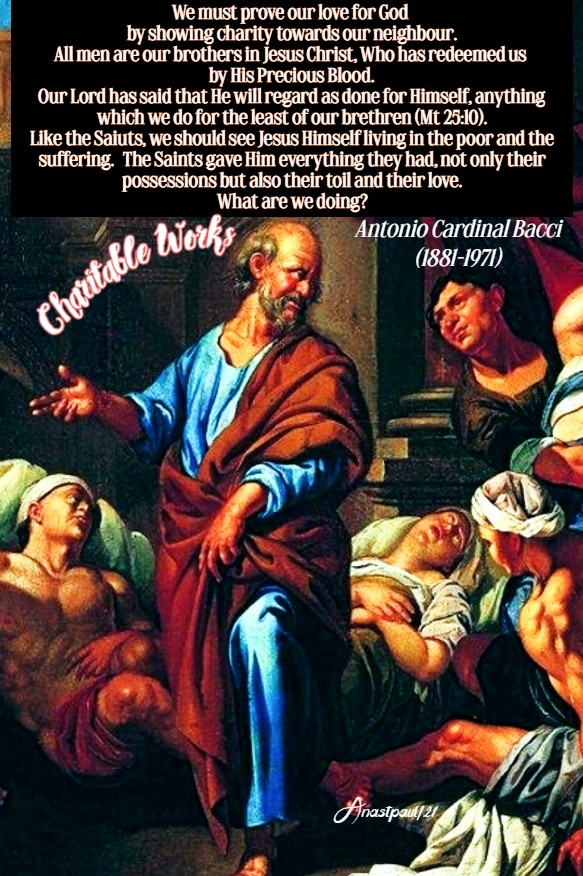
Charitable Works
“When Jesus was asked, what was the first commandment, He replied: “Thou shalt love the Lord thy God with thy whole heart and with thy whole soul and with thy whole mind and with thy whole strength. This is the first commandment. And the second is like unto it. Thou shalt love thy neighbour as thyself. There is no other commandment greater than this” (Mk 12:30-31). As St Augustine says, the love of God and the love of neighbour are two branches of the same tree, the tree of charity. “If anyone says, ‘I love God’ and hates his brother,” St John warns us, “he is a liar” (1 Jn 4:20).
We must prove our love for God by showing charity towards our neighbour. All men are our brothers in Jesus Christ, Who has redeemed us by His Precious Blood. Our Lord has said that He will regard as done for Himself, anything which we do for the least of our brethren (Mt 25:10).
Like the Saints, we should see Jesus Himself living in the poor and the suffering. The Saints gave Him everything they had, not only their possessions but also their toil and their love.
Think how much those missionaries do who leave everything in order to go to foreign lands and win souls for Christ. Think of the charitable work of the sisters and nurses in the hospitals, asylums and orphanages. What are we doing?”
Quote/s of the Day – 26 September – “Month of the Seven Sorrows of Mary” – Readings: Numbers 11: 25-29; Psalm 19: 8, 10- 14; James 5: 1-6; Mark 9: 38-43, 45, 47-48
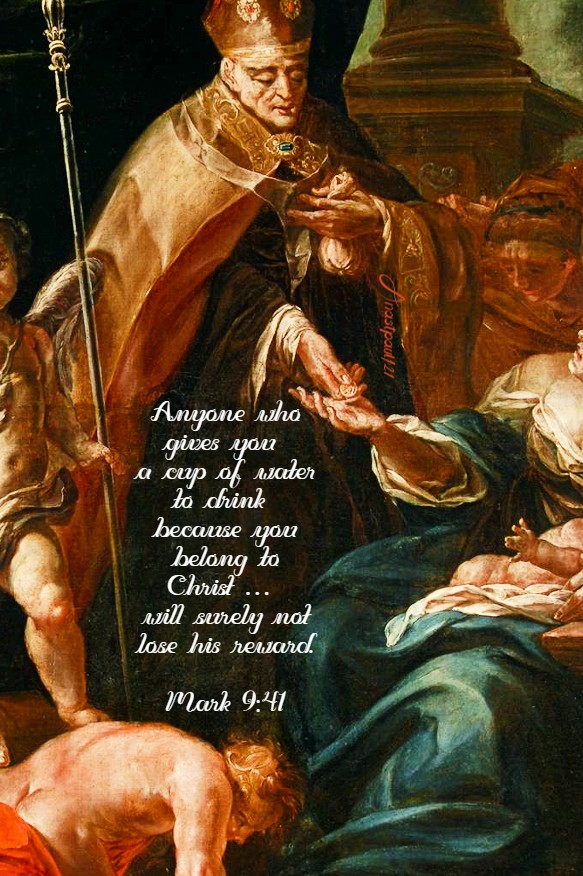
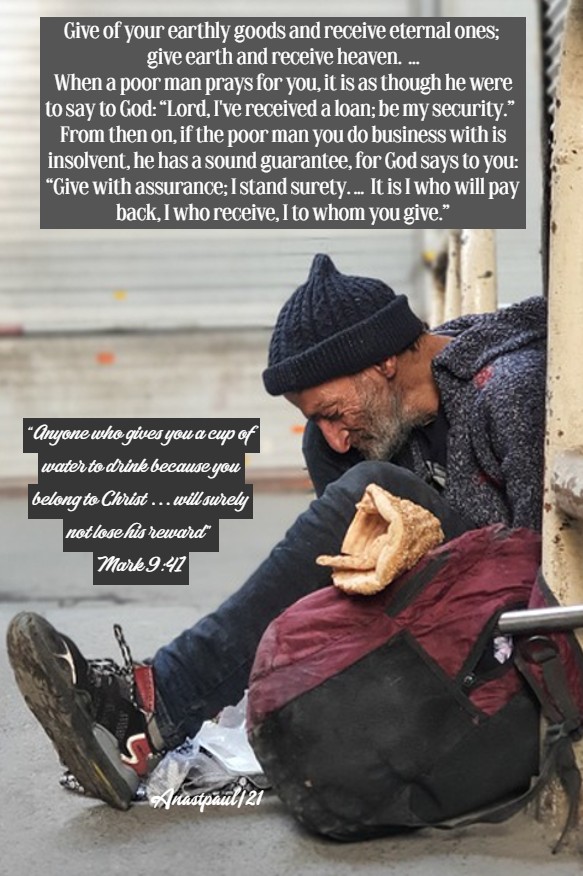
“Anyone who gives you a cup of water to drink because you belong to Christ … will surely not lose his reward … ”
Mark 9:41
“And whoever gives only a cup of cold water to one of these little ones to drink , … he shall not lose his reward.”
Matthew 10:42
“ Lift up and stretch out your hands, not to heaven but to the poor… if you lift up your hands in prayer without sharing with the poor, it is worth nothing.”
St John Chrysostom (347-407) Father and Doctor of the Church
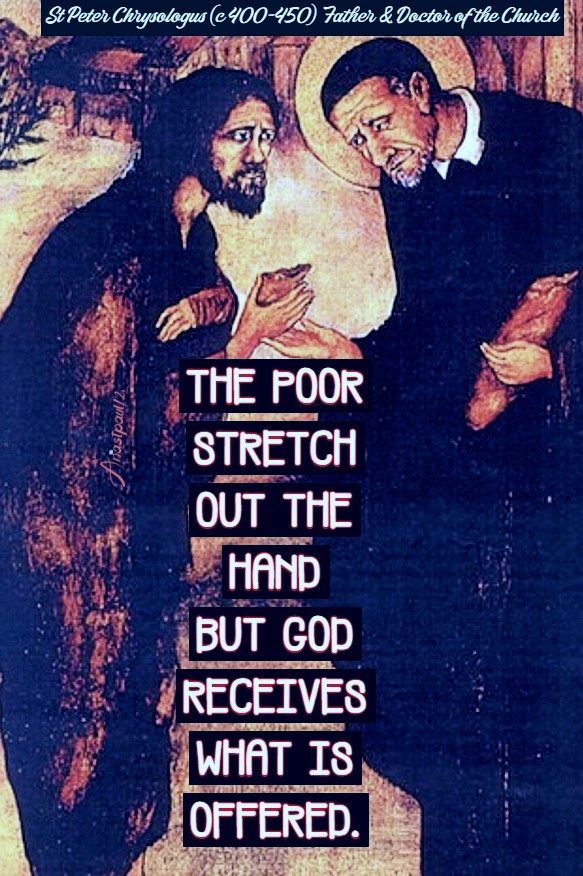
“The poor stretch out the hand but God receives what is offered.”
St Peter Chrysologus (c 400-450) “Golden Words” Father & Doctor of the Church
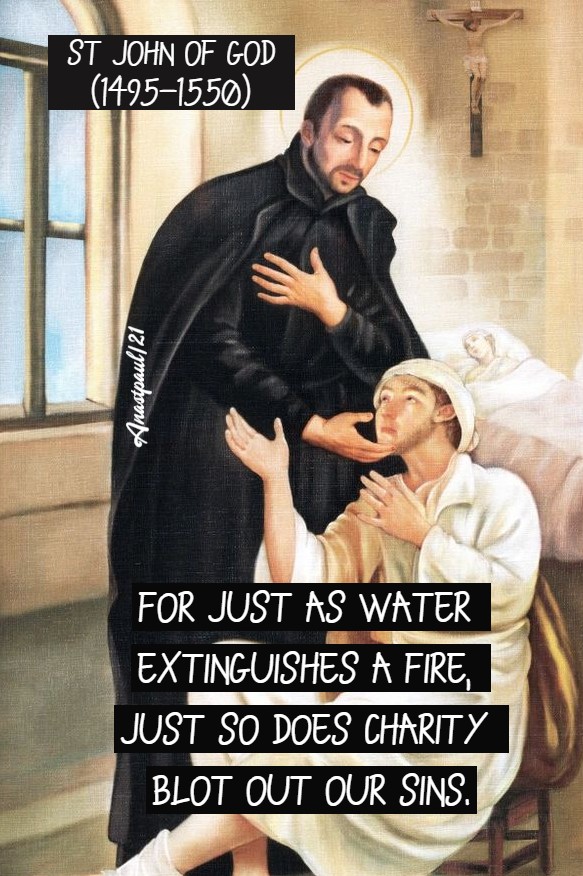
“For just as water extinguishes a fire, just so does charity blot out our sins.”
St John of God (1495-1550)
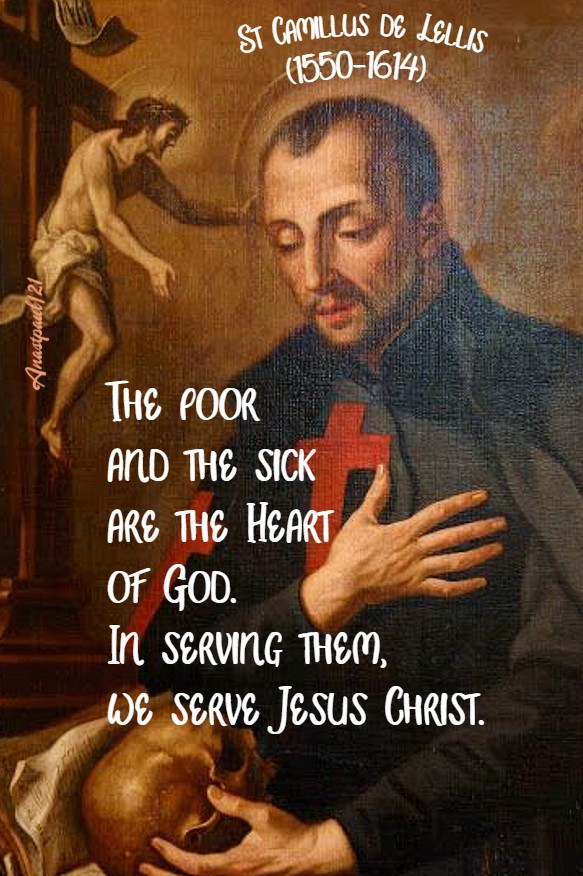
“The poor and the sick are the Heart of God. In serving them, we serve Jesus Christ.”
One Minute Reflection – 26 September – “Month of the Seven Sorrows of Mary” – Readings: Numbers 11: 25-29; Psalm 19: 8, 10- 14; James 5: 1-6; Mark 9: 38-43, 45, 47-48
“Anyone who gives you a cup of water to drink because you belong to Christ … will surely not lose his reward” – Mark 9:41
REFLECTION – “Give of your earthly goods and receive eternal ones; give earth and receive heaven. But give to whom? … Hear Scripture telling you how you are to lend to the Lord Himself: “He who has compassion on the poor lends to the Lord” (Prv 19:17). God most certainly is in no need of you but another is in need; what you give to the one is received by another. For the poor has nothing with which to pay you back; he would like to but cannot find anything. The only thing he has is a kindly wish to pray for you. But when a poor man prays for you, it is as though he were to say to God: “Lord, I’ve received a loan; be my security.” From then on, if the poor man you do business with is insolvent, he has a sound guarantee, for God says to you: “Give with assurance; I stand surety. … It is I who will pay back, I who receive, I to whom you give.”
Do you really believe that God would say to you: “It is I who receive and to me that you give?” Yes, indeed, if Christ is God – and of that there is no question. For He said: “I was hungry and you gave me food.” And when asked: “When did we see you hungry?” wanting to prove that He is indeed surety for the poor, He answers on behalf of all His members, … declaring, “Whatever you did for the least of my disciples, you have done to me” (Mt 25:34 f.). – St Augustine (354-430) Bishop, Theologian, Father, Doctor of Grace. Sermon on Psalm 36
PRAYER – Lord God, You hold out the Light of Your Word to those who do not know You. Strengthen in our hearts, the faith You have given us and the Credo we profess, so that no trials may quench the fire Your Spirit has kindled in us. May the intercession of the Mother of the Word made flesh and our Mother, grant us the grace of following the way of the Cross, to stand beneath it with our her, Ave Maria! We make our prayer through Jesus Christ with the Holy Spirit, one God forever, amen.
Our Morning Offering – 26 September – Eighteenth Sunday after Pentecost
Sunday is traditionally dedicated to the Holy Trinity. This is entirely fitting as Sunday is the first day of the week and the day when we offer God, Father, Son and Holy Spirit our praise, adoration and thanksgiving.
An Act of Consecration to the Holy Trinity By St Francis de Sales (1567-1622) Doctor of Charity
I vow and consecrate to God all that is in me: my memory and my actions to God the Father; my understanding and my words to God the Son; my will and my thoughts to God the Holy Ghost; my heart, my body, my tongue, my senses and all my sorrows to the sacred Humanity of Jesus Christ, “who was content to be betrayed into the hands of wicked men and to suffer the torment of the Cross..” Amen
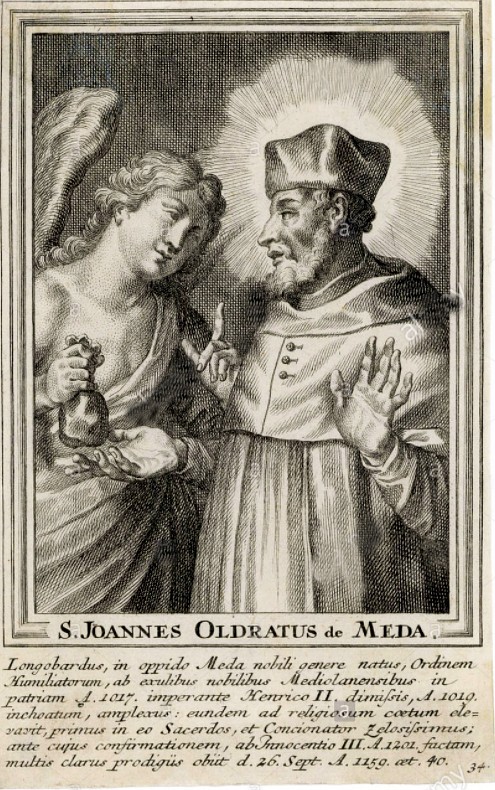
Saint of the Day – 26 September – Saint John of Meda Ord.Hum. (1100-1159) Priest, Monk, Abbot of the Humiliati Order (now no longer in existence), Reformer. Born as Giovanni Oldrati (or Oldradi) at Meda, Province of Milan, Italy and died on 26 September 1159 at Brera, Italy of natural cause. Also known as – Giovanni/John Oldrati, John Oldradi, Joannes Oldradus, John of Como.
He was born in the Town of Meda, Lombardy. He was a member of the Oldrati family of Milan. After Ordination he withdrew to the solitude of Rondenario, near Como. Receiving a vision of the Virgin Mary, in 1134 he felt called to join the Humiliati at their Abbey of Viboldone, then a lay congregation. Chosen their Superior, he subjected them to the Rule of St Benedict, changing the appellation of brethren of the Monks to Canons.
He spent his later life serving as an Abbot and is known for introducing the Little Office of Our Lady. He composed a special breviary for their use, which was called Canons’ Office. The Humiliati thus became a regular Order, with clerical and lay members. Later John went on to found further Monasteries of the Order, in the regions of Milan and Lombardy.
John of Meda gained a large number of converts by his preaching and was a humble and pious Abbot displaying a dedicated care of the needy.
He died on 26 September 1159 and was Canonised in c 1170, just a few years after his death by Pope Alexander III.
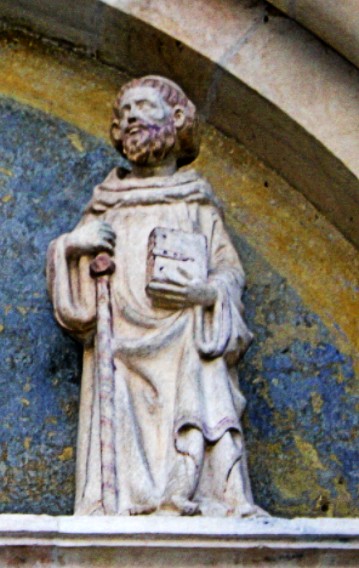
Lunette of the Portal of the Church of the Abbey of Viboldone, Milan, Italy. On the left is Saint Ambrose (Patron Saint of Milan), with Our Lady with the Child Jesus in the centre and St John of Meda on the right.
Eighteenth Sunday after Pentecost Twenty Sixth Sunday in Ordinary Time
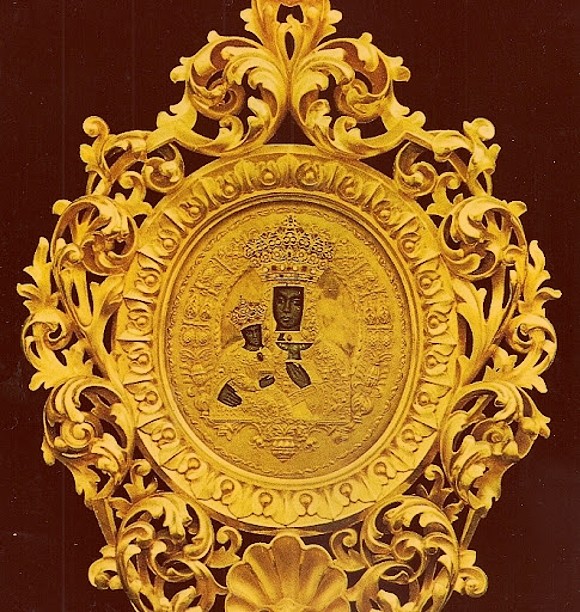
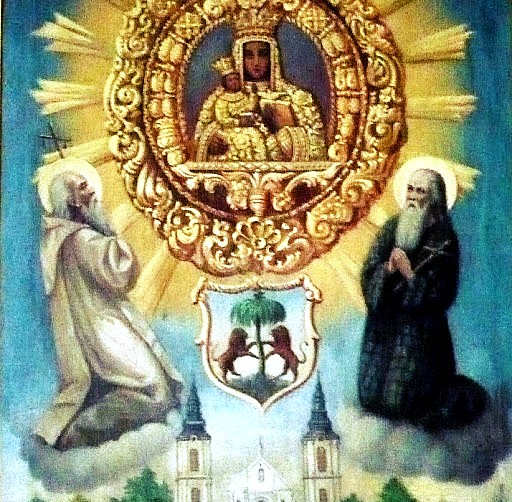
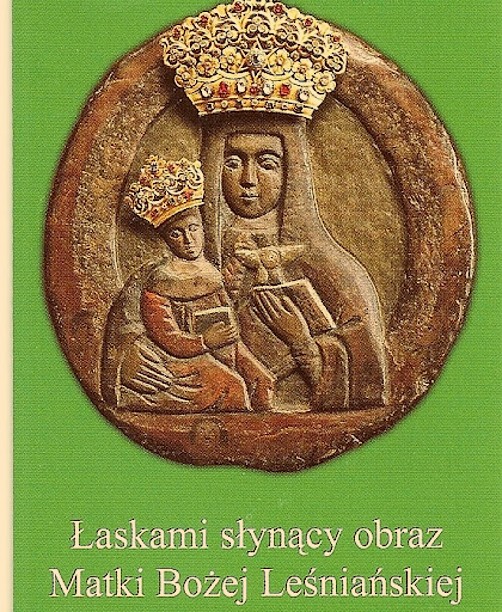
Matka Boża Leśniańska / Blessed Mother of Leśna, Leśna Podlaska, Biała Podlaska, Lublin, Poland (1683) – 26 September:
The Leśnia Sanctuary begins on 26 September 1683. On that day, two shepherds – Miron Makaruk and Aleksander Stelmaszuk – looking for the lost cattle in the bushes, noticed a stone image of the Mother of God hanging on a wild pear tree, which gave an extraordinary glow. Wanting to take the painting off, one of the bravest young men climbed the tree but each time fell to the ground. The local inhabitants, seeing what was happening, began to pray fervently. Soon, Zabłocki’s elders from nearby Bordziłówka arrived and only he, as an unusually prayerful man, took the painting off the tree. Droplets of “sweat” appeared on the image and this phenomenon continued for a long time. Then the painting was taken to the manor in Bukowice. This extraordinary find deeply touched the religious and secular authorities of the time. Soon a wooden Church was erected on the site of the appearance of the Image. On 26 September 1695, a Parish was established in Lesna. From the very beginning, the Image attracted crowds of believers who experienced many favours thanks to the Blessed Mother, especially cures of illnesses. The Bishop of Lutsk, Franciszek Prażmowski, issued a decree in 1700, in which he stated that the appearance of the Image should be considered miraculous.
In the Lesnian Image, Mary is presented, embracing the Child Jesus with her right arm. The Child Jesus is holding the book with his right hand and his left hand is raised up in a gesture of teaching. Mary, standing in half-figure, is facing the viewer. In her left hand she holds an open book, on which, with outstretched wings, a dove – a symbol of the Holy Spirit – is supported. The figure of the Mother of God is covered with a coat. The image of the Mother of God is a relief carved in field stone. The dimensions of the Image are: width 29.3 cm, height 31.4 cm, thickness 4.6 cm, weighs 9.5 kg.
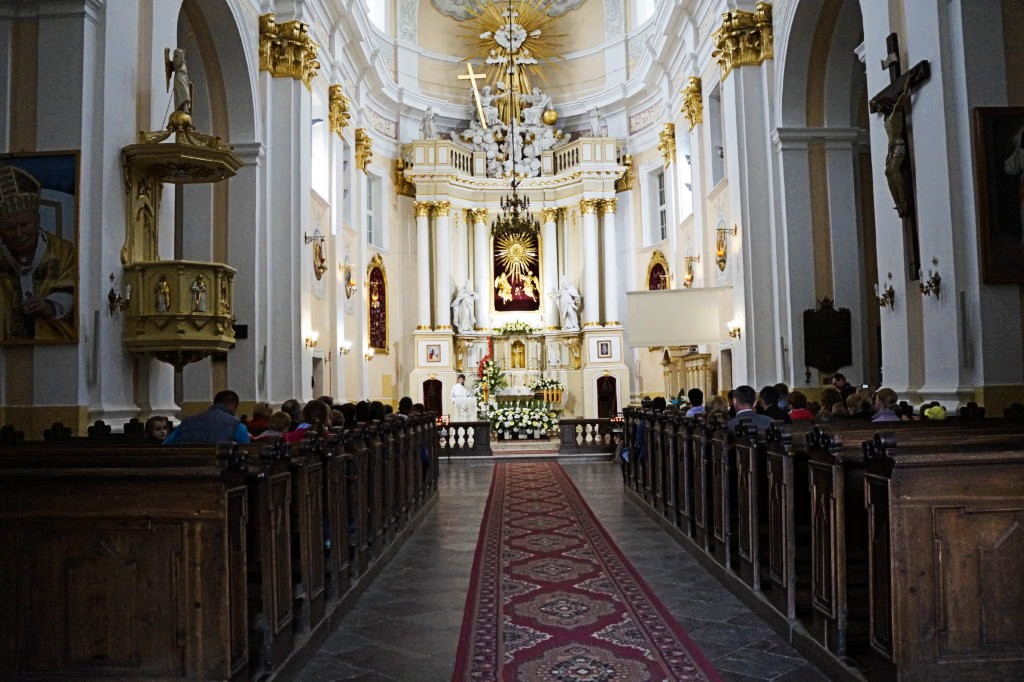
On the site of the appearance of the Image of the Mother of God in 1718. a small Church was built. It exists to this day and is called the “Chapel of the Appearance of the Miraculous Image.” In 1727, the Parish of Leśna and the care of the Miraculous Image were taken over by the Pauline Fathers from Jasna Góra. They began the construction of a magnificent Church, which was erected in the years 1731 – 1758. It was consecrated under the invocation of the “Nativity of the Blessed Virgin Mary and the Holy Apostles Peter and Paul” on 8 September 1758. Huge crowds of the faithful of the Latin and Uniate rite were drawn to the Leśnia Sanctuary.
The situation changed with the partitions of Poland, when Leśna found itself under the Russian partition. After the fall of the January Uprising, the Lesnian Sanctuary found itself in a desperate situation. As part of the repression for helping the insurgents, on the night of 27-28 October 1864 , the Pauline Fathers were deported from Leśna. It was then, that the Bishop of Janów, Beniamin Szymanski, ordered to secretly take out the Miraculous Image and put a copy in its place. It was done in 1865. Soon the tsarist government abolished the Podlasie Diocese. The exiled Bishop took the Miraculous Picture with him to Łomża. He put it in the Church of the Benedictine Sisters. In 1875, the Church in Leśnia was taken over for the purposes of the Orthodox Church. Then the pilgrimages stopped. In 1889, an Orthodox nunnery was established in Lesna. It was to become the centre of Russification of Poles. In 1905 Tsar Nicholas II came to Lesna, whose relative was the superior of the nuns of Leśna. After the outbreak of World War I, the sisters left Leśna and took with them a copy of the painting of the Mother of God, still being firmly convinced that it was the original painting.
On 16 August 1915, the temple in Leśnia returned to Catholic worship. On 25 May 1919 . The Pauline Fathers returned to Lesna and immediately began renovation works in the Sanctuary. First of all, the search for the Miraculous Picture began, which was not found until 5 May 1926 in Łomża. It happened thanks to Fr. Aleksander Łaziński. After the canonical trial conducted by Bishop H. Przeździecki, the Miraculous Image returned in a triumphant parade from Siedlce to Leśna on 25 September 1927. It was a great celebration for the entire Podlasie Diocese and over 25,000 people attended this event. In the interwar period, the Pauline Fathers decorated the Sanctuary. They looked after the pilgrims who were again in large numbers at the feet of their Lesnian Mother.
In 1939, the difficult time of the Nazi occupation began. In the fall of 1940, the Germans occupied the Monastery and expelled the Pauline Fathers. After the war, in 1951, under the direction of the Prior – Father Jerzy Tomziński, the Church received a Pulpit and an Organ.
On 18 August 1963 , the Primate of Poland, Cardinal Stefan Wyszyński, together with the Bishop of Podlasie, Ignacy Świrski, crowned the Miraculous Image with papal crowns. From 11 to 12 June 1970, Cardinal Karol Wojtyła stayed in Leśna. On 25 September 1977, the 50th anniversary of the return of the Miraculous Image was solemnly celebrated. In 1983, the solemn celebrations of 300 years of the appearance of the Miraculous Image took place and in 1984 the Church in Leśnia was elevated to the rank of a Minor Basilica. In 1992, a break-in was made to the temple in Leśnia and attempts were made to steal the golden crowns from the Miraculous Image. In 1995, the 300th anniversary of the establishment of the Parish in Leśna Podlaska was celebrated. This time the ceremony was presided over by the Primate of Poland, Cardinal Józef Glemp. In 1996, works on frescoes and paintings in the Basilica began and they were completed in 2002. On 26 September 2019, the Leśnia Sanctuary celebrated the 100th anniversary of the return of the Pauline Order to Leśna Podlaska. – https://lesnapodlaska.paulini.pl/historia-sanktuarium/
A Bas Relief of the Image
St Cosmas (Optional Memorial) St Damian (Optional Memorial) (Died c 286 ) Martyrs. Twin brothers and Physicians, Apostles of Charity, Evangelists – born in the 3rd century, of Arabic descent and died by being tortured, without suffering any injury and finally they were beheaded c 286 in Aegea, Cilicia (modern Ayas, Turkey). The Martyr twins are remembered in the Roman Canon of the Mass in the prayer known as the Communicantes (from the first Latin word of the prayer). They are also recalled in the Litany of the Saints and in the older form of the Roman rite, in the Collect for Thursday in the Third Week of Lent, as the Station Church for this day is Santi Cosma e Damiano. Saints Cosmas and Damian: https://anastpaul.com/2019/09/26/saints-of-the-day-26-september-saints-cosmas-and-damian-died-c-286-martyrs/
St Amantius of Tiphernum St Callistratus of Constantinople St Colman of Elo St Cyprian of Antioch St Eusebius of Bologna St John of Meda Ord.Hum. (1100-1159) Priest, Monk, Abbot St Justina of Antioch
Blessed Louis Tezza MI (1841-1923) the “Apostle of Lima,” Blessed Louis was an Italian Priest, a professed member of the Camillians and Founder of the Daughters of St Camillus de Lellis M.I. (1550-1614), Apostle of Charity, Spiritual Director, Counsellor, Administrator, Teacher, Reformer, Advisor. An unknown visitor carved the words “Apostle of Lima” on his tomb.. Blessed Louis’ Story: https://anastpaul.com/2018/09/26/saint-of-the-day-26-september-blessed-louis-tezza-m-i-1841-1923-the-apostle-of-lima/
St Senator of Albano St Vigilius of Brescia — Martyrs of Korea – 12 saints: Twelve lay people in the apostolic vicariate of Korea who were imprisoned, tortured and martyred together in the persecutions in Korea. • Saint Agatha Chon Kyong-Hyob • Saint Carolus Cho Shin-Ch’ol • Saint Catharina Yi • Saint Columba Kim Hyo-Im • Saint Ignatius Kim Che-Jun • Saint Iulitta Kim • Saint Lucia Kim • Saint Magdalena Cho • Saint Magdalena Ho Kye-Im • Saint Magdalena Pak Pong-Son • Saint Perpetua Hong Kum-Ju • Saint Sebastianus Nam I-Gwan They were beheaded September 1839 in Seoul Prison, South Korea and Canonised on 6 May 1984 by St Pope John Paul II.
Martyred in the Spanish Civil War: • Blessed Amalia Abad Casasempere de Maestre • Blessed Andreu Felíu Bartomeu • Blessed Antonio Cid Rodríguez • Blessed Josefa Romero Clariana • Blessed Manuel Legua Martí • Blessed María Jord´ Botella • Blessed Pau Castell´ Barber´ • Blessed Teresa Rosat Balasch
Thought for the Day – 25 September – Meditations with Antonio Cardinal Bacci (1881-1971)
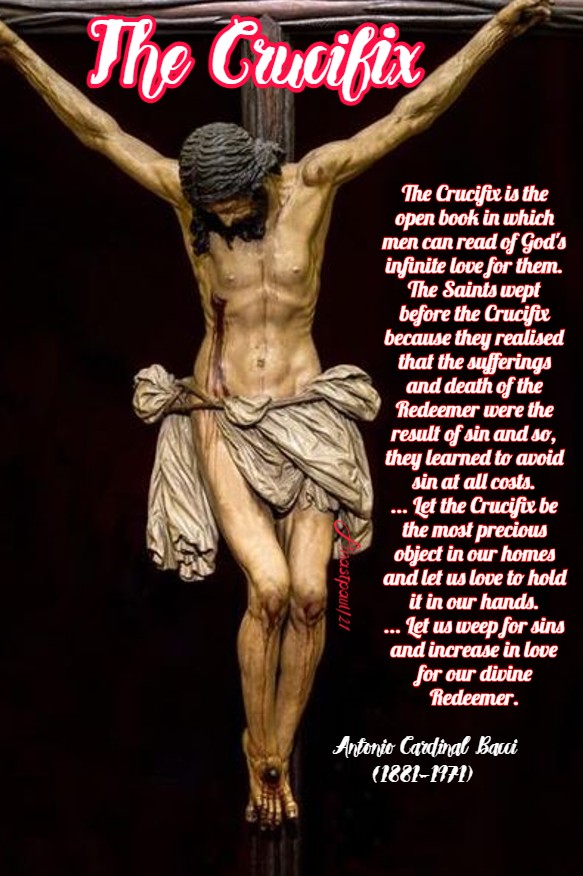
The Crucifix
“The Crucifix is the open book in which men can read of God’s infinite love for them. The Saints wept before the Crucifix because they realised that the sufferings and death of the Redeemer were the result of sin and so, they learned to avoid sin at all costs. They meditated on the last words of Jesus dying on the Cross, words which so clearly illustrate His infinite mercy towards us.
We should follow the example of the Saints in this devotion. Let the Crucifix be the most precious object in our homes and let us love to hold it in our hands. Let it recall for us, the tragedy of Mount Calvary, when Jesus was stripped of His garments and nailed to the Cross, was raised up to suffer indescribable agonies, forgave His executioners and forgave us our sins, pardoned the penitent thief and bequeathed to us the last treasured possession which was left to Him, His most holy Mother.
Let us weep for sins and increase in love for our divine Redeemer.”
Quote/s of the Day – 25 September – Readings: Zechariah 2: 5-9, 14-15a; Jeremiah 31: 10-12ab, 13; Luke 9: 43b-45“
“Pay attention to what I am telling you. The Son of Man is to be handed over to men.”
Luke 9:44
“Behold, the Lamb of God, who takes away the sin of the world!”
John 1:29
“Greater love than this no man hath, that a man lay down his life for his friends.”
John 15:13
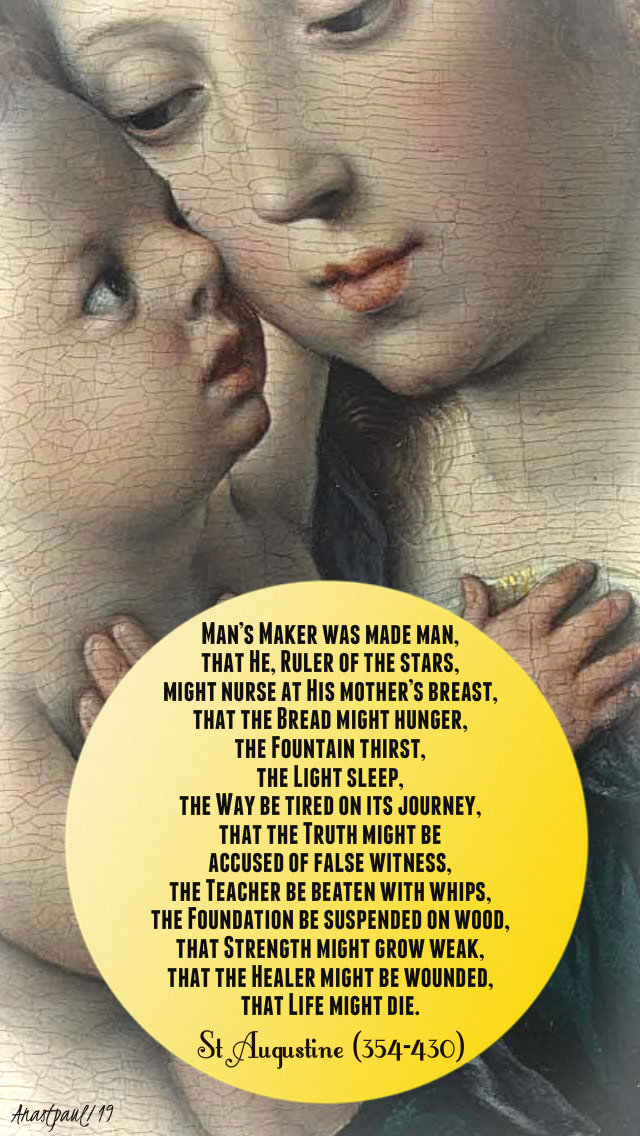
“Man’s Maker was made man, that He, Ruler of the stars, might nurse at His mother’s breast, that the Bread might hunger, the Fountain thirst, the Light sleep, the Way be tired on its journey, that the Truth might be accused of false witness, the Teacher be beaten with whips, the Foundation be suspended on wood, that Strength might grow weak, that the Healer might be wounded, that Life might die.”
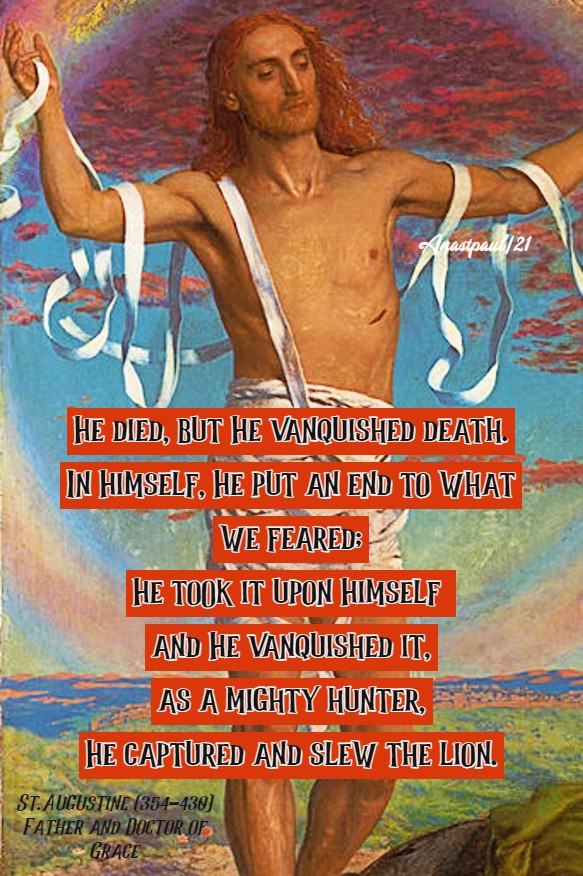
“He died, but He vanquished death. In Himself, He put an end to what we feared; He took it upon Himself and He vanquished it, as a mighty hunter, He captured and slew the lion.”
St Augustine (354-430) Father and Doctor of Grace
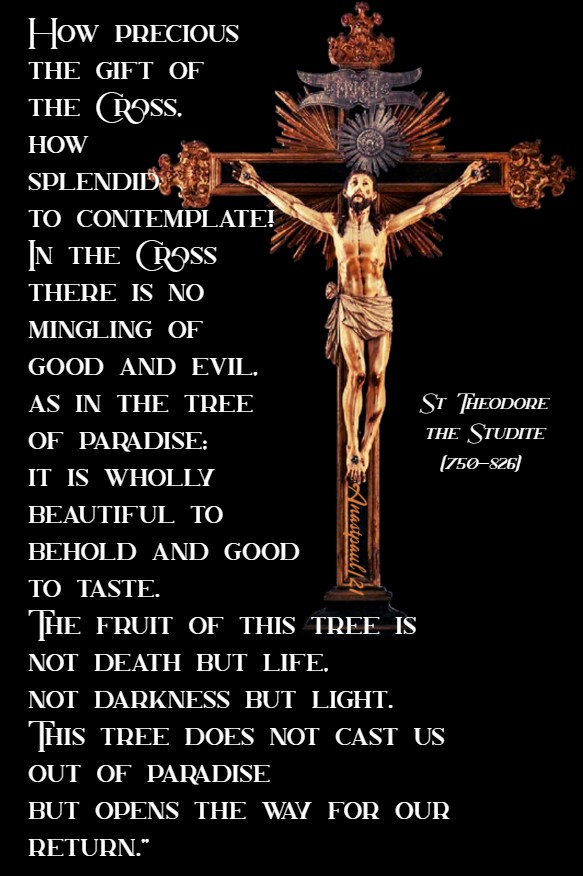
“How precious the gift of the Cross, how splendid to contemplate! In the Cross there is no mingling of good and evil, as in the tree of paradise; it is wholly beautiful to behold and good to taste. The fruit of this tree is not death but life, not darkness but light. This tree does not cast us out of paradise but opens the way for our return.”
St Theodore the Studite (750–826) Father, Abbot, Theologian, Writer
One Minute Reflection – 25 September – Readings: Zechariah 2: 5-9, 14-15a; Jeremiah 31: 10-12ab, 13; Luke 9: 43b-45
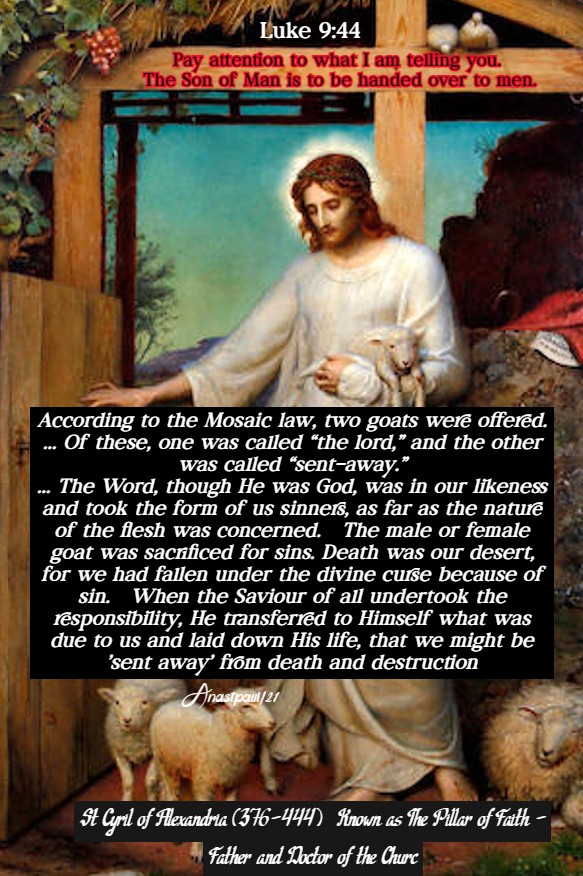
“Pay attention to what I am telling you. The Son of Man is to be handed over to men.” – Luke 9:44
REFLECTION – “The mystery of the Passion may be seen also in another instance. According to the Mosaic law, two goats were offered. They were not different in any way from one another but they were alike in size and appearance. Of these, one was called “the lord,” and the other was called “sent-away.” When the lot was cast for the one called “lord,” it was sacrificed. The other one, was sent away from the sacrifice, and, therefore, had the name of “sent-away.” Who was signified by this? The Word, though He was God, was in our likeness and took the form of us sinners, as far as the nature of the flesh was concerned. The male or female goat was sacrificed for sins. Death was our desert, for we had fallen under the divine curse because of sin. When the Saviour of all undertook the responsibility, He transferred to Himself what was due to us and laid down His life, that we might be ‘sent away‘ from death and destruction.” – St Cyril of Alexandria (376-444) Known as The Pillar of Faith – Father and Doctor of the Church (Commentary on Luke, Homily 53)
PRAYER – Holy God, help me to amend my life constantly and be sincerely converted to You. Let me seek Your interests rather than my own and be ever more closely united with You. Send Your Spirit of understanding to enkindle our minds but most of all, fill us with Your grace of faith, that whether we understand or not, our love and obedience, is our only guide. Blessed Virgin Mother teach us to carry our crosses as you did in love and patience. We make our prayer through Christ our Lord, in the unity of the Holy Spirit, God for all eternity, amen.
Our Morning Offering – 25 September – Mary’s Day and The Memorial of Blessed Herman of Reichenau/the Cripple OSB (1013–1054) the Author of the Salve Regina, the Veni Sancte Spiritus and the Alma Redemptoris Mater amongst others
Salve Regina Hail Holy Queen By Blessed Herman of Reichenau (1013–1054)
Hail, holy Queen, Mother of Mercy, Hail our life, our sweetness and our hope. To thee do we cry, Poor banished children of Eve; To thee do we send up our sighs, Mourning and weeping in this valley of tears. Turn then, most gracious advocate, Thine eyes of mercy toward us; And after this our exile, Show unto us the blessed fruit of thy womb, Jesus.
This line, below, by St Bernard of Clairvaux (1090-1153) Doctor of the Church
O clement, O loving, O sweet Virgin Mary.
℣ Pray for us, O holy Mother of God, ℟ that we may be made worthy of the promises of Christ.
Let us pray: Almighty, everlasting God, who by the co-operation of the Holy Spirit didst prepare the body and soul of the glorious Virgin-Mother Mary to become a dwelling-place fit for Thy Son, grant that as we rejoice in her commemoration, so by her fervent intercession, we may be delivered from present evils and from everlasting death. Through the same Christ our Lord. Amen
Saint of the Day – 25 September – Saint Cleopas (First Century) Disciple of Christ – one of the two Disciples of the Way to Emmaus. Martyr. Also known as – Cleophas.
The Roman Martyrology states: “At Emmaus, the birthday of the blessed Cleopas, Disciple of Christ. It is related that he was killed by the Jews, for the confession of our Lord, in the same house in which he had entertained Him and where he was honourably buried.”
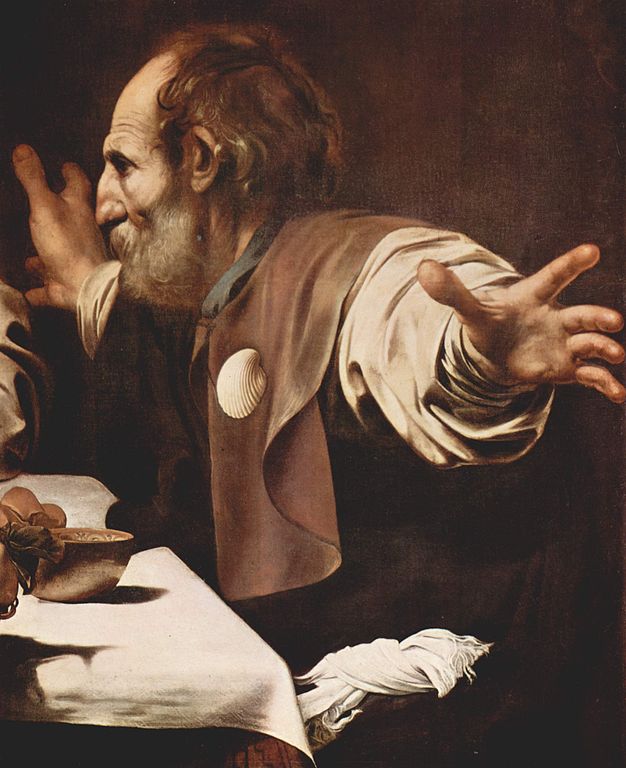
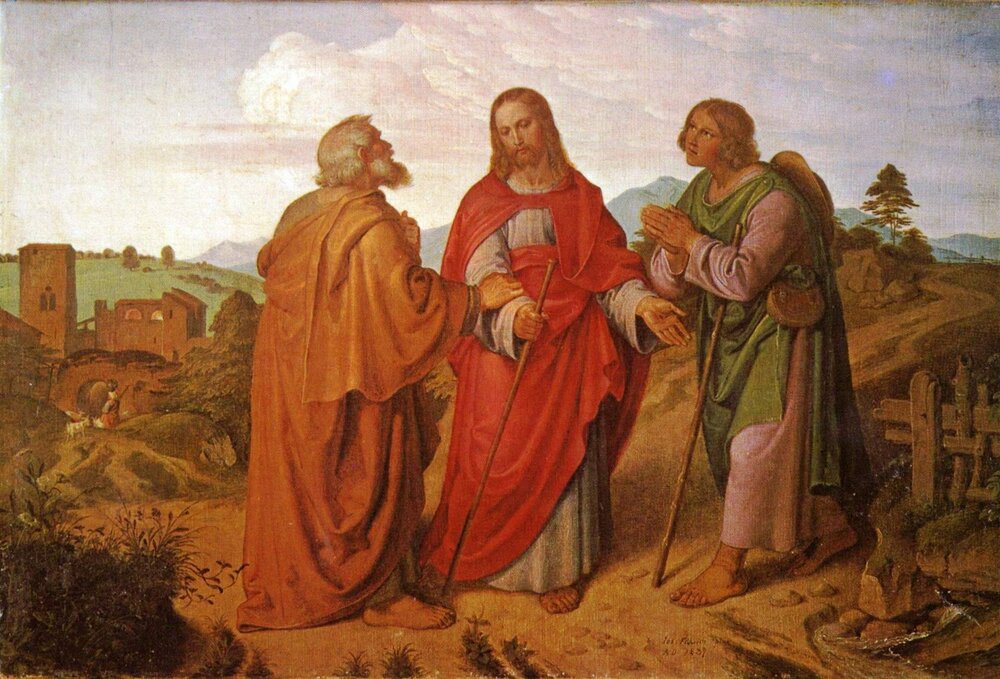
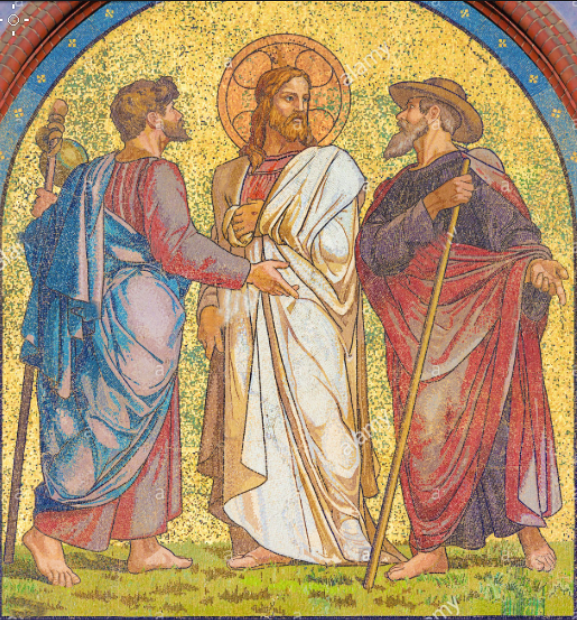
Now that very day, two of them were going to a village seven miles from Jerusalem called Emmaus and they were conversing about all the things that had occurred. And it happened that while they were conversing and debating, Jesus Himself drew near and walked with them but their eyes were prevented from recognising Him.
He asked them, “What are you discussing as you walk along?“
They stopped, looking downcast. One of them, named Cleopas, said to Him in reply, “Are you the only visitor to Jerusalem who does not know of the things that have taken place there in these days?“
And He replied to them, “What sort of things?”
They said to Him, “The things that happened to Jesus the Nazarene, who was a prophet mighty in deed and word before God and all the people, how our chief priests and rulers both, handed Him over to a sentence of death and crucified Him. But we were hoping that He would be the one to redeem Israel and besides all this, it is now the third day since this took place. Some women from our group, however, have astounded us: they were at the tomb early in the morning and did not find His body; they came back and reported that they had indeed seen a vision of angels who announced that He was alive. Then some of those with us went to the tomb and found things just as the women had described but Him they did not see.“
And He said to them, “Oh, how foolish you are! How slow of heart to believe all that the prophets spoke! Was it not necessary that the Messiah should suffer these things and enter into His glory?” Then beginning with Moses and all the prophets, He interpreted to them what referred to Himself in all the scriptures.
As they approached the village to which they were going, He gave the impression that He was going on farther. But they urged Him, “Stay with us, for it is nearly evening and the day is almost over.” So He went in to stay with them. And it happened that, while He was with them at table, He took bread, said the blessing, broke it, and gave it to them. With that their eyes were opened and they recognised Him but He vanished from their sight.
Then they said to each other, “Were not our hearts burning [within us] while He spoke to us on the way and opened the scriptures to us?” So they set out at once and returned to Jerusalem where they found, gathered together, the eleven and those with them who were saying, “The Lord has truly been raised and has appeared to Simon!” Then the two recounted what had taken place on the way and how He was made known to them in the breaking of the bread.
Cleopas has no further occurrence in the New Testament but in tradition he has often been identified with Clopas, another New Testament figure mentioned in John’s Gospel.
The historian, Bishop Eusebius of Caesarea, quotes the earlier chronicler, Hegesippus, who wrote, c 180, that he had years before interviewed the grandsons of Jude the Apostle and learned that Clopas was the Brother of St Joseph, spouse of the Virgin Mary: “After the martyrdom of James, it was unanimously decided that Simeon, Son of Clopas, was worthy to occupy the See of Jerusalem. He was, it is said, a Cousin of the Saviour.” Hegesippus noted, that Clopas was a Brother of Joseph. Epiphanius adds that Joseph and Cleopas were Brothers, sons of “Jacob, surnamed Panther.”
St Cleopas
According to the surviving fragments of the work Exposition of the Sayings of the Lord of the Apostolic Father Papias of Hierapolis, who lived c. 70–163, Cleophas and Alphaeus are the same person: “Mary the wife of Cleophas or Alphaeus, who was the Mother of James the Bishop and Apostle and of Simon and Thaddeus and of one Joseph.”
Divina Pastora de las Almas ‘ The Divine Shepherdess of Souls, Cantillana, Sevilla, Andalucía, Spain (1703) – Fourth Saturday of September:
St. Isidore of Seville (560-636) Bishop of Seville, Father and Doctor of the Churrh, spread devotion to the Divine Shepherdess of Souls. The first image of the Divina Pastora in Cantillana was a banner, attributed to the painter Germán Llorente, carried in Rosary.
In 1800 a yellow fever epidemic ravaged the area,but Cantillana was largely spared, for which people thanked the Divine Shepherdess of Souls. Soon thereafter, the Hermandad de la Divina Pastora was chartered, a Rosary apostolate or brotherhood. The Brotherhood’s processional image is a seated statue, attributed to Francisco Antonio Ruiz Gijón (1653-1705).
For special occasions, of which there are many, she wears a large sombrero. On 31 August, a grand procession fetches the Statue from its Sanctuary into the Town, for celebrations leading up to the fiesta from 8 September. On the last weekend in September, with equal splendour and devotion, the Divine Shepherdess returns to her Shrine. A procession accompanies her canopied float on Saturday. On Sunday, there is Mass and music and then an all-night exposition of the Statue with devotions lasting into Monday morning.
St Anacharius of Auxerre St Aurelia of Macerata St Caian of Tregaian St Ceolfrid St Cleopas St Egelred of Crowland St Ermenfridus of Luxeuil
Saint Cleopas (First Century) Disciple of Christ – one of the two Disciples of the Way to Emmaus. Martyr. St Firminus of Amiens St Fymbert St Herculanus the Soldier
Blessed Herman of Reichenau/the Cripple (1013–1054) Benedictine Monk, Confessor, Scholar, Scientist, Writer, Hymnist, Poet, Musical Composer, Teacher. In his own day, the heroic cripple who achieved learning and holiness was called ‘The Wonder of His Age.’. Composer of the “Salve Regina” Hail Holy Queen, “Veni Sancte Spiritus” Come Holy Spirit and “Alma Redemptoris Mater” amongst many others. His Amazing Life and Works: https://anastpaul.com/2019/09/25/saint-of-the-day-blessed-herman-of-reichenau-the-cripple-osb-1013-1054-the-wonder-of-his-age/
Bl Marco Criado St Mewrog St Neomisia of Mecerata St Paphnutius of Alexandria St Principius of Soissons St Sergius of Moscow St Solemnis of Chartres
Martyrs of Damascus: A Christian family of six who were tortured to death in a persecution by Roman authorities. They were: Eugenia, Maximus, Paul, Rufus, Sabinian and Tatta. They were tortured to death in Damascus, Syria, date unknown.
Martyred in the Spanish Civil War: • Blessed Jose María Bengoa Aranguren • Blessed Josep Maria Vidal Segú • Blessed Juan Agustín Codera Marqués • Blessed Julio Esteve Flors • Blessed Pedro Leoz Portillo • Blessed Rafael Pardo Molina • Blessed Tomás Gil de La Cal
Feast of the Holy Bishops of Milan – a 1st Century Diocese!
Imagine being part of a Diocese in which 37 of your past Bishops are saints and some are also Doctors of the Church and Popes (and others being considered for sanctity)! The latest addition to this illustrious role-call, is Pope Paul VI. Today, the Church in Milan commemorates these holy Bishops. They are: • Blessed Alfredo Ildefonso Schuster • Blessed Andrea Carlo Ferrari • Pope Pius XI • Saint Ambrose of Milan • Saint Ampelius of Milan • Saint Anathalon of Milan • Saint Antoninus of Milan • Saint Auxanus of Milan • Saint Benedict Crispus of Milan • Saint Benignus of Milan • Saint Calimerius of Milan • Saint Castritian of Milan • Saint Charles Borromeo • Saint Datius of Milan • Saint Dionysius of Milan • Saint Eugene of Milan • Saint Eusebius of Milan • Saint Eustorgius II of Milan • Saint Eustorgius of Milan • Saint Gaius of Milan • Saint Galdinus of Milan • Saint Geruntius of Milan • Saint Glycerius of Milan • Saint Honoratus of Milan • Saint John Camillus the Good • Saint Lazarus of Milan • Saint Magnus of Milan • Saint Mansuetus of Milan • Saint Marolus of Milan • Saint Martinian of Milan • Saint Mirocles of Milan • Saint Mona of Milan • Saint Natalis of Milan • Saint Pope Paul VI • Saint Protasius of Milan • Saint Senator of Milan • Saint Simplician of Milan • Saint Venerius of Milan
Thought for the Day – 24 September – Meditations with Antonio Cardinal Bacci (1881-1971)
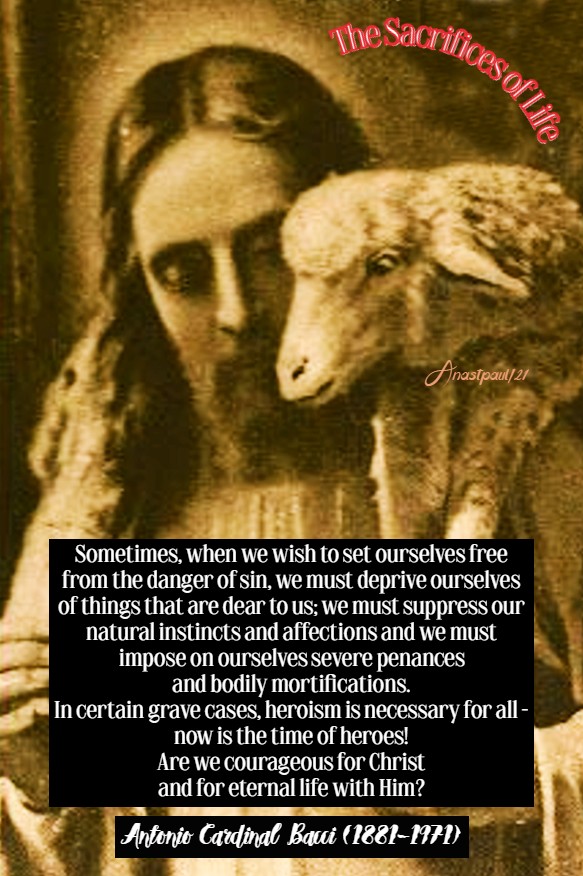
The Sacrifices of Life
“When we say that we must be prepared to make any sacrifice, even to die, rather than offend God and risk eternal damnation, we mean exactly what we say. “If thy right eye is an occasion of sin to thee,” Jesus says in the Gospel, “pluck it out and cast it from thee; for it is better for thee that one of thy members should perish than that thy whole body should be thrown into hell. And if thy right hand is an occasion of sin to thee, cut it off and cast it from thee; for it is better for thee that one of thy members should be lost, than thy whole body shuld go into hell” (Mt 5:29-30).
We are prepared to do all this when there is a question of preserving mortal life; we are prepared to undergo an amputation in order to avoid death. Are we prepared to do as much for eternal salvation?
Sometimes, when we wish to set ourselves free from the danger of sin, we must deprive ourselves of things that are dear to us; we must suppress our natural instincts and affections and we must impose on ourselves severe penances and bodily mortifications. All this is demanded from us by Jesus in these words which seem hard and almost cruel but are none other than a just and necessary commandment. In certain grave cases, heroism is necessary for all – now is the time of heroes! Are we courageous for Christ and for eternal life with Him?”
Quote/s of the Day – 28 September – “Month of the Seven Sorrows of Mary” – Readings: Haggai 2: 1-9; Psalm 43: 1-4; Luke 9: 18-22
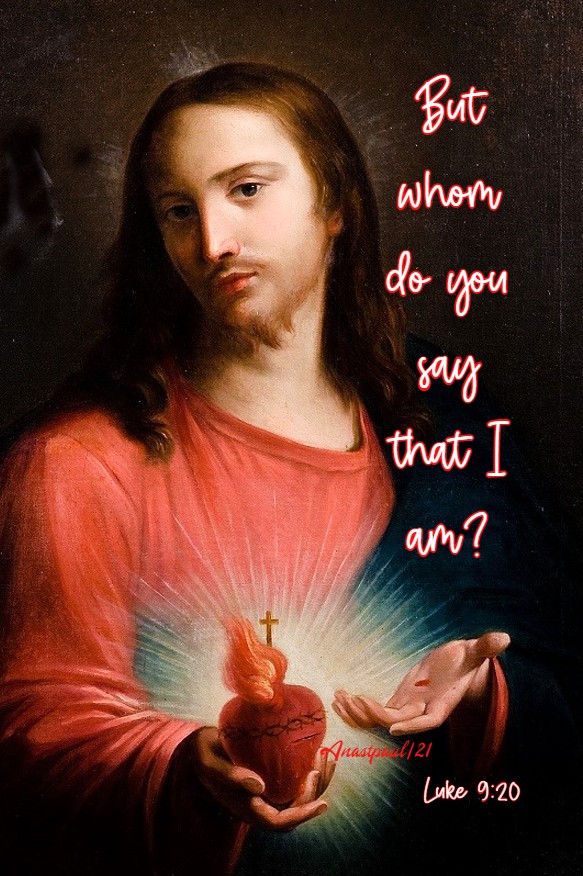
“But whom do you say that I am?”
Luke 9:20
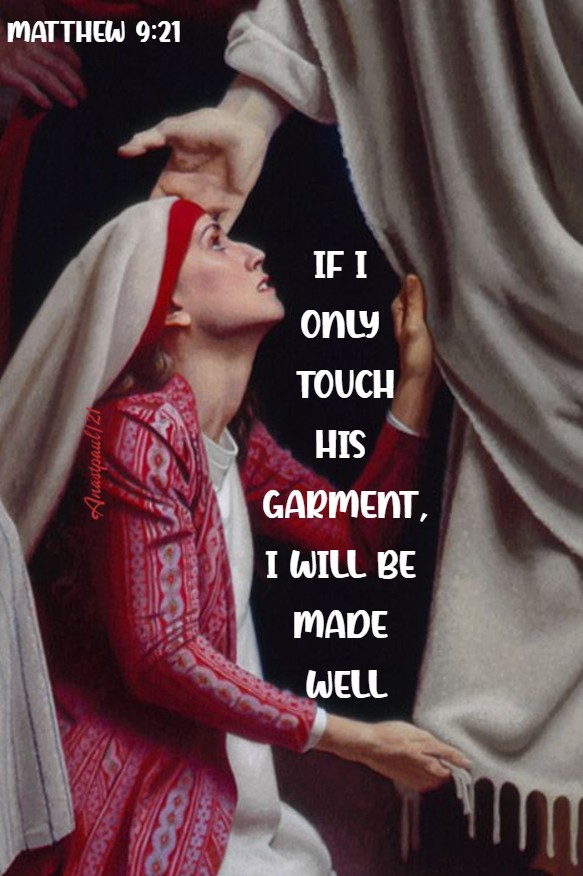
“If I only touch his garment, I will be made well.” Jesus turned and seeing her he said, “Take heart, daughter, your faith has made you well.” And instantly the woman was made well.”
Matthew 9:21-22
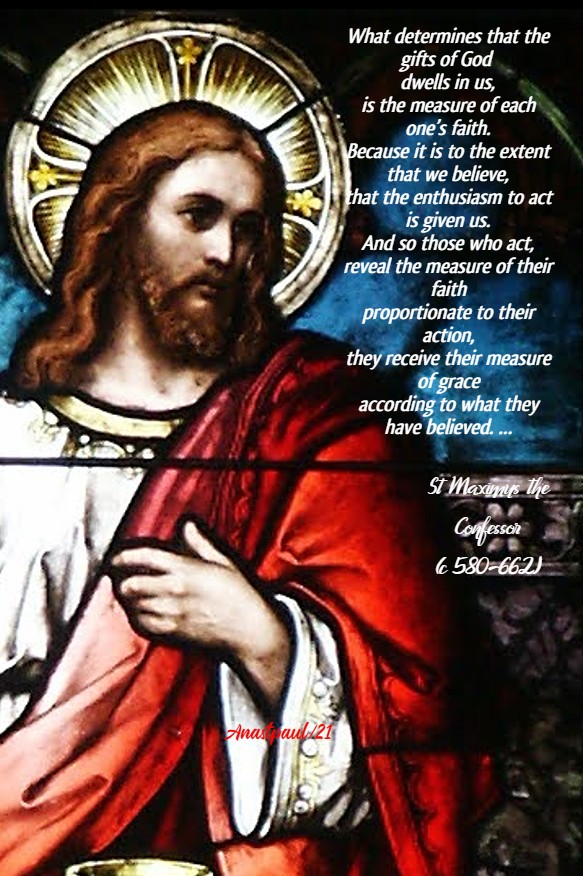
“What determines that the gifts of God dwells in us, is the measure of each one’s faith. Because it is to the extent that we believe, that the enthusiasm to act is given us. And so those who act, reveal the measure of their faith proportionate to their action, they receive their measure of grace according to what they have believed. …”
St Maximus the Confessor (c 580-662) Monk and Theologian
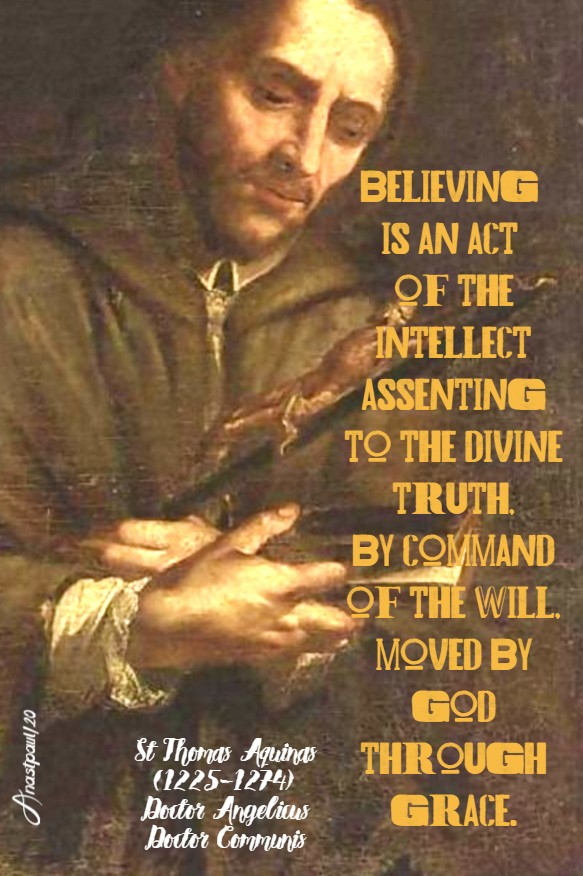
“Believing is an act of the intellect assenting to the divine truth, by command of the will, moved by God through grace.”
St Thomas Aquinas (1225-1274) Doctor Angelicus Doctor Comm
One Minute Reflection – 28 September – –“Month of the Seven Sorrows of Mary” – Readings: Haggai 2: 1-9; Psalm 43: 1-4; Luke 9: 18-22
“But whom do you say that I am? Simon Peter answering, said: The Christ of God. … He commanded they should tell this to no man …” – Luke 9:20-21
REFLECTION – “Then he strictly ordered his disciples to tell no-one that he was the Messiah.” Why this order? So that, once all cause of scandal had been set aside, His Cross and Passion accomplished, every obstacle capable of preventing the crowd from believing in Him removed, an exact knowledge of Who He is, might be deeply and permanently engraved in their hearts. His power had not yet shone out in splendour. Before the Apostles were to preach it, He waited until the evidence of the truth and authority of the facts, could confirm their testimony.
Because, it was one thing to be seeing Him now, multiplying miracles in Palestine and then, as the butt of persecution and torture – and the Cross was going to follow these miracles. It was another thing to see Him worshiped, believed in by all the world, saved from the ill-treatment He had undergone before. That is why He suggests they say nothing to anyone… If the Apostles, who had been witnesses of His miracles and had taken part in so many inexpressible Mysteries, had difficulty in accepting a single word about the Passion and Peter himself, amongst them, the head of them all (Mt 16,22), what would the ordinary run of mortals think? After hearing that Jesus was the Son of God, what would they have thought to see Him dirtied by spitting and nailed to the Cross? And this, too, before the coming of the Holy Spirit, when the reason for these Mysteries was not yet known?” – St John Chrysostom (345-407) Bishop of Constantinople, Father & Doctor of the Church (Homilies on Saint Matthew’s Gospel, no.54, 1-3)
PRAYER – Lord God, You hold out the Light of Your Word to those who do not know You. Strengthen in our hearts, the faith You have given us and the Credo we profess, so that no trials may quench the fire Your Spirit has kindled in us. May the intercession of all the Apostles, grant us the grace of following the way of the Cross, to stand beneath it with our afflicted Mother, the Mother of God, Ave Maria! We make our prayer through Jesus Christ with the Holy Spirit, one God forever, amen.
Our Morning Offering – 24 September – “Month of the Seven Sorrows of Mary”
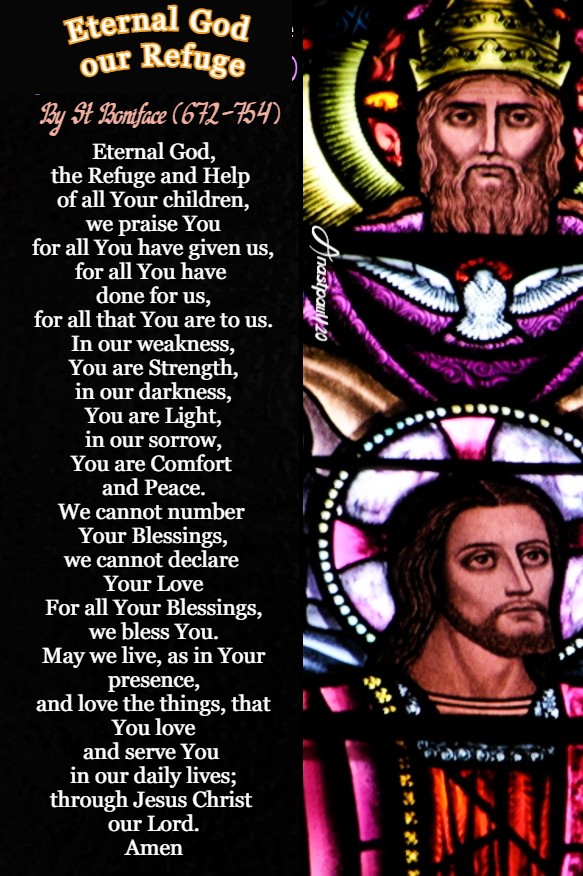
Eternal God, our Refuge By St Boniface (672-754)
Eternal God, the Refuge and Help of all Your children, we praise You for all You have given us, for all You have done for us, for all that You are to us. In our weakness, You are Strength, in our darkness, You are Light, in our sorrow, You are Comfort and Peace. We cannot number Your Blessings, we cannot declare Your Love For all Your Blessings, we bless You. May we live, as in Your presence, and love the things, that You love and serve You in our daily lives; through Jesus Christ our Lord. Amen
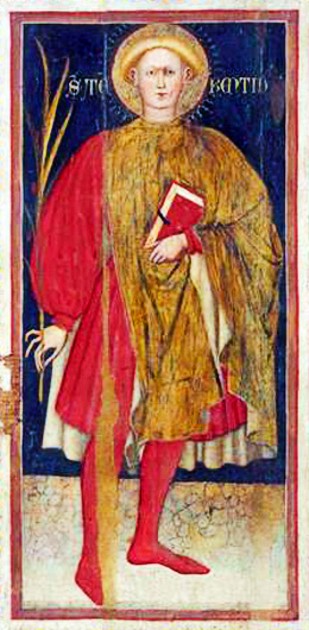
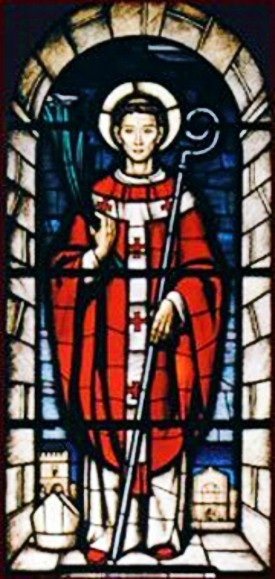
Saint of the Day – 24 September – Saint Terence of Persaro (c 210-c 247) Martyr, layman, soldier. Born in c 210 in Pannonia (modern Hungary) and died on 24 September c 247 at Pesaro, Italy. Also known as Terenzio, Terentius . Patronage – Pesaro, Italy.
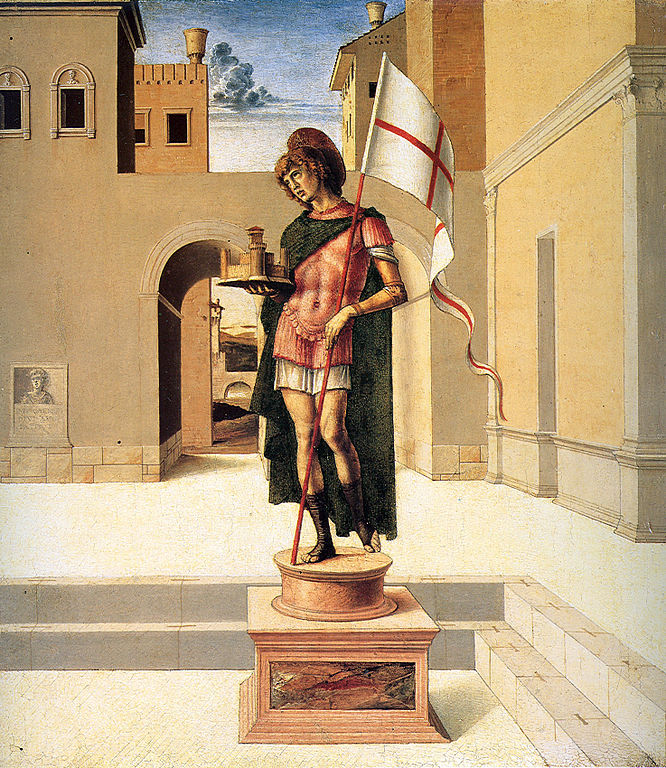
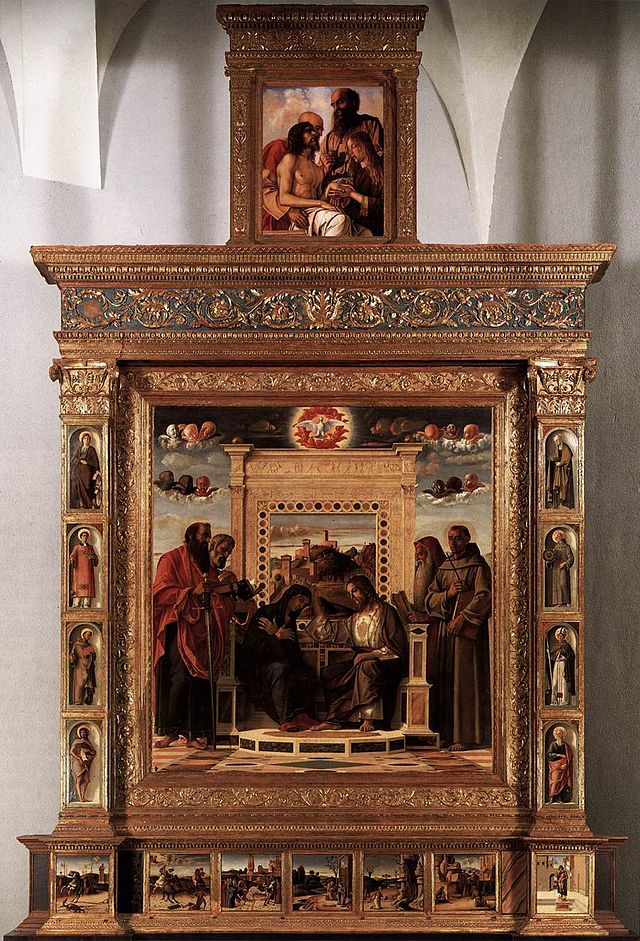
St Terence from Bellini’s Altarpiece
St Terence was a native of Pannonia (now Hungary), already conquered by the Romans since the 7th year of Christ. To escape the persecution commanded by the Emperors against the followers of the Nazarene, he left his homeland and landed on the shores of the Adriatic Sea. After several events, he set out to go to Rome and was killed for the Christian faith in a place called Acqua Mala, near Pesaro.
Regarding the place of his Martyrdom, while some believe that it took place not very far from the City, the tradition which speaks of borders, gives value to a tradition, according to which, Terence suffered Martyrdom near our Abbey of St Tomaso in Foglia, located precisely on the territorial border between Pesaro and Urbino. This tradition is corroborated by the existence in those places, of a perennial pool of sulphurous water, which not only gushes, even in the greatest droughts but, which although repeatedly diverted or destroyed, has always returned to rise again.
It is called “the Water of St Terence,” considering that the Patron Saint was Martyred there and his body was then thrown into the nearby whirlpool of the water – mala; which now no longer exists because the valley was filled in, in subsequent agricultural works.
His body may have been buried by Bishop Florentius of Pesaro outside the City, close to Caprile, which ancient documents call the Valle di St Terenzio. Another tradition states that his body was buried by a local woman named Theodosia. His relics were then translated to the basilica of San Decenzio (now the Chiesa del Cimitero centrale) before being translated, in the sixth century, to the new Cathedral at Pesaro by Bishop Felix of Pesaro.
The relics, placed initially in a crypt, were transferred by Giovanni Benedetti in 1447 to a large Altar in which the relics were placed in a wooden urn, on which the aforementioned painter Bellinzoni depicted Terence. The urn is now found at the Museo Civico, in Palazzo Toschi-Mosca, and the relics themselves were translated to a new urn in a new Cathedral Chapel inaugurated in 1909
As a soldier Saint, Terence is considered to have appeared twice in times of crisis, the second vision occurring on 9 June 1793, in the times of the Cisalpine Republic, when Pesaro was besieged by French troops: a horseman appeared on the walls of the City, accompanied by a woman (Our Lady) dispensing munitions. The vision terrified the French so much, that they abandoned their siege. In gratitude, Terence was officially proclaimed Patron of the City on 20 March 1802.
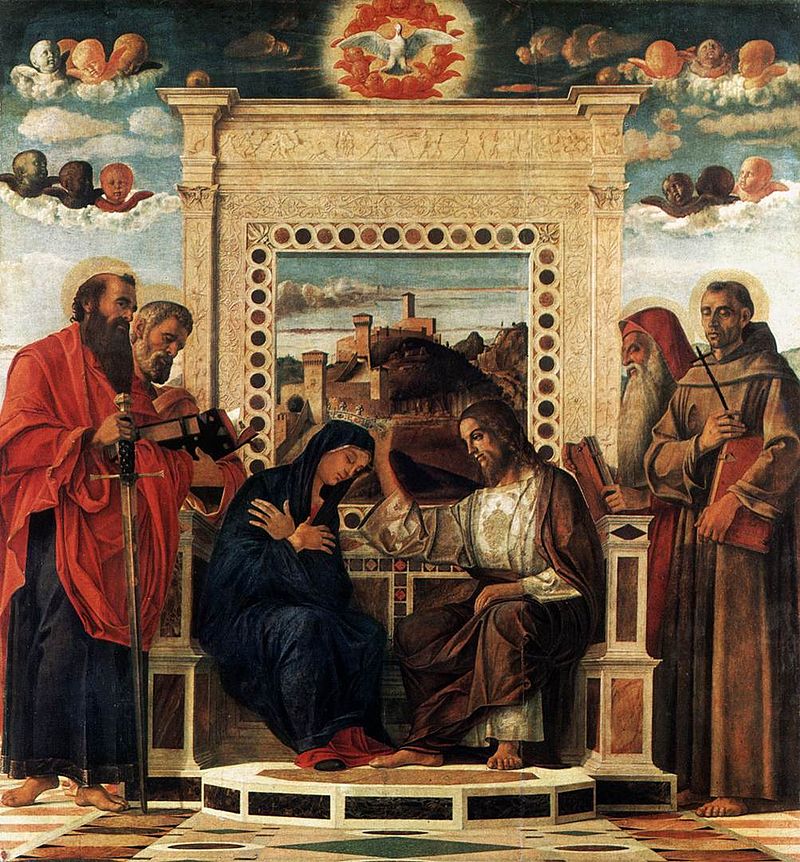
Terence’s most famous figuration in art is his minor appearance—as a young soldier Saint—in a predella panel of Giovanni Bellini’s “Pesaro Altarpiece, The Coronation of the Virgin” (ca. 1475–80). In it, Terence, as the City’s Patron, holds a model representing the Nuova Rocca, or Fortezza Costanzo, the Citadel of Pesaro newly rebuilt by Costanzo Sforza. The Altarpiece is below – St Terence is bottom right of the bottom panel – see amplified image above.
Our Lady of Walsingham / Virgin of the Sea (1061) – 24 September:
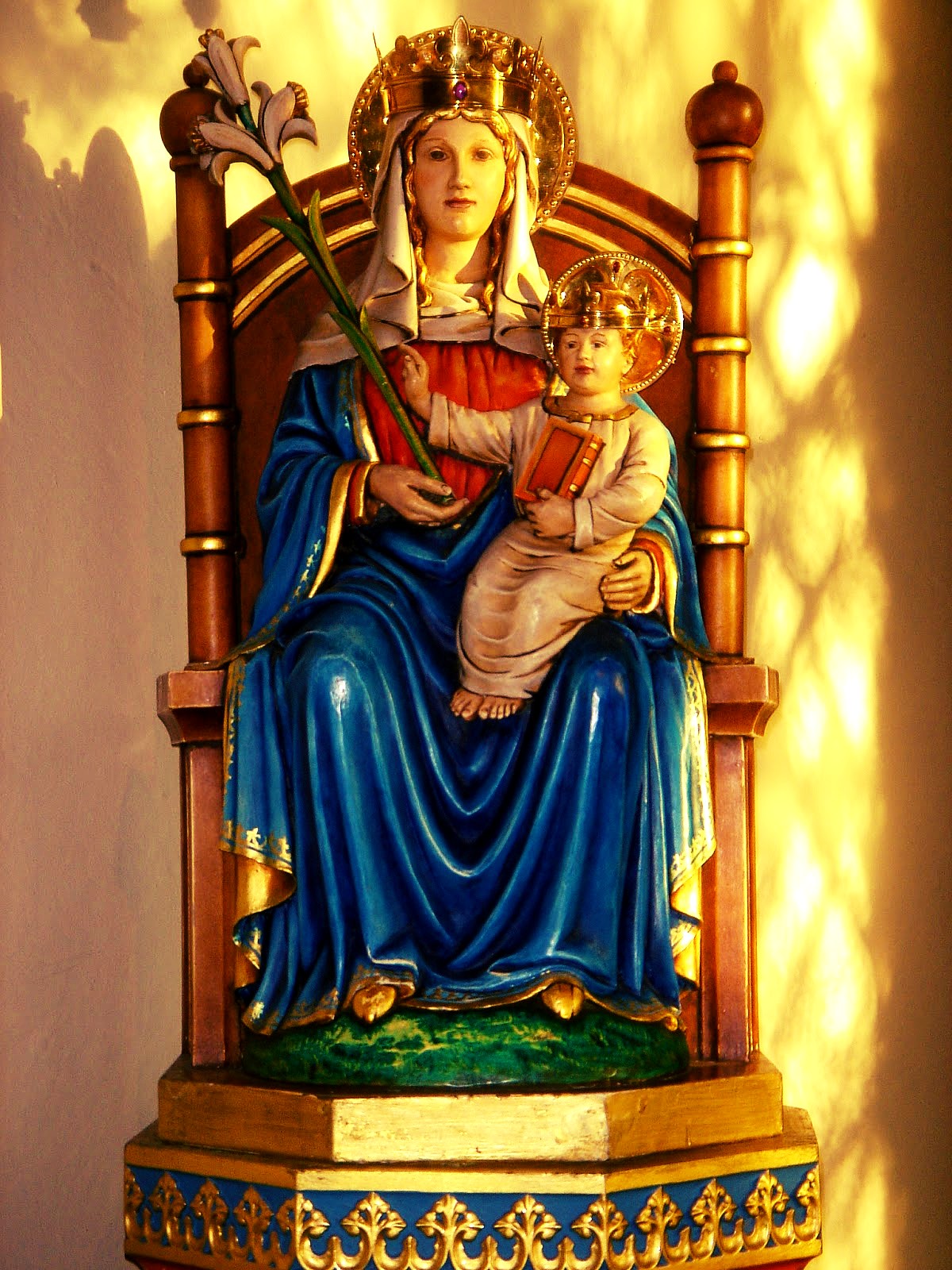
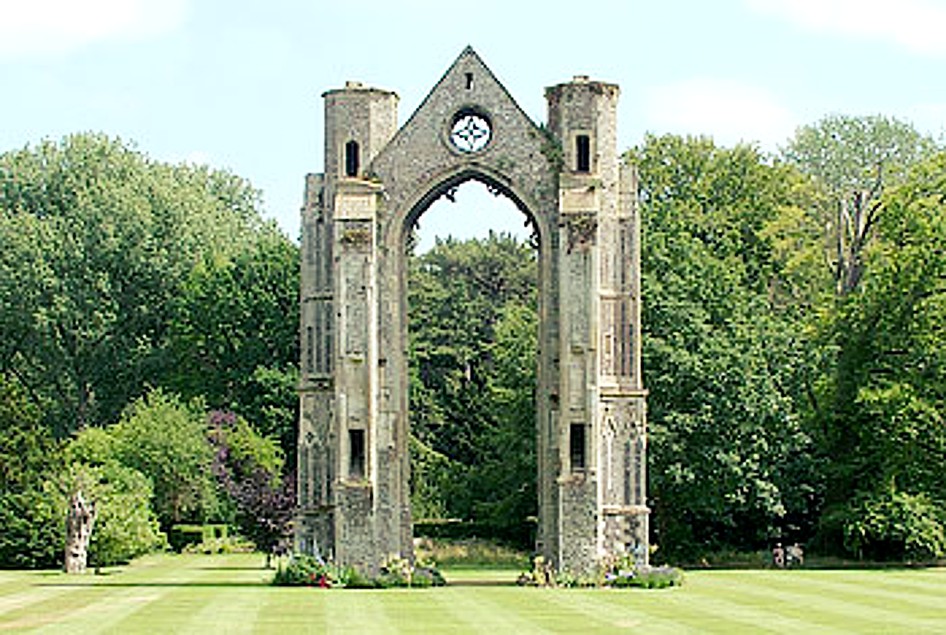
The story of the Walsingham Shrine begins in Saxon times. In 1061, the Lady of the Manor, Richeldis de Faverches, was taken in spirit to Nazareth, shown the House where the Annunciation took place and asked by Our Lady, to build a replica in Norfolk. She was promised that ‘Whoever seeks my help there will not go away empty-handed.‘ The simple wooden house that she built soon became the focus of special devotion to Our Lady. The ‘Holy House’ was later encased in stone to protect it from the elements. In 1153, the Augustinian Canons founded a Priory to care for the spiritual needs of the pilgrims. Their magnificent Priory Church was added in the fifteenth century. Only the ruin of the Priory Arch remains and archaeology has placed the site of the ‘Holy House’ in its shadow.
Walsingham became one of the foremost Shrines of medieval Christendom. Among the pilgrims to the ‘Holy House’ were many royal visitors. Henry III in 1226, Edward I (eleven times), Edward II in 1315, Edward III in 1361, Richard II in 1383, Edward IV in 1469, Henry VI in 1487 (and many other times) and Henry VIII in 1511, in thanksgiving for the birth of his son, Prince Henry. In 1340, the Slipper Chapel was built at Houghton St Giles, a mile outside Walsingham. This was the final ‘Station’ Chapel on the way to Walsingham. It was here, that pilgrims would remove their shoes to walk the final ‘Holy Mile’ to the Shrine barefoot.
The Slipper Chapel
Erasmus, the Dutch scholar, visited Walsingham in 1513 and was impressed by the splendour of the Shrine. He wrote:
‘When you look inside, you would say, it is the abode of saints, so brilliantly does it shine with gems, gold and silver … Our Lady stands in the dark at the right side of the Altar … a little image, remarkable neither for its size, material or workmanship.’
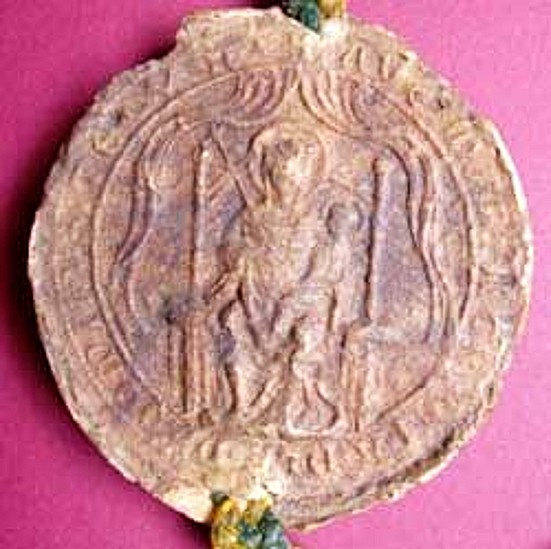
This was soon to come to an end. Henry VIII ordered the dissolution of the monasteries and in 1538 the Priory was closed, the ‘Holy House’ burned to the ground and the Statue of Our Lady taken to London to be destroyed. In 1896 Miss Charlotte Boyd bought the Slipper Chapel, which had seen centuries of secular use. She devoted herself to its restoration. The Statue of the Mother and Child was carved at Oberammergau and based on the design of the original statue – a design found on the medieval seal of Walsingham Priory, an imprint of which is in the British Museum.
The Walsingham seal: around the edges Ave Maria gratia plena dominus tecum
The first Mass since the Reformation was offered in the Slipper Chapel on 15 August 1934 and a few days later Cardinal Francis Bourne led a pilgrimage of 10,000 people to the Chapel and declared it to be the Catholic National Shrine of Our Lady.
Madonna de Val Camonica, Berzo Inferiore (BS), Italy (1616) – 24 September:
St Anathalon of Milan St Andochius of Autun St Anthony Gonzalez
St Paphnutius of Egypt Bl Robert Hardesty St Rusticus of Clermont St. Rupert of Salzburg St Terence of Persaro (c 210-c 247) Martyr Layman St Thyrsus of Autun St Ysarn of Saint Victor Bl William Spenser — Martyrs of Chalcedon – (49 saints): Forty-nine Christian choir singers of the church in Chalcedon in Asia Minor who were martyred together in their persecutions of Diocletian in 304.
Martyred in the Spanish Civil War: • Blessed Antonio Pancorbo López • Blessed Esteban García y García • Blessed José María Ferrándiz Hernández • Blessed Juan Francisco Joya Corralero • Blessed Luis de Erdoiza Zamalloa • Blessed Manuel Gómez Contioso • Blessed Melchor Rodríguez Villastrigo • Blessed Pascual Ferrer Botella • Blessed Rafael Rodríguez Mesa • Blessed Santiago Arriaga Arrien
Thought for the Day – 23 September – Meditations with Antonio Cardinal Bacci (1881-1971)
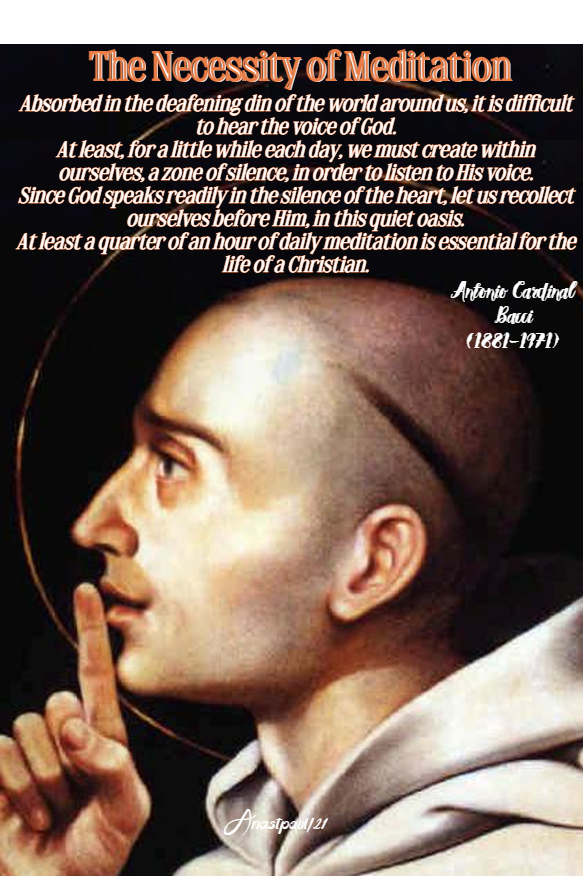
The Necessity of Meditation
“With desolation is all the land made desolate because, there is none that considereth in the heart” (Jer 12:11). Very often the world is plunged in the desolation of evil because there is nobody who will speak with God in the silence of his heart and try to regulate his life according to His holy commandments. It is in a particularly outstanding way today, that the heresies of actionism and externalism dominate the great mass of mankind. To act, to rush, to arrive … above all, to arrive! But to arrive where? In this frantic, frenzied and tumultuous race, in which good people are often found competing, two very sure things are forgotten, namely, that we shall finally arrive at death and, that from death we shall pass on to eternity. The whole course of our lives, therefore, should be directed toward this end. But, if we are to keep this end in view, prudent reflection is essential, especially meditation, made with the assistance of the Divine Light, on the eternal truth.
Absorbed in the deafening din of the world around us, it is difficult to hear the voice of God. At least, for a little while each day, we must create within ourselves, a zone of silence, in order to listen to His voice. Since God speaks readily in the silence of the heart, let us recollect ourselves before Him, in this quiet oasis. At least a quarter of an hour of daily meditation is essential for the life of a Christian. This should be the jumping-off board for all the actions of day, if we wish these to be correct and productive of good.
It is very useful, moreover, to recall to mind frequently during the day, the resolutions which have been formed and to accompany these reflections, with short prayers, aspirations and acts of love for God.”
Quote/s of the Day – 23 September – “Month of the Seven Sorrows of Mary” – Readings: Haggai 1: 1-8; Psalm 149: 1b-6a and 9b; Luke 9: 7-9
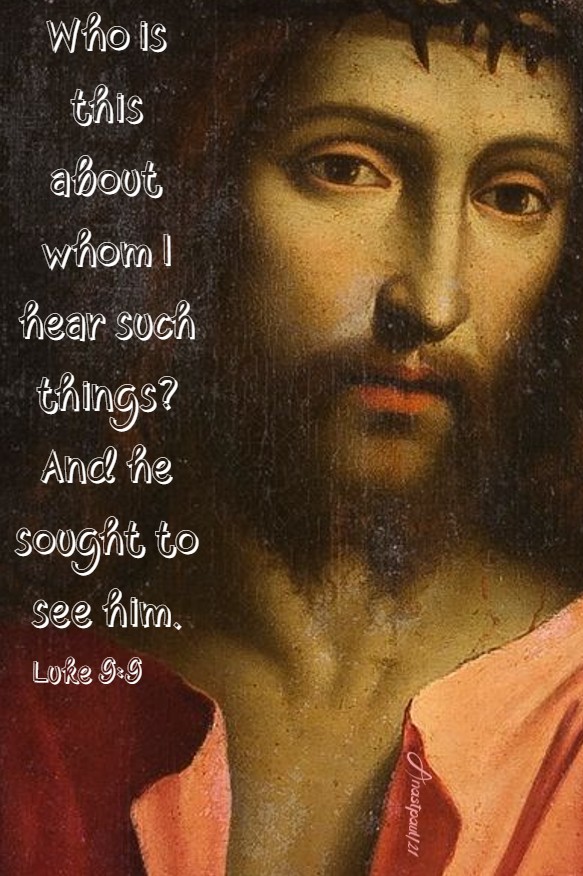
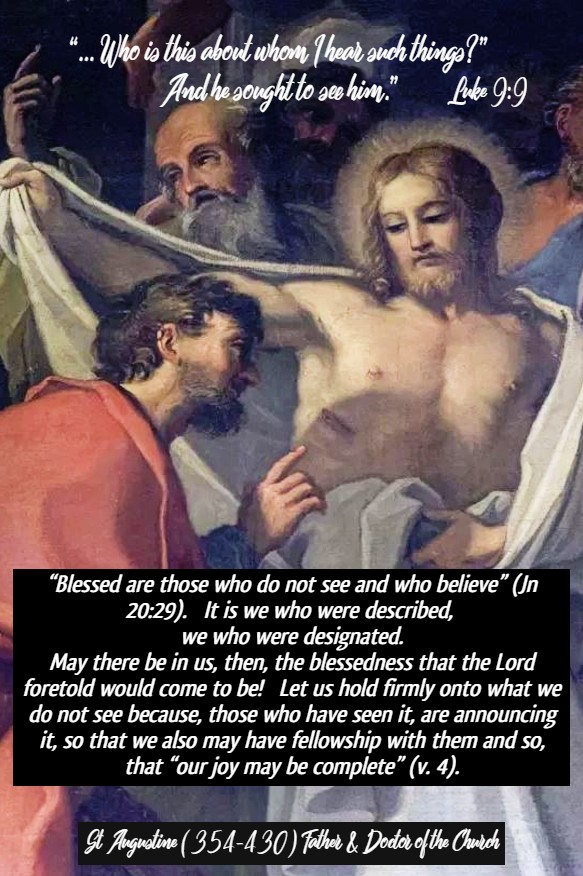
“… Who is this about whom I hear such things?” And he sought to see him.”
Luke 9:9
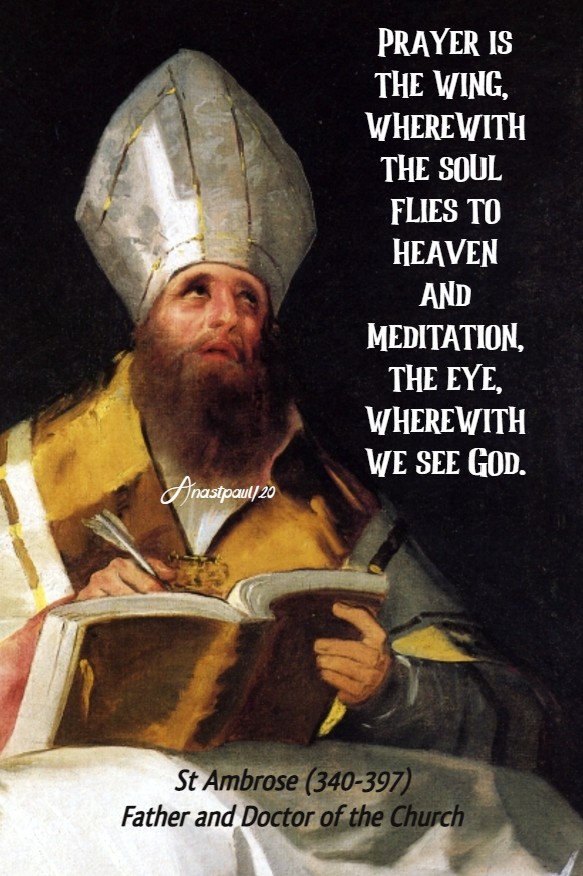
“Prayer is the wing, wherewith the soul flies to heaven and meditation, the eye, wherewith we see God.”
St Ambrose (340-397) Father and Doctor of the Church
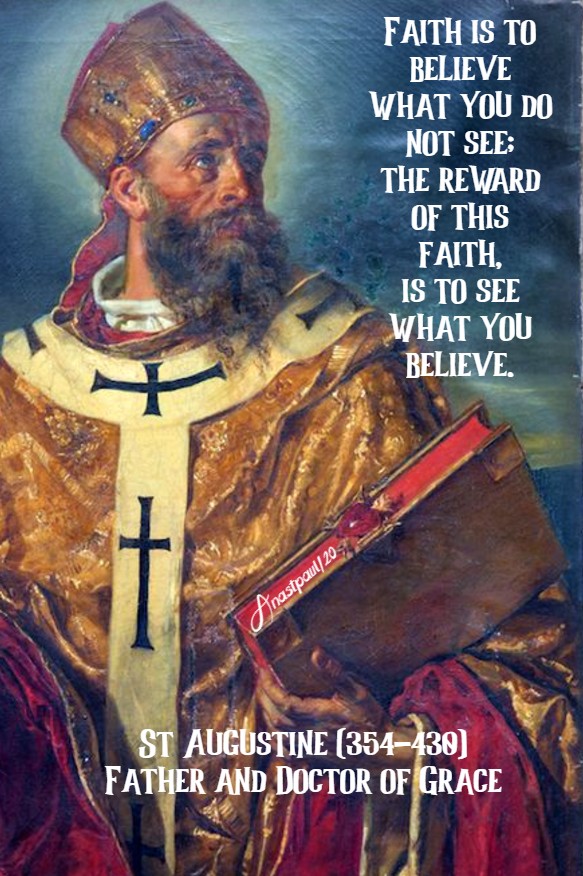
“Faith is to believe what you do not see; the reward of this faith, is to see what you believe.”
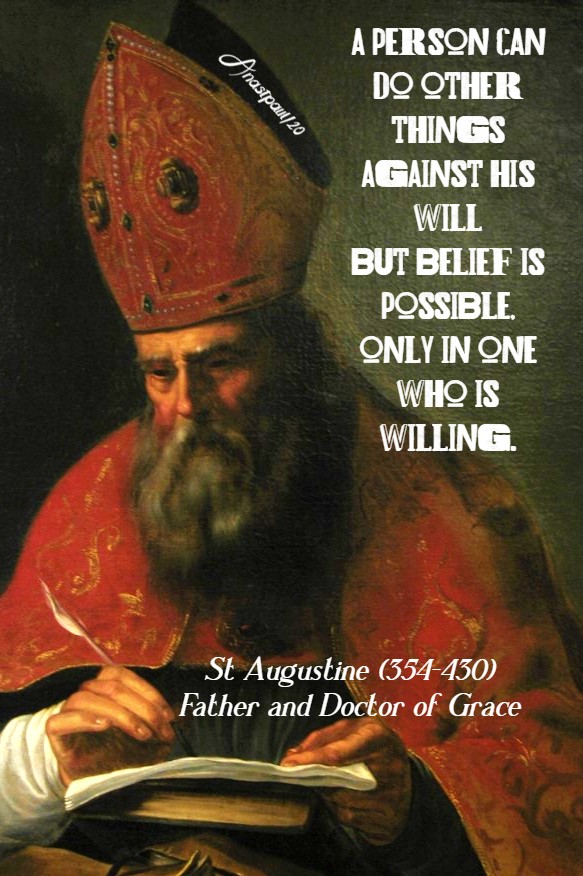
“A person can do other things against his will but belief is possible, only in one who is willing.”
St Augustine (354-430) Father and Doctor of Grace
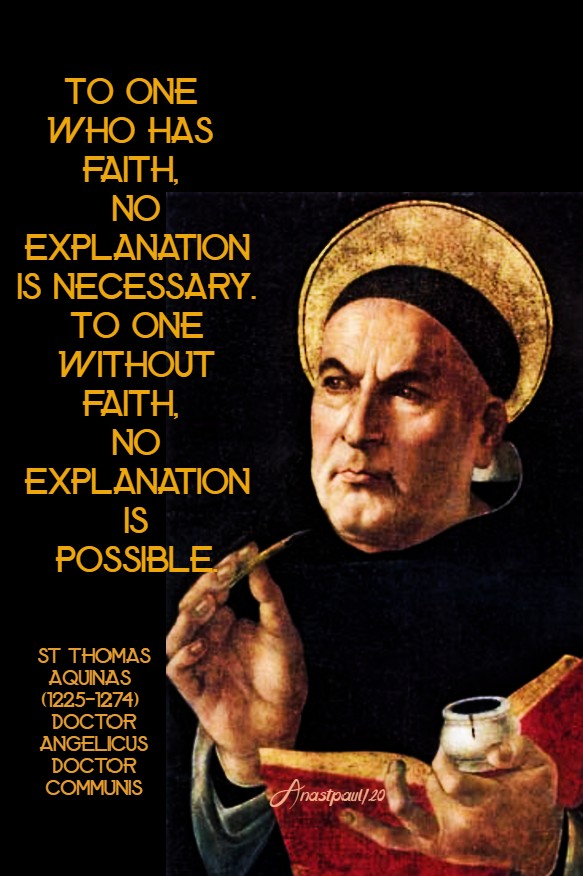
“To one who has faith, no explanation is necessary. To one without faith, no explanation is possible.”
St Thomas Aquinas (1225-1274) Doctor of the Church
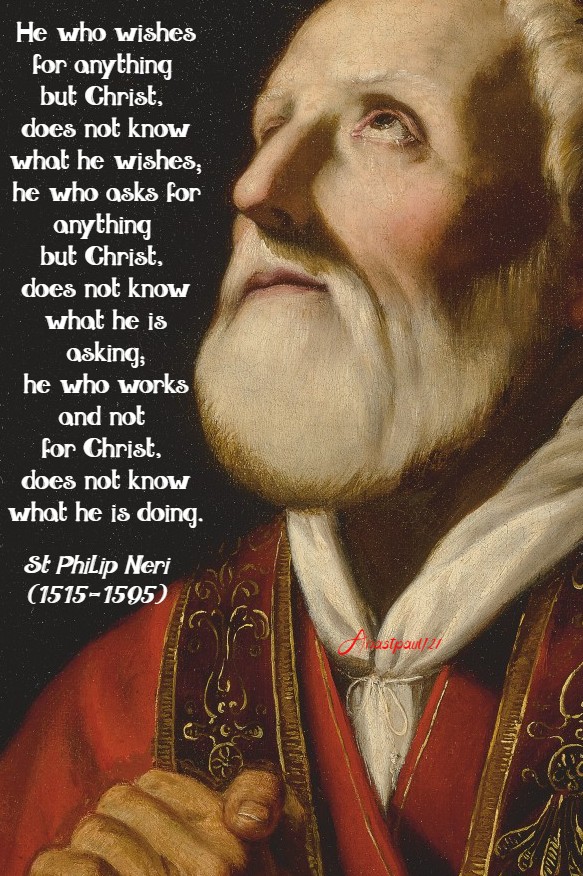
“He who wishes for anything but Christ, does not know what he wishes; he who asks for anything but Christ, does not know what he is asking; he who works and not for Christ, does not know what he is doing.”
St Philip Neri (1515-1595)
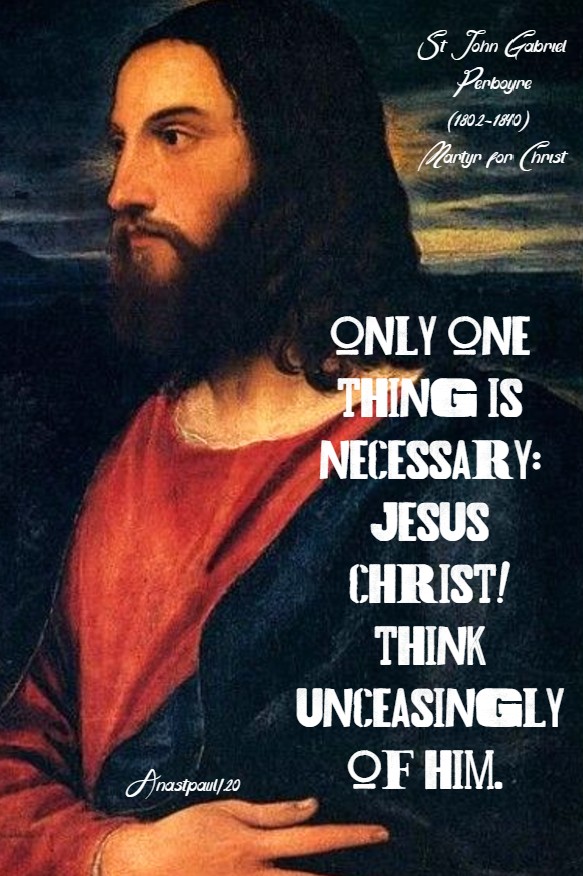
“Only one thing is necessary: Jesus Christ! Think unceasingly of Him. ”
St John Gabriel Perboyre CM (1802-1840) Martyr for Christ
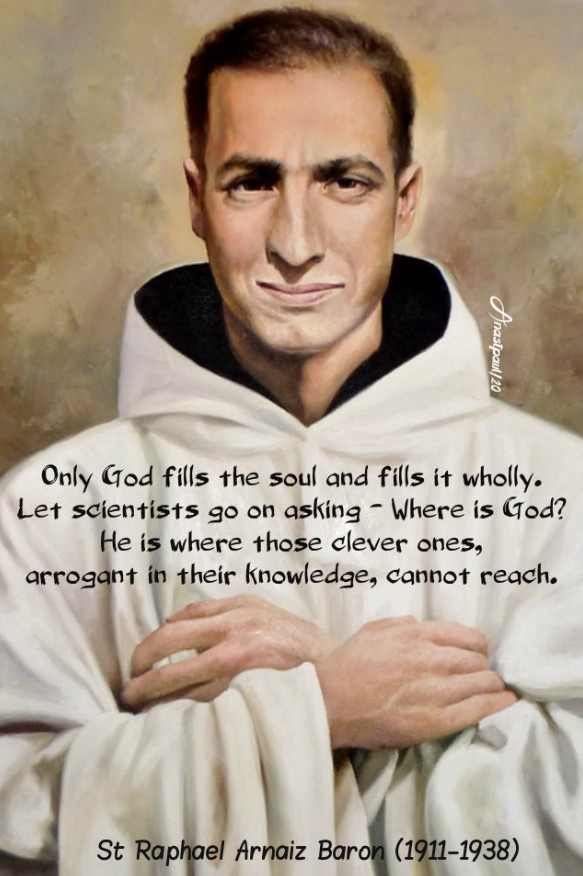
“Only God fills the soul and fills it wholly. Let scientists go on asking – Where is God? He is where those clever ones, arrogant in their knowledge, cannot reach.”
One Minute Reflection – 23 September – “Month of the Seven Sorrows of Mary” – Readings: Haggai 1: 1-8; Psalm 149: 1b-6a and 9b; Luke 9: 7-9 and the Memorial of Saint Adamnan of Iona (c 628-704)
“… Who is this about whom I hear such things?” And he sought to see him.” – Luke 9:9
REFLECTION – “[John] says: “We announce to you the eternal life that was with the Father and was manifested to us. What we have seen and heard we announce to you (1 Jn 1:2-3). Let Your Charity pay heed: “What we have seen and heard we announce to you.” They saw the Lord Himself present in the flesh and they heard words from the Lord’s mouth and they announced them to us. We also have heard, then but we have not seen. Are we, therefore, less fortunate than those who saw and heard? And why does [John] add: “So that you also may have fellowship with us?” They saw; we did not see and yet, we are in fellowship because we maintain a common faith.
To the disciple who wished to touch and thus to believe, the Lord – consoling us, who are unable to touch Him with our hand, as He is now seated in Heaven, although we can touch Him by faith – said, “Blessed are those who do not see and who believe” (Jn 20:29). It is we who were described, we who were designated. May there be in us, then, the blessedness that the Lord foretold would come to be! Let us hold firmly onto what we do not see because, those who have seen it, are announcing it, so that we also may have fellowship with them and so, that “our joy may becomplete” (v. 4).”– St Augustine (354-430) Bishop of Hippo Father and Doctor of the Church (Sermons on the first letter of Saint John, I, 3)
PRAYER – Shepherd of Your Church and we, the sheep of Your flock, who follow You and hear and do Your Word. Support us with grace those who are constantly striving to do Your will, so that following the example of the humble fiat of Your blessed Mother and ours, we may devote all our powers and talents to love of You and our neighbour and finally arrive safely in our heavenly home. May the prayers of St Adamnan of Iona, your faithful servant, be assistance in strengthening us in this vale of tears. In God, our Father we pray through You who live in union with Him and the Holy Spirit, one God, for ages and ages. Amen
Our Morning Offering – 23 September – The Memorial of Saint Adamnan of Iona (c 628-704) Relative of Saint Columban
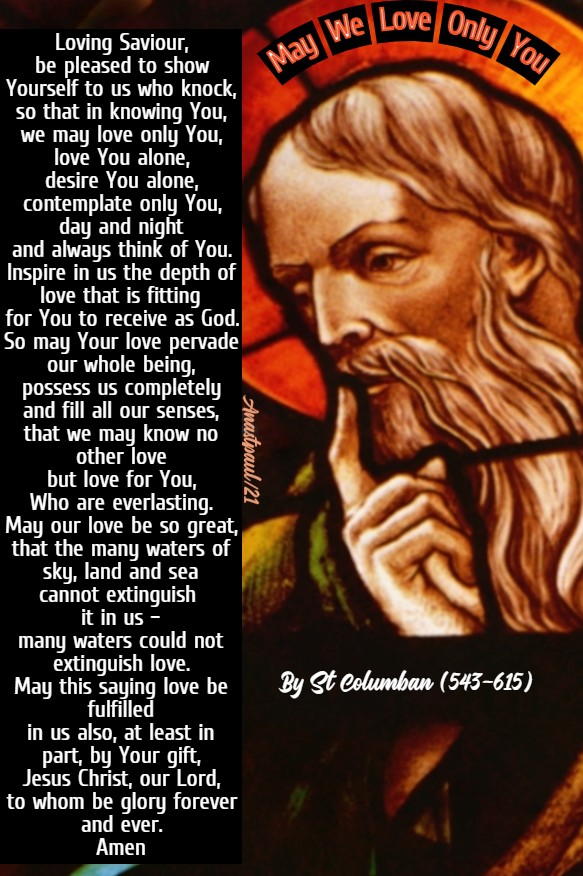
May We Love Only You By St Columban (543-615)
Loving Saviour, be pleased to show Yourself to us who knock, so that in knowing You, we may love only You, love You alone, desire You alone, contemplate only You, day and night and always think of You. Inspire in us the depth of love that is fitting for You to receive as God. So may Your love pervade our whole being, possess us completely and fill all our senses, that we may know no other love but love for You, Who are everlasting. May our love be so great, that the many waters of sky, land and sea cannot extinguish it in us – many waters could not extinguish love. May this saying love be fulfilled in us also, at least in part, by Your gift, Jesus Christ, our Lord, to whom be glory forever and ever. Amen
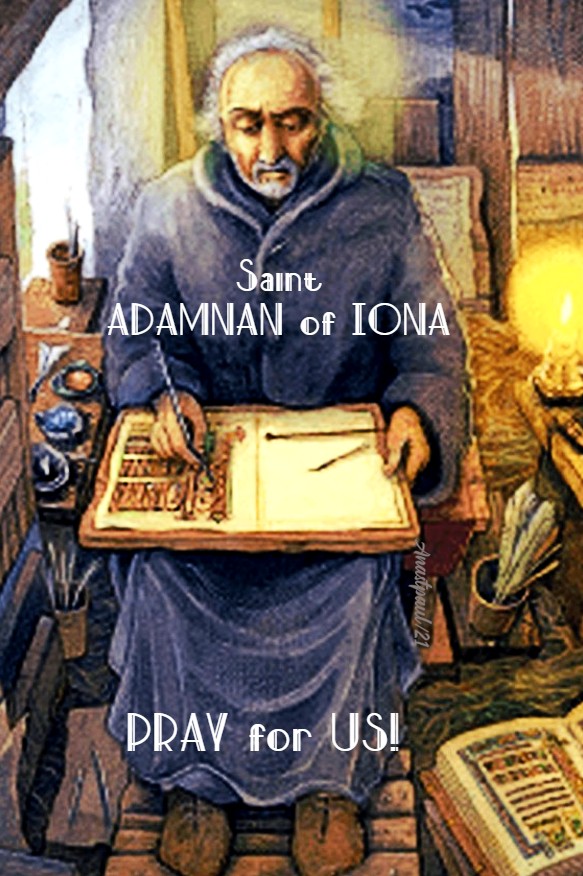
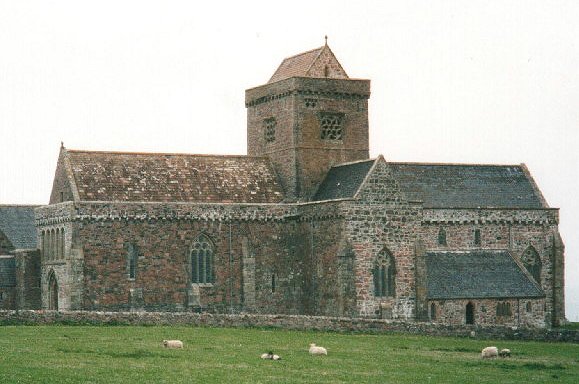
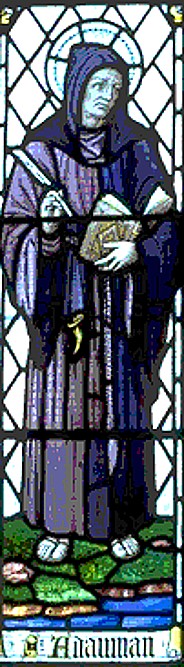
Saint of the Day – 23 September – Saint Adamnan of Iona or St Eunan of Iona (c 628-704) Relative of Saint Columban. Monk at Drunhome, Donegal, Ireland. Abbot of Iona in 679. President-general of all the Columban houses in Ireland. Hagiographer and Spiritual Writer, Poet, Statesman, Canon Lawyer. Born in c 628 in Drumhome, County Donegal, Ireland and died on 23 September 704 at Iona Abbey of natural causes. Patronages – Donegal, Ireland, County of, Raphoe, Ireland, City of, Raphoe, Ireland, Diocese of. Also known as – Adam, Adamnano, Adomnan, Eunan.
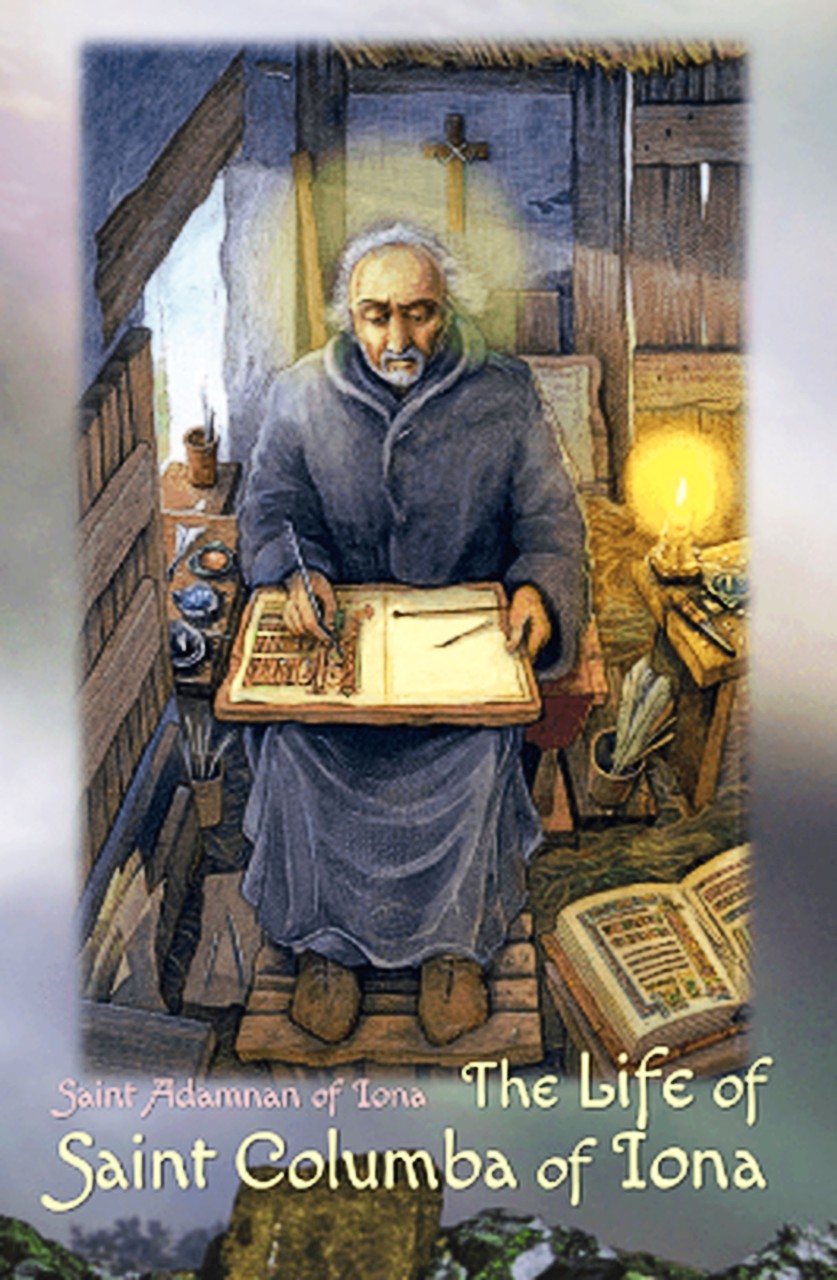
Adamnan was the Author of the Life of Columban, probably written between 697 and 700. This Biography is, by far, the most important surviving work written in early-medieval Scotland and is a vital source for our knowledge of the Picts and an insight into the life of Iona and the early-medieval Gaelic Saint Columban. (His life here: https://anastpaul.com/2018/11/23/saint-of-the-day-23-november-st-columban-543-615/)
Adamnan promulgated the Law of Adamnan or “Law of Innocents” (Irish: The Cáin Adomnáin). He also wrote the treatise De Locis Sanctis (i.e. “On Holy Places”), an account of the great Christian holy places and centres of pilgrimage. Adamnan received much of his information for this work, from a Frankish Bishop called Arculf, who had personally visited Egypt, Rome, Constantinople and the Holy Land and visited Iona after his travels.
Adamnan was a descendant of a cousin of Saint Columban, Colmán mac Sétna. He is thought to have been born into a noble family in what is now County Donegal in Ireland, probably as a younger son. Some historians believe he attained his obviously high level of education by studying at Durrow Abbey, one of Ireland’s most important early Christian Monasteries. He became a Monk at a Columban Monastery in Ireland in about 640 and then, at some later point, transferred to Iona Abbey. Opinions again differ about the date of his move to Iona, ranging from about 650, during the Abbacy of Ségéne, to about 670, after the accession of Abbot Failbe.
In 679, Adomnan became the ninth Abbot of Iona Abbey. As Abbot, he was extremely influential in the wider affairs of a land that was still divided between Gaels, Picts, Britons and Angles. He forged especially, strong links with King Aldfrith of Northumbria. He was also influential in partially bringing the Celtic Church into line with the wider body of the Roman Church when he adopted the Roman dating of Easter. This had been agreed in 664 at the Synod of Whitby and the difference, possibly trivial to modern eyes, had led to a rift between the Roman and Celtic Churches.
Adomnan’s most important innovation came in 697. The Synod of Birr, in Ireland, attracted a highly influential gathering of Irish, Dalriadan and Pictish nobles. Adomnan used it to gain widespread agreement to his “Law of Adomnan.” This “Law of Innocents,” set out to guarantee the safety and immunity of various types of non-combatants in warfare. It was a pioneering initiative in Europe and a remarkable achievement for a cleric on the Celtic fringe of the known world. Many see it as the first step in the process that has since led to the Geneva Convention and the Universal Declaration of Human Rights.
Adomnan is probably better known, however, for his Life of St Columban. This was really a Biography or a history of his predecessor of a Century earlier as Abbot of Iona. Rather it was a “hagiography” intended to prove Columban’s saintliness and extol his virtues and achievements. It is perhaps the most important surviving record from the areas which later became Scotland at this time. He also wrote a considerable amount of poetry.
Adomnan died in 704, probably on 23 September, the day now celebrated as his feast day. He was subsequently regarded as a Saint of the Irish and Scottish tradition and is considered to have been one of the mos influential participants in this early period of Irish and Scottish Church.
Along with St Columban, he is joint Patron of the Diocese of Raphoe, which encompasses the bulk of County Donegal in the north-west of Ireland. The Cathedral of St Eunan and St Columban (popularly known as St Eunan’s Cathedral), the Cathedral in that Diocese, is in Letterkenny. In 727 the relics of AdAmnan were brought to Ireland to renew the “Law of Innocents” and they were returned to Iona in 730.
In his native Donegal, Adamnan has given his name to several Churches, Institutions and buildings – all under the Irish version of his name Eunan.





























You must be logged in to post a comment.