One Minute Reflection – 2 September – “Month of the Seven Sorrows of Mary” – Readings: Colossians 1: 9-14; Psalms 98: 2-3ab, 3cd-4-6; Luke 5: 1-11
“Fear not, from henceforth thou shalt catch men.” – Luke 5:10
REFLECTION – “I am greatly indebted to God who has granted me so great a grace that “many peoples” have been born anew to God through me …. “I will make you a light to the nations, that my salvation may reach to the ends of the earth.” … This is how I want to “wait for the promise” of Him Who never fails us, as He assures us in the Gospel: “They will come from East and West and will sit at table with Abraham, Isaac and Jacob.” So we are confident that believers will come from the whole world.
That is why we should apply ourselves diligently to the catch, as we ought to do, following the exhortation and teaching of the Lord Who said: “Come after me and I will make you fishers of men.” And again, He said through the prophets: “Look! I will send many fishermen and hunters.” That is why it was so important to cast our nets, so that “a great number [of fish],” “a crowd” of people might be caught for God and, that everywhere, there might be Priests according to the word of the Lord: “Go, therefore and make disciples of all nations, baptising them in the name of the Father and of the Son and of the Holy Spirit, teaching them to observe all that I have commanded you. And, behold, I am with you always, until the end of the age.” – St Patrick (c 386-461) Bishop – Confession, 38-40 (SC 249)
PRAYER – Lord, my God, You chose us from the foundations of the world to be Your children. We pray that our courage may not fail us as we strive to live in obedience to Your commandments and by our lives spread Your holy Word. We ask too for courage, as we are attacked from all sides, in our struggle home to You. Grant that through the prayers of our Sorrowful Mother, we may fight unto death for Your love and the glory of Your Kingdom. Through our Lord, Jesus, in the unity of the Holy Spirit, one God forever and ever, amen.
Our Morning Offering – 2 September – “Month of the Seven Sorrows of Mary”
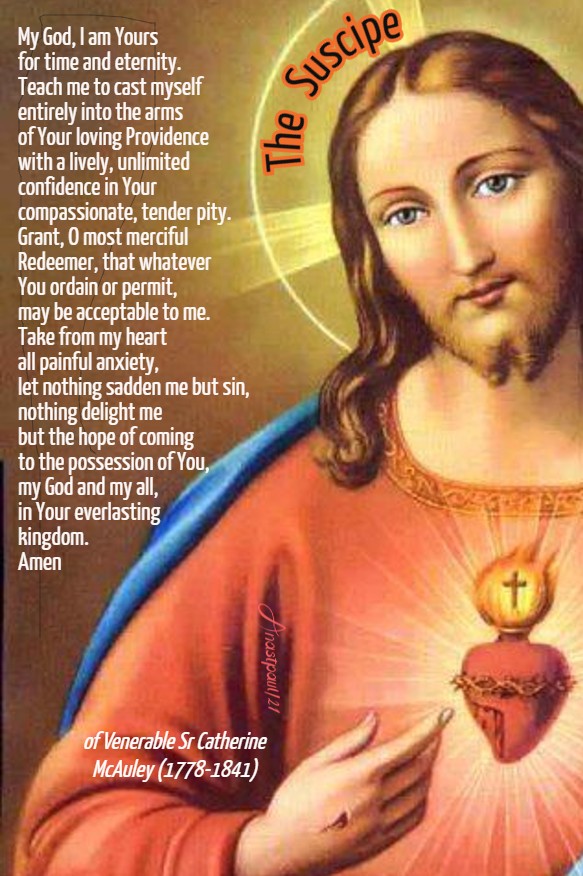
The Suscipe of Venerable Sr Catherine McAuley (1778-1841)
My God, I am Yours for time and eternity. Teach me to cast myself entirely into the arms of Your loving Providence with a lively, unlimited confidence in Your compassionate, tender pity. Grant, O most merciful Redeemer, that whatever You ordain or permit, may be acceptable to me. Take from my heart all painful anxiety, let nothing sadden me but sin, nothing delight me but the hope of coming to the possession of You, my God and my all, in Your everlasting kingdom. Amen
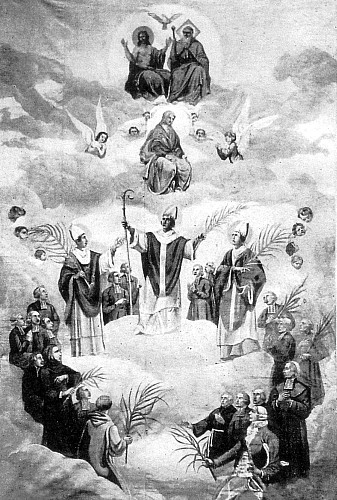
Saint/s of the Day – 2 September – The September Martyrs of the French Revolution, Blessed John du Lau and Companions. They were massacred by a mob on 2 September and 3 September 1792 and Beatified on 17 October 1926 by Pope Pius XI.
A group of 191 Martyrs who died in the French Revolution. They were imprisoned in the Abbey of St-Germain-des-Prés, Hôtel des Carmes in the Rue de Rennes, Prison de la Force and Seminaire de Saint-Firmin in Paris, France by the Legislative Assembly for refusing to take the oath to support the civil constitution of the clergy. This act placed Priests under the control of the state, and had been condemned by the Vatican.
In 1790, the revolutionary government of France enacted a law denying Papal authority over the Church in France. The French clergy were required to swear an oath to uphold this law and submit to the Republic. Many priests and religious took the oath but a sizable minority opposed it. The revolutionary leaders’ primary target was the aristocracy but by 1792, their attention turned to the Church, especially the non-jurors within it.
In August, in the name of Liberty, Equality and Fraternity, those who had refused the oath were rounded up and imprisoned in Parisian monasteries, emptied for that purpose.
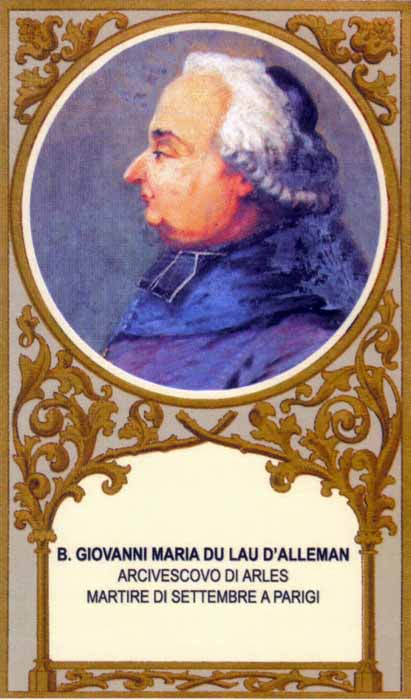
Blessed John du Lau, Archbishop of Arles, was born on 30 October 1738 at the Château de la Côte at Biras in the Dordogne, in the Diocese of Périgueux, of an aristocratic family which had fed many members into the higher ranks of the clergy. His father was Armand du Lau, seigneur de La Coste and his mother Françoise de Salleton. Refusing to take the oath to the civil constitution, he had been brought to Paris and cast into the prison of the Cannes, formerly a Carmelite Monastery.
Bl Jean-Marie du Lau d’Alleman, Archbishop of Arles
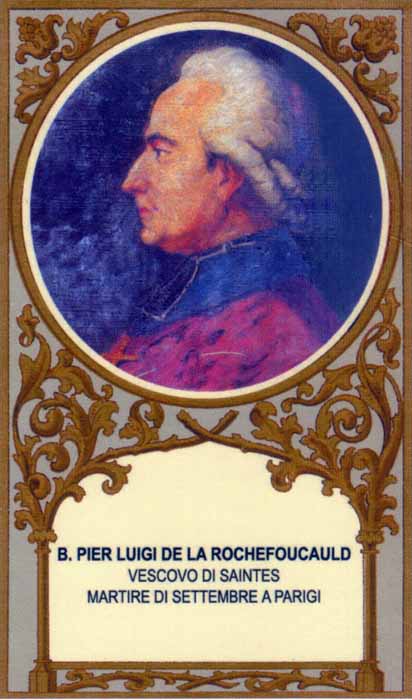
Blessed Pierre-Louis de la Rochefoucauld, Bishop of Saintes and a vigorous antagonist of Jansenism, and his brother, Francois-Joseph de la Rochefoucauld, Bishop of Beauvais, were sons of Jean de La Rochefoucauld, Lord of Maumont, Magnac and other places, Knight of the military orders of Notre-Dame du Mont-Carmel and St-Lazarre de Jérusalem and Marguerite des Escots. Both brothers were imprisoned.
Bl Pierre-Louis de la Rochefoucauld-Bayers, Bishop of Saintes
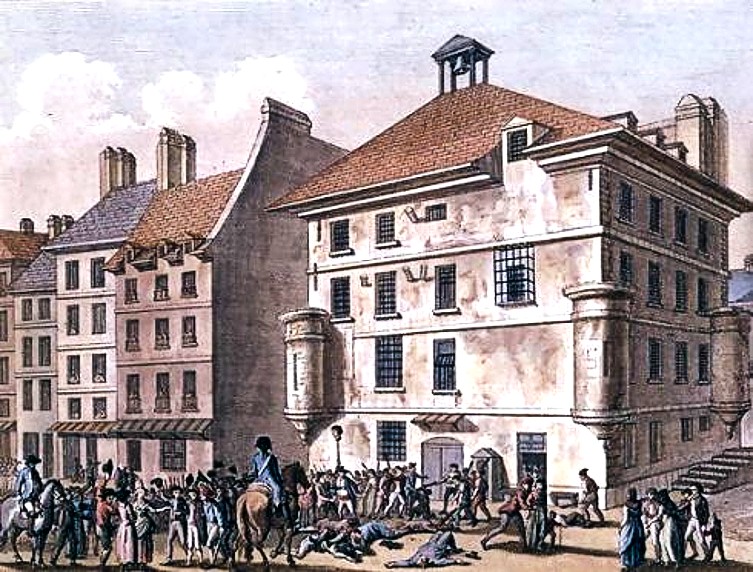
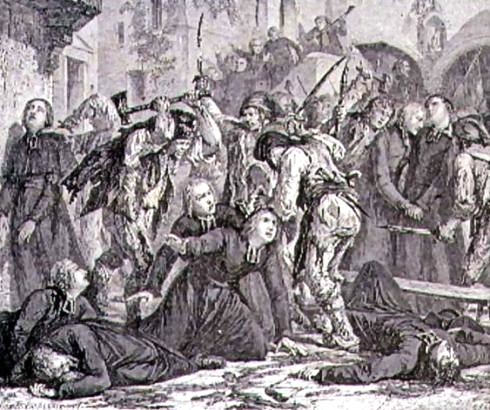
In September “Vigilance Committees” were set up and mobs sent to the make-shift prisons. On 2 September, a season of bloodshed and slaughter began. The inmates were cut-down in cold blood. All of the prisoners, even the old and disabled, were put to the sword. The executions at the old Carmelite monastery in Paris were recorded.
The Massacre at the Abbaye Prison near St Germain des Pres, engraved by Reinier Vinkeles and Daniel Vrydag
Among the Martyrs was Blessed Alexander Lenfant, a Jesuit. Just a few minutes before he died, he had been hearing the confession of a fellow priest. Both were killed moments later. The rioters then went to the Carmelite church which was also being used as a prison.
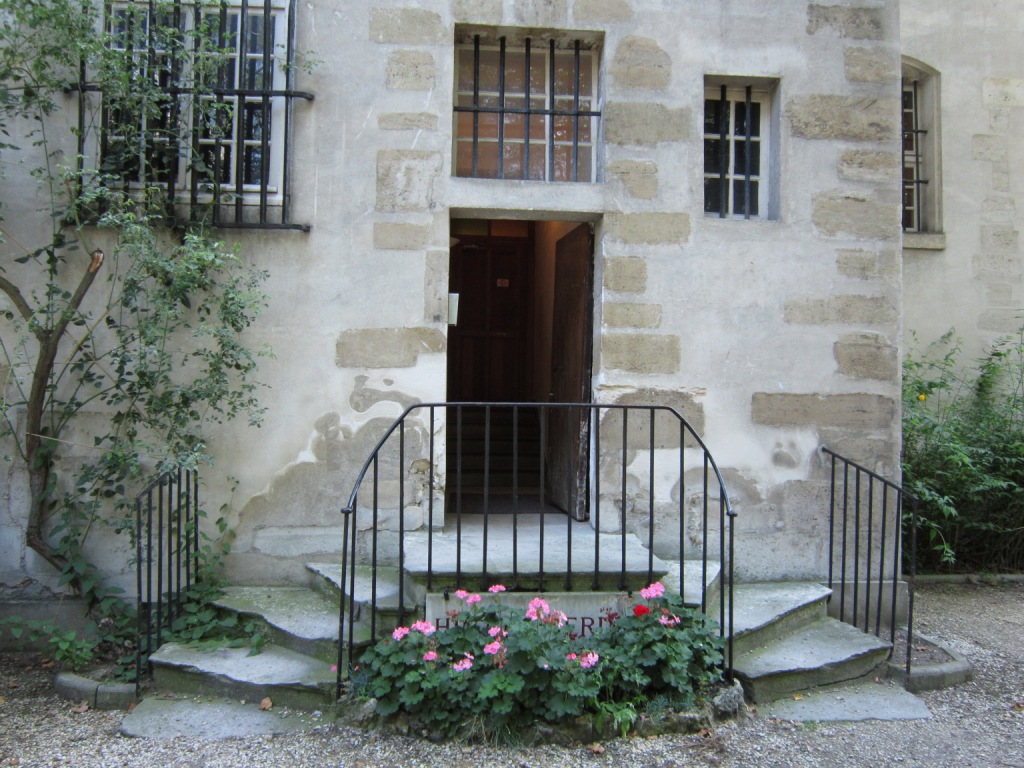
The mob called out, “Archbishop of Arles!” Archbishop John du Lau of Arles (Jean-Marie du Lau d’Alleman) was praying in the Chapel. When summoned, he came out and he said, “I am he whom you seek.” Thereupon, they cracked his skull, stabbed him and trampled him underfoot. Then the leader set up a “tribunal” before which the imprisoned were herded and commanded to take the oath. All refused; so, as they passed down the stairway, they were hacked to pieces by the murderers.
tThe Martyrs’ Stairway
The Bishop of Beauvais had earlier been wounded in the leg. When summoned, he answered, “I do not refuse to die with the others but I cannot walk. I beg you to have the kindness to carry me where you wish me to go.” For a moment, his courtesy silenced the assassins. But, when he, too, refused the oath, he was killed like the rest.
On 3 September the same mob went to the Lazarist Seminary. It was also a temporary prison, with ninety Priests and religious. Only four escaped death.
According to Nicolas-Edme Restif de la Bretonne, “The number of active killers who took part in the September massacres was only about one hundred and fifty. The rest of Paris looked on in fear or approval, or stayed behind closed shutters.”
Earl Gower, a British diplomat, wrote in his dispatches: “These unfortunate people fell victims to the fury of the enraged populace and were massacred with circumstances of barbarity too shocking to describe. The mob went afterwards to the prison of the Abbaye and having demanded of the jailors a list of the prisoners, they put aside such as were confined only for debt and pulled to pieces most of the others. The same cruelties were committed during the night and continue this morning in all the other prisons of the Town. When they have satiated their vengeance, which is principally directed against the refractory Priests,… it is to be hoped the tumult will subside but as the multitude are perfectly masters, everything is to be dreaded.”
THE 191 COURAGEOUS and BLESSED MARTYRS ARE: • Ambroise-Augustin Chevreux • Andé Angar • André Grasset de Saint-Sauveur • André-Abel Alricy • Anne-Alexandre-Charles-Marie Lanfant • Antoine-Charles-Octavien du Bouzet • Antoine-Mathieu-Augustin Nogier • Apollinaris of Posat • Armand de Foucauld de Pontbriand • Armand-Anne-Auguste-Antonin-Sicaire Chapt de Rastignac • August-Dénis Nezel • Bernard-François de Cucsac • Bertrand-Antoine de Caupenne • Charles Carnus • Charles-François le Gué • Charles-Jéremie Bérauld du Pérou • Charles-Louis Hurtrel • Charles-Regis-Mathieu de la Calmette de Valfons • Charles-Victor Véret • Claude Bochot • Claude Cayx-Dumas • Claude Chaudet • Claude Colin • Claude Fontaine • Claude Ponse • Claude Rousseau • Claude-Antoine-Raoul Laporte • Claude-François Gagnières des Granges • Claude-Louis Marmotant de Savigny • Claude-Silvain-Raphaël Mayneaud de Bizefranc • Daniel-Louis André Des Pommerayes • Denis-Claude Duval • Éloy Herque du Roule • Étienne-François-Dieudonné de Ravinel • Étienne-Michel Gillet • Eustache Félix • François Balmain • François Dardan • François Dumasrambaud de Calandelle • François Lefranc • François Varheilhe-Duteil • François-César Londiveau • François-Hyacinthe lé Livec de Trésurin • François-Joseph de la Rochefoucald-Maumont • François-Joseph Monnier • François-Joseph Pey • François-Louis Hébert • François-Louis Méallet de Fargues • François-Urbain Salins de Niart • Gabriel Desprez de Roche • Gaspard-Claude Maignien • Georges Girault • Georges-Jérôme Giroust • Gilbert-Jean Fautrel • Gilles-Louis-Symphorien Lanchon • Guillaume-Antoine Delfaut • Henri-August Luzeau de la Mulonnière • Henri-Hippolyte Ermès • Henri-Jean Milet • Jacques de la Lande • Jacques Dufour • Jacques Friteyre-Durvé • Jacques-Alexandre Menuret • Jacques-Augustin Robert de Lézardières • Jacques-étienne-Philippe Hourrier • Jacques-François de Lubersac • Jacques-Gabriel Galais • Jacques-Jean Lemeunier • Jacques-Joseph Le jardinier desLandes • Jacques-Jules Bonnaud • Jacques-Léonor Rabé • Jacques-Louis Schmid • Jean Charton de Millou • Jean Goizet • Jean Lacan • Jean Lemaître • Jean-André Capeau • Jean-Antoine Guilleminet • Jean-Antoine Savine • Jean-Antoine Seconds • Jean-Antoine-Barnabé Séguin • Jean-Antoine-Hyacinthe Boucharenc de Chaumeils • Jean-Antoine-Joseph de Villette • Jean-Baptiste Bottex • Jean-Baptiste Jannin • Jean-Baptiste Nativelle • Jean-Baptiste-Claude Aubert • Jean-Baptiste-Marie Tessier • Jean-Baptiste-Michel Pontus • Jean-Charles Caron • Jean-Charles Legrand • Jean-Charles-Marie Bernard du Cornillet • Jean-François Bonnel de Pradal • Jean-François Bousquet • Jean-François Burté • Jean-François-Marie Benoît-Vourlat • Jean-Henri Gruyer • Jean-Henri-Louis-Michel Samson • Jean-Joseph de Lavèze-Bellay • Jean-Joseph Rateau • Jean-Louis Guyard de Saint-Clair • Jean-Marie du Lau d’Alleman • Jean-Michel Philippot • Jean-Philippe Marchand • Jean-Pierre Bangue • Jean-Pierre Duval • Jean-Pierre Le Laisant • Jean-Pierre Simon • Jean-Robert Quéneau • Jean-Thomas Leroy • Joseph Bécavin • Joseph Falcoz • Joseph-Louis Oviefre • Joseph-Marie Gros • Joseph-Thomas Pazery de Thorame • Jules-Honoré-Cyprien Pazery de Thorame • Julien le Laisant • Julien Poulain Delaunay • Julien-François Hédouin • Laurent • Louis Barreau de La Touche • Louis le Danois • Louis Longuet • Louis Mauduit • Louis-Alexis-Mathias Boubert • Louis-Benjamin Hurtrel • Louis-François Rigot • Louis-François-André Barret • Louis-Jean-Mathieu Lanier • Louis-Joseph François • Louis-Laurent Gaultier • Louis-Remi Benoist • Louis-Remi-Nicolas Benoist • Loup Thomas-Bonnotte • Marc-Louis Royer • Marie-François Mouffle • Martin-François-Alexis Loublier • Mathurin-Nicolas de la Ville Crohain le Bous de Villeneuve • Mathurin-Victoir Deruelle • Michel Leber • Michel-André-Sylvestre Binard • Michel-François de la Gardette • Nicolas Bize • Nicolas Clairet • Nicolas Colin • Nicolas Gaudreau • Nicolas-Claude Roussel • Nicolas-Marie Verron • Olivier Lefebvre • Philibert Fougères • Pierre Bonzé • Pierre Brisquet • Pierre Brisse • Pierre Gauguin • Pierre Landry • Pierre Ploquin • Pierre Saint-James • Pierre-Claude Pottier • Pierre-Florent Leclercq • Pierre-François Hénocq • Pierre-François Pazery de Thorames • Pierre-Jacques de Turmenyes • Pierre-Jacques-Marie Vitalis • Pierre-Jean Garrigues • Pierre-Louis de la Rochefoucauld-Bayers • Pierre-Louis Gervais • Pierre-Louis Joret • Pierre-Louis-Joseph Verrier • Pierre-Michel Guérin • Pierre-Michel Guérin du Rocher • Pierre-Nicolas Psalmon • Pierre-Paul Balzac • Pierre-Robert Regnet • René Nativelle • René-Joseph Urvoy • René-Julien Massey • René-Marie Andrieux • René-Nicolas Poret • Robert le Bis • Robert-François Guérin du Rocher • Saintin Huré • Sébastien Desbrielles • Solomon Leclerq • Thomas-Jean Montsaint • Thomas-Nicolas Dubray • Thomas-René Dubuisson • Urbain Lefebvre • Vincent Abraham • Vincent-Joseph le Rousseau de Rosencoat • Yves-André Guillon de Keranrun • Yves-Jean-Pierre Rey de Kervisic.
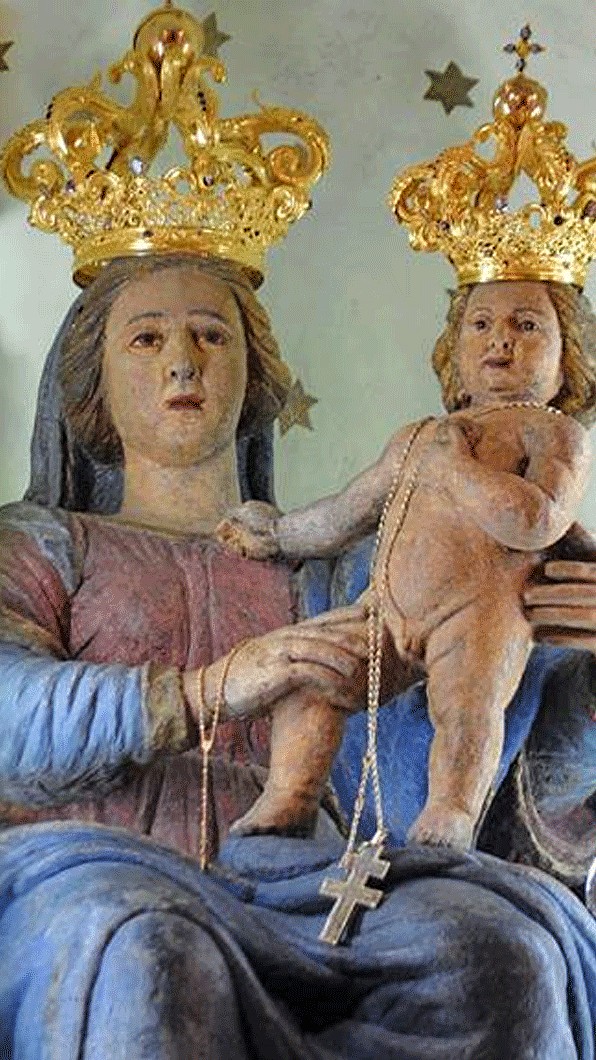
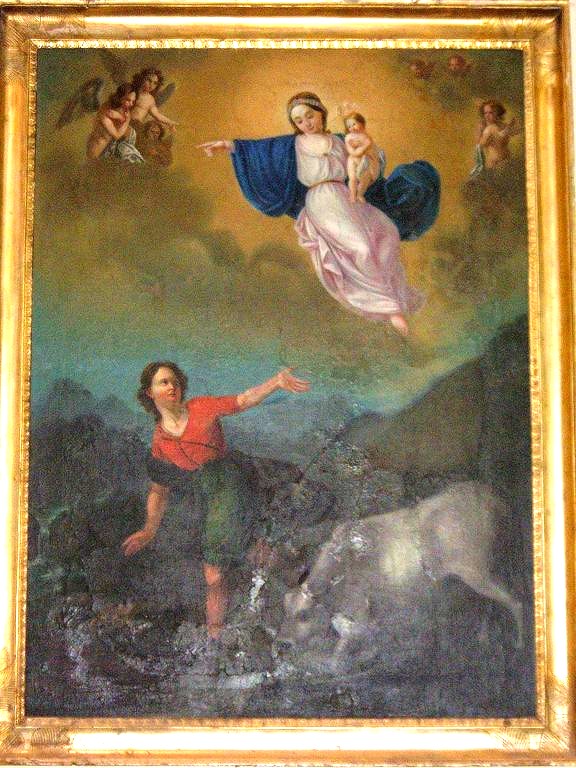
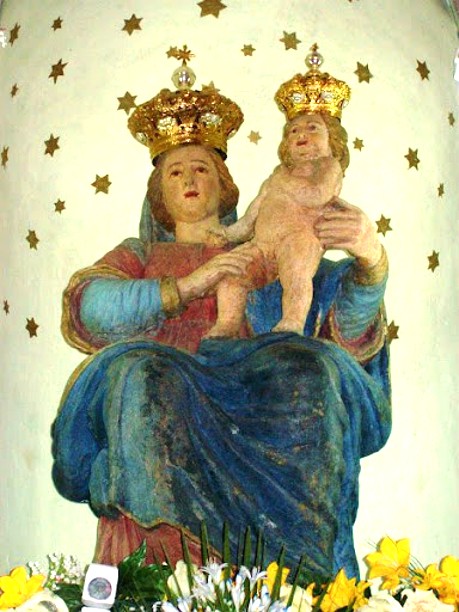
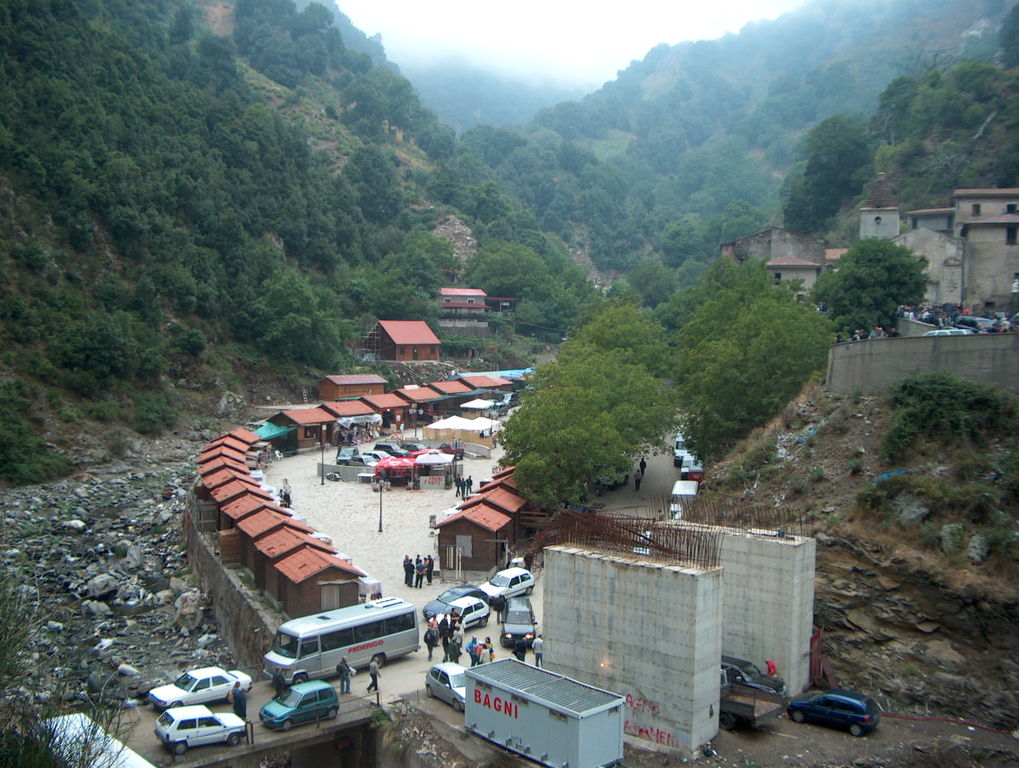
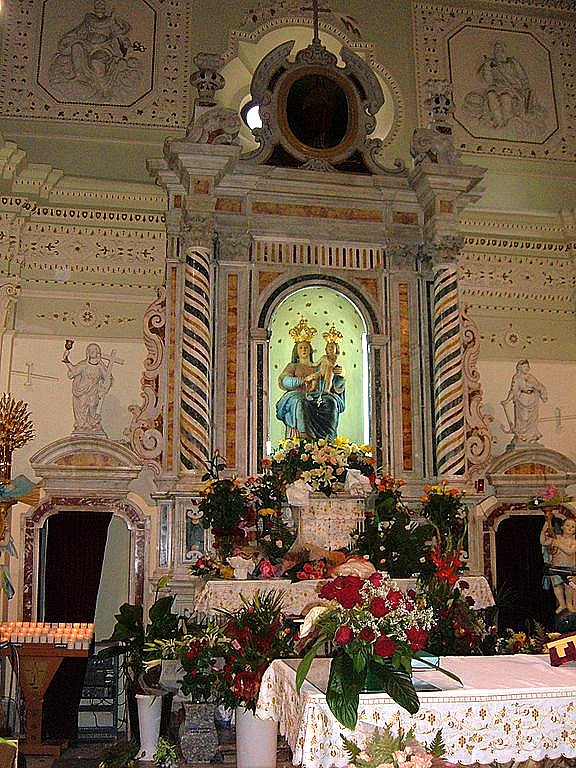
Madonna della Montagna / Our Lady of the Mountain, Polsi di San Luca, Reggio Calabria, Calabria, Italy (1144) – 2 September :
The stone Statue found in the Chest
in 1144, a boy found his calf kneeling before an unusual iron Cross, apparently just unearthed. The Madonna appeared, asking for the young herder to spread the news and for a Church to be built on the spot, half a mile high in the mountains.
In 1560, a chest was found floating in the sea. It was taken ashore and found to contain a stone Statue of the Madonna. When the chest was placed in a cart, the oxen suddenly took off for the mountain pass and nothing more was heard of the Statue until it turned up in the heart of Aspromonte, at the place where a calf had found a Cross and the Madonna had requested a Church. The Sanctuary there became a place of pilgrimage.
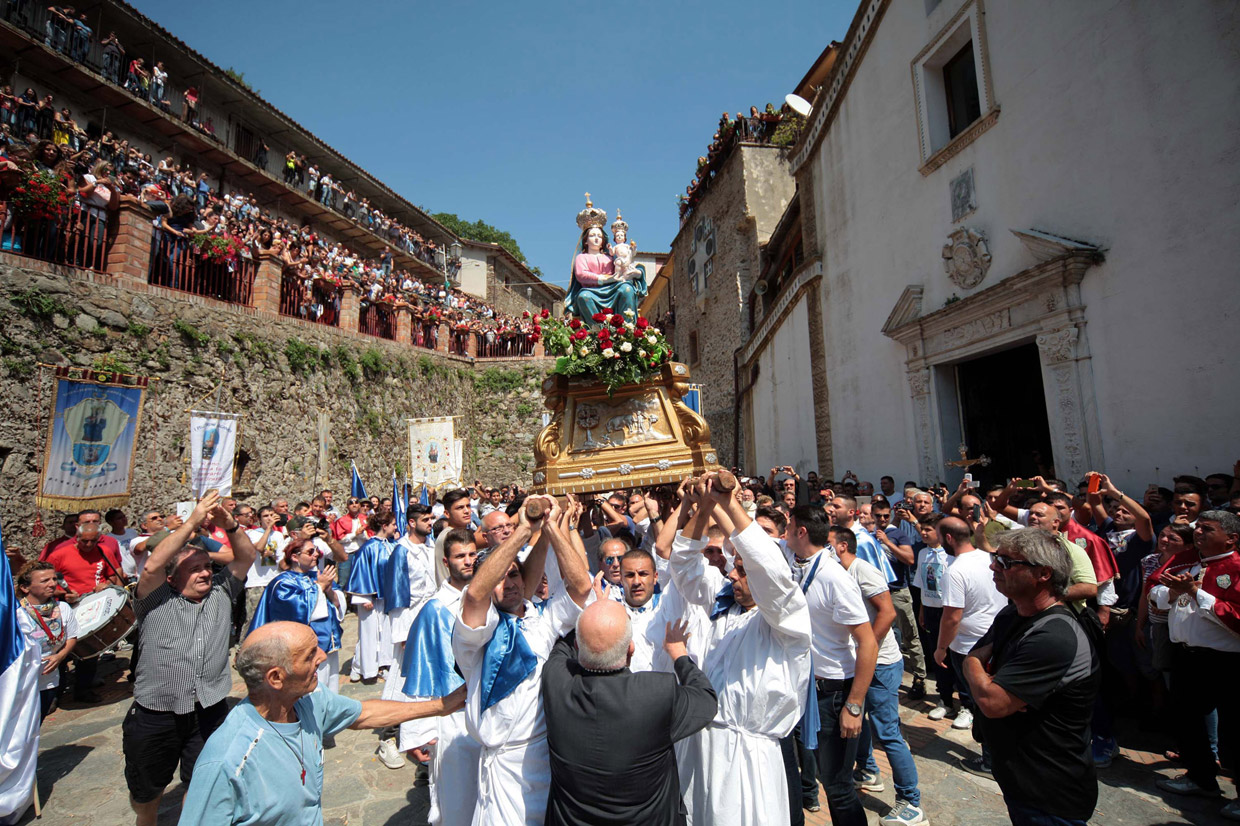
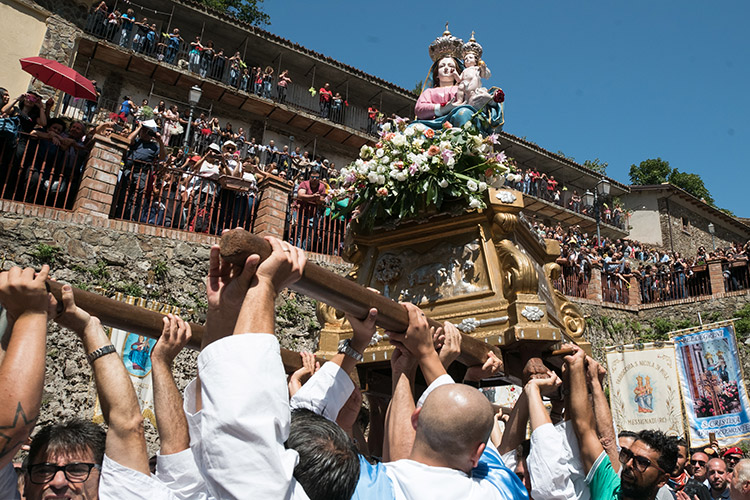
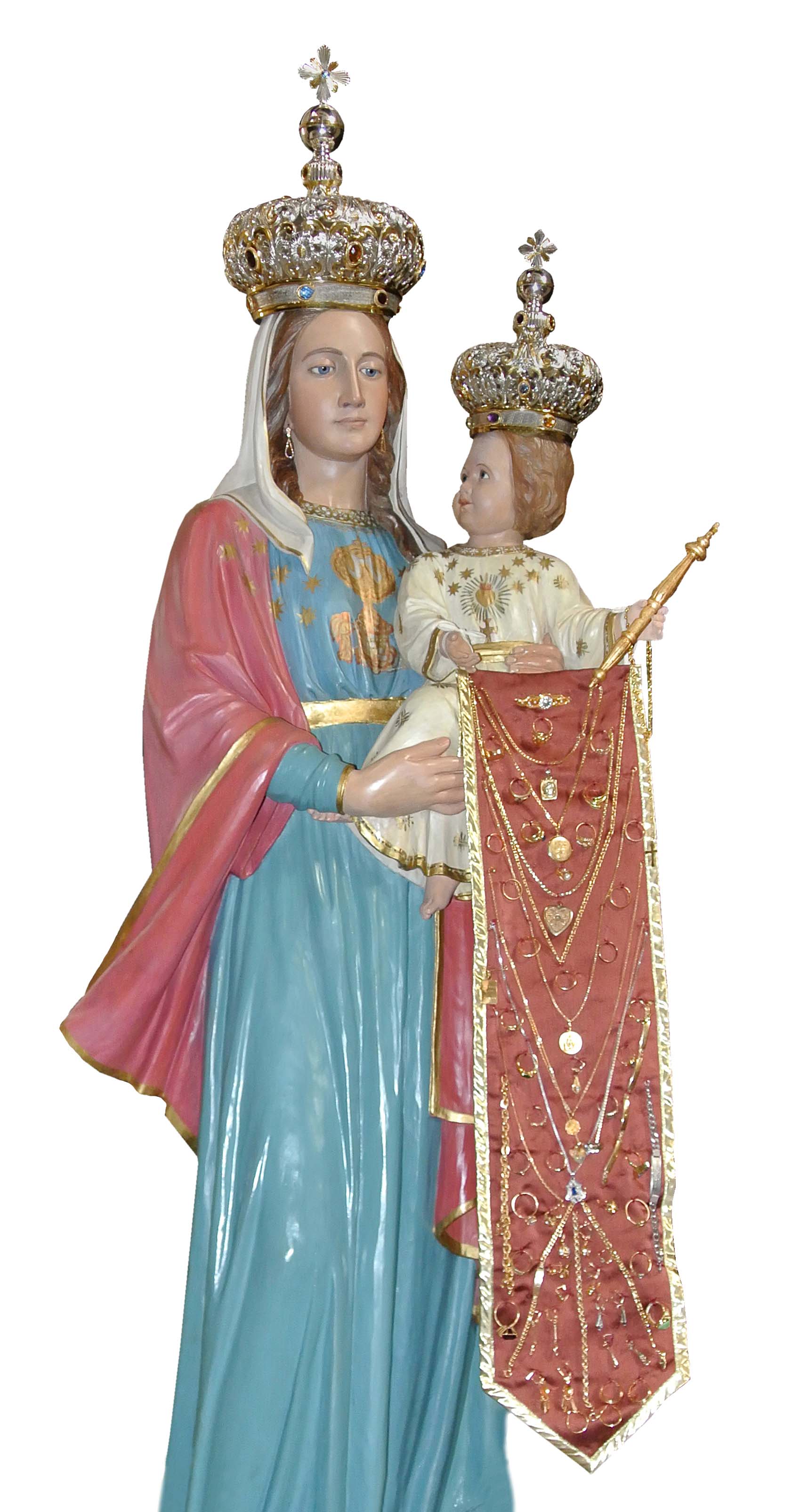
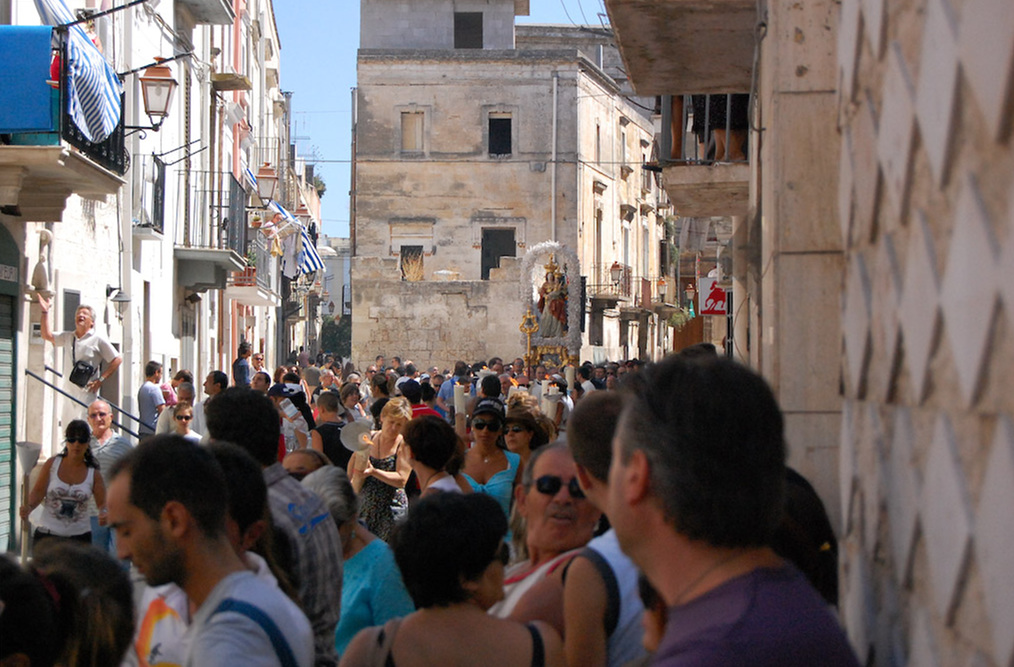
This is the replica Statue which is used for the Processions
Every year, people from all over Calabria and Sicily would make the 24-hour walk, enlivened by hymns and ballads, along the rugged path to Polsi, where they would greet the Madonna with gunshots on their arrival on 2 September As pilgrims still do — though now they can travel by road or train as well — they would spend the night in one of the hostels near the Shrine. On 3 September, a wooden Madonna is carried in procession. The stone Statue is only taken from its place on the main Altar every 25 years or in special circumstances. Also known as the Mother of the Good Shepherd, the Madonna of the Mountain was crowned in 1881, 1931 and on 2 September 1981.
The stone Statue above the Altar
Bl Albert of Pontida St Antoninus of Pamiers St Antoninus of Syria
St Theodota of Bithynia St Valentine of Strasbourg St William of Roeskilde — Marytrs of Nicomedia – 3 saints: Three Christians who were martyred together in the persecutions of Diocletian. No details about them but their names have survived – Concordius, Theodore and Zenone. They were martyrd in Nicomedia, Bithynia (in modern Turkey).
The Holy Martyrs of September (Died 1792) – 191 beati:Also known as – • Martyrs of Paris,• Martyrs of Carmes.
Martyrs of 2 September – 10 saints: A group of ten Christian martyrs; their names are on old martyrologies but we have lost all record of their lives and deaths. They were canonised. • Antoninus • Diomedes • Eutychian • Hesychius • Julian • Leonides • Menalippus • Pantagapes • Philadelphus • Philip
Holy Bishops of Rennes: Honors all the bishops of the Diocese of Rennes, France who have been recognized as saints and beati. They include : Saint Maximinus of Rennes Saint Modéran of Rennes Saint Rambert of Rennes Saint Riotisme of Rennes Saint Servius of Rennes Saint Synchronius of Rennes
Martyred in the Spanish Civil War: • Blessed Baldomer Margenat Puigmitja • Blessed Fortunato Barrón Nanclares • Blessed Joan Franquesa Costa • Blessed José María Laguía Puerto • Blessed Lorenzo Insa Celma
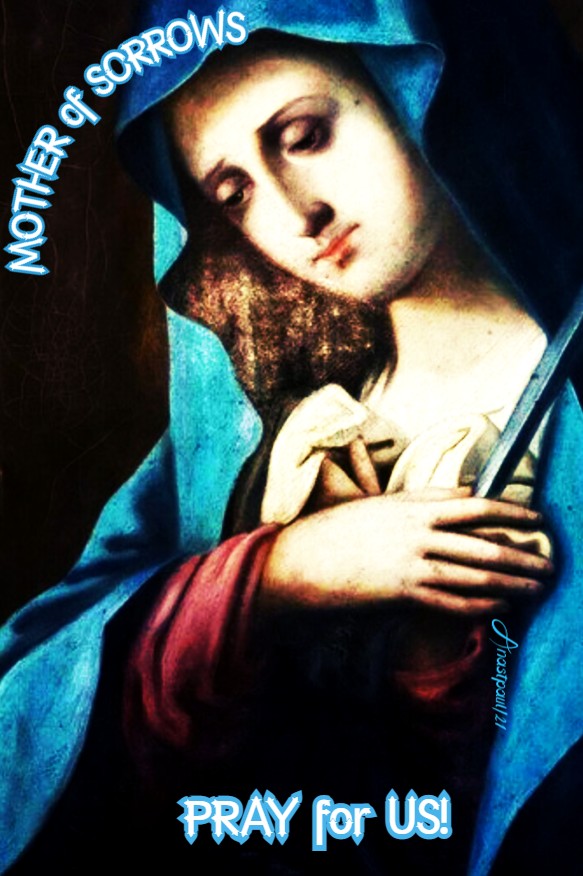
September – Month of The Seven Sorrows of the Blessed Virgin Mary
The Seven Sorrows of the Blessed Virgin Mary
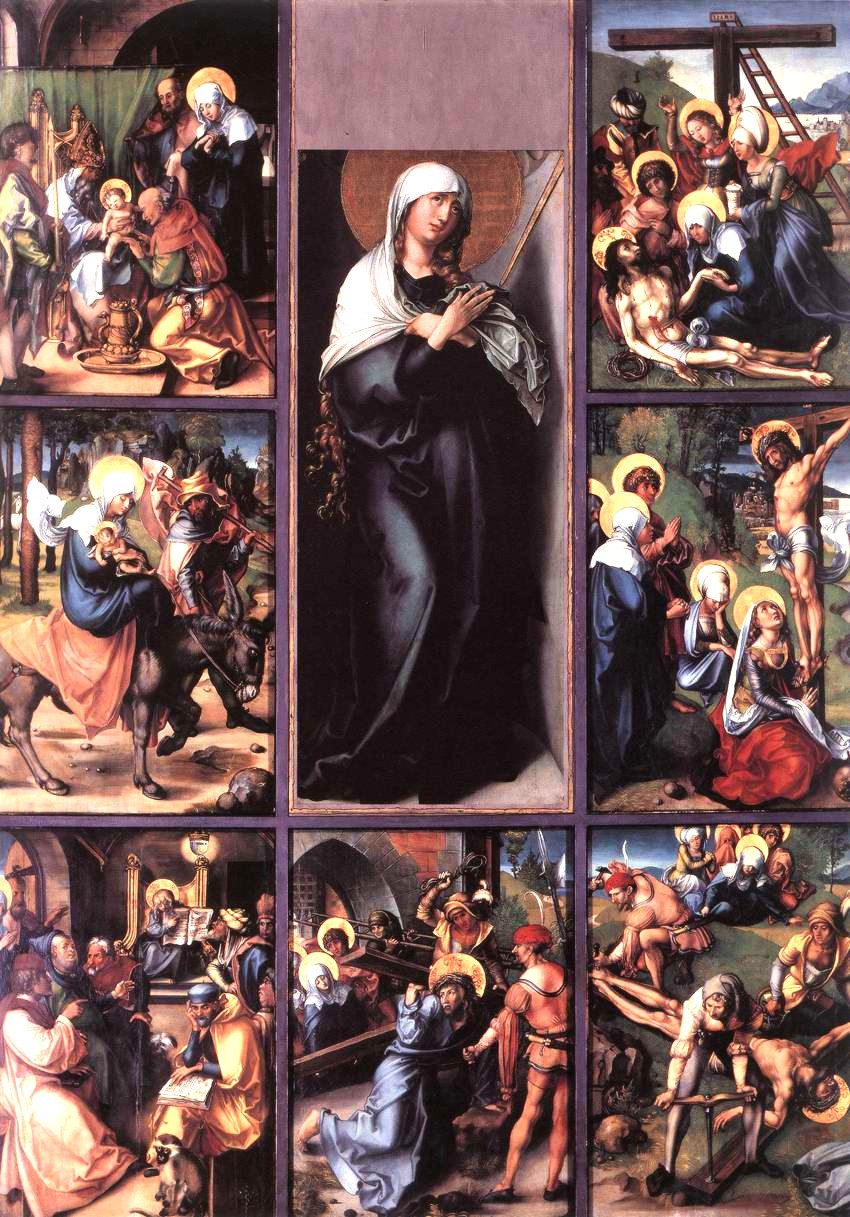
1, The prophecy of Simeon 2. The Flight to Egypt 3. Loss of Child Jesus for 3 days 4. Meeting Jesus carrying His Cross 5. The Crucifixion of Jesus 6. The Pieta – receiving Jesus’ Body The Burial of Jesus
The Seven Sorrows of the Virgin – Altarpiece by Albrecht Dürer.
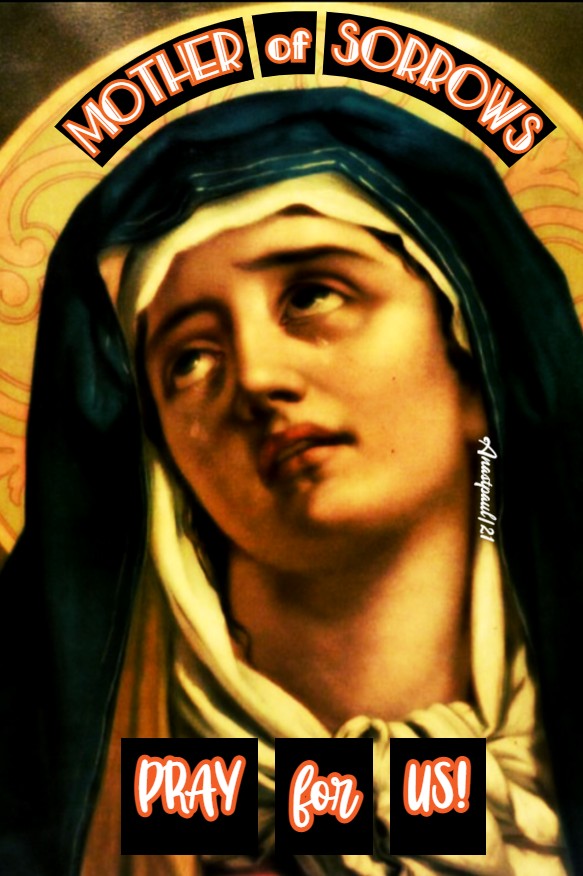
During this month of September, we are drawn into the spiritual Martyrdom which the Blessed Mother experienced during the physical Martyrdom of Jesus. The evils of sin are manifest but conquered through intense suffering. The Blessed Mother’s tears of anguish reflect God’s washing away of sin.
We see this theme of joy followed by affliction mirrored in the liturgical calendar in two September Feasts – the Exaltation of the Holy Cross on 14 September and the Feast of Our Lady of Sorrows on 15 September. Happy the heart of the blessed Virgin Mary! She, without dying, earned the treasure of Martyrdom beneath the Cross of our Lord for her anguish.
The name of Our Lady of Sorrows centres on the extraordinary and bittersweet suffering the Blessed Mother experienced during Christ’s Passion. As seen in the artwork above, her agony is composed of “The Seven Dolors,” that pierced the Heart of Mary. Dürer’s portrayal of each event encompasses the central figure of Christ’s sorrowful Mother.
Thought for the Day – 1 September – Meditations with Antonio Cardinal Bacci (1881-1971)
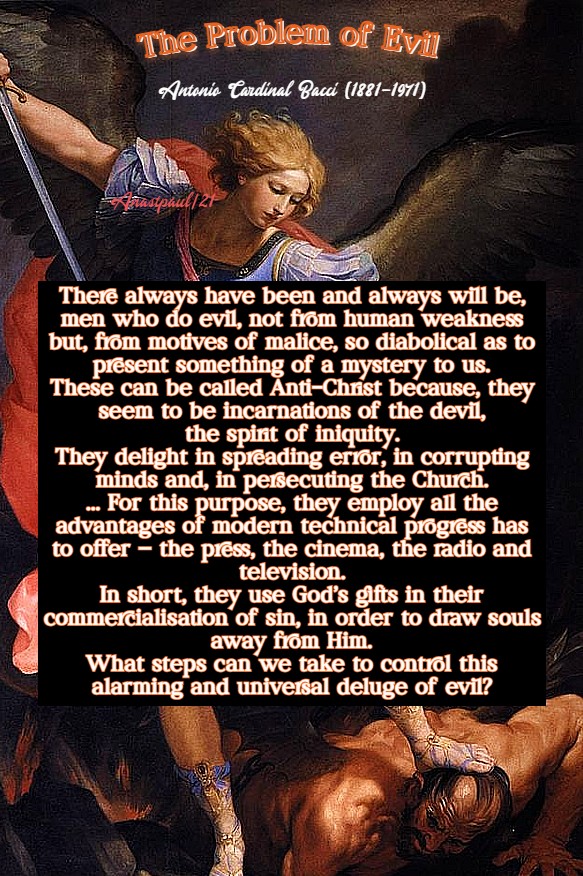
The Problem of Evil
“In his second letter to the Thessalonians, the Apostle Paul speaks of the Anti-Christ, “the man of sin … the son of perdition, who opposes and is exalted above all that is called God…” “Already,” he says, “the mystery of iniquity is at work” (Cf 2 Thess 2:3-7). From the beginning of the Church’s history until the present time, it has always been the same.
There always have been and always will be, men who do evil, not from human weakness but, from motives of malice, so diabolical as to present something of a mystery to us. These can be called Anti-Christ because, they seem to be incarnations of the devil, the spirit of iniquity. They delight in spreading error, in corrupting minds and, in persecuting the Church. They are steeped in all kinds of baseness and nothing pleases them better, than to succeed in inducing the young and the innocent, to follow them in their sinful ways. For this purpose, they employ all the advantages of modern technical progress has to offer – the press, the cinema, the radio and television. In short, they use God’s gifts in their commercialisation of sin, in order to draw souls away from Him.
The realisation of this terrifying fact, provokes two questions. (1) How can such evil be permitted by God, Who made man for Himself and redeemed him with the Blood of His only-begotten Son? (2) What steps can we take to control this alarming and universal deluge of evil?
St Augustine answers the first question by pointing out, that the infinite and good God created us without any assistance from ourselves, but does not will to save us without our co-operatikon, since He has endowed us with the gift of liberty. Moreover, He prefers to draw good from evil, rather than to prevent the evil itself.
We must answer the second question ourselves, remembering that we have a serious obligation to combat evil in ourselves and in our fellow-men. What have we done up to now and what do wqe propose to do in the future?”
Quote/s of the Day – 1 September – “Month of the Seven Sorrows of Mary” – Readings: Colossians 1: 1-8; Psalms 52: 10, 11; Luke 4: 38-44
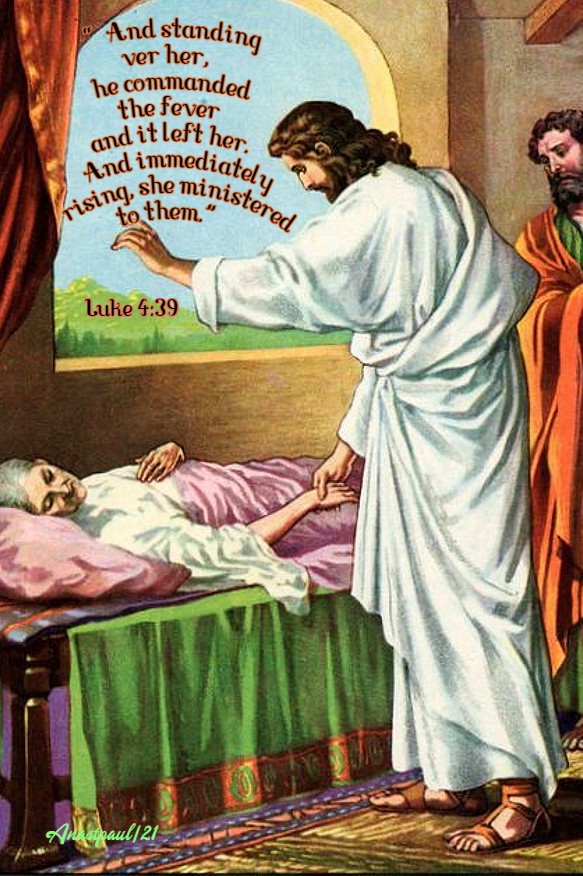
“And standing over her, he commanded the fever and it left her. And immediately rising, she ministered to them.”
Luke 4:39
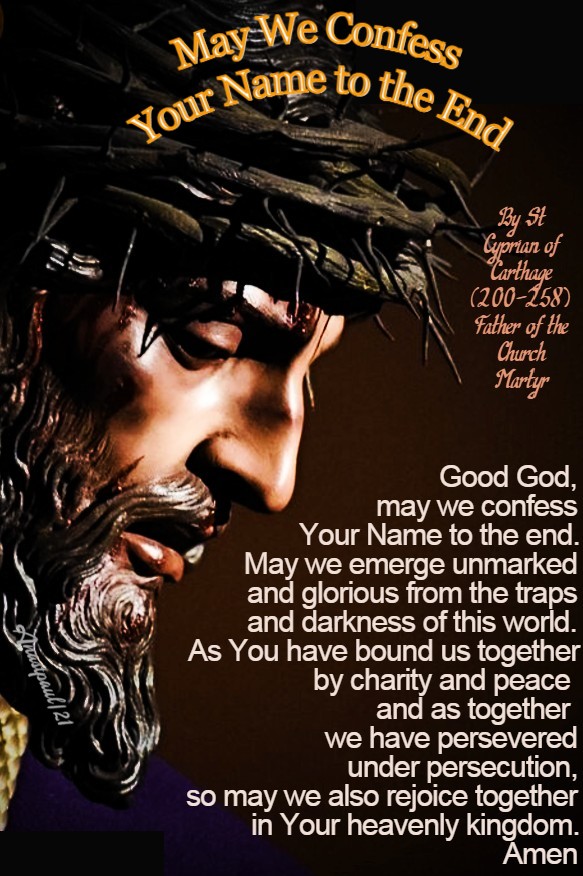
May We Confess Your Name to the End By St Cyprian of Carthage (200-258) Bishop and Martyr Father of the Church
Good God, may we confess Your Name to the end. May we emerge unmarked and glorious from the traps and darkness of this world. As You have bound us together by charity and peace and as together we have persevered under persecution, so may we also rejoice together in Your heavenly kingdom. Amen
St Cyprian of Carthage (200-258)
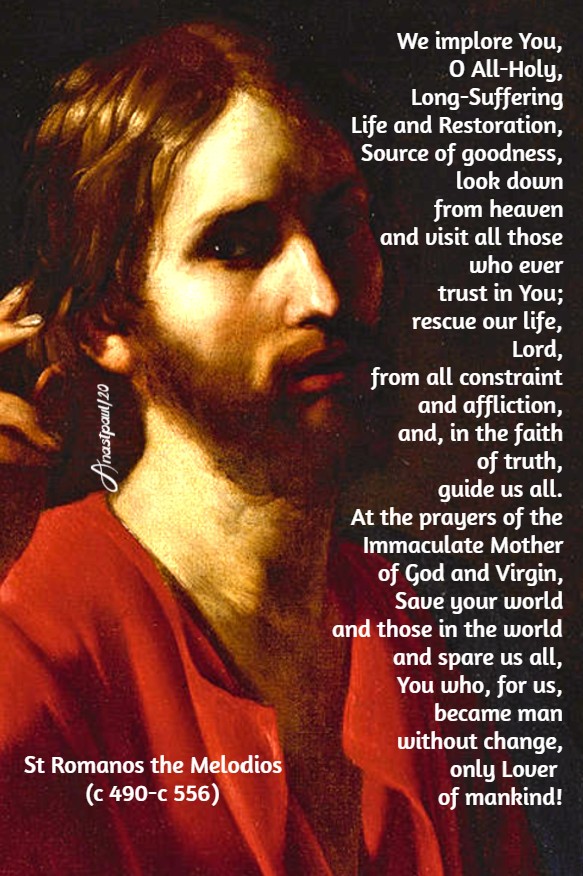
“We implore You, O All-Holy, Long-Suffering Life and Restoration, Source of goodness, look down from heaven and visit all those who ever trust in You; rescue our life, Lord, from all constraint and affliction, and, in the faith of truth, guide us all. At the prayers of the Immaculate Mother of God and Virgin, Save your world and those in the world and spare us all, You who, for us, became man without change, only Lover of mankind.”
St Romanos the Melodios (c 490-c 556)
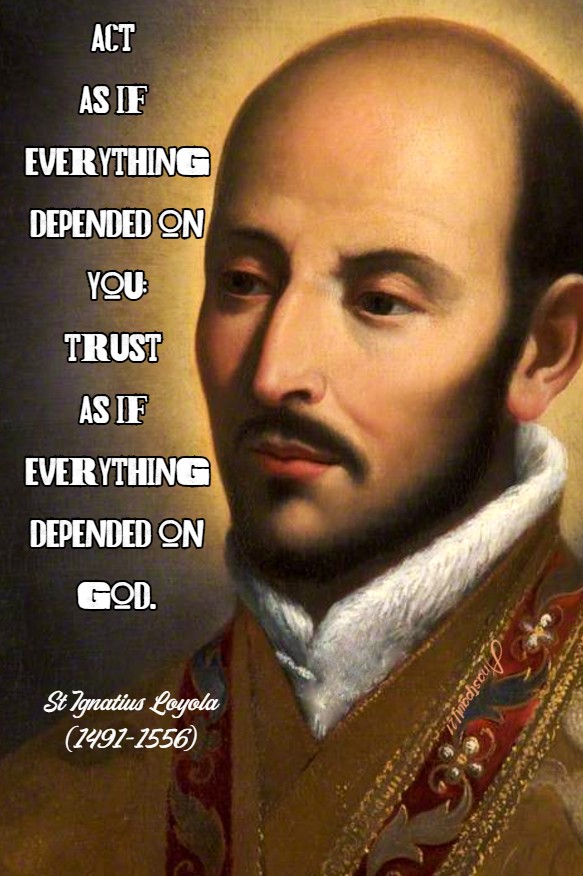
“Act as if everything depended on you; trust as if everything depended on God.”
St Ignatius Loyola (1491-1556)
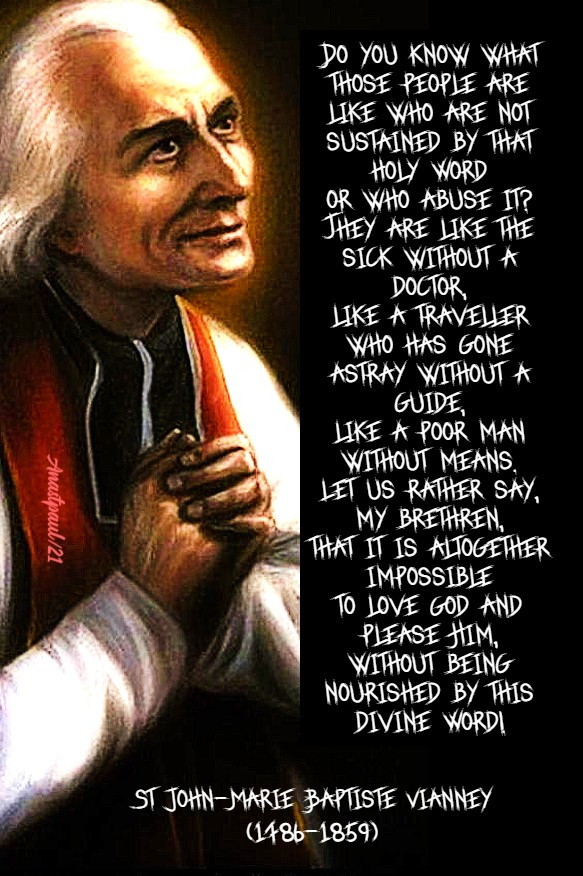
“Do you know what those people are like who are not sustained by that holy Word or who abuse it? They are like the sick without a doctor, like a traveller who has gone astray without a guide, like a poor man without means. Let us rather say, my brethren, that it is altogether impossible to love God and please Him, without being nourished by this divine Word!”
One Minute Reflection – 1 September – “Month of the Seven Sorrows of Mary” – Readings: Colossians 1: 1-8; Psalms 52: 10, 11; Luke 4: 38-44
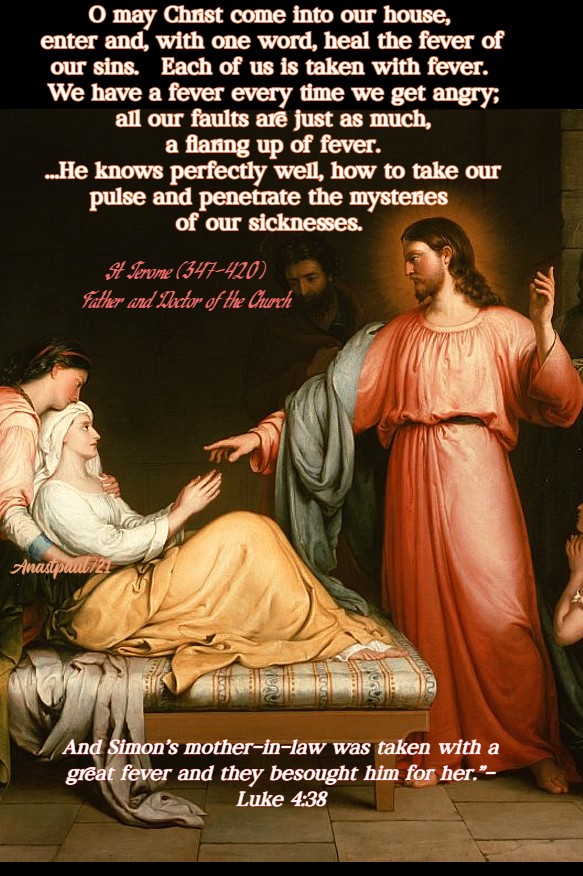
“And Simon’s mother-in-law was taken with a great fever and they besought him for her.”- Luke 4:38
REFLECTION – “Simon’s mother-in-law was lying on her bed with a fever.” O may Christ come into our house, enter and, with one word, heal the fever of our sins. Each of us is taken with fever. We have a fever every time we get angry; all our faults are just as much, a flaring up of fever. Let us ask the Apostles to pray to Jesus to come to us and take us by the hand for, as soon as He takes our hand, the fever will leave us.
He is the true, the great Physician, first amongst all physicians. Moses is a physician, Isaiah and all the saints are physicians but as for Jesus, He is the first amongst them all. He knows perfectly well, how to take our pulse and penetrate the mysteries of our sicknesses. He touches neither ear, nor face, nor any other part of the body but takes the hand …, namely our evil deeds. Firstly, He heals our deeds and then the fever vanishes.” – St Jerome (347-420) – Priest, Translator of Sacred Scripture, Father and Doctor of the Church – Homilies on Saint Mark’s Gospel, no. 2C ; PLS 2, 125 f., SC 494
PRAYER – God our Father, Your rule is a rule of love, Your providence is full of mercy for Your people. Through the intercession of the Blessed Virgin, Mother of the Word made flesh and His sorrowful Mother, grant the spirit of wisdom and understanding in Your Word, Your Son Jesus Christ. Grant that by the healing Word our repentant hearts may know our way to our eternal home and strive to attain eternal joy there with You. Through Jesus Christ our Lord, with the Holy Spirit, one God forever, amen.
Our Morning Offering – 1 September – “Month of the Seven Sorrows of Mary”
As we enter the Month of our Sorrowful Mother, let us unite ourselves to her and offer her our meagre consolation.
What Can I Say? By St Anselm (1033-1109) Magnificent Doctor Marian Doctor
My most merciful Lady, what can I say about the fountains that flowed from your most pure eyes when you saw your only Son before you, bound, beaten and suffering? What do I know of the flood that drenched your matchless face, when you beheld your Son, your Lord and your God, stretched on the Cross without guilt, when the flesh of your flesh was cruelly butchered by wicked men? How can I judge, what sobs, troubled your most pure breast, when you heard, “Woman, behold your son,” and the disciple, “Behold, your Mother,” when you received as a son the disciple in place of the Master, the servant for the Lord? Amen
From “The Prayers and Meditations of Saint Anselm with the Proslogion,” Benedicta Ward, trans,1973, Penguin classics, Penguin Group (UK)
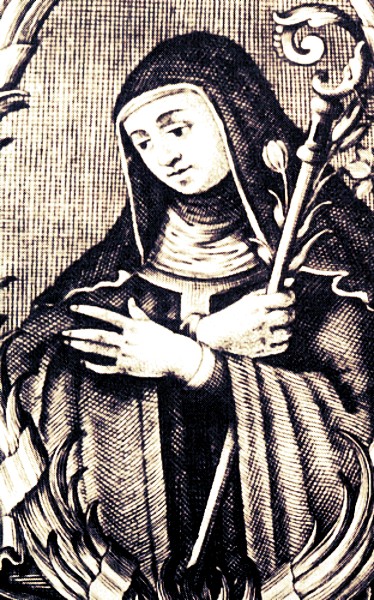
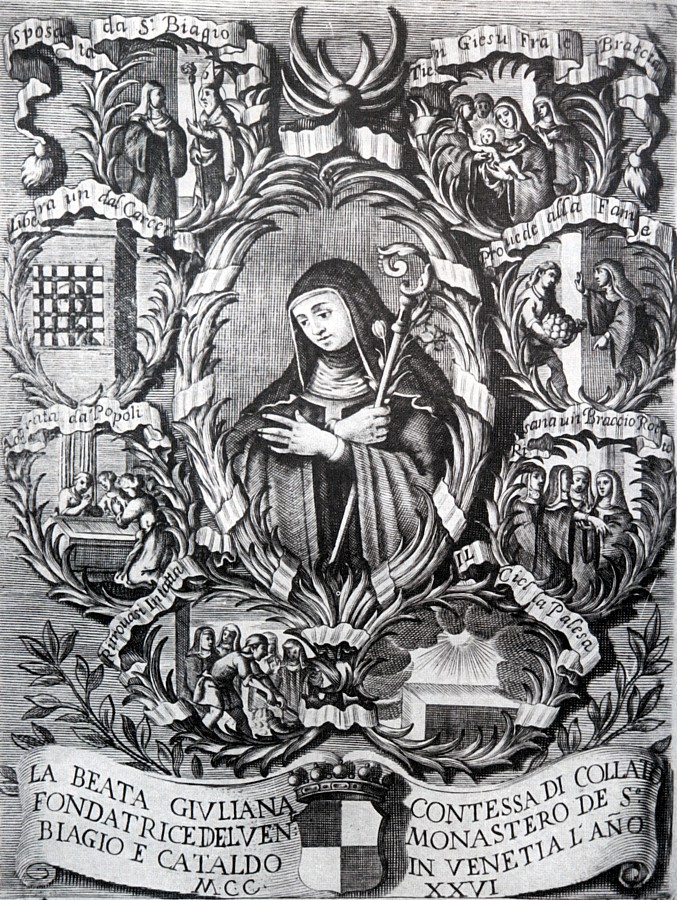
Saint of the Day – 1 September – Blessed Giuliana of Collalto (1186-1262) Benedictine Nun, Abbess, Thaumaturgist, Apostle of the poor. Born in 1186 in Collalto, Susegana, Treviso, Italy and died on 1 September 1262 at Venice, Italy of natural causes. Also known as – Juliana. Patronages – against headaches, against migraines; of migraine sufferers. Her body is incorrupt.
The Roman Martyrology states of her today: “In Venice, Blessed Giuliana da Collalto, Abbess of the Order of Saint Benedict.”
Giuliana was born in Collalto (today a fraction of the Municipality of Susegana in the Province of Treviso, Italy) in 1186. Her parents were Count Rambaldo VI and Countess Giovanna di Sant’Angelo di Mantova.
She was educated in a Christian manner and very young, at the age of twelve, she wore the Benedictine habit in St Margherita di Salarola, on the Euganean Hills. Here she lived the first years of religious life in an exemplary way. In 1220 the Blessed Beatrice I d’Este entered the same Monastery and a deep friendship was born between the two chosen souls.
In the powerful and rich Venetian Republic, Monasteries also had their importance because young people from the most important and noble families were welcomed within their walls.
On the island of Spinalonga (now Giudecca) stood the ruined Church of St Cataldo. Giuliana, whose illustrious name in terms of wealth was by now also known for her excellent virtues, was entrusted with the foundation, next door, of a Monastery. Thus was born, in that abandoned place, a cloistered community that for centuries devoted itself to prayer. The Church was also dedicated to St Biagio. Giuliana, nominated Abbess, in addition to respecting the Rule for her own sanctification and that of her Sisters, always had particular regard for the poor. Her charity was known throughout the City and she performed many wonders while still alive. Following the laws of suppression of religious orders at the end of the eighteenth century, the building was then transformed into the Villa Albarea, being located right along the Riviera del Brenta.
During the last years of her life the blessed suffered from severe headaches, which earned her the Patronage of those who suffer from the same ailment. She died on 1 September 1262, at the age of seventy-six, of which sixty-four had been dedicated to the Lord. She was buried in the Church cemetery. Her memory remained alive and above all her fame as a thaumaturgist against migraines. Her biographers were several.
Around 1290 the body, found incorrupt, was placed in an artistic wooden sarcophagus. In 1733 the relics were placed in an Altar of the Church while exactly twenty years later (on 30 May) Pope Benedict XI confirmed the cult “ab immemorabili,” with her Memorial y on 1 September . In 1810 the body was moved to the Church of the Redentore and twelve years later to the parish of St Eufemia where it is still venerated in the Chapel of St Anna. In the Church of her birthplace there is a relic of the phalanx, a crown on which she rested her head, a pillow and part of the dress worn at the time of death. The ancient wooden sarcophagus is now kept at the Correr Museum in Venice. Her paintings are an ancient example of how Venetian painting was influenced, at that time, by the Byzantine style.
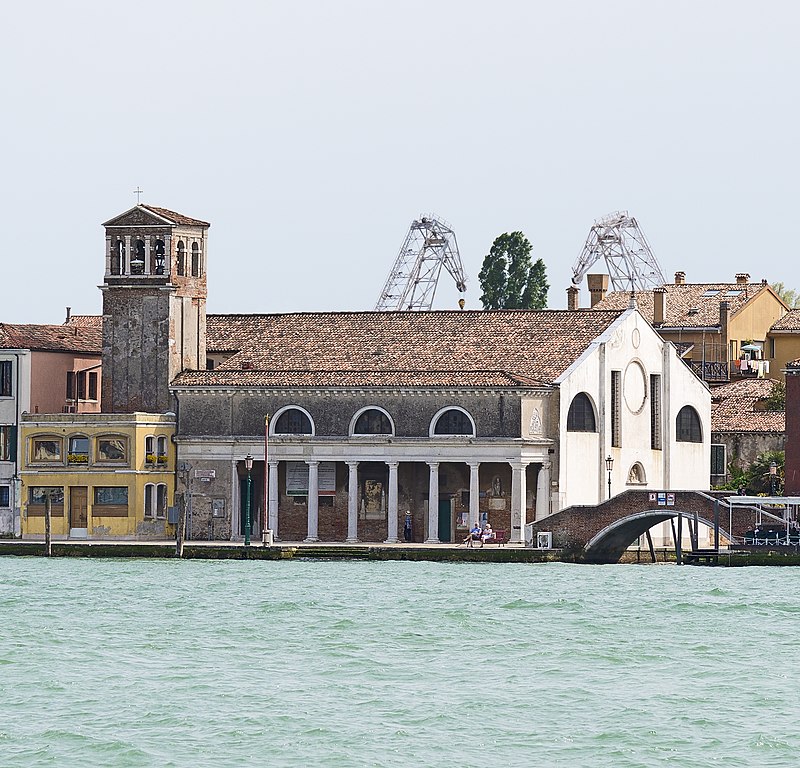
St Eufemia Church in Venice where the incorrupt body of Blessed Giuliana is enshrined
Collection of all the Feasts of Our Lady, celebrated at Louvain – 1 September:
The Abbot Orsini writes that “A feast is kept in honour of the Blessed Virgin, called the Collection of all the Feasts of Our Lady.”
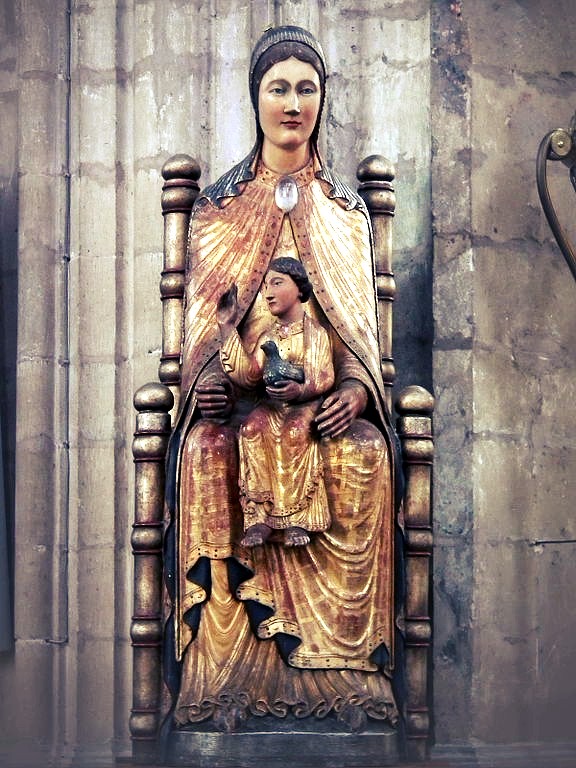
Louvain refers to Leuven, the capital of the Province of Flemish Brabant in the Flemish Region of Belgium. There was once a Chapel called Our Lady of Louvain, which had stood near the Church tower of a separate Church dedicated to Saint Peter. The Chapel owed its origin to an image of the Blessed Virgin Mary that was given by a group of Monks from Abbey Park as a sign of brotherhood in 1132. According to tradition, the wooden statue, which depicted the Blessed Virgin seated with the Divine Child in her lap, was a gift from heaven deposited on the earth by heavenly Angels. The image excited a lively religious fervour upon its reception and there are numerous miracles credited to pious devotion to the image of Our Lady of Louvain.
Over 350 years later, as the Chapel of Our Lady of Louvain was built on land that was needed for the construction of the new and larger Church of Saint Peter, it was necessary to demolish the Chapel. In a letter dated 28 March 1496, Bishop John Horne of Liege, authorised the transfer of materials from the Chapel of Our Lady of Louvain to the new Basilica of Saint Peter The old Chapel was demolished two years later in 1498 and the Statue of the Virgin was placed on a special Altar in the collegiate Church of Saint Peter. Every year, on the eve of the first Sunday in September, the miraculous image of Our Lady of Louvain had been carried in procession by the canons and members of the local council while bells tolled and musicians accompanied the image singing the Salve Regina. Sometime later, the Statue became known by the title of Notre-Dame-sous-la-Tour. The original Church of Saint Peter was made entirely of wood and completed in about 986. It burned to the ground in 1176. It was rebuilt in Romanesque style with two west towers, and that image is still used as the ancient seal for the City. The Church was then enlarged in 1425 in the Brabantine Gothic style. The Church of Saint Peter was heavily damaged in both world wars but most importantly, the original Statue of Our Lady of Louvain was completely destroyed in 1944 by allied bombing during World War II and it is now only a replica that is on display at the Church.
Abigail the Matriarch St Aegidius St Agia St Anea St Arcanus St Arealdo of Brescia Bl Colomba of Mount Brancastello St Constantius the Bishop St Donatus of Sentianum St Felix of Sentianum
Blessed Giuliana of Collalto OSB (1186-1262) Benedictine Nun Bl Giustino of Paris Bl Giovanna Soderini St Jane Soderini St Joshua the Patriarch Bl Juliana of Collalto St Laetus of Dax
St Lythan St Nivard of Rheims St Priscus St Regulus St Sixtus of Rheims St Terentian St Verena St Victorious St Vincent of Xaintes — Exiles of Campania Twelve Holy Brothers: Martyrs of the South – A group of Martyrs who died c 303 at various places in southern Italy. In 760 their relics were brought together and enshrined in Benevento, Italy as a group. • Saint Arontius of Potenza • Saint Donatus of Sentianum • Saint Felix of Sentianum • Saint Felix of Venosa • Saint Fortunatus of Potenza • Saint Honoratus of Potenza • Saint Januarius of Venosa • Saint Repositus of Velleianum • Saint Sabinian of Potenza • Saint Sator of Velleianum • Saint Septiminus of Venosa • Saint Vitalis of Velleianum One tradition describes Saint Boniface of Hadrumetum and Saint Thecla of Hadrumetum as their parents.
Martyred in the Spanish Civil War: Martyred Hospitallers of Saint John of God – (12 beati) • Blessed Alejandro Cobos Celada • Blessed Alfonso Sebastiá Viñals • Blessed Amparo Carbonell Muñoz • Blessed Antonio Villanueva Igual • Blessed Carmen Moreno Benítez • Blessed Crescencio Lasheras Aizcorbe • Blessed Enrique López y López • Blessed Francesc Trullen Gilisbarts • Blessed Guillermo Rubio Alonso • Blessed Isidro Gil Arano • Blessed Joaquim Pallerola Feu • Blessed Joaquín Ruiz Cascales • Blessed José Franco Gómez • Blessed José Prats Sanjuán • Blessed Josep Samsó y Elias • Blessed Manuel Mateo Calvo • Blessed Mariano Niño Pérez • Blessed Maximiano Fierro Pérez • Blessed Miquel Roca Huguet • Blessed Nicolás Aramendía García • Blessed Pedro Rivera • Blessed Pio Ruiz De La Torre
Thought for the Day – 31 August – Meditations with Antonio Cardinal Bacci (1881-1971)
Prayer and Our Lady
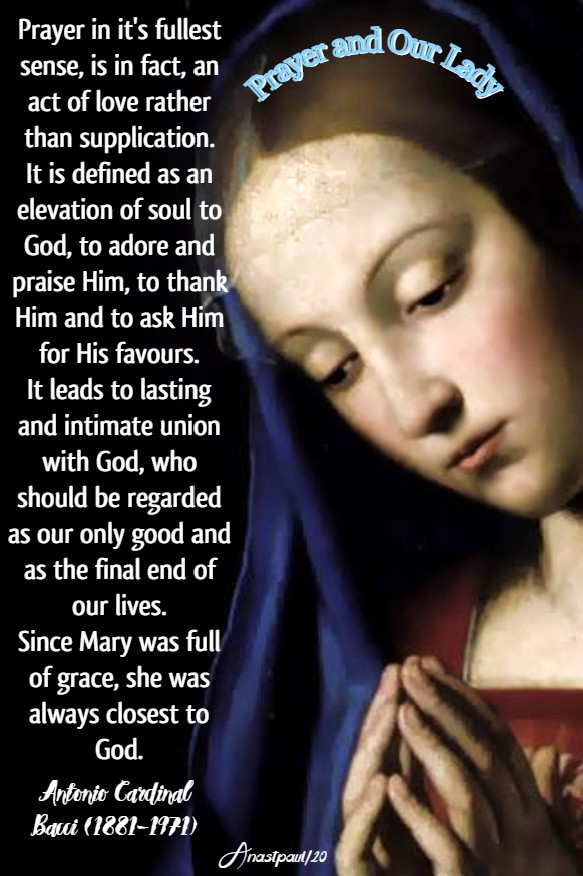
“He told them a parable – that they must always pray and not lose heart” (Lk 18:1). Nobody else on earth ever carried out this command of Our Lord as perfectly as Our Lady. St Albert the Great says that, after Jesus Christ, the spirit of prayer is to be found at it’s most perfect, in Our Lady (Sup Miss 80). It was because of her immense love for her divine Son that Mary was able to put into practice, throughout her life, that Gospel precept of unceasing prayer. Prayer in it’s fullest sense, is in fact, an act of love rather than supplication. It is defined as an elevation of soul to God, to adore and praise Him, to thank Him and to ask Him for His favours. It leads to lasting and intimate union with God, who should be regarded as our only good and as the final end of our lives. Since Mary was full of grace, she was always closest to God. Even before she became His Mother, she constantly enjoyed His intimacy. Despite the many sorrows of her life, this intimacy became still greater and more beautiful, when she became the Mother of Jesus. From that time, she was able to hold Him to her immaculate bosom and to live in close familiarity with Him. She was able, too, to follow Him on His apostolic journeys, until He reached Calvary and the Cross and, finally, to see Him gloriously risen from the dead. After Jesus had ascended into Heaven, her soul expanded with a nostalgic love for her divine Son, until her earthly journey was over and she was taken up into Heaven. There, she reigns supreme among the Saints and Angels and never ceases to pray for us, her exiled children, who need her help so much. Let us learn from Mary, how to pray with love and perseverance. Then, we shall be able to follow her along the difficult way of perfection, which leads towards Heaven.”
Antonio Cardinal Bacci
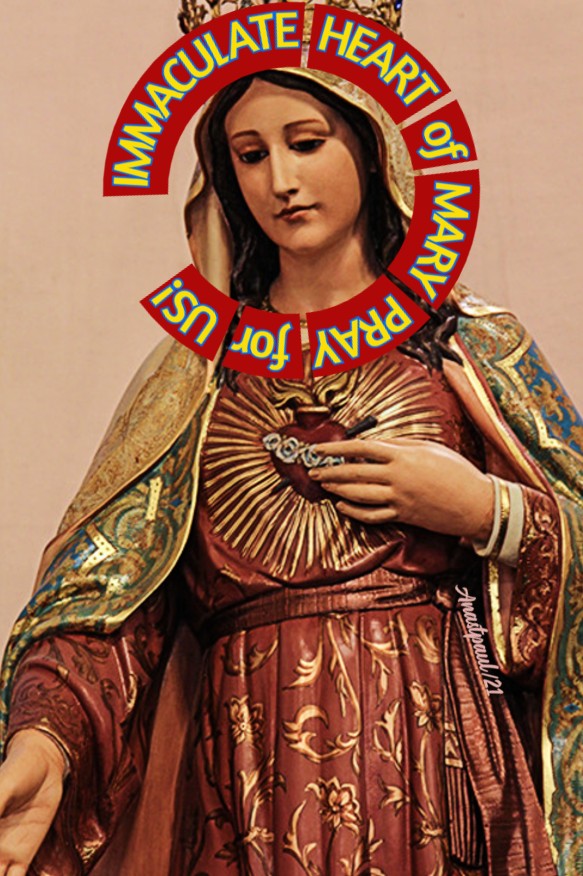
On this last day of the Month of the Immaculate Heart of Mary, let us call upon her in all our great needs.
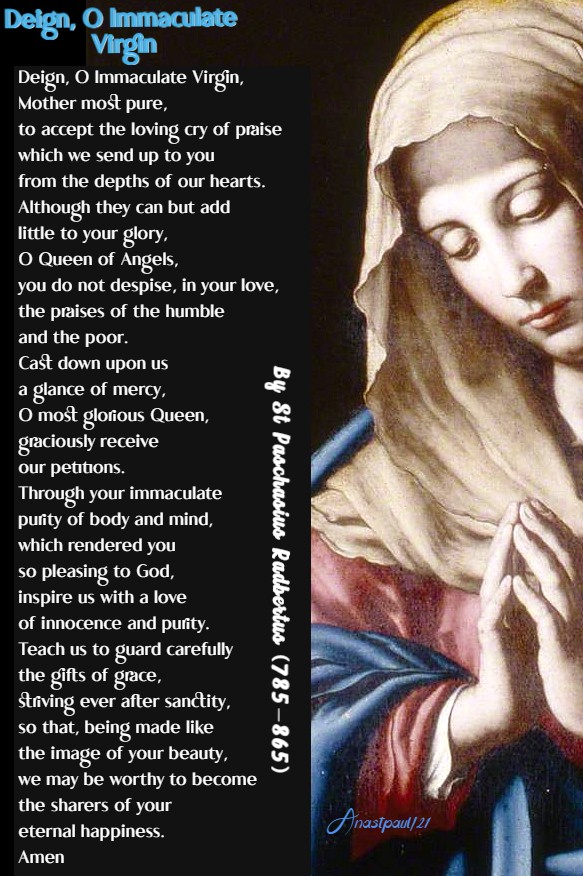
Deign, O Immaculate Virgin By St Paschasius Radbertus (785–865)
Deign, O Immaculate Virgin, Mother most pure, to accept the loving cry of praise which we send up to you from the depths of our hearts. Though they can but add little to your glory, O Queen of Angels, you do not despise, in your love, the praises of the humble and the poor. Cast down upon us a glance of mercy, O most glorious Queen, graciously receive our petitions. Through your immaculate purity of body and mind, which rendered you so pleasing to God, inspire us with a love of innocence and purity. Teach us to guard carefully the gifts of grace, striving ever after sanctity, so that, being made like the image of your beauty, we may be worthy to become the sharers of your eternal happiness. Amen
Quote/s of the Day – 31 August – “Month of the Immaculate Heart” – Readings: Thessalonians 5: 1-6, 9-11; Psalms 27: 1, 4, 13-14; Luke 4: 31-37
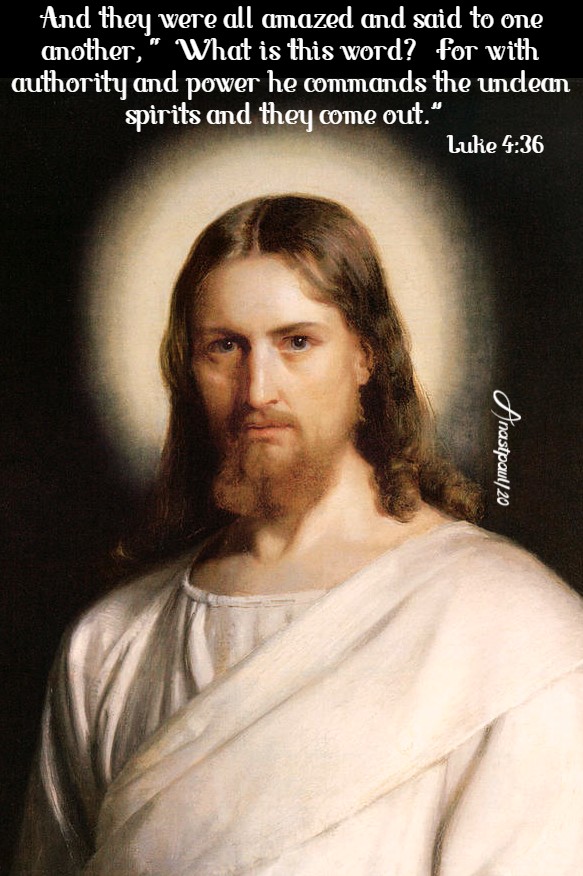
And they were all amazed and said to one another, “What is this word? For with authority and power he commands the unclean spirits and they come out.”
Luke 4:36
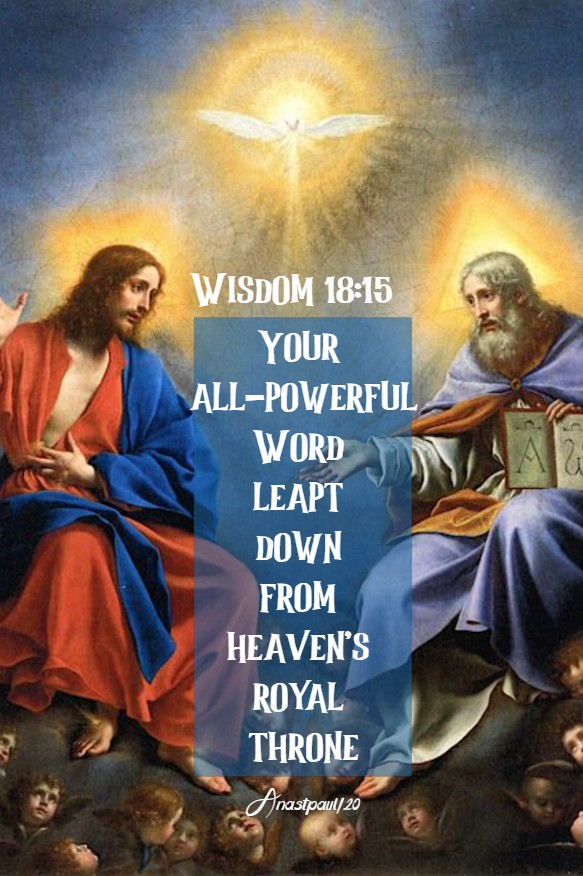
“Your all-powerful Word leapt down from heaven’s royal throne”
Wisdom 18:15
“He is the Word of God who dwelt with man and became the Son of Man, to open the way for man, to receive God, for God to dwell with man, according to the will of the Father.”
St Irenaeus (c 130 – c 202) Bishop & Martyr, Father of the Church
“He is the Light of Truth, the Path of life, the Power and Mind, Hand and Strength of the Father. He is the Sun of Justice, Source of Blessings, Flower of God, God’s Son, Creator of the world, Life of our mortality and Death to our death. He is the Master of the virtues. He is God to us …!”
St Paulinus of Nola (c 354-431) Father of the Church
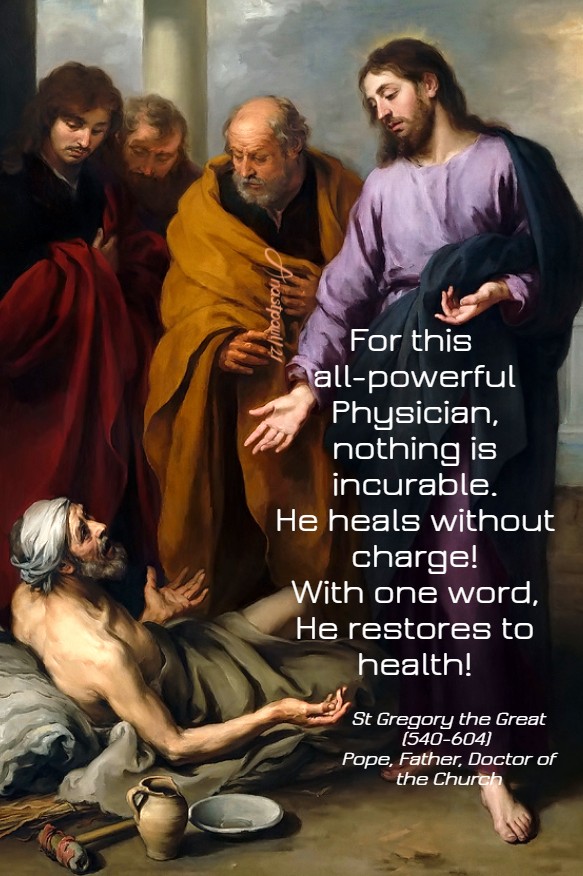
“For this all-powerful Physician, nothing is incurable. He heals without charge! With one word, He restores to health! I would have despaired of my wound were it not, that I placed my trust in the Almighty.”
St Gregory the Great (540-604) Pope, Father, Doctor of the Church
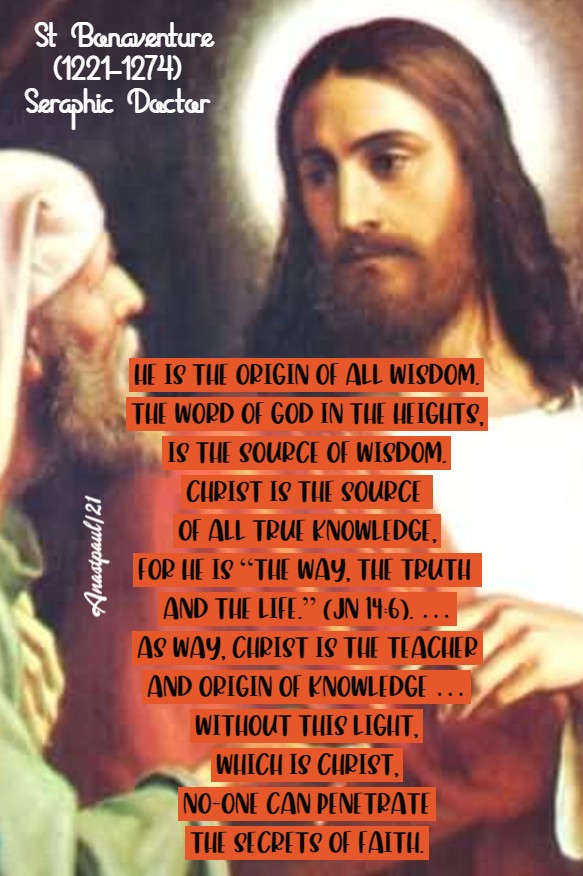
“He is the origin of all wisdom. The Word of God in the heights, is the source of wisdom. Christ is the source of all true knowledge, for He is “the way, the truth and the life.” (Jn 14:6). … As way, Christ is the teacher and origin of knowledge … Without this Light, which is Christ, no-one can penetrate the secrets of faith.”
One Minute Reflection – 31 August – “Month of the Immaculate Heart” – Readings: Thessalonians 5: 1-6, 9-11; Psalms 27: 1, 4, 13-14; Luke 4: 31-37
And they were all amazed and said to one another, “What is this word? For with authority and power he commands the unclean spirits and they come out.” – Luke 4:36
REFLECTION – “God’s word is living and effective, sharper than any two-edged sword.” (Heb 4:12). It acts in the creation of the world, in the world’s operation and in its redemption. For what is more effective and stronger? “Who can tell the mighty deeds of the Lord, or proclaim all his praises?” (Ps 106:2).
The Word’s effectiveness manifests itself in its works; it also manifests itself in preaching. The Word does not return to God without having produced its effect but, all to whom it is sent, benefit from it (Isa 55:11). It is “effective and sharper than any two-edged sword” when it is received with faith and love. What is impossible to the person who believes, what is difficult to the person who loves? When the Words of God ring out, they pierce the believer’s heart like “sharp arrows of a warrior.” (Ps 120:4) They enter the heart like spears and settle in its most intimate depths. Yes, this Word is sharper than a two-edged sword, for it is more incisive than any other strength or power, more subtle than every subtlety of the human genius, sharper than every learned perception by the human word.” – Baldwin of Forde O.Cist ( c 1125– 1190) – Cistercian Abbot, Bishop, then Archbishop of Canterbury – Homily 6 on Heb 4:12 ; PL 204, 451-453
PRAYER – God our Father, Your rule is a rule of love, Your providence is full of mercy for Your people. Through the intercession of the Blessed Virgin, Mother of the Word made flesh and His Immaculate Mother, grant the spirit of wisdom and understanding in Your Word, Your Son Jesus Christ. Grant that by the light of His Resurrection we may know our eternal home and strive to attain eternal joy there with You. Through Jesus Christ our Lord, with the Holy Spirit, one God forever, amen.
Our Morning Offering – 31 August – “Month of the Immaculate Heart”
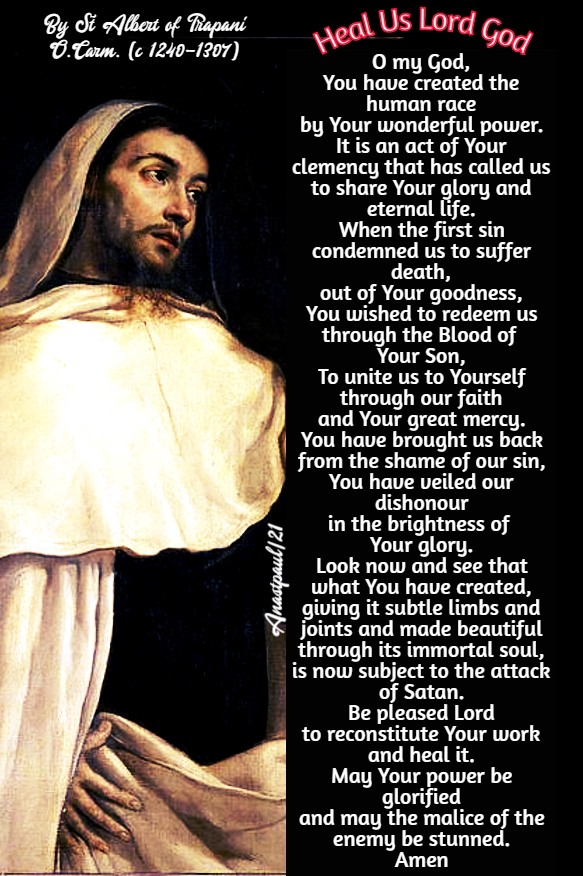
Heal Us Lord God By St Albert of Trapani O.Carm. (c 1240-1307)
O my God, You have created the human race by Your wonderful power. It is an act of Your clemency that has called us to share Your glory and eternal life. When the first sin condemned us to suffer death, out of Your goodness, You wished to redeem us through the Blood of Your Son, To unite us to Yourself through our faith and Your great mercy. You have brought us back from the shame of our sin, You have veiled our dishonour in the brightness of Your glory. Look now and see that what You have created, giving it subtle limbs and joints and made beautiful through its immortal soul, is now subject to the attack of Satan. Be pleased Lord to reconstitute Your work and heal it. May Your power be glorified and may the malice of the enemy be stunned. Amen
Saint of the Day – 31 August – Saint Joseph of Arimathea (Died 1st Century) “The Secret Disciple of Jesus” Born in Arimathea, Palestine and died in the 1st century. Patronages – of pallbearers, funeral directors, morticians, undertakers, tin miners, tin smiths, Catholic Cemeteries of the Archdiocese of Vancouver, Glastonbury Cathedral. Additional Memorial – 16 October (translation of Relics to Jerusalem).
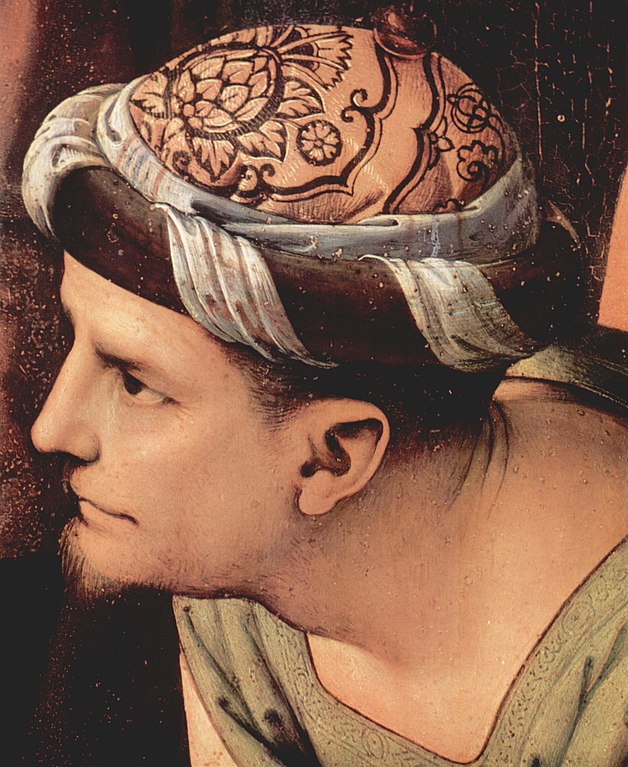
St Joseph of Arimathea by Pietro Perugino, a detail from his Lamentation over the Dead Christ.
The only definitive information we have concerning Joseph of Arimathea comes to us from the four Gospel accounts of Jesus’ Passion, Death and Resurrection. Many other legends exist that detail what happened to him after these events took place and, although they make interesting reading, none of them can be verified as the truth.
What we do know is that Joseph of Arimathea was a wealthy member of the Sanhedrin and a follower of Jesus, although a secret one “for fear of the Jews” (Jn 19:38). Described as a “good and just man” in the Gospel of Luke (23:50), he was one of the Jewish leaders who did not take part in the condemnation of Jesus on the night we call Maundy or Holy Thursday. Instead, after Jesus’ death, Joseph boldly asked Pontius Pilate for His Body so that it could receive a proper burial before the Sabbath, which began at sundown. This was a more courageous act on Joseph’s part than we might imagine, as Jesus had died a condemned criminal, publicly executed for sedition.
Remarkably, Pilate agreed and Joseph, along with another of Jesus’ secret followers, Nicodemus, arranged to have the body prepared for burial according to Jewish custom – Jesus was then laid in Joseph’s own tomb, which was as yet unused and newly hewn out of rock. Finally, a large stone was rolled in front of the tomb’s entrance, the same stone that would later be found rolled away on Easter Sunday morning.
At this point, the biblical story of Joseph comes to a close and the legendary stories begin. During the Middle Ages, Joseph’s narrative somehow became connected with the lore surrounding King Arthur; he is featured in a 12th-century tale by Robert de Boron as the Keeper of the Holy Grail, which was the cup used by Jesus at the Last Supper. An earlier version of the story has Joseph receiving the cup from an apparition of Jesus, which later finds its way to Great Britain by way of some of Joseph’s followers. A revised version has Joseph himself coming to the British Isles with the Grail, which he subsequently buried in a secret place. It was this Holy Grail which was at the centre of so many Arthurian quests.
Glastonbury Abbey also lays claim to part of Joseph’s legend. It is said that when Joseph arrived in Great Britain with the Grail around the year 63, he landed on the island of Avalon and climbed the hill there. Weary from his journey, he thrust his staff into the ground and rested, by morning, the staff had taken root and produced a thorn tree, which reportedly bloomed every Christmas. It was also upon this land that Joseph and 12 of his followers are said to have built Glastonbury Abbey, although it was actually constructed around the seventh century. Today it is maintained as an important archeological site.
Legends aside, it is Joseph’s service to Jesus our Saviour and Redeemer, that Christians remember today.
Merciful God, Whose servant, Joseph of Arimathaea with reverence and godly fear, prepared the Body of our Lord and Saviour for burial and laid it in his own tomb – Grant to us, Your faithful people, grace and courage to love and serve Jesus with sincere devotion all the days of our life. Through Jesus Christ our Lord, Who lives and reigns with You and the Holy Spirit, one God, forever and ever. Amen
Our Lady of the Founders – The Relic of the Girdle of Our Lady, Constantinople (5th Century) – 31 August:
The Abbot Giovanni Battista Orsini tells us the Empress Saint Pulcheria had this Church built, and gave to it the Girdle of Our Lady. A feast of this relic is kept at Constantinople, under the title of the Deposition of Our Lady’s Girdle. The French having taken this City, this precious treasure was carried off by Nivellon, Bishop of Soissons and placed in the celebrated Abbey of Our Lady, with a portion of the veil of that Queen of Heaven.
The Empress Saint Pulcheria lived in Constantinople in the 5th century, and she built many Churches, hospitals and public houses for the destitute. She is responsible for at least three Churches in Constantinople that were dedicated to the Blessed Virgin – the Blachemae, the Chalkoprateia and the Hodegetria. The Church of the Virgin of Blachernae, now known as the Church of Panagia of Blachernae, is located in Istanbul. It was once the most celebrated Shrine in Constantinople and lies inside the high walls of the City, only a short distance from the Golden Horn. The Church was begun by the Empress Pulcheria, and completed by her husband, the Emperor Marcian. It was built upon the site of what was thought to be a sacred spring, the waters of which are still thought to have therapeutic value. The Emperor Leo I made several additions, including the Hagai Soros, which was actually a small Chapel next to the Church where the Holy Robe and Girdle of the Blessed Virgin Mary were kept in a silver and gold reliquary. The relics had been brought from Palestine in 458.
In the year 911 it was reported that there was a Marian apparition at this Church. The City was under siege by a large Muslim army, so the citizens of Constantinople had recourse to Mary, praying for relief at the Blachernae Church. Very early one morning the Blessed Virgin, preceded by a host of Angels, was seen to enter through the Church doors, escorted by Saint John the Baptist and Saint John the Apostle. She advanced to the centre of the Church and knelt there to pray fervently with tears in her eyes. After a time she moved to the Altar and continued praying before she removed her veil and held it out over the faithful as she ascended back into Heaven. This was seen as a sign that she was taking the City under her protection and so it happened that the Christian’s won a striking victory over their enemies, who were driven off. The City of Constantinople came under siege during the Fourth Crusade in the year 1203 and was captured in April of 1204. The Bishop Nivelon de Cherisy was one of the first men to scale the walls of mighty Constantinople when it was finally opened to the Crusaders. Despite the fact that there was a stern prohibition against plundering relics from Churches and monasteries, many holy relics were obtained and brought back to the West. Bishop Conrad of Halberstadt, Abbot Martin of Pairis, and Nivelon of Soiccons were known to have taken relics. Nivelon of Soiccons enriched his Cathedral at Soissons with several important relics. Robert of Clari later includes in a list of relics he viewed at the Church of the Blessed Virgin of the Pharos (Lighthouse) the Crown of Thorns, the Virgin’s Robe, the Head of St John the Baptist and two large pieces of the True Cross. The robe was a large portion of the sleeveless shirt worn by the Virgin Mary, as well as her Girdle.
St Ammi of Caesarea St Aristides the Philosopher St Barbolenus of Bobbio St Caesidius St Cuthburgh of Wimborne St Cwenburgh of Wimborne St Joseph of Arimathea (Died 1st Century) “The Secret Disciple of Jesus” St Mark of Milan St Optatus of Auxerre
Thought for the Day – 30 August – Meditations with Antonio Cardinal Bacci (1881-1971)
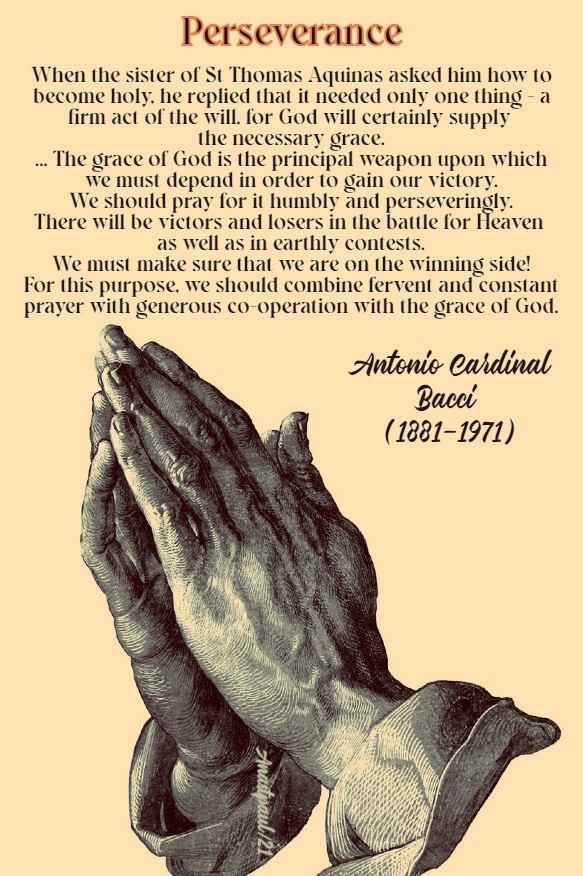
Perseverance
“Perseverance may be a difficult virtue but nothing is really difficult to a person of strong resolution. When the sister of St Thomas Aquinas asked him how to become holy, he replied that it needed only one thing – a firm act of the will, for God will certainly supply the necessary grace.
Think of how much work and sacrifice is required to achieve worldly success. Cicero wrote that it required constant and tireless labour in order to become a great orator (Cf De Oratore, 1:39). St Paul cited the example of athletes who are prepared to make such great sacrifices, in order to train themselves to win. If they are prepared to do so much to gain a perishable crown, he comments, we should be prepared to do much more to gain an imperishable one (Cf 1 Cor 9:25).
The grace of God is the principal weapon upon which we must depend in order to gain our victory. We should pray for it humbly and perseveringly. There will be victors and losers in the battle for Heaven as well as in earthly contests. We must make sure that we are on the winning side! For this purpose, we should combine fervent and constant prayer with generous co-operation with the grace of God.”
Quote/s of the Day – 30 August – “Month of the Immaculate Heart” – Readings: Thessalonians 4: 13-18; Psalm 96: 1 and 3-5, 11-13; Luke 4: 16-30
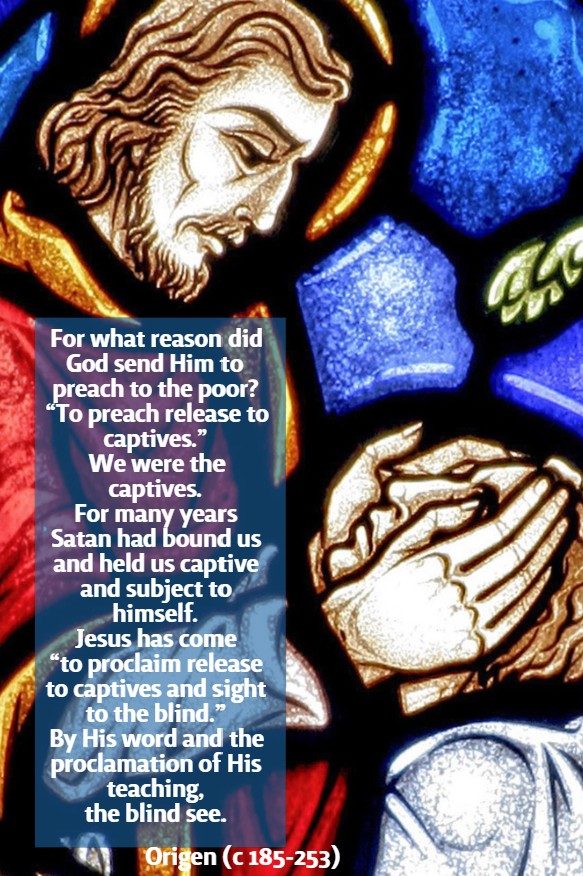
“He has sent me to proclaim liberty to captives and recovery of sight to the blind, to let the oppressed go free.”
Luke 4:19
“For what reason did God send Him to preach to the poor? “To preach release to captives.” We were the captives. For many years Satan had bound us and held us captive and subject to himself. Jesus has come “to proclaim release to captives and sight to the blind.” By His word and the proclamation of His teaching, the blind see.”
Origen (c 185-253)
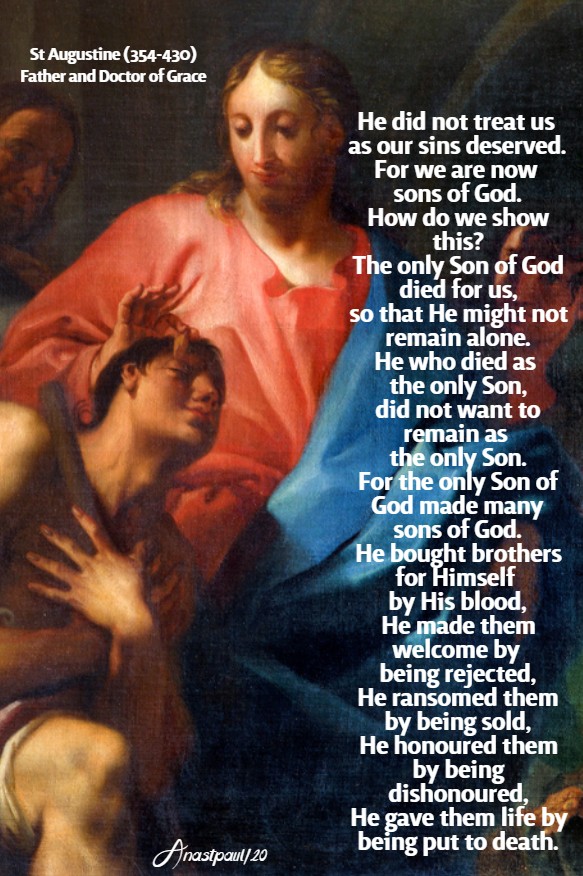
“He did not treat us as our sins deserved. For we are now sons of God. How do we show this? The only Son of God died for us, so that He might not remain alone. He who died as the only Son, did not want to remain as the only Son. For the only Son of God made many sons of God. He bought brothers for Himself by His blood, He made them welcome by being rejected, He ransomed them by being sold, He honoured them by being dishonoured, He gave them life by being put to death.”
St Augustine (354-430) Bishop, Great Western Father and Doctor of Grace
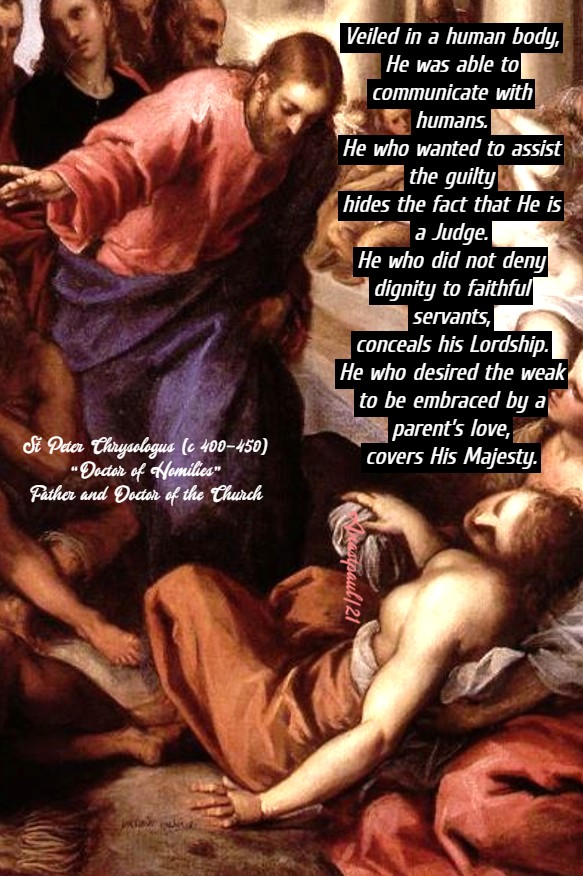
“… Veiled in a human body, He was able to communicate with humans. He who wanted to assist the guilty hides the fact that He is a Judge. He who did not deny dignity to faithful servants, conceals his Lordship. He who desired the weak to be embraced by a parent’s love, covers His Majesty.”
St Peter Chrysologus (c 400-450) “Doctor of Homilies” Father and Doctor of the Church
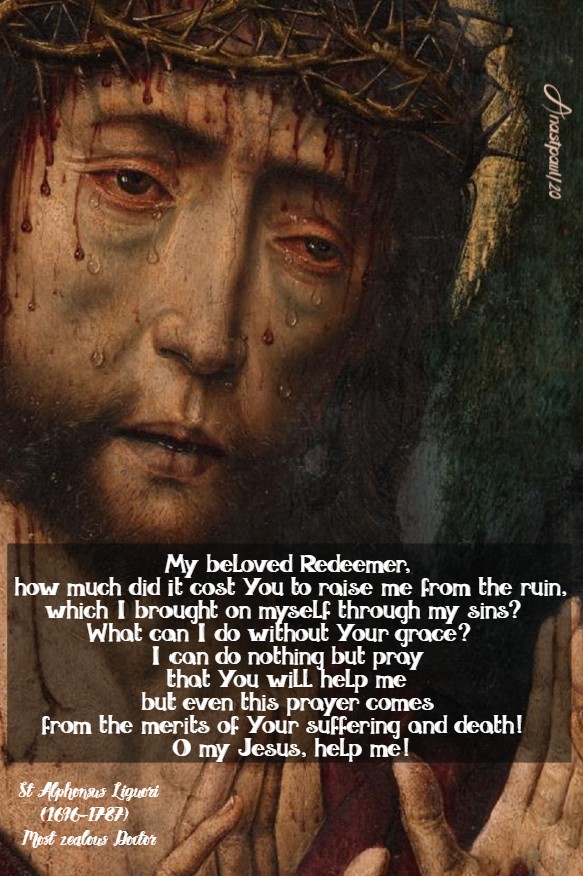
“My beloved Redeemer, how much did it cost You to raise me from the ruin, which I brought on myself through my sins? What can I do without Your grace? I can do nothing but pray that You will help me but even this prayer comes from the merits of Your suffering and death! O my Jesus, help me!”
St Alphonsus Liguori (1696-1787) Most zealous Doctor
One Minute Reflection – 30 August – “Month of the Immaculate Heart” – Readings: Thessalonians 4: 13-18; Psalm 96: 1 and 3-5, 11-13; Luke 4: 16-30
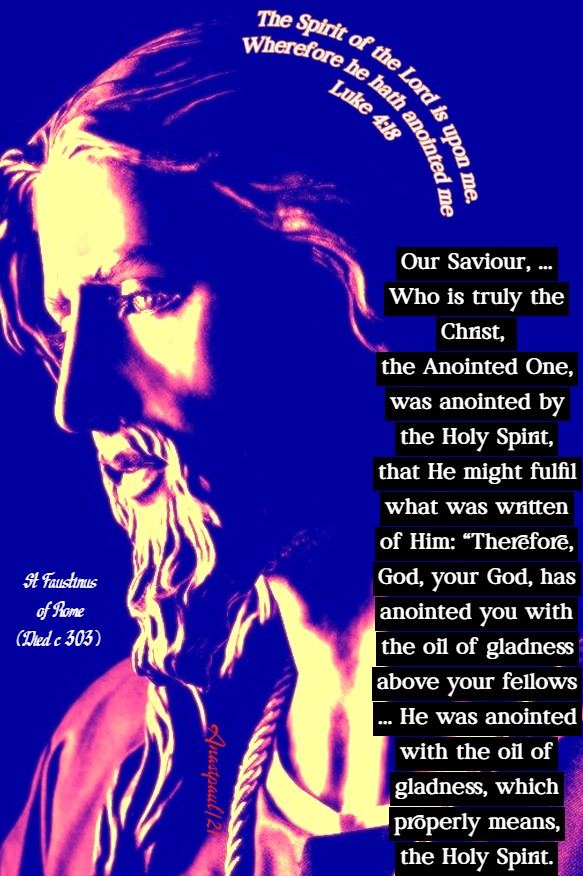
“The Spirit of the Lord is upon me. Wherefore he hath anointed me” – Luke 4:18
REFLECTION – “Our Saviour was truly made the Anointed One according to the flesh, becoming true King and true Priest. He was both, so that nothing might be lacking in the Saviour. Notice, therefore, that He became King, when He says: “I was set by the Lord as king on Zion, his holy mountain” (Ps 2,6 Vg). Learn that He is also Priest from the witness of the Father: “You are a priest forever after the order of Melchizedek” (Ps 110[109],4)… He is, therefore, our Saviour according to the flesh and both King and Priest but His anointing is spiritual and not bodily. The kings and priests of the Jews were given their position by bodily anointing with oil. One man was not both – each was either king or priest. To Christ alone belongs perfection and fulness in all things, for He came also to fulfill the law.
Although they could not, as individuals, be both at the same time, they were called “Messiahs” or “anointed ones because they had received bodily anointing as kings or priests (cf. Ps 89[88]). Our Saviour, on the other hand, Who is truly the Christ, the Anointed One, was anointed by the Holy Spirit, that He might fulfil what was written of Him: “Therefore, God, your God, has anointed you with the oil of gladness above your fellows” (Ps 45[44],8). That He was anointed more than those who share the same name “Messiah” lies in the fact, that He was anointed with the oil of gladness, which properly means, the Holy Spirit.” – St Faustinus of Rome (Died c 303) Priest and Martyr – The Trinity, 39-40, CCL 69, 340-341
PRAYER – God our Saviour, through the grace of Baptism you made us children of light. Hear our prayer, that we may always walk in that light and work for truth, love and charity, as Your witnesses before men. Dispel from our hearts the darkness of sin and may the Holy and Immaculate Heart of Mary, be our constant protector and intercessor keeping- us ever watchful for the true light, Christ Your Son, who lives and reigns with You and the Holy Spirit, God forever, amen.
Our Morning Offering – 30 August – “Month of the Immaculate Heart”
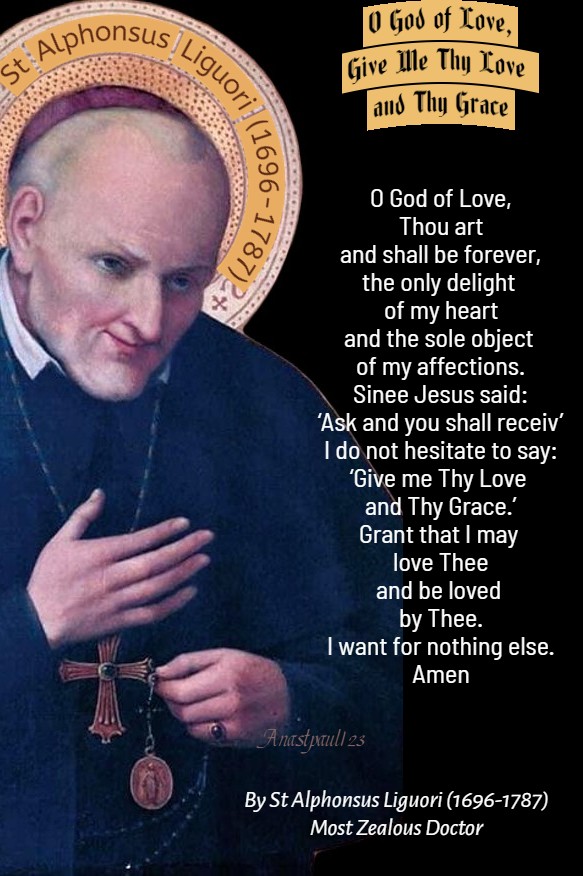
O God of Love, Give Me Thy Love and Thy Grace By St Alphonsus Liguori (1696-1787) Most Zealous Doctor
O God of Love, Thou art and shall be forever, the only delight of my heart and the sole object of my affections. Sinee Jesus said: ‘Ask and you shall receive,’ I do not hesitate to say: ‘Give me Thy Love and Thy Grace.’ Grant that I may love Thee and be loved by Thee. I want for nothing else. Amen
Saint of the Day – 30 August – Blessed John Roche (Died 1588) Lay Martyr Born in Ireland and died by being hanged on 30 August 1588 at Tyburn, London, England. Also known as – John Neele, John Neale. Patronages – boatmen, mariners, sailors, watermen. Additional feast days – He is counted among the English Martyrs on 22 November and is also venerated in Ireland where his feast is celebrated on 20 June.
John Roche was born in Ireland and, as a young man, he went to London where he found work as a servant and a waterman. As was common at that time, Catholics often worked under an alias and Roche sometimes used the name of John Neale. A devout Catholic, he became involved with Margaret Ward and others who were aiding persecuted Priests. One such Priest was Fr William/Richard Watson.
Fr Watson had been arrested and tortured and, upon learning of this, Margaret Ward began visiting the Priest in Bridewell Prison. Eventually she devised a plan to help him escape. She smuggled a length of rope into the prison and , at a prearranged time, he was to let himself down from his cell which was at the top of the prison building. She found two Catholic watermen who would be waiting nearby with a boat to spirit the Priest away. However, the two watermen lost their nerve and backed out. Margaret did not give up! She approached John Roche who readily agreed to assist the Priest. Disastrously, the rope was too short and the Priest had to jump the remaining distance. He crashed down onto a shed below, breaking his right arm and leg. Immediately, John Roche ran to his assistance and carried him to the boat.
Of course, the clatter had alerted the jailor and others and the rope, still dangling from the cornice, was discovered. Margaret Ward, being Fr Watson’s only visitor, was swiftly arrested.
John had managed to get the Priest to safety and he was recuperating in John’s house. When he had recovered, John swapped clothes with him and the Priest got safely away. Sadly, John, in the Priest’s clothes, was spotted by the jailor who arrested him. He was vigorously interrogated and eventually admitted his role in the escape of Fr Watson. He was charged with treason and condemned to death. Offered a full pardon if he would seek the Queen’s forgiveness and attend a Protestant service, John Roche refused both!
On 30 August 1588, John Roche and Margaret Ward were hanged, drawn and quartered at Tyburn. Four other Catholics, including Welshman Richard Flowers, were executed with them that day.
On 15 December 1929, Pope Pius XI Beatified John Roche.
Santa Maria del Pozzo, Mother and Queen of Mercy / Our Lady of the Well – Capurso, Bari, Italy (1705) – 30 August and 20 May:
The town of Capurso (Bari), on the east coast of southern Italy, claims Our Lady of the Well as its Patron under the title Madonna del Pozzo. Tradition says that it was on 30 August 1705, that the image of Our Lady sculpted in wood was found in a well. It is now preserved in the Basilica St Maria del Pozzo, construction on which began in 1770. On 20 May 1852, the image of the Blessed Mother was solemnly crowned. The Societá Maria del Pozzo, dedicated to Madonna del Pozzo and her traditions was established in 1922. The Society has its origins at Capursoand its Headquarteredare in Chicago, Illinois,
On 30 August 1705, the Priest, Don Domenico Tanzella , after recovering from a serious illness that forced him to bed drinking the water of the well of “Santa Maria”, descending into the hollow shaft of the Piscino found, on the wall, an icon of the Holy Virgin. Don Domenico Capurso exhibited the icon in the Tanzella Chapel dedicated to St Lawrence Martyr . Many miracles, were recorded, one, to a certain Caterina, crippled for many years, wife of Lorenzo Maffiola. Our Lady would appear in a dream and told her that she was to go to the Chapel of Tanzella and she would receive healing grace. The next day Catherine dragged herself there and with tears implored the Madonna for a cure. Suddenly she felt a sensation and tried to walk succeeded! At the news of this new miracle pilgrims began to flow in Capurso from countries near and far, on foot and by every means available at the time, singing hymns glorifying Mary. Today in celebration on 30 August or the last Sunday in August., 100s descend upon the Sanctuary to process the Statue through the streets. Everyone wants to touch and venerate the miraculous Madonna.
St Arsenius the Hermit St Boniface of Hadrumetum St Bononius of Lucedio Bl Bronislava of Poland Bl Edward Shelley Bl Ero di Armenteira Bl Euphrasia of the Sacred Heart of Jesus (1877-1952) Bl Eustáquio van Lieshout St Fantinus of San Mercurius St Felix of Rome
St Pelagius the Hermit St Peter of Trevi Bl Riccardo of Lotaringia Bl Richard Flower Bl Richard Leigh Bl Richard Martin St Rumon of Tavistock St Sylvanus the Hermit St Thecla of Hadrumetum St Theodosius of Oria Bl Yusuf Nehme — Martyrs of Colonia Suffetulana – 60 saints: A group of 60 Christians martyred for destroying a statue of Hermes. They were martyred in Colonia Suffetulana, Africa.
Martyred in the Spanish Civil War: • Blessed José Ferrer Adell • Blessed Manuel Medina Olmos • Blessed Vicente Cabanes Badenas Martyrs of Barranco del Chisme (Spanish Civil War) – 10 beati: • Blessed Alberto José Larrazábal Michelena • Blessed Antonio María Arriaga Anduiza • Carles Canyes Santacana • Blessed Caterina Margenat Roura • Diego Ventaja Milán • Blessed Eleuterio Angulo Ayala • Blessed Josefa Monrabal Montaner • Manuel Medina Olmos • Blessed Maria Dolores Oller Angelats • Blessed Nicasio Romo Rubio
Dear friends, I will be back next week, regardless of how well my eyes work. The Doctor said 2 weeks for the right eye to settle and recover. Those 2 weeks end on Wednesday coming.
At the present moment I cannot focus and type via touch and a prayer. However, I miss you and our friends in Heaven too much and will just struggle on.
Bless you all for your wonderful notes of encouragement and for your prayers. A special note of heartfelt gratitude to those who have continued to support the Site, even though there have been no posts for 10 days, your kindness and charity are humbling and holy. Please keep those prayers rising in supplication and may the good Lord grant us all patience in the trials of this life. Amen 🙏💖
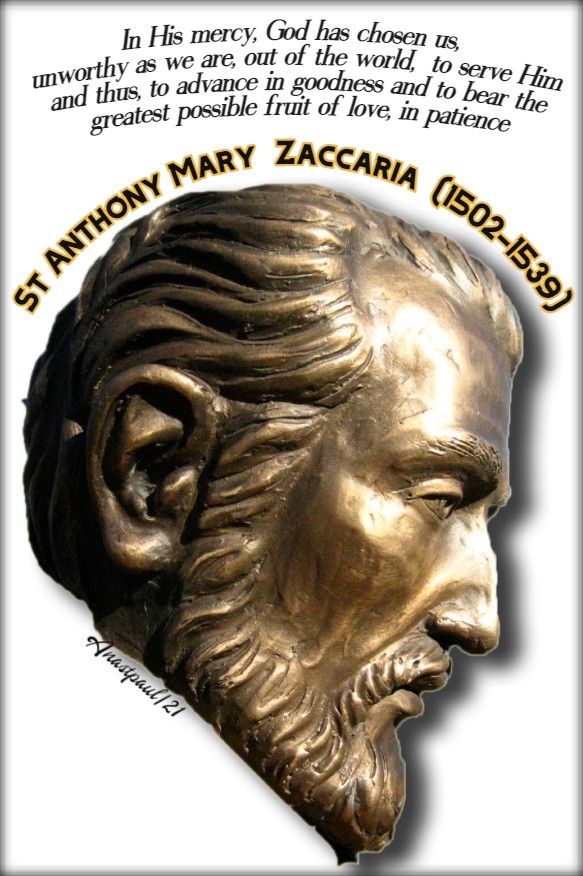
“In His mercy, God has chosen us, unworthy as we are, out of the world, to serve Him and thus, to advance in goodness and to bear the greatest possible fruit of love in patience.”
I ask for your prayers please as tomorrow I undergo surgery on my right eye. This is just a maintenance procedure and an attempt to keep this eye functioning to the best of it’s, not very good, ability.
Sadly, my left eye is beyond help. BUT we have many Saints who are Patrons of eye ailments and diseases. St Lucy, of course, St Augustine, St Raphael the Archangel (of the blind), St Clare of Assisi, St Odelia, St Leodagar of Poitiers, St Giovanna of Orvieto (25 July posted this year) and MORE ….
🙏🙏🙏
I will be out of action for a few days but you will all remain in my prayers. “May the Lord Jesus touch all our eyes!“
Thought for the Day – 17 August – Meditations with Antonio Cardinal Bacci (1881-1971)
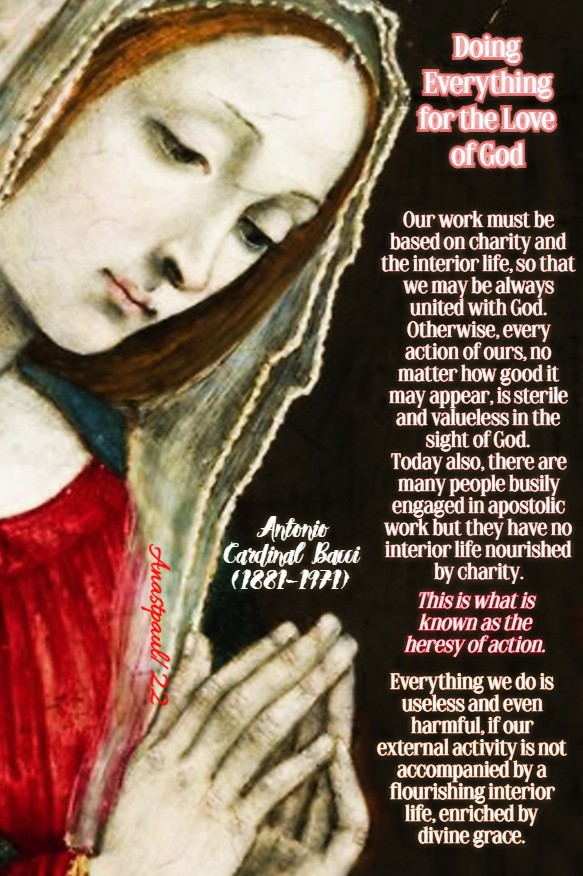
Doing Everything for the Love of God
“In one of his letters, Luther wrote that he was so busy that he had no time to read his Breviary, nor to offer Holy Mass. There is no doubt that it was this estrangement from prayer and from the love of God, which caused him to finish up as he did. Our work must be based on charity and the interior life, so that we may be always united with God. Otherwise, every action of ours, no matter how good it may appear, is sterile and valueless in the sight of God.
Today also, there are many people busily engaged in apostolic work but they have no interior life nourished by charity. This is what is known as the heresy of action.
Everything we do is useless and even harmful, if our external activity is not accompanied by a flourishing interior life, enriched by divine grace. St Gregory the Great paraphrases the words of the Gospel as follows: “Our Lord says: If anyone loves Me, let him keep my commandments. Love is proved by action. This is why St John (1 Jn 2:4) says, that the man who claims to love God and does not keep His commandments, is a liar. We love God sincerely if we keep His commandments and avoid the immoderate pleasures of our age. Anyone who surrenders without reserve to the unlawful desires of this world, certainly does not love God because, he is acting contrary to His will.” (Homil 30 in Ev).”
Quote/s of the Day – 17 August – “Month of the Immaculate Heart” – Readings: Judges 6: 11-24a; Psalm 85: 9-14; Matthew 19: 23-30
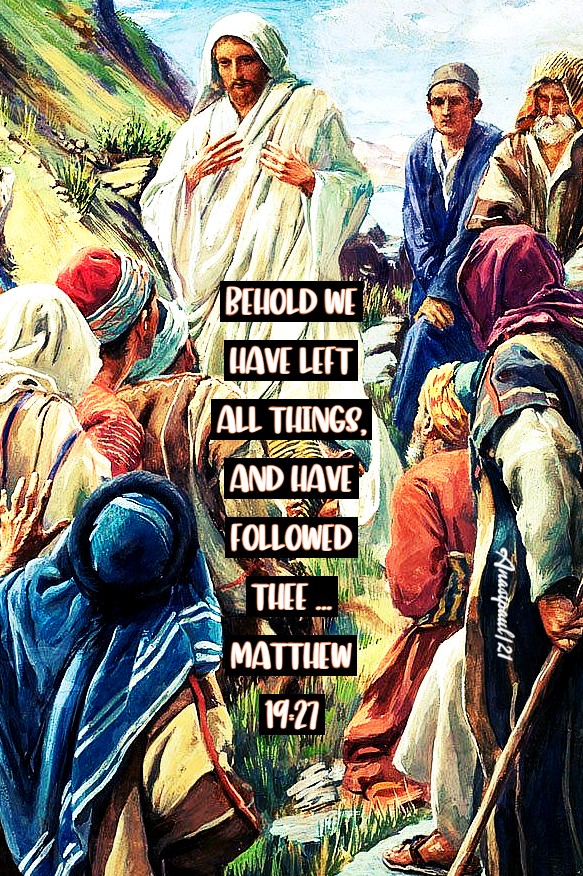
“Behold we have left all things, and have followed thee”
Matthew 19:27
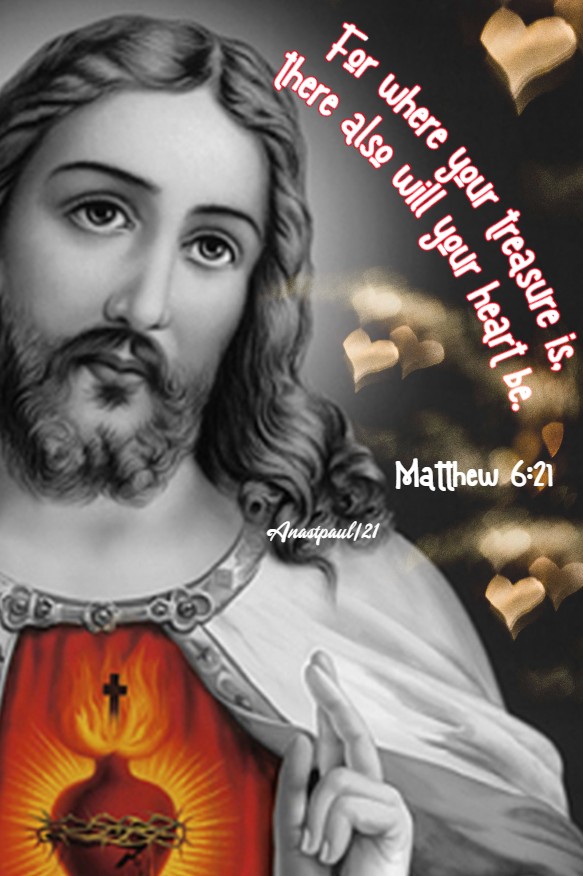
“For where your treasure is, there also will your heart be.”
Matthew 6:21
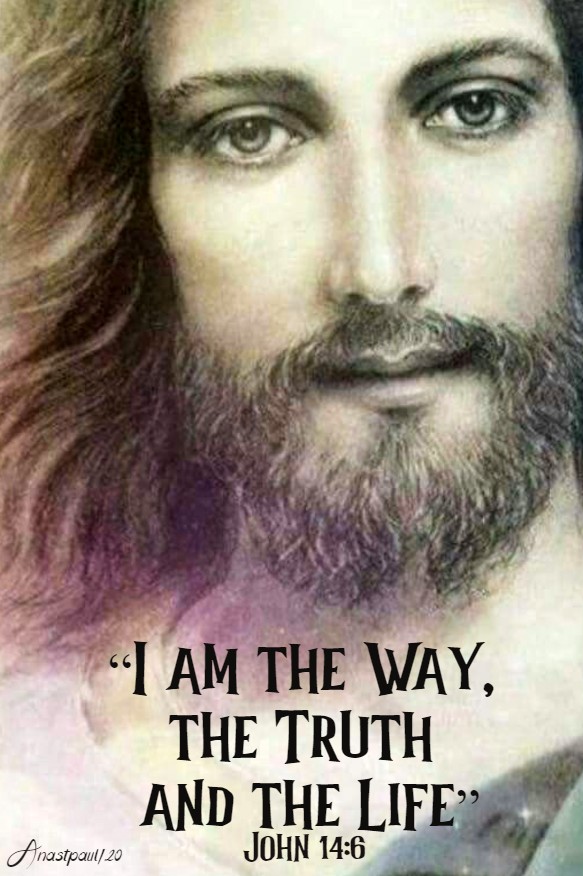
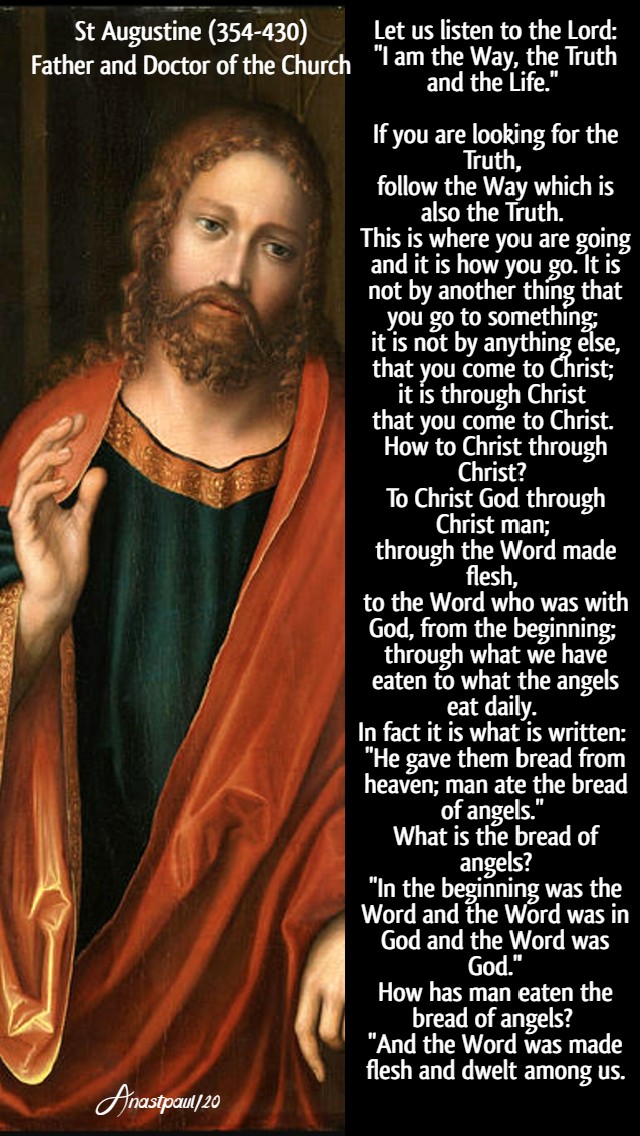
“I am the Way, the Truth and the Life”
John 14:6
“Let us listen to the Lord: “I am the Way, the Truth and the Life” (Jn 14:6). If you are looking for the Truth, follow the Way which is also the Truth. This is where you are going and it is how you go. It is not by another thing that you go to something; it is not by anything else that you come to Christ; it is through Christ that you come to Christ. How to Christ through Christ? To Christ God through Christ man; through the Word made flesh, to the Word who was with God, from the beginning; through what we have eaten to what the angels eat daily. In fact it is what is written: “He gave them bread from heaven; man ate the bread of angels” (Ps 77[78]:24-25). What is the bread of angels? “In the beginning was the Word and the Word was in God and the Word was God” (Jn 1:1-3). How has man eaten the bread of angels? “And the Word was made flesh and dwelt among us.”
Saint Augustine (354-430) Father and Doctor of Grace
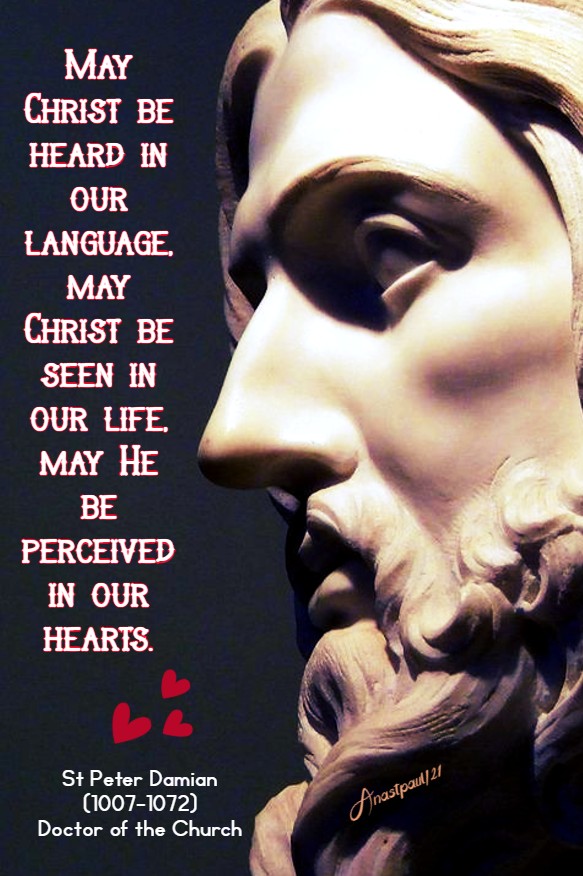
“May Christ be heard in our language, may Christ be seen in our life, may He be perceived in our hearts”
St Peter Damian (1007-1072) Father and Doctor of the Church
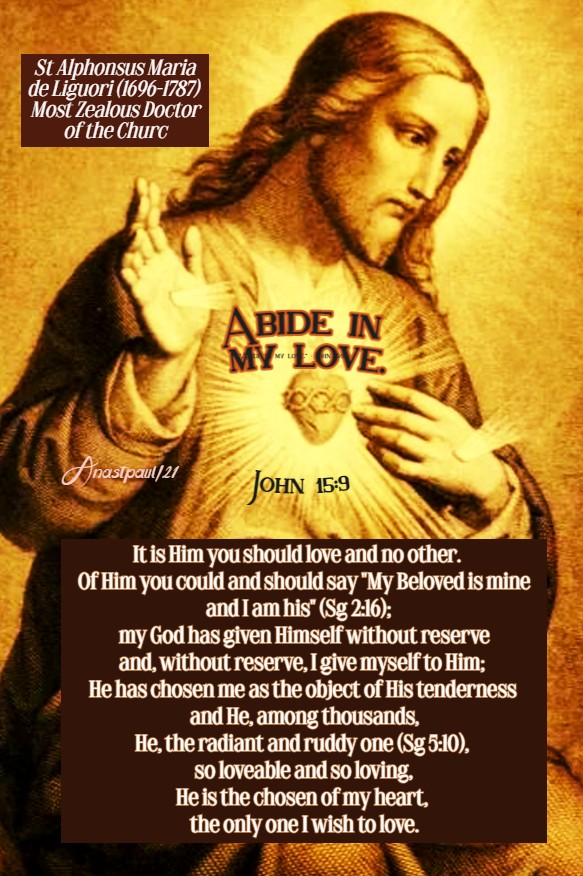
“… It is Him you should love and no other. Of Him you could and should say “My Beloved is mine and I am his” (Sg 2:16); my God has given Himself without reserve and, without reserve, I give myself to Him; He has chosen me as the object of His tenderness and He, among thousands, He, the radiant and ruddy one (Sg 5:10), so loveable and so loving, He is the chosen of my heart, the only one I wish to love.”
St Alphonsus Maria de Liguori (1696-1787) Most Zealous Doctor
One Minute Reflection – 17 August – “Month of the Immaculate Heart” – Readings: Judges 6: 11-24a; Psalm 85: 9-14; Matthew 19: 23-30
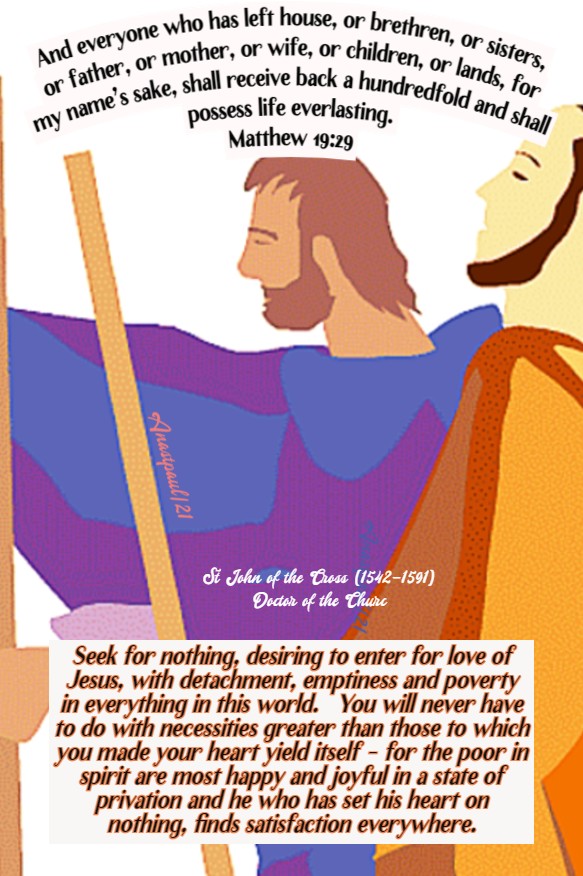
“And everyone who has left house, or brethren, or sisters, or father, or mother, or wife, or children, or lands, for my name’s sake, shall receive back a hundredfold and shall possess life everlasting.” – Matthew 19:29
REFLECTION – “Seek for nothing, desiring to enter for love of Jesus, with detachment, emptiness and poverty in everything in this world. You will never have to do with necessities greater than those to which you made your heart yield itself – for the poor in spirit are most happy and joyful in a state of privation and he who has set his heart on nothing, finds satisfaction everywhere.
The poor in spirit (Mt 5:3) give generously all they have and their pleasure consists in being thus deprived of everything for God’s sake and out of love to their neighbour … Not only do temporal goods – the delights and tastes of the sense – hinder and thwart the way of God but spiritual delights and consolations also, if sought for or clung to eagerly, disturb the way of virtue.” – St John of the Cross (1542-1591) Carmelite, Doctor of the Church – Spiritual maxims, nos. 352, 355,356, 364; 1693 edition
PRAYER – Father of might and power, every good and perfect gift comes to us from You. Implant in our hearts the love of Your Name and Your creatures. Increase our zeal for Your service by following behind Your Son with determination and joy. Nourish in us what good and tend it with watchful care. Grant that the prayers and caring love of the Blessed Virgin, our Mother, may help us to follow Jesus our Saviour unreservedly and thus attain eternal life. We make our prayer through Christ, our Lord in the union of the Holy Spirit, one God for all eternity, amen.
Our Morning Offering – 17 August – “Month of the Immaculate Heart”
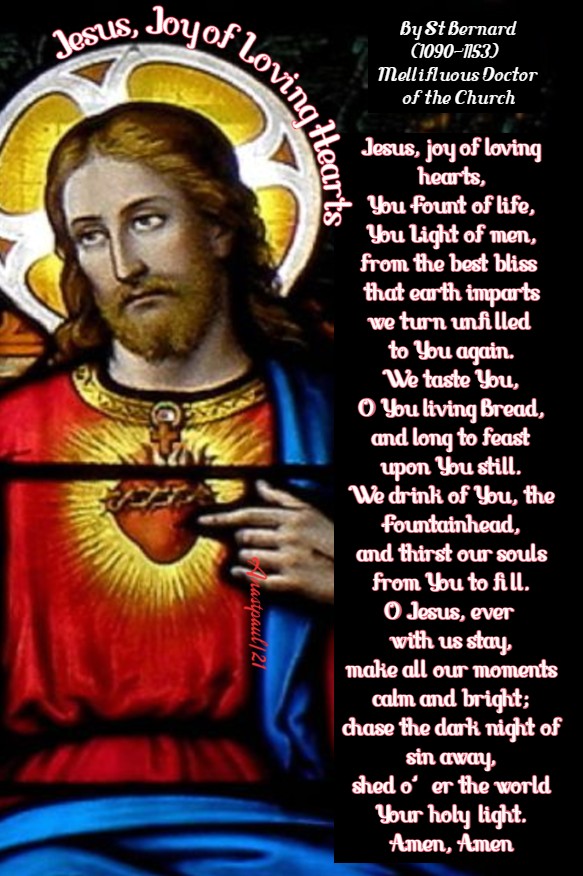
Jesus, Joy of Loving Hearts By St Bernard (1090-1153) Mellifluous Doctor of the Church and the last Father of the Church
Jesus, joy of loving hearts, You Fount of life, You Light of men, from the best bliss that earth imparts we turn unfilled to You again. We taste You, O You living Bread, and long to feast upon You still. We drink of You, the Fountainhead, and thirst our souls from You to fill. O Jesus, ever with us stay, make all our moments calm and bright; chase the dark night of sin away, shed o’er the world Your holy light. Amen, Amen
Saint of the Day – 17 August – Saint Beatrice da Silva Meneses OIC (1424-1492) Virgin, Founder of The Order of the Immaculate Conception known as the Conceptionists, a contemplative Order of Nuns. Born in 1424 as Beatriz de Menezes da Silva, in Campo Maior, Portalegre, Portugal and died on 17 August 1492 in Toledo, Spain of natural causes. Also known as – Brites, Beatrix da Silva, Beatriz da Silva Meneses. Patronage – prisoners. Additional Memorial – 1 September in the Franciscan Order.
Beatrice da Silva was a Portuguese noble woman, one of eleven children born to Rui Gomes da Silva – first Governor of Campo Major, Portugal, after it was reconquered from Arab rule – and of Isabel de Menezes, the Countess of Portalegre. One of her brothers was the Blessed Amadeus of Portugal, OFM, a noted Confessor and Reformer of the Order of Friars Minor. (His life here: https://anastpaul.com/2018/08/10/saint-of-the-day-blessed-amadeus-of-portugal-o-f-m-1420-1482/.
She was raised in the Castle of Infante John, Lord Reguengos de Monsaraz. In 1447 Beatrice accompanied his daughter, Princess Isabel of Portugal, as her Lady in Waiting when Isabel went to marry King John II of Castile and Leon. She became a close friend of the Queen but unfortunately her beauty made Isabel jealous. It is said that a suitor, whom Beatrice had rejected, insinuated to the Queen that Beatrice was a rival for the King’s affections and she imprisoned Beatrice in a tiny cell. There is a story that she shut her in a chest. After a few days a relative, concerned about Beatrice’s welfare, persisted in questioning Isabel – the Queen showed him the chest where, expecting to find a body, he found Beatrice in perfect health. While imprisoned, Beatrice had a vision of Our Lady, who told her to found a new Order in her name.
Beatrice escaped and went to Toledo. On the journey she met two Franciscan Friars who told her she would be the mother of many children. She protested that she had taken a vow of purity to the Queen of Heaven. “What we have said will come to be,” they told her and then they vanished. Beatrice believed that Mary had sent St Francis and St Anthony to give her consolation.
In Toledo she took refuge with the Dominican nuns and for 37 years led a life of holiness without becoming a member of the Order. In 1484 Beatrice and a few companions took possession of a Palace in Toledo set apart for them by the new Queen Isabella (who married Ferdinand of Aragon). Isabella of Castile was a devout woman and took a great interest in Beatrice’s work. The Monastery was named Santa Fe, which was dedicated to honouring the Immaculate Heart of Mary.
In 1489, with the permission of Pope Innocent VIII, the Nuns adopted the Cistercian rule, bound themselves to daily recitation of the Divine Office of the Immaculate Conception and were placed under obedience to the ordinary of the Diocese. Beatrice chose the habit, which is white with a white scapular and blue mantle with a medallion of Mary under her title of the Immaculate Conception.
Beatrice died in 1492 in the Monastery which she had founded. Her remains are still venerated in the Chapel of that Monastery.
In 1501 Pope Alexander VI united the Nuns of Sante Fe, which Beatrice had founded, with the neighbouring Benedictine Monastery of San Pedro de las Duenas and put them all under the Rule of St Clare. Through this, the Order became connected with the Franciscans. Pope Julius II gave the Order a rule of life of its own in 1511 and special constitutions were drawn up by the Franciscan Cardinal Francisco de Quinones, establishing the community as the Monastery of the Immaculate Conception. The Order spread in Europe and South America. At its height, there were some 2,000 Monasteries of the Order throughout the world.
Beatrice was Beatified on 28 July 1926 by Pope Pius XI and Canonised on 21 January 1974 by Pope Paul VI (decree on heroic virtues). Recorded miracles involved the instantaneous and perfect healing of Sister Mary of Saint Anne, 22, from a hemorrhage subretinica, retinicis and a secondary lesions of the eye on 25 March 1923 in Mexico City;and Elizabeth Orozco Estrada, 63, from the small intestine and colon malignant neoplasia in September 1945 in Mexico City.

























You must be logged in to post a comment.