Thought for the Day – 1 June – “Month of the Sacred Heart” – Meditations with Antonio Cardinal Bacci (1881-1971)
Devotion to the Sacred Heart
“When we consider it under it’s fundamental aspect as the cult of the love of God, rather than of the Incarnate Word, devotion to the Sacred Heart of Jesus, is as old as Christianity, even though it is only in recent centuries, that it has assumed it’s present symbolism. “He who does not love, does not know God,” says St John, “for God is love” (1 Jn 4:8). “And we have come to know,” he continues “and have believed, the love that God has in our behalf. God is love and he who abides in love, abides in God and God in him” (1 Jn 4:16). This cult of the love of God, particularly of the love of God made man, vibrates throughout the pages of the Gospel and of the writings of the Apostles, especially of St John and of St Paul.
In the works of the Fathers, there are references to the Heart of Jesus, pierced with a lance, from which flowed all the infinite graces of the Church for our redemption. We are reminded of this in the Encylical, Haurietis Aquas, published by Pope Pius XII in the year 1956. But the specific cult of the love of God, as symbolised by the Heart of Jesus, was explicitly approved by the Church after Jesus Himself appeared in the year 1674 to St Margaret Mary Alacoque and showed her His Heart on fire with love for men.”
Quote/s of the Day – 1 June – “Month of the Most Sacred Heart of Jesus” – The Memorial of St Justin Martyr (c 100-165) Father of the Church
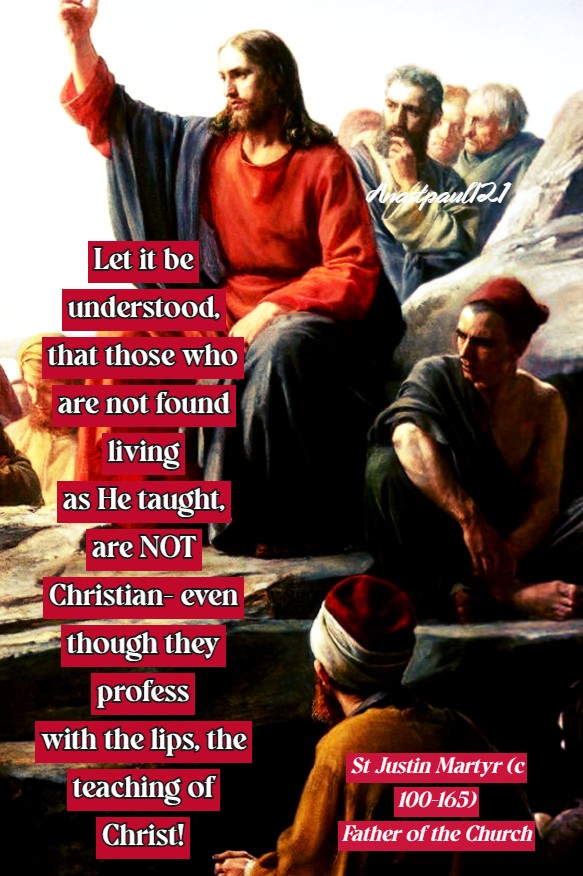
“Let it be understood, that those who are not found living as He taught, are NOT Christian- even though they profess with the lips, the teaching of Christ.”
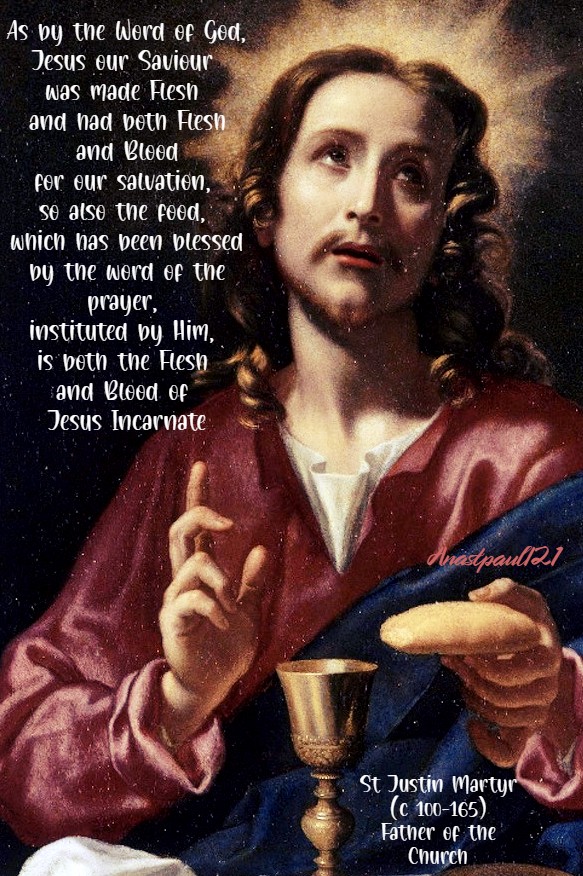
“As by the Word of God, Jesus our Saviour was made Flesh and had both Flesh and Blood for our salvation, so also the food, which has been blessed by the word of the prayer, instituted by Him, is both the Flesh and Blood of Jesus Incarnate.”
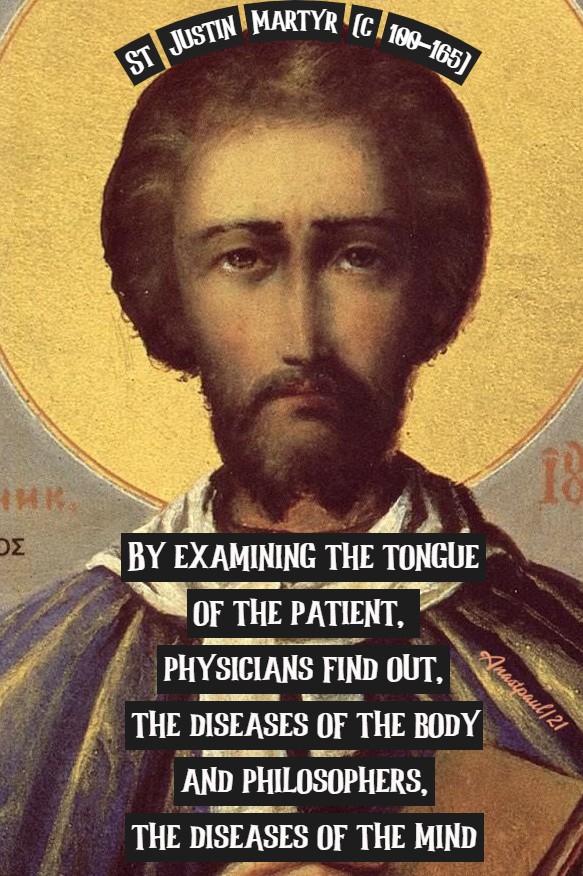
“By examining the tongue of the patient, physicians find out, the diseases of the body and philosophers, the diseases of the mind.”
“Love is like the air we breathe, it isn’t always seen but it is heard, felt and needed.”
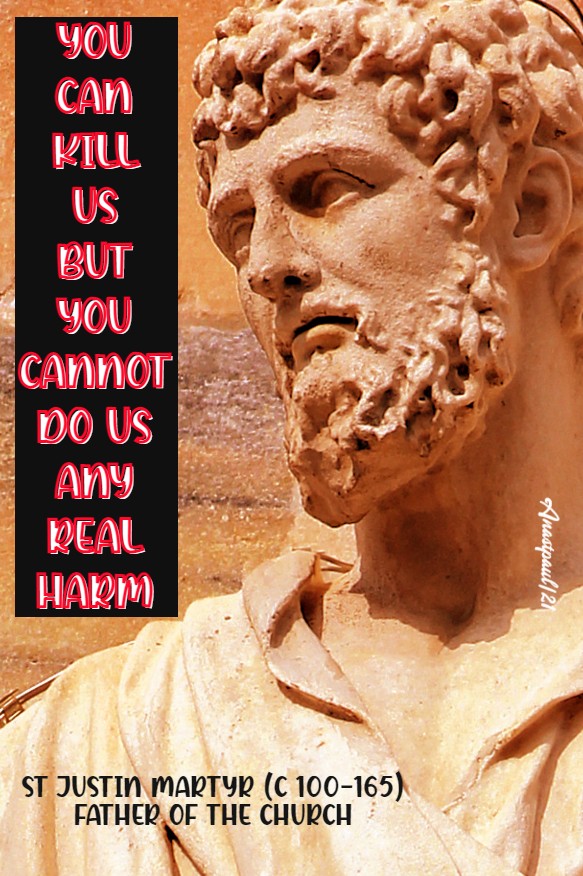
“You can kill us but you cannot do us any real harm.”
One Minute Reflection – 1 June – “Month of the Most Sacred Heart of Jesus” – Readings: First: Tobit 2: 9-14, Psalm: Psalms 112: 1-2, 7-8, 9, Gospel: Mark 12: 13-17
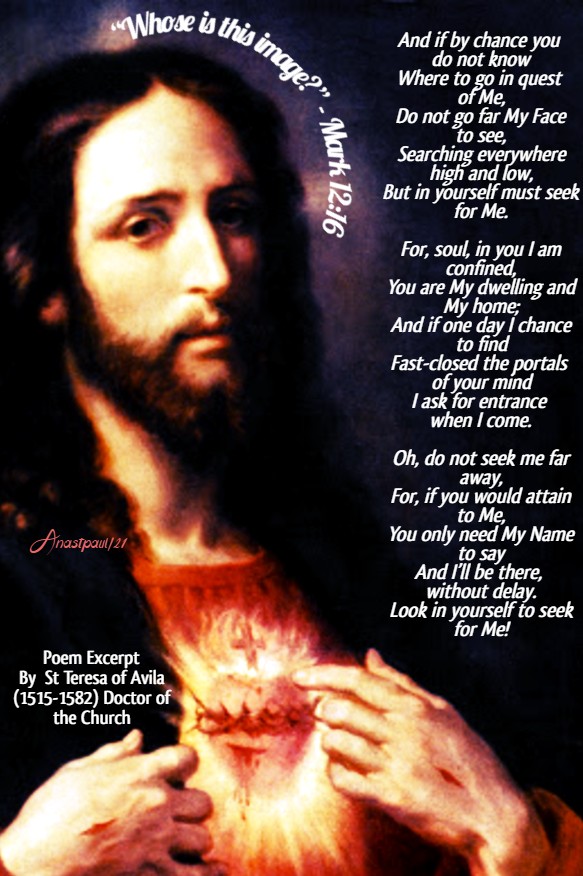
“Whose is this image?” – Mark 12:16
REFLECTION – “Soul, you must seek yourself in Me And in yourself, must seek for Me.
Such is the power of love’s impress, O soul, to engrave you on My Heart, That any craftsman must confess He never could have the same success, However superlative his art.
It was by love that you were made Lovely and beautiful to be; So, if by chance, you should have strayed, Upon My Heart you are portrayed. Soul, you must seek yourself in Me.
For well I know that you will see Yourself engraved upon My Breast— An image vividly impressed— And then you will rejoice to be So safely lodged, so highly blest.
And if by chance you do not know Where to go in quest of Me, Do not go far My Face to see, Searching everywhere high and low, But in yourself must seek for Me.
For, soul, in you I am confined, You are My dwelling and My home; And if one day I chance to find Fast-closed the portals of your mind I ask for entrance when I come.
Oh, do not seek me far away, For, if you would attain to Me, You only need My Name to say And I’ll be there, without delay. Look in yourself to seek for Me!” – St Teresa of Avila (1515-1582) Carmelite, Doctor of the Church – Poems, no 8 “Alma, buscarte has en mí”
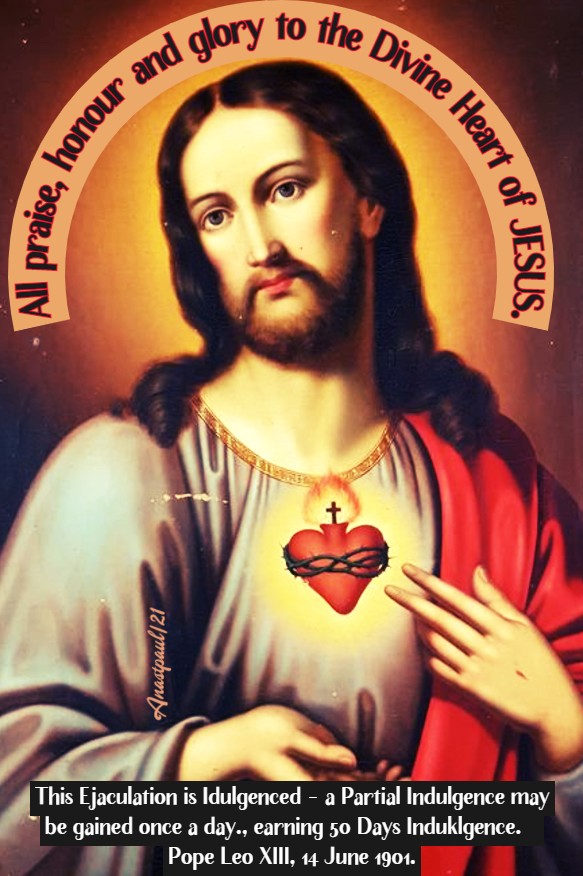
PRAYER – Lord God, true light and creator of light, grant us the grace to see clearly by the light who is Light, Your only Son. Lead us in His path and send us Your Spirit. Grant us the strength to grow in holiness so that our struggle against the powers of darkness may we a victory over temptation. May the prayers of the Mother of Your Son, the Blessed Virgin Mary, our Mother too, be a balm of enduring succour, as we fulfil Your commandments in this world and strive to reach our eternal home. We make our prayer through Christ Your divine Son, Whom You sent to make us like unto Himself, in the Holy Spirit, one God for all eternity, amen. All praise, honour and glory to the Divine Heart of JESUS. (This Ejaculation is Indulgenced – 50 Days, once a day. (See Instructions: – Unless otherwise stated, e.g., “once a day,” a partial Indulgence may be gained any number of times in succession.) 168Pope Leo XIII, 14 June 1901).
Our Morning Offering – 1 June – “Month of the Most Sacred Heart of Jesus
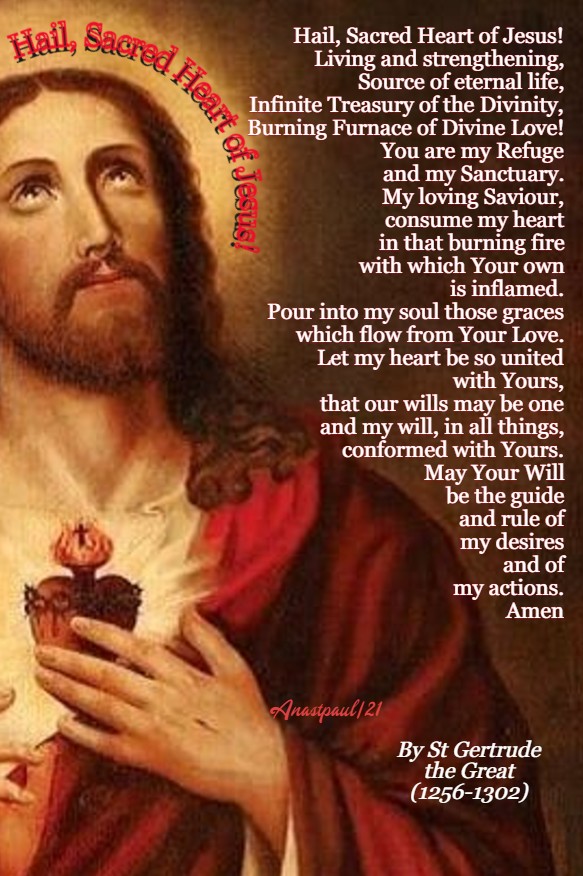
Hail, Sacred Heart of Jesus! By St Gertrude the Great (1256-1302)
Hail, Sacred Heart of Jesus! Living and strengthening, Source of eternal life, Infinite Treasury of the Divinity, Burning Furnace of Divine Love! You are my Refuge and my Sanctuary. My loving Saviour, consume my heart in that burning fire with which Your own is inflamed. Pour into my soul those graces which flow from Your Love. Let my heart be so united with Yours, that our wills may be one and my will, in all things, conformed with Yours. May Your Will be the guide and rule of my desires and of my actions. Amen
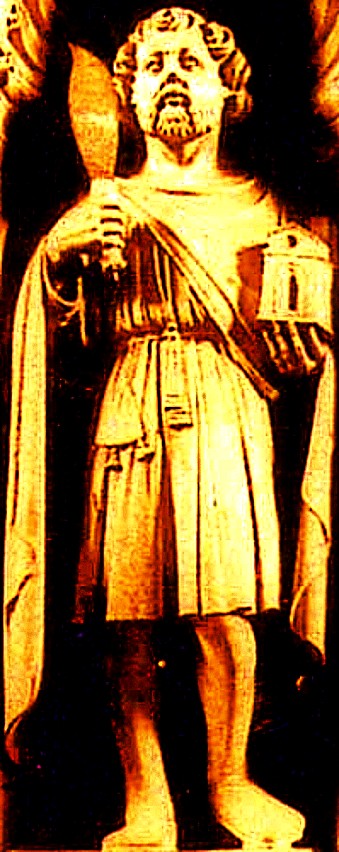
Saint of the Day – 1 June – Blessed Teobaldo Roggeri (c 1100-1150) Layman, Shoemaker, Porter, Apostle of the poor and needy, Penitent, Pilgrim Born in c 1100 in Vico, Liguria, Piedmont, Italy and died in 1150 of natural causes. Patronages – the Diocese of Alba, against fever, against sterility, Church cleaners, Cobblers, Porters, Shoemakers, Tradespeople. Also known as Theobald of Vico, Theobald of Alba, Teobaldo of Alba, Theobald Roggeris. The liturgical feast commonly occurs on 1 June but is also celebrated on 1 February with the “Feast of Remembrance” which opens with the nocturnal sound of the bells with which we remember the miracle of the bells which rang alone, without aid, when the tomb of our saint was re-discovered late at night on 31 January 1429.
The Roman Martyrology states of him today: “In Alba in Piedmont, Blessed Teobaldo, who, driven by love for poverty, gave all his possessions to a widow and became a porter out of a spirit of humility, to carry the burdens of others on himself.”
Teobaldo Roggeri was born in the Ligurian region to nobles from Piedmont. The careful reading and attentiveness to the Gospel caused him to abandon his noble status in favour of a simple and austere life. He was orphaned of both his parents during his childhood, so he set off for Alba in 1112 where he became an apprentice to a shoemaker.
Teobaldo worked as a cobbler and proved to be quite skilled in his trade which prompted the master, to hope in vain, that Teobaldo would wed his daughter, Virida and continue the business after his death. However, the apprentice instead made a private vow to remain chaste.
Teobaldo also worked as a porter and spent time transporting sacks of grain from place to place as part of his job. His master died in 1122 after a decade of working with Teobaldo. This prompted him to embark on a solemn pilgrimage – with a bundle and a staff – to the Santiago de Compostela Cathedral in Spain and he later returned to Alba to resume his work. He used his meager income to help the poor of his region and he often slept outside the local Church, until it would be opened to admit him to spend further time before Our Lord in the Tabernacle.
On one occasion the owner of the shoe store where he worked, asked that he take a sack of wheat to the mill to be ground into flour. He agreed but gave handful after handful to the poor people that he encountered along the path, to the point, where no more wheat remained. He lacked the courage to face the woman back at the store and refused to go back without something to return, so he filled the bag with sand and left it on the woman’s doorstep before running off. The woman found flour in the bag though later learned of what had happened. This began the tale of the “Miracle of the Flour” and happened not long before his death.
Repenting of having reacted with an indignant jerk to an offense received, he wanted to atone for all his remaining life and began to sleep on the bare stone of the steps of the Church of St Lorenzo, where he also began to serve as a Sacristan in the hours free from deliveries.
Teobado died in 1150 after contracting a serious illness while visiting the widow of his cobbler master, where he died under her roof. At his request ,he was buried in an unmarked patch of ground between the two Churches of San Lorenzo and San Silvestro. His grave became a place of pilgrimage and miracles. After several decades, his grave grew obscure and was overgrown and lost. His remains were rediscovered late in the evening of 21 January 1429, almost by inspiration, by the Bishop of Alba, Alerino Rambaudi;. The Church bells rang out on their own during the night pf 31 January 1429 in celebration of the discovery. This miracle is remembered by the marble plaque inserted on the wall. by the Bishop himself in the Chapel dedicated to the saint, in the Alba Cathedral, where the remains were later transferred. This discovery reignited the memory of this humble and holy man, servant of all and the miracles began again at his tomb. Blessed Teobald was Beatified in 1841 by Pope Gregory XVI (cultus confirmation).
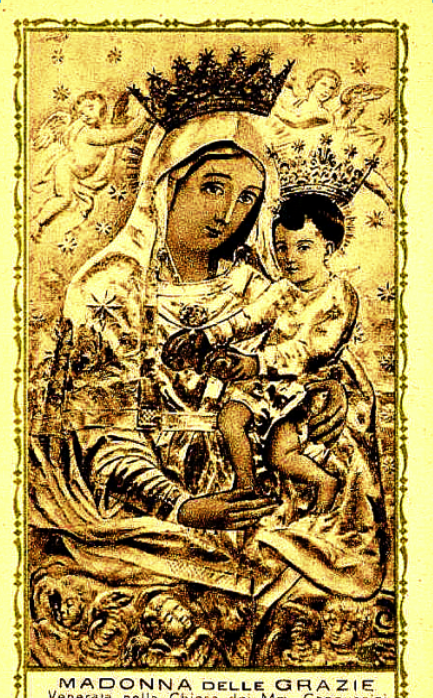
Madonna delle Grazie / Our Lady of Grace, Leini, Torino, Piedmont, Italy (1630) – 1 June:
13 km from Turin, a short distance from the highway to Ivrea, stands a famous Sanctuary. From impeccable evidence and documents, the Madonna appeared to a humble deaf-mute, placing the Rosary around his neck.
For 3 years, since 1627, a famine had ravaged the town of Leini and the surrounding areas followed by the Black Plague, reducing the town to a handful of families. On 1 June 1630, a farmworker, of the Regina family, deaf and dumb from birth, when returning from the fields stopped before the image of the Virgin and implored her: “… save Leini, Mary, Holy Mother, hear our prayer, save us …” She appeared to him with a smile in answer to his prayer and placed a Rosary around his neck. His tongue loosed and from his mouth came a Hymn of praise and thanksgiving to the Virgin. The first voice he ever heard was the Blessed Mother who told him: “… Go, announce, that in my honour a Church should be built in this place and I will ask my Son to stop the plague … “
He began running through the desolate streets shouting the news of the miracle and announcing that the plague had ceased, that the Blessed Virgin prayed for Leini. The few survivors heard the wonders of the miracle and joined with him in the Rosary prayer and supplication with thanksgiving. From that day the plague stopped, the sick were healed,and the survivors were thankful for the wonderful grace that the Virgin had given them. She had asked that they build a Sanctuary and the townspeople fulfilled their solemn promises. An inscription has been affixed on the front facade: “Sacellum hoc BM Gratiarum Virgini Matri against pestiferam emu to majoribus dicatum year 1630.”
The Church has become a famous pilgrimage destination where it is possible to admire inside, a gallery where numerous ex-votos accumulated over the years are collected. The structure was built immediately after the plague of the seventeenth century, to obtain protection from the Blessed Virgin, thanks to the people of Leini.
The Apparition and the Consecration of the Sanctuary are celebrated each year on 1 June and 15 August, the Feast of the Assumption, respectively.
Bl Arnald Arench Bl Arnold of Geertruidenberg St Atto of Oca St Candida of Whitchurch St Caprasius of Lérins St Clarus of Aquitaine St Claudius of Vienne Bl Conrad of Hesse St Conrad of Trier St Crescentinus St Cronan of Lismore St Damian of Scotland St Dionysius of Ruthenia St Donatus of Lucania St Felinus of Perugia Bl Ferdinand Ayala St Firmus St Fortunatus of Spoleto Bl Gaius Xeymon St Gaudentius of Ossero St Giuse Túc St Gratian of Perugia Bl Herculanus of Piegare St Iñigo of Oña St Ischryrion and Companions Bl James of Strepar St Jean-Baptiste-Ignace-Pierre Vernoy de Montjournal
Bl John Pelingotto Bl John Storey St Juventius Bl Leo Tanaka St Melosa St Pamphilus of Alexandria St Peter of Pisa St Porphyrius of Alexandria St Proculus of Bologna St Proculus the Soldier St Ronan St Secundus of Amelia St Seleucus of Alexandria St Simeon of Syracuse St Telga of Denbighshire St Thecla of Antioch Blessed Teobaldo Roggeri (c 1100-1150) Layman St Thespesius of Cappadocia St Wistan of Evesham St Zosimus of Antioch — Martyrs of Alexandria – 5 saints: A group five of imperial Roman soldiers assigned to guard a group of Egyptian Christians who were imprisoned for their faith in the persecutions of Decius. During their trial, they encouraged the prisoners not to apostatize. This exposed them as Christians, were promptly arrested and executed. Martyrs. Their names are – Ammon, Ingen, Ptolomy, Theophilis and Zeno. They were beheaded in 249 at Alexandria, Egypt.
Martyrs of Caesarea – 3 saints: Three Christians martyred together in the persecutions of Galerius. We know little more about them than the name – Paul, Valens and Valerius. They diedf in 309 at Caesarea, Palestine.
Martyrs of Lycopolis – 6 saints: Five foot soldiers and their commander who were martyred for their faith by order of the imperial Roman prefect Arriano during the persecutions of Decius. In Lycopolis, Egypt.
Martyrs of Rome – 6 saints: A group of spiritual students of Saint Justin Martyr who died with him and about whom we know nothing else but their names – Carito, Caritone, Evelpisto, Ierace, Liberiano and Peone. In Rome, Italy.
Our Morning Offering – 23 May – Pentecost Sunday, Alleluia!
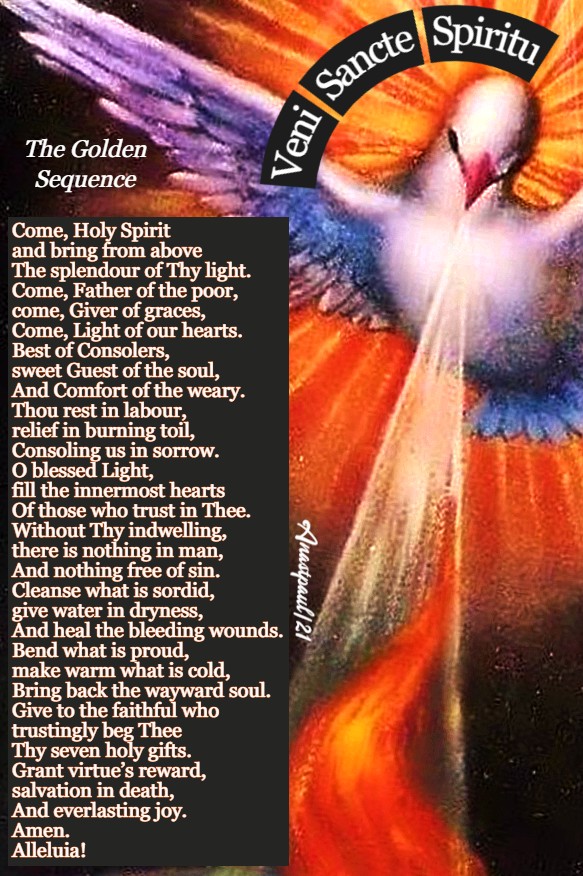
Veni Sancte Spiritus – The Golden Sequence
Come, Holy Spirit and bring from above The splendour of Thy light. Come, Father of the poor, come, Giver of graces, Come, Light of our hearts. Best of Consolers, sweet Guest of the soul, And Comfort of the weary. Thou rest in labour, relief in burning toil, Consoling us in sorrow. O blessed Light, fill the innermost hearts Of those who trust in Thee. Without Thy indwelling, there is nothing in man, And nothing free of sin. Cleanse what is sordid, give water in dryness, And heal the bleeding wounds. Bend what is proud, make warm what is cold, Bring back the wayward soul. Give to the faithful, who trustingly beg Thee Thy seven holy gifts. Grant virtue’s reward, salvation in death, And everlasting joy. Amen. Alleluia!
“Veni Sancte Spiritus,” the “Golden Sequence”, is a sequence prescribed in the Roman Liturgy for the Masses of Pentecost and its octave, exclusive of the following Trinity Sunday. It is usually attributed to either the thirteenth-century Pope Innocent III (c 1160 – 1216) or to the Archbishop of Canterbury, Cardinal Stephen Langton (c 1150 – 1228).
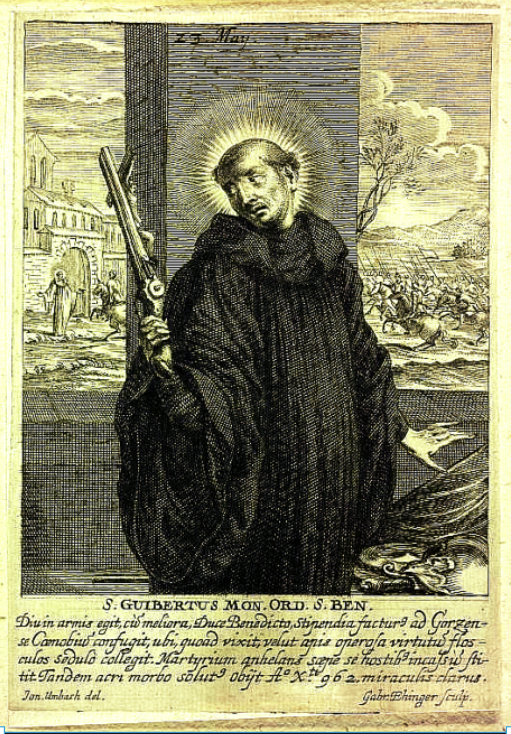
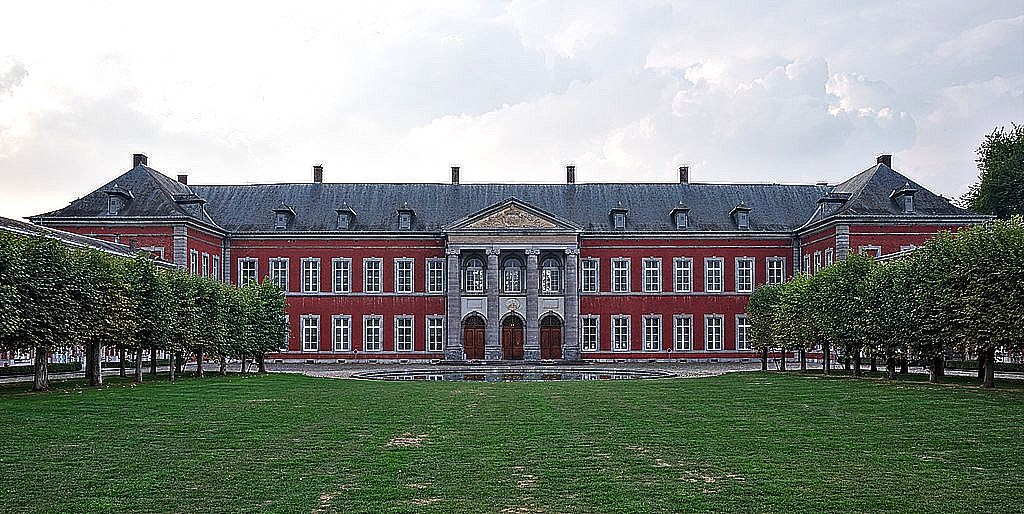
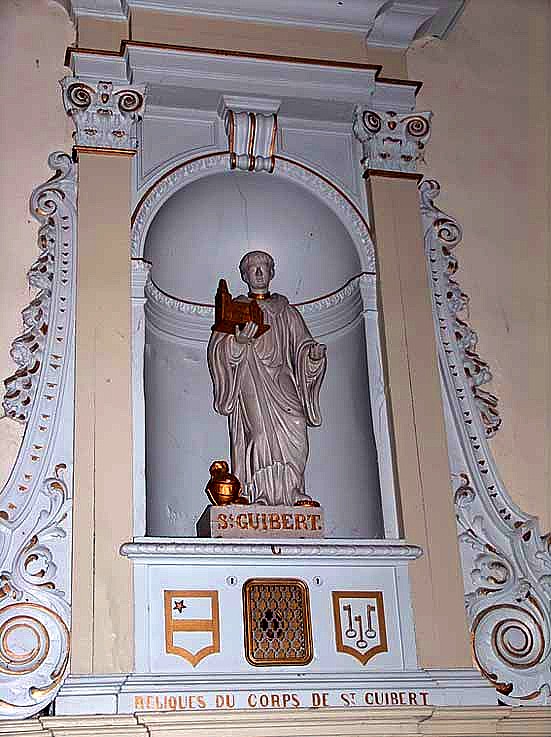
Saint of the Day – 23 May – St Guibertus of Gorze (892-962) Monk , Hermit, Founder of the Abbey of Saint-Pierre, of Gemblou at Namur , Belgium. Born in the Lorraine region of France in 892 and died on 23 May 962 at Gorze Abbey in France of natural causes. Also known as – Guibertus of Gembloux, Guibert. Wibert.
An aristocrat from Lotharingia who had participated in several military campaigns, Guibertus withdrew as a Hermit on family property in Gembloux inherited from his father.
In 936, Guibertus was assisted in the erection of a Monastery and the selection of its Monks by Erluin (died 987), who had resigned a Canonry to become a Monk. Some of Guibertus’ relatives challenged the legality of the monastic foundation, on the grounds that the Monastery was built on land of the Imperial fisc, which had been given in fee to Guibertus’ ancestors and could not be alienated without imperial authority. Emperor Otto I summoned Guibert and Erluin to his Court but was so favourably impressed with the manner in which they defended their undertaking, that on 20 September 946, he issued an imperial decree approving the foundation of Gemblacum and granting it various privileges.
After his stay at Gorze Abbey in Lorraine, he came back with the Rule of Saint Benedict for his Monastery of Gembloux and appointed his friend Erluin the first Abbot of Gembloux, while he himself became a Monk at Gorze Abbey near Metz. The Moastery was dedicated to Saint Peter and the Martyr, Saint Exuperius. He returned twice to Gembloux. The first time was in 954, when the Hungarians threatened to pillage the Monastery. Guibertus not only saved it from harm but also converted some Hungarians to Christianity. The second time was in 957, when his brother-in-law, Heribrand of Mawolt, had seized the revenues of the Monastery. Guibertus persuaded Heribrand to leave the possessions of the Monastery unmolested in the future.
The Monks were active in missionary work among the Hungarians and Slavs who stayed behind in the Duchy of Brabant after the invasion of 954.
When Guibertus died, the Monks of Gembloux came to collect the body of their Founder from the Abbey of Gorze where he had died. After having buried his body, they exhumed it and treated the body with salt and aromatics to prevent decomposition during its transport to the Abbey of Gembloux.
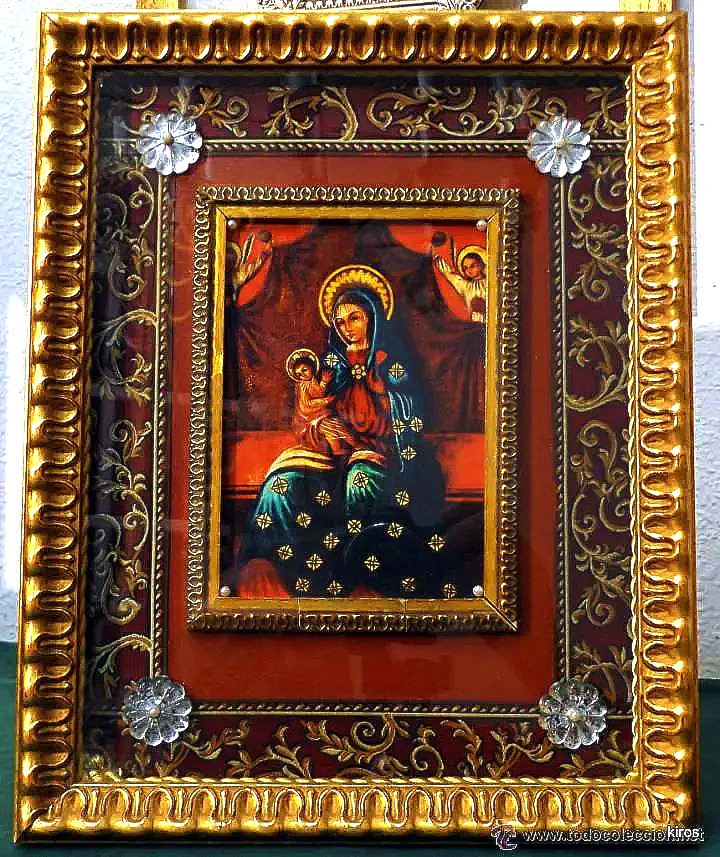
Virgen de Gracia / Virgin of Grace, Aés, Puente Viesgo, Pas-Miera, Cantabria, Spain (1575) – 23 May:
On 23 May, 1575, as widow María Saínz de Quijano prayed the rosary while watching sheep on Hediilla Mountain, she saw the Virgin appear :
“with such great splendour that I didn’t dare look at Her Majesty and she said I should ask the Curate of the town to build a Chapel in that spot and lace an image of the Virgin of Grace and one of St Lawrence, in the ew Chapel.“
To Maria’s objection that people wuld not believe her, the Virgin answered that she would make them believe. When the woman started to get up, she found she could not and stayed there, calling for her daughter Juana. Some neighbours passing bym found Juana, who carried her mother home on her back. María asked Juana to get the local Priest. She told him what had happened and he then told his superior, the Vicar of the valley, who dismissed it with a laugh, saying the shepherdess must have been dreaming. A few days later the Vicar passed through that place with his servant, who said, “Sir, they say the Virgin recently appeared to a woman in this spot.” The Vicar laughed again and was suddenly blinded. The servant led him home. In fear and remorse, the Vicar dictated a letter to the Archbishop, asking him to order construction of the Chapel so that he would regain his sight.
The Archbishop ordered workers to began cutting wood for construction. They cut some from high on the mountain and some from lower down, at the apparition site. But they couldn’t move the wood from the heights, although they moved that from the lower site easily.
Carmen González Echegaray, citing records in the National Archives of Spain, doesn’t say whether the Viosionary and the Vicar recovered but presumably they were among the first to receive the graces of the Virgin of Aés.
The Chapel has been rebuilt and renovated several times over the centuries, most recently in 1993. An annual procession to the mountain Shrine outside the village of Aés on 23 May, the apparition anniversary, draws participants from the entire valley. There are no acceptable images of the Chapel or the procession available.
St Basileus of Braga St Desiderius of Langres St Epitacius of Tuy St Euphebius of Naples St Euphrosyne of Polotsk St Eutychius of Valcastoria St Florentius of Valcastoria St Goban Gobhnena St Guibertus of Gorze (892-962) Monk, Hemit Bl Ivo of Chartres St Jane Antide Thouret
Bl Wincenty Matuszewski — Martyrs of Béziers: 20 Mercedarian friars murdered by Huguenots for being Catholic. Martyrs. 1562 at the Mercedarian convent at Béziers, France.
Martyrs of Cappadocia: A group of Christians tortured and martyred in the persecutions of Diocletian and Galerius. Their names and the details of their lives have not come down to us. They were crushed to death in c.303 in Cappadocia (in modern Turkey).
Martyrs of Carthage: When a civil revolt erupted in Carthage in 259 during a period of persecution by Valerian, the procurator Solon blamed it on the Christians, and began a persecution of them. We know the names and a few details about 8 of these martyrs – Donatian, Flavian, Julian, Lucius, Montanus, Primolus, Rhenus and Victorius. They were beheaded in 259 at Carthage (modern Tunis, Tunisia).
Martyrs of Mesopotamia: A group of Christians martyred in Mesopotamia in persecutions by imperial Roman authorities. Their names and the details of their lives have not come down to us. They were suffocated over a slow fire in Mesopotamia.
Martyrs of North Africa: A group of 19 Christians martyred together in the persecutions of the Arian Vandal King Hunneric for refusing to deny the Trinity. We know little more than a few of their names – Dionysius, Julian, Lucius, Paul and Quintian. c 430.
Thought for the Day – 22 May – “Mary’s Month” – Meditations with Antonio Cardinal Bacci (1881-1971)
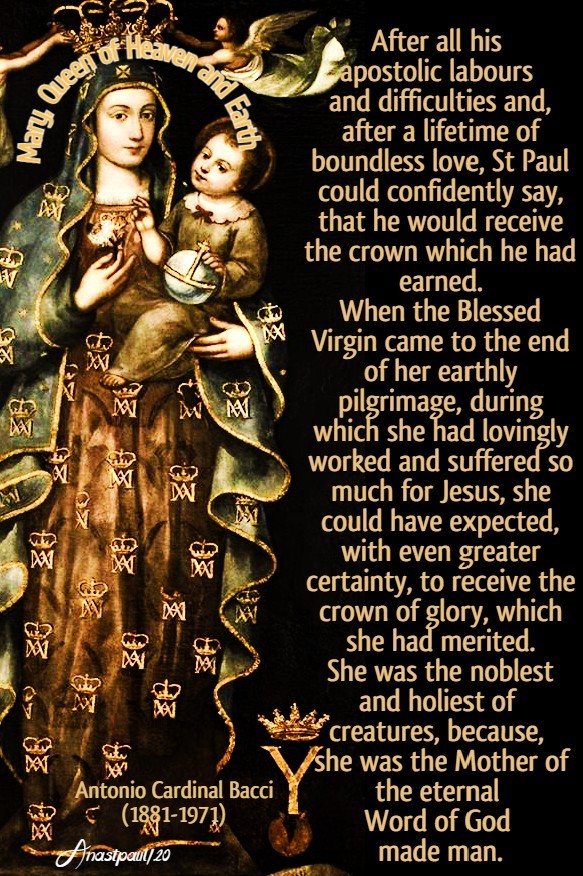
Mary, Queen of Heaven and Earth
“Towards the close of his life, St Paul wrote to his well-beloved disciple, St Timothy: “As for me, I am already being poured out in sacrifice and the time of my deliverance is at hand. I have fought the good fight, I have finished the course, I have kept the faith. For the rest, there is laid up for me a crown of justice, which the Lord, the just judge, will give to me in that day; yet, not to me only but, also to those who love his coming” (2 Tim 4:6-8).
After all his apostolic labours and difficulties and, after a lifetime of boundless love, St Paul could confidently say, that he would receive the crown which he had earned. When the Blessed Virgin came to the end of her earthly pilgrimage, during which she had lovingly worked and suffered so much for Jesus, she could have expected, with even greater certainty, to receive the crown of glory, which she had merited. She was the noblest and holiest of creatures, because, she was the Mother of the eternal Word of God made man. Therefore, her reward had to be greater than that of any other creature. She was the Mother of the King of Angels and of Saints, of Heaven and earth. As such, it was her place to rule over them all. Seated at the right hand of her divine Son, she has glory and power, which none other could possess. The Church, therefore, invokes her under the title of Queen of Angels and of Saints, Queen of Apostles, Queen of Virgins, of Confessors and of Martyrs, Queen of Heaven and of earth. When our Holy Father, Pius XII, solemnly proclaimed her Queenship, in the year 1954, he was only giving voice to the general consensus of tradition, of the Liturgy and of the belief of all the faithful (Cf Encyclical, Ad Coeli Reginum, 11 Oct 1954).
It should be very encouraging to all of us to know that we have so powerful a Queen in Heaven, whose privilege it is, to dispense God’s graces. She has crushed the poisonous head of Satan. Now, she is able and eager to help us, her loyal sons and servants, to resist temptation, to frustrate the schemes of our deadly enemy and to perfect ourselves in virtue. Amen.”
Quote/s of the Day – 22 May – “Mary’s Month” – Readings: Acts 28:16-20, 30-31, Psalm 11:4-5, 7, John 21:20-25
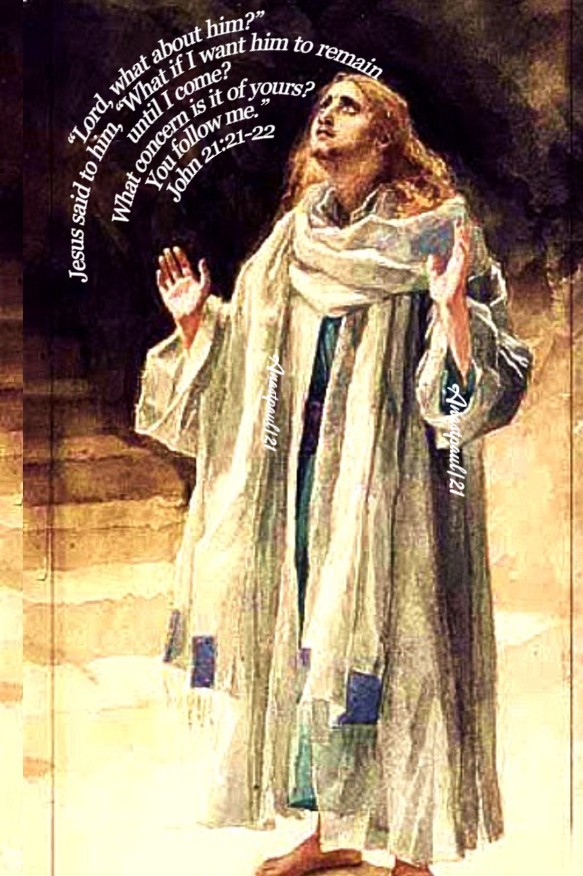
“Lord, what about him?” Jesus said to him, “What if I want him to remain until I come? What concern is it of yours? You follow me.”
John 21:21-22
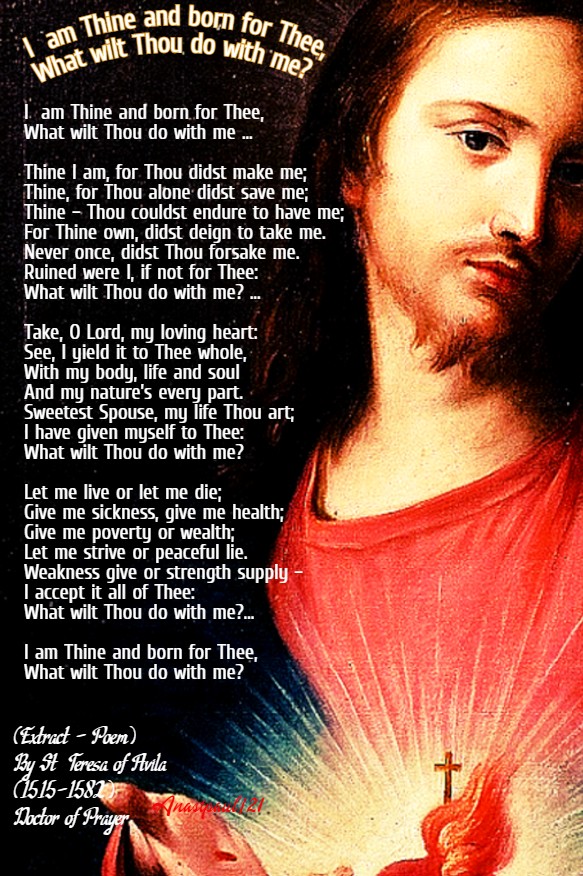
“I am Thine and born for Thee, What wilt Thou do with me?
Sovereign Lord, upon Thy throne, Endless Wisdom, One and whole, Goodness that dost feed my soul, Good and great, One God alone, As I sing my love for Thee. What wilt Thou do with me?
Thine I am, for Thou didst make me; Thine, for Thou alone didst save me; Thine – Thou couldst endure to have me; For Thine own, didst deign to take me. Never once, didst Thou forsake me. Ruined were I, if not for Thee: What wilt Thou do with me?
What, O good and loving Lord, What wilt Thou have this creature do? This Thy slave, a sinner too, Waiting till she hears Thy word? With Thy will in close accord, Sweetest Love, I come to Thee: What wilt Thou do with me?
Take, O Lord, my loving heart: See, I yield it to Thee whole, With my body, life and soul And my nature’s every part. Sweetest Spouse, my life Thou art; I have given myself to Thee: What wilt Thou do with me?
Let me live or let me die; Give me sickness, give me health; Give me poverty or wealth; Let me strive or peaceful lie. Weakness give or strength supply – I accept it all of Thee: What wilt Thou do with me?…
I am Thine and born for Thee, What wilt Thou do with me?”
Poem – I am Yours, for You I was born – “Vuestra Soy, para Vos nací ” (trans. E.Allison Peers)
St Teresa of Avila (1515-1582) Doctor of Prayer of the Church
One Minute Reflection – 22 May – “Mary’s Month” – Readings: Acts 28:16-20, 30-31, Psalm 11:4-5, 7, John 21:20-25
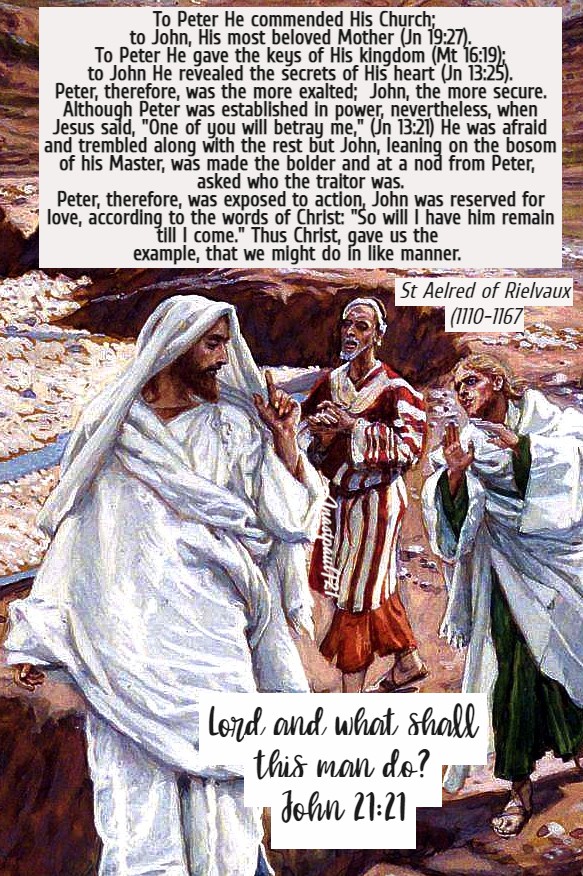
“Lord and what shall this man do?” – John 21:21
REFLECTION – “There are some persons who think they are not loved because they cannot be promoted, and who allege that they are despised, if they are not entrusted with responsibilities and offices. We know that as a result of this type of thinking no small discord has sprung up among those who were considered friends, so that estrangement followed upon indignation and railings upon estrangement ….
To Peter He commended His Church; to John, His most beloved Mother (Jn 19:27). To Peter He gave the keys of His kingdom (Mt 16:19); to John He revealed the secrets of His heart (Jn 13:25). Peter, therefore, was the more exalted; John, the more secure. Although Peter was established in power, nevertheless, when Jesus said, “One of you will betray me,” (Jn 13:21) He was afraid and trembled along with the rest but John, leaning on the bosom of his Master, was made the bolder and at a nod from Peter, asked who the traitor was. Peter, therefore, was exposed to action, John was reserved for love, according to the words of Christ: “So will I have him remain till I come.” Thus Christ, gave us the example, that we might do in like manner. – St Aelred of Rielvaux (1110-1167) Cistercian Monk – Spiritual Friendship, III, 115, 117
PRAYER – Almighty God and Father, Your ways are not our ways, teach us to willingly agree to them, for You know which way we should go. Help us to say “yes” always to Your plan and to render ourselves, as a sacrament of Your divine love to all we meet. Fill us with the grace to be your tools, to bring glory to Your kingdom. Our Father, who art in heaven, may Your Will be done on earth, as it is in heaven. Mary Mother of God, pray for us! Through our Our Lord Jesus Christ with You, in the union of the Holy Spirit, one God forever, amen.
Our Morning Offering –22 May – “Mary’s Month” – Vigil of Pentecost
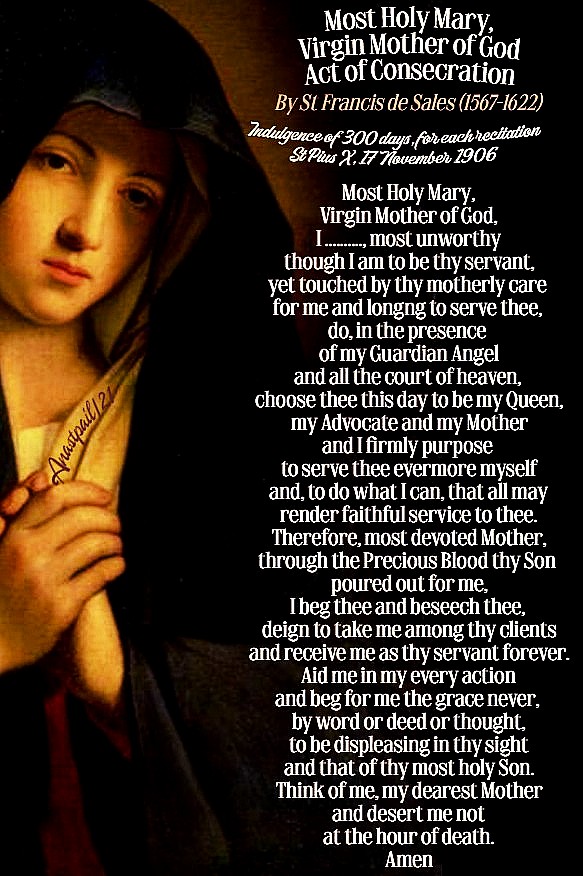
Most Holy Mary, Virgin Mother of God Act of Consecration By St Francis de Sales (1567-1622) Indulgence of 300 days, for each recitation St Pius X, 17 November 1906
Most Holy Mary, Virgin Mother of God, I ………., most unworthy though I am to be thy servant, yet touched by thy motherly care for me and longng to serve thee, do, in the presence of my Guardian Angel and all the court of heaven, choose thee this day to be my Queen, my Advocate and my Mother and I firmly purpose to serve thee evermore myself and, to do what I can, that all may render faithful service to thee. Therefore, most devoted Mother, through the Precious Blood thy Son poured out for me, I beg thee and beseech thee, deign to take me among thy clients and receive me as thy servant forever. Aid me in my every action and beg for me the grace never, by word or deed or thought, to be displeasing in thy sight and that of thy most holy Son. Think of me, my dearest Mother and desert me not at the hour of death. Amen
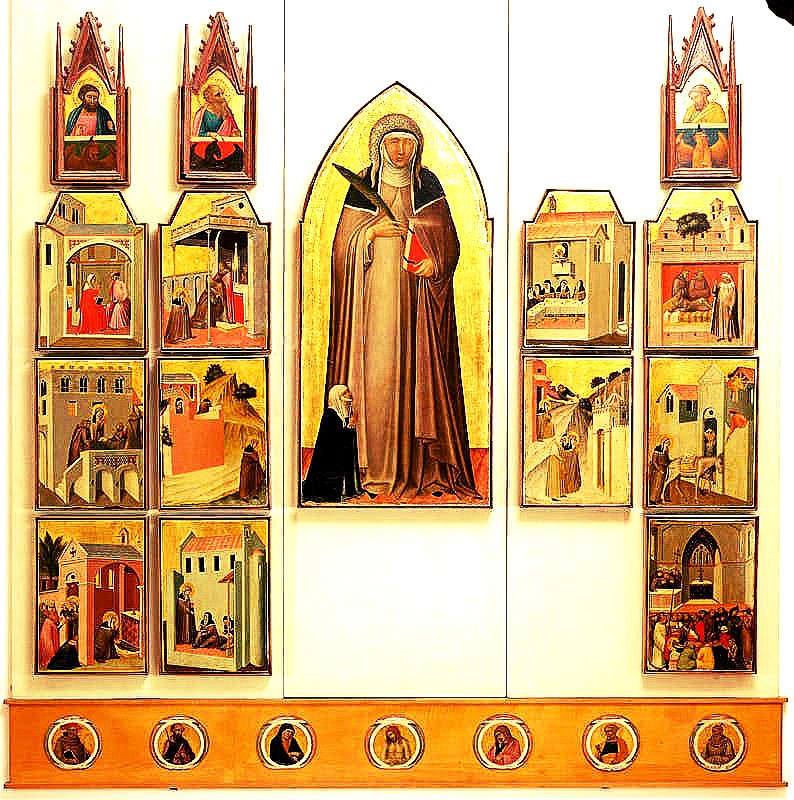
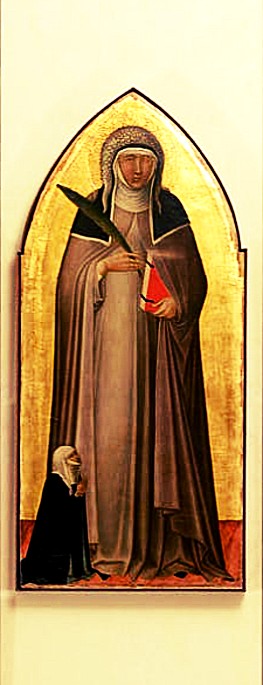
Saint of the Day – 22 May – Saint Humility of Faenza (c 1226–1310) Wife, Mother, Nun – a founder of Vallumbrosan convents and is considered the Founder of the Vallumbrosan Nuns, Wife, Mother Widow, Recluse, spiritual adviser, spiritual writer. Born in 1226 at Faenza, Italy as Rosanna Negusanti and died on 22 May 1310 at Florence, Italy of natural causes. Also known as – Rosanna, Humilitas, Umiltà. Patronage- Faenza. Her body is incorrupt.
The Roman Martyrolog states pf her todzy: “In Florence, blessed Umiltà (Rosanna), who, with her husband’s consent, lived for twelve years as a recluse. Aat the request of the Bishop, she then built a Monastery of which she became Abbess and which she associated with the Order of Vallombrosa.”
An Altarpiece as a hagiographic Polyptych icon of St Humility painted between 1335-1340
Her ‘Life’ was written by the contemporary Monk Biagio in c 1330, is contained in the cod. 271 of the Riccardiana Library of Florence; also there is a second ‘Life’ in the cod. 1563 of the same Library. But many other texts of the following centuries, up to the Acts of the Congregation of Rites of 1720, report news concerning her, both as a person, for the writings, for the apostolic processes and for the foundations of ,onasteries connected to her.
Rosanna Negusanti, daughter of the nobles Elimonte and Richelda, was born in Faenza in 1226, the year of the death of the Seraphic Francis of Assisi, 1226.
In 1241 at the age of 15, she lost her father and the following year at 16 she married the nobleman named Ugoletto dei Caccianemici (died 1256). They had two children, but their happiness was very brief for both children died as soon as they were Baptise. At this time too, her mother, Richelda also died.
But the young woman, she was 24, without becoming discouraged and giving in to despair or distracting herself with the joys of the world, together with her husband Ugoletto decided to retire to religious life, both entering the cloisters of the rectory of St Perpetua. ; Iit was not uncommon in the Middle Ages to witness choices of this kind between two Christian spouses. And on this occasion Rosanna Negusanti changes her name to Humility; after having miraculously recovered from a serious illness.
Here she lived for twelve years, purifying and elevating her spirit with prayers and fasting, alternating them with advice that she gave to those who turned to her for help. Her example attracted some young women from Faenza who asked to build cells near hers and to live under her guidance.
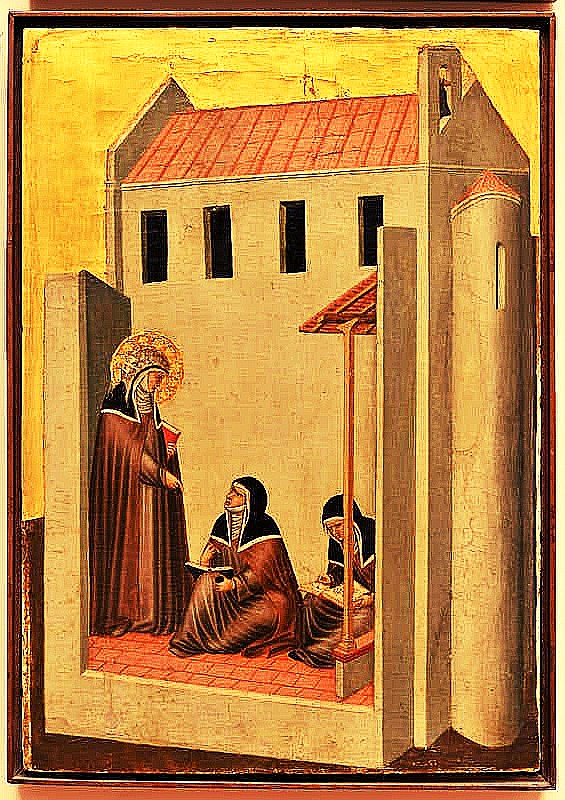
And so in 1266 on the advice of Bishop Petrella, Humility agreed to become the spiritual guide of the new nuns, gathered in the old Monastery of Malta in Vallombrosa, which from then on would be called St Maria Novella. Humility was now 40 years old, she returned to being a mother full of goodness, wisdom and energy, becoming the guide for the new daughters, directing them on the path of holiness.
Fifteen years passed, putting into practice all the virtues of the Rule of St Benedict and the Vallombrosan Constitutions of St John Gualberto. When she was 55, in 1281, Mother Humilitybegan to build a new spiritual home for the young Florentine girls, whose life was shaken by the struggles between Whites and Blacks, the warring factions in the region. A Cchurch was erected in Florence, in honour of St John the Apostle Evangelist, had as Architect Giovanni Pisano and as Decorator the famous Buffalmacco. It was Consecrated in 1297 by the Bishop Francesco Monaldeschi.
Mother Humility with her spiritual daughters
Despite being very sick and elderly, Sister Humilty kept personal contacts with Faenza and Rome to give continuity to the two Monasteries, until after six months of suffering, at the age of 84, she ceased to live in Florence and on 22 May 1310 she entered life.
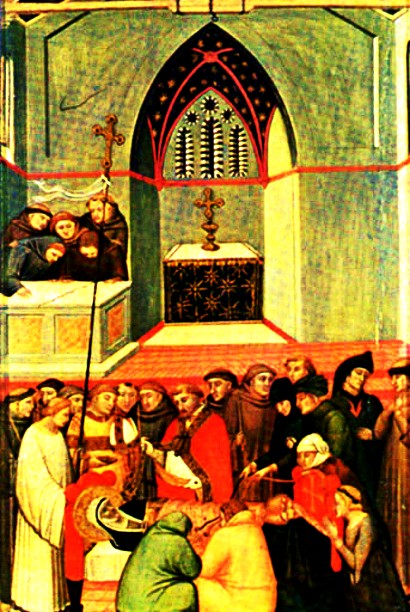
After a year on 6 June 1311, her body was exhumed and although it was buried in the bare earth, under the floor of the Church, it was incorrupt. She was dressed in precious clothes and from then on, she had an uninterrupted cult. Her body was later transferred to the Monasteries of St Caterina, of St Antonio (1529), of San Salvi (1534), in the 19th century to that of the Spirito Santo of Varlungo near Florence. Finally, in 1972, in the Monastery of the Holy Spirit in Bagno a Ripoli, near Florence, where it is still preserved as perfect as it was in 1310.
The incorrupt body of St Humility
The spirituality of St Humility can be seen from the few writings that have come down to us, they are a living expression of profound humility and fervent love for God and neighbour. Her cult is very ancient, perhaps it even dates back to the solemn ‘elevation’ of the relics in 1311, in which a Mass of its own was granted. In 1317, the Bishops gathered in Avignon, granted particular indulgences to her cult.
On 27 January 1720, the Congregation of Rites with Pope Benedict XIII confirmed the ancient cult, having their own Mass celebrated on 22 May and she was formally Canonised on 27 January 1720 by Pope Clement XI. She was declared Co-Patroness of Faenza in 1942. Altars were dedicated to her in the two Monasteries she founded of the Vallombrosana Congregation .
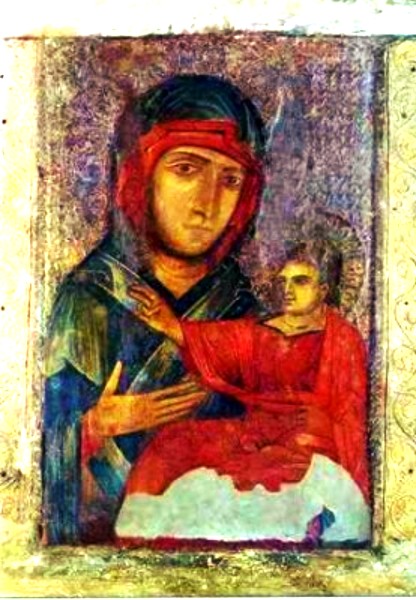
Beata Vergine di San Luca, Bologna, Italy / The Blessed Virgin of Saint Luke, Bologna – 22 May, Saturday before the Feast of the Ascension of our Lord:. The Blessed Virgin of St Luke is the Patron Saint of Bologna.
A Greek holy man named Theocles Kmnia, praying before this icon in the Church of St Sophia in Constantinople, saw an inscription on it: “This work made by St Luke, Chancellor of Christ, must be taken to the Church of St Luke on Guardia Mountain and installed on its Altar.”
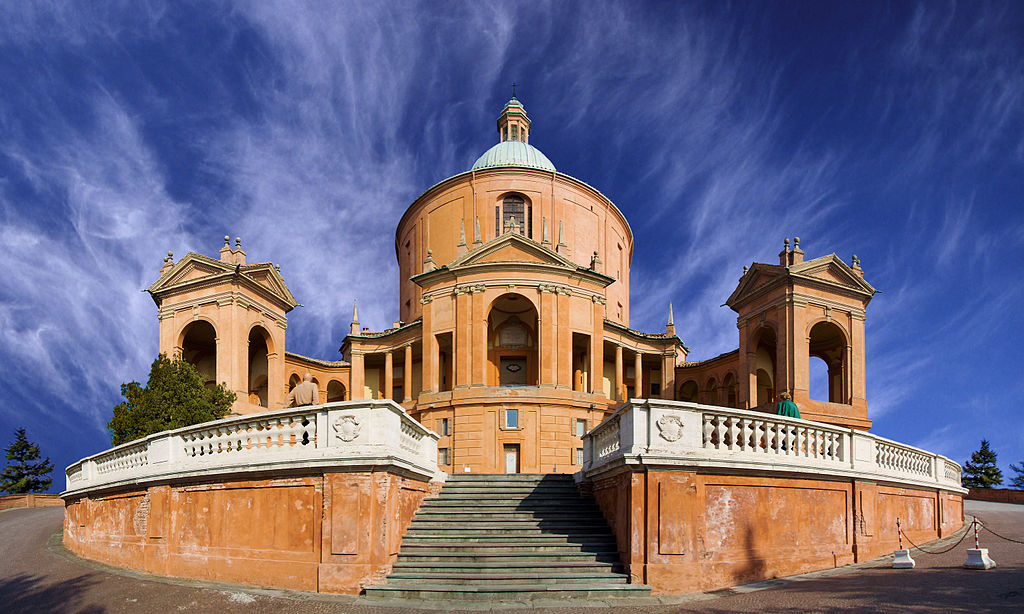
Without knowing the mountain’s location, he pleaded with the clergy of St Sophia until they agreed to let him take the image there. For some time he travelled without finding anyone who knew of such a place. Finally, in Rome, he met the Bolognese Ambassador, who knew that two sisters, Azzolina and Beatrice Guezi, had retired to a life of prayer on Lookout Mountain, Monte della Guardia, outside Bologna and, had built a Chapel on the hill dedicated to St Luke. Supplied by the Ambassador with a horse, a servant and letters of recommendation to the leaders of Bologna, Theocles carried the icon there. On 8 May 1160, the Bishop of Bologna led it in procession to the sisters’ hermitage on Monte della Guardia. At this point, the story moves from legend to documented history. In 1192, another holy woman, Angelica di Caicle, retired to the mountain with the intention of building a bigger Church there. On 15 May 1194, the Bishop of Bologna ,laid the first stone. In 1249, Dominican sisters settled there. The image was carried in procession to Bologna on 4 April, 1302, during Charles de Valois’ invasion and again on 5 July 1433, after months of damaging rain. The rain’s end is commemorated in an annual procession from the Sanctuary to Bologna, which since 1476 has taken place on the Saturday before the Feast of Christ’s Ascension (always a Thursday).
The holy icon remains in Bologna for a week, returning to the Basilica Sanctuary on Ascension Sunday. It was ceremonially Crowned 5 April 1653 by the Archbishop and in 1857 by Blessed Pope Pius IX. Today the procession continues when pilgrims remove their shoes and begin the 3,796 meter (about 2 1/2 miles) climb up the longest uninterrupted portico in the world. to reach the Sanctuary and beg of our Holy Mother, intercession to her Son, for all their needs. Today, the highly veerated image is protected by a glass cover, see below.
St Boethian of Pierrepont St Castus the Martyr St Conall of Inniscoel Bl Diego de Baja Bl Dionisio Senmartin St Emilius the Martyr St Faustinus the Martyr St Francisco Salinas Sánchez St Fulgencio of Otricoli Bl Fulk of Castrofurli Bl Giacomo Soler Bl Giusto Samper St Helen of Auxerre
St Humility of Faenza (c 1226–1310) Wife, Mother, Nun – a founder of Vallumbrosan convents, and is considered the Founder of the Vallumbrosan Nuns
St Lupo of Limoges St Marcian of Ravenna St Margaret of Hulme Bl Pedro of the Assumption St Quiteria St Romanus of Subiaco St Timothy the Martyr St Venustus the Martyr — Martyred in the Spanish Civil War: • Blessed Francisco Salinas Sánchez • Blessed José Quintas Durán
Thought for the Day – 21 May – “Mary’s Month” – Meditations with Antonio Cardinal Bacci (1881-1971)
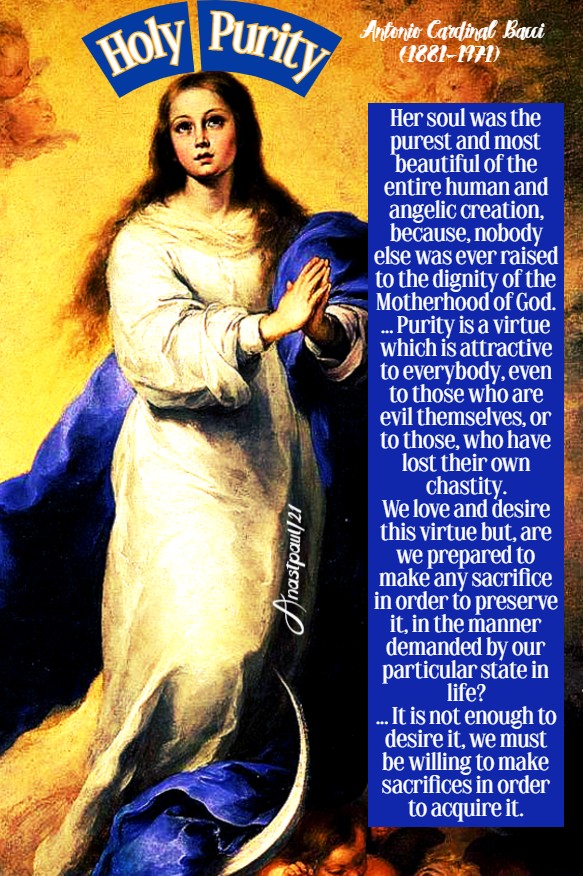
Holy Purity
“Have you ever experienced the sheer delight of climbing the mountains on a summer’s day and coming across one of those little alpine lakes, a tiny mirror, reflecting the still blueness of the sky? Or have you ever watched an infant smiling in it’s angelic slumber and been held spellbound by this vision of innocence? Finally, on some calm, clear night, surely you have studied the star-spangled sky and have been so overwhelmed by the beauty of the scene, that you could have cried out with the Psalmist: “The heavens declare the glory of God and the firmament proclaims His handiwork” (Ps 18:1). These, are only faint images of the beauty and virginal purity of Mary. Her soul was the purest and most beautiful of the entire human and angelic creation, because, nobody else was ever raised to the dignity of the Motherhood of God. She was conceived free from all taint of original sin and enriched with every grace. In her chaste womb, she conceived the Infant Jesus. Later, she held Him close to her heart; she lived for Him and eventually died for love of Him.
Purity is a virtue which is attractive to everybody, even to those who are evil themselves, or to those, who have lost their own chastity. We love and desire this virtue but, are we prepared to make any sacrifice in order to preserve it, in the manner demanded by our particular state in life? “The kingdom of heaven has been enduring violent assault,” Jesus said “and the violent have been seizing it by force” (Mt 11:12). This is especially true in regard to the acquisition of the virtue of purity. It is not enough to desire it, we must be willing to make sacrifices in order to acquire it.”
Quote/s of the Day – 21 May – “Mary’s Month” – Readings: Acts 25:13-21, Psalm 103:1-2, 11-12, 19-20, John 21:15-19
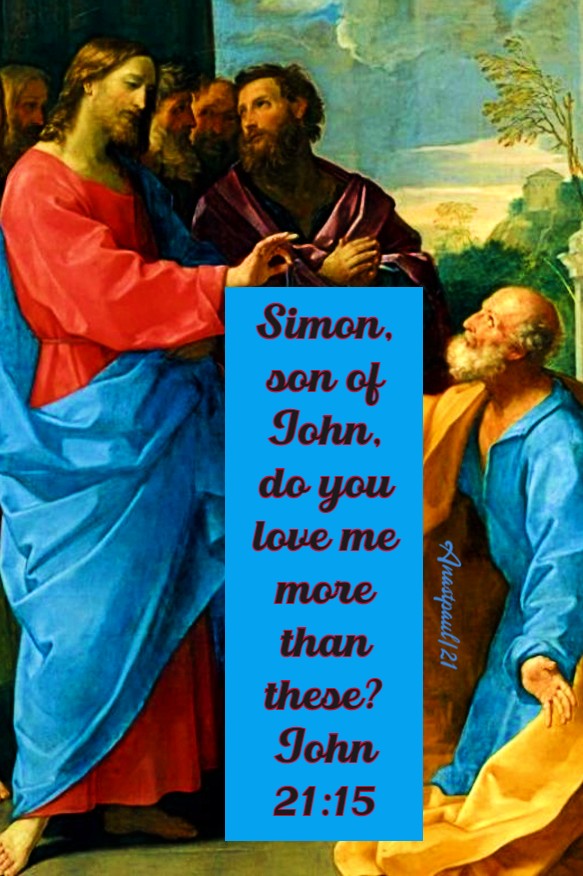
“Simon, son of John, do you love me more than these?”
John 21:15
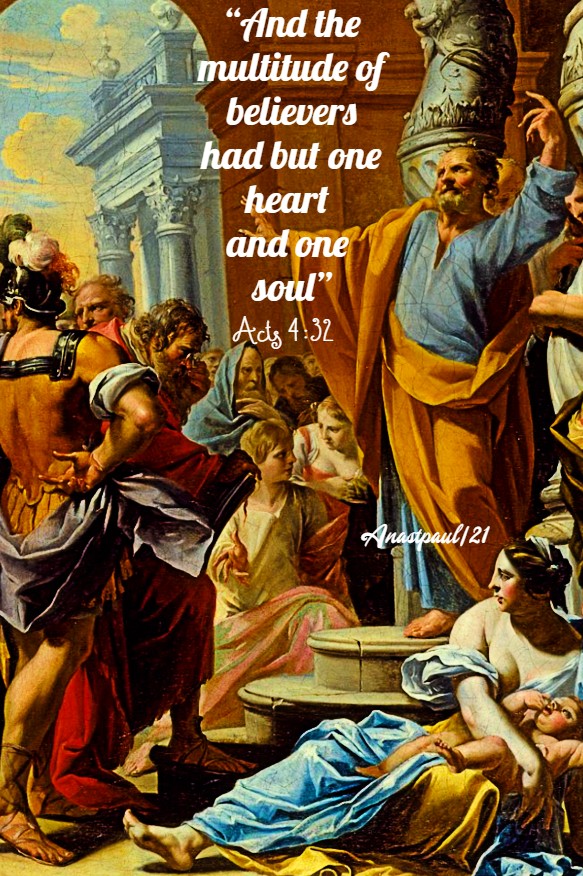
“And the multitude of believers had but one heart and one soul”
Acts 4:32
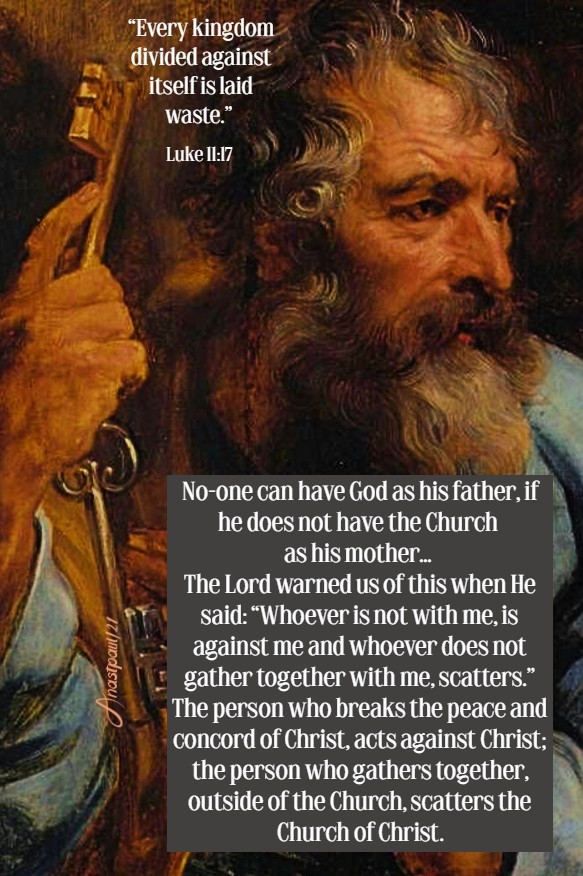
“No-one can have God as his father, if he does not have the Church as his mother… The Lord warned us of this when He said: “Whoever is not with me, is against me and whoever does not gather together with me, scatters.” The person who breaks the peace and concord of Christ, acts against Christ; the person who gathers together, outside of the Church, scatters the Church of Christ.”
St Cyprian of Carthage (c 200- c 258) Bishop and Martyr, Father of the Church On the unity of the Church
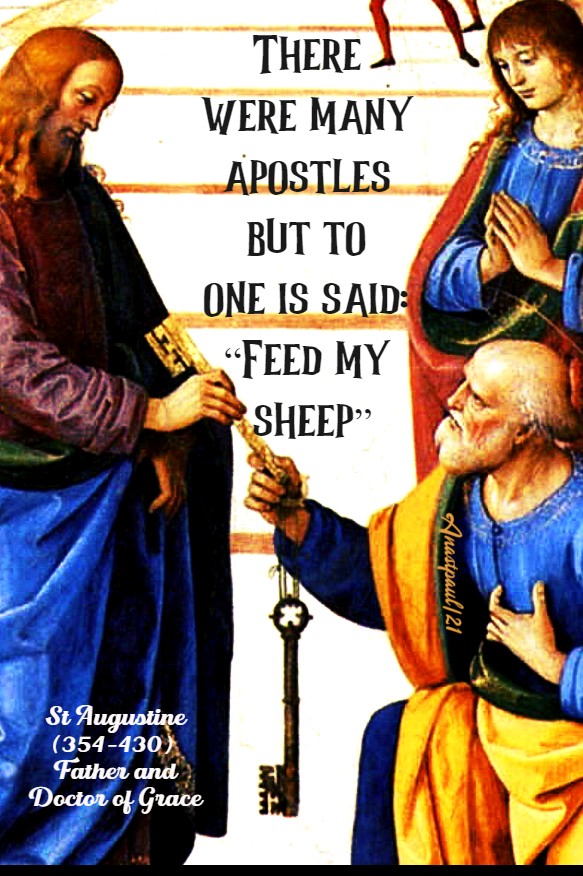
“There were many apostles but to one is said: “Feed my sheep”
St Augustine (354-430) Father and Doctor of Grace
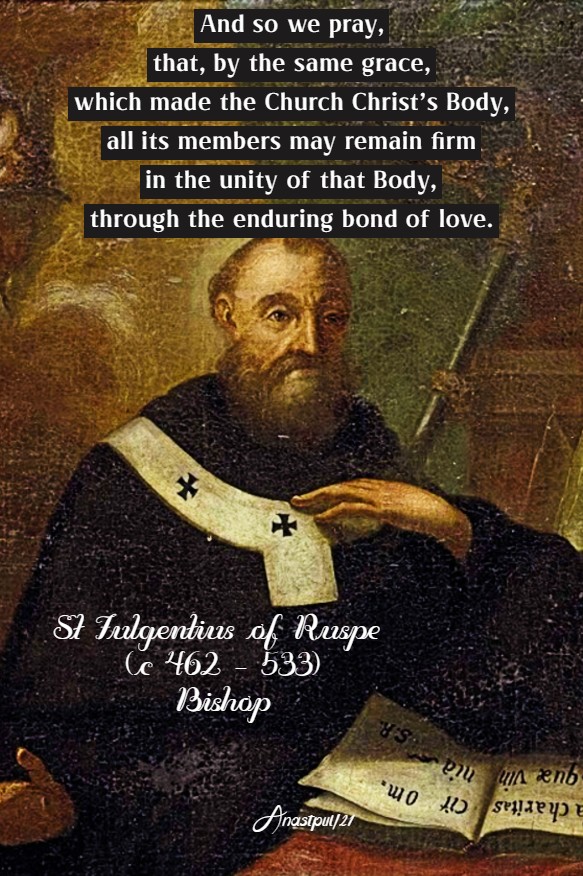
“And so we pray, that, by the same grace, which made the Church Christ’s Body, all its members may remain firm in the unity of that Body, through the enduring bond of love.”
St Fulgentius of Ruspe (c 462 – 533) Bishop, Father of the Church
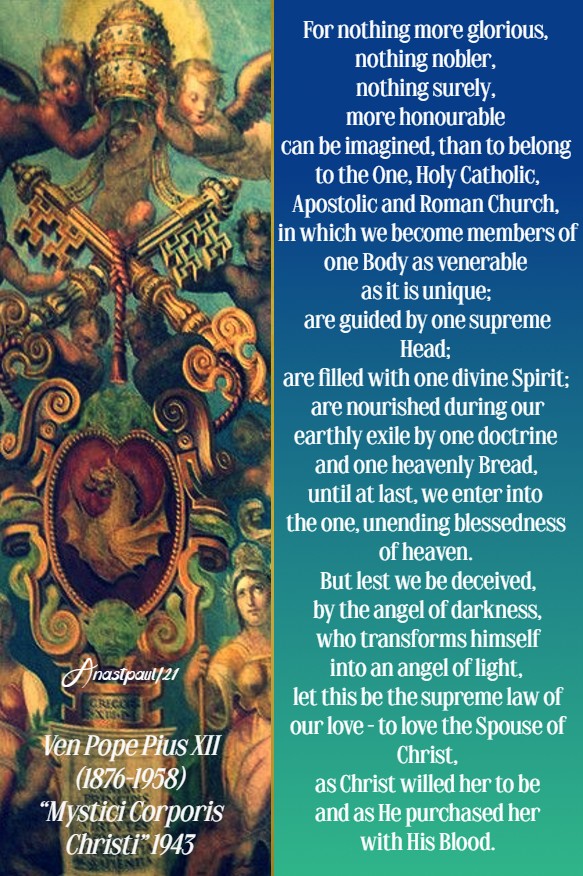
“For nothing more glorious, nothing nobler, nothing surely, more honourable can be imagined, than to belong to the One, Holy Catholic, Apostolic and Roman Church, in which we become members of one Body as venerable as it is unique; are guided by one supreme Head; are filled with one divine Spirit; are nourished during our earthly exile by one doctrine and one heavenly Bread, until at last, we enter into the one, unending blessedness of heaven. But lest we be deceived, by the angel of darkness, who transforms himself into an angel of light, let this be the supreme law of our love – to love the Spouse of Christ, as Christ willed her to be and as He purchased her with His blood.”
Pope Pius XII (1876-1958) “Mystici Corporis Christi” 1943
One Minute Reflection – 21 May – “Mary’s Month” – Readings: Acts 25:13-21, Psalm 103:1-2, 11-12, 19-20, John 21:15-19
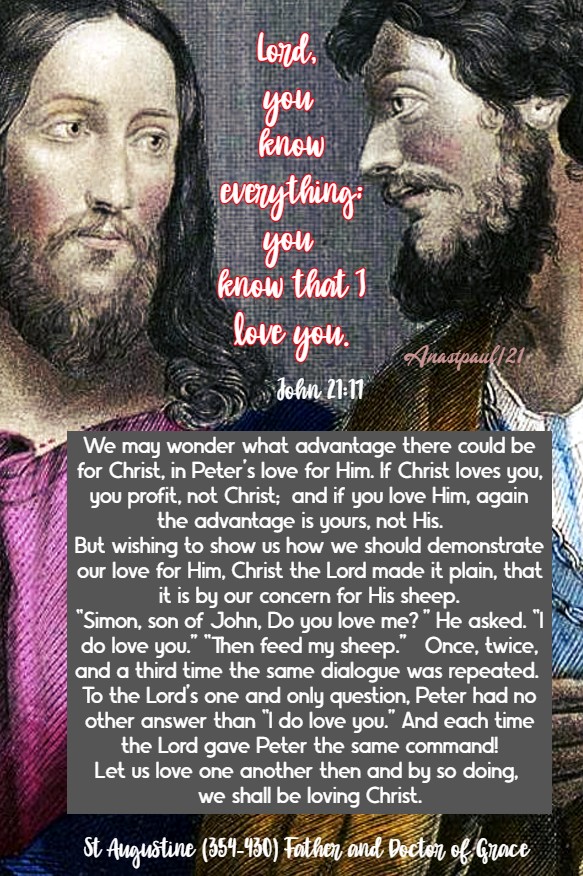
“Lord, you know everything; you know that I love you.” – John 21:17
REFLECTION – “The Lord appeared once again to His disciples after His resurrection and questioning Peter, who from fear had thrice denied Him, extracted from Him, a threefold declaration of love. Christ had been raised to life in the flesh and Peter to life in the spirit; for when Christ died, as a result of the torments He endured, Peter was also dead, as a result of denying his Master. Christ the Lord was raised from the dead; Christ the Lord raised up Peter through Peter’s love for Him. And having obtained from him the assurance of that love, He entrusted His sheep to Peter’s care.
We may wonder what advantage there could be for Christ, in Peter’s love for Him. If Christ loves you, you profit, not Christ; and if you love Him, again the advantage is yours, not His. But wishing to show us how we should demonstrate our love for Him, Christ the Lord made it plain, that it is by our concern for His sheep.
“Simon, son of John, Do you love me?” He asked. “I do love you.” “Then feed my sheep.” Once, twice, and a third time the same dialogue was repeated. To the Lord’s one and only question, Peter had no other answer than “I do love you.” And each time the Lord gave Peter the same command! Let us love one another then and by so doing, we shall be loving Christ.” – St Augustine (354-430) Father and Doctor of Grace – Guelferbytanus Sermon 16,1
PRAYER – Heavenly Father, help us to accept the tasks you have given us in life. Let us be faithful all our days and be able to attain Your eternal reward in heaven. May our Blessed Mother, alll the Angels, the Holuy Apostles and all Your Saints, pray for us that we may always praise Your glory and be faithful at all times and in all circumstances, amen.
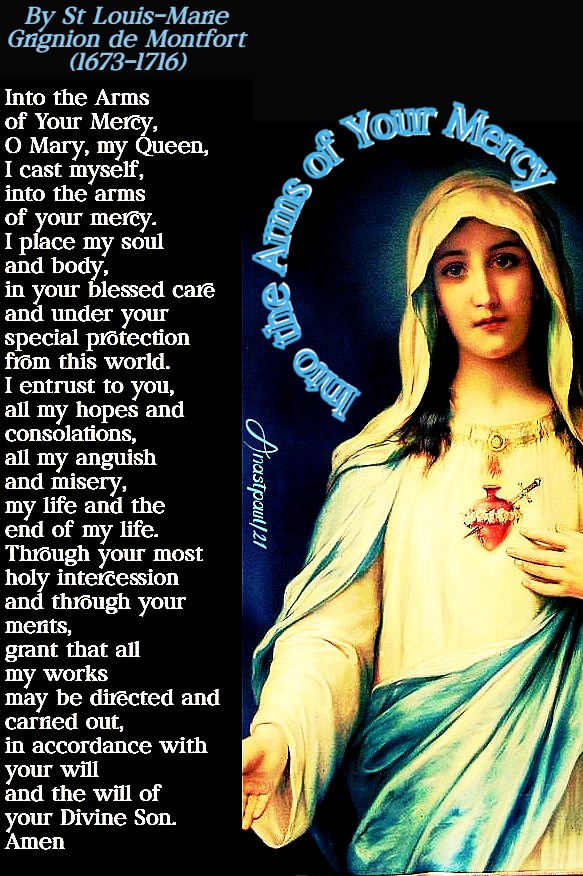
Into the Arms of Your Mercy By St Louis-Marie Grignion de Montfort (1673-1716)
Into the Arms of Your Mercy, O Mary, my Queen, I cast myself, into the arms of your mercy. I place my soul and body, in your blessed care and under your special protection from this world. I entrust to you, all my hopes and consolations, all my anguish and misery, my life and the end of my life. Through your most holy intercession and through your merits, grant that all my works may be directed and carried out, in accordance with your will and the will of your Divine Son. Amen
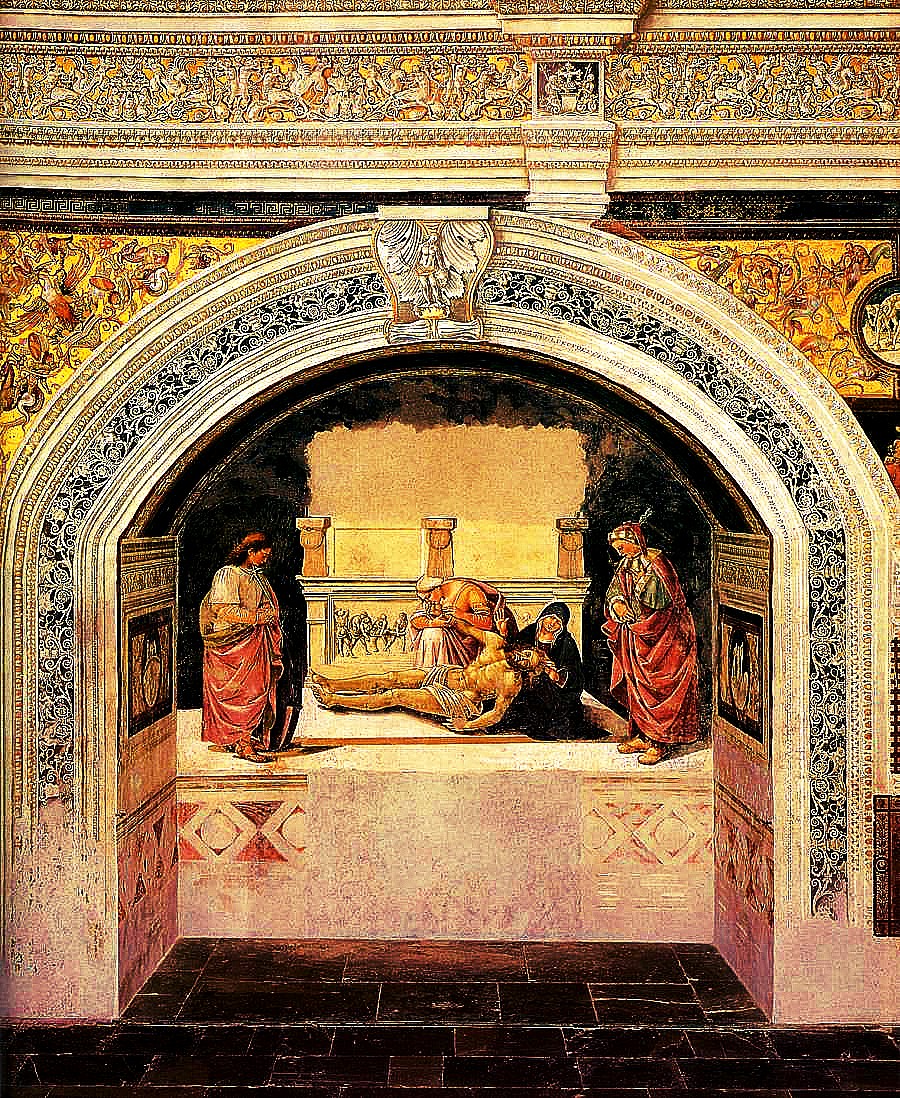
Saint of the Day – 21 May – Blessed Pietro Parenzo (Died 1199) Layman Martyr, Husband, Mayor of Orvieto, Reformer. Born in the 12th century in Rome, Italy and died by being hit in the head with a hammer by Patarine heretic kidnappers on 21 May 1199 in a hut just outside Orvieto, Italy. After he was unconscious, others of the gang of kidnappers stabbed his body numerous times with knives and swords. Patronage – Orvieto, Italy.
This is the only image we have of Blessed Pietro. It is a detail from the Pietà with Sts Faustinus and Peter Parenzo (ca. 1504) by Luca Signorelli, Cappellina dei Corpi Santi, Duomo, Orvieto – see the complete mage below,.
Born to the Italian nobility – we know he had brothers and was married at one point but nothing else survives of his education or his life before his appointment to the administration of Orvieto. He served in the Court of Pope Innocent III.
During the late 12th century, the Orvietan bishopric underwent an economic crisis that resulted from the burden of defending the vast possessions it had amassed during the previous half century. Around that time, the Cathar heresy appeared in the City. It was also a City seriously divided by the conflict between the Guelphs and Ghibellines. This situation prompted the Papacy to support the Bishop of Orvieto more actively.
To help re-establish civil order, Pope Innocent III chose Pietro Parenzo, a member of a noble Roman family, to take charge of the City. He had been born in Rome, the son of Lord Giovanni Paranzo and his wife, Odolina, at an unknown date. His father had served as a Senator in 1157 and later as a Judge in the city in 1162. Little else is known of his earlier life, other than he was a man who had gained great respect in the City.
Pietro arrived in the City in February 1199, (it seems he left his wife in the safety of Rome), having the support of the Catholics in the City, despite their long tradition of independence. He immediately established a strict regime to take control of the civil situation.
At Easter of the same year, 1199, Pietro returned to Rome to brief His Holiness on his efforts. He also confided to him that his life was in danger. Pope Innocent lauded his good work and encouraged him to continue with caution but he also made a point of hearing the young man’s confession. Before saying good-bye to his wife and mother, Pietro made out his will.
His Holiness gave Pietro two goals: -strengthen the faith by fighting heresy and make peace between the different parties. Mayor Parenzo decided, that the best strategy, was to get tough with troublemakers, so the first thing he did on arriving in Orvieto, was to abolish the traditional carnival games, on the grounds that these sports were often used as a ruse to commit homicide.
Such law-and-order efforts cheered the Town’s Catholics but incensed the Cathari. To spite the Mayor and to flex their muscles, they came to the carnival festivities brandishing swords and other weapons and they started fights with people at random. Riots ensued.
Into this melee of flying sharp steel rode Pietro without receiving a scratch. Identifying the culprits, he authorised the destruction of their families’ towers—symbols of power in medieval Italy—and their palaces. Many people cheered, while the heretics seethed.
In all his efforts, Pietro worked closely with the repentant Bishop Ricardo, even living in His Excellency’s palace. At the time the good of the Church was the good of the state and vice versa, so this arrangement was not remarkable. Together they announced an amnesty program – Return to the Church by a certain date and all will be forgiven. Ignore the deadline, however, and face stiff fines.
Pietro also exacted a form of bail to ensure good behaviour on the part of some citizens. While the amounts were fair and did deter crime, he now had even more enemies and these began to plot his death.
A huge crowd greeted Pietro’s return on 1 May 1199. He told the people that if he were to die, it would be to defend the holy Catholic faith. On 21 May 1199, nearly three weeks later, a traitorous servant named Radulfo let the heretics into the Bishop’s Palace. They captured Pietro as he was undressing for bed, beat him and smuggled him out of the City to a house in the countryside. His captors offered him a deal – repeal the rules restricting their efforts, repay the fines and sureties he had exacted, resign his position and give their religious beliefs preferential treatment. Pietro agreed to return the fines out of his own funds but he had pledged to defend the faith and so refused to support them in their heresy. Enraged, one of his captors bashed his head with a hammer. The blood excited his captors, who fell on him in a demonic frenzy. Those who couldn’t land blows tore hair from his head. They dumped his corpse by a tree and fled.
Six Monks found Pietro’s body at dawn the next day. The whole City poured down the hill, weeping piteously at the gruesome sight. The Bishop and other clergy accompanied his remains back into the City with great pomp and buried him in the Cathedral. His death prompted a great reaction against the Cathari. Nonetheless, it was not until the late 1260s that the heresy was eradicated.
Orvieto Cathedral
For the miracles that occurred on his Tomb, even just to invoke him, Pietro Parenzo was immediately venerated as a Martyr and a sant, not only in Orvieto but also in the Cities of Arezzo and Florence; various pilgrimages were organised to the Tomb and the pilgrims themselves, directed to Rome, stopped in Orvieto to pray at his Tomb. During the Middle Ages his Tomb attracted pilgrims by the millions. While his cause never went through the formal Canonisation process, Pope Leo XIII approved his cult on 16 March 1879 when he Beatified Pietro.
Pietro defied popular opinion, and the right thing and stood with the true faith and the Church against all opposition. The challenges that confronted Blessed Pietro are the same ones we encounter in our age. Help us to see, Lord, how you would have us imitate Saint Pietro’s constancy and fidelity to You and Your holy Church. Give us courage, strength, patience, stay with us and guide us through the mire in which we are sinkng!
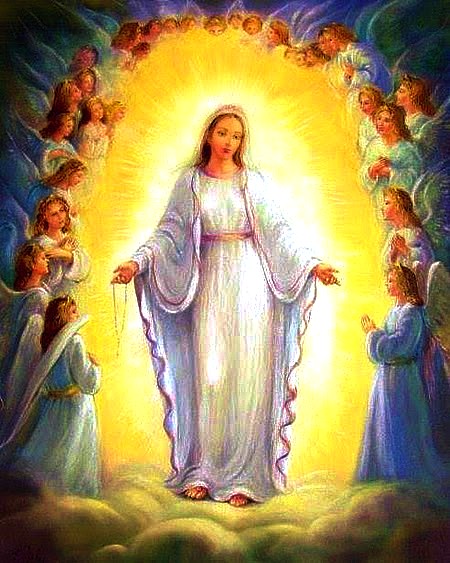
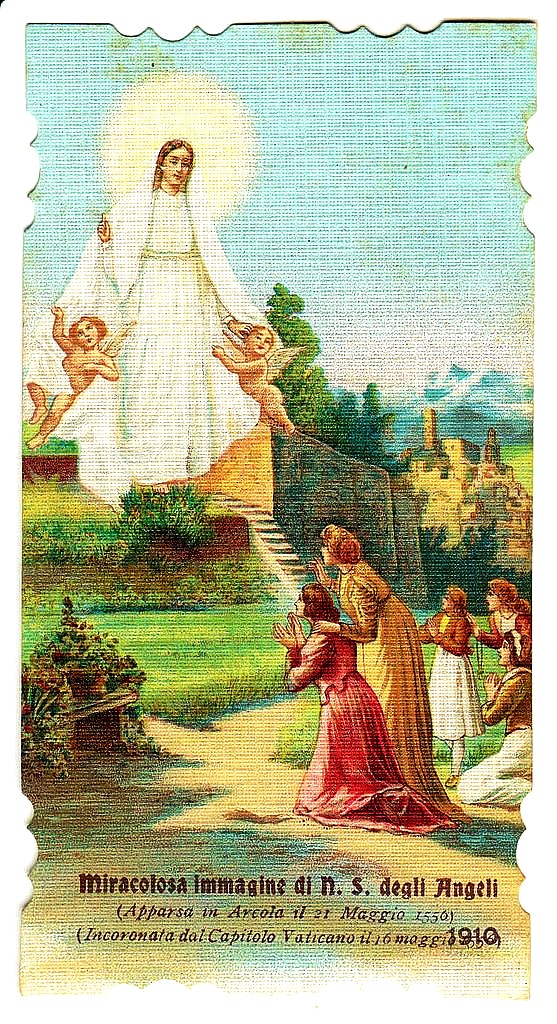
Nostra Signora degli Angeli / Our Lady of the Angels, Arcola, Italy (1556) – 21 May:
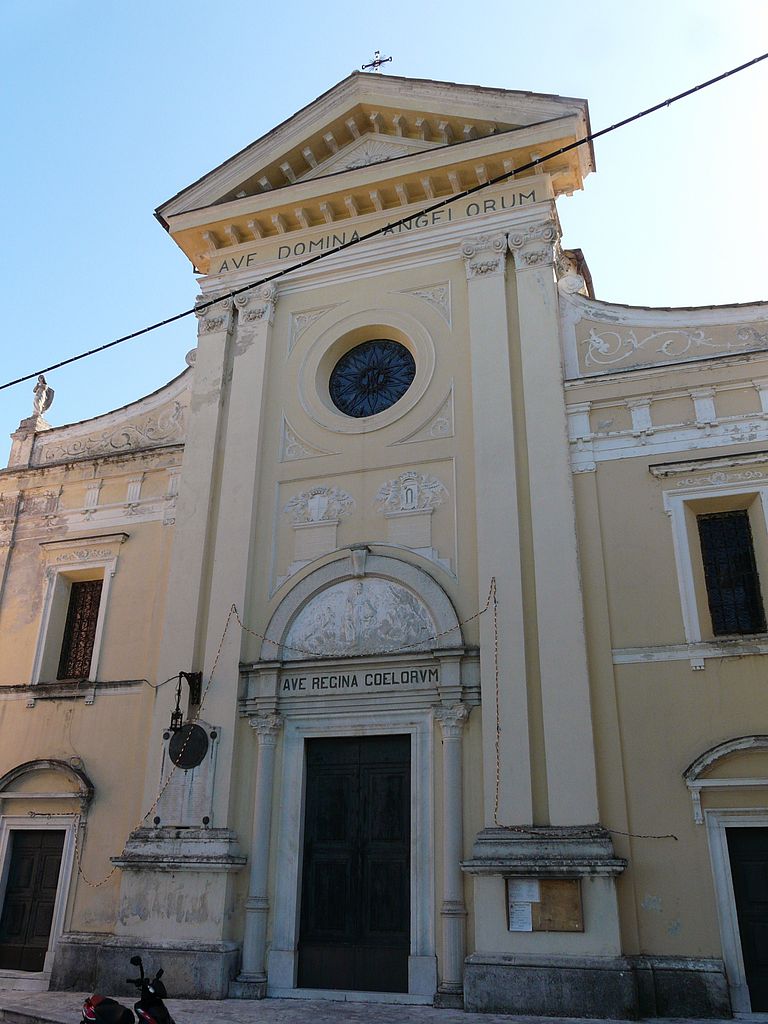
Going up the streets of the Village of Arcola, in the direction of Baccano, you reach the Sanctuary of Our Lady of the Angels, built in the place where the miraculous apparition of the Virgin took place, on 21 May 1556, in that year, it was the second day of Pentecost.
After Mass, whilst praying the Rosary on their farm, in Carbonara, the five Fiamberti sisters – Barbara, Camilla, Elisabetta, Catarinetta and Angela, in the company of their parents and brothers – saw a majestic Lady appear above a rosemary bush, shining brighter than the sun, dressed in white and flanked by two Angels.
The celestial image, raising her hand and with a sweet voice told them “go, beloved ones, tell the people to pray and do penance and tell the good villagers to build a temple in this place in my honour.” In the year 1558, the now underground Chapel was built in the sacred place; a large Church was completed above it at the end of the century, while the current Church is the work of the second half of the eighteenth century.
The Sanctuary immediately became a pilgrimage destination and the subject of bequests and donations. On the walls at the sides of the main altar there are two large frescoes by the Arculian painter Luigi Agretti, representing the Apparition of the Madonna degli Angeli and the Solemn Coronation which took place on 16 May 1910.
Under the altar floor there is the Chapel, a place of the Apparition of the Virgin of the Angels. The interior is somewhat rich in polychrome marbles that decorate the floor and walls, while stuccos and paintings adorn the ceiling. Above the Altar of precious marble, in a niche, there is the simulacrum of the Virgin of the Angels, work created in 1624 by the sculptor Battista Orsolini of Carrara. The minor aisles have two chapels dedicated one to the Madonna del Rosario, the other to the Sacred Heart of Jesus or of the Holy Cross. In the Chapel of the Rosary, there is a painting by the La Spezia painter Andrea Podenzana, year 1688.
Chapel of the apparition under the main altar of the sanctuary
Martyrs of the Mexican Revolution (Optional Memorial): The 1917 Mexican constitution was pointedly anti-clerical and anti-Church, and its adoption instituted years of violent religious persecution including expulsion of foreign priests, closing of parochial schools and the murders of several priests and lay leaders who work to minister to the faithful and support religious freedom. 25 of them who died at different times and places but all as a result of this persecution were celebrated together. They each have separate memorials but are also remembered as a group.
• Saint Agustin Caloca Cortes • Saint Atilano Cruz Alvarado • Saint Cristobal Magallanes Jara • Saint David Galván-Bermúdez • Saint David Roldán-Lara • Saint David Uribe-Velasco • Saint Jenaro Sánchez DelGadillo • Saint Jesús Méndez-Montoya • Saint Jose Isabel Flores Varela
• Saint José María Robles Hurtado • Saint Julio álvarez Mendoza • Saint Justino Orona Madrigal • Saint Luis Batiz Sainz • Saint Manuel Moralez • Saint Margarito Flores-García • Saint Mateo Correa-Magallanes • Saint Miguel de la Mora • Saint Pedro de Jesús Maldonado-Lucero
• Saint Salvador Lara Puente • Saint Toribio Romo González • Saint Tranquilino Ubiarco Robles
Canonised: 21 May 2000 by Pope John Paul II — St Adalric of Bèze Bl Adilio Daronch St Ageranus of Bèze St Ansuinus of Bèze St Antiochus of Caesarea Philippi
The first video is from the author of a Biography of Blessed Franz. His life of “Conscientious Objection” is very appropriate for the times we find ourselves in right now! The second video contains an interview and details of the Film made about Blessed Franz “A Hidden Life.”
St Genesius of Bèze St Godric of Finchale Bl Hemming of Åbo St Hospitius of Cap-Saint-Hospice Bl Hyacinth-Marie Cormier St Isberga of Aire Bl Jean Mopinot Bl Lucio del Rio St Mancio of Évora Bl Manuel Gómez González St Nicostratus of Caesarea Philippi Blessed Pietro Parenzo (Died 1199) Layman Martyr St Polieuctus of Caesarea St Polius of Mauretania St Restituta of Corsica St Rodron of Bèze St Secundinus of Cordova St Secundus of Alexandria St Serapion the Sindonite St Sifrard of Bèze Bl Silao St Synesius St Theobald of Vienne St Theopompus St Timothy of Mauretania St Valens of Auxerre St Vales St Victorius of Caesarea — Martyrs of Egypt: Large number of bishops, priests, deacons and lay people banished when the Arian heretics seized the diocese of Alexandria, Egypt in 357 and drove out Saint Athanasius and other orthodox Christians. Many were old, many infirm and many, many died of abuse and privations while on the road and in the wilderness. Very few survived to return to their homes in 361 when Julian the Apostate recalled all Christians and then many of those later died in the persecutions of Julian.
Martyrs of Pentecost in Alexandria: An unspecified number of Christian clerics and lay people who, on Pentecost in 338, were rounded up by order of the Arian bishop and emperor Constantius and were either killed, or exiled, for refusing to accept Arian teachings. 339 in Alexandria, Egypt.
Thought for the Day – 20 May – Meditations with Antonio Cardinal Bacci (1881-1971)
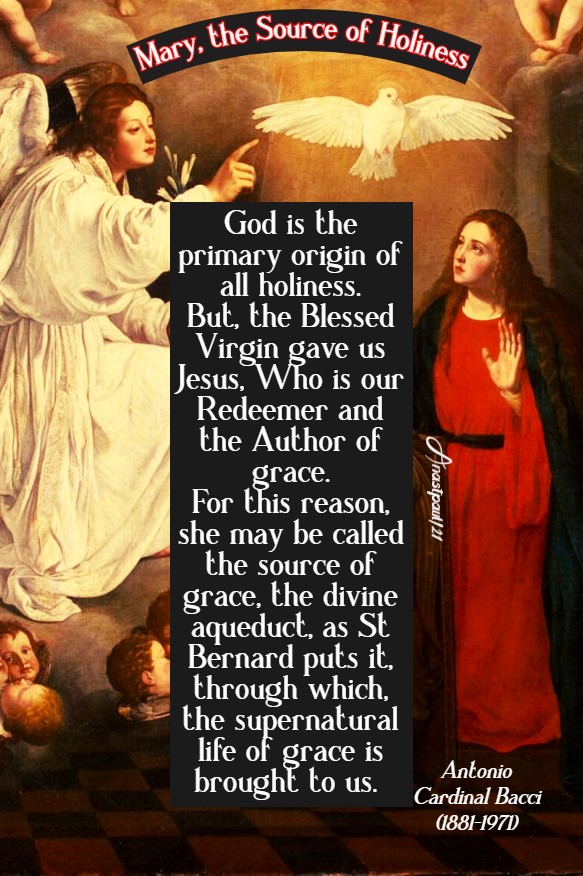
Mary, the Source of Holiness
“God is the primary origin of all holiness. But, the Blessed Virgin gave us Jesus, Who is our Redeemer and the author of grace. For this reason, she may be called the source of grace, the divine aqueduct, as St Bernard puts it, through which, the supernatural life of grace is brought to us (In adv Domini, Serm 2, no 5). She was, moreover, full of grace and outstanding in holiness – as the Mother of God, she can obtain anything for us from her divine Son, because “it is the will of God that we receive everything through the hands of Mary” (St Bernard, In Nativ BMV, Serm, no 7). Thirdly, even by her example, she can be the source of sanctity for us. If we study her amazing humility, we shall learn to be humble, for our sinfulness gives us such good reason to humble ourselves. If we meditate on her spotless purity, we shall experience a great desire and love for this beautiful virtue and shall have recourse to her in every danger to save us from impurity. Then, let us reflect on her ardent love for God and for men. Her charity prompted her maternal heart to offer up, as a divine Victim, her Son nailed to the Cross. If we reflect on the nature of her charity, we also shall feel urged to love God above all things and to pray, work and make sacrifices for the salvation of our fellowmen. Let us have, always before our minds, the image of our heavenly Mother and we shall be inspired to seek perfection in all our actions.”
Quote/s of the Day – 20 May – “Mary’s Month” – Thursday of the Seventh Week of Easter, Readings: Acts 22:30; 23:6-11, Psalm 16:1-2, 5, 7-11, John 17:20-26
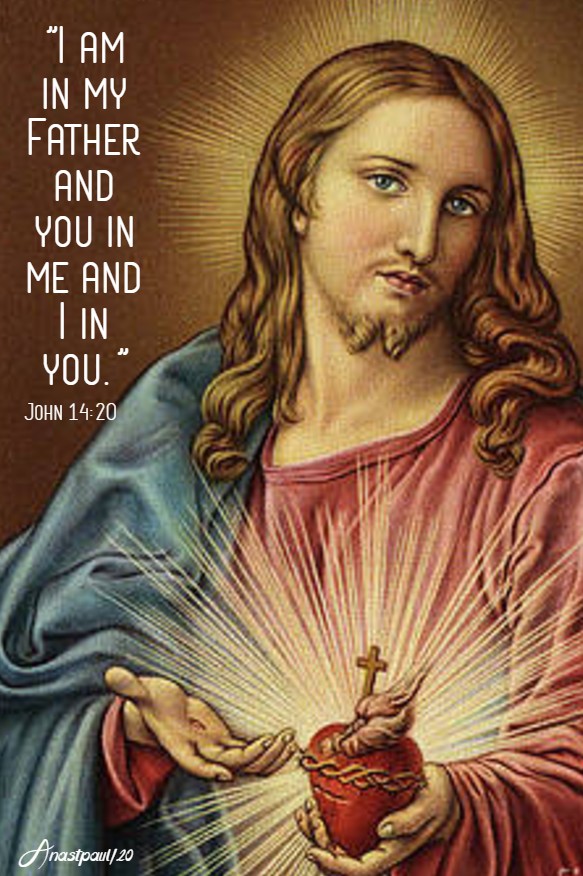
“I am in my Father and you in me and I in you.”
John 14:20
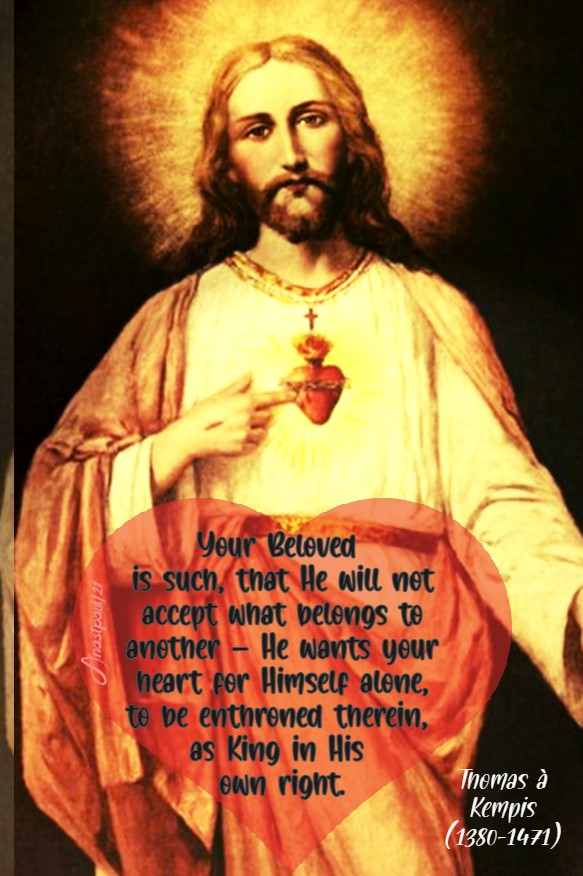
“Your Beloved is such, that He will not accept what belongs to another — He wants your heart for Himself alone, to be enthroned therein, as King in His own right.”
Thomas à Kempis (1380-1471)
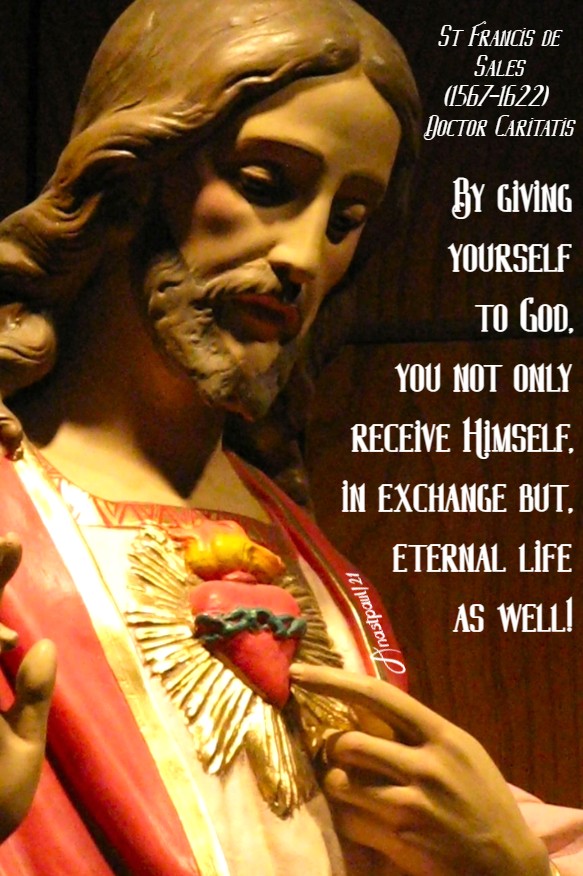
“By giving yourself to God, you not only receive Himself in exchange but, eternal life as well!”
St Francis de Sales (1567-1622) Doctor Caritatis
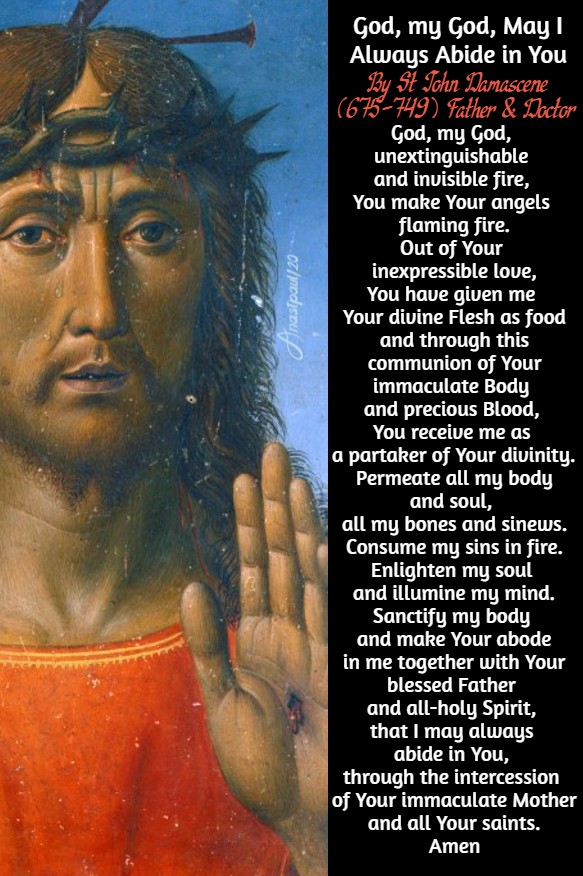
God, my God, May I Always Abide in You By St John Damascene (675-749)
God, my God, unextinguishable and invisible fire, You make Your angels flaming fire. Out of Your inexpressible love, You have given me Your divine Flesh as food and through this communion of Your immaculate Body and precious Blood, You receive me as a partaker of Your divinity. Permeate all my body and soul, all my bones and sinews. Consume my sins in fire. Enlighten my soul and illumine my mind. Sanctify my body and make Your abode in me together with Your blessed Father and all-holy Spirit, that I may always abide in You, through the intercession of Your immaculate Mother and all Your saints. Amen
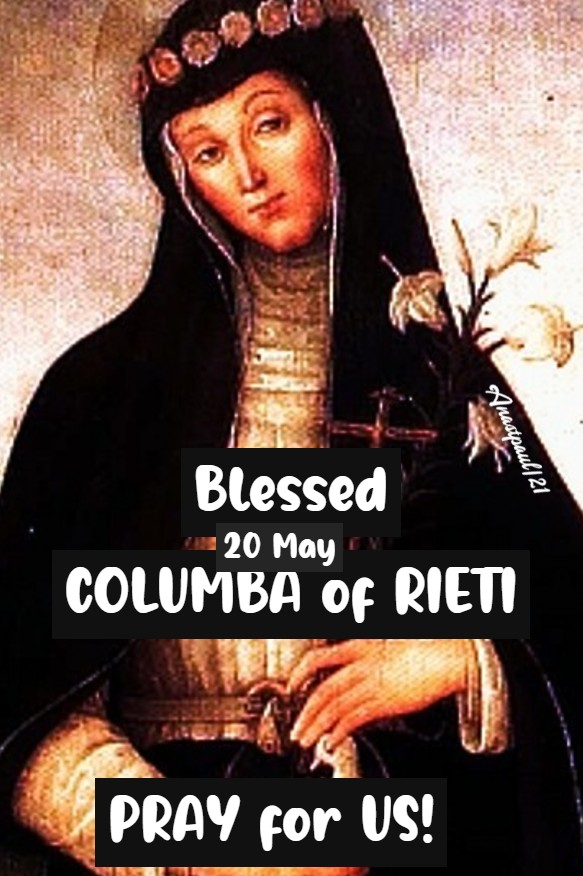
One Minute Reflection – 20 May – “Mary’s Month” – Thursday of the Seventh Week of Easter, Readings: Acts 22:30; 23:6-11, Psalm 16:1-2, 5, 7-11, John 17:20-26 and the Memorial of Blessed Columba of Rieti OP (1467- 1501)
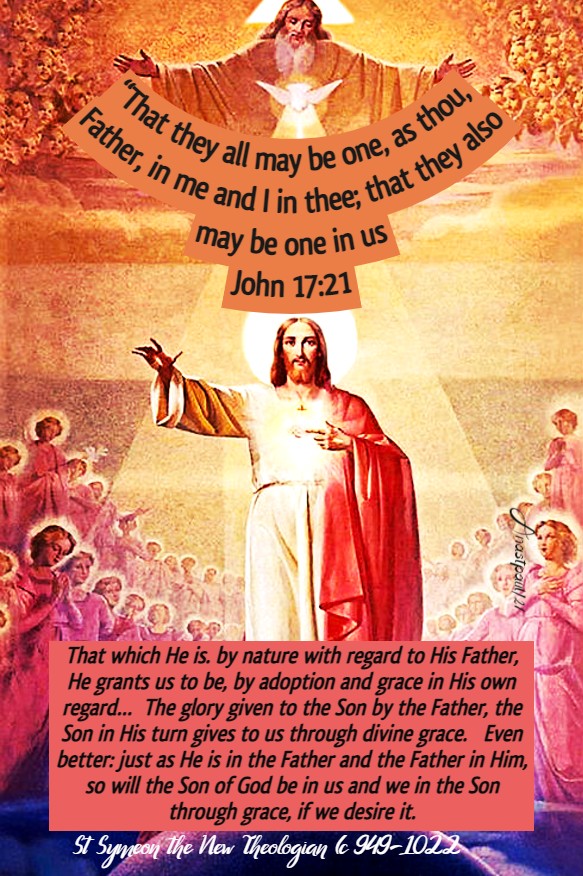
“That they all may be one, as thou, Father, in me and I in thee; that they also may be one in us. ” – John 17:21
REFLECTION – “The body of Christ’s Church, harmonious result of the coming together of His saints from the beginning of time, reaches its perfectly balanced and integral constitution, in the union of the children of God, the firstborn whose names are written in heaven ( cf Lk 10,20)… Our Saviour-God Himself shows us the indissoluble and indivisible character of union with Himself, when He says to the Apostles: “I am in the Father and the Father is in me; you in me and I in you” (Jn 10,38; 14,20). And He spells this out even more clearly by adding: “I have given them the glory you gave me, that they may be one as we are one, I in them and you in me, that they may be perfectly one.” And again: “That the love with which you have loved me may be in them and that I also may be in them”…
How marvellous this inexpressible condescension of the love God bears for us, He who is the friend of man! (Wsd 1,6). That which He is. by nature with regard to His Father, He grants us to be, by adoption and grace in His own regard… The glory given to the Son by the Father, the Son in His turn gives to us through divine grace. Even better: just as He is in the Father and the Father in Him, so will the Son of God be in us and we in the Son through grace, if we desire it. Having once become like us, through the flesh, He has made us sharers of His divinity and incorporates us all in Him. In addition, the divinity in which we participate by this communion, is not divisible into separate parts but, it necessarily follows, that we too, once we have become inseparable from it in truth, are inseparable from the one Spirit, making up one body with Christ. ” – St Symeon the New Theologian (c 949-1022), Greek Monk – Ethics 1, 6-8
PRAYER – God of mercy, You have filled us with the hope of resurrection by restoring man to his original dignity. May we who relive this mystery each year come to share it in perpetual love. May the Mother of Our Lord stand with us as we gaze upward to her Son and may the prayer of Bl essed Columba, be a support in our troubles. Grant this through our Lord Jesus Christ, Your Son, who lives and reigns with you and the Holy Spirit, one God, forever and ever. Amen
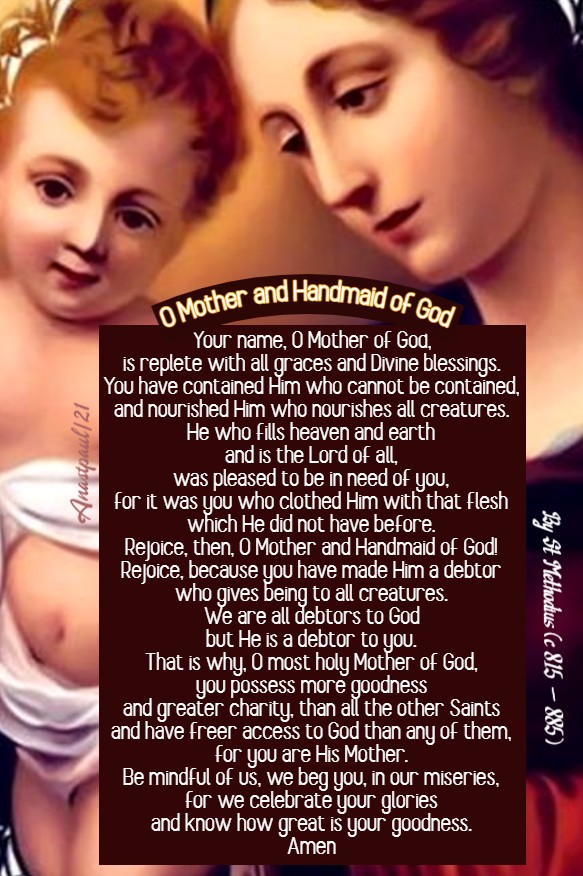
O Mother and Handmaid of God By St Methodius (c 815 – 885) (Brother of St Cyril)
Your name, O Mother of God, is replete with all graces and Divine blessings. You have contained Him, Who cannot be contained and nourished Him, Who nourishes all creatures. He Who fills heaven and earth and is the Lord of all, was pleased to be in need of you, for it was you who clothed Him with that flesh which He did not have before. Rejoice, then, O Mother and Handmaid of God! Rejoice, because you have made Him a debtor who gives being to all creatures. We are all debtors to God but He is a debtor to you. That is why, O most holy Mother of God, you possess more goodness and greater charity, than all the other Saints and have freer access to God, than any of them, for you are His Mother. Be mindful of us, we beg you, in our miseries, for we celebrate your glories and know how great is your goodness. Amen
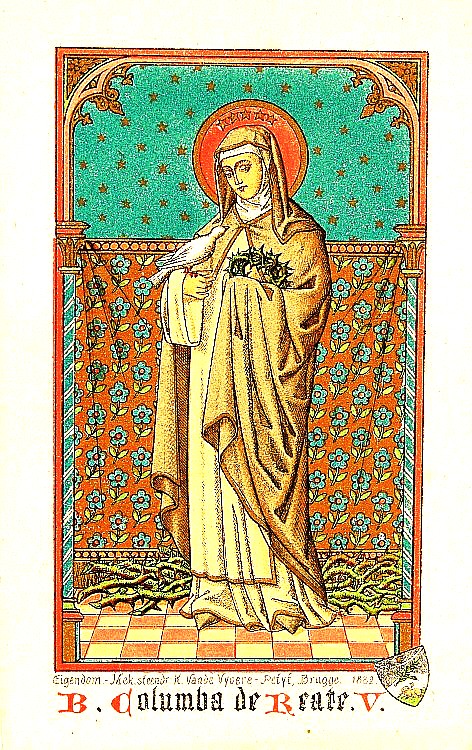
Saint of the Day – 20 May – Blessed Columba of Rieti OP (1467- 1501) religious Sister of the Third Order of St Dominic, Mystic, Apostle of the poor, renowned for her spiritual counsel, devotion to the Blessed Sacrament and fantastic miracles were attributed to her. Born on 2 February 1467 at Rieti, Umbria, Italy as Angelella Guardagnoli and died on 20 May 1501 at Perugia, Italy of natural causes. Patronages – Against sorcery, against temptation, Perugia, Italy. Also known as – Angelella Guardagnoli, Colomba of Rieti.
Columba was the daughter of a poor family in the Umbrian city of Rieti. When she was born, angels gathered around her house, singing and during her Baptism, a dove flew down to the font. From then on, no-one referred to her as Angelella but as Columba , which means “dove”.
From infancy Columba led a supernatural life. She strewed her little bed with thorns and from an old sieve ,plaited a hair-shirt. As a small girl, Columba learned to spin and sew, repairing the clothes of the local Dominican Friars. She was educated by Dominican nuns. The Holy Eucharist formed her one desire and almost her sole nourishment. Hunger, thirst, sleep and the other needs of nature, not only never tormented her but she lived unconscious of them.
As a teenager, she prayed to discern her vocation in life and received a vision of Christ on a Throne surrounded by Saints. She took this as a sign to dedicate herself to God and so, she made a private vow of chastity and spent her time in prayer. When it was revealed that her parents had arranged a marriage for her, she cut off her hair and sent it to her suitor as a way of letting him know, where her real interest lay.
Columba became a Dominican Tertiary at age 19. She was given to ecstasies, during one of which, her spirit toured the Holy Land. She was much sought after as a spiritual counselor. Citizens from the City of Narni, tried to kidnap her so she could be their miracle worker but she escaped.
Upon an interior prompting that she should leave Rieti, Columba wandered away, having no concept of where she was going. Along the way she was arrested in Foligno as a vagrant. The Bishop there ordered her to go to Perugia and to found a Third Order Convent, which she did but only against the strong objections of the citizens of Foligno and Rieti, who wanted her for their own needs.
She worked with the poor extensively in Perugia, so much so, that her sanctity reportedly incensed Lucrezia Borgia for years. At one point Borgia had even issued a complaint accusing Columba of practising magic. On the other hand, Pope Alexander VI, Lucrezia’s father, held Columba in high regard. He consulted her and she ordered him to repent of his sins.
If Columba’s reception of Holy Communion was delayed by but one hour, she fainted from exhaustion and her life seemed in danger. Her Confessor, fearing some delusion, asked her how she was able to live on the Blessed Sacrament alone. “When I receive this heavenly food,” she replied, “I feel so satisfied in soul and body that all desire for earthly food vanishes and I have a horror of it. I hope that before this year is over, God will give you a sign which will remove your doubts.” On Christmas-day, as this Priest finished his first Mass, he felt an unknown refreshment of soul. When he had said his third Mass, this heavenly love had reached such a height, that he felt it impossible to touch food and so remained fasting throughout the day. This was revealed to Columba, who said, “I rejoice, Father, that you have received my heavenly food and now know, by experience, how I can be satisfied by the Bread of angels alone!”
Columba spent eleven years as Prioress in Perugia, dying on 2 May 1501, at the age of 34. At the moment of her death, her friend and fellow Dominican Tertiary, Blessed Osanna of Mantua (1493-1565), saw Columba’s soul as a “radiance rising to heaven.”
The whole City attended her funeral, which was paid for by the City administrators.
She was Beatified on 25 February 1625 by Pope Urban VIII and her Feast day is celebrated within the Dominican Order on the anniversary of her death. As Patron of Perugia, she is highly venerated and Statues of her abound in the region.
Santa Maria delle Grazie / Holy Mary of the Graces in Stia, Arezzo, Italy (1428) – 20 May:
It was the year 1428 and Mona Giovanna one day, taking advantage of a moment of clear weather, left her cottage to dedicate herself to the work in the fields. Suddenly, she was surprised by a strong storm and, unable to return to her home, she found a refuge in a cavern covered with tree trunks, located above a white boulder. Having reached the shelter, Giovanna began to pray. Suddenly she was enveloped in a light of exceptional splendour and a celestial figure of a woman of extraordinary majesty and beauty appeared to her, placing her foot on the white boulder. Giovanna felt and understood that the Lady was the Mother of God. The Virgin spoke to her maternally saying:
“If the people want to remove many great punishments and misfortunes, they will, in my honour, build here, a Church in the place chosen by myrself and once it is built, that they pay homage and veneration to my Son and I, with constant prayers.
The place where Giovanna had taken refuge continued to shine with a very bright light, when a shepherd, Pietro Campodonico, approaching saw the miracle in person. Shortly after Giovanna repeated the narration to Messer Luca, Parish Priest of Stia, who was quick to believe her, knowing Giovanna’s goodness and simplicity. Immediately he went in procession with the Parishioners to the place where the miracle had happened. Feelings of religious piety awoke in all the people of the countryside, spreading not only in the nearby parishes but in the entire Casentino valley, up to the Cities of Arezzo, Florence and Siena. The construction of the Church, begun by the unanimous will of authority (including “Messer Luca lo Pievano” from Stia and Conte Neri from Porciano) and by the people, with the offerings and gifts left by the devotees. It was completed on 8 September 1432. In September 1474 a sudden fire totally destroyed the building with all the furnishings and images. The Church was immediately rebuilt, assisted by the offerings of the faithful. In 1490 the building was already rebuilt as we now see it – the Sanctuary was called from the beginning Santa Maria delle Grazie:.
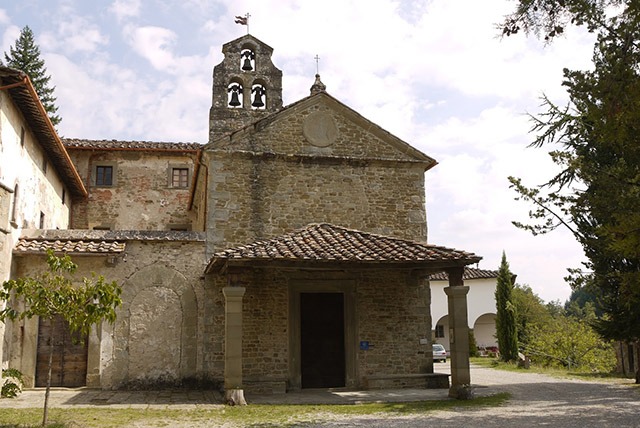
On 20 May of each year the faithful of the neighbouring areas come in procession to celebrate the feast of the apparition. The Church is an elegant edifice of Florentine architecture, preceded by a portico on the left of the facade, a three-light sailed bell tower in sandstone. The interior consists of a single nave with a large presbytery. Two carved stone Altars lean against the side walls, of which the one on the left of the XV century is remarkable, finely carved. On the left wall there is an octagonal stone pulpit, supported by two shelves. The presbytery, a work of artistic value of the XVI century, square in shape, is framed in the façade by two pillars and a stone archivolt, decorated with raised foliage, finely worked and is enclosed inside by a stone cornice, decorated with a series of 30 enamelled terracotta cherub heads, interspersed with 5 coats of arms of the Santa Maria Nuova Hospital. In the pendentives are the cylindrical reliefs of the 4 Evangelists, also in glazed terracotta.
Image above the high Altar
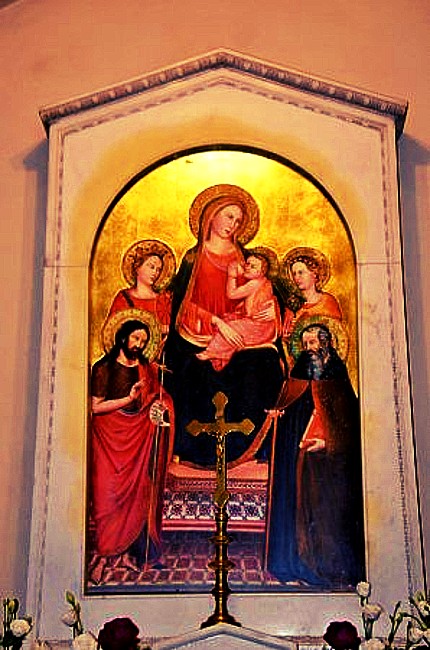
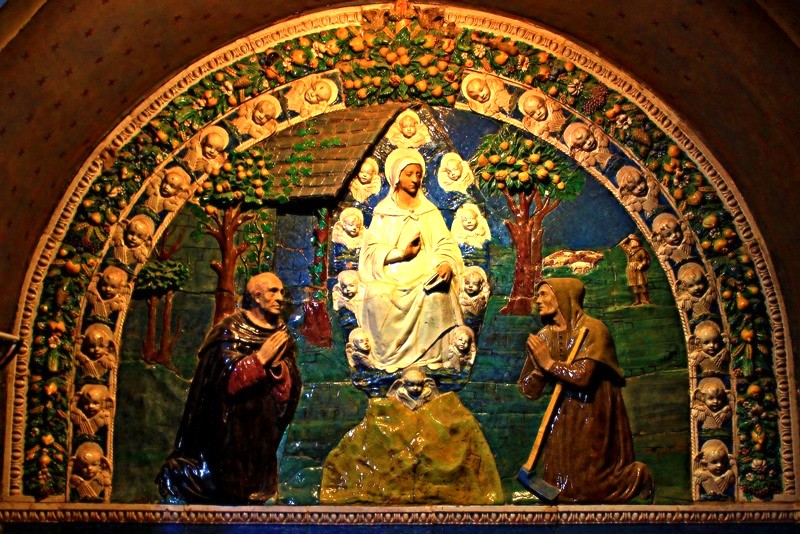
Both the reliefs and the glazed frieze are works of Robbian art, from Andrea’s workshop (1435-1528), to refer to the beginning of the XVII century. In the underlying rooms, in the shape of a rib, there are two large Robbians depicting the apparition of the Madonna to Blessed Giovanna and to the crib, on the right and left. Under the Robbiane school there is an inlaid wooden seat from the 15th century. In the centre of the presbytery, the high Altar, in worked marble, rises above the boulder where the Virgin appeared.
St Bernadine of Siena OFM (1380-1444) (Optional Memorial) “Apostle of the Most Holy Name of Jesus,” Priest of the Order of St Francis, Missionary, Preacher, known as the “Apostle of Italy,” the “Star of Tuscany,” and the “Second Paul.” Biography: https://anastpaul.com/2017/05/20/saint-of-the-day-20-may-st-bernardine-of-siena/
St Abercius Bl Albert of Bologna St Alexander of Edessa St Althryda St Anastasius of Brescia St Aquila of Egypt Bl Arnaldo Serra and Companions St Asterius of Edessa St Austregisilus of Bourges St Basilla of Rome St Baudelius of Nîmes St Codrato Blessed Columba of Rieti OP (1467- 1501) Mystic
St Plautilla of Rome St Protasius Chong Kuk-bo St Rafaél García Torres St Talaleo of Egea St Thalalaeus of Edessa St Theodore of Pavia St Tomás Valera González
Thought for the Day – 19 May – Meditations with Antonio Cardinal Bacci (1881-1971)
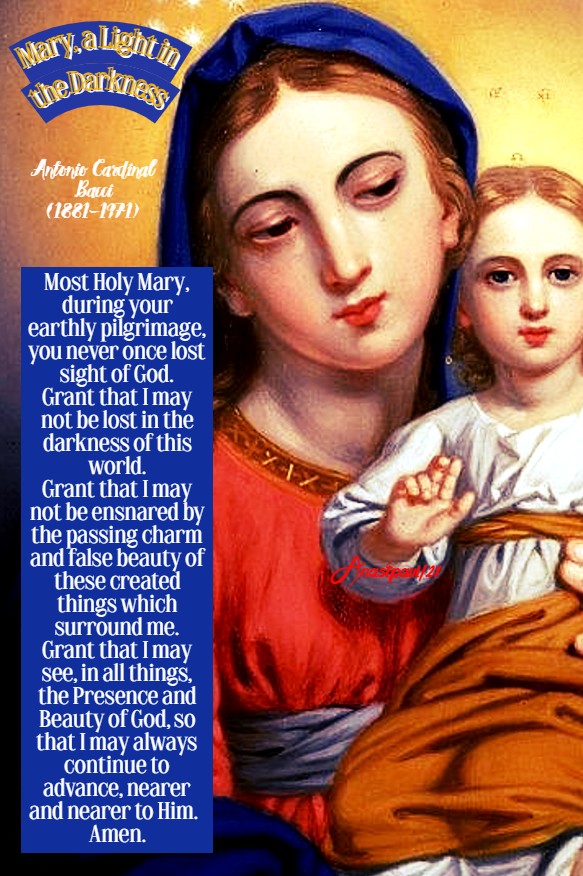
Mary, a Light in the Darkness
“Let us imagine for a moment, that we have grown blind and are forever plunged in darkness. It is an unhappy thought. Never again to see those who are dear to us, never to see the light of the sun nor any of the splendour of the universe. We should feel as if were alone, for we should have to depend only on sounds and on the voices of others for communication with the external world. As St Augustine points out, however, in his commentary on the miracle of the man who had been blind from birth, we are all more or less blind in the supernatural order. The world is the image of God but, do we see His Presence in everything which surrounds us? Is it not more often the case that created things distract us and lead us to forget their Creator, because, we regard them as a means of satisfying our own comfort and our own ego? We should look on creatures as go-betweens which help us to ascend to God, the beginning and end of all creation.
Unfortunately, instead of climbing this mystical ladder which leads us to God, we often descend it. We forget God and become excessively wrapped up in worldly affairs. Sometimes matters may be even worse, not only do we forget God through our love of creatures but, we use them, to offend Him. God has given us eyes to admire His works and, as a result, to lead us to praise, thank and love Him. Instead, we often use this wonderful gift in order to commit sin. He has given us the gift of speech, the gift of hearing and other senses. But how do we employ them? The tongue is a marvellous invention but, as St James writes, “if anyone does not offend in the word, he is a perfect man, able also to lead round by the bridle, the whole body … With it we bless God the Father and, with it, we curse men, who have been made after the likeness of God. Out of the same mouth, proceed blessing and cursing. These things, my brethren ought not to be so” (Js 3:2-10). What can be said of vision and of speech can be said of all the senses and faculties of body and soul. They are all God’s gifts and should, therefore, be used as means of bringing ourselves closer to Him. If creatures lead us away from God and cause us to forget Him, or if, worse still, they cause us to offend Him, then we are spiritually blind and far more unfortunate than those who have lost their natural vision.
Most Holy Mary, during your earthly pilgrimage, you never once lost sight of God. Grant that I may not be lost in the darkness of this world. Grant that I may not be ensnared by the passing charm and false beauty of these created things which surround me. Grant that I may see, in all things, the Presence and Beauty of God, so that I may always continue to advance, nearer and nearer to Him. Amen.”
Quote/s of the Day – 19 May – “Mary’s Month” – Wednesday of the Seventh Week of Easter, Readings: Acts 20:28-38, Psalm 68:29-30, 33-36, John17:11-1
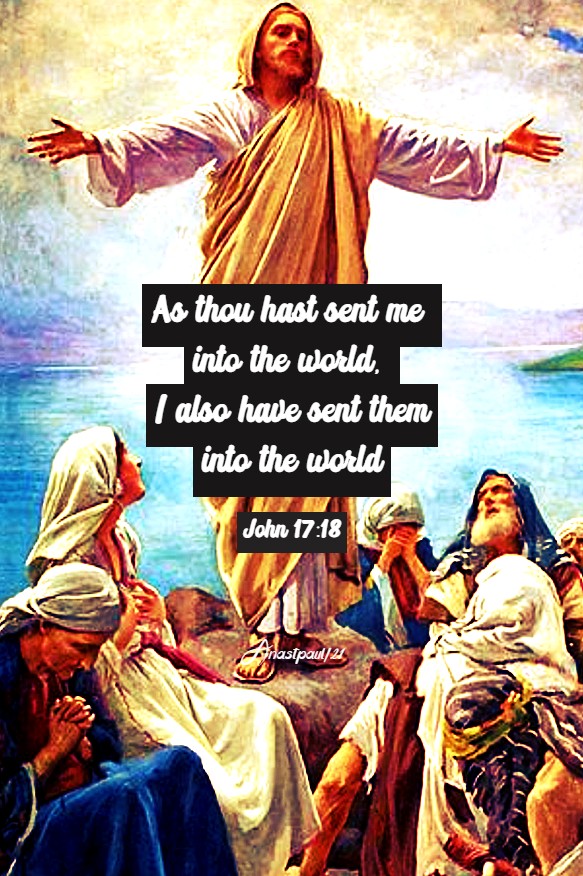
“As thou hast sent me into the world, I also have sent them into the world.”
John 17:18
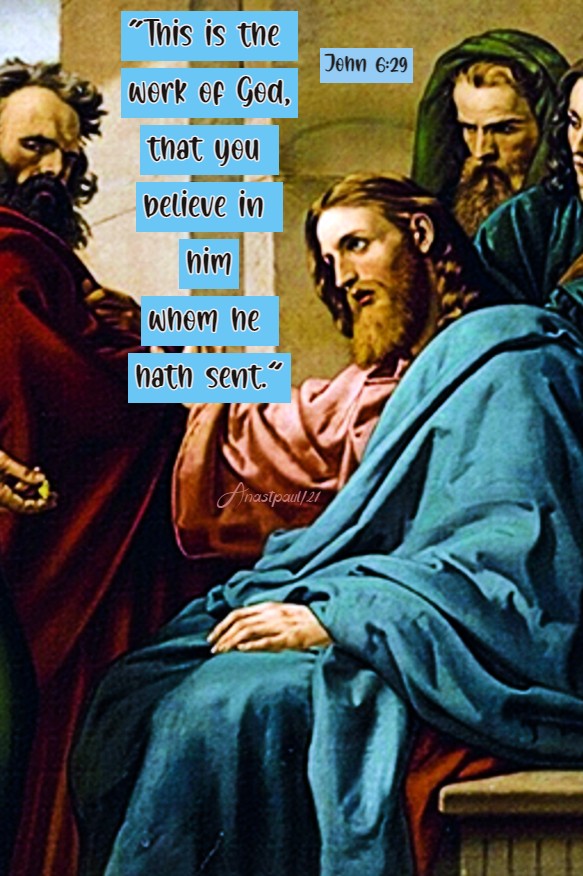
“This is the work of God, that you believe in him whom he hath sent.”
John 6:29
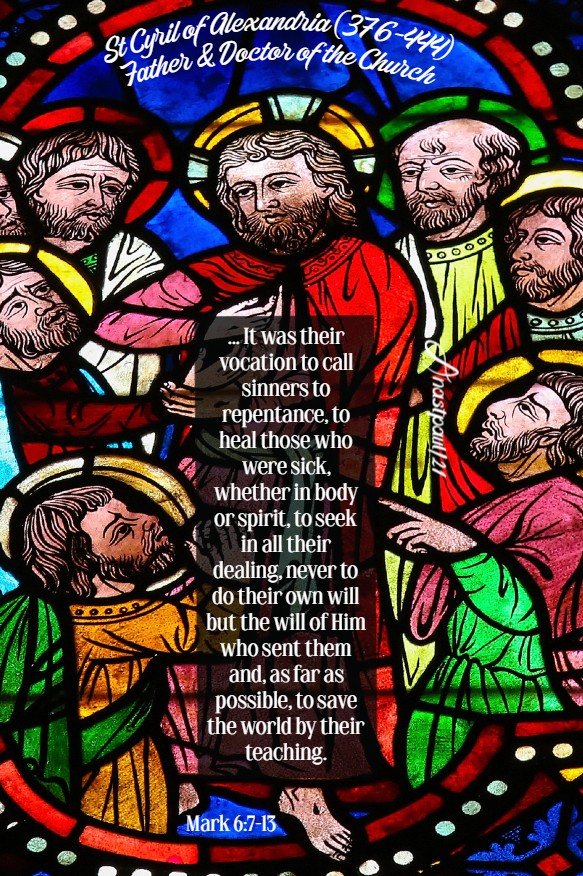
“… It was their vocation to call sinners to repentance, to heal those who were sick, whether in body or spirit, to seek in all their dealing, never to do their own will but the will of Him who sent them and, as far as possible, to save the world by their teaching.”
St Cyril of Alexandria (376-444) Bishop, Father & Doctor of the Church
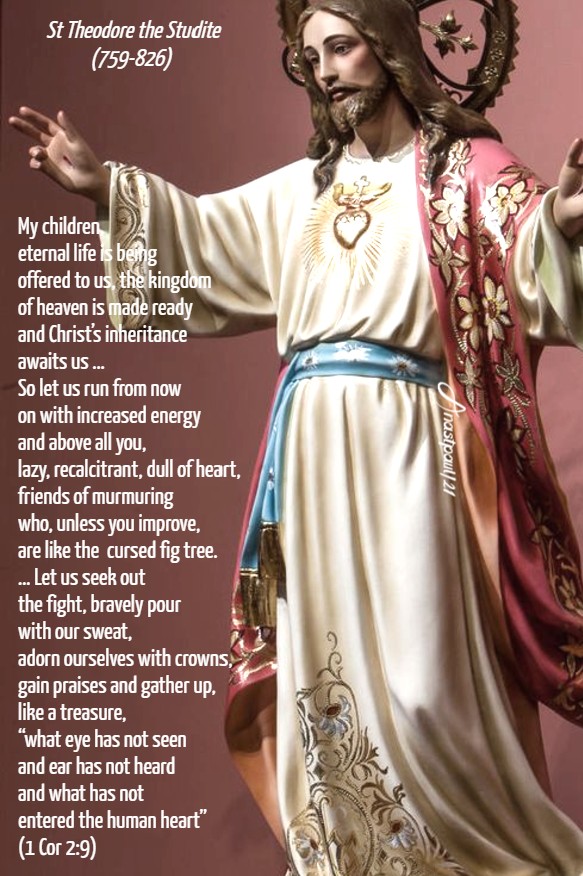
“My children, eternal life is being offered to us, the kingdom of heaven is made ready and Christ’s inheritance awaits us … So let us run from now on with increased energy and above all you, lazy, recalcitrant, dull of heart, friends of murmuring who, unless you improve, are like the cursed fig tree. … Let us seek out the fight, bravely pour with our sweat, adorn ourselves with crowns, gain praises and gather up, like a treasure, “what eye has not seen and ear has not heard and what has not entered the human heart” (1 Cor 2:9).
St Theodore the Studite (759-826)
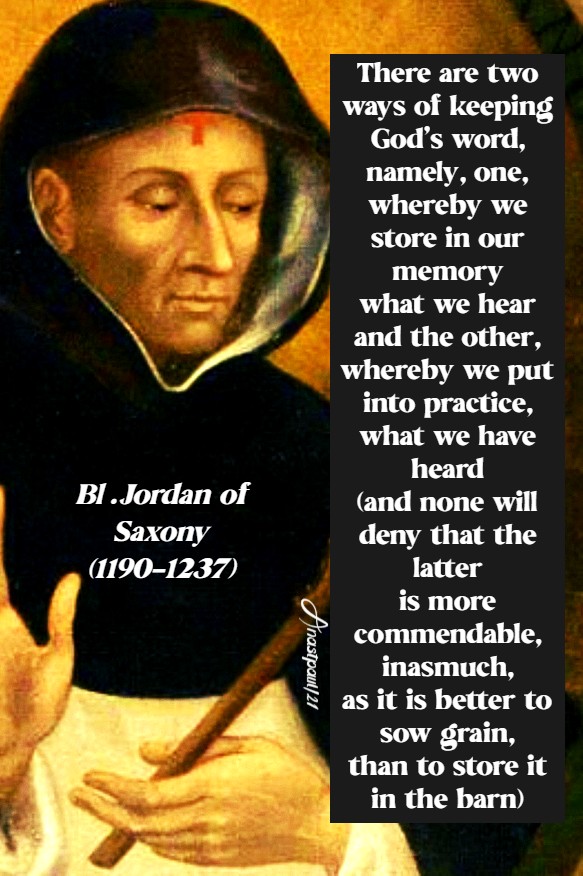
“There are two ways of keeping God’s word, namely, one, whereby we store in our memory what we hear and the other, whereby we put into practice, what we have heard (and none will deny that the latter is more commendable, inasmuch, as it is better to sow grain, than to store it in the barn).”
















You must be logged in to post a comment.