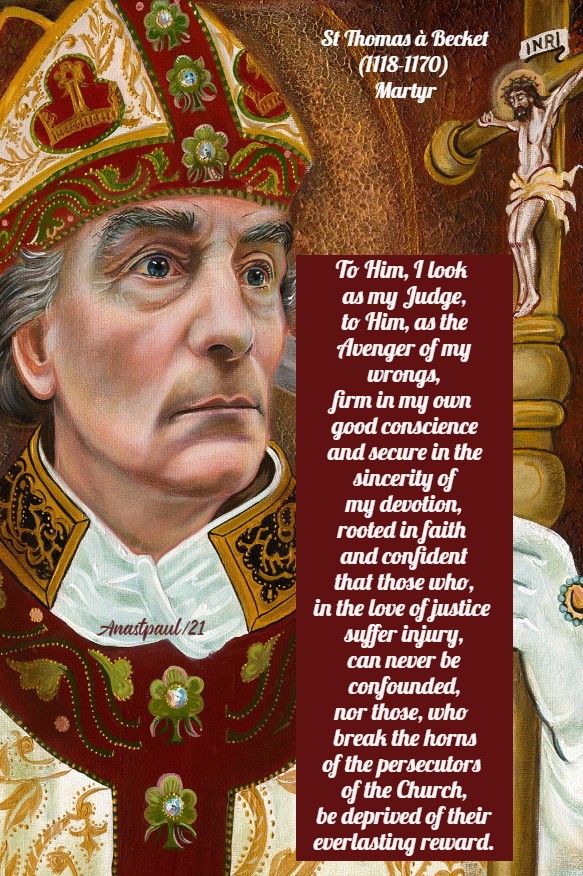
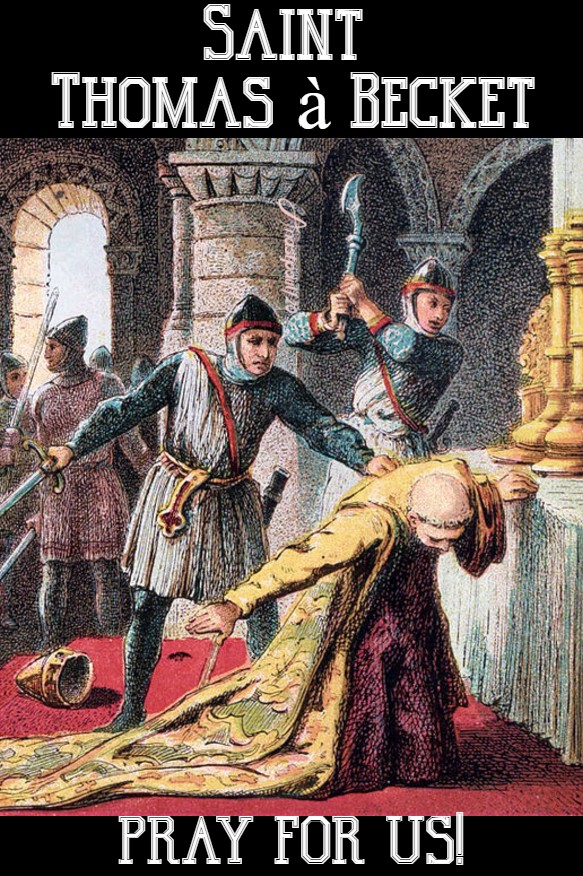
Quote/s of the Day – 29 December – The Fifth Day of the Octave of Christmas and the Memorial of St Thomas à Becket (1118-1170) Martyr, Archbishop of Canterbury
“To Him, I look as my judge, to Him, as the avenger of my wrongs, firm in my own good conscience and secure in the sincerity of my devotion, rooted in faith and confident that those who, in the love of justice suffer injury, can never be confounded, nor those, who break the horns of the persecutors of the Church, be deprived of their everlasting reward.”
“Let it be your consolation, then, that God’s enemies, however honourable and exalted they may have been, shall, nevertheless, fade away like the smoke.”
One Minute Reflection – 29 December – The Fifth Day of the Octave of Christmas, Readings: 1 John 2:3-11, Psalms 96:1-2, 2b-3, 5-6, Luke 2:22-35 and the Memorial of St Thomas à Becket (1118-1170) Martyr, Archbishop of Canterbury
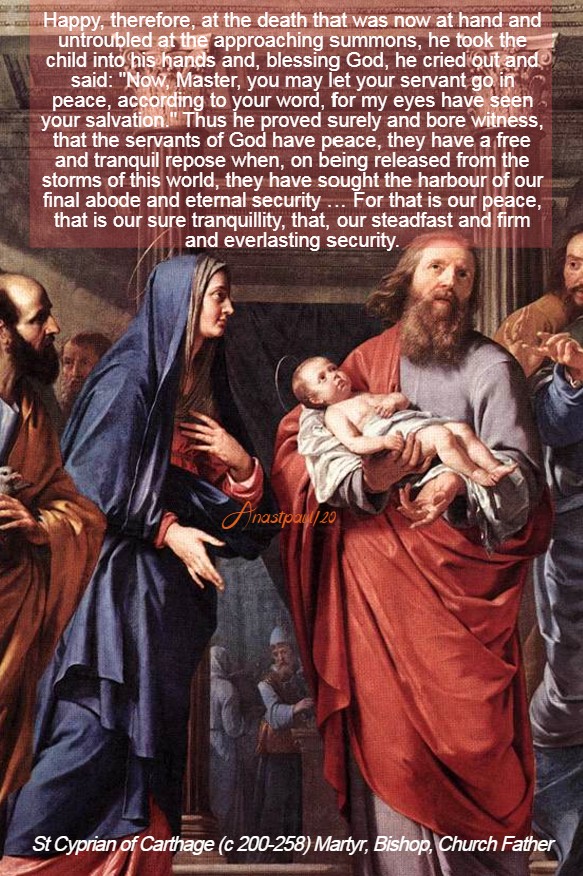
“Now, Master, you may let your servant go in peace ”- Luke 2:29
REFLECTION – “The kingdom of God is at hand” (Lk 21:31). The kingdom of God, beloved brethren, has begun to be at hand; the reward of life and the joy of eternal salvation and perpetual happiness and the possession of paradise once lost, are now coming with the passing of the world; now the things of heaven are succeeding those of earth; great things, small and eternal things, transitory. What place is there here for anxiety and worry? …
It is written that “the just man lives by faith” (Rm 1:17). If you are just and live by faith, if you truly believe in Jesus Christ, why do you, who are destined to be with Christ and secure in the promise of the Lord, not rejoice that you are called to Christ …? Take the example of Simeon, the just man who was truly just, who with full faith kept the commandments of God – when the answer had been given him from heaven that he would not die before he had seen Christ and when Christ as an infant had come into the temple with His mother, he knew in spirit that Christ was now born, concerning whom it had been foretold to him before and on seeing Him he knew, that he himself would quickly die.
Happy, therefore, at the death that was now at hand and untroubled at the approaching summons, he took the child into his hands and, blessing God, he cried out and said: “Now, Master, you may let your servant go in peace, according to your word, for my eyes have seen your salvation.” Thus he proved surely and bore witness, that the servants of God have peace, they have a free and tranquil repose when, on being released from the storms of this world, they have sought the harbour of our final abode and eternal security … For that is our peace, that is our sure tranquillity, that, our steadfast and firm and everlasting security.” – St Cyprian of Carthage (c 200-258) Martyr, Bishop, Church Father – On mortality, 2-3
PRAYER – God our Father, our human nature is the wonderful work of Your hands. Your Son took to Himself our manhood, grant us a share in His Sonship, that as co-heirs with Him, we may strive evermore obediently to gain our final home with the Blessed Virgin and all Your saints. Through Christ, our Lord, with the Holy Spirit, one God with You now and for evermore, amen.
Our Morning Offering – 29 December – The Fifth Day of the Octave of Christmas
Jesu, Dulcis Memoria Prayer, Poem, Hymn By St Bernard of Clairvaux (1090-1153) Doctor Mellifluous Tr. Fr Edward Caswell C.Orat. (1814-1878)
Jesus, the very thought of Thee With sweetness fills the breast! Yet sweeter far Thy face to see And in Thy presence rest. No voice can sing, no heart can frame, Nor can the memory find, A sweeter sound than Jesus’ Name, The Saviour of mankind. O hope of every contrite heart! 0 joy of all the meek! To those who fall, how kind Thou art! How good to those who seek! But what to those who find? Ah! this Nor tongue nor pen can show The love of Jesus, what it is, None but His loved ones know. Jesus! our only hope be Thou, As Thou our prize shall be; In Thee be all our glory now, And through eternity. Amen
Jesu, Dulcis Memoria is a celebrated 12th century prayer/hymn by St Bernard of Clairvaux (1090-1153), Doctor Mellifluous. The entire hymn has some 42 to 53 stanzas depending upon the translation. Parts of this hymn are used for the Feast of the Holy Name of Jesus on 3 January.
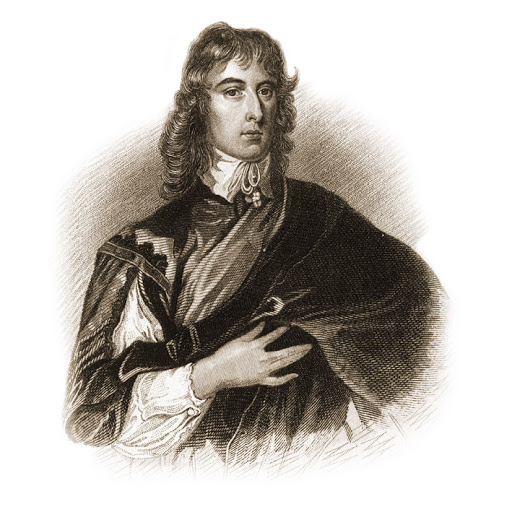
Saint of the Day – 29 December – Blessed William Howard (1614–1680) Martyr, Married Layman and Father, 1st Viscount Stafford – born on 30 November 1614 in Strand, London, England and died by being beheaded on 29 December 1680 on Tower Hill, London, England.
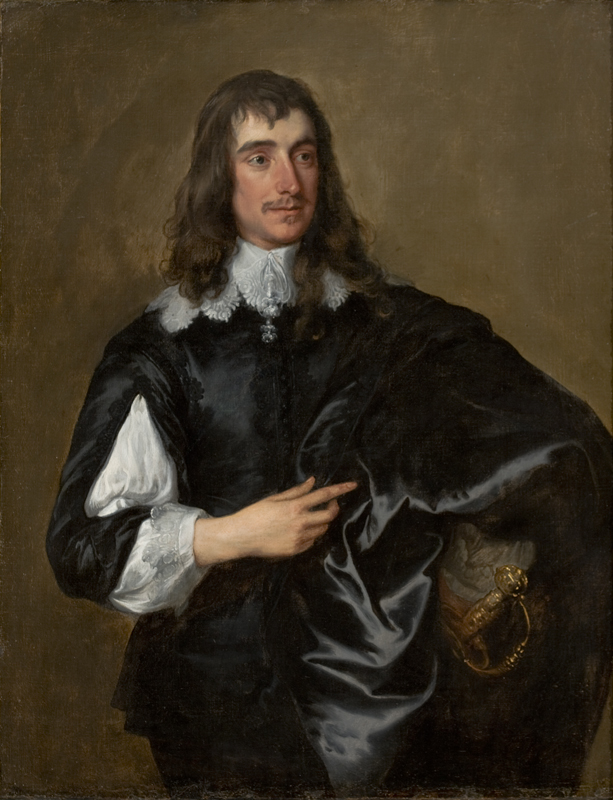
Engraved by Thomas Phillip Brown after the original by Sir Antony van Dyck, for ‘Portraits of Illustrious Personages of Great Britain’ by Edmund Lodge FSA.
William was the grandson of the Venerable Philip Howard, Earl of Arundel, fifth son of Earl Thomas (the first great art collector of England) and Uncle of Thomas Philip – Cardinal Howard. Brought up as a Catholic, he was made a Knight of the Bath, at the Coronation of Charles I, on 1 February 1626 and married Mary, sister of the last Baron Stafford, in October 1637; the title was revived for him on 12 September 1640 and he was immediately afterwards created a Viscount.
He is said to have joined the Royal army during the Civil War but perhaps erroneously, for in 1642 he was in Holland, attending the exiled Royal family and his mother and father. He was also employed by the Emperor Ferdinand in a missions to Flanders and Switzerland. After his father’s death on 4 October 1646, many painful quarrels with his nearest relatives ensued. The Howard properties in England having been sequestrated by Parliament, the family was much impoverished and William’s eldest surviving brother, Earl Henry Frederick, was induced to commence a series of unjust and vexatious lawsuits against his mother and practically robbed her of her dowry. William, as her representative, was involved in these painful and prolonged quarrels and even after both mother and brother had passed away, his cousins and their agents continued against him a quasi-persecution for several years.
The details of these transactions are obscure but it would seem that the Viscount was, under foreign law, twice actually arrested, at Heidelberg, in 1653 and at Utrecht in January 1656. In the latter case, he was acquitted with honour, though the charges, of which the particulars are not now known, were insulting and vexatious. In these troubles, his most dangerous opponents were perhaps Junius and other literary adherents of his father, who were claiming manuscripts and rarities from the Arundel Collections in payment of their debts, while Lord William successfully proved that those collections were not liable to such charges. After the Restoration in 1660, his rights were firmly established and his life within his large family circle must have been extremely happy. The brightest hours were perhaps those spent in conducting his nephew Philip to receive the Cardinal’s hat in Rome (1675).
Three years later, the infamous anti-Catholic Titus Oates and his abetters, included Lord Stafford in their list of Catholic Lords to be proscribed and eventually, he was put first upon the list. It has been supposed that this was done because his age, simplicity and the previous differences with other members of his family, suggested that he would prove comparatively easy prey. On 25 October, 1678, he was committed to the Tower and it was more than a year before it was decided to try him. Then the resolution was taken so suddenly that he had little time to prepare. The trial, before the House of Lords, lasted from 30 November to 7 December and was conducted with great solemnity. But no attempt was made to appraise the perjuries of Oates, Dugdale and Tuberville and the Viscount was, of course, condemned by 55 votes to 31.
It is sad to read that all his kinsmen but one (that one, however, the Lord Mowbray, with whom he had had many of the legal conflicts above here noticed) voted against him. His last letters and speeches are marked by a quiet dignity and a simple heroism, which give us a high idea of his character. Blessed William was condemned to execution by beheading.
His fellow prisoner and confessor, Father Corker OSB, says: “He was ever held to be of a generous disposition, very charitable, devout, addicted to sobriety, inoffensive in words, a lover of justice.” A portrait of him, see below, by Sir Antony Van Dyck belongs to the Marquess of Bute.
Blessed William was Beatified on 15 December 1929 by Pope Pius XI.
St Aileran of Clonard St Albert of Gambron St Aproniano de Felipe González St David the King St Ebrulf of Ouche St Enrique Juan Requena St Florent of Bourges Bl Francis Ruiz St Girald of Fontenelle St Jacinto Gutiérrez Terciado Bl José Aparicio Sanz Bl José Perpiñá Nácher St Juan Bautista Ferreres Boluda St Libosus of Vaga St Marcellus the Righteous St Martinian of Milan Bl Paul Mary Bl Peter the Venerable St Quartillosa of Carthage St Thaddeus of Scythia St Trophimus of Arles St Trophimus of Ephesus Blessed William Howard (1614–1680) Martyr, Layman — Martyrs of North Africa – (8 saints): A group of Christians executed together for their faith. The only details to survive are eight names – Crescentius, Dominic, Honoratus, Lybosus, Primian, Saturninus, Secundus and Victor.
Martyrs of Rome – (3 saints): A group of Christians executed together for their faith. The only details to survive are three names – Boniface, Callistus and Felix.
Martyrs of Seoul – (7 saints): Additional Memorial – 20 September as part of the Martyrs of Korea. A group of seven lay woman in the apostolic vicariate of Korea who were martyred together. • Barbara Cho Chung-I • Barbara Ko Sun-I • Benedicta Hyong Kyong-Nyon • Elisabeth Chong Chong-Hye • Magdalena Han Yong-I • Magdalena Yi Yong-Dok • Petrus Ch’oe Ch’ang-Hub They were born in South Korea and were martyred by beheading on 29 December 1839 at the Small West Gate, Seoul, South Korea. They were Canonised on 6 May 1984 by St Pope John Paul II.
Martyred in the Spanish Civil War: Thousands of people were murdered in the anti-Catholic persecutions of the Spanish Civil War from 1934 to 1939. • Blessed Aproniano de Felipe González • Blessed Enrique Juan Requena • Blessed Jacinto Gutiérrez Terciado • Blessed Juan Bautista Ferreres Boluda
Thought for the Day – 28 December – Meditations with Antonio Cardinal Bacci (1881-1971)
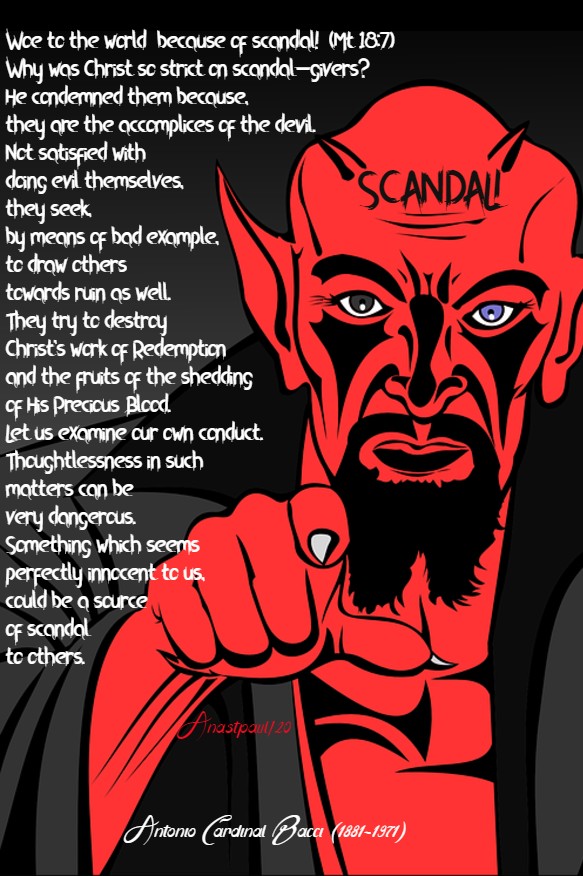
SCANDAL!
The Gospel contains a frightening condemnation of those who give scandal. “Whoever causes one of these little ones who believe in me to sin, it were better for him to have a great millstone hung around his neck and to be drowned in the depths of the sea. Woe to the world because of scandal! … If thy hand or thy foot is an occasion of sin to thee, cut it off and cast it from thee! It is better for thee to enter life, mained or lame, than, having two hands or two feet, to be cast into the everlasting fire …” (Cf Mt 18:6-9). Why was Christ so strict on scandal-givers? He condemned them because they are the accomplices of the devil. Not satisfied with doing evil themselves, they seek by means of bad example, to draw others towards ruin as well. They try to destroy Christ’s work of Redemption and the fruits of the shedding of His Precious Blood. Let us examine our own conduct. If we discover anything which could provide an occasion of sin for others, let us remedy it immediately. Thoughtlessness in such matters can be very dangerous. Something which seems perfectly innocent to us, could be a source of scandal to others. Prudence and delicacy are necessary in our relations with our fellow-men.
Quote/s of the Day – 28 December – The Feast of the Holy Innocents – The Fourth Day of the Christmas Octave, Readings: 1 John 1:5-2:2, Psalm 124:2-5, 7-8, Matthew 2:13-18
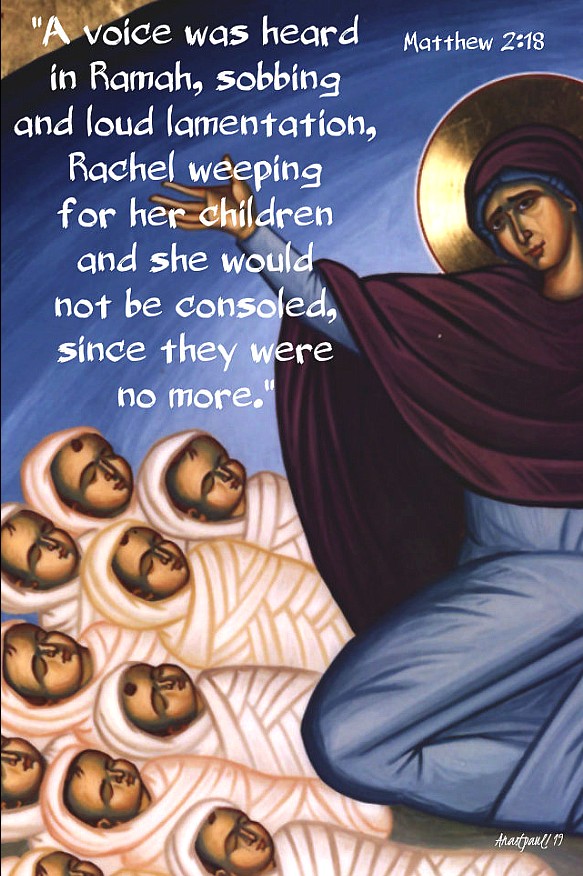
“A voice was heard in Ramah, sobbing and loud lamentation; Rachel weeping for her children and she would not be consoled, since they were no more.”
Matthew 2:18
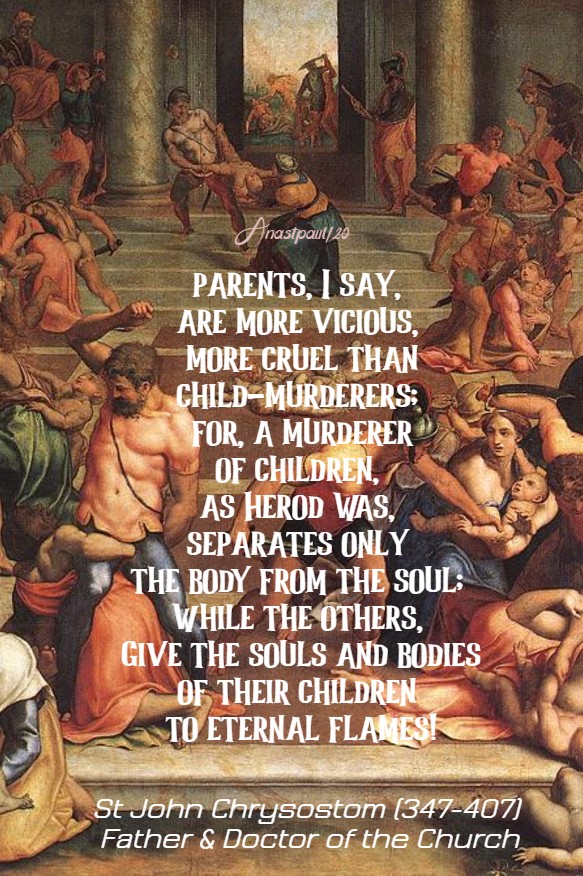
“Thus, parents, I say, are more vicious, more cruel than child-murderers; for, a murderer of children, as Herod was, separates only the body from the soul; while the others, give the souls and bodies of their children to eternal flames! Further, those who are killed would have died in the course of time, though they had not been murdered; while children, neglected by their parents, might have avoided eternal death, had not the wickedness of their parents prepared it for them. Besides this, the general resurrection would have compensated for the bodily death, while the death and destruction of the soul, nothing can restore. A child, condemned by the parent’s fault, has no hope of salvation but has to suffer eternal pains. Hence I am right in saying, that such parents are worse than child-murderers.”
One Minute Reflection – 28 December – The Feast of the Holy Innocents – The Fourth Day of the Christmas Octave, Readings: 1 John 1:5-2:2, Psalm 124:2-5, 7-8, Matthew 2:13-18
When Herod realised that he had been deceived by the magi, he became furious. He ordered the massacre of all the boys in Bethlehem and its vicinity, two years old and under, in accordance with the time he had ascertained from the magi. – Matthew 2:16
REFLECTION – “The Apostle John said: “Whoever says he abides in Christ, ought to walk even as Christ walked” (1 Jn 2:6). Moreover, the blessed Apostle Paul exhorts and teaches us, saying: “We are God’s children but if children, then heirs of God and joint-heirs with Christ; if so be that we suffer with him that we may also be glorified together” (Rm 8:16f.) … Let us, beloved brethren, imitate righteous Abel, who initiated martyrdom, he being the first to be slain for righteousness’s sake (Gn 4:8) …; let us imitate the three children Ananias, Azarias and Misael, who … overcame the king by the power of faith (Dn 3) … What of the prophets whom the Holy Spirit quickened to a foreknowledge of future events? What of the Apostles whom the Lord chose? Since these righteous men were slain for righteousness’ sake, have they not taught us also to die?
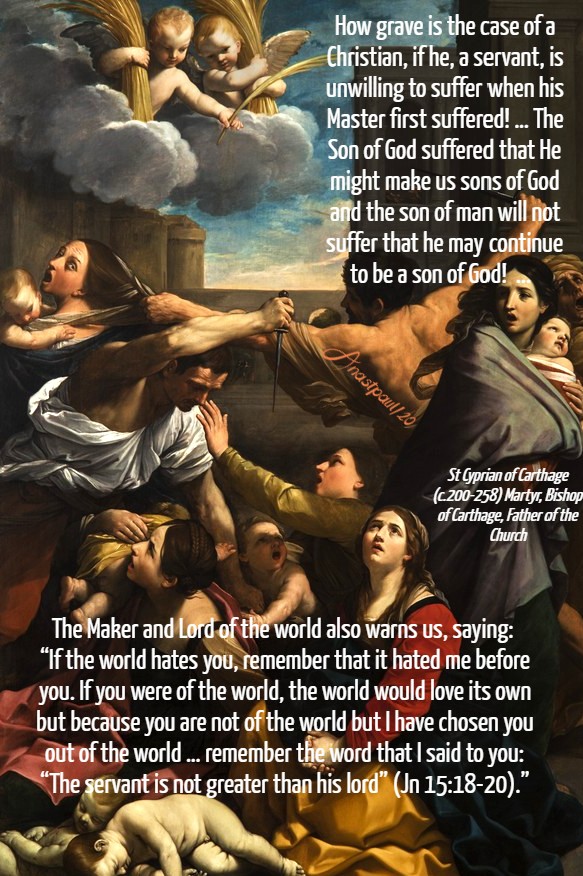
The nativity of Christ at once witnessed the martyrdom of infants, so that they who were two years old and under were slain for His name’s sake. An age, not yet fitted for the battle, appeared fit for the crown. That it might be manifest that they who are slain for Christ’s sake are innocent, innocent infancy was put to death for His name’s sake … How grave is the case of a Christian, if he, a servant, is unwilling to suffer when his Master first suffered! … The Son of God suffered that He might make us sons of God and the son of man will not suffer that he may continue to be a son of God! … The Maker and Lord of the world also warns us, saying: “If the world hates you, remember that it hated me before you. If you were of the world, the world would love its own but because you are not of the world but I have chosen you out of the world … remember the word that I said to you: “The servant is not greater than his lord” (Jn 15:18-20).” – St Cyprian of Carthage (c.200-258) Martyr, Bishop of Carthage, Father of the Church – Letter 55
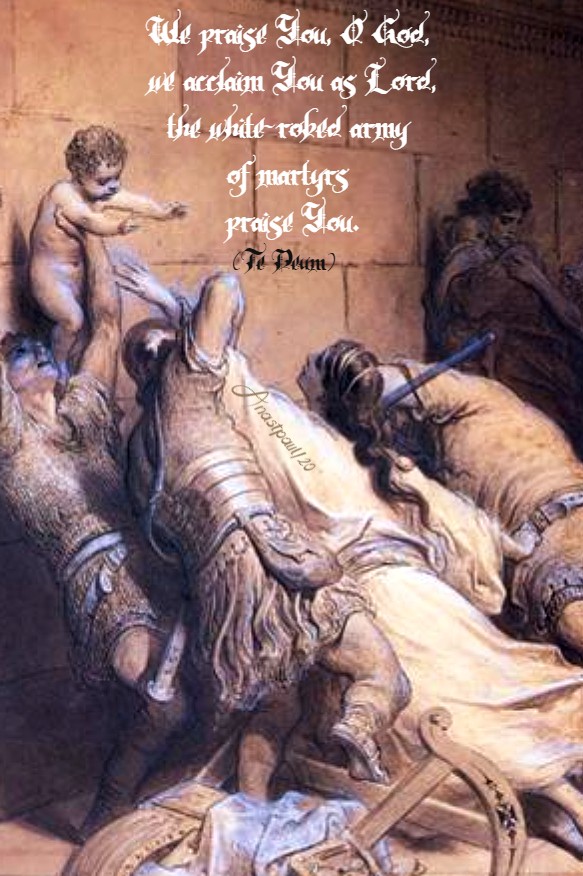
PRAYER – We praise You, O God, we acclaim You as Lord, the white-robed army of martyrs praise You. (from the Te Deum).
Our Morning Offering – 28 December – The Feast of the Holy Innocents – The Fourth Day of the Christmas Octave.
O Dearest Infant By St Alphonsus Liguori (1696-1787) Most Zealous Doctor
O dearest Infant, tell me what You came on earth to do. Tell me whom You are seeking. Ah, yes, I now understand… You have come to die for me, a lost sheep, in order that I may no more hide from You but love You. O Jesus, my treasure, my life, my love, my all, if I do not love You, then whom shall I love? Where can I find a mother or father, a friend, or a spouse more loving than You? And who has ever loved me more than You have? I am sorry that I have lived so many years in this world and yet still love You so little, even having offended You and sometimes forgotten You. Amen
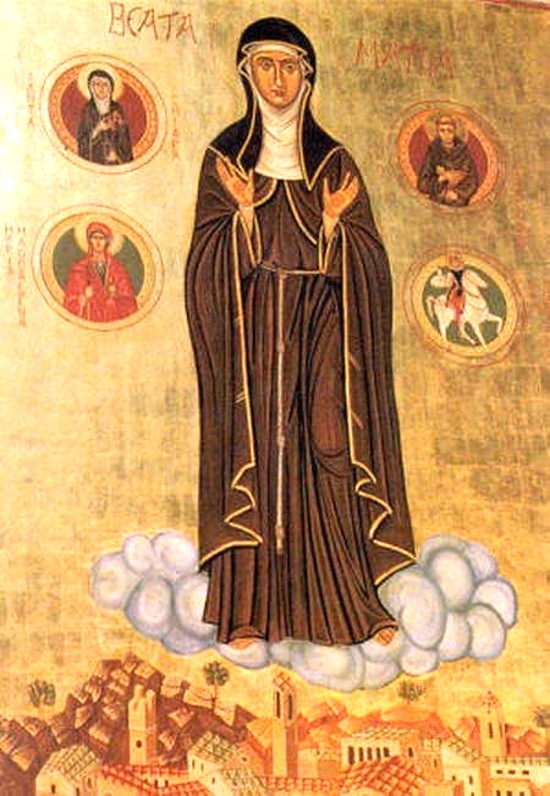
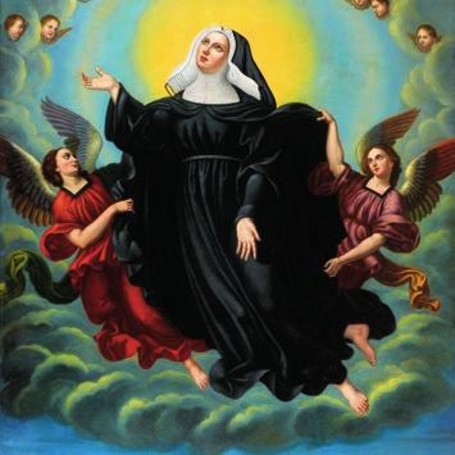
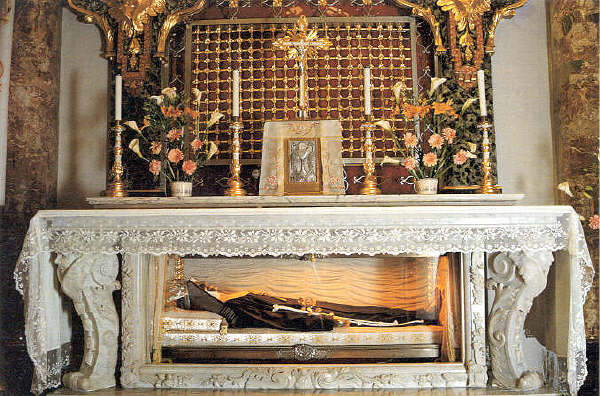
Saint of the day – 28 December – Blessed Matthia de Nazzarei OSC (1253-1319) Virgin, Nun of the Poor Clares, Abbess, gifted with the charism of miracles and prophecy – born on 1 March 1253 in Matelica, Macerata, Italy and died on 28 December 1319 in Matelica, Macerata, Italy of natural causes. Also known as Mattia, Matthias Nazarei. Her body is incorrupt. Patronage – Matelica, Italy.
Matthia’s life mirrored that of St Clare in many respects besides simply sharing the same life and charism. She ran away to a Monastery at a tender age, immediately sheared her tresses and donned the habit, resisted the drastic attempts of her relatives to remove her and served as Abbess for 46 years.
Blessed Matthia, whose name is derived from the Hebrew meaning “given by God,” was born to aristocratic Italian parents in 1253. Perhaps the significance of this year escaped her parents at the time but every Poor Clare remembers, this was the year St Clare died. Little did anyone know that this little baby would grow up to emulate that great but simple Abbess.
An only child, Matthia grew up, according to one account, “humble and intelligent,” a rare and attractive combination. She preferred a simple life and rejected all pomp of court life that demonstrated what she felt was excessive wealth. Naturally, her parents hoped to arrange a successful marriage in the world for her. But she spent long hours in the Chapel of the local Benedictine Monastery and eventually decided this life of penance was her calling.
At the age of eighteen a marriage was arranged for her. When she heard this, she left her home and fled to the Benedictine Convent of Santa Maddalena at Matalica. It was there that she became a Benedictine nun and served as its Abbess for four decades from 1279.
She feared her father’s retribution for her fleeing and remained hidden until he found her. But her father was so impressed with her that he allowed her to remain and the two reconciled. She took her solemn profession on 10 August 1271. The Convent later adopted the rule of the Poor Clares.
Considerable work was done during her term – the Convent and Chapel were both rebuilt – but the interior work she did for souls by her charitable service far surpassed any earthly accomplishment, however monumental. She also possessed the charisms of healing, prophecy and even turning spoiled wine into the best vintage.
When her end drew near, she told her sisters, “It is time to go to the Father.” Then after exhorting her community to faithfulness to their chosen way of life, she said, “God is love!” and commended her soul to God. She died on 28 December 1319 in Matelica. The Convent was renamed “Beata Matthias” in her honour in 1758. She was reinterred near the high altar of her Convent Chapel and was exhumed in 1536. It was found incorrupt and also was seen sweating. The remains were again exhumed in 1756 and still found to be incorrupt and is on display for veneration in the Chapel.
She was Beatified on 27 July 1765 after developing a pious following. Napoleon’s troops stole her incorrupt body in 1811 but it was returned a few months later to Matelica, where it rests to this day. In 1972, a sample from the red liquid that periodically comes forth from her body underwent a hematological study. It was found to be human blood.
Many miracles have been worked through this blood over the centuries. Today a case has been ratified locally, on 14 November 2014 and has now been sent to the Congregation of the Causes of Saints and is being examined.
BL Claudia Weinhardt St Conindrus St Domitian the Deacon St Domnio of Rome St Eutychius St Gowan of Wales Bl Gregory of Cahors Bl Hryhorii Khomyshyn St Iolande of Rome Bl Johannes Riedgasser Blessed Matthia de Nazzarei OSC (1253-1319) Virgin, Nun Bl Nicolas Mello Bl Otto of Heidelberg St Romulus St Simon the Myroblite St Theonas of Alexandria St Theodore of Tabenna St Troadius of Pontus — 20,000 Martyrs of Nicomedia: 20,000 Christians who were murdered during in 303 in Nicomedia, Bithynia (modern Izmit, Turkey) during the persecutions of Diocletian. Many of them were killed en masse when they were ordered, during Christmas Mass, to sacrifice to idols; when they refused, they were locked in the churches and the buildings burned around them. We know some details of a few of them, but most are known only to God. The names we have are – Agape, Anthimos, Domna, Domna, Dorotheus, Esmaragdus, Eugene, Euthymius, Glykerios, Gorgonius, Hilary, Indes, Mardonius, Mardonius, Maximus, Migdonius, Migdonus, Peter, Peter, Theophila, Theophilus and Zeno. 303 in Nicomedia, Bithynia (modern Izmit, Turkey).
Martyrs of Africa – (3 saints): Three Christians murdered together in Africa for their faith. The only details to survive are their names – Castor, Rogatian and Victor.
Thought for the Day – 26 December – Meditations with Antonio Cardinal Bacci (1881-1971) – Feast of St John the Apostle and Evangelist, the Beloved
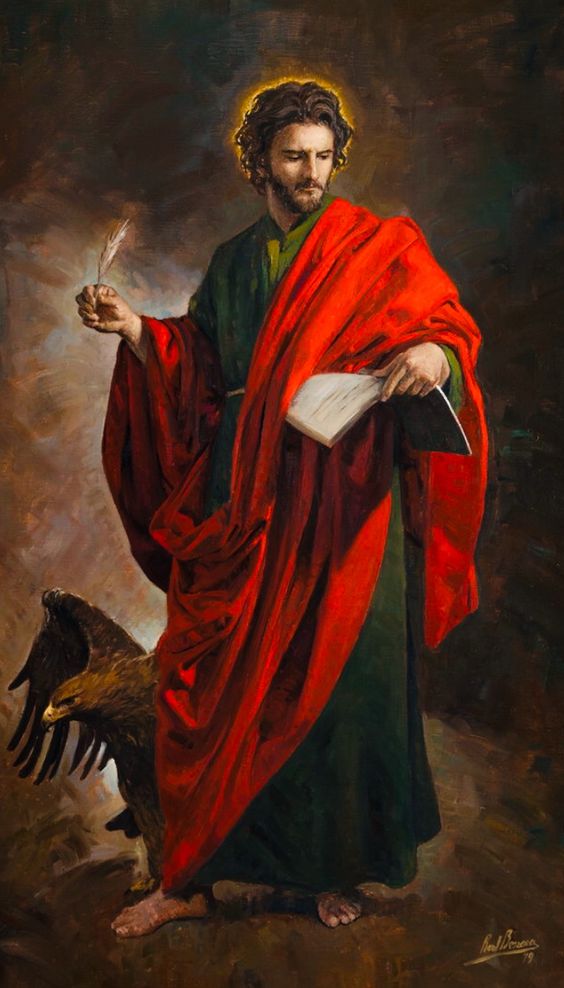
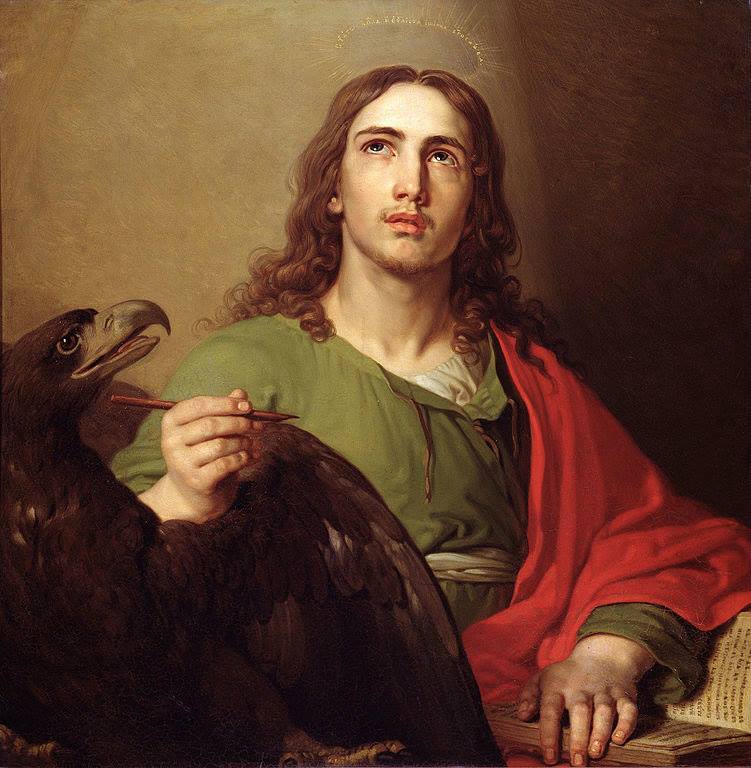
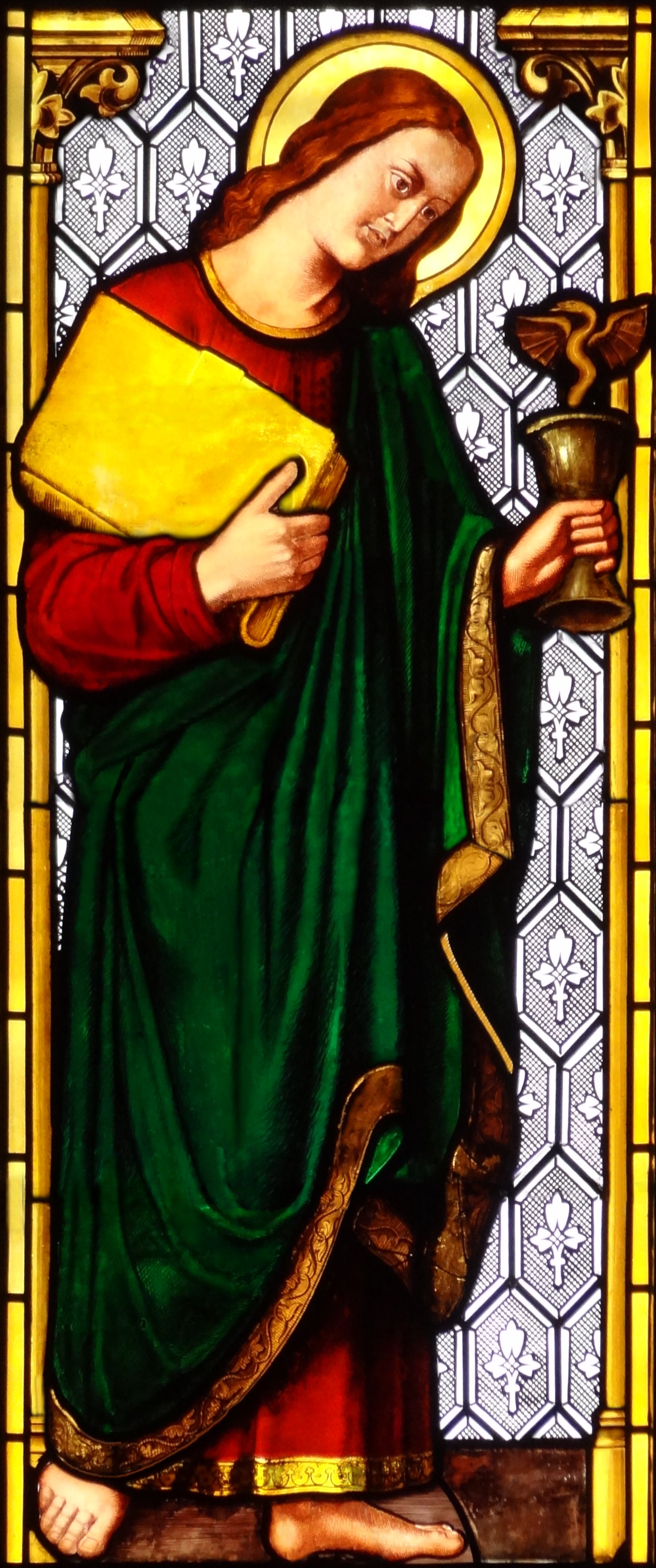
St John the Apostle and Evangelist
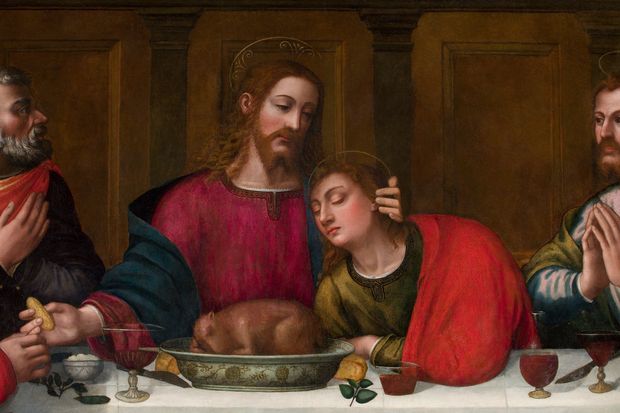
“St John was the beloved disciple of Jesus Christ. He was allowed, along with St Peter and St James, to enjoy the glory of the Transfiguration and, he was invited with them into the Garden of Gethsemane to witness the agonu ofour divine Redeemer. In the Cenacle, moreover, after he had received the Blessed Eucharist, he was the only one of the Apostles privileged to rest his head on the breast of Jesus. He stood at the foot of the Cross on Mount Calvary and heard his Master entrust to him, with His dying breath, the most precious treasure which still remained to Him on earth, the Blessed Virgin Mary. “Son, behold thy Mother.”
It is true, that Jesus loved all His Apostles, to all of whom He granted the happiness of enjoying His company, listening to His teaching and witnessing, His miracles. Even so, He had a special affection for St John. This was because John was a virgin when Jesus called him and remained so, all his life. The state of virginity is especially pleasing to God. It makes us like the Angels and, in a sense, superior to them, since these pure spirits are naturally chaste and, we can only succeed in being so, by means of great self-control. “Blessed are the pure of heart,” says Jesaus in the Gospel, “for they shall see God” (Mt 5:8).
The privilege of the vision of God is attributed, in a special way, to the pure of heart. Therefore, St John, the virgin Apostle, begins his Gospel with a descriptio of the intimate life of the eternal God. “In the beginning was the Word and the Word was with God and the Word, was God” (Jn 1:1). He soars above the earth like an eagle, as St Jerome observes and penetrates into the presence of God Himself.
We know that we shall never be called to scale such heights. We may not even have a vocation to live as virgins. But, we are all required to be clean of heart. Purity is a virtue which all Christians should possess in whatever manner is appropriate to their position in life. Let us examine ourselves strictly on this matter and make suitable resolutions for the future.”
Quote/s of the Day – 27 December – Feast of the Holy Family of Jesus, Mary and Joseph – On the Family by Pope Pius XII
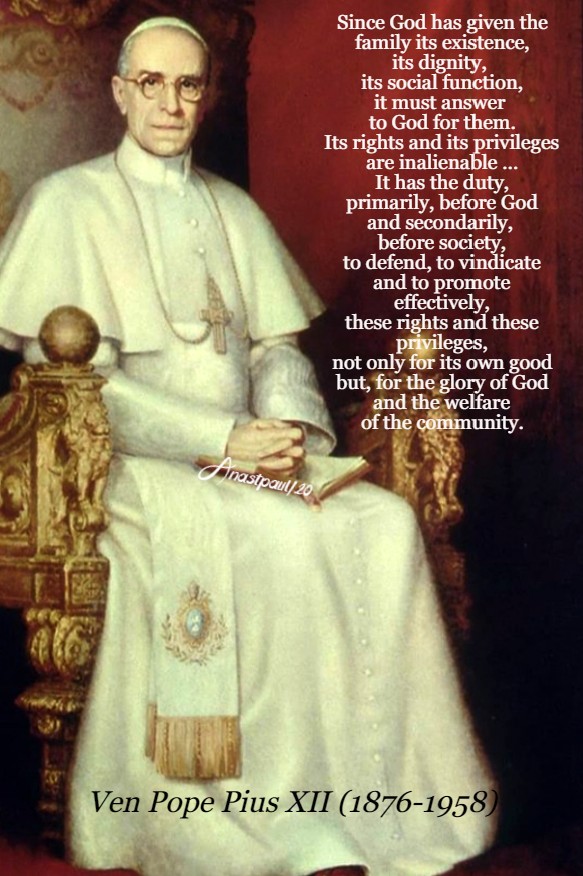
“Since God has given the family its existence, its dignity, its social function, it must answer to God for them. Its rights and its privileges are inalienable … It has the duty, primarily, before God and secondarily, before society, to defend, to vindicate and to promote effectively, these rights and these privileges, not only for its own good but, for the glory of God and the welfare of the community.”
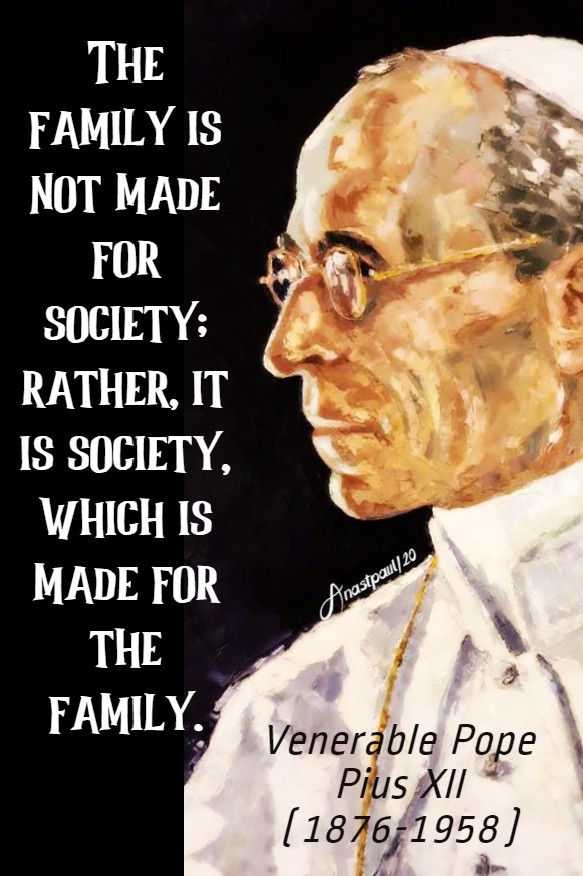
“ … The family is not made for society; rather, it is society, which is made for the family.”
“God did not create a human family made up of segregated, dissociated, mutually independent members. No; He would have them all united by the bond of total love of Him and consequent self-dedication to assisting each other to maintain that bond intact.”
“Christian mothers, if only you knew the future of distress and peril, of shame ill-restrained, that you prepare for your sons and daughters in imprudently accustoming them, to live hardly clothed and in making them lose the sense of modesty, you should be ashamed of yourselves! and of the harm done the little ones whom heaven entrusted to your care, to be reared in Christian dignity and culture.”
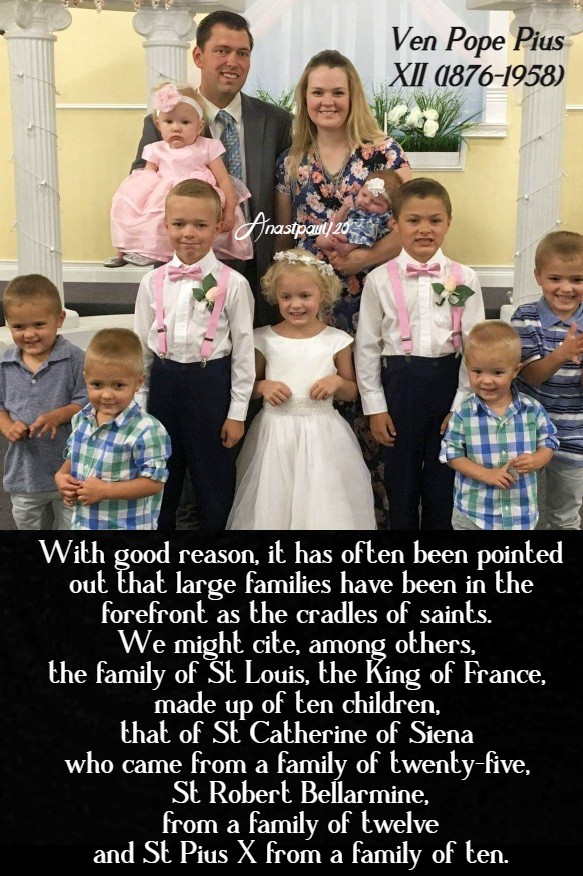
“With good reason, it has often been pointed out that large families have been in the forefront as the cradles of saints. We might cite, among others, the family of St Louis, the King of France, made up of ten children, that of St Catherine of Siena who came from a family of twenty-five, St Robert Bellarmine, from a family of twelve and St Pius X from a family of ten.”
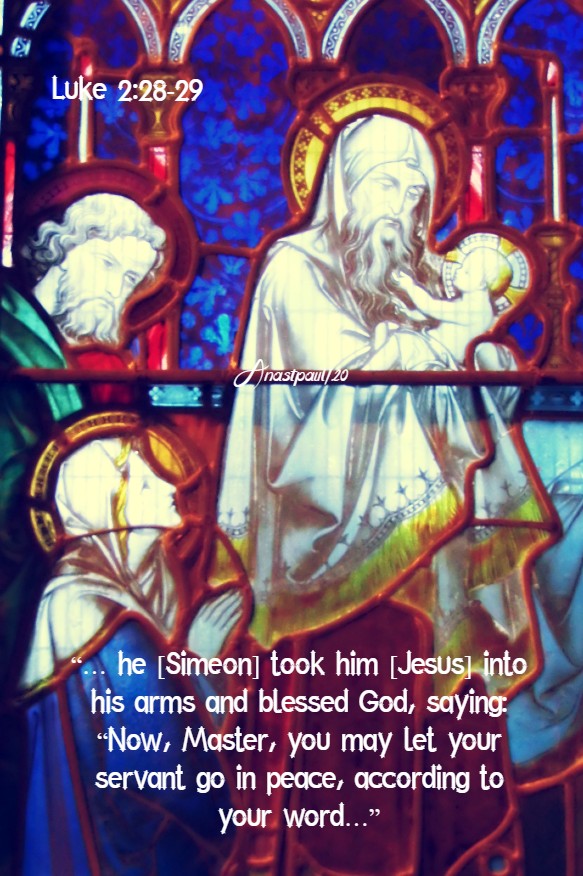
“… he [Simeon] took him [Jesus] into his arms and blessed God, saying: “Now, Master, you may let your servant go in peace, according to your word…” – Luke 2:28-29
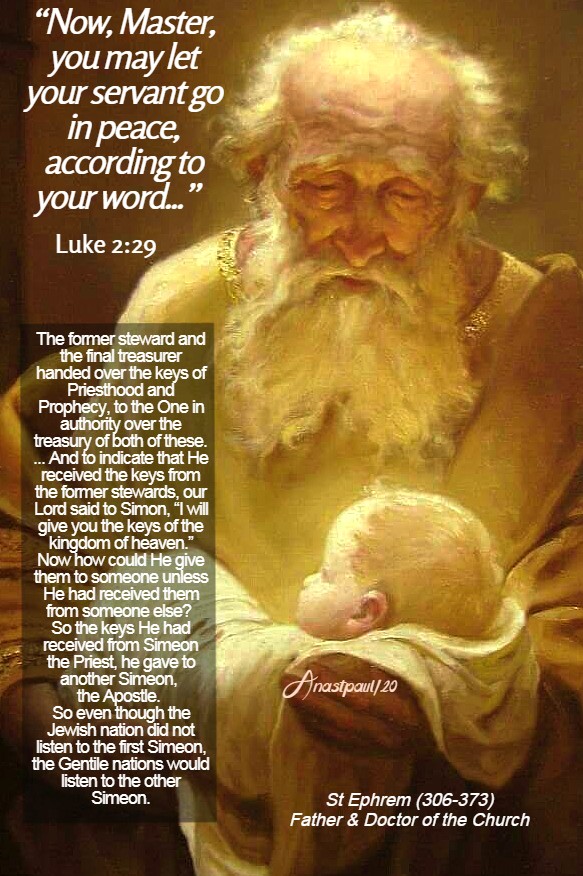
REFLECTION – “The Son came to the servant not to be presented by the servant but so that, through the Son, the servant might present to his Lord, the priesthood and prophecy that had been entrusted to his keeping. Prophecy and priesthood, which had been given through Moses, were both passed down and came to rest on Simeon. He was a pure vessel who consecrated himself, so that, like Moses, he too could contain them both. These were feeble vessels that accommodated great gifts — gifts that one might contain because of their goodness but that many cannot accept because of their greatness. Simeon presented our Lord and in Him he presented the two gifts he had, so that what had been given Moses in the desert, was passed on by Simeon, in the temple. Because our Lord is the vessel in which all fullness dwells, when Simeon presented Him to God, He poured out both of these upon him – the priesthood from his hands and prophecy from his lips. The priesthood had always been on Simeon’s hands, because of ritual purifications. Prophecy, in fact, dwelt on his lips because of revelations. When both of these saw the Lord of both of these, they were combined and were poured into the Vessel that could accommodate them both, in order to contain Priesthood, Kingship and Prophecy. That Infant who was wrapped in swaddling clothes by virtue of His goodness, was also dressed in Priesthood and Prophecy by virtue of His Majesty. Simeon dressed Him in these and presented Him to the One who had dressed Him in swaddling clothes. Then, as the old man returned Him to his mother, he returned the Priesthood with Him. And when he prophesied to her about Him: “This child is destined for the downfall and rising,” he gave her Prophecy with him as well. So Mary took her firstborn and left. Although He was visibly wrapped in swaddling clothes, He was invisibly clothed with Prophecy and Priesthood. Thus, what Moses had been given, was received from Simeon and it remained and continued with the Lord of these two gifts. The former steward and the final treasurer handed over the keys of Priesthood and Prophecy, to the One in authority over the treasury of both of these. This is why His Father gave Him the Spirit without measure because all measures of the Spirit are under His hand. And to indicate that He received the keys from the former stewards, our Lord said to Simon, “I will give you the keys of the kingdom of heaven.” Now how could He give them to someone unless He had received them from someone else? So the keys He had received from Simeon the Priest, he gave to another Simeon, the Apostle. So even though the Jewish nation did not listen to the first Simeon, the Gentile nations would listen to the other Simeon.” – St Ephrem (306-373) Father and Doctor of the Church –Homily on Our Lord, 53
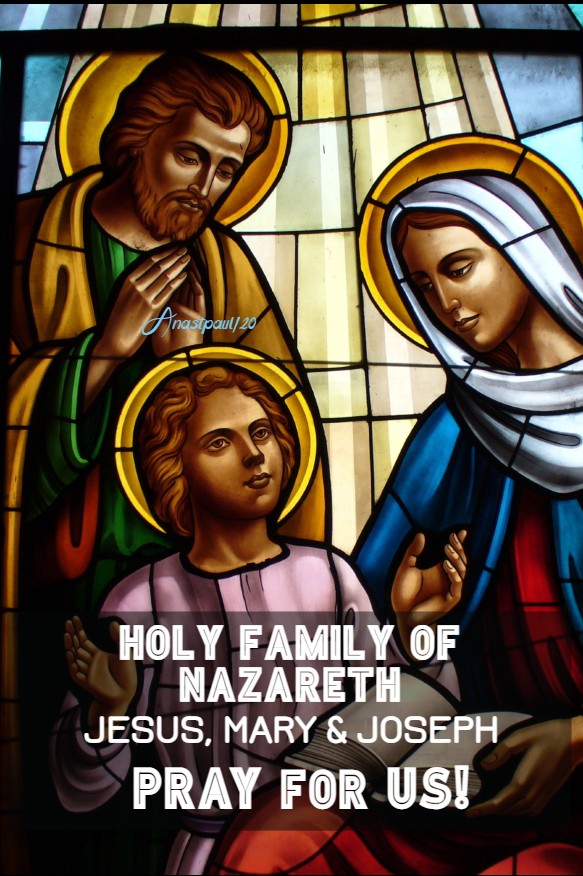
PRAYER – God, our Father, in the Holy Family of Nazareth, You have given us the true model of a Christian home. Grant, that by following Jesus, Mary and Joseph in their love for each other and in the example of their family life, we may come to Your home of peace and joy. We make our prayer through our Lord Jesus Christ, Your Son Who lives and reigns with You and the Holy Spirit, God, now and forever, amen.
Our Morning Offering – 27 December – Sunday within the Octave of Christmas and the Feast of the Holy Family
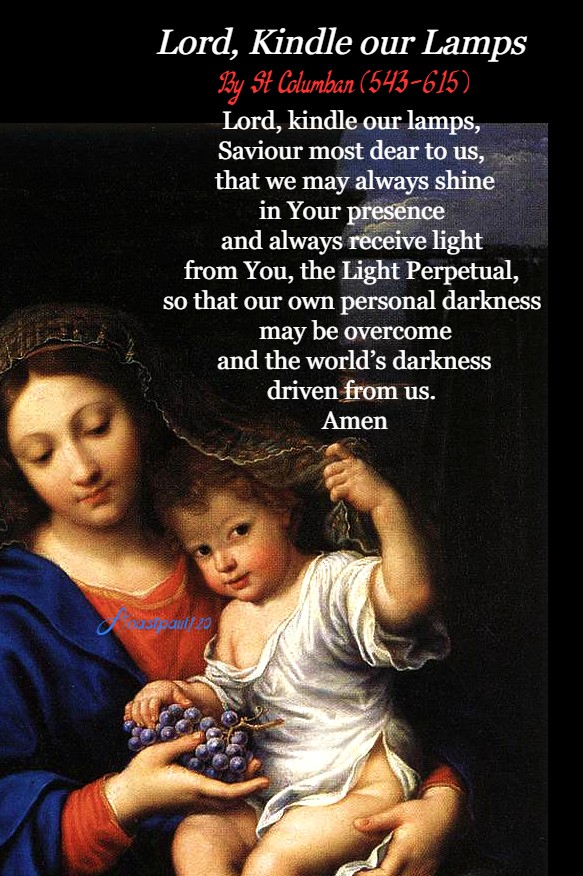
Lord, Kindle our Lamps By St Columban (543-615)
Lord, kindle our lamps, Saviour most dear to us, that we may always shine in Your presence and always receive light from You, the Light Perpetual, so that our own personal darkness may be overcome and the world’s darkness driven from us. Amen
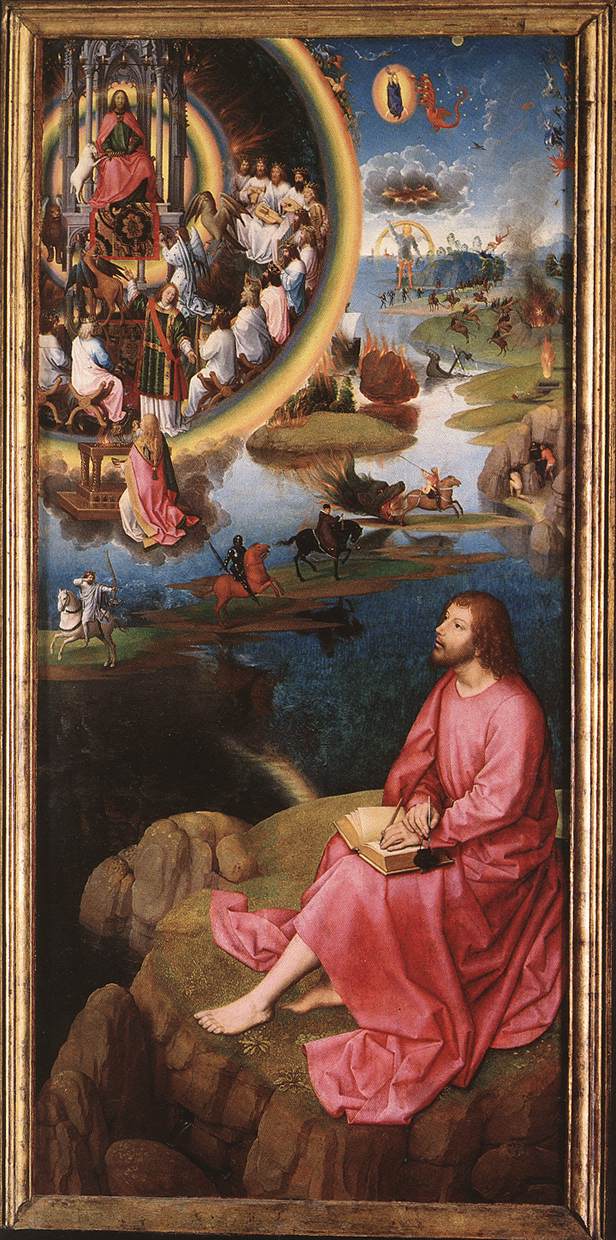
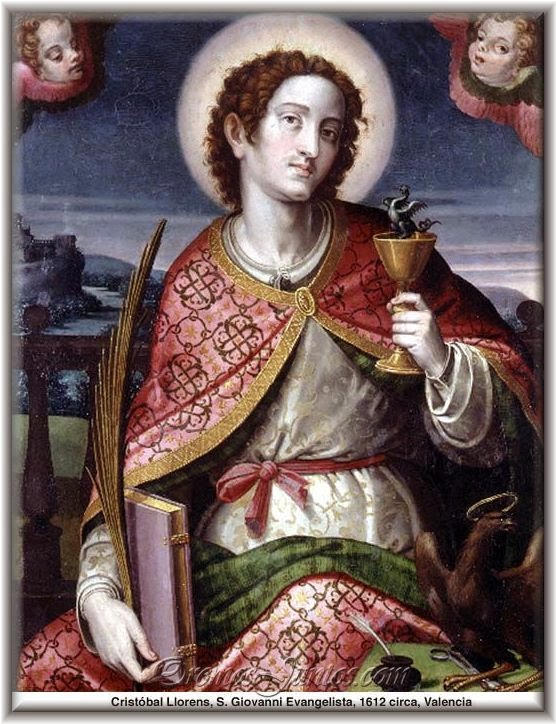
Saint of the Day – 27 December – St John the Apostle and Evangelist. Patronages – • against burns; burn victims• against epilepsy• against foot problems• against hailstorms• against poisoning• art dealers• authors, writers• basket makers• bookbinders• booksellers• butchers• compositors• editors• engravers• friendships• glaziers• government officials• harvests• lithographers• notaries• painters• papermakers• publishers• saddle makers• scholars• sculptors• tanners• theologians• typesetters• vintners• Asia Minor (proclaimed on 26 October 1914 by Pope Benedict XV)• 6 Diocese• 7 Cities.
The days following Christmas are full of symbolic meaning, as on 26 December we honour the first Martyr, St Stephen, who shed his blood for Jesus. 27 December, honours St John the Evangelist, the Disciple of Jesus who wrote the Gospel of John and the book of Revelation. Interestingly enough, he is the only Gospel writer to omit a narrative of Jesus’ birth. Based on this fact alone, it seems strange to include him during the Octave of Christmas. What is the Church’s reason behind this choice? Servant of God, Dom Prosper Guéranger in his Liturgical Year, points to St John’s pure chastity and his focus on the Divinity of Christ, as the reasons why he is honoured now at the Crib of Christ.
Dom Prosper Guéranger OSB (1805-1875)
The Disciple Whom Jesus Loved, the Eagle
“Nearest to Jesus’ Crib, after Stephen, stands John, the Apostle and Evangelist. It was only right, that the first place should be assigned to him, who so loved his God, that he shed his blood in his service; for, as this God Himself declares, greater love than this hath no man, that he lay down his life for his friends [1 John, 15:13] and Martyrdom has ever been counted, by the Church, as the greatest act of love and as having, consequently, the power of remitting sins, like a second Baptism. But, next to the sacrifice of Blood, the noblest, the bravest and, which most wins the heart of Him, who is the Spouse of souls, is the sacrifice of Virginity. Now, just as St Stephen is looked upon as the type of Martyrs, St John is honoured as the Prince of Virgins. Martyrdom won for Stephen the Crown and palm; Virginity merited for John most singular prerogatives, which, while they show how dear to God, is holy Chastity, put this Disciple among those, who, by their dignity and influence, are above the rest of men.
St. John was of the family of David, as was our Blessed Lady. He was, consequently, a relation of Jesus. This same honour belonged to St James the Greater, his Brother; as also to St James the Less and St Jude, both Sons of Alpheus. When our Saint was in the prime of his youth, he left, not only his boat and nets, not only has lather Zebedee but, even his betrothed, when everything was prepared for the marriage. He followed Jesus and never once looked back. Hence, the special love which our Lord bore him. Others were Disciples or Apostles, John was the Friend, of Jesus. The cause of this our Lord’s partiality, was, as the Church tells us in the Liturgy, that John had offered his Virginity to the Man-God. Let us, on this his Feast, enumerate the graces and privileges that came to St John from his being The Disciple whom Jesus loved.
This very expression of the Gospel, which the Evangelist repeats several times — The Disciple whom Jesus loved [John, 13:23, 19:26, 21:7, 21:20] — says more than any commentary could do. St Peter, it is true, was chosen by our Divine Lord, to be the Head of the Apostolic College and the Rock whereon the Church was to be built – he, then, was honoured most but St John was loved most. Peter was bid to love more than the rest loved and he was able to say, in answer to Jesus’ thrice repeated question, that he did love Him in this highest way and yet, notwithstanding, John was more loved by Jesus than was Peter himself, because his Virginity deserved this special mark of honour.
Chastity of soul and body brings him, who possesses i,t into a sacred nearness and intimacy with God. Hence it was, that at the Last Supper – that Supper, which was to be renewed on our Altars, to the end of the world, in order to cure our spiritual infirmities and give life to our souls – John was placed near to Jesus, nay, was permitted, as the tenderly loved Disciple, to lean his head upon the Breast of the Man-God. Then it was, that he was filled and from their very Fountain, with Light and Love, it was both a recompense and a favour and became the source of two signal graces, which make St John an object of special reverence to the whole Church.
Divine wisdom, wishing to make known to the world, the Mystery of the Word and commit to Scripture, those profound secrets, which, so far, no pen of mortal had been permitted to write — the task was put upon John. Peter had been crucified, Paul had been beheaded and the rest of the Apostles had laid down their lives in testimony of the Truths they had been sent to preach to the world; John was the only one left in the Church. Heresy had already begun its blasphemies against the Apostolic Teachings; it refused to admit the Incarnate Word as the Son of God, Consubstantial to the Father. John was asked by the Churches to speak and he did so in language heavenly above measure. His Divine Master had reserved to this, his Virgin-Disciple, the honour of writing those sublime Mysteries, which the other Apostles had been commissioned only to teach — THE WORD WAS GOD, and this WORD WAS MADE FLESH for the salvation of mankind.
Thus did our Evangelist soar, like the Eagle, up to the Divine Sun and gaze upon Him with undazzled eye, because his heart and senses were pure and, therefore, fitted for such vision of the uncreated Light. If Moses, after having conversed with God in the cloud, came from the divine interview with rays of miraculous light encircling his head – how radiant must have been the face of St John, which had rested on the very Heart of Jesus, in whom are hid all the treasures of wisdom and knowledge! [Col. 2:3] how sublime his writings! how divine his teaching! Hence, the symbol of the Eagle, shown to the Prophet Ezechiel, [Ezechiel 1:10, 10:14] and to St John himself in his Revelations, [Apoc. 4:7] has been assigned to him by the Church and, to this title of The Eagle has been added, by universal tradition, the other beautiful name of Theologian. This was the first recompense given by Jesus to his Beloved John, a profound penetration into divine Mysteries. The second was the imparting to him a most ardent charity, which was equally a grace consequent upon his angelic purity, for purity unburdens the soul from grovelling egotistic affections and raises it to a chaste and generous love. John had treasured up in his heart the Discourses of his Master, he made them known to the Church and, especially, that divine one of the Last Supper, wherein Jesus had poured forth His whole Soul to His own, whom he had always tenderly loved but most so, at the end [John, 13:1]. He wrote his Epistles and Charity is his subject – God is Charity — he that loveth not, knoweth not God — perfect Charity casteth out fear — and so on throughout, always on Love. During the rest of his life, even when so enfeebled by old age as not to be able to walk, he was forever insisting upon all men loving each other, after the example of God, who had loved them and so loved them! Thus, he that had announced more clearly than the rest of the Apostles the divinity of the Incarnate Word, was by excellence, the Apostle of that divine Charity, which Jesus came to enkindle upon the earth.
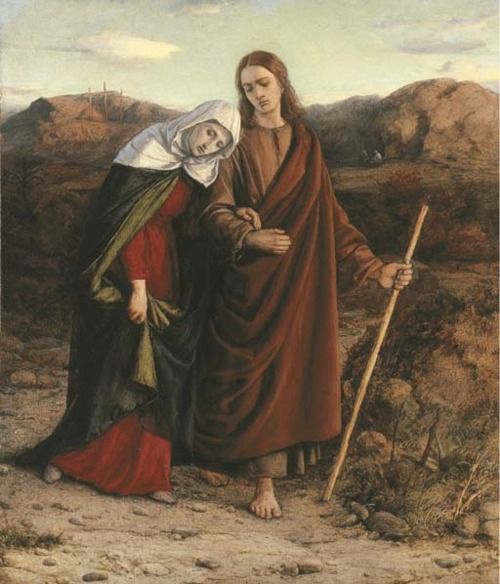
But, our Lord had a further gift to bestow and it was sweetly appropriate to the Virgin-Disciple. When dying on His cross, Jesus left Mary upon this earth. Joseph had been dead now some years. Who, then, shall watch over His Mother? who is there worthy of the charge? Will Jesus send His Angels to protect and console her? — for, surely, what man could ever merit to be to her as a second Joseph? Looking down, he sees the Virgin-Disciple standing at the foot of the Cross – we know the rest, John is to be Mary’s Son — Mary is to be John’s Mother. Oh! wonderful Chastity, that wins from Jesus such an inheritance as this! Peter, says St Peter Damian, shall have left to him the Church, the Mother of men; but John, shall receive Mary, the Mother of God, whom he will love as his own dearest Treasure and to whom, he will stand in Jesus’ stead; whilst Mary will tenderly love John, her Jesus’ Friend, as her Son.
The Blessed Virgin in the House of St John by Dante Gabriel Rossetti, 1859
Can we be surprised after this, that St John is looked upon by the Church as one of her greatest glories? He is a Relative of Jesus in the flesh; he is an Apostle, a Virgin, the Friend of the Divine Spouse, the Eagle, the Theologian, the Son of Mary; he is an Evangelist, by the history he has given of the Life of his Divine Master and Friend; he is a Sacred Writer, by the three Epistles he wrote under the inspiration of the Holy Ghost; he is a Prophet, by his mysterious Apocalypse, wherein are treasured the secrets of time and eternity. But, is he a Martyr? Yes, for if he did not complete his sacrifice, he drank the Chalice of Jesus [Matt. 20:22], when, after being cruelly scourged, he was thrown into a caldron of boiling oil, before the Latin Gate, at Rome. He was, therefore, a Martyr in desire and intention, though not in fact. If our Lord, wishing to prolong a life so dear to the Church, as well as to show how he loves and honours Virginity, — miraculously stayed the effects of the frightful punishment, St John had, on his part, unreservedly accepted Martyrdom.
Such is the companion of Stephen at the Crib, wherein lies our Infant Jesus. If the Protomartyr dazzles us with the robes he wears of the bright scarlet of his own blood — is not the virginal whiteness of John’s vestment fairer than the untrod snow? The spotless beauty of the Lilies of Mary’s adopted Son and the bright vermilion of Stephen’s Roses — what is there more lovely than their union? Glory, then, be to our New-Born King, whose court is tapestried with such heaven-made colours as these! Yes, Bethlehem’s Stable is a very heaven on earth and we have seen its transformation. First, we saw Mary and Joseph alone there — they were adoring Jesus in his Crib; then, immediately, there descended a heavenly host of Angels singing the wonderful Hymn; the Shepherds soon followed, the humble simple-hearted Shepherds; after these, entered Stephen the Crowned and John the Beloved Disciple; and, even before there enters the pageant of the devout Magi, we shall have others coming in and there will be, each day, grander glory in the Cave and gladder joy in our hearts. Oh! this Birth of our Jesus! Humble as it seems, yet, how divine! What King or Emperor ever received, in his gilded cradle, honours like these shown to the Babe of Bethlehem? Let us unite our homage with that given him by these the favoured inmates of his court. Yesterday, the sight of the Palm in Stephen’s hand animated us and we offered to our Jesus the promise of a stronger Faith: to-day, the Wreath, that decks the brow of the Beloved Disciple, breathes upon the Church the heavenly fragrance of Virginity — an intenser love of Purity must be our resolution and our tribute to the Lamb.
Feast of the Holy Family+2020: Today’s Feast is held on the Sunday between Christmas and New Year’s Day. If both are Sundays, the Feast is celebrated on 30 December.
Today is the Feast day of the Holy Family but also every family’s feast day, since the Holy Family is the Patron and model of all Christian families. Today should be a huge family feast, since it is devoted entirely to the Holy Family as a model for the Christian family life. As Rev. Edward Sutfin states:
Thought for the Day – 26 December – Meditations with Antonio Cardinal Bacci (1881-1971)
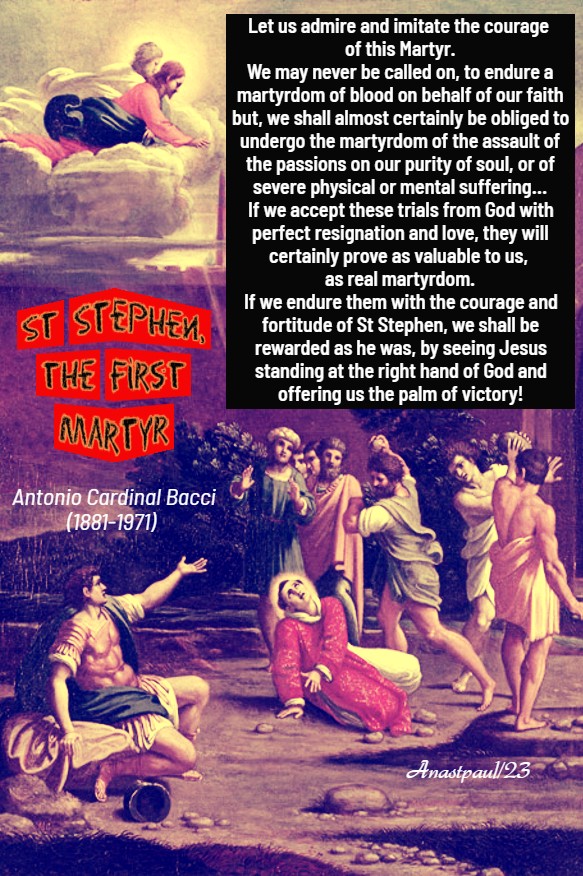
St Stephen, the First Martyr
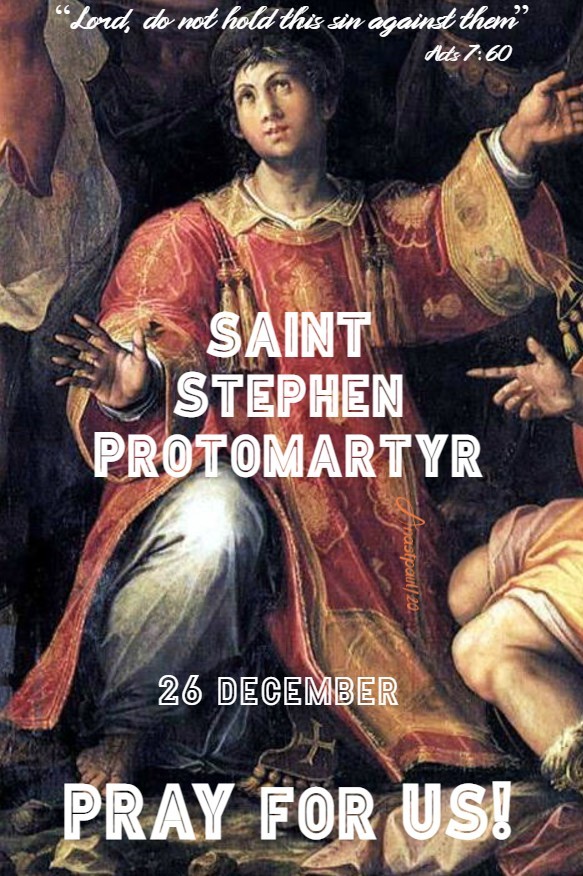
“Among the original seven Deacons nominated by the Apostles, there was one name Stephen, who was outstanding for his sanctity and extraordinary spiritual gifts. Being enlightened by God, this young man dared to rebuke the Jews in public for their hardness of heart and openly defended the doctrine of Christ, Whom he proclaimed to be the Saviour and Redeemer of the world. One day when he was threatened by his foes, Stephen raised his eyes trustfully towards Heaven and said: “Behold, I see the heavens opened and the Son of Man standing at the right hand of God.” The Jews could no longer restrain their fury and proceeded to drag the young man outside the city. There they left their garments in the care of a youth named Saul, while they savagely stoned Stephen to death. Stricken to his knees by the force of the missiles, the saintly young disciple continued to look towards Heaven. “Lord Jesus,” he cried, “receive my spirit.” Before he breathed his last, he forgave his enemies in the manner of his divine Master. “Lord,” he prayed, “do not lay this sin against them.” And with these words he fell asleep (Cf Acts 7:51-60; 8:1-2).
Let us admire and imitate the courage of this Martyr. We may never be called on, to endure a martyrdom of blood on behalf of our faith but, we shall almost certainly be obliged to undergo the martyrdom of the assault of the passions on our purity of soul, or of severe physical or mental suffering… If we accept these trials from God with perfect resignation and love, they will certainly prove as valuable to us, as real martyrdom. If we endure them with the courage and fortitude of St Stephen, we shall be rewarded as he was, by seeing Jesus standing at the right hand of God and offering us the palm of victory!”
Quote/s of the Day – 26 December – Feast of St Stephen the ProtoMartyr and The Second Day in the Christmas Octave
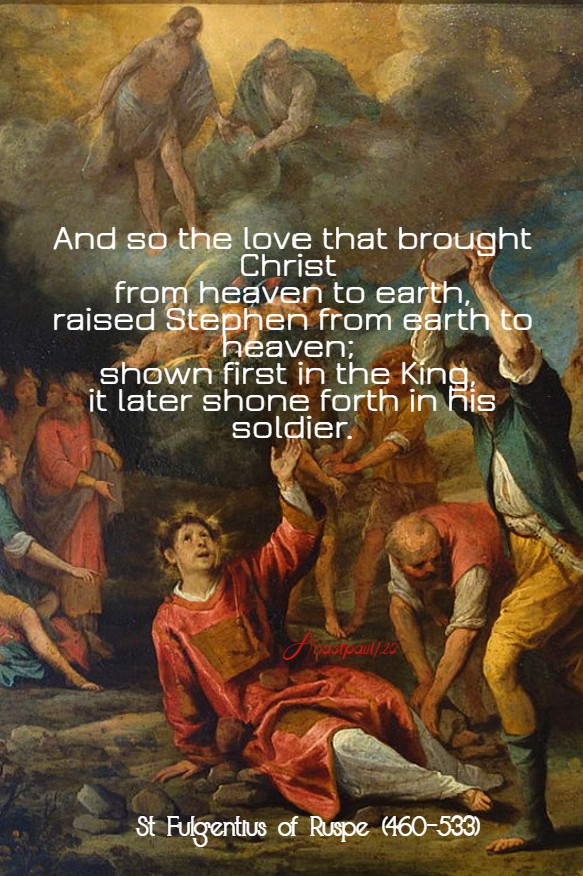
“And so the love that brought Christ from heaven to earth, raised Stephen from earth to heaven; shown first in the King, it later shone forth in his soldier.”
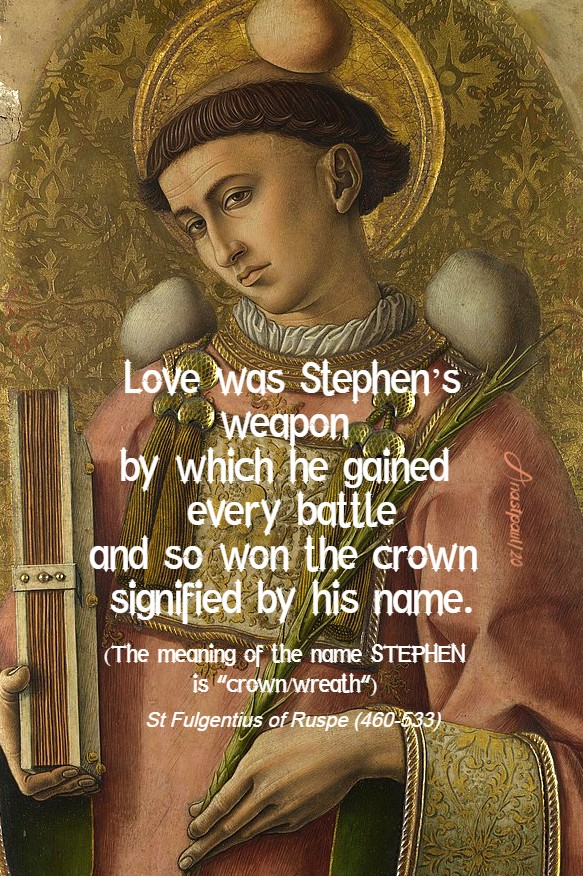
“Love was Stephen’s weapon by which he gained every battle and so won the crown signified by his name.” (The meaning of the anme STEPHEN is “crown/wreath”)
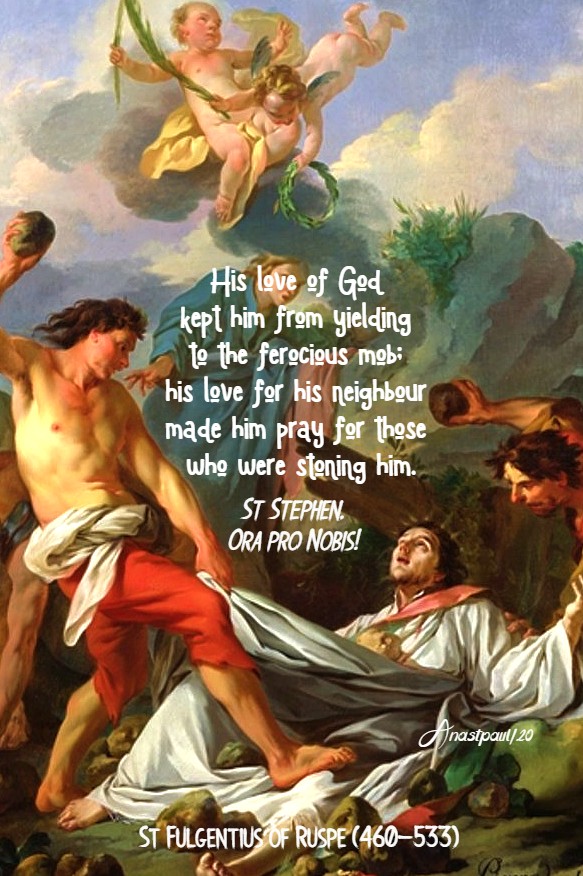
“His love of God kept him from yielding to the ferocious mob; his love for his neighbour made him pray for those who were stoning him.”
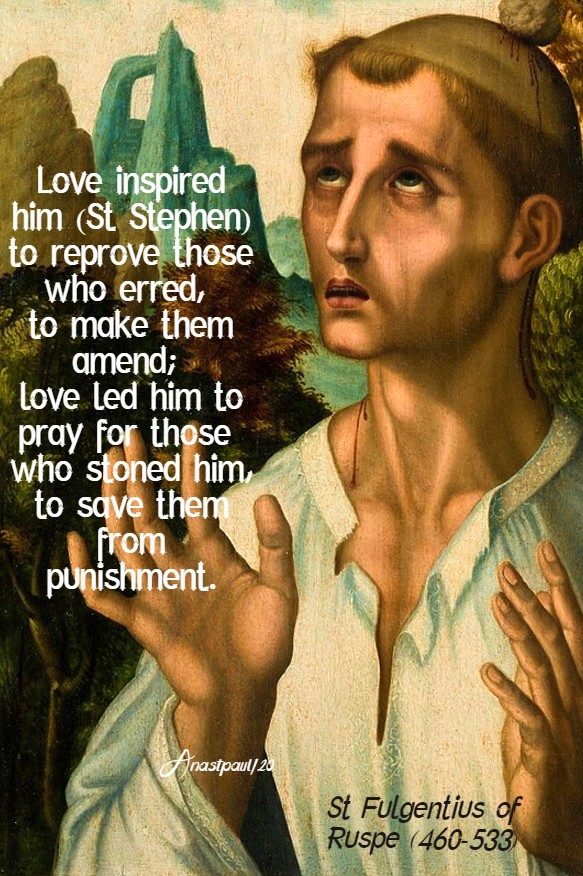
“Love inspired him to reprove those who erred, to make them amend; love led him to pray for those who stoned him, to save them from punishment.”
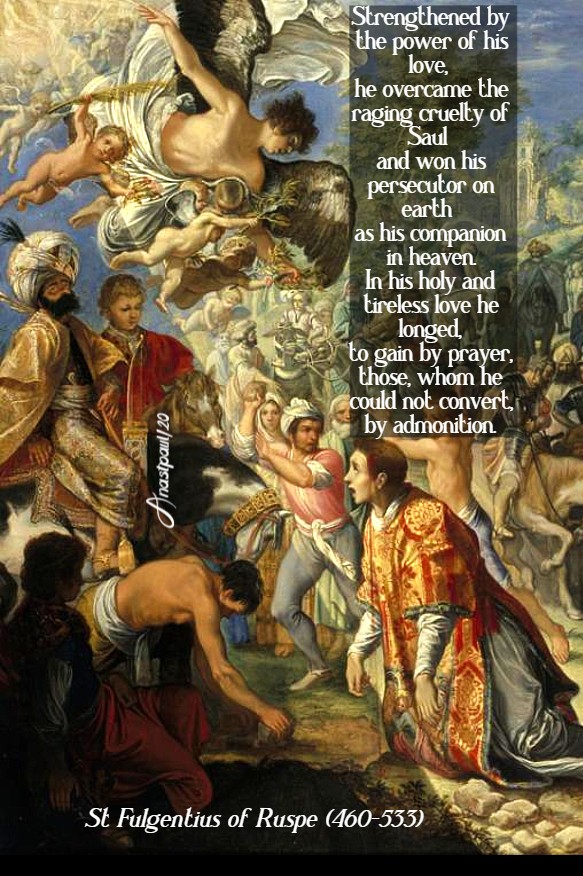
“Strengthened by the power of his love, he overcame the raging cruelty of Saul and won his persecutor on earth as his companion in heaven. In his holy and tireless love he longed, to gain by prayer, those, whom he could not convert, by admonition.”
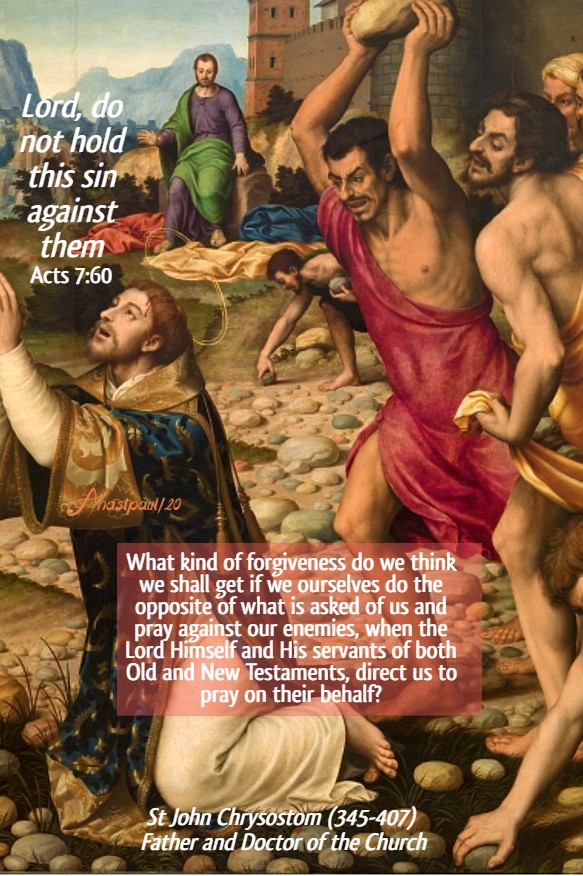
“Lord, do not hold this sin against them” – Acts 7:60
REFLECTION – “Let us imitate our Lord and pray for our enemies … He was crucified yet, at the same time, prayed to His Father for the sake of those who were crucifying Him. But how could I possibly imitate our Lord, one might ask? If you want to, you can. If you weren’t able to do it how could He have said: “Learn from me for I am meek and humble of heart”? (Mt 11:29) …
If you have difficulty in imitating our Lord, at least imitate him who is also His servant, his deacon. I would speak of Stephen. Just as Christ, in the midst of those crucifying Him, without considering the cross, without considering His own predicament, pleaded with the Father on behalf of His tormentors (Lk 23:34), so His servant, surrounded by those who were stoning him, attacked by all, crushed beneath a hail of stones and without taking any account of the suffering they were causing him, said: “Lord, do not hold this sin against them” (Acts 7:60). Do you see how the Son spoke and how His servant prayed? The former said: “Father, forgive them for they know not what they do,” and the latter said: “Lord, do not hold this sin against them.” Moreover, to make us realise better the fervour with which he was praying, he did not just pray as he stood beneath the blows of the stones but he spoke on his knees with sincerity and compassion …
Christ said: “Father, forgive them for they know not what they do.” Stephen cried out: “Lord, do not hold this sin against them.” Paul, in his turn, said: “I offer up this sacrifice for my brethren, my kin according to race” (cf. Rm 9:3). Moses said: “If you would only forgive their sin! And if you will not, then strike me out of the book that you have written!” (Ex 32:32). David said: “May your hand fall on me and my kindred,” (2 Sam 24:17). … What kind of forgiveness do we think we shall get if we ourselves do the opposite of what is asked of us and pray against our enemies, when the Lord Himself and His servants of both Old and New Testaments, direct us to pray on their behalf?” – St John Chrysostom (345-407) Father and Doctor of the Church – Sermon for Good Friday “The Cross and the bandit”
PRAYER – Grant us Your Grace, Lord God Almighty, to practise what we worship. Teach us to love our enemies and to pray for those who persecute us. As we keep the feast of Saint Stephen, may we learn from him, who learned from You and prayed, even for the men who stoned him to death. Through Christ our Lord, with the Holy Spirit, God now and forever, amen.
Our Morning Offering – 26 December – Feast of St Stephen the ProtoMartyr and The Second Day in the Christmas Octave
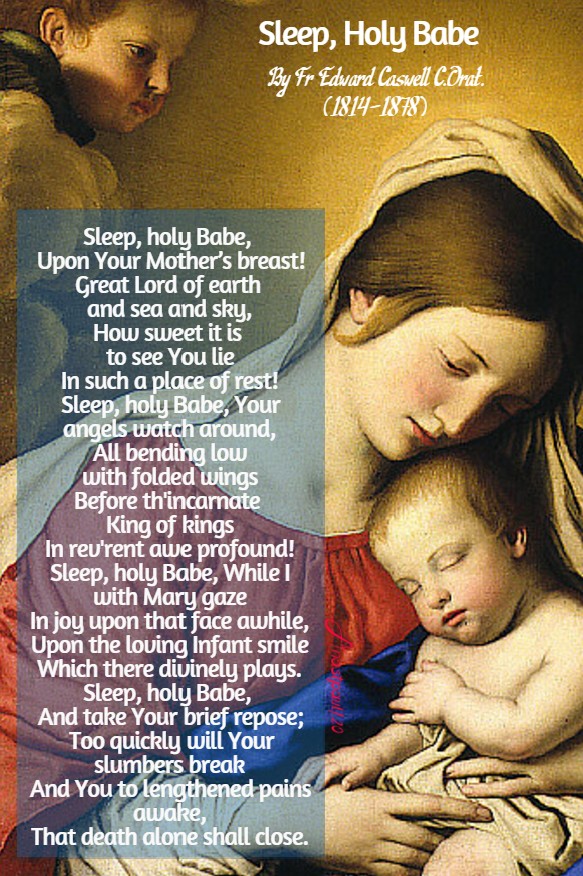
Sleep, Holy Babe By Fr Edward Caswell C.Orat. (1814-1878)
Sleep, holy Babe, Upon Your Mother’s breast! Great Lord of earth and sea and sky, How sweet it is to see You lie In such a place of rest! Sleep, holy Babe, Your angels watch around, All bending low with folded wings Before th’incarnate King of kings In rev’rent awe profound! Sleep, holy Babe, While I with Mary gaze In joy upon that face awhile, Upon the loving Infant smile Which there divinely plays. Sleep, holy Babe, And take Your brief repose; Too quickly will Your slumbers break And You to lengthened pains awake, That death alone shall close.
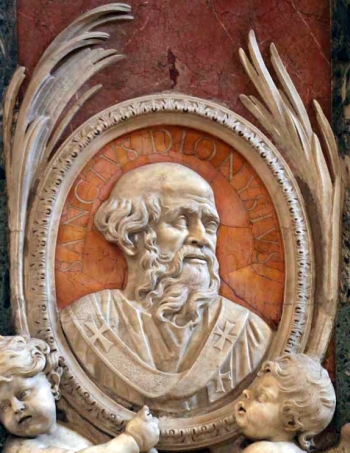
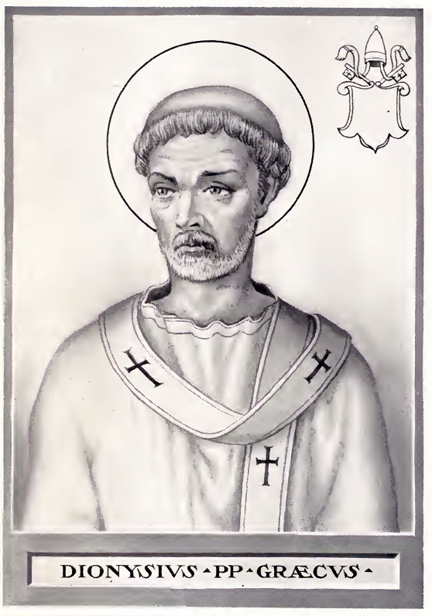
Saint of the Day – 26 December – St Pope Dionysius (Died 268) Bishop of Rome from 22 July 259 to his death on 26 December 268. According to early Church records, Dionysius was the first pope not Martyred for his Faith.
Historians know very little about the early life of Dionysius except that he was Greek and Italian. Though his family came from Greece, he was born in Italy sometime around 200. Some believe that he was born in the small town of Terra Nova but others think that he was born in Magna Graecia. During his early years, he used the name Dionusius, which he changed to Dionysius upon becoming Pope.
Dionysius was not the first man chosen for the next Pope after the death of Sixtus II. Pope Sixtus II was Martyred as were many other Christians at the time. It took nearly a year before Dionysius became the Pope and the Bishop of Rome.
Pope Dionysius had an easier time than Sixtus II did, mainly because of the murder of Emperor Valerian. Valerian was known for the persecution of Christians but the King of Persia issued orders in 260 that led to his capture and murde. Gallienus then became Emperor and issued orders that called for the tolerance of Christians. The new Emperor helped rebuild churches and allowed Christians to practice again. This period became known as the Little Peace of the Church, which lasted for nearly four decades.
Though his predecessor ruled for less than one year, Pope Dionysius reigned for more than nine years and a total of 3,445 days. He was likely in his late 50s when he assumed the throne and in his late 60s when he died. Due to his age, many historians believe that he died of old ages or natural causes. As with previous popes, the Church had his body interred in the Cemetery of Callistus. Many recognise him as a calm and peaceful man who worked hard to reorganise the Church after the many years of persecution and to care for the Christians under his care, in his role as the Holy Vicar of Christ.
St Abadiu of Antinoë Bl Agata Phutta Bi Bl Agnès Phila St Amaethlu of Anglesey St Archelaus of Mesopotamia Bl Bibiana Khamphai Bl Cecilia Butsi Bl Daniel of Villiers St Pope Dionysius (Died 268) St Euthymius of Sardis St Evaristo of Constantinople Bl Giovanni Orsini Bl Jean of Hainaut Bl Lucie Khambang St Margaret of Hohenfels Bl Maria Phon Bl Marinus of Rome Bl Paganus of Lecco Bl Pierre Boffet St Tathai of Wales St Theodore the Sacristan St Vincenza Maria Lopez (1847- 1890) Biography: https://anastpaul.com/2019/12/26/saint-of-the-day-26-december-saint-vincenza-maria-lopez-1847-1890/ St Zeno of Gaza St Pope Zosimus
Thought for the Day – 25 December – Meditations with Antonio Cardinal Bacci (1881-1971)
The Feast of the Nativity
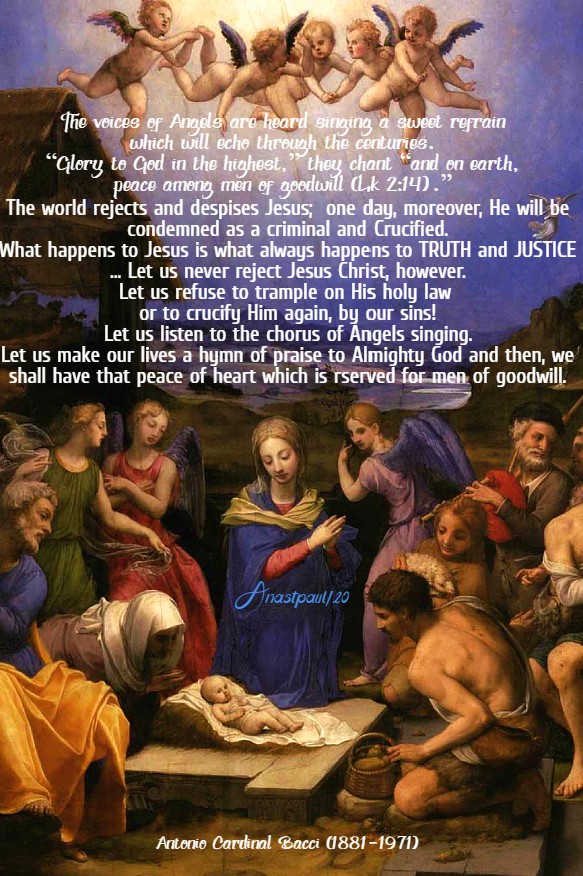
“While the earth, plunged in darkness, ignores the birth of Jesus, the sky brightens above the lowly barn in which the Infant is lying. The voices of Angels are heard singing a sweet refrain which will echo through the centuries. “Glory to God in the highest,” they chant “and on earth, peace among men of goodwill (Lk 2:14).”
The world rejects and despises Jesus; one day, moreover, He will be condemned as a criminal and Crucified. What happens to Jesus is what always happens to TRUTH and JUSTICE, which are often spurned by men but are always victorious in the end. For a time, truth and justice may seem to have been defeated once and for all but then, they triumph in an extraordinary manner. The example of Christ is enough to convince us of this.
Let us never reject Jesus Christ, however. Let us refuse to trample on His holy law or to crucify Him again, by our sins! Let us listen to the chorus of Angels singing. Let us make our lives a hymn of praise to Almighty God and then, we shall have that peace of heart which is rserved for men of goodwill.”
Quote/s of the Day – 25 December – The Solemnity of the Nativity of Our Lord, Jesus Christ and remembering Blessed Jacopone da Todi OFM (1230-1306)
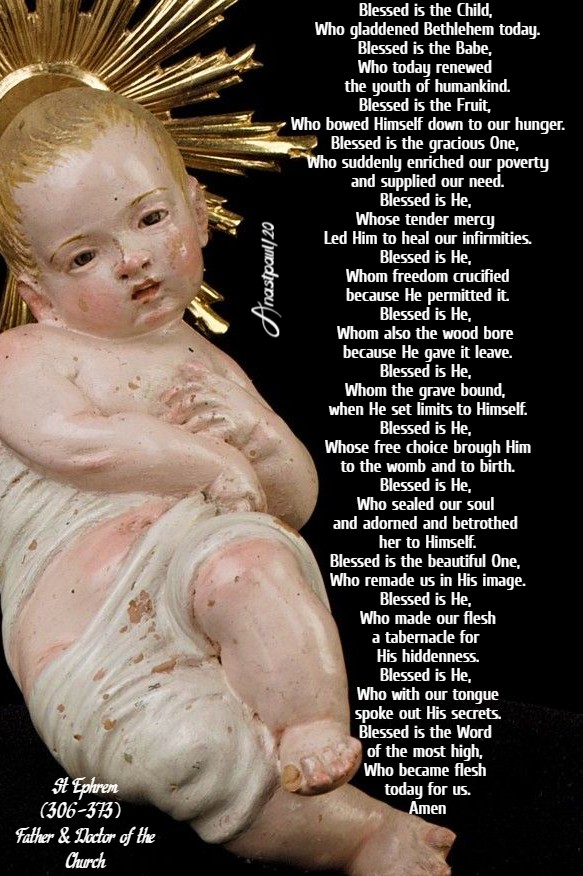
“Blessed is the Child, Who gladdened Bethlehem today. Blessed is the Babe, Who today renewed the youth of humankind. Blessed is the Fruit, Who bowed Himself down to our hunger. Blessed is the gracious One, Who suddenly enriched our poverty and supplied our need. Blessed is He, Whose tender mercy Led Him to heal our infirmities. Blessed is He, Whom freedom crucified because He permitted it. Blessed is He, Whom also the wood bore because He gave it leave. Blessed is He, Whom the grave bound, when He set limits to Himself. Blessed is He, Whose free choice brough Him to the womb and to birth. Blessed is He, Who sealed our soul and adorned and betrothed her to Himself. Blessed is the beautiful One, Who remade us in His image. Blessed is He, Who made our flesh a tabernacle for His hiddenness. Blessed is He, Who with our tongue spoke out His secrets. Blessed is the Word of the most high, Who became flesh today for us. Amen”
St Ephrem (306-373) Father & Doctor of the Church
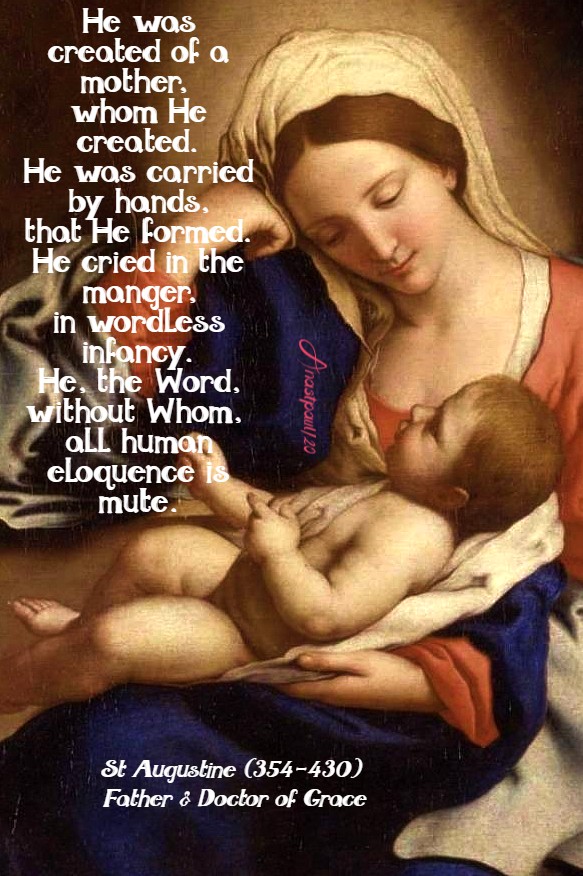
“He was created of a mother, whom He created. He was carried by hands, that He formed. He cried in the manger, in wordless infancy. He, the Word, without Whom, all human eloquence is mute.”
St Augustine (354-430) Father & Doctor of Grace
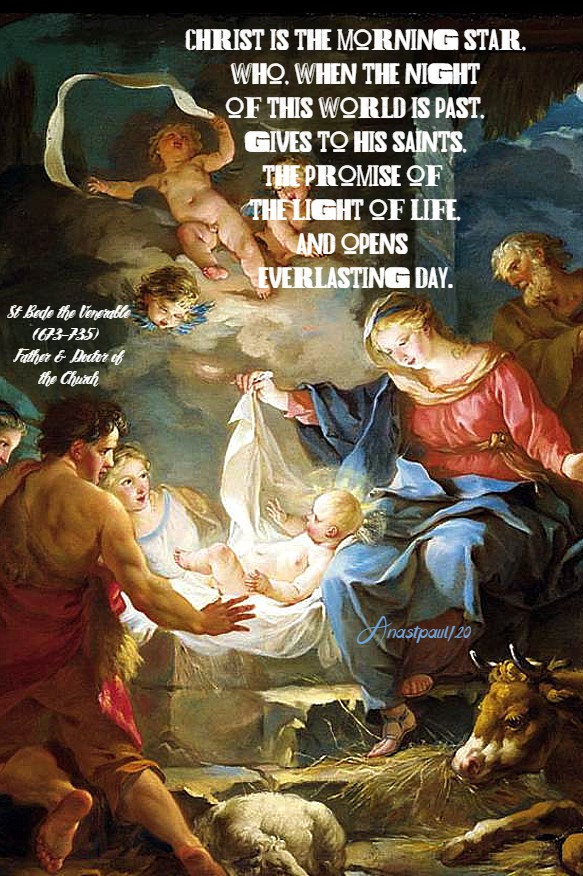
“Christ is the Morning Star, Who, when the night of this world is past, gives to His saints, the promise of the light of life, and opens everlasting day.”
St Bede the Venerable (673-735) Father & Doctor of the Church
“He came from His royal throne, the stern Conqueror of error and the gentle Apostle of love.”
William of Saint Thierry (c 1075-1148)
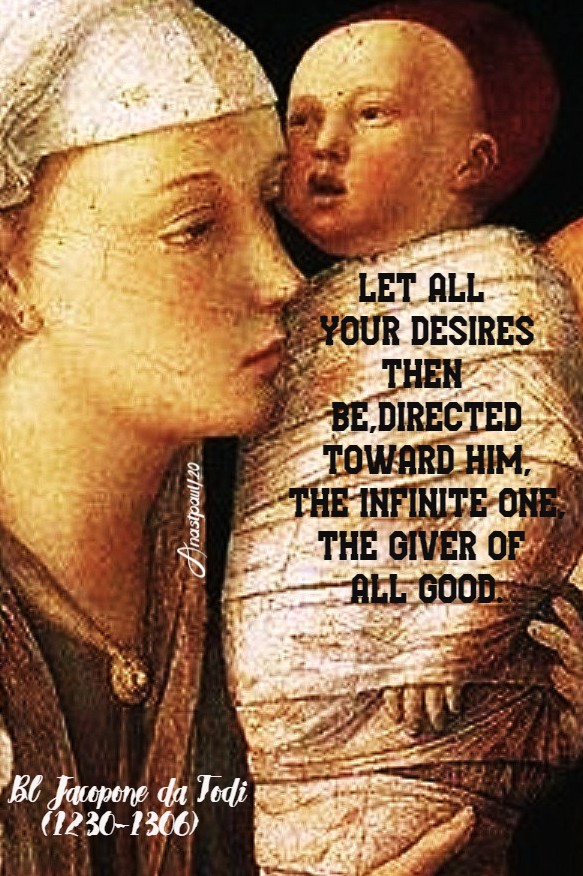
“Let all your desires then be, directed toward Him, the Infinite One, the Giver of all Good.”
Bl Jacopone da Todi (1230-1306)
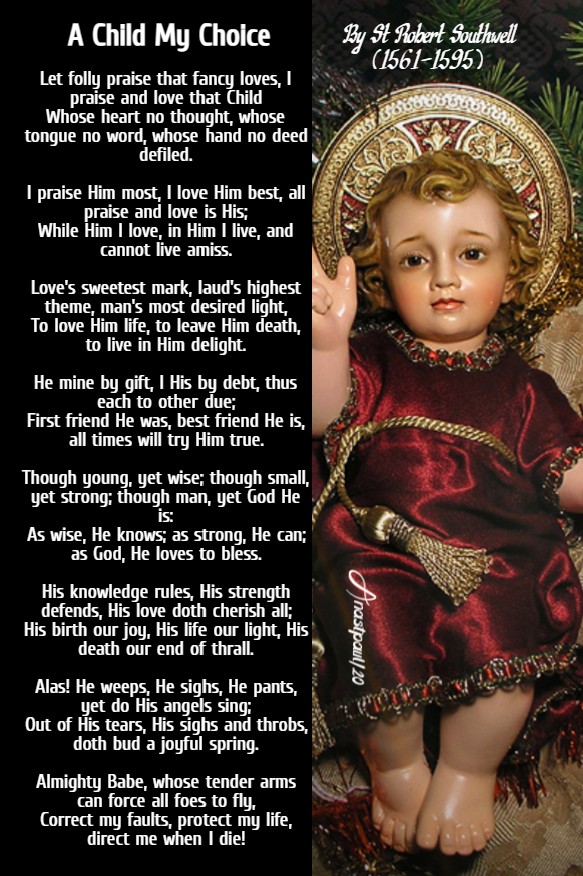
A Child My Choice By St Robert Southwell (1561-1595) Martyr
Let folly praise that fancy loves, I praise and love that Child Whose heart no thought, whose tongue no word, whose hand no deed defiled.
I praise Him most, I love Him best, all praise and love is His; While Him I love, in Him I live, and cannot live amiss.
Love’s sweetest mark, laud’s highest theme, man’s most desired light, To love Him life, to leave Him death, to live in Him delight.
He mine by gift, I His by debt, thus each to other due; First friend He was, best friend He is, all times will try Him true.
Though young, yet wise; though small, yet strong; though man, yet God He is: As wise, He knows; as strong, He can; as God, He loves to bless.
His knowledge rules, His strength defends, His love doth cherish all; His birth our joy, His life our light, His death our end of thrall.
Alas! He weeps, He sighs, He pants, yet do His angels sing; Out of His tears, His sighs and throbs, doth bud a joyful spring.
Almighty Babe, whose tender arms can force all foes to fly, Correct my faults, protect my life, direct me when I die!
Christ has been born for us, come, let us adore Him!
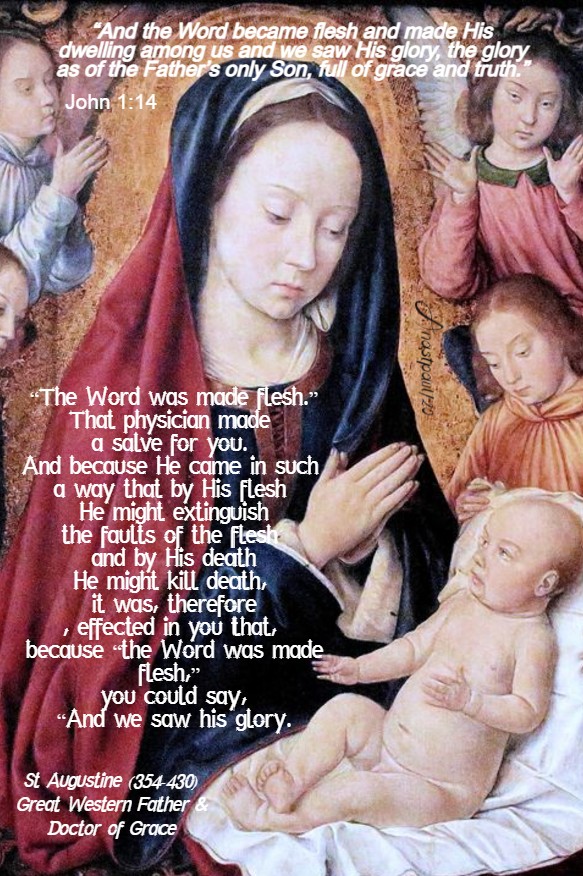
“And the Word became flesh and made His dwelling among us and we saw His glory, the glory as of the Father’s only Son, full of grace and truth.” – John 1:14
REFLECTION – “His glory no-one could see unless he was healed by the lowliness of His flesh. Why could we not see? Concentrate, my beloved people and see what I am saying. Dust, so to speak, had forcibly entered humanity’s eye; earth had entered it, had injured the eye and it could not see the light. That injured eye is anointed; it was injured by earth and earth is put there that it may be healed. For all salves and medicines are nothing but [compounds] of the earth. You have been blinded by dust, you are healed by dust; thus the flesh has blinded you, flesh heals you. For the soul had become carnal by assenting to carnal passions; from that the eye of the heart had been blinded. “The Word was made flesh.” That physician made a salve for you. And because He came in such a way that by His flesh He might extinguish the faults of the flesh and by His death He might kill death, it was, therefore, effected in you that, because “the Word was made flesh,” you could say, “And we saw his glory.” – St Augustine (354-430) Great Western Father & Doctor of Grace –Tractates on the Gospel of John, 2
PRAYER – Almighty God, Your incarnate Word fills us with the new light He brought to men. Let the light of faith in our hearts, shine through all that we do and say. We make our prayer through Jesus Christ, our Lord, with the Holy Spirit, God forever, amen.
The Word was God in the beginning and before all time, today, He is born to us, the Saviour of the world.
Our Morning Offering – 25 December – The Solemnity of the Nativity of Our Lord, Jesus Christ
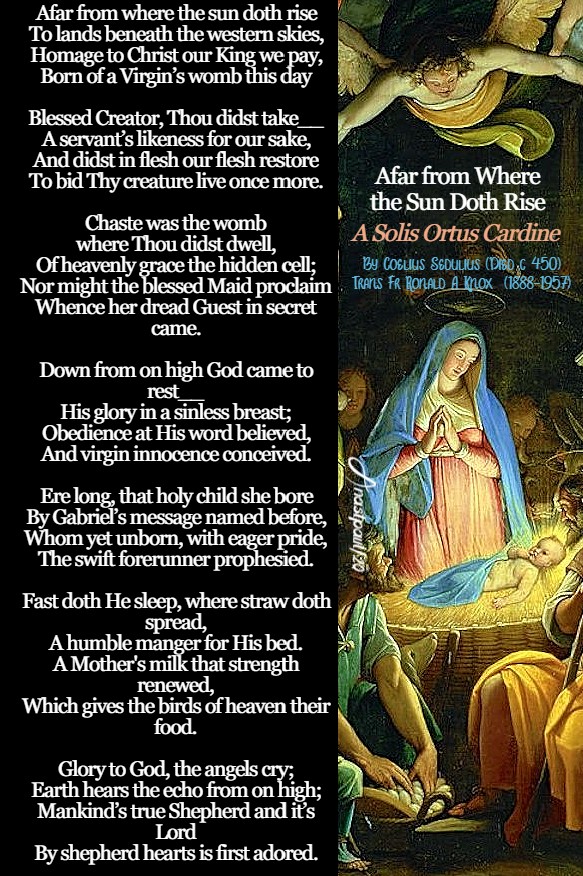
Afar from Where the Sun Doth Rise A Solis Ortus Cardine By Coelius Sedulius (Died c 450) Trans Fr Ronald A Knox (1888-1957)
Afar from where the sun doth rise To lands beneath the western skies, Homage to Christ our King we pay, Born of a Virgin’s womb this day
Blessed Creator, Thou didst take__ A servant’s likeness for our sake, And didst in flesh our flesh restore To bid Thy creature live once more.
Chaste was the womb where Thou didst dwell, Of heavenly grace the hidden cell; Nor might the blessed Maid proclaim Whence her dread Guest in secret came.
Down from on high God came to rest__ His glory in a sinless breast; Obedience at His word believed, And virgin innocence conceived.
Ere long, that holy child she bore By Gabriel’s message named before, Whom yet unborn, with eager pride, The swift forerunner prophesied.
Fast doth He sleep, where straw doth spread, A humble manger for His bed. A Mother’s milk that strength renewed, Which gives the birds of heaven their food.
Glory to God, the angels cry; Earth hears the echo from on high; Mankind’s true Shepherd and it’s Lord By shepherd hearts is first adored.
“A Solis Ortus Cardine…” (Latin for “From the Pivot of the Sun’s Rising”) is a poem by Christian Poet, Coelius Sedulius (Died c 450), recounting Christ’s life from His birth to His resurrection. Its 23 verses each begin with a consecutive letter of the Latin alphabet, making the poem an abecedarius. It is one of the oldest parts of the Roman Catholic liturgy, with two hymns formed from the first seven and four later verses. There have been monastic translations into Anglo-Saxon and later translations into other languages..
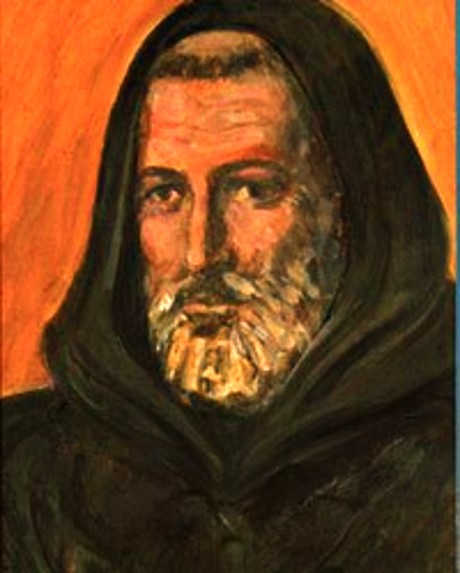
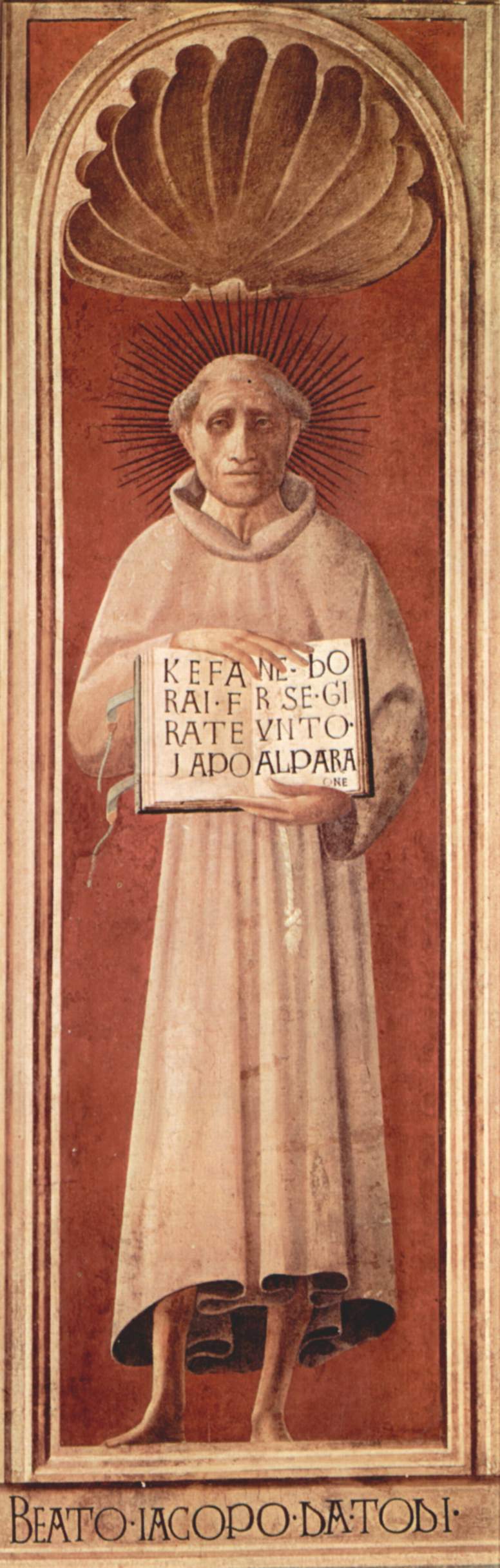
Saint of the Day – 25 December – Blessed Jacopone da Todi OFM (1230-1306) Franciscan Friar, Confessor, Hymnist, Poet, Mystic, Lawyer, – an Italian from Umbria in the 13th century. He wrote several laude (songs in praise of the Lord) in the local vernacular. He was an early pioneer in Italian theatre, being one of the earliest scholars who dramatised Gospel subjects. Born in c 1230 at Todi, Italy as Jacopo Benedetti and died on 25 December 1306 at Collazzone, Italy of natural causes, as the Priest intoned the Gloria from midnight Mass. He is also known as Jacomo da Todi, Jacopo Benedetti, Jacopo Benedicti, Jacopone Benedetti da Todi, Jacopone of Todi, James da Todi.
Jacomo, was born a noble member of the Benedetti family in the northern Italian city of Todi. He became a successful lawyer and married a pious, generous lady named Vanna.
His young wife took it upon herself to do penance for the worldly excesses of her husband. One day Vanna, at the insistence of Jacomo, attended a public tournament. She was sitting in the stands with the other noble ladies when the stands collapsed. Vanna was killed. Her shaken husband was even more disturbed when he realised that the penitential girdle she wore was for his sinfulness. On the spot, he vowed to radically change his life.
Jacomo divided his possessions among the poor and entered the Secular Franciscan Order. Often dressed in penitential rags, he was mocked as a fool and called Jacopone, or “Crazy Jim,” by his former associates. The name became dear to him.
After 10 years of such humiliation, Jacopone asked to be received into the Order of Friars Minor. Because of his reputation, his request was initially refused. He composed a beautiful poem on the vanities of the world, an act that eventually led to his admission into the Order in 1278. He continued to lead a life of strict penance, declining to be ordained a priest. Meanwhile, he was writing popular hymns in the vernacular.
Jacopone suddenly found himself a leader in a disturbing religious movement among the Franciscans. The Spirituals, as they were called, wanted a return to the strict poverty of Francis. They had on their side two cardinals of the Church and Pope Celestine V. These two cardinals though, opposed Celestine’s successor, Boniface VIII. At the age of 68, Jacopone was excommunicated and imprisoned. Although he acknowledged his mistake, Jacopone was not absolved and released until Benedict XI became Pope five years later. He had accepted his imprisonment as penance. He spent the final three years of his life more spiritual than ever, weeping “because Love is not loved.”During this time he wrote the famous Latin hymn, Stabat Mater.
On Christmas Eve in 1306 Jacopone felt that his end was near. He was in a convent of the Poor Clares with his friend, Blessed John of La Verna. Like Francis, Jacopone welcomed “Sister Death” with one of his favorite songs. It is said that he finished the song and died as the Priest intoned the “Gloria” from the midnight Mass at Christmas. From the time of his death, Brother Jacopone has been venerated as a saint, both within and outside of the Franciscan Order, although never formally Canonised.
Here lie the bones of Blessed Jacopone dei Benedetti da Todi, Friar Minor, who, having gone mad with love of Christ, by a new artifice deceived the world and took Heaven by violence. – from the tomb of Blessed Jacopone
Stabat Mater Dolorosa is a fine example of religious lyric in the Franciscan tradition. It was inserted into the Roman Missal and Breviary in 1727 for the Feast of the Seven Sorrows of the Blessed Virgin Mary, celebrated on the Friday before Good Friday. Following changes by Pope Pius XII, it now appears on the Feast of Our Lady’s Sorrows celebrated on 15 September. Many composers have set it to music
His contemporaries called Jacopone, “Crazy Jim.” We might well echo their taunt, for what else can you say about a man who broke into song in the midst of all his troubles? We still sing Jacopone’s saddest song, the Stabat Mater, but we Christians claim another song as our own, even when the daily headlines resound with discordant notes. Jacopone’s whole life rang out our song: “Alleluia!” May he inspire us to keep singing.
The Nativity of the Lord, Jesus Christ (Solemnity) Celebration of the anniversary of the birth of Our Lord. In the earliest days of the Church there was no such feast, the Saviour’s birth was commemorated with the Epiphany by the Greek and other Eastern Churches. First mention of the feast, then kept on 20 May, was made by Clement of Alexandria c 200. The Latin Church began c 300 to observe it on 25 December, though there is no certainty that Our Lord was born on that day. Priests have the privilege of saying three Masses, at midnight, daybreak and morning. This was originally reserved to the Holy Father alone – beginning about the 4th century he celebrated a midnight Mass in the Lateran Basilica (in which according to tradition, the manger of Bethlehem is preserved), a second in the church of Saint Anastasia, whose feast comes on 25 December and a third at the Vatican Basilica. Many peculiar customs of the day are the outcome of the pagan celebrations of the January calender. The Christmas tree, of which the first known mention was made in 1605 at Strasbourg, was introduced into France and England in 1840. The feast is a holy day of obligation, preceded by the preparatory season of Advent and by a special vigil – should it fall on a Friday it abrogates the law of abstinence. Today’s Gospel is the prologue of John.
St Adalsindis of Hamay St Alburga of Wilton St Anastasia of Sirmium Bl Artale St Basilée of the Via Latina Bl Bentivoglio de Bonis Bl Diego de Aro St Eugenia of Rome St Fulk of Toulouse Blessed Jacopone da Todi OFM (1230-1306) Franciscan Friar, Author of the “Stabat Mater” St Jovin of the Via Latina Bl Maria Therese von Wüllenweber Bl Matthew of Albano Bl Michael Nakashima Saburoemon Bl Nera St Romulus of Berry — Martyrs of Nicomedia: 20,000 Christians martyred by order of Diocletian. They were reported to have all been in the single basilica to celebrate Christmas. While there unquestionably was an endless series of martyrs under Diocletian, it’s likely the ancient sources exaggerated the numbers of this incident. And as the Christmas holy day was not celebrated in the East in 303, they were probably gathered for another feast. They were burned alive in 303 in the basilica of Nicomedia.
I offer today, special Prayers for you ALL and for all my extended family on WordPress. Most especially, my heart’s deepest thanksgiving for those most generous and loving Donors, who, in their generosity have constantly contributed to the upkeep of this site. For Rosemary, Hugh, Melanie who have sent Christmas gifts –
Thank you!
“Enter his gates with thanksgiving and his courts with praise, give thanks to him and praise his name.” Psalm 100:4
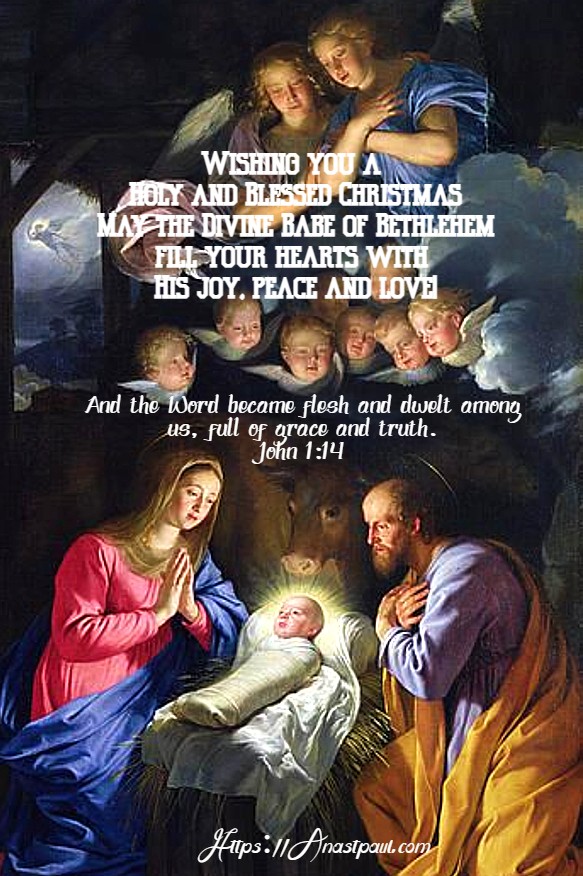
And my wishes for a most Holy and Blessed Christmas May the Divine Babe of Bethlehem fill your hearts with His joy, peace and love! Love Ana
And the Word became flesh and dwelt among us, full of grace and truth; we have beheld his glory, glory as of the only Son from the Father.
















 AnaStpaul
You must be logged in to post a comment.