Posted in SAINT of the DAY

Saint of the Day – 5 December – St Sabbas (439–532)

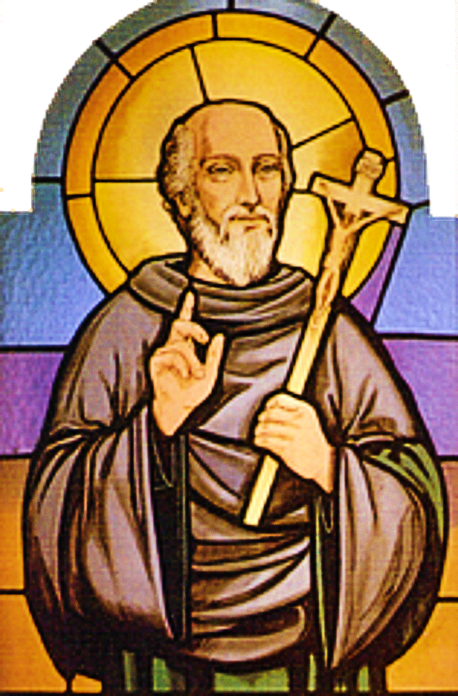
Saint of the Day – 5 December – St Sabbas (439–532) Priest, a Cappadocian-Syrian Monk, founder of several Monasteries, most notably the one known as Mar Saba. Born in 439 at Motalala, Cappadocia and died in 532 of natural causes. Also known as Sabbas of Mar Saba, Sabbas the Sanctified, Sabbas the Great, Sabas, Sava.

Sabbas is one of the most highly regarded patriarchs among the Monks of Palestine and is considered one of the founders of Eastern Monasticism.

After an unhappy childhood in which he was abused and ran away several times, Sabbas finally sought refuge in a Monastery. While family members tried to persuade him to return home, the young boy felt drawn to monastic life. Although the youngest Monk in the house, he excelled in virtue.

At age 18 he travelled to Jerusalem, seeking to learn more about living in solitude. Soon he asked to be accepted as a disciple of a well-known local solitary, although he was regarded as too young to live completely as a hermit. Initially, Sabbas lived in a Monastery, where he worked during the day and spent much of the night in prayer. At the age of 30 he was given permission to spend five days each week in a nearby remote cave, engaging in prayer and manual labour in the form of weaving baskets. Following the death of his mentor, Saint Euthymius, Sabbas moved farther into the desert near Jericho. There he lived for several years in a cave near the brook Cedron. A rope was his means of access. Wild herbs among the rocks were his food. Occasionally men brought him other food and items, while he had to go a distance for his water.

Some of these men came to him desiring to join him in his solitude. At first he refused. But not long after, relenting, his followers swelled to more than 150, all of them living in individual huts grouped around a church.

The Bishop persuaded a reluctant Sabbas, then in his early 50s, to prepare for the priesthood so that he could better serve his monastic community in leadership. While functioning as Abbot among a large community of Monks, he felt ever called to live the life of a hermit. Throughout each year—consistently in Lent—he left his Monks for long periods of time, often to their distress. A group of 60 men left the Monastery, settling at a nearby ruined facility. When Sabbas learned of the difficulties they were facing, he generously gave them supplies and assisted in the repair of their Church.

Over the years Sabbas travelled throughout Palestine, preaching the true faith and successfully bringing back many to the Church. At the age of 91, in response to a plea from the Patriarch of Jerusalem, Sabas undertook a journey to Constantinople in conjunction with the Samaritan revolt and its violent repression. He fell ill and soon after his return, died at the Monastery of Mar Saba.

Sabbas’s relics were taken by Crusaders in the 12th century and remained in Italy in the Church of Saint Anthony in Venice, until Pope Paul VI returned them to the Monastery in 1965, as a gesture of good will towards the Orthodox.

St Sabbas’ Relics at Mar Saba

The Monastery of Mar Saba long continued to be the most influential in those parts and produced several distinguished Monks, among them St John Damascene, the Father and Doctor of the Church, whose Feast we celebrated yesterday.

Today the Monastery is still inhabited by monks of the Eastern Orthodox Church. In Rome the Church of Saint Saba is dedicated to him. Saint Sabbas is regarded as one of the most noteworthy figures of early monasticism.

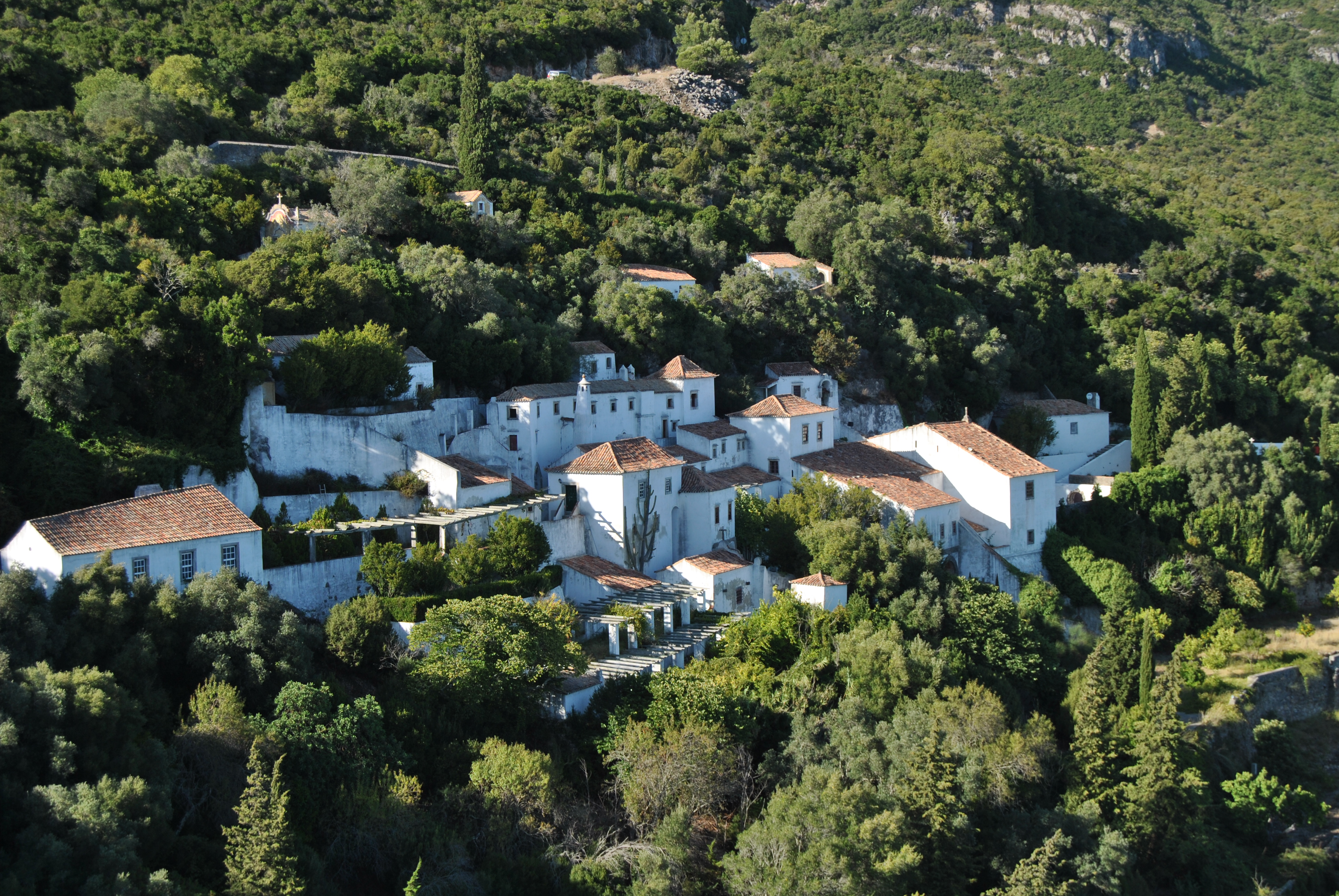
The Monastery of Mar Saba
Posted in SAINT of the DAY

Memorials of the Saints – 5 December

St Abercius
St Anastasius
St Aper of Sens
St Bartholomew Fanti of Mantua
St Basilissa of Øhren
St Bassus of Lucera
St Bassus of Nice
St Cawrdaf of Fferreg
St Christina of Markyate
St Consolata of Genoa
St Crispina
St Cyrinus of Salerno
St Dalmatius of Pavia
St Firminus of Verdun
St Gerald of Braga
St Gerbold
St Gratus
Blessed Jean-Baptiste Fouque (1851-1926)
The Life of the St Vincent de Paul of Marseilles:

https://anastpaul.com/2019/12/05/saint-of-the-day-5-december-blessed-jean-baptiste-fouque-1851-1926-saint-vincent-de-paul-of-marseilles/
St Joaquín Jovaní Marín
St John Almond
Bl Giovanni/John Gradenigo
St Justinian
St Martiniano of Pecco
Bl Narcyz Putz
St Nicetius of Trier
Bl Niels Stenson
St Pelinus of Confinium
Blessed Philip Rinaldi SDB (1856-1931)
Biography:

https://anastpaul.com/2017/12/05/saint-of-the-day-5-december-blessed-philip-rinaldi-s-d-b-1856-1931/
St Sabbas of Mar Saba (439–532) Priest
St Vicente Jovaní Ávila

Martyrs of Thagura – (12 saints): A group of twelve African Christians who were martyred together in the persecutions of Diocletian. The only details about them that have survived are five of their names – Crispin, Felix, Gratus, Juliua and Potamia.
302 in Thagura, Numidia

Martyred in the Spanish Civil War:
• Blessed Joaquín Jovaní Marín
• Blessed Vicente Jovaní Ávila

Posted in "Follow Me", GOD ALONE!, MEDITATIONS - ANTONIO CARD BACCI, QUOTES for CHRIST, QUOTES on HYPOCRISY, QUOTES on LOVE of GOD, QUOTES on SACRIFICE, QUOTES on SANCTITY, QUOTES on SELF-DENIAL, QUOTES on SIN

Thought for the Day – 4 December – True Love of Self

Thought for the Day – 4 December – Meditations with Antonio Cardinal Bacci (1881-1971)

TRUE LOVE of SELF

“There is a passage in the Gospel which might lead us to believe that we are forbidden to love ourselves.
“Amen, amen, I say to you,” Jesus declares, “unless the grain of wheat falls into the ground and dies, it remains alone but, if it dies, it brings forth much fruit. He who loves his life, loses it and he who hates his life in this world, keeps it unto life everlasting” (Jn 12:24-25).
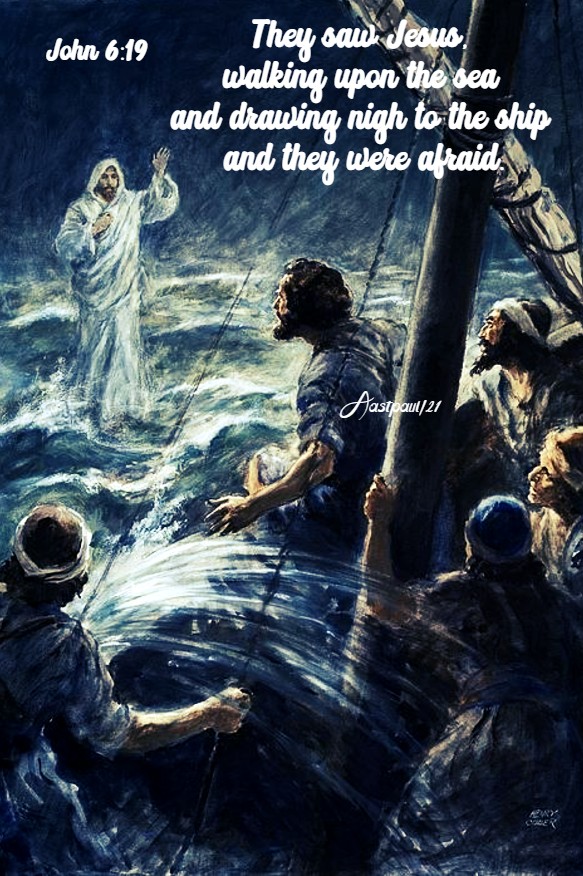
These words command us to hate ourselves in this world if we wish to attain salvation in the next life.
In what sense, however, does Christ mean that we are to hate ourselves?
He certainly means, that we should mortify our lower inclinations, deny our selfish ambitions, die to the world and be prepared to lose life itself, rather than offend God in any way.
This is the kind of hate to which He urges us, a hatred of any perversion of our nature or of our faculties.
If we prefer our own will, to that of our Creator, or love Him less than we love ourselves, or, worse still, if we forget and ignore Him in favour of passing pleasures, then, we invert the order of spiritual and moral values established by God and create a disorder which could lead us into sin.

Instead, we should love God above all things and subjugate our thoughts, desires and affections to Him.
We should be prepared to forget ourselves for His sake and even to sacrifice life itself or His honour and glory.
Then, our self-hatred will become a sublime love, which will bring us victory in our battle against our sensual inclinations.
It will give us peace and resignation in suffering and, at the hour of death, will give us that consolation and joy, which the martyrs experienced when they shed their blood for the sake of Jesus Christ.”

Antonio Cardinal Bacci

Posted in ART DEI, DOCTORS of the Church, FATHERS of the Church, MARIAN QUOTES, MOTHER of GOD, ON the SAINTS, QUOTES for CHRIST, QUOTES of the SAINTS, QUOTES on CREATION, QUOTES on PRAYER, QUOTES on SACRED SCRIPTURE, SAINT of the DAY, The MOST HOLY & BLESSED TRINITY

Quote/s of the Day – 4 December – St John Damascene, Father and Doctor of the Church

Quote/s of the Day – 4 December – The Memorial of St John Damascene (676-749) – Father and Doctor of the Church

“The whole earth
is a living icon
of the face of God.”

“The Son
is the Counsel
and Wisdom
and Power
of the Father.”

“All who ask receive, those who seek find
and to those who knock it shall be opened.
Therefore, let us knock
at the beautiful garden of Scripture.
It is fragrant, sweet and blooming
with various sounds of spiritual
and divinely inspired birds.
They sing all around our ears,
capture our hearts,
comfort the mourners,
pacify the angry
and fill us with everlasting joy.”

“Images are books for the illiterate
and silent heralds
of the honour of the saints,
teaching those who see,
with a soundless voice
and sanctifying the sight.”

“The saints must be honoured as friends of Christ
and children and heirs of God, …
Let us carefully observe the manner of life
of all the apostles, martyrs, ascetics
and just men who announced the coming of the Lord.
And let us emulate their faith,
charity, hope, zeal, life, patience under suffering
and perseverance unto death,
so that we may also share their crowns of glory.”

“Having confidence in you,
O Mother of God, I shall be saved.
Being under you protection,
I shall fear nothing.
With your help,
I shall give battle to my enemies
and put them to flight,
for devotion to you,
is an arm of Salvation.”

St John Damascene (676-749)
Father and Doctor of the Church

More here:
https://anastpaul.com/2019/12/04/quote-s-of-the-day-4-december-st-john-damascene/

Posted in ADVENT REFLECTIONS, CHRIST, the WAY,TRUTH,LIFE, DOCTORS of the Church, FATHERS of the Church, GOD ALONE!, HOLY ORDERS, I BELIEVE!, ONE Minute REFLECTION, QUOTES of the SAINTS, QUOTES on DISCIPLESHIP, QUOTES on FAITH, QUOTES on LOVE of GOD, QUOTES on SIN, QUOTES on the PRIESTHOOD, The WORD

Advent Reflection – – 6 December – “Do you believe that I am able to do this?” – Matthew 9:28

Advent Reflection – – 6 December – Friday of the First week of Advent, Readings: Isaiah 29:17-24,Psalms 27:1413-14,Matthew 9:27-31 and the Memorial of St John Damascene (675-749) Father and Doctor of the Church

Let us adore the Lord, the King who is to come.

When he entered the house, the blind men came to him and Jesus said to them, “Do you believe that I am able to do this?” They said to him, “Yes, Lord.” Then he touched their eyes, saying, “According to your faith be it done to you.” And their eyes were opened. … Matthew 9:28-30

REFLECTION – “O Lord, You led me from my father’s loins and formed me in my mother’s womb. You brought me, a naked babe, into the light of day, for nature’s laws always obey Your commands.
By the blessing of the Holy Spirit, You prepared my creation and my existence, not because man willed it or flesh desired it but by Your ineffable grace. The birth You prepared for me was such, that it surpassed the laws of our nature. You sent me forth into the light by adopting me as Your son and You enrolled me among the children of Your holy and spotless Church.
You nursed me with the spiritual milk of Your divine utterances. You kept me alive with the solid food of the body of Jesus Christ, Your only-begotten Son for our redemption. And He undertook the task willingly and did not shrink from it. Indeed, He applied Himself to it as though destined for sacrifice, like an innocent lamb. Although He was God, He became man and in his human will, became obedient to You, God His Father, unto death, even death on a cross.
In this way You have humbled Yourself, Christ my God, so that You might carry me, Your stray sheep, on Your shoulders. You let me graze in green pastures, refreshing me with the waters of orthodox teaching at the hands of Your shepherds. You pastured these shepherds and now, they in turn tend Your chosen and special flock. Now You have called me, Lord, by the hand of Your bishop to minister to Your people. I do not know why You have done so, for You alone know that. Lord, lighten the heavy burden of the sins through which I have seriously transgressed. Purify my mind and heart. Like a shining lamp, lead me along the straight path. When I open my mouth, tell me what I should say. By the fiery tongue of Your Spirit make my own tongue ready. Stay with me always and keep me in Your sight.
Lead me to pastures, Lord and graze there with me. Do not let my heart lean either to the right or to the left but let Your good Spirit guide me along the straight path. Whatever I do, let it be in accordance with Your will, now until the end.
And you, O Church, are a most excellent assembly, the noble summit of perfect purity, whose assistance comes from God. You in whom God lives, receive from us an exposition of the faith that is free from error, to strengthen the Church, just as our Fathers handed it down to us.” – From The Statement of Faith by St John Damascene, Priest“You have called me, Lord, to minister to Your people”

PRAYER – Lord, watch over Your people who come to You in confidence. Strengthen the hearts of those who hope in You. Give courage to those who falter because of their failures. In this holy season of Advent, lead them closer to You in faith and hope, by the power of your Holy Spirit. May they proclaim Your saving acts of kindness here on earth and one day, in Your eternal kingdom and may the prayers of St John Damascene bring us light and strength. Through Jesus Christ our Lord, with the Holy Spirit, God forever, amen.

Posted in ADVENT PRAYERS, DOCTORS of the Church, FATHERS of the Church, GOD ALONE!, Our MORNING Offering, PRAYERS of the SAINTS, PRECIOUS BLOOD PRAYERS, SAINT of the DAY, The HOLY EUCHARIST / The HOLY MASS

Our Morning Offering – 4 December – God, my God, May I Always Abide in You

Our Morning Offering – 4 December – Friday of the First Week of Advent and the Memorial of St John Damascene (675-749) Father and Doctor of the Church

God, my God,
May I Always Abide in You
By St John Damascene (675-749)

God, my God,
unextinguishable and invisible fire,
You make Your angels flaming fire.
Out of Your inexpressible love,
You have given me Your divine Flesh as food
and through this communion
of Your immaculate Body and precious Blood,
You receive me as a partaker of Your divinity.
Permeate all my body and soul,
all my bones and sinews.
Consume my sins in fire.
Enlighten my soul and illumine my mind.
Sanctify my body and make Your abode in me
together with Your blessed Father and all-holy Spirit,
that I may always abide in You,
through the intercession
of Your immaculate Mother
and all Your saints.
Amen

Posted in SAINT of the DAY

Saint of the Day – 4 December – Saint Osmund (Died 1099)

Saint of the Day – 4 December – Saint Osmund (Died 1099) Bishop of Salisbury, Confessor, Count of Sées, was a Norman noble, Lord Chancellor (c 1070-1078). Osmund is Also known as Edimund, Edmund, Osimund. Additional Memorial – 16 July (translation of his relics). St Osmund was born at Seez, Normandy, France and died during the night of 3 or early hours of 4 December in 1099 at Salisbury, England of natural causes. Patronages – against insanity or mental illness, against paralysis, against ruptures, against toothache, of paralysed people.

Osmund, a native of Normandy, was the son of Count Henry of Seez and Isabella, half-sister of King William the Conqueror of England. He took part in the Norman Conquest and served William as his Chancellor and accompanied him to England and was made Chancellor of the realm about 1070. He was employed in many civil transactions and was engaged as one of the Chief Commissioners for drawing up the Do0mesday Book. He was created Earl of Dorset at the same time but he did not refer to himself with that title.

Osmund became Bishop of Salisbury by authority of Pope Gregory VII and was consecrated by Blessed Archbishop Lanfranc (see link to Blessed Lanfranc’s life below) around 3 June 1078. His Diocese comprised the counties of Dorset, Wiltshire and Berkshire, having absorbed the former bishoprics of Sherborne and Ramsbury under its incumbent at the 1075 Council of London. In his Acts of the English Bishops, William of Malmesbury describes medieval Salisbury as a fortress rather than a city, placed on a high hill, surrounded by a massive wall. Peter of Blois later referred to the castle and Church as “the ark of God shut up in the temple of Baal.”

Salisbury Cathedral

He set about organising the new Diocese and providing it with its first Cathedral at Sarum. In establishing its constitution, he made it a model for many other such foundations. He is also regarded as the origin of the Sarum tradition of worship, even if it may have developed and been formalised later. Osmund also collected manuscripts for the Cathedral library, was a copier and binder of books, authored a life of St Aldhelm and was responsible for drawing up the books governing the liturgical matters for the Diocese such as the Mass and Divine Office, the so-called Sarum Use. Osmund also founded a Cathedral chapter of canons regular and a seminary for clerics.

Henry I’s biographer C Warren Hollister suggests the possibility that Osmund was in part responsible for Henry’s education; Henry was consistently in the Bishop’s company during his formative years, around 1080 to 1086.

Osmund assisted the king in assembling the massive census which became the Domesday Book and in 1086, he was present at the Great Gemot (political meeting) held at Old Sarum when the Domesday Book was accepted and the great landowners swore fealty to the sovereign.

In the dispute over investiture between King William II and St Anselm of Canterbury, Osmund initially sided with the king but later he admitted he had made a mistake and he begged Anselm’s forgiveness.

Osmund died in the night of 3 December 1099 and was succeeded, after the see had been vacant for eight years, by Roger of Salisbury, a statesman and counsellor of Henry I. His remains were buried at Old Sarum, translated to New Salisbury on 23 July 1457, and deposited in the Lady Chapel, where his sumptuous shrine was destroyed under Henry VIII. A flat slab with the simple inscription “MXCIX” has lain in various parts of the Cathedral. In 1644 it was in the middle of the Lady Chapel. It is now under the easternmost arch on the south side.

William of Malmesbury, in summing up Osmund’s character, says he was “so eminent for chastity that common fame would itself blush to speak otherwise than truthfully concerning his virtue. Stern he might appear to penitents but not more severe to them than to himself. Free from ambition, he neither imprudently wasted his own substance, nor sought the wealth of others.”

The cause for Osmund’s Canonisation began and was pursued from 1228. Pope Callistus III Canonised him in 1457. He was the last English person to be declared a Saint until the Canonisation of Sts Thomas More and John Fisher in 1935.

Prayer:
Almighty God, the light of the faithful and shepherd of souls, who set Your servant Osmund to be a Bishop in the Church, to feed Your sheep by the word of Christ and to guide them by good example, give us grace to keep the faith of the Church and so to follow in the footsteps of Jesus Christ, the Chief Shepherd and Bishop of our souls, that we may, with Osmund, come to that everlasting joy which is His promise to us. Amen.

The Life of Blessed Lanfrance: https://anastpaul.com/2020/05/28/saint-of-the-day-28-may-2020-blessed-lanfranc-of-canterbury-osb-c-1005-1089/

Posted in DOCTORS of the Church, FATHERS of the Church, SAINT of the DAY

Memorials of the Saints – 4 December

St John Damascene (675-749) Father & Doctor of the Church (Optional Memorial)
St John’s Life:

https://anastpaul.com/2017/12/04/saint-of-the-day-st-john-damascene-676-749-last-of-the-greek-fathers-and-doctor-of-the-church/
And Pope Benedict on St John Damascene:
https://anastpaul.com/2018/12/04/saint-of-the-day-4-december-st-john-damascene-675-749-father-doctor-of-the-church/

St Ada of Le Mans
St Adelmann of Beauvais
Bl Adolph Kolping
St Anno II
St Apro
St Barbara (Died 3rd Century) Martyr
About St Barbara
:
https://anastpaul.com/2019/12/04/saint-of-the-day-4-december-saint-barbara-3rd-century-martyr/

St Bernardo degli Uberti
St Bertoara of Bourges
St Christianus
St Clement of Alexandria
St Cyran of Brenne
St Eraclius
St Eulogio Álvarez López
St Ezequiel Álvaro de La Fuente
St Felix of Bologna
Bl Francis Galvez
St Francisco de la Vega González
St Giovanni Calabria
St Heraclas of Alexandria
St Jacinto García Chicote
Bl Jerome de Angelis
St John the Wonder Worker
St Maruthas
St Melitus of Pontus
St Osmund (Died 1099) Bishop
Bl Pietro Tecelano
St Prudens
St Robustiano Mata Ubierna
St Sigiranus
Bl Simon Yempo
St Sola
St Theophanes

Martyred in the Spanish Civil War:
• Blessed Eulogio Álvarez López
• Blessed Ezequiel Álvaro de La Fuente
• Blessed Francisco de la Vega González
• Blessed Jacinto García Chicote
• Blessed Robustiano Mata Ubierna

Posted in GOD ALONE!, MEDITATIONS - ANTONIO CARD BACCI, PRACTISING CATHOLIC, QUOTES - J R R Tolkien and MORE, QUOTES on DISCIPLESHIP, QUOTES on FAITH, QUOTES on LOVE of GOD, QUOTES on PRAYER, QUOTES on SANCTITY, QUOTES on SILENCE, QUOTES on VIRTUE, QUOTES on WATCHING

Thought for the Day – 3 December – Recollection

Thought for the Day – 3 December – Meditations with Antonio Cardinal Bacci (1881-1971)

Recollection

“The Holy Spirit places the following words on the lips of the prophet Jeremias.
“With desolation is all the land made desolate, because, there is none that considereth in the heart” (Jer 12:11).
Dissipation is the mark of the worldly and of the mediocre.
The worldling is dissipated because, instead of seeking happiness in God, he looks for it in earthly pleasures and even in sin.
The mediocre Christian, on the other hand, oscillates between God and the world.
He fails to make a definite choice between virtue and sacrifice on one side and his own comfort and satisfaction on the other.

The dissipated soul is absorbed in many things and has no time to reflect on the eternal truths or to think of God and of spiritual progress.
As a result, it is incapable of solid virtue, or, if it achieves this for a while, it soon evaporates.
The man who is recollected retires silently into the presence of God whenever he can.
He derives consolation from conversation with God and responds generously to His inspirations.
The man who is dissipated, wastes the graces which God gives him, is deaf to His appeals and because he is too much in contact with material things, ends by forgetting Heaven and by being drawn by His passions towards spiritual destruction.

By depriving us of God’s grace, dissipation leads to sin and to the death of the soul.
Have we not had personal experience of this?

Antonio Cardinal Bacci

Posted in JESUIT SJ, QUOTES of the SAINTS, QUOTES on PRAYER, QUOTES on REPENTANCE, QUOTES on WORK/LABOUR, QUOTES on ZEAL, SAINT of the DAY

Quote/s of the Day – 3 December – St Francis Xavier

Quote/s of the Day – 3 December – The Memorial of St Francis Xavier SJ (1506-1552)

“It is impossible
to find a saint
who did not take
the “two P’s” seriously –
Prayer and Penance.”

“No-one may ever excel in great things,
who do not first excel in little things.”

“If you are in danger,
if your hearts are confused,
turn to Mary!”

More here:
https://anastpaul.com/2019/12/03/quote-s-of-the-day-3-december-st-francis-xavier/

St Francis Xavier (1506-1552)

Posted in ADVENT REFLECTIONS, GOD ALONE!, JESUIT SJ, ONE Minute REFLECTION, QUOTES of the SAINTS, QUOTES on FAITH, SAINT of the DAY, SOLDIERS/ARMOUR of CHRIST

Advent Reflection – 3 December – ‘Ex Fide’ vs ‘Cum Fide’

Advent Reflection – 3 December – Thursday of the First week of Advent, Readings: Isaiah 26:1-6,Psalms 118:1 and 8-919-2125-27Matthew 7:2124-27 and The Memorial of St Francis Xavier SJ (1506-1552)

Show forth Your power Lord and come.
Come in Your great strength and save us.

“Everyone then who hears these words of mine and does them will be like a wise man who built his house on the rock. And the rain fell and the floods came and the winds blew and beat on that house but it did not fall, because it had been founded on the rock.” … Matthew 7:24-25

REFLECTION – “The just, (that is to say those who in baptism have put on the new man created in justice) live, insofar as they are just, by faith, by the light that the sacrament of illumination brings to them. The more they live by faith, the more they realise in themselves, the perfection of His divine adoption. Notice this expression carefully: ‘EX fide,’ the exact meaning of this is that faith ought to be the root of all our actions, of all our life. There are souls who live with faith (CUM fide). They have faith and one cannot deny that they practise it. But it is only on certain occasions … that they remember their faith to any purpose. …
But when faith is living, strong, ardent, when we live by faith, that is to say, when in everything, we are actuated by the principles of faith, when faith is the root of all our actions, the inward principle of all our activity, then we become strong and steadfast, in spite of difficulties within and without, in spite of obscurities, contradictions and temptations. Why so? Because, by faith, we judge, we estimate all things as God sees and estimates them – we participate in the divine immutability and stability.
Is not this what our Lord said? “Everyone who listens to these words of mine and acts on them” – that is to live by faith – “will be like a wise man who built his house on rock. The rain fell, the floods came, and the winds blew and buffeted the house. But it did not collapse.” For Jesus Christ immediately adds: “it had been set solidly on rock” (Mt 7:24-25).” … Bl Columba Marmion (1858-1923) Abbot – Our Faith, the Victory over the World (Christ, the Ideal of the Monk)

PRAYER – God our Father, You open the gates of the kingdom of heaven to those who are born again of water and the Holy Spirit. Increase the grace You have given, so that the people who have been purified from all sin, may not forfeit the promised blessing of Your love. Grant that we may ever keep Your Son, the Lord Jesus Christ, before our eyes and do all in Him and through Him and for Him. And may the prayers of Your great missioner, St Francis Xavier, he who lived Your words, strengthen our faith.

Posted in JESUIT SJ, PRAYERS of the SAINTS, QUOTES on LOVE of GOD, SAINT of the DAY

Our Morning Offering – 3 December – I Love Thee, God, I love Thee By St Francis Xavier

Our Morning Offering – 3 December – Thursday of the First week of Advent and The Memorial of St Francis Xavier SJ (1506-1552)

I Love Thee, God, I Love Thee
By St Francis Xavier
Translated by Gerard Manley Hopkins SJ (1844-1889)

I love Thee, God, I love Thee—
Not out of hope for heaven for me
Nor fearing not to love and be
In the everlasting burning.
Thou, my Jesus, after me
Didst reach Thine arms out dying,
For my sake suffered nails and lance,
Mocked and marred countenance,
Sorrows passing number,
Sweat and care and cumber,
Yea and death and this for me,
And Thou could see me sinning.
Then I, why should not I love Thee,
Jesu so much in love with me?
Not for heaven’s sake, not to be
Out of hell by loving Thee,
Not for any gains I see,
But just the way that Thou didst me
I do love and will love Thee.
What must I love Thee, Lord, for then?
For being my king and God.
Amen

Posted in SAINT of the DAY

Saint of the Day – 3 December – Saint Emma of Bremen (c 975–1038)

Saint of the Day – 3 December – Saint Emma of Bremen (c 975–1038) Married Laywoman, Princess, mother and widow, apostle of the poor, founder of Churches. Also known as Emma of Lesum, Emma of Stiepel, Hemma, Imma. Born in c 975 and died on 3 December 1038 of natural causes.

Emma was born into the Saxon noble family of the Immedinger, descendants of Widukind. She married Liudger, a son of the Saxon duke Hermann Billung and brother of Bernard I, Duke of Saxony. Emperor Otto III made the couple a present in 1001 of the Pfalz or palatium in Stiepel), where, in 1008 Emma had a church built dedicated to the Virgin Mary, which later became a popular place of pilgrimage. The only child of the marriage was Imad, who was Ordained a Priest and later was consecrated as the Bishop of Paderborn in 1051.

After the early death of her husband in 1011, Emma withdrew to the estate of Lesum (now Bremen-Burglesum) and with her fortune, generously supported Bremen Cathedral and granted the Cathedral chapter her property at Stiepel with its church.

She was portrayed as a great benefactress of the Church and indeed, founded a number of Churches in the Bremen area, although her greatest care was for the poor.

Emma was later venerated as a Saint, although there is no evidence that she was formally ever either beatified or canonised. She was buried in Bremen Cathedral, where her tomb was still to be seen in the 16th century. Her tomb is one of the biggest in the cemetery. When the tomb was opened, her body had crumbled to dust except for her right hand (the hand that dispensed the help to the needy and the poor). That relic was placed in the Abbey of Saint Ludger at Werden.

There is a well-known Bremen legend concerning her gift of a meadow to the town in 1032. When a delegation of the townspeople approached her with a request for more meadowland, Emma promised them as much meadow as a man could run round in an hour. Her brother-in-law Bernard or Benno, Duke of Saxony, with an appraising eye on his inheritance, suggested mockingly that she might as well give them as much land as a man could run round in a day. Emma agreed to this but Bernard asked to choose the man who was to do the running and when Emma agreed to that too, picked out a legless cripple past whom they had just walked. This man proved, however, to have extraordinary strength and endurance and by the end of the day had succeeded in making his way round a very substantial area, bigger even than the present Bremen town meadow.

This story has been current in various forms since at least the 18th century, although there is no documentary evidence for it but gives a whole meaning to the inclusion of the figure of the “cripple” at the feet of the statue of Bremen Roland, the protector of the City of Bremen.

“Cripple” at the feet of the Roland statue in Bremen
Posted in JESUIT SJ, SAINT of the DAY

Memorials of the Saints – 3 December

St Francis Xavier SJ (1506-1552) (Memorial)

One of the Greatest Missionaries since St Paul:
https://anastpaul.com/2018/12/03/saint-of-the-day-3-december-st-francis-xavier-sj-1506-1552-one-of-the-greatest-missionaries-since-st-paul/

St Abbo of Auxerre
St Abran
St Agapius
St Agricola of Pannonia
St Alvaro González López
St Anthemius of Poitiers
St Attalia of Strasbourg
Bl Bernard of Toulouse OP Martyr
St Birinus of Dorchester
St Cassian of Tangiers
St Claudius of Africa
St Claudius the Martyr
St Crispin of Africa
St Edward Coleman
St Eloque of Lagny
St Emma of Bremen (c 975–1038)
St Ethernan
St Francisco Delgado González
St Francisco Fernández Escosura
St Hilaria the Martyr
St Jason the Martyr
Blessed Johann Nepomuk von Tschiderer (1777-1860)
His Life:

https://anastpaul.com/2019/12/03/saint-of-the-day-3-december-blessed-johann-nepomuk-von-tschiderer-1777-1860/
St John of Africa
St Juan Bautista Ferris Llopis
St Julián Heredia Zubia
St Lucius
St Lucy the Chaste
St Magina of Africa
St Mamas
St Manuel Santiago y Santiago
St Marcos García Rodríguez
St Maurus the Martyr
St Seleucus
St Stephen of Africa
St Theodore of Alexandria
St Theodulus of Edessa
St Valeriano Rodríguez García
St Veranus
Zephaniah the Prophet

Martyrs of Nicomedia: Christians martyred together in the persecutions of Diocletian – Ambicus, Julius and Victor. c 303 in Nicomedia, Bithynia (modern Izmit, Turkey).

Martyred in the Spanish Civil War: Thousands of people were murdered in the anti-Catholic persecutions of the Spanish Civil War from 1934 to 1939.
• Blessed Alvaro González López
• Blessed Francisco Delgado González
• Blessed Francisco Fernández Escosura
• Blessed Juan Bautista Ferris Llopis
• Blessed Julián Heredia Zubia
• Blessed Manuel Santiago y Santiago
• Blessed Marcos García Rodríguez
• Blessed Valeriano Rodríguez García

Posted in ADVENT QUOTES, ADVENT REFLECTIONS, CHRIST, the WAY,TRUTH,LIFE, MEDITATIONS - ANTONIO CARD BACCI, QUOTES - J R R Tolkien and MORE, QUOTES for CHRIST, QUOTES on PEACE

Thought for the Day – 2 December – Exactly What is the Peace of Jesus Christ?

Thought for the Day – 2 December – Meditations with Antonio Cardinal Bacci (1881-1971)

Exactly What is the Peace of Jesus Christ?

“The spirit of peace pervades the Gospel.
When Jesus is born, choirs of angels sing above the stable in Bethlehem: “Glory to God in the highest ad on earth, peace among men of good will” (Lk 2:14).
When our Saviour has risen gloriously from the dead, He appears to His disciples and greets them with the words: “Peace be to you.”
Finally, when He is departing from this earth, He leaves his peace to His followers as their inheritance. “Peace I leave with you,” He says to them, “my peace I give to you; not as the world gives, do I give to you. Do not let your heart be troubled or be afraid” (Jn 14:27).

Exactly what is the peace of Jesus Christ?
It is much different from worldly peace, presuming that the world can give some kind of peace.
St Paul says of the Saviour that “he himself is our peace” (Eph 2:14).
How are we to understand what is meant by this?
The Apostle himself explains when he writes: “Having been justified by faith, let us have peace with God through our Lord Jesus Christ” (Rom 5:1).
Jesus Christ, therefore, is our peacemaker.
He has shouldered our iniquities and has offered Himself to the Father as a victim of expiation and of reconciliation.
It is at the price of Christ’s precious blood, that we have regained peace with God and freedom from our sins.
This is the peace which our Lord has given us.
Let us remember, however, that if we return to the slavery of sin, we shall lose at once, the jewel of peace which Jesus Christ has bestowed on us.
“There is no peace to the wicked” (Isa 48:22).
We have experienced on many occasions how true this is.
Sin destroys peace of soul because it deprives us of Jesus, without Whom, peace cannot survive.
Let us resolve, therefore, to remain always close to our Lord and far from sin.
Then only shall we be able to preserve our peace of mind in the midst of temptations and of earthly sorrows.

Antonio Cardinal Bacci

Posted in ADVENT QUOTES, GOD ALONE!, QUOTES of the SAINTS, QUOTES on CONVERSION, QUOTES on GRACE, QUOTES on LOVE of GOD, QUOTES on SELF-DENIAL, SAINT of the DAY

Quote of the Day – 2 December – “If we would God discern …

Quote of the Day – 2 December – Wednesday of the First Week of Advent and The Memorial of Bl Jan/John van Ruusbroec(k) (c 1293-1382)

“If we would God discern
The world we must despise,
His love and hate must learn,
See all things with His eyes.
And we must self forgo
If God we would attain,
His grace must in us grow
And ease us from all pain.
So shall we sing His praise
And be at one with Him,
In peace our voices raise
In the celestial hymn,
That with quadruple harmony
And all mellifluous melody,
In Heaven resounds eternally.”

Blessed Jan van Ruusbroec (1293-1381)

(The Seven Steps of the Ladder of Spiritual Love)

Posted in ADVENT REFLECTIONS, CHRIST, the WAY,TRUTH,LIFE, ONE Minute REFLECTION, QUOTES for CHRIST, QUOTES of the SAINTS, QUOTES on GRACE, QUOTES on SANCTITY, SACRAMENTS, SAINT of the DAY, The HOLY EUCHARIST / The HOLY MASS, The WORD

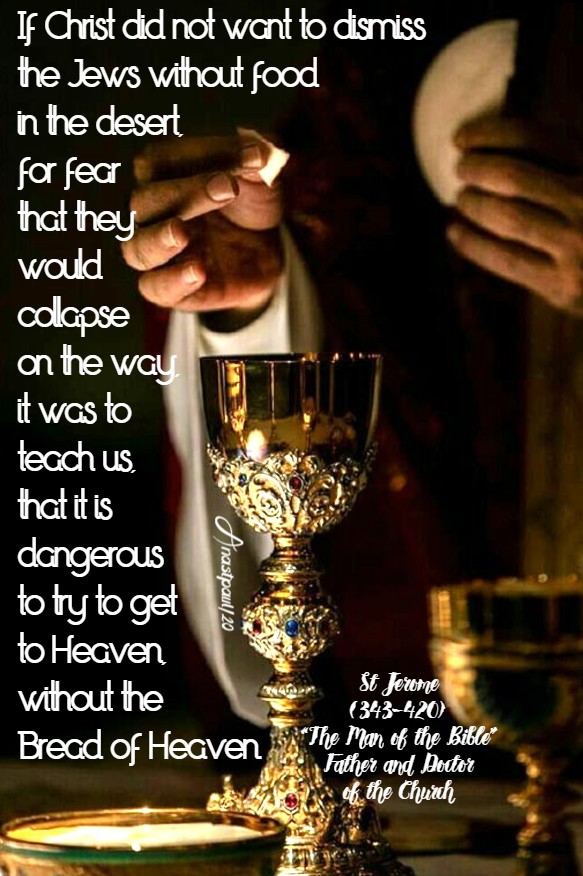
Advent Reflection – 2 December – ” I do not want to send them away hungry, for fear they may collapse on the way.”

Advent Reflection – 2 December – Wednesday of the First Week of Advent, Readings: Isaiah 25:6-10,Psalms 23:1-33-456Matthew 15:29-37 and the Memorial of Bl Jan/John van Ruysbroec(k) (c 1293-1382)

Come to us and save us, Lord God Almighty
Let Your face smile on us and we shall be safe.

Jesus summoned his disciples and said, “My heart is moved with pity for the crowd, for they have been with me now for three days and have nothing to eat. I do not want to send them away hungry, for fear they may collapse on the way.” … Matthew 15:32

REFLECTION – “The second coming of Christ our Bridegroom takes place daily in good persons; indeed, it takes place frequently and repeatedly, with new gifts and graces, in all those who prepare themselves for it to the best of their ability. We do not intend to speak here of a person’s initial conversion or of the graces, which were first bestowed when he turned from sin to virtue. Rather, we wish to speak of a day-to-day increase in new gifts and new virtues and of a present, daily coming of Christ our Bridegroom into our soul. (…)

This is [a] coming of Christ our Bridegroom which takes place daily with an increase in graces and new gifts, for when a person receives any of the sacraments with a humble heart and without placing any obstacle in the way of the sacrament’s effects, then he receives new gifts and an increase of grace because of his humility and because of the mysterious working of Christ in the sacraments. (…) It is, then, another coming of Christ our Bridegroom which is present to us everyday. We should reflect on it with a heart full of desire so that it might take place in ourselves, for this coming is necessary, if we are to remain steadfast or go forward into eternal life.” … Bl Jan van Ruysbroec (1293-1381) Canon Regular – The Spiritual Espousals, Pt. 2

PRAYER – Prepare our hearts, Lord, by the power of Your grace. When Christ comes, may He find us worthy to receive from His hand, the Bread of Heaven at the feast of eternal life. Through our Lord Jesus Christ Your Son, with the Holy Spirit, God now and for all eternity, amen.

Posted in ADVENT PRAYERS, HYMNS, Our MORNING Offering, POETRY, PRAYERS for SEASONS, The CHRIST CHILD

Our Morning Offering – 2 December – Come, Sun and Saviour

Our Morning Offering – 2 December – Wednesday of the First Week of Advent

Come, Sun and Saviour
8th Century Catholic Advent Prayer/Hymn

Come, Sun and Saviour,
to embrace our gloomy world,
i’s weary race,
As groom to bride, as bride to groom:
The wedding chamber, Mary’s womb.
At Your great Name, O Jesus, now
All knees must bend, all hearts must bow,
All things on earth with one accord,
Like those in heaven, shall call You Lord.
Come in Your holy might, we pray,
Redeem us for eternal day.
Defend us while we dwell below,
From all assaults of our dread foe. Amen

Posted in FATHERS of the Church, SAINT of the DAY

Saint of the Day – 2 December – Saint Chromatius of Aquileia (Died c 407)

Saint of the Day – 2 December – Saint Chromatius of Aquileia (Died c 407) Bishop of Aquileia, Theologian, Exegete, Writer and friend of St Ambrose and Jerome, defender of St John Chrysostom. Chromatius opposed Arianism with much zeal and rooted it out in his Diocese.

Chromatius was brought up in the city of Aquileia, at the head of the Adriatic Sea. In all likelihood, he was born here as well. His father died when he was young and he lived with his mother, older brother and unmarried sisters. His mother had the good opinion of St Jerome, which the Saint expressed in a letter to her, quoted below, in 374. His brother, Eusebius, also became a Bishop and he is also a Saint. Chromatius, had learned at home to know and love Christ. Jerome himself spoke of this in terms full of admiration and compared Chromatius’ mother to the Prophetess Anna, his two sisters to the Wise Virgins of the Gospel Parable and Chromatius himself and his brother Eusebius, to the young Samuel (cf. Ep. VII: PL XXII, 341). Jerome wrote further of Chromatius and Eusebius: “Blessed Chromatius and St Eusebius were brothers by blood, no less than by the identity of their ideals” (Ep. VIII: PL XXII, 342).

After his ordination, Chromatius took part in the synod against Arianism in 381. On the death of St Valerian in 388, he was elected Bishop of Aquileia and became one of the most distinguished prelates of his time. After receiving episcopal ordination from Bishop Ambrose, he dedicated himself courageously and energetically to an immense task because of the vast territory entrusted to his pastoral care – the ecclesiastical jurisdiction of Aquileia, in fact, stretched from the present-day territories of Switzerland, Bavaria, Austria and Slovenia, as far as Hungary.

How well known and highly esteemed Chromatius was in the Church of his time, we can deduce from an episode in the life of St John Chrysostom. When the Bishop of Constantinople was exiled from his See, he wrote three letters to those he considered the most important Bishops of the Wes,t seeking to obtain their support with the Emperors – he wrote one letter to the Bishop of Rome, the second to the Bishop of Milan and the third to the Bishop of Aquileia. Those were difficult times also for Chromatius because of the precarious political situation.

Situated at one of the busiest crossroads of the Roman Empire, Aquileia was a major center of trade and commerce. Under Chromatius’ care, guidance and influence, it also became renowned as a centre of learning and orthodoxy. He baptised the monk, theologian and historian, Rufinus in his early manhood.

He kept up an extensive correspondence with both Sts Ambrose and Jerome and also with Rufinus. A scholarly theologian himself, Chromatius encouraged the Bishop of Milan to write exegetical works and also supported St Jerome in his own writings. He helped St Heliodorus of Altino to finance St Jerome’s translation of the Bible. It was also owing to Chromatius’ encouragement that Rufinus undertook the translation of Eusebius’ Ecclesiastical History and other works.

In the bitter quarrel between St Jerome and Rufinus concerning Origenism, Chromatius, while rejecting the false doctrines of Origen of Alexandria, attempted to make peace between the disputants.

St Sebastian and St Chromatius

“Chromatius was a wise teacher and a zealous shepherd. His first and main commitment was to listen to the Word, to be able to subsequently proclaim it – he always based his teaching on the Word of God and constantly returned to it. Certain subjects are particularly dear to him – first of all, the Trinitarian mystery, which he contemplated in its revelation throughout the history of salvation.
Then, the theme of the Holy Spirit – Chromatius constantly reminds the faithful of the presence and action, in the life of the Church, of the Third Person of the Most Holy Trinity. But the holy Bishop returned with special insistence to the mystery of Christ. The Incarnate Word is true God and true man – He took on humanity in its totality to endow it with His own divinity. These truths, which he also reaffirmed explicitly in order to counter Arianism, were to end, up about 50 years later in the definition of the Council of Chalcedon. The heavy emphasis on Christ’s human nature led Chromatius to speak of the Virgin Mary. His Mariological doctrine is clear and precise. To him we owe evocative descriptions of the Virgin Most Holy – Mary is the “evangelical Virgin capable of accepting God”; she is the “immaculate and inviolate ewe lamb” who conceived the “Lamb clad in purple” (cf. Sermo XXIII, 3: Scrittori dell’area santambrosiana 3/1, p. 134). The Bishop of Aquileia often compares the Virgin with the Church – both, in fact, are “virgins” and “mothers.” Chromatius developed his ecclesiology above all in his commentary on Matthew. These are some of the recurring concept -: the Church is one, she is born from the Blood of Christ; she is a precious garment woven by the Holy Spirit; the Church is where the fact that Christ was born of a Virgin is proclaimed, where brotherhood and harmony flourish. One image of which Chromatius is especially fond is that of the ship in a storm – and his were stormy times, as we have heard: “There is no doubt,” the Holy Bishop says, “that this ship represents the Church” (cf. Tractatus XLII, 5: Scrittori dell’area santambrosiana 3/2, p. 260).

St Chromatius preaching

… Let us include an exhortation of Chromatius which is still perfectly applicable today: “Let us pray to the Lord with all our heart and with all our faith,” the Bishop of Aquileia recommends in one of his Sermons, “let us pray to Him to deliver us from all enemy incursions, from all fear of adversaries. Do not look at our merits but at His mercy, at Him ,who also in the past deigned to set the Children of Israel free, not for their own merits but through His mercy. May He protect us with His customary merciful love and bring about for us, what holy Moses said to the Children of Israel – The Lord will fight to defend you and you will be silent. It is He who fights, it is He who wins the victory…. And so that He may condescend to do so, we must pray as much as possible. He himself said, in fact, through the mouth of the prophet – Call on me on the day of tribulation; I will set you free and you will give me glory” (Sermo XVI, 4: Scrittori dell’area santambrosiana 3/2, pp. 100-102).

Thus, at the very beginning of the Advent Season, St Chromatius reminds us that Advent is a time of prayer in which it is essential to enter into contact with God. God knows us, He knows me, He knows each one of us, He loves me, He will not abandon me. Let us go forward with this trust in the liturgical season that has just begun.” (QUOTE – Pope Benedict XVI General Audience, 5 December 2007).

Chromatius was also an active exegete. Seventeen of his treatises on St Matthew’s Gospel survive, as well as a fine homily on the Eight Beatitudes. In all likelihood, Chromatius died in exile, in Grado, while he was attempting to escape the incursions of the Barbarians in 407, the same year in which St Chrysostom also died.

Posted in MARIAN TITLES, SAINT of the DAY

Feast of Our Lady of Liesse/Our Lady, Cause of our Joy and Memorials of the Saints – 2 December

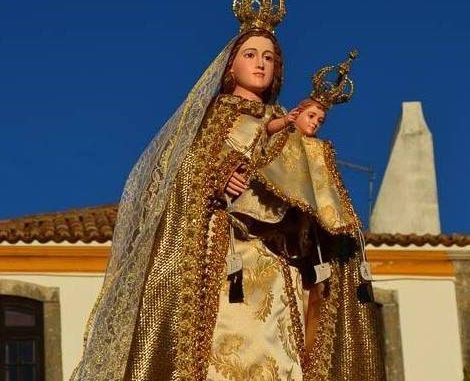
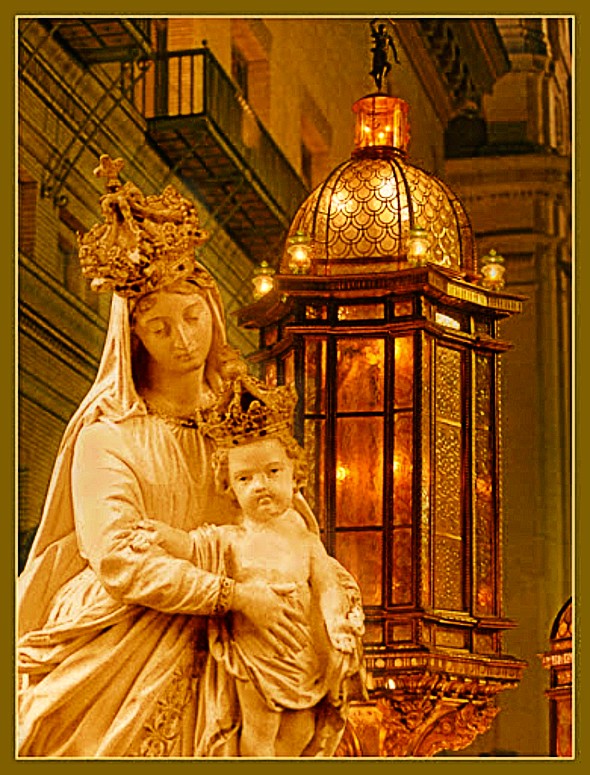
Our Lady of Liesse/Our Lady, Cause of our Joy: 2 December – An ancient statue of the Madonna and Child. It was brought from Egypt to France during the Crusades by three Knights of Malta who had been briefly captured by Saracens. It was enshrined at Liesse, diocese of Soissons. The original statue was destroyed during the French Revolution. A duplicate was installed and crowned in 1857. Patronage – Diocese of Soissons, France.

St Athanasius of the Caves
St Avitas of Rouen
St Bibiana (4th century died c 361) Martyr
Biography here:

https://anastpaul.wordpress.com/2016/12/02/saint-of-the-day-2-december/

St Chromatius of Aquileia (Died c 407) Bishop
St Evasius of Brescia
Bl Francisco del Valle Villar
St Habakkuk the Prophet
Bl Ivan Sleziuk
Bl John Amero
Bl Jan van Ruysbroec (c 1293-1382)
About Blessed Jan:

https://anastpaul.com/2018/12/02/saint-of-the-day-2-december-blessed-john-van-ruysbroeck/
St Lupus of Verona
Bl Maria Angela Astorch
St Nonnus of Edessa
St Oderisius de Marsi
St Pimenio in Rome
St Pontian
Bl Rafal Chylinski OFM Conv (1694-1741)
His Life:

https://anastpaul.com/2019/12/02/saint-of-the-day-2-december-blessed-rafal-chylinski-ofm-conv-1694-1741/

Bl Robert of Matallana
St Silvanus
St Pope Silverio

Greek Martyrs of Rome – (9 saints): Several Greek Christians martyred in the persecutions of Valerian – Adria, Aurelia, Eusebius, Hippolytus, Marcellus, Mary Martana, Maximus, Neon and Paulina. They were martyred by various means between 254 and 259 in Rome, Italy and are buried in the Callistus catacombs, Rome.

Martyrs of Africa – (4 saints): Four Christians martyred in Africa in the persecutions of Arian Vandals – Januarius, Securus, Severus and Victorinus.

Posted in DECEMBER - The DIVINE INFANCY and The IMMACULATE CONCEPTION, DOGMA, MARIAN PRAYERS, MARIAN REFLECTIONS, MARIAN TITLES, PAPAL PRAYERS, PRAYERS for SEASONS, PRAYERS of the CHURCH, PRAYERS of the SAINTS, The IMMACULATE CONCEPTION

December – the Month of the Immaculate Conception

December – the Month of the Immaculate Conception

In keeping the Blessed Virgin free from the stain of sin from the moment of her conception, God presents us with a glorious example of what mankind was meant to be.
Mary is truly the second Eve, because, like Eve, she entered the world without sin.
Unlike Eve, she remained sinless throughout her life—a life that she dedicated fully to the will of God.

The Immaculate Conception was not, as many people mistakenly believe, a precondition for Christ’s act of redemption but the result of it.
Standing outside of time, God knew that Mary would humbly submit herself to His will and in His love for this perfect servant, He applied to her at the moment of her conception the redemption, won by Christ, that all Christians receive at their Baptism.

It is appropriate, then, that the Church has long declared the month in which the Blessed Virgin not only was conceived but gave birth to the Saviour of the world as the Month of the Immaculate Conception.

Let us Pray, this theologically rich prayer written by Ven Servant of God Pope Pius XII (1876-1958) in 1954 in honour of the 100th anniversary of the promulgation of the dogma of the Immaculate Conception.

Enraptured by the splendour of your heavenly beauty and impelled by the anxieties of the world, we cast ourselves into your arms, O Immaculate Mother of Jesus and our Mother, Mary, confident of finding in your most loving heart, appeasement of our ardent desires and a safe harbour from the tempests which beset us on every side.

Though degraded by our faults and overwhelmed by infinite misery, we admire and praise the peerless richness of sublime gifts with which God has filled you, above every other mere creature, from the first moment of your conception until the day on which, after your assumption into heaven, He crowned you Queen of the Universe.

O crystal fountain of faith, bathe our minds with the eternal truths!
O fragrant Lily of all holiness, captivate our hearts with your heavenly perfume!
O Conqueress of evil and death, inspire in us a deep horror of sin, which makes the soul detestable to God and a slave of hell!

O well-beloved of God, hear the ardent cry which rises up from every heart. Bend tenderly over our aching wounds.
Convert the wicked, dry the tears of the afflicted and oppressed, comfort the poor and humble, quench hatreds, sweeten harshness, safeguard the flower of purity in youth, protect the holy Church, make all men feel the attraction of Christian goodness.
In your name, resounding harmoniously in heaven, may they recognise that they are brothers and that the nations are members of one family, upon which, may there shine forth, the sun of a universal and sincere peace.

Receive, O most sweet Mother, our humble supplications and, above all, obtain for us that, one day, happy with you, we may repeat before your throne that hymn which today is sung on earth around your altars – You are all-beautiful, O Mary!
You are the glory, you are the joy, you are the honour of our people! Amen.

Posted in ADVENT PRAYERS, CHRISTMASTIDE!, NOTES to Followers, NOVENAS, PRAYERS for SEASONS, PRAYERS of the CHURCH, The APOSTLES & EVANGELISTS, The CHRIST CHILD

Getting Ready for the arrival of our King! Blessed Advent Season to you all!

Getting Ready for the arrival of our King!

Blessed Advent Season to you all!

Finally, having traversed the long roads and trials of the desert we have arrived in our new coastal home and after much ado, we are back online at last and I am so happy to be with you.
Blessed be God as His many Graces have been poured down upon us and may He bless you all for your many prayers which so kindly accompanied us during this time.

From tomorrow, I will be back in the usual way. May we share this beautiful season of anticipation together.

In the meantime, herewith, a little reminder of the beautiful Catholic tradition of the St Andrew Novena, the Christmas Anticipation Prayer which we began yesterday and pray 15 times everyday until Christmas.

While a Novena is normally a nine-day prayer, the term is sometimes used for any prayer that is repeated over a series of days. It is an ideal Advent devotion; the First Sunday of Advent is the Sunday closest to the Feast of Saint Andrew.

The novena is not actually addressed to Saint Andrew but to God Himself, asking Him to grant our request in honour of the birth of His Son at Christmas. You can say the prayer all 15 times, all at once; or divide up the recitation as necessary (perhaps five times at each meal).

Prayed as a family, the Saint Andrew Christmas Novena is a very good way to help focus the attention of your family and children on the Advent season.

Hail and blessed be the hour and moment,
in which the Son of God was born
of the most pure Virgin Mary,
at midnight, in Bethlehem,
in the piercing cold.
In that hour vouchsafe,
I beseech Thee, O my God,
to hear my prayer and grant my desires,
………………… [here mention your request]
through the merits of Our Saviour Jesus Christ
and of His blessed Mother.
Amen

Posted in NOTES to Followers

It is time to say au revoir “Noble Company”

It is time to say au revoir “Noble Company”

Dear fellow “ardent travellers and noble company,” as we were so beautifully described by St Theodore the Studite in this morning’s One Minute Reflection, I have to leave you for a while to prepare for my frightening move in 2 weeks time.

Please remember me in your prayers – we all know the huge stresses of moving. I definitely need assistance from on high! I could probably take a lesson from our Blessed Mother when the Holy Family fled. I am sure they packed a little lighter than what I am trying to do. Between our Blessed Mother Mary and St Joseph, all will be well. And perhaps, St Jude, as the Patron of hopeless causes, will add his prayer to theirs!

I will, as always, be keeping you all, in mine.

May our good Lord bless us all
and our beloved Mother Mary and St Joseph,
constantly intercede for us.

JMJ

Be our Shelter, Lord, when we are home,
our Companion when we are away
and our welcome Guest when we return.
And at last, receive us into the dwelling place
You have prepared for us
in Your Father’s house,
where You live forever and ever.
Amen

With love
Ana

Posted in NOVEMBER - Month of the SOULS in PURGATORY, PRACTISING CATHOLIC, PRAYER WARRIORS, PRAYERS of the CHURCH, PURGATORY, The HOLY SOULS

Devotion for the Month of November – The Souls in Purgatory

Devotion for the Month of November – The Holy Souls in Purgatory

The month of November is dedicated to the Holy Souls in Purgatory.
The Church commemorates all her faithful children who have departed from this life but, have not yet attained the joys of heaven.
St Paul warns us, that we must not be ignorant concerning the dead, nor sorrowful, “even as others who have no hope … For the Lord Himself shall come down from heaven … and the dead who are in Christ shall rise.

The Church has always taught us to pray for those who have gone into eternity.
Even in the Old Testament prayers and alms were offered for the souls of the dead by those who thought “well and religiously concerning the resurrection.” It was believed that “they who had fallen asleep with godliness had great grace laid up for them” and that “it is therefore a holy and wholesome thought to pray for the dead, that they may be loosed from sins.”
We know that a defiled soul cannot enter into heaven.

ETERNAL REST

Eternal rest grant unto them, O Lord
and may perpetual light shine upon them
and may the souls of all the faithful departed,
through the mercy of God,
rest in peace.
Amen

Posted in "Follow Me", FEASTS and SOLEMNITIES, MEDITATIONS - ANTONIO CARD BACCI, ON the SAINTS, QUOTES - J R R Tolkien and MORE, QUOTES on GRACE, QUOTES on SANCTITY

Thought for the Day – 1 November – The Feast of All Saints

Thought for the Day – 1 November – Meditations with Antonio Cardinal Bacci (1881-1971)

The Feast of All Saints

Today’s feast should inspire in us, a burning desire to become holy.
Men long for many things in this world, things which are often useless and, even sinful.
They desire riches, pleasure, honours, success and material comfort.
These things may be lawful but, they cannot satisfy the human heart, which is made for God.
Whenever we achieve any of our ambitions in this world, are we in fact, happy or even perfectly satisfied?
The truth is, that we are not! because, the soul is greater than the objects which surround us. God alone can fill and satisfy it.

Sanctity should be our principal ambition.
We should yearn to be more closely united to God, so that His Divinity may be reflected in our thoughts and in our actions.
If we enjoy God’s friendship, we shall become more like God and shall be lifted up above petty mundane considerations.
Perhaps, we doubt our ability to reach such a high spiritual level?
Even so, we should, nevertheless, desire to reach it and, not just in a passing and indifferent manner but, constantly and actively.
We should keep our desire alive by repeating it to ourselves and by continually praying for God’s grace to fulfil it.
“I intend to become holy,” said little Dominic Savio and he kept the promise which he had made to God.
Many people have formed the same resolution, both desert hermits and University professors, both humble workmen and rulers of nations.
Since we ought to have the same intention, what is there to prevent us?
Let us make this resolution now and put it into effect, with the help of God.

Antonio Cardinal Bacci

Posted in DOCTORS of the Church, FATHERS of the Church, FEASTS and SOLEMNITIES, GOD is LOVE, ON the SAINTS, QUOTES for CHRIST, QUOTES of the SAINTS

Quote/s of the Day – 1 November – All the Saints!

Quote/s of the Day – 1 November – The Solemnity of All Saints

“Let listening to worldly news
be BITTER FOOD for you
and let the words of
Saintly men
be as combs
filled with honey.”

St Basil the Great (329-379)
Father and Doctor of the Church

“The Saints must be honoured as friends of Christ
and children and heirs of God.
Let us carefully observe the manner of life
of all the apostles, martyrs, ascetics
and just men who announced the coming of the Lord.
And let us emulate their faith, charity, hope, zeal, life,
patience under suffering
and perseverance unto death,
so that we may also share,
their crowns of glory.”

St John Damascene (675-749)
Father and Doctor of the Church

“Those in the Catholic Church,
whom some rebuke for praying to Saints
and going on pilgrimages,
do not seek any Saint as their saviour.
Instead, they seek Saints,
as those whom their Saviour loves
and whose intercession and prayer,
for the seeker, He will be content to hear.
For His Own sake,
He would have those He loves honoured.
And when they are thus honoured for His sake,
then, the honour that is given them, for His sake,
overflows especially to Himself.”

St Thomas More 1478-1535) Martyr

“Be often reading the lives of the saints
for inspiration and instruction.”

St Philip Neri (1515-1595)

“God, because of the great love He bears us
and His great desire to see us saved,
has given us, among other means of salvation,
the practice of devotion to the Saints.
It is His will that they,
who are His friends,
should intercede for us
and, by their merits and prayers,
obtain graces for us,
which we ourselves do not deserve.”

St Alphonsus Maria Liguori (1696-1787)
Most Zealous Doctor

“Every so often,
unite oneself interiorly
with the Saintly souls who serve God
and praise Him… with the holy angels
and all the heavenly court …”

St Eugène de Mazenod OMI (1782-1861)

More here:
https://anastpaul.com/2019/11/01/quote-s-of-the-day-1-november-on-the-saints/
AND:
https://anastpaul.com/2018/11/01/quote-s-of-the-day-1-november-the-solemnity-of-all-the-saints/

Posted in FATHERS of the Church, FEASTS and SOLEMNITIES, ON the SAINTS, ONE Minute REFLECTION, PRACTISING CATHOLIC, QUOTES of the SAINTS, QUOTES on DEATH, QUOTES on ETERNAL LIFE, QUOTES on FAITH, QUOTES on HAPPINESS, QUOTES on HEAVEN, QUOTES on JOY, QUOTES on LOVE of GOD, SAINT of the DAY, The BEATITUDES, The FAITHFUL on PILGRIMAGE, The WORD

One Minute Reflection – 1 November – “Rejoice and be glad, for your reward will be great in heaven.” – Matthew 5:12

One Minute Reflection – 1 November – The Solemnity of All Saints, Readings: Revelation 7:2-4, 9-14, Psalms 24:1-2, 3-4, 5-6, 1 John 3:1-3, Matthew 5:1-12

“Rejoice and be glad, for your reward will be great in heaven.” – Matthew 5:12

REFLECTION – “Rejoice in the Lord without ceasing (cf. Phil 4:4), my dear children. I beg you rejoice, citizens of heaven but exiles on earth, inhabitants of the Jerusalem on high (cf. Gal 4:26) but banished from affairs here below, inheritors of the kingdom of heaven but disinherited from taking any part at all, in earthly pleasures! Rejoice, ardent travellers, at undergoing exile and maltreatment in a foreign land in the name of the commandment of God! Rejoice, you who are last in this world but lords of blessings that exceed our understanding (cf. Phil 4:7).
Rejoice, noble company, brought together by God, assembly united in heart and soul, who give life to filial and fraternal love, a replica on earth of the host of angels! (…) Rejoice, God’s workers, apostolic men. (…) Rejoice, you who set your joy in each other, each making his own the reputation of his brother, you in whom is found neither jealousy, rivalry nor envy but, in their place, peace and charity and life in common. In truth, I do not say that we are not attacked – indeed, who is crowned if not the one who struggles and fights, who exchanges thrusts and wounds with his assailants? – but I say that we should not let ourselves be brought down by the machinations of Satan.
Yes, my children, assembly of God, nourish yourselves with the food of the Spirit and drink the water given by the Lord: whoever comes to possess this water will never thirst again but it will become, in Him, a spring of living water welling up to eternal life (cf. Jn 4:14). (…) Yet a little while and we shall have vanquished. And blessed shall we be; blessed also, it shall be said, are the places, family and countries that have borne you (cf. Lk 11:27-28).” – St Theodore the Studite (759-826) – Catechesis 47 (The Great Catecheses)

PRAYER – Father, All-Powerful and ever-living God, today we rejoice in the holy men and women of every time and place. May their prayers bring us your forgiveness and love. Blessed Virgin, Mother of God, our trusted guide and loving mother and all you holy Saints of the Church Triumphant, pray for us! We make our prayer through Christ our Lord, in union with the Holy Spirit, God forever, amen.

Posted in HYMNS, Our MORNING Offering

Our Morning Offering – 1 November – Blest Are the Pure in Heart

Our Morning Offering – 1 November – The Solemnity of All Saints

Blest Are the Pure in Heart

Blest are the pure in heart,
For they shall see our God.
The secret of the Lord is theirs,
Their soul is Christ’s abode.

The Lord, who left the heavens
Our life and peace to bring,
To dwell in lowliness with men,
Their pattern and their King.

Still to the lowly soul
He doth Himself impart,
And for His dwelling and His throne
Chooseth the pure in heart.

Lord, we Thy presence seek,
May ours this blessing be;
Give us a pure and lowly heart,
A temple fit for Thee.

By John Keble (1792-1866)

Posted in JESUIT SJ, SAINT of the DAY

Saint of the Day – 1 November – Blessed Peter Paul Navarra SJ (1560-1622) Martyr

Saint of the Day – 1 November – Blessed Peter Paul Navarra SJ (1560-1622) Priest, Martyr, Missionary, Writer – born as Pietro Paolo in 1560 at Laino Borgo, Cosenza, Italy and died by being burned alive on 1 November 1622 at Ximabara, Nagasaki, Japan. As he was burning he prayed aloud the Litany of Our Lady. He is also known as Paul Navarro and Pietro Paolo Navarro. Additional Feast with the 205 Martyrs of Japan is 10 September.

Peter Paul Navarro was born in the small town of Laino, Basilicata in southern Italy. In 1579 when he was eighteen, he entered the Jesuit novitiate in Nola and requested to be sent to the Japanese mission. His request was granted and in 1584 he was sent to Goa, India for his studies and was Ordained in 1585. A year later in August, 1586 he arrived in Hirado, western Japan. There he spent a year studying Japanese and served in mission posts in Shikoku and Honshu. Fr Navarro knew that to be successful in evangelising the Japanese, he himself, must become one of them and this motivated him to speak and write fluently in the language. To prove to the Japanese that they did not have to relinquish their customs and cultural traditions to become Christians, he dressed like them, ate their food and used their type of furniture.

Fr Navarro went to northern Kyushu which became the centre of his missionary activity after he was expelled from his Hirado missions because of persecutions against Christians. Later, in 1614 when all foreign missionaries from Japan were expelled by the edict of Shogun Iyeyasu, Fr Navarro was one of the two dozen Jesuits who went underground rather than leave the country, as more than eighty other Priests had to. For the next seven years, he went about his priestly duties in Shimabara, western Kyushu, disguised as a beggar, wood seller, tradesman or farmer. In these disguises, Fr Navarro was able to enter the homes of Christians to celebrate Mass or administer the Sacraments at night to avoid being captured, since he was being hunted. During this period he wrote in Japanese, “An apology of the Christian Faith against the Calumnies of the Pagans.”

Peter Onizuka and Dennis Fujishima were the two lay Catechists helping Fr Navarro during his final years in Shimabara. Peter was a teenager whose father housed fugitive Priests. Dennis was in his forties and had been a Christian as a young man. Both of them were with Fr Navarro and his servant, Clement Yuemon, after Christmas in 1621 when they were all captured by priest-hunters. They were brought before the daimyo of Arima who treated the captives with great respect. The daimyo detained them in a house owned by a Christian where they were cared for by Christians and he even allowed Fr Navarro to celebrate Mass. He also came frequently to converse with Fr Navarro. The daimyo was prepared to release them if they could renounce Christianity, an offer which they turned down. The daimyo wanted to transfer them secretly to Macao where they could be set free. But before he could do anything, he received orders from the shogun that the three were to die by slow fire.

When Fr Navarro was informed of his impending death, he was happy that his prayers had been answered and wrote to his Jesuit friend, Fr John Baptist Zola, saying: “I give infinite thanks to the Lord and I ask you to thank him with me. I also ask your prayers for perseverance until my final breath.”

On the day of execution, 1 November, Fr Navarro celebrated the Mass of All Saints and the two Catechists, Peter and Dennis, who had asked to enter the Society, pronounced their Jesuit vows during that final Mass. While waiting for the executioners, Fr Navarro wrote his last letter to Fr Matthew de Couros: “For many years I have prayed for this great grace from God but always with some fear, that I would not be heard because of my many sins. The Father of mercies now gives me this long-desired grace. May he be blessed forever.”

In the afternoon the four prisoners escorted by fifty soldiers and a large crowd of Christian,s made their way to the place of execution, with Fr Navarro chanting the Litany of Our Lady and his companions joyfully sang the responses. As they approached the shore, the Martyrs saw the standing stakes awaiting them. The daimyo had instructed the soldiers to place the wood around the stakes so as not to prolong the prisoners’ suffering.

The three Jesuits, Frs Peter Paul Navarro, Peter Onizuka and Dennis Fujishima and their faithful servant, Clement Yeumon, alight in flames, gave final heroic witness of their great love for God.

They were beatified by Blessed Pope Pius IX together with another 201 Martyrs of Japan on 7 May 1867.

Posted in FEASTS and SOLEMNITIES, JESUIT SJ, SAINT of the DAY

All Saints Day – 1 November and Memorials of the Saints

All Saints Day – 1 November (Solemnity) – (a Holy Day of Obligation) Instituted to honour all the saints, known and unknown. It owes its origin in the Western Church to the dedication of the Roman Pantheon in honour of the Blessed Virgin Mary and all the Martyrs by Pope Saint Boniface IV in 609, the anniversary of which was celebrated at Rome on 13 May. Pope Saint Gregory III consecrated a Chapel in the Vatican Basilica in honour of All Saints, designating 1 November as their feast. Pope Gregory IV extended it’s observance to the whole Church. It has a vigil and octave and is a holy day of obligation – the eve is popularly celebrated as Hallowe’en. Patronage – Arzignano, Italy.

About:
https://anastpaul.com/2018/11/01/1-november-solemnity-of-all-saints/
AND:
https://anastpaul.wordpress.com/2017/11/01/1-november-the-feast-of-all-the-saints/

St Amabilis of Auvergne
St Austremonius
St Benignus of Dijon
St Cadfan
St Caesarius of Africa
St Caesarius of Damascus
St Ceitho
St Cledwyn of Wales
Bl Clemens Kyuemon
St Cyrenia of Tarsus
St Dacius of Damascus
St Deborah the Prophetess
St Dingad
Bl Dionysius Fugixima
St Floribert of Ghent
St Gal of Clermont
St Genesius of Lyon
St Germanus of Montfort
St Harold the King
St James of Persia
St Jerome Hermosilla
St John of Persia
St Julian of Africa
St Juliana of Tarsus
St Lluís Estruch Vives
St Marcel of Paris
St Mary the Slave
St Mathurin
St Meigan
St Nichole
St Pabiali of Wales
St Pere Josep Almató Ribera Auras
St Peter Absalon
Blessed Peter Paul Navarra SJ (1560-1622) Priest and Martyr
Bl Petrus Onizuka Sadayu
St Rachel the Matriarch
St Ruth the Matriarch
St Salaun of Leseven
St Severinus of Tivoli
St Valentin Faustino Berri Ochoa
St Vigor of Bayeux