Posted in INCORRUPTIBLES, SAINT of the DAY

Memorials of the Saints – 5 July

St Anthony Mary Zaccaria CRSP (1502-1539) (Optional Memorial)
Biography:

Saint of the Day – 5 July – St Anthony Mary Zaccaria C.R.S.P. (1502-1539)

AND:

Saint of the Day – 5 July – St Anthony Mary Zaccaria CRSP (1502-1539)

St Agatho of Sicily
St Athanasius the Athonite
St Athanasius of Jerusalem
St Cast
St Cyprille of Libya
St Cyrilla of Cyrene
St Domèce
St Domitius of Phrygia
St Edana of West Ireland
Bl Edward Cheevers
Bl Elias of Bourdeilles
St Erfyl
St Fragan
Bl George Nichols
St Grace of Cornwall
St Gwen
Bl Humphrey Pritchard
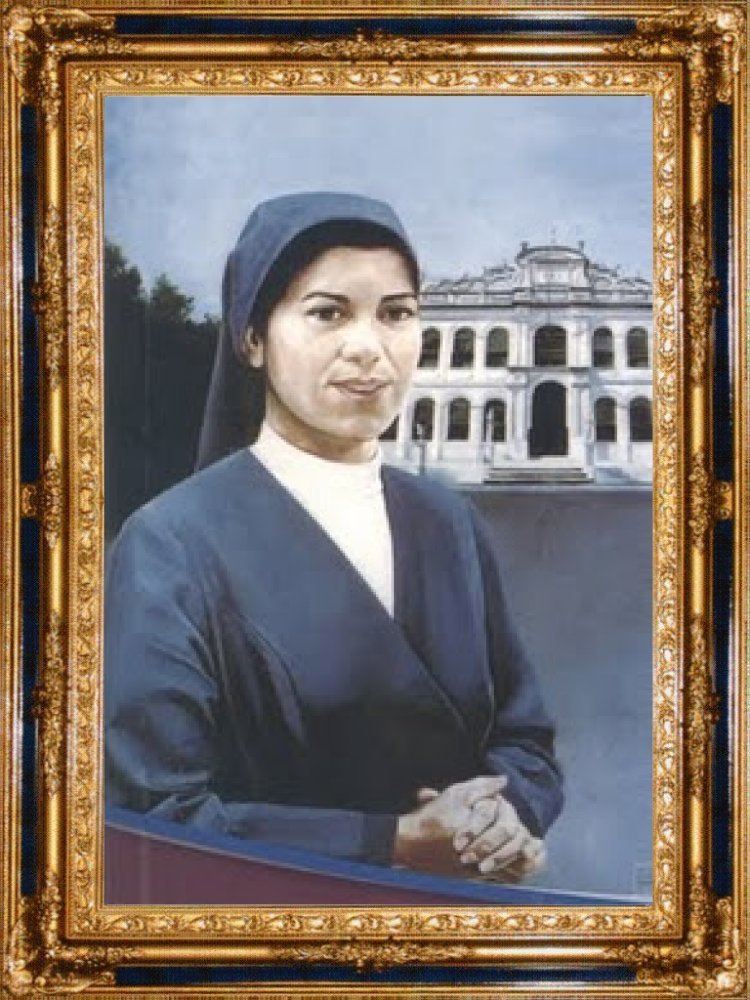
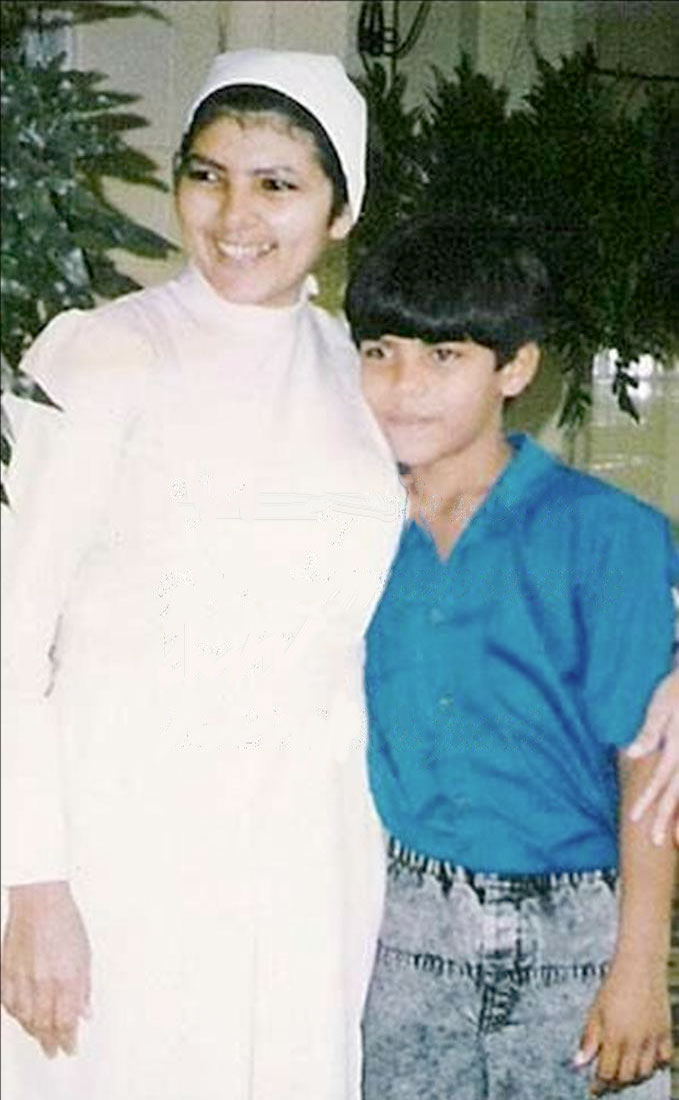
Blessed Joseph Boissel OMI (1909-1969) Priest and Martyr
St Marinus of Tomi
St Mars of Nantes
St Marthe
Bl Matthew Lambert
St Modwenna
St Numerian of Treves
Bl Patrick Cavanagh
St Philomena of San Severino
St Probus of Cornwall
Bl Richard Yaxley
Bl Robert Meyler
St Rosa Chen Aijieh
St Sedolpha of Tomi
St Stephen of Reggio
St Teresia Chen Qingjieh
St Theodotus of Tomi
Bl Thomas Belson
St Thomas of Terreti
St Triphina of Brittany
St Triphina of Sicily
St Zoe of Rome

Posted in GOD the FATHER, MEDITATIONS - ANTONIO CARD BACCI, PRACTISING CATHOLIC, QUOTES - J R R Tolkien and MORE, QUOTES on LOVE of GOD, QUOTES on OBEDIENCE, QUOTES on SANCTITY

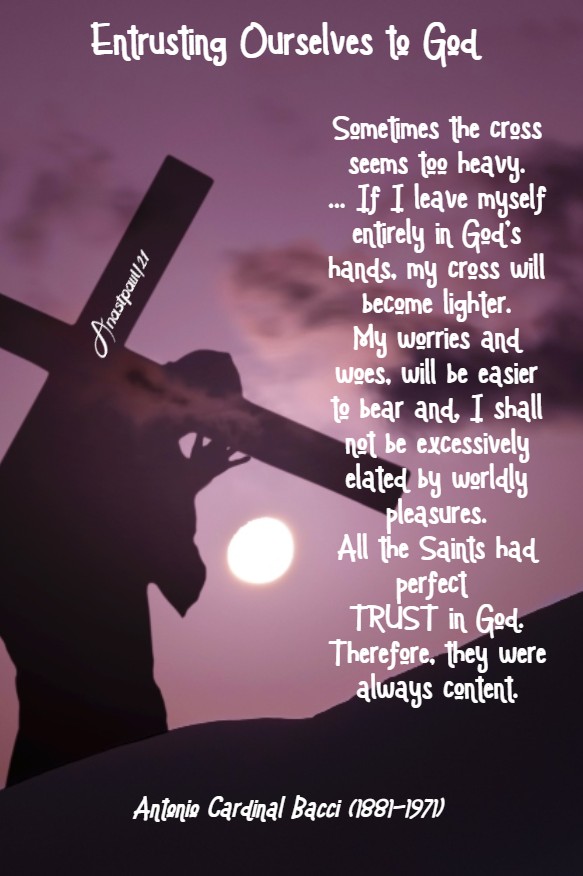
Thought for the Day – 4 July – The New Life

Thought for the Day – 4 July – “Month of the Most Precious Blood” – Meditations with Antonio Cardinal Bacci (1881-1971)

The New Life

the new life - a man who loves god above all things - bacci 4 july 2020

“Only a Christian,” wrote Tertullian, “can be wise, sincere and lofty” (De praescriptione haereticorum, 3).

He had in mind, of course, the true follower of Jesus Christ, who is practising the precepts of Our Lord.
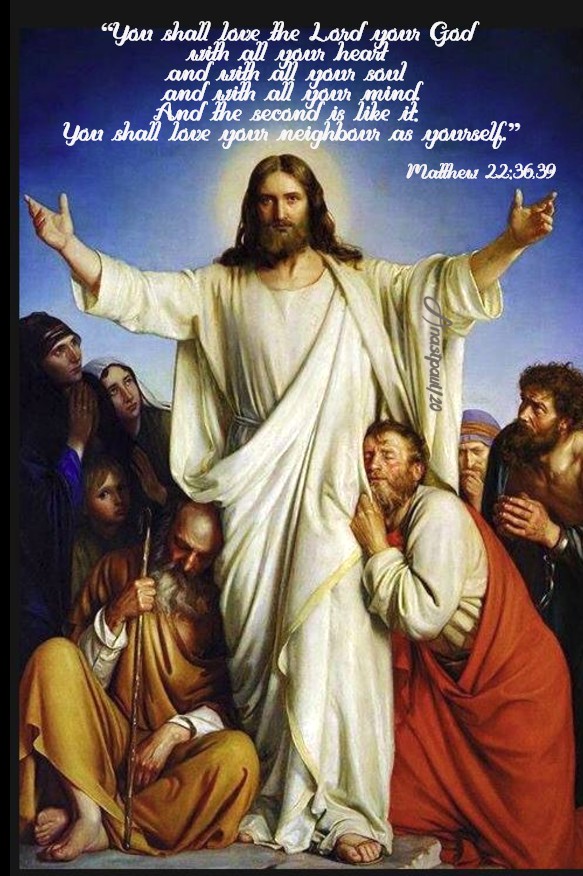
“Thou shalt love the Lord thy God, with they whole heart ... Thou shalt love thy neighbour as thyself” (Mt 22:37, MK 12:30, Lk 10:27).
“You are to be perfect, even as your heavenly Father is perfect” (Mt 5:48).

A man who loves God above all things, can fairly be called wise.
God is the supreme good and as such, should be the final end towards which we direct all our thoughts and actions.
If anyone adopts his own ego or some created good as his goal in life, he is not wise because he has upset the proper scale of values.
It is not true to say that we should love ourselves before anything else because we are creatures who belong to God and should refer everything to Him.
Only if we love God above all things, even above ourselves, can we really be said to love ourselves.
How can we love ourselves, if, in the first place, we do not love our highest good, which is God?
Since this love must be active, it makes us faithful to God’s commandments and raises us above the rest of creation to a state of immediate dependence on God.
A love of all mankind flows as a natural consequence from this union of love with God.
If we regard all men as our brothers in Jesus Christ, we shall be perfect Christians in the manner intended by our divine Redeemer when He desires us to be like His heavenly Father.
This is the new life which Jesus came to bring into the world and which we should nurture in ourselves (Cf Heb 4:23-24).”

Antonio Cardinal Bacci

Posted in INCORRUPTIBLES, JESUIT SJ, QUOTES of the SAINTS, QUOTES on ALMS, QUOTES on CHARITY, QUOTES on COURAGE, QUOTES on FAITH, QUOTES on FEAR, QUOTES on GRACE, QUOTES on MERCY, QUOTES on PERSECUTION, QUOTES on PRAYER, QUOTES on the CHURCH, QUOTES on THE MYSTICAL BODY, QUOTES on TRUST and complete CONFIDENCE in GOD, QUOTES on TRUTH, SAINT of the DAY

Quote/s of the Day – 4 July – Blessed Petrus Kasui Kibe and Blessed Pier Giorgio Frassati

Quote/s of the Day – 4 July – The Memorial of Blessed Petrus Kasui Kibe SJ (c 1587-1639) Priest and Martyr “A Christian Walking Through the World” and Blessed Pier Giorgio Frassati TOSF (1901-1925)Man of the Beatitudes”

“Let us hoist our sails
trusting in the wind
of God’s grace.”

Blessed Petrus Kasui Kibe (c 1587-1639)
Priest and Martyr
“A Christian Walking Through the World”

let us hoist our sails trusting in the wind of god's grace - bl petrus kasui kibe 4 july 2020

“All around the sick
and all around the poor,
I see a special light
which we do not have.”

all around the sick and all around the poor i see a special light which we do not have - bl pier giorgio frassati 4 july 2020

“In prayer,
the soul rises
above life’s sadnesses.”

in prayer the souls rises above lifes sadnesses - bl pier giorgio frassati - 4 july 2020

“The faith given to me in Baptism
suggests to me surely –
by yourself you will do nothing
but, if you have God as the centre of all your action,
then you will reach the goal.”

the faith given to me in baptism - bl pier giorgio frassati 4 july 2020

“The times we are going through are difficult
because cruel persecution of the Church is raging.
But you, bold and good young people,
should not be afraid of this small thing,
remember, that the Church is a divine institution
and cannot come to an end.
She will last till the end of the world.
Not even the gates of hell can prevail against her.”

the times we are going through are difficult - bl pier giorgio frassati 4 july 2020

“To live without faith,
without a heritage to defend,
without battling constantly for truth,
is not to live
but to ‘get along,’
we must never just ‘get along’.”

Blessed Pier Giorgio Frassati (1901-1925)
“Man of the Beatitudes”

More from Blessed Pier Giorgio here:
https://anastpaul.com/2019/07/04/quote-s-of-the-day-4-july-blessed-pier-giorgio-frassati/

to live without faith - bl pier giorgio frassati 4 july 2020

Posted in DOCTORS of the Church, FATHERS of the Church, INCORRUPTIBLES, JESUIT SJ, ONE Minute REFLECTION, QUOTES of the SAINTS, QUOTES on ETERNAL LIFE, QUOTES on FASTING, QUOTES on HOPE, SAINT of the DAY, The WORD

One Minute Reflection – 4 July – So let us fast and pray since we are still on the threshold of birth.

One Minute Reflection – 4 July – “Month of the Precious Blood” – Saturday of the Thirteenth Week of Ordinary Time, Year A, Readings:  Amos 9:11-15Psalm 85:11-14Matthew 9:14-17 and the Memorial of Blessed Petrus Kasui Kibe SJ (c 1587-1639) Prist and Martyr and Bl Pier Giorgio Frassati TOSF (1901-1925)

And Jesus said to them, “Can the wedding guests mourn as long as the bridegroom is with them?   The days will come, when the bridegroom is taken away from them and then they will fast.” … Matthew 9:15

REFLECTION – “However, our mourning is right if we burn with desire to see Him.   How happy they were who were able to enjoy His presence before His Passion, to question Him as they wished and listen to Him as necessary… As for us, we see the fulfilment of what He said: “The days are coming when you will long to see one of the days of the Son of Man, and you will not see it” (Lk 17:22)… “A little while and you will no longer see me and again a little while and you will see me” (Jn 16:19).

But now this is the hour of which He said:  “You will weep and mourn but the world will rejoice… But, He added, I will see you again and your hearts will rejoice and no-one will take your joy away from you” (v.22). The hope thus given us by Him, who is faithful in His promises, never now leaves us, without a certain joy — until that overwhelming joy comes on the day when we will be like Him because we will see Him as he is (1Jn 3:2)… “When a woman is in labour, she has pain because her hour has come,” says the Lord, “but when her child is born, she no longer remembers the anguish because of the joy of having brought a human being into the world” (Jn 16:21).   This is the joy no-one can take away from us and with which we will be satisfied when we pass to eternal light from our present conception in faith.   So let us fast and pray since we are still on the threshold of birth.“…St Augustine (354-430) Father and Doctormatthew 9 15 can the wedding guests mourn - however our morurning is right if we burn with desire to see him - st augustine 4 july 2020

PRAYER – Father almighty, as we wait and work and pray and fast in joyful hope of our eternal life with You, grant we pray that we may always remain steadfast in Your love.   Blessed Petrus Kasui Kibe, you of intrepid perseverance and faith and Pier Giorgio Frassati, you whose faith could move mountains, pray for us, that we will fully utilise the many gifts our Almighty God has bestowed on us as we journey home. We make our prayer through Jesus Christ our Lord, in union with You and the Holy Spirit, one God forever, amen.bl petrus kasui kibe pray for us 4 july 2020

bl-pier-pray-for-us - 4 july 2017

Posted in JULY - The MOST PRECIOUS BLOOD, MARIAN PRAYERS, MARIAN Saturdays, Our MORNING Offering, PRAYERS for SEASONS, PRECIOUS BLOOD PRAYERS, The BLESSED VIRGIN MARY

Our Morning Offering – 4 July – Mother of the Eternal Word

Our Morning Offering – 4 July – “Month of the Precious Blood” and a Marian Saturday of the Thirteenth week in Ordinary Time

Mother of the Eternal Word
Raccolta Prayer

Most glorious Virgin,
chosen by the eternal Counsel
to be the Mother of the eternal Word made flesh,
thou who art the treasurer of divine graces
and the advocate of sinners,
I who am thy most unworthy servant
have recourse to thee.
Be thou pleased to be my guide
and counsellor in this vale of tears.
Obtain for me
through the Most Precious Blood
of thy divine Son,
the forgiveness of my sins,
the salvation of my soul
and the means necessary to obtain it.
In like manner obtain for the Holy Church
victory over her enemies
and the spread of the kingdom of Jesus Christ
upon the whole earth.
Amenmother of the eternal word from the raccolta 4 july 2020

Posted in JESUIT SJ, SAINT of the DAY

Saint of the Day – 4 July – Blessed Petrus Kasui Kibe SJ (c 1587-1639) Priest and Martyr – “A Christian Walking Through the World”

Saint of the Day – 4 July – Blessed Petrus Kasui Kibe SJ (c 1587-1639) Japanese Jesuit Priest and Martyr.   Born in c 1587 in Kibe, Oita, Japan and died by being run through with a spear on 4 July 1639 in Tokyo, Japan.   He is called the “Japanese Marco Polo” or “A Christian Walking Through the World” and “The man who walked 4000kms.”

This is the extraordinary story of Fr Petrus Kibe who walked 4000kms to get permission to become a priest.

On 4 July 1639, Japanese samurai and Jesuit priest Father Petrus Kasui Kibe refused to renounce Christ under the most gruelling regime of torture ever devised by man or devil.   In the wake of Father Petrus’ death, the Shogun’s master torturer dubbed him “the man who would not say, I give in”—a perfect epitaph to his heroic life.
He was the most international Japanese of his day, perhaps the most determined man on the planet and unflinchingly faithful to Christ unto death—and a most horrible death it was indeed.   No wonder Peter Kibe’s name (pronounced KEE-beh) heads the list of the 188 Japanese Martyrs Beatified on 24 November 2008 by Pope Benedict XVI as Peter Kibe Kasui and 187 Companions, Martyrs.bl petrus kibe kasui

The Kibes were samurai of Urabe in the province of Bungo on the island of Kyushu, a province which had been visited by Portuguese traders, six years before St Francis Xavier’s arrival in Kyushu on 15 Augus 1549—the Feast of the Assumption.   Petrus was born in 1587, the year the dictator Hideyoshi first decreed a ban on Christianity, his parents, faithful Catholics, had their infant son Baptised in the Church at Nakatsu soon after his birth.

In 1600, Petrus entered the Jesuit Minor Seminary at Arima southeast of Nagasaki and on graduating, he declared his desire to enter the Society of Jesus.   The Society wouldn’t open their doors to just any would-be Jesuit, though, they wanted solid proof of God’s call, so Petrus began eight years of humble labours as a Catechist until, in 1614, the de-facto Shogun Ieyasu expelled all Christian missionaries from Japan.

Petrus was shipped to the Portuguese colony of Macao, where the Society of Jesus was hard put to accommodate the huge influx of Japanese exiles.   Some they sent to new Southeast Asian missions and others—like Petrus Kibe—they took in as Seminarians but they had to close their school in 1618, frustrating those men’s hopes for Ordination. Undaunted, Petrus and two other young samurai-missionaries set out for Rome, via India.   The other two went on from India by sea but Petrus struck out on foot alone across Persia, heading for the Holy Land.   Since he left us no record of his journey, we can only imagine the dangers he must have encountered along the way, traversing territory hostile to Christians, all the way to the Holy Land.   That samurai grit of his, would march the stalwart Petrus Kibe all the way to Heaven, via the strait and narrow path of Martyrdom.bl petrus kibe - Columban-The-man-who-walked-4000kms
Having arrived in Rome with no proof on paper of his studies in Japan and Macao, he nevertheless conquered the churchmen’s doubts and on Sunday, 15 November 1620, he became Father Petrus Kibe by the laying-on of the Bishop’s hands in a chapel at the Lateran.   When he showed up in his Cassock at the Jesuits’ door in Rome five days later, they didn’t turn him away, despite the Jesuit Visitor’s exhortations, written from Macao, to distrust wandering Japanese exiles like him – he won them over too and entered the Jesuit novitiate—normally lasting two years.   For Father Petrus, though, two years was too long to wait – incoming reports of the ravening persecution in Japan would give him no peace – he must hurry to the aid of his countrymen.   He petitioned the General of the Society of Jesus, who promptly agreed, Father Petrus’ mission was clearly ordained by God!  He would leave Rome at once and finish his two years’ Novitiate en route to Japan.
He made his Jesuit vows in Lisbon on 21 November 1622 and the following March, on the Feast of the Annunciation, he set out on a trouble-plagued, fourteen-month voyage to India.   Next he went on to Macao but the local government would let no Missionaries sail from their island to Japan, fearing the Shogun’s reprisals against Macao’s trade with his captive nation—the colony’s economic lifeline—so Petrus headed for Siam, hoping to sail on from there to his benighted homeland.   On the way, his ship was chased by pirates in the Malacca Strait and everybody abandoned ship and swam for shore.

The Siamese royal capital of Ayutthaya had a large Japanese community, about 400 of them Catholic exiles.   Some hundreds of these Japanese were ronin, or itinerant samurai, who served in the King’s Royal Guards.   Petrus lived incognito among his countrymen in that exotic city for two years, trying to find passage to Japan but all Japan-bound ships’ captains were demanding oaths of apostasy of all Japanese-Christian would-be passengers, fearing the reprisals of the Shogun’s sheriff at Nagasaki—and Father Petrus would not deny Christ. After two years’ fruitless waiting, he sailed for Manila to try his luck there but the same rule held at Manila – no Missionaries could sail from there for Japan.

He and some other Japanese Christians—one of them a Priest like himself, Father Michael Matsuda—were determined to get to Japan somehow, anyhow, so they moved to a small island and there built their own boat.   It was promptly attacked by termites.   Undaunted, the intrepid believers plugged the holes with extra planking and, putting everything into God’s hands, set out for their beloved homeland.
It was the typhoon season of 1630 and they could have expected that their ramshackle, home-made boat would become a plaything of the tempests but they had almost made it to Japan, their dream was in sight, when a tempest came raging along and smashed their boat into the rocky shore of an island just off the coast of Kagoshima—the very place where Saint Francis Xavier had first set foot on Japanese soil to plant the Gospel seeds.   Yet all in the shipwreck survived and the islanders not only gave them shelter but later ferried them on to Kagoshima after the storm had passed.

Now Father Petrus and his companions plunged into the fiery furnace that was the Shogun Iemitsu’s Japan.    Father Petrus went north and for nine harried years, daily risking capture and the horrific torture that would inevitably follow, he offered the Body, Blood, Soul and Divinity of Jesus Christ for the starving souls of countless persecuted Christians;  then, in July of 1639, he was caught and dragged before the wretched Shogun to testify for Jesus.   The Shogun Iemitsu – paranoiac, pederast and sadist, this wretch, harboured a morbid fear of Christ and, according to the authoritative Japan-historian C R Boxer, he “derived considerable pleasure from cross-examining Christians under torture.”

The Shogun’s torture-masters were aiming for apostate priests, not dead ones and their method of persuasion was, by 1639, quite refined – the victim was cocooned in tight coils of rope and hung by his heels in a pit—probably containing human dung and other filth—his waist pinched in a clamp of sorts, a circular wooden lid cut in halves, with a hole in the middle for the pinched waist.   This device both cut off the victim’s circulation and sealed the pit, shutting him in in that horrific stench;  meanwhile, the torturers tempted him with promises of relief if only he would chant to Buddha and thus renounce Christ.   All the while it felt like his head was exploding, while blood dripped from his mouth, ears and nose.   On the day Petrus Kibe was given the treatment, two other priests were apparently induced under the same torture to chant the name of Amida Buddha and were hauled up and out, soon to die of their wounds—officially declared ‘apostates’ even though they had tried to recant their murmured chants before dying. Petrus, though, had been hung in another hole together with two Catechists and, ignoring his own agonies, he continually encouraged his brothers-in-suffering to cling to Christ to the end.   Fearing the contagion of his faith, the executioners pulled him out and finished him off by burning firewood on his belly, according to one account, and since this didn’t kill the steely Father Petrus, they finally ripped out his bowels.

While Father Petrus was enduring his final torments, the Shogun’s torturers asked him why he didn’t just give in, and he told them, “You cannot understand this, therefore, it is no use guiding you.”
His guiding words they might not have understood but how Petrus Kibe’s living testimony—his superhuman faith—must have fired their hearts!   A torch of truth still burning white-hot in this fourth century following his Martyrdom – proof of the blinding fact that God is real and that His Name is Jesus.

His interrogator was the infamous former Christian, Inoue.   In his written deposition Inoue wrote, “Petrus Kibe has not fallen.   He has also fortified his fellow prisoners.   His sentence is death by strangulation.”   Fr Petrus Kibe was executed in July 1639.   He had run his race, finished the course and kept his faith.   He had worked in Japan as a Priest for nine years.   He was 52 when he died.   Fr Petrus Kibe loved Christ, he loved his country and its culture, he loved his people  . He was 100% Christian and 100% Japanese.   He had the endurance Jesus spoke of.   “You will be betrayed even by parents and brothers, relations and friends; and some of you will be put to death… but not a hair of your head will be lost.   Your endurance will win you your lives” (Lk21:16-19).

Among the 188 martyrs beatified on 24 November were the following:

109 men – 32 samurai, seven catechists, one Jesuit brother and four priests.

49 women – 27 of whom died with their husbands.

30 children – from the age of one year to 14 years died with their parents.

“Though many were samurai and knew how to fight, they chose the path of non-violent resistance and that is significant for people today.” Cardinal Fumio Hamao.

The Beatification of Peter Kibe and 187 other martyrs took place on 24 November 2008, in Nagasaki.   For the liturgical celebration in Nagasaki Stadium more than 30,000 participants attended, which was celebrated by Cardinal José Saraiva Martins on behalf of Pope Benedict XVI.bl petrus kibe kasui statue (1)

Posted in INCORRUPTIBLES, MARIAN TITLES, SAINT of the DAY

Our Lady of Refuge and Memorials of the Saints – 4 July

4 July – Our Lady of Refuge, Nuestra Señora del Refugio, is Patroness of California and parts of Mexico.
This painting is from the hands of the artist, Joseph de Paez, 1750, Mexico.our lady of refuge

The Franciscan missionary Francisco Diego Garcia y Moreno was the first Bishop of Baja, California.   He proclaimed Nuestra Señora del Refugio, as Patron on 4 January 1843, at Mission Santa Clara in Alta California.

His proclamation included the following:
The entire text of Bishop Garcia Diego’s declaration is recorded in Mission Santa Clara’s Libro de Patentes.   After citing the early Fathers of the Church on the practice and spiritual benefits of naming patron Saints, the first Bishop of the Californias stated:  “We make known to you that we hereby name the great Mother of God in her most precious title, ‘del Refugio, ‘ the principal patroness of our Diocese . . . With so great a patroness and protectress, what can we not promise ourselves? What can be wanting and whom need we fear?”

The Liturgical Feast:
In 1981 the California Catholic Conference of Bishops petitioned the Vatican Congregation for the Sacraments and Divine Worship for authorisation to observe the Feast of Our Lady of Refuge on 5 July as an obligatory memorial. This was approved by official document dated 15 January 1982 and signed by Archbishop Giuseppe Casoria.

The Diocese of Baja California celebrate this Patronal Feast on 4 July.

Paintings of Our Lady of Refuge are, with few exceptions, quite similar in design and execution.   The heads of the Infant Jesus and his Mother Mary lean together with no background between them.   Both figures wear a crown.   Mary’s eyes are turned toward the observer, while the gaze of the child seems to turn left of the viewer.
In the Santa Clara Mission church the painting of Our Lady of Refuge is found above the larger picture of Our Lady of Guadalupe in one of the side altar niches on the left as one nears the sanctuary.   Another painting by Eulalio, a local Native American, is on display in Santa Clara University’s De Saisset Museum near the mission church.

The above image is darker than the Eulalio painting, which has a wood-tone background.   The flower motif is almost the same, the two figures are almost identical in both images.

++++++
St Elizabeth of Portugal TOSF (1271-1336) (Optional Memorial)
Biography:
https://anastpaul.com/2018/07/04/saint-of-the-day-4-july-st-elizabeth-of-portugal-t-o-s-f-1271-1336/

Bl Agatha Yun Jeom-Hye
St Albert Quadrelli
St Andrew of Crete
St Anthony Daniel
St Aurelian of Lyons
St Bertha of Blangy
St Carileffo of Anille
Bl Catherine Jarrige
St Cesidio Giacomantonio
Bl Damiano Grassi of Rivoli
St Donatus of Libya
St Edward Fulthrop
St Elias of Jerusalem
St Finbar of Wexford
St Fiorenzo of Cahors
St Flavian of Antioch
St Giocondiano
Bl Giovanni of Vespignano
St Haggai the Prophet
Bl Hatto of Ottobeuren
Bl Henry Abbot
St Henry of Albano
St Hosea the Prophet
St Innocent of Sirmium
Bl John Carey
Bl John Cornelius
Bl Jozef Kowalski
St Jucundian
St Laurian of Seville
St Lauriano of Vistin
Bl Maria Crocifissa Curcio
St Namphanion the Archmartyr
Bl Natalia of Toulouse
St Odo the Good
Bl Odolric of Lyon
Bl Patrick Salmon
Bl Pedro Romero Espejo
Blessed Petrus Kasui Kibe SJ (c 1587-1639) Priest and Martyr
The first of the 188 Japanese Martyrs

Bl Pier Giorgio Frassati (1901-1925) Incorrupt
About dear Blessed Pier Giorgio:
https://anastpaul.wordpress.com/2017/07/04/saint-of-the-day-4-july-blessed-pier-georgio-frassati-t-o-s-d-the-man-of-the-eight-beatitudes/

St Sebastia of Sirmium
St Theodore of Cyrene
St Theodotus of Libya
Bl Thomas Bosgrave
Bl Thomas Warcop
St Ulric of Augsburg (c 890–973)
His Life:
https://anastpaul.com/2019/07/04/saint-of-the-day-4-july-saint-ulric-of-augsburg-c-890-973/
St Ulric of Ratzeburg
St Valentine of Langres
St Valentine of Paris
Bl William Andleby
Bl William of Hirsau

Posted in MEDITATIONS - ANTONIO CARD BACCI, QUOTES - J R R Tolkien and MORE, QUOTES on CONVERSION, QUOTES on REPENTANCE, QUOTES on SIN, QUOTES on TEMPTATION, The GOOD SHEPHERD

Thought for the Day – 3 July – The Good Shepherd

Thought for the Day – 3 July – “Month of the Sacred Heart” – Meditations with Antonio Cardinal Bacci (1881-1971)

The Good Shepherd

the good shepherd - we may often have been - bacci 3 july 2020

“The Good Shepherd is the theme of two of the most moving passages in the Gospel.
“I am the good shepherd,” Jesus says. “The good shepherd lays down his life for his sheep. But, the hireling, who is not a shepherd, whose own the sheep are not, sees the wolf coming and leaves the sheep and flees. and the wolf snatches and scatters the sheep … I am the good shepherd and I know mine and mine know me, even as the father knows me and I know the Father and I lay down my life for my sheep” (Jn 10:11-15).

“What man of you, having a hundred sheep,” He says elsewhere “and losing one of them, does not leave the ninety-nine in the desert and go after that which is lost, until he finds it?   And when he has found it, he lays it upon his shoulders rejoicing.   And on coming home, he calls together his friends and neighbours, saying to them, “Rejoice with me because, I have found my sheep that was lost.”
“I say to you that, even so, there will be joy in heaven over one sinner who repents, more than over ninety nine just, who have no need of repentance” (Cf Lk 15:4-7).

These texts vividly describe God’s mercy towards poor sinners.

We may often have been amongst the lost sheep which are separated from the flock of Jesus Christ.
We found, perhaps, the poisoned pastures of error and vice and strayed from the path of truth and goodness.
But what happened?
We experienced disillusionment and remorse and knew that we had lost our only real good, which is God.
How sad our fate would have been, if the Good Shepherd, Jesus, had not come to look for us and to enlighten us with His grace.
We should have been lost forever, in the desert of sin!”

Antonio Cardinal Bacci

Posted in DOCTORS of the Church, FATHERS of the Church, FEASTS and SOLEMNITIES, QUOTES of the SAINTS, QUOTES on DOUBT, QUOTES on FAITH, QUOTES on TRUTH, SAINT of the DAY, SPEAKING of ....., The APOSTLES & EVANGELISTS, The WORD

Quote/s of the Day – 3 July – Doubt or Faith?

Quote/s of the Day – 3 July – Feast of Saint Thomas, Apostle of Christ

Speaking of:  Doubt or Faith?

Jesus said to him,
“Have you come to believe because you have seen me?
Blessed are those who have not seen and have believed.”

John 20:28-29

john 20 29 blessed are those who have not seen and have believed - 3 july 2020

“Men imitate the gods whom they adore
and to such miserable being,
their crimes become their religion.”

St Cyprian of Carthage (200-258)
Bishop of Carthage and Martyr
Father of the Church

men imitate the gods whom they adore st cyprian of carthage 3 july 2020 doubt

“For by your doubting, I am taught to believe,
by your forked-tongue, that revealed the wound
on the divine body that was pierced,
I harvest the fruit for myself without pain.”

St John Chrysostom (347-407)
Father and Doctor

for by your doubting i am taught to believe - st joh chrysostom 3 july 2020 thomas

“Do you desire security?
Here you have it.
The Lord says to you, “I will never abandon you,
I will always be with you.”
If a good man made you such a promise,
you would trust him.
God makes it and do you doubt?
Do you seek a support, more sure
than the word of God, which is infallible?
Surely, He has made the promise,
He has written it,
He has pledged His word for it, it is most certain!”

do you desire security - st augustine faith or doubt 3 july 2020

“If you believe what you like in the Gospels
and reject what you don’t like,
it is not the Gospel you believe
but yourself.”

Saint Augustine (354-430)
Father and Doctor of Grace

if you believe what you like - st augustine 26 nov 2019

“I believe
though I do not comprehend
and I hold by faith,
what I cannot grasp
with the mind.”

St Bernard (1090-1153)
Mellifluous Doctor

i believe though i do not comprehend - st bernard - 3 july 2020

“To one who has faith,
no explanation is necessary.
To one without faith,
no explanation is possible.”

to one who has faith no explanation is necessary - st thomas aquinas 3 july 2020

“Believing is
an act of the intellect
assenting to the divine truth,
by command of the will,
moved by God through grace.”

St Thomas Aquinas (1225-1274)
Doctor Angelicus
Doctor Communis

believing-is-an-act-of-the-intellect-st-thomas-aquinas-28-jan-2018 and 3 july 2020 - Copy

“You cannot be half a saint,
you must be a whole saint
or no saint at all.”

St Theresa of the Child Jesus/Lisieux (1873-1897)
Doctor of the Church

you-cannot-be-half-a-saint-st-therese-lisieux-11-june-2018-seeking-sainthood

“Divine truth [is not] ours
to summon at will.
If we determine that
we will find it out,
we shall find nothing ….
Let us believe,
evidence will come,
after faith, as it’s reward,
better than before it,
as it’s groundwork.”

St John Henry Newman (1801-1890)

divine truth is not ours to summon at will - st john henry newman 3 july 2020 doubt or faith

Posted in DOCTORS of the Church, FEASTS and SOLEMNITIES, ONE Minute REFLECTION, QUOTES of the SAINTS, QUOTES on DIVINE PROVIDENCE, QUOTES on DOUBT, QUOTES on FAITH, SAINT of the DAY, The APOSTLES & EVANGELISTS, The WORD

One Minute Reflection – 3 July – ‘Saintly doubt of the disciple!’

One Minute Reflection – 3 July – Feast of Saint Thomas, Apostle of Christ, Readings:  Ephesians 2: 19-22, Psalms 117: 1bc, 2, John 20: 24-29

Thomas answered, and said to him: ‘My Lord, and my God.’ … John 20:28

john-20-28-my-lord-and-my-god-feat-of-st-thomas-3-july-2019 and 3 july 2020

REFLECTION“Thomas said to the Twelve: “Unless I see the mark of the nails in his hands and put my finger into the nailmarks and put my hand into his side, I will not believe!” (Jn 20:25).   The name ‘Thomas’ means ‘abyss’, for by his doubt he gained an even deeper understanding and became firmer in his faith.  …  It was not by chance but by divine decree, that Thomas was absent and unable to believe what he heard. A splendid decree!   Saintly doubt of the disciple!
“Unless I see in his hands,” he said (Jn 20:25).   He wished to see raised up, the fallen tent of David, of which Amos had said:  “On that day I will raise up the fallen tent of David;  I will repair the breaches of its walls” (cf. Am 9:11).   ‘David’ stands for the divinity;   the ‘tent’, Christ’s own body in which the divinity was contained as in a tent, fallen, crushed in death and the Passion.   The breaches in the walls stand for the wounds of his hands, feet and side.   These are the wounds that the Lord would rebuild in his Resurrection.   It was of them that Thomas said:  “Unless I put my finger into the nailmarks and put my hand into his side, I will not believe!”
The Lord, understanding, did not want to leave His honest disciple, who was to become a vessel of election, in doubt.   And so, He removed the smoke of doubt from his mind, in an act of kindness, just as He removed the blindness of infidelity from Paul.   “Put your finger here and see my hands, and bring your hand and put it into my side and do not be unbelieving but believe”   Then Thomas said to Him:  “My Lord and my God!” (Jn 20:27-28)” … St Anthony of Padua (1195-1231) Doctor of the Churchthe name thomas means abyss for by his doubt he gained an even deeper understanding - st anthony of padua 3 july 2020

PRAYER – Almighty Father,as we honour Thomas the Apostle, let us always experience the help of his prayers. May we have eternal life by believing in Jesus, whom Thomas acknowledged as Lord, for He lives and reigns with You and the Holy Spirit, one God, forever and ever. Amenst-thomas-pray-for-us-2 3 july 2019 and 2020

Posted in BREVIARY Prayers, CATHOLIC-PRAYERS OF THE CHURCH, FEASTS and SOLEMNITIES, HYMNS, Our MORNING Offering, PRAYERS of the CHURCH, SAINT of the DAY, The APOSTLES & EVANGELISTS

Our Morning Offering – 3 July – Saint Thomas, Whom the Saviour Chose

Our Morning Offering – 3 July – Feast of Saint Thomas, Apostle of Christ

Saint Thomas, Whom the Saviour Chose
Breviary Hymn For the Feast of St Thomas
By Samuel Scheidt, 1567-1654
Text: Qui luce splendes ordinis
Trans: Benedictines of Saint Cecilia’s Abbey, Ryde, UK

Saint Thomas, whom the Saviour chose
When here on earth, as special friend,
Accept our joyful hymn of praise,
And to our earnest prayer attend.

Your love for Christ made you desire
To die with Him and share His plight.
His love for you gave you a throne
Of glory in His realm of light.

Your tortured love could not believe
The Ten had seen Him, as they said
But you must touch His hands and feet
To prove Him risen from the dead.

And later when you saw Him too
With joy, His mercy you adored,
Acclaiming Him as truly God,
And worshipping your risen Lord.

As you once grew to know our Lord,
Give us more faith, both strong and firm,
And make our love grow deeper yet
For Jesus whom we have not seen.

All glory be to Christ, our Lord,
Who by your prayer will grant us grace,
When we have blindly walked in faith,
To see the glory of His face.
Amen

st thomas whom the saviour chose - breviary hymn - 3 july 2020

Posted in FATHERS of the Church, SAINT of the DAY

Saint of the Day – 3 July – St Anatolius of Alexandria (Died 283) Bishop

Saint of the Day – 3 July – St Anatolius of Alexandria (Died 283) Bishop, Scholar, Scientiest, Philosoper, Conputist, Mathematiian, Writer – also known as Anatolius of Laodicea.   Born in Alexandria, Egypt and died in 283 at Laodicea, Syria of natural causes.   He was not only one of the foremost scholars of his day in the physical sciences, as well as in Aristotelean philosophy but also a great computist.st anatolius of laodicea

Note:  ComputistThe computus (Latin for ‘computation’) is a calculation that determines the calendar date of Easter.   Easter is traditionally celebrated on the first Sunday after the Paschal full moon, which is the first full moon on or after 21 March (an approximation of the March equinox).   Determining this date in advance requires a correlation between the lunar months and the solar year, while also accounting for the month, date and weekday of the calendar.

Anatolius was born and raised in Alexandria, Egypt, during the early 3rd century.   Prior to becoming one of the great lights of the Church, Anatolius enjoyed considerable prestige at Alexandria.   According to Eusebius of Caesarea, he was credited with a rich knowledge of arithmetic, geometry, physics, rhetoric, dialectic and astronomy.   Also according to Eusebius, Anatolius was deemed worthy to maintain the school of the Aristotelian succession in Alexandria.   The pagan philosopher Iamblichus studied among his disciples for a short time.

There are fragments of ten books on Arithmetic written by him.   There is also a treatise onthe time of the Paschal celebration.   His famous 19-year Paschal cycle has survived in seven different complete medieval manuscripts of the Latin text De ratione paschali.   Saint Jerome praised his scholarship and writing, however, he was known not just as a scholar but as a humble and deeply religious man.   Ignorance horrified him and part of his work with the poor was to educate them. St Anatolius also held a number of government posts in Alexandria.

A story is told by St Eusebius of the way in which Anatolius broke up a rebellion against the Roman authorities in 263 in a part of Alexandria known then as Bruchium.   It was held by the forces of Zenobia and being violently beleaguered by the Romans was in a state of starvation. Anatolius, who was living in Bruchium at the time, met with the Romans and negotiated the release of non-combatant children, women, the sick and the elderly, saving many and earning him a reputation as a peacemaker.   The rebels, freed of caring for the non-combatants, were able to fight even longer.   However, when they lost, Anatolius found himself with enemies on both sides of the conflict and he decided to leave Alexandria.

Anatolius emigrated to Caesaria, Palestine.   His reputation as a scholar and Christian had preceeded him and he became assistant and advisor to the Bishop.   In 268, while en route to the Council of Antioch, he passed through Laodicea, Syria.   Their Bishop, Saint Eusebius of Laodicea, had just died, they saw Anatolius’ arrival as a gift from God and insisted that he assume the Bishopric.   He accepted and spent his remaining fifteen years there.

He died in 283 of natural causes.Saint-Anatolius-of-Alexandria

Posted in FEASTS and SOLEMNITIES, SAINT of the DAY, The APOSTLES & EVANGELISTS

Feast of St Thomas, Apostle and Memorials of the Saints – 3 July

St Thomas the Apostle (Feast)

St Thomas:
https://anastpaul.com/2018/07/03/saint-of-the-day-feast-of-st-thomas-apostle-of-christ/
AND:
https://anastpaul.com/2019/07/03/feast-of-st-thomas-apostle-of-christ-martyr-3-july/
AND:
https://anastpaul.com/2017/07/03/saint-of-the-day-3-july-st-thomas-the-apostle-of-christ/

St Anatolius of Alexandria (Died 283) Bishop

St Anatolius of Constantinople
Bl Andreas Ebersbach
Bl Barbara Jeong Sun-mae
St Bladus
St Byblig
St Cillene
St Dathus of Ravenna
St Eusebius of Laodicea
St Firminus
St Firmus
Bl Gelduin
St Germanus of Man
St Giuse Nguyen Ðình Uyen
St Gunthiern
St Guthagon
St Heliodorus of Altinum
St Hyacinth of Caesarea
St Ioannes Baptista Zhao Mingxi
St Irenaeus of Chiusi
St Pope Leo II (611–683)
Biography:
https://anastpaul.com/2019/07/03/saint-of-the-day-3-july-st-pope-leo-ii-611-683/
St Maelmuire O’Gorman
St Mark of Mesia
St Mennone the Centurian
St Mucian of Mesia
St Paul of Mesia
St Petrus Zhao Mingzhen
St Philiphê Phan Van Minh
St Raymond of Toulouse

Martyrs of Alexandria – 13 saints: Thirteen Christian companions marytred together. No details about them have survived but the names – Apricus, Cyrion (2 of), Eulogius, Hemerion, Julian, Julius, Justus, Menelaus, Orestes, Porfyrios and Tryphon (2 of). They martyred in Alexandria, Egypt, date unknown.

Martyrs of Constantinople – 24 saints: A group of 24 Christians martyred in the persecutions of Arian emperor Valens. We know little more than their names – Acacios, Amedinos, Ammonius, Ammus, Cerealis, Cionia, Cionius, Cyrianus, Demetrius, Eulogius (2), Euphemia, Heliodoros, Heraclios, Horestes, Jocundus, Julian, Martyrios, Menelaeus, Sestratus, Strategos, Thomas, Timotheos and Tryphon. They were martyred in c367 in Constantintinople.

Theodotus and Companions – 6 saints: Six Christians who were imprisoned, tortured and martyred together in the persecutions of Trajan. Saint Hyacinth ministered to them in prison. We know nothing else about them but their names – Asclepiodotus, Diomedes, Eulampius, Golinduchus, Theodota and Theodotus. They were beheaded in c110, location unknown.

Posted in EUCHARISTIC Adoration, GOD ALONE!, MEDITATIONS - ANTONIO CARD BACCI, QUOTES - J R R Tolkien and MORE, QUOTES on GRACE, QUOTES on SACRIFICE, QUOTES on TIME, The HOLY EUCHARIST / The HOLY MASS

Thought for the Day – 2 July – The Tabernacle Lamp

Thought for the Day – 2 July – “Month of the Sacred Heart” – Meditations with Antonio Cardinal Bacci (1881-1971)

The Tabernacle Lamp

jesus christ is present - the tabernacle lamp - bacci 2 july 2020

“We should find time, everyday, to pay a visit to the Blessed Sacrament.

Jesus Christ is present in all the Churches of the world as a voluntary prisoner of love.
He is waiting for us.

“I will not leave you orphans,” (Jn 14:18) He promised, for He loves us, with an infinite love which knows no limits of time or place.
He has been there, throughout the centuries in every corner of the globe, from the splendid Cathedrals in the noisy cities, to the humble little Chapels of the lonely Missions.
No matter where we go, we can find the King of Kings enthroned within the Tabernacle, waiting lovingly for us!

Since we need Him so much, why do we not go to Him?
We have many things to do but this is the first and most necessary.
It will often require some little sacrifice to spend a quarter of an hour before the Tabernacle but, nothing good can ever be achieved without sacrifice.

Moreover, Jesus deserves this sacrifice, for did He not give Himself entirely for us?
Does He not continue to sacrifice Himself in the Sacrament and in the Sacrifice of the Altar?
Let us go to Jesus everyday and we shall find comfort for our souls.

When we kneel in front of the Tabernacle and speak with Jesus, we shall feel confident that He is listening to us.
We shall be certain that He sympathises with our weaknesses, understands our needs and is anxious to enrich us with His graces.”

Antonio Cardinal Bacci

Posted in DOCTORS of the Church, FATHERS of the Church, ONE Minute REFLECTION, QUOTES of the SAINTS, QUOTES on FAITH, QUOTES on SIN, SAINT of the DAY, The WORD

One Minute Reflection – 2 July – “Thy sins are forgiven thee.”

One Minute Reflection – 2 July – “Month of the Most Precious Blood” – Thursday of the Thirteenth week in Ordinary Time, Year A, Readings: Amos 7: 10-17, Psalms 19: 8, 9, 10, 11, Matthew 9: 1-8 and the Memorial of St Swithun (c 800-863) Bishop

“Be of good heart, son, thy sins are forgiven thee.” … Matthew 9:2

REFLECTION – “The scribes declared that God alone can forgive sins. But Jesus, even before He forgave sins, revealed the secrets of the heart, thereby showing, that He also possessed that other power reserved to God …  For it is written:  “You alone, O Lord, know the secrets of humankind” and “Man sees the outward appearance but God sees the heart” (2 Chr 6:30; 1 Sam 16:7).   In this way Jesus reveals His divinity and equality with the Father, uncovering the depths of their hearts to the scribes and making known those thoughts, they are afraid to speak openly for fear of the crowd.   And this He did with great gentleness. …
The lame man might have made his disappointment known to Christ by saying:  “OK! You have come to cure another kind of sickness and heal another kind of evil – sin.   But what proof am I going to get that my sins are forgiven?”   Yet he said nothing of the sort but put his trust in the One who had the power to heal him. …
To the scribes, Christ said:  “Which is easier?   To say:  Your sins are forgiven, or rather:  Take up your stretcher and go home?”   In other words:  ‘What seems easier to you?   To strengthen a paralysed body or put aside the sins of the soul?’   Obviously, to heal a body since forgiveness of sins goes as much beyond the healing, as the soul is above the body.   But since one of these works is visible and the other not, I am equally going to carry out the work that is visible and lesser, in order to prove, that which is greater and unseen.   At that very moment Jesus witnessed by His works that He is “He who takes away the sins of the world” (Jn 1:29).” … St John Chrysostom (c 345-407) – Doctor of the Church – Homilies on Saint Matthew’s Gospel, no. 29, 2 ; PG 57, 359matthew 9 2 be of ood heart son thy sins - which ios easier - st john chrysostom 2 july 2020

PRAYER – Lord God, be the beginning and the end of all that we are and do and say.   Prompt our actions with Your grace, may Your light be our only way, may Your commands be our only need and complete all, with Your all-powerful help.   St Swithun, your love of God in all things proved by Him in your countless miracles, pray for us!   We make our prayer through Christ our Lord in the unity of the Holy Spirit, one God with You, forever and ever, amen.

st swithun pray for us 2 july 2020

Posted in DOCTORS of the Church, JULY - The MOST PRECIOUS BLOOD, Our MORNING Offering, PRACTISING CATHOLIC, PRAYERS of the SAINTS, PRECIOUS BLOOD PRAYERS

Our Morning Offering – 2 July – Constant Prayer to the Precious Blood of Jesus By St Catherine of Siena

Our Morning Offering – 2 July – “Month of the Most Precious Blood” – Thursday of the Thirteenth week in Ordinary Time

Constant Prayer
to the Precious Blood of Jesus
By St Catherine of Siena (1347-1380)
Doctor of the Church

Precious Blood,
Ocean of Divine Mercy,
Flow upon us!
Precious Blood,
most pure Offering,
Procure us every grace!
Precious Blood,
Hope and Refuge of sinners,
Atone for us!
Precious Blood,
Delight of holy souls,
Draw us!
Amenconstant prayer to the precious blood of jesus by st catherine of siena 2 july 2020

Posted in SAINT of the DAY

Saint of the Day – 2 July – Saint Swithun (c 800-863) Bishop

Saint of the Day – 2 July – Saint Swithun (c 800-863) Bishop of Winchester, Miracle-worker – born in c 800 at Wessex, England and died on 2 July 862 of natural causes.   Patronages – Hampshire, Winchester, Winchester Cathedral and Diocese, Southwark,the weather, against drought.st swithun-portrait header

He was born in the kingdom of Wessex and educated in its capital, Winchester.   He was famous for charitable gifts and building churches.   Very little is known for certain about the life of Winchester Cathedral’s first Patron Saint.   Some biographies of Swithun state that he was once Prior of Winchester.   We do know that he was one of the chief advisors of Egbert, King of the West Saxons and was responsible for the education of Egbert’s son, Ethelwulf.   Egbert’s influence procured the post of Bishop of Winchester, which he took up in 852, below is Winchester Cathedral today, obviously, no longer Catholic.

This slideshow requires JavaScript.

Only one miracle is attributed to Swithin while he was alive.   An old lady’s eggs had been smashed by workmen building a church.   Swithin picked the broken eggs up and, it is said, they miraculously became whole again.

When Swithun’s health failed in 862 and he lay near death, asked that his body be buried outside his Cathedral, rather than within it, as was customary.   He wanted passers-by to walk upon his grave and raindrops from the eaves of the Cathedral to fall upon his resting place. Although his wishes were granted, his grave did not long lie undisturbed.   In 931 Bishop Ethelwulf had Swithun disinterred and reburied within the walls of the new Church.

st swithun shrine
The original spot of St Swithun’s tomb

Shortly after, miracles were reported at Swithun’s tomb, which became a popular attraction for pilgrims.   So clamorous were the voices reporting these miracles that Swithun’s cult was recognised, which further added to the allure of his shrine.   Swithin’s feast day is celebrated in England on 15 July which is the date of the removal of his remains, not the usual day of his entry into life.

Swithun tomb shrine
St Swithun’s new Tomb

The translation of St Swithun’s relics was accompanied by ferocious and violent rain storms that lasted 40 days and 40 nights and are said to indicate the saint’s displeasure at being moved.   This is the origin of the legend. that if it rains on Saint Swithin’s feast day, the rain will continue for 40 more days.

Saint Swithun’s day, if thou dost rain,
For forty days it will remain.
Saint Swithun’s day, if thou be fair,
For forty days ’twill rain nae mair.

His body was probably later split between a number of smaller shrines.   His head was certainly detached and, in the Middle Ages, taken to Canterbury Cathedral.   Peterborough Abbey has an arm.   Yet, still his bones could not rest, for on 15 July 1093 his remains were once more dug up and reburied with great ceremony within the new Cathedral built by Bishop Walkelin.   There they remained until the Dissolution of the Monasteries in 1538, when the shrine was destroyed by Henry VIII’s men.   A modern representation of it now stands on the site.st swithun sml

Below are extracts from the story of St Swithun as told by Ælfric, the homilist and hagiographer, writing in English in the 990s.   Ælfric had been educated under St Æthelwold at Winchester and he gives us a detailed picture of how the cult of Swithun developed at Æthelwold’s instigation.

“In the days of the noble king Edgar, when by the grace of God, Christianity was thriving among the English people under that king, God revealed St Swithun, showing by many signs that he is glorious.
His deeds were not known until God himself made them known and we do not find written in books, in what manner the Bishop lived in this world, before he went to Christ.
Such was the carelessness of those who knew him in life, that they did not write about his deeds and conduct, for the benefit of future generations, who did not know his virtue but God, nonetheless, made known his life with manifest miracles and wonderful tokens.
This Swithun was Bishop of Winchester, that is, over Hampshire, a blessed servant of God, there were eight Bishops between him and St Æthelwold.
Now, as we said before, nothing about his life is known to us, except that he was buried at his episcopal seat, to the west of the church and a tomb was built over him, until his miracles revealed that he was especially blessed by God.
Æthelwold, the venerable and blessed Bishop, who in those days was Bishop of Winchester, commanded all his monks who lived in the Minster that every time a sick person was healed, they should all go in procession to the Church and praise in song, the merits of the Saint Swithun and glorify God because of the Saint’s holiness.   They began to do this straightaway and sang the song of praise, until it grew tiresome for them to have to get up so often – sometimes three times a night, sometimes four – to sing the Te Deum, when they could have been asleep. At last, they all left off singing the hymn because the bishop was busy with the king and did not know that they had ceased their custom of singing.

But then St Swithun himself appeared to a certain good man in a dream, richly attired and said, “Go to the Old Minster and say to the monks that God is greatly displeased by their grumbling and sloth, that everyday they see the miracles of God performed among them but they do not want to praise the Saviour with hymns, as the Bishop commanded the brothers to do.   Tell them, that if they do not sing the hymn, the miracles will soon cease bu,t if they sing the Te Deum for the miracles, as often as sick people are healed there, then so many wonders will be performed among them, that no one alive will be able to remember when any man saw such wonders anywhere.

The man woke up from his sweet sleep and mourned that he could no longer see and enjoy the beautiful light which he had seen accompanying Swithun.   Nonetheless, he got up and quickly went to Bishop Æthelwold and told him all this.   Æthelwold straightaway sent a message from the King’s court to the monks and said that they should sing the Te Deum just as he had set down for them and that anyone who neglected to do this, should heavily atone for it by fasting for seven nights continuously. Afterwards, they always kept this custom, as we have very often seen for ourselves – and we have often sung that hymn with them.st swithun sml glass

… We cannot write, nor recount in words, all the miracles that the holy man Swithun performed, by the power of God, in the sight of the people, for prisoners in chains and for sick people, to show to everyone that they themselves may earn the kingdom of heaven by good works, just as Swithun did, who is now made glorious by his miracles.   The old Church was hung all round with the crutches and stools of cripples who had been healed there, from one end to the other, on either wall – and, even so, they could not put half of them up.   Such tokens declare that Christ is Almighty God, who revealed his Saint by such good deeds…

st swithins gate winchester cathedral
St Swithin’s Gate at Winchester Cathedral and Abbey

“And if any church fell down, or was in decay, 
St Swithin would anon amend it at his own cost.
Or if any church were not hallowed,
he would go thither afoot and hallow it.
For he loved no pride, ne to ride on gay horses,
ne to be praised ne flattered of the people…”

The Golden Legendst Swithun beautiful lg

Posted in SAINT of the DAY

Memorials of the Saints – 2 July

Bl Benedict Metzler
St Bernadino Realino SJ (1530-1616)
Biography:
https://anastpaul.com/2017/07/02/saint-of-the-day-2-july-st-st-bernadino-realino-sj/
Bl Eugénie Joubert (1876–1904)
Her Life:
https://anastpaul.com/2019/07/02/saint-of-the-day-blessed-eugenie-joubert-1876-1904/
Bl Giovanni da Fabriano Becchetti
St Jacques Fermin
Bl Jarich of Mariengaarde
St Jéroche
St Lidanus of Sezze
St Martinian of Rome
St Monegundis
St Oudoceus
Bl Peter of Luxembourg (1369-1387) Bishop and Cardinal
About Blessed Peter:
https://anastpaul.com/2018/07/02/saint-of-the-day-2-july-blessed-peter-of-luxembourg-1369-1387/
Bl Pietro Becchetti da Fabriano
St Processus of Rome
St Swithun (c 800-863)

Martyred Soldiers of Rome – 3 saints: Three soldiers who were converted at the martyrdom of Saint Paul the Apostle. Then they were martyred, as well. We known nothing else about them but their names – Acestes, Longinus and Megistus. Martyred c68 in Rome, Italy

Martyrs in Carthage by Hunneric – 7 saints: A group of seven Christians tortured and murdered in the persecutions of the Arian Vandal king Hunneric for remaining loyal to the teachings of orthodox Christianity. They were some of the many who died for the faith during a period of active Arian heresy. – Boniface, Liberatus, Maximus, Rogatus, Rusticus, Septimus and Servus.

Martyrs of Campania – 10 saints: A group of ten Christians marytred together in the persecutions of Diocletian. The only details about them to have survived are their names – Ariston, Crescention, Eutychian, Felicissimus, Felix, Justus, Marcia, Symphorosa, Urban and Vitalis. Martyred in 284 in Campania, Italy.

Martyrs of Seoul – 8 saints: Additional Memorial – 20 September as part of the Martyrs of Korea.
A group of eight Christians who were martyred together as part of the lengthy persecutions in Korea.
• Agatha Han Sin-ae
• Antonius Yi Hyeon
• Bibiana Mun Yeong-in
• Columba Gang Wan-suk
• Ignatius Choe In-cheol
• Iuliana Gim Yeon-i
• Matthaeus Gim Hyeon-u
• Susanna Gang Gyeong-bok
They were martyred on 2 July 1801 at the Small West Gate, Seoul, South Korea. Beatified on 15 August 2014 by Pope Francis.

Posted in JULY - The MOST PRECIOUS BLOOD, The MOST PRECIOUS BLOOD, Uncategorized

July Devotion – The Most Precious Blood of Jesus

July Devotion – The Most Precious Blood of Jesus

JULY DEVOTION THE MONTH OF THE MOST PRECIOUS BLOOD 1 JULY 2020

Catholic doctrine teaches the faithful, that the Blood of Jesus Christ is part of His Sacred Humanity and hypostatically united to the Second Person of the Blessed Trinity.
And as such, it is worthy of adoration and veneration proper to latreutical worship (cultus latriae) which is rendered only to God.   In other words, we adore the human nature of Christ because of its intimate and eternal union with the Person of the Divine Word.
It is for this same reason, that we honour the Most Sacred Heart or the Wounds of Our Lord Jesus Christ.

The Devotion to the Precious Blood:
This devotion is one of the most ancient of pious Church practices.   It is said that the Blessed Virgin venerated the Most Precious Blood of her infant Son on the day of His circumcision as she collected the first relics of His Precious Blood on a piece of cloth.
On that momentous occasion she united her tears with that of the Word Incarnate on account of, not so much of the sensible pain bu,t of His supernatural sorrow for the hard-heartedness of mortals.
This was the first of seven Blood-Sheddings of Our Divine Saviour, The rest being:

2. The Agony in the Garden

3. The Scourging at the Pillar

4. The Crowning with Thorns

5. The Way of the Cross

6. The Crucifixion

7. The Piercing of His Heart

The old sacrifice took a new form in the New Testament when the Immaculate Lamb of God offered Himself on the altar of the Cross, to redeem mankind from sin and the slavery of Satan.

And during the Last Supper, Our Lord offered Himself in an unbloody, yet real sacrifice when He uttered the following words:
“For this is my blood of the new testament, which shall be shed for many unto remission of sins.” (Matthew 26: 28)

Truly, this “shedding of blood’ or “pouring out of blood” took place and forms one of the glorious mysteries of our Faith.

Posted in MEDITATIONS - ANTONIO CARD BACCI, QUOTES - J R R Tolkien and MORE, QUOTES on PRIDE, QUOTES on REPENTANCE, QUOTES on SANCTITY, QUOTES on SILENCE

Thought for the Day – 1 July – Moments of Silence

Thought for the Day – 1 July – Meditations with Antonio Cardinal Bacci (1881-1971)

Moments of Silence

“Such is the speed of modern life that many people forget God and do not even pause to think about themselves.
Action is everything.
There is no time for reflection, no time for prayer.
Life has become mechanical and superficial, for nobody has the time, nor the inclination, to think about spiritual matters.

What is the result?
Since men are not machines but living beings, composed of soul and body and are capable of feeling and passion, their lower inclinations break loose and insist on being satisfied.
In the absence of prayer and of all effort to lead a good life, grace is lacking to inspire the mind, to strengthen the will and to keep the heart pure.
Rapid materialistic progress has accustomed men to accept, as inevitable, the most shameful falls.
The absence of any kind of contact with God, makes the soul the slave of sin.

Examine yourself.
Perhaps, you have not yet sunk to this low level of spirituality and are still capable of feeling remorse and the urge to do good.
But, you must listen for God’s voice and a certain amount of silence, is necessary, if His voice is not to be drowned in the tumult of the world.
We are in real need of solitude, recollection and prayer!

Antonio Cardinal Bacci

Posted in ArchAngels and Angels, PRACTISING CATHOLIC, QUOTES of the SAINTS, QUOTES on ANGELS, QUOTES on DISCIPLESHIP, QUOTES on FEAR, QUOTES on HEAVEN, QUOTES on HELL, QUOTES on LOVE of GOD, QUOTES on PERSEVERANCE, QUOTES on PRAYER, QUOTES on PRIESTS, the PRIESTHOOD and CONSECRATED LIFE, QUOTES on SACRIFICE, QUOTES on SANCTITY, QUOTES on SELF-DENIAL, QUOTES on the CROSS of CHRIST, The FAITHFUL on PILGRIMAGE, The LAST THINGS

Quote/s of the Day – 1 July – Lessons from St John Marie Baptiste Vianney

Quote/s of the Day – 1 July – “Month of the Most Precious Blood” – Wednesday of the Thirteenth week in Ordinary Time, Year A

Lessons from St John Marie Baptiste Vianney, the Curé of Ars, Patron of Priests

“Do not try to please everybody.
Try to please God, the angels and the saints –
they are your public.”

do not try to please everybody - st john vianney 1 july 2020

“Our greatest cross is the fear of crosses. . .
We have not the courage to carry our cross
and we are very much mistaken,
for, whatever we do,
the cross holds us tight –
we cannot escape from it.
What, then, have we to lose?
Why not love our crosses
and make use of them to take us to heaven?”

our greatest cross is the fear of crosses - st john vianney 1 july 2020

“We ought to run after crosses
as the miser runs after money. . .
Nothing but crosses will reassure us,
at the Day of Judgement.
When that day shall come,
we shall be happy in our misfortunes,
proud of our humiliations
and rich in our sacrifices!”

we ought to run after crosses - st john vianney NO 21 july 2020 (1)

” A priest goes to Heaven
or a priest goes to Hell,
with a thousand people behind.”

a priest goes to heaven or a priest goes to hell - st john vianney 1 july 2020

“My little children, your hearts are small
but prayer stretches them
and makes them capable of loving God.
Through prayer we receive a foretaste of heaven
and something of paradise comes down upon us.
Prayer never leaves us without sweetness.
It is honey that flows into the souls
and makes all things sweet.
When we pray properly,
sorrows disappear like snow before the sun.”

my little children your hearts are small but prayer stretches them - st john vianney 1 july 2020

“You either belong wholly,
to the world,
or wholly,
to God.”

St John Marie Baptiste Vianney (1786-1859)

ou either belong wholly to the world or wholly to god - st john vianney 1 july 2020

Posted in ONE Minute REFLECTION, QUOTES of the SAINTS, QUOTES on COURAGE, QUOTES on COWARDICE, QUOTES on DISCIPLESHIP, QUOTES on HYPOCRISY, QUOTES on MORTIFICATION, QUOTES on SACRIFICE, QUOTES on SELF-DENIAL, QUOTES on SLOTH, QUOTES on SUFFERING, QUOTES on TEMPTATION, QUOTES on the DEVIL/EVIL, SAINT of the DAY, The WORD

One Minute Reflection – 1 July – ‘Alas, my dear brethren, we are poor stuff …’

One Minute Reflection – 1 July – “Month of the Most Precious Blood” – Wednesday of the Thirteenth week in Ordinary Time, Year A, Readings: Amos 5: 14-15, 21-24,  Psalm 50: 7, 8-9, 10-11, 12-13, 16bc-17, Matthew 8: 28-34 and the Memorial of St Junipero Serra (1713-1784) and Blessed Ignatius “Nazju” Falzon OFS (1813-1865)

And he said to them:  Go.   But they going out went into the swine and behold, the whole herd ran violently down a steep place, into the sea and they perished in the waters.   And behold the whole city went out to meet Jesus and when they saw him, they besought him, that he would depart from their coasts.. … Matthew 8:32,34… Matthew 8:32-34

matthew 8 32 and he said to them go but they going out went into the swine 1 july 2020

REFLECTION – “Dear Lord, what we are capable of when we are left to ourselves!   There are some who, in their own words, are envious of the saints who did great penances.   They believe that they could do as well.   When we read the lives of some of the martyrs, we would, we think, be ready to suffer all that they suffered for God, the moment is short lived, we say, for an eternity of reward.   But what does God do to teach us to know ourselves or, rather, to know that we are nothing? This is all He does – He allows the Devil to come a little closer to us. Look at this Christian who a moment ago was quite envious of the hermit who lived solely on roots and herbs and who made the stern resolution to treat his body as harshly.   Alas!   A slight headache, a prick of a pin, makes him, as big and strong is he is, sorry for himself. He is very upset.   He cries with pain.   A moment ago he would have been willing to do all the penances of the anchorites — and the merest trifle makes him despair!

Look at this other one, who seems to want to give his whole life for God, whose ardour all the torments there are cannot damp.   A tiny bit of scandalmongering …. a word of calumny …. even a slightly cold reception or a small injustice done to him …. a kindness returned by ingratitude …. immediately gives birth in him to feelings of hatred, of revenge, of dislike, to the point, often, of his never wishing to see his neighbour again, or at least. of treating him coldly with an air which shows very plainly what is going on in his heart.   And how many times is this his waking thought, just as it was the thought that almost prevented him from sleeping?   Alas, my dear brethren, we are poor stuff and we should count very little upon our good resolutions!” … St John Marie Baptiste Vianney (1786-1859)

a slight headache a prick of apin - st john vianney mattew 8 28-34 two demonics and the pigs swine 1 july 2020

PRAYER – All-powerful God, to serve You is to reign.   Your love gave St Juniperro Serra and Blessed Nazju Falzon, the courage to proclaim the truth of Christ and to preach and live in the light of the Kingdom.  Grant that by their prayers, our lives may bear witness to the faith we profess and our love bring others, to the peace and joy of Your gospel. Through our Lord Jesus Christ, Your Son, who lives and reigns with You in the unity of the Holy Spirit, one God, forever and ever.  Amenstjuniperoserra-pray-for-us - 1 July 2017 and 2020

bl nazju falzon pray for us 1 july 2020

Posted in JULY - The MOST PRECIOUS BLOOD, Our MORNING Offering, PRAYERS of the SAINTS, PRECIOUS BLOOD PRAYERS

Our Morning Offering – 1 July – Daily Offering to the Father by St Gertrude the Great

Our Morning Offering – 1 July – “Month of the Most Precious Blood” – Wednesday of the Thirteenth Week in Ordinary Tme

Daily Offering to the Father
By St Gertrude the Great (1256-1302)

Eternal Father,
I offer Thee the most precious blood
of Thy Divine Son, Jesus,
in union with the Masses said
throughout the world today,
for all the Holy Souls in Purgatory,
for sinners everywhere,
for sinners in the universal Church,
for those in my own home,
and in my family.
Amen

You might see fantastic claims for this prayer, especially printed on Holy Cards, such as the release of 1000 souls from Purgatory, each time it is prayed.
Nowhere in St Gertrude’s writings, is this wild promise made so be careful of treating prayers and devotions as amulets or magical charms.
The Church has summarily condemned prayer cards containing a promise to release one or more souls from Purgatory, or any other ‘miraculous’ claims.
Such an easy way to release 1,000 souls seems inconsistent with the Church’s understanding of Purgatory, given that ordinarily, to release one soul, requires a plenary indulgence which is very difficult to get and, given all the means the Church employs to help the dead, such as special masses or indulgences applicable only to the dead.

daily offering to the father -precious blood - st gertrude 1 july 2020

Posted in franciscan OFM, SAINT of the DAY

Saint of the Day – 1 July – Blessed Ignatius “Nazju” Falzon OFS (1813-1865)

Saint of the Day – 1 July – Blessed Ignatius “Nazju” Falzon OFS (1813-1865) Catechist, Confessor, Evangelist, Apostle of seamen, the poor and the marginalised, Apostle of the Passion of Our Lord and of the Blessed Virgi Mary,  Doctor of Civil and Canon Law, Writer.  He spread devotion to both the Stations of the Cross and the Holy Rosary in all his works – born on 1 July 1813 at Valletta, Malta and died on 1 July 1865, Valletta, Malta, aged 52.    Nazju was baptised on 2 July in the Church of Porto Salvo with the names of “Rocco Angelo Sebastiano Vincenzo Naju Rosario Falzon.”   Patronage – Catechists.bl Nazju_Falzon

Blessed Nazju Falzon was born at 49, Strait Street, Valletta, the capital city of Malta.   His parents were Giuseppe Francesco Falzon, a doctor of laws and Maria Teresa Debono, the daughter of a Judge.

bl Nazju_Falzon_Palace._His_house
Bl Nazju’s Birth home

bl Nazju_Falzon_Plaque_on_his_palace.jpeg plaque

Nazju had three brothers – all four boys became lawyers and two of the brothers entered the Priesthood.   His brother Anthony became a lawyer and married, while his two brothers Kalcidon and Francis, became Priests.

Nazju was instituted a cleric when he was only 15, receiving three years later the Minor Orders from Bishop Publius M Sant OFM. Cap, at the Jesuit church in Valletta but he did not wish to be Ordained as a Priest, as he felt a deep sense of unworthiness, despite the local Bishop’s fervent encouragement.   At the age of 20, Nazju graduated as a Doctor of Civil and Canon Law from the University of Malta.   He became a lawyer to obey his father and to be able to help the poor who needed his advice, free of charge.

At the time of Nazju, poverty in Malta was rampant after being plagued several times by cholera.   Nazju’s love for the poor knew no bounds. He collected the rentals of the many fields his family owned, in different parts of Malta, to be able to help the poor.    His love towards the poor knew no limits.   His charity was so great, that on one occasion his brothers chided him, saying that his prodigality was ruining the family.   However, he took great pains to conceal all his good deeds from the eyes of the people, because he was careful not to yield to the temptation of pride.   And although he came from a well-to-do family and of a high social standing, he always manifested poverty. Nazju Falzon led a rather secluded life, shunned all vanities and performed acts of mortification.   He blushed whenever he was shown appreciation or was praised by others.   He affirmed he was a poor sinner and he attributed to God all his good qualities.

His apostleship consisted in teaching the Christian Catechism to boys and girls in Valletta.   Nazju was in fact a pioneer in the teaching of Catechism to the poor children of Valletta.   His love for the teaching of Catechism was demonstrated by the fact, that when his family went to Birkirkara. to their summer residence at 284, St Julian’s Road, he went to but primarily to teach Catechism to children at St Helen’s Basilica.bl nazju-falzon--resize-750

Another branch of his apostolate was the teaching of religion to British servicemen.   At the time of the Crimean War, their number amounted to about 20,000.  Those who were interested were brought to his own home for lessons and prayer.   More grew interested in this and it forced him to move and he soon found a new home for his work, at a Jesuit church in the capital of Valletta.   The soldiers would leave their valuables with him if they had to go to the battlefield, in the knowledge, that he would pass them on to their loved ones if killed or missing.   Nazju converted 656 Protestants, 4 Arabs and 2 Jews to the Catholic Faith.

Nazju derived his energy for his apostolate from his love for the Eucharist.   He received Holy Communion daily and spent quite a long time giving thanks.   Nazju used to help Marianna Agius, the family servant in her work to enable her to go to Church to hear Mass and receive Holy Communion daily.bl nazju falzon in surplice

He was a great devotee of the Passion of Our Lord and prayed the way of the cross daily.   More than once he was seen elevated from the ground lost in ecstasy.

He had an immense devotion to the Blessed Virgin Mary too and recited the little office of Our Lady daily, together with more than fifteen decades of the Holy Rosary.

Nazju had also a great love for St Joseph.   He helped, financially, towards the building of the Parish Church of Mesida which was to be the first Church in Malta, to be dedicated to St Joseph.   He died embracing a picture of St Joseph.   His love for St Raphael, the Angel guide inspired his guidance of the children, the seaman and the poor and St Joseph Benedict Labre, was his inspiration for poverty of life.

A long time sufferer of heart spasms, he died on the 1 July 1865, as he had foretold, the day of his 52nd birthday.   The Funeral Service was held the following day in Ta’ Ġieżu Church in Valletta, where he was also buried in the family vault in the Chapel of the Immaculate Conception in the Church of the Franciscan Minors, Mary of Jesus in Valletta.

The Beatification miracle involved the 1981 cure of a man stricken with cancer, who was totally cured.   He was Beatified by St Pope John Paul II on 9 May 2001, in Malta, when he said:

“The Servant of God Ignatius Falzon also had a great passion for preaching the Gospel and teaching the Catholic faith.   He too, put his many talents and his intellectual training at the service of Catechetical work.   The Apostle Paul wrote that “each one must do as he has made up his mind, not reluctantly or under compulsion, for God loves a cheerful giver” (2 Cor 9:7).   Blessed Nazju was one who gave abundantly and cheerfully and people saw in him, not only boundless energy but also deep peace and joy.

He renounced the worldly success for which his background had prepared him, in order to serve the spiritual good of others, including the many British soldiers and sailors stationed in Malta at the time.   In his approach to them, few of whom were Catholic, he anticipated the ecumenical spirit of respect and dialogue, which is familiar to us today but which was not always prevalent at that time.

Ignatius Falzon drew his strength and inspiration from the Eucharist, prayer before the Tabernacle, devotion to Mary and the Rosary and imitation of Saint Joseph.   These are fountains of grace from which all Christians may drink.   Holiness and zeal for God’s Kingdom flourish especially where parishes and communities encourage prayer and devotion to the Blessed Sacrament.   I urge you, therefore, to cherish your Maltese traditions of piety, purifying them where necessary and strengthening them with sound instruction and Catechesis.   There would be no better way of honouring the memory of Blessed Nazju Falzon.  Amen.”

bl nazju falzon footer
Shrine to Blessed Nazju in the Church of Mary of Jesus in Valletta, where his relics also lie.

Posted in FEASTS and SOLEMNITIES, SAINT of the DAY, The MOST PRECIOUS BLOOD

Feast of The Most Precious Blood of Our Lord, Jesus Christ and Memorials of the Saints – 1 July

The Most Precious Blood of Our Lord, Jesus Christ – 1 July: The feast was removed from the General Roman Calendar in 1969, “because the Most Precious Blood of Christ the Redeemer is already venerated in the solemnities of the Passion, of Corpus Christi, of the Sacred Heart of Jesus and in the feast of the Exaltation of the Holy Cross.”   However, as this is the Month of the Most Precious Blood, this day, is most worthy of celebrating this Feast Day everyday.most precious blood

St Junipero Serra (1713-1784) (Optional Memorial, USA)
Biography:
https://anastpaul.wordpress.com/2017/07/01/saint-of-the-day-st-junipero-serra-o-f-m-apostle-of-california-1-july/

St Aaron of Caerleon
St Aaron the Patriarch
Blessed Antonio Rosmini-Serbati (1797-1855)
His Life:
https://anastpaul.com/2019/07/01/saint-of-the-day-1-july-blessed-antonio-rosmini-1797-1855/
St Arnulf of Mainz
Bl Assunta Marchetti
St Atilano Cruz Alvarado
St Calais of Anisole
St Carilephus
St Castus of Sinuessa
St Cewydd
St Concordius of Toledo
St Cuimmein of Nendrum
St Domitian of Lerins
Bl Elisabeth de Vans
St Eparchius of Perigord
St Eutychius of Umbria
St Esther the Queen
St Gall of Clermont
Bl George Beesley
St Golvinus of Leon
St Gwenyth of Cornwall
St Huailu Zhang
Bl Jan Nepomucen Chrzan
Bl Jean-Baptiste Duverneuil
St Julius of Caerleon
St Justino Orona Madrigal
St Juthware
St Leonorious of Brittany
St Leontius of Autun
Bl Luis Obdulio Navarro
St Martin of Vienne
Bl Montford Scott
Blessed Ignatius “Nazju” Falzon OFS (1813-1865)
St Nicasius of Jerusalem
St Oliver Plunkett (1629-1681) Martyr

Bl Pierre-Yrieix Labrouhe de Laborderie
St Secundinus of Sinuessa
St Servan of Culross
St Theobald of Vicenza
St Theodoric of Mont d’Or
Bl Thomas Maxfield
Bl Tullio Maruzzo
St Veep

Martyrs of Rome – 6 saints: Six Christians who were martyred together. No details have survived except their names – Esicius, Antonius, Processus, Marina, Serenus and Victor. They were martyred in Rome, Italy, date unknown.

Posted in JUNE-THE SACRED HEART, MEDITATIONS - ANTONIO CARD BACCI, QUOTES - J R R Tolkien and MORE, QUOTES on LOVE of GOD, SACRED HEART REFLECTIONS

Thought for the Day – 30 June – “Devotion to the Sacred Heart of Jesus, is as old as Christianity”

Thought for the Day – 30 June – “The Last Day of Month of the Sacred Heart” – Meditations with Antonio Cardinal Bacci (1881-1971)

Devotion to the Sacred Heart

“When we consider it under it’s fundamental aspect as the cult of the love of God, rather than of the Incarnate Word, devotion to the Sacred Heart of Jesus, is as old as Christianity, even though it is only in recent centuries, that it has assumed it’s present symbolism.
“He who does not love, does not know God,” says St John, “for God is love” (1 Jn 4:8).
“And we have come to know,” he continues “and have believed, the love that God has in our behalf.   God is love and he who abides in love, abides in God and God in him” (1 Jn 4:16).
This cult of the love of God, particularly of the love of God made man, vibrates throughout the pages of the Gospel and of the writings of the Apostles, especially of St John and of St Paul.

In the works of the Fathers, there are references to the Heart of Jesus, pierced with a lance, from which flowed all the infinite graces of the Church for our redemption.
We are reminded of this in the Encylical, Haurietis Aquas, published by Pope Pius XII in the year 1956.
But the specific cult of the love of God, as symbolised by the Heart of Jesus, was explicitly approved by the Church after Jesus Himself appeared in the year 1674 to St Margaret Mary Alacoque and showed her His Heart on fire with love for men.”

Antonio Cardinal Bacci

Posted in DOCTORS of the Church, FATHERS of the Church, JUNE-THE SACRED HEART, QUOTES - J R R Tolkien and MORE, QUOTES for CHRIST, QUOTES of the SAINTS, QUOTES on FAITH, QUOTES on FEAR, QUOTES on TRUST and complete CONFIDENCE in GOD, SACRED HEART QUOTES, The WORD

Quote/s of the Day – 30 June – ‘I put all my trust in Thee …’

Quote/s of the Day – 30 June – “The Last day of the Month of the Sacred Heart” – Tuesday of the Thirteenth week in Ordinary Time Year A, Readings: Amos 3:1-8; 4:11-12, Psalm 5:5-8, Matthew 8:23-27

And they went and woke him, saying,
“Save us, Lord, we are perishing.”

Matthew 8:25

matthew 8 25 and they went and woke him saying save us lord - 30 june 2020

“It is I, be not afraid”

John 6:20

john 6 20 - it is I be not afraid 4 may 2019

“Let not your hearts be troubled,
neither let them be afraid.”

John 14:27

john 14 27 let not your hearts be troubled - 12 may 2020

“The waters have risen
and severe storms are upon us
but we do not fear drowning,
for we stand firmly upon a rock.
Let the sea rage, it cannot break the rock.
Let the waves rise,
they cannot sink the boat of Jesus.”

the-waters-have-risen-but-they-cannot-break-the-rock-st-john-chrysostom-13-sept-2019 and 30 june 2020

“Let the world be in upheaval.
I hold to His promise and read His message,
that is my protecting wall and garrison.
What message?
‘Know that I am with you always,
until the end of the world!'”

St John Chrysostom (347-407)
Father and Doctor of the Churchlet the world be in upheaval i hold to his opromise -st john chrysostom 30 june 2020

“It is not a calm sky, beloved
but the storm which tests a pilot’s skill.
When the breeze is mild,
even the poorest sailor,
can manage the ship.
But in the crosswinds of a tempest,
we want the best pilot with all His skill.”

St Peter Chrysologus (c 406 – c 450)
Father and Doctor of the Church

it is not a calm sky beloved but the storm which tests a pilot's skill - st peter chrysologus 30 june 2020

“Whoever has become a servant of the Lord,
fears only his Master.
But whoever is without the fear of God,
is often afraid of his own shadow.
Fearfulness is the daughter of unbelief.
A proud soul is the slave of fear,
hoping in itself,
it comes to such a state,
that it is startled by a small noise
and is afraid of the dark.”

St John Climacus (579-649)
Father of the Church

whoever-has-become-a-servant-of-the-lord-st-john-climacus-2-july-2019 and 30 june 2020

“O Heart of love,
I put all my trust in Thee,
for I fear all things,
from my own weakness,
but I hope for all things,
from Thy Goodness.”

St Margaret Mary Alacoque (1647-1690)

o-heart-of-love-i-put-all-my-trust-in-thee-16-oct-2019 and 30 June 2020

“…Therefore, never allow yourself to start brooding again
but always be brave and trust.
Serve your good Master with an open heart full of joy.
The right way is to see all events and all obstacles
in the spirit of faith as being in the hands of Our Lord
and to hear Him say to you, on every occasion,
as He did to the disciples
‘It is I.   Do not fear.   Have faith.’”

St Michael Garicoïts (1797-1863)

therefore-never-allow-yourself-to-start-brooding-st-michel-garicoits-14-may-2019 and 30 june 2020

“We need not be afraid
because even while He sleeps,
He watches over us.
Jesus does not save us FROM storms,
He saves us IN storms.
DO NOT WAKE Jesus.
Let Him sleep.
He is still in control!”

Msgr Alex Rebello

Daily Reflections

we need not be afraid because even while he sleeps - msgr alex rebello 30 june 2020

Posted in DOCTORS of the Church, ONE Minute REFLECTION, PRACTISING CATHOLIC, QUOTES of the SAINTS, QUOTES on COURAGE, QUOTES on DIVINE PROVIDENCE, QUOTES on FAITH, QUOTES on FEAR, QUOTES on HUMILITY, QUOTES on PEACE, QUOTES on SUFFERING, QUOTES on the CROSS of CHRIST, QUOTES on TRUST and complete CONFIDENCE in GOD, The WORD

One Minute Reflection – 30 June – “Why are you afraid, O men of little faith?” 

One Minute Reflection – 30 June – “The Last day of the Month of the Sacred Heart” – Tuesday of the Thirteenth week in Ordinary Time Year A, Readings: Amos 3:1-84:11-12Psalm 5:5-8Matthew 8:23-27

He said to them, “Why are you afraid, O men of little faith?”   Then he got up, rebuked the winds and the sea and there was great calm. … Matthew 8:26matthew-8-26-why-are-you-afraid-o-men-of-little-faith-2-july-2019 and 30 june 2020

REFLECTION – “God is not at all displeased when, on occasion, you quietly complain to him.   Don’t be afraid of saying to him:  “Lord, why do you stand afar off? (cf. Ps 9:22 LXX)   You know well that I love You and only long for Your love.   Graciously come to my aid and do not abandon me.”

If your desolation continues and your anguish is unbearable, unite your voice to that Jesus, Jesus dying in affliction on the cross – say, as you beg the divine pity:  “My God, my God, why have you abandoned me?” (Mt 27:46)   But profit from this trial, firstly, so as to humble yourself even more, while reminding yourself, that we are not worthy of any consolations when we have offended God and then, so as to revive your confidence even more by reminding yourself that, whatever He may do or permit, God only has your well-being in mind and that, in this way, “all things work together for the good” (cf. Rm 8:28) of your soul.   The more that trouble and discouragement besiege you, the more you should arm yourself with courage and cry out:  “The Lord is my light and my help, who should I fear?” (Ps 26:1).   Yes, Lord, it is You who enlighten me, You who will save me, in You I entrust myself, “in you I place my hope, I shall never be confounded” (Ps 30:2 LXX).

In this way, stand firm in peace, certain that “no-one has hoped in the Lord and been confounded” (Sir 2:11 Vg.), none have been lost after having placed their trust in God.” … St Alphonsus Maria de Liguori (1696-1787) – Bishop and Doctor of the Church – What should we talk about with God? (from: ‘How to Converse Continually and Familiarly with God’).matthew 8 24 suddenly a violent storm ... jesus was asleep - but proft from this trila - st alphonsus liguori 30 june 2020

PRAYER – Lord, You are the beginning and the end of all that we do, all that we are and all that we say.   Lead us by the light of Your grace in complete trust and confidence and complete us with Your all-powerful help.   Let Your light penetrate the hidden fears of our hearts and may our trust be complete.  And may we always understand that our Mother, loves us and cares for us in all our needs.    We worship You in Christ, Your Son, who lives and reigns with You and the Holy Spirit, God forever and ever, amen.IMM MARY MOTHER OF GOD PRAY FOR US 7 MAY 2020

Posted in CONSECRATION Prayers, JUNE-THE SACRED HEART, Our MORNING Offering, PAPAL ENCYLICALS, PAPAL PRAYERS, PRAYERS for VARIOUS NEEDS, SACRED HEART PRAYERS

Our Morning Offering – 30 June – Consecration to the Sacred Heart By Pope Leo XIII

Our Morning Offering – 30 June – “The Last day of the Month of the Sacred Heart” – Tuesday of the Thirteenth week in Ordinary Time

Consecration to the Sacred Heart
By Pope Leo XIII (1810-1903)
Pope from 1878-1903

Most sweet Jesus, Redeemer of the human race,
look down upon us humbly prostrate before Thine altar.
We are Thine and Thine we wish to be
but, to be more surely united with Thee,
behold each one of us,
freely consecrates himself today to Thy most Sacred Heart.
Many indeed have never known Thee,
many too, despising Thy precepts, have rejected Thee.
Have mercy on them all, most merciful Jesus
and draw them to Thy Sacred Heart.
Be Thou King, O Lord, not only of the faithful,
who have never forsaken Thee
but also of the prodigal children, who have abandoned Thee,
grant that they may quickly return to Thy Father’s house
lest they die of wretchedness and hunger.
Be Thou King of those who are deceived by erroneous opinions,
or whom discord keeps aloof
and call them back to the harbour of truth and unity of faith,
so that there may be but one flock and one Shepherd.
Be Thou, King of all those.
who are still involved in the darkness of idolatry or of Islamism
and refuse not to draw them into the light and kingdom of God.
Turn Thine eyes of mercy towards the children of the race,
once Thy chosen people – of old they called down upon themselves
the Blood of the Saviour;
may it now descend upon them,
a laver of redemption and of life.
Grant, O Lord, to Thy Church,
assurance of freedom and immunity from harm;
give peace and order to all nations
and make the earth resound from pole to pole with one cry:
“Praise be to the divine Heart that wrought our salvation;
to It be glory and honour forever.”
Amen

The above prayer, composed by Pope Leo XIII was included in the 1899 encyclical Annum Sacrum issued by Leo XIII as he Consecrated the entire world to the Sacred Heart of Jesus.
The consecration was influenced by two letters written to the Holy Father by Blessed Sister Mary of the Divine Heart, who stated that in visions of Jesus Christ, she had been told to request the Consecration.

consecration to the sacred heart by pope leo XIII 30 June 2020

Posted in SAINT of the DAY

Saint of the Day – 30 June – Blessed Philip Powell OSB (1594 – 1646) Priest, Martyr, Benedictine Monk

Saint of the Day – 30 June – Blessed Philip Powell OSB (1594 – 1646) Priest, Martyr, Benedictine Monk – born on 2 February 1594 in Tralon, Brecknockshire, England and died by being hang, drawn and quartered on 30 June 1646 at Tyburn, London, England.   He is  also remembered on 4 May with the Forty Martyrs of England and Wales. Also known as – Philip Morgan, Philip Powel, Philip Prosser.img-Blessed-Philip-Powell

Philip Powell was the son of Roger and Catherine Powell (nee Morgan) and was brought up to the law by David Baker, afterwards Dom Augustine Baker OSB.   At the age of sixteen he became a student in the Temple, London but went to Douai three or four years later to study for the Priesthood.

He was Ordained a Priest in 1618 and was professed a Monk on 15 August 1619, having studied under Dom Leander Jones OSB.   He was next made Cellarer of St Gregory’s Monastery, Douai and then was sent on the English mission on 7 March 1622.   He lived with Dom Baker OSB for sixteen months in Gray’s Inn Lane, London.   For the following twenty years he was Chaplain to various families in Devon and Somerset until the Civil War broke out.

After serving as a Chaplain to Royalist troops, he tried to make his way to Monmouthshire in 1646.   He was arrested off the Mumbles on 22 February 1646 by Capt Crowther, who kept him confined in his ship for two months in Penarth Roads and then sent him by sea to London.  There he was confined in St Catherine’s Gaol, Southwark, where the harsh treatment he received brought on a severe attack of pleurisy.

His trial, which had been fixed for 30 May, did not take place till 9 June, at Westminster Hall.   He was found guilty of being a Catholic Priest and was hanged, drawn and quartered at Tyburn.

It is recorded that when informed of his death sentence, Powell exclaimed “Oh what am I, that God thus honours me and will have me to die for His sake?” and called for a glass of sack (or sherry).Portrait_ofbl _Father_Philip_Powel_(4672675)_(cropped)

At the instance of the Common Council of London, his head and quarters were not exposed but were buried in the old churchyard at Moorfields.

The Martyr’s Crucifix, which had formerly belonged to Feckenham, last Abbot of Westminster, is preserved at Downside, with some of his hair and a cloth stained with his blood.

He was Beatified by Pope Pius XI on 15 December 1929.