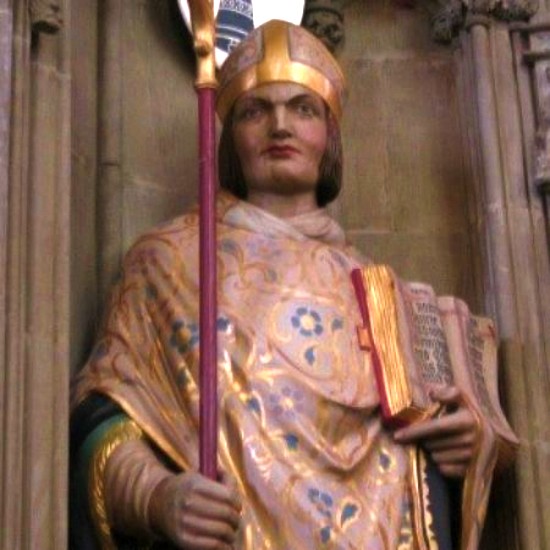
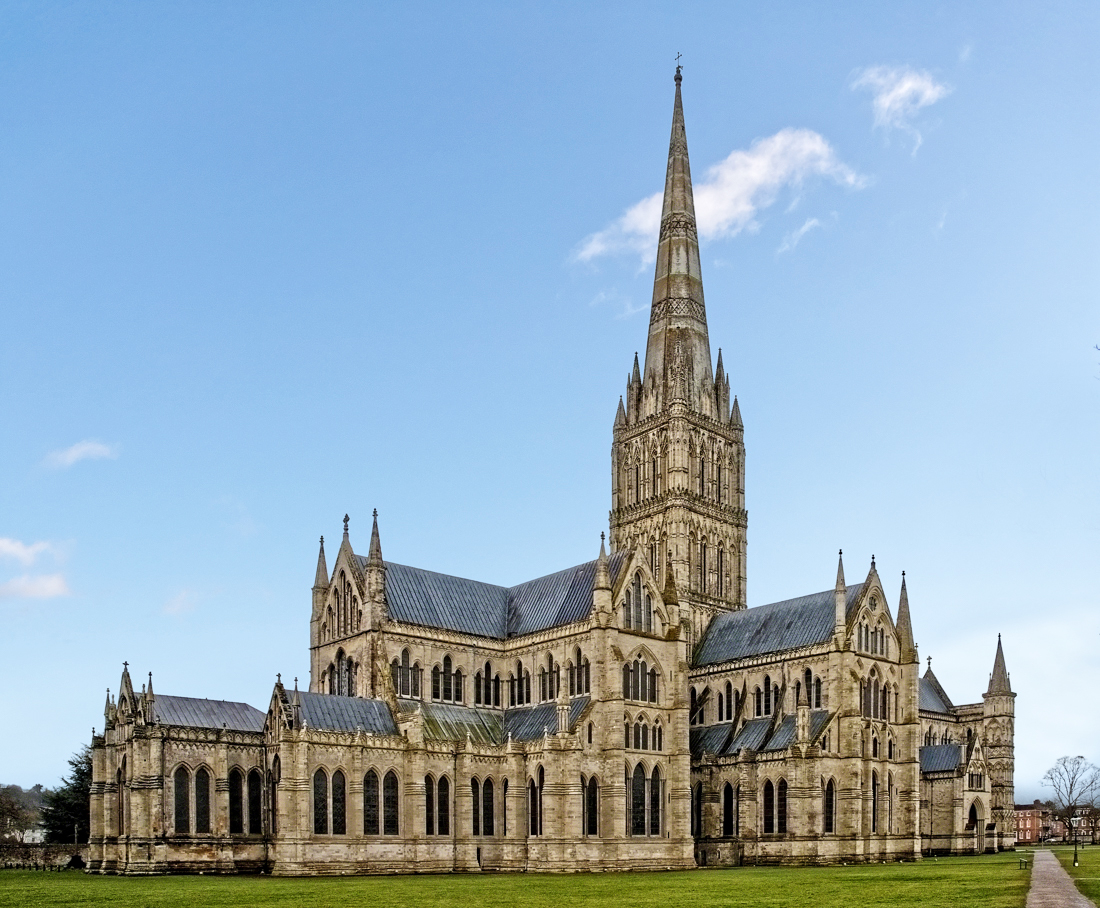
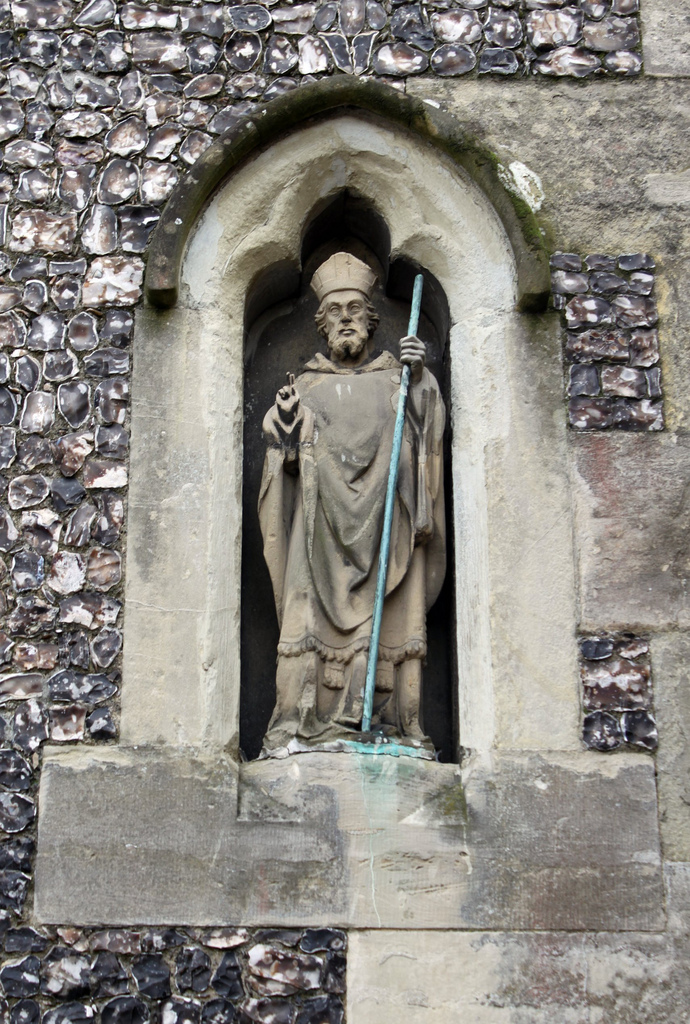
Quote/s of the Day – 13 July – “Month of the Precious Blood” – Monday of the Fifteenth Week in Ordinary Time, Year A, Readings: Isaiah 1:10-17, Psalm 50:8-9, 16-17, 21, 23, Matthew 10:34–11:1
“Whoever finds his life, will lose it and whoever loses his life, for my sake, will find it.”
Matthew 10:39
“Do not say, this happened by chance, while this came to be of itself.” In all that exists’ there is nothing disorderly, nothing indefinite, nothing without purpose, nothing by chance … How many hairs are on your head? God will not forget one of them. Do you see how nothing, even the smallest thing, escapes the gaze of God?”
St Basil the Great (329-379)
Father & Doctor of the Church
“The Lord is near, do not be anxious about anything!”
St Augustine (354-430)
Great Western Father and Doctor of Grace
An excerpt from his Sermon 171
“In God’s name let us go on bravely.”
St Joan of Arc (1412-1431)
“We must offer ourselves to God, like a clean, smooth canvas and not worry ourselves, about what God may choose to paint on it but at each moment, feel only the stroke of His brush.”
Father Jean-Pierre de Caussade (1675-1751)
“Consider the shortness of time, the length of eternity and reflect how everything here below comes to an end and passes by. Of what use is it, to lean upon, that which cannot give support?”
St Gerard Majella (1726-1755)
“We are blind, left to ourselves, we should take the wrong way, we must leave it to Him.”
St John Henry Newman (1801-1890)
“I trust in God and wish nothing else but His will.”
St Zygmunt Szcesny Felinski (1822-1895)
“Do not be preoccupied with the future, God is in charge of it.”
St Léonie Françoise De Sales Aviat (1844-1914)
“The glance of God is like a fortifying dew, a luminous ray, which fertilises and expands – let us work without noise and without rest, let us work before God’s eyes, before God alone!”
Bl Luigi Orione (1872-1940)
“My past, O Lord, to Your mercy, my present, to Your love, my future, to Your Providence.”
One Minute Reflection – 13 July – “Month of the Precious Blood” – Monday of the Fifteenth Week in Ordinary Time, Year A, Readings: Isaiah 1:10-17, Psalm 50:8-9, 16-17, 21, 23, Matthew 10:34–11:1 and the Memorial of Blessed Mariano de Jesus Euse Hoyos (1845-1926) Priest
“Whoever loves father or mother more than me is not worthy of me…” … Matthew 10:37
REFLECTION – “It is to those who are on fire with love or, rather, those He wants to set on fire with this love, that our Saviour addresses these words. For our Saviour has not done away with but regulated, the love we owe to parents, spouse, children. He did not say: “Those who love them” but “Those who love them more than me”… Love your father but love the Lord even more, love him who brought you into the world but love yet more He who gave you being. It was your father who brought you into the world but it was not he who created you, since he did not know, when he bred you, who you would be or what you would become. It was your father who fed you but he is not the origin of the food that staunched your hunger. Finally, your father must die if you are to inherit his goods but you will share the inheritance God intends for you, while living with Him eternally.
So love your father but not more than you love your God, love your mother but love still more the Church who has begotten you into eternal life… Indeed, if you owe such gratitude to those who begot you for mortality, what kind of love do you owe to those who begot you for eternity? Love your spouse, love your children as God does, to lead them to serve God together with you and then, when you are reunited, you will not be afraid of being separated. Your love for your family would indeed fall short if you did not lead them to God…
Take up your cross and follow the Lord. Your Saviour Himself, wholly God as He was in the flesh, clothed with your flesh, He, too, showed human feelings when He said – “My Father, if it is possible, let this cup pass from me,” (Mt 26:39)… The servant’s nature with which He clothed Himself for your sake, caused His human voice, the voice of His flesh, to be heard. He took your voice so as to express your weakness and give you His strength… and to show you, whose will to prefer.”… St Augustine (354-430) Father & Doctor of the Church – Sermon 344, #2-3
PRAYER – God our Father, we are Your children and You have set us aside to come home to You by the light of the way of Your divine Son. Grant we pray, that we may grow in faith and love daily, by the intercession of Blessed Mariano de Jesus Euse Hoyos and may be a light of love, to all around us, as he was. We make our prayer through our Lord Jesus with You in the unity of the Holy Spirit, God forever, amen.
Our Morning Offering – 13 July – “Month of the Precious Blood” – Monday of the Fifteenth Week in Ordinary Time
O God, Be With Us By St Benedict (c 480-547)
O God,
from Whom to be turned,
is to fall,
to Whom to be turned,
is to rise,
and in Whom to stand,
is to abide forever,
grant us in all our duties,
Your help,
in all our perplexities,
Your guidance,
in all our dangers,
Your protection,
and in all our sorrows,
Your peace,
through Jesus Christ our Lord.
Amen
Saint of the Day – 13 July – Blessed Mariano de Jesus Euse Hoyos (1845-1926) Priest, Defender of the Poor, children, the sick and the rural communities – born on 14 October 1845 at Yarumal, Diocese of Antioquía, Colombia and died on 13 July 1926 at Angostura, Antioquia, Colombia of natural causes. Fr Mariano had a great devotion to the Sacred Heart of Jesus and the Blessed Virgin’s Most Holy Rosary. Patronages – against cancer, of Rural labourers. Blessed Mariano was the first Colombian to be Beatified.
Mariano de Jesús Euse Hoyos was born on 14 October 1845 as the eldest of seven children to Pedro Euse and Rosalía de Hoyos Echeverri during an uncertain period of anti-religious sentiment. He was Baptised on 15 October and received the Sacrament of Confirmation in 1847. His great-grandfather Pedro Euse hailed from France.
In 1860 he entered the College of Saint Joseph of Marinilla where he studied mathematics and passed all his studies with excellent results.From the age of sixteen in 1861, he harboured the desire of becoming a Priest and was then entrusted to the care of his Priest uncle Firmino Hoyos – the Parish Priest of Girardota – and received from him a cultural and spiritual formation. He commenced his studies for the Priesthood on 3 February 1869 at a new Seminary opened in Mendellin and was Ordained on 14 July 1872. He began his clerical career as a curate to his uncle until his uncle died in January 1875 when he was transferred to Yarumal in 1876.
In 1878 he was assigned as a Parish Priest in Angostura and spent the remainder of his life there. It was there that he became well aware of the parish difficulties such as the construction of an appropriate parish church. He became well noted for being a simple and effective preacher and tended to the social and spiritual needs of the poor of the region with a particular emphasis on rural labourers; he often called the poor “Christ’s nobles.” His particular Parish was in an area that civil war often plagued – in which neither side favoured the faith – so he had to several times hide in caves in the area to escape the fighting. The Priest also encouraged popular devotions such as the Sacred Heart and encouraged recitation of the Holy Rosary amongst families.
He became bedridden in mid-June 1926 with a serious infection and later died in the first few hours of 13 July 1926. He had been stricken – on 12 July – with enteritis. He said on his deathbed: “I have already lived long enough. Now my greatest desire is to be united to my Jesus.
Pope John Paul II granted his final approval to the cure of Fr Rafael Gildardo Velez Saldarriaga (born 1912) from Medellin, as being a credible miracle on 26 March 1999 and Beatified Father Mariano on 9 April 2000.
Father Mariano knew how to integrate himself totally in the life of the people, sharing in the sorrows and joys of all. For all of them he was a diligent Father, teacher and trustworthy counsellor and a faithful witness of Christ’s love among them. The poor, whom he called ‘Christ’s nobles,’ were his favourites. He never hesitated to use his own goods to alleviate the penury and indigence of the weakest. He frequently visited the sick and was available at all times of the day and night to help them. He took care of children and youth with infinite gentleness and simplicity to lead them on the road of good habits and prudence. – Vatican Information Office
St Dogfan
Bl Élisabeth Verchière
St Emanuele Lê Van Phung
St Esdras the Prophet
St Eugene of Carthage
Bl Ferdinand Mary Baccilleri
St Iosephus Wang Kuiju
Bl James of Voragine
Bl Jean of France
St Joel the Prophet
Bl Louis-Armand-Joseph Adam Blessed Mariano de Jesus Euse Hoyos (1845-1926)
Bl Marie-Anastasie de Roquard
Bl Marie-Anne Depeyre
Bl Marie-Anne Lambert
St Mildred of Thanet
St Muritta of Carthage
St Myrope
St Paulus Liu Jinde
St Salutaris of Carthage
St Sarra of Egypt
St Serapion of Alexandria
Serapion of Macedonia
Bl Thérèse-Henriette Faurie
Bl Thomas Tunstal
St Turiaf
—
Martyrs of Cyprus – 300 saints: 300 Christians who retired to Cyprus to live as cave hermits, devoting themselves to prayer and an ascetic life devoted to God. Tortured and martyred for their faith and their bodies dumped in the various caves in which they had lived. We know the names of five of them but no other details even about them – Ammon, Choulélaios, Epaphroditus, Eusthénios and Héliophotos. They were beheaded in the 12th century on Cyprus and their bodies dumped in the cave where they had lived and only rediscovered long afterwards.
Martyrs of Philomelio – 31 saints: 31 soldiers martyred for their faith in the persecutions of prefect Magno, date unknown. The only name that has come down to us is Alexander. In Philomelio, Phrygia (in modern Turkey).
Thought for the Day – 12 July – Meditations with Antonio Cardinal Bacci (1881-1971)
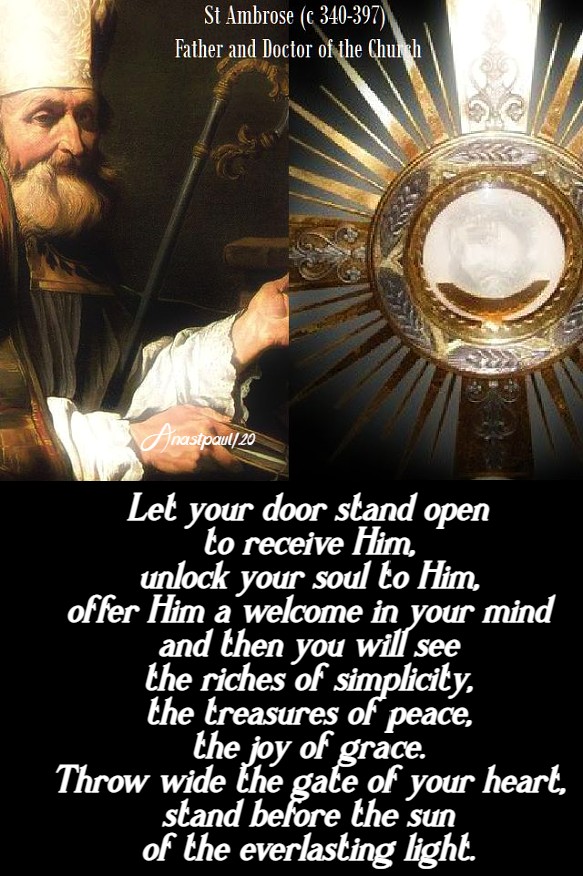
The Grace of God
“God has endowed us with wonderful corporal and spiritual gifts, creating us after His own image with powers of intellect and of will.
More than this, He has raised us to the supernatural order by communicating to us, His grace, which enables us to live His own life and to share in His divine nature, as His adopted sons.
Grace is the greatest gift which God has given us.
It enlightens our minds and moves our will to obey His commands and to perform actions which merit an everlasting reward.
It is an entirely supernatural and gratuitous gift.
For this reason, we cannot merit it but, we should continually pray for it because, it is absolutely necessary if we are to do good and to merit Heaven.
Our first ancestor, Adam, was endowed with this gift by our Creator.
Unfortunately, by original sin, he lost it for himself and for his descendants.
We cannot complain to God about this loss, since grace is an entirely supernatural gift which is in no way, due to our human nature.
For the same reason, we cannot merit it on our own.
But God, being infinitely good, as well as, infinitely just, sent His only-begotten Son to redeem us from sin and to grant us His friendship once more.
We should be very grateful to God for this extraordinary favour and should unite our efforts to the divine action of grace, in the performance of good works, which will enable us to merit everlasting life.”
Quote/s of the Day – 12 July – “Month of the Most Precious Blood” – The Fifteenth Sunday of the Year in Ordinary Time, Year A, Readings: Isaiah 55:10-11, Psalm 65:10-14, Romans 8:18-23, Matthew 13:1-23
“Not on bread alone is man to live but on every utterance that comes from the mouth of God.”
Matthew 4:4
“As for what was sown on good soil, this is the one who hears the word and understands it. He indeed bears fruit and yields, in one case a hundredfold, in another sixty and in another thirty.”
Matthew 13:23
“Those who are my sheep hear my voice and follow me”
John 10:27
“For he knows that Scripture, as a whole, is God’s one perfect and complete instrument, giving forth, to those who wish to learn, it’s one saving music…”
Origen (c 185-253)
Theologian, Father of the Church
“The Church is the Ship outside which it is impossible to understand the Divine Word, for Jesus spoke from the boat to the people gathered on the shore.”
St Hilary of Poitiers
(315-368)
Father & Doctor of the Church
“We speak to God when we pray, we listen to Him, when we read the Scriptures.”
St Ambrose (340-397)
Father and Doctor of the Church
“Ignorance of Scripture is ignorance of Christ.”
“Let sleep find you holding your Bible and when your head nods, let it be resting on the sacred page.”
St Jerome (343-420)
Father and Doctor of the Church
“We truly seize Christ if our minds grasp the Word.”
St Augustine (354-430)
Father & Doctor of the Church
Sermons on the Gospel of John, no 48, 9-11
“The Holy Bible is like a mirror before our mind’s eye. In it we see our inner face. From the Scriptures we can learn our spiritual deformities and beauties. And there too we discover the progress we are making and how far we are from perfection.”
St Pope Gregory the Great (540-604)
Father and Doctor of the Church
“When it comes to obeying the commandments or enduring adversity, the words uttered by the Father should always echo in our ears – “This is my Son, the beloved, in whom I am well pleased, listen to Him.”
St Pope Leo the Great (400-461)
Father and Doctor of the Church
“The grain of mustard seed is the Lord, who by faith is sown spiritually in the hearts of those who accept Him. … For it is written, “The word is very near to you, in your mouth and in your heart” (Rm 10:8), that is, the word of faith, Christ, being Himself, the word that is sought.”
St Maximus the Confessor (c 580-662)
Monk and Theologian
Second Century on Theology, nos. 10-11, 35
“Always give good heed to the Word of God, whether you hear or read it in private, or hearken to it when publicly preached. Listen with attention and reverence, seek to profit by it and do not let the precious words fall unheeded but receive them into your heart.”
St Francis de Sales (1567-1622)
Doctor caritatis
“Cultivate serious study! Sacred scripture says, ‘Because you have despised wisdom, I will despise you’.”
Sunday Reflection – 12 July – “Month of the Most Precious Blood” – The Fifteenth Sunday of the Year in Ordinary Time, Year A, Readings: Isaiah 55:10-11, Psalm 65:10-14, Romans 8:18-23, Matthew 13:1-23
“But blessed are your eyes, for they see and your ears, for they hear. For truly, I say to you, many prophets and righteous people, longed to see what you see and did not see and to hear what you hear and did not hear it.”
Matthew 13:16-17
The Sacrament that You Receive is Effected by the Words of Christ
Saint Ambrose (340-397) Bishop and Great Latin Father and Doctor of the Church
An excerpt from his work, On the Mysteries
We see that grace can accomplish more than nature, yet so far we have been considering instances of what grace can do through a prophet’s blessing. If the blessing of a human being had power even to change nature, what do we say of God’s action in the Consecration itself, in which the very words of the Lord and Saviour are effective? If the words of Elijah had power even to bring down fire from heaven, will not the words of Christ have power to change the natures of the elements? You have read that in the creation of the whole world He spoke and they came to be; He commanded and they were created. If Christ could by speaking create out of nothing what did not yet exist, can we say that His words are unable to change existing things into something they previously were not? It is no lesser feat to create new natures for things than to change their existing natures.
What need is there for argumentation? Let us take what happened in the case of Christ Himself and construct the truth of this mystery from the mystery of the incarnation. Did the birth of the Lord Jesus from Mary come about in the course of nature? If we look at nature we regularly find that conception results from the union of man and women. It is clear then, that the conception by the Virgin was above and beyond the course of nature. And this Body, which we make present, is the Body born of the Virgin. Why do you expect to find in this case, that nature takes its ordinary course in regard to the Body of Christ, when the Lord Himself was born of the Virgin in a manner above and beyond the order of nature? This is indeed the true flesh of Christ, which was crucified and buried. This is then, in truth, the Sacrament of His Flesh.
The Lord Jesus Himself declares – This is my Body. Before the blessing contained in these words, a different thing is named; after the Consecration a Body is indicated. He Himself speaks of His Blood. Before the Consecration something else is spoken of; after the Consecration Blood is designated. And you say: “Amen,” that is: “It is true.” What the mouth utters, let the mind within, acknowledge, what the word says, let the heart ratify.
So the Church, in response to grace so great, exhorts her children, exhorts her neighbours, to hasten to these mysteries – Neighbours, she says, come and eat; brethren, drink and be filled. In another passage the Holy Spirit has made clear to you what you are to eat, what you are to drink. Taste, the prophet says and see, that the Lord is good; blessed is the man who puts his trust in Him. Christ is in that sacrament, for it is the Body of Christ. It is, therefore, not bodily food but spiritual. Thus the Apostle too says, speaking of its symbol – Our fathers ate spiritual food and drank spiritual drink. For the body of God is spiritual; the body of Christ is that of a divine spirit, for Christ is a spirit. We read – The spirit before our face is Christ the Lord. And in the letter of Saint Peter we have this – Christ died for you. Finally, it is this food that gives strength to our hearts, this drink which gives joy to the heart of man, as the prophet has written.
“As for what was sown on good soil, this is he who hears the word and understands it; he indeed bears fruit and yields, in one case a hundredfold, in another sixty, and in another thirty.”…Matthew 13:23
REFLECTION – “Indeed, you all know how land is cultivated. First of all you pull out the weeds and throw away the stones, then you work the ground itself. You do it again a second time, a third time and finally… you sow. Oh, let it be like this in our souls! First of all let us uproot the weeds, that is to say our evil thoughts; then take out the stones, in other words all our malice and obstinacy. Finally, let us work our hearts with the plough of the Gospel and the ploughshare of the cross. Let us break it by repentance, turn over the soil with almsgiving and with charity, prepare it for the seed of Our Lord… that it may joyfully receive the seed of the divine word and bring forth fruit, not just thirty but sixty and a hundredfold.”… St Caesarius of Arles (470-543) Monk & Bishop (Sermons to the people, no.6 passim ; SC 175)
PRAYER – A pure heart create for me O God, put a steadfast spirit within me! (Ps 50[51]) Lord God, bestow a full measure of Your grace to us. Keep us within in the path of Your commandments, help us to work on the earth of our souls, rooting out the weeds and casting forth the stones of malice. Grant that by the intercession of the Mother of Your Son and our Mother too, we may succeed in attaining sanctity. Through Christ, our Lord, in union with the Holy Spirit, one God, forever, amen.
Our Morning Offering – 12 July – “Month of the Most Precious Blood” – The Fifteenth Sunday of the Year in Ordinary Time, Year A
Prayer before Holy Mass By St John Chrysostom (347-407) Father and Doctor of the Church
O God, loose, remit and forgive
my sins against You.
Whether in word, or in deed, or in thought,
willingly or unwillingly,
knowingly or unknowingly, committed,
forgive them all,
for You are good and love mankind.
And through the prayers of Your most holy Mother,
of Your heavenly servants and holy powers
and of all the saints
who have found favour in Your sight,
enable me to receive, without condemnation
Your holy and immaculate Body
and Your Precious Blood,
to the healing of my soul and body
and to the driving away of all evil imaginations,
for Yours is the kingdom, the power and the glory,
Father, Son and Holy Spirit,
now and forever
and to ages of ages.
Amen
Saint of the Day – 12 July – Saint John Jones OFM (c 1574 – 1598) Priest and Martyr, Franciscan Friar, Missionary – Born as Griffith Jones c 1574 in Clynog-Fawr, Carnarvonshire, Wales and died by being hanged, drawn and quartered in the early morning of 12 July 1598 at London, England. He is one of the Forty Martyrs of England and Wales who are celebrated on 25 October.
His real name was Griffith Jones but he was variously known as John Jones, John Buckley, John Griffith or Godfrey Maurice Jones. He was born in the ancient parish of Clynnog into a staunch and recusant Welsh Catholic family who stayed true to their faith after the Protestant Reformation.
He entered the Observant Franciscan Convent at Greenwich as a youth. On the accession of Queen Elizabeth in 1558, Catholicism was banned so he went to the Continent and was Ordained at the Franciscan Monastery at Pontoise, France. He studied at the English College at Douai. After his Ordination at Rheims in 1585 he returned to the English mission but was captured and imprisoned in Wisbech Castle. He either escaped or was released and about 1592 made his profession as a Franciscan at the Convent of Ara Coeli in Rome, taking the name Godfrey.
His ‘Mission to England’ was approved by Pope Clement VIII and he returned in 1592, fully aware of the gruesome punishments inflicted on Catholic priests.
After two years he was arrested in Staffordshire. In 1596 the priest-catcher Topcliffe had been informed by a spy that John Jones had visited two Catholics and said Mass in their house but it was afterwards shown that these people were in prison when the alleged offence took place. However, he was promptly arrested and severely tortured. He was also cruelly scourged and Topcliffe took him to his house and practised unspeakable barbarities upon him, all of which he endured with great fortitude. He was then imprisoned for nearly two years in the Marshalsea Prison and on 3 July 1598, was tried on the charge of “going over the seas in the first year of Her Majesty’s reign (1558) and there being made a priest by the authority from Rome and then returning to England contrary to statute” (27 Eliz. c. 2) and sentenced to be hanged, drawn and quartered.
He was executed on 12 July 1598, some two miles outside of London. By this time, the people had grown tired of these hateful spectacles and as the authorities were keen to avoid a riot, the execution was arranged for the early morning. Despite this, a large crowd gathered. The executioner, called untimely from his bed, forgot his ropes. During the delay while he went for them, the condemned man preached to the crowd and explained he was being martyred for his faith, not for disloyalty to his country. The place was St Thomas’s Watering, in what is now the Old Kent Road, at the site of the junction of the old Roman road to London with the main line of Watling Street.
Sts John Jones and St John Wall – Martyrs
The usual atrocities were carried out; his dismembered remains were fixed on the poles on the roads to Newington and Lambeth (now represented by Tabard Street and Lambeth Road respectively); some were removed by young Catholics, one of whom suffered long imprisonment for this. One of these relics eventually reached the Monastery of Pontoise, where the Martyr had been ordained.
He was declared Venerable by Pope Leo XIII, Beatified in 1929 by Pope Pius XI and Canonised on 25 October 1970 by Pope Paul VI.
The Fifteenth Sunday of the Year in Ordinary Time, Year A +2020
__
St Agnes De
St Andreas the Soldier
St Ansbald of Prum
St Balay
St Clement Ignatius Delgado Cebrian
Bl David Gonson
St Epiphana
St Faustus the Soldier
St Felix of Milan
St Fortunatus of Aquileia
St Hermagorus of Aquileia
St Hilarion of Ancyra
St Jason of Tarsus
Bl Jeanne-Marie de Romillon St John Gualbert (c 985-1073) His Life: https://anastpaul.com/2019/07/12/saint-of-the-day-12-july-st-john-gualbert-c-985-1073-the-merciful-knight/ St John Jones OFM (c 1574 – 1598) Priest and Martyr
Bl Madeleine-Thérèse Talieu
Bl Marguerite-Eléonore de Justamond
Bl Marie Cluse
St Menas the Soldier
St Menulphus of Quimper
St Nabor of Milan
St Paternian of Bologna
St Paulinus of Antioch
St Phêrô Khan
St Proclus of Ancyra
St Proculus of Bologna
St Uguzo of Carvagna St Veronica St Veronica’s Story: https://anastpaul.wordpress.com/2017/07/12/saint-of-the-day-12-july-st-veonica/
St Viventiolus of Lyons
—
Martyrs of Nagasaki – 8 beati: Additional Memorial – 10 September as one of the 205 Martyrs of Japan
Eight lay people, many them related to each other, who were martyred together:
• Catharina Tanaka
• Ioannes Onizuka Naizen
• Ioannes Tanaka
• Ludovicus Onizuka
• Matthias Araki Hyozaemon
• Monica Onizuka
• Petrus Araki Chobyoe
• Susanna Chobyoe
12 July 1626 in Nagasaki, Japan
Beatified on 7 May 1867 by Pope Blessed Pius IX.
Thought for the Day – 11 July – Meditations with Antonio Cardinal Bacci (1881-1971)
The Good Odour of Christ
“Everyone has an attractive side to his personality which can draw others towards good or towards evil, for a man’s behaviour, countenance and conversation, reflect his inner spirit.
Charm is very often a mysterious and undefinable quality.
Sometimes you may meet a man of the world who has forgotten that he has an immortal soul and lives purely for pleasure.
Even before he speaks to you, you can read on his lips and in his eyes, the kind of man he is.
If you fail to resist and to do your best to remain on a higher plane, you will be overwhelmed by the charm of his personality.
Your can also encounter charm, however, in a privileged soul, who is in constant contact with God.
You can find it in the monk who has left the world, in order to meditate on God and to pay for his own salvation and for the salvation of his brothers in Christ.
You can meet it in a Saint, one of those rare men, who lives in the world but thinks all the time of God.
When you encounter this supernatural charm, you experience a longing to be good and holy also.
You can see a reflection of Heaven in the eyes of a Saint.
When he speaks to you, words, which if uttered by somebody else, would have no force, stir you and urge you towards all that is good.
What exactly is this quality of attractiveness?
It is “the sweet odour of Christ,” the spiritual fragrance of virtue.
Anyone who met St Aloysius Gonsaga, felt a yearning to be pure.
Anyone who heard the unadorned sermons of the Cure d’Ars, wept for his sins and was set on fire with the love of God and the desire of everlasting happiness.
It was the same with all the Saints.
Do we influence others in this way?”
Quote/s of the Day – 11 July – The Memorial of St Benedict of Nursia OSB (c 480-547)
“It is time now for us to rise from sleep!”
“Listen and attend with the ear of your heart.”
“He should know, that whoever undertakes, the government of souls, must prepare himself to account for them.”
“For at all times we must so serve Him with the good things He has given us, that He may not, as an angry Father, disinherit His children, nor as a dread Lord, provoked by our evil deeds, deliver us to everlasting punishment as wicked servants who refuse to follow Him to glory.”
“He, who labours as he prays, lifts his heart to God, with his hands.”
One Minute Reflection – 11 July – “Month of the Precious Blood” – Saturday of the Fourteenth week in Ordinary Time, Year A, Readings: Isaiah 6:1-8, Psalm 93:1-2, 5, Matthew 10:24-33 and the Memorial of St Benedict of Nursia OSB (c 480-547) Patron of Europe and Founder of Western Monasticism and St Olga Queen of Kiev (c 890-969)
“Are not two sparrows sold for a small coin? Yet not one of them falls to the ground without your Father’s knowledge. Even all the hairs of your head are counted.” … Matthew 10:29-30
REFLECTION – “If God shows such a solicitous care even for things of modest value (grass and flowers, for example), how can He forget you, that you are the most excellent of His creatures? Why then did He create such beautiful things? To manifest His wisdom and the greatness of His power, so that we might know all His glory.
Not only the heavens narrate the glory of God (Ps 18,2) but also the earth, as David points out, when he sang: Praise the Lord, fruit trees and all cedars (Ps 148,9). In fact, some creatures praise the Creator with their fruits, others with their greatness, still others with their beauty.
Another demonstration of the great wisdom and power of God resides in the fact that He adorns even the most vile objects of such beauty (what is, in fact, more vile than what exists today but tomorrow will no longer be?) If, then, God has also given hay to what was not necessary at all (what good is it, in fact, it’s beauty? To feed the fire?) how can He not give you what you need? If the Lord has generously decorated the most vile thing of all and not for some purpose but only for beauty, much more He will honour you, the most precious of His creatures, in those things that are necessary to you. ” … St John Chrysostom (347-407) Father and Doctor of the Church – Commentary on the Gospel of St Matthew, 22.1
PRAYER – Loving Father, grant me to have a true fervour in Your service. Let me never tire of following Your Son’s example and avoiding evil. Teach me to reside in total peace in Your wisdom and power and thus to trust You above all. Grant that by the intercession of St Benedict and St Olga, we may grow in holiness and attain our eternal home with You. We ask this through our Lord, Jesus Christ and the Holy Spirit, God forever, amen.
Our Morning Offering – 11 July – Saturday of the Fourteenth week in Ordinary Time and a Marian Saturday
A Morning Salutation to Mary A Coptic Catholic Prayer
We greet you,
glorious Mother of the Light
O Blessed Mary,
from the rising of the sun
to its setting
praise is due to you,
O Mother of God.
You are the second heaven,
the bright unfading flower,
the ever-virgin mother.
For the Father chose you
and the Holy Spirit overshadowed you
and the Son humbled Himself
and took flesh from you.
Therefore, ask Him to give peace
to the world He has created
and to deliver it from every tribulation.
And we shall sing to Him a new song
and bless Him,
now and forever,
Amen
Saint of the Day – 11 July – Saint Olga Queen of Kiev (c 890-969) Queen of the Ukraine – born c 890 at Pskov, Russia and died on 11 July 969 in Kiev, Ukraine of natural causes. Also known as Olga Prekrasa, Olga the Beauty, Helena, Helga, Olha. Patronage – Kiev, converts, widows. Her body was incorrupt, though it was lost in the early 18th century.
While Olga’s birthdate is unknown, it could be as early as 890 and as late as 925 but she was born and lived in Pskov. Little is known about her life before her marriage to Prince Igor I of Kiev and the birth of their son, Svyatoslav. Igor was the son and heir of Rurik, founder of Rurik dynasty. After his father’s death Igor was under guardianship of Oleg, who had consolidated power in the region, conquering neighbouring tribes and establishing a capital in Kiev. This loose tribal federation became known as Kievan Rus’, a territory covering what are now parts of Russia, Ukraine, and Belarus.
The Drevlians were a neighbouring tribe with which the growing Kievan Rus’ empire had a complex relationship. The Drevlians had joined Kievan Rus’ in military campaigns against the Byzantine Empire and paid tribute to Igor’s predecessors. They stopped paying tribute upon Oleg’s death and instead gave money to a local warlord. In 945, Igor set out to the Drevlian capital, Iskorosten (today known as Korosten in northern Ukraine), to force the tribe to pay tribute to Kievan Rus.’ Confronted by Igor’s larger army, the Drevlians backed down and paid him. As Igor and his army rode home, however, he decided the payment was not enough and returned, with only a small envoy, seeking more tribute. Upon his arrival in their territory, the Drevlians murdered Igor. According to the Byzantine chronicler Leo the Deacon, Igor’s death was caused by a gruesome act of torture in which he was “captured by them, tied to tree trunks and torn in two.”
When Igor was murdered in 945, Princess Olga assumed the regency for her son, Svyatoslav. Olga served as regent until her son was of age in 964. She was known as a ruthless and effective ruler. She resisted marrying Prince Mal of the Drevlians, who had been the killers of Igor, killing their emissaries and burning their city in revenge for her husband’s death. She resisted other offers of marriage and defended Kiev from attacks.
During her son’s prolonged military campaigns, she remained in charge of Kiev, residing in the castle of Vyshgorod with her grandsons.
In the 950s, Olga travelled to Constantinople, the capital of the Byzantine Empire, to visit Emperor Constantine VII. Once in Constantinople, Olga converted to Christianity with the assistance of the Emperor and the Bishop. While the Primary Chronicle does not divulge Olga’s motivation for her visit or conversion, it does go into great detail on the conversion process, in which she was baptised and instructed in the ways of Christianity
“When Olga was enlightened, she rejoiced in soul and body. The Bishop, who instructed her in the faith, said to her, ‘Blessed art thou among the women of Rus’, for thou hast loved the light and quit the darkness. The sons of Rus’ shall bless thee to the last generation of thy descendants.’ He taught her the doctrine of the Church, and instructed her in prayer and fasting, in almsgiving and in the maintenance of chastity. She bowed her head and like a sponge absorbing water, she eagerly drank in his teachings. The Princess bowed before the Bishop, saying, ‘Through thy prayers, Holy Father, may I be preserved from the crafts and assaults of the devil!’ At her Baptism she was named Helena, after the ancient Empress, mother of Constantine the Great. The Bishop then blessed her and dismissed her.”
By her example, she influenced her grandson, Vladimir I. He was the third son of Svyatoslav and brought Kiev (Rus) into the official Christian fold.
Olga died from illness in 969. When Svyatoslav announced plans to move his throne to the Danube region, the ailing Olga convinced him to stay with her during her final days. Only three days later, she passed away and her family and all of Kievan Rus’ wept.
At the time of her death, it seemed that Olga’s attempt to make Kievan Rus’ a Christian territory had been a failure. Nonetheless, Olga’s Christianising mission would be brought to fruition by her grandson, Vladimir, who officially adopted Christianity in 988. The Primary Chronicle highlights Olga’s holiness in contrast to the pagans around her during her life as well as the significance of her decision to convert to Christianity:
“Olga was the precursor of the Christian land, even as the day-spring precedes the sun and as the dawn precedes the day. For she shone like the moon by night and she was radiant among the infidels like a pearl in the mire, since the people were soiled and not yet purified of their sin by holy baptism. But she herself was cleansed by this sacred purification…. She was the first from Rus’ to enter the kingdom of God and the son of Rus’ thus praise her as their leader, for since her death she has interceded with God in their behalf.”
Her relics were found to be incorrupt and translated to the Church of the Tithes in Kiev, the first time relics were displayed in Rus-Ukraine, however, her relics were lost forever in the early 18th century.
St Abundius of Ananelos
St Amabilis of Rouen
St Anna An Jiaoshi
St Anna An Xingshi
Bl Antonio Muller
St Berthevin of Lisieux
St Cindeus
St Cowair
St Cyprian of Brescia
St Cyriacus the Executioner
St Hidulf of Moyenmoutier
St Januarius
St John of Bergamo
Bl Kjeld of Viborg
St Leontius the Younger
St Marcian of Lycaonia
St Marciana of Caesarea
Maria An Guoshi
Maria An Linghua
Bl Marie-Clotilde Blanc
Bl Marie-Elisabeth Pélissier
Bl Marie-Marguerite de Barbégie d’Albrède St Olga Queen of Kiev (c 890-969)
St Pelagia
St Pius I, Pope
St Placid of Dissentis
Bl Rosalie-Clotilde Bes
St Sabinus of Brescia
St Sabinus of Poitiers
St Sidronius
St Sigisbert of Dissentis
Bl Thomas Hunt
Bl Thomas Sprott
St Thurketyl Blessed Valeriu Traian Frentiu (1875-1952) Martyr Biography:
Thought for the Day – 10 July – Meditations with Antonio Cardinal Bacci (1881-1971)
Vanity
“God was perfectly happy in Himself from all eternity and did not need any creature to add to His glory.
Nevertheless, in order to diffuse His Power and Goodness, He created our world in which is reflected the harmony of His Divine Essence.
Even as all things have their origin in Him, they have Him, as their final end.
He is the eternal harbour towards which all created things flow, even as the rivers roll continually onwards until they reach the peace of the sea.
In this vast world of solar systems rotating in the firmament,of mineral and vegetable wealth and of animal creation, you are only a very tiny being, who has received everything from God.
Nevertheless, you are often convinced, that you are important.
You glory in your talents, as if they belonged to you and were not a gift which God has given to you.
Vanity is a form of theft.
God has given us everything, including life itself and, we act as if His gifts were our rightful possession.
We boast about them, show them off in the company of others and, are delighted when we receive praise or respect.
Let us imagine that we are dying and shall soon be alone in the presence of God.
At that supreme moment, what will earthly glory matter to us?
Of what account will be human flattery and transitory success?
When we are alone before God, nothing will matter except humlity and the merits which we have gained.
These will make us worthy of God’s friendship and of a heavenly reward.”
Quote/s of the Day – 10 July – “Month of the Precious Blood” – Friday of the Fourteenth week in Ordinary Time, Year A, Readings: Hosea 14:2-10, Psalm 51:3-4, 8-9, 12-14, 17, Matthew 10:16-23
“Sheep Amidst the Wolves”
“You shall not hate your brother in your heart but you shall reason with your neighbour, lest you bear sin because of him. You shall not take vengeance or bear any grudge against the sons of your own people but, you shall love your neighbour as yourself: I am the Lord”
Leviticus 19:17-18
“But I say to you, love your enemies and pray for those who persecute you…”
Matthew 5:44
“We are treated as deceivers and yet, are truthful, as unrecognised and yet, acknowledged, as dying and behold we live, as chastised and yet, not put to death, as sorrowful yet, always rejoicing, as poor yet, enriching many, as having nothing and yet, possessing all things.”
2 Corinthians 8-10
“What is the surest kind of witness? “Anyone who acknowledges that Jesus Christ came among us in the flesh” (cf. 1Jn 4,2) and who keeps the commands of the Gospel… How many there are each day of these hidden martyrs of Christ who confess the Lord Jesus! … So be faithful and courageous in interior persecutions so that you may also win the victory in exterior persecutions.”
St Ambrose (340-397)
Father & Doctor of the Church
“You don’t love in your enemies what they are but what you would have them become, by your prayers!”
St Augustine (354-430) Father & Doctor
“When he has begun to follow me, according to My teaching and precepts, he will find many people contradicting him and standing in his way, many who not only deride but even persecute him. Moreover, this is true, not only of pagans who are outside the church but also of those, who seem to be in it visibly but are outside of it because of the perversity of their deeds. Although these glory, in merely the title of Christian, they continually persecute faithful Christians.”
St Caesarius of Arles (470-543)
“We must show love for those who do evil to us and pray for them. Nothing is dearer or more pleasing to God than this.”
St Bridget of Sweden (c 1303-1373)
“… I declare to you, that there is no other way of salvation than the one followed by Christians. Since this way teaches me to forgive my enemies and all who have offended me, I willingly forgive the king and all those who have desired my death. And I pray that they will obtain the desire of Christian Baptism.”
St Paul Miki SJ (1564-1597) Martyr
“Visit me not, O my loving Lord – if it be not wrong so to pray – visit me not those trying visitations which saints alone can bear! Still, I leave all in Thy hands, my dear Saviour – I bargain for nothing. Only, if Thou shall bring heavier trial on me, give me more grace – flood me with the fullness of Thy strength and consolation, that they may work in me, not death but life and salvation.”
St John Henry Newman (1801-1890)
“Catholics are part of the Church Militant. They struggle and they suffer for the triumph of Christ. They must never lose sight of their Divine Model, so that their trials will be turned into joy.”
St Pius X (1835-1914)
“To live without faith, without a heritage to defend, without battling constantly for truth, is not to live but to ‘get along,’ we must never just ‘get along’.”
Bl Pier Giorgio Frassati (1901-1925)
“Man of the Beatitudes”
“When I feel overwhelmed by misfortune, the greatest joy that the Lord can give me, is to go to the altar, to put my forehead against it (as on the day of my ordination to the priesthood) and to feel the presence of the only reality. Not only does calm return but my body seems to be annihilated, the only true life begins, the life of that which is intangible.”
Bl Leonid Feodorov (1879-1935) Martyr
“Let us love our enemies, bless those who curse us, pray for Those who persecute us. For love will conquer and will endure for all eternity. And happy are they who live and die in God’s love.”
” …We need no rifles or pistols for our battle but instead, spiritual weapons – and the foremost among these is prayer…. Through prayer, we continually implore new grace from God, since without God’s help and grace, it would be impossible for us to preserve the Faith and be true to His commandments….”
“Since the death of Christ, almost every century has seen the persecution of Christians, there have always been heroes and martyrs who gave their lives – often in horrible ways – for Christ and their faith. If we hope to reach our goal some day, then we, too, must become heroes of the faith.”
Blessed Franz Jägerstätter (1907-1943)
Martyr of Conscientious Objection
One Minute Reflection – 10 July – “Month of the Precious Blood” – Friday of the Fourteenth week in Ordinary Time, Year A, Readings: Hosea 14:2-10, Psalm 51:3-4, 8-9, 12-14, 17, Matthew 10:16-23 and the Memorial of St Canute of Denmark (c 1042-1086) Martyr
“Behold, I am sending you out as sheep in the midst of wolves, so be wise as serpents and innocent as doves.” … Matthew 10:16
REFLECTION – “They live in the flesh but they are not governed by the desires of the flesh. They pass their days upon earth, but they are citizens of heaven. Obedient to the laws, they yet live on a level that transcends the law. Christians love all men but all men persecute them. Condemned because they are not understood, they are put to death but raised to life again. They live in poverty but enrich many; they are totally destitute but possess an abundance of everything. They suffer dishonour but that is their glory. They are defamed but vindicated. A blessing is their answer to abuse, deference their response to insult. For the good they do they receive the punishment of malefactors but even then they, rejoice, as though receiving the gift of life. They are attacked by the Jews as aliens, they are persecuted by the Greeks, yet no one can explain the reason for this hatred.
To speak in general terms, we may say that the Christian is to the world what the soul is to the body. As the soul is present in every part of the body, while remaining distinct from it, so Christians are found in all the cities of the world but cannot be identified with the world. As the visible body contains the invisible soul, so Christians are seen living in the world but their religious life remains unseen. The body hates the soul and wars against it, not because of any injury the soul has done it but because of the restriction the soul places on its pleasures. Similarly, the world hates the Christians, not because they have done it any wrong but because they are opposed to its enjoyments.
Christians love those who hate them just as the soul loves the body and all its members despite the body’s hatred. It is by the soul, enclosed within the body, that the body is held together and, similarly, it is by the Christians, detained in the world as in a prison, that the world is held together. The soul, though immortal, has a mortal dwelling place and Christians also live for a time amidst perishable things, while awaiting the freedom from change and decay that will be theirs in heaven. As the soul benefits from the deprivation of food and drink, so Christians flourish under persecution. Such is the Christian’s lofty and divinely appointed function, from which he is not permitted to excuse himself.” … Ancient Christian writer – From a letter to Diognetus (Nn. 5-6; Funk, 397-401)
PRAYER – Father of all holiness, guide our hearts to You. Keep in the light of Your truth, all those You have freed from the darkness of unbelief. May our lives be the source of enlightenment to others and our faith and love every remain strengthened by Your grace. Listen to the prayers of Your saint and angels on our behalf, as we long for our eternal home. St Canute, we beg for your prayers. We ask this through our Lord Jesus Christ, Your Son, who lives and reigns with You and the Holy Spirit, one God, forever and ever. Amen
Our Morning Offering – 10 July – “Month of the Precious Blood” – Friday of the Fourteenth week in Ordinary Time
My God, Do Not Abandon Me By St Arsenius the Deacon (Died c 450)
My God,
do not abandon me,
though I have done nothing good
in Your sight
but, because You are compassionate,
grant me the power
to make a start.
Amen
Saint Arsenius the Deacon, sometimes known as Arsenius of Scetis and Turah, Arsenius the Roman or Arsenius the Great, was a Roman imperial tutor who became an anchorite in Egypt, one of the most highly regarded of the Desert Fathers, whose teachings were greatly influential on the development of asceticism and the contemplative life. His contemporaries so admired him as to surname him “the Great.” His feast day is celebrated on 8 May.
Saint of the Day – 10 July– St Canute IV of King of Denmark (c 1042-1086) Martyr – known as “Canute the Holy” – also known as Canute, Canute IV, Canutus, Cnut, Knud IV, Knut, Knute. He was King of Denmark from 1080 until 1086. Born c 1042, one of the many sons of Sweyn II Estridsson and he died by the sword in 1086 in the Church of Saint Alban on the island of Fünen, Denmark. Canute was an ambitious king who sought to strengthen the Danish monarchy, devotedly supported the Roman Catholic Church and had designs on the English throne. Slain by rebels in 1086, he was the first Dane to be Canonised. He was recognised as Patron of Denmark in 1101.
He was born in c 1042 and ascended to the throne in 1080. He was ambitious and devout—he appropriated land for the Church and arranged for the support of clergy by tithes. He was generous in building churches and schools.
Canute was a strong, wise king of Denmark. He was a great athlete, an expert horseman and a marvellous general. At the beginning of his reign, he led a war against the barbarians who were threatening to take over the civilised world. King Canute and his army defeated them. He loved the Catholic faith so much that he introduced it to people who had never heard of Christianity.
St Canute knelt in Church at the foot of the altar and offered his crown to the King of kings, Jesus. King Canute was very charitable and gentle with his people. He tried to help them with their problems. Most of all, he wanted to help them be true followers of Christ.
However, a rebellion broke out in his kingdom because of the laws he had made about supporting the Church. On 10 July 1086, Canute and his men took refuge inside the wooden St Alban’s Priory in Odense. While his enemies were still outside, King Canute received the Sacraments of Reconciliation and Holy Communion. He felt compassion for those who were upset enough to kill him. With all his heart he forgave his enemies. The rebels stormed into the Church and slew Canute, along with his brother Benedict and seventeen of their followers, before the altar. According to chronicler Ælnoth of Canterbury, Canute died following a lance thrust in the side.
Martyrdom of Canute the Holy by Christian Albrecht von Benzon, 1843
He was succeeded by Olaf as Olaf I of Denmark.
The story of King Canute and the tide illustrates the piety or humility of King Canute the Great, recorded in the 12th century by Henry of Huntingdon.
In the story, Canute demonstrates to his flattering courtiers that he has no control over the elements (the incoming tide), explaining that secular power is vain compared to the supreme power of God. The episode is frequently alluded to in contexts where the futility of “trying to stop the tide” of an inexorable event is pointed out but usually misrepresenting Canute as believing he had supernatural powers, when Huntingdon’s story in fact relates the opposite.
In Huntingdon’s account, Canute set his throne by the sea shore and commanded the incoming tide to halt and not wet his feet and robes. Yet “continuing to rise as usual [the tide] dashed over his feet and legs without respect to his royal person. Then the king leapt backwards, saying: ‘Let all men know how empty and worthless is the power of kings, for there is none worthy of the name but He whom heaven, earth and sea obey by eternal laws.'” He then hung his gold crown on a Crucifix and never wore it again “to the honour of God the almighty King.”
This slideshow requires JavaScript.
Because of his Martyrdom and advocacy of the Church, Canute quickly began to be considered a saint. Under the reign of Olaf, Denmark suffered from crop failure, which was seen as divine retribution for the sacrilege killing of Canute. Miracles were soon reported as taking place at his grave and his Canonisation was already being sought during the reign of Olaf. On 19 April 1101, persuaded by the envoys from Eric III of Denmark, Pope Paschal II confirmed the “cult of Canute” that had arisen and King Canute IV was Canonised as a Saint under the name San Canuto. He was the first Dane to be Canonised.
In 1300, his remains and those of his brother Benedict were interred in Saint Canute’s Cathedral, built in his honour, where his bones are on display.
St Antôn Nguyen Huu Quynh
St Apollonius of Sardis
Bl Arnold of Camerino
St Bianor of Pisidia St Canute IV of King of Denmark (c 1042-1086) Martyr
St Cuán of Airbhre
St Elilantus
St Etto
Bl Euménios
St Lantfrid
Bl Marie-Gertrude de Ripert d’Alauzier
Bl Parthenios
St Pascharius of Nantes
St Peter Vincioli
St Phêrô Nguyen Khac Tu
St Rufina of Rome
St Secunda of Rome Seven Holy Brothers and their mother, St Felicitas (Died c 165) Martyrs Their Story: https://anastpaul.com/2019/07/10/saints-of-the-day-st-felicitas-c-101-c-165-and-her-seven-holy-sons-died-c-165-martyrs/
St Sylvanus of Pisidia
Bl Sylvie-Agnès de Romillon
St Waltram
—
Martyrs of Africa – 4 saints: A group of Christians martyred together in Africa. The only information that has survived are four of their names – Felix, Januarius, Marinus and Nabor.
Martyrs of Antioch – 10 saints: A group of ten Christians martyred together. We have no details about them but the names – Diogenes, Domnina, Esicius, Macarius, Maxima, Maximus, Rodigus, Timoteus, Veronia and Zacheus. They were martyred in Antioch, date unknown.
Martyrs of Damascus – 11 beati: A group of Franciscans and laymen ordered by Druz Muslims to convert to Islam. They refused and were hacked to pieces.
• ‘Abd Al-Mu’ti Masabki
• Carmelo Bolta Bañuls
• Engelbert Kolland
• Francisco Pinazo Peñalver
• Fransis Masabki
• Juan Jacobo Fernández y Fernández
• Manuel Ruiz López
• Nicanor Ascanio de Soria
• Nicolás María Alberca Torres
• Pedro Soler Méndez
• Rufayil Masabki
They were cut to pieces on 9-10 July 1860 in Damascus, Syria.
Beatified on 10 October 1926 by Pope Pius XI.
Martyrs of Nicopolis – 45 saints: A group of 45 Christians tortured and martyred together in the persecutions of emperor Licinius. We know nothing else but six of their names – Anicetus, Anthony, Daniel, Leontius, Mauritius and Sisinno. c 329 in Nicopolis, Armenia (modern Koyulhisar, Turkey).
Martyrs of Nitria – 5 saints: Fathers of Nitria – Four monks and the bishop of Alexandria, Egypt who were martyred by heretics. Saint John Chrysostom wrote about them but their names have not come down to us. They were martyred in the 4th century in Nitria, Egypt.
Thought for the Day – 8 July – “Month of the Most Precious Blood” – Meditations with Antonio Cardinal Bacci (1881-1971)
Falling into Sin
“The just man falls seven times,” says the Book of Proverbs (24:16).
Unfortunately, we have all experienced how true this is. “If we say that we have no sin, we deceive ourselves” (Cf 1 Jn 1:8).
We fall often, in many ways – in thought, in speech, in action and by omission.
Sometimes, we fall in a moment of weakness or of impatience, at other times, we sin by an act of premeditated malice. “Watch and pray,” Our Lord warns us, “that you may not enter into temptation” (Mt 26:41).
Our Lord also said that we “must always pray not lose heart” (Lk 18:1).
In other words, we should have a spirit of prayer which is based on the love of God and keeps us close to Him.
It is only when we are united to God, that temptations cannot hurt us and we are protected by His grace, from falling into deliberate sin.
It is idle to protest that this would require the virtue of anchorite and that we are entangled in all kinds of other business.
Virtue is necessary for everybody, not only for anchorites. “The kingdom of heaven has been enduring violent assulat and the violent have been seizing it by force” (Mt 11:12).
In order to attain to the kingdom of God, therefore, we have to do violence to our corrupted nature.
A life of solitude is not essential for prayer, however.
One can be busy from morning till night and pray continuously, so that his work is offered to God and done for the love of God.
In this way, work becomes prayer and will save us from falling into sin.”
Quote/s of the Day – 9 July – The Memorial of Blessed Marija of Jesus Crucified Petković (1892-1966)
“Love infinitely, the most sweet Lord Jesus Christ, do everything for Him alone and spend your life, in works of mercy and of love.”
Bl Marija of Jesus Crucified Petković (1892-1966)
“Through Him, our gaze penetrates the heights of heaven and we see, as in a mirror, the most holy face of God. Through Christ, the eyes of our hearts are opened and our weak and clouded understanding, reaches up toward the light.”
St Pope Clement I (c 35-99)
Apostolic Father, Bishop of Rome and Martyr
“In the morning let your first act be to greet My Heart and to offer Me your own. Whoever, breathes a sigh toward Me, draws Me to himself.”
Jesus to St Matilda/Mechtilde of Hackeborn
(c 1241-1298)
“O blessed Jesus, give me stillness of soul in You. Let Your mighty calmness reign in me. Rule me, O King of Gentleness, King of Peace.”
St John of the Cross (1542-1591)
Doctor of the Church
“You leave the land just as it is when you depart, you do not carry anything away. Our first aim is to go to God, we are not on earth for anything but this!”
St John Vianney (1786-1859)
“Do everything out of love for God, for God, with God, to get to God.”
Bl Maria Rosa Flesch (1826-1906)
“The well-being of souls is only in Christ. Therefore, let the love of Jesus be our perfection and our profession, let us light our hearts from the eternal flames of love that radiate from the Sacred Heart of Jesus.”
“Go for the love of Jesus, for the interests of Jesus and Jesus will always be at your side, always in your heart.”
One Minute Reflection – 9 July – “Month of the Most Precious Blood” – Thursday of the Fourteenth week in Ordinary Time, Year A, Readings: Hosea 11:1-4, 8-9, Psalm 80:2-3, 15-16, Matthew 10:7-15 and the Memorial of Blessed Marija of Jesus Crucified Petković (1892-1966)
“And proclaim as you go, saying, ‘The kingdom of heaven is at hand.’” … Matthew 10:7
REFLECTION – “We Missionaries often wonder why the work of the conversion of the non-Christian world goes so slowly. We usually give various reasons to explain this painful fact and in truth, the problem may be considered from many angles, some of which do not concern our responsibility. But, for the part that does concern us and it is the main part, the problem has a very clear solution. To save the world, God in His infinite wisdom wanted to have co-workers. God does His part well – do the people called to help Him do their part equally well?
Let us work in such a way that the whole Church, all Christian people, led by their Bishops and clergy, truly feel the apostolic duty that is incumbent upon them to promote the propagation of the faith, with every means. Let us work in such a way that that Missionaries, the most direct instruments for the conversion of souls, are saints and non-Christians will not be slow to be converted.
… You, Missionaries in active service in the field, are particularly concerned with your part of co-operation. Therefore, I say to you, be holy Missionaries by following the footsteps of those great Missionaries who went before you and, for the part that concerns you, your apostolic duty will have been done to the full. The souls the Lord, in His merciful designs, has entrusted to each one of you that you may lead them to salvation, will be saved and at the end of your days you will be able to say with the Divine Redeemer: “(Father) I kept those you had given me true to you name. I have watched over them and not one is lost” (Jn 17:12).” … Blessed Paolo Manna PIME (1872-1952) Superior General of the PIME Founder of the Pontifical Missionary Union – “Holiness is the Soul of Mission”
PRAYER – “Lord, You have called us to the apostolate with the witness of our life and the proclamation of the Gospel, may we contribute to the coming of Your Kingdom in the nations to which you send us. Lord, You wish us to be Missionaries in communion with the Churches that have given us the faith and richness of Christian life, keep us united to our bishops and to the people they guide, that together we may carry out the mission You have entrusted to us in their name. Lord, You wanted our parents and benefactors, through their generosity and sacrifices, to participate in our apostolic life, may they share the reward You have prepared for those who work for the coming of Your Kingdom throughout the world. Merciful Lord, during their earthly life You assigned our deceased brethren the task of spreading Your Word, may they receive the reward for their apostolate in the glory of heaven. AMEN” … (From the Manual of PIME MIssionaries) And Lord, may the prayers of Your holy men and women, today we call on Bl Marija of Jesus Crucified Petković, who proclaimed Your Kingdom by her life, be every heard for our intercession.
Our Morning Offering – 9 July – “Month of the Most Precious Blood” – Thursday of the Fourteenth week in Ordinary Time
May I Be United With You, Good Jesus By St Peter Canisius (1521-1597) Doctor of the Church
Let my eyes take their sleep
but may my heart always
keep watch for You.
May Your right hand bless Your servants
who love You.
May I be united with the praise
that flows from You, Lord Jesus,
to all your saints;
united with the gratitude
drawn from Your heart, good Jesus,
that causes Your saints to thank You;
united with Your passion, good Jesus,
by which You took away our guilt;
united with the divine longing
that You had on earth, for our salvation;
united with every prayer
that welled from Your divine Heart, good Jesus
and flowed into the hearts of Your saints.
Amen
Saint of the Day – 9 July – Blessed Marija of Jesus Crucified Petković (1892-1966) Religious Sister and Foundress of the Congregation of the Daughters of Mercy of St Francis. Born on 10 December 1892 at Blato, Korcula, Dubrovnik-Neretva, Croatia as Marija Petkovic and died on 9 July 1966 in Rome, Italy of natural causes. Patronage – Congregation of the Daughters of Mercy of St Francis.
Marija Petkovic was born on 10 December 1892 on the island of Korcula in Blato, Croatia. She was the sixth of 11 children born to Antun Petkovic-Kovac and Maria Marinovic. Her father, a very wealthy man and most generous towards the poor, was an example to Marija and all his children.
After elementary school, Marija was enrolled in 1904 in Blato’s newly-opened municipal school run by the Servants of Charity, who had recently arrived from Italy. After successfully completing the three-year programme, she continued her studies at the School of Domestic Science, also directed by the Servants of Charity.
In 1905, when she was 13, Marija made her First Holy Communion. Before entering the church, she knelt down before her parents and asked their pardon for all her wrongdoings. Her father, moved to tears at this display of simplicity and faith, assured his daughter that she had never done anything to sadden her parents, but had always been obedient and loving. Her desire to be obedient, her love of prayer and solitude, her attention to the poor and abandoned, were all virtues that flowered in young Marija’s soul and nourished her desire to give herself completely to God.
In 1906 she became involved with the “Daughters of Mary” Association, and it was at this time that she revealed to Bishop Josip Marcelic that she wanted to enter the convent. This marked the beginning of Marija’s spiritual direction under the Bishop’s care. On 21 November 1906, she made a private vow of chastity to the Lord, saying: “I choose You alone as my spouse, I will love only You.” Marija renewed this vow every day.
From 1909 to 1919 Marija was President of the Daughters of Mary and its 300 members. She began as part of the group the “Good Shepherd” Association, composed of 20 young women who would visit the sick, prepare children for their First Communion and make spiritual reparation for sins.
In 1911 Marija’s father died, leaving Marija with the responsibility of helping her mother to take care of the family and provide for the education of the other children. The outbreak of World War I a few years later also left its mark on the Croatian people, claiming many young lives, destroying the surrounding farmland, spreading disease and perpetuating social injustices. This period proved to be very influential in Marija’s vocational discernment.
In 1915, under the guidance of Bishop Marcelic, she began the “Society of Catholic Mothers,” and in 1917, she assumed the responsibility of guiding the Third Order Franciscans with its 200 members. That same year, she began helping the Servants of Charity in the “soup kitchen” that they directed. In 1918, in front of the citizens of Blato, Marija made the solemn promise to the Bishop to remain in Blato to help and live with the poor.
Marija enters the Convent of the Servants of Charity:
On 25 March 1919, Marija and her friend, Marija Telenta, entered the convent of the Servants of Charity. Two months later, however, the superior died and the other Sisters, for political reasons, returned to Italy. Marija and her companion were left to take care of the Convent and direct the apostolate. Marija asked the two other Croatian Sisters who remained, if they wished to stay with her in Blato or to move to another Convent. Both wished to remain with Marija in Blato.
Bishop Marcelic took immediate watch over the Sisters and wrote to them to be above all “obedient,” and to “serve the children and the poor with care.” He wrote to Marija that she was to be “the superior and the last among the Sisters and if necessary, [she was to] go barefoot while the Sisters wore shoes, she hungry and the Sisters full, following the example of the Crucified Jesus.” Marija also requested from him the Rule of the Third Order Franciscans.
In the winter of 1919, Marija opened three institutions in Blato – a day-recovery centre, a child-care facility and an orphanage. She understood with increasing clarity and humility, that God was preparing her for still greater works.
The Congregation of the Daughters of Mercy is founded:
On 25 August 1920, in Prizba-Korcula, she wrote the first Constitutions of the new order. The Bishop had decided that the community would officially be inaugurated on 4 October, Feast of St Francis. On that day, Marija took the name “Marija of the Crucified Jesus” and became Foundress of the new Congregation of the Daughters of Mercy.
Notwithstanding the difficulties, including outside opposition against the Congregation, Mother Marija continued to put all of her trust in God, truly convinced that the new foundation was “His work.”She was known to say: “If I had money, I would trust in money but [without it] I trust only in God.”
From 1920 to 1952, Mother Marija was elected five times as the Superior General of the Daughters of Mercy. She travelled all over Croatia, Latin America and Italy, opening 46 communities while she was alive. The growing number of Sisters served in various social ministries, such as in nursing homes, hospitals, nursery schools, parish work and work in the seminaries.
Mother Marija died on 9 July 1956, after three years of partial paralysis caused by illness. In her spiritual testament, she left to her daughters a last recommendation: “Love infinitely the most sweet Lord Jesus Christ, do everything for Him alone and spend your life in works of mercy and of love.” … Vatican.va
Beatification 6 June 2003
On his third pastoral visit to Croatia, St Marija was Beatified by Pope John Paul II on 6 June 2003 in Dubrovnik, she was the first Blessed of Croatian birth.
The Congregation of the Daughters of Mercy of Saint Francis with the Generalate in Rome, now has branches in Croatia, Serbia, Bosnia and Herzegovina, Slovenia, Romania, Italy, Germany, in Argentina , Chile, Paraguay and Peru and in Canada.
Virgen del Rosario / Our Lady of the Rosary (Chiquinquirá, Boyacá, Colombia) (1586) – 9 July, 26 December:
In the mid-16th century the Spanish painter Alonso de Narvaez created a portrait of the Virgin of the Rosary. He painted in pigments from the soil, herbs and flowers of the region of modern Colombia and his canvas was a rough 44 inch x 49 inch cloth woven by local Indians. The image of Mary is about a meter high. She has a small, sweet smile, both her face and the Divine Child’s are light coloured and she looks like she’s about to take a step. She wears a white toque, a rose-coloured robe and a sky blue cape. A Rosary hangs from the little finger of her left hand and she holds a sceptre in her right. She holds the Christ Child cradled in her left arm and looks toward Him. Christ has a little bird tied to His thumb and a small Rosary hangs from His left hand. To either side of Mary stand Saint Anthony of Padua and Saint Andrew the Apostle, the personal Patrons of the colonist, Don Antonio de Santana and Monk, Andrés Jadraque, who commissioned the work.
In 1562 the portrait was placed in a rustic Chapel. It was exposed to the air, the roof leaked and soon the damage caused by the humidity and sun completely obscured the image. In 1577 the damaged painting was moved to Chiquinquirá, Colombia and stored in an unused room. In 1585 Maria Ramos, a pious woman from Seville, cleaned up the little Chapel and hung the faded canvas in it. Though the image was in terrible shape, she loved to sit and contemplate it.
On Friday 26 December 1586 the faded, damaged image was suddenly restored. It’s colours were bright, the canvas cleaner, the image clear and seemingly brand new. The healing of the image continued as small holes and tears in the canvas miraculously self-sealed. It still has traces of its former damage and the figures seem brighter and clearer from a distance than up close. For 300 years the painting hung unprotected and thousands of objects were touched against the frail cotton cloth by pilgrims. This rough treatment should have destroyed it but it healed and survives. In 1829, Pope Pius VII declared Our Lady of Chiquinquirá Patroness of Colombia and granted a special liturgy. In 1897 a thick glass plate was placed over it to shield the painting from the weather and the excess zeal of the faithful. The image was canonically crowned in 1919 and in 1927 her sanctuary declared a Basilica.
Patronages – Colombia (1829), Venezuelan National Guard.
___
St Augustine Zhao Rong, Priest and Martyr (Died + 1815) and his 119 companions or Martyrs of China (Died 1648–1930, Qing dynasty and Republic of China) (Optional Memorial): 25 priests, friars, nuns, seminarians and lay people. The 87 Chinese Catholics and 33 Western missionaries, from the mid-17th century to 1930, were martyred because of their ministry and, in some cases, for their refusal to apostatise.
Many died in the Boxer Rebellion, in which xenophobic peasants slaughtered 30,000 Chinese converts to Christianity along with missionaries and other foreigners.
Canonised on 1 October 2000 by Pope John Paul II in Rome. Full story here:
St Agrippinus of Autun
St Alexander of Egypt
St Audax of Thora
St Brictius of Martola
St Copra of Egypt
St Cyril of Gortyna
Bl Dionysius the Rhetorician
St Everild of Everingham
St Faustina of Rome
St Felician of Sicily
Bl Fidelis Chojnacki
St Floriana of Rome
St Hérombert of Minden
Bl Jane Scopelli
St Joachim Ho
Bl Luigi Caburlotto
Bl Marguerite-Marie-Anne de Rocher
Bl Marie-Anne-Madeleine de Guilhermier Blessed Marija of Jesus Crucified Petković CRM (1892-1966)
St Patermutius of Egypt
St Paulina do Coração Agonizante de Jesus St Veronica/Ursula Giuliani OSC Cap. (1660-1727) Biography:
Four Holy Polish Brothers – 4 saints: Four brothers who became hermits, Benedictine monks and saints – Andrew, Barnabas, Benedict and Justus. They were born in Poland and died in 1008 of natural causes.
Martyrs of Gorkum – 19 saints: Nineteen martyrs killed by Calvinists for loyalty to the Pope and for their belief in the Real Presence in the Eucharist. They are –
• Adrianus van Hilvarenbeek • Andreas Wouters • Antonius van Hoornaar • Antonius van Weert • Cornelius van Wijk • Francisus de Roye • Godfried van Duynen • Godfried van Melveren • Hieronymus van Weert • Jacobus Lacops • Joannes Lenaerts • John of Cologne • Leonardus van Veghel • Nicasius Janssen van Heeze • Nicolaas Pieck • Nicolaas Poppel • Petrus van Assche • Theodorus van der Eem • Willehad van Deem •
They werehanged on 9 July 1572 in Brielle, Zuid-Holland, Netherlands.
Beatified on 24 November 1675 by Pope Clement X and Canonised on 29 June 1867 by Pope Pius IX.
Martyrs of Orange – 32 beati: 32 nuns from several orders who spent up to 18 months in prison and were finally executed for refusing to renounce Christianity during the persecutions of the French Revolution.
• Anne Cartier • Anne-Andrée Minutte • Dorothée-Madeleine-Julie de Justamond • élisabeth Verchière • élisabeth-Thérèse de Consolin • Jeanne-Marie de Romillon • Madeleine-Françoise de Justamond • Madeleine-Thérèse Talieu • Marguerite-Eléonore de Justamond • Marguerite-Marie-Anne de Rocher • Marguerite-Rose de Gordon • Marguerite-Thérèse Charensol • Marie Cluse • Marie-Anastasie de Roquard • Marie-Anne Béguin-Royal • Marie-Anne Depeyre • Marie-Anne Doux • Marie-Anne Lambert • Marie-Anne-Madeleine de Guilhermier • Marie-Claire du Bac • Marie-Clotilde Blanc • Marie-Elisabeth Pélissier • Marie-Gabrielle-Françoise-Suzanne de Gaillard de Lavaldène • Marie-Gertrude de Ripert d’Alauzier • Marie-Marguerite Bonnet • Marie-Marguerite de Barbégie d’Albrède • Marie-Rose Laye • Rosalie-Clotilde Bes • Suzanne-Agathe Deloye • Sylvie-Agnès de Romillon • Thérèse-Henriette Faurie
They were guillotined between 6 July and 26 July 1794 at Orange, Vaucluse, France.
Beatified on 10 May 1925 by Pope Pius XI.
Martyrs of the Baths – 10,204 saints: A group of Christians enslaved by Diocletian to build the gigantic baths in imperial Rome, Italy. The end of their labours coincided with the beginning of the great persecutions of Diocletian and they were all executed. Ancient records indicated there were 10,204 of them; Zeno of Rome is the only one whose name has come down to us and we know nothing else about any of their individual lives.
c 304.
You must be logged in to post a comment.