One Minute Reflection – 7 November – “The Month of The Holy Souls in Purgatory” – First Friday – Within the All Saints Octave and the Feast of all the Dominican Saints – Apocalypse 7:2-12 – Matthew 5:1-12 – Scripture search here: https://www.drbo.org/
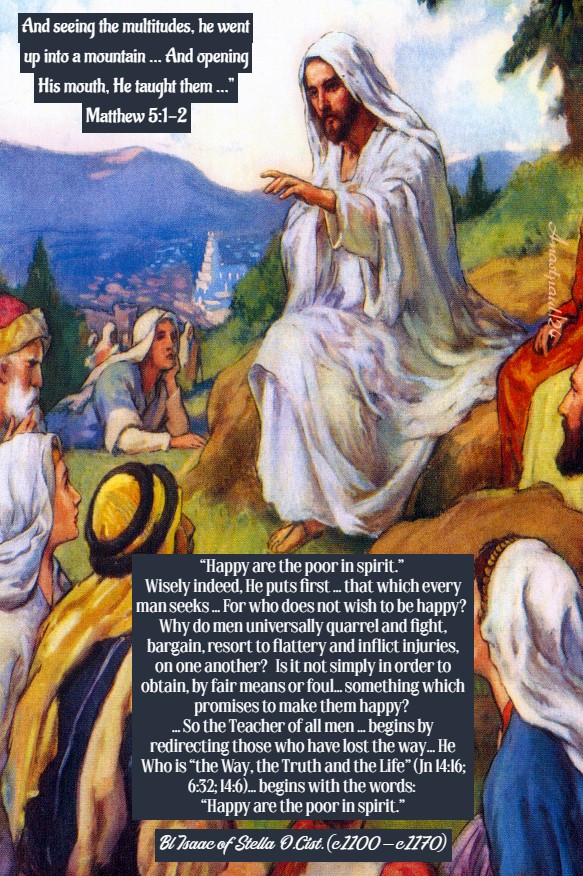
“And seeing the multitudes, he went up into a mountain… And opening His mouth, He taught them …” – Matthew 5:1-2
REFLECTION – “May it be granted me to sit with Jesus, to sit at His feet on the mountain side and partake of His instruction! When He is in the crowd, He is standing and walking, occupied and wearied and so hard -pressed, that neither He, nor His disciples are, as it were, allowed to eat bread, “the bread of life and understanding”,(Mk 6:31) and to drink “the water of wisdom” (Jn 6:35). For this water can only be drunk in a time of leisure and, it is drawn by those who have little to do. For “the well is deep”(Sir 15:3; 38:24) …
Opening His mouth, Jesus speaks to the heart of Jerusalem, talking to her in solitude, or on the mountain and this is what He says: “Happy are the poor in spirit.” He, Who is Happiness speaks of happiness, He Who became poor, of poverty, speaks of repletion, Mercy of mercifulness, He Who is the Purity of hearts speaks of purification of heart, the truly Peaceful of peace-making, the Son by nature speaks of sonship …
“Happy are the poor in spirit.” Wisely indeed, He puts first … that which every man seeks … For who does not wish to be happy? Why do men universally quarrel and fight, bargain, resort to flattery and inflict injuries, on one another? Is it not simply in order to obtain, by fair means or foul… something which promises to make them happy? … So the Teacher of all men … begins by redirecting those who have lost the way… He Who is “the Way, the Truth and the Life” (Jn 14:16; 6:32; 14:6)… begins with the words: “Happy are the poor in spirit.” – Blessed Isaac of Stella O.Cist. (c1100 – c1170) Cistercian Abbot, Theologian, Philosopher (Sermon 1, for the Feast of All Saints).
PRAYER – Almighty, eternal God, Who granted us to honour the merits of all Thy Saints in a single solemn festival, bestow on us, we beseech Thee, through their manifold intercession, that abundance of Thy mercy for which we yearn. Through Jesus Christ, Thy Son our Lord, Who lives and reigns with Thee, in the unity of the Holy Ghost, God, world without end. Amen (Collect).
Our Morning Offering – 7 Novemer – “The Month of The Holy Souls in Purgatory” and the First Friday of November
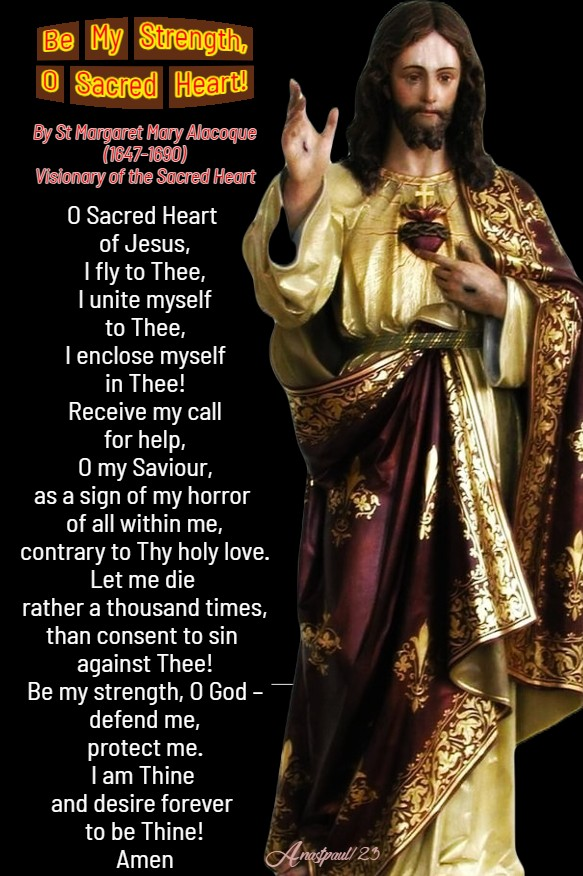
Be My Strength, O Sacred Heart! By St Margaret Mary Alacoque (1647-1690) Visionary of the Sacred Heart
O Sacred Heart of Jesus, I fly to Thee, I unite myself to Thee, I enclose myself in Thee! Receive my call for help, O my Saviour, as a sign of my horror, of all within me contrary to Thy holy love. Let me die rather a thousand times, than consent to sin against Thee! Be my strength, O God – defend me, protect me. I am Thine and desire forever to be Thine! Amen
Saint of the Day – 7 November – St Prosdocimus (2nd Century) the 1st Bishop and Confessor of Padua, Evangeliser, Miracle-worker. Patronage – of the City and Diocese of Padua, of Ascolo, Cittadella all in Italy. Also knowthe as – Prosdecimus, Prosdocimo.
The name Prosdocimo, although uncommon in Italy today, immediately suggests a Venetian origin, specifically Paduan. The Saint is honoured as the 1st Bishop of Padua, the Patron Saint of the City and too, according to various scholars, the likely evangeliser of all western Venice.
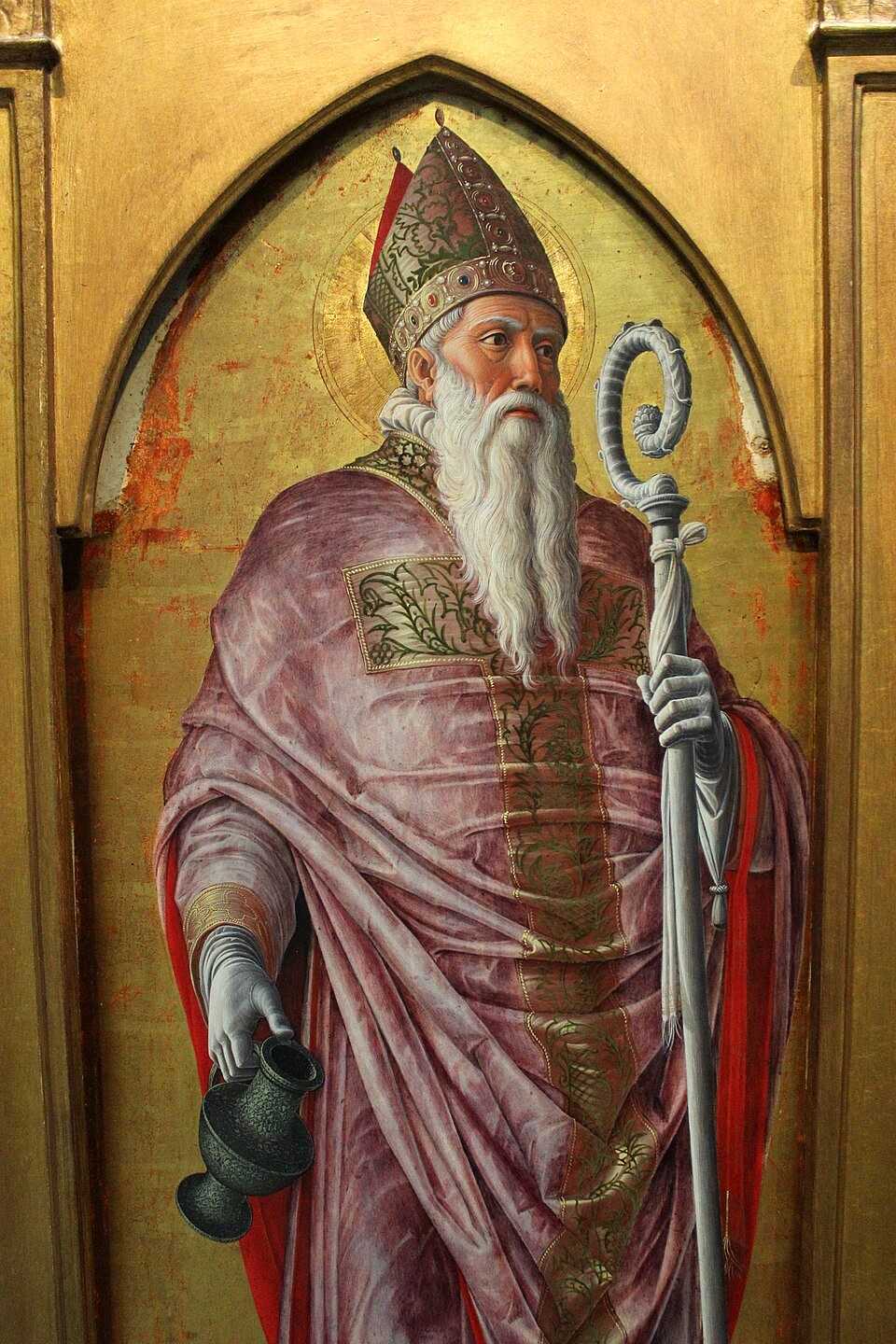
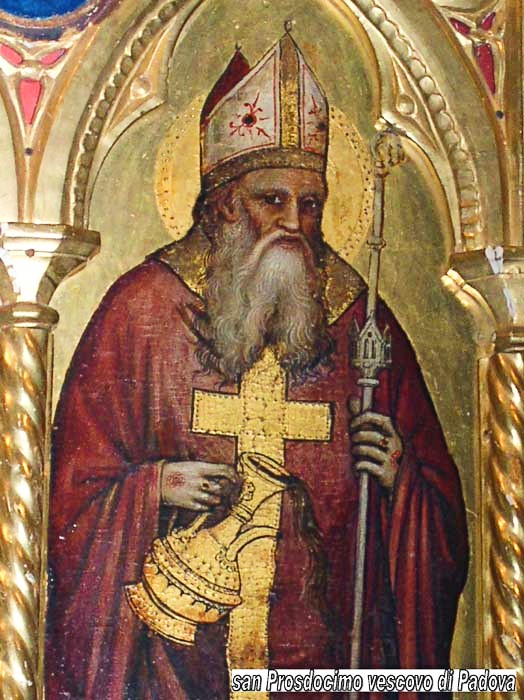
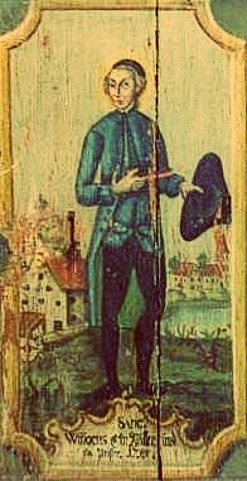
Even the most beautiful image of Prosdocimus was painted by a Paduan, the great 15th Century Painter, Andrea Mantegna. It is part of a polyptych dedicated to Saint Justina another famous Saint and Martyr of Padua. In this painting, Saint Prosdocimus appears with his characteristic attribute of a jug, a symbol of his tireless work as an evangeliser and work of Baptising.
St Prosdocimus and St Justina
The etymological meaning of the name Prosdocimus is very beautiful, as in Greek it means ‘the awaited one.’ It can be said that Saint Prosdocimus, the 1st Bishop of Padua, was truly awaited by that still pagan City, to which he was sent by Saint Peter himself after his Episcopal Consecration. In the gentle countryside, Prosdocimus is said to have performed prodigies and miracles.
Fortunately, a certain naiveté often lends a touch of poetry to even the most tired texts. Sometimes, however, scant documents are more eloquent than redundant legends. This is the case of Prosdocimus, for whom, after his death, an Ecclesia Sancti Prosdocimi, later known as the Basilica of Santa Giustina, one of the most beautiful in the City, is mentioned outside the walls of Padua.
St Prosdocimus with his jug
Saint Prosdocimus’ glory was, in fact, Saint Justina, whose Feast Day is 7 October. Prosdocimus converted her and she kept her faith intact, facing Martyrdom during Nero’s persecution.
The Bishop of Padua, however, was spared, no-one knows exactly how or why. He reached the natural end of his life, laden with merit and years, loved as a father, venerated as a Saint: Saint Prosdocimus which, in Greek means ‘the awaited one.’
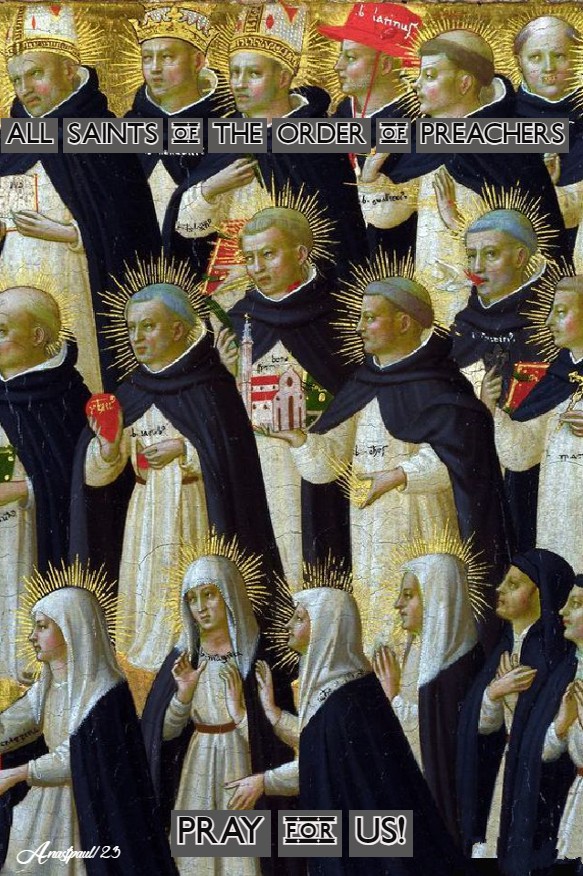
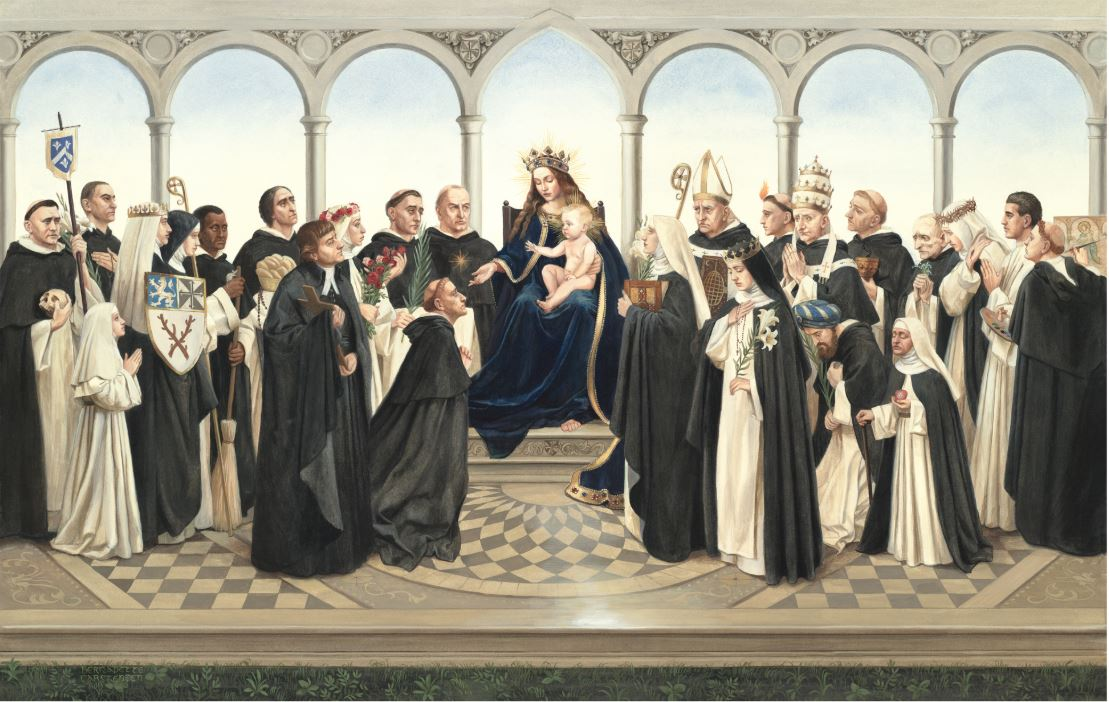
The Feast of All Saints of the Order of Preachers: “Fountain of all holiness, You stirred up in our holy brothers and sisters an extraordinary love of truth, conformity to Christ Crucified and a thirst for the salvation of souls: may we imitate them in offering You thanksgiving on account of the way of life they gave us.” — From the Intercessions at Lauds for the Feast of All Saints of the Order of Preachers. HERE: https://anastpaul.com/2019/11/07/thought-for-the-day-7-november-feast-of-all-dominican-saints/
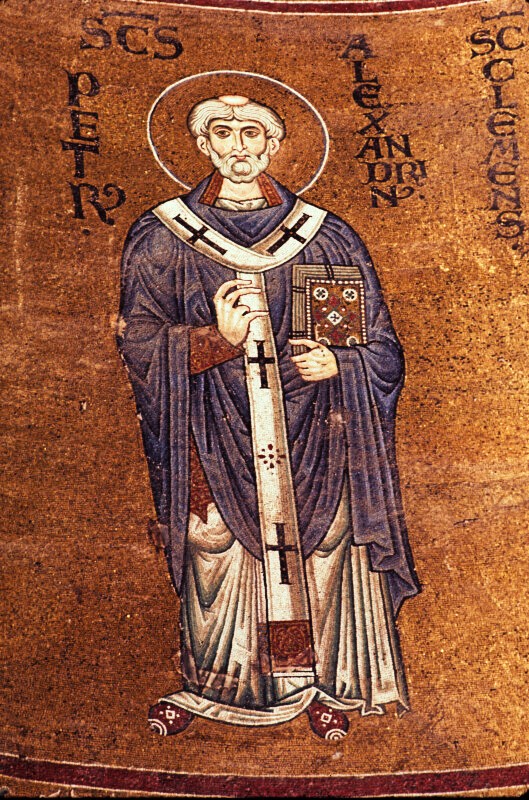
St Achillas (Died 313) Bishop of Alexandria, Egypt, Confessor, Scholar particularly in Philosophy and Theology. Bishop St Theonas had Ordained him to the Priesthood and appointed Achillas as the Head of the Catechetical School of Alexandria upon the departure of St Pierius, for Rome, who we celebrated on 4 November. Born in Alexandria, Egypt and died there in 313 of natural causes. The Roman Martyrology states of him today: “At Alexandria, blessed Achillas, a Bishop renowned for erudition, faith and purity of life.” His Holy Life: https://anastpaul.com/2023/11/07/saint-of-the-day-7-november-saint-achillas-died-313-bishop-confessor/
St Amarand St Amaranthus
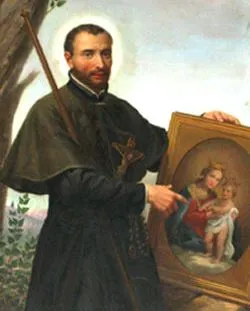
Blessed Anthony Baldinucci SJ (1665-1717) Priest of the Society of Jesus, Preacher, Writer and Missionary. Fr Baldinucci was Beatified by Pope Leo XIII on 25 March 1893. His Zealous Life: tps://anastpaul.wordpress.com/2017/11/07/saint-of-the-day-blessed-anthony-baldinucci-s-j-1665-1717/
St Athenodorus of Neo-Caesarea St Auctus of Amphipolis St Baud of Tours St Blinlivet St Congar
St Gebetrude A(Died c680)bbess of Remiremont St Herculanus of Perugia St Hesychius of Mytilene St Hieron of Mytilene Bl Hyacinth Castañeda Puchasons St Lazarus the Stylite
St Nicander of Mytilene Bl Peter Ou St Prosdocimus (2nd Century) Bishop and Confessor of Padua St Prosdocimus of Rieti St Raverranus of Séez St Rufus Bishop and Confessor of Metz St Taurion of Amphipolis St Thessalonica of Amphipolis St Tremorus of Brittany
Thought for the Day – 6 November – Meditations with Antonio Cardinal Bacci (1881-1971)
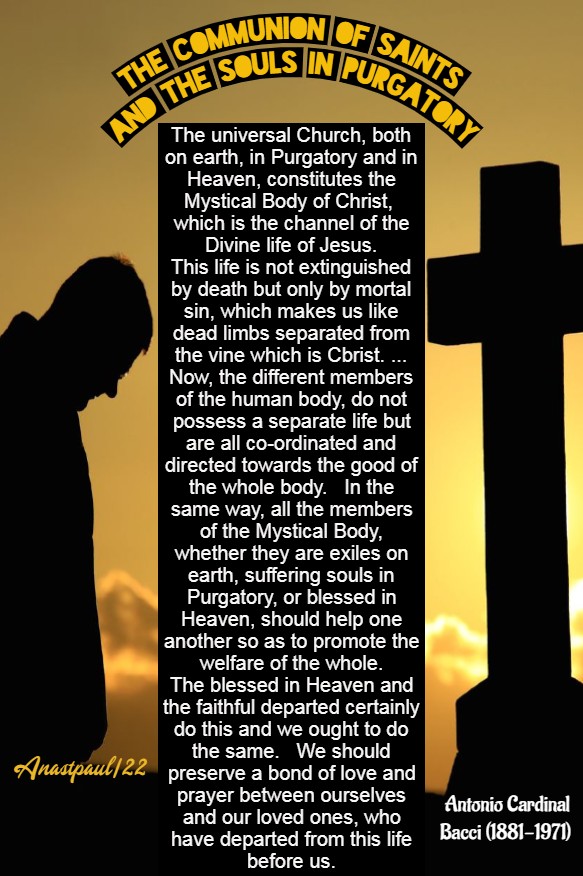
The Communion of Saints and the Souls in Purgatory
“The consoling Doctrine of the Communion of Saints, is the foundation of devotion towards the faithful departed. The universal Church, both on earth, in Purgatory and in Heaven, constitutes the Mystical Body of Christ, which is the channel of the Divine life of Jesus.
This life is not extinguished by death but only by mortal sin, which makes us like dead limbs separated from the vine which is Cbrist. The souls of those belonging to us who have died in the state of grace, therefore, are living members of the Mystical Body of Christ. Now, the different members of the human body, do not possess a separate life but are all co-ordinated and directed towards the good of the whole body. In the same way, all the members of the Mystical Body, whether they are exiles on earth, suffering souls in Purgatory, or blessed in Heaven, should help one another so as to promote the welfare of the whole.
The blessed in Heaven and the faithful departed certainly do this and we ought to do the same. We should preserve a bond of love and prayer between ourselves and our loved ones, who have departed from this life before us.”
Quote/s of the Day – 6 Novemer – Within the All Saints Octave – Apocalypse 7:2-12; Matthew 5:1-12 – Scripture search here: https://www.drbo.org/
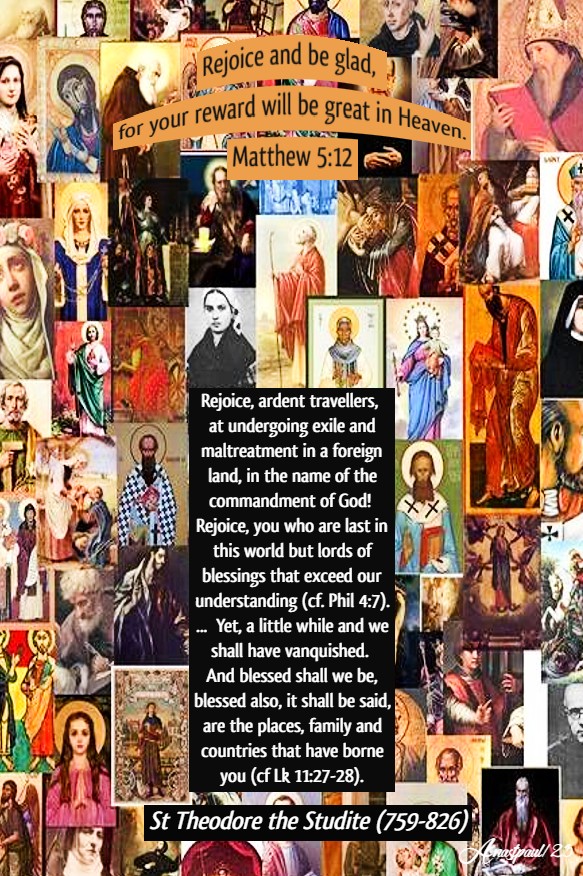
“Rejoice and be glad, for your reward will be great in Heaven.”
Matthew 5:12
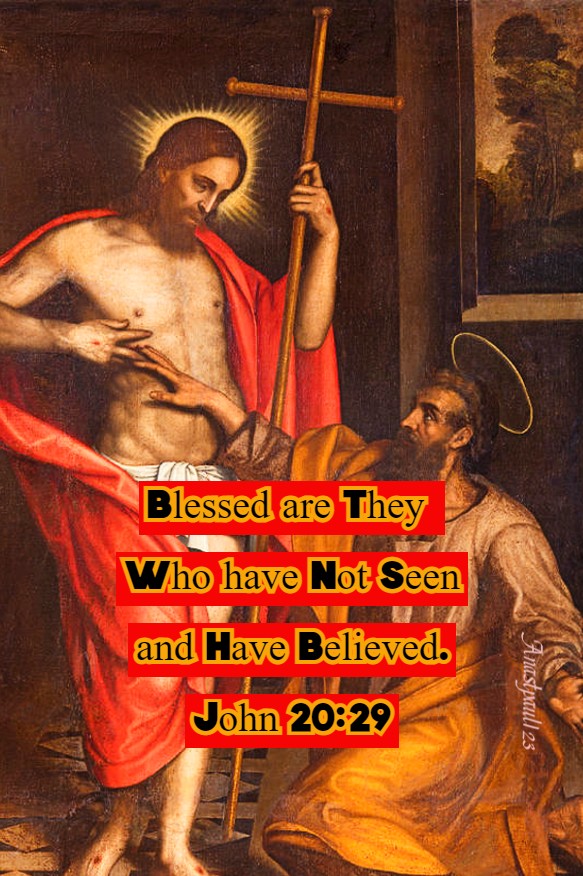
“ Blessed are they who have not seen and have believed.”
John 20:29
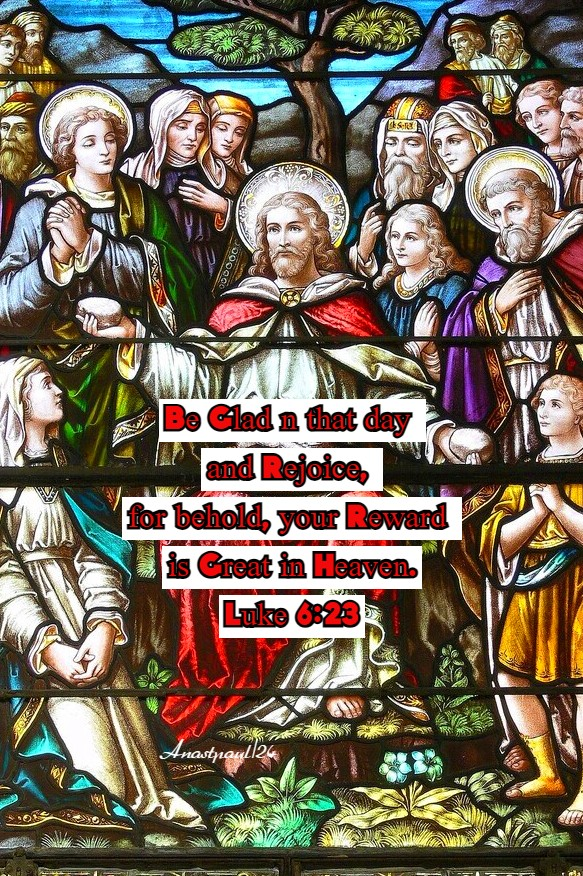
“Be glad in that day and rejoice, for behold, your reward is great in Heaven,”
Luke 6:23
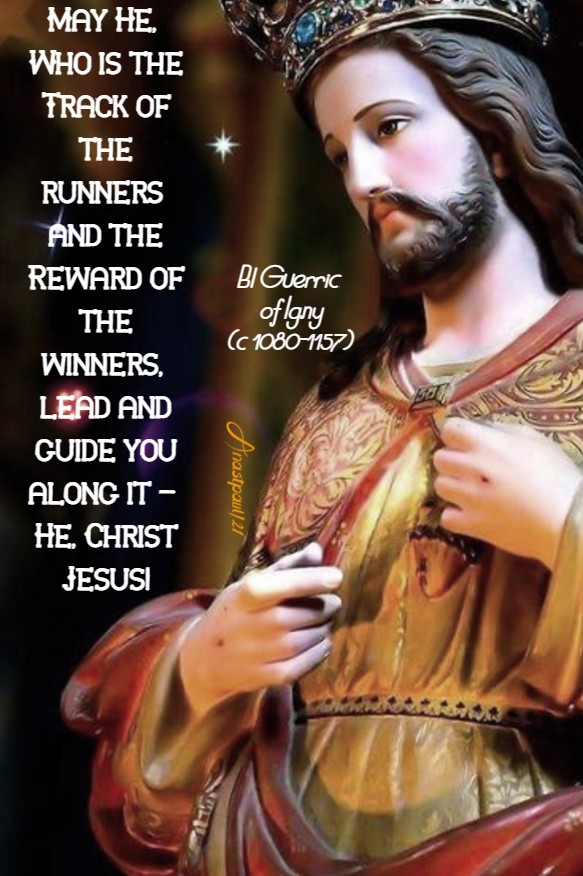
“May He, Who is the Track of the runners and the Reward of the winners, lead and guide you along it – He, Christ Jesus!”
Bl Guerric of Igny O.Cist (c1080-1157)
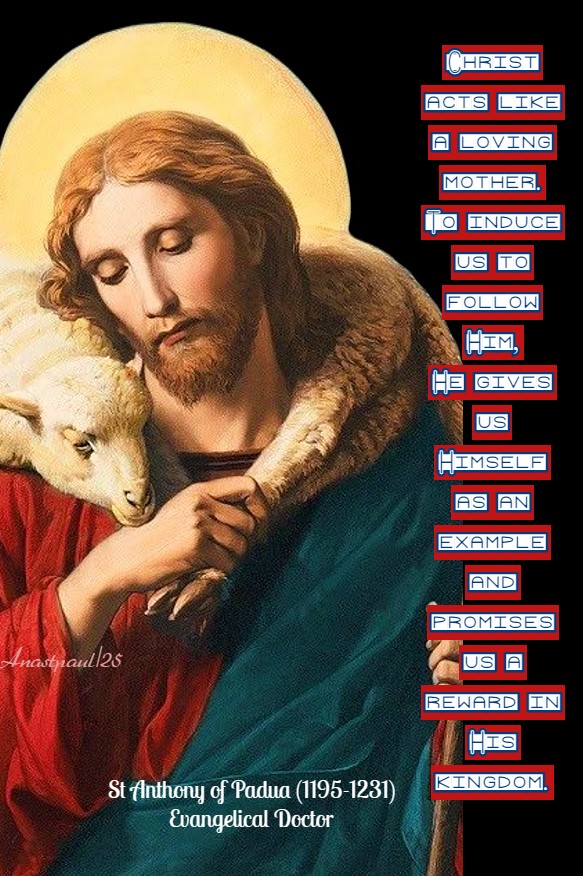
“Christ acts like a loving mother. To induce us to follow Him, He gives us Himself as an example and promises us a reward in His kingdom.”
St Anthony of Padua (1195-1231) Evangelical Doctor
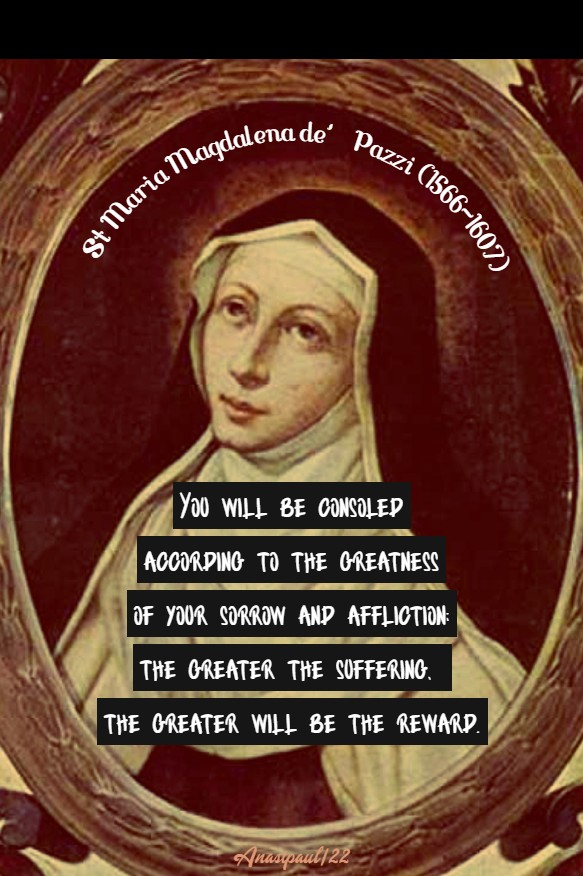
“You will be consoled according to the greatness of your sorrow and affliction; the greater the suffering, the greater will be the reward.”
St Maria Magdalena de’ Pazzi (1566-1607)
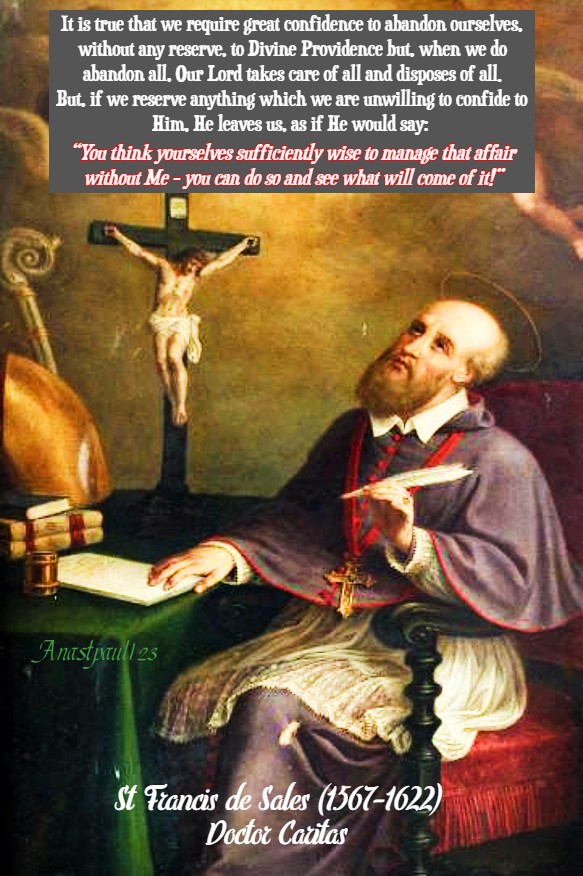
“It is true that we require great confidence to abandon ourselves, without any reserve, to Divine Providence but, when we do abandon all, Our Lord takes care of all and disposes of all. But, if we reserve anything which we are unwilling to confide to Him, He leaves us, as if He would say: “You think yourselves sufficiently wise to manage that affair without Me – you can do so and see what will come of it!”
One Minute Reflection – 6 Novemer – “The Month of The Holy Souls in Purgatory” – Within the All Saints Octave – Apocalypse 7:2-12 – Matthew 5:1-12 – Scripture search here: https://www.drbo.org/
“Rejoice and be glad, for your reward will be great in Heaven.” – Matthew 5:12
REFLECTION – “Rejoice in the Lord without ceasing (cf. Phil 4:4), my dear children. I beg you rejoice, citizens of Heaven but exiles on earth, inhabitants of the Jerusalem on high (cf Gal 4:26) but banished from affairs here below, inheritors of the Kingdom of Heaven but disinherited from taking any part at all, in earthly pleasures! Rejoice, ardent travellers, at undergoing exile and maltreatment in a foreign land in the name of the commandment of God! Rejoice, you who are last in this world but lords of blessings that exceed our understanding (cf. Phil 4:7). Rejoice, noble company, brought together by God, assembly united in heart and soul, who give life to filial and fraternal love, a replica on earth of the host of Angels! … Rejoice, God’s workers, apostolic men. … Rejoice, you who set your joy in each other, each making his own the reputation of his brother, you in whom is found neither jealousy, rivalry nor envy but, in their place, peace and charity and life in common. In truth, I do not say that we are not attacked – indeed, who is crowned if not the one who struggles and fights, who exchanges thrusts and wounds with his assailants? – but I say that we should not let ourselves be brought down by the machinations of Satan.
Yes, my children, assembly of God, nourish yourselves with the food of the Spirit and drink the water given by the Lord: whoever comes to possess this water will never thirst again but it will become, in Him, a spring of living water welling up to eternal life (cf. Jn 4:14). … Yet, a little while and we shall have vanquished. And blessed shall we be, blessed also, it shall be said, are the places, family and countries that have borne you (cf Lk 11:27-28).” – St Theodore the Studite (759-826) – Catechesis 47 (The Great Catecheses)
PRAYER – Almighty, eternal God, Who granted us to honour the merits of all Thy Saints in a single solemn festival, bestow on us, we beseech Thee, through their manifold intercession that abundance of Thy mercy for which we yearn. Through Jesus Christ, Thy Son our Lord, Who lives and reigns with Thee, in the unity of the Holy Ghost, God, world without end. Amen (Collect).
Our Morning Offering – 6 Novemer – “The Month of The Holy Souls in Purgatory”
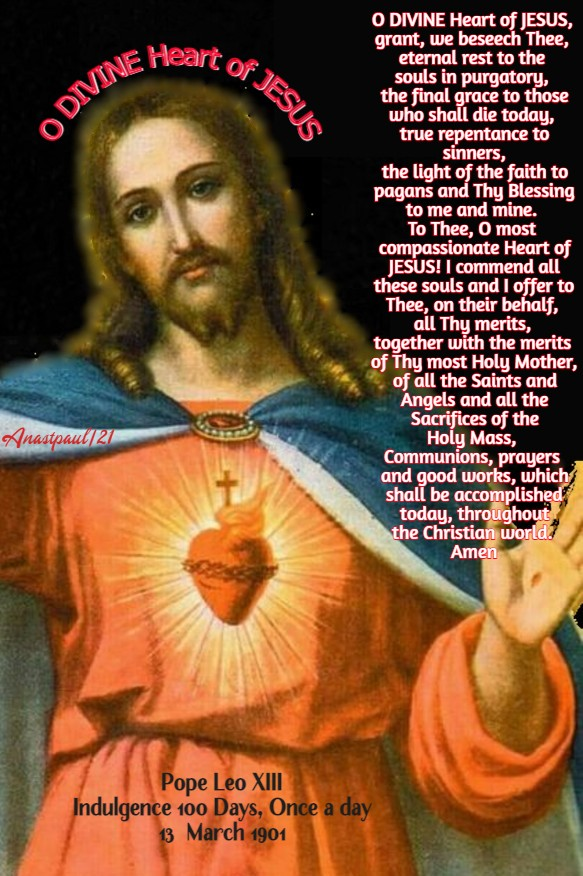
O DIVINE Heart of JESUS Pope Leo XIII Indulgence 100 Days, Once a day Raccolta 167 13 March 1901.
O DIVINE Heart of JESUS, grant, we beseech Thee, eternal rest to the souls in purgatory, the final grace to those who shall die today, true repentance to sinners, the light of the faith to pagans and Thy Blessing to me and mine. To Thee, O most compassionate Heart of JESUS! I commend all these souls and I offer to Thee, on their behalf, all Thy merits, together with the merits of Thy most Holy Mother and of all the Saints, Angels and all the Sacrifices of the Holy Mass, Communions, prayers and good works, which shall be accomplished today, throughout the Christian world. Amen
Saint of the Day – 6 November – St Severus (Died c633) Bishop and Martyr of Barcelona, Spain. Patronage – of Barcelona. Also known as – Severo.
The Roman Martyrology reads today: “At Barce;ona, St Severus, Bishop and Martyr, who had his head pierced with a nail and thus received the crown of Martyrdom for the Faith.”
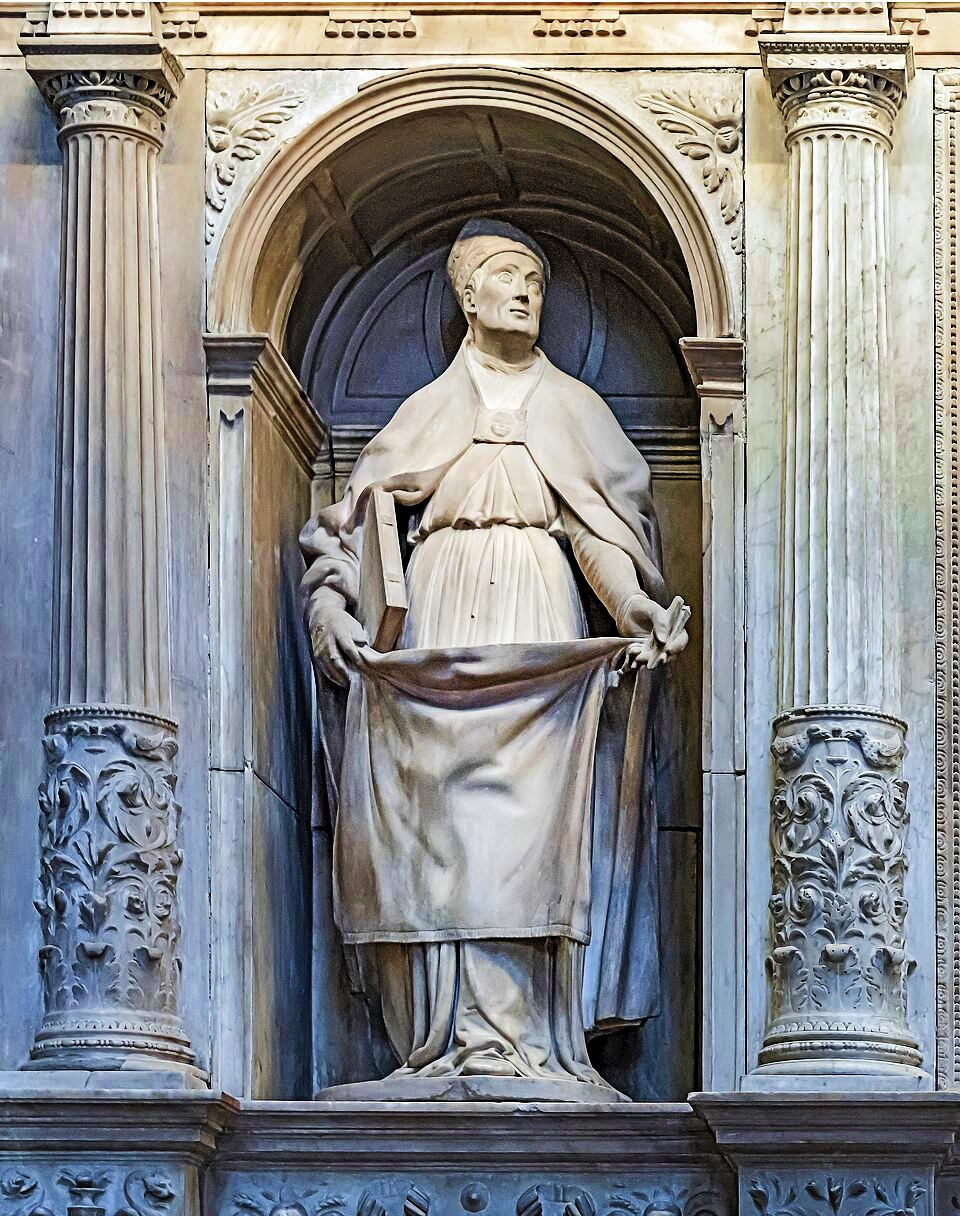
St Severus Statue in Barcelona
Severus, Bishop of Barcelona, was mentioned in 633. In some cases, he is considered the 11th Bishop of the Diocese, although his existence as a Bishop and Martyr is shrouded in doubt.
A ‘Passio’ dating to the 13th-14th Century is extant. This text, states that Severus was Martyred during the persecution of Diocletian and Maximian. The period of this persecution, however, does not correspond to the period in which Saint Severus was mentioned as the Bishop of Barcelona.
However, the tale states that Saint Severus, urged to worship idols, managed to escape. When a Christian named Emeterio, accused of concealing his escape, was captured, Severus then presented himself voluntarily to the Governor. Imprisoned, he was tortured along with four Clerics accompanying him.
All six received the Crown of Martyrdom and the locals buried them in the village Church.
Our only verified information regarding our Saint is that he is mentioned as the Bishop of Barcelona om around 633. His first mention occurs in the 17th Century and later in the Roman Martyrology. His Feast is celebrated in Barcelona, on 9 August, the date of the translation of his Relics in 1405.
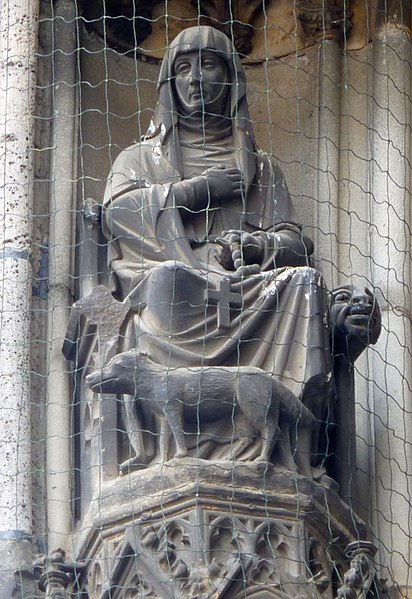
Statue of Blessed Christina von Stommeln (northern portal Cologne Cathedral)
St Demetrian of Cyprus St Edwen of Northumbria St Efflam of Brittany St Emilian of Faenza St Erlafrid of Hirschau St Felix (6th Century) Abbot of Fondi Monastery St Felix of Genoa St Felix of Thynissa St Illtyd
St Melaine (Died c535) Bishop of Rennes in Brittany, France, Confessor, previously a Monk and Abbot, Royal Advisor, Miracle-worker. The Roman Martyrology reds: “At Rennes, in France, St Melanius, Bishop and Confessor, who displayed innumerable virtues and with his thoughts ever fixed on Heaven, passed from the world in glory.” His Life of Holiness: https://anastpaul.com/2023/11/06/saint-of-the-day-6-november-saint-melaine-of-rennes-died-c535-bishop-confessor/
St Paul of Constantinople St Pinnock St Protasius of Lausanne St Severus (Died c633) Bishop and Martyr of Barcelona St Simon of Aulne St Stephen of Apt St Theobald of Dorat St Valentine of Genoa
Martyrs of Antioch – 10 Saints: Ten Christians murdered together by Arabs after their seizure of Antioch, Syria. No names or other details about them have come down to us. 637 in Antioch, Syria.
Martyrs of Gaza – 9 Saints: A group of Christian soldiers who were captured by Saracens invading the area of Gaza in Palestine. When the men continued to profess their Christianity, they were executed. We know the names of some of the Martyrs – Himerius, John (2 of them), Kallinikos (Callinoco), Paul, Peter, Stephen and Theodore (2 of them). They were beheaded in Gaza, Palestine.
Thought for the Day – 5 November – Meditations with Antonio Cardinal Bacci (1881-1971)
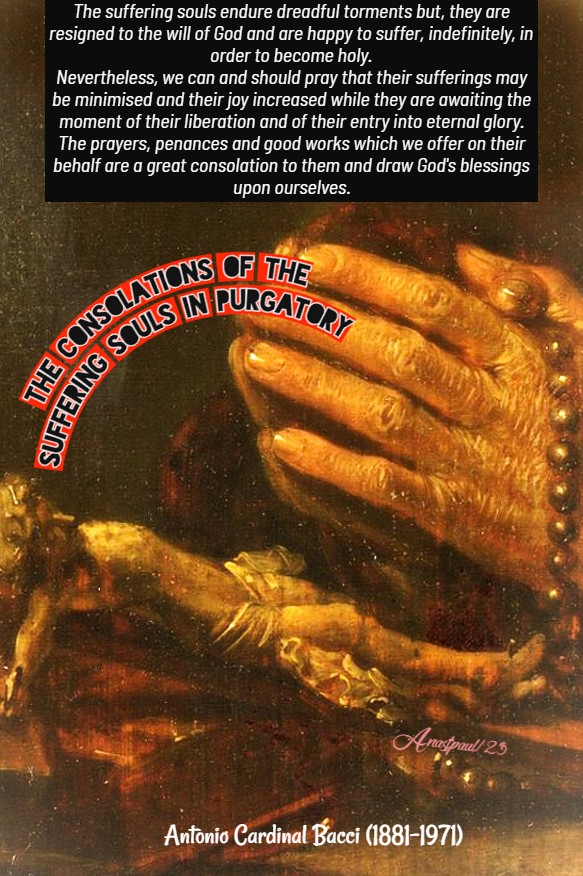
The Consolations of the Suffering Souls in Purgatory
“That is the way it is in Purgatory. The suffering souls endure dreadful torments but, they are resigned to the will of God and are happy to suffer, indefinitely, in order to become holy. Nevertheless, we can and should pray that their sufferings may be minimised and their joy increased while they are awaiting the moment of their liberation and of their entry into eternal glory. The prayers, penances and good works which we offer, on their behalf, are a great consolation to them and draw God’s blessings upon ourselves.”
Quote/s of the Day – 5 November – All Saints and Blesseds of the Society of Jesus (SJ)
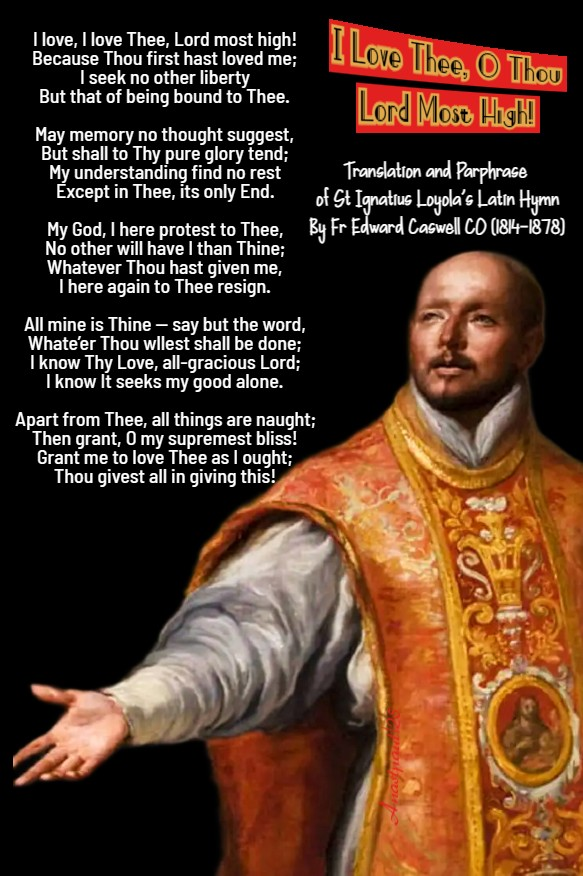
I Love Thee, O Thou Lord Most High! Translation and Parphrase of St Ignatius Loyola’s Latin Hymn By Fr Edward Caswell CO (1814-1878)
I love, I love Thee, Lord most high! Because Thou first hast loved me; I seek no other liberty But that of being bound to Thee.
May memory no thought suggest, But shall to Thy pure glory tend; My understanding find no rest Except in Thee, its only End.
My God, I here protest to Thee, No other will have I than Thine; Whatever Thou hast given me, I here again to Thee resign.
All mine is Thine — say but the word, Whate’er Thou wllest shall be done; I know Thy Love, all-gracious Lord; I know It seeks my good alone.
Apart from Thee, all things are naught; Then grant, O my supremest bliss! Grant me to love Thee as I ought; Thou givest all in giving this!
“A precious crown is reserved in Heaven for those who endow their actions with all the diligence of which they are capable, for, it is not enough to do good, we must do it well!”
“God takes special care to detach from the passing pleasures of this world, those whom He Loves with special predilection, by sending them desires after heavenly bliss and, by the sorrows and bitterness of the present life.”
St Ignatius Loyola (1491-1556)
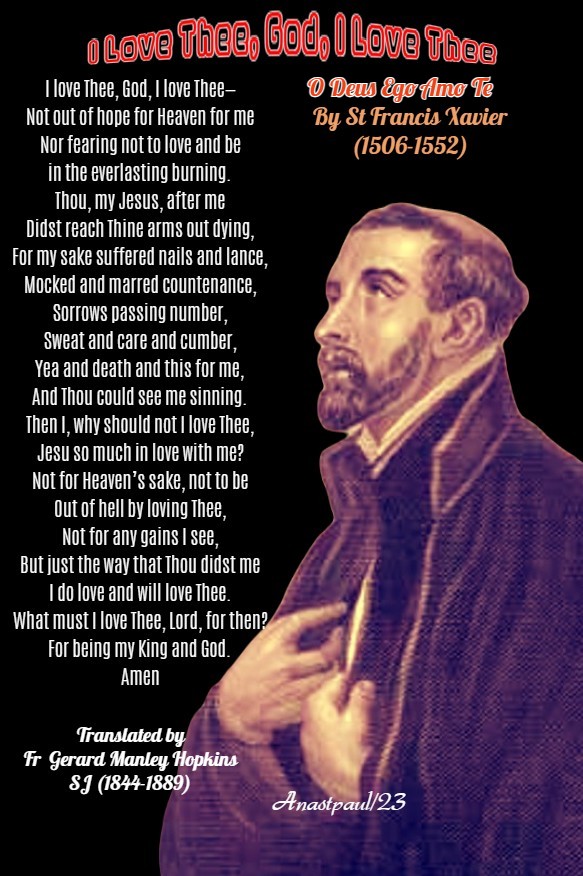
I Love Thee, God, I Love Thee O Deus Ego Amo Te By St Francis Xavier (1506-1552) Translated by Gerard Manley Hopkins SJ (1844-1889)
I love Thee, God, I love Thee— Not out of hope for Heaven for me Nor fearing not to love and be in the everlasting burning. Thou, my Jesus, after me Didst reach Thine arms out dying, For my sake suffered nails and lance, Mocked and marred countenance, Sorrows passing number, Sweat and care and cumber, Yea and death and this for me, And Thou could see me sinning. Then I, why should not I love Thee, Jesu so much in love with me? Not for Heaven’s sake, not to be Out of hell by loving Thee, Not for any gains I see, But just the way that Thou didst me I do love and will love Thee. What must I love Thee, Lord, for then? For being my King and God. Amen
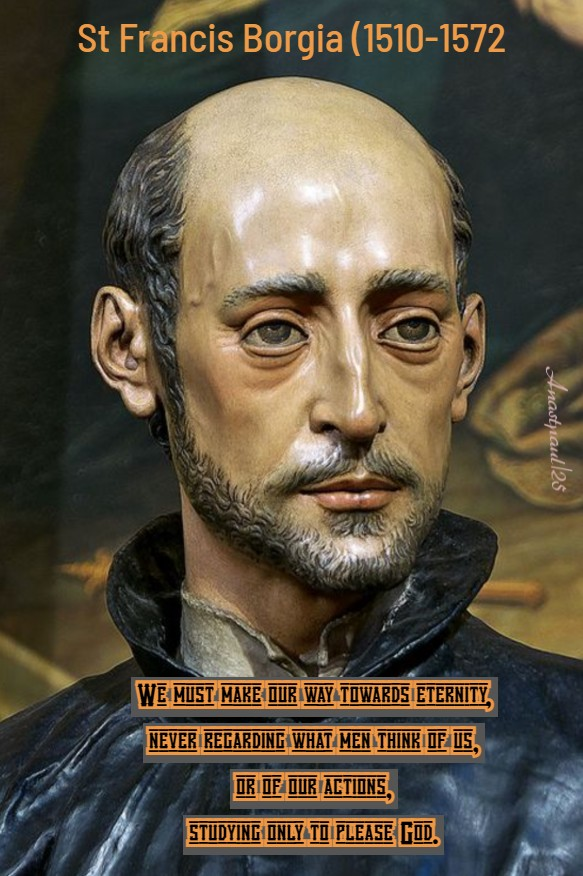
“We must make our way towards eternity, never regarding what men think of us, or of our actions, studying only to please God.”
St Francis Borgia (1510-1572)
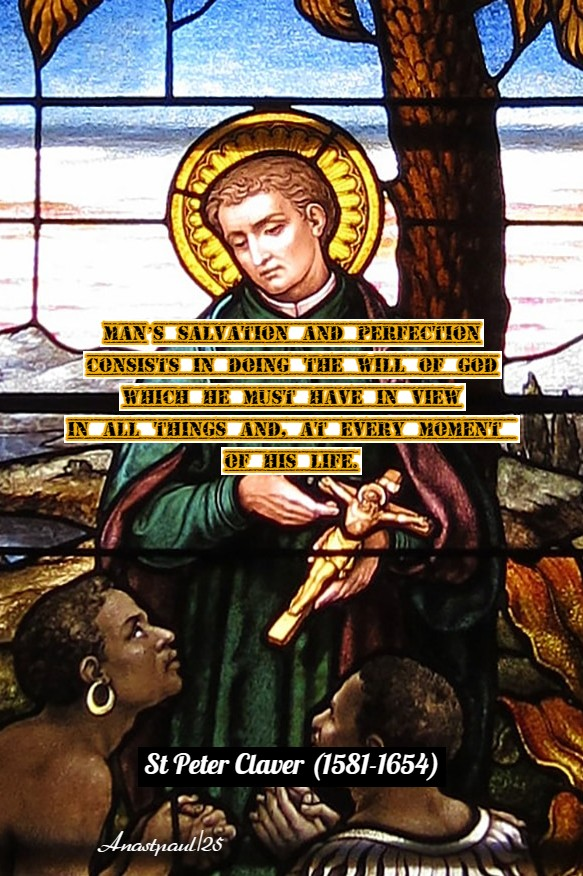
““Man’s salvation and perfection consists in doing the Will of God which he must have in view in all things and, at every moment of his life.”
St Peter Claver (1581-1654)
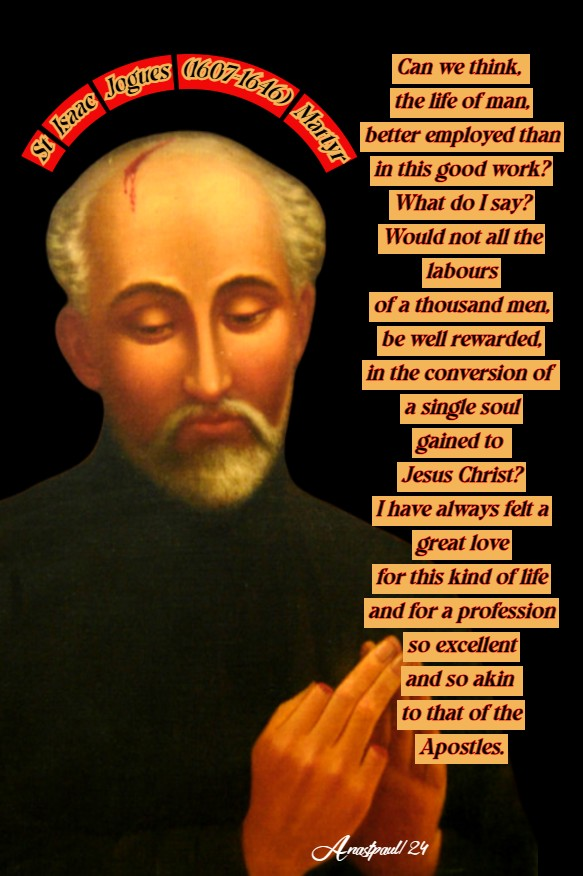
“Can we think, the life of man, better employed than in this good work? What do I say? Would not all the labours of a thousand men, be well rewarded, in the conversion of a single soul gained to Jesus Christ? I have always felt a great love for this kind of life and for a profession so excellent and so akin to that of the Apostles.”
St Isaac Jogues (1607-1646) Martyr
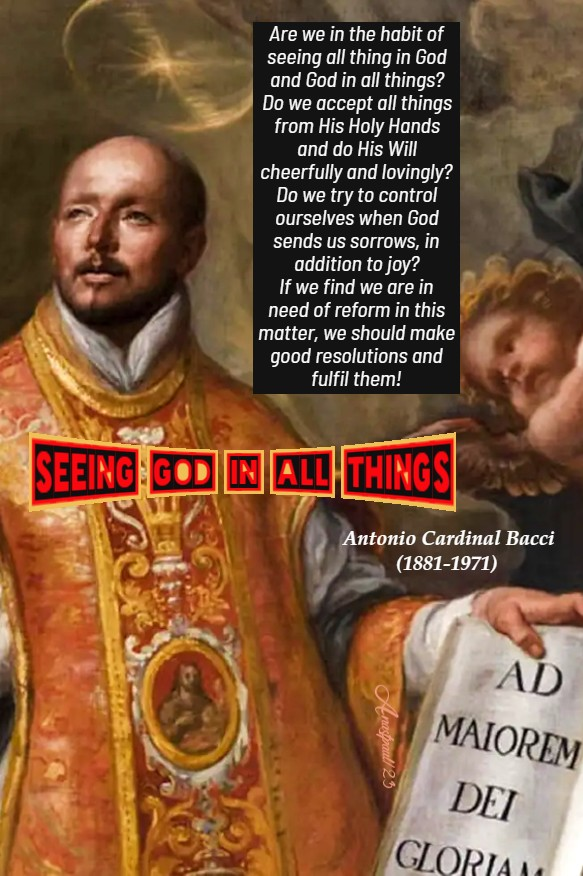
“Are we in the habit of seeing all thing in God and God in all things? Do we accept all things from His Holy Hands and do His Will cheerfully and lovingly? Do we try to control ourselves when God sends us sorrows, in addition to joy? If we find we are in need of reform in this matter, we should make good resolutions and fulfil them!”
One Minute Reflection – 5 Novemer – “The Month of The Holy Souls in Purgatory” – Within the Octave of All Saints and the Feast of the Holy Relics – Apocalypse 7:2-12; 4:1-3 – Matthew 5:1-12 – Scripture search here: http s://www.drbo.org/
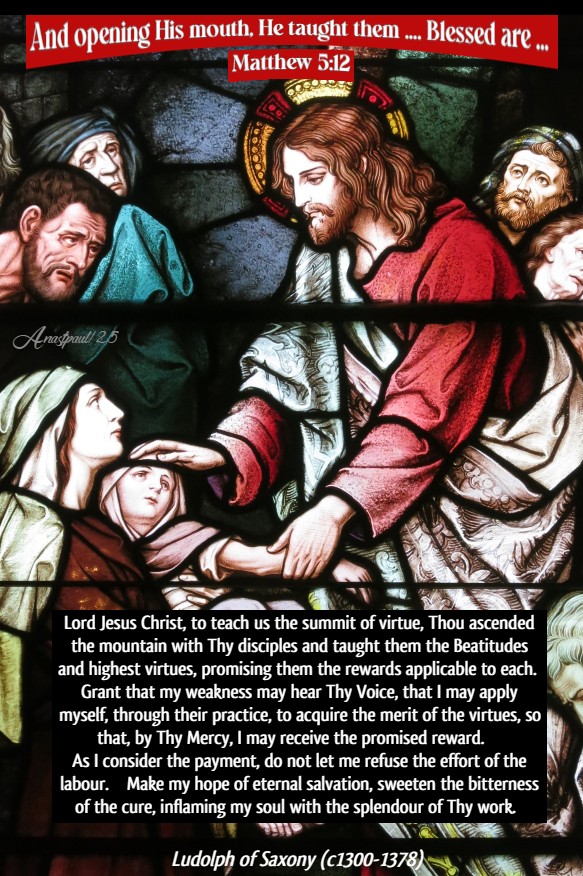
“And seeing the multitudes, He went up into a mountain… And opening His mouth, He taught them … Blessed are …” – Matthew 5:1-2
REFLECTION – “Lord Jesus Christ, to teach us the summit of virtue, Thou ascended the mountain with Thy disciples and taught them the Beatitudes and highest virtues, promising them the rewards applicable to each. Grant that my weakness may hear Thy Voice, that I may apply myself, through their practice, to acquire the merit of the virtues, so that, by Thy Mercy, I may receive the promised reward. As I consider the payment, do not let me refuse the effort of the labour. Make my hope of eternal salvation, sweeten the bitterness of the cure, inflaming my soul with the splendour of Thy work. Out of the wretched person I am, create one of the blessed; from the blessedness here below, lead me through Thy Grace, to the blessedness of the homeland.
Come, Lord Jesus Christ, in search of Thy servant, seeking Thy erring and exhausted sheep. Come, Spouse of the Church, in search of Thy lost coin. Come, Father of mercies, welcome the prodigal son returning to Thee. Come, then, Lord, for Thou art the only One, able to call back the sheep who has strayed, to find the lost drachma, to reconcile the runaway son. Cone, that there may be salvation on earth and joy in Heaven! Turn me towards Thyself and grant that I may carry out a true and perfect repentance, that I may become an occasion for joy, among the angels. Sweetest Jesus, I pray Thee, by the immensity of Thy Love for me, a sinner, grant that I may love Thee alone, above all things, that I maybe consoled by none but Thou, my sweetest God!” – Ludolph of Saxony (c1300-1378) Monk, Theologian, Writer, Dominican then a Carthusian (Prayers to Jesus Christ).
PRAYER – Almighty, eternal God, Who granted us to honour the merits of all Thy Saints in a single solemn festival, bestow on us, we beseech Thee, through their manifold intercession, that abundance of Thy mercy for which we yearn. Through Jesus Christ, Thy Son our Lord, Who lives and reigns with Thee, in the unity of the Holy Ghost, God, world without end. Amen (Collect).
Our Morning Offering – 5 November – “The Month of the Holy Souls in Purgatory” – On Wednesdays many Catholics make a special devotion to St Joseph by going to Mass on the 1st Wednesdays of 9 consecutive months and offering their Communions in his honour and for the salvation of the dying.
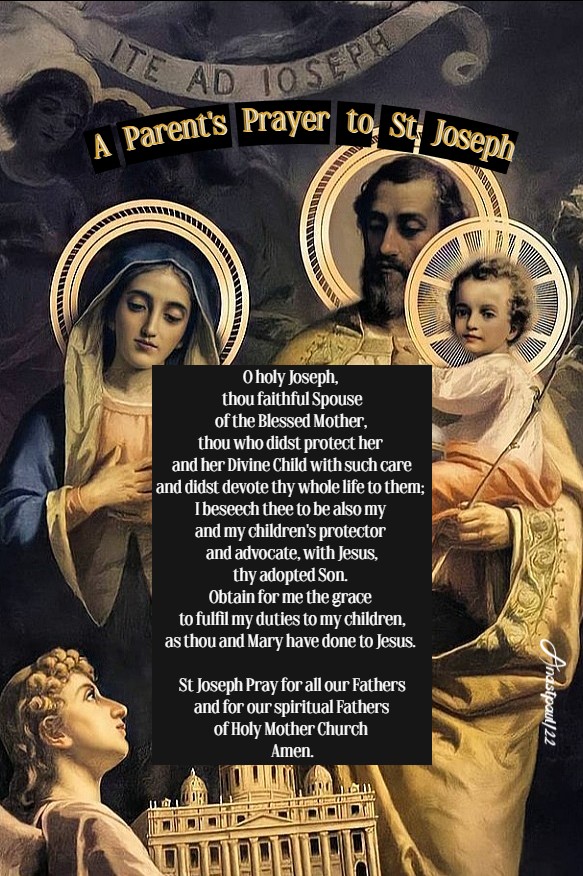
A Parent’s Prayer to St Joseph
O holy Joseph, thou faithful Spouse of the Blessed Mother, thou who didst protect her and her Divine Child with such care and didst devote thy whole life to them; I beseech thee to be also my and my children’s protector and advocate, with Jesus, thy adopted Son. Obtain for me the grace to fulfil my duties to my children, as thou and Mary have done to Jesus.
St Joseph Pray for all our Fathers and for our spiritual Fathers of Holy Mother Church Amen.
Saint of the Day – 5 November – Saint Laetus (Died 534) Priest and Confessor of Orleans, France, Monk, Monk, Hermit, Miracle-worker. Whilst still a Monk, Laetus was a spiritual guide to St Leonard of Noblac, who was a fellow Monk. Born in the region of Berry, France and died in 534 in the forest of Orléan. Patronage – of the sick. Also known as – Lie, Lié, Lyé, Leto, Lieto. Additional Feast – 2 January in Mohon, in the Ardennes.
The Roman Martyrology reads today: “At Orleans, in France, St Laetus, Priest, Confessor.”
Statue of St Laetus at Ville-Dommange
Born of a family in Berry, France sometime during the reign of Chlothar I, his name suggests a Gallo-Roman background. Small of stature,, he was a peasant herdsman, who embraced the monastic life at the age of 12. He spent some time at the Monastery of Micy-Saint Mesmin, near Orléans, where he was welcomed by the Abbot Treïcius, who Ordained him a Deacon and then a Priest. While at Micy, Lié provided direction to fellow Monk and Saint Leonard of Noblac (c496-559).
After a few years, Laetus left the Monastery in search of greater solitude. He headed north and stopped on the edge of the Loges Forest (Forest of Orleans), not far from a clearing where poor woodcutters were felling oaks. There, having found a dense thicket where no sound entered, he built himself a hut and there, spent his days in prayer, living only on wild fruits.
Laetus only left this solitude to visit the sick, to comfort them with a few holy words and to soften the bitterness of the last passage. The blind, the lame, the crippled came to meet him and more than once obtained cures through his intercessary prayer. He was greatly loved by all, especially the sick and hopeless. Laetus was viewed an example to all for his humility. .He lived there until the year 534, which he predicted would be the year of his entry into eternal beatitude. He was buried in the place where he had lived and, on his Tomb, a Chapel was erected.
His body was later brought by Ermentheus, the Bishop of Orleans, to the Church of Pithiviers. They burnt by the Huguenots in 1580. However, there were stille fragments of his legs preserved by Christians of Pithiviers. In 1664, they were returned to the Village of Saint-Lyé after many adventures. They now rest in a Reliquary placed at the foot of the Altar dedicated to him. On Pentecost Monday, many pilgrims would come to venerate St Laetus and ask for the cure of their infirmities.
In 1523 a Brotherhood dedicated to venerating Saint Laetus was founded at Mohon, in the Ardennes. The Brotherhood in 1611, having obtained an Indulgence from Pope Paul V, the dedication of the local Church was changed from that of Saint Gilles to Saint Laetus. Some of his Relics were transported to the Église Saint-Lié de Mohon, probably around 1683. There he is celebrated on 2 January.
Saint Laetus is depicted on a pillar of the south porch of Chartres Cathedral. There are numerous Churches, places, Villages names for our Saint in many regions of France.
The Feast of the Holy Relics: https://anastpaul.com/2022/11/05/feast-of-the-holy-relics-5-november-2/ AND: About: https://anastpaul.wordpress.com/2017/11/05/feast-of-the-holy-relics-5-november/ Protestantism pretends to regard the veneration which the Church pays to the Relics of the Saints, as a sin and contends that this pious practice is a remnant of paganism. The Council of Trent, on the contrary, has decided that the bodies of the Martyrs and other Saints, who were living members of Jesus Christ and temples of the Holy Ghost, are to be honoured by the faithful. This decision was based upon the established usage of the earliest days of the Church and upon the teaching of the Fathers and of the Councils. The Council orders, however, that all abuse of this devotion is to be careffully avoided and forbids any Relics to be exposed which have not been approved by the Bishops and, these Prelates are recommended, to instruct the people faithfully, in the teaching of the Church on this subject. While we regret, then, the errors of the impious and of heretics, let us profit by the advantages which we gain, by hearkening to the Voice of the Church!
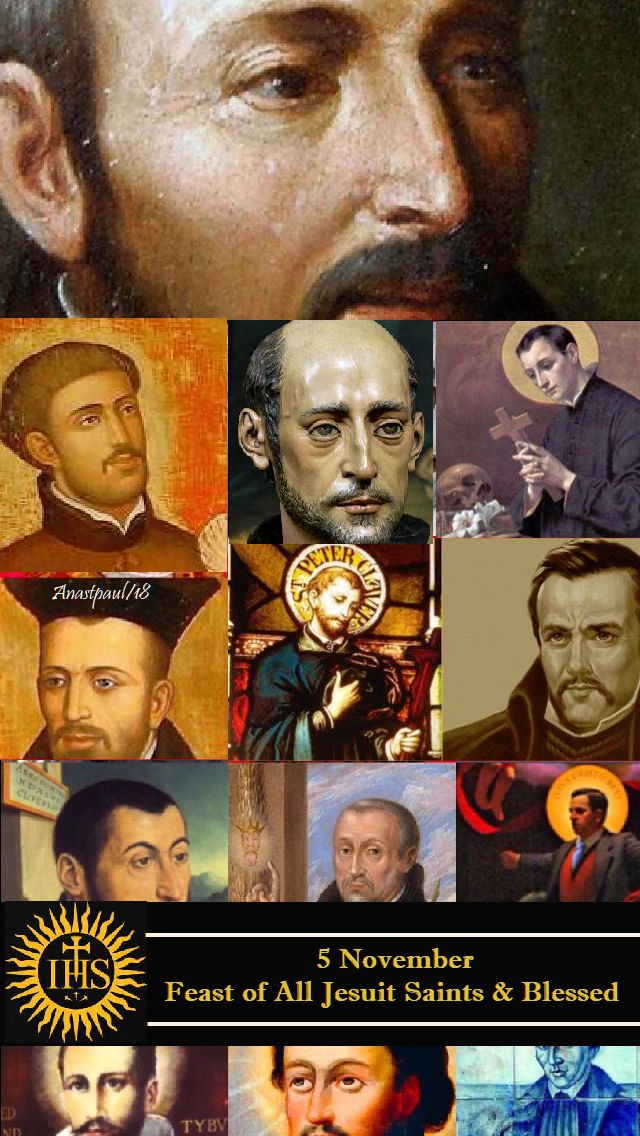
All Saints and Blesseds of the Society of Jesus: The Society of Jesus, commonly known as the Jesuits, was Founded in 1534 by Saint Ignatius Loyola (1491-1556) at Montmartre, Paris, France. A body of clerics regular organised for Apostolic work, following a religious rule and relying on alms for their support. It was the chief instrument of the Catholic Reformation. Pope Paul III approved the new rule in 1540 and Ignatius was elected the first general of the order in 1541. The constitutions, drafted by him and based on his Spiritual Exercises were adopted in 1558. It was the first order which enjoined by its constitutions devotion to the cause of education. The ministry of the Society consists chiefly in preaching. teaching catechism. administering the sacraments. conducting missions in parishes, taking care of parishes. organising pious confraternities, teaching in schools of every grade, writing books, pamphlets, periodical articles, going on foreign missions and special missions when ordered by the current Holy Father, to whom they take a vow of total obedience. Our current Holy Father, Pope Francis is a Jesuit and has jokingly wondered aloud who is boss of whom in his Order. The general resides at Rome, Italy and has a council of assistants. The motto of the Society is Ad Majorem Dei Gloriam (For the greater glory of God). All Jesuit Saints and Blesseds: https://anastpaul.com/2018/11/05/feast-of-all-the-saints-and-blesseds-of-the-society-of-jesus/
St Canonica St Comasia St Dominator of Brescia +St Elizabeth (1st Century) Mother of St John the Baptist St Domninus the Physician St Epistemis St Eusebius of Terracina St Felix of Terracina St Fibitius St Galation
St Gerald OSA (1070–1123) Bishopof Béziers from 1121 until the day of his death, Canon Regular of St Augustine and the 2nd Prior of the community at Cassan Abbey, Apostle of the poor and sick, Gerald built a Hospital and restored and extended the Abbey, Miracle-worker. Born around 1070 in Puissalicon and died on 5 November 1123 in Béziers in France of natural causes. Patronages – Puissalicon and the town of Saint-Guiraud and of children suffering from eye diseases. His Life of Love: https://anastpaul.com/2023/11/05/saint-of-the-day-5-november-saint-gerald-of-beziers-osa-1070-1123-bishop/
Bl Gomidas Keumurjian Bl Gregory Lakota St Guetnoco St Hermenegild St Idda St Juan Antoni Burró Mas St Juan Duarte Martín St Kanten St Kea St Laetus (Died 534) Priest and Confessor of Orleans St Magnus of Milan St Mamete St Marco of Troia St Spinulus of Moyen-Moûtier St Sylvanus of Syria
Martyrs of Caesarea Maritima – 4 Saints: Four young Christian men who were Martyred together is the persecutions of Maximian – Aussenzius, Philotheus, Timothy and Theotimus. They were martyred in the arena at Caesarea Maritima, Palestine.
hought for the Day – 4 November – Meditations with Antonio Cardinal Bacci (1881-1971)
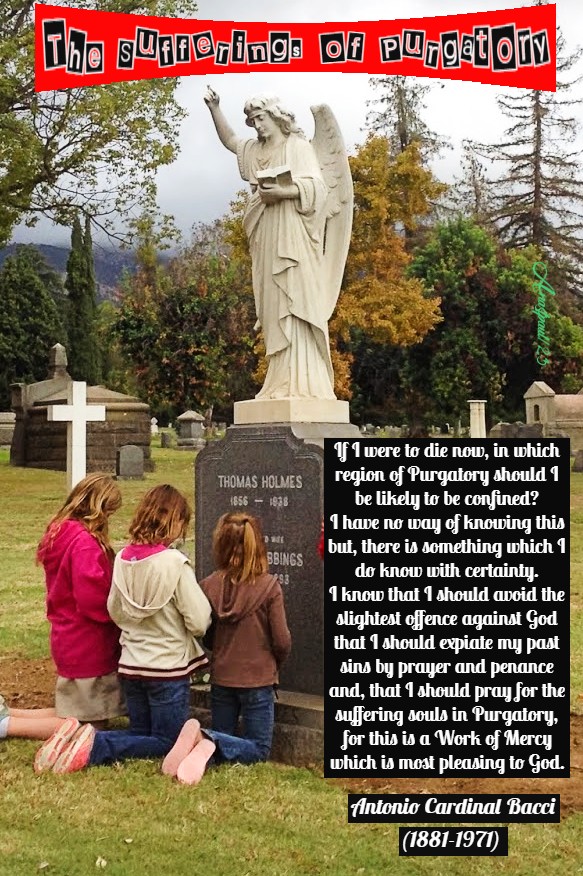
More About the Sufferings of Purgatory
“If I were to die now, in which region of Purgatory should I be likely to be confined? I have no way of knowing this but, there is something which I do know with certainty. I know that I should avoid the slightest offence against God that I should expiate my past sins by prayer and penance and, that I should pray for the suffering souls in Purgatory, for this is a Work of Mercy which is most pleasing to God.”
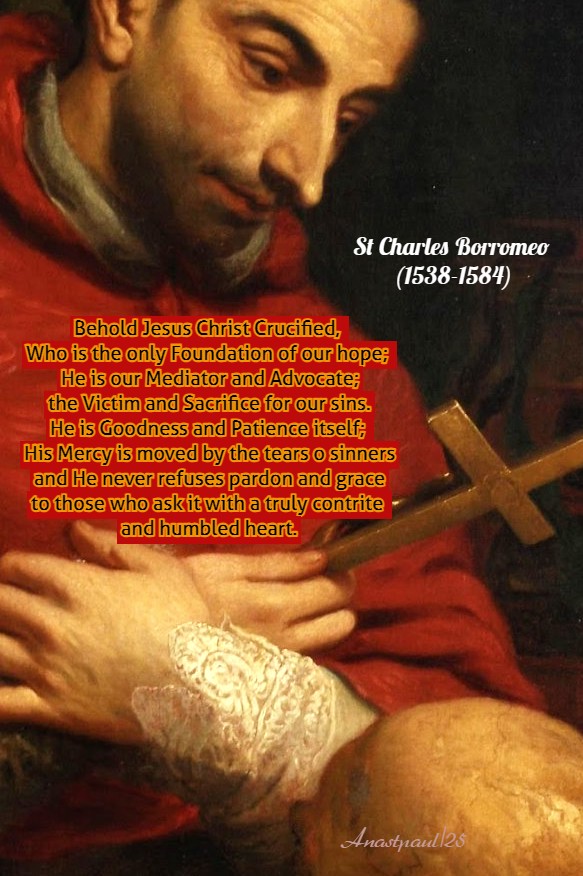
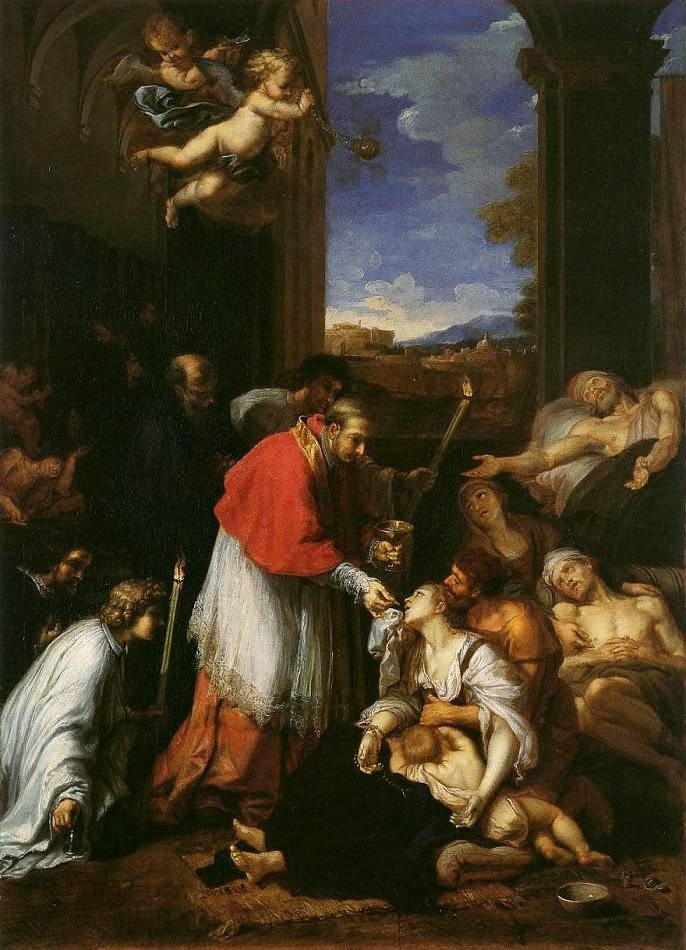
Quote/s of the Day – 4 November – Saint Charles Borromeo (1538-1584) He is known as the “Father of the Clergy” – Some of his Patronages: Bishops, Priests, Seminarians • Catechists • Catechumens • Spiritual Directors • Spiritual leaders
“Charity is that with which, no man is lost,and without which, no man is saved.”
“Stay quiet with God. Do not spend your time in useless chatter… Do not give yourself to others, so completely that you have nothing left for yourself.”
“Behold Jesus Christ Crucified, Who is the only Foundation of our hope; He is our Mediator and Advocate; the Victim and Sacrifice for our sins. He is Goodness and Patience itself; His Mercy is moved by the tears o sinners and He never refuses pardon and grace to those who ask it with a truly contrite and humbled heart.”
One Minute Reflection – 4 Novemer – “The Month of The Holy Souls in Purgatory” – Saint Charles Borromeo (1538-1584) – Sirach 44:16-27; 45:3-20 – Matthew 25:14-23 – Scripture search here: https://www.drbo.org/
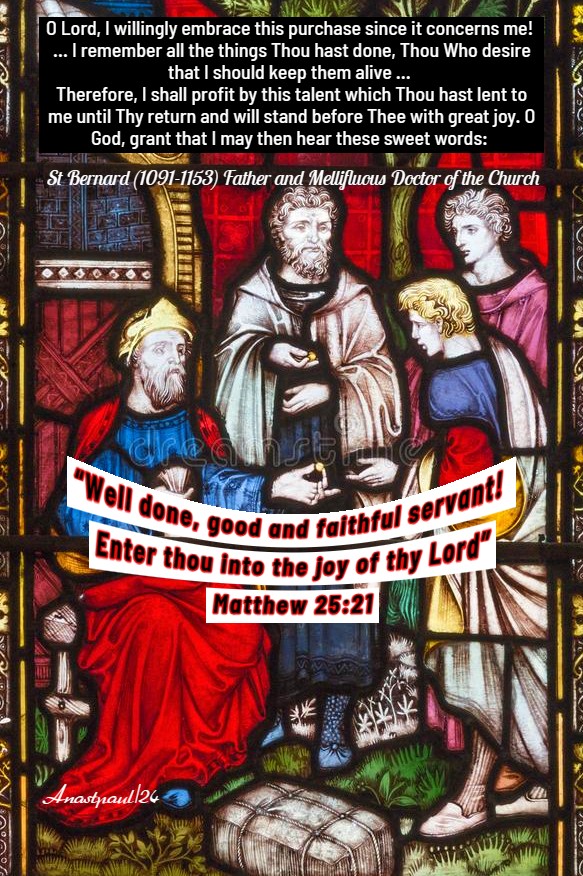
“Well done, good and faithful servant … Enter thou into the joy of thy Lord.”- Matthew 25:21
REFLECTION – “The Word of the Father, Only-begotten Son of God, Sun of Justice (Mal 3:20), is the great Merchant Who has brought us the price of our redemption. It is a truly precious exchange which we can never value sufficiently, when a King, Son of the King Most High, has become the Coin, the Gold has paid our dues, the Just Man is given for the sinner. Truly unmerited mercy, perfectly disinterested love, astonishing goodness …, it is a completely disproportionate purchase, in which the Son of God is delivered up for the servant, the Creator is put to death for the one He has created, the Lord is condemned for His slave.
O Christ, these are Thine Works, Thou Who descended from Heaven’s brightness into our hellish darkness, to bring Light to our gloomy prison. Thou came down from the Right Hand of the Divine Majesty, into our human misery, to redeem the human race, Thou Who descended from the Father’s glory, to death on the Cross, to triumph over death and its author. Thou art the only One and there is no other but Thee Who could have been drawn to redeem us through Thine Own Goodness…
Let all the merchants of Teman (Bar 3:23) withdraw from this place … it is not they but Israel [Thy] beloved whom [Thou hast] chosen, Thou Who hide these mysteries from the wise and prudent and have revealed them to those babes and humble servants of Thine (Lk 10:21) … O Lord, I willingly embrace this purchase since it concerns me!… I remember all the things Thou hast done, Thou Who desire that I should keep them alive … Therefore, I shall profit by this talent which Thou hast lent to me until Thy return and will stand before Thee with great joy. O God, grant that I may then hear these sweet words: “Well done, good and faithful servant! Enter thou into the joy of thy Lord” (Mt 25:21).” – St Bernard O.Cist. (1091-1153) Cistercian Monk, known as the Last Father and the Mellifluous Doctor of the Church (Selected sermons, no 42: The Five Purchases).
PRAYER – Safeguard Thy Church, O Lord, under the continual protection of St Charles, Thy Confessor and Bishop, so that just as his concern for his flock made him glorious, so his intercession may make us ever fervent in loving Thee. Through Jesus Christ, Thy Son our Lord, Who lives and reigns with Thee, in the unity of the Holy Ghost, God, world without end. Amen (Collect).
Our Morning Offering – 4 Novemer – “The Month of The Holy Souls in Purgatory”
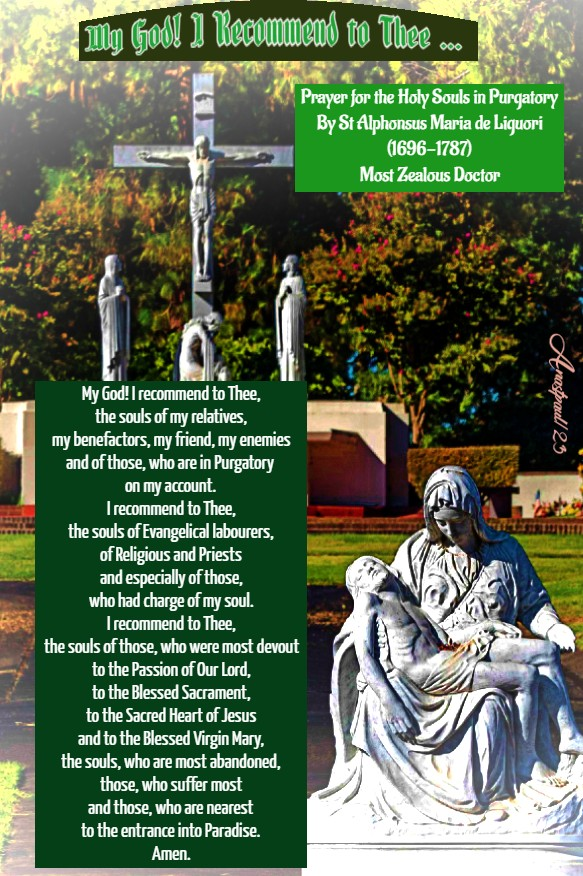
My God! I Recommend to Thee … Prayer for the Holy Souls in Purgatory By St Alphonsus Maria de Liguori (1696-1787) Most Zealous Doctor
My God! I recommend to Thee, the souls of my relatives, my benefactors, my friend, my enemies and of those, who are in Purgatory on my account. I recommend to Thee, the souls of Evangelical labourers, of Religious and Priests and especially of those, who had charge of my soul. I recommend to Thee, the souls of those, who were most devout to the Passion of Our Lord, to the Blessed Sacrament, to the Sacred Heart of Jesus and to the Blessed Virgin Mary, the souls, who are most abandoned, those, who suffer most and those, who are nearest to the entrance into Paradise. Amen.
Saint of the Day – 4 November – Saint Modesta (Died c680) Virgin of Trier, Abbess of the Monastery of Ohren in Trier founded by her uncle St Modoald. Also known as – Modesta of Ohren, … of Trier (formerly Treves).
The Roman Martyrology reads today: “At Treves, St Modesta, Virgin.”
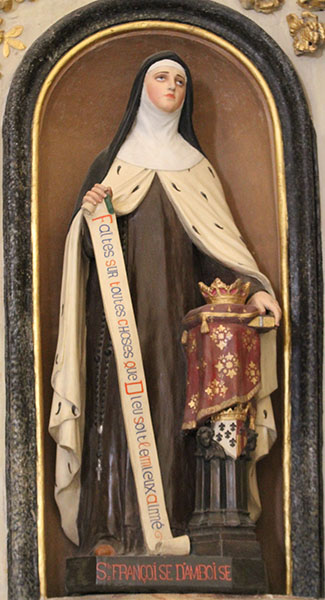
Beata Francisca de Amboise – Iglesia de San Patern – Vannes – Fr
Modesta was the niece of St Itta and, therefore, a cousin of St Gertrude (626–659). Modesta became a Benedictine Nun and was appointed the 1st Abbess, by Saint Modoald, her uncle and the Bishop of Trier, for the Convent of Ohren, situate in Trier.
The Abbey was built on the site of ancient Roman granaries still remaining on the site. It was later dedicated to the Patronage of Saint Irmina of Ohren, the Abbey’s 2nd Abbess.
Modesta died on 4 November of a year towards the end of the 7th Century and her body was venerated ind in 1769 in the Church of the Abbey of St.Irmina in Öhren. In 1770, the Church was destroyed and rebuilt, but no altar was dedicated to the Saint. According to local believers, her Relics were transferred to the Church of St Matthias, where they rest among the bones of many Saints.
Her cult has been documented since at least the 9th Century and her name appears among the virgins in the Litanies of the Saints, calendars and Liturgical books of Trier and Utrecht.
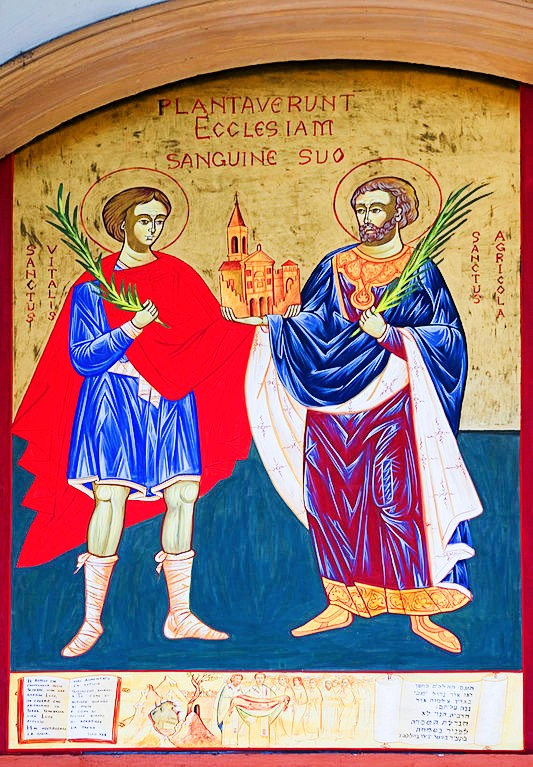
St Vitalis (Died c 304) Martyr and St Agricola (Died c 304) Latmen Martyrs. Martyrs, Laymen. They died in c 304 in Bologna, Italy in the persecution of Diocletian. Patronage – Bologna. The Roman Martyrology reads: “In Bologna, Saints Vitalis and Agricola, Martyrs, of whom, according to what Saint Ambrose recounts, the first was first a slave to the other, then a companion in Martyrdom: Vitalis, in fact, suffered such torments that there was no longer any part of his body without wound. Agricola, not at all terrified by the torture of his slave, imitated him in Martyrdom by undergoing crucifixion.” Their Lives and Deaths: https://anastpaul.com/2022/11/04/saints-of-the-day-4-november-st-vitalis-died-c-304-and-st-agricola-died-c-304-martyrs/
Bl Frances d’Amboise St Gerard de Bazonches St Gregory of Burtscheid Bl Helen Enselmini Bl Henry of Zweifalten St Hermas of Myra St Joannicus of Mount Olympus St John Zedazneli St Modesta (Died c680) Virgin of Trier Virgin St Nicander of Lycia St Patrobas St Perpète St Philologus
St Pierius (Died c309) Priest, Co-Director of the Catechetical School of Alexandria, Scholar, renowned Preacher and Exegetical Writer.. He died in Rome in c309 of natural causes which St Jerome assures us of. The Roman Martyrology reads today: “The birthday of St Pierius, Priest of Alexandria, who, being deeply versed in the Sacred Scriptures, leading a very pure life and freed from all impediments in order to apply to Christian philosophy, taught the people with great renown and published various treatise, under the Emperors Carus and Diocletian, when St Theonas governed the Church of Alexandria. After the persecutions, he spent the remainder of his life at Rome, where he rested in peace in the Lord.” His Life of Grace: https://anastpaul.com/2023/11/04/saint-of-the-day-4-november-st-pierius-died-c309-priest-confessor/
Thought for the Day – 3 November – Meditations with Antonio Cardinal Bacci (1881-1971)
The Pain of Purgatory
“The Tradition of the Fathers and the ordinary teaching of the Church, describe the pains of Purgatory in such a fashion, that they should prompt us to avoid even the smallest sin, not only because it is an offence against the most amiable God but also because, it will be severely punished by Him. This teaching, moreover, should move us to pity for the poor suffering souls, who are enduring such torments.
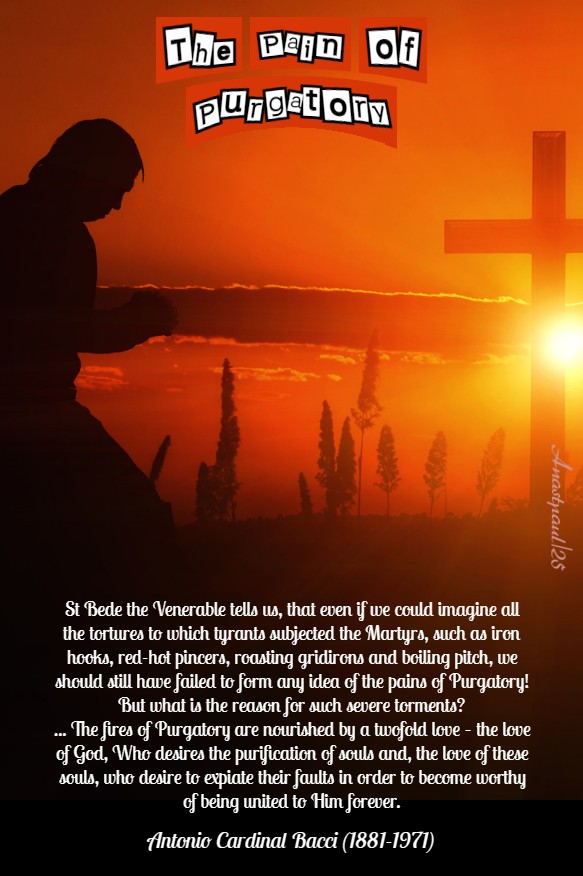
St Cyril of Jerusalem states, that the sum total of the sufferings of this world, is nothing in comparison to the sufferings of Purgatory. He adds, moreover, that the pain of Purgatory is equal to the severity of the torments of Hell; the only difference is that the latter are everlasting, whereas the former, will have an end. St Athanasius assures us that the least pang of suffering in Purgatory, is sharper than all the torments which it is possible to undergo on earth. Moreover he adds, in comparison with the fire which afflicts the suffering souls, earthly fire is hardly even real! St Bede the Venerable tells us, that even if we could imagine all the tortures to which tyrants subjected the Martyrs, such as iron hooks, red-hot pincers, roasting gridirons and boiling pitch, we should still have failed to form any idea of the pains of Purgatory!
But what is the reason for such severe torments? It is that God loves these souls and desires that they be purified of sins, as soon as possible and be made worthy of infinite happiness.
The fires of Purgatory are nourished by a twofold love – the love of God, Who desires the purification of souls and, the love of these souls, who desire to expiate their faults in order to become worthy of being united to Him forever.”
Quote/s of the Day – 3 November – “The Month of The Holy Souls in Purgatory” and the Feast of the Holy Souls in Purgatory
The Doctrine of Purgatory by Saint Francis de Sales (1567-1622) Bishop of Geneva Doctor of Charity of the Church
From “The Catholic Controversy“ (originally published by Burns and Oates, London 1886) Translated by Rev Henry Benedict Mackey OSB (19th Century) English Canon of the Isle of Wight
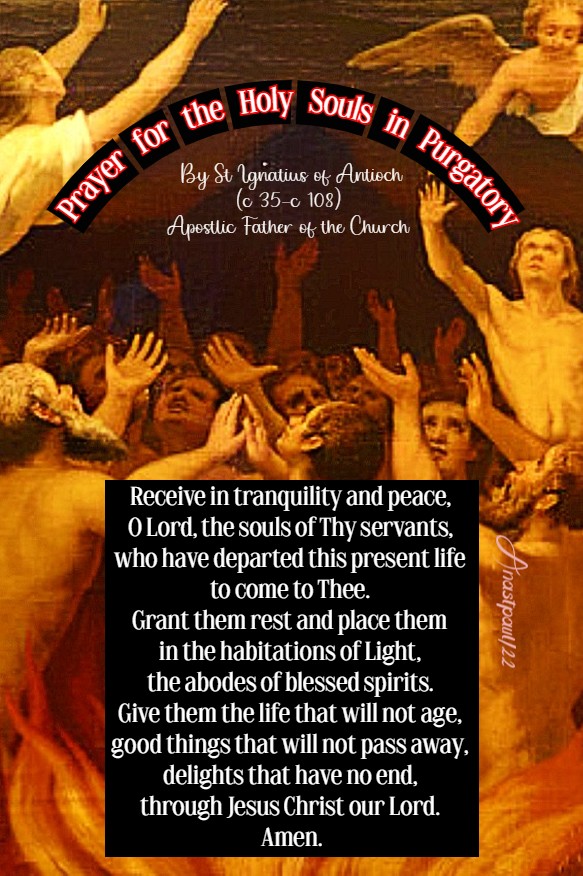
Prayer for the Holy Souls in Purgatory By St Ignatius of Antioch (c 35-c 108) Apostolic Father of the Church
Receive in tranquility and peace, O Lord, the souls of Thy servants, who have departed this present life to come to Thee. Grant them rest and place them in the habitations of Light, the abodes of blessed spirits. Give them the life that will not age, good things that will not pass away, delights that have no end, through Jesus Christ our Lord. Amen.
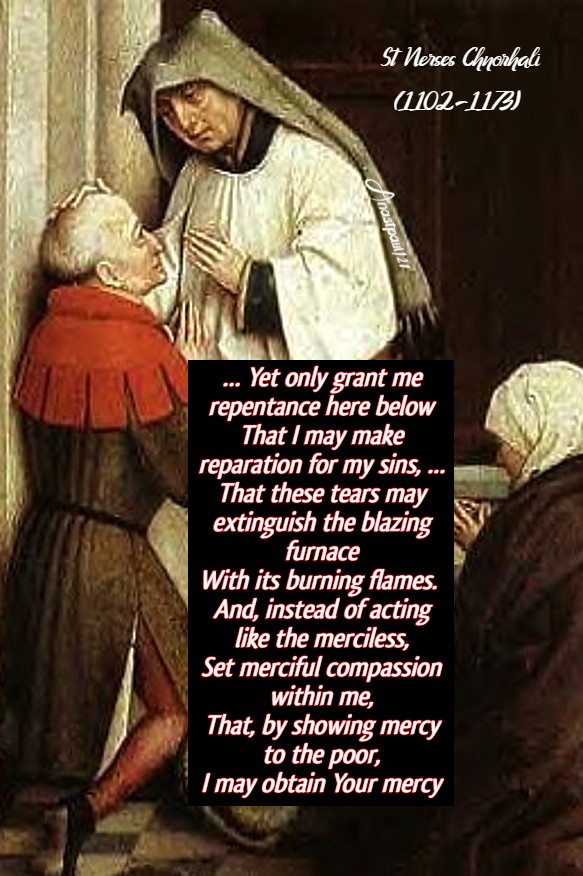
“ … Yet only grant me repentance here below That I may make reparation for my sins, … That these tears may extinguish the blazing furnace With its burning flames. …
And, instead of acting like the merciless, Set merciful compassion within me, That, by showing mercy to the poor, I may obtain Your mercy.”
St Nerses Chnorhali (1102-1173) Armenian Bishop
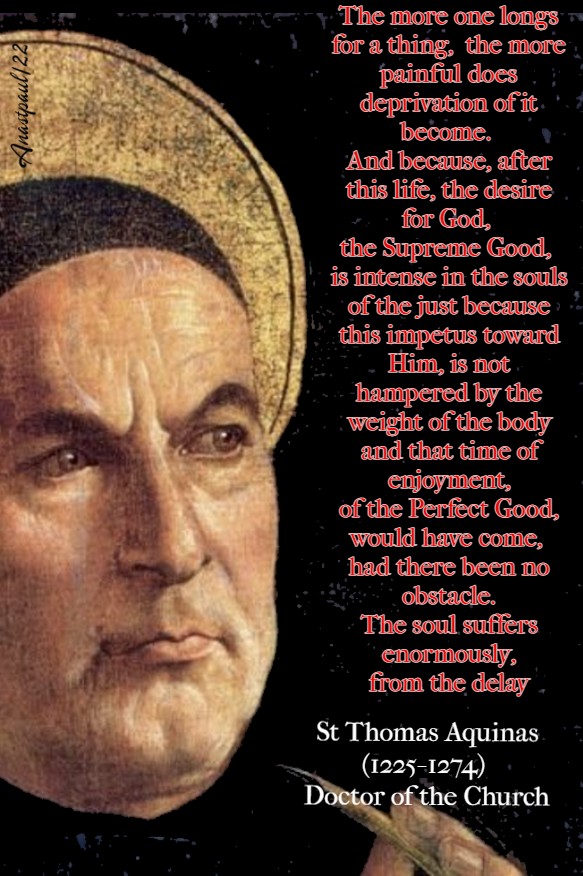
“The more one longs for a thing, the more painful does deprivation of it become. And because, after this life, the desire for God, the Supreme Good, is intense in the souls of the just – (because this impetus toward Him, is not hampered by the weight of the body and that time of enjoyment, of the Perfect Good, would have come) had there been no obstacle. The soul suffers enormously, from the delay.”
St Thomas Aquinas (1225-1274) Angelic Doctor
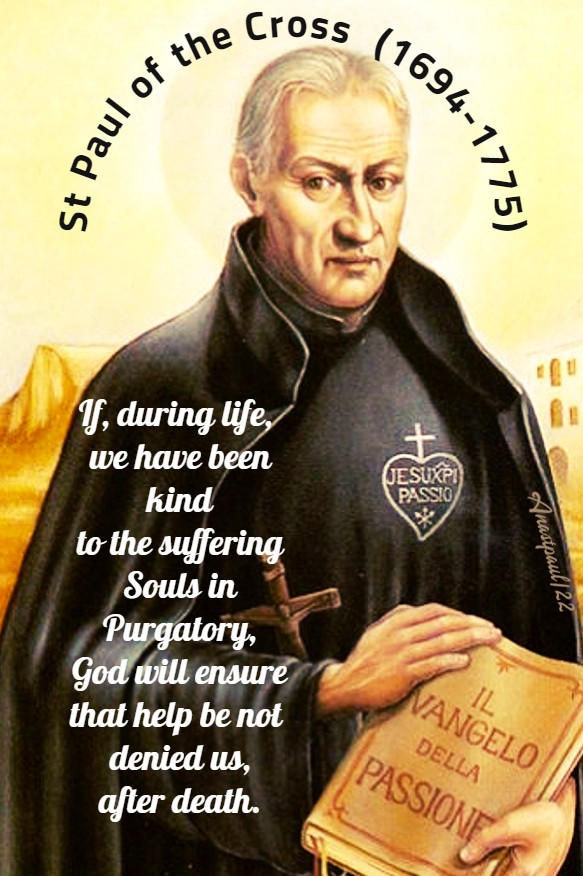
“If, during life, we have been kind to the suffering Souls in Purgatory, God will ensure that help be not denied us, after death.”
St Paul of the Cross (1694-1775)
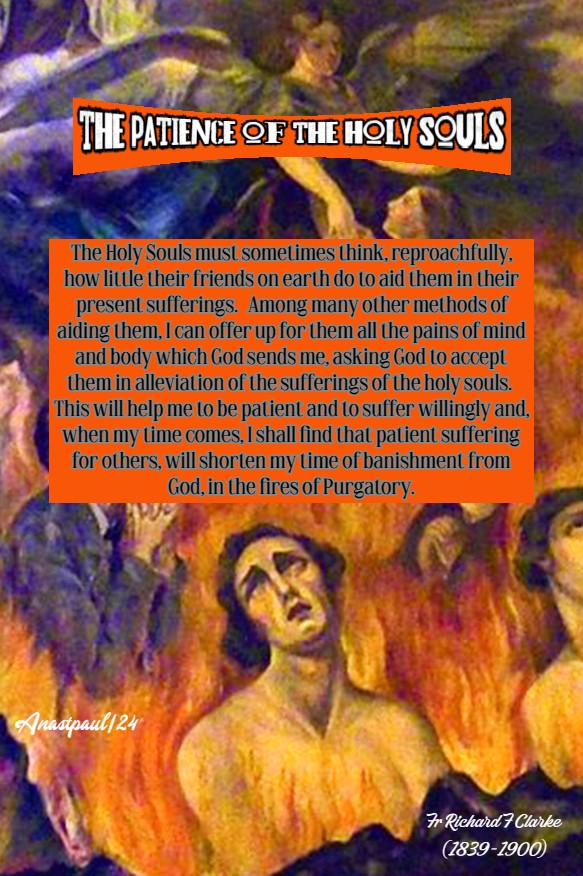
“The Holy Souls must sometimes think, reproachfully, how little their friends on earth do to aid them in their present sufferings. Among many other methods of aiding them, I can offer up for them all the pains of mind and body which God sends me, asking God to accept them in alleviation of the sufferings of the holy souls. This will help me to be patient and to suffer willingly and, when my time comes, I shall find that patient suffering for others, will shorten my time of banishment from God, in the fires of Purgatory.”
One Minute Reflection – 3 November – “The Month of The Holy Souls in Purgatory” – Within the Octave of All Saints – All Holy Souls in Purgatory – 1 Corinthians 15:51-57 – John 5:25-29 – Scripture search here: https://www.drbo.org/
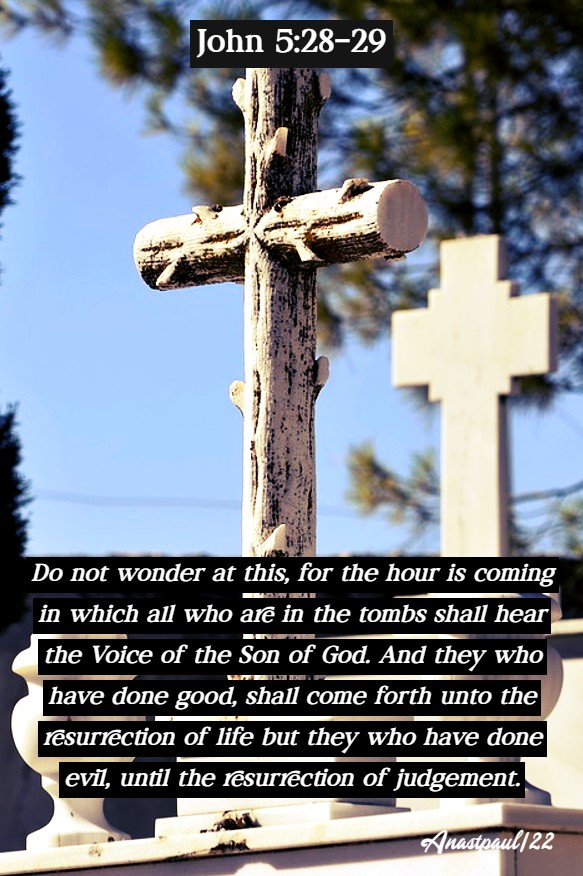
“Do not wonder at this, for the hour is coming in which all who are in the tombs shall hear the Voice of the Son of God. And they who have done good, shall come forth unto the resurrection of Life but they who have done evil, until the resurrection of judgement.” – John 5:28-29
REFLECTION – “We should consider, beloved brethren and we should reflect constantly that we have renounced the world and as strangers and foreigners, we sojourn here for a time (Heb 11:13). Let us embrace the day which assigns each of us to his dwelling which, on our being rescued from here and released from the snares of the world, restores us to Paradise and the Kingdom. What man, after having been abroad, would not hasten to return to his native land? Who, when hurrying to sail to his family, would not more eagerly long for a favourable wind that he might more quickly embrace his dear ones? We account Paradise our country, we have already begun to look upon the patriarchs as our parents.
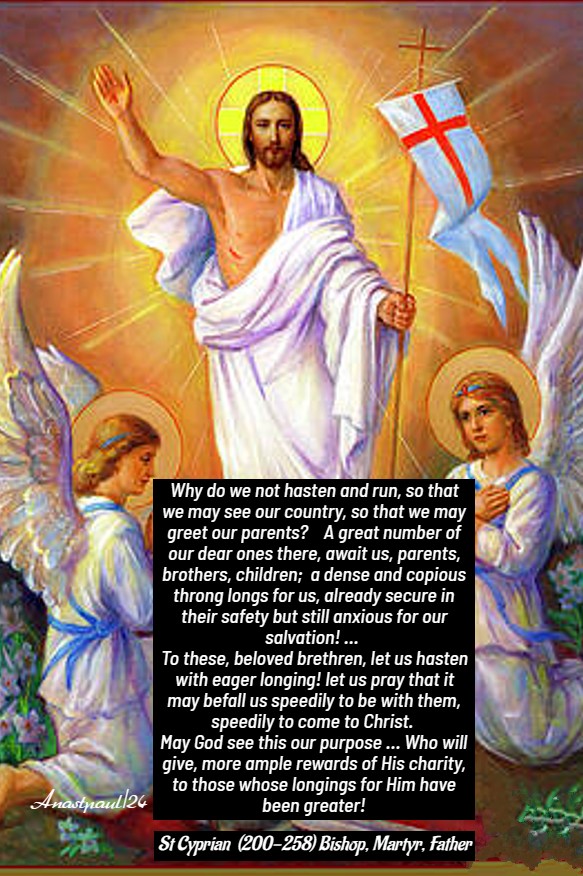
Why do we not hasten and run, so that we may see our country, so that we may greet our parents? A great number of our dear ones there, await us, parents, brothers, children; a dense and copious throng longs for us, already secure in their safety but still anxious for our salvation! … There, are to be found, the glorious choir of Apostles, there, the throng of exultant Prophets, there, the innumerable multitude of Martyrs wearing crowns on account of the glory and victory of their struggle and passion, there, the triumphant Virgins … the merciful enjoying their reward, who have performed works of justice by giving food and alms to the poor, who, in observing the precepts of the Lord, have transferred their earthlyinheritance to the treasuries of Heaven!
To these, beloved brethren, let us hasten with eager longing! let us pray that it may befall us speedily to be with them, speedily to come to Christ. May God see this our purpose … Who will give, more ample rewards of His charity, to those whose longings for Him have been greater.” – St Cyprian (200-258) Bishop of Carthage, Martyr, Father (On Mortality 26).
PRAYER – O God, Creator and Redeemer of all the faithful, grant to the souls of Thy servants and handmaids, the remission of all their sins, that they may obtain, by our loving prayer,s the forgiveness which they have always desired. Who lives and reigns with God the Father, in the unity of the Holy Spirit, God, world without end. Amen (Collect).
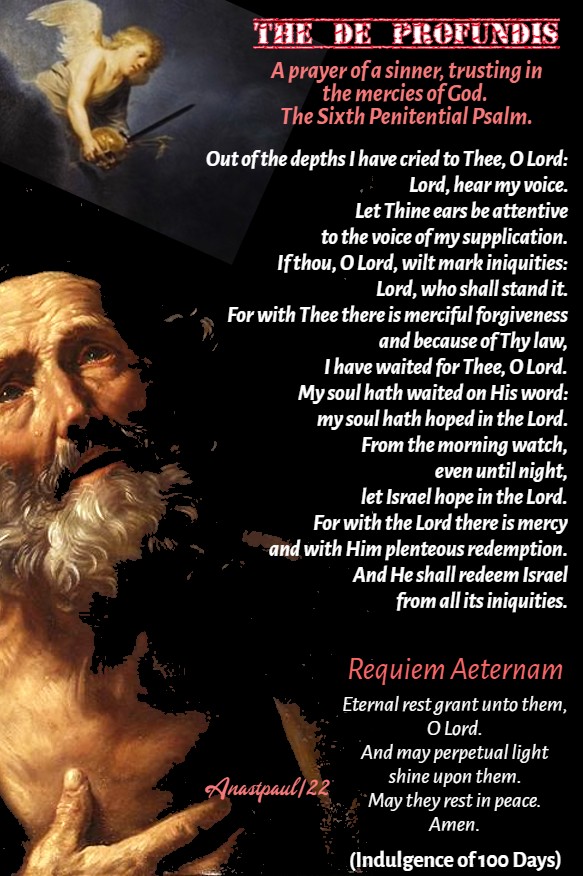
A prayer of a sinner, trusting in the mercies of God. The Sixth Penitential Psalm.
Out of the depths I have cried to Thee, O Lord: Lord, hear my voice. Let Thine Ears be attentive to the voice of my supplication. If Thou, O Lord, wilt mark iniquities: Lord, who shall stand it. For with Thee there is merciful forgiveness and because of Thy law, I have waited for Thee, O Lord. My soul hath waited on His word: my soul hath hoped in the Lord. From the morning watch, even until night, let Israel hope in the Lord. For with the Lord there is mercy and with Him plenteous redemption. And He shall redeem Israel from all its iniquities.
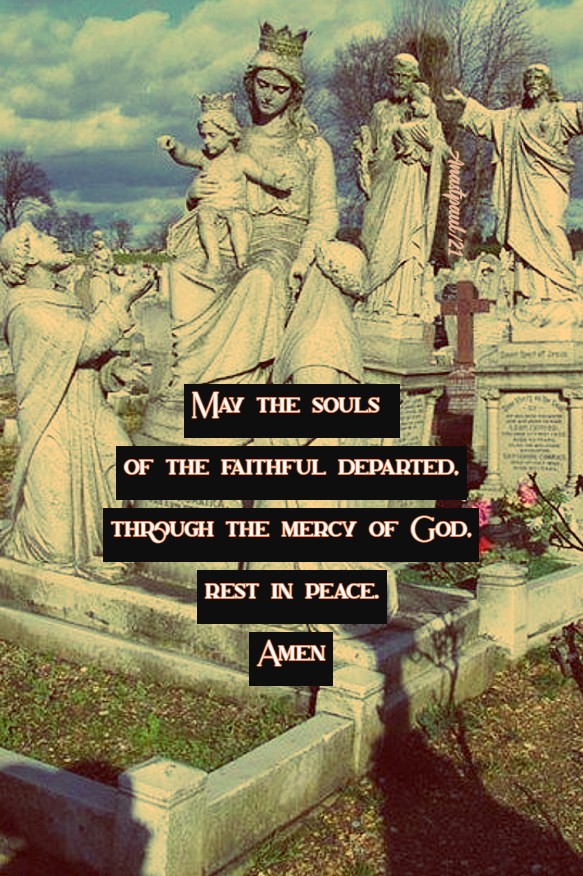
(Eternal rest or “Requiem aeternam”) Eternal rest grant unto them, O Lord. And may perpetual light shine upon them. May they rest in peace. Amen.
Saint of the Day – 3 November – Saint Pirminus (c690-753) Missionary Bishop on the Upper Rhine in Germany, Abbot, Founder of Monasteries, Reformer, Miracle-worker, Born in around 690 in Ireland or in Narbonne or in Paris, France and died on 3 November in 753 in Hornbach, Germany. Patronages – against eye ailments, against plague/epidemics, against poisoning, against rheumatism, against snake bites, against vermin, for happy birth, of livestock; in Austria – Innsbruck; in France – Alsace; in Germany – Amorbach, Monsheim, Palatinate, Pirmasens, Reichenau Island, Speyer, Diocese (with St Bernard). Also known as – Pirmin, Pirminius.
The Roman Martyrology reads today: “The departure from this life of St Pirminus, Bishop of Meaux.”
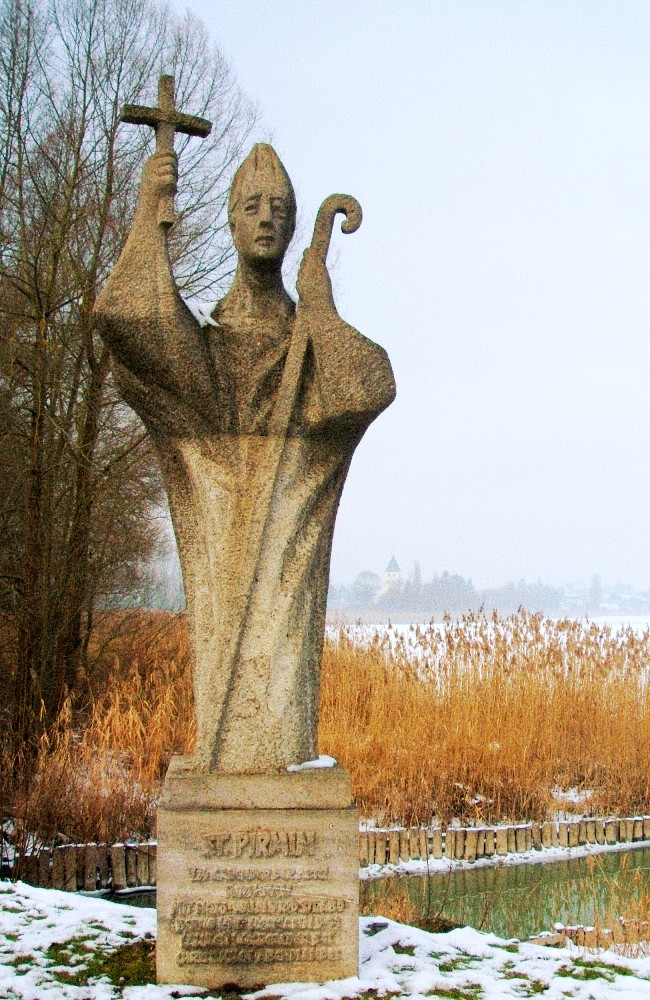
St Pirminus Statue in the Murbach Monastery
Pirminus is described in various sources, as a Visigoth, an Irish Scot, or of Roman origin. He was Consecrated as an itinerant Bishop around 720 – possibly in Meaux in France – and sent on a mission to north-western France and the Upper Rhine region.
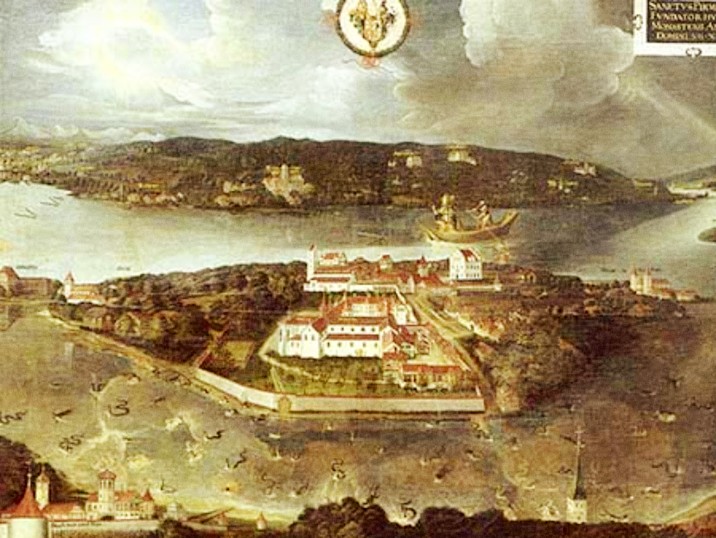
Arrival of Saint Pirmin on the Island of Reichenau
He maintained good relations with the Frankish Mayor of the Palace, Charles Martel, who, in 724, placed him under his protection and founded numerous Monasteries, including probably Pfungen near Winterthur and certainly the Mittelzell Monastery on the Lake Constance Island of Reichenau. All the crawling creatures which damaged the Island are said to have fallen into the water upon his arrival and thus disappeared. According to tradition, Pirminus remained on Reichenau until 726 and was then expelled by Duke Theobald.
Pirminus then went to Alsace to continue his work there. Here he was active in the Carolingian territory. In 727, he founded what was then Murbach Abbey and was able to realise his ideas there, that is, monastic life based on the Benedictine Rule, understood as a permanent pilgrimage without worldly ties and the Abbey’s freedom from the local Bishop, led by its own Abbot. Pirminus held this office in Murbach. The founding of the Monasteries in Neuweiler (present-day Neuwiller-lès-Saverne ) , Schwarzach in Rheinmünster in Baden and Pfäfers near Chur, are also attributed to Pirminus. According to local tradition, he lived for a time in the cave near Winterthur which was later named after him.
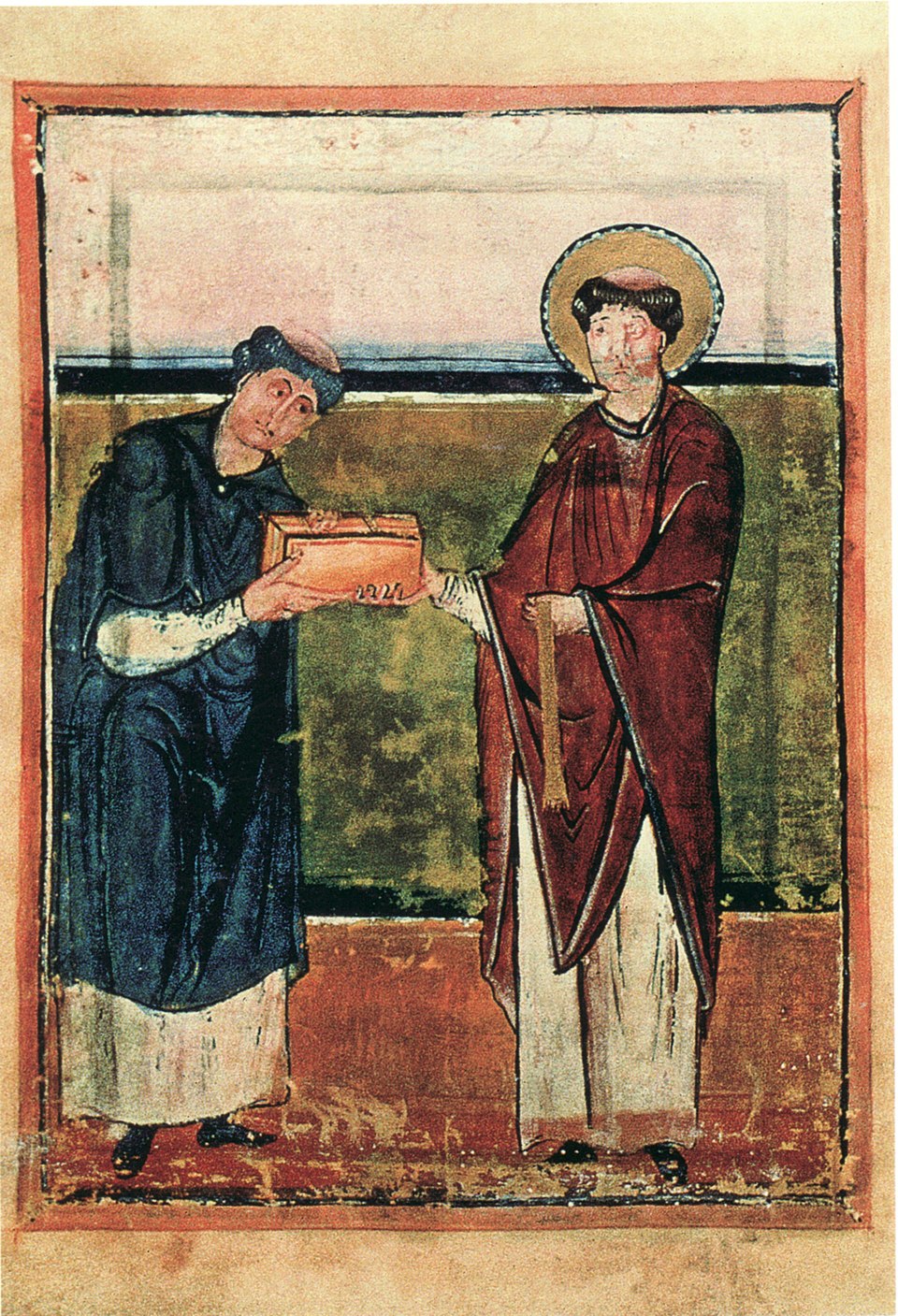
Illustration from the Hornbach Sacramentary: Abbot Adalbert of Hornbach presents the manuscript to his Patron Saint, St Pirminus
According to 9th and 12th Century traditions, Pirminus founded the Monastery in Gengenbach with the support of the Frankish nobleman Ruthard. By 820, it was the largest Monastery in the region and an Imperial Abbey. He is said to have introduced the Benedictine Rule at the Monastery in Schuttern, thus initiating its flourishing. The Monastery of Amorbach in the Odenwald may also indeed, have originated by our Saint Pirminus. In around 742, Pirminus founded the Monastery in Hornbach in the Palatinate on a hill where a Roman sanctuary had likely previously stood. He reformed the Monasteries in Weißenburg /Wissembourg and Maursmünster Marmoutier in Alsace which had been founded in the 5th/6th Centuries and, in 741 he sent Monks from Mittelzell to found Niederaltaich Abbey.
St Pirminus Relics at Speyer Cathedral
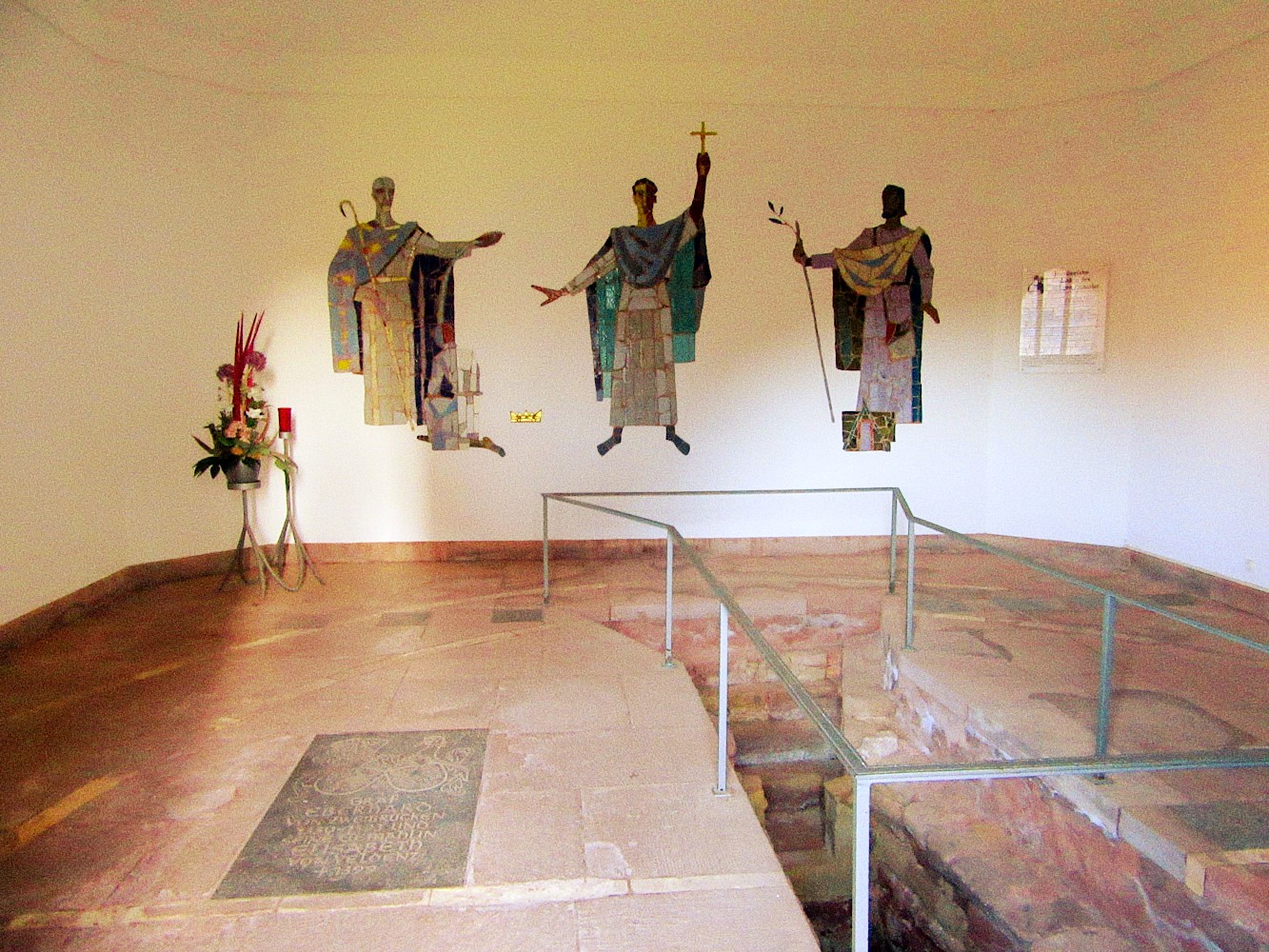
Pirminus died in his Monastery in Hornbach. As early as the end of the 8th Century, he was referred to as a Saint in a manuscript from Metz . After 814, Abbot Wyerund of Hornbach Monastery had Pirminus’ remains exhumed and interred in the Church he had recently built. In 827, Pirminus was first mentioned as the Church’s Patron Saint, and Hrabanus Maurus wrote a Tomb Inscription. The Tomb was excavated in 1953 and, in 1957, the present Chapel was built over it.
St Pirminus Grave built in 1957
“The first recorded version of the Apostles’ Creed, as it is known today, is found in the Treatise De singulis libris canonicis scarapsus (Excerpt from the Unique Canonical Books), most possibly written by St Pirminus. In it, he describes how the Apostles were gathered at Pentecost, the Holy Ghost descended upon them and they then began to speak in turn: Peter : I believe in God, the Father Almighty, Creator of Heaven and earth. John : And in Jesus Christ, His only Son, our Lord. James said: He was conceived by the Holy Ghost and born of the Virgin Mary. Andrew said: He suffered under Pontius Pilate, was Crucified, Died and was buried. Philip said: He descended into Hades. Thomas said: On the third day He Rose from the dead. Bartholomew said: He Ascended into Heaven and was seated at the Right Hand of God the Father Almighty. Matthew said: From thence He shall come to judge the living and the dead. James, the son of Alpheus, said: I believe in the Holy Ghost. Simon the Zealot said: And the Holy Catholic Church. Jude, the son of James, said: In the communion of the Saints and the forgiveness of sins. Likewise, Thomas said [he spoke a second time]: In the Resurrection of the body and eternal life.”
Thought for the Day – 2 November – Meditations with Antonio Cardinal Bacci (1881-1971)
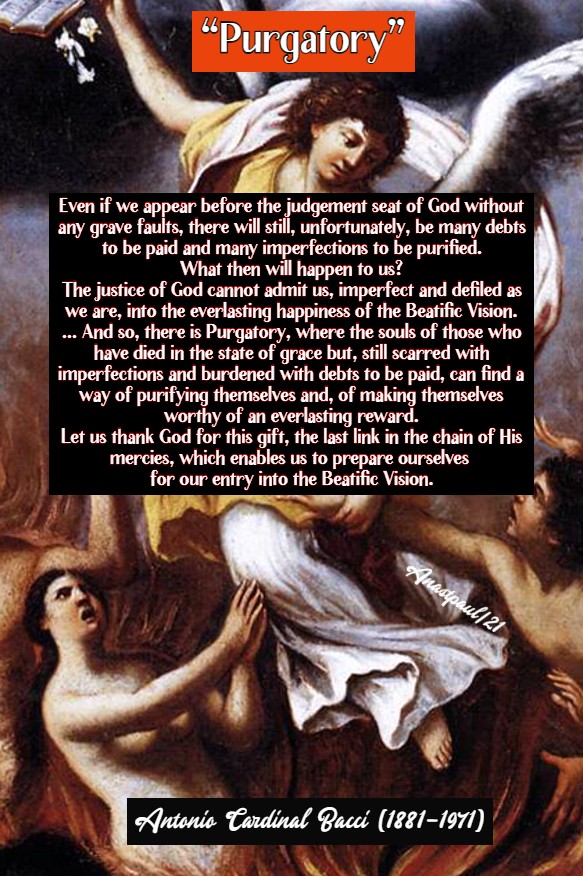
“Purgatory”
“Purgatory is the masterpiece of God’s justice and mercy. St John tells us in the Apocalypse, that nothing defiled can enter into the Heavenly Jerusalem (Apoc 21:27).
There are very few, however, who are privileged to arrive at the supreme moment of death, still wearing their Baptismal robe of innocence. Even the just man falls very often as the Holy Spirit warns us (Prov 24:16). We all possess many failings and have been guilty of many sins, either mortal or venial. It is true, that we can obtain forgiveness by penance and by receiving the Sacraments but, there still remains the temporal punishment due to our sins. Neither the small penances imposed by the Confessor, nor our own tiny acts of voluntary mortification, are sufficient to satisfy our debt. We cannot be certain, moreover, that we shall be able, at the hour of our death, to cleanse ourselves of all our sins, by means of one good Confession. Even if we appear before the judgement seat of God without any grave faults, there will still, unfortunately, be many debts to be paid and many imperfections to be purified.
What then will happen to us? The justice of God cannot admit us, imperfect and defiled as we are, into the everlasting happiness of the Beatific Vision. Will He reject us, therefore, even as He rejects those who die in mortal sin and are condemned to eternal punishment? This is unthinkable, for the mercy of God is as Infinite as His justice. And so, there is Purgatory, where the souls of those who have died in the state of grace but, still scarred with imperfections and burdened with debts to be paid, can find a way of purifying themselves and, of making themselves worthy of an everlasting reward.
Let us thank God for this gift, the last link in the chain of His mercies, which enables us to prepare ourselves for our entry into the Beatific Vision.”
Quote/s of the Day – 2 November – “The Month of The Holy Souls in Purgatory” and the Feast of the Holy Souls in Purgatory
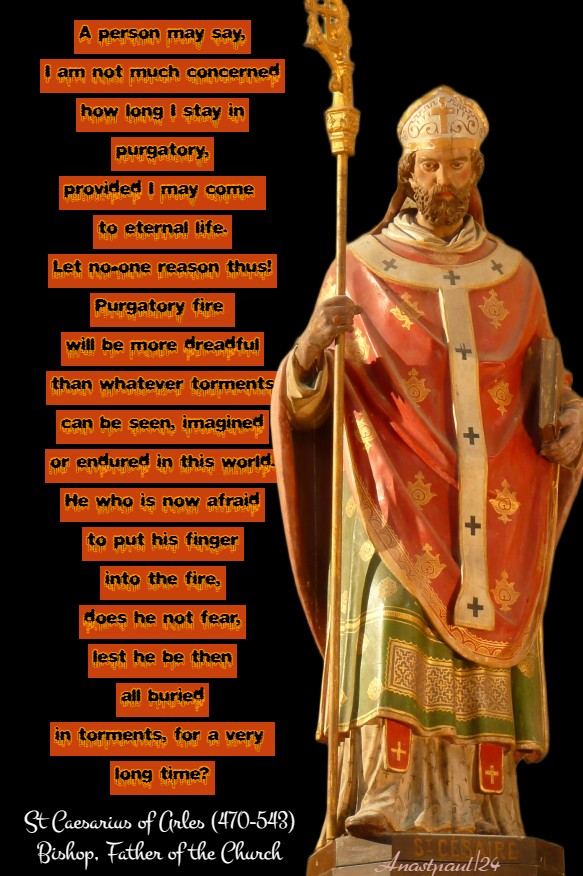
“A person may say, I am not much concerned how long I stay in purgatory, provided I may come to eternal life. Let no-one reason thus! Purgatory fire will be more dreadful than whatever torments can be seen, imagined or endured in this world. He who is now afraid to put his finger into the fire, does he not fear, lest he be then all buried in torments, for a very long time?”
St Caesarius of Arles (470-543) Bishop, Father of the Church
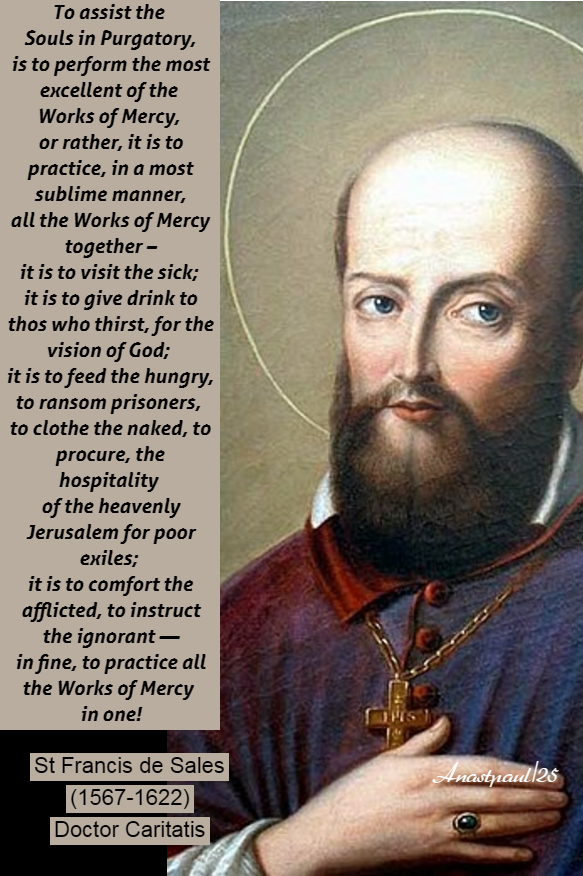
“To assist the Souls in Purgatory, is to perform the most excellent of the Works of Mercy, or rather, it is to practice, in a most sublime manner, all the Works of Mercy together – it is to visit the sick; it is to give drink to thos who thirst, for the vision of God; it is to feed the hungry, to ransom prisoners, to clothe the naked, to procure, the hospitality of the heavenly Jerusalem for poor exiles; it is to comfort the afflicted, to instruct the ignorant — in fine, to practice all the Works of Mercy in one!”
St Francis de Sales (1567-1622) Doctor Caritatis
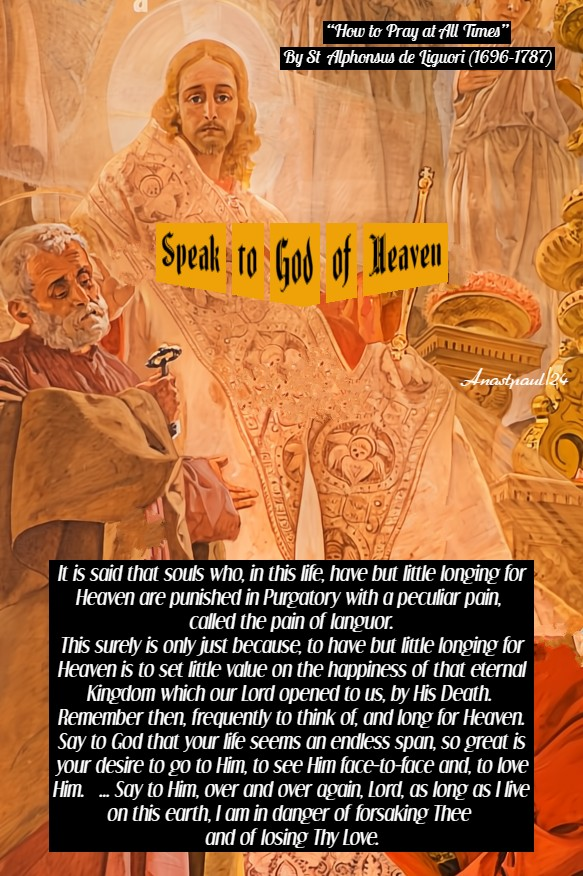
“It is said that souls who, in this life, have but little longing for Heaven are punished in Purgatory with a peculiar pain, called the pain of languor. This surely is only just because, to have but little longing for Heaven is to set little value on the happiness of that eternal Kingdom which our Lord opened to us, by His Death. Remember then, frequently to think of, and long for Heaven. Say to God that your life seems an endless span, so great is your desire to go to Him, to see Him face-to-face and, to love Him. Say to Him, over and over again, Lord, as long as I live on this earth, I am in danger of forsaking Thee and of losing Thy Love.”
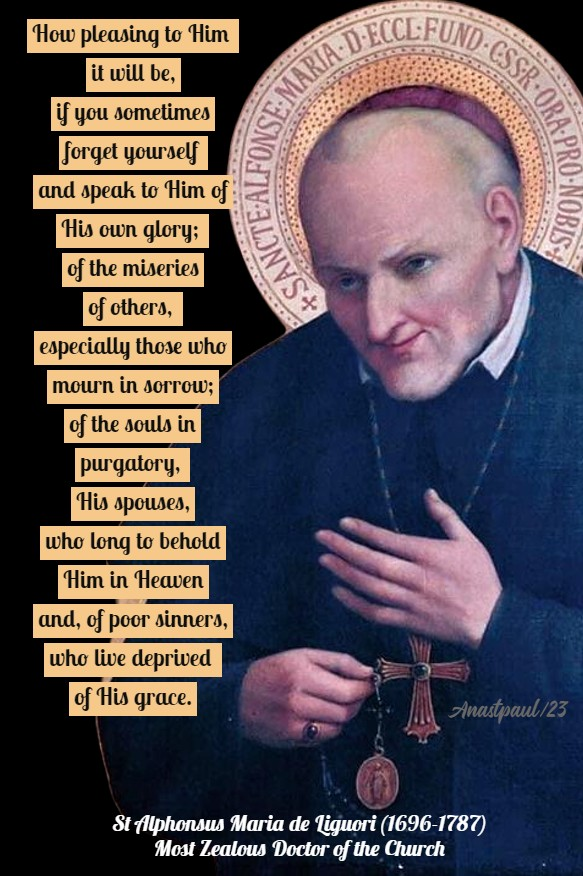
“How pleasing to Him it will be, if you sometimes forget yourself and speak to Him of His own glory; of the miseries of others, especially those who mourn in sorrow; of the souls in purgatory, His spouses, who long to behold Him in Heaven and, of poor sinners, who live deprived of His grace.”
St Alphonsus Maria de Liguori (1696-1787) Most Zealous Doctor
One Minute Reflection – 2 November – “The Month of The Holy Souls in Purgatory” – All Souls Day – Ephesian 6:10-17 –,– Scripture search here: https://www.drbo.org/
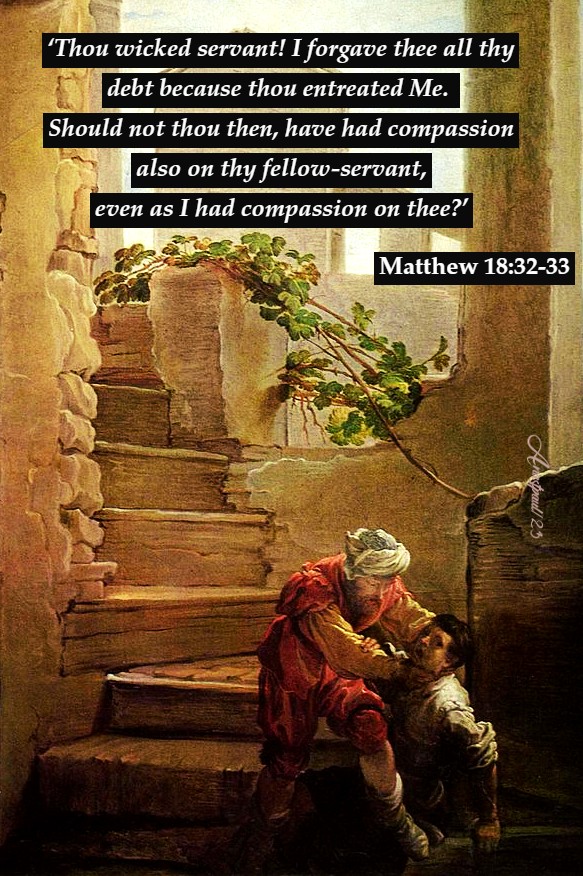
“‘Thou wicked servant! I forgave thee all thy debt because thou entreated Me. Should not thou then, have had compassion also on thy fellow-servant, even as I had compassion on thee?’ ” – Matthew 18:32-33
REFLECTION – “Every man is God’s debtor and each has his brother in debt to him. Indeed, who could be without debt towards God, if not Him, in Whom is found no sin? And who could not have a debtor in his brother, if not he, whom no-one has ever offended? Thus every man is both debtor and creditor… A beggar asks you for alms but you, too, are God’s beggar, for when we pray we are all beggars of God. We stand – or rather, prostrate ourselves – at our Father’s door (cf Lk 11:5); we beseech Him with groans, anxious to receive a grace from Him and this grace is God Himself. What does the beggar ask of you? Bread. And what is it that you are asking of God but Christ, Who said: “I am the Living Bread come down from Heaven” (Jn 6:51). Do you want to receive pardon? Then, show pardon. “Forgive and you will be forgiven.” Do you want to receive? “Give and gifts will be given to you” (Lk 6:37-38) …
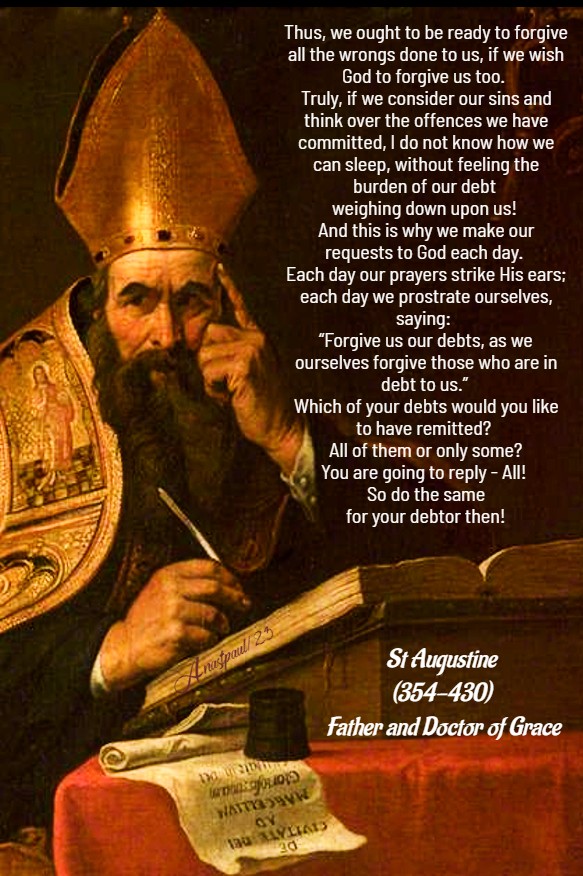
Thus, we ought to be ready to forgive all the wrongs done to us, if we wish God to forgive us too. Truly, if we consider our sins and think over the offences we have committed, I do not know how we can sleep, without feeling the burden of our debt weighing down upon us! And this is why we make our requests to God each day. Each day our prayers strike His ears; each day we prostrate ourselves, saying: “Forgive us our debts, as we ourselves forgive those who are in debt to us.” Which of your debts would you like to have remitted? All of them or only some? You are going to reply – All! So do the same for your debtor then!” – St Augustine (354-430) Father and Doctor of Grace (Sermon 83).
PRAYER – O God, Creator and Redeemer of all the faithful, grant to the souls of Thy servants and handmaids, the remission of all their sins, that they may obtain, by our loving prayer,s the forgiveness which they have always desired. Who lives and reigns with God the Father, in the unity of the Holy Spirit, God, world without end. Amen (Collect).

















You must be logged in to post a comment.