Six years ago, on 13 March 2013, the Pope “from the ends of the earth” stepped out onto the balcony of Saint Peter’s Basilica to the cheers of the tens thousands of people in St Peter’s Square.
On this the anniversary of the beginning of Pope Francis’ pontificate, the ad interim Director of the Holy See Press Office, Alessandro Gisotti looks back at those six years, saying that “love, mercy and courage are the key words to understanding this pontificate.”
Reflecting on election night, he says, “the first thing that comes to me was amazement, surprise. I think the election of Jorge Mario Bergoglio was a complete surprise for all of us. I remember the expression of amazement when the Camerlengo announced the name of Bergoglio and Francis, surprise because [he is] the first Pope with the name of Francis, the first Jesuit, the first Latin American.”
Gisotti goes on to tell Vatican News, that with this pontificate “we are really witnessing God’s surprises”, in what the Pope says and in what he does.
In his job, the ad interim Director has seen at first-hand how Pope Francis interacts with the people he encounters. He gives an example of the Pope’s Papal Visit to Panama for World Youth Day, saying, “to see the emotion, people crying, people crying when encountering Pope Francis, his proximity, above all to the poor, to the ill persons, to the weakest, is a manifestation, truly the manifestation of the love, the mercy of Jesus, of God and the people feel it.”
The Press Office Director says that what strikes him is, that along with this witness of mercy and love is Pope Francis’ courage to confront the most difficult of issues.
He calls to mind the Pope’s commitment to dialogue for peace and above all, the Pope’s commitment “to fight this terrible scourge of the sexual abuse of minors. This commitment for me is an example for all of us to confront, without fear, the most difficult challenges.”
As the foster father of Jesus, you provided for His human needs. Through the work of your hands, he had food to strengthen Him, a house to give Him shelter and clothes to keep Him warm.
Now, from heaven, you’re still working, St Joseph. Indeed, the loving labour of your prayers provide for all the members of the Body of your Son. But as I’m preparing to consecrate myself completely to you, I ask you to please provide for me and for my loved ones in a special way. Through your prayers, please make sure that we always have food to eat, a roof over our heads and clothes to wear. Also, please pray for us that in times of abundance, we will never forget God. Pray for us that we will always be grateful for God’s gifts and that we will never be a slave to things like food or money, pleasure or power. Finally, help us always to remember and be generous with the poor.
Saint Joseph, with you as my spiritual father, I will do my best not to give in to useless anxiety about my job, money, or material things. I believe you will always make sure I have what I need and as a good father, I ask that you indulge me a bit by even providing for my material wants, provided they don’t take me away from Jesus.
Saint Joseph, Good Provider, please provide for my needs through your powerful prayers. Amen
Thought for the Day -– 13 March – Wednesday of the First week of Lent, Year C and The Memorial of St Leander (c 534-c 600)
Without St Leander’s faithfulness, Spain would not have such a rich Catholic history. For his work opposing heresy, the Church in Spain recognises him as a doctor of the faith.
Leander became known for his holiness and when the bishop of Seville died, he was unanimously chosen to replace him. His task was clear—the Arian heresy was widespread at the time (the belief that Jesus was not fully human) and Leander set out to preach the truth. His prayer and eloquent arguments won many over to orthodoxy.
He became friends with St Gregory the Great. before that man became pope and the two exchanged letters and supported one another.
He had a great appreciation for the importance of prayer in the Christian life. Several councils were held under his leadership and he helped reform the liturgy and introduced the Nicene Creed into the Mass.
St Leander of Seville, you restored true faith to Spain–pray for the church, the world and us all!
Lenten Reflection – 13 March – Wednesday of the First week of Lent, Year C
“…Something greater than Jonah is here.”…Luke 11:32
St Bernard (1091-1153)
Doctor of the Church
“Come back to me with all your heart” (Joel 2:12)
“Be converted with all your heart,” the Lord says. My brothers, if he had just said “Be converted” without adding anything, perhaps we should have been able to reply – it’s done, now you can give us something else to do.
But if I understand correctly, Christ is speaking to us here about a spiritual conversion that does not come about in a day. May it even be achieved in our lifetime! So pay attention to what you love, what you fear, at what makes you happy or what makes you sad and you will sometimes see that, beneath your religious habit you are still a man of the world. Indeed, the heart is wholly contained in these four feelings and it is concerning them, I think, we must understand these words: “Be converted to the Lord with all your heart.”
May your loving be converted, in such a way, that you love nothing but the Lord, or rather that you love nothing except for God’s sake. May your fear also be turned towards Him, for any fear that makes us afraid of something apart from Him and not because of Him is bad. May your joy and your sadness be converted to Him, this is how it will be if you neither suffer nor rejoice except in Him. Thus, if you mourn for your own sins or those of your neighbour you do well and your sadness is salutary. If you rejoice in the gifts of grace, this joy is holy and you are able to enjoy it in peace in the Holy Spirit. In the love of Christ you should be glad of your brothers’ good fortunes and sympathise with their misfortunes according to this verse: “Rejoice with those who rejoice, weep with those who weep.” (Rm 12:15)
Daily Meditation: Hear our prayer.
The Wednesdays and Fridays of Lent take on a more penitential tone.
Our longing intensifies.
We know we have to work hard to resist temptation
and to change some of our bad habits.
We know that spiritual renewal won’t come easily.
But we know that all we will ultimately be able to do
will come from God’s inspiration – as a gift.
So we ask from a deeper and deeper place in our hearts.
We listen to the wonderful story about Nineveh.
They responded to God’s word and repented.
My sacrifice, O God, is a contrite spirit; a heart contrite and humbled, O God, you will not spurn.
Psalm 51
“And as Jonah was sacrificed for those endangered by the storm, so Christ was offered for those who are drowning in the storm of this world.”
St Augustine (354-430)
Closing Prayer:
Dear Lord,
I know You receive what is in my heart.
Let me be inspired by Your words
and by the actions of Your son, Jesus.
Guide me to make sacrifices this Lent
in the spirit of self-denial
and with greater attention to You
and to those around me.
Help me to believe that You will grant me this
because of the sacrifice Jesus made for me.
May the Lord bless us,
protect us from all evil
and bring us to everlasting life.
Amen.
Quote/s of the Day -– 13 March – Wednesday of the First week of Lent, Year C and The Memorial of St Leander (c 534-c 600)
“This man of suave eloquence and eminent talent shone as brightly by his virtues as by his doctrine. By his faith and zeal the Gothic people have been converted from Arianism to the Catholic faith”
St Isidore of Seville (560-636) Doctor of the Church,
speaking of his brother St Leander, whom we celebrate today.
“The humble man receives praise, the way a clean window takes the light of the sun. The truer and more intense the light is, the less you see of the glass.”
One Minute Reflection – 13 March – Wednesday of the First week of Lent, Year C – The Memorial of St Leander (c 534-c 600)
“The men of Nineveh will arise at the judgement with this generation and condemn it, for they repented at the preaching of Jonah and behold, something greater than Jonah is here.”...Luke 11:32
REFLECTION – “The conversion of a great city like Nineveh stuns us! The message in any case is clear – collective choices are possible. Today, however, unfortunately, a collective choice is clearly manifested only when a country declares war on another. Emmanuel Kant recognised the strength of a community that was eager to share the same values, Margaret Mead that of a small group determined to change the world. The initiators of Congregations, of ecclesial movements, pious associations and social reforms shook the world with their community decisions. Jesus’s pain at resistance to His teaching has a lesson for those who put on the helmet of ‘indifference’ or the blinkers of ‘apathy’ – the LUKEWARM! Atheists and agnostics will rise from their graves to point to opportunities such people wasted. AWAKE! Lukewarmness is SIN!”…Archbishop Thomas Menamparampil SDB
PRAYER – Help me, my God and my Father, to discern through prayer and meditation what You truly want of me. Then enable me to offer it to You – and indeed to offer myself and all I have to You. St Leander, you were and are an example to all around you, please pray for us, amen!
Our Morning Offering – 13 March – Wednesday of the First week of Lent, Year C – The Memorial of St Leander (c 534-c 600)
As we pray the Nicene Creed every Sunday, we might reflect on the fact that, this same prayer is being prayed by every Catholic during Mass, throughout the world. Saint Leander introduced its recitation as a means of uniting the faithful. Let’s pray that the recitation may enhance that unity today- each time you pray it, pray in your heart for total unity and solidarity of ALL Catholics – “let them be one.”
The Nicene Creed
I believe in one God,
the Father almighty,
maker of heaven and earth,
of all things visible and invisible.
I believe in one Lord Jesus Christ,
the Only Begotten Son of God,
born of the Father before all ages.
God from God, Light from Light,
true God from true God,
begotten, not made,
consubstantial with the Father,
through Him all things were made.
For us men and for our salvation,
He came down from heaven
and by the Holy Spirit
was incarnate of the Virgin Mary,
and became man.
For our sake He was crucified
under Pontius Pilate,
He suffered death and was buried
and rose again on the third day
in accordance with the Scriptures.
He ascended into heaven
and is seated at the right hand of the Father.
He will come again in glory
to judge the living and the dead
and His kingdom will have no end.
I believe in the Holy Spirit,
the Lord, the giver of life,
who proceeds from the Father and the Son,
who with the Father and the Son
is adored and glorified,
who has spoken through the prophets.
I believe in One, Holy, Catholic and Apostolic Church.
I confess one Baptism for the forgiveness of sins
and I look forward to the resurrection of the dead
and the life of the world to come.
Amen
Saint of the Day – 13 March – Bl Françoise Tréhet (1756-1794) Martyr, Religious Sister, Teacher, Apostle of Charity – born on 8 April 1756 in Saint-Mars-sur-la-Futaie, Mayenne, France and died by being guillotined on 13 March 1794 in Laval, Mayenne, France.
Françoise Tréhet was born on 8 April 1756 in a family of wealthy landowners, in Saint-Mars-sur-la-Futaie in Vendée. She made her vows to the Sisters of Charity and became a teacher and performed various works of charity.
In 1783, she was invited to Saint-Pierre-des-Landes to open a parish school. She was helped in this task by her sister Jeanne Véron, ten years her junior. The two nuns taught the class and assisted the sick of the parish.
With the taking of the Bastille and hate movements against the Church, the French Revolution shed the blood of the innocent, simply because they were Christians, because they refused to submit to the violent demands proposed by the powerful, unscrupulous revolutionaries who happily took advantage of their position to put into practice their visceral hatred against Christ and His Church.
France, the “eldest daughter of the Church” lived then the saddest pages of her history, yet so full of saints and blessed … But, as often said, “the blood of the martyrs is seed of Christians”, that is why the blood of all these martyrs of the French Revolution, during the period of terror, will bring to the homeland of Saint Remi and Saint Louis IX, many other glorious saints who in Paradise, serve us all.
Francoise had a strong character and a strong will. She had predicted the torments of the revolution and refused to submit to the terror. Towards the end of February 1794, the two Sisters were denounced and condemned to the guillotine.
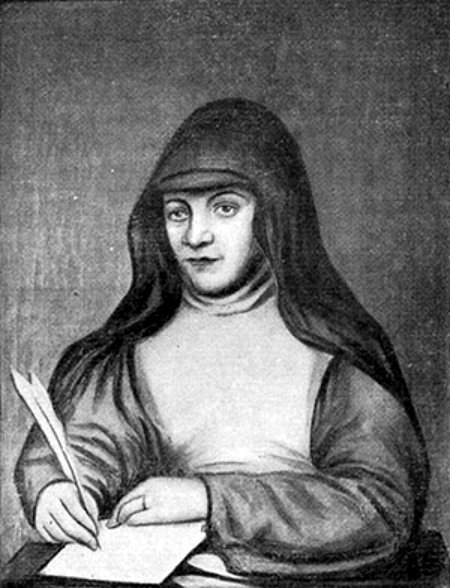
On 13 March, Francoise appeared at the Clement Commission, of sinister memory. She was accused of hiding priests and helping underground movements. She replied that every sick person was a brother in Jesus Christ and needed her care. She refused to shout “long life to the republic”, which condemned her to death by the guillotine.
She went to the scaffold, singing the Salve Regina. She was 37 years old. The same fate struck Jeanne a week later.
St Francoise’s relics are enshrined at the church of St-Pierre-des-Landes where she had taught. The two sisters were beatified on 19 June 1955 by Servant of God Pope Pius XII. (translated from French).
Bl Agnellus of Pisa
St Ansovinus of Camerino
Bl Berengar de Alenys
St Christina of Persia
St Euphrasia Bl Françoise Tréhet (1756-1794) Martyr
St Gerald of Mayo
St Grace of Saragossa
St Heldrad of Novalese
Bl Judith of Ringelheim
St Kevoca of Kyle St Leander of Seville (c 534-c 600)
Biography: https://anastpaul.wordpress.com/2017/03/13/saint-of-the-day-13-march-st-leander-of-seville/
St Mochoemoc
St Nicephorus of Constantinople
Bl Peter II of La Cava
St Pientius of Poitiers
St Ramirus of Leon
St Sabinus of Egypt
St Sancha of Portugal
—
Martyrs of Cordoba: Roderick, Salomon,
Martyrs of Nicaea:
Arabia
Horres
Marcus
Nymphora
Theodora
Theusitas
Martyrs of Nicomedia
Eufrasia
Macedonius
Modesta
Patricia
Urpasian
I’m thinking about the angel’s words to you, “Do not be afraid to take Mary for your wife” (Mt 1:20). Saint Joseph, you weren’t afraid. You trusted God. And now you truly are the husband of Mary. After Jesus, you are the dearest person to her heart! Well, St Joseph, as my spiritual father, I now ask you to speak to Mary about me, about my life. If you kindly adopt me as your spiritual child, then I know all the more, that Mary will take me to her heart as well. Both of you truly are my spiritual parents. And just as any good father wants to see his children love their mother, I know that you will help me to know and love my spiritual mother more.
By your powerful prayers, I ask you to help me realise what a gift I have in Mary. Pray for me that I will better appreciate her motherly role in my life. Saint Joseph, I know that you love her. I know it makes you happy to see her children love her with all their hearts.
Therefore, as I prepare to consecrate myself totally to your fatherly care, I give you permission — in fact, I’m pleading with you, Help me to appreciate my Mother Mary even more.
Saint Joseph, Loving Spouse of Mary, please help me to love my spiritual mother even more. Amen
Lenten Thoughts – 12 March – Tuesday of the First Week of Lent
Saint Cyprian of Carthage Bishop, Father of the Church and Martyr
An excerpt from his “On the Lord’s Prayer”
Dear brothers, the commands of the Gospel are nothing else than God’s lessons, the foundations on which to build up hope, the supports for strengthening faith, the food that nourishes the heart. They are the rudder for keeping us on the right course, the protection that keeps our salvation secure. As they instruct the receptive minds of believers on earth, they lead safely to the kingdom of heaven.
God willed that many things should be said by the prophets, His servants and listened to by His people. How much greater are the things spoken by the Son. These are now witnessed to by the very word of God who spoke through the prophets. The Word of God does not now command us to prepare the way for His coming – He comes in person and opens up the way for us and directs us toward it. Before, we wandered in the darkness of death, aimlessly and blindly. Now we are enlightened by the light of grace and are to keep to the highway of life, with the Lord to precede and direct us.
The Lord has given us many counsels and commandments to help us toward salvation. He has even given us a pattern of prayer, instructing us on how we are to pray. He has given us life and with His accustomed generosity, He has also taught us how to pray. He has made it easy for us to be heard as we pray to the Father in the words taught us by the Son.
He has already foretold that the hour was coming when true worshippers would worship the Father in spirit and in truth. He fulfilled what He had promised before, so that we who have received the spirit and the truth through the holiness He has given us, may worship in truth and in the spirit through the prayer He has taught.
What prayer could be more a prayer in the spirit than the one given us by Christ, by whom the Holy Spirit was sent upon us? What prayer could be more a prayer in the truth than the one spoken by the lips of the Son, who is Truth Himself? It follows that to pray in any other way than the Son has taught us is not only the result of ignorance but of sin. He himself has commanded it and has said – You reject the command of God, to set up your own tradition.
So, my brothers, let us pray as God our master has taught us. To ask the Father in words His Son has given us, to let Him hear the prayer of Christ ringing in His ears, is to make our prayer one of friendship, a family prayer. Let the Father recognise the words of His Son. Let the Son who lives in our hearts, be also on our lips. We have Him as an Advocate for sinners, before the Father, when we ask for forgiveness for ours sins, let us use the words given by our Advocate. He tells us – Whatever you ask the Father in my name, He will give you. What more effective prayer could we then make, in the name of Christ, than in the words of His own prayer?
Thought for the Day – 12 March – Tuesday of the First Week of Lent, C – Gospel Matthew 6:7–15 and the Memorial of St Luigi Orione FDP (1872-1940)
“Men who have risked their lives for the sake of Our Lord Jesus Christ” (Acts 15: 26). These words taken from the Acts of the Apostles can be well-applied to St Luigi Orione, a man who gave himself entirely for the cause of Christ and His Kingdom. Physical and moral sufferings, fatigue, difficulty, misunderstandings and all kinds of obstacles characterised his apostolic ministry. “Christ, the Church, souls”, he would say, “are loved and served on the cross and through crucifixion or they are not loved and served at all”(Writings, 68, 81).
The heart of this strategy of charity was “without limits because it was opened wide by the charity of Christ” (ibid., 102, 32). Passion for Christ was the soul of his bold life, the interior thrust of an altruism without reservations, the always fresh source of an indestructible hope.
This humble son of a man who repaired roads proclaimed that “only charity will save the world” and to everyone he would often say, that “perfect joy can only be found in perfect dedication of oneself to God and man and to all mankind.”
St Pope John Paul on the Canonisation of St Luigi Sixth Sunday of Easter, 16 May 2004
Work, Seeking God Alone From writings by Saint Don Orione (1872-1940)
“Yesterday, when I was in the room of a good priest my eyes fell on these words:
God alone!
My look at that moment was full of weariness and pain and my mind was thinking about so many other days like yesterday, full of anxiety and above the whirl of so much anguish and above the confused sound of so many sighs, I seemed to hear the amiable and good voice of my Angel – God alone! disconsolate soul, God alone!”
The ideal of Don Orione’s life was to live and to die for the spiritual welfare of people, serving Our Lord Jesus Christ, the Mother Church and its head, the Pope.
His motto was, “Do good always, to all, evil to none”.
Quote/s of the Day – 12 March – Tuesday of the First Week of Lent, C – Gospel Matthew 6:7–15 and the Memorial of St Luigi Orione FDP (1872-1940)
“Speaking of Prayer”
“Without Prayer nothing good is done. God’s works are done with our hands joined and on our knees. Even when we run, we must remain spiritually kneeling before Him.”
Saint Luigi Orione (1872-1940)
“But if He who was without sin prayed, how much more ought sinners to pray and if He prayed continually, watching through the whole night with uninterrupted petitions, how much more ought we to lie awake at night in continuing prayer!”
St Cyprian of Carthage (c 200- c 258)
Father of the Church
(The Lord’s Prayer #29)
“Your prayer is a conversation with God. When you read, it is God who is speaking, when you pray, it is with God that you are speaking.”
St Augustine (354-430) Father & Doctor of the Church
“All that one says to the Saviour is prayer and when the mind cannot apply itself, to the effort of true prayer, a few simple words to Him become one. It is needful always to think of Him, even if it is only by the thought that one is thinking less of Him – one must be always thinking of Him and then bit by bit, He draws one back entirely to Him, He is so good!”
Eugene de Ferronays (1827 – 1894)
“When we pray, let it be our whole being that turns towards God – our thoughts, our heart… The Lord will be moved to incline towards us and come to our help…”
St Pio of Pietralcina “Padre Pio” (1887-1968)
“Prayer is necessary to receive the help of God, as grain is needed to harvest … a humble and trustful prayer, for what is necessary for salvation, is never lost. It is heard at least by the fact, that it begs for the grace, to abide in prayer.”
Lenten Reflection – 12 March – Tuesday of the First Week of Lent, C – Gospel Matthew 6:7–15
“Forgive us our debts, as we forgive our debtors”
St Pope Leo the Great (400-461)
Father & Doctor of the Church
“Those who wish to receive the Paschal feast of the Lord in holiness of mind and body should strive, above all, to win that grace which contains the summit of virtues and “covers a multitude of sins” (1 Pt 4:8). So at the point of celebrating the greatest of all mysteries, that with which the blood of Jesus Christ wiped out our iniquities, let us first of all prepare the sacrifice of mercy.
Thus we shall return to those who have offended us what the goodness of God has granted us. May insults be cast into oblivion, wrongs ignore torture from now on and all offences be set free from fear of reprisal!… If someone should detain such prisoners… may he fully understand that he himself is a sinner and, so as to receive forgiveness, let him rejoice that he has found someone to forgive. In this way, when we say, according to the Lord’s teaching: “Forgive us our debts as we forgive our debtors” (Mt 6:12), we shall have no doubt that we receive God’s pardon as we formulate our prayer.”
Daily Meditation: Help us grow in our desire for you.
We are learning the intimate connection
between the “discipline” we choose these days,
and the growth of our desire.
If our desire for our Lord is weak,
if it has to compete with so many other desires that choke it out,
then we need to re-form our desiring.
We want to be disciples –
those who love Jesus, are with Jesus in our desires,
and choose to follow Jesus.
In today’s lesson we learn the Lord’s Prayer again.
As children, we turn to our Loving Father in prayer.
“I shall know You, You who know me. Virtue of my soul, go deep into it and make it fit for You, so that You may have it and possess it, without stain or wrinkle.”
St Augustine (354-430)
Father & Doctor of the Church
Closing Prayer:
Father of my soul,
Mother of my heart,
I know Your love for me is limitless beyond imagining.
You care for me as a loving parent.
Through my smallest Lenten sacrifices,
help me to become less selfish
and more aware of Your ways.
Fan the flame of my desire
to draw ever closer to You.
Guide me to seek Your love.
May the Lord bless us,
protect us from all evil
and bring us to everlasting life.
Amen
“Your faith will grow, only in the measure, that you give it away.”
One Minute Reflection – 12 March – Tuesday of the First Week of Lent, C – Gospel Matthew 6:7–15
“Pray then like this: Our Father who art in heaven…”…Matthew 6:9
REFLECTION – “It’s good for us to sometimes examine our own consciences on this point. For me, is God my Father? Do I feel that He is my Father? And if I don’t feel that, let me ask the Holy Spirit to teach me to feel that way. And am I able to forget offences, to forgive, to let go of it and if not, let us ask the Father: ‘these people too are your children, they did something horrible to me … can you help me to forgive them’? Let us carry out this examination of our consciences and it will do us a lot of good, good, good. ‘Father’ and ‘our’: give us our identity as His children and give us a family to journey with during our lives.”…Pope Francis – Santa Marta, 16 June 2016.
PRAYER – Heavenly Father, we are Your children and we beg You, make us know this with all our being. May we be as little children in total trust and dependence on You. May we glory in resembling You, as children resemble their fathers on earth. For You are all goodness, love and truth – may we become all of these things as perfect copies of You. May the prayers of St Luigi Orione, who lived his life as a true copy of Your Son, bring us strength and commitment especially on our Lenten journey to the Resurrection of Your Son. Through Jesus our Lord and Saviour, in the unity of the Holy Spirit, one God forever, amen.
Our Morning Offering – 12 March – Tuesday of the First Week of Lent, C – Gospel Matthew 6:7–15
“Pray then like this:”…Matthew 6:9
Our Father,
Who art in heaven,
hallowed be Thy name.
Thy kingdom come.
Thy will be done
on earth as it is heaven.
Give us this day
our daily bread
and forgive us
our trespasses,
as we forgive those
who trespass against us
and lead us not into temptation
but deliver us from evil.
Amen
Saint of the Day – 12 March – St Luigi Orione FDP (1872-1940) aged 68 – “The Advocate of the Poor and of Orphans” Priest, Preacher, Confessor, Writer, Apostle of Charity, Apostle of Eucharistic Adoration, Marian Devotee and Founder of Sons of Divine Providence Congregation, the Congregation of the Little Missionary Sisters of Charity, Blind Sisters, Adorers of the Blessed Sacrament, Contemplative Sisters of Jesus Crucified – born as Aloysius Giovanni Orione on 23 June 1872 at Pontecurone, Allessandria, Italy and died on 12 March 1940 at San Remo, Imperia, Italy from heart disease. Patronages – the Sons of Divine Providence, the Congregation of the Little Missionary Sisters of Charity, Blind Sisters, Adorers of the Blessed Sacrament, Contemplative Sisters of Jesus Crucified, the various related Lay apostolates, Tortona and Pontecurone. His body is Incorrupt.
Luigi Orione was born in Pontecurone, diocese of Tortona, on 23 June 1872. At thirteen years of age he entered the Franciscan Friary of Voghera (Pavia) but he left after one year owing to poor health. From 1886 to 1889 he was a pupil of Saint John Bosco at the Valdocco Oratory (Youth Centre) in Turin.
On 16 October 1889, he joined the diocesan seminary of Tortona. As a young seminarian he devoted himself to the care of others by becoming a member of both the San Marziano Society for Mutual Help and the Society of Saint Vincent de Paul. On 3 July 1892 he opened the first Oratory in Tortona to provide for the Christian training of boys. The following year, on 15 October 1893, Luigi Orione, then a seminarian of twenty-one, started a boarding school for poor boys, in the Saint Bernardine estate.
On 13 April 1895, Luigi Orione was ordained priest and, on that occasion, the Bishop gave the clerical habit to six pupils of the boarding school. Within a brief span of time, Don Orione opened new houses at Mornico Losana (Pavia), Noto – in Sicily, Sanremo and Rome.
Around the young Founder, there grew up seminarians and priests who made up the first core group of the Little Work of Divine Providence. In 1899, he founded the branch of the Hermits of Divine Providence. The Bishop of Tortona, Mgr Igino Bandi, by a Decree of 21 March 1903, issued the canonical approval of the Sons of Divine Providence (priests, lay brothers and hermits) – the male congregation of the Little Work of Divine Providence. It aims to “co-operate to bring the little ones, the poor and the people to the Church and to the Pope, by means of the works of charity” and professes a fourth vow of special “faithfulness to the Pope”. In the first Constitutions of 1904, among the aims of the new Congregation, there appears that of working to “achieve the union of the separated Churches”.
Inspired by a profound love for the Church and for the salvation of Souls, he was actively interested in the new problems of his time, such as the freedom and unity of the Church, the Roman question, modernism, socialism and the Christian evangelisation of industrial workers.
He rushed to assist the victims of the earthquakes of Reggio and Messina (1908) and the Marsica region (1915). By appointment of Saint Pius X, he was made Vicar General of the diocese of Messina for three years.
On 29 June 1915, twenty years after the foundation of the Sons of Divine Providence, he added to the “single tree of many branches” the Congregation of the Little Missionary Sisters of Charity who are inspired by the same founding charism. Alongside them, he placed the Blind Sisters, Adorers of the Blessed Sacrament. Later, the Contemplative Sisters of Jesus Crucified were also founded.
For lay people he set up the associations of the “Ladies of Divine Providence”, the “Former Pupils”, and the “Friends”. More recently, the Don Orione Secular Institute and the Don Orione Lay People’s Movement have come into being.
Following the First World War (1914-1918), the number of schools, boarding houses, agricultural schools, charitable and welfare works increased. Among his most enterprising and original works, he set up the “Little Cottolengos”, for the care of the suffering and abandoned, which were usually built in the outskirts of large cities to act as “new pulpits” from which to speak of Christ and of the Church – “true beacons of faith and of civilisation”.
Don Orione’s missionary zeal, which had already manifested itself in 1913 when he sent his first religious to Brazil, expanded subsequently to Argentina and Uruguay (1921), Palestine (1921), Poland (1923), Rhodes (1925), the USA (1934), England (1935), Albania (1936). From 1921-1922 and from 1934-1937, he himself made two missionary journeys to Latin America – to Argentina, Brazil and Uruguay, going as far as Chile.
He enjoyed the personal respect of the Popes and the Holy See’s Authorities, who entrusted him with confidential tasks of sorting out problems and healing wounds both inside the Church as well as in the relations with society. He was a preacher, a confessor and a tireless organiser of pilgrimages, missions, processions, live cribs and other popular manifestations and celebrations of the faith. He loved Our Lady deeply and fostered devotion to her by every means possible and, through the manual labour of his seminarians, built the shrines of Our Lady of Safe Keeping in Tortona and Our Lady of Caravaggio at Fumo. In the winter of 1940, with the intention of easing the heart and lung complaints that were troubling him, he went to the Sanremo house, even though, as he said, “it is not among the palm trees that I would like to die,but among the poor who are Jesus Christ”.Only three days later, on 12 March 1940, surrounded by the love of his confreres, Don Orione died, while sighing “Jesus, Jesus! I am going”.
His body was found to be intact at its first exhumation in 1965. It has been exposed to the veneration of the faithful in the shrine of Our Lady of Safe Keeping in Tortona ever since 26 October 1980 – the day in which St Pope John Paul II inscribed Don Luigi Orione in the Book of the Blessed…. Vatican.va
St Luigi was Canonised on 16 May 2004 by St Pope John Paul II.
Saint Luigi Orione’s body in Sanctuary of Nostra Signora della Guardia, in Tortona, Italy.Don Orione was buried in the Santuario di Nostra Signora della Guardia in Tortona, the church that he himself built in 1931, with the help of priests and acolytes. It was built in gratitude to the Madonna for ending the hostilities of World War I. It is the most important pilgrimage site in the world for Orione’s followers
St Almut of Wetter
St Alphege the Bald
Bl Angela Salawa
St Basilissa of Asia
Bl Beatrix of Engelport
St Bernard of Carinola
Bl Claudius the Minor
St Egdunus
St Fechno
St Girolamo da Recanati
St Heiu of Hartlepool
St Indrecht of Iona
St Pope Innocent I
St Joseph Zhang Dapeng St Luigi Orione FDP (1872-1940)
St Maximilian of Thebeste
St Mura McFeredach
St Paul Aurelian
St Peter the Deacon
St Seraphina
St Theophanes the Chronographer
—
Martyrs of Nicomedia – 8 saints: Eleven Christians who were martyred in succession in a single incident during the persecutions of Diocletian. First there were the eight imprisoned Christians, Domna, Esmaragdus, Eugene, Hilary, Mardonius, Maximus, Mígdonus and Peter, about whom we know little more than their names. Each day for eight days one of them would be strangled to death in view of the others so that they would spend the night in dread, not knowing if they were next.
Peter was the chamberlain or butler in the palace of Diocletian. When he was overheard complaining about this cruelty, he was exposed as a Christian, arrested, tortured and executed by having the flesh torn from his bones, salt and vinegar poured on the wounds and then being roasted to death over a slow fire.
Gorgonio was an army officer and member of the staff in the house of emperor Diocletian, Doroteo was a staff clerk. They were each exposed as Christians when they were overhead objecting to the torture and murder of Peter. This led to their own arrest, torture and executions.
Died
in 303 in Nicomedia, Bithynia (in modern Turkey)
Additional Memorial – 28 December as part of the 20,000 Martyrs of Nicomedia.
After Mary, you’re the most powerful intercessor before God. In a sense, Jesus remains obedient to you and will listen to you as you bring my intentions to Him. Because of this, I especially want to entrust myself to your fatherly care, just as Jesus Himself did. And while in the past, I may have brought to you one of my intentions here or there, this time I want to do something new. This time, I want to give you all. In other words, St Joseph, I’m not here to offer you a regular “novena” for just one of my intentions. Rather, I want to forever entrust to you, all of my needs and cares, trusting that you will bring them, with Mary, to your Son, Jesus.
Dear St Joseph, as the best of fathers, as the one God chose to be the virginal father of Jesus, I believe that you know what I need better than I do myself. So go ahead, St Joseph. I give you permission to care for me as your child. In doing so, I trust that you will do everything in your power to make my life into something beautiful for God. I trust that you will watch over me and that your prayers will guide me, bless me and protect me. I trust that you will now care for me with the same love and tenderness with which you cared for Jesus. I’ll confirm this special relationship with you in nine days, when I make my prayer of consecration.
Saint Joseph, Powerful Intercessor, please pray for me and all my intentions.
Lenten Thoughts – 11 March – Monday of the First Week of Lent, Gospel: Matthew 25:31–46
Let us show each other God’s generosity
Saint Gregory Nazianzen (330-390) Bishop. Father, Doctor of the Church
An excerpt from his Oration 14: On Love of the Poor
Recognise to whom you owe the fact that you exist, that you breathe, that you understand, that you are wise and, above all, that you know God and hope for the kingdom of heaven and the vision of glory, now darkly as in a mirror but then with greater fullness and purity. You have been made a son of God, co-heir with Christ. Where did you get all this and from whom?
Let me turn to what is of less importance – the visible world around us. What benefactor has enabled you to look out upon the beauty of the sky, the sun in its course, the circle of the moon, the countless number of stars, with the harmony and order that are theirs, like the music of a harp? Who has blessed you with rain, with the art of husbandry, with different kinds of food, with the arts, with houses, with laws, with states, with a life of humanity and culture, with friendship and the easy familiarity of kinship?
Who has given you dominion over animals, those that are tame and those that provide you with food? Who has made you lord and master of everything on earth? In short, who has endowed you with all that makes man superior to all other living creatures?
Is it not God who asks you now in your turn to show yourself generous above all other creatures and for the sake of all other creatures? Because we have received from Him so many wonderful gifts, will we not be ashamed to refuse Him this one thing only, our generosity? Though He is God and Lord, He is not afraid to be known as our Father. Shall we for our part repudiate those who are our kith and kin?
Brethren and friends, let us never allow ourselves to misuse what has been given us by God’s gift. If we do, we shall hear Saint Peter say – Be ashamed of yourselves for holding onto what belongs to someone else. Resolve to imitate God’s justice and no-one will be poor. Let us not labour to heap up and hoard riches while others remain in need. If we do, the prophet Amos will speak out against us with sharp and threatening words -Come now, you that say: When will the new moon be over, so that we may start selling? When will the sabbath be over, so that we may start opening our treasures?
Let us put into practice the supreme and primary law of God. He sends down rain on just and sinful alike and causes the sun to rise on all without distinction. To all earth’s creatures He has given the broad earth, the springs, the rivers and the forests. He has given the air to the birds and the waters to those who live in the water. He has given abundantly to all the basic needs of life, not as a private possession, not restricted by law, not divided by boundaries but as common to all, amply and in rich measure. His gifts are not deficient in any way, because He wanted to give equality of blessing to equality of worth and to show the abundance of His generosity.
Lenten Reflection – 11 March – Monday of the First Week of Lent, Gospel: Matthew 25:31–46
“Come, you who are blessed by my Father” Homily attributed to Saint Hippolytus of Rome (c 170-c 235) Priest and Martyr
“Come, my Father’s blessed ones, inherit the kingdom prepared for you from the foundation of the world.” Come, you lovers of poor people and strangers. Come, you who fostered My love, for I am love… Look, My kingdom is ready, paradise stands open, My immortality is displayed in all its beauty. Come now, all of you, inherit the kingdom prepared for you from the foundation of the world.
Then, astounded at so great a wonder – at being addressed as friends by Him whom the angelic hosts are unable clearly to behold – the righteous will reply, exclaiming: “Lord, when did we see you hungry and feed you? Master, when did we see You thirsty and give You a drink? When did we see You, whom we hold in awe, naked and clothe You? When did we see You, the immortal One, a stranger and welcome You? When did we see You, lover of our race, sick or in prison and come to visit You? You are the Eternal, without beginning like the Father, and co-eternal with the Spirit. You are the One who created all things from nothing, You are the King of angels, You make the depths tremble, You are clothed in light as in a robe (Ps 104[103]:2), You are our maker who fashioned us from the earth (Gn 2:7), You are the creator of the world invisible. The whole earth flies from Your presence (Rv 20:11). How could we possibly have received Your lordship, Your royal majesty, as our guest?”
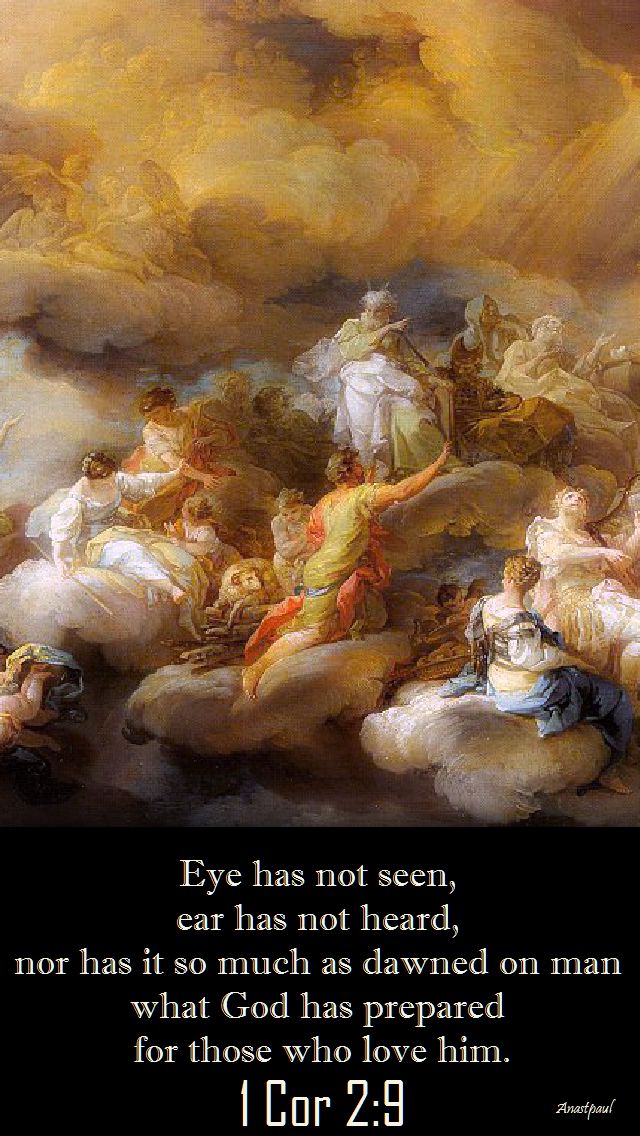
Then will the King of Kings say to them in reply: “Inasmuch as you did this to one of the least of these my brothers and sisters, you did it to me. Inasmuch as you received, clothed, fed and gave a drink to those members of mine (1Cor 12:12) about whom I have just spoken to you, that is, to the poor, you did it to me. So come, enter the kingdom prepared for you from the foundation of the world, enjoy forever the gifts of my heavenly Father and of the most holy and life-giving Spirit.” What tongue can describe those blessings? “Eye has not seen, nor ear heard, nor human heart conceived what God has prepared for those who love him” (1Cor 2:9).
Daily Meditation: Bring us back to you.
We repeat our desire that God bring us home from our wandering.
We know that in the confusion that surrounds us and can fill us,
we need the gift of Wisdom.
It is fitting that our very first “lesson” in our faith,
is the last judgement scene that Jesus paints for us.
We will be judged on whether we:
fed the hungry
welcomed the stranger
clothed the naked
comforted the sick
visited the imprisoned.
It is powerful to re-learn this wisdom –
Jesus identifies with each of these “least” cared for.
Who might we feed, welcome, clothe, comfort or visit this week?
As my heart might “resist” this mission,
I might beg to be brought back, with all my heart.
Praise to Jesus, our Saviour, by his death He has opened for us the way of salvation.
Let us ask Him:
Lord, guide Your people to walk in Your ways.
God of mercy, You gave us new life through baptism,
– make us grow day by day in Your likeness.
May our generosity today bring joy to those in need,
– in helping them may we find You.
Help us to do what is good, right and true in Your sight,
– and to seek You always with undivided hearts.
Forgive our sins against the unity of Your family,
– make us one in heart and spirit.
Closing Prayer:
Loving God,
You call us back to You with all of our hearts.
I feel Your call for me deep in my heart
and I know You want me back
as much as I want to return.
Please, Lord,
give me the wisdom to know how to return.
Make my journey back to You this Lent
one of grace, forgiveness and gentle love.
May the Lord bless us,
protect us from all evil
and bring us to everlasting life.
Amen.
One Minute Reflection – 11 March – Monday of the First Week of Lent, Gospel: Matthew 25:31–46
“‘Come, O blessed of my Father, inherit the kingdom prepared for you from the foundation of the world, for I was hungry and you gave me food, I was thirsty and you gave me drink, I was a stranger and you welcomed me, I was naked and you clothed me, I was sick and you visited me, I was in prison and you came to me.’”... Matthew 25:34-36
REFLECTION – “Jesus will come at the end of time to judge all nations but He comes to us each day, in many ways and asks us to welcome Him. May the Virgin Mary help us to encounter Him and receive Him in His Word and in the Eucharist and at the same time in brothers and sisters who suffer from hunger, disease, oppression, injustice. May our hearts welcome Him in the present of our life, so that we may be welcomed by Him into the eternity of His Kingdom of light and peace.”…Pope Francis-Angelus, 26 November 2017
PRAYER – Turn our hearts back to You, God our Saviour, form us by Your heavenly teaching. Let Your Face shine in all we meet and our hearts and hands give to all. May we truly grow and profit by our Lenten observance and become of the blessed, who will inherit the kingdom prepared for us. Mary Virgin most pure and merciful, Mother pray for us. We make our prayer through Jesus our Lord with the Holy Spirit, God forever, amen.
Saint of the Day – 11 March – St Eulogius (Died 857) Priest and Martyr, Writer, Poet, Theologian, Teacher – It is not certain on what date or in what year of the 9th century he was born. It must have been before 819, because in 848 he was a highly esteemed priest among the Christians of Catalonia and Navarre and priesthood was conferred only on men thirty years of age. Patronages – carpenters, coppersmiths.
St Eulogius was of a senatorian family of Cordoba, at that time the capital of the Moors in Spain. Our Saint was educated among the clergy of the Church of St Zoilus, a martyr who suffered with nineteen others under Diocletian. Here he distinguished himself, by his virtue and learning and, being made priest, was placed at the head of the chief ecclesiastical school at Cordoba. He joined assiduous watching, fasting and prayer to his studies and his humility, mildness and charity gained him the affection and respect of every one.
During the persecution raised against the Christians in the year 850, St Eulogius was thrown into prison and there wrote his Exhortation to Martyrdom, addressed to the virgins Flora and Mary, who were beheaded on 24 November, 851. Six days after their death Eulogius was set at liberty. In the year 852 several others suffered the like martyrdom. St Eulogius encouraged all these martyrs to their triumphs and was the support of that distressed flock.
The Archbishop of Toledo dying in 858. St Eulogius was elected to succeed him but there was some obstacle that hindered him from being consecrated, though he did not outlive his election two months.
A virgin, by name Leocritia, of a noble family among the Moors, had been instructed from her infancy in the Christian religion by one of her relatives and privately baptised. Her father and mother scourged her day and night to compel her to renounce the Faith. Having made her condition known to St Eulogius and his sister Anulona, intimating that she desired to go where she might freely exercise her religion, they secretly procured her the means of getting away and concealed her for some time among faithful friends.
But the matter was at length discovered and they were all brought before the cadi, who threatened to have Eulogius scourged to death. The Saint told him that his torments would be of no avail, for he would never change his religion. Whereupon the cadi gave orders that he should be carried to the palace and be presented before the king’s council. Eulogius began boldly to propose the truths of the Gospel to them. But, to prevent their hearing him, the council condemned him immediately to lose his head. As they were leading him to execution, one of the guards gave him a blow on the face, for having spoken against Mohamed he turned the other cheek and patiently received a second.
He received the stroke of death with great cheerfulness, on 11March, 859. St Leocritia was beheaded four days after him and her body thrown into the river Guadalquivir but taken out by the Christians.
St Eulogius’s friend and biographer Paulus Alvarus affectionately described him as gentle, reverent, well-educated, steeped in Scripture and so humble, that he freely submitted to opinions of others less informed than he. He said that Eulogius had a pleasant demeanour and conducted his relationships with such kindness that everyone regarded him as a friend. A gifted leader, the most prominent among his charisma was the ability to give encouragement. As a priest serving in an occupied country, he used this gift to strengthen his friends in the face of danger.
This humility shone particularly on two occasions. In his youth he had decided to make a foot pilgrimage to Rome, notwithstanding his great fervour and his devotion to the sepulchre of the Prince of the Apostles (a notable proof of the union of the Mozarabic rite Church with Rome), he gave up his project, yielding to the advice of prudent friends. Again, during the Muslim persecution, in 850, after reading a passage of the works of St Epiphanius he decided to refrain for a time from saying Mass that he might better defend the cause of the martyrs, however, at the request of his bishop, Saul of Córdoba, he put aside his scruples. His extant writings (Apologia, Exhortation to Martyrdom, Memorial of the Saints) are proof that Alvarus did not exaggerate.
Saint Eulogius demonstrated courageous love for the Lord, accepting martyrdom even when his position within society would have allowed him to avoid such a fate. He recorded a detailed history of the martyrs of Cordoba, illuminating the widespread heroic faith which occurred in that region.
His life reminds us that all we have is given to us by the Lord—that without Him, we are nothing. The message of Lent resonates with the lives of these “voluntary” martyrs of Cordova who gave their lives for their faith, recognising that those lives belonged to He who created them.
St Aengus the Culdee
St Alberta of Agen
St Alexius U Se-Yong
St Amunia
St Aurea of San Millán
St Benedict Crispus of Milan
St Candidus the Martyr
St Constantine II
St Constantine of Carthage
St Ðaminh Cam St Eulogius (Died 857) Martyr
St Firmian the Abbot
St Firmus the Martyr
St Gorgonius the Martyr
St Heraclius of Carthage
Bl John Kearney
Bl John Righi of Fabriano
St Marcus Chong Ui-Bae
St Peter the Spaniard
St Pionius
St Piperion the Martyr
St Rosina of Wenglingen
St Sophronius of Jerusalem
St Thalus the Martyr
Bl Thomas Atkinson
St Trophimus the Martyr
St Vigilius of Auxerre
St Vincent of Leon
St Vindician of Cambrai
St Zosimus of Carthage
—
Martyrs of Antioch: A group of Christians martyred together by Emperor Maximian Galerius. Martyred in c 300 in Antioch, Syria.
“Would that I could persuade all men to be devoted to this glorious Saint [St. Joseph], for I know by long experience what blessings he can obtain for us from God. I have never known anyone who was truly devoted to him and honoured him by particular services who did not advance greatly in virtue, for he helps in a special way those souls who commend themselves to him. It is now very many years since I began asking him for something on his feast and I have always received it. I f the petition was in any way amiss, he rectified it for my greater good . . .
” I ask for the love of God that he who does not believe me will make the trial for himself—then he will find out by experience the great good that results from commending oneself to this glorious Patriarch and in being devoted to him.”
St Alphonsus Liguori on St Joseph,
Patron of a Happy Death
“Since we all must die, we should cherish a special devotion to St. Joseph, that he may obtain for us a happy death. All Christians regard him as the advocate of the dying who had honoured him during their life and they do so for three reasons:
“First, because Jesus Christ loved him not only as a friend but as a father and on this account his mediation is far more efficacious than that of any other Saint.
“Second, because St Joseph has obtained special power against the evil spirits, who tempt us with redoubled vigour at the hour of death.
“Third, the assistance given St Joseph at his death by Jesus and Mary obtained for him the right to secure a holy and peaceful death for his servants. Hence, if they invoke him at the hour of death he will not only help them but he will also obtain for them the assistance of Jesus and Mary.”
St Joseph we ask for your assistance in all our needs starting tomorrow, pray for us!
Lenten Thoughts – 10 March – The First Sunday of Lent
In Christ we suffered temptation and in Him we overcame the devil
Saint Augustine (354-430) Bishop and Great Western Father and Doctor of the Church
An excerpt from his Commentary on the Psalms, Psalm 60.
Hear, O God, my petition, listen to my prayer. Who is speaking? An individual, it seems. See if it is an individual – I cried to you from the ends of the earth while my heart was in anguish. Now it is no longer one person, rather, it is one in the sense, that Christ is one and we are all His members. What single individual can cry from the ends of the earth? The one who cries from the ends of the earth is none other than the Son’s inheritance. It was said to him: Ask of me, and I shall give you the nations as your inheritance and the ends of the earth as your possession. This possession of Christ, this inheritance of Christ, this body of Christ, this one Church of Christ, this unity that we are, cries from the ends of the earth. What does it cry? What I said before – Hear, O God, my petition, listen to my prayer, I cried out to you from the ends of the earth. That is, I made this cry to you from the ends of the earth, that is, on all sides.
Why did I make this cry? While my heart was in anguish. The speaker shows that he is present among all the nations of the earth in a condition, not of exalted glory but of severe trial.
Our pilgrimage on earth cannot be exempt from trial. We progress by means of trial. No one knows himself except through trial, or receives a crown except after victory, or strives except against an enemy or temptations.
The one who cries from the ends of the earth is in anguish but is not left on his own. Christ chose to foreshadow us, who are His body, by means of His body, in which He has died, risen and ascended into heaven, so that the members of His body may hope to follow where their head has gone before.
He made us one with Him when He chose to be tempted by Satan. We have heard in the gospel how the Lord Jesus Christ was tempted by the devil in the wilderness. Certainly Christ was tempted by the devil. In Christ you were tempted, for Christ received His flesh from your nature but by His own power gained life for you, He suffered insults in your nature but by His own power gained glory for you, therefore, He suffered temptation in your nature but by His own power gained victory for you.
If in Christ we have been tempted, in Him we overcame the devil. Do you think only of Christ’s temptations and fail to think of His victory? See yourself as tempted in Him and see yourself as victorious in Him. He could have kept the devil from Himself but if He were not tempted, He could not teach you how to triumph over temptation.
Thought for the Day – 10 March – The Memorial of St Marie Eugénie de Jésus (1817-1898)
Marie Eugenie led the Assumption for fifty-five years. Her life was full. Her first priority was for her sisters: their happiness, their formation, their work. She was concerned for their health – more than two hundred sisters were to die before she did, often young and of tuberculosis.
She was constantly travelling from community to community, encouraging, consoling and challenging. As the Congregation became known, she was invited to start more and more communities. She saw her work as being always in and for the Church and her loyalty to it was absolute.
The last few years of her life were spent in increasing retirement. Gradually her health failed. Her legs refused to carry her and her speech also slowed, so that at the end she could only occasionally say a few words. Those around her were struck by her gentleness and patience. One day she managed to say –
“I am looking at my Lord.
It is in looking at Him, that we learn how to love.”
She died, surrounded by her sisters, on the 10th March 1898.
Credo of St Marie Eugenie of Jesus
I believe that our earth is a place of glory for God. I believe that the destiny of the world is the Reign of Jesus Christ. I believe that each of us has a mission on earth. I believe that the aim of our religion, is not just our own eternal happiness but to let God use us, to make the Gospel known and loved. I believe that each one enters into God’s plan by prayer, by action and by the cross And that to refuse His call, is to refuse our own happiness. I believe the aim of Christian education, is to make Jesus Christ known As the liberator and ruler of the world..
You must be logged in to post a comment.