Thought for the Day – 14 January – Monday of the First week in Ordinary Time, Year C – Gospel: Mark 1:14–20 and the Memorial of St Felix of Nola (Died c 253)
Felix received a clear call to action from the angel in his prison cell, just as the Blessed Virgin received the Archangel Gabriel’s message of her extraordinary role in the Incarnation of Jesus. Felix heard the call and risked his life and unimaginable suffering to answer it. While the messages we receive from the Lord are not always heralded by angels, we still need to listen for them—and perhaps listen all the more closely. These are the quiet urgings of our hearts, which bring us closer to our God. How often are we too busy and too wrapped up in our wants and needless anxieties to hear the call of God? Might slowing down and creating some silence in our lives enable a deeper communion with Christ?
Today, we pray for that silence—the silence in which we hear and understand what the Lord wishes for and of us and the courage to stand up and put the call into action!
One Minute Reflection – 14 January – Monday of the First week in Ordinary Time, Year C – Gospel: Mark 1:14–20 and the Memorial of St Felix of Nola (Died c 253) & Blessed Petrus Donders C.Ss.R. (1807-1887)
And Jesus said to them, “Follow me and I will make you become fishers of men.” And immediately they left their nets and followed him…Mark 1:17-18
REFLECTION – “We, today’s Christians, have the joy of proclaiming and witnessing to our faith because there was that first announcement, because there were those humble and courageous men who responded generously to Jesus’ call. On the shores of the lake, in an inconceivable land, the first community of disciples of Christ was born. May the knowledge of these beginnings give rise in us to the desire to bear Jesus’ word, love and tenderness in every context, even the most difficult and resistant. To carry the Word to all the peripheries! All the spaces of human living, are soil on which to cast the seeds of the Gospel, so they may bear the fruit of salvation.”…Pope Francis – Angelus, 22 January 2017
PRAYER – Holy Lord God, grant that we may live constantly in Your presence. Grant that we may possess a spirit of joy and gladness because of the firm knowledge that You are always with us and in You and through You and with You, the extraordinary is commonplace! And turn around Lord and call us, for we are behind You. Be with us Lord, always, we pray! Hear the prayers on our behalf, of St Felix of Nola and Blessed Petrus Donders, whom we ask for intercession. Through the Lord Jesus Christ with the Holy Spirit, God forever for all eternity, amen
Our Morning Offering – 14 January – Month of the Holy Name of Jesus
The Golden Arrow
May the most holy,
most sacred,
most adorable,
most mysterious
and unutterable Name of God
be always praised,
blessed,
loved,
adored
and glorified in heaven.
on earth and under the earth,
by all the creatures of God
and by the Sacred Heart
of our Lord Jesus Christ
in the most Holy Sacrament
of the altar.
Amen
This prayer was revealed by Jesus Himself to Sr Marie of St Peter, a Carmelite Nun of Tours in 1843 as a reparation for blasphemy. “This Golden Arrow will wound My Heart delightfully,” He said “and heal the wounds inflicted by blasphemy.”
Sr Marie of St Peter
When it comes to our salvation. the Golden Arrow is no magic bullet. Still it can bring us closer to Christ by helping to make amends for the many insults He suffers on a daily basis. Today, as in Sister Mary’s time, we often read and hear harsh, offensive language about our Lord.
Have you ever noticed how many such abusive comments come especially from those considered most sophisticated in our society? We’ve also seen television shows and movies that attempt to strip away Christ’s Divinity and His Dignity, much as those who jeered at Him during His Passion.
There are also more than a few “smart” people these days who would rather think of our Lord just as some philosopher and leave it at that. This prayer can help us all, provide our Lord with comfort, for these various slings and arrows, He suffers each day!
Saint of the Day – 14 January – St Felix of Nola (Died c 253) Priest, Confessor, Apostle of Charity – born in the 3rd century at Nola, near Naples, Italy and died c 253 of natural causes. Patronages – against eye disease, against eye trouble, against false witness, against lies, against perjury, domestic animals, of Nola, Italy.
The Roman Martyrology states of him today: “At Nola in Campania, the birthday of St Felix, Priest, who (as is related by Bishop, St Paulinus of Nola), after beomg subjected to torments by the persecutors, was cast into prison and extended, bound hand foot, on (snail) shells and broken earthenware. During the night, however, his bonds were loosened and he was delivered by an Angel. The persecution over, he brought many to the Faith of Christ by his exemplary life and teaching and renowned for many miracles, he rested in peace.”
Much of the little information we have about Felix comes from the letters and poetry of Saint Paulinus of Nola (354-431), written 100 years after St Felix’s death.
Felix was the elder son of Hermias, a Syrian centurion who had retired to Nola, Italy. After his father’s death Felix sold off most of his property and possessions, gave the proceeds to the poor and pursued a clerical vocation. After Felix divested himself of all his possessions, St Maximus, the bishop of Nola, a town near Naples, Italy, ordained him a priest and made him his assistant. In 250, when Emperor Decius decreed a ferocious persecution, Maximus installed himself in a desert hiding place from which he safely governed the church. Because soldiers could not find Maximus at Nola, they tortured and jailed Felix in his place. However, just as St Peter had had a miraculous escape from prison, an angel is said to have released Felix. Then the angel guided Felix to rescue Maximus, who was near death.
The persecution subsided in 251. Upon the death of Maximus the people wanted to name Felix as bishop but he declined. Instead he retired to a small farm, where for the rest of his life he raised crops to feed himself and provide alms for the poor. St Felix died around 260.
Every year Paulinus wrote a poem to celebrate Felix’s feast day. In one he said that while Felix did not die a martyr he was willing to offer his life as a sacrifice to God. Paulinus thus provided one of the earliest definitions of a “confessor”:
“This festive day celebrates Felix’s birthday, the day on which he died physically on earth and was born for Christ in heaven, winning his heavenly crown as a martyr who did not shed his blood. For he died as confessor, though he did not avoid execution by choice, since God accepted his inner faith in place of blood. God looks into the silence of hearts and equates those ready to suffer with those who have already done so, for He considers this inward test as sufficient and dispenses with physical execution in case of true devotion. Martyrdom without bloodshed is enough for Him if mind and faith are ready to suffer and are fervent towards God.
Paulinus adopted Felix as his patron saint, a custom that had its roots in the early church. But for Paulinus, a patron was more than a namesake. Felix not only interceded for him in heaven. He also accompanied him spiritually as an encourager, guide, and protector, as Paulinus explained in the following passage:
Father and lord, best of patrons to servants however unworthy, at last our prayer is answered to celebrate your birthday within your threshold. . . .You know what toils on land and sea have . . . kept me far from your abode in a distant world, because I have always and everywhere had you near me and have called on you in the grim moments of travel and in the uncertainties of life.. . . I never sailed without you, for I felt your protection in Christ the Lord, when I overcame rough seas. On land and water my journeying is always made safe through you. Felix, I beg you, address a prayer on behalf of your own, to that Embodiment of the calm of eternal love and peace, to Him on whose great name you depend. Amen
Five churches have been built at, or near the place, where St Felix was first interred, which was without the precincts of the city of Nola. His precious remains are kept in the cathedral but certain portions are at Rome, Benevento, and some other places. In time a new church in Nola was dedicated in the name of St Felix. People travelled from far away to see the burial place of this revered saint. St Paulinus, who acted as porter to one of these churches, testifies to numerous pilgrimages made in honour of Felix.
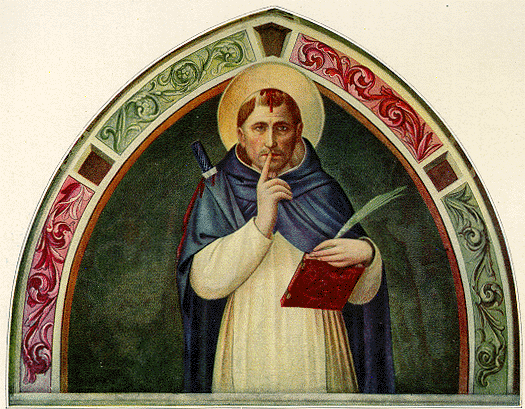
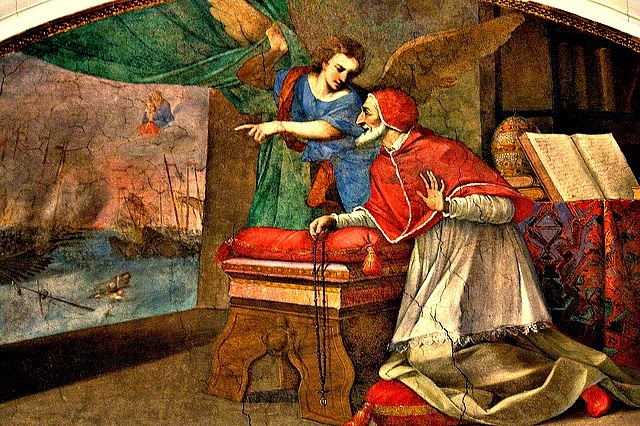
An ancient mural of St Felix in one of these Churches
The poems and letters of Paulinus on Felix are the source from which St Gregory of Tours, Venerable Bede, and the priest Marcellus have drawn their biographies. There is another Felix of Nola, bishop and martyr under a Prefect Martianus. He should not be considered to be the same as the above.
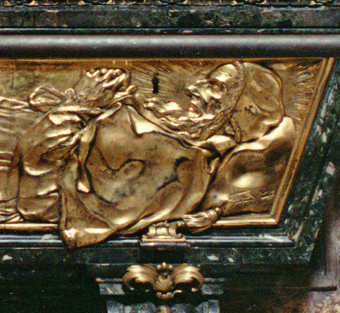
Burial place of Felix of Nola in Cimitile
One of the most well-known legends of St Felix relates to a spider. It goes as follows: Shortly following the imprisonment of Bishop Maximus, Felix was taken into custody by Roman soldiers, imprisoned, scourged and tortured and wrapped with heavy chains in his prison cell. He miraculously escaped from his cell, following visitation from an angel who instructed him to go to the aid of his ailing bishop. As the angel encouraged Felix, his chains fell off and his prison cell was opened. Felix rescued Maximus, bearing him on his back (despite weakness and small stature) and effectively hiding both men from Roman authorities until the end of Decius’ reign. The second attempt to imprison Felix and Maximus was miraculously prevented by a spider! Upon hearing Roman soldiers approaching, Felix crawled into a small hole in the building he was staying, where it is said a spider immediately spun a web over the opening. The guards saw the spider web and ceased searching for the men, assuming that the room had been undisturbed for some time.
Bl Alfonsa Clerici
Bl Amadeus of Clermont
St Barbasymas
St Caldeoldus of Vienne
St Datius of Milan
Bl Devasahayam Pillai
St Engelmaro
St Eufrasio of Clermont
St Euphrasius the Martyr
St Felix of Nola (Died C 253)
St Felix of Rome
St Fermin of Mende
St Glycerius of Antioch
Bl Godfrey of Cappenberg
St Isaias the Martyr
St Jesaja of Sinai
St Macrina the Elder
St Nino of Georgia
Bl Odoric of Pordenone
St Odo of Novara
Bl Pablo Merillas Fernández
St Paul of Africa
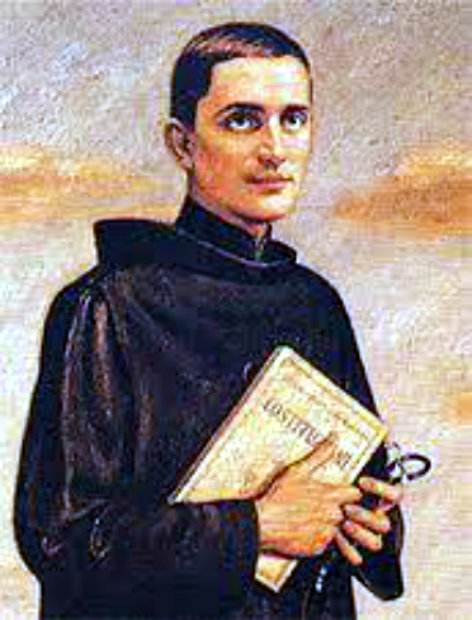
Bl Petrus Donders C.Ss.R. (1807-1887)
About Blessed Petrus: https://anastpaul.wordpress.com/2018/01/14/saint-of-the-day-14-january-blessed-petrus-peter-donders-c-ss-r-1807-1887/
St Potitus
Bl Rainer of Arnsberg
St Sabas of Sinai
St Sava of Serbia
St Successus of Africa
St Theodolus of Sinai
Bl William de Sanjulia
—
Martyrs of Mount Sinai: A group of monks on Mount Sinai who were martyred by desert Bedouins. Their names and exact number have not come down to us. Martyred by Bedouins.
Martyrs of Raithu – 43 saints: A group of 43 monks in the Raithu Desert near Mount Sinai, Palestine, near the Red Sea. They were martyred for their faith by desert Bedouins. Their names have not come down to us. Martyred by Bedouins.
Thought for the Day – 13 January – May I serve You by making You known
The Memorial of St Hilary of Poitiers (315-368) Father & Doctor of the Church
This prayer is an excerpt from a sermon On the Trinity by Saint Hilary of Poitiers, a bishop and early Church Father of the fourth century who struggled valiantly against the Arian heresy, defending the divinity of Christ and the doctrine of the Trinity. From a sermon on the Trinity by St Hilary of Poitiers (315-368) Father & Doctor of the Church – (Lib 1, 37-38: PL 10, 48-49)
May I serve You by making You known
“I am well aware, almighty God and Father, that in my life I owe You a most particular duty. It is to make my every thought and word speak of You.
In fact, You have conferred on me this gift of speech and it can yield no greater return than to be at Your service. It is for making You known as Father, the Father of the only-begotten God and preaching this to the world that knows You not and to the heretics who refuse to believe in You.
In this matter, the declaration of my intention, is only of limited value. For the rest, I need to pray for the gift of Your help and Your mercy. As we spread our sails of trusting faith and public avowal before You, fill them with the breath of Your Spirit, to drive us on, as we begin this course of proclaiming Your truth. We have been promised and He who made the promise is trustworthy: Ask, and it will be given to you; seek, and you will find; knock, and it will be opened to you.
Yes, in our poverty we will pray for our needs. We will study the sayings of Your prophets and apostles with unflagging attention and knock for admittance wherever the gift of understanding is safely kept. But Yours it is, Lord, to grant our petitions, to be present when we seek You and to open when we knock.
There is an inertia in our nature that makes us dull and in our attempt to penetrate Your truth. we are held within the bounds of ignorance. by the weakness of our minds. Yet we do comprehend divine ideas by earnest attention to Your teaching and by obedience to the faith, which carries us beyond mere human apprehension.
So we trust in You to inspire the beginnings of this ambitious venture, to strengthen its progress and to call us into a partnership, in the spirit, with the prophets and the apostles. To that end, may we grasp precisely what they meant to say, taking each word in its real and authentic sense. For we are about to say what they already have declared as part of the mystery of revelation – that You are the eternal God, the Father of the eternal, only-begotten God; that You are one and not born from another; and that the Lord Jesus is also one, born of You from all eternity. We must not proclaim a change in truth regarding the number of gods. We must not deny that He is begotten of You who are the one God, nor must we assert that He is other than the true God, born of You who are truly God the Father.
Impart to us, then, the meaning of the words of Scripture and the light to understand it, with reverence for the doctrine and confidence in its truth. Grant that we may express what we believe. Through the prophets and apostles we know about You, the one God the Father and the one Lord Jesus Christ. May we have the grace, in the face of heretics who deny You, to honour You as God, who is not alone and to proclaim this as truth.”
The above is used in the Roman Office of Readings for the feast (liturgical memorial) of St Hilary of Poitiers on 13 January.
Quote/s of the Day – 13 January – The Feast of the Baptism of the Lord, the Memorial of St Hilary of Poitiers (315-368) Father & Doctor of the Church and Blessed Francesco Maria Greco (1857-1931)
“O Lord, wishing to fulfil all things that You ordained before the ages, You received the servants of Your mystery, from among the Angels, Gabriel, from among Men, the Virgin, from among the Heavens, the Star and from among the Waters, the Jordan, in which You washed away the sin of the world, O our Saviour, glory to You.”
St John Damascene (675-749) Doctor of the Church
“God only knows how to be love and He only knows how to be Father. And the one who loves is not envious and one who is Father is so totally. This name does not permit compromises, as if God were only father in some aspects and not in others.”
“The privilege of our Church is such that it is never stronger than when it is attacked, never better known than when it is accused, never more powerful than when it appears forsaken.” (Treatise on the Trinity)
“The Church is the Ship outside which it is impossible to understand the Divine Word, for Jesus spoke from the boat to the people gathered on the shore.”
“No matter how sinful one may have been, if he has devotion to Mary, it is impossible that he be lost.”
St Hilary of Poitiers (315-368) Father & Doctor of the Church
“In solitude, in the presence of the Blessed Sacrament, I learned the love of Jesus and the power of this love.”
One minute Reflection – 13 January – The Feast of the Baptism of the Lord, Gospel: Luke 3:15-22 and Memorial of St Hilary of Poitiers (315-368) Father & Doctor of the Church
“…when Jesus also had been baptised and was praying, the heaven was opened and the Holy Spirit descended upon him in bodily form, as a dove and a voice came from heaven, “Thou art my beloved Son with thee I am well pleased.”…Luke 3:21-22
REFLECTION – “Jesus rises from the waters; the world rises with Him. The heavens like Paradise with its flaming sword, closed by Adam for himself and his descendants, are rent open. The Spirit comes to Him as to an equal, bearing witness to His Godhead. A voice bears witness to Him from heaven, His place of origin. The Spirit descends in bodily form like the dove that so long ago announced the ending of the flood and so gives honour to the body that is one with God.
Today, let us do honour to Christ’s baptism and celebrate this feast in holiness. Be cleansed entirely and continue to be cleansed. Nothing gives such pleasure to God as the conversion and salvation of men, for whom His every word and every revelation exist. He wants you to become a living force for all mankind, lights shining in the world. You are to be radiant lights as you stand beside Christ, the great light, bathed in the glory of Him who is the light of heaven. You are to enjoy, more and more, the pure and dazzling light of the Trinity, as now you have received—though not in its fullness—a ray of its splendour, proceeding from the one God, in Christ Jesus our Lord, to whom be glory and power for ever and ever. Amen. “…St Gregory Nazianzen (330-390 – Father & Doctor of the Church (An excerpt from Oration 39: On Holy Light)
PRAYER – Father, keep us from vain strife of words.
Grant to us constant profession of the Truth!
Preserve us in a true and undefiled faith
so that we may hold fast to that
which we professed when we were baptised
in the Name of the Father, Son and Holy Spirit,
that we may have You for our Father,
that we may abide in Your Son
and in the fellowship of the Holy Spirit.
Through Jesus Christ, Our Lord.
Amen…St Hilary of Poitiers
Sunday Reflection – 13 January – Feast of the Baptism of the Lord
Above all, let us pray Him to draw us to Him and to give us faith.
Blessed John Henry Newman (1801-1890) (Parochial & Plain Sermons, Vol. VI, no. 11)
“Above all, let us pray Him to draw us to Him and to give us faith. When we feel that His mysteries are too severe for us and occasion us to doubt, let us earnestly wait on Him for the gift of humility and love. Those who love and who are humble will apprehend them, carnal minds do not seek the and proud minds are offended at them but while love desires them, humility sustains them.
Let us pray Him to give us an earnest longing after Him – a thirst for His presence – an anxiety to find Him – a joy on hearing that He is to be found, even now, under the veil of sensible things – and a good hope that we shall find Him there.
Blessed indeed are they who have not seen and yet have believed. They have their reward in believing, they enjoy the contemplation of a mysterious blessing, which does not even enter into the thoughts of other men and while they are more blessed than others, in the gift vouchsafed to them, they have the additional privilege of knowing that they are vouchsafed it.”
Our Morning Offering – 13 January – Feast of the Baptism of the Lord
O Most Sacred, Most Loving Heart of Jesus By Blessed John Henry Newman (1801-1890)
O Most Sacred, most loving Heart of Jesus,
You are concealed in the Holy Eucharist
and You beat for us still.
Now, as then You say,
“With desire I have desired.”
I worship You the,
with all my best love and awe,
with my fervent affection,
with my most subdued, most resolved will.
You, for a while, take up Your abode within me!
O make my heart beat with Your Heart.
Purify it of all that is earthly,
all that is proud and sensual,
all that is hard and cruel,
of all perversity,
of all disorder,
of all deadness.
So fill it with Thee,
that neither the events of the day
nor the circumstances of the time,
may have power to ruffle it
but that, in Your love
and Your fear,
it may have peace.
Amen.
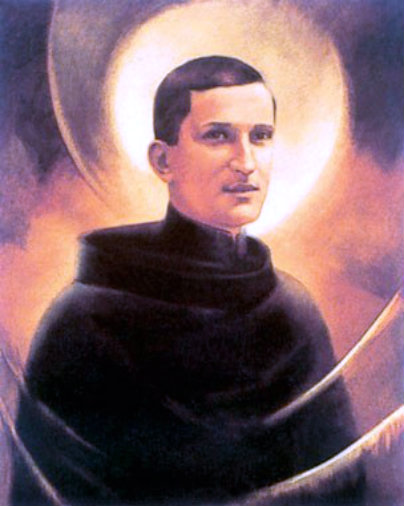
Saint of the day – 13 January – Blessed Francesco Maria Greco (1857-1931) Priest and Founder with Servant of God Raffaela De Vincentis (Sr Maria Teresa De Vincenti (1872-1936) of the Little Workers of the Sacred Hearts, Professor of Dogmatic Theology and Sacred Scripture, Apostle of Charity, devotee of Eucharistic Adoration, the Blessed Virgin and the Sacred and Immaculate Hearts. Born on 26 July 1857 in Acri, Cosenza, Italy and died on 13 January 1931 in Acri, Cosenza, Italy of bronchitis. Patronages – the Little Workers of the Sacred Hearts and Acri.
Francesco Maria Greco, was born on 27 July 1857 in Acri, in what was then the Diocese of San Marco e Bisignano. Preparing for his father’s profession, pharmacist, while still a student in Naples he felt a call to the priesthood. At that time, while visiting the Shrine of the Blessed Virgin of the Rosary of Pompeii, still under construction, he asked for the grace of becoming “a learned priest for doing good ministry.” He conquered the resistances of his parents and was ordained a priest in 1881. In Acri he became arch-priest-pastor of the Church of St Nicholas, from 1888 to his death.
In the light of the Sacred Hearts of Jesus and Mary, for whom he had a special devotion, he carried out intense and fruitful pastoral work. Living and working in Acri in the late 1800s, Fr Francesco realised that religious ignorance was the greatest problem his parishioners and townspeople face – for the less they knew about God, the further from Him they remained. Together with his sister, Maria Teresa, he began a catechetical program to teach children, young people and adults about the Catholic faith. The most dedicated catechist was Raffaella De Vincenti, who later became the faithful collaborator of Blessed Francisco, in the Institute’s foundation, on 21 November 1894, through her profession of the vows, of chastity, poverty and obedience, through which she received her religious name of Sister Maria Teresa of the Sacred Hearts.
Others soon followed as young women from Acri and nearby towns heard of the catechetical work to which she and Fr Francesco had devoted all their energies. The Institute “… founded out of a spirit of charity, namely the love of God”, has as “its principal purpose catechetical instruction in parishes .”Through its apostolic works, this Institute, gives witness to the charity of the Sacred Hearts directed in a special way to children and young people who are in need of human and Christian formation.
Always full of priestly concern for others, this blessed man founded the Caritas hospital which he entrusted to his sisters.
He also co-operated to the good performance of his diocese, making himself available to requests from Bishops, who held him in high esteem. He taught Dogmatic Theology and Sacred Scripture in the Seminary of Bisignano and was its Rector for three years, while at the same time the fulfilling his role as pastor. Surrounded by wide fame of holiness he fell asleep in the Lord on 13 January 1931.
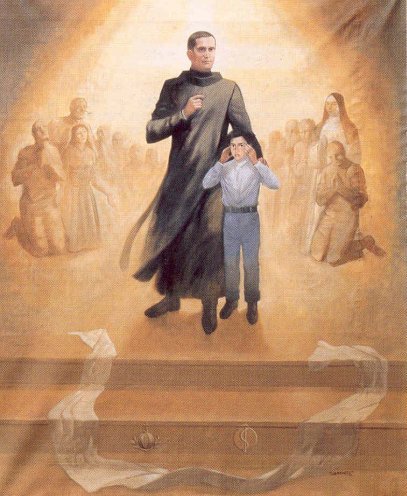
The cause of beatification began in 1960, was given in 1999 to Fr P Luca De Rosa, OFM, general Postulator. The servant of God was declared Venerable on 19 April 2004. On 21 January 2016, Pope Francis authorised the Congregation for the causes of Saints to promulgate the Decree of recognition of a miracle attributed to his intercession, thus allowing for his Beatification which took place on 21 May 2016. The Beatification recognition was celebrated at Cosenza, Italy, with Cardinal Angelo Amato as the chief celebrant. The beatification miracle involved bringing Nina Pancaro out of a coma in which she had lapsed following a severe illness and surger. While comatose, she was visited by a dream of Father Francesco who healed her and woke her up.
Today we celebrate the baptism of Christ in the Jordan. This is the second epiphany, or manifestation, of the Lord. The past, the present and the future are made manifest in this epiphany.
The most holy one placed Himself among us, the unclean and sinners. The Son of God freely humbled Himself at the hand of the Baptist. By His baptism in the Jordan, Christ manifests His humility and dedicates Himself to the redemption of man. He takes upon Himself the sins of the whole world and buries them in the waters of the Jordan. — The Light of the World by Benedict Baur, OSB
The mystery of Christ’s baptism in the Jordan by St John, the Precursor, proposes the contemplation of an already adult Jesus. This mystery is infinitely linked to the Solemnities of the Lord’s birth and the Epiphany that we have just celebrated, as in some ways it takes up and represents their significance to us.
At Christmas we have contemplated the human birth of the Word incarnate by the Virgin Mary. In the 4th century, the Fathers of the Church deepened the understanding of the faith with regard to the Christmas mystery in the light of Jesus’ Humanity. They spoke of the Incarnation of the Word already working like the ‘Christification’ of that humanity that he had assumed from His mother. Or put in simpler terms – Jesus is the Christ from the first instant of conception in Mary’s spotless womb because He Himself, with His Divine Power, consecrated, anointed and ‘Christified’ that human nature with which He became incarnate.
In the mystery of the Epiphany, we then meditated on Christ’s manifestation to all nations that was represented by the Magi, the wise men from the East, who came to adore the Child.
Now, in the mystery of Christ’s Baptism in the Jordan River, we again encounter and represent the truth of the Lord’s incarnation and His manifestation as the Christ. Jesus’ Baptism is in fact His definitive manifestation as the Messiah or Christ to Israel and as the Son of the Father to the entire world. Here we find the dimension of the Epiphany which was His manifestation to all nations. The Father’s voice from heaven shows that Jesus of Nazareth is the eternal Son and the descent of the Holy Spirit in the form of a dove shows the Trinitarian nature of the Christian God. The true and unique God, Father, Son and Holy Spirit, shows Himself in Christ, through Him, with Him and in Him.
The Baptism in the Jordan returns to the great Christmas theme of ‘Christification,’ Jesus of Nazareth’s spiritual anointing, His presentation as the Anointed One par excellence, the Messiah or the One sent by the Father for the salvation of mankind. The Spirit that descended on Jesus shows and seals in an incontrovertible way the ‘Christification’ of Jesus’ humanity that the Word had already fulfilled from the first moment of His miraculous conception by Mary. Jesus, from the very beginning, was always the Lord’s Christ, He was always God. Yet, His one, true humanity, that which is perfect in every way, as the Gospel records, constantly grew in natural and supernatural perfection. ‘And Jesus increased in wisdom, in stature, and in favour with God and with men’ (Lk2:52). In Israel at 30 years of age, one reached full maturity and therefore could become a master. Jesus came of age and the Spirit, descending and remaining on Him, definitively consecrated His whole being as the Christ.
The same Spirit, that descended on the water of the River Jordan wafted over the waters during the first creation (Gen 1:2). Therefore, the Baptism in the Jordan presents yet another truth – that Jesus has started a new creation. He is the second man (1 Cor 15:47) or the last Adam (1 Cor 15:45), that comes to repair the first Adam’s guilt. He does this as the Lamb of God that takes away our sins.
“Looking at the events in light of the Cross and Resurrection, the Christian people realised what happened – Jesus loaded the burden of all mankind’s guilt upon His shoulders; he bore it down into the depths of the Jordan. He inaugurated his public activity by stepping into the place of sinners”
St Agrecius of Trier
St Andrew of Trier
St Berno of Cluny
St Ðaminh Pham Trong Kham
St Designatus of Maastricht
St Elian of Brittany
St Emil Szramek
St Enogatus of Aleth
St Erbin of Cornwall
Bl Francesco Maria Greco (1857-1931)
Bl Francisca Inés Valverde González
St Giuse Pham Trong Ta
St Glaphyra
St Gumesindus of Córdoba
St Hermylus
Bl Hildemar of Arrouaise
Bl Ida of Argensolles
Bl Ivetta of Huy
St Kentigern of Glasgow
St Leontius of Caesarea
St Luca Pham Trong Thìn
Bl María Francisca Espejo y Martos
Bl Matteo de Lana
St Peter of Capitolíade
St Servusdei of Córdoba
St Stephen of Liège
St Stratonicus
Bl Veronica of Milan
St Viventius
St Vivenzio of Blera
—
Forty Martyred Soldiers at Rome: Forty soldiers martyred in the persecutions of Gallienus.
They werr martyred in 262 on the Via Lavicana, Rome, Italy.
Thought for the Day – 12 January – 6th day after Epiphany and The Memorial of St Aelred of Rievaulx OCSO (1110-1167)
“Charity may be a very short word but with its tremendous meaning of pure love, it sums up man’s entire relation to God and to his neighbour.”
St Aelred of Rievaulx (1110-1167)
Aelred of Rievaulx on Jesus Christ as the model of brotherly love and patience through His forgiveness of persecutors and enemies and His prayer from the cross “Father, forgive them, for they know not what they do.”
“The perfection of brotherly love lies in the love of one’s enemies. We can find no greater inspiration for this, than grateful remembrance of the wonderful patience of Christ. He who is more fair than all the sons of men, offered His fair face to be spat upon by sinful men; He allowed those eyes that rule the universe to be blindfolded by wicked men; He bared His back to the scourges; He submitted that head which strikes terror in principalities and powers, to the sharpness of the thorns; He gave Himself up to be mocked and reviled and, at the end, endured the cross, the nails, the lance, the gall, the vinegar, remaining always gentle, meek and full of peace.
In short, He was led like a sheep to the slaughter and like a lamb before the shearers, He kept silent and did not open His mouth.
Who could listen to that wonderful prayer, so full of warmth, of love, of unshakeable serenity – Father, forgive them – and hesitate to embrace his enemies with overflowing love? Father, He says, forgive them! Is any gentleness, any love, lacking in this prayer?
Yet He put into it something more. It was not enough to pray for them – He wanted also to make excuses for them. Father, forgive them, for they do not know what they are doing. They are great sinners, yes but they have little judgement; therefore, Father, forgive them. They are nailing me to the cross but they do not know who it is that they are nailing to the cross – if they had known, they would never have crucified the Lord of glory, therefore, Father, forgive them. They think it is a lawbreaker, an impostor claiming to be God, a seducer of the people. I have hidden my face from them and they do not recognise my glory, therefore, Father, forgive them, for they do not know what they are doing.
If someone wishes to love himself he must not allow himself to be corrupted by indulging his sinful nature. If he wishes to resist the promptings of his sinful nature he must enlarge the whole horizon of his love to contemplate the loving gentleness of the humanity of the Lord. Further, if he wishes to savour the joy of brotherly love, with greater perfection and delight, he must extend even to his enemies the embrace of true love.
But if he wishes to prevent this fire of divine love from growing cold because of injuries received, let him keep the eyes of his soul always fixed on the serene patience of his beloved Lord and Saviour.”
This excerpt from the Mirror of Love by Saint Aelred of Rievaulx, abbot (Lib 3, 5: PL 195, 382) focuses on Christ as the supreme model of brotherly love, shown primarily in His love of persecutors and enemies. It is used in the Roman Catholic Office of Readings for Friday of the 1st week in Lent with the accompanying biblical reading taken from Exodus 12: 21-36.
One Minute Reflection – 12 January – 6th day after Epiphany – Today’s Gospel: John 3:22–30
“This joy of mine has been made complete. He must increase, but I must decrease.”…John 3:29-30
REFLECTION – “Listen, children of light: you who have been adopted for the Kingdom of God; listen, my dearest brethren; listen and exult for joy in the Lord, you just, for “praise from the upright is fitting” (Ps 33:1). Listen to what you already know; reflect on what you have heard ; love what you believe; proclaim what you love!…
Christ is born, God from His Father, man through His mother. He was born from His Father’s immortality and His mother’s virginity. From the Father without the aid of a mother; from the mother without that of a father. From His Father without time; from His mother without seed. According to His Father he is the principle of life; according to His mother, the ending of death. According to His Father, He was born to determine the order of days; according to His mother, to consecrate the day that is here.
He sent John the Baptist before Him, causing him to be born when the days were beginning to decrease, while He Himself was born when the days began to grow in length, thus prefiguring John’s own words: “He must increase, I must decrease”. For indeed, human life must grow weaker in itself but stronger in Jesus Christ “so that those who live might no longer live for themselves but for him who for their sake died and was raised” (2Cor 5:15) and so that each one of us might repeat those words of the apostle Paul: “Yet I live, no longer I, but Christ lives in me” (Gal 2:20).”…St Augustine (354-430) Father & Doctor
PRAYER – Almighty ever-living God, through Christ Your Son, You made of us a new creation. Shape us then, in His likeness, since in Him, our human nature now lives with You. Grant that by the prayers of our blessed Virgin Mary and of Your holy men and women, we may be granted assistance in our struggle here below. Through Christ our Lord, in the unity of the Holy Spirit, God for all eternity, amen.
Our Morning Offering – 12 January – 6th day after Epiphany and The Memorial of St Aelred of Rievaulx OCSO (1110-1167)
Behold me, O Sweet Lord, Behold me! By St Aelred of Rievaulx
Behold me, O sweet Lord, behold me!
For I hope that in Your loving kindness,
O Most Merciful One,
You will behold me
either as a loving physician to heal,
a kind teacher to correct,
or an indulgent father to pardon…
confident in Your sweet powerful mercy
and most merciful power,
I ask in virtue of Your sweet Name
and of the mystery of Your sacred humanity,
that, mindful of Your kindness
and unmindful of my ingratitude,
You forgive me my sins
and heal the languors of my soul.
Amen
Saint of the Day – St Anthony Mary Pucci OSM (1819-1892) – Religious Priest of the Servite Order, known as “the Father of the Poor”, Apostle of prayer, Mystic, Eucharistic and Marian devotee – born Eustance Pucci on 16 April 1818 in Poggiole di Vernio, Italy as Eustacchio Pucci and died on 12 January 1892 at Viareggio, Italy.
Anthony Mary Pucci was born of fine Christian parents at Poggiole, in the diocese of Pistoia, Italy, in 1819, he was the second of nine children. After a youth marked by prayer and study, his devotion to Mary, the Mother of God, caused him to seek entrance in the Order of Servants of Mary at the age of eighteen. He made his novitiate at Florence and studied philosophy and theology at Monte Senario for six years, where he also made his solemn profession. In 1844, a year after his ordination to the priesthood, Anthony was sent to Viareggio as assistant pastor. In 1847 he was named pastor and for forty-five years, until his death, he fulfilled this responsibility with great love, giving an example of a pure and fruitful life, singularly dedicated to God and his flock. Notwithstanding pastoral duties he continued his studies and in 1850 received the title of Master in Theology.
For many years Father Anthony was prior of the community in Viareggio and also prior provincial of the Tuscan Province. This was a period of hostility between Church and civil authorities due to laws passed against religious orders and congregations. In these offices, mindful of the words of Saint Augustine, he preferred to be loved rather than feared by his brothers and was happy to serve with love rather than exercise power.
Anthony was characterised by humility of spirit, reserve in speaking, abiding contact with God and love of poverty. He dedicated himself completely to his priestly ministry in order to lead all to Christ; he knew his parishioners individually, he showed them fatherly love, offering them the word of God and supporting them with his advice and direction. His charity to the needy knew no limits – he even went so far as to give a poor man the shirt off his back and because of this he was called “the Father of the Poor”.
He was a faithful minister of the sacrament of penance, dedicating several hours a day to this work. Of greatest importance to him was reconciling sinners to God, comforting the afflicted, forgiving those who had offended him, uniting those separated by hatred and violence, bringing peace to families, and assisting the sick and dying. His love for others was particularly visible during the cholera epidemic of 1854-1856, when day and night, almost without rest, he worked with the sick. God gave him many gifts, including discernment of spirits and the gift of healing. He was seen at times in ecstasy or raised from the ground in prayer.
Father Anthony founded a congregation of Servite sisters in his parish for the education of youth and he directed them with particular concern. He was a pioneer in establishing parish associations for young children, teenagers, men and women in order to intensify the Christian life of his community. He promoted the St Vincent de Paul Society, recently introduced into Italy from France and the work for the Propagation of the Faith. He founded the first permanent seaside home for the care of children. In this work of the apostolate he was supported and animated by his great love for the Eucharist and Our Lady of Sorrows to whom he solemnly consecrated his parish.
He was stricken with pneumonia on a winter’s day after he gave his coat to a poor man on the street. A few days later, 12 January 1892, having received the sacraments, he died a holy death.
The entire city, including even those hostile to the Church, wept at the death of their beloved pastor.
At the end of the first session of the Second Vatican Council St Pope John XXIII, on 9 December 1962, added his name to the list of saints. The body of Saint Anthony Pucci is venerated in the Basilica of St Andrew in Viareggio, below is his tomb and a stained glass window in the Basilica.
Bl Antoine Fournier
St Antonio Maria Pucci OSM (1819-1892)
St Arcadius of Mauretania
Bl Bartholomew Alvarez
Bl Bernardo de Plano
St Biccianus
St Benedict Biscop
St Bernard of Corleone
St Caesaria of Arles
St Caroticus
Bl Emmanuel d’Abreu
St Eutropius
St Ferreolus of Grenoble
Bl John Gaspard Cratz
St John of Ravenna
Bl Lucia of Valcaldara
St Marguerite Bourgeoys CND (1620-1700)
St Marguerite’s Biography: https://anastpaul.wordpress.com/2017/01/12/saint-of-the-day-12-january-st-marguerite-bourgeoys/
St Martinian of Belozersk
St Martin of León
Bl Nicholas Bunkerd Kitbamrung
St Peter of Abessala
Bl Pierre-François Jamet
St Probus of Verona
St Quinctus the Soldier
St Satyrus
St Tatiana of Rome
St Tigrius
St Victorian of Asana
Bl Vincent da Cunha
—
Martyrs of Africa – 44 saints: A group of 44 Christian soldiers murdered together for their faith in Africa. The only details that survive are four of their names – Castulus, Modestus, Rogatus and Zoticus.
Martyrs of Ephesus – 42 saints: Forty-two monks martyred at a monastery in Ephesus (modern Turkey) during the persecutions of the Iconoclast Byzantine Emperor Constantine V. Their names have not come down to us. Martyred c 762.
Martyrs of Iona – 38 saints: Thirty-eight monks martyred in Iona, Ireland. Their names have not come down to us. They were Martyred in 750 at Iona, Ireland.
Thought for the Day – 11 January – 5th day after Epiphany
Living the Present Moment and the Joy of Confession:
The Wisdom of Venerable Fulton J Sheen (1895-1979)
“All our anxieties relate to time. A human being is the only time-conscious creature. Humans alone can bring the past to mind, so that it weighs on the present moment, with its accumulated heritage and they can also bring the future into the present, so as to imagine its occurrences as happening now. No animal ever says: “I have suffered this pain for six years and it will last until I die.” But, because a human being can unite the past to the present by memory and the future to the present by imagination, it is often necessary to distract him in his sufferings — to break up the continuity of misery. All unhappiness (when there is no immediate cause for sorrow) comes from excessive concentration on the past or from extreme preoccupation with the future. The major problems of psychiatry revolve around an analysis of the despair, pessimism, melancholy and complexes that are the inheritances of what has been or with the fears, anxieties, worries, that are the imaginings of what will be.
…A conscience burdened with the guilt of past sins is fearful of divine judgement. But God in His mercy, has given us two remedies for such an unhappiness. One is the Sacrament of Penance, which blots out the past by remission of our sins and lightens the future by our hope for divine mercy, through continued repentance and amendment of our lives. Nothing in human experience, is as efficacious in curing the memory and imagination, as confession – it cleanses us of guilt and if we follow the admonitions of Our Lord, we shall put completely out of mind our confessed sins: “No one who puts a hand to the plow and looks back is fit for the kingdom of God” (Lk 9:62). Confession also heals the imagination, eliminating its anxiety for the future – for now, with Paul, the soul cries out: “I can do all things through Him who strengthens me” (Phil 4:13).
The second remedy, for the ills, that come to us from thinking about time, is what might be called the sanctification of the moment — or the Now. Our Lord laid down the rule for us in these words: “So do not worry about tomorrow, for tomorrow will bring worries of its own. Today’s trouble is enough for today” (Mt 6:34).
This means, that each day, has its own trials, we are not to borrow troubles from tomorrow, because that day too will have its cross. We are to leave the past to divine mercy and to trust the future, whatever its trials, to God’s loving providence. Each minute of life has its peculiar duty — regardless of the appearance that minute may take. The Now-moment is the moment of salvation. Each complaint against it is a defeat, each act of resignation to it is a victory.”
One Minute Reflection – 11 January – 5th day after Epiphany – Today’s Gospel: Luke 5:12–16
But he withdrew to the wilderness and prayed…Luke 5:16
REFLECTION – “Not by words alone but also by deeds, has God taught us to pray. He Himself prayed frequently and demonstrated what we ought to do, by the testimony of His own example. As it is written: “But he himself was in retirement in the desert and in prayer,” and again, “He went out into the mountain to pray and continued all night in prayer to God.” But if He who was without sin prayed, how much more ought sinners to pray and if He prayed continually, watching through the whole night with uninterrupted petitions, how much more ought we to lie awake at night in continuing prayer!”…St Cyprian of Carthage (c 200- c 258) Bishop and Martyr, Father of the Church (The Lord’s Prayer #29)
PRAYER – Almighty God and Father, by the guidance of a star, You revealed the birth of the Saviour of the world and by His teachings, the way of our path to You is shown to us. Open our minds and our hearts to these revelations and let them bear fruit in our lives. Listen we pray, to the prayers of St Tommaso da Cori on our behalf, who so diligently followed Your revelationS. Through Jesus, our Lord and Christ, with the Holy Spirit, God forever, amen.
Our Morning Offering – 11 January – 5th day after Epiphany
Grant Me Rest in You, above All By Thomas à Kempis (1380-1471)
Grant me, O most sweet and loving Jesus,
to rest in You, above every creature,
above all health and beauty,
above all glory and honour,
above all power and dignity,
above all joy and exultation,
above all fame and praise,
above all sweetness and consolation,
above all hope and promise,
above all desert and desire,
above all gifts and presents,
which You are able to bestow or infuse,
above all joy and gladness,
which the mind is capable of receiving and feeling;
finally, above angels and archangels,
and above all the host of heaven,
above all things, visible and invisible,
and above all,
that falls short of Yourself,
O You my God.
Amen
Saint of the Day – 11 January – St Tommaso da Cori OFM (1655-1729) Franciscan Friar and Priest, Preacher, Spiritual advisor, Evangeliser, Apostle of the Holy Eucharist, Prayer and Charity – known as the “Apostle of the Sublacense” – born Francesco Antonio Placidi on 4 June 1655 in Cori, Latina, Italy as Francesco Antonio Placidi and died on 11 January 1729 at Bellegra, Rome, Italy of natural causes. Patronages – Subiaco, Province of Rome (co-patron), Preachers.
St Tommaso was born in Cori (Latina) on 4 June 1655. He knew a childhood marked by the premature loss first of his mother and then of his father, thus being left alone at the age of 14 to look after his younger sister. Shepherding sheep, he learned wisdom from the simplest things. Once his sister was married, the youth was free to follow the inspiration that for some years he had kept in the silence of his heart – to belong completely to God in the Religious Life of a Franciscan. He had been able to get to know the Friars Minor in his own village at the St Francis convent. Once his two sisters were settled in good marriages and he was rendered free of all other preoccupations, he was received into the Order and sent to Orvieto (PG) to fulfill his novitiate year. After professing his vows according to the Rule of St Francis and completing his theological studies, he was ordained to the priesthood in 1683. He was immediately nominated vice master of novices at Holy Trinity convent in Orvieto, since his superior recognised at once his gifts.
After a short time, Fr Tommaso heard of the hermitages that were beginning to bloom in the Order and the intention of the superiors of the Roman Province to inaugurate one at the convent at Civitella (today Bellegra). His request was accepted and the young friar thus knocked at the door of the poor convent in 1684, saying, “I am Fr Tommaso of Cori and I come here to become holy!” In speech perhaps distant from ours, he expressed his anxiousness to live the Gospel radically, after the spirit of Saint Francis.
From then, Fr Tommaso lived at Bellegra until death, with the exception of six years in which he was Guardian at the convent of Palombara, where he initiated the Hermitage modelled after the one at Bellegra. He wrote the Rule first for one and then for the other, observing it scrupulously and consolidating by word and example the new institution of the two Hermitages.
The long years spent at Saint Francis of Bellegra can be summed up in three points:
Prayer:
St Tommaso of Cori was surely – as is said of St Francis – not so much a man who prayed as a man who became prayer. This dimension animated the entire life of the founder of the Hermitage. The most evident aspect of his spiritual life was undoubtedly the centrality of the Eucharist, as attested by St Tommaso in his celebration of the Eucharist, which was intense and attentive and in the silent prayer of adoration during the long nights at the Hermitage after the Divine Office, celebrated at midnight. His life of prayer was marked by a persistent aridity of spirit. The total absence of sensible consolation in prayer and in his life of union with God was protracted for a good 40 years, finding him always serene and totally in living the primacy of God. Truly, his prayer was configured as a remembrance of God that made concretely possible a unity of life, notwithstanding his manifold activities.
Evangelisation:
St Tommaso did not close himself up in the Hermitage, forgetting the good of his brothers and sisters, and the heart of the Franciscan vocation, which is apostolic. He was called with good reason the Apostle of Sublacense (the Subiaco region), having crossed the territory and its villages with the indefatigable proclamation of the Gospel, in the administration of the sacraments and the flowering of miracles at his passage, a sign of the presence and nearness of the Kingdom. His preaching was clear and simple, convincing and strong. He did not climb the most illustrious pulpits of his time, his personality was able to give its best in an ambit restricted to our territory, living his Franciscan vocation in littleness and in the concrete choice of the poorest.
Exquisite charity:
St Tommaso of Cori was to his brothers, a very gentle father. In the face of the resistance of some brothers before his will to reform and his radicality in living the Franciscan ideal, the Saint knew how to respond with patience and humility, even finding himself alone to mind the convent. He had understood well that every true reform initiates itself.
The considerable correspondence left by him, demonstrates St Tommaso’ attention to the smallest expectations and needs of his Friars and of numerous friends, penitents and Friars who turned to him for his counsel. In the convent, he demonstrated his spirit of charity in his availability for every necessity, even the most humble.
Rich in merits, he fell asleep in the Lord on 11 January 1729. St Tommaso of Cori shines among us and in Rome, of which he is the co-patron, above all in his thirst for a Christian and Franciscan ideal that is pure and lived in its essentials. A inspiration for all of us, not to take lightly the Gospel and its all-encompassing exigencies….Vatican.va
St Tommaso’s body is enshrined in the Franciscan Chapel of Bellagra. He was Beatified on 3 September 1786, at Saint Peter’s Basilica, by Pope Pius VI and Canonised on 21 November 1999, at Saint Peter’s Square, Vatican City by St Pope John Paul II.
St Alexander of Fermo
St Anastasius of Suppentonia
Bl Anna Maria Janer Anglarill
St Boadin of Ireland
St Breandan of Ireland
St Eithne
St Fedelemia
Bl Francis Rogaczewski
St Francisca Salesia Aviat
St Honorata of Pavia
St Pope Hyginus
St Leucius of Alexandria
St Leucius of Brindisi
St Liberata of Pavia
St Lucius the Soldier
St Luminosa of Pavia
St Mark the Soldier
St Michael of Klopsk
St Palaemon
St Paldo
St Peter Balsam
St Peter of Alexandria
St Peter of Anea
St Peter the Soldier
St Salvius of Amiens
St Severus of Alexandria
St Speciosa of Pavia
St Taso
St Theodosius the Soldier
St Theodosius of Antioch
St Theodosius the Cenobiarch
St Tipasio of Tigava
St Tommaso da Cori OFM (1655-1729)
Thought for the Day – 10 January – 4th day after Epiphany and The Memorial of St Léonie Françoise De Sales Aviat (1844-1914) the co-founder of the Oblate Sisters of St Francis de Sales
St Pope John Paul on the Canonisation of St Léonie – 25 November 2001
“The loving plan of the Father “who has made us enter the kingdom of his beloved Son” found a splendid realisation in St Léonie Frances de Sales Aviat, who lived her self-offering to the end.
At the heart of her dedication and of her apostolate, Sister Léonie put prayer and union with God, where she found the light and the energy to overcome trials and difficulties and to persevere to the end of her life in the life of faith, desiring to be led by the Lord – “O my God, let my happiness be found in sacrificing my will and my desires for you!” The resolution which distinguished Mother Aviat so well, “Forget oneself completely“, is also for us an appeal to go against the current of egotism and easy pleasures and open ourselves to the social and spiritual needs of our time.
Dear Oblate Sisters of St Francis-de-Sales, at the school of your foundress, in profound communion with the Church and wherever God has placed you, be determined to receive the present graces and to benefit from them, for it is in God that we find the light and the help necessary in every circumstance!
Trusting in the powerful intercession of the new saint, accept with joy the invitation to live, with renewed fidelity, the intuitions which she so perfectly lived.”
“O my God, let my happiness be found in sacrificing my will and my desires for you!”
Quote/s of the Day – 10 January – 4th day after Epiphany and The Memorial of St Léonie Françoise De Sales Aviat OSFS (1844-1914)
“Let us work for the happiness of others.”
“Go often to rest your heart near the tabernacle; you will find there, the necessary strength and graces to go more surely along the path of fidelity.”
“God does not try us beyond our strength. When He sends difficulty, He adds the means of overcoming it.”
“Our good Jesus always puts grace, where He puts a sacrifice.”
“Our good Master never lets Himself be outdone in generosity. He gives back one hundredfold what we sacrifice to Him.”
“When we work for God, nothing is small!”
“I formed the habit of never approaching anyone without casting a glance at our Lord. Try my little method – I can assure you it is a good one.”
“Pray to your good angels; use them as messengers in your little joys and sufferings.”
“Continue to entrust everything to God, absolutely everything you have to do, so that He may teach you more and more, the happiness of living, in union with Him.”
One Minute Reflection – 10 January – 4th day after Epiphany: Gospel Luke 4:14–22 and The Memorial of St Léonie Françoise De Sales Aviat (1844-1914)
“The Spirit of the Lord is upon me, because he has anointed me to preach good news to the poor. He has sent me to proclaim release to the captives and recovering of sight to the blind, to set at liberty those who are oppressed...” Luke 4:18
REFLECTION – “Evangelising the poor – this is Jesus’ mission. According to what He says, this is also the mission of the Church and of every person baptised in the Church. Being a Christian is the same thing as being a missionary. Proclaiming the Gospel with one’s word and even before, with one’s life, is the primary aim of the Christian community and of each of its members. It is noted here that Jesus addresses the Good News to all, excluding no one, indeed favouring those who are distant, suffering sick, cast out by society.”...Pope Francis – Angelus, 24 January 2016
PRAYER – Through Your Son, Lord God, You shed Your eternal light on all mankind. You gave us our mission, You taught us our way. Grant us the grace to acknowledge the full splendour of our Redeemer, so that, in His steps, we may grow from strength to strength in evangelising all. Fill us with Your Spirit to enlighten and guide us. May the intercession of St Léonie Françoise De Sales Aviat, who followed our Saviour and imitated Him, help us in our mission. Through our Lord Jesus Christ, in union with the Holy Spirit, God forever, amen.
Our Morning Offering – 10 January – 4th day after Epiphany and The Memorial of St Léonie Françoise De Sales Aviat (1844-1914) the co-founder of the Oblate Sisters of St Francis de Sales
You will not Refuse me Alms (The Little Beggar of Jesus’ Heart) By St Léonie Françoise De Sales Aviat (1844-1914)
O my God,
alms are given to the poor,
see my misery and have pity on me.
I cannot be the most innocent,
the most faithful,
the most loving soul of Your divine Heart, O Jesus.
Well, then,
I will be the little beggar of Jesus’ Heart.
You will not refuse me alms.
Amen
Lord I am Yours By St Francis de Sales (1567-1622) Doctor of the Church
Lord, I am Yours,
and I must belong to no one but You.
My soul is Yours,
and must live only by You.
My will is Yours,
and must love only for You.
I must love You as my first cause,
since I am from You.
I must love You as my end and rest,
since I am for You.
I must love You more than my own being,
since my being subsists by You.
I must love You more than myself,
since I am all Yours and all in You.
Amen
You must be logged in to post a comment.