Our Morning Offering – 28 September – The Memorial of St Simón de Rojas O.SS. (1552-1624) known as “Father Ave Maria” and the “Apostle of the Ave Maria”
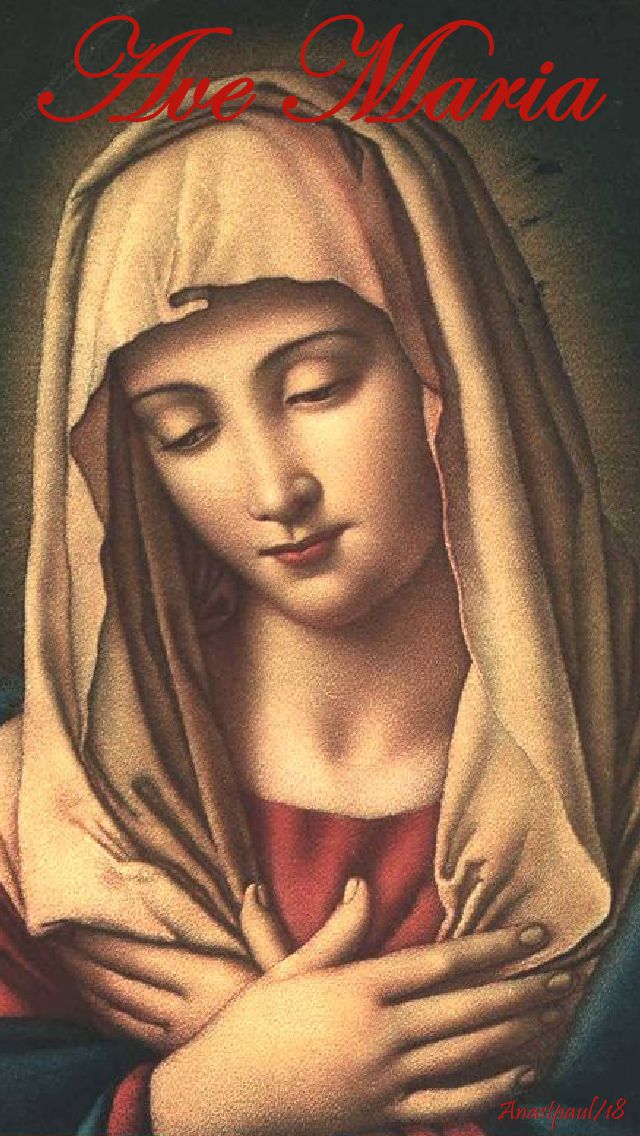
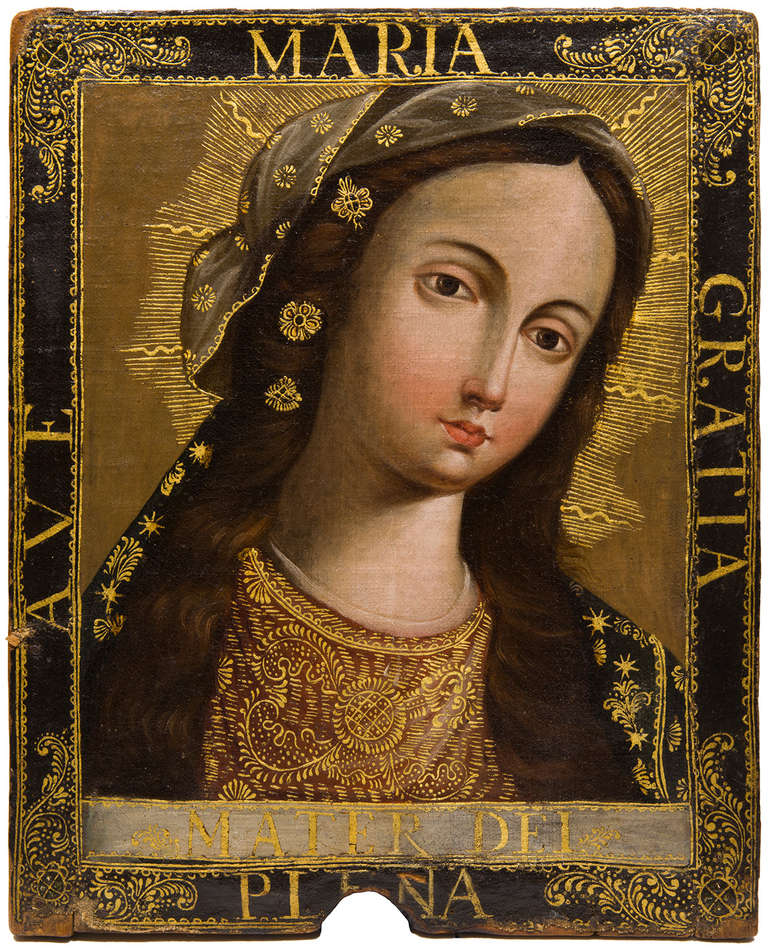
The Hail Mary/Ave Maria
Hail Mary, full of grace,
the Lord is with thee.
Blessed art thou amongst women,
and blessed is the fruit of thy womb, Jesus.
Holy Mary, Mother of God,
pray for us sinners,
now and at the hour of our death.
Amen.
Áve María, grátia pléna,
Dóminus técum.
Benedícta tū in muliéribus,
et benedíctus frúctus véntris túi, Iésus.
Sáncta María, Máter Déi,
óra pro nóbis peccatóribus,
nunc et in hóra mórtis nóstrae. Ámen.
Our petitionary payer to the Holy Mother of God, was commonly added to the prayers of the Church, around the time of the Council of Trent. The Dutch Jesuit, St Petrus Canisius (1521-1597) Doctor of the Church, is credited with adding in 1555 in his Catechism the sentence:
Holy Mary, Mother of God, pray for us sinners,
now and at the hour of our death,
amen.
Eleven years later, the sentence was included in the Catechism of the Council of Trent of 1566. The “Catechism of the Council of Trent” says that to the first part of the Hail Mary, by which “we render to God the highest praise and return Him most gracious thanks, because He has bestowed all His heavenly gifts on the most holy Virgin … the Church of God has wisely added prayers and an invocation addressed to the most holy Mother of God … we should earnestly implore her help and assistance, for that she possesses exalted merits with God and that she is most desirous to assist us by her prayers, no one can doubt without impiety and wickedness.”
The Hail Mary is the central part of the Angelus, a devotion generally recited thrice daily by Catholics, at 06.00, 12.00 and 18.00.
On account of its connection with the Angelus, the Ave Maria was often inscribed on bells.
The Hail Mary is the essential element of the Rosary, of course, for those followers who are not yet Catholics:
The Rosary consists traditionally of three sets of five Mysteries, each mystery consisting of one “decade” or ten Ave Marias. The 150 Ave Marias of the Rosary thus echo the 150 psalms. These meditate upon events of Jesus’ life during his childhood (Joyful Mysteries), Passion (Sorrowful Mysteries), and from his Resurrection onwards (Glorious Mysteries). Another set, the Luminous Mysteries, is of comparatively recent origin, having been proposed by St Pope John Paul II in 2002.
Each of these Mysteries is prayed as a decade (a unit of ten), consisting of one Our Father (Pater Noster or The Lord’s Prayer), ten Hail Marys, and one ‘Glory Be’ (Gloria Patri) (Doxology) and the Fatima Prayer “O My Jesus, forgive us our sins, save us from the fires of Hell and lead all souls to Heaven, especially those in most need of Thy mercy.”
The restatement of the prayers locks one into fixed language, having the effect of freeing the conscious mind so that the recitation may come more from the heart and not the head.
Pope Paul V (1550-1621) said that “the Rosary is a treasure of graces … Even for those souls who pray without meditating, the simple act of taking the beads in hand to pray is already a remembrance of God – of the supernatural”.
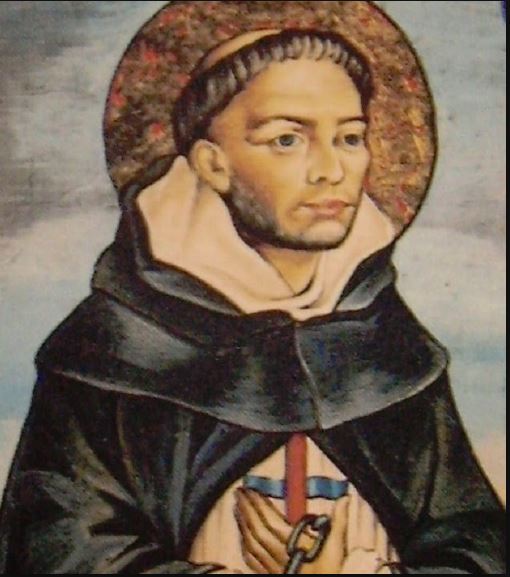
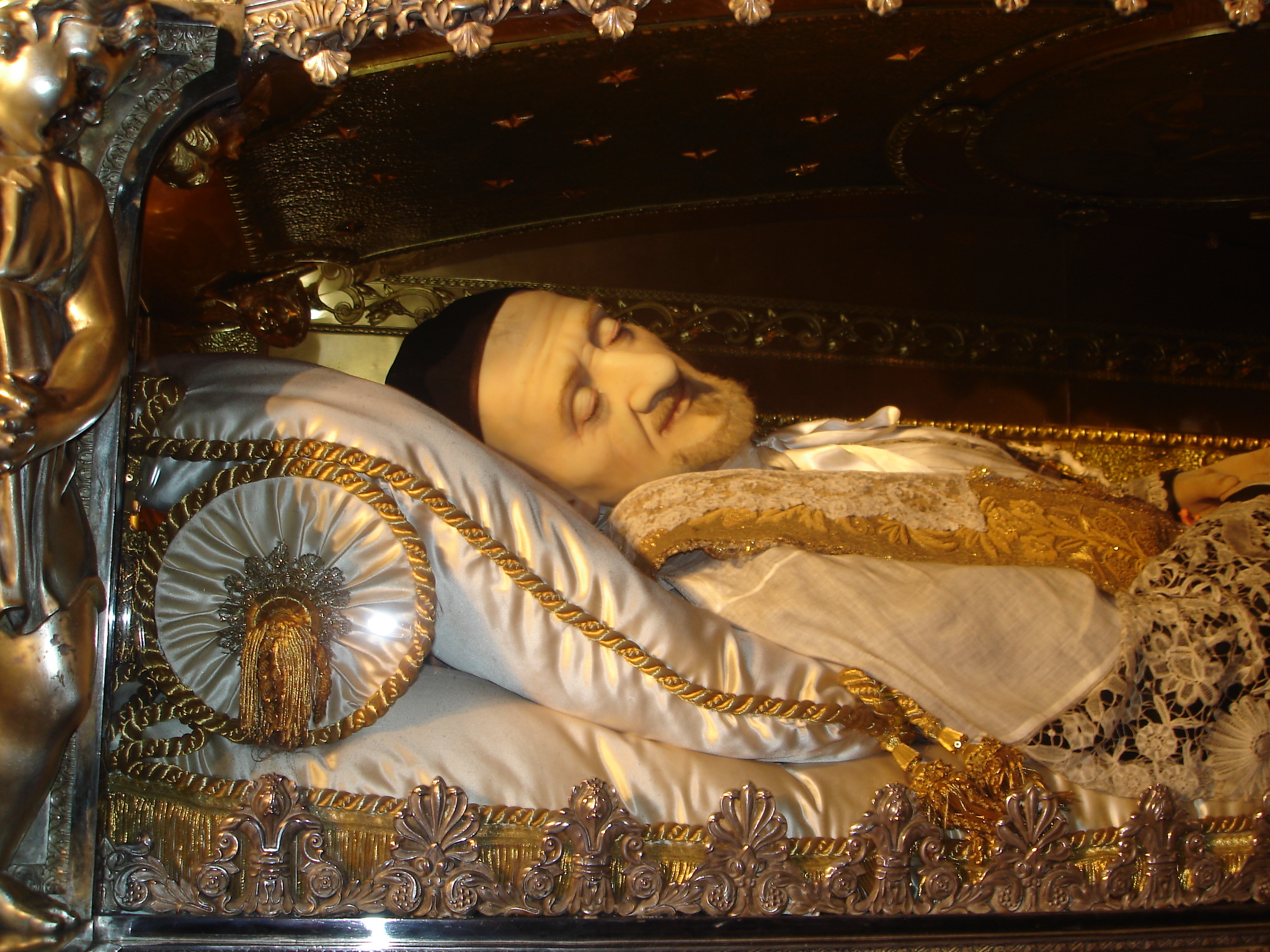
Saint of the Day – 28 September – St Simón de Rojas O.SS. (1552-1624) “Father Ave Maria”/ “Apostle of the Ave Maria”, Religious Priest of the Trinitarian Order, Founder of the Lay Apostolate of the Congregation of the Slaves of the Sweet Name of Mary, Marian Devotee, Theologian, Philosopher, Spiritual Writer, Apostle of Charity, Apostolic Visitor – born on 28 October 1552 in Valladolid, Spain and died on 28 September 1624 in Madrid, Spain of natural causes. He was Beatified on 19 March 1766 by Pope Clement XIII and Canonised on 3 July 1988 by St Pope John Paul II.
Father SIMON DE ROJAS of the Trinitarian Order was born at Valladolid, Castilla, Spain, 28 October, 1552. At twelve years of age, he entered the Trinitarian monastery of the city where he was born and there made his religious profession on 28 October 1572. He studied at the University of Salamanca from 1573 to 1579 and was ordained a priest in 1577. Thereafter, he taught philosophy and theology at Toledo from 1581 to 1587 and from 1588 until his death he fulfilled with much prudence the office of superior in various monasteries of his province and was sent as apostolic visitor twice to his own province of Castilla and once to that of Andalusia.
On 14 April 1612 he founded the Congregation of the Slaves of the Sweet Name of Mary and in 1619 he was named tutor to the royal princes of Spain and in 1621 he was elected Provincial of Castilla and the following year he was chosen confessor of Queen Isabel of Borbon.
His Canonisation during this Marian year (1988), worthily rewards him for his tender devotion to Mary. He has been a compared to St Bernard of Clairvaux and to St Ildefonso of Toledo, for this immense understanding and devotion of the role of the Blessed Virgin Mother.
It was his mother, the virtuous Constanza, who instilled and helped grow in the soul of Simon the love of Mary. The veneration that she and her husband Gregorio constantly gave to Mary, makes it easily understandable why the first words that Simon, who had been a slow learner and stuttered, said at the age of fourteen months, were “Ave, Maria”. He was only repeating the prayer so frequently recited by his parents.
His greatest joy was to visit Marian shrines, to pray to Mary and with Mary, to imitate her virtues, to sing her praises, to acknowledge her importance in the mystery of God and of the Church. Through profound theological studies, he came to understand even better the mission of Mary in cooperation with the Trinity for the salvation of the human race and the sanctification of the Church. He lived his religious vows in the imitation of Mary. He held that, for everyone to be completely of God, as Mary had been, it was necessary to become her slaves, or better, slaves of God in Mary; for this reason he established the Congregation of the Slaves of Mary for the greater glory of the Trinity, in praise of the Virgin, in the service of the poor. For him, to be a slave of Mary meant belonging totally to her: “Totus tuus” in order to unite oneself more intimately to Christ and in Him through the Spirit, to the Father.
The Congregation founded by him was intended for the laity, persons of every social class could join. The members, who included the King and his children, dedicated themselves to honour Mary by giving maternal help to her favourite children – the poor. This work still continues in Spain. Fr Simon, who is held to be one of the greatest contemplatives of his time and who in his work, “The Greatness of Prayer” is clearly a great instructor of prayerful souls, wanted the contemplative dimension joined to the active through works of mercy.
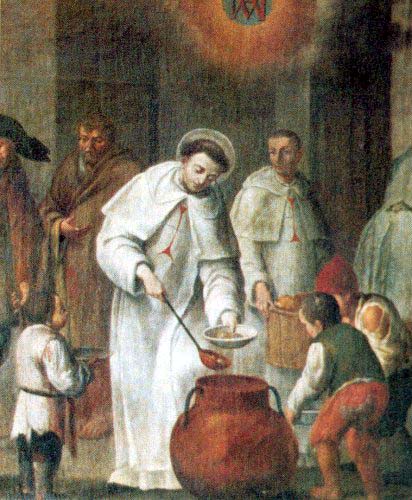
Faithful to the Trinitarian charism, he promoted the ransom of captives, he helped relieve the many needs of the poor, he consoled the sick, the destitute and the left-out of every kind. He accepted duties at the Court, only on the condition that he be able to continue his work with the poor, whom he helped in a thousand ways, always with a smile on his face and at any hour of the day or night.
The expressions of his love of Mary are manifold. The painters who depicted him, put the greeting “Ave Maria” on his lips, words he uttered so frequently that he was familiarly called: “Father Ave Maria”.
He had thousands of images of the Most Holy Virgin printed with the inscription: “Ave Maria”, which he also sent abroad. He had rosaries made with seventy-two blue beads on a white cord, symbols of the Assumption and the Immaculate Conception and also a reminder that Mary, according to the belief of the time, lived to the age of 72 years. He sent these rosaries everywhere, even to England. Using his influence at Court, he had the angelic greeting so dear to him, “Ave Maria”, engraved in letters of gold on the facade of the royal palace in Madrid. On June 5th, 1622, he petitioned the Holy See for the approval of his liturgical text composed in honour of the Sweet Name of Mary, which later, Pope Innocent XI extended to the universal Church.
After his death on 29 September 1624, the honours bestowed on him at his funeral, took on the aspect of an anticipated canonisation. For twelve days, the most re-known preachers of Madrid exalted his virtues and his holiness. Impressed with this unanimous veneration, on 8 October shortly after Fr Simon’s death, the Papal Nuncio ordered the beginning of the process leading to his glorification by the Church. His heroic virtues were recognised by PopeClement XII on 25 March 1735 and he was beatified on 19 March 1766. And today, 3 July, 1988, just before the close of the Marian Year, Pope John Paul II, enters the name of this great servant of Mary and Father of the poor on the list of the Saints.”…Vatican.va
Msgr Charles Pope – My recitation of the old carol:
Bl Aaron of Auxerre
St Alodius of Auxerre
St Annemond of Lyons
St Bardomianus
Bl Bernardine of Feltre
St Chariton of Palestine
Bl Christian Franco
St Conval of Strathclyde
St Eucarpus
St Eustochium
St Exuperius of Toulouse
St Faustus of Riez
St John of Dukla
St Laurence of North Africa
St Lioba of Bischofsheim
St Machan
St Martial of North Africa
St Martin of Moyenmoutier
St Paternus of Auch
St Privatus of Rome
St Salonius of Geneva
St Silvinus of Brescia
St Simón de Rojas O.SS. (1552-1624)
St Solomon of Genoa
St Stacteus
St Tetta of Wimborne
Bl Thiemo
St Willigod of Moyenmoutier
St Zama of Bologna
—
Augustinian Martyrs of Japan: The first Augustinian missionaries arrived in Japan in 1602 and met with immediate success; many were brought to the faith; many of them became Augustinians; and many of them were martyred in the periodic persecutions of Christians. This memorial commemorates all of them, whether they have a sanctioned Cause for Canonisation or not. They include:
• Blessed Bartolomé Gutiérrez Rodríguez
• Blessed Ferdinand Ayala
• Blessed Francisco Terrero de Ortega Pérez
• Blessed Ioannes Mukuno Chozaburo
• Blessed Laurentius Kaida Hachizo
• Blessed Mancius Yukimoto Ichizaemon
• Blessed Martín Lumbreras Peralta
• Blessed Melchor Sánchez Pérez
• Blessed Michaël Ichinose Sukezaemon
• Blessed Pedro de Zúñiga
• Blessed Petrus Sawaguchi Kuhyoe
• Blessed Thomas Jihyoe of Saint Augustine
• Blessed Thomas Terai Kahyoe
• Blessed Vicente Simões de Carvalho
• Saint Magdalena of Nagasaki
Martyrs of Antioch – 37 saints: A group of 30 soldiers and 7 civilians who were murdered together for their faith. The names that have come down to us are – Alexander, Alphinus, Heliodorus, Mark, Neon, Nicon and Zosumus. c 303 at Antioch, Pisidia (in modern Turkey).
Martyrs of China – 120 saints: A common memorial for the hundreds of the faithful, lay and clergy, who have died for their faith in the last couple of centuries in China. They were Canonised on 1 October 2000 by Pope John Paul II.
Martyred in the Spanish Civil War:
• Blessed Francesc Xavier Ponsa Casallach
• Blessed Josep Casas Juliá
• Blessed Josep Casas Ros
• Blessed Josep Tarrats Comaposada
• Blessed María Fenollosa Alcaina
• Blessed Santiago Mestre Iborra
Thought for the Day – 27 September – The Memorial of St Vincent de Paul C.M. (1581-1660)
From “Conferences to the Priests of the Mission”
by St Vincent de Paul (Conference 207).
It is not enough to love God if my neighbour does not love Him.
“Our vocation is to go and enflame the heart of men, to do what the Son of God did, He who brought fire into the world to set it alight with His love. What else can we wish for, than for it to burn and consume all things?
Thus it is true that I have been sent not only to love God but also to make men love Him.
It is not enough to love God if my neighbour does not love Him. I must love my neighbour as the image of God and the object of His love and do everything so that in their turn men love their Creator who knows and considers them as His brothers, whom He has saved, I must obtain that they love each other with mutual love, out of love for God who loved them to the point of abandoning to death His very Son. So that is my duty. Now, if it is true that we are called to bear God’s love near and far, if we must set nations alight, if our vocation is to go and spread this divine fire in the whole world, if it is so, my brothers, if it is really so, how must I myself burn of this divine fire!
How can we give love to others, if we do not have it among us? Let us look if it is so, not generally but if each one has it within himself, in due amount, because if love is not on fire in us, if we do not love each other as Jesus Christ loved us and if we do not act as He did, how can we hope to spread such love throughout the world? You cannot give what you do not have. The precise duty of charity consists in doing to others what you reasonably would like done to yourself. Do I really behave towards my neighbour as I wish he would towards me?
Let us look at the Son of God. Only our Lord can be so taken by love for creatures so much as to leave His Father’s throne and take a body subject to infirmity. And why? In order to establish among us, with His word and example, the love of our neighbours. This is the love that led Him to the Cross and accomplished the wonderful work of our redemption. If we had a little of such love, would we stay here with folded arms? Oh! no, love can not remain barren, it urges us to obtain salvation and relief for others.”
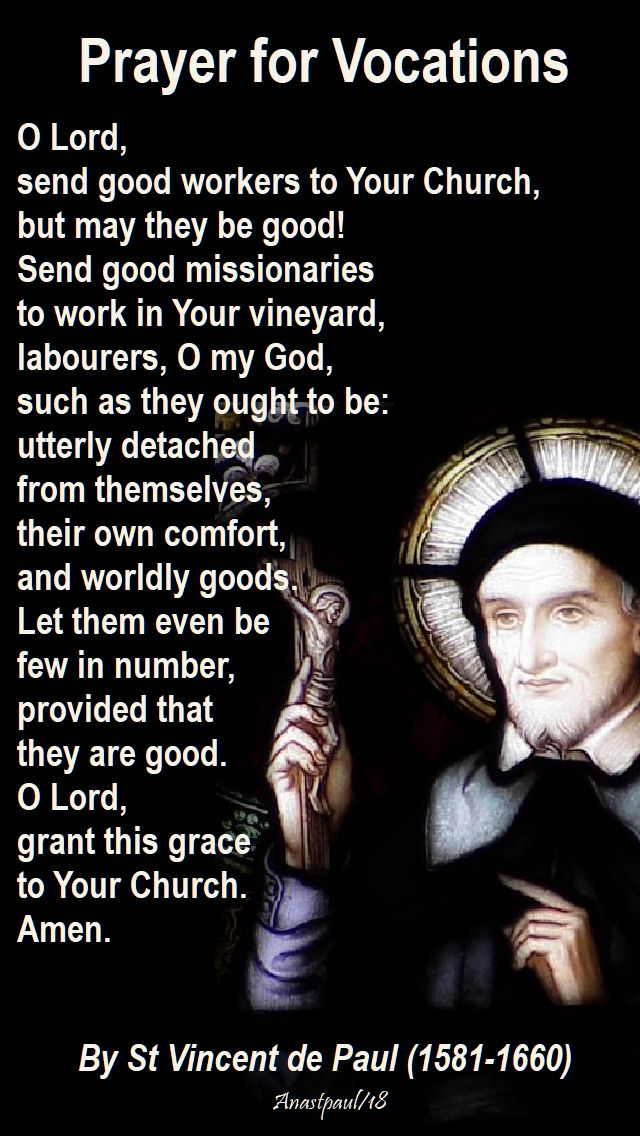
Prayer for Vocations By St Vincent de Paul
O Lord, send good workers to Your Church, but may they be good! Send good missionaries to work in Your vineyard, labourers, O my God, such as they ought to be: utterly detached from themselves, their own comfort, and worldly goods. Let them even be few in number, provided that they are good. O Lord, grant this grace to Your Church. Amen.
Quote/s of the Day – 27 September – The Memorial of St Vincent de Paul C.M. (1581-1660)
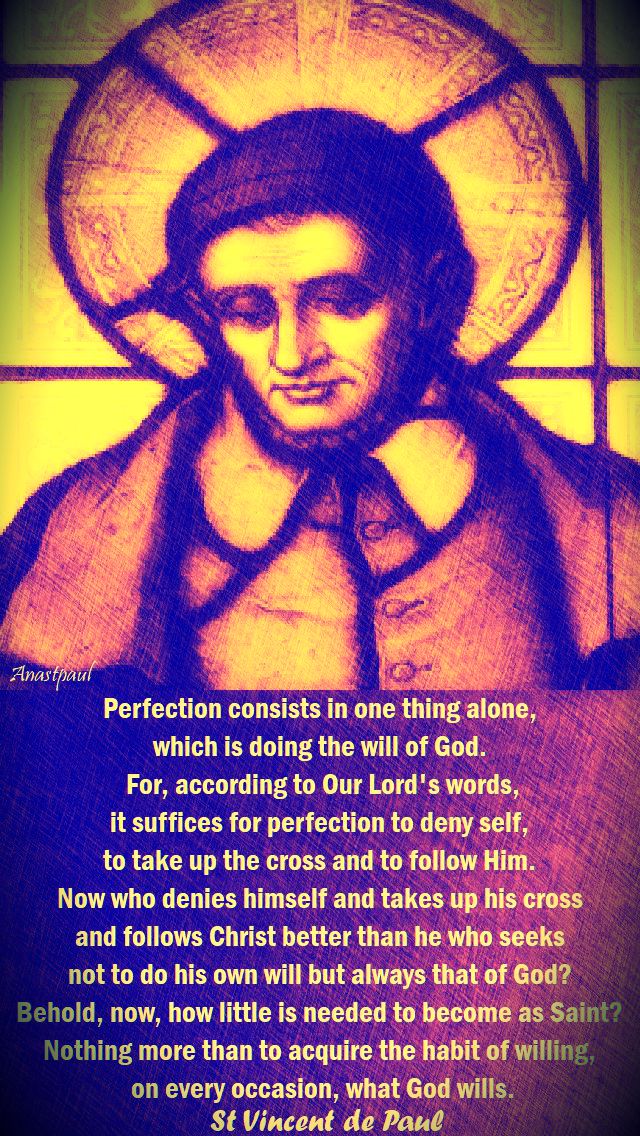
“Perfection consists in one thing alone, which is doing the will of God. For, according to Our Lord’s words, it suffices for perfection to deny self, to take up the cross and to follow Him. Now who denies himself and takes up his cross and follows Christ better than he who seeks not to do his own will but always that of God? Behold, now, how little is needed to become as Saint? Nothing more than to acquire the habit of willing, on every occasion, what God wills.”
“…We have all been called by God to work on a masterpiece!”
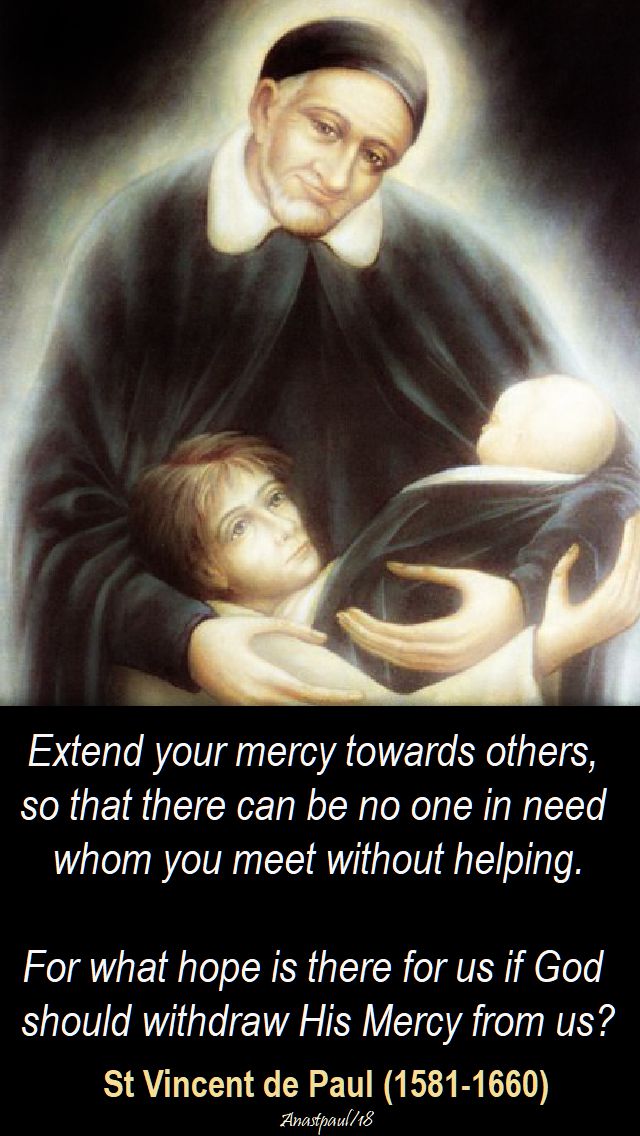
“Extend your mercy towards others, so that there can be no one in need whom you meet without helping. For what hope is there for us if God should withdraw His Mercy from us?”
“With renewed devotion, then, we must serve the poor, especially outcasts and beggars. They have been given to us as our masters and patrons.”
“It is not enough to give soup and bread. This the rich can do. You are the servant of the poor, always smiling and good-humoured. They are your masters, terribly sensitive and exacting master you will see. And the uglier and the dirtier they will be, the more unjust and insulting, the more love you must give them. It is only for your love alone, that the poor will forgive you the bread you give to them.
One Minute Reflection – 27 September – Today’s First Reading: Ecclesiastes 1:2–11 – Thursday of the Twenty-fifth week in Ordinary Time, Year B – The Memorial of St Vincent de Paul (1581-1660)
What has been is what will be and what has been done is, what will be done..Ecclesiastes 1:9
REFLECTION – “Free your mind from all that troubles you; God will take care of things. You will be unable to make haste in this (choice) without, so to speak, grieving the heart of God because he sees that you do not honour Him sufficiently with holy trust. Trust in Him, I beg you and you will have the fulfilment of what your heart desires.”….St Vincent de Paul
PRAYER – Father, You endowed St Vincent de Paul with the spirit of an apostle to give himself to the poor and to the training of priests. Give us, good Lord, a share of the same spirit, that we may love what he loved and do as he taught. Fill us with hope and total trust and abandonment to Your Holy Providence. Through our Lord Jesus Christ, in union with the Holy Spirit, one God, forever and ever. St Vincent de Paul, pray for us, amen.
Our Morning Offering – 27 September – The Memorial of St Vincent de Paul C.M. (1581-1660)
Let Thou Thyself O Lord, Be Thine Eternal Thanksgiving! By St Vincent de Paul (1581-1660)
O Saviour, Who gave us the law to love our neighbour as ourselves, Who practised it, in such a perfect fashion, towards men. Let Thou Thyself, O Lord, Be Thine eternal thanksgiving! O Saviour, how happy I am to be in the state of loving my neighbour! Grant me the grace to acknowledge my good fortune, to love this blessed state and to ensure that this virtue, may be revealed now, tomorrow and always. Amen.
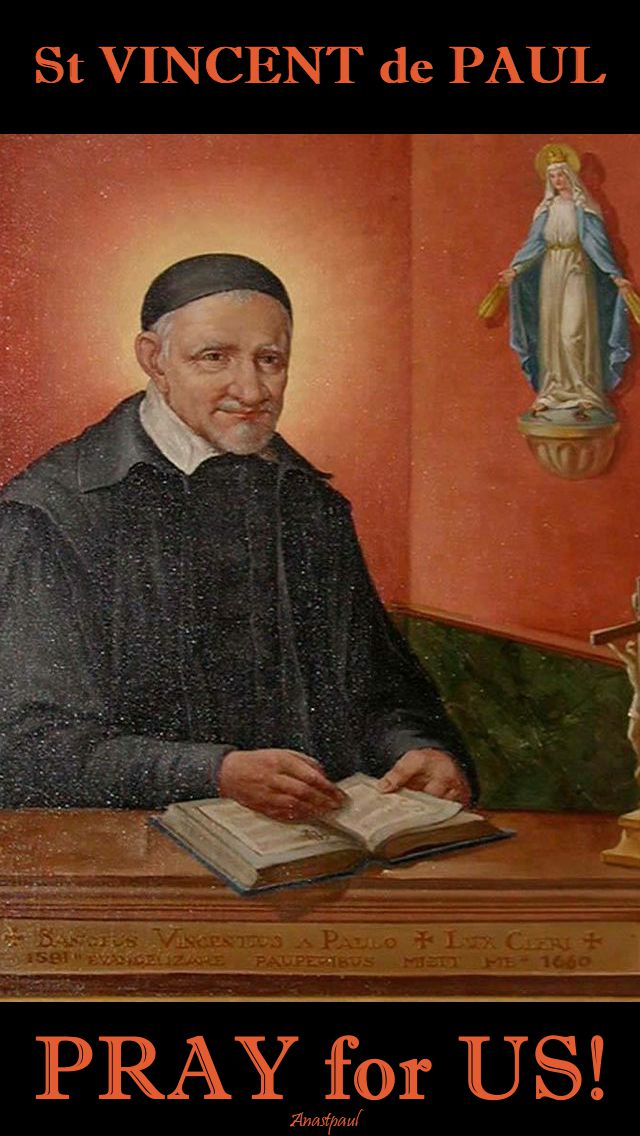
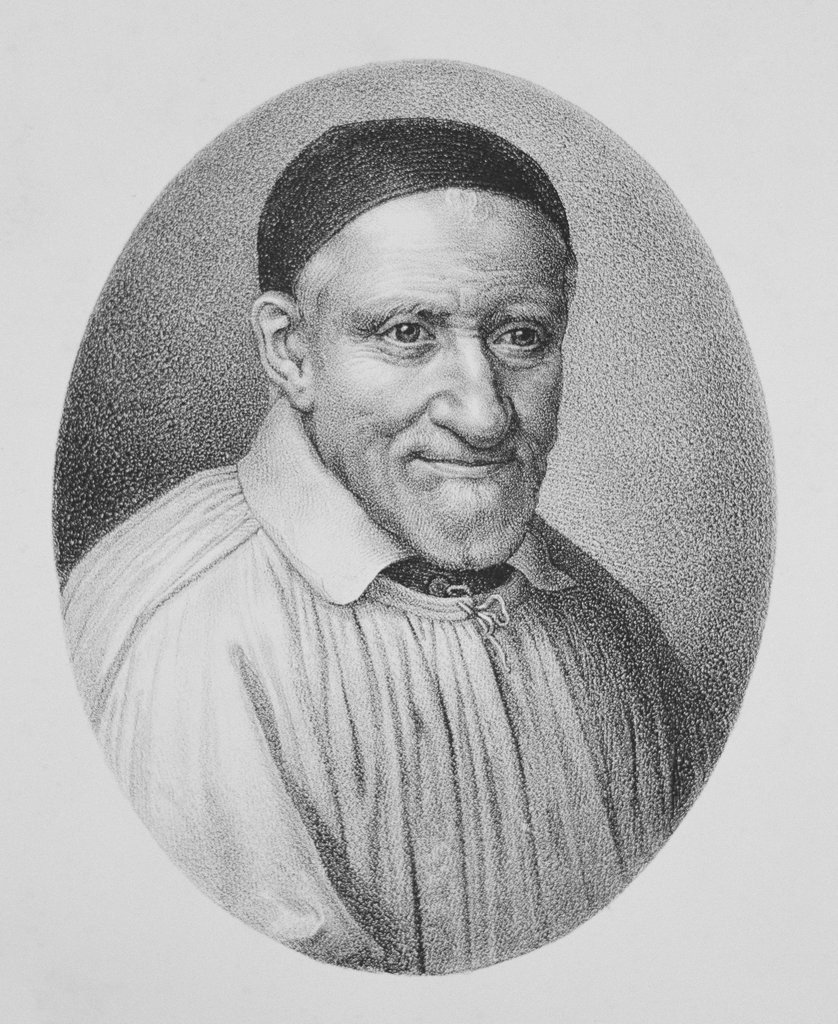
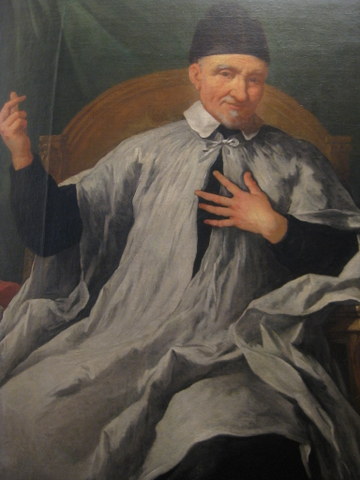
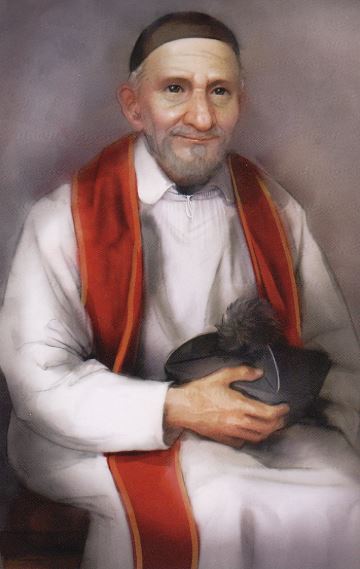
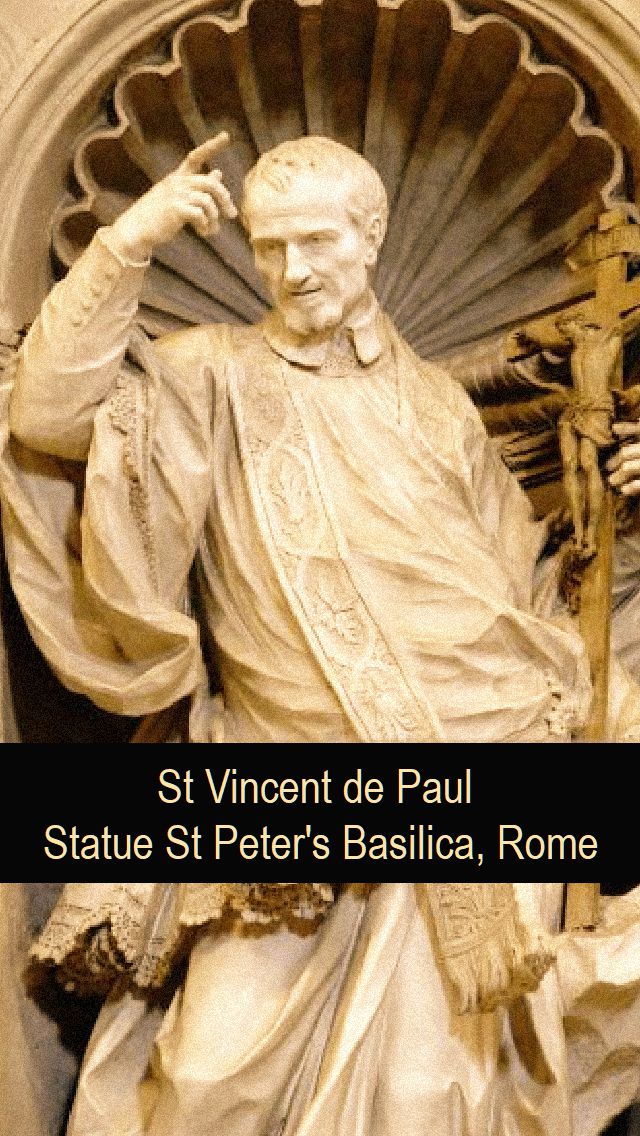
Saint of the Day – 27 September – St Vincent de Paul C.M. (1581-1660) “Great Apostle of Trumpets”
Excerpt from the His Holiness Pope Francis’ Message to the Vincentian Family on the Fourth Centenary of the Charism – 27 September 2017
“Vincent was always on the move, ever open to the discovery of God and himself. Grace entered into this constant quest, in his priestly ministry, he encountered Jesus the Good Shepherd in a striking way in the poor. On one occasion in particular, he was deeply touched by meeting the gaze of a man pleading for mercy and by the faces of a destitute family. There he saw Jesus himself looking at him, unsettling his heart and asking him no longer to live for himself, but to serve him unreservedly in the poor. Vincent would later call the poor “our lords and masters”(Correspondance, entretiens, documents XI, 349). His life then became one of unflagging service, even to his dying breath. A verse from Scripture showed him the meaning of his mission: “The Lord has sent me to bring the Good News to the poor” (cf. Lk 4:18).
Burning with the desire to make Jesus known to the poor, Vincent devoted himself passionately to preaching, especially through popular missions and by careful attention to the training of priests. He quite naturally employed a “little method”, speaking first by his life and with great simplicity, in a familiar and straightforward way. The Spirit used him as the means for a great outpouring of generosity in the Church. Inspired by the early Christians who were “of one heart and soul” (Acts 4:32), Saint Vincent founded the Confraternities of Charity, who cared for those in greatest need by living in communion and joyfully sharing their possessions, in the conviction that Jesus and the poor are the treasure of great price. As he loved to repeat, “When you visit the poor, you encounter Jesus.”
The “mustard seed” sown in 1617 grew into the Congregation of the Mission and the Company of the Daughters of Charity, then branched out into other institutes and associations and became a great tree (cf. Mk 4:31-32) which is the Vincentian Family. Everything, however, began with that mustard seed. Saint Vincent never wanted to be in the forefront but only a “seedling”. He was convinced that humility, gentleness and simplicity are essential for embodying the law of the seed that by dying gives life (cf. Jn 12:20-26). This law alone makes the Christian life bear fruit, for it teaches us that in giving we receive, by losing our lives we gain them and in hiddenness our light is best seen. Vincent was also convinced that this can only come about in union with others, as a Church and as the People of God. Here I cannot fail to mention his prophetic insight in recognising and appreciating the remarkable abilities of women, which flowered in Saint Louise de Marillac’s spiritual sensitivity and human understanding.
Jesus says, “Whatever you did for one of these least brothers of mine, you did for me” (Mt 25:40). At the heart of the Vincentian Family is the effort to seek out “those who are poorest and most abandoned”, together with a profound awareness of being “unworthy of rendering them our little services” (Correspondance, entretiens, documents XI, 392). I pray that this year of thanksgiving to the Lord and of growth in the experience of your charism will prove an opportunity to drink from the source and to find refreshment in the spirit of your origins. Never forget that those wellsprings of grace streamed from faithful hearts, rock solid in love, “lasting models of charity” (Deus caritas est, 40). You will be filled with that same primordial freshness only if you look to the rock from which it all flowed forth. That rock is Jesus in His poverty, who asks to be recognised in those who are poor and have no voice. That is where He is to be found. When you encounter human weakness and broken lives, you too must be rocks – not hard and brittle, impervious to suffering but rather a sure support, steadfast amid the tempest and unshaken by adversity, because you “look to the rock from which you were hewn, to the quarry from which you were taken” (Is 51:1). You are called to go forth to the peripheries of human existence to bring not your own gifts but the Spirit of the Lord, the “Father of the Poor”. He has sown you throughout the world like seeds that spring up in dry land, like a balm of consolation for the wounded, a fire of charity to warm hearts grown cold by indifference and hardened by rejection.
Saint Vincent embodied this in his own life and even now he continues to speak to each of us and to all of us as Church. His witness invites us to keep moving, ever ready to let ourselves be surprised by the Lord’s gaze and His Word. He asks of us lowliness of heart, complete availability and humble docility. He prompts us to live in fraternal communion among ourselves and to go forth courageously in mission to the world. He calls us to free ourselves from complicated language, self-absorbed rhetoric and attachment to material forms of security. These may seem satisfactory in the short term but they do not grant God’s peace, indeed, they are frequently obstacles to mission. Vincent encourages us to invest in the creativity of love with the authenticity of a “heart which sees” (cf. Deus caritas est, 31).
Charity, in fact, is not content with the good practices of the past but aims to transform the present. This is all the more necessary today, given the complexity and rapid evolution of our globalised society, where some forms of charity or assistance, albeit motivated by generous intentions, risk abetting forms of exploitation and delinquency, without producing tangible and lasting benefits. For this reason, Saint Vincent continues to teach us the importance of reflecting on our practice of charity, developing new ways of drawing near to those in need and investing our efforts in formation.
His example also encourages us to make time and space for the poor, for the new poor of our time, of which there are so many and to make their worries and troubles our own. A Christianity without contact with those who suffer becomes disembodied, incapable of touching the flesh of Christ.
I pray that the Church and each of you, may be granted the grace to discover the Lord Jesus in our brothers or sisters who are hungry, thirsty, strangers, lacking clothing and dignity, sick and imprisoned, as well as in those who are uncertain, ignorant, persisting in sin, sorrowing, offensive, irascible and annoying. May you find in the glorious wounds of Jesus the vigour of charity, the blessedness of the seed that dies to give life, and the fruitfulness of the rock flowing with water. May you also find the joy of leaving yourselves behind, in order to go forth into the world, free of nostalgia for the past, fully trusting in God, and creative in the face of every present and future challenge. For love, in the words of Saint Vincent, “is infinitely creative”.…Vatican.va
—
St Adheritus
St Adolphus of Cordoba
St Antonio de Torres
St Barrog the Hermit
St Bonfilius of Foligno
St Ceraunus of Paris
St Chiara of the Resurrection
St Delphine
St Deodatus of Sora
St Elzear
St Epicharis
St Fidentius of Todi
St Florentinus the Hermit
St Gaius of Milan
St Hilary the Hermit
St Hiltrude of Liessies
Bl Jean-Baptiste Laborie du Vivier
St John of Cordoba
St Marcellus of Saint Gall
St Terence of Todi
—
Martyrs of Aegea – (3 saints)
Martyred in the Spanish Civil War:
• Blessed Crescencia Valls Espí
• Blessed Herminia Martínez Amigó de Martínez
• Blessed José Fenollosa Alcaina
• Blessed Maria Carme Fradera Ferragutcasas
• Blessed Maria Magdalena Fradera Ferragutcasas
• Blessed Maria Rosa Fradera Ferragutcasas
St Cosmas (Optional Memorial)
St Damian (Optional Memorial)
—
St Amantius of Tiphernum
St Callistratus of Constantinople
St Colman of Elo
St Cyprian of Antioch
St Eusebius of Bologna
St John of Meda
St Justina of Antioch
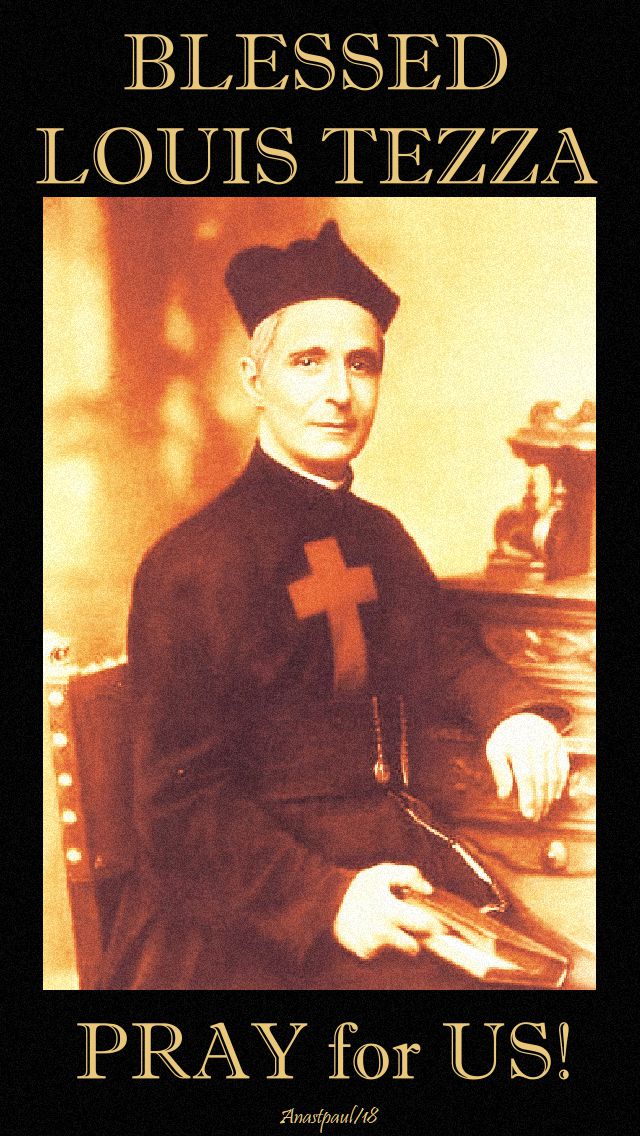
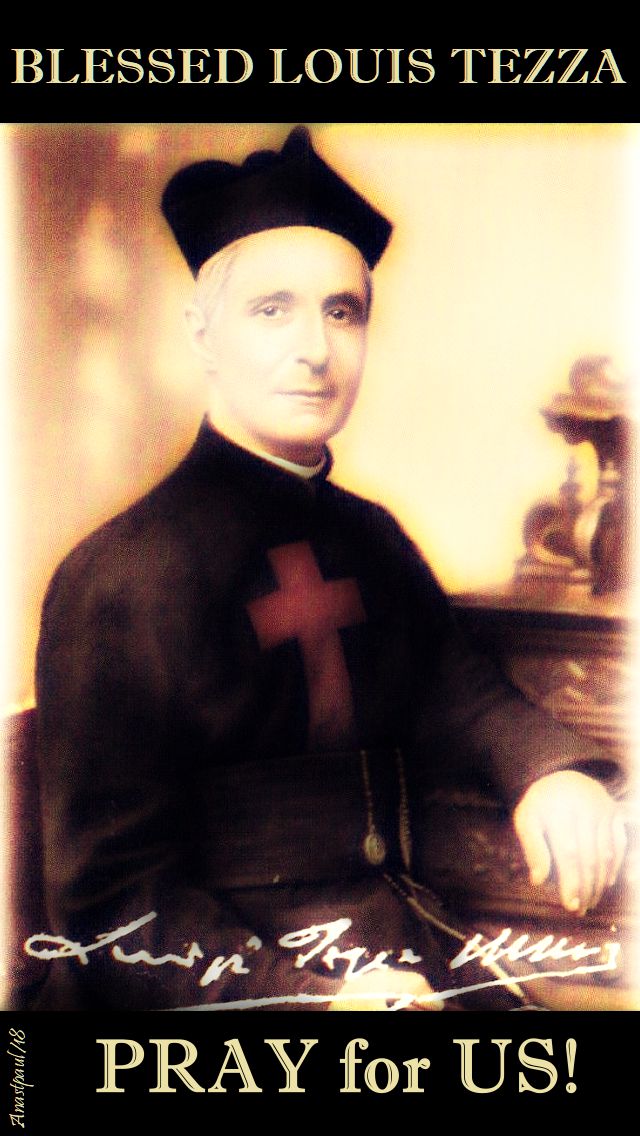
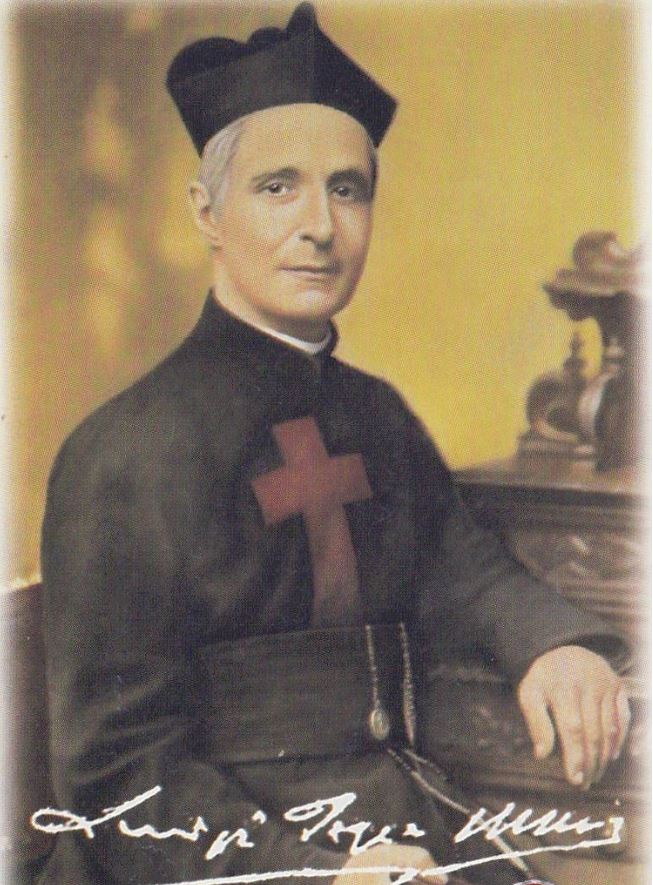
Bl Louis Tezza M.I. (1841-1923)
St Marie Victoire Therese Couderc
St Meugant
St Nilus the Younger
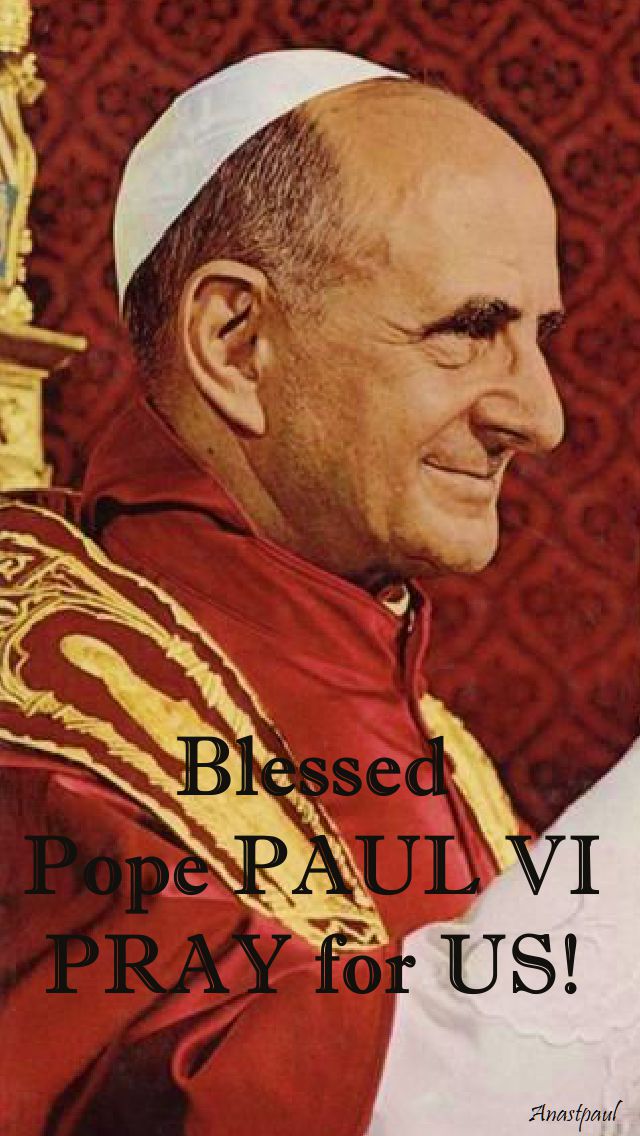
Bl Pope Paul VI (1897-1978)
About Blessed Pope Paul and his Papacy: https://anastpaul.wordpress.com/2017/09/26/saint-of-the-day-26-september-blessed-pope-paul-vi-1897-1978/
St Senator of Albano
St Vigilius of Brescia
—
Martyrs of Korea – 12 saints: Twelve lay people in the apostolic vicariate of Korea who were imprisoned, tortured and martyred together in the persecutions in Korea.
• Saint Agatha Chon Kyong-Hyob
• Saint Carolus Cho Shin-Ch’ol
• Saint Catharina Yi
• Saint Columba Kim Hyo-Im
• Saint Ignatius Kim Che-Jun
• Saint Iulitta Kim
• Saint Lucia Kim
• Saint Magdalena Cho
• Saint Magdalena Ho Kye-Im
• Saint Magdalena Pak Pong-Son
• Saint Perpetua Hong Kum-Ju
• Saint Sebastianus Nam I-Gwan
They were beheaded September 1839 in Seoul Prison, South Korea and Canonised on 6 May 1984 by St Pope John Paul II.
Martyred in the Spanish Civil War:
• Blessed Amalia Abad Casasempere de Maestre
• Blessed Andreu Felíu Bartomeu
• Blessed Antonio Cid Rodríguez
• Blessed Josefa Romero Clariana
• Blessed Manuel Legua Martí
• Blessed María Jord´ Botella
• Blessed Pau Castell´ Barber´
• Blessed Teresa Rosat Balasch
Thought for the Day – 26 September – The Memorial of Blessed Louis Tezza M.I. (18 41-1923
Blessed Louis Tezza’s message can be readily understood in the light of the gospel. Jesus had a special concern for the sick, and furthermore he identified personally with his suffering brothers: “I was sick and you visited me. In so far as you this to one of the least of these brothers of mine, you did it to me” (Mt.25.40)
Blessed Louis was chosen by God not only to live this charism of mercy for the sick but to spread it through the founding of the Institute of the Daughters of S. Camillus, an institute dedicated to care for human life from the moment of conception to natural death. He showed every Christian how to act in the face of suffering – to care and alleviate and especially to value it for one’s own sanctification and the redemption of others.
Fr Louis encourages us to believe in and operate in accordance with God’s plan for each one of us. The cornerstone of his existence was obedience to God . He was constantly seeking the will of God and striving to carry it out in his life. He could see God’s plan in the signs of the times, the ordinary events of life, in the decisions of his superiors and he was convinced that these had to be followed no matter what the cost in personal sacrifice.
He leaves each one of us today with this personal challenge, in the hope that we will make it our own:
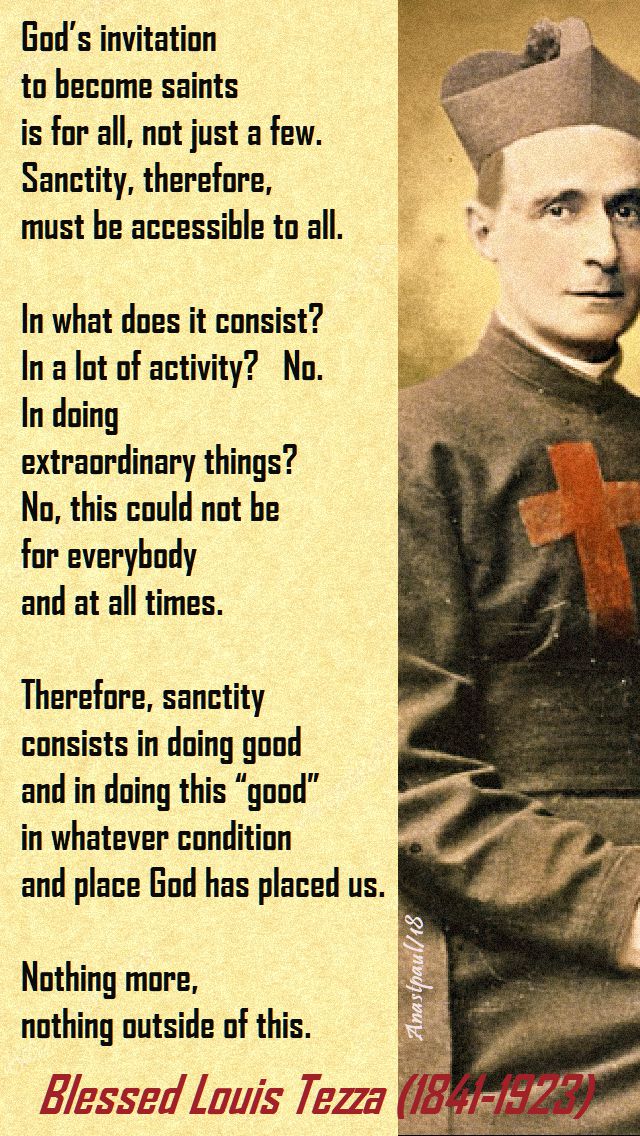
“God’s invitation to become saints is for all, not just a few. Sanctity therefore must be accessible to all. In what does it consist? In a lot of activity? No. In doing extraordinary things? No, this could not be for everybody and at all times. Therefore, sanctity consists in doing good, and in doing this “good” in whatever condition and place God has placed us. Nothing more, nothing outside of this”.
“Blessed Luigi Tezza, glorious example of a life totally dedicated to the exercise of charity and mercy towards those who suffer in body and spirit. For them he founded the Institute of the Daughters of St Camillus, whom he taught to practice an absolute confidence in the Lord. “The will of God! Behold my only guide”, he exclaimed, “the only goal of my desires, for which I wish to sacrifice everything”. In his confident abandonment to the will of God, he took as his model the Blessed Virgin Mary, tenderly loved and contemplated particularly in the moment of the “fiat” and in her silent presence at the foot of the Cross.”… (St Pope John Paul at the Beatification of Blessed Louis) Vatican.va
Quote/s of the Day – 26 September – The Memorial of Blessed Louis Tezza M.I. (1841-1923) and Blessed Pope Paul VI (1897-1978)
“God’s invitation to become saints is for all, not just a few. Sanctity, therefore, must be accessible to all. In what does it consist? In a lot of activity? No. In doing extraordinary things? No, this could not be for everybody and at all times. Therefore, sanctity consists in doing good and in doing this “good” in whatever condition and place God has placed us. Nothing more, nothing outside of this”
Blessed Louis Tezza M.I. (1841-1923)
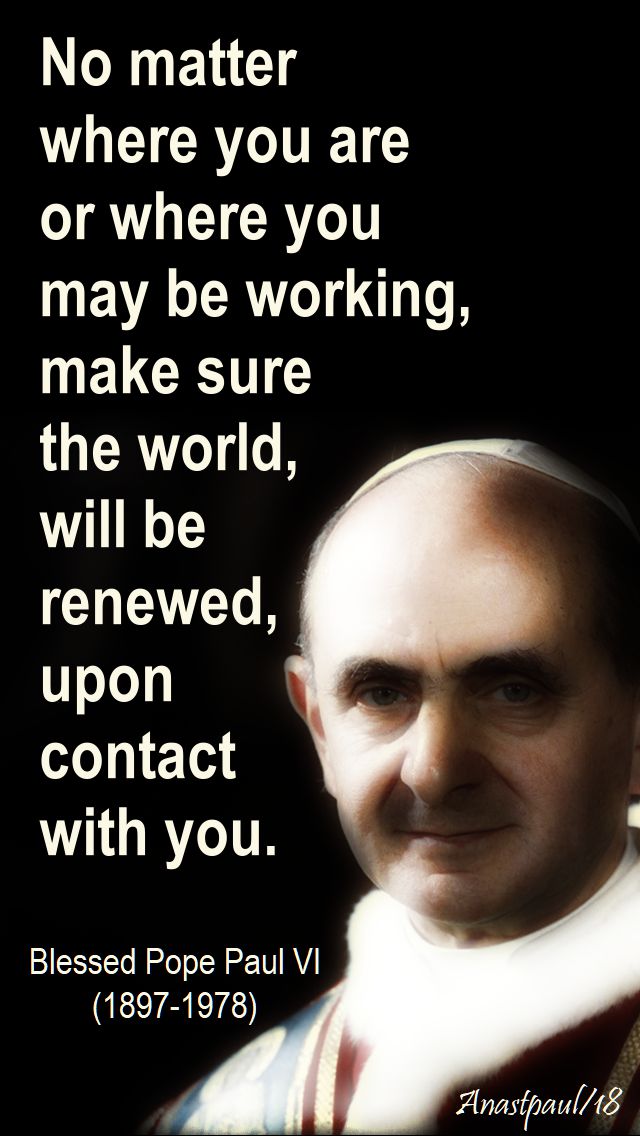
“No matter where you are or where you may be working, make sure the world, will be renewed, upon contact with you.”
“Somebody should tell us, right at the start of our lives, that we are dying. Then we might live life to the limit, every minute of every day. Do it! I say. Whatever you want to do, do it now! There are only so many tomorrows.”
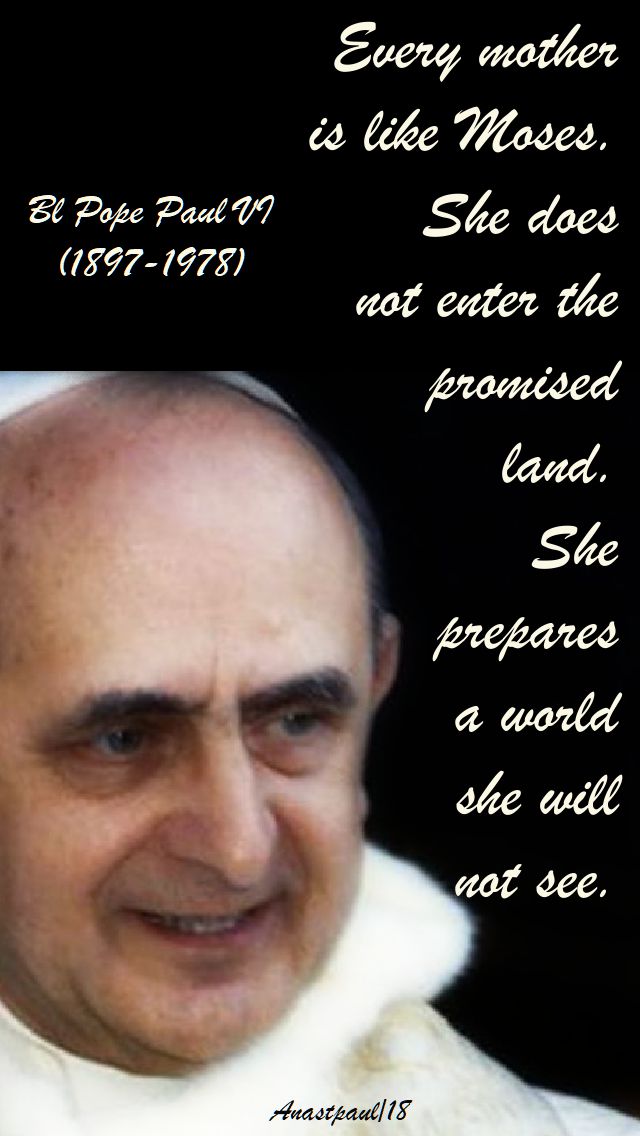
“Every mother is like Moses. She does not enter the promised land. She prepares a world she will not see.”
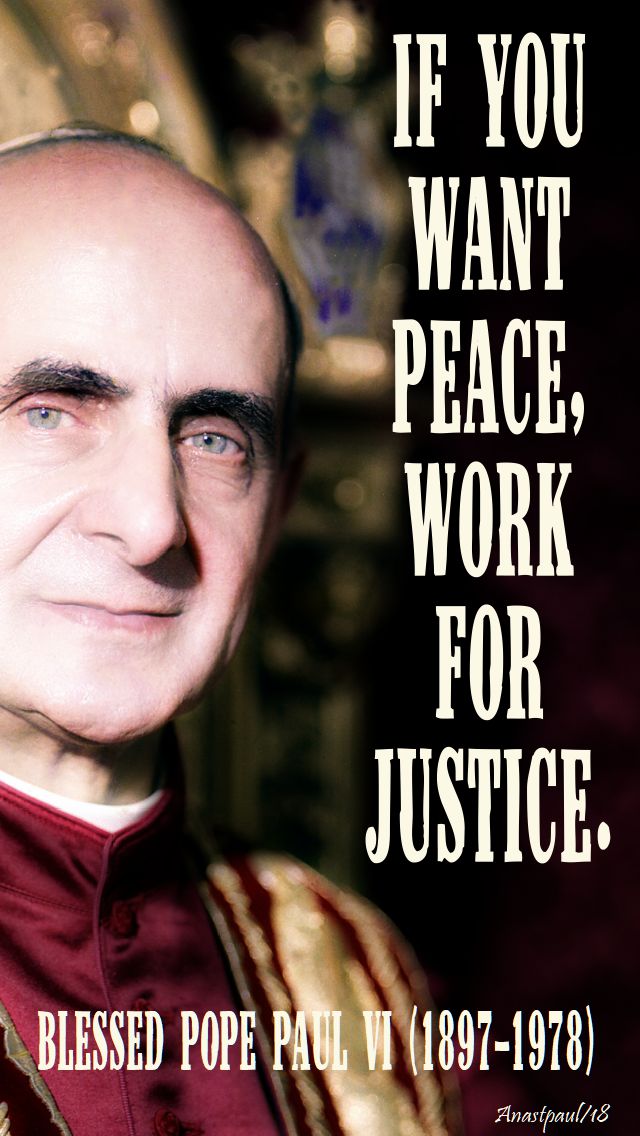
“If you want peace, work for justice.”
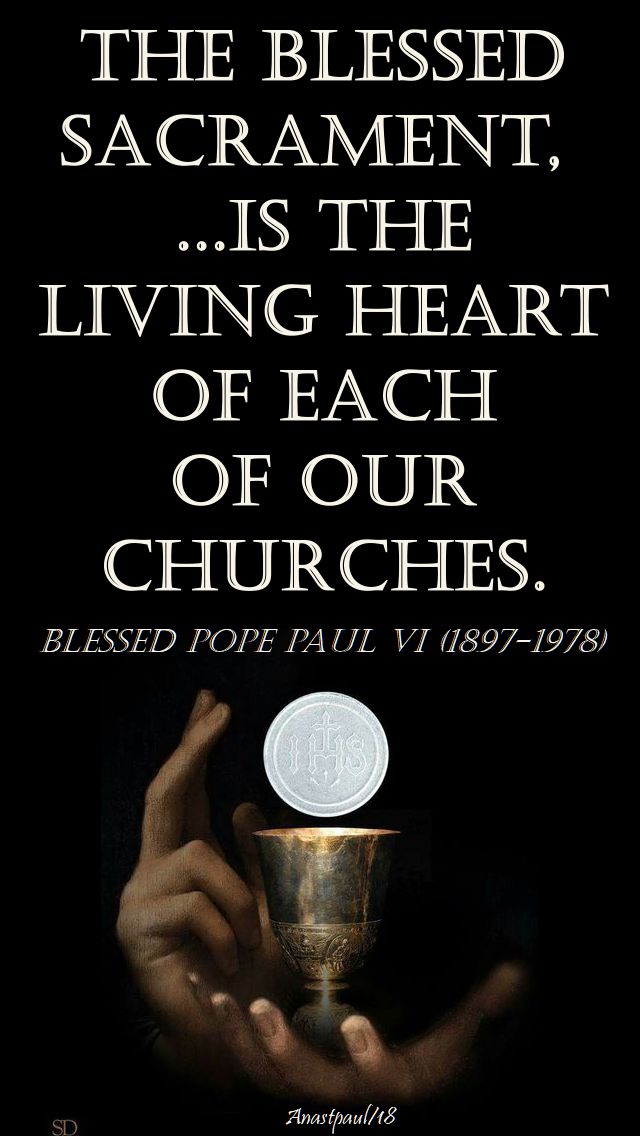
“… The Blessed Sacrament, which is in the tabernacle, is the living heart of each of our churches.”
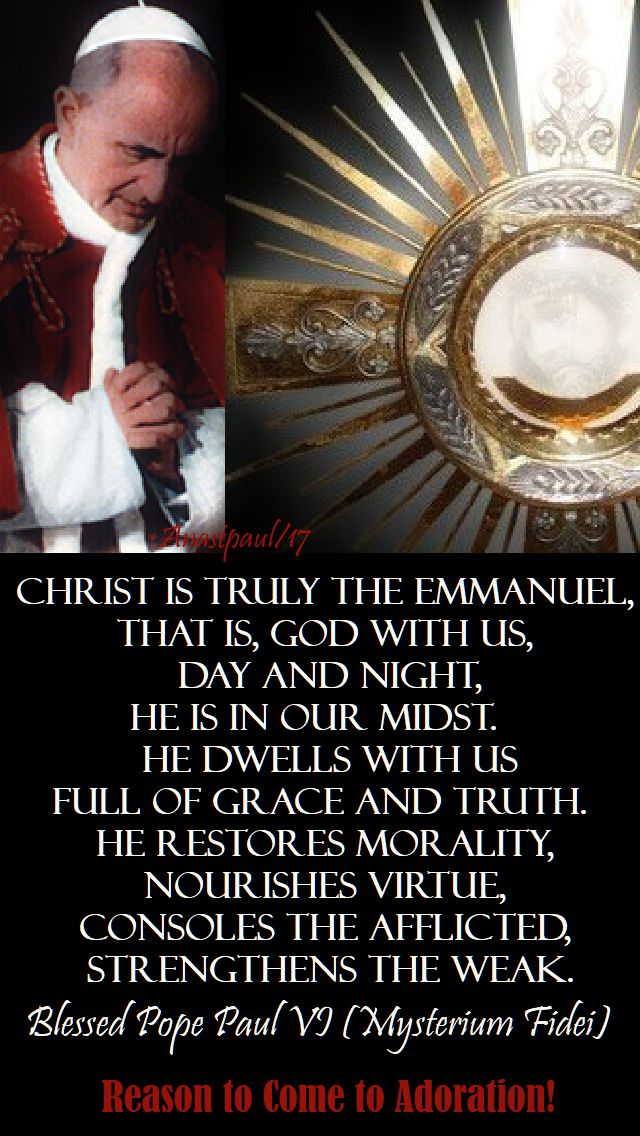
“Christ is truly the Emmanuel, that is, God with us, day and night, He is in our midst. He dwells with us full of grace and truth. He restores morality, nourishes virtue, consoles the afflicted, strengthens the weak.”
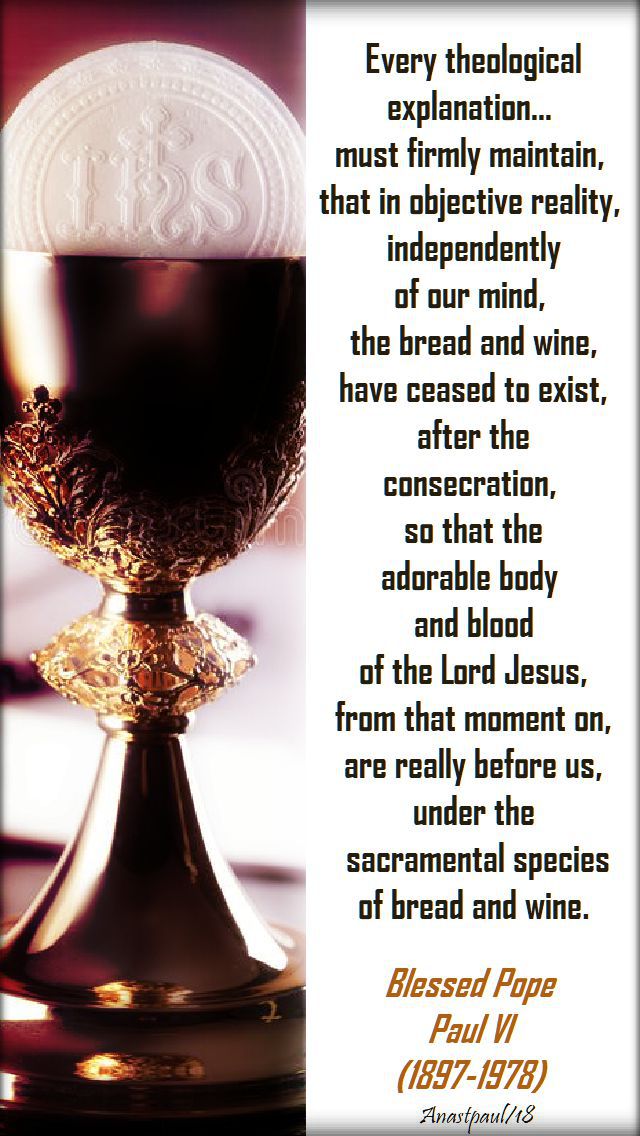
“Every theological explanation… must firmly maintain that in objective reality, independently of our mind, the bread and wine have ceased to exist after the consecration, so that the adorable body and blood of the Lord Jesus from that moment on, are really before us. under the sacramental species of bread and wine”.
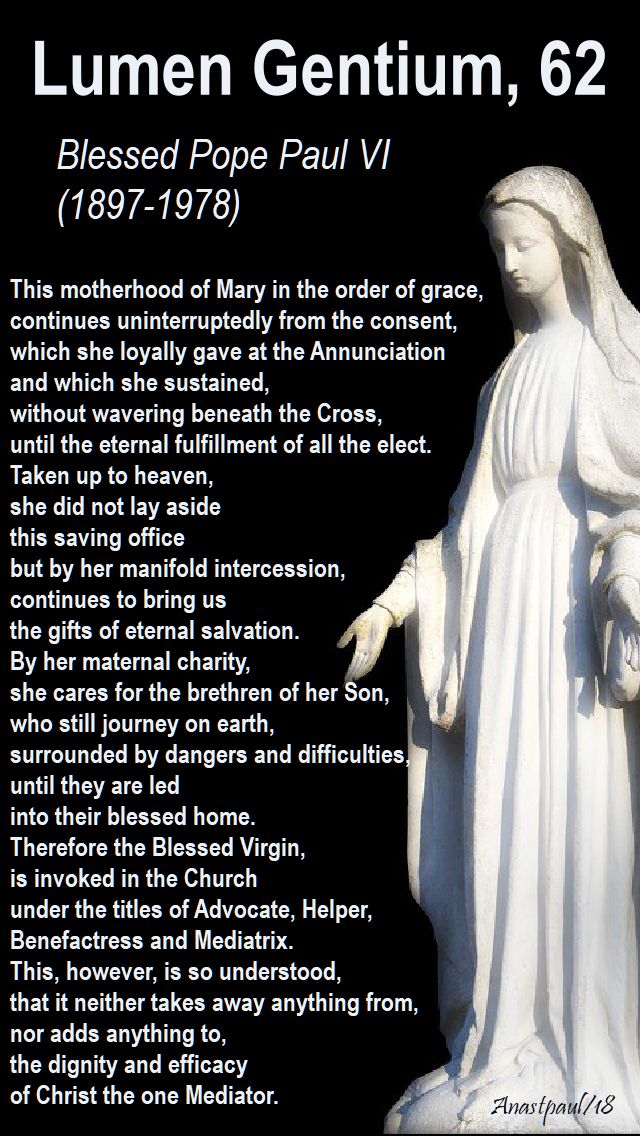
“This motherhood of Mary in the order of grace, continues uninterruptedly, from the consent, which she loyally gave, at the Annunciation and which she sustained, without wavering beneath the Cross, until the eternal fulfilment of all the elect.
Taken up to heaven, she did not lay aside this saving office but by her manifold intercession, continues to bring us the gifts of eternal salvation. By her maternal charity, she cares for the brethren of her Son, who still journey on earth, surrounded by dangers and difficulties, until they are led into their blessed home.
Therefore the Blessed Virgin is invoked in the Church under the titles of Advocate, Helper, Benefactress and Mediatrix. This, however, is so understood, that it neither takes away anything from, nor adds anything to, the dignity and efficacy of Christ the one Mediator.”
One Minute Reflection – 26 September – The Memorial of Blessed Louis Tezza M.I. (1841-1923) and Blessed Pope Paul VI (1897-1978)
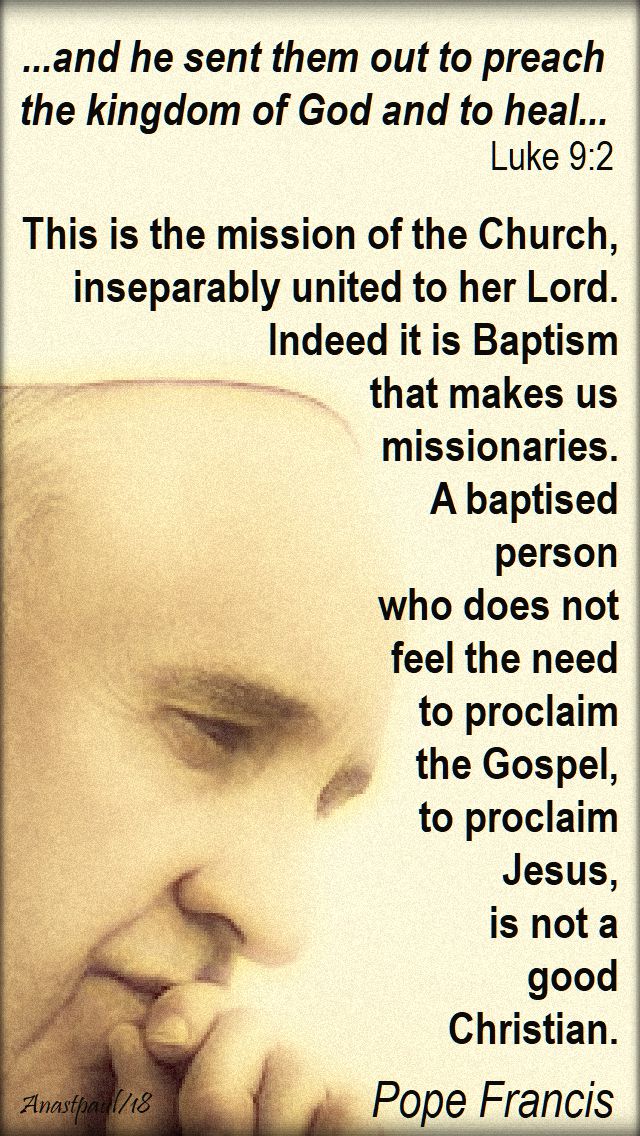
…and he sent them out to preach the kingdom of God and to heal....Luke 9:2
REFLECTION – “This is the mission of the Church, inseparably united to her Lord. Indeed it is Baptism that makes us missionaries. A baptised person who does not feel the need to proclaim the Gospel, to proclaim Jesus, is not a good Christian.”…Pope Francis – Angelus, 15 July 2018.
PRAYER – O God of love, You sent Your beloved Son to the world to proclaim the Good News of Salvation, to heal every illness and to cure all infirmity of body and soul. Help us to continue the mission of the merciful Christ in the service towards our neighbour, preaching the Gospel and offering our help in whatever way we can. May the example of charity of Blessed Louis Tezza and Blessed Pope Paul VI, teach us how to love and serve You especially in those who suffer. Through their intercession,grant us the grace to go forth in love. We ask this through Jesus Christ our Lord, with the Holy Spirit, one God forever, amen.
Our Morning Offering – 26 September – The Memorial of Blessed Pope Paul VI (1897-1978) and Blessed Louis Tezza M.I. (1841-1923)
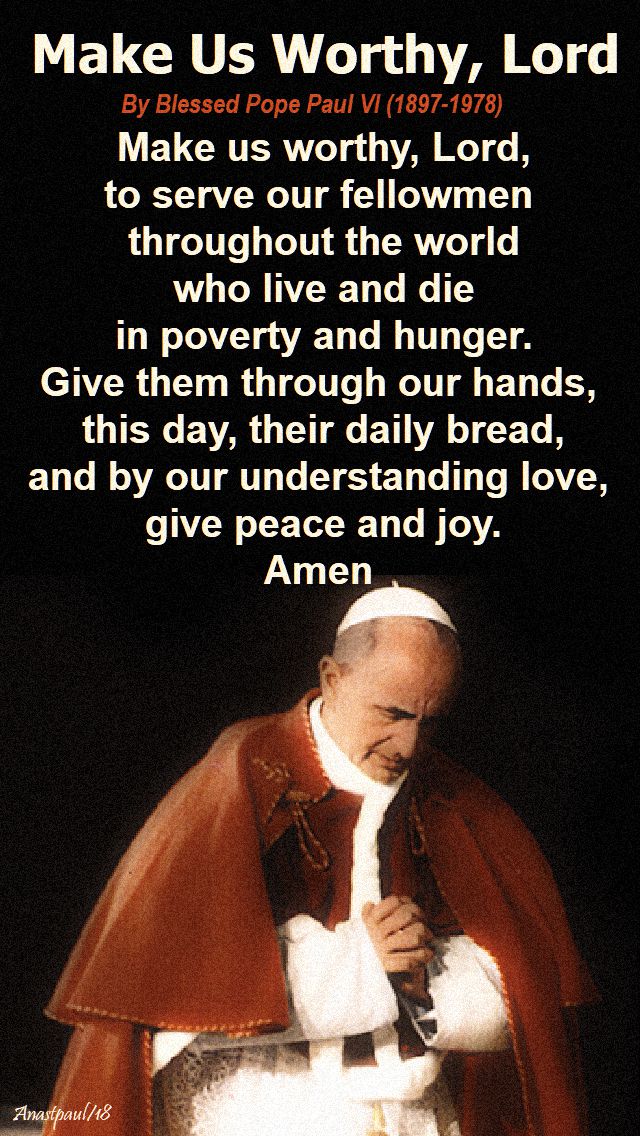
Make Us Worthy, Lord By Blessed Pope Paul VI
Make us worthy, Lord,
to serve our fellow-men
throughout the world
who live and die
in poverty and hunger.
Give them through our hands,
this day, their daily bread,
and by our understanding love,
give peace and joy.
Amen
Saint of the Day – 26 September – Blessed Louis Tezza M.I. (1841-1923) the “Apostle of Lima”. Blessed Louis was an Italian priest, a professed member of the Camillians and Founder of the Daughters of St Camillus de Lellis M.I. (1550-1614), Apostle of Charity, Spiritual Director, Counsellor, Administrator, Teacher, Reformer, Advisor and is known as the Apostle of Lima. He was ordained in 1864 and went on to serve the sick and the poor in Peru. Tezza’s new religious congregation was established with the sole aim of sick relief who followed the Rule of the Camillian order as a branch of it. Patronage – Daughters of St Camillus. He was Beatified on 4 November 2001 by St Pope John Paul II.
Birth and youth
Fr Louis Tezza was born in Conegliano (TV) on 1st November 1841, the only son of Augustine Tezza and Cathetine Nedwiedt. His father, who was a medical doctor, died when Louis was nine and his mother decided to move to Padova, where Louis continued his studies. At the age of fifteen he entered the Camillian Order (Ministers of the Sick of St Camillus de Lellis). Having entrusted her son to the Camillian noviciate and being certain of the authenticity of his vocation, she herself entered the convent of the Visitation where she was renowned as an exceptional woman and religious sister.
After his ordination Louis was entrusted with the formation of the young religious. Four years later he was presented with an opportunity of fulfilling a long standing desire by becoming a missionary to Africa but obedience decreed that he obey his legitimate superiors who were not in favour of the venture. Instead of Africa, he was transferred to Rome as novice master.
In 1871 Fr Louis was sent to the new foundation in France as novice master, where he would later become the first provincial. Through his dedication and zeal he succeeded in establishing the common life within the community, while at the same time setting up specific Camillian social facilities in the local areas for the spiritual and corporal benefit of the sick. With the suppression of the religious institutes in 1880 he was expelled from France, as he was seen as a foreigner. However, he secretly returned and managed to unite the religious who were scattered here and there throughout the country. Thus he not alone resisted the suppression but he was responsible for laying the foundations for the development that would later follow.
He was elected Procurator and Vicar General of the Camillians in 1891 and on his return to Rome he providentially met Josephine Vannini (beatified on 16 October 1994). He had for some time cherished in his heart the desire to establish a group of consecrated women who would serve the sick in accordance with the spirit and charism of St Camillus de Lellis. Thus on the 2 February 1892, the Congregation of the Daughters of St Camillus was born, enriching the Camillian charism with the feminine characteristics of tenderness, hospitality, intuition and attentive listening. These were the very gifts which Camillus sought in his religious when they assisted the sick. The Institute was approved by the Holy See in 1931 and has experienced a rapid growth and expansion.
The Apostle of Lima
Just when it appeared that Fr Louis’ activity was drawing to a close, another very important chapter was about to be written. At the age of 59 he was sent to Peru as Official Visitor, with the brief of reforming the Camillian community of Lima, which for over a century had been separated from the Order and now risked being suppressed. This task was seen as involving a short stay in Lima but when the time to return to Rome came both the Archbishop and the Apostolic Nuncio considered his presence indispensable, defining him as “as a man inspired by God and providential for Lima”. He accepted their request, sanctioned by his superiors, as the will of God and entrusted all to Providence. Thus he remained in Lima for 23 years, until his death.
During this time he was to enrich his surroundings with his great charity and love of God, expressed through the exercise of an intense apostolic activity. Besides his work in re-establishing the regular life in the religious communities, he dedicated himself to the needs of the sick, especially those who were poor, in their homes, in the hospitals and in the prisons. He was confessor and spiritual director to the archdiocesan seminary and various religious Congregations. He was sought as a counsellor both in the Nunciature and in Archbishop’s House. He successfully helped another founder, the servant of God Teresa Candamo, overcome her initial difficulties with her new Institute.
His discreet work and intelligent and deep love, coupled with his loving and authoritative character, led to his being regarded as the “saint of Lima”. Here F. Louis died on 23 September 1923. An unknown visitor carved the words “Apostle of Lima” on his tomb.
He was described by the Cardinal Lauri as “the holiest priest in the diocese of Lima” and on his death the faithful distributed a remembrance card which highlights the main traits of his sanctity:
“he was sought after as a father and venerated as a saint – he is no longer with us but he continues to teach us from the tomb; his presence and comportment was angelic; his word was that that of a minister of the gospel; his heart a repository of noble affection; his mission was always salvific.
He passed among us as a heavenly vision, ever good and humble, always charitable. Faith was the basis of all his work while goodness enveloped him like a mantle and tiara”
His mortal remains are to be found in the Generalate of the Daughters of St Camillus on the Via Anagnina in Grottaferrata (Rome)….Vatican.va
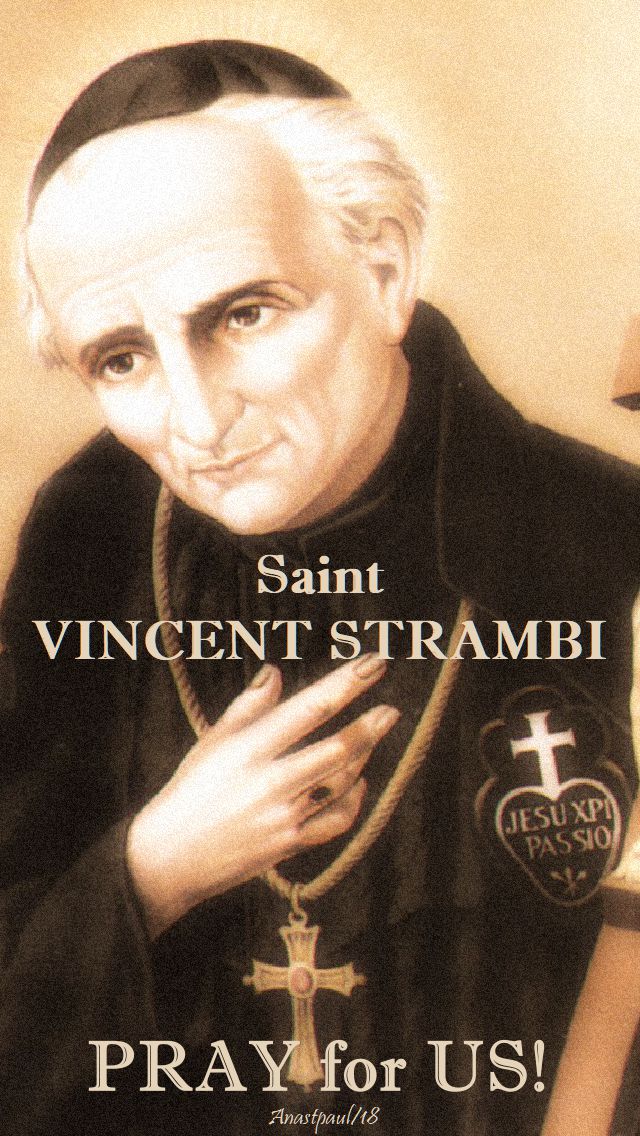
Thought for the Day – 25 September – Today’s Gospel: Luke 8:19-21 and The Memorial of St Vincent Strambi C.P. (1745-1824)
Leo XII, who succeeded Pius VII, was a warm admirer of Vincent. When he received his request to be allowed to retire from the dioceses of Macerata and Tolentino, he seems to have regarded it as an opportunity to take him to Rome and have him always by his side. This, of course, was not at all what Vincent had been hoping and praying for. What he wanted was to hide himself in some obscure Passionist monastery and there prepare himself for death. Instead he was to have apartments at the Quirinal and be almost on every day parade as the Pope’s confidant. However, he took this destruction of all his cherished hopes with a surprising calmness. He apparently had some sort of inward assurance that since his death was not far off it did not matter much after all. To a friend who was condoling with him on his disappointment, he said enigmatically: ‘Oh, it will turn out all right. St Sylvester will see to it.’ And to another friend he said joyfully ‘You will see I shall be only forty days at the Quirinal and then it will be SS. John and Paul’s!’ Subsequent events solved the enigma and explained his joy.
Leo XII was scarcely three months Pope when all the ailments of a shattered constitution assailed him with fury and threatened to cut short a reign that was more than promising great things for the Church. Towards the end of December, 1823, he was considered past all hope of recovery. Vincent visited him one evening during those days and found him so ill that he remained only a short time. On returning to his own apartments, he ordered his evening meal to be prepared a little earlier than usual. He said he would have to rise very hurriedly that night and wished to get some sleep. In fact, at midnight the Pope was taken so bad that it was thought advisable to give him the Last Sacraments. When told how serious his condition was the Pope asked for Vincent to be called. Vincent then administered Extreme Unction and the Viaticum. Afterwards, as he was speaking to the Pope about spiritual things and exhorting him to great confidence in God, his face suddenly took on a particularly joyous aspect. ‘Holy Father, he said with conviction, ‘someone is going to offer his life for you and I shall go now and say Mass for your recovery.’
All who assisted at that Mass of Vincent later on testified to the extraordinary fervour with which he said it. When it was over he enquired how the Pope was and on being told that he was much better, he said in accents of great joy:
‘Our Lady has accepted the sacrifice and the grace has been granted.”
The Pope recovered but Vincent had a stroke on the feast of St Sylvester and died on the following day, 1 January 1824. Cardinal Wiseman, Archbishop of Westminster, in his ‘Recollections of the Last Four Popes, tells how everyone believed that Leo XII owed his life to Vincent. ‘All Rome, he says, ‘attributed the unexpected recovery to the prayers of a saintly Bishop, who was sent for at the Pope’s request. This was Monsignor Strambi, of the Congregation of the Passion. He came immediately, saw the Pope, and assured him of his recovery, as he had offered up to heaven his own valueless life in exchange for one so precious. It did indeed seem as if he had transfused his own vitality into the Pope’s languid frame. He himself died soon after and the Pontiff rose like one from the tomb.’
The circumstances of Vincent’s death called wider attention to his great sanctity. His body, extraordinarily flexible and life-like, lay in state in one of the halls of the Quirinal for three days and in the Basilica of SS. John and Paul for five days. During that time there was a ceaseless stream of people filing past it, many of whom surreptitiously cut off bits of the Passionist habit in which he was clothed. One of the many important ecclesiastics who came to honour Vincent in death was Abbot Cappellari, who was to become Pope Gregory XVI. Noting the uncorpse-like appearance of the body he tried an experiment. He took Vincent’s right hand in his own and with it formed with the greatest of ease the sign of the cross.
Vincent’s funeral was attended by all the members of the Papal Court and the Roman nobility as well as by a vast number of priests, religious and people. Having been, as he had prophesied, forty days at the Quirinal, he was laid to rest in SS. John and Paul’s beside St Paul of the Cross.
In the bulky volumes that have been written on the profane history of the eighteenth and nineteenth centuries, we find little or no mention of this hero of sanctity. The scales of value of historians failed to register one who was neither a soldier, nor a savant, nor a scientist. Yet, if the standards of the soul are higher than those of the body; St Vincent Strambi accomplished something that weighed down heavily the scales of Divine value-something that merits an eternal remembrance – he lived a life of virtue and selfdenial for God’s sake and he saved innumerable souls. (SAINT VINCENT STRAMBI, C.P. 1745-1824 – OSMUND THORPE, C. P.)
Quote of the Day – 25 September – Today’s Gospel: Luke 8:19-21 and The Memorial of St Vincent Strambi C.P. (1745-1824)
“… how can anyone put on Jesus Christ and imitate His example, if he does not study this Jesus, who must inspire and perfect our faith? He must run the race to which he is challenged, the glorious race in which, he overcomes the enemy of the human family and follows the way of the cross. Under the lordly banner of that cross, he will attain eternal life.” (from his first Pastoral Letter as Bishop)
“I would sacrifice everything, sooner than disobey the orders, of the Vicar of Jesus Christ.” (Said by St Vincent when all Bishops in the provinces annexed to France in 1808 were threatened with exile and the confiscation of their property if they refused to take the oath of allegiance to Napoleon. He was arrested.)
One Minute Reflection – 25 September – Today’s Gospel: Luke 8:19-21 – Tuesday of the Twenty-fifth week in Ordinary Time, Year B and the Memorial of St Vincent Strambi C.P. (1745-1824)
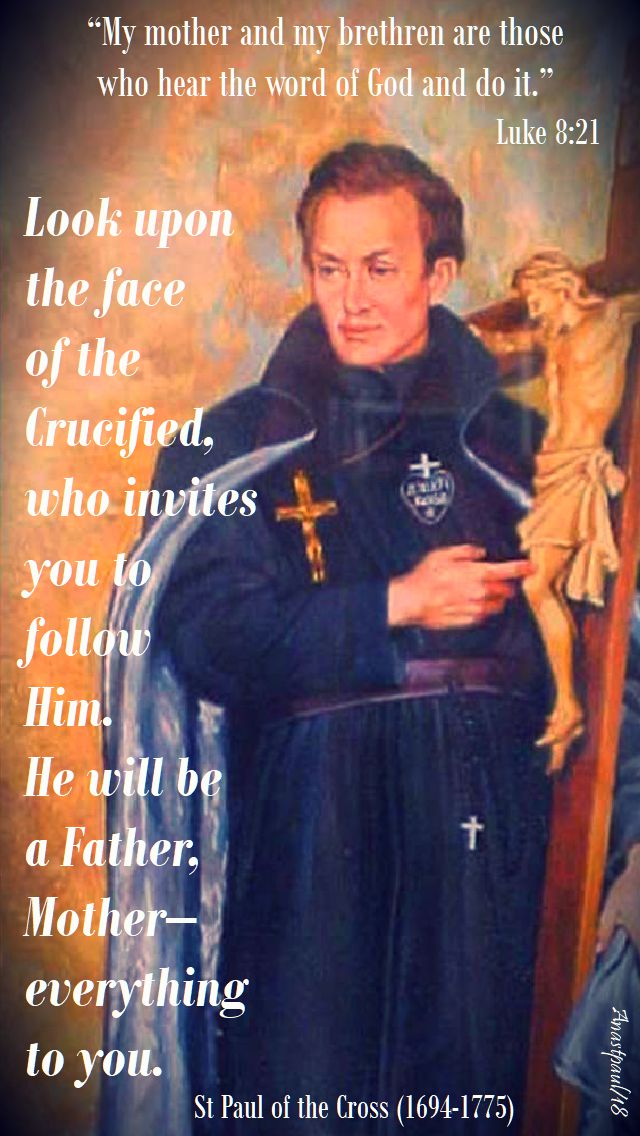
But he said to them, “My mother and my brethren are those who hear the word of God and do it.”...Luke 8:21
REFLECTION – “Look upon the face of the Crucified, who invites you to follow Him. He will be a Father, Mother–everything to you.”….St Paul of the Cross C.P. (1694-1775)
PRAYER – Jesus, our Lord and our God, only You are the best Shepherd of Your Church and we, the sheep of Your flock, who follow You and hear and do Your Word. Support with grace those who are responsible for the fate of Your fold, so that following the example of St Vincent Maria Strambi, they devote all their powers and talents to service to the Church. In God, our Father we pray through You who live in union with Him and the Holy Spirit, one God, for ages and ages. Amen
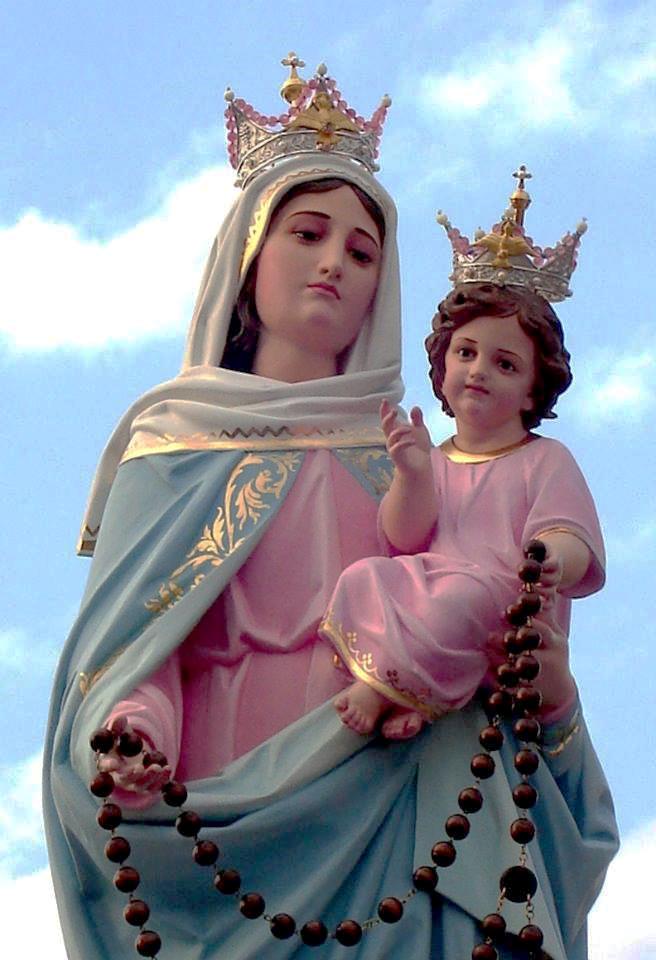
Our Lady of the Rosary of San Nicolás, Argentina – 25 September:
An ordinary housewife, a mother and grandmother who had no formal education and no knowledge of the Bible or theology claimed that she was visited by the Blessed Mother daily for a period of over 6 years. She reportedly additionally received 68 messages from Jesus Christ. Numerous healings, including the cure of a boy with a brain tumour, have been documented.
Every 25 September, the city of San Nicolás hosts hundreds of thousands of pilgrims and faithful who meet to venerate and honor the statue of Our Lady of the Rosary of St Nicholas. In 2003, on the twentieth anniversary of the first apparition of Our Lady, the second largest group ever congregated: 400,000 faithful. Pilgrims came from all the provinces of Argentina, with a group of more than 1,000 people from Buenos Aires who travelled the whole 240 km distance on foot – a distance three times greater than that from Buenos Aires to the national Basilica of Our Lady of Luján. On 25 September 2013, thirty years after the first apparition of Our Lady, 500,000 people gathered surpassing the record of 2004 when the greatest number of pilgrims visited.
In a decree signed on 22 May 2016 and made public a few days later, Héctor Cardelli, Bishop of the Diocese of San Nicolás, declared that the apparitions that took place in city of San Nicolás were supernatural in origin. The devotion is thus approved at the Diocesan level within the Catholic Church.
St Anacharius of Auxerre
St Aurelia of Macerata
St Caian of Tregaian
St Ceolfrid
St Cleopas
St Egelred of Crowland
St Ermenfridus of Luxeuil
St Finbar
St Firminus of Amiens
St Fymbert
St Herculanus the Soldier
Bl Herman the Cripple
Bl Marco Criado
St Mewrog
St Neomisia of Mecerata
St Paphnutius of Alexandria
St Principius of Soissons
St Sergius of Moscow
St Solemnis of Chartres
St Vincent Strambi C.P. (1745-1824)
Biography here: https://anastpaul.wordpress.com/2017/09/25/23731/
Martyrs of Damascus: A Christian family of six who were tortured to death in a persecution by Roman authorities. They were: Eugenia, Maximus, Paul, Rufus, Sabinian and Tatta. They were tortured to death in Damascus, Syria, date unknown.
Martyred in the Spanish Civil War:
• Blessed Jose María Bengoa Aranguren
• Blessed Josep Maria Vidal Segú
• Blessed Juan Agustín Codera Marqués
• Blessed Julio Esteve Flors
• Blessed Pedro Leoz Portillo
• Blessed Rafael Pardo Molina
• Blessed Tomás Gil de La Cal
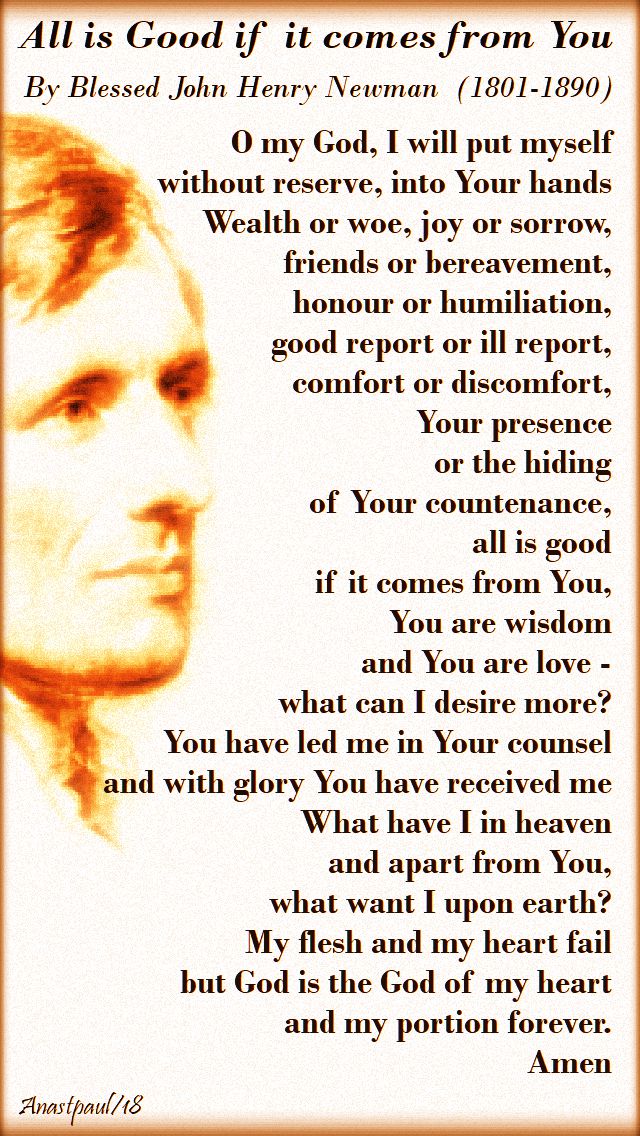
O my God, all is Good if it comes from You By Blessed John Henry Newman (1801-1890)
O my God,
I will put myself without reserve,
into Your hands.
Wealth or woe, joy or sorrow,
friends or bereavement,
honour or humiliation,
good report or ill report,
comfort or discomfort,
Your presence
or the hiding of Your countenance,
all is good if it comes from You,
You are wisdom and You are love –
what can I desire more?
You have led me in Your counsel
and with glory You have received me
What have I in heaven
and apart from You,
what want I upon earth?
My flesh and my heart fail
but God is the God of my heart
and my portion forever.
Amen
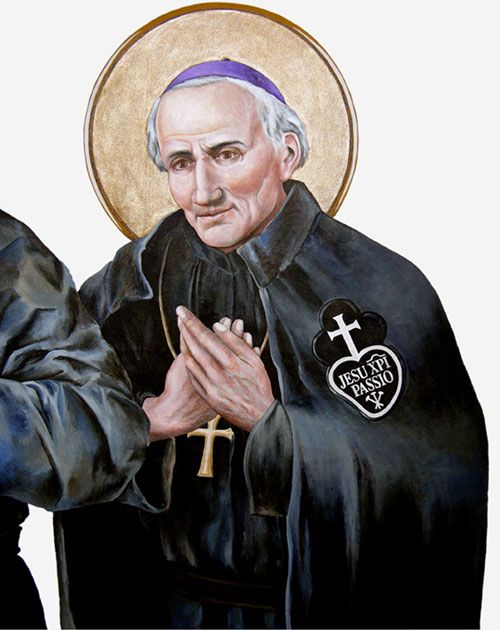
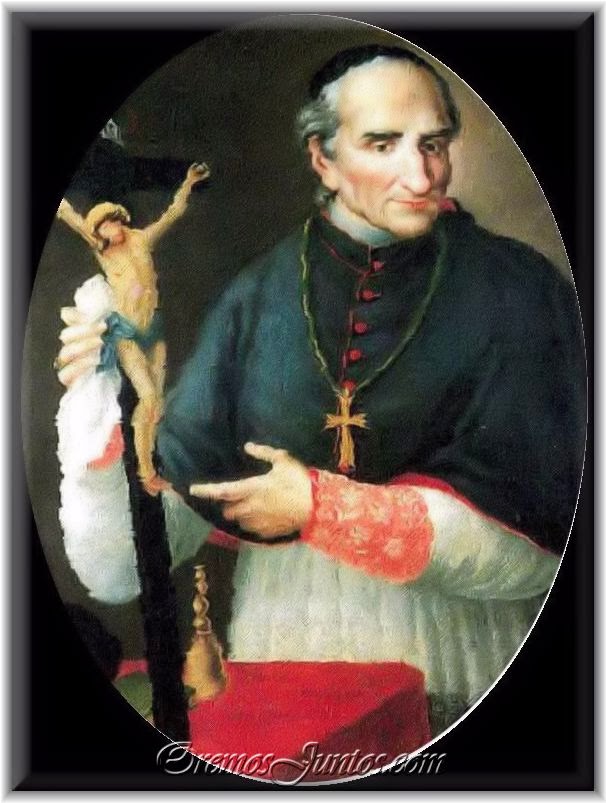
Saint of the Day – 25 September – St Vincent Strambi C.P. (1745-1824) Passionist Religious Priest and Bishop of Macerata and Tolentino, Apostle of Charity, Preacher, Teacher, a man of great learning and prodigious memory.
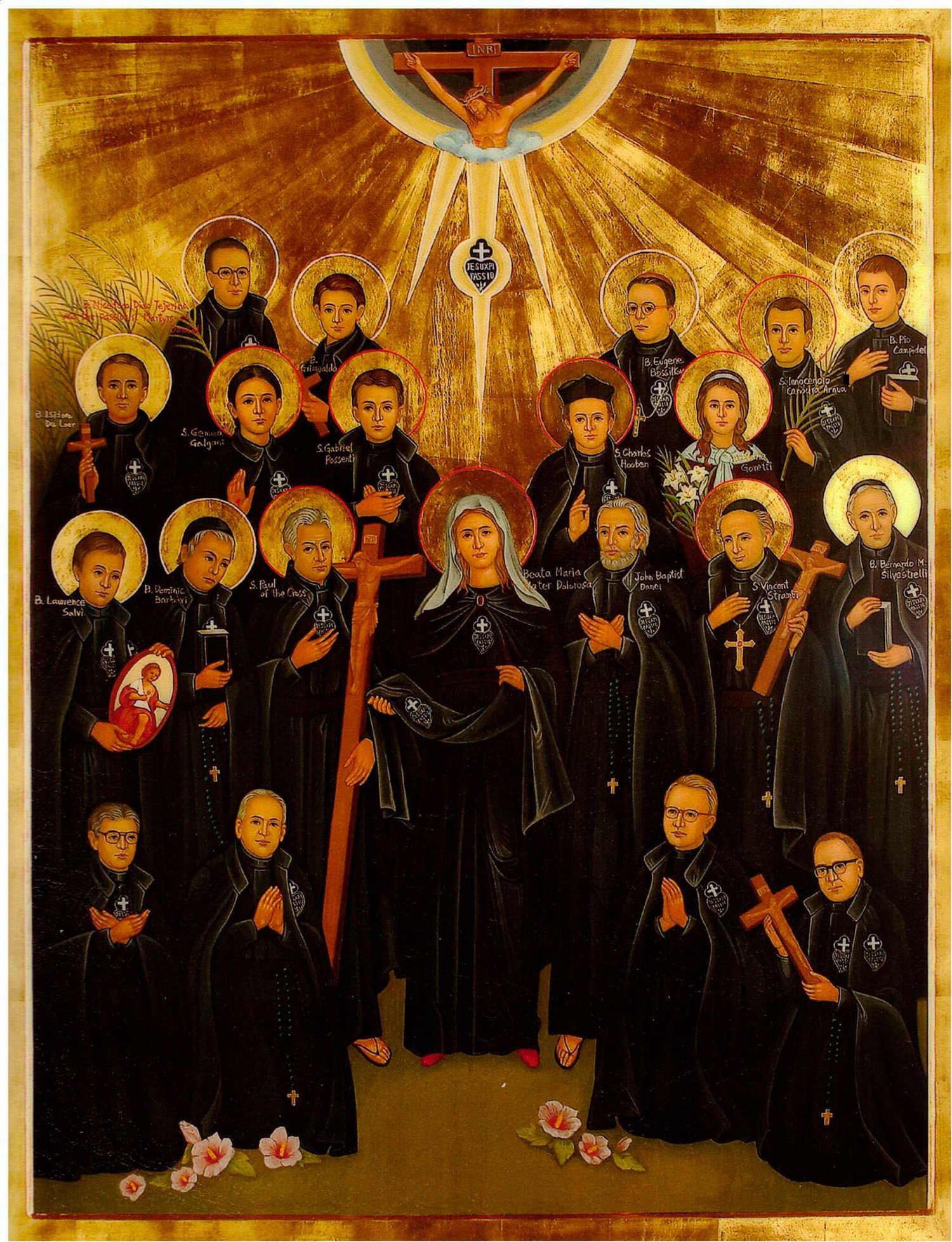
Born in 1745 at Civitavecchia near Rome, the son of a wealthy businessman, Saint Vincent Strambi never showed any inclination for any occupation other than the service of God. He found his vocation when after his ordination as a deacon in 1767, he made a retreat amid the Passionists of Monte Fogliano, where Saint Paul of the Cross (1694-1775), their founder, was residing at the time. The Passionist houses are called retreats and by their Rule must be situated outside cities. Saint Paul of the Cross told his brethren on his deathbed, as he had taught them during his active years, to conserve always the spirit of prayer, solitude and poverty, in that way the apostolic success of their works would also be conserved. The life of contemplation, essential formation for any fruitful works, was what Saint Vincent Strambi already desired.
St Paul of the Cross
It was formally declared by St Vincent’s last secretary, Monsignor Catervo Serrani, that it would not be temerity to believe that he knew by heart all the works of Saint Thomas Aquinas. The same might have been said of his knowledge of Sacred Scripture. His studies of religion, ever an inexhaustible wealth, continued throughout his lifetime, yet his preaching was so simple that all could easily grasp his thought. He never used notes but taught according to the needs of his listeners, which he always discerned with exactitude after praying intently at the foot of the crucifix. As he studied, he seemed to see around his desk the faces of his spiritual children, waiting for the bread of life he was destined to break for them. This method of study has been preserved among his followers in the Order; the Passionists think of and pray for, their future spiritual children before they study.
Saint Vincent became a bishop after many years of preaching missions all over Italy. But never could he forget his Order, though he had to put aside its habit. Saint Paul of the Cross on his deathbed had said to him several times: ‘Padre Vincenzino, I recommend to you the poor Congregation’. When Saint Vincent asked what he wished him to do, Saint Paul replied: ‘You will do great things! You will do great good ! I recommend to you this poor Congregation!’
In 1773 Father Paul put the former seminary prefect and rector in charge of the training of the young students for future missionary preaching at the newly acquired monastery of Sts John and Paul in Rome. Eventually Father Vincent would write a manual on Sacred Eloquence. In this way Father Vincent was able to be with St Paul during the final years of his life. Paul saw in this young man the apostolic spirit of holiness he was bequeathing to his congregation. We are told that as he was dying St Paul one day turned to Father Vincent Mary and told him he was entrusting the congregation to his care.
Vincent, like the others, missed the founder very much as he continued to prepare young Passionists for the missionary apostolate. He also went forth to preach missions as often as possible.
As bishop of Macerata and Tolentino, he continued whenever possible to rise at midnight for the divine office and regretted being unable to dedicate more than five hours to prayer each day. He called in the poor and gave them alms, he visited the hospitals and the prisoners, blessed, embraced and helped them. He visited every religious house of his diocese, then the Canons and the parish priests. He preached for his clergy a beautiful mission, then organised specialised services for the various professions of the laity, saying, the lawyers need different instruction and different sowings than the merchants or the physicians, for example, to each his own portion of the truth! His table was very frugal, never did he permit more than two dishes. He reduced expenditures to a minimum, to be able to give more to the poor.
He wished to resign as bishop at the age of seventy-eight and Pope Leo XII ceded to his wish but asked him to come to Rome as his counsellor. That his life was soon to end was revealed to him and when the Holy Father was about to die that same year, he offered his life to save that of the Vicar of Christ. He did not say so directly but told everyone not to be anxious, because the Pope would live. Someone he knew had offered his life for him, he added. The prayer was answered on the very day he said this, 24 December, the Pope rose, suddenly cured. Three days later Saint Vincent was struck by apoplexy and died on 1 January 1824. He was Canonised by Pope Pius XII in 1950.
In 1780 he became rector of the Community of Sts John and Paul. In 1781 he was elected provincial. He also served as provincial and general consultor. During this time that he published a biography of the founder. Father Vincent used the testimonies of eye-witnesses as given in the Canonisation processes. It is said that he wrote the life of St Paul on his knees, out of reverence for the founder. His “Life” of Saint Paul has become a classic.
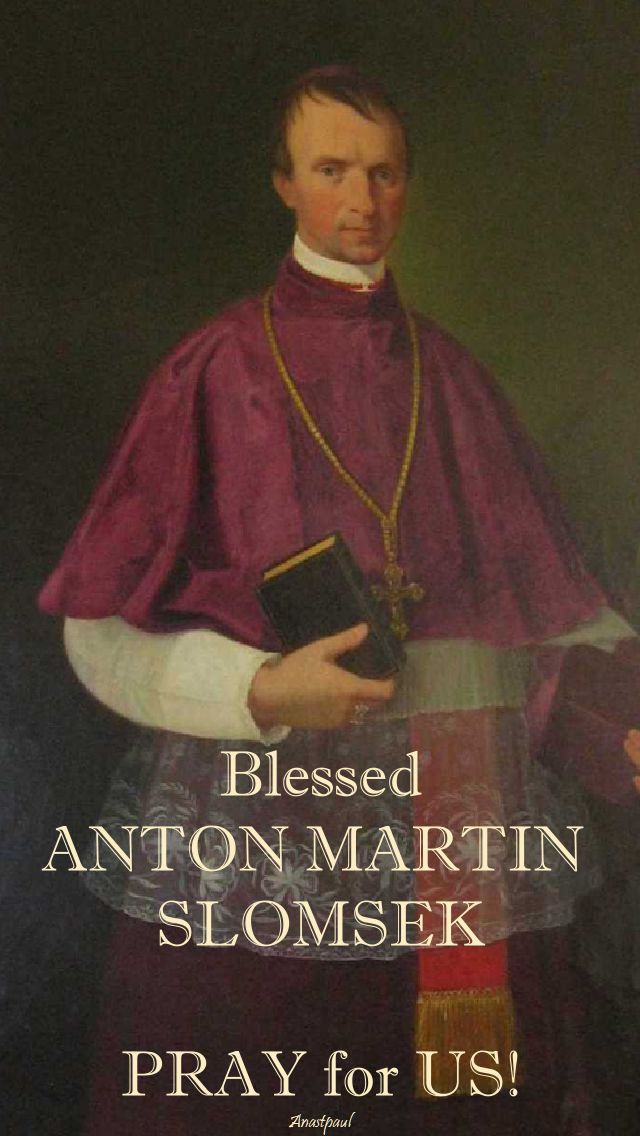
Thought for the Day – 24 September – The Memorial of Bl Anton Martin Slomsek (1800-1862)
“Teacher and educator, writer and poet, biographer and critic, lover of his mother tongue and fighter for national equality, patriot, speaker and preacher, ecumenical worker and theological teacher of the Slovene people, priest and bishop. Slomsek’s personality is like a mosaic, each stone has its own colour, its own function and size but all together provide the image of a saint, that is a person who is open to the breath of the Holy Spirit, who prophetically understands the signs of the time and responds to them, who understands how to use all natural and supernatural means to realise the kingdom of God on earth.”
Dr Franc Kramberger, Bishop of Maribor, Slovenia, 1999
“Only with a sound formation can men and women be prepared to build a world that is open to the perennial values of truth and love.”
St John Paul at the Beatification of Bl Anton (Sunday, 19 September 1999)
Quote/s of the Day – 24 September – Today’s Gospel: Luke 8:16–18 – Monday of the Twenty fifth week in Ordinary Time, Year B
“No one after lighting a lamp, covers it with a vessel, or puts it under a bed but puts it on a stand, that those who enter may see the light.”…Luke 8:16
Speaking of: Living the Light
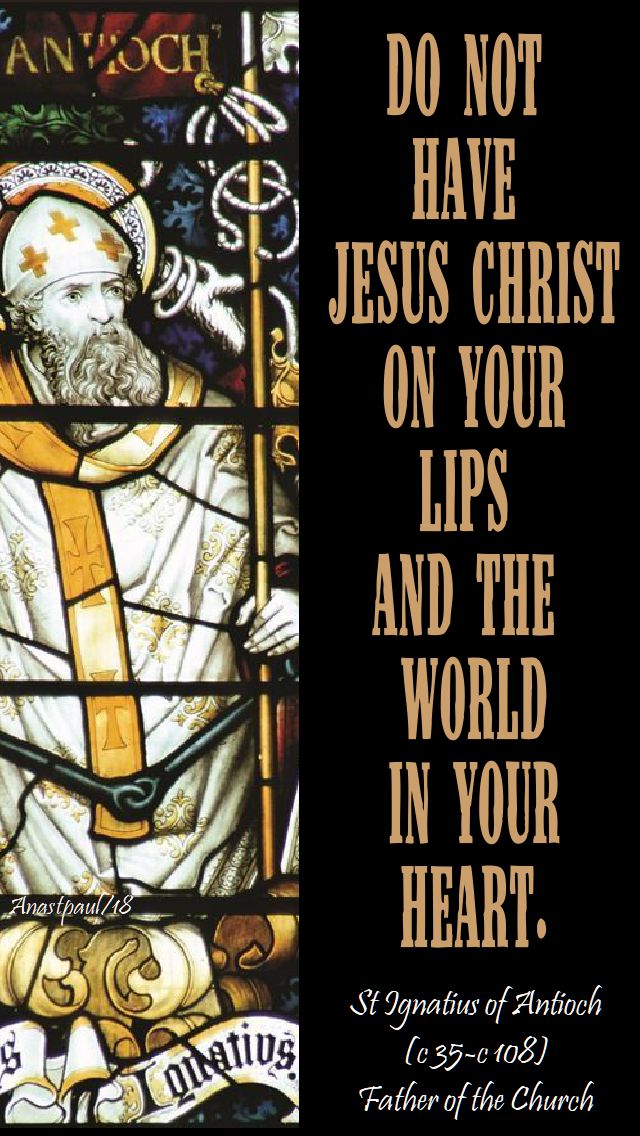
“Do not have Jesus Christ on your lips and the world in your heart?”
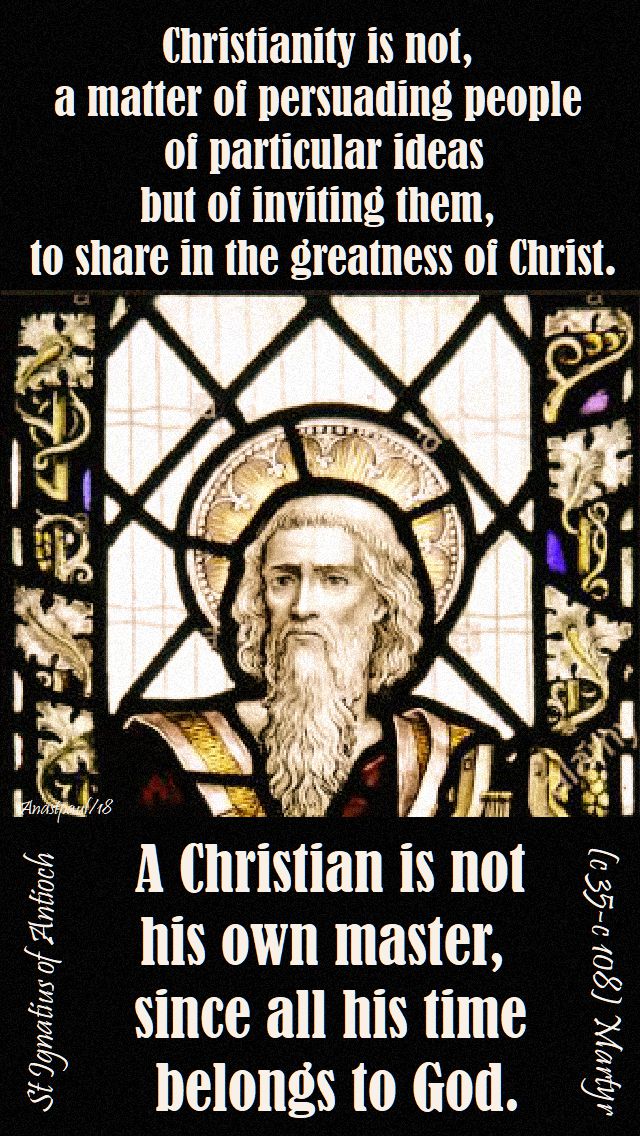
“Christianity is not, a matter of persuading people of particular ideas but of inviting them, to share in the greatness of Christ.”
“A Christian is not his own master, since all his time belongs to God.”
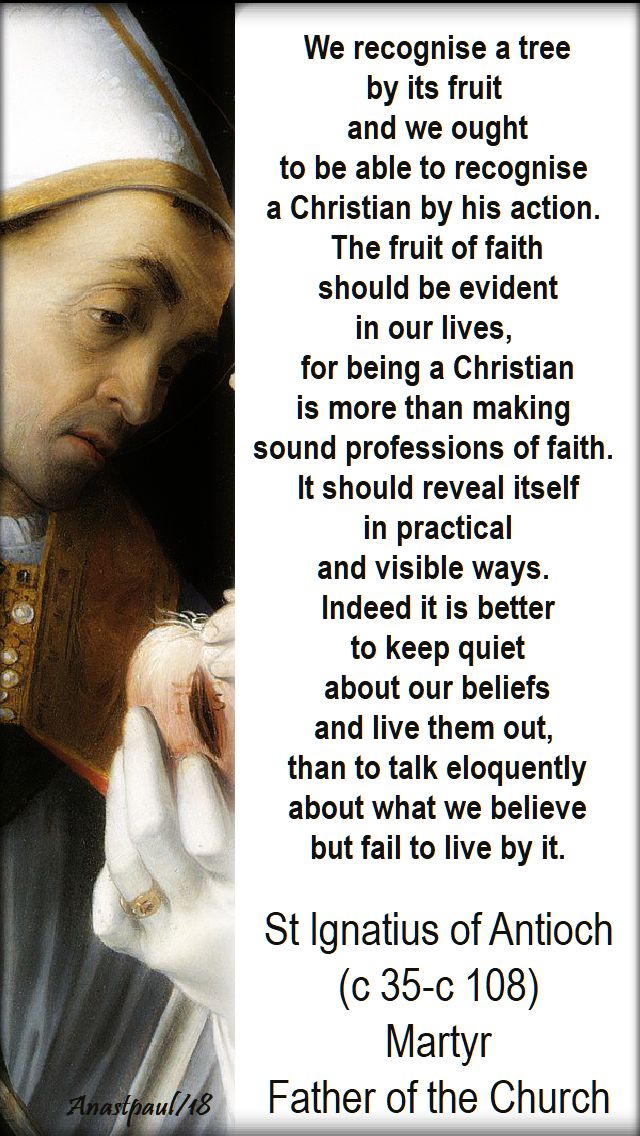
“We recognise a tree by its fruit and we ought to be able to recognise a Christian by his action. The fruit of faith should be evident in our lives, for being a Christian is more than making sound professions of faith. It should reveal itself in practical and visible ways. Indeed it is better to keep quiet about our beliefs and live them out, than to talk eloquently about what we believe but fail to live by it.”
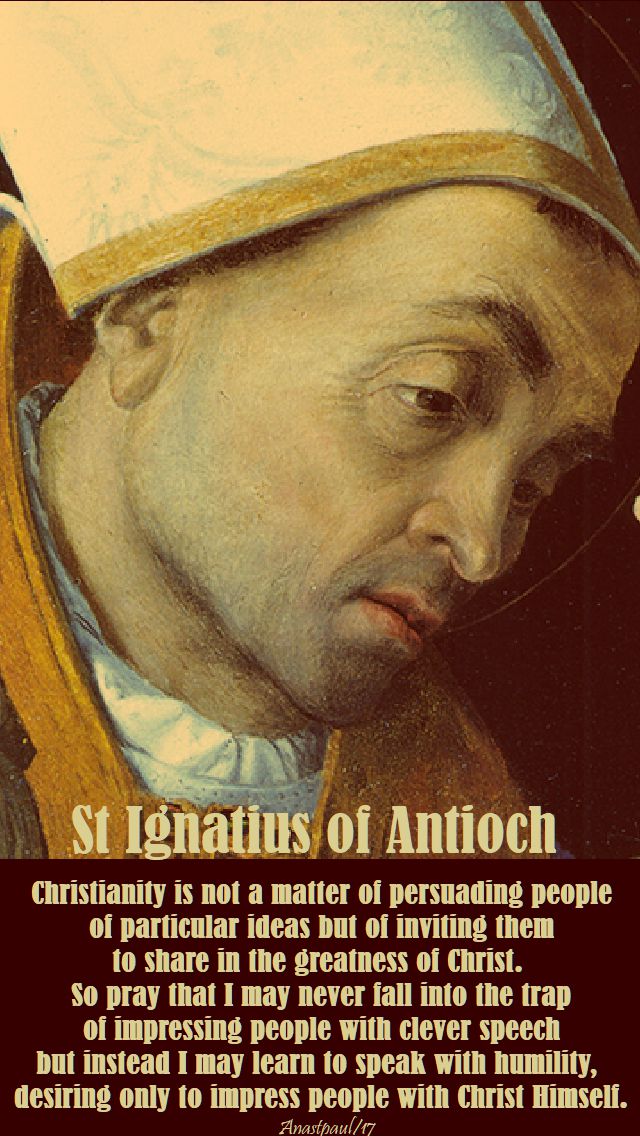
“Christianity is not a matter of persuading people of particular ideas but of inviting them to share in the greatness of Christ. So pray that I may never fall into the trap of impressing people with clever speech but instead, I may learn to speak with humility, desiring only to impress people with Christ Himself.”
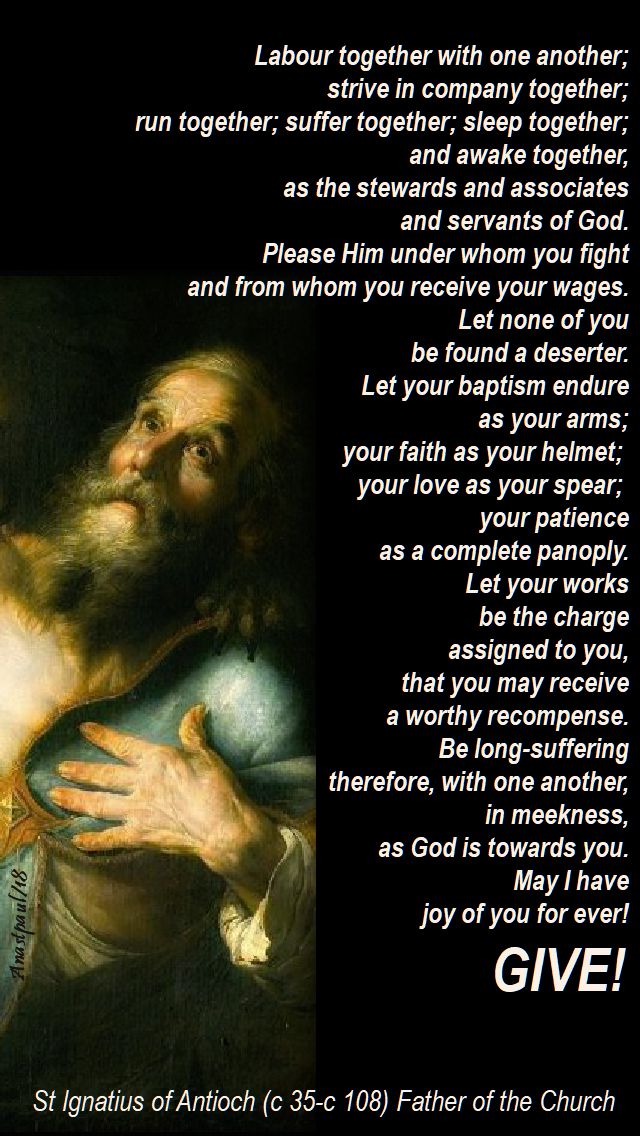
“Labour together with one another; strive in company together; run together; suffer together; sleep together; and awake together, as the stewards and associates and servants of God. Please Him under whom you fight and from whom you receive your wages. Let none of you be found a deserter. Let your baptism endure as your arms; your faith as your helmet; your love as your spear; your patience as a complete panoply. Let your works be the charge assigned to you, that you may receive a worthy recompense. Be long-suffering, therefore, with one another, in meekness, as God is towards you. May I have joy of you for ever! Give.” … (St Ignatius of Antioch: The Epistles)
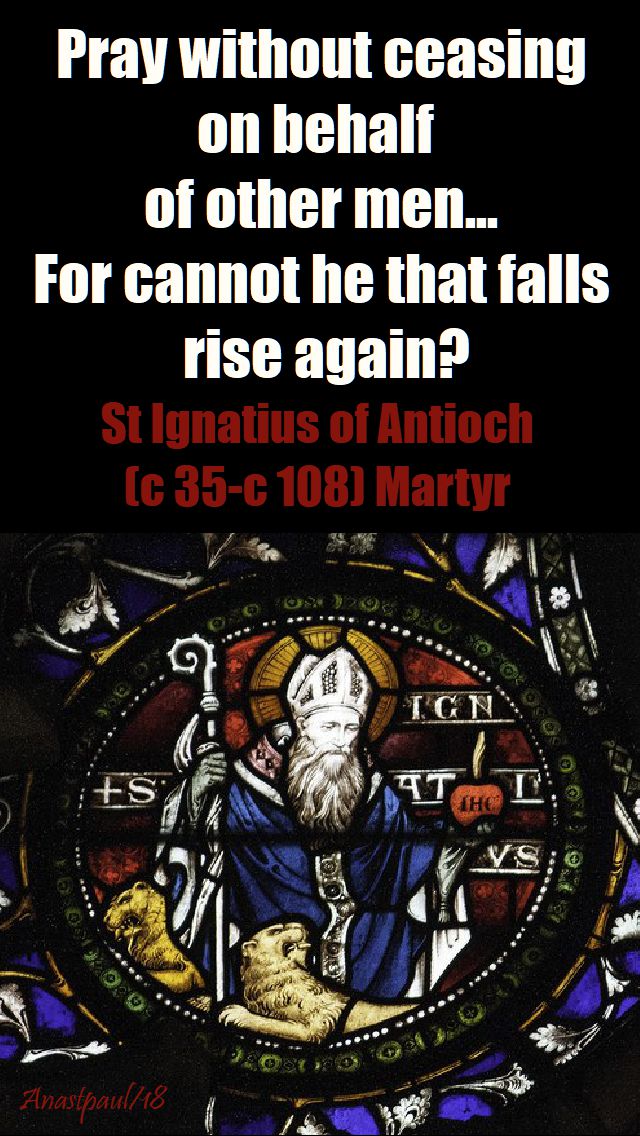
“Pray without ceasing on behalf of other men… For cannot he that falls, rise again?”
St Ignatius of Antioch (c 35-c 108) Martyr – Father of the Church
One Minute Reflection – 24 September – Today’s Gospel: Luke 8:16–18 – Monday of the Twenty fifth week in Ordinary Time, Year B
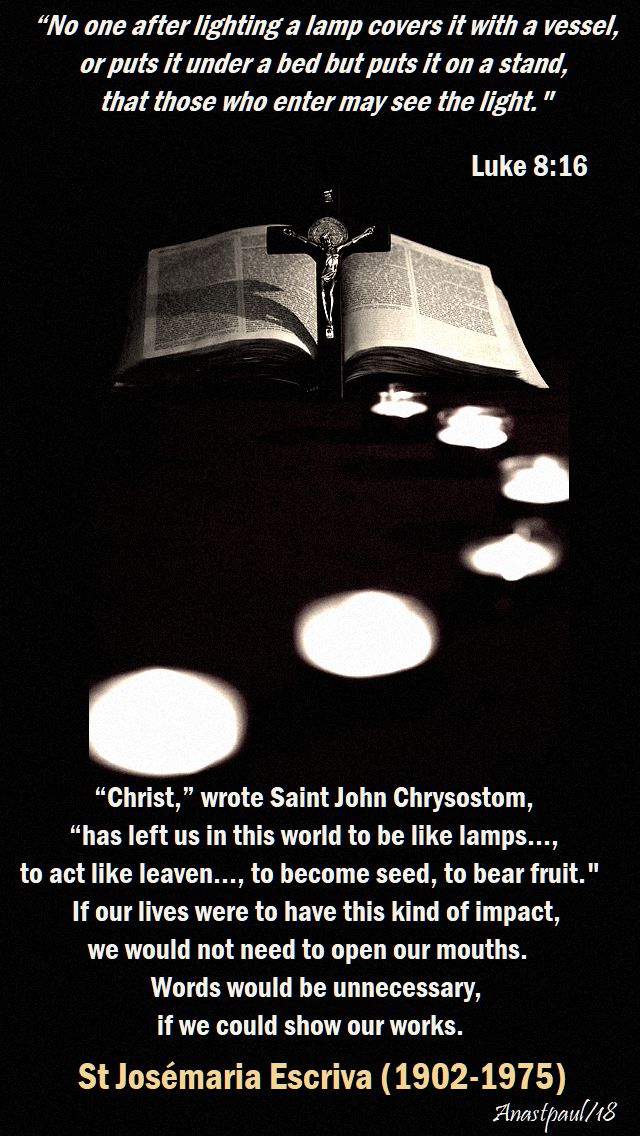
“No one after lighting a lamp, covers it with a vessel, or puts it under a bed but puts it on a stand, that those who enter may see the light.”…Luke 8:16
REFLECTION – “Christ,” wrote a Father of the Church, (Saint John Chrysostom), “has left us in this world to be like lamps…, to act like leaven…, to become seed, to bear fruit.” If our lives were to have this kind of impact, we would not need to open our mouths. Words would be unnecessary if we could show our works. There wouldn’t be a single pagan left if we were truly christians.
We should avoid making the mistake of thinking that the apostolate consists, in the witness of a few pious practices. We are christians, you and I but at the same time and without resolution of continuity, we are citizens and fellow-workers at very clear obligations, which we are to carry out in an exemplary fashion if we want to become holy once and for all. It is Jesus Christ who urges us: “You are the light of the world. A city set on a mountain cannot be hidden. Nor do they light a lamp and then set it under a bushel basket; it is set on a lampstand , where it gives light to all in the house. Just so, your light must shine before others, that they may see your good deeds and glorify your heavenly Father” (Mt 5:14-16)….Saint Josémaria Escriva de Balaguer (1902-1975) Homily in Amigos de Dios
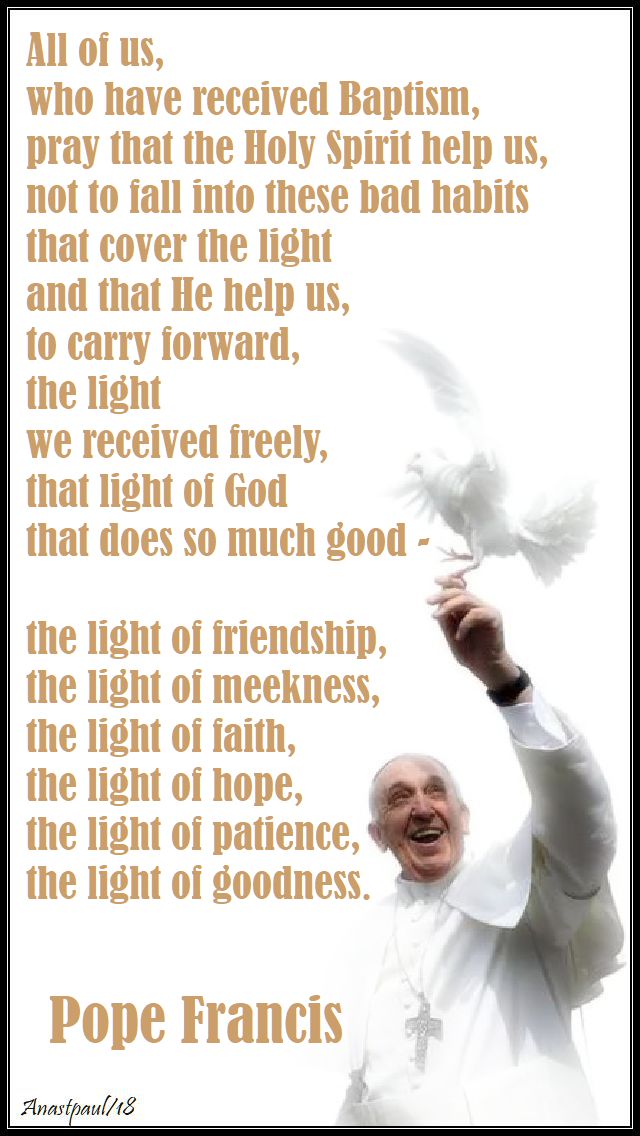
“All of us who have received Baptism, pray that the Holy Spirit help us not to fall into these bad habits that cover the light and that He help us to carry forward, the light we received freely, that light of God that does so much good – the light of friendship, the light of meekness, the light of faith, the light of hope, the light of patience, the light of goodness.”…Pope Francis – Santa Marta, 19 September 2016
PRAYER – Lord, be the beginning and the end of all that we do, all that we say, in every moment be our Light. Prompt our actions with Your grace and complete them with Your all-powerful love. May we always seek Your Face in every circumstance, in every moment, so that Your Light may become our life. Blessed Anton Martin Slomsek, you lived your life in the Presence of the Holy Face of Christ our Lord, please intercede for us and for all the world. We make our prayer through Christ, our Lord with the Holy Spirit, one God forever, amen.
Our Morning Offering – 24 September – Monday of the Twenty-fifth week in Ordinary Time, Year B
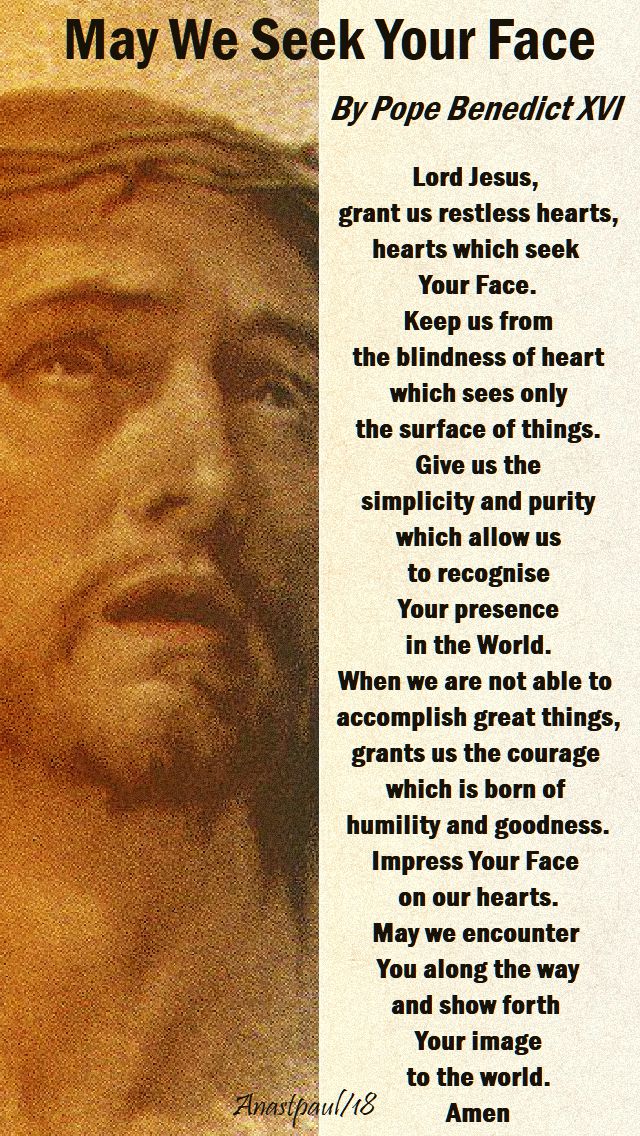
May We Seek Your Face By Pope Benedict XVI
Lord Jesus, grant us restless hearts,
hearts which seek Your Face.
Keep us from the blindness of heart
which sees only the surface of things.
Give us the simplicity and purity
which allow us to recognise
Your presence in the World.
When we are not able to accomplish great things,
grants us the courage
which is born of humility and goodness.
Impress Your Face on our hearts.
May we encounter You along the way
and show forth Your image
to the world.
Amen
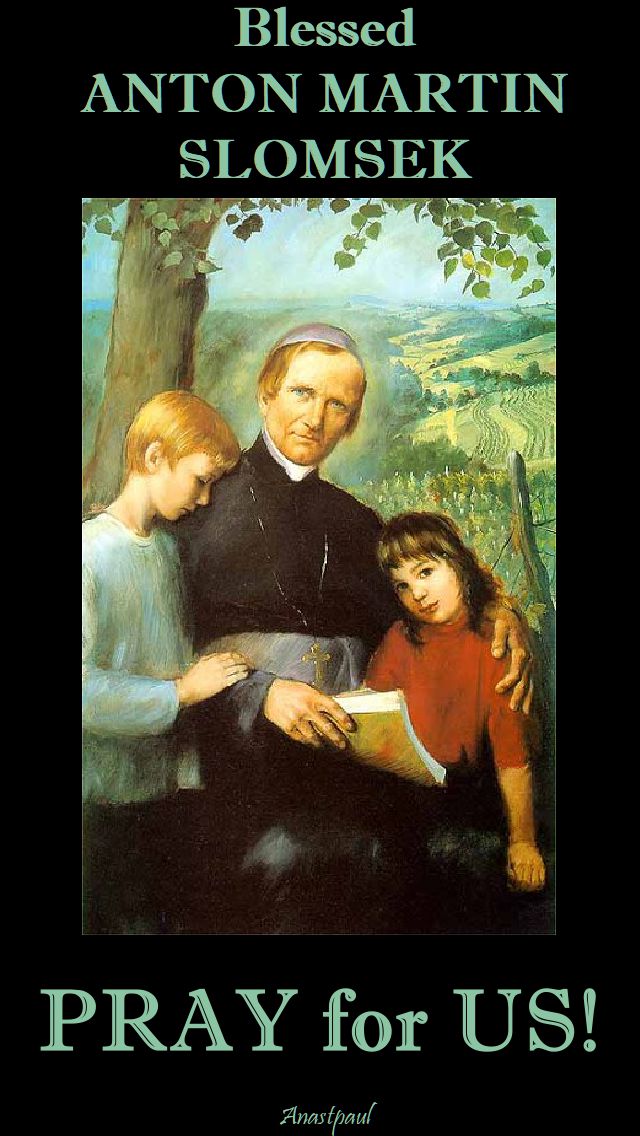
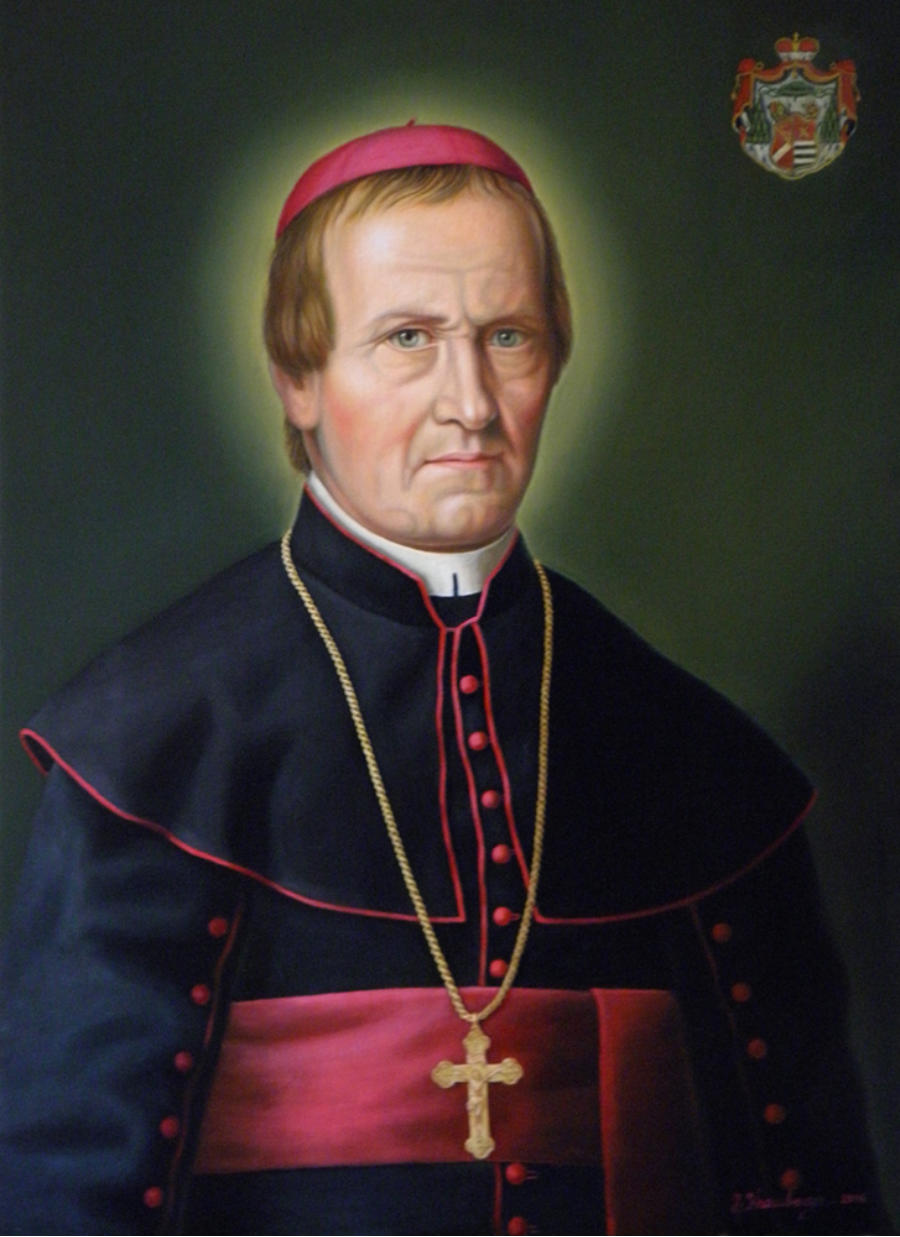
Saint of the Day – 24 September – Blessed Anton Martin Slomsek (1800-1862) – – Bishop, Writer, Poet, Educator, Reformer, Preacher, Founder of schools, a newspaper, Advocate of literacy and the Slovenian culture and language.
Artist – Joze Kramberger
The dawn of the nineteenth century found the Slovenian schools in a precarious condition – their number was pitifully small and the courses they offered were inadequate and unsatisfactory. This deplorable state was due to the fact that the Austrian officials endeavoured to suppress the national language and, to achieve this end, introduced foreign teachers thoroughly distasteful to the people, whom in turn they despised. Moreover, books, magazines, papers and other educational influences were lacking, not because they would not have been gladly welcomed but because they were forbidden by the Government, in its fear of Panslavism.
This situation Bishop Slomsek was compelled to face. A man of initiative and discernment, the changes he wrought in a short time were wonderful. In the Constitution of 1848, granting national rights long denied, he found his instrument. Following this measure, though only after many futile attempts, he received official sanction to undertake the reform of the schools. The first fruits of his labours were a series of excellent text-books, many from his own pen, which proved powerful factors in the growth and development of religious as well as national education.
Artist – Joze Kramberger
The founding of the weekly, “Drobtinice” (Crumbs), was his next step. Essays and books on a great variety of subjects, embracing practically every question on which his countrymen stood in need of enlightenment, were published in quick succession and his vigorous and incisive style, well adapted to the intelligence of his readers, though not lacking scholarly refinement, made his works exceedingly popular.
His pastorals and sermons constitute a literature of lasting value. In 1841 he sought to realise a dream of years — the establishment of a society for the spread of Catholic literature. Unfortunately, the movement was branded as Panslavistic and failed at the time but ten years later this organisation was effected and Druzba sv. Mohora began sending a few instructive books to Catholic homes. Today, a million educational volumes have been distributed among a million and a half of people.
Although Bl Anton was ardent and active in the interests of his own race, yet he was admired and loved by great men of other nations and his kindness and tact eliminated all bitterness from the controversies in which he was forced to engage.
Patriotism, the education of his people, their temporal and spiritual welfare, were his inspiring motives, as the non-Catholic Makusev remarks: “Education, based on religion and nationality, was his lofty aim”.
Humility and childlike simplicity marked his life. His priests, sincerely devoted to him, frequently heard him repeat the words: “When I was born, my mother laid me on a bed of straw and I desire no better pallet when I die, asking only to be in the state of grace and worthy of salvation”.
Artist – Joze Kramberger
“The new blessed is offered to you as a model of true patriotism. His projects left a decisive mark on your people’s future and made an important contribution to the achievement of independence. In turning my gaze to the beloved region of the Balkans, unfortunately scarred in recent years by conflict and violence, extreme forms of nationalism, cruel ethnic cleansing and wars between peoples and cultures, I would like to call everyone’s attention to the witness of this new blessed.
He shows that it is possible to be sincere patriots and with equal sincerity to coexist and cooperate with people of other nationalities, other cultures and other religions. May his example and especially his intercession obtain solidarity and genuine peace for all the peoples of this vast area of Europe.” St Pope John Paul II at the Beatification of Bl Anton Slomsek in Slovenia on Sunday, 19 September 1999
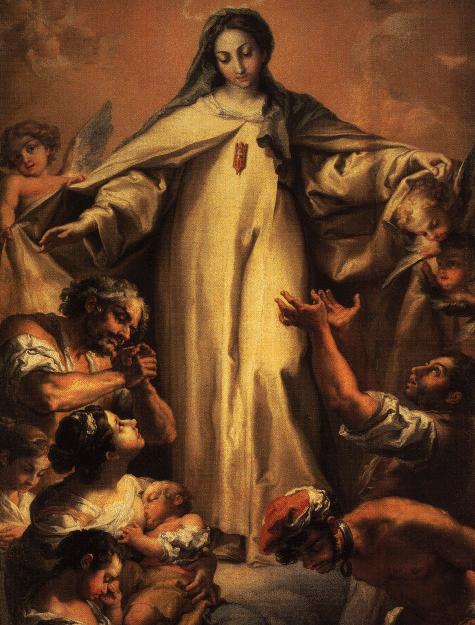
Commemorates the foundation of the Mercedarian Order and the apparition of Our Lady of Ransom. In this appearance she carried two bags of coins for use in ransoming Christians imprisoned by Moors. On 10 August 1218, the Mercedarian Order was legally constituted at Barcelona, Spain by King James of Aragon and was approved by Pope Gregory IX on 17 January 1235. The Mercedarians celebrated their institution on the Sunday nearest to 1 August because it was on 1 August 1218 that the Blessed Virgin showed Saint Peter Nolasco the white habit of the Order. This custom was approved by the Congregation of Rites on 4 April 1615. On 22 February 1696 it was extended to the entire Latin Church and the date changed to 24 September. St Peter Nolasco (1189-1256) was the Founder of the Mercedarian Order – Memorial 28 January.
Patronages –
• Bahía Blanca, Argentina, archdiocese of
• Barcelona, Spain
• Dominican Republic
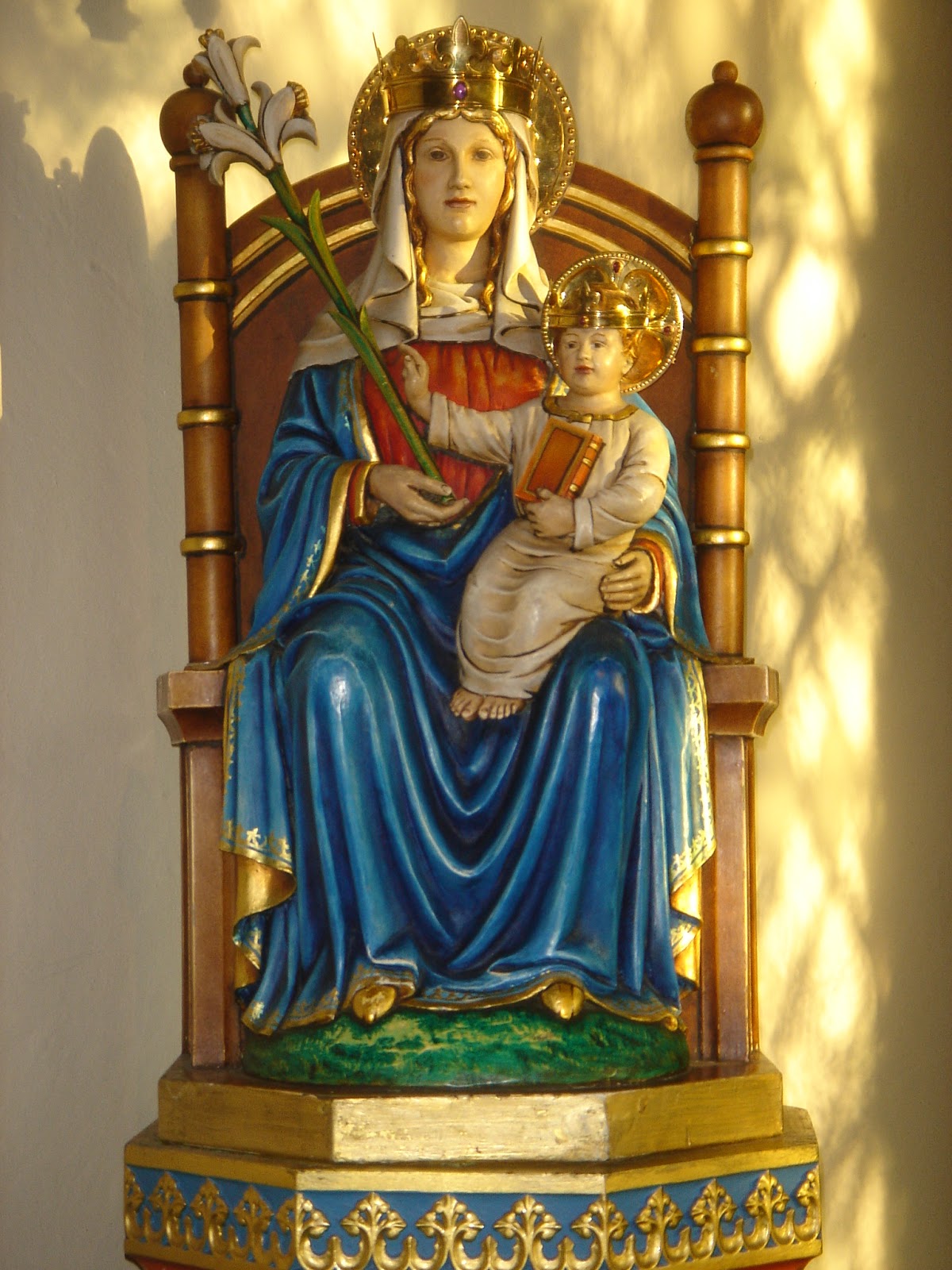
Our Lady of Walsingham/Virgin of the Sea:
In 1061 Lady Richeldis de Faverches, lady of the manor near the village of Walsingham, Norfolk, England, was taken in spirit to Nazareth. There Our Lady asked her to build a replica, in Norfolk, of the Holy House where she had been born, grew up, and received the Annunciation of Christ’s impending birth. She immediately did, constructing a house 23’6″ by 12’10” according to the plan given her. Its fame slowly spread, and in 1150 a group of Augustinian Canons built a priory beside it. Its fame continued to grow, and for centuries it was a point of pilgrimage for all classes, the recipient of many expensive gifts.
In 1534 Walsingham became one of the first houses to sign the Oath of Supremacy, recognising Henry VIII as head of the Church in England. Dissenters were executed and in 1538 the House was stripped of its valuables, its statue of the Virgin taken to London, England to be burned, its buildings used as farm sheds for the next three centuries.
In 1896 Charlotte Boyd purchased the old Slipper Chapel and donated it to Downside Abbey. In 1897 Pope Leo XIII re-founded the ancient shrine of Our Lady of Walsingham, and pilgrimages were permitted to resume. The statue of Our Lady was re-enshrined in 1922, beginning an era of cooperation at the shrine between Catholics and Anglicans. In 1981 construction began on the Chapel of Reconciliation, a cooperative effort between the two confessions and located near the shrine. The feast of Our Lady of Walsingham was reinstated in 2000.
In 2012 the Personal Ordinariate of the Chair of Saint Peter for Anglicans joining the Church was given its patron as the Blessed Virgin Mary under the title Our Lady of Walsingham.
Patronages –
• England
• East Anglia, England, diocese of
• Personal Ordinariate of the Chair of Saint Peter
St Chuniald
Bl Colomba Matylda Gabriel
St Coprio
St Erinhard
St Felix of Autun
St Gerard Sagredo
St Geremarus
St Gislar
St Isarnus of Toulouse
St Lupus of Lyons
St Pacificus of Severino
St Paphnutius of Egypt
Bl Robert Hardesty
St Rusticus of Clermont
St. Rupert of Salzburg
St Terence of Persaro
St Thyrsus of Autun
St Ysarn of Saint Victor
Bl William Spenser
—
Martyrs of Chalcedon – (49 saints): Forty-nine Christian choir singers of the church in Chalcedon in Asia Minor who were martyred together in their persecutions of Diocletian in 304.
Martyred in the Spanish Civil War:
• Blessed Antonio Pancorbo López
• Blessed Esteban García y García
• Blessed José María Ferrándiz Hernández
• Blessed Juan Francisco Joya Corralero
• Blessed Luis de Erdoiza Zamalloa
• Blessed Manuel Gómez Contioso
• Blessed Melchor Rodríguez Villastrigo
• Blessed Pascual Ferrer Botella
• Blessed Rafael Rodríguez Mesa
• Blessed Santiago Arriaga Arrien
Thought for the Day – 23 September – Twenty-fifth Sunday in Ordinary Time, Year B and The Memorial of St Padre Pio (1887-1968)
Miracles happened every day of Padre Pio’s life. Like other wonder-workers such as Francis of Paola (1416-1507), Pio freely contradicted inviolable laws of nature. He appeared in two places at the same time to help people in trouble. He summoned friends by mental telepathy or by causing them to smell the scent of violets, which was associated with his presence. He read people’s thoughts and used that special knowledge to tease them . He dumbfounded people in the confessional by describing all their sins in detail. He accurately predicted future events, including his own death. He healed people of deafness, blindness and incurable diseases. And for fifty years he bore Christ’s wounds on his body and suffered enormously because of them.
How do we understand the appearance of such a “medieval” figure in our contemporary world? Perhaps we should not be surprised that God acts dramatically to get our attention when we lose sight of spiritual realities. God sent Padre Pio to us as a light to challenge the darkness of the mid-twentieth century and to offer hope to a world racked by depression and war.
Quote/s of the Day – 23 September – Twenty-fifth Sunday in Ordinary Time, Year B and The Memorial of St Padre Pio (1887-1968)
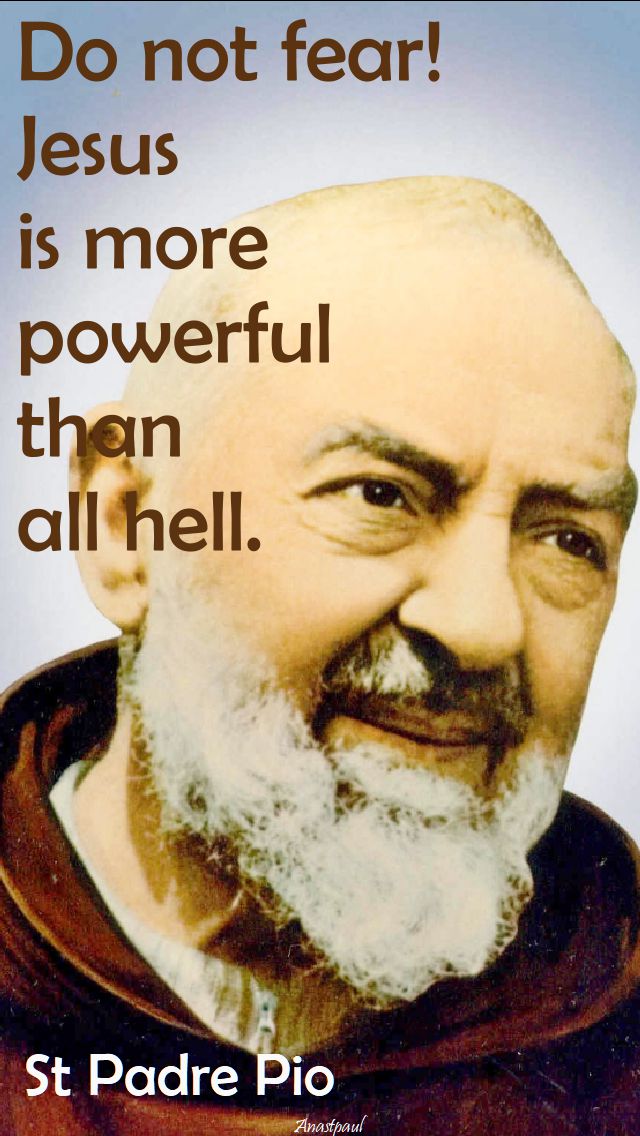
“Do not fear! Jesus is more powerful than all hell.”
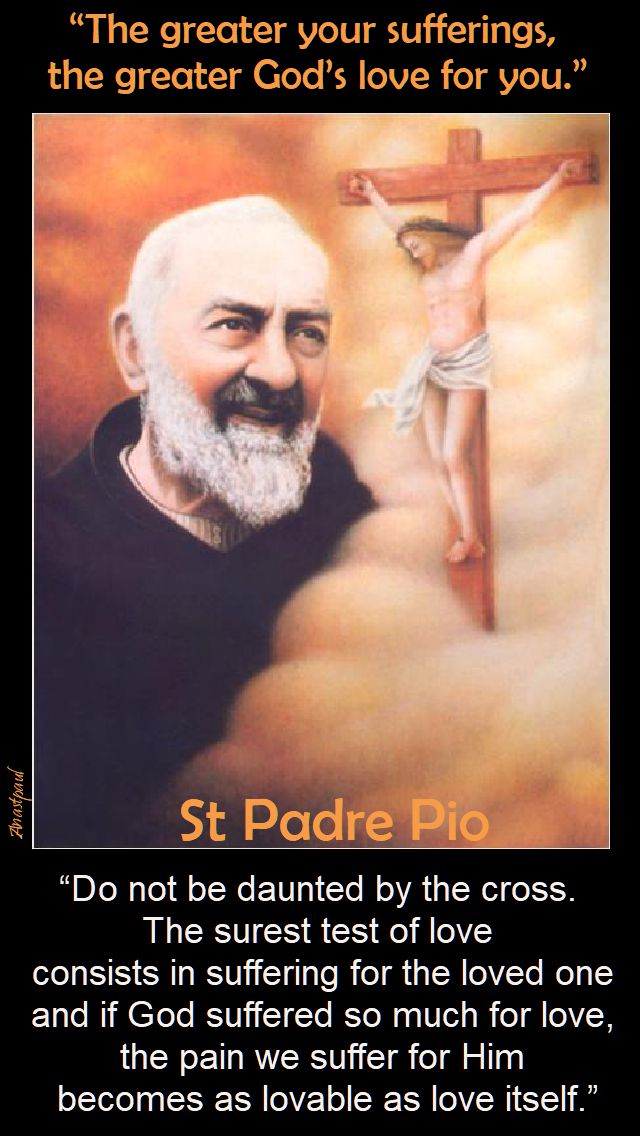
“Do not be daunted by the cross. The surest test of love consists in suffering for the loved one and if God suffered so much for love, the pain we suffer for Him becomes as lovable as love itself.”
“The greater your sufferings, the greater God’s love for you.”
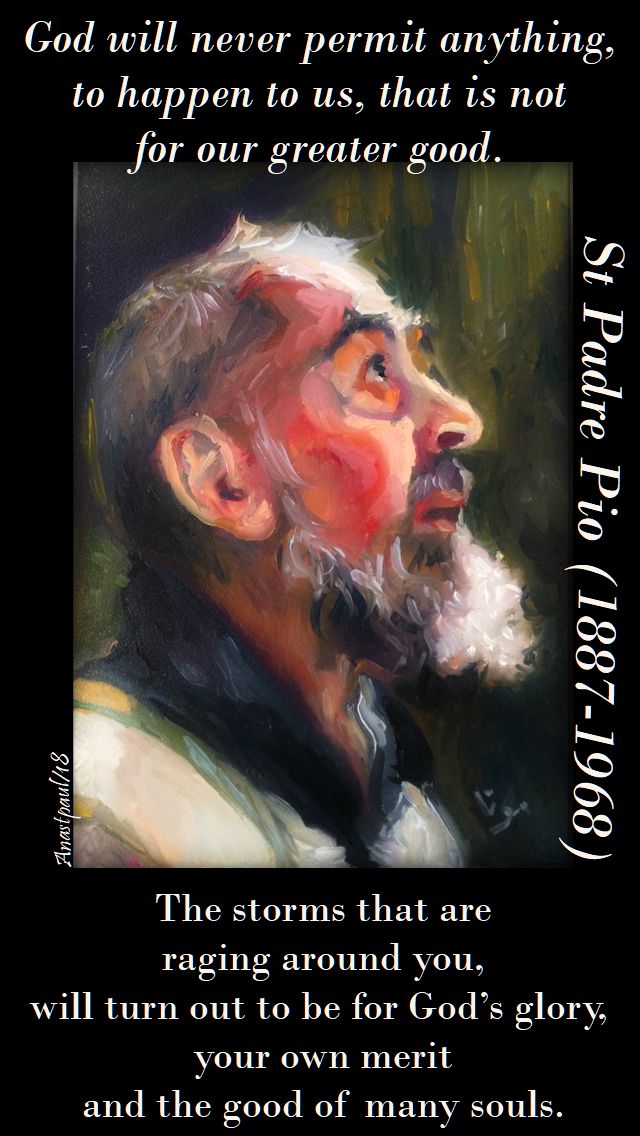
“God will never permit anything, to happen to us, that is not for our greater good.”
“The storms that are raging around you, will turn out to be for God’s glory, your own merit and the good of many souls.”
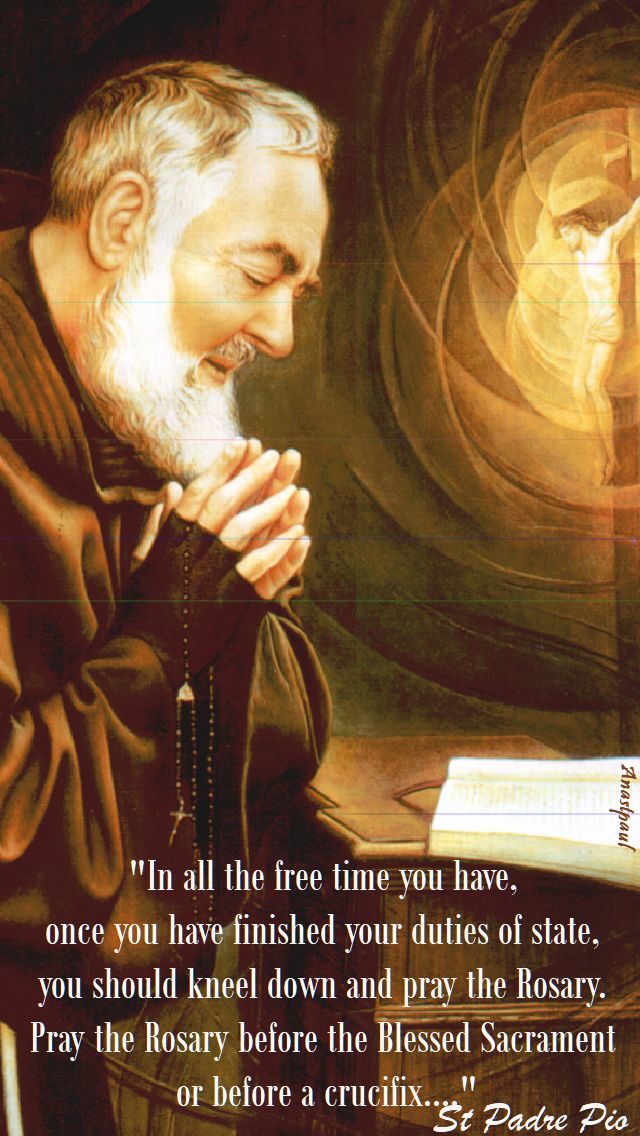
“In all the free time you have, once you have finished your duties of state, you should kneel down and pray the Rosary. Pray the Rosary before the Blessed Sacrament or before a crucifix.”
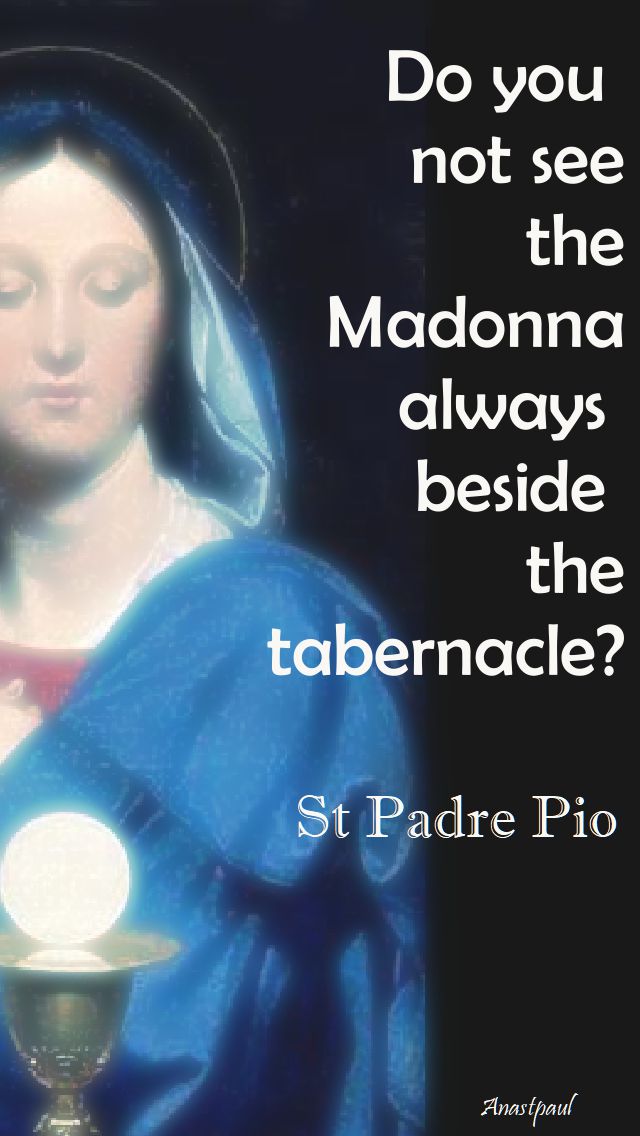
“Do you not see the Madonna always beside the Tabernacle?”
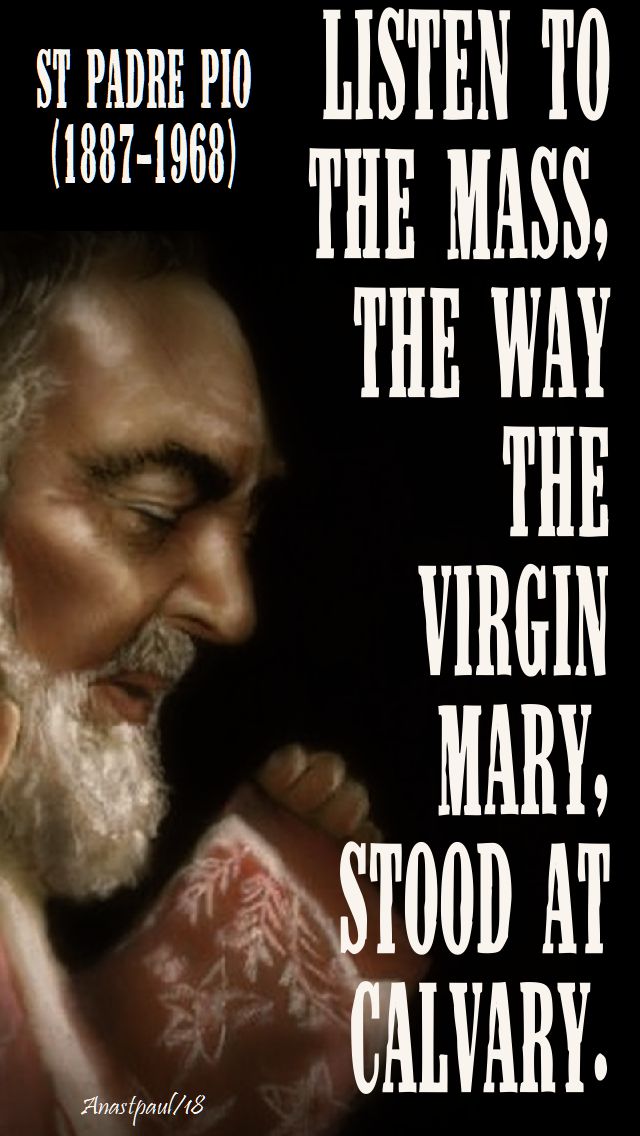
“Listen to the Mass, the way the Virgin Mary, stood at .. Calvary..”
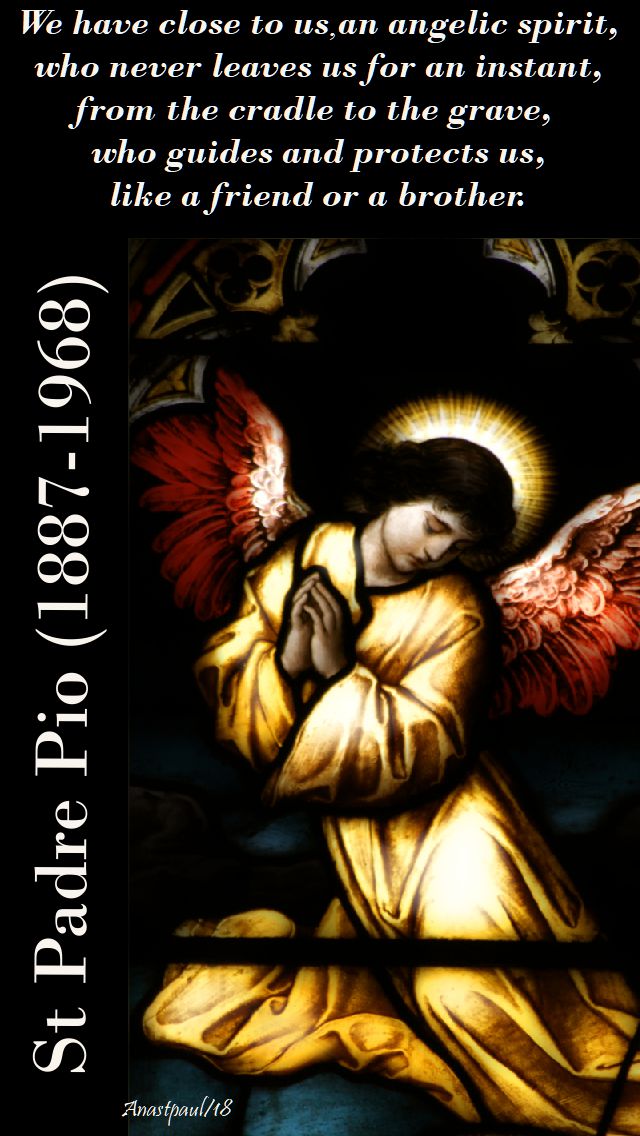
“We have close to us, an angelic spirit, who never leaves us for an instant, from the cradle to the grave, who guides and protects us, like a friend or a brother.”
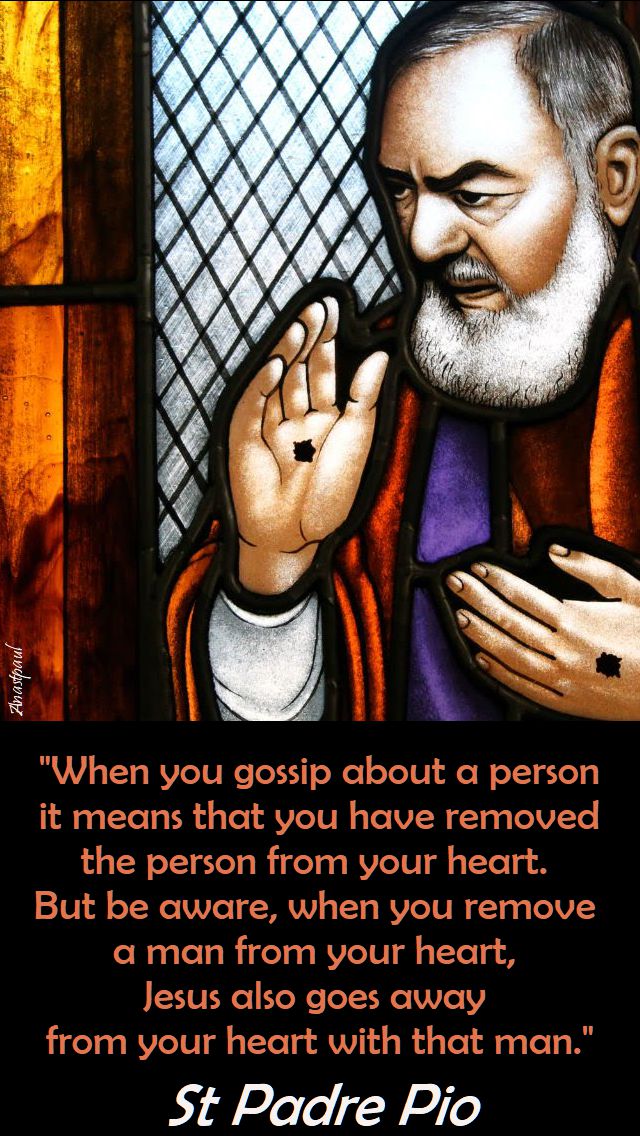
“When you gossip about a person it means that you have removed the person from your heart. But be aware, when you remove a man from your heart, Jesus also goes away from your heart with that man.”
























 AnaStpaul
You must be logged in to post a comment.