Posted in MORNING Prayers, SAINT of the DAY, The WORD

Thought for the Day – 15 June – St Bernard of Menthon C.R.S.A (c 1020-1081)

Thought for the Day – 15 June – St Bernard of Menthon C.R.S.A (c 1020-1081)

Saint Bernard’s life was one of simple service in a difficult environment.   His hospitality was legendary and his works survive today in the form of the hospices he established. His community—the Houses and Congregations of Saints Nicholas and Bernard—remains active today, maintaining the Alpine hospices as well as one in the Himalayas. Upon his death, he was interred at the cloisters of Saint Lawrence.   Numerous miracles were reported at the site of his burial, as well as in Saint Bernard’s pass.   We are inspired by the love of Saint Bernard to extend ourselves to those in need, never missing an opportunity to show God’s love.   Saint Bernard reminds us of the epistle of Saint Peter:

The end of all things is near.   Therefore be clear minded and self-controlled so that you can pray.   Above all, love each other deeply, because love covers over a multitude of sins. Offer hospitality to one another without grumbling.   Each one should use whatever gift he has received to serve others, faithfully administering God’s grace in its various forms. If anyone speaks, he should do it as one speaking the very words of God.   If anyone serves, he should do it with the strength God provides, so that in all things God may be praised through Jesus Christ.   To him be the glory and the power for ever and ever.  Amen

1 Peter 4: 7-11

St Bernard of Menthon, Pray for us!st bernard de menthon pray fo us - 15 june 2018

Posted in CATHOLIC DEVOTIONS of the Month, EUCHARISTIC Adoration, JESUIT SJ, MORNING Prayers, QUOTES of the SAINTS, SACRED and IMMACULATE HEARTS, The HOLY EUCHARIST / The HOLY MASS

Quote/s of the Day – 15 June – June, the Month of the Sacred Heart

Quote/s of the Day – 15 June – June, the Month of the Sacred Heart

“O most Sacred,
most loving Heart of Jesus,
You are concealed
in the Holy Eucharist
and You beat for us still.”

Blessed John Henry Newman (1801-1890)o most sacred, most loving heart of jesus - bl john henry newman - 15 june 2018

“I beg and entreat you,
by the love of God
and by the respect which we owe Him,
to apply yourselves to serve Our Lord Jesus Christ
with all the fidelity of which you are capable
and to venerate His Divine Majesty
with the deepest respect,
above all in the Sacrament of the Eucharist,
in which He is hidden in all the greatness
of His divine and human natures,
wherein He is present as entirely,
as powerfully and as infinitely,
as He is in heaven.”

St Ignatius Loyola (1491-1556)i beg and entreat you - st ignatius loyola - 15 june 2018

Posted in MORNING Prayers, papal ENCYCLICALS, PAPAL ENCYLICALS, QUOTES on LOVE, QUOTES on MARRIAGE, MARRIED LOVE, The WORD, VATICAN Documents, VATICAN Resources

One Minute Reflection – 15 June – Friday of the Tenth Week of Ordinary Time, Year B – Today’s Gospel Matthew 5:27-32

One Minute Reflection – 15 June – Friday of the Tenth Week of Ordinary Time, Year B – Today’s Gospel Matthew 5:27-32

“It was also said, ‘Whoever divorces his wife, let him give her a certificate of divorce.’   But I say to you that every one who divorces his wife, except on the ground of unchastity, makes her an adulteress and whoever marries a divorced woman, commits adultery.”…Matthew 5:31-32matthew 5 31-32-but i say to you that everyone who divorces

REFLECTION – “Married love particularly reveals its true nature and nobility when we realise that it takes its origin from God, who is love… Marriage, then, is far from being the effect of chance or the result of the blind evolution of natural forces.   It is in reality the wise and provident institution of God the Creator, whose purpose was to effect in man His loving design.   As a consequence, husband and wife, through that mutual gift of themselves alone… develop that union of two persons in which they perfect one another, cooperating with God in the generation and rearing of new lives.   The marriage of those who have been baptised is, in addition, invested with the dignity of a sacramental sign of grace, for it represents the union of Christ and His Church (Eph 5:32).

In the light of these facts the characteristic features and exigencies of married love are clearly indicated.   This love is above all fully human, a compound of sense and spirit.   It is not, then, merely a question of natural instinct or emotional drive.   It is also, and above all, an act of the free will, whose trust is such that it is meant not only to survive the joys and sorrows of daily life but also to grow, so that husband and wife become, in a way, one heart and one soul and together attain their human fulfilment.

It is a love which is total—that very special form of personal friendship in which husband and wife generously share everything, allowing no unreasonable exceptions and not thinking solely of their own convenience.   Whoever really loves his partner, loves not only for what he receives but loves that partner, for the partner’s own sake, content to be able to enrich the other with the gift of himself.

Married love is also faithful and exclusive of all other and this until death.   This is how husband and wife understood it on the day on which, fully aware of what they were doing, they freely vowed themselves to one another in marriage… Finally, this love is fecund.   It is not confined wholly to the loving interchange of husband and wife;  it also contrives to go beyond this to bring new life into being.”…Blessed Paul VI – Humanae vitae, 8-9whoever really loves - bl pope paul VI - humanae vitae 9 - 15 june 2018

PRAYER – Yours is the day and Yours, the night, Lord God and we are Your children. Grant we pray, that the weakness of our humanity, the drive of our emotions and flesh may not overpower us.   Lead us Lord, through the dangers of our day, give us strength and true love, wishing only our final home for those who share our lives, especially our spouse.   Mary, pray for us, that we may imitate your faithfulness in all things, St Joseph be a guide and a support to us all.   We make our prayer through Christ our Lord, in the unity of the Holy Spirit, one God forever, amen.holy mary holy joseph - pray for us - 15 june 2018

Posted in CATHOLIC DEVOTIONS of the Month, DOCTORS of the Church, MORNING Prayers, PRAYERS of the SAINTS, SACRED and IMMACULATE HEARTS

Our Morning Offering – 15 June – June, the Month of the Sacred Heart

Our Morning Offering – 15 June – June, the Month of the Sacred Heart

Daily Offering to the Sacred Heart
By St Therese of Lisieux (1873-1897)
Doctor of the Church

O my God!
I offer You all my actions of this day
for the intentions and for the glory
of the Sacred Heart of Jesus.
I desire to sanctify
every beat of my heart,
my every thought,
my simplest works,
by uniting them
to His infinite merits
and I wish to make reparation for my sins
by casting them into the furnace
of His Merciful Love.
O my God! I ask of You for myself
and for those whom I hold dear,
the grace to fulfill perfectly
Your Holy Will,
to accept for love of You
the joys and sorrows of this passing life,
so that we may one day be united together
in heaven for all Eternity.
Amendaily offering to the sacred heart - by st therese of lisieux - 15 june 2018

Posted in SAINT of the DAY

Saint of the Day – 15 June – St Bernard of Menthon C.R.S.A (c 1020-1081) “Apostle of the Alps”

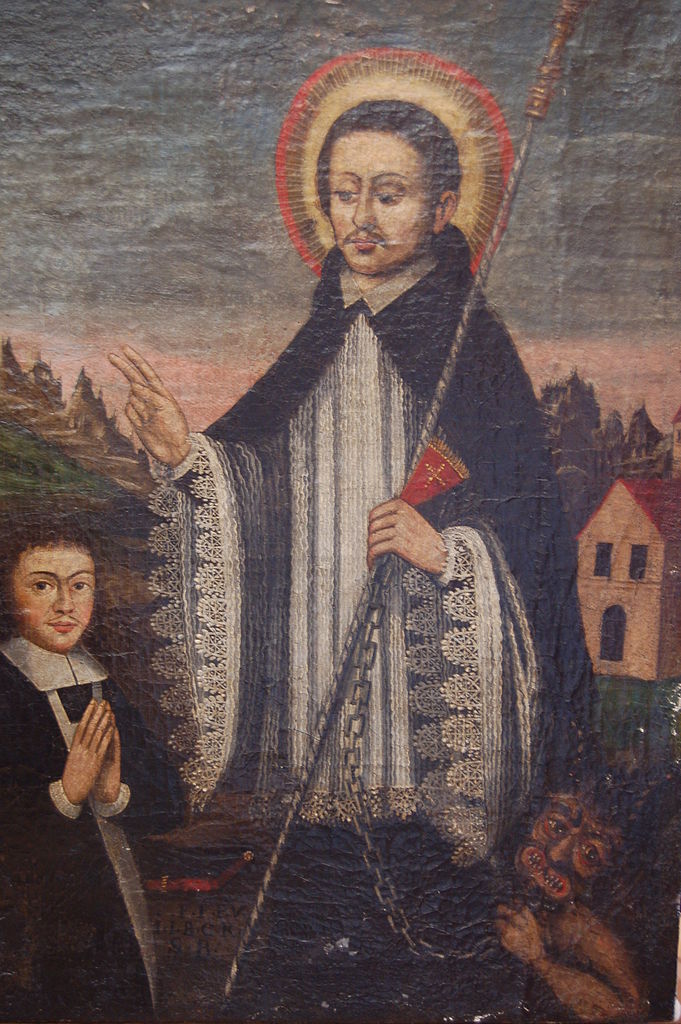
Saint of the Day – 15 June – St Bernard of Menthon C.R.S.A (c 1020-1081) – Priest, Arch-Deacon, Vicar General, Preacher, Evangeliser, Founder of a patrol that cleared robbers from the mountains and he established hospices for travellers and pilgrims to Rome and the Holy Land, Italy;  he established a community of Augustinian Hospitallers to staff them and they continue their good work today.   The large dogs, trained to search for lost victims in the mountains, are named for him, also known as the Apostle of the Alps,  Bernard of Aosta,  Bernard of Aotha,  Bernard of Mentone,  Bernard of Montjoux.   Born Bernard de Menthon around 1020 and died in 1081 at Novara, Italy.   Patronages – Alpinists, Alps (proclaimed by Pope Pius XI on 20 August 1923), Campiglia Cervo, Italy, mountain climbers (proclaimed by Pope Pius XI on 20 August 1923), mountaineers, skiers, travellers in the mountains (proclaimed by Pope Pius XI on 20 August 1923).681px-St_Bernard,_1607ST BERNARD

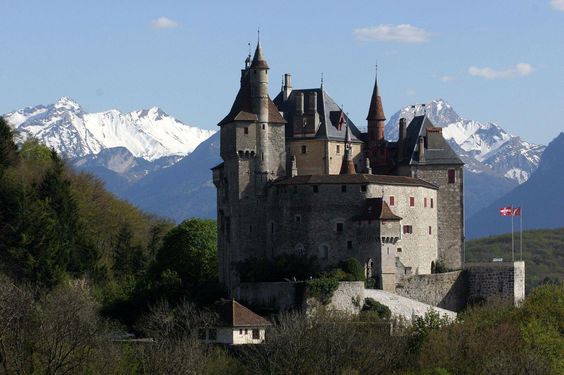
Born in c 1020, probably in the Chateaux de Menthon near Annecy, in Savoy.   He was descended from a rich, noble family and received a thorough education.   He refused to enter an honourable marriage proposed by his father and decided to devote himself to the service of the Church.

CHATEAUX MENTHON - ST BERNARD
Chateaux de Menthon

Placing himself under the direction of Peter, Archdeacon of Aosta, under whose guidance he rapidly progressed, Bernard was ordained priest and on account of his learning and virtue was made Archdeacon of Aosta, having charge of the government of the diocese under the bishop.   Seeing the ignorance and idolatry still prevailing among the people of the Alps, he resolved to devote himself to their conversion.   For forty two years he continued to preach the Gospel to these people and carried the light of faith even into many cantons of Lombardy, effecting numerous conversions and working many miracles.768px-St_Bernard_de_Menthon_et_un_chienbernard_de_menthon_45_01Peinture_de_Saint_Bernard_à_Meillerie

For another reason, however, Bernard’s name will forever be famous in history.   Since the most ancient times there was a path across the Pennine Alps leading from the valley of Aosta to the Swiss canton of Valais, over what is now the pass of the Great St Bernard. This pass is covered with perpetual snow from seven to eight feet deep and drifts sometimes accumulate to the height of forty feet.   Though the pass was extremely dangerous, especially in the springtime on account of avalanches, yet it was often used by French and German pilgrims on their way to Rome.   For the convenience and protection of travellers, St Bernard founded a monastery and hospice at the highest point of the pass, 8,000 feet above sea-level.   A few years later he established another hospice on the Little St Bernard, a mountain of the Graian Alps, 7,076 feet above sea-level.   Both were placed in charge of Augustinian monks after pontifical approval had been obtained by him during a visit to Rome.

These hospices are renowned for the generous hospitality extended to all travellers over the Great and Little St Bernard, so called in honour of the founder of these charitable institutions.   At all seasons of the year but especially during heavy snow-storms, the heroic monks accompanied by their well-trained dogs, go out in search of victims who may have succumbed to the severity of the weather.   They offer food, clothing, and shelter to the unfortunate travellers and take care of the dead.   They depend on gifts and collections for sustenance.   At present, the order consists of about forty members, the majority of whom live at the hospice while some have charge of neighbouring parishes.

St Bernard spent 42 years as a priest serving the people of this region.   In addition to serving travellers, he founded schools and reformed parishes throughout the area.   He lived to be 85 years old and died on this date in 1081.

The last act of St Bernard’s life was the reconciliation of two noblemen whose strife threatened a fatal issue.   He was interred in the cloister of St Lawrence.   Venerated as a saint from the twelfth century in many places of Piedmont (Aosta, Novara, Brescia), he was not canonised until 1681, by Innocent XI.   His feast is celebrated on the 15th of June.

It seems that the dogs originally used by the religious belonged to a race that is now extinct.   A stuffed specimen of the original breed is visible at the hospice.   The St Bernard breed was first reported to the hospice of St Bernard in 1709 by the prior Ballalu.1024px-SanBernardo_Newton

St Bernard of Menthon, you saved pilgrims in the Alps from avalanches and robbers–pray for us!

st._bernard_dog__public_domain_

Posted in SAINT of the DAY

Memorials of the Saints – 15 June

St Abraham of Saint-Cyriacus
St Achaicus of Corinth
Bl Albertina Berkenbrock
St Barbara Cui Lianshi
St Benildis of Córdoba
St Bernard of Montjoux/Menthon C.R.S.A (c 1020-1081)

St Constantine of Beauvais
St Domitian of Lobbes
St Edburgh of Winchester
St Eigil
St Eutropia of Palmyra
St Fortunatus of Corinth
St Germaine Cousin
St Hadelinus of Lobbes
St Hesychius of Durostorum
St Hilarion of Espalion
Bl Juan Rodriguez
St Julius of Durostorum
St Landelin of Crespin
St Leonides of Palmyra
St Libya of Palmyra
St Lotharius of Séez
St Melan of Viviers
St Orsisius
Bl Pedro da Teruel
Bl Peter Snow
St Pierre de Cervis
Bl Ralph Grimston
St Tatian of Cilicia
Bl Thomas Scryven
St Trillo of Wales
St Vaughe of Ireland
St Vitus
St Vouga of Lesneven

Martyr of Lucania – 11 saints: Eleven Christians martyred together. We known nothing else about them but the names – Anteon, Candidus, Cantianilla, Cantianus, Chrysogonus, Jocundus, Nivitus, Protus, Quintianus, Silvius, Theodolus in Lucania (modern Basilicata), Italy, date unknown.

Posted in CATECHESIS, MORNING Prayers, PAPAL Apostolic EXHORTATIONS, PAPAL DECREE, PAPAL MESSAGES, SAINT of the DAY

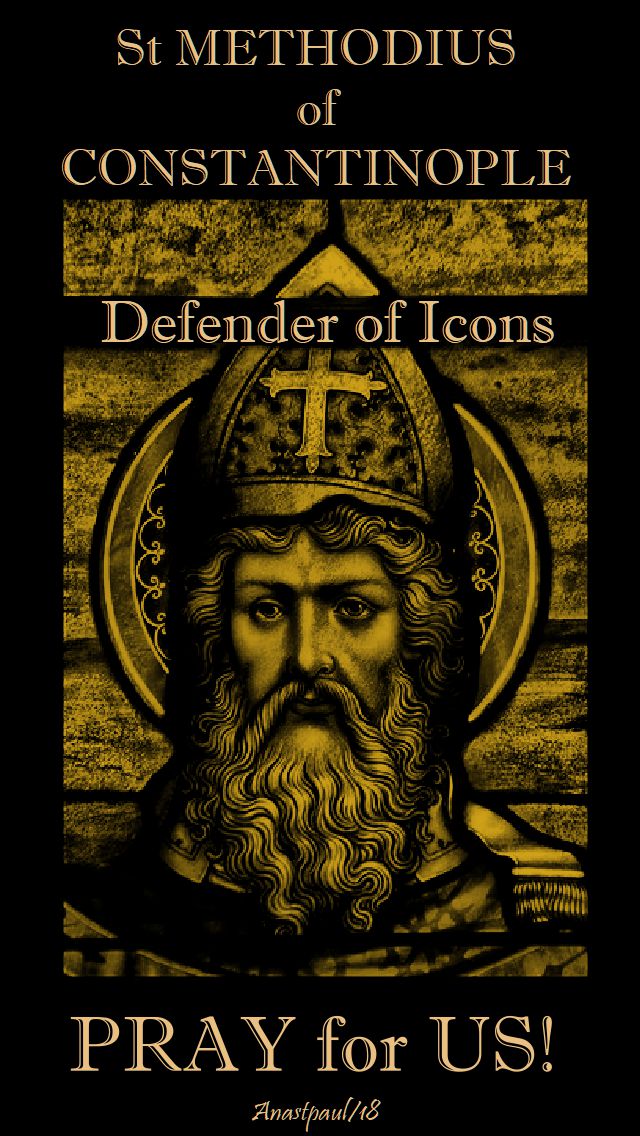
Thought for the Day – 14 June – The Memorial of St Methodius I of Constantinople (8th Cent – 847) “Defender of Icons”

Thought for the Day – 14 June – The Memorial of St Methodius I of Constantinople (8th Cent – 847) “Defender of Icons”

Iconoclasm is still with us today, within and without the Catholic Church. Let us consider this statement from the Second Council of Nicaea that St Methodius fought all his life to defend:

“Following the divinely inspired teaching our of holy Fathers and the tradition of the Catholic Church (for we know that this tradition comes from the Holy Spirit who dwells in her), we rightly define with full certainty and correctness that, like the figure of the precious and life-giving cross, venerable and holy images of our Lord and God and Saviour, Jesus Christ, our inviolate Lady, the holy Mother of God and the venerated angels, all the saints and the just, whether painted or made of mosaic or another suitable material, are to be exhibited in the holy churches of God, on sacred vessels and vestments, walls and panels, in houses and on streets.”

And, from our present-day Catechism of the Catholic Church, we have these words:

“The contemplation of sacred icons, united with meditation on the Word of God and the singing of liturgical hymns, enters into the harmony of the signs of celebration, so that the mystery celebrated, is imprinted in the heart’s memory and is then expressed in the new life of the faithful”…CCC 1162.

St Methodius, “Defender of Icons”, Pray for usst methodius - pray for us - 14 june 2018

Posted in MORNING Prayers, QUOTES - J R R Tolkien and MORE, QUOTES on CHARITY, QUOTES on DIVINE PROVIDENCE, QUOTES on ETERNAL LIFE, QUOTES on FAITH, QUOTES on HOPE, QUOTES on HUMILITY, QUOTES on LOVE, QUOTES on OBEDIENCE, QUOTES on PEACE, QUOTES on PRAYER, QUOTES on SANCTITY, QUOTES on SUFFERING, QUOTES on TEMPTATION, QUOTES on the CROSS of CHRIST, QUOTES on TRUST and complete CONFIDENCE in GOD, QUOTES on WORRY/ANXIETY, SPEAKING of ....., Thomas a Kempis

Quote/s of the Day – 14 June – Thursday of the Tenth Week of Ordinary Time, Year B

Quote/s of the Day – 14 June – Thursday of the Tenth Week of Ordinary Time, Year B 

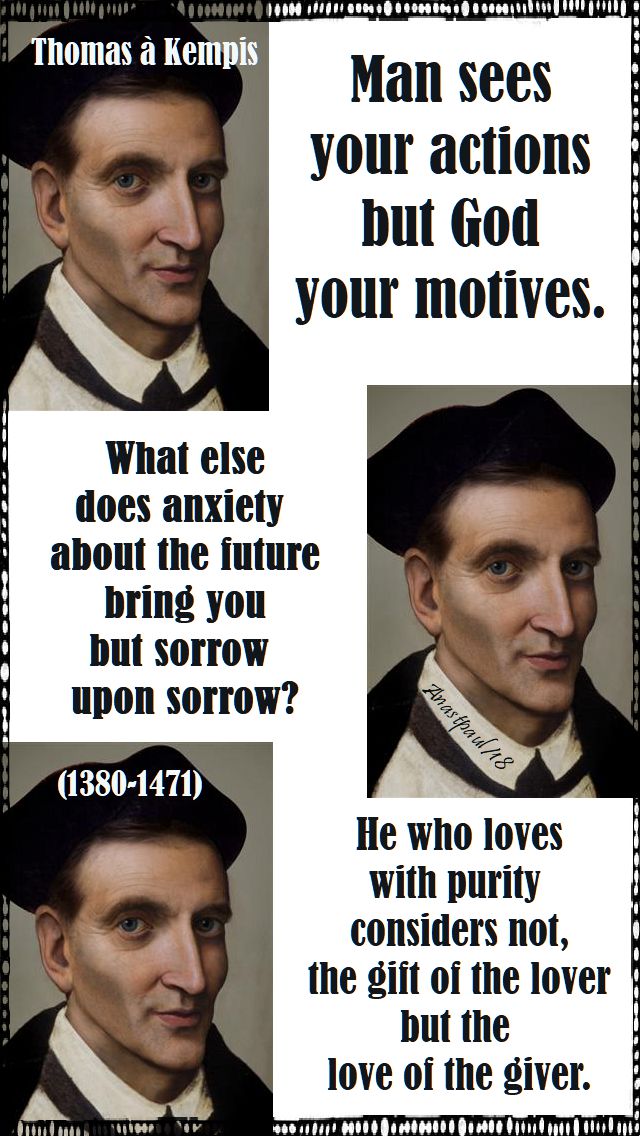
 Speaking of:   Seeking Thomas à Kempis

“Man sees your actions
but God your motives.”

“What else does anxiety
about the future bring you
but sorrow upon sorrow?”

“He who loves
with purity, 
considers not,
the gift of the lover
but the
love of the giver.”man sees your actions - what else does anxiety - he who loves with purity - thomas a kempis - 14 june 2018

“Nothing, how little so ever it be,
if it is suffered for God’s sake,
can pass without merit
in the sight of God.”

“Who has a harder fight, 
than he who is striving,
to overcome himself?”nothing, how little and who has a harder fight - thomas a kempis - 14 june 2018

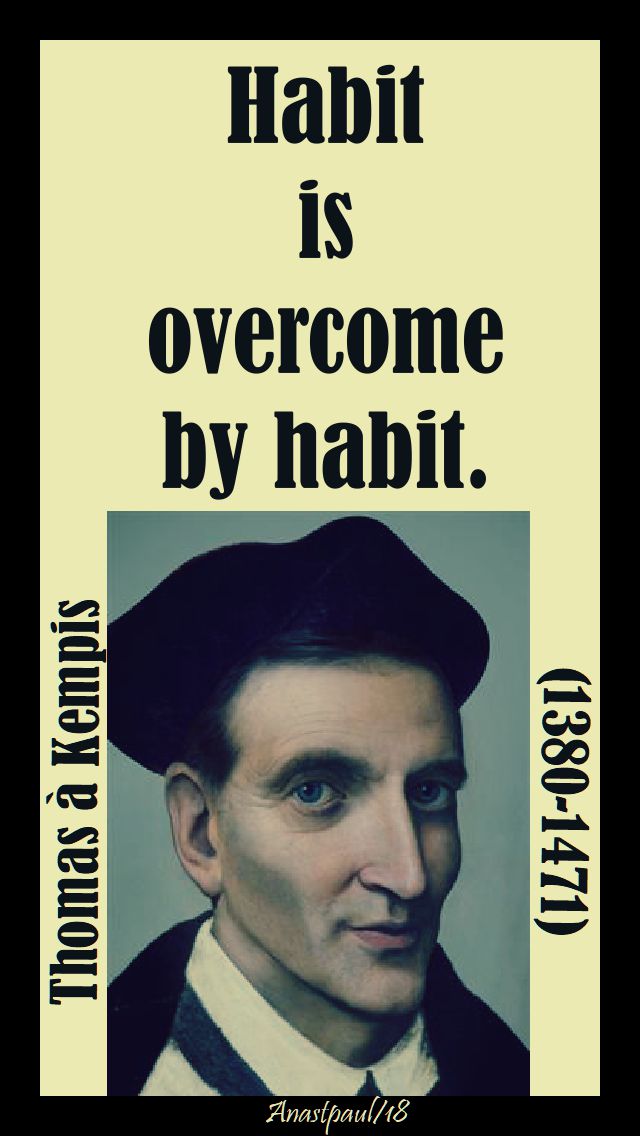
“Habit is overcome by habit.”habit is overcome by habit = 14 june 2018

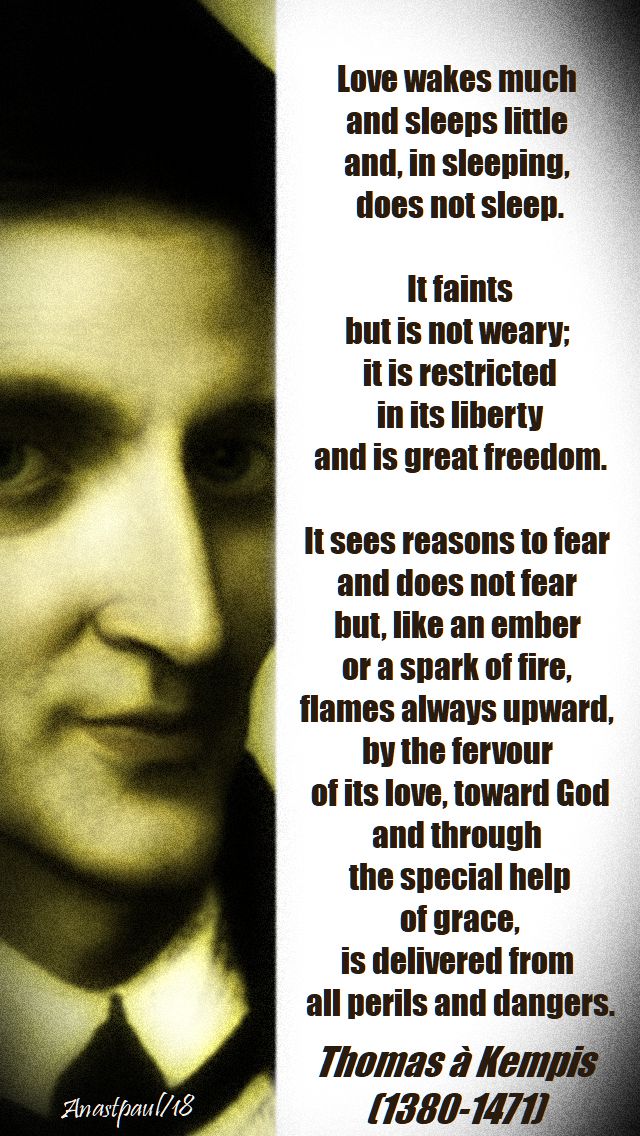
“Love wakes much and sleeps little
and, in sleeping, does not sleep.
It faints but is not weary;
it is restricted in its liberty
and is great freedom.
It sees reasons to fear
and does not fear
but, like an ember or a spark of fire,
flames always upward,
by the fervour of its love, toward God
and through the special help of grace,
is delivered from all perils and dangers.”love wakes much and sleeps little - thomas a kempis - 14 june 2018

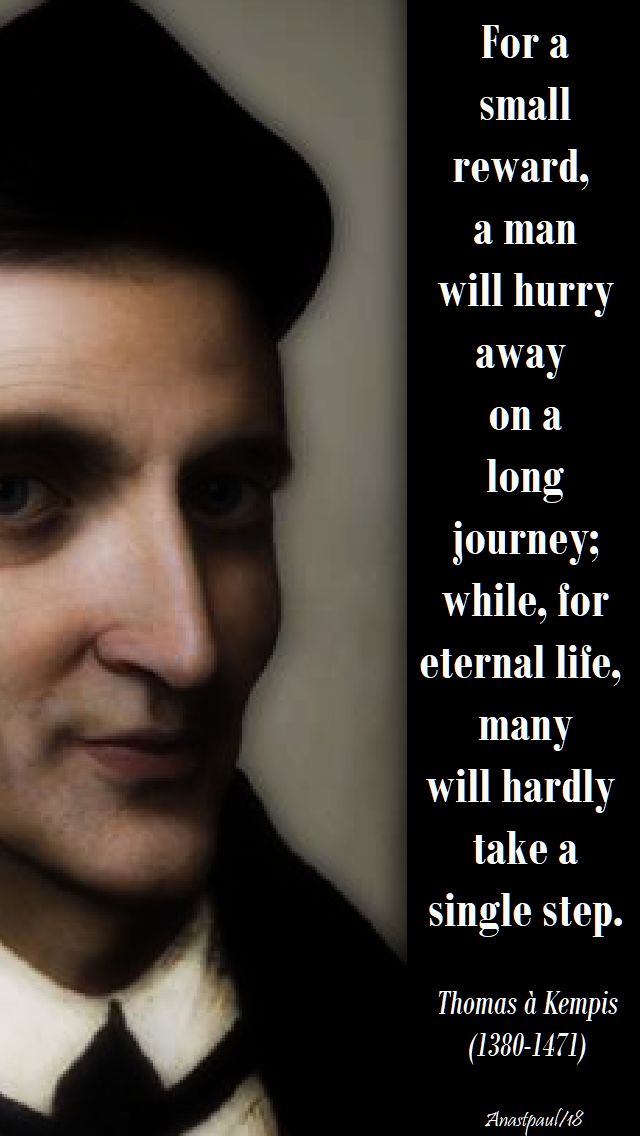
“For a small reward,
a man will hurry away on a long journey;
while for eternal life,
many will hardly take a single step.”for a small reward, a man will hurry away - thomas a kempis - 14 june 2018

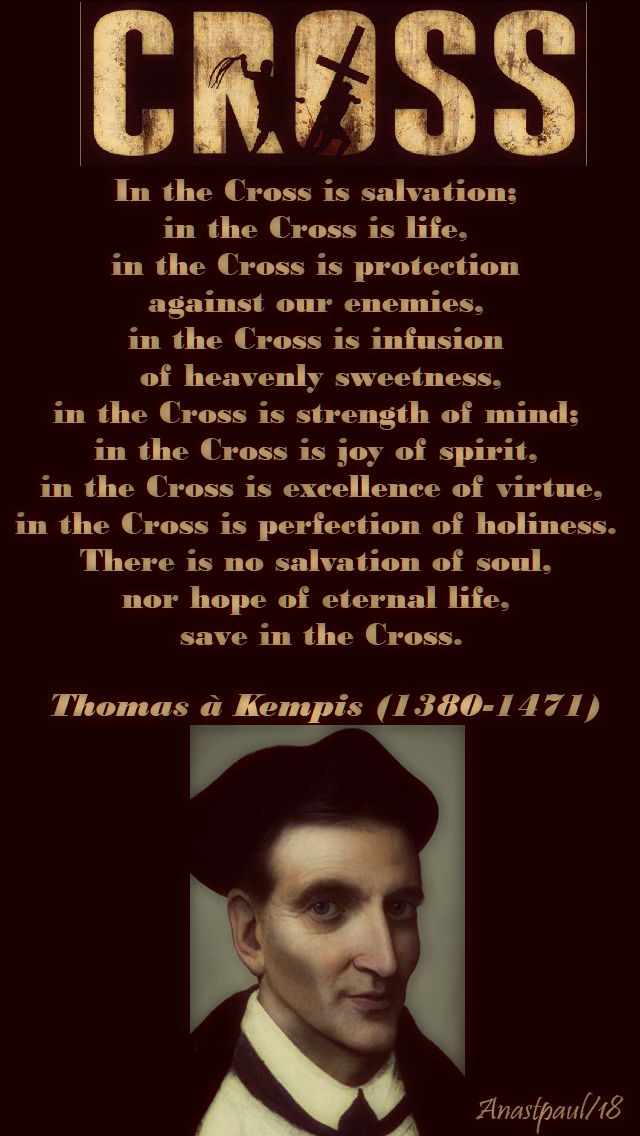
“In the Cross is salvation;
in the Cross is life, 
in the Cross is protection against our enemies, 
in the Cross is infusion of heavenly sweetness,
in the Cross is strength of mind, 
in the Cross is joy of spirit,
in the Cross is excellence of virtue,
in the Cross is perfection of holiness.
There is no salvation of soul,
nor hope of eternal life,
save in the Cross.”in the cross - thomas a kempis - 14 june 2018 - no 2

“He will be with you also,
all the way, that faithful God.
Every morning when you awaken,
to the old and tolerable pain,
at every mile of the hot uphill dusty road
of tiring duty,
on to the judgment seat,
the same Christ there as ever,
still loving you,
still sufficient for you, even then.
And then, on through all eternity.”

Thomas à Kempis (1380-1471)he will be with you also that same christ - thomas a kempis - 14 june 2018


Posted in SAINT of the DAY

Saint of the Day – 14 June – St Methodius I of Constantinople (8th Cent – 847) “Defender of Icons”

St Methodius I of Constantinople (8th Cent – 14 June 847) Monk and and Bishop of Constantinople, “Defender of Icons”  – born in the 8th century at Syracuse, Sicily and died in 847 of natural causes, in Constantinople.

methodius3

Methodius was born in Syracuse, Sicily and was educated there.   As a young man he went to Constantinople to seek a position in the imperial court but on his way, met a holy monk who so impressed him, that he decided instead to become a monk himself.   He built a monastery on the Greek island of Chios and remained there until he was called to Constantinople by the patriarch, St Nicephorus, who wanted Methodius to help him in the fight against the iconoclasts “those heretics who demanded the destruction of all sacred images on the false presumption that the faithful worshipped the images, not God.”  Both Methodius and Nicephorus boldly stood up against the iconoclasts, defending the attempt of Christian artists to inspire the faithful by means of beautiful images.

When Emperor Leo the Armenian deposed Nicephorus and sent him into exile, Methodius went to Rome to report to Pope St Paschal I on the destruction of sacred images.   He returned in 821 with a letter from the pope to Michael the Stammerer, the new emperor, requesting that Nicephorus be reinstated and allowed to return to his see. Instead, the emperor condemned Methodius as a seditionist and ordered that he be scourged and exiled to prison.   He was imprisoned for seven years;  when released, he was almost skeleta, but his spirit remained undaunted.   He resumed his opposition to iconoclasm under Emperor Theophilus and when called before the emperor, boldly stated, “If an image is so worthless in your eyes, how is it that when you condemn the images of Christ you do not condemn the veneration paid to representations of yourself?   Far from doing so, you are continually causing them to be multiplied.”

Upon the death of the emperor in 842, his widow Theodora became regent for her infant son, Michael III.   She repealed all decrees against sacred images and named Methodius Patriarch of Constantinople, replacing the iconoclast supporter, John the Grammarian.

In the remaining five years of his life, Methodius convoked a synod at Constantinople that endorsed the decrees of the Second Council of Nicaea declaring icons lawful in the church.   An annual Feast of Orthodoxy, still observed in the Byzantine Church on the first Sunday of Lent, was instituted to stress the lawfulness of venerating sacred images.

Saint Methodius, who died of dropsy in 847, was said to have been a prolific writer, especially of hymns but we possess only fragments of his many works, including a complete Life of St Theophanes.

st-methodius-of-constantinople

Posted in DOCTORS of the Church, FATHERS of the Church, MORNING Prayers, PRACTISING CATHOLIC, QUOTES of the SAINTS, QUOTES on FORGIVENESS, QUOTES on LOVE, QUOTES on the CHURCH, The HOLY EUCHARIST / The HOLY MASS, The WORD

One Minute Reflection – 14 June – Thursday of the Tenth Week of Ordinary Time, Year B – Today’s Gospel Matthew 5:20-26.

One Minute Reflection – 14 June – Thursday of the Tenth Week of Ordinary Time, Year B – Today’s Gospel Matthew 5:20-26.

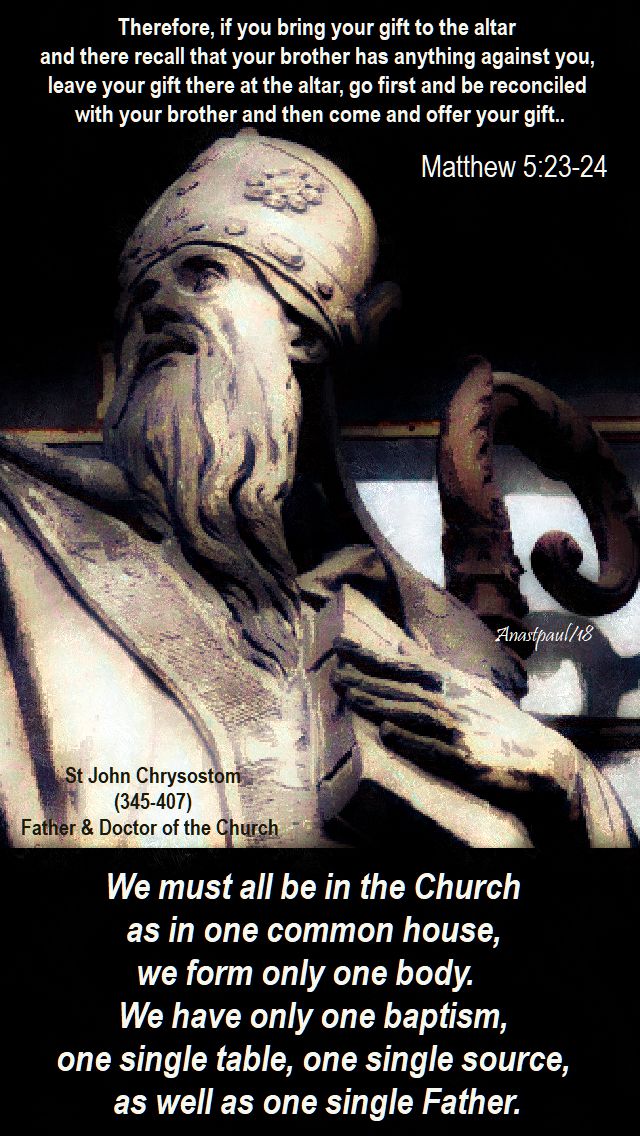
Therefore, if you bring your gift to the altar and there recall that your brother has anything against you, leave your gift there at the altar, go first and be reconciled with your brother and then come and offer your gift...Matthew 5:23-24

REFLECTION – “The Church does not exist for us to remain divided when we come to it but rather so that our divisions might be nullified.   That is what the assembly means. Thus if we have come for the Eucharist, let us not do anything in contradiction to the Eucharist, let us not hurt our brother.   You have come to give thanks for the kindnesses you have received, therefore, do not separate yourself from your neighbour.
Christ offered his body to everyone without distinction when he said:  “Take and eat, all of you.”   Why do you not admit everyone to your own table? … You are remembering Christ and you disdain someone who is poor? … You are taking part in this divine meal; you should be the most compassionate of all people.   You have drunk the Lord’s blood and you do not acknowledge your brother?   But even if you have ignored him until now, at this table you must acknowledge him.   We must all be in the Church as in one common house, we form only one body.   We have only one baptism, one single table, one single source, as well as one single Father.”…St John Chrysostom (345-407), Father & Doctor of the Church (Homilies on the 1st Letter to the Corinthians, no 27 -cf Eph 4:5; 1 Cor 10:17 )therefore if you bring your gift to the altar mt 5 23-24-we must all be in the church - st john chrysostom - 14 june 2018

PRAYER – Lord God, true light and creator of light, grant that faithfully following the instructions of Your Son and pondering all that is holy, we may ever live in the splendour of Your presence.   By the gifts of the Holy Spirit, may we always be light to our neighbour.   Mary, Mother of Love and our loving mother, by your prayers, may we grow in charity and love.  We make our prayer through Christ, our Lord amen.loving mother pray for us - 14 june 2018

Posted in CATHOLIC DEVOTIONS of the Month, JESUIT SJ, MORNING Prayers, PRAYERS of the SAINTS, SACRED and IMMACULATE HEARTS

Our Morning Offering – 14 June – June the Month of the Sacred Heart of Jesus

Our Morning Offering – 14 June – June the Month of the Sacred Heart of Jesus

Lord Give me Your Heart!
By St Claude de la Colombiere

O God, what will You do to conquer
the fearful hardness of our hearts?
Lord, You must give us new hearts,
tender hearts,
sensitive hearts,
to replace the hearts that are made of
marble and of bronze.
You must give us Your own Heart, Jesus.
Come, lovable Heart of Jesus.
Place Your Heart
deep in the centre of our hearts
and enkindle in each heart a flame of love
as strong, as great,
as the sum of all the reasons
I have for loving You, my God.
O Holy Heart of Jesus,
dwell hidden in my heart,
so that I may live only in You
and only for You,
so that, in the end,
I may live with You
eternally in heaven.
Amenlord, give me your heart - st claude de la colombiere 18 sept 2017

Posted in SAINT of the DAY

Memorials of the Saints – 14 June

St Anastasius of Córdoba
St Burchard of Meissen
St Caomhán of Inisheer
St Castora Gabrielli
St Cearan the Devout
Bl Constance de Castro
St Cyprien
St Cyriacus of Zeganea
St Davnet
St Digna of Córdoba
St Dogmael of Wales
St Elgar of Bardsey
St Elisha the Prophet
St Etherius of Vienne
St Felix of Córdoba
Bl Fortunatus of Napoli
Bl Francisca de Paula de Jesus Isabel
St Gerold of Evreux
Bl Hartwig of Salzburg
St Joseph the Hymnographer
St Marcian of Syracuse
St Mark of Lucera
St Methodius of Constantinople (born 8th Century – 847)
St Nennus of Arran
Bl Peter de Bustamante
St Protus of Aquileia
St Quintian
St Richard of Saint Vannes
St Rufinus of Soissons
St Thecla
St Theopista
St Valerius of Soissons
Bl Walter Eustace

Posted in DOCTORS of the Church, franciscan OFM, MORNING Prayers, PAPAL SERMONS, QUOTES of the SAINTS, QUOTES on HUMAN DIGNITY, QUOTES on the CROSS of CHRIST, SAINT of the DAY, The HOLY CROSS, The PASSION

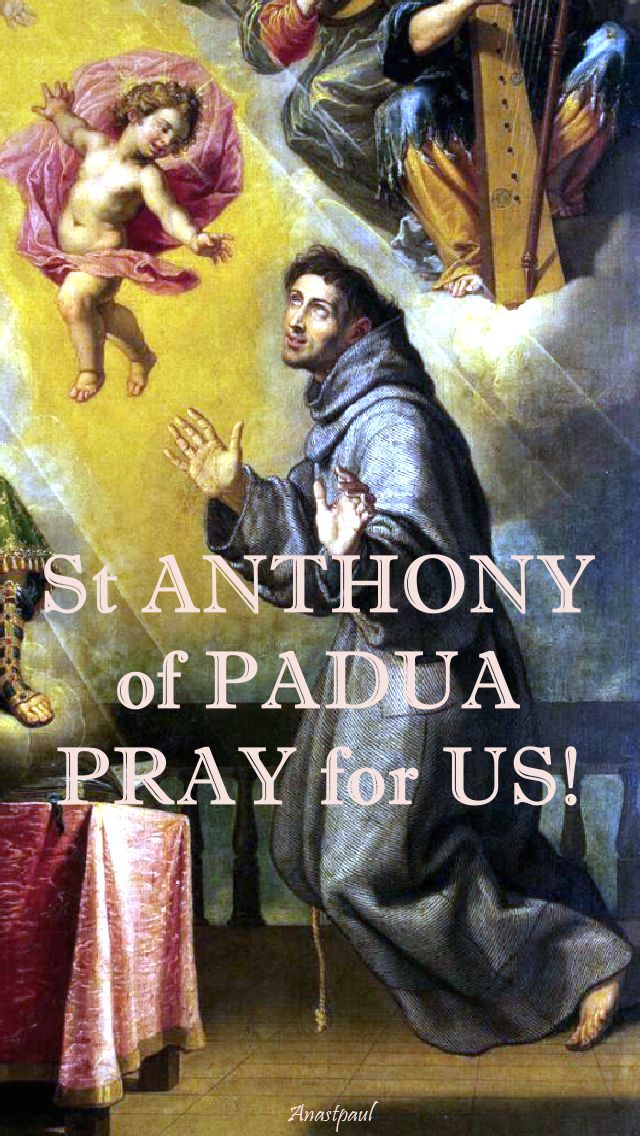
Thought for the Day – 13 June – The Memorial of St Anthony of Padua (1195-1231) Doctor of the Church

Thought for the Day – 13 June – The Memorial of St Anthony of Padua (1195-1231) Doctor of the Church

Not only the Nativity, a central point of Christ’s love for humanity but also the vision of the Crucified One inspired in Anthony thoughts of gratitude to God and esteem for the dignity of the human person, so that all believers and non-believers might find in the Crucified One and in His image a life-enriching meaning.

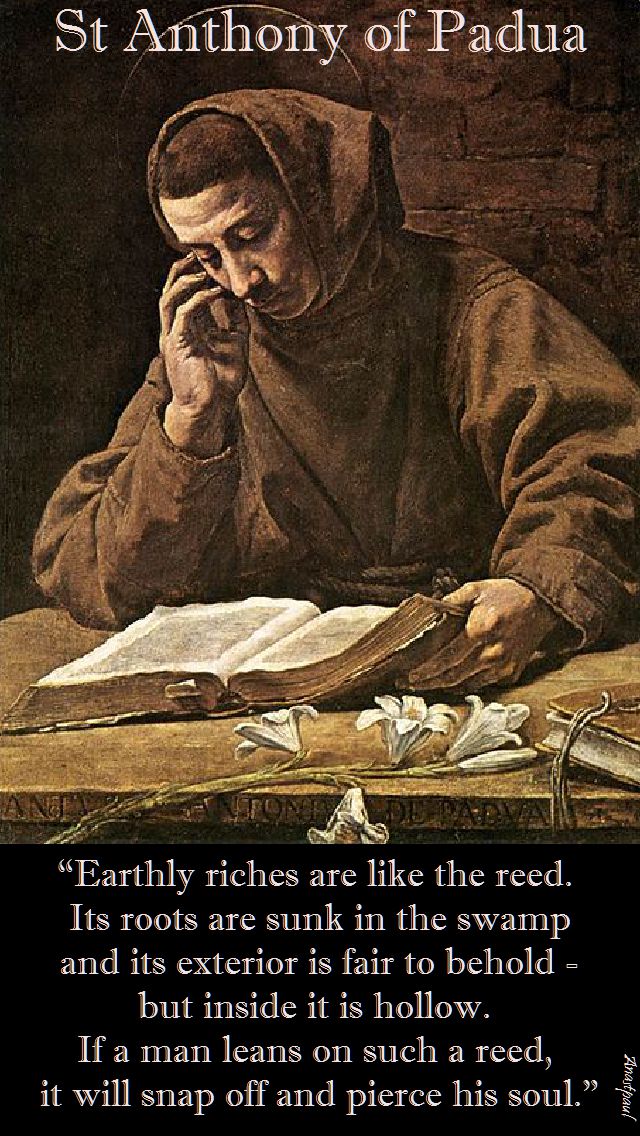
St Anthony writes:  “Christ, who is your life, is hanging before you, so that you may look at the Cross, as in a mirror.   There you will be able to know, how mortal were your wounds, that no medicine other, than the Blood of the Son of God, could heal.  If you look closely, you will be able to realise, how great your human dignity and your value are…. Nowhere other than looking at himself, in the mirror of the Cross, can man better understand how much he is worth”   (Sermones Dominicales et Festivi III, pp. 213-214).christ, who is your life, - st anthony of padua - 13 june 2018

In meditating on these words we are better able to understand the importance of the image of the Crucified One for our culture, for our humanity that is born from the Christian faith.   Precisely by looking at the Crucified One we see, as St Anthony says, how great are the dignity and worth of the human being.   At no other point can we understand how much the human person is worth, precisely because God makes us so important, considers us so important that, in his opinion, we are worthy of his suffering; thus all human dignity appears in the mirror of the Crucified One and our gazing upon him is ever a source of acknowledgement of human dignity…..Pope Benedict XVI (General Audience – February 10, 2010)

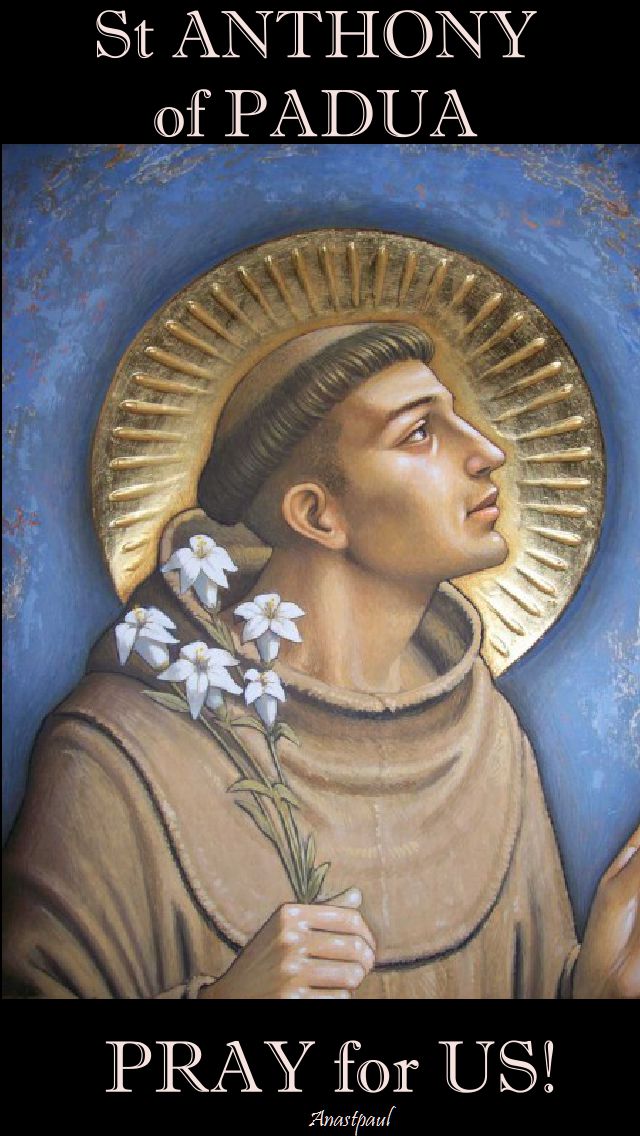
St Anthony of Padua, pray for us!st-anthony-pray-for-us-2.13 june 2017

Posted in franciscan OFM, QUOTES of the SAINTS, QUOTES on CHARITY, QUOTES on EVANGELISATION, QUOTES on FAITH, QUOTES on HUMILITY, QUOTES on LOVE, QUOTES on SANCTITY, QUOTES on SIN, QUOTES on SUFFERING, QUOTES on TEMPTATION, QUOTES on the CROSS of CHRIST, QUOTES on the DEVIL/EVIL, SAINT of the DAY

Quote/s of the Day – 13 June – The Memorial of St Anthony of Padua (1195-1231) Doctor of the Church

Quote/s of the Day – 13 June – The Memorial of St Anthony of Padua (1195-1231) Doctor of the Church

“He who is the beginning and the end,
the ruler of the angels,
made Himself obedient to human creatures.
The creator of the heavens obeys a carpenter;
the God of eternal glory listens to a poor virgin.
Has anyone ever witnessed anything comparable to this?
Let the philosopher no longer disdain from listening
to the common labourer;
the wise, to the simple;
the educated, to the illiterate;
a child of a prince, to a peasant.”he-who-is-the-beginning-and-the-end-st-anthony-of-padua-13 june 2017

“Christians must lean on the Cross of Christ
just as travelers lean on a staff
when they begin a long journey.”christians-must-lean-st-anthony-of-padua-13 june 2017

“Earthly riches are like the reed.
Its roots are sunk in the swamp
and its exterior is fair to behold –
but inside it is hollow.
If a man leans on such a reed,
it will snap off and pierce his soul.”earthly-riches-are-like-the-reed-st-anthony-of-padua-13 june 2017

“The devil is afraid of us
when we pray and make sacrifices.
He is also afraid when we are humble and good.
He is especially afraid when we love Jesus very much.
He runs away when we make the Sign of the Cross.”the devil is afraid of us - st anthony of padua - 13 june 2018

“Actions speak louder than words;
let your words teach
and your actions speak.”

“The life of the body is the soul;
the life of the soul is God.”

“Charity is the soul of faith,
makes it alive;
without love, faith dies.”actions speak louder, charity is the soul of faith, the life of the body is the soul - st anthony of padua - 13 june 2018

“Damned money!
Alas! …
Money is the ‘droppings of birds’
that blinded the eyes of Tobit.”

St Anthony of Padua (1195-1231) Doctor of the Churchdamned money! - st anthony of padua - 13 june 2018

Posted in DOCTORS of the Church, franciscan OFM, MORNING Prayers, QUOTES of the SAINTS, QUOTES on HUMILITY, SAINT of the DAY, The WORD

One Minute Reflection – 13 June – The Memorial of St Anthony of Padua (1195-1231) Doctor of the Church

One Minute Reflection – 13 June – The Memorial of St Anthony of Padua (1195-1231) Doctor of the Church

Do nothing out of selfishness or out of vainglory; rather, humbly regard others as more important than yourselves…Phil 2:3

REFLECTION – “The spirit of humility is sweeter than honey, and those who nourish themselves with this honey produce sweet fruit.”…St Anthony of Paduathe spirit of humily - st anthony of padua - phil 2 3 do nothing out of selfishness - 13 june 2018

PRAYER – Almighty, everliving God, You gave St Anthony of Padua to Your people as a preacher and teacher and a patron in their needs. Grant that we may learn from his words inspired by Your Holy Spirit and by his prayers, grow in faith, hope and humility. We make our prayer through Christ our Lord, amen.st-anthony-pray-for-us-13 june 2017

Posted in franciscan OFM, MORNING Prayers, PRAYERS of the SAINTS, SAINT of the DAY

Our Morning Offering – 13 June – The Memorial of St Anthony of Padua (1195-1231) Doctor of the Church

Our Morning Offering – 13 June – The Memorial of St Anthony of Padua (1195-1231) Doctor of the Church

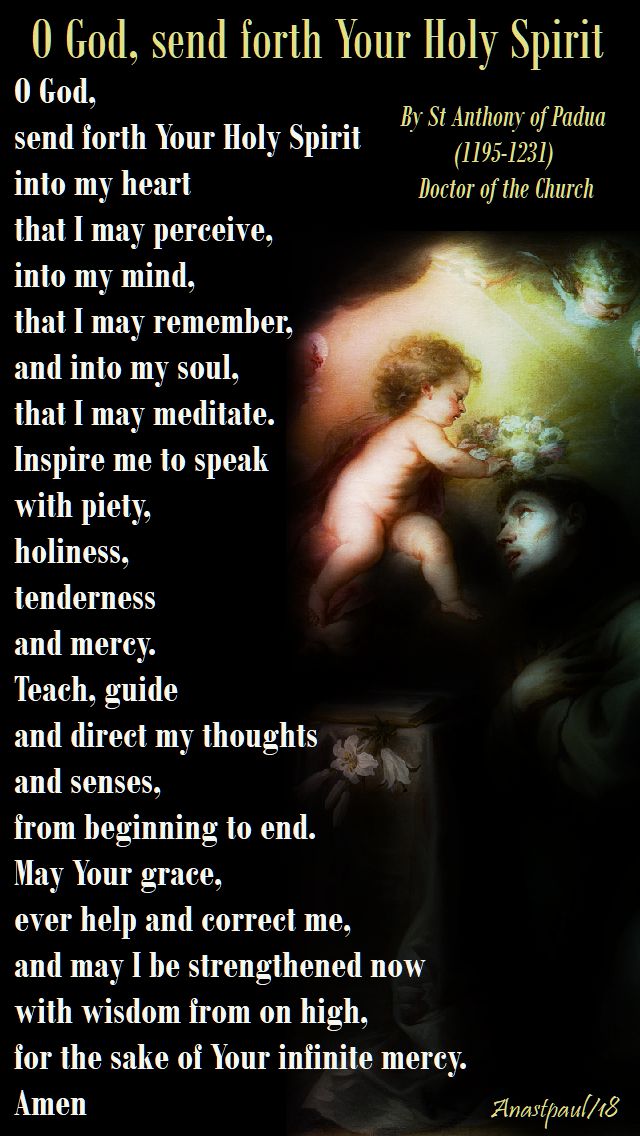
O God, send forth Your Holy Spirit
By St Anthony of Padua (1195-1231) Doctor of the Church

O God,
send forth Your Holy Spirit
into my heart
that I may perceive,
into my mind,
that I may remember,
and into my soul,
that I may meditate.
Inspire me to speak
with piety,
holiness,
tenderness
and mercy.
Teach, guide and direct my thoughts
and senses, from beginning to end.
May Your grace,
ever help and correct me,
and may I be strengthened now
with wisdom from on high,
for the sake of Your infinite mercy.
Ameno god send forth your holy spirit - st anthony of padua - 13 june 2018

Posted in DOCTORS of the Church, DOMESTIC ANIMALS, For FAITH in the BLESSED SACRAMENT, franciscan OFM, Of ANIMALS / ANIMAL WELFARE, Of BEGGARS, the POOR, against POVERTY, PATRONAGE - LOST KEYS/LOST ARTICLES, PATRONAGE - of MOTHERS, MOTHERHOOD, PATRONAGE - THE ELDERLY, OLD AGE, PATRONAGE-INFERTILITY & SAFE CHILDBIRTH, PREGNANCY, SAILORS, MARINERS, NAVIGATORS, SAINT of the DAY

Saint of the Day – 13 June – St Anthony of Padua O.F.M! Evangelical Doctor – Hammer of Heretics – Professor of Miracles – Wonder-Worker – Ark of the Testament – Repository of Holy Scripture

Saint of the Day – 13 June – St Anthony of Padua OFM (1195-1231) Evangelical Doctor – Hammer of Heretics – Professor of Miracles – Wonder-Worker – Ark of the Testament – Repository of Holy Scripture.

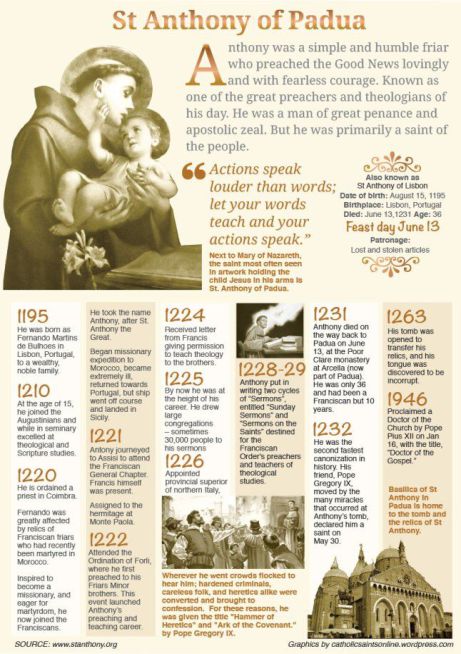
St Anthony of Padua is one of the most famous disciples of St Francis of Assisi.   He was a famous preacher and worker of miracles in his own day and throughout the eight centuries since his death, he has so generously come to the assistance of the faithful who invoke him, that he is known throughout the world amongst many who are not Catholics too.st-anthony-info

The gospel call to leave everything and follow Christ was the rule of Anthony’s life.   Over and over again, God called him to something new in his plan.   Every time Anthony responded with renewed zeal and self-sacrifice to serve his Lord Jesus more completely.

His journey as the servant of God began as a very young man when he decided to join the Augustinians in Lisbon, giving up a future of wealth and power to be a servant of God.   Later when the bodies of the first Franciscan martyrs went through the Portuguese city where he was stationed, he was again filled with an intense longing to be one of those closest to Jesus himself: those who die for the Good News.
HEADER 2 - Tanzio SantAntonio

So Anthony entered the Franciscan Order and set out to preach to the Moors.   But an illness prevented him from achieving that goal.

He went to Italy and was stationed in a small hermitage where he spent most of his time praying, reading the Scriptures and doing menial tasks.

The call of God came again at an ordination where no one was prepared to speak.   The humble and obedient Anthony hesitantly accepted the task.   The years of searching for Jesus in prayer, of reading sacred Scripture and of serving him in poverty, chastity and obedience had prepared Anthony to allow the Spirit to use his talents.   Anthony’s sermon was astounding to those who expected an unprepared speech and knew not the Spirit’s power to give people words.

Recognised as a great man of prayer and a great Scripture and theology scholar, Anthony became the first friar to teach theology to the other friars.   Soon he was called from that post to preach to the Albigensians in France, using his profound knowledge of Scripture and theology to convert and reassure those who had been misled by their denial of Christ’s divinity and of the sacraments..

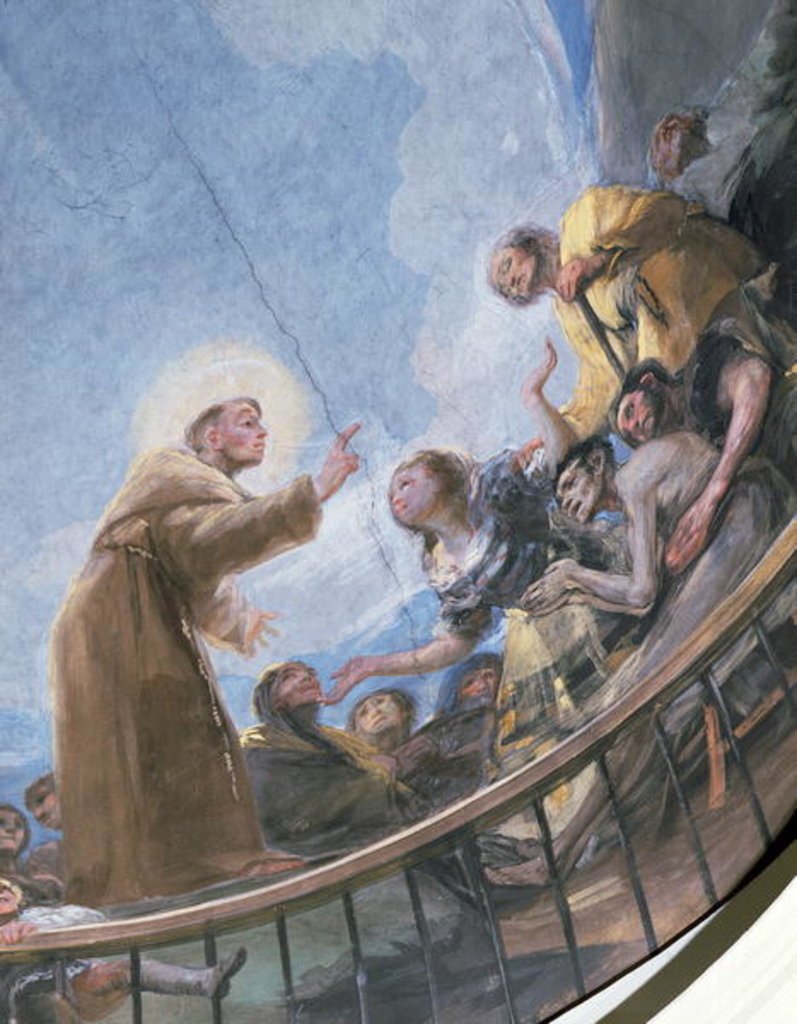
St. Anthony Preaching, detail from the Miracle of St. Anthony of Padua, from the cupola, 1798 (fresco)

The number of those who came to hear him was sometimes so great that no church was large enough to accommodate and so he had to preach in the open air.   Frequently St Anthony wrought veritable miracles of conversion.   Deadly enemies were reconciled. Thieves and usurers made restitution.   Calumniators and detractors recanted and apologised.   He was so energetic in defending the truths of the Catholic Faith that many heretics returned to the Church.   This occasioned the epitaph given him by Pope Gregory IX “the ark of the covenant.”

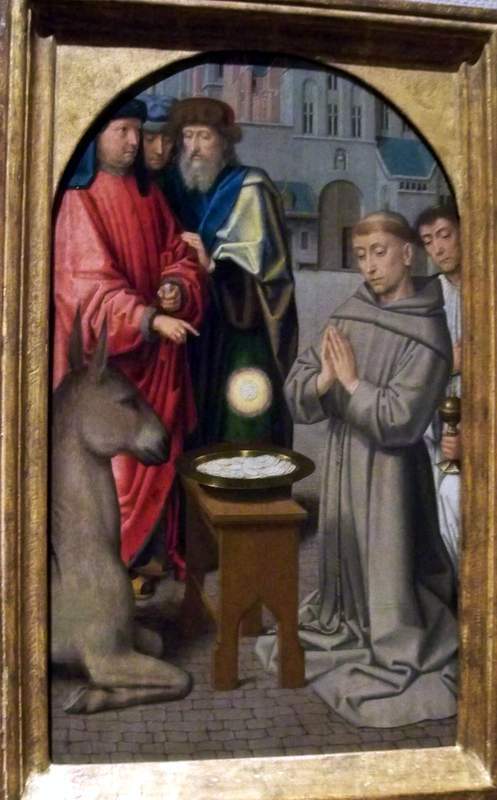
In all his labours he never forgot the admonition of his spiritual father, St Francis, that the spirit of prayer must not be extinguished.   If he spent the day in teaching and heard the confession of sinners till late in the evening, then many hours of the night were spent in intimate union with God before the Blessed Sacrament.  toledo-gerard-st-anthony-padua

After he led the friars in northern Italy for three years, he made his headquarters in the city of Padua.   He resumed his preaching and began writing sermon notes to help other preachers.   In the spring of 1231 Anthony withdrew to a friary at Camposampiero where he had a sort of treehouse built as a hermitage.   There he prayed and prepared for death.   After receiving the last sacraments he kept looking upward with a smile on his countenance. When he was asked what he saw there, he answered:  “I see my Lord.”   He breathed forth his soul on 13 June 1231 being only thirty six years old.   Soon the children in the streets of the city of Padua were crying:  “The saint is dead, Anthony is dead.”

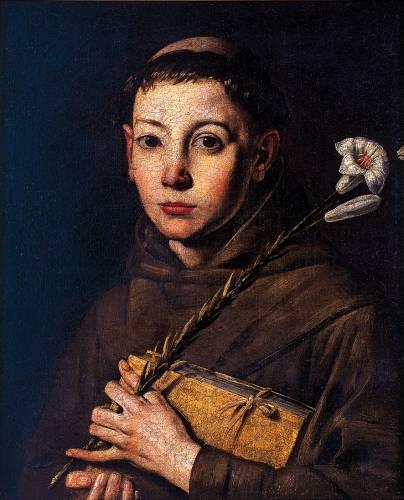
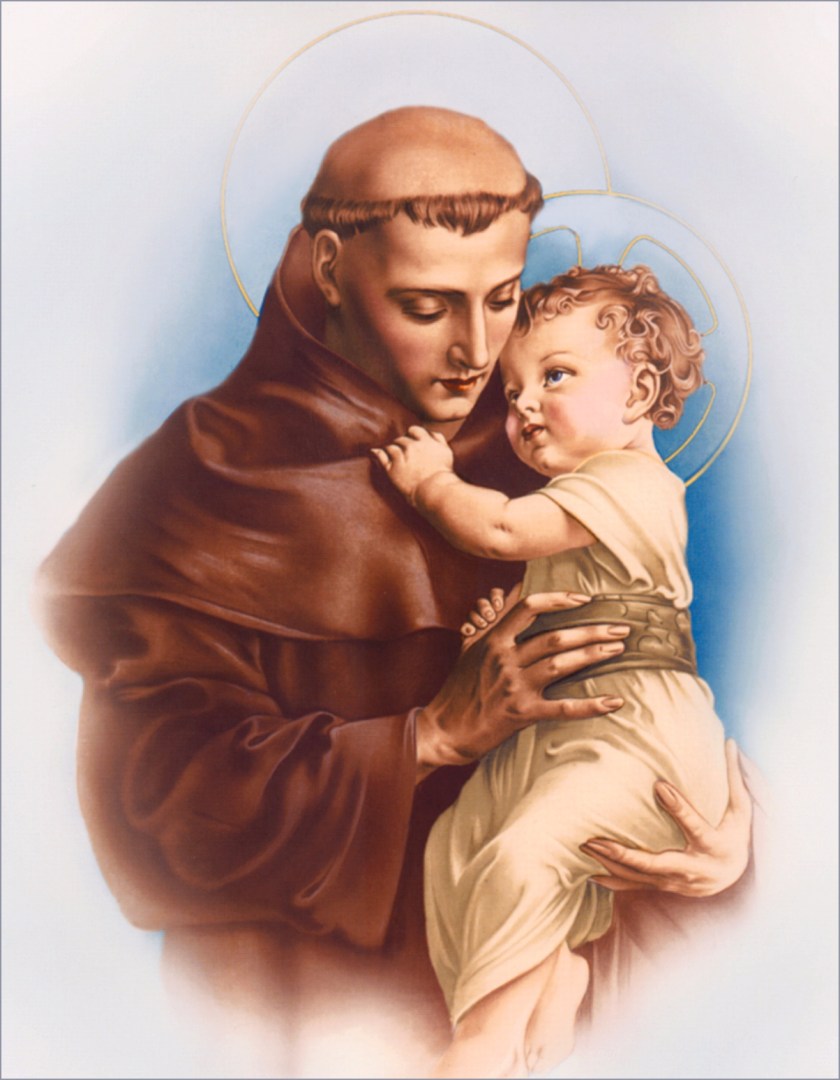
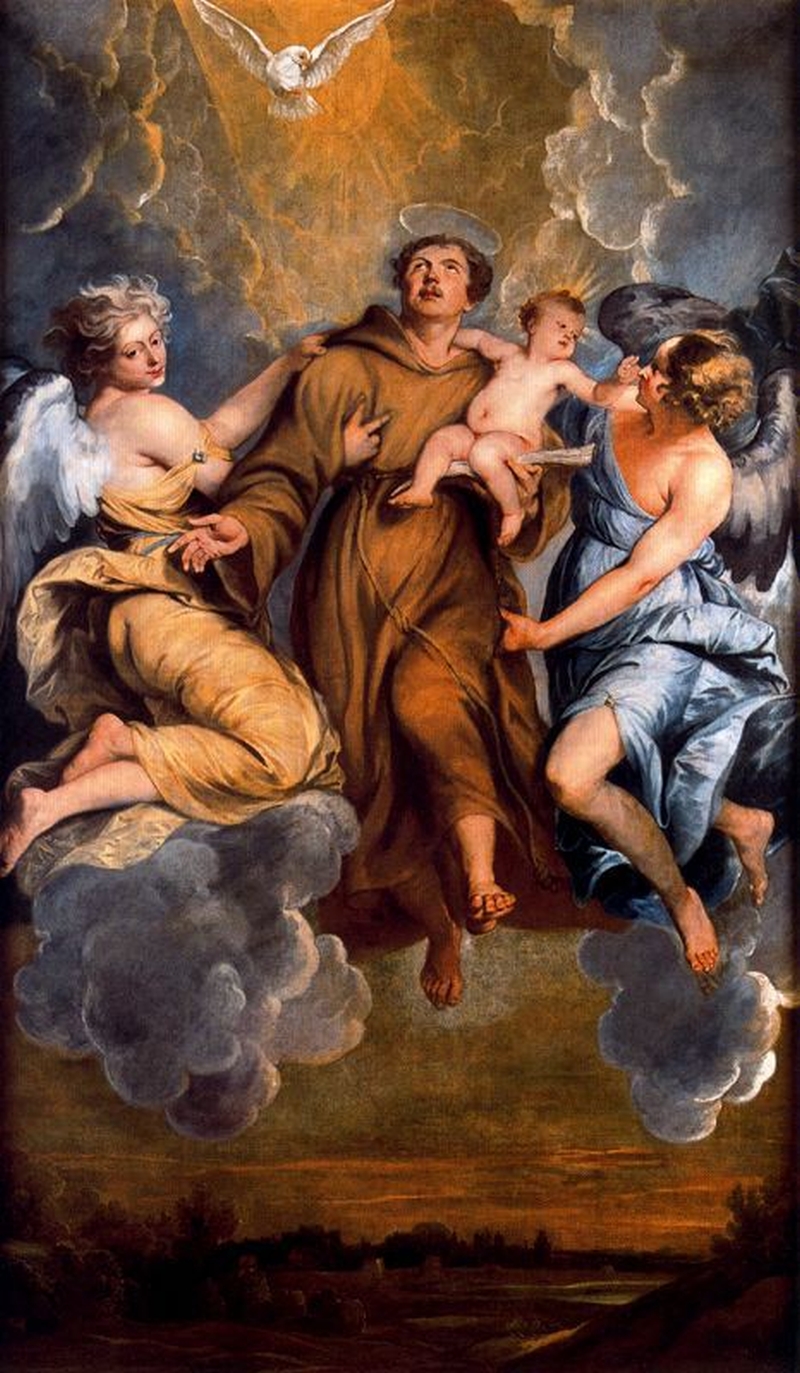
Once a man, at whose home St Anthony was spending the night, came upon the saint and found him, in ecstasy, holding in his arms the Child Jesus, unspeakably beautiful and surrounded with heavenly light.   For this reason St Anthony is often depicted holding the Child Jesus.padua13-6anthony

Pope Gregory IX enrolled him among the saints in the very next year.   At Padua, a magnificent basilica was built in his honour, his holy relics were entombed there in 1263.  From the time of his death up to the present day, countless miracles have occurred through St Anthony’s intercession, so that he is known as the Wonder-Worker.   In 1946 St Anthony was declared a Doctor of the Church and titled “The Evangelical Doctor.   For more on St Anthony, including why he is invoked for the finding of lost articles, here:  https://anastpaul.wordpress.com/2017/06/13/saint-of-the-day-13-june-st-anthony-of-paduao-f-m-evangelical-doctor-hammer-of-heretics-professor-of-miracles-wonder-worker-ark-of-the-covenant/Assumption-of-St.-Anthony-of-Padua-Thomas-Willeboirts-Bosschaert-Oil-Painting

Posted in DOCTORS of the Church, SAINT of the DAY

Memorials of the Saints -13 June

St Anthony of Padua (Memorial) (1195-1231) Doctor of the Church


Bl Achilleo of Alexandria
Bl Alfonso Gomez de Encinas
Bl Anthony of Ilbenstadt
St Aquilina of Syria
St Augustine Phan Viet Huy
St Aventino of Arbusto
St Damhnade
St Diodorus of Emesa
St Eulogius of Alexandria
St Fandilas of Penamelaria
St Felicula of Rome
St Fortunatus of North Africa

Bl Gerard of Clairvaux – was the brother of Saint Bernard of Clairvaux. H e was a Soldier. When he was wounded in combat at the siege of Grancy, Gerard resolved to become a monk. Benedictine Cistercian monk at Citeaux. He worked with Saint Bernard at Clairvaux and became his closest confidant. Cellarer. He died in 1138 of natural causes.

St Lucian of North Africa
St Mac Nissi of Clonmacnoise
Bl Marianna Biernacka
St Maximus of Cravagliana
St Nicolas Bùi Ðuc The
St Peregrinus of Amiterno
St Rambert
St Salmodio
Bl Servatius Scharff
St Thecla
St Tryphillius of Leucosia
St Victorinus of Assisi
St Wilicarius of Vienne

Posted in MORNING Prayers, SAINT of the DAY, The WORD

Thought for the Day – 12 June – Tuesday of the Tenth week in Ordinary Time Year B – Today’s Gospel Matthew 5:13-16 and the Memorial of St Gaspar Bertoni C.S.S. (1777-1853)

Thought for the Day – 12 June – Tuesday of the Tenth week in Ordinary Time Year B – Today’s Gospel Matthew 5:13-16 and the Memorial of St Gaspar Bertoni C.S.S. (1777-1853)

“You are the salt of the earth.

You are the light of the world”

At about the time of the Mission, St Gaspar suffered a physical relapse and sickness continued as a constant companion until his death.   Shortly after, on 27 July 1816, the “Stimmate”, a small private chapel, with several rooms attached, named after the Stigmata of St Francis, was bequeathed to a priest in Verona.   Just a few months later, the Stimmate was given to Father Bertoni with the stipulation that he continue to teach the youth.  Fr Bertoni and confreres, Fr Mariani and layman, Paul Zanolli move into the Stimmate on 4 November 1816 resolving, “never again to leave,” thus establishing the new religious community.   Suspicion lingered about all religious groups after the French Revolution and the Napoleonic conquest of Verona but since the school was a very visible reason for the men to be together at the Stimmate, the authorities did not object. In 1833, Father Bertoni had 180 young people in his care.   The Oratory, which remained quiet during the period of repression, flowered into a beautiful movement blossoming admiration from visitors throughout Italy.   It was a powerful instrument for God.  Father Bertoni was asked regularly to pray and to intercede for the sick.   Many people recovered for whom he prayed.   He always acknowledged that thanks were due to the Madonna, or Saint Joseph, or St Zeno (patron of Verona).

Over the years following his first illness,Father Bertoni endured over 300 operations, all without anaesthesia, to lacerate leg ulcers and to remove gangrene which invaded his right leg.   At age 61, St Gaspar was confined to his bedroom “between his bed and wheelchair.”   He spent the remaining 14 years of his life in that bare room with empty walls, adorned only by his beloved Crucifix.

By his every action, by his every word, St Gaspar lived every moment in the Light of Christ, sending the rays to all around him, in good and bad times, never ceasing to live the mission given to us all, to be the salt of the earth and the light of the world!

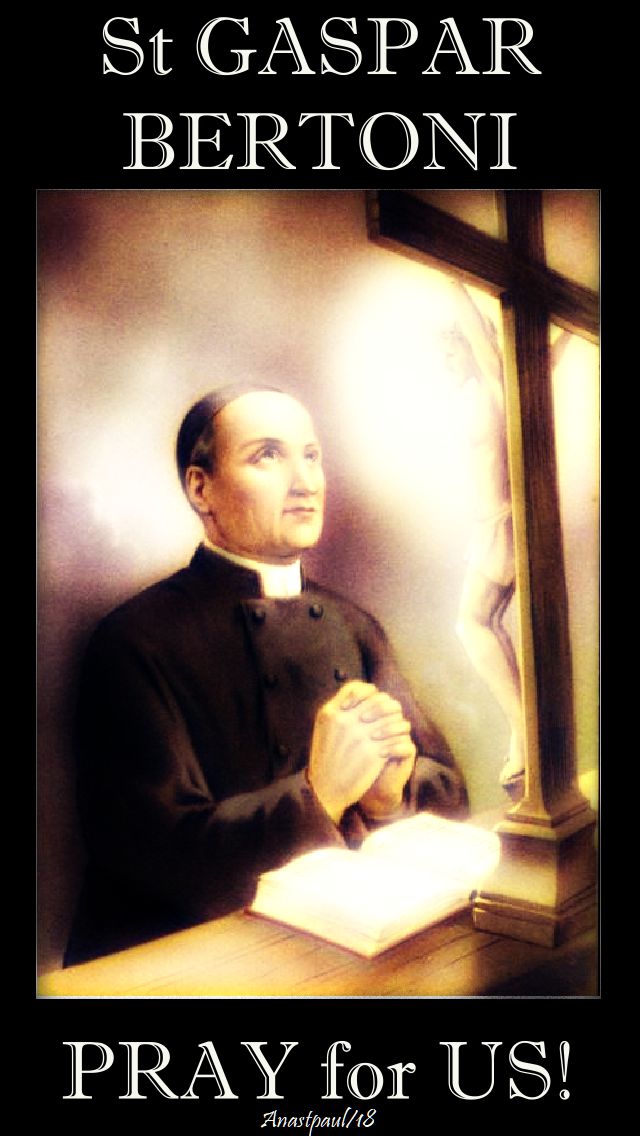
St Gaspar Bertoni, pray for us, that we may always strive to be salt and light, amen!st gaspar bertoni - 12 june 2018 - pray for us

Posted in CARMELITES, EUCHARISTIC Adoration, MORNING Prayers, QUOTES of the SAINTS, SAINT of the DAY, The BLESSED VIRGIN MARY, The HOLY EUCHARIST / The HOLY MASS

Quote of the Day – 12 June – The Memorial of Blessed Maria Candida of the Eucharist (1884-1949) (celebrated by the Carmelite Order today)

Quote of the Day – 12 June – The Memorial of Blessed Maria Candida of the Eucharist (1884-1949) (celebrated by the Carmelite Order today)

“I want to be like Mary, to be Mary for Jesus,
to take the place of His Mother.
When I receive Jesus in Communion,
Mary is always present.
I want to receive Jesus from her hands,
she must make me one with Him.
I cannot separate Mary from Jesus.
Hail, O Body born of Mary.
Hail Mary, dawn of the Eucharist!”

Bl Maria Candida of the Eucharist OCD (1884-1949)i want to be like mary, like mary for jesus - 12 june 2018 - bl maria candida of the eucharist

Posted in MARIAN QUOTES, MORNING Prayers, PAPAL SERMONS

One Minute Reflection – 12 June – Tuesday of the Tenth week in Ordinary Time Year B – Today’s Gospel Matthew 5:13-16.

One Minute Reflection – 12 June – Tuesday of the Tenth week in Ordinary Time Year B – Today’s Gospel Matthew 5:13-16.

“Just so, your light must shine before others, that they may see your good deeds and glorify your heavenly Father.“…Matthew 5:16just so, your light must shine - matthew 5 16 - 12 june 2018

REFLECTION – “…We have a task and a responsibility for the gift received:  the light of faith, which is in us through Christ and the action of the Holy Spirit, we must not keep as if it were our property.   Instead, we are called to make it shine in the world, to give it to others through good works.   And how much the world needs the light of the Gospel, which transforms, heals and guarantees salvation to those who receive it!    By giving itself, the light of our faith is not extinguished but reinforced.   Instead, it can fail, if we do not nourish it with love and with works of charity….Therefore, the mission of Christians in society is to give “flavour” to life with the faith and love that Christ has given us.”…Pope Francis, Angelus 5 Feb 2017we have a task and a responsibility - pope francis - light and salt - 12 june 2018

PRAYER – Holy Almighty Father, we pray that we may be the light of Your divine Son and the salt of the earth.   Help us, we pray, to ever strive to be both the light and salt of the earth and “may the protection of Mary Most Holy, first disciple of Jesus and model, be of help to believers who live every day their vocation and mission in history.   May our Mother help us, to let ourselves always be purified and illumined by the Lord, to become in turn “salt of the earth” and “light of the world.” …(Pope Francis Angelus 5 Feb 2017)sancta maria -mary most holy - pray for us - 10 may 2018

Posted in MORNING Prayers, PRAYERS of the SAINTS, SACRED and IMMACULATE HEARTS, The BLESSED VIRGIN MARY

Our Morning Offering – 12 June – June the Month of the Sacred Heart

Our Morning Offering – 12 June – June the Month of the Sacred Heart

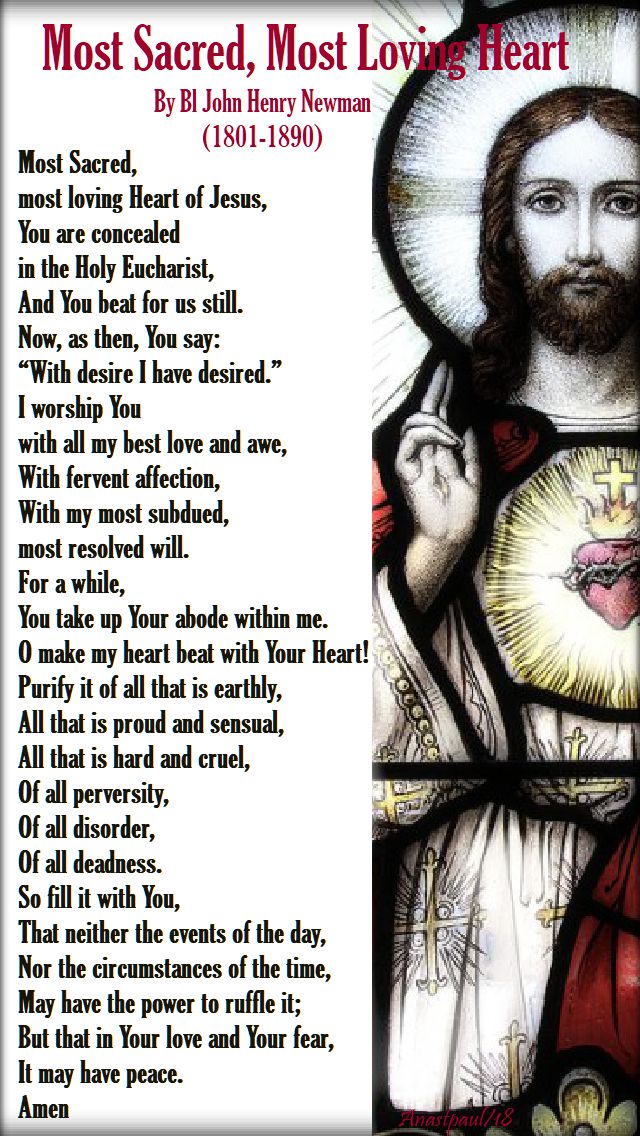
Most Sacred, Most Loving Heart
By Bl John Henry Newman (1801-1890)

Most Sacred, most loving Heart of Jesus,
You are concealed in the Holy Eucharist,
And You beat for us still.
Now, as then, You say:
“With desire I have desired.”
I worship You with all my best love and awe,
With fervent affection,
With my most subdued, most resolved will.
For a while You take up Your abode within me.
O make my heart beat with Your Heart!
Purify it of all that is earthly,
All that is proud and sensual,
All that is hard and cruel,
Of all perversity,
Of all disorder,
Of all deadness.
So fill it with You,
That neither the events of the day,
Nor the circumstances of the time,
May have the power to ruffle it;
But that in Your love and Your fear,
It may have peace.
Amenmost sacred most loving heart - bl john henry newman - 12 june 2018

Posted in SAINT of the DAY, VATICAN Resources

Saint of the Day – 12 June – St Gaspar Bertoni C.S.S. (1777-1853)

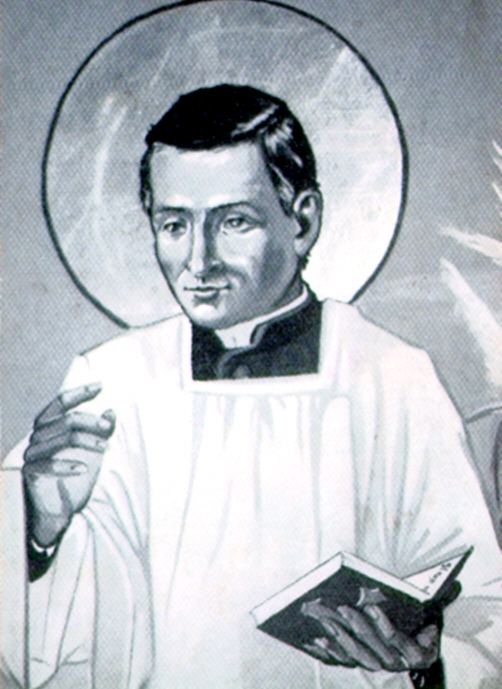
Saint of the Day – 12 June – St Gaspar Bertoni C.S.S. (1777-1853) – Priest and Founder of the Congregation of the Sacred Stigmata of Our Lord Jesus Christ C.S.S., commonly known as the Stigmatines, Teacher,  Apostolic missionary, Spiritual advisor.   Born Gaspare Luigi Bertoni on 9 October 1777 in Verona, Italy and he died on Sunday 12 June 1853 in Verona, Italy of natural causes.   Patronage – The Stigmatines. st Gaspare Bertoni (1777-1853)

GASPAR BERTONI was born in Verona, in the Republic of Venice, on 9 October 1777, of Francis Bertoni and Brunora Ravelli of Sirmione.   He was baptised the following day by his uncle, Fr James Bertoni, in the parish church of St Paul, in the Campo Marzo section of Verona.   On both sides of the family, the profession of “Notary” was exercised and from an old legal document, it can be seen that the family was fairly well off.   Even more outstanding, however, was the practice of the faith.

Following the death of his baby sister, young Gaspar remained the only child.   He had the benefit of an excellent education both at home and at St Sebastian’s school, that was conducted by the municipality after the suppression of the Jesuits.   They, however, continued teaching and also in the direction of the Marian Congregation.   Young Bertoni here came under the influence of Fr Louis Fortis, who would in the future be the first Jesuit General after the reinstatement of the Company of Jesus.

From the grace of his first Holy Communion at age 11, Gaspar Bertoni was called to a life of mystical union.   His vocation to the priesthood matured and at 18, he entered the seminary.   In frequenting the theological course as an external student, he found in his professor of moral theology, Fr Nicholas Galvani, an excellent spiritual director.

During his first year of theology, he witnessed the invasion of the French armies (1 June 1796).   This was the beginning of a 20 year period of great upheaval for his native city. Inspired by deep charity, he dedicated himself to the assistance of the sick and wounded, as a member of a Gospel Fraternity for the Hospitals, that had just then been instituted by the Servant of God, Fr Peter Leonardi.

At his priestly ordination (20 September 1800), at the dawn of a new century, he found himself in a world in need of much assistance for the resolution of the serious problems that disturbed it.

His pastor assigned the youth of parish to his pastoral care.   He dedicated himself with all his energies and great organisational ability to the new mission.   He established an Oratory in the form of a “Marian Cohort”, that had as its goal the Christian and social formation of the youth.   All such organisations were suppressed by a decree from Napoleon (1807) and Fr Bertoni reserved the carrying out of his plans for better times.Gaspar-48
Meanwhile, he took over the spiritual direction of a community founded then by St. Magdalena of Canossa at St. Joseph’s Convent (May 1808). It was here that he met the Servant of God, Leopoldina Naudet, whom he would then spiritually guide to the heights of the mysticism of holy abandonment and to the foundation of the Sisters of the Holy Family. He extended this aspect of his ministry to another Servant of God, Teodora Campostrini, of a noble family, both in the discernment of her vocation, as in the foundation of her Community, of the “Sorelle Minime” of the Charity of the Sorrowful Mother.

By September of 1810, he had already moved from his family home after the death of his mother and was transferred from St Paul’s Parish, to St Firmus Major.   Here, the bishop also entrusted him with the spiritual direction of the seminarians in the diocesan seminary.   A solid spiritual and theological formation of the young was always the clear objective of the frequent gatherings that he held in his own home.   At this time, he began to organise this endeavour in a more orderly fashion.   His overall idea was the renewal of the clergy based on an unconditional adherence to the Supreme Pontiff, Pius VII, at that time, Napoleon’s prisoner.   For Fr Bertoni, the Pontiff, was always “the first and irremovable stone” of the Church.   The reform of the Church had to begin from the sanctuary itself, with the return of its ministers to the integral following of the Gospel. The diocesan seminary was going through a very bad crisis.   However, in a short time it regained its proper form with his assistance and even assumed a monastic aspect as a contemporary witness stated.gaspare-bertoni-5d93dd14-c710-41b8-8d5a-a499289558c-resize-750

With the fall of Napoleon, the need for restoration was widely felt.   Fr Bertoni clearly understood that to gather the flock once again, it would be necessary to awaken them by the presentation of the fundamental truths of the faith through the preaching of missions to the people.   On 20 December 1817, Pope Pius VII conferred on him a precise mandate, by conferring on him the faculty of “apostolic missionary“.   While the suspicious government of Austria forbade this specific ministry, Fr Bertoni dedicated himself to other preaching and catechetical instruction.header - Gaspare_Bertoni2
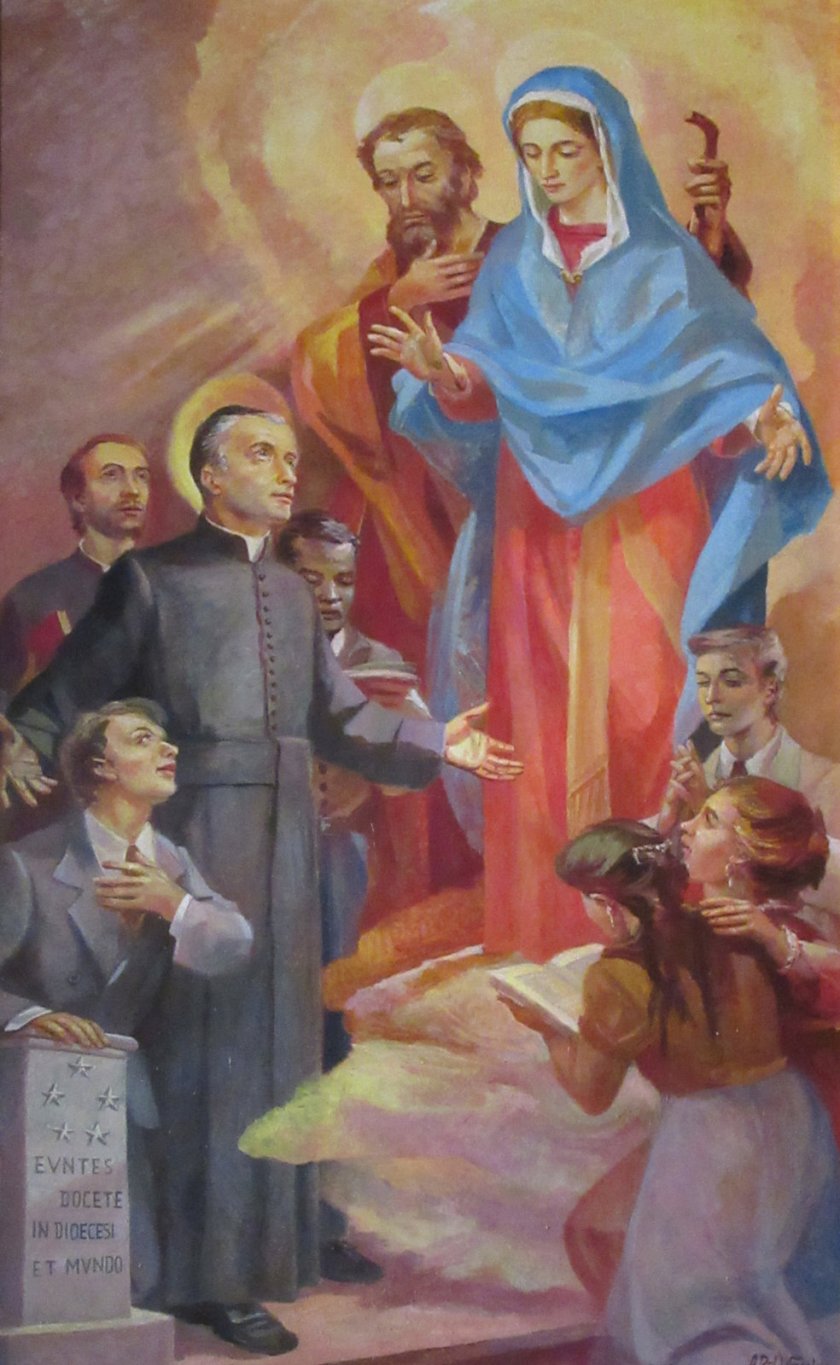
While becoming all things to gain all for Christ, Fr Bertoni cultivated a very intense interior life.   From the reading of his Spiritual Diary, it appears that he was also grace by mystical gifts.   Among these, was the call, made evident to him by grace, to the foundation of a religious family.

On 4 November 1816, with two companions, he moved into a small house, adjacent to a suppressed Church, that bore the title of “the Sacred Stigmata of St Francis (from this, the name of his community was eventually adapted;   in this small church, he also worked to spread the devotion to the Passion and the wounds of Christ).   In a very unostentatious manner, the new community opened a tuition-free school, offering this and other gratuitous services to the Church and society.   The men lived together a common life of strict observance and penance.   An intense life of contemplation was joined to a broad apostolate, including the Christian education of the youth, the formation of the clergy and missionary preaching, in perfect availability to the requests of the bishop.gasparebertoni3

Right after an ecstasy that he experienced praying before a Crucifix (on 30 May 1812), he suffered a first attack of “miliary fever” that brought him to the very threshold of death. Almost miraculously, he did recover but for the rest of his 41 years of life he remained in poor health, all this while giving a wonderful example of patience and heroic confident abandonment to God.   Even from his sick-bed, suffering indescribable discomfort, he became the “angel of counsel” for countless persons who sought him out.   A number among these were gifted human beings, who were founding charitable works, such as Blessed Charles Steeb, the Servants of God, Fr Nicholas Mazza and Fr Anthony Provolo – and others from outside the city, who came to Verona to meet with him.st gaspar bertoni

St Gaspar was an authentic image of Christ Crucified, with nearly 300 surgical procedures on his right leg that he endured, he could not suffer enough for the good of the Church and the salvation of souls.   Once doctor asked him if he needed anything – and among his last words were: “I need to suffer”.
In a vision of vivid hope in the Risen Christ, bearing the signs of His Triumph, and supported by the Holy Spouses and Patrons, Mary and Joseph, he died a holy death, at 3:30 on a Sunday afternoon, 12 June 1853.

His Congregation of the Sacred Stigmata of Our Lord Jesus Christ, enriched by so many sufferings, gradually spread beyond Verona, to other cities in Italy and then to the United States, to Brazil (where it presently has 6 Bishops), to Chile, to the Philippines and to mission territories:  South Africa, the Ivory Coast, Tanzania, Thailand.   In 2012 they had 94 houses spread around the world….(vatican.va) 

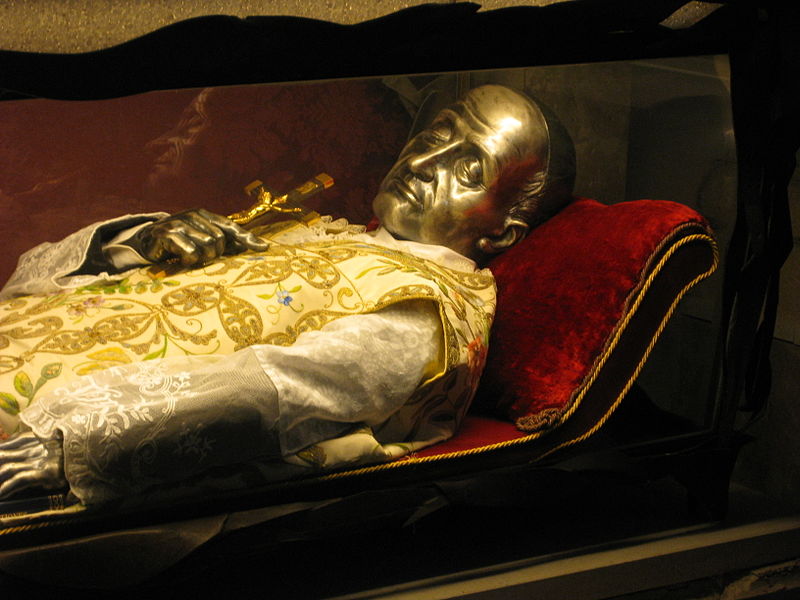
St Gaspar was Beatified on 1 November 1975, Saint Peter’s Square, Vatican City by Blessed Pope Paul VI and Canonised 1 November 1989, Saint Peter’s Square, Vatican City by St Pope John Paul II.Saint Gaspar Bertoni, in the Church of Stigmates in Verona
 

Posted in SAINT of the DAY, The BLESSED VIRGIN MARY

Memorials of the Saints -12 June and the Feast of Our Lady of Montalto, Italy

Our Lady of Montalto: Shrine of Our Lady of Montalto in Messina, Italy
In 1282, the Virgin Mary appeared in a dream to a friar named Nicholas. During the apparition she promised to send a white dove to the Caperrina hill where she wanted a church built in her name. The cornerstone for the Shrine of Our Lady of Montalto was laid in 1295 by Queen Constance of Sicily. It was a monastery for Cistercian nuns from 1389 until 1866. The Santuario della Madonna di Montalto was severely damaged during the 1908 earthquake and rebuilt in 1930. This view of the bell tower gives you a hint at the beauty of this Gothic and Romanesque structure.


St Amphion of Nicomedia
Bl Antonia Maria Verna
Bl Antonio de Pietra
St Arsenius of Konev
St Christian O’Morgair of Clogher
St Chrodobald of Marchiennes
St Cominus
Bl Conrad of Maleville
St Cunera
St Cuniald
St Cyrinus of Antwerp
St Eskil
St Galen of Armenia
St Gaspar Bertoni C.S.S. (1777-1853)
St Gerebald of Châlons-sur-Seine
St Geslar
Bl Guy Vignotelli of Cortona
St John of Sahagun
St Pope Leo III
St Lochinia of Ireland
Bl Lorenzo Maria Salvi
Bl Mercedes Maria of Jesus
St Odulf of Utrecht
St Olympius of AEnos
St Onuphrius of Egypt
Bl Pelagia Leonti of Milazzo
St Peter of Mount Athos
St Placid of Val d’Ocre
Bl Stefan Kielman
St Ternan of Culross
St Valerius of Armenia

Martyrs of Bologna:  Three Christians who were martyred at different times and places, but whose relics have been collected and enshrined together – Celsus, Dionysius, and Marcellinus. Their relics were enshrined in churches in Bologna and Rome in Italy.

Martyrs of Rome:   Four members of the Imperial Roman nobility.   They were all soldiers, one or more may have been officers, and all were martyred in the persecutions of Diocletian – Basilides, Cyrinus, Nabor and Nazarius.
They were martyred in 304 outside Rome, Italy and buried along the Aurelian Way.

Three Holy Exiles:  Three Christian men who became Benedictine monks at the Saint James Abbey in Regensburg, Germany, then hermits at Griestatten, and whose lives and piety are celebrated together. – Marinus, Vimius and Zimius.

108 Martyrs of World War II:
Also known as
• Polish Martyrs
• 108 Polish Martyrs of the Nazis
• 108 Blessed Polish Martyrs
Among the millions murdered by Nazis in World War II, many were Poles killed for being Poles and many were Catholics killed for being Catholic. As emblematic of this group, 108 Polish Catholics who were murdered for their faith, and whose faithfulness was attested by by witnesses, were beatified as a group of by Pope John Paul II. They each have a separate memorial day on the calendar but they are celebrated as a group today.
• Adalbert Nierychlewski • Adam Bargielski • Aleksy Sobaszek • Alfons Maria Mazurek • Alicja Maria Jadwiga Kotowska • Alojzy Liguda • Anastazy Jakub Pankiewicz • Anicet Koplinski • Antoni Beszta-Borowski • Antoni Julian Nowowiejski • Antoni Leszczewicz • Antoni Rewera • Antoni Swiadek • Antoni Zawistowski • Bogumila Noiszewska • Boleslas Strzelecki • Boniface Zukowski • Bronislao Kostkowski • Bronislaw Komorowski • Bruno Zembol • Czeslaw Jozwiak • Dominik Jedrzejewski • Edward Detkens • Edward Grzymala • Edward Kazmierski • Edward Klinik • Emil Szramek • Fidelis Jerome Chojnacki • Florian Stepniak • Franciszek Dachtera • Franciszek Drzewiecki • Franciszek Kesy • Franciszek Rogaczewski • Franciszek Roslaniec • Franciszek Stryjas • Grzegorz Boleslaw Frackowiak • Henryk Hlebowicz • Henryk Kaczorowski • Henryk Krzysztofik • Hilary Pawel Januszewski • Jan Eugeniusz Bajewski • Jan Franciszek Czartoryski • Jan Nepomucen Chrzan • Jan Oprzadek • Jarogniew Wojciechowski • Jerzy Kaszyra • Jozef Achilles Puchala • Józef Cebula • Jozef Czempiel • Józef Jankowski • Jozef Kowalski • Józef Kurzawa • Jozef Kut • Józef Pawlowski • Jozef Stanek • Jozef Straszewski • Józef Wojciech Guz • Jozef Zaplata • Julia Rodzinska • Karol Herman Stepien • Katarzyna Faron • Kazimiera Wolowska • Kazimierz Gostynski • Kazimierz Grelewski • Kazimierz Tomasz Sykulski • Leon Nowakowski • Leon Wetmanski • Ludwik Mzyk • Ludwik Roch Gietyngier • Maksymilian Binkiewicz • Marcin Oprzadek • Maria Antonina Kratochwil • Maria Klemensa Staszewska • Marian Gorecki • Marian Konopinski • Marian Skrzypczak • Marianna Biernacka • Michal Ozieblowski • Michal Piaszczynski • Michal Wozniak • Mieczyslaw Bohatkiewicz • Mieczyslawa Kowalska • Narcyz Putz • Narcyz Turchan • Natalia Tulasiewicz • Piotr Edward Dankowski • Roman Archutowski • Roman Sitko • Stanislaw Antoni Trojanowski • Stanislaw Kostka Starowieyski • Stanislaw Kubista • Stanislaw Kubski • Stanislaw Mysakowski • Stanislaw Pyrtek • Stanislaw Starowieyski • Stefan Grelewski • Stefan Wincenty Frelichowski • Symforian Ducki • Tadeusz Dulny • Wincenty Matuszewski • Wladyslaw Bladzinski • Wladyslaw Demski • Wladyslaw Goral • Wladyslaw Maczkowski • Wladyslaw Miegon • Wlodzimierz Laskowski • Wojciech Gondek • Zygmunt Pisarski • Zygmunt Sajna
Died
between 5 October 1939 and April 1945 in Germany and Nazi-occupied Poland and were Beatified on 13 June 1999 by St Pope John Paul II in Warsaw, Poland.

Posted in MORNING Prayers, SAINT of the DAY, The APOSTLES & EVANGELISTS, The HOLY GHOST, The WORD

Thought for the Day – 11 June – Memorial of St Barnabas, Apostle

Thought for the Day – 11 June – Memorial of St Barnabas, Apostle

Barnabas, a Jew of Cyprus, comes as close as anyone outside the Twelve to being a full-fledged apostle.   He was closely associated with Saint Paul—he introduced Paul to Peter and the other apostles—and served as a kind of mediator between the former persecutor and the still suspicious Jewish Christians.

When a Christian community developed at Antioch, Barnabas was sent as the official representative of the church of Jerusalem to incorporate them into the fold.   He and Paul instructed in Antioch for a year, after which they took relief contributions to Jerusalem.

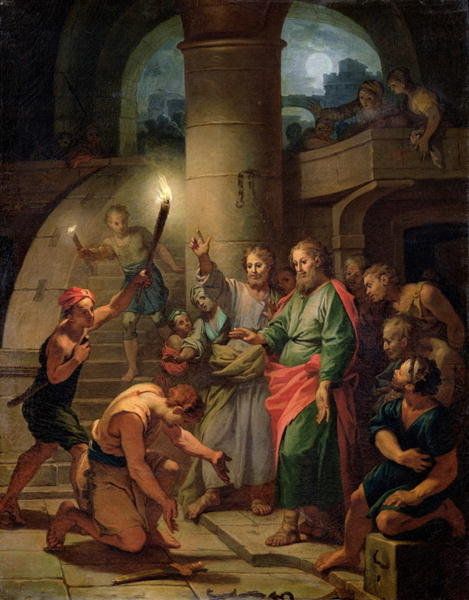
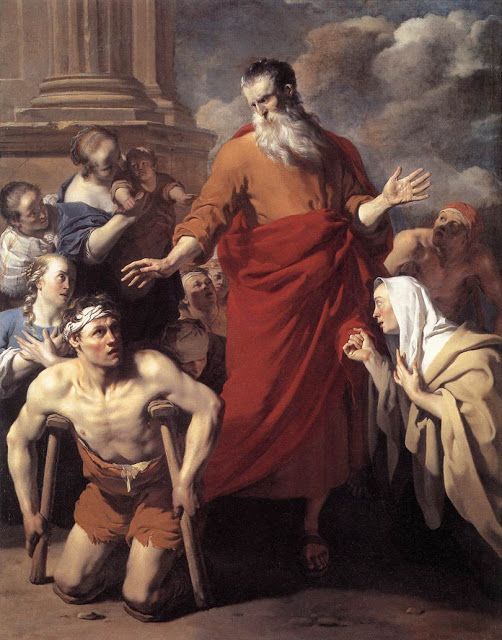
Later Paul and Barnabas, now clearly seen as charismatic leaders, were sent by Antioch officials to preach to the gentiles.  Enormous success crowned their efforts.   After a miracle at Lystra, the people wanted to offer sacrifice to them as gods—Barnabas being Zeus, and Paul, Hermes—but the two said, “We are of the same nature as you, human beings.   We proclaim to you good news that you should turn from these idols to the living God” (see Acts 14:8-18).

But all was not peaceful.   They were expelled from one town, they had to go to Jerusalem to clear up the ever-recurring controversy about circumcision and even the best of friends can have differences.   When Paul wanted to revisit the places they had evangelised, Barnabas wanted to take along his cousin John Mark, author of the Gospel but Paul insisted that since Mark had deserted them once, he was not fit to take along now.   The disagreement that followed was so sharp, that Barnabas and Paul separated: Barnabas taking Mark to Cyprus, Paul taking Silas to Syria.   Later they were reconciled—Paul, Barnabas and Mark.

When Paul stood up to Peter for not eating with gentiles for fear of his Jewish friends, we learn that “even Barnabas was carried away by their hypocrisy” (see Galatians 2:1-13)

Barnabas is spoken of simply as one who dedicated his life to the Lord.   He was a man “filled with the Holy Spirit and faith. Thereby, large numbers were added to the Lord.” Even when he and Paul were expelled from Antioch in Pisidia—modern-day Turkey—they were “filled with joy and the Holy Spirit.”

Come O Holy Spirit, come, fill the hearts of Your faithful!come o holy spirit come fill the hearts of your faithful - 11 june 2018

St Barnabus, Pray for us!st-barnabas-pray-for-us.11 june 2017

Posted in DOCTORS of the Church, FATHERS of the Church, MORNING Prayers, QUOTES of the SAINTS, QUOTES on CONVERSION, QUOTES on FAITH, QUOTES on PRAYER, QUOTES on SANCTITY, SPEAKING of .....

Quote/s of the Day – 11 June – Memorial of St Barnabas, Apostle

Quote/s of the Day – 11 June – Memorial of St Barnabas, Apostle

Speaking of: “Seeking Sainthood”

“Pray as though everything depended on God.
Work as though everything depended on you.”

St Augustine (354-430) Father & Doctor of the Churchpray as though - st augustine - speaking of seeking sainthood - 11 june 2018

“Teach us to give
and not to count the cost.”teach us to give and not to count - st ignatius loyola - 11 june 2018 - speaking of seeking sainthood

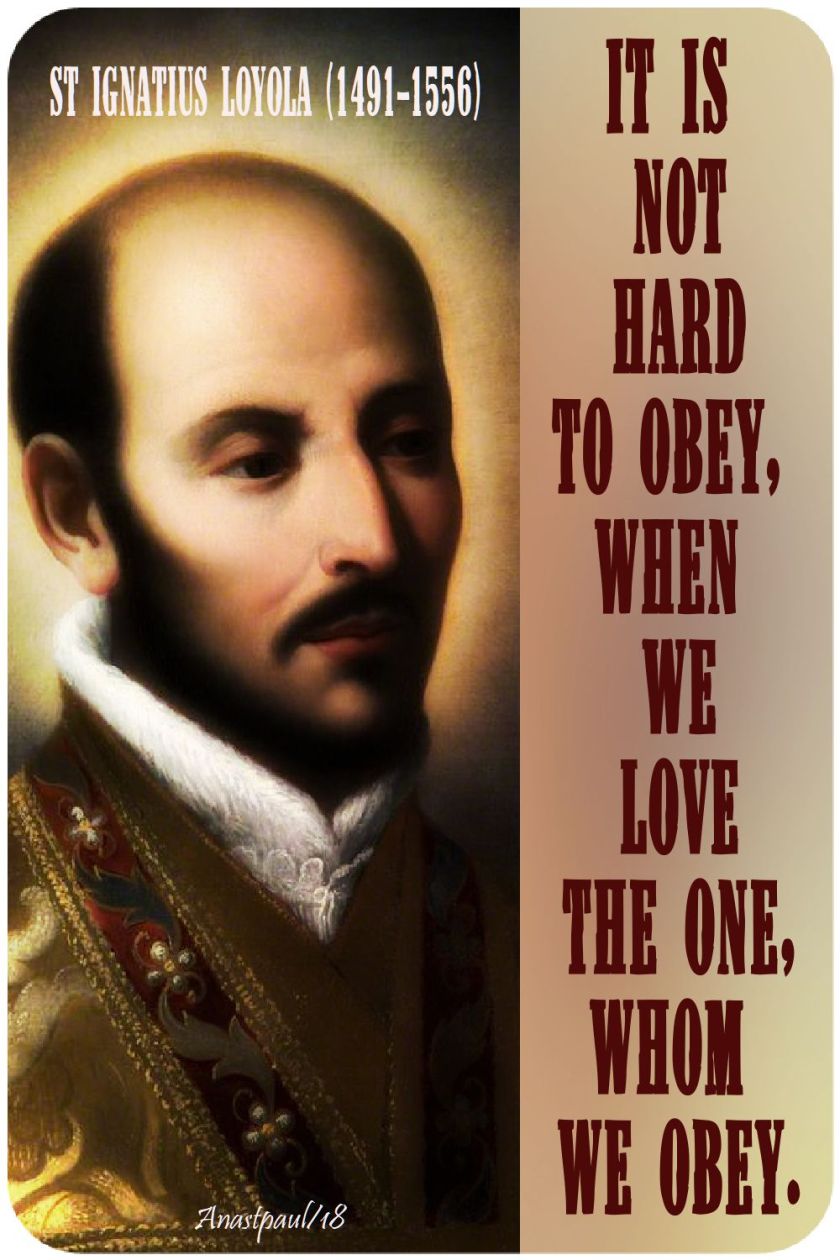
“It is not hard to obey
when we love the one,
whom we obey.”

St Ignatius Loyola (1491-1556)it is not hard - st ignatius - 11 june 2018 - seeking sainthood

“Let us begin in earnest to work out our salvation,
for no one will do it for us, since even He Himself,
Who made us without ourselves,
will not save us without ourselves.”

St Margaret Mary Alacoque (1647-1690)let us begin in earnest - st margaret mary alacoque - 11 june2018 - seeking sainthood

“You cannot be half a saint;
you must be a whole saint
or no saint at all.”

St Therese of the Child Jesus/Lisieux (1873-1897) Doctor of the Churchyou cannot be half a saint - st therese lisieux - 11 june 2018 - seeking sainthood

Posted in BREVIARY Prayers, DOCTORS of the Church, FATHERS of the Church, MORNING Prayers, PAPAL SERMONS, QUOTES of the SAINTS, SAINT of the DAY, The APOSTLES & EVANGELISTS, The WORD

One Minute Reflection – 11 June – Memorial of St Barnabas, Apostle

One Minute Reflection – 11 June – Memorial of St Barnabas, Apostle – Today’s First Reading  Acts of the Apostles 11:21b-26.13:1-3.

News of this came to the ears of the church in Jerusalem and they sent Barnabas to Antioch.   When he came and saw the grace of God, he was glad and he exhorted them all, to remain faithful to the Lord, with steadfast purpose;  for he was a good man, full of the Holy Spirit and of faith.   And a large company was added to the Lord...Acts 11:22-24

REFLECTION – “While we cannot see God, there is something we can do, to open a way, for the eye of our understanding to come to Him.   It is certain that we can see now in His servants, one whom we can in no way see in Himself.   When we see them doing astonishing things, we can be sure that God dwells in their hearts…   None of us can look directly at the rising sun by gazing at its orb.   Our eyes are repelled as they strain to see its rays.   But we look at mountains bathed in sunlight and see that it has risen.   Because we cannot see the Sun of righteousness (Mal 3,20) Himself, let us see the mountains bathed in His brightness, I mean the holy apostles.   They shine with virtues and gleam with miracles…  The power of His divinity, is in itself, like the sun in the sky;  in human beings it is like the sun shining on earth…”…St Pope Gregory the Great (c 540-604), Father & Doctor of the Church (Homilies on the Gospel, no 30)when he came and saw - acts 11 22-24 - when we see them doing - st pope gregory the great - 11 june 2018 st barnabas

PRAYER – O God, who decreed that Saint Barnabas, a man filled with faith and the Holy Spirit, should be set apart to convert the nations, grant that the Gospel of Christ, which he strenuously preached, may be faithfully proclaimed by word and by deed.   We pray you Lord, that by the intercession of St Barnabas, we too may grow in faith and love and live to glorify Your kingdom.   Through our Lord Jesus Christ, Your Son, who lives and reigns with you in the unity of the Holy Spirit, one God, forever and ever. Amen.st barnabas - pray for us - 11 june 2018

Posted in DOCTORS of the Church, FATHERS of the Church, MORNING Prayers, PRAYERS of the SAINTS

Our Morning Offering – 11 June – Memorial of St Barnabas, Apostle

Our Morning Offering – 11 June – Memorial of St Barnabas, Apostle

Steer the Ship of my Life, Lord
By St Basil the Great (329-379)

Steer the ship of my life, Lord,
to Your quiet harbour,
where I can be safe from
the storms of sin and conflict.
Show me the course I should take.
Renew in me the gift of discernment,
so that I can see the right direction
in which I should go.
And give me the strength
and the courage to choose the right course,
even when the sea is rough
and the waves are high,
knowing that through enduring
hardship and danger in Your name
we shall find comfort and peace.
Amensteer the ship of my life lord - st basil - 11 june 2018 - no 2. jpg

Posted in Against STORMS, EARTHQUAKES, THUNDER & LIGHTENING, FIRES, DROUGHT / NATURAL DISASTERS, Of and For PEACE, SAINT of the DAY, The APOSTLES & EVANGELISTS

Saint of the Day – 11 June – St Barnabas, Apostle “Son of Encouragement”

Saint of the Day – 11 June – St Barnabas, Apostle – Prophet, Disciple, Apostle to Antioch and Cyprus, Missionary and Martyr – born in Cyprus as Joseph – martyred in c 61 at Salamis.  At his Baptism, when he sold all his goods and gave the money to the apostles in Jerusalem, they gave him a new name, “Barnabas”, which means “Son of Encouragement;  Son of Consolation.”   Patronages – Cyprus, Antioch, against hailstorms, invoked as peacemaker.barnabas - header 1

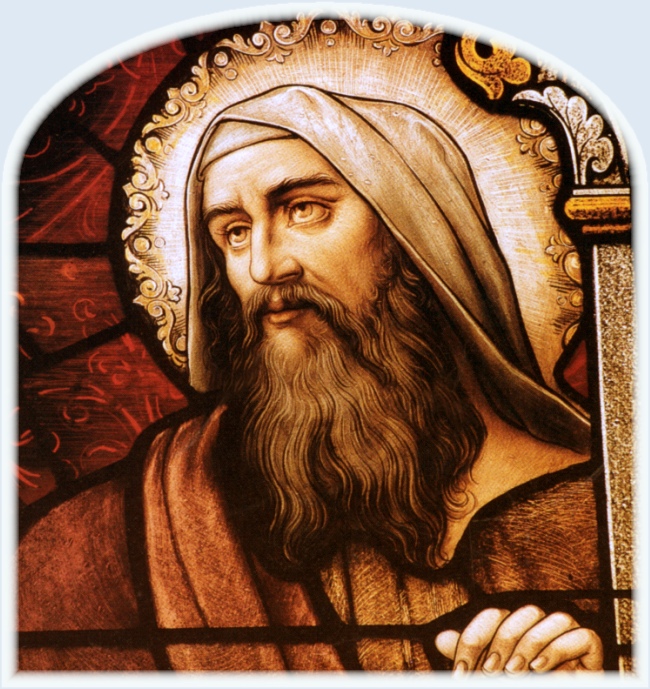
St Barnabas, was designated by the Holy Spirit to share the charge and mission of the twelve Apostles, is venerated by the Church as one of them.   He played an important part in the first extension of Christianity outside the Jewish world.   It was Barnabas who presented St Paul to the other Apostles when, after his long retreat in Arabia, he came to Jerusalem for the first time after his conversion, to submit for Peter’s approval, the mission to the Gentiles entrusted to him, by the Master Himself.   Barnabas was Paul’s companion and helper on his first missionary journey and returned with him to Jerusalem but left him, when he set out on his second journey and went to Cyprus.   The name of St Barnabas is mentioned in the Canon of the Mass.

We know nothing about St Barnabas except what Scripture tells us.   St Luke says he was “a good man, filled with the Holy Spirit and faith” (Acts 11:24).   No one could ask for a better recommendation!   The saint was born at Cyprus, a Jew of the tribe of Levi.   His given name was Joseph, but the apostles called him Barnabas, which meant “son of encouragement” (Acts 4:36).   That nickname suited him to a tee, for everywhere he went he seems to have played a major supportive role in establishing the Christian community. For example, he sold his property and donated the money to the apostles for the poor.

barnabas sold everything

Later the apostles sent him to care for the fledgling church at Antioch (Acts 11:20–22).  He brought Paul from Tarsus to help him and the community flourished under their leadership (Acts 11:25–26).   Twice Barnabas and Paul travelled to Jerusalem on behalf of the church at Antioch (Acts 11:27–30; 15:2).   He also accompanied Paul on his first missionary journey that began in Cyprus and circuited through Asia Minor (Acts 13:1–2, 7).paul and barnabas at lystra

Before the next missionary journey, however, Paul and Barnabas quarreled over some personal and pastoral matters and decided to separate.   Barnabas returned to Cyprus and evangelised the island.   Paul’s later references to Barnabas in his letters indicate that the two apostles were ultimately reconciled (see 1 Corinthians 9:6; Colossians 4:10).

Early Christians attributed an epistle to Barnabas but modern scholars say he probably did not write it.   Tertullian and other Western writers regard Barnabas as the author of the Letter to the Hebrews.   This may have been the Roman tradition—which Tertullian usually follows—and in Rome the epistle may have had its first readers.   Modern biblical scholarship disagree.

It is believed that he was Martyred at Salamis in 61.

There are two ways of doctrine and authority, one of light and the other of darkness.   But these two ways differ greatly.   For over one are stationed the light-bringing angels of God but the angels of Satan are over the other.   This, then, is the way of light:  Love God who created you.   Glorify God who redeemed you from death.   Be simple in heart, and rich in spirit.   Hate doing anything unpleasing to God.   Do not exalt yourself but be of a lowly mind.   Do not forsake the commandments of the Lord.   Love your neighbour more than your own soul.   Do not slay the child by procuring an abortion, nor destroy it after it is born.   Receive your trials as good things.   Do not hesitate to give without complaint.   Confess your sins.   This is the way of light.   But the way of darkness is crooked and cursed, for it is the way of eternal death with punishment.   In this way are the things that destroy the soul:  idolatry, overconfidence, the arrogance of power, hypocrisy, double-heartedness, adultery, rape, haughtiness, transgressions, deceit, malice, avarice and absence of any fear of God.   Also in this way are those who persecute the good, those who hate truth, those who do not attend to the widow and orphan, those who do not pity the needy, those who murder children, those who oppress the afflicted and are in every respect transgressors.

The Epistle of Barnabas

The Catholic religious order officially known as “Regular Clerics of St Paul” (Clerici Regulares Sancti Pauli – C.R.S.P.), founded in the 16th Century, was in 1538 given the grand old Monastery of Saint Barnabas by the city wall of Milan.   This becoming their main seat, the Order was thenceforth known by the popular name of the Barnabites.st-barnabas-monastery

More about St Barnabas here:  https://anastpaul.wordpress.com/2017/06/11/saint-of-the-day-st-barnabas-the-apostle-11-june/

Posted in SAINT of the DAY

Memorials of the Saints – 11 June

St Barnabas the Apostle (Memorial) (Martyred in c 61 at Salamis)

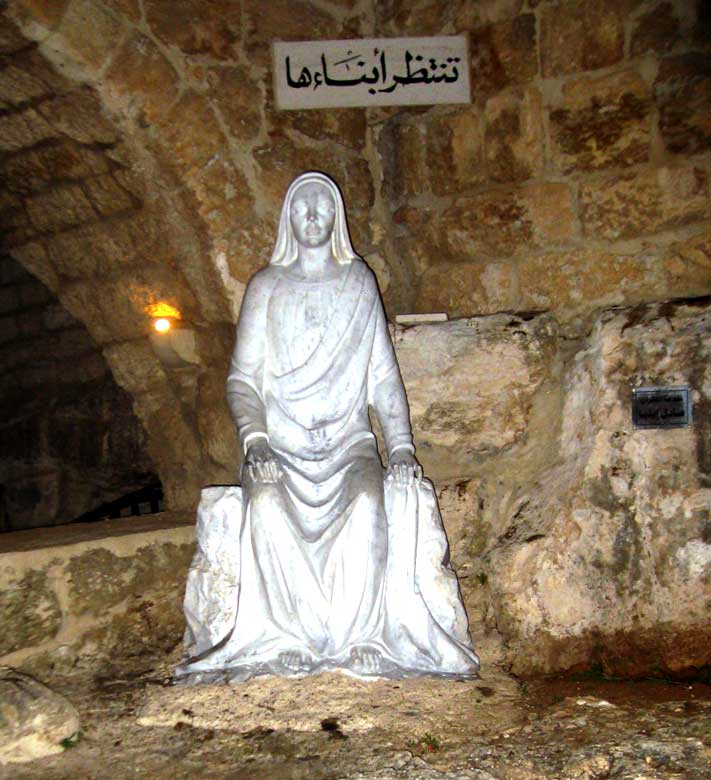
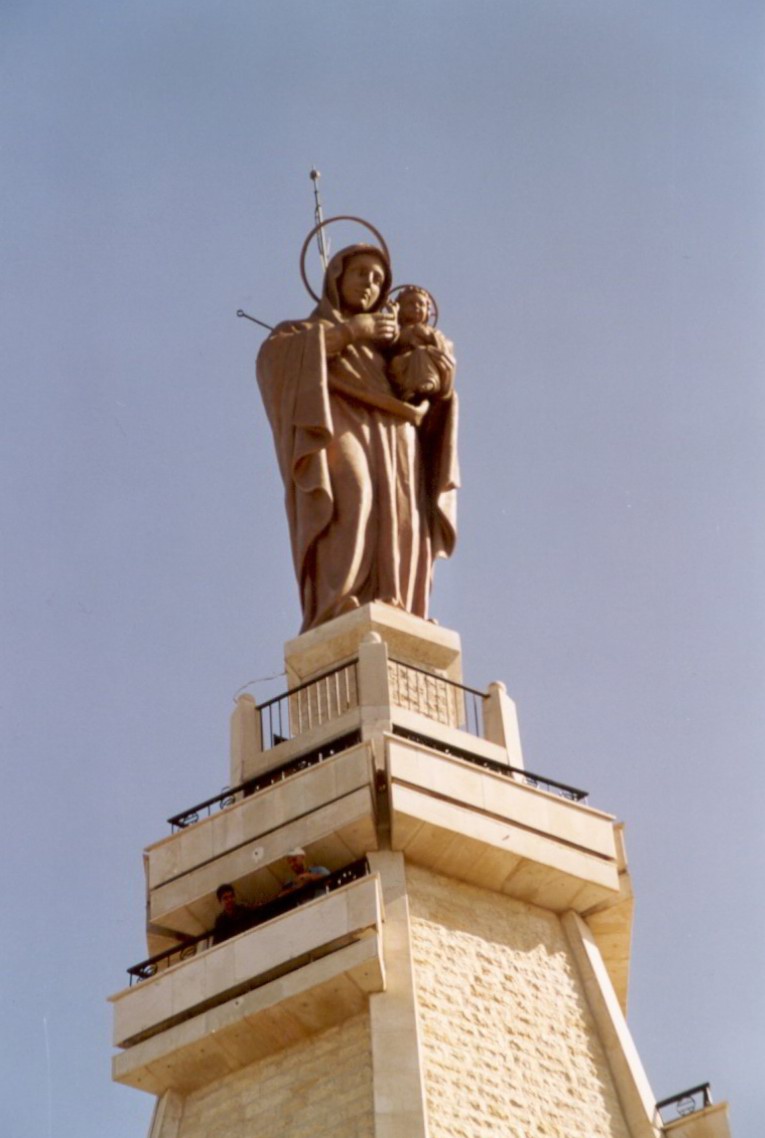
Our Lady of Awaiting/Mantara: Our Lady of Awaiting, also known as Our Lady of Mantara, is a Melkite Greek Catholic Marian shrine in Maghdouché, Lebanon, discovered on 8 September 1721 by a young shepherd. The grotto, which according to a legend dates to ancient times, was subsequently cared after by Monsignor Eftemios Saïfi, Melkite Catholic bishop of the Melkite Greek Catholic Archeparchy of Sidon. The shrine consists of a tower crowned with the statue of the Virgin and Child, a cathedral, a cemetery and a sacred cave believed to be the one where the Virgin Mary rested while she waited for Jesus. Since its discovery, it has been steadily visited by families particularly each year on the occasion of the feast of the Nativity of Mary on 8 September.our lady of mantara at the caveOUR LADY OF MANTARA

St Aleydis of Schaerbeek
St Blitharius of Seganne
St Herebald of Bretagne
Bl Hugh of Marchiennes
Bl Ignazio Choukrallah Maloyan
Bl Jean de Bracq
Bl Kasper of Grimbergen
St Maximus of Naples
St Parisius
St Paula Frasinetti
St Riagail of Bangor
St Tochumra of Kilmore
St Tochumra of Tuam

Martyrs of Tavira – 7 beati: Members of the Knights of Santiago de Castilla. During the re-conquest of the Iberian peninsula from the Muslims by Christian forces, in a period of truce between the armies, the group was allowed to leave the Portuguese camp to hunt. Near Tavira, Portugal, he and his companions were ambushed and killed by a Muslim force. Making a reprisal attack, the Portuguese army took the city of Tavira. The murdered knights were considered to be martyrs as they died in an action defending the faith. They were –
• Blessed Alvarus Garcia
• Blessed Beltrão de Caia
• Blessed Damião Vaz
• Blessed Estêvão Vasques
• Blessed Garcia Roiz
• Blessed Mendus Valle
• Blessed Pedro Rodrigues
They were martyred in 1242 outside Tavira, Faro, Portugal. Their relics are enshrined under the altar of Saint Barnabas in the Church of Our Lady, Queen of the Angels (modern Santa Maria do Castelo) in Tavria

Mercedarian Martyrs of Damietta: Three Mercedarian lay knights who worked to ransom Christians enslaved by Muslims. During the 7th Crusade, a plague swept through the Christian army and these knights volunteered to work with the sick. During this work they were captured by Muslims and ordered to convert to Islam; they refused. They were tortured, taken to Damietta, Egypt where they were murdered for their faith. They were thrown from a tower in the mid-13th century in Damietta, Egypt.