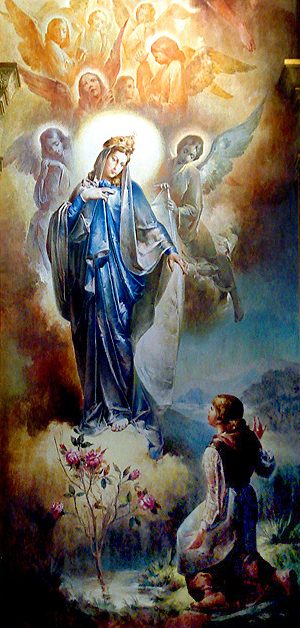
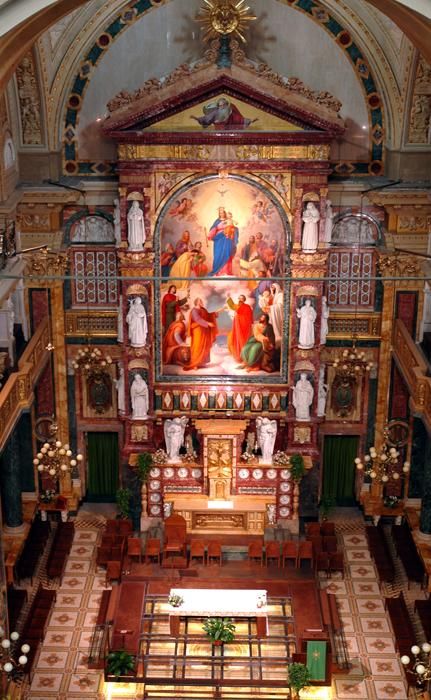
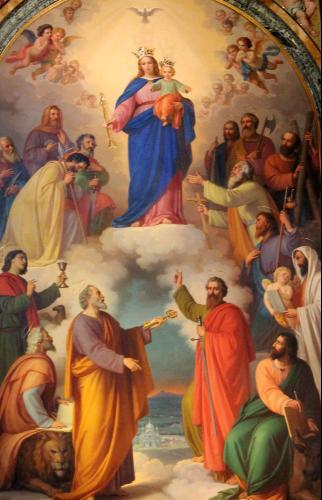
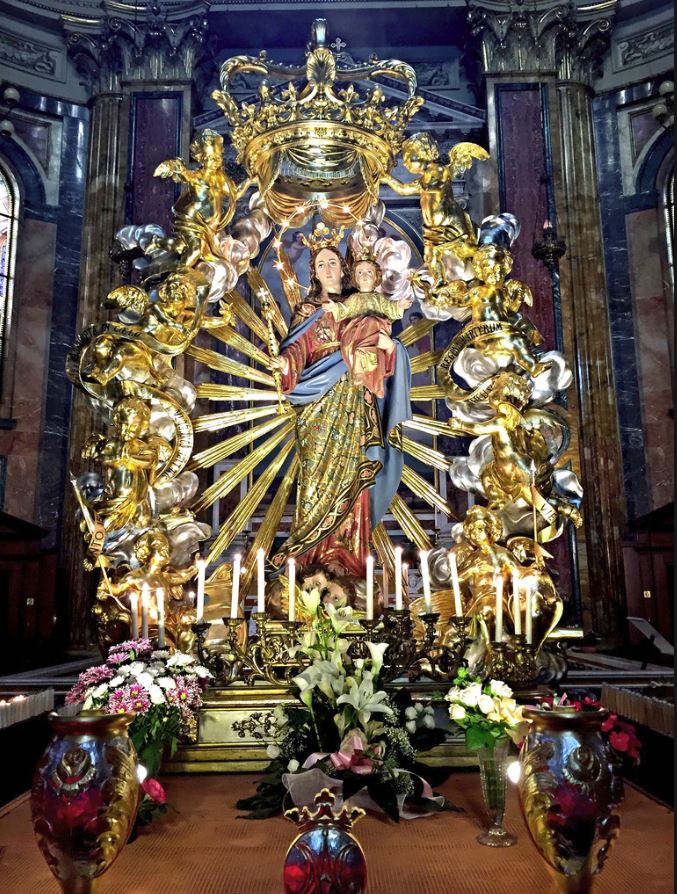
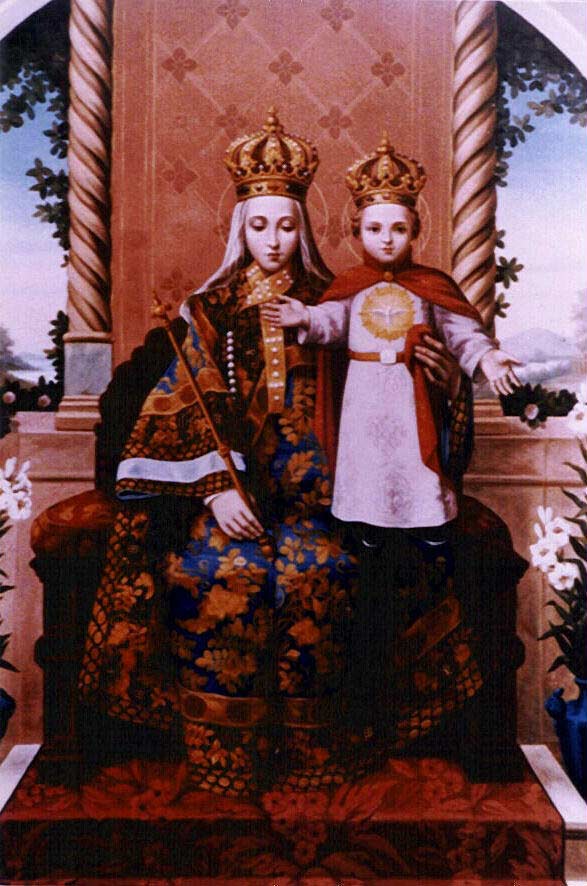
Our Lady of Caravaggio/Nostra Signora di Caravaggio: Title given to the Blessed Virgin Mary who appeared in an apparition on 26 May 1432 in the countryside outside Caravaggio, Lombardy, Italy. Giannetta de’ Vacchi: Varoli was cutting hay in a field when the Virgin appeared. Mary requested penance from and a chapel built by the locals. A new spring of healing water appeared in the hay field. The apparition anniversary became a day of pilgrimage to the shrine of Santa Maria del Fonte built at the site and devotion to the Madonna of Caravaggio spread through the region and eventually around the world. In 1879, Italians from Lombardy built a chapel for their settlement in southern Brazil. As it was the only sacred art that any of them possessed, they dedicated the chapel to the Madonna di Caravaggio. Today the shrine hosts over a million pilgrims annually. Patronage – diocese of Cremona, Italy.
—
St Alphaeus
St Anderea Kaggwa
Bl Andrea Franchi
St Becan of Cork
Bl Berengar of Saint-Papoul
St Damian the Missionary
St Desiderius of Vienne
St Pope Eleuterus
St Felicissimus of Todi
St Fugatius the Missionary
St Gioan Ðoàn Trinh Hoan
St Guinizo of Monte Cassino
St Heraclius of Todi
Bl Lambert Péloguin of Vence
St Mariana de Paredes y Flores of Quito
St Odulvald of Melrose
St Paulinus of Todi
St Peter Sanz
St Ponsiano Ngondwe
St Priscus of Auxerre and Companions
St Quadratus of Africa
St Quadratus the Apologist
St Regintrudis of Nonnberg
St Simitrius of Rome and Companions
St Zachary of Vienne
SCRIPTURAL READING “They went about the surrounding country and began to bring in the sick on mats to where ever they heard He was. Whatever villages or towns or countryside He entered, they laid the sick in the marketplaces and begged Him that they might touch only the tassel on His cloak; and as many as touched it were healed.”...(Mk. 6:55-56)
MEDITATION “Jesus went all over Galilee, teaching in the synagogues, preaching the Good News about the Kingdom, and healing people who had all kinds of diseases and sickness. The news about Him spread through the whole country of Syria, so that people brought to Him all those who were sick, suffering from all kinds of diseases and disorders: people with demons and epileptics and paralytics – Jesus healed them all.”…(Mt. 4, 23-24)
PRAYER
Lord Jesus Christ,
You showed Your love and compassion
for the poor and the sick,
curing everyone who came to You in faith, or in hope.
No one who appealed to You, was ever disappointed,
be they believers or not – both saints and sinners.
Please pour down Your mercies upon us
who are sick and wounded in the struggles
we face in life.
Have mercy on us Lord,
on our infirmities caused by human frailty and sinfulness.
Touch Lord, our aching bodies and spirits
with Your merciful love.
Bless me through the love with which You plead for us
before the throne of God,
bless me in the Blessed Sacrament
with which You give Yourself to us in Holy Communion.
Grant that all this love and bitter pain,
may not be lost on me.
Eternal Son,in Your mercy, grant my petition:
…………………….(mention your petition)
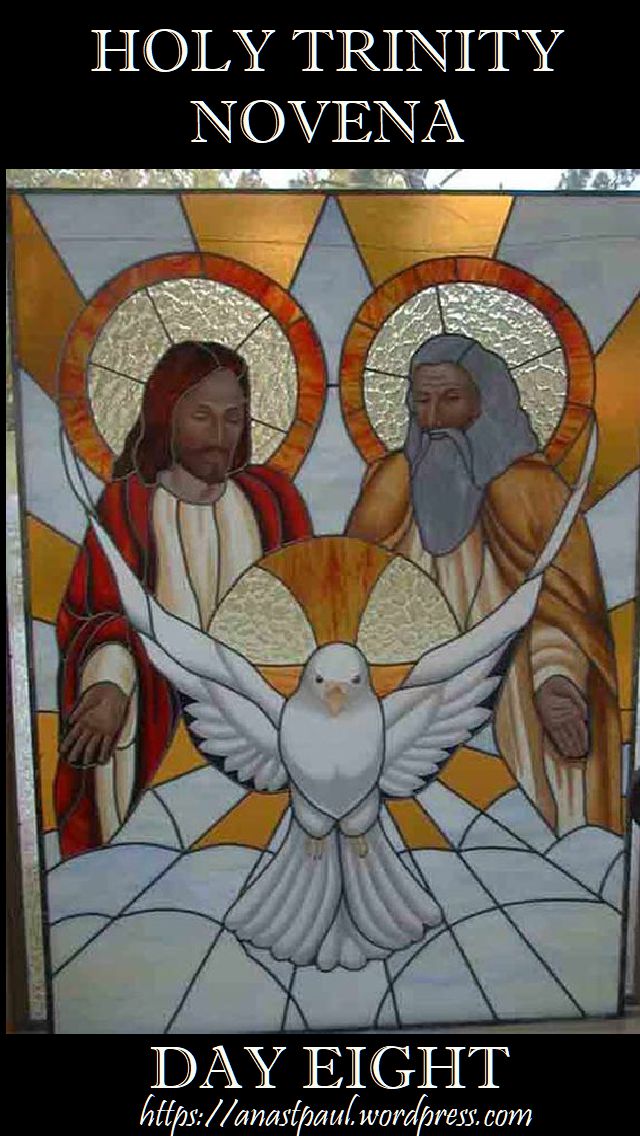
Most Holy Trinity, Godhead indivisible,
Father, Son, and Holy Spirit,
our first beginning and our last end,
You have made us after Your own image and likeness.
Grant that all the thoughts of my mind,
all the words of my mouth,
all the affections of my heart
and all my actions be always conformed to Your holy Will.
After having seen You here below in Your manifestations and by faith,
may I come at last to see You face to face,
in the perfect possession of You forever in heaven.
Amen
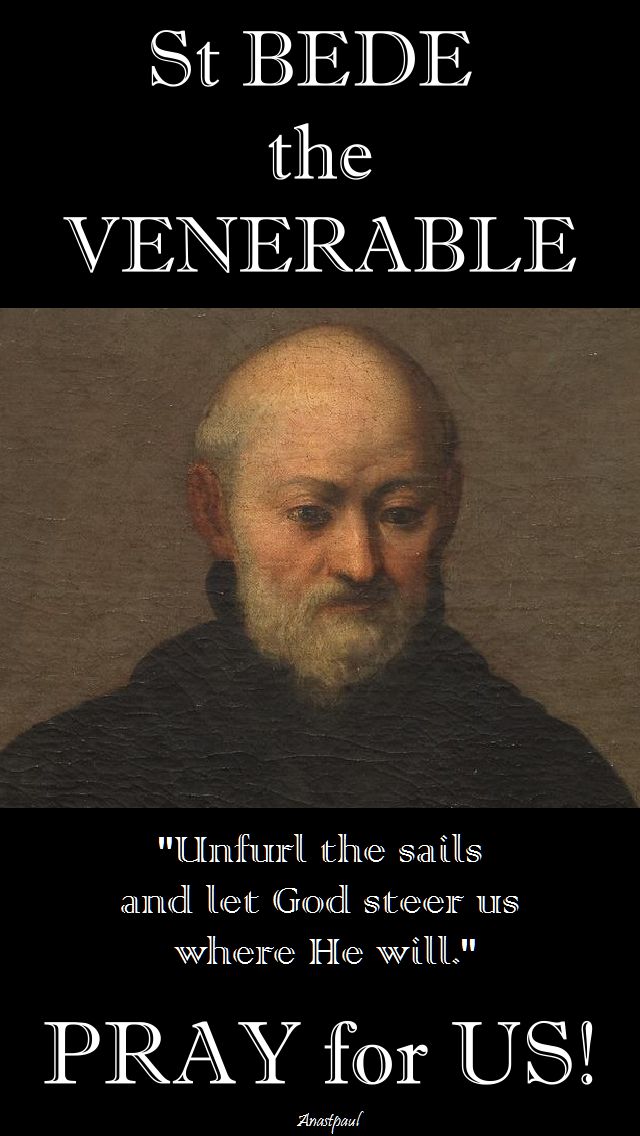
Marian Thought for the Day – 25 May “Mary’s Month” – The Memorial of St Bede the Venerable (673-735) Father and Doctor of the Church
“My soul proclaims the greatness of the Lord, any my spirit rejoices in God my saviour.”
With these words Mary first acknowledges the special gifts she has been given.
Above all other saints, she alone could truly rejoice in Jesus, her saviour, for she knew that He who was the source of eternal salvation, would be born in time in her body, in one person both her own son and her Lord.
“For the Almighty has done great things for me, and holy is his name.”
Mary attributes nothing to her own merits. She refers all her greatness to the gift of one whose essence is power and whose nature is greatness, for He fills with greatness and strength, the small and the weak who believe in Him. She did well to add: “and holy is his name,” to warn those who heard and indeed, all who would receive His words, that they must believe and call upon His name. For they too could share in everlasting holiness and true salvation according to the words of the prophet: “and it will come to pass, that everyone who calls on the name of the Lord will be saved.” This is the name she spoke of earlier when she said “and my spirit rejoices in God my saviour.”
Quote/s of the Day – 25 May “Mary’s Month” – The Memorial of St Bede the Venerable (673-735) Father and Doctor of the Church and St Mary Magdalen de Pazzi (1566-1607)
“Unfurl the sails and let God steer us where He will.”
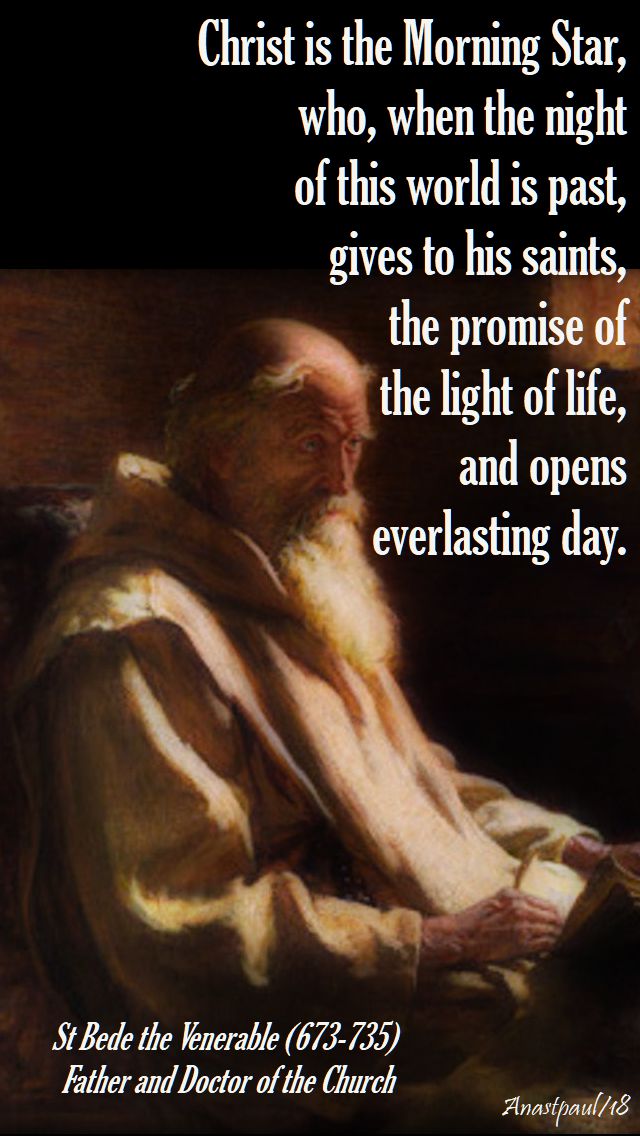
“Christ is the Morning Star, who, when the night of this world is past, gives to His saints, the promise of the light of life, and opens everlasting day.”
St Bede the Venerable (673-735) Father and Doctor of the Church
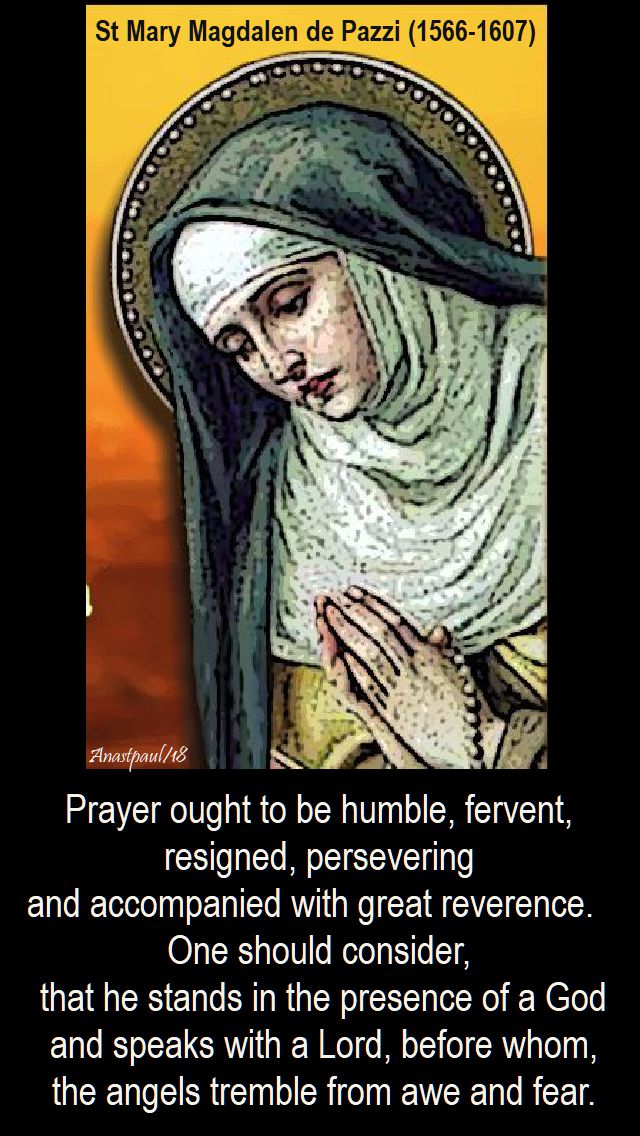
“Prayer ought to be humble, fervent, resigned, persevering and accompanied with great reverence. One should consider, that he stands in the presence of a God and speaks with a Lord, before whom, the angels tremble from awe and fear.”
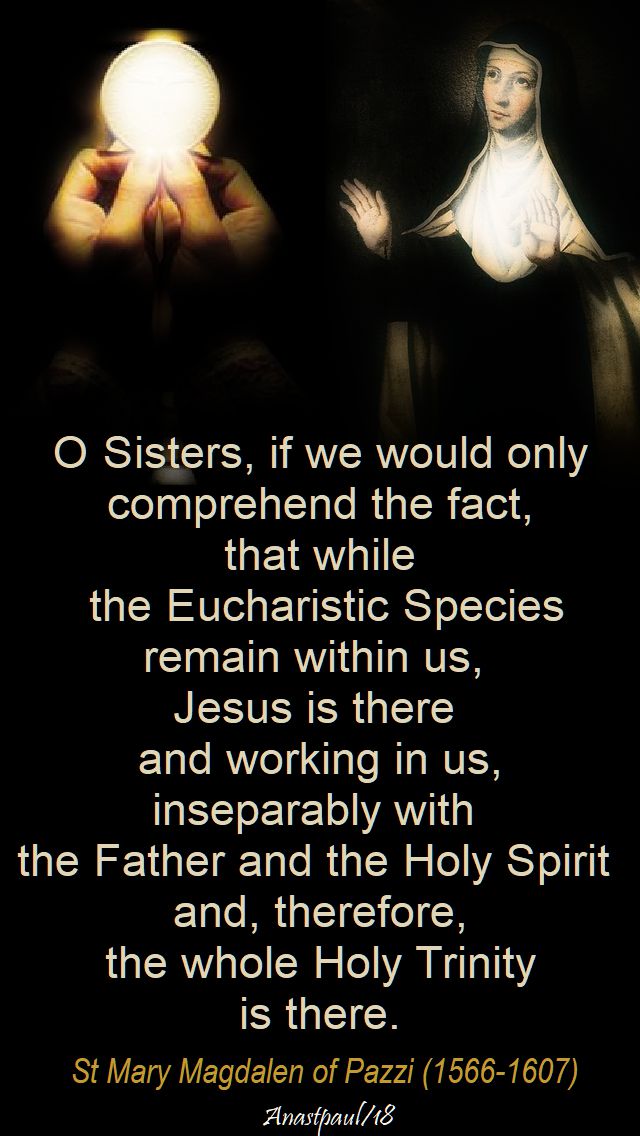
“O Sisters, if we would only comprehend the fact, that while the Eucharistic Species remain within us, Jesus is there and working in us, inseparably with the Father and the Holy Spirit and therefore the whole Holy Trinity is there.”
One Minute Marian Reflection – 25 May “Mary’s Month” Friday of the Seventh Week in Ordinary Time, Year B
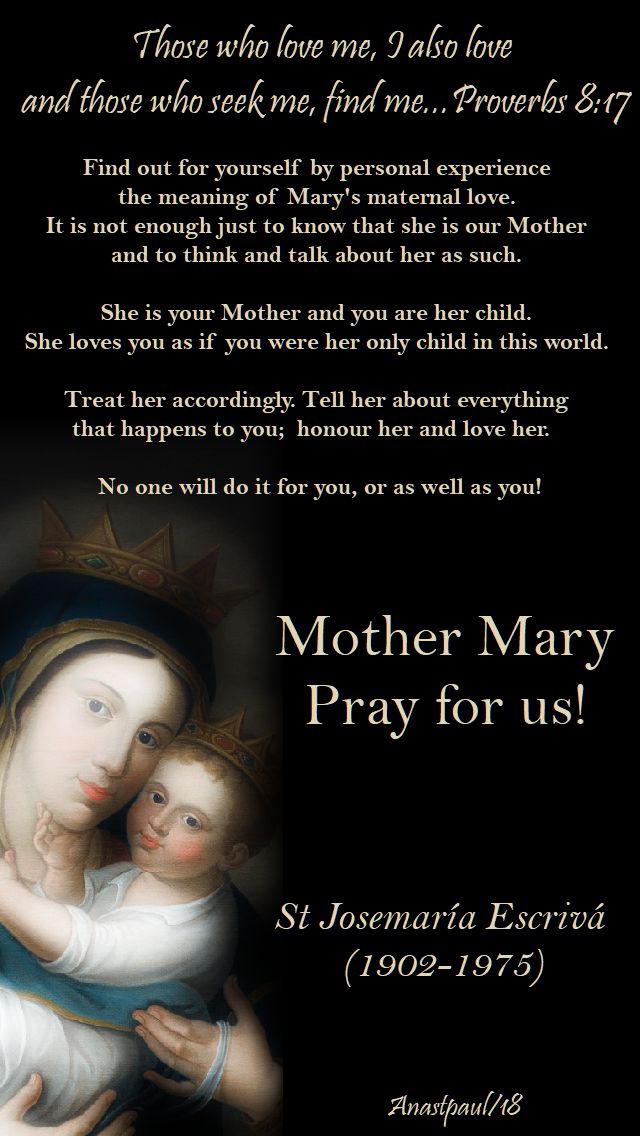
Those who love me I also love and those who seek me, find me…Proverbs 8:17
REFLECTION – “MARY: OUR MOTHER – “Find out for yourself by personal experience the meaning of Mary’s maternal love. It is not enough just to know that she is our Mother and to think and talk about her as such. She is your Mother and you are her child. She loves you as if you were her only child in this world. Treat her accordingly. Tell her about everything that happens to you; honour her and love her. No one will do it for you or as well as you.”…” St Josemaría Escrivá (1902-1975) Mother of God and our Mother,” Friends of God, 293.
Let us offer to our Mother today: Many affectionate thoughts and prayers, by saying “Mary, my mother” each time we pause in our work.
PRAYER – Holy Almighty Father, grant us the grace to understand the immense love You have given us, in granting us the Mother of Your Divine Son, as our Mother too. Holy Mary, Mother of God and our Mother, teach us, help us, show us the way, as all mothers do. Through our Lord Jesus Christ, your Son and our Saviour, in the unity of the Holy Spirit, one God with our Father, forever, amen.
Our Morning Offering – 25 May “Mary’s Month” Friday of the Seventh Week in Ordinary Time, Year B
Mary, Virgin and Mother, shows us what love is and whence it draws its origin and its constantly renewed power. To her we entrust the Church and her mission in the service of love.
Pope Benedict XVI: Deus Caritas Est, 42
Holy Mary, Mother of God
By Pope Benedict XVI:
Deus Caritas Est, 42
Holy Mary, Mother of God,
you have given the world its true light,
Jesus, your Son – the Son of God.
You abandoned yourself completely
to God’s call and this became a wellspring
of the goodness which flows forth from Him.
Show us Jesus.
Lead us to Him.
Teach us to know and love Him,
so that we too, can become capable of true love
and be fountains of living water
in the midst of a thirsting world.
Saint of the Day – 25 May – St Pope Gregory VII (1015-1085) Monk, Priest, Reformer, Administrator, Adviser, born Hildebrand of Sovana (Italian: Ildebrando da Soana), was Pope from 22 April 1073 to his death in 1085. Patronage – Diocese of Sovana. St Pope Gregory was born in c 1015 in Soana (modern Sovana), Italy and died on 25 May 1085 at Salerno, Italy of natural causes. Pope Gregory “was probably the most energetic and determined man ever to occupy the See of Peter and was driven by an almost mystically exalted vision of the awesome responsibility and dignity of the papal office” (Eamonn Duffy, Saints and Sinners: A History of the Popes.
A disciple of Pope Gregory VI
Born at Sovana, a small town in southern Tuscany, the son of a blacksmith and christened Hildebrand, he was educated in Rome by the archpriest John Gratian, who in 1045 became Pope Gregory VI. However, because of a financial deal involved in getting rid of his corrupt predecessor, Gregory was deposed in 1046 by the reforming German king and Holy Roman Emperor Henry III and went into retirement in the Benedictine monastery of Cluny, France. Hildebrand went with his master into exile at Cluny and spent three years there as a monk.
Ambassador of four popes
However, he returned to Rome in 1049 to serve the newly elected Pope St Leo IX as papal treasurer. Hildebrand became a deacon and then prior of the monastery of St Paul’s Outside the Walls and was an assistant to a major influence on the next four popes, all of whom were reformers. He was also successful in various ambassadorial roles. On the death of Pope Alexander II (1061-73, he was elected pope by popular acclaim by the clergy and people of Rome. He still had to be ordained priest and bishop before he could act as pope.
Conflict with King Henry IV of Germany Taking his name from his mentor Gregory VI, Gregory VII immediately set about cleaning up the abuses of simony, clerical concubinage and lay investiture. He demanded that bishops take an oath of obedience to him and threatened those who wouldn’t carry out papal decrees. Over lay investiture he faced opposition from King Philip I of France, William the Conqueror of England and the young King Henry IV of Germany. Henry, whose father had appointed bishops and popes at will, resented the brusqueness of this new pontiff and gathered “his” bishops at Worms and insisted Gregory be deposed. But Gregory then excommunicated Henry and all the bishops collaborating with him and absolved his subjects from allegiance. Ecclesiastical support for Henry cracked and in 1077 he had to travel to the house of Matilda of Canossa in Italy where Gregory was staying and there he begged the Pope’s pardon and absolution. Gregory left Henry standing in humiliation for three days in the snow before eventually granting him pardon.
Pyrrhic victory and death
But Gregory’s victory was short lived. Henry rallied his forces and in 1080 invaded Italy, captured Rome, declared Gregory deposed. He installed an antipope Guibert of Ravenna as Clement III. Gregory took refuge in Castel Sant’Angelo, invited in the Normans under Robert Guiscard to rescue him. However, the Normans behaved so badly in Rome that the Romans turned on Gregory and forced him to retire first to Monte Cassino and then to Salerno south of Naples where he died. His last words were famously an adaptation of Psalm 44 (45) verse 7: “I have loved justice and hated iniquity; therefore I die in exile”.
Papal claims
Gregory’s pontificate represents a strong staking out of the papal claim of power over the secular world and though he achieved little, the spirit of papal reform continued and the papacy never receded from its claims to freedom from secular and political control in spiritual matters. From this time on also the pope began to be presented not just as the vicar of St Peter, but as “the vicar of Christ himself” (Innocent III 1198-1216).
His influence
Gregory’s beatification (1585) and canonisation (1605) took place at a time when the papacy was in conflict with secular powers – Queen Elizabeth I and James I in England. His feast was extended to the universal Church in 1728, causing some fury among proponents of Gallicanism in France.
He was later seen as a precursor of Vatican I with its definition of the doctrine of papal infallibility . One could perhaps be forgiven for detecting a hint of spin or ideology in his promotion but the tyrannies of the 20th century bear out the value of his insistence on the freedom of the Church in speaking out on spiritual matters.
St Pope Gregory VII (1015-1085) (Optional Memorial)
St Mary Magdalen of Pazzi (1566-1607) (Optional Memorial)
St Agustin Caloca
St Aldhelm of Sherborne
Bl Antonio Caixal
Bl Bartolomeo Magi di Amghiari
St Canio
St Cristobal Magallanes Jara
St Denis Ssebuggwawo
St Dionysius of Milan
St Dunchadh of Iona
St Egilhard of Cornelimünster
Bl Gerardo Mecatti
St Gerbald
St Injuriosus of Auvergne
St Iosephus Chang Song-Jib
Bl James Bertoni
Bl Juan of Granada
St Leo of Troyes
St Madeline Sophie Barat
St Matthêô Nguyen Van Ðac Phuong
St Maximus of Evreux
Bl Nicholas Tsehelsky
St Pasicrates of Dorostorum
Bl Pedro Malasanch
St Pherô Ðoàn Van Vân
St Scholastica of Auvergne
St Senzio of Bieda
St Urban I, Pope
St Valentio of Dorostorum
St Victorinus of Acquiney
St Winebald of Saint Bertin
St Worad of Saint Bertin
St Zenobius of Florence
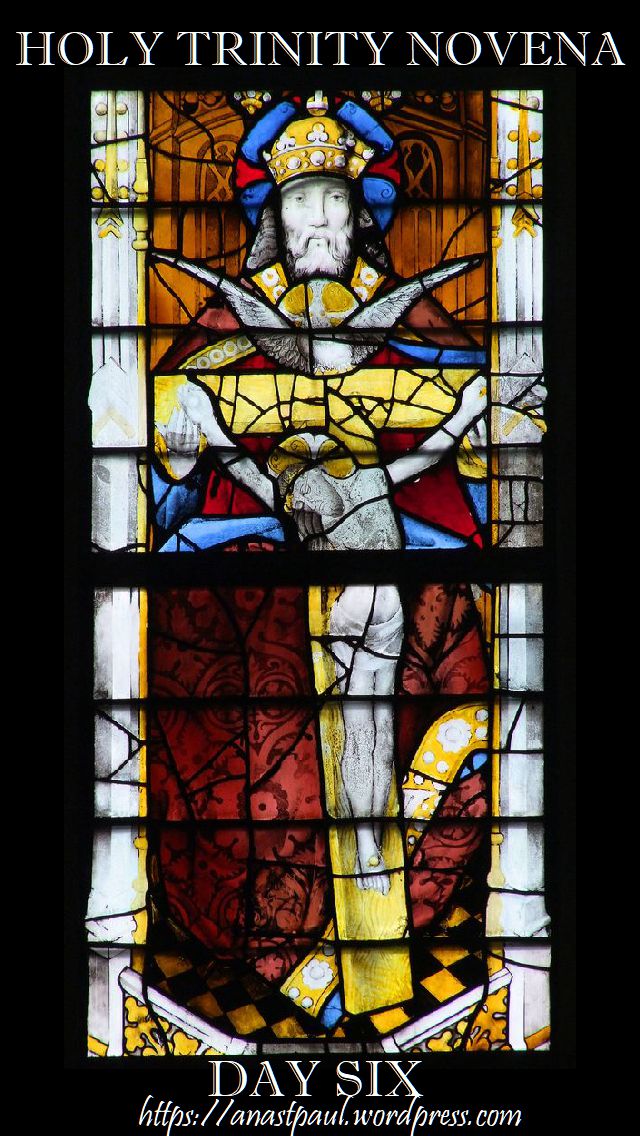
DAY SEVEN GOD The Provider (Father) “Gives us this day our daily bread”
SCRIPTURAL READING When Jesus had said this, He raised His eyes to heaven and said, “Father, the hour has come. Give glory to Your Son, so that Your Son may glorify You. Just as You gave Him authority over all people, so that He may give eternal life to all You gave Him. Now this is eternal life, that they should know you, the only true God and the one whom You sent, Jesus Christ. I glorified you on earth by accomplishing the work that You gave Me to do. Now glorify Me, Father, with You, with the glory that I had with You before the world began. “I revealed Your name to those whom You gave Me out of the world. They belonged to You and You gave them to me and they have kept Your word. Now they know that everything You gave Me, is from You, because the words You gave to Me I have given to them and they accepted them and truly understood that I came from You and they have believed that You sent Me.”…(Jn. 17:1-8)
MEDITATION “So do not start worrying: Where will my food come from? Or my drink? Or my clothes? These are the things the pagans are always concerned about. Your Father in heaven knows that you need all these things. Instead be concerned about everything else with the Kingdom of God and with what He required of you and He will provide You with all those other things. So do not worry about tomorrow; it will have enough worries of its own. There is no need to add to the trouble each day brings.”… (Mt. 6:31-34)
PRAYER
We praise and thank You, Father
for Your unfailing gift of Divine Providence.
You feed the birds of the air
and clothe the lilies of the field.
But You provide so much more generously
for Your sons and daughters, who obey and follow Your will.
Bless we pray, the poor and the needy,
not only with spiritual gifts
but also with food, to sustain body
and soul and with their other earthly needs.
Eternal Father in Your mercy,
please grant my special petition:
…………………….(mention your petition)
Most Holy Trinity, Godhead indivisible,
Father, Son, and Holy Spirit,
our first beginning and our last end,
You have made us after Your own image and likeness.
Grant that all the thoughts of my mind,
all the words of my mouth,
all the affections of my heart
and all my actions be always conformed to Your holy Will.
After having seen You here below in Your manifestations and by faith,
may I come at last to see You face to face,
in the perfect possession of You forever in heaven.
Amen
Our Father, who art in heaven, hallowed be Thy name, Thy kingdom come, Thy will be done, on earth as it is in heaven. Give us this day our daily bread and forgive us our trespasses, as we forgive those who trespass against us and lead us not into temptation but deliver us from evil, amen.
Marian Thought for the Day – 24 May “Mary’s Month” – Feast of Our Lady, Help of Christians
Mary is the “Consolatrix Afflictorum,” the Consoler of the Afflicted
Blessed John Henry Newman (1801-1890)
St PAUL says that his Lord comforted him in all his tribulations, that he also might be able to comfort them who are in distress, by the encouragement which he received from God. This is the secret of true consolation: those are able to comfort others who, in their own case, have been much tried and have felt the need of consolation and have received it. So of our Lord Himself it is said: “In that He Himself hath suffered and been tempted, He is able to succour those also that are tempted.”
And this, too, is why the Blessed Virgin is the comforter of the afflicted. We all know how special a mother’s consolation is and we are allowed to call Mary our Mother from the time that our Lord from the Cross established the relation of mother and son between her and St John. And she especially can console us because she suffered more than mothers in general. Women, at least delicate women, are commonly shielded from rude experience of the highways of the world but she, after our Lord’s Ascension, was sent out into foreign lands almost as the Apostles were, a sheep among wolves. In spite of all St John’s care of her, which was as great as was St Joseph’s in her younger days, she, more than all the saints of God, was a stranger and a pilgrim upon earth, in proportion to her greater love of Him who had been on earth, and had gone away. As, when our Lord was an Infant, she had to flee across the desert to the heathen Egypt, so, when He had ascended on high, she had to go on shipboard to the heathen Ephesus, where she lived and died.
O ye who are in the midst of rude neighbours or scoffing companions, or of wicked acquaintance, or of spiteful enemies and are helpless, invoke the aid of Mary by the memory of her own sufferings among the heathen Greeks and the heathen Egyptians.
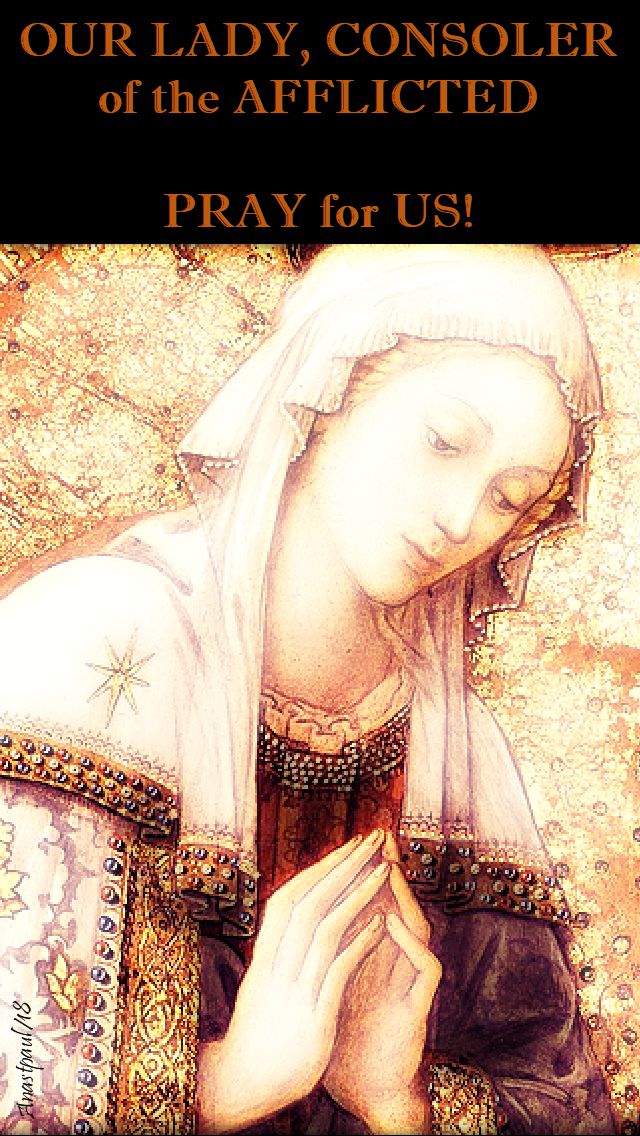
Mary “Consolatrix Afflictorum,”Consoler of the Afflicted – Help of Christians
Quote of the Day – 24 May “Mary’s Month” – Feast of Our Lady, Help of Christians
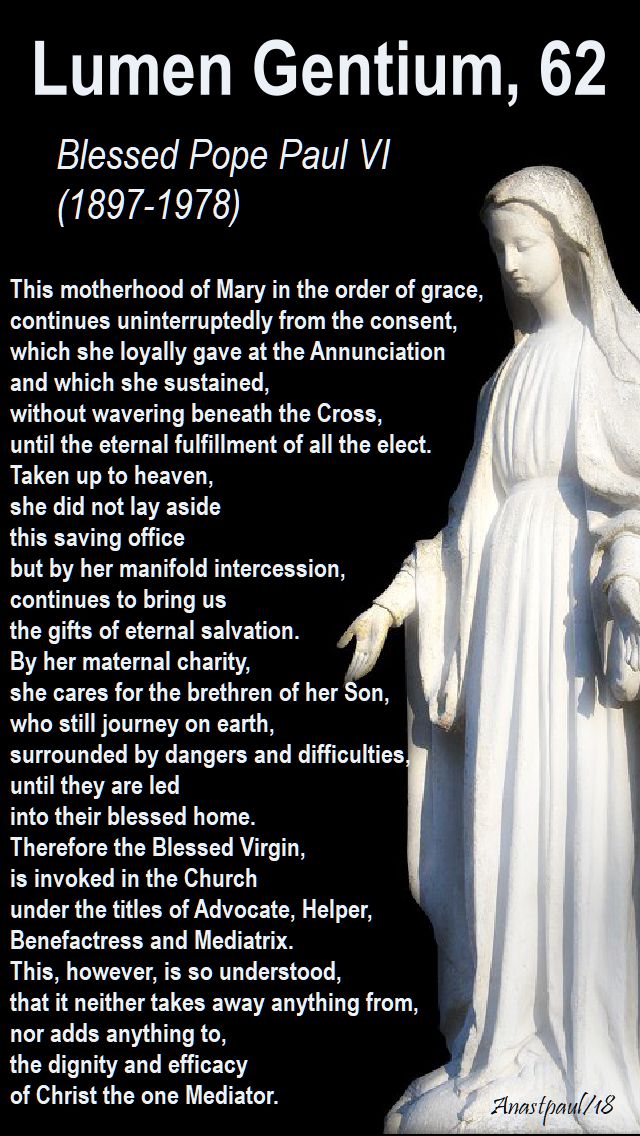
“This motherhood of Mary in the order of grace, continues uninterruptedly, from the consent, which she loyally gave, at the Annunciation and which she sustained, without wavering beneath the Cross, until the eternal fulfilment of all the elect.
Taken up to heaven, she did not lay aside this saving office but by her manifold intercession, continues to bring us the gifts of eternal salvation. By her maternal charity, she cares for the brethren of her Son, who still journey on earth, surrounded by dangers and difficulties, until they are led into their blessed home.
Therefore the Blessed Virgin is invoked in the Church under the titles of Advocate, Helper, Benefactress and Mediatrix. This, however, is so understood, that it neither takes away anything from, nor adds anything to, the dignity and efficacy of Christ the one Mediator.”
Lumen Gentium, 62
Blessed Pope Paul VI (1897-1978)
One Minute Marian Reflection – 24 May “Mary’s Month” – Feast of Our Lady, Help of Christians
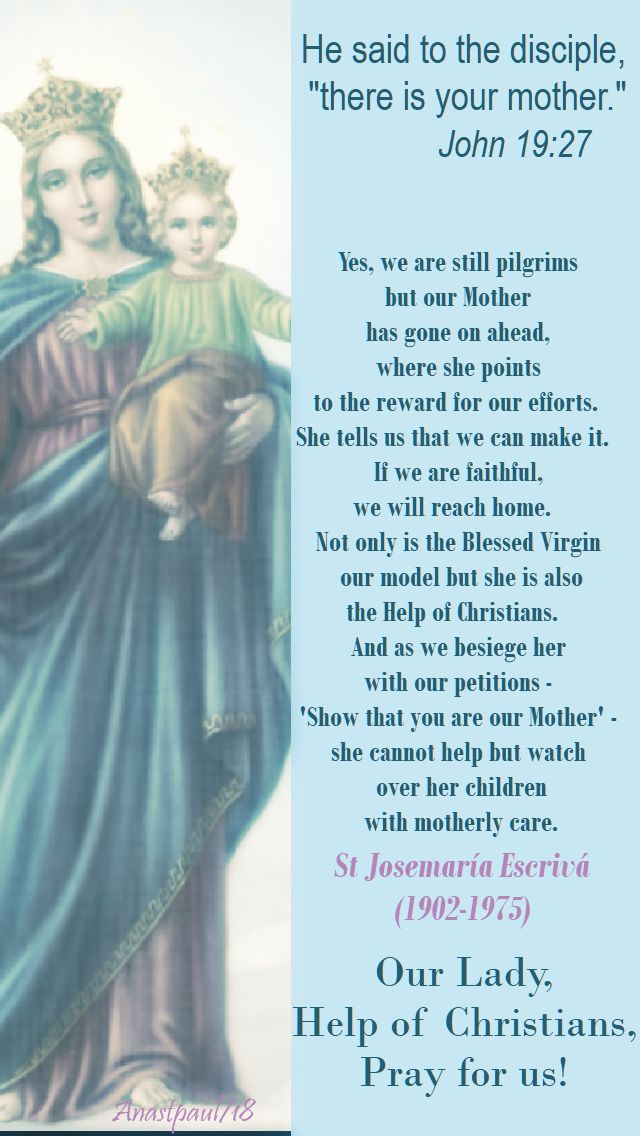
He said to the disciple, “there is your mother.”...John 19:27
REFLECTION – “MARY: HELP OF CHRISTIANS – “Yes, we are still pilgrims but our Mother has gone on ahead, where she points to the reward for our efforts. She tells us that we can make it. If we are faithful, we will reach home. Not only is the Blessed Virgin our model but she is also the Help of Christians. And as we besiege her with our petitions — ‘Show that you are our Mother’ – she cannot help but watch over her children with motherly care.” … St Josemaría Escrivá (1902-1975) “Cause of our Joy,” Christ is Passing By, 177. Let us offer to our Mother today: In addition to the mysteries of the day, one more part (five decades) of the Holy Rosary.
PRAYER – Have pity on us Mother and heal the wounds of our souls, remove the sorrow and worries of our souls. Console us in our day of suffering and enlighten us by your wisdom. Show us your mercy, Mother and pray for us, turn our sadness into true joy. Fill our hearts with your sweetness and make us forget the miseries of this life. Be gracious to your children and do not allow them to be overcome in their temptations. For Hail Mary, full of grace, our Mother and Mother of our Lord, He is with thee! Amen
Our Morning Offering – 24 May “Mary’s Month” – Feast of Our Lady, Help of Christians
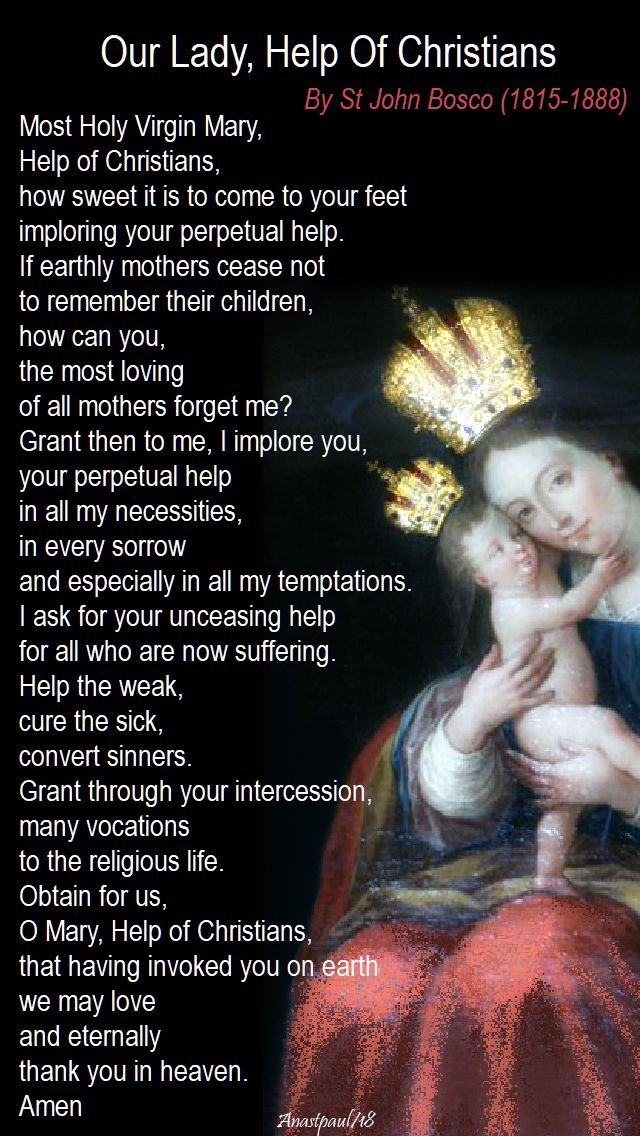
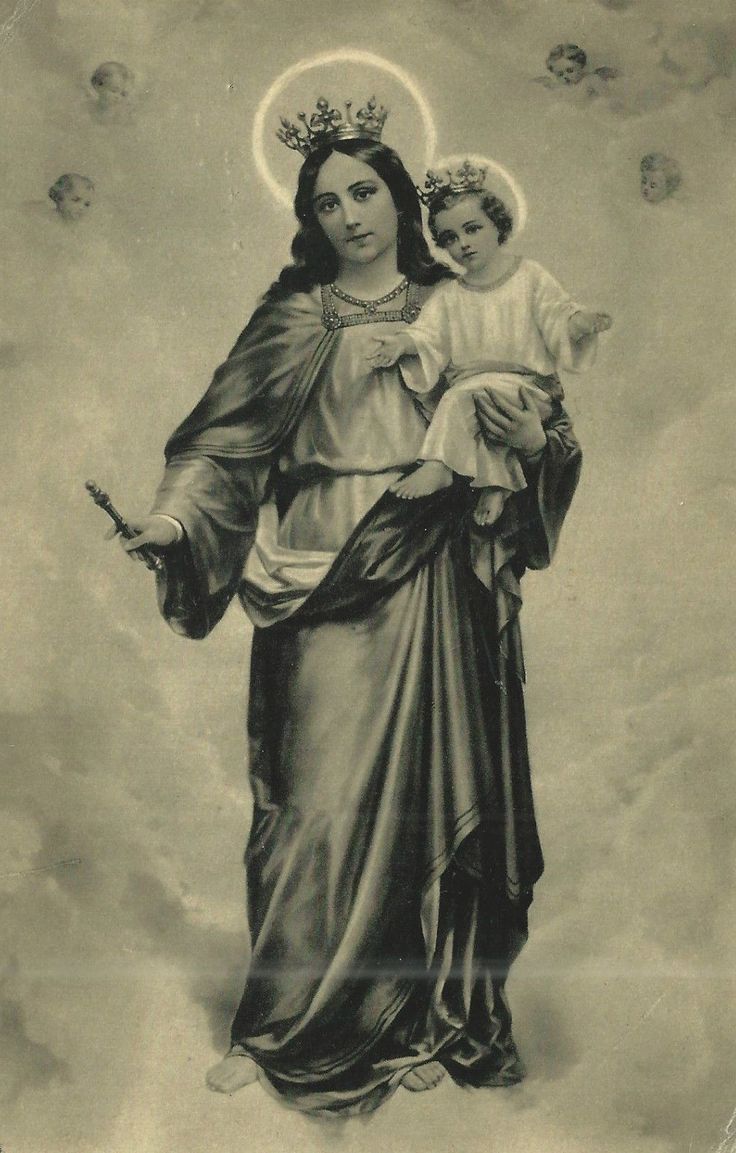
Our Lady, Help Of Christians By St John Bosco (1815-1888)
Most Holy Virgin Mary,
Help of Christians,
how sweet it is to come to your feet
imploring your perpetual help.
If earthly mothers cease not
to remember their children,
how can you,
the most loving of all mothers forget me?
Grant then to me, I implore you,
your perpetual help in all my necessities,
in every sorrow and especially in all my temptations.
I ask for your unceasing help
for all who are now suffering.
Help the weak,
cure the sick,
convert sinners.
Grant through your intercession,
many vocations to the religious life.
Obtain for us, O Mary, Help of Christians,
that having invoked you on earth
we may love and eternally thank you in heaven.
Amen
Feast of Our Lady, Help of Christians – 24 May – Also known as Auxilium Christianorum.
The tradition of this advocation goes back to 1571, when the whole of Christendom was saved by Our Lady, Help of Christians when Catholics throughout Europe prayed the Rosary. The great battle of Lepanto occurred on 7 October 1571. For this reason, this date has been chosen as the feast of the Holy Rosary. In 1573 Pope Pius V instituted the feast in thanksgiving for the decisive victory of Christianity over Islamism.
Near the end of the 17th century, Emperor Leopold I of Austria took refuge in the Shrine of Mary, Help of Christians at Pasau, when 200,000 Ottoman Turks besieged the capital city of Vienna but a great victory occurred thanks to Our Lady, Help of Christians, on 8 September, Feast of Our Lady’s Birthday, plans were drawn for the battle. On 12 September, Feast of the Holy Name of Mary, Vienna was finally freed through the intercession of Mary, Help of Christians. All Europe had joined with the Emperor crying out “Mary, Help!” and praying the Holy rosary.
In 1809, Napoleon’s men entered the Vatican, arrested Pius VII and brought him in chains to Grenoble and eventually Fontainbleau. His imprisonment lasted five years. The Holy Father vowed to God that , if he were restored to the Roman See, he would institute a special feast in honour of Mary. Military reverses forced Napoleon to release the Pope and on May 24th 1814, Pius VII returned in triumph to Rome. Twelve months later, the Pope decreed that the feast of Our Lady, Help of Christians, be kept on 24 May.
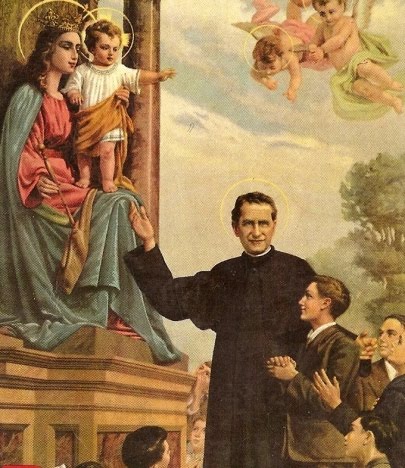
St John Bosco (1815 – 1888) was a dynamic priest who founded the Salesian Order in the XIX century in Italy. His many prophetic dreams, beginning at age nine, guided his ministry and gave insights on future events.
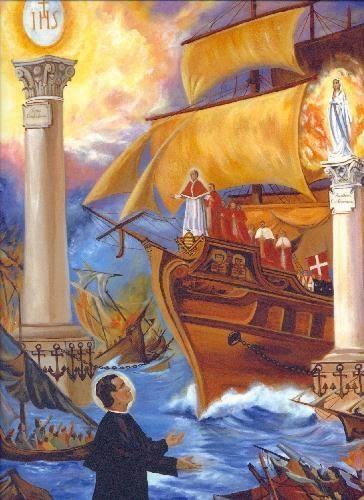
On 14 May 1862, Don Bosco dreamed about the battles the Church would face in the latter days. In his dream, the Pope of those days anchors the ‘ship’ of the Church between two pillars, one with a statue of Our Lady ( the Auxilium Christianorum or ‘Help of Christians’) and the other with a large Eucharistic Host.
St John Bosco wrote about his congregation, the Salesians: “The principal objective is to promote veneration of the Blessed Sacrament and devotion to Mary, Help of Christians. This title seems to please the august Queen of Heaven very much.”
The Salesian Sisters of St John Bosco or Daughters of Mary, Help of Christians, are the sister order of the Salesians of Don Bosco.
St John Bosco, himself, on 9 June1868, dedicated to Our Lady Help of Christians, the mother church of his congregation at Turin (Italy). The Salesian Fathers and their Sisters have carried the devotion to their numerous establishments all over the world.
More info here: https://anastpaul.wordpress.com/2017/05/24/saint-of-the-day-24-may-the-feast-of-mary-help-of-christians/
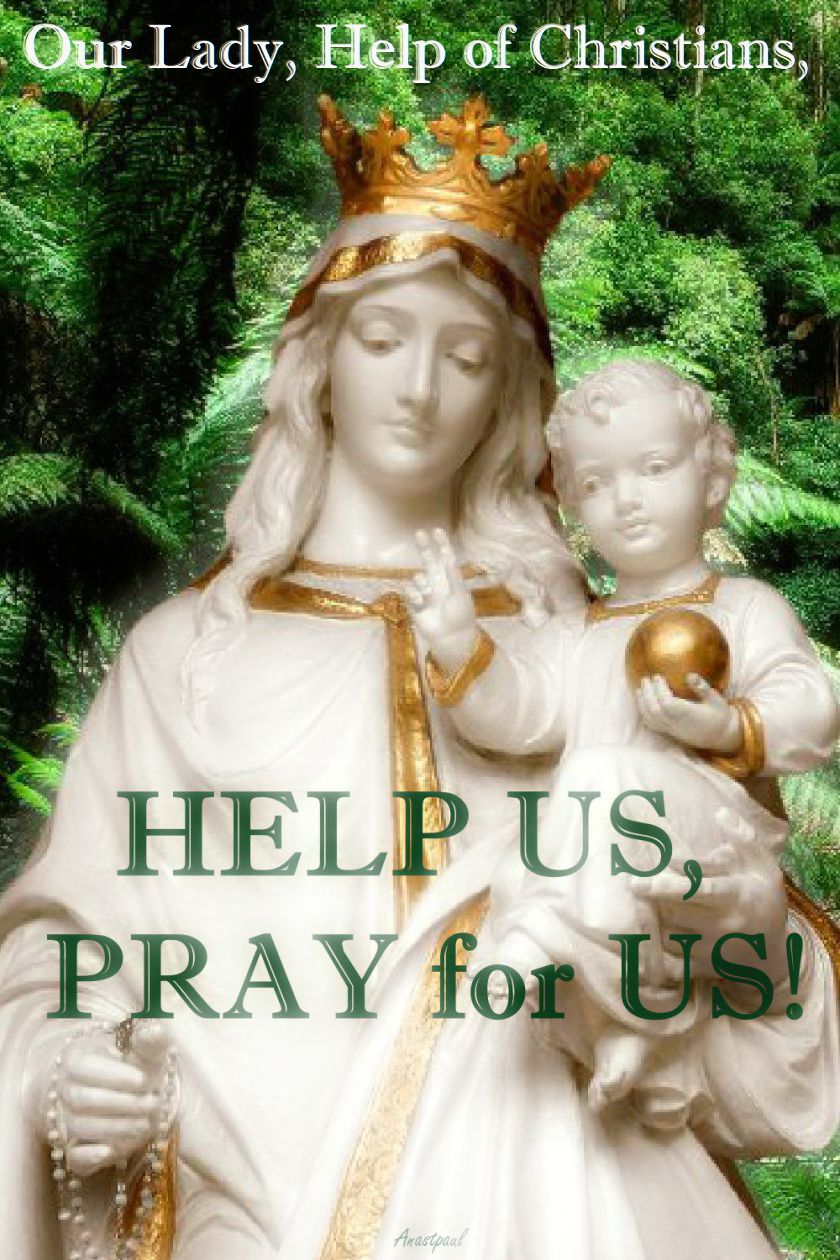
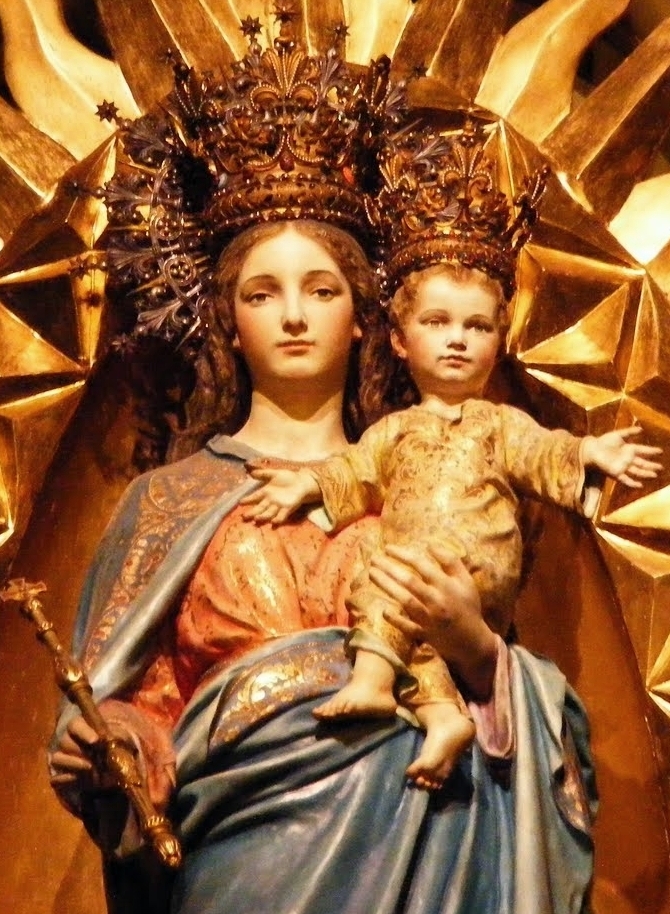
Our Lady, Help of Christians/Auxilium Christianorum
Our Lady of China: Our Lady of China is a title for the Virgin Mary in China who is believed to have appear at the small village of Donglu in 1900. In Chinese she is called Zhōnghuá Shèngmǔ. She is also known as Our Lady of Donglu.
—
St Afra of Brescia
Bl Benedict of Cassino
St David of Scotland
Bl Diego Alonso
St Donatian of Nantes
St Gennadius of Astroga
St Hubert of Bretigny
Bl Isidore Ngei Ko Lat
St Joanna the Myrrhbearer
Bl John del Prado
Bl John of Montfort
Bl Juan of Huete
Bl Louis-Zéphirin Moreau
St Manahen
St Marciana of Galatia
Bl Mario Vergara
St Meletius the Soldier
Bl Nicetas of Pereslav
St Palladia
St Patrick of Bayeux
Bl Philip of Piacenza
St Rogatian of Nantes
St Sérvulo of Trieste
St Simeon Stylites the Younger
St Susanna
Bl Thomas Vasière
St Vincent of Lérins
St Vincent of Porto Romano
—
Martyrs of Istria: A group of early martyrs in the Istria peninsula. We know little more than some names – Diocles, Felix, Servilius, Silvanus and Zoëllus.
Martyrs of Plovdiv: 38 Christians martyred together in the persecutions of Diocletian and Maximian. We don’t even known their names. They were beheaded in Plovdiv, Bulgaria.
Martyrs of the Small West Gate: Additional Memorial – 20 September as part of the Martyrs of Korea. A group of lay catechists and catechumens who were imprisoned and executed together for the crime of being Christian.
• Saint Agatha Kim A-Gi
• Saint Agatha Yi So-Sa
• Saint Anna Pak A-Gi
• Saint Augustine Yi Kwang-Hon
• Saint Barbara Han A-Gi
• Saint Damianus Nam Myong-Hyok
• Saint Lucia Pak Hui-Sun
• Saint Magdalena Kim Ob-I
• Saint Petrus Kwon Tug-In
They were beheaded on 24 May 1839 at the Small West Gate, Seoul, South Korea and were Canonised on 6 May 1984 by Pope John Paul II.
SCRIPTURAL READING While meeting with them, He enjoined them not to depart from Jerusalem, but wait for “the promise of the Father about which you have heard me speak; for John baptized you with water, but in a few days you will be baptized with the Holy Spirit.” Then there appeared to them tongues as of fire, which parted and came to rest on each one of them. And they were all filled with the Holy Spirit and began to speak in different tongues, as the Spirit enabled them to proclaim…(Acts 1:4-5, 2:3-4)
MEDITATION “It is best for you that I go away, because if I do not go, the Helper will not come to you. But if I do go away, then I will send Him to you. And when He comes, He will prove to the people that they were wrong about sin and about what is right and about God’s judgement. They are wrong about sin because they did not believe in Me; they are wrong about what is right because I am going to the Father.”…(Jn. 16:7-8)
PRAYER
Come, Holy Spirit, we need You.
Come, Holy Spirit, we pray.
Come with Your strength and Your power,
come with Your loving care.
Come like a spring in the desert,
come to the weary of soul.
Let Your sweet healing power,
come in Your powerful way!
Come, Holy Spirit, we love You.
Come, Holy Spirit, we plead;
make us holy as Our Father.
Guide us in our pilgrim way,
for without You no fruits will be gathered,
with You all things come true.
Eternal Holy Spirit, in Your mercy,
please grant my special petition:
…………………….(mention your petition)
Most Holy Trinity, Godhead indivisible,
Father, Son and Holy Spirit,
our first beginning and our last end,
You have made us after Your own image and likeness.
Grant that all the thoughts of my mind,
all the words of my mouth,
all the affections of my heart
and all my actions be always conformed to Your holy Will.
After having seen You here below in Your manifestations and by faith,
may I come at last to see You face to face,
in the perfect possession of You forever in heaven.
Amen
In the name of the Father and of the Son and of the Holy Spirit, amen.
Marian Thought for the Day – 23 May “Mary’s Month” – Wednesday in the 7th Week of Ordinary Time Year B
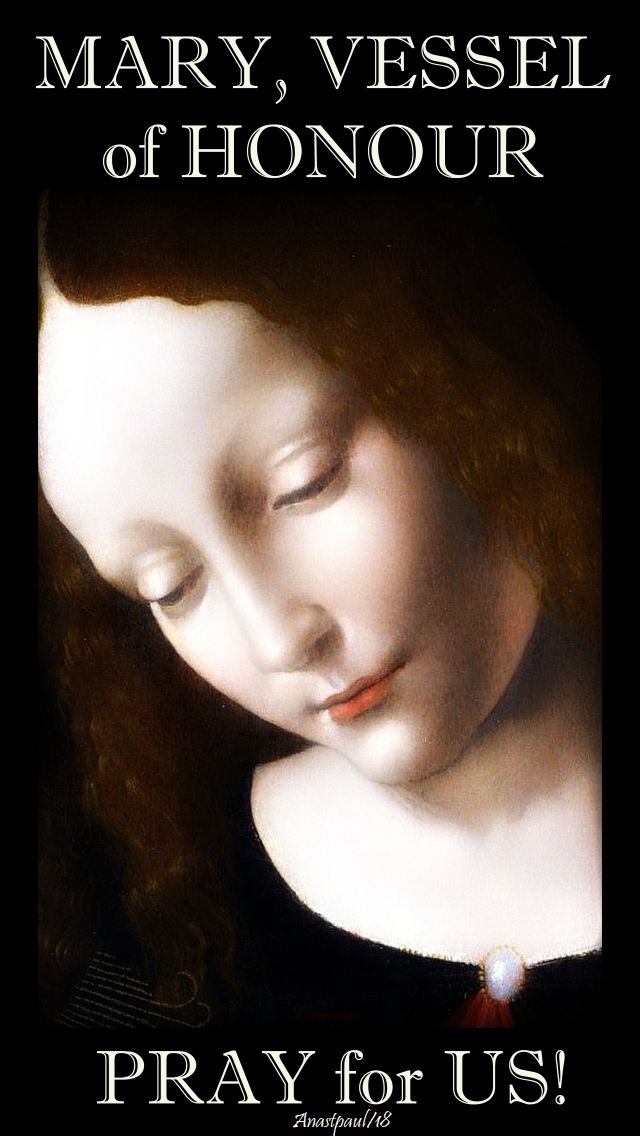
Mary is the “Vas Honorabile,” the Vessel of Honour
Blessed John Henry Newman (1801-1890)
ST PAUL calls elect souls vessels of honour: of honour, because they are elect or chosen; and vessels, because, through the love of God, they are filled with God’s heavenly and holy grace. How much more then is Mary a vessel of honour by reason of her having within her, not only the grace of God but the very Son of God, formed as regards His flesh and blood out of her!
But this title “honorabile,” as applied to Mary, admits of a further and special meaning. She was a martyr without the rude dishonour which accompanied the sufferings of martyrs. The martyrs were seized, haled about, thrust into prison with the vilest criminals and assailed with the most blasphemous words and foulest speeches which Satan could inspire. Nay, such was the unutterable trial also of the holy women, young ladies, the spouses of Christ, whom the heathen seized, tortured and put to death. Above all, our Lord Himself, whose sanctity was greater than any created excellence or vessel of grace—even He, as we know well, was buffeted, stripped, scourged, mocked, dragged about, and then stretched, nailed, lifted up on a high cross, to the gaze of a brutal multitude.
But He, who bore the sinner’s shame for sinners, spared His Mother, who was sinless, this supreme indignity. Not in the body, but in the soul, she suffered. True, in His Agony she was agonised; in His Passion she suffered a fellow-passion; she was crucified with Him; the spear that pierced His breast pierced through her spirit. Yet, there were no visible signs of this intimate martyrdom, she stood up, still, collected, motionless, solitary, under the Cross of her Son, surrounded by Angels and shrouded in her virginal sanctity from the notice of all who were taking part in His Crucifixion.
Mary “Vas Honorabile,” Vessel of Honour – Pray for us!
Quote/s of the Day – 23 May – Wednesday in the 7th Week of Ordinary Time, Year B – Today’s Readings: James 4:13-17, Psalm 49:2-3, 6-11, Mark 9:38-40
Speaking of: Living and Preaching the Gospel
But Jesus said, “Do not forbid him; for no one who does a mighty work in my name, will be able, soon after, to speak evil of me. For he that is not against us, is for us.
Mark 9:39-40
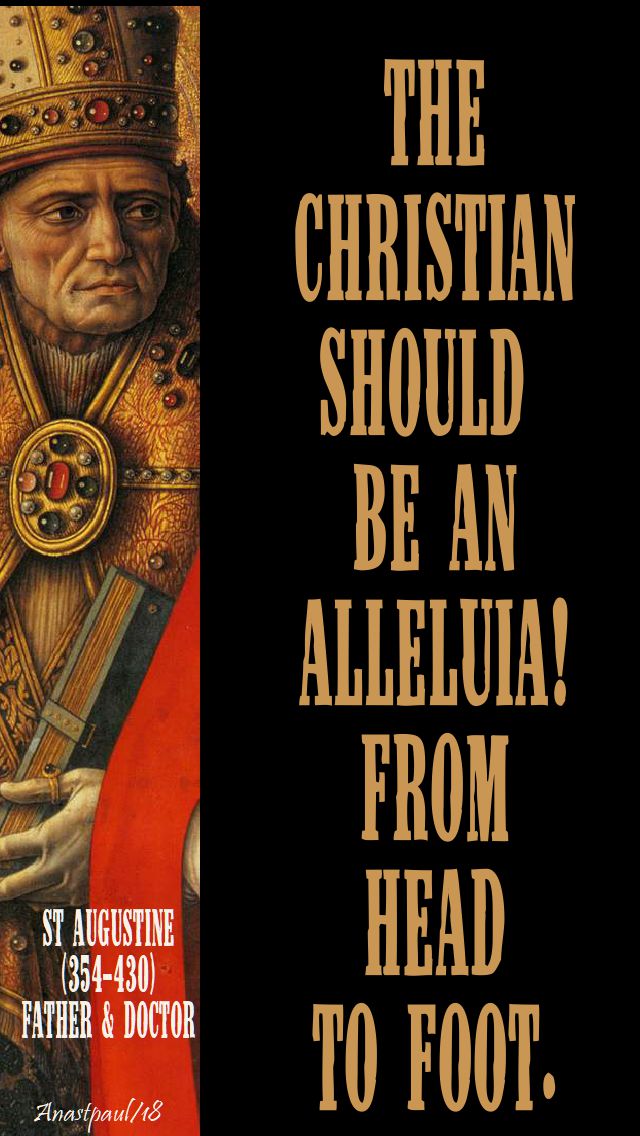
“The Christian should be an Alleluia! from head to foot”
St Augustine (354-430) Father & Doctor
“Cook the truth in charity, until it tastes sweet.”
St Francis de Sales (1567-1622) Doctor of Charity
“We must speak to them with our hands, before, we try to speak, with our lips.”
St Peter Claver S.J. (1580-1654)
“If I’m not willing, to change my schedule, so that I can, spend time with Jesus, than I’m not really, a disciple of His.”
“If you follow Jesus, you’re going to get into some trouble!”
One Minute Marian Reflection – 23 May “Mary’s Month” Wednesday in the 7th Week of Ordinary Time Year B
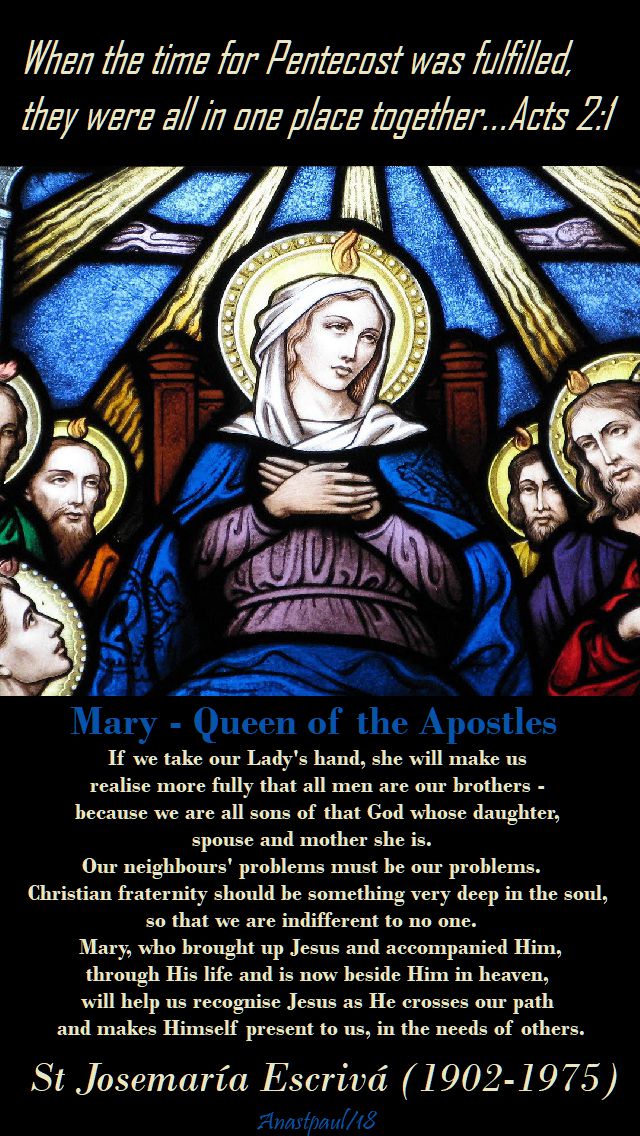
When the time for Pentecost was fulfilled, they were all in one place together...Acts 2:1
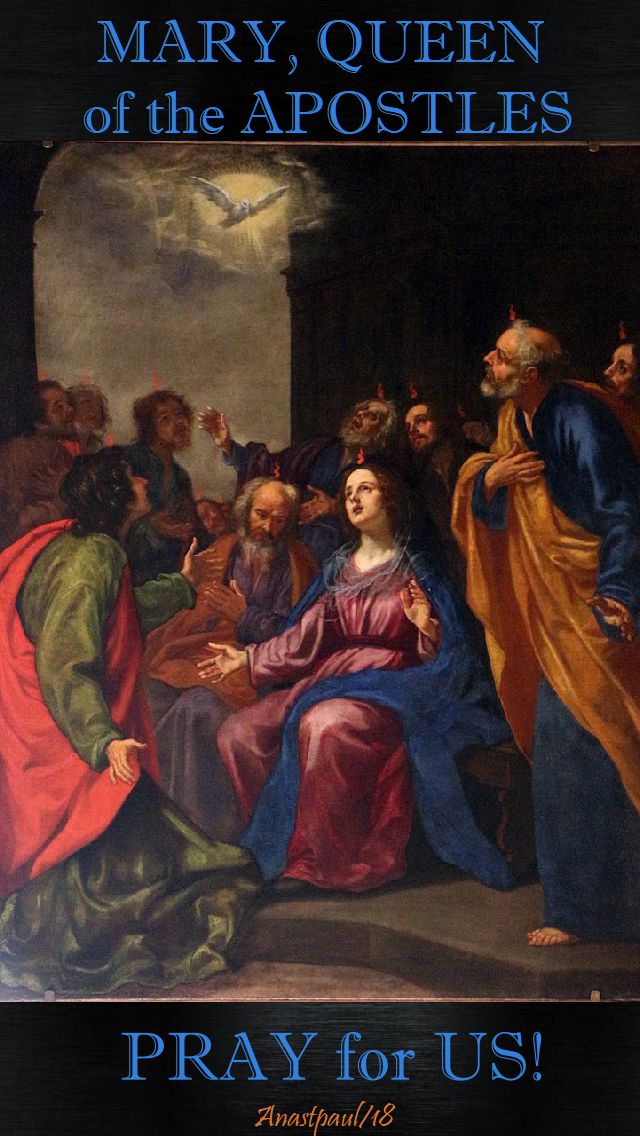
REFLECTION – “MARY: QUEEN OF THE APOSTLES – “If we take our Lady’s hand, she will make us realise more fully that all men are our brothers – because we are all sons of that God, whose daughter, spouse and mother she is. Our neighbours’ problems must be our problems. Christian fraternity should be something very deep in the soul, so that we are indifferent to no one. Mary, who brought up Jesus and accompanied Him through His life and is now beside Him in heaven, will help us recognise Jesus as He crosses our path and makes Himself present to us, in the needs of others.”… St Josemaría Escrivá (1902-1975) “To Jesus through Mary,” Christ is Passing By- 145. Let us offer to our Mother today: A kind word, a friendly conversation, a helping hand to persons with whom we live or work.
PRAYER – Almighty God, we offer our thanks for the great gift of the Mother of Your Divine Son, for as she was a Mother to His apostles, so still is she a Mother to us all. Grant we pray, that by her intercession, we may learn to recognise Jesus in all our neighbours and serve them as we would Him. Through Christ our Lord, in the unity of the Holy Spirit, one God forever, amen.
Our Morning Offering – 23 May “Mary’s Month” Wednesday in the 7th Week of Ordinary Time Year B
O Mother and Handmaid of God By St Methodius (c 815 – 885)
Your name, O Mother of God,
is replete with all graces
and Divine blessings.
You have contained Him who cannot be contained,
and nourished Him who nourishes all creatures.
He who fills heaven and earth,
and is the Lord of all,
was pleased to be in need of you,
for it was you who clothed Him with that flesh
which He did not have before.
Rejoice, then, O Mother and Handmaid of God!
Rejoice, because you have made Him a debtor
who gives being to all creatures.
We are all debtors to God,
but He is a debtor to you.
That is why, O most holy Mother of God,
you possess more goodness
and greater charity than all the other Saints
and have freer access to God than any of them,
for you are His Mother.
Be mindful of us,
we beg you,
in our miseries,
for we celebrate your glories
and know how great is your goodness.
Amen
Saint of the Day – 23 May – St John Baptist de Rossi (1698-1764) born Giovanni Battista de Rossi (22 February 1698 at Voltaggio, diocese of Genoa, Italy – 23 May 1764 at Trinita dei Pellegrini, Italy of multiple strokes) Priest, Preacher and Teacher, Apostle of Charity. Patronage – Voltaggio.
St John was born in 1698, near Genova, Italy. When he was 10, he went on a summer holiday to his relatives, a very pious couple. They noted the piety of the youth and asked permission of his parents to take him to their house in Geneva to educate him there. Capuchin priests came often to visit the house of this couple to ask for assistance for the poor. These religious recommended the youth to the Provincial Father. He made arrangements for John to study in Rome. In the Roman College he studied with great application, gaining the liking of his professors and friends. He was ordained a priest at the age of 23.
He read in some exaggerated book, that recommended doing very strong penances and he dedicated himself to mortify himself in food, drink and sleep, so intensely that a nervous depression overtook him that left him incapable of doing anything for several months. He was able to regain his strength but from then on he always had to struggle against his poor health. He learned that the best mortification is to accept the sufferings and the work of every day, doing well in each moment what one must do and to have patience with the people and the bothers of life.
From the time he was a seminarian, he felt a great predilection for the poor, the sick and the abandoned. The Supreme Pontiff had founded a shelter to receive people that did not have anywhere to spend the night and the young John Batiste went there for many years to care for the poor and the needy, to teach them catechism and to prepare them to receive the Sacraments. He took several friends with him, over whom the work had a great influence. He also agreed to go himself in the early hours of the morning to the market, when the farmers were arriving to sell their produce. There he taught the children and the adults catechism and prepared to make their confession and receive first Communion.
The first years of his priesthood he almost never dared to confess because it seemed to him that he would not be able to give the proper counsel. But one day a holy Bishop asked him to dedicate himself to hearing confessions in his Diocese for a time. There John Batiste discovered that this was the office for which God had destined him. Upon returning to Rome, he told one of his friends, “Before I was asking myself what would be the path for me to achieve heaven and to save many souls. I have discovered that the help that I can give to those that want to be saved is to confess them. The great amount of good that can be done by confession is incredible.”
He went to help a priest in a church that very few people attended. But from the time that Rossi began to confess there, the Church was frequented by hundreds and hundreds of penitents that came to be absolved of their sins. Each penitent brought other people with them to be confessed by him and the conversions that were happening were admirable.
The Supreme Pontiff entrusted to him the office of going to confess and preach to the prisoners in jail and the employees that worked at the prisons. And there he obtained many conversions. They invited from everywhere the sick, prisoners and people that desired to be converted. He went to many places to preach missions and obtained from heaven numerous conversions. In the hospitals he was an esteemed confessor and consoler of the sick. His friends were always the poor, the helpless, the sick, street children and sinners seeking conversion. He lived for them and he totally spent his life for them. He always remained humble and ready to help as many as possible. .
On May 23, 1764, he suffered a heart attack and died at the age of 66. His poverty was such that they had to use alms to pay for his burial. 260 priests, the Archbishop, many religious and an immense crowd attended his funeral. The requiem Mass was sung by the Pontifical choir of the Basilica in Rome.
On a superficial level St John Baptist de Rossi’s life was uneventful. A simple priest, for forty years he worked in the capacity of an assistant pastor in Rome. On a spiritual level, however, he touched thousands of needy people—the sick, the homeless, prostitutes, transient cattle drivers who came to market in Rome and other rough sorts. By day he devoted himself to the sick poor in Rome’s hospitals. By night he ministered to street people at a refuge.
Caregivers can look to John Baptist as a model. Before he would speak to a dying person about salvation, he did all he could to relieve their suffering. No service for the sick, no matter how repugnant, repulsed him. And his selflessness won people’s hearts.
Once, for example, a young man dying of syphilis rebuffed de Rossi’s attention until the priest emptied his bedpan. Touched by John Baptist’s humble care, the fellow finally listened to him and made a good confession before he died. Other priests and penitents were amazed by John Baptist’s persuasiveness in the confessional. With a few gentle words he turned people’s lives. Once a young man came to him who was sexually entangled with a woman who kept coming to his house under the pretence of washing and mending his clothes. A brief conversation with John Baptist broke the youth’s addiction. As a sign of his cure, the next day he brought the priest a pile of his clothes he had taken from the woman.
John Baptist exhorted others to follow his example in caring for souls. Here is an excerpt from one of his sermons to his fellow priests:
“Ignorance is the leprosy of the soul. How many such lepers exist in the church here in Rome, where many people don’t even know what’s necessary for their salvation? It must be our business to try to cure this disease. The souls of our neighbours are in our hands and yet how many are lost through our fault? The sick die without being properly prepared because we have not given time or care enough to each particular case. Yet with a little more patience, a little more perseverance, a little more love, we could have led these poor souls to heaven.”
Many of us shrink from going to the hospitals from fear of infection or from the sights and smells that await us there. Courage! We are not in the world to follow our own will and pleasure but to imitate the Lord.
John Baptist de Rossi, himself worn out by his unselfish service, suffered a stroke in 1763 and died a year later. “The poor come to church tired and distracted by their daily troubles. If you preach a long sermon they can’t follow you. Give them one idea that they can take home, not half a dozen, or one will drive out the other and they will remember none.”
St John Baptist de Rossi was Canonised on 8 December 1881 by Pope Leo XIII.
St Basileus of Braga
St Desiderius of Langres
St Epitacius of Tuy
St Euphebius of Naples
St Euphrosyne of Polotsk
St Eutychius of Valcastoria
St Florentius of Valcastoria
St Goban Gobhnena
St Guibertus of Gorze
Bl Ivo of Chartres
St Jane Antide Thouret
St John Baptist de Rossi (1698-1764)
Bl Józef Kurzawa
Bl Leontius of Rostov
St Michael of Synnada
St Onorato of Subiaco
St Spes of Campi
St Syagrius of Nice
St William of Rochester
Bl Wincenty Matuszewski
—
Martyrs of Béziers: 20 Mercedarian friars murdered by Huguenots for being Catholic. Martyrs. 1562 at the Mercedarian convent at Béziers, France.
Martyrs of Cappadocia: A group of Christians tortured and martyred in the persecutions of Diocletian and Galerius. Their names and the details of their lives have not come down to us. They were crushed to death in c.303 in Cappadocia (in modern Turkey).
Martyrs of Carthage: When a civil revolt erupted in Carthage in 259 during a period of persecution by Valerian, the procurator Solon blamed it on the Christians, and began a persecution of them. We know the names and a few details about 8 of these martyrs – Donatian, Flavian, Julian, Lucius, Montanus, Primolus, Rhenus and Victorius. They were beheaded in 259 at Carthage (modern Tunis, Tunisia).
Martyrs of Mesopotamia: A group of Christians martyred in Mesopotamia in persecutions by imperial Roman authorities. Their names and the details of their lives have not come down to us. They were suffocated over a slow fire in Mesopotamia.
Martyrs of North Africa: A group of 19 Christians martyred together in the persecutions of the Arian Vandal King Hunneric for refusing to deny the Trinity. We know little more than a few of their names – Dionysius, Julian, Lucius, Paul and Quintian. c 430.
SCRIPTURAL READING He has provided us a mighty Saviour, a descendant of His servant David. He promised through His holy prophets long ago, that He would save us from our enemies, from the power of all those who hate us. He said He would show mercy to our ancestors and remember His sacred covenant. With a solemn oath to our ancestor Abraham, He promised to rescue us from our enemies and allow us to serve Him without fear, so that we might be holy and righteous before Him all the days of our life in His presence...(Lk. 1:69-75)
MEDITATION
“Do not be afraid Mary, God has been gracious to you. You will become pregnant and give birth to a son and you will name him Jesus. He will be great and will be called the Son of the Most High God.’ Mary said to the angel, ‘ I am a virgin, how then can this be?’ The angel answered: ‘The Holy Spirit will come on you and God’s power will rest upon you. For this reason, the holy Child will be called the Son of God.”…(Lk. 1:30-35)
PRAYER
Lord Jesus Christ,
You gave us the Eucharist
as a memorial of Your suffering and death,
may our worship of the Sacrament of Your Body and Blood,
help us to experience the salvation You won for us
and the peace of the kingdom
where You live with the Father
and the Holy Spirit,
one God, forever and ever.
Bless me through the marvellous goodness
of Your Sacred Heart, which chose death to bring us life.
Bless me through the love with which You plead for us
before the throne of God,
bless me in the Blessed Sacrament
with which You give Yourself to me in Holy Communion.
Grant that all this love and bitter pain,
may not be lost on me.
Eternal Son, in Your mercy, grant my petition:
…………………….(mention your petition)
Most Holy Trinity, Godhead indivisible,
Father, Son, and Holy Spirit,
our first beginning and our last end,
You have made us after Your own image and likeness.
Grant that all the thoughts of my mind,
all the words of my mouth,
all the affections of my heart
and all my actions be always conformed to Your holy Will.
After having seen You here below in Your manifestations and by faith,
may I come at last to see You face to face,
in the perfect possession of You forever in heaven.
Amen
Our Morning Offering – 22 May “Mary’s Month!” Tuesday of the 7th Week in Ordinary Time Year B
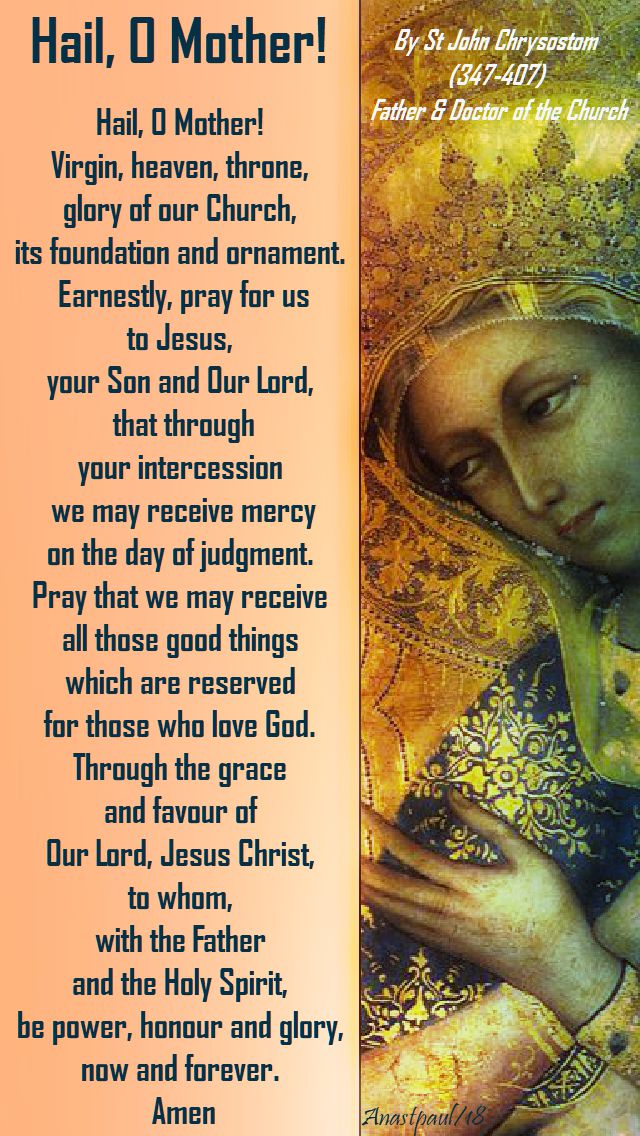
Hail, O Mother! By St John Chrysostom (347-407) Father & Doctor of the Church
Hail, O Mother!
Virgin, heaven, throne,
glory of our Church,
its foundation and ornament.
Earnestly, pray for us to Jesus,
your Son and Our Lord,
that through your intercession
we may receive mercy
on the day of judgment.
Pray that we may receive
all those good things
which are reserved for those who love God.
Through the grace
and favour of Our Lord, Jesus Christ,
to whom,
with the Father
and the Holy Spirit,
be power, honour and glory,
now and forever.
Amen
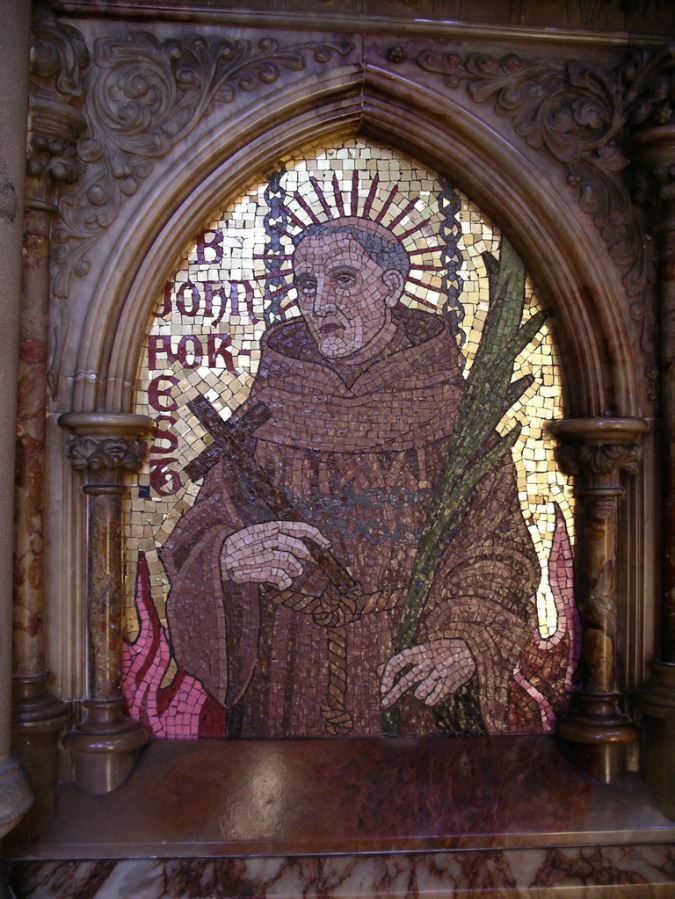
Saint of the Day – 22 May – Bl John Forest O.F.M. (1471-1538) Martyr – Franciscan Priest and Friar and Martyr – Born in 1471 at Oxford, England – died by being hanged and burned on 22 May 1538 at Smithfield, England. Additional Memorial – 1 December as one of the Martyrs of Oxford University.
Already by the 15th century, England was upset about church and country relations. Many of the people were very proud to be English; in fact too proud. They did not want to listen to their Bishops and Priests and they did not want to obey the Pope in Rome. They felt that they knew what was best concerning the laws of the church and the laws of the country but they were wrong, very, very wrong.
During this period of time, in 1471, a very great man was born; his name was John Forest. He was born at Oxford, England of noble, well-to-do parents. In spite of their wealth, John did not become a worldly person and during his boyhood, he got a very good religious education. When he was 21 years old, he entered the Strict Franciscan Order at the Greenwich Monastery. He proved to be a very brilliant student when he was sent to study at Oxford and there he received his doctorate in Theology, when he was about 26 years old.
In time, John Forest became a Franciscan priest. As the years passed, Fr Forest became known as a very holy and learned man. And in 1520, when he was about 49 years old, the Franciscan brothers elected him as the Provincial Superior. Then five years later, Cardinal Wolsey appointed him to be a regular preacher at St Paul’s, in the capital, London.
Then there quickly followed the appointment that was to lead him down the narrow road to martyrdom. Catherine of Aragon was married to Henry VIII, the King of England. She was a very devout Third Order Franciscan and asked Fr Forest to become her Confessor and Chaplain. But before King Henry VIII got married to Catherine of Aragon, he had to get a dispensation from Pope Julius, to marry the widow of his dead brother. Catherine was actually his sister-in-law. The Pope gave the dispensation and after Henry and Catherine were married they had three sons and a daughter, Princess Mary. Little Mary lived o, but the three boys died. In time King Henry wanted to get an annulment from the Pope. Henry figured that since he had to get permission to marry his sister–in-law in the first place, the Pope could now give him an annulment. But the King was in for a big surprise when the Pope said he would not give Henry an annulment, their marriage was valid and he should stay married to his good wife Catherine.
By now, King Henry was already starting to look at another woman,her name was Anne Boleyn. And to make matters worse, Anne was also looking at King Henry. Now, both you and I know that it is wrong to desire to have another man or woman, when you are already married. Henry’s second desire, was to have a male heir to the throne, he wanted a King to rule England, not a Queen!
Covetousness and Pride; these were Henry’s faults. In 1527, Henry asked Pope Clement VII to annul the marriage, or to grant him a divorce. But when the good Pope refused to go along with the king’s stupid ideas, Henry was most angry. He got a divorce from Catherine and married Anne Boleyn, he didn’t care what the Pope told him to do. In 1533, the Pope declared that King Henry was truly married to Catherine and that he was not married to Anne Boleyn. Because of this, Henry VIII hated Catherine and all that was connected with her. Now, not only Catherine, but also young Princess Mary and Fr Forest as well, suffered from the King’s anger. Henry thought that when his wife Catherine had written to the Pope, that Fr Forest should have stopped her from doing so.
Fr Forest and the other Franciscan Friars lived at Greenwich, near King Henry’s palace. The friars discussed Henry’s affairs among themselves and they thought that they had nothing to fear from Henry because he had always admired these friars. In fact, in the past, King Henry had written to Pope Leo X, telling him: “I admire the holiness and life of the Greenwich Franciscans. I find it quite impossible to describe their merits, as they deserve. They present an ideal of Christian poverty, sincerity and charity. Their lives are devoted to fasting, watching and prayer. They are occupied in hard toil by day and night, to win sinners back to God.”
After, their discussions, the friars, especially Fr Forest, sided with Queen Catherine and not Henry VIII. They knew that Henry was in the wrong and that Catherine was right. When Henry found out that the friars were against him, he demanded that Fr Forest be replaced by another person. After a meeting, Fr Forest was moved to a convent in the North and later, in 1534, King Henry had the holy priest cast into prison at Newgate. While in this prison, Fr Forest spent his time in prayer and in writing a book, defending the Pope and the Church. His reason for writing this book was because King Henry VIII had left the Catholic Church and was now calling himself the “Supreme Head of the Church” of England. Only the Pope is the Head of the Church Henry was making a terrible mistake! When Henry found out that Fr Forest had written this book, the King was furious. He condemned the holy priest to death, because he refused to recognise the King as the Head of the Church, in England.
Henry also persecuted the Strict Franciscan Friars in England. He took away all their monasteries and cast many of them into prison, where fifty of them died. But a good friend also helped a lot of these good friars to escape to France and Scotland.
Because Fr Forest did not expect to be long in prison, he sent his rosary to Queen Catherine. In a letter he had sent with the rosary, he had written: “I presume to make you a poor present of my beads, as I have been given only three more days to live on this earth.”He was now 63 years old and had been a monk for forty-three years.
But Fr Forest’s sufferings were just beginning, he was to be in prison for four years, (1534-1538). During this long time in prison, King Henry had sent men to question and torture Fr Forest, so that he would break down and follow Henry’s new law. But the good priest chose to suffer, rather than give up his faith. Catherine died a few years before Fr Forest did and during her life she did all she could to ease the sufferings of the good priest. After two more years of imprisonment, Fr. Forest was condemned to be hanged over a fire and slowly burned to death because he would not swear that the King was the Supreme Head of the Church of England.
On 22 May 1538, Fr Forest’s hands and feet were tied to a hurdle and he was dragged to the place of execution at Smithfield, near a Franciscan Monastery. Upon arrival, the poor priest was forced to listen to an hours talk on the glories of the Supreme Headship of King Henry, given by Bishop Latimer, who had become an apostate. Then Fr Forest’s tortures began, chains were wrapped around his waist and under his armpits and then he was suspended in the air above a fire. The fire was kept low so that it would burn his feet and cause the poor priest even more suffering. And all the while a bunch of apostates scoffed and jeered at the holy priest. Throughout the two long hours that Fr Forest swayed over the fire, he prayed: “In the shadow of Thy wings I will trust, O God, until iniquity pass away.”
John Forest was the only Catholic martyr to be burned at the stake. Extra fuel for the pyre is said to have been provided by an enormous statue of St Derfel, from the pilgrimage site of Llandderfel in north Wales and of which it was prophesied, would “one day set a forest on fire.” Fr Forest, together with fifty-three other English martyrs, was Beatified by Pope Leo XIII on 9 December 1886. His relics rest near the priory gate of at Smithfield.
The tough times are returning. We are fighting to keep the Catholic Faith, so be faithful in saying your Rosary, wearing the Brown Scapular and being a good Catholic and God will help you now and in the tough times. Blessed John Forest—Pray for Us!
Bl John Forest, nave statue – St Etheldreda, Ely Place, London
St Rita of Cascia (Optional Memorial)
—
St Aigulf of Bourges
St Atto of Pistoia
St Aureliano of Pavia
St Ausonius of Angoulême
St Baoithin of Ennisboyne
St Basiliscus of Pontus
St Bobo of Provence
St Boethian of Pierrepont
St Castus the Martyr
St Conall of Inniscoel
Bl Diego de Baja
Bl Dionisio Senmartin
St Emilius the Martyr
St Faustinus the Martyr
St Francisco Salinas Sánchez
St Fulgencio of Otricoli
Bl Fulk of Castrofurli
Bl Giacomo Soler
Bl Giusto Samper
St Helen of Auxerre
St Humility of Faenza
Bl John Baptist Machado
Bl John Forest O.F.M. (1471-1538) Martyr of Oxford University
St John of Parma
St José Quintas Durán
St Julia of Corsica
St Lupo of Limoges
St Marcian of Ravenna
St Margaret of Hulme
Bl Maria Rita Lopes Pontes de Souza Brito
Bl Pedro of the Assumption
St Quiteria
St Romanus of Subiaco
St Timothy the Martyr
St Venustus the Martyr
—
Martyred in the Spanish Civil War:
• Blessed Francisco Salinas Sánchez
• Blessed José Quintas Durán
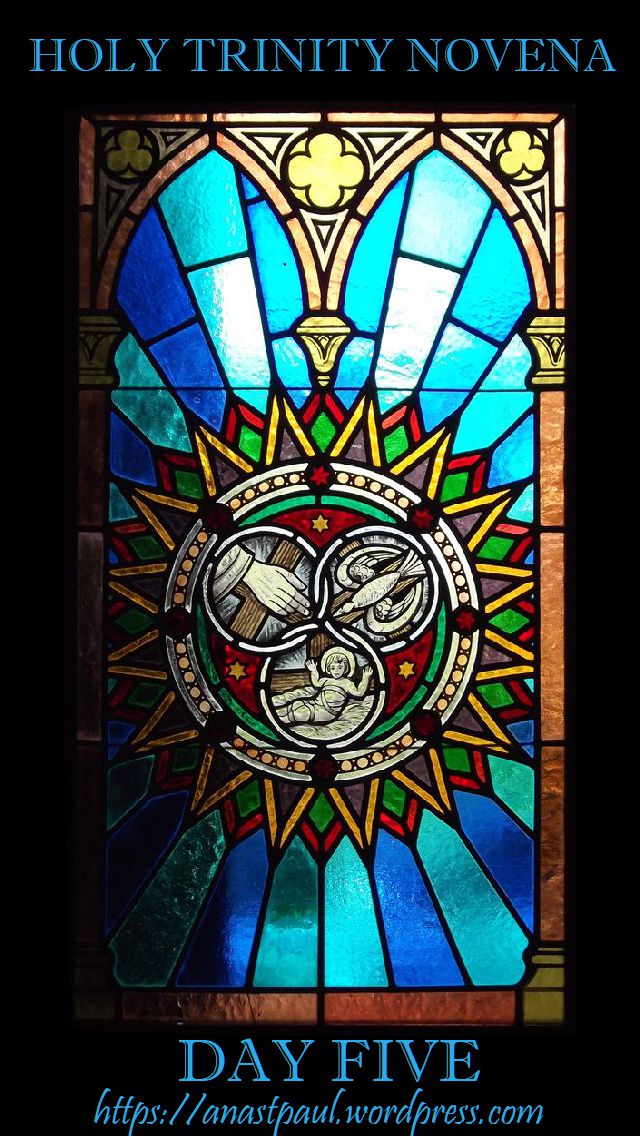
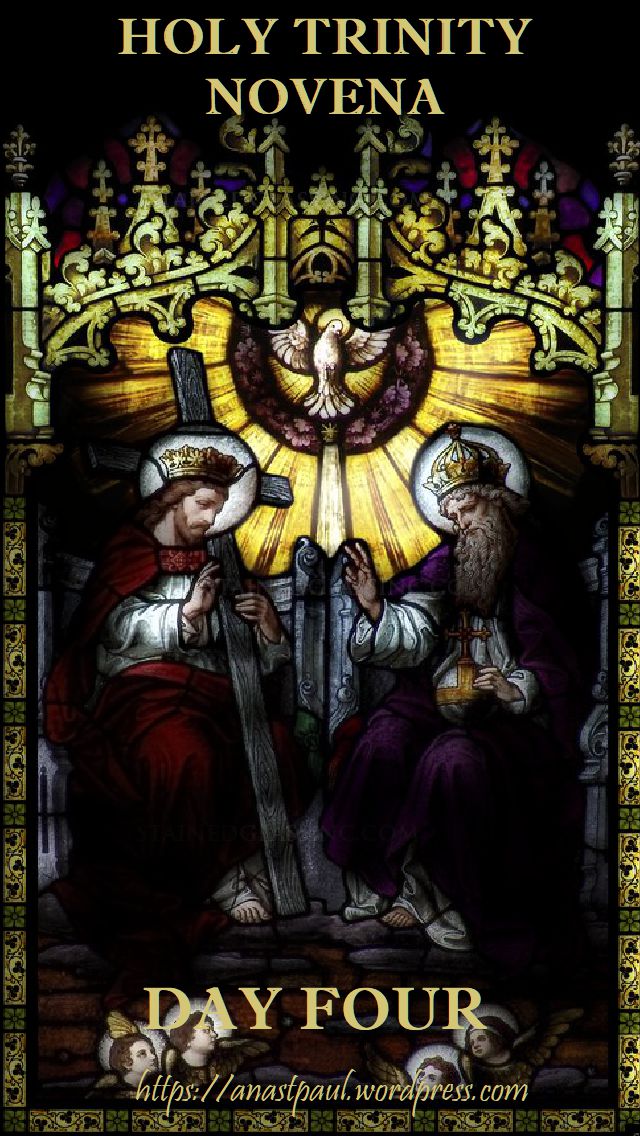
DAY FOUR GOD THE CREATOR (Father) “In the beginning, when God created the universe”
SCRIPTURAL READING
In the beginning, when God created the Heavens and the earth, the earth was a formless wasteland and darkness covered the abyss, while the mighty wind swept over the waters.
Then God said, “Let there be light,” and there was light. God saw how good the light was. God then separated the light from the darkness. God called the light “day,” and the darkness he called “night.” Thus evening came, and the morning followed – the first day.
Then God said: “Let there be a dome in the middle of the waters, to separate one body of water from another.” And so it happened: God made the dome, and it separated the water above the dome from the water below it. God called the dome “the sky.” Evening came, and morning followed – the second day.
Then God said, “Let the water under the sky be gathered into a single basin, so that the dry land may appear.” And so it happened: the water under the sky was gathered into a basin, and the land appeared…Genesis 1:1-9
MEDITATION “And so the whole universe was completed. By the seventh day, God finished what He had been doing and stopped working. He blessed the seventh day and set it apart as special, because by that day He had completed His creation and stopped working and that is how the universe was created.” ...Genesis 2:1-4
PRAYER
God Eternal Father,
bless me through the love,
with which You have begotten Your only Son
from all eternity and shared with Him,
the fullness of Your Divinity.
Bless me through the love, which has adopted us as children
and made us partakers, of the treasures of Your Divinity.
Bless me through the love, which sent us Your Son
and the Holy Spirit to work the miracles of Your power
and mercy in us.
Grant that I may always revere and honour You
as my great God
and love You with my whole heart
as the best of fathers.
Eternal Father, please grant my petition:
…………………….(mention your petition)
Godhead indivisible, Father, Son and Holy Spirit,
our first beginning and our last end,
You have made us after Your own image and likeness.
Grant that all the thoughts of my mind,
all the words of my mouth,
all the affections of my heart
and all my action, be always conformed to Your holy Will.
After having seen You here below in Your manifestations
and by faith, may I come at last,
to see You face to face,
in the perfect possession of You
forever in heaven. Amen.
Moses said: “The Lord, the lord, a merciful and gracious God, slow to anger and rich in kindness and fidelity, continuing His kindness for a thousand generation, and forgiving wickedness and crime and sin; yet not declaring the guilty, guiltless, but punishing children and grandchildren to the third and fourth generation for their fathers’ wickedness!” (Ex. 34, 6-7)
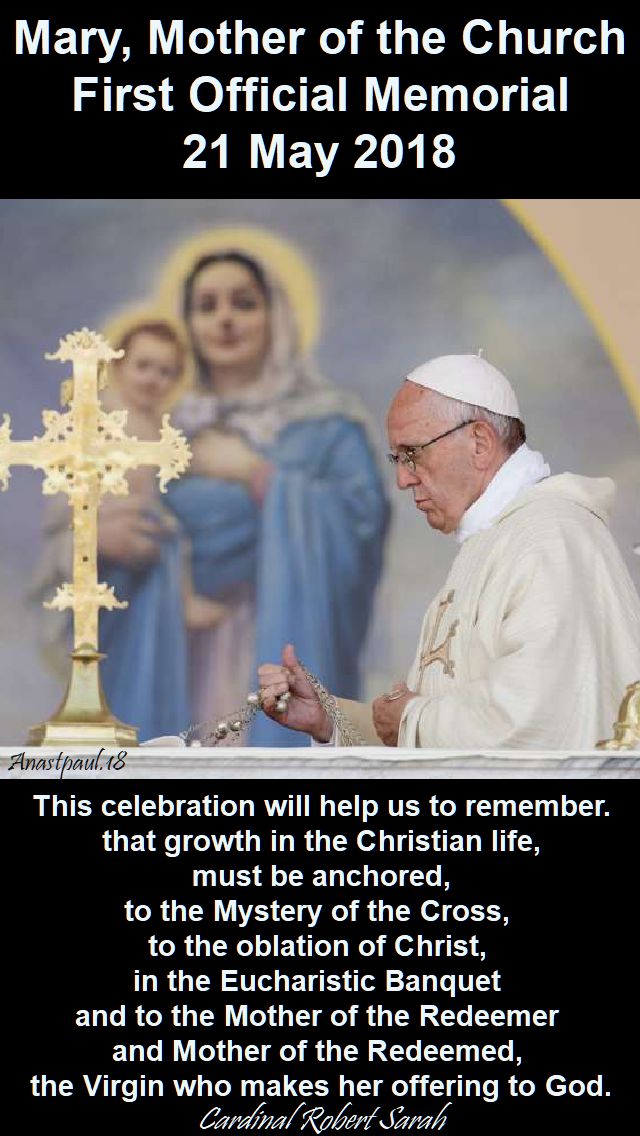
Marian thought for the Day – 21 May 2018 “Mary’s Month!” – The First Memorial of Mary, Mother of the Church
“Mary Mother of the Church, Mater Ecclesiae
our new Universal Memorial today!
Blessed Pope Paul VI explicitly proclaimed Mary Mother of the Church and asked that she be honoured and invoked with this title by all the Christian people.
The title “Mother of the Church” thus reflects the deep conviction of the Christian faithful, who see in Mary not only the mother of the person of Christ but also of the faithful. She who is recognised as mother of salvation, life and grace, mother of the saved and mother of the living, is rightly proclaimed Mother of the Church.
Pope Paul VI would have liked the Second Vatican Council itself to have proclaimed “Mary Mother of the Church, that is, of the whole People of God, of the faithful and their Pastors”. He did so himself in his speech at the end of the Council’s third session (21 November 1964), also asking that “henceforth the Blessed Virgin be honoured and invoked with this title by all the Christian people” (AAS 1964, 37).
In this way, my venerable Predecessor explicitly enunciated the doctrine contained in chapter eight of Lumen gentium, hoping that the title of Mary, Mother of the Church, would have an ever more important place in the liturgy and piety of the Christian people.” – St Pope John Paul II (1920-2005)
“We need to meditate frequently on the fact that the Church is a deep, great mystery, so that we never forget it. We cannot fully understand the Church on this earth. If men, using only their reason, were to analyse it, they would see only a group of people who abide by certain precepts and think in a similar way. But that would not be the Church.
In the Church we Catholics find our faith, our norms of conduct, our prayer, our sense of fraternity. Through it we are united with all our brothers and sisters who have already left this life and are being cleansed in Purgatory—the Church suffering—and with those who already enjoy the beatific vision and love forever the thrice holy God—the Church triumphant. The Church is in our midst and at the same time transcends history. It was born under the mantle of our Lady and continues to praise her on earth and in heaven as its Mother (“The Supernatural Aim of the Church,” 28 May 1972).
If we become identified with Mary and imitate her virtues, we will be able to bring Christ to life, through grace, in the souls of many who will in turn become identified with him through the action of the Holy Spirit. If we imitate Mary, we will share in some way in her spiritual motherhood. And all this silently, like Our Lady; without being noticed, almost without words, through the true and genuine witness of our lives as Christians, and the generosity of ceaselessly repeating her fiat, which we renew as an intimate link between ourselves and God.” – St Josemaria Escrivá (1902-1975) – Friends of God, 281-283
“….We have spoken about Mary, about Jesus. What about us? We who are the Church? What kind of love do we bring to others? Is it the love of Jesus that shares, that forgives, that accompanies, or is it a watered-down love, like wine so diluted that it seems like water? Is it a strong love, or a love so weak that it follows the emotions, that it seeks a return, an interested love? Another question: is self-interested love pleasing to Jesus? No, it is not because love should be freely given, like His is. What are the relationships like in our parishes, in our communities? Do we treat each other like brothers and sisters? Or do we judge one another, do we speak evil of one another, do we just tend our own vegetable patch? Or do we care for one another? These are the questions of charity!
And briefly, one last aspect: Mary as the model of union with Christ. The life of the Holy Virgin was the life of a woman of her people: Mary prayed, she worked, she went to the synagogue… But every action was carried out in perfect union with Jesus. This union finds its culmination on Calvary, here Mary is united to the Son in the martyrdom of her heart and in the offering of his life to the Father for the salvation of humanity. Our Lady shared in the pain of the Son and accepted with Him the will of the Father, in that obedience that bears fruit, that grants the true victory over evil and death.
The reality Mary teaches us, is very beautiful: to always be united with Jesus. We can ask ourselves: do we remember Jesus only when something goes wrong and we are in need, or is ours a constant relation, a deep friendship, even when it means following him on the way of the Cross?
Let us ask the Lord to grant us His grace, His strength, so that the model of Mary, Mother of the Church, may be reflected in our lives and in the life of every ecclesial community. So be it!”...Pope Francis 23 October 2013
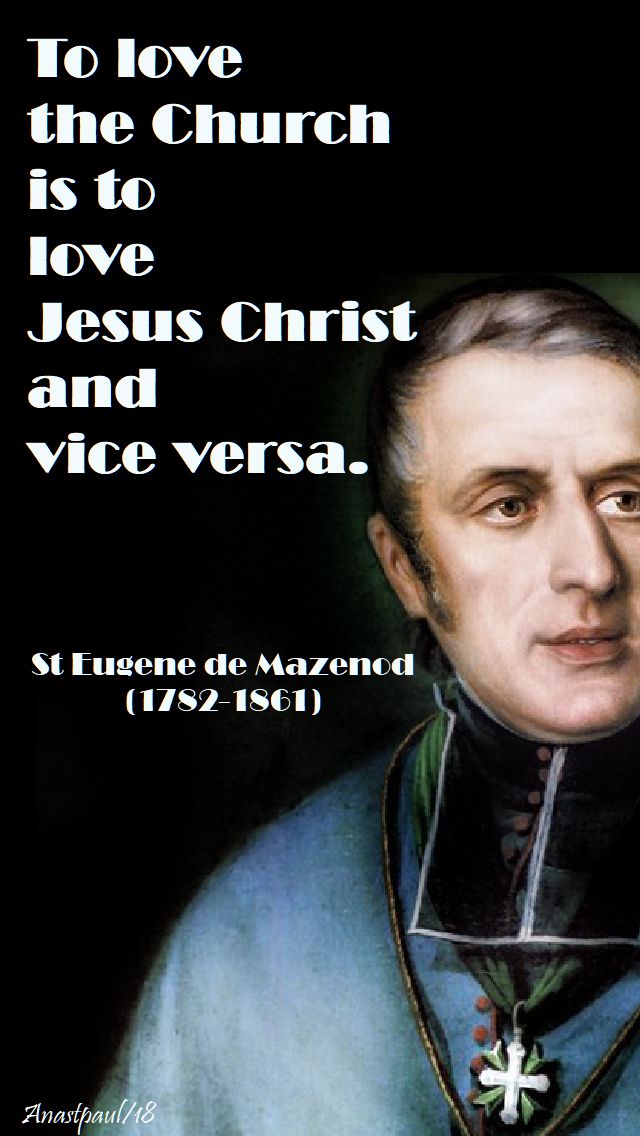
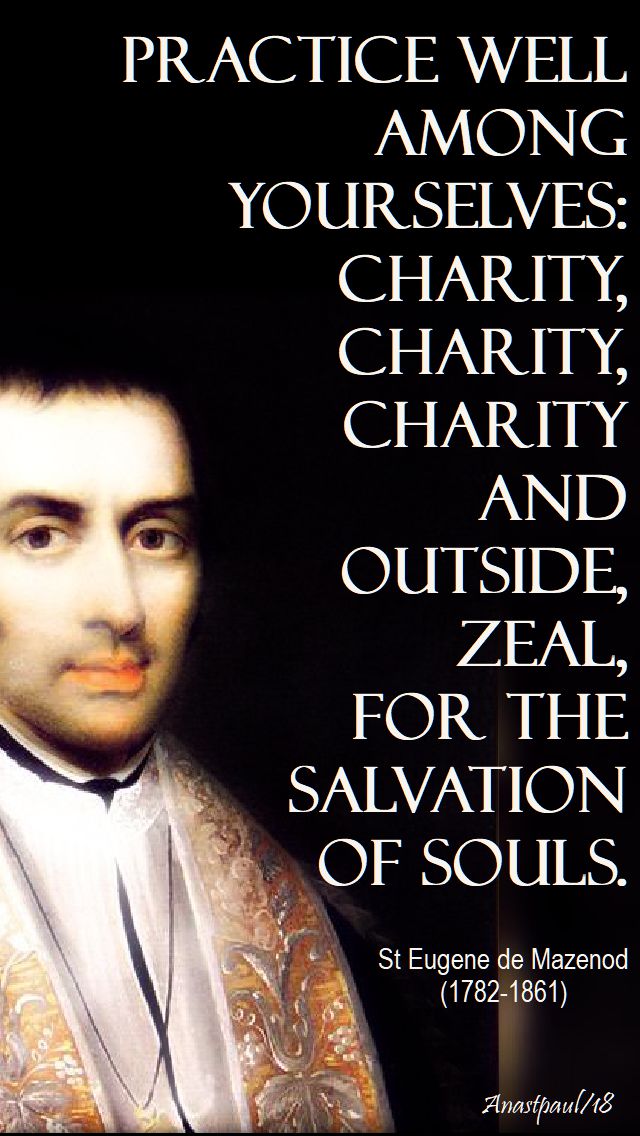
Quote/s of the Day – 21 May 2018 “Mary’s Month!” – The First Memorial of Mary, Mother of the Church and the Memorial of St Eugene de Mazenod (1782-1861)
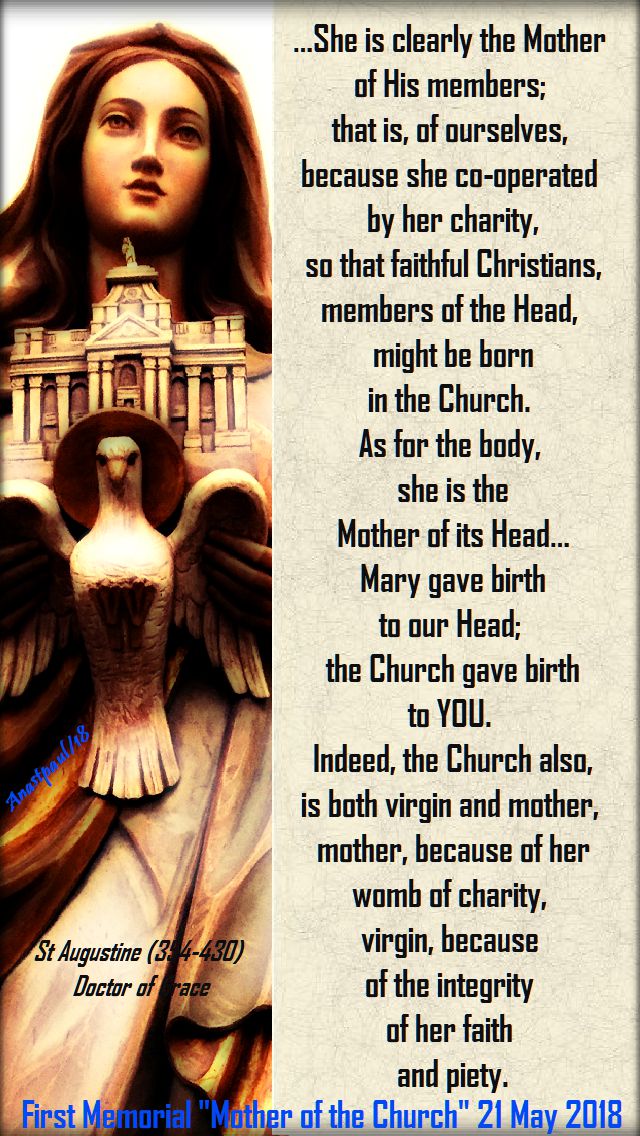
“…She is clearly the Mother of his members; that is, of ourselves, because she cooperated by her charity, so that faithful Christians, members of the Head, might be born in the Church. As for the body, she is the Mother of its Head… Mary gave birth to our Head; the Church gave birth to you. Indeed, the Church also, is both virgin and mother, mother, because of her womb of charity, virgin, because of the integrity of her faith and piety.”
St Augustine (354-430) Doctor of Grace
“This celebration will help us to remember. that growth in the Christian life, must be anchored to the Mystery of the Cross, to the oblation of Christ in the Eucharistic Banquet and to the Mother of the Redeemer and Mother of the Redeemed, the Virgin who makes her offering to God.”
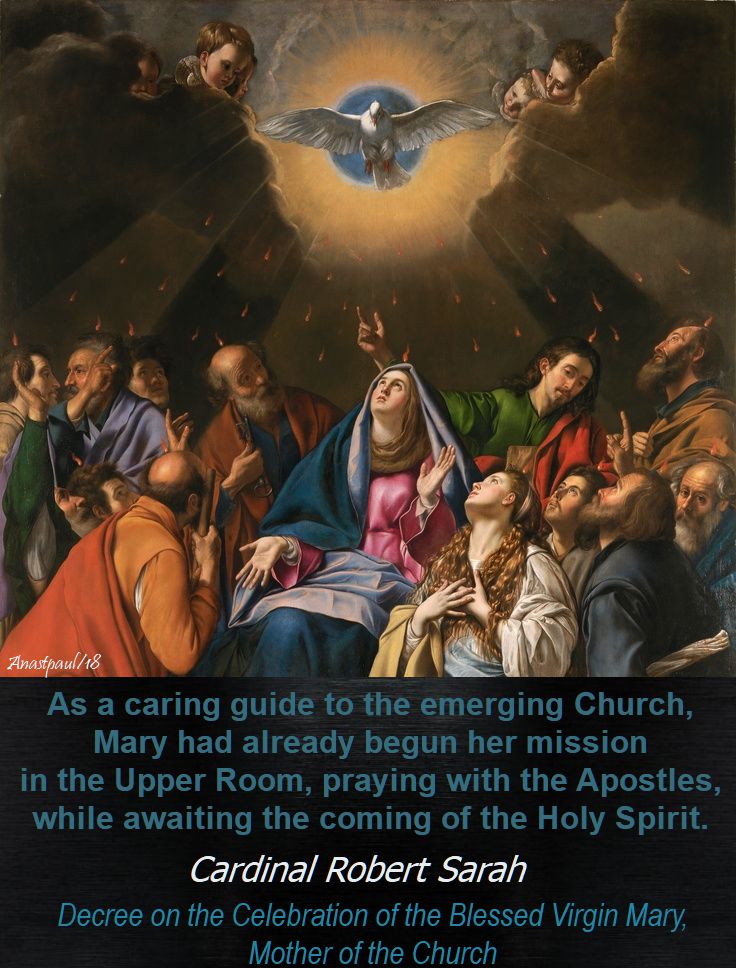
“As a caring guide to the emerging Church, Mary had already begun her mission in the Upper Room, praying with the Apostles, while awaiting the coming of the Holy Spirit.”
Cardinal Robert Sarah
Congregation of Divine Worship and the Discipline of the Sacraments, 11 February 2018, the memorial of the Blessed Virgin Mary of Lourdes. DECREE ON THE CELEBRATION OF THE BLESSED VIRGIN MARY, MOTHER OF THE CHURCHIN THE GENERAL ROMAN CALENDAR
“We glorify God in the masterpiece of His power and love… it is the Son whom we honour in the person of His Mother.”
“To love the Church is to love Jesus Christ and vice versa.”
“Practice well among yourselves: charity, charity, charity and outside, zeal for the salvation of souls”



















 AnaStpaul
You must be logged in to post a comment.