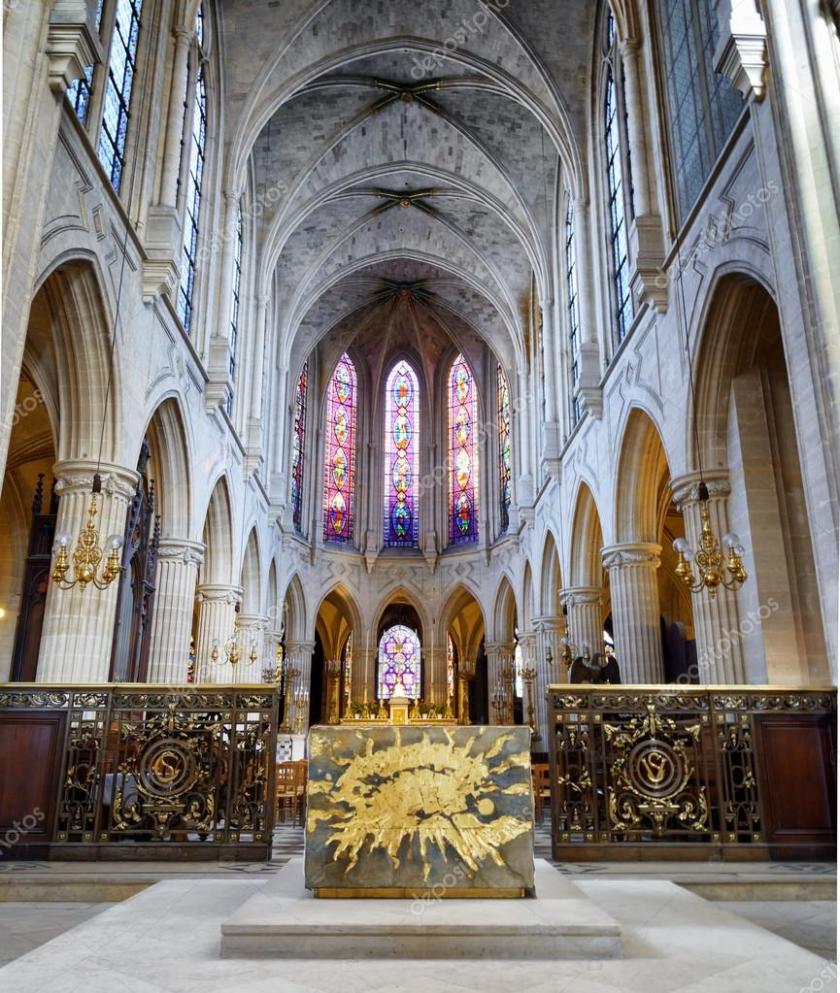
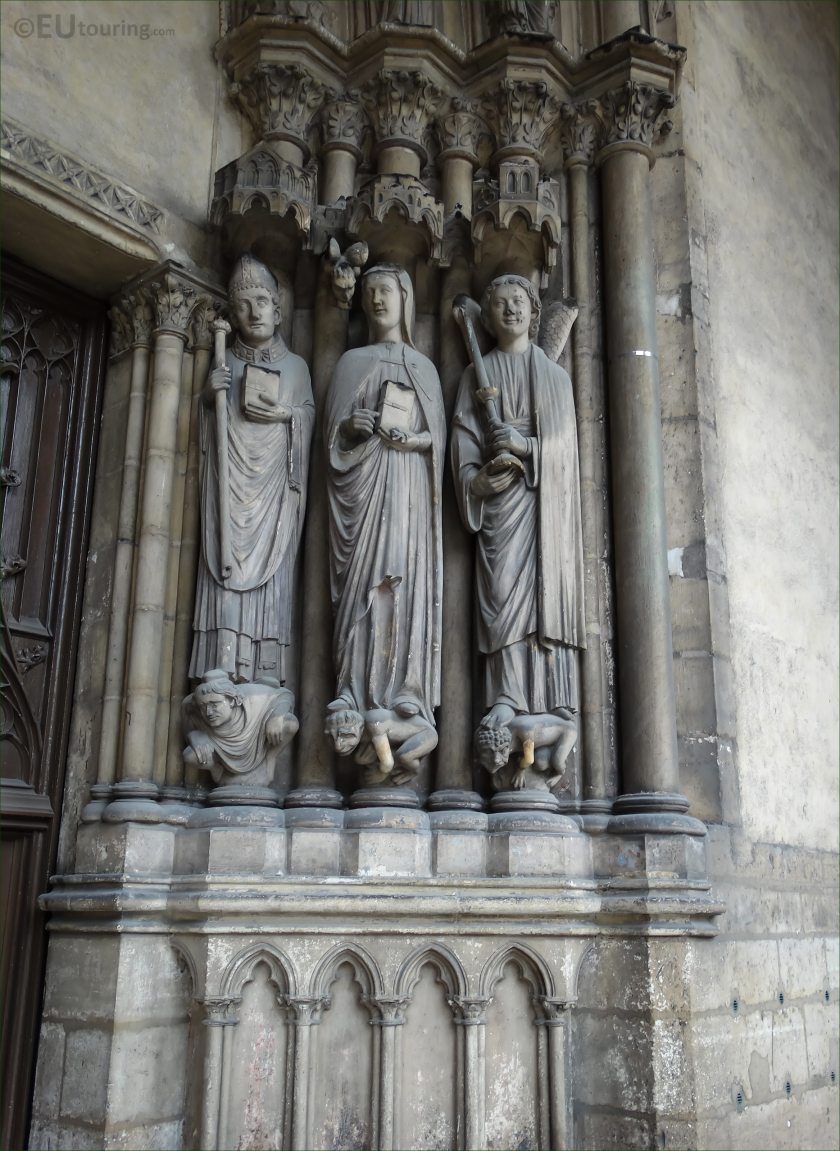
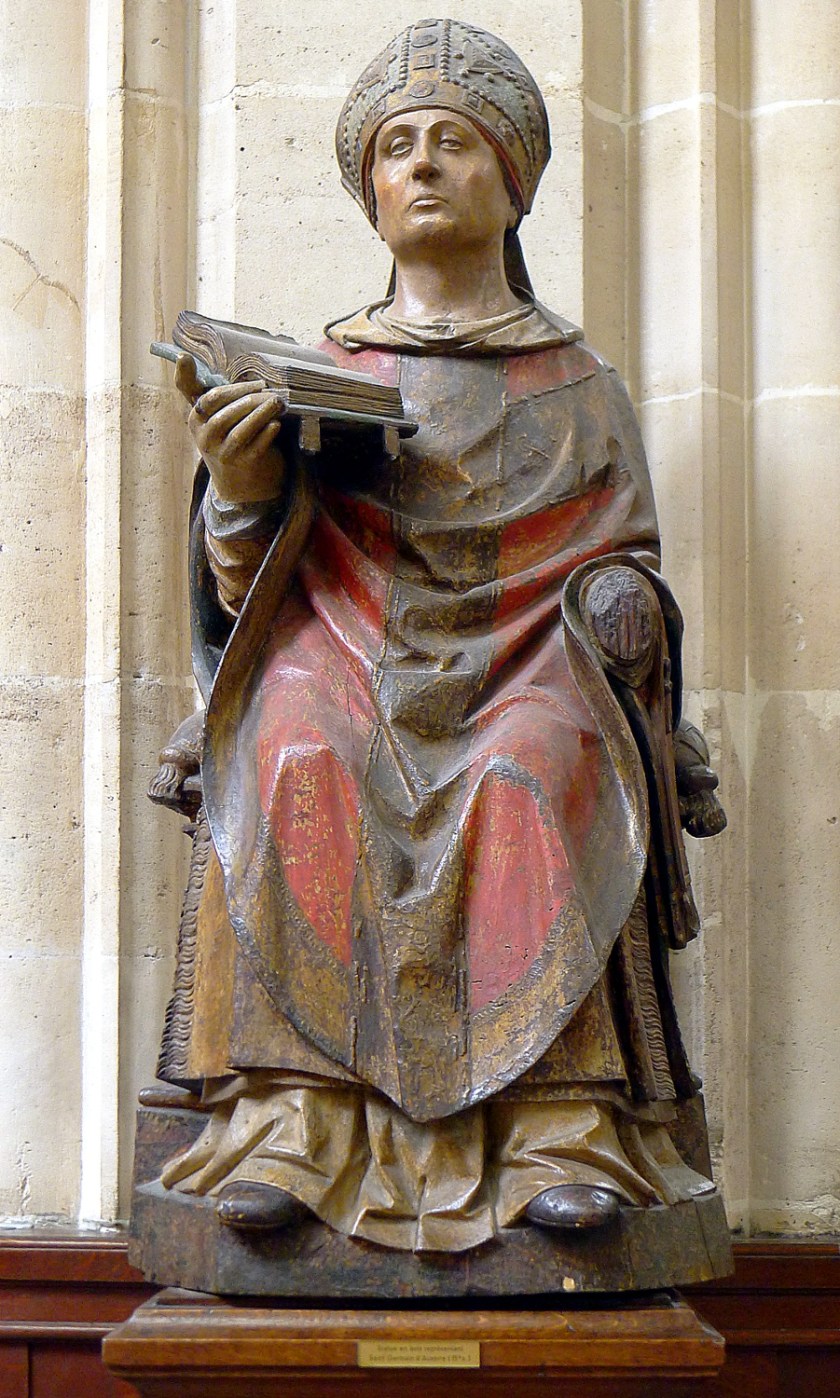
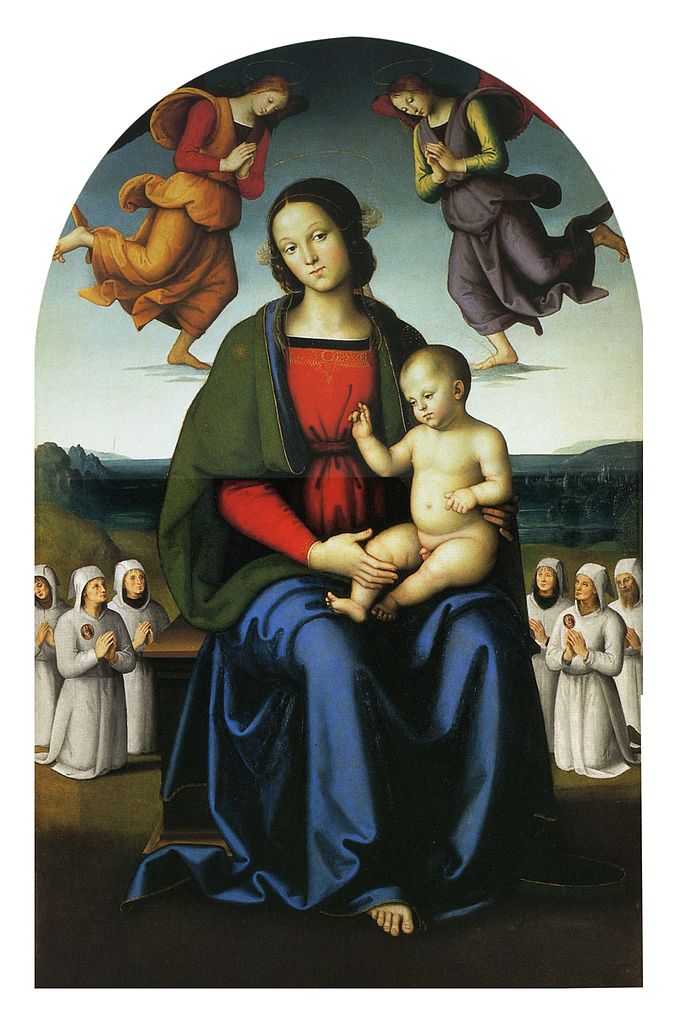
Quote of the Day – 23 March – The Memorial of St Turibius of Mogrovejo (1538-1606)
Christ said “I am the Truth”, He did not say “I am the custom”‘.
Quote of the Day – 23 March – The Memorial of St Turibius of Mogrovejo (1538-1606)
Christ said “I am the Truth”, He did not say “I am the custom”‘.

One Minute Reflection – 23 March – Friday of the 5th Week of Lent 2018 and the Memorial of St Turibius of Mogrovejo (1538-1606) – Today’s Gospel John 10:31-42
The Jews took up stones again to stone him...John 10:31
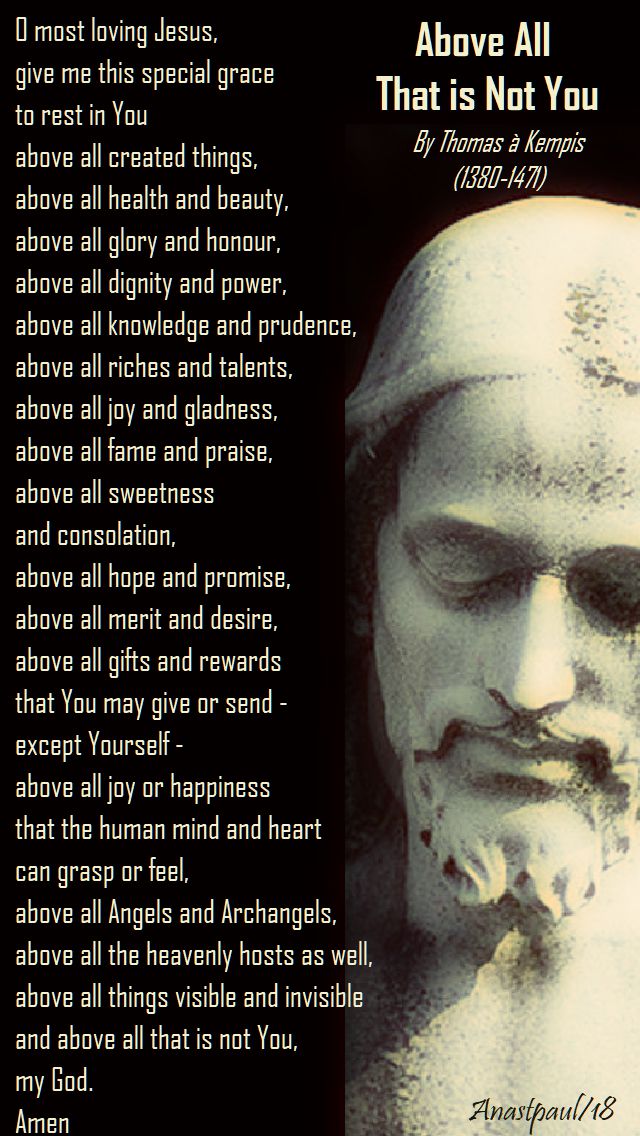
REFLECTION – “If all goes well with you on earth, how can you expect to be crowned in heaven for a patience you never practised? How can you be Christ’s friend if you will not be opposed? Therefore, you must suffer with Christ and for Christ, if you want to reign with Him.”…Thomas à Kempis (1380-1471) The Imitation of Christ, Book 2
PRAYER – Lord, through the pastoral care, suffering and zeal of St Turibius, You built up Your Church in Peru. Grant that the people of God may continually grow in faith and holiness. Accept his prayers on our behalf, that we may always be willing to stand at Your Cross. Through our Lord, Jesus Christ, in the unity of the Holy Spirit, one God forever amen.
Our Morning Offering – 23 March – Friday of the 5th Week of Lent 2018
Go to dark Gethsemane
James Montgomery (1771-1854)
Go to dark Gethsemane,
you that feel the tempter’s power,
your Redeemer’s conflict see,
watch with Him one bitter hour.
Turn not from His griefs away,
learn of Jesus Christ to pray.
Follow to the judgement hall,
view the Lord of life arraigned,
O the wormwood and the gall!
O the pangs His soul sustained!
Shun not suffering, shame or loss,
learn from Christ to bear the Cross.
Calvary’s mournful mountain climb,
there adoring at His feet.
Mark the miracle of time,
God’s own sacrifice complete,
“It is finished” hear Him cry,
learn from Jesus Christ to die..
Saint of the Day – 23 March – St Turibius of Mogrovejo (1538-1606) ArchBishop, Lawyer, Missionary, Preacher, Reformer, Professor, – born Toribio Alfonso de Mogrovejo in 1538 at Mayorga de Campos, Leon, Spain and died on 23 March 1606 at Santa, Peru of natural causes. Patronages – Peru, Lima, Latin American Bishops, Native rights, Scouts, Valladolid. St Turibius predicted the exact date and hour he would die, which would come to pass. His reputation for holiness and learning was never forgotten for it led to calls for his Canonisation. Pope Innocent XI Beatified and Pope Benedict XIII Canonise him on 10 December 1726.
Toribio Alfonso de Mogrovejo was born on 16 November 1538 in the Valladolid province in Habsburg Spain to the nobles Luis Alfonso de Mogrovejo (1510–1568) and Ana de Roblès i Morán (1515–???); He was named in honour of Saint Toribio.
He was noted as a pious child with a strong devotion to the Blessed Virgin who fasted once a week in her honour and recited rosaries often. He received an education befitting for a noble at the time; he entered the college at Valladolid in 1550 where he studied humanities. He became a professor teaching law to students at the reputed college in Salamanca. His uncle Juan de Mogrovejo served as a professor there as well as at the San Salvador High School in Oviedo before King Juan III invited him to teach at the college in Coimbra. Toribio accompanied his uncle there and studied at the college in Coimbra before returning to Salamanca sometime later. His uncle died not long after he returned to Salamanca for his studies. His learning and virtuous reputation led to King Philip II appointing him as the Grand Inquisitor on the Inquisition Court stationed at Granada in February 1571. He remained in that position until 1576 but not without impressing the king with his work.
During this time Philip II nominated him for the vacant Lima archbishopric despite his strong protests. He used his knowledge of canon law to remind him and the pope that priests alone could be designated with ecclesial dignities but the pope overruled him. Preparations were made for him to be ordained before the formal announcement could be made. He was ordained to the priesthood in 1578 in Granada (after four consecutive weeks of receiving the minor orders) and Pope Gregory XIII named him on 16 May 1579 as the Archbishop of Lima; he received his episcopal consecration in August 1580 from the Archbishop of Seville Cristóbal Rojas Sandoval. In September 1580 he departed for Peru alongside his sister and her husband.

The new archbishop first arrived in Paita on 12 May 1581 which was 600 miles – or 970 kilometers – from Lima. He began his new mission travelling to Lima on foot while he baptised and taught the natives. He was enthroned in his new see a week later. His favourite topic was: “Time is not our own and we must give a strict account of it”. He traversed his entire archdiocese three times on foot and alone; exposed to tempests and torrents as well as the wild beasts and tropical heat. He also had to deal with fevers and often threats from hostile tribes. He countered these all the while baptising and confirming almost one half million people which included the future Saint Rose and Saint Martin de Porres and also Saint Francis Solano (who later became a close friend) and Blessed Juan Masías.
He built roads and schoolhouses as well as chapels and hospitals; he never forgot about the religious and established convents for them to live in. In 1591 founded the first seminary in the western hemisphere and mandated that learning indigenous languages was a prerequisite in their formation. He inaugurated the first part of the third Lima Cathedral on 2 February 1604. He also assembled thirteen diocesan synods and three provincial councils during his tenure. He was seen as a champion of the rights of the natives against the Spanish masters. He learnt the local dialects for better communication with the native people and his own flock and was seen as a champion for rights and liberties despite Peruvian governors voicing opposition to him since he challenged their power and control.
Mogrovejo sought the reformation of diocesan priests and found that some of their behaviour had grown too scandalous to be continued. There were those priests who came to resent him for this though Francisco de Toledo supported his reform efforts and rendered assistance to the archbishop in that regard. He also oversaw the Third Provincial Council from 1582 to 1583 which Philip II had requested he oversee. He served as the council’s president but guided it rather than lead it; he involved himself in drafting important concilliar documents. Mogrovejo also worked to implement the decrees from the Council of Trent and made evangelisation a core theme in his episcopal career. He produced a trilingual catechism in Spanish as well as in the native languages Quechua and Aymara in 1584 while the council mandated confessional manuals to aid confessors while calling for preaching in indigenous languages. The council issued a decree from the council – one he endorsed – that proscribed excommunication to those clerics who engaged in business ventures since it was known that there were some clerics who exploited the natives for work and profit.
The council ended and Pope Sixtus V confirmed its decrees in 1588. He held two more provincial councils in 1591 and in 1601. Mogrovejo made three pastoral visitations that were all extensive in time. He visited each parish and would first inspect all objects for divine worship (he expected them to be in good condition) before talking to the parish priest about the life of the parish. He would then check the parish registers and then checked to see if the priest had the missal that Pope Pius V had mandated over a decade prior.
His prediction of the exact date and hour of his death, would soon come to pass. It was in Pacasmayo during a pastoral visit that he contracted a fever but continued labouring to the last and arrived at Saña in a critical condition. He dragged himself to receive the Viaticum and died not long after this on 23 March 1606 (Holy Thursday) at 3:30pm at the Saint Augustine convent. His final words were those of Jesus Christ on the Cross: “Lord, into Thy hands I commend my spirit”. His remains are interred in the archdiocesan cathedral.
His beatification was celebrated under Pope Innocent XI in 1679 (ratified in the papal bull “Laudeamus”) and Pope Benedict XIII later canonised him as a saint on 10 December 1726 through the papal bull “Quoniam Spiritus”. His liturgical feast was once celebrated on 27 April but is now celebrated on 23 March. His cult was once confined for the most part to South America but is now universal because of his pioneering reforms. He became the patron saint for the Latin American episcopate after Pope John Paul II proclaimed him as such in 1983.
Cardinal Juan Luis Cipriani Thorne spoke on Mogrovejo as a tireless pastor who never tired “being close to God” whose “love for the poor manifested itself in the innumerable gestures” that marked his episcopal life. Thorne further elaborated that “in Saint Toribio we reinforce our conviction that the time devoted to God is a guarantee of a faithful dedication to the fulfillment of our duties and to the service of our brothers”.
St Turibius of Mogrovejo (1538-1606) (Optional Memorial)
—
Bl Álvaro del Portillo Díez de Sollano
Bl Annunciata Asteria Cocchetti
St Benedict of Campagna
St Crescentius of Carthage
Bl Edmund Sykes
St Ethelwald of Farne
St Felix the Martyr
St Felix of Monte Cassino
St Fergus of Duleek
St Fidelis the Martyr
St Frumentius of Hadrumetum
St Gwinear
St Joseph Oriol
St Julian the Confessor
St Liberatus of Carthage
St Maidoc of Fiddown
Bl Metod Dominik Trcka
St Nicon of Sicily
St Ottone Frangipane
Bl Peter Higgins
Bl Pietro of Gubbio
St Rafqa
St Theodolus of Antioch
St Victorian of Hadrumetum
St Walter of Pontnoise
—
Daughters of Feradhach: They are mentioned in early calendars and martyrologies, but no information about them has survived.
Martyrs of Caesarea – 5 saints: A group of five Christians who protested public games which were dedicated to pagan gods. Martyred in the persecutions Julian the Apostate. The only details we know about them are their names – Aquila, Domitius, Eparchius, Pelagia and Theodosia. They were martyred in 361 in Caesarea, Palestine.
Thought for the Day- 22 March – The Memorial of St Nicholas Owen S.J. (1562-1606) Martyr – “The Priest Hole Maker”
Saint Nicholas Owen possessed great faith and courage and he is highly respected for this, for he is a Saint. However, what also makes him memorable, is how he used a rather obscure skill and talent for the good of God. His ability to make hiding places ultimately became a tool of God for protecting the Church.
Saint Nicholas reminds us that any of our talents, regardless of how seemingly unusual or unimportant, can be put to good use for the good of God and our neighbour. What are your talents and how can you use them for good?
Prayer
Dear God, please use me to do Your will. St Nicholas Owen, pray for us!
Quote/s of the Day 22 March 2018 – Thursday of the 5th Week of Lent and the Memorial of St Nicholas Owen S.J. (1562-1606) Martyr
“The uncreated Wisdom and of all wisdom the Principle, has borne the shame and mockery due to a fool.
The Holy of Holies and Sanctity in Essence, suffered Himself to be reputed a villain and a malefactor.
He, whom the countless hosts of the blessed in heaven adore, willed to die a disgraceful death upon a cross.
And lastly, He who by nature, is the Sovereign Good, endured every kind of human misery.
Then, after such an example of humility, what ought we not to do – we who are dust and ashes?
And what humiliation should ever appear hard to us, who are not only worms of earth but miserable sinners?”

“Humility is the foundation of all the other virtues,
hence, in the soul in which this virtue does NOT exist,
there cannot be any other virtue except in mere appearance.”
“Do you wish to rise? Begin by descending.
You plan a tower, that will pierce the clouds?
Lay first, the foundation of humility.”
” There never can have been
and never can be
and there never shall be,
any sin without pride.”

“Humility, makes our lives acceptable to God,
meekness, makes us acceptable to men.”

“The most powerful weapon, to conquer the devil is humility.
For, as he does not know at all, how to employ it,
neither does he know, how to defend himself from it.”

One Minute Reflection – 22 March 2018 – Thursday of the 5th Week of Lent and the Memorial of St Nicholas Owen S.J. (1562-1606) Martyr
Rejoice … in the measure that you share Christ’s sufferings. When his glory is revealed, you will rejoice exultantly...1 Peter 4:13
REFLECTION – “Let us strive to face suffering with Christian courage. Then all difficulties will vanish and pain itself will become transformed into joy.”…St Teresa of Avila (1515-1582) Doctor of the Church
PRAYER – Jesus, Man of Sorrows, in every suffering keep my eyes fixed on You. Let me keep ever before my mind the glory to come and so face the suffering with true Christian courage. Lord our God please grant that by the intercession of St Nicholas Owen, who suffered beyond all our understanding, for love of You, we may learn to suffer in silence and with true courage, amen.
Our Morning Offering – 22 March 2018 – Thursday of the 5th Week of Lent and the Memorial of St Nicholas Owen S.J. (1562-1606) Martyr
Transform me into Yourself
By St John Gabriel Perboyre (1802-1840) Martyr
O my Divine Saviour,
Transform me into Yourself.
May my hands be the hands of Jesus.
Grant that every faculty of my body
May serve only to glorify You.
Above all,
Transform my soul and all its powers
So that my memory, will and affection
May be the memory, will and affections
Of Jesus.
I pray You
To destroy in me all that is not of You.
Grant that I may live
but in You, by You and for You,
So that I may truly say, with Saint Paul,
“I live – now not I – But Christ lives in me.”
Saint of the Day – 22 March – St Nicholas Owen S.J. (1562-1606) The Priest-Hole Builde, Martyr , Lay Brother of the Society of Jesus, Assistant to St Edmund Campion- born in the 16th century in Oxford, England and was tortured to death on 2 March 1606 in London, England. Also known as • John Owen and • Little John. St Nicholas was a Jesuit lay brother who was the principal designer and builder of priest holes during the reigns of Queen Elizabeth I and King James I of England. He was Canonised on 25 October 1970 by Pope Paul VI.

St Nicholas was born in Oxford, England, around 1562 into a devoutly Catholic family and grew up during the Penal Laws. His father, Walter Owen, was a carpenter and Nicholas was apprenticed as a joiner in February 1577 where he acquired skills that he was to use in building hiding places. Two of his older brothers became priests. St Nicholas served as St Edmund Campion’s (1540-1381) assistant and was arrested for protesting Campion’s innocence. Upon his release, he entered the service of Henry Garnet S.J. around 1588 and for the next 18 years built hiding places for priests in the homes of Catholic families. He frequently travelled from one house to another, under the name of “Little John”, accepting only the necessities of life as payment before starting off for a new project. He also used the aliases “Little Michael”, “Andrewes”, and “Draper”. During the daytime he would work as a travelling carpenter to deflect suspicion.
Owen was only slightly taller than a dwarf and suffered from a hernia, as well as a crippled leg from a horse falling on him. Nevertheless, his work often involved breaking through thick stonework and to minimise the likelihood of betrayal he often worked at night and always alone. Sometimes he built an easily discovered outer hiding place which concealed an inner hiding place. The location of the secret room was known only to himself and the owner of the house. Examples of his work survive at Sawston Hall (Cambs),[Oxborough] [Norfolk] Huddington Court (Worcestershire) and Coughton Hall (Warwickshire). Harvington Hall in Worcestershire has seven “priest holes”. Due to the ingenuity of his craftsmanship, some may still be undiscovered. Below are 3 at Harvington Hall, the first 2 pics are the entrance and inside the hole. The third is another in the staircase.
For many years, St Nicholas worked in the service of the Jesuit priest Henry Garnet and was admitted into the Society of Jesus as a lay brother. He was arrested in 1594 and was tortured at the Poultry Compter but revealed nothing. He was released after a wealthy Catholic family paid a fine on his behalf, the jailers believing that he was merely the insignificant friend of some priests. He resumed his work and is believed to have masterminded the famous escape of Father John Gerard from the Tower of London in 1597.

Early in 1606, St Nicholas was arrested a final time at Hindlip Hall in Worcestershire, giving himself up voluntarily in hope of distracting attention from his master Fr Garnet who was hiding nearby with another priest. Realising just whom they had caught and his value, Secretary of State Robert Cecil exulted: “It is incredible, how great was the joy caused by his arrest… knowing the great skill of Owen in constructing hiding places and the innumerable quantity of dark holes which he had schemed for hiding priests all through England.”
After being committed to the Marshalsea, a prison on the southern bank of the Thames, St Nicholas was then removed to the Tower of London. He was submitted to terrible “examinations” on the Topcliffe rack, dangling from a wall with both wrists held fast in iron gauntlets and his body hanging. As his hernia allowed his intestines to bulge out during this procedure, the rackmaster strapped a circular plate of iron to his stomach. When he remained stubborn, it is believed that he was transferred to the rack, where the greater power of the windlass forced out his hernia which was then slashed by the plate, resulting in his death. He revealed nothing to his inquisitors and died in the night between 1 and 2 March 1606. Father Gerard wrote of him:
I verily think no man can be said to have done more good of all those who laboured in the English vineyard. He was the immediate occasion of saving the lives of many hundreds of persons, both ecclesiastical and secular.

St Nicholas was canonised as one of the Forty Martyrs of England and Wales by Pope Paul VI on 25 October 1970. Catholic stage magicians who practice Gospel Magic consider St Nicholas Owen the patron saint of Illusionists and Escapologists, due to his facility at using “trompe l’oeil” when creating his hideouts and the fact that he engineered an escape from the Tower of London.
There is a Roman Catholic church dedicated to Saint Nicholas Owen in Little Thornton, Lancashire.
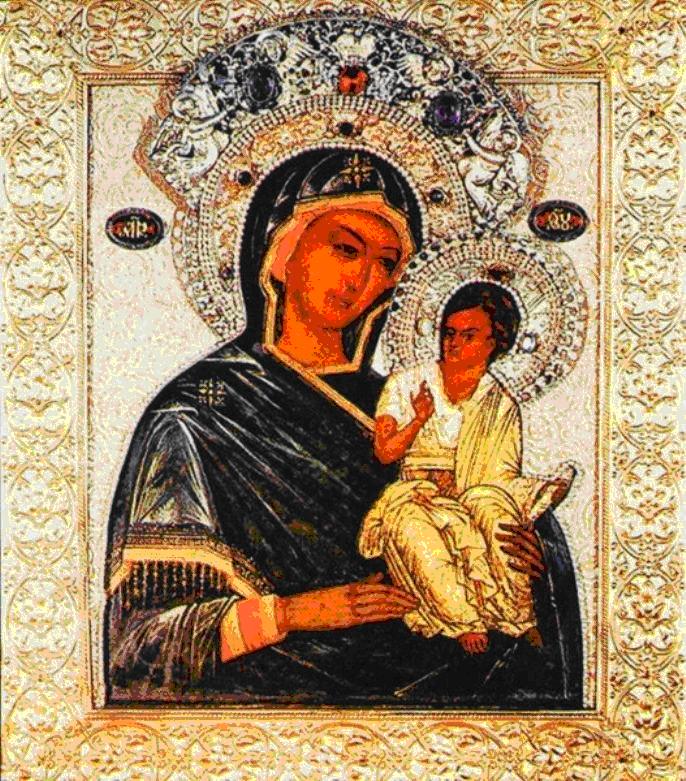
Nostra Signora dei Sette Veli / Our Lady of the Seven Veils, Foggia, Italy (11th Century) – 22 March:
In the Cathedral of Foggia one can find an ancient and mysterious image of the Blessed Virgin Mary. This icon, called “Our Lady of the Seven Veils,” once caused Saint Alphonsus to go into ecstasy, which I will describe below. As a young priest, St Pio of Pietreclina would make a visit to this image everyday.
In the eleventh century Foggia, Italy was a tiny town perched around the Tavern of the Owl. One day some local farmers saw three flames over a small pond or bog. Intrigued, they dug where the miraculous fire had been and discovered a large “table” buried in the mud. They realised that this “table” was actually a Byzantine icon that had remained somewhat preserved despite being soaked in water and mud. The image was cleaned and then cloaked with new veils. I assume there were seven veils and hence the name but I cannot verify this. The icon was then placed in the local Tavern of the Owl for veneration. Soon the tavern became a place of pilgrimage. In 1080 Robert Guiscard built a church to honour the sacred image. In 1172 the church was expanded by William II “the Good” of Sicily. The “face hole” is all that one can now see of the original wooden icon. It is black and the face is now indiscernible. However, on Maundy Thursday of 1731, the Virgin Mary’s white face appeared in this portal, which was usually black and dark.
Saint Alphonsus Liguori heard about apparition and went to Foggia to venerate the Immaculate Mother of the Saviour. He also received an apparition of the Virgin’s face in the small black portal. He described the Blessed Virgin’s face on that occasion as a girl of 13-14 with a white veil. The apparitions of the Virgin’s face on the icon continued until about 1745.
As the city grew larger, the church was decorated and enriched. The Normans, Swabians, Angevins, Aragonese, Spaniards and Bourbons considered the church to be one of the most important in Italy. It has served as the site for several royal weddings. Today, the image is said to be covered in seven layers of precious metal and embroidered material – hence the name Madonna of the Seven Veils.


St Avitus of Périgord
St Basil of Ancyra
St Basilissa of Galatia
St Benevenuto Scotivoli of Osimo
Bl Bronislaw Komorowski
St Callinica of Galatia
Bl Clemens August von Galen
St Darerca of Ireland
St Deghitche
St Epaphroditus of Terracina
St Failbhe of Iona
Bl François-Louis Chartier
St Harlindis of Arland
Bl Hugolinus Zefferini
St Lea of Rome
Bl Marian Górecki
St Nicholas Owen S.J. (1562-1606)
St Octavian of Carthage
St Paul of Narbonne
St Saturninus the Martyr
St Trien of Killelga
Thought for the Day – 21 March – The Memorial of St Nicholas of Flue (1417-1487) and Wednesday of the 5th Week of Lent 2018 (this reflection includes our Lenten Reflection for today.)
Although our minds are limited in their ability to attain God in this life, we are capable of “greater desire and love, and pleasure in knowing divine matters” than we are able to find in “the perfect knowledge of the lowest things.” Thus far Aquinas, who taught as one who knew. Saint Nicholas of Flue (1417-1487) was in perfect agreement. “God,” he once said, “gives us such a taste for prayer that we yearn for it as if we were waiting to go to a dance.”
The likeness was more than a bit incongruous, for the speaker was a true hermit, a man who had given up not only dances but nearly everything else that bound him to this world, even food. Born to a pious, upstanding peasant family, young Nicholas stood out for his goodness, simplicity and mortification. While still a young man, labouring in the fields and meadows of the valleys south of Lucerne, he fasted four times per week, explaining himself, when pressed, by saying, “Such is the will of God.” Until his fiftieth year, his life was that of an exemplary Swiss free man. Like many of his fellow countrymen, he served his canton both under arms and by holding civic office. And this pillar of the community raised up five sons and five daughters with the help of his exemplary wife Dorothy. Yet God persisted in calling him to a life beyond that of the domestic holiness he had already embraced and sent visions to him in his late-night prayer vigils and his moments of afternoon solitude in the fields, visions that beckoned him to leave all.
As the eminent Swiss theologian Charles Cardinal Journet (1891-1975) explained in his biography of the hermit-saint, “it no longer sufficed for him to walk along the roads of the world with God in his heart; he had to take the path set aside for him, that he might be taken by the hand and led to where he knew not.” What praise of Dorothy of Flue could be lovelier, Journet asked, than to admire her magnanimity in being able to They parted friends, just thirteen weeks after the birth of their youngest child and remained so. Several years later, a pilgrim visitor to Nicholas’ hermitage saw the saint, with joyous mien, lean out of the window of his tiny cell after the morning Mass to greet his family with a blessing: “May God give you a blessed day, dear friends and good people!” One is glad to know that his wife and children attended his deathbed. After all, she had never lost her husband completely. Honoured by Swiss Protestants, venerated by Swiss Catholics, Nicholas’s cult, uninterrupted since his death, was officially sanctioned by Clement IX (1667-9). In 1947 he was canonised by Pope Pius XII.
What lesson might Nicholas of Flue hold out for our generation? Were he alive today this simple Swiss peasant would doubtless be startled by our wealth. The recession of recent years seems to have done little to dull the edge of our consumption. The adjective “worldly” is now being used as a term of approbation, to signify the savoir-faire of the person who knows the latest fashions and ways of thinking. It is a telling linguistic development. Nicholas of Flue spent the last twenty years of his life in a tiny room with two windows. Through one of them, he could see something of the beauty of his native land, a beauty that nourished his reflection and piety: “O man, think of the sun so high in the sky and consider its splendour: but your soul has received the splendour of the eternal God.” Through the other, he saw the altar, whence came the very food of his soul. “We should carry the Passion of God in our hearts, for this is the greatest consolation to a man at the hour of his death.” The one thing needful indeed.
“The secret of being always with God
and of assuring His continual presence
in our hearts is constant prayer.”

“The shortest, yes, the only way,
to reach sanctity, is to conceive a horror
for all that the world loves and values.”

“Sanctity consists in the accomplishment
of the duties God lays upon us.
In this way, one who fulfills well the duties of his station
and, much more, one who fulfills them well for God,
will become a real saint – nothing more is needed.”

“If God does not desire me to be a saint,
He would not have created me a reasonable being.”

“Our Lord has created persons for all states in life
and in all of them, we see people,
who achieved sanctity
by fulfilling their obligations well.”

“Great’ holiness consists in carrying out
the ‘little duties’ of each moment.”

“We must have a real living determination to reach holiness.
I will be a saint means, I will despoil myself of all, that is not God;
I will strip my heart of all created things;
I will live in poverty and detachment;
I will renounce my will, my inclinations, my whims and fancies
and make myself a willing slave to the will of God.”

One Minute Reflection – 21 March – The Memorial of St Nicholas of Flue (1417-1487)
And whatever you do, in word or in deed, do everything in the name of the Lord Jesus, giving thanks to God the Father through him…Colossians 3:17
REFLECTION – “Each state of life has its special duties; by their accomplishments one may find happiness.”…St Nicholas of Flue
PRAYER – Holy Father, teach us to offer all we do to You and thus make it a perfect gift. By giving our best efforts to every aspect of our daily lives, we may be offer You our gratitude. Grant that by the prayers of St Nicholas of Flue, we may attain holiness and happiness as we continue our journey to our eternal home. Through our Lord Jesus Christ, in union with the Holy Spirit, one God forever and ever, amen.
Our Morning Offering – 21 March – The Memorial of St Nicholas of Flue (1417-1487)
My Lord and my God
St Nicholas of Flue (1417-1487)
My Lord and my God,
take from me everything
that distances me from You.
My Lord and my God,
give me everything
that brings me closer to You.
My Lord and my God,
detach me from myself
to give my all to You.
Amen
The above prayer of St Nicholas, is cited in the Catechism of the Catholic Church in paragraph #226.
CCC 226 – It means making good use of created things: faith in God, the only One, leads us to use everything that is not God only insofar as it brings us closer to Him and to detach ourselves from it insofar as it turns us away from Him.

Saint of the Day – 21 March – St Nicholas of Flue (1417-1487) – born on 21 March 1417 at Sachseln, Canton Unterwalden, Lake Lucerne, Switzerland and died on 21 March 1487 at Ranft, Aargau, Switzerland of natural causes; his wife and children were at his side
His relics reside in the church of Sachseln, Switzerland. He is affectionately known as Brother Klause. Patronages – Switzerland, Pontifical Swiss Guards, Councillors, large families. St Nicholas was a Swiss hermit and ascetic who is the patron saint of Switzerland. He is sometimes invoked as Brother Klaus. A husband and father, a Mystic, a writer, farmer, military leader, member of the assembly, councillor, judge, he was respected as a man of complete moral integrity. Brother Klaus’s counsel to the Diet of Stans (1481) helped to prevent war between the Swiss cantons.
The Swiss affectionately call St.Nicholas of Flue “Brother Klaus.” They revere him as a great holy man and political Councillors, who contributed significantly to the formation of their peace-loving nation.
From his youth in Unterwalden, Switzerland, Nicholas was a member of a Catholic lay association called the Friends of God. Scattered throughout Switzerland, the Netherlands and Germany, members sought closeness to Christ through a disciplined life, especially by meditation on his passion.
Though totally dedicated to peace, twice patriotism led Nicholas to fight in wars to defend Unterwalden. At age thirty he married Dorothy Wissling and during twenty happy years she bore him ten children.
At age fifty, however, Nicholas sensed God’s call to live a contemplative life as a hermit. Dorothy, also a member of the Friends of God, would not be opposed to such a desire. She believed that Nicholas had a divine commission and she and the children released him. So Nicholas left his family and spent the next twenty years in a remote cottage at Ranft. He prayed most of the night but in afternoons he welcomed visitors. It is reported but not confirmed, that during these years he took no food or drink, only Holy Communion.
In 1481, Nicholas played a major role in solidifying the unity of Switzerland. After the cantons secured independence by defeating the German king, Charles the Bold, a dispute threatened to divide the cantons. Representatives meeting at Stans disagreed over admitting Fribourg and Soleure to the confederation. However, at an impasse they consulted Brother Klaus. Within an hour after obtaining his advice, they agreed to include the territories.
A document from that period preserved Nicholas’s fundamental political wisdom.
“Always put God first and do not extend too widely the country’s frontiers that you may live more easily in peace, union and faithfulness to your dearly attained liberties. Do not mix in the affairs of others or ally yourself with a powerful stranger. Protect your country and do not hold yourself distant from it. Do not let grow among you self-interest, jealousy, hatred, envy and factions, or these will work against you. Dear friends, don’t let innovations and roguery seduce you. Hold on to the good, all of you together. Stay on the road in the footprints of your pious ancestors. Guard faithfully that which has been assigned to you. If you do that, neither storm nor tempest can harm you and you will overcome much evil.
Six years after the Stans meeting, on December 21, 1487, Nicholas died at Ranft after an illness of eight days.
St Nicholas was beatified in 1669. After his beatification, the municipality of Sachseln built a church in his honour, where his body was interred. He was canonised in 1947 by Pope Pius XII.
As a layman with family responsibilities who took his civic duties as an ancestral landowner seriously, Brother Klaus is a model of heroic manhood for many concerned with the flourishing of local communities and sustainable use of open land. He is the patron saint of the German-language association KLB (Katholischen Landvolkbewegung), the Catholic Rural Communities Movement.
Bl Alfonso de Rojas
St Augustine Tchao
St Benedicta Cambiagio Frassinello
St Birillus of Catania
St Christian of Cologne
St Domninus of Rome
St Enda of Arran
St Isenger of Verdun
St James the Confessor
Bl John of Valence
Bl Lucia of Verona
St Lupicinus of Condat
Bl Mark Gjani
Bl Matthew Flathers
St Nicholas of Flue (1417-1487)
St Philemon of Rome
Bl Santuccia Terrebotti
St Serapion the Scholastic
Bl Thomas Pilcher
Bl William Pike
—
Martyrs of Alexandria: A large but unknown number of Catholics massacred in several churches during Good Friday services in Alexandria, Egypt by Arian heretics during the persecutions of Constantius and Philagrio. They were martyred on Good Friday in 342 in Alexandria, Egypt.
Our Morning Offering – 20 March 2018 – Tuesday of the 4th Week of Lent
Prayer In Honour of the Holy Cross
Third Prayer from the Seven Penitential Psalms Devotion
Almighty God,
Lord Jesus Christ,
who, for our sake, stretched out
Your pure hands on the Cross
and redeemed us with
Your precious Blood,
grant me to feel and understand
that I may have true repentance
and great perseverance,
all the days of my life.
Your reign is a reign for all ages.
Amen
Saint of the Day – 20 March – St Martin of Braga (c 520–580) Archbishop, Monk, Missionary, Monastic Founder, prolific Ecclesiastical Writer. He was born in Pannonia, Central Europe and died in 580 at Braga, Portugal of natural causes.

About 550, St Martin arrived in Galicia, now northern Portugal, aboard a ship transporting pilgrims from the Holy Land. We know little about Martin’s background, except that he had received a Greek education in the East and training as a monk in the tradition of the Egyptian desert. The young monk seems to have come to Galicia as a missionary to a church infected with heresy.
The Suevi, a Germanic tribe that controlled Galicia, had adopted Priscillianism, a version of gnosticism that denied Christ’s humanity. Martin took a strategic approach to winning the Suevi to the Catholic Church. First he became the friend of King Theodomir and won the admiration of the royal family. Then, building on his personal relationships, Martin converted the king and his court.
Martin founded a monastery at Dumium, which served as his missionary base. Out of respect for him, the Suevian monarchs made him bishop of Dumium. Later they appointed Martin as Archbishop of Braga, which established him as the pre-eminent leader of the Galician church. In that position he held several councils that condemned Priscillianism and he promulgated teaching that restored its adherents to the church.
St Gregory of Tours (538-594) declared Martin the greatest scholar of his age. His writings included a guide to the Christian life, a description of superstitious peasant customs, a set of moral maxims and a version of the sayings of the Egyptian fathers. He died at his monastery at Dumium in 579. 
Bl Ambrose Sansedoni of Siena
Anastasius XVI
Archippus of Colossi
St Benignus of Flay
St Cathcan of Rath-derthaighe
St Clement of Ireland
St Cuthbert of Lindisfarne
Bl Francis Palau y Quer
St Guillermo de Peñacorada
St Herbert of Derwenwater
Bl Hippolytus Galantini
Bl Jeanne Veron
Bl John Baptist Spagnuolo
St John Nepomucene
St John Sergius
St Jósef Bilczewski
St Maria Josefa Sancho de Guerra
St Martin of Braga (c 520–580)
St Nicetas of Apollonias
St Remigius of Strasbourg
St Tertricus of Langres
St Urbitius of Metz
St Wulfram of Sens
—
Martyrs of Amisus – 8 saints: A group of Christian women martyred together in the persecutions of Diocletian. The only details we have are eight of their names – Alexandra, Caldia, Derphuta, Euphemia, Euphrasia, Juliana, Matrona and Theodosia. They were burned to death c 300 in Amisus, Paphlagonia (modern Samsun, Turkey).
Martyrs of Rome – 9+ saints: A group of Christians martyred together in the persecutions of Nero. We know nothing else about them but the names Anatolius, Cyriaca, Joseph, Parasceve, Photis, Photius, Sebastian and Victor.
Martyrs of San Saba – 20 saints: Twenty monks who were martyred together in their monastery by invading Saracens.
They were martyred in 797 when they were burned inside the San Sabas monastery in Palestine.
Martyrs of Syria – 3+ saints: A group of Christians who were martyred together in Syria. We know nothing else about them but the names Cyril, Eugene and Paul.
Thought for the Day 19 March – The Solemnity of the Feast of St Joseph, Spouse of the Blessed Virgin Mary and Patron of the Universal Church
St John Paul in his apostolic exhortation “The Guardian of the Redeemer” calls Joseph the just man. What does that mean? It means that he was a holy man. A righteous man. A man of honesty, integrity, and virtue. St Joseph is the greatest and holiest saint after the Blessed Mother herself. In fact, some of the Doctors of the Church said that there was no grace ever given to any of the Saints (except Mary) that was not given to St Joseph as well.
St. Thomas Aquinas says that God gives grace proportionate to our office and to our state in life. So if you are a husband and father, you will be given the grace to be a holy husband and father. When someone has been ordained a priest he will be given the grace to be a priest. Think how much grace St Joseph received to be the foster father of the Son of God and the virginal spouse of the Immaculate Conception. So St Joseph is that just man. He is the greatest of Saints because he was the closest one to Jesus and to the Blessed Mother.
As fathers and husbands you are called to holiness ‑ an obligation of every member of the Church. It is not just the priests and nuns but everyone who is called to holiness. Every single person has this vocation ‑ the universal call to holiness. We should ask ourselves, “Am I developing the virtues that St. Joseph has? Am I developing the integrity and character of St. Joseph?”
Joseph was truly obedient to the will of God in his life. The Angel said, “Have no fear about taking Mary to be your wife.” As soon as Joseph knew God’s will for him, he obeyed. When the angel told Joseph that Herod was planning to destroy the child, Joseph immediately got up and began the flight to Egypt.
Some people ask if St Joseph was old. This is due to the apocryphal writings of the early church, ancient writings which were not divinely inspired, or approved by the Church as Sacred Scripture. These ancient writings say that when Joseph married the Blessed Mother he was 89 years old and that he died at the age of 111. There is nothing in the Bible to suggest that St Joseph was so old. We can be assured that Mary didn’t have to push St Joseph in a wheel chair through the desert. Actually, I believe that Joseph was young and strong. Obviously older than the Blessed Mother; perhaps in his 20s or 30s. He was her guardian and protector. Scripture speaks about Mary’s betrothal to a man named Joseph. It does not say he was an old man, as Simeon or Zachary. So Joseph wasn’t as old as some would like to claim him to be. Even in the ancient catacomb of Priscilla, Joseph was drawn without a beard showing him to be a young man.
But Joseph was an obedient man. Whenever he was warned in a dream he always obeyed the will of God. He never questioned Divine Providence. Even though Mary was 8 3/4 months pregnant, Joseph had to believe it was God’s will for them to leave Nazareth and go down to Bethlehem. This was to fulfil the prophecy of Micah that the Saviour would be born in Bethlehem. Joseph abandoned himself to the will of God. Ask yourself these questions: “Am I obedient to the will of God? Am I obedient to the Ten Commandments? Am I obedient to the teaching of Christ and the teachings of the Church on marriage and family life?” Go to St. Joseph to become obedient sons of the Church.
There are no recorded words of St Joseph in the entire Bible. There are words in the Old Testament for the great patriarch that we can apply to St Joseph. But in the New Testament there are no recorded words for St Joseph. He’s always there, though, as a silent presence. In fact, even his death is wrapped in silence. There is no account as to how Joseph was buried. He’s a man of silence. A strong man. A man with a deep interior life. Silence in our life helps us develop a life of prayer. Joseph was a man of prayer who listened to the word of God. He was not distracted by the many exterior things ‑ he was always a man of interior life. Why? Because God lived in his very house.
We picture St Joseph as a silent worker, as a craftsman, who suffered in silence as well. He did not complain and he did not grow angry at God and say, “Why are you doing this, why do we have to flee to Egypt?” He was a man who accepted these things in silence. We should ask ourselves, “Do I have enough silence in my life? Do I spend enough time in prayer with Jesus? Do I listen to Jesus when he speaks to me during the Sunday readings? Do I spend time in the Blessed Sacrament chapel listening to Jesus who is truly present? Do I use my speech for lying, gossiping or backbiting? Or, do I truly follow St. Joseph by being a man of integrity and silence?”
Imagine the kind of man Joseph was. God the Father picked Joseph out of the whole human race to be the man to raise his only begotten Son, Jesus Christ. When you get a babysitter you don’t just pick anyone, even if it is for only a few hours. Imagine entrusting your only son to the care of another person. That is why adoption agencies have to be careful in selecting to whom they entrust other people’s children. That is why God chose the very best. He chose St Joseph to be a great example.
St Joseph was an example to Jesus in his words and in his actions. He has been called the World’s Greatest Father. Joseph was truly a father to Jesus in every way except for physical generation. He was the father who taught Jesus how to speak, how to read and how to make doors and ploughs. Note the example that St Joseph gave the Christ child and remember the saying, “Your example shouts so loudly I cannot hear what you say.” Isn’t that the way children look at their parents? What was the example that St. Joseph gave to the Christ child? He was the perfect example, the world’s greatest father, the educator of Jesus.
Joseph homeschooled Jesus and taught him the virtues. This was the Son of God who always had the beatific vision but (as the catechism says) He had to grow in the experiential and had to develop as a boy develops. Jesus looked up to St Joseph, even imitating his mannerisms. Let us ask ourselves, “What examples are we giving? What example do you give to your wife? To your children? Do you teach your children the faith? Do you study your own Catholic Faith by reading at least 10 ‑ 20 minutes every day? Do you make good use of your travel time to deepen your faith, so you can be a good example to your wife and children? Do you go on retreats? Are you living out your vocation as leader of your family?”
St Joseph is our benefactor who prays for us. Joseph is the patron Saint of fathers, husbands and workers. We should always pray that we will have the same kind of death that St Joseph had, dying in the arms of Jesus and Mary. He is the patron Saint of a happy death, which means dying in the arms of Jesus and Mary and Holy Mother Church. Go to St. Joseph for the grace of a happy death.
He is also the patron Saint of the universal Church. Everything that St Joseph did for Jesus he now does for the Church. Why? Because the Catholic Church is the mystical body of Christ himself. The Blessed Mother is the mother of the Church and St Joseph is the foster father and guardian of the Church.
St Joseph lately has become the patron Saint of selling houses. I have to wonder about Aunt Selma selling her house by burying a statue of St Joseph facing east. I have to wonder if that is what God really wants us to do. If you want to sell your house, place a statue of St. Joseph on your mantle and do a nine-day novena to him. You don’t have to suffocate the guy! Keep him there and ask his intercession. He will help you sell your house or keep your job in every way. Remember that Joseph is the protector and the guardian of the whole Church, as well as ourselves as individuals. Ask yourself the question, “Do I pray to St. Joseph every day? Do I pray to him for a happy death?” Pray to him for your whole family that you will have a happy death. And ask St. Joseph to help you protect your family from all the immorality on TV or in the media.
St Joseph was the virginal spouse of the Blessed Virgin Mary. In God’s plan of salvation he was a loving husband, kind, considerate, affectionate and self-sacrificing. St Joseph had an awesome responsibility with the Blessed Virgin. They worked as a team. St Joseph had the responsibility for spiritual leadership since he was the head of the family. God’s message from the angel was revealed to him even though the Blessed Mother was much holier through her Immaculate Conception. Obviously, Jesus as the Son of God and creator was far greater but St. Joseph was chosen because he was the head of that family, just as every one of you is the spiritual head of your family.
Joseph and Mary worked as a team. Remember TEAM spells “Together Everyone Achieves More.” Develop teamwork with your wife. I love the story that Zig Zigler tells of courtship after marriage using the example of Belgian horses. These huge Belgian horses could only pull 8,000 pounds individually. But when they are harnessed together, two horses working together can pull 32,000 pounds of weight. Isn’t that amazing? It almost defies every law of mathematics. So when you are joined with your spouse in an effort to move your family towards God, you will accomplish much more than if you were to do it individually. Ask yourself this question, “Am I a helper to my spouse?” Your vocation is really to get your spouse and your children to Heaven. This is your ultimate vocation in life.
Let us reflect on St Joseph: that Just man, that loving leader, that Obedient man; let us reflect on his Silence, his Example and his Patronage of our own lives and of the Church, and let us to try to imitate St Joseph the Helper of Mary.
God bless you.
Happy and Blessed Solemnity of the Great St Joseph!
Fr Francis Peffley currently serves as parochial vicar at Saint John the Apostle in Leesburg, Virginia.
One Minute Reflection – 19 March – The Solemnity of the Feast of St Joseph, Spouse of the Blessed Virgin Mary and Patron of the Universal Church
Joseph, her husband, was an upright man...Matthew 1:19
REFLECTION – Saint Joseph was the just man by his constant fidelity, an effect of justice; by his perfect discretion, a sister to prudence; by his upright conduct, a mark of strength and by his inviolable chastity, a flower of temperance…St Albert the Great (1200-1280) Doctor of the Church
PRAYER – Almighty God, at the beginning of our salvation, when Mary conceived Your Son and brought Him forth into the world, You placed them under Joseph’s watchful care. May his prayer still guide us and help Your Church, to be an equally faithful guardian of Your Mysteries and a sign of Christ to mankind. Through Your Son, our Saviour, in unity of the Holy Spirit, one God forever, amen.
Our Morning Offering – 19 March – The Solemnity of the Feast of St Joseph, Spouse of the Blessed Virgin Mary, Guardian of Jesus and Patron of the Universal Church, Patron of Fathers, Patron of the Dying, Patron of Workers. et al
Joseph, wise ruler of God’s earthly household,
nearest of all men to the heart of Jesus,
be still a father, lovingly providing
for us, His brethren.
Saint strong and manly, chosen by the Father,
as trusted guardian of the Son eternal,
guide us as once you guided Wisdom’s footsteps
with sure direction.
Husband of Mary, loving and beloved,
teach us the joy of love so pure and holy,
warming our hearts with love
for God’s own Mother by your example.
Saint of the dying, blest with Mary’s presence,
in death you rested in the arms of Jesus;
so at our ending, Jesus, Mary, Joseph,
come to assist us!
Saint of the Day – 19 March – The Solemnity of St Joseph, Spouse of the Most Blessed Virgin Mary, Mother of God and Patron of the Universal Church. The name ‘Joseph’ means “whom the Lord adds”. Patronages • against doubt and hesitation • accountants • all the legal professions • bursars • cabinetmakers • carpenters • cemetery workers • children • civil engineers • confectioners • craftsmen • the dying • teachers • emigrants • exiles • expectant mothers • families • fathers • furniture makers • grave diggers • happy death • holy death • house hunters • immigrants • joiners • labourers • married couples • orphans • against Communism • pioneers • pregnant women • social justice • teachers • travellers • the unborn • wheelwrights • workers • workers • Catholic Church • Oblates of Saint Joseph • for protection of the Church • Universal Church • Vatican II • Americas • Austria • Belgium • Bohemia • Canada • China • Croatian people • Korea • Mexico • New France • New World • Peru • Philippines • Vatican City • VietNam • Canadian Armed Forces • Papal States • 46 dioceses • 26 cities • states and regions.
St Joseph is invoked as patron for many causes. He is the patron of the Universal Church. He is the patron of the dying because Jesus and Mary were at his death-bed. He is also the patron of fathers, of carpenters and of social justice. Many religious orders and communities are placed under his patronage.
St Joseph, the spouse of the Blessed Virgin Mary and the foster-father of Jesus, was probably born in Bethlehem and probably died in Nazareth. His important mission in God’s plan of salvation was “to legally insert Jesus Christ into the line of David from whom, according to the prophets, the Messiah would be born, and to act as his father and guardian” (Directory on Popular Piety and the Liturgy). Most of our information about St. Joseph comes from the opening two chapters of St Matthew’s Gospel. No words of his are recorded in the Gospels; he was the “silent” man. We find no devotion to St Joseph in the early Church. It was the will of God that the Virgin Birth of Our Lord be first firmly impressed upon the minds of the faithful. He was later venerated by the great saints of the Middle Ages. Pius IX (1870) declared him patron and protector of the universal family of the Church.

St Joseph was an ordinary manual labourer although descended from the royal house of David. In the designs of Providence he was destined to become the spouse of the Mother of God. His high privilege is expressed in a single phrase, “Foster-father of Jesus.” About him Sacred Scripture has little more to say than that he was a just man-an expression which indicates how faithfully he fulfilled his high trust of protecting and guarding God’s greatest treasures upon earth, Jesus and Mary.
The darkest hours of his life may well have been those when he first learned of Mary’s pregnancy; but precisely in this time of trial Joseph showed himself great. His suffering, which likewise formed a part of the work of the redemption, was not without great providential import: Joseph was to be, for all times, the trustworthy witness of the Messiah’s virgin birth. After this, he modestly retires into the background of holy Scripture.

Of St Joseph’s death the Bible tells us nothing. There are indications, however, that he died before the beginning of Christ’s public life. His was the most beautiful death that one could have, in the arms of Jesus and Mary. Humbly and unknown, he passed his years at Nazareth, silent and almost forgotten he remained in the background through centuries of Church history. Only in more recent times has he been accorded greater honour. Liturgical veneration of St Joseph began in the fifteenth century, fostered by Sts Brigid of Sweden and Bernadine of Siena. St Teresa of Avila, too, did much to further his cult.
At present there are two major feasts in his honour. Today 19 our veneration is directed to him personally and to his part in the work of redemption and is his main Feast and a Solemnity in the Universal Church, while on 1 May we honour him as the patron of workmen throughout the world and as our guide in the difficult matter of establishing equitable norms regarding obligations and rights in the social order….Excerpted from The Church’s Year of Grace, Pius Parsch
COLLECT PRAYER
Grant, we pray, almighty God, that by Saint Joseph’s intercession Your Church may constantly watch over the unfolding of the mysteries of human salvation, whose beginnings You entrusted to his faithful care. Through our Lord Jesus Christ, your Son, who lives and reigns with you in the unity of the Holy Spirit, one God, for ever and ever.
St Joseph (Solemnity)
St Adrian of Maastricht
St Alkmund of Northumbria
St Amantius of Wintershoven
Bl Andrea Gallerani
Bl Anton Muzaj
St Apollonius of Braga
St Auxilius of Ireland
Bl Clement of Dunblane
St Colocer of Saint-Brieuc
St Corbasius of Quimperlé
St Cuthbert of Brittany
St Gemus
Bl Isnard de Chiampo
Bl Jan Turchan
Bl John of Parma
St John the Syrian of Pinna
St Lactali of Freshford
St Landoald of Maastricht
St Leontinus of Braga
St Leontinus of Saintes
Bl Marcel Callo – Martyr
Bl Mark of Montegallo
St Pancharius of Nicomedia
Bl Sibyllina Biscossi
—
Martyrs of Sorrento: A group of three sisters and a brother who were martyred together. We have little more than their names – Mark, Quartilla, Quintilla and Quintius. They were martyred in Sorrento, Italy, date unknown.
Mark
Quartilla
Quintilla
Quintius
Martyred in the Spanish Civil War
• Blessed Alberto Linares de La Pinta
• Blessed Jaume Trilla Lastra
Day Nine
PATRON OF A HAPPY DEATH
Saint Joseph, how fitting it was that at the hour of your death Jesus should stand at your bedside with Mary, the sweetness and hope of all mankind. You gave your entire life to the service of Jesus and Mary; at death you enjoyed the consolation of dying in their loving arms. You accepted death in the spirit of loving submission to the Will of God and this acceptance crowned your hidden life of virtue. Yours was a merciful judgement, for your foster-Son, for whom you had cared so lovingly, was your Judge and Mary was your advocate. The verdict of the Judge was a word of encouragement to wait for His coming to Limbo, where He would shower you with the choicest fruits of the Redemption and an embrace of grateful affection before you breathed forth your soul into eternity.
You looked into eternity and to your everlasting reward with confidence. If our Saviour blessed the shepherds, the Magi, Simeon, John the Baptist and others because they greeted His presence with devoted hearts for a brief passing hour, how much more did He bless you who have sanctified yourself for so many years in His company and that of His Mother? If Jesus regards every corporal and spiritual work of mercy, performed in behalf of our fellow men out of love for Him, as done to Himself and promises heaven as a reward, what must have been the extent of His gratitude to you who in the truest sense of the word have received Him, given Him shelter, clothed, nourished and consoled Him at the sacrifice of your strength and rest and even your life, with a love which surpassed the love of all fathers.
God really and personally made Himself your debtor. Our Divine Saviour paid that debt of gratitude by granting you many graces in your lifetime, especially the grace of growing in love, which is the best and most perfect of all gifts. Thus at the end of your life your heart became filled with love, the fervour and longing of which your frail body could not resist. Your soul followed the triumphant impulse of your love and winged its flight from earth to bear the prophets and patriarchs in Limbo the glad tidings of the advent of the Redeemer.
Saint Joseph, I thank God for your privilege of being able to die in the arms of Jesus and Mary. As a token of your own gratitude to God, obtain for me the grace of a happy death. Help me to spend each day in preparation for death. May I, too, accept death in the spirit of resignation to God’s Holy Will and die, as you did, in the arms of Jesus, strengthened by Holy Viaticum and in the arms of Mary, with her rosary in my hand and her name on my lips!
*NOVENA PRAYER
*(prayer to be said at the end of each day’s devotion)
Saint Joseph, I, your unworthy child, greet you.
You are the faithful protector and intercessor of all who love and venerate you.
You know that I have special confidence in you and that, after Jesus and Mary,
I place all my hope of salvation in you, for you are especially powerful with God
and will never abandon your faithful servants.
Therefore I humbly invoke you and commend myself,
with all who are dear to me and all that belong to me, to your intercession.
I beg of you, by your love for Jesus and Mary, not to abandon me during life
and to assist me at the hour of my death.
Glorious Saint Joseph, spouse of the Immaculate Virgin,
obtain for me a pure, humble, charitable mind
and perfect resignation to the divine Will.
Be my guide, my father and my model through life
that I may merit to die as you did in the arms of Jesus and Mary.
Loving Saint Joseph, faithful follower of Jesus Christ,
I raise my heart to you to implore your powerful intercession
in obtaining from the Divine Heart of Jesus all the graces necessary
for my spiritual and temporal welfare,
particularly the grace of a happy death and the special grace I now implore:
…………………………………………
(Mention your request)
Guardian of the Word Incarnate, I feel confident that your prayers
on my behalf will be graciously heard before the throne of God.
Amen.
O Blessed Joseph,
who died in the arms of Jesus and Mary,
obtain for me, I beseech you,
the grace of a happy death.
In that hour of dread and anguish,
assist me by your presence
and protect me by your power,
against the enemies of my salvation.
Into your sacred hands,
living and dying,
Jesus, Mary, Joseph,
I commend my soul.
Amen
Sorry all …….

Day Eight
FRIEND IN SUFFERING
Saint Joseph, your share of suffering was very great because of your close union with the Divine Saviour. All the mysteries of His life were more or less mysteries of suffering. Poverty pressed upon you and the cross of labour followed you everywhere. Nor were you spared domestic crosses, owing to misunderstandings in regard to the holiest and most cherished of all beings, Jesus and Mary, who were all to you. Keen must have been the suffering caused by the uncertainty regarding Mary’s virginity; by the bestowal of the name of Jesus, which pointed to future misfortune. Deeply painful must have been the prophecy of Simeon, the flight into Egypt, the disappearance of Jesus at the Paschal feast. To these sufferings were surely added interior sorrow at the sight of the sins of your own people.
You bore all this suffering in a truly Christ-like manner and in this you are our example. No sound of complaint or impatience escaped you — you were, indeed, the silent saint! You submitted to all in the spirit of faith, humility, confidence and love. You cheerfully bore all in union with and for the Saviour and His Mother, knowing well that true love is a crucified love. But God never forsook you in your trials. The trials, too, disappeared and were changed at last into consolation and joy.
It seems that God had purposely intended your life to be filled with suffering as well as consolation to keep before my eyes the truth that my life on earth is but a succession of joys and sorrows and that I must gratefully accept whatever God sends me and during the time of consolation prepare for suffering. Teach me to bear my cross in the spirit of faith, of confidence and of gratitude toward God. In a happy eternity, I shall thank God fervently for the sufferings which He deigned to send me during my pilgrimage on earth, and which after your example I endured with patience and heartfelt love for Jesus and Mary.
You were truly the martyr of the hidden life. This was God’s Will, for the holier a person is, the more he is tried for the love and glory of God. If suffering is the flowering of God’s grace in a soul and the triumph of the soul’s love for God, being the greatest of saints after Mary, you suffered more than any of the martyrs.
Because you have experienced the sufferings of this valley of tears, you are most kind and sympathetic toward those in need. Down through the ages souls have turned to you in distress and have always found you a faithful friend in suffering. You have graciously heard their prayers in their needs even though it demanded a miracle. Having been so intimately united with Jesus and Mary in life, your intercession with Them is most powerful.
Saint Joseph, I thank God for your privilege of being able to suffer for Jesus and Mary. As a token of your own gratitude to God, obtain for me the grace to bear my suffering patiently for love of Jesus and Mary. Grant that I may unite the sufferings, works and disappointments of life with the sacrifice of Jesus in the Mass and share like you in Mary’s spirit of sacrifice.
*NOVENA PRAYER
*(prayer to be said at the end of each day’s devotion)
Saint Joseph, I, your unworthy child, greet you.
You are the faithful protector and intercessor of all who love and venerate you.
You know that I have special confidence in you and that, after Jesus and Mary,
I place all my hope of salvation in you, for you are especially powerful with God
and will never abandon your faithful servants.
Therefore I humbly invoke you and commend myself,
with all who are dear to me and all that belong to me, to your intercession.
I beg of you, by your love for Jesus and Mary, not to abandon me during life
and to assist me at the hour of my death.
Glorious Saint Joseph, spouse of the Immaculate Virgin,
obtain for me a pure, humble, charitable mind
and perfect resignation to the divine Will.
Be my guide, my father and my model through life
that I may merit to die as you did in the arms of Jesus and Mary.
Loving Saint Joseph, faithful follower of Jesus Christ,
I raise my heart to you to implore your powerful intercession
in obtaining from the Divine Heart of Jesus all the graces necessary
for my spiritual and temporal welfare,
particularly the grace of a happy death and the special grace I now implore:
…………………………………………
(Mention your request)
Guardian of the Word Incarnate, I feel confident that your prayers
on my behalf will be graciously heard before the throne of God.
Amen.
Memorare to St Joseph
Remember, most chaste spouse of Mary, ever Virgin,
my loving protector, Saint Joseph,
that never was it known
that anyone who implored your help
or sought your intercession was left unaided.
Full of confidence in your power
I fly unto you and beg your protection
Despise not my petitions,
O Guardian of the Redeemer,
my humble supplication
but in your bounty,
hear and answer me.
Amen
Lenten Reflection – 17 March 2018 – Saturday of the 4th Week of Lent
Jeremiah 11:18-20, Psalms 7:2-3, 9-12, John 7:40-53
Jeremiah 11:18 – “The Lord made it known to me and I knew;
then thou didst show me their evil deeds.”
John 7:50-53 – Nicodemus, who had gone to him before and who was one of them, said to them, “Does our law judge a man without first giving him a hearing and learning what he does?” They replied, “Are you from Galilee too? Search and you will see that no prophet is to rise from Galilee.” They went each to his own house…”
Tomorrow we shall enter Passiontide and the long shadow of the Cross is now cast over our Lenten journey. In today’s first reading, the first of Jeremiah’s ‘confessions’, he is coping with the shocking fact that people are trying to murder him. And how does he cope? In the way that we all must, by turning back to God.
In the Gospel, we hear the sinister note of the forces who are moving towards the destruction of Jesus. It starts (as so often in the fourth Gospel) with divisions among “the crowd”. There are three positions that they variously adopt – i) that Jesus is the prophet; ii) that He is the Messiah; iii) that Jesus is none of the above, because Messiah’s don’t come from Galilee.
The next division is between the servants who had been sent to arrest Jesus and the authorities who had sent them. The servants fail to bring him back because ‘no human being ever spoke like this’ – the Pharisees respond with a bullying argument argument ‘The crowd don’t know the law and they’re accursed.’
The final division is between Nicodemus, battling bravely against the tide and his peers. He wants due process of law whilst they simply re-assert their slogan ‘prophets don’t come from Galilee’.
Significantly, the division remains and no unity is produced amongst the dissidents but ‘they each went to their own home’. And yet, Jesus’ death is now visible on the horizon, less than two weeks away!…(Fr Nicholas King S.J. – The Lenten Journey to Easter)
Have I ever been the cause of division and arguments, perhaps unfairly?
What ideologies might I cling to that blind me from seeing the true and bigger picture?
Have I the strength to battle against the tide of evil?
“Great thing is the knowledge of the crucified Christ. How many things are enclosed inside this treasure! Christ crucified! Such is the hidden treasure of wisdom and science. Do not be deceived, then, under the pretext of wisdom. Gather before the covering and pray that it may be uncovered. Foolish philosopher of this world, what you are looking for is worthless… What is the advantage of being thirsty, if you despise the source? … And what is His precept but that we believe in Him and love each other? In whom? In Christ crucified. This is His commandment: that we believe in Christ crucified … But where humility is, there is also majesty, where weakness is, there shall one find power, where death is, there shall be life as well. If you wish to arrive at the second part, do not despise the first “(Sermon 160, 3-4) St Augustine
Our Lord’s Passion
St Bernard of Clairvaux (1090-1153) Doctor of the Church
In Your hour of holy sadness
could I share with You, what gladness
should Your Cross to me be showing.
Gladness past all thought of knowing,
bowed beneath Your Cross to die!
Blessed Jesus, thanks I render
that in bitter death, so tender,
You now hear Your supplicant calling,
Save me Lord and keep from falling
from You, when my hour is night.
Thought for the Day – 17 March – The Memorial of St Patrick (c 386-461)
Something strange and wonderful happened in Ireland. All alone, frightened for his life and among people who worshipped trees and stones, Patrick opened his heart to God.
That happens to a lot of us, doesn’t it? When everything’s going great, we don’t have any time for God. But then something awful and painful happens and there we are, back at God’s feet.
During those years, Patrick started to pray. He thought about God all the time and it gave him peace of mind. He knew that no matter how much he was suffering, God loved him.
Eventually, Patrick escaped from slavery and traveled to France, which in those days was called Gaul. We’re not sure exactly how much time Patrick spent in Gaul. But it was enough time for him to draw closer to God as he prayed and studied in a monastery.
One night, deep in a dreamy vision, Patrick heard voices. He heard many voices, joined together, pleading with him.
“Come back,” the voices cried, “come back and walk once more among us.”
Patrick knew it was the Irish people calling him.
Strengthened by the courage that only God can give, Patrick went back. He returned to the very people who had stolen him from his family, worked him mercilessly as a slave and knew little, if anything, about the love of the true God.
Before he left Gaul, Patrick was made the bishop of Ireland. He then travelled across the sea to teach Ireland about Jesus Christ.
It wasn’t easy. The people of Ireland practised pagan religions. They worshipped nature and they practised magic. They feared the spirits they believed lived in the woods. The Irish people believed they could bring evil spirits down on those they wanted to harm.
Patrick had a big job ahead of him. He had to show a country full of students that there was no point in horsewhipping nature. Trees can’t forgive your sins or teach you how to love. The sun, as powerful as it is, could not have created the world. Patrick explained things using simple examples that people could easily understand. For example, he used the three-leaf clover to show people how there could be three persons in one God.
Patrick preached to huge crowds and small villages. He preached to kings and princes. He preached in the open air and he preached in huts. Patrick never stopped preaching, and he never stopped teaching. He couldn’t stop—the whole country of Ireland was his classroom and he couldn’t afford to miss even one student!
Soon, Patrick had help. Men became priests and monks. Women became nuns. Wherever they lived, those monks and nuns settled in monasteries and set up schools. More students were being reached every day.
But, of course, the greatest help Patrick had was from God.
When he was young, Patrick had forgotten God but that would never happen again. He knew that God supported him in every step he took. God gave Patrick the courage to speak, even when Patrick was in danger of being hurt by pagan priests who didn’t want to lose their power over the people.
St Patrick, please, please pray for us all, you who faced it all!
You must be logged in to post a comment.