Posted in FEASTS and SOLEMNITIES, SAINT of the DAY, The BLESSED VIRGIN MARY

Saints and Feasts – 13 May

Our Lady of Fatima (Optional Memorial)
Today Blesseds Francisco and Jacinta will be Canonised!
Our Lady of Help
Our Lady of the Most Blessed Sacrament
Dedication of Saint Mary of the Martyrs


Abban of Abingdon
Agnes of Poitiers
Andrew Fournet
Anno of Verona
Argentea of Cordoba
Euthymius the Illuminator
Bl Fortis Gabrielli
Bl Gerard of Villamagna
Glyceria of Trajanopolis
John the Silent
Bl Julian of Norwich
Lucius of Constantinople
Mael of Bardsey
Merewenna of Rumsey
Mucius of Byzantium
Natalis of Milan
Onesimus of Soissons
Servatus of Tongres
Valerian of Auxerre

Martyrs of Alexandria: A group of Catholic Christians martyred in the church of Theonas, Alexandria, Egypt by order of the Arian Emperor Valens. Their names have not come down to us. 372 in Alexandria, Egypt

Posted in MORNING Prayers, NOVENAS, PRAYERS of the CHURCH

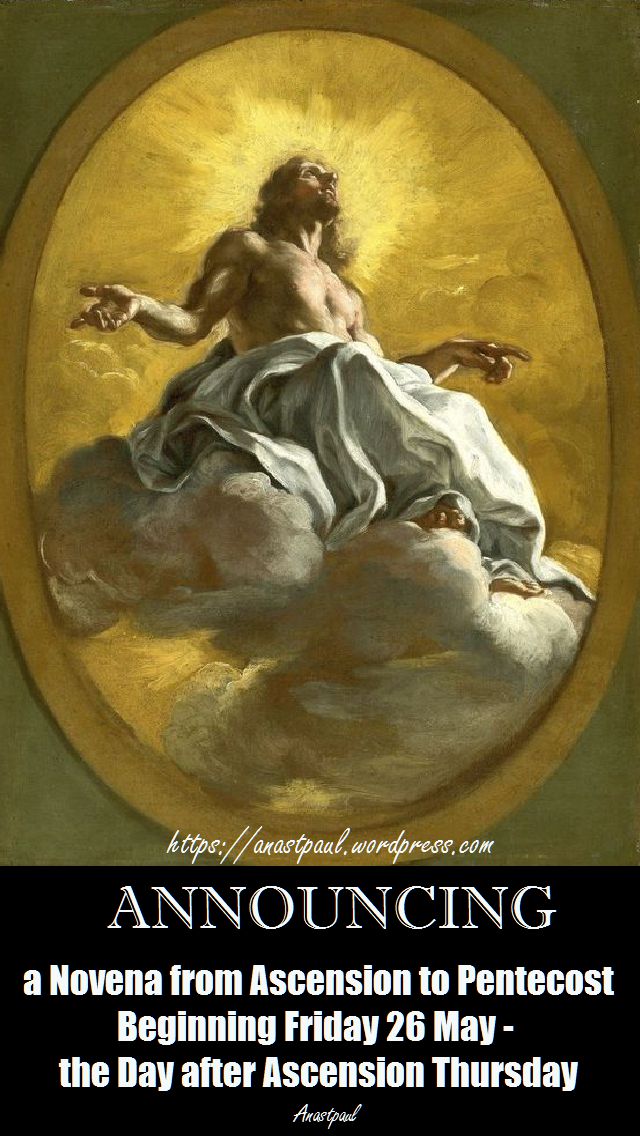
Announcing a Novena from Ascension to Pentecost Beginning Friday 26 May – the Day after Ascension Thursday

Announcing a Novena from Ascension to Pentecost
Beginning Friday 26 May – the Day after Ascension Thursday

The novena in honour of the Holy Spirit is the oldest of all novenas, since it was first made at the direction of Our Lord Himself when He sent His Apostles back to Jerusalem to await the coming of the Holy Spirit on that first Pentecost.    It is still the only novena officially prescribed by the Church.    Addressed to the Third Person of the Blessed Trinity, it is a powerful plea for the light and strength and love so sorely needed by every Christian.

announcing - entecost novena

Posted in MORNING Prayers, QUOTES of the SAINTS, SAINT of the DAY

Thought for the Day – 12 May

Thought for the Day – 12 May

Then (and in many places) NOW, it is a crime merely to bear the name of Christian – it is a CRIME punishable by death!
In spite of this, many became and become Christians and so many went cheerfully to their deaths.
“O miracle of faith!” wrote St Pope Damasus. “Suddenly they cease from their fury, they become converted, they flee from the camp of their wicked leader.    Professing the faith of Christ, they are happy to witness to its triumph.”

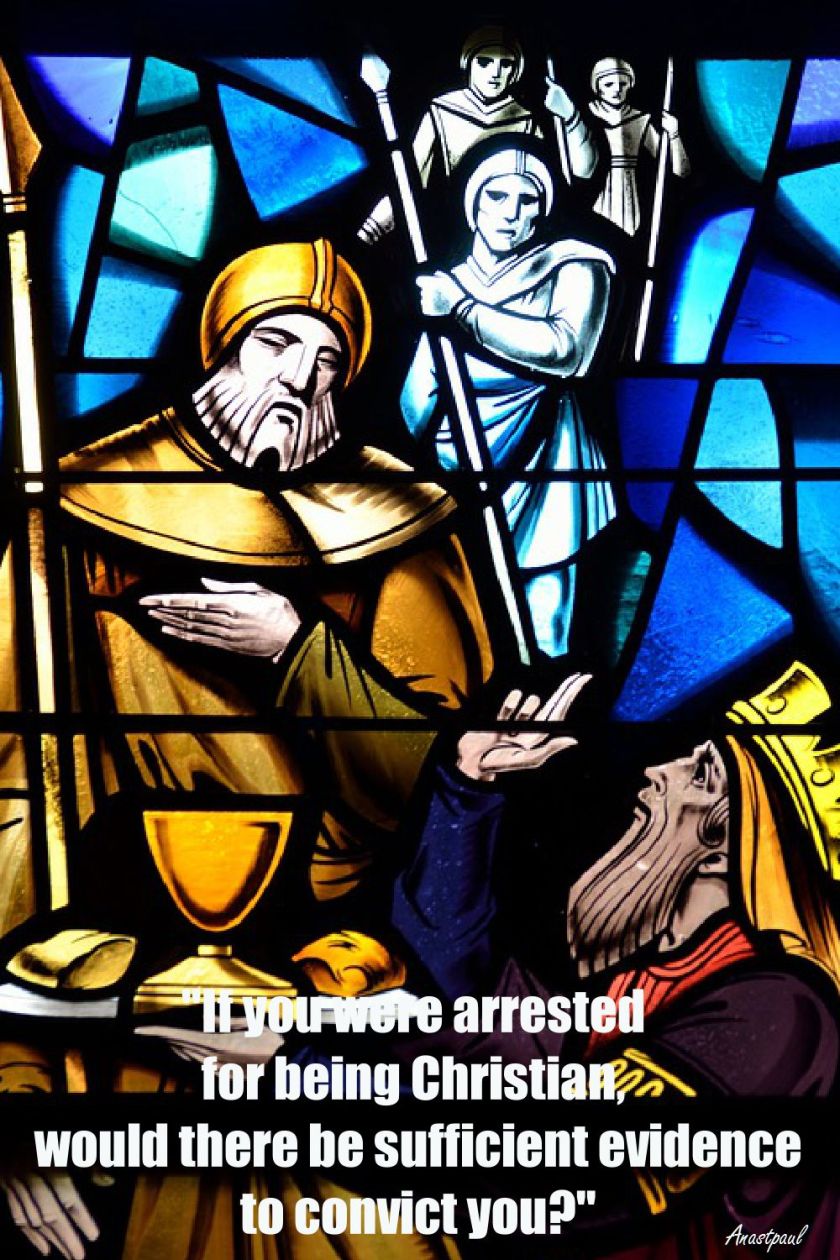
Learn from the words of Damasus what great things the glory of Christ can accomplish. As the thought-provoking saying goes: “If you were arrested for being Christian, would there be sufficient evidence to convict you?”

IF YOU WERE ARRESTED

As in the case of many early martyrs, the Church clings to its memories though the events are clouded in the mists of history.    It is a heartening thing for all Christians to know that they have a noble heritage.    Our brothers and sisters in Christ have stood in the same world in which we live—militaristic, materialistic, cruel and cynical—yet transfigured from within by the presence of the Living One.    Our own courage is enlivened by the heroes and heroines who have gone before us marked by the sign of faith and the wounds of Christ.

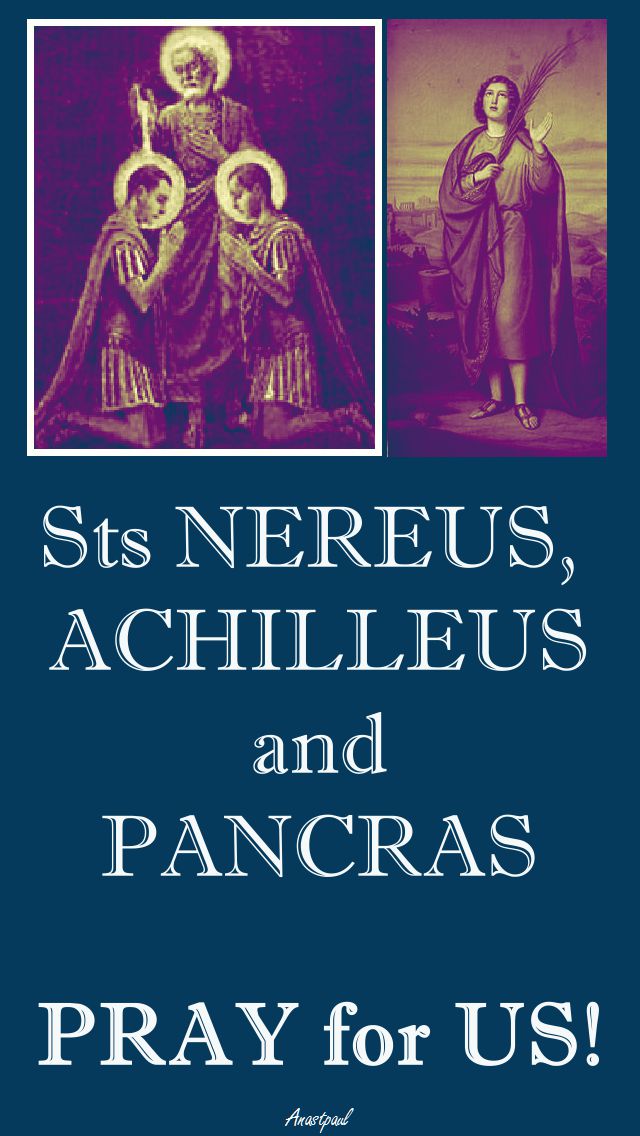
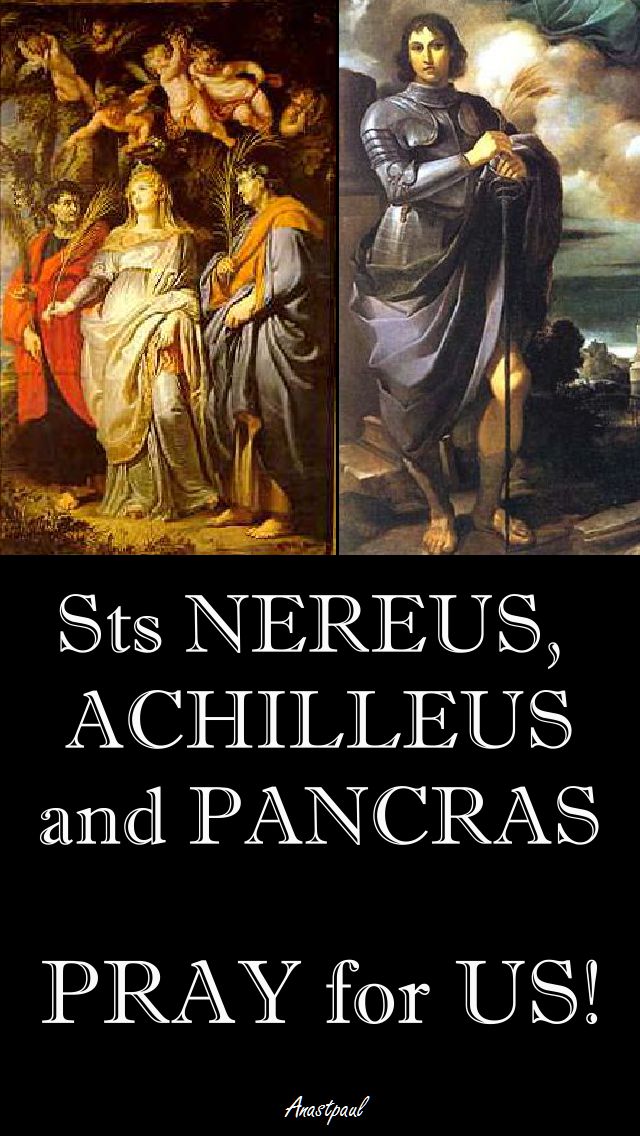
Sts Nereus, Achilleus and Pancras – please pray for us all!

sts nereus, achilleus and pancras pray for us.jpg 2


Posted in CATHOLIC DEVOTIONS of the Month, DOCTORS of the Church, FATHERS of the Church, MORNING Prayers, QUOTES of the SAINTS, The BLESSED VIRGIN MARY

Quote/s of the Day – 12 May

Quote/s of the Day – 12 May

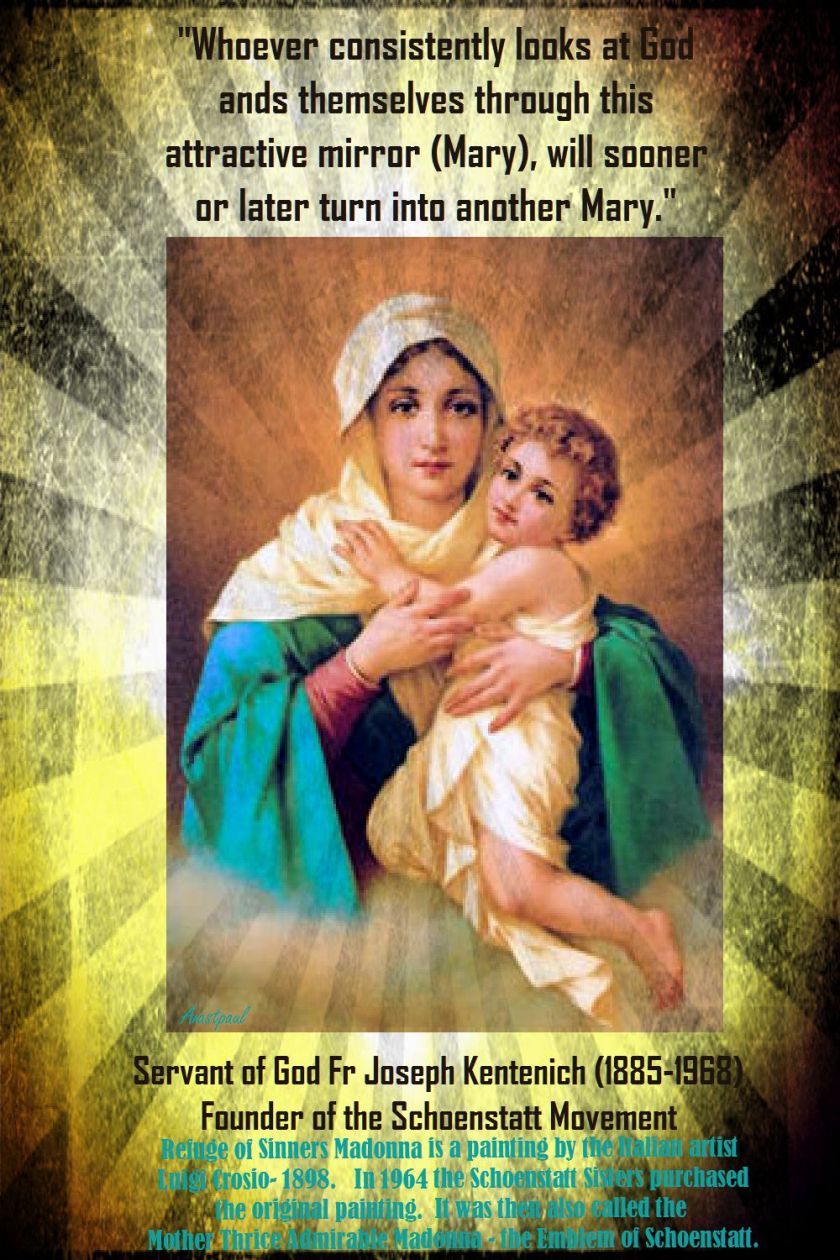
“Whoever consistently looks at God and themselves
through this attractive mirror (Mary), will sooner or later
turn into another Mary.”

Servant of God, Fr Joseph Kentenich (1885-1968) – Founder of Schoenstatt

WHOEVER-FR JOSEPH KENTENICH - SCHOENSTATT

“If the Church shows respect and veneration for everything
that came in contact with the Saviour’s Body: the Cross,
the Nails, the Thorns, the Winding Sheet of His Sepuchre,
the Swathing-bands of His infancy and similar things – what
honour must be due to this venerable body of the
Blessed Virgin from which the Body of the Redeemer was formed!”

St John Eudes

IF THE CHURCH-ST JOHN EUDES

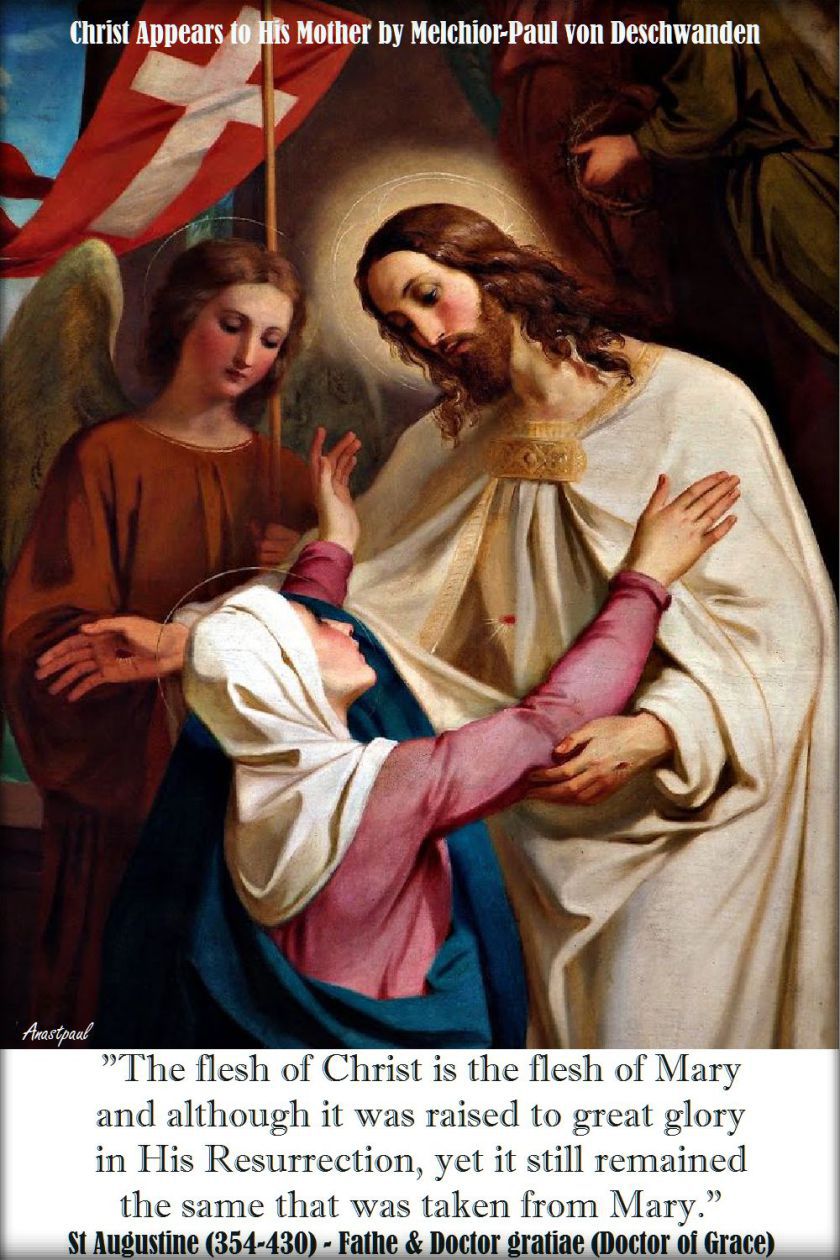
“The flesh of Christ is the flesh of Mary
and although it was raised to great glory
in His Resurrection, yet it still remained
the same that was taken from Mary.”

St Augustine (354-430) – Fathe & Doctor gratiae (Doctor of Grace)

the-flesh-of-christ-st-augustine.2017

Posted in DOCTORS of the Church, FATHERS of the Church, MORNING Prayers, QUOTES of the SAINTS, SAINT of the DAY, The WORD

One Minute Reflection – 12 May

One Minute Reflection – 12 May

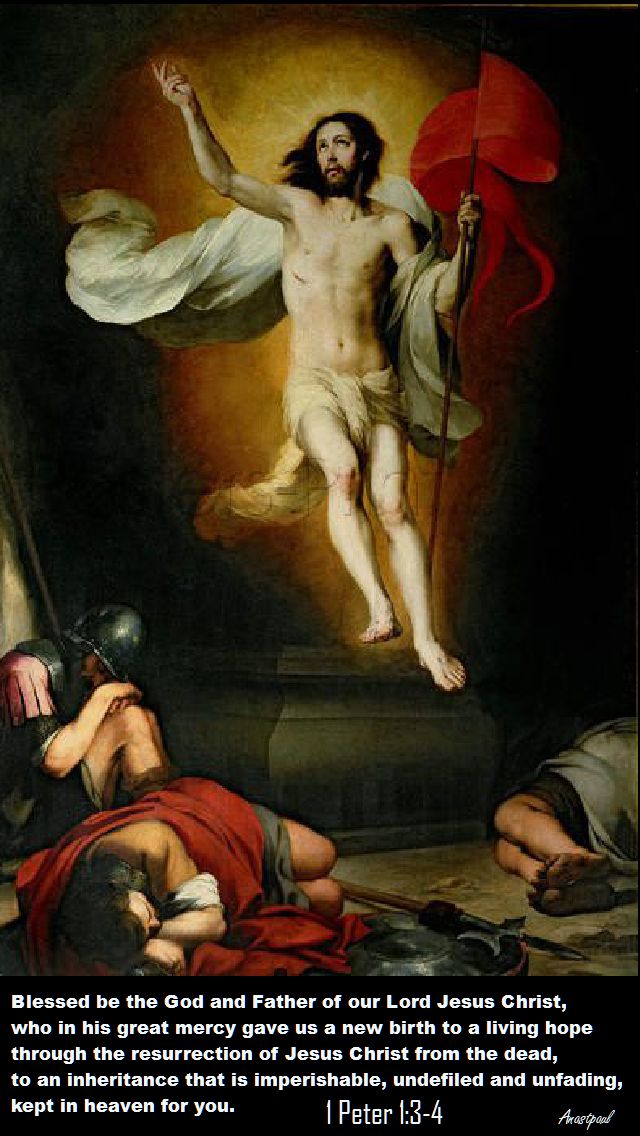
Blessed be the God and Father of our Lord Jesus Christ,
who in his great mercy gave us a new birth to a living hope
through the resurrection of Jesus Christ from the dead,
to an inheritance that is imperishable, undefiled and unfading,
kept in heaven for you………1 Peter 1:3-4

1 PETER 1-3,4

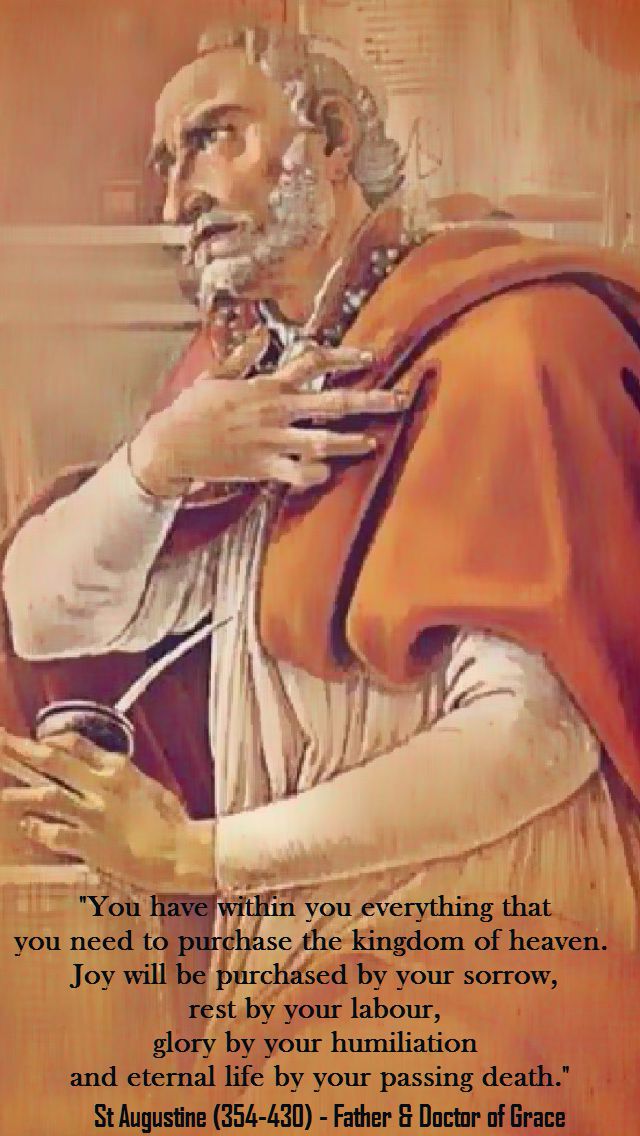
REFLECTION – “You have within you everything that
you need to purchase the kingdom of heaven.
Joy will be purchased by your sorrow,
rest by your labour,
glory by your humiliation
and eternal life by your passing death.”……St Augustine, Father and Doctor of the Church (354-430) Doctor gratiae (Doctor of Grace)

YOU HAVE WITHIN YOU - ST AUGUSTINE

PRAYER – Loving Father, teach me how to make very event on earth lay up treasures for me in heaven.   Help me to endure my sorrows, labours, humiliations and death willingly so as to attain heaven.   Holy Martyrs Sts Nereus, Achilleus and Pancras, Pray for us, amen!

sts nereus, achilleus and pancras pray for us

Posted in CATHOLIC DEVOTIONS of the Month, DOCTORS of the Church, MORNING Prayers, PRAYERS of the SAINTS, The BLESSED VIRGIN MARY

Our Morning Offering – 12 May

Our Morning Offering – 12 May

Mary our Mother!
By St Anselm (1033-1109)
Doctor magnificus (Magnificent Doctor);
Doctor Marianus (Marian Doctor)

Mother of Salvation
Blessed Lady,
you are the Mother of Justification
and of those who are justified;
the Mother of Reconciliation
and of those who are reconciled;
the Mother of Salvation
and of those who are saved.
What a blessed trust,
and what a secure refuge!
The Mother of God is our Mother.
The Mother of the One in whom alone
we hope and whom alone we fear, is our Mother!
The One who partook of our nature,
and by restoring us to life
made us children of His Mother,
invites us by this to proclaim
that we are His brothers and sisters.
Therefore, our Judge is also our Brother.
The Saviour of the world is our Brother.
Our God has become, through Mary, our Brother!

MARY OUR MOTHER - ST ANSELM

Posted in SAINT of the DAY

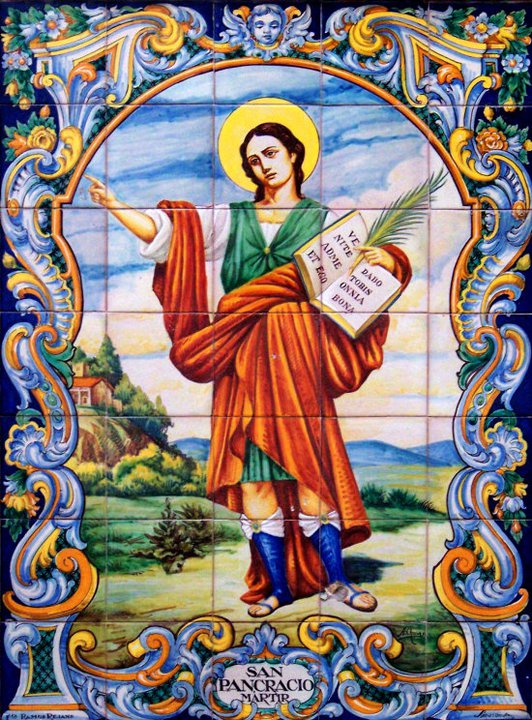
Saint of the Day – 12 May – St Pancras

Saint of the Day – 12 May – St Pancras (c290-304) Martyr – Patron against cramps, against false witness or perjury, against headaches, of children, oaths, treaties, diocese of Albano, Italy, 27 cities in Germany and Italy.   Attributes – Roman legion armor, martyr’s palm branch, book, quill, sword.st pancras


St Pancras was a Roman citizen who converted to Christianity and was beheaded for his faith at the age of fourteen, around the year 304.     His name is Greek and literally means “the one that holds everything”.

From an early stage, Saint Pancras was venerated together with Saints Nereus and Achilleus in a shared feast day and Mass formula on 12 May.    Since 1969, Saint Pancras has been venerated separately, still on 12 May.    He is, traditionally, the second of the Ice Saints. (The Ice Saints is a name given to St. Mamertus (or, in some countries, St. Boniface of Tarsus St. Pancras, and St. Servatius in Austrian, Belgian, Croatian, Czech, Dutch, French, German, Hungarian, North-Italian, Polish, Slovene and Swiss folklore. They are so named because their feast days fall on the days of May 11, May 12, and May 13 respectively, known as “the black-thorn winter”)

Because he was said to have been martyred at the age of fourteen during the persecution under Diocletian, Pancras would have been born around 290, at a place designated as near Synnada, a city of Phrygia Salutaris, to parents of Roman citizenship.    His mother Cyriada died during childbirth, while his father Cleonius died when Pancras was eight years old.    Pancras was entrusted to his uncle Dionysius’ care.    They both moved to Rome to live in a villa on the Caelian Hill.    They converted to Christianity and Pancras became a zealous adherent of the religion.

During the persecution of Christians by Emperor Diocletian, around 303 AD, he was brought before the authorities and asked to perform a sacrifice to the Roman gods. Diocletian, impressed with the boy’s determination to resist, promised him wealth and power but Pancras refused and finally the emperor ordered him to be beheaded on the Via Aurelia, on 12 May 303 AD.

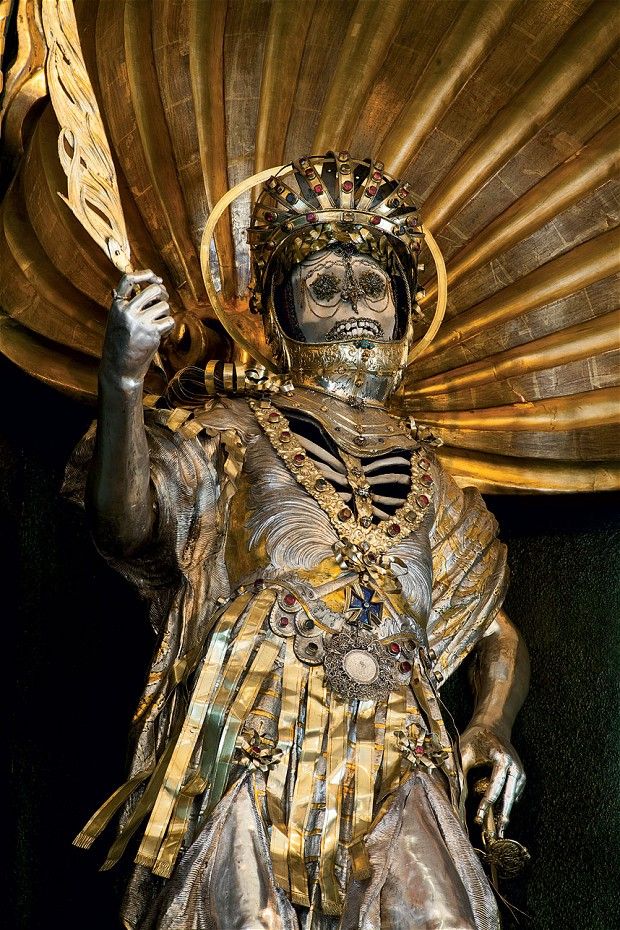
A Roman matron named Ottavilla recovered Pancras’ body, covered it with balsam, wrapped it in precious linens and buried it in a newly built sepulchre dug in the Catacombs of Rome.    Pancras’ head was placed in the reliquary that still exists today in the Basilica of Saint Pancras.

2d4c8cb91b60b52fa2cd2869c2ed8376

Devotion to Pancras definitely existed from the fifth century onwards, for the basilica of Saint Pancras was built by Pope Symmachus (498-514), on the place where the body of the young martyr had been buried;   his earliest passio seems to have been written during this time.

Pope Gregory the Great gave impetus to the cult of Pancras, sending Augustine of Canterbury to England carrying relics of that saint and including his legend in Liber in gloria martyrum (for this reason, many English churches are dedicated to Pancras; St Pancras Old Church in London is one of the oldest sites of Christian worship in England). In medieval iconography, Pancras was depicted as a young soldier, due to his association with the paired soldier saints Nereus and Achilleus.    By the mid-nineteenth century, pious embroidery set Pancras’s martyrdom in the arena among wild beasts, where the panther refrains from attacking and killing him until the martyr gives the beast permission.

St_Pancras_Old_Church_-_geograph.org.uk_-_757784
St Pancras Old Church

His image in statue form can be found in many bars, restaurants and other businesses and of course, St. Pancras Railway Station in London is named after him.

Posted in SAINT of the DAY

Saints – 12 May

St Acheilleus of Terracina (Optional Memorial)
St Nereus of Terracina (Optional Memorial)
St Pancras of Rome (Optional Memorial)

St Candida Maria de Jesus
St Crispoldus
St Cyril of Galatz
St Dedë Malaj
St Diomma of Kildimo
St Dionysius of Asia
St Dominic de la Calzada
St Ejëll Deda
St Ephrem of Jerusalem
St Epiphanius of Salamis
St Erc Nasca of Tullylish
St Ethelhard of Canterbury
St Euphrosyna of Terracina
Bl Francis Patrizzi of Siena
Bl Gemma of Goriano
St Germanus of Constantinople
Bl Imelda Lambertini
Bl Jane of Portugal
Bl Juan de Segalars
St Lucien Galan
St Modoald of Trier
St Palladius of Rome
St Philip of Agira
St Richrudis of Marchiennes
St Theodora of Terracina
St Thomas Khampheuane Inthirath

Posted in MORNING Prayers, QUOTES of the SAINTS, SAINT of the DAY

Thought for the Day – 11 May

Thought for the Day – 11 May

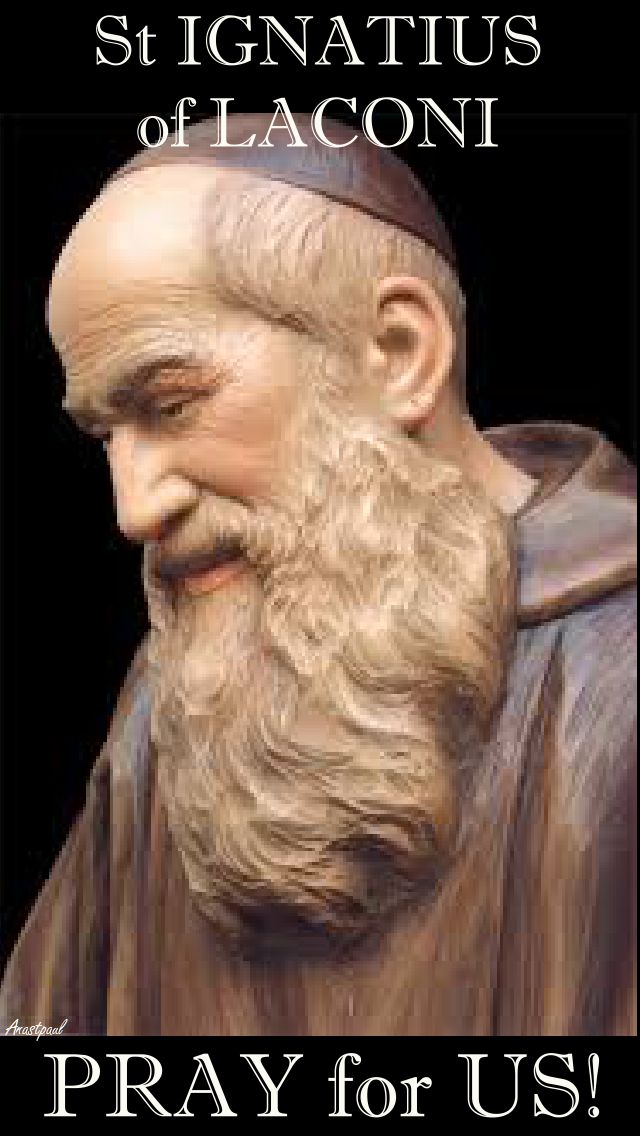
The life of Saint Ignatius reminds us that even the most menial of tasks, if offered to the Lord, are pleasing to Him.
During his daily rounds, Saint Ignatius of Laconi did more than beg, of course.    He served as a model of perfect Christian humility and self-denial.    He instructed the community children in the tenets of the Christian faith—most of whom were too poor to attend school and instead worked as he had done.   He comforted the ill and provided encouragement to those who constantly struggled.    Numerous miracles were reported at his pious intercession.   Never having been educated himself, Saint Ignatius was illiterate and his words far from polished or eloquent.    He recognised his limitations and constantly directed any praise or recognition from himself to the Lord, where all good things originate.   The lessons from this Saint are countless, they are difficult for us to attain, most especially in the fast-paced, money-driven society in which we live.   Let us always keep in mind and before our eyes God’s love and mercy, that high-paying jobs are not what He requires of us!   To those who came to St Ignatius for comfort, he would advise, “Trust God.”

Lord God, You led Saint Ignatius along the way of humility, innocence, and fraternal charity to the heights of sanctity.    Help us to imitate his virtues and to practice charity, trust in You and obedience, on earth in word and deed. Amen.

St Ignatius of Laconi, Pray for us!

st ignatius of laconi pray for us.jpg 2

Posted in DOCTORS of the Church, MORNING Prayers, QUOTES of the SAINTS, The BLESSED VIRGIN MARY

Quote/s of the Day – 11 May

Quote/s of the Day – 11 May

“By asking the beloved disciple
to treat Mary as his mother,
Jesus founded Marian devotion.”

St John Paul (1920-2005)

BY ASKING THE BELOVED DISCIPLE - ST JOHN PAUL

“The Mother of God,
is the Ladder of Heaven.
God came down by this Ladder
that men might,
by Mary,
climb up to Him in Heaven.”

St Fulgentius (460-533)

THE MOTHER OF GOD-ST FULGENTIUS

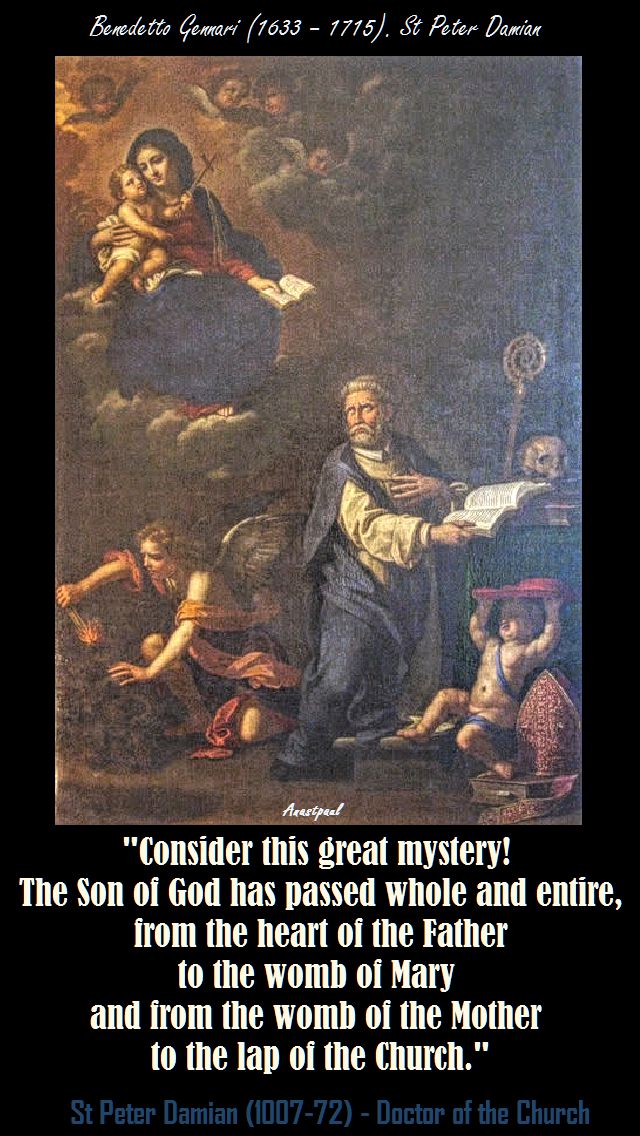
“Consider this great mystery!
The Son of God has passed whole and entire,
from the heart of the Father
to the womb of Mary
and from the womb of the Mother
to the lap of the Church.”

St Peter Damian (1007-72) Doctor of the Church

CONSIDER THIS GREAT MYSTERY-ST PETER DAMIAN

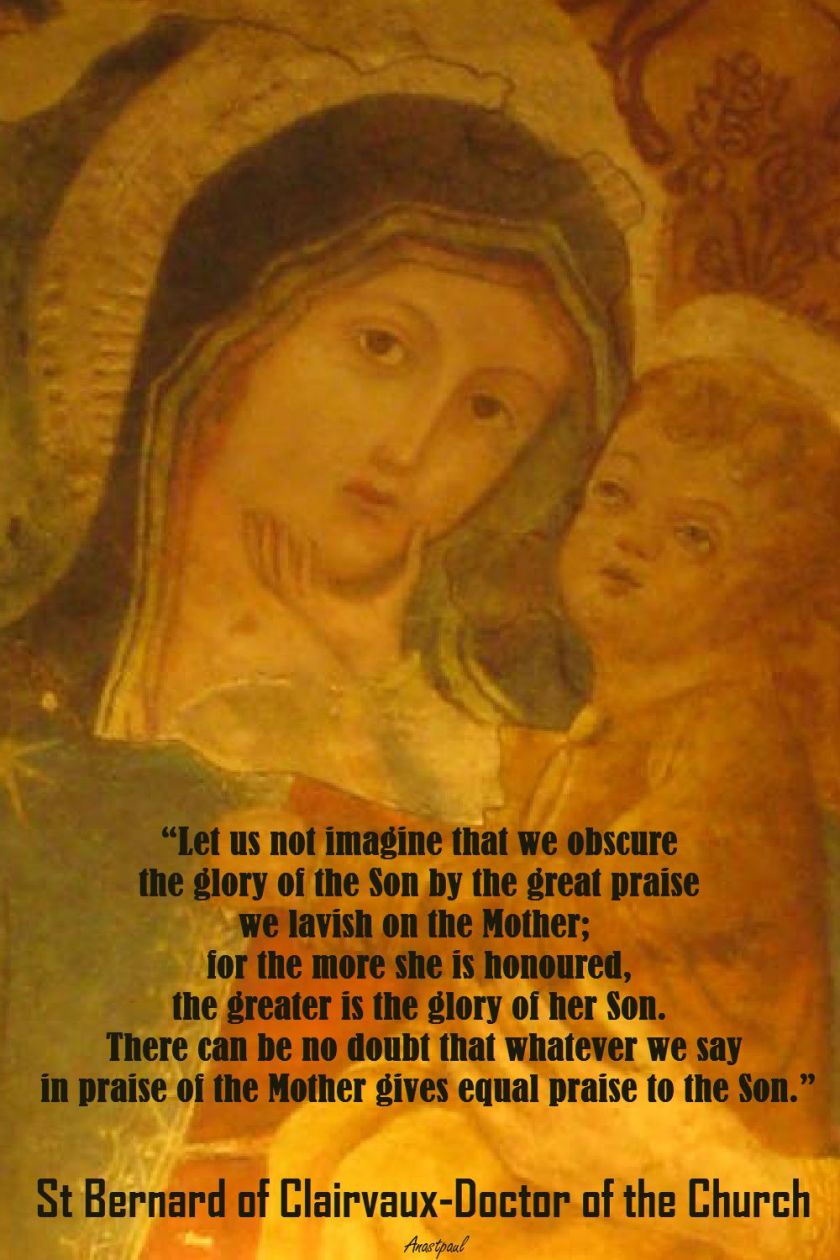
“Let us not imagine that we obscure
the glory of the Son by the great praise
we lavish on the Mother;
for the more she is honoured,
the greater is the glory of her Son.
There can be no doubt that whatever we say
in praise of the Mother gives equal praise to the Son.”

Saint Bernard of Clairvaux (1090-1153) – Doctor of the Church

LET US NOT IMAGINE-ST BERNARD

Posted in CATHOLIC DEVOTIONS of the Month, MORNING Prayers, QUOTES of the SAINTS, SAINT of the DAY, The BLESSED VIRGIN MARY, The WORD

One Minute Reflection – 11 May

One Minute Reflection – 11 May

Blest are you among women and blest is the fruit of your womb……….Luke 1:42

luke 1-42

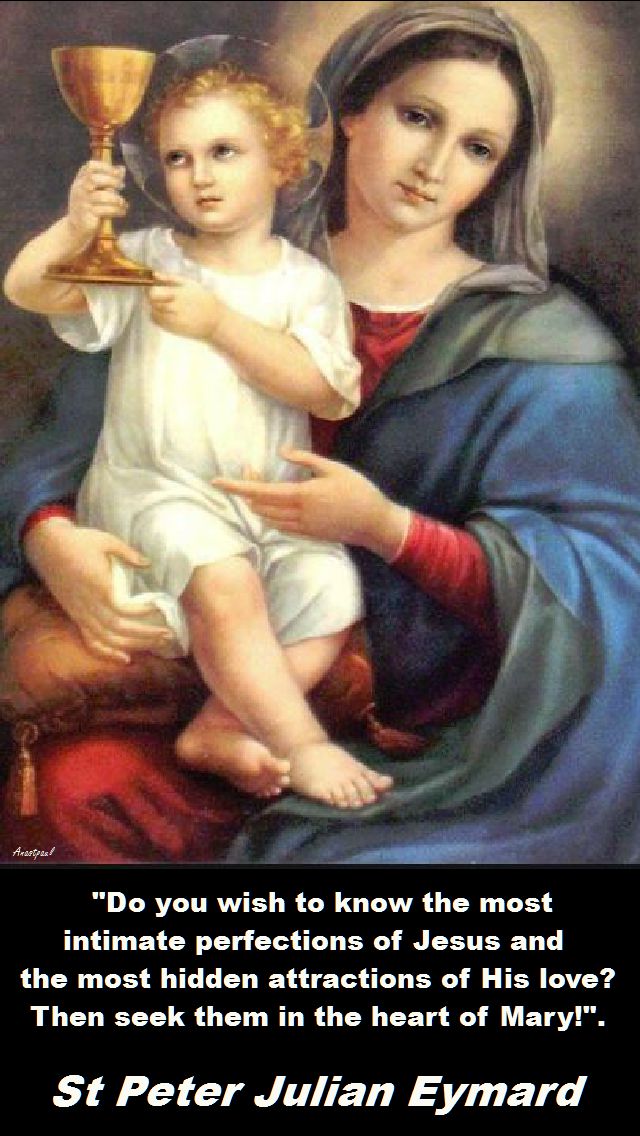
REFLECTION – “Do you wish to know the most intimate perfections of Jesus and the most hidden attractions of His love?
Then seek them in the heart of Mary!”………..St Peter Julian Eymard  Today’s Saint, St Ignatius of Laconi also practised a strong devotion to Our Blessed Mother, praying daily for her intercession.    He attributed many miraculous events in his simple life to her grace and assistance.

DO YOU WISH TO KNOW - ST PETER EYMARD

PRAYER – Lord Jesus, keep ever before me the tried and trusted Christian motto: “To Jesus through Mary.” And let me learn to seek You in her Mother’s heart! St Ignatius of Laconi, please assist us by your intercession to grow in love and trust in the Mother of God, amen!

st ignatius of laconi pray for us


Posted in DOCTORS of the Church, MORNING Prayers, PRAYERS of the SAINTS, The BLESSED VIRGIN MARY

Our Morning Offering – 11 May

Our Morning Offering – 11 May

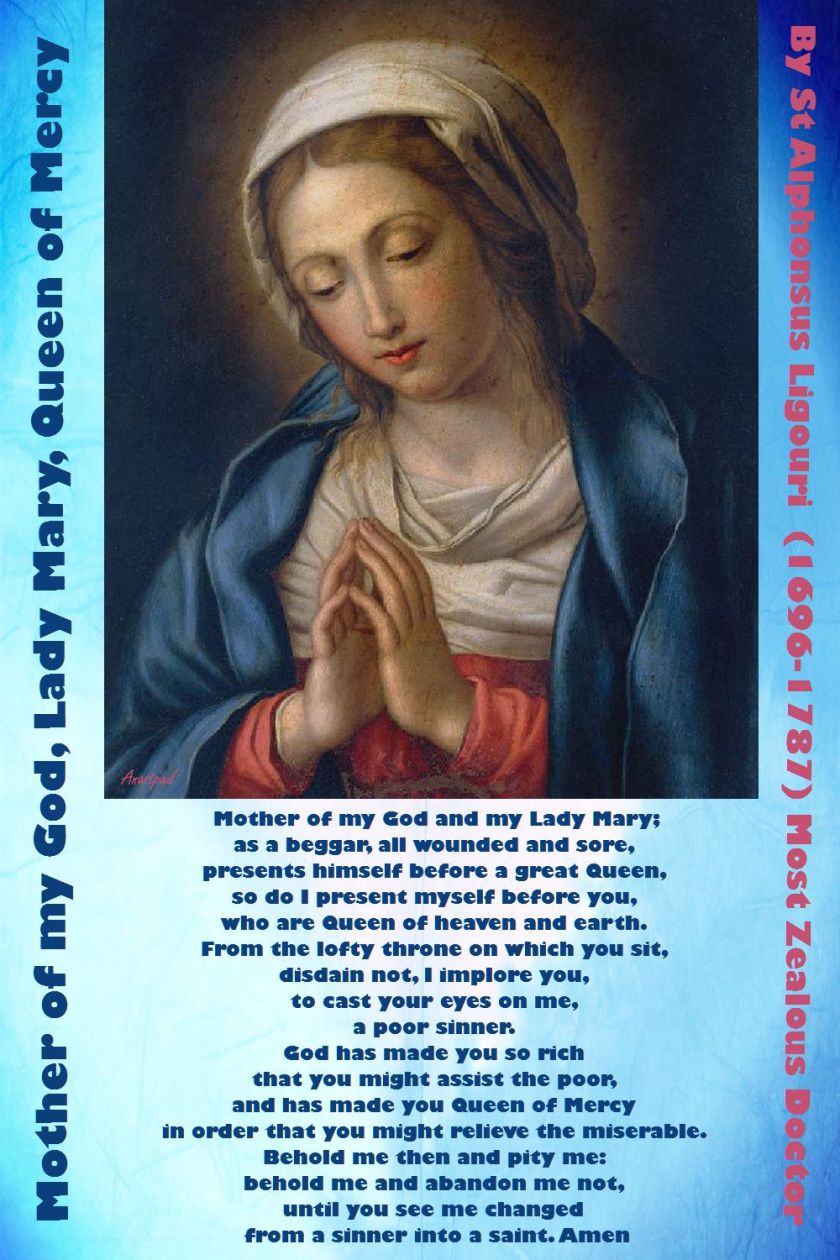
Mother of my God, Lady Mary, Queen of Mercy
By St Alphonsus Ligouri (1696-1787)
Doctor zelantissimus (Most Zealous Doctor)

Mother of my God and my Lady Mary;
as a beggar, all wounded and sore,
presents himself before a great Queen,
so do I present myself before you,
who are Queen of heaven and earth.
From the lofty throne on which you sit,
disdain not, I implore you,
to cast your eyes on me,
a poor sinner.
God has made you so rich
that you might assist the poor,
and has made you Queen of Mercy
in order that you might relieve the miserable.
Behold me then and pity me:
behold me and abandon me not,
until you see me changed
from a sinner into a saint. Amen

MOTHER OF MY GOD - ST ALPHONSUS

Posted in SAINT of the DAY

Saint of the Day – 11 May – St Ignatius of Laconi

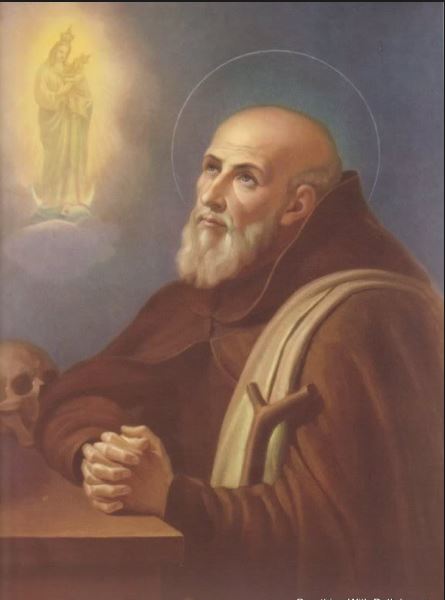
Saint of the Day – 11 May  – St. Ignatius of Laconi, O.F.M. Cap. (1701-1781) Religious Friar (born Vincenzo Peis) Known as  “the holy friar,” “the apostle of the streets, “ and “Padre Santo.”


St Ignatius of Laconi (1).jpg 4

St Ignatius was a Sardinian Capuchin monk.     Born into a peasant family, during a serious illness as a young man he vowed that if he recovered his health he would consecrate his life to God in the Order of Friars Minor Capuchin.    He did regain his health but put off fulfilling his vow.    There is some indication that his parents raised objections to his entering the Franciscans.    In 1721 his life was again threatened when a horse which he was riding panicked.    Ignatius called upon the assistance of Saint Francis of Assisi and renewed the vow he had previously made.    This time his parents did not raise objections to his becoming a Franciscan.

He asked for admission at the Capuchin friary at Cagliari but the superiors there hesitated because of his delicate health.    Ignatius then called upon an influential friend who interceded for him and he was finally received into the novitiate.    Despite his physical infirmities, his ardour allowed him to attend the spiritual exercises of the community and excel in perfection of his observance of the Rule of Saint Francis.

After being employed in the community for several years at various occupations, he was appointed quester of alms because of his edifying conduct.    He had good relations with the citizens of Cagliari, who realized that although Brother Ignatius was begging alms, he was also giving back to them in a spiritual manner.    His modest demeanour was seen as a quiet sermon for all who saw him going about.    He seldom spoke; but when charity required it, he spoke with exceptional kindness.    He would also instruct the children and the uneducated, comfort the sick and urge sinners to be converted and to do penance.

Ignatius was known for punctually obeying his superiors, even when it required the denial of his own will.    He was accustomed to pass by the house of an usurer, because he feared that in accepting an alms from him he would share the guilt of this man’s injustices.    But when the man complained and the superior commanded, Ignatius accepted alms from the man.    On returning to the friary, St. Ignatius opened the sack offered by the usurer and blood flowed out.    To those around him the saint said, “This is the blood of the poor squeezed from them by usury.”

Ignatius’ sister had often written to him asking him to pay her a visit, so she could get his advice in certain matters.    Ignatius had no mind to heed her request but when his superior ordered him to do so, he at once undertook the journey.    But he left again as soon as he had given the required advice.

When his brother was sent to prison, it was hoped that, in view of the reputation of Brother Ignatius, the latter could obtain his brother’s release.    His superior sent him to speak to the governor but he asked merely that his brother be dealt with according to justice.    Not for anything in the world would Brother Ignatius have kept anyone from doing his duty.

Despite his infirmity, Ignatius persevered in his work until he was 80 years old.    Even after he became blind, he continued to make his daily rounds for two years.    The veneration of the people increased and many sick persons attributed miraculous healings to him.

He died on May 11, 1781 and many miracles were said to have occurred at his grave. Brother Ignatius was beatified in 1940 and canonized in 1951 by Pope Pius XII.

Posted in SAINT of the DAY

Saints – 11 May

St Anastasius of Lérida
St Anthimus of Rome
St Bassus of Sabina
St Bertilla
St Criotan of MacReddin
Bl Diego of Saldaña
St Evellius of Pisa
St Fabius of Sabina
St Francis of Girolamo
St Fremund of Dunstable
St Gengulphus of Burgundy
St Gjon Koda
St Gualberto
St Ignatius of Laconi
Bl Illuminatus
St Illuminatus of San Severino
Bl James Walworth
Bl John Rochester
St Maiulo of Hadrumetum
St Majolus of Cluny
St Mamertus of Vienne
St Maximus of Sabina
St Mayeul
St Mozio of Constantinople
St Possessor of Verdun
St Principia of Rome
St Tudy
St Vincent L’Hénoret
Bl Vivaldus
St Walbert of Hainault

Martyrs of Camerino: An imperial Roman official, his wife, their children and servants, all of whom were converts and martyrs: Anastasius, Aradius, Callisto, Eufemia, Evodius, Felice, Primitiva, Theopista. They were beheaded in 251 on the Via Lata, outside the east gate of Camerino, Italy and their relics are in Camerino

Posted in SAINT of the DAY

Robert Louis Stevens and St Damian de Veuster de Molokai (1840-1889) “The Martyr of Molokai”

Robert Louis Stevens and St Damian de Veuster de Molokai (1840-1889)

“The Martyr of Molokai”

Father Damien had become internationally known before his death, seen as a symbolic Christian figure caring for the afflicted natives.   His superiors thought Damien lacking in education and finesse but knew him as “an earnest peasant hard at work in his own way for God.”   News of his death on 15 April was quickly carried across the globe by the modern communications of the time, by steamship to Honolulu and California, telegraph to the East Coast of the United States and cable to England, reaching London on 11 May. Following an outpouring of praise for his work, other voices began to be heard in Hawaiʻi.

Representatives of the Congregational and Presbyterian churches in Hawaii criticised his approach.    Reverend Charles McEwen Hyde, a Presbyterian minister in Honolulu, wrote in August to fellow pastor, Reverend H. B. Gage of San Francisco.    Hyde referred to Father Damien as “a coarse, dirty man,” who contracted leprosy due to “carelessness”. Hyde said that Damien was mistakenly being given credit for reforms that were made by the Board of Health.    Without consulting with Hyde, Gage had the letter published in a San Francisco newspaper, generating comment and controversy in the US and Hawaiʻi. People of the period consistently overlooked the role of Hawaiians themselves, among whom several had prominent roles of leadership on the island.

Later in 1889 Scottish author Robert Louis Stevenson and his family arrived in Hawaii for an extended stay. He had tuberculosis, then also incurable, and was seeking some relief. Moved by Damien’s story, he became interested in the controversy about the priest and went to Molokaʻi for eight days and seven nights.   Stevenson wanted to learn more about Damien at the place where he had worked.    He spoke with residents of varying religious backgrounds to learn more about Damien’s work.    Based on his conversations and observations, he wrote an open letter to Hyde that addressed the minister’s criticisms and had it printed at his own expense.    This became the most famous account of Damien, featuring him in the role of a European aiding a benighted native people.

In his “6,000-word polemic,” Stevenson praised Damien extensively, writing to Hyde:

If that world at all remember you, on the day when Damien of Molokai shall be named a Saint, it will be in virtue of one work: your letter to the Reverend H. B. Gage.

Stevenson referred to his journal entries in his letter:

“…I have set down these private passages, as you perceive, without correction; thanks to you, the public has them in their bluntness.    They are almost a list of the man’s faults, for it is rather these that I was seeking: with his virtues, with the heroic profile of his life, I and the world were already sufficiently acquainted.    I was besides a little suspicious of Catholic testimony; in no ill sense but merely because Damien’s admirers and disciples were the least likely to be critical.    I know you will be more suspicious still;   and the facts set down above were one and all collected from the lips of Protestants who had opposed the father in his life.    Yet I am strangely deceived, or they build up the image of a man, with all his weakness, essentially heroic and alive with rugged honesty, generosity and mirth.”


Canonisation

In 1977, Pope Paul VI declared Father Damien to be venerable.    On 4 June 1995, Pope John Paul II beatified him and gave him his official spiritual title of Blessed.   On 20 December 1999, Jorge Medina Estévez, Prefect of the Congregation for Divine Worship and the Discipline of the Sacraments, confirmed the November 1999 decision of the United States Conference of Catholic Bishops to place Blessed Damien on the liturgical calendar with the rank of optional memorial.    Father Damien was canonised on 11 October 2009 by Pope Benedict XVI.    His feast day is celebrated on 10 May.    In Hawaii it is celebrated on the day of his death, 15 April.

Two miracles have been attributed to Father Damien’s posthumous intercession.    On 13 June 1992, Pope John Paul II approved the cure of a nun in France in 1895 as a miracle attributed to Venerable Damien’s intercession.    In that case, Sister Simplicia Hue began a novena to Father Damien as she lay dying of a lingering intestinal illness.    It is stated that pain and symptoms of the illness disappeared overnight.

In the second case, Audrey Toguchi, a Hawaiian woman who suffered from a rare form of cancer, had remission after having prayed at the grave of Father Damien on Molokaʻi. There was no medical explanation, as her prognosis was terminal.   In 1997, Toguchi was diagnosed with liposarcoma, a cancer that arises in fat cells.    She underwent surgery a year later and a tumor was removed but the cancer metastasized to her lungs. Her physician, Dr. Walter Chang, told her, “Nobody has ever survived this cancer. It’s going to take you.” Toguchi was surviving in 2008.

In April 2008, the Holy See accepted the two cures as evidence of Father Damien’s sanctity.    On 2 June 2008, the Congregation for the Causes of Saints at the Vatican voted to recommend raising Father Damien of Molokaʻi to sainthood.    The decree that officially notes and verifies the miracle needed for canonization was promulgated by Pope Benedict XVI and Cardinal José Saraiva Martins on 3 July 2008, with the ceremony taking place in Rome and celebrations in Belgium and Hawaii.    On 21 February 2009, the Vatican announced that Father Damien would be canonised.   The ceremony took place in Rome on Rosary Sunday, 11 October 2009, in the presence of King Albert II of the Belgians and Queen Paola as well as the Belgian Prime Minister, Herman Van Rompuy, and several cabinet ministers, completing the process of canonisation.    In Washington, D.C., President Barack Obama affirmed his deep admiration for St. Damien, saying that he gave voice to voiceless and dignity to the sick.


Posted in SAINT of the DAY

10 May – The Memorial of St Damian de Veuster de Molokai

10 May – The Memorial of St Damian de Veuster de Molokai SS.CC. Congregation of the Sacred Hearts of Jesus and Mary – Martyr of Molokai – (1840-1889) Religious Priest, Missionary – known as “Martyr of Molokai”, “Martyr of Charity”, “Apostle to the Lepers” – Patron of lepers.

St Joseph de Veuster was born in Belgium on January 3, 1840.    While at college, he decided God was calling him to be a priest.   He joined the same community his brother had joined and took the name Damien. Damien’s brother had dreamed of being a missionary overseas.   But he became ill and was unable to go.   Damien offered to go in his place.   He traveled to Hawaii and was ordained in Honolulu.

For nine years, Damien served the people in different villages around Hawaii.    While working, he heard about a settlement of lepers on the island of Molokai.    He was told that life on the island was terrible for the lepers.   They were very poor and there was not one doctor or priest on the island.   Father Damien thought he was needed there.   He went to Molokai to work with the lepers.

Those who could walk came to meet Father Damien’s boat.   They wanted to see this priest who had come to work with them.    They were sure he wouldn’t stay long when he saw what life there was like.    Lepers often have unpleasant sores and even lose fingers and toes.    Because there were no laws or police on the island, many who were not very ill lived wild lives.

Father Damien got busy right away.    He cleaned up huts, nursed those who were very sick and tried new medicines.    Those able to help were put to work building better houses.   Father Damien preached and offered Mass but he also built roads, water systems, orphanages and churches.    He even started a choir and a band.    He made the lepers feel that they were people with dignity.    They learned to better respect themselves and one another.

Father Damien always began his homily with “My dear lepers.”    One Sunday he stood before his congregation and began his homily by saying “My fellow lepers.”   At first, it was very quiet.    Then people began to sob.    Their beloved Father Damien had gotten the disease.    Even though he was ill, Father Damien carried on his work.    Eventually, a group of Franciscan sisters from New York, under the leadership of St  Marianne Cope, came to help. Father Damien died when he was 49 years old.

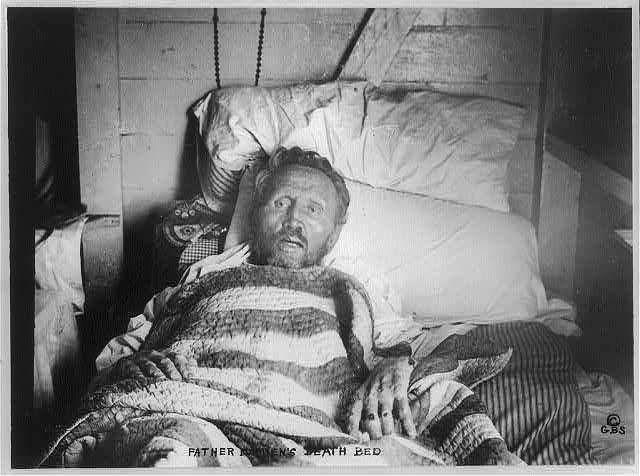
Father-Damien-on-his-death-bed-BIOG-FILE-Damien-Father-18401-889___-painting-artwork-print
St Damien on his deathbed
Father_Damien_on_his_funeral_bier_with_Mother_Marianne_Cope_by_his_side
St. Marianne Cope standing beside Father Damien’s funeral bier (image reversed)
220px-Fatherdamiengrave
The leprosy patients of Molokaʻi gathered around Father Damien’s grave in mourning
Posted in DOCTORS of the Church, MORNING Prayers, QUOTES of the SAINTS, SAINT of the DAY

Quote/s of the Day – 10 May

Quote/s of the Day – 10 May

“A single ‘Blessed be God!’ when things go wrong, is of more value than a thousand acts of thanksgiving, when things are to our liking.”

A SINGLE BLESSED BE GOD - ST JOHN OF AVILA

“Turn yourself round like a piece of clay
and say to the Lord:
I am clay, and you, Lord, the potter.
Make of me what you will.”

turn yourself round-stjohnofavila

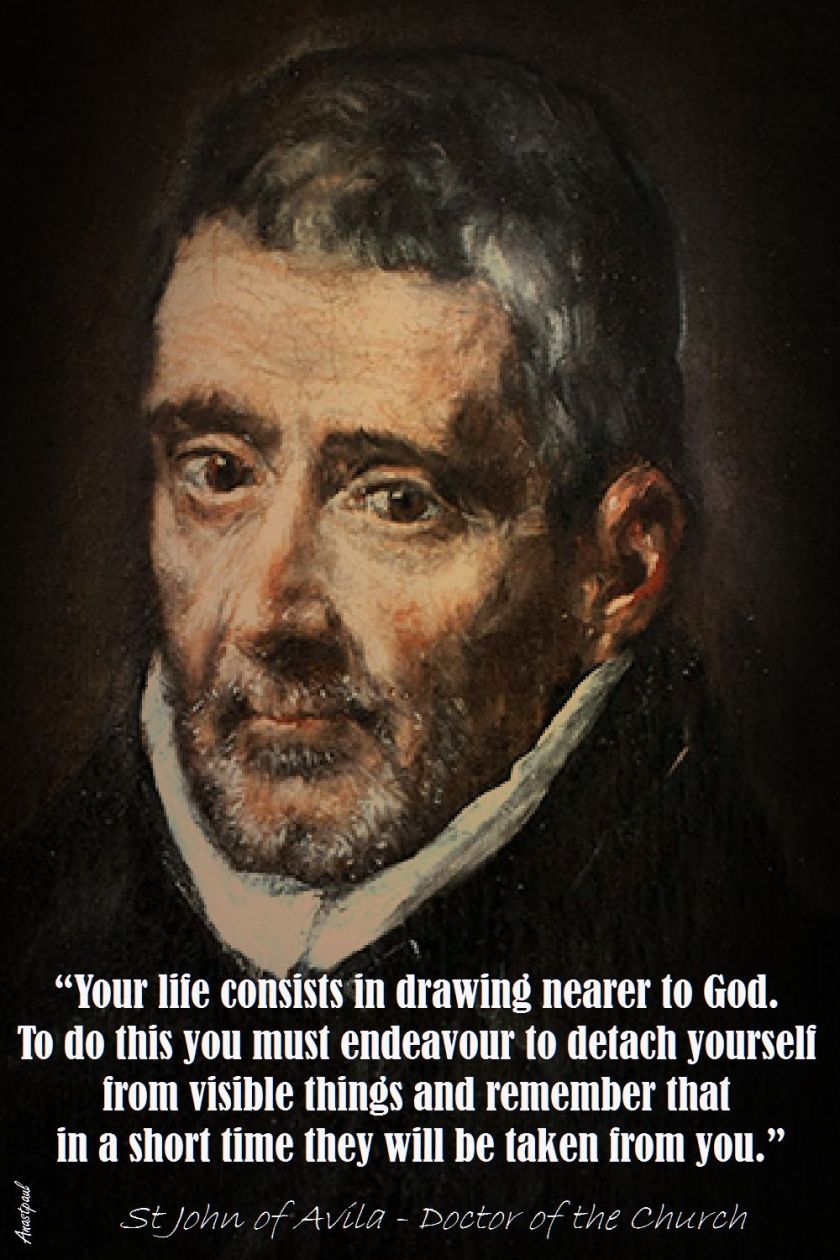
“Your life consists in drawing nearer to God.
To do this you must endeavour to detach yourself
from visible things and remember that
in a short time they will be taken from you.”

St John of Avila – Doctor of the Church

YOUR LIFE CONSISTS - ST JOHN OF AVILA

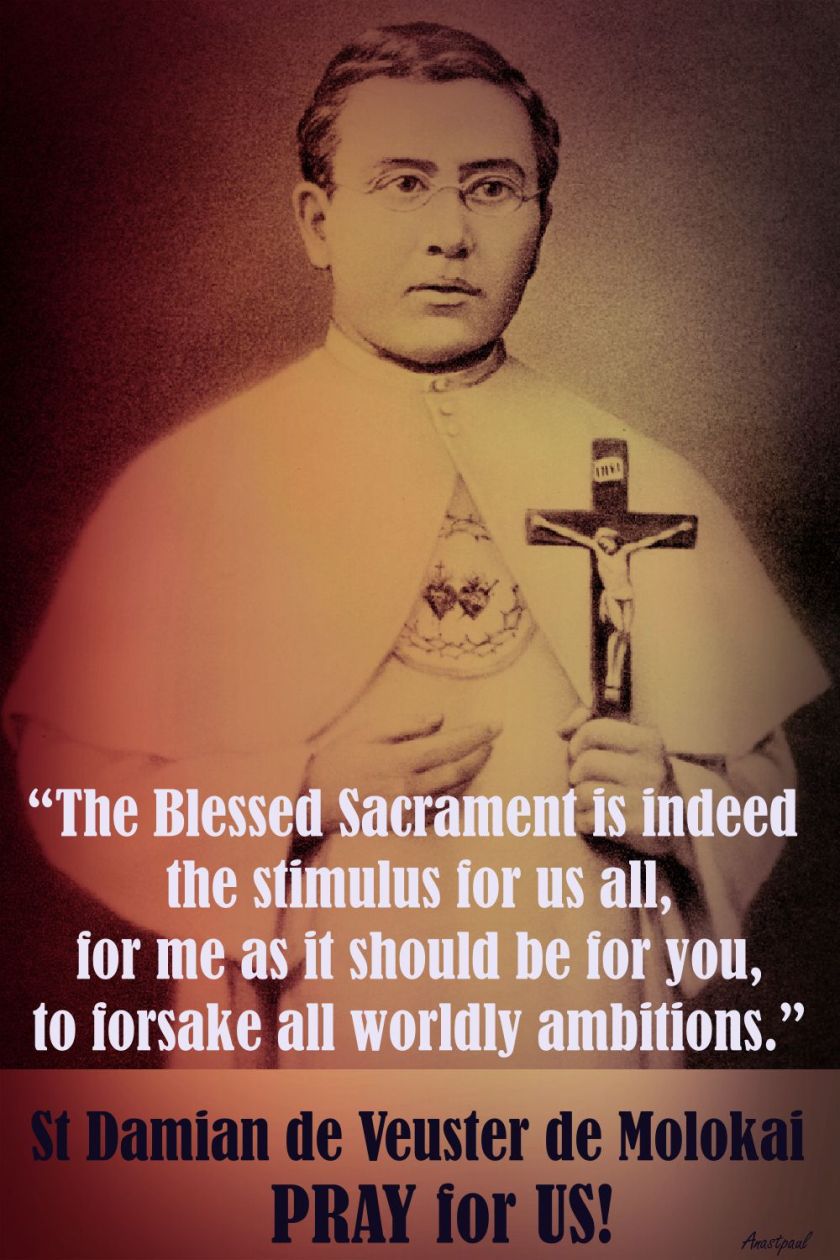
“The Blessed Sacrament is indeed
the stimulus for us all,
for me as it should be for you,
to forsake all worldly ambitions.”

St Damian de Veuster – St Damian of Molokai

THE BLESSED SACRAMENT - ST DAMIAN DE MOLOKAI

Posted in DOCTORS of the Church, MORNING Prayers, PRACTISING CATHOLIC, PRAYERS of the SAINTS, QUOTES of the SAINTS, SAINT of the DAY, The PASSION

Thought for the Day – 10 May – the Memorial of St John of Avila (1499-1569) Doctor of the Church

Thought for the Day – 10 May – the Memorial of St John of Avila (1499-1569) Doctor of the Church

St Teresa of Ávila, herself a Doctor of the Church, praised John of Ávila for his mastery of elements of the spiritual life.    While he remains a little known and quoted figure, one saint celebrated among many, Master Ávila stands before us today as a witness to the need for continual reform, a commitment to reflection and renewal within the Church and for each one of us as followers of Jesus.

He understood that it is only through a spirit-filled engagement with the Word of God and a steadfast commitment to the pursuit of virtue that individual Christians would be able to fulfil the demands of the Gospel.    In one of his sermons for Pentecost, John of Ávila asked his hearers,  “What effect did the coming of the Holy Ghost have on the Church?   What did the Holy Ghost accomplish in the hearts of those believers to whom He came?   He gave them life, gave them gifts of infinite value, strengthened them and brought them near perfection.”    St John of Ávila, in his life, his teachings and in his legacy, reveals that the Holy Spirit remains at work in the Church and, in this lesser known saint (sadly one who needs to be studied by all) of more than four centuries ago we discover a man, a saint, whose heart burned so purely with the fire of this same Spirit that he remains a light for us today.    (BROTHER HENDERSON, O.S.B., is a Benedictine monk of Saint Meinrad Archabbey.)

And to help us along the way, that is the only way, the way of the Cross of Christ, perhaps this practical bit of advice left us by St John of Avila, will be of assistance in our spiritual growth.   St John of Avila, please pray for us for we all wish to join you as Saint in heaven!

This Doctor and Teacher of our Faith, St John of Avila divides the week into stages of the Passion of Christ:

• Monday think of our Lord’s agony in the garden and what passed in the house of Annas and Caiphas

• Tuesday, of the accusations, the removal from judge to judge, and the flagellation

• Wednesday, of the crowning with thorns and the mockery

• Thursday, of the washing of the feet, and the Blessed Eucharist

• Friday, of the sentence, the carrying of the cross, the crucifixion and death

• Saturday, of the piercing of the side, the taking down from the cross, the burial, and the grief of the Blessed Virgin

• Sunday, of the resurrection and the state of future glory.

st JOHN OF AVILA PRAY FOR US.jpg no 2

Posted in DOCTORS of the Church, QUOTES of the SAINTS, SAINT of the DAY, The WORD

One Minute Reflection – 10 May

One Minute Reflection – 10 May

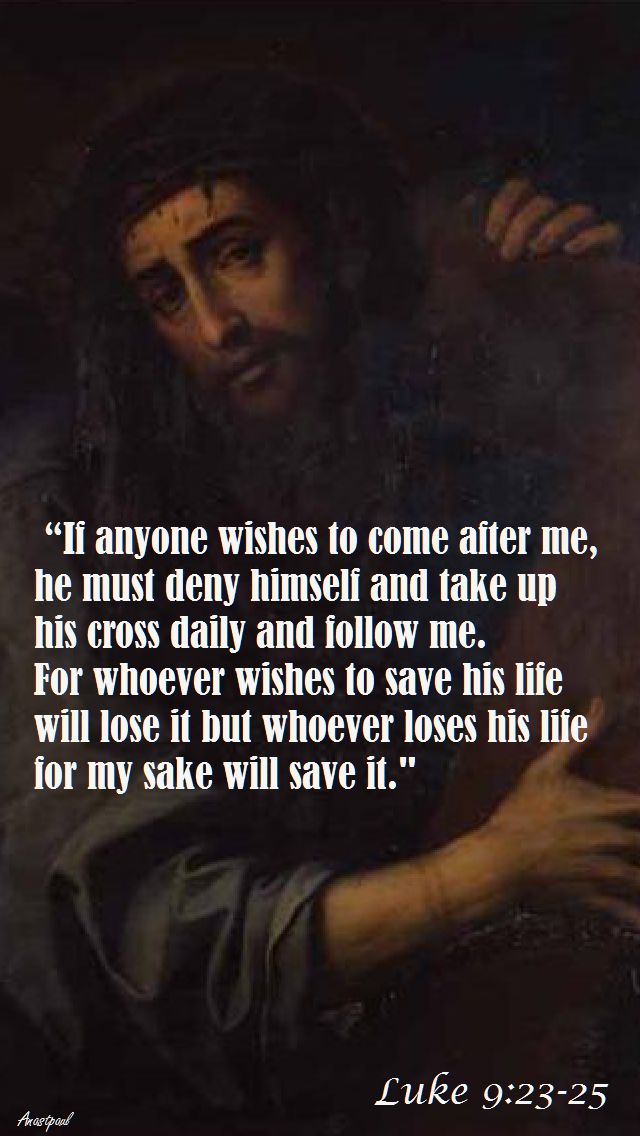
Then he said to all, “If anyone wishes to come after me, he must deny himself and take up his cross daily and follow me.
For whoever wishes to save his life will lose it but whoever loses his life for my sake will save it.” ………Luke 9:23-25

LUKE 9-23,25

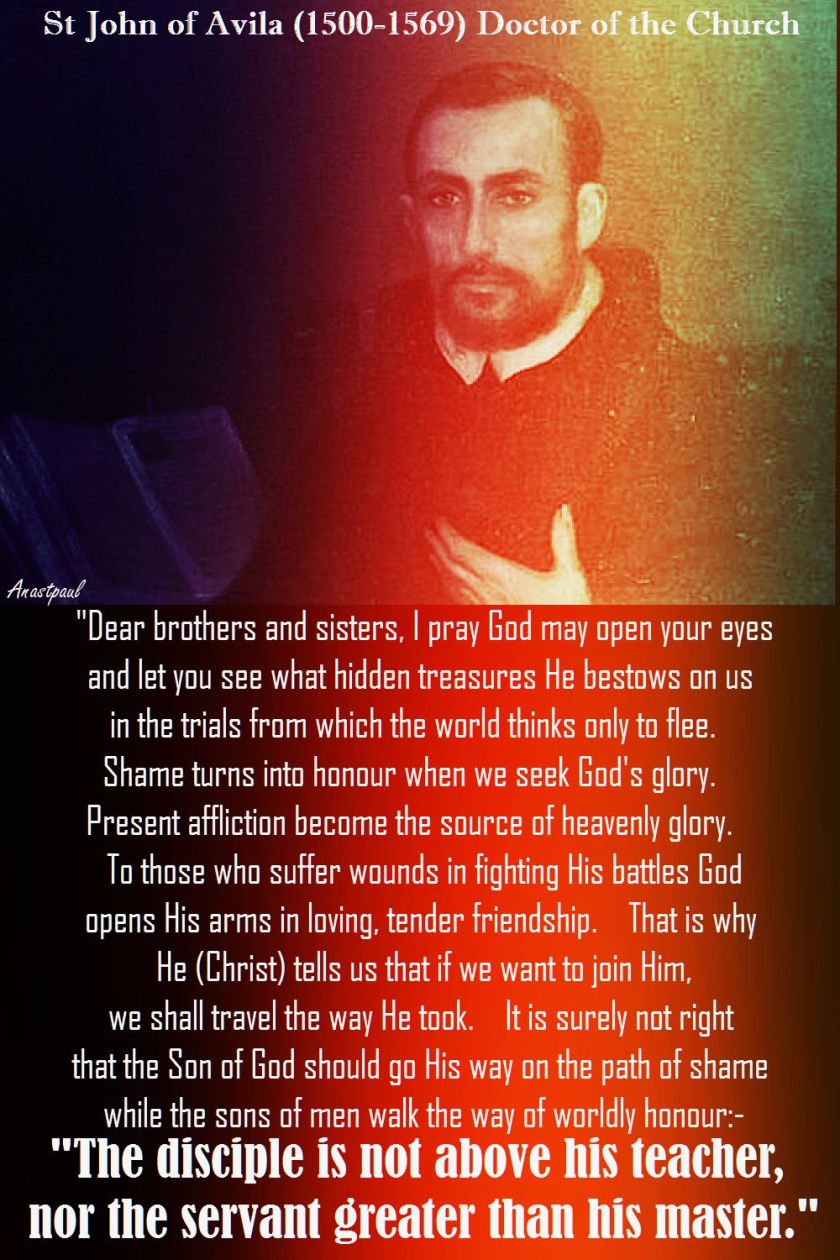
REFLECTION – “Dear brothers and sisters, I pray God may open your eyes and let you see what hidden treasures He bestows on us in the trials from which the world thinks only to flee. Shame turns into honour when we seek God’s glory. Present affliction become the source of heavenly glory. To those who suffer wounds in fighting His battles God opens His arms in loving, tender friendship. That is why He (Christ) tells us that if we want to join Him, we shall travel the way He took. It is surely not right that the Son of God should go His way on the path of shame while the sons of men walk the way of worldly honour: “The disciple is not above his teacher, nor the servant greater than his master.” – from a letter by Saint John of Avila

THE DISCIPLE-ST JOHN OF AVILA

PRAYER – Holy God, teach me to accept my cross and to follow Your Son’s way wihout fear or weakess. Grant me he couage to accept the trails I face for the glory of Your Kingdom. Let me learn and understand that in the persecution You allow, You show me Your love! St John of Avila pray for the whole Church, pray for us all, amen.

st JOHN OF AVILA PRAY FOR US

Posted in CATHOLIC DEVOTIONS of the Month, DOCTORS of the Church, MORNING Prayers, PRAYERS of the SAINTS, The BLESSED VIRGIN MARY

Our Morning Offering – 10 May

Our Morning Offering – 10 May

MARY, our MOTHER
SAINT BERNARD (1090-1153)

Mary, our Mother,
the whole world reveres you
as the holiest shrine of the living God,
for in you the salvation of the world dawned.
The Son of God was pleased
to take human form from you.
You have broken down the wall of hatred,
the barrier between heaven and earth
which was set us by the
disobedience of Adam and Eve.
In you heaven met earth
when divinity and humanity
were joined in one person – the God-Man.
Mother of God,
we sing your praises,
but we must praise you even more.
Our speech is too feeble to honour you as we ought,
for no tongue is eloquent enough
to express your excellence.
Mary, most powerful,
most holy, and worthy of all love.
Your name brings new life,
and the thought of you inspires love
in the hearts of those devoted to you. Amen

MARY OUR MOTHR BY ST BERNARD OF CLAIRVAUX

Posted in DOCTORS of the Church, SAINT of the DAY

Saint of the Day – 10 May – St John of Avila

Saint of the Day – 10 May – St John of Avila (1499-1569) – Priest, Doctor of the Church, known as the Apostle of Andalusia, Mystic, Author, Preacher, Scholastic teacher, Founder of Schools and Universities – Patron of  Andalusia, Spain, Spain, Spanish secular clergy, World Youth Day 2011.   His Relics are  interred in the Jesuit church at Montilla, Spain.

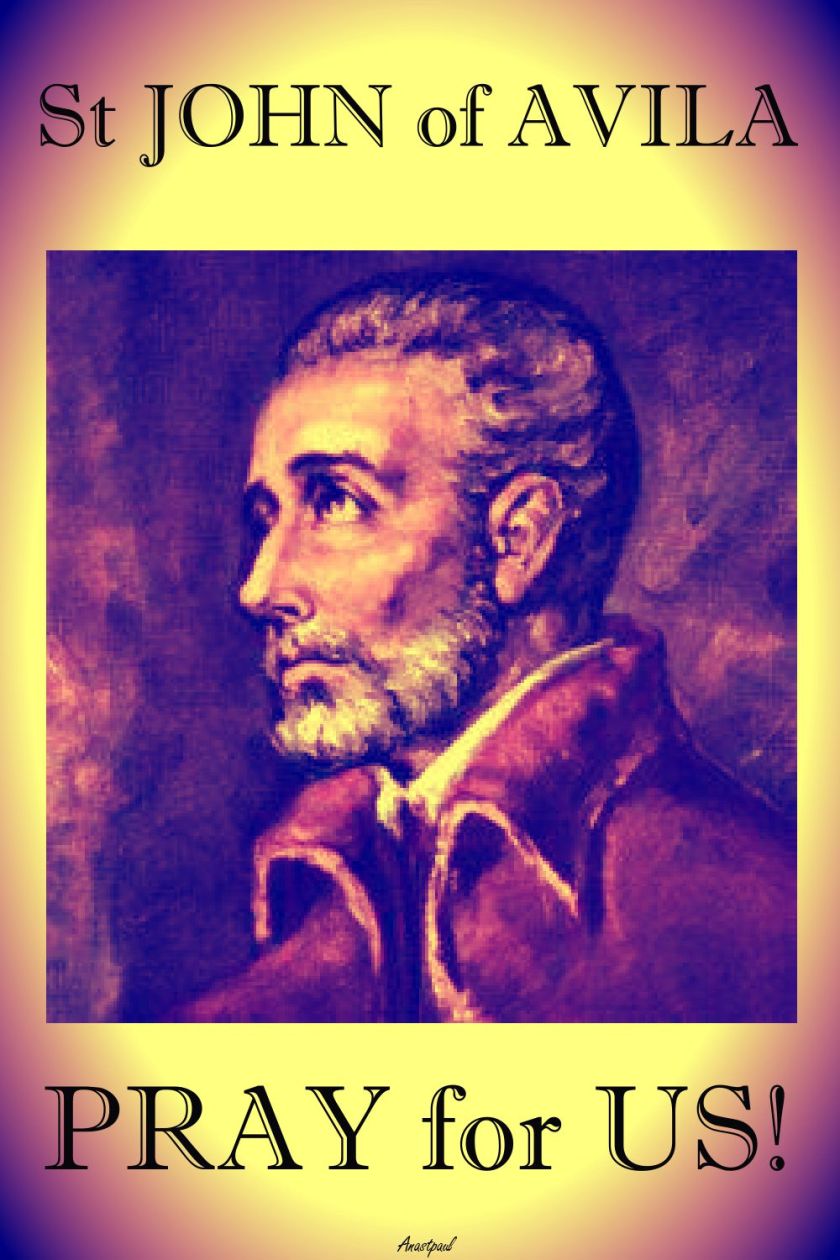
JOHN OF AVILA 1
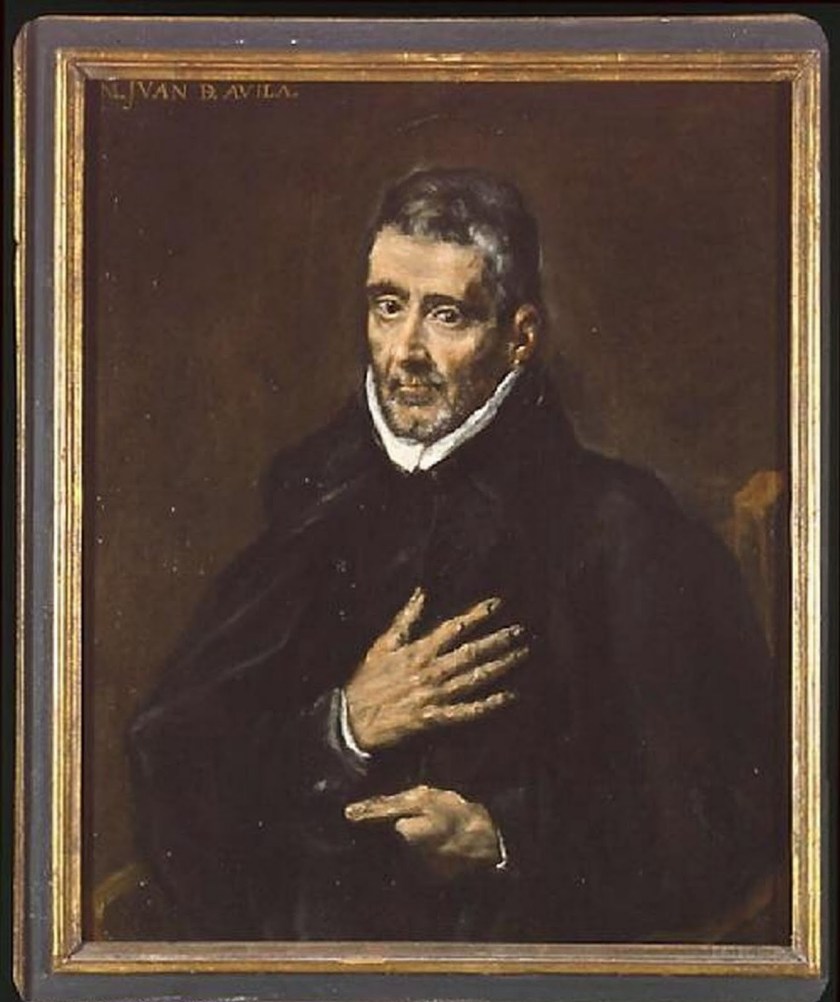
A portrait by El Greco (1580)

St John was born in Almodóvar del Campo, in the Province of Ciudad Real, to Alfonso de Ávila, of Jewish converso descent and Catalina Xixón (or Gijón), a wealthy and pious couple.    At the age of fourteen, in 1513, he was sent to the University of Salamanca to study law;   he withdrew in 1517, however, without receiving a degree.

Returning home, Ávila spent the next three years in the practice of austere piety.    His sanctity impressed a Franciscan friar journeying through Almodóvar, on whose advice he resumed his studies.   Thereafter, he undertook the study of philosophy and theology, in which he was fortunate to have as his teacher the noted Dominican friar Domingo de Soto.    It appears that Ávila earned his bachelor’s degree during his years at Alcalá and then left without completing requirements for the licentiate degree.

Both his parents died while Ávila was still a student, and after his ordination in spring 1526, he celebrated his first Mass in the church where they were buried.     He then sold the family property and gave the proceeds to the poor.    He saw in the severing of natural ties a vocation to foreign missionary work and prepared to go to Mexico.    He, therefore, traveled to Seville to await departure for the Indies in January 1527 with the Dominican friar, Julián Garcés, appointed the first Bishop of Tlaxcala.    While waiting in Seville, his unusually great devotion in celebrating Mass and his skills in catechesis and preaching, attracted the attention of Hernando de Contreras, a local priest, who mentioned him to the Archbishop of Seville and Inquisitor General, Alonso Manrique de Lara.    The archbishop saw in the young cleric a powerful instrument to stir up the faith in Andalusia, and after considerable persuasion Juan was induced to abandon his journey to America.

800px-Cueva_en_la_casa_natal_en_Almodóvar_del_Campo
The basement of the family home of John of Ávila in Almodóvar del Campo, Ciudad Real, Spain

John seems to have lived in the initial years after 1526 in a small house in Seville with another priest, probably Contreras and disciples gathered around him, in a loosely structured fraternal life.    It was at the request of the younger sister of one of these disciples, Sancha Carrillo, that he began in 1527 to write the Audi, filia (Listen, Daughter), a work he continued expanding and editing until his death.

Apostle of Andalusia
John’s first sermon was preached on 22 July 1529 and immediately established his reputation.    During his nine years of missionary work in Andalusia, crowds packed the churches at all his sermons.    However, his strong pleas for reform and his denunciation of the behaviour of the aristocracy meant that he was denounced to the office of the Inquisition in Seville in 1531 and put in prison in the summer of 1532.    He was charged with exaggerating the dangers of wealth and with closing the gates of heaven to the rich. The charges were refuted and he was declared innocent and released in July 1533.

Around the end of 1534 or the beginning of 1535, John of Ávila was incardinated into the Diocese of Córdoba, from which he received a small benefice.    This city became his base for directing his disciples and moving around Andalusia, preaching and establishing schools and colleges in various neighbouring cities such as Granada, Baeza, Montilla and Zafra.    It is thought that during this time Ávila received the title of Master of Sacred Theology, probably in Granada around 1538.

Of special importance was the University of Baeza, established in 1538 by a papal bull of Pope Paul III.    Ávila served as its first rector and it became a model for seminaries and for the schools of the Jesuits.

Ávila stayed in Granada from 1538-9, where it appears some kind of community was taking shape.   Likewise, during the years 1546 to 1555, John lived with about 20 disciples in Córdoba, making it seem that he intended to begin some kind of formal foundation of apostolic priests.    However, the foundation and fast expansion of the Jesuits meant that these ideas never came to fruition;   from early 1551, when Ávila began to experience poor health, he began actively encouraging his disciples who so desired to join the Jesuits (around 30 in total seem to have joined).

From early 1551 Ávila was in constant ill-health.   He spent the last years of his life in semi-retirement in the town of Montilla, in the Province of Córdoba.    He died there on 10 May 1569 and in accordance with his wishes was buried in that city, in the Jesuit Church of the Incarnation, which now serves as the sanctuary to his memory.

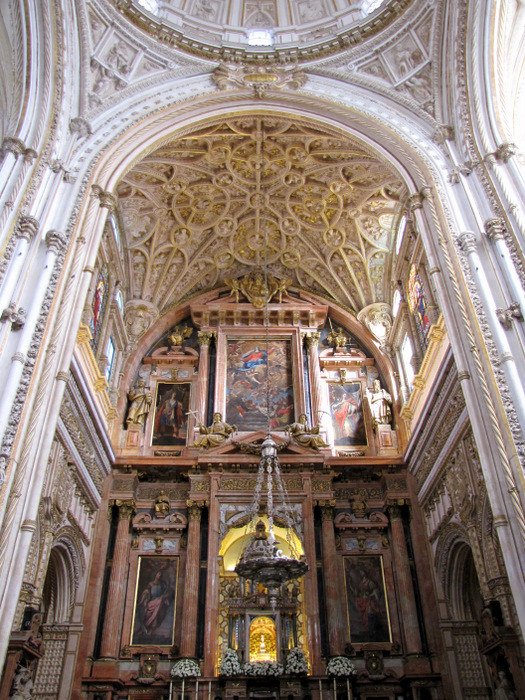
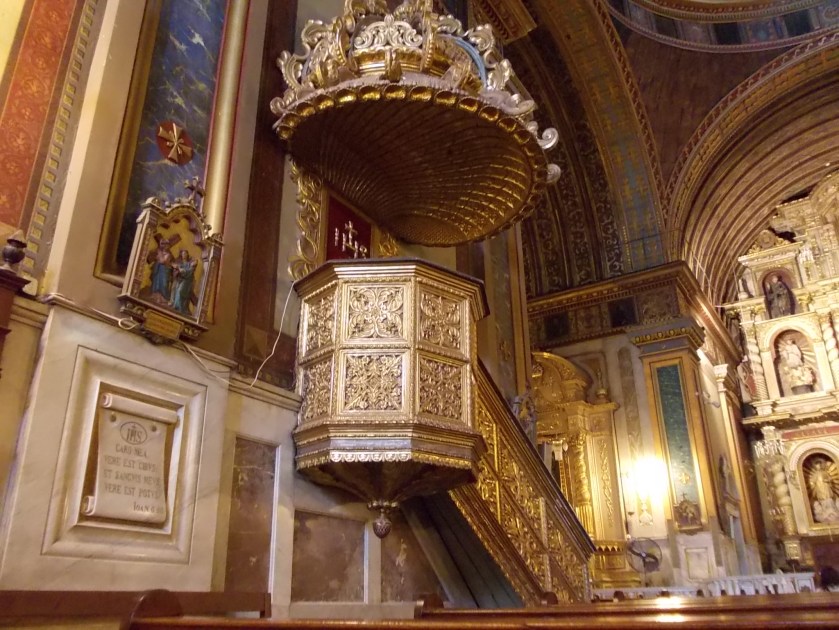
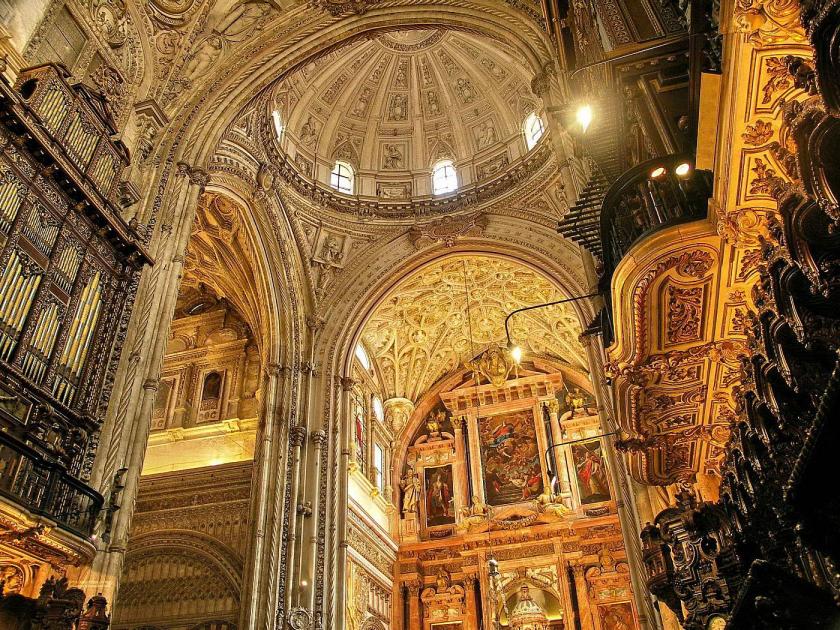
CORDOBA294191-great-mosque-cathedral-of-cordoba-cordoba-spainfeb-23-032Mosque–Cathedral.of.Córdoba.original.1435

St John of Ávila was declared Venerable by Pope Clement XIII on 8 February 1759 and beatified by Pope Leo XIII on 15 November 1893.    On 31 May 1970 he was canonized by Pope Paul VI.

Pope Benedict XVI named him a Doctor of the Church on 7 October 2012, the Feast of the Holy Rosary.   The proclamation of the two new Doctors of the Church was made by Pope Benedict before tens of thousands of people in St. Peter’s Square.   During his homily, Pope Benedict said that John of Ávila was a “profound expert on the sacred Scriptures, he was gifted with an ardent missionary spirit. He knew how to penetrate in a uniquely profound way the mysteries of the redemption worked by Christ for humanity. A man of God, he united constant prayer to apostolic action. He dedicated himself to preaching and to the more frequent practice of the sacraments, concentrating his commitment on improving the formation of candidates for the priesthood, of religious and of lay people, with a view to a fruitful reform of the Church”.

Posted in SAINT of the DAY

Saints – 10 May

St John of Avila – Doctor of the Church

St Joseph de Veuster – St Damian of Molokai (Optional Memorial)

St Alphius of Lentini
Bl Amalarius of Metz
Bl Antonio of Norcia
St Aurelian of Limoges
Bl Beatrix d’Este the Elder
St Blanda of Rome
St Calepodius of Rome
St Catald of Taranto
St Comgall of Bangor
St Cyrinus of Lentini
St Dioscorides of Smyrna
St Epimachus of Rome
St Felix of Rome
Bl Giusto Santgelp
St Gordian the Judge
Bl Ivan Merz
St Job the Patriarch
St Palmatius of Rome
St Philadelphus of Lentini
St Quartus of Capua
St Quintus of Capua
St Simplicius of Rome
St Solange of Bourges
St Thecla
Bl William of Pontnoise

Posted in MORNING Prayers

The 54th World Day of Prayer for Vocations – Vocations Sunday – 7 May 2017

The 54th World Day of Prayer for Vocations – Vocations Sunday – 7 May 2017

vocations sunday 7 may

MESSAGE OF HIS HOLINESS POPE FRANCIS
FOR THE 54th WORLD DAY OF PRAYER FOR VOCATIONS

Led by the Spirit for Mission

Dear Brothers and Sisters,

In the last few years, we have considered two aspects of the Christian vocation: the summons to “go out from ourselves” to hear the Lord’s voice, and the importance of the ecclesial community as the privileged place where God’s call is born, nourished and expressed.

Now, on this 54th World Day of Prayer for Vocations, I would like to reflect on the missionary dimension of our Christian calling. Those who drawn by God’s voice and determined to follow Jesus soon discover within themselves an irrepressible desire to bring the Good News to their brothers and sisters through proclamation and the service of charity. All Christians are called to be missionaries of the Gospel! As disciples, we do not receive the gift of God’s love for our personal consolation, nor are we called to promote ourselves, or a business concern. We are simply men and women touched and transformed by the joy of God’s love, who cannot keep this experience just to ourselves. For “the Gospel joy which enlivens the community of disciples is a missionary joy (Evangelii Gaudium, 21).

Commitment to mission is not something added on to the Christian life as a kind of decoration, but is instead an essential element of faith itself. A relationship with the Lord entails being sent out into the world as prophets of his word and witnesses of his love.

Even if at times we are conscious of our weaknesses and tempted to discouragement, we need to turn with God with confidence. We must overcome a sense of our own inadequacy and not yield to pessimism, which merely turns us into passive spectators of a dreary and monotonous life. There is no room for fear! God himself comes to cleanse our “unclean lips” and equip us for the mission: “Your guilt has departed and your sin is blotted out. Then I heard the voice of the Lord saying, ‘Whom shall I send and who will go for us?’ And I said, ‘Here am I, send me’” (Is 6:6-8).

In the depths of their heart, all missionary disciples hear this divine voice bidding them to “go about”, as Jesus did, “doing good and healing all” (cf. Acts 10:38). I have mentioned that, by virtue of baptism, every Christian is a “Christopher”, a bearer of Christ, to his brothers and sisters (cf. Catechesis, 30 January 2016). This is particularly the case with those called to a life of special consecration and with priests, who have generously responded, “Here I am, Lord, send me!” With renewed missionary enthusiasm, priests are called to go forth from the sacred precincts of the temple and to let God’s tender love overflow for the sake of humanity (cf. Homily at the Chrism Mass, 24 March 2016). The Church needs such priests: serenely confident because they have discovered the true treasure, anxious to go out and joyfully to make it known to all (cf. Mt 13:44).

Certainly many questions arise when we speak of the Christian mission. What does it mean to be a missionary of the Gospel? Who gives us the strength and courage to preach? What is the evangelical basis and inspiration of mission? We can respond to these questions by meditating on three scenes from the Gospels: the inauguration of Jesus’ mission in the synagogue at Nazareth (cf. Lk 4:16-30); the journey that, after his resurrection, he makes in the company of the disciples of Emmaus (cf. Lk 24:13-35) and, finally, the parable of the sower and the seed (cf. Mt 4:26-27).

Jesus is anointed by the Spirit and sent. To be a missionary disciple means to share actively in the mission of Christ. Jesus himself described that mission in the synagogue of Nazareth in these words: “The Spirit of the Lord is upon me, because he has anointed to bring good news to the poor. He has sent me to proclaim release to the captives and recovery of sight to the blind, to let the oppressed go free, and to proclaim the year of the Lord’s favour” (Lk 4:18-19). This is also our mission: to be anointed by the Spirit, and to go out to our brothers and sisters in order to proclaim the word and to be for them a means of salvation.

Jesus is at our side every step of the way. The questions lurking in human hearts and the real challenges of life can make us feel bewildered, inadequate and hopeless. The Christian mission might appear to be mere utopian illusion or at least something beyond our reach. Yet if we contemplate the risen Jesus walking alongside the disciples of Emmaus (cf. Lk 24:13-15), we can be filled with new confidence. In that Gospel scene, we have a true “liturgy of the street”, preceding that of the word and the breaking of the bread. We see that, at every step of the way, Jesus is at our side! The two disciples, overwhelmed by the scandal of the cross, return home on the path of defeat. Their hearts are broken, their hopes dashed and their dreams shattered. The joy of the Gospel has yielded to sadness. What does Jesus do? He does not judge them, but walks with them. Instead of raising a wall, he opens a breach. Gradually he transforms their discouragement. He makes their hearts burn within them, and he opens their eyes by proclaiming the word and breaking the bread. In the same way, a Christian does not bear the burden of mission alone, but realizes, even amid weariness and misunderstanding, that “Jesus walks with him, speaks to him, breathes with him, works with him. He senses Jesus alive with him in the midst of the missionary enterprise” (Evangelii Gaudium, 266).

Jesus makes the seed grow. Finally, it is important to let the Gospel teach us the way of proclamation. At times, even with the best intentions, we can indulge in a certain hunger for power, proselytism or intolerant fanaticism. Yet the Gospel tells us to reject the idolatry of power and success, undue concern for structures, and a kind of anxiety that has more to do with the spirit of conquest than that of service. The seed of the Kingdom, however tiny, unseen and at times insignificant, silently continues to grow, thanks to God’s tireless activity. “The kingdom of God is as if a man should scatter seed on the ground, and should sleep or rise night and day, and the seed should sprout and grow, he knows not how” (Mk 4:26-27). This is our first reason for confidence: God surpasses all our expectations and constantly surprises us by his generosity. He makes our efforts bear fruit beyond all human calculation.

With this confidence born of the Gospel, we become open to the silent working of the Spirit, which is the basis of mission. There can be no promotion of vocations or Christian mission apart from constant contemplative prayer. The Christian life needs to be nourished by attentive listening to God’s word and, above all, by the cultivation of a personal relationship with the Lord in Eucharistic adoration, the privileged “place” for our encounter with God.

I wish heartily to encourage this kind of profound friendship with the Lord, above all for the sake of imploring from on high new vocations to the priesthood and the consecrated life. The People of God need to be guided by pastors whose lives are spent in service to the Gospel. I ask parish communities, associations and the many prayer groups present in the Church, not to yield to discouragement but to continue praying that the Lord will send workers to his harvest. May he give us priests enamoured of the Gospel, close to all their brothers and sisters, living signs of God’s merciful love.

Dear brothers and sisters, today too, we can regain fervour in preaching the Gospel and we can encourage young people in particular to take up the path of Christian discipleship. Despite a widespread sense that the faith is listless or reduced to mere “duties to discharge”, our young people desire to discover the perennial attraction of Jesus, to be challenged by his words and actions, and to cherish the ideal that he holds out of a life that is fully human, happy to spend itself in love.

Mary Most Holy, the Mother of our Saviour, had the courage to embrace this ideal, placing her youth and her enthusiasm in God’s hands. Through her intercession, may we be granted that same openness of heart, that same readiness to respond, “Here I am”, to the Lord’s call, and that same joy in setting out (cf. Lk 1:39), like her, to proclaim him to the whole world.

From the Vatican, Franciscus

Posted in CATHOLIC DEVOTIONS of the Month, DOCTORS of the Church, FATHERS of the Church, MORNING Prayers, PRAYERS of the SAINTS, The BLESSED VIRGIN MARY

Our Morning Offering – 5 May

Our Morning Offering – 5 May

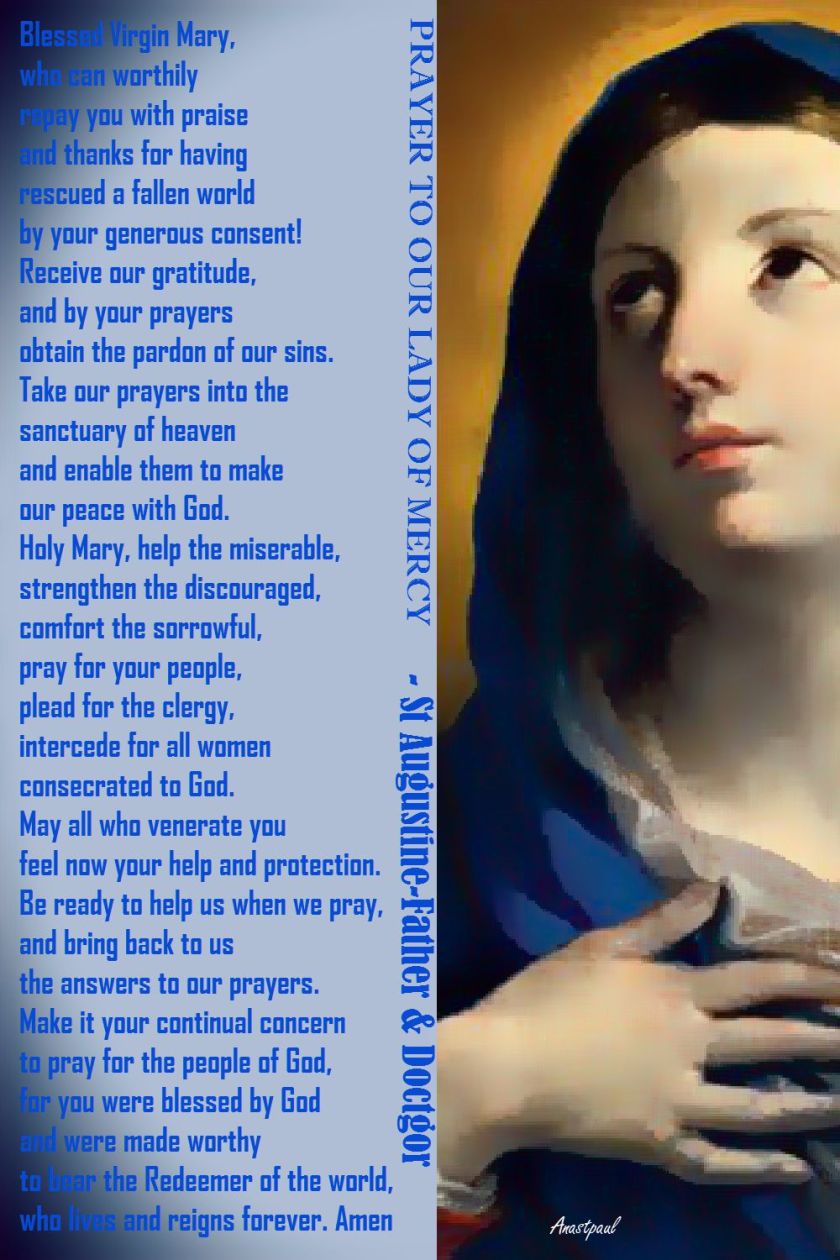
PRAYER TO OUR LADY OF MERCY
By St. Augustine

Blessed Virgin Mary,
who can worthily repay you with praise
and thanks for having rescued a fallen world
by your generous consent!
Receive our gratitude,
and by your prayers obtain the pardon of our sins.
Take our prayers into the sanctuary of heaven
and enable them to make our peace with God.
Holy Mary, help the miserable,
strengthen the discouraged,
comfort the sorrowful,
pray for your people,
plead for the clergy,
intercede for all women consecrated to God.
May all who venerate you
feel now your help and protection.
Be ready to help us when we pray,
and bring back to us the answers to our prayers.
Make it your continual concern
to pray for the people of God,
for you were blessed by God
and were made worthy to bear the Redeemer of the world,
who lives and reigns forever.
Amen

PRAYER TO OUR LADY OF MERCY-ST AUGUSTINE

Posted in CATHOLIC DEVOTIONS of the Month, MORNING Prayers, PRAYERS of the SAINTS, The BLESSED VIRGIN MARY

Our Morning Offering – 4 May

Our Morning Offering – 4 May

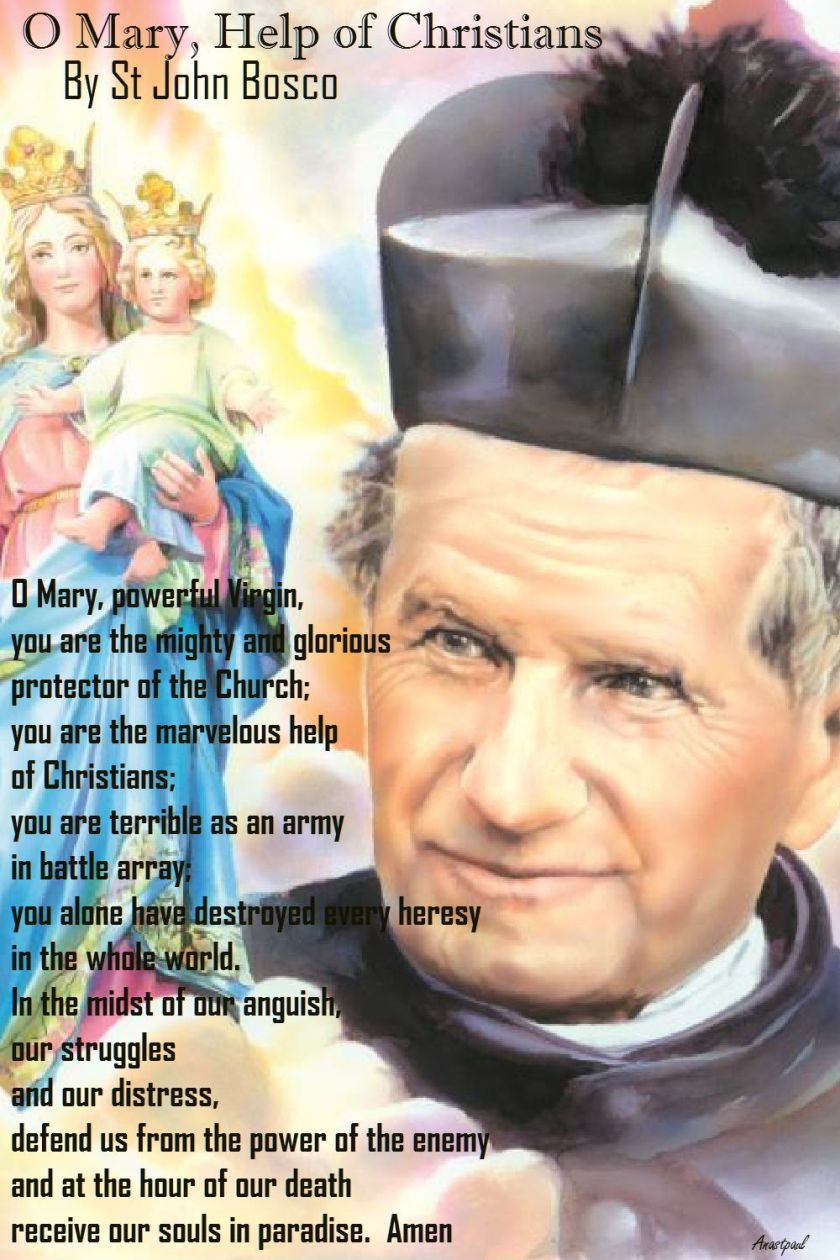
O Mary, Help of Christians
By St John Bosco

O Mary, powerful Virgin,
you are the mighty and glorious
protector of the Church;
you are the marvelous help of Christians;
you are terrible as an army in battle array;
you alone have destroyed every heresy
in the whole world.
In the midst of our anguish,
our struggles
and our distress,
defend us from the power of the enemy
and at the hour of our death
receive our souls in paradise. Amen

O MARY HELP OF CHRISTIANS - ST JOHN BOSCO

Posted in MORNING Prayers, NOTES to Followers

“Gone Fishing”…….

Dear All

I will be out of town for about a week – expected back on Wednesday 10 May or Thursday 11th – see you soon.   A few forward posts might pop through if I find the time,

I’ll miss you all and be praying for you!

gone fishing

Posted in FEASTS and SOLEMNITIES, MORNING Prayers, SAINT of the DAY, The APOSTLES & EVANGELISTS

Thought for the Day – 3 May

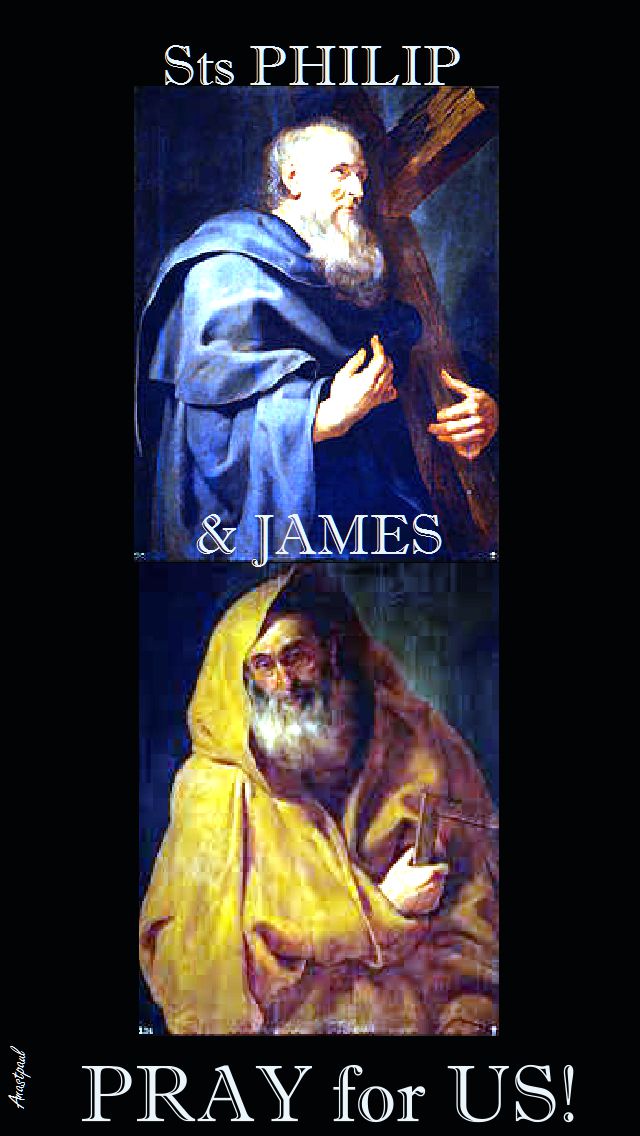
Sts Philip and James left all to follow Jesus, to become His heralds to the whole world.   They faced only difficulties, opposition and – finally – death by violence.   We cannot avoid the difficulties that come with professing our faith and we are all called to be apostles.   Let us pray for the courage to face our task with the same courage with which the Apostles faced theirs.   As in the case of the other apostles, we see in James and Philip human men who became foundation stones of the Church and we are reminded again that holiness and its consequent apostolate are entirely the gift of God, not a matter of human achieving.    All power is God’s power, even the power of human freedom to accept his gifts. “You will be clothed with power from on high,” Jesus told Philip and the others.   Their first commission had been to expel unclean spirits, heal diseases, announce the kingdom.    They learned, gradually, that these externals were sacraments of an even greater miracle inside their persons—the divine power to love like God.

Sts Philip and James, Pray for us!

STS PHILIP AND JAMES PRAY FOR US 2

Posted in DOCTORS of the Church, MORNING Prayers, QUOTES of the SAINTS

Quote of the Day – 3 May

Quote of the Day – 3 May

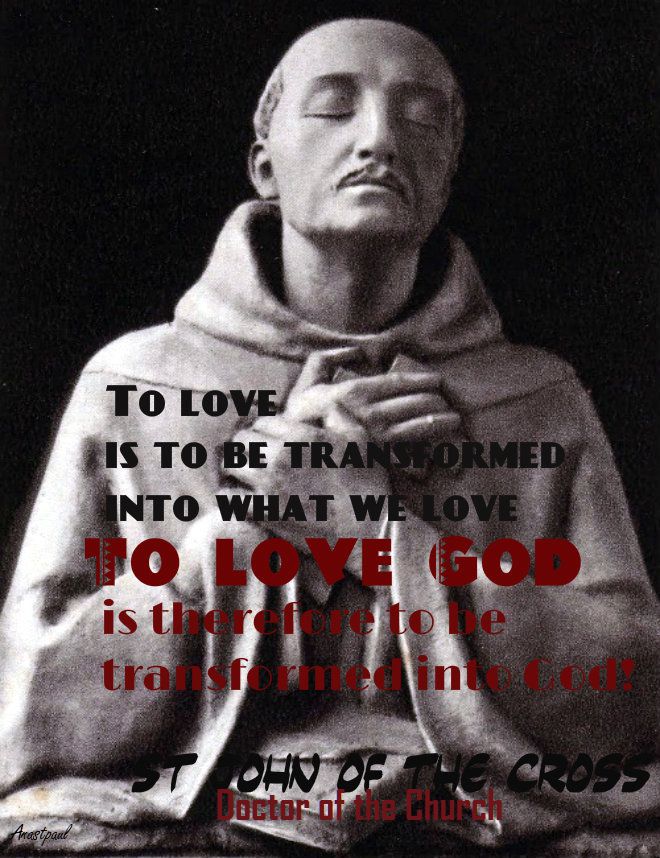
“To love is to be transformed into what we love.
To love God is therefore to be transformed into God!”

St John of the Cross


ST JOHN OF THE CROSS MY PIC

Posted in FEASTS and SOLEMNITIES, MORNING Prayers, QUOTES of the SAINTS, SAINT of the DAY, The APOSTLES & EVANGELISTS

One Minute Reflection – 3 May

One Minute Reflection – 3 May

What was from the beginning, what we have heard,
what we have seen with our eyes, what we looked upon
and touched with our hands concerns the Word of life
for the life was made visible;  we have seen it and testify to it……….1 John 1:1-2

REFLECTION – “Two of the favoured witnesses of our beloved Jesus’ Resurrection come before us today.    Sts. Philip and James are here, bearing testimony to us that their Master is truly risen from the dead, that they have seen Him, that they have touched Him, that they have conversed with Him during these forty days.   And, that we may have no doubt as to the truth of their testimony, they hold in their hands the instruments of the martyrdom they underwent for asserting that Jesus, after having suffered death, came to life again and rose from the grave.”………………..Abbot/Dom Prosper Guéranger

TWO OF THE FAVOURED - Dom Prosper Guéranger

PRAYER – O God, who gladden us each year with the feast day of the Apostles Philip and James, grant us, through their prayers, a share in the Passion and Resurrection of your Only Begotten Son, so that we may merit to behold You for eternity. Through our Lord Jesus Christ, your Son, who lives and reigns with You in the unity of the Holy Spirit, one God, for ever and ever.

STS PHILIP AND JAMES PRAY FOR US

Posted in CATHOLIC DEVOTIONS of the Month, MORNING Prayers, PRAYERS of the SAINTS, The BLESSED VIRGIN MARY

Our Morning Offering – 3 May

Our Morning Offering – 3 May

Most Holy Mary
By St John of the Cross

Most holy Mary,
Virgin of virgins,
shrine of the most Holy Trinity,
joy of the angels,
sure refuge of sinners,
take pity on our sorrows,
mercifully accept our sighs
and appease the wrath
of your most holy Son. Amen

MOST HOLY MARY BY ST JOHN OF THE CROSS