Posted in SAINT of the DAY

Within the Octave of The Epiphany, Our Lady of Prompt Succour, New Orleans, USA (1809) and Memorials of the Saints – 8 January

Third Day of Octave of The Epiphany Octave

St Abo of Tblisi
St Albert of Cashel (Died c600) Bishop

St Athelm of Canterbury
St Atticus of Constantinople
St Carterius of Caesarea
Bl Edward Waterson
St Ergnad of Ulster
St Erhard of Regensburg
St Eugenian of Autun
St Garibaldus of Regensburg
St Gudule of Brussels
St Helladius
St Julian of Beauvais
St Lucian of Beauvais
St Maximian of Beauvais
St Maximus of Pavia
Bl Nathalan of Aberdeen
St Patiens of Metz
St Pega of Peakirk

St Theophilus the Martyr
St Thorfinn
St Wulsin of Sherborne

Posted in Against FAMINE, PATRONAGE - PRISONERS, PATRONAGE - VINTNERS, WINE-FARMERS, SAINT of the DAY

Saint of the Day – 8 January – Saint Severinus of Noricum (c410-482) “The Apostle to Noricum”

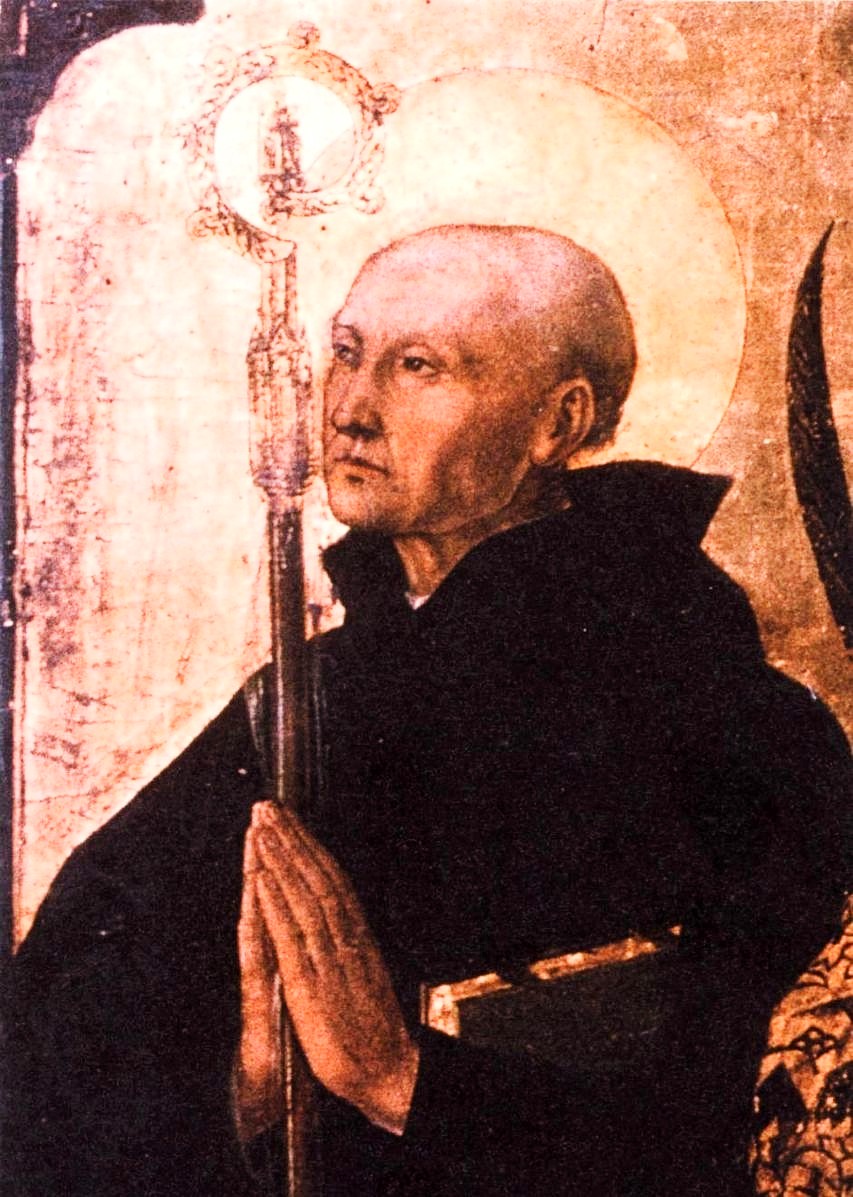
Saint of the Day – 8 January – Saint Severinus of Noricum (c410-482) Abbot, Hermit, Missionary, established Monasteries and refuge centres for those stricken by war. Severinus was graced with the gifts of prophecy and miracles. He is known as “The Apostle to Noricum” – Noricum is the Latin name for the Celtic Kingdom or Federation of Tribes which included most of modern Austria and part of Slovenia. Born in c410 and died on 8 January 482 at Favianae, Noricum of natural causes. Patronages – against famine, of linen weavers, prisoners, vineyards/vintners/wine farms, Austria, Bavaria, Germany, the Diocese of Linz, Austria. Also known as – Severrin, Severino.

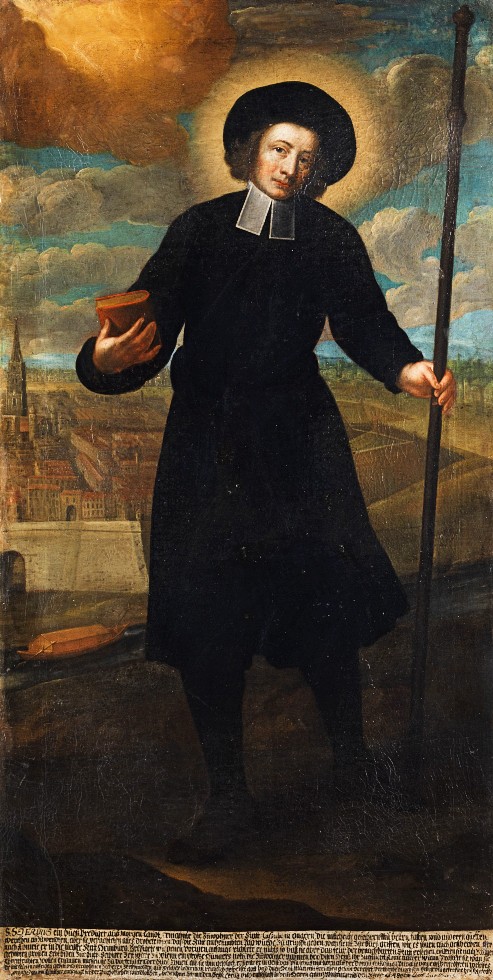
Saint Severin blesses Austria – Hans Gustav Dittenberger von Dittenberg, 1849

The Roman Martyrology reads today: “This same day, among the inhabitants of Noricum (now Austria), the Abbot, St Severin, who preached the Gospel in that country and is called it’s apostle. By Divine Power, his body was carried to Lucullanum, near Naples and thence transferred to the Monastery of St Severin.”

It has been speculated that Severinus was born in either Southern Italy or in the Roman province of Africa. Severinus himself refused to discuss his personal history prior to arriving along the Danube in Noricum. However, he did mention experiences with eastern desert monasticism and his Vita draws connections between Severinus and Saint Anthony of Lérins (c 428-c 520) https://anastpaul.com/2021/12/28/saint-of-the-day-28-december-saint-anthony-of-lerins-c-428-c-520/

Little is known of his origins. The source for information about him is the Commemoratorium Vitae St Severini (511) by Eugippius (c 460-c 535), who was a disciple of Severinus. In 511 Eugippius wrote to Paschasius and asked his venerated and dear friend, who had great literary skill, to write a biography of St Severinus from the accounts of the Saint which he (Eugippius) had put together in crude and unartistic form. Paschasius, however, replied that the acts and miracles of the Saint could not be described better than had done by Eugippius. This Vita is available online at: https://www.tertullian.org/fathers/severinus_02_text.htm

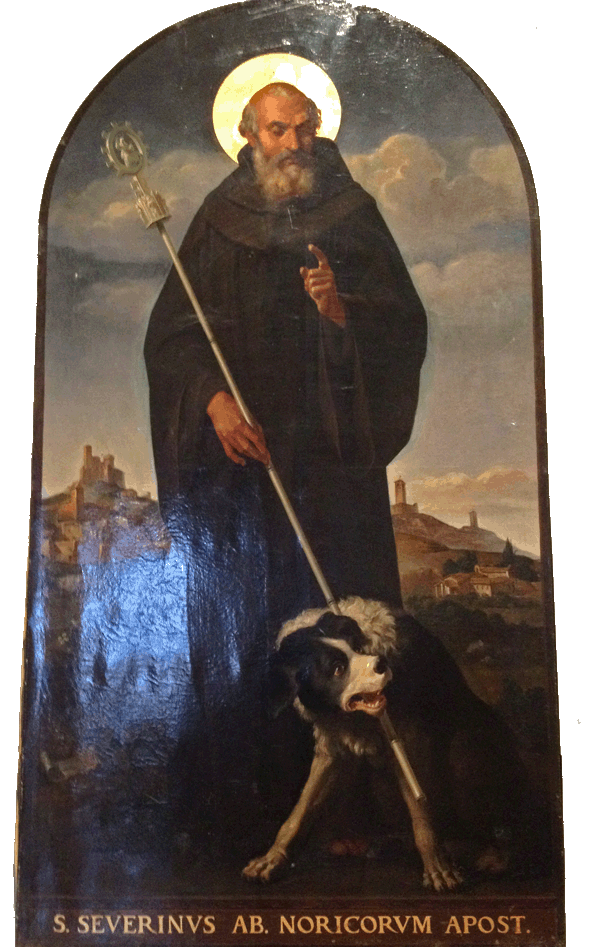
St Severinus – St.Severin Parish Church Lower Austria

Severinus was a high-born Roman living as an Hermit in the East. He was an ascetic in practice. He is first recorded as travelling along the Danube in Noricum and Bavaria, preaching Christianity, procuring supplies for the starving, redeeming captives and establishing Monasteries at Passau and Favianae,

While the Western Empire was falling apart, Severinus, thanks to his virtues and organisational skills, committed himself to the religious and material care of the frontier peoples, also taking care of their military defence. He organised refugee camps, migrations to safer areas and food distribution.

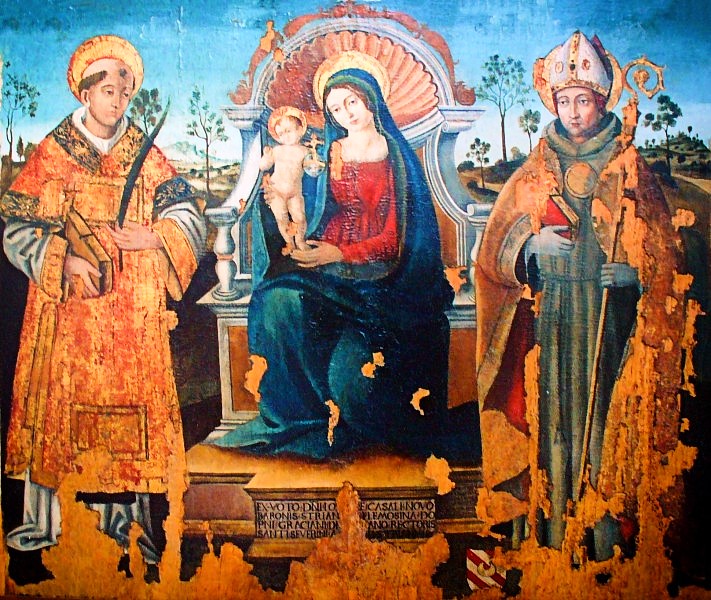
Madonna and Child Enthroned between San Severino and San Sossio – Protasio Crivelli, 1506

Serverinus offered practical leadership, as well as spiritual leadership. He was a tireless preacher and a marvellous Miracle-worker – he miraculously multiplied food reserves, cured the sick, cast out devils, commanded the elements of nature and once even resurrected the dead.

The main theme of his teaching was the value of penance. It was a propitious choice. The sufferings of his people under the Germanic invasions were acute and, uniting them with Christ’s sufferings for the reparation of sin and the conversion of sinners, enabled them to find meaning and strength amid calamity. He also practiced what he preached. In his constant barefoot journeying throughout Austria and Bavaria, he ate only one meal a day and slept on a sack which he carried around with him, wherever he happened to find himself at bedtime.

His efforts seem to have won him wide respect, including that of the Germanic chieftain Odoacer. Eugippius credits him with the prediction that Odoacer would become king of Rome. However, Severinus warned that Odoacer would rule not more than fourteen years.

Severinus also prophesied the destruction of Asturis in Austria, by the Huns. When the people would not heed his warning, he took refuge in Comagena. There he established refugee centres for people displaced by the invasion and founded Monasteries to re-establish spirituality and preserve learning in the stricken region.

He died in his monastic cell at Favianae while singing Psalm 150. Six years after his death, his Monks were driven from their Abbey and his body was taken to Italy, where it was at first kept in the Castel dell’Ovo, Naples, then eventually interred at the Benedictine Monastery rededicated to him, the Abbey of San Severino in the City of Naples.

Austrian postage stamp of their Patron Saint
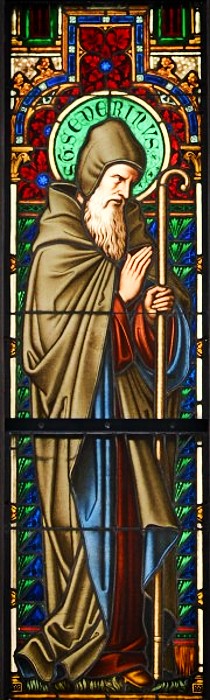
St Severinus Statue on the Church in Church at Steinhof, Vienna
Posted in MARIAN TITLES, SAINT of the DAY, The HOLY FAMILY

Third Day of the Epiphany Octave, Feast of the Holy Family, Our Lady of Prompt Succour, New Orleans, USA (1809) and Memorials of the Saints – 8 January

Third Day of the Epiphany Octave

Feast of the Holy Family:
https://anastpaul.com/2017/12/31/31-december-feast-of-the-holy-family-and-the-seventh-day-of-the-octave/
AND:
https://anastpaul.com/2018/12/30/feast-of-the-holy-family-of-jesus-mary-and-joseph-30-decembe/
AND:
https://anastpaul.com/2019/12/29/feast-of-the-holy-family-of-jesus-mary-and-joseph-fifth-day-of-the-christmas-octave/

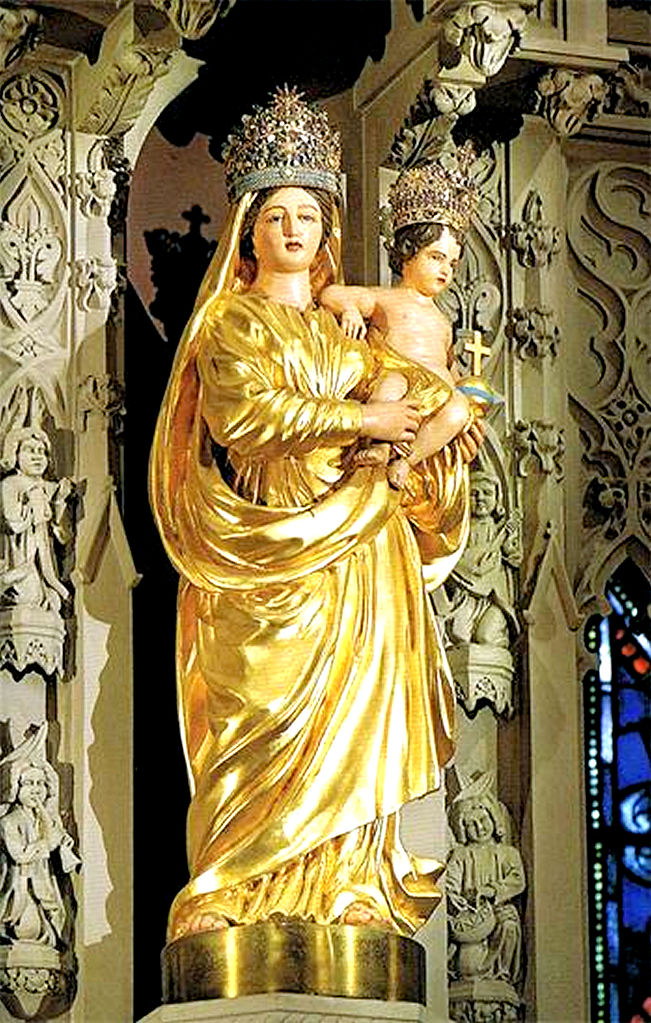
Our Lady of Prompt Succour, New Orleans, USA (1809) – 8 January:
Such wonderful miracles – read about the Marian Patron of Louisiana here:

https://anastpaul.com/2019/01/08/memorials-of-the-saints-8-january/
St Abo of Tblisi
St Albert of Cashel

St Apollinaris the Apologist (Died 2nd Century) Confessor, Defender of the True Faith against heretics, Writer, renowned Scholar. Bishop, Apologist.
The Roman Martyrology states: “In Hierapolis in Phrygia, in today’s Turkey, Saint Apollinaris, Bishop, who shone under the Emperor Marcus Aurelius for doctrine and holiness.”
A Courageous and Zealous Life:

https://anastpaul.com/2022/01/08/saint-of-the-day-8-january-saint-apollinaris-the-apologist-died-2nd-century/

St Athelm of Canterbury
St Atticus of Constantinople
St Carterius of Caesarea
Bl Edward Waterson
St Ergnad of Ulster
St Erhard of Regensburg
St Eugenian of Autun
St Garibaldus of Regensburg
St Gudule of Brussels
St Helladius
St Julian of Beauvais
St Lucian of Beauvais
St Maximian of Beauvais
St Maximus of Pavia
Bl Nathalan of Aberdeen
St Patiens of Metz
St Pega of Peakirk

St Peter Thomas OCD (1305-1366) Carmelite Priest and Friar, Archbishop of Crete, Latin Patriarch of Constantinople, noted Preacher, Papal legate, the Carmelite Order’s Procurator-General to the Papal Court, Teacher, Marian devotee, miracle-worker.
His Life:

https://anastpaul.com/2021/01/08/saint-of-the-day-6-january-st-peter-thomas-ocd-c-1305-1366/

St Severinus of Noricum (c 410-482) Abbot, Hermit, Missionary, the “Apostle to Noricum” (Noricum is the Latin name for the Celtic kingdom or federation of tribes that included most of modern Austria and part of Slovenia.)
St Theophilus the Martyr
St Thorfinn
St Wulsin of Sherborne

Martyrs of Greece – 9 Saints: A group of Christians honoured in Greece as Martyrs, but we have no details about their lives or deaths – Euctus, Flix, Januarius, Lucius, Palladius, Piscus, Rusticus, Secundus and Timotheus

Martyrs of Terni – 4 Saints: A group of Christian soldiers in the imperial Roman army. Executed during the persecutions of Emperor Claudius. Martyrs. – Carbonanus, Claudius, Planus and Tibudianus. They were martyred in 270 in Terni, Italy.