

Manual of Devotions in Honour of The Seven Dolors of the Blessed Virgin Mary by Father Sebastian
OF THE SCAPULAR AND THE ROSARY OF OUR LADY OF SEVEN DOLOURS.
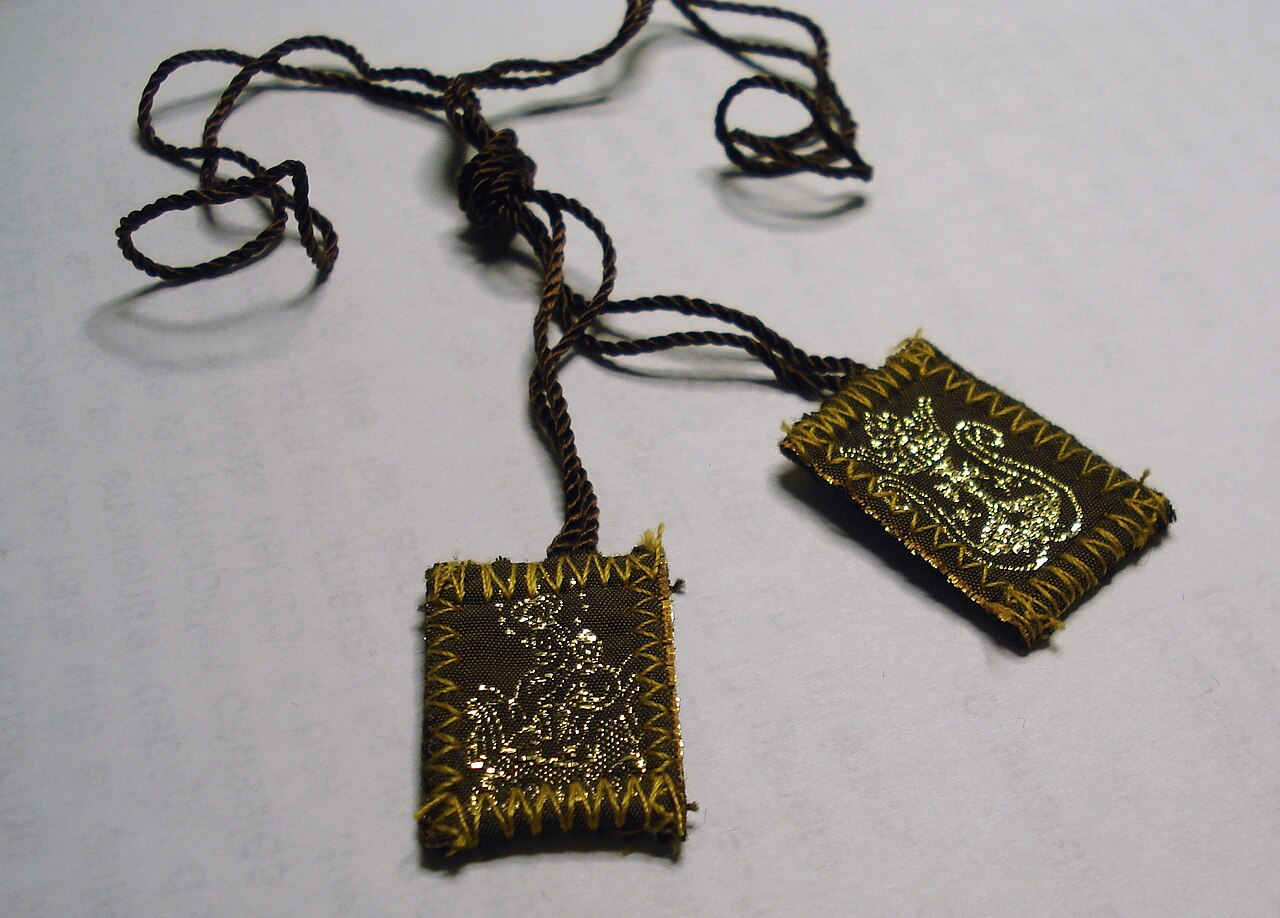
Devotion to our Blessed Lady is as ancient as the Church herself. But the long wars and dissensions which had desolated Europe, the ignorance, neglect of duties, and the consequent brutality of manners which ensued from this state of things, had greatly diminished it. However, an immense number of miracles which took place in the early part of the thirteenth century, communicated to it a new vigour and a wider extension. The instruments of mercy which the Blessed Virgin made use of to produce this effect were the Rosary, which was revealed to St. Dominic, in the year 1206, and the Scapulars of the Seven Dolours and of Mount Carmel, the first of which she herself gave to the seven Founders of the Order of Servites, and the second to St. Simon Stock.
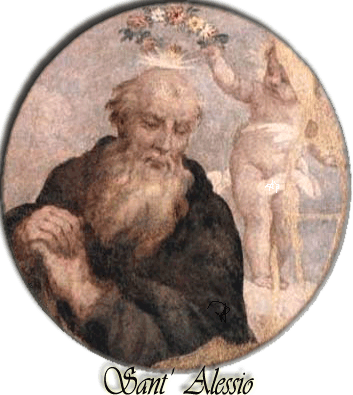
In the year 1233 seven noblemen of the city of Florence, whose names were Buonfiglio Monaldi, Buonagiunta Manetti, Manetto dell’ Antella, Amedeo degli Amidei, Ugiccione Uguccioni, Tostegno de’ Tostegni, and Alexis Falconieri, members of a pious Confraternity for honouring the Blessed Virgin, had assembled on the festival of the Assumption, to pay their homage and celebrate her triumph. At one and the same time the Mother of God appeared to each, and told them that they were to quit the world, and embrace a more perfect state of life. They did not hesitate to obey this heavenly voice, and having consulted with the blessed Ardingo, Bishop of Florence, as to the mode of life which they should adopt, they renounced their dignities, distributed their goods to the poor, and clothed themselves in grey habits, and retired to a small house outside the town, on the feast of the Nativity of their holy Patroness (8th September, 1233).
If, at any time, they were obliged to enter the city of Florence, in order to consult the Bishop, the people assembled about them in crowds, and the little children used to exclaim, “Here are the servants of Mary! Here are the servants of Mary!” Amongst these children was St. Philip Benizzi, who was then hardly five months old, and who, in after years, was called by our Blessed Lady to assume the habit of her servants. This humble retreat of the seven Solitaries soon became so besieged by visitors, that they were obliged to look out for a more retired place.
Their good Mother indicated to them the summit of Mount Jenario, where they removed and passed six years, principally occupied about their own sanctification, in the practice of the most austere penance, and assiduous meditation on the Passion of our Lord, and on the Dolours of his Blessed Mother. The venerable Bishop Ardingo had more than once exhorted them to establish an Order devoted to the Blessed Virgin, but in vain. The co operation of heaven became necessary to overcome the diffidence of these holy men, and triumph over their humility. On the evening of one Good Friday, whilst they were absorbed in profound meditation, they saw their august patroness descending from heaven, surrounded by a number of heavenly spirits, some of whom carried the instruments of the Passion; another, the rules of St. Augustine; one amongst them had in his hand a palm; another a scroll,on which the following words were engraven in golden letters, “Servants of Mary.” Finally there was one who carried in his hands a black habit of a new form.
The seven anchorites, filled with astonishment at this glorious apparition, waited respectfully for the Blessed Virgin to make known her will. Mary, in the attitude of a Mother overwhelmed with affliction, and, at the same time, full of maternal tenderness, approached them, and, pointing to the objects placed before their eyes, said : “Receive this habit which I present to you, and receive also the rule of St. Augustine, which you are to follow, so that, being designated by the name of my servants, you may one day obtain the palm of eternal life offered to you.” The holy Solitaries immediately adopted the habit of their new Institute, by the spirit of which they, and so many of the faithful, were to be sanctified, through the continual meditation on the Passion of Jesus Christ, and on the bitter sorrows of his Holy Mother.
In order that all the world might be able to clothe themselves in the livery of the Servants of Mary, they instituted a smaller habit of the same form, material, and colour, with that of the religious of the Order, and desiring also to give to the faithful an easy method of honouring the principal Dolours of Mary, they instituted a Rosary divided into seven parts, each of which is composed of one Pater and seven Aves. Mary promised to the seven holy founders, and more particularly to the Blessed Alexis, to protect in a special
manner, on all occasions, but particularly at the hour of death, those who
honour her Dolours.
But if we desire to secure this precious protection of the Blessed Virgin Mary, we must not be satisfied with meditating at long intervals on her Dolours, and with wearing the habit of mourning which reminds us of them. Our compassion, if it be a true one, ought to cause us to avoid that which is the true cause of her sorrow-that is to say, everything that offends God.


You must be logged in to post a comment.