
Year: 2017
Holy Thursday/Maundy Thursday/The Last Supper of the Lord – 13 April 2017
Holy Thursday/Maundy Thursday/The Last Supper of the Lord – 13 April 2017
Today is Holy Thursday, also known as Maundy Thursday or the Last Supper. It’s here, at the Last Supper, that we see: (1) the institution of the Eucharist (2) the institution of the sacramental priesthood and (3) references to Baptism and Confession. Sacramentally, then, it’s important and very beautiful.
I. The Eucharist
The Eucharist is straight-forward (Mt. 26:26-29; Mk. 14:22-25; Lk. 22:19-20; 1 Cor. 11:23-25). It’s also of obvious importance to the early Church: it’s one of relatively few events recorded (nearly verbatim) by St. Paul and the Synoptic Gospels. As Catholics, we believe that when Jesus said, “This is My Body,” and “This is My Blood of the Covenant,” that He meant “This is My Body,” and “This is My Blood of the Covenant,” and not some other thing, like “this is a symbol.” Suffice it to say that this language is prefigured in the Old Covenant (Exodus 24:8), and wasn’t symbolic then (as Hebrews 9:18-20 notes).
II. Holy Orders
But let’s talk a bit about Holy Orders. It’s not coincidental that the priesthood and Eucharist are established simultaneously. The Eucharistic Sacrifice, after all, requires priests: a priest, is one who offers sacrifice. But Christ does something interesting with this notion of priesthood in the washing of the feet (John 13:3-17). This appears to be a deliberate echo of the washing of the hands and feet done by the sacrificial priests of the Old Covenant (Exodus 30:19-21). This washing was to symbolise the priest’s unworthiness to approach the Lord, so it’s fitting that the washing of feet occurs at the same time that the Apostles are entrusted with the Eucharist (which they’re not worthy to approach). But notice what’s different: the Old Covenant focused on self-purification. The New Covenant is focused on sanctifying others. This is in keeping with the model of clerical governance that Christ imparts to St. Peter and the Apostles at this Last Supper (Luke 22:24-34).
III. Baptism and Confession
 |
| Christ Washing the Feet of Peter (11th c.) |
And the washing of the feet doesn’t just represent the priesthood. It also represents Sacramental Confession. In John 13:6-10, Jesus and Peter have this dialogue:
He came to Simon Peter; and Peter said to him, “Lord, do you wash my feet?” Jesus answered him, “What I am doing you do not know now, but afterward you will understand.” Peter said to him, “You shall never wash my feet.” Jesus answered him, “If I do not wash you, you have no part in me.” Simon Peter said to him, “Lord, not my feet only but also my hands and my head!”Jesus said to him, “He who has bathed does not need to wash, except for his feet, but he is clean all over; and you are clean, but not every one of you.”
Obviously, this isn’t about “the removal of dirt from the body” (1 Peter 3:21), but the forgiveness of sins. That’s why Jesus says that Judas isn’t clean, at the end (Jn. 13:10-11). Well, given that, what’s the bath that Jesus is talking about? It’s Baptism, “the washing of regeneration and renewal in the Holy Spirit” (Titus 3:5).
If that’s right, what is Jesus saying that the washing of feet represents? Sacramental confession (CCC 1484, 1486). It is in this way that we are restored to our Baptismal purity. And here’s something fascinating: just as Christ doesn’t permit the Disciples to purify themselves, but instructs them to purify one another, the same is true for the priesthood He established, and sacramental confession.
IV. The Priestly Commission
 |
| Rogier van der Weyden, Seven Sacraments Altarpiece(detail, right wing) (1450) |
Having established all of this, consider Christ’s dual commission. Immediately after instituting the Eucharist, He orders the Apostles: “do this in remembrance of me” (Lk. 22:19; 1 Cor. 11:24). That doesn’t mean “treat this as a symbol,” by the way. Once again, the Old Testament provides important context. The Old Covenant contained what’s called the memorial sacrifice or memorial offering (see, e.g., Leviticus 2:9). The sacrifice wasn’t a mere symbol: the memorial offering of grain actually was grain. And the memorial offering of our prayers (Acts 10:4) aren’t symbols of prayers, but actual prayers. Likewise, the memorial offering of Christ’s Body and Blood actually is Christ’s Body and Blood. But each of these memorial offerings also recalls something: in this case, we’re offering up Christ’s Body and Blood, while recalling His Death on Calvary.
So “do this in remembrance of me,” properly understood, is sacrificial language. The first Eucharist is offered by Christ, who is both the High Priest (Hebrews 9:11), and the willing Sacrificial Victim (1 Corinthians 5:7). Jesus makes this clear Himself in John 10:17-18: He is in control over everything, including Calvary. But what’s shocking is that He tells the Apostles to carry on His priestly role. To continue to offer the memorial offering of His Body and Blood.
Only slightly less shocking is the second commission, which comes at the end of the washing of the feet (John 13:12-17),
When he had washed their feet, and taken his garments, and resumed his place, he said to them, “Do you know what I have done to you? You call me Teacher and Lord; and you are right, for so I am. If I then, your Lord and Teacher, have washed your feet, you also ought to wash one another’s feet. For I have given you an example, that you also should do as I have done to you. Truly, truly, I say to you, a servant is not greater than his master; nor is he who is sent greater than he who sent him. If you know these things, blessed are you if you do them.”
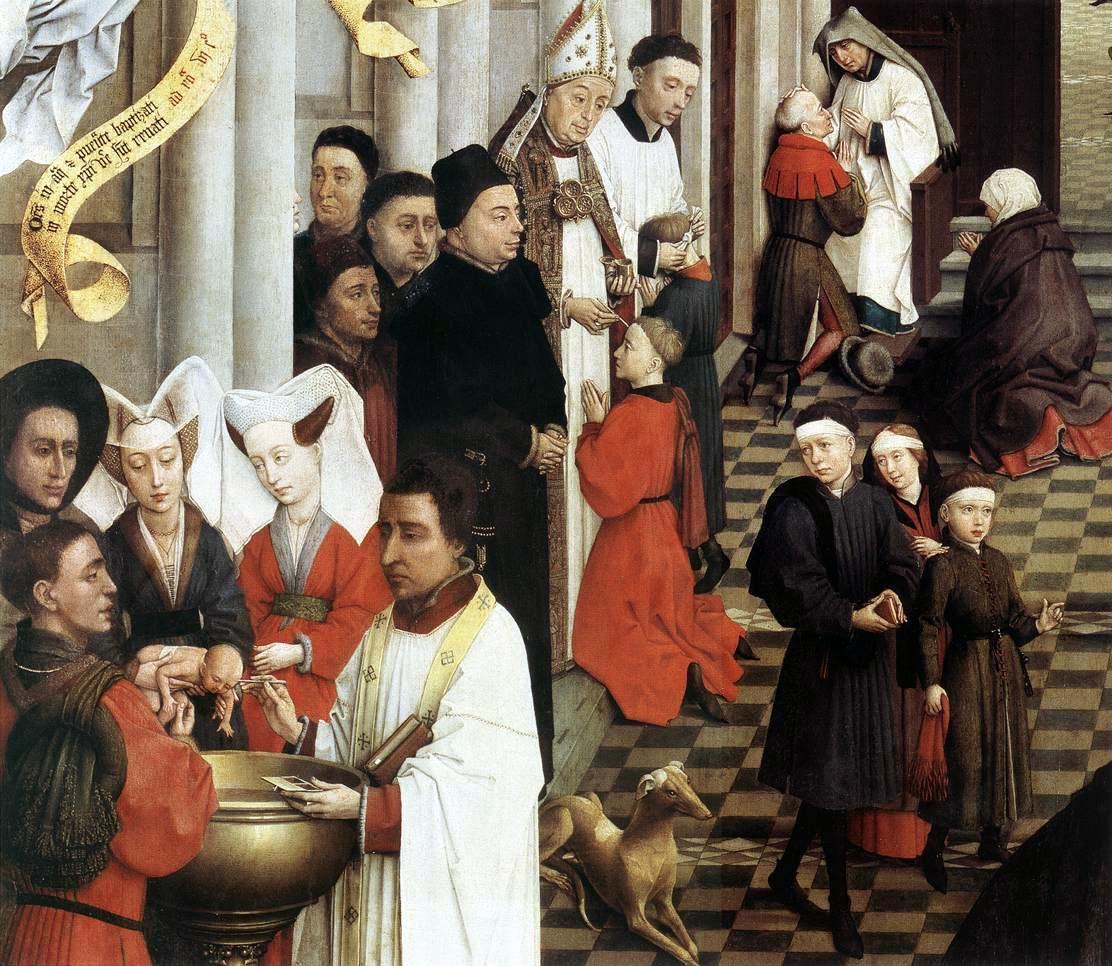 |
| Rogier van der Weyden, Seven Sacraments Altarpiece(detail, left wing) (1450) |
That’s the mandate (mandatum) that gives Maundy Thursday its name. Now, this doesn’t sound shocking at first, because it sounds like Jesus is just saying, “be humble.” And surely, that’s part of it. But remember what we established earlier: that the washing of feet is about the sacrificial priesthood and about the forgiveness of sins. Jesus makes that last part really clear in John 13:6-11. He’s not calling Judas smelly. He’s saying Judas is still trapped in sin. So in that context, Jesus Christ is calling the Apostles not only to be humble, but to (a) forgive sins, and (b) pass on the gift of the priesthood. He’ll later empower the Apostles to carry out this command to forgive sins by imparting the Holy Spirit upon them (John 20:21-23). But too often, Christians read the washing of feet as simply a nice gesture, when Christ makes it clear that it’s so much more.
So tonight should be a true celebration of the Sacraments that Christ left us and the beautiful manner in which they are, in God’s Providence, intertwined. Baptism, to wash us free from our sins. The Eucharist, the food of life, partaking in the Body and Blood of Jesus Christ. Confession, to restore us to our Baptismal purity and prepare us for the Eucharist. And Holy Orders, to carry on His priestly ministry, and to ensure that we should always have the Eucharist and Confession. by Joe Heschmeyer
Maundy Thursday of Holy Week – 13 April 2017
Maundy Thursday of Holy Week – 13 April 2017
O God, who have called us to participate
in this most sacred Supper,
in which Your Only Begotten Son,
when about to hand Himself over to death,
entrusted to the Church a sacrifice new for all eternity,
the banquet of His love,
grant, we pray,
that we may draw from so great a mystery,
the fullness of charity and of life.
Through our Lord Jesus Christ, Your Son,
who lives and reigns with You in the unity of the Holy Spirit,
one God, for ever and ever.
The Thirteenth Station:
Jesus is Taken Down From the Cross
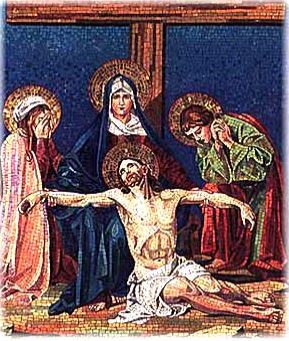
My Jesus, it was with deep grief that Mary finally took You into her arms and saw all the wounds sin had inflicted upon You. Mary Magdalene looked upon Your dead Body with horror. Nicodemus, the man so full of human respect, who came to You by night, suddenly received the courage to help Joseph take you down from the Cross. You are once more surrounded by only a few followers. When loneliness and failure cross my path, let me think of this lonely moment and this total failure – failure in the eyes of men. How wrong they were – how mistaken their concept of success! The greatest act of love was given in desolation and the most successful mission accomplished and finished when all seemed lost. Is this not true in my life, dear Jesus? I judge my failures harshly. I demand perfection instead of holiness. My idea of success is for all to end well – according to my liking.
Give to all men the grace to see that doing Your Will is more important than success. If failure is permitted for my greater good then teach me how to use it to my advantage. Let me say as You once said, that to do the Will of the Father is my food. Let not the standards of this world take possession of me or destroy the good You have set for me – to be Holy and to accomplish the Father’s Will with great love. Let me accept praise or blame, success or failure with equal serenity.
Amen
The Fourteenth Station:
Jesus is Laid in the Sepulcher
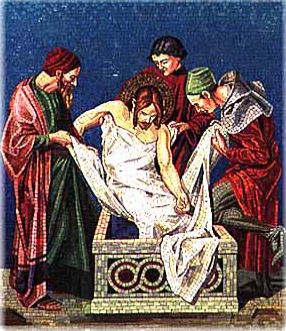
My Jesus, You were laid to rest in a stranger’s tomb. You were born with nothing of this world’s goods and You died detached from everything. When You came into the world, men slept and angels sang and now as You leave it, Creation is silent and only a few weep. Both events were clothed in obscurity. The majority of men live in such a way. Most of us live and die knowing and known by only a few. Were You trying to tell us, dear Jesus, how very important our lives are just because we are accomplishing the Father’s Will? Will we ever learn the lesson of humility that makes us content with who we are, where we are and what we are?
Will our Faith ever be strong enough to see power in weakness and good in the sufferings of our lives? Will our Hope be trusting enough to rely on Your Providence even when we have nowhere to lay our head? Will our Love ever be strong enough not to take scandal in the cross?
My Jesus, hide my soul in Your heart as You lie in the Sepulcher alone. Let my heart be as a fire to keep you warm. Let my desire to know and love You be like a torch to light up the darkness. Let my soul sing softly a hymn of repentant love as the hours pass and Your Resurrection is at hand. Let me rejoice, dear Jesus, with all the Angels in a hymn of praise and thanksgiving for so great a love- so great a God- so great a day!
Amen
Stations of the Cross by Mother Angelica
Thought for the Day – 13 April
Thought for the Day – 13 April
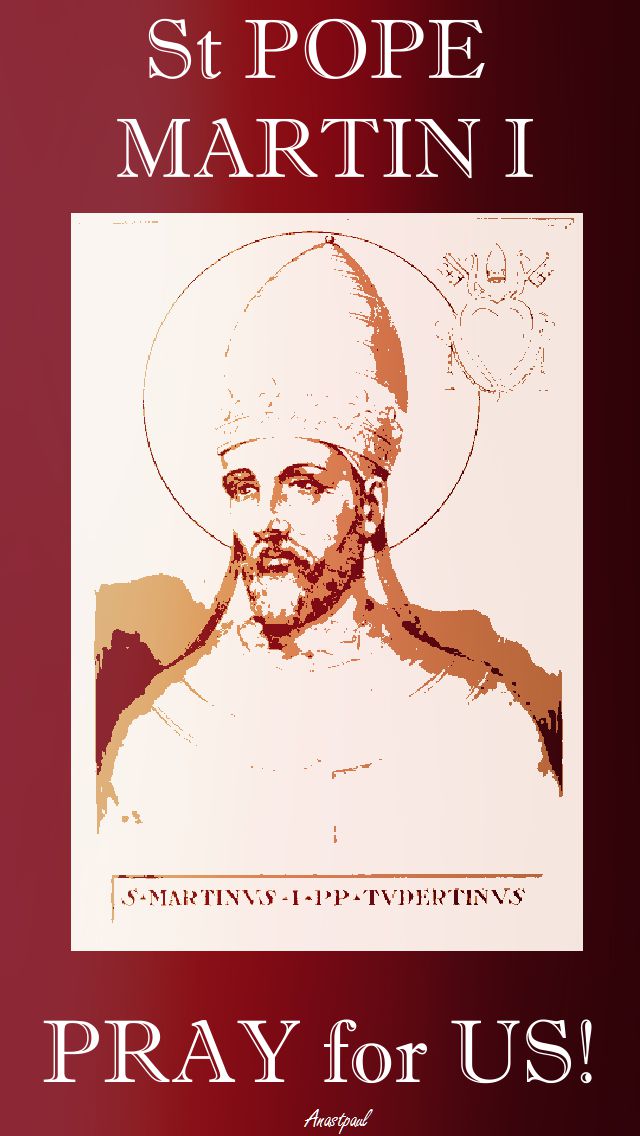
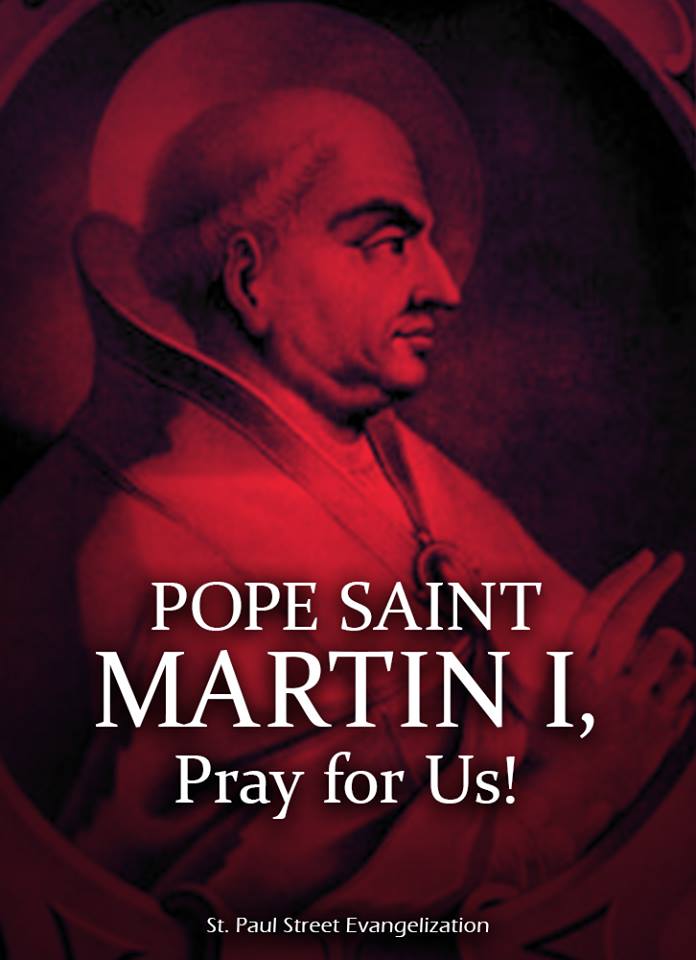
Jesus taught that His followers would “suffer persecution for the sake of justice” and that is often the lot of the followers of Christ. If we follow our Christian convictions and live them, we will often be opposed and criticised. That is part of the price of following our Lord Jesus Christ, look what happened to Him! The real significance of the word martyr comes not from the dying but from the witnessing, which the word means in its derivation. People who are willing to give up everything, their most precious possessions, their very lives, put a supreme value on the cause or belief for which they sacrifice. Martyrdom, dying for the faith, is an incidental extreme to which some have had to go to manifest their belief in Christ. A living faith, a life that exemplifies Christ’s teaching throughout and that in spite of difficulties, is required of all Christians. St Pope Martin I refused to cut corners as a way of easing his lot, to make some accommodations with the civil rulers and he died a martyr.
St Pope Martin I pray for us!
Holy Thursday – 13 April 2017
Holy Thursday – 13 April 2017
The washing of the feet: ultimate act of love and service
The washing of the feet is a very particular moment in the ceremony. It happens after the readings, after a homily and before the celebration of the Eucharist. It is a moment when 12 people gathered in the Church come together near the altar and the chief celebrant washes each foot: “water is poured over, the foot is dried and sometimes the foot is kissed” he says.
It is done in silence, the congregation is singing but no prayers are said: it is the gesture that counts. My feet are my way to God, I walk the path to God, my feet are that part of my anatomy which enables me to move… they are the way to love. We are all pilgrims on the way…
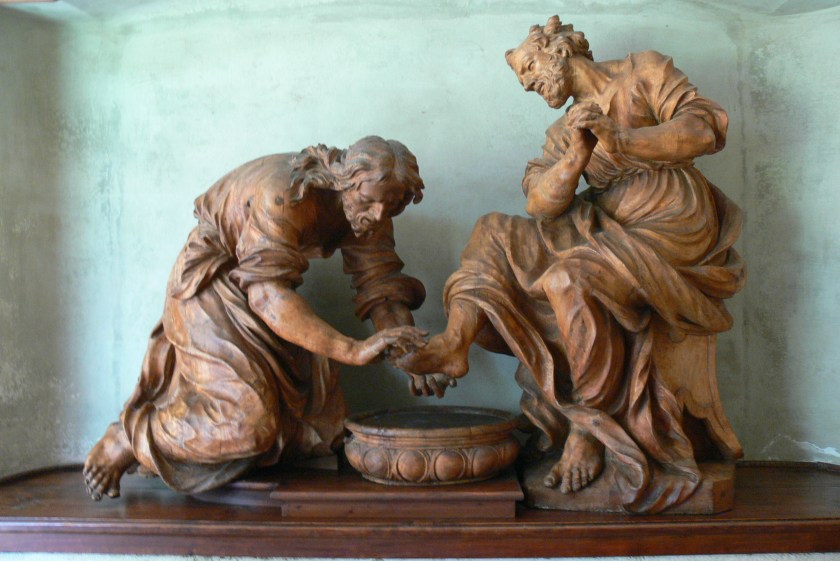
Twelve very different pairs of feet that sat around the table on that eventful evening of Jesus’ last Supper:
– The feet that never walked – the feet of people who have never had the opportunity of experiencing the walk in any other way than “being walked by someone else”…
– The feet that never wore shoes; that are so poor that they haven’t got shoes…
– The feet that are always shackled; the feet that have been put in prison…
– The feet of those who are so talented; who use those feet in a magical way…
– The feet that give pain as we get older…
– The feet crushed in accidents; feet that are lost through no fault of our own…
– The feet that spend hours training to run a marathon for charity…
– The feet that are blown off by landmines…
– The feet of those who have walked and have never found; the ones who doubt…
– The feet that have always taken the wrong turnings…
– The feet of strangers who have come to this Church…
– The feet that long to walk to Heaven…
Benedictine Abbot Timothy Wright
Our Morning Offering – 13 April
Our Morning Offering – 13 April
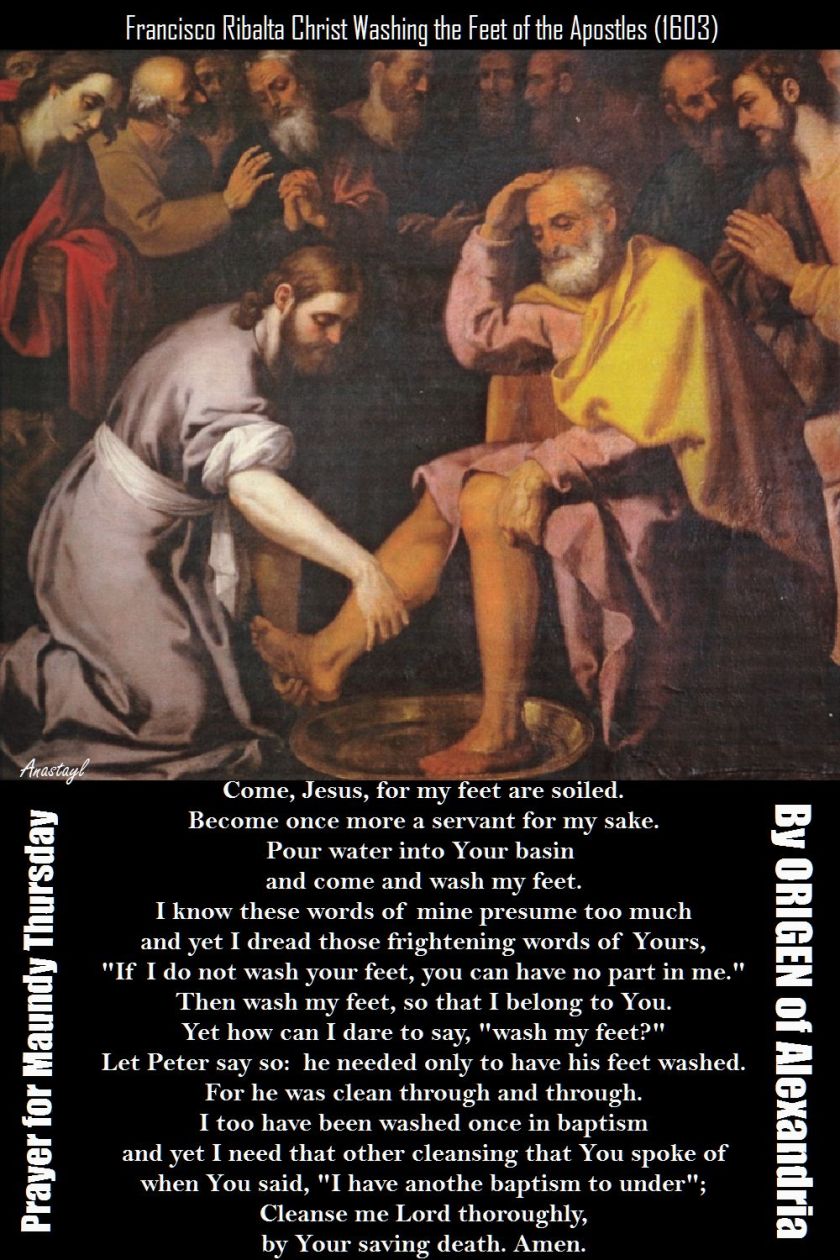
Come, Jesus, for my feet are soiled.
Become once more a servant for my sake.
Pour water into Your basin
and come and wash my feet.
I know these words of mine presume too much
and yet I dread those frightening words of Yours,
“If I do not wash your feet, you can have no part in me.”
Then wash my feet, so that I belong to You.
Yet how can I dare to say, “wash my feet?”
Let Peter say so: he needed only to have his feet washed.
For he was clean through and through.
I too have been washed once in baptism
and yet I need that other cleansing that You spoke of
when You said, “I have anothe baptism to under”;
Cleanse me Lord thoroughly,
by Your saving death. Amen
By Origen of Alexandria
Saint of the Day – 13 April – St Pope Martin I
Saint of the Day – 13 April – St Pope Martin I (598-655) Martyr – Attributes Pope holding money, Pope with geese around him (possible confusion by artist with Martin of Tours), Pope in a prison cell.


S. Martin was a Priest of Rome who had a reputation for being well-educated and holy. He became the 74th Pope in July, 649. When people were arguing over the truths about Jesus, Pope Martin called a meeting of Bishops. This meeting was the Council of the Lateran. It explained clearly what we believe about certain truths. However, some Christians were not pleased about it. Pope Martin knew the Council’s explanations were true. It was his duty as pope to teach people the truth.
Some powerful men did not appreciate Pope Martin’s activities. One such person was Emperor Constans II of Constantinople. He sent his soldiers to Rome to capture Martin and bring him to Constantinople. The soldiers kidnapped the pope. They took him from the Lateran Cathedral and onto a ship. Pope Martin became ill but they continued their journey. In October, 653, he was put in jail in Constantinople for three months. He was given only a little food and water each day. Pope Martin was put on trial, publicly humiliated and condemned to death. But then he was sent back to the same prison for three more months. Patriarch Paul of Constantinople pleaded for the pope’s life. So instead of death, the pope was sentenced to be exiled. Pope Martin was put on a ship that took him across the Black Sea. In April, 654, it landed on the Russian peninsula called the Crimea.
Pope Martin was shocked at the neglect he suffered from those who were in charge of his captivity. He wrote his own account of those sad days. The pope said that he felt very bad to be forgotten by his relatives and members of the Church in Rome. He realised their neglect was driven by fear.
The pope’s exile lasted two years. He died around 655. Because of his terrible sufferings, he was proclaimed a martyr. He is the last of the popes so far to be considered a martyr.


Saints, memorials, celebrations – 13 April
Holy Thursday (2017)
St Pope Martin I (Optional Memorial)
—
Agathonica of Pergamus
Agathodorus of Pergamus
Caradoc of Wales
Carpus of Pergamus
Bl Edward Catherick
Bl Francis Dickenson
Guinoc
Hermengild
Ida of Boulogne
Bl Ida of Louvain
Bl Isabel Calduch Rovira
Bl James of Certaldo
Bl John Lockwood
Bl Margaret of Castello
Martius of Auvergne
Bl Miles Gerard
Papylus of Pergamus
Proculus of Terni
Bl Rolando Rivi
Sabas Reyes Salazar
Bl Scubilion Rousseau
Ursus of Ravenna
—
Martyrs of Dorostorum – 3 saints: A lector and two students martyred together in the persecutions of Diocletian – Dadas, Maximus and Quinctillianus. Beheaded c.303 in Dorostorum, Lower Mysia (modern Sillistria, Bulgaria
Holy Week – Wednesday 12 April – The Last Day of Lent
Holy Week – Wednesday 12 April – The Last Day of Lent
He freed us from the power of the enemy.
This is the last day of Lent.
It is “Spy Wednesday,” remembering the day Judas asked,
“What are you willing to give me if I hand him over to you?”
We read the third song of the Servant who suffers.
And we sense the acceptance, the surrender and the peace of Jesus.
I can imagine the treachery and tranquility of this day,
as I go through the real life drama of my day.
I can begin to feel the joy of the liberation being offered me.
If I haven’t done so already,
this can be a wonderful day to pray through the Stations of the Cross.
The Son of Man came not to be served,
but to serve
and to give his life
as a ransom for many.
Communion Antiphon Matthew 20:28
The Eleventh Station:
Jesus is Nailed to the Cross
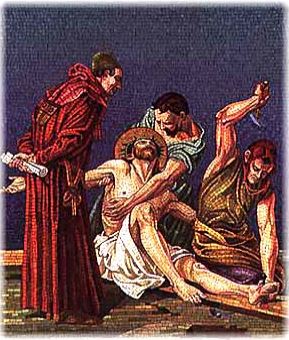
It is hard to imagine a God being nailed to a cross by His own creatures. It is even more difficult for my mind to understand a love that permitted such a thing to happen! As those men drove heavy nails into Your hands and feet, dear Jesus, did You offer the pain as reparation for some particular human weakness and sin? Was the nail in Your right hand for those who spend their lives in dissipation and boredom?
Was the nail in Your left hand in reparation for all consecrated souls who live lukewarm lives? Were You stretching out Your arms to show us how much You love us? As the feet that walked the hot, dusty roads were nailed fast, did they cramp up in a deadly grip of pain to make reparation for all those who so nimbly run the broad road of sin and self-indulgence?
It seems, dear Jesus, Your love has held You bound hand and foot as Your heart pleads for a return of love. You seem to shout from the top of the hill “I love you – come to me – see, I am held fast – I cannot hurt you – only you can hurt Me.” How very hard is the heart that can see such love and turn away. Is it not true I too have turned away when I did not accept the Father’s Will with love? Teach me to keep my arms ever open to love, to forgive and to render service – willing to be hurt rather than hurt, satisfied to love and not be loved in return.
Amen
The Twelfth Station:
Jesus Dies on the Cross
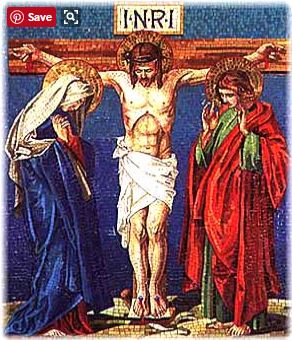
God is dead! No wonder the earth quaked, the sun hid itself, the dead rose and Mary stood by in horror. Your human body gave up it’s soul in death but Your Divinity, dear Jesus, continued to manifest its power. All creation rebelled as the Word made Flesh departed from this world. Man alone was too proud to see and too stubborn to acknowledge truth.
Redemption was accomplished! Man would never have an excuse to forget how much You loved him. The thief on Your right saw something he could not explain – he saw a man on a tree and knew He was God. His need made him see his own guilt and Your innocence. The Promise of eternal life made the remaining hours of his torture. endurable.
A common thief responded to Your love with deep Faith, Hope, and Love. He saw more than his eyes envisioned – he felt a Presence he could not explain and would not argue with. He was in need and accepted the way God designed to help him.
Forgive our pride, dear Jesus as we spend hours speculating, days arguing and often a lifetime in rejecting Your death, which is a sublime mystery. Have pity on those whose intelligence leads them to pride because they never feel the need to reach out to the Man of Sorrows for consolation.
Amen
Stations of the Cross by Mother Angelica
Thought for the Day – 12 April
Thought for the Day – 12 April
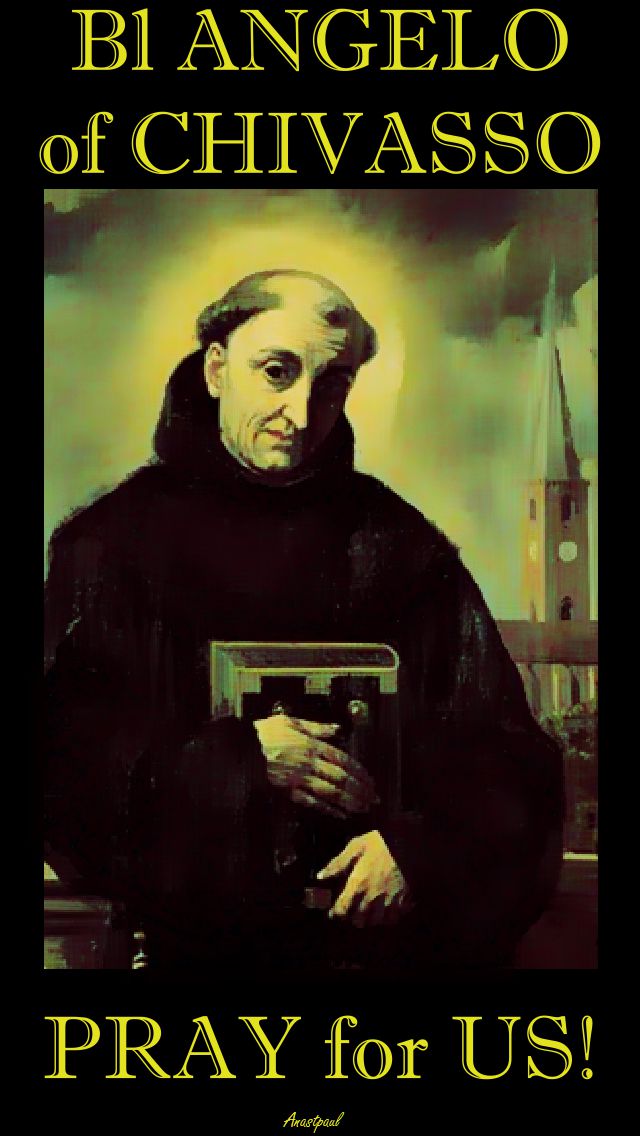
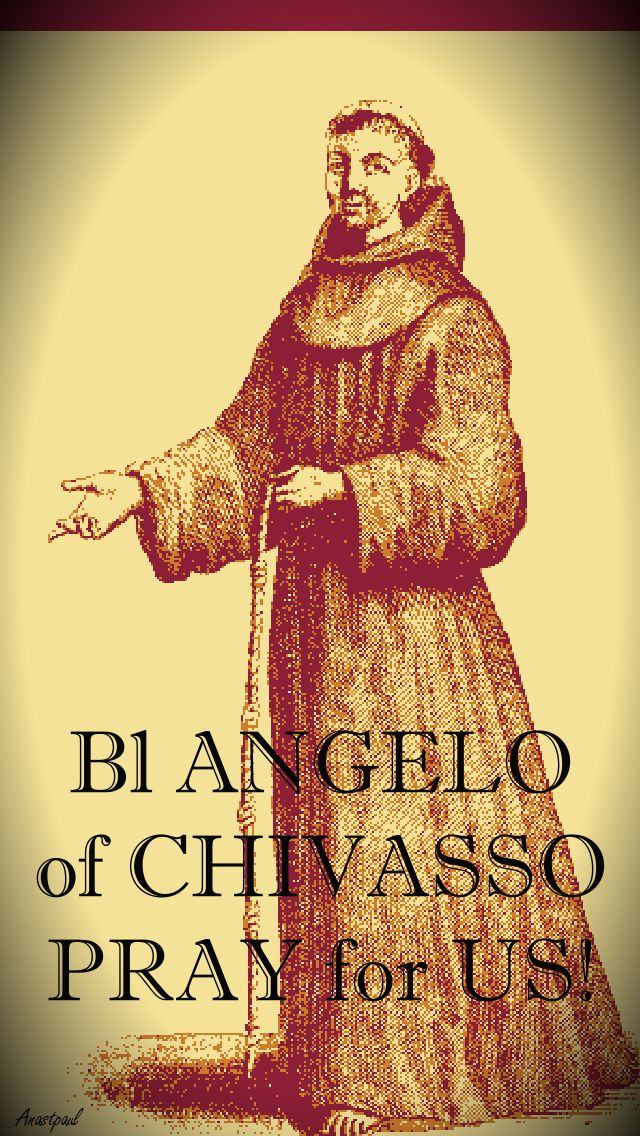
Talented people like Blessed Angelo of Chivasso see the stupidity of most personal ambition that seeks to lord it over others; rather, talents and gifts should be for the service of others, for enriching and benefiting their lives. How often do we put others down in order to make ourselves look better than they? We must recognise that this attitude is the exact opposite of the words of the Beatitudes, the words of Christ and if we seek such a path, we have a great deal of work to do!
Bl Angelo of Chivasso, pray for us!
Quote of the Day – 12 April
Quote of the Day – 12 April
“The road is narrow. He who wishes to travel it more easily must cast off all things and use the cross as his cane. In other words, he must be truly resolved to suffer willingly for the love of God in all things.”
St. John of the Cross
One Minute Reflection – 12 April
One Minute Reflection – 12 April
……………..yet I live, no longer I but Christ lives in me; insofar as I now live in the flesh, I live by faith in the Son of God who has loved me and given himself up for me………….Gal 2:20
REFLECTION – “The Crucifix is an open book that all can read.
The crucifix is an infinite declaration of love!”……………St Catherine of Siena
PRAYER – Lord Jesus Christ, inspire me to read the Crucifix as all the teaching I need. Grant that I may return glory, gratitude and love to You for Your great love for me. Grant too that I may use all the talents given me, as Blessed Angelo of Chivasso did, for the glory of Your Kingdom and the love of all my neighbours. Bl Angelo, pray for us. Amen
Our Morning Offering – 12 April
Our Morning Offering – 12 April
PRAYER OF ST EPHREM OF SYRIA
(In Honour Of Christ’s Passion)
I give You glory, O Christ,
because You, the Only-begotten,
the Lord of all,
underwent the death of the Cross
to free my sinful soul from the bonds of sin.
What shall I give to You, O Lord,
in return for all this kindness?
Glory to You, O Lord, for Your love,
for Your mercy, for Your patience.
Glory to You,
for forgiving us all our sins,
for coming to save our souls,
for Your incarnation in the Virgin’s womb.
Glory to You, for Your bonds,
for receiving the cut of the lash,
for accepting mockery.
Glory to You, for Your crucifixion,
for Your burial, for Your resurrection.
Glory to You, for being taken up heaven.
Glory to You who sit
at the Father’s right hand and will return in glory.
Glory to You for willing that the sinner
be saved through Your great mercy and compassion.
Saint of the Day – 12 Apil – Blessed Angelo Carletti di Chivasso
Saint of the Day – 12 Apil – Blessed Angelo of Chivasso (1411-1495) OFM Religious Priest, Theologian, Teacher, Writer.
Antonio Carletti was born in 1411 to a noble family of Chivasso, Italy, near Turin. He attended the University of Bologna, where he received the degree of Doctor of Civil and Canon Law and served as a magistrate in the Court of Chiavasso. He was appointed to the Senate by the Marquis of Monferrato Gian Giacomo. It was probably at the age of thirty that he entered the Order of Friars Minor at Santa Maria del Monte in Genoa, taking the name Angelo. There he met Francesco della Rovere, who was later to become Pope Sixtus IV.
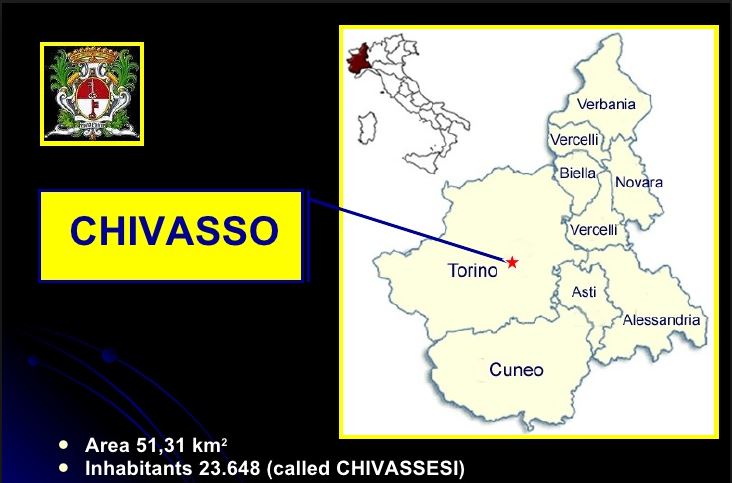
In 1467 he accompanied Fra Pietro da Napoli, who had been charged by the Vicar General to reorder the Franciscan province of Austria.
In 1472 he was chosen to fill the office of Vicar-General of that branch of the Order then known as the Cismontane Observance, founded by Bernadine of Siena. He held that office again in 1478, in 1485 and in 1490. He founded the monasteries of Saluzzo, Mondovì and Pinerolo and preached in Mantua, Genoa, Cuneo, Susa, Monferrato and Turin at the court of Charles I, Duke of Savoy. He also served as a spiritual counselor for Catherine of Genoa and Blessed Paola Gambara.


In 1480 the Ottoman Empire under Mehmed II took possession of Otranto and threatened to overrun and lay waste the area. Angelo was appointed Apostolic Nuncio by Pope Sixtus IV and commissioned to preach a crusade against the invaders. While the residents of Otranto held out under siege, Mehmed II died and the Turkish forces retired from the Italian peninsula.
Again, in 1491, he was appointed Apostolic Nuncio and Commissary by Innocent VIII, conjointly with the Bishop of Mauriana, and reached a peaceful agreement between Catholics and Waldensians.
In theology he is considered a major adherent of Scotism. His works are given by Wadding in the latter’s “Scriptores Ordinis Minorum”. The most noted of these is the “Summa de Casibus Conscientiae”, called after him the “Summa Angelica”. The first edition of di Chivasso’s “Summa Angelica” appeared in the year 1486 and from that year to the year 1520 it went through 31 editions, 25 of which are preserved in the Royal Library at Munich.
The “Summa” is divided into 659 articles arranged in alphabetical order and forming what would now be called a dictionary of moral theology. The most important of these articles is the one entitled “Interrogationes in Confessione”. It serves, in a way, as a dictionary of moral theology and was found very useful for confessors. Judging the character of the work of Bl. Angelo as a theologian from this, his most important contribution to moral theology, one is impressed with the gravity and fairness that characterized his opinions throughout. The “Summa” is a valuable guide in matters of conscience and approaches closely, in the treatment of the various articles, to casuistic theology as this science is now understood, hence the title of the work, “Summa de Casibus Conscientiae”.
Martin Luther considered it a symbol of Catholic orthodoxy and had it publicly burned in the public square outside Wittenberg’s Elster Gate on December 10, 1520 together with the Bull of Excommunication Exsurge Domine, the Code of Canon Law and the Summa Theologica of St. Thomas.


Angelo Carletti di Chivasso died on April 11, 1495 at the convent of St. Anthony at Cuneo. On April 14, 1753, Pope Benedict XIII beatified Angelo Carletti,[6] giving official approval to the cult that had for long been paid to Angelo, especially by the people of Chivasso and Coni. The latter chose him as their special patron. His feast is kept on 12 April. He is celebrated in his native Chivasso, with an traditional country fair and prayer.


Saints – 12 April
St Acutina
St Alferius of La Cava
Bl Andrew of Montereale
Bl Angelo Carletti di Chivasso
St Artemón of Caesarea
St Basil of Parion
St Constantine of Gap
St Damian of Pavia
St David Uribe Velasco
St Erkemboden of Thérouanne
St Florentin of Arles
St Pope Julius I
St Lorenzo of Belem
St Peter of Montepiano
St Sabas the Lector
St Teresa of the Andes
St Tetricus of Auxerre
St Victor of Braga
St Vissia of Fermo
St Wigbert
St Zeno of Verona
Holy Week – Tuesday 11 April 2017
Holy Week – Tuesday 11 April 2017
God of such unwavering love,
how do I “celebrate”
the passion and death of Jesus?
I often want to look the other way
and not watch,
not stay with Jesus in His suffering.
Give me the strength
to see His love with honesty and compassion
and to feel deeply
your own forgiveness and mercy for me.
Help me to understand
how to “celebrate” this week.
I want be able to bring
my weaknesses and imperfections with me
as I journey with Jesus this week,
totally aware of His love, His suffering for my sins.

The Ninth Station:
Jesus Falls the Third Time
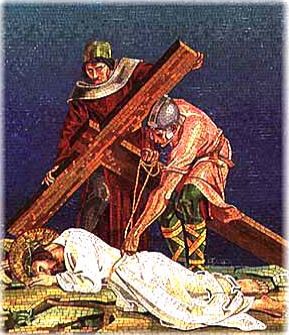
My Jesus, even with the help of Simon You fell a third time. Were You telling me that there may be times in my life that I will fall again and again despite the help of friends and loved ones? There are times when the crosses You permit in my life are more than I can bear. It is as if all the sufferings of a life time are suddenly compressed into the present moment and it is more than I can stand.
Though it grieves my heart to see You so weak and helpless, it is a comfort to my soul to know that you understand my sufferings from Your own experience. Your love for me made You want to experience every kind of pain just so I could have someone to look to for example and courage.
When I cry out from the depths of my soul, “This suffering is more than I can bear,” do You whisper, “Yes, I understand”? When I am discouraged after many falls, do you say in my innermost being, “Keep going, I know how hard it is to rise”?
There are many people who are sorely tried in body and soul with alcohol and drug weaknesses who try and try and fall again and again. Through the humiliation of this third fall, give them the courage and perseverance to take up their cross and follow You.
Amen
The Tenth Station:
Jesus is Stripped of His Garments
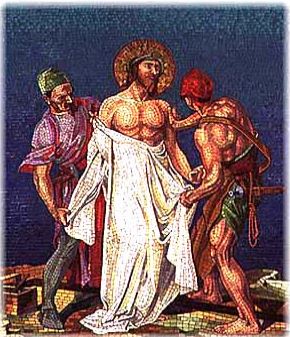
It seems that every step to Calvary brought You fresh humiliation, my Jesus. How Your sensitive nature recoiled at being stripped before a crowd of people. You desired to leave this life as You entered it – completely detached from all the comforts of this world. You want me to know without a doubt that You loved me with an unselfish love. Your love for me caused You nothing but pain and sorrow. You gave everything and received nothing in return. Why do I find it so hard to be detached?
In Your loving mind, dear Jesus, did You look up to the Father as You stood there on that windy hill, shivering from cold and shame and trembling from fear and ask Him to have mercy on those who would violate their purity and make love a mockery? Did you ask forgiveness for those whose greed would make them lie, cheat and steal for a few pieces of cold silver?
Forgive us all, dear Jesus. Look upon the world with pity, for mankind has lost its way and the principles of this world make lust a fun game and luxury a necessity. Detachment has become merely another hardship of the poor and obedience the fault of the weak. Have mercy on us and grant the people of this day the courage to see and know themselves and the light to change.
Amen
Stations by Mother Angelica
Thought for the Day – 11 April
Thought for the Day – 11 April
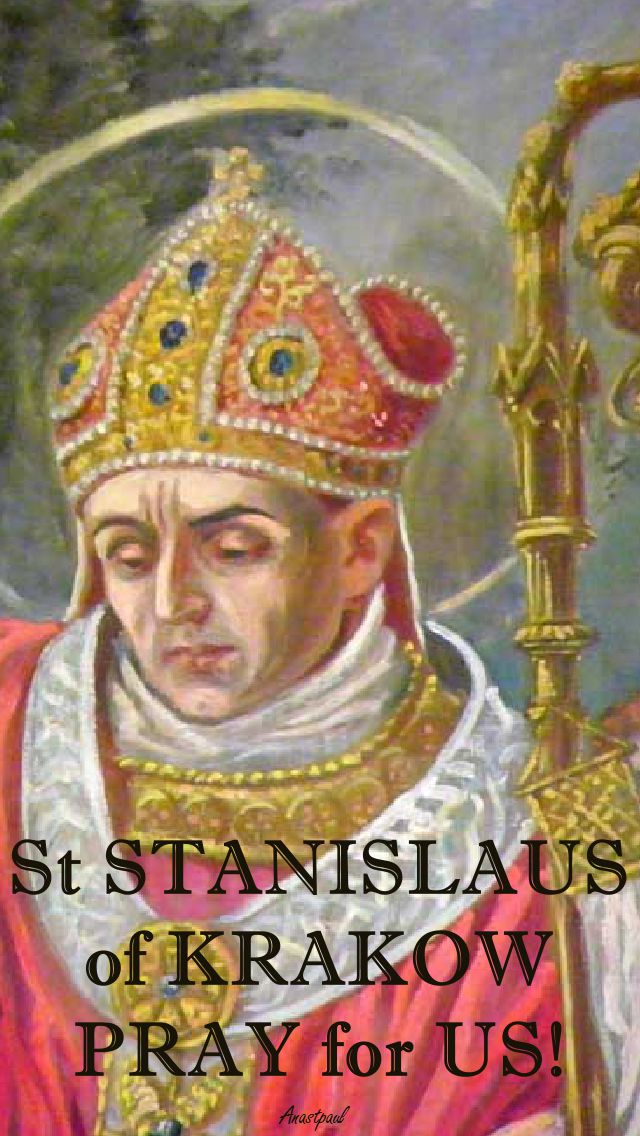
Evil has to be confronted boldly whatever the consequences. Brave men like Saints John the Baptist, Thomas Becket, Thomas More and Stanislaus are a few of the prophets who dared to denounce corruption in high places. They followed in the footsteps of Jesus Himself, who pointed out the moral corruption in the religious leadership of His day. There is no longer little chance that we will face such corruption and take a stand in our modern world for evil surrounds us at every turn and so, it should be very clear, in the face of evil, where we stand! It is our moral duty – Christ, our Lord, can expect no less from us, risky or not, this is our duty – are we ready, willing and able?
St Stanislaus, pray for us!
Quote of the Day – 11 April
Quote of the Day – 11 April
“If you really want to love Jesus,
first learn to suffer
because suffering teaches you to love.”
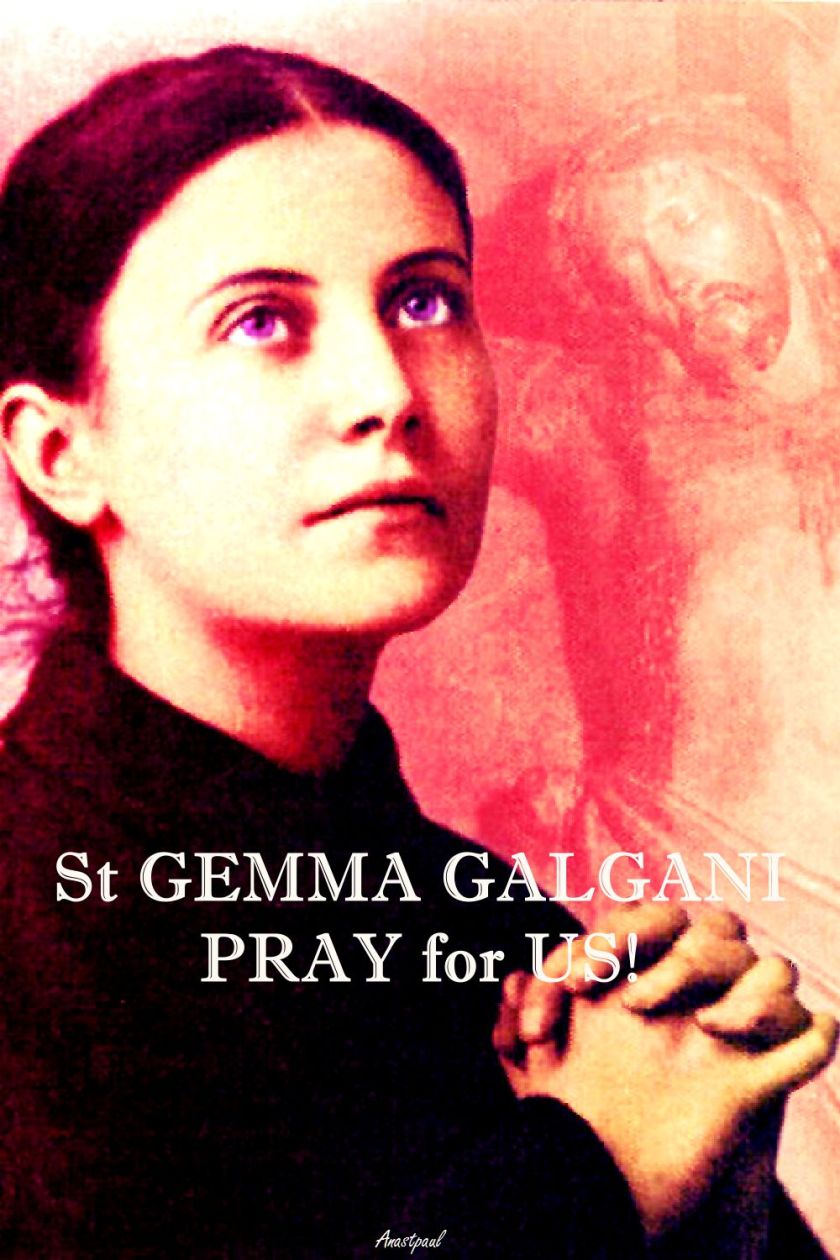
St. Gemma Galgani

One Minute Reflection – 11 April
One Minute Reflection – 11 April
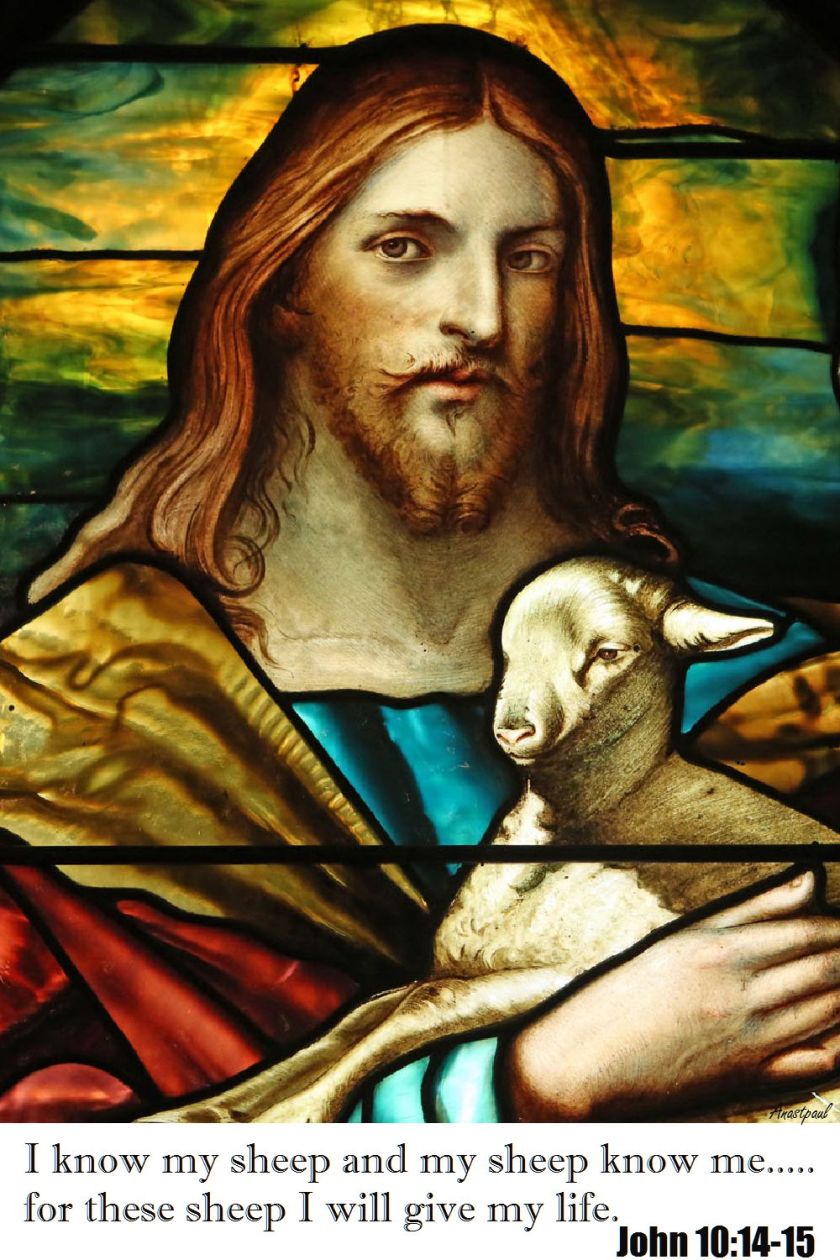
I know my sheep and my sheep know me…..
for these sheep I will give my life……John 10:14-15
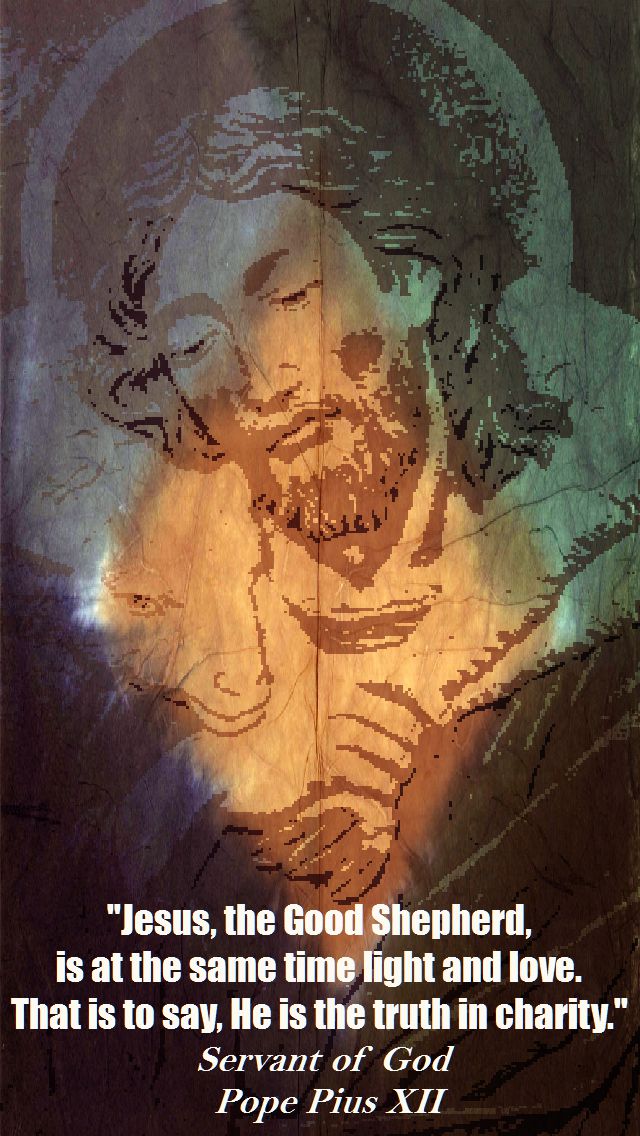
REFLECTION – “Jesus, the Good Shepherd, is at the same time light and love.
That is to say, He is the truth in charity.”…………..Servant of God Pope Pius XII
“If I saw the gates of Hell open and I stood on the brink of the abyss,
I should not despair, I should not lose hope of mercy because I should trust in You, my God.”………………..St Gemma Galgani (Memorial today 11 April)
PRAYER – Lord Jesus, let me be attached to You in truth, love and trust. Grant that I may always follow You as my Shepherd amid the perils and trails of this life. St Gemma Galgani pray for us, amen.

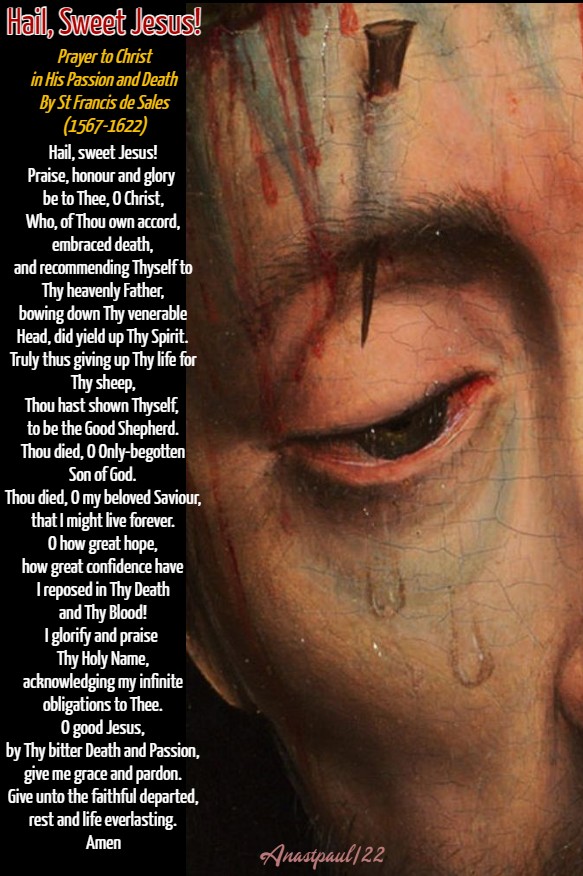
Our Morning Offering – 11 April – Hail, Sweet Jesus! Prayer to Christ in His Passion and Death
Our Morning Offering – 11 April
Hail, Sweet Jesus!
Prayer to Christ
in His Passion and Death
By St Francis de Sales (1567-1622)
Doctor of the Church
Hail, sweet Jesus!
Praise, honour and glory be to Thee, O Christ,
Who, of Thou own accord, embraced death,
and recommending Thyself to Thy heavenly Father,
bowing down Thy venerable Head,
did yield up Thy Spirit.
Truly thus giving up Thy life for Thy sheep,
Thou hast shown Thyself, to be the Good Shepherd.
Thou died, O Only-begotten Son of God.
Thou died, O my beloved Saviour,
that I might live forever.
O how great hope,
how great confidence have
I reposed in Thy Death and Thy Blood!
I glorify and praise Thy Holy Name,
acknowledging my infinite obligations to Thee.
O good Jesus,
by Thy bitter Death and Passion,
give me grace and pardon.
Give unto the faithful departed,
rest and life everlasting.
Amen
Saint of the Day – 11 April – St Stanislaus (1030-1079) Bishop Martyr
Saint of the Day – 11 April – St Stanislaus (1030-1079) also known as St Stanislaus Szczepanowsky – Bishop and Martyr, Preacher, Spiritual Director – Patron of Cracow, Poland, Archdiocese of Cracow, Poland, City of, Plock, Poland, Diocese of, Poland, soldiers in battle, moral order.


Stanisław Szczepanowski was born in 1030, southern Poland, the only son of a noble family. At this time, Christianity was still new to Poland, having been introduced less than a century earlier. He studied at the cathedral school of Gniezno, then in Paris and Liège. Stanislaus returned to Poland after his studies and was ordained a priest. In 1072, the Bishop of Krakow died and Stanislaus was elected successor. He was hesitant to accept but did after the command of Pope Alexander II and Stanislaus became the first Polish-born bishop. (Image below: 1- Saint Stanislaus being ordained as bishop. 2- Saint Stanislaus resurrects Peter. 3-King Bolesław murders Saint Stanislaus. 4-Stanislaus’ body is cut in pieces. Image from the Hungarian Kings’ Anjou Legendarium of the 14th century)

St. Stanislaus bought a parcel of land for his diocese and the seller, a man named Piotr, died shortly thereafter. Piotr’s family still claimed the land even though the diocese paid for it and a legal case developed. The king decided in favour of the seller’s family but Stanislaus challenged the decision. St. Stanislaus went to Piotr’s grave and commanded him to rise. Piotr rose, three years after his death, testified in court and defended Stanislaus. The diocese kept the land and Piotr returned to his grave.
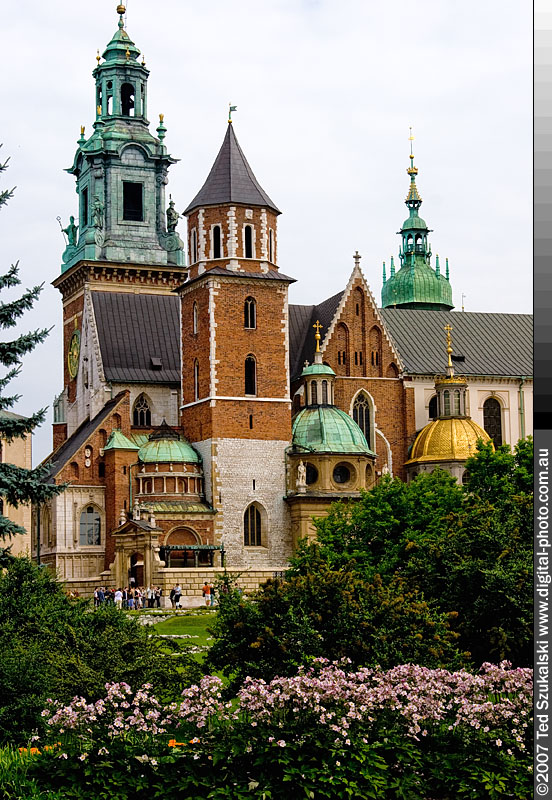
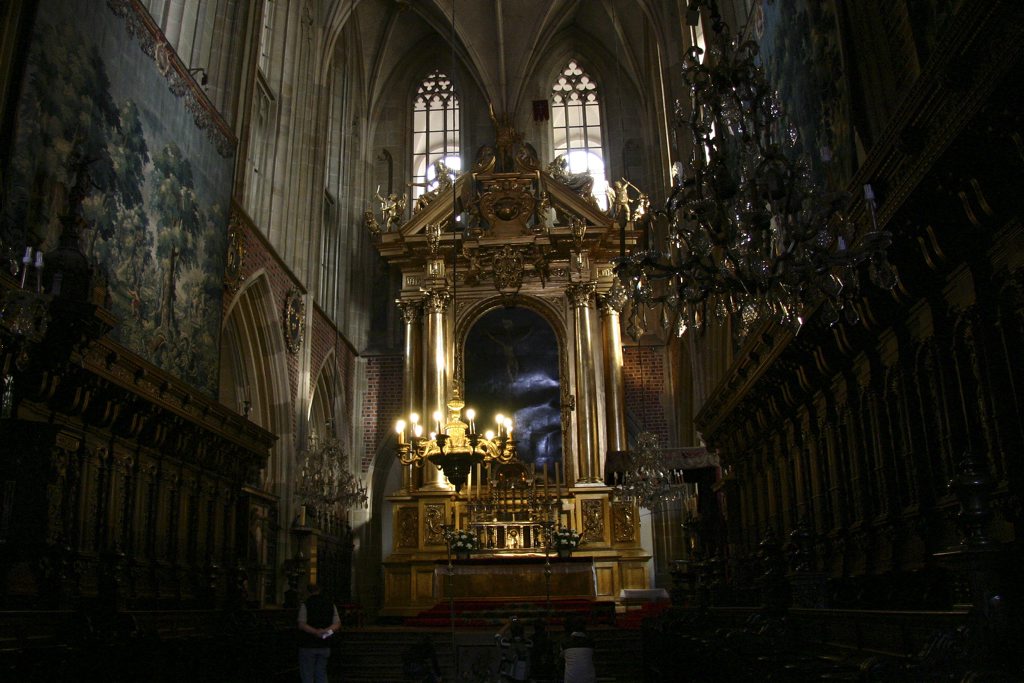
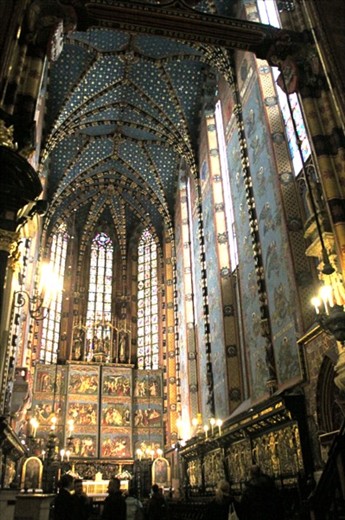
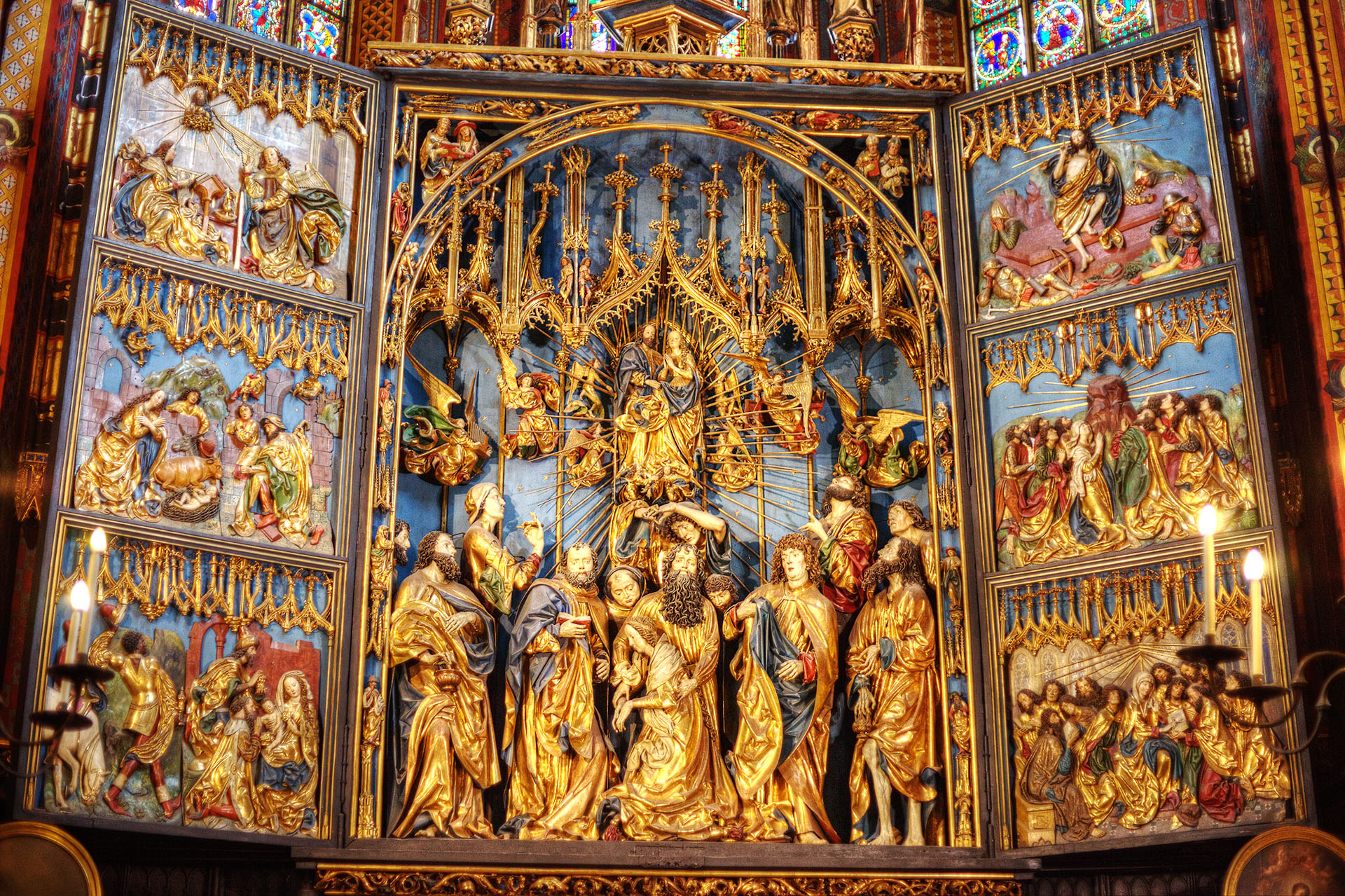
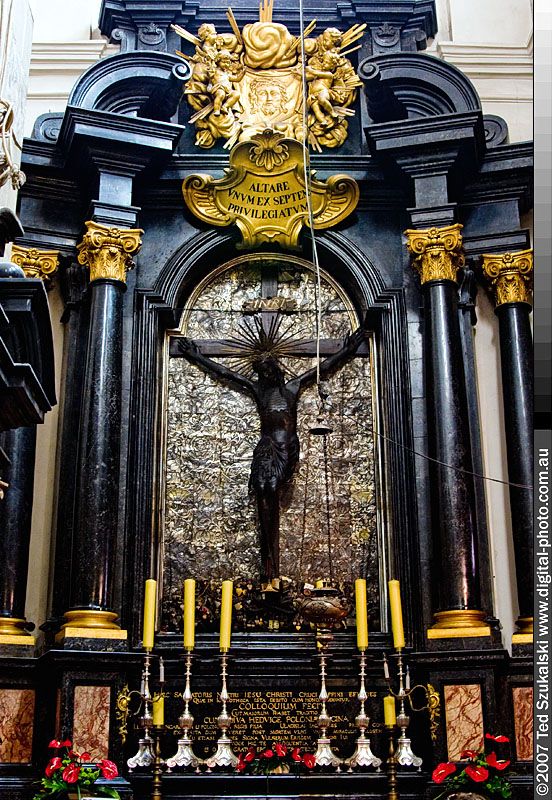
King Bolesław II was known for his promiscuity, corruption, as well as cruel treatment of soldiers and their families. These all led to his excommunication by St. Stanislaus in 1079. For this, the bishop was accused of treason and soldiers were ordered to kill him but they refused. The king attacked St. Stanislaus while he was celebrating Mass. Stanislaus ran but the king followed him and Stanislaus was martyred in the public square. Outrage over the murder forced Bolesław to renounce the throne and go into exile in Hungary. The remains of St. Stanislaus are interred at Wawel Cathedral in Krakow.

Saints – 11 April
St Stanislaus (Memorial)
—
St Agericus of Tours
St Aid of Achard-Finglas
Bl Angelo Carletti di Chivasso
St Antipas of Pergamon
St Barsanuphius of Gaza
St Domnio of Salona
Bl Elena Guerra
St Eustorgius of Nicomedia
St Gemma Galgani
Bl George Gervase
St Godeberta of Noyon
St Guthlac of Croyland
St Hildebrand of Saint-Gilles
St Isaac of Monteluco
Bl James of Africa
Bl John of Cupramontana
Bl Lanunio
St Machai
St Maedhog of Clonmore
Bl Mechthild of Lappion
Bl Paul of Africa
St Philip of Gortyna
St Raynerius Inclusus
St Sancha of Portugal
St Stephen of Saint-Gilles
Bl Symforian Ducki
Holy Week – Monday 10 April 2017
Let me receive Your forgiveness and mercy.
The second Servant song shapes our reflection today
as we watch that amazing dinner scene on Tuesday of this passion week.
We experience the pain of His knowing
that He will be betrayed and denied.
Yet, the hour He is about to face is the hour of His Glory.
And He promises that where He is going, we will surely follow.
Our desire is to celebrate the gift being offered us.
It is too little, he says,
for you to be my servant,
to raise up the tribes of Jacob,
and restore the survivors of Israel.
I will make you a light to the nations,
that my salvation may reach
to the ends of the earth.
Isaiah 49

The Seventh Station:
Jesus Falls A Second Time
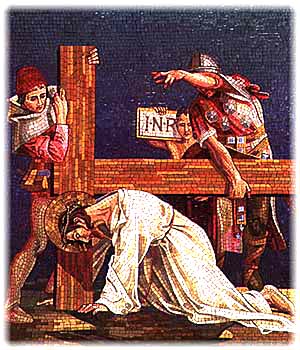
My Jesus, one of the beautiful qualities the people admired in You was Your strength in time of ridicule – Your ability to rise above the occasion. But now, You fall a second time – apparently conquered by the pain of the Cross. People who judged You by appearances made a terrible mistake. What looked like weakness was unparalleled strength!
I often judge by appearances and how wrong I am most of the time. The world judges entirely by this fraudulent method of discerning. It looks down upon those who apparently have given their best and are now in need. It judges the poor as failures, the sick as useless and the aged as a burden. How wrong that kind of judgment is in the light of your second fall! Your greatest moment was Your weakest one. Your greatest triumph was in failure. Your greatest act of love was in desolation. Your greatest show of power was in that utter lack of strength that threw You to the ground.
Weak and powerful Jesus, give me the grace to see beyond what is visible and be more aware of Your Wisdom in the midst of weakness. Give the aged, sick, handicapped, retarded, deaf and blind the fruit of joy so they may ever be aware of the Father’s gift and the vast difference between what the world sees and what the Father sees that they may glory in their weakness so the power of God may be manifest.
Amen
The Eighth Station:
Jesus Speaks to the Holy Women
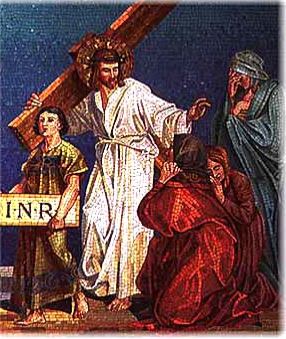
My Jesus, I am amazed at Your compassion for others in Your time of need. When I suffer, I have a tendency to think only of myself but You forgot Yourself completely. When You saw the holy women weeping over Your torments, You consoled them and taught them to look deeper into Your Passion. You wanted them to understand that the real evil to cry over was the rejection You suffered from the Chosen people – a people set apart from every other nation, who refused to accept God’s Son.
The Act of Redemption would go on and no one would ever be able to take away Your dignity as Son of God but the evil, greed, jealousy and ambition in the hearts of those who should have recognised You was the issue to grieve over. To be so close to God made man and miss Him completely was the real crime.
My Jesus, I fear I do the same when I strain gnats and then swallow camels – when I take out the splinter in my brother’s eye and forget the beam in my own. It is such a gift – this gift of faith. It is such a sublime grace to possess Your own Spirit. Why haven’t I advanced in holiness of life? I miss the many disguises you take upon Yourself and see only people, circumstances and human events, not the loving hand of the Father guiding all things. Help all those who are discouraged, sick, lonely and old to recognise Your Presence in their midst.
Amen
Stations by Mother Angelica
Thought for the Day – 10 April
Thought for the Day – 10 April
Chartres Cathedral has been called a “sermon in stone and stained glass” and it demonstrates what can happen when faith bursts into culture. St Fulbert of Chartres recognised that unless faith influences culture, it’s voice remains weak. It is not enough to believe – we have to make the Christian faith part of our lives and part of the world we live in. So, as Chartres teaches and impacts our hearts and minds with awe and faith, so our lives too should be a “school of faith” and teach our world with awe and belief!
St Fulbert pray for us!

Quote of the Day – 10 April
Quote of the Day – 10 April
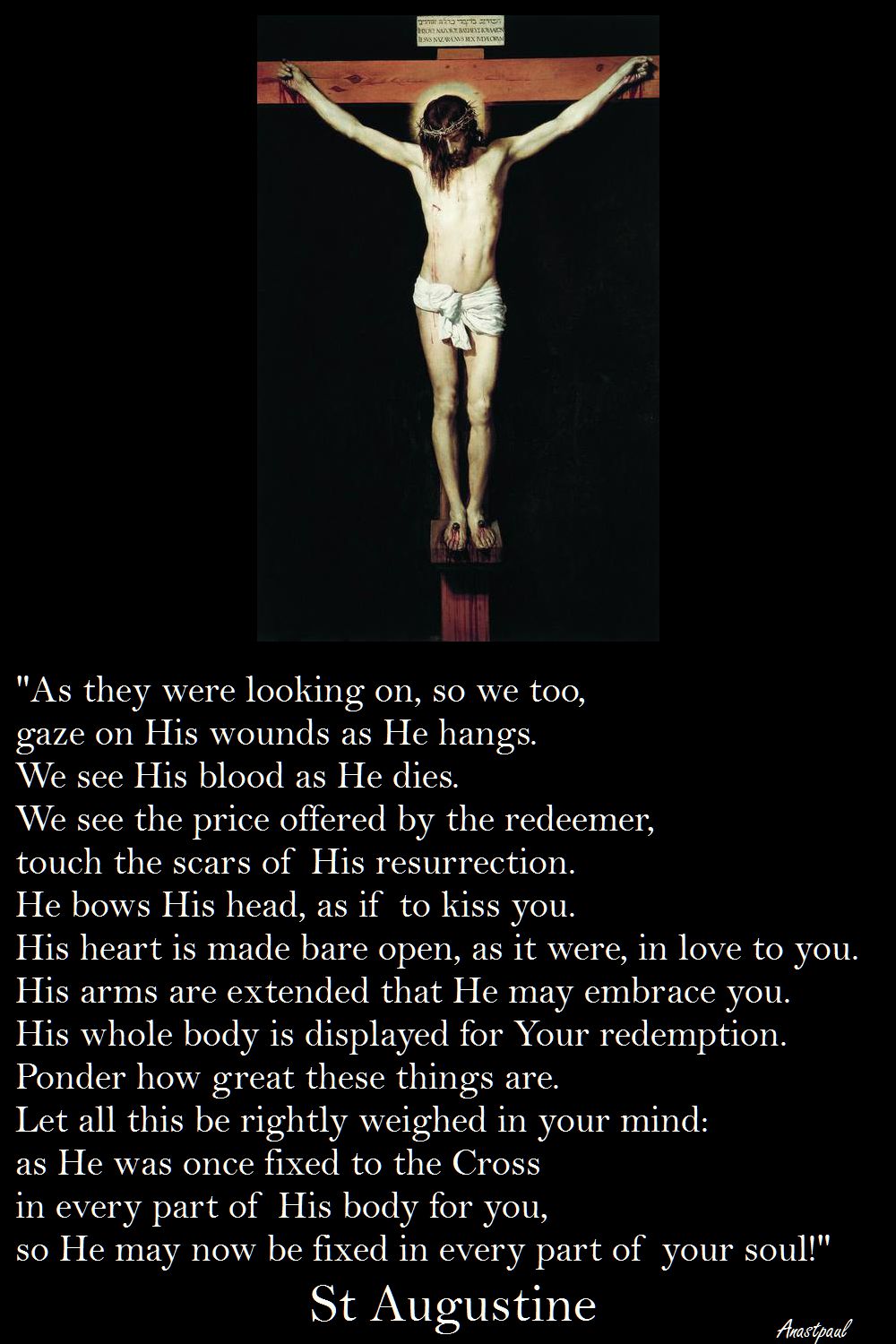
“As they were looking on, so we too,
gaze on His wounds as He hangs.
We see His blood as He dies.
We see the price offered by the redeemer,
touch the scars of His resurrection.
He bows His head, as if to kiss you.
His heart is made bare open, as it were, in love to you.
His arms are extended that He may embrace you.
His whole body is displayed for Your redemption.
Ponder how great these things are.
Let all this be rightly weighed in your mind:
as He was once fixed to the Cross
in every part of His body for you,
so He may now be fixed in every part of your soul!”
St. Augustine
One Minute Reflection – 10 April
One Minute Reflection – 10 April
Father, into your hands I commend my spirit……Luke 23:45-46
REFLECTION – “He died, but He vanquished death; in Himself He put an end to what we feared; He took it upon Himself and He vanquished it, as a mighty hunter He captured and slew the lion.
Where is death? Seek it in Christ, for it exists no longer; but it did exist and now it is dead.
O life, O death of death! Be of good heart; it will die in us, also. What has taken place in our head will take place in His members; death will die in us also. But when? At the end of the world, at the resurrection of the dead in which we believe and concerning which we do not doubt.”…………….St Augustine (Sermon 233:3-4)
PRAYER – God of love, my prayer is simple: Your son, Jesus, suffered and died for me.
I know only that I cannot have real strength unless I rely on You. I cannot feel protected from my many weaknesses until I turn to You for forgiveness and your unalterable love. Help me to share this strength, protection and love with others. St Fulbert of Chartres you worked your whole life to bring the truth and love of God to all, please pray for us, amen.


Our Morning Offering – 10 April
Our Morning Offering – 10 April
Excerpt from the Prayer “You are Christ”
by St Augustine
You are Christ,
my Holy Father,
my Tender God,
my Great King,
my Good Shepherd,
my Only Master,
my Best Helper,
my Most Beautiful and my Beloved,
my Living Bread,
my Priest Forever,
my Leader to my Country,
my True Light,
my Holy Sweetness,
my Straight Way,
my Excellent Wisdom,
my Pure Simplicity,
my Peaceful Harmony,
my Entire Protection,
my Good Portion,
my Everlasting Salvation.
May the live coal of Your Love
grow hot within my spirit
and break forth into a perfect fire;
may it burn incessantly on the altar of my heart;
may it glow in my innermost being;
may it blaze in hidden recesses of my soul;
and in the days of my consummation
may I be found consummated with You!
Amen.
Saint of the Day – 10 April – St Fulbert of Chartres
Saint of the Day – 10 April – St Fulbert of Chartres (c960 in Italy-1029 in Chartres, France) Bishop, Writer, Poet, Reformer, Marian devotee, Preacher, Teacher, Advisor – Attributes – preaching monk, in his sick bed with the Virgin Mary nearby.
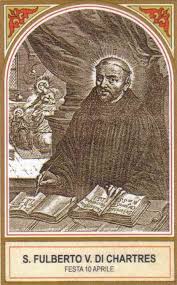
Fulbert was born in Italy around the year 960. He was taught by the famous Gerbert, who became Pope Sylvester II in the year 999. Fulbert followed Pope Sylvester to Rome. When Pope Sylvester II died in 1003, Fulbert went to France where he started a school at Chartres. This school was the most famous seat of education in France. Scholars from all over France, Italy, Germany and England attended school there. Fulbert became chancellor of the church of Chartres and was the treasurer of St. Hilary’s at Poitiers. Later he was elected bishop of Chartres and he rebuilt the cathedral when it burned down. He had the assistance of King Canute of England, Duke William of Aquitaine and other European leaders in rebuilding the cathedral in great splendour.
The veneration of the Virgin Mary was already established in the Church and Fulbert use this to teach her importance. The results were twofold, it helped to ease people’s fears and greatly expanded the Marian Cult and Chartres’s position in it. Chartres was already involved due to its being the holder of a sacred relic of Mary’s, the “Sancta Camisia”, (Holy Tunic), which has been variously described as being worn by Mary during the Annunciation or during the birth of Christ. This tunic was already the subject of a miracle because of its use by an earlier bishop of Chartres, Gauscelinus, in 911 to ward off the invading Normans. Fulbert expanded on the theme of miracles involving Mary, especially those cases where she had interceded between sinners and God. In this way people could pray for Mary’s intercession with God on their behalf in the perceived coming apocalypse. Fulbert himself was involved in one of these miracles; when he was gravely ill Mary had healed him with a drop of milk because of his devotion to her. This also served to give Mary the image of not only the mother of Christ but for all who believed in her, their mother too. All of this led to Fulbert’s ultimate goal of promoting a special feast day to celebrate Mary’s Nativity.
To gain popular support for this feast, Fulbert wrote his famous sermon “Approbate Consuetudinis” in which he relates Mary’s miracles. He also brings in the evidence of Mary’s family lineage, which the Bible traces back to King David. In his sermon Fulbert used the symbolism of the “Stirps Jesse” (Tree of Jesse) to help explain Mary’s familial relationship to the great men of the past and how it was determined, as described in Scripture, that she would be the one to whom Christ would be born. This again served to enhance her importance to the world and convince people of the need to celebrate her birth. This sermon led to a number of liturgical changes throughout the next few centuries in Europe. The sermon itself, or variations of it and the chants associated with it, became part of the service for the feast day of Mary’s Nativity on 8 September By promoting the Feast day of Mary’s Nativity, Fulbert was able to advance the importance of Mary and therefore the cult of her veneration grew. This in turn enhanced the importance of the Cathedral of Chartres as a centre for Marian devotion and also gave people a spiritual symbol to turn to in times of need at the turn of the millennium.


During his time in Chartres Fulbert played an important role in the development and spread of the ideas that led to the Gregorian church reforms of the eleventh century under Pope Gregory VII. These reforms concerned the division between the powers of church and state, especially in the appointment of new abbots and bishops. In the eleventh century the secular rulers had a habit of appointing whomever they wanted to fill vacant church positions. Fulbert and some of his students, such as Abbot Albert of Marmoutier, routinely wrote that it was up to the clergy and the citizens of the diocese involved to elect a replacement, the authority being found in the rulings of the First Council of Nicaea (325) and the Council of Antioch (264-272). These reforms also stated that the Church, not the state, was responsible for disciplining the clergy. The issues of simony (the buying of church offices) and immoral clerics were also addressed by Fulbert. Although the reforms were issued by Gregory VII, some of its ideas came from Fulbert, whose writings were disseminated through his students.
After Chartres Cathedral burned in 1020, Fulbert devoted his energies to raising funds for its rebuilding, which was completed in 1037, nine years after his death. In 1194 the cathedral was again almost completely destroyed by fire; only the crypt, some of the west facade and two towers remained. The crypt has been incorporated into all subsequent reconstructions. The construction of the Gothic-style cathedral that stands to-day began afterward. It is in this cathedral that we see Fulbert’s influences that resulted from his promotion of the Feast day of Mary’s Nativity and the cult of the Virgin Mary. The sculptures around the three portals depict the life of Mary, who is the central figure in the Royal Portal. One of the cathedral’s stained glass windows depicts the Tree of Jesse, which traces Mary’s family and the Holy Family, again a reference to Fulbert’s teachings in regards to the Feast of Mary’s Nativity.
St Fulbert died of natural causes on April 10, 1029.
Prayer
Lord Jesus, we pray that St. Fulbert will intercede for our clergy when they need strengthening to make the right decisions. May they always stay true to Church teachings and to You, we pray. Amen.


Saints – 10 April
Bl Antoine Neyrot
Bl Antonio Vallesio
St Apollonius of Alexandria
Bl Archangelus Piacentini
St Bademus
St Bede the Younger
St Beocca of Chertsey
Bl Boniface Zukowski
Bl Eberwin of Helfenstein
St Ethor of Chertsey
St Ezekiel the Prophet
St Fulbert of Chartres
St Gajan
St Hedda of Peterborough
St Macarius of Antioch
St Maddalena of Canossa
St Malchus of Waterford
Bl Marco Mattia
Bl Mark Fantucci
St Michael de Sanctis
St Palladius of Auxerre
St Paternus the Scot
—
Martyrs of Carthage – 50 saints: A group of 50 Christians who were imprisoned in a pen of snakes and scorpions, and then martyred, all during the persecutions of Decius. Only six of their names have come down to us – Africanus, Alessandro, Massimo, Pompeius, Terence and Teodoro. Beheaded in 250 at Carthage.
Martyrs of Georgia: Approximately 6,000 Christian monks and lay people martyred in Georgia in 1616 for their faith by a Muslim army led by Shah Abbas I of Persia.
Martyrs of Ostia: A group of criminals who were brought to the faith by Pope Saint Alexander I while he was in prison with them. Martyrs. Drowned by being taken off shore from Ostia, Italy, in a boat which was then scuttled, c.115
Thought for the Day – Passion or Palm Sunday – 9 April 2017
Thought for the Day – Passion or Palm Sunday – 9 April 2017 – The Legend of the Vatican Palms
The obelisk in St. Peter’s Square was originally erected in Heliopolis, Egypt sometime between 2494 and 2345 BC. After 63 BC it was moved to Alexandria, then Caligula moved it to Rome in 37 AD. It moved to its current location in 1586. It’s the only obelisk in Rome that hasn’t fallen since antiquity. It used to be topped with a globe that was rumoured to contain Caesar’s ashes. That turned out to be wrong and today it’s topped with a reliquary that contains a piece of the True Cross.

That much is true… this a legend I heard in Rome about what allegedly happened when the architect/engineer Domenico Fontana was re-erecting the obelisk for the last time in 1586. Fontana gathered 900 men and 140 horses (as shown in the engraving above). Pope Sixtus V forbid anyone to speak while the obelisk was raised, so no one would break their concentration. In silence, the massive team began to lift it. But one sailor noticed that the ropes were smoking from the friction. Against the pope’s orders he yelled, “Water on the ropes!”

Fortunately, they heeded his advice. The water cooled down the ropes and the obelisk went up successfully. However the sailor was still hauled in front of the pope for breaking his decree. But instead of punishing him, the pope thanked him and offered him a reward. The sailor asked that his family’s farm in Bordighera supply the palms for Palm Sunday every year, as long as they owned the land.
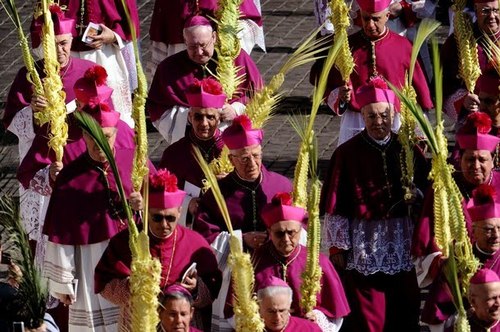
To this day, the Vatican sources their Palm Sunday fronds from Bordighera. That much is true too.
The thought is this – “speak out when you know the truth be not afraid!”
 AnaStpaul
You must be logged in to post a comment.