Our Morning Offering – 9 June – “The Month of the Sacred Heart”
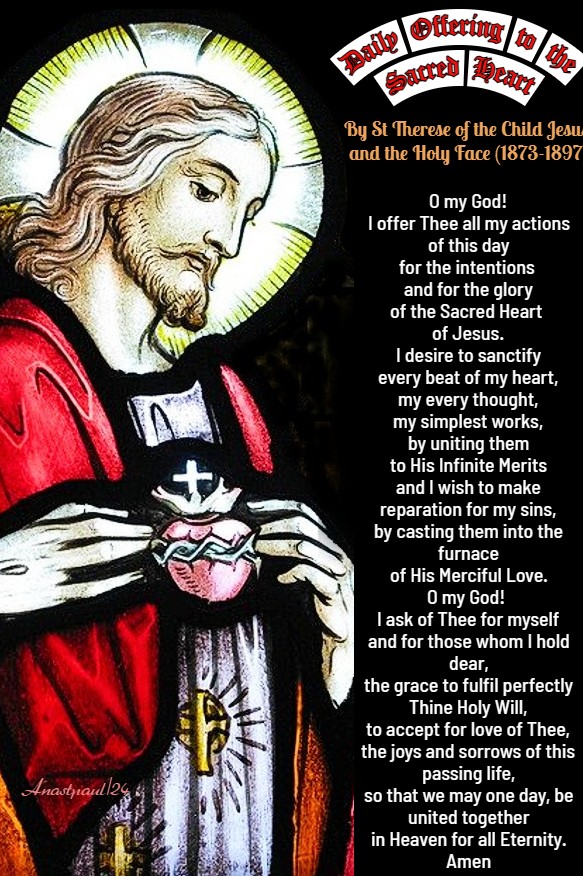
Daily Offering to the Sacred Heart By St Thérèse of the Child Jesus and the Holy Face (of Lisieux) OCD (1873-1897)
O my God! I offer Thee all my actions of this day for the intentions and for the glory of the Sacred Heart of Jesus. I desire to sanctify every beat of my heart, my every thought, my simplest works, by uniting them to His Infinite Merits and I wish to make reparation for my sins, by casting them into the furnace of His Merciful Love. O my God! I ask of Thee for myself and for those whom I hold dear, the grace to fulfil perfectly Thine Holy Will, to accept for love of Thee, the joys and sorrows of this passing life, so that we may one day, be united together in Heaven for all Eternity. Amen
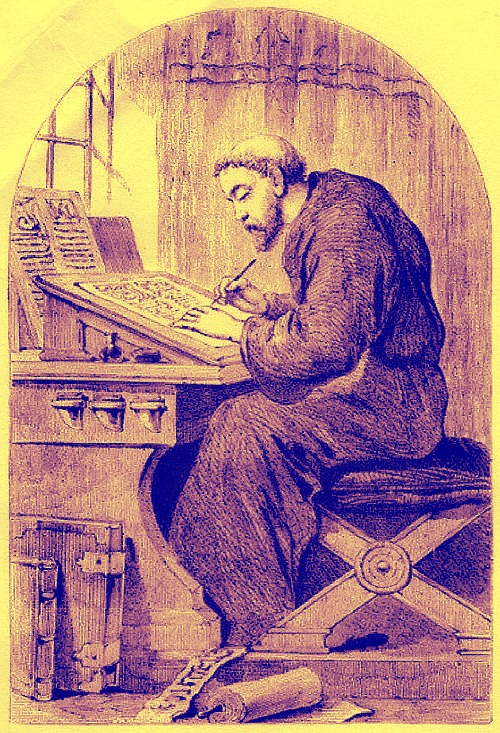
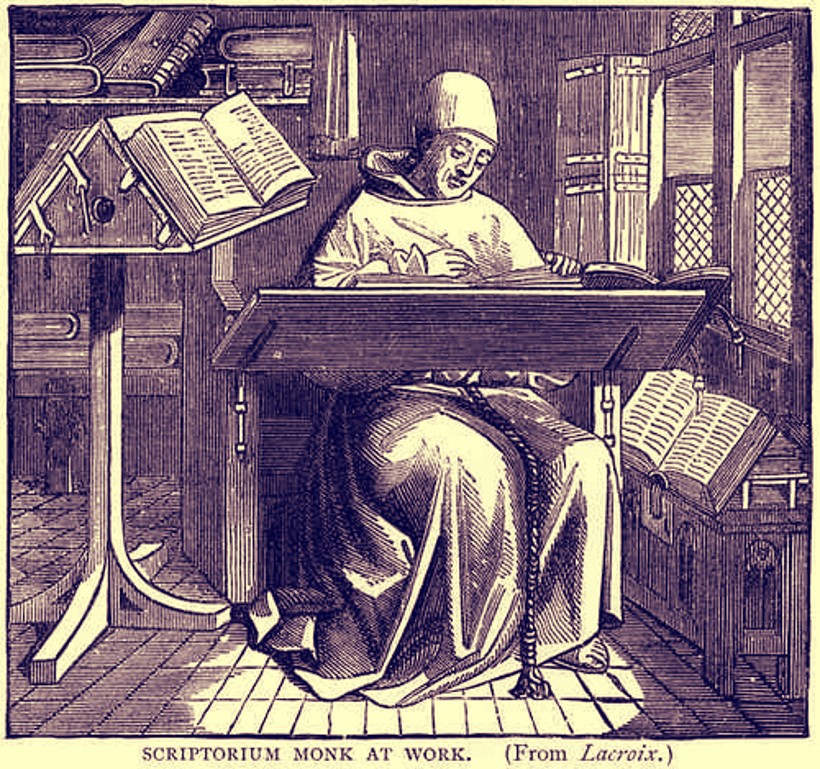
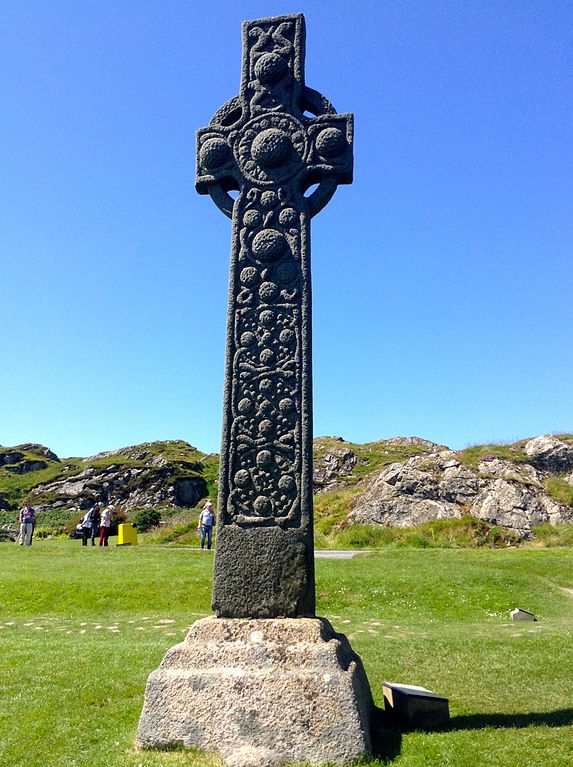
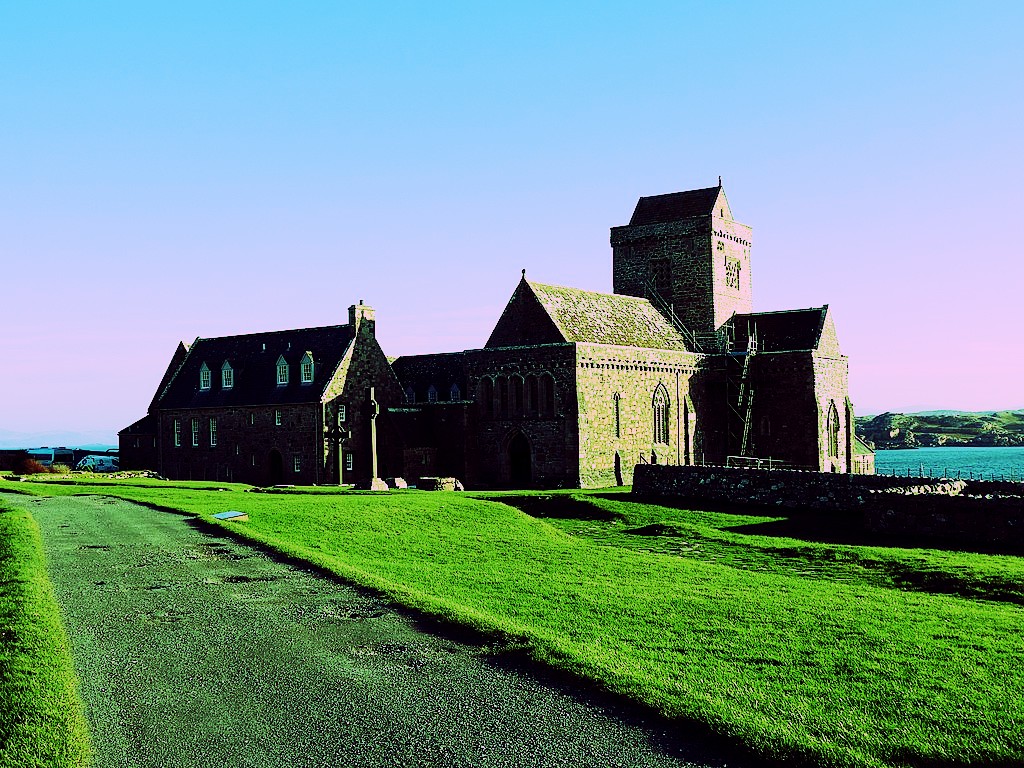
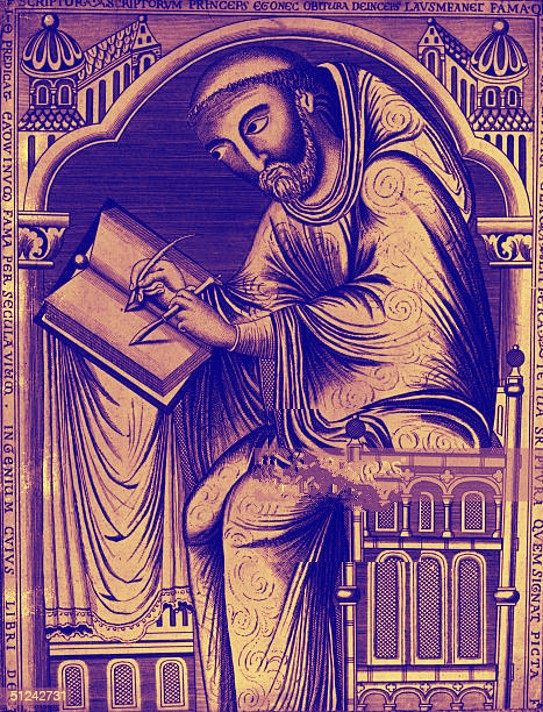
Saint of the Day – 9 June – St Baithen of Iona (c 536-c 599) Abbot, the disciple and first successor of St Columba, an Irish Monk, especially selected by St Columba, as one of the band of Missionaries who set sail for Scotland in 563. St Baithen of Iona is generally known as Baithen Mor, to distinguish him from eight other Saints of the same name — the affix mor meaning “the Great.” This holy man was closely related to the great St Columba. They were the sons of two brothers and consequently, first cousins. Born in c 536 in Ireland and died in c 599 of natural causes . Patronage – of Tibohin, in Elphin, Ireland. Also known as – Baithéne mac Brénaind, Baithen Mor, Baithen the Great, Baithin, Boethen, Baoithin, Baithenus, Comin, Cominus.We have no images of our Saint, those below, in the main, are images of Monks of Iona.
Baithen was born in around 536, the son of Brenaron. He was an ardent disciple of St Columba and was appointed Abbot of Tiree Island, a Monastery founded by St Comgall of Bangor. St Adamnan, in recording the death of St Columba, tells us that the dying words of the Apostle of Iona, as he was transcribing the fifty-third Psalm, were: “I must stop here, let Baithen write what follows.”
Baithen had been looked on as the most likely successor of St Columba and so it happened, that on the death of that great Apostle, the Monks unanimously confirmed the choice of their Founder. St Baithen was in high esteem as a wise counsellor and his advice was sought by many Irish Saints.
According to his Acts, from the time he was a child, Baithen had been educated by St Columba. Under his holy discipline, he learned how to wage a perpetual war with idleness. As his years advanced, he grew stronger and more perfect, in the exercise of all good works. However, being a junior, by several years, he used to be always along with Columba because they were close in consanguinity and friendship, as they were thoroughly allied in the practice of holy works.
Baithen was always either reading, or praying, or serving his neighbour. Sometimes, for the latter purpose, his devotions were occasionally interrupted. When he used to eat, he was wont to say, “Deus in adjutorium meum intende,” “O God, come to my aid” between every two morsels. His devotions were so continually practised, that even when he was travelling, or working, or eating, or conversing with anyone, this holy man would still be communing with God and, under his tunic, his hands were often clasped in prayer, without anyone present knowing it. When he gathered corn along with the Monks, he held one hand up beseeching God, while the other hand was gathering the corn, as is contained in his Latin Acts, where we are informed, he would not brush away the troublesome midges from his face but rather suffer the bites and discomfort as a penance.
St Adamnan, the Biographer of St Columba, tells many interesting incidents in the life of Baithen but the mere fact of being the immediate successor of St Columba, by the express wish of that holy Apostle, is almost sufficient to attest to his great worth. The “Martyrology of Donegal” records the two following anecdotes.
Baithen also served as Prior over a Monastery connected to Iona on the Island of Tiree. The name of the place where his Monastery was located on Tiree, was Mag Luinge or Campus Luinge. The Monastery was a house for penitents from Iona. Some historians have thought that it may have supplied food to Iona.
St Adamnan also recorded a story about a voyage he took to the island, when Columba first told a Monk who was heading to Tiree, that he should not sail directly from Iona to Tiree because a great whale would frighten him but this monk did not listen to his advice and took the direct route. A huge whale came out of the water and almost destroyed the boat, which was, terrofying! When Baithen departed the following day to Tiree, Columba told him about the whale, and Baithen responded that both he and the whale were in God’s power, to which Columba responded “Go in peace, your faith in Christ will shield you from danger.” And so Baithen then took the direct route and the whale came out of the water which terrified all in the boat, except Baithen, who instead blessed the sea and the whale. The whale immediately departed, descending into the depths.
Iona todat
Baithen wrote a life of his master and some Irish poems, which are now lost but which were seen by St Adamnan. He only ruled Iona for three years, as his death took place in the year 600, though the “Annals of Ulster” give the date as 598. Perhaps the true year may be 599. Some writers assert that St. Baithen of Iona is the Patron of Ennisboyne, County Wicklow but this is owing to a confusion with St Baoithin, or Baithin mac Findech, whose feast is commemorated on 22 May. St Bathen is, however, the official Patron of Tibohin, in Elphin, Ireland.
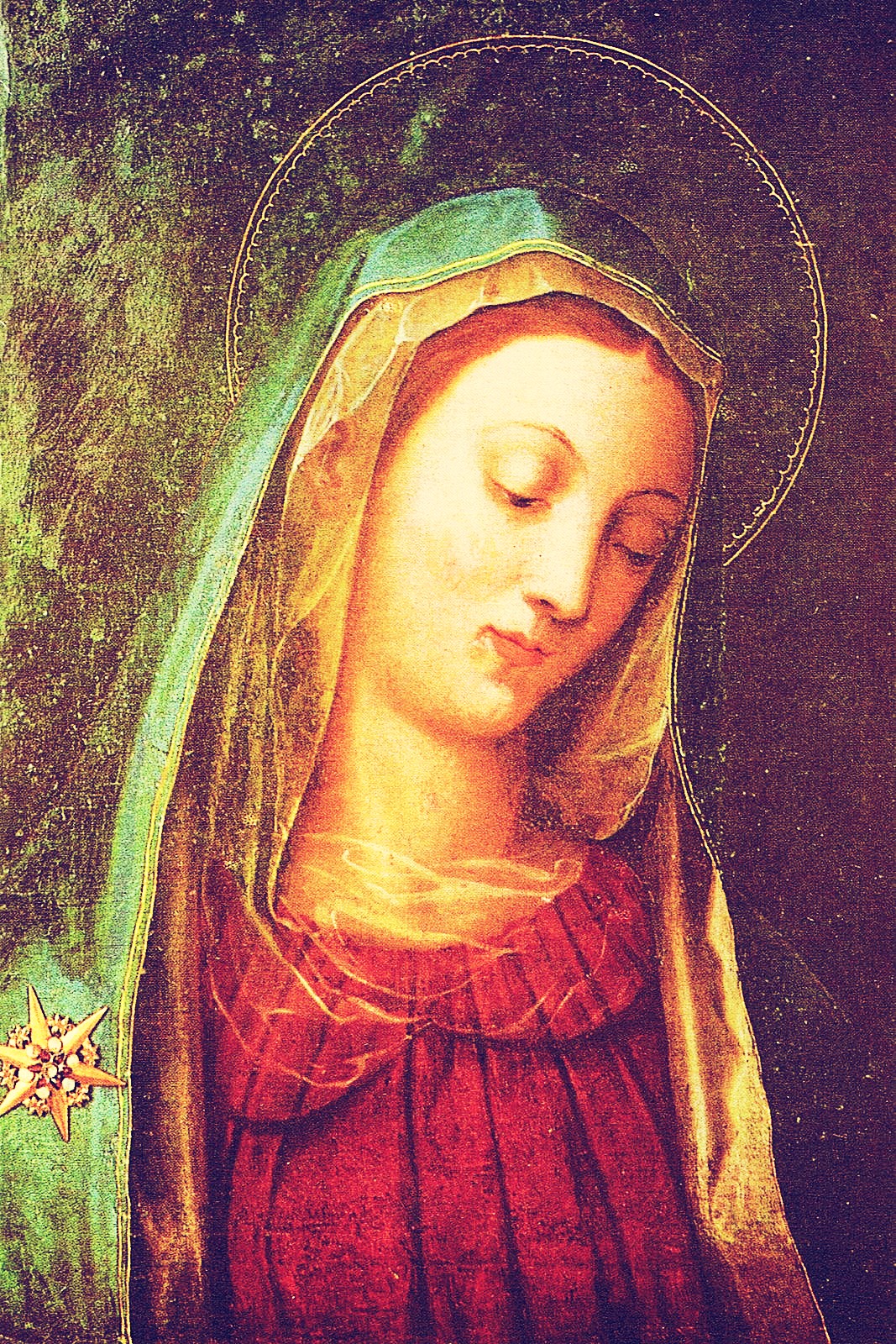
Madonna, Madre delle Grazie / Our Lady, Mother of Grace (1610) (Also known as Our Lady of the Bowed Head) – 9 June:
Among the many miraculous images of the Mother of God through which she deigns to grant her favours, there is one in the Monastery church of the Carmelites in Vienna, entitled the Mother of Grace. In 1610 a Carmelite, Dominic of Jesus-Mary, found among the votaries of an old Altar in the Monastery Church of Maria della Scala in Rome and oil painting of the Mother of God, dust-covered and somewhat torn, which grieved him. Taking it into his hands, he shook the dust off it and kneeling down venerated it with great devotion. He had the picture renovated and placed it on the shelf in his cell, where he made it the object of his love and supplications, in favour of those who came to him in their necessities and afflictions. One night, while he was praying fervently before the picture, he noticed that some dust had settled on it. Having nothing but his course woolen handkerchief he dusted it with that and apologised:
“O pure and holiest Virgin, nothing in the whole world is worthy of touching your holy face but since I have nothing but this coarse handkerchief, deign to accept my good will.”
Fearing he was under an illusion, Dominic became troubled but Mary assured him that his requests would be heard, he could ask of her with full confidence, any favour he might desire. He fell upon his knees and offered himself entirely to the service of Jesus and Mary and asked for the deliverance of one of is benefactor’s souls in purgatory. Mary told him to offer several Masses and other good works. A short time later, when he was again praying before the image, Mary appeared to him bearing the soul of his benefactor to Heaven. Dominic begged that all who venerated Mary in this image of Our Lady of Grace might obtain all they requested. In reply the Virgin gave him this assurance:
“All those who devoutly venerate me in this picture and take refuge with me, will have their requests granted and I will obtain for them many graces but especially, will I hear their prayers for the relief and deliverance of the souls in Purgatory.”
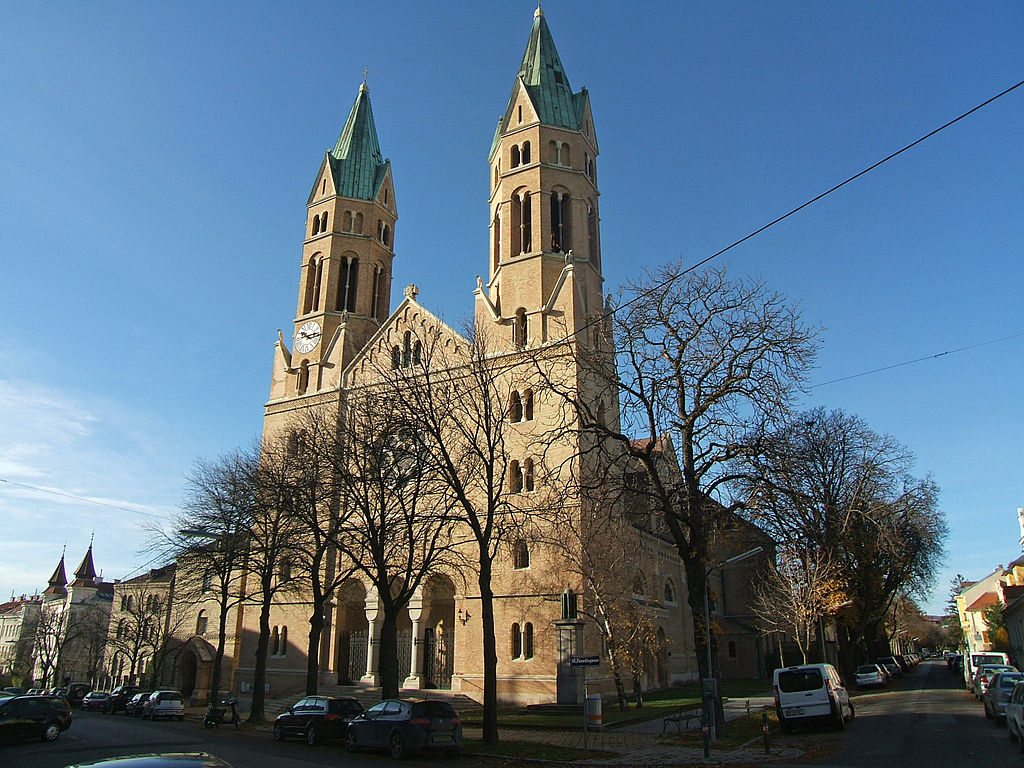
Dominic soon after placed the image in the Church of Maria Della Scala, so that more devotees of Mary could venerate it. Many wonderful favours were obtained by those who honored and invoked Mary here. Reproductions were made of Our Lady of Grace and sent to different parts of the world. After the death of Dominic the original painting was given to Prince Maximilian of Bavaria. He gave it to the discalced Carmelites in Munich in 1631; they gave it to Emperor Ferdinand II of Austria and his wife Eleanore. After Ferdinand’s death, Eleanore entered the Carmelite Convent in Vienna and took the picture with her. During the succeeding years the image was transferred to various places. Today it is in the Monastery Church of Vienna in Doabling. On 27 September 1931, it was solemnly crowned by Pope Pius XI – its 300th anniversary of arrival in Vienna. To his great surprise, the face of the Mother of God appeared to take on life and smiling sweetly at him, she bowed her head, which thereafter remained inclined.
The Carmelite Monastery Church of Vienna in dsDoabling.
St Comus of Scotland St Cumian of Bobbio St Cyrus Bl Diana d’Andalo OP St Diomedes of Tarsus St Felicianus Bl Henry the Shoemaker St Julian of Mesopotamia St Luciano Verdejo Acuña St Maximian of Syracuse St Pelagia of Antioch St Primus St Richard of Andria Bl Robert Salt Bl Sylvester Ventura St Valerius of Milan St Vincent of Agen
Martyrs of Arbil – 5 Saints: Five nuns who were Martyred together in the persecutions of Tamsabur for refusing to renounce Christianity for sun-worship – Amai, Mariamne, Martha, Mary and Tecla. They were beheaded on 31 May 347 at Arbil, Assyria (in modern Kurdistan, Iraq).
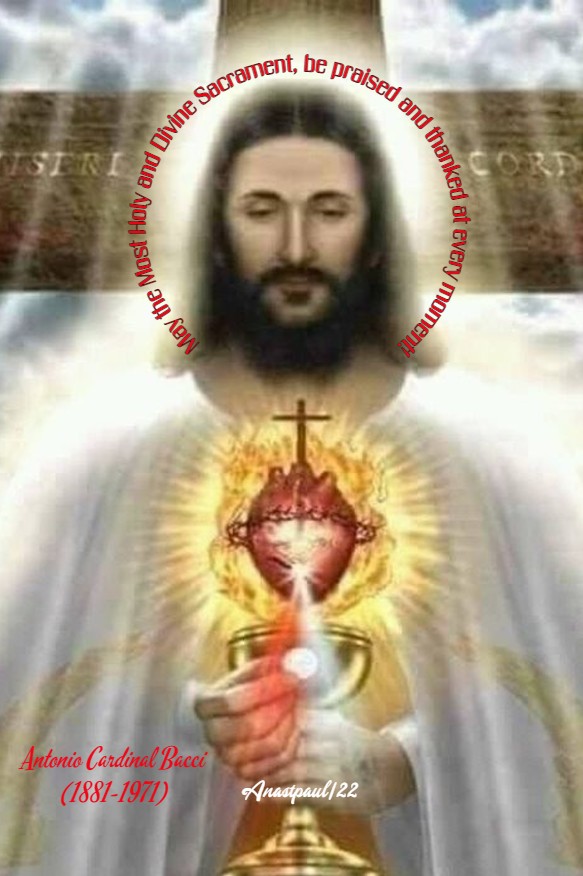
Thought for the Day – 8 June – Meditations with Antonio Cardinal Bacci (1881-1971)
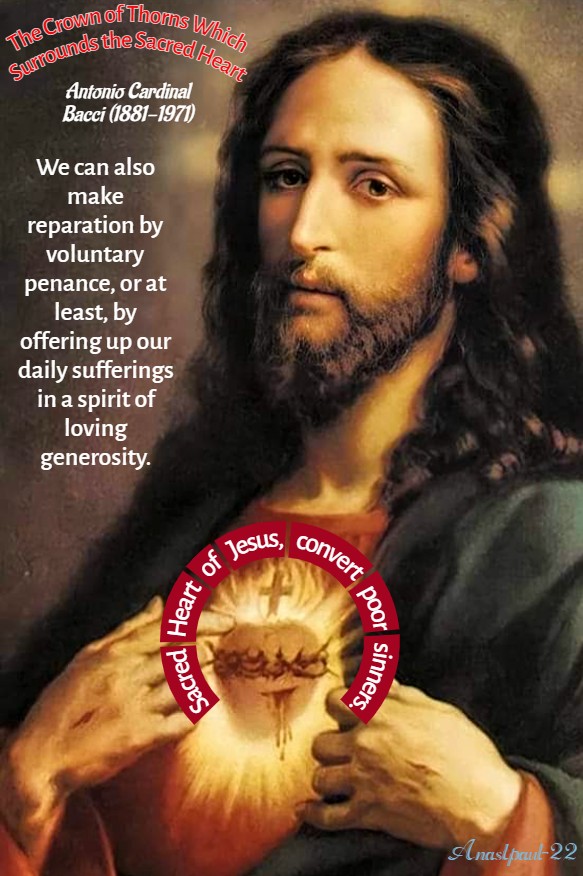
The Crown of Thorns Which Surrounds the Sacred Heart
“We can also make reparation by voluntary penance, or at least, by offering up our daily sufferings in a spirit of loving generosity. But the course most pleasing of all to the Sacred Heart, is the continual imitation of His outstanding virtues, in such a way as to become living reproductions of our adorable Redeemer.
Aspiration:Sacred Heart of Jesus, convert poor sinners.”
Quote’s of the Day – 8 June – Ember Wednesday within the Octave of Pentecost – Acts 2:14-21, John 6:44-52.
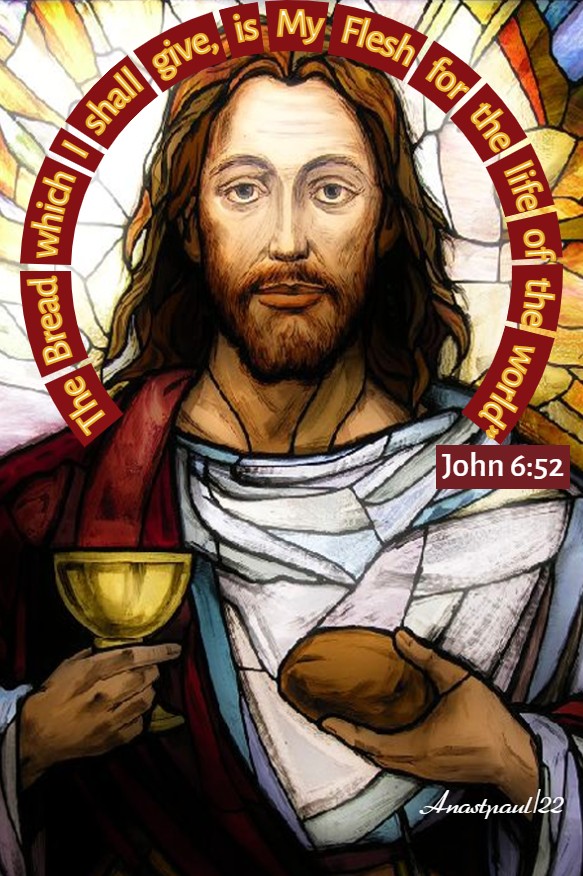
“I Am the Living Bread Who came down from Heaven. If any man eat of this Bread, he shall live forever and the Bread that I will give, is My Flesh, for the Life of the world.”
John 6:51-52
“I Am the Bread of Life”
John 6:35
“For His Body, has been given to you under the appearance of bread and His Blood, under the appearance of wine, so that, when you have partaken of the Body and Blood of Christ, you might be One Body and One Blood with Him. So shall we become Christ-bearers [“Christophers”]. His Body and Blood are diffused through all our members – see, then, how we become participants in the Divine Nature!”
St Cyril of Jerusalem (c 313-386) Father and Doctor of theChurch
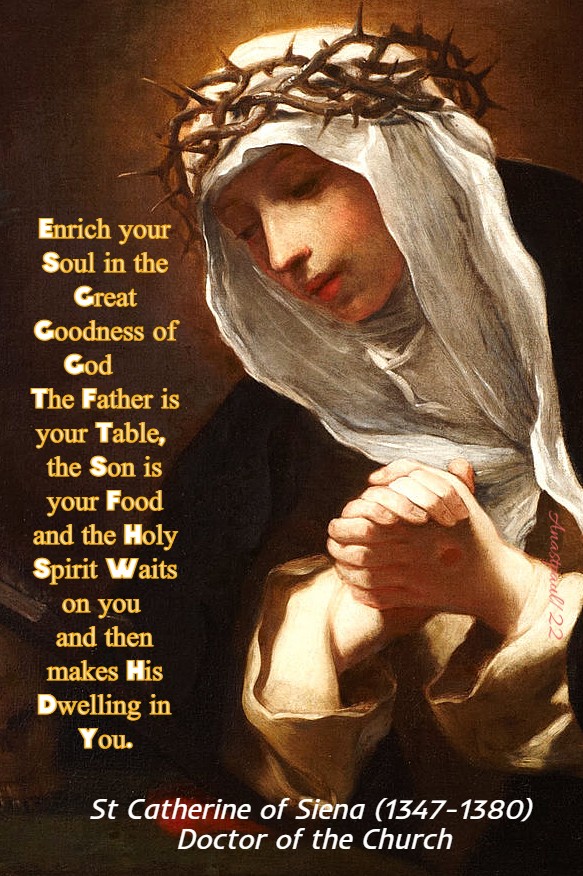
“Enrich your soul in the great goodness of God – The Father is your Table, the Son is your Food and the Holy Spirit waits on you and then makes His Dwelling in you.”
St Catherine of Siena (1347-1380) Doctor of the Church
“What graces, gifts and virtues the Holy Mass calls down!”
St Leonard of Port Maurice (1676-1751)
O Lord, My God, I Am Not Worthy Prayer Before Holy Communion By St John Chrysostom (347-407) Father and Doctor of the Church
O Lord, my God, I am not worthy that You should come into my soul but I rejoice that You have come to me because, in Your loving kindness You desire to dwell in me. You ask me to open the door of my soul, which You alone have created, so that You may enter into it with Your loving kindness and dispel the darkness of my mind. I believe that You will do this, for You did not turn away Mary Magdalene when she approached You in tears. Neither did You withhold forgiveness from the tax collector who repented of his sins or from the good thief who asked to be received into Your kingdom. Indeed, You numbered as Your friends, all who came to You with repentant hearts. O God, You alone are blessed always, now and forever. Amen
One Minute Reflection – 8 June – “The Month of the Sacred Heart”– Ember Wednesday within the Octave of Pentecost – Acts 2:14-21, John 6:44-52.Ember Wednesday within the Octave of Pentecost – Acts 2:14-21, John 6:44-52.
“The Bread which I shall give,,is My Flesh for the life of the world” – John 6:52
REFLECTION – “One Man has died for all and now, in every Church, in the Mystery of Bread and Wine, He heals those for whom He is offered in sacrifice, giving life to those who believe and holiness to those, who Consecrate the offering. This is the Flesh of the Lamb; this is His Blood. The Bread that came down from Heaven declared – The Bread that I will give, is My Flesh for the life of the world. It is significant, too, that His Blood should be given to us in the form of wine, for His own Words in the Gospel, I Am the true vine, imply clearly enough, that whenever wine is offered as a representation of Christ’s Passion, it is offered as His Blood. T his means, that it was of Christ, Whom the blessed patriarch Jacob prophesied when he said – He will wash His tunic in wine and His cloak in the blood of the grape. The tunic was our flesh, which Christ was to put on like a garment and which He was to wash in His own Blood.
Creator and Lord of all things, whatever their nature, He brought forth bread from the earth and changed it into His own Body. Not only had He the power to do this but He had promised it and, as He had changed water into wine, He also changed wine into His own Blood. It is the Lord’s Passover, Scripture tells us, that is, the Lord’s Passing. We are no longer to look upon the bread and wine as earthly substances. They have become heavenly because Christ has passed into them and changed them, into His Body and Blood. What you receive, is the Body of Him, Who is the Heavenly Bread and the Blood of Him, Who is the Sacred Vine; for when He offered His disciples the Consecrated Bread and Wine, He said: This is My Body, this is My Blood. We have put our trust in Him. I urge you to have faith in Him, for Truth can never deceive!
When Christ told the crowds that they must eat His Flesh and Drink His Blood, they were horrified and began to murmur among themselves: This teaching is too hard; who can be expected to listen to it? As I have already told you, thoughts such as these must be banished. The Lord Himself used heavenly fire to drive them away by going onto declare – It is the Spirit that gives life; the flesh is of no avail. The words that I have spoken to you, are Spirit and Life!” – St Gaudentius of Brescia (Died 410) Bishop , renowned Preacher, Theologian, Diplomatic Mediator (An Excerpt from Tractate 2).
PRAYER – May the Paraclete Who proceeds from Thee, enlighten our minds, we beseech Thee, O Lord and guide us to all truth, as Thy Son has promised. Through Jesus Christ, Thy Son our Lord, Who lives and reigns with Thee, in the unity of the Holy Ghost, God, world without end. Amen (Collect).
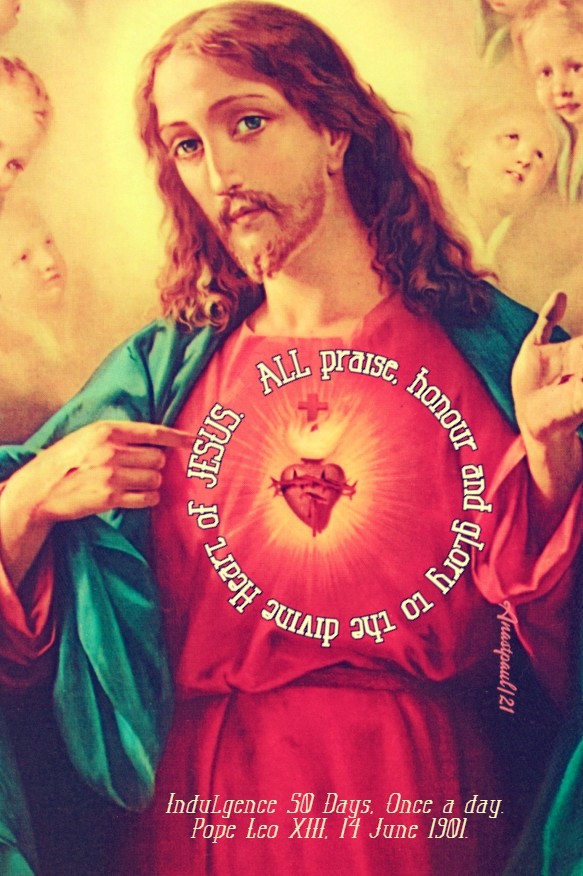
All praise, honour and glory to the divine HEART of JESUS. – Indulgence 50 Days, Once a day. Raccolta 168 Pope Leo XIII, 14 June 1901.
Our Morning Offering – 8 June – “The Month of the Sacred Heart”
Act of Love to the Sacred Heart of Jesus By Servant of God Cardinal Rafael Merry del Val (1865-1930)
Reveal Your Sacred Heart to me, O Jesus and show me Its attractions. Unite me to It forever. Grant that all my aspirations and all the beats of my heart, which cease, not even while I sleep, may be a testimonial to You, of my love for You and may it say to You – “Yes, Lord, I am all Yours” the pledge of my allegiance to You, rests forever in my heart and will never cease to be there. May You accept, the slight amount of good that I do and be graciously pleased, to repair all my wrong-doing; so that I may be able, to bless You in time and in eternity. Amen
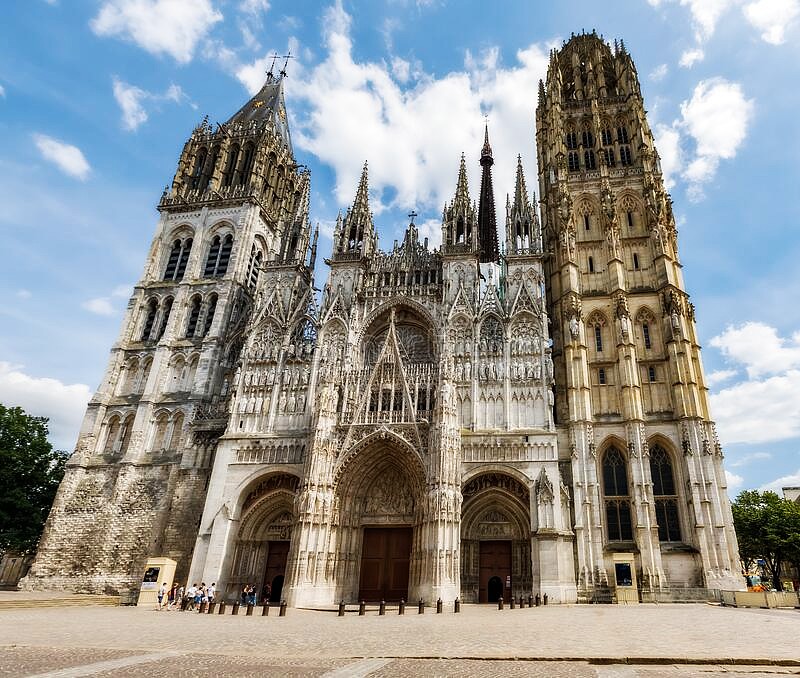
Saint of the Day – 8 June – St Gildard of Rouen (c 456-c 545) Bishop of Rouen from 488 until his death in c 545, France, Confessor * Twin Brother of St Medard Also known as – Gildardus, Godard.
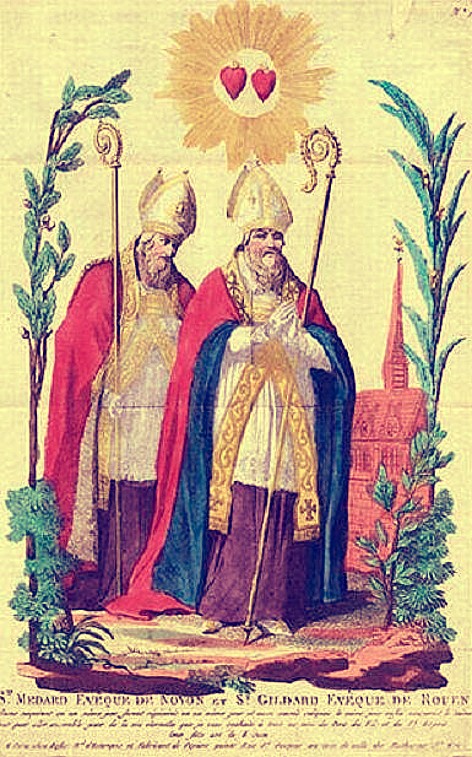
The Roman Martyrology states of St Medard and his twin brother, St Gildard, today: “At Soissons, in France, the birthday of St Gildard, Bishop of Rouen, whose life and precios death are illustrated by glorios miracles – at Rouen, St Gildard, Bishop, twin brother of St Medard,who was born with his brother on the same day, Consecrated Bishops at the same time and being taken away from this life, also on the same day, they entered Heaven together!”
St Medard left and Gildard, right
Gildard assisted at the first Council of Orleans in 511 and governed the See of Rouen with great zeal during the space of around fifteen years, although dates are rather uncertain.
He was buried at St Mary’s in Rouen, which is since called St Gildard’s, or in French St Godard’s. His remains were removed to the Abbey of St Medard in Soissons precisely because of the ibling connection; – when the Monks of St Medard discovered this link, they argued successfully with Charles the Bald, that the brothers be reunited in death. Gildard’s body was, therefore, translated to St Medard’s at Soissons and still remains there, lying in peace, side-by-side with his twin brother. And it is from here that the cult of the twin Saints spread.
That he was twin brother of St Medard was unknown to Saints Fortunatus, Gregory of Tours and other Catholic writers.
But, there are many Churches, Convents, a Museum and more named for the two Saints in France both individually and severally.
St Anne Mary Taigi St Bron of Cassel St Calliope St Clodulf of Metz Bl Engelbert of Schäftlarn St Eustadiola of Moyen-Moutier St Fortunato of Fano St Gildard of Rouen (c 456-c 545Bishop, Confessor * Twin Brother of St Medard below Bl Giorgio Porta Bl Giselbert of Cappenberg St Heraclius of Sens Bl István Sándor
Bl John Davy OC (Died 1537) Deacon Martyr Bl essedJohn Rainuzzi Bl Maddallena of the Conception Bl Mariam Thresia Chiramel Mankidiyan St Maximinus of Aix
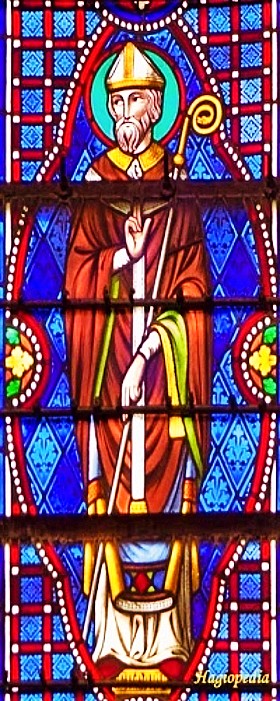
St Medard (c 456-545) Bishop and Convessor * Twin Brother of St Gildard above About this iluustrious Saint: https://anastpaul.com/2020/06/08/saint-of-the-day-8-june-saint-medard-c-456-545-bishop/ The Roman Martyrology states of St Medard and his twin brother, St Gildard, today: “At Soissons, in France, the birthday of St Medard, Bishop of Novon, whose life and precios death are illustrated by glorious miracles – at Rouen, St Gildard, Bishop, twin brother of St Medard,who was born with his brother on the same day, Consecrated Bishops at the same time and being taken away from this life, also on the same day, they entered Heaven together!”
St Melania the Elder St Muirchu St Pacificus of Cerano Bl Peter de Amer Bl Robert of Frassinoro St Sallustian St Syra of Troyes St Victorinus of Camerino
Thought for the Day – 7 June – Meditations with Antonio Cardinal Bacci (1881-1971)
Our Response to the Love of the Sacred Heart
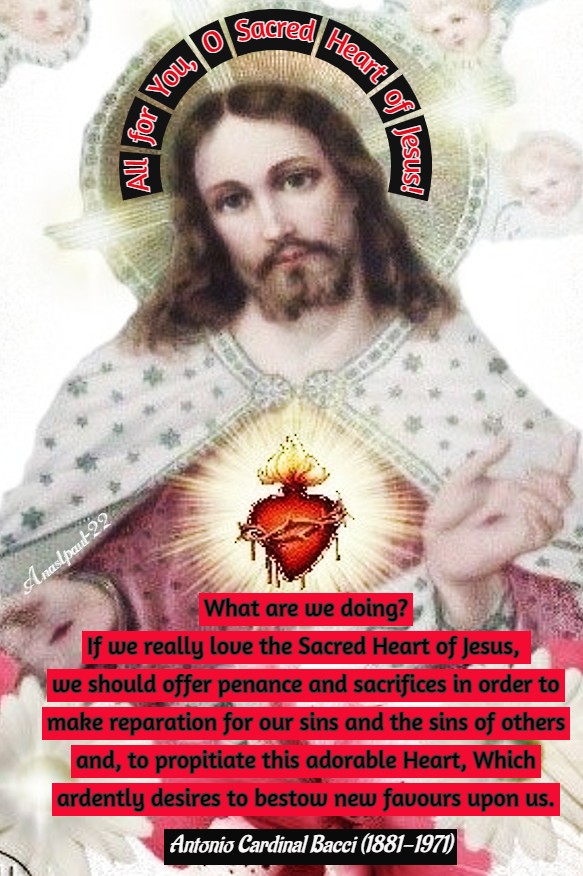
“What are we doing? If we really love the Sacred Heart of Jesus, we should offer penance and sacrifices in order to make reparation for our sins and the sins of others and, to propitiate this adorable Heart, Which ardently desires to bestow new favours upon us.
Aspiration: All for You, O Sacred Heart of Jesus! ”
Quote/s of the Day – 7 June – Pentecost Tuesday – Acts 8:14-17, John 10:1-10.
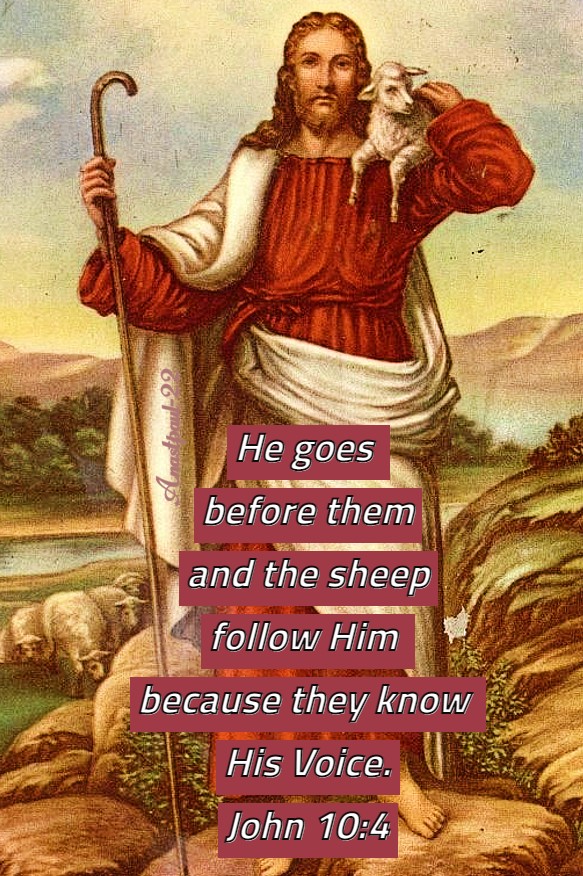
“… He goes before them and the sheep follow Him because they know His Voice.”
John 10:4
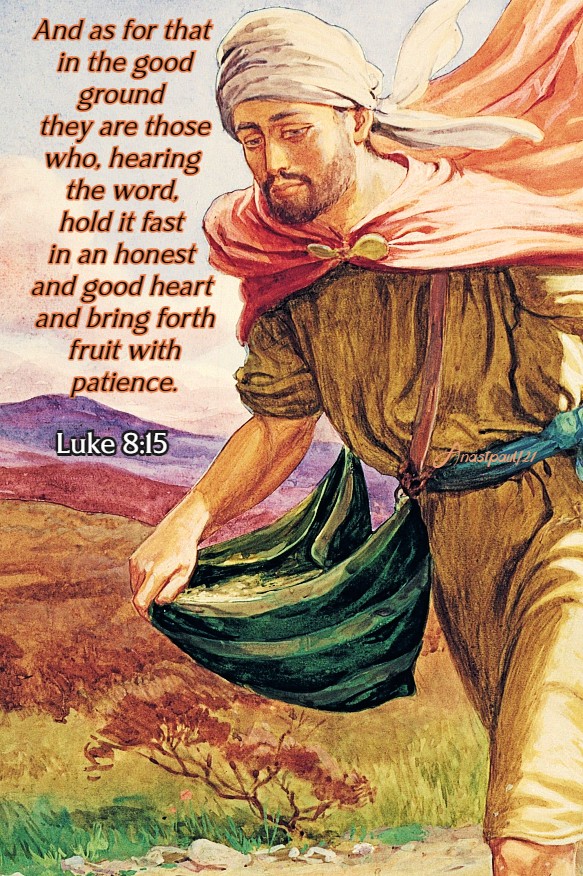
“And as for that in the good ground they are those who, hearing the word, hold it fast in an honest and good heart and bring forth fruit with patience.”
Luke 8:15
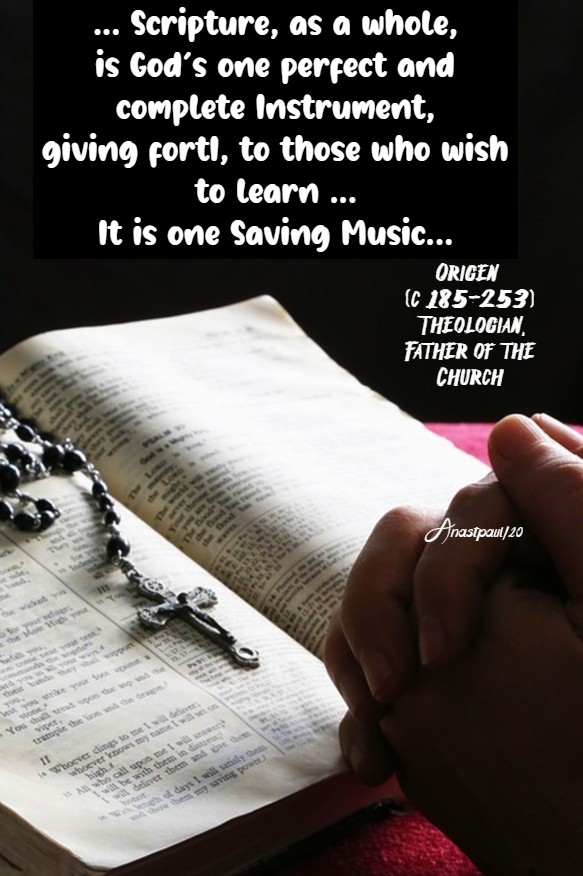
“… Scripture, as a whole, is God’s one perfect and complete instrument, giving forth, to those who wish to learn … It is one Saving Music…”
Origen (c 185-253) Theologian, Father of the Church
“If you believe what you like in the Gospels and reject what you don’t like, it is not the Gospel you believe but yourself.”
St Augustine (354-430) Father and Doctor of Grace
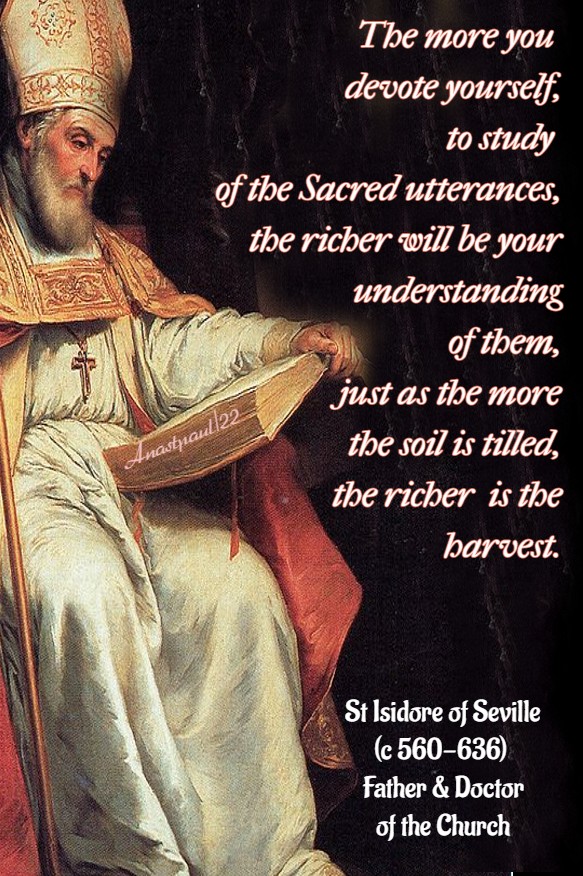
“The more you devote yourself, to study of the Sacred utterances, the richer will be your understanding of them, just as the more the soil is tilled,, the richer is the harvest.”
St Isidore of Seville (c 560-636) Father & Doctor of the Church
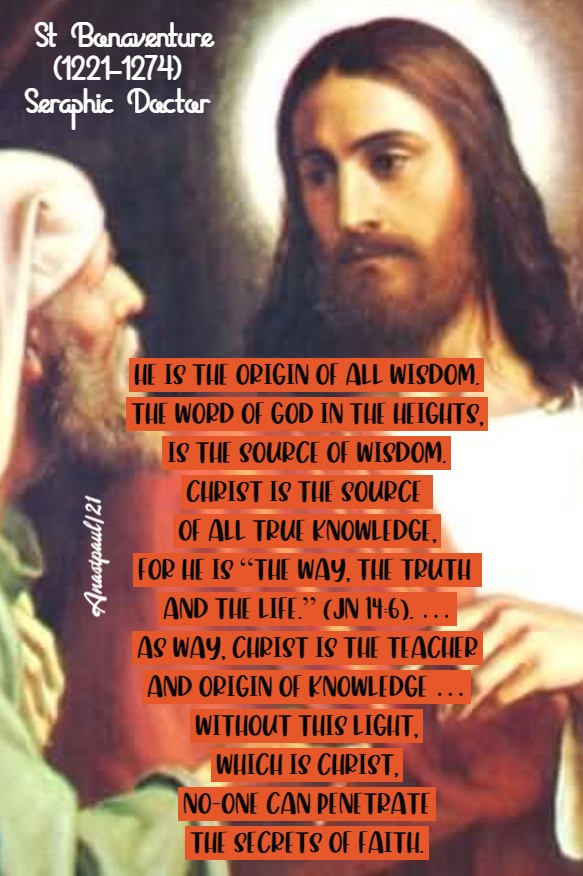
“He is the origin of all wisdom. The Word of God in the heights, is the source of wisdom. Christ is the source of all true knowledge, for He is “the way, the truth and the life.” (Jn 14:6). … As way, Christ is the teacher and origin of knowledge … Without this Light, which is Christ, no-one can penetrate the secrets of faith.”
One Minute Reflection – 7 June – Pentecost Tuesday – Acts 8:14-17, John 10:1-10.
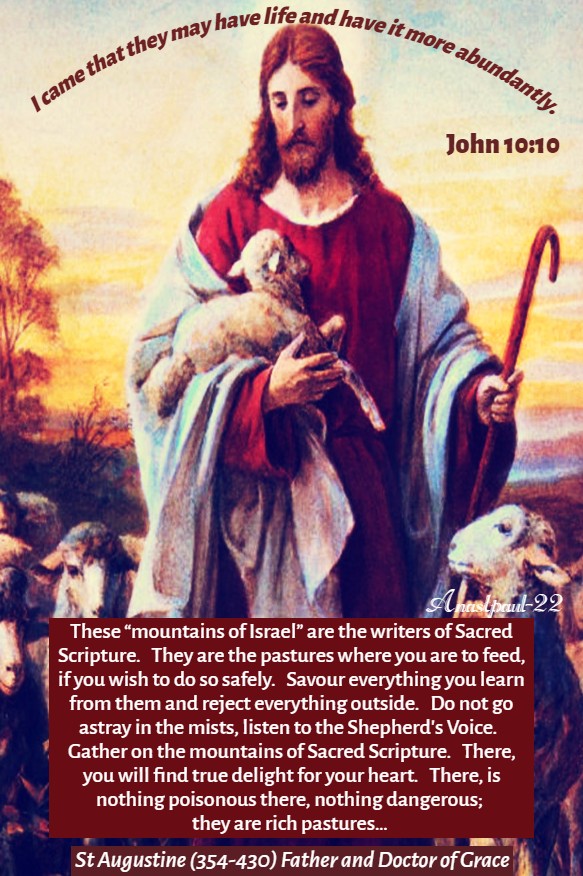
“I came that they may have life and have it more abundantly.” – John 10:10
REFLECTION – “Thus says the Lord: “I Myself will come’”… This is what He has undoubtedly done and what He will yet do: “I Myself am coming: I will seek out My sheep, I will tend them as a shepherd tends His flock.” The wicked shepherds took no care of them because they did not redeem their sheep, with their blood… “My sheep hear My Voice. I will seek out My sheep from the midst of the scattered sheep and will bring them out from all the places they were scattered, on the day of clouds and darkness. No matter how difficult it is to find them, I will find them… I will rescue My sheep from foreign lands, I will gather them and lead them back to their own homes; I will lead them to pasture on the mountains of Israel.”
These “mountains of Israel” are the writers of Sacred Scripture. They are the pastures where you are to feed, if you wish to do so safely. Savour everything you learn from them and reject everything outside. Do not go astray in the mists, listen to the Shepherd’s Voice. Gather on the mountains of Sacred Scripture. There, you will find true delight for your heart. There, is nothing poisonous there, nothing dangerous; they are rich pastures… “I will lead them beside rivers, in the best places.” From those mountains we were just talking about, rivers of Gospel preaching pour down since “the voice [of the Apostles] resounds to the ends of the earth” and all the ends of the earth provide pleasant and fertile pastures for the sheep.
“I will cause them to feed in good pasture… and their sheepfold will be there,” that is to say, there, they will rest, there, they will be able to say: “It is good to be here; true enough, it is perfectly clear, we have found the truth.” They will take their rest in the glory of God as in a sheepfold.” – St Augustine (354-430) Father and Doctor of Grace (Sermon 46, On the shepherds; CCL 41, 529).
PRAYER – Let the power of the Holy Spirit be present within us, O Lord, graciously to cleanse our hearts, as well as to guard us from all harm. Through Jesus Christ, Thy Son our Lord, Who lives and reigns with Thee, in the unity of the Holy Ghost, God, world without end. Amen (Collect).
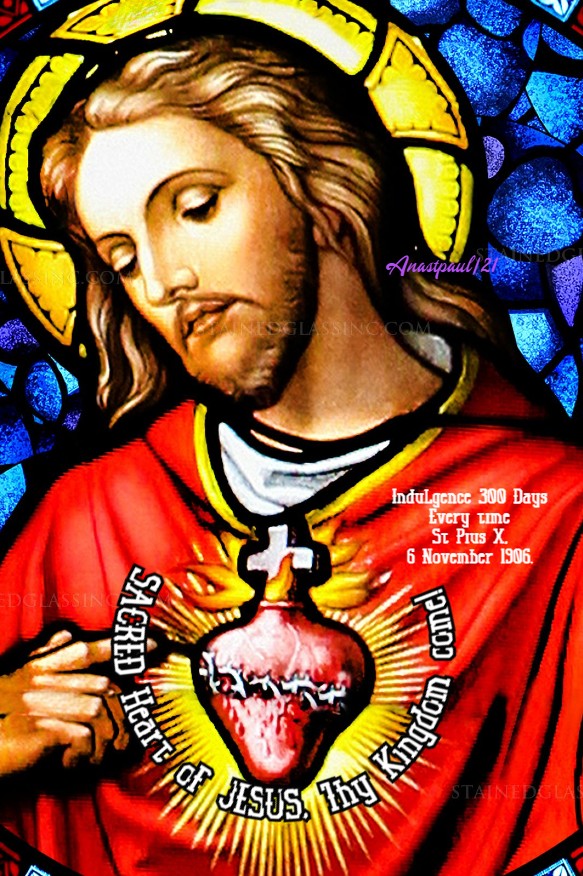
SACRED Heart of JESUS, Thy Kingdom come! – Indulgence 300 Days – Every time – Raccolta 179 St Pius X, 6 November 1906.
Our Morning Offering – 7 June – “The Month of the Sacred Heart”
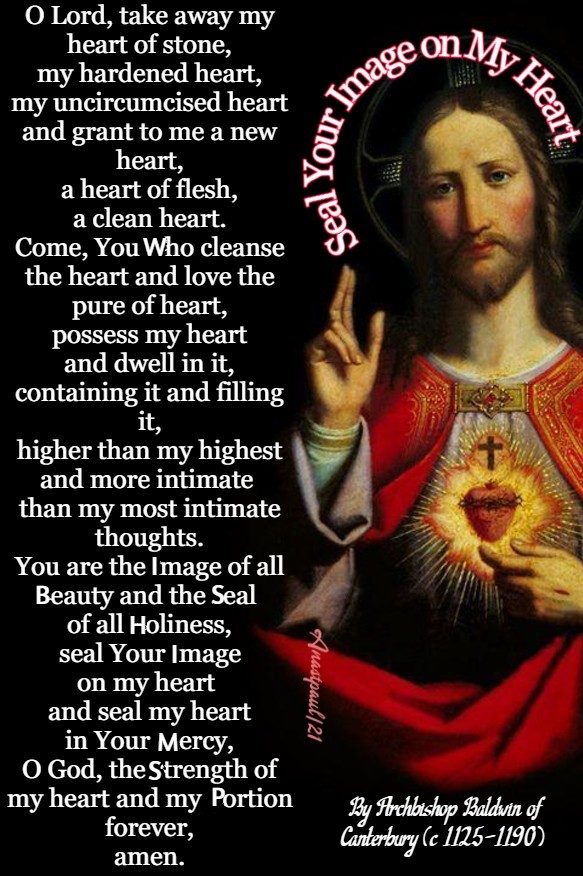
Seal Your Image on My Heart By Archbishop Baldwin of Canterbury (c 1125-1190)
O Lord, take away my heart of stone, my hardened heart, my uncircumcised heart and grant to me a new heart, a heart of flesh, a clean heart. Come, You Who cleanse the heart and love the pure of heart, possess my heart and dwell in it, containing it and filling it, higher than my highest and more intimate than my most intimate thoughts. You are the Image of all Beauty and the Seal of all Holiness, seal Your Image on my heart and seal my heart in Your Mercy, O God, the Strength of my heart and my Portion forever, Amen.
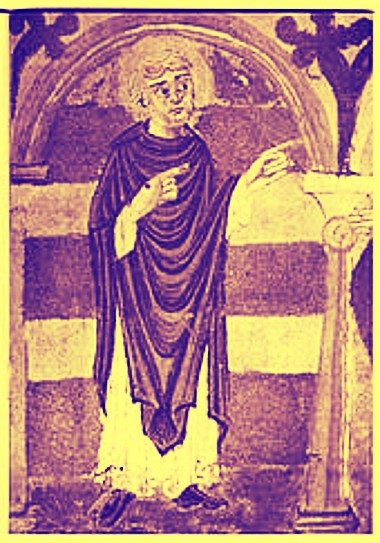
Saint of the Day – 7 June – Saint Deochar OSB (Died 847) Monk, Abbot, Hermit, Disciple and Spiritual Student of St Alcuin, Founder of a Monastery and first Abbot in Herrieden, in modern Bavaria, Germany, Royal Messenger and as such, translated the Relics of the great St Boniface to Fulda, Germany. Born in the late 8th century, probably in Bavaria, Germany and died in 847 at his Abbey of Herriedon, Germany of natural causes. Patronages – of the blind and of those with eye diseases. Also known as – Deocarus, Deotker, Dietger, Gottlief, Theotgar, Theutger.
Deochar was a disciple of the blessed Alcuin at the Court of Emperor Charlemagne. He retired to solitude in Haserode (later Herrieden) as a Hermit. In around 782, Charlemagne built him a Chapel and later a Benedictine Monastery on the site opposite the Church in Herrieden, which Church, is dedicated to him today. Here, Deochare became a Monk and the first Abbot. In 793 King Charles visited Deochar and in 796 ,he sent his Court theologian, Alcuin to settle the Abbot’s difficulties with some of his Monks.
Since 802, Deochar was also a Royal Messenger and, therefore, in 819, he was involved, in the transfer of the Relics of the great St Boniface to Fulda. The first image above depicts this event.
In 829, Deochar headed the list of signatories to the Synod of Mainz, being an authority on Sacred Scripture and on the monastic rule,
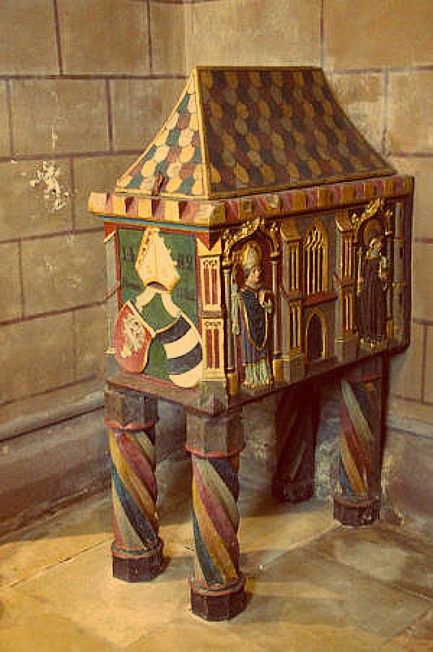
He died at an advanced age and received his final resting place in a Shrine in the Collegiate Church of St Vitus and St Deochar in Hasareoda / Herrieden. In 1316. a part of his Relics was transferred by King Ludwig as the spoils of victory, to the Chapel in the Church of St Lorenz in Nuremberg, now named after Deochar. In 1845 they came to Eichstätt . The part of the Relics brought by King Ludwig to his residence, the Alter Hof in Munich, was destroyed in World War II.
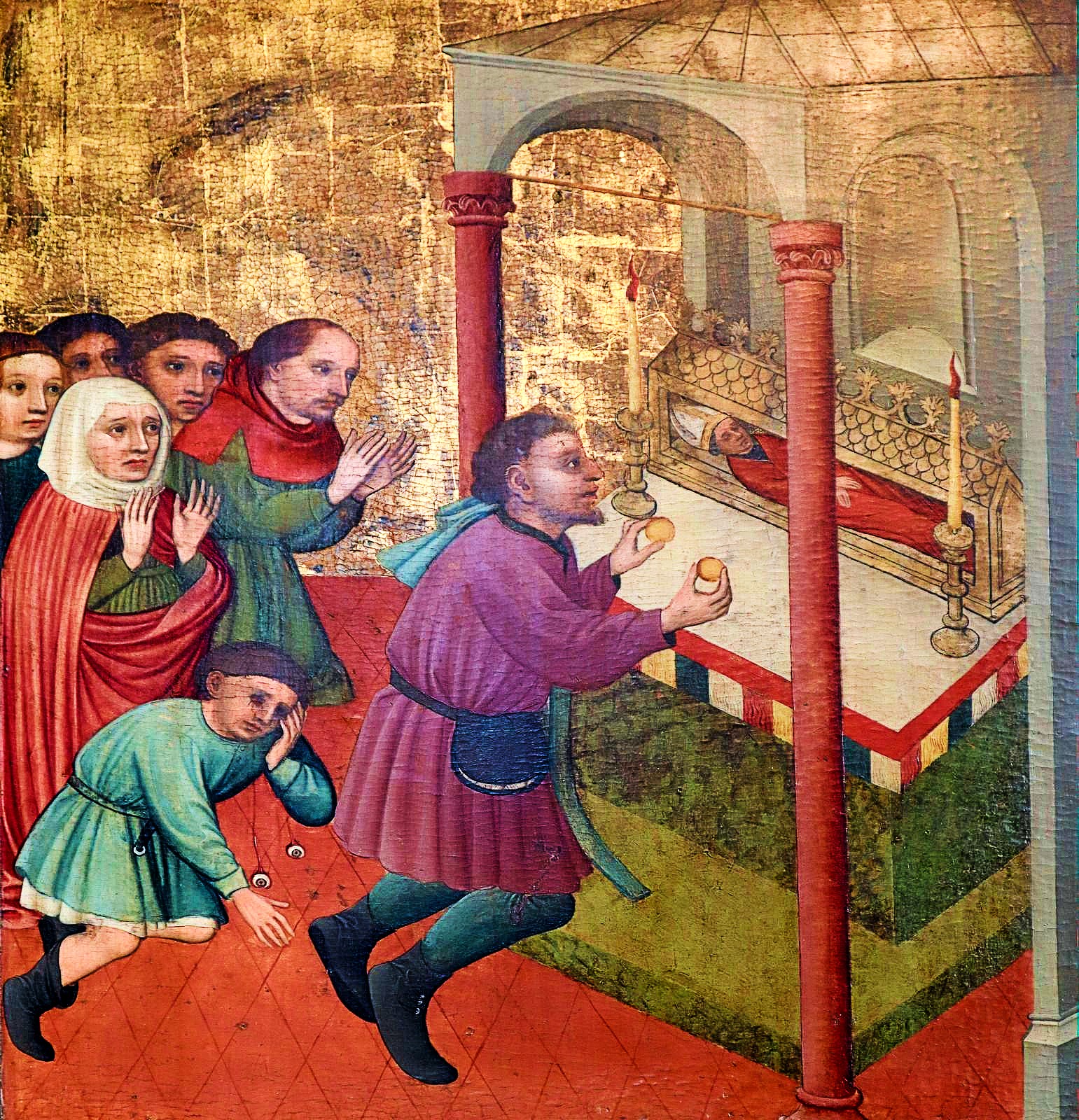
High grave, 1482, in the Blasisus Chapel of the Basilica of St Vitus and St Deocar in Herrieden
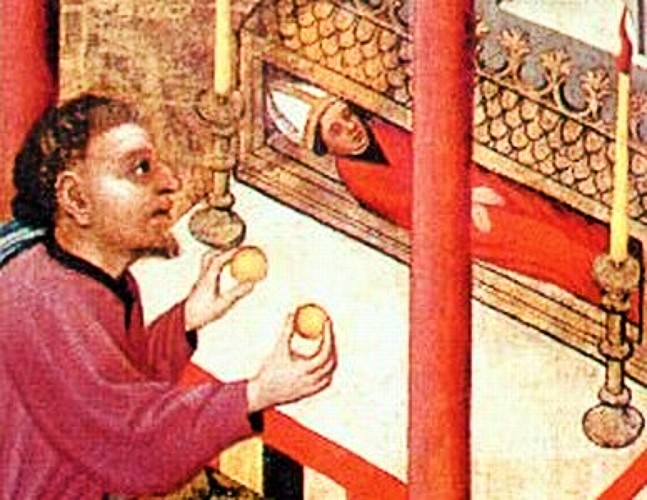
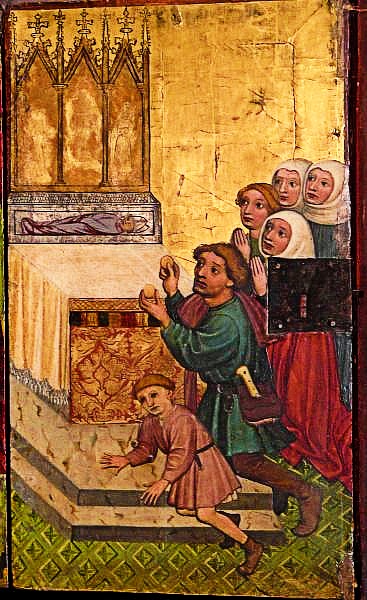
St Deochar’s Patronage of the blind relates to a famous miracle which occurred due to his prayer on behalf of a blind boy child, who was immediately cured.
St Aventinus of Larboust Bl Basilissa Fernandez St Colman of Dromore Bl Demosthenes Ranzi St Deochar OSB (Died 847) Monk, Abbot, Hermit St Gotteschalk St Justus of Condat St Landulf of Yariglia St Lycarion of Egypt
Venerable Matt Talbot (1856 – 1925) (born Matthew Talbot) – Layman, Ascetic, Mystic – known as the “Saint in Overalls” and “the Workers’ Saint” disciple of Eucharistic Adoration and the Blessed Virgin – Patron of Struggling and Recovering Addicts and Alcoholics and many addiction treatment programs, retreats and centres throughout the world bear his name. The Matt Talbot Story: https://anastpaul.com/2017/06/07/saint-of-the-day-7-june-venerable-matt-talbot-ofs/
St Meriadoc I of Vannes St Meriadoc II of Vannes St Odo of Massay St Potamiaena of Alexandria the Younger St Quirinus of Cluny
St Robert of Newminster O.Cist. (c 1100–1159) English Priest, Abbot, Apostle of the poor, Miracle-worker. He was one of the Monks who founded Fountains Abbey in North Yorkshire, England, another at Newminster, Northumbria and 3 other Monasteries Robert ruled and directed the Monks at Newminster for 21 years. St Robert’s Life: https://anastpaul.com/2021/06/07/saint-of-the-day-7-june-saint-robert-newminster-o-cist-c-1100-1159/
St Sergius of Cluny St Vulflagius of Abbeville
Martyrs of Africa – 7 Saints: A group of seven Christians who were Martyred together. No details about them have survived except the names – Donata, Evasius, Guirillus, Januaria, Privata, Spisinna, Victurus. The precise location in Africa and date are unknown.
Martyred in Córdoba, Spain: Habentius of Córdoba Jeremiah of Córdoba Peter of Córdoba Sabinian of Córdoba Wallabonsus of Córdoba Wistremundus of Córdoba
Thought for the Day – 6 June – Meditations with Antonio Cardinal Bacci (1881-1971)
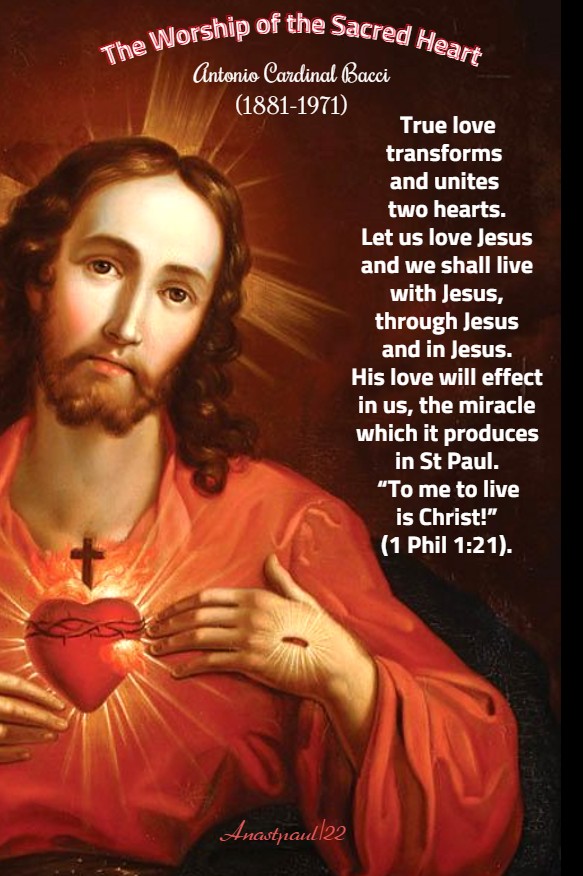
The Worship of the Sacred Heart in Relation to the Love of God and of Our Neighbour
“The promises made by Jesus to those who are truly devoted to His Sacred Heart, are a new proof of His infinite love and mercy. However, if anyone were to cultivate devotion to the Sacred Heart, merely to gain His benefits and to think more of his own spiritual and temporal advantage than of Jesus, he would display a niggardly spirit, quite unworthy of the Lord’s favour.
The worship of the Sacred Heart could degenerate into a kind of utilitarian egoism, undeserving of the name of devotion at all! Pious practices, could become cold and formal and degenerate into sentimentality tinged with superstition. There is nothing to prevent us asking the Sacred Heart for graces and favours which we need. In fact, we should do so, for it is He Who has made these promises to us and is eager to fulfil them because He loves us. But, we should be generous with Jesus in return for His infinite generosity towards us. We should love Him because He is so worthy of our love. Our love should be expressed, not only in prayers and outward forms but, in a deep personal transformation, which will make us more like Jesus.
True love transforms and unites two hearts. Let us love Jesus and we shall live with Jesus, through Jesus and in Jesus. His love will effect in us, the miracle which it produces in St Paul. “To me to live is Christ!” (1 Phil 1:21).”
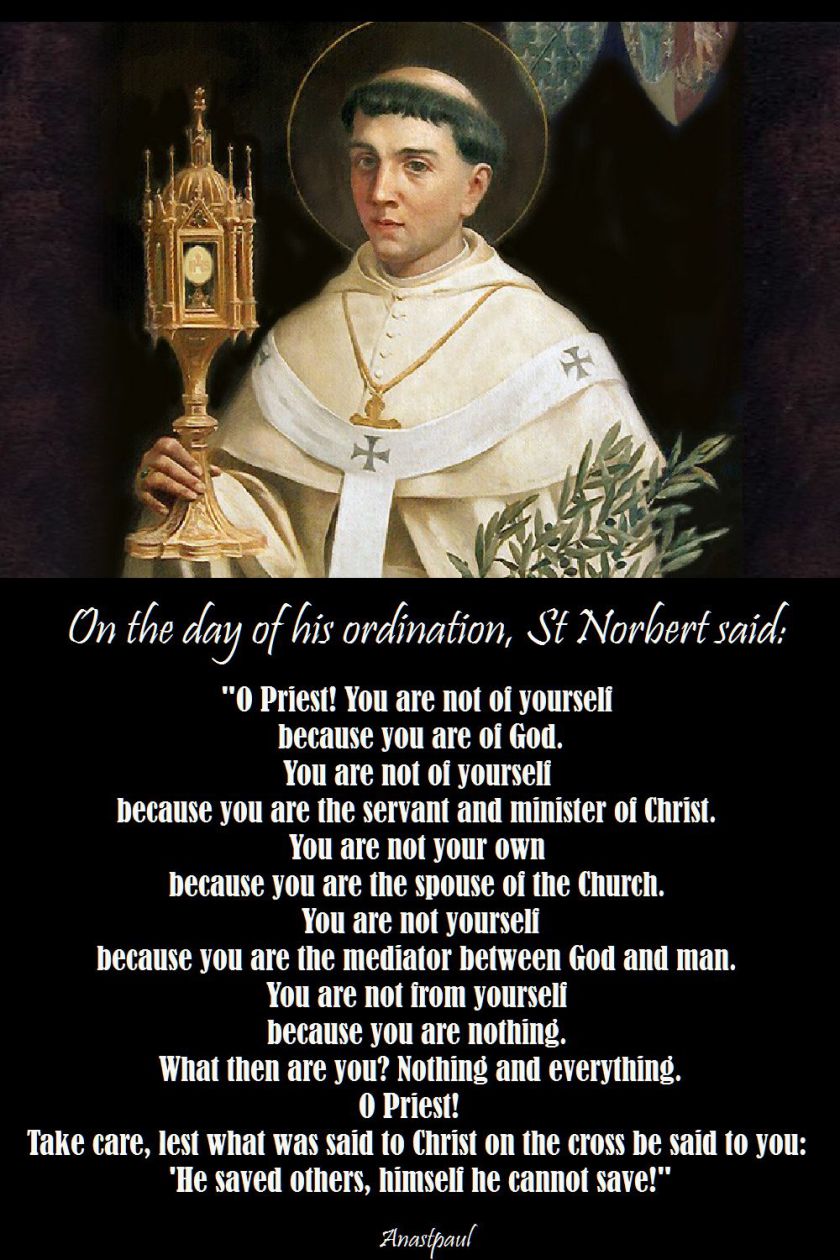
Quote/s of the Day – 6 June – Pentecost Monday and the Memorial of St Norbert (c 1080-1134) Bishop, Confessor, Founder of the Premonstratensian or the Norbertine Canons and Sisters, “Defender of the Eucharist” and “Apostle of the Eucharist,” Exorcist, Reformer, Preacher
On the day of his ordination, St Norbert said:
“O Priest! You are not of yourself because you are of God. You are not of yourself because you are the servant and minister of Christ. You are not your own because you are the spouse of the Church. You are not yourself because you are the mediator between God and man. You are not from yourself because you are nothing. What then are you? Nothing and everything. O Priest! Take care, lest what was said to Christ on the cross be said to you: ‘He saved others, himself he cannot save!”
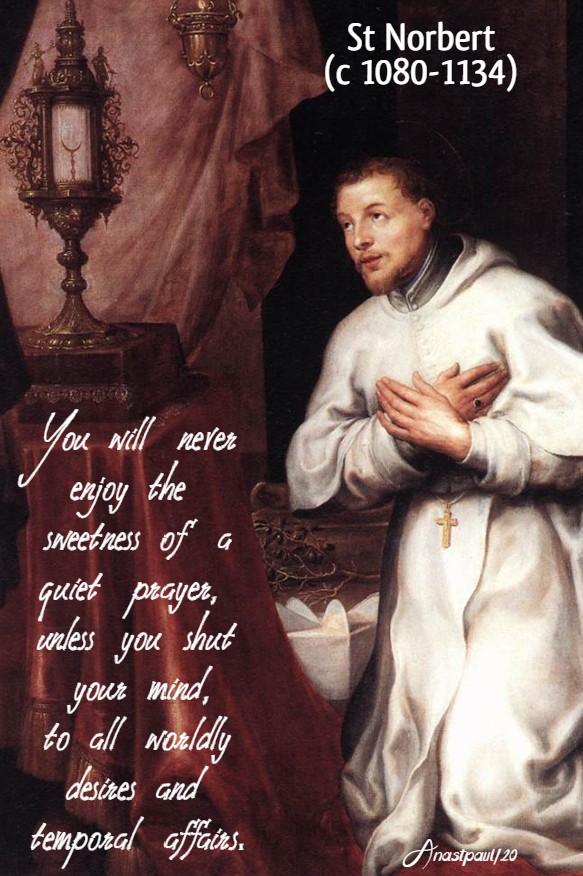
“You will never enjoy the sweetness of a quiet prayer, unless you shut your mind, to all worldly desires and temporal affairs.”
St Norbert (c 1080-1134)
Why is St Norbert Patron of Expectant Mothers & Infertile Married Couples?
A pious woman once approached St Norbert asking whether she and her husband ought to separate and enter Monasteries because they lived in an infertile marriage. St Norbert prophesied that they would be blessed with children, the first of whom would be dedicated to God. This child, Nicholas, did indeed become a Norbertine at Prémontré. St Norbert is traditionally invoked for a safe childbirth too. The Norbertine Canonesses at Doksany (Czech Republic) in modern times, promote this devotion to St Norbert as ‘Patron of Infertile Couples and Endangered Pregnancies’ and report hundreds of families now blessed with children, the Sisters, having well over 3,000 spiritual children as of 2012. It would be wonderful to find an updated figure 10 hears later.
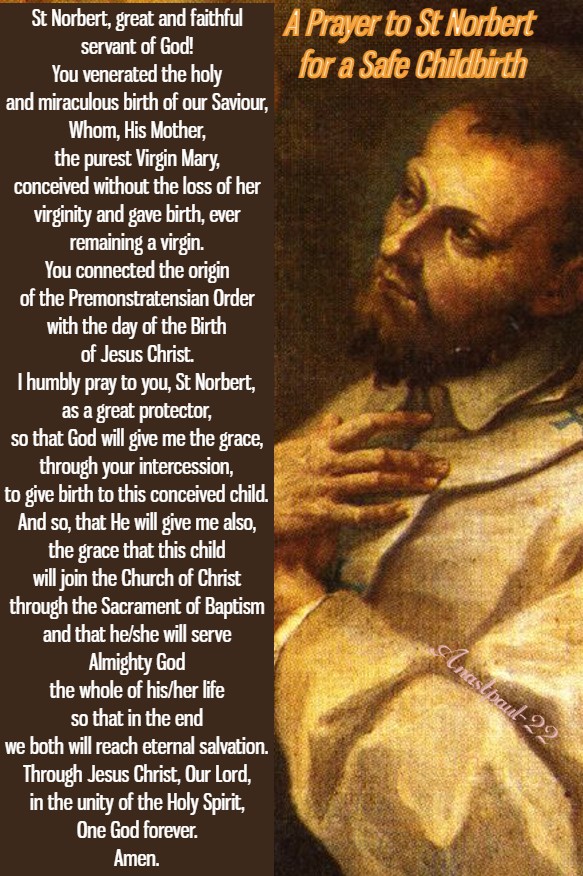
A Prayer to St Norbert for a Safe Childbirth
St Norbert, great and faithful servant of God! You venerated the holy and miraculous birth of our Saviour, Whom, His Mother, the purest Virgin Mary, conceived without the loss of her virginity and gave birth, ever remaining a virgin. You connected the origin of the Premonstratensian Order with the day of the Birth of Jesus Christ. I humbly pray to you, St Norbert, as a great protector, so that God will give me the grace, through your intercession, to give birth to this conceived child. And so, that He will give me also, the grace that this child will join the Church of Christ through the Sacrament of Baptism and that he/she will serve Almighty God the whole of his/her life so that in the end we both will reach eternal salvation. Through Jesus Christ, Our Lord, in the unity of the Holy Spirit, One God forever. Amen.
(Translated from The Little Hours, 1749, by one of our Norbertine Sisters at Doksany)
One Minute Reflection – 6 June – Pentecost Monday – Acts 10:34, 42-48, John 3:16-21
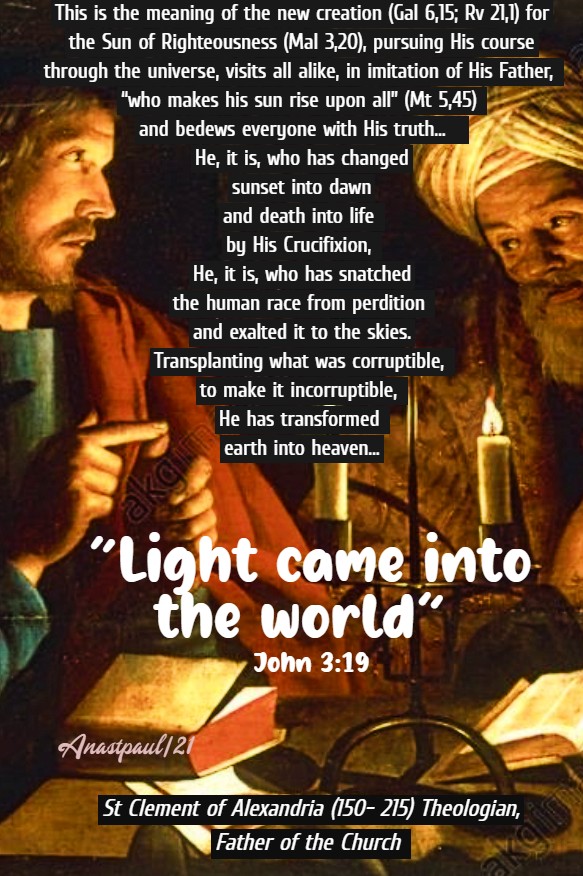
“Light came into the world” – John 3:19
REFLECTION – “The commandment of the Lord shines clearly, enlightening the eyes” (Ps 18 [19].9). Receive Christ, receive power to see, receive your light, that you may plainly recognise both God and man… Let us open ourselves to the light then and so to God. Let us open ourselves to the light and become disciples of the Lord… Let us, then, shake off forgetfulness of truth, shake off the mist of ignorance and darkness that dims our eyes and contemplate the true God… For upon us, buried in darkness, imprisoned in the shadow of death, a heavenly light has shone, a light of a clarity, surpassing the sun’s and of a sweetness, exceeding any this earthly life can offer. That light is eternal life and those who receive it live. Night, on the other hand, is afraid of the light and melting away in terror gives place to the day of the Lord. Unfailing light has penetrated everywhere and sunset has turned into dawn.
This is the meaning of the new creation (Gal 6,15; Rv 21,1) for the Sun of Righteousness (Mal 3,20), pursuing His course through the universe, visits all alike, in imitation of His Father, “who makes his sun rise upon all” (Mt 5,45) and bedews everyone with His truth… He, it is, Who has changed sunset into dawn and death into life by His Crucifixion, He, it is, Who has snatched the human race from perdition and exalted it to the skies. Transplanting what was corruptible, to make it incorruptible, He has transformed earth into Heaven…
He deifies us by His heavenly teaching, by “instilling His laws into our minds and writing them on our hearts. That all, be they of high estate or low, shall know God. And I will be merciful to them, God says and I will remember their sin no more” (Jr 31,33f.). Let us accept the laws of life, then; let us obey God’s promptings, let us learn to know Him.” – St Clement of Alexandria (150- 215) Theologian, Father of the Church (Exhortation to the Greeks, 11, 113).
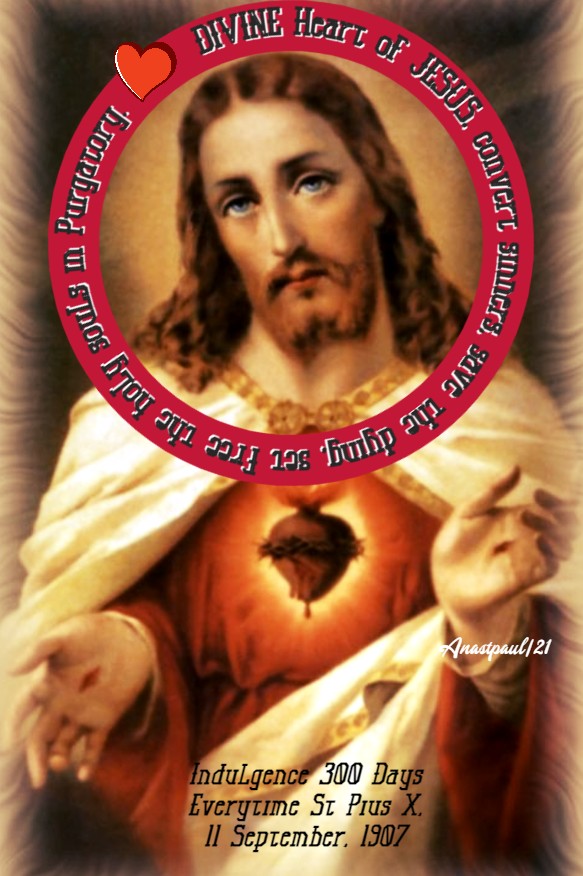
PRAYER – O God, Thou Who gave the Holy Spirit to Thy Apostles, grant that the devout prayers of Thy people may be effective and, as Thou have given us faith, also grant us peace. Through Jesus Christ, Thy Son our Lord, Who lives and reigns with Thee, in the unity of the Holy Ghost, God, world without end. Amen (Collect). DIVINE Heart of JESUS, convert sinners, save the dying, set free the holy souls in Purgatory. Indulgence 300 Days Everytime – St Pius X, 11 September, 1907
Our Morning Offering – 6 June – “The Month of the Sacred Heart”
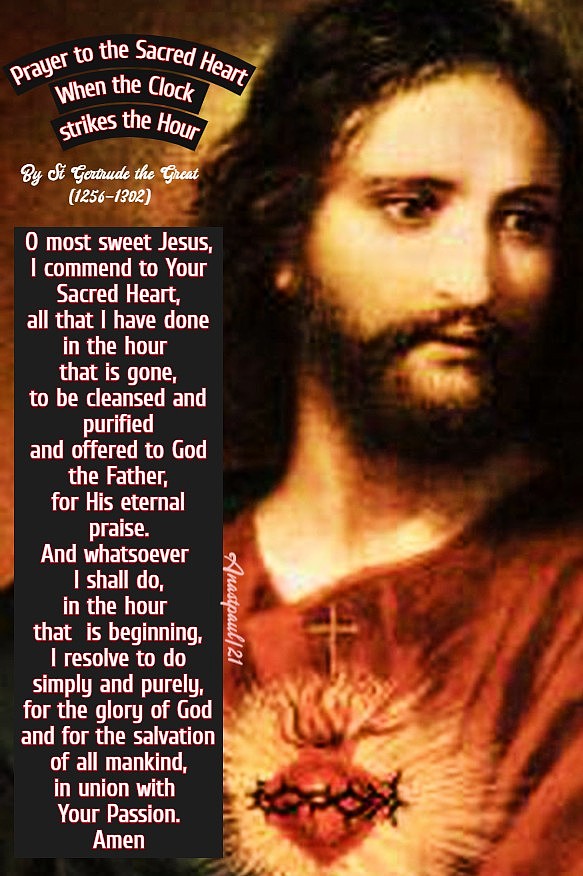
Prayer to the Sacred Heart When the Clock strikes the Hour By St Gertrude the Great (1256-1302)
O most sweet Jesus, I commend to Your Sacred Heart, all that I have done in the hour that is gone, to be cleansed and purified and offered to God the Father, for His eternal praise. And whatsoever I shall do, in the hour that is beginning, I resolve to do simply and purely, for the glory of God and for the salvation of all mankind, in union with Your Passion. Amen
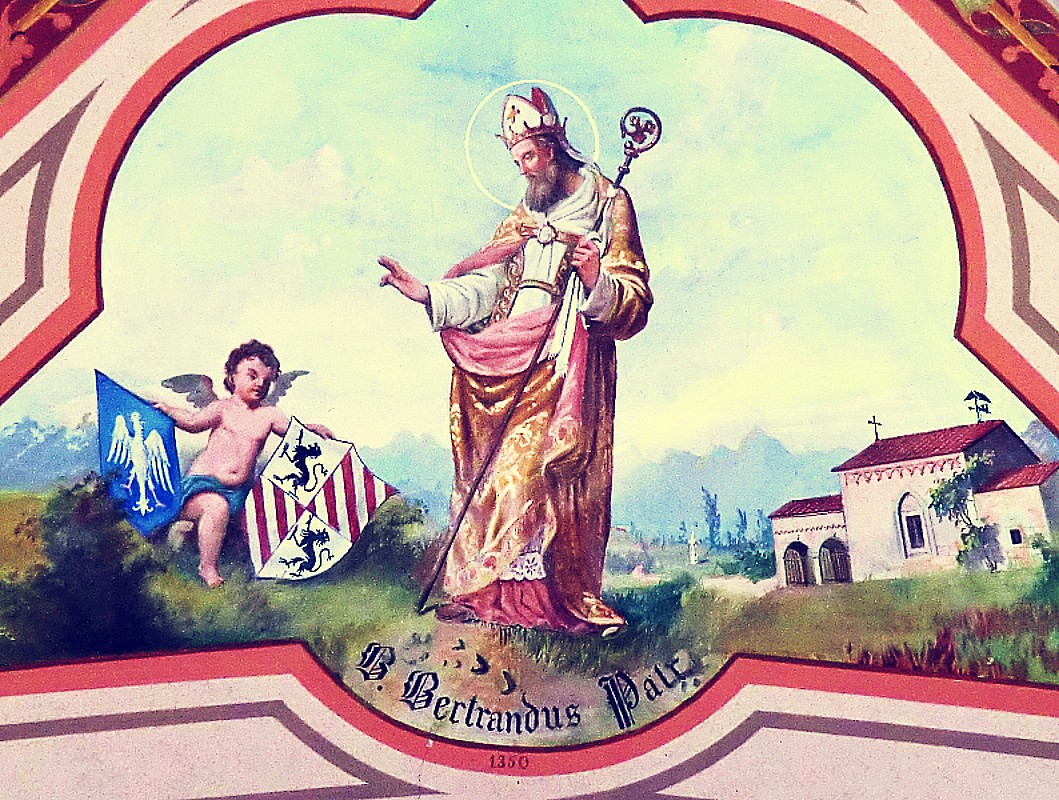
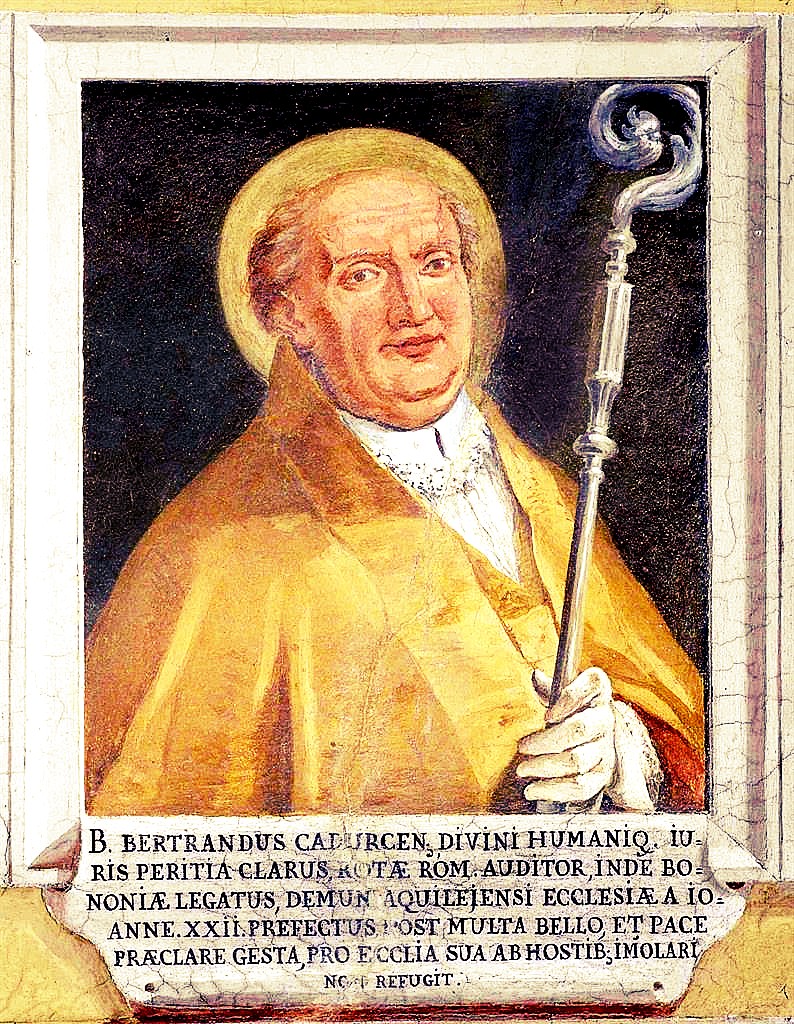
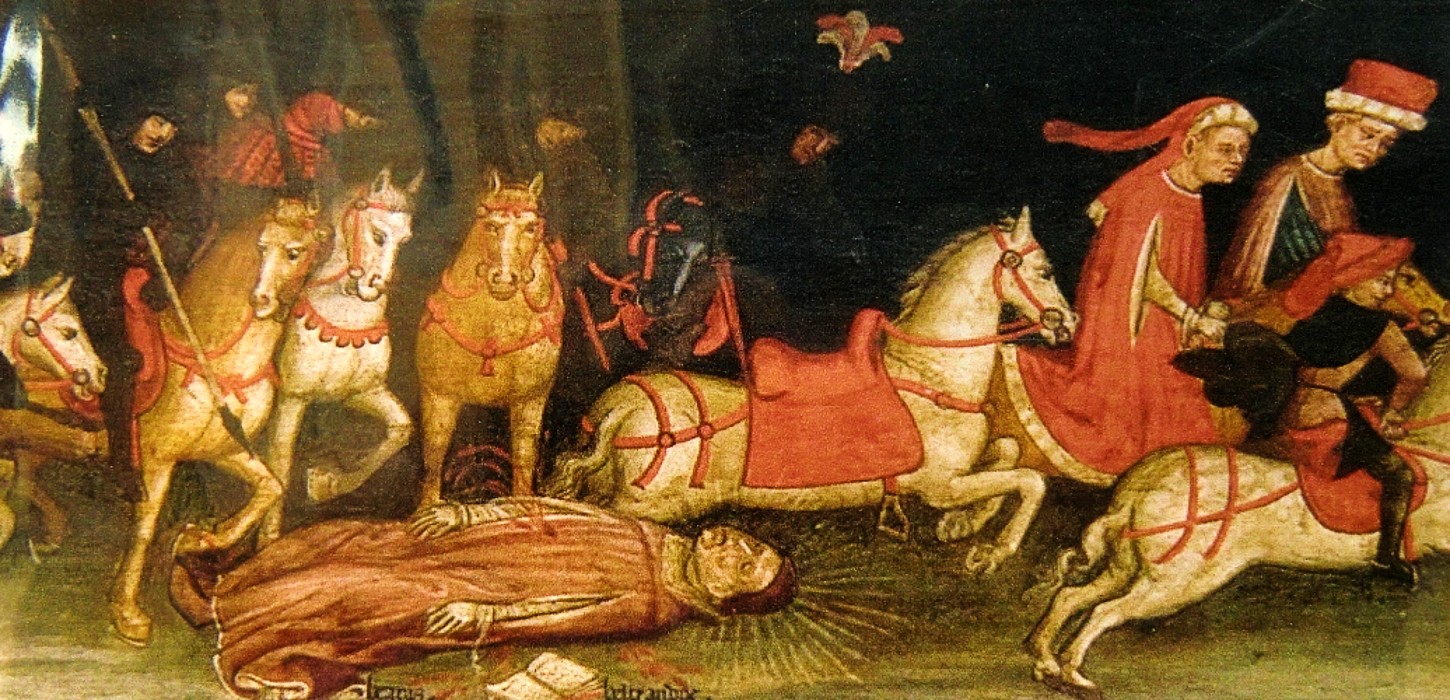
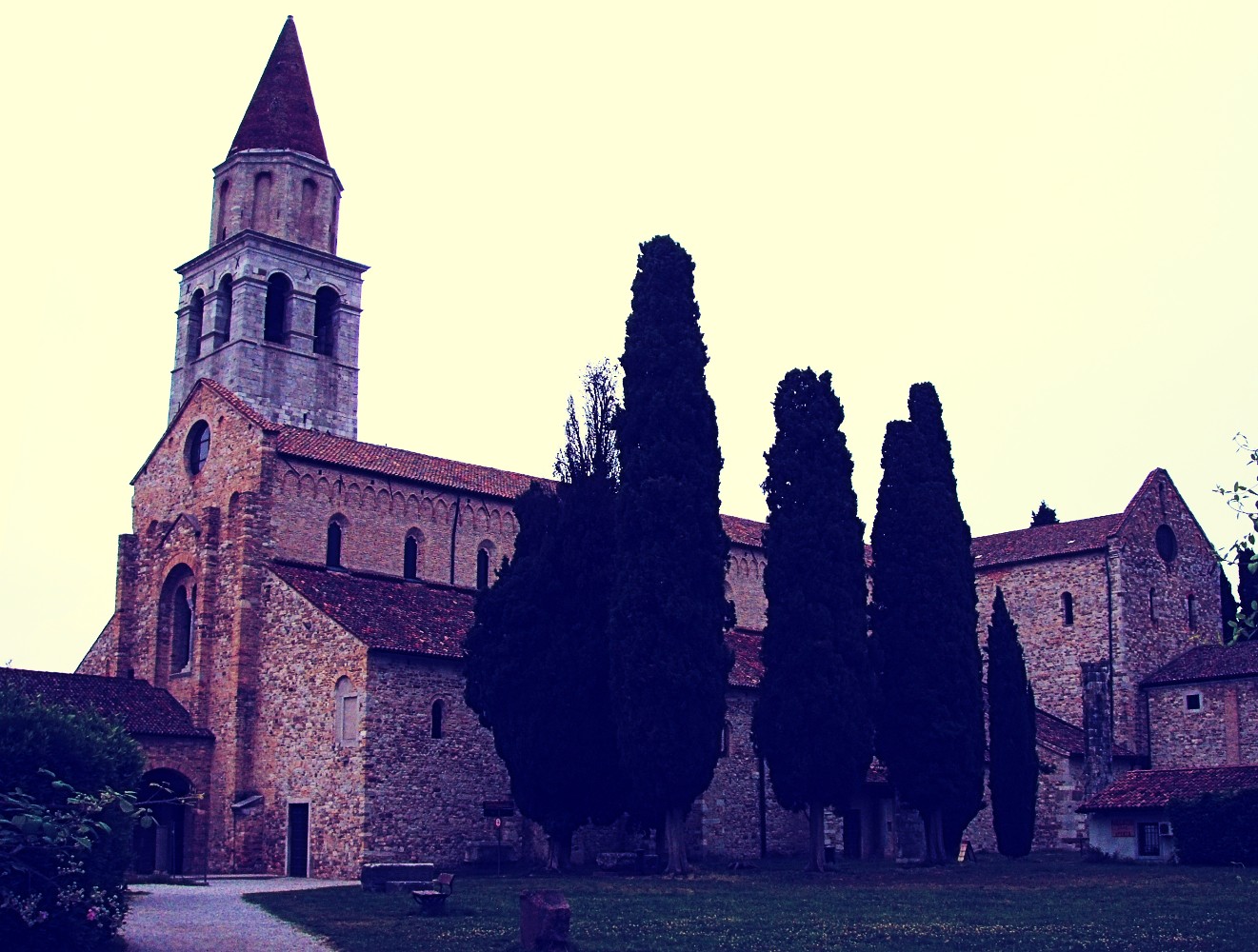
Saint of the Day – 6 June – Saint Bertrand of Aquileia (c 1260– 1350) Bishop of Aquileia, Martyr, Confessor, Lawyer, Teacher, Papal Chaplain and Legate, Reformer. Apostle of the poor, Social Reformer, Founder of Monasteries and Protector of the Monks. Born in c 1260 at Saint-Geniès, Quercy, Aquitaine, France and died on 6 June 1350 by being murdered at San Giogio Richionvelda, for his stand, in protecting his people and his Diocese, against feudal rebels. Patronage – Aquileia, Italy. Also known as – Bertrando, Bertrichramnus, Bertram.
Bertrand initially practised as a Lawyer and after further studies, he was Ordained as a Priest and in 1316 became the Dean of the Cathedral Chapter of Angouleme and in 1318, a Canon of Saint Felice in Toulouse and then the Archdeacon of Noyon, France and a Papal Chaplain. At the same time, Bertrand continued to teach Law at the University of Toulouse.
Whilst compiling information for the Canonisation of St Thomas Aquinas, he was appointed as a Papal Legate.
On 4 July 1334, he was Consecrated as the Bishop of Aquileia in Italy where he ministered until his death.
As Bishop, Bertrand was noted for his austere lifestyle and works of charity for the poor. He founded Monasteries to promote learning and encouraged the work of the Benedictines, Franciscans and He worked for the moral reform in his Diocese and supported the olive and wool trade in his region, as a way to improve the lives of his people. Bertrand convened a Council of Bishops in Udine, Italy in 1335 and again, in 1339, one in Aquileia.
These Councils were followed by four Synods, in which he processed reforms in the religious life of his Diocese and established norms against the heresies which had spread in its lands.
Bertrand was also a patron of the arts – in 1334, he established the University of Cividale and restored the Udine Cathedral.
Bertrand took a strong stand against the feudal noble rebels of the region. He devoted himself to suppressing the power and the autonomies gained by the Friulian feudal lords in opposition and against the Church. They, discontented by his policies, formed an alliance against him. Bertrand, as the Papal Legate, attempted to find a diplomatic solution to their problems but once any possibility of a military victory waned, the rebels set a plot against the aged Bishop, who was assassinated by Enrico da Spilimbergo at San Giorgio della Richinvelda on 6 June 1350.
Bertrand was murdered for defending the rights of the Church and is thus considered a Martyr.
The Martyrdom of St Bertrand
He was buried in Udine, Italy and later, his Relics were enshrined in the Undine Cathedral. Bertrand was Canonised by Pope Clement XIII in 1760 and appointed Patron of Aquileia where the Basilica is dedicated to him.
St Norbert (c 1080-1134) Bishop, Confessor, Founder of the Premonstratensian or the Norbertine Canons and Sisters, “Defender of the Eucharist” and “Apostle of the Eucharist,” Exorcist, Reformer, Preacher His amazing life: https://anastpaul.com/2017/06/06/saint-of-the-day-6-june-st-norbert/
St Agobard of Lyon St Alexander of Fiesole St Alexander of Noyon St Amantius of Noyon St Anoub of Skete St Artemius of Rome St Bazalota of Abyssinia St Bertrand of Aquileia (c 1260– 1350) Bishop Martyr Confessor St Candida of Rome St Ceratius of Grenoble St Claudius of Besançon St Cocca St Colmán of Orkney Bl Daniel of Bergamo St Euphemia of Abyssinia St Eustorgius II of Milan Bl Falco of La Cava Bl Gilbert of Neufontaines St Grazia of Germagno St Gudwall Bl Gundisalvus of Azebeyro St Hilarion the Younger
Marytrs of Tarsus: A group of 20 Martyrs who were Martyred together during the persecutions of Diocletian. They were martyred in Tarsus (in modern Turkey).
Mercedarian Fathers of Avignon: Several Mercedarians from the Santa Maria Convent of Avignon, France who worked with plague victims in that city and died of the disease themselves. They died in Avignon, France of plague and are remembered together today for their great charity and commitment to their people.
Thought for the Day – 5 June – Meditations with Antonio Cardinal Bacci (1881-1971)
The Feast of Pentecost
“What kind of men were the Apostles before the Miracle of Pentecost?” They were rough men of the people, generous and fond of Jesus perhaps but ignorant, timid and ambitious. They were hoping for personal glory in an earthly kingdom. Then came the catasrophe of Calvary. Their simple trust disappeared and left their hearts filled with regret. “Then all the disciples left Him and fled” (Mt 25:56). It seemed to them that Jesus had failed, so they deserted Him!
The Miracle of the Resurrection restored their faith. But, they were still lacking in courage and enterprise.
They gathered together in the Cenacle to pray and shut themselves up there, for fear of the Jews. But before He had ascended into Heaven, Jesus had promised that He would send the Holy Spirit, to enlighten them concerning His teaching and to give them the courage and ability to spread it, throughout the world. Now this promise was fulfilled. On the feast of Pentecost, which was fifty days after that of the Passover, there was a sudden sound from Heaven, “as of a violent wind blowing.” Then there appeared “tongues of fire, which settled upon each of them” (Acts 2:1).
From the moment when they received the Holy Spirit, the Apostles were utterly transformed! Their intellects were filled with a supernatural light, their hearts were overflowing with love and their wills received the Divine strength to withstand human opposition. They left the Cenacle and began to preach openly, the doctrine of Jesus Christ. Their words sounded in the ears of each listener as if they were spoken in his own language, so that the Light of the Gospel, was given to all. Nor did the men show the slightest fear when they had to face the anger of the Synagogue and of the Jewish people. Like peaceful conquerors, without any human weapons but backed by by the power of God, they divided the world amongst themselves, so that they might win it for Christ!
The Roman Empire was small to them. They travelled, moreover, to the distant shores of Ethiopia and India, where the Eagle of Rome had never found its way!
Surely, this is the most extraordinary Miracle of history?!
The Holy Spirit accomplished that which human armies had never been able to do, save in part or for a limited period of time. In this achievement, He used the weakest possible human means, namely, twelve poor fishermen!
The earthly Empire of Rome, passed away but the Spiritual domain of Christ still remains, with its centre at Rome, as the only true Light, the only unfailing hope and the only pledge of salvation for individuals and nations.
Quote/s of the Day – 5 June – Pentecost Sunday, Alleluia! – Acts 2:1-11, John 14:23-31.
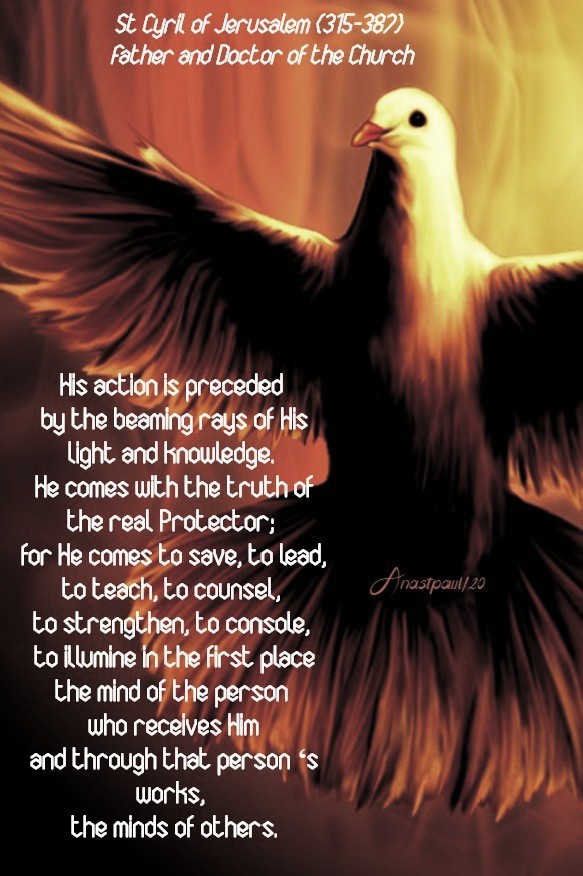
“His action is preceded by the beaming rays of His light and knowledge. He comes with the truth of the real Protector; for He comes to save, to lead, to teach, to counsel, to strengthen, to console, to illumine in the first place the mind of the person who receives Him and through that person‘s works, the minds of others.”
St Cyril of Jerusalem (c 313-386) Father and Doctor of theChurch
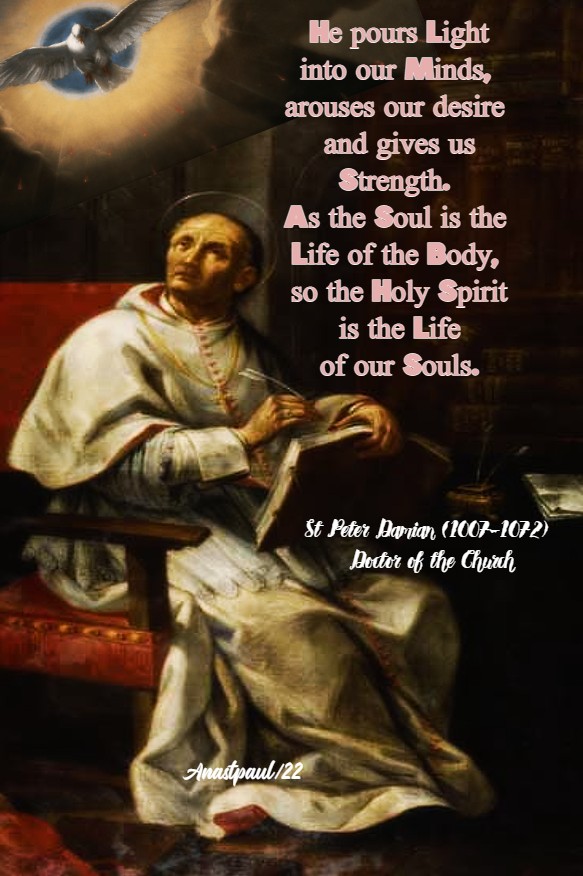
“He pours light into our minds, arouses our desire and gives us strength… As the soul is the life of the body, so the Holy Spirit is the life of our souls.”
St Peter Damian (1007-1072) Father and Doctor of the Church
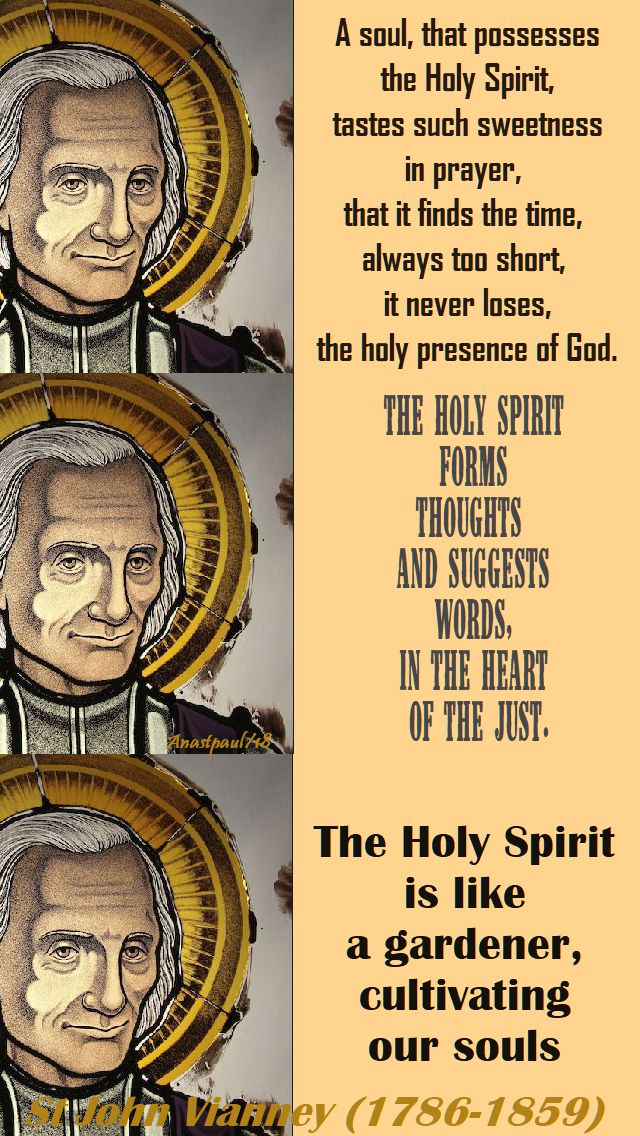
“A soul, that possesses the Holy Spirit, tastes such sweetness, in prayer, that it finds the time, always too short, it never loses, the holy presence of God.”
“The Holy Spirit forms thoughts and suggests words, in the hearts of the just.”
“The Holy Spirit is like a gardener, cultivating our souls.”
St John Vianney (1786-1859)
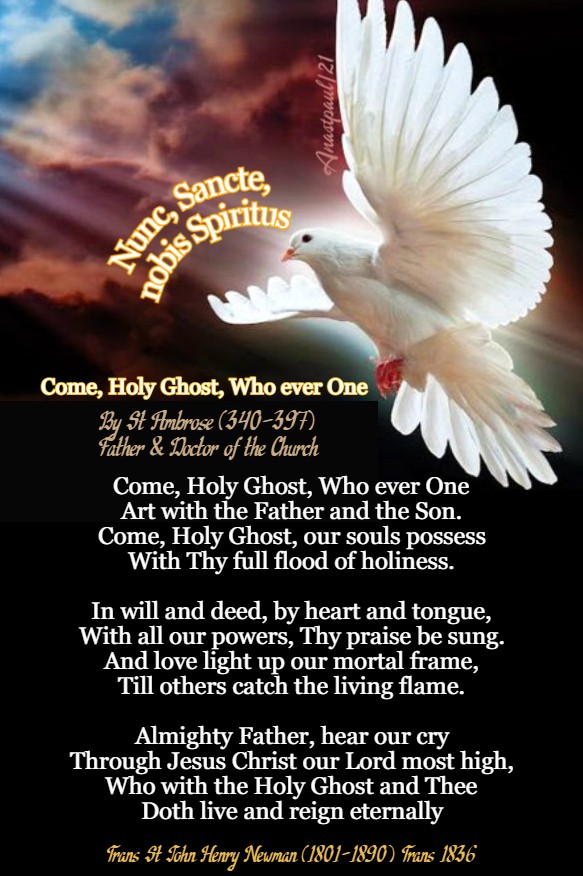
Nunc, Sancte, nobis Spiritus Come, Holy Ghost, Who ever One By St Ambrose (340-397) Trans John Henry Newman (1801-1890) Trans 1836
Come, Holy Ghost, Who ever One Art with the Father and the Son. Come, Holy Ghost, our souls possess With Thy full flood of holiness.
In will and deed, by heart and tongue, With all our powers, Thy praise be sung. And love light up our mortal frame, Till others catch the living flame.
Almighty Father, hear our cry Through Jesus Christ our Lord most high, Who with the Holy Ghost and Thee Doth live and reign eternally.
One Minute Reflection – 5 June – Pentecost Sunday, Alleluia! – Acts 2:1-11, John 14:23-31.
“But the Paraclete, the Holy Ghost, Whom the Father will send in My Name, He will teach you all things … ” – John 14:26
REFLECTION – “Whoever has the Spirit as their teacher has no need of human knowledge but, enlightened by this Spirit’s Light, beholds the Son, sees the Father and worships the Trinity of Persons, the One God, Who is inexpressibly One by nature.
Stand still, O man! Tremble, you who are mortal by nature, and consider how you have been taken from nothing and how, in coming from your mother’s womb, you saw the world that was made before you were. And if you could have understood the height of Heaven, or show the nature of the sun, the moon and the stars, where they are fixed and how they move… or even the nature of the earth, from which you were taken, its limits and bounds, its size and greatness…, if you had uncovered the end of all things and counted the sand of the sea and if, too, you could have known your own nature… then would you be able to consider your Creator, how, in the Trinity, Unity dwells without confusion and how, in the Unity, there is Trinity without division.
Seek the Spirit!… Perhaps God will comfort you and grant you, as He has already granted you to see the world, the sun and the light of day, yes, He will deign to enlighten you now, in the same way…, to enlighten you with the Light of the Threefold Sun… Then you will learn the Spirit’s grace – that, even when absent, he is present by his power and, when present, He is unseen because of His Divine nature and is everywhere and nowhere.
If you try to see Him with the senses where will you find Him? You will simply say: -Nowhere. But if you have the strength to contemplate Him spiritually, it is He, rather, Who will enlighten your soul and open the eyes of your heart.” – St Simeon the New Theologian (949-1022) Monk, Father (Hymn 21).
PRAYER – O God, Thou, Who on this day have taught the hearts of the faithful by the Light of the Holy Spirit, grant us, by that Holy Spirit Himself, to know what is right and ever to rejoice in His help. Through Jesus Christ, Thy Son our Lord, Who lives and reigns with Thee, in the unity of the Holy Ghost, God, world without end. Amen (Collect).
Our Morning Offering – 5 June – Pentecost Sunday, Alleluia!
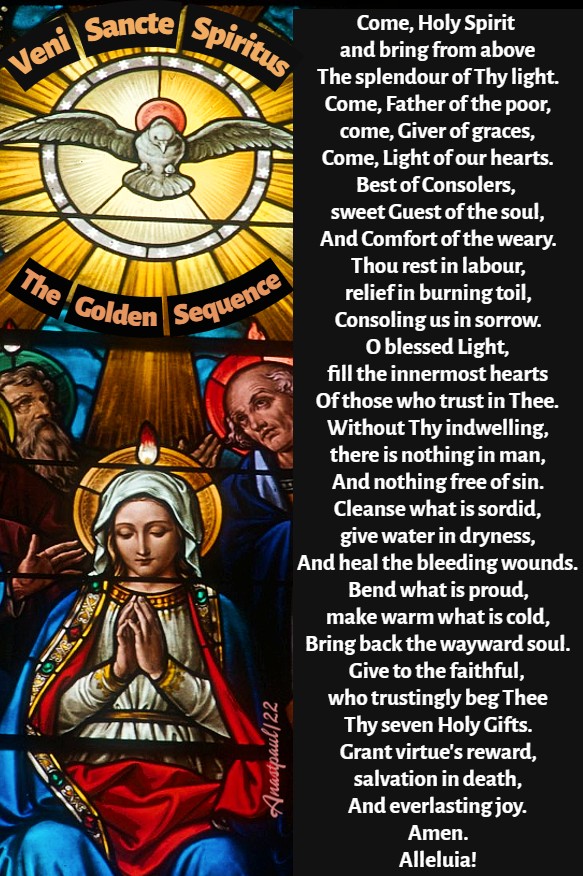
Veni Sancte Spiritus The Golden Sequence
Come, Holy Spirit and bring from above The splendour of Thy light. Come, Father of the poor, come, Giver of graces, Come, Light of our hearts. Best of Consolers, sweet Guest of the soul, And Comfort of the weary. Thou rest in labour, relief in burning toil, Consoling us in sorrow. O blessed Light, fill the innermost hearts Of those who trust in Thee. Without Thy indwelling, there is nothing in man, And nothing free of sin. Cleanse what is sordid, give water in dryness, And heal the bleeding wounds. Bend what is proud, make warm what is cold, Bring back the wayward soul. Give to the faithful, who trustingly beg Thee Thy seven Holy Gifts. Grant virtue’s reward, salvation in death, And everlasting joy. Amen. Alleluia!
“Veni Sancte Spiritus,” the “Golden Sequence”, is a sequence prescribed in the Roman Liturgy for the Masses of Pentecost and its octave, exclusive of the following Trinity Sunday. It is usually attributed to either the thirteenth-century Pope Innocent III (c 1160 – 1216) or to the Archbishop of Canterbury, Cardinal Stephen Langton (c 1150 – 1228).
By Servant of God Abbot Prosper Guéranger OSB (1805-1875) – Excerpt Abbot of Saint-Pierre de Solesmes, France.
Come, O Holy Spirit, fill the hearts of Thy faithful and enkindle within them, the fire of Thy Love.
The great day, which consummates the work that God had undertaken for the human race, has, at last, shone upon the world. The days of Pentecost, as St Luke says, are accomplished (Acts. ii. 1). We have had seven weeks since the Pasch and now, comes the day, which opens the mysterious number of Fifty. This day is the Sunday, already made holy by the Creation of the Light and by the Resurrection of Jesus – it is about to receive its final consecration and bring us the fullness of God (Eph. iii. 19).
In the Old and figurative Law, God foreshadowed the glory that was to belong, at a future period, to the Fiftieth Day. Israel had passed the waters of the Red Sea, thanks to the protecting power of His Paschal Lamb! Seven weeks were spent in the Desert, which was to lead to the Promised Land and the very morrow of those seven weeks, was the day, whereon was made the alliance between God and His people. The Pentecost (the Fiftieth Day) was honoured by the promulgation of the Ten Commandments of the Divine Law and every following year, the Israelites celebrated the great event by a solemn Festival. But their Pentecost was figurative, like their Pasch, there was to be a second Pentecost for all people, as there was to be a second Pasch for the Redemption of the whole world. The Pasch, with all its triumphant joys, belongs to the Son of God, the Conqueror of death: Pentecost belongs to the Holy Ghost, for it is the day whereon He began His mission into this world, which, henceforward, was to be under His Law.
But, how different are the two Pentecosts! The one, on the rugged rocks of Arabia, amidst thunder and lightning, promulgates a Law that is written on Tablets of Stone; the second is in Jerusalem, on which God’s anger has not as yet been manifested because it still contains, within its walls, the first-fruits of that new people, over whom the Spirit of love is to reign.
In this second Pentecost, the heavens are not overcast, nor is the roar of thunder heard; the hearts of men are not stricken with fear, as when God spake on Sinai; repentance and gratitude, these are the sentiments which are now uppermost. A Divine Fire burns within their souls and will spread throughout the whole world. Our Lord Jesus had said: ‘I am come to cast fire on the earth and what will I, but that it be kindled’ (St. Luke, xii. 49). The hour for the fulfillment of this Word is come: the Spirit of Love, the Holy Ghost, the eternal uncreated Flame, is about to descend from Heaven and realise the merciful design of our Redeemer.
Jerusalem is filled with pilgrims, who have flocked there from every country of the Gentile world: they feel a strange mysterious expectation working in their souls. They are Jews and are come from every foreign land where Israel has founded a Synagogue; they are come to keep the feasts of Pasch and Pentecost. Asia, Africa, and even Rome, have here their representatives. Amidst these Jews, properly so called, are to be seen many Gentiles, who, from a desire to serve God more faithfully, have embraced the Mosaic law and observances; they are called Proselytes. This influx of strangers, who have come to Jerusalem out of a desire to observe the Law, gives the City a Babel-like appearance, for each nation has its own language. They are not, however, under the influence of pride and prejudice, as are the inhabitants of Judea; neither have they, like these latter, known and rejected the Messias, nor blasphemed His Works, whereby He gave testimony of His Divine Character. It may be that they took part with the other Jews in clamouring for Jesus’ death but they were led to it by the Chief Priests and Magistrates of the Jerusalem, which they reverenced as the holy City of God and to which nothing but religious motives have brought them.
It is the hour of Tierce, the third hour of the day (Our nine o’clock. Acts, ii. 15), fixed from all eternity, for the accomplishment of a Divine Decree. It was at the hour of midnight, that the Father sent into this world, that He might take flesh in Mary’s womb, the Son, eternally begotten of Himself: so now, at this hour of Tierce, the Father and Son, send upon the earth the Holy Spirit, Who proceeds from them both. He is sent to form the Church, the Spouse and Kingdom of Christ; He is to assist and maintain her; He is to save and sanctify the souls of men and this, His Mission, is to continue unto the end of time. Suddenly is heard, coming from heaven, the sound of a violent wind: it startles the people in the City, it fills the Cenacle with its mighty breath. A crowd is soon round the house that stands on Mount Sion; the hundred and twenty Disciples that are within the building, feel that mysterious emotion within them, of which their Master once said: The Spirit breatheth where He will, and thou hearest His voice (St. John, iii. 8). Like that strange invisible creature, which probes the very depth of the sea and makes the waves heave mountains high, this Breath from heaven will traverse the world from end to end, breaking down every barrier that would stay its course.
The holy assembly have been days in fervent expectation; the Divine Spirit gives them this warning of His coming, and they, in the passiveness of extatic longing, await his will. As to them that are outside the Cenacle, and have responded to the appeal thus given, let us, for the moment, forget them. A silent shower falls in the House; it is a shower of Fire, which, as holy Church says, “burns not, but enlightens, consumes not, but shines (Responsory for the Thursday within the Octave).” Flakes of fire, in the shape of tongues, rest on the heads of the hundred and twenty Disciples: it is the Holy Ghost taking possession of all and each. The Church is now, not only in Mary but also in these hundred and twenty Disciples. All belong now to the Spirit that has descended upon them; His Kingdom is begun, it is manifested, its conquests will be speedy and glorious.
But let us consider the symbol chosen to designate this Divine change. He Who showed Himself under the endearing form of a Dove, on the occasion of Jesus’ Baptism in the Jordan, now appears under that of Fire. He is the Spirit of Love and love is not only gentle and tender, it is, also, ardent as fire. Now, therefore, that the world is under the influence of the Holy Ghost, it must needs be on fire and the fire shall not be checked. And why this form of Tongues? To show that the Heavenly Fire is to be spread by the word, by speech. These hundred and twenty Disciples need but to speak of the Son of God, made Man and our Redeemer; of the Holy Ghost, Who renews our souls; of the Heavenly Father, Who loves and adopts us as His children; their word will find thousands to believe and welcome it. Those that receive it, shall all be united in one faith; they shall be called the Catholic Church, that is, universal, existing in all places and times. Jesus had said – ‘Go, teach all nations ‘ (St. Matth xxviii. 19)!–the Holy Ghost brings from Heaven, both the tongue that is to teach and the fire, (the love of God and mankind,) which is to give warmth and efficacy to the teaching. This Tongue and Fire are now given to these first Disciples, who, by the assistance of the Holy Spirit, will transmit them to others: so will it be to the end of time!
But, in the crowd, there are some who are shocked at witnessing this heavenly enthusiasm of the Apostles. These men, say they, are full of new wine! It is the language of rationalism, explaining away mystery by reason. These Galileans, these drunken men, are, however, to conquer the whole world to Christ, and give the Holy Ghost, with His inebriating unction, to all mankind. The holy Apostles feel that it is time to proclaim the new Pentecost; yes, this anniversary of the Old is a fitting day for the New to be declared. But, in this proclamation of the law of mercy and love, which is to supersede the law of justice and fear, who is to be the Moses? Our Emmanuel, before ascending into heaven, had selected one of the Twelve for the glorious office: it is Peter, the Rock on whom is built the Church. It is time for the Shepherd to show himself, and speak, for the Flock is now to be formed. Let us hearken to the Holy Ghost, Who is about to speak, by his chief organ, to this wondering and attentive multitude. The Apostle, though he speaks in one tongue, is understood by each of his audience, no matter what his country and language may be. The discourse is, of its own-self, a guarantee of the truth and divine origin of the new law.
St Adalar of Erfurt Bl Adalbert Radiouski Bl Adam Arakawa St Austrebertus of Vienne St Claudius of Egypt and Companions St Ðaminh Huyen St Ðaminh Toai St Dorotheus of Tyre St Elleher St Eoban of Utrecht St Eutichius of Como St Evasius of Africa St Felix of Fritzlar
Blessed Ferdinand of Portugal (1402-1443) “The Holy Prince.” Blessed Ferdinand spent as much time as he could in adoration of the Most Blessed Sacrament especially during the Easter Triduum when his habit was to be constantly in adoration, from Holy Thursday to Easter. He was the youngest of the “Illustrious Generation” of 15th-century Portuguese Princes of the House of Aviz and lay Master of the Knightly Order of Aviz. About Blessed Ferdinand: https://anastpaul.com/2021/06/05/saint-of-the-day-5-june-blessed-ferdinand-of-portugal-1402-1443-the-holy-prince/
St Franco of Assergi St Genesius, Count of Clermont St Gregory of Lilybaeum St Gundekar St Hadulph St Luke Loan Bl Meinwerk of Paderborn St Privatus of Africa St Sanctius of Córdoba St Tudno of Caernarvon St Waccar
Martyrs of Caesarea: A group of Christians who converted together, were imprisoned together, tortured together, and martyred together. We know nothing more about them but their names – Cyria, Marcia, Valeria and Zenaides. Died Caesarea, Palestine, date unknown.
Martyrs of Egypt: A group of Christians martyred together in the persecutions of Galerius Maximian. The only other information was have is three of their names – Apollonius, Marcian and Nicanor. Died in Egypt, date unknown.
Martyrs of Perugia: A group of Christians Martyred together in the persecutions of Decius. We know little more than their names – Cyriacus, Faustinus, Florentius, Julian and Marcellinus. Died beheaded in 250 in Perugia, Italy
Martyrs of Rome: 26 Christians Martyred together. We have no details about them but their names – Candida, Castula, Fappa, Felician, Felicitas (2 of), Felicula, Fortunatus, Gagus, Gregor, Hilarius, Ingenuus, Juliana, Martialis, Maurus, Mustilus, Nicander, Prima, Rogata, Rutianus, Sacrinus, Saturnin, Secundian, Secundus, Urbicus, Victurus. Died • Rome, Italy, date unknown • relics transferred to Antwerp, Belgium, date unknown.
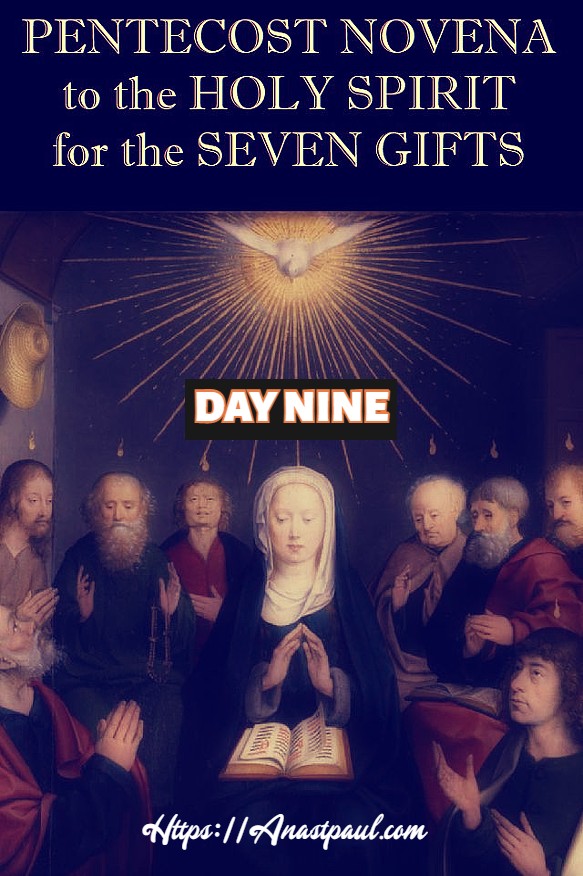
Pentecost Novena to the Holy Spirit for the Seven Gifts
NINTH DAY
Thou, on those who evermore Thee confess and Thee adore In Thy sevenfold Gifts, descend. Give them comfort when they die, Give them life with Thee on high, Give them joys which never end.
THE FRUITS of the HOLY SPIRIT
The Gifts of the Holy Spirit perfect the supernatural virtues, by enabling us to practiSe them with greater docility to Divine inspiration. As we grow in the knowledge and love of God, under the direction of the Holy Spirit, our service becomes more sincere and generous, the practice of virtue becomes more perfect. Such acts of virtue leave the heart filled with joy and consolation and are known as Fruits of the Holy Spirit. These Fruits, in turn, render the practise of virtue more attractive and become a powerful incentive for still greater efforts, in the service of God, to serve Whom is to reign.
Prayer
Come, O Divine Spirit, fill my heart with Your heavenly fruits, Your charity, joy, peace, patience, benignity, goodness, faith, mildness and temperance, that I may never weary of the service of God but by continued faithful submission, to Your inspiration, may merit to be united eternally with You, in the love of the Father and the Son. Amen
Our Father and Hail Mary – ONCE. Glory be to the Father – SEVEN TIMES.
ACT OF CONSECRATION TO THE HOLY SPIRIT To be recited daily during the Novena
On my knees, I, before the great multitude of heavenly witnesses, offer myself, soul and body to You, Eternal Spirit of God. I adore the brightness of Your purity, the unerring keenness of Your justice and the might of Your love. You are the Strength and Light of my soul. In You I live and move and am. I desire never to grieve You by unfaithfulness to grace and I pray with all my heart to be kept from the smallest sin against You. Mercifully guard my every thought and grant that I may always watch for Your light, listen to Your Voice and follow Your gracious inspirations. I cling to You and give myself to You and ask You, by Your compassion, to watch over me in my weakness. Holding the pierced Feet of Jesus, looking at His Five Wounds and trusting in His Precious Blood and adoring His opened Side and stricken Heart, I implore You, Adorable Spirit, Helper of my infirmity, t o keep me in Your grace, that I may never sin against You. Give me grace O Holy Spirit, Spirit of the Father and the Son, to say to You always and everywhere, “Speak Lord for Your servant hears.” Amen






















 AnaStpaul
You must be logged in to post a comment.