Passionate Catholic.
Being a Catholic is a way of life - a love affair "Religion must be like the air we breathe..."- St John Bosco
Prayer is what the world needs combined with the example of our lives which testify to the Light of Christ.
This site, which is now using the Traditional Calendar, will mainly concentrate on Daily Prayers, Novenas and the Memorials and Feast Days of our friends in Heaven, the Saints who went before us and the great blessings the Church provides in our Catholic Monthly Devotions.
This Site is placed under the Patronage of my many favourite Saints and especially, St Paul.
"For the Saints are sent to us by God
as so many sermons.
We do not use them, it is they who move us
and lead us, to where we had not expected to go.”
Charles Cardinal Journet (1891-1975)
This site adheres to the pre-Vatican II Catholic Church and all her teachings. .
PLEASE ADVISE ME OF ANY GLARING TYPOS etc - In June 2021 I lost 100% sight in my left eye and sometimes miss errors. Thank you and I pray all those who visit here will be abundantly blessed. Pax et bonum! 🙏
Our Morning Offering – 15 April – “The Month of the Resurrection and the Blessed Sacrament” – Ferial Day
O God of Love, Give Me Thy Love and Thy Grace By St Alphonsus Liguori (1696-1787) Most Zealous Doctor
O God of Love, Thou art and shall be forever, the only delight of my heart and the sole object of my affections. Since Jesus said: ‘Ask and you shall receive,’ I do not hesitate to say: ‘Give me Thy Love and Thy Grace.’ Grant that I may love Thee and be loved by Thee. I want for nothing else. Amen
Saint of the Day – 15 April – Saint Ortarius of Landelles (Died c580) Priest, Abbot of Landelles, near Vire in Normandy, France. A man of great wisdom, austerity and devotion, a renowned and rivetting Preacher, a skilled and beloved leader as well as the benefactor of all the poor and the sick within his reach. Also known as “The Apostle of Normandy,” Ortario. Additional Memorial – 21 May in Normandy.
The Roman Martyrology states: “In the Monastery of Landelles in the territory of Bayeux in Normandy, France, Saint Ortarius, the Abbot, dedicated to a life of austerity and prayer and assiduous in caring for the sick and assisting the poor.”
The figure of Saint Ortarius, the Abbot of Landelles in Normandy, emerges from the mists of the 6th Century as a beacon of holiness and dedication to others. His life, although shrouded in the patina of time and enriched by popular legends, nevertheless offers us a portrait of a deeply religious man and a charismatic leader.
We know nothing about his precedents or his life before becoming a Monk of great religious fervour was appointed as the Abbot of the Monastery of Landelles, located near today’s Vire. Under his leadership, the monastic community flourished, becoming a centre of spiritual learning and culture in the region. The holiness and wisdom of Ortarius spread rapidly, attracting disciples and the faithful from all over the region.
Ortarius is considered “The Apostle of Normandy,” for his fundamental role in the spread of Christianity in the region. His fiery preaching and his example of virtuous life converted many pagans and strengthened the faith of the Christians. His evangelisation work left an indelible mark on the history of Normandy, helping to shape its Christian identity.
In addition to his dedication to prayer and preaching, Ortarius stood out for his profound charity towards the poor and the sick. He did his utmost in charitable works, treating the sick with his own hands and giving relief to the suffering. His compassion and generous and kind heart, made him a shining example of Christian charity.
The remains of Saint Ortarius rested for centuries in the Monastery of Landelles, a destination for pilgrimages and a place of veneration. The cult of the Saint spread around Normandy and the surrounding regions, with his Feast celebrated on 21 May, the anniversary of a translation of the Relics. In some calendars, his memory is also commemorated on 15 April.
Saint Anastasia of Rome (Died c 68) Martyr, Spiritual Student of St Peter the Apostle AND: St Basilissa of Rome (Died c 68) Martyr, Spiritual Student of St Peter the Apostle. put to death during the reign of Nero. They were among the first converts to Christianity in the 1st century after Christ. The Roman Martyrology states today: “At Rome, the Saints Basilissa and Anastasia. Of noble families, they were disciples of the Apostles and, as they persevered courageously in the profession of their faith, in the time of the Emperor Nero, they had their tongues and feet cut off, were put to the sword and thus obtained the Crown of Martyrdom.” Their Life and Death: https://anastpaul.com/2022/04/15/saint-s-of-the-day-15-april-saints-anastasia-and-st-basilissa-died-c-68-martyrs/
St Crescens of Myra St Eutyches of Rome St Eutychius of Ferentino
Bl Laurentinus Sossius St Maro of Rome St Maximus of Persia St Mundus St Nidger of Augsburg St Olympiades of Persia St Ortarius of Landelles(Died c580) Priest, Abbot
St Sylvester of Réome St Theodore of Thrace St Victorinus of Rome St Waltmann of Cambrai O.Praem. (Died 1138) Abbot
Mercedarian Martyrs of Africa: A group of Mercedarian Monks sailing to Africa as on a mission to redeem capture Christians. Captured by Moors, they were tortured and executed for their faith. Martyrs. 1393.
Thought for the Day – 14 April – The Spiritual Combat (1589) – Dom Lorenzo Scupoli OSM (c1530-1610)
“None shall be crowned who has not fought well.” 2 Tim 2: 5
XLV: … On Mental Prayer
“MENTAL PRAYER is the elevation of our minds to God, asking of Him, either expressly or tacitly, those things of which we stand in need. We ask for them expressly, when we say in our hearts: “O my God, grant me this request for the honour of Thy holy Name” OR “Lord, I am firmly convinced that this petition is Thy Will and, for Thy greater honour, I ask this petition. Accomplish, therefore, Thy Divine Will in me.”
When harassed by the attacks of the enemy, let us say: “Come swiftly, O Lord, to my assistance lest I fall a prey to my enemy.” OR “O God, my refuge and my strength, help me speedily, lest I perish.”
When temptation continues, we must continue the same prayer, courageously resisting the foe and, when the fury of the combat has passed, let us address ourselves to the Almighty, imploring Him to consider our weakness in the face of the enemy’s strength: “Behold, my God, Thy creature, the work of Thy hands, a man redeemed by Thy Precious Blood. And behold, Satan trying to carry him from Thee to utterly destroy him. It is to Thee I fly for aid and it is in Thee that I place my entire confidence, for I know that Thou alone art Infinitely good and powerful. Have pity on a miserable creature who stumbles blindly, though willfully, into the path of his enemies, as do all who forsake the assistance of Thy grace. Help me, therefore, my only hope, O sole strength of my soul!”
We tacitly ask favours of God when we present to Him our necessities, without making any particular request. Placing ourselves in His Divine presence, we acknowledge our incapacity to avoid evil or do good, without His aid. We are, nevertheless, inflamed with a desire of serving Him. Thus we must fix our eyes upon Him, waiting for His assistance with unbounded confidence and utter humility. The confession of our weakness and the desire to serve Him, this act of faith so performed, is a silent prayer which will infallibly obtain our request from Heaven. The more sincere the confession, the more ardent the desire and the more lively the faith, the greater will be the efficacy of the prayer before the throne of God.
There is another method of prayer similar to this but more concise, consisting as it does, in but a single act of the soul. The soul presents her requests to the Almighty, adverting to a favour already asked and still sought, although not formally expressed.
Let us endeavour to cultivate this kind of prayer and employ it on all occasions; for experience will convince us that nothing is easier, yet nothing more excellent and efficacious!”
One Minute Reflection – 14 April – “The Month of the Resurrection and the Blessed Sacrament” – The Second Sunday of Easter – Commemoration of St Justin Martyr (c100-165) – 1 Peter 2:21-25; John 10:11-16 – Scripture search here: https://www.drbo.org/
“I am the Good Shepherd and I know Mine and Mine know Me.”- John 10:14
REFLECTION – “I am the good shepherd. I know My Own—by which I mean, I love them—and My Own know Me. In plain words – those who love Me are willing to follow Me, for anyone who does not love the Truth, has not yet come to know it.
My dear brethren, you have heard the test we shepherds have to undergo. Turn now to consider, how these words of our Lord, imply a test for yourselves too. Ask yourselves whether you belong to His flock, whether you know Him, whether the Light of His Truth shines in your minds. I assure you that it is not by faith that you will come to know Him but, by love, not by mere conviction but, by action. John the Evangelist is my authority, for this statement. He tells us that anyone who claims to know God, without keeping His commandments, is a liar.
Consequently, the Lord immediately adds: ‘As the Father knows Me and I know the Father and I lay down My life for My sheep.‘ Clearly, He means that laying down His life for His sheep, gives evidence of His knowledge of the Father and the Father’s knowledge of Him. In other words, by the love with which He dies for His sheep, He shows, how greatly He loves His Father.
Again He says: ‘My sheep hear My voice and I know them; they follow Me,and I give them eternal life.’ Shortly before this He had declared – ‘If anyone enters the sheepfold through Me, he shall be saved, he shall go freely in and out and shall find good pasture.‘ He will enter into a life of faith; from faith, he will go out to vision, from belief to contemplation and will graze in the good pastures of everlasting life.
So our Lord’s sheep will finally reach their grazing ground, where all who follow Him in simplicity of heart, will feed on the green pastures of eternity. These pastures are the spiritual joys of Heaven. There, the elect look upon the Face of God with unclouded vision and feast at the banquet of life, forever more.
Beloved brothers, let us set out for these pastures ,where we shall keep joyful festival with so many of our fellow citizens. May the thought of their happiness urge us on! Let us stir up our hearts, rekindle our faith and long eagerly for what Heaven has in store for us. To love thus, is to be already on our way. No matter what obstacles we encounter, we must not allow them to turn us aside from the joy of that heavenly feast. Anyone who is determined to reach his destination, is not deterred by the roughness of the road that leads to it. Nor must we allow the charm of success to seduce us, or we shall be like a foolish traveller who is so distracted by the pleasant meadows through which he is passing that he forgets where he is going.” – St Gregory the Great (540-604) Bishop of Rome and Great Western Father and Doctor of the Church (An excerpt from his Sermon 14).
PRAYER – O God, Who through the preaching of the Cross,which is to them who perish, foolishness, didst wonderfully teach, unto thy blessed Martyr Justin, the excellence of the knowledge of Christ Jesus Our Lord, grant unto us we beseech Thee, at his prayer,s the grace to cast off all false teaching and ever to hold fast to the Faith. Through the same Jesus Christ, Thy Son our Lord, Who lives and reigns with Thee, in the unity of the Holy Ghost, God, world without end. Amen (Collect).
Our Morning Offering – 14 April – “The Month of the Resurrection and the Blessed Sacrament” – The Second Sunday of Easter
Prayer Before Holy Communion By St Anselm (1033-1109) Doctor of the Church
O Lord Jesus Christ, Son of the living God, Who according to the Will of the Father and with the co-operation of the Holy Ghost, has, by Thy Death. given Life to the world, I adore and revere this, Thy Holy Body and this, Thy Holy Blood which was given up and poured forth, for the many, unto remission of sins. O merciful Lord, I beg of Thee mercy, that through the power of this Sacrament, Thou will make me one of that many. Through faith and love, make me feel the power of these Sacraments, so I may experience their saving power. Absolve and free from all sin and punishment of sin, Thy servants, Thy handmaidens, myself, all who confessed their sins to me, those whom I have promised, or am obliged, to pray for and so too, those who themselves hope or beg, to be helped, by my prayers to Thee. Make our Church rejoice in Thy constant protection and consolation. Amen
Saints of the Day – 14 April – St Tiburtius of Rome (Died 3rd Century) Martyr, Layman, brother of St Valerian; St Maximus of Rome (Died 3rd Century) Martyr, Layman; St Valerian of Trastevere (c177-c229) Martyr, Layman, brother of St Tiburtius and husband of St Cecilia (Died c232) the Martyrs.
The Roman Martyrology reads: “At Rome, on the Appian Way, the birthday of the Holy Martyrs, Tiburtius, Valerian and Maximus, who suffered in the time of the Emperor, Alexander and the Prefect, Almachius. The first two being converted to Christ by the exhortations of the blessed Cecilia and Baptised by Pope St Urban, were beated with rods and decapitated for the True Faith. But Maximus, the Chamberlain of the Prefect, moved by their constancy and encouraged by the vision of an Angel, believed in Christ and was scourged with leaded whips until he expired.”
Saints Cecilia, Valerian and Tiburtius by Botticini
The three holy Martyrs Tiburtius, Valerian and Maximus, who lived in the 3rd Century in Rome, are remembered by ancient sources since the 5th Century, however, there are two versions which deal with their personality and historical existence – one is linked to the ‘Passio’ of St Cecilia, while the other is reported by the ‘Hieronymian Martyrology’ or the Martyurology of St Jerome.
In the aforementioned Martyrology they are mentioned four times, the first indicates them as buried in the Catacombs of Praetextatus on the Appian Way and remembered on 14 April and this version is the one then passed into the Roman Martyrology, still in use today.
The Martyrdom of St Valerian
The other versions remembers them as buried in other Cemeteries in Rome and celebrates them on various dates, sometimes confused, like the case of Tiburzio with another namesake. Scholars have not reached an absolute certainty, it seems however, that only St Tiiburtius is celebration on 14 April, while, in theCatacombs of of Callistus, the other two were buried and celebrated on 21 April. It seems that later, it was St Gregory the Great who united them in a single celebration today.
However, according to the ‘passio’ Valerian was St Cecilia’s husband and converted by her, he was Baptised by St Pope Urban I (222-230) and in his turn he converted hid brother, Tiburtius to Christianity. Both were sentenced to death by the Prefect Almachius, who entrusted them to the Adjutant (second-in-command of the Prefect) who, before having the sentence carried out, also converted, thus being condemned and killed a few days later.
Valerian and Tiburtius were martyred and buried in a place called Pagus da Cecilia, four miles from Rome but which, has not been identified. Maximus was placed in a different sarcophagus. Their tombs were restored first by Pope Gregory III (731-741) then by Pope Hadrian I (772-795) and finally by Pope Paschal I (817-824) who transferred their Relics to the Basilica of St Cecilia in Trastevere.
Amico Aspertini: Burial of Saints Valerian and Tiburtius
St Tiburtius of Rome (Died 3rd Century) Martyr, Layman St Maximus of Rome (Died 3rd Century) Martyr, Layman St Valerian of Trastevere (c177-c229) Martyr, Layman, brother of St Tiburtiusabove and husband of St Cecilia (Martyrs)
St Bernard of Tiron (1046-1117) Monk, Abbot, Founder of the the Tiron Abbey and the Tironensian Order. St Bernard had a deep devotion to the Passion of Christ, teaching and instruction his disciples in the love of the Holy Cross. The Roman Martyrology reads: “In the Monastery of Tiron near Chartres in France, Saint Bernard, Abbot, who on several occasions gave himself up to a hermit life in the woods and on the Island of Chausey but also dedicated himself to instructing and guiding the disciples, who in great numbers, flocked to him.” St Bernard’s Life: https://anastpaul.com/2022/04/14/saint-of-the-day-14-april-st-bernard-of-tiron-c-1046-1117/
St Domnina of Terni St Fronto of Nitria Abbot Bl Hadewych O.Praem. (c1150-c1200) Nun
Thought for the Day – 13 April – The Spiritual Combat (1589) – Dom Lorenzo Scupoli OSM (c1530-1610)
“None shall be crowned who has not fought well.” 2 Tim 2: 5
The Fourth Weapon of the Spiritual Combat XLIV: … On Prayer (Part Four)
“Continue perseveringly in prayer; for humble perseverance vanquishes the invincible. And, if the importunity of the widow in the Gospel, inclined to her request the unjust judge, laden with iniquity, shall a like perseverance fail to incline to our petitions that Good God, Who is Himself the plenitude of goodness?!
And, although the Lord should delay to hear and even seem to reject your prayer, pray on still and still hold fast firm and lively confidence in His aid; for, in Him, there is no lack but an Infinite superabundance of all things needful for the grace we ask.
Therefore, unless there be some fault on your part, you may rest assured either of obtaining all your petition, or something which will be more profitable to you, or, it may be, both together and the more He seems to repulse you, the more do you humble yourself in your own sight, considering your own de-merits and fixing your eyes steadfastly on the mercy of God.
Establish thus, more and more, your confidence in Him which will be most acceptable to your Lord, if you maintain it more lively and entire, the more it is assailed.
Lastly, give thanks always to God, acknowledging Him to be no less good and wise and loving, when some things are denied, than if all were granted you. Happen what may, do you remain ever steadfast and joyful in humble submission to His Divine Providence.”
Quote/s of the Day – 13 April – “The Month of the Resurrection and the Blessed Sacrament” – Wisdom 5:1-5; Luke 14:26-33 – Scripture search here: https://www.drbo.org/
“If anyone comes to Me without hating his father and mother, wife and children, brothers and sisters and even his own life, he cannot be My disciple.”
Luke 14:26
“So likewise, everyone of you, who does not renounce all that he possesses, cannot be My disciple.”
Luke 14:33
“Take nothing for your journey, neither staff, nor bag, nor bread, nor money; neither have two tunics.”
Luke 9:3
“He seems to demand of us the most entire renunciation … So, if we keep back for ourselves , any earthly goods or any perishable supplies, our minds will remain sunk in them, as though in mud. Then, inevitably, our souls will become unable to contemplate God and will be unmoved by desire for the splendours of Heaven and for the good things promised us. We shall only be able to acquire those good things, if we ask for them unceasingly, with a burning desire that will, besides, make easy the effort needed to gain them.”
St Basil the Great (329-379) Father and Doctor of the Church
“If you wish to enter into life, keep My commandments. If you will know the truth, believe in Me. If you will be perfect, sell all. If you will be My disciple, deny yourself. If you will possess the blessed life, despise this present life. If you will be exalted in Heaven, humble yourself on earth. If you wish to reign with Me, carry the Cross with Me. For only the servants of the Cross find the life of blessedness and of true Light.”
Thomas à Kempis (1380-1471)
The Imitation of Christ Chapter 56
“True spiritual life consists in this: that man keep his eyes on God, constantly, long for nothing but for God, keep nothing in mind but God and begin every single action, in God’s Name and direct it to Him.”
One Minute Reflection – 13 April – “The Month of the Resurrection and the Blessed Sacrament” – St Hermenegild (Died 585) Martyr, Confessor – Wisdom 5:1-5; Luke 14:26-33 – Scripture search here: https://www.drbo.org/
“If anyone comes to Me, without hating his father and mother, wife and children, brothers and sisters and even his own life, he cannot be my disciple.” – Luke 14:26
REFLECTION – “On another occasion, the Lord says, “Whoever comes to me and does not hate his father and mother, and wife and children and brothers and sisters and even his own soul, cannot be my disciple.” As a rule, this is more upsetting to the mind of new Christians, who are eager to begin at once, to live in accordance with the precepts of Christ. To those who do not fully grasp its meaning, it would seem contradictory …. He has condescended to call His disciples to the eternal Kingdom. He also called them brothers. In the Kingdom these relationships are transcended because, “there is neither Jew nor Greek, neither male nor female, neither slave nor freeman but Christ, is all things and in all.” The Lord says, “For in the resurrection, they will neither be married nor marry but will be as the Angels of God in Heaven.”
Whoever wishes to prepare himself now, for the life of that Kingdom, must not hate people but those earthly relationships, through which the present life is sustained, the temporary life that begins at birth and ends with death. Whoever does not hate this necessity, does not yet love that other life, in which there will be no condition of birth and death, the condition which makes marriages natural on earth.” – St Augustine (354-430) Bishop, Father, Doctor of Grace (Sermon on the Mount,15).
PRAYER – OGod, Who didst teach Thy blessed Martyr Hermenegild to choose a heavenly, rather than an earthly crown, grant, we beseech Thee, that we, like him, may so pass through temporal things that we finally miss not those which are eternal. Through esus Christ, Thy Son our Lord, Who lives and reigns with Thee, in the unity of the Holy Ghost, God, world without end. Amen (Collect).
Our Morning Offering – 13 April – “The Month of the Resurrection and the Blessed Sacrament” – Saturday in the Second Week after Easter
Mary, I Beg You By St Anselm (1033-1109) Magnificent Doctor Marian Doctor
Mary, I beg you, by that grace through which the Lord is with you and you will to be with Him, let your mercy be with me. Let love for you always be with me, and the care for me be always with you. Let the cry of my need, as long as it persists, be with you, and the care of your goodness, as long as I need it, be with me. Let joy in your blessedness be always with me, and compassion for my wretchedness, where I need it, be with you. Amen.
Saint of the Day – 13 April – Saint Ida of Boulogne (c1040-1113) Widow, Countess, Apostle of charrity to the poor and needy, a lady of pious devotion and love for the Church to which she extended donations and assistance wherever needed. She supported and became a friend and correspondent of St Anselm of Canterbury who was deeply involved in the Cluniac reform in France. Born in c1040 in Ardennes, France and died on 13 April 1113 of natural causes. Patronage – of widows. Also known as – Ida of Lorraine, Ida of Lower Lorraine, Ida of Verdun, Ide…
Ida was the daughter of Godfrey III, the Duke of Lower Lorraine and his wife Doda. She became the bride of Eustace II, Count of Boulogne and the couple became the parents of Eustace III, Godfrey of Bouillon, the Leader of the First Crusade and also the first Ruler of Jerusalem under the title, Advocate of the Holy Sepulchre, having refused the title of King and Baldwin, who did accept the title of King of Jerusalem.
Count Eustace and St Ida his Countess
She was a great benefactor of the Church and the poor. After her husband’s death she founded several monasteries: Saint-Wulmer in Boulogne for the Augustinian Canons, Saint-Michel-du-Wast for the Cluniac Monks. She made considerable donations to the Abbeys of Saint-Bertin, Bouillon and Afflighem, favoured the reform of Cluny under the influence of St Anselm of Canterbury who remained a great friend and in correspondence with her. Some of St Anselm’s letters to Ida have survived.This detail underlines the role the holy Archbishop had in the monastic reform in Flanders.
Ida did not take the Benedictine Habit, as has been believed but she obtained it from St Ugo at Cluny, so that she could consider herself a secular oblate of the Benedictine Order.
She died today in 1113 and was buried in the Church of Wast (we note that many biographical information read, wrongly, Saint-Waast, instead of Wast). In 1669 her Relics were transferred to the Benedictines of the Holy Sacrament in Paris, who took them with them, when, in 1808, they settled in Bayeux, where they are still kept (one Relic, however, was left in Wast).
Ida’s Feast which was celebrated in the ancient Diocese of Boulogne, was later authorised in the Diocese of Arras and Bayeux. The commemoration of the Saint is found in many medieval calendars on 13 April. Blessed Ida of Louvain is also remembered on this day, although the date of her death is unknown.
St Hermengild (Died 585) Martyr, Confessor, King. The Roman Martyrology reads: “At Seville in Spain, St Hermenegild, son of Leovigild, Arian King of the Visigoths, who was incarcerated for the confession of the Catholic Faith. By order of his wicked father, he was beheaded because he had refused to receive communion from an Arian Bishop, on the Paschal Solemnity and thus exchanging an earthly for a heavenly Kingdom, he entered the abode of the blessed, both as a King and as a Martyr.” His Life and Death: https://anastpaul.com/2023/04/13/saint-of-the-day-13-april-st-hermenegild-died-585-martyr-confessor/
St Carpus of Pergamus Bl Edward Catherick Bl Francis Dickenson St Guinoc St Ida of Boulogne (c1040-1113) Widow Bl Ida of Louvain Bl James of Certaldo Bl John Lockwood
Blessed Margaret of Castello OP (1287-1320) Italian professed member of the Third Order of the Order of Preachers of St Dominic. Margaret was disabled and became known for her deep faith and holiness. Her body is incorrupt. Beatified on 19 October 1609 by Pope Paul V (concession of indult for Mass and Office). About Blessed Margaret: https://anastpaul.wordpress.com/2018/04/13/saint-of-the-day-13-april-blessed-margaret-of-castello-o-p-1287-1320/
St Martius of Auvergne Bl Miles Gerard St Papylus of Pergamus St Proculus of Terni St Ursus of Ravenna Bishop and Confessor
Martyrs of Dorostorum – 3 Saints: A lector and two students Martyred together in the persecutions of Diocletian – Dadas, Maximus and Quinctillianus. Beheaded c303 in Dorostorum, Lower Mysia (modern Sillistria, Bulgaria.
Thought for the Day – 12 April – The Spiritual Combat (1589) – Dom Lorenzo Scupoli OSM (c1530-1610)
“None shall be crowned who has not fought well.” 2 Tim 2: 5
The Fourth Weapon of the Spiritual Combat XLIV: … On Prayer (Part Three)
“5. Let your petitions be ordinarily preceded by thanksgiving for previous mercies, in the following or similar forms: “O Lord, Who, of your goodness, have created and redeemed me and on so many and numberless occasions, unknown to me, have delivered me out of the hands of my enemies; help me now and refuse not my petitions, although I have been ever rebellious and ungrateful to you.” And if, while you are praying for any particular virtue, some painful occasion for its exercise should present itself, fail not to return thanks to God for the opportunity thus afforded you which is no small token of His loving-kindness.
As prayer derives its efficacy and its power of propitiating God and inclining Him to our desires from the goodness and mercifulness of His own nature, from the merits of the Life and Passion of His Only-Begotten Son and from His promise to hear us, conclude your petitions with one or more of the following sentences: “Of Thine great mercy, O Lord, grant me Thine grace. May the merits of Thine Son obtain for me my petition. Remember Thine promises, O my God and incline Thine ear to my prayer.” And at other times ask for graces through the merits of the Virgin Mary and the, Saints, who have great power with God and are greatly honoured by Him because, in this life they greatly honored His Divine Majesty!”
Quote/s of the Day – 12 April – “The Month of the Resurrection and the Blessed Sacrament” – Ferial Day – Friday in the Second Week of Easter – 1 John 5:4-10; John 20:19-31 – Scripture search here: https://www.drbo.org/
“Who is he who overcomes the world? but he who believes that Jesus is the Son of God.”
1 John 5:5
“He wants you to become a living force for all mankind, lights shining in the world. You are to be radiant lights as you stand beside Christ, the Great Light, bathed in the glory of Him who is the Light of Heaven.”
St Gregory Nazianzen (330-390) Father & Doctor of the Church
“The very prince of the universe, is man; the crowning point of man, is his heart; of the heart, is love and the perfection of love, is charity. That is why the love of God is the goal, the crowning point, the be-all and end-all of the universe.”
(Treatise on the Love of God, Book 10, Chapter 1)
St Francis de Sales (1567-1622) Doctor of Charity
“If we live good lives, hoping for a Heavenly reward and guided by the action of the Holy Spirit, dwelling within us, we shall possess this spiritual joy. Once we possess it, it will be erased, neither by temptation, nor by suffering, nor by persecution, as long as our faith remains firm and steadfast. The sincere Christian accepts pleasure and pain with equal readiness because he places everything in God’s hands. … We must try, at least, to achieve that spirit of complete resignation to God’s will which is always rewarded by peace of soul!”
One Minute Reflection – 12 April – “The Month of the Resurrection” –Ferial Day, Friday in the Second Week of Easter – 1 John 5:4-10, John 20:19-31 – Scripture search here: https://www.drbo.org/
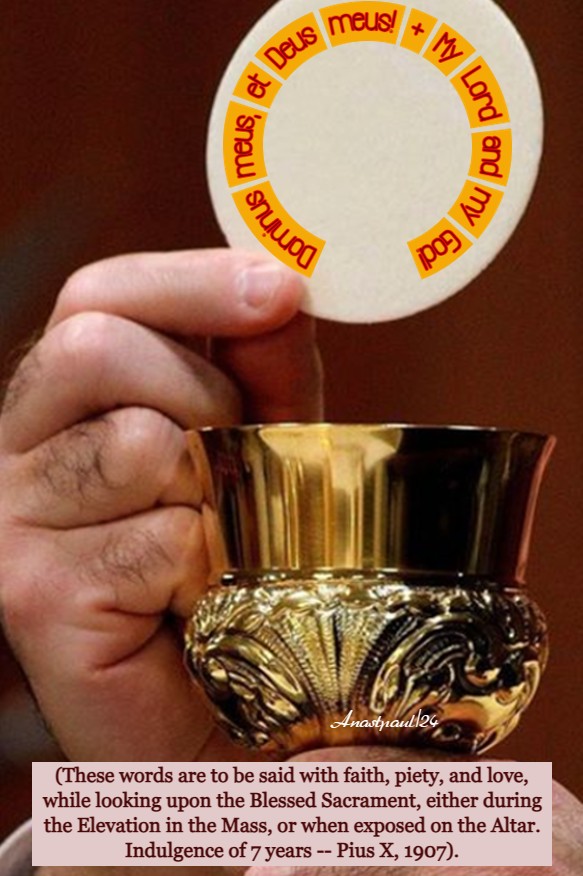
“My Lord and my God.” – John 20:28
REFLECTION – “Thomas said: “Unless I see the mark of the nails in His Hands and put my finger into the nailmarks and put my hand into His Side, I will not believe.” What an astonishing hardness of heart on this disciple’s part: not even the witness of so many of the brethren, nor even the sight of their joy, were enough to give him faith. Yet, the Lord appeared to take care of him. The good Shepherd does not allow the loss of His sheep (Mt 18:12) having said to His Father: “Thou gave them to me and none of them was lost” (Jn 17:6.12). Let the shepherds learn, then, what care they should show towards their sheep, since the Lord came for a single one. Any care and labour are a small thing, compared with the importance of one soul…
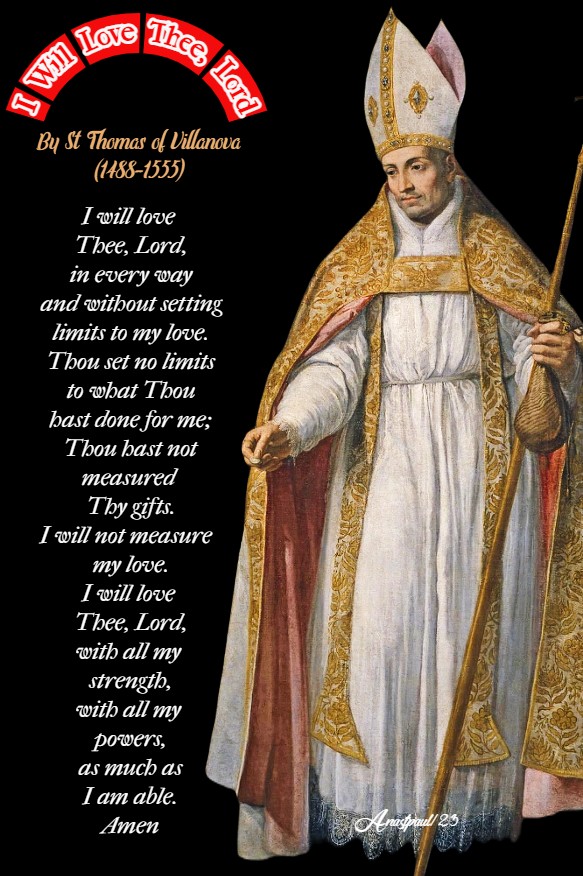
“Put your finger here and see My Hands, and bring your hand and put it into My Side, and do not be unbelieving but believe.” O blessed hand that penetrated the secrets of the Heart of Christ! What riches did they not find in it? It was while resting on this Heart that John drew out the Mysteries of Heaven (Jn 13:25), while penetrating It that Thomas found great treasures – what a wonderful school which forms such disciples! Thanks to this Heart, the former expressed marvellous things, higher than the stars, concerning the Divinity when he said: “In the beginning was the Word and the Word was with God and the Word was God” (Jn 1:1). And the latter, touched by the Light of Truth, cried out this sublime cry: “My Lord and my God!” – St Thomas of Villanova OSA (1486-1555) Hermit of Saint Augustine, Bishop (Sermon for Low Sunday (in Homiliarius Breviarii Romani).
PRAYER – Grant, we beseech Thee, O Lord God, unto all Thy servants that they may remain continually in the enjoyment of soundness, both of mind and body and, by the glorious intercession of the Blessed Mary, always a Virgin, may be delivered from present sadness and enter into the joy of Thine eternal gladness. Through Jesus Christ, Thy Son our Lord, Who lives and reigns with Thee, in the unity of the Holy Ghost, God, world without end. Amen (Collect).
Our Morning Offering – 12 April – “The Month of the Resurrection and the Blessed Sacrament”
O Most Compassionate Jesus! By Pope Pius IX (1792-1878) Indulgence of 100 days, once a day 6 October 1870
O Most compassionate Jesus! Thou alone art our Salvation, our Life and our Resurrection. We implore Thee, therefore, do not forsake us in our needs and afflictions but by the agony of Thy Most Sacred Heart and by the sorrows of Thy Immaculate Mother, succour Thy servants, whom Thou hast redeemed by Thy Most Precious Blood. Amen
Saint of the Day – 12 April – Saint Ailell of Cologne (Died 1040) Priest, Abbot of Great Saint Martin’s Monastery and of St Pantaleon’s in Cologne, Missionary, a strict disciplinarian and a talented and skilled leader, running two separate Monasteries for years. He was also a skilled Musician and is held to be the first to introduce Roman chant to Cologne. Born in Monaghan, Ireland and died in Cologne in 1040 of natural causes. Also known as – Helias.
Ailell was a native of what is now County Monaghan, Ireland. He became a Monk at the Monastery of Muckno which is now the Parish of the Town of Castleblayney. Johannes Trithemius, a German Monk Historian, states that he led “a most austere life, and was on that account an object of hatred to wicked men, who feared his reproof.
Ailell went to Cologne in Germany as a Missionary and in 1015, was elected as the Abbot of Great St Martin Monastery, Cologne. In the same year, he became the Abbot of St Pantaleon’s – both Monasteries would remain under his rule until his death in 1040.
Great St Martins
Amazingly, Ailell ran both St Martin’s and St Pantaleon’s, with the greatest success. He was remarkable, however, for uncommon strictness in the enforcement of discipline. A French Monk of St Pantaleon, having transcribed, a neat copy of the Missal for the use of the community, without having first obtained permission to do so,Ailell burned it, lest others should presume to act without previous licence.
Our Saint was a “bosom friend and counsellor” of St Heribert, Archbishop of Cologne. Heribert died in 1021. Heribert’s biographer, Landberth wrote about his death: “when this illustrious prelate felt his end approach, he sent for his beloved Ailell, who prepared him for death and administered to him the Sacrament of Extreme Unction and all the final consolations of the Church.” St Heribert’s life: https://anastpaul.com/2019/03/16/saint-of-the-day-16-march-st-heribert-c-970-1021/
Unfortunately, St Heribert’s Successor named Pilgrim, possessed an inveterate dislike for the Irish Monks and for Ailell, in particular. Departing on a pastoral visit, he vowed to expel them all upon his return. Ailell is said to have prayed to God that if it was the Lord’s Will, the Monks would depart but if not, Archbishop Pilgrim would never return to Cologne. Pilgrim died at Neomagnus in 1036 and it seems thus God willed him not to return to Cologne, leaving the Irish Monks in peace. Ailell is said to have established a good relationship with Pilgrim’s Successor, Archbishop Herman.
Ailell died in the odour of sanctity and was buried in the Chapel of St Benedict, with the Epitaph: “Haec tumuli fossa conduntur Praesulis ossa/Heliae miri mirificique viri.” (More or less – In these mounds are buried the bones of Praesulis/Helia’s wonderful men.)
St Acutina St Ailell of Cologne (Died 1040) Priest,Abbot
St Alferius Pappacarbone of La Cava (930–1050) Priest, Founder and Abbot of Arsicia (La Trinità della Cava) which follows the Benedictine Rule, nobleman, Diplomat to Prince Waimar III of Salerno, Cluniac reformer, cave Hermit, Mystic and Ecstatic, Miracle-worker. The Roman Martyrology states: “In the Monastery of Cava de ‘Tirreni in Campania, Saint Alferius, Founder and first Abbot, who, after having been adviser to Guaimario, Duke of Salerno, who became a disciple of Saint Odilone in Cluny, learned in an excellent way, the discipline of monastic life.” Biography: https://anastpaul.com/2021/04/12/saint-of-the-day-12-april-saint-alferius-of-la-cava-930-1050/
Blessed Andrew of Montereale OSA (c1479-1764) Priest and Friar of the Order oif the Hermits of St Augustine, renowned Scholar, Preacher, Teacher, Reformer. Confessor and Spiritual Director to the Royal Court of France, Miracle-worker. His life was devoted to teaching, preaching and leading the Augustinians from several positions of leadership. He was hailed, even during his lifetime, as a pious Miracle worker.
St Artemón of Caesarea St Basil of Parion St Constantine of Gap Bishop St Damian of Pavia (Died c710) Bishop St Erkemboden of Thérouanne St Florentin of Arles
St Pope Julius I (Died 337) Bishop of Rome from 6 February 337 until his death on 12 April 352. He fought against the Arian Heresy and it is also traditionally believed that he is also the Pope who set 25 December as the date of the Birth of Jesus. The Roman Martyrology reads: “At Rome, the birthday of Pope St Julius, who combated vigorously for the Catholic Faith against the Arians. After a life of brilliant deeds and great sanctity, he rested in peace.” His Life: https://anastpaul.com/2023/04/12/saint-of-the-day-12-april-saint-pope-julius-i-died-337/
St Lorenzo of Belem St Peter of Montepiano
St Sabas the Lector
St Tetricus of Auxerre St Victor of Braga St Vissia of Fermo St Wigbert
Thought for the Day – 11 April – The Spiritual Combat (1589) – Dom Lorenzo Scupoli OSM (c1530-1610)
“None shall be crowned who has not fought well.” 2 Tim 2: 5
The Fourth Weapon of the Spiritual Combat XLIV: … On Prayer (Part Two)
“3. When you pray, let it be your intention to will God’s Will alone and not your own, as well in asking as in obtaining that is, pray because God Wills you to pray and desire to be heard, insofar and, no farther, than He Wills. Your intention, in short, should be to unite your will to the Will of God and not to draw His Will to yours. And this because ,your will, being infected and ruined by self-love, often errs and knows not what to ask but the Divine Will, being always united to ineffable goodness, can never err. The Will of God is, therefore, the rule and ruler of all other wills and, it deserves and Wills to be followed and obeyed by all. Ask, therefore, always such things as are conformable to God’s Will and, if you be in doubt whether anything be so or not, ask it on the condition of its being according to the Will of God. And those things, (such as all virtues) which you certainly know to be agreeable to Him, ask rather, in order to serve and please Him thereby, than for any other motive, how spiritual so-ever.
Be careful when you go to prayer to adorn yourself with works corresponding to your petitions and, after you have prayed, labour more earnestly still, to fit yourself for the grace and virtue you desire to obtain. For the exercise of prayer must be so continually accompanied by the exercise of self-discipline that the one may involve the other; otherwise, to pray for a virtue and take no trouble to obtain it, would be rather to tempt God than to serve Him!”
Quote/s of the Day – 11 April – St Leo I, the Great (c400-461) Pope, Confessor, Father and Doctor of the Church
“Peter has spoken by the mouth of Leo!”
“Nothing escaped the Wisdom and Power of Christ, the elements of nature lay at His service, spirits obeyed Him, Angels served Him. … And yet, out of all the world, Peter alone was chosen to stand at the head, for the calling of all the peoples and the oversight of all the Apostles and Fathers of the Church.”
“Virtue is nothing without the trial of temptation, for there is no conflict, without an enemy, no victory, without strife.”
“No-one, however weak, is denied a share in the victory of the Cross. No-one is beyond the help of the prayer of Christ.”
“Our sharing in the Body and Blood of Christ has no other purpose than to transform us into that which we receive.”
“For the man who loves God, it is sufficient to please the One he loves and, there is no greater recompense to be sought, than the loving itself. For love is from God, by the very fact that God Himself is love. The good and chaste soul is so happy to be filled with Him that it desires to take delight in nothing else. For what the Lord says is very true: ‘Where your treasure is, there also will your heart be.’”
St Pope Leo the Great (c400-461) Father and Doctor of the Church
One Minute Reflection – 11 April – “The Month of the Resurrection and the Blessed Sacrament” – St Leo I, the Great (c400-461) Pope, Confessor, Father and Doctor of the Church – Pet 5:1-4; 5:10-11; Matthew 16:13-19 – Scripture search here: https://www.drbo.org/
“Upon this rock I will build My Church” – Matthew 16:18
REFLECTION – “Brothers, when it comes to fulfilling my duties as Bishop, I discover that I am weak and slack, weighed down by the weakness of my own condition, while at the same time, I want to act generously and courageously. However, I draw my strength from the untiring intercession of the Almighty and Eternal Priest, Who, like us but equal to the Father, lowered His divinity to the level of man and raised humankind to the level of God. The decisions He made, give me a just and holy joy. For, when He delegated many shepherds to care for His flock, He did not abandon watching over His beloved sheep. Thanks to that fundamental and eternal assistance, I in turn, have received the protection and support of the Apostle Peter, who also does not abandon his function. This solid foundation, on which the whole of the Church is built, never grows tired of carrying the whole weight, of the building which rests on it.
The firmness of faith, for which the first of the Apostles was praised, never fails. Just as everything which Peter professed in Christ remains, so that which Christ established in Peter, remains … The order willed by God’s Truth remains. Saint Peter perseveres in the solidity which he received; he has not abandoned the governance of the Church which was placed in his hands. That, my brothers, is what that profession of faith, inspired by God the Father, obtained in the heart of the Apostle. He received the solidity of a rock which no assault can shake. In the entire Church, Peter says everyday: “Thou art the Messiah, the Son of the living God.” – St Leo the Great (400-461) Pope, Father and Doctor of the Church (Sermon on the anniversary of his Consecration as Bishop).
PRAYER – Look forgivingly on Thy flock, Eternal Shepherd and keep it in Thy constant protection, by the intercession of blessed Leo Thy Sovereign Pontiff, whom Thou didst constitute Shepherd of the whole Church. Through Jesus Christ, Thy Son our Lord, Who lives and reigns with Thee, in the unity of the Holy Ghost, God, world without end. Amen (Collect).
Our Morning Offering – 11 April – “The Month of the Resurrection and the Blessed Sacrament” – St Leo I, the Great (c400-461) Pope, Confessor, Father and Doctor of the Church
Grant to Us, O Lord By St Leo I, the Great (c400-461) Pope, Confessor, Father and Doctor of the Church
Grant to us, O Lord, not to mind earthly things but rather, to love heavenly things that while, all things around us pass away, we may even now, hold fast to those things which last forever. Amen
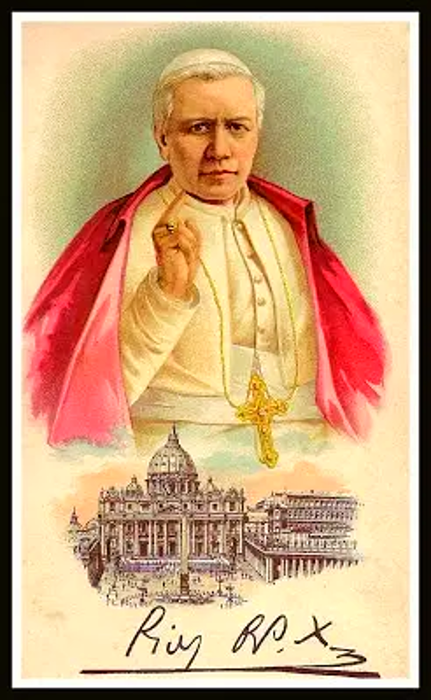
Saint of the Day – 11 April – St Leo I, the Great (c400-461) Confessor, Bishop of Rome, Great Western Father & Doctor of the Church. Born in c400 at Tuscany, Italy and died on 11 April 461 in Rome of natural causes. Papal Ascension – 29 September 440. Patronages – of Choristers, Musicians, of Castellana Grotte and Ponteginori, both in Italy and of the Diocese of Volterra also in Italy. St Leo was declared Doctor Unitatis Ecclesiae (Doctor of the Unity of the Church) Doctor of the Church by Pope Benedict XIV in 1754.
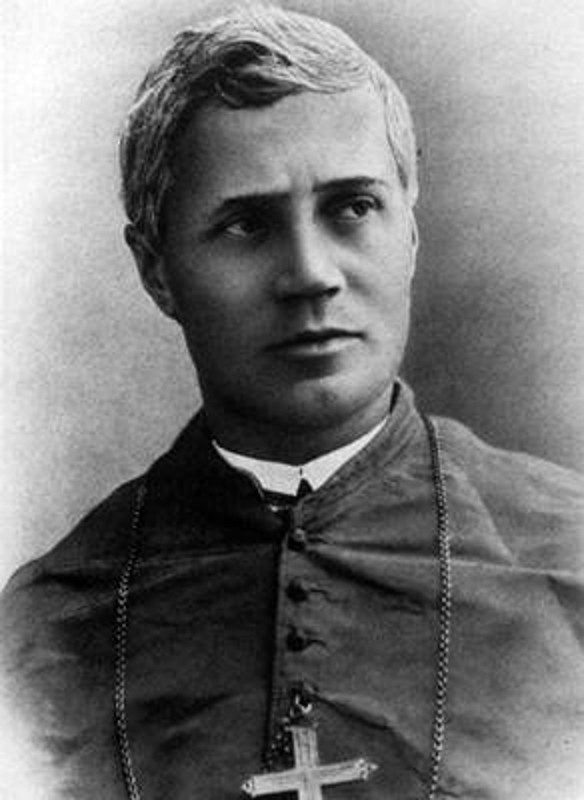
The Roman Martyrology reads: “At Rome, St Leo, Pope and Confessor, who was sunmaned “the Great” on account of his extraordinary merits. He gave the seal of his authority to the Holy Council of Chalcedon which was held in his time and which condemned Eutyches through his legates. After having merited the gratitude of the Church of God and the whole flock of Christ, by the many Decrees which he issued and the many excellent Treatise which he wrote, this good and zealous Shepherd, reseted in peace.”
He ranks among the most illustrious Sovereigns who ever occupied the Throne of St Peter. Of his life, we know little – with him, the man seems to disappear before the Pope.
He saw most clearly that one of his greatest tasks was to vindicate the primacy of the Roman Bishop, St Peter’s Successor and to raise the prestige of the Holy See before the entire world. Hardly any Pope in history has occupied a like position in the Ecclesiastical and political world.
As a writer, too, his name is famous. His sermons, which occur frequently in the Divine Office, belong to the finest and most profound in patristic literature. The Council of Chalcedon was held under his direction (451). The Breviary tells us: “Leo I, an Etruscan, ruled the Church at the time when Attila, King of the Huns, who was called the Scourge of God, invaded Italy. After a siege of three years, he took, sacked and burned Aquileia and then hurried on toward Rome. Inflamed with anger, his troops were already preparing to cross the Po, at the point where it is joined by the Mincio.
Here Attila was stopped by Leo (452). With God-given eloquence, the Pope persuaded him to turn back and when the Hun was asked by his servants why, contrary to custom, he had so meekly yielded to the entreaties of a Roman Bishop, he answered that he had been alarmed by a figure dressed like a Priest who stood at Leo’s side; this individual was holding a drawn sword and acted as if he would kill him if he advanced farther. As a result Attila retreated to Pannonia.”
The Painting below is a Fresco called “The Meeting of Leo I and Attila” by the Italian Renaissance artist Raphael. It was painted from 1513 to 1514 as part of Raphael’s commission to decorate the rooms which are now known as the “Stanze di Raffaello,” in the Apostolic Palace in the Vatican.
Meanwhile, Leo returned to Rome and was received with universal rejoicing. Some time later, the Vandal Genseric entered the City and again Leo, by the power of his eloquence and the authority of his holy life, persuaded him to desist from atrocity and slaughter (455).
Leo was also active in matters Liturgical. The Leonine Sacramentary, a compendium of Missal prayers, contains many of his compositions; some also give him credit for the beautiful offices of Advent.
The Meeting between St Leo the Great and Attila is the only Altarpiece in St Peter’s consisting of a monumental marble relief. It depicts the Pope repelling Attila and the Huns from attacking Rome. Attila raises his arm as Sts Peter and Paul appear in the sky.
St Leo I the Great (c400-461) Confessor, Bishop of Rome, Great Western Father & Doctor of the Church. Elected in 440, he worked tirelessly as “Peter’s Successor,” guiding his fellow Bishops as “equals in the episcopacy and infirmities.” He is perhaps best known for having met Attila the Hun in 452 and persuaded him to turn back from his invasion of Italy. For the Church, he is greatly esteemed for his destruction of various heresies. One of Only 2 Popes surnamed as ‘the Great’!: https://anastpaul.com/2017/11/10/saint-of-the-day-10-november-st-pope-leo-i-doctor-of-the-church-c-400-461/
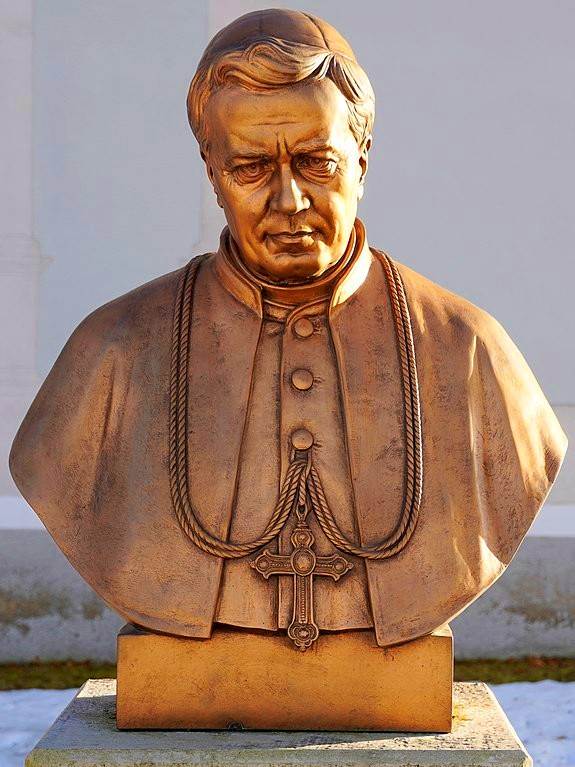

St Agericus of Tours St Aid of Achard-Finglas
St Antipas of Pergamum (Died c92) Martyr, Bishop of Pergamon, Greece (in modern Turkey), spiritual student of Saint John the Apostle and Evangelist. His Life and Death: https://anastpaul.com/2021/04/11/saint-of-the-day-11-april-st-antipas-of-pergamum-died-c-92-spiritual-student-of-saint-john-the-apostle-and-evangelist/
St Guthlac of Crowland (674–715) Monk, Hermit, Ascetic. St Guthlac was from Lincolnshire in England. He is particularly venerated in the Fens of eastern England where many Churches are dedicated to him. His sister is venerated as Saint Pega, an anchoress. His body was incorrupt until its destruction in the 16th century by the dissolution of the Monasteries by Henry VIII. Biography: https://anastpaul.com/2019/04/11/saint-of-the-day-11-april-st-guthlac-674-715/
St Hildebrand of Saint-Gilles St Isaac of Monteluco Bl James of Africa Bl John of Cupramontana Bl Lanunio St Machai St Maedhog of Clonmore Bl Mechthild of Lappion Bl Paul of Africa St Philip of Gortyna St Raynerius Inclusus St Sancha of Portugal St Stephen of Saint-Gilles
Thought for the Day – 10 April – The Spiritual Combat (1589) – Dom Lorenzo Scupoli OSM (c1530-1610)
“None shall be crowned who has not fought well.” 2 Tim 2: 5
The Fourth Weapon of the Spiritual Combat XLIV: … On Prayer (Part One)
“If self-distrust, trust in God,and spiritual exercises, be so needful, as has been already shown, in this conflict, needful above all is prayer (the fourth weapon above-mentioned) by means of which, we may obtain, from the Lord our God, not these alone but all other good things. For prayer is the instrument for obtaining all the graces which flow down upon us, from that Divine Source of love and goodness.
By prayer, well used, you will put a sword into the Hand of God wherewith to fight and conquer for you! And to use it well, you must be well exercised in the following practices, or be striving to become so.
You must have an earnest desire to serve His Divine Majesty in all things, in the way most acceptable to Him. In order to enkindle this desire, consider well that God is supremely worthy to be served and honoured for His Supreme Excellencies, His Wisdom, Goodness, Majesty, Beauty and all His other Infinite perfections. That, to serve you, He laboured and suffered for three-and-thirty years; binding up and healing the putrefying sores envenomed by the poison of sin, not with oil, or wine, or linen but with the precious stream which flowed from His most Sacred veins and with His most pure Flesh torn by scourges, thorns and nails. And, consider further, the great value of this service. By it we gain the mastery over Satan and ourselves and are made the children of God Himself.
You must have a lively faith and confidence that the Lord will give you all things needful for His service and your good. This holy confidence is the vessel which Divine Mercy fills with the treasures of His grace and the larger and more capacious it is, the more richly laden will our prayer return into our bosom. For how shall the Almighty and unchanging God fail to impart to us His gifts, when He has, Himself commanded us to ask for them, promising, too, to give us His Spirit, if we ask with faith and perseverance?”
Quote/s of the Day – 10 April – “The Month of the Resurrection and the Blessed Sacrament” – Ferial Day – Wednesday in the Second Week of Easter – 1 John 5:4-10; John 20:19-31 – Scripture search here: https://www.drbo.org/
“My Lord and my God.”
John 20:28
“Take My yoke upon you and learn from Me, for I Am meek and humble of heart and you will find rest for yourselves. For My yoke is easy and My burden light.”
Matthew 11:29-30
“If we wish to make any progress in the service of God, we must begin everyday of our life, with new eagerness. We must keep ourselves, in the presence of God, as much as possible and have no other view or end, in all our actions but the Divine honour.”
St Charles Borromeo (1538-1584)
“Take God for your Spouse and Friend and walk with Him continually and you will not sin and will learn to love and the things you must do will work out prosperously for you.”
St John of the Cross (1542-1591) Doctor of the Church
“You will begin to taste, even in this life, a foretaste of eternal life, for the principal beatitude of the soul in Heaven, is to be confirmed forever in the Will of the Father. Thus, it tastes the divine sweetness. But it will never taste it in Heaven, if it is not clothed with it on earth, where we are pilgrims and travellers. When it is clothed with it, it tastes God by grace in its troubles; its memory will be full of the Blood of the Lamb without blemish; its mind will be opened and contemplate the ineffable love that God has made known in the Wisdom of His Son and the love it finds, in the Holy Spirit’s goodness, casts out self-love and love for created things, to love only God. So do not be afraid … but suffer with joy, so as to conform yourself to the Will of God.””
One Minute Reflection – 10 April – “The Month of the Resurrection and the Blessed Sacrament” – Ferial Day – Wednesday in the Second Week of Easter – 1 John 5:4-10; John 20:19-31 – Scripture search here: https://www.drbo.org/
“This is the day the Lord has made” – Psalm 117:24
REFLECTION – “This is the day the Lord has made” (Psalm 117:24). Call to mind what the world was like in the beginning: “Darkness covered the abyss while God’s Spirit swept over the waters. Then God said: ‘Let there be light’ and there was light. God then separated the light from the darkness. God called the light ‘day’ and the darkness he called ‘night’” (Gn 1:2) … “This is the day the Lord has made.” It is the day the Apostle Paul spoke of: “You were once darkness but now you are light in the Lord” (Eph 5:8)…
Is it not true to say that Thomas was a man, one of the disciples, one of the crowd so to speak? His brethren said to him: “We have seen the Lord.” But he said: “Unless I touch Him, unless I put my hand into His side, I shall not believe.” The Evangelists bring you the news and you do not believe it? The world believed but a disciple did not believe?… The day the Lord has made had not yet happened; darkness still covered the abyss, the depths of darkness of the human heart. Let Him come Who is the Sign of Day, let Him come and, without anger, let Him, Who brings healing patiently, gently say: “Come. Come, touch and believe. You declared that: ‘Unless I touch Him, unless I put my hand into His side, I shall not believe.’ Come, touch, put in your hand and do not be unbelieving but believe. I understand your wounds; it is for you I have kept my scars.”
In putting out his hand this disciple is able to bring his faith to full completion. Indeed, what is faith’s completion? Not to believe that Christ is only Man, not even to believe that Christ is only God but to believe that He is Man and God … And so, the disciple whom the Saviour granted to touch His bodily members and scars, cried out: “My Lord and my God.” He touched the Man, he recognised the God! He touched the Flesh, he turned towards the Word, for “the Word became Flesh and made His dwelling amongst us” (Jn 1:14). The Word permitted His Flesh to be hung on the wood … the Word permitted His Flesh to be placed in the tomb. The Word raised up His Flesh, showed it to the disciples, offered it to their touch. They touched, they cried out: “My Lord and my God!
This is the day the Lord has made!” – St Augustine (354-430) Father and Doctor of the Church (Sermon 258).
PRAYER – Grant, we beseech Thee, O Lord God, unto all Thy servants that they may remain continually in the enjoyment of soundness, both of mind and body and, by the glorious intercession of the Blessed Mary, always a Virgin, may be delivered from present sadness and enter into the joy of Thine eternal gladness. Through Jesus Christ, Thy Son our Lord, Who lives and reigns with Thee, in the unity of the Holy Ghost, God, world without end. Amen (Collect).
You must be logged in to post a comment.