Passionate Catholic.
Being a Catholic is a way of life - a love affair "Religion must be like the air we breathe..."- St John Bosco
Prayer is what the world needs combined with the example of our lives which testify to the Light of Christ.
This site, which is now using the Traditional Calendar, will mainly concentrate on Daily Prayers, Novenas and the Memorials and Feast Days of our friends in Heaven, the Saints who went before us and the great blessings the Church provides in our Catholic Monthly Devotions.
This Site is placed under the Patronage of my many favourite Saints and especially, St Paul.
"For the Saints are sent to us by God
as so many sermons.
We do not use them, it is they who move us
and lead us, to where we had not expected to go.”
Charles Cardinal Journet (1891-1975)
This site adheres to the pre-Vatican II Catholic Church and all her teachings. .
PLEASE ADVISE ME OF ANY GLARING TYPOS etc - In June 2021 I lost 100% sight in my left eye and sometimes miss errors. Thank you and I pray all those who visit here will be abundantly blessed. Pax et bonum! 🙏
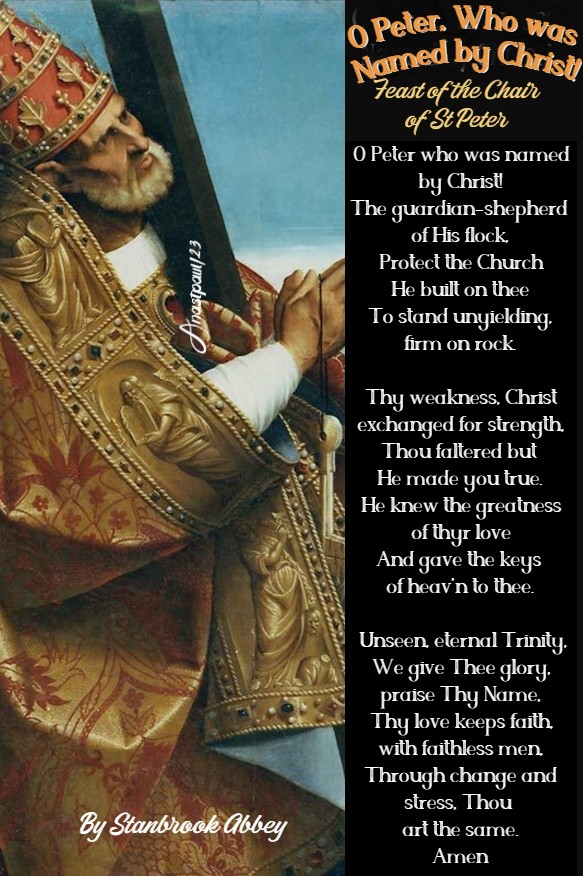
Our Morning Offering – 18 January – Feast of the Chair of the Apostle, St Peter at Rome
O Peter, Who was Named by Christ! By Stanbrook Abbey For the Feast of the Chair of St Peter
O Peter who was named by Christ! The guardian-shepherd of His flock, Protect the Church He built on thee To stand unyielding, firm on rock.
Thy weakness, Christ exchanged for strength, Thou faltered but He made thee true. He knew the greatness of thy love And gave the keys of heav’n to thee.
Unseen, eternal Trinity, We give Thee glory, praise Thy Name, Thy love keeps faith, with faithless men, Through change and stress, Thou art the same. Amen
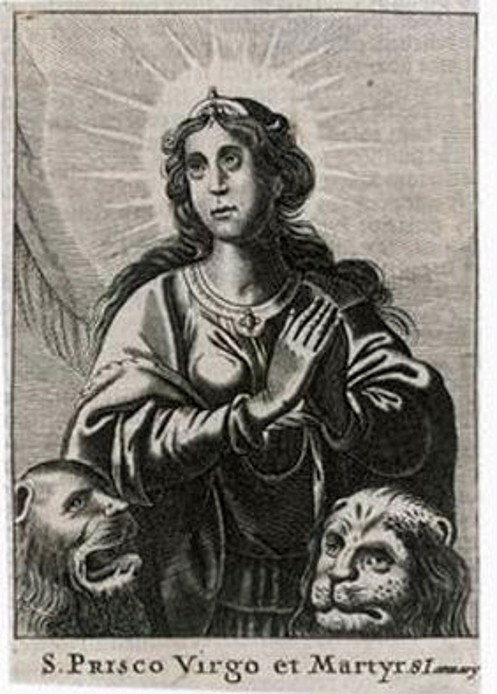
Saint of the Day – 18 January – Saint Prisca (1st Century) Child Virgin Martyr. Born to the imperial Roman hristian nobility and died by being stabbed with a sword in 275 in Rome, Italy. Also known as – Priscilla, Prisque.
The Roman Martyrology reads: “In the City of Rome, the holy Virgin and Martyr Prisca; after many tortures she gained the Crown of Martyrdom under Emperor Claudius II (about 270).”
Born to Christian parents of a noble family, Prisca was raised during the reign of the Roman Emperor Claudius II. While Claudius did not persecute Christians with the same fervour as other Roman Emperors, Christians still did not practice their faith openly. In fact, Prisca’s parents went to great lengths to conceal their faith and thus they were not suspected of being Christians.
Prisca, however, did not feel the need to take precaution. The young girl openly professed her dedication to Christ and eventually, she was reported to the Emperor. Claudius had her arrested and commanded her to make a sacrifice to Apollo, the pagan god of the sun.
According to the legend, Prisca refused and was tortured for disobeying. Then, suddenly, a bright, yellow light shone about her and she appeared to be a little star.
Claudius ordered that Prisca be taken away to prison, in the hopes that she would abandon Christ. When all efforts to change her mind were unsuccessful, she was taken to an amphitheatre and thrown in with a lion.
As the crowd watched, Prisca stood fearless. According to legend, the lion walked toward the barefoot girl and then gently licked her feet. Disgusted by his thwarted efforts to dissuade Prisca, Claudius had her stabbed to death with a sword.
Seventh-century accounts of the grave sites of Roman Martyrs refer to the discovery of an epitaph of a Roman Christian named Priscilla in a large catacomb and identifies her place of interment on the Via Salaria as the Catacomb of Priscilla.
Feast of the Chair of St Peter: In 1960, Pope John XXIII removed from the General Roman Calendar, the 18 January Feast of the Chair of Peter, Two Liturgical Feasts were celebrated in Rome, in Honour of Chairs of Saint Peter, one of which was kept in the Baptismal Chapel of St Peter’s Basilica, the other at the Catacomb of Priscilla. The dates of these celebrations are 18 January and 22 February. The two Feasts were included in the Tridentine Calendar with the rank of Double, which, in 1604, Pope Clement VIII raised to the rank of Greater Double. Those traditional Catholics. who do not accept the changes made by Pope John XXIII, continue to celebrate both Feast days: “Saint Peter’s Chair at Rome” on 18 January and the “Chair of Saint Peter at Antioch” on 22 February. https://anastpaul.com/2017/02/22/feast-of-the-chair-of-st-peter-22-february/
St Archelais the Martyr Bl Beatrix of Este the Younger Bl Charlotte Lucas St Catus
Blessed Cristina Ciccarelli OSA (1481–1543) Religious of the Order of Saint Augustine, Mystic, Stigmatist, Apostle of the poor, Reformer, she had a had a particular devotion to the Eucharist and to the Passion and Death of Christ, she was granted the gift of Prophecy, visions and levitation. About Bl Cristina: https://anastpaul.com/2020/01/18/saint-of-the-day-18-january-blessed-cristina-ciccarelli-osa-1481-1543/
St Day/Dye St Deicola of Lure Bl Fazzio of Verona Bl Félicité Pricet St Leobard of Tours
Bl Monique Pichery St Moseus of Astas St Prisca of Rome (1st Century) Child Virgin Martyr St Susanna the Martyr St Thecla the Martyr St Ulfrid of Sverige Bl Victoire Gusteau St Volusian of Tours
Martyrs of Carthage – 3 saints Martyrs of Egypt -37 saints Martyrs of Nicaea – 3 saints
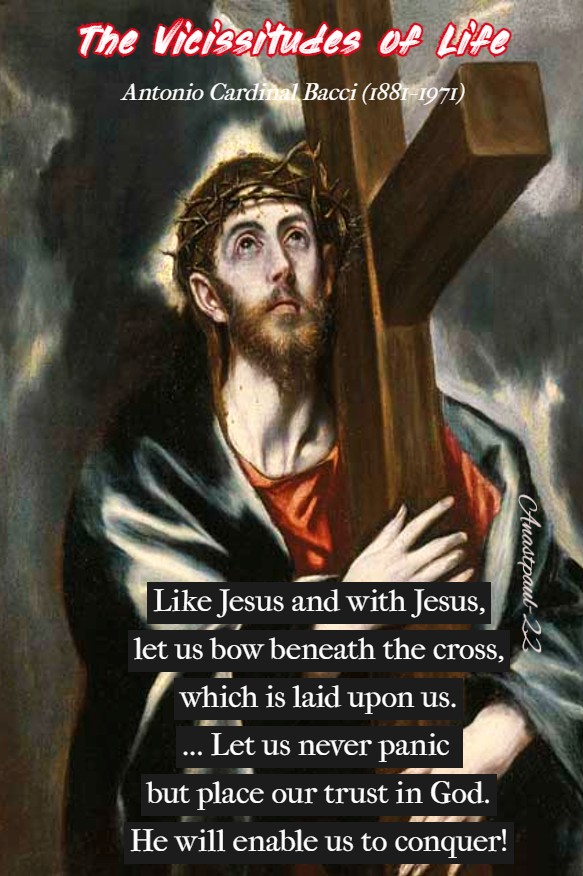
Thought for the Day – 17 January – Meditations with Antonio Cardinal Bacci (1881-1971)
The Vicissitudes of Life
“There are three kinds of trials which we have to expect:
(a) Suffering in the guise of illness or accidents.
(b) The insults, lack of understanding and ingratitude of our fellowmen.
(c) Temptations and allurements of sin.
We must make a spiritual preparation at the beginning of everyday and surrender ourselves with filial confidence into the hands of God. Sorrows, illness and misfortune may come. Let us offer ourselves to God in our morning prayer. Like Jesus and with Jesus, let us bow beneath the cross, which is laid upon us.
Perhaps men will insult us and misunderstand us. Let us accept all this with resignation and love for God and our neighbour, whoever he may be. In this, we shall be like our Divine Redeemer, Who, when He was nailed to the Cross, not only forgave but prayed to His Eternal Father, for those who had Crucified Him.
The enchantment of sin may disturb the peace and purity of our soul. In this matter especially, we must prepare to resist, from the very beginning of the day. We must intercede with God, fervently renew our resolutions and turn our attention, when necessary, to other worthwhile thoughts and activities. Let us never panic but place our trust in God. He will enable us to conquer!”
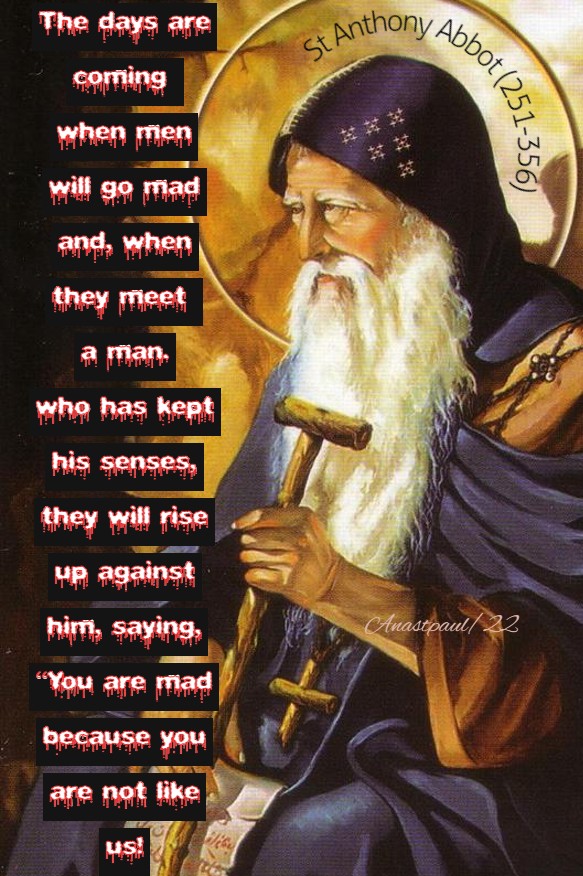
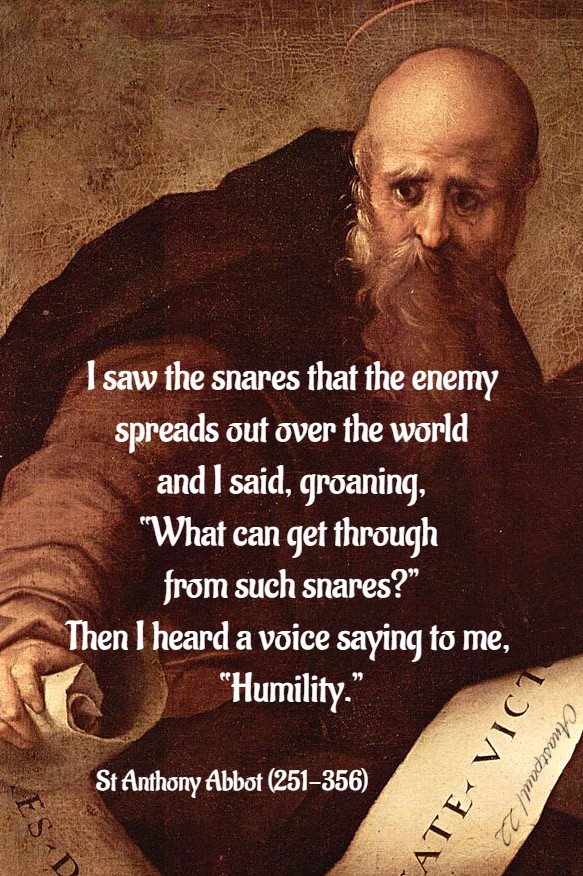
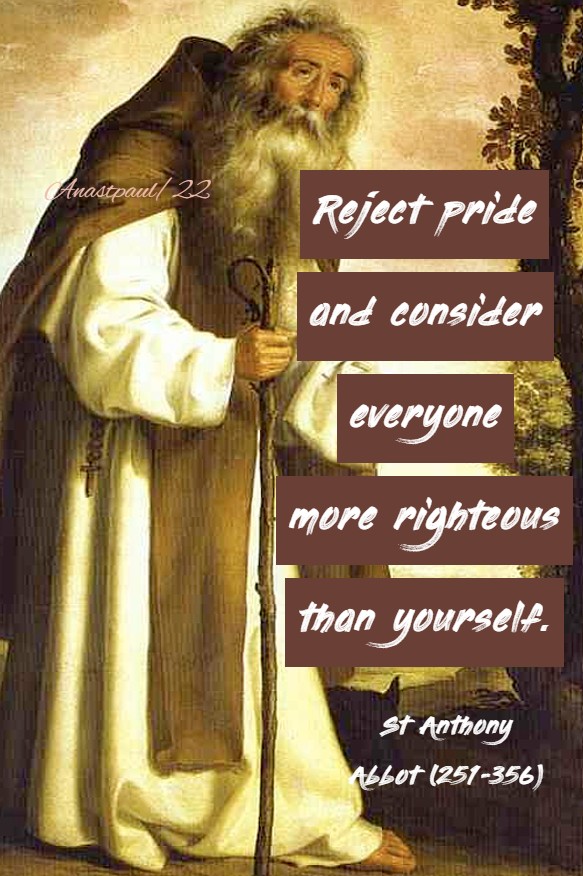
Quote/s of the Day – 17 January – The Memorial of St Anthony Abbot (251-356)
“The days are coming when men will go mad and, when they meet a man. who has kept his senses, they will rise up against him, saying, “You are mad because you are not like us!”
“I saw the snares that the enemy spreads out over the world and I said, groaning, “What can get through from such snares?” Then I heard a voice saying to me, “Humility.”
“Reject pride and consider everyone more righteous than yourself.”
One Minute Reflection – 17 January – Readings: Ecclus 45:1-6, Luke 12:35-40 and the Memorial of St Anthony Abbot (251-356)
“Stay dressed for action and keep your lamps burning and be like men who are waiting for their master to come home from the wedding feast, so that they may open the door to him at once when he comes and knocks.” – Luke 12:35-36
REFLECTION – “God, the Word, stirs up the lazy and arouses the sleeper. For indeed, someone who comes knocking at the door is always wanting to come in. But it depends on us, if He does not always enter or always remain.,, May your door be open to Him who comes; open your soul, enlarge your spiritual capacities, that you may discover the riches of simplicity, the treasures of peace and sweetness of grace. Expand your heart; run to meet the Sun of that Eternal Light that “enlightens everyone” (Jn 1,9). It is certain, that this true Light shines for all but, if anyone shuts their windows, then they themselves, shut themselves off from this Eternal Light.
So even Christ remains outside, if you shut the door of your soul. It is true, that He could enter but He does not want to use force, He doesn’t put those who refuse under pressure. Descended from the Virgin, born from her womb, He shines throughout the universe to give light to all. Those who long to receive the light, that shines with an everlasting brightness, open up to Him. No night comes to intervene. Indeed, the sun we see each day, gives way to night’s darkness but the Sun of Justice (Mal 3,20) knows no setting, for Wisdom is not overcome by evil.” – St Ambrose (340-397) Bishop of Milan and Father and Doctor of the Church – 12th Sermon on Psalm 118
PRAYER – All-powerful, eternal God and Father, grant us the grace of Your Spirit and fill us with the light of understanding and love. May we learn to truly pray and by our prayers to entreat You to bless us in Your goodness and lead us to true faith in Your Eternal Light and Word sent to redeem us. May we always be waiting and prepared to open the door of our hearts to Jesus Christ our Lord, Who comes in light, love and peace. Grant that by the prayers of St Anthony Abbot, we may be strengthened. Holy Mother, be our protection and our guide. We make our prayer through Jesus Christ, our Lord with the Holy Spirit, God now and forever, amen.
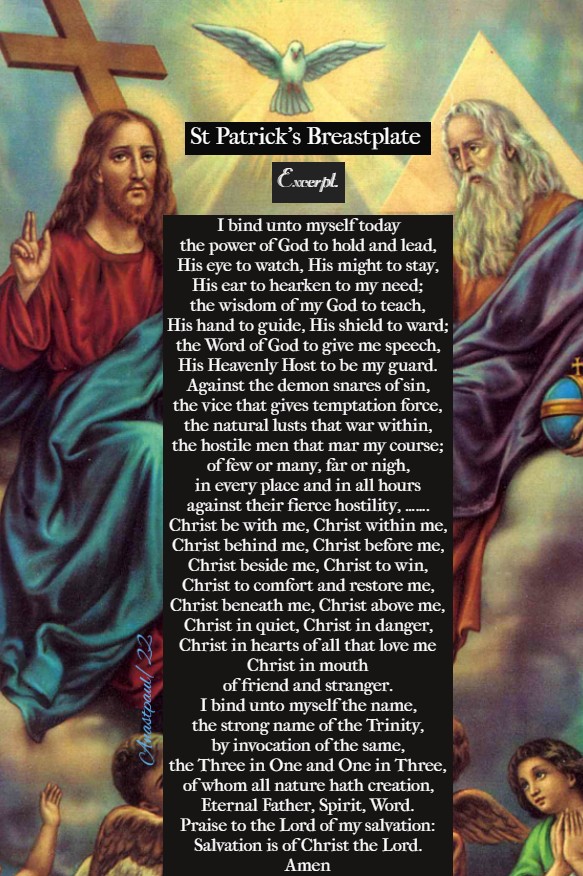
Excerpt from St Patrick’s Breastplate (also known as The Deer Cry)
I bind unto myself today the power of God to hold and lead, His eye to watch, His might to stay, His ear to hearken to my need; the wisdom of my God to teach, His hand to guide, His shield to ward; the Word of God to give me speech, His Heavenly Host to be my guard. Against the demon snares of sin, the vice that gives temptation force, the natural lusts that war within, the hostile men that mar my course; of few or many, far or nigh, in every place and in all hours against their fierce hostility, ……. Christ be with me, Christ within me, Christ behind me, Christ before me, Christ beside me, Christ to win, Christ to comfort and restore me, Christ beneath me, Christ above me, Christ in quiet, Christ in danger, Christ in hearts of all that love me, Christ in mouth of friend and stranger. I bind unto myself the name, the strong name of the Trinity, by invocation of the same, the Three in One and One in Three, of whom all nature hath creation, Eternal Father, Spirit, Word. Praise to the Lord of my salvation: Salvation is of Christ the Lord. Amen
Saint of the Day – 17 January – Blessed Gamelbert of Michaelsbuch (c 720-c 802) Priest, Monk, Hermit. Born in c 720 in Bavaria (in modern Germany) and died in c 802 of natural causes.
“Such was his kindness of heart, that he used to buy the little birds caught by the peasants, in order to set them free. He never allowed his servants to work in the fields or woods, if bad weather threatened. He valued, above everything, peace and concord and kept the peace among his parishioners, as far as he possibly could.” – from “The Little Bollandists” by Monsignor Paul Guérin, 1882
Gamelbert was of noble descent and a Lord of Michaelsbuch. After a pilgrimage to Rome, Gamelbert became a Priest and then the Parish Priest in Michaelsbuch, Germany for over 50 years.
In the mid-8th Century he acquired from Duke Tassilo III a piece of woodland on the opposite bank of the Danube between Mariaposching and Deggendorf, for which he had to pay a tax known as the Medema. From this was derived the name of Metten both for the place itself and for the Monastery which he established there, Metten Abbey..
The first Abbot was Gamelbert’s Godson Blessed Utto (Feast day 3 October), who directed the construction of the Monastery from his hermitage (the present Uttobrunn). In 766 twelve monks arrived from Reichenau Abbey as the first official occupants, although the place was well settled by then
In art, Gamelbert is represented as a Priest or as a pilgrim surrounded by birds.
Blessed Gamelbert was Beatified on 25 August 1909 by Pope Saint Pius X (cultus confirmed).
St Achillas of Sketis St Amoes of Sketis St Antony of Rome Bl Euphemia Domitilla Blessed Gamelbert of Michaelsbuch (c 720-c 802) Priest St Genitus St Genulfus St Jenaro Sánchez Delgadillo St John of Rome Bl Joseph of Freising St Julian Sabas the Elder St Marcellus of Die St Merulus of Rome St Mildgytha St Nennius St Neosnadia St Pior St Richimir
Thought for the Day – 16 January – Meditations with Antonio Cardinal Bacci (1881-1971)
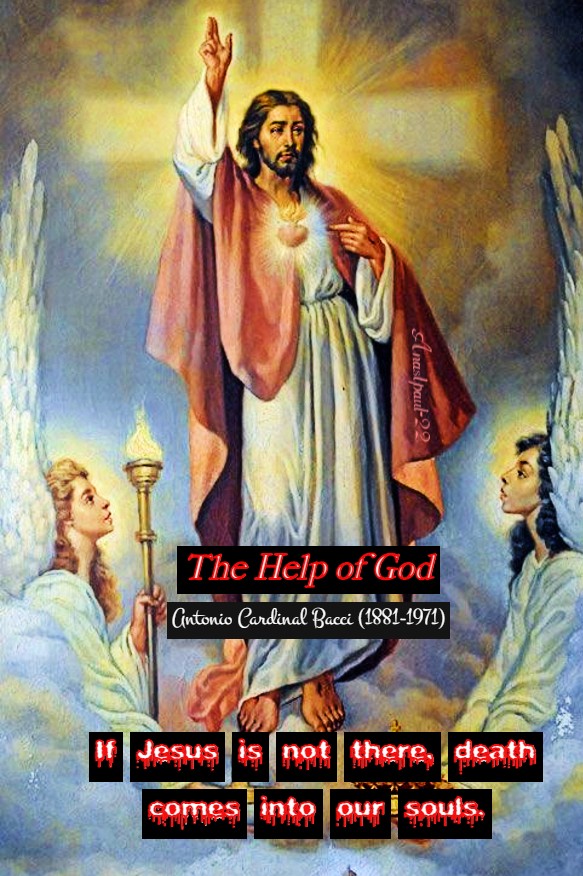
The Help of God
“There are several passages in Sacred Scripture which emphasise clearly and effectively, our utter weakness and dependence on God. “Not that we are sufficient of ourselves,” says St Paul, “to think anything, as from ourselves but our sufficiency is from God” (2 Cor 3:5).
Jesus warns us, that without Him, we can do nothing: “Without me, you can do nothing” (Jn 15:5). He uses the allegory of the vine and the branches as an illustration of this. I am the vine, He says and you are the branches. So it is necessary for you to remain united to me and I to you. In the same way as a branch that does not live on, in the vine, can yield no fruit of itself, so you can do nothing, if you do not live on in Me. If anyone does not remain united to Me, he will be like a withered branch which is thrown into the fire to be burned (Jn 15),
We must remain united to Jesus, therefore, if we wish to do anything good and to merit everlasting life. Otherwise, the supernatural life of grace will not be transmitted to us. If Jesus is not there, death comes into our souls. Let us remain close to our Divine Redeemer. If we continue to live in Him, He will give us everything we ask, as He has promised: “If you abide in me and, if my words abide in you, ask whatever you will and it shall be done to you” (Jn 15:7).
Quote/s of the Day – 16 January – Second Sunday after Epiphany, Readings: John 2:1-11.
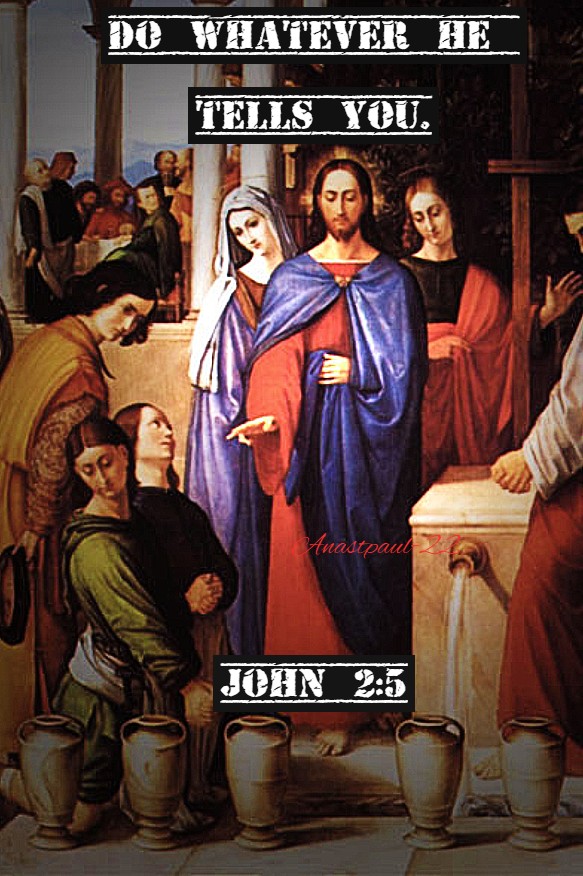
“Do whatever he tells you.”
John 2:5
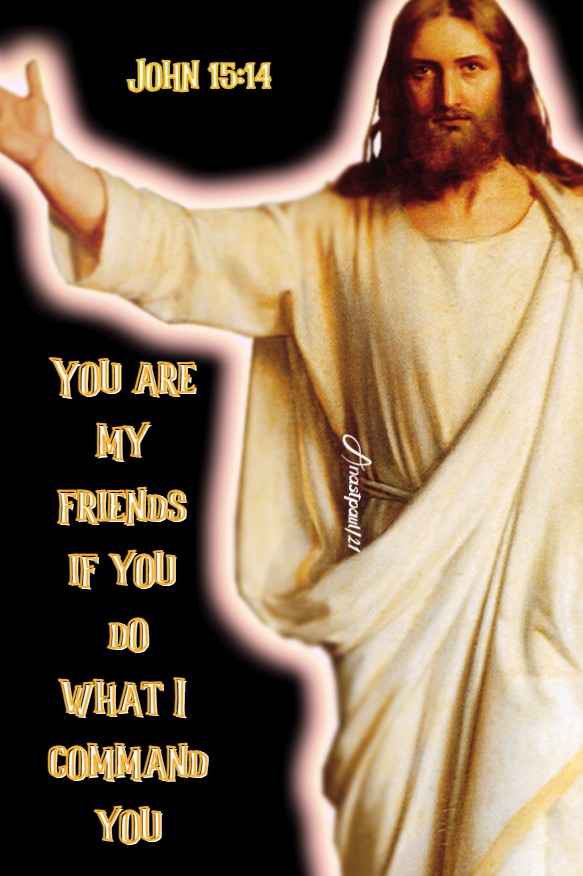
“You are my friends, if you do the things that I command you.”
John 15:14
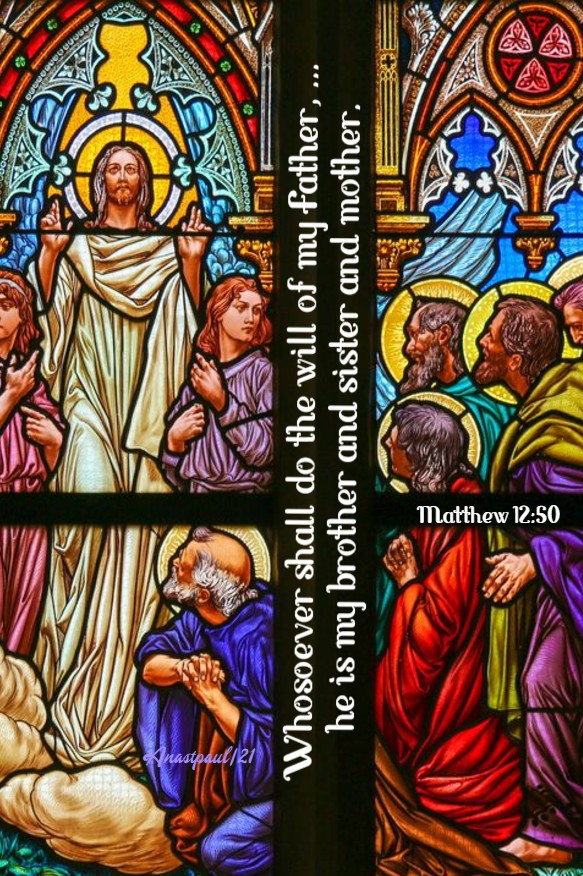
“Whosoever shall do the will of my Father, … he is my brother and sister and mother.”
Matthew 12:50
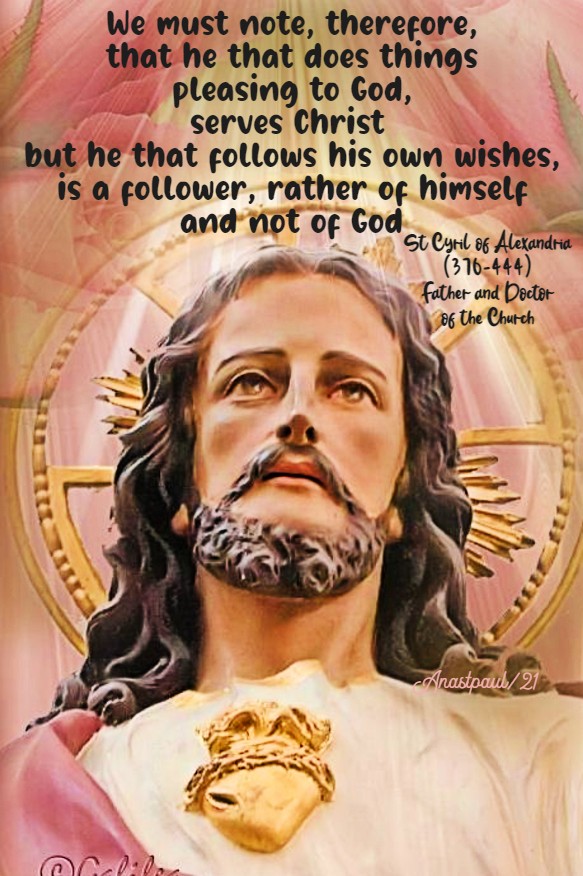
“We must note, therefore, that he that does things pleasing to God, serves Christ but he that follows his own wishes, is a follower, rather of himself and not of God.”
St Cyril of Alexandria (376-444) Father & Doctor
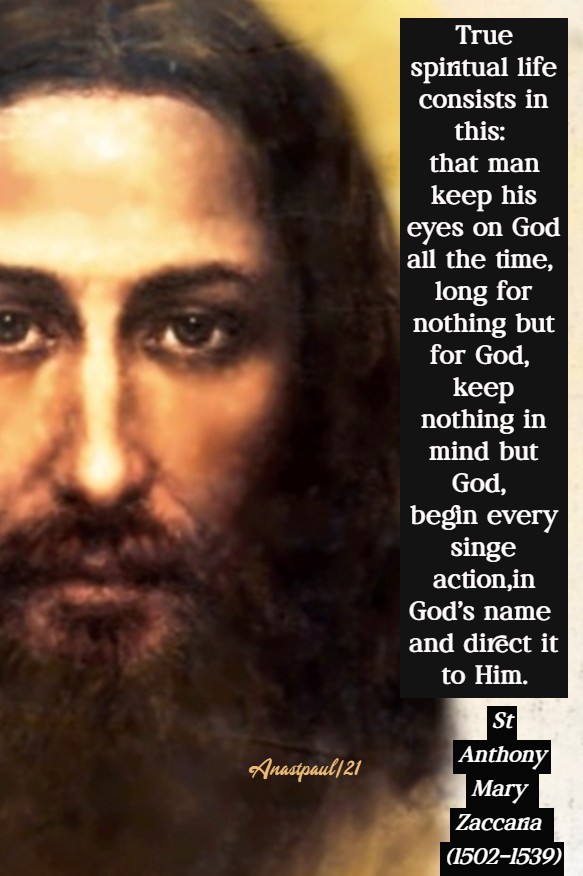
“ True spiritual life consists in this: that man keep his eyes on God all the time, long for nothing but for God, keep nothing in mind but God, begin every single action,in God’s name and direct it to Him.”
St Anthony Mary Zaccaria (1502-1539)
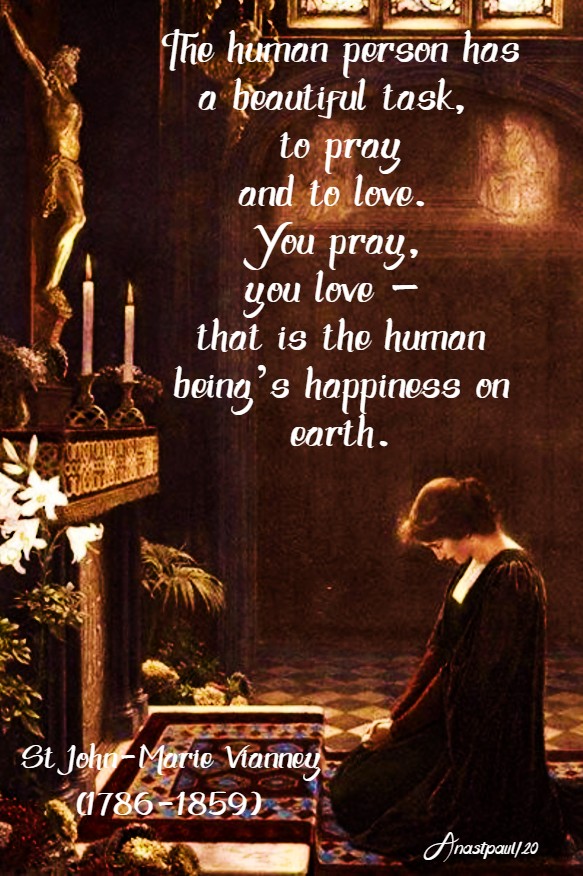
“You see, my children, the Christian’s treasure is not on earth, it is in heaven (Mt 6:20). So our thinking must go to where our treasure is. The human person has a beautiful task, to pray and to love. You pray, you love – that is the human being’s happiness on earth.”
One Minute Reflection – 16 Januaryr – Second Sunday after Epiphany, Readings: Romans 12:6-16, John 2:1-11.
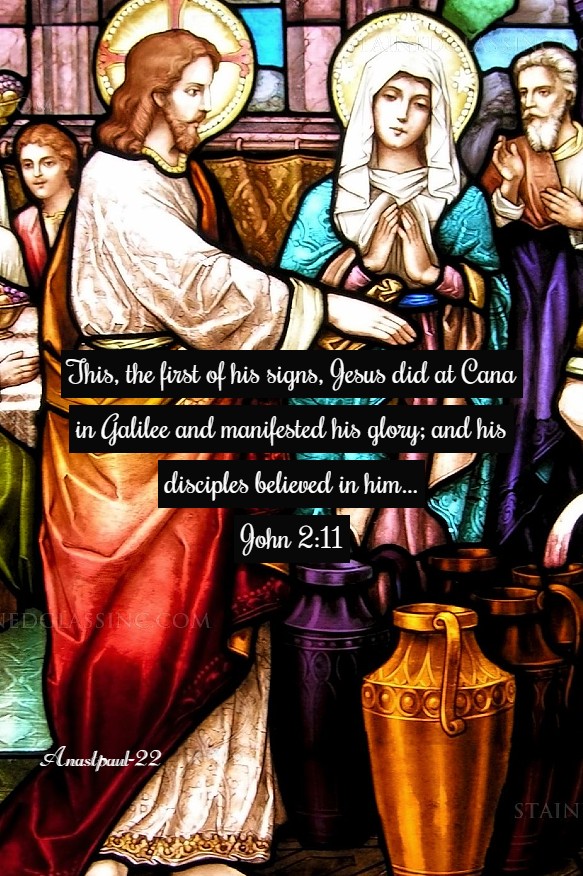
“This, the first of his signs, Jesus did at Cana in Galilee and manifested his glory; and his disciples believed in him…” – John 2:11
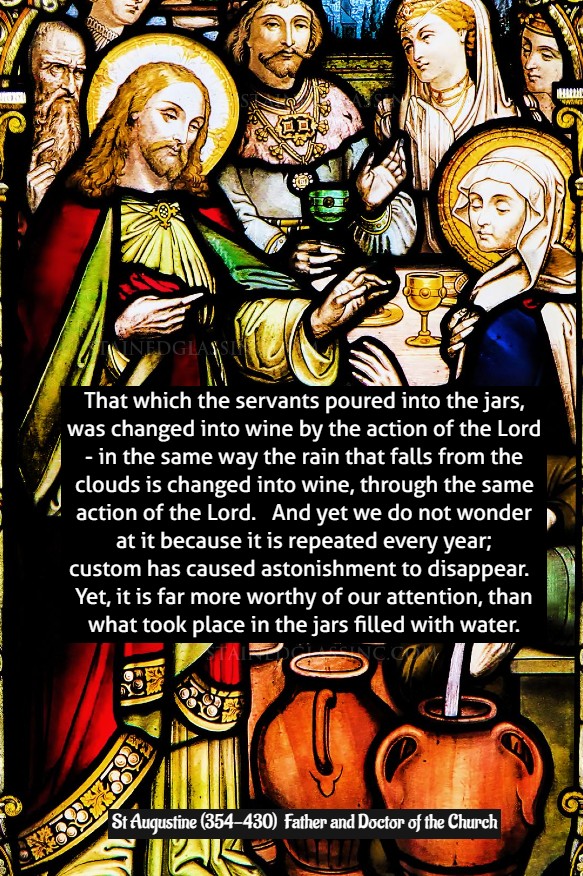
REFLECTION – “The miracle by which our Lord Jesus Christ changed water into wine is not at all astonishing, to those who know, that God is its Author. Indeed, it is exactly the same thing which produced wine in those six jars on that wedding day … and which renews this transformation in the vines each year. That which the servants poured into the jars, was changed into wine by the action of the Lord – in the same way the rain that falls from the clouds is changed into wine, through the same action of the Lord. And yet, we do not wonder at it because it is repeated every year; custom has caused astonishment to disappear. Yet, it is far more worthy of our attention, than what took place in the jars filled with water. Indeed, who is there who dreams of considering the work of God, Who directs and governs the whole world? Isn’t that person then seized with astonishment and, as it were crushed beneath the weight of these miracles? If they consider the power enclosed within a single seed of the first species to come, they will discover a great reality there, that astounds the observer. But people, otherwise occupied, have become insensible to the works of God, which would daily provide motives for praising the Creator. This is why God reserves to Himself, the work of certain unusual wonders, so as to awaken them from their sleepiness and lead them to praise Him.”…St Augustine (354-430) Bishop of Hippo, Father and Doctor of the Church
PRAYER – Almighty God, ruler and creator of all things in heaven and on earth, listen favourably to the prayer of Your people. Open our eyes that we may see, open our ears that we may hear, open our hearts that we may love Your glory, manifest around us in all the great deeds of Your Word. Grant us love and peace in our day and may the prayers of The Holy Mother of Jesus, our Lord and Saviour and all Your Saints and Martyrs, lead us home to You. We make our prayer through Your Son Jesus Christ with the Holy Spirit, one God forever, amen.
Our Morning Offering – 16 January– Second Sunday after Epiphany
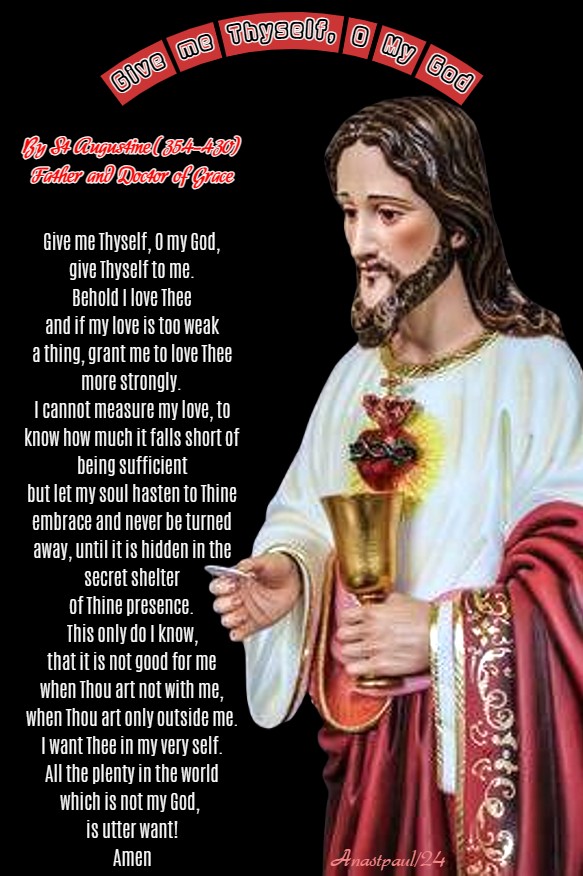
Give me Thyself, O My God By St Augustine (354-430) Father and Doctor of Grace
Give me Thyself, O my God, give Thyself to me. Behold I love Thee and if my love is too weak a thing, grant me to love Thee more strongly. I cannot measure my love, to know how much it falls short of being sufficient but let my soul hasten to Thine embrace and never be turned away, until it is hidden in the secret shelter of Thine presence. This only do I know, that it is not good for me when Thou art not with me, when Thou art only outside me. I want Thee in my very self. All the plenty in the world which is not my God, is utter want! Amen
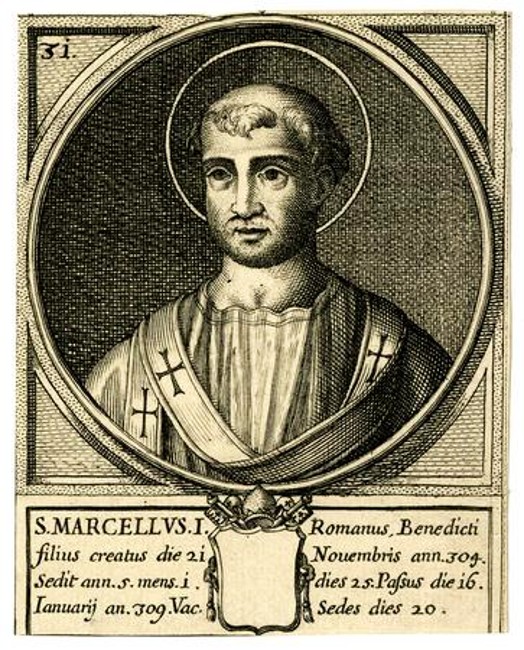
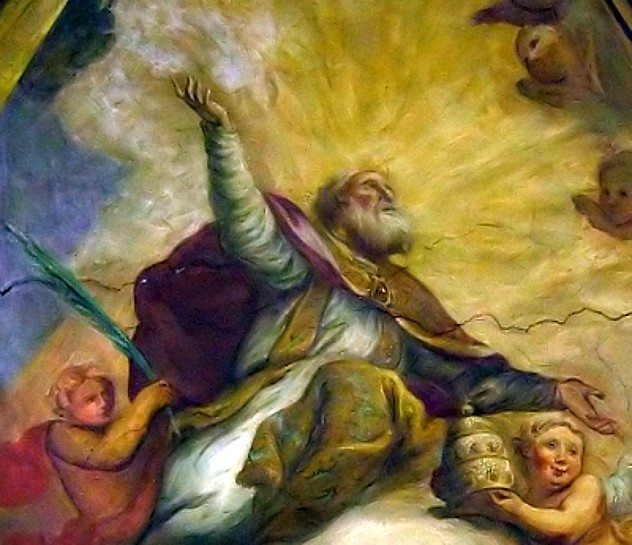
Saint of the Day – 16 January – Saint Pope Marcellus I (Died 309) Papal Ascension May-June 308. Also known as – Marcel, Marcelo. Patronage – Stablemen.
Nothing of Marcellus’ life before his papacy has survived the centuries. He became Pope at the end of the persecutions of Diocletian in aound 3089. The persecutions had disrupted the Church so much, that there had been a gap of over a year without a Pope.
Once he was elected, he faced several challenges, including reconsituting the clergy, which had been decimated and whose remnant had practiced their vocation only covertly and with the expectation of martyrdom. He worked hard to recover and welcome back all who had denied the faith in order to keep from being murdered.
When a group of the apostatised, known as the Lapsi, refused to do penance, Marcellus refused to allow their return to the Church. Some of these caused such civil disruption that Emperor Maxentius exiled the Pope in order to settle the matter.
Legend says that Marcellus was forced to work as a stable slave as punishment, however we do know that he died of the terrible conditions he suffered in exile and is considered a Martyr because of that.
The account in the Liber Pontificalis continues: “But although he served many days in the stable, he did not cease his service to the Lord with prayers and fastings. Moreover, in the ninth month, all his clergy came by night and removed him by night from the stable. A certain matron and widow whose name was Lucina, who had lived with her husband Marcus for 15 years and had been 19 years a widow, received the blessed man. And she dedicated her house as a Church in the name of the blessed Marcellus and there day and night the Lord Jesus Christ was confessed with hymns and prayers.”
This is the Church known in modern times as San Lorenzo in Lucina where a Basilica was subsequently built in the mid-4th century, restored and embellished numerous times throughout the centuries. Traces of the original Roman structure may be seen amidst the foundations even to this day.
The Liber Pontificalis continues: “But Maxentius heard of it and sent and seized the blessed Marcellus a second time and gave orders that in that very Church, boards should be laid down and the animals of the stable should be collected and kept there and the blessed Marcellus should tend them. And he died in the service of the animals, clad only in a hair shirt.
And the blessed Lucina took is body and he was buried in the cemetery of Priscilla on the Via Salaria, 16 January.
And the Bishopric was empty 20 days.
Lucina herself was condemned by proscription.”
The remains of the Martyred Pope were later transferred to the Basilica of San Marcello al Corso in Rome. An epitaph of Pope Saint Marcellus, written by Pope Damasus about 80 years after Marcellus’s Martyrdom, was found in the cemetery of Priscilla.
St Juana Maria Condesa Lluch Bl Konrad II of Mondsee St Leobazio St Liberata of Pavia St Pope Marcellus I (Died 309) Martyr, Papal Ascension May-June 308 St Melas of Rhinocolura St Priscilla of Rome St Sigeberht of East Anglia St Titian of Oderzo St Triverius St Valerius of Sorrento
Thought for the Day – 15 January – Meditations with Antonio Cardinal Bacci (1881-1971)
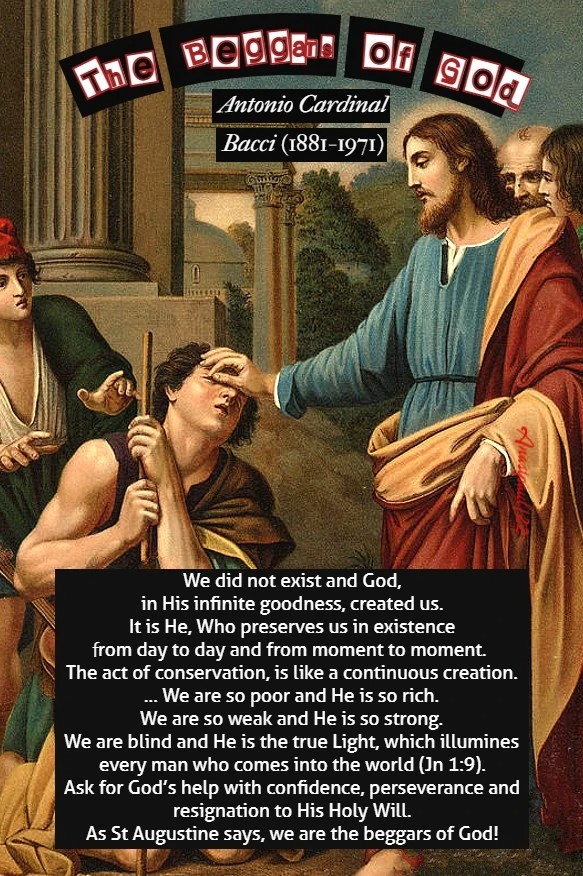
The Beggars of God
“Both in the natural and in the supernatural order, we are in continual need of the help of God. We did not exist and God, in His infinite goodness, created us. It is He, Who preserves us in existence from day to day and from moment to moment. The act of conservation, is like a continuous creation. If God did not sustain us, we should return immediately to the dust from which we came: “Remember, man, that dust you are and unto dust you shall return” (Gen 3:19).
We are continually dependent on our Lord and Creator for our existence and activity. If we remained always aware of this tremendous fact, we would never offend God. We would show Him a filial gratitude and humbly implore His assistance.
We are so poor and He is so rich. We are so weak and He is so strong. We are blind and He is the true Light, which illumines every man who comes into the world (Jn 1:9). Ask for God’s help with confidence, perseverance and resignation to His Holy Will. As St Augustine says, we are the beggars of God!”
Quote/s of the Day – 15 January – Readings: Phillippians 3:7-12, Matthew 11:25-34
“Take my yoke upon you and learn from me, for I am meek and humble of heart and you will find rest for your souls…”
Matthew 11:29
“For in prosperity, a man is often puffed up with pride, whereas tribulations chastens and humbles him through suffering and sorrow. In the midst of prosperity, the mind is elated, and in prosperity. a man forgets himself. In hardship, he is forced to reflect on himself, even though he be unwilling. In prosperity, a man often destroys the good he has done. Amidst difficulties, he often repairs what he long since did in the way of wickedness.”
St Alfred the Great (849-899) King
“How can you become a sharer, in His glory (1 Pt 5:1) if you will not consent, to become a sharer, in His humiliating death?”
St Simeon the New Theologian (949-1022)
“Arm yourself with prayer, instead of a sword; be clothed with humility, instead of fine raiment.”
St Dominic de Guzman OP (1170-1221)
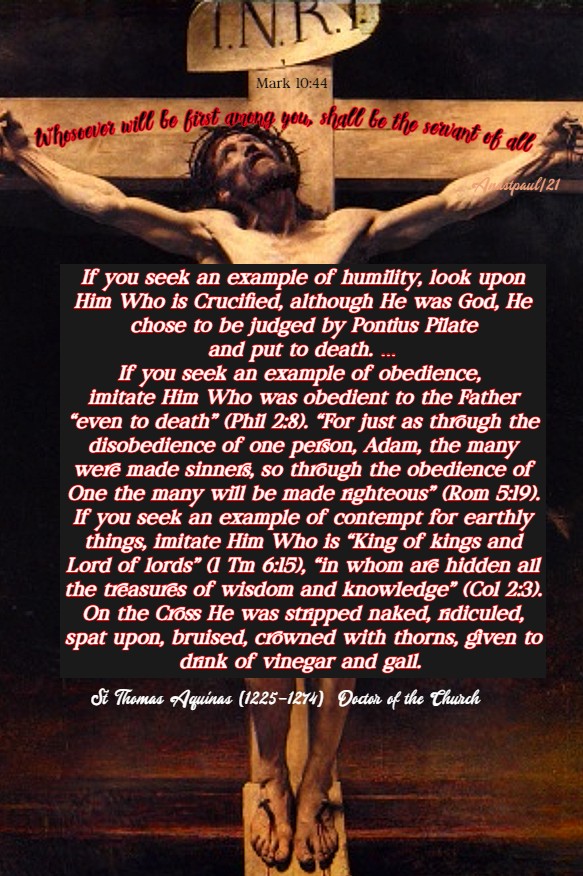
“If you seek an example of humility, look upon Him Who is Crucified, although He was God, He chose to be judged by Pontius Pilate and put to death. … If you seek an example of obedience, imitate Him Who was obedient to the Father “even to death” (Phil 2:8). “For just as through the disobedience of one person, Adam, the many were made sinners, so through the obedience of One, the many will be made righteous” (Rom 5:19). . If you seek an example of contempt for earthly things, imitate Him Who is “King of kings and Lord of lords” (1 Tm 6:15), “in whom are hidden all the treasures of wisdom and knowledge” (Col 2:3). On the Cross He was stripped naked, ridiculed, spat upon, bruised, crowned with thorns, given to drink of vinegar and gall.”
St Thomas Aquinas (1225-1274) Angelic Doctor of the Church
“ … If you die with Him, you shall also likewise live with Him. If you are His companion in punishment, so shall you be in glory.”
Thomas à Kempis (1380-1471)
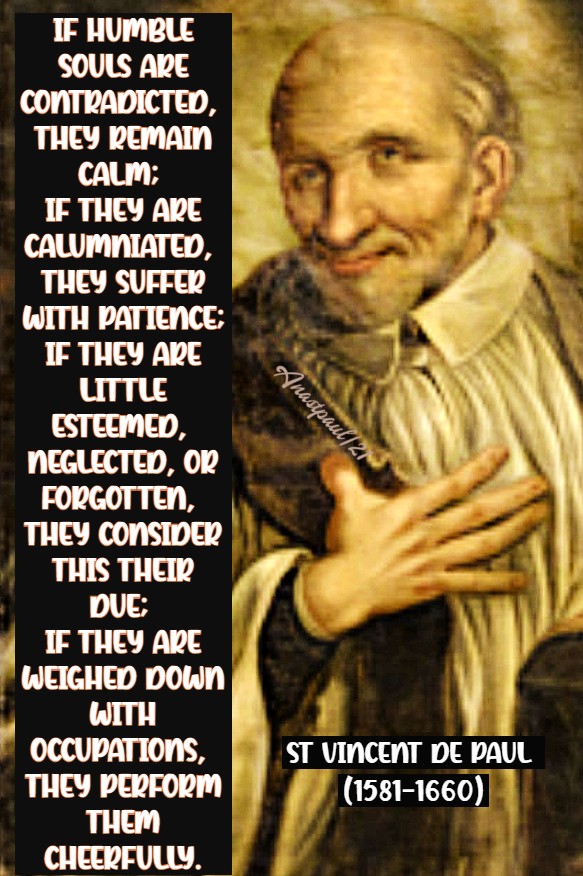
“If humble souls are contradicted, they remain calm; if they are calumniated, they suffer with patience; if they are little esteemed, neglected, or forgotten, they consider this their due; if they are weighed down with occupations, they perform them cheerfully. ”
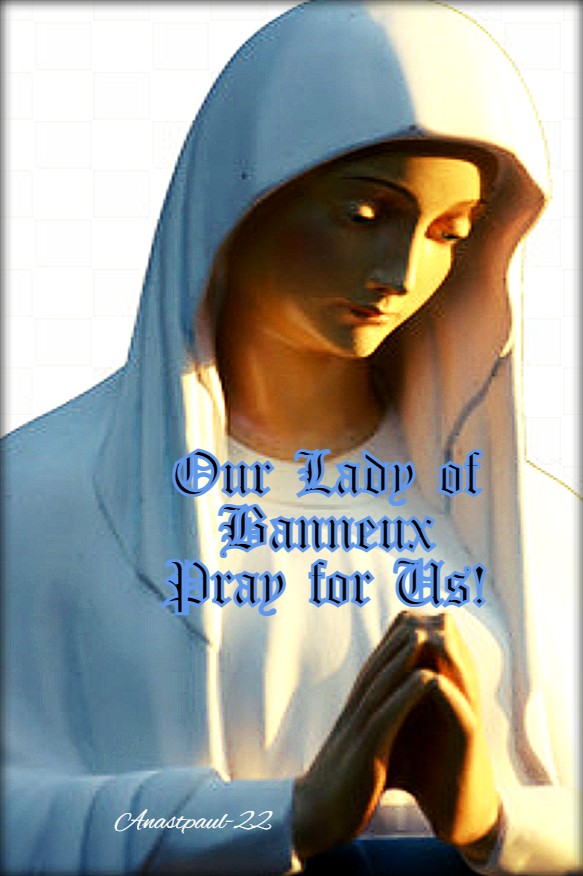
One Minute Reflection – 15 January – Readings: Philippians 3:7-12, Matthew 11:25-30 and the Feast of Our Lady of Banneux (1933)
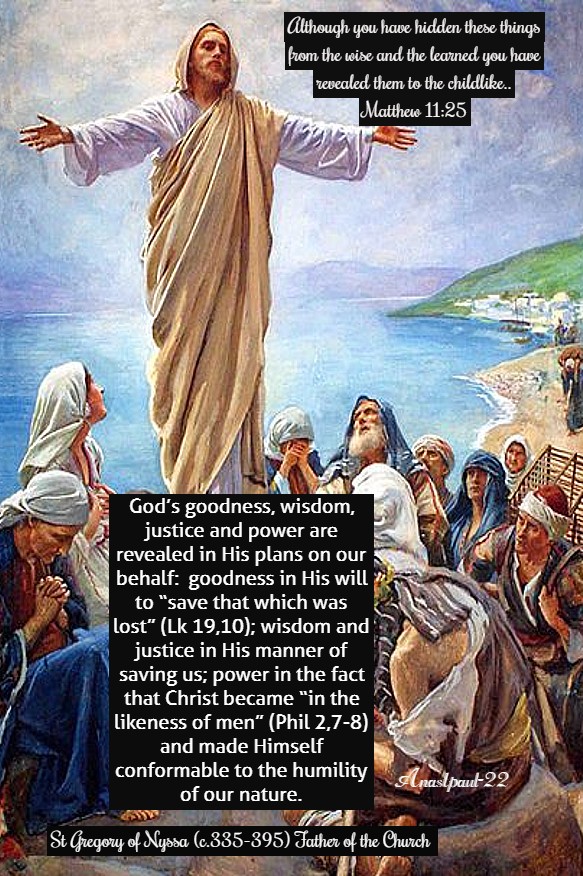
“Although you have hidden these things from the wise and the learned, you have revealed them to the childlike”– Matthew 11:25
REFLECTION – “The fact ,that the all-powerful God has been able to humble Himself even to the humility of the human condition, constitutes a greater proof than the impact and supernatural character of miracles. Indeed, when divine power effects something of great sublimity, this is, after a fashion, in conformity with and appropriate to, God’s nature… On the other hand, that God descended even to our lowliness is, in a certain way, the expression of an overwhelming power, that is not in the least restrained, by what is contrary to its nature…
Neither the expanse of the heavens, the brightness of the stars, the governing of the universe, nor the harmony of created things, reveal the splendid power of God as much as His indulgence, which leads Him to lower Himself to the weakness of our nature… God’s goodness, wisdom, justice and power are revealed in His plans on our behalf: goodness in His will to “save that which was lost” (Lk 19,10); wisdom and justice in His manner of saving us; power in the fact that Christ became “in the likeness of men” (Phil 2,7-8) and made Himself conformable to the humility of our nature.” – St Gregory of Nyssa (c.335-395) Bishop, Father of the Church (Catechetical Discourse 23-26 ; SC 453).
PRAYER – Holy God, our Father, we turn to You in confidence as children and pray, give us meekness of heart, make us “poor in spirit” that we may recognise that we are not self-sufficient, that we are unable to build our lives on our own but need You, we need to encounter You, to listen to You, to speak to You. Help us to understand that we need Your gift, Your wisdom, which is Jesus Himself, in order to do the Your will in our lives and thus to find rest in the hardships of our journey. May the prayers of His Blessed Mother, Our Lady of Banneux, help us to learn the true humility of Your divine Son. Grant this, we pray, through our Lord Jesus Christ who lives and reigns with You and the Holy Spirit, one God, forever and ever, amen.
Our Morning Offering – 15 January – Mary’s Saturday
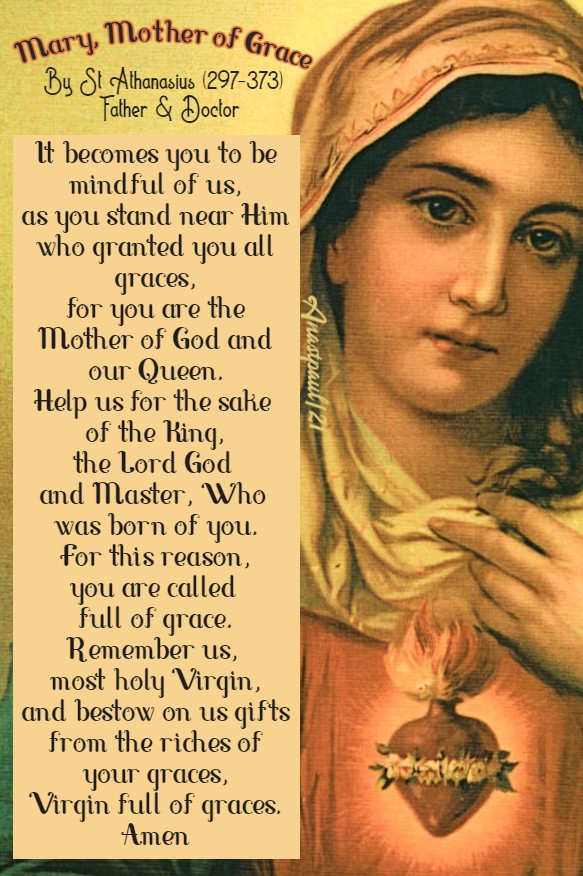
Mary, Mother of Grace By St Athanasius (297-373) Father & Doctor of the Church
It becomes you to be mindful of us, as you stand near Him Who granted you all graces, for you are the Mother of God and our Queen. Help us for the sake of the King, the Lord God and Master who was born of you. For this reason, you are called, full of grace. Remember us, most Holy Virgin, and bestow on us gifts from the riches of your graces, O Virgin full of graces. Amen
Saint of the Day – 15 January – Saint Romedius of Nonsberg/theologians Hermit, Penitent., Pilgrim. Born in Thaur, Tyrol, Austria and died in the 4th Century in Salzburg, Austria of natural causes. Also known as – Romedio of Hohenwart, Romedio of Salzburg, Romedio of Sanzeno, Romedio of Thaur. Romedio. Additional Memorial – 1st Sunday in October (translation of relics). Patronages – against accidents, against bone diseases, against danger at sea, against fever, against fire, against floods, against hail, against headaches, against toothaches, of prisoners, theology students/theologians, travellers/pilgrims. Canonised on 24 July 1907 by Pope Pius X (cultus confirmation).
The Roman Martyrology states: “In the Val di Non in Trentino, St Romedius, an anchorite, who, having given his possessions to the Church, led a life of penance in the hermitage that still bears his name today.”
Romedius was the son and heir of the wealthy Count of Thaur, the lord of a castle near Innsbruck and owner of salt pans in the valley of the River Inn. After a pilgrimage to Rome, Romedius gave all his possessions to the Church, withdrawing into a hermitage in grottoes in the Val di Non. he was accompanied by two companions, Abraham and David.
A later date emerges from the history of his works and extensive research. It is most likely that Romedius came from the family of the Counts of Andechs , lived in the 11th century, gave up his fortune in Thaur and joined the then spreading mendicant movement. After a visit to the Bishop of Trento , he visited the Martyrs’ graves of Alexander , Martyrius and Sisinniusin Sanzeno. It is believed that he died at the age of 74.
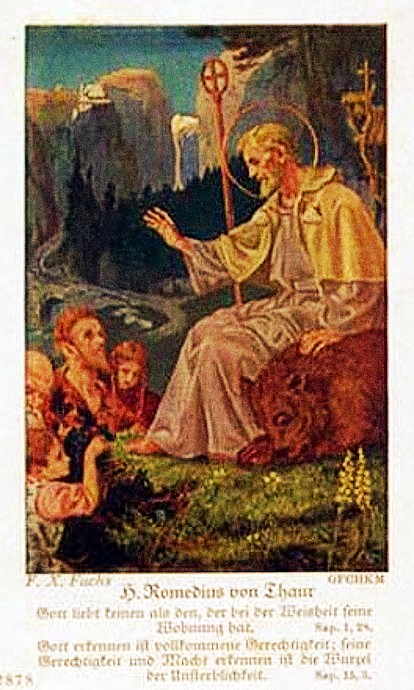
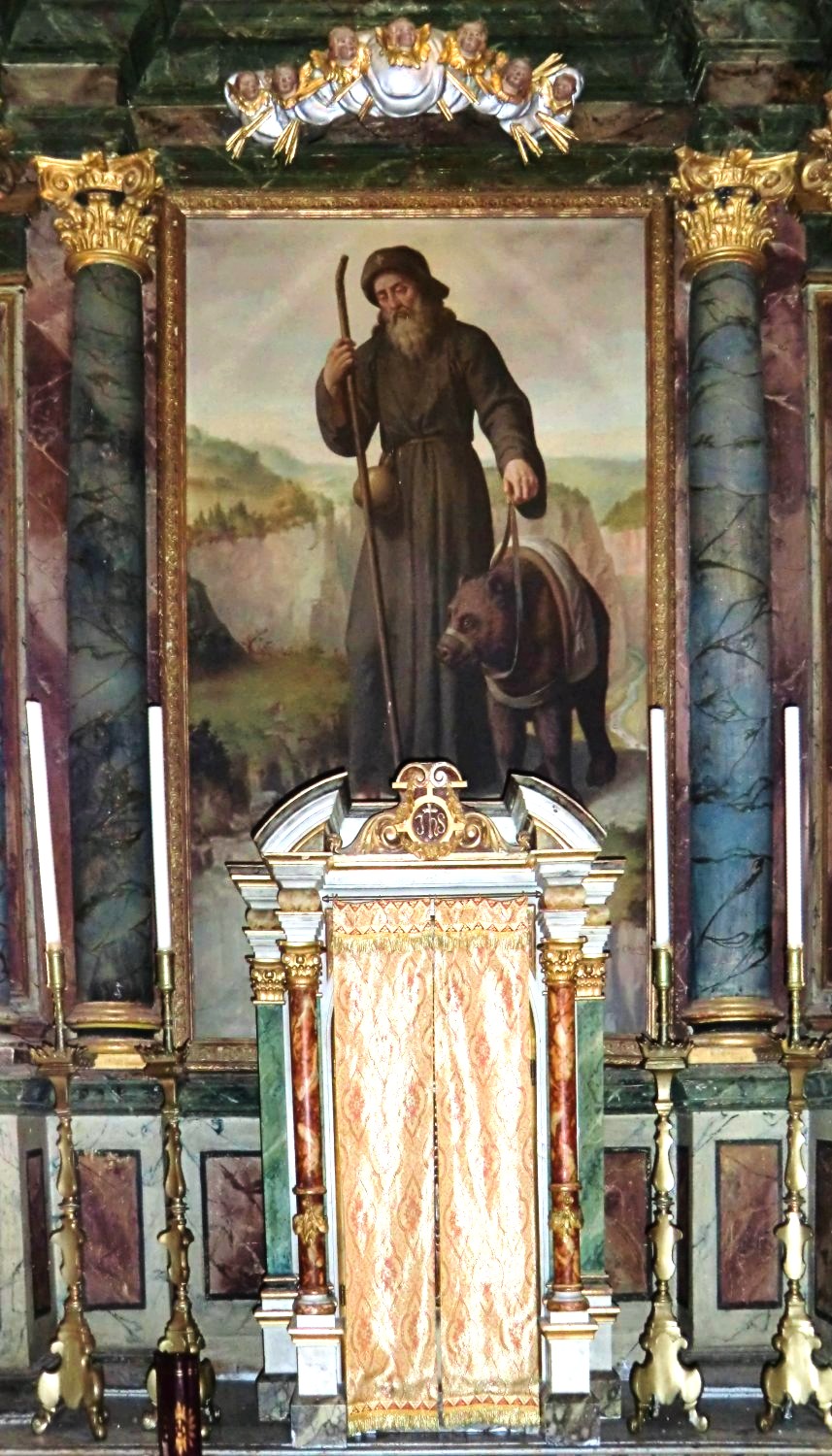
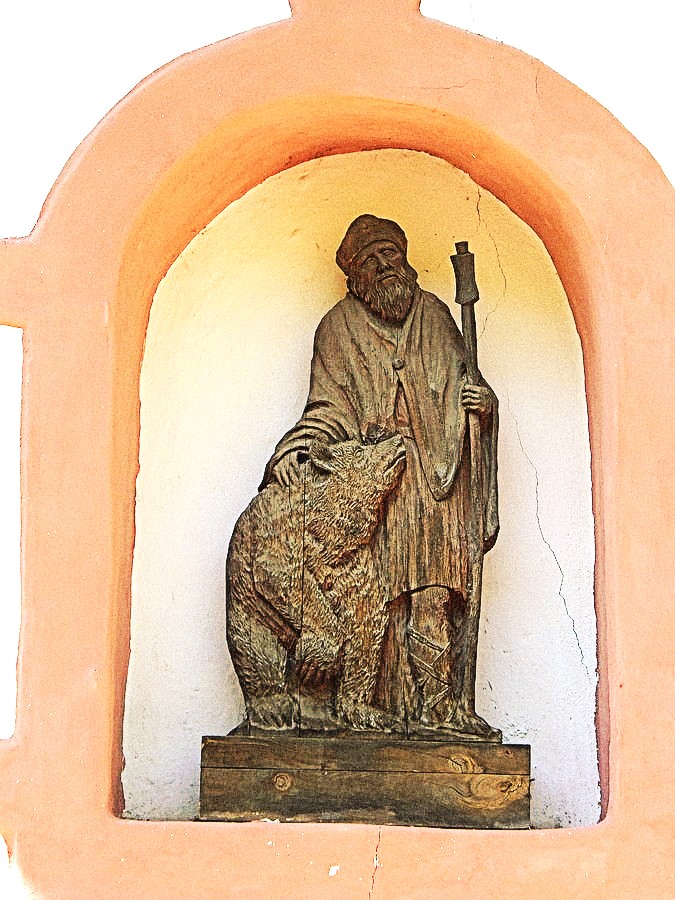
Romedius is often depicted alongside or astride a bear. According to his hagiography he wanted to visit the friend of his youth, St Vigilius, Bishop of Trento (who died in 405) but his horse was torn to pieces by a wild bear. Romedius, however, had the bear bridled by his disciple David. The bear became docile and carried Romedius on its back to Trento.
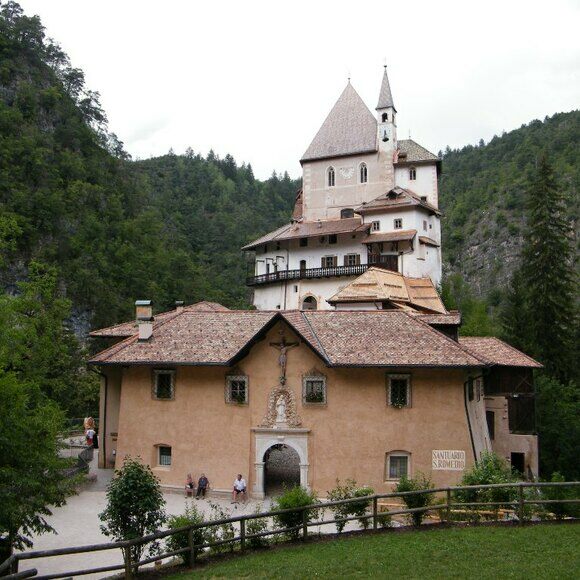
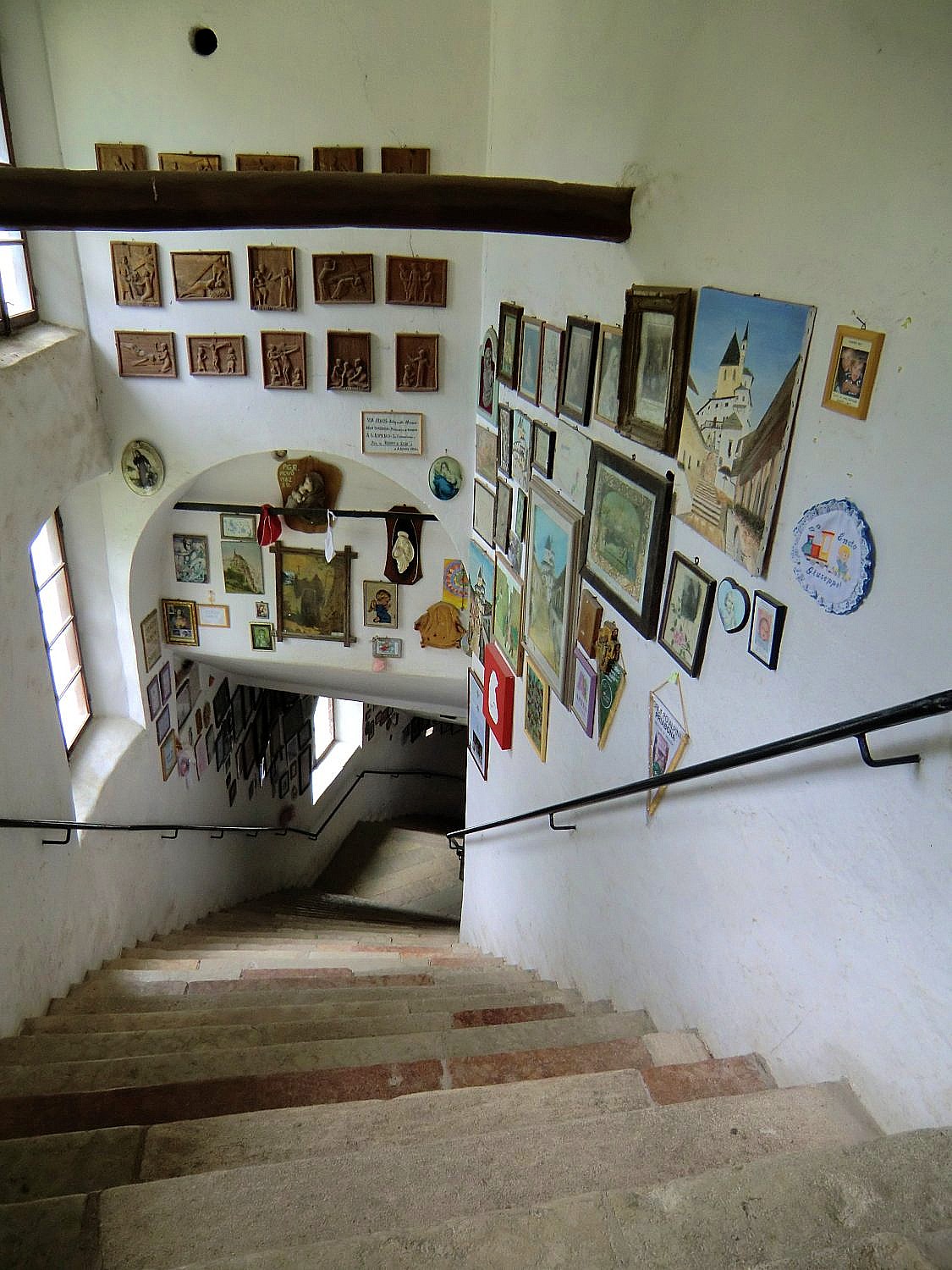
Upon Romedius’ death, his body was laid to rest in a small tomb above his cave in the mountains, a site that was soon visited by pilgrims. The Sanctuary of San Romedio grew from the little Church that was built to venerate him, to a popular pilgrimage site. The Santuario di San Romedio is across the lake from Cles at the head of the Val di Non, above the village of Sanzeno. The Sanctuary where Romedius lived with his bear companion, is now a complex of several Churches, from the Romanesque period to the 20th century beyond a gateway on the forested slopes. Votive offerings of crutches line the walls of the narrow stone stairwell up to the highest chapel, said to mark the site of the Saint’s retreat.
Staircase with votive offerings in the Hermitage at Tavon, 1706
His local cult, which consolidated itself in the course of the 11th century, was officially recognised in the twelfth by the Bishop of Trento. In 1795, permission was given for special offices in his name in the Diocese of Brixen, which at that time, included the Northern Tyrol. His cult remains popular in Trentino, Bavaria, and the Tyrol.
Romedius’ Bear In remembrance of this legend, in 1958 Italian Senator G. G. Gallarati Scotti, honorary member of the committee for the foundation of the World Wildlife Fund in Italy, purchased Charlie, a bear intended to be killed and donated it to the Sanctuary of San Romedius, in the Valle di Non.
Today, the Province of Trentino protects the last brown bears of the Alps in the Adamello-Brenta National Park and, near the Sanctuary, takes care of young bears born in captivity in Trentino.
Relief at the pilgrimage church near Thaur
In the work known as Illustrissimi, a collection of letters written by Pope John Paul I when he was Patriarch of Venice, Romedius’ bear is one of the “recipients” of the letters.
St Arnold Janssen SVD (1837-1909) Priest, Founder, Missionary, Teacher, advocate of the Sacred Heart, Director of the Apostleship of Prayer, He founded the Society of the Divine Word, a Catholic missionary religious congregation, also known as the Divine Word Missionaries, as well as two congregations for women. Biography: https://anastpaul.com/2020/01/15/saint-of-the-day-15-january-st-arnold-janssen-svd-1837-1909/
St Blaithmaic of Iona St Bonitus of Clermont St Britta St Ceolwulf of Northumbria St Emebert of Cambrai St Ephysius of Sardinia St Eugyppius St Francis Ferdinand de Capillas Bl Geoffrey of Peronne Bl Giacomo Villa St Gwrnerth St Habakkuk the Prophet St Isidore of Scété St Isidore the Egyptian St Ita of Killeedy St John Calabytes St Liewellyn St Lleudadd of Bardsey St Macarius of Egypt St Malard of Chartres
St Maurus OSB (c 512-584) Benedictine Monk, Abbot and Deacon, miracle-worker. Maurus was the first disciple of Saint Benedict of Nursia (512–584). He is mentioned in Saint Gregory the Great’s biography of the latter as the first oblate, offered to the Monastery by his noble Roman parents as a young boy, to be brought up in the monastic life. The formula and blessing of St Maurus were universally adopted and approved for use in the Blessing of the Sick. His Life and Miracles: https://anastpaul.com/2021/01/15/saint-of-the-day-15-january-saint-maurus-osb-c-512-584/
Bl Peter of Castelnau St Placid St Probus of Rieti St Romedio of Nonsberg St Sawl St Secondina of Anagni St Secundina of Rome St Tarsicia of Rodez St Teath
Martyrs of Suances – 5 Beati: A Priest and four laymen in the Archdiocese of Burgos, Spain who were Martyred together in the Spanish Civil War. • Blessed Donato Rodríguez García • Blessed Emilio Huidobro Corrales • Blessed Germán García y García • Blessed Valentín Palencia Marquina • Blessed Zacarías Cuesta Campo They were martyred on 15 January 1937 near Suances, Cantabria, Spain The Beatification was celebrated in Burgos, Spain, presided by Cardinal Angelo Amato.
Thought for the Day – 14 January – Meditations with Antonio Cardinal Bacci (1881-1971)
The Proper Use of Time
“The high value of the divine gift of time imposes an obligation on us to avoid laziness. The obligation to avoid sin, is still greater. Sin is the most serious way in which we can abuse this gift of God. It is also an act of deep ingratitude, in that, we turn this treasure which God has bestowed on us, into a weapon to be used against the Giver of every good. To use time properly, it is necessary to direct all our actions, intentions and desires towards God, Who is the source of our being and the goal of our earthly pilgrimage.
If everything we do, intend, or desire, springs from our love of God and is aimed at the manifestation of His glory and the expansion of His kingdom upon earth, then, even our most humble and apparently indifferent actions, are precious in the sight of the Mos High and receive His blessing. But, if we are working for ourselves, for our own satisfaction and petty glorification, we ruin everything. All that we do is barren. If we seek ourselves instead of God, we shall hear Him say one day: “You shall have no reward with your Father in Heaven”(Mt 6:1).
Quote/s of the Day – 14 January – The Memorial of St Hilary of Poitiers (315-368) Father & Doctor of the Church
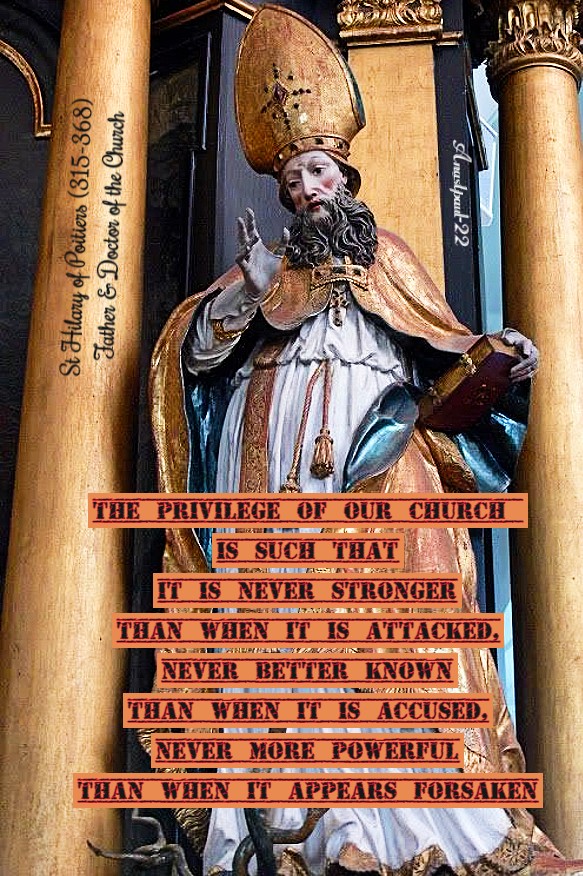
“The privilege of our Church is such that it is never stronger than when it is attacked, never better known than when it is accused, never more powerful than when it appears forsaken.”
(Treatise on the Trinity)
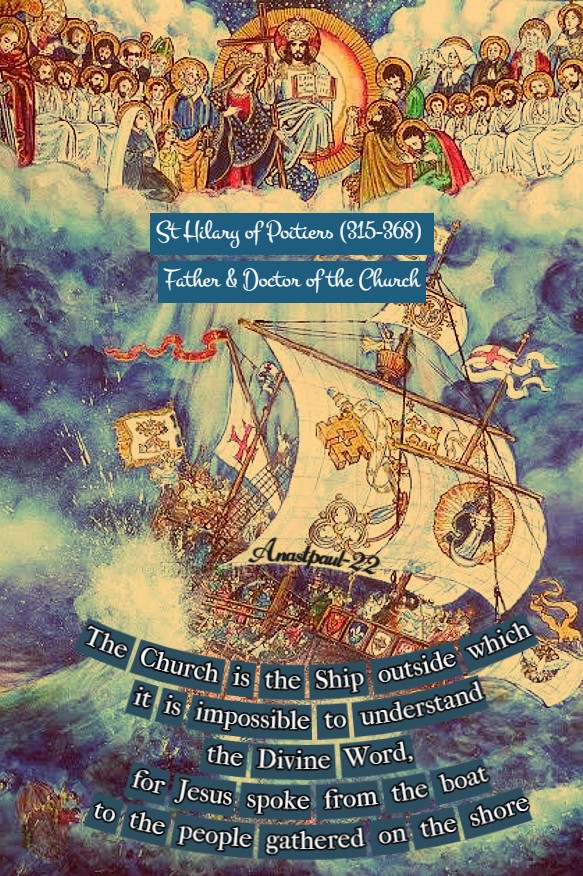
“The Church is the Ship outside which it is impossible to understand the Divine Word, for Jesus spoke from the boat to the people gathered on the shore.”
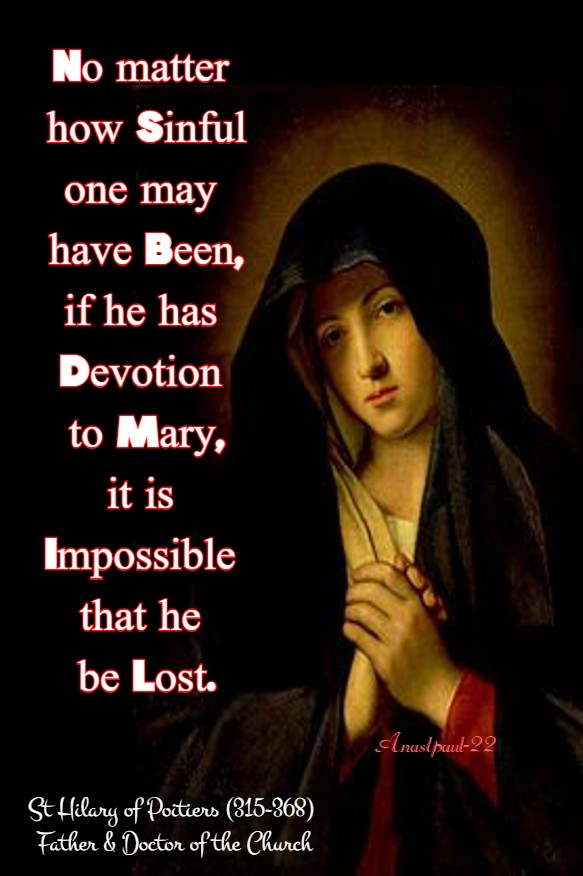
“No matter how sinful one may have been, if he has devotion to Mary, it is impossible that he be lost.”
“Little children follow and obey their father. They love their mother. They know nothing of covetousness, ill-will, bad temper, arrogance and lying. This state of mind, opens the road to Heaven. To imitate our Lord’s own humility, we must return to the simplicity of God’s little ones.”
St Hilary of Poitiers (315-368) Father & Doctor of the Church
One Minute Reflection – 14 January – “Month of the Most Holy Name of Jesus” – 2 Timothy 4:1-8; Matthew 5:13-19 and the Memorial of St Hilary of Poitiers (315-368) Father & Doctor of the Church
“I have come, not to abolish but to fulfil.” … Matthew 5:17
REFLECTION – “In Him, the promise made through the shadows of prophecy, stands revealed, along with the full meaning of the precepts of the law. He is the One Who teaches the truth of prophecy, through His presence and makes obedience to the commandments possible, through grace. In the preaching of the holy Gospel all should receive a strengthening of their faith. No-one should be ashamed of the Cross of Christ, through which the world has been redeemed. No-one should fear to suffer for the sake of justice, no-one should lose confidence in the reward that has been promised. The way to rest is through toil, the way to life is through death. Christ has taken on Himself the whole weakness of our lowly human nature. If then, we are steadfast in our faith in Him and in our love for Him, we win the victory that He has won, we receive what He has promised. When it comes to obeying the commandments or enduring adversity, the words uttered by the Father should always echo in our ears – “This is my Son, the beloved, in whom I am well pleased, listen to Him.” … St Pope Leo the Great (400-461) Father and Doctor of the Church (An excerpt from Sermo 51).
PRAYER – God our Saviour, through the grace of Baptism, You made us children of light. You lead us by the hand and guide and protect us by Your commandments. Fill us with joy at Your nearness and the light of Your Son, by whose beam we see You and follow. St Hilary was a shining examples to us all, grant, we pray, that his prayers may aid us. Through Jesus our Lord and Christ, with the Holy Spirit, God forever, amen.
Our Morning Offering – 14 January – The Memorial of St Hilary of Poitiers (315-368) Father & Doctor of the Church
I Owe You a Most Particular Duty By St Hilary of Poitiers (315-368)
I am well aware, Almighty God and Father, that in my life, I owe You a most particular duty. It is to make my every thought and word, speak of You. In fact, You have conferred on me, this gift of speech and it can yield no greater return than to be at Your service. It is for making You known as Father, the Father of the only-begotten God and preaching this, to the world, that knows You not and to the heretics, who refuse to believe in You. … Grant that I may express what I believe. Amen
Excerpt from a Sermon On the Trinity (Lib 1, 37-38: PL 10, 48-49) by Saint Hilary of Poitiers. It is used in the Roman Office of Readings for the Feast of St Hilary, today.
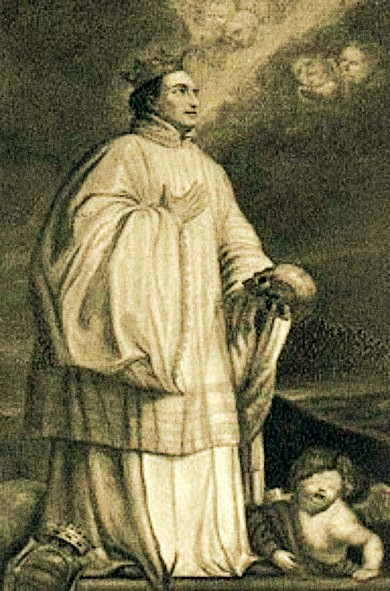
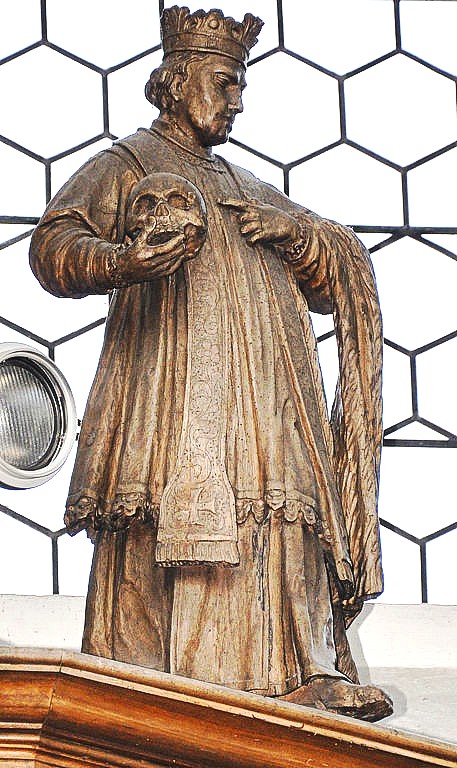
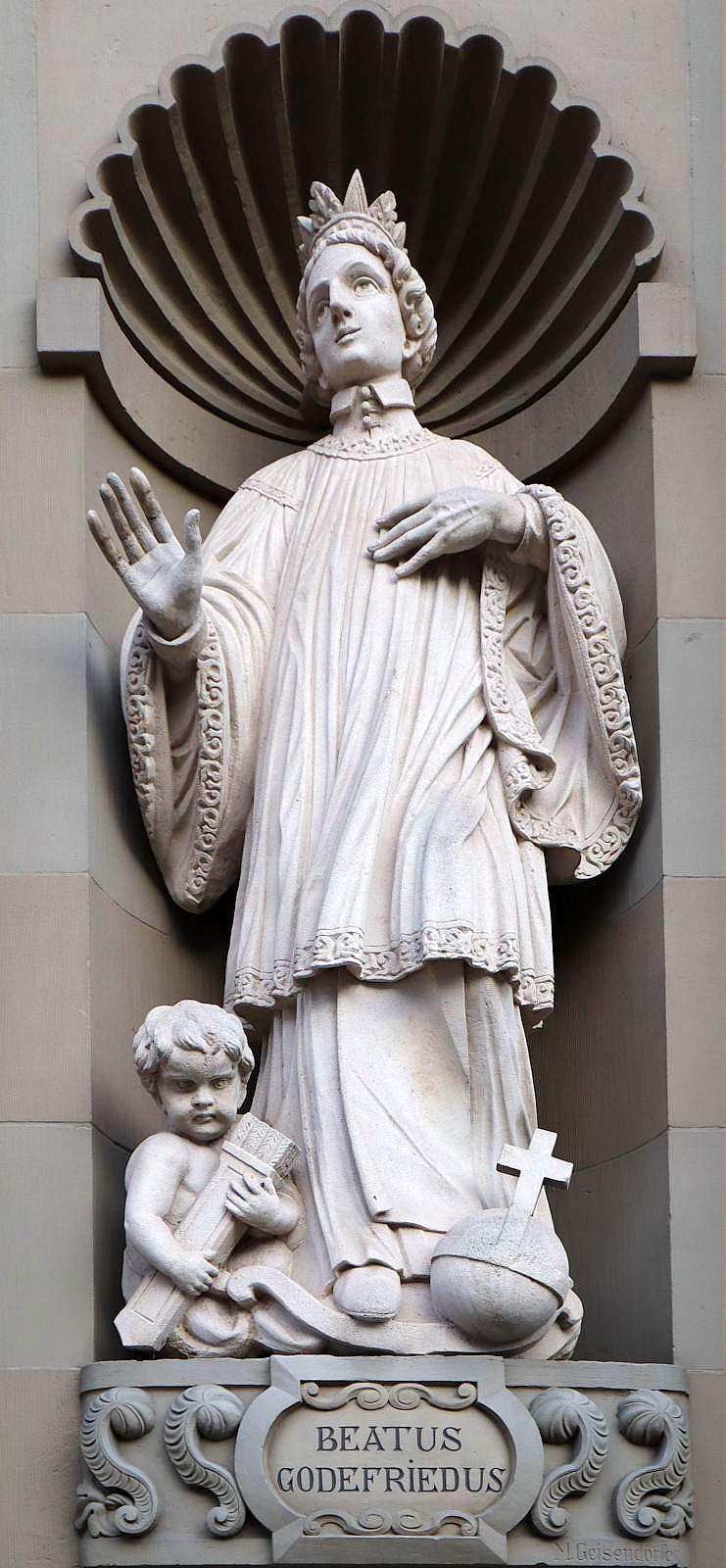
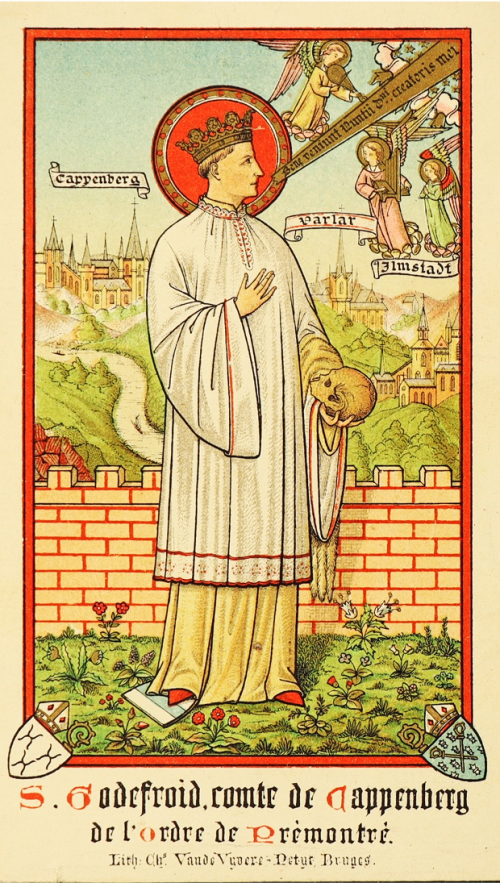
Saint of the Day – 14 January – St Godfrey of Cappenberg (c 1097-1127) Friar of the Order of St Norbert (the Premonstratensians or Norbertines), Husband and Father, Monk and Founder of Monasteries, Apostle of the Sick and the poor. Born in c 1097 at Cappenberg Castle, Westphalia, Germany and died on 13 January 1127 at the Abbey of Ilbenstadt, Germany of natural causes. Also known as – Godfrey of Ilbenstadt, Godfrey of Kappenberg. Gaufrid, Geoffrey, Geoffroy, Geofroi, Gioffredo, Godefrid, Godefridus, Godefroid, Godfrey, Goffredo, Goffrey, Gofrido, Gotfrid, Gothofred, Gottfrid, Gottfried, Jeffrey.
Godfrey was born into the wealth and prestige of the Counts of Cappenberg. In his early adulthood he played an active role in supporting the cause of the Roman Pontiff against Emperor Henry IV. In 1121 he encountered St. Norbert at Cologne and was so struck by his lifestyle and preaching that he immediately made plans to give away all his possessions and enter the infant Norbertine Order.
Together with his brother Otto and his wife Judith, he handed over Cappenberg Castle to St Norbert on 31 May 1122, thus establishing the first foundation of the Order in Germany. Both Otto and Judith followed Godfrey’s example and embraced the religious life of the new Order. The further donation of his estates at Varlar and Ilbenstadt to St. Norbert caused an uproar among the local nobility who viewed it as a threat to their established aristocracy. Under the leadership of Godfrey’s hostile father-in-law, Frederick of Arnsberg, an unsuccessful military assault was made upon the new Monastery at Cappenberg.
Through all of these trials Godfrey remained steadfast in his desire to be a Norbertine. When things calmed down, Godfrey received the Habit from the hand of St Norbert, himself.
Godfrey especially loved to care for the poor and sick in the hospital attached to the Abbey. St Norbert wanted to have him by his side at Magdeburg but Godfrey felt out of place in the noisy northern metropolis and was granted permission to return to Cappenberg. It was on his way back to Mount. Cappenberg that Godfrey fell ill at Ilbenstadt. Surrounded by his brethren and his brother Otto, he made peace with them all: “My brothers, through love for the Order, through zeal for the glory of God, I have occasionally reprimanded some of you a bit too harshly. I beg pardon from you now.” Moments later, seeing a vision of Angels, Godfrey exclaimed, “How beautiful! How beautiful! The Messengers of my Creator and God have finally come!” With that he fell asleep in the Lord. It was 13 January 1127.
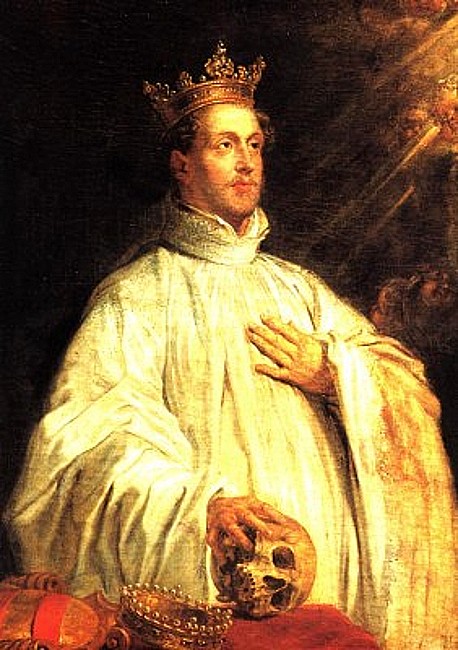
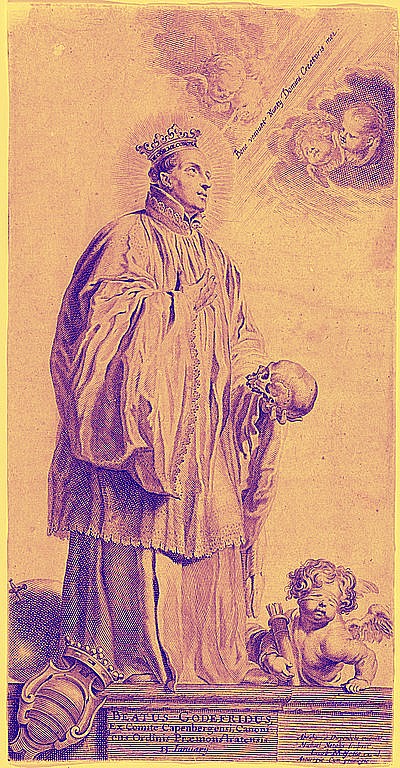
Godfrey is pictured with the crown of nobility which he rejected for the sake of Christ’s Kingdom, with the skull of penitence recalling his severe trials and with one of the poorest of the poor, whom he loved to serve so much. St Godfrey’s relics are enshrined in the Churches in Ilbenstadt and Cappenberg, Germany.
Generous God, You raise up in the Church, men and women who out of love for You, are willing to follow in poverty the poverty of the poor Christ. Out of their abundance, others are cared for in their need. We honour in prayer and praise, he example of Godfrey of Cappenberg who, in spite of even violent opposition, gave to Saint Norbert his home as a new community and who himself, became a faithful disciple of that man of God. Inspired by his openness of heart and hands, lead us to build up the Body of Christ by our generous response to the Gospel. We ask this in the name of Jesus Christ in the communion of the Holy Spirit this day and forever and ever. Amen
Bl Amadeus of Clermont St Barbasymas St Caldeoldus of Vienne St Datius of Milan Bl Devasahayam Pillai St Engelmaro St Eufrasio of Clermont St Euphrasius the Martyr
St Felix of Rome St Fermin of Mende St Glycerius of Antioch St Godfrey of Cappenberg (c 1097-1127) Monk St Isaias the Martyr St Jesaja of Sinai St Macrina the Elder St Nino of Georgia Bl Odoric of Pordenone
St Potitus Bl Rainer of Arnsberg St Sabas of Sinai St Sava of Serbia St Successus of Africa St Theodolus of Sinai Bl William de Sanjulia
Martyrs of Mount Sinai: A group of Monks on Mount Sinai who were Martyred by desert Bedouins. Their names and exact number have not come down to us. Martyred by Bedouins.
Martyrs of Raithu – 43 saints: A group of 43 Monks in the Raithu Desert near Mount Sinai, Palestine, near the Red Sea. They were Martyred for their faith by desert Bedouins. Their names have not come down to us. Martyred by Bedouins.
Thought for the Day – 13 January – Meditations with Antonio Cardinal Bacci (1881-1971)
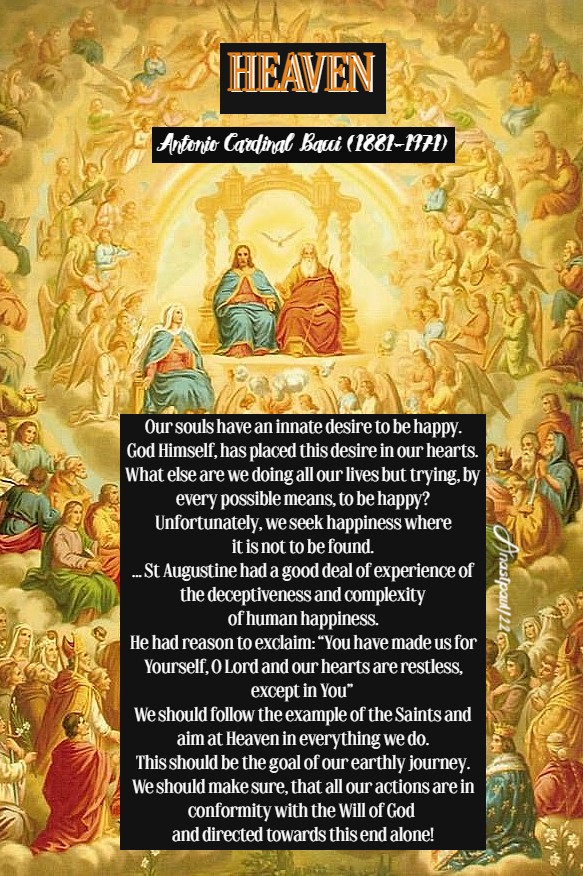
Heaven
“Our souls have an innate desire to be happy. God Himself, has placed this desire in our hearts. What else are we doing all our lives but trying, by every possible means, to be happy? Unfortunately, we seek happiness where it is not to be found. Some seek it in material gain, others in honours, others in pleasure. But our hearts are much wider than the riches and honours and pleasures of this world! In comparison with the riches of the human spirit, worldly wealth is a very insignificant thing. Worldly honours are shadows which pass. As The Imitation of Christ reminds us, we are what we are before God, not what we appear to be before men (Bk III Ch 50:81). Pleasure also passes quickly and when it is immoderate, it leaves in our hearts, a sense of emptiness and disgust. St Augustine had a good deal of experience of the deceptiveness and complexity of human happiness. He had reason to exclaim: “You have made us for Yourself, O Lord and our hearts are restless, except in You” (Confessions, I, 1:1). We should follow the example of the Saints and aim at Heaven in everything we do. This should be the goal of our earthly journey. We should make sure, that all our actions are in conformity with the Will of God and directed towards this end alone!”
Quote/s of the Day – 13 January – The Octave Day of the Epiphany, Gospel: Isaias 60:1-6; John 1:29-34
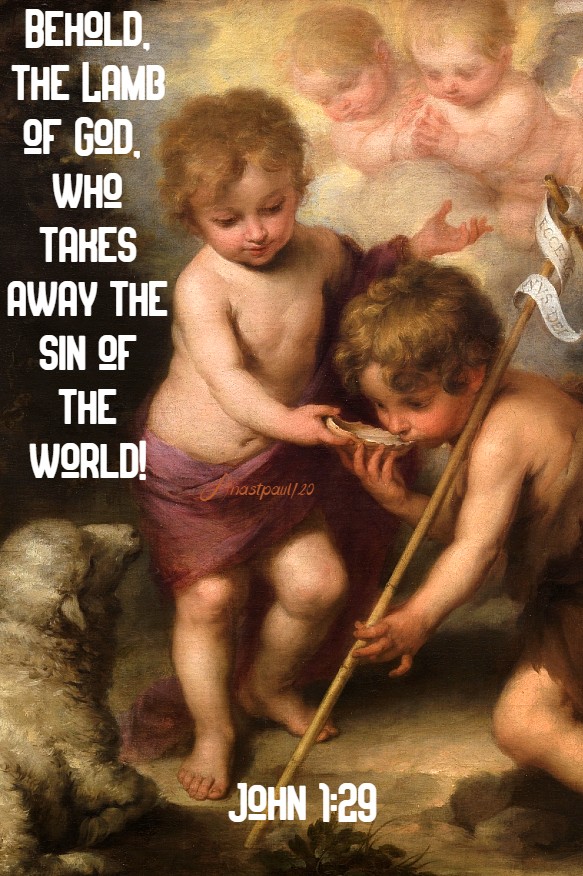
“Behold, the Lamb of God, who takes away the sin of the world!”
John 1:29
“And I knew him not but he who sent me to baptise with water said to me: He upon whom thou shalt see the Spirit descending and remaining upon him, he it is, who baptises with the Holy Spirit. And I saw and I gave testimony, that this is the Son of God.”
John 1:33-34
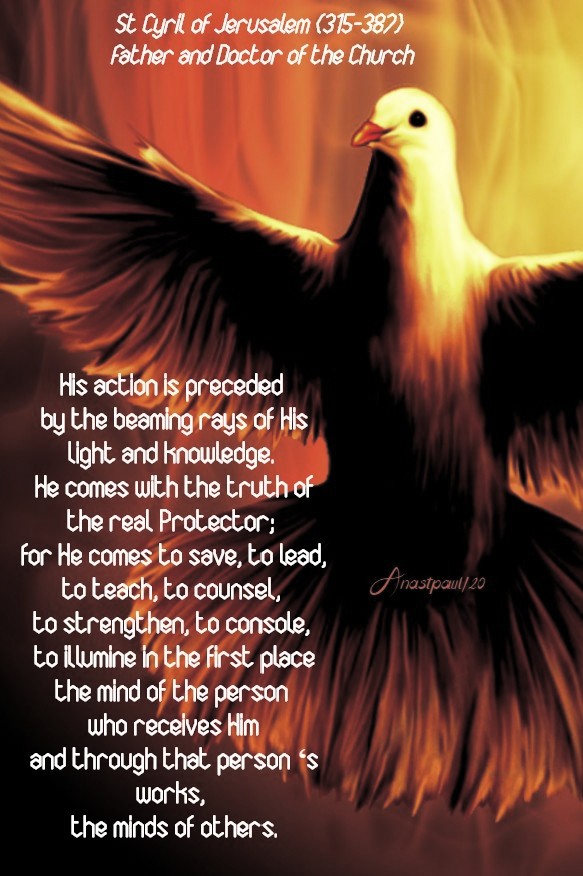
“His action is preceded by the beaming rays of His light and knowledge. He comes with the truth of the real Protector; for He comes to save, to lead, to teach, to counsel, to strengthen, to console, to illumine in the first place the mind of the person who receives Him and through that person‘s works, the minds of others.”
St Cyril of Jerusalem (315-387) Father and Doctor of the Church
“Christ was born of the Holy Spirit and, since it was fitting, that He should fulfill all justice, He entered into the waters of baptism to sanctify them. When He left the Jordan, He was filled with the Holy Spirit, Who had descended upon Him, in the form of a dove. As the Evangelist tells us: Jesus, full of the Holy Spirit, returned from the Jordan.”
One Minute Reflection – 13 January – “Month of the Most Holy Name of Jesus” – The Octave Day of the Epiphany, Gospel: Isaias 60:1-6; John 1:29-34
“Behold, the Lamb of God, who takes away the sin of the world” – John 1:29
REFLECTION – “A second time,” says the evangelist, “John stood and said: ‘Behold, the Lamb of God’.” Christ utters no word; John the Forerunner says it all. So, it is with a bridegroom: he does not say anything to the bride to begin with but steps forward and stands there in silence. Others present him to the bride and give her into his hands. Thus, when she appears, the bridegroom does not take her himself but receives her from the hands of another, who gives her to him. And when he has thus received her from another, he binds her so strongly to himself, that she no longer remembers those she has left for his sake. So it was with Christ. He came to wed human nature; he did not speak a word but merely came. It was the friend of the bridegroom (Jn 3,29), John, who put the Bride’s right hand into His – in other words, the hearts of those He had convinced with His preaching. Then, Jesus Christ welcomed them and satisfied them with so many good things that they no longer turned back to the one who had led them to Him…
John alone proclaimed Him to be present to the people. He was given the name “friend of the Bridegroom” because he alone was present at this marriage with the Church. He it was, who did everything, who brought everything about. Seeing Christ coming, he said: “Behold the Lamb of God.” Thus he showed that it was not by voice alone but, with his eyes also, that he bore witness. He wondered at the Son of God and, when he beheld Him, his heart leaped for joy. At first, he did not preach Christ to his followers but only showed wonder and astonishment at Him. In that way he made known to all, by means of the word “lamb,” the gift Jesus came to give. And John did not say,“ Who is to take” or “Who has taken” but, “This is he who takes away the sins of the world” and, not just at the time of His Passion but always. He offered only one, single sacrifice for the sins of the world yet, by this oblation, He purifies forever, the consciences of human sinners.” – St John Chrysostom (c.345-407), Priest at Antioch then Bishop of Constantinople, Father and Doctor of the Church (Homilies on Saint John’s Gospel, no18).
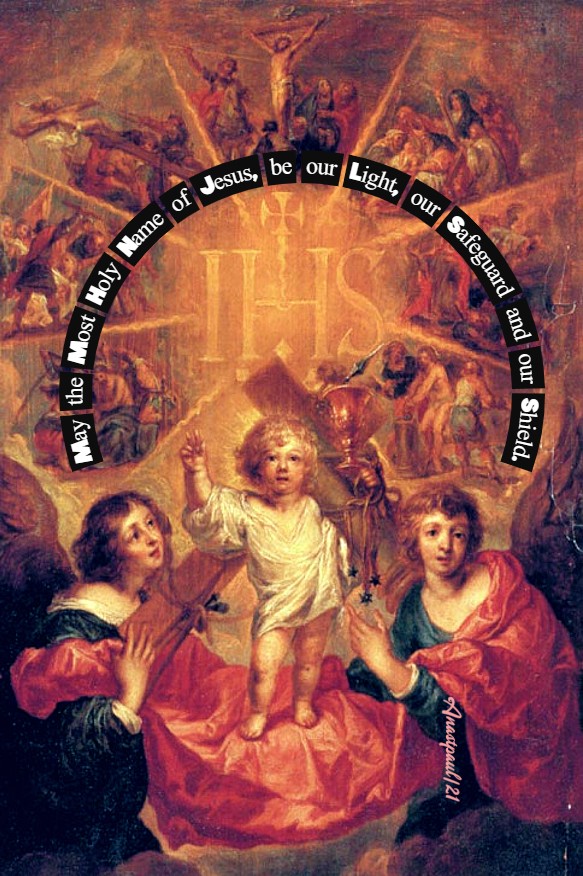
PRAYER – Almighty God, Your Son’s manhood, born of the Virgin, was a new creation, untainted by our sinful condition. Renew us then, in Christ and cleanse us from our sins. May the Most Holy Name of Jesus, be our light, our safeguard and our shield. Through Christ our Lord, in the unity of the Holy Spirit, God for all time and forever, amen.






























 AnaStpaul
You must be logged in to post a comment.