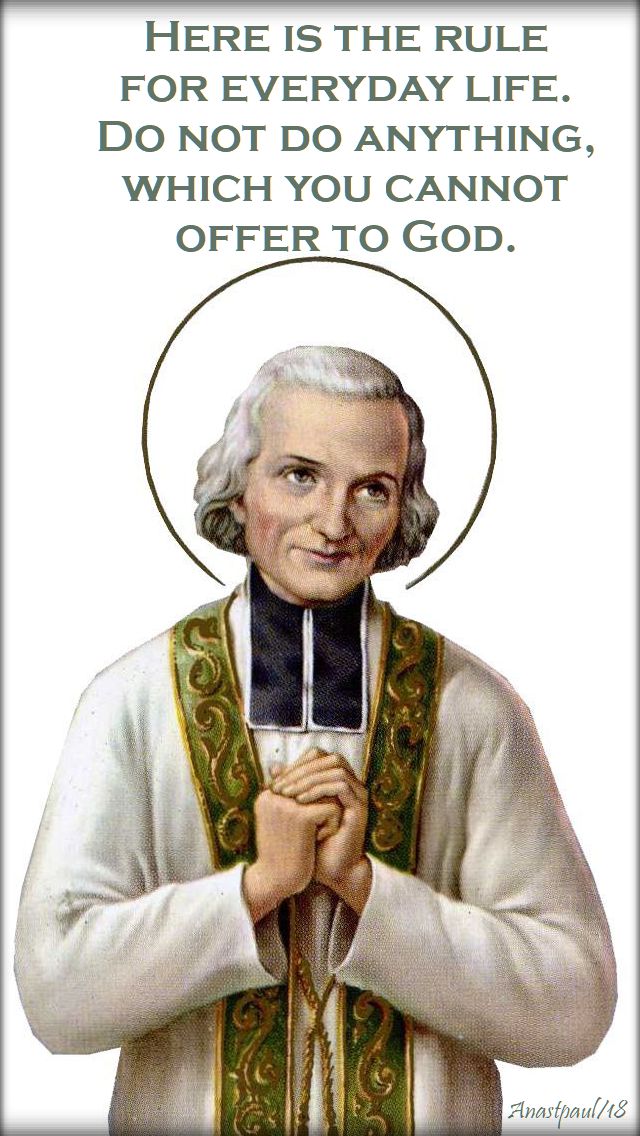
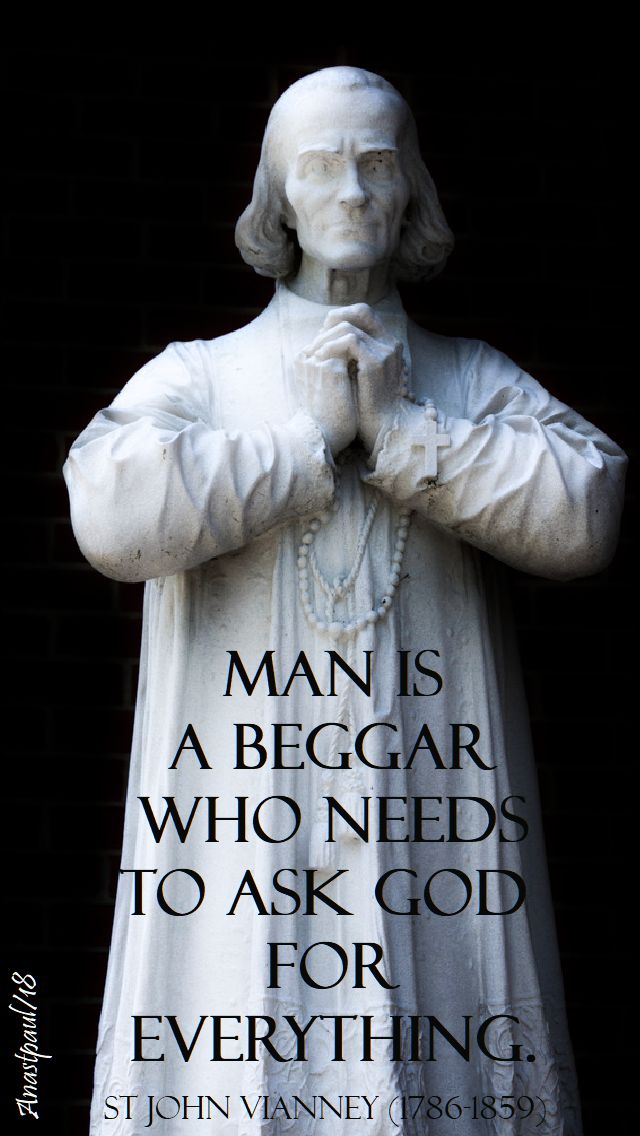
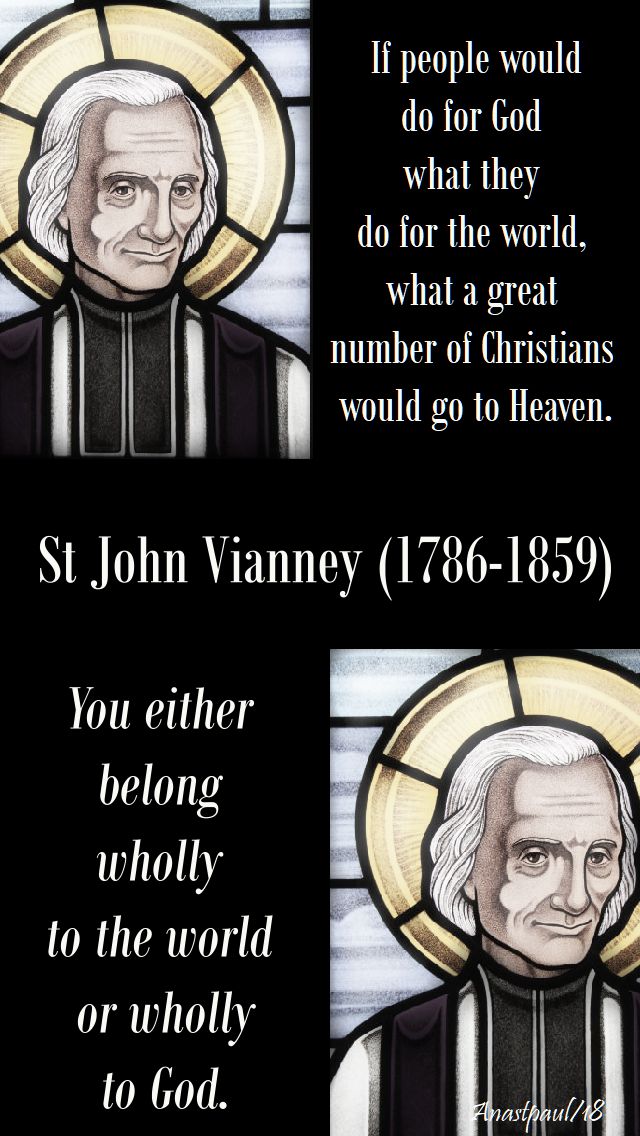
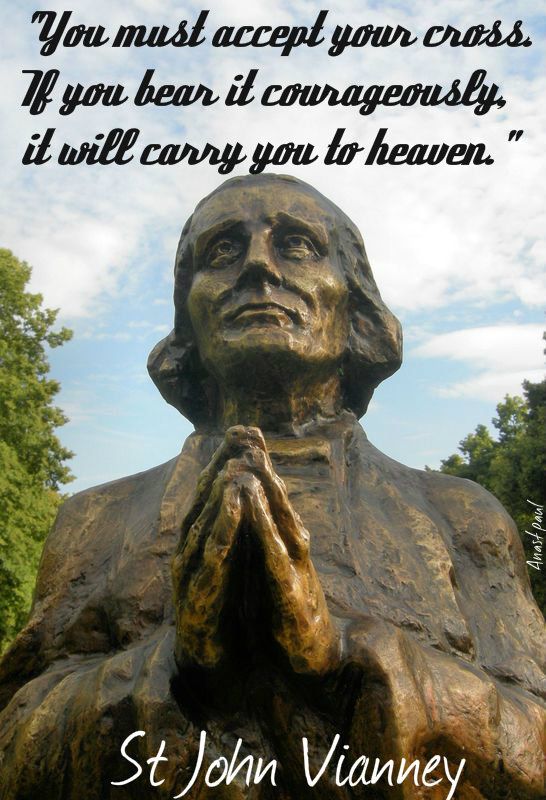
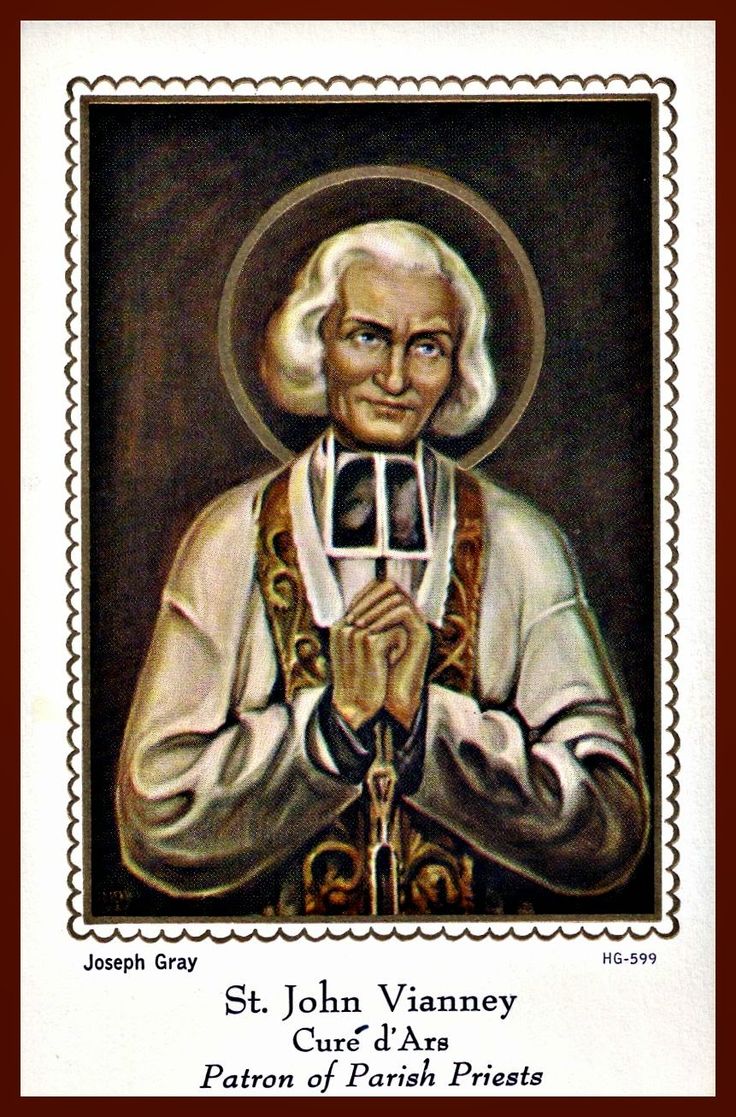
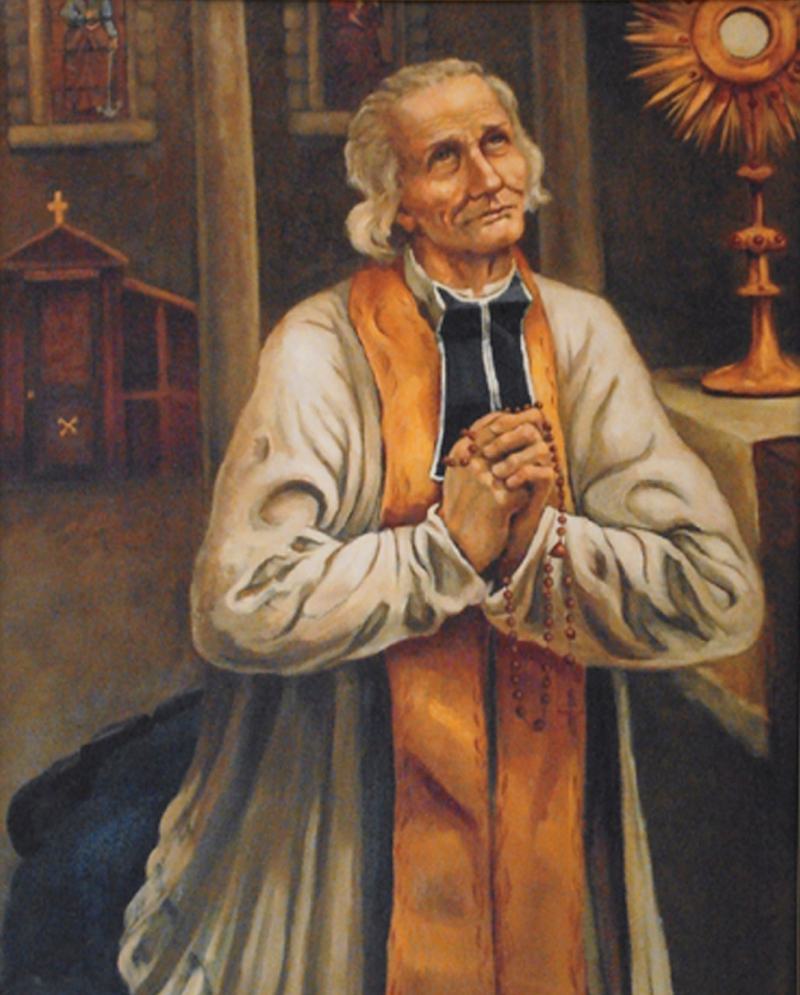
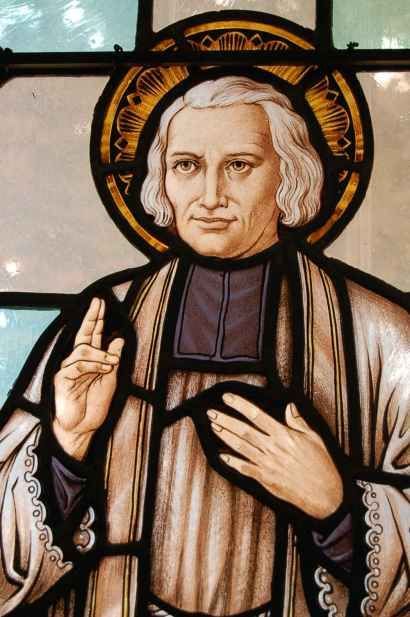
St John Baptist Mary Vianney was born near Lyon, France, on 8th May 1786. Overcoming many difficulties prior to his ordination on 13th Aug 1815, he was thereafter entrusted with the remote parish of Ars, a village of 230 souls. His Bishop had warned him that he would find religious practice there in a sorry state: “There is little love of God in that parish; you will have to be the one to put it there”. As a result, he was deeply aware that he needed to embody Christ’s presence and bear witness to God’s saving mercy: “Lord, grant me the conversion of my parish. I am willing to suffer whatever you wish, for my entire life!” With that prayer he entered upon his mission.
His first biographer tells us that “upon his arrival, he chose the church as his home. He entered the church daily before dawn and did not leave it until after the evening Angelus. There he was to be sought whenever needed”.
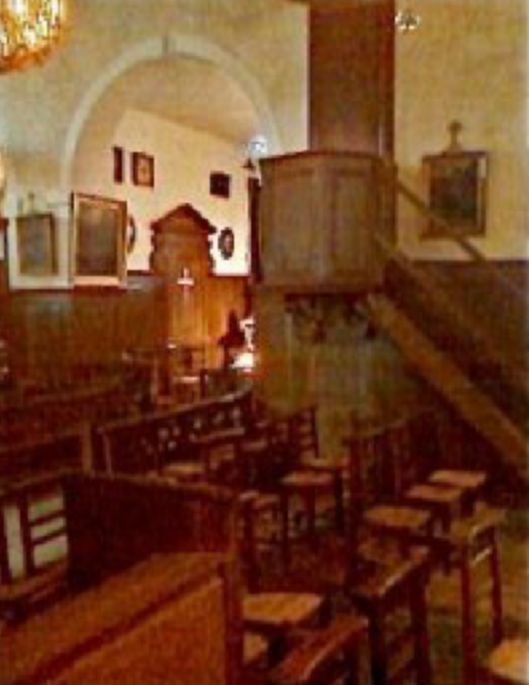
Inside the Old Church where St John Mary Vianney preached and heard confessions
The Curé d’Ars taught his parishioners primarily by the witness of his life. It was from his example that they learned to pray, to visit Jesus frequently in the Tabernacle. “One need not say much to pray well”, he explained to them, “we know that Jesus is there in the Tabernacle. Let us open our hearts to Him, let us rejoice in His sacred presence. That is the best prayer”. And He would urge them: “Come to communion, my brothers and sisters, come to Jesus. Come to live from Him in order to live with Him… Of course you are not worthy of Him but you need Him!”
He regularly visited the sick and families and organised missions and feast day celebrations. He also enlisted lay persons to collaborate in the collection and management of funds for his charitable works, providing also for the education of children. He personally cared for the orphans and teachers of the “Providence”, an institute he founded.
The Curé of Ars was known for his humility, while as a priest he was conscious of being an immense gift to his people. “A good shepherd, a pastor after God’s heart, is the greatest treasure which the good Lord can grant to a parish and one of the most precious gifts of divine mercy”.
Explaining to his parishioners the importance of the Sacraments, he would say: “Without the Sacrament of Holy Orders, we would not have the Lord. Who put him there in that tabernacle? The priest. Who welcomed your soul at the beginning of your life? The priest. Who feeds your soul and gives it strength for its journey? The priest. Who will prepare it to appear before God, bathing it one last time in the blood of Jesus Christ? The priest, always the priest. And if this soul should die as a result of mortal sin, who will raise it up, who will restore its calm and peace? Again, the priest… Only in heaven will he fully realise what he is.”
Those who attended the Masses he celebrated have said that “it was not possible to find a finer example of worship… He gazed upon the Host with immense love”. He was convinced that the fervour of a priest’s life depended entirely upon the Mass, “All good works, taken together, do not equal the sacrifice of the Mass since they are human works, while the Holy Mass is the work of God… The reason why a priest is lax is that he does not pay attention to the Mass! My God, how we ought to pity a priest who celebrates as if he were engaged in something routine!”
“The priest is not a priest for himself, he is a priest for you”
His profound sense of responsibility as a priest was palpable. “Were we to fully realise what a priest is on earth, we would die: not of fright but of love… Without the priest, the passion and death of our Lord would be of no avail. It is the priest who continues the work of redemption on earth… What use would be a house filled with gold, were there no one to open its door? The priest holds the key to the treasures of heaven: it is he who opens the door: he is the steward of the good Lord; the administrator of his goods… Leave a parish for 20 years without a priest and they will end by worshipping the beasts there… The priest is not a priest for himself, he is a priest for you”.
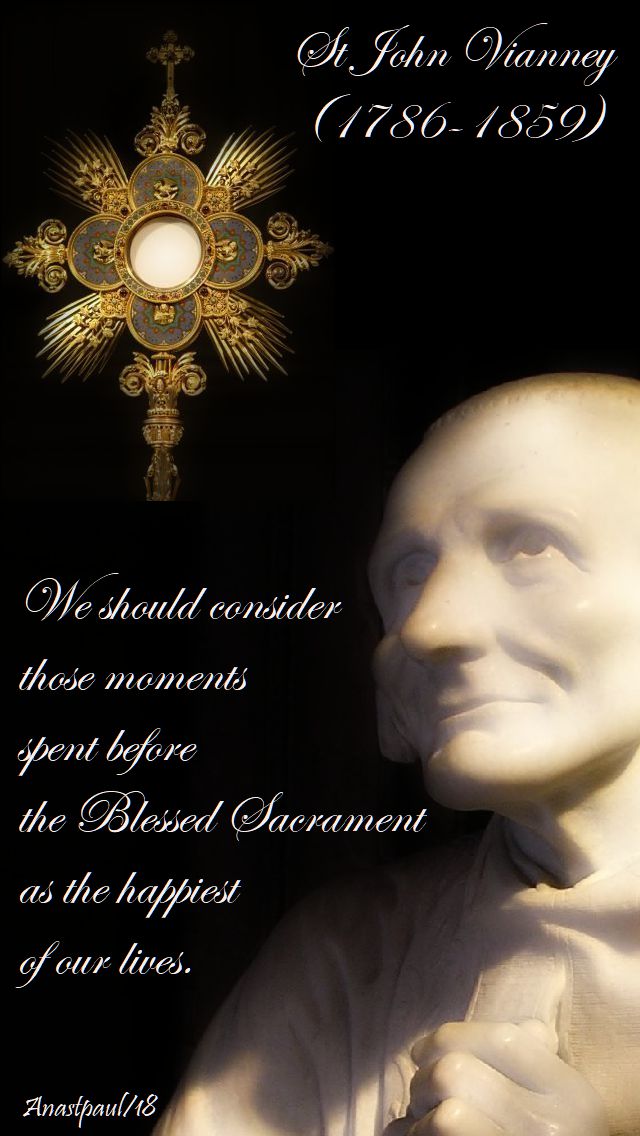
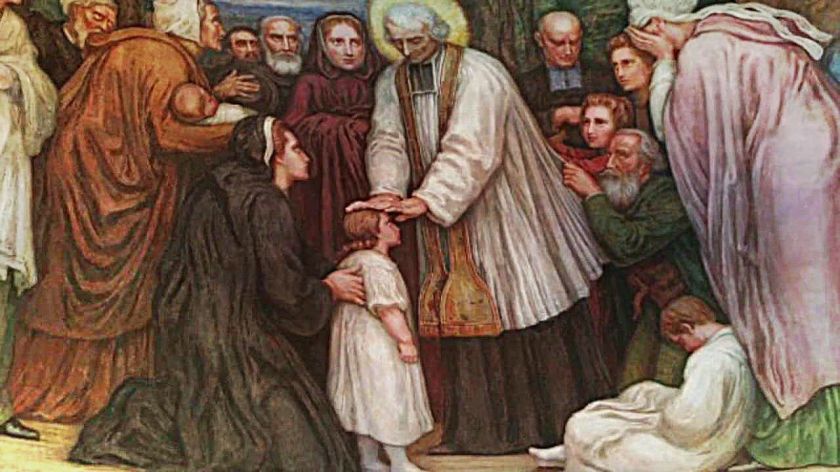
By spending long hours in church before the Tabernacle, he inspired the faithful to imitate him by coming to visit Jesus, knowing that their parish priest would be there, ready to listen and offer forgiveness. Later, the growing numbers of penitents from all over France would keep him in the confessional for up to 16 hours a day. It was said that Ars had become “a great hospital of souls”.
He once explained to a fellow priest his self-imposed mortifications and expiations for those souls whose confessions he heard, “I will tell you my recipe: I give sinners a small penance and the rest I do in their place.” He was moved knowing that souls have been won at the price of Jesus’ own blood and a priest cannot devote himself to their salvation if he refuses to share personally in the precious cost of Christ’s redemption.
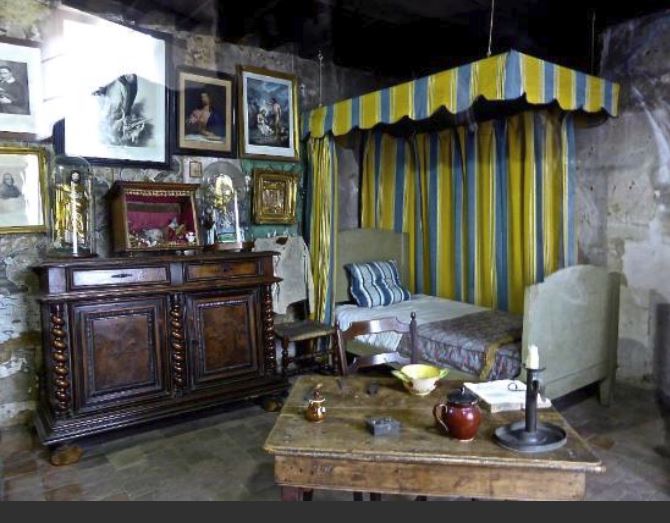
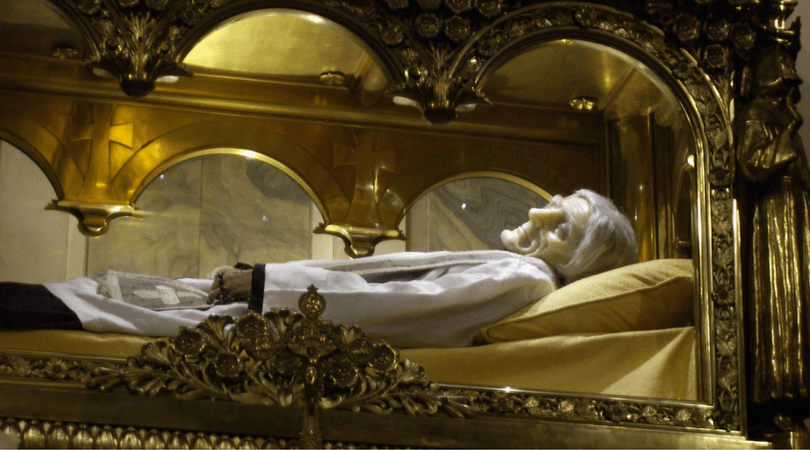
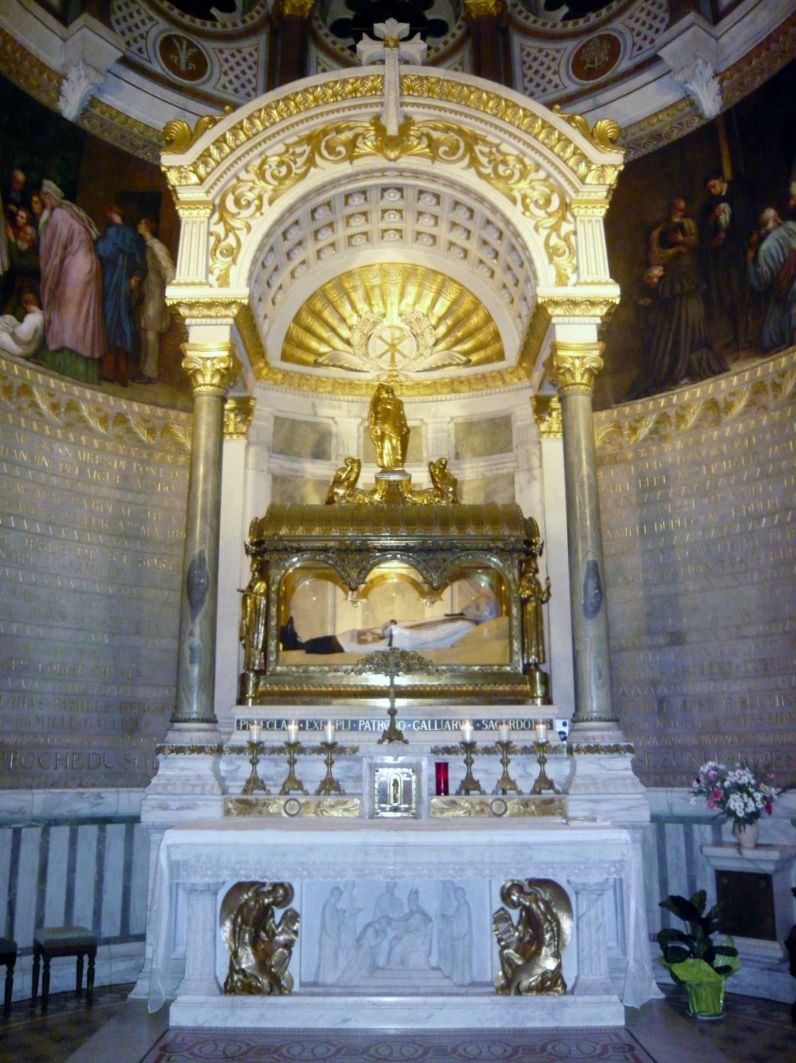
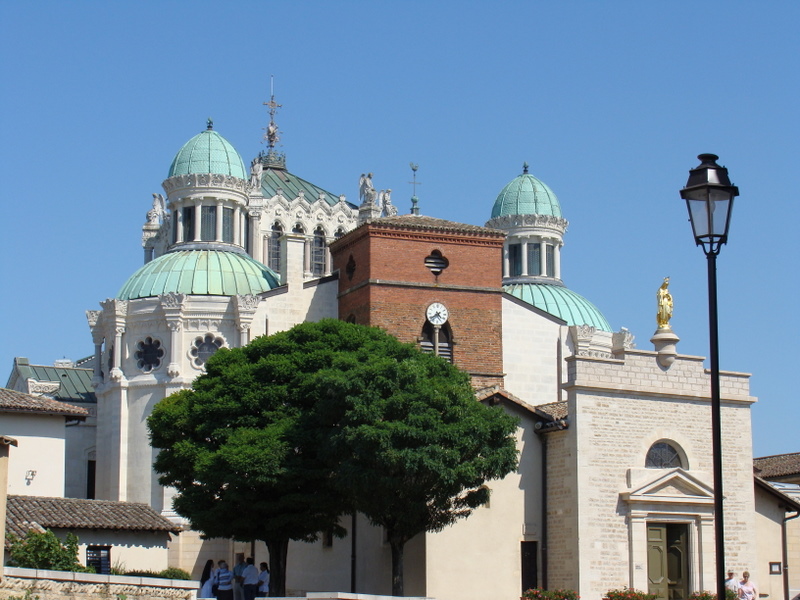
A century after his death, the Shrine of Our Lady of Mercy was built in Ars-sur-Formans, where the relic of the heart of the Saint is venerated in the Chapel of the Heart. His incorrupt body lies at the main altar of the Shrine in a glass reliquary. The Curé’s humble cottage is presently a museum.
St John Vianney’s Bedroom in his house which is now the Museum
Current estimates indicate that over 400,000 pilgrims visit the shrine every year.
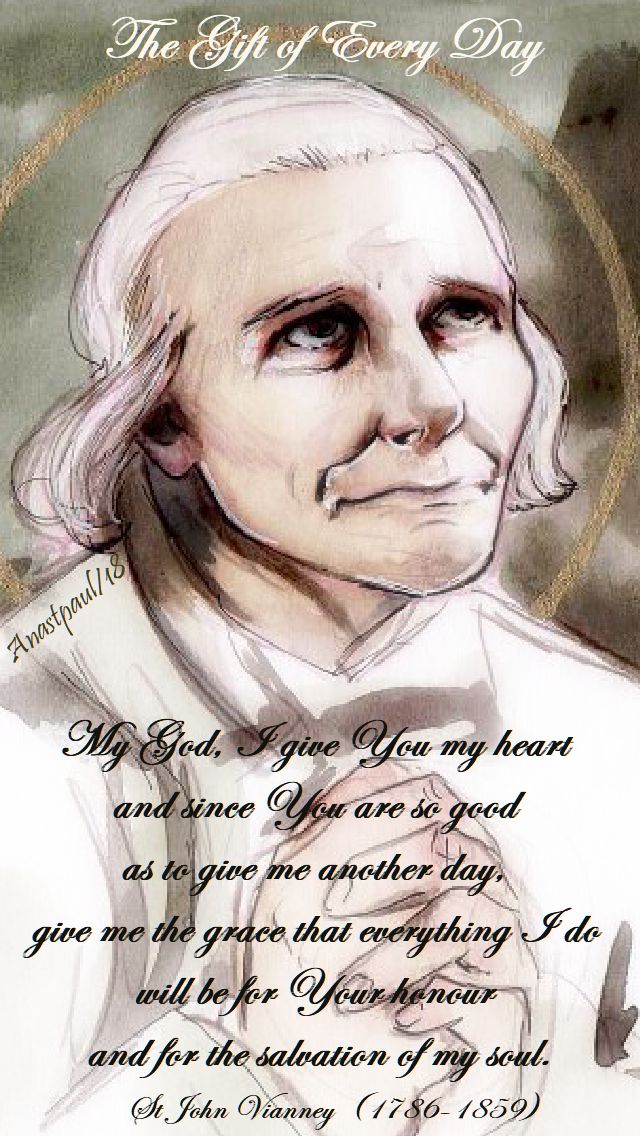
Thought for the Day – 3 August – The Gift of Every Day
THE GIFT OF EVERY DAY
by St John Vianney (1786-1859)
“Before beginning your work, my dear brethren, never fail to make the Sign of the Cross. Do not imitate those people without religion who dare not do this because they are in company. Offer quite simply all your difficulties to God and renew from time to time this offering, for by that means you will have the happiness of drawing down the blessing of Heaven on yourself and on all you do. Just think, my dear brethren, how many acts of virtue you can practice by behaving in this way, without making any change in what you are actually doing.
If you work with the object of pleasing God and obeying His Commandments, which order you to earn your bread by the sweat of your brow, that is an act of obedience. If you want to expiate your sins, you are making an act of penance. If you want to obtain some grace for yourself or for others, it is an act of hope and of charity. Oh, how we could merit Heaven every day, my dear brethren, by doing just our ordinary duties but by doing them for God and the salvation of our souls!
Who stops you, when you hear the chimes striking, from thinking on the shortness of time and of saying in your minds: “Time passes and death comes closer. I am hastening towards eternity. Am I really ready to appear before the tribunal of God? Am I not in a state of sin?”
“My God, I give you my heart and since You are so good as to give me another day, give me the grace that everything I do will be for Your honour and for the salvation of my soul.”
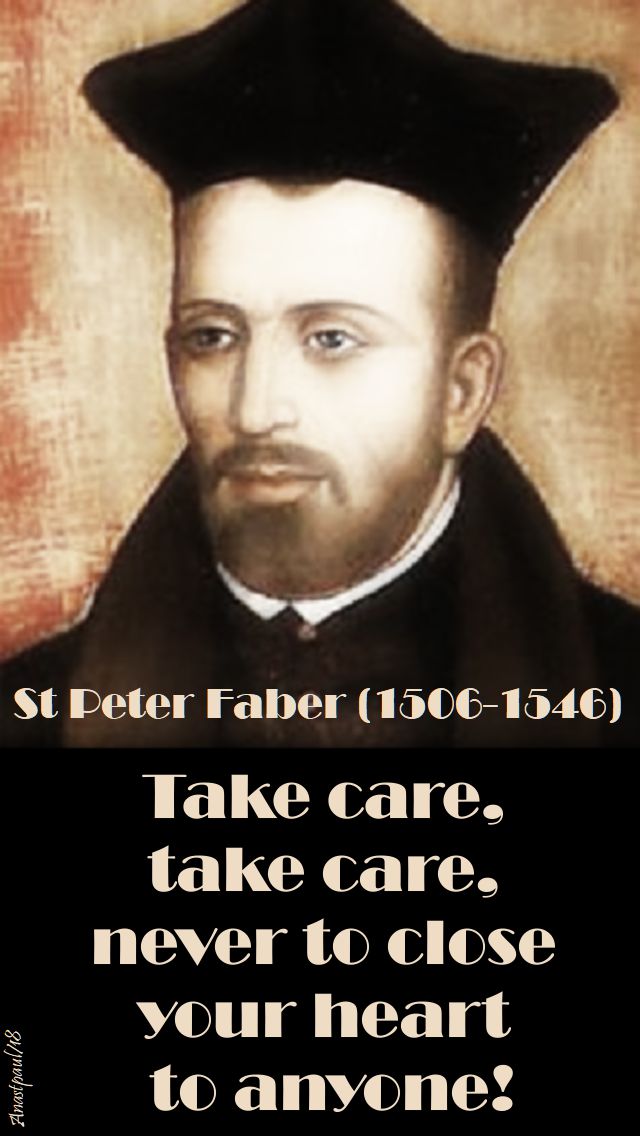
Quote/s of the Day – 2 August – The Memorial of Sts Peter Faber (1506-1546)
and Peter Julian Eymard (1811-1868)
“Take care, take care, never to close your heart to anyone!”
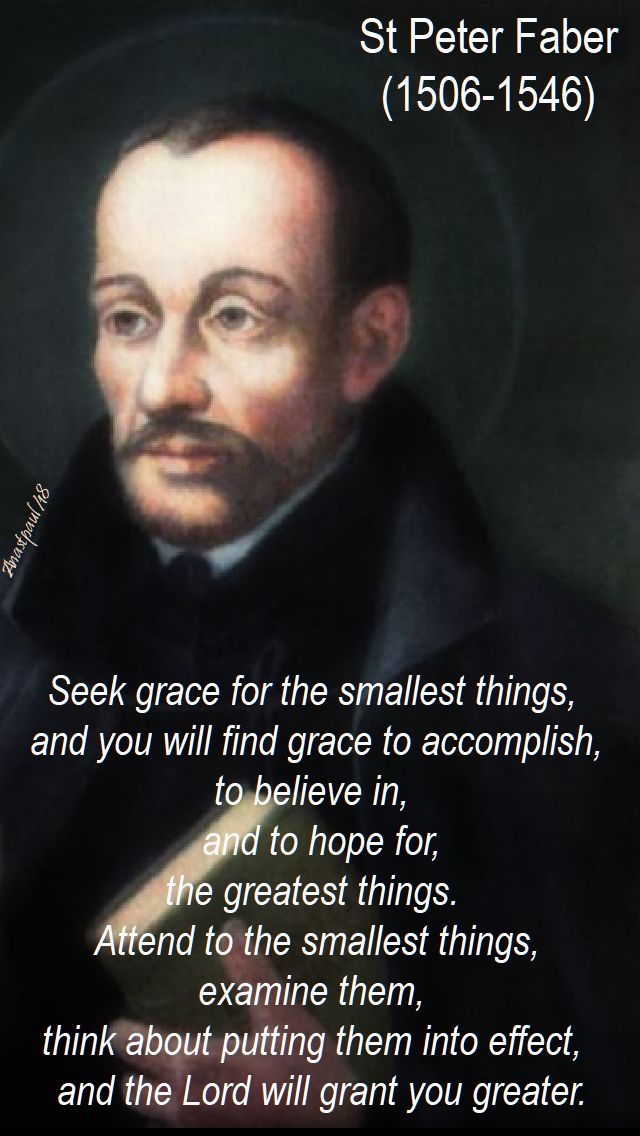
“Seek grace for the smallest things, and you will find grace to accomplish, to believe in, and to hope for, the greatest things. Attend to the smallest things, examine them, think about putting them into effect, and the Lord will grant you greater.”
“To find God in the works, compared to finding Him in prayer, is often like the actual execution, compared to the mere desire.”
St Peter Faber (1506-1546)
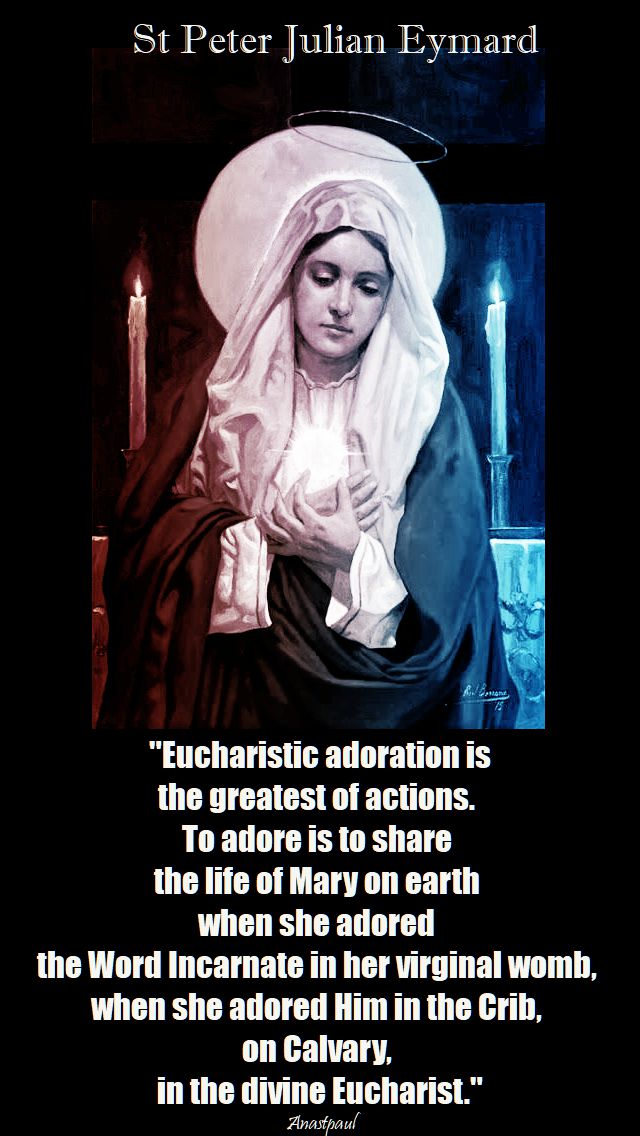
“Eucharistic adoration is the greatest of actions. To adore is to share the life of Mary on earth when she adored the Word Incarnate in her virginal womb, when she adored Him in the Crib, on Calvary, in the divine Eucharist.”
“When we work hard, we must eat well. What a joy, that you can receive Holy Communion often! It’s our life and support in this life – receive Communion often and Jesus will change you into Himself.”
One Minute Reflection – 2 August – The Memorial of St Peter Faber S.J. (1506-1546)
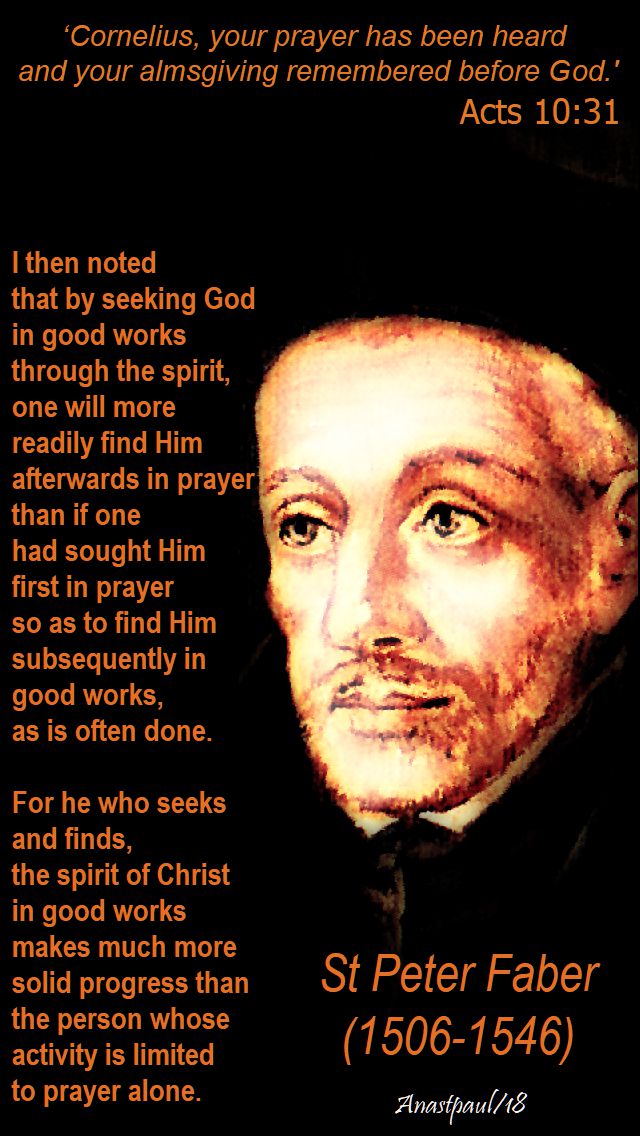
‘Cornelius, your prayer has been heard and your almsgiving remembered before God.’...Acts 10:31
REFLECTION – “I then noted that by seeking God in good works through the spirit, one will more readily find Him afterwards in prayer than if one had sought Him first in prayer so as to find Him subsequently in good works, as is often done. For he who seeks and finds the spirit of Christ in good works makes much more solid progress than the person whose activity is limited to prayer alone.”…St Peter Faber
PRAYER – Lord God, light of the faithful and shepherd of souls, who gave blessed Peter to Your Church, to feed Your flock by his teaching and form them by his example, grant that by his intercession, we may keep the faith which he taught and follow in the way he walked. We make our prayer through Christ our Lord, in union with the Holy Spirit, one God forever, amen.
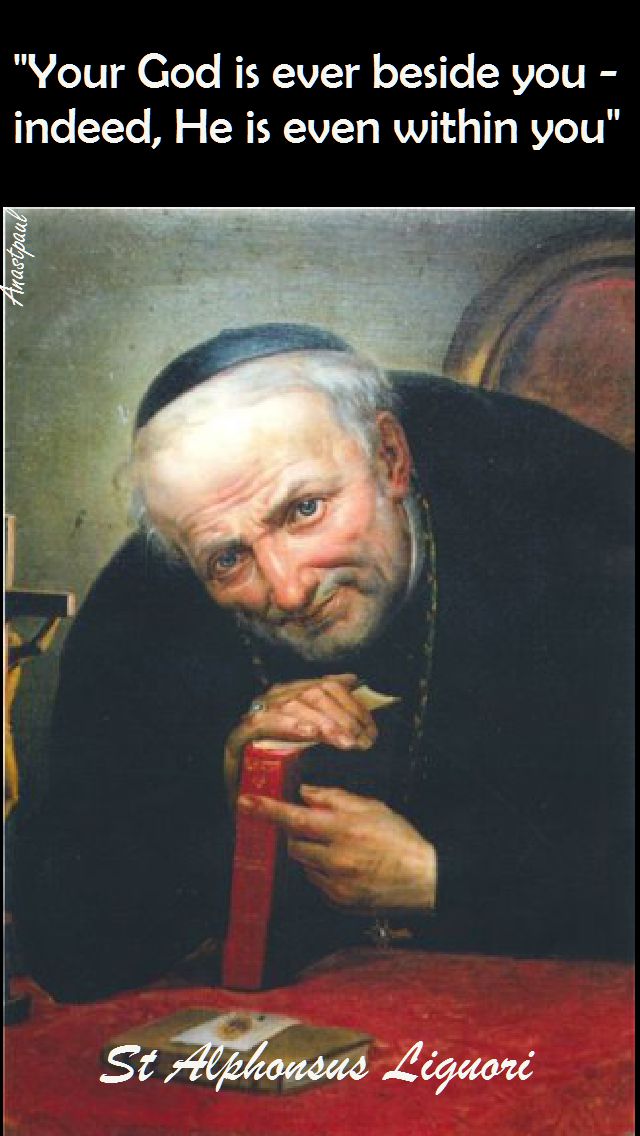
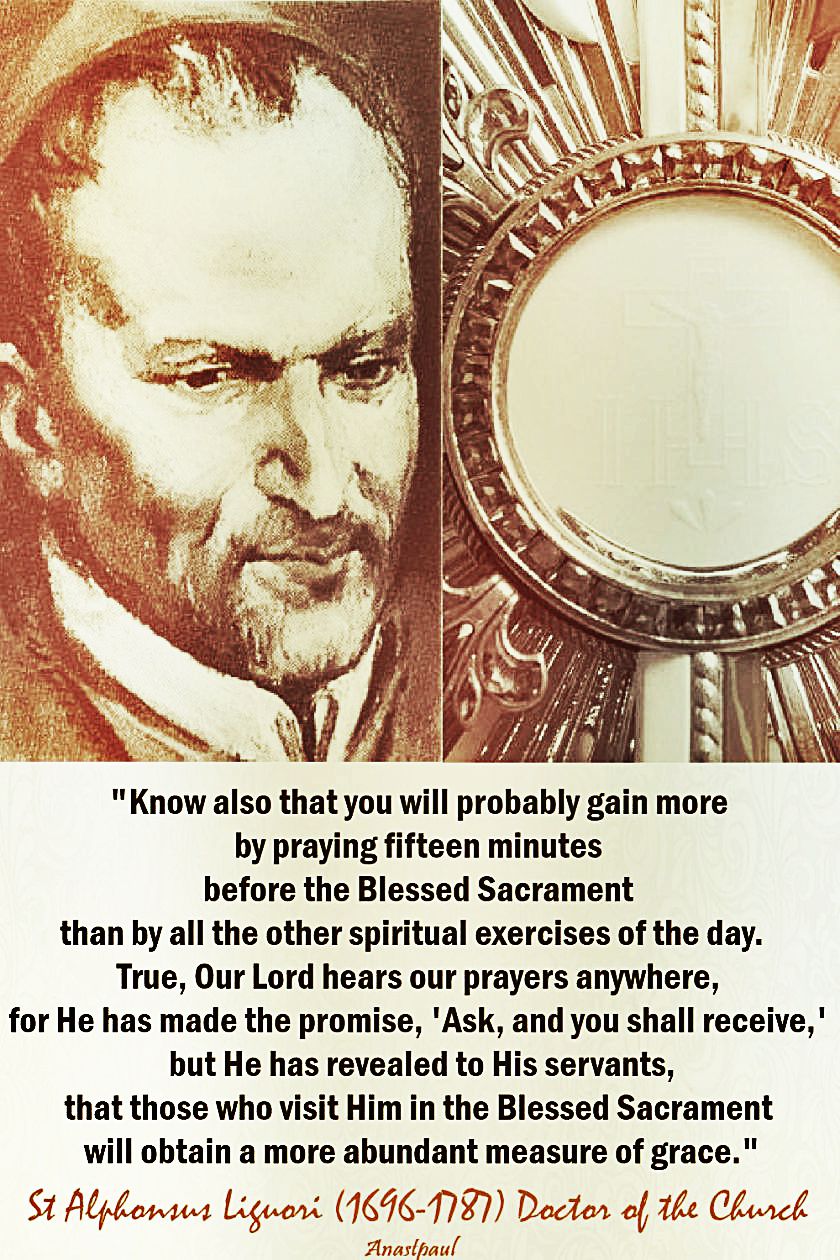
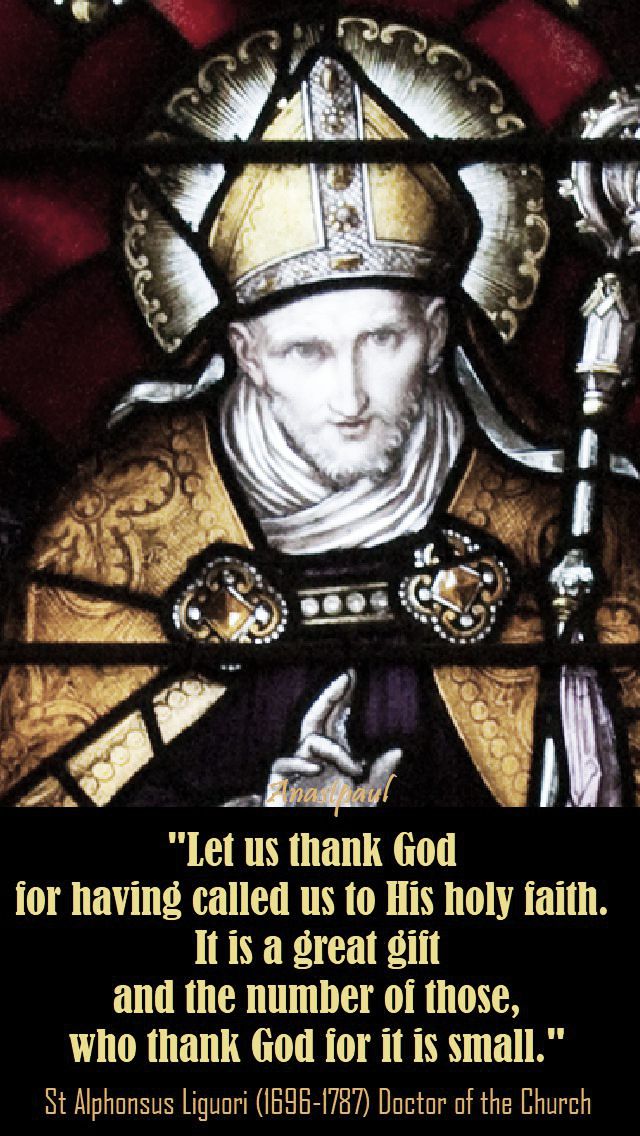
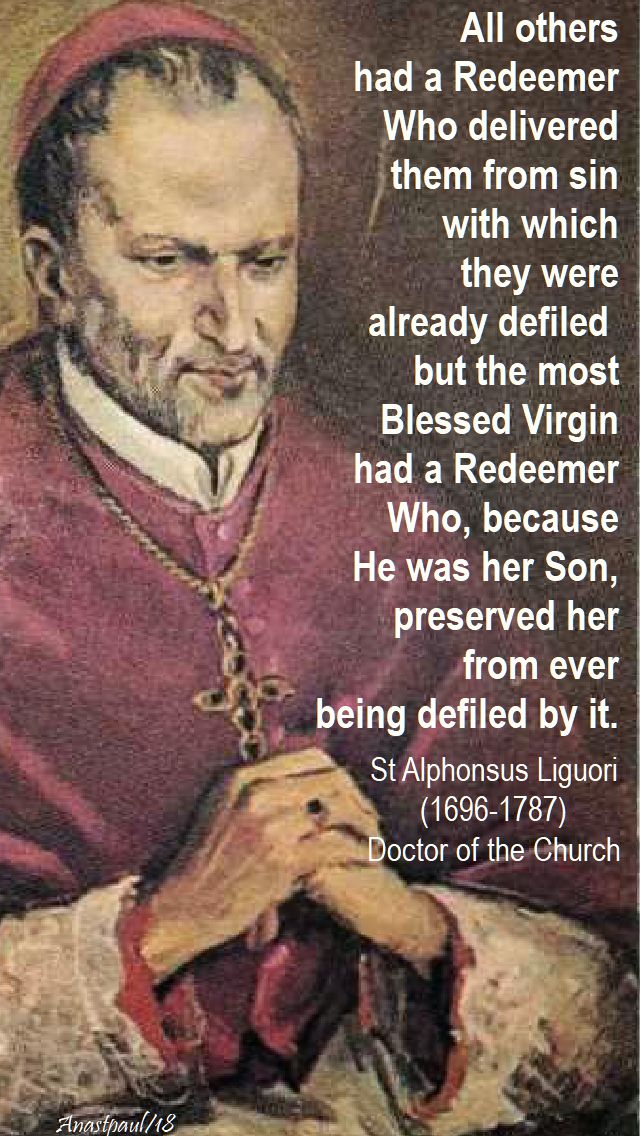
Quote/s of the Day – 1 August – The Memorial of St Alphonsus Liquori (1696-1787) Doctor of the Church
“Your God is ever beside you – indeed, He is even within you.”
“Know also that you will probably gain more by praying fifteen minutes before the Blessed Sacrament than by all the other spiritual exercises of the day. True, Our Lord hears our prayers anywhere, for He has made the promise, ‘Ask, and you shall receive,’ but He has revealed to His servants, that those who visit Him in the Blessed Sacrament will obtain a more abundant measure of grace.”
“St Augustine and St Thomas define mortal sin to be a turning away from God: that is, the turning of one’s back upon God, leaving the Creator for the sake of the creature. What punishment would that subject deserve who, while his king was giving him a command, contemptuously turned his back upon him to go and transgress his orders? This is what the sinner does; and this is punished in hell with the pain of loss, that is, the loss of God, a punishment richly deserved by him who in this life turns his back upon his sovereign good.”
“Let us thank God for having called us to His holy faith. It is a great gift and the number of those, who thank God for it is small.”
“All others had a Redeemer Who delivered them from sin with which they were already defiled but that the most Blessed Virgin had a Redeemer Who, because He was her Son, preserved her from ever being defiled by it. “
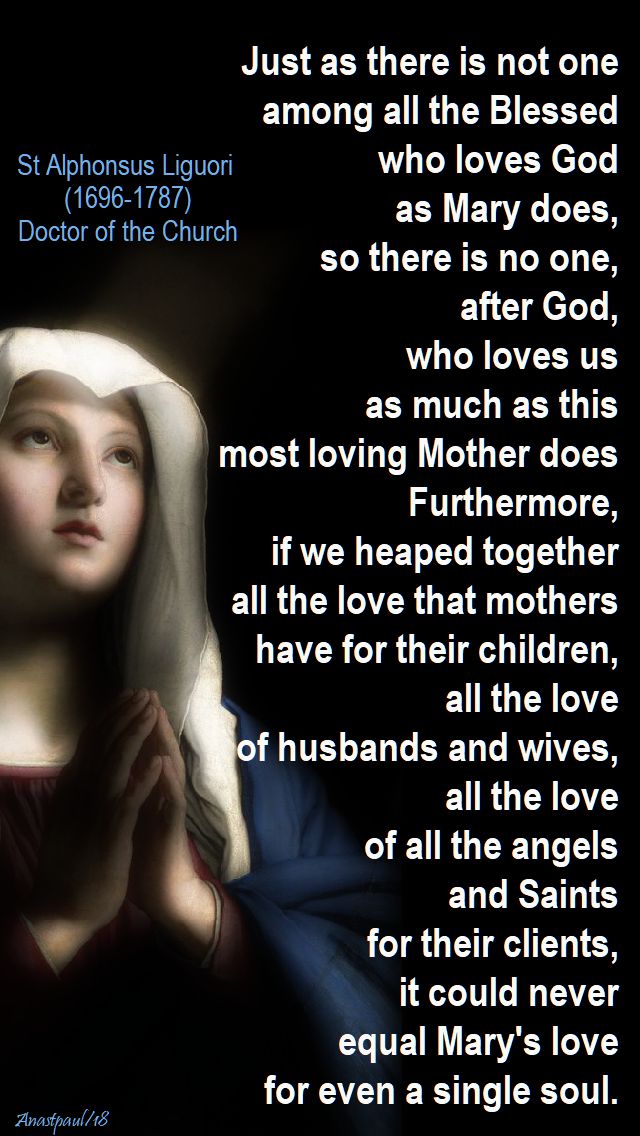
“Just as there is not one among all the Blessed who loves God as Mary does, so there is no one, after God, who loves us as much as this most loving Mother does. Furthermore, if we heaped together all the love that mothers have for their children, all the love of husbands and wives, all the love of all the angels and Saints for their clients, it could never equal Mary’s love for even a single soul.”
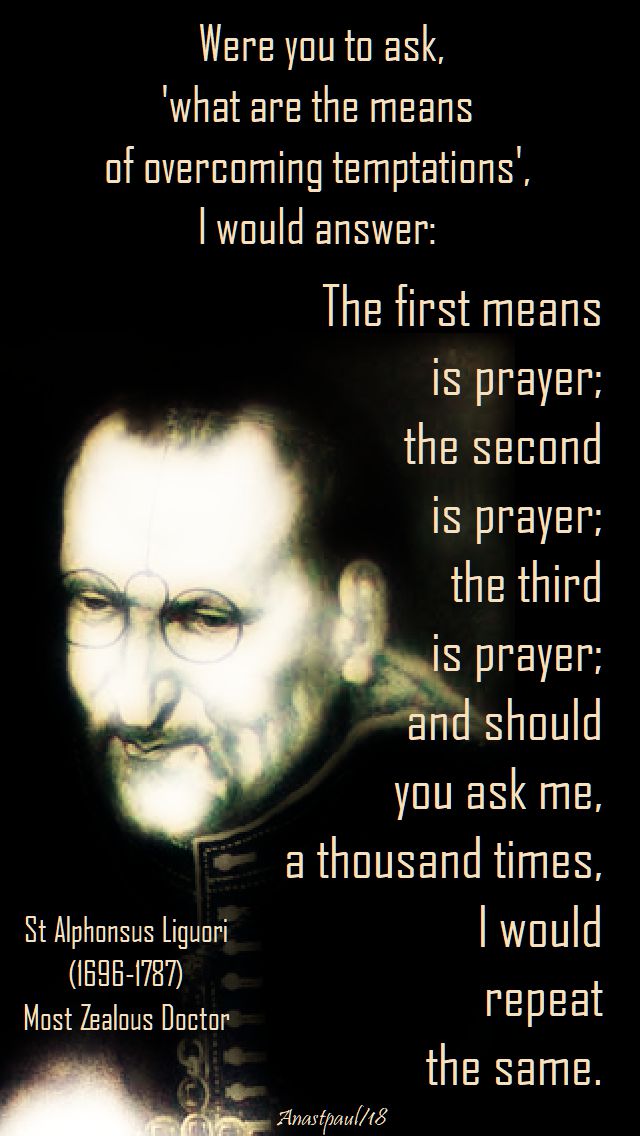
“Were you to ask, ‘what are the mans of overcoming temptations’, I would answer:
the first means is prayer; the second is prayer; the third is prayer and should you ask me a thousand times, I would repeat the same.”
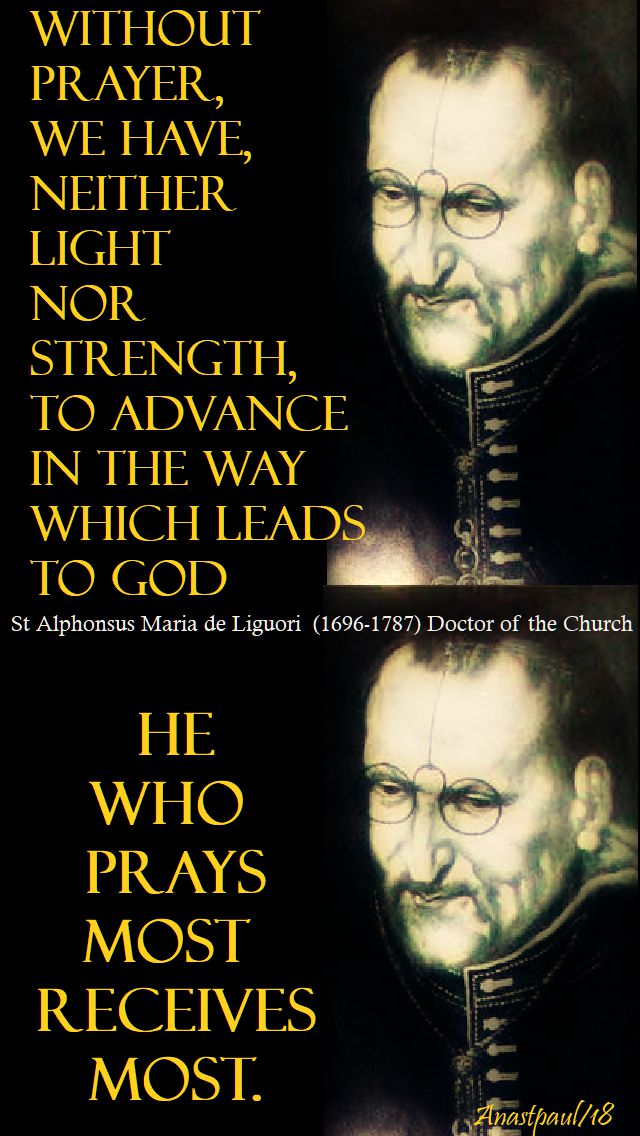
“Without prayer, we have neither light nor strength, to advance in the way which leads to God.”
“He who prays most receives most.”
St Alphonsus Liguori (1696-1787) Doctor of the Church
Pope Francis honours Ignatius, calls us to more faithful life in Christ
Pope Francis’ Homily on the feast of St Ignatius 2013 – Wednesday, 31 July 2013
“In this Eucharist in which we celebrate our Father Ignatius of Loyola, in light of the Readings we have heard, I would like to propose three simple thoughts guided by three expressions: to put Christ and the Church in the centre; to allow ourselves to be conquered by Him in order to serve; to feel the shame of our limitations and our sins, in order to be humble before Him and before the brothers.
The emblem of us Jesuits is a monogram, the acronym of “Jesus, the Saviour of Mankind” (IHS). Every one of you can tell me – we know that very well! But this crest continually reminds us of a reality that we must never forget – the centrality of Christ for each one of us and for the whole Company, the Company that Saint Ignatius wanted to name “of Jesus” to indicate the point of reference.
Moreover, even at the beginning of the Spiritual Exercises he places our Lord Jesus Christ, our Creator and Saviour (Spiritual Exercises, 6) in front of us. And this leads all of us Jesuits and the whole Company, to be “decentred,” to have “Christ more and more” before us, the “Deus semper maior”, the “intimior intimo meo”, that leads us continually outside ourselves, that brings us to a certain kenosis, a “going beyond our own loves, desires, and interests” (Sp. Ex., 189).
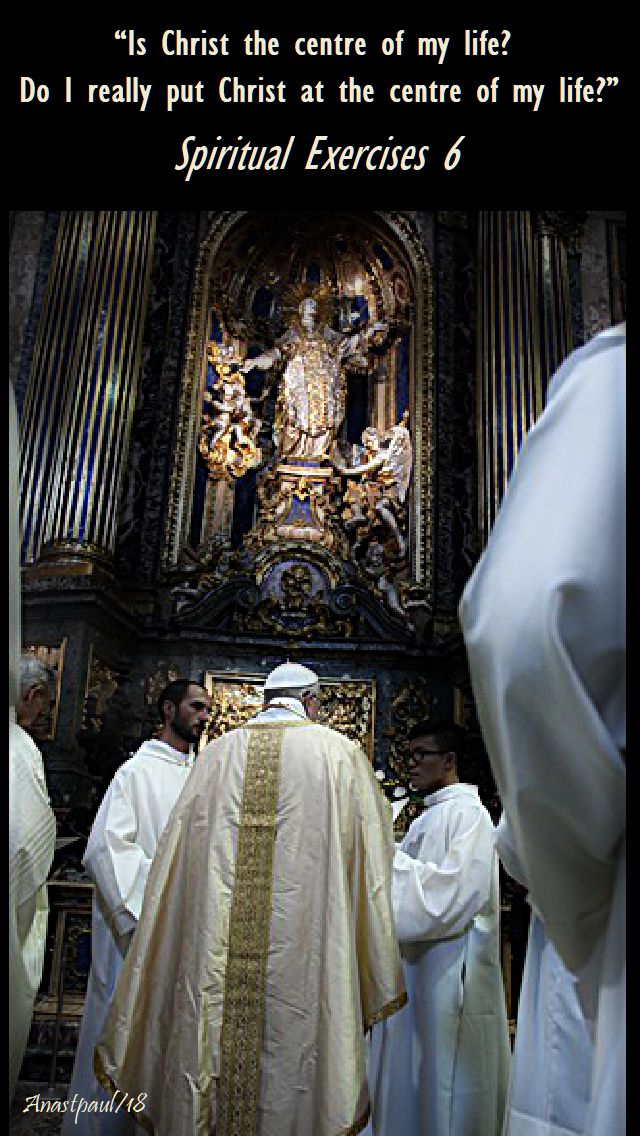
Isn’t it obvious, the question for us? For all of us? “Is Christ the centre of my life? Do I really put Christ at the centre of my life?” Because there is always the temptation to want to put ourselves in the centre. And when a Jesuit puts himself and not Christ in the centre, he goes astray.
In the first Reading, Moses forcefully calls upon the people to love the Lord, to walk in His ways, “because He is your life” (cf. Deut. 30, 16-20). Christ is our life! The centrality of Christ corresponds also to the centrality of the Church: they are two flames that cannot be separated: I cannot follow Christ except in and with the Church. And even in this case we Jesuits and the whole Company, are not at the centre, we are, so to speak, “displaced”, we are at the service of Christ and of the Church, the Bride of Christ our Lord, who is our Holy Mother Hierarchical Church (cf. Sp. Ex. 353).
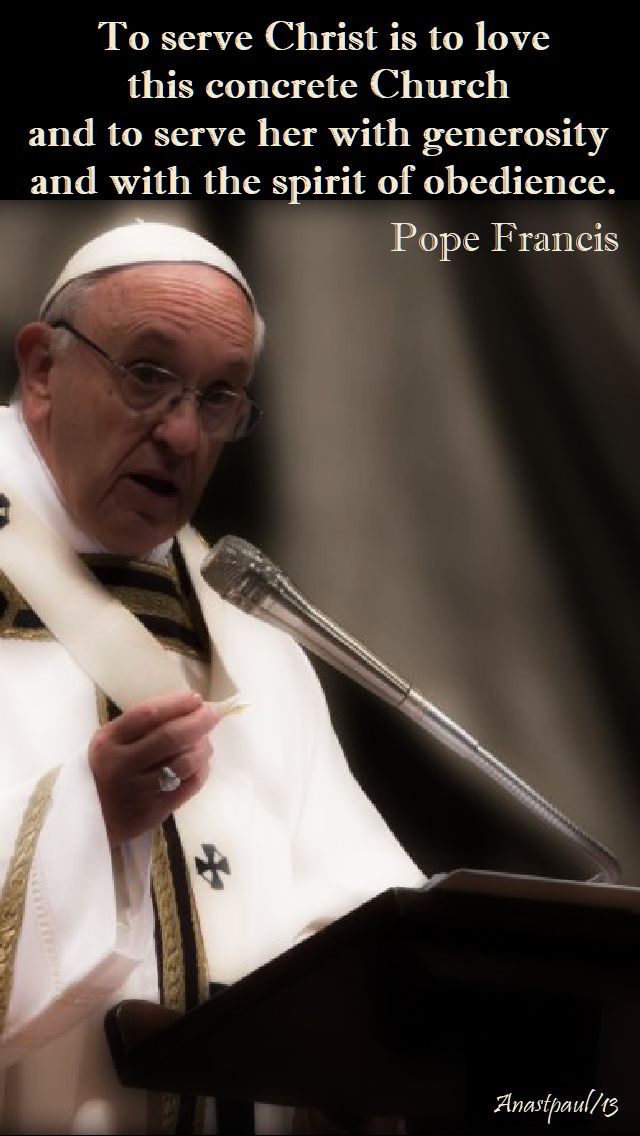
To be men routed and grounded in the Church, that is what Jesus desires of us. There cannot be parallel or isolated paths for us. Yes, paths of searching, creative paths, yes, this is important: to go to the peripheries, so many peripheries. This takes creativity but always in community, in the Church, with this membership that give us the courage to go forward. To serve Christ is to love this concrete Church and to serve her with generosity and with the spirit of obedience.
“Whoever would save his life will lose it, but whoever loses his life for my sake will save it . . . If anyone is ashamed of me . . .” (Lk 9:23). And so on. The shame of the Jesuit. The invitation that Jesus makes is for us to never be ashamed of Him but to always follow Him with total dedication, trusting Him and entrusting ourselves to Him. But looking at Jesus, as Saint Ignatius teaches us in the First Week, above all looking at Christ crucified, we have that very human and noble feeling that is the shame of not reaching the highest point; we look at the wisdom of Christ and at our ignorance; at His omnipotence and our weakness; at His justice and our iniquity; at His goodness and our wickedness (cf. Sp. Ex. 59).
Ask for the grace of shame; the shame that comes from the constant dialogue of mercy with Him; the shame that makes us blush before Jesus Christ; the shame that puts us in tune with the heart of Christ who is made sin for me; the shame that harmonises our heart in tears and accompanies us in the daily following of “my Lord”. And this always brings us, as individuals and as a Company, to humility, to living this great virtue. Humility that makes us understand, each day, that it is not for us to build the Kingdom of God but it is always the grace of God working within us; humility that pushes us to put our whole being not at the service of ourselves and our own ideas but at the service of Christ and of the Church, like clay pots, fragile, inadequate, insufficient but having within them an immense treasure that we carry and that we communicate (2 Cor. 4:7).
It is always pleasant for me to think of the sunset of the Jesuit, when a Jesuit finishes his life, when the sun goes down. And two icons of the sunset of the Jesuit always come to me: one classical, that of Saint Francis Xavier, looking at China. Art has painted this sunset so many times, this ‘end’ of Xavier. Even in literature, in that beautiful peace by Pemàn. At the end, having nothing but in the sight of the Lord; it does me good to thing about this. The other sunset, the other icon that comes to me as an example, is that of Padre Arrupe in the last interview in the refugee camp, when he told us – something he himself said – “I say this as if it were my swan song: pray.” Prayer, the union with Jesus. And, after having said this, he caught the plane and arrived at Rome with the stroke that was the beginning of so long and so exemplary a sunset. Two sunsets, two icons that all of us would do well to look at, and to go back to these two. And to ask for the grace that our sunset will be like theirs.
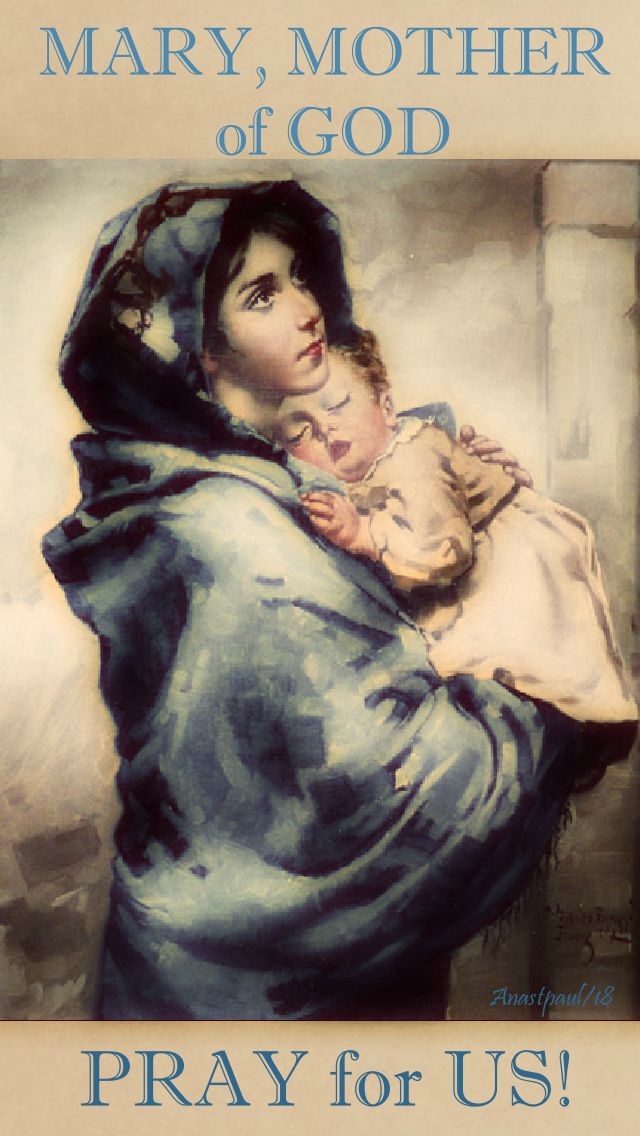
Dear brothers, let us turn again to Our Lady, to her who bore Christ in her womb and accompanied the first steps of the Church. May she help us to always put Christ and His Church at the centre of our lives and of our ministry. May she, who was the first and most perfect disciple of her Son help us to allow ourselves to be conquered by Christ in order to follow Him and to serve Him in every situation. May she that answered the announcement of the Angel with the most profound humility: “Behold the handmaid of the Lord, be it done unto me according to thy word” (Lk 1:38), make us feel the shame for our inadequacy before the treasure that has been entrusted to us, in order to live the virtue of humility before God.
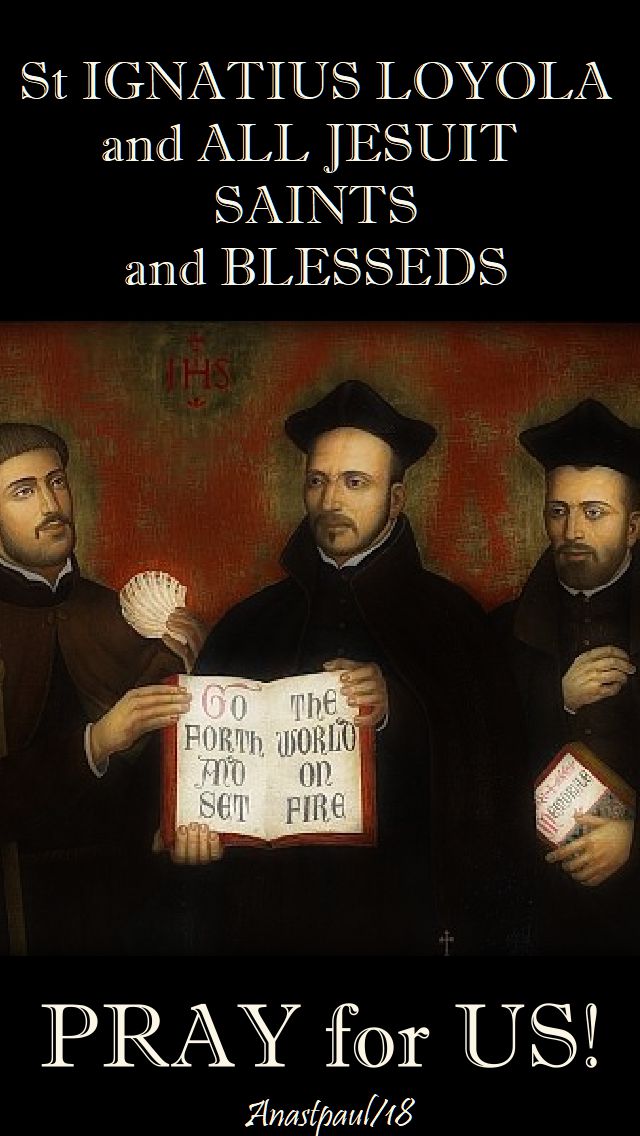
May our journey be accompanied by the paternal intercession of Saint Ignatius and of all the Jesuit saints, who continue to teach us to do all things “ad majorem Dei gloriam.”
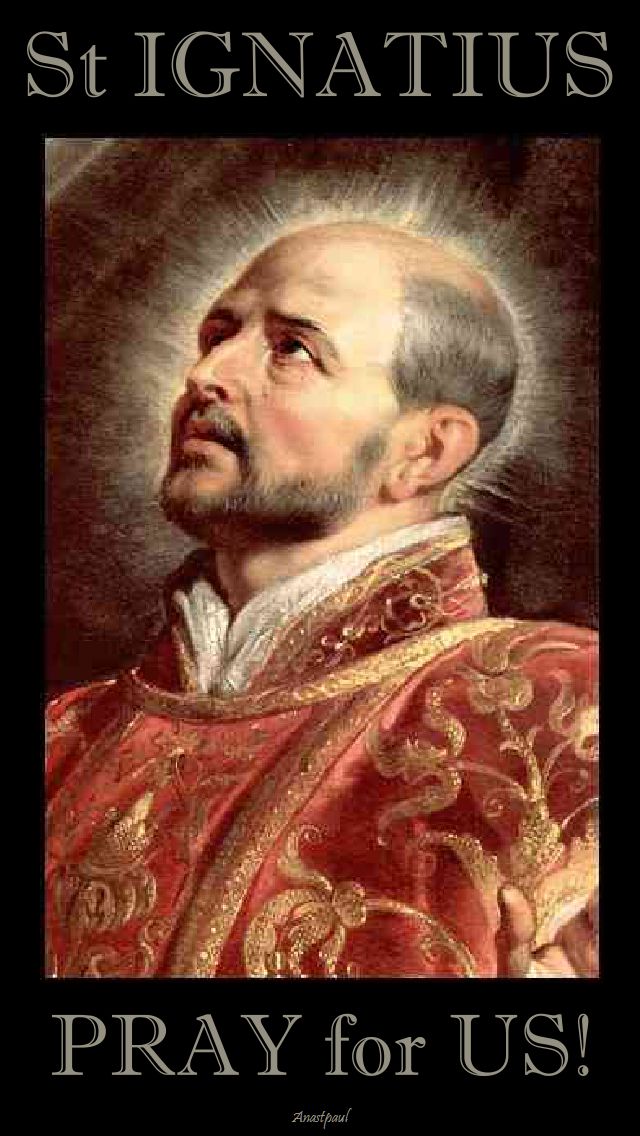
Quote/s of the Day – 31 July – The Memorial of St Ignatius Loyola (1491-1556)
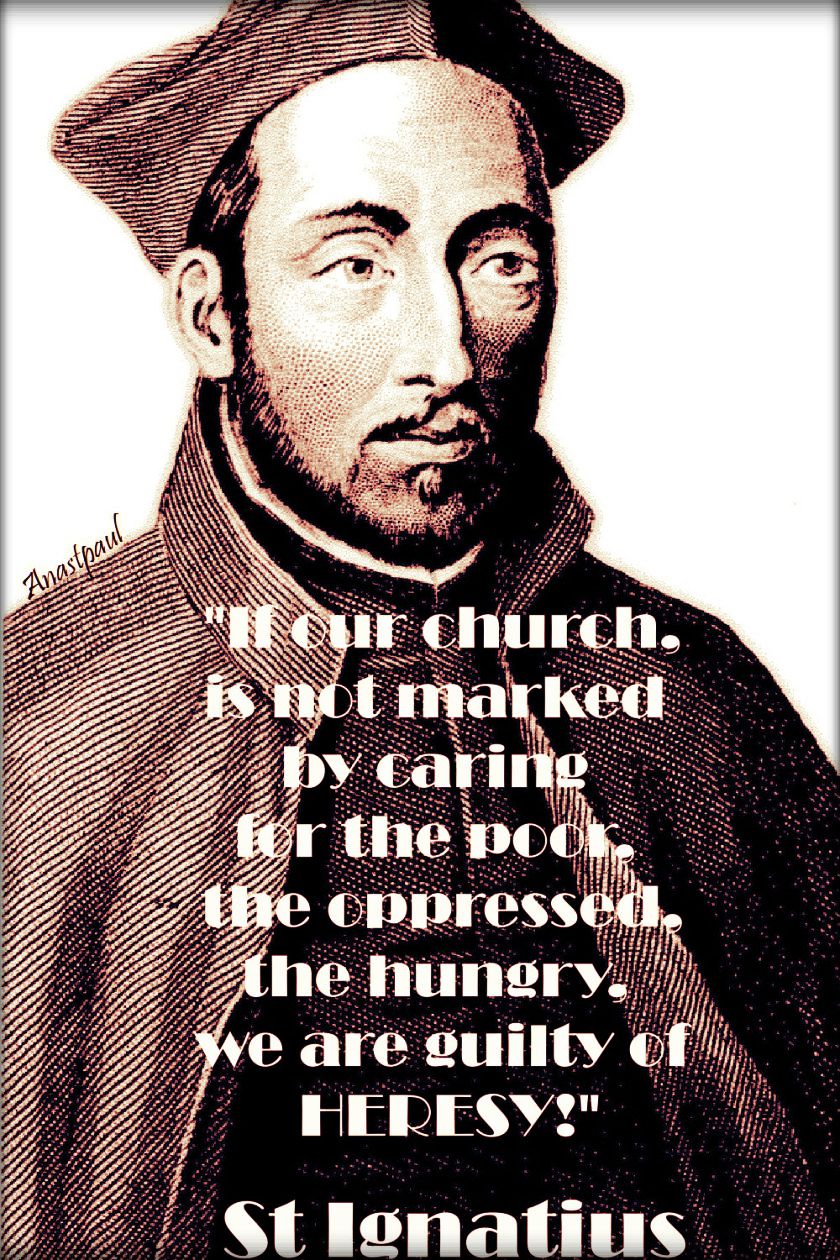
“If our church is not marked by caring for the poor, the oppressed, the hungry, we are guilty of heresy.”
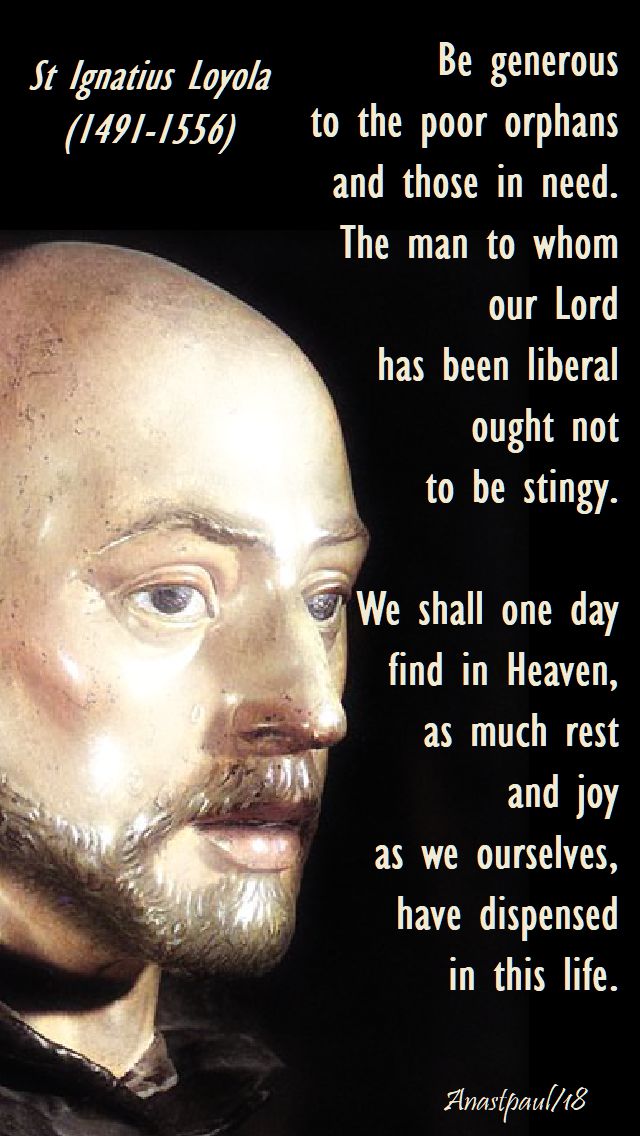
“Be generous to the poor orphans and those in need. The man to whom our Lord has been liberal ought not to be stingy. We shall one day find in Heaven as much rest and joy as we ourselves have dispensed in this life.”
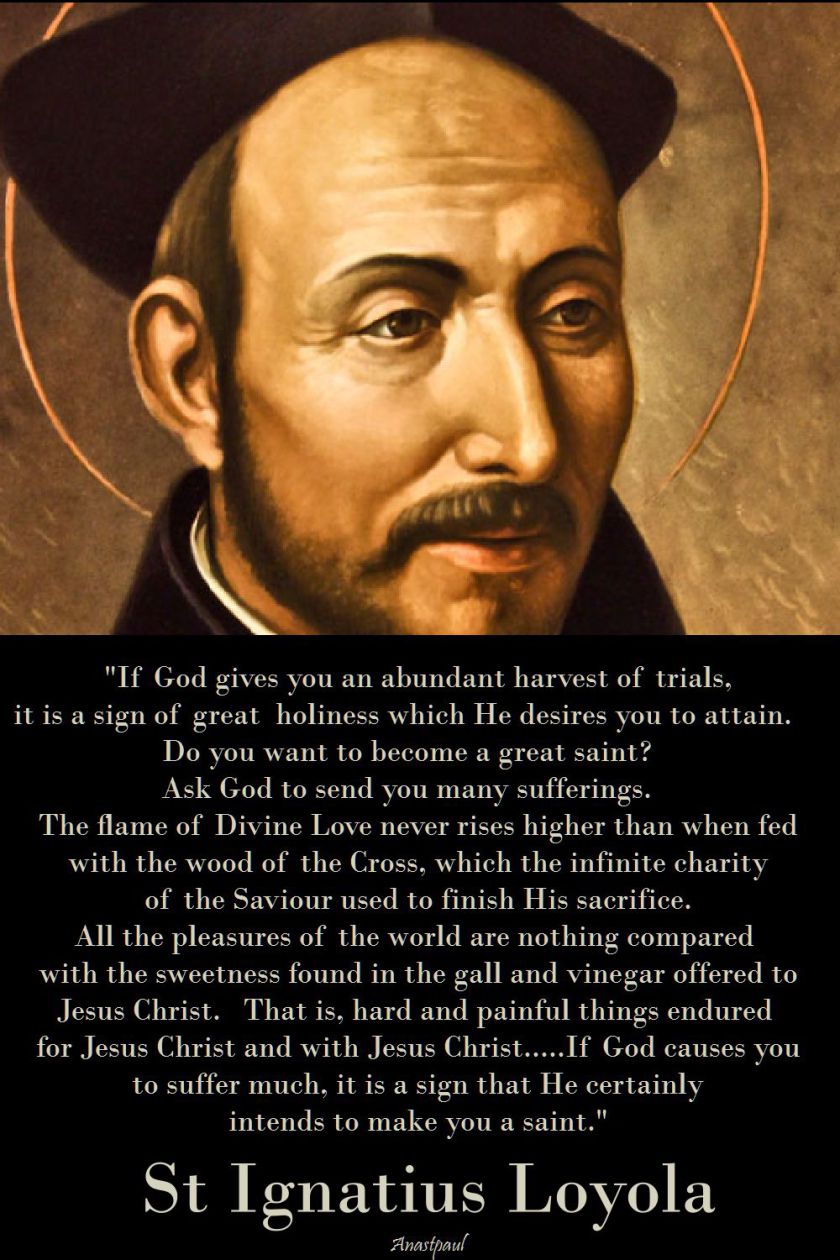
“If God gives you an abundant harvest of trials, it is a sign of great holiness which He desires you to attain. Do you want to become a great saint? Ask God to send you many sufferings. The flame of Divine Love never rises higher than when fed with the wood of the Cross, which the infinite charity of the Saviour used to finish His sacrifice. All the pleasures of the world are nothing compared with the sweetness found in the gall and vinegar offered to Jesus Christ. That is, hard and painful things endured for Jesus Christ and with Jesus Christ…..If God causes you to suffer much, it is a sign that He certainly intends to make you a saint.”
One Minute Reflection – 31 July – The Memorial of St Ignatius Loyola (1491-1556)
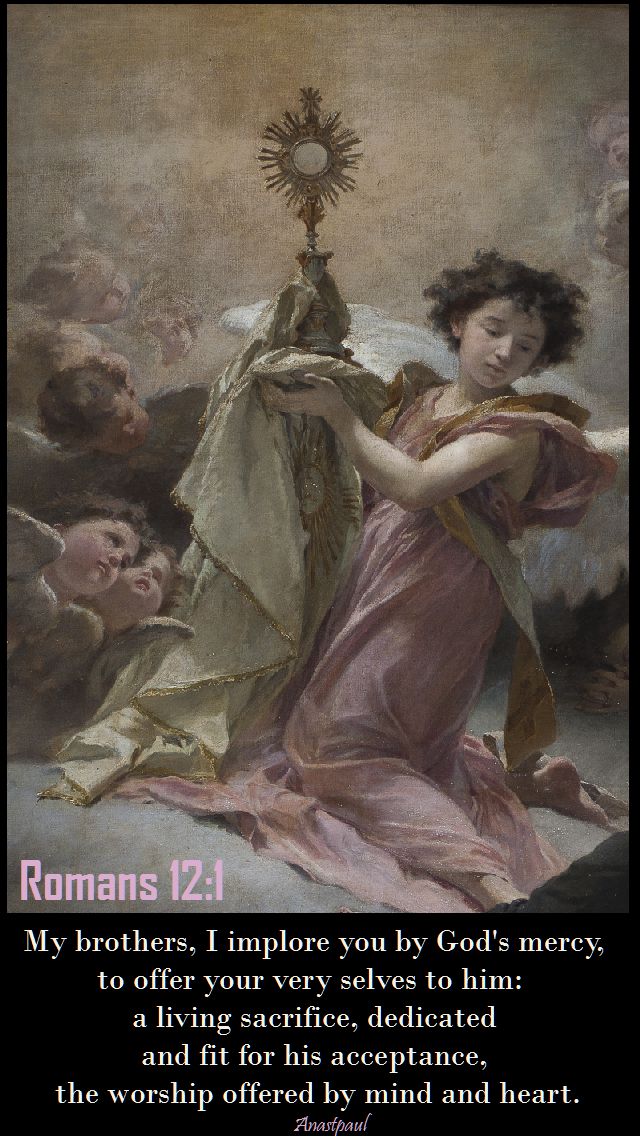
My brothers, I implore you by God’s mercy, to offer your very selves to him: a living sacrifice, dedicated and fit for his acceptance, the worship offered by mind and heart………Romans 12:1
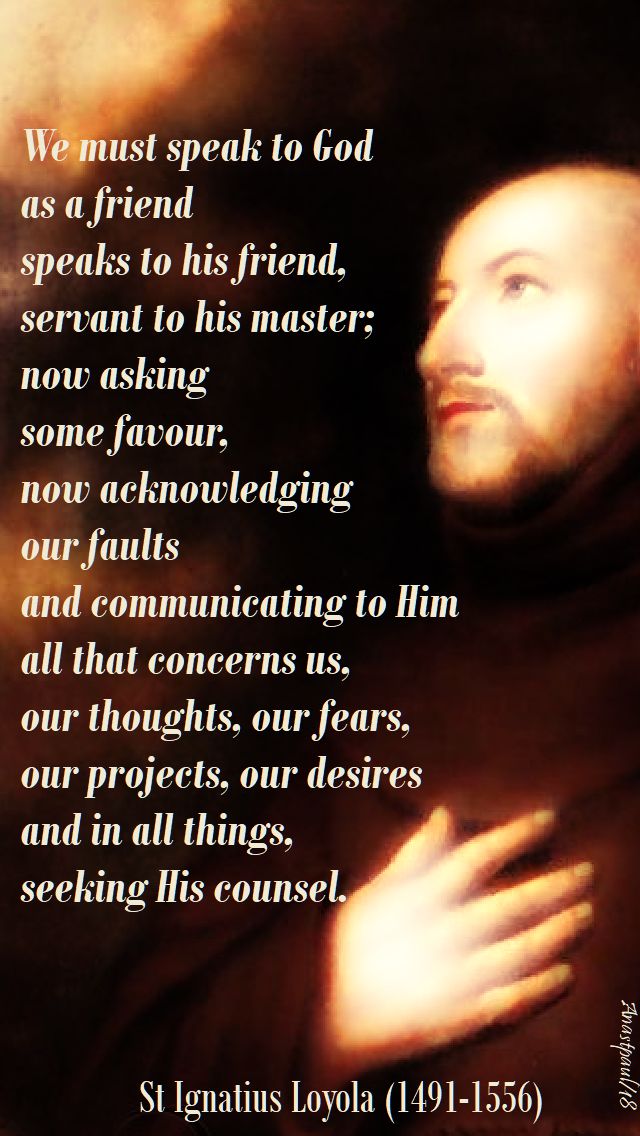
REFLECTION – “We must speak to God as a friend speaks to his friend, servant to his master – now asking some favour, now acknowledging our faults and communicating to Him all that concerns us, our thoughts, our fears, our projects, our desires and in all things seeking His counsel.”…St Ignatius of Loyola (1491-1556)
PRAYER – Almighty God, grant that the example of Your saints may spur us on to perfection, so that we who are celebrating the feast of St Ignatius, may follow him step by step in his way of life to reach You in heaven. St Ignatius, pray for us, amen.
Quote/s of the Day 30 July – The Memorial of St Peter Chrysologus “Golden Words”
(c 400-450) Father & Doctor
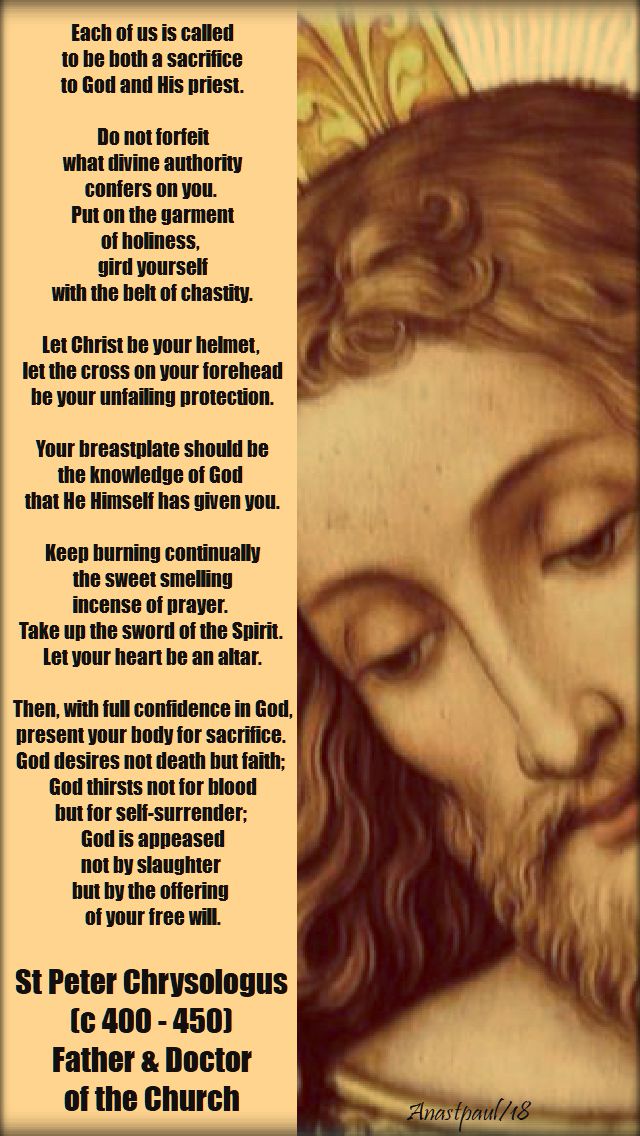
“Each of us is called to be both a sacrifice to God and His priest. Do not forfeit what divine authority confers on you. Put on the garment of holiness, gird yourself with the belt of chastity. Let Christ be your helmet, let the cross on your forehead be your unfailing protection. Your breastplate should be the knowledge of God that He Himself has given you. Keep burning continually the sweet smelling incense of prayer. Take up the sword of the Spirit. Let your heart be an altar. Then, with full confidence in God, present your body for sacrifice. God desires not death but faith; God thirsts not for blood but for self-surrender; God is appeased not by slaughter but by the offering of your free will.”
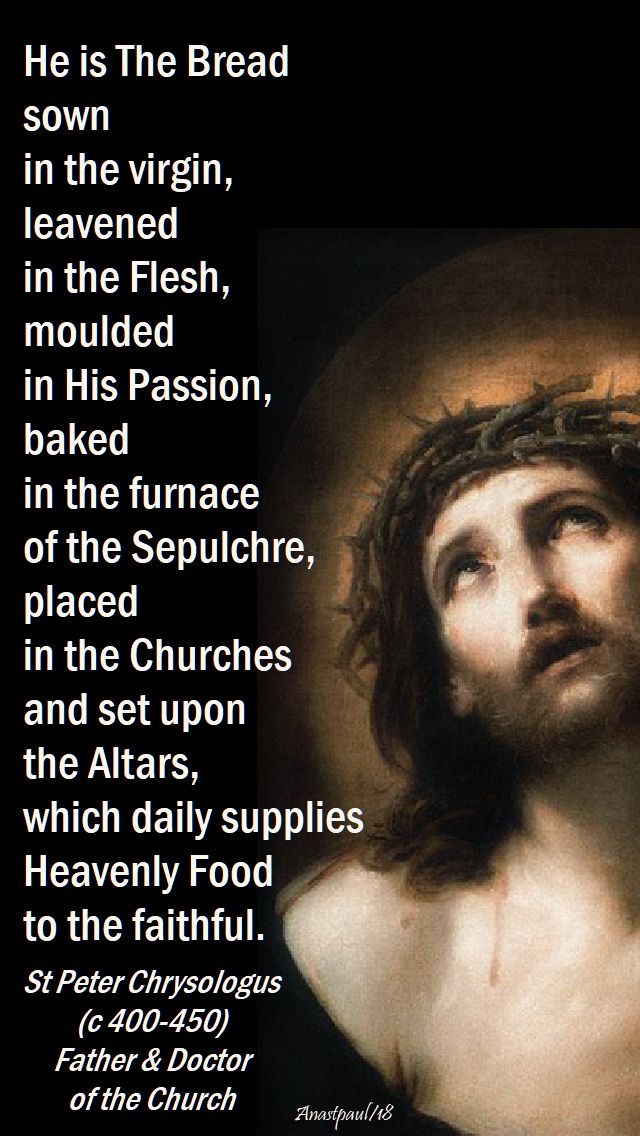
“He is The Bread sown in the virgin, leavened in the Flesh, moulded in His Passion, baked in the furnace of the Sepulchre, placed in the Churches and set upon the Altars, which daily supplies Heavenly Food to the faithful.”
“For he who touches the Body of Christ unworthily, receives his damnation.”
“Now that we are reborn,… in the likeness of our Lord and have indeed been adopted by God as his children, let us put on the complete image of our Creator so as to be wholly like Him, not in the glory that He alone possesses but in innocence, simplicity, gentleness, patience, humility, mercy, harmony, those qualities in which He chose to become and to be, one with us.”
“The poor stretch out the hand but God receives what is offered.”
” If you want God to know that you are hungry, know that another is hungry. If you hope for mercy, show mercy. If you look for kindness, show kindness. If you want to receive, give. If you ask for yourself what you deny to others, your asking is a mockery.”
“Anyone who wishes to frolic with the devil cannot rejoice with Christ.”
“We exhort you, in every respect, honourable brother, to heed obediently what has been written by the Most Blessed Pope of the City of Rome; for Blessed Peter, who lives and presides in his own see, provides the truth of faith to those who seek it.”
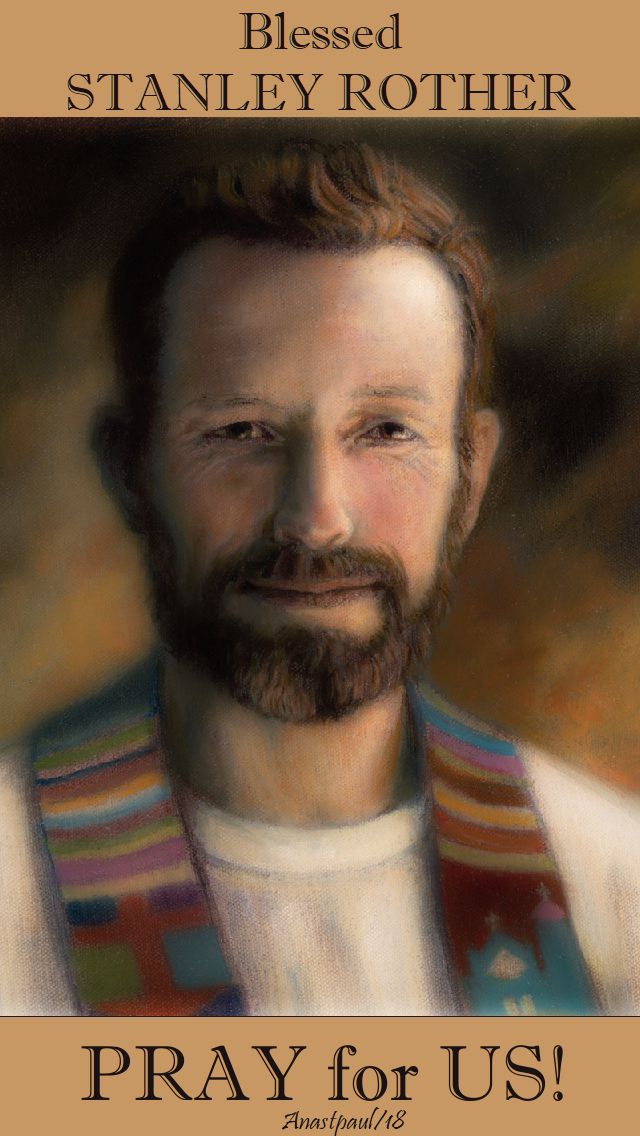
One Minute Reflection – 28 July – Saturday of the Sixteenth week in Ordinary Time, Year B – Today’s Gospel: 13:24-30 and The First Memorial of Blessed Stanley Francis Rother (1935-1981) Martyr
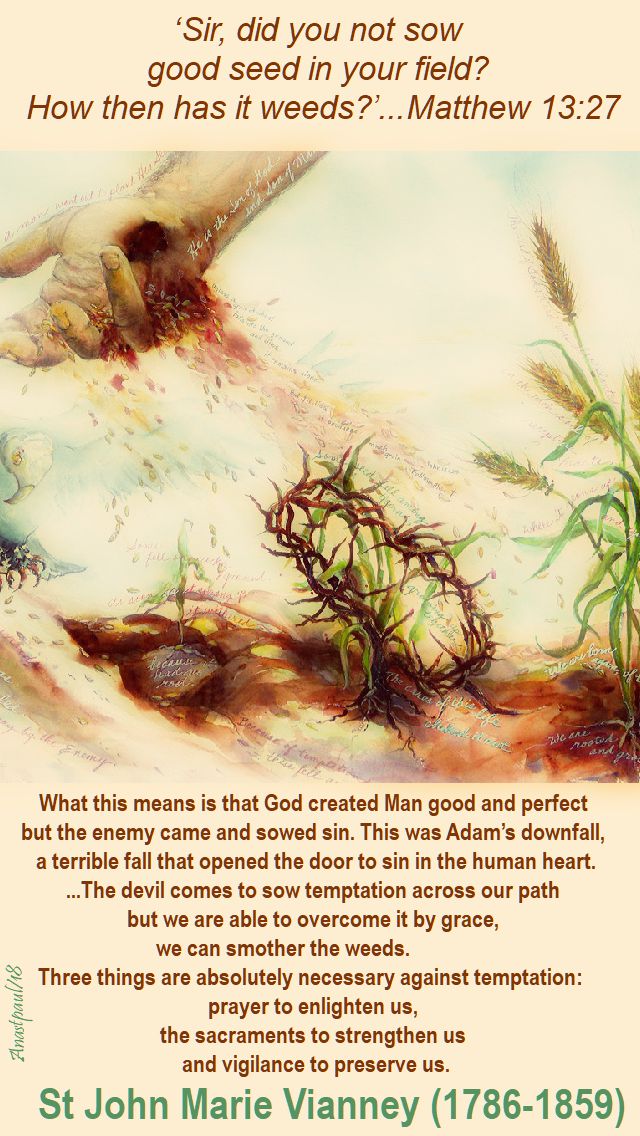
‘Sir, did you not sow good seed in your field? How then has it weeds?’…Matthew 13:27
REFLECTION – “In today’s gospel, my friends, we see that when the owner of the field had sowed his seed in good soil, the enemy came while he was sleeping and sowed weeds in it. What this means is that God created Man good and perfect but the enemy came and sowed sin. This was Adam’s downfall, a terrible fall that opened the door to sin in the human heart.
Are you saying that we must pull out the weeds? “But no,” the Lord replies, “for fear that in pulling up the weeds you pull up the good seed as well. Wait until harvest.” This is how the human heart must remain until the end, a mixture of good and bad, vice and virtue, light and darkness, good seed and weeds. God did not wish to destroy this mix and refashion a nature in us where there would be nothing but good seed. He wants us to fight, to strive to prevent the weeds from taking over. The devil comes to sow temptation across our path but we are able to overcome it by grace, we can smother the weeds. Three things are absolutely necessary against temptation: prayer to enlighten us, the sacraments to strengthen us and vigilance to preserve us. Happy are souls that are tempted! It is when the devil discerns that a soul is tending towards union with God that he redoubles his rage.”…St John Marie Vianney (1786-1859)
PRAYER – All-powerful and ever-living God, splendour of true light and never-ending day, chase away the night of sin and fill our minds with the glory of Your coming. Take away our heart of stone and give us a heart of flesh, help us in our battle with sin and the devil. By our prayers, Your holy sacraments and the strength of the Holy Spirit, may we be ever vigilant of the evil one. Blessed Stanley Rother, although evil surrounded you, you kept your eyes on the Lord, knowing He was always with you. Hear the prayers of Blessed Stanley on our behalf dear Lord. We make our prayer through Christ, our Lord with the Holy Spirit, one God forever, amen.
Thought for the Day – 27 July – Friday of the Sixteenth week in Ordinary Time, Year B – Today’s Gospel: Matthew 13:18–23
“As for what was sown on good soil, this is he who hears the word and understands it; he indeed bears fruit and yields, in one case a hundredfold, in another sixty and in another thirty.”…Matthew 13:23
“Dear brothers and sisters, Jesus invites us today to look inside ourselves: to give thanks for our good soil and to tend the soil that is not yet good.
Let us ask ourselves if our heart is open to welcome the seed of the Word of God with faith.
Let us ask ourselves if our rocks of laziness are still numerous and large; let us identify our thorns of vice and call them by name.
Let us find the courage to reclaim the soil, to effect a conversion of our heart, bringing to the Lord in Confession and in prayer, our rocks and our thorns.” …Pope Francis (Angelus, 16 July 2017)
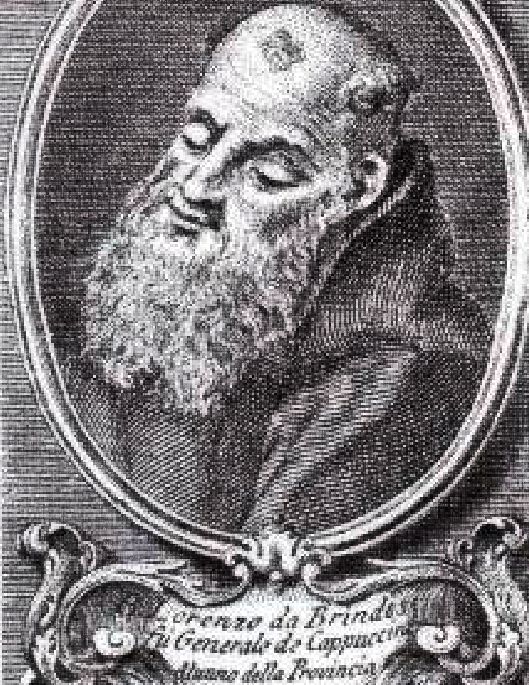
Saint of the Day – 21 July – St Lawrence of Brindisi OFM Cap (1559-1619) Doctor of the Church. He was created a Doctor of the Church by St Pope John XXIII in 1959 with the title Doctor apostolicus (Apostolic Doctor). Patronages – Brindisi, Italy.
St Lawrence is known as the “Franciscan Renaissance Man” – he was a Religious member of the Franciscan Friars Minor Capuchin, a Priest, Theologian, Vicar General of the Franciscans, Language scholar, Apologist of immense and calm resources, Humanist, Philosopher, Biblicist, Preacher, Missionary, Professor, International Administrator, Confidant of Popes, Emperors, Kings and Princes, Diplomatic envoy, Army Chaplain, Military Strategist and Morale builder, Polemicist, Prolific writer.
Saint Lawrence of Brindisi
By Pope Benedict XVI
General Audience, 23 March 2011
I still remember with joy the festive welcome I was given in Brindisi in 2008. It was in this city that in 1559 was born a distinguished Doctor of the Church, St Lawrence of Brindisi, the name that Julius Caesar Russo took upon entering the Capuchin Order.
He had been attracted since childhood by the family of St Francis of Assisi. In fact, his father died when he was seven years old and his mother entrusted him to the care of the Friars Minor Conventual in his hometown. A few years later, however, Lawrence and his mother moved to Venice and it was precisely there that he became acquainted with the Capuchins who in that period were generously dedicated to serving the whole Church in order to further the important spiritual reform promoted by the Council of Trent.
With his religious profession in 1575, Lawrence became a Capuchin friar and in 1582 he was ordained a priest. During his ecclesiastical studies for the priesthood he already showed the eminent intellectual qualities with which he had been endowed. He learned with ease the ancient languages, such as Greek, Hebrew and Syriac, as well as modern languages, such as French and German. He added these to his knowledge of Italian and of Latin that was once spoken fluently by all clerics and by all cultured people. Thanks to his mastery of so many languages, Lawrence was able to carry out a busy apostolate among the different categories of people. As an effective preacher, his knowledge, not only of the Bible but also of the rabbinic literature, was so profound that even the Rabbis, impressed and full of admiration, treated him with esteem and respect.
As a theologian steeped in Sacred Scripture and in the Fathers of the Church, he was also able to illustrate Catholic doctrine in an exemplary manner to Christians who, especially in Germany, had adhered to the Reformation. With his calm, clear exposition he demonstrated the biblical and patristic foundation of all the articles of faith disputed by Martin Luther. These included the primacy of St Peter and of his Successors, the divine origin of the Episcopate, justification as an inner transformation of man, and the need to do good works for salvation. Lawrence’s success helps us to realise that today too, in pursuing ecumenical dialogue with such great hope, the reference to Sacred Scripture, interpreted in accordance with the Tradition of the Church, is an indispensable element of fundamental importance. I wished to recall this in my Apostolic Exhortation Verbum Domini (n. 46). Even the simplest members of the faithful, those not endowed with great culture, benefited from the convincing words of Lawrence, who addressed humble people to remind them all to make their lives consistent with the faith they professed.
This was a great merit of the Capuchins and of other religious Orders which, in the 16th and 17th centuries, contributed to the renewal of Christian life, penetrating the depths of society with their witness of life and their teaching. Today too, the new evangelisation stands in need of well-trained apostles, zealous and courageous, so that the light and beauty of the Gospel, may prevail over the cultural tendencies of ethical relativism and religious indifference and transform the various ways of thinking and acting into genuine Christian humanism.
It is surprising that St Lawrence of Brindisi was able to continue without interruption his work as an appreciated and unflagging preacher in many cities of Italy and in different countries, in spite of holding other burdensome offices of great responsibility. Indeed, within the Order of Capuchins he was professor of theology, novice master, for several mandates minister provincial and definitor general and finally, from 1602 to 1605, minister general. In the midst of this mountain of work, Lawrence cultivated an exceptionally fervent spiritual life. He devoted much time to prayer and, especially, to the celebration of Holy Mass — often protracted for hours — caught up in and moved by the memorial of the Passion, death and Resurrection of the Lord.
At the school of the saints, every priest, as was emphasised frequently during the recent Year for Priests, may only avoid the danger of activism — acting, that is, without remembering the profound motives of his ministry — if he attends to his own inner life.
In speaking to priests and seminarians in the Cathedral of Brindisi, St Lawrence’s birthplace, I recalled that “the time he spends in prayer is the most important time in a priest’s life, in which divine grace acts with greater effectiveness, making his ministry fruitful. The first service to render to the community is prayer. And, therefore, time for prayer must be given true priority in our life… if we are not interiorly in communion with God, we cannot even give anything to others. Therefore, God is the first priority. We must always reserve the time necessary to be in communion of prayer with Our Lord” (Address of Benedict XVI to priests, deacons and seminarians of the Archdiocese of Brindisi, Cathedral of Brindisi, 15 June 2008).
Moreover, with the unmistakable ardour of his style, Lawrence urged everyone and not only priests, to cultivate a life of prayer, for it is through prayer that we speak to God and that God speaks to us: “Oh, if we were to consider this reality!”, he exclaimed. “In other words that God is truly present to us when we speak to him in prayer; that he truly listens to our prayers, even if we pray only with our hearts and minds. And that not only is he present and hears us, indeed he willingly and with the greatest of pleasure wishes to grant our requests”.
Another trait that characterises the opus of this son of St Frances, is his action for peace. Time and again both Supreme Pontiffs and Catholic Princes entrusted him with important diplomatic missions, to settle controversies and to encourage harmony among the European States, threatened in those days by the Ottoman Empire. The moral authority he enjoyed made him a counsellor both sought after and listened to. Today, as in the times of St Lawrence, the world is in great need of peace, it needs peaceful and peacemaking men and women. All who believe in God must always be sources and artisans of peace.
It was precisely on the occasion of one of these diplomatic missions that Lawrence’s earthly life ended, in 1619 in Lisbon, where he had gone to see King Philip III of Spain, to plead the cause of the Neapolitan subjects oppressed by the local authorities.
He was Canonised in 1881 and his vigorous and intense activity, his vast and harmonious knowledge, earned him the title of Doctor Apostolicus, “Apostolic Doctor”. The title was conferred on him by St Pope John XXIII in 1959, on the occasion of the fourth centenary of his birth. This recognition was also granted to Lawrence of Brindisi because he was the author of numerous works of biblical exegesis, theology and sermons. In them he offers an organic presentation of the history of salvation, centred on the mystery of the Incarnation, the greatest expression of divine love for humankind.
Furthermore, since he was a highly qualified Mariologist, the author of a collection of sermons on Our Lady entitled “Mariale”, he highlighted the unique role of the Virgin Mary, whose Immaculate Conception and whose role in the redemption brought about by Christ he clearly affirms.
With a fine theological sensitivity, Lawrence of Brindisi also pointed out the Holy Spirit’s action in the believer’s life. He reminds us that the Third Person of the Most Holy Trinity illumines and assists us with his gifts in our commitment to live joyously the Gospel message.
“The Holy Spirit”, St Lawrence wrote, “sweetens the yoke of the divine law and lightens its weight, so that we may observe God’s commandments with the greatest of ease and even with pleasure”.
I would like to complete this brief presentation of the life and doctrine of St Lawrence of Brindisi by underlining that the whole of his activity was inspired by great love for Sacred Scripture, which he knew thoroughly and by heart and by the conviction that listening to and the reception of the word of God produces an inner transformation that leads us to holiness.
“The word of the Lord”, he said, “is a light for the mind and a fire for the will, so that man may know and love God. For the inner man, who lives through the living grace of God’s Spirit, it is bread and water but bread sweeter than honey and water better than wine or milk…. It is a weapon against a heart stubbornly entrenched in vice. It is a sword against the flesh, the world and the devil, to destroy every sin”.
St Lawrence of Brindisi teaches us to love Sacred Scripture, to increase in familiarity with it, to cultivate daily relations of friendship with the Lord in prayer, so that our every action, our every activity, may have its beginning and its fulfilment in him. This is the source from which to draw so that our Christian witness may be luminous and able to lead the people of our time to God….vatican.va Pope Benedict
Thought for the Day – 20 July – The Memorial of Bl Gregory Lopez (1542-1596)
There are no patterns for sainthood and the Saints break all moulds.
God is interested in us, right where we are. He has placed us there and our own particular circumstances are as good a place as any other to become a saint . Holiness is within our reach! Only He knows where our pathways will lead. As Blessed Gregory and all our Saints show, it is about abandoning ourselves to Him and living our lives, where we are, in and for Him alone, keeping our eyes ever fixed on Christ . Over the course of time, our prayer evolves from acceptance of God’s will to a conscious act of love of God, to a devotion to and imitation of the person of Jesus, the Logos.
His Biographer, Fr Francisco de Losa said: “His soul appeared to be disengaged from all things else by a pure union with God.”
And as López said to him: “It is much better to treat with God than with man….The eyes of the true man are always fixed on Christ, who is his head and the soul that is touched with love of God is like a needle that is touched with the lodestone always pointing to the North.”…Blessed Gregory
An old print of this servant of God states in a few lines:
“The miser runs o’er sea and land His riches to increase, But Lopez, on the other hand, For poverty and peace.”
Many miracles were ascribed to him in life and after death. In February, 1620, the King of Spain ordered his Treatise on the Apocalypse published, adding, “I do not wish to lose a single moment in procuring the canonisation of this holy man, who,” as he says elsewhere, “passed thirty-three years in solitude in a marvellous penance, humility and love of God and his neighbour and had an admirable gift of prayer and understanding of the Holy Scriptures and the supernatural and human sciences, with the general approbation of the prelates and people of Mexico.” In fact, in the examinations that took place, bishops and theologians of all the religious orders, bore unanimous testimony to his extraordinary virtue and progress in the science of the saints.
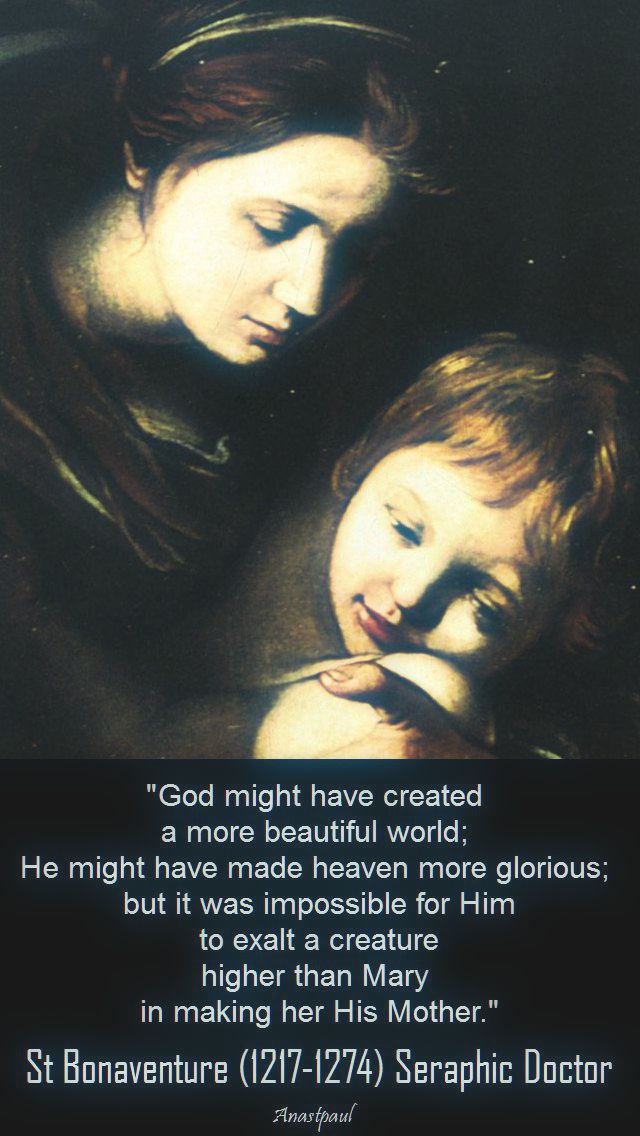
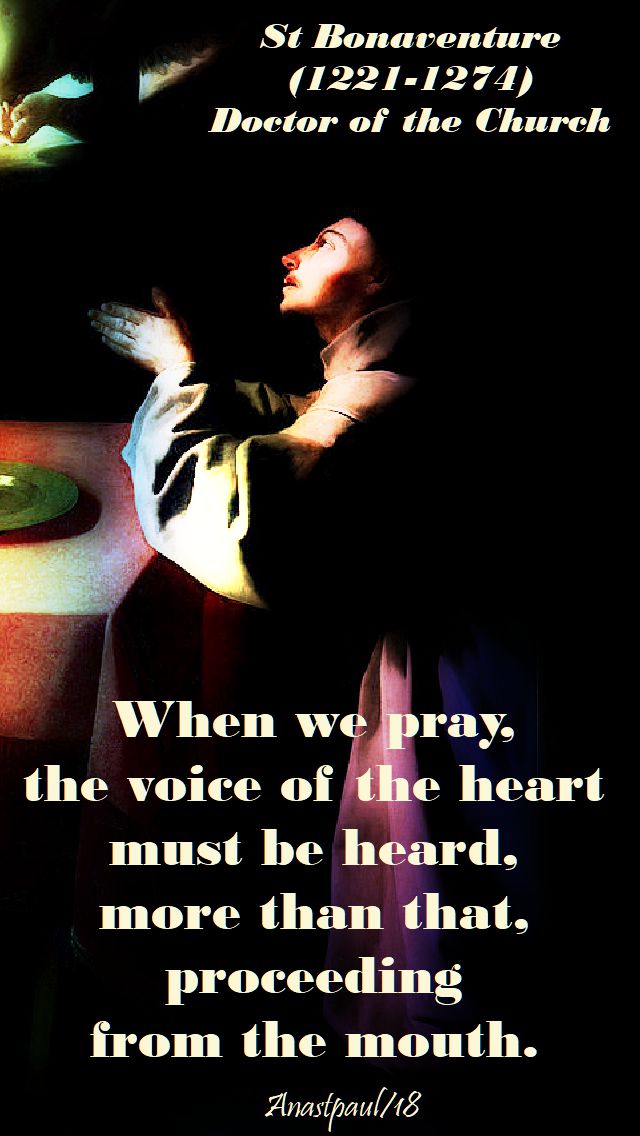
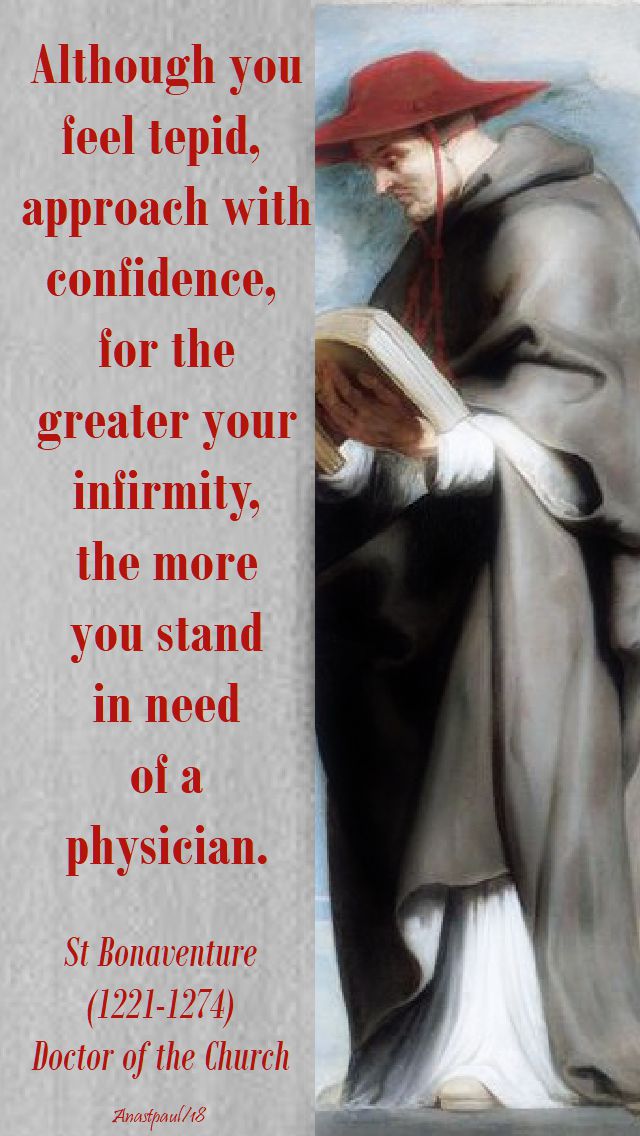
Quote/s of the Day – 15 July – Fifteenth Sunday of the Year – the Memorial of St Bonaventure (1221-1274) – Seraphic Doctor
“God might have created a more beautiful world; He might have made heaven more glorious; but it was impossible for Him to exalt a creature higher than Mary in making her His Mother.”
“When we pray, the voice of the heart must be heard, more than that, proceeding from the mouth.”
“Although you feel tepid, approach with confidence, for the greater your infirmity, the more you stand in need of a physician.”
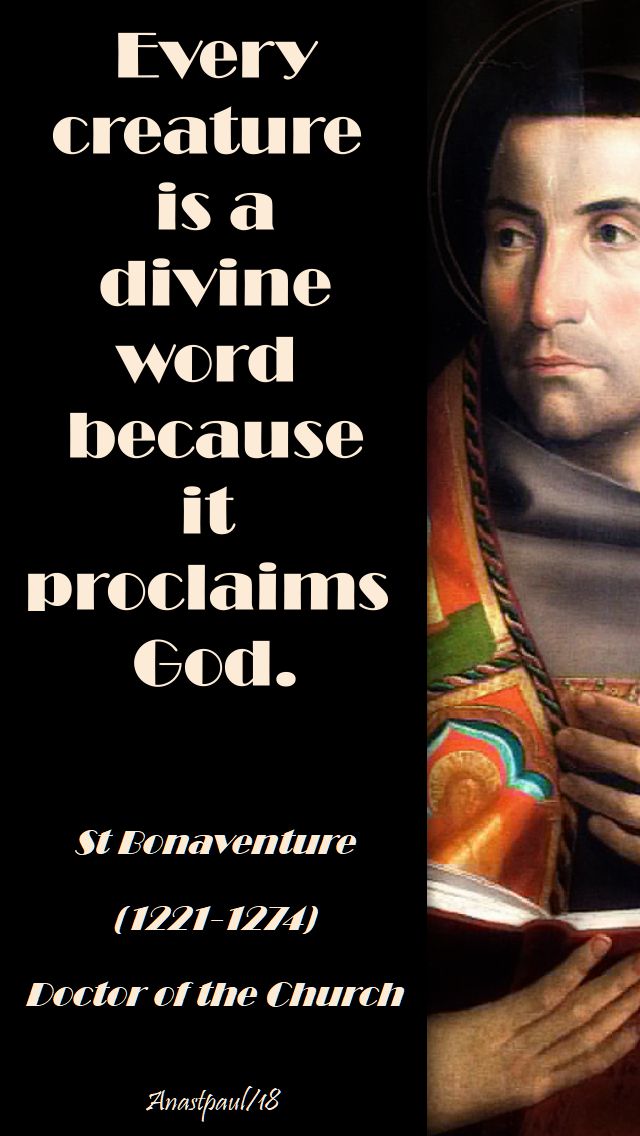
“Every creature is a divine word because it proclaims God.”
“Christ has something in common with all creatures. With the stone He shares existence, with the plants He shares life, with the animals He shares sensation and with the angels He shares intelligence. Thus all things are transformed in Christ since in the fullness of His nature, He embraces some part of every creature.”
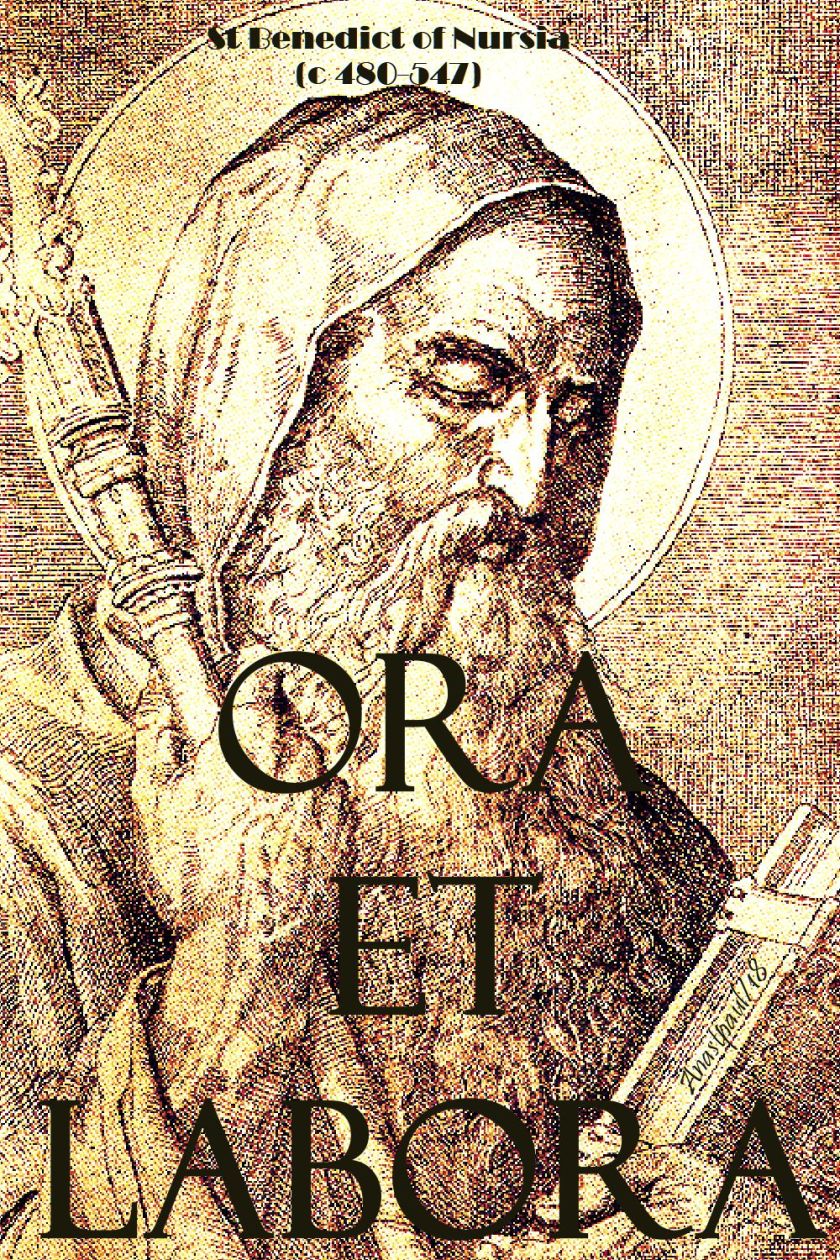
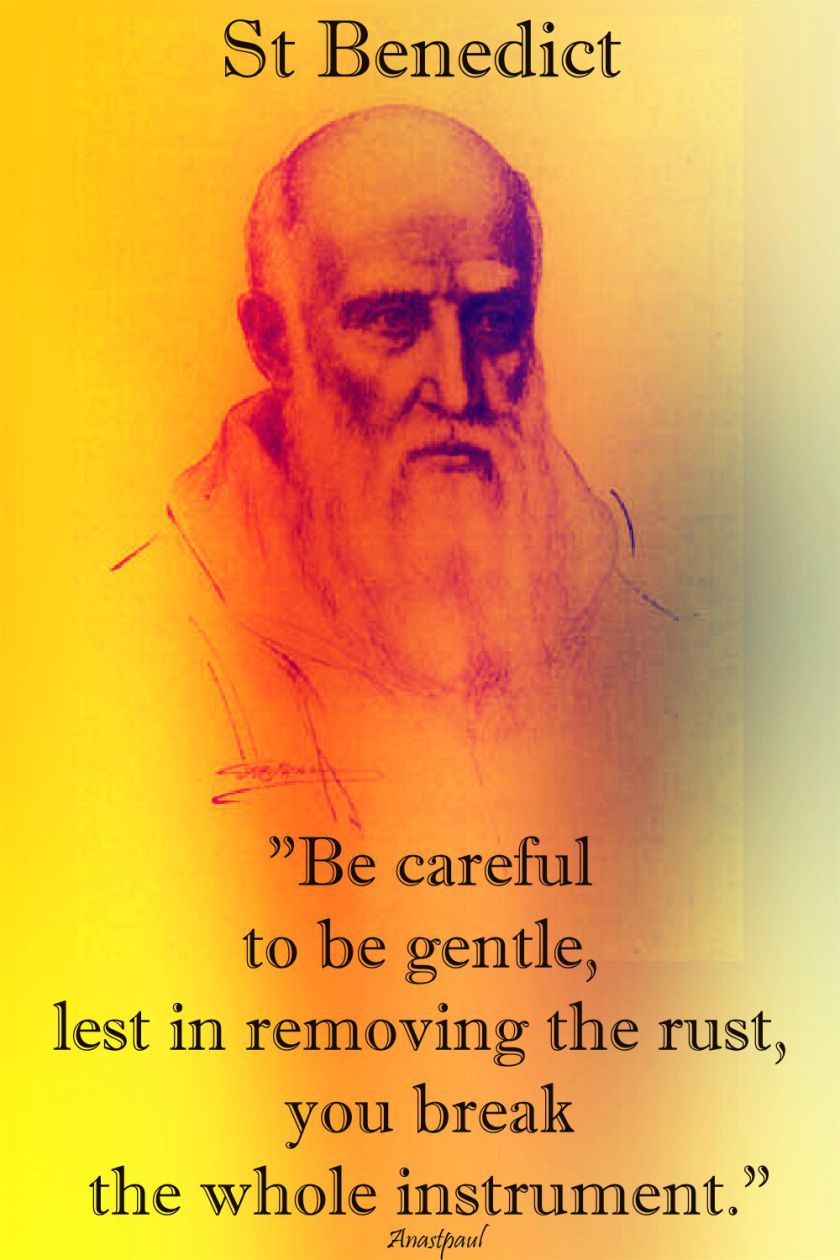
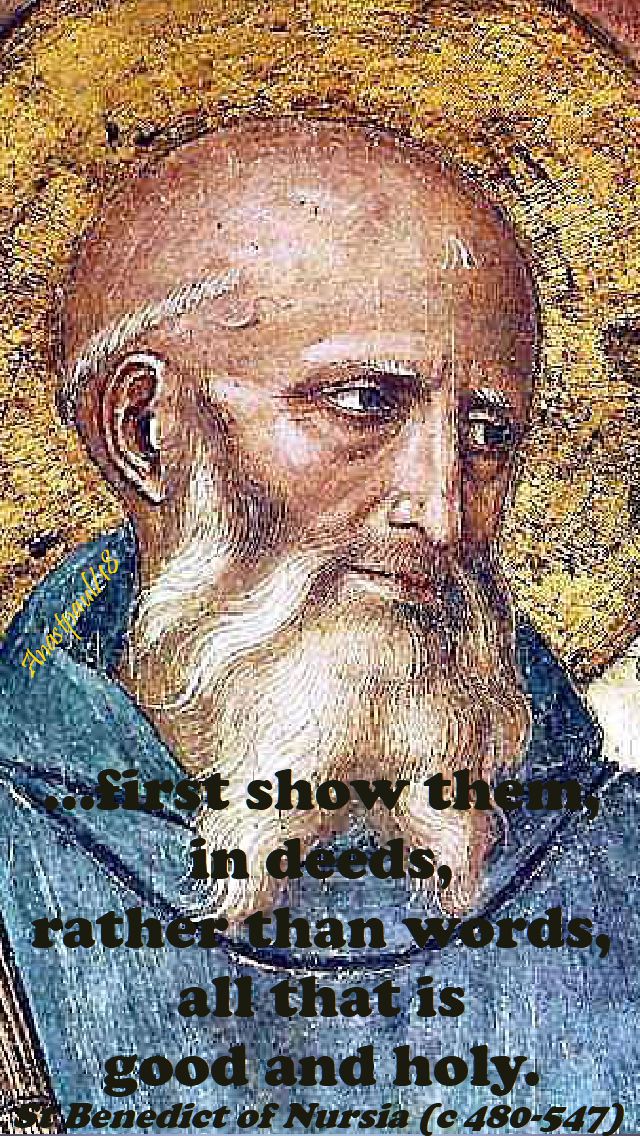
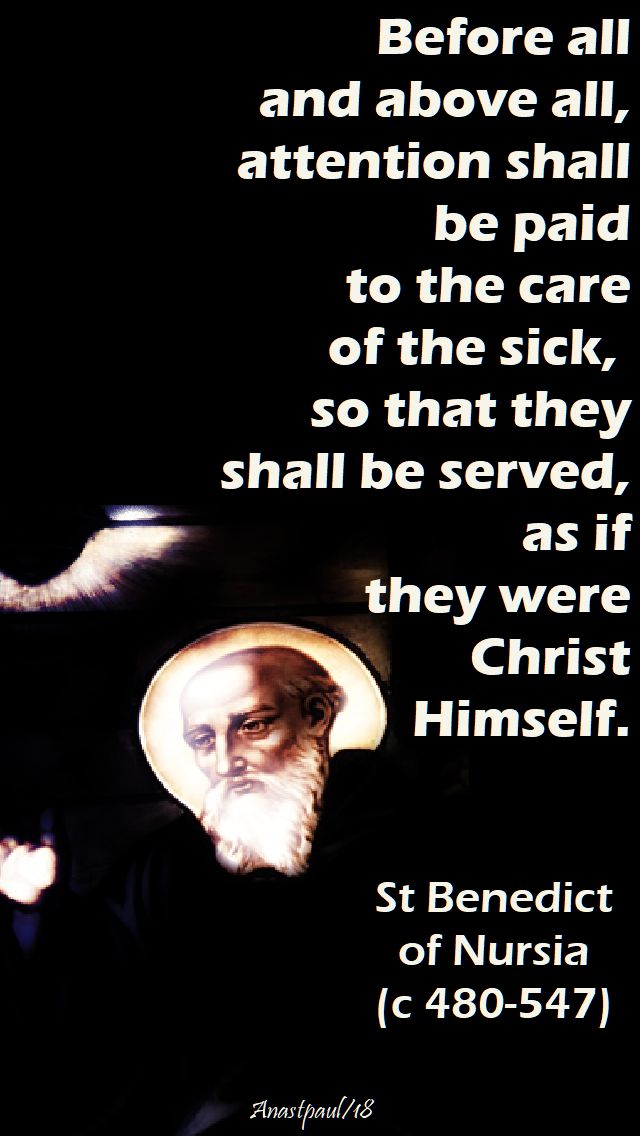
Thought for the Day – 11 July – The Memorial of St Benedict of Nursia OSB (c 480-547)
Excerpt from the Homily of Pope Benedict
General Audience, 9 April 2008
“Today, I would like to speak about Benedict, the Founder of Western Monasticism and also the Patron of my Pontificate.
I begin with words that St Gregory the Great wrote about St Benedict: “The man of God who shone on this earth among so many miracles was just as brilliant in the eloquent exposition of his teaching” (cf. Dialogues II, 36). The great Pope wrote these words in 592 AD. The holy monk, who had died barely 50 years earlier, lived on in people’s memories and especially in the flourishing religious Order he had founded. St Benedict of Nursia/Norcia, with his life and his work, had a fundamental influence on the development of European civilisation and culture. The most important source on Benedict’s life is the second book of St Gregory the Great’s Dialogues. It is not a biography in the classical sense. In accordance with the ideas of his time, by giving the example of a real man – St Benedict, in this case – Gregory wished to illustrate the ascent to the peak of contemplation which can be achieved by those who abandon themselves to God. He therefore gives us a model for human life in the climb towards the summit of perfection. St Gregory the Great also tells in this book of the Dialogues of many miracles worked by the Saint and here too he does not merely wish to recount something curious but rather to show how God, by admonishing, helping and even punishing, intervenes in the practical situations of man’s life. Gregory’s aim was to demonstrate that God is not a distant hypothesis placed at the origin of the world but is present in the life of man, of every man.
Throughout the second book of his Dialogues, Gregory shows us how St Benedict’s life was steeped in an atmosphere of prayer, the foundation of his existence. Without prayer there is no experience of God. Yet Benedict’s spirituality was not an interiority removed from reality. In the anxiety and confusion of his day, he lived under God’s gaze and in this very way never lost sight of the duties of daily life and of man with his practical needs. Seeing God, he understood the reality of man and his mission. In his Rule he describes monastic life as “a school for the service of the Lord” (Prol. 45) and advises his monks, “let nothing be preferred to the Work of God” [that is, the Divine Office or the Liturgy of the Hours] (43, 3).
However, Benedict states that in the first place prayer is an act of listening (Prol. 9-11), which must then be expressed in action. “The Lord is waiting every day for us to respond to his holy admonitions by our deeds” (Prol. 35). Thus, the monk’s life becomes a fruitful symbiosis between action and contemplation, “so that God may be glorified in all things”(57, 9). In contrast with a facile and egocentric self-fulfilment, today often exalted, the first and indispensable commitment of a disciple of St Benedict is the sincere search for God (58, 7) on the path mapped out by the humble and obedient Christ (5, 13), whose love he must put before all else (4, 21; 72, 11) and in this way, in the service of the other, he becomes a man of service and peace . In the exercise of obedience practised by faith inspired by love (5, 2), the monk achieves humility (5, 1), to which the Rule dedicates an entire chapter (7). In this way, man conforms ever more to Christ and attains true self-fulfilment as a creature in the image and likeness of God.
Benedict describes the Rule he wrote as “minimal, just an initial outline”(cf. 73, 8); in fact, however, he offers useful guidelines not only for monks but for all who seek guidance on their journey toward God. For its moderation, humanity and sober discernment between the essential and the secondary in spiritual life, his Rule has retained its illuminating power even to today.
By proclaiming St Benedict Patron of Europe on 24 October 1964, Paul VI intended to recognise the marvellous work the Saint achieved with his Rule for the formation of the civilisation and culture of Europe.
Having recently emerged from a century that was deeply wounded by two World Wars and the collapse of the great ideologies, now revealed as tragic utopias, Europe today is in search of its own identity. Of course, in order to create new and lasting unity, political, economic and juridical instruments are important, but it is also necessary to awaken an ethical and spiritual renewal which draws on the Christian roots of the Continent, otherwise a new Europe cannot be built. Without this vital sap, man is exposed to the danger of succumbing to the ancient temptation of seeking to redeem himself by himself – a utopia which in different ways, in 20th-century Europe, as Pope John Paul II pointed out, has caused “a regression without precedent in the tormented history of humanity” (Address to the Pontifical Council for Culture, 12 January 1990).
Today, in seeking true progress, let us also listen to the Rule of St Benedict as a guiding light on our journey. The great monk is still a true master at whose school we can learn to become proficient in true humanism.
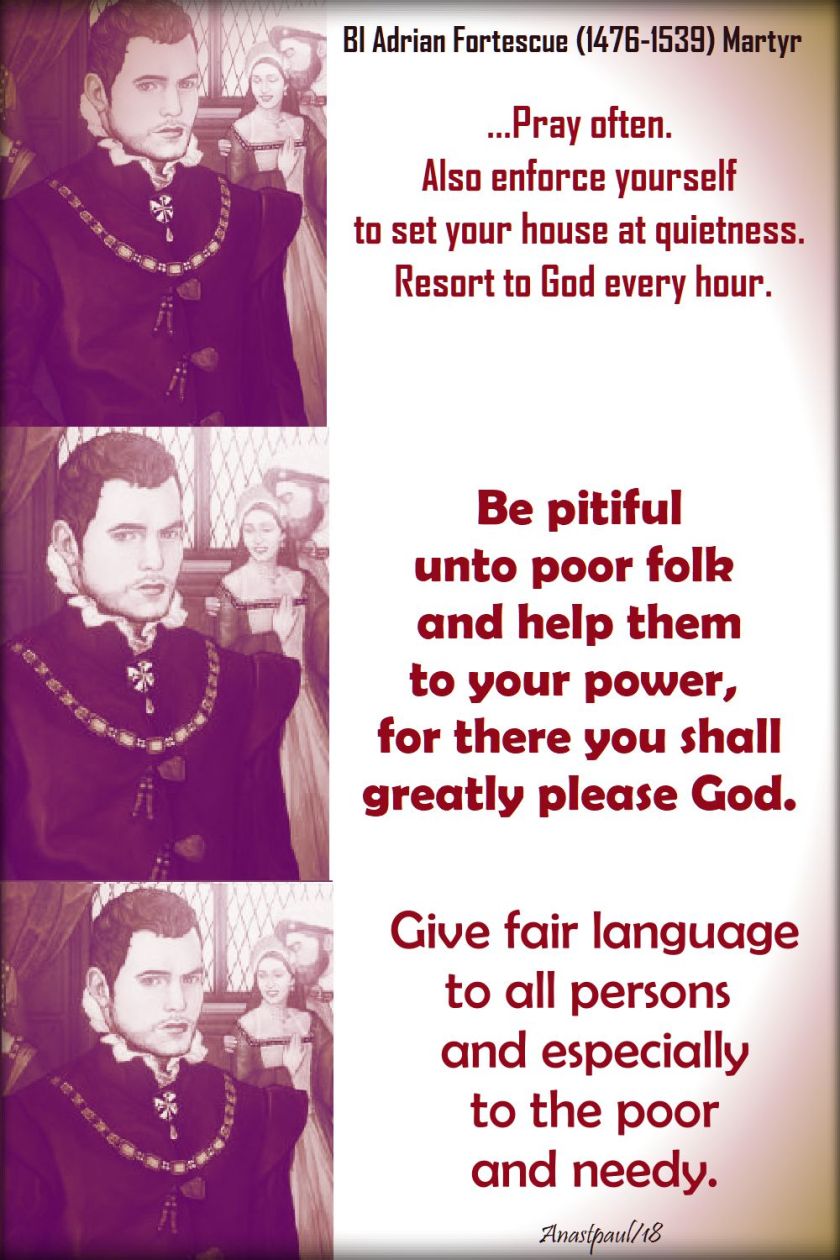
Quote/s of the Day – 9 July – The Memorial of Blessed Adrian Fortescue T.O.S.D. (1476-1539) Martyr
“In Husbands Bosworth Hall, the residence of Miss Fortescue-Turville, the last direct descendant of the blessed martyr, was found some years ago a very precious relic, being nothing less than the Book of Hours which he habitually used.
The manuscript has suffered a good deal from time and careless handling but on the outer leaf can still be read another series of maxims, a kind of rule of life written and signed by the martyr’s own hand. It will be seen how, while yet in the days of his prosperity, this truly Christian knight was preparing all unconsciously for the martyr’s crown and palm.
The Book of Hours is now reverently preserved as a relic in the beautiful little Catholic church adjoining the old hall of Husbands Bosworth :”
Quotations (slightly updated – from his famous Book of Hours)
…”Pray often. Also enforce yourself to set your house at quietness. Resort to God every hour.”
“Be pitiful unto poor folk and help them to your power, for there you shall greatly please God.”
“Give fair language to all persons and especially to the poor and needy.”
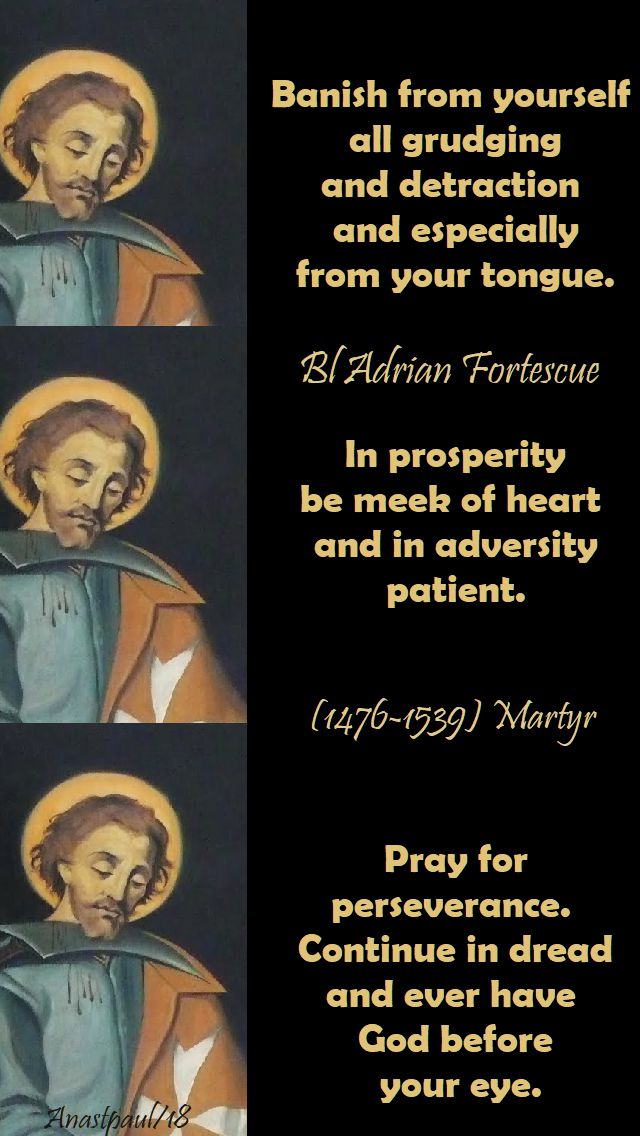
“Banish from yourself all grudging and detraction and especially from your tongue.”
“In prosperity be meek of heart and in adversity patient.”
“Pray for perseverance. Continue in dread and ever have God before your eye.”
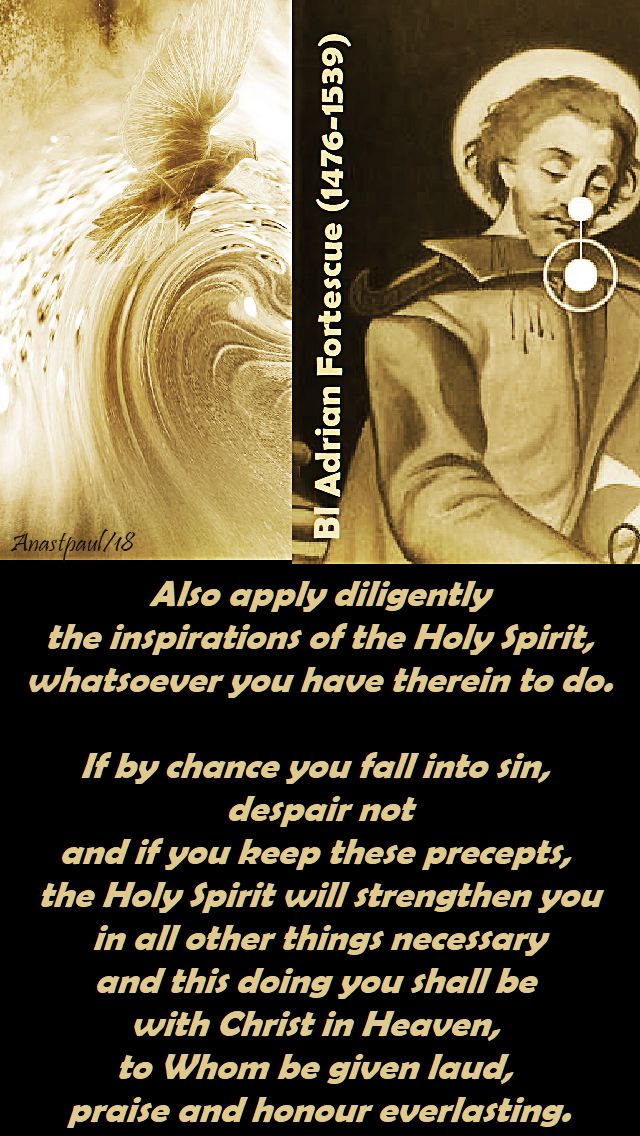
“Also apply diligently the inspirations of the Holy Spirit, whatsoever you have therein to do.”
“If by chance you fall into sin, despair not and if you keep these precepts, the Holy Spirit will strengthen you in all other things necessary and this doing you shall be with Christ in Heaven, to Whom be given laud, praise and honour everlasting.”
One Minute Reflection – 7 July – Saturday of the Thirteenth Week of Ordinary Time, Year B – Today’s Gospel Matthew 9:14-17.
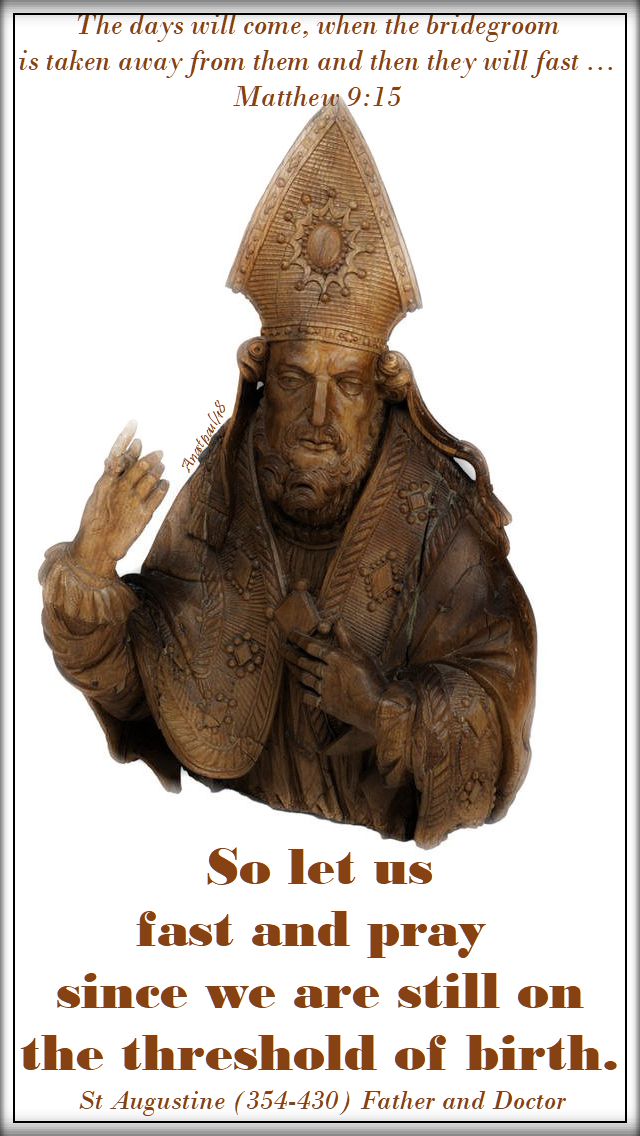
And Jesus said to them, “Can the wedding guests mourn as long as the bridegroom is with them? The days will come, when the bridegroom is taken away from them, and then they will fast...Matthew 9:15
REFLECTION – “However, our mourning is right if we burn with desire to see Him. How happy they were who were able to enjoy His presence before His Passion, to question Him as they wished and listen to Him as necessary… As for us, we see the fulfilment of what He said: “The days are coming when you will long to see one of the days of the Son of Man, and you will not see it” (Lk 17:22)…A little while and you will no longer see me and again a little while and you will see me” (Jn 16:19). But now this is the hour of which He said: “You will weep and mourn but the world will rejoice… But, He added, I will see you again and your hearts will rejoice and no one will take your joy away from you” (v.22). The hope thus given us by Him, who is faithful in His promises, never now leaves us, without a certain joy — until that overwhelming joy comes on the day when we will be like Him because we will see Him as he is (1Jn 3:2)… “When a woman is in labour, she has pain because her hour has come,” says the Lord, “but when her child is born, she no longer remembers the anguish because of the joy of having brought a human being into the world” (Jn 16:21). This is the joy no one can take away from us and with which we will be satisfied when we pass to eternal light from our present conception in faith. So let us fast and pray since we are still on the threshold of birth.“…St Augustine (354-430) Father and Doctor
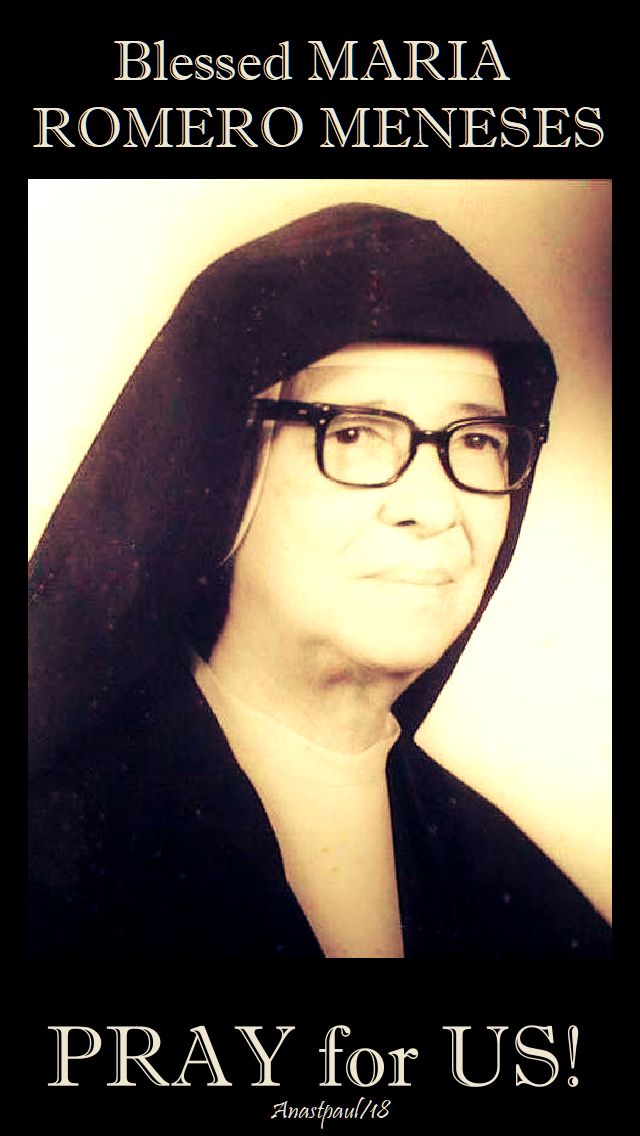
PRAYER – Father almighty, as we wait and work and pray and fast in joyful hope of our eternal life with You, grant we pray that we may always remain steadfast in Your love. Blessed Maria Romero Meneses, pray for us that we will fully utilise the many gifts our Almighty God has bestowed on us as we journey home. We make our prayer through Jesus Christ our Lord, in union with You and the Holy Spirit, one God forever, amen.
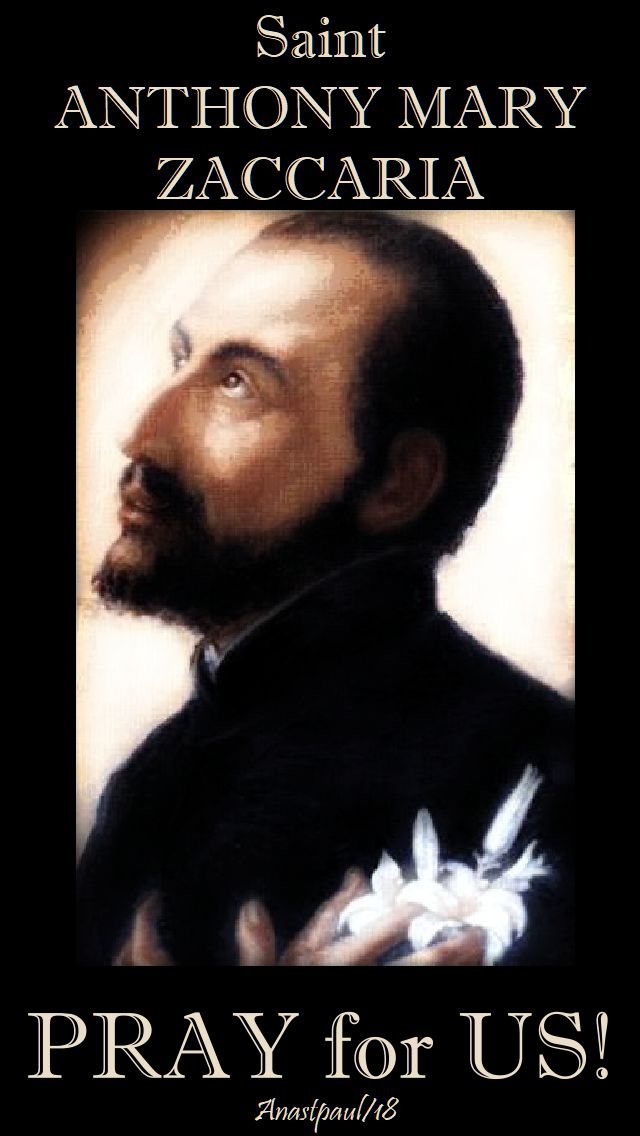
Thought for the Day – 5 July – The Memorial of St Anthony Mary Zaccaria (1502-1539)
Compassion for the sick and the poor led Dr Anthony Mary Zaccaria to see beyond the sick bodies of his patients and recognise the need for a different kind of healing. After becoming “Fr” Zaccaria, he tried to fill that need and dedicated the rest of his life to doing so. …….the Pauline ardour of his preaching would probably “turn off” many people today. When even some psychiatrists complain at the lack of a sense of sin, it may be time to tell ourselves that not all evil is explained by emotional disorder, subconscious and unconscious drives, parental influence and so on. The old-time “hell and damnation” mission sermons have given way to positive, encouraging, biblical homilies. We do indeed need assurance of forgiveness, relief from existential anxiety and future shock. But we still need prophets to stand up and tell us, “If we say ‘We are without sin,’ we deceive ourselves and the truth is not in us” (1 John 1:8). (Fr Don Miller OFM). St Anthony was such a prophet, he let God step in and lead him to a whole new set of plans. May we too allow God room in our boat to navigate us to a new way of life!
“We are fools for Christ’s sake:
our holy guide and most revered patron, was speaking about himself and the rest of the apostles and about the other people who profess the Christian and apostolic way of life.
But there is no reason, dear brothers, that we should be surprised or afraid; for the disciple is not superior to his teacher, nor the slave to his master. We should love and feel compassion for those who oppose us, rather than abhor and despise them, since they harm themselves and do us good and adorn us with crowns of everlasting glory while they incite God’s anger against themselves. And even more than this, we should pray for them and not be overcome by evil but overcome evil by goodness.
We should heap good works like red-hot coals of burning love upon their heads, as our Apostle urges us to do, so that when they become aware of our tolerance and gentleness they may undergo a change of heart and be prompted to turn in love to God.”
Quote/s of the Day – 5 July – The Memorial of St Anthony Mary Zaccaria (1502-1539)
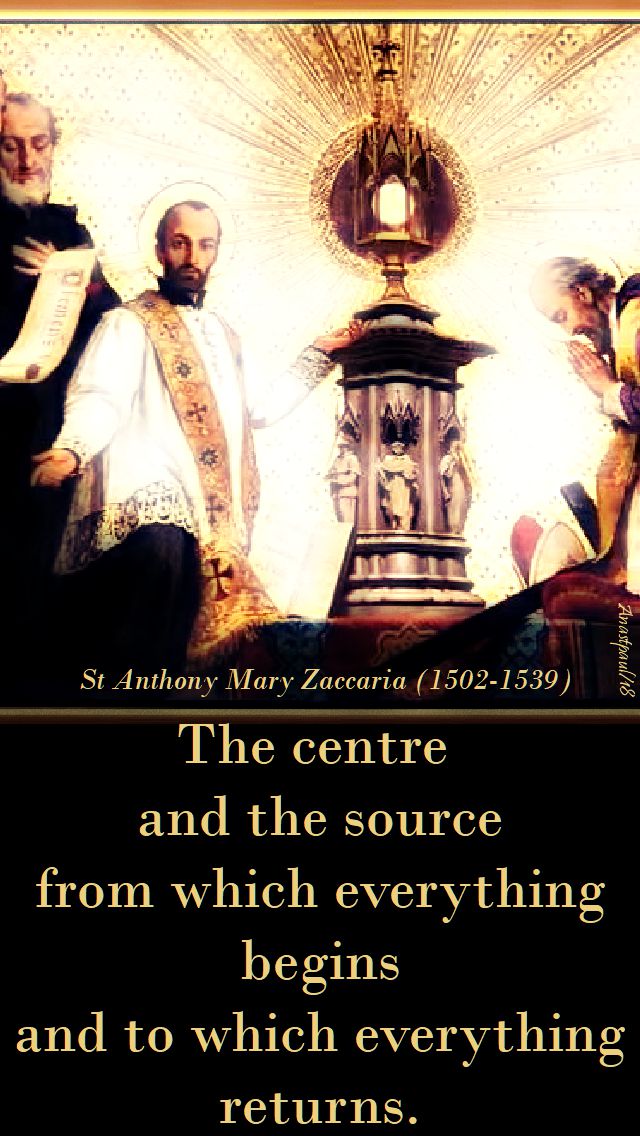
“The centre and the source from which everything begins and to which everything returns.”
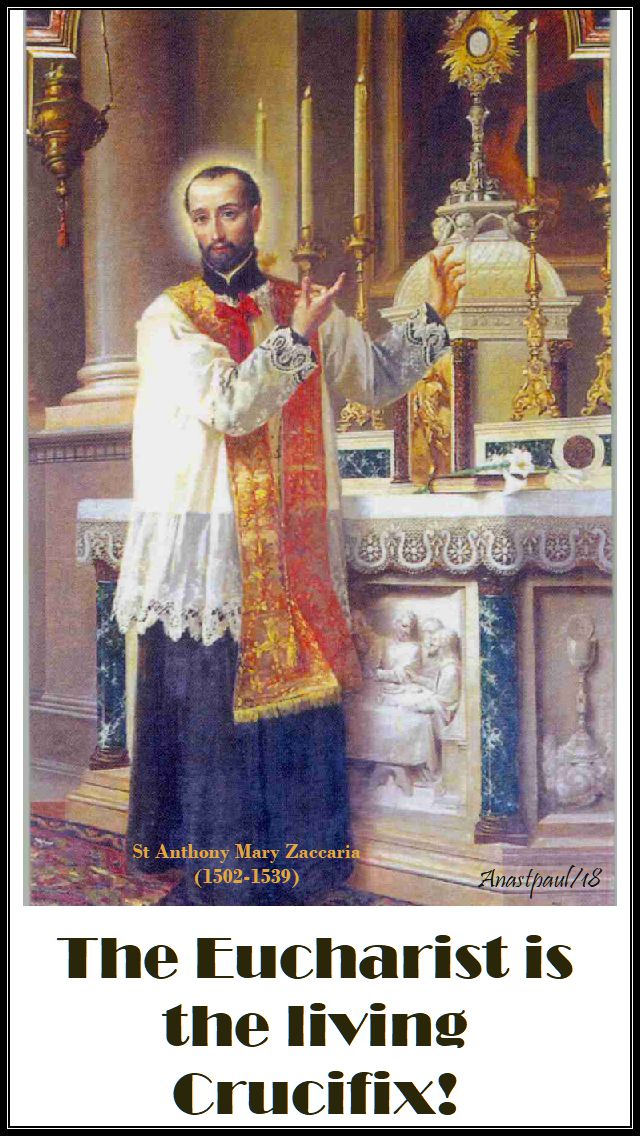
“The Eucharist is the living Crucifix!”
“If you want to obtain what you pray for, adapt yourself to it, that is, if you want humility, do not avoid humiliations.”
“Let them keep in mind, therefore, that there can be no humility without reproaches and mockery and anyone who feels ashamed of them … may as well abandon all hope, of being able to achieve perfection.”
“That which God commands seems difficult and a burden. The way is rough; you draw back; you have no desire to follow it. Yet DO SO – and you will attain glory.”
“What good thing could God deny us when He is the one who invites us to ask?”
One Minute Reflection – 20 June – Wednesday Eleventh Week of Ord Time Year B – Today’s Gospel Matthew 6:1-6.16-18
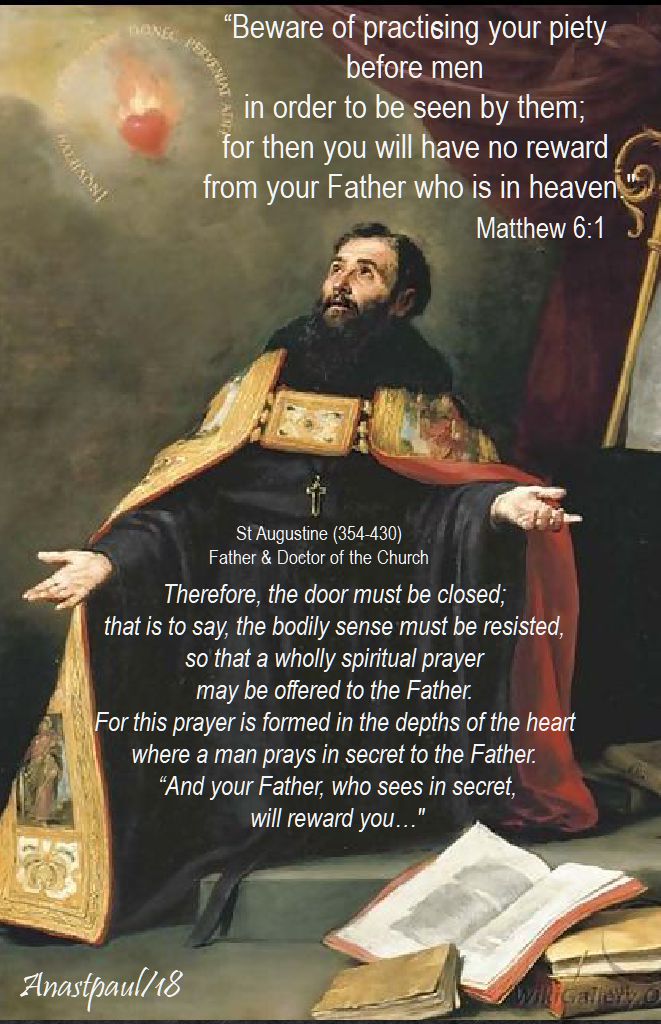
Jesus said to his disciples: ” “Beware of practicing your piety before men in order to be seen by them; for then you will have no reward from your Father who is in heaven.”…Matthew 6:1
REFLECTION – “Jesus says, “When you pray, go into your chamber.” Now, what are these chambers but the heart signified in the Psalm where it is said: “The things you say in your hearts, be sorry for in your room.” He then continues: “And closing the doors, pray in secret to our Father.” Our entering the room is not enough if the door is left open to the importunate, for external things enter brazenly in through this door and lay hold on our interior affections. Temporal and visible penetrate through this door, that is, one of the senses, they enter our thoughts and by a swarm of fancies noisily disturb us while engaged in prayer. Therefore, the door must be closed; that is to say, the bodily sense must be resisted, so that a wholly spiritual prayer may be offered to the Father. For this prayer is formed in the depths of the heart where a man prays in secret to the Father. “And your Father, who sees in secret, will reward you…”
The Lord does not admonish us to pray but teaches us how to pray, just as the preceding passage does not admonish us to give alms but tells us what our intention ought to be when we are giving them. This is due to the fact that He demands the purity of heart that one can only obtain by a continuous and undivided striving for eternal life through no other motive than a pure love of wisdom…St Augustine (354-430), Father & Doctor of the Church – Commentary on the Sermon on the Mount, Bk. II, 3, 11
PRAYER – Lord God, in Your wisdom, You created us, by Your providence You rule us, penetrate our inmost being with Your light, so that our way of life may always be one of faithful service to You, as we follow the way of Your Son. Holy Mother, guide us as you guided Your Son. Through Christ our Lord, with the Holy Spirit, one God, amen.
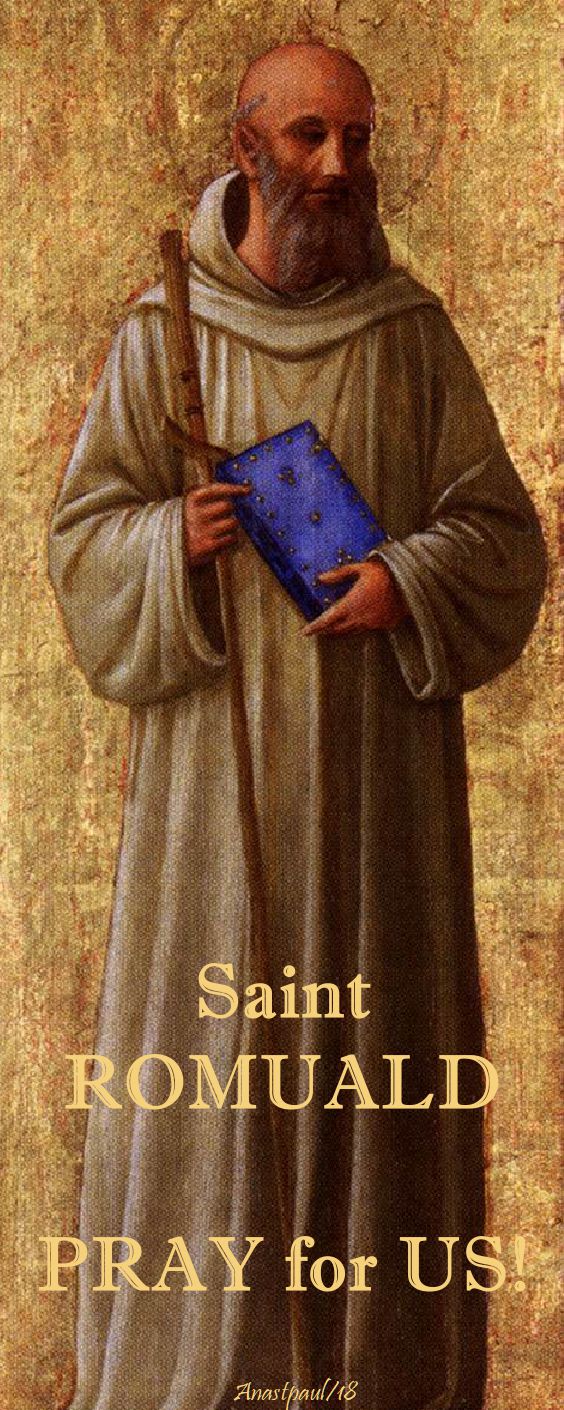
Quote/s of the Day – 18 June – The Memorial of St Romuald (c 951-1027)
Speaking of: Prayer
“It is better to say one Our Father fervently and devoutly than a thousand, with no devotion and full of distraction.”
St Edmund (841-869)
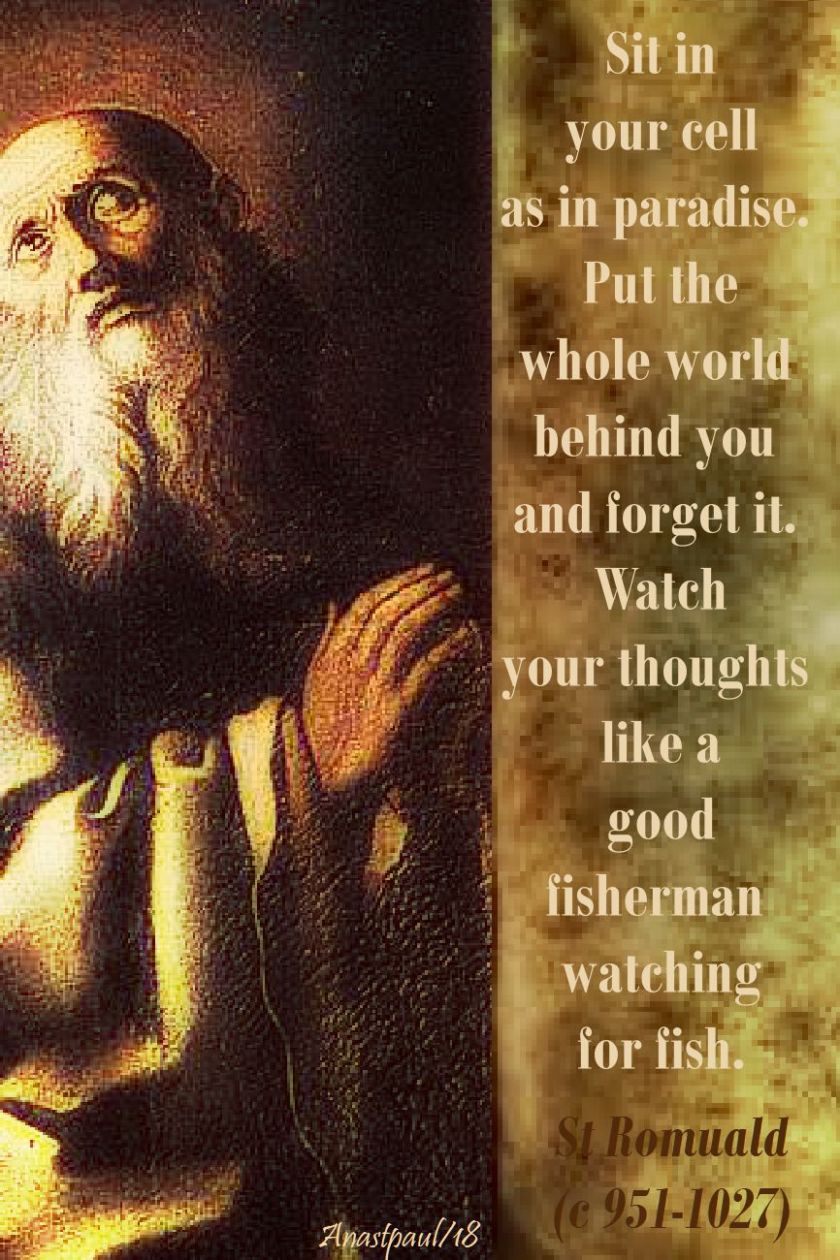
“Sit in your cell as in paradise. Put the whole world behind you and forget it. Watch your thoughts like a good fisherman watching for fish.”
St Romuald (c 951-1027)
“Were you to ask, ‘what are the means of overcoming temptations’, I would answer: The first means is prayer; the second is prayer; the third is prayer; and should you ask me, a thousand times, I would repeat the same.”
St Alphonsus Liguori (1696-1787)
Most Zealous Doctor
“When we speak to Jesus with simplicity and with all our heart, He does like a mother who holds her child’s head with her hands and covers it with kisses and caresses.”
St John Vianney (1786-1859)
“Jesus is waiting for you in the chapel. Go and find Him.”
St Jeanne Jugan (1792-1879) 30 August
“To clasp the hands in prayer is a beginning of an uprising against the disorder of the world.”
Karl Barth (1886-1968)
“Friends, do not be afraid of silence or stillness. Listen to God. Adore Him in the Eucharist.”
Pope Benedict XVI
“Turn your car into a monastery.”
Bishop Robert Barron
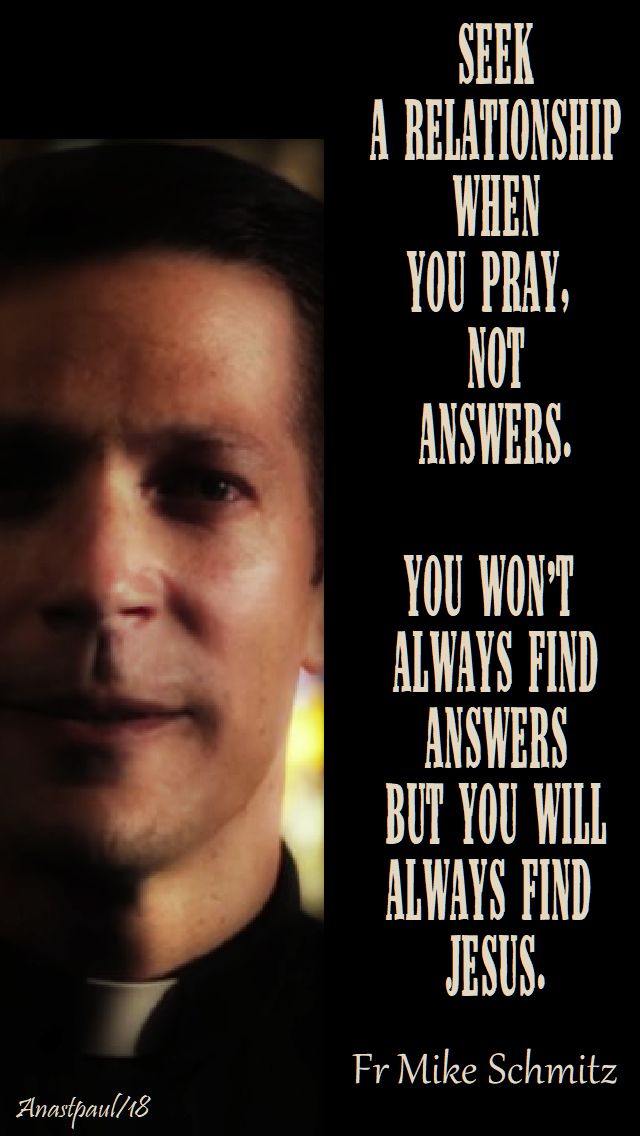
“Seek a relationship when you pray, not answers. You won’t always find answers but you will always find Jesus.”
One Minute Reflection – 19 June – The Memorial of St Romuald (c 951-1027)
And we have this confidence in him, that if we ask anything according to his will, he hears us. And if we know that he hears us, in regard to whatever we ask, we know that, what we have asked him for, is ours...1 John 5:14-15
REFLECTION – “Better to pray one psalm with devotion and compunction than a hundred with distraction.”…St Romuald
PRAYER – Father, through St Romuald You renewed the life of solitude and prayer in your Church. By our prayer and self-denial as we follow Christ our Lord, bring us the joy of heaven. Kindly receive the intercession of St Romuald still, as we beg his prayers for all of your Church. We ask this through our Lord Jesus Christ, your Son, who lives and reigns with you and the Holy Spirit, one God, forever and ever. Amen
Thought for the Day – 18 June – Monday of the Eleventh Week in Ordinary Time, Year B – Today’s Gospel Matthew 5:38-42
Pope Francis: to love your enemies, prayer is the way
“Love your enemies and pray for those who persecute you.”
“Pray for the one who hurt me?” the Pope asked. “Yes,” he answered, “because it changes lives.” If we think it is impossible, then pray, the Pope said. Pray every day for the grace to forgive and the grace to love.
“This advice: ‘Be holy, for I the Lord your God, am holy.’ And then: ‘You shall be perfect as your heavenly Father is perfect’,” the Pope remarked. Forgiveness and prayer are the way to do this. “This is the way of holiness,” he said. “If all men and women of the world learned this, there would be no wars, there would not be.”
Wars begin “in bitterness, rancour, the desire for revenge, to make someone pay. But that destroys families, destroys friendships, destroys neighbourhoods, destroys so much,” he said. For Pope Francis, this is why we must pray always for the grace not to hold grudges and for “the grace to pray for our enemies, to pray for the people that do not love us, the grace of peace.”
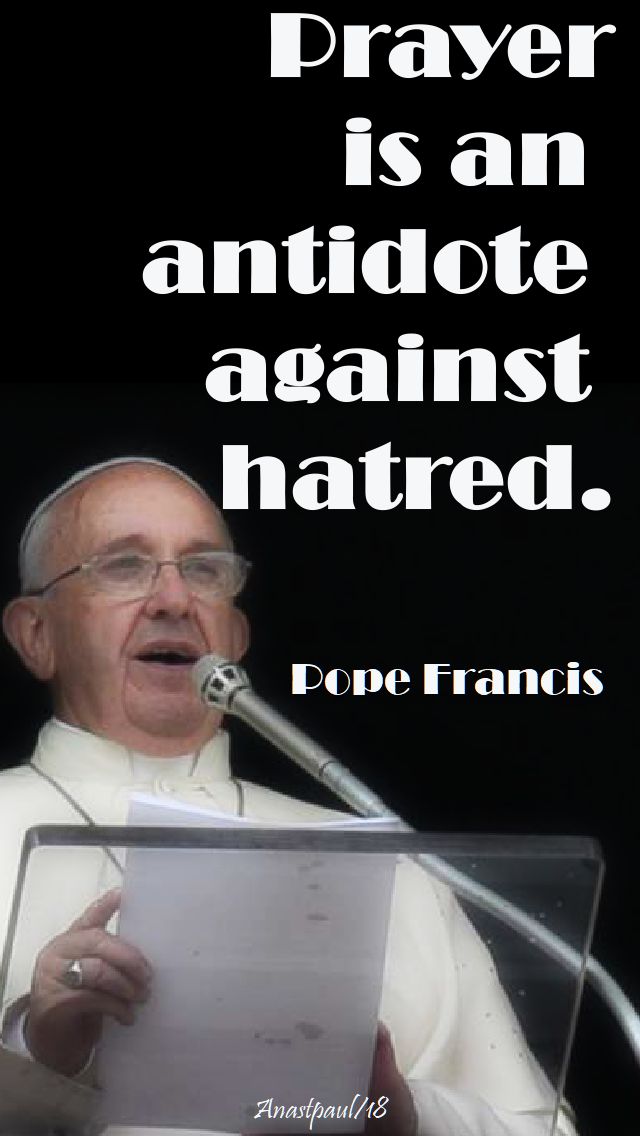
If we make this our daily prayer, the Pope continued, even just praying one prayer a day for our enemies, this is how we will “win” and make progress “on the path of holiness and perfection.” In the end, “evil is overcome by good,” he said, and “sin is won with generosity.” “Prayer is an antidote against hatred, against wars, these wars that start at home, which start in the neighbourhood, which begin in families,” he said.
The Pope said if he knows that someone wants to hurt him and does not love him, “I pray especially for him.”
Quote/s of the Day – 14 June – Thursday of the Tenth Week of Ordinary Time, Year B
Speaking of: Seeking Thomas à Kempis
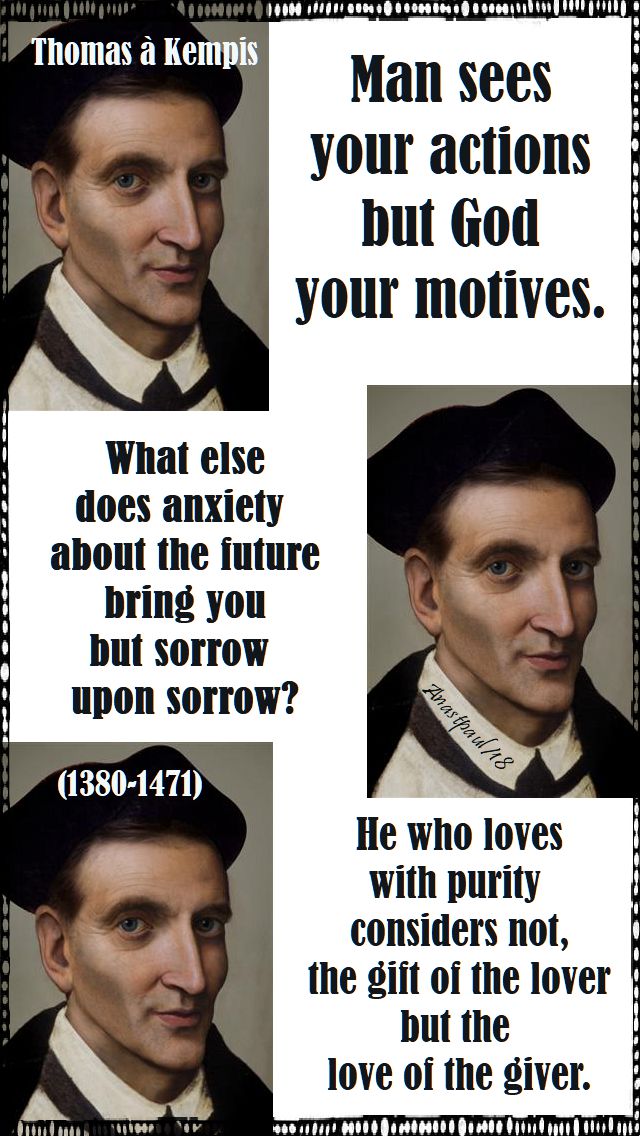
“Man sees your actions but God your motives.”
“What else does anxiety about the future bring you but sorrow upon sorrow?”
“He who loves with purity, considers not, the gift of the lover but the love of the giver.”
“Nothing, how little so ever it be, if it is suffered for God’s sake, can pass without merit in the sight of God.”
“Who has a harder fight, than he who is striving, to overcome himself?”
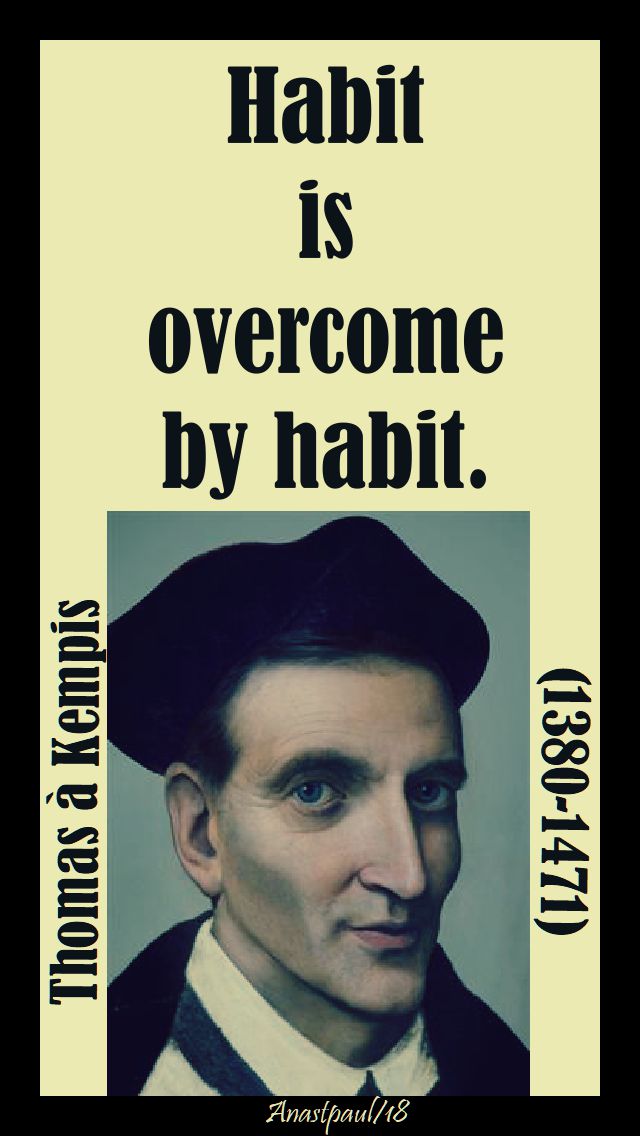
“Habit is overcome by habit.”
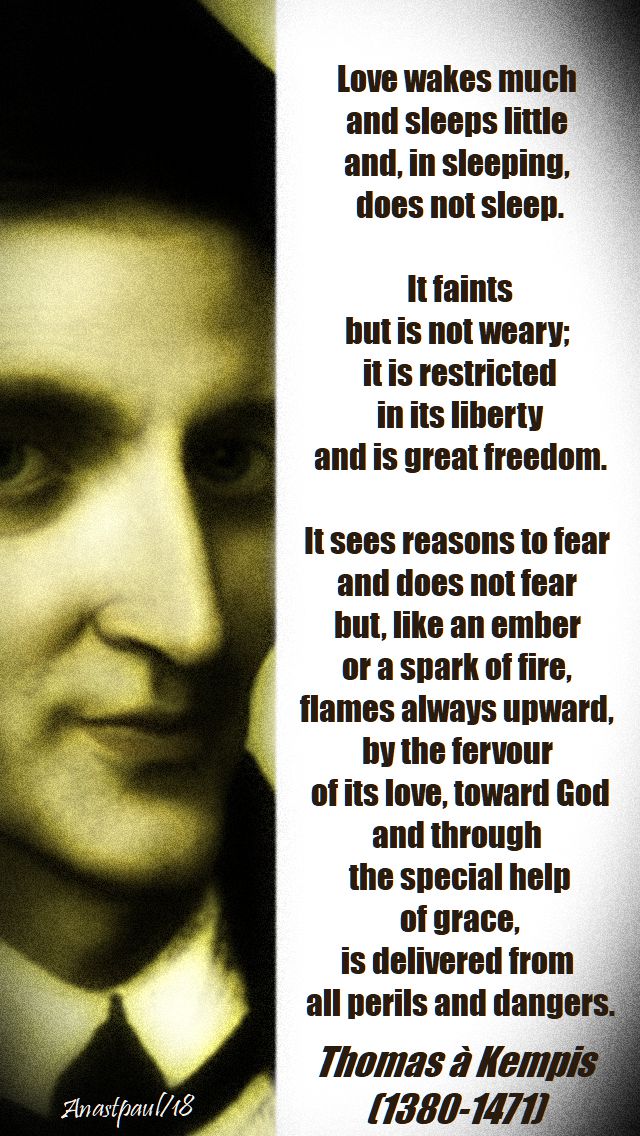
“Love wakes much and sleeps little and, in sleeping, does not sleep. It faints but is not weary; it is restricted in its liberty and is great freedom. It sees reasons to fear and does not fear but, like an ember or a spark of fire, flames always upward, by the fervour of its love, toward God and through the special help of grace, is delivered from all perils and dangers.”
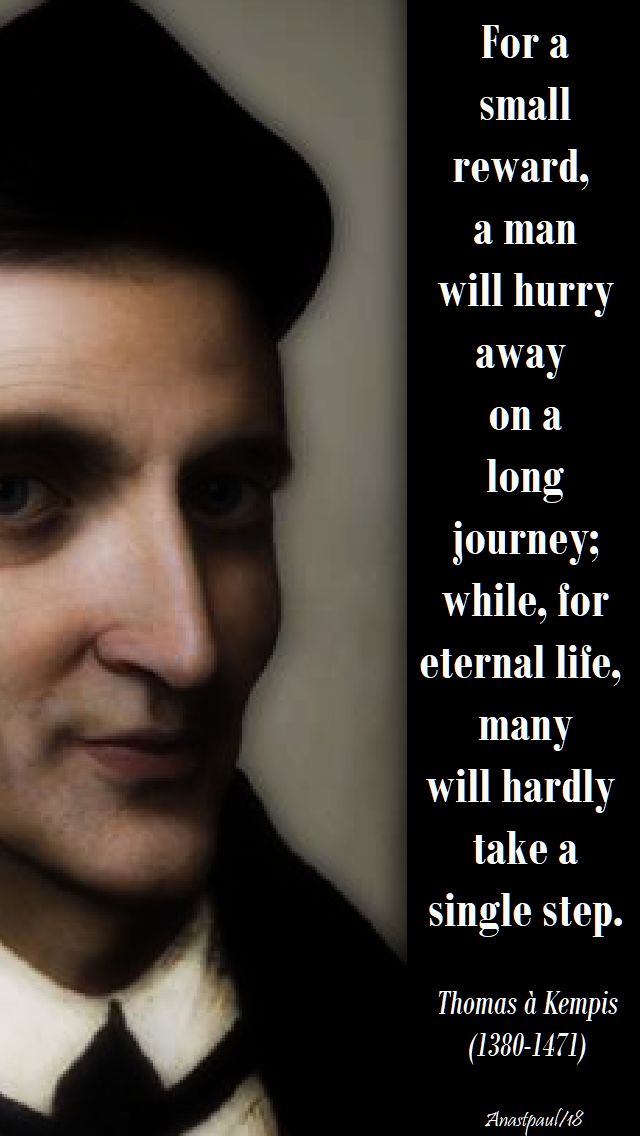
“For a small reward, a man will hurry away on a long journey; while for eternal life, many will hardly take a single step.”
“In the Cross is salvation; in the Cross is life, in the Cross is protection against our enemies, in the Cross is infusion of heavenly sweetness, in the Cross is strength of mind, in the Cross is joy of spirit, in the Cross is excellence of virtue, in the Cross is perfection of holiness. There is no salvation of soul, nor hope of eternal life, save in the Cross.”
“He will be with you also, all the way, that faithful God. Every morning when you awaken, to the old and tolerable pain, at every mile of the hot uphill dusty road of tiring duty, on to the judgment seat, the same Christ there as ever, still loving you, still sufficient for you, even then. And then, on through all eternity.”
Quote/s of the Day – 11 June – Memorial of St Barnabas, Apostle
Speaking of: “Seeking Sainthood”
“Pray as though everything depended on God. Work as though everything depended on you.”
St Augustine (354-430) Father & Doctor of the Church
“Teach us to give and not to count the cost.”
“It is not hard to obey when we love the one, whom we obey.”
St Ignatius Loyola (1491-1556)
“Let us begin in earnest to work out our salvation, for no one will do it for us, since even He Himself, Who made us without ourselves, will not save us without ourselves.”
St Margaret Mary Alacoque (1647-1690)
“You cannot be half a saint; you must be a whole saint or no saint at all.”
St Therese of the Child Jesus/Lisieux (1873-1897) Doctor of the Church
Quote/s of the Day – 30 May – The Memorial of St Joan of Arc (1412-1431)
“About Jesus Christ and the Church, I simply know, that they are just one thing and we shouldn’t complicate the matter.”
“Help yourself and God will help you.”
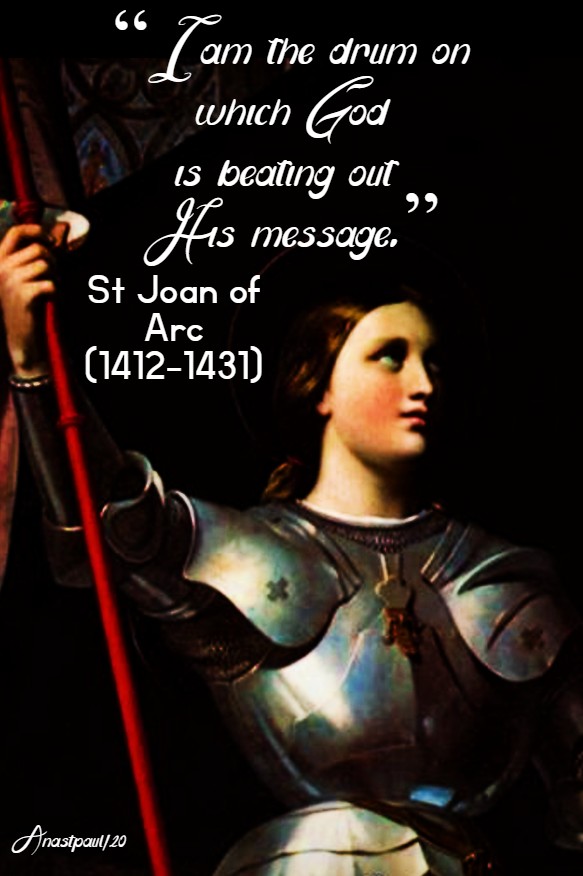
“I am the drum on which God is beating out His message.”
“If I be not in a state of grace, I pray God place me in it, if I be in it, I pray God keep me so.”
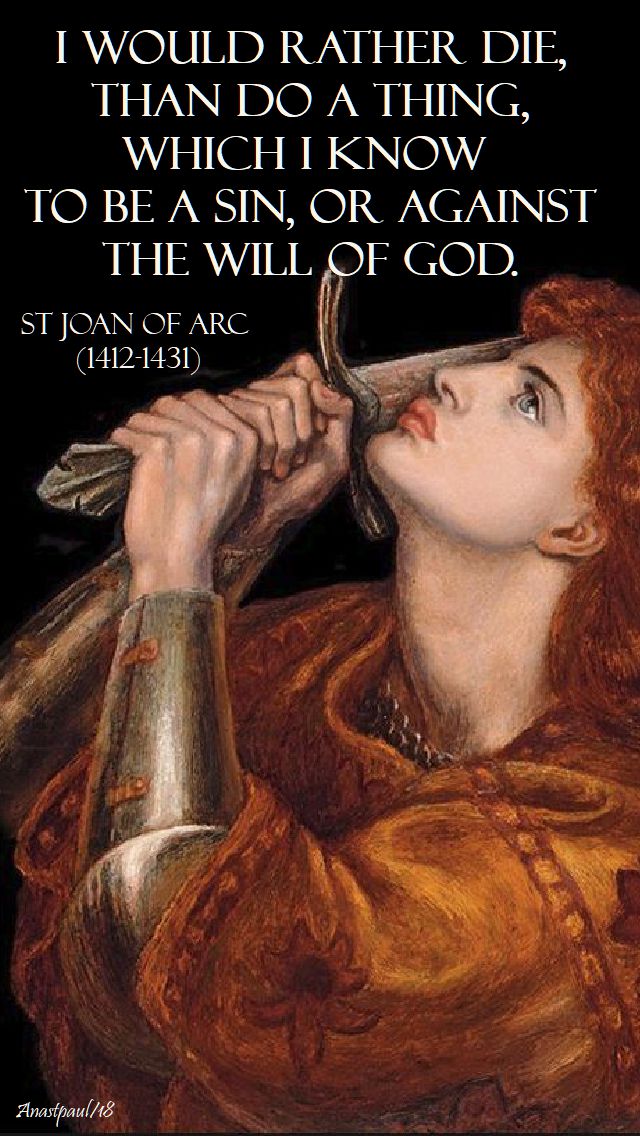
“I would rather die, than do a thing, which I know to be a sin, or against the will of God.”
“Every man gives his life, for what he believes. Every woman gives her life, for what she believes. Sometimes people believe, in little or nothing and so they give their lives, to little or nothing. One life is all we have and we live it, as we believe in living it… and then it’s gone. But to surrender, who you are and to live without belief, is more terrible than dying – even more terrible than dying young.”
































 AnaStpaul
You must be logged in to post a comment.