Thought for the Day – 10 February – Meditations with Antonio Cardinal Bacci (1881-1971)
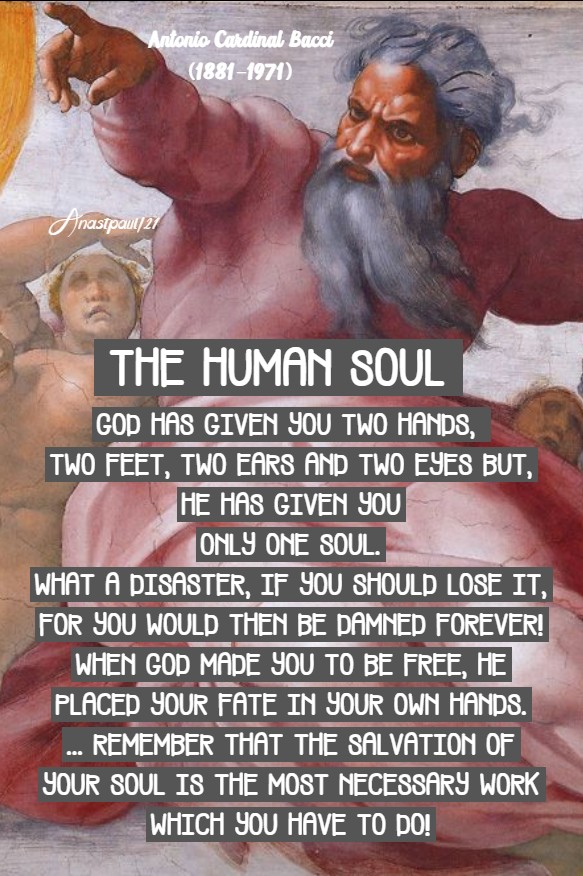
The Human Soul
“Consider that you have only one soul, which belongs entirely to God and has Heaven for its true home. God has given you two hands, two feet, two ears and two eyes but, He has given you only one soul. What a disaster, if you should lose it, for you would then be damned forever! When God made you to be free, He placed your fate in your own hands. “When God, in the beginning, created man, He made him subject to his own free choice” (Ecclus 15:14). Remember that the salvation of your soul is the most necessary work which you have to do! It is more precious to you than gold or silver. “More precious than gold is health and well-being, contentment of spirit, than coral” (Ecclus 30:15). All our attention should be devoted to keeping our soul free from sin and endowing it with every virtue.”
Quote/s of the Day – 10 February – Readings: Genesis 2:4-9, 15-17, Psalms 104:1-2,27-28, 29-30, Mark 7:14-23
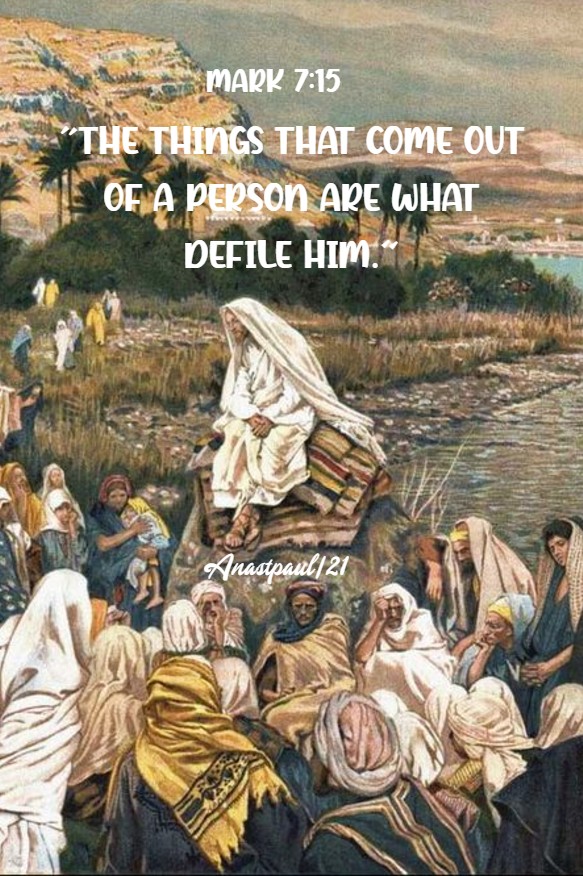
“The things that come out of a person are what defile him.”
Mark 7:15
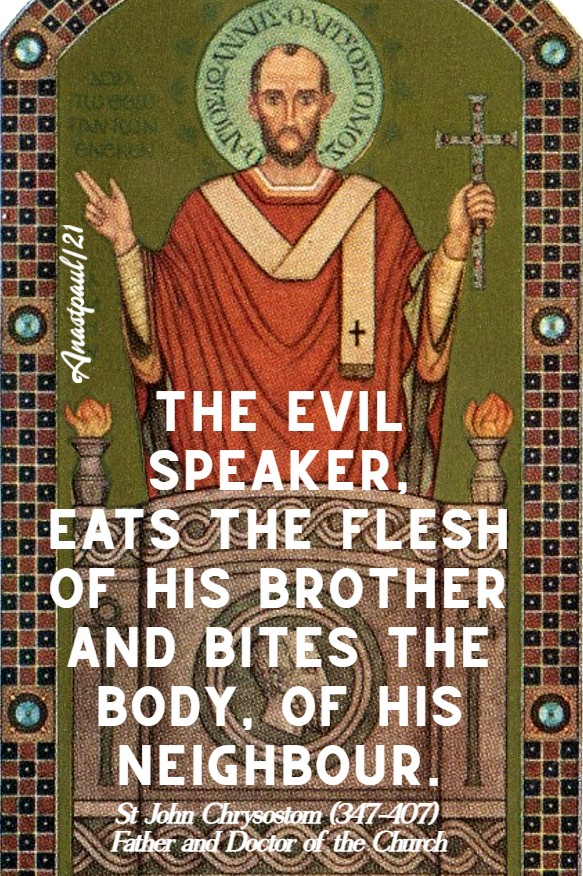
“The evil speaker, eats the flesh of his brother and bites the body, of his neighbour.”
St John Chrysostom (347-407) Father and Doctor of the Church
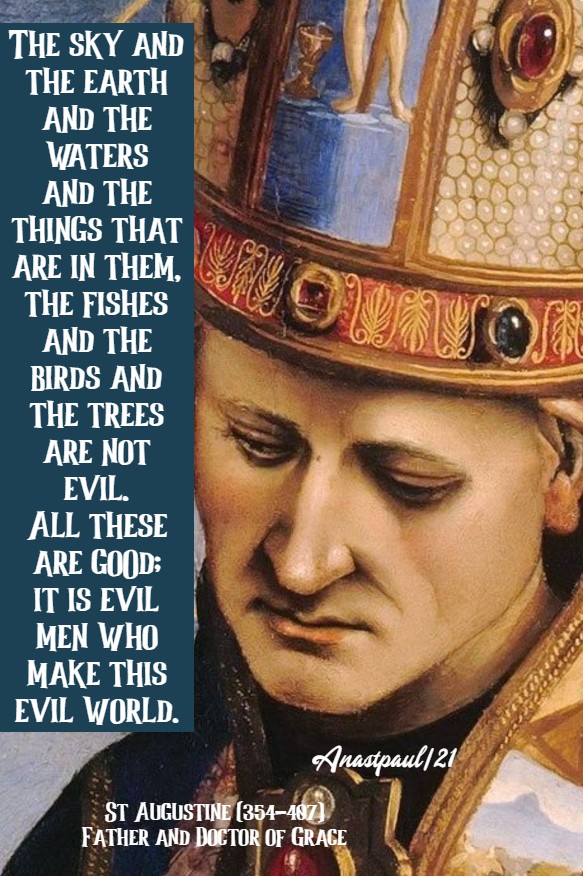
“The sky and the earth and the waters and the things that are in them, the fishes and the birds and the trees are not evil. All these are good; it is evil men who make this evil world.”
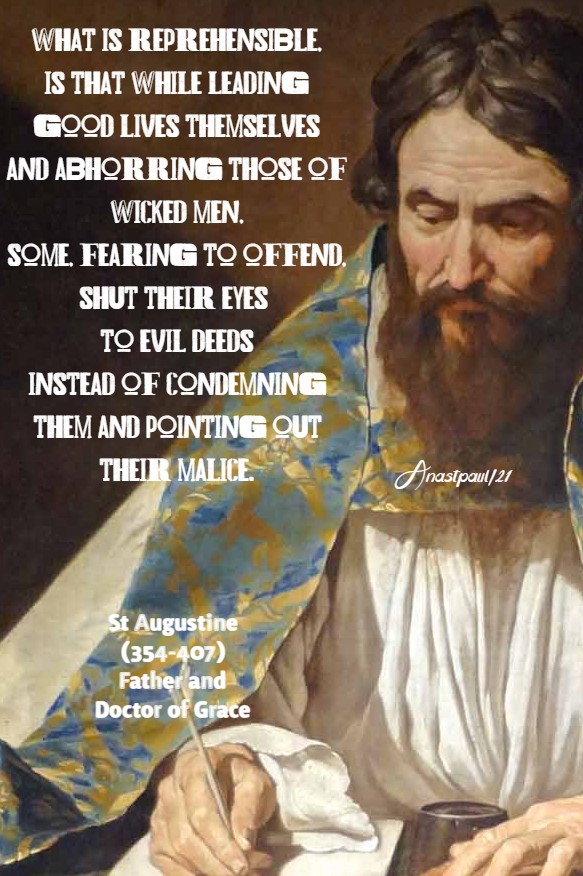
“What is reprehensible, is that while leading good lives themselves and abhorring those of wicked men, some, fearing to offend, shut their eyes to evil deeds instead of condemning them and pointing out their malice.”
St Augustine (354-407) Father and Doctor of Grace
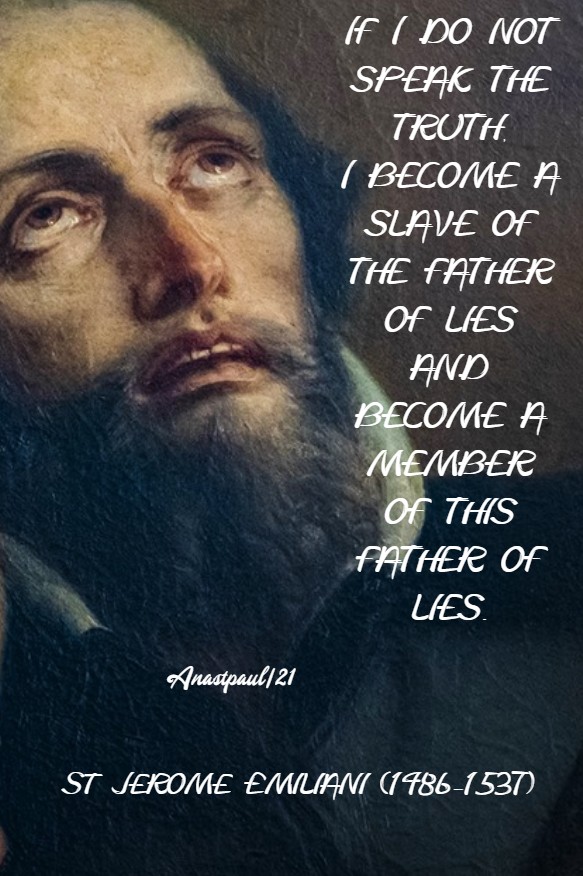
“…If I do not speak the truth, I become a slave of the father of lies and become a member of this father of lies.”
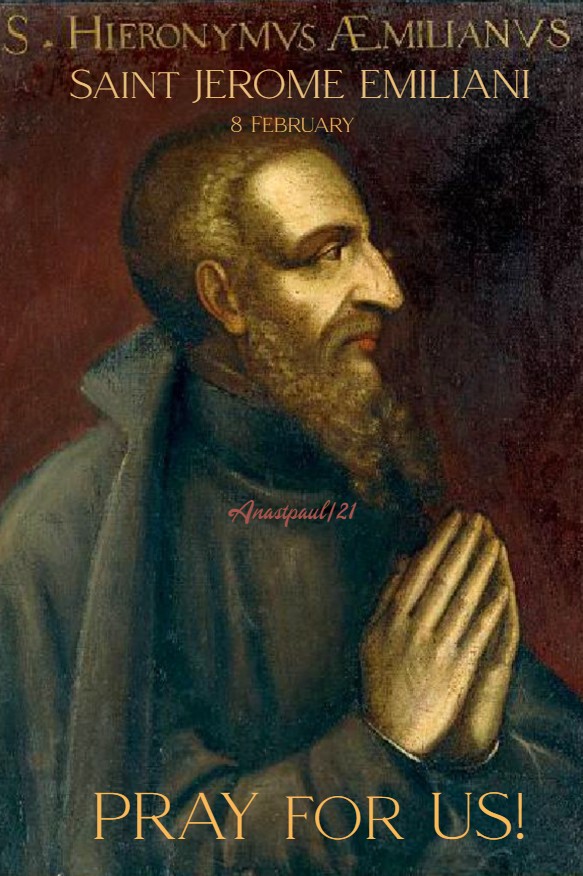
St Jerome Emiliani (1486-1537)
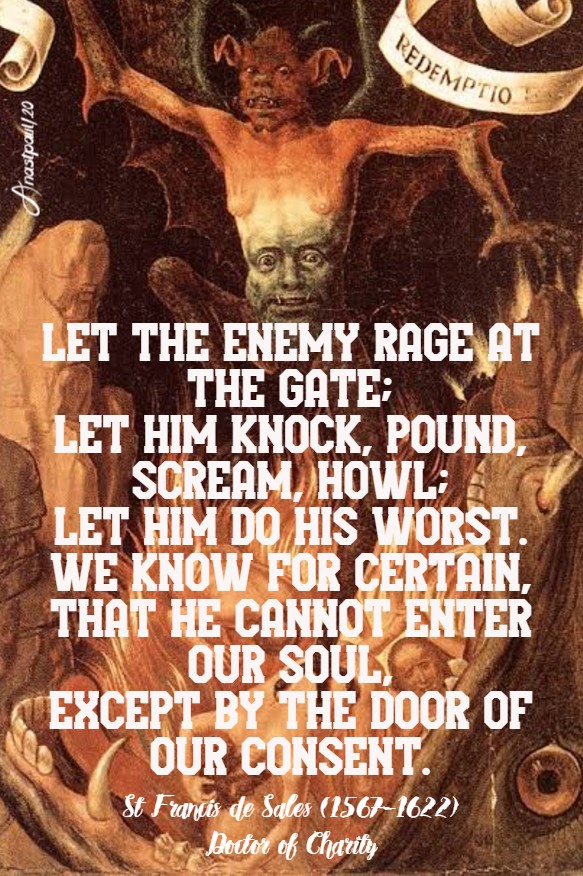
“Let the enemy rage at the gate; let him knock, pound, scream, howl; let him do his worst. We know for certain, that he cannot enter our soul, except by the door of our consent.”
St Francis de Sales ((1567-1622) Doctor of Charity
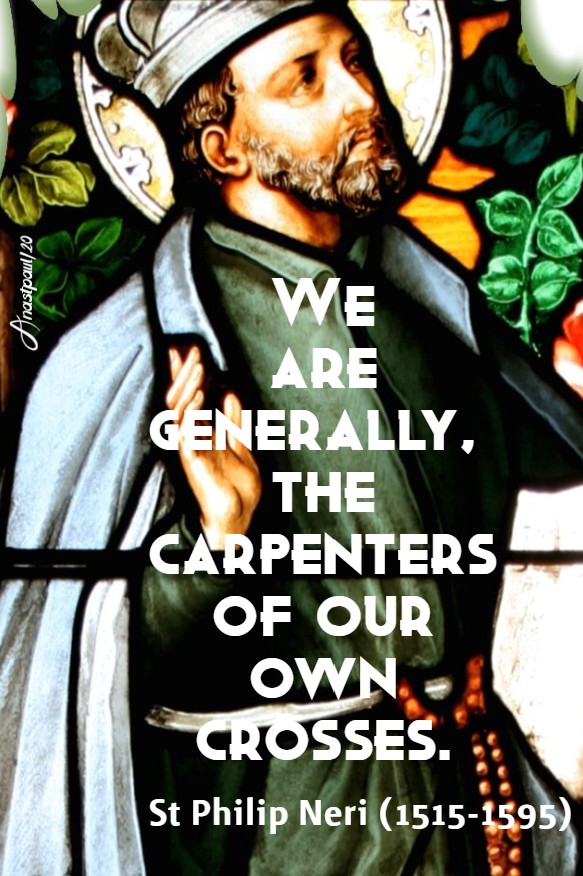
“We are generally the carpenters of our own crosses.”
St Philip Neri (1515-1595)
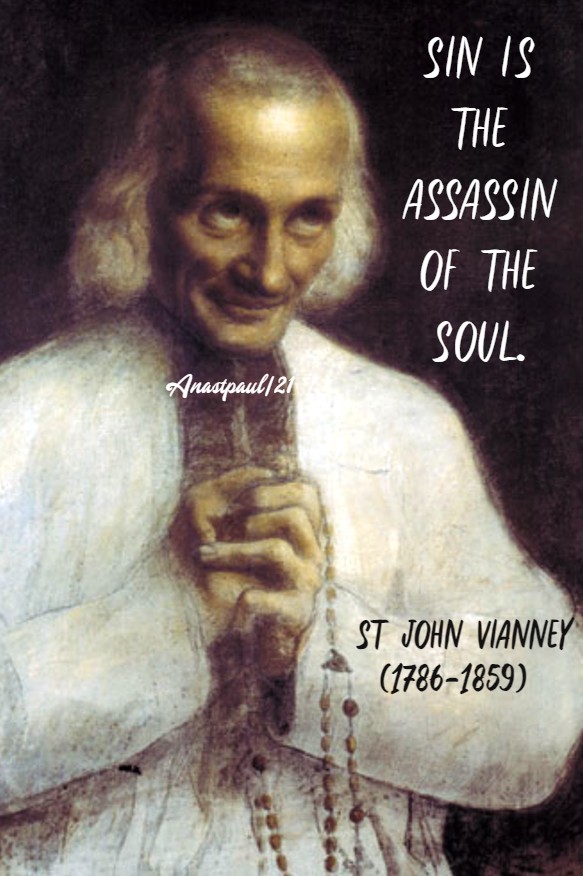
“Sin is the assassin of the soul.”
St John Vianney (1786-1859)
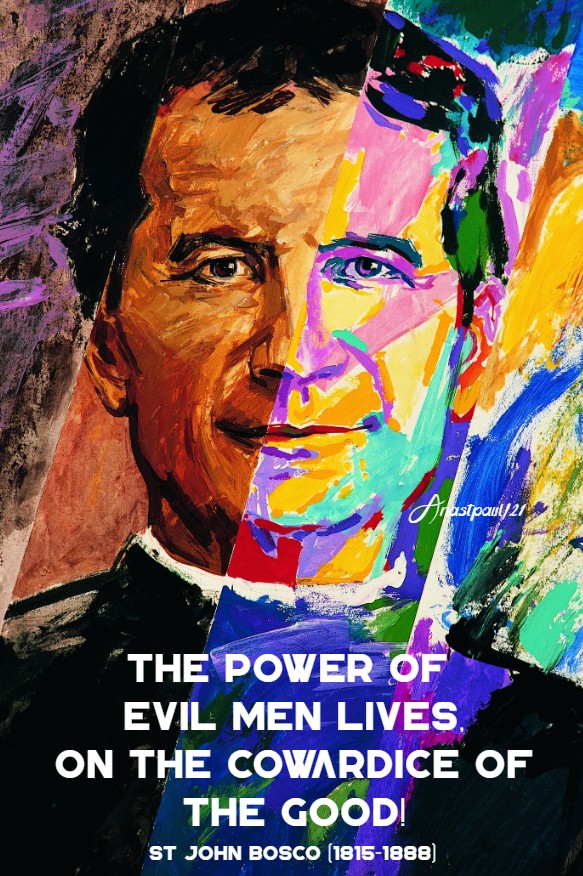
“The power of evil men, lives, on the cowardice of the good!”
Thought for the Day – 8 February – Meditations with Antonio Cardinal Bacci (1881-1971)
Faith and Hope
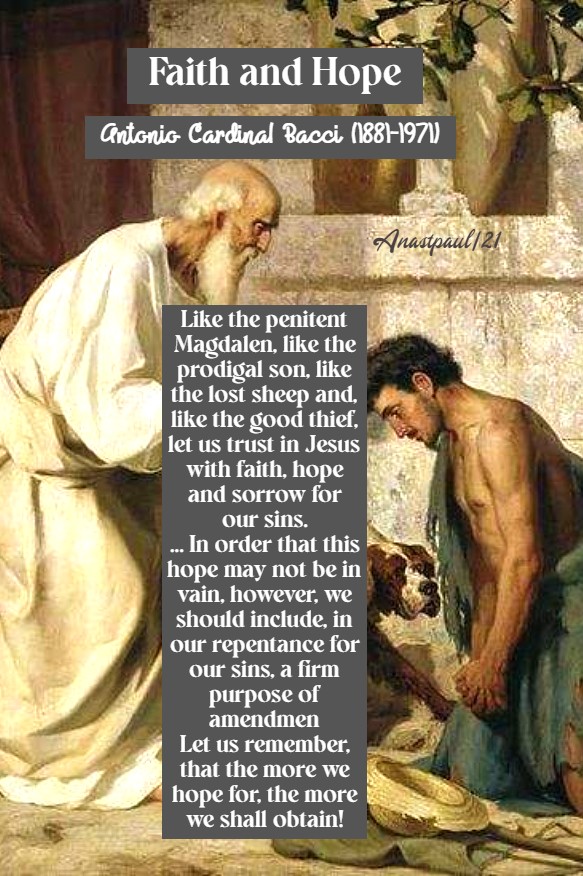
“Christian hope derives from faith. When we believe in the infinitely good and merciful God, Who was made man for us and Who shed His Precious Blood, for our salvation, we experience a great hope and a great confidence. No matter how numerous our sins and our defects, as long as we are sincerely repentant, we should continue to hope for the forgiveness of God. Despair, which led Judas to commit suicide, should never be allowed to enter our minds. Like the penitent Magdalen, like the prodigal son, like the lost sheep and, like the good thief, let us trust in Jesus with faith, hope and sorrow for our sins. Let us remember, that He is infinitely good and merciful and ardently desires to pardon us. Together with this hope of God’s forgiveness, we should nurture the hope of gaining Heaven, which the Lord, in His infinite goodness, has promised, not only to innocent souls but, also to repentant sinners. In order that this hope may not be in vain, however, we should include, in our repentance for our sins, a firm purpose of amendment.
Let us remember, that the more we hope for, the more we shall obtain!”
One Minute Reflection – 10 February – Monday of the Fifth Week of Ordinary Time, Readings: Genesis 1:1-19, Psalms 104:1-2, 5-6, 10 and 12, 24 and 35, Mark 6:53-56 and the Memorial of St Jerome Emiliani (1486–1537)
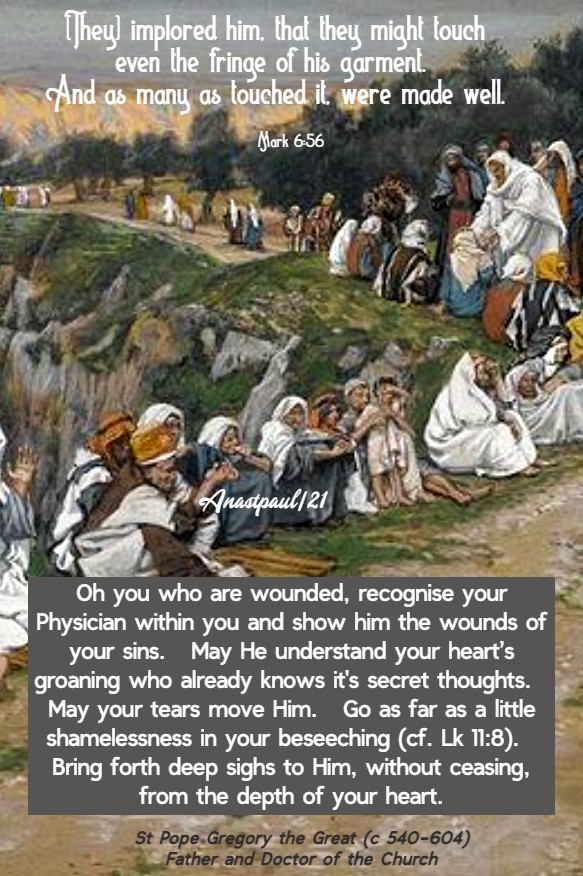
And wherever he came, in villages, cities, or countryside, they laid the sick in the marketplaces and implored him, that they might touch, even the fringe of his garment. And as many as touched it, were made well. – Mark 6:56
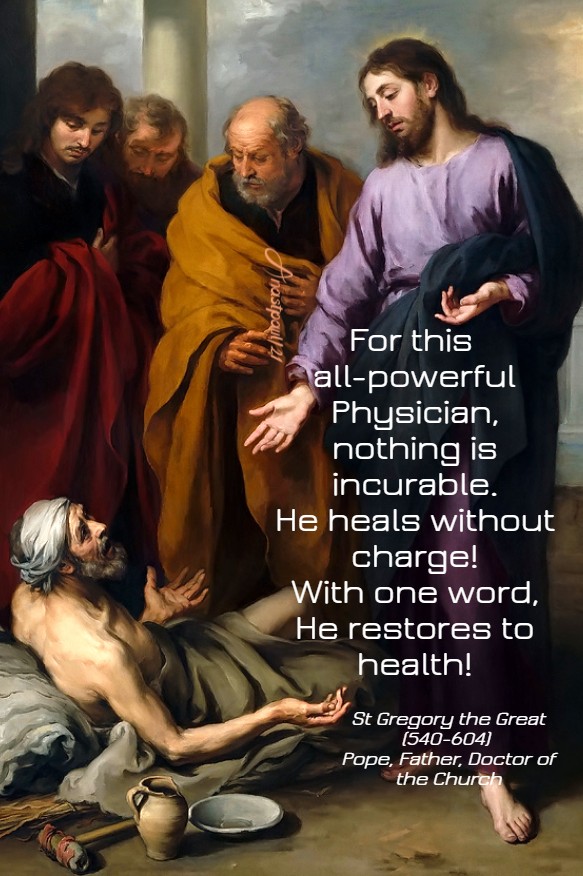
REFLECTION – “Let us set before our interior consideration, someone gravely wounded who is about to breathe his last. … Now, the soul’s wound is sin, of which Scripture speaks in these terms: “Wound and welt and gaping gash, not drained or bandaged or eased with salve” (Is 1:6). Oh you who are wounded, recognise your Physician within you and show him the wounds of your sins. May He understand your heart’s groaning who already knows its secret thoughts. May your tears move Him. Go as far as a little shamelessness in your beseeching (cf. Lk 11:8). Bring forth deep sighs to Him, without ceasing, from the depth of your heart. May your grief reach Him so that He may say to you also : “The Lord has pardoned your sin” (2 Sam 12:13). Cry out with David, who said: “Have mercy on me, O God, in … the greatness of your compassion” (Ps 50[51]:3). It is as though one were to say: “I am in great danger because of an enormous wound, that no doctor can cure, unless the all-powerful Physician comes to help me.” For this all-powerful Physician, nothing is incurable. He heals without charge, with one word He restores to health. I would have despaired of my wound were it not that I placed my trust in the Almighty.” – St Pope Gregory the Great (c 540-604) Father and Doctor of the Church – Commentary on Psalm 50[51]
PRAYER– Father of mercy, You chose St Jerome Emiliani to be a father to orphans in their need. Grant that through his prayer, we may keep faithfully the spirit of sonship, by which we are not only called but really are Your children. Help us to imitate his love and faith, manifesting by our commitment to Your commandments, our true faith. May we seek your grace in temptation and seek ever to avoid the occasions of sin and if we should fall, to run to You in grief and beg Your forgiveness. We make our prayer through Jesus, our Lord in the unity of the Holy Spirit, God forever, amen.
Thought for the Day – 7 February – Meditations with Antonio Cardinal Bacci (1881-1971)
Purgatory
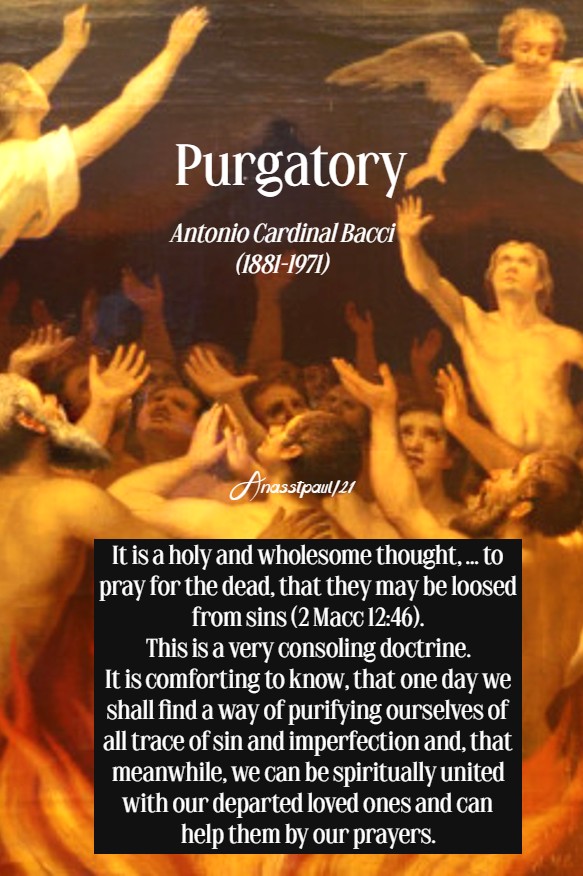
“Devotion to the dead and the belief in a place of expiation and purification after death, can be traced back, not only to the early days of the Church but, even to the dawn of the human race. Although Luther denied the existence of Purgatory, he was compelled to acknowledge the existence of this ancient and universal belief, sanctioned by Tradition, by faith and by human reason. This belief was already present among pagan people, as is attested by the better-known writers of antiquity such as Homer, Sophocles, Plato and Virgil and, by ancient funeral inscriptions. Evidence of the belief among the Jews, is found in Sacred Scripture, where it is related that, after he had conquered the worshippers of Jamnia, Judas Machabaeus, collected twelve thousand drachmas of silver, in order to have sacrifices offered for the dead. It is a holy and wholesome thought, adds the text, to pray for the dead, that they may be loosed from sins (2 Macc 12:46).
This is a very consoling doctrine. It is comforting to know, that one day we shall find a way of purifying ourselves of all trace of sin and imperfection and, that meanwhile, we can be spiritually united with our departed loved ones and can help them by our prayers.”
Thought for the Day – 30 January – Meditations with Antonio Cardinal Bacci (1881-1971)
Depending Always on Jesus
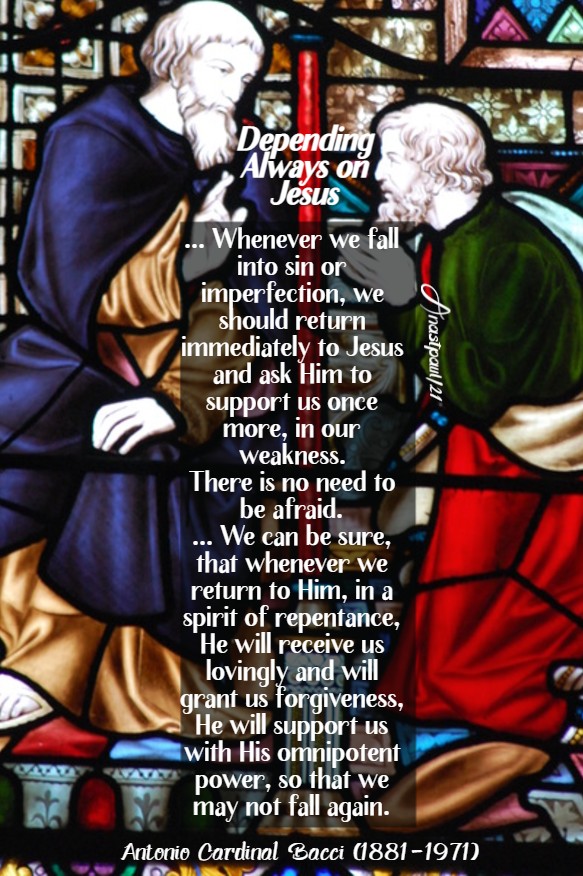
“We must continue to trust in Jesus even when we have been guilty of imperfection or of sin. Sin, according to St Thomas Aquinas, is the denial of love and, therefore, of God, Who is charity. It places a distance between God and the soul. Precisely because of this, whenever we fall into sin or imperfection, we should return immediately to Jesus and ask Him to support us once more, in our weakness. There is no need to be afraid. It was for this purpose that He became man and suffered and died for love of us. We can be sure, that whenever we return to Him, in a spirit of repentance, He will receive us lovingly and will grant us forgiveness, He will support us with His omnipotent power, so that we may not fall again.
We must, as St Francis de Sales writes, lean on the arm of Jesus, as the child leans securely on the arm of it’s mother. “It matters little,” he adds, “where she walks, on a grassy plain or on a steep path surrounded by precipices.” She, is his mother and she carries him; that is enough to make him happy and content. We must trust Jesus in this way, relying always on His support in joy and in sorrow, in moments of trial and in moments of satisfaction, in life and in death. Let us not be afraid; Jesus is better and stronger than our earthly mother. If He guides and supports us, we can be sure of Heaven, no matter what happens!”
Thought for the Day – 22 January – Meditations with Antonio Cardinal Bacci (1881-1971)
The Proper Use of Time
“The high value of the divine gift of time imposes an obligation on us to avoid laziness. The obligation to avoid sin, is still greater. Sin is the most serious way in which we can abuse this gift of God. It is also an act of deep ingratitude, in that, we turn this treasure which God has bestowed on us, into a weapon to be used against the Giver of every good. To use time properly, it is necessary to direct all our actions, intentions and desires towards God, Who is the source of our being and the goal of our earthly pilgrimage.
If everything we do, intend, or desire, springs from our love of God and is aimed at the manifestation of His glory and the expansion of His kingdom upon earth, then, even our most humble and apparently indifferent actions, are precious in the sight of the Mos High and receive His blessing. But, if we are working for ourselves, for our own satisfaction and petty glorification, we ruin everything. All that we do is barren. If we seek ourselves instead of God, we shall hear Him say one day: “You shall have no reward with your Father in Heaven” (Mt 6:1).
Thought for the Day – 21 January – Meditations with Antonio Cardinal Bacci (1881-1971)
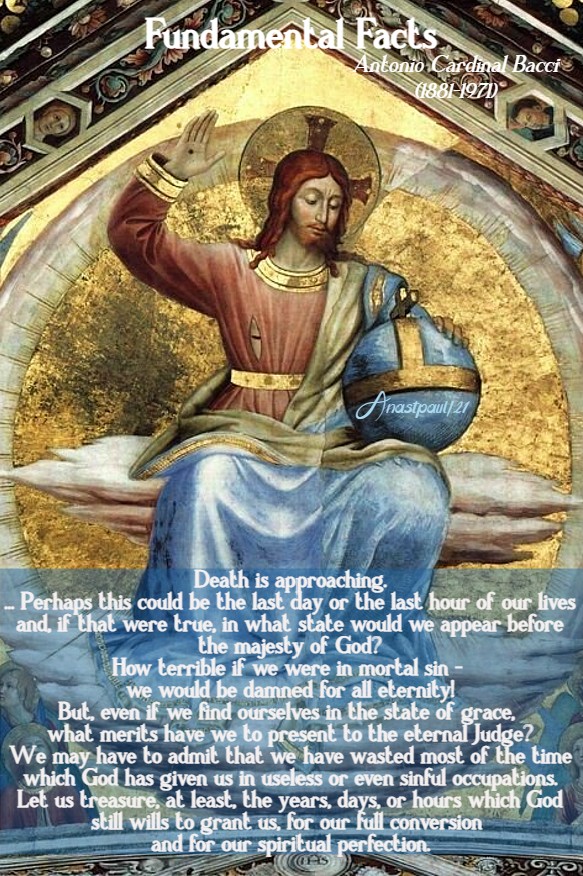
Fundamental Facts
“Death is approaching. How many years have we left? How many months? How many hours? We do not know. Perhaps this could be the last day or the last hour of our lives and, if that were true, in what state would we appear before the majesty of God? How terrible if we were in mortal sin – we would be damned for all eternity!
But, even if we find ourselves in the state of grace, what merits have we to present to the eternal Judge? What sacrifices have we made to prove our love for Him? What mortifications and penances have we voluntarily undertake to purify ourselves of our sins? What good works have we done, what alms have we given, what prayers have we said? We may have to admit that we have wasted most of the time which God has given us in useless or even sinful occupations. Let us treasure, at least, the years, days, or hours which God still wills to grant us, for our full conversion and for our spiritual perfection.”
One Minute Reflection – 20 January – Wednesday of the Second week in Ordinary Time, Readings: Hebrews 7: 1-3, 15-17, Psalms 110:1, 2, 3, 4, Mark 3:1-6
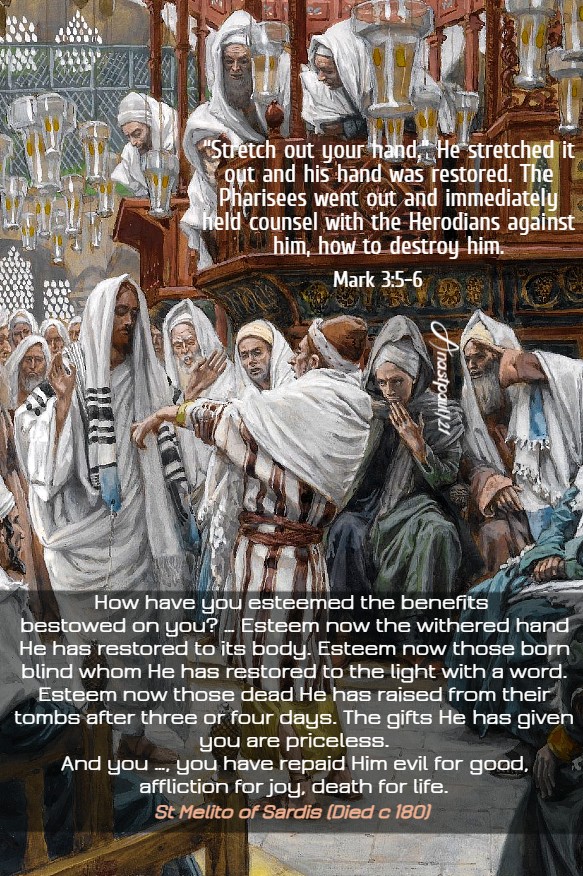
“Stretch out your hand.” He stretched it out and his hand was restored. The Pharisees went out and immediately held counsel with the Herodians against him, how to destroy him. – Mark 3:5-6
REFLECTION – “You have not seen God; you have not recognised the Lord; you did not know that it was He, God’s Firstborn, who was begotten before the morning star (Ps 110[109]:3), who caused light to spring up, who caused day to shine forth when He separated it from darkness, who set the first limits, suspending the earth, drying up the great abyss, spreading out the firmament …, who created the angels in heaven, setting thrones there and who shaped man of the earth. He it was who chose Israel and guided it from Adam to Noah, from Noah to Abraham, from Abraham to Isaac and Jacob and the twelve patriarchs. It was He who led your fathers in Egypt, who protected and fed them. He, who gave them manna from heaven, who quenched their thirst from the rock, who gave them the Law and the promised land, who sent prophets to them and raised up their kings. It is He who has come to you, healing the sick and raising the dead … It is He whom you wanted to put to death, He whom you handed over for money. …
How have you esteemed the benefits bestowed on you? … Esteem now the withered hand He has restored to its body. Esteem now those born blind whom He has restored to the light with a word. Esteem now those dead He has raised from their tombs after three or four days. The gifts He has given you are priceless. And you …, you have repaid Him evil for good, affliction for joy, death for life.” – St Melito of Sardis (Died c 180) Bishop and Apologist – Homily on the Pasch, 82-90
PRAYER – Shed Your clear light on our hearts, Lord, keep us in Your Way, that we too may stretch out our hands and love to those who come our way. May Your law be our light and Your love our only way. Hear the prayers of the Your Angels and Saints and the Blessed Virgin Mary, Mother of Our Lord and our mother and lead us to eternal life. We make our prayer through Christ, our Lord with the Holy Spirit, God now and forever, amen.
Quote/s of the Day – 17 January – Second Sunday in Ordinary Time, Readings: 1 Samuel 3:3-10, 19, Psalms 40:2, 4, 7-8, 8-9, 10, 1 Corinthians 6:13-15, 17-20, John 1:35-42
“Come and you will see.”
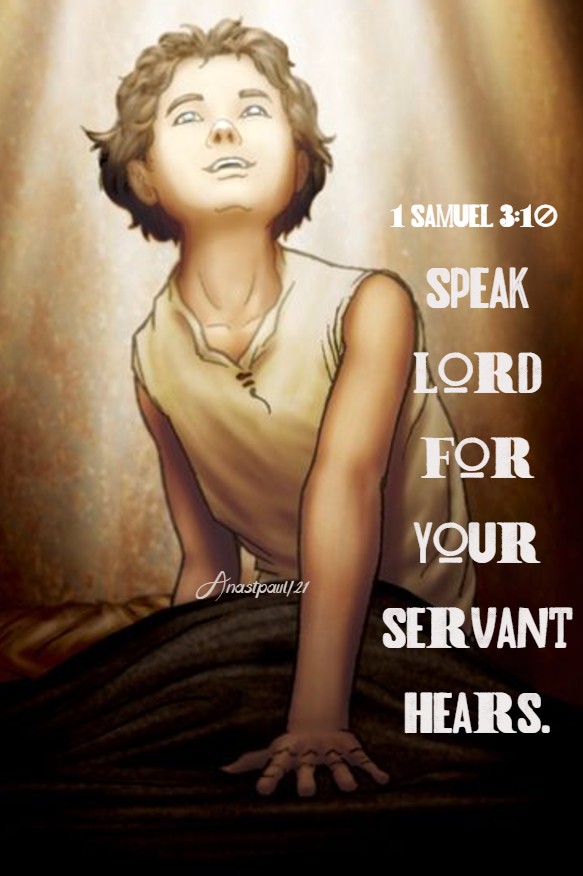
“Speak Lord for your servant hears.”
1 Samuel 3:10
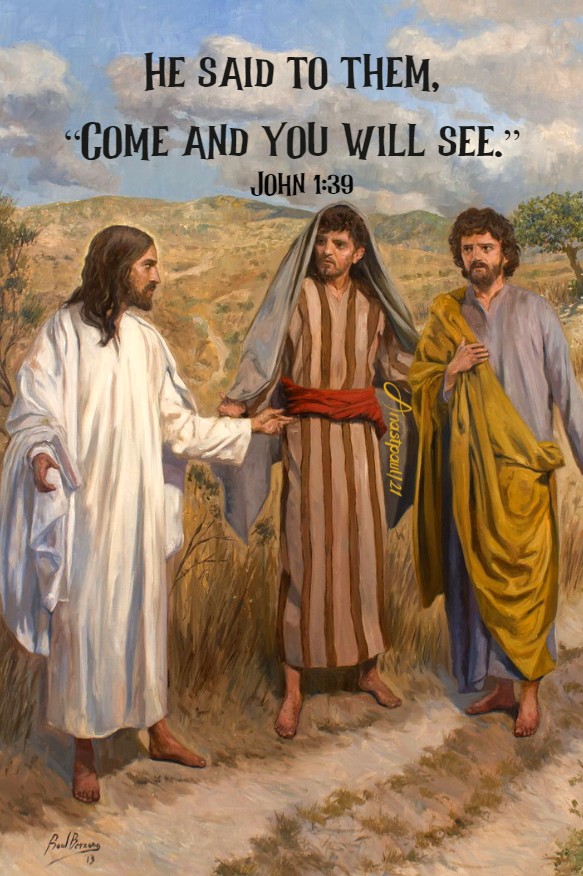
He said to them, “Come and you will see.”
John 1:39
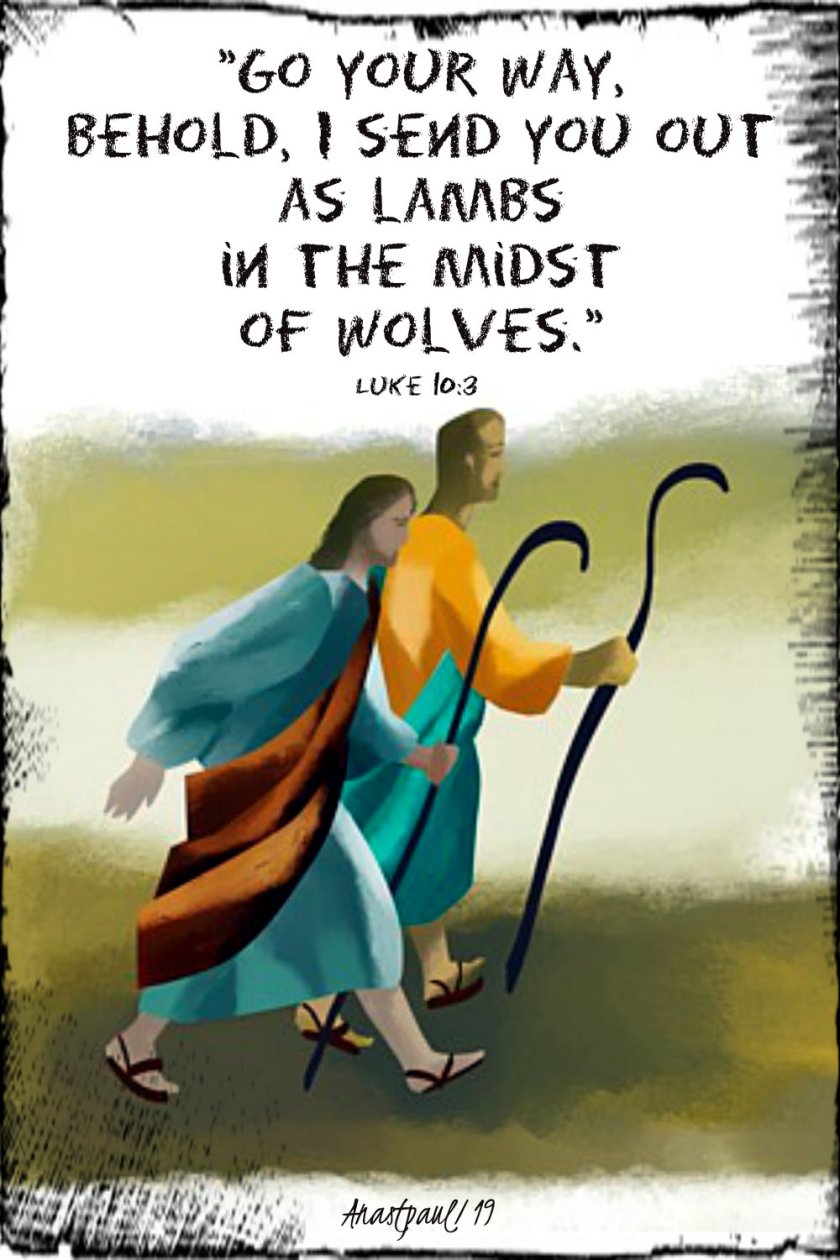
“Go your way, behold, I send you out as lambs in the midst of wolves.”
Luke 10:3
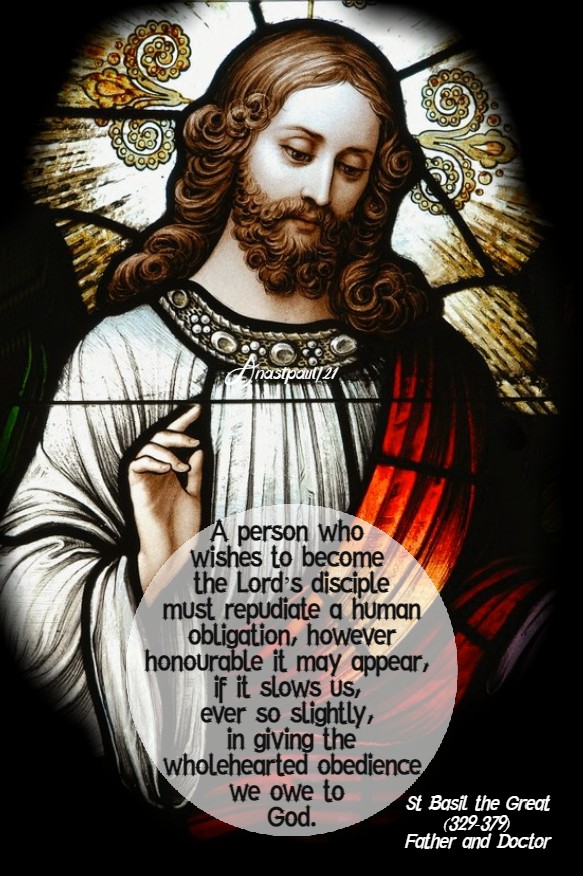
“A person who wishes to become the Lord’s disciple must repudiate a human obligation, however honourable it may appear, if it slows us, ever so slightly, in giving the wholehearted obedience we owe to God.”
St Basil the Great (329-379) Father and Doctor of the Church
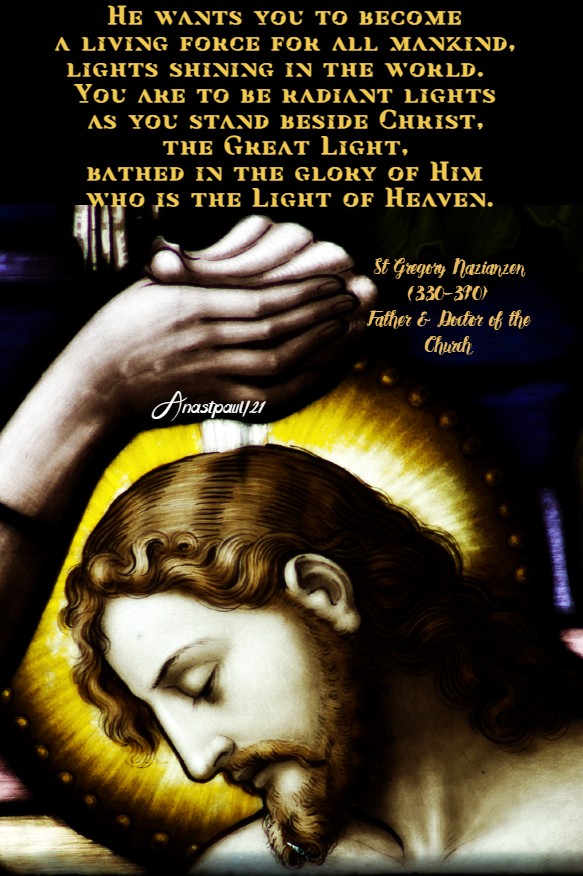
“He wants you to become a living force for all mankind, lights shining in the world. You are to be radiant lights as you stand beside Christ, the Great Light, bathed in the glory of Him who is the Light of Heaven.”
St Gregory Nazianzen (330-390) Father & Doctor of the Church
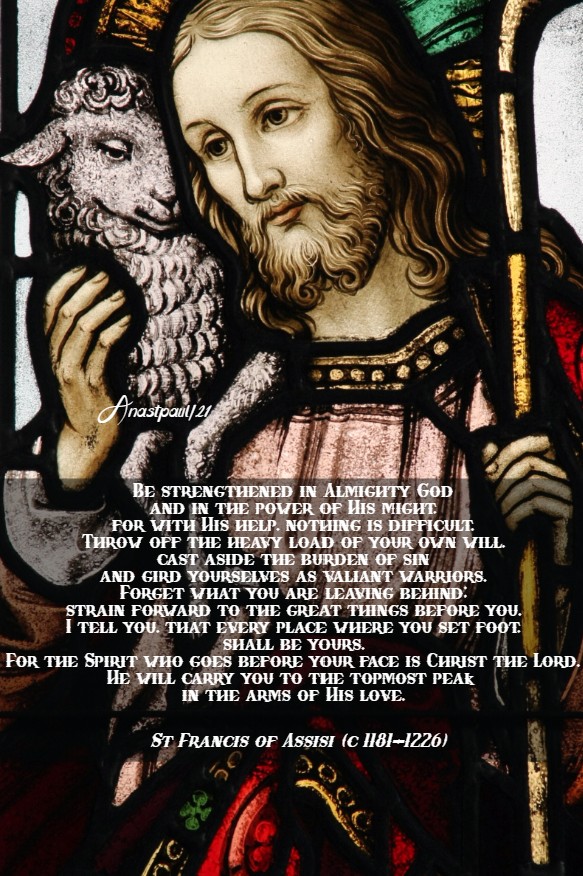
“Be strengthened in Almighty God and in the power of His might, for with His help, nothing is difficult. Throw off the heavy load of your own will, cast aside the burden of sin and gird yourselves as valiant warriors. Forget what you are leaving behind; strain forward to the great things before you. I tell you, that every place where you set foot, shall be yours. For the Spirit who goes before your face is Christ the Lord. He will carry you to the topmost peak in the arms of His love.”
St Francis of Assisi (c 1181-1226)
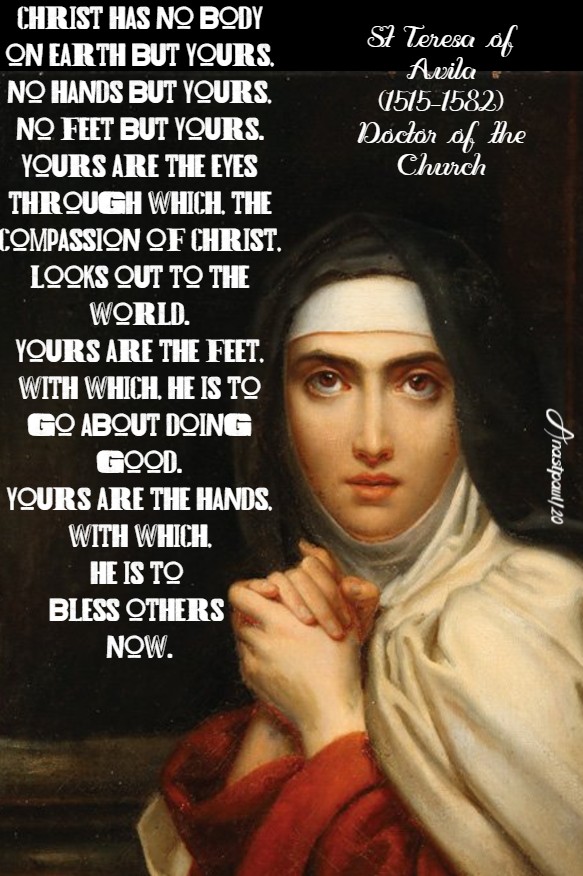
“Christ has no body on earth but yours, no hands but yours, no feet but yours. Yours are the eyes, through which, the compassion of Christ, looks out to the world. Yours are the feet, with which, He is to go about doing good. Yours are the hands, with which, He is to bless others now.”
St Teresa of Avila (1515-1582) Doctor of the Church
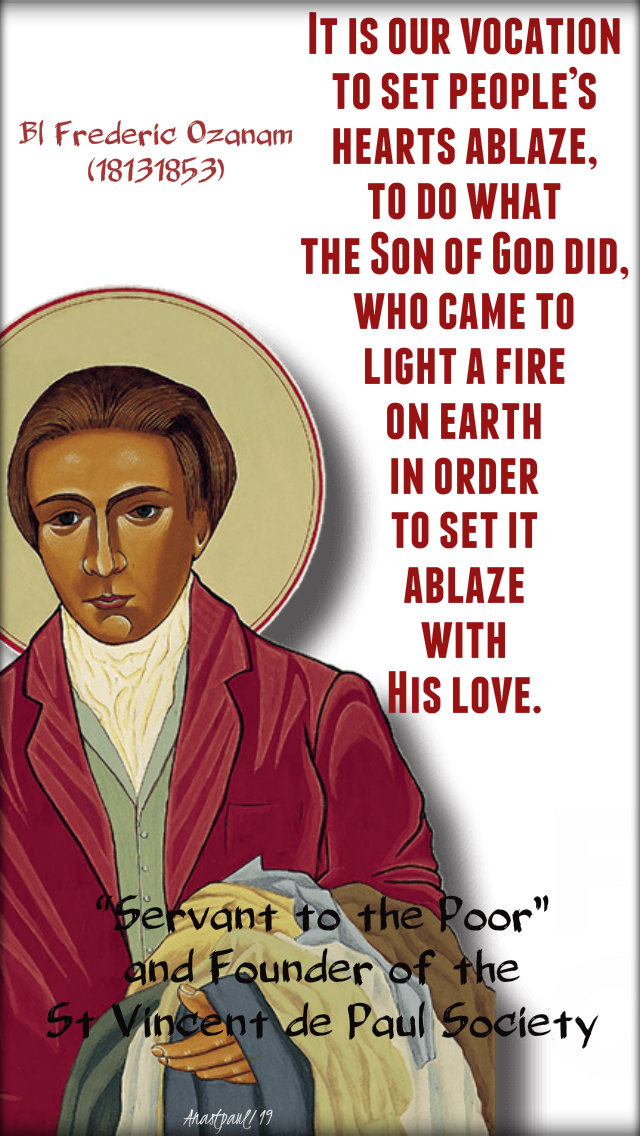
“It is our vocation to set people’s hearts ablaze, to do what the Son of God did, who came to light a fire on earth in order to set it ablaze with His love.”
Blessed Frédéric Ozanam (1813–1853) “Servant to the Poor”
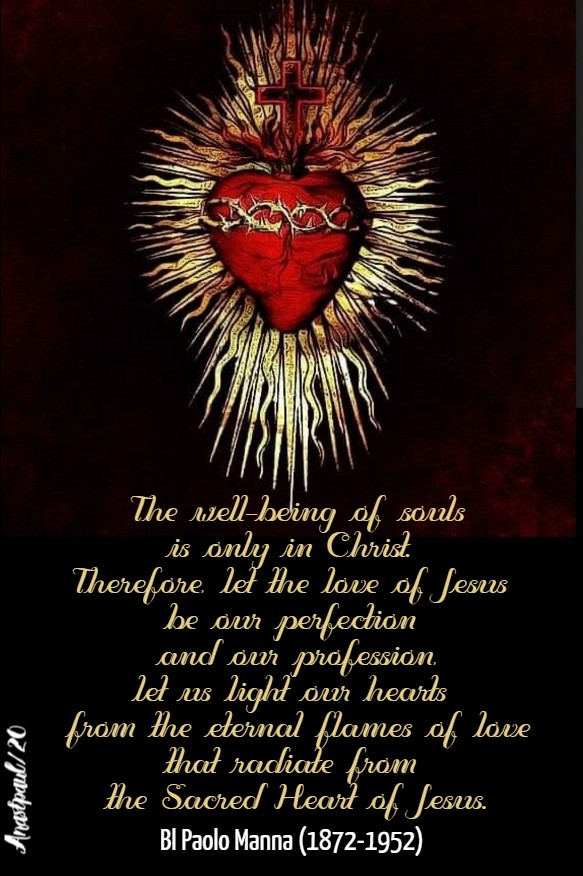
“The well-being of souls is only in Christ. Therefore, let the love of Jesus be our perfection and our profession, let us light our hearts from the eternal flames of love that radiate from the Sacred Heart of Jesus.”
Bl Paolo Manna PIME (1872-1952) “A Burning Soul”
Priest, Missionary in Burma (Myanmar), Superior General of PIME, Founder of the Pontifical Missionary Union
Quote/s of the Day – 16 January – Saturday of the First week in Ordinary Time, Readings: Hebrews 4:12-16, Psalms 19:8, 9, 10,15, Mark 2:13-17
“Cast Upon Us a Look of Mercy”
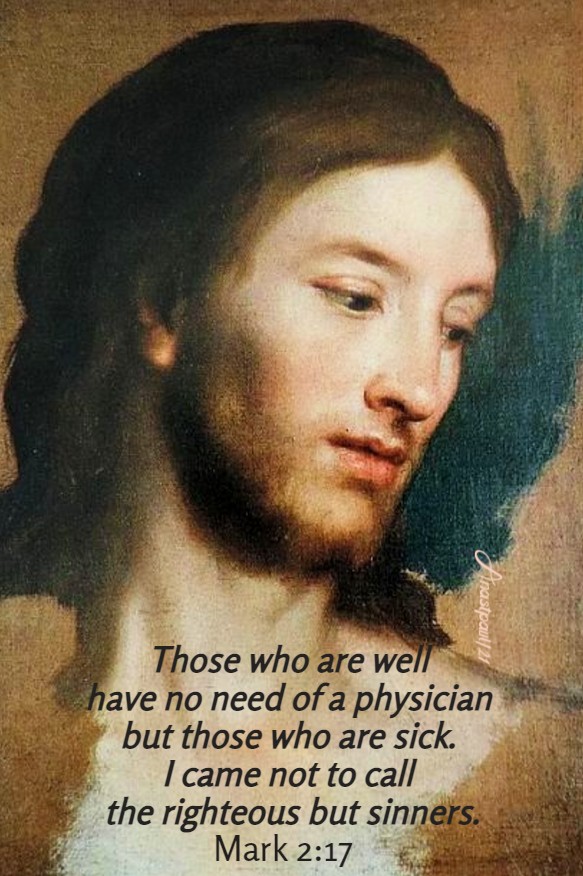
“Those who are well have no need of a physician but those who are sick. I came not to call the righteous but sinners.”
Mark 2:17
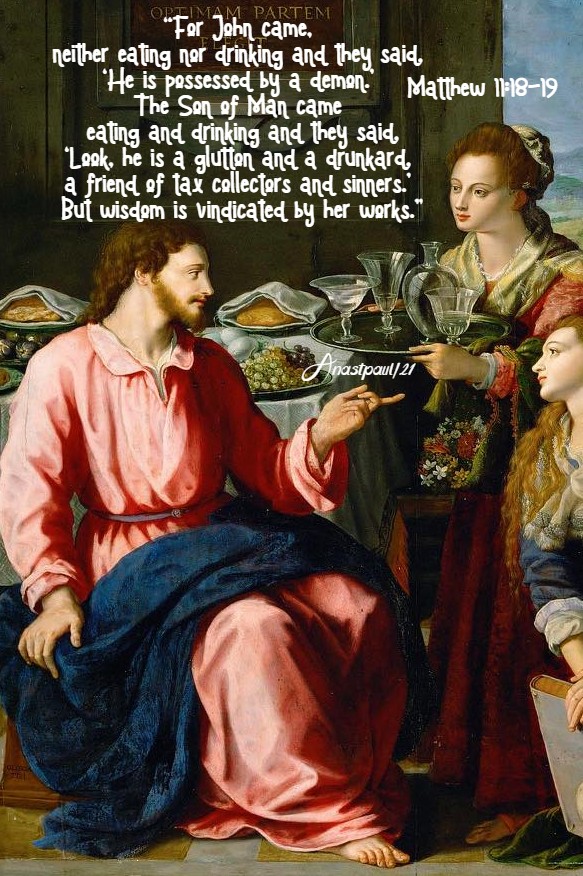
“For John came, neither eating nor drinking and they said, ‘He is possessed by a demon.’ The Son of Man came eating and drinking and they said, ‘Look, he is a glutton and a drunkard, a friend of tax collectors and sinners.’ But wisdom is vindicated by her works.”
Matthew 11:18-19
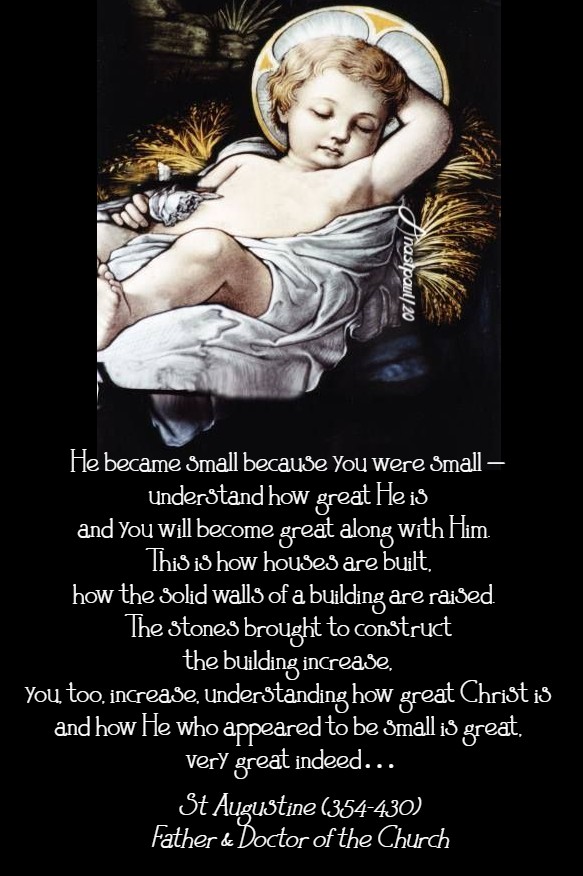
“He became small because you were small – understand how great He is and you will become great along with Him. This is how houses are built, how the solid walls of a building are raised. The stones brought to construct the building increase, you, too, increase, understanding how great Christ is and how He who appeared to be small is great, very great indeed…”
St Augustine (354-430) Father & Doctor of the Church
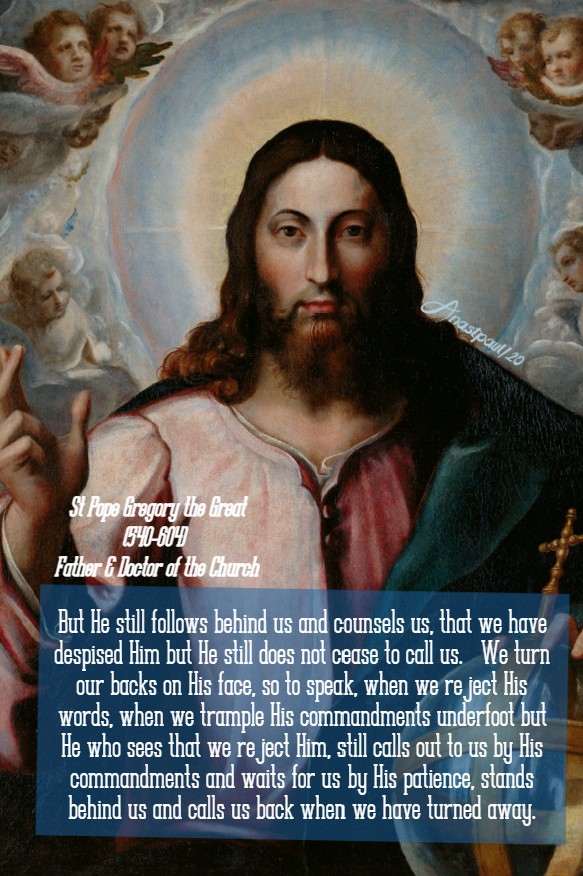
“But He still follows behind us and counsels us, that we have despised Him but He still does not cease to call us. We turn our backs on His face, so to speak, when we reject His words, when we trample His commandments underfoot but He who sees that we reject Him, still calls out to us by His commandments and waits for us by His patience, stands behind us and calls us back when we have turned away.”
St Pope Gregory the Great (540-604) Father & Doctor of the Church
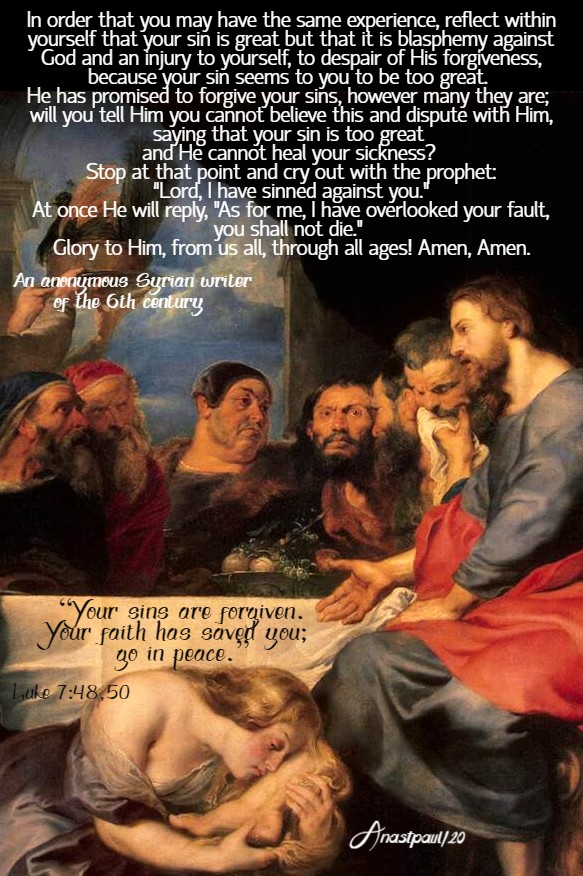
“In order that you may have the same experience, reflect within yourself that your sin is great but that it is blasphemy against God and an injury to yourself, to despair of His forgiveness, because your sin seems to you to be too great. He has promised to forgive your sins, however many they are; will you tell Him you cannot believe this and dispute with Him, saying that your sin is too great and He cannot heal your sickness? Stop at that point and cry out with the prophet: “Lord, I have sinned against you” (Ps 51[50]:6). At once He will reply, “As for me, I have overlooked your fault, you shall not die.” Glory to Him from us all, through all ages! Amen, Amen.”
An anonymous Syrian writer of the 6th century
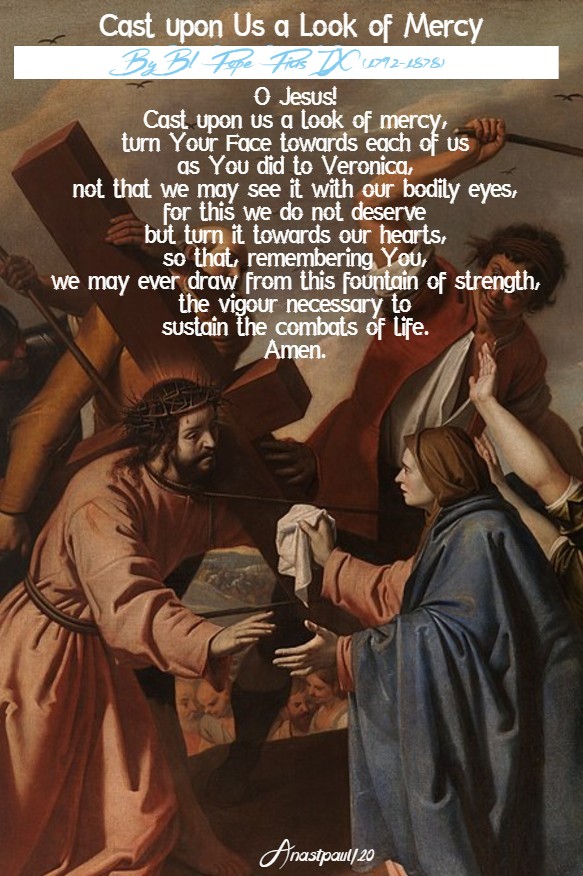
Cast Upon Us a Look of Mercy By Blessed Pope Pius IX (1792-1878)
O Jesus! Cast upon us a look of mercy, turn Your Face towards each of us as You did to Veronica, not that we may see it with our bodily eyes, for this we do not deserve but turn it towards our hearts, so that, remembering You, we may ever draw from this fountain of strength, the vigour necessary to sustain the combats of life. Amen
Quote/s of the Day – 14 January – Thursday of the First week in Ordinary Time, Readings: Hebrews 3:7-14, Psalms 95:6-7, 8-9, 10-11, Mark 1:40-45
Repentance
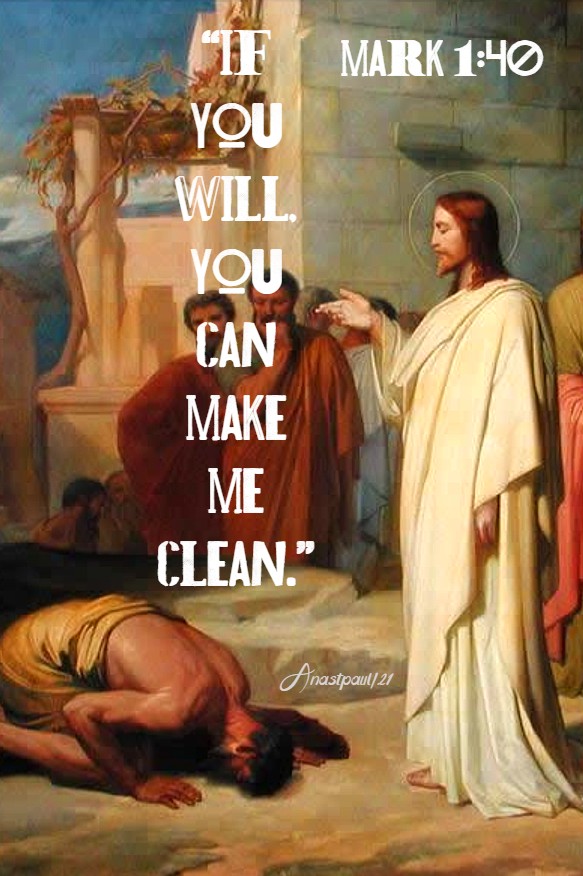
“If you will, you can make me clean.”
Mark 1:40
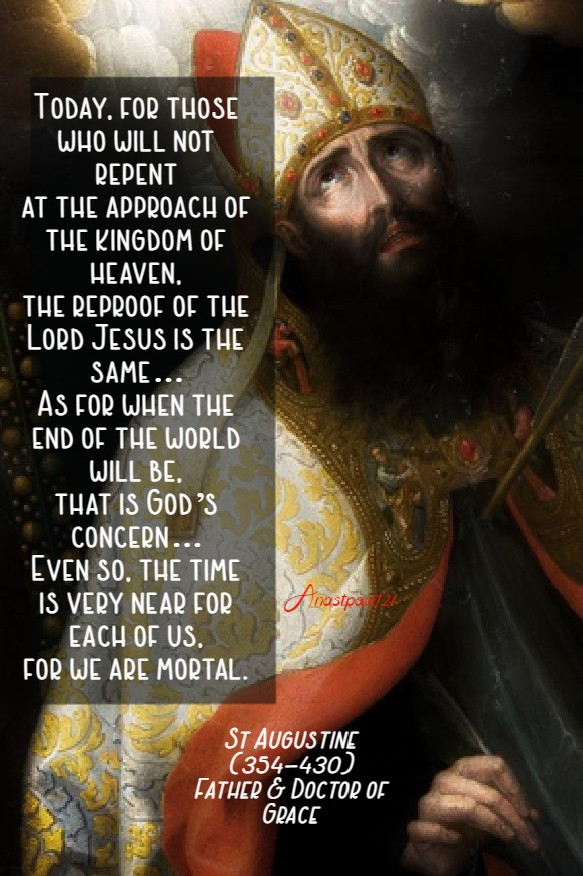
“Today, for those who will not repent at the approach of the kingdom of heaven, the reproof of the Lord Jesus is the same… As for when the end of the world will be, that is God’s concern… Even so, the time is very near for each of us, for we are mortal.”
St Augustine (354-430) Father & Doctor of Grace
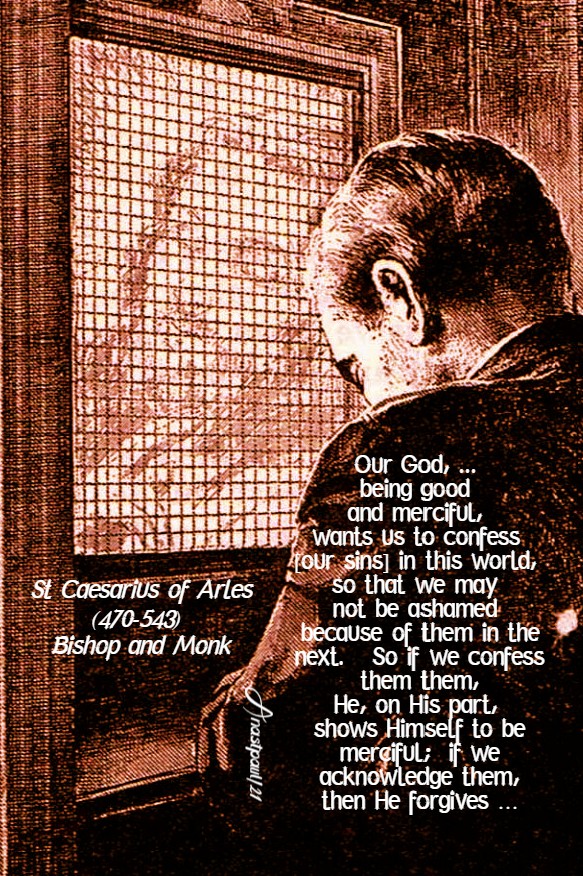
“Our God, … being good and merciful, wants us to confess [our sins] in this world, so that we may not be ashamed because of them in the next. So if we confess them them, He, on His part, shows Himself to be merciful; if we acknowledge them, then He forgives … ”
St Caesarius of Arles (470-543) Bishop and Monk
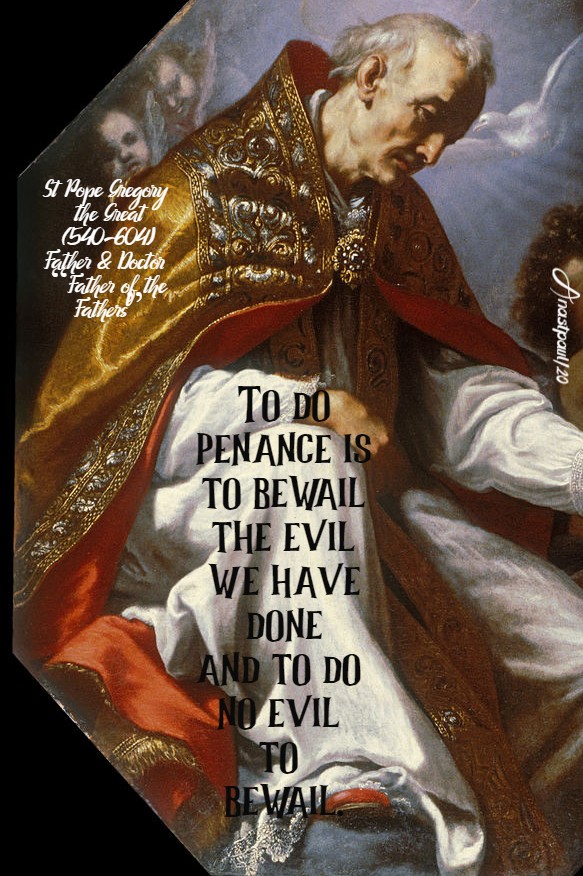
“To do penance is to bewail the evil we have done and to do no evil to bewail.”
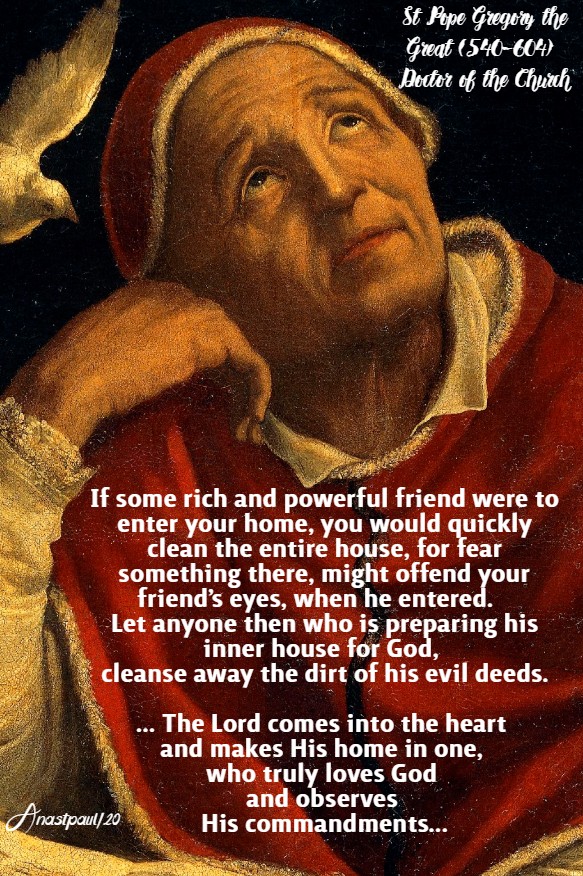
“If some rich and powerful friend were to enter your home, you would quickly clean the entire house, for fear something there, might offend your friend’s eyes, when he entered. Let anyone then who is preparing his inner house for God, cleanse away the dirt of his evil deeds. … The Lord comes into the heart and makes His home in one, who truly loves God and observes His commandments…”
St Pope Gregory the Great (540-604) Father & Doctor “Father of the Fathers”
“It is clear, my brethren, that we live outside ourselves, we are forgetful of ourselves whenever we fritter our lives away in empty pursuits or distractions, decked out with trifles. That is why Wisdom is more concerned to invite us to the house of repentance than the house of feasting, that is to say to call back into himself, the man outside himself …”
Bl Isaac of Stella O.Cist (c 1100 – c 1170)
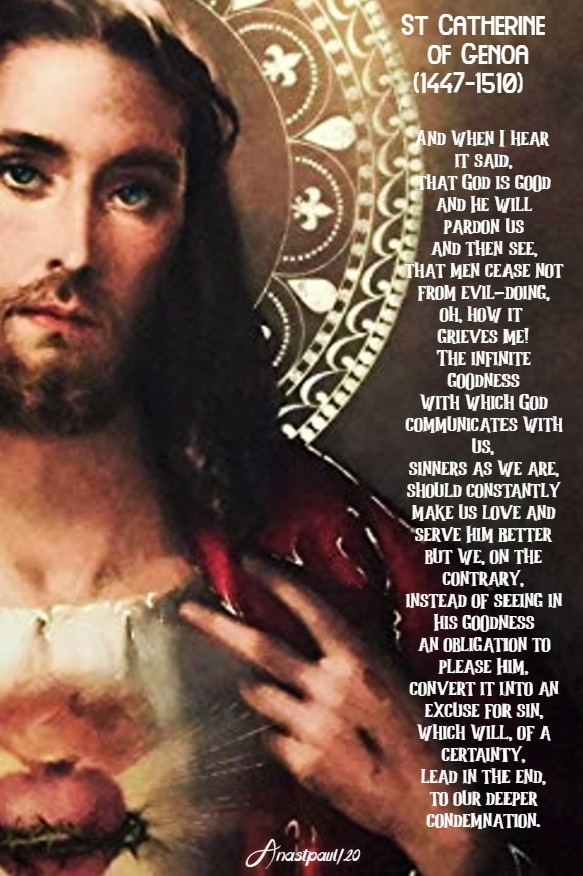
“And when I hear it said, that God is good and He will pardon us and then see, that men cease not from evil-doing, oh, how it grieves me! The infinite goodness with which God communicates with us, sinners as we are, should constantly make us love and serve Him better but we, on the contrary, instead of seeing in His goodness an obligation to please Him, convert it into an excuse for sin, which will, of a certainty, lead in the end, to our deeper condemnation.”
One Minute Reflection – 14 January – Thursday of the First week in Ordinary Time, Readings: Hebrews 3:7-14, Psalms 95:6-7, 8-9, 10-11, Mark 1:40-45
“If you will, you can make me clean.” Moved with pity, he stretched out his hand and touched him and said to him, “I will, be clean.” – Mark 1: 40-41
REFLECTION – “As for me, what can I appropriate that I lack, from the Heart of the Lord who abounds in mercy? … He was thinking thoughts of peace and I did not know it, for who knows the mind of the Lord, or who has been His counsellor? But the piercing nail has become a key to unlock the door, that I may see the goodwill of the Lord. And what can I see as I look through the hole? Both the nail and the wound cry out, that God was in Christ reconciling the world to Himself. The sword pierced His soul and came close to His Heart, so that He might be able to feel compassion for me in my weaknesses.
Through these sacred wounds we can see the secret of His Heart, the great mystery of love, the sincerity of His mercy, with which He visited us from on high. Where have Your love, Your mercy, Your compassion shone out more luminously, than in Your wounds, sweet, gentle Lord of mercy? More mercy than this no-one has, than that He lay down His life for those who are doomed to death.
My merit comes from His mercy; for I do not lack merit so long as He does not lack pity. And if the Lord’s mercies are many, then I am rich in merits. For even if I am aware of many sins, what does it matter? Where sin abounded grace has overflowed. And if the Lord’s mercies are from all ages forever, I too will sing of the mercies of the Lord forever. Will I not sing of my own righteousness? No, Lord, I shall be mindful only of Your justice. Yet that too is my own, for God has made You my righteousness.” – St Bernard of Clarirvaux (1090-1153) Doctor of Light – Excerpt from his Sermon 61 On the Song of Songs
PRAYER – Almighty, ever-living God, we make our prayer to You at morning, noon and evening. Dispel from our hearts, the darkness of sin and bring us to the true light, Christ Your Son. Grant that through the intercession of the Blessed Virgin Mary, all your Angels and Saints, we may deny ourselves in love and obedience to You the reward of our love. Through Jesus, our Lord, with the Holy Spirit, God forever and ever, amen.
One Minute Reflection – 13 January – Readings: Hebrews 2:14-18, Psalms 105:1-2, 3-4, 6-7, 8-9, Mark 1:29-39 and the Memorial of St Hilary of Poitiers (315-368) Father & Doctor of the Church and Blessed
That evening at sundown, they brought to him all who were sick, or oppressed by demons. – Mark 1:32
REFLECTION – “Let us set before our interior consideration someone gravely wounded who is about to breathe his last. … Now, the soul’s wound is sin, of which Scripture speaks in these terms: “Wound and welt and gaping gash, not drained or bandaged or eased with salve” (Is 1:6). Oh you who are wounded, recognise your physician within you and show Him the wounds of your sins. May He understand your heart’s groaning Who already knows its secret thoughts. May your tears move Him. Go as far as a little shamelessness in your beseeching (cf. Lk 11:8). Ceaselessly bring forth deep sighs to Him from the depth of your heart.
May your grief reach Him so that He may say to you also : “The Lord has pardoned your sin” (2 Sam 12:13). Cry out with David, who said: “Have mercy on me, O God, in (…) the greatness of your compassion” (Ps 50[51]:3). It is as though one were to say: “I am in great danger because of an enormous wound, that no doctor can cure, unless the all-powerful Physician comes to help me.” For this all-powerful Physician, nothing is incurable. He heals without charge! With one word He restores to health! I would have despaired of my wound were it not, that I placed my trust in the Almighty.” – St Gregory the Great (540-604) Pope, Father, Doctor of the Church – Commentary on Psalm 50[51]
PRAYER – God our Saviour, through the grace of Baptism, You made us children of light. You lead us by the hand and guide and protect us by Your commandments. Fill us with joy at Your nearness and the light of Your Son, by whose beam we see You and follow. St Hilary and Bl Veronica were shining examples to us all, grant, we pray, that their prayers may aid us. Through Jesus our Lord and Christ, with the Holy Spirit, God forever, amen.
Thought for the Day – 12 January – Meditations with Antonio Cardinal Bacci (1881-1971)
The Beggars of God
“Both in the natural and in the supernatural orer, we are in continual need of the help of God. We did not exist and God, in His infinite goodness, created us. It is He, Who preserves us in existence from day to day and from moment to moment. The act of conservation, is like a continuous creation. If God did not sustain us, we should return immediately to the dust from which we came: “Remember, man, that dust you are and unto dust you shall return” (Gen 3:19).
We are continually dependent on our Lord and Creator for our existence and activity. If we remained always aware of this tremendous fact, we would never offend God. We would show Him a filial gratitude and humbly implore His assistance.
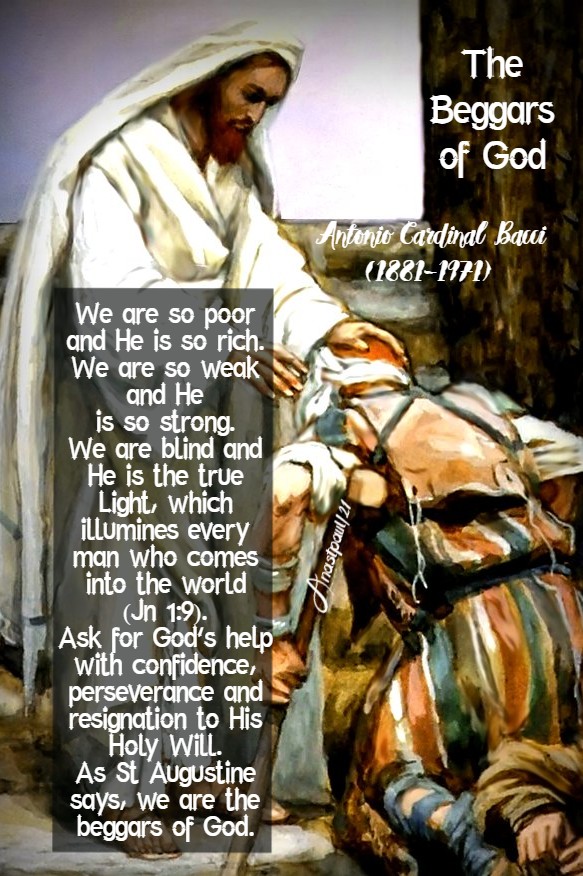
We are so poor and He is so rich. We are so weak and He is so strong. We are blind and He is the true Light, which illumines every man who comes into the world (Jn 1:9). Ask for God’s help with confidence, perseverance and resignation to His Holy Will. As St Augustine says, we are the beggars of God.”
Quote/s of the Day – 12 January – The Memorial of St Aelred of Rievaulx (1110-1167) “St Bernard of the North”
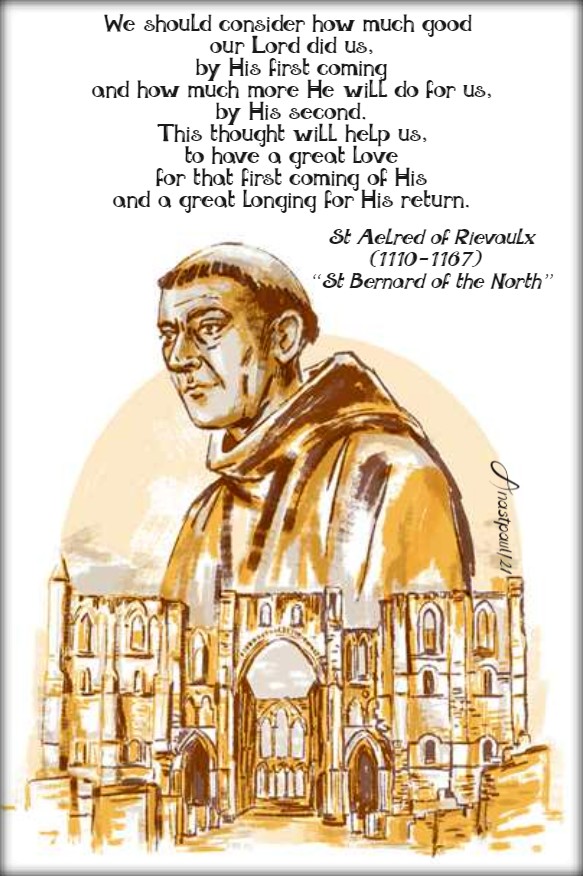
“We should consider how much good our Lord did us, by His first coming and how much more He will do for us, by His second. This thought will help us, to have a great love for that first coming of His and a great longing for His return.”
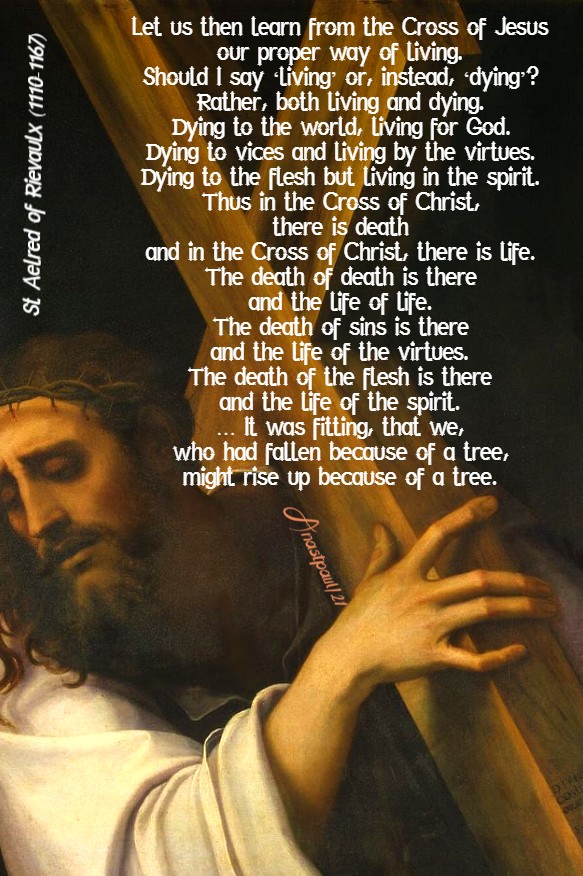
“Let us then learn from the Cross of Jesus our proper way of living. Should I say ‘living’ or, instead, ‘dying’? Rather, both living and dying. Dying to the world, living for God. Dying to vices and living by the virtues. Dying to the flesh but living in the spirit. Thus in the Cross of Christ, there is death and in the Cross of Christ, there is life. The death of death is there and the life of life. The death of sins is there and the life of the virtues. The death of the flesh is there and the life of the spirit. … It was fitting, that we, who had fallen because of a tree, might rise up because of a tree.”
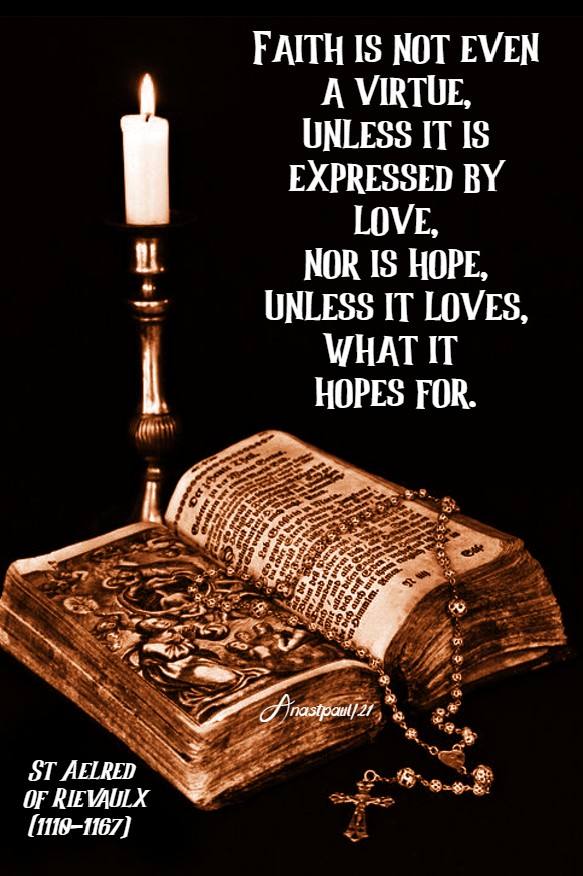
“Faith is not even a virtue, unless it is expressed by love, nor is hope, unless it loves, what it hopes for.”
“When insults have no effect on us, when persecutions and penalties, have no terror for us, when prosperity or adversity, has no influence on us, when friend and foe, are viewed in the same light… do we not come close, to sharing, the serenity of God?”
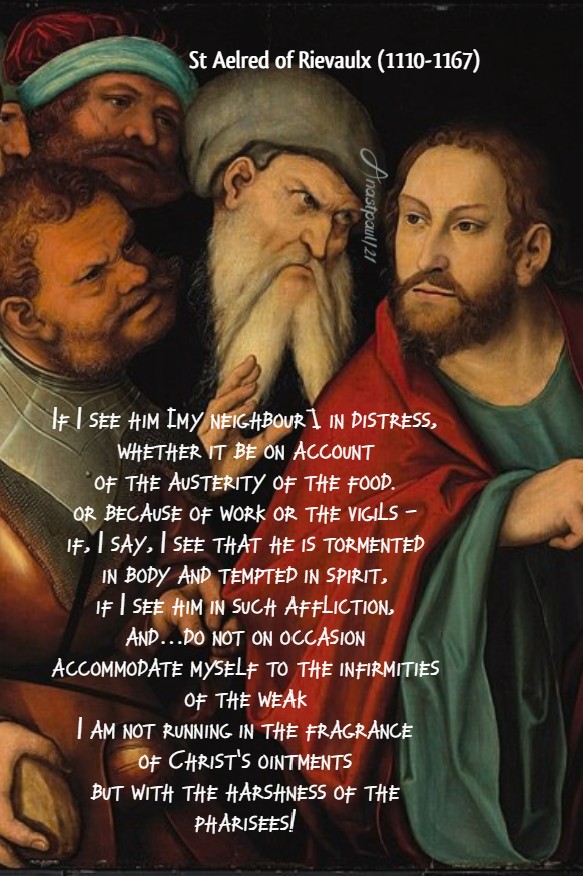
“If I see him [my neighbour] in distress, whether it be on account of the austerity of the food. or because of work or the vigils – if, I say, I see that he is tormented in body and tempted in spirit, if I see him in such affliction, and…do not on occasion accommodate myself to the infirmities of the weak I am not running in the fragrance of Christ’s ointments but with the harshness of the pharisees.”
St Aelred of Rievaulx (1110-1167) “St Bernard of the North”
Thought for the Day – 11 January – Meditations with Antonio Cardinal Bacci (1881-1971)
The Dignity and Responsibility of Being a Christian
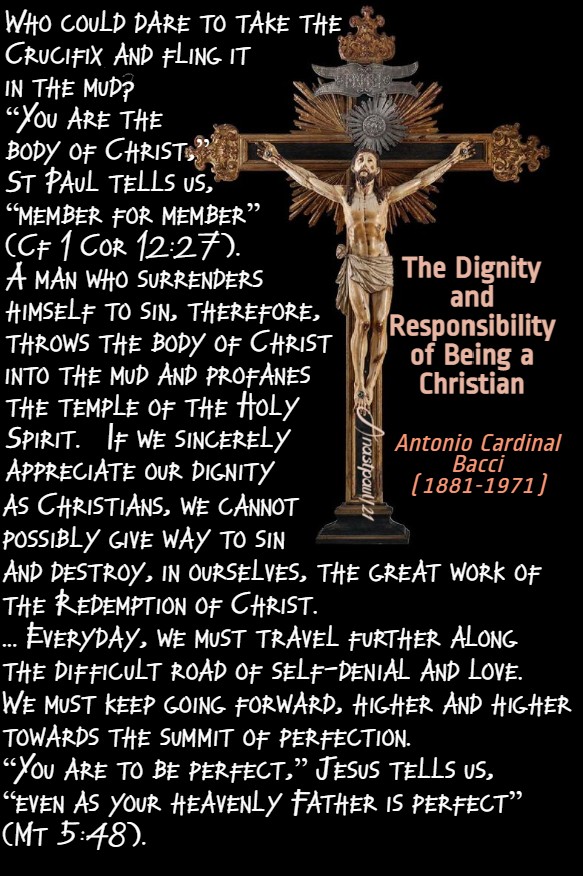
“This exalted dignity carries with it grave obligations. The most important is to avoid sin. Who could dare to take the Crucifix and fling it in the mud? “You are the body of Christ,” St Paul tells us, “member for member” (Cf 1 Cor 12:27). A man who surrenders himself to sin, therefore, throws the body of Christ into the mud and profanes the temple of the Holy Spirit. If we sincerely appreciate our dignity as Christians, we cannot possibly give way to sin and destroy, in ourselves, the great work of the Redemption of Christ. We should, moreover, practise virtue. We should live in and for Jesus, like St Paul, who said, “For to me to live is Christ … ” (Phil 1:21). Everyday, we must travel further along the difficult road of self-denial and love. We must keep going forward, higher and higher towards the summit of perfection. “You are to be perfect,” Jesus tells us, “even as your heavenly Father is perfect” (Mt 5:48). Even this is not enough, however! A genuine Christian is not satisfied with avoiding sin and sanctifying himself but, he tries, by every means at his disposal, by word, action, good example and sacrifice, to spread the Kingdom of Christ among his fellow-men.”
Thought for the Day – 10 January – Meditations with Antonio Cardinal Bacci (1881-1971)
The Sacrament of Baptism
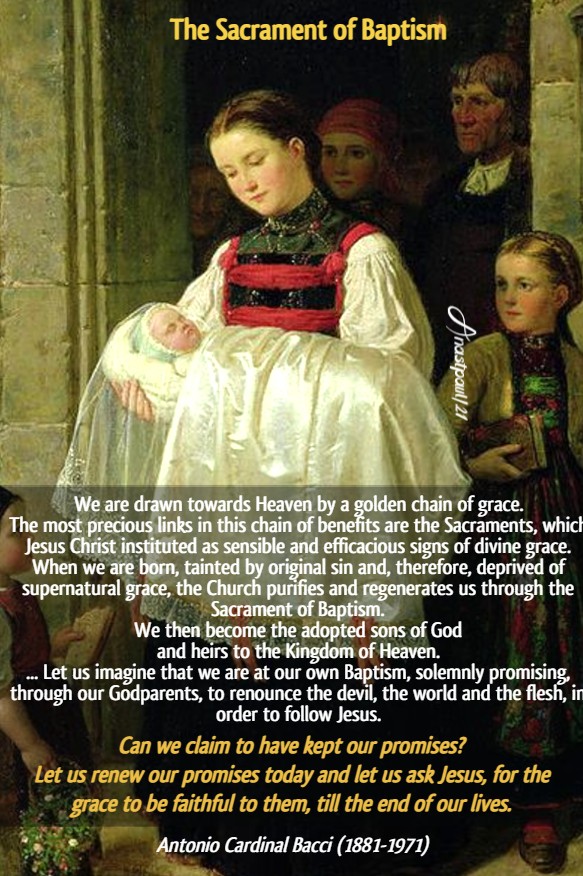
“We are drawn towards Heaven by a golden chain of grace. The most precious links in this chain of benefits are the Sacraments, which Jesus Christ instituted as sensible and efficacious signs of divine grace. When we are born, tainted by original sin and, therefore, deprived of supernatural grace, the Church purifies and regenerates us through the Sacrament of Baptism. We then become the adopted sons of God and heirs to the Kingdom of Heaven.
It is helpful for us to repeat the Baptismal vows which were once made by others, in our name. Let us imagine that we are at our own Baptism, solemnly promising, through our Godparents, to renounce the devil, the world and the flesh, in order to follow Jesus.
Can we claim to have kept our promises? Or are we forced to admit that we have not always lived up to our obligations?
Let us renew our promises today and let us ask Jesus, for the grace to be faithful to them, till the end of our lives.”
Quote/s of the Day – 10 January – Feast of the Baptism of the Lord
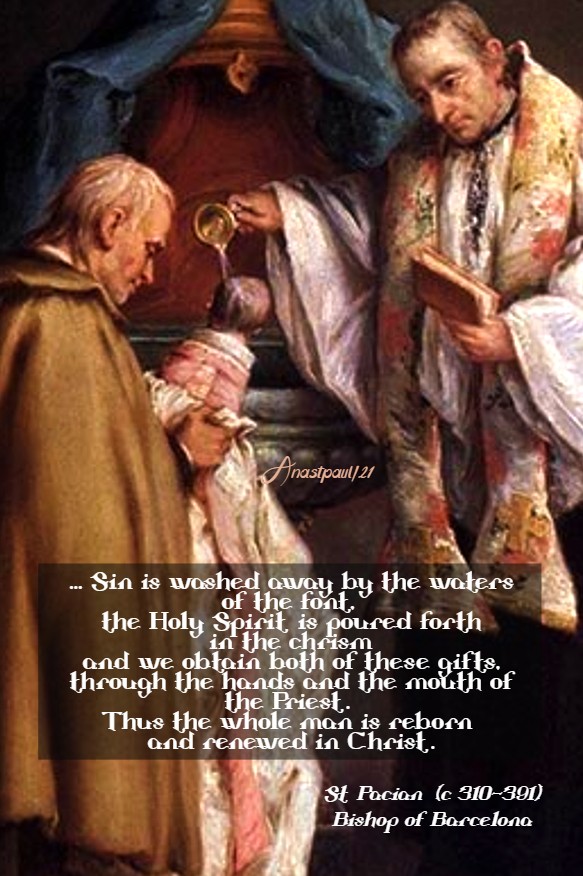
“ … Sin is washed away by the waters of the font, the Holy Spirit is poured forth in the chrism and we obtain both of these gifts, through the hands and the mouth of the Priest. Thus the whole man is reborn and renewed in Christ.”
St Pacian (c 310–391) Bishop of Barcelona
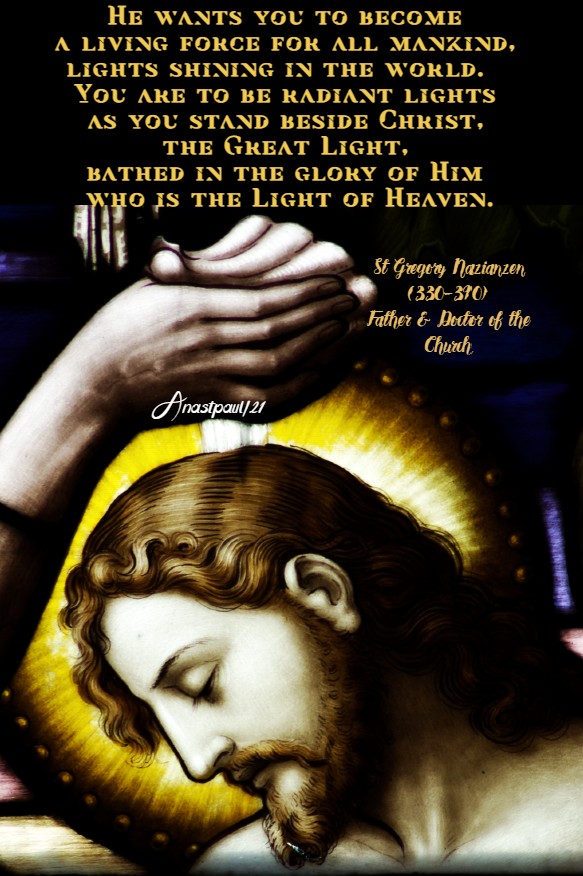
“He wants you to become a living force for all mankind, lights shining in the world. You are to be radiant lights as you stand beside Christ, the Great Light, bathed in the glory of Him who is the Light of Heaven.”
St Gregory Nazianzen (330-390) Father & Doctor of the Church
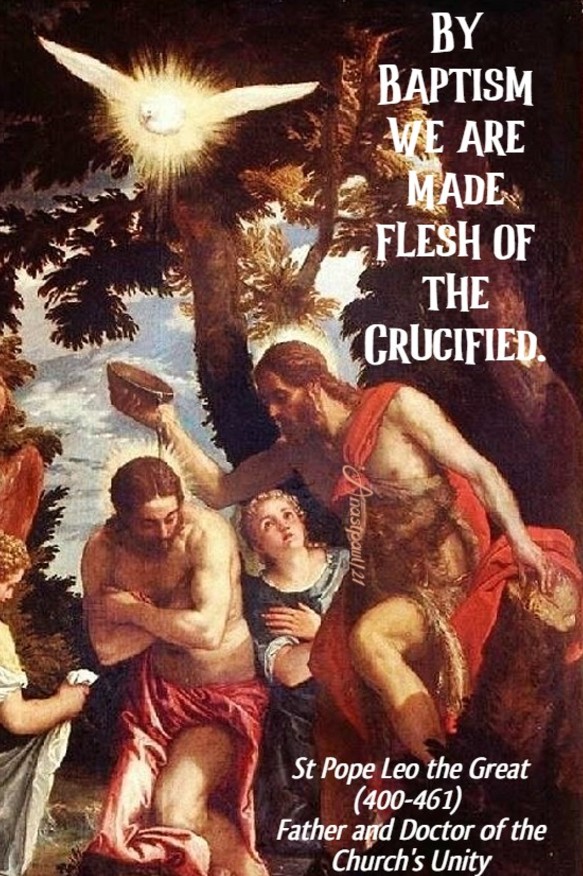
“By Baptism we are made flesh of the Crucified.”
St Pope Leo the Great (400-461) Father and Doctor of the Church’s Unity
Thought for the Day – 6 January – Meditations with Antonio Cardinal Bacci (1881-1971) The Solemnity of the Epiphany of the Lord
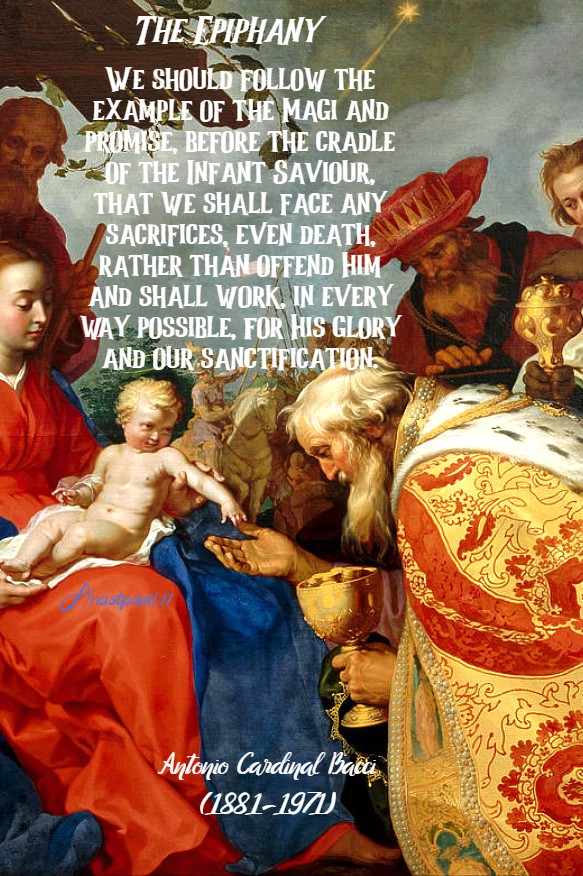
The Epiphany
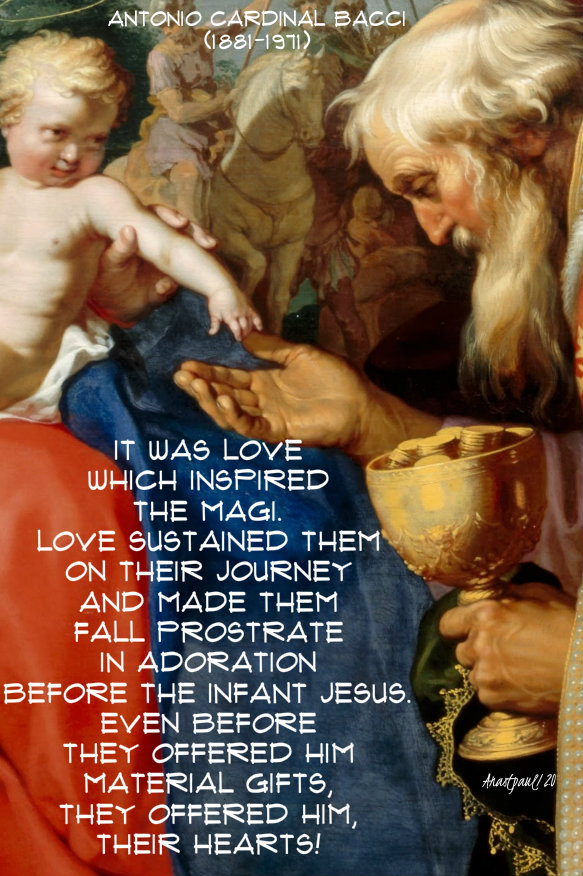
It was love which inspired the Magi. Love sustained them on their journey and made them fall prostrate in adoration before the Infant Jesus. Even before they offered Him material gifts, they offered Him, their hearts! As a reward for their faith and charity, God showered his graces upon them and an immense supernatural joy pervaded their souls. In that moment of adoration, they received the highest possible reward for their hardships and perseverance. With deep interior joy, they gave Jesus their hearts and never withdrew them. A pious tradition maintains, that they apostles and Saints and, in fact, the Church venerates them as such, today.
We should follow the example of the Magi and promise, before the cradle of the Infant Saviour, that we shall face any sacrifices, even death, rather than offend Him and shall work, in every way possible, for His glory and our sanctification.”
Thought for the Day – 5 January – Meditations with Antonio Cardinal Bacci (1881-1971)
The Shortness of Time
“We often complain about the swift passage of time. Hours, days and years pass by, never to return. When we think about the past, do we feel consoled or depressed? How many hours have we spent on useless pursuits such as, idle conversation or excessive entertainment? How many have we devoted to serious sin? How many, on the other hand, have we spent in prayer, mortification or apostolic work? How many have we devoted to helping our neighbour by our charitable assistance or advice? Weigh it all up. If we discover that the time uselessly or badly spent far outweighs the time spent to our own advantage or to the advantage of others, let us determine to make good the deficit. Resolve to use God’s precious gift of time in a manner befitting a reasonable being and a Christian, who knows that he has been created for eternity. “While we have time, let us do good” (Gal 6:10). We shall be unable to do anything about it afterwards!”
Quote/s of the Day – 2 January – Christmas Weekday and The Memorial of St Basil the Great (329-379) and St Gregory of Nazianzen (330-390)
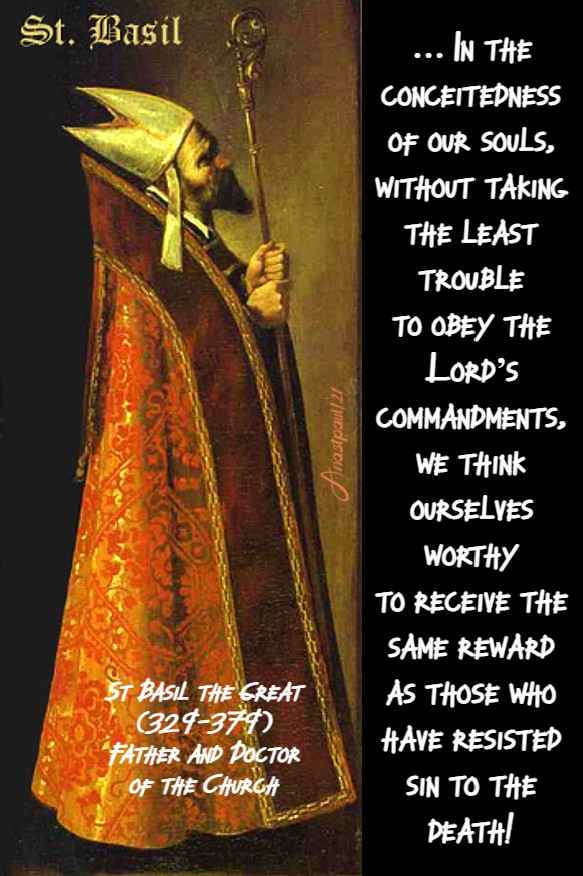
“… In the conceitedness of our souls, without taking the least trouble to obey the Lord’s commandments, we think ourselves worthy to receive the same reward as those who have resisted sin to the death!”
“A tree is known by its fruit, a man by his deeds. A good deed is never lost, he who sows courtesy, reaps friendship and he who plants kindness, gathers love.”
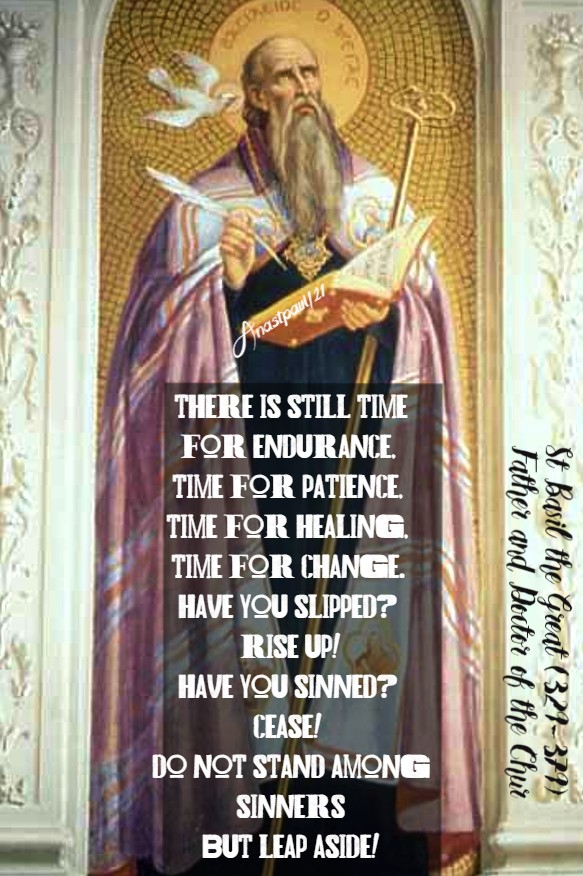
“There is still time for endurance, time for patience, time for healing, time for change. Have you slipped? Rise up! Have you sinned? Cease! Do not stand among sinners but leap aside!”
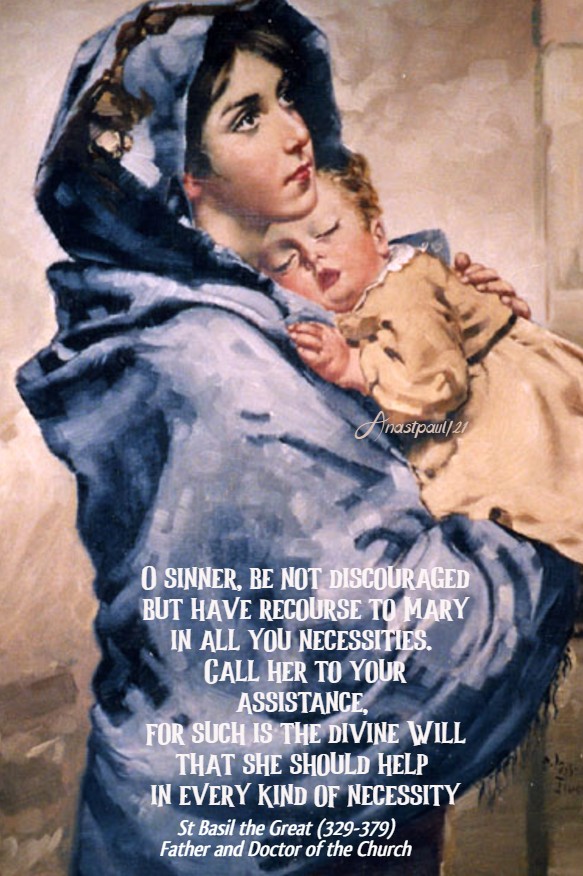
“O sinner, be not discouraged but have recourse to Mary in all you necessities. Call her to your assistance, for such is the divine Will that she should help in every kind of necessity.”
St Basil the Great (329-379) Father and Doctor of the Church
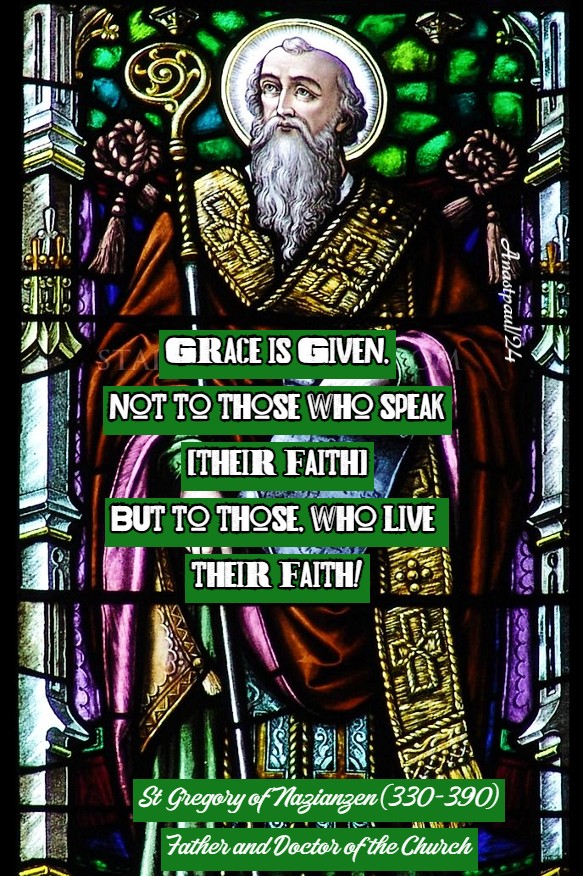
“Grace is given, not to those who speak [their faith] but to those, who live their faith.”
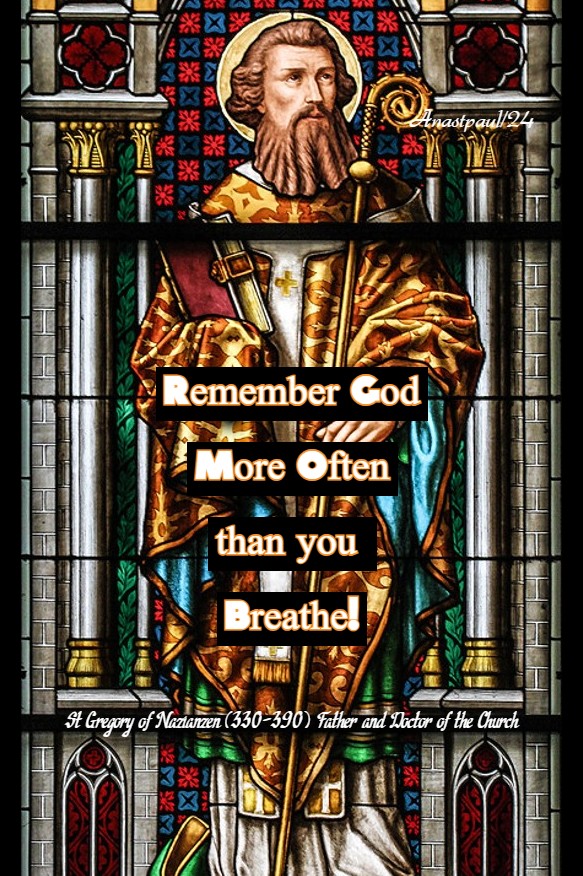
“Remember God more often than you breathe!”
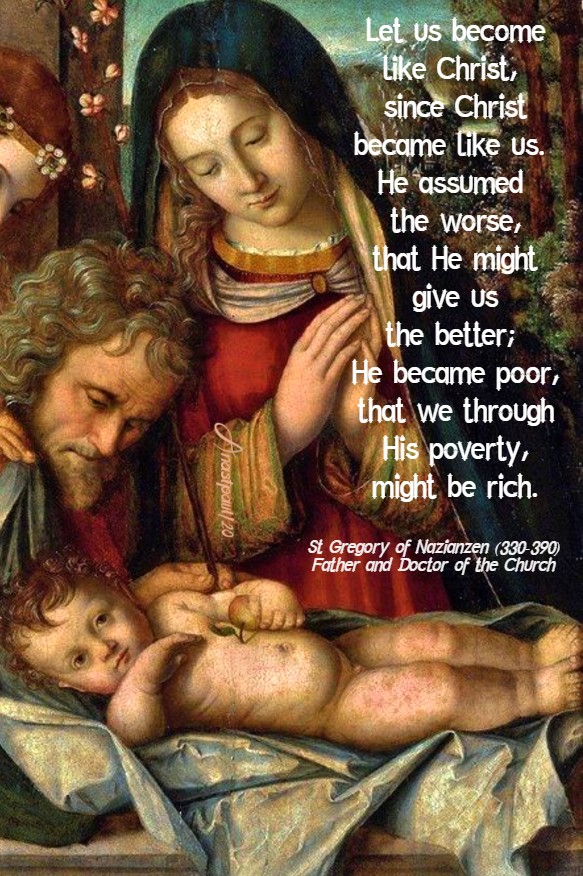
“Let us become like Christ, since Christ became like us. He assumed the worse, that He might give us the better; He became poor, that we through His poverty, might be rich.”
St Gregory of Nazianzen (330-390) Father and Doctor of the Church
Thought for the Day – 31 December – Meditations with Antonio Cardinal Bacci (1881-1971)
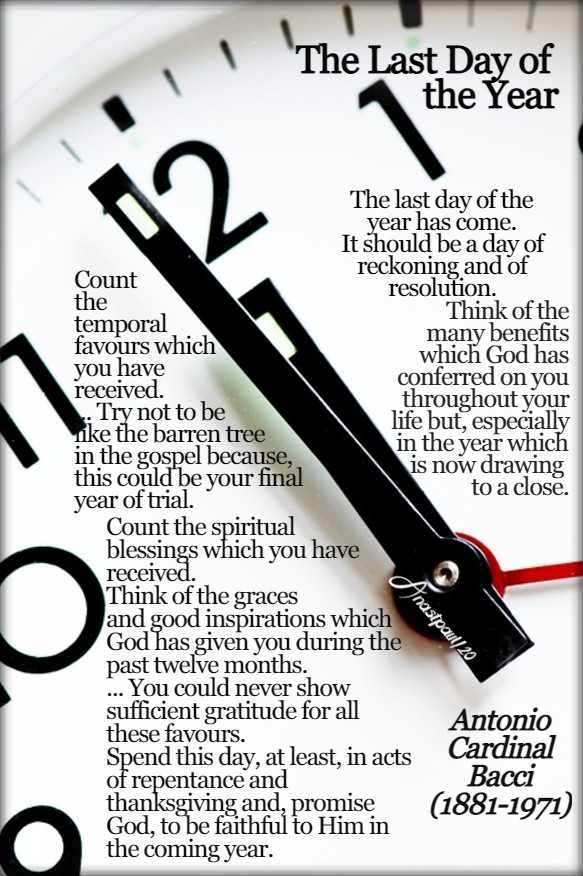
The Last Day of the Year
“The last day of the year has come. It should be a day of reckoning and of resolution. Think of the many benefits which God has conferred on you throughout your life but, especially in the year which is now drawing to a close.
Count the temporal favours which you have received. Many of your friends and acquaintances have died during the year but, you are still alive! God has rescued you from innumerable perils and illnesses. He has allowed you more time in which to perfect your spiritual life and to perform pastoral work on your neighbour’s behalf. Try not to be like the barren tree in the gospel because, this could be your final year of trial.
Count the spiritual blessings which you have received. Think of the graces and good inspirations which God has given you during the past twelve months. How often have you received forgiveness for your sins, been restored to the friendship of God and, experienced anew, the joy and peace of being in the state of grace? How often has Jesus come into your heart under the guise of the Blessed Eucharist? How often have you been enlightened ad ecouraged by hearing or reading the word of God? Think, too, of the good example which you have received in private and in public and recall the many occasions, on which the helping hand of God has reached out to save you from falling into sin.
You could never show sufficient gratitude for all these favours. Spend this day, at least, in acts of repentance and thanksgiving and, promise God, to be faithful to Him in the coming year.”
Thought for the Day – 25 December – Meditations with Antonio Cardinal Bacci (1881-1971)
The Feast of the Nativity
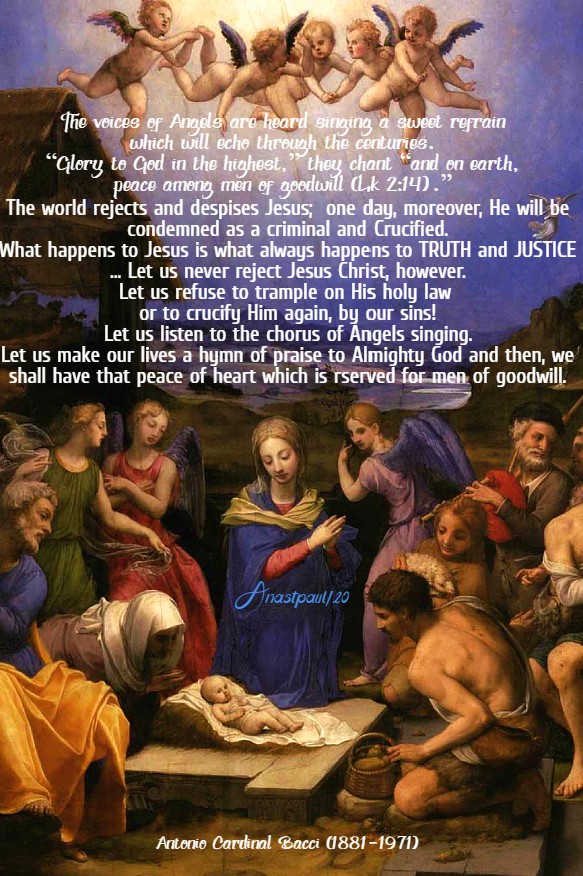
“While the earth, plunged in darkness, ignores the birth of Jesus, the sky brightens above the lowly barn in which the Infant is lying. The voices of Angels are heard singing a sweet refrain which will echo through the centuries. “Glory to God in the highest,” they chant “and on earth, peace among men of goodwill (Lk 2:14).”
The world rejects and despises Jesus; one day, moreover, He will be condemned as a criminal and Crucified. What happens to Jesus is what always happens to TRUTH and JUSTICE, which are often spurned by men but are always victorious in the end. For a time, truth and justice may seem to have been defeated once and for all but then, they triumph in an extraordinary manner. The example of Christ is enough to convince us of this.
Let us never reject Jesus Christ, however. Let us refuse to trample on His holy law or to crucify Him again, by our sins! Let us listen to the chorus of Angels singing. Let us make our lives a hymn of praise to Almighty God and then, we shall have that peace of heart which is rserved for men of goodwill.”
Christ has been born for us, come, let us adore Him!
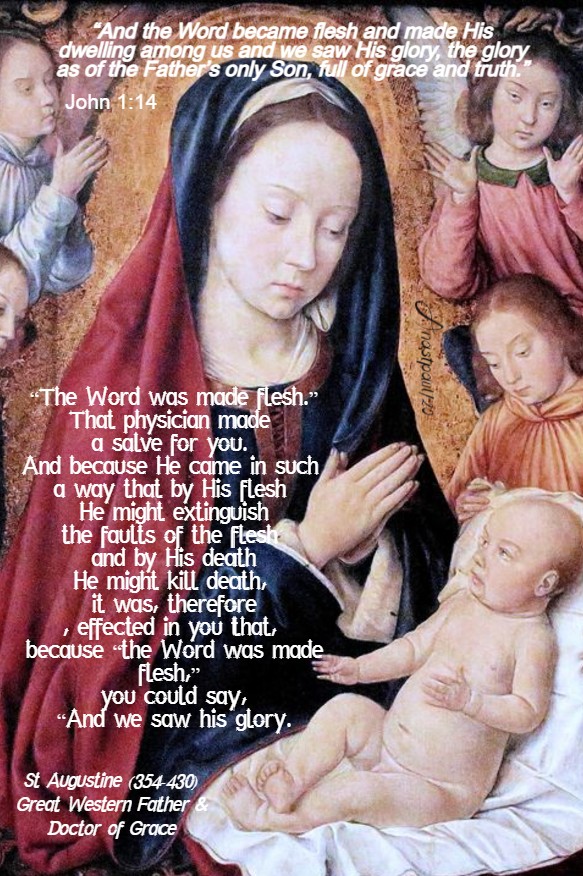
“And the Word became flesh and made His dwelling among us and we saw His glory, the glory as of the Father’s only Son, full of grace and truth.” – John 1:14
REFLECTION – “His glory no-one could see unless he was healed by the lowliness of His flesh. Why could we not see? Concentrate, my beloved people and see what I am saying. Dust, so to speak, had forcibly entered humanity’s eye; earth had entered it, had injured the eye and it could not see the light. That injured eye is anointed; it was injured by earth and earth is put there that it may be healed. For all salves and medicines are nothing but [compounds] of the earth. You have been blinded by dust, you are healed by dust; thus the flesh has blinded you, flesh heals you. For the soul had become carnal by assenting to carnal passions; from that the eye of the heart had been blinded. “The Word was made flesh.” That physician made a salve for you. And because He came in such a way that by His flesh He might extinguish the faults of the flesh and by His death He might kill death, it was, therefore, effected in you that, because “the Word was made flesh,” you could say, “And we saw his glory.” – St Augustine (354-430) Great Western Father & Doctor of Grace –Tractates on the Gospel of John, 2
PRAYER – Almighty God, Your incarnate Word fills us with the new light He brought to men. Let the light of faith in our hearts, shine through all that we do and say. We make our prayer through Jesus Christ, our Lord, with the Holy Spirit, God forever, amen.
The Word was God in the beginning and before all time, today, He is born to us, the Saviour of the world.
Thought for the Day – 23 December – Meditations with Antonio Cardinal Bacci (1881-1971)
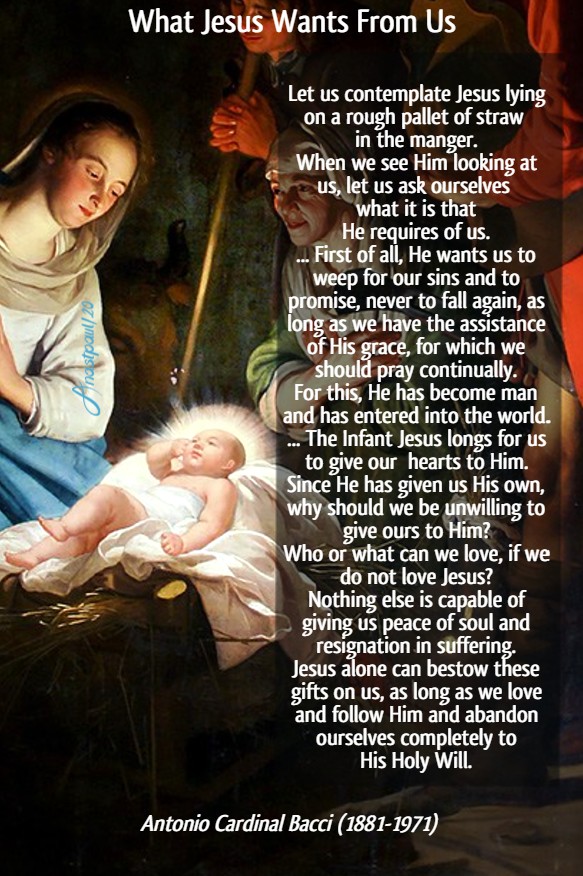
What Jesus Wants From Us
“Let us contemplate Jesus lying on a rough pallet of straw in the manger. When we see Him looking at us, let us ask ourselves what it is that He requires of us. In fact, He wants many things from us. First of all, He wants us to weep for our sins and to promise, never to fall again, as long as we have the assistance of His grace, for which we should pray continually. For this, He has become man and has entered into the world. For this He will work miracles, preach His doctrine and shed His Precious Blood on the Cross. All this He will do to redeem us from sin and to win Heaven for us.
If we return to the path of sin, we destroy the divine work of redemption, inasfar as it applies to ourselves. We make Christ’s passion, death and resurrection useless in our case. We brush aside the chain of favours with which His love has girdled us – the Gospel, the Sacraments and the Church, our good mother who is always at our side to instruct and direct us, to rescue us from peril and, to distribute to us, the gifts of her divine Founder. When we sin, we commit an act of base ingratitude to Jesus and accomplish our own eternal ruin.
The Infant Jesus longs for us to give our hearts to Him. Since He has given us His own, why should we be unwilling to give ours to Him? Who or what can we love, if we do not love Jesus? Nothing else is capable of giving us peace of soul and resignation in suffering. Jesus alone can bestow these gifts on us, as long as we love and follow Him and abandon ourselves completely to His Holy Will.”
Thought for the Day – 21 December – Meditations with Antonio Cardinal Bacci (1881-1971)
The Silence of the Divine Infant
Jesus Christ is the Eternal Word of God, made man, the infinite and substantial image of the Divine Intellect. Nevertheless, the Divine Infant, Whom we adore in the stable at Bethlehem, is mute and silent. The voluntary humiliation of the Son of God is such, that He, the Word of God, cannot utter a single human syllable. By this chosen silence, however, He teaches us many things. In the first place, He teaches us humility and self-denial. He teaches us, moreover, to recollect ourselves in the Presence of God, so that it may be easier for us to speak with Him and for Him, to make known what He requires of us. The silence of prayer brings forth divine consolations and inspirations to holiness,
Do we love to be silent? It is not necessary to become hermits but, it is essential, from time to time, to place ourselves quietyly in the Presence of God. God cannot be heard through the noise and confusion of the world, whereas, He speaks clearly to the soul, which seeks the silence of prayer. In any case, if we go about looking for the gossip and idle chatter of the world, it is almost impossible not to offend God. “Avoid profane and empty babblings,” St Paul urges us, “for they contribute much to ungodliness” (2 Tim 2:16). “If anyone does not offend in word,” adds St James, “he is a perfect man” (Js 3:2). “The tongue is a little member,” he continues but, goes onto emphasis that it is capable of doing either a great deal of good or a great deal of harm. “With it, we bless God the Father and, with it, we curse men, who have been made after the likeness of God. Out of the same mouth proceed blessing and cursing. These things, my brethren ought not to be so” (Js 3:5-10).
There are two main lessons which we should learn, therefore, from the silence of the Divine Infant. We should learn to love recollection and, we should learn to make proper use of the gift of speech, which can be an equally powerful weapon, in the cause of good, or, in the cause of evil!”
Thought for the Day – 11 December – Meditations with Antonio Cardinal Bacci (1881-1971)
Christ’s Work in Us
“It is not enough that Jesus live in us ; He must increase and act in us continually. The Spiritual life is like natural life. It cannot stop, for to halt would mean death! If Jesus is our life, He should live in us with ever-increasing intensity. Life is like a stairway, we are either going up or coming down.
If we continue to climb energetically towards Jesus, we shall be coming nearer to Christian perfection. If, on the other hand, we halt, the supernatural life of Jesus in us, will begin to weaken. Tepedity will replace fervour and sin will succeed tepidity. It is difficult to remain unchanged because, life involves movement. ‘Jesus Christ,” writes St Augustine, “was born a baby but, He did not remain one. He grew to boyhood, to adolescence and then, to maturity.”
It is necessary for us to grow also. More precisely, it is necessary that Jesus grow continuously in us through faith, charity and good works. “Court the good,” admonishes St Paul, “from a good motive always … until Christ is formed in you” (Gal 4:18-19).
It is not enough that Christ be born in us, it is necessary that He increase to the fullness of perfection (Cf Eph 4:13-16). “Jesus increases daily,” writes Origen, “in the soul of the holy and just man, which mirror His grace, His wisdom and His sanctity. In the soul of the unfortunate sinner, however, Christ decreases and dies.”
Advent Reflection – 11 December – Friday of the Second week of Advent, Readings: Isaiah 48:17-19, Psalms 1:1-2, 3, 4 and 6, Matthew 11:16-19
Let us adore the Lord, the king who is to come.
“For John came, neither eating nor drinking and they said, ‘He is possessed by a demon.’ The Son of Man came eating and drinking and they said, ‘Look, he is a glutton and a drunkard, a friend of tax collectors and sinners.’ But wisdom is vindicated by her works.” … Matthew 11:18-19
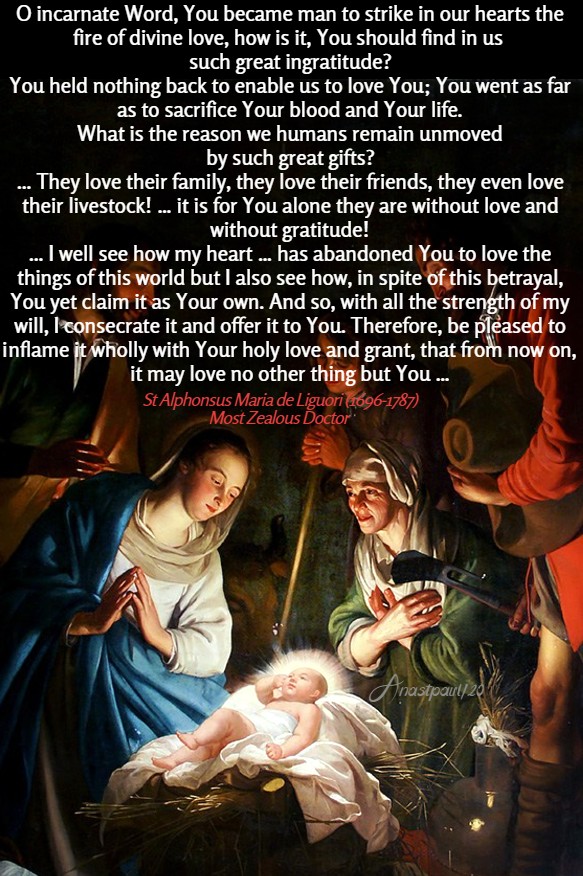
REFLECTION – “O Fire ever burning,” let us say together with Saint Augustine – “inflame our souls.” O incarnate Word, You became man to strike in our hearts the fire of divine love, how is it You should find in us such great ingratitude? You held nothing back to enable us to love You; You went as far as to sacrifice Your blood and Your life. What is the reason we humans remain unmoved by such great gifts? Is it because we know nothing about them? Not at all. People understand and believe, it is for love of them, You came down from heaven to put on human flesh and take on the burden of their woes. They know it is for love of them, You willed to lead a life of constant suffering and undergo a shameful death. How explain, after all this, their living in such absolute forgetfulness of Your unequalled kindness? They love their family, they love their friends, they even love their livestock! … it is for You alone they are without love and without gratitude! But what am I saying? In accusing others of ungratefulness, I condemn myself since my conduct in Your regard is even worse than theirs. Nevertheless, Your mercy gives me courage. I know how long it has borne with me, to forgive me and set me on fire with Your love, if only I am willing to repent and love You.
Oh yes, my God, I want to repent … I want to love You with all my heart. I well see how my heart … has abandoned You to love the things of this world but I also see how, in spite of this betrayal, You yet claim it as Your own. And so, with all the strength of my will, I consecrate it and offer it to You. Therefore, be pleased to inflame it wholly with Your holy love and grant, that from now on, it may love no other thing but You … O my Jesus, I love You, I love You, my sovereign Good! I love You, sole Love of my soul.
O Mary, my mother, you are the “mother of noble loving” (Sir 24:24 Vg.), grant me the grace of loving my God. It is from you that I hope to gain it.” – St Alphonsus Maria de Liguori (1696-1787) – Bishop and Most Zealous Doctor of the Church – 1st Sermon for the Octave of Christmas
PRAYER – Lord, watch over Your people, who come to You in confidence. Strengthen the hearts of those who hope in You. Give courage to those who falter because of their failures. In this holy season of Advent, lead them closer to You in hope, by the power of Your Holy Spirit. May Mary Immaculate, our Mother and Advocate be our eternal succour. Through Christ, our Lord, in the unity of the Holy Spirit, God for all eternity, amen.
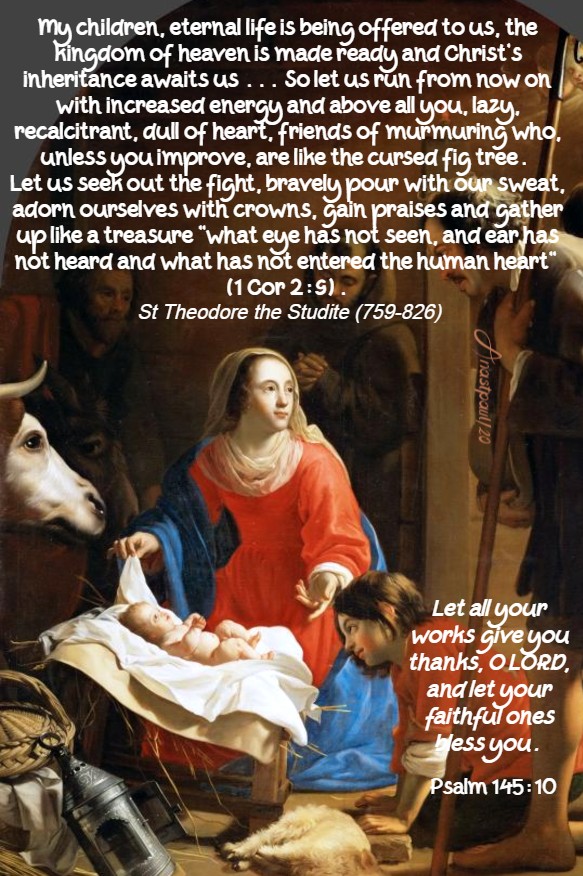
Let all your works give you thanks, O LORD, and let your faithful ones bless you. Let them discourse of the glory of your Kingdom and speak of your might. – Psalm 145:10-11
REFLECTION – “My children, eternal life is being offered to us, the kingdom of heaven is made ready and Christ’s inheritance awaits us – the enjoyment of innumerable and unimaginable blessings, the happiness of a great joy and of immortality, glory and honour without measure and all the other blessings in such great number, that human language is not sufficient to make known its grace and mercy (cf. Wsd. 3:9)! So let us run from now on with increased energy and above all you, lazy, recalcitrant, dull of heart, friends of murmuring who, unless you improve, are like the cursed fig tree. We surround it with manure (cf. Lk 13:8) and it takes no root at all, we water you with words and not a bit of growth results! “Even now the ax lies at the root of the trees” (Lk 3:9) and I will silence the rest. Let us seek out the fight, bravely pour with our sweat, adorn ourselves with crowns, gain praises and gather up like a treasure “what eye has not seen, and ear has not heard and what has not entered the human heart” (1 Cor 2:9).
Let us rule our lives by that of our fathers, that which goes back to the origin, let us follow in the footsteps of their virtues, love their upright deeds, make of our way of life an image of their own. (…) Yes, let us work together with them! Let us act with them! Let us follow in their footsteps! Yes! Let us, too, fulfil what is right and holy! In this way we will share in their glory, we will be crowned and, together with them, exult in the kingdom of heaven, in Christ Jesus our Lord, to whom belongs the glory and the power, with the Father and the Holy Spirit, now and for ever. Amen.” – St Theodore the Studite (759-826) Catechesis 72 (from the Great Cathecheses)
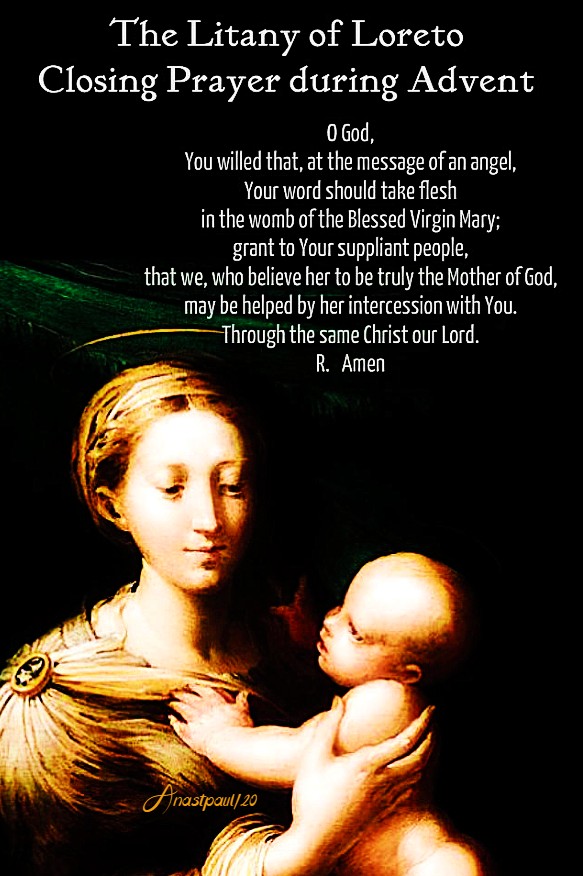
PRAYER – O God, You willed that, at the message of an angel, Your word should take flesh in the womb of the Blessed Virgin Mary; grant to Your suppliant people, that we, who believe her to be truly the Mother of God, may be helped by her intercession with You. Through the same Christ our Lord.










 AnaStpaul
You must be logged in to post a comment.