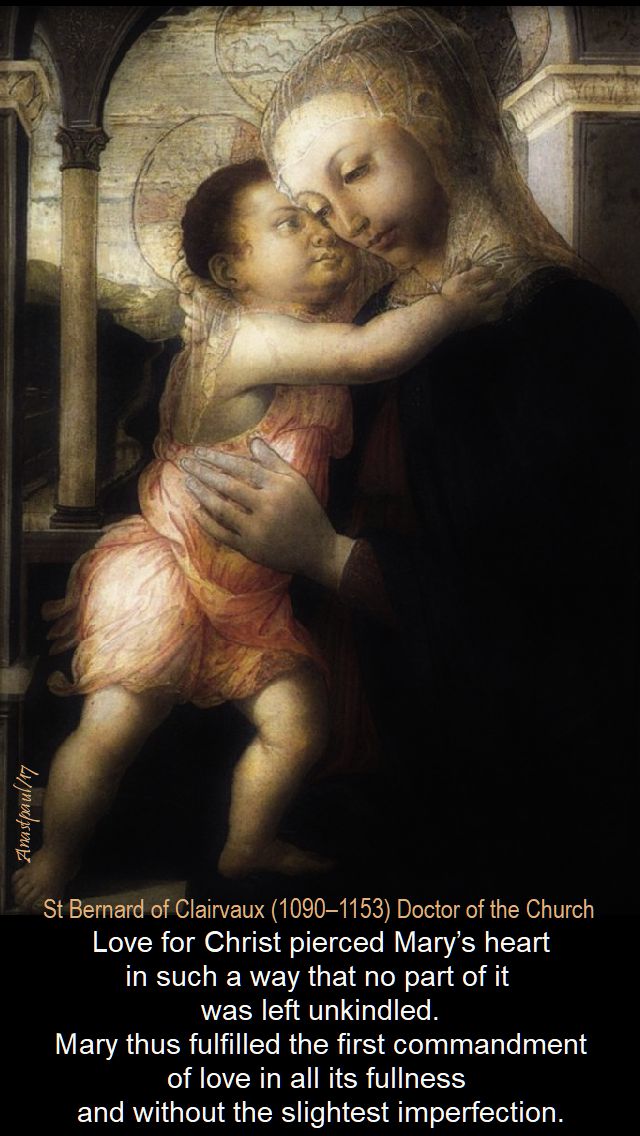
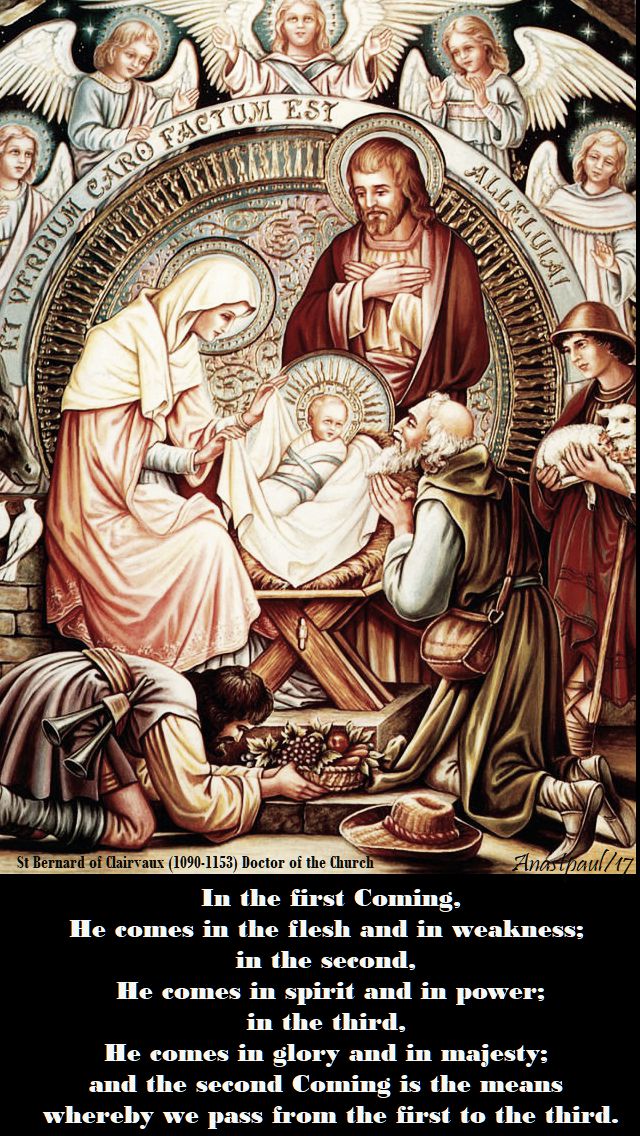
Jesus, Joy of Loving Hearts St Bernard of Clairvaux (1090-1153) Doctor of the Church
Jesus, Joy of loving hearts,
You Fount of life, You Light of men,
from the best bliss that earth imparts,
we turn unfilled to You again.
We taste You, O You living Bread,
and long to feast upon You still;
we drink of You, the Fountain-head,
and thirst our souls from You to fill.
O Jesus, ever with us stay;
make all our moments calm and bright!
chase the dark night of sin away,
shed o’er the world Your holy light.
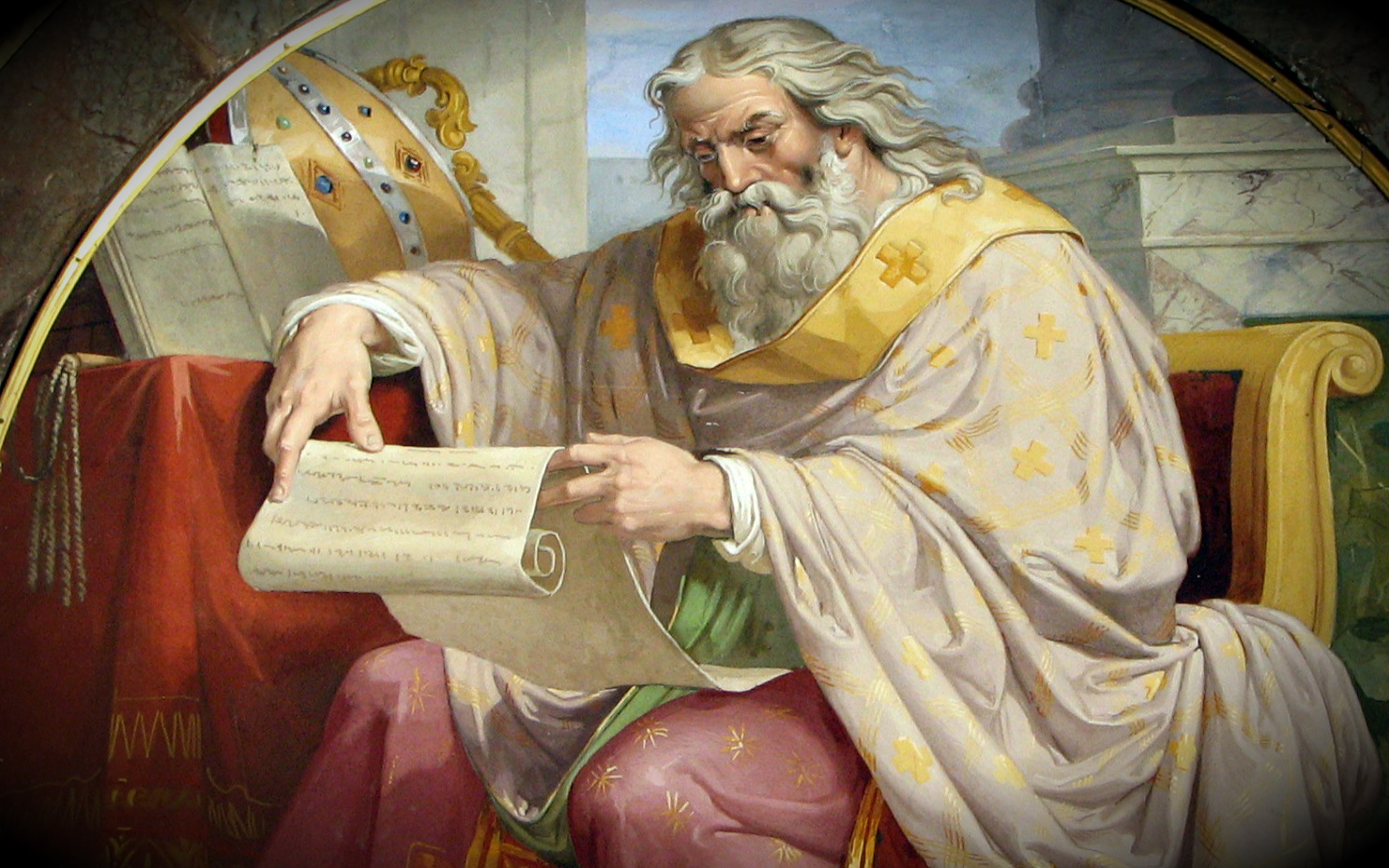
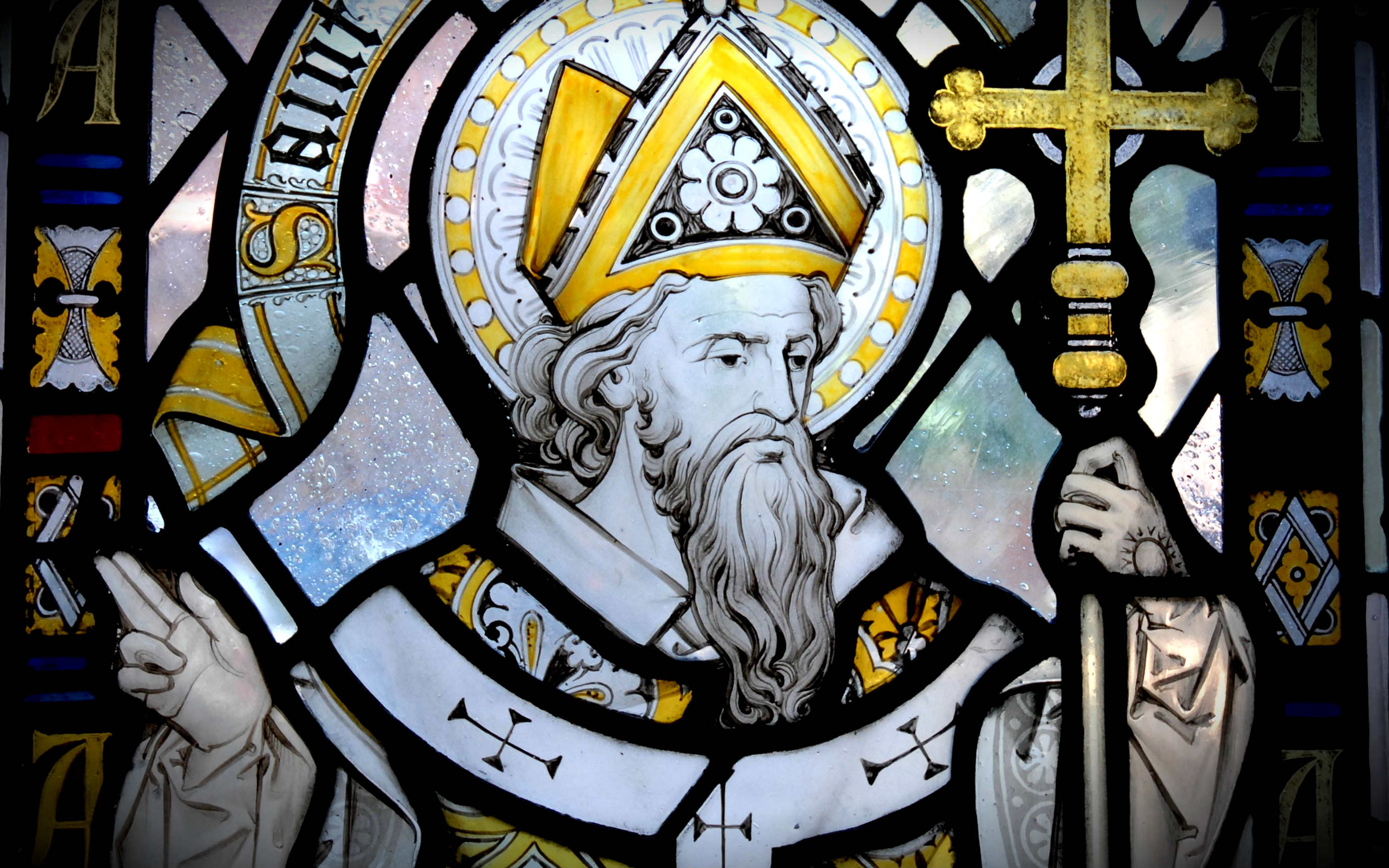
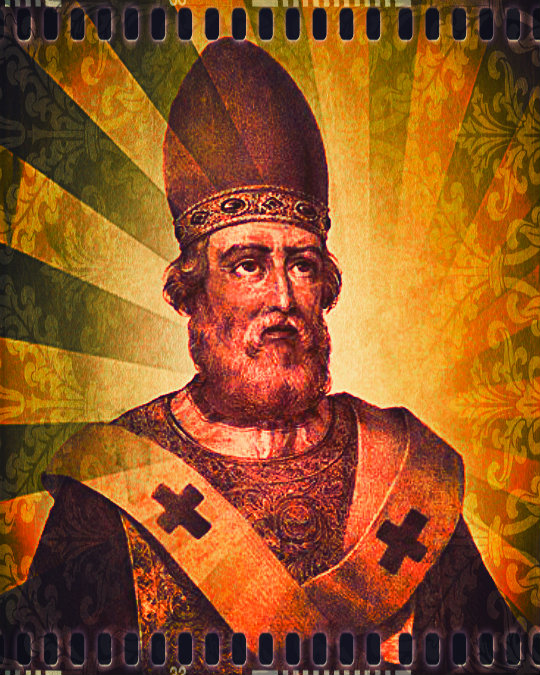
Thought for the Day – – 10 November – The Memorial of St Pope Leo the Great (c400-461) Doctor of the Church
Leo is called Great in large part because he saved the city of Rome on two separate occasions. But far more noteworthy is his work safeguarding the Roman and apostolic faith from the confusion of so many different figures. Since Christ as perfect Man reveals man to himself (concerning which Vatican II reminds us in Gaudium et Spes §22), understanding Christ’s dignity is essential for recognising our own as restored and elevated in the grace He has won for us.
Preserving and transmitting this teaching does not usually oblige us to face the barbarians at the gates. In the face of those who would obscure the truth, our call—Pope Leo’s call—is to put on what St Paul calls “the mind of Christ.” Embracing what we ourselves have received, we can be tailored to His understanding of us, rather than our conjectures about Him. There are only two choices: we can either remember Him Whose members we are in the Body of Christ, or slide into the grave danger highlighted by John Courtney Murray, SJ:
“Self-understanding is the necessary condition of a sense of self-identity and self-confidence, whether in the case of an individual or in the case of a people… Otherwise the peril is great. The complete loss of one’s identity is, with all propriety of theological definition, hell. In diminished forms it is insanity.”
As to insanity, some would say riding out to meet a barbarian without an army fits the bill. But knowing himself and the One who called him, Pope Leo could ride out to Attila, confident that the Hun’s efforts would amount to an empire built on sand, a mass of broken lives and a brief (but memorable) footnote in the textbooks….(Br Leo Camurati OP)
St Pope Leo the Great Pray for us, that we may build our houses upon the Rock of Christ and His Church!
Quote/s of the Day – 10 November – The Memorial of St Pope Leo the Great (c400-461) Doctor of the Church
“Peter has spoken by the mouth of Leo.”
“Those who are not good to others are bad to themselves.”
“PEACE is the first thing the angels sang. PEACE is the mark of the children of God. PEACE is the nurse of love. PEACE is the mother of unity. PEACE is the rest of the blessed souls. PEACE is the dwelling place of eternity.”
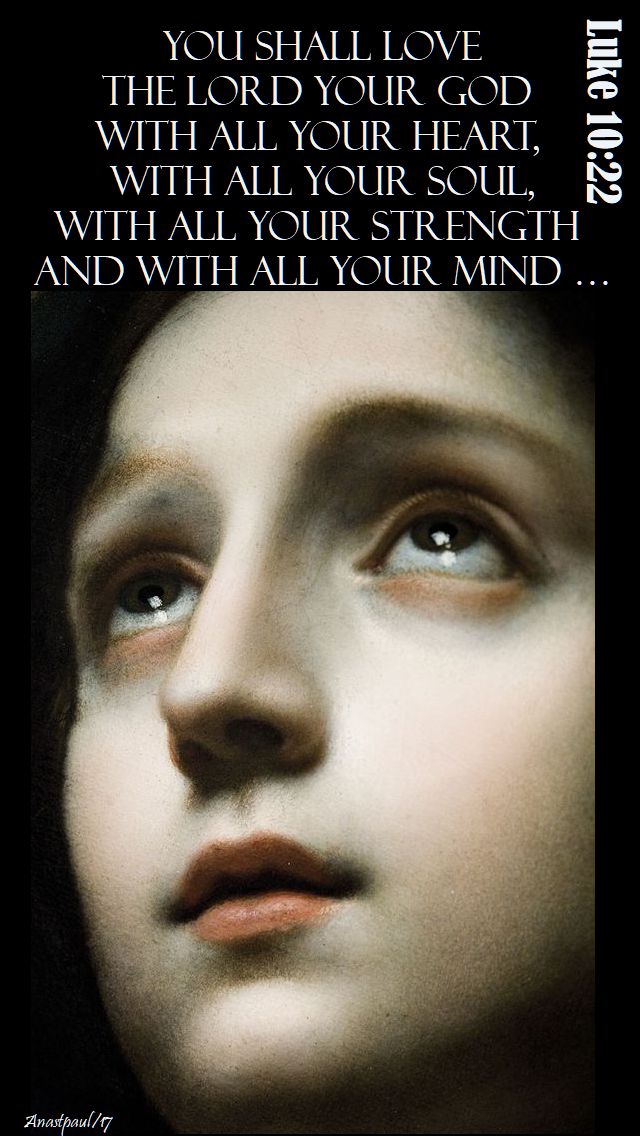
“The faith of those who LIVE their faith is a serene faith. What you long for will be given you; what you love will be yours for ever.”
“Our sharing in the Body and Blood of Christ has no other purpose than to transform us into that which we receive.”
“God decreed that all nations should be saved in Christ. Dear friends, now that we have received instruction in this revelation of God’s grace, let us celebrate with spiritual joy the day of our first harvesting, of the first calling of the Gentiles. Let us give thanks to the merciful God, “who has made us worthy,” in the words of the Apostle, “to share the position of the saints in light; who has rescued us from the power of darkness and brought us into the kingdom of this beloved Son.” This came to be fulfilled, as we know, from the time when the star beckoned the three wise men out of their distant country and led them to recognise and adore the King of heaven and earth. The obedience of the star calls us to imitate its humble service: to be servants, as best we can, of the grace that invites all men to find Christ.”
“The cross of Christ is the true ground and chief cause of Christian hope.”
“Let no one be ashamed of the cross by which Christ has redeemed the world. None of us must be afraid to suffer for the sake of justice or doubt the fulfillment of the promises, for it is through toil that we come to rest and through death that we pass to life.”
“By Baptism we are made flesh of the Crucified.”
“No-one, however weak, is denied a share in the victory of the cross. No-one is beyond the help of the prayer of Christ.”
St Pope Leo the Great (c400-461) Doctor of the Church
One Minute Reflection – 10 November – The Memorial of St Leo the Great (c 400-461) Doctor of the Church
No temptation has overtaken you, that is not common to man. God is faithful and he will not let you be tempted beyond your strength but with the temptation, will also provide the way of escape, that you may be able to endure it....1 Corinthians 10:13
REFLECTION – “Virtue is nothing without the trial of temptation, for there is no conflict without an enemy, no victory without strife.”…St Pope Leo the Great (c 400-461)
PRAYER – Lord God, You built Your Church on the firm foundation of the Apostle Peter and You promised that the gates of hell would never overcome it. So too, may we trust in Your power, that by our faith we may receive the grace to withstand the enemy who will not prevail against us. May your Holy Spirit grant us the grace of fortitude to withstand our temptations, supported by the prayers of St Pope Leo the Great, keep us ever faithful to Your love. Amen
Our Morning Offering – 10 November – The Memorial of St Pope Leo the Great (c400-461) Doctor of the Church
Grant to Us, O Lord By St Leo I, the Great (c400-461) Pope, Confessor, Father and Doctor of the Church
Grant to us, O Lord, not to mind earthly things but rather, to love heavenly things that while, all things around us pass away, we may even now, hold fast to those things which last forever. Amen
Only two Popes have earned the title Great—Gregory I and Leo I. Leo was born in the beginning of the fifth century. When he was a Deacon, other Church leaders looked to him for advice and for explanations of the faith. Leo was sent to settle arguments between leaders. With strong conviction of the importance of the Bishop of Rome in the Church and of the Church as the ongoing sign of Christ’s Presence in the world, Leo the Great displayed endless dedication as Pope. Elected in 440, he worked tirelessly as “Peter’s successor,” guiding his fellow Bishops as “equals in the episcopacy and infirmities.”
Leo is known as one of the best administrative Popes of the ancient Church. His work branched into four main areas, indicative of his notion of the Pope’s total responsibility for the flock of Christ. He worked at length to control the heresies of Pelagianism–overemphasising human freedom– Manichaeism–seeing everything material as evil–and others, placing demands on their followers so as to secure true Christian beliefs.
A second major area of his concern was doctrinal controversy in the Church in the East, to which he responded with a classic letter setting down the Church’s teaching on the two natures of Christ. With strong faith, he also led the defense of Rome against barbarian attack, taking the role of peacemaker.
In these three areas, Leo’s work has been highly regarded. His growth to sainthood has its basis in the spiritual depth with which he approached the pastoral care of his people, which was the fourth focus of his work. He is known for his spiritually profound sermons. An instrument of the call to holiness, well-versed in Scripture and ecclesiastical awareness, Leo had the ability to reach the everyday needs and interests of his people. One of his sermons is used in the Office of Readings on Christmas. Almost 100 sermons and 150 letters of Leo I have been preserved.
It is said of Leo that his true significance rests in his doctrinal insistence on the mysteries of Christ and the Church and in the supernatural charisms of the spiritual life given to humanity in Christ and in his Body, the Church. Thus Leo held firmly that everything he did and said as pope for the administration of the Church represented Christ, the head of the Mystical Body and Saint Peter, in whose place Leo acted.
Leo died on 10 November 461 and, as he wished to be buried as close as possible to the tomb of St Peter, his body was placed in a tomb in the portico of St Peter’s basilica. In 688 his remains were moved inside the basilica itself.
Pope Emeritus Benedict XVI said that Leo’s papacy “…was undoubtedly one of the most important in the Church’s history.”
The significance of Leo’s pontificate lies in his assertion of the universal jurisdiction of the Roman bishop, as expressed in his letters and still more in his 100 extant orations. This assertion is commonly referred to as the doctrine of Petrine supremacy.
According to Leo and several Church Fathers as well as certain interpretations of the Scriptures, the Church is built upon Peter, in pursuance of the promise of Matthew 16:16–19. Peter participates in everything which is Christ’s; what the other apostles have in common with him they have through him. What is true of Peter is true also of his successors. Every other bishop is charged with the care of his particular flock, the Roman pontiff with that of the whole Church. Other bishops are his assistants in this great task. In Leo’s eyes the decrees of the Council of Chalcedon acquired their validity from his confirmation.
Leo’s letters and sermons reflect the many aspects of his career and personality and are invaluable historical sources. His rhythmic prose style, called cursus leonicus,influenced ecclesiastical language for centuries.
In 1754 Pope Benedict XIV proclaimed Leo I a Doctor of the Church.
Quote/s of the Day – 9 November – Feast of the Dedication of the Basilica of Saint John Lateran
“What was done here, as these walls were rising, is reproduced when we bring together those who believe in Christ. For, by believing they are hewn out, as it were, from mountains and forests, like stones and timber; but by catechising, baptism and instruction they are, as it were, shaped, squared and planed by the hands of the workers and artisans. Nevertheless, they do not make a house for the Lord until they are fitted together through love”.
St Augustine (354-430) Doctor of the Church – Sermon 36
“God’s desire to build a spiritual temple in the world, a community that worships him in spirit and truth (cf. John 4:23-24). But this observance also reminds us of the importance of the material buildings in which the community gathers to celebrate the praises of God. Every community, therefore, has the duty to take special care of its own sacred buildings, which are a precious religious and historical patrimony. For this we call upon the intercession of Mary Most Holy, that she help us to become, like her, the “house of God,” living temple of his love.”
One Minute Reflection – 9 November – Feast of the Dedication of the Basilica of Saint John Lateran
He has strengthened the bars of your gates, he has blessed the children within you.…Psalm 147
REFLECTION – “Today’s feast, brothers, ought to be all the more devout as it is more personal. For other celebrations we have in common with other ecclesiastical communities, but this one is proper to us, so that if we do not celebrate it nobody will. It is ours because it concerns our church; ours because we ourselves are its theme. You are surprised and even embarrassed, perhaps, at celebrating a feast for yourselves. But do not be like horses and mules that have no understanding. Your souls are holy because of the Spirit of God dwelling in you; your bodies are holy because of your souls and this building is holy because of your bodies.”…St Bernard of Clairvaux (1090-1153)
PRAYER – Almighty God, as we recall with joy, the Dedication of this house of Yours on each recurring anniversary, listen to Your people’s prayer and grant that our worship here may be a sincere and holy service, honouring Your Name and bringing us the fullness of redemption. Through Jesus Christ, our Lord, in union with the Holy Spirit, one God for all eternity, amen.
Quote/s of the Day – 7 November “On Achieving Sanctity”
“Come, brothers, let us at length spur ourselves on. We must rise again with Christ, we must seek the world which is above and set our mind on the things of heaven. Let us long for those who are longing for us, hasten to those who are waiting for us and ask those who look for our coming to intercede for us. We should not only want to be with the saints, we should also hope to possess their happiness. While we desire to be in their company, we must also earnestly seek to share in their glory. Do not imagine that there is anything harmful in such an ambition as this; there is no danger in setting our hearts on such glory.”
St Bernard of Clairvaux (1090-1153) Doctor of the Church
“Holiness does not consist of doing more difficult things every day but doing things with greater love every day. Our great desires for holiness have to be expressed by persevering in small things. This has to be your ambition: to persevere in the exact fulfilment of your present obligations, because that work – humble, monotonous, small – is prayer expressed in deeds. And it prepares us to receive the grace for that other work – great, broad and deep – about which we dream: to place Christ at the summit of all human activities.”
St Josemaria Escriva (1902-1975)
“Many little things done with love and for love comprise our treasure for this or that day, which we will carry with us into eternity. Our interior life is normally nourished by little things carried out with love and attention.”
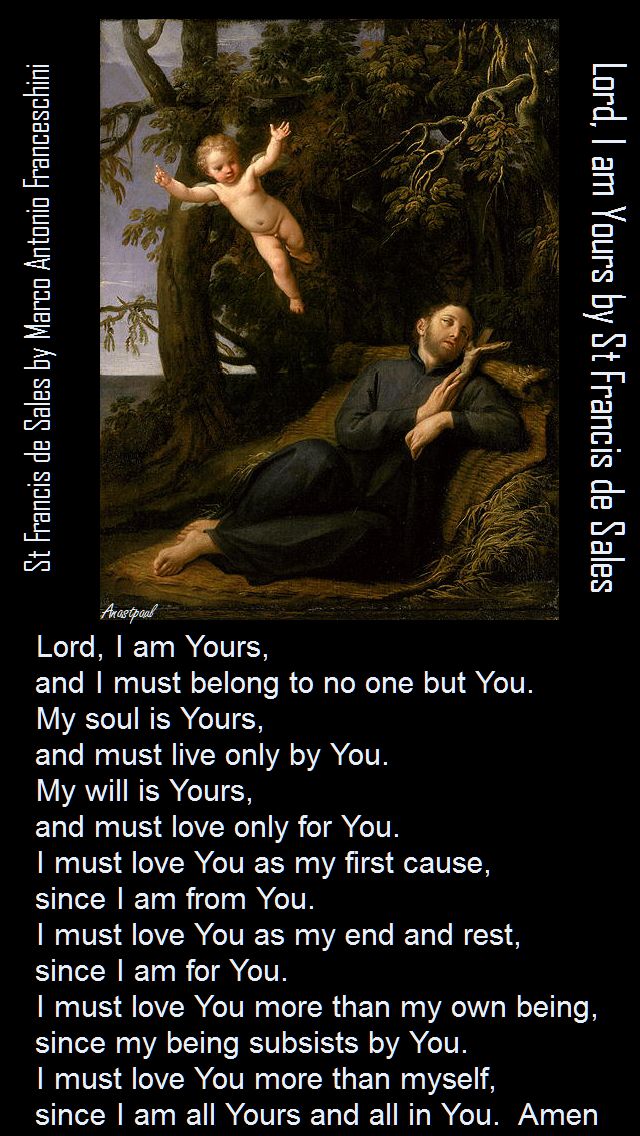
O Love Eternal! By St Francis De Sales (1567-1622) Doctor of the Church
O love eternal,
my soul needs and chooses You eternally!
Ah, come Holy Spirit,
and inflame our hearts with Your love!
To love – or to die!
To die – and to love!
To die to all other love
in order to live in Jesus’ love,
so that we may not die eternally.
But that we may live in Your eternal love,
O Saviour of our souls,
we eternally sing,
Live, Jesus!
Jesus, I love!
Live, Jesus, whom I love!
Jesus, I love,
Jesus who lives and reigns
forever and ever.
Amen.
Thought for the Day – 5 November – Excerpt from St John Chrysostom’s ((347-407) Homiletic Commentary on Matthew 23:1-12
“And where shall we find this humility? Will ye that we go again to the city of virtue, the tents of the holy men, the mountains. I mean and the groves? For there too shall we see this height of humility.
For men, some illustrious from their rank in the world, some from their wealth, in every way put themselves down, by their vesture, by their dwelling, by those to whom they minister; and, as in written characters, they throughout all things inscribe humility.
And the things that are incentives of arrogance, as to dress well and to build houses splendidly and to have many servants, things which often drive men even against their will to arrogance; these are all taken away. For they themselves light their fire, they themselves cleave the logs, themselves cook, themselves minister to those that come there.
No one can be heard insulting there, nor seen insulted, nor commanded, nor giving commands; but all are devoted to those that are waited on and every one washes the strangers’ feet, and there is much contention about this. And he doeth it, not inquiring who it is, neither if he be a slave, nor if he be free; but in the case of every one fulfills this service. No man there is great nor mean. What then? Is there confusion? Far from it but the highest order. For if any one be mean, he that is great seeth not this but hath accounted himself again to be inferior even to him and so becomes great.
There is one table for all, both for them that are served and for them that serve; the same food, the same clothes, the same dwellings, the same manner of life. He is great there, who eagerly seizes the mean task. There is not mine and thine but this expression is exterminated, that is a cause of countless wars.
4. And why dost thou marvel, if there be one manner of life and table and dress for all, since indeed there is even one soul to all, not in substance only (for this is with all men also) but in love? How then should it ever be lifted up itself against itself? There is no wealth and poverty there, honour and dishonour; how then should haughtiness and arrogance find an entrance? For they are indeed little and great in respect of their virtue; but, as I have said, no one seeth this. He that is little, feels not pain, as despised; for neither is there any one to despise him; and should any one spurn him, this above all are they taught, to be despised, to be spurned, to be set at nought, in word and in deed. And with the poor and maimed do they associate and their tables are full of these guests; so that for this are they worthy of the heavens. And one tends the wounds of the mutilated, another leads the blind by the hand, a third bears him that is lamed of his leg.
There is no multitude of flatterers or parasites there; or rather they know not even what flattery is; whence then could they be lifted up at any time? For there is great equality amongst them, wherefore also there is much facility for virtue.
For by these are they of an inferior sort better instructed, than if they were compelled to give up the first place to them.
For like as the impetuous man derives instruction from him that is smitten and submits to it; so the ambitious from him that claims not glory but despises it. This they do there abundantly and as the strife is great with us to obtain the first place, so great is it with them not to obtain it but utterly to refuse it and great is their earnest desire who shall have the advantage in honouring, not in being honoured.
Our Morning Offering – 5 November – 31st Sunday in Ordinary Time A
YOUR SACRED TABLE A Prayer Before Holy Communion By St Francis de Sales
Divine Saviour,
we come to Your sacred table
to nourish ourselves,
not with bread but with Yourself,
true Bread of eternal life.
Help us daily to make a good
and perfect meal
of this divine food.
Let us be continually refreshed
by the perfume of Your kindness and goodness.
May the Holy Spirit fill us with His Love.
Meanwhile, let us prepare a place
for this holy food by emptying our hearts.
Amen
Quote/s of the Day 2 November – The Solemnity of All Souls
St James the Apostle gives a method of avoiding or lessening our stay in Purgatory. He says: “He who saves a soul saves his own and satisfies for a multitude of sins.” (James 1:20)
“Let us help and commemorate them. If Job’s sons were purified by their father’s sacrifice (Job 1:5), why would we doubt that our offerings for the dead bring them some consolation? Let us not hesitate to help those who have died and to offer our prayers for them”.
St John Chrysostom (347-407) Doctor of the Church – (Homilies on 1 Corinthians 41:5 [A.D. 392]
“But by the prayers of the Holy Church and by the salvific sacrifice and by the alms which are given for their spirits, there is no doubt that the dead are aided, that the Lord might deal more mercifully with them than their sins would deserve. The whole Church observes this practice which was handed down by the Fathers: that it prays for those who have died in the communion of the Body and Blood of Christ, when they are commemorated in their own place in the sacrifice itself; and the sacrifice is offered also in memory of them, on their behalf. If, then, works of mercy are celebrated for the sake of those who are being remembered, who would hesitate to recommend them, on whose behalf prayers to God are not offered in vain? It is not at all to be doubted that such prayers are of profit to the dead; but for such of them as lived before their death in a way that makes it possible for these things to be useful to them after death”.
St Augustine (354-430) Doctor of the Church (The City of God 21:13 [A.D. 419]
“I would go so far as to say that if there was not purgatory, then we would have to invent it, for who would dare say of himself that he was able to stand directly before God. And yet we don’t want to be, to use an image from scripture, ‘a pot that turned out wrong’, that has to be thrown away; we want to be able to be put right. Purgatory basically means that God can put the pieces back together again. That He can cleanse us in such a way that we are able to be with Him and can stand there in the fullness of life. Purgatory strips off from one person what is unbearable and from another the inability to bear certain things, so that in each of them a pure heart is revealed and we can see that we all belong together in one enormous symphony of being.”
Pope Benedict XVI
“If today we are remembering these brothers and sisters of ours who lived before us and are now in heaven, they are there because they were washed in the Blood of Christ, that is our hope and this hope does not disappoint. If we live our lives with the Lord, he will never disappoint us.”
One Minute Reflection – 1 November – The Solemnity of All the Saints
You are fellow citizens of the saints and members of the household of God………Eph 3:19
REFLECTION – “A ray of light enables us to see the dust that is in the air.
In the same way, the lives of the Saints show up our defects.
If we fail to see our faults, it is because we have not looked at the lives of
holy men and women.”…St Anthony of Padua
PRAYER – Heavenly Father, help me to love and respect Your Saints. Grant me to obtain an example from their way of life, fellowship in their communion and aid through their intercession. Holy Saints in Heaven, Pray for us. Amen
“The confession of evil works, is the first beginning of good works. You do the truth and come to the light.”
St Augustine (354-430) Doctor & Father of the Church
“A man is repaired in an instant by Divine grace.”
“One who has confessed and received absolution, will be less punished in Purgatory than one who has gone no further than contrition.”
St Thomas Aquinas (1225-1274) Doctor of the Church
“Are you scorched, are you burnt to the very core, by the heat of concupiscence? Even so, poor sufferers! You must not lose courage; there is a cool fountain ready to refresh you and heal all your wounds; not indeed the first font, which gave you the life you have lost; but the second Baptism, the divine Sacrament of Penance, which can restore you to grace and purity!”
And when he had said this, he breathed on them and said to them, “Receive the holy Spirit. Whose sins you forgive are forgiven them and whose sins you retain are retained.”…John 20:22-23
REFLECTION – “After confession a crown is given to penitents.”… St John Chrysostom (347-407) Doctor of the Church
PRAYER – Lord God, hear my prayer, forgive my sins, teach me true repentance, help me to renew my life and live only in Your love.
I wish now and every day, sorrow for my sins and the willingness to make reparation for them. Show me how, dear Lord, teach me Your ways. For my sins crucified my Lord, on my God, forgive me! Lord Jesus, I love You, grant that I may never separate myself from You again! Amen
One Minute Reflection – 21 October – The Memorial of St Hilarion of Gaza (c 291-371)
Jesus said to his disciples: “No one who prefers father or mother to me is worthy of me.”…Matthew 10:37
REFLECTION – To believe in God – for Christians, does not simply mean to believe that God exists, nor merely to believe that He is true.
It means to believe by loving, to believe by abandoning oneself to God, uniting and conforming oneself to Him.”… St Anthony of Padua (1195-1231) Doctor of the Church
PRAYER – Holy Father, grant me an operative faith, a faith that will move mountains. Englighten my soul with Your Light, Goodness, Power and Wisdom. Let my faith be an image of You by lively deeds and love and by conforming myself to Your Will in all things. St Hilarion from such a young age you searched for complete closeness and abandonment to God, please pray that we may manifest such a true faith, amen.
Saint of the Day – 21 October – St Hilarion of Gaza (c 291-371) Hermit and Miracle-Worker.
St Hilarion spent most of his life in the desert according to the example of Anthony the Great.
Shortly after St Hilarion’s death, St Jerome wrote about the life of this hermit who had introduced monasticism into Palestine. Jerome told of Hilarion’s lifelong pursuit of solitude, where he could encounter God in prayer.
Hilarion was born in Thabatha, south of Gaza in Syria Palaestina of pagan parents. He successfully studied rhetoric with a Grammarian in Alexandria. It seems that he was converted to Christianity in Alexandria. After that, he shunned the pleasures of his day—theatre, circus and arena—and spent his time attending church. According to St Jerome, he was a thin and delicate youth of fragile health.
After hearing of Saint Anthony, whose name (according to St.erome), “was in the mouth of all the races of Egypt” Hilarion, at the age of fifteen, went to live with him in the desert for two months. As Anthony’s hermitage was busy with visitors seeking cures for diseases or demonic affliction, Hilarion returned home along with some monks. At Thabatha, his parents having died in the meantime, he gave his inheritance to his brothers and the poor and left for the wilderness.
St Jerome wrote about the divine irony of the fame that denied it to him because his miracles attracted so many people. In this brief excerpt, Jerome describes Hilarion’s faith and a typical miracle:
Once . . . when he was eighteen years old, brigands tried to find him at night. Either they believed that he had something to steal or they thought he would scorn them if they didn’t intimidate him. . . . From evening till dawn, they hunted in every direction but couldn’t find him. In the broad daylight, however, they came upon him and apparently as a joke asked him: “What would you do if robbers attacked you?” He answered: “A naked person does not fear robbers.” “You could be killed.” “I could,” he said. “But I am not afraid of robbers because I am ready to die.” Admiring his faith, they confessed their folly of the night before and their blindness and promised to reform their lives…
A woman of Eleutheropolis, despised by her husband of fifteen years because of her sterility, . . . was the first who dared to intrude upon blessed Hilarion’s solitude. While he was still unaware of her approach, she suddenly threw herself at his knees saying: “Forgive my boldness. . . ., he asked her why she had come and why she was weeping. When he learned the cause of her grief, raising his eyes to heaven, he commanded her to have faith and to believe. He followed her departure with tears. When a year had gone by, he saw her with her son.
Like Anthony, Hilarion took only a little food once a day at sunset. When tempted sexually, he ate even less. “I’ll see to it, you jackass,” he said, “that you shall not kick.” He never bathed nor changed his tunic until it wore out. He said, “It is idle to expect cleanliness in a hair shirt.” Jerome relates that even though Hilarion suffered extreme dryness of spirit, he persevered in prayer and cured many people of sickness and demon possession. The parade of petitioners and would-be disciples drove Hilarion to retire to more remote locations. But they followed him everywhere. First he visited Anthony’s retreat in Egypt. Then he withdrew to Sicily, later to Dalmatia and finally to Cyprus. He died there in 371.
Majestic Sovereign, timeless Wisdom,
Your kindness melts my hard, cold soul.
Handsome Lover, selfless Giver,
Your beauty fills my dull, sad eyes.
I am Yours, You made me.
I am Yours, You called me.
I am Yours, You saved me.
I am Yours, You loved me.
I will never leave Your presence.
Give me death, give me life.
Give me sickness, give me health.
Give me honour, give me shame.
Give me weakness, give me strength.
I will have whatever You give.
Amen
Thought for the Day – – 15 October – The Memorial of St Teresa of Jesus/Avila (1515-1582) Doctor of the Church
Since her encounter with Jesus, St Teresa lived “another life”; she become a tireless communicator of the Gospel (cf. Life, 23, 1). Eager to serve the Church and in the face of serious problems of her time, she did not limit herself to being a spectator of the reality around her. In her position as a woman and with her health difficulties, she decided, she said, “to do what little depended on me … that is to follow the evangelical counsels as perfectly as possible and to ensure that these few nuns who are here do the same” (The Way, 1, 2). Thus began the Teresian reform, in which she asked her sisters not to lose time negotiating with God “interests of little importance,” while “the world is in flames” (ibid., 1, 5). This missionary and ecclesial dimension has always marked the Carmelites and Discalced Carmelites.
As she did then, even today the saint opens new horizons for us, she calls us to a great undertaking, to see the world with the eyes of Christ, to seek what He seeks and to love what He loves. (Pope Francis in a letter to to Carmelite Father Xavier Cannistrà)
Ours is a time of turmoil, a time of reform, and a time of liberation. Modern women have in Teresa a challenging example. Promoters of renewal, promoters of prayer, all have in Teresa a woman to reckon with, one whom they can admire and imitate.
Quotes of the Day – 15 October – The Memorial of St Teresa of Jesus/Avila (1515-1582) Doctor of the Church
“Oh my Lord! How true it is that, whoever works for You, is paid in troubles! And what a precious price to those who love You, if we understand its value.”
“There is no such thing as bad weather. All weather is good because it is God’s.”
“There is more value in a little study of humility and in a single act of it, than in all the knowledge in the world.”
“We need no wings to go in search of Him but have only to look upon Him, present within us.”
“Hope, O my soul, hope. You know neither the day nor the hour. Watch carefully, for everything passes quickly, even though your impatience makes doubtful, what is certain and turns a very short time into a long one.”
Our Morning Offering – 15 October – The Memorial of St Teresa of Jesus (1515-1582)
To Redeem Lost Time By St Teresa of Jesus (1515-1582) Doctor of the Church
O my God! Source of all mercy!
I acknowledge Your sovereign power.
While recalling the wasted years that are past,
I believe that You, Lord,
can in an instant turn this loss to gain.
Miserable as I am,
yet I firmly believe that You can do all things.
Please restore to me the time lost,
giving me Your grace,
both now and in the future,
that I may appear before You in “wedding garments.”
Amen
One Minute Reflection – 15 October – The Memorial of St Teresa of Jesus/Avila (1515-1582) Doctor of the Church
If we have died with him we shall also live with him; if we persevere we shall also reign with him. But if we deny him he will deny us. If we are unfaithful he is always faithful, for he cannot disown his own self..…2 Timothy 2:11-13
REFLECTION – “If Christ Jesus dwells in a man as his friend and noble leader, that man can endure all things, for Christ helps and strengthens us and never abandons us. He is a true friend. And I clearly see that is we expect to please Him and receive an abundance of His graces, God desires that these graces must come to us from the hands of Christ, through His most sacred humanity, in which God takes delight. All blessings come to us through our Lord. He will teach us, for in beholding His life we find that He is the best example. What more do we desire from such a good friend at our side? Unlike our friends in the world, He will never abandon us when we are troubled or distressed. Blessed is the one who truly loves Him and always keeps Him near. Whenever we think of Christ we should recall the love that led Him to bestow on us so many graces and favours and also the great love God showed in giving us in Christ a pledge of His love; for love calls for love in return. Let us strive to keep this always before our eyes and to rouse ourselves to love Him. For if at some time the Lord should grant us the grace of impressing His love on our hearts, all will become easy for us and we shall accomplish great things quickly and without effort.” – Saint Teresa of Jesus
PRAYER – Almighty God, our Father, You sent St Teresa of Jesus to be a witness in the Church to the way of perfection. Sustain us by her spiritual doctrine and kindle in us, the longing for true holiness. Through Christ, our Lord, in union with the Holy Spirit. St Teresa pray for us, amen
Saint of the Day – 15 October – St Teresa of Jesus/of Avila (1515-1582) Virgin, Mystic, Ecstatic, Reformer, Apostle of Prayer, Writer, Doctor of the Church. Born as Teresa Sanchez Cepeda Davila y Ahumada at Avila, Old Castile, on 28 March 1515 – died at Alba de Tormes, 4 October 1582 of natural causes in the arms of her secretary and close friend Blessed Anne of Saint Bartholomew. Her relics are preserved at Alba – her heart shows signs of Transverberation (piercing of the heart), and is displayed, too. Her Body is incorrupt. Patronages: • sick people; against bodily ills or sickness • against headaches • against the death of parents • lace makers or lace workers • people in need of grace • people in religious orders • people ridiculed for their piety • World Youth Day 2011 • Amos, Canada, diocese of • Avellaneda-Lanús, Argentina, diocese of • Berzano di Tortona, Italy • Pozega, Croatia • Spain. Attributes – Habit of the Discalced Carmelites, Book and Quill, arrow-pierced heart. St Teresa was Beatified on 24 April 1614 by Pope Paul V and Canonised on 12 March 1622, only forty years after her death, by Pope Gregory XV. Tradition associate Saint Teresa with the Infant Jesus of Prague with claims of former ownership and devotion. On 27 September 1970 St Teresa, was named a Doctor of the Church by Pope Paul VI. Her books, which include her autobiography (The Life of Teresa of Jesus) and her seminal work El Castillo Interior (trans.: The Interior Castle), are an integral part of Spanish Renaissance literature as well as Christian mysticism and Christian meditation practices. She also wrote Camino de Perfección (trans.: The Way of Perfection).
Original Portrait by Frei Jual de la Miseria in 1576
The third child of Don Alonso Sanchez de Cepeda by his second wife, Doña Beatriz Davila y Ahumada, who died when the Teresa was in her fourteenth year, Teresa was brought up by her saintly father, a lover of serious books and a tender and pious mother. After her death and the marriage of her eldest sister, Teresa was sent for her to the Augustinian nuns at Avila but owing to illness she left at the end of eighteen months and for some years remained with her father and occasionally with other relatives, notably an uncle who made her acquainted with the Letters of St Jerome, which determined her to adopt the religious life, not so much through any attraction towards it, as through a desire of choosing the safest course. Unable to obtain her father’s consent she left his house unknown to him to enter the Carmelite Convent of the Incarnation at Avila, which then counted 140 nuns. The wrench from her family caused her a pain which she ever afterwards compared to that of death. However, her father at once yielded and Teresa took the habit.
Teresa lived in an age of exploration as well as political, social and religious upheaval. It was the 16th century, a time of turmoil and reform. She was born before the Protestant Reformation and died almost 20 years after the closing of the Council of Trent.
The gift of God to Teresa in and through which she became holy and left her mark on the Church and the world is threefold: she was a woman; she was a contemplative; she was an active reformer.
As a woman, Teresa stood on her own two feet, even in the man’s world of her time. She was “her own woman,” entering the Carmelites despite strong opposition from her father. She is a person wrapped not so much in silence as in mystery. Beautiful, talented, outgoing, adaptable, affectionate, courageous, enthusiastic, she was totally human. Like Jesus, she was a mystery of paradoxes: wise, yet practical; intelligent, yet much in tune with her experience; a mystic, yet an energetic reformer; a holy woman, a womanly woman.
On St Peter’s Day in 1559, Teresa became firmly convinced that Jesus Christ presented Himself to her in bodily form, though invisible. These visions lasted almost uninterrupted for more than two years. In another vision, a seraph drove the fiery point of a golden lance repeatedly through her heart, causing an ineffable spiritual-bodily pain.
I saw in his hand a long spear of gold and at the point there seemed to be a little fire. He appeared to me to be thrusting it at times into my heart and to pierce my very entrails; when he drew it out, he seemed to draw them out also and to leave me all on fire with a great love of God. The pain was so great, that it made me moan; and yet so surpassing was the sweetness of this excessive pain, that I could not wish to be rid of it…
This vision was the inspiration for one of Bernini’s most famous works, the Ecstasy of Saint Teresa at Santa Maria della Vittoria in Rome.
The memory of this episode served as an inspiration throughout the rest of her life and motivated her lifelong imitation of the life and suffering of Jesus, epitomised in the motto usually associated with her: Lord, either let me suffer or let me die.
Teresa was a woman “for God,” a woman of prayer, discipline and compassion. Her heart belonged to God. Her ongoing conversion was an arduous lifelong struggle, involving ongoing purification and suffering. She was misunderstood, misjudged and opposed in her efforts at reform. Yet she struggled on, courageous and faithful; she struggled with her own mediocrity, her illness, her opposition. And in the midst of all this she clung to God in life and in prayer. Her writings on prayer and contemplation are drawn from her experience: powerful, practical and graceful. She was a woman of prayer; a woman for God.
Teresa was a woman “for others.” Though a contemplative, she spent much of her time and energy seeking to reform herself and the Carmelites, to lead them back to the full observance of the primitive Rule. She founded over a half-dozen new monasteries. She traveled, wrote, fought—always to renew, to reform. In her self, in her prayer, in her life, in her efforts to reform, in all the people she touched, she was a woman for others, a woman who inspired and gave life.
Her final illness overtook her on one of her journeys from Burgos to Alba de Tormes. She died in 1582, just as Catholic nations were making the switch from the Julian to the Gregorian calendar, which required the removal of 5–14 October from the calendar. She died either before midnight of 4 October or early in the morning of 15 October which is celebrated as her feast day. Her last words were: “My Lord, it is time to move on. Well then, may your will be done. O my Lord and my Spouse, the hour that I have longed for has come. It is time to meet one another.”
Her writings, especially the Way of Perfection and The Interior Castle, have helped generations of believers. She and St Catherine of Siena were the first women so honoured as Doctors of the Church.
Interesting fact – her Spiritual Director was St Francis Borgia whose Feast Day we celebrated on 10 October.
One Minute Reflection – 13 October – The Memorial of St Gerald of Aurillac
I will rather boast most gladly of my weaknesses, in order that the power of Christ may dwell with me. Therefore, I am content with weaknesses, insults, hardships, persecutions and difficulties, for the sake of Christ; for when I am weak, then I am strong….2 Cor 12:9-10
REFLECTION – “Trials and tribulations offer us a chance to make reparation for our past faults and sins.
On such occasions the Lord comes to us like a physician to heal the wounds left by our sins. Tribulation is the divine medicine.”…St Augustine of Hippo (354-430)
PRAYER – Almighty Father, let Your light so penetrate our minds, that walking by Your commandments, we may always follow You, our leader and our Guide in the path of Him who suffered and died for our love. St Gerald of Aurillac, you consecrated yourself and gave up your riches to the poor to follow the way of the Lord, please pray for us. Through Jesus Christ, our Lord in union with the Holy Spirit, one God forever and ever. Amen
By you, O Mary St Bernard of Clairvaux (1090-1153)
By you we have access to your Son,
O blessed finder of grace,
Mother of Life,
Mother of Salvation,
that by you He may receive us,
Who by you was given to us.
Amen
Quote/s of the Day – 2 October – The Memorial of the Holy Guardian Angels
“How consoling it is to know , that we have a spirit, who from womb to tomb, NEVER LEAVES US, EVEN FOR AN INSTANT, not even when we dare to sin. And this heavenly spirit guides and protects us, like a friend, a brother.”
St Padre Pio (1887-1968)
“Each man has an angel guardian appointed to him….Angel guardians are given to man also as regards invisible and secret things, concerning the salvation of each one in his own regard. Hence individual angels are appointed to guard individual men.”
St Thomas Aquinas (1225-1274) Doctor
“When tempted, invoke your Angel. He is more eager to help you than you are to be helped! Ignore the devil and do not be afraid of him: He trembles and flees at the sight of your Guardian Angel.”
St John Bosco (1815-1888)
“We should show our affection for the angels, for one day they will be our co-heirs just as here below they are our guardians and trustees appointed and set over us by the Father.”
St Bernard of Clairvaux (1090-1153) Doctor
“The powers of hell will assail the dying Christian but his angel guardian will come to console him. His patrons and St. Michael, who has been appointed by God to defend his faithful servants in their last combat with the devils, will come to his aid.”
Quote/s of the Day – 1 October – The Memorial of St Thérèse of the Child Jesus (1873-1897) Doctor of the Church
“Jesus set the book of nature before me and I saw that all the flowers He has created are lovely. The splendour of the rose and the whiteness of the lily do not rob the little violet of its scent nor the daisy of its simple charm. I realised that, if every tiny flower wanted to be a rose, spring would lose its loveliness and there would be no wildflowers to make the meadows gay. It is just the same in the world of souls – which is the garden of Jesus. He has created the great saints, who are like the lilies and the roses but He has also created much lesser saints and they must be content to be the daisies or the violets which rejoice His eyes, whenever He glances down. Perfection consists in doing His will, in being that which He wants us to be. Jesus, help me to simplify my life by learning what you want me to be – and becoming that person.”
St Thérèse – (Story of a Soul)
“Oh! no, you will see, it will be like a shower of roses. After my death, you will go to the mail box and you will find many consolations.”
Our Morning Offering – 1 October – The Memorial of St Thérèse of Lisieux (1873-1897) Doctor of the Church
Let me Love You Lord By St Thérèse of Lisieux
Divine Jesus,
Listen to my prayer.
By my love I want to make You rejoice.
You know well,
I want to please You alone.
Deign to grant my most ardent desire.
I accept the trials of this sad exile
To delight You and to console Your heart.
But change all my works to love,
O my Spouse, my Beloved Saviour.
It’s Your love Jesus, that I crave
it’s Your love that has to transform me.
Put in my heart Your consuming flame,
And I’ll be able to bless You and love You
As they do in Heaven.
I’ll love You with that very love.
With which You have loved me,
Jesus Eternal Word.
Divine Saviour, at the end of my life
come fetch me without the shadow of delay.
Ah! show me Your infinite tenderness
And the sweetness of Your Divine gaze.
With love, Oh! may Your voice call me,
Saying: come, all is forgiven.
Come rest on My heart, My faithful spouse,
you have greatly loved Me.
Amen
Thought for the Day – 30 September The Memorial of St Jerome (347-419) Father and Doctor of the Church
This is a saint of explosive likes and dislikes, of tremendous zeal and passion.
As a young man, he made friendships which lasted a lifetime but his thunderous invectives against his enemies, against heretics and critics are just as famous. Thus, he is seen to be the most ‘human’ of saints but still (and this is of huge encouragement to us) one of the most powerful forces for good in the entire history of the Church.
He was, as someone has said, no admirer of moderation whether in virtue or against evil.
He was swift to anger but also swift to feel remorse, even more severe on his own shortcomings than on those of others.
The mortifications he inflicted on himself are legend – even a tiny bit of these would do us well in tempering our own sins.
I, personally, feel less worried about my leanings to explosive anger when I look at Jerome for he is an example to us of learning control, of fighting evil, of doing penance but also of growing in sanctity, of loving the Church and the Holy Scriptures and thus becoming master of tendencies to lose control!
You must be logged in to post a comment.